
Rocamadour, the pearl of the causse
DIDIER HEUMANN, ANDREAS PAPASAVVAS
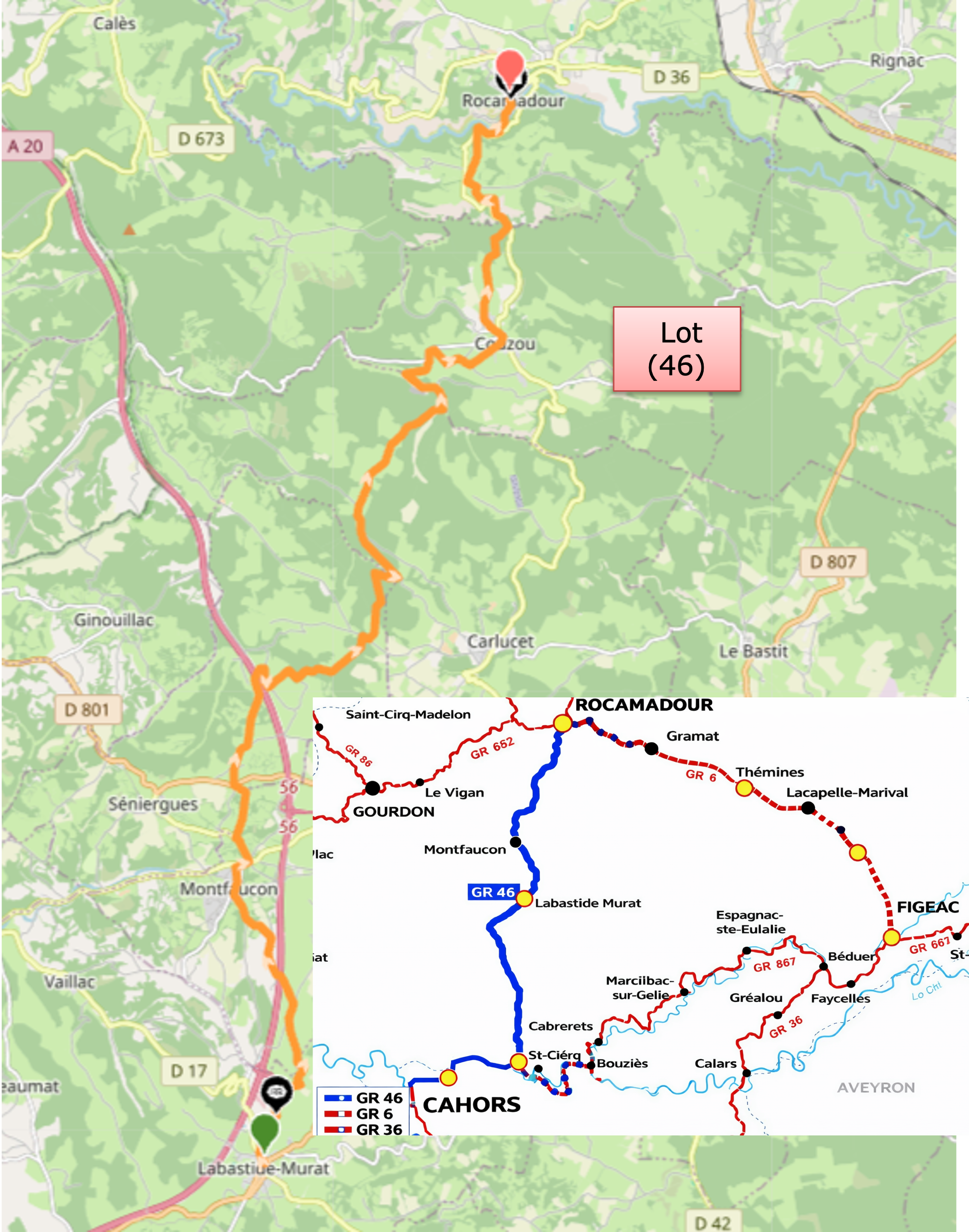
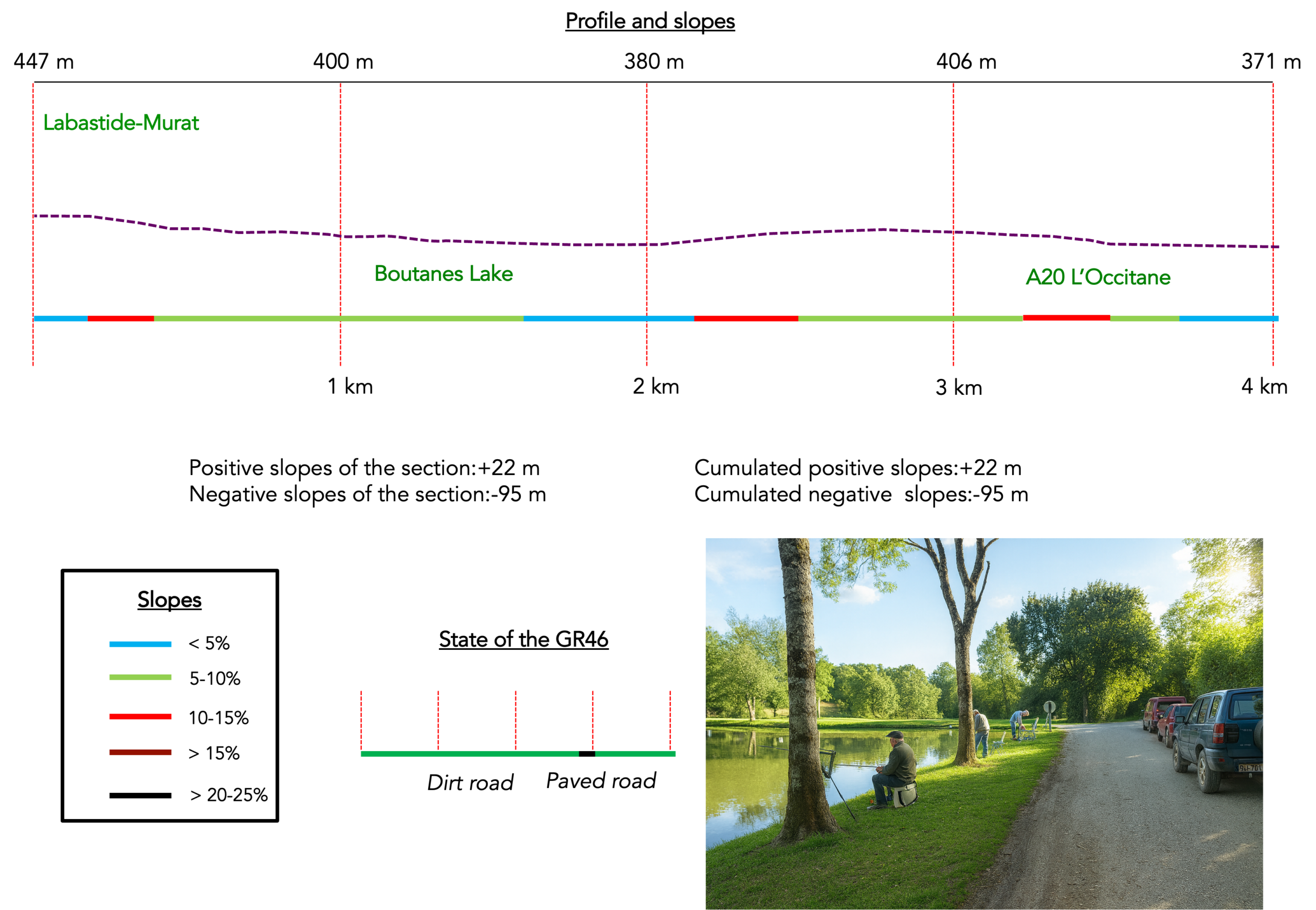
We divided the course into several sections to make it easier to see. For each section, the maps show the course, the slopes found on the course, and the state of the route (paved or dirt roads). The courses were drawn on the « Wikilocs » platform. Today, it is no longer necessary to walk around with detailed maps in your pocket or bag. If you have a mobile phone or tablet, you can easily follow routes live.
For this stage, here is the link:
| This is obviously not the case for all pilgrims, who may not feel comfortable reading GPS tracks and routes on a mobile phone, and there are still many places without an Internet connection. For this reason, you can find on Amazon a book that covers this route.
If you only want to consult lodging of the stage, go directly to the bottom of the page. |
 |
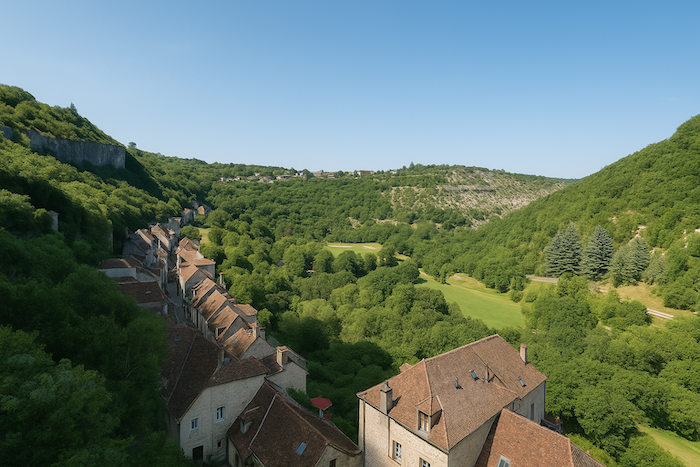
The route between Labastide-Murat and Rocamadour is a true journey through the contrasting landscapes of the Lot, where nature, history and heritage come together. This journey is rich in discoveries and emotions, with striking changes of scenery along the way. Leaving Labastide-Murat, the gaze stretches across the vastness of the Causses du Quercy. These limestone plateaus offer an austere yet fascinating landscape, characterised by dry ground scattered with stones and low vegetation. Stunted oaks, bushes and short grasses bear witness to a demanding environment shaped by the climate and the nature of the soil. Water is scarce here, often hidden underground, which explains the arid appearance of the landscape. Dry-stone walls, built patiently over the centuries, trace their lines across the land and recall the enduring labour of generations who learned how to make use of these challenging soils. As the walker progresses across this land, the landscape gradually begins to change. The horizontal lines of the causse give way to more pronounced contours. The route begins its descent towards damper areas, where water reappears at the surface. Vegetation becomes more abundant, trees grow more numerous, meadows greener and shade more plentiful. This transition from the dry plateau to the verdant valleys takes place gradually, yet it creates a striking contrast that gives the route much of its richness. As Rocamadour draws closer, the landscape becomes increasingly spectacular. The Alzou Valley cuts deeply into the land, forming a verdant canyon enclosed between towering limestone cliffs.
Then Rocamadour reveals itself, almost suddenly, as though emerging directly from the rock. Clinging to the cliffside, the village presents a remarkable and unique sight. Its houses, churches and sanctuary appear to rise one above another, defying balance and creating the impression of architecture suspended in space. Rocamadour is not merely an exceptional natural site, it is also a place steeped in history and spirituality. Since the Middle Ages, it has drawn pilgrims and visitors who come to admire both its beauty and its religious significance. Arriving in the village therefore marks the culmination of a route that is both geographical and symbolic, where the path travelled through the surrounding landscapes gradually prepares the walker for the discovery of this extraordinary place. Rocamadour is often described as a miracle of balance. The sanctuary lies at its heart. Suspended between the valley below and the château that overlooks it, it seems to defy the laws of gravity as much as the passage of time. For almost a thousand years, it has remained the true face of Rocamadour, a place where faith, history, legend and stone come together in a setting of exceptional beauty.
This stage follows the variant leading towards Rocamadour, generally walked in the opposite direction by pilgrims travelling from Figeac to Cahors. Here, the route is followed in reverse, and one need only read the landscape backwards to rediscover its underlying logic. You walk along the GR36/46, a discreet yet faithful thread linking these lands of stone and water.
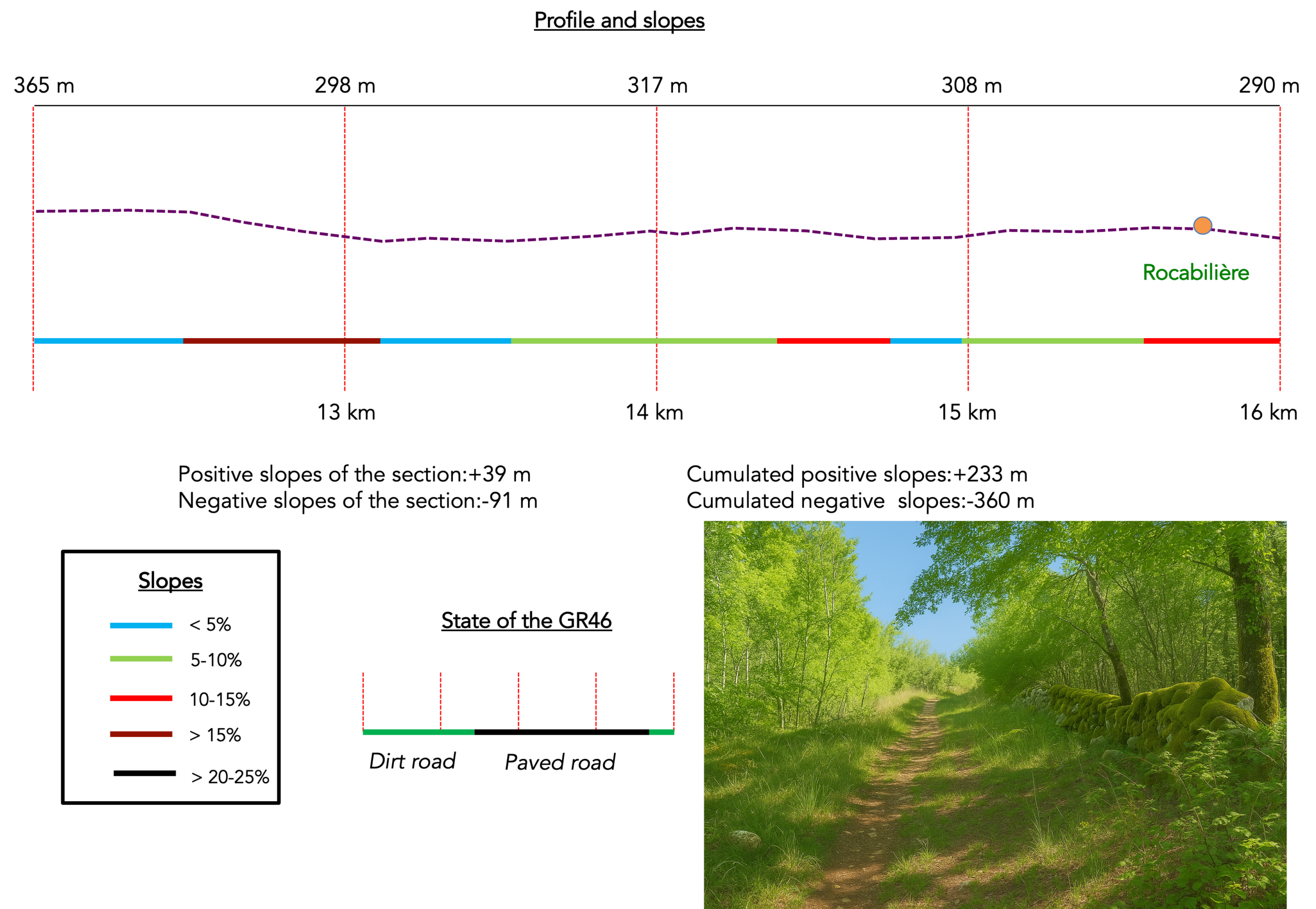
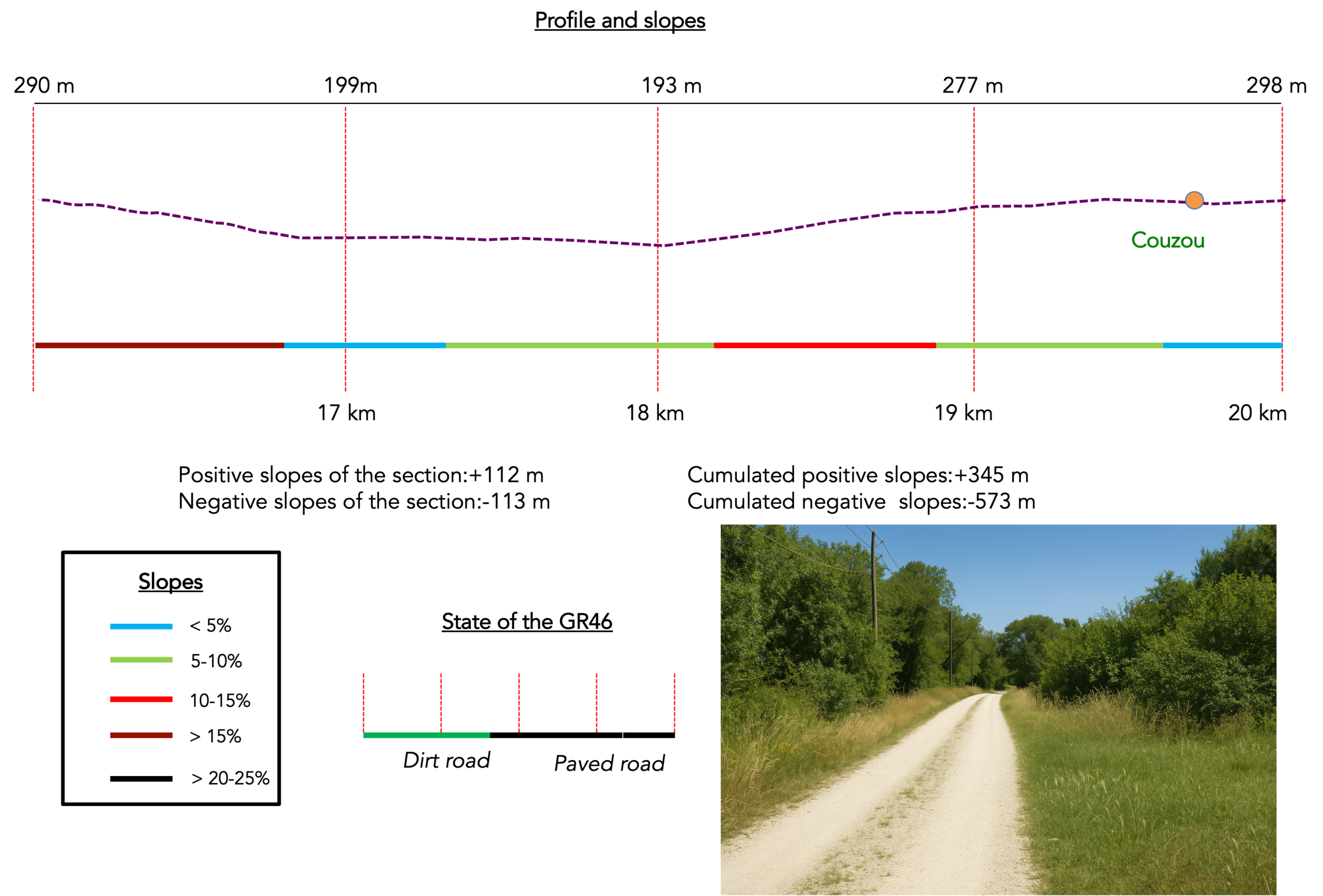
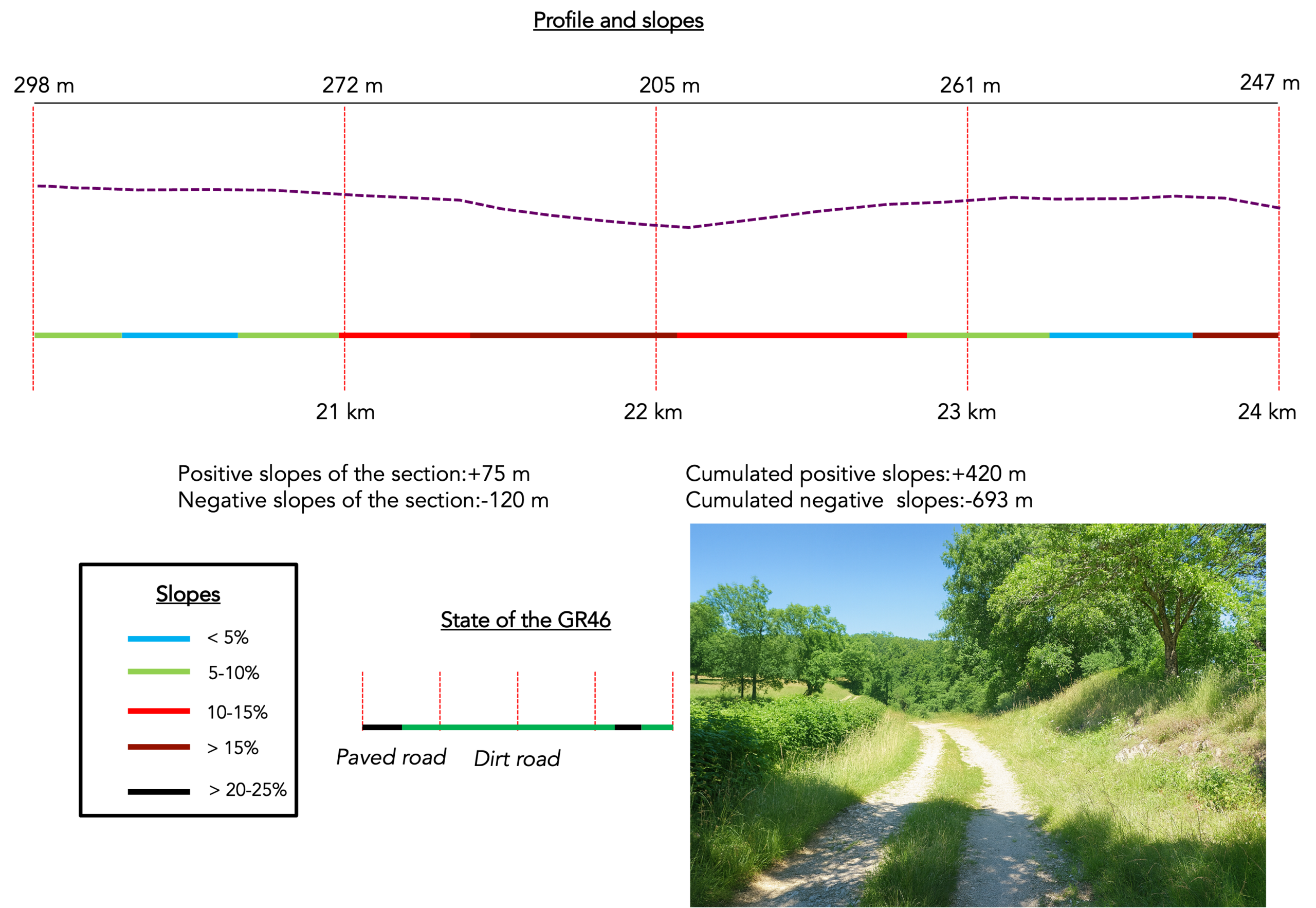
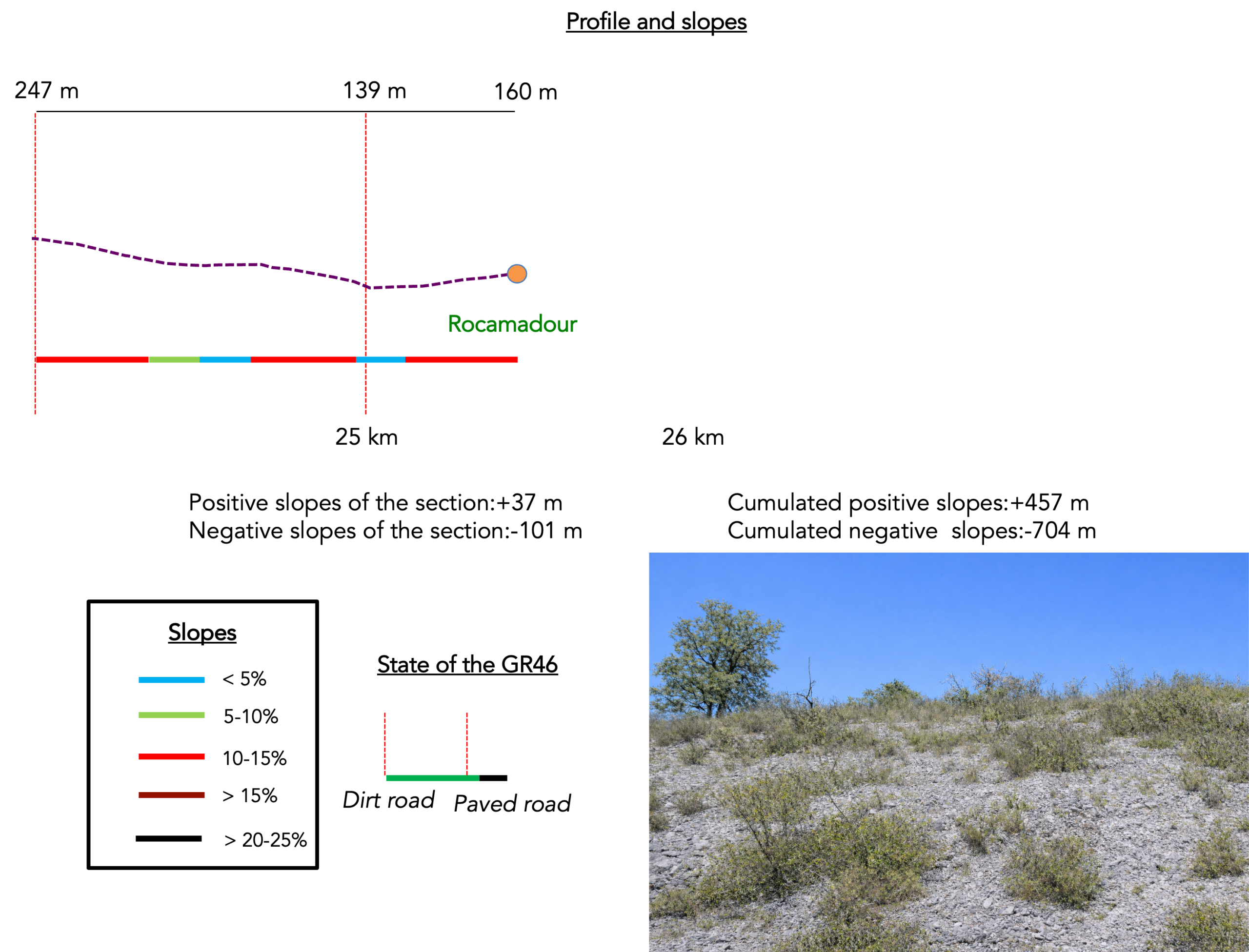
Difficulty level: The elevation changes are significant on this stage (+457 m / -704 m), particularly on the descents. Overall, the route is predominantly downhill, sometimes with sustained gradients approaching 15%. Some of the climbs are also far from negligible. The most demanding section of the route is the climb onto the arid causse shortly before Rocamadour, followed by the dramatic descent towards the site.
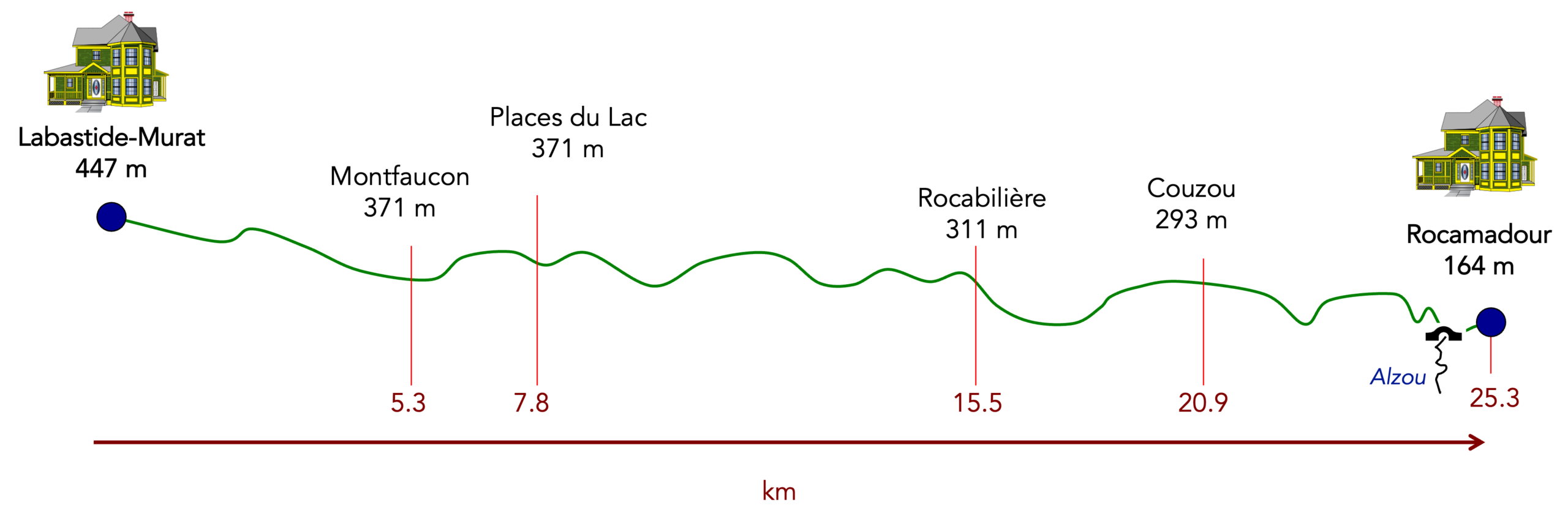
State of the route: Paths clearly predominate over roads:
- Paved roads: 8.3 km
- Dirt roads: 17.0 km
Sometimes, for reasons of logistics or housing possibilities, these stages mix routes operated on different days, having passed several times on these routes. From then on, the skies, the rain, or the seasons can vary. But, generally this is not the case, and in fact this does not change the description of the course.
It is very difficult to specify with certainty the incline of the slopes, whatever the system you use.
For those seeking « true elevations » and enthusiasts of genuine altimetric challenges, carefully review the information on mileage at the beginning of the guide.

Section 1: Between woodland and meadows
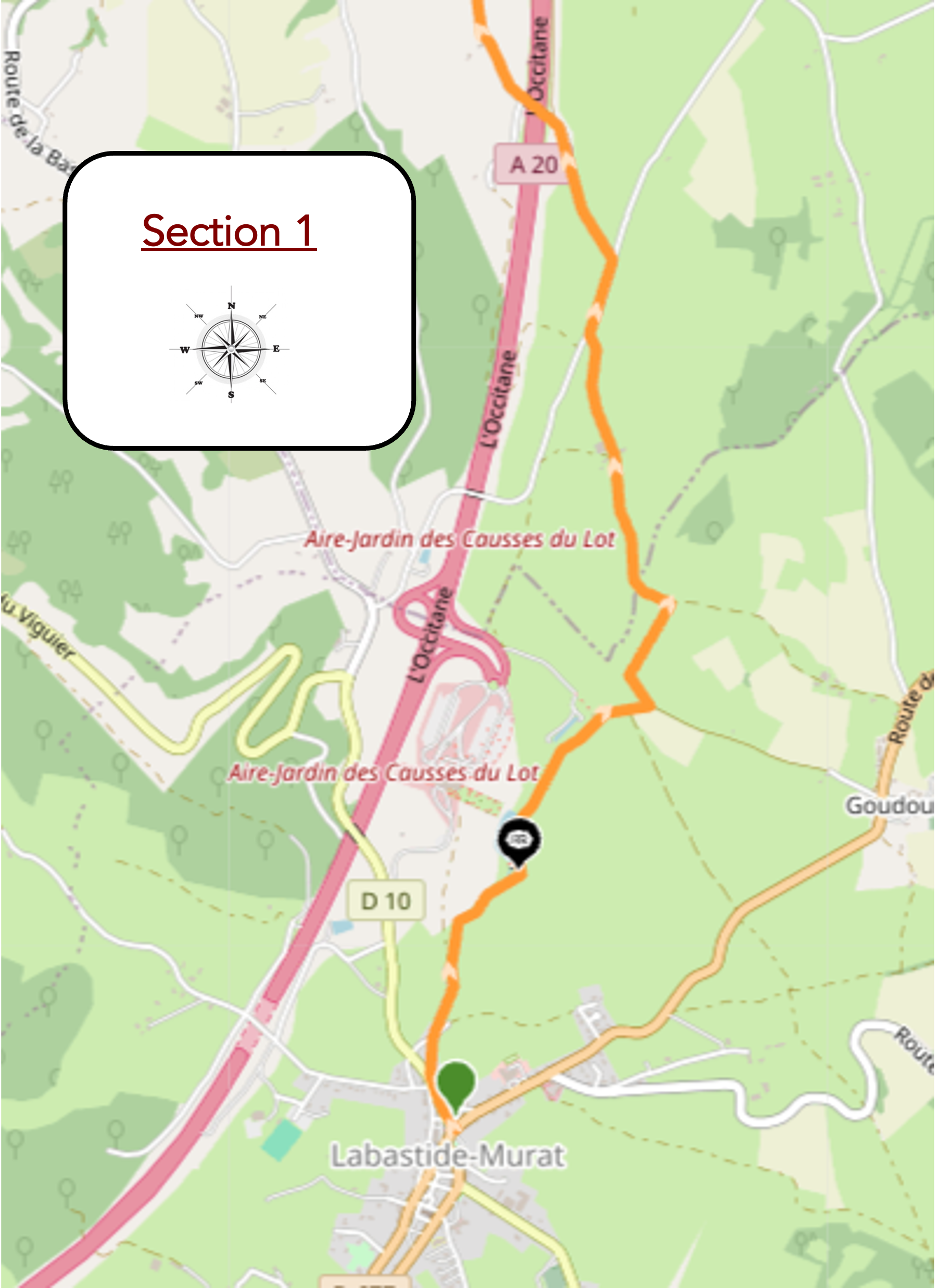
Overview of the route’s challenges : The route presents no particular difficulty.
|
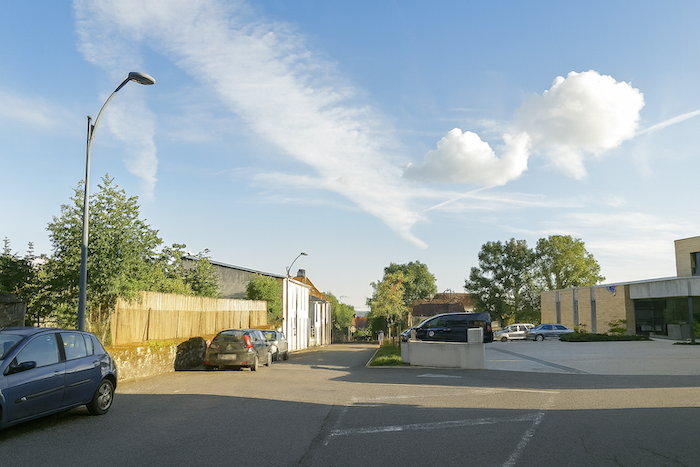
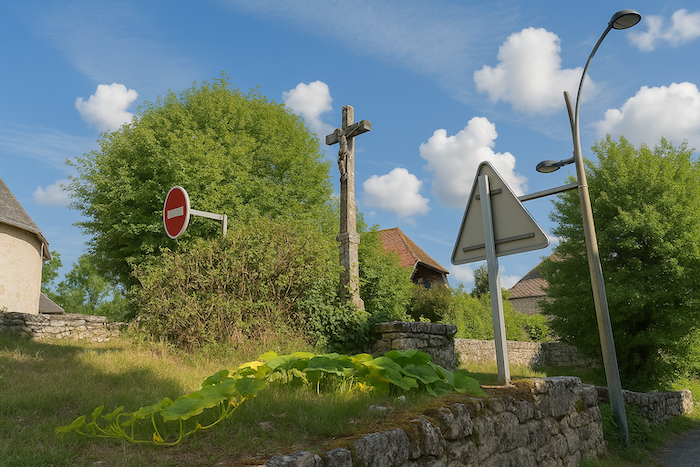
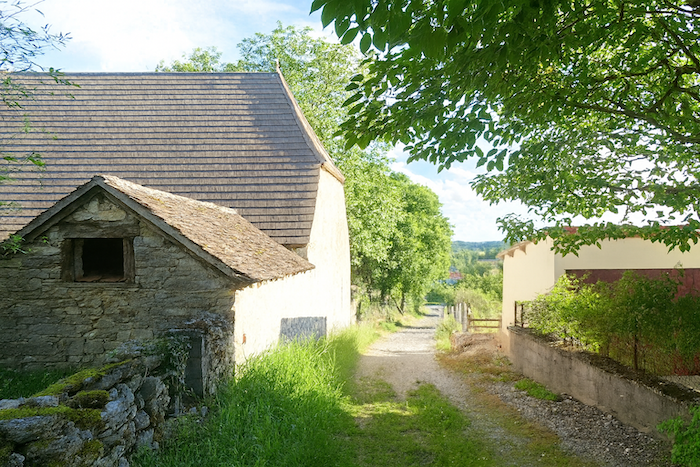
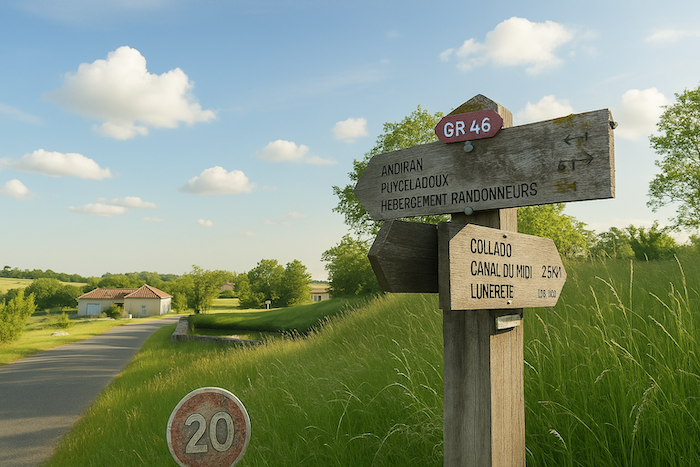
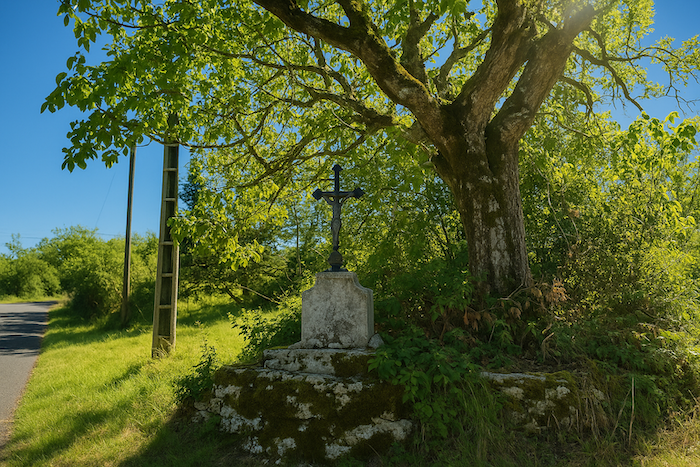
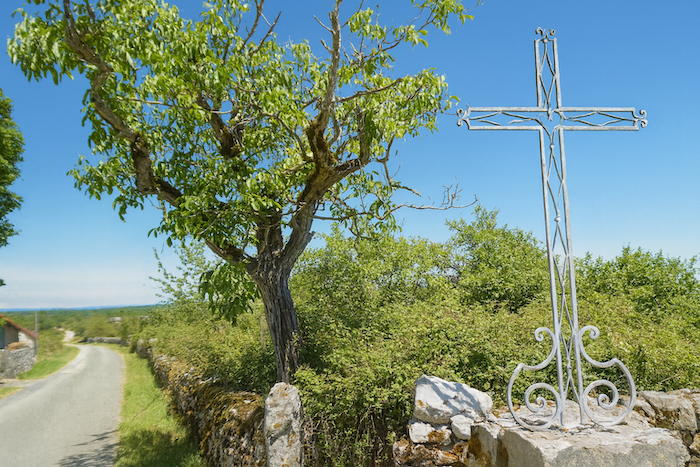
You quickly leave the village behind and return to the GR46, which alternates between a quiet road and an earthen path, as though hesitating between two worlds, before leading you to the foot of a beautiful cross standing beside the path, a silent witness to the passing of countless walkers. |
|
 |
 |
 |
 |
|
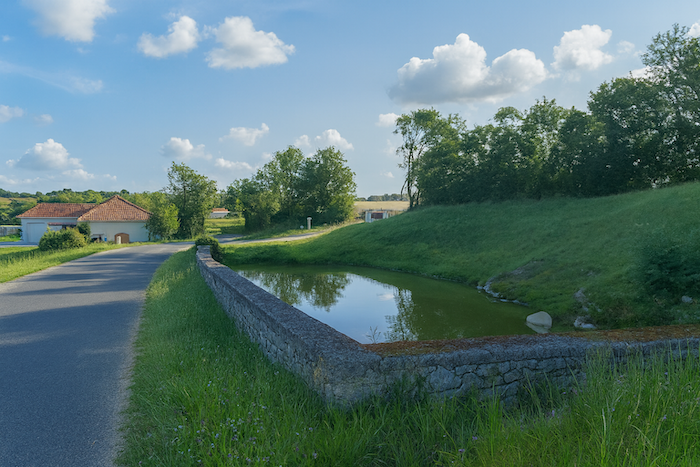
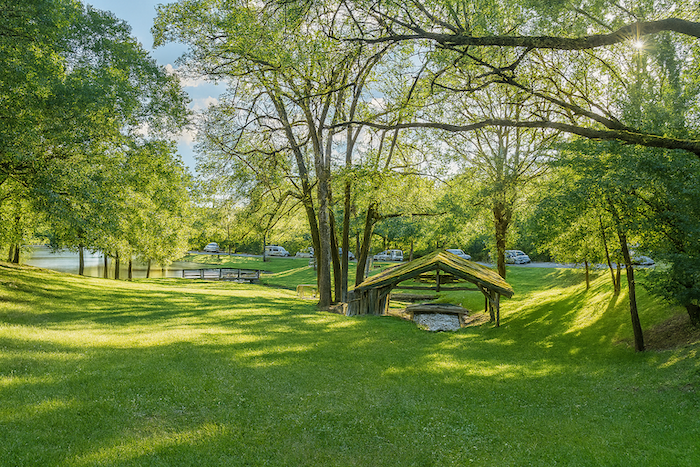
The road then slopes gently downwards, effortlessly making its way towards Lac de Boutanes. A subtle sense of peace and harmony gradually settles over the landscape. Beneath the light canopy of the trees, a vast green meadow stretches away, bathed in peaceful light. Everything here invites you to rest. The setting seems made for suspending time, for enjoying the simplicity of a moment in the open air, far from the noise of everyday life, an ideal place for a leisurely walk or a picnic. |
|
 |
 |
 |
 |
|
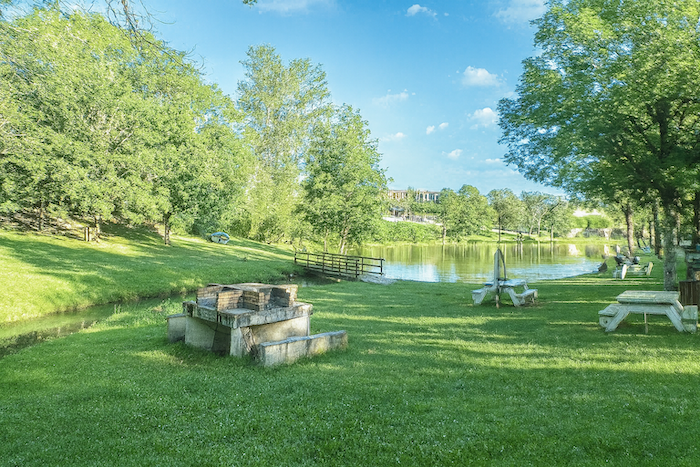
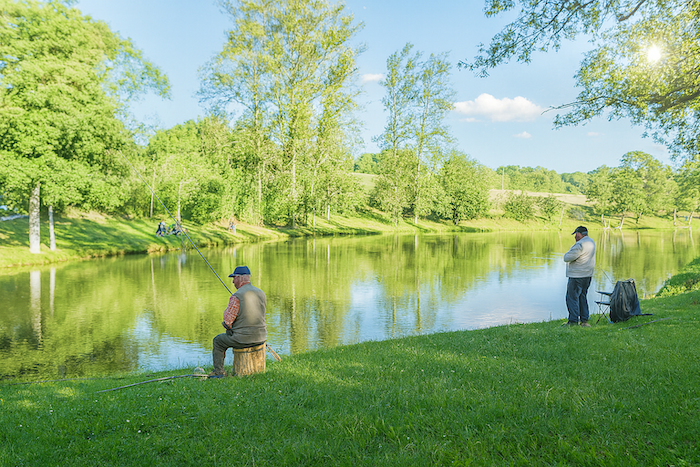
The lake itself appears to be a place where human intervention has remained discreet, almost in harmony with nature. Barbecue areas, wooden tables and modest facilities have all been designed to welcome visitors without disturbing the character of the surroundings. People linger here, while numerous anglers line the banks, absorbed in the patient ritual of fishing, alert to the slightest ripple on the water. |
|
 |
 |
 |
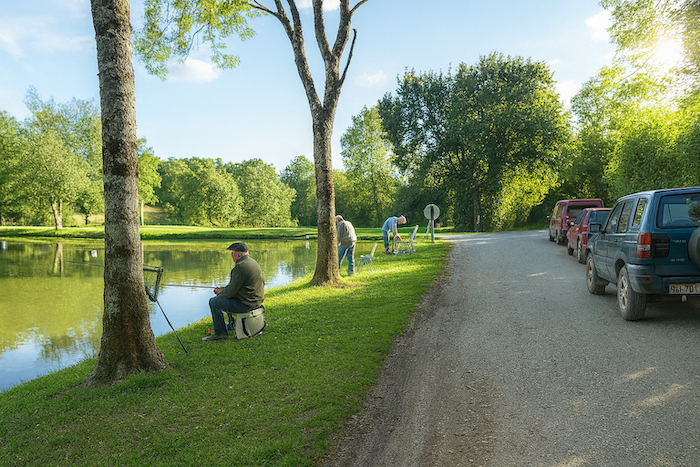 |
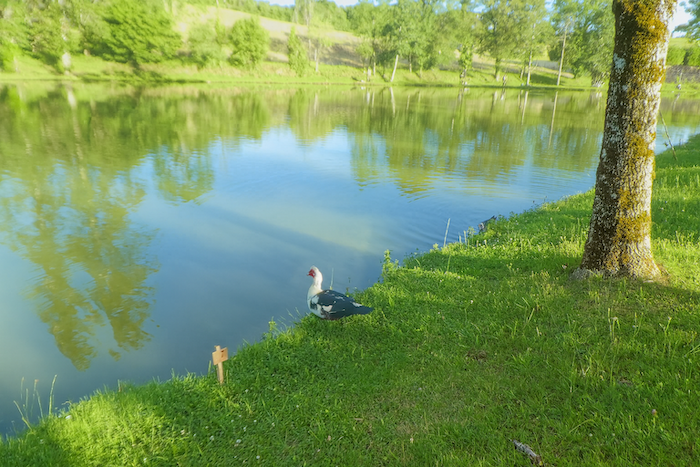
Around the lake, nature reigns supreme. The banks, carpeted with soft, luminous grass, stretch gently along the water, bordered by trees with dense foliage. Farther away, slight undulations in the terrain and a few modern buildings discreetly punctuate the horizon, adding depth and relief to the landscape. Behind the hill lies a rest area serving the nearby motorway.
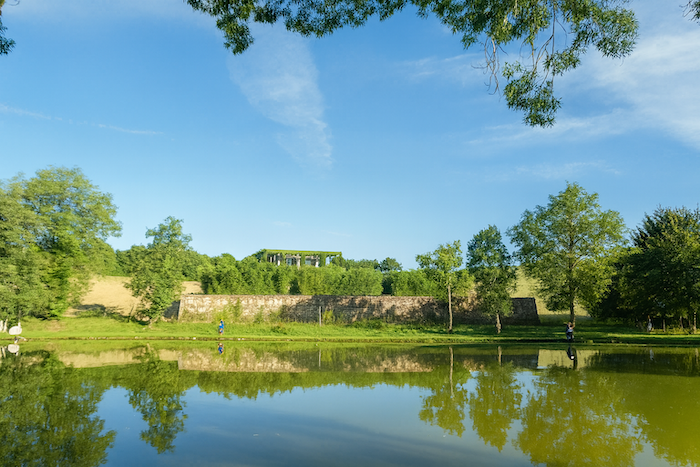
|
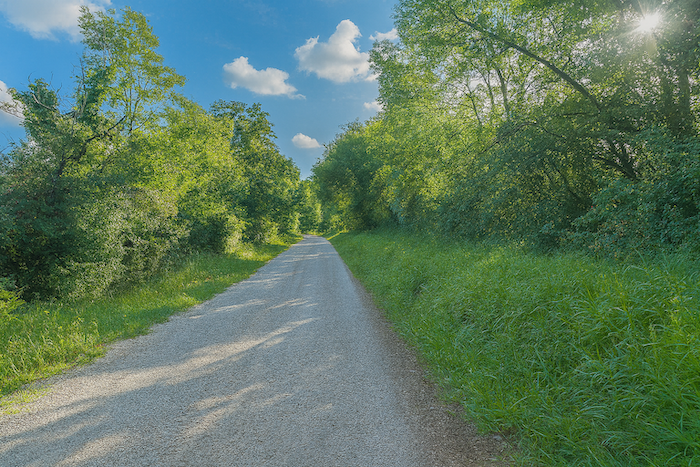
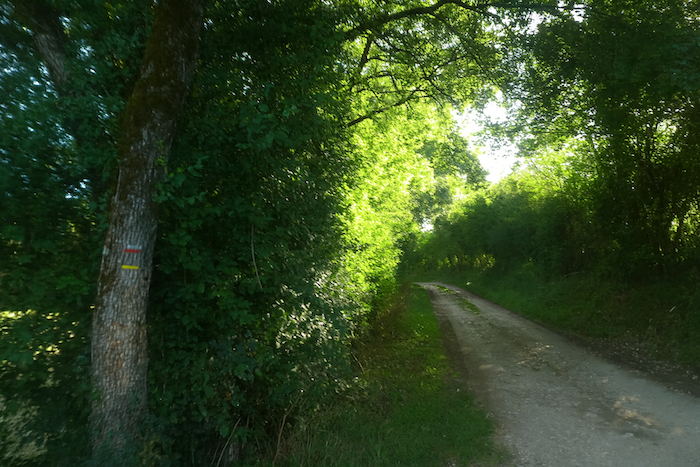
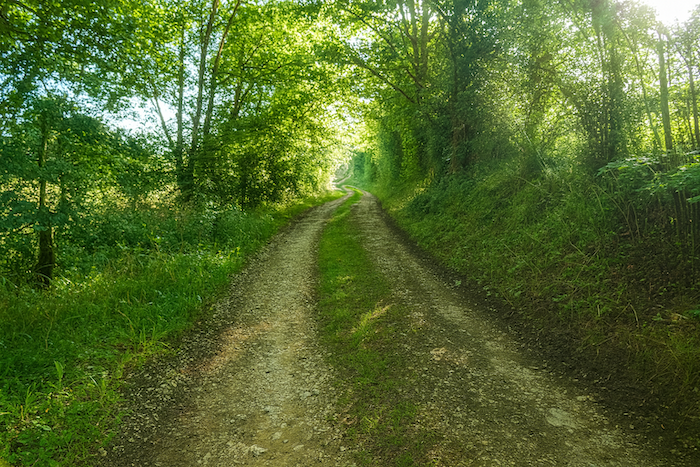
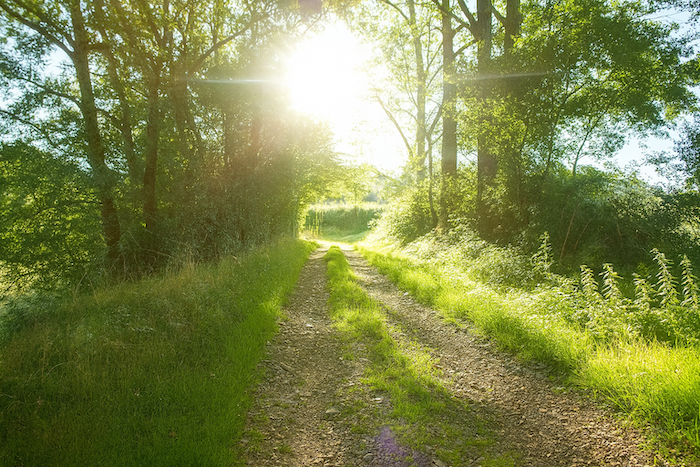
Then, almost imperceptibly, the lake disappears behind you. A broad earthen path slips away beneath the trees, disappearing into the cool shade as though inviting you to venture farther, away from the visible world. |
|
 |
 |
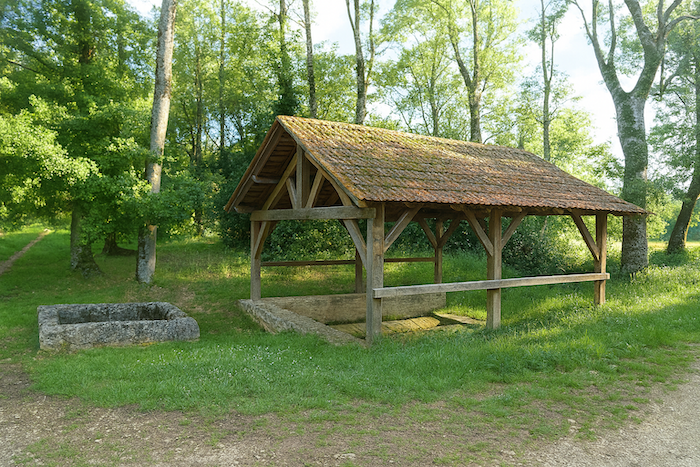
A little farther on, the path passes a modest remnant of the region’s rural heritage, touching in its simplicity. A sturdy, open wooden structure shelters what appears to be an old washhouse. Its solid beams and tiled roof, lightly covered with moss, speak of the passing years and of the building’s deep connection with its surroundings. Beside it, a weathered stone basin, worn yet still standing, evokes the gestures of another age, when water set the rhythm of daily life and household work.
|
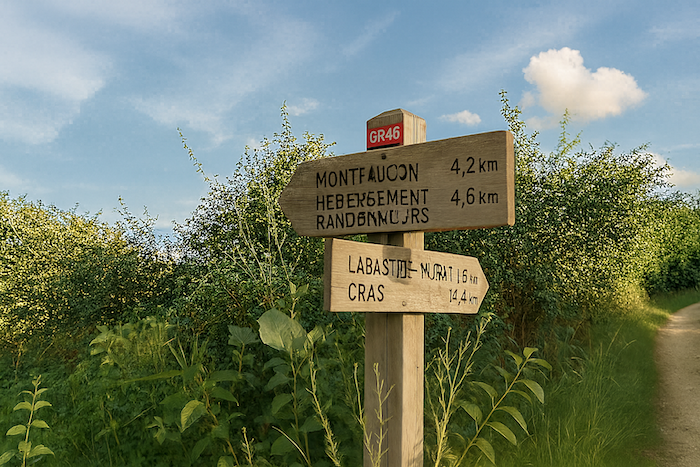
Here, a discreet sign announces Montfaucon, still 4.7 kilometres away, like a promise waiting somewhere along the path ahead. |
|
 |
 |
|
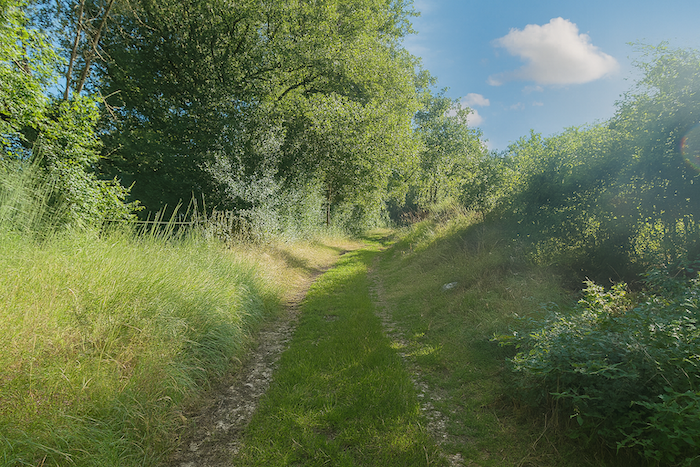
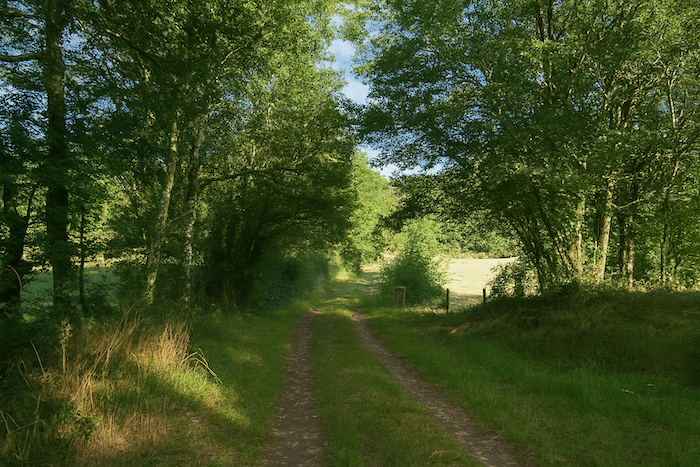
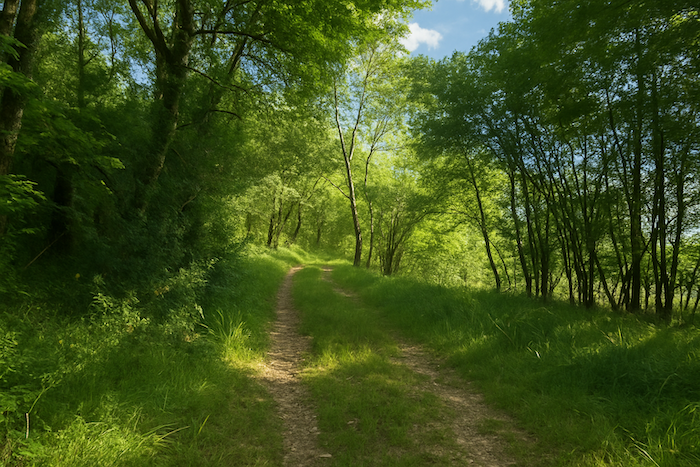
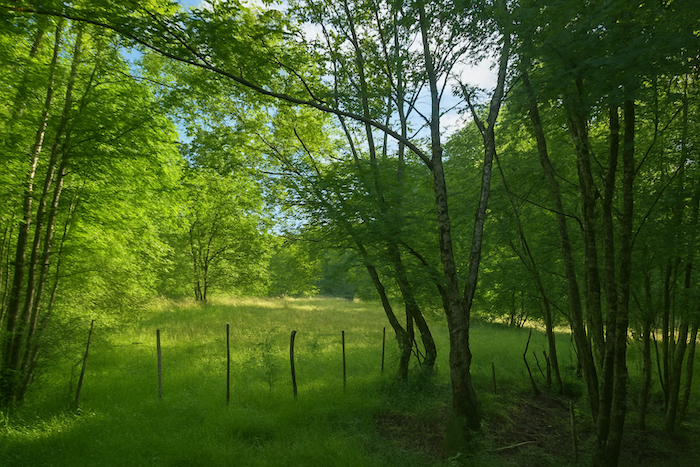
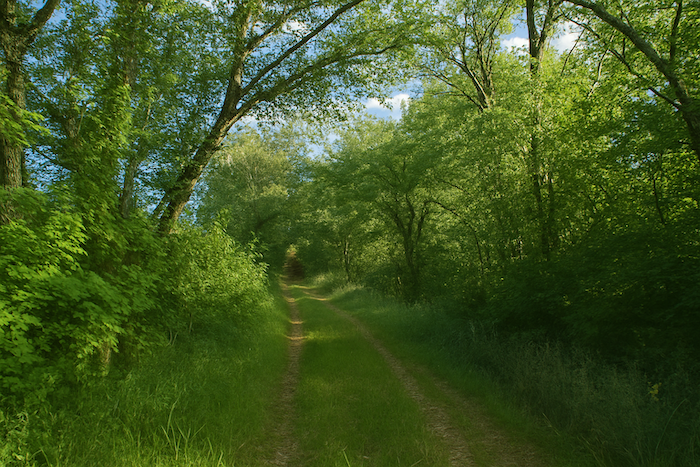
The path then begins to play between shade and light, alternating between woodland and clearings like a succession of breaths within the landscape. It moves onwards without haste, almost meandering across terrain where the gradient is barely perceptible. There are no conifers in these woods. Deciduous trees reign alone, forming a peaceful diversity of sturdy oaks, slender ash trees, discreet maples and elegant beeches, creating a gentle and welcoming forest. |
|
 |
 |
|
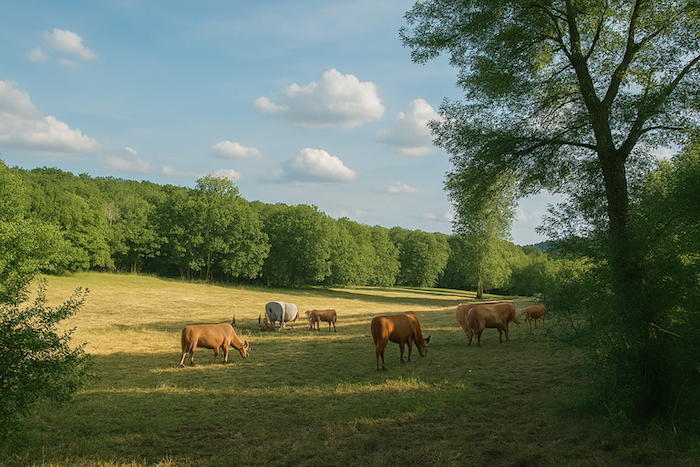
Livestock are never far away. In this part of the Causse de Gramat, the landscape loses some of its ruggedness and softens into open meadows, where herds graze peacefully. Here, the causse becomes less austere and more welcoming, revealing a living countryside shaped by livestock farming. |
|
 |
 |
 |
 |
|
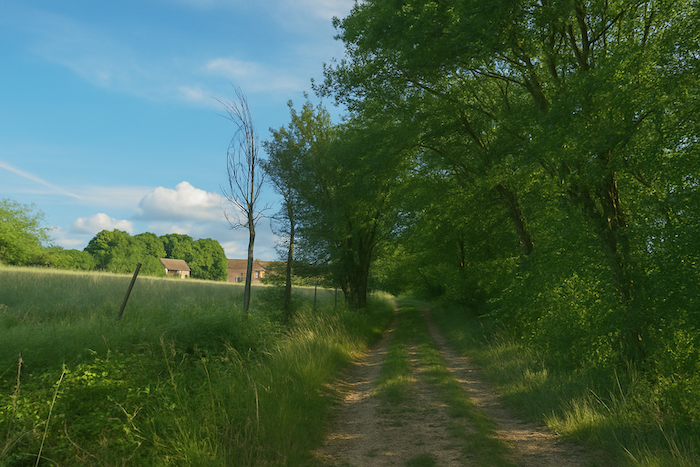
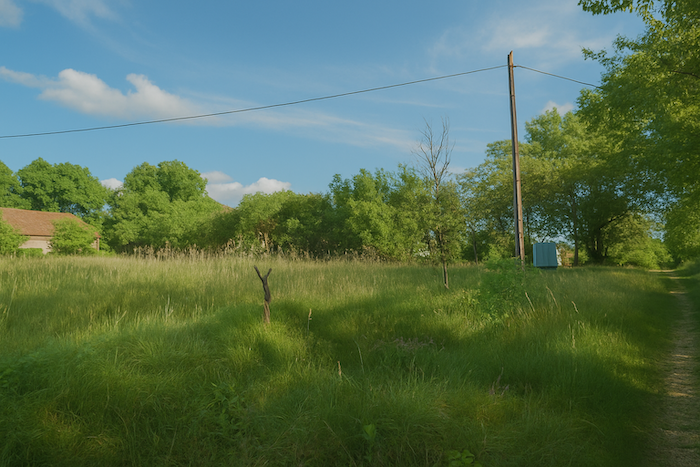
Farther on, the terrain makes its presence felt once again. The gradient becomes more noticeable, guiding you towards the scattered farms of Saint-Hilaire, dotted across the countryside like small anchors of human presence in this open landscape. These isolated and discreet dwellings seem to have stood here forever, perfectly at home in their surroundings. |
|
 |
 |
|
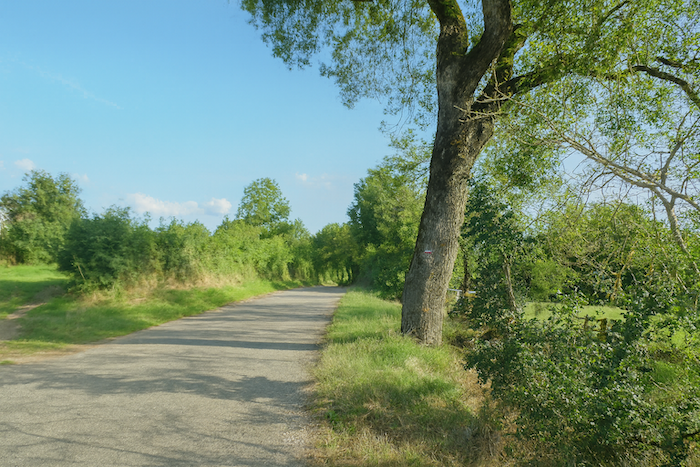
At this point, the route leaves the earthen path and takes to the smoother ribbon of the asphalt road, bringing a change of rhythm to the walk. |
|
 |
 |
|
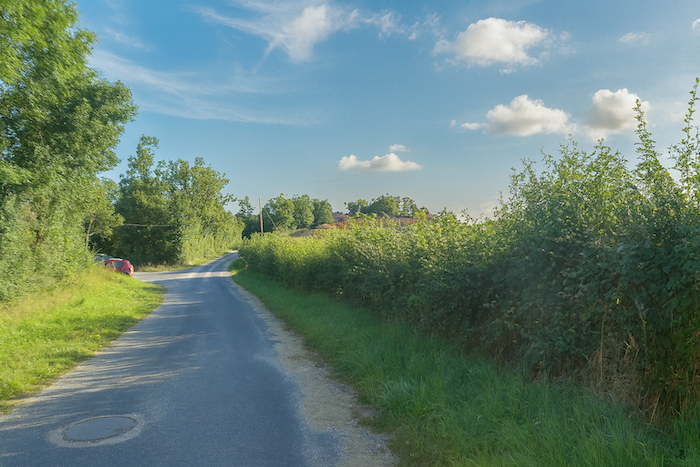
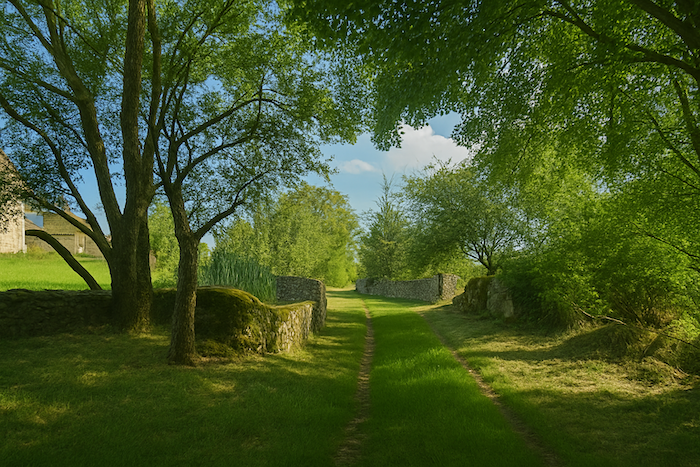
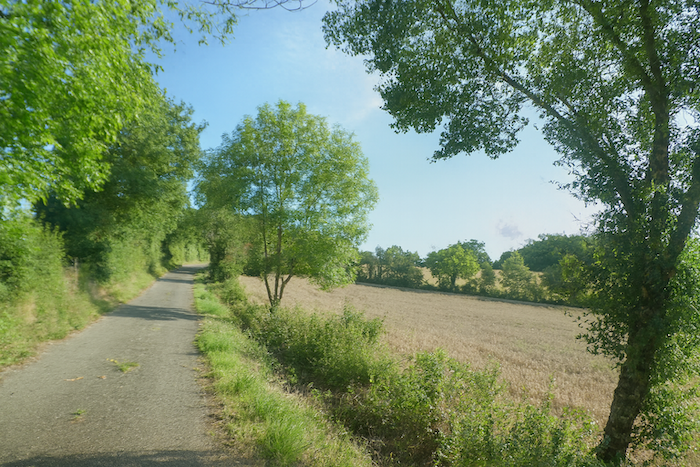
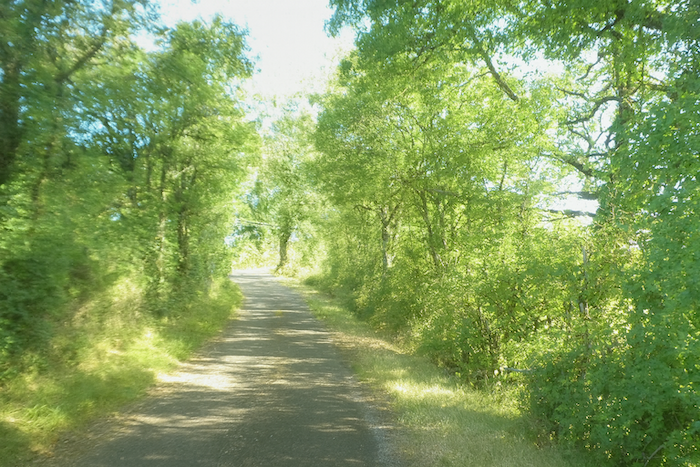
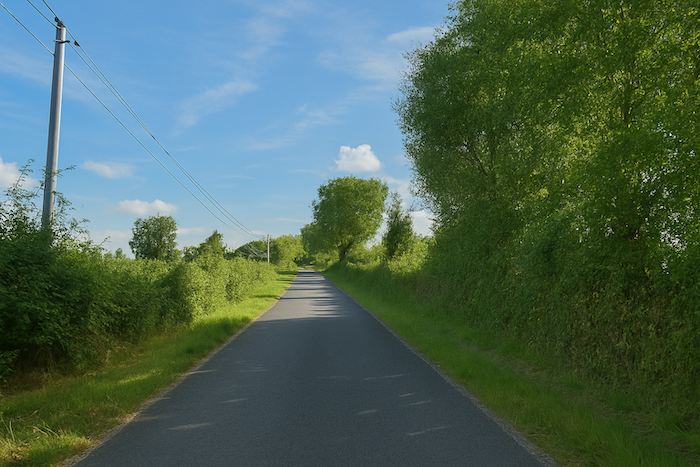
This small road, almost forgotten by traffic, stretches gently onwards, winding between quiet woodland and more open meadows. It continues in silence, accompanying the walker through a peaceful transition between shade and light, between the intimacy of the forest and broad views across the countryside. |
|
 |
 |
 |
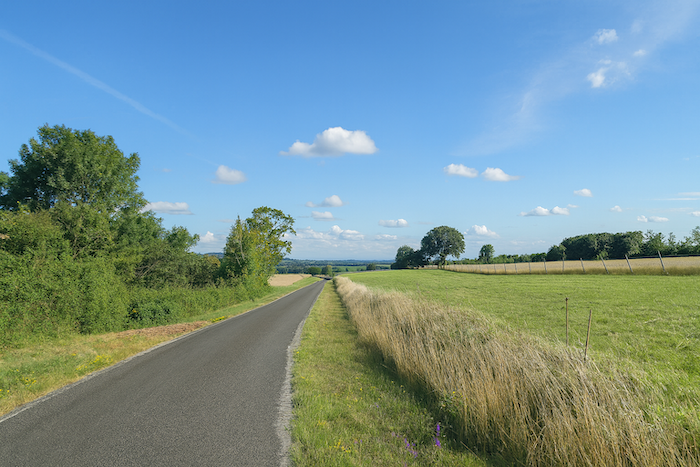 |
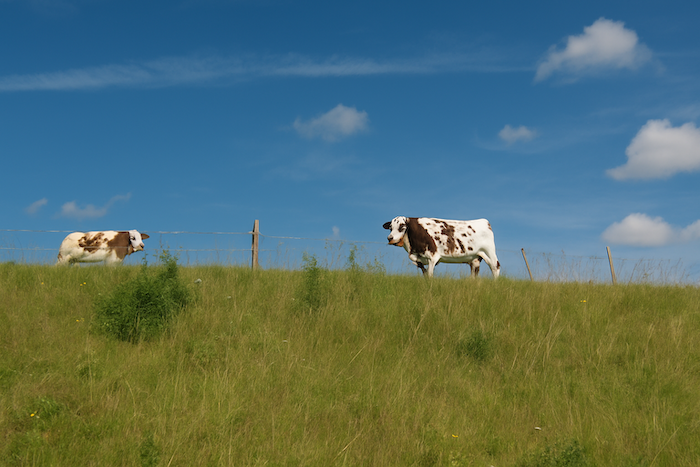
Cultivated fields are rare. The soil here is poorly suited to intensive farming and lends itself far more readily to pasture. This is a landscape shaped by livestock, where cattle graze on short grass adapted to the limestone soils, creating a countryside that is simple yet deeply authentic.
|
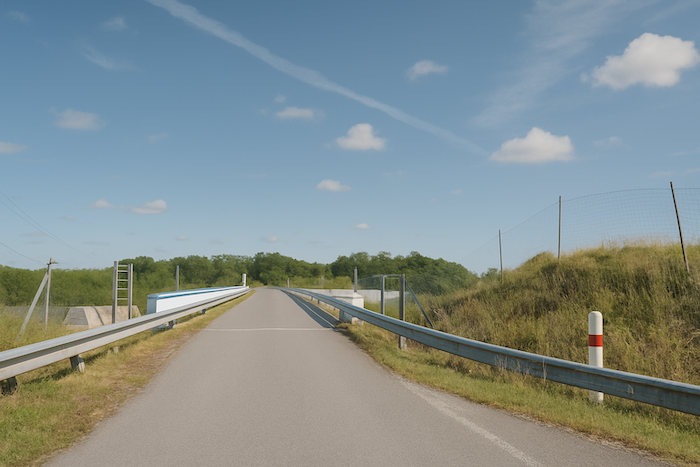
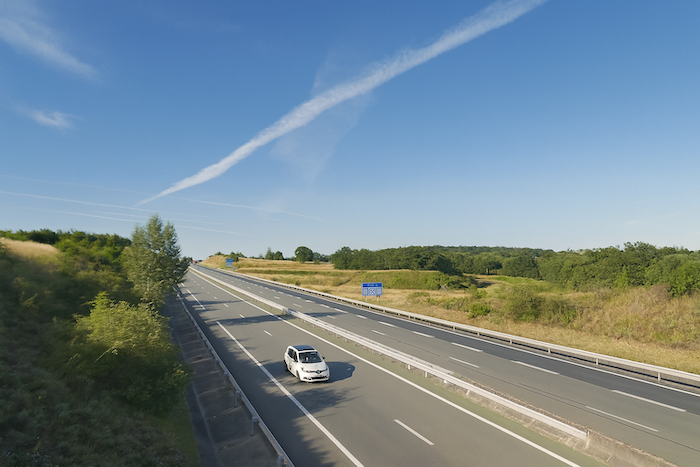
The road then crosses the Freeway Occitane, better known as the A20. This major artery runs from north to south through southwestern France, crossing the Lot department here without truly disturbing the tranquillity of the surroundings. Traffic is relatively light at this point, allowing the motorway to remain surprisingly discreet within the landscape. One of its notable features is that many sections are toll-free, which is certainly no small advantage. |
|
 |
 |
|
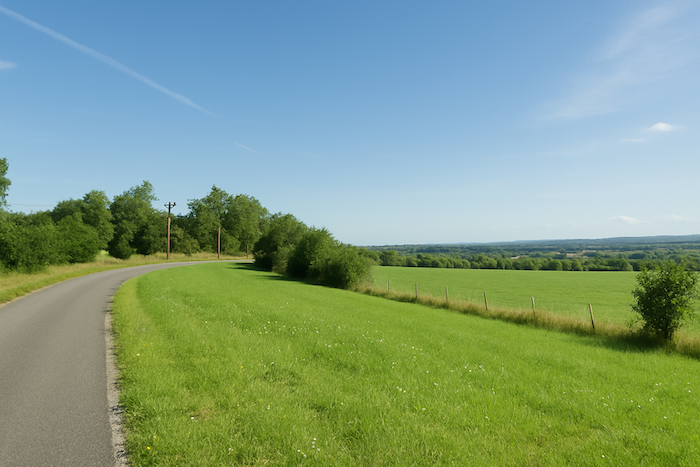
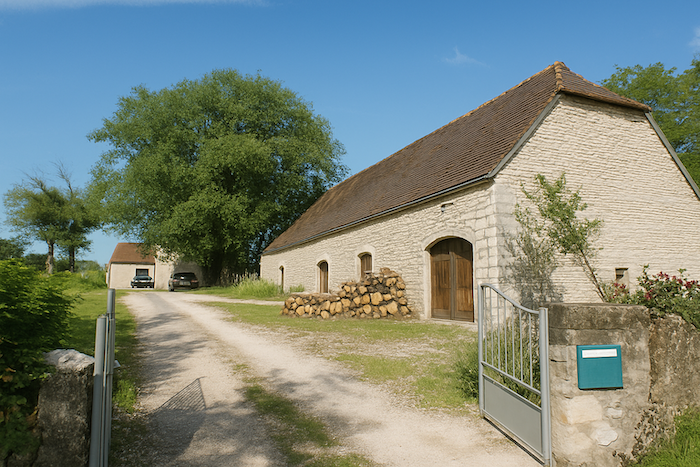
The road then meanders leisurely through open meadows towards the secluded farms of Fouliole. |
|
 |
 |
Section 2: Through Montfaucon, a bastide of the causse
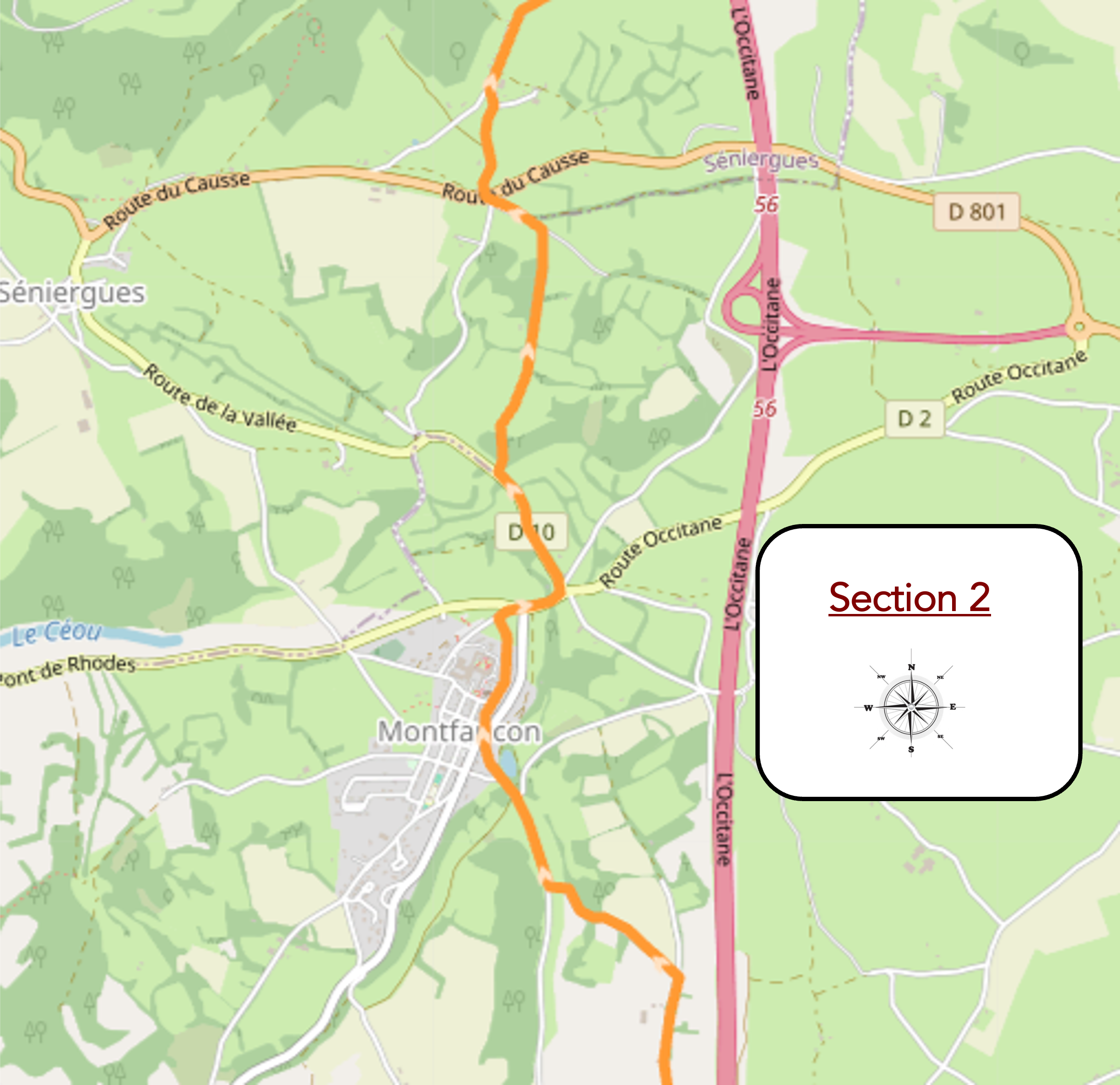
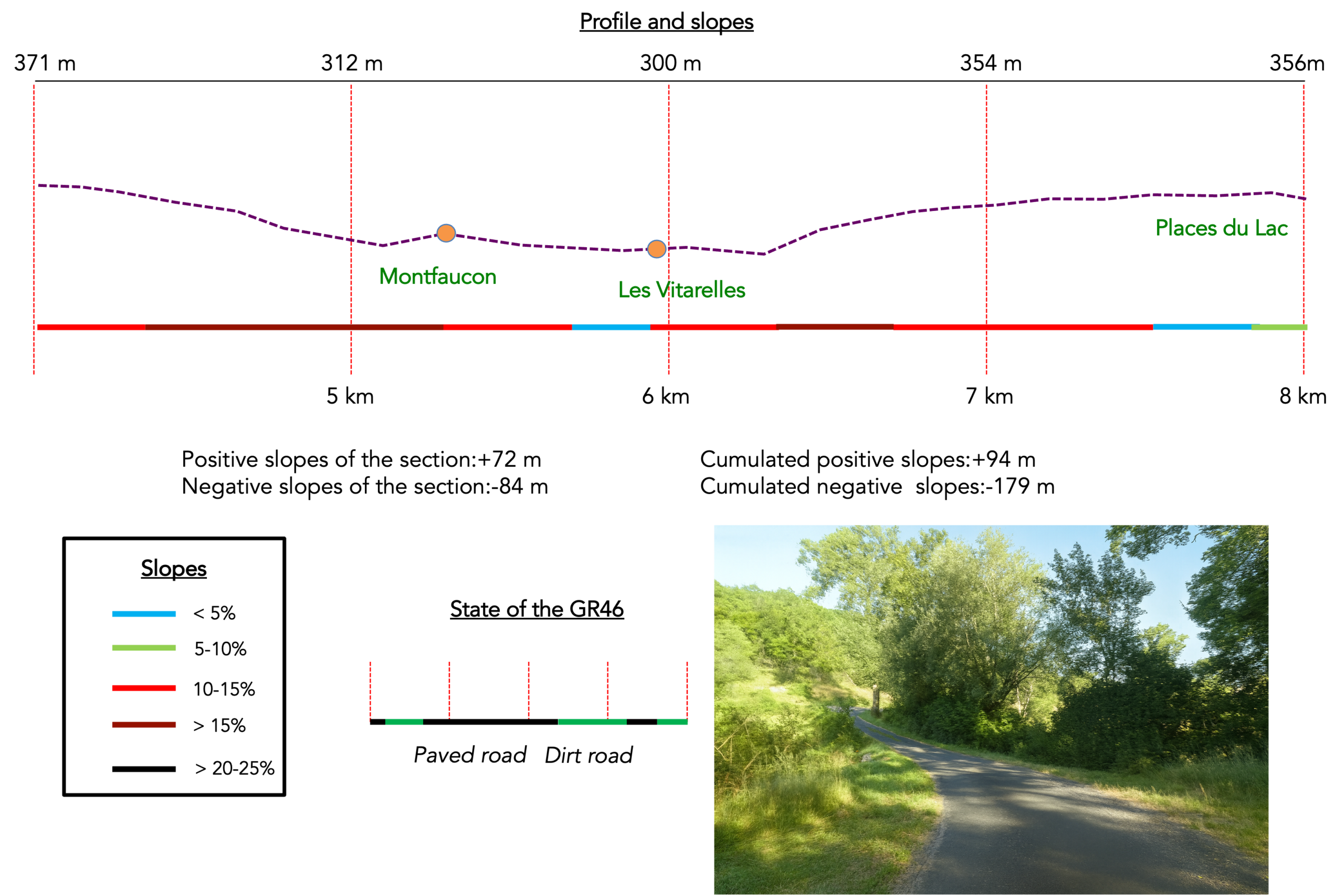
Overview of the route’s challenges: The route includes some significant gradients.
|
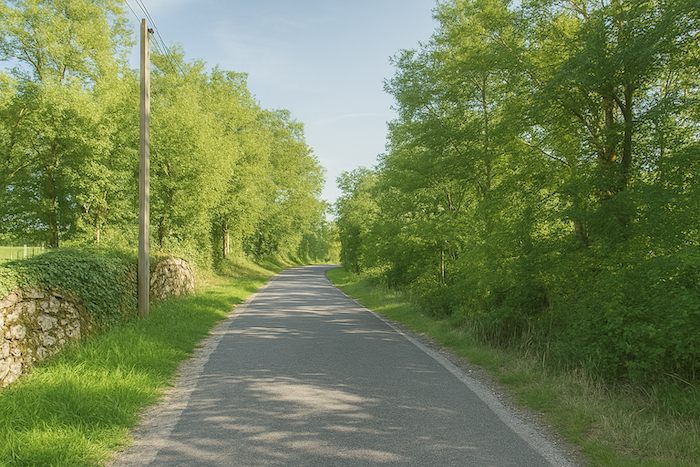
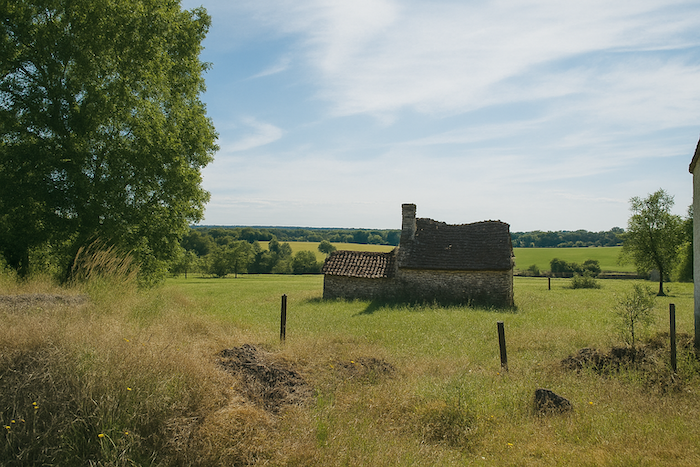
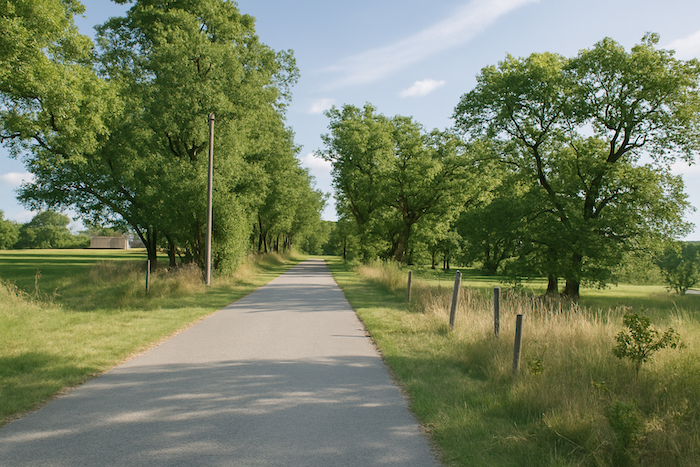
Along this quiet road, the landscape unfolds with the silent gentleness so characteristic of the countryside of the causse, where space seems to stretch all the way to the horizon. There, in the midst of the meadows, stands a small isolated stone building, almost forgotten. Its irregular tiled roof and walls weathered by time give it an ancient presence, as though suspended outside time. It remains there, motionless, a discreet witness to some former activity, probably agricultural, of which little more than a trace now seems to remain. Around it, the meadows spread out in broad expanses towards a dark line of forest closing the horizon, further enhancing the sense of immensity. |
|
 |
 |
|
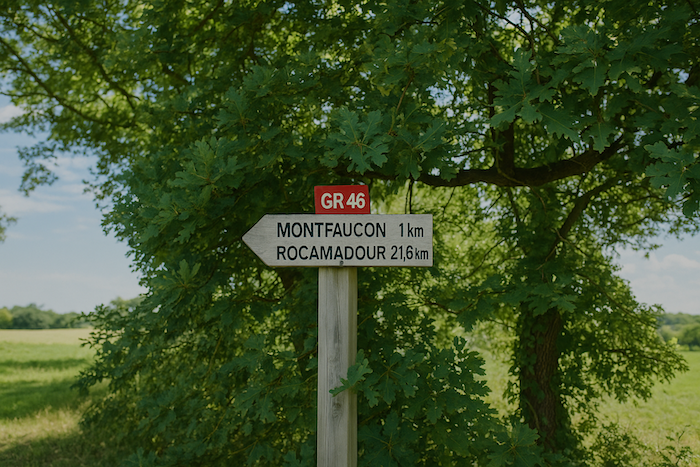
Amid this almost untouched tranquility, a sign serves as a reminder of the journey ahead. Montfaucon is now only a short distance away, while Rocamadour remains far in the distance, more than twenty kilometers ahead. |
|
 |
 |
|
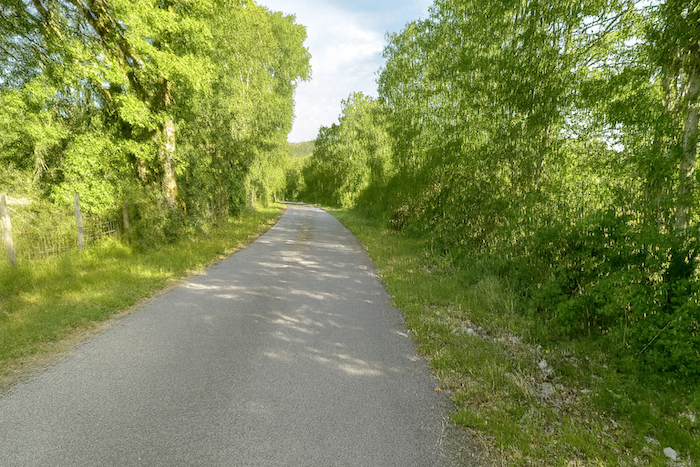
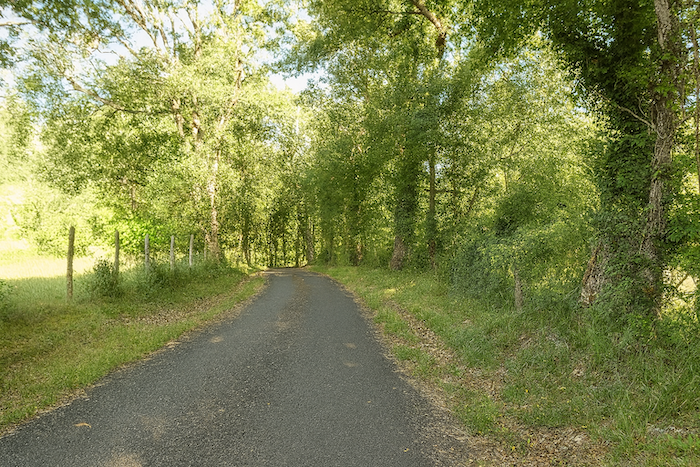
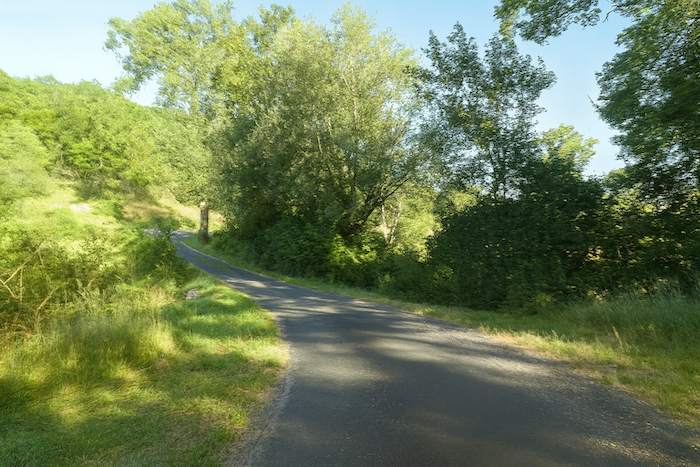
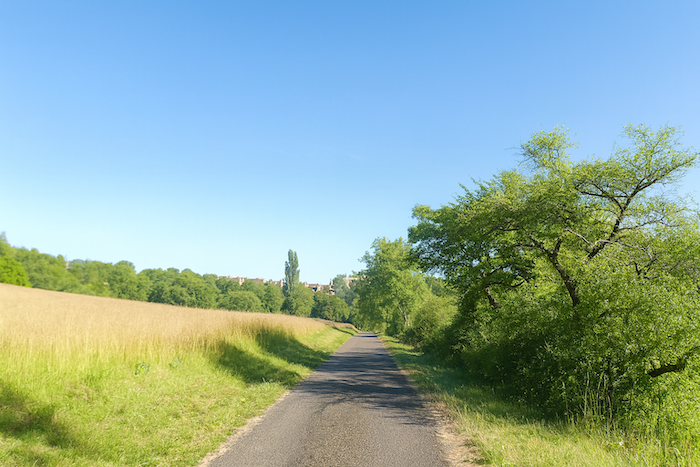
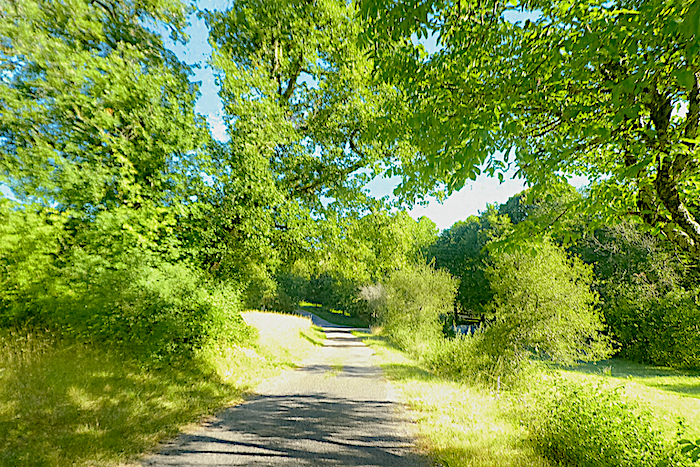
Shortly afterwards, the terrain begins to make itself felt. The road slopes downwards into the hollow of a valley, breaking the gentle horizontal lines of the causse. |
|
 |
 |
 |
 |
|
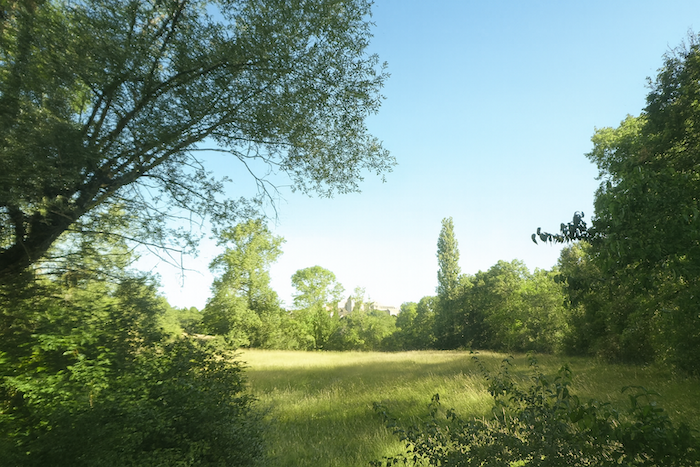
As you descend, your gaze is naturally drawn ahead. The rooftops of Montfaucon gradually appear, emerging through the landscape like the promise of a welcome halt. |
|
 |
 |
|
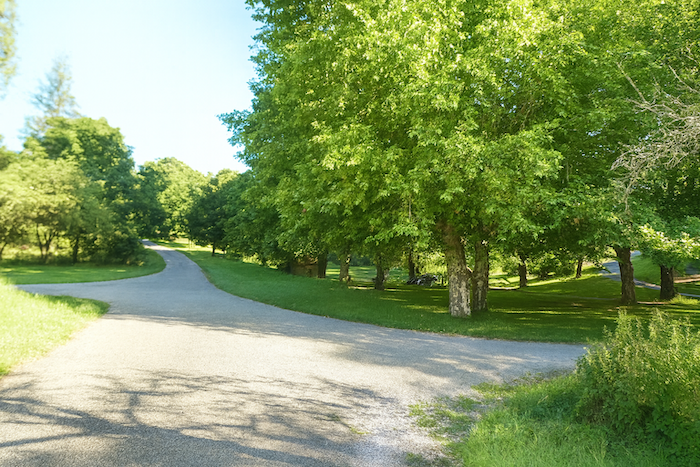
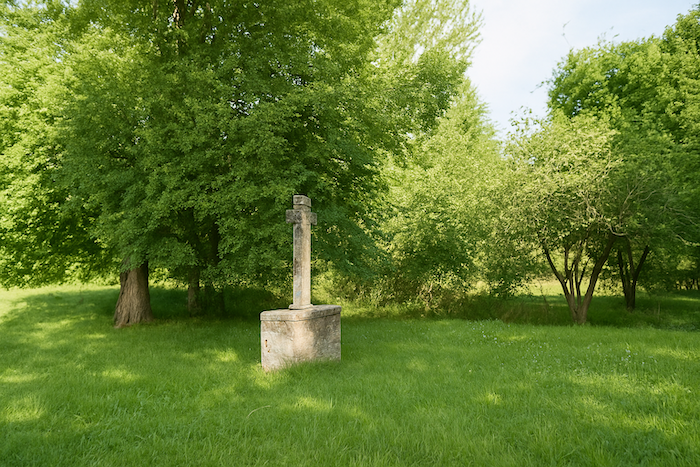
At the bottom of the slope, the road reaches a vast wooded park, almost unexpected after the openness of the plateaus. Here stands a large stone cross, simple yet imposing, seemingly rooted in the ground for generations. |
|
 |
 |
|
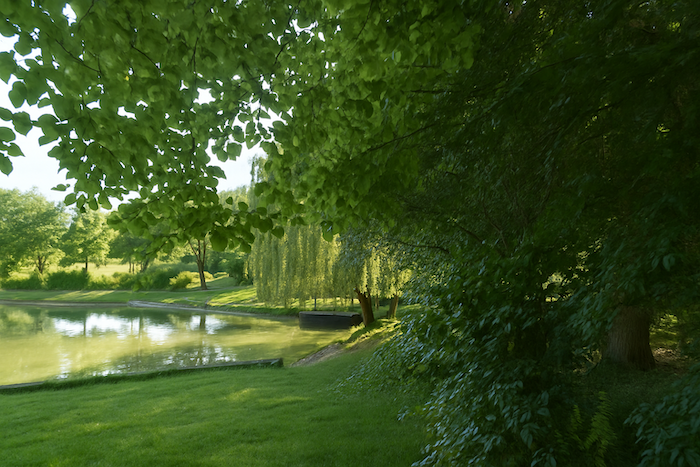
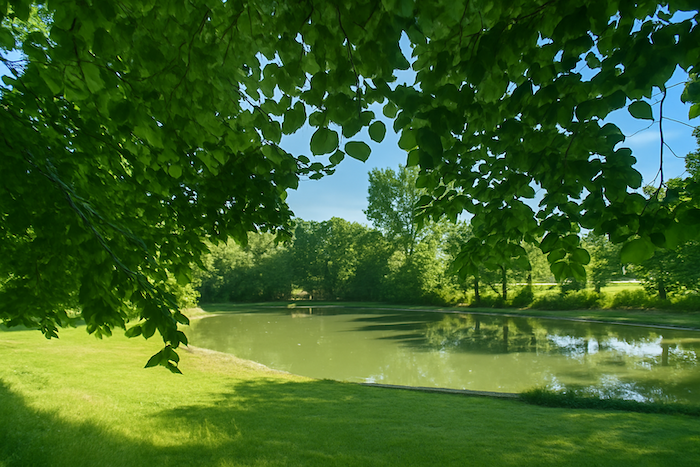
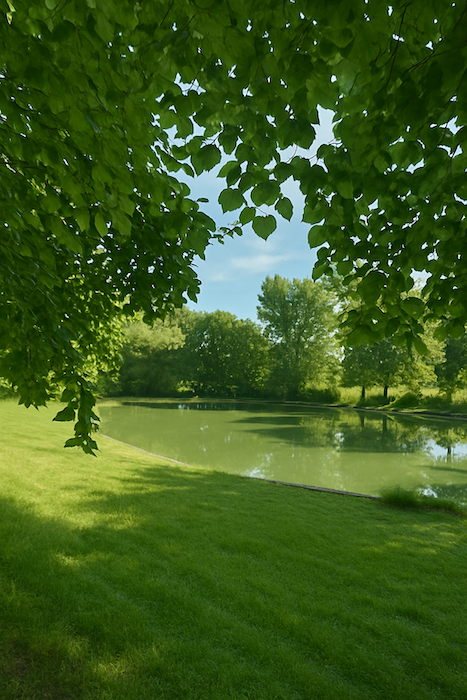
Nestled within this shaded hollow is a small lake, a true haven of freshness. Light filters through the foliage, playing with shadows and reflections. The gently rippling surface of the water captures the green and golden shades of the surrounding trees. The setting invites you to pause, to seek out its coolness and silence, and to savour that rare sensation of simply being there beside the water, removed from the passage of time. |
|
 |
 |
|
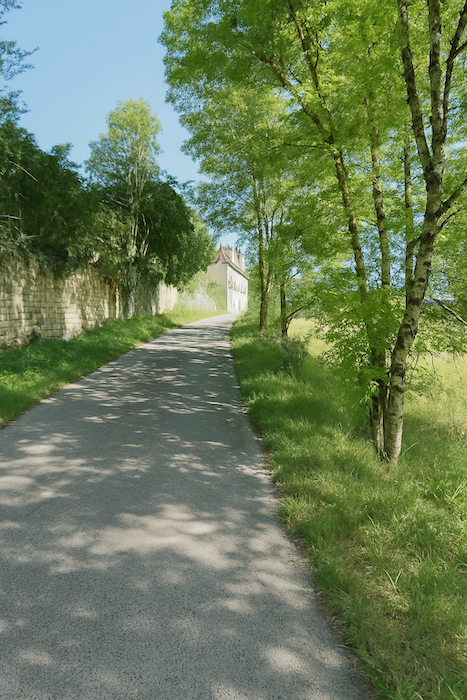
Be particularly attentive here. In its discreet wisdom, the GR46 chooses to avoid Montfaucon. A careful examination of the maps confirms that it does not pass through the village, preferring instead to skirt around it to the right, as though respectfully keeping its distance. Indeed, on the road climbing towards the village, a cross symbolically bars the way, almost as if confirming this deliberate separation. Yet amid the landscapes of the causse, those vast mineral expanses where human presence becomes scarce, it can be comforting to rediscover a little warmth and life. Montfaucon offers precisely such a welcome pause. We shall therefore allow ourselves a slight departure from the GR46 route and choose to pass through the village. A sloping road now climbs away from this peaceful refuge, gradually leading you towards the higher ground of the village. |
|
 |
 |
|
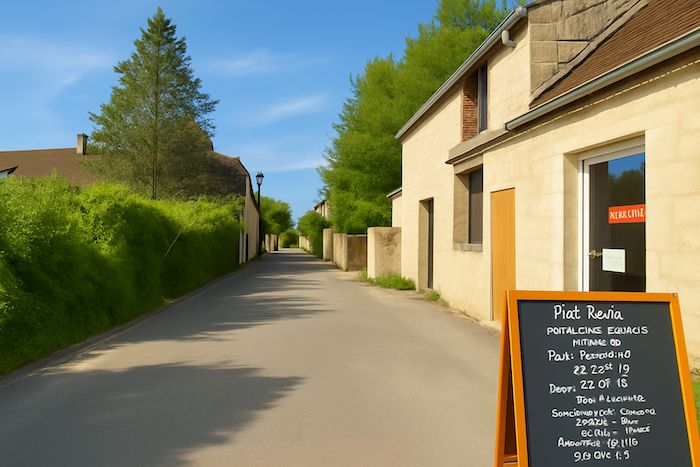
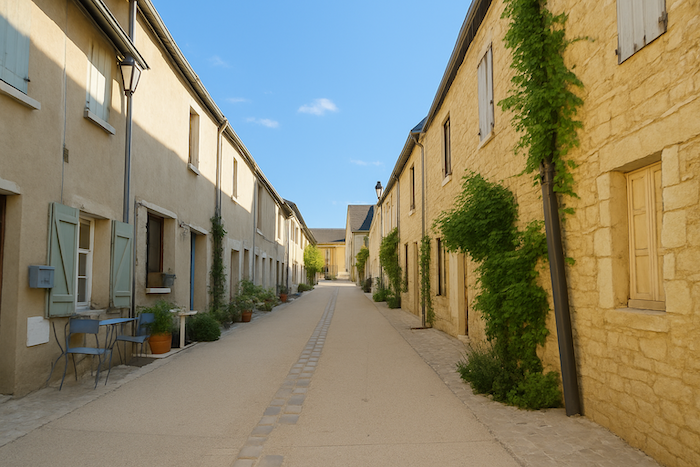
Montfaucon, a modest village of around six hundred inhabitants, is nevertheless a genuine bastide, complete with its own grocery shop and restaurant. Its pale stone houses are arranged with quiet simplicity along a handful of peaceful streets, creating an architecture that is both functional and understated, inherited from the rural traditions of the Quercy. Nothing here seeks to impress. Instead, everything evokes restraint, balance and a patient adaptation to a demanding land. |
|
 |
 |
|
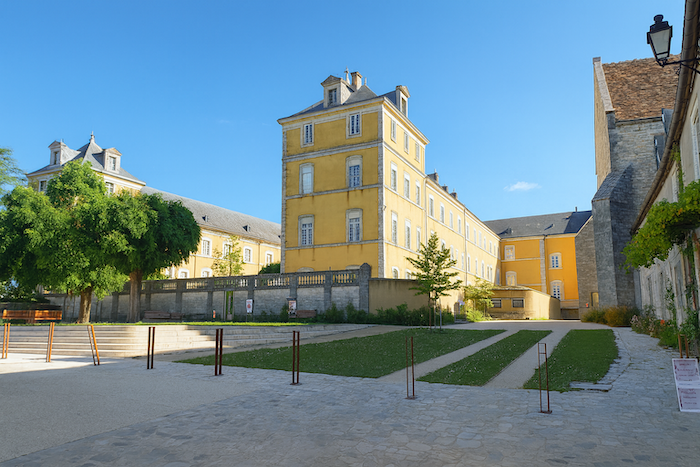
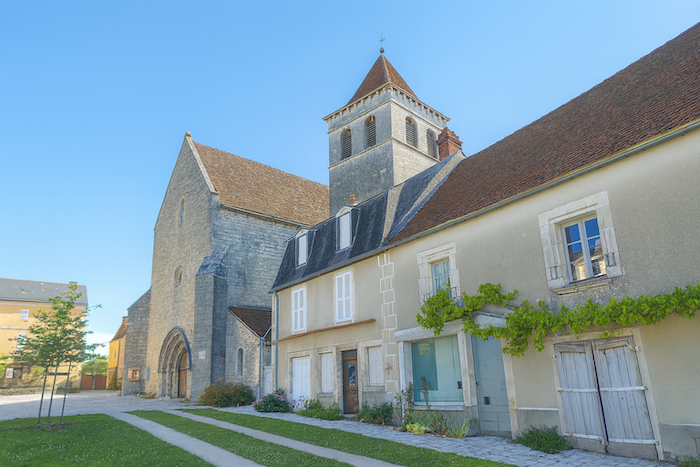
Among the village’s most notable landmarks is the Church of St Barthélemy, built during the 14th and 15th centuries and standing as a major witness to its history. Listed as a historic monument in 1936, it embodies the enduring presence and deep roots of settlement in this region. |
|
 |
 |
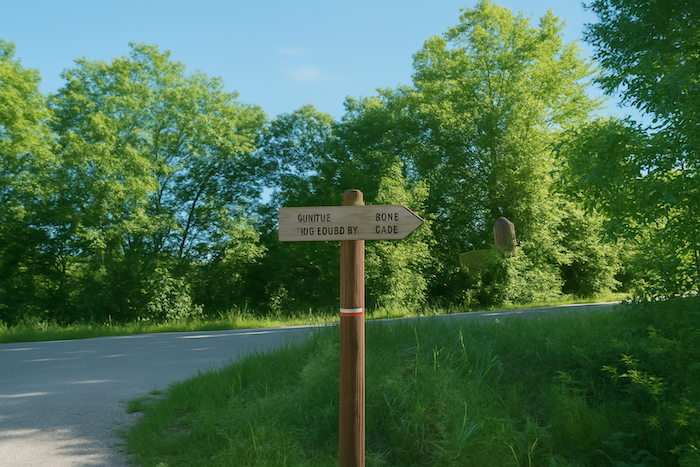
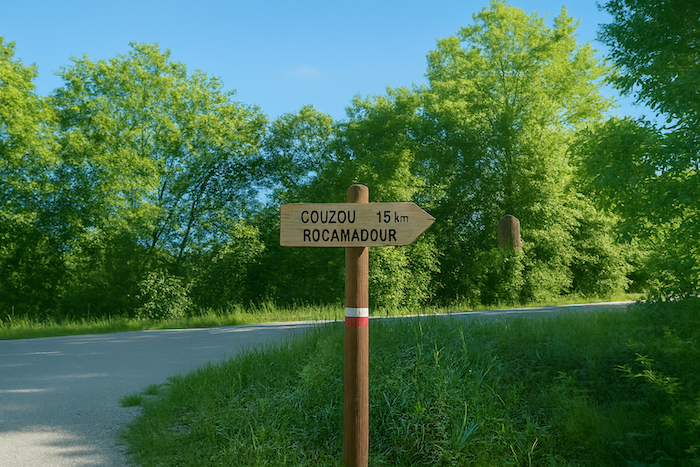
| At the far end of the village, beyond the bar, the road gently leaves Montfaucon along the Route de la Bastide road and joins the D2 road, where the GR46 reappears on the right, emerging from an earthen path as though returning to reclaim the thread of its original route. You are now back on the GR46, fifteen kilometers from Couzou. The route follows the D2 departmental road for a few hundred metres, without lingering there for long. | |
 |
 |
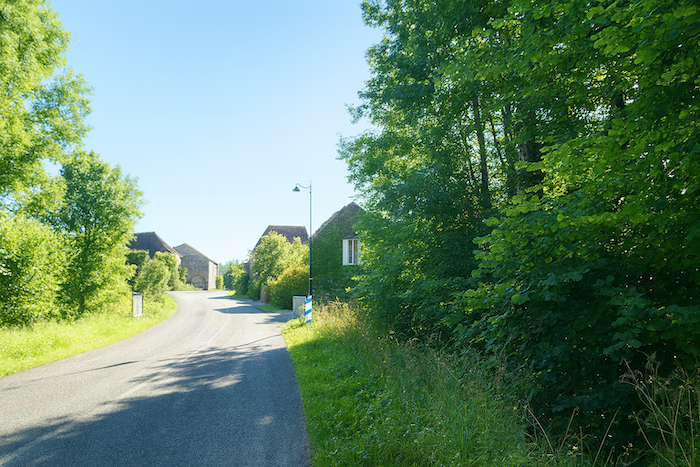
| Shortly afterwards, it passes through the quiet hamlet of Les Vitarelles, a modest extension of Montfaucon nestled along the edge of the causse. | |
 |
 |
|
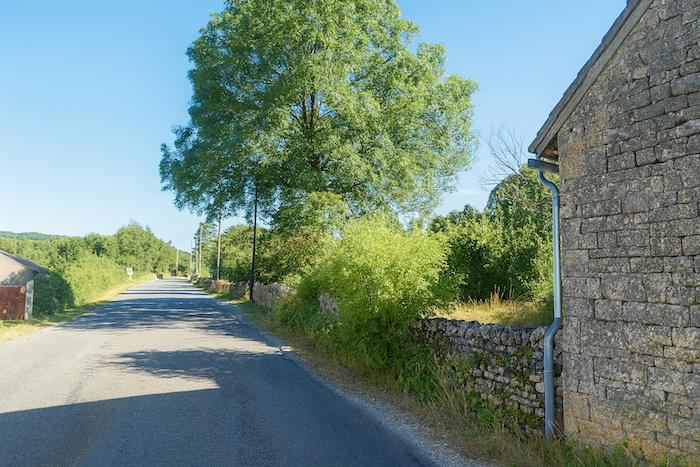
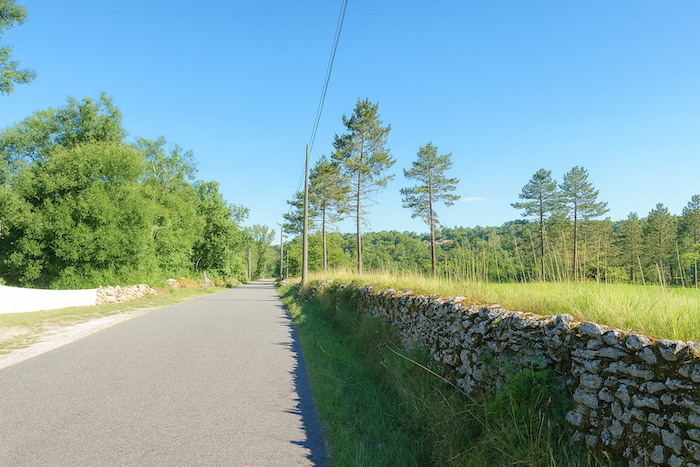
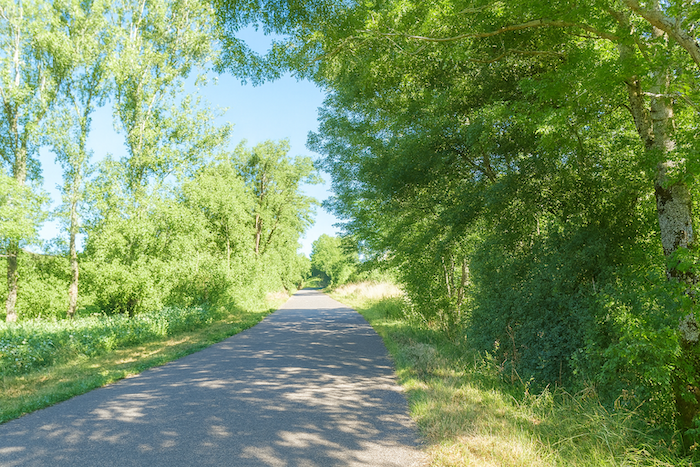
Here, the route leaves the D2 and follows the D10 departmental road, where a few houses still stand beneath the light canopy of the trees, seemingly suspended in the landscape. |
|
 |
 |
|
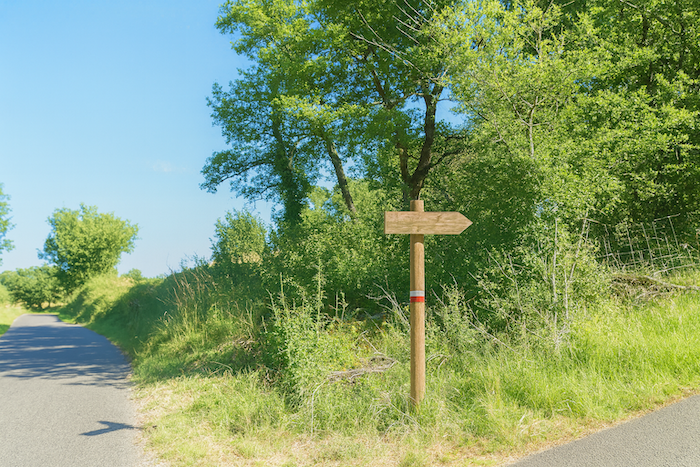
Shortly afterwards, you need to be particularly attentive. The route suddenly leaves the road and begins climbing back onto the causse. Only a discreet sign planted in the bank points towards Couzou and Rocamadour along the GR46, almost like a secret reserved for observant walkers. |
|
 |
 |
|
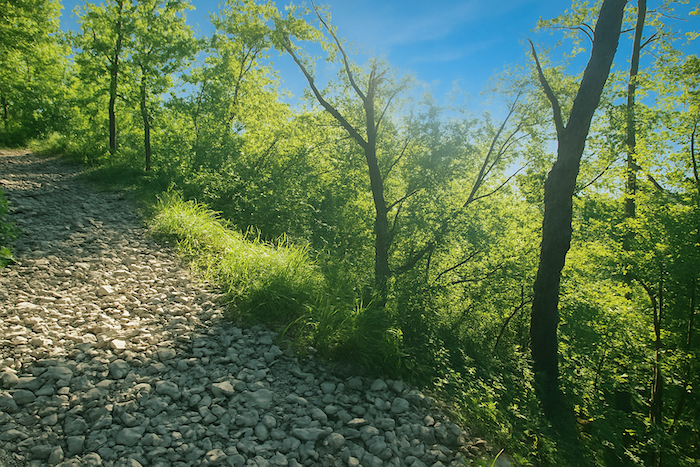
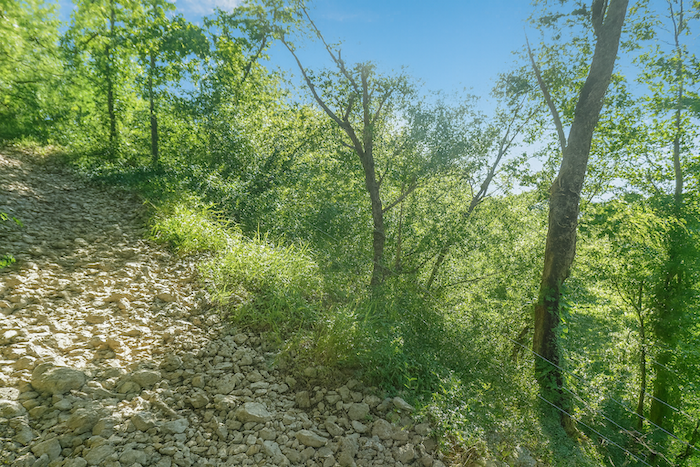
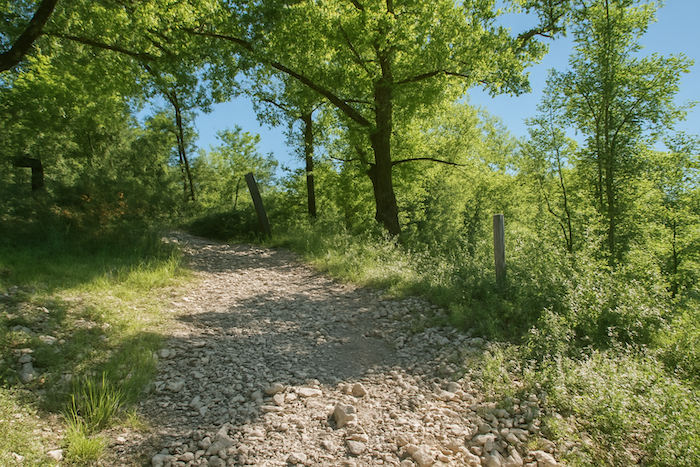
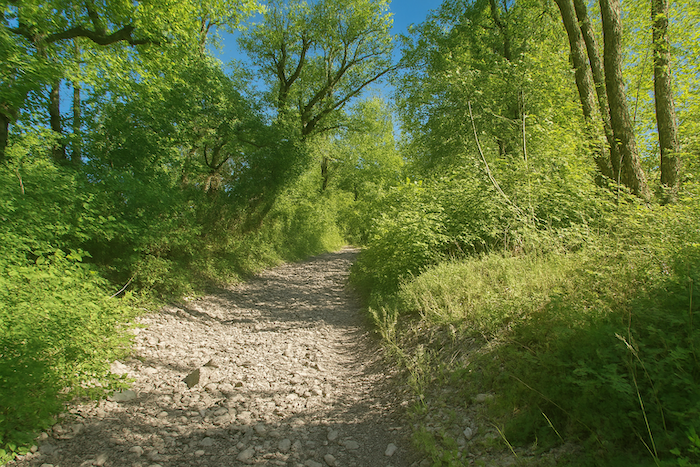
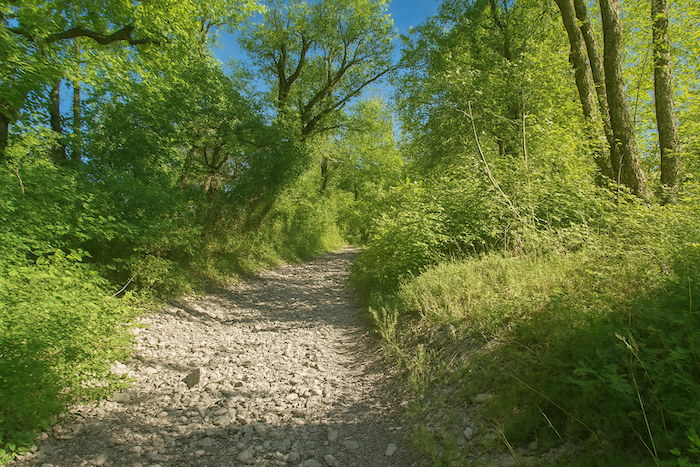
Here, any sense of pleasure is deceptive. A trail climbs steeply up the slope, or rather a scree-covered track strewn with pale, brittle stones, irregular in shape and unstable beneath your feet. The effort soon becomes persistent and lasts long enough to draw more than a few sighs and grimaces. You have rediscovered the causses, the real ones, the kind that have to be earned. |
|
 |
 |
|
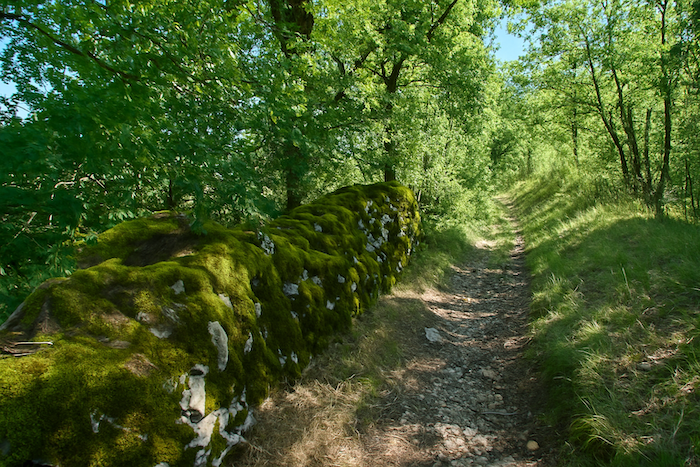
On either side, the vegetation displays a raw, almost wild abundance, spilling freely over the edges of the trail. The tall trees, some leaning slightly, seem to accompany the walker uphill like silent companions. A magnificent stone wall covered in soft moss tempers this mineral harshness, offering the eye an unexpected touch of gentleness. |
|
 |
 |
|
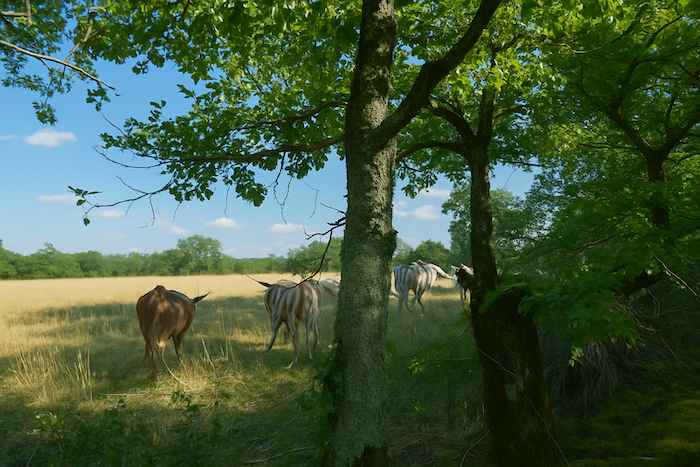
From time to time, almost furtively, livestock graze in the surrounding meadows, their discreet presence bringing life to these open spaces without disturbing their tranquility. |
|
 |
 |
|
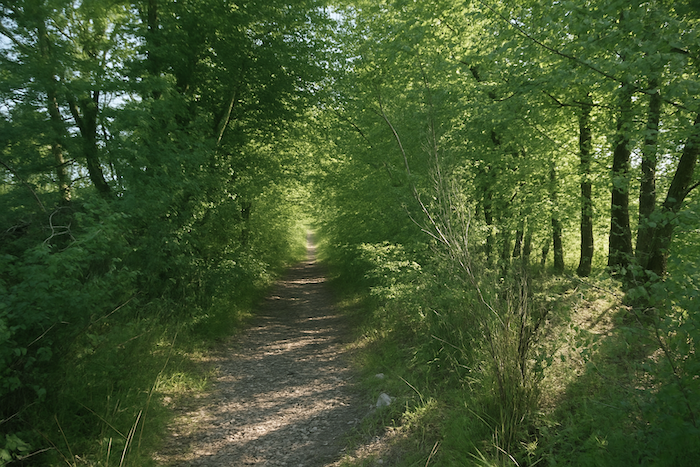
Higher up, the gradient becomes less demanding, and the stones gradually cease their resistance beneath your feet. |
|
 |
 |
|
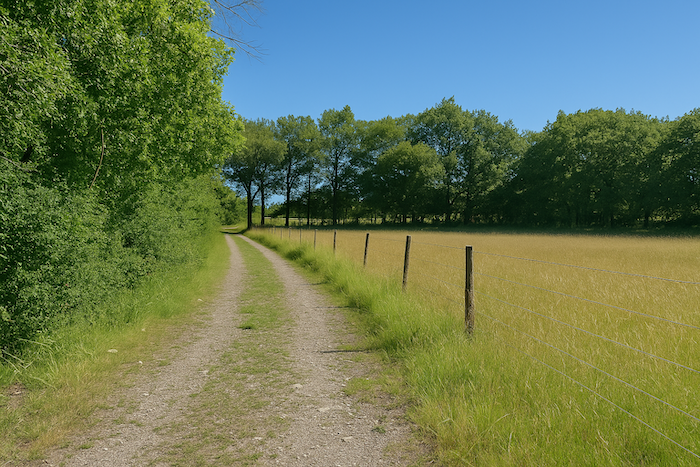
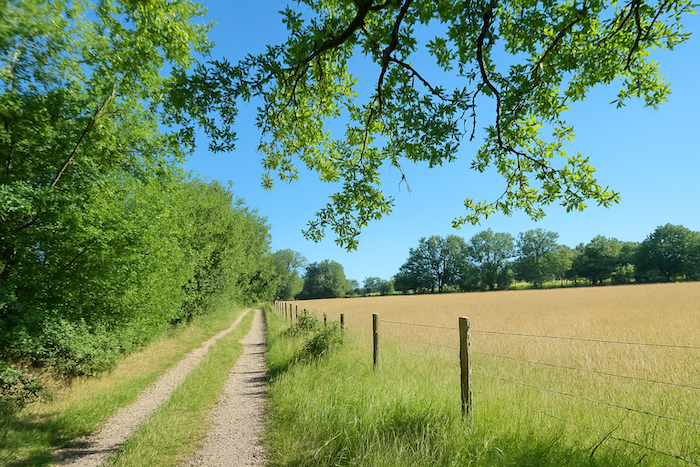
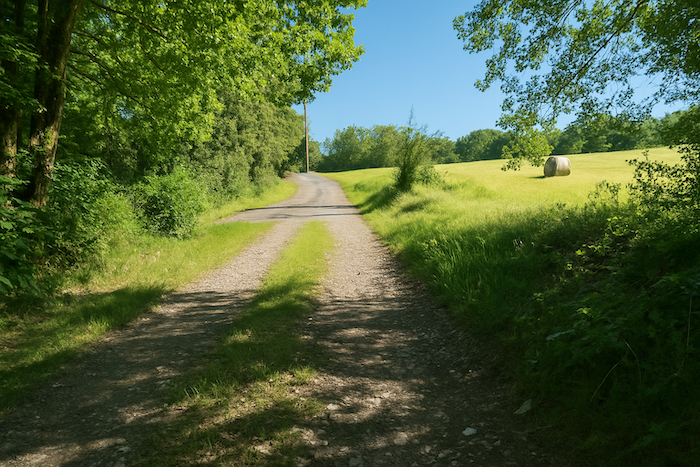
Then, almost as a reward, a broad track of beaten earth takes over, offering the walker a welcome respite. |
|
 |
 |
|
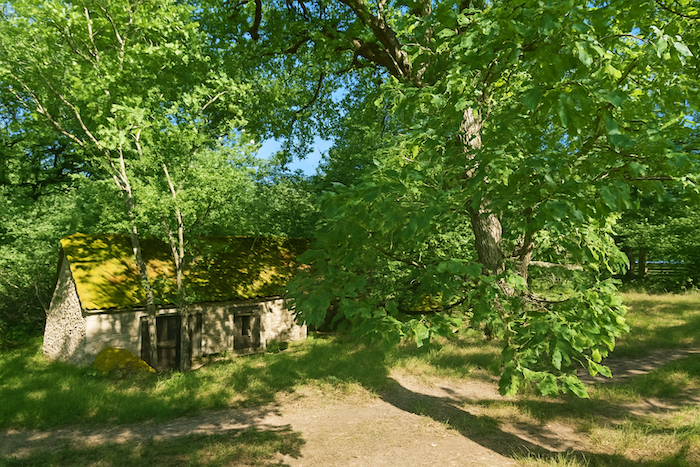
The path soon reaches a small asphalt road. Here again, a stone house comes into view, perhaps abandoned, resembling one of those silent relics that punctuate the causse and preserve its memory. |
|
 |
 |
|
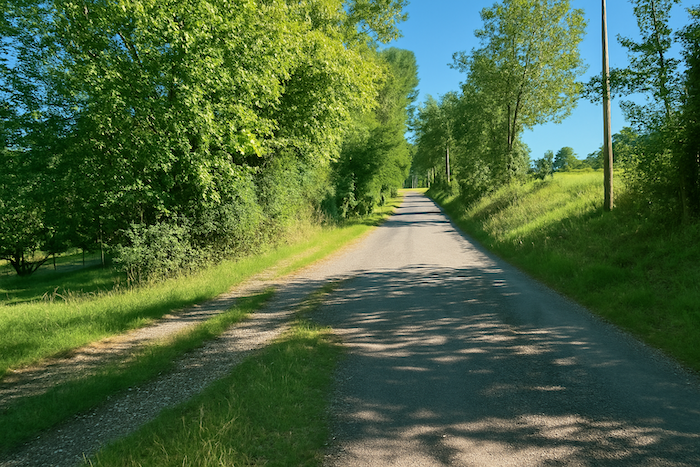
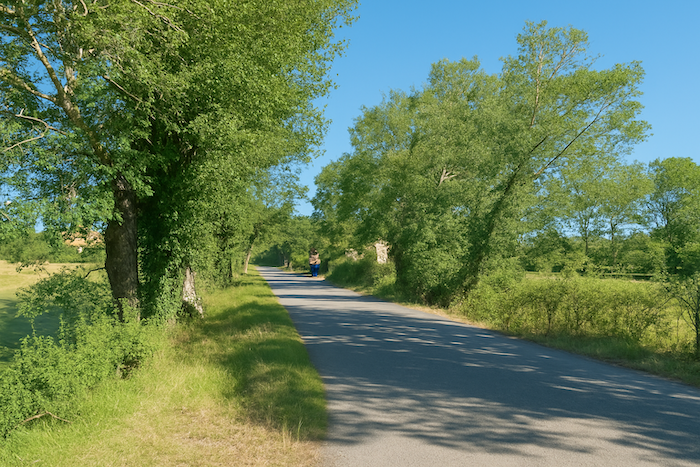
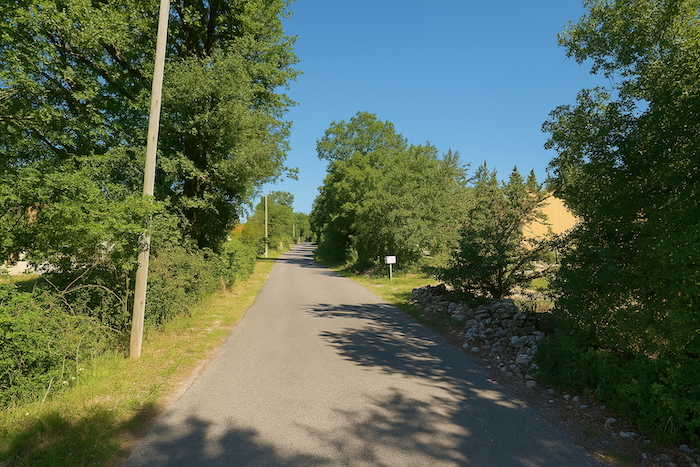
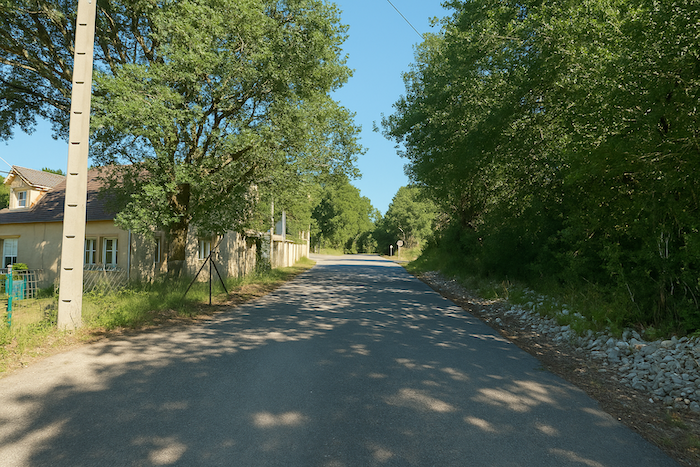
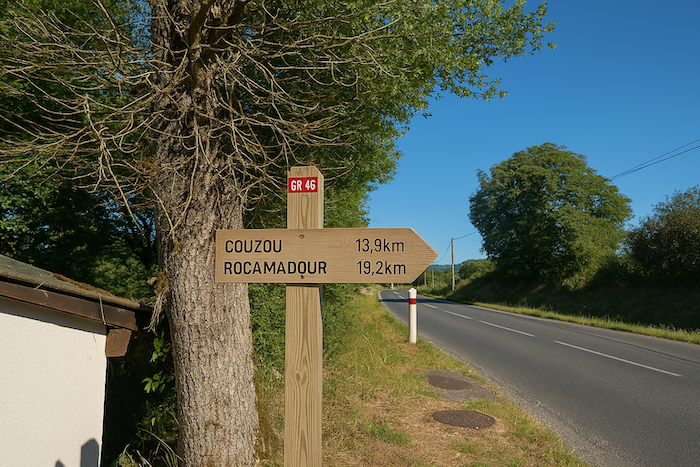
The road then stretches onwards, alternating between shade and light beneath the canopy of deciduous trees, until it reaches a junction with the main D801 departmental road. Couzou is now only 13.9 kilometers away, while Rocamadour still lies some distance ahead, 19.2 kilometers from here. |
|
 |
 |
 |
 |
|
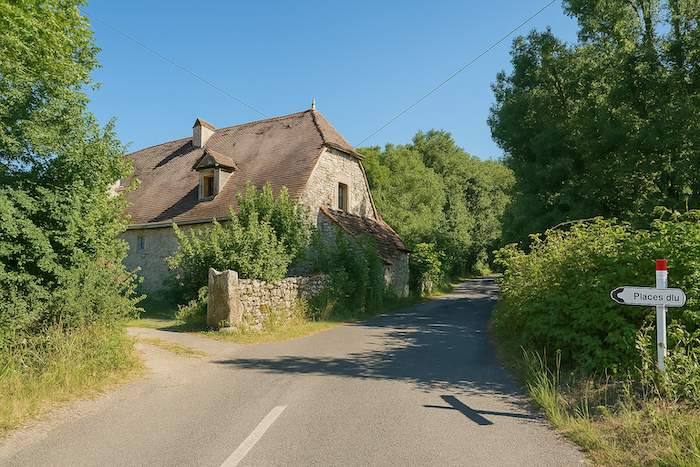
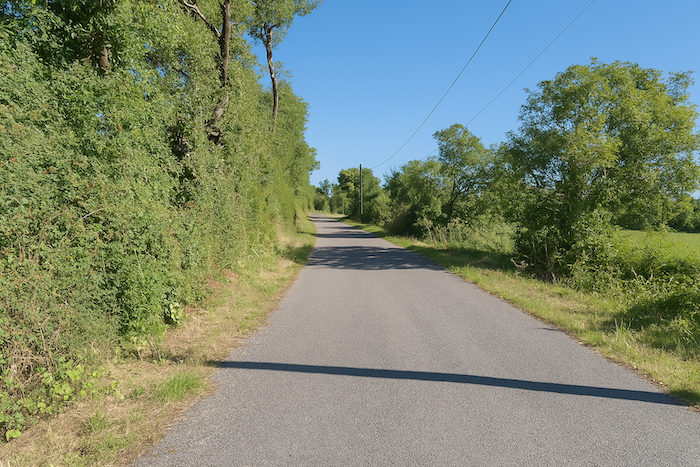
Here, the route heads towards the place known as Places du Lac, following the monotonous ribbon of the road for a while. |
|
 |
 |
|
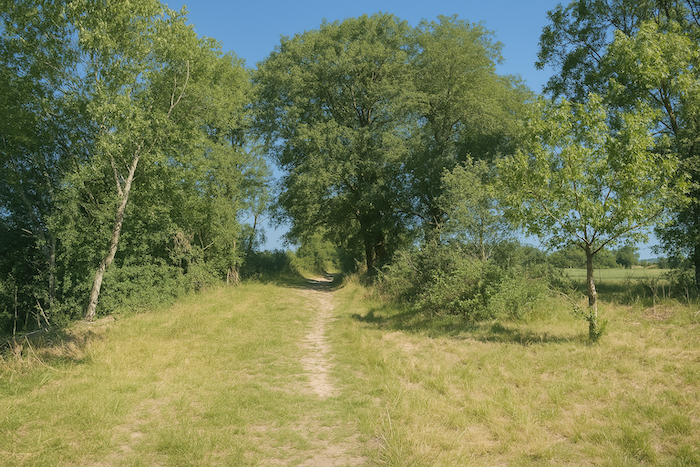
But already, as though overcome by a need to escape, it leaves the asphalt behind without regret and slips into the shade of the woodland, returning to the more authentic softness of beaten earth. |
|
 |
 |
|
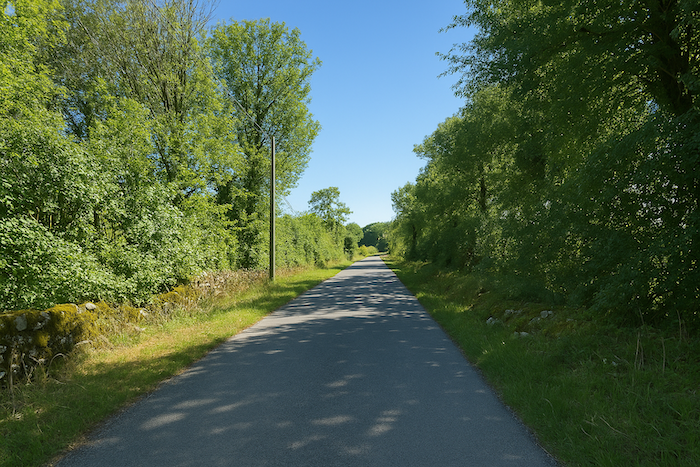
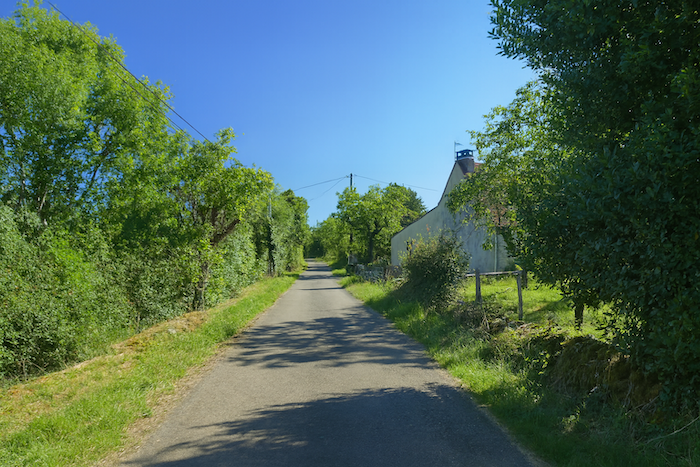
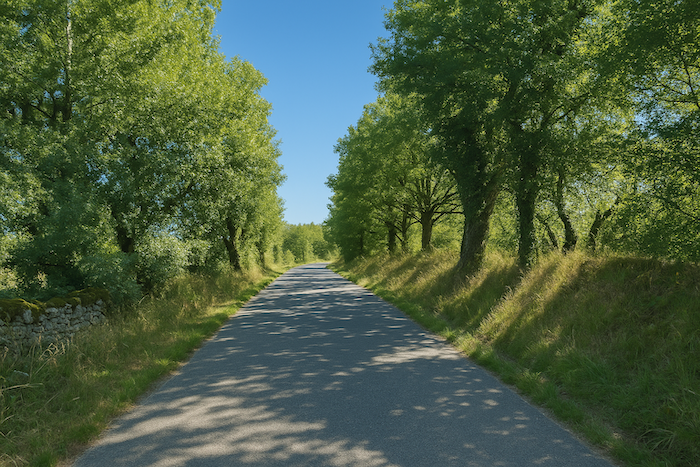
This respite is short-lived, however, and the path soon rejoins the road, continuing towards Places du Lac. Nothing here makes any deliberate attempt to charm, yet everything holds the gaze. The causse stretches out, bare and luminous, punctuated by dry-stone walls and short grasslands gently rippling in the wind. The name itself is intriguing, Places du Lac. Yet no gleaming stretch of water fulfils that promise. There is nothing but the vastness of the causse, its scattered groves and open meadows. Perhaps a pond once existed here, fleeting and seasonal, where livestock came to drink, although no one seems to know for certain. In these lands, where water vanishes underground and seeps into the limestone, every hollow in the ground once held the memory of a precious, almost secret resource. From time to time, a few animals appear in the silence, peaceful silhouettes bringing the faintest touch of life to these motionless expanses. |
|
 |
 |
 |
 |
Section 3: Through a causse of sometimes sublime beauty
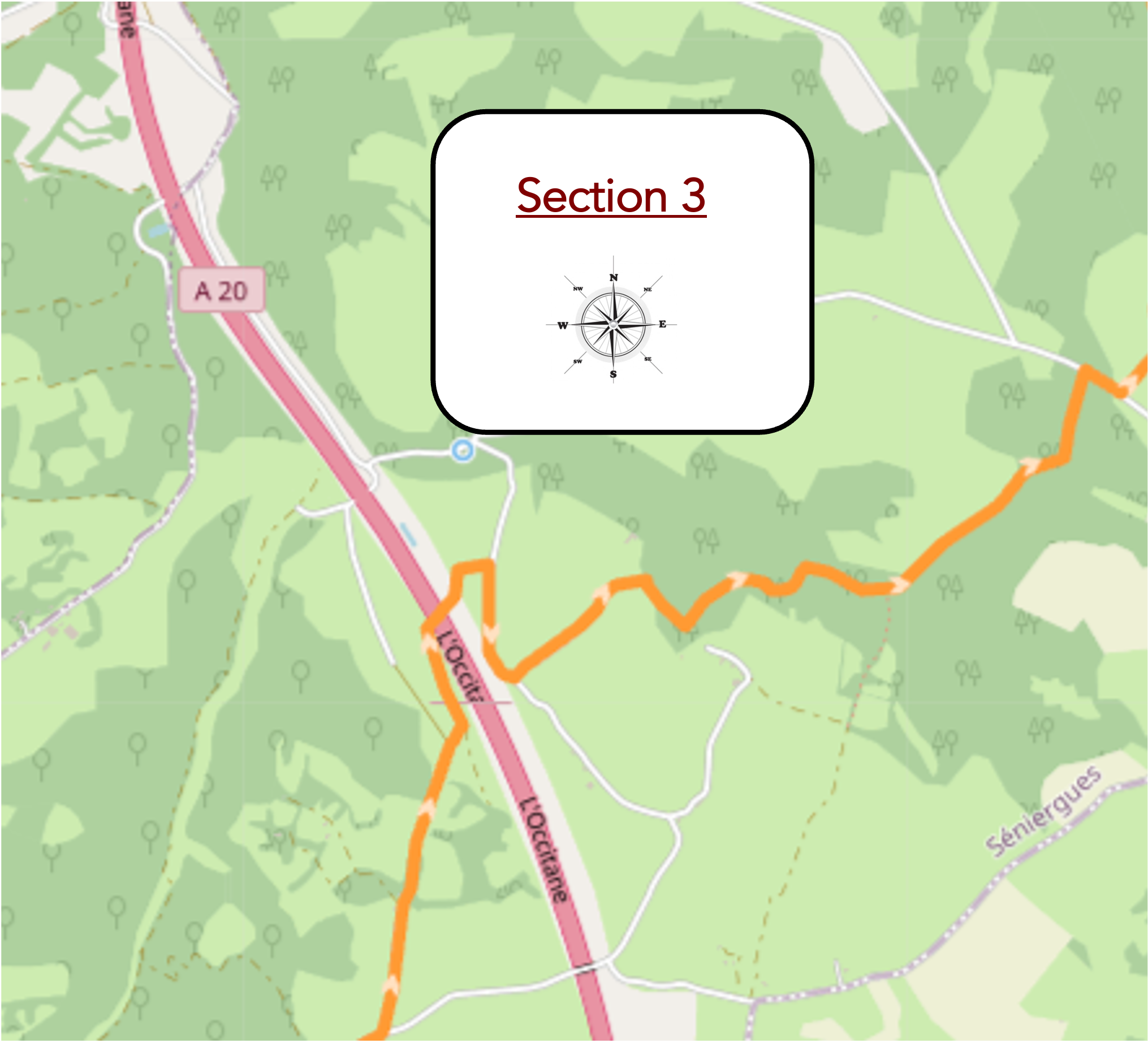
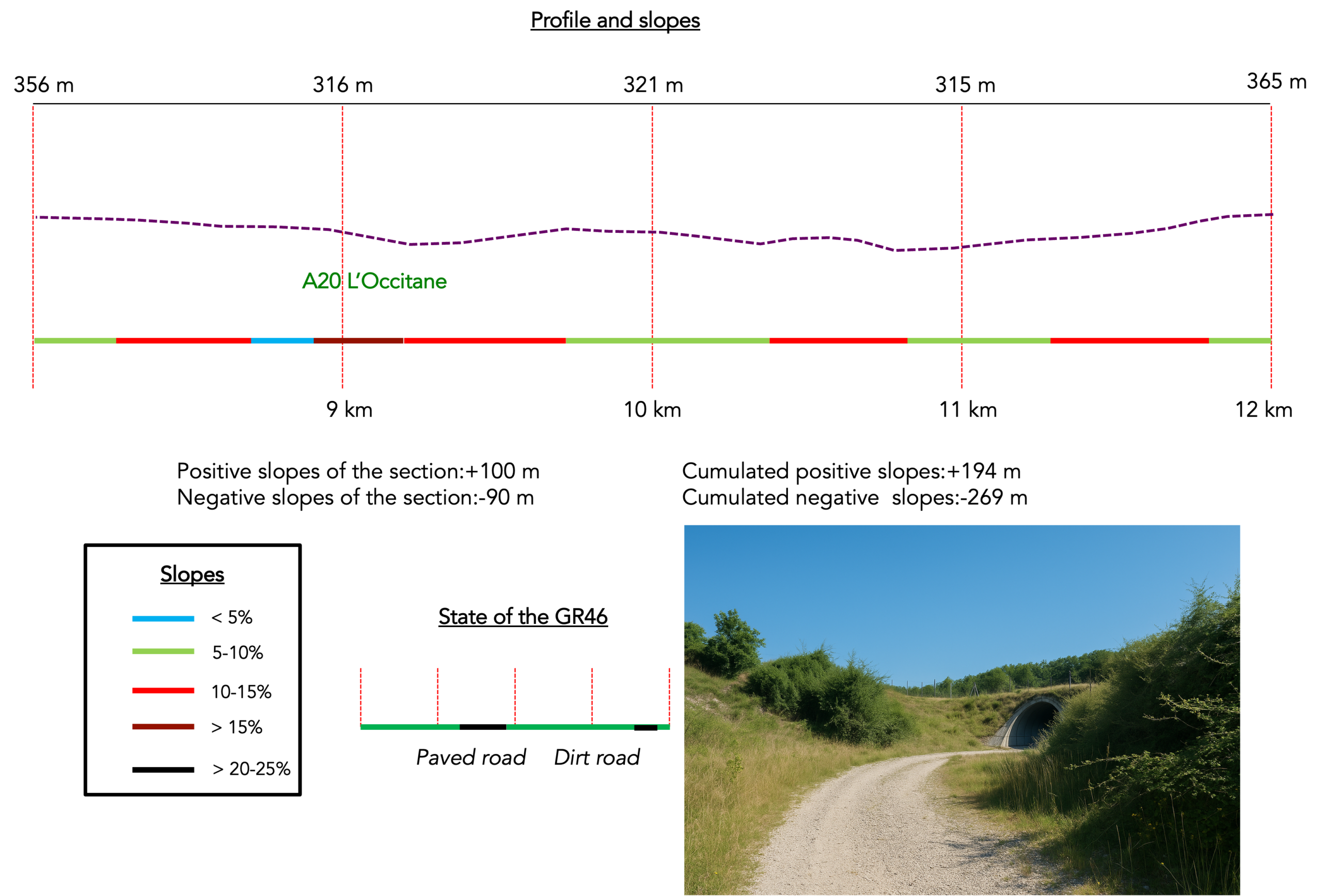
Overview of the route’s challenges : The route occasionally includes somewhat steeper gradients, but nothing particularly demanding.
|
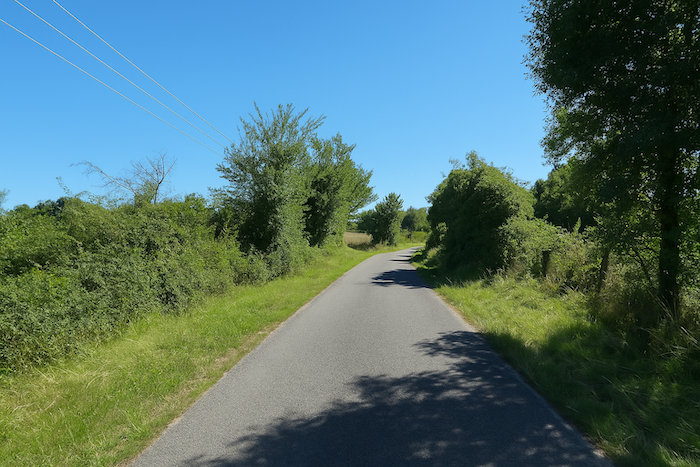
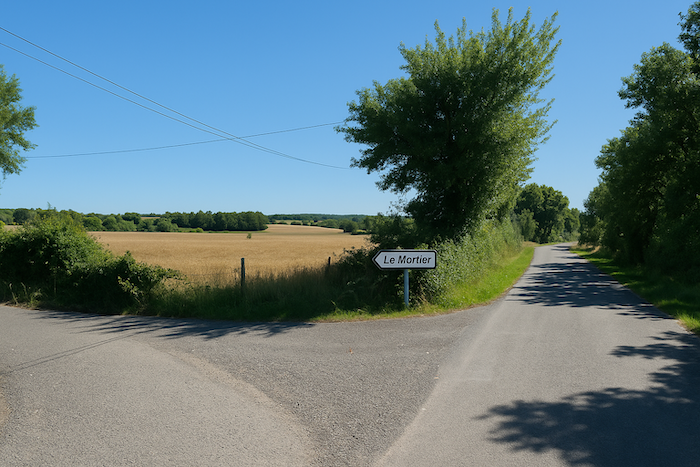
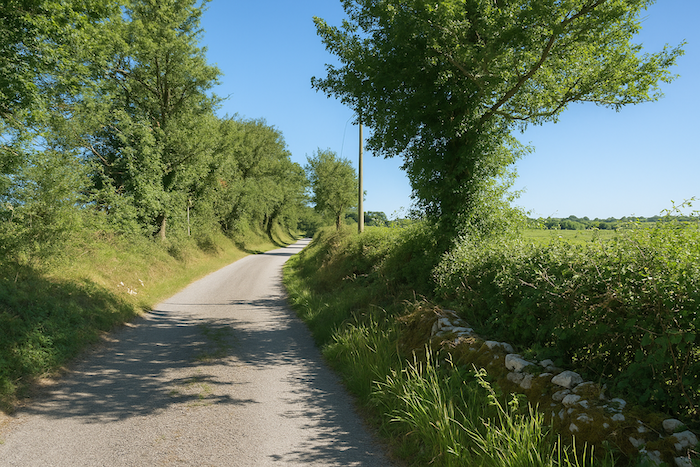
And still the ribbon of asphalt continues, seemingly without end. On either side, hedgerows and fields form a familiar, almost interchangeable landscape where nothing truly commands the eye. The shades of green repeat themselves, shapes echo one another with an almost monotonous regularity, and eventually the gaze simply drifts across the scenery without lingering. Even the sky, vast and uniform, seems to share in this sense of stillness, suspended in a featureless light, until a junction towards Le Mortier finally appears. The route ignores it and continues straight ahead with quiet determination. |
|
 |
 |
|
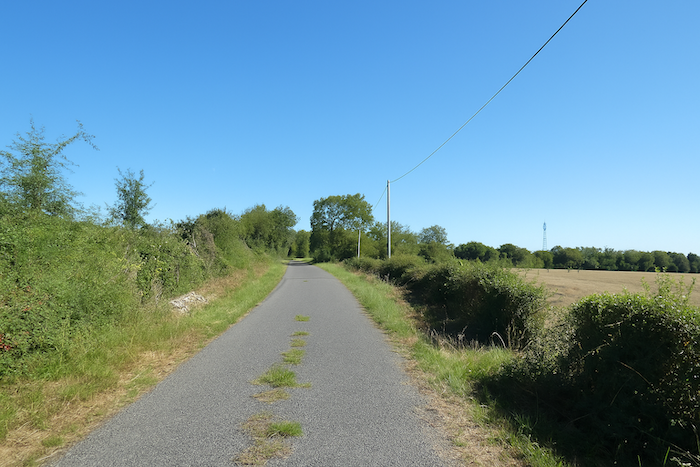
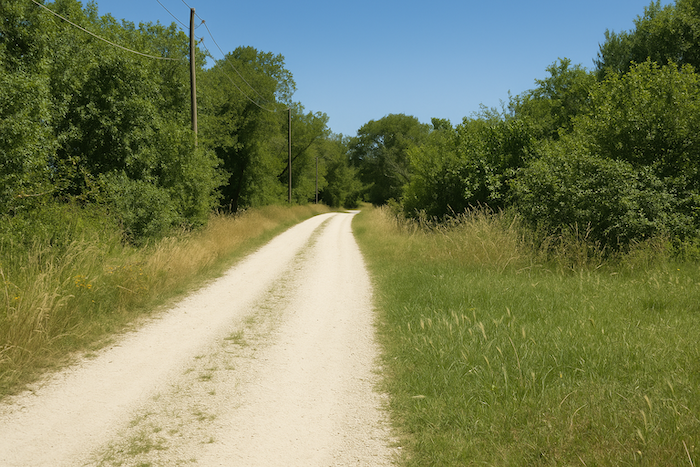
But nothing changes, the asphalt persists. And asphalt never truly enhances a landscape. Here, everything seems to stretch onwards without purpose, almost left to itself. The road, narrow and uneventful, runs straight ahead, indifferent to those who travel along it, offering neither promise nor surprise. It inspires neither wonder nor curiosity. It simply continues, wrapped in an almost stubborn monotony. Electricity poles punctuate the landscape with mechanical regularity, drawing a rigid line through this featureless scenery. Everything here speaks of continuity rather than contrast, repetition rather than discovery. There is a profound, almost disarming ordinariness to the causses when nothing interrupts their vastness. This is a landscape without brilliance or drama, one that does not readily reveal itself. |
|
 |
 |
|
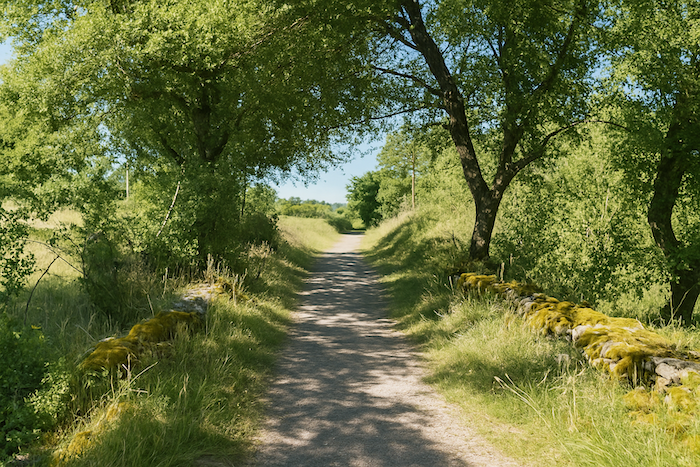
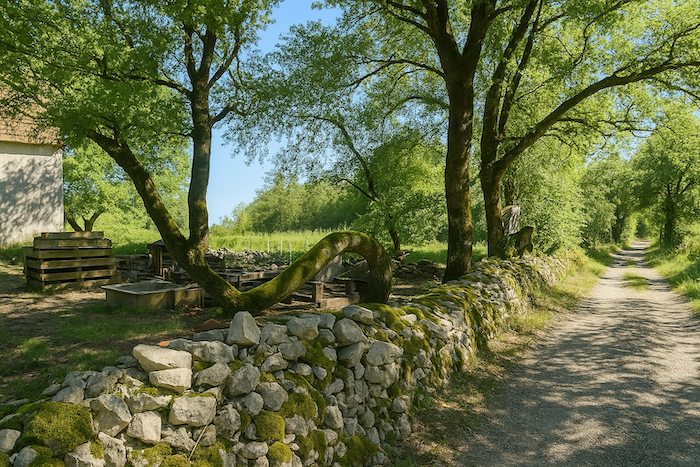
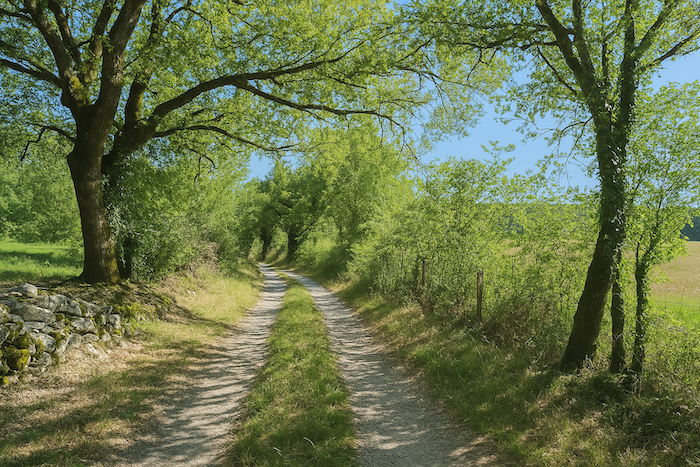
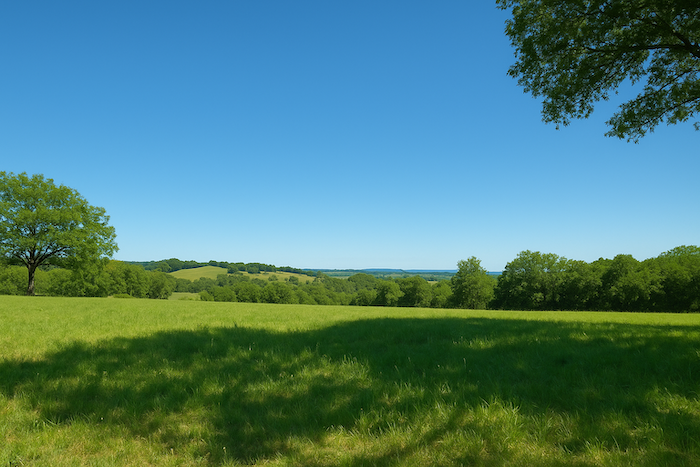
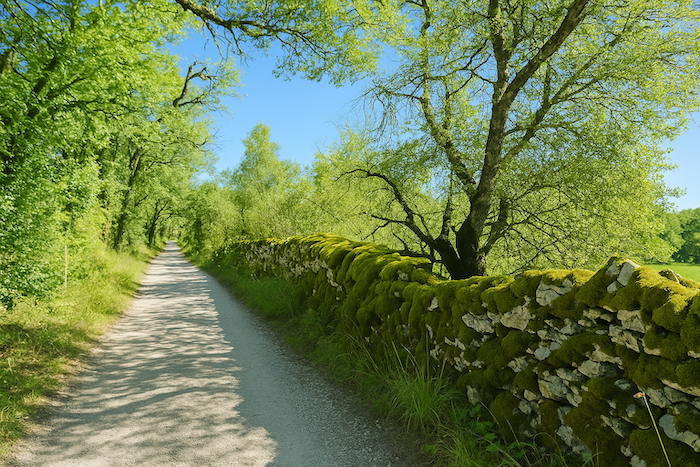
The pilgrim’s spirit, however, is ever changing, ready to awaken at the slightest sign. All it takes is for beaten earth to reappear and for moss-covered stone walls to slip back into the landscape, and everything is transformed. The harshness fades, a sense of gentleness returns, and with it something more intimate, as though the path had suddenly rediscovered its soul, and the walker theirs. |
|
 |
 |
 |
 |
|
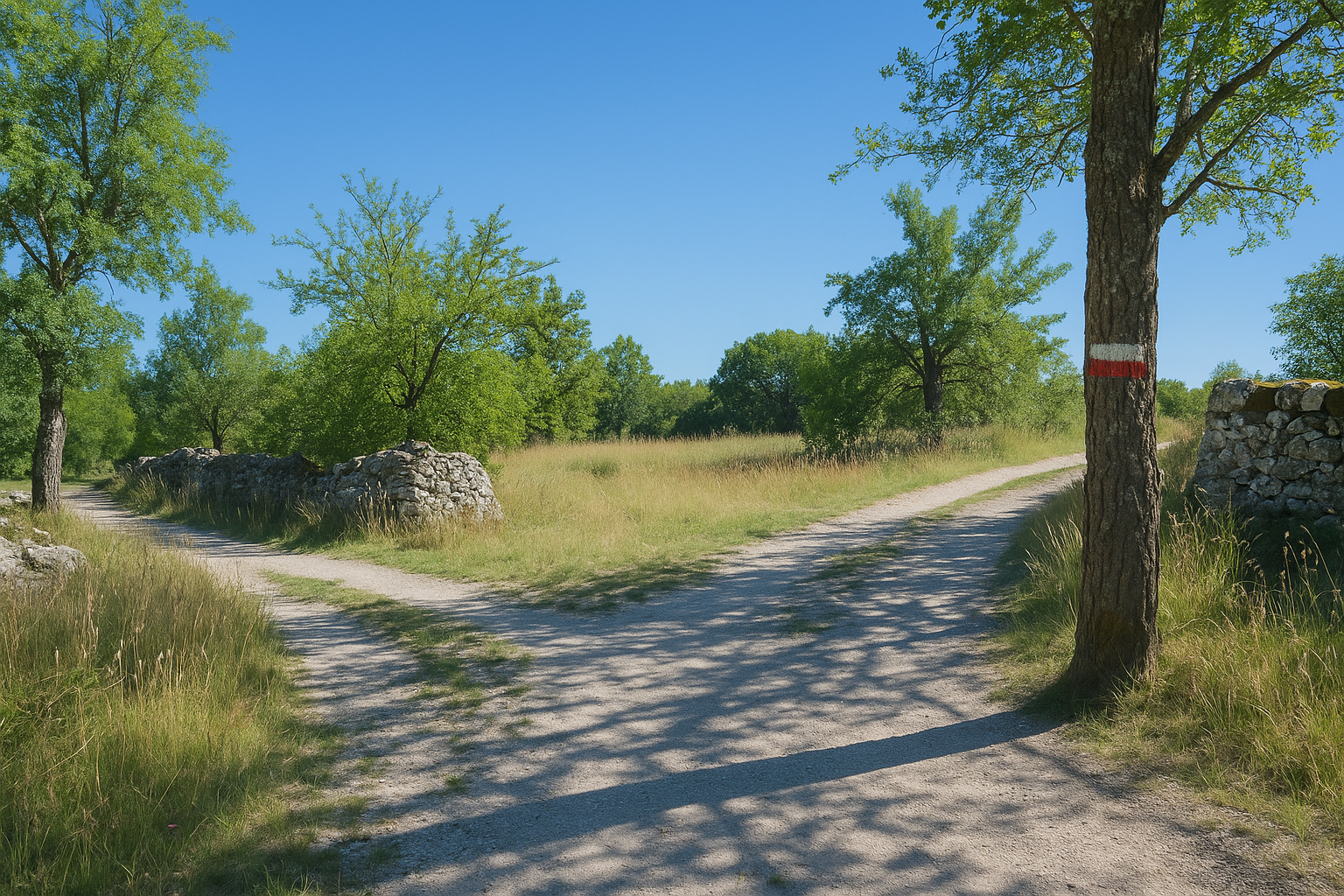
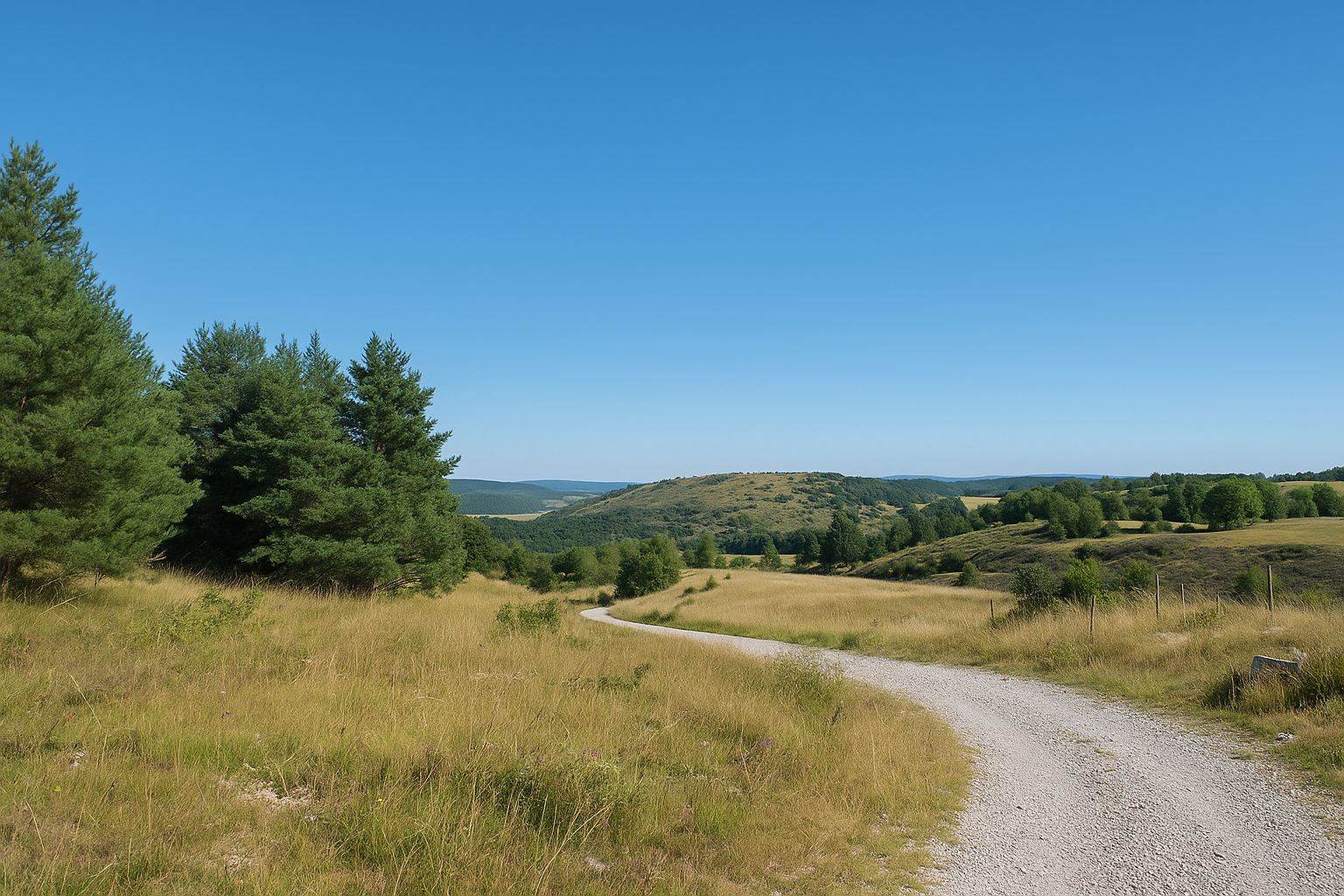
Shortly afterwards, the route turns away and follows a path descending once again towards the motorway. |
|
 |
 |
|
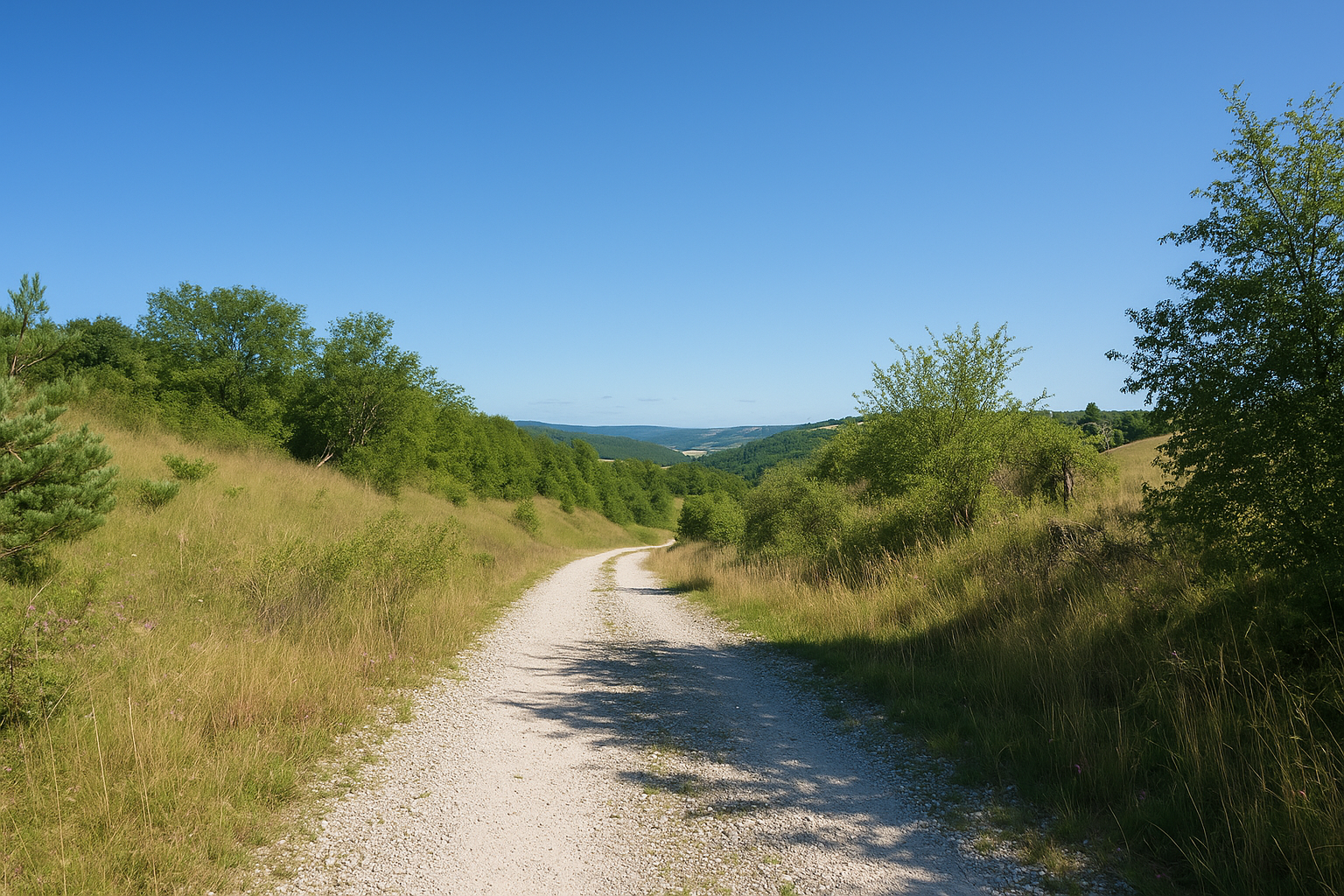
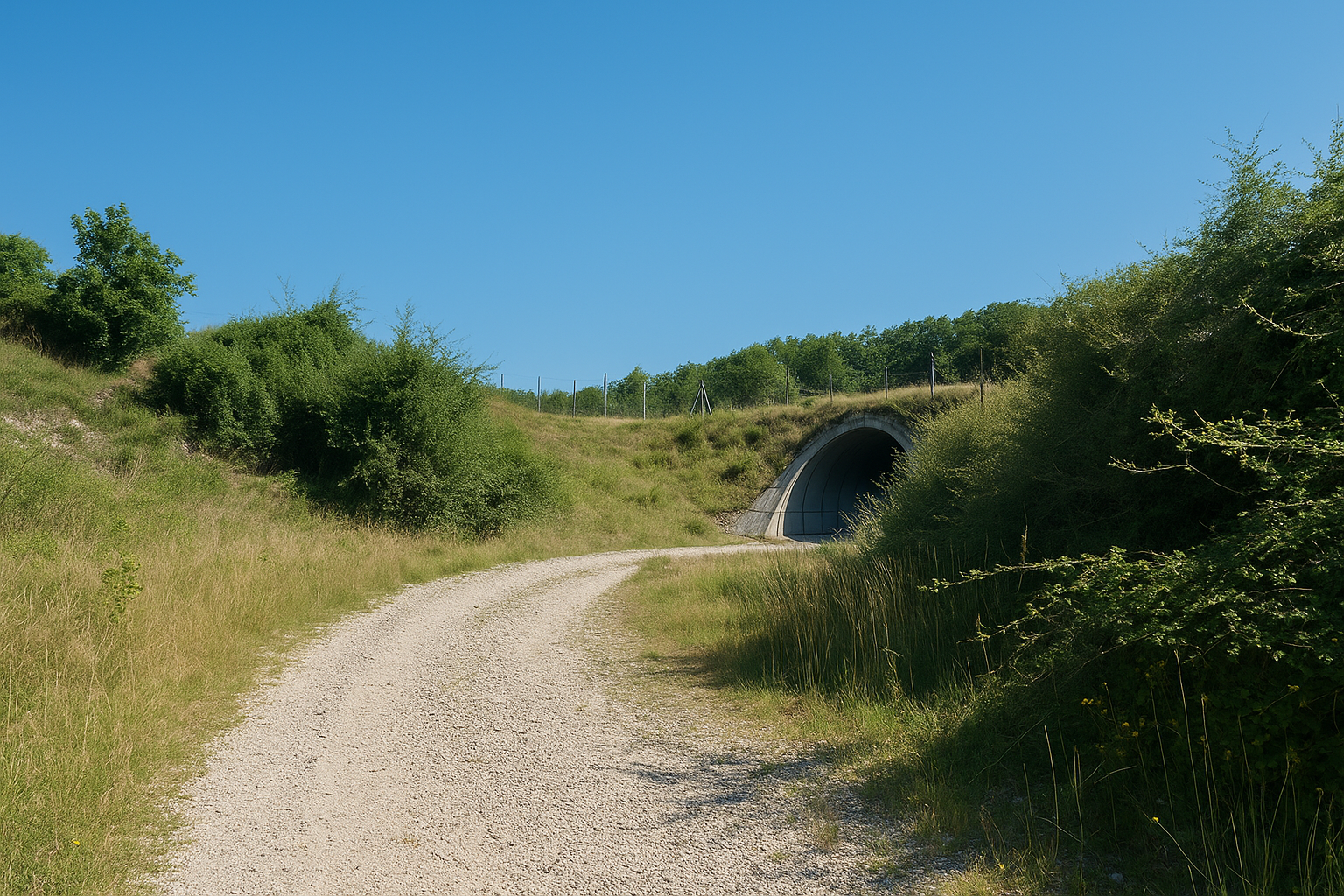
The landscape suddenly becomes barer, almost stripped naked. There is nothing surprising in this, as major infrastructure inevitably leaves traces behind, however discreet they may be. Yet here, the disruption remains contained, almost softened. The path does not impose itself upon the surroundings. Instead, it slips quietly beneath the motorway through a modest tunnel, as though careful not to disturb the balance of the landscape. |
|
 |
 |
|
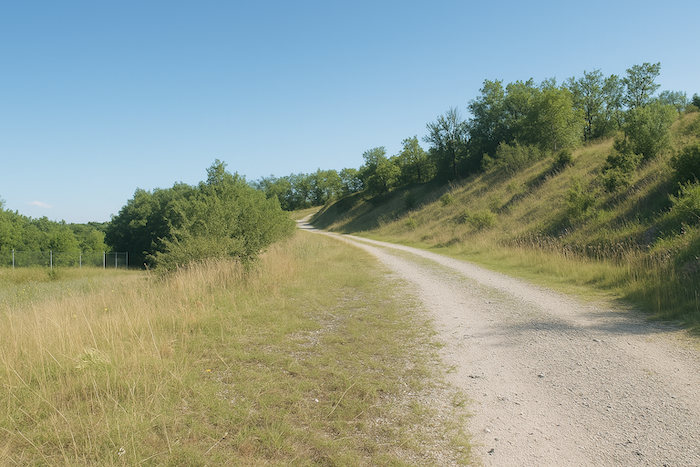
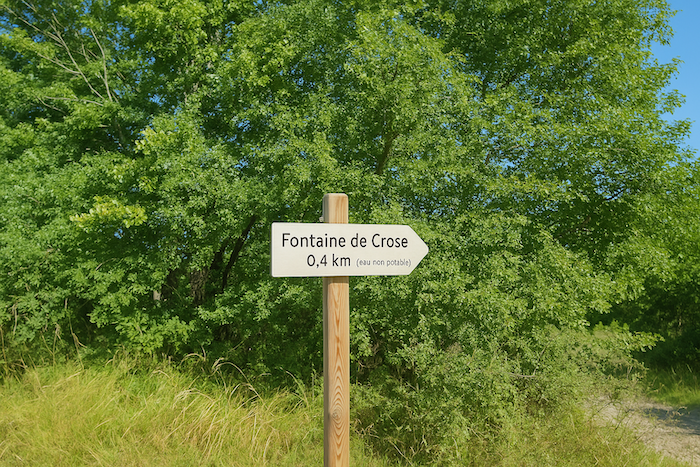
On the other side, it returns to the causse, in equally austere surroundings where only the essentials remain. A sign points towards the Fontaine de Crose Basse, but that is not your direction. The route turns away from it and resolutely follows the opposite path. |
|
 |
 |
|
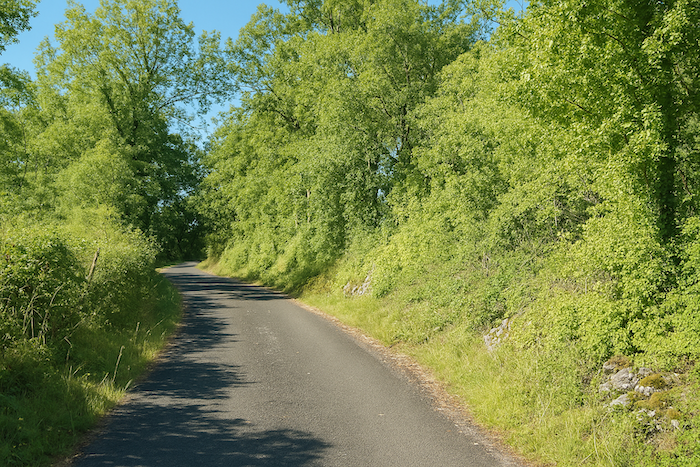
It then follows a small, almost forgotten road for a few hundred meters. |
|
 |
 |
|
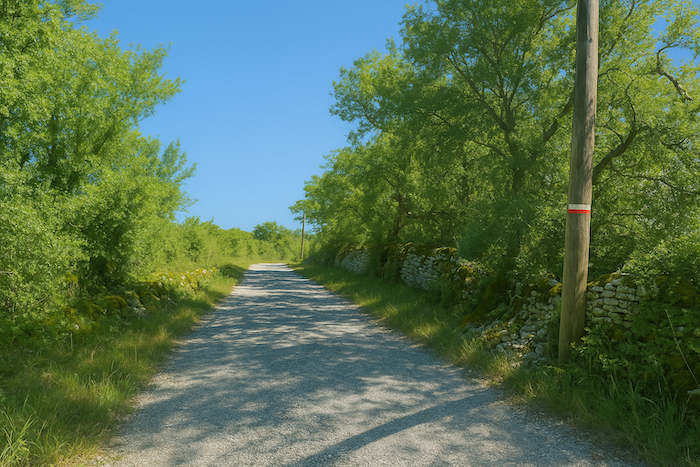
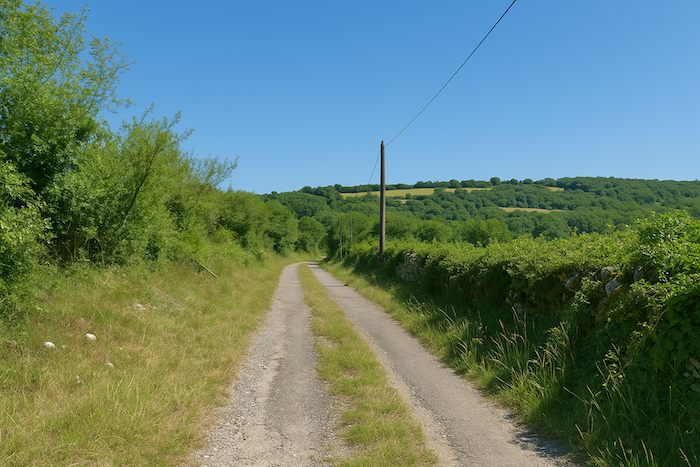
Then, without warning, it leaves the asphalt once again and returns to an earthen track through more open countryside, where the horizon seems to breathe more freely. |
|
 |
 |
|
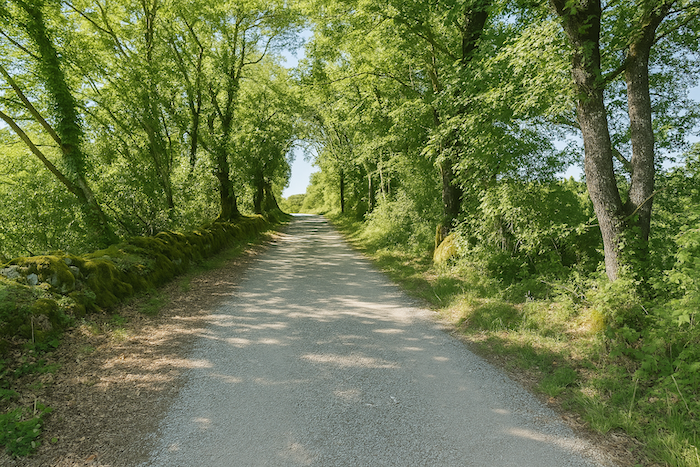
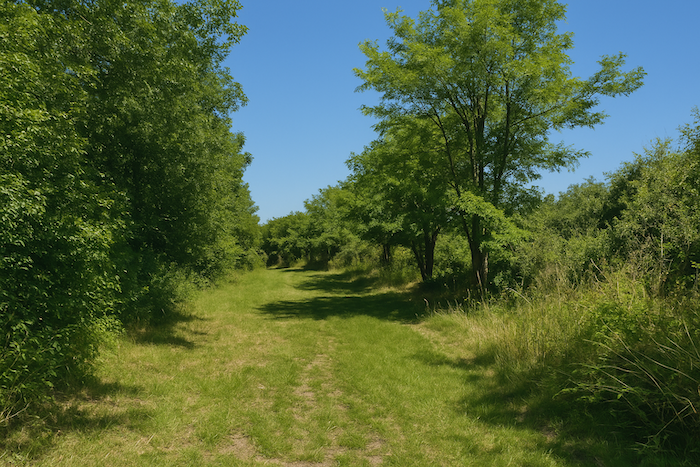
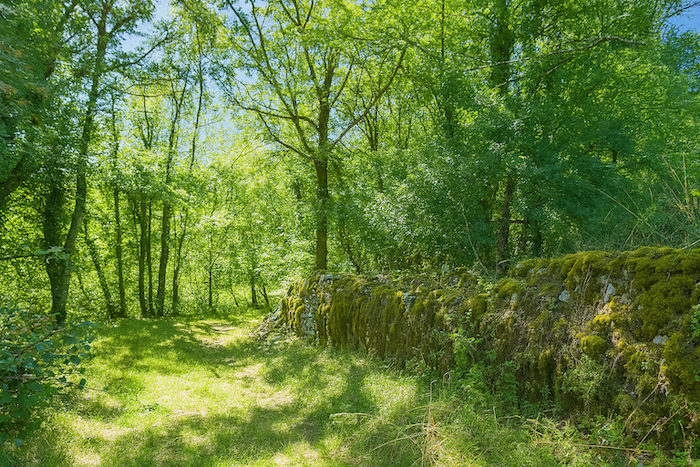
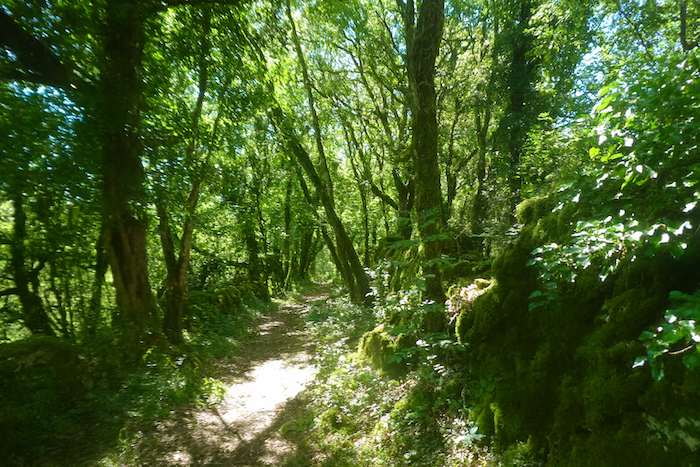
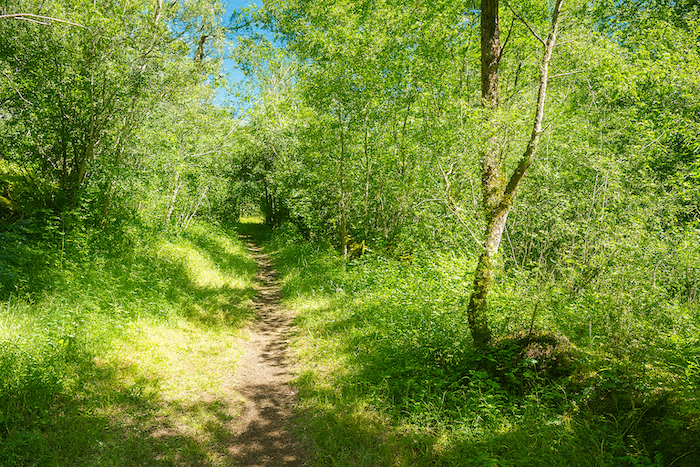
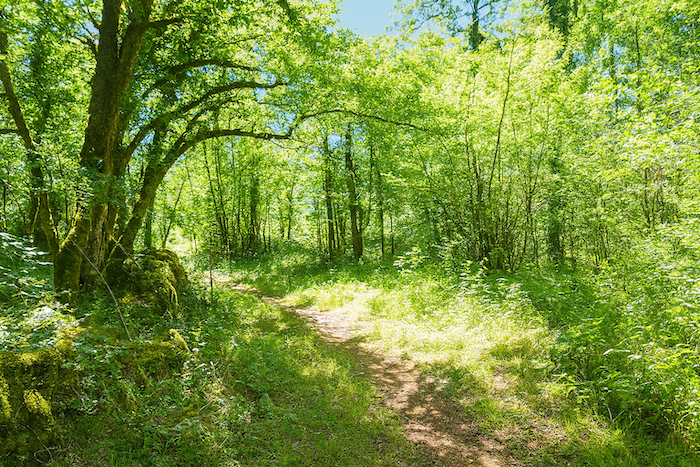
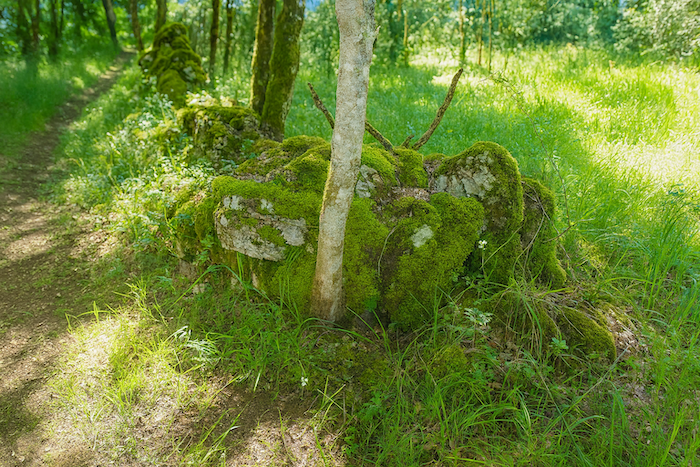
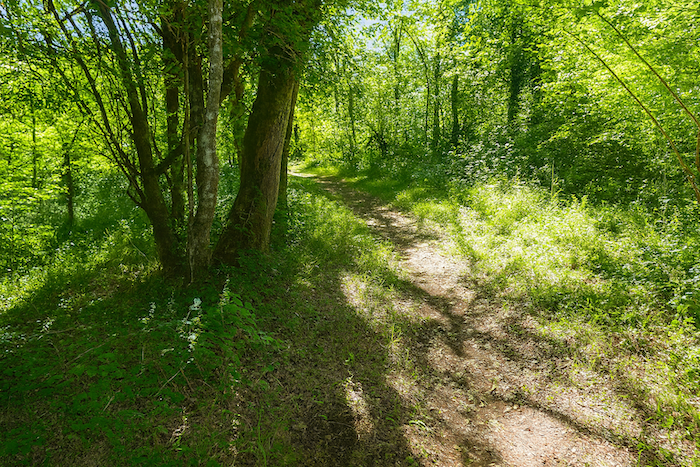
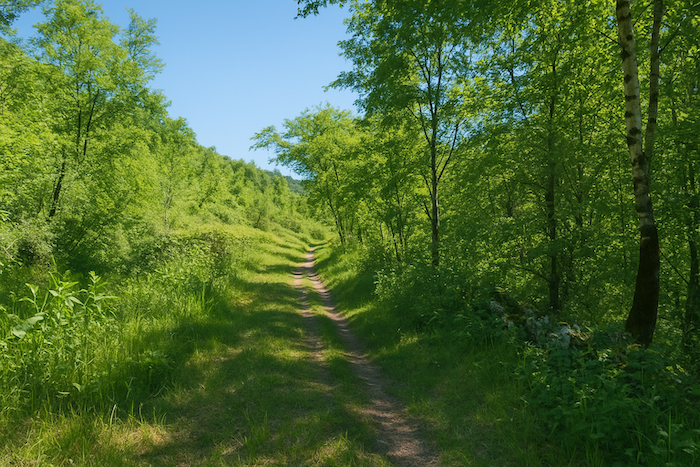
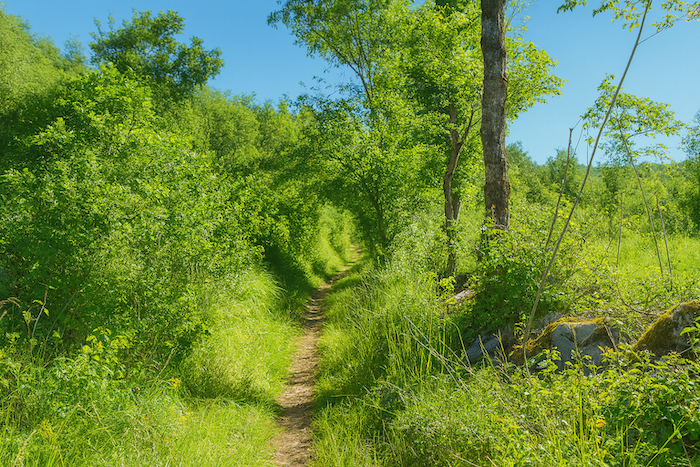
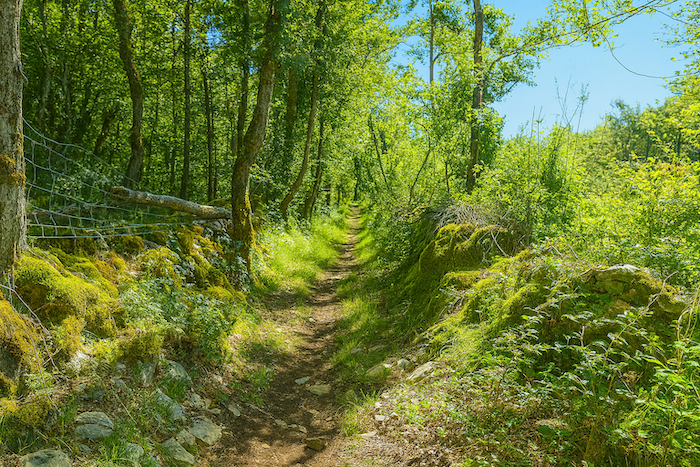
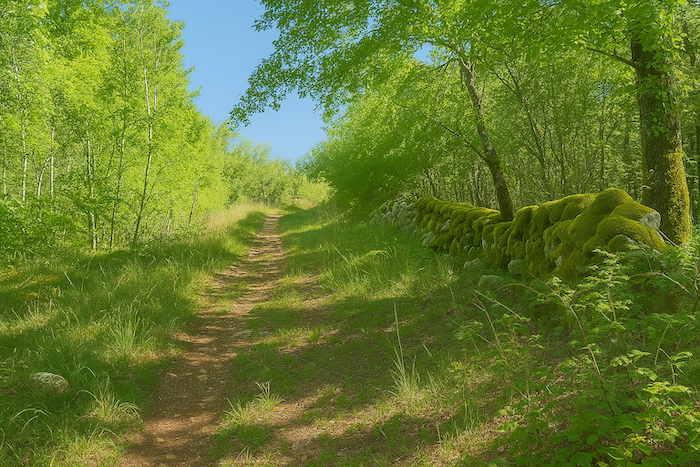
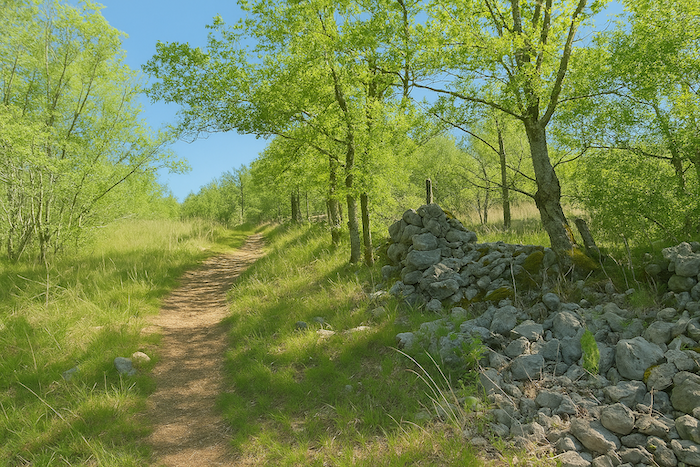
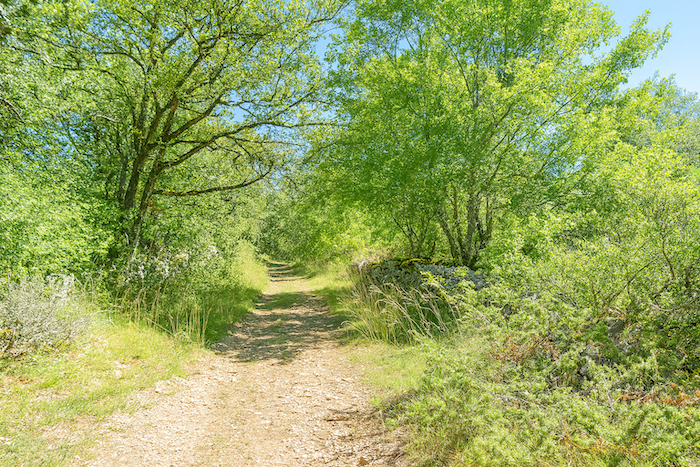
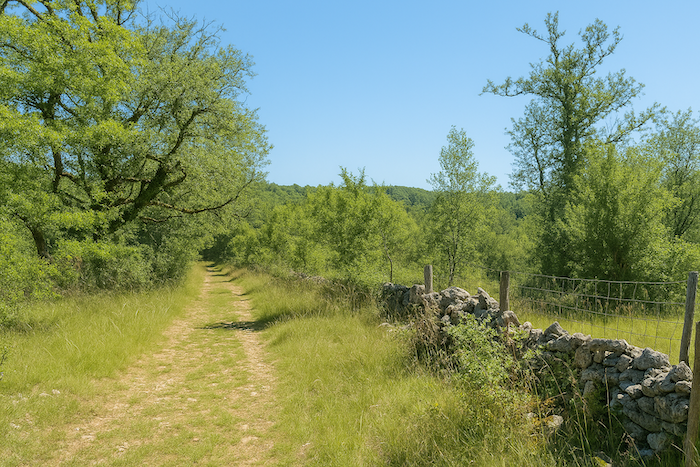
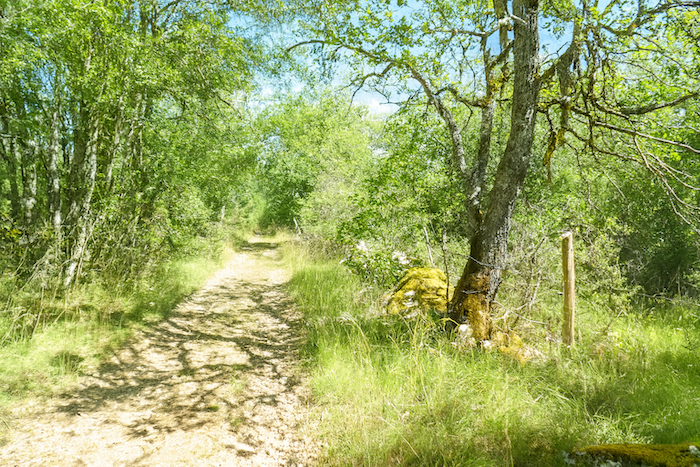
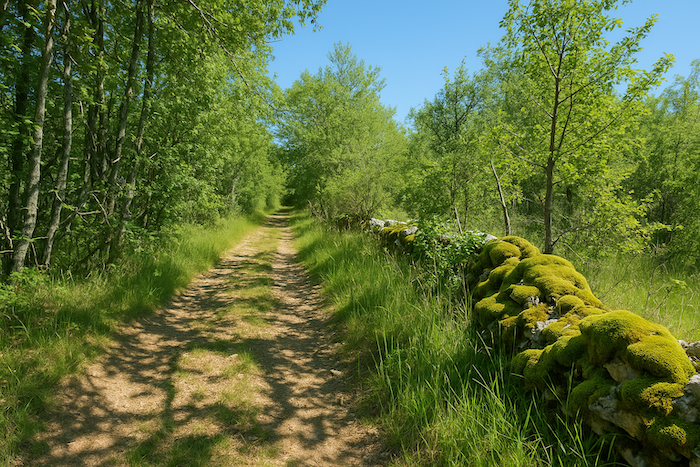
And suddenly, the mood changes completely, as though the world itself had grown calmer. This is the return of the causse as pilgrims love it, raw and wild, yet filled with an unexpected gentleness. The trail stretches ahead through the grass, running alongside those timeless stone walls where moss has settled with infinite patience. |
|
 |
 |
|
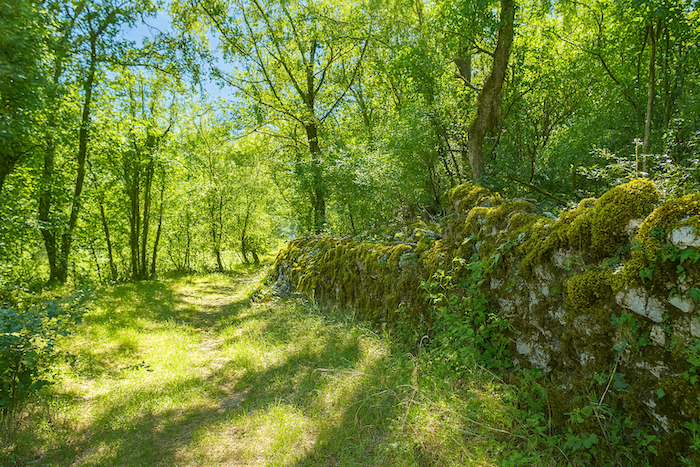
Barely marked, it slips through the soft vegetation, inviting you to slow down and savour every step. To the right, an ancient wall, patiently raised by long-forgotten hands, is covered in thick, velvety moss, as though time itself had chosen to leave its mark there. Everything here breathes a profound and silent tranquility. |
|
 |
 |
|
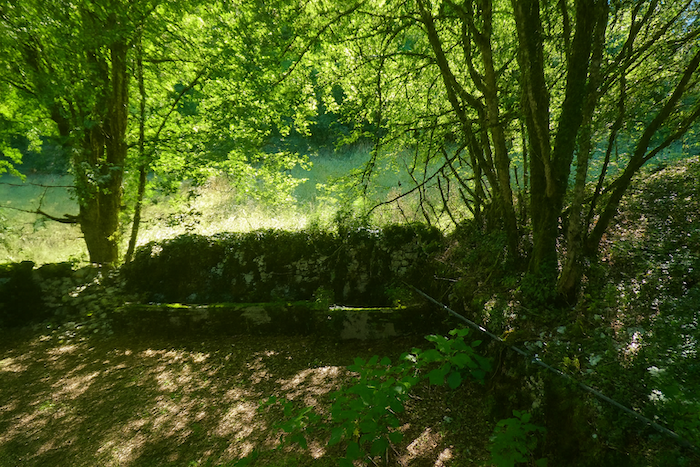
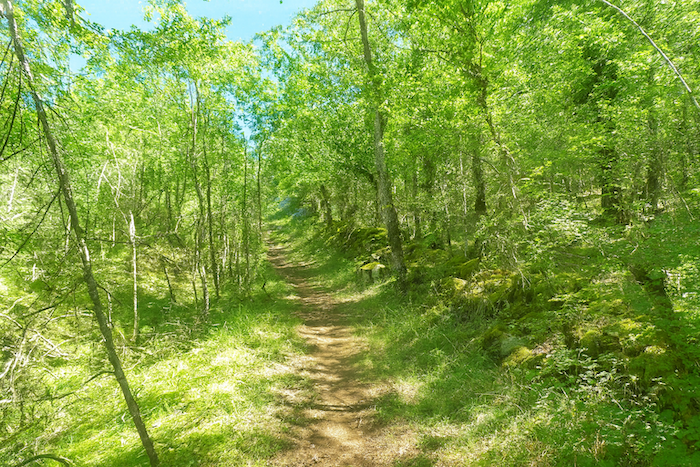
Light plays hide and seek across the ground, shifting between golden glimmers and moving pools of shadow. This no longer feels like a walk, but an interlude. It is a suspended moment when the causse, so harsh elsewhere, suddenly becomes welcoming, almost intimate. One of those rare moments when the path asks nothing more of you, but simply offers the happiness of being there. |
|
 |
 |
 |
 |
|
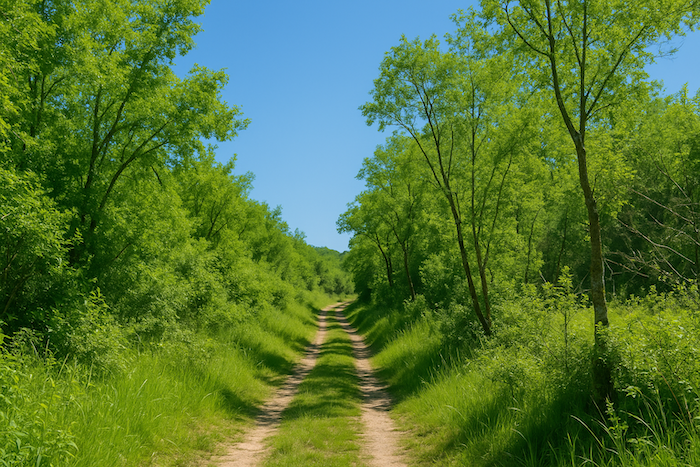
The trail undulates gracefully through this magnificent landscape, climbing, descending and climbing once again, sometimes with a little more insistence but never with brutality, as though seeking to accommodate the walker’s steps rather than put them to the test. |
|
 |
 |
 |
 |
|
Within this microcosm of almost complete wilderness, slender ash trees sometimes seem to taunt the stocky oaks and stunted maples. Dogwoods have probably taken the place once occupied by box trees, devastated by caterpillars. Ferns, meanwhile, are scarce, almost entirely absent, as though the dryness of the causse had kept them at bay. |
|
 |
 |
|
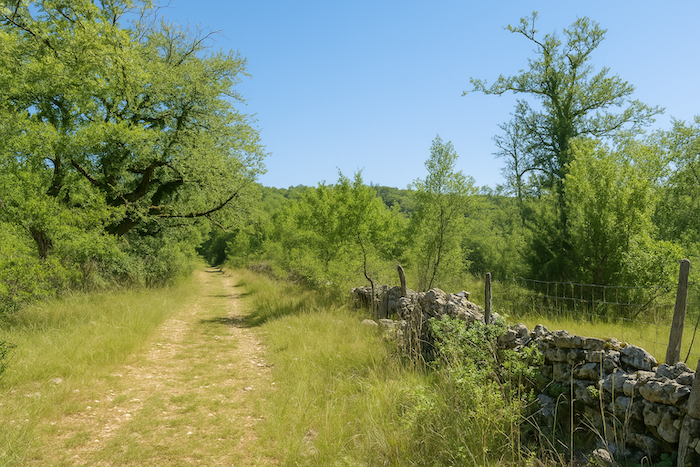
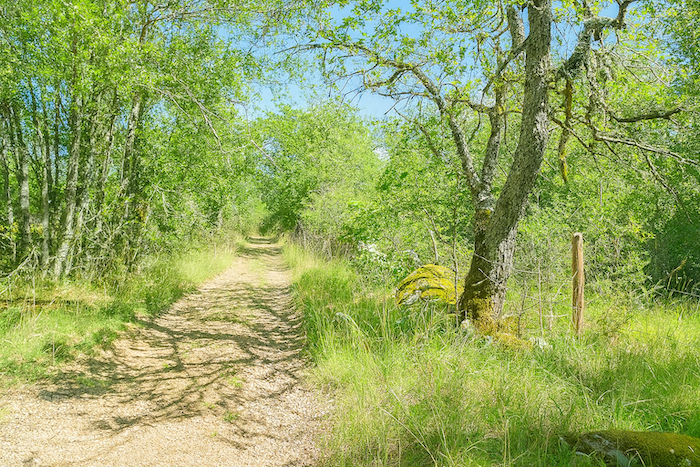
Farther on, little seems to change, at least at first glance. Yet the horizon begins to open slightly, the path broadens, and the stone walls become more orderly, subtle signs of a gradual return towards human presence. |
|
 |
 |
 |
 |
|
A gate then stands before you, as though marking the end of this wild interlude. |
|
 |
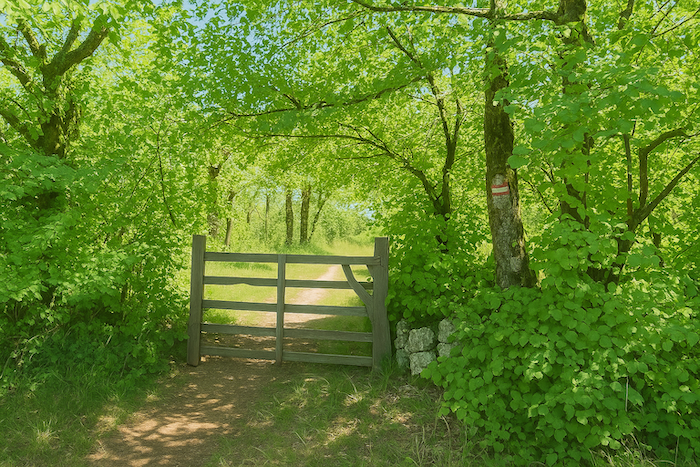 |
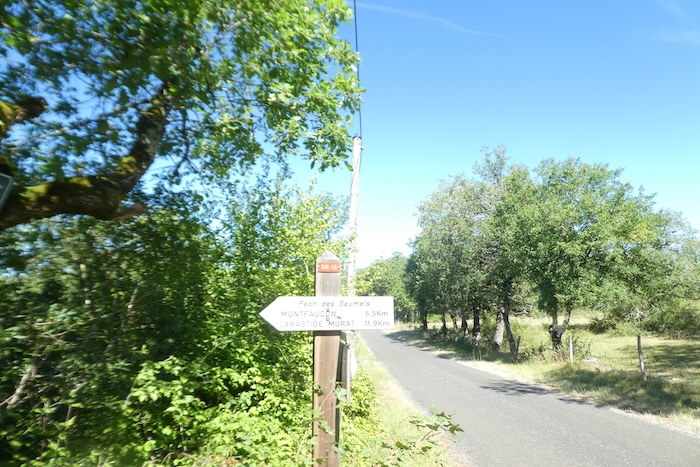
And indeed, you reach the place known as Pech des Saumels, close to an asphalt road, a threshold between two worlds.
|
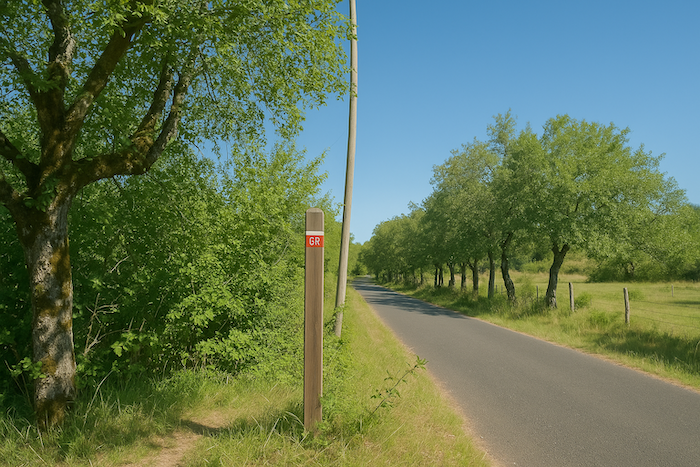
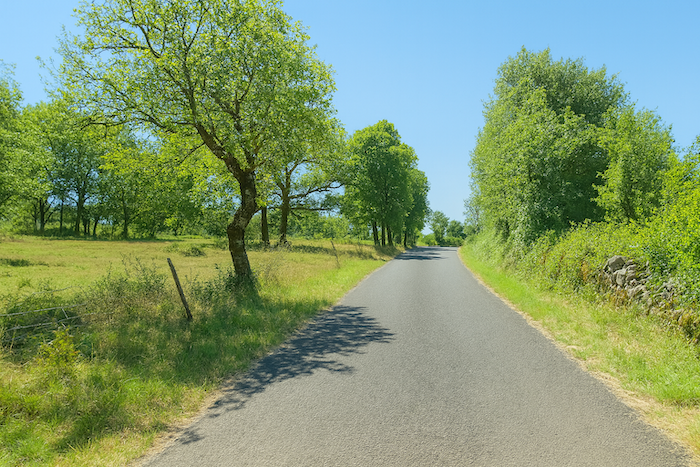
Then, simply for a change of scenery, the route allows itself a few steps along a quiet road, almost lost within the landscape. |
|
 |
 |
|
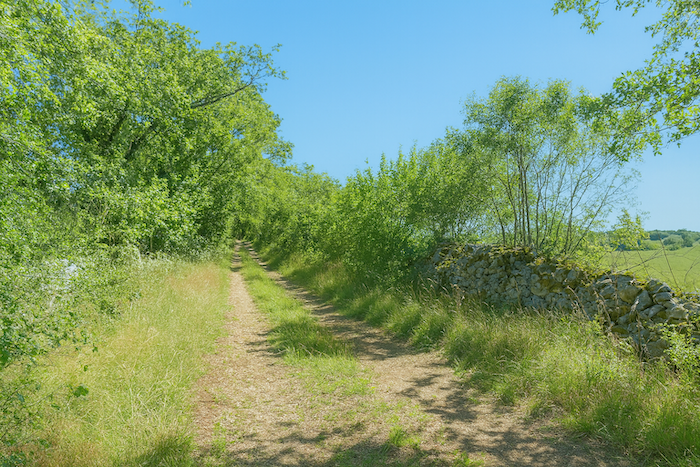
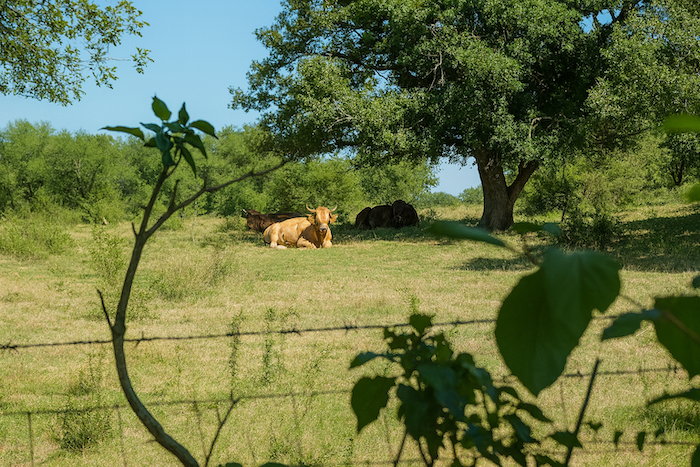
But almost immediately, true to its nature, it turns away again and returns to the shelter of the woodland, where the path slips through the grass, occasionally shared with discreetly grazing livestock, silent guardians of these surroundings. |
|
 |
 |
Section 4: Across the less wild causse
Overview of the route’s challenges : The route presents no major difficulty.
|
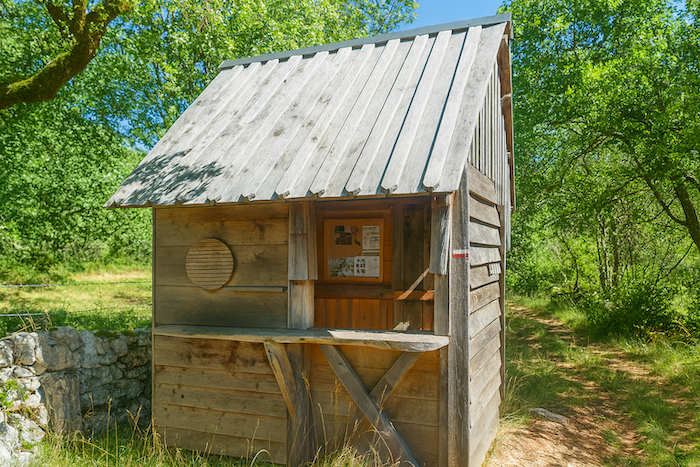
Here, a discreet information board stands by the way, strange and almost incongruous, resembling a beehive placed there without explanation. Why this unusual shape? What memory does it evoke? The information it provides remains vague, as though the place itself preferred to keep its secrets. |
|
|
 |
|
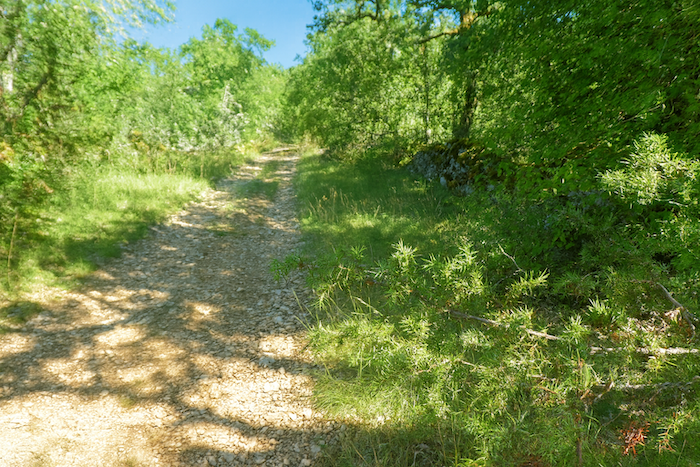
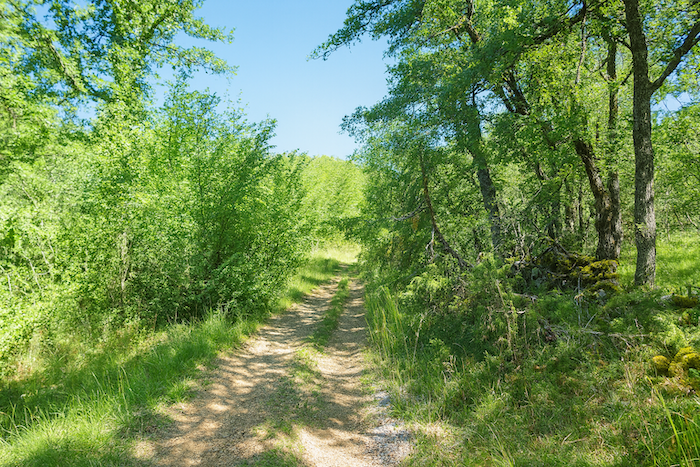
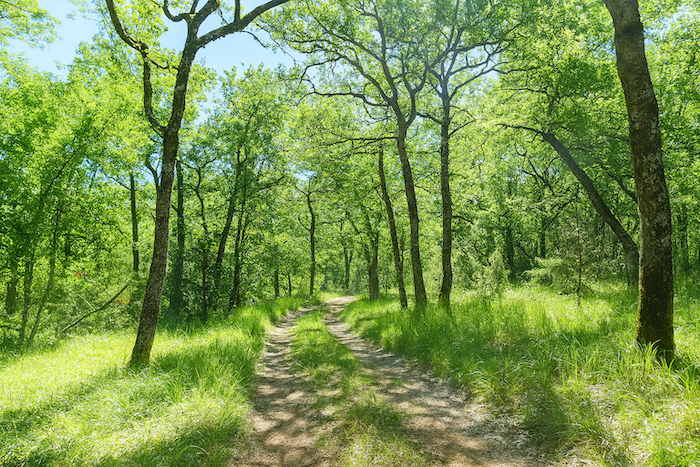
The path then continues, livelier beneath your feet, alternating between soft grass, beaten earth and small pale stones, rediscovering the familiar textures of the causse. |
|
 |
 |
 |
 |
|
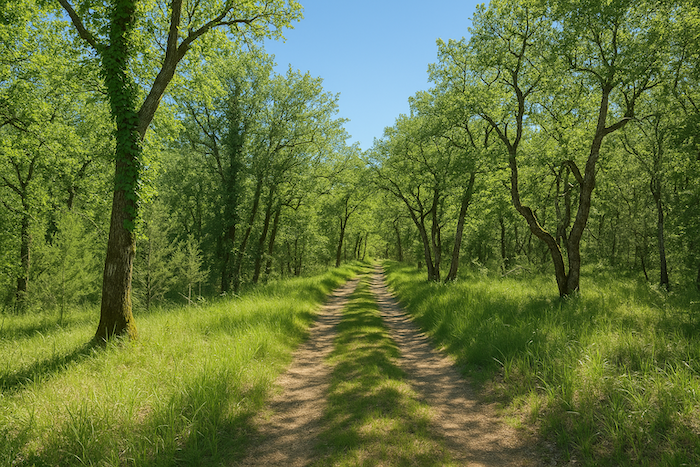
Here, however, the causse seems to have softened. It has lost something of its original harshness, that austere and unruly wilderness that characterises it elsewhere. The trees grow taller and fuller, as though the landscape itself had found a certain sense of peace. |
|
 |
 |
 |
 |
|
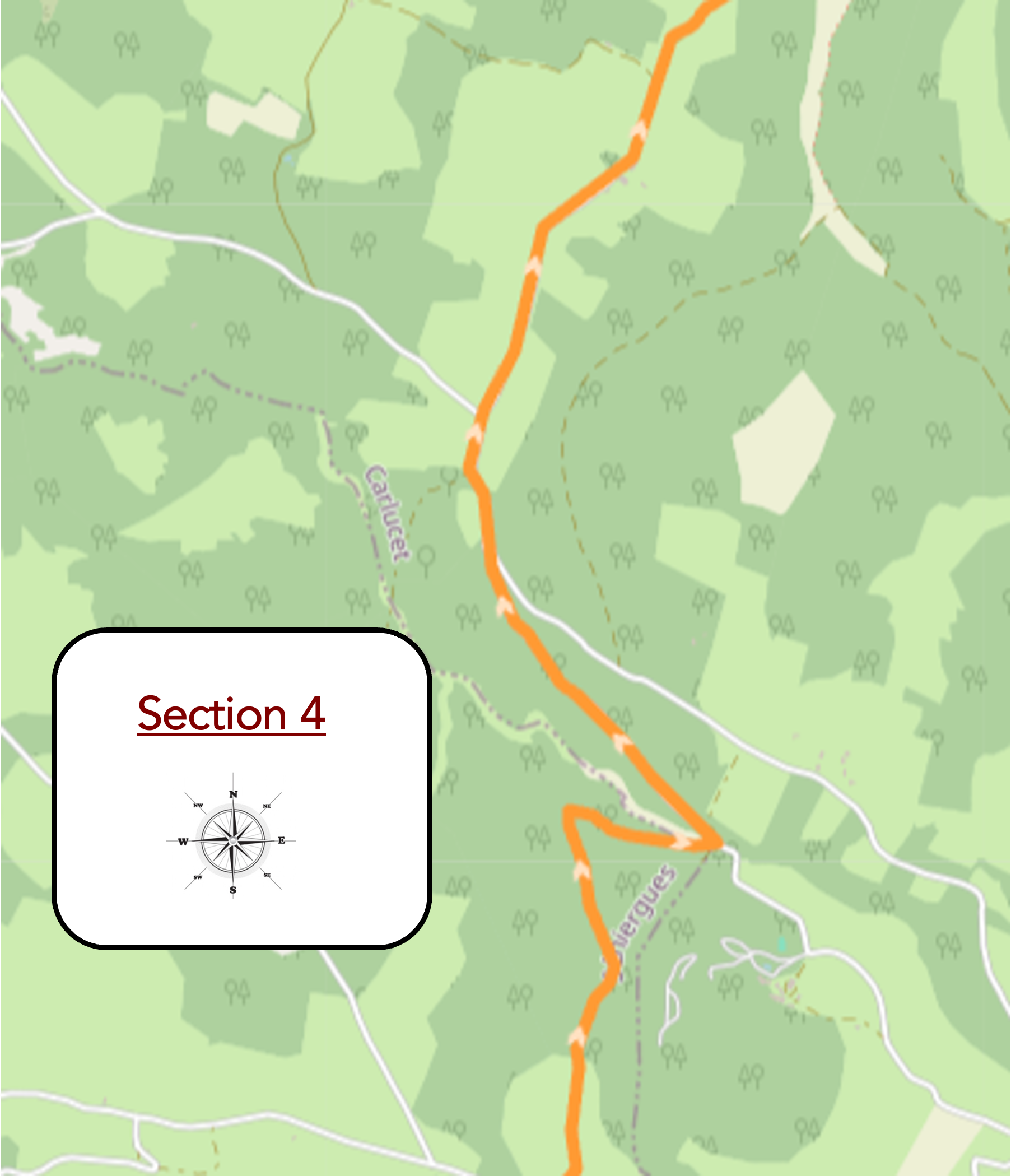
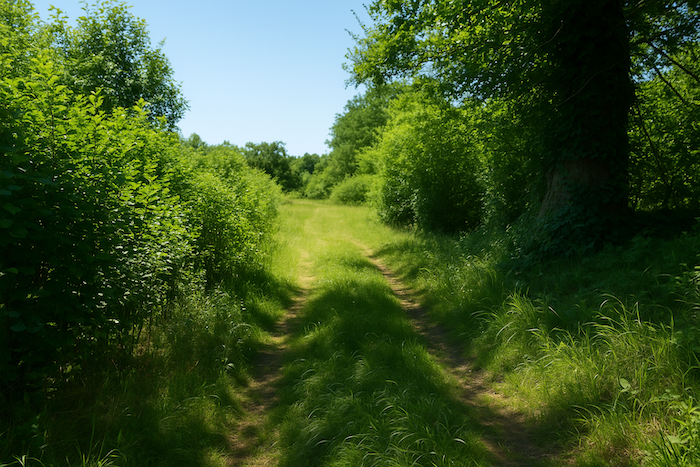
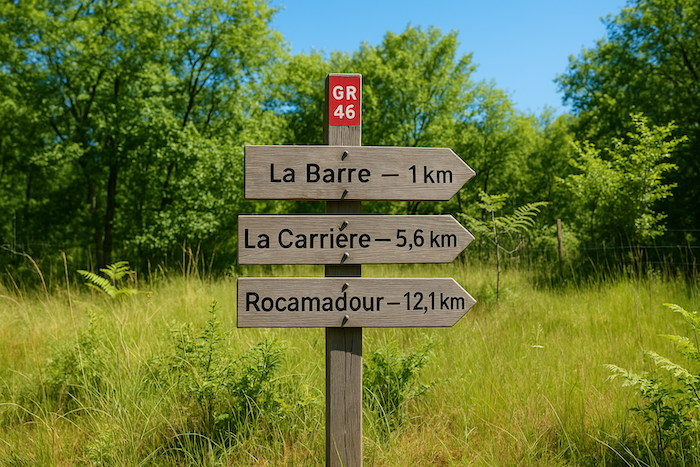
Today, the route alternates between beautiful stony paths and wilder trails, although it does not entirely escape the asphalt. Here, the GR46 leaves the path and joins the road. A junction points towards Carlucet, which the route ignores, while Rocamadour still lies more than twelve kilometres away on the distant horizon. |
|
 |
 |
|
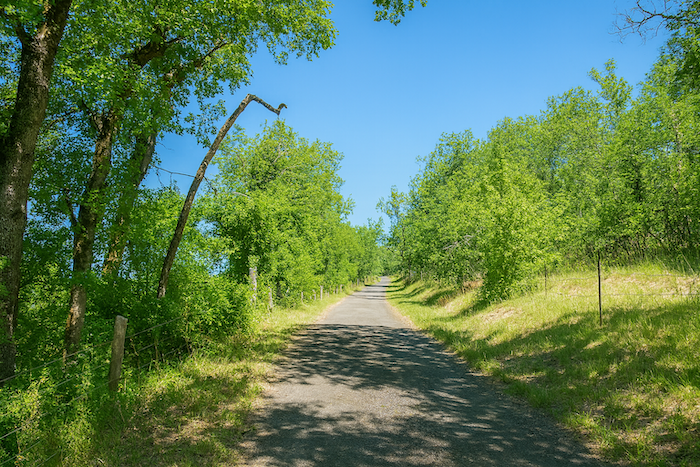
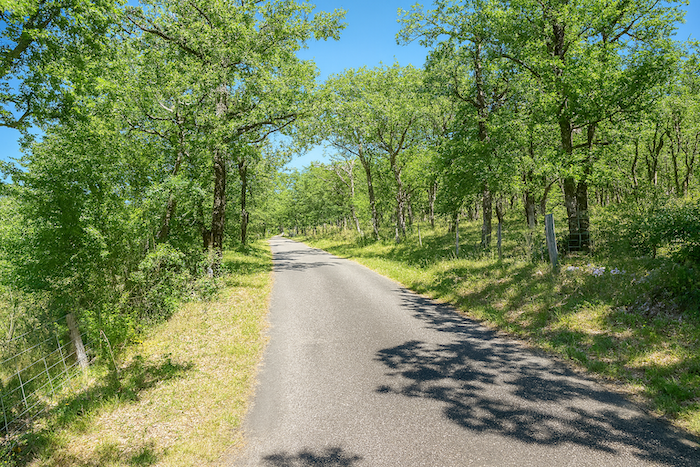
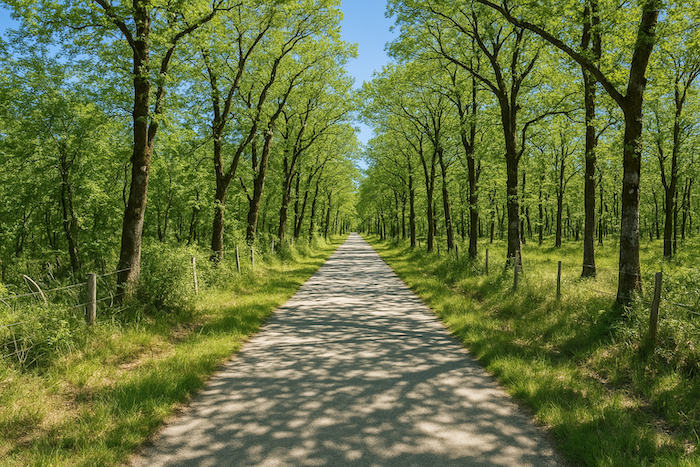
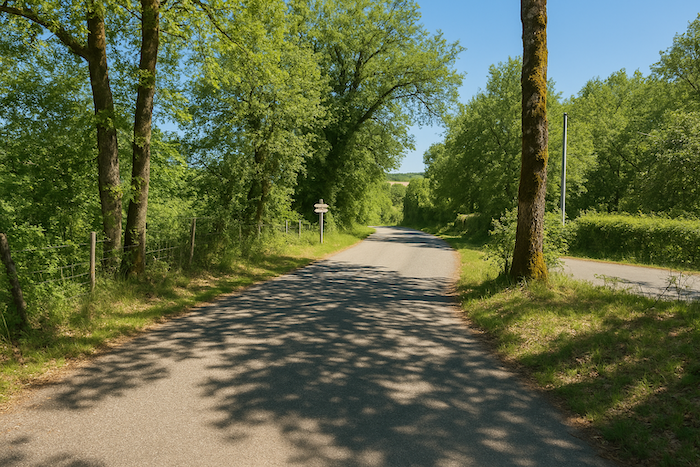
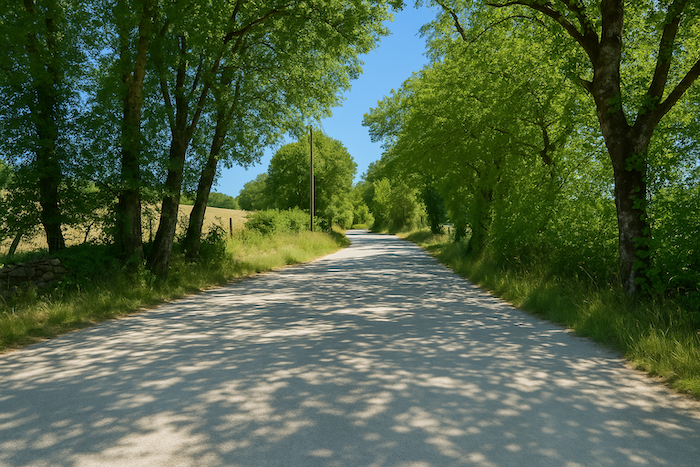
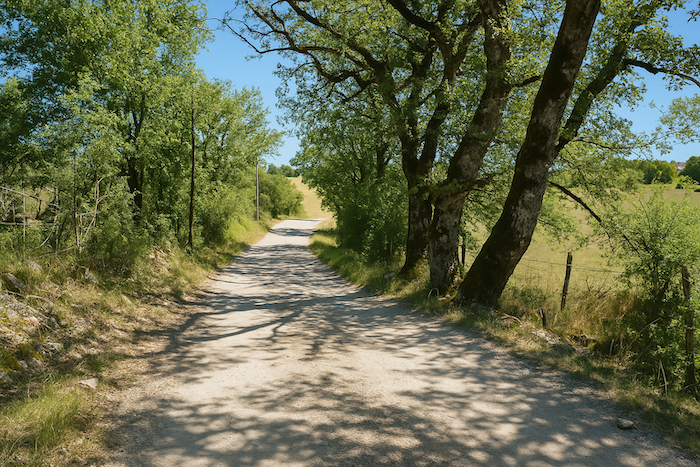
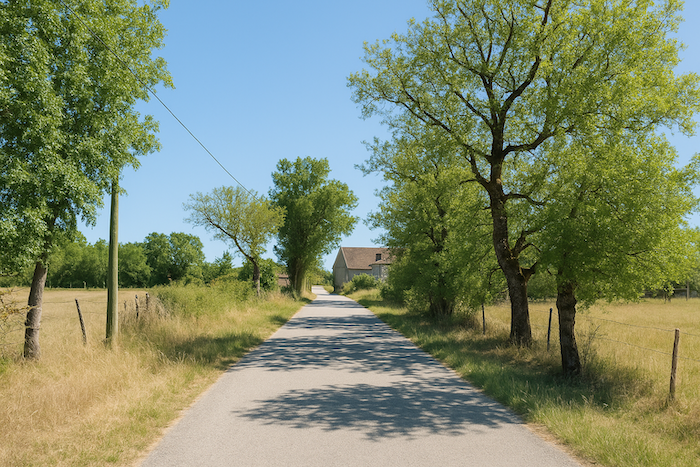
The road then stretches straight ahead for almost a kilometre, bordered by leafy hedges that have now grown taller and denser. This is a tamed, almost domesticated causse, where traffic remains rare, leaving the walker to enjoy the surrounding tranquillity undisturbed. |
|
 |
 |
|
Farther on, another road joins from the right, without ever disturbing the prevailing calm. |
|
 |
 |
|
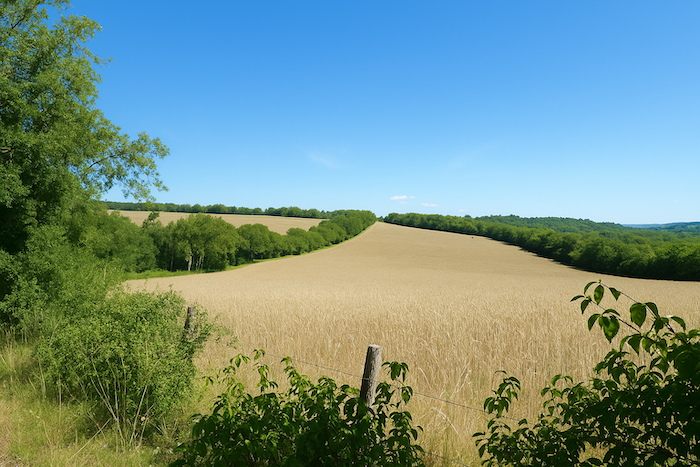
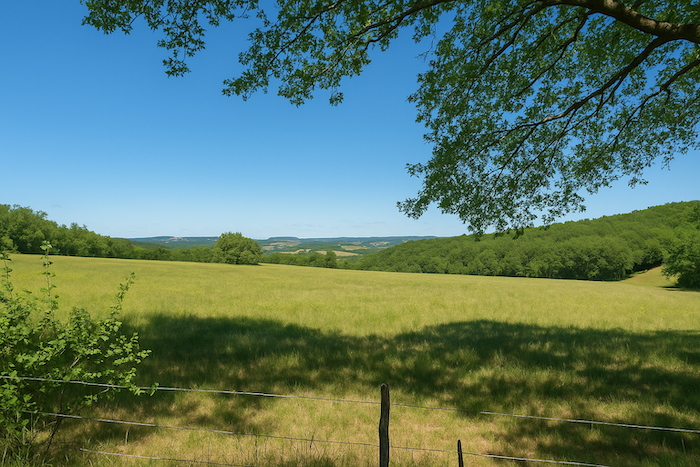
Here, you can sense that the causse has opened up, as though it had finally consented to a greater human presence. A few cultivated fields begin to appear, modest in scale, perhaps planted with oats or triticale, cereals capable of surviving on these poor and demanding soils. . |
|
 |
 |
|
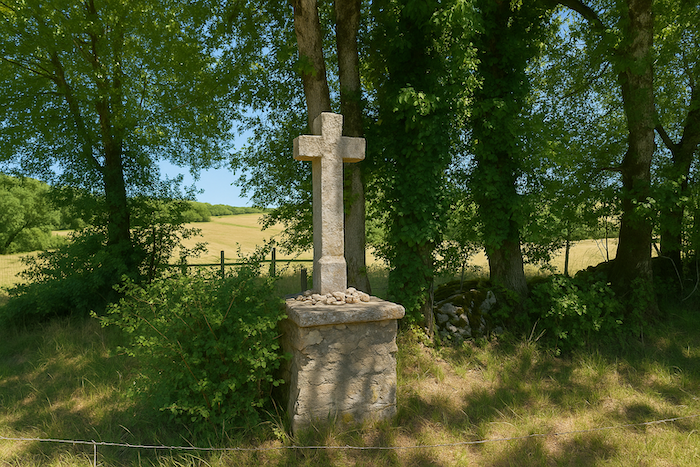
The road then passes close to the place known as La Barre, where the only visible presence, almost symbolic in its solitude, is a stone cross standing silently in the landscape. |
|
 |
 |
|
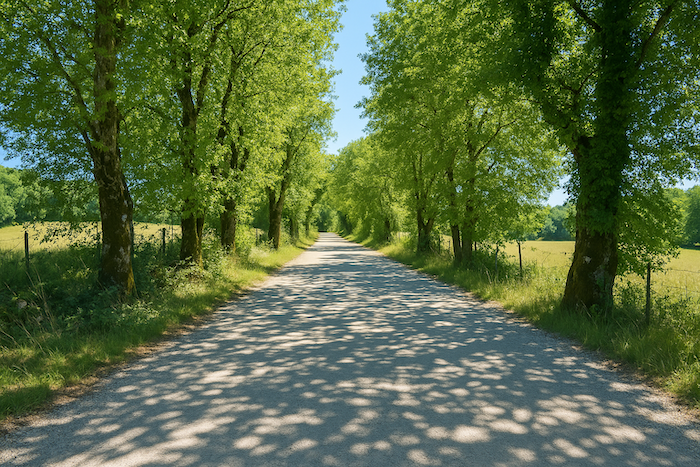
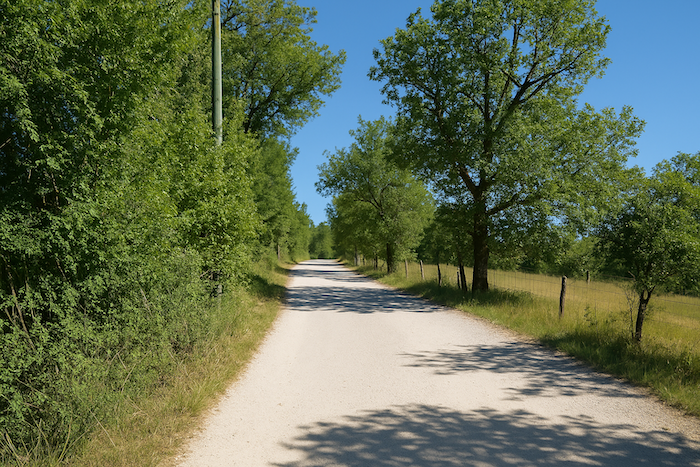
And the road continues, unperturbed, passing from one stretch of woodland to another, punctuated by occasional clearings where the light manages to break through without ever truly changing the atmosphere. |
|
 |
 |
 |
 |
|
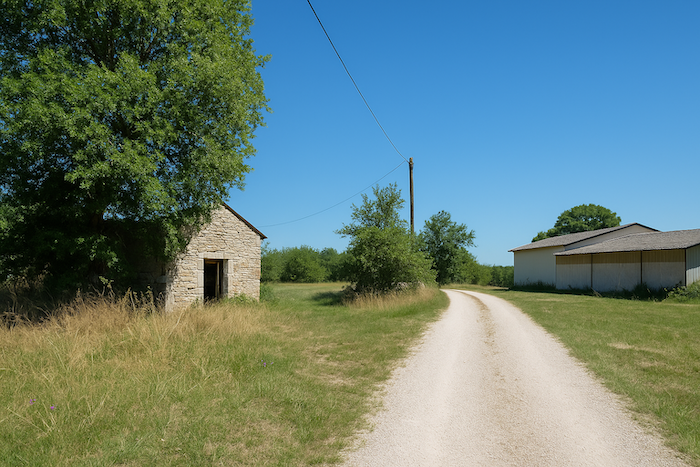
Farther on, it reaches Rocabilière. Do not expect to find any memorable place to pause here. There is little to hold the walker’s attention apart from an isolated farm and a handful of stone buildings, suspended in an uncertain state where it is difficult to tell whether life still persists. Human presence seems fragile here, almost hesitant, as though struggling to take root in a land where so little grows and where everything must be earned through patience. |
|
 |
 |
|
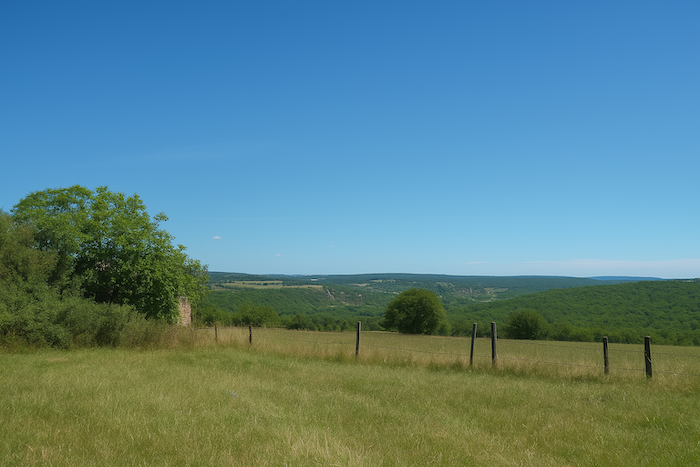
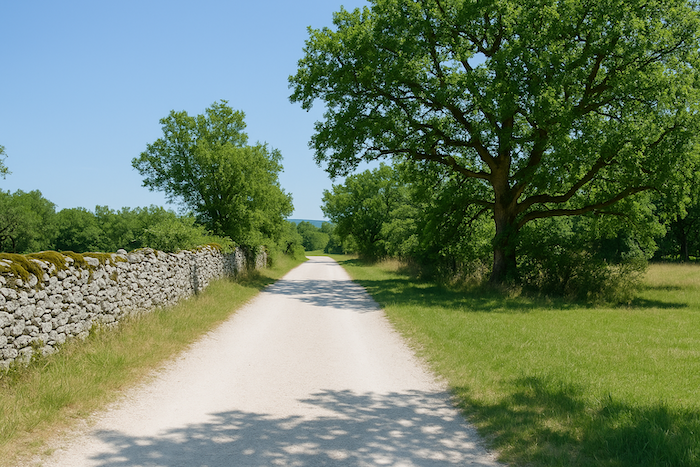
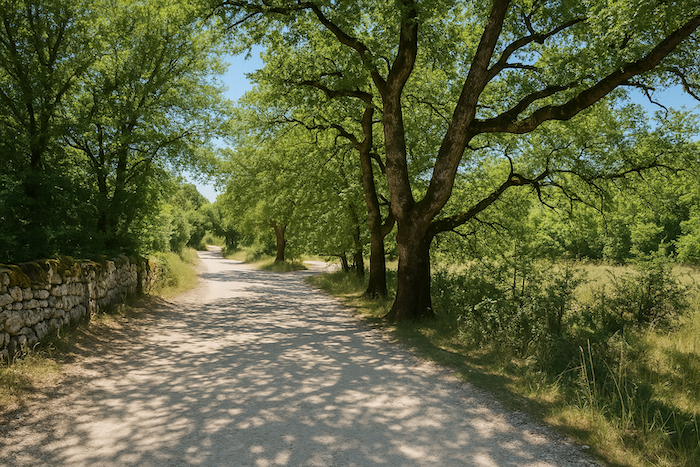
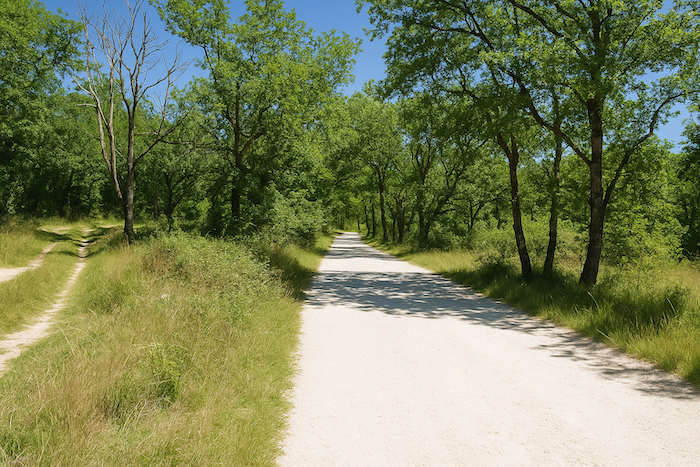
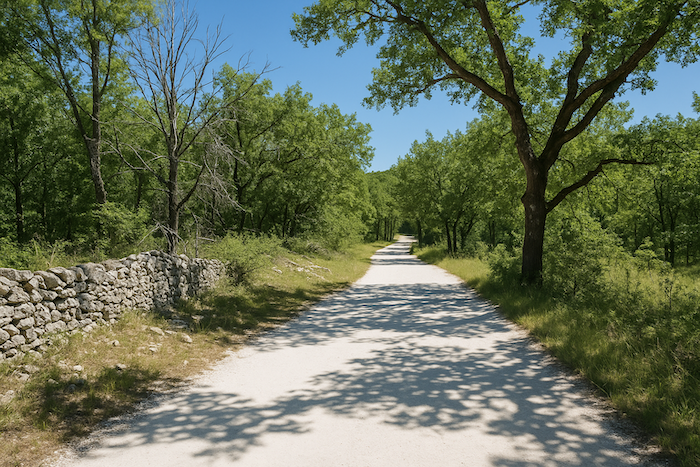
The route then changes character. It leaves the asphalt behind without regret and returns to beaten earth, following a broad track through peaceful countryside. Here and there, a few stone walls recall the identity of the causse, discreet witnesses to a landscape shaped as much by human hands as by the passage of time. |
|
 |
 |
 |
 |
|
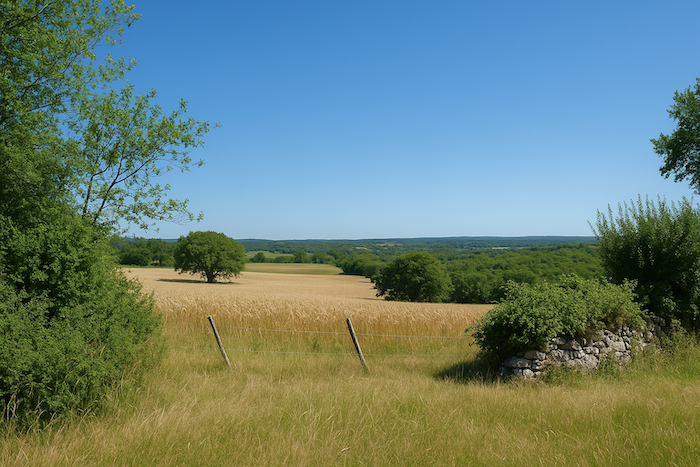
Nature is peaceful here, and more often than not the horizon is enclosed by dense forests. |
|
 |
 |
|
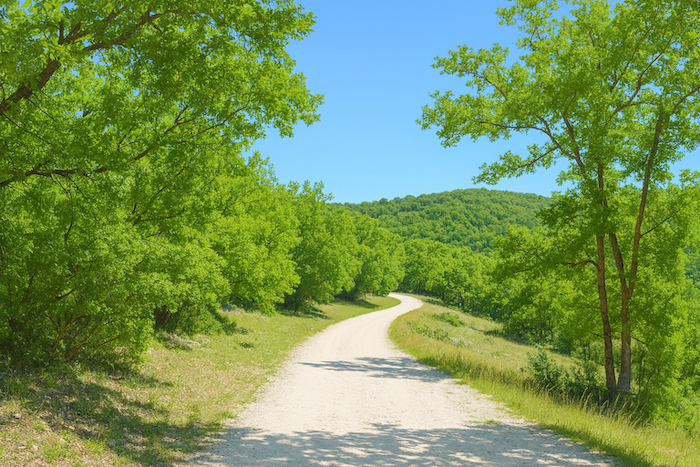
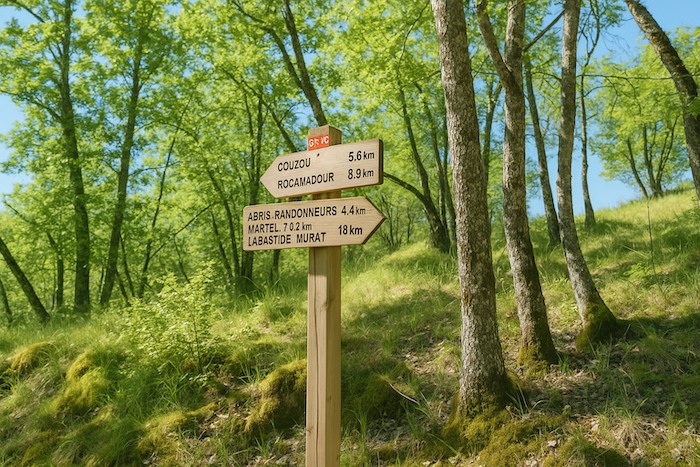
Shortly afterwards, a sign announces that Couzou is now close at hand. Rocamadour, however, still lies almost 9 kilometers away. |
|
 |
 |
Section 5: Through countryside, woodland and limestone plateau
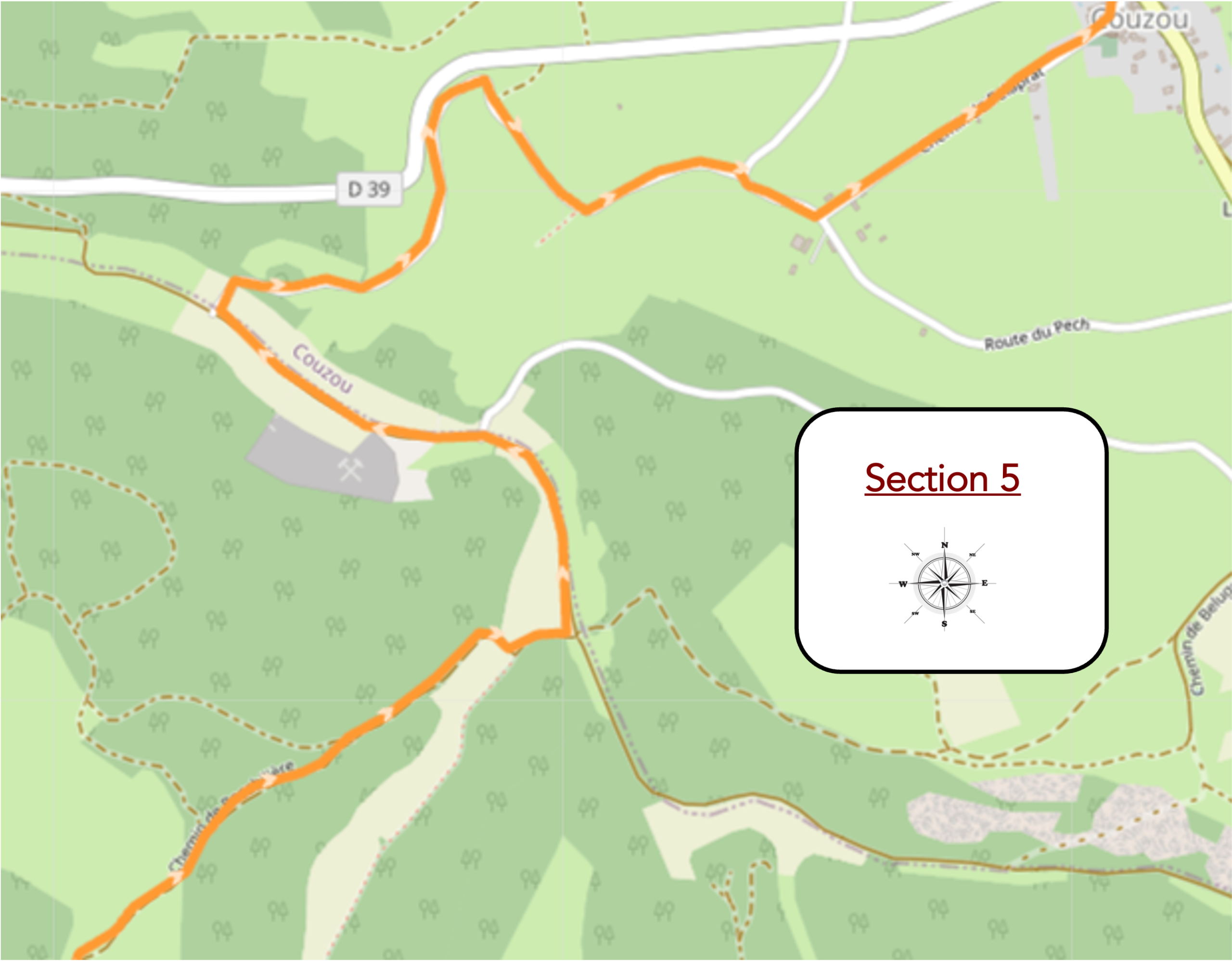
Overview of the route’s challenges : The route occasionally includes somewhat steeper gradients.
|
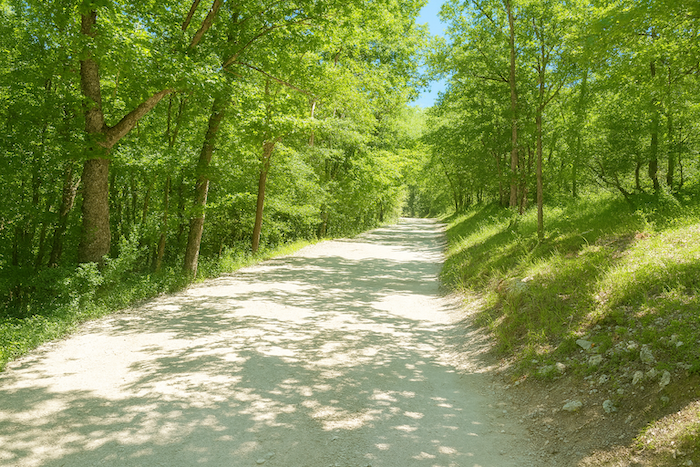
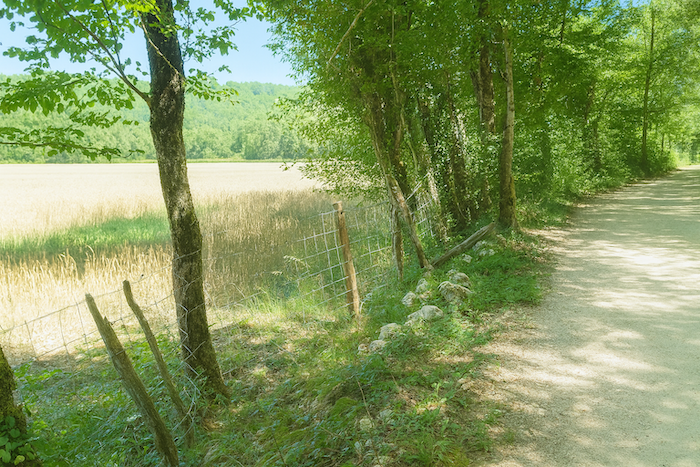
The route constantly changes character throughout this stage. Here, it follows a broad track that gives itself over to a long descent through open woodland. The trees, spaced well apart, allow the light to filter through generously, yet this brightness does little to dispel the sense of solitude. No figure, no sound, no trace of human activity breaks the stillness. Only silence accompanies the walker. |
|
 |
 |
|
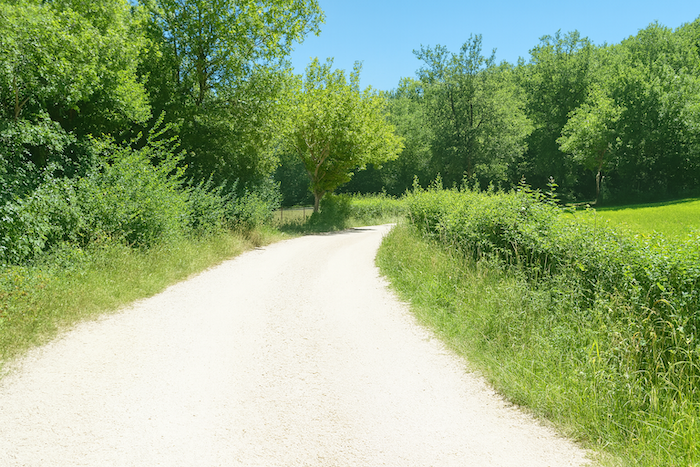
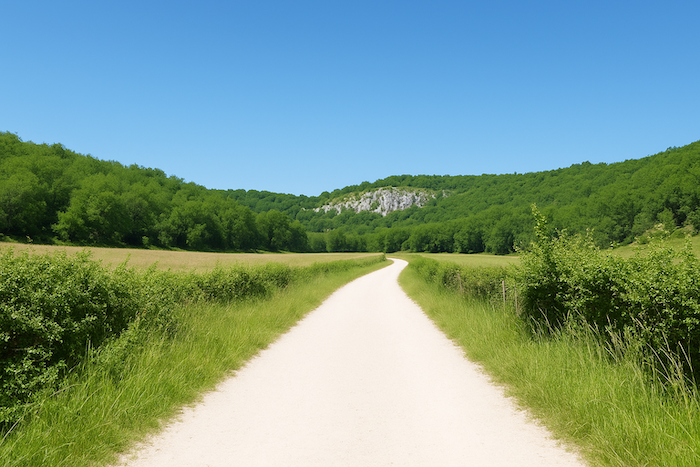
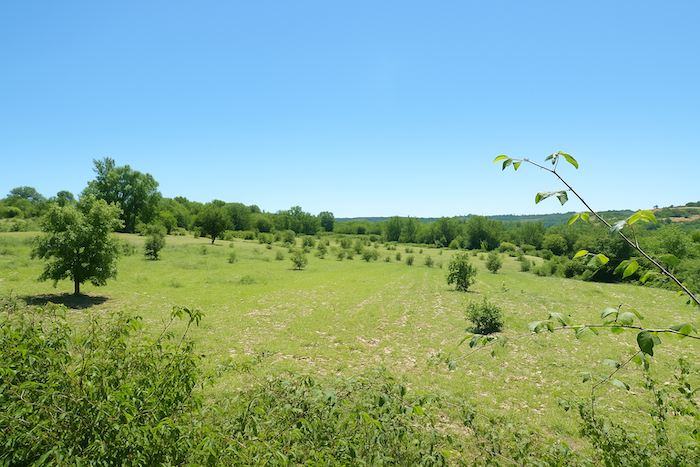
Cultivated plots become increasingly rare. A few fields appear here and there, but grass reigns supreme across these quiet expanses. At the end of the descent, the gradient gradually fades away and the gaze finally recovers the horizon, opening wide across a smooth and gentle valley. |
|
 |
 |
|
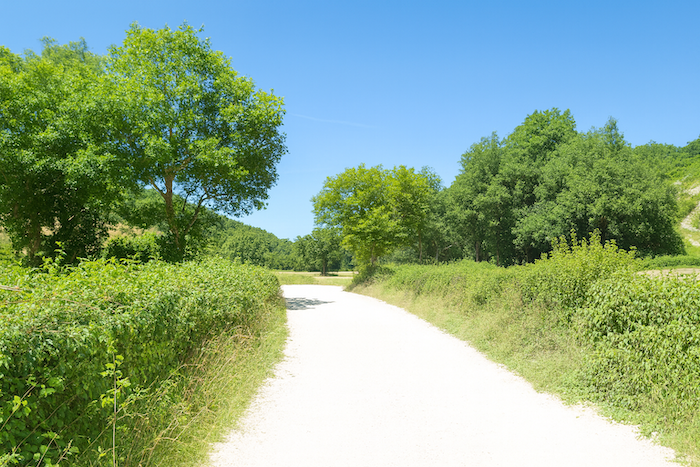
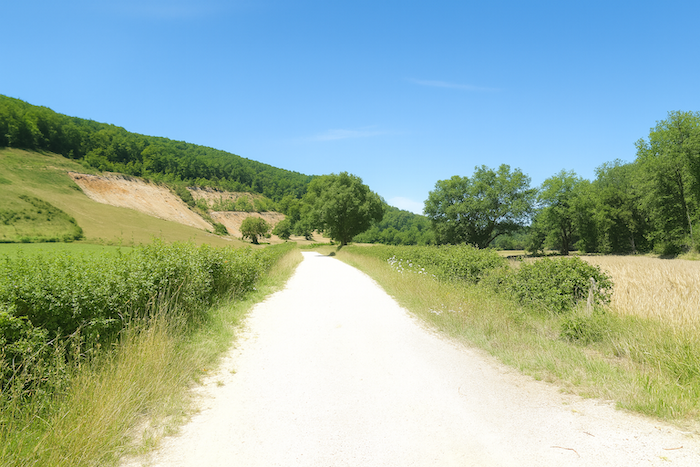
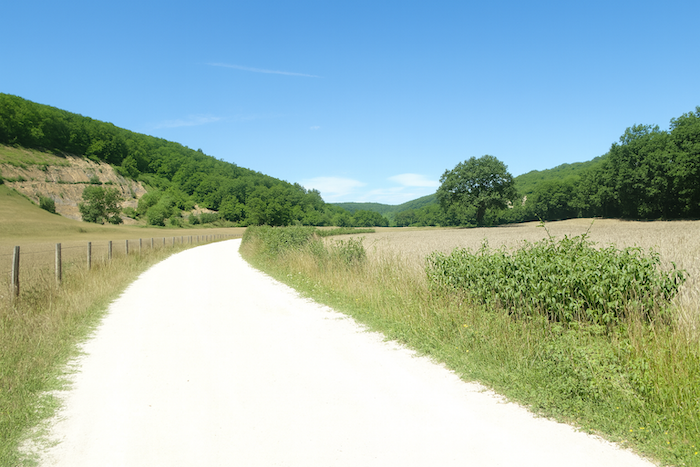
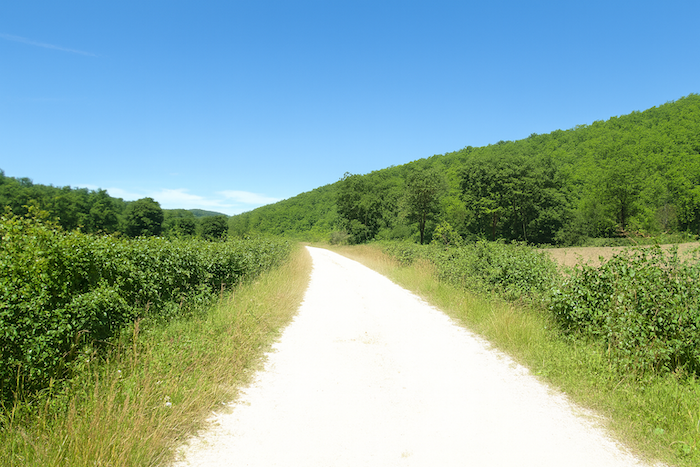
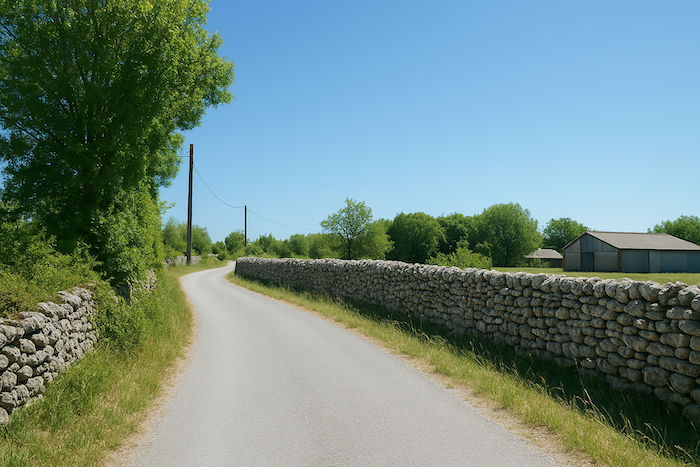
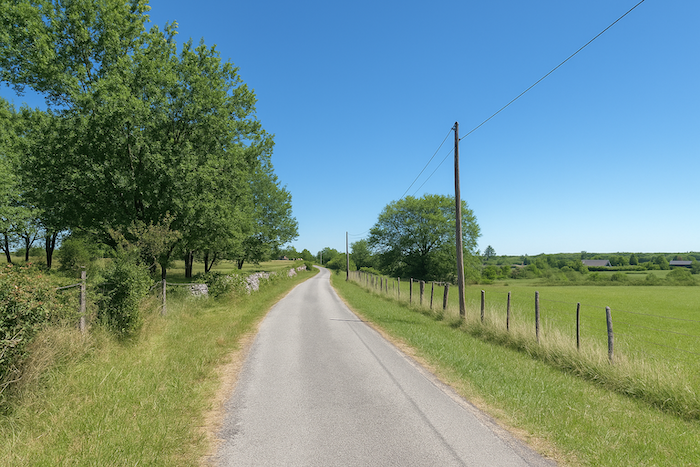
The broad road of beaten earth then unfurls its almost level ribbon along the floor of a deserted valley. This is one of the recurring faces of the Causse de Limogne. Intimate trails bordered by stone walls and stunted oaks give way to long, featureless roads, whether covered in asphalt or earth, where walking settles into an almost mechanical rhythm. |
|
 |
 |
 |
 |
|
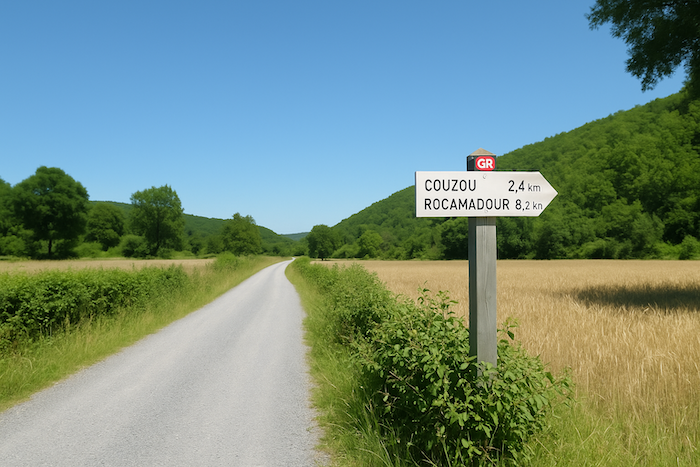
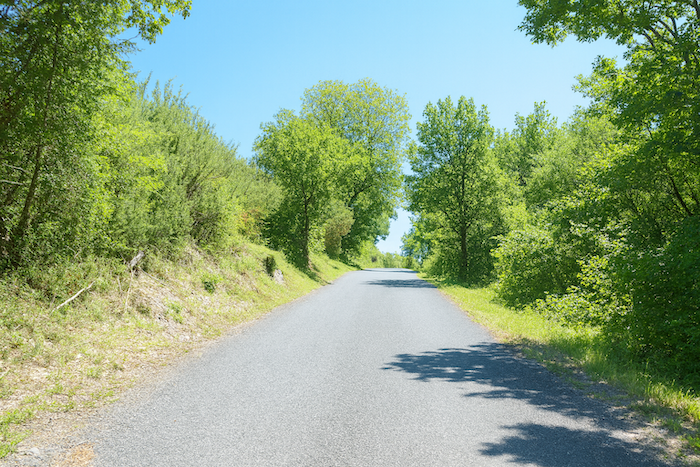
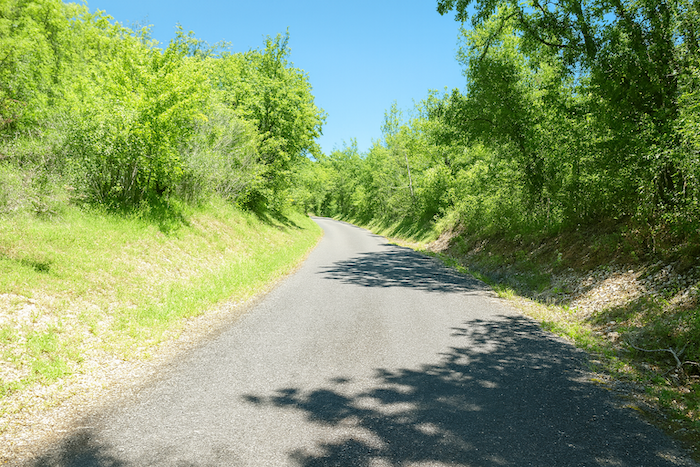
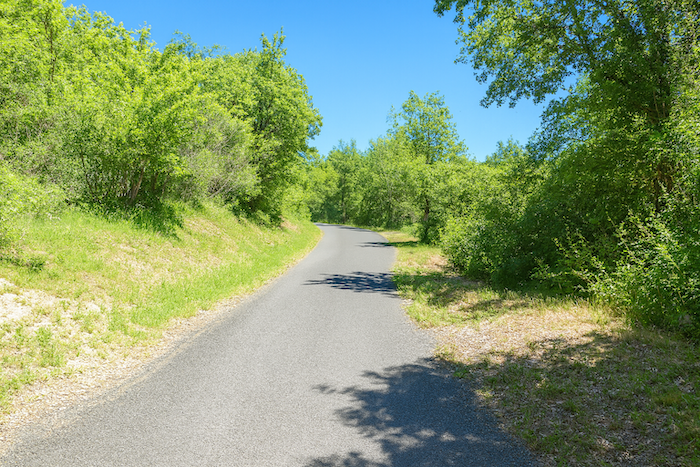
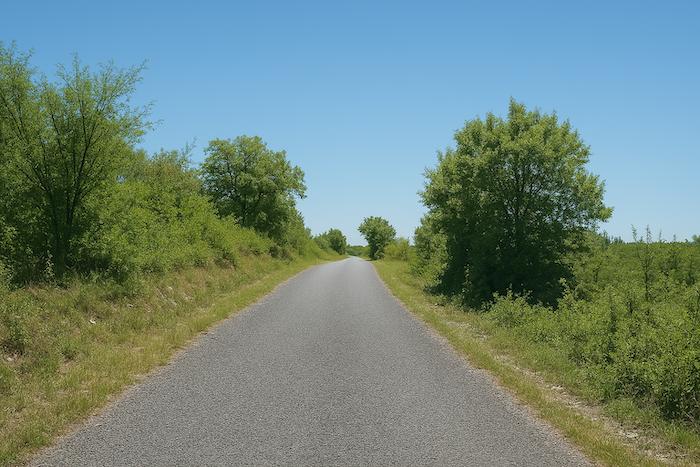
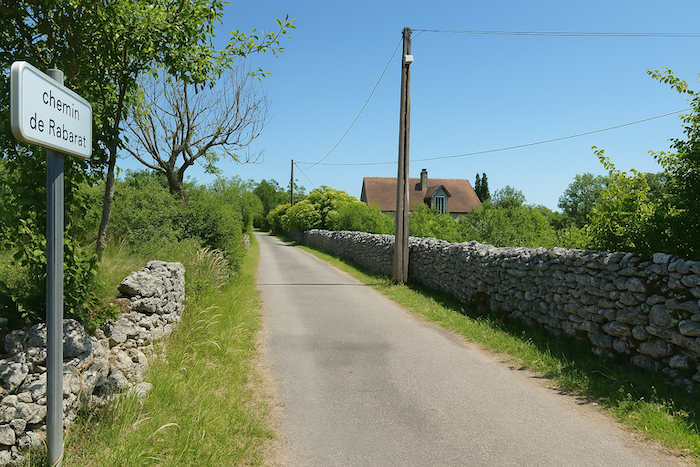
The kilometers pass with little real change. Only the beaten earth has given way to asphalt, as though the landscape had merely changed its surface without altering its soul. Rocamadour is now only eight kilometers away and, for the first time in a long while, a hint of human presence seems to appear on the horizon. The village of Couzou is just two and a half kilometers away. |
|
 |
 |
|
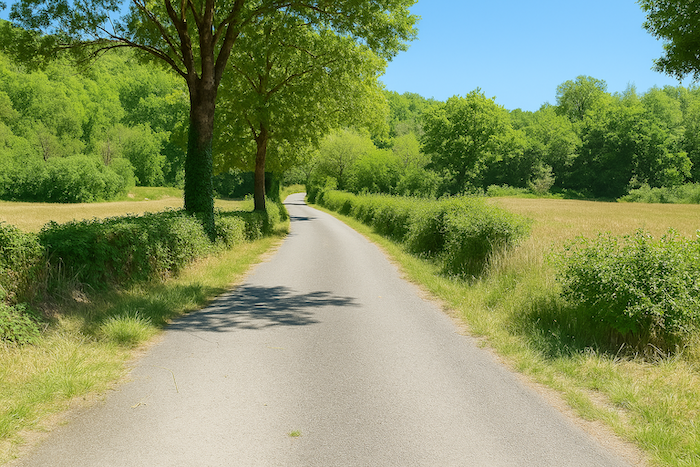
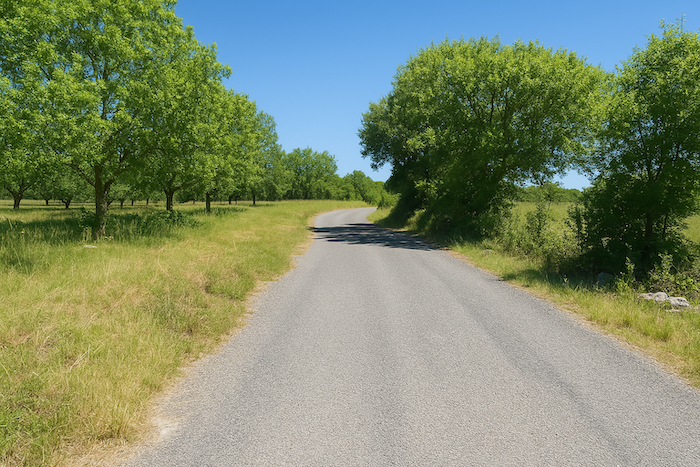
The road stretches obediently between the trees, without interruption or surprise. Each bend seems to echo the one before it, as though the landscape were determined never to disturb its own continuity. The uniformly green foliage forms a peaceful canopy beneath which time seems suspended. Nothing disturbs this silent stillness, and nothing truly demands the eye’s attention. Everything appears to have existed here forever, settled into an unchanging balance. You move onwards almost mechanically, without impatience or particular expectation, carried along by the soothing monotony of the path. This landscape seeks neither to impress nor to seduce. It simply offers the tranquillity of an ordinary world, where the absence of events becomes a landscape in itself. |
|
 |
 |
 |
 |
|
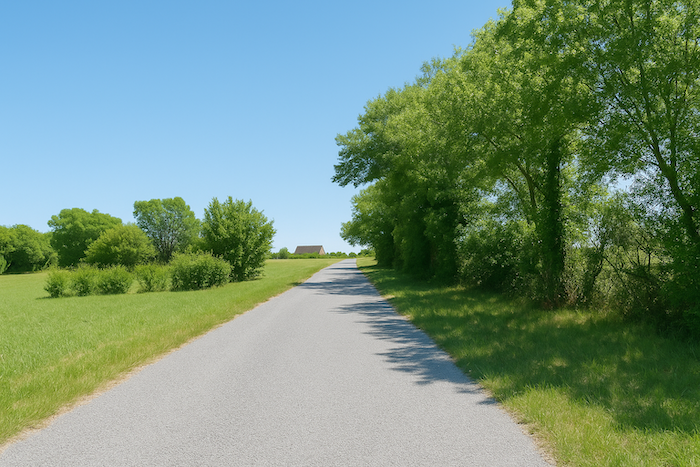
The road then leaves the bottom of the dale and climbs more decisively towards the heights of Couzou. Despite the vast pastures that shape the causse, livestock are conspicuous by their absence. Neither cattle nor sheep bring life to these meadows, as though the land had been temporarily deserted by the animals that usually animate it. |
|
 |
 |
|
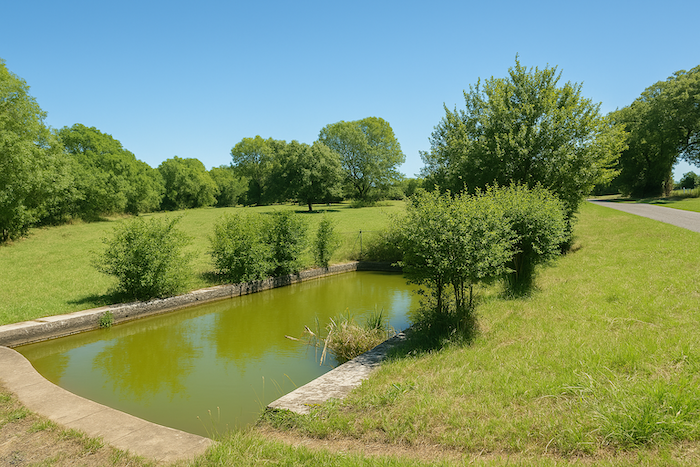
Yet a few signs suggest that this countryside is not quite as abandoned as it appears. A modest reservoir nestled beside the road betrays the discreet presence of agricultural activity and reveals the quiet needs of a land that people continue to inhabit and work. |
|
 |
 |
|
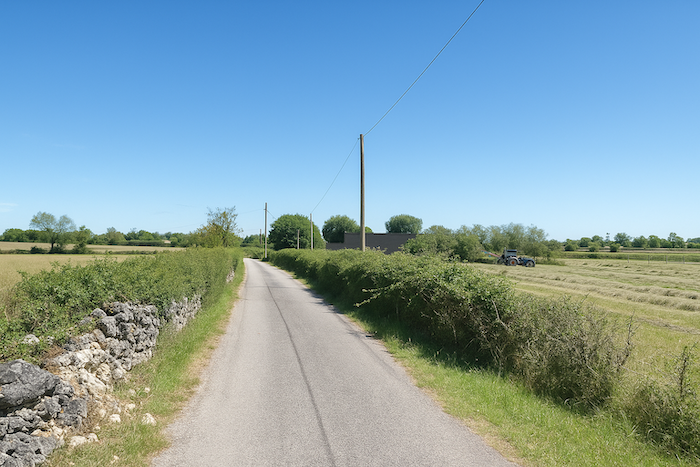
Before long, a few isolated farms appear behind their grey stone walls, almost concealed within the mineral landscape. They reveal themselves only partially, as though seeking to merge with the causse itself. Around them lie a few freshly mown meadows, the only visible signs of a discreet rural life that is sensed more readily than it is seen. |
|
 |
 |
 |
 |
|
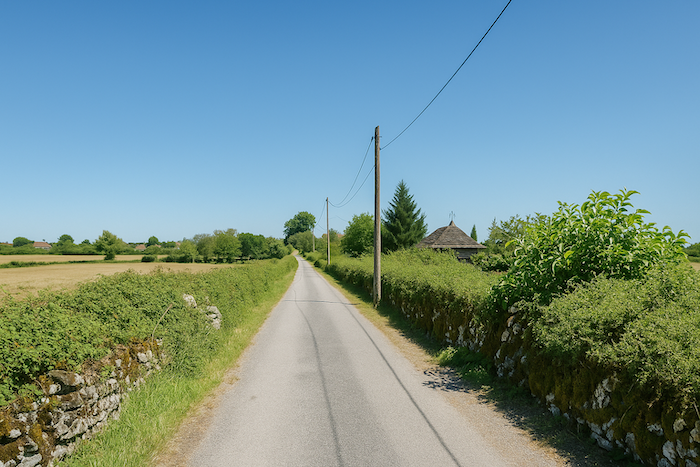
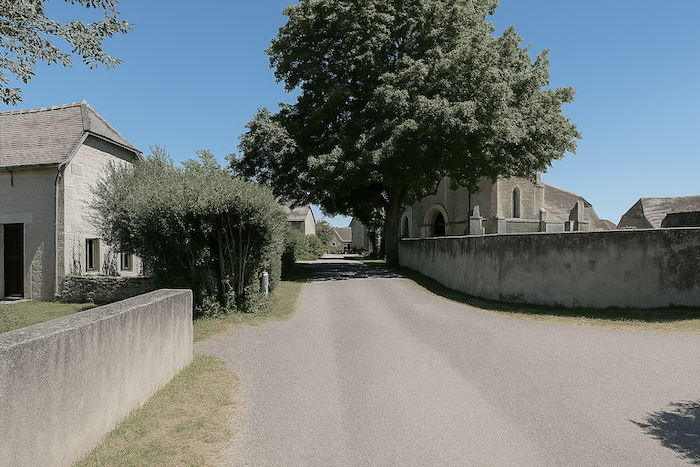
The road finally reaches Couzou. At last, people, or so one might say. Like so many other villages of the causse, this one seems to be asleep. The streets are deserted, no shop brings life to the village square, and no voices rise from behind the stone façades. Only silence seems to have made its home here. |
|
 |
 |
Section 6: Back to the wild causse
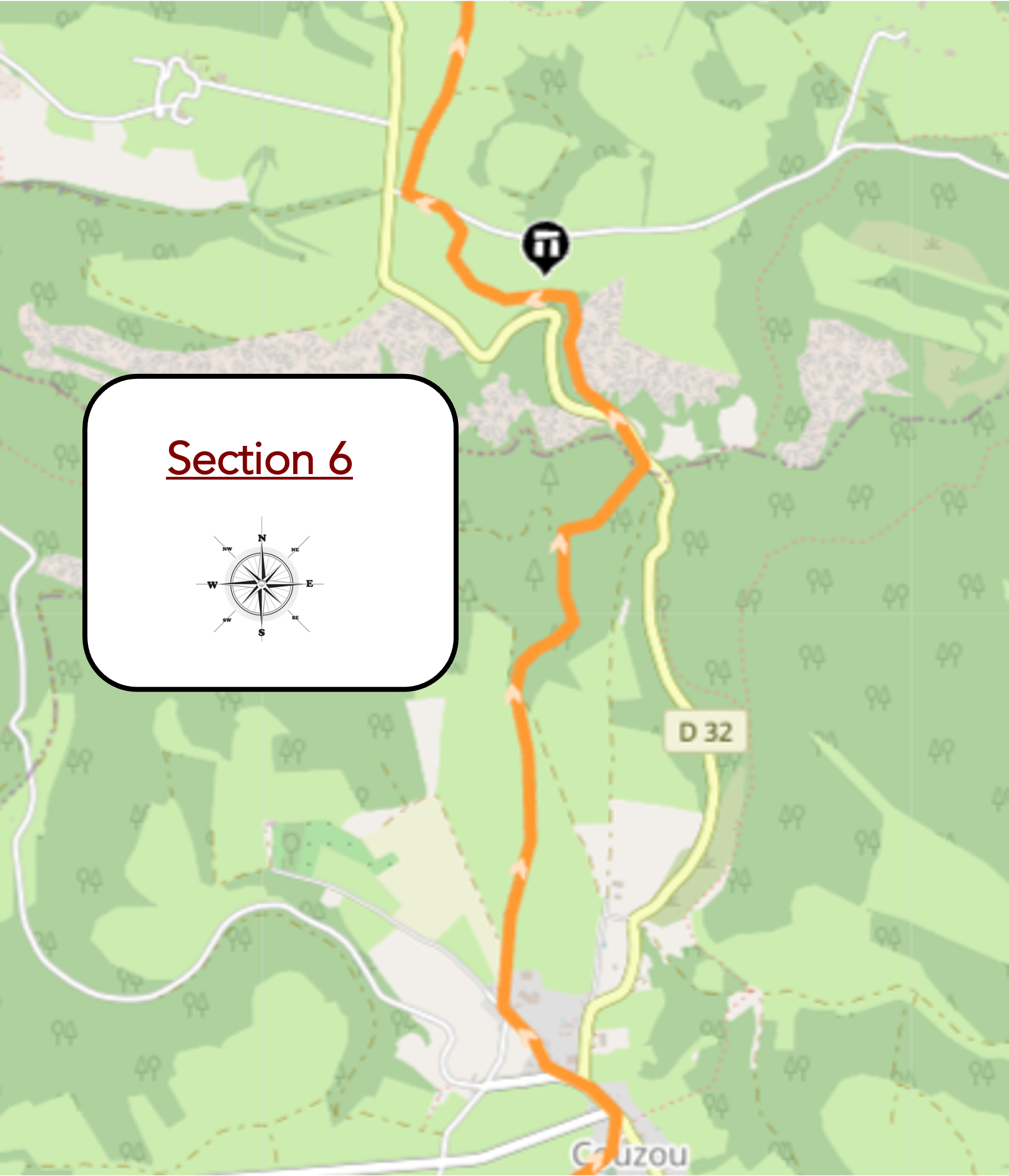
Overview of the route’s challenges : The route includes some steeper gradients.
|
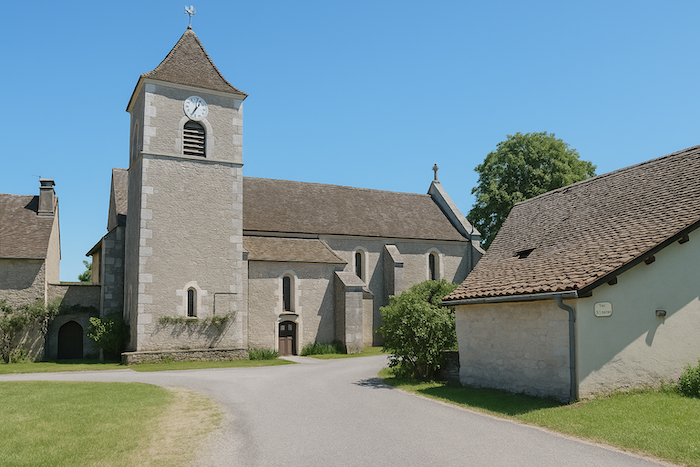
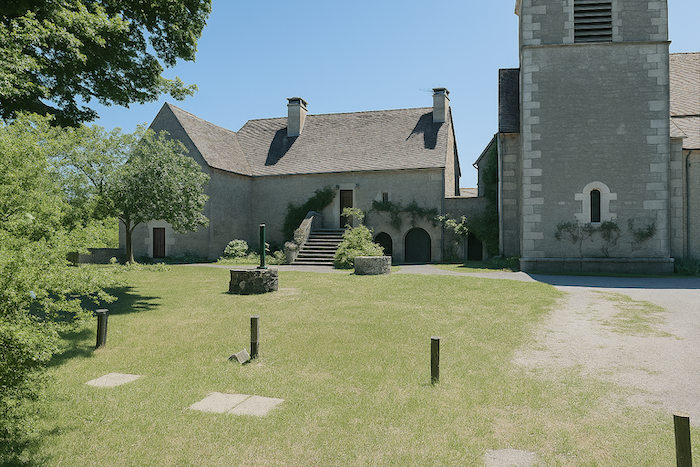
Behind its apparent simplicity, the Church of Saint-Louis conceals a history far older than its 19th-century walls might suggest. It stands on the site of a 17th-century sanctuary, itself the successor to a monastic grange founded by the Cistercian monks of Obazine in the 12th century. The arrangement of the houses and the village square still bears the imprint of this former agricultural estate, where generations of monks patiently shaped the causse. Here, as so often in the Quercy, the stones seem to possess a more faithful memory than people. |
|
 |
 |
|
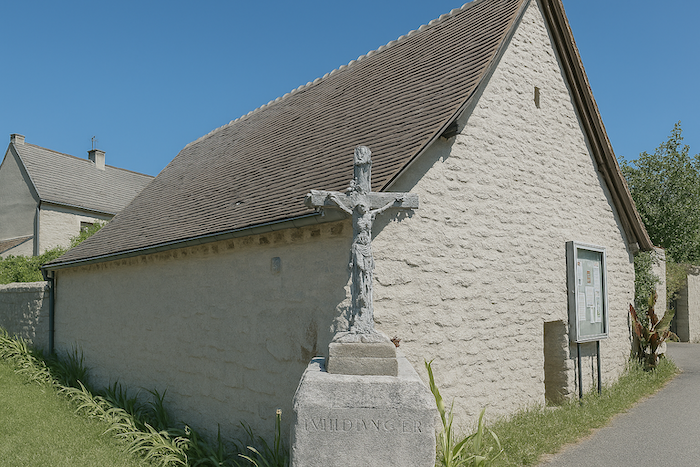
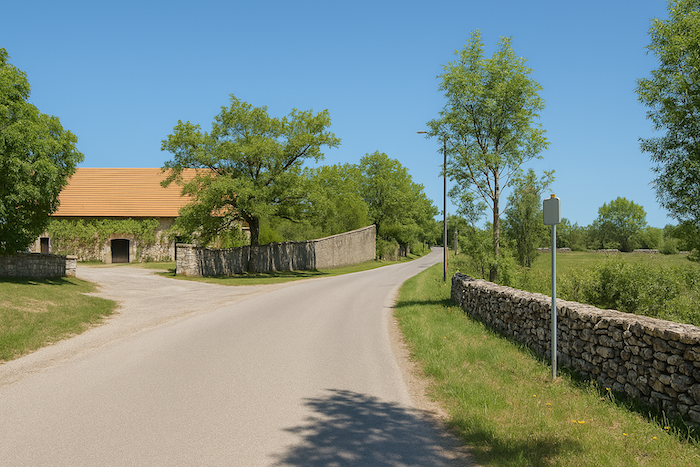
The road then crosses the village in little more than a few moments. Simple limestone houses topped with russet tiled roofs line the path without dispelling the sense of abandonment that hangs over the place. Everything seems motionless, frozen in anticipation of something whose outcome no one can know. |
|
 |
 |
|
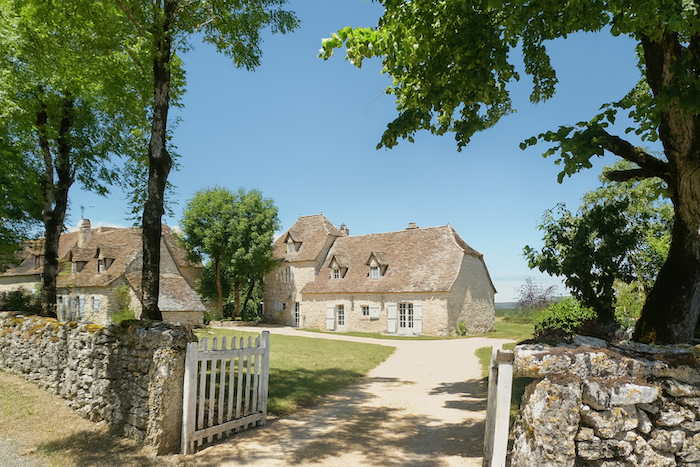
And yet, at the edge of the hamlet, a majestic house suddenly appears, almost by surprise. Its solid stone walls, imposing silhouette and carefully crafted architecture are reminders that these lands once knew more prosperous times. On its own, it seems to carry the memory of an age when the causse echoed with a life that has now almost entirely faded away. |
|
 |
 |
|
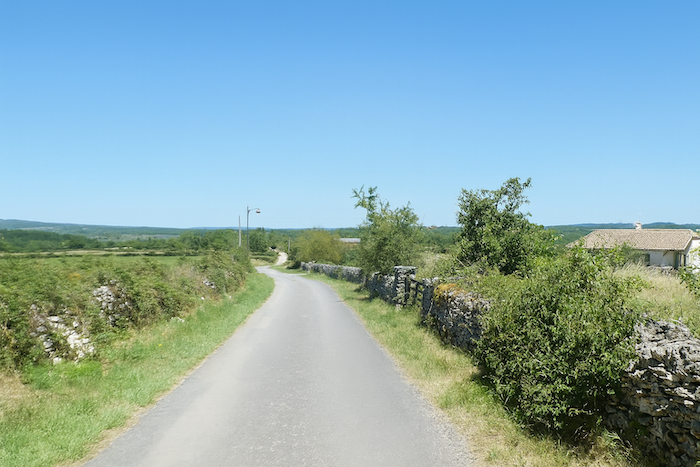
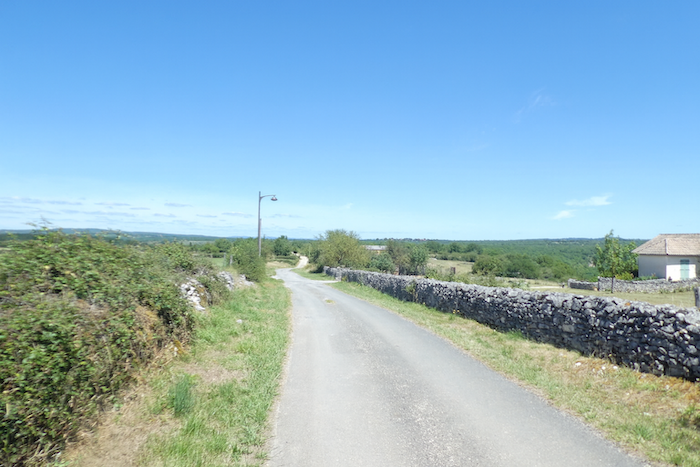
The road then resumes its seemingly endless course. Ahead, the causse once again opens onto immense horizons, free of every obstacle. The landscape stretches until it seems to merge with the sky, while the walker rediscovers the monotony so characteristic of these plateaus, a monotony that no longer truly bores, but gradually imposes its own slow and unchanging rhythm. |
|
 |
 |
|
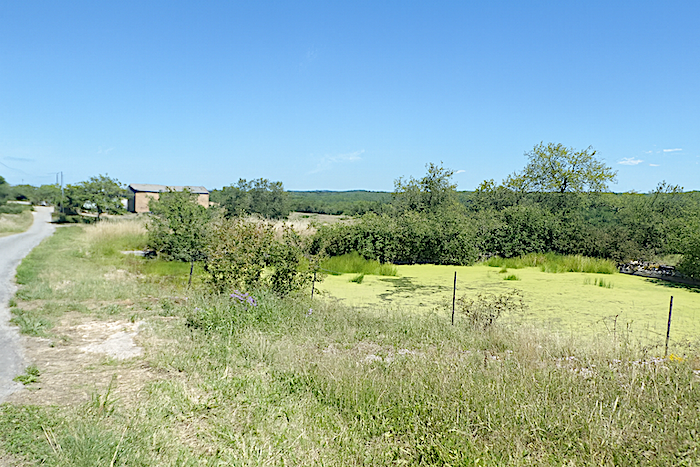
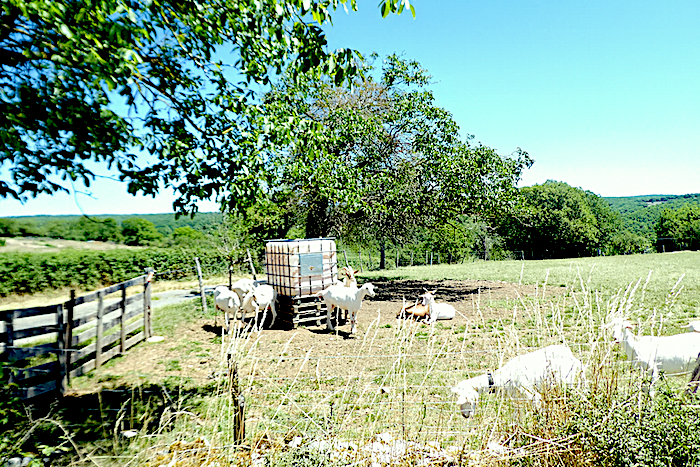
The road continues for a little longer before giving way to a path already freed from the last houses of the village. The human world gradually fades away, and only a few gatherings of goats now seem to bring life to this peaceful land. |
|
 |
 |
|
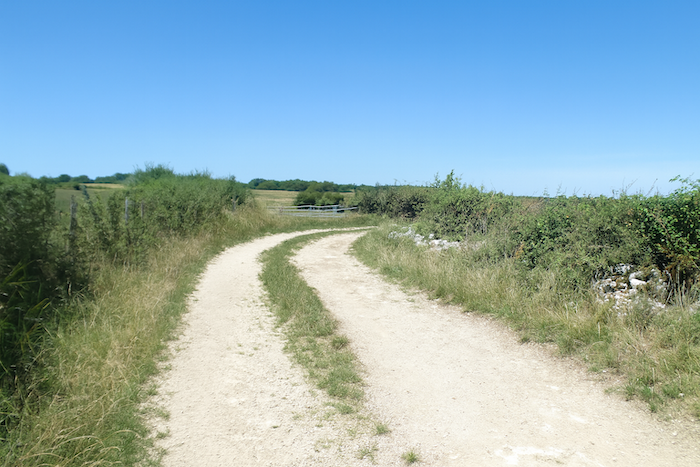
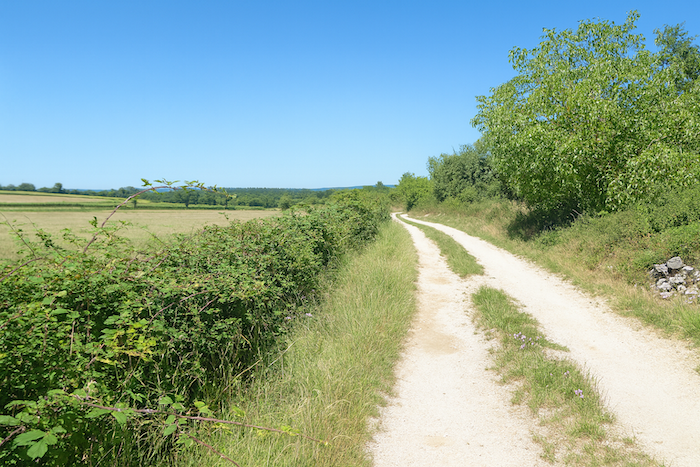
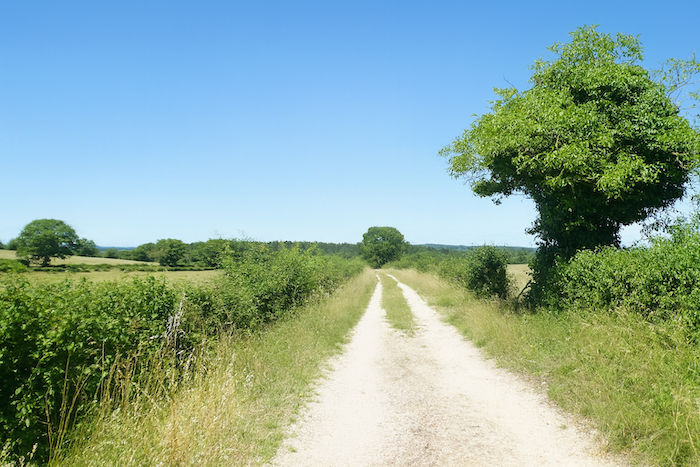
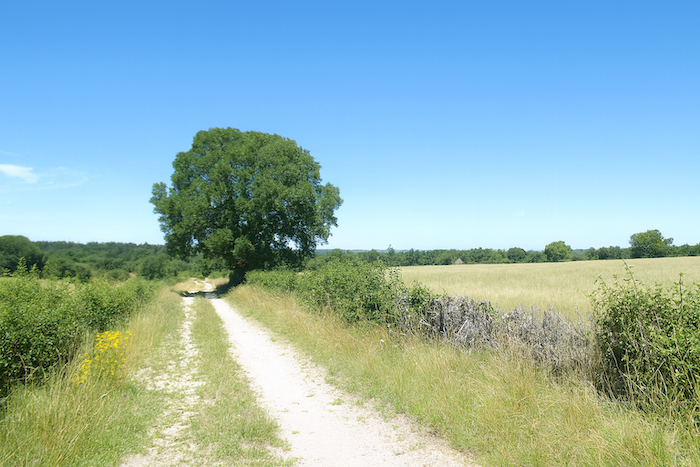
The path then broadens, unfurling its pale ribbon across the heart of the plain. Beneath your feet, the bleached earth becomes limestone dust, so light that it seems to preserve the memory of centuries. |
|
 |
 |
|
Here and there, a few solitary oaks raise their gnarled silhouettes. Like motionless sentinels, they offer the traveller a welcome pause and the fleeting refuge of their shade. |
|
 |
 |
|
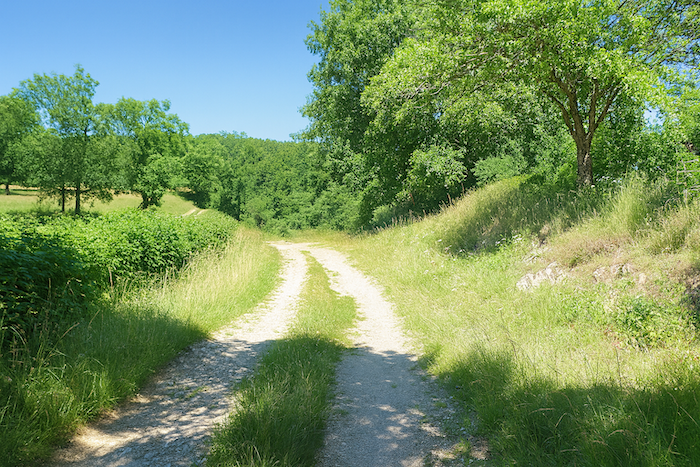
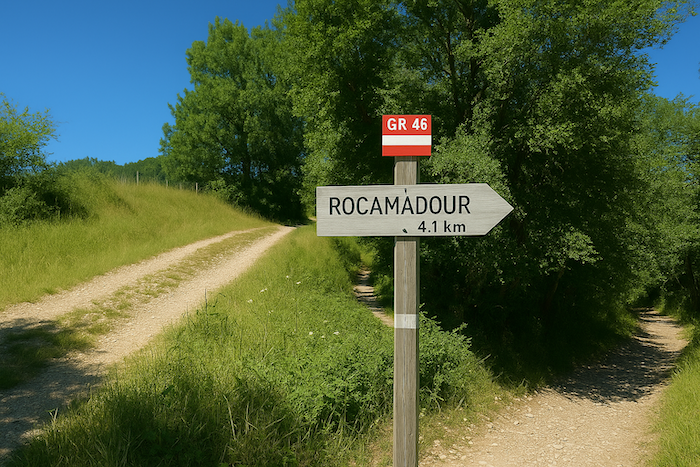
Suddenly, the landscape is transformed. The path leaves the vast horizons behind and enters a narrow valley with a new sense of gravity, as though drawn into the depths of the landscape. Around a bend, a sign announces Rocamadour, only four kilometers remain. The sacred town already seems to exert its irresistible power of attraction. |
|
 |
 |
|
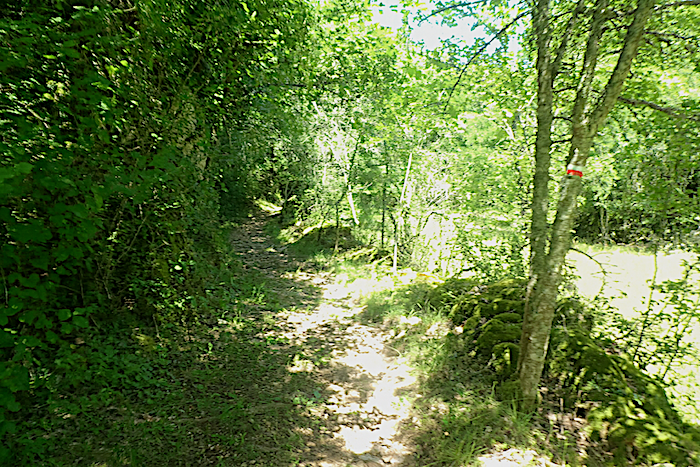
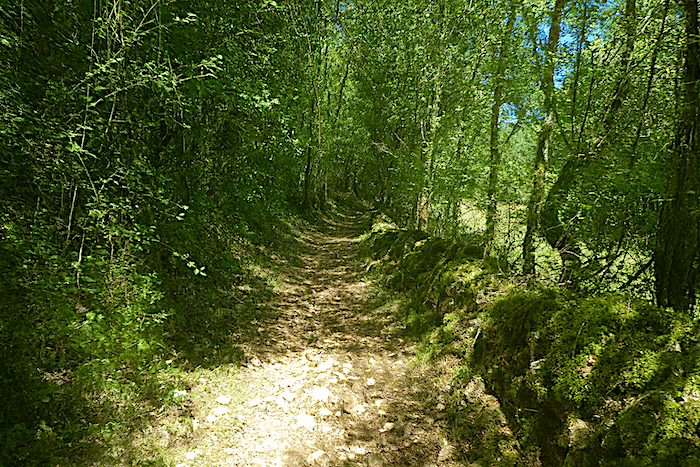
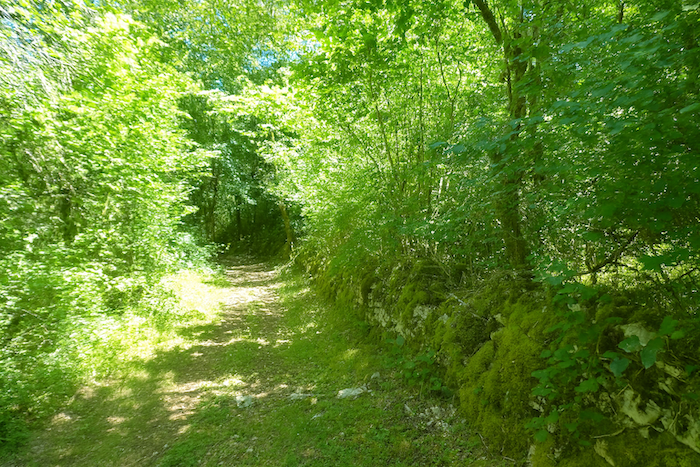
Within this narrow corridor of greenery, rough stones invade the trail. Every step demands greater attention, yet this new ruggedness gives the path a more authentic, almost initiatory character. |
|
 |
 |
|
It feels like a return to the origins, a plunge into a natural world that has remained untouched, where the forest recovers something of its primeval character. After the monotony of the open spaces, this leafy embrace comforts the walker and rekindles a sense of wonder. |
|
 |
 |
|
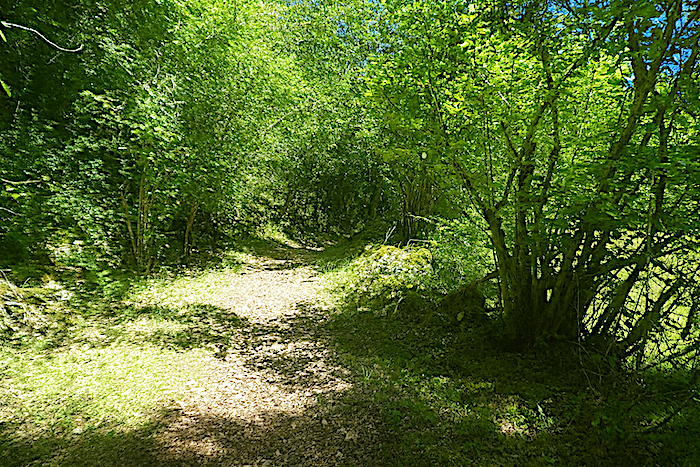
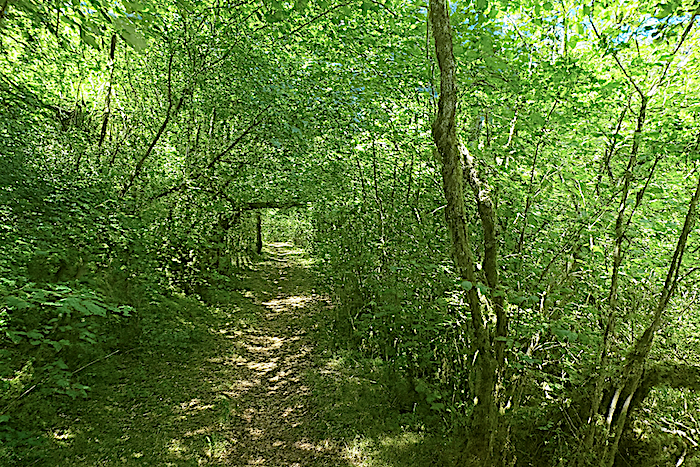
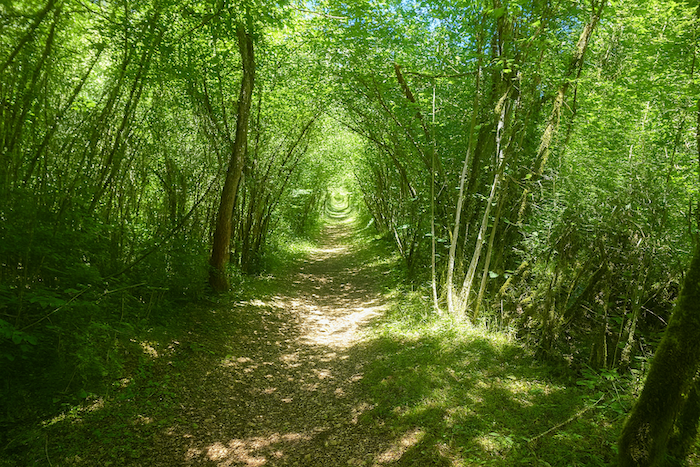
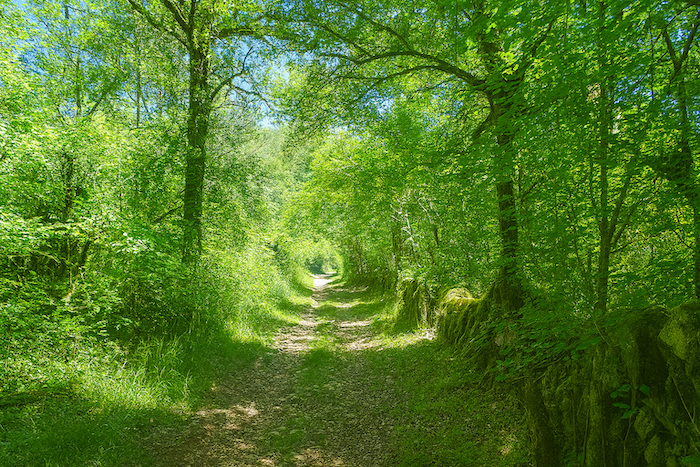
The trail soon disappears beneath a canopy of foliage, a true cathedral of greenery where branches intertwine above your head. Sunlight filtering through the leaves creates a shifting mosaic of light and shadow. In this cool silence, time itself seems to pause, allowing the walker to savour the quiet harmony that only a forest can offer. |
|
 |
 |
 |
 |
|
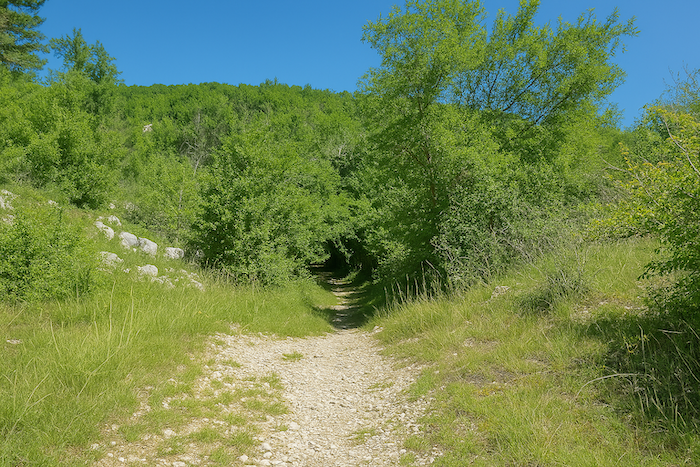
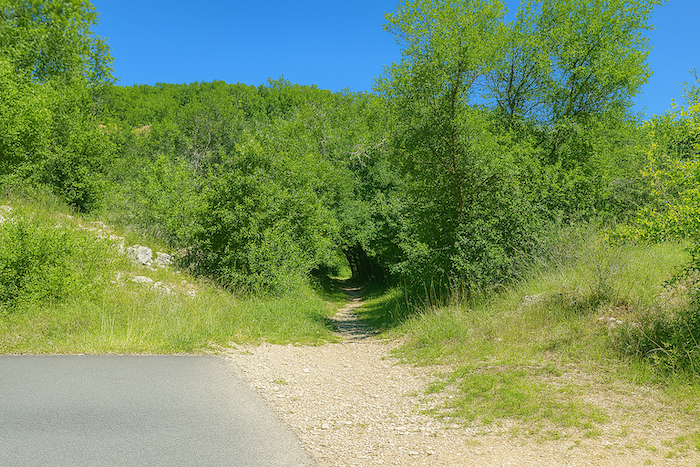
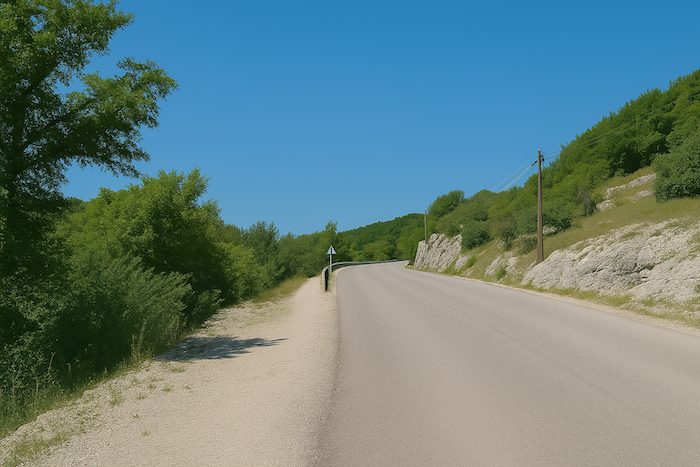
At the end of the descent, the path reaches a modest road leading towards Rocamadour. Far removed from the main tourist flows, it remains the privilege of walkers. It is along this secluded approach that the town gradually allows itself to be discovered, as though reserving its finest welcome for those who have taken the time to reach it on foot. |
|
 |
 |
|
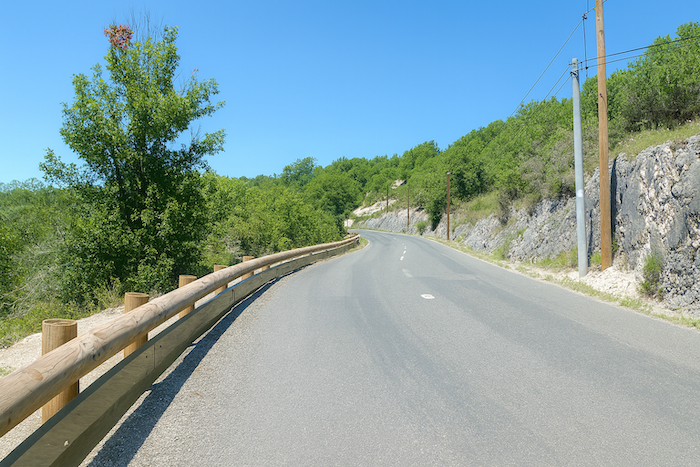
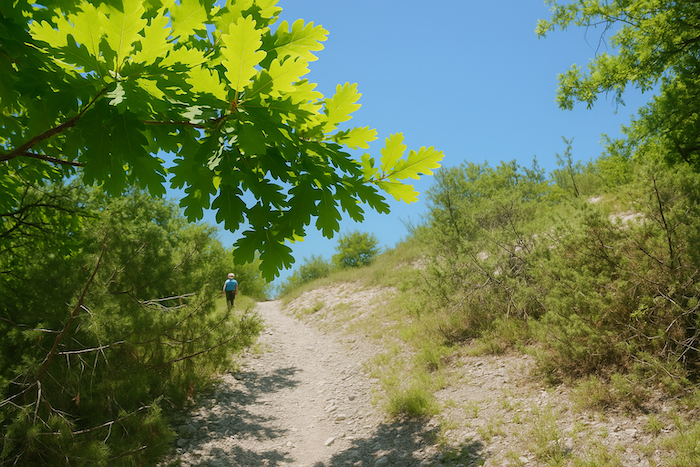
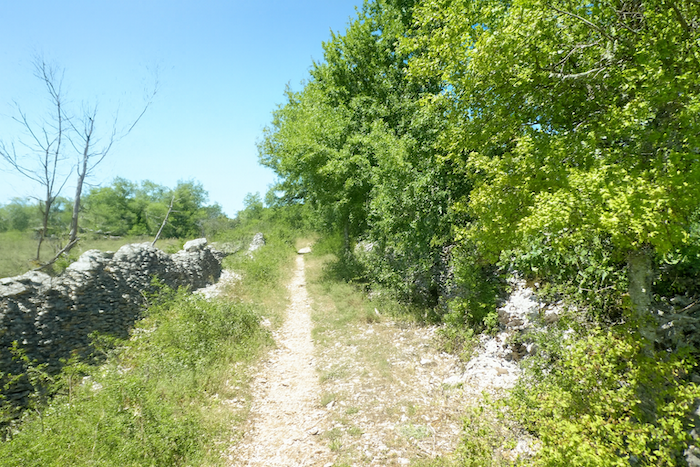
The small road climbs slowly up the hillside, or rather towards what resembles a severe, austere, almost hostile mountain. Gradually, the vegetation becomes scarcer. A few trees with brilliant green foliage cling to the slopes and ridges, their roots stubbornly searching for a way through cracks in the rock. Sparse shrubs and a few resilient grasses punctuate the landscape, silent witnesses to a dry and infertile soil. |
|
 |
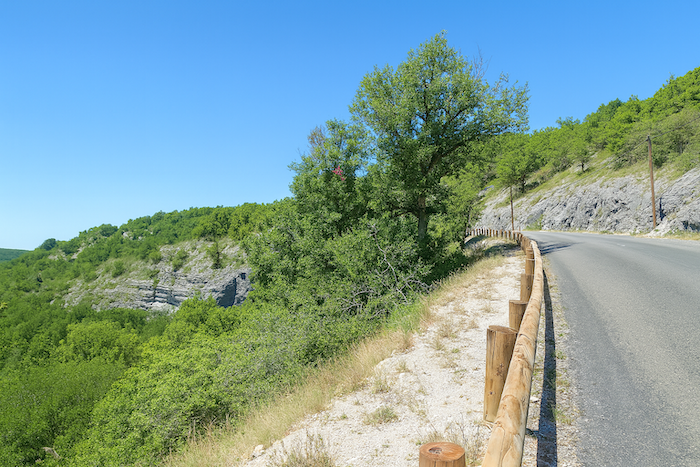 |
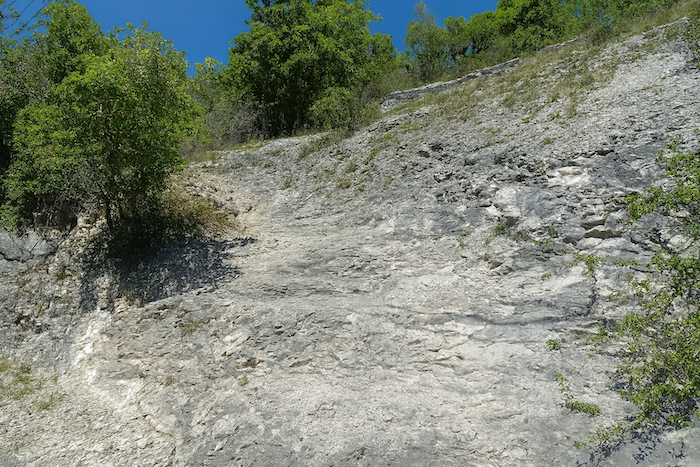
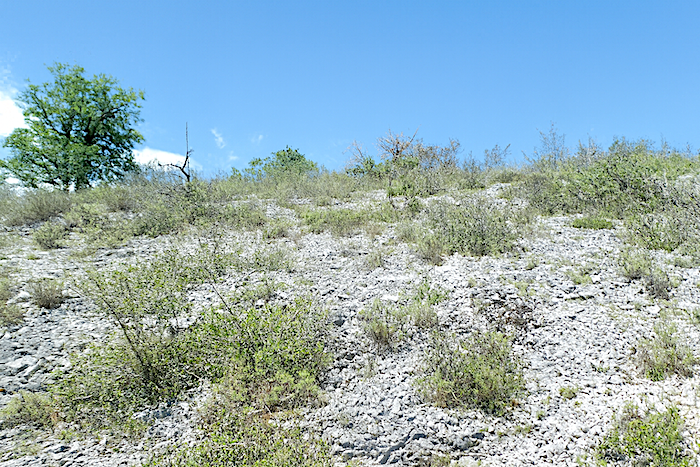
Here, the mineral world reigns in all its power. Grey, friable schist dominates the landscape and imposes its presence. Bare rock shapes a harsh and wild environment where stone seems to have finally gained the upper hand over vegetation.
|
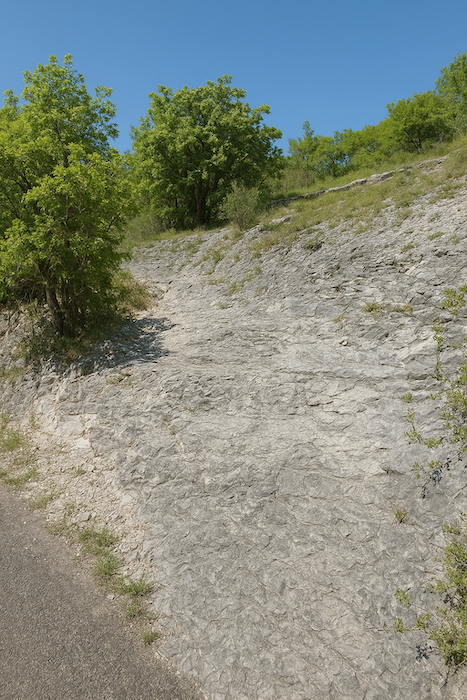
You must then leave the road and tackle the slope itself. For a few dozen metres, the ascent becomes almost a brief exercise in climbing. Your hands may occasionally search for support on rock polished by centuries. Erosion has sculpted the mountainside, revealing twisted strata and irregular contours. The steep, slippery gradient demands care and perseverance. |
|
 |
 |
|
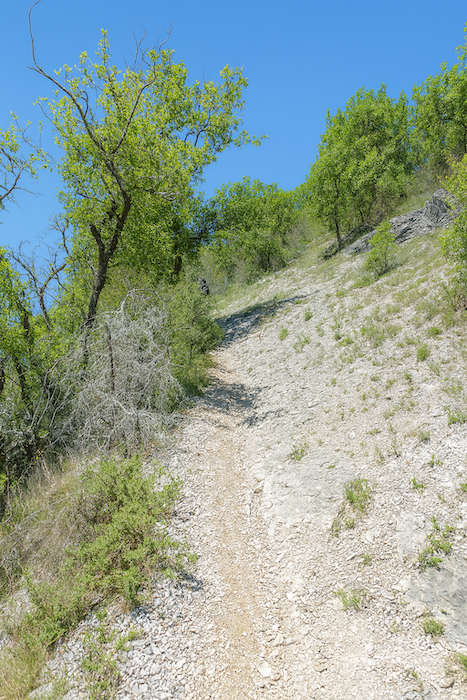
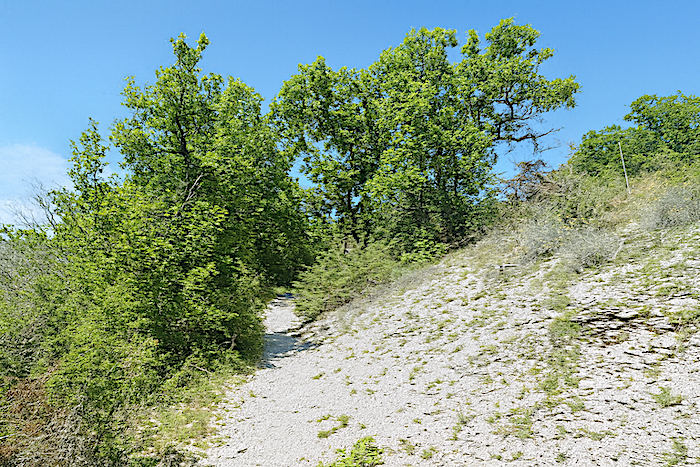
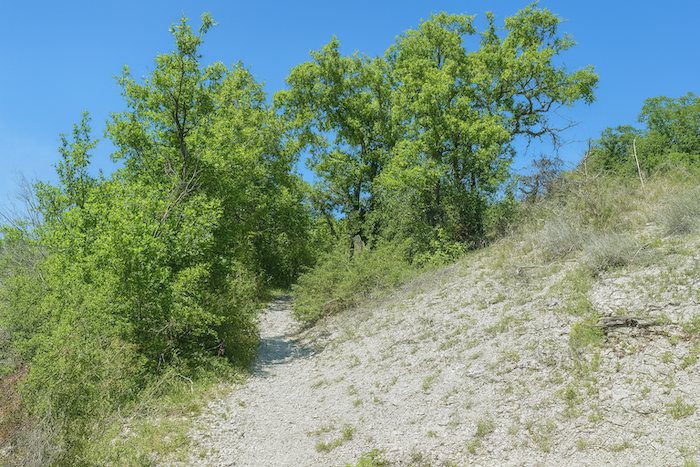
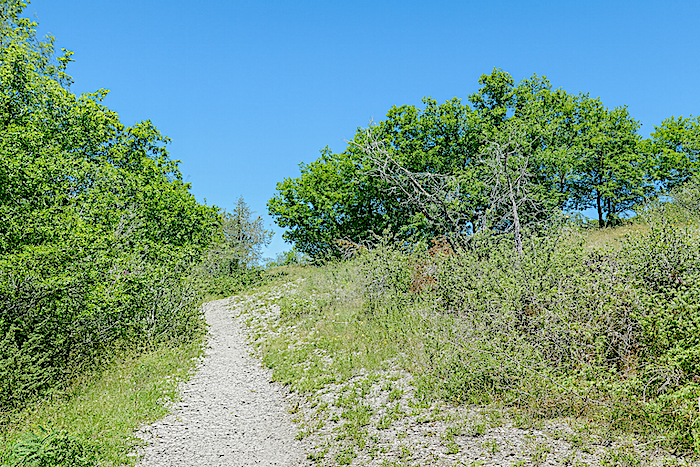
Higher up, the slope becomes somewhat gentler, without ever losing its austere character. A grassy steppe, parched by the sun, stretches across the hillside. Stunted oaks cling tenaciously to the land, drawing life from the thin layer of soil covering the rock. Each tree seems to be the result of a long struggle against wind, drought and the poverty of the soil. |
|
 |
 |
 |
 |
|
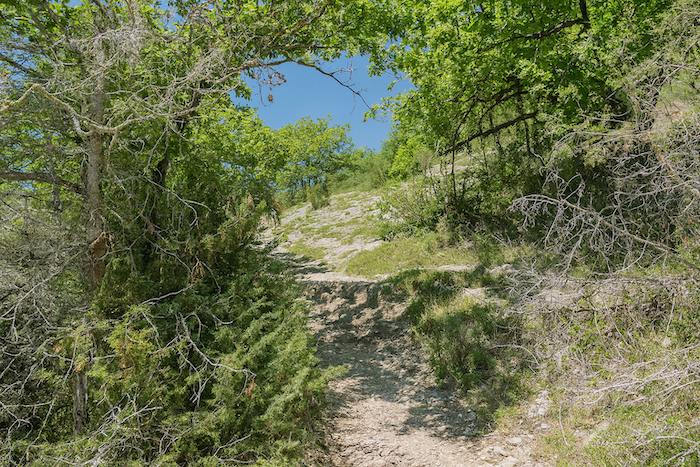
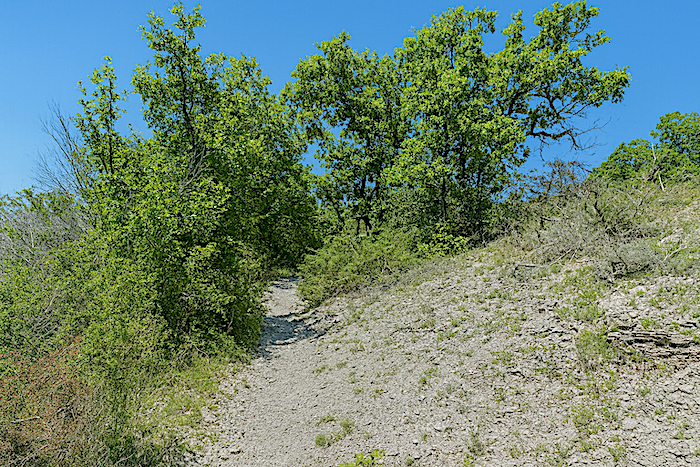
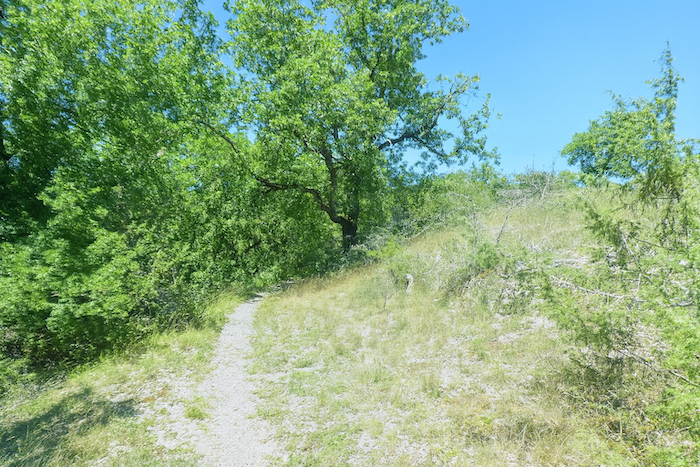
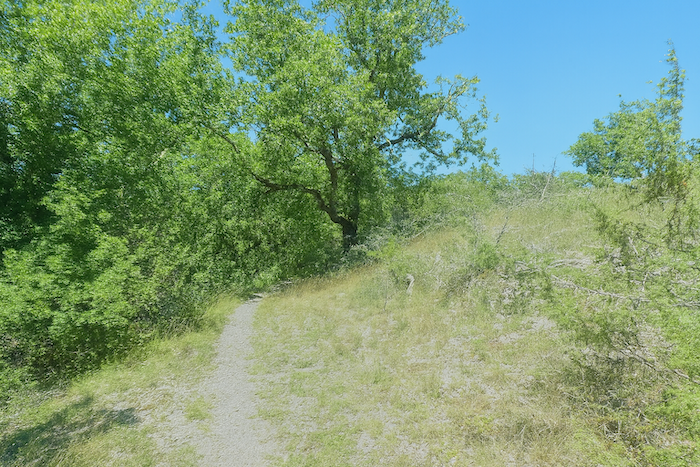
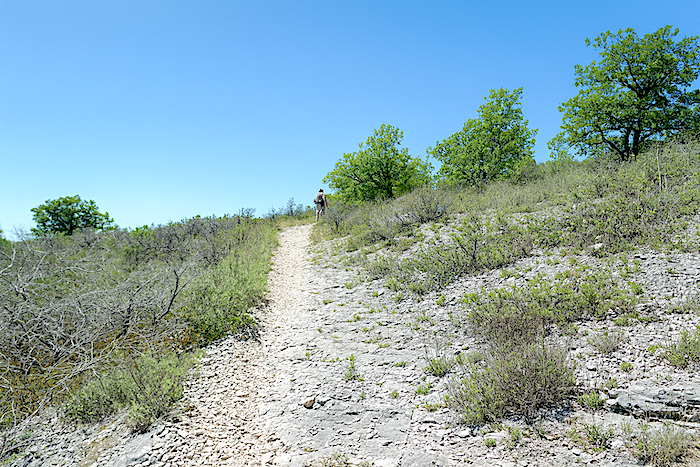
The stony trail continues its silent ascent, like an ancient scar carved into the hillside. It winds between scrub and young trees whose tender foliage seems intent on gradually closing this wound in the earth. Dry grass, sun-bleached stones and scattered bushes tell of the harshness of summers gone by. |
|
 |
 |
 |
 |
|
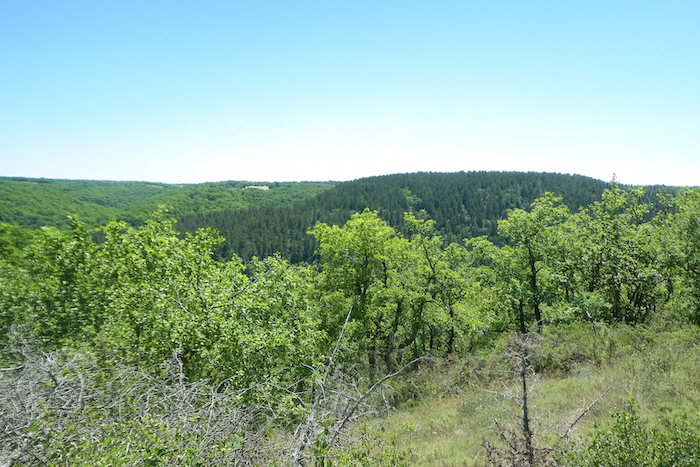
Here, nature seeks neither abundance nor splendour. It expresses itself with infinite restraint, in the fragile balance between bare rock, modest shrubs and scrubland. Yet as the gaze reaches farther into the distance, the horizon gradually begins to change. The mineral shades give way to the dense mass of forests, like a promise of coolness after this long crossing through stone and light. |
|
 |
 |
|
The path then invites you to continue climbing, step by step, towards a horizon still hidden from view, like a promise whispered to those willing to make the effort. This is a landscape of patience and resilience, where every tree has fought for its place and every root clings to the rock with silent determination. The tranquillity here seems almost tangible. Walking along this trail, you have the feeling of entering a forgotten world where time slows down, where stone converses with the wind, and where the land, despite its harshness, reveals a humble, authentic and profoundly soothing beauty. |
|
 |
 |
|
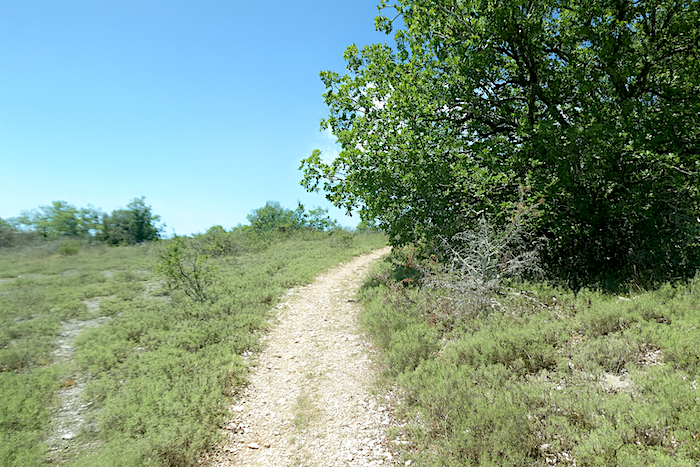
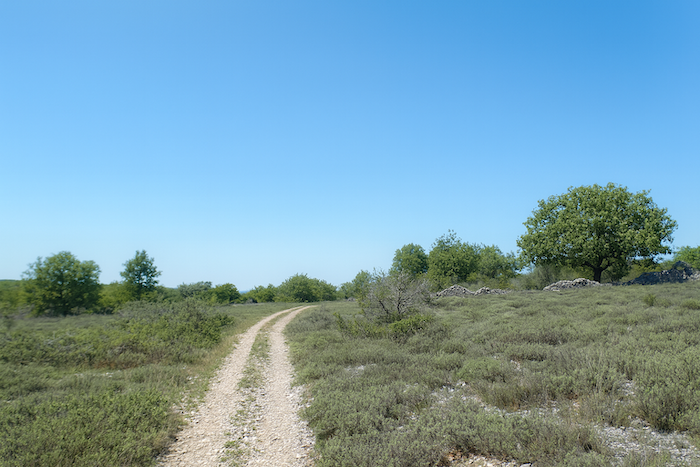
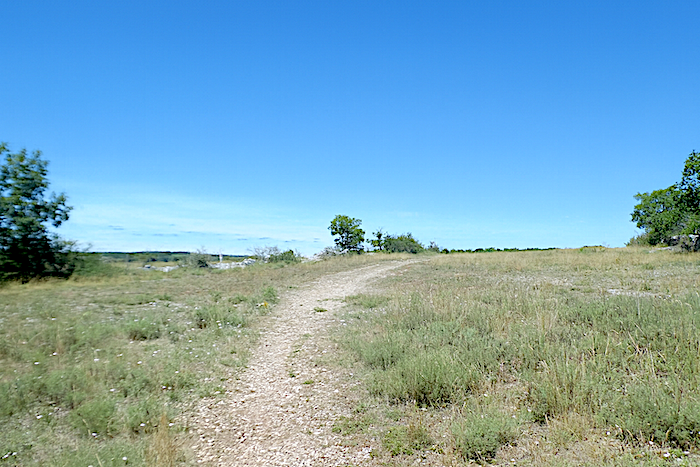
Every ascent eventually reaches a point beyond which there is nowhere higher to climb. The path then emerges onto a broad plateau covered with dry grasses and scrub, bathed in light and silence. |
|
 |
 |
|
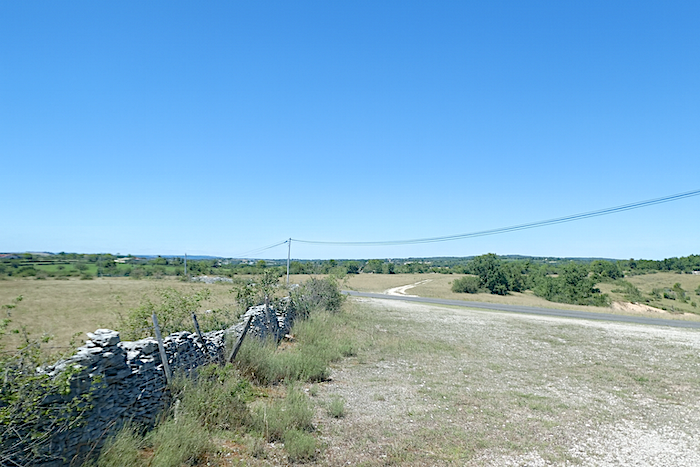
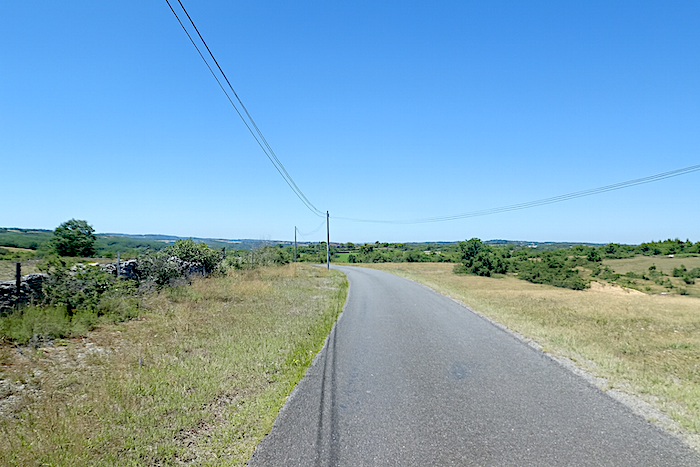
There, it joins a road that seems to lead nowhere. At this moment, Rocamadour remains invisible, hidden behind the undulations of the terrain. Nothing suggests that an entire town lies concealed in the depths of the valley. . |
|
 |
 |
|
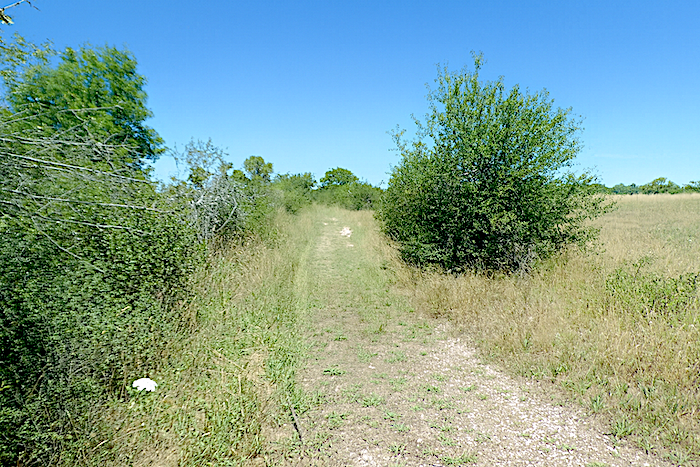
You might be tempted to follow this road all the way to your destination. But that is not the route. Before long, the route leaves the asphalt and plunges back into the short grasses of the steppe. The trail regains its freedom and begins another descent. |
|
 |
 |
|
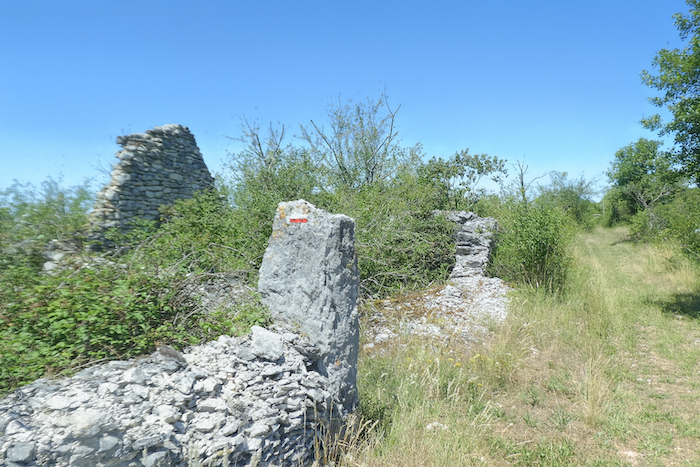
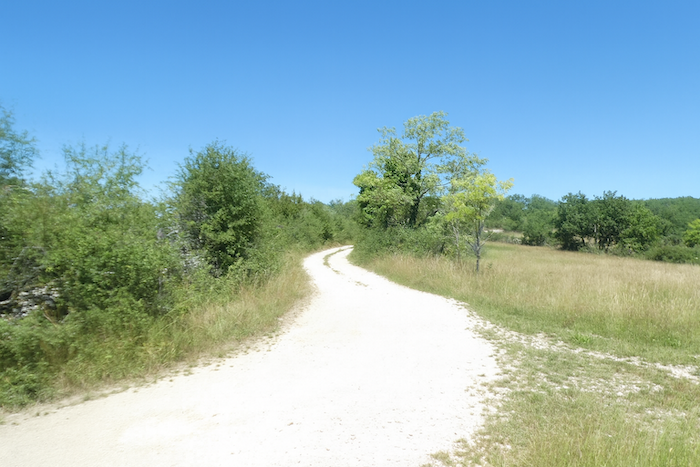
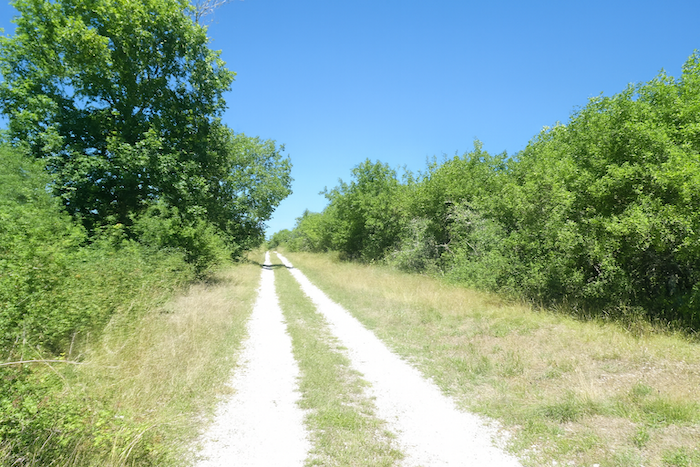
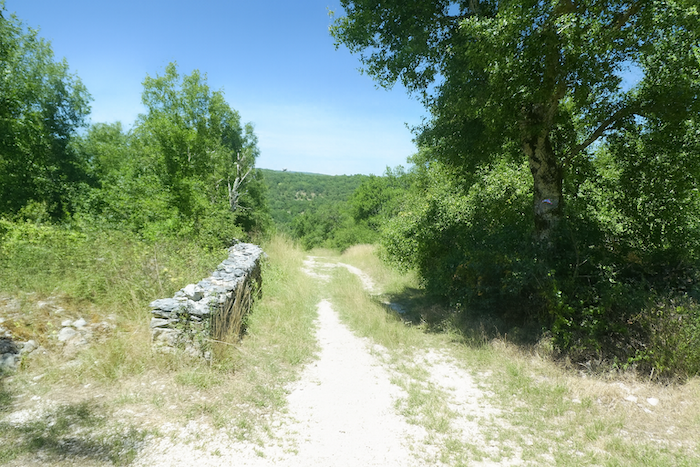
You are still high above Rocamadour, which remains hidden in the hollow of the valley. After passing a few ruins whose origins remain mysterious, the path leaves the meadows and returns to beaten earth. The gradient quickly becomes steeper, and your steps grow more cautious as the valley draws closer. |
|
 |
 |
 |
 |
Section 7: Rocamadour, another jewel of the Lot
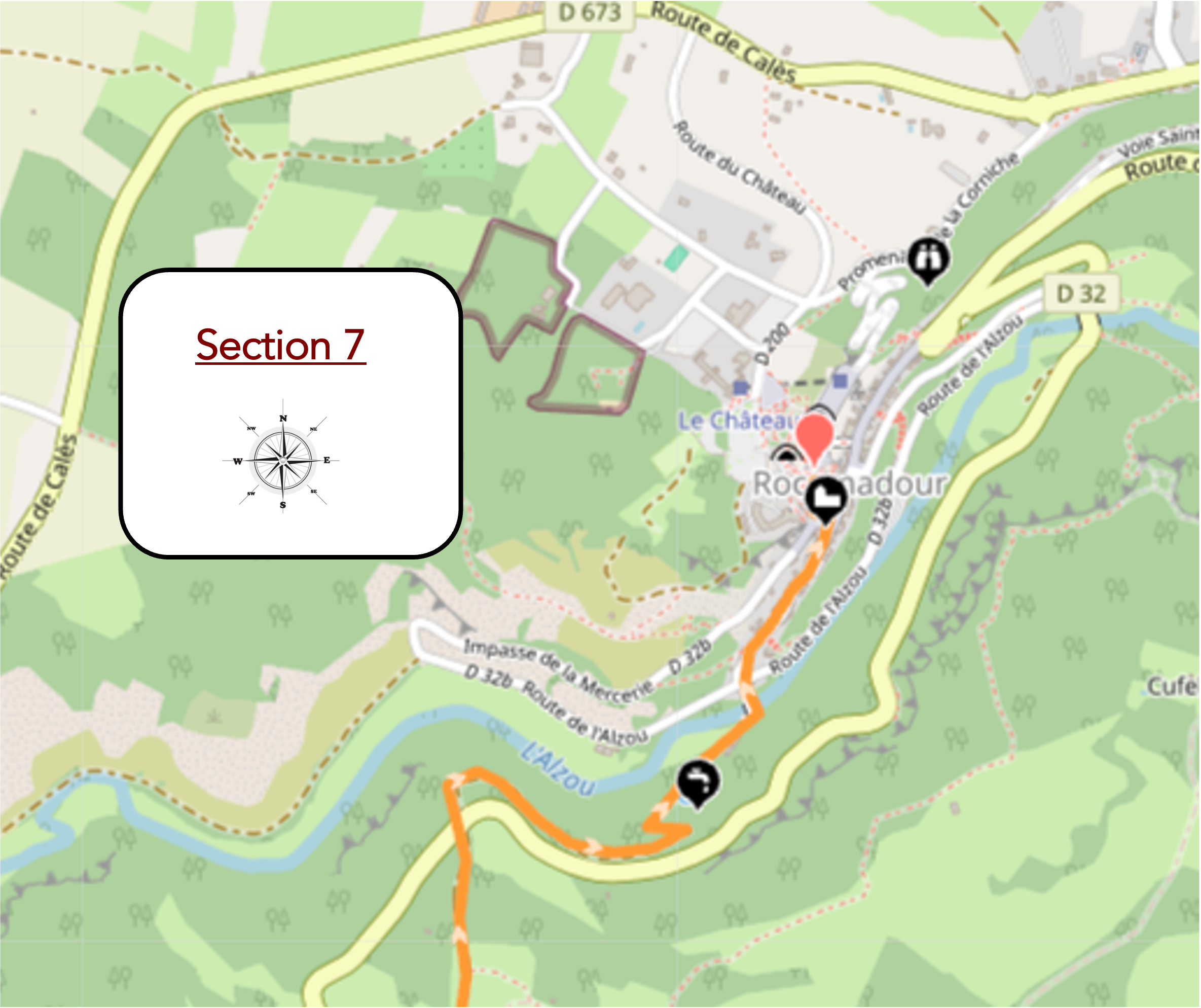
Overview of the route’s challenges: steep slopes.
|
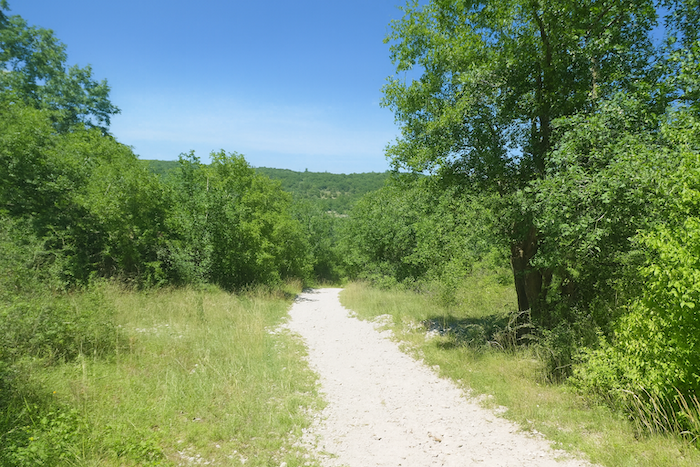
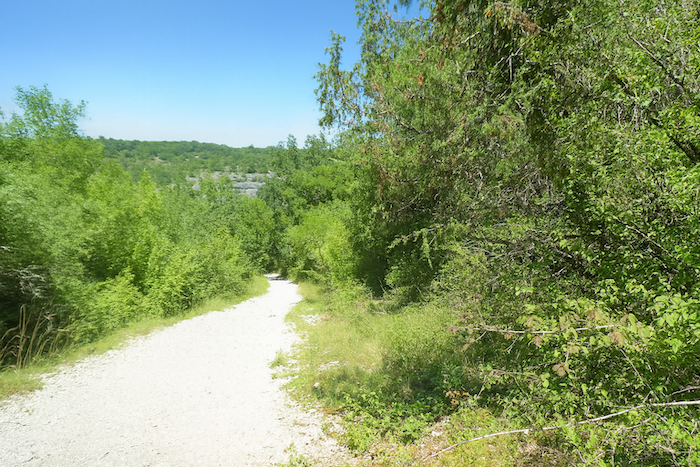
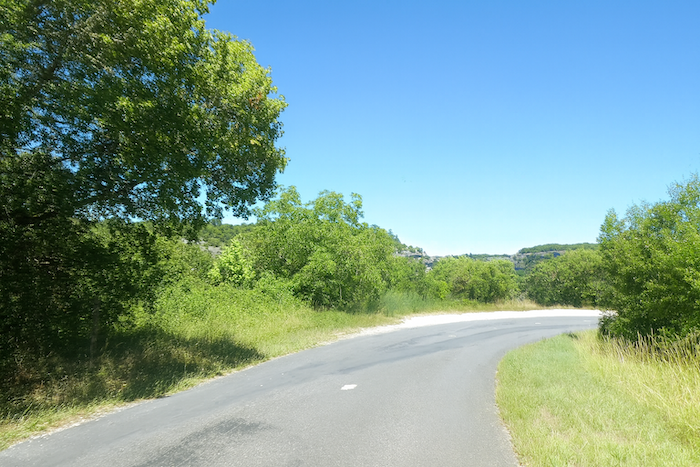
Farther down, through the steppe and scrubland, the trail rejoins the road glimpsed earlier, which has meanwhile disappeared into a succession of bends hidden behind the folds of the mountainside. The two routes cross only briefly before parting ways once again. |
|
 |
 |
 |
 |
|
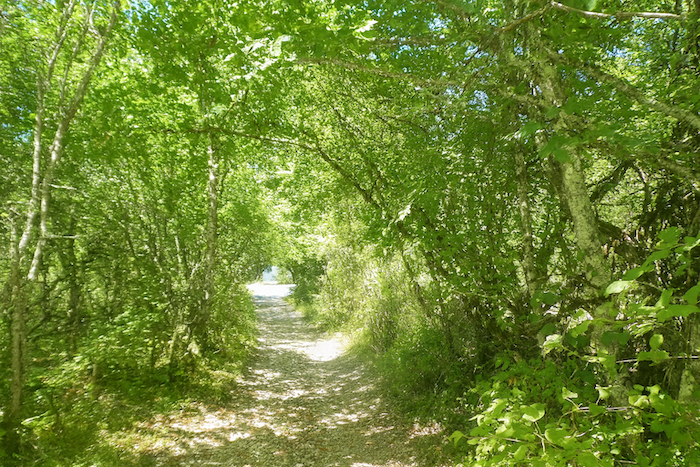
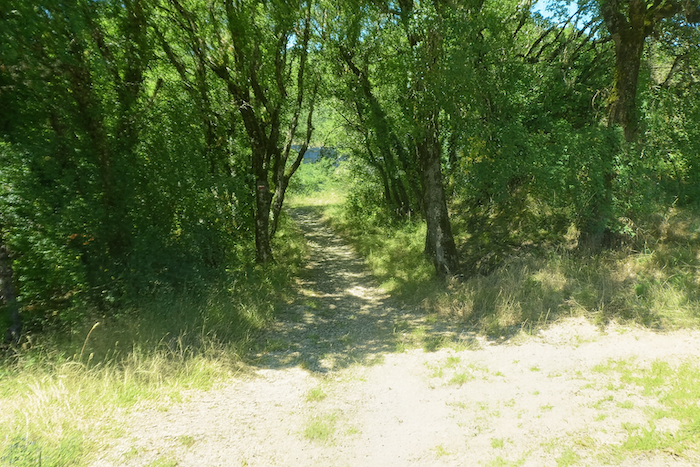
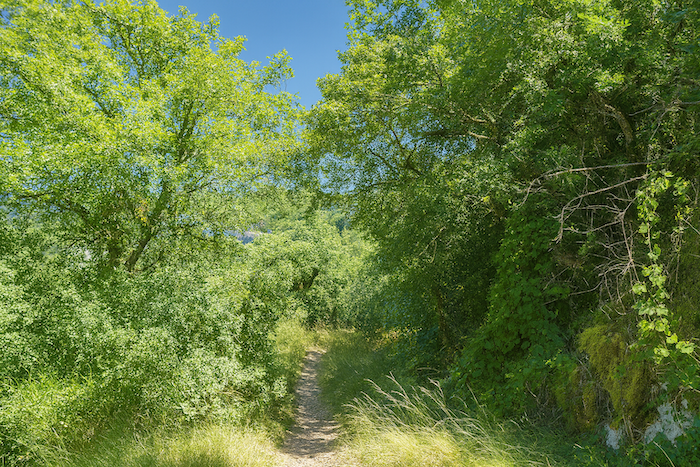
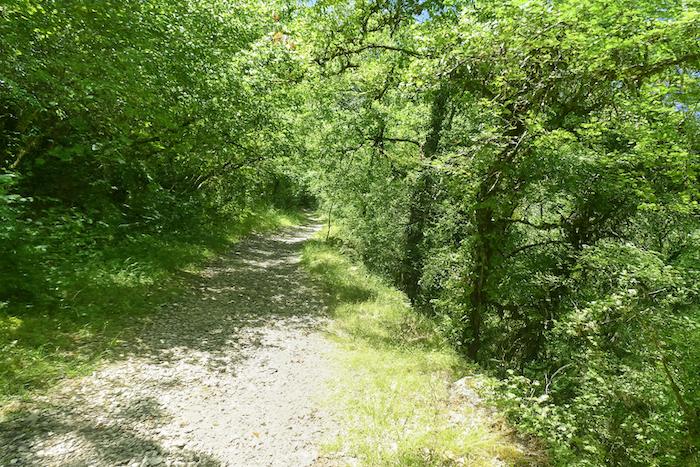
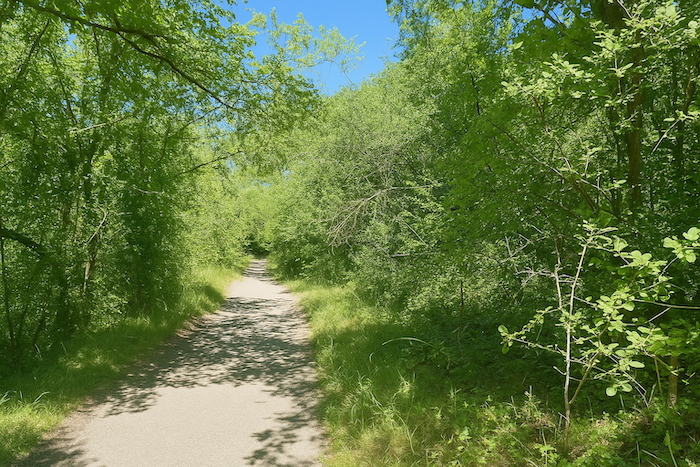
The path soon chooses to leave the asphalt behind. It plunges decisively into woodland, where coolness replaces the mineral heat of the plateaus. The trees close their branches above the trail, while vegetation reclaims its domain and accompanies the final meters of the descent. |
|
 |
 |
|
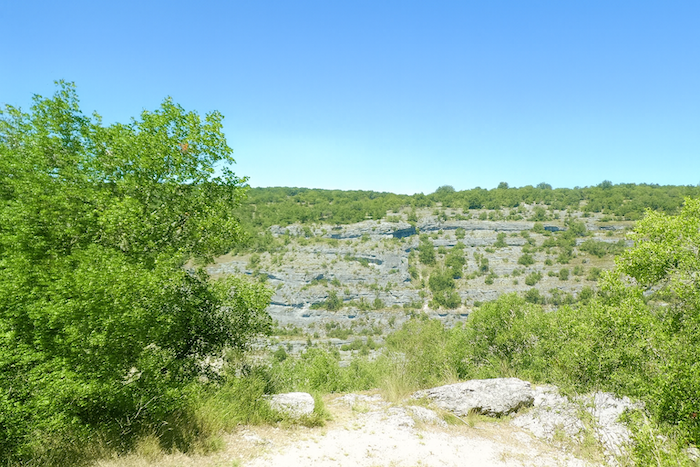
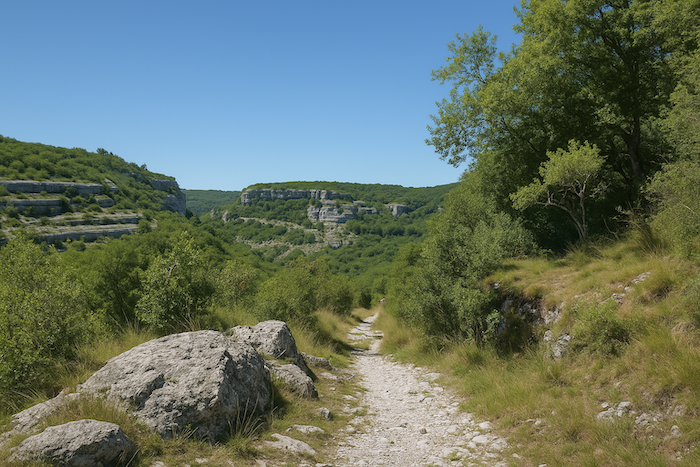
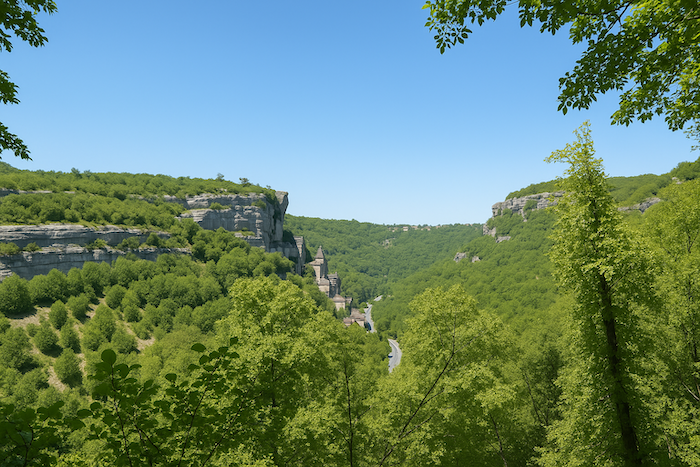
Then suddenly, around a bend in the path, the famous cliffs of Rocamadour come into view. Rising to almost one hundred and fifty metres, they are carved from Middle Jurassic limestone deposited around one hundred and seventy million years ago on the floor of a tropical sea that then covered the Quercy. Much later, the uplift associated with the formation of the Pyrenees raised these layers of rock, before the Alzou River slowly carved out its gorge, exposing this immense limestone wall. It is upon this cliff, born of millions of years of geological history, that Rocamadour came to cling, seemingly suspended between stone and sky. |
|
 |
 |
|
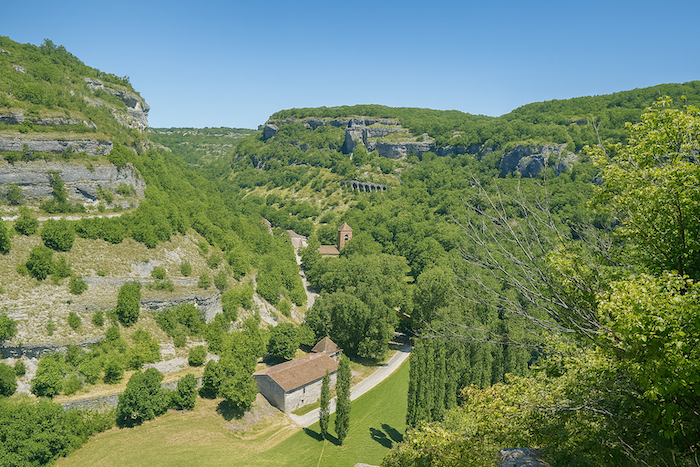
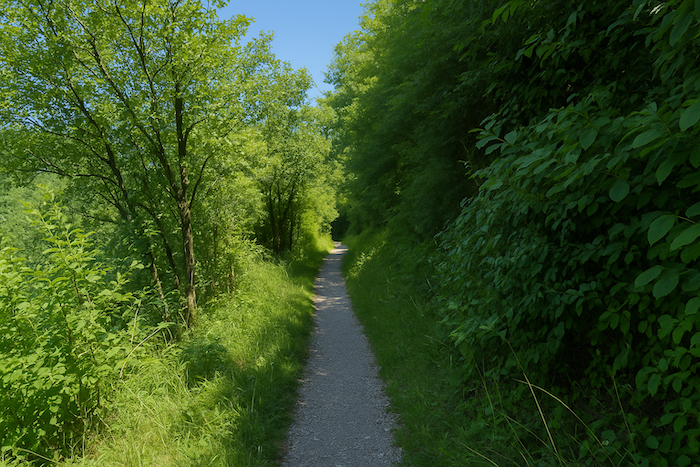
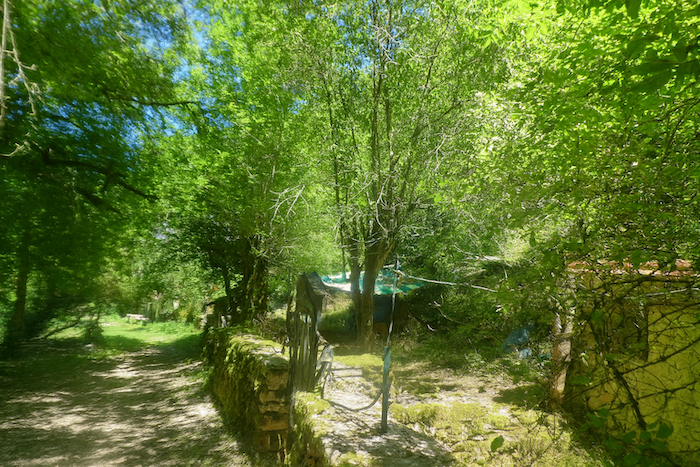
Then, still indistinct at the bottom of the valley, the first houses of Rocamadour begin to appear. Nestled in the hollow of the valley, they are sensed more than truly revealed. To reach them, you must continue the descent along the trail plunging beneath the trees. |
|
 |
 |
|
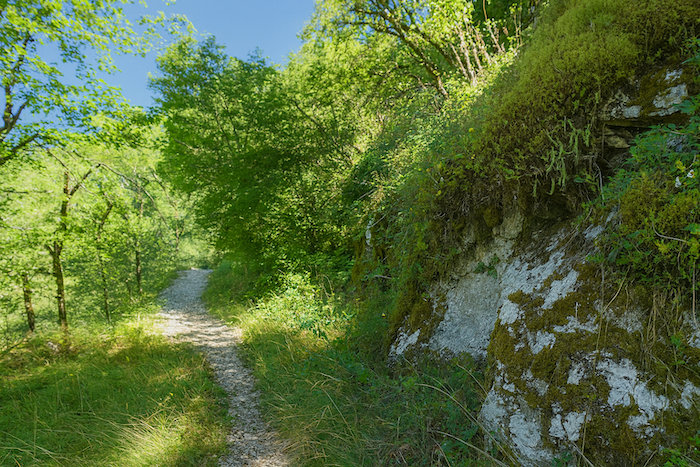
As you lose altitude, Rocamadour gradually reveals itself. The town emerges discreetly, still largely concealed beneath the imposing cliff towering above it. Its rooftops slowly rise from the greenery, as though the village were still hesitant to show itself. |
|
 |
 |
|
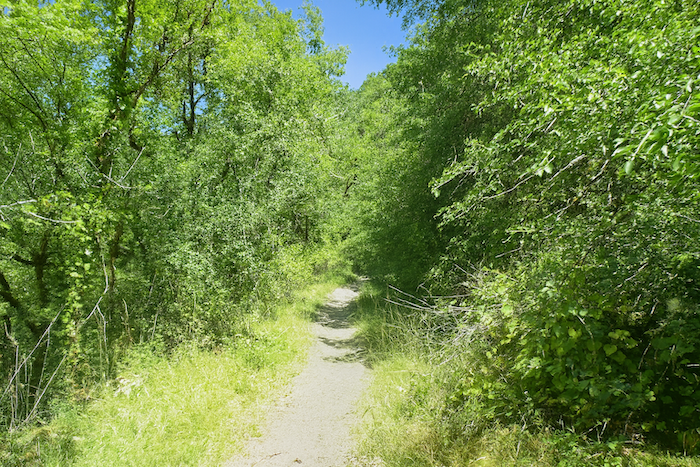
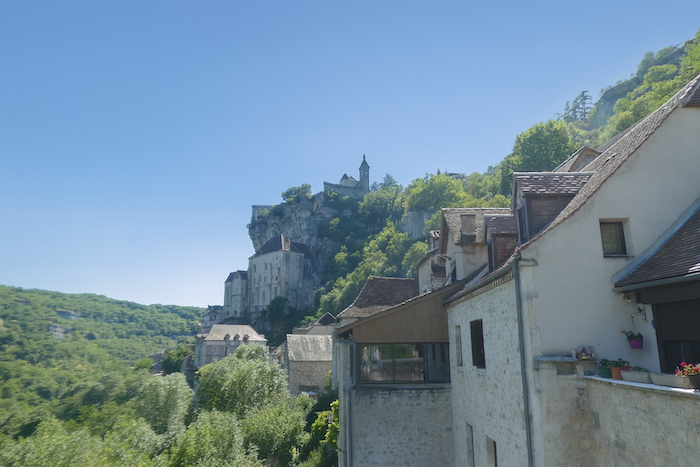
The descent continues for some time down the sometimes-steep slopes of the woodland. The trail winds between the tree trunks, offering welcome coolness after the sun scorched plateaus. Around every bend, the limestone cliff draws closer and becomes ever more imposing, while the houses seem to cling to its base with astonishing determination. Little by little, the miracle of Rocamadour reveals itself, a town born from stone, suspended between the cliff and the void, as though people had sought to continue the work of nature by building their village within the very heart of the mountain. |
|
 |
 |
 |
 |
|
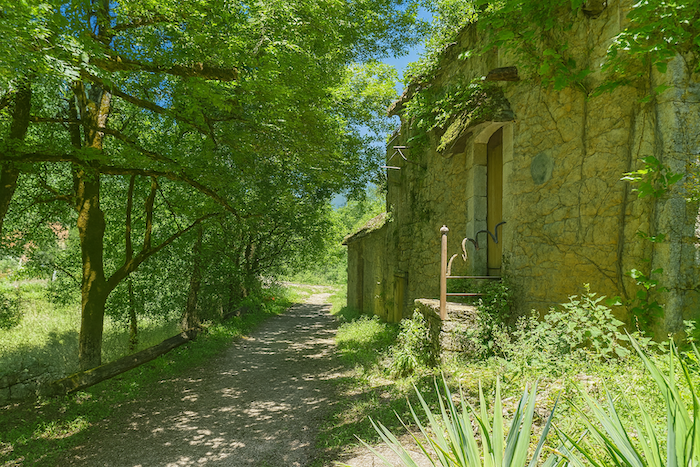
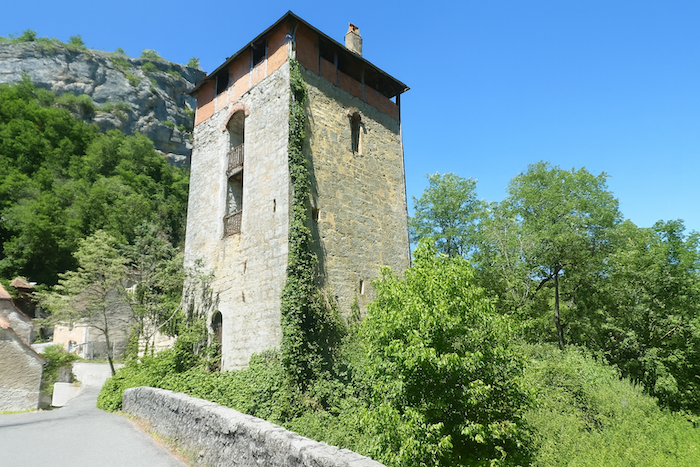
The path soon emerges at the foot of a tall tower built against the cliff. It is one of the ancient defensive towers that once protected the approaches to Rocamadour. During the Middle Ages, the town was enclosed by walls, fortified gates and several towers designed to watch over the access roads and ensure the safety of the pilgrims who flocked to the sanctuary. The pale stone of the tower blends into the cliff itself, as though the structure had grown naturally from the rock. |
|
 |
 |
|
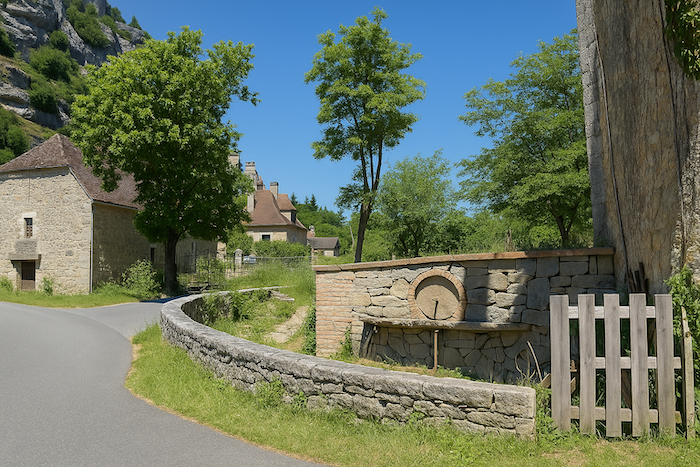
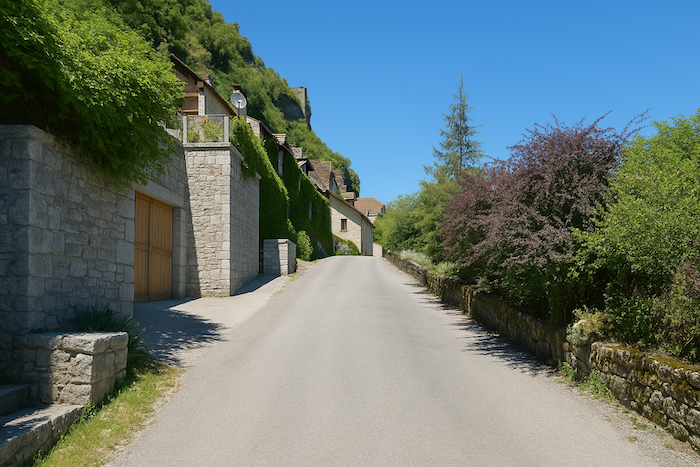
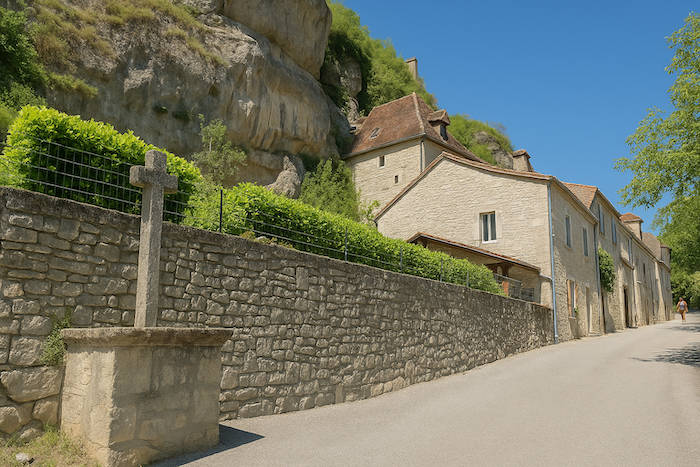
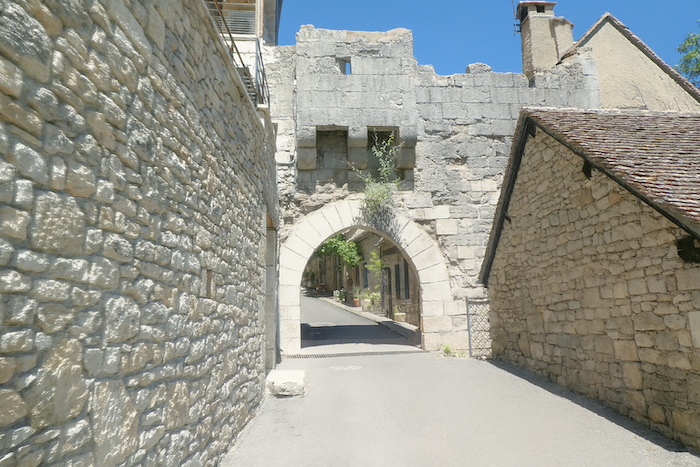
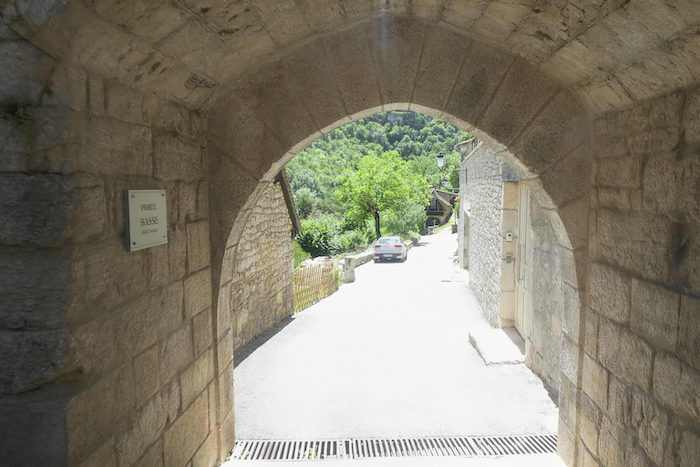
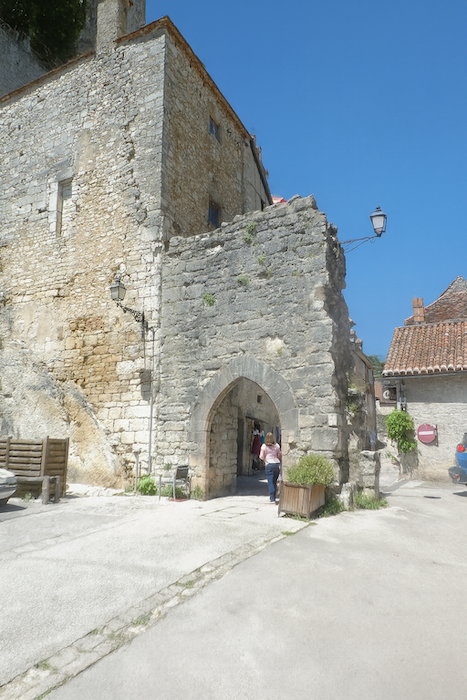
A small road then climbs towards the medieval village. After a few hundred metres, it reaches the « Porte Basse », one of Rocamadour’s principal historic gateways. Built in the 13th century, it once controlled access to the town from the floor of the Alzou Valley. Its powerful stone arch and thick walls are reminders that before becoming a major centre of pilgrimage, Rocamadour was also a true fortress. Passing through this gateway, the walker finally leaves behind the wild paths of the causse and enters a world where history, faith and stone have intertwined for more than eight centuries. |
|
 |
 |
 |
 |
|
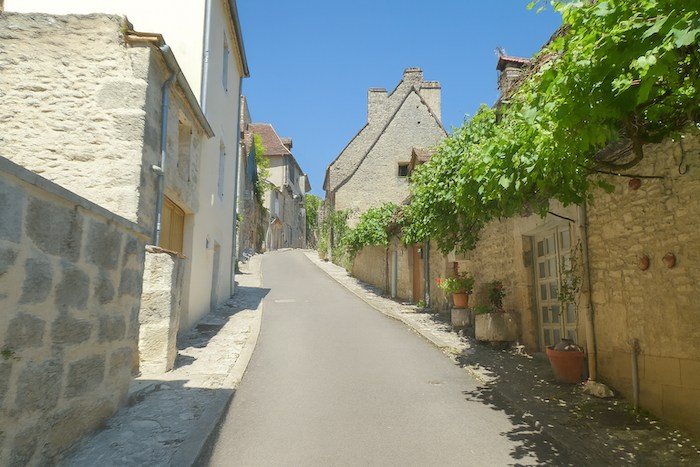
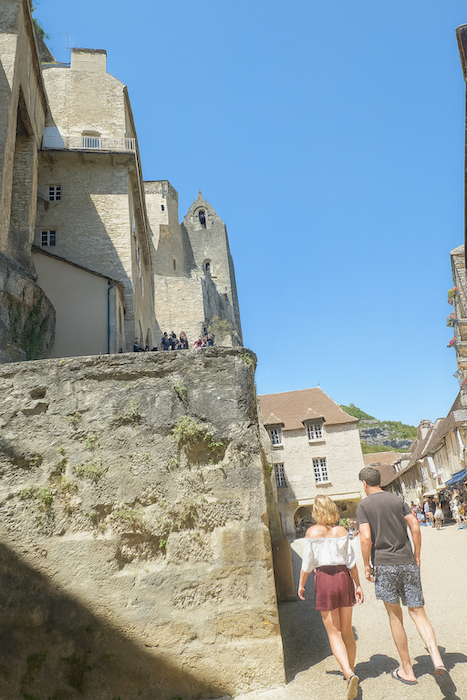
No sooner have you passed through the “Porte Basse” than you find yourself in the heart of Rocamadour. It is rare to discover the town in such silence. During the warmer months, the street is usually alive with pilgrims and visitors from all over the world. You often have to come in the earliest hours of the morning, or wait until the end of the day, to experience those precious moments when the narrow streets recover their tranquillity and the stone seems once again to take possession of the place. |
|
 |
 |
|
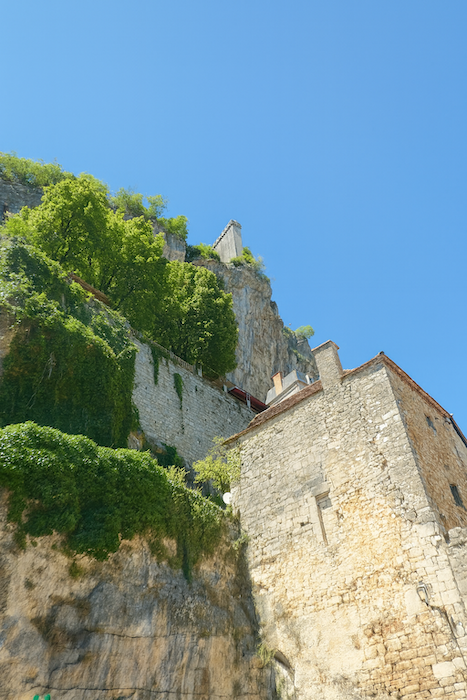
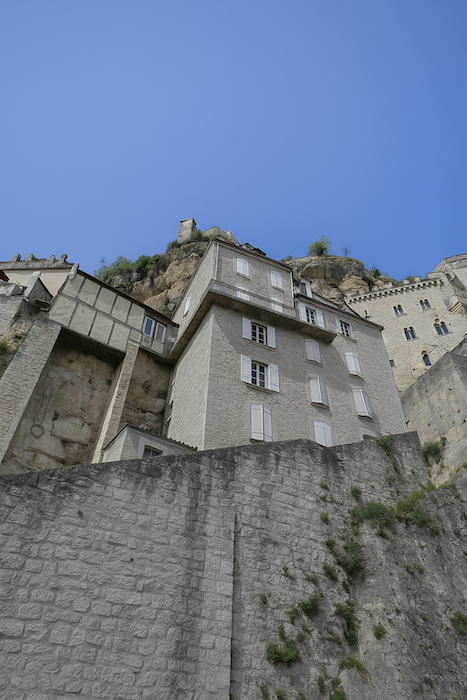
Here, you must constantly look upwards. Stone houses rise one above another, clinging to the cliff as though defying the laws of balance. Higher still stand the sanctuaries, and above them all, the château has watched over the sacred town for centuries. The entire architecture of Rocamadour follows the contours of the mountain with astonishing harmony, creating the impression that its builders merely continued the work begun by nature. |
|
 |
 |
 |
 |
|
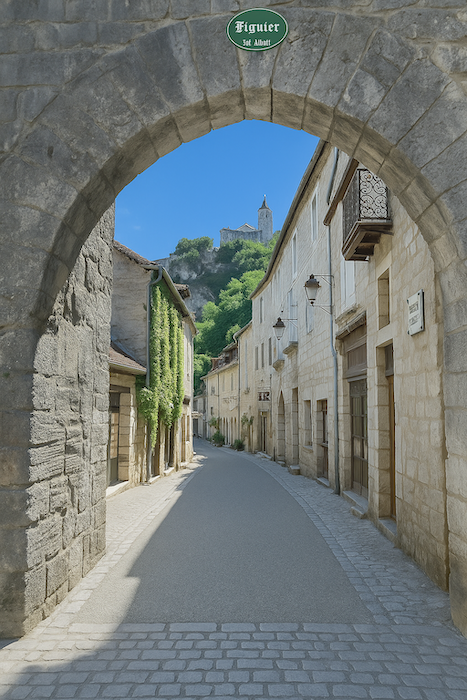
The street then leads to the “Porte du Figuier”, another surviving remnant of the old fortifications. Its elegant pointed arch opens onto the Rue de la Couronnerie, the true backbone of the medieval town. The moment you pass beneath the gateway, your gaze is irresistibly drawn upwards. Above the honey-colored stone rooftops, the sanctuaries rise in tiers along the cliff, while the château crowns the entire ensemble, suspended between sky and rock. This unique composition alone captures all the magic of Rocamadour. The “Porte du Figuier “takes its name from the fig tree that once grew near its walls. It was one of the principal entrances to the fortified town. Pilgrims arriving from the valley passed through it before following the Rue de la Couronnerie and then climbing the « Grand Escalier » towards the sanctuaries. Passing beneath this stone arch, they left the ordinary world behind and entered one of the greatest pilgrimage sites of medieval Christendom. |
|
 |
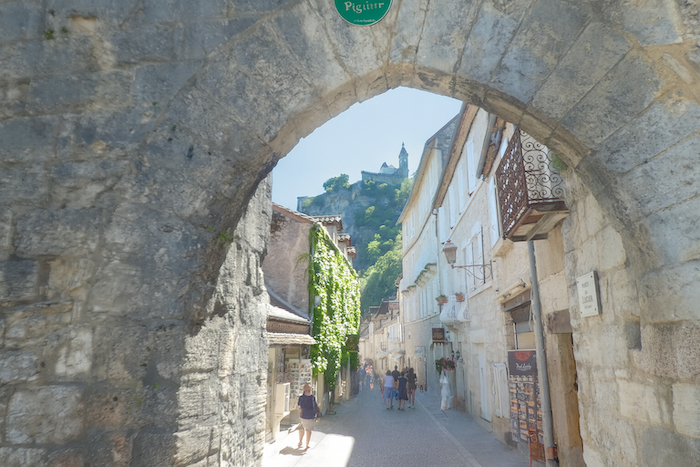 |
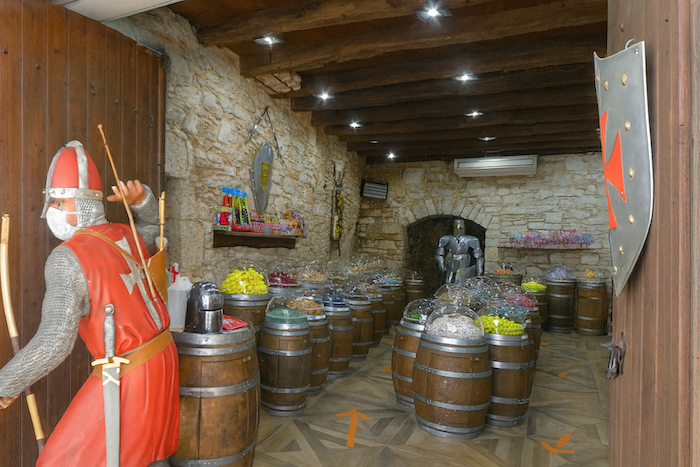
It must be acknowledged that the great pilgrimages that made Rocamadour famous largely belong to the past. Walkers arriving here after several days on the path may find the experience somewhat disconcerting. With the exception of the sanctuary, which retains all its spiritual power, the town has largely become a major tourist destination. The Rue de la Couronnerie is now lined with souvenir shops, small stores and restaurants. You can find almost anything here, sometimes in a cheerful mixture of styles, complete knight costumes for children, wooden swords, helmets and breastplates, brightly coloured sweets, ice cream made with goat’s milk in homage to the famous Rocamadour cheese, scented soaps bearing the image of the Black Madonna, as well as countless postcards, trinkets and devotional objects. The contrast between the majesty of the cliffs, the silence of the sanctuaries and this commercial bustle is striking. Sometimes you need to look beyond this first impression to rediscover the soul of Rocamadour. Simply leave the crowds behind for a moment, raise your eyes towards the chapels clinging to the cliff, or begin climbing the steps towards the sanctuary. The bustle then fades away, and you understand why this place has continued to fascinate pilgrims and ordinary travellers alike for almost a thousand years. Such is Rocamadour, both a tourist town and a place of contemplation, a bustling marketplace and a thousand-year-old sanctuary. Two worlds coexist here, sometimes uneasily, but perhaps it is precisely this contradiction that gives the village its unique character.
|
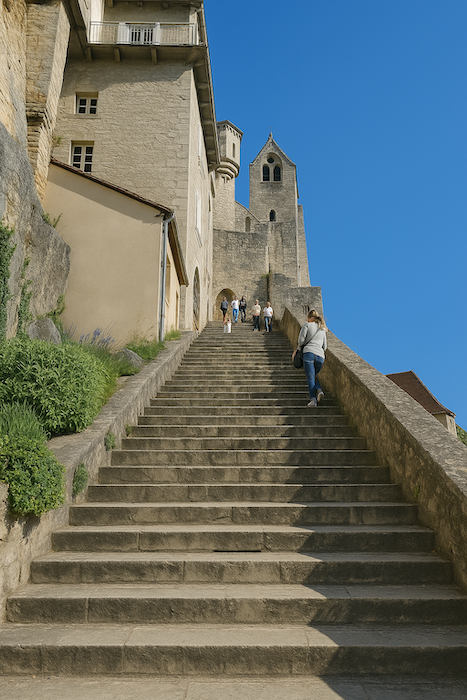
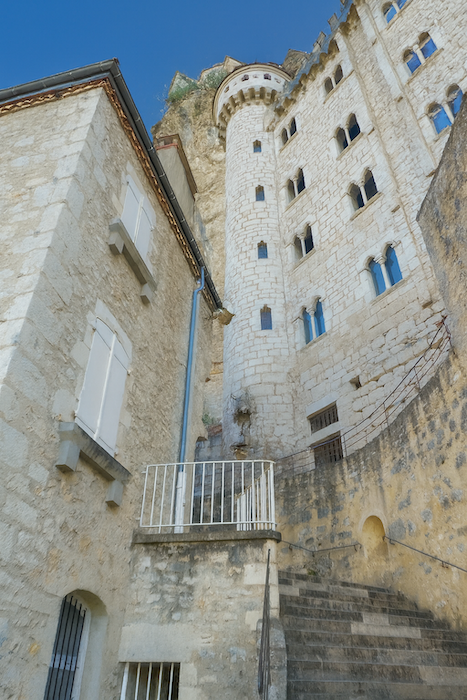
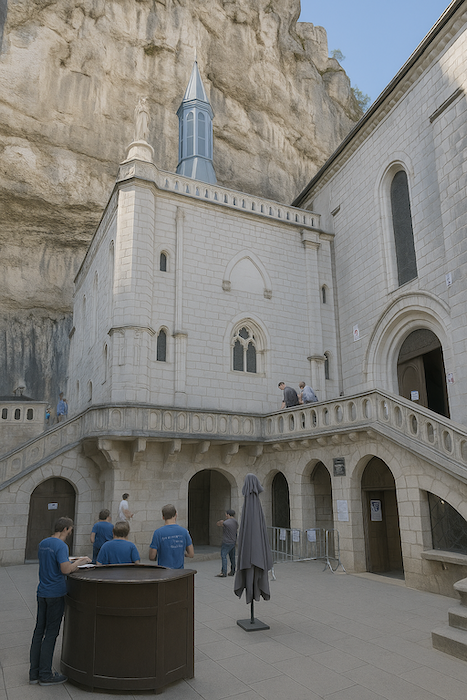
After wandering through the narrow streets of the town, your gaze is irresistibly drawn towards the sanctuary. Nestled halfway up the cliff, it seems suspended between rock and sky. Nowhere else does architecture appear so intimately bound to the landscape. The chapels, stairways, terraces and walls rest upon the limestone as though they had emerged from the mountain itself. To reach this sacred esplanade, pilgrims once climbed the Grand Escalier, with its two hundred and sixteen steps. Many climbed it on their knees, as an act of penance or thanksgiving. Even today, despite the presence of a lift, many visitors still choose to climb these steps in order to retrace, if only for a moment, the route followed by those who came before them. |
|
 |
 |
|
The sanctuary of Rocamadour is not a single building, but a remarkable ensemble of seven chapels constructed between the 10th and 13th centuries around a vast sacred courtyard. For several centuries, it was one of the great pilgrimage destinations of Western Christendom, alongside Rome, Jerusalem and Santiago de Compostela. Kings, queens, bishops, knights, humble peasants and travellers came here to seek the protection of the Virgin, to give thanks for a recovery or an escaped danger, or to fulfil a vow. |
|
 |
 |
|
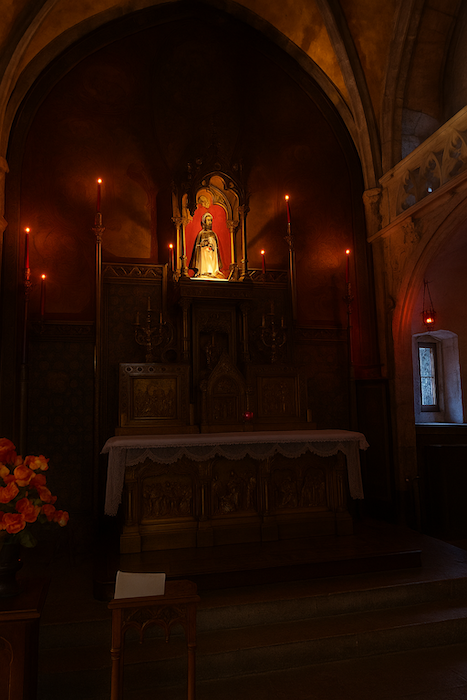
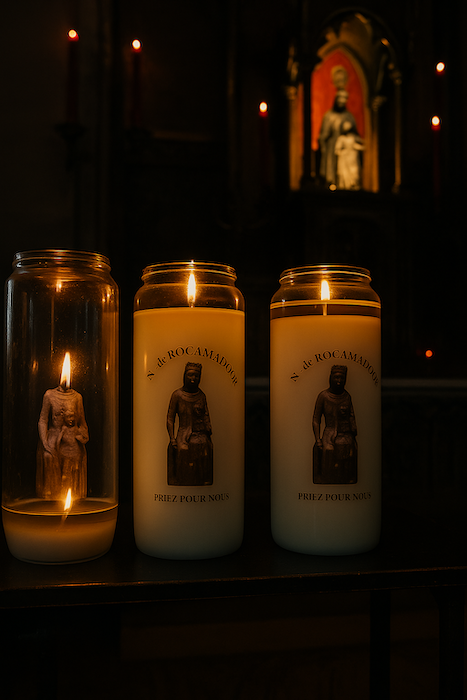
At the heart of the sanctuary stands the modest Notre-Dame Chapel. It houses the famous Black Madonna, a walnut wood statue carved in the 11th century. For almost nine hundred years, it has remained an object of devotion for pilgrims. In the half-light of the chapel, subtle illumination gently draws her face from the silence of the stone. Nothing is spectacular, everything invites contemplation. What strikes you most upon entering the sanctuary is the calm. Only a few dozen meters separate it from the busy shopping street, yet the bustle disappears almost immediately. The towering cliffs seem to shelter this place from the outside world. Honey colored stone, Romanesque vaults, chapels clustered closely together and light descending from the top of the cliff combine to create a setting of exceptional harmony. |
|
 |
 |
 |
 |
|
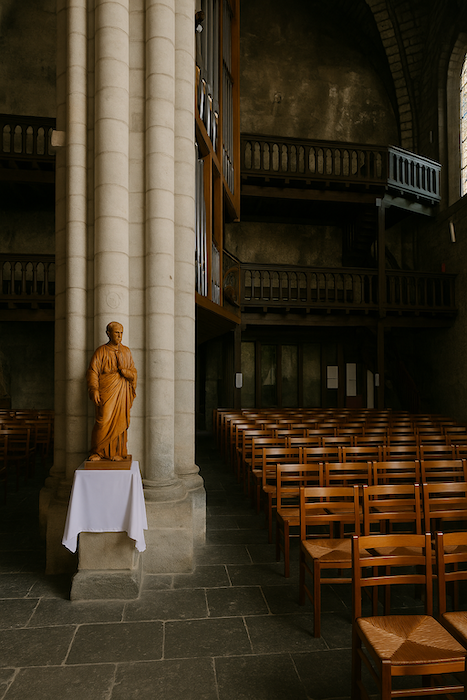
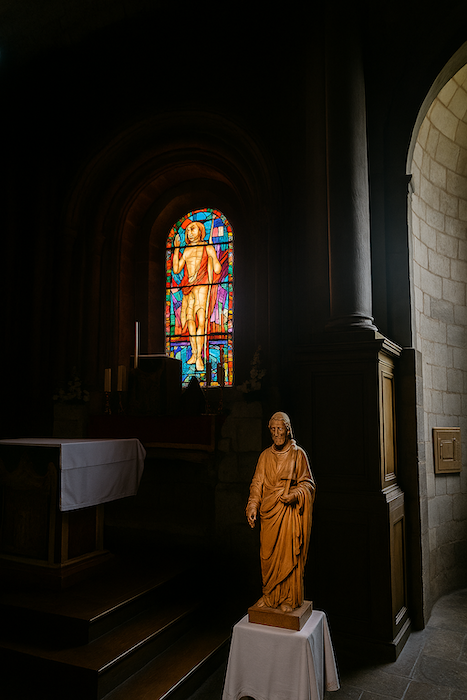
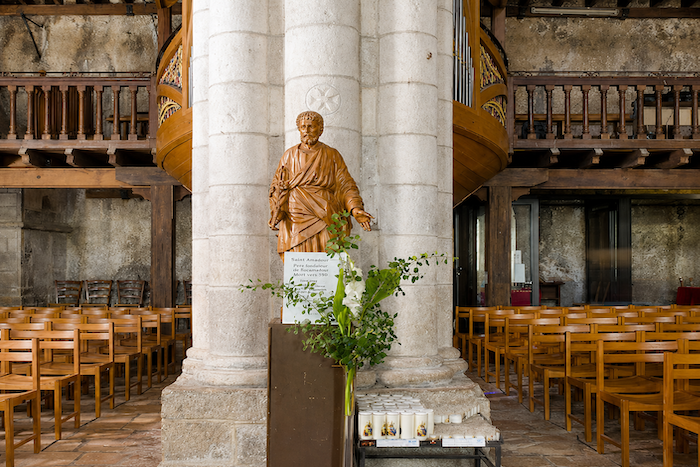
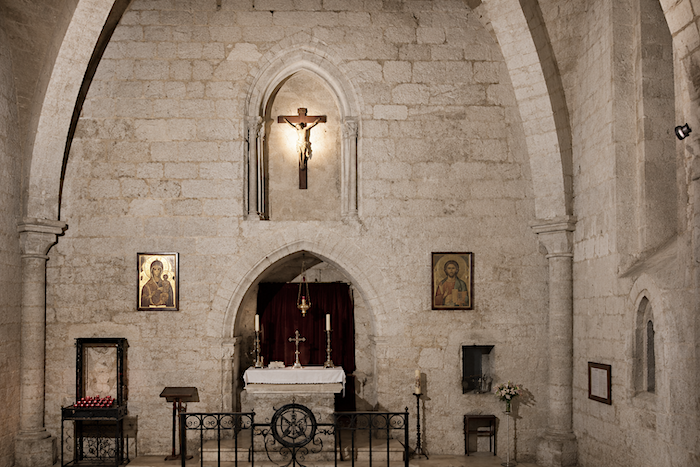
A few steps away stands the Basilica of Saint-Sauveur, whose Romanesque nave extends into a Gothic choir built in the 13th century. Listed as a UNESCO World Heritage Site as part of the Routes of Santiago de Compostela in France, it bears witness to the immense spiritual influence of Rocamadour during the Middle Ages. Beneath the basilica lies the Saint-Amadour Crypt, the true historic heart of the sanctuary. It was here, in 1166, that a remarkably well-preserved body was discovered and identified by the monks as that of Saint Amadour. This discovery gave extraordinary impetus to the pilgrimage and helped make Rocamadour one of the most renowned sanctuaries in Europe. The crypt, also listed as a UNESCO World Heritage Site, is a remarkable example of Romanesque architecture. Its powerful stone vaults, thick walls and subdued light create an atmosphere of profound contemplation. A few surviving traces of medieval wall paintings recall that it was once entirely decorated. At its centre stands the reliquary of Saint Amadour, before which pilgrims have come for centuries to offer their prayers and hopes, or simply to savour a few moments of silence. |
|
 |
 |
|
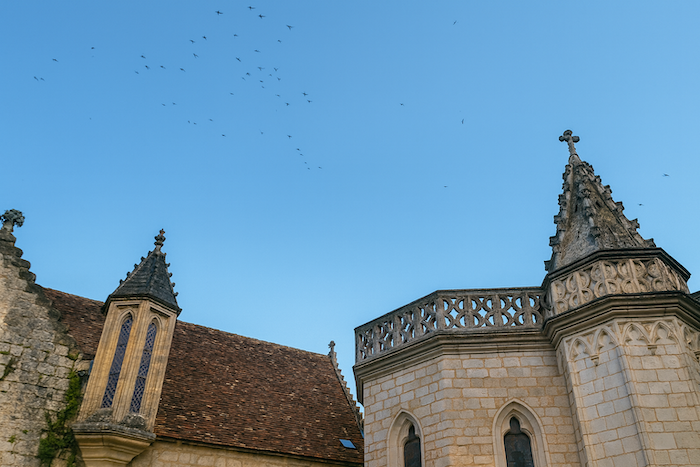
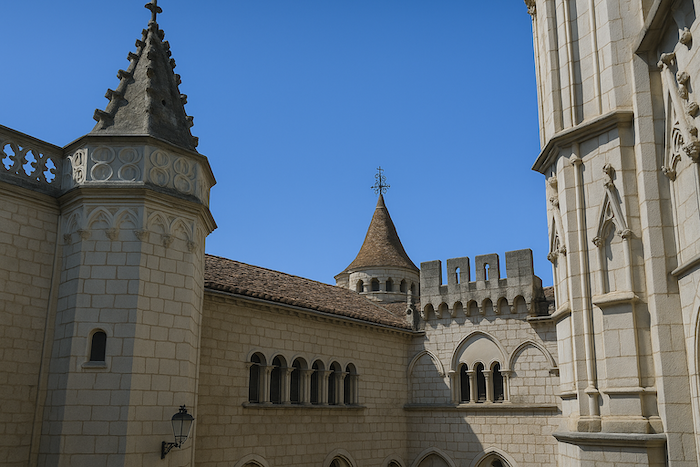
From up there, the gaze wanders across the walls and rooftops of the sanctuary, which resemble those of a fortified castle. |
|
 |
 |
|
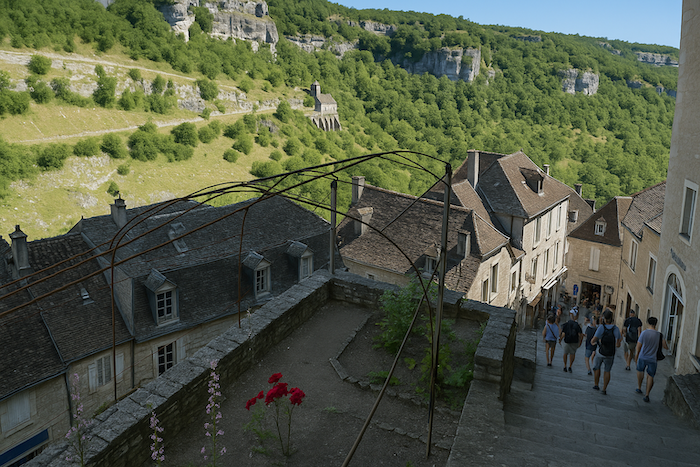
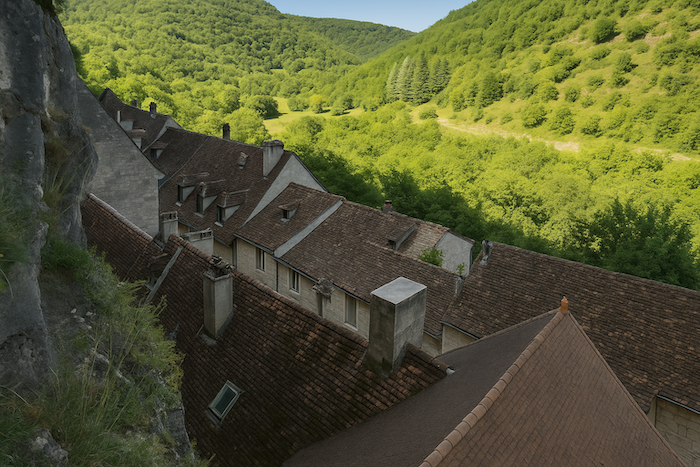
It also plunges down towards the stone village clinging to the cliffside, its narrow streets seeming to merge with the rock itself. |
|
 |
 |
|
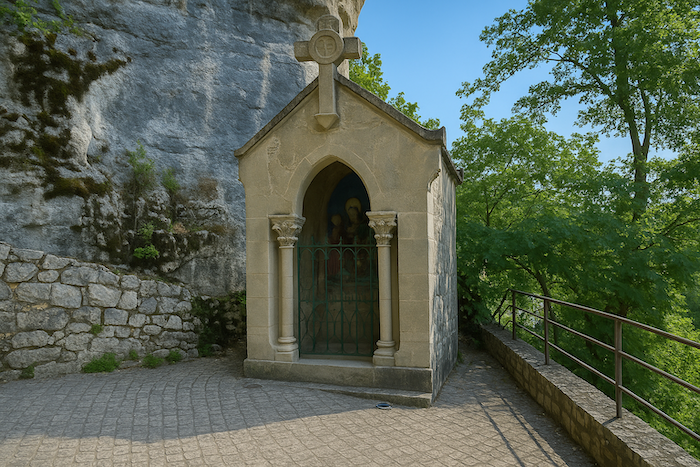
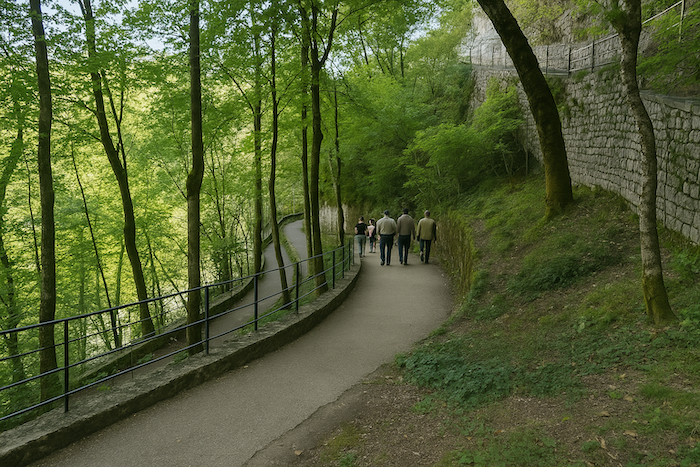
From the sanctuary, you must climb the Chemin de Croix, the Way of the Cross, which ascends the hillside through a succession of stations to the summit. |
|
 |
 |
|
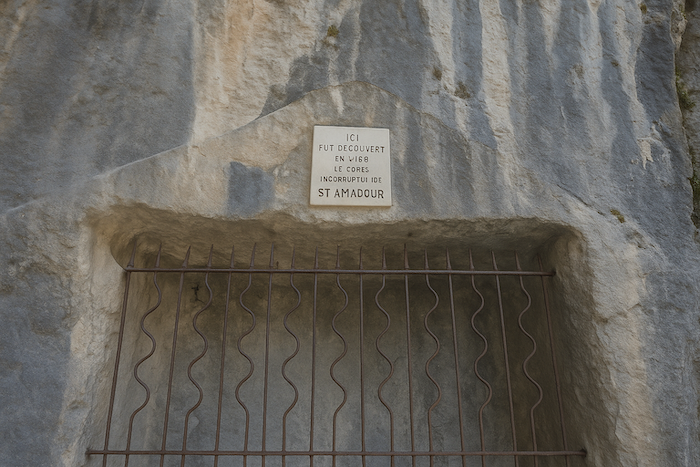
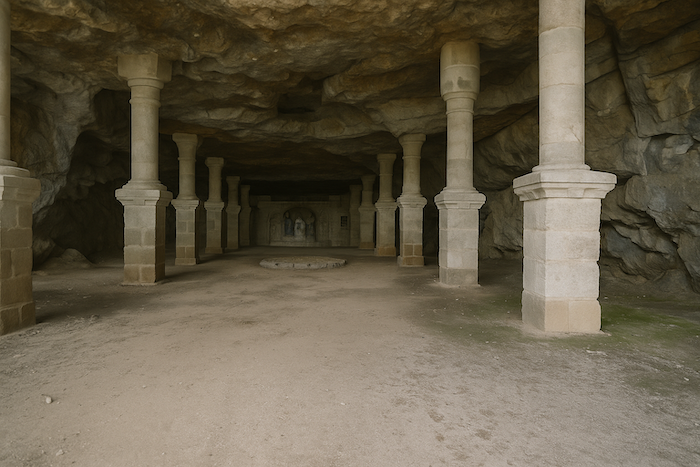
The Grotto of the Entombment marks the final stage of this route. Despite appearances, this vast cavity is not a natural cave, but a former stone quarry opened in the 19th century to provide materials for the restoration of the sanctuaries. Once the work was completed, Abbé Caillau had the site developed in 1860, and the Bishop of Cahors later incorporated it into the new monumental Way of the Cross, inaugurated in 1887. The quarry thus became the 14th station, representing the Entombment of Christ. Twelve imposing stone columns were built to support the vast excavation. At the back of the grotto stands a sculpted group depicting the Entombment, within a setting reminiscent of the walls of Jerusalem. Nearby, a plaque recalls a founding episode in the history of Rocamadour: “Here, in 1168, the incorrupt body of Saint Amadour was discovered.” According to tradition, workers digging near the Notre-Dame Chapel uncovered a perfectly preserved body, identified as that of Saint Amadour, the hermit credited with founding the sanctuary. The discovery was interpreted as a divine sign and helped transform Rocamadour into one of the greatest pilgrimage centres of the medieval West. |
|
 |
 |
|
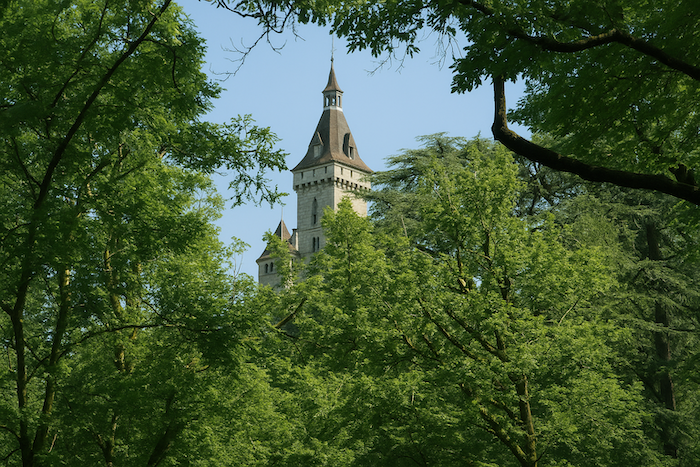
Dominating the sanctuary from the summit of the cliff, the Château of Rocamadour has watched over the town for more than eight centuries. Built in the 13th century by the bishops of Cahors, who were the lords of the site, its purpose was to protect one of the greatest pilgrimage centres in Christendom. Its enclosure, towers and ramparts formed a true fortress, capable of defending both the sanctuaries and the many pilgrims who arrived from across Europe. During the Hundred Years’ War, Rocamadour was occupied several times by companies of mercenaries. The château also suffered during the Wars of Religion in the 16th century before gradually being abandoned. Major restoration work during the 19th century gave the site much of its present appearance. Today, the château offers a remarkable panorama over the Alzou Canyon, the medieval village and the sanctuaries that seem to cling to the cliff. It is a reminder that Rocamadour was both a strategic stronghold and one of Europe’s great centres of pilgrimage. |
|
 |
 |
Listed accommodations on the Rocamadour Way
- Gîte du Presbytère, 2 Rue St Barthélémy, Montfaucon; 07 83 51 40 67; Gîte donativo, dinner, breakfast, cuisine
- Gîte Les 7 Pèlerins, 34 Place de l’Église, Couzou; 06 42 54 16 25; Gîte, dinner, breakfast, cuisine
- Accueil chrétien Le Cantou, Rue de la Mercerie, Rocamadour; 06 85 64 62 07; Gîte, dinner, breakfast, cuisine
- Gîte du Pèlerin Notre-Dame, Le Château, Rocamadour; 05 65 33 23 23; Gîte, breakfast
- Gîte La Maison des 4 Chemins, Chemin de Marcayou, Rocamadour; 06 67 81 58 02; Gîte, dinner, breakfast, cuisine
This information was updated in 2026. If you access this site later, it may no longer be accurate. Along these routes, some establishments open every year while others close. One solution is to purchase, among other resources, Miam Miam Dodo, the essential guide for eating and accommodation, which also lists places to stay off the route. For our part, we will only include accommodations located directly on or very close to the route. There are also other options, such as guidebooks or the internet, which also lists Airbnb accommodations. However, even though the valley is a tourist area, Airbnb options are rare. No application is as well documented as Miam Miam Dodo, especially since the small book, available online, is updated every year. If you do not have Miam Miam Dodo, we recommend booking in advance and checking directly with accommodation providers about the details of their services (meals, sheets, toilets, showers, and other amenities). Likewise, inquire at the previous stage about the opening hours of grocery stores and bars, which are often closed during parts of the day or week. On the Rocamadour variant, accommodation options are very limited, but only a few pilgrims pass through here. However, there are also hikers. Therefore, book in advance if possible. Finding a bed at the last minute can sometimes be a matter of luck. It’s better not to rely on that every day.
Accommodation should not be a problem on this stage, except during periods of heavy tourist activity. Even then, there are around twenty hotels in Rocamadour (see online for details). For pilgrims, there is also a considerable number of beds available in the gîtes, with approximately 125 beds in total. You can also stop in Montfaucon and Couzou along the way. In Montfaucon, there is a small grocery store and a bar-restaurant. Water points and toilets are available in both Montfaucon and Couzou. Rocamadour offers a full range of services and amenities. For those who would like to have their luggage transported, or arrange transport for themselves, La Malle Postale is a good option.
Feel free to add comments. This is often how you move up the Google hierarchy, and how more pilgrims will have access to the site.
 |
Next stage : Stage 4: From Rocamadour to Gramat |
 |
Back to menu |