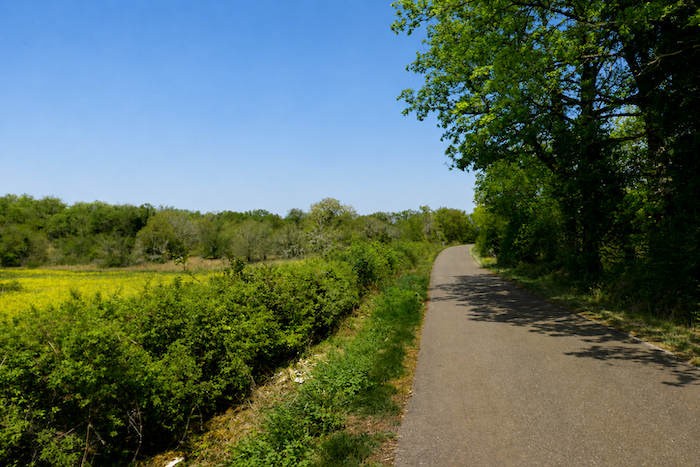
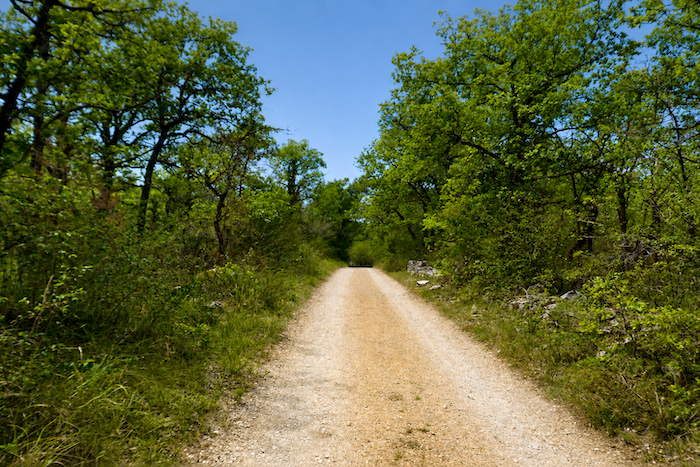
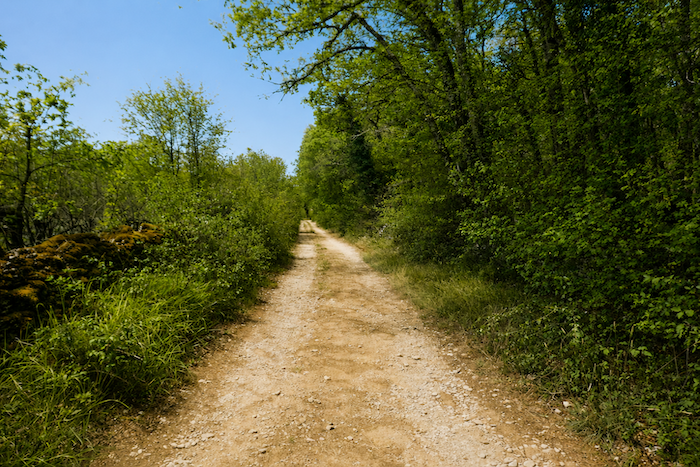
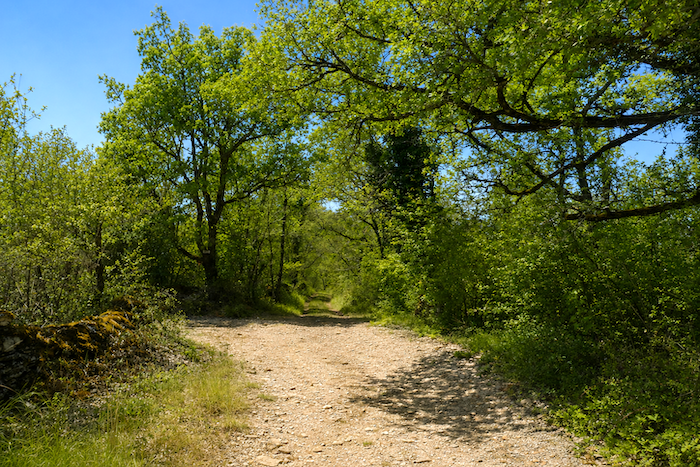
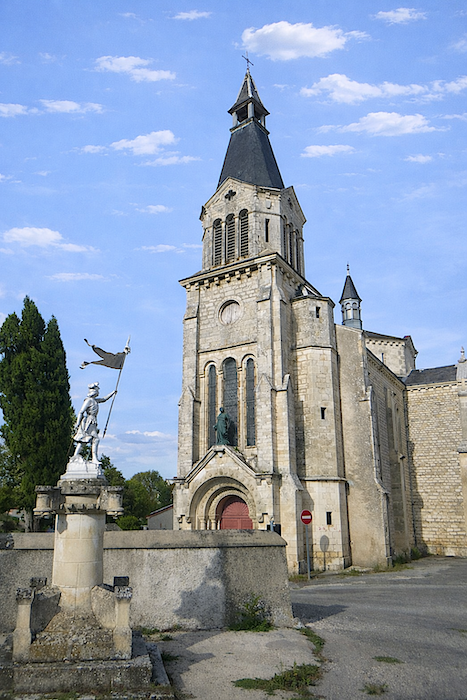
The serenity and hospitality of a convent nestled in the heart of the causse
DIDIER HEUMANN, MILENA DALLA PIAZZA, ANDREAS PAPASAVVAS
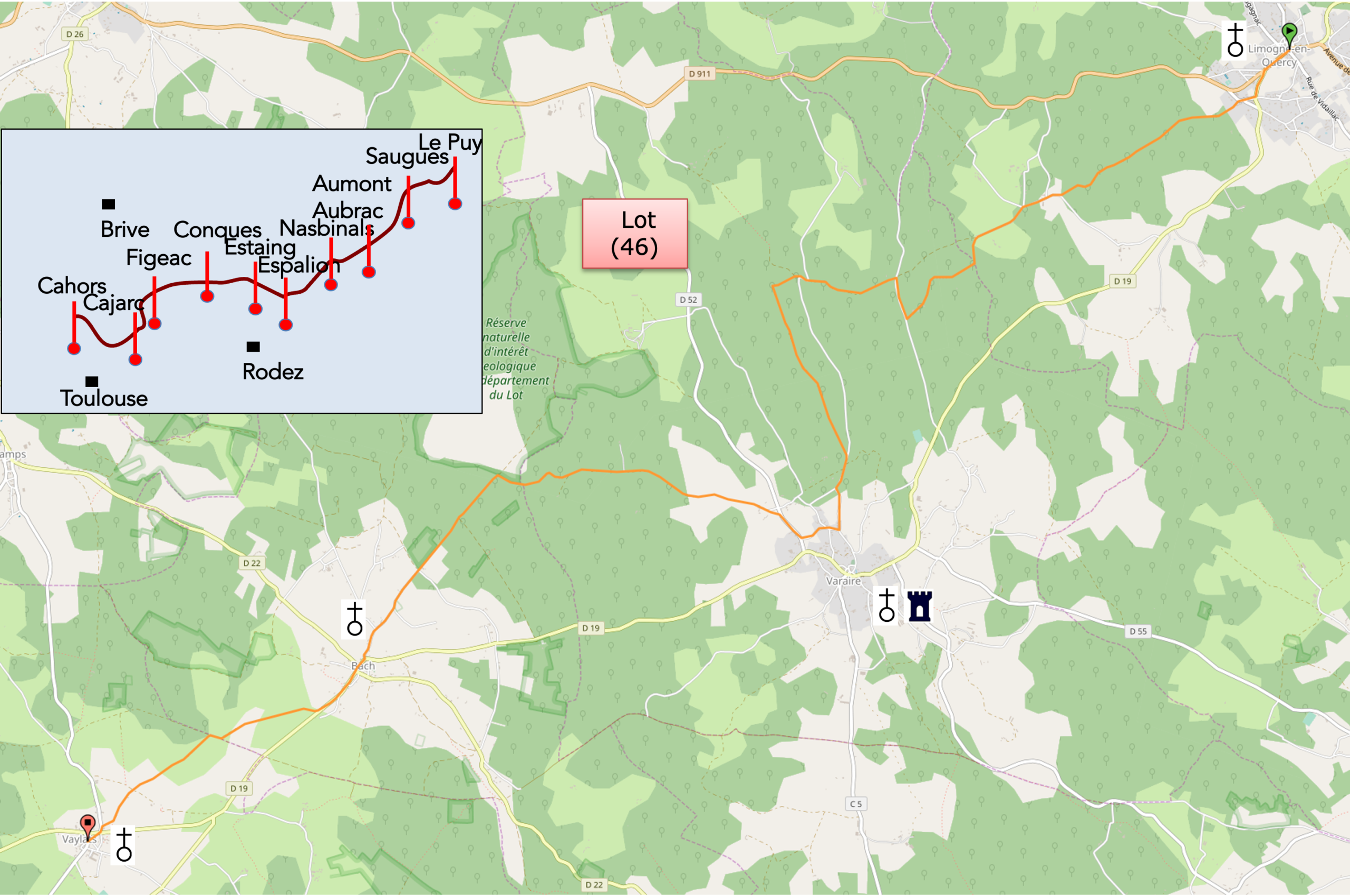
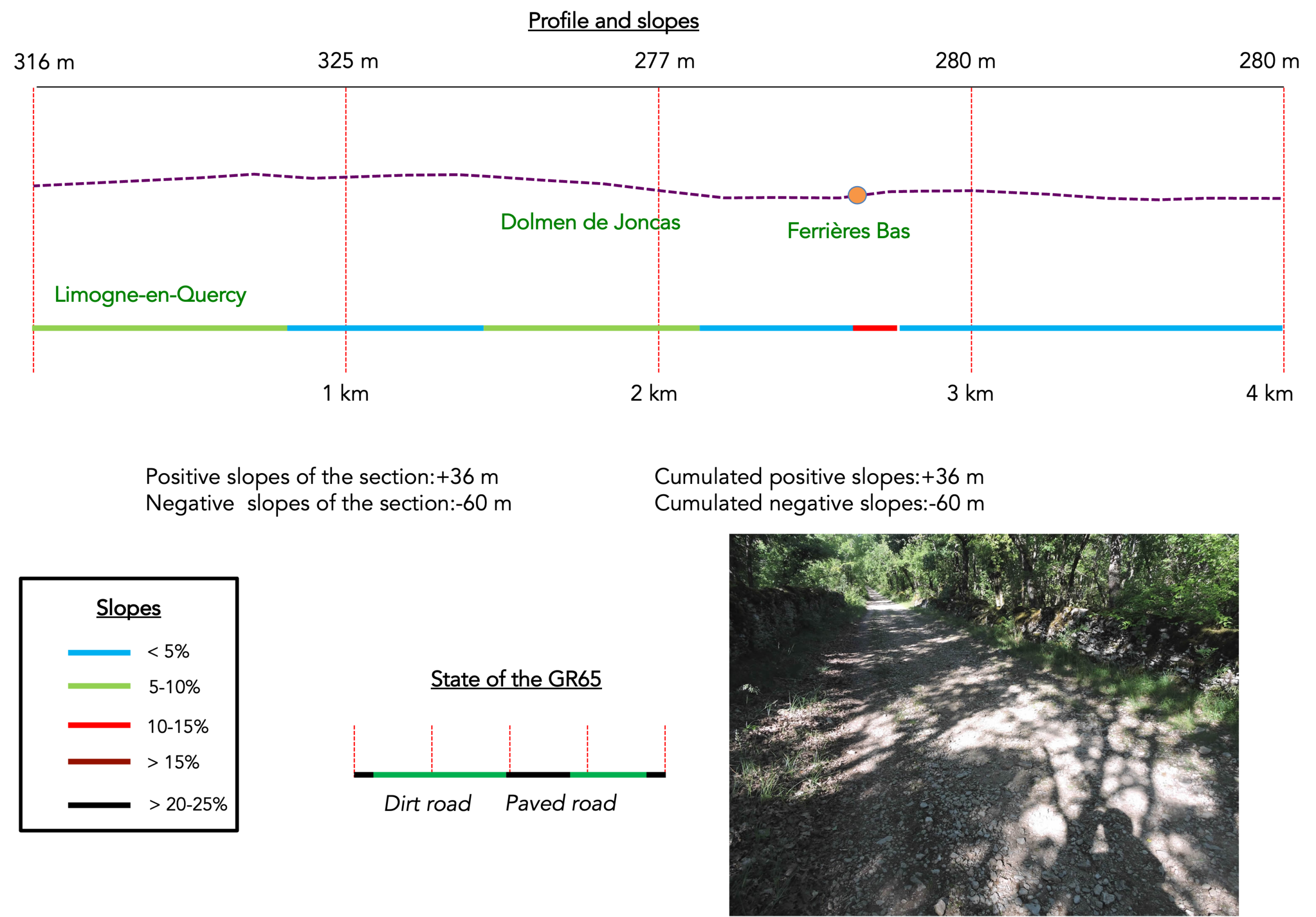
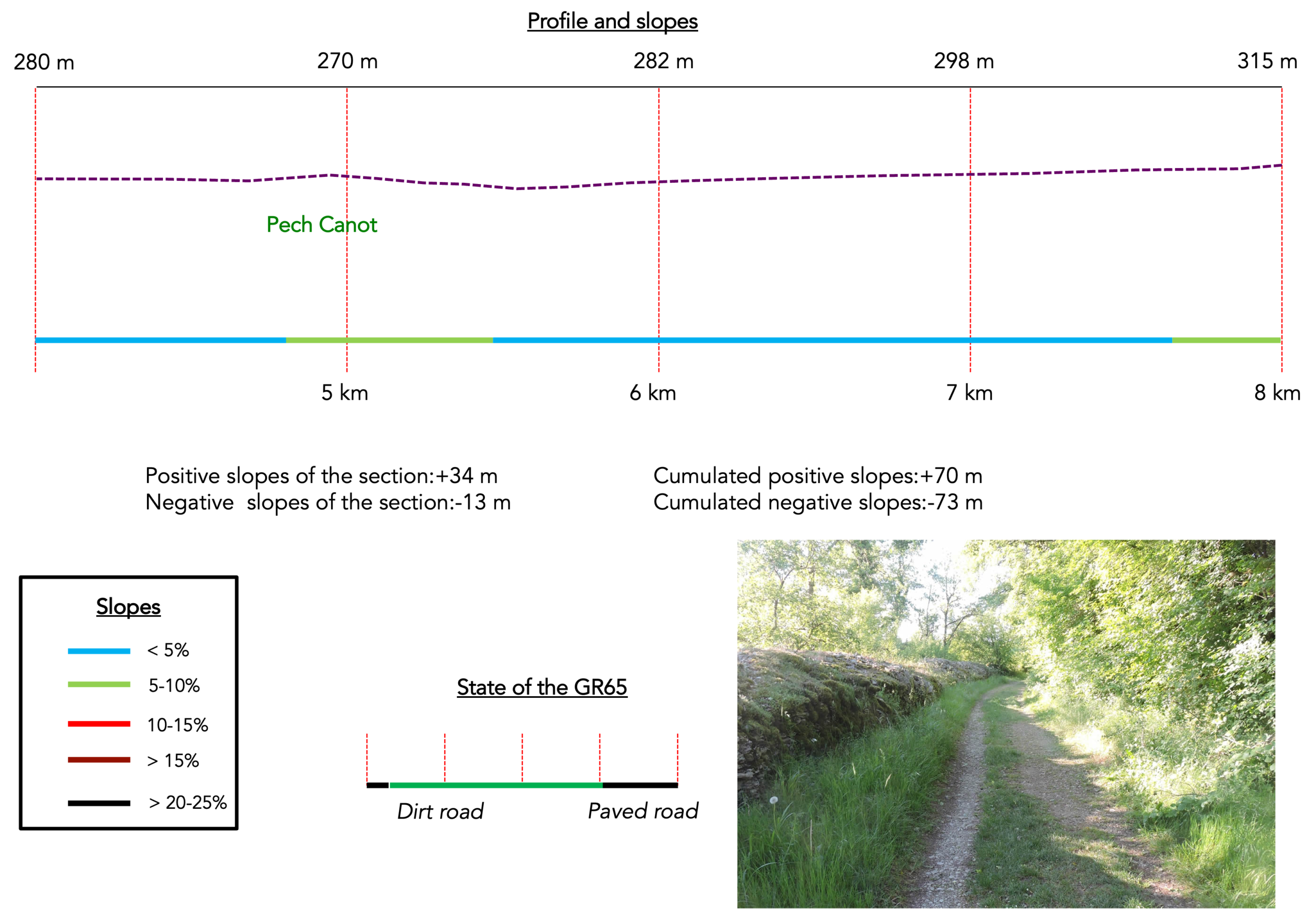
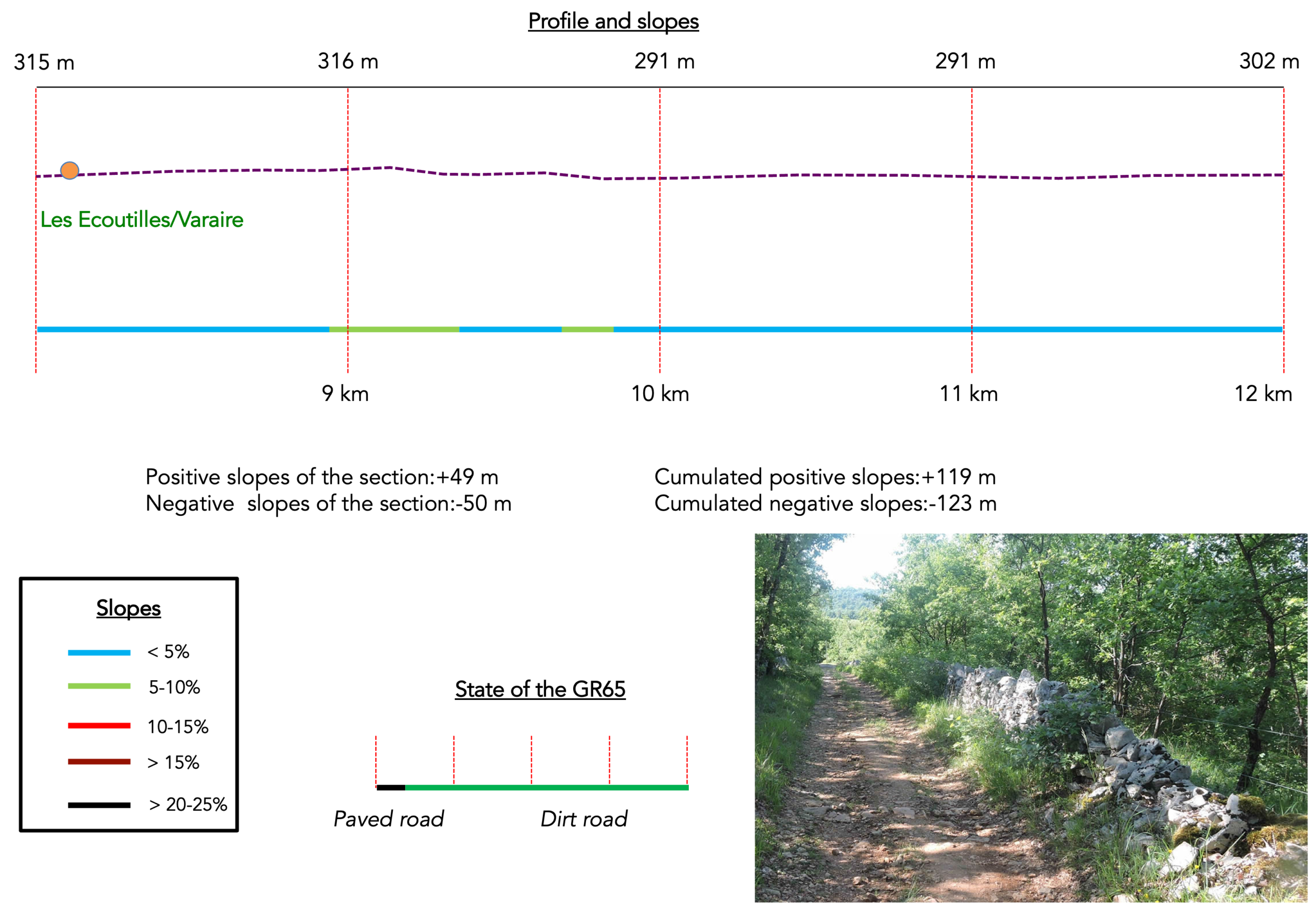
We divided the course into several sections to make it easier to see. For each section, the maps show the course, the slopes found on the course, and the state of the roads. The courses were drawn on the “Wikilocs” platform. Today, it is no longer necessary to walk around with detailed maps in your pocket or bag. If you have a mobile phone or tablet, you can easily follow routes live.
For this stage, here is the link:
https://fr.wikiloc.com/itineraires-randonnee/de-limogne-en-quercy-a-vaylats-par-le-gr65-30233197
|
Not all pilgrims are necessarily comfortable using GPS devices or navigating with a smartphone, especially since there are still many areas without Internet access. That is why, to make your journey easier, a book dedicated to the Via Podiensis from Le Puy-en-Velay to Cahors is available on Amazon. Much more than a simple practical guide, this book accompanies you step by step, kilometer after kilometer, providing all the information you need for smooth planning and avoiding unpleasant surprises. Beyond its practical advice, it immerses you in the enchanting atmosphere of the Camino, capturing the beauty of the landscapes, the majesty of the trees, and the very essence of this spiritual adventure. Only the pictures are missing, everything else is there to transport you.
In addition, we have also published a second book which, with slightly fewer details but all the essential information, covers the entire route from Le Puy-en-Velay to Saint-Jean-Pied-de-Port. The choice of your journey is yours.
. |
 |
 |
If you only want to consult lodging of the stage, go directly to the bottom of the page.
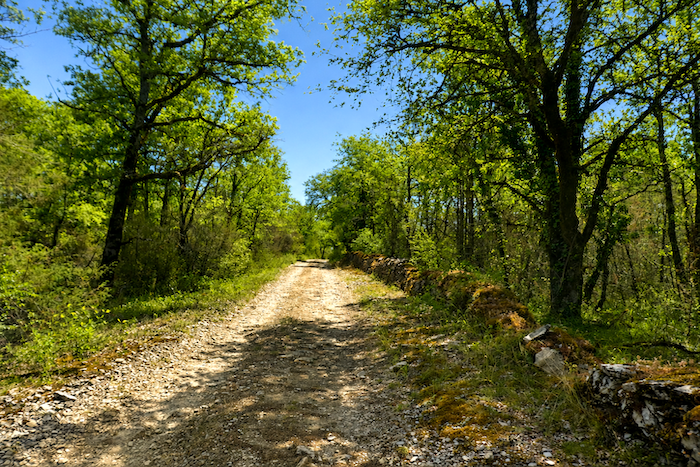
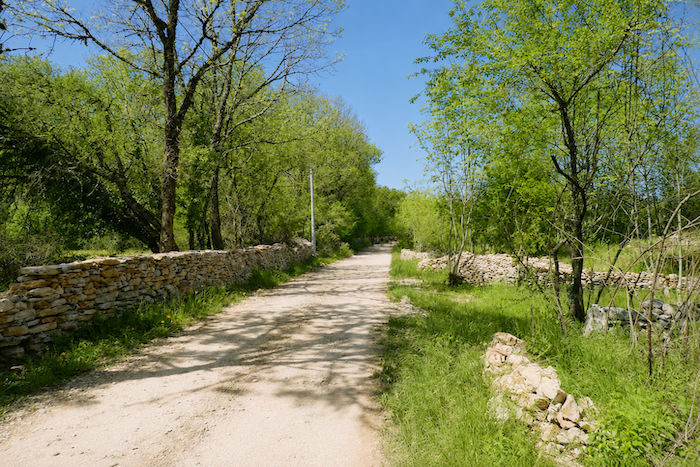
Today’s route remains within the Limogne causse, in the Regional Natural Park of the Causses du Quercy. You continue beneath dense oak trees, walking beside dry-stone walls that line the paths. At times, the paths become noticeably rockier than before, as though the geology beneath your feet were gradually changing. Once again, the overwhelming presence of the causse dominates the landscape, interrupted only by the large village of Varaire, well worth a short detour of less than 300 meters from the GR65. The route continues steadily south through the Lot department. Tomorrow, you will reach Cahors.
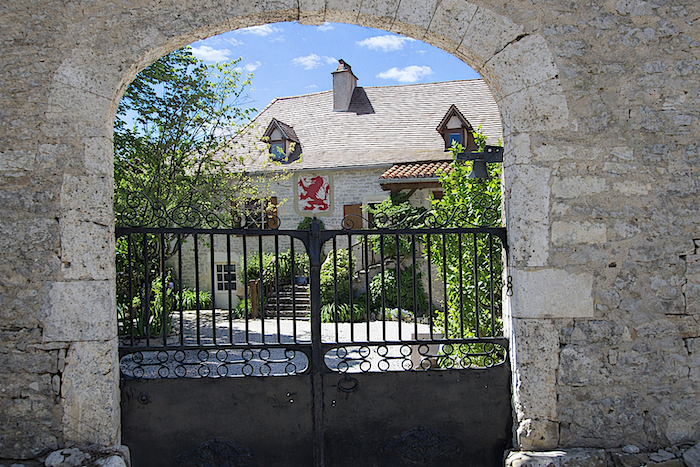
The stage ends at the Sisters’ convent in Vaylats. Many pilgrims, however, do not make the detour to Vaylats and instead stop in Bach before continuing directly along the GR65. Yet it is difficult not to recommend this short diversion, for the charm and peaceful atmosphere of the retired Sisters’ convent in Vaylats make it one of the most memorable stops along the route. Pilgrims usually gather here in much the same way they do at the Premonstratensian Abbey in Conques.
In 1820, Father Jean Lausiu founded a religious community and a school in Vaylats dedicated to the education of girls and the care of the poor. This became the birthplace of the Congregation of the Daughters of Jesus, which numbered as many as six hundred Sisters during the twentieth century. Today, only a small community of elderly Sisters remains, assisted by lay people who share their mission. The Sisters no longer care directly for pilgrims, yet the spirit of hospitality still endures. The convent’s spacious, tree-lined courtyard leads to the chapels, the refectory and the Sisters’ living quarters. In the past, this was a place where pilgrims, volunteers and Sisters shared a genuine sense of community. Everything was organized to care for weary walkers, with laundry facilities, shared meals and morning services. The Covid pandemic profoundly changed this daily life. The Sisters no longer join the communal meals, and the establishment has become more professional in its organization. It now offers hotel-style rooms in two categories, while elderly residents live separately, creating an atmosphere quite different from that of earlier years. Even so, caring for pilgrims remains at the heart of this place, although some of its former poetry has inevitably faded.
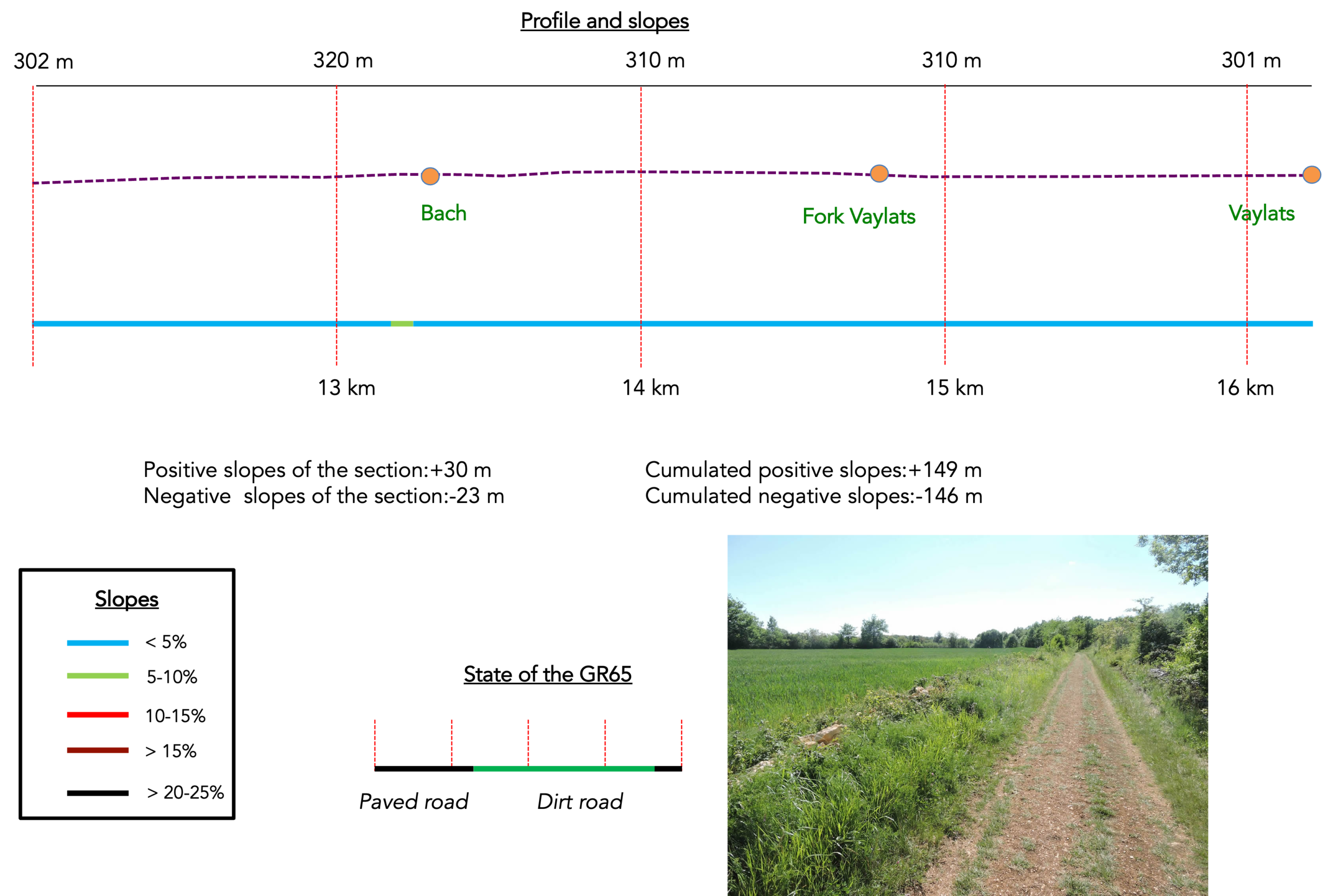
Difficulty level: Today’s elevation gain and loss (+149 meters / -146 meters) are almost negligible. This is simply an easy walk, almost a day of rest.
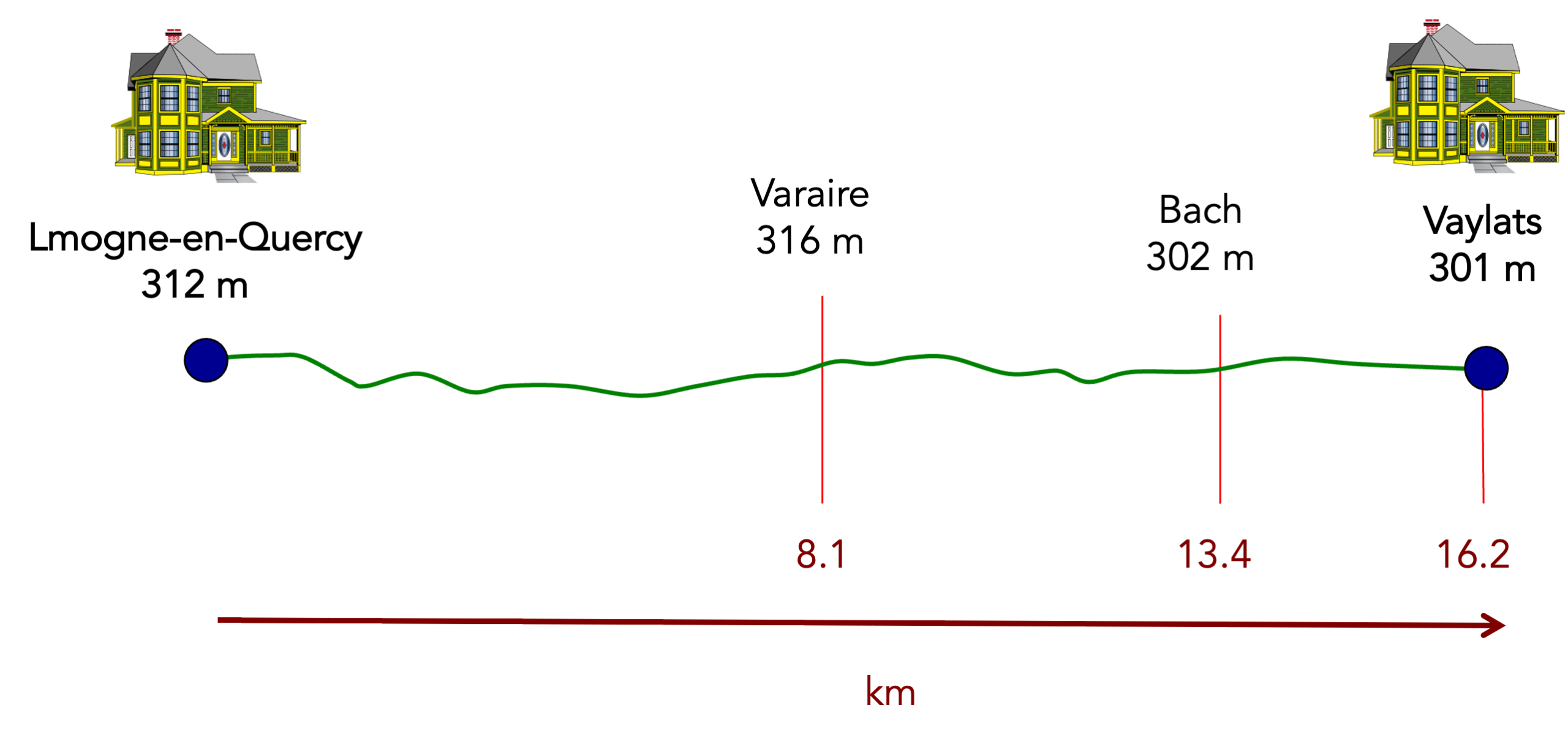
State of the GR65: State of the GR65: This is a particularly pleasant stage, where paths clearly outnumber stretches of asphalt:
- Paved roads: 4.2 km
- Dirt roads:12.0 km
Sometimes, for reasons of logistics or housing possibilities, these stages mix routes operated on different days, having passed several times on Via Podiensis. From then on, the skies, the rain, or the seasons can vary. But, generally this is not the case, and in fact this does not change the description of the course.
It is very difficult to specify with certainty the incline of the slopes, whatever the system you use.
For « real slopes », reread the mileage manual on the home page.

Section 1: Through the oak woodlands
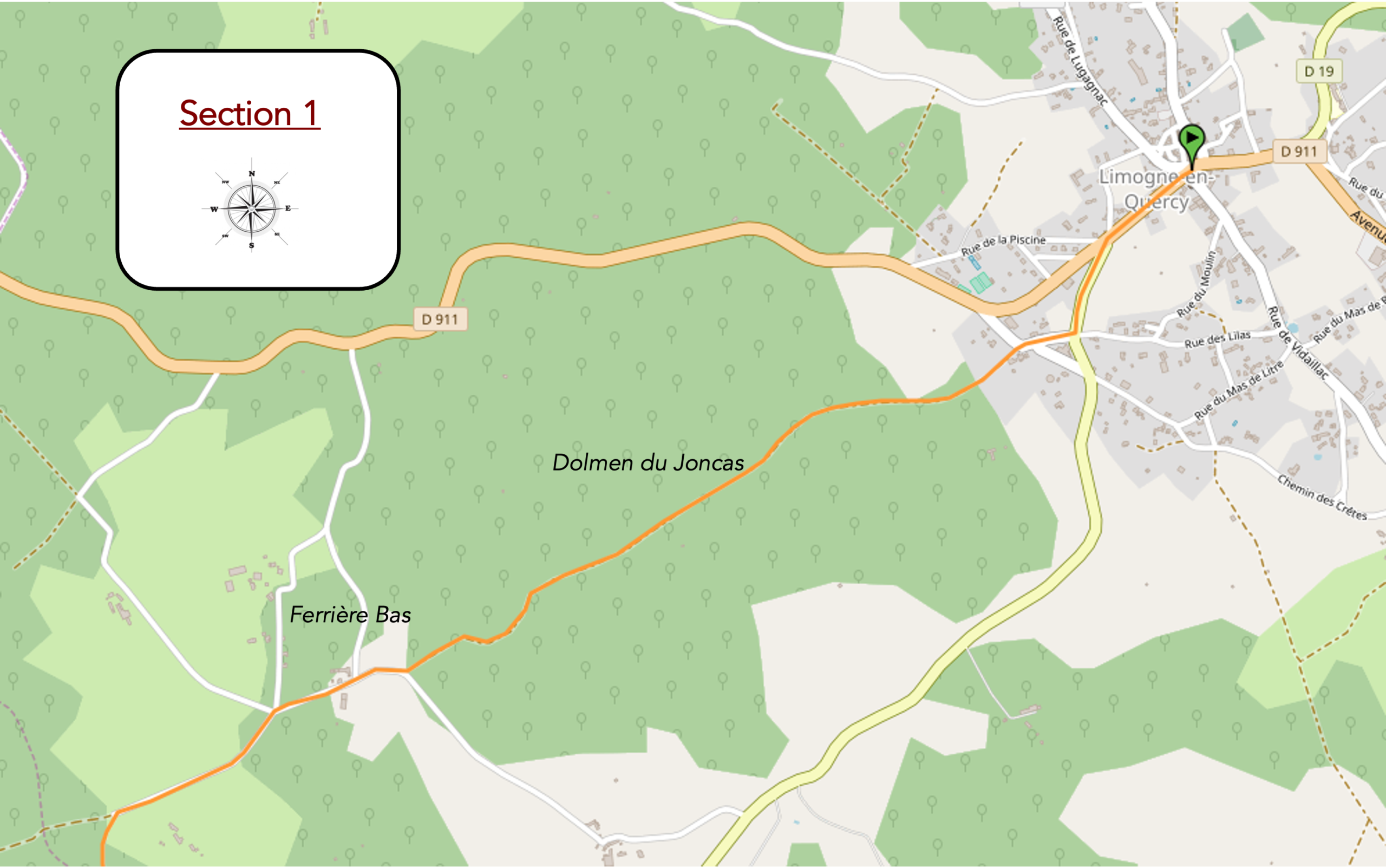
Gverview of the route’s challenges : an easy route with no particular challenges.
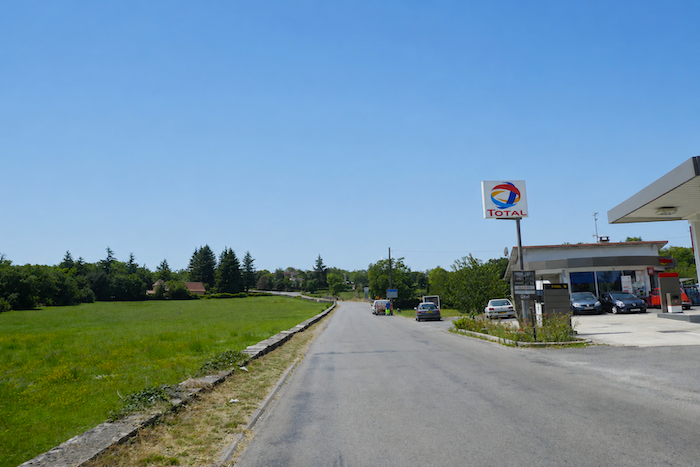
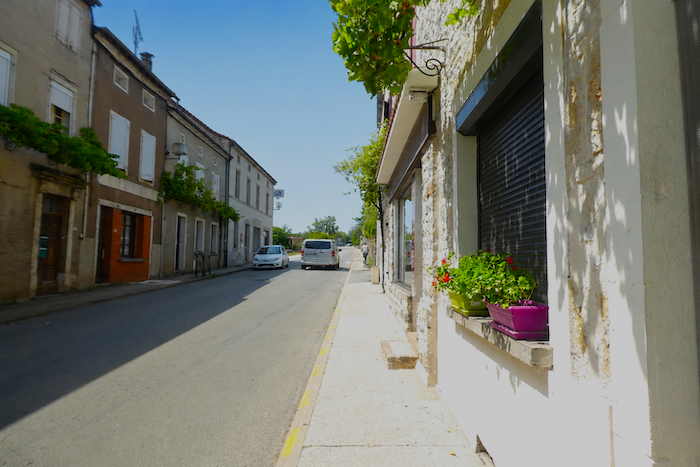
| Leaving Limogne-en-Quercy, the GR65 climbs gently alongside the road that skirts the village. Before long, the last houses disappear, and the causse quietly reclaims the landscape, creating an almost imperceptible transition between the world of people and the realm of stone and oak trees. |
 |
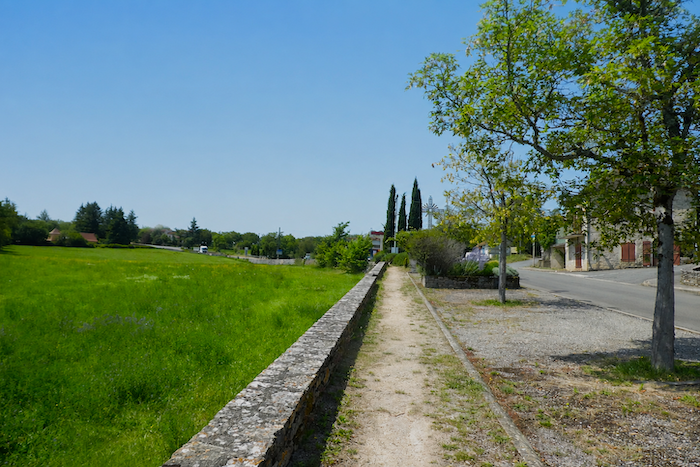 |
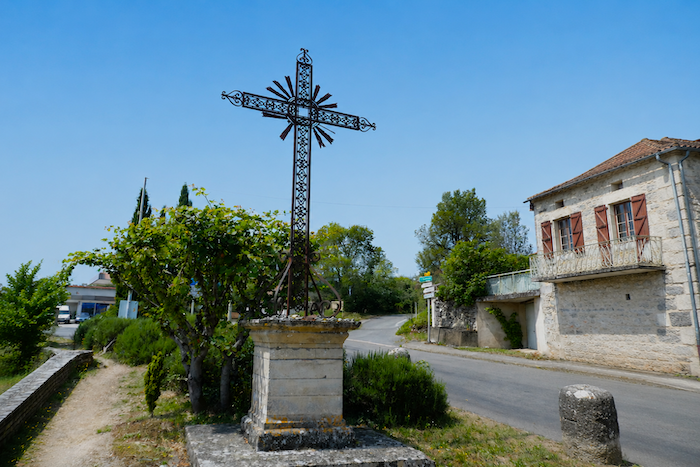
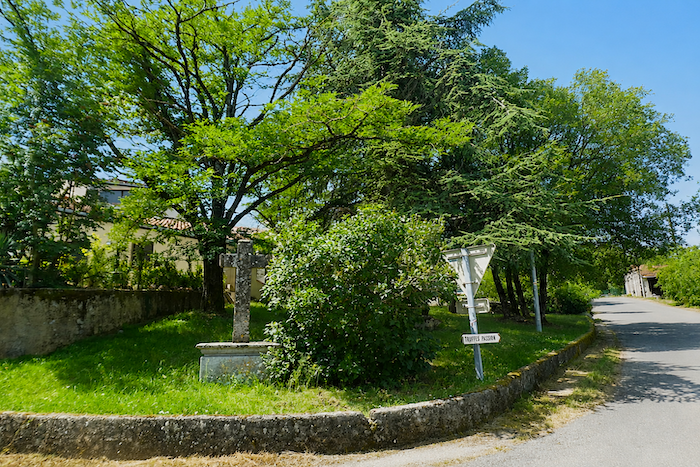
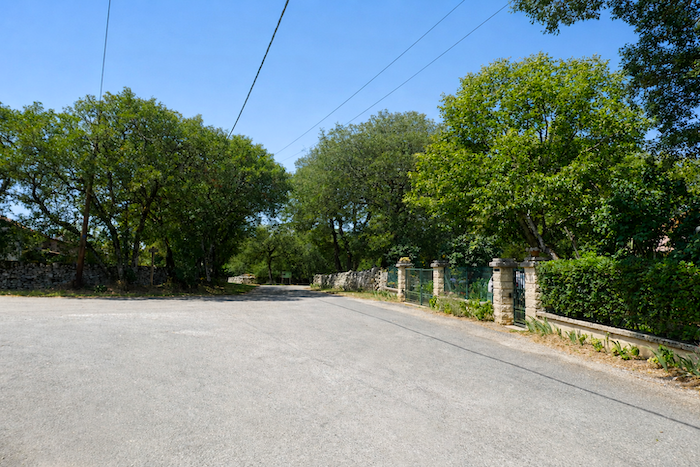
| The road soon reaches the place known as of Bel-Air, where a wayside cross has watched over generations of hikers, standing as a discreet landmark between earth and sky. |
 |
 |
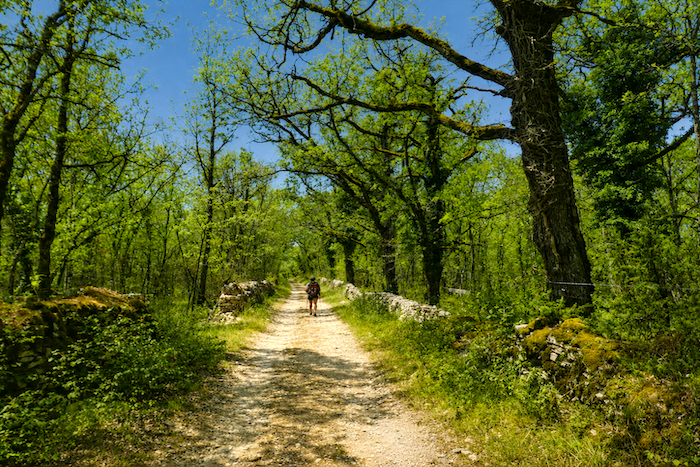
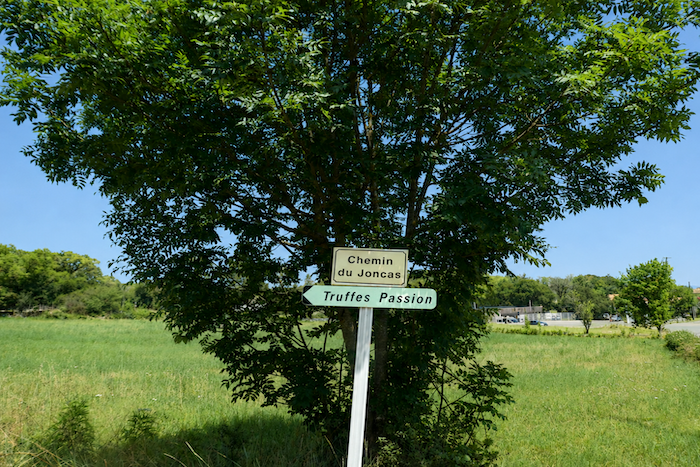
| From here, the GR65 follows the Joncas Path, also known as the Dolmen Path. The path slips beneath the protective canopy of oak trees, where cool shade accompanies the pilgrim’s footsteps. |
 |
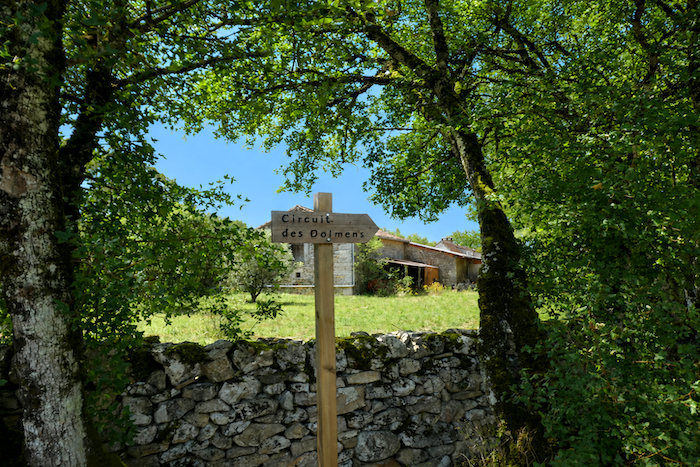 |
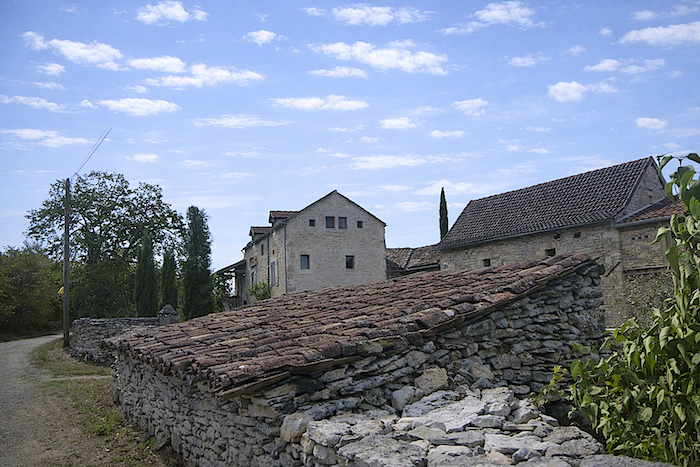
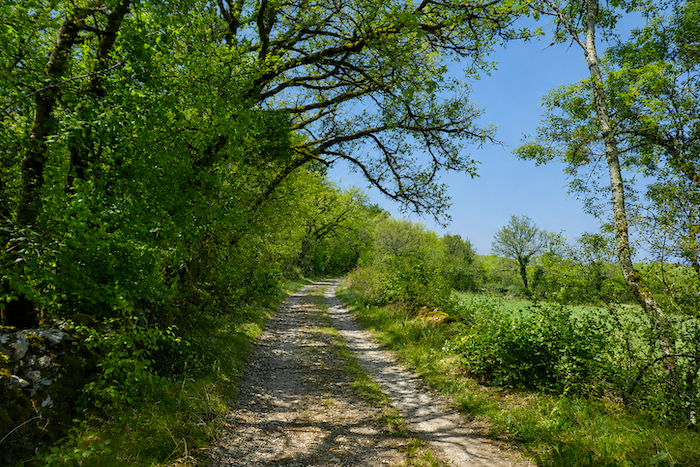
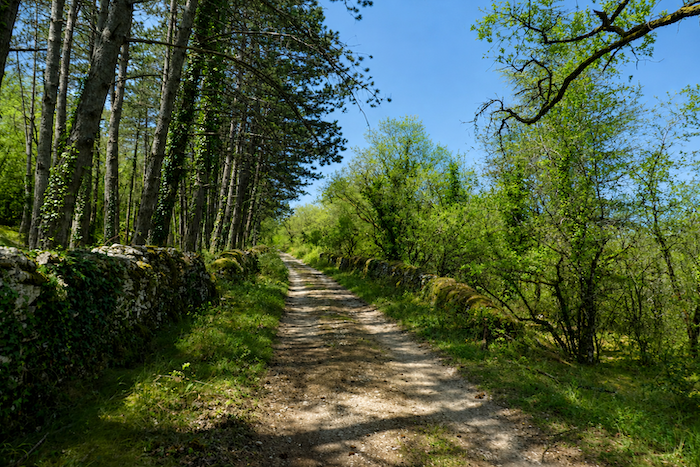
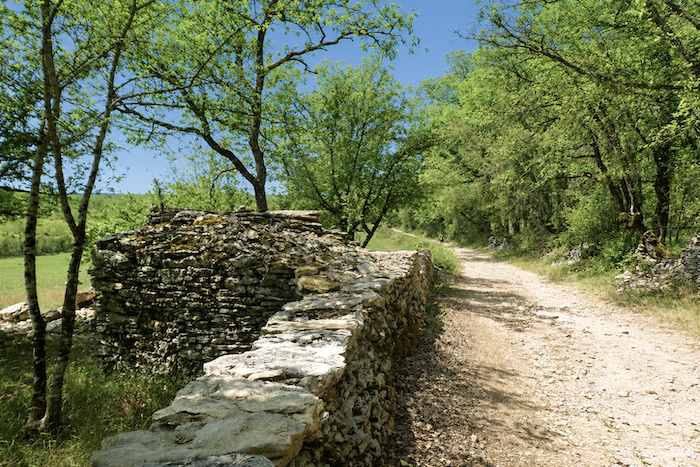
| The scenery will already feel familiar. Once again, you find yourself in the unmistakable landscape of the causses, where dry stone has shaped the identity of the region for centuries. Around Limogne, this traditional architecture reveals itself at every turn, in the fields, around livestock enclosures, and along the dry-stone walls that border the paths, silent witnesses to an age-old craftsmanship. |
 |
 |
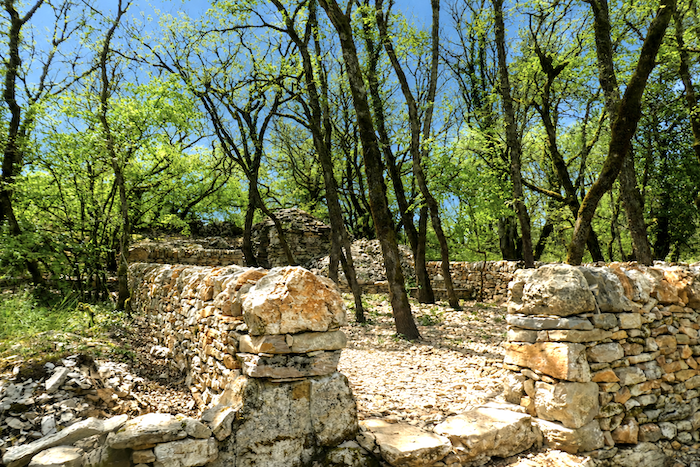
| Around a bend in the path, the warm ochre tones of a beautiful ruin irresistibly draw the eye. On the causse, such remains often seem to belong naturally to the landscape itself, with crumbling walls, abandoned buildings and scattered piles of stone where time appears to have paused its relentless work. |
 |
 |
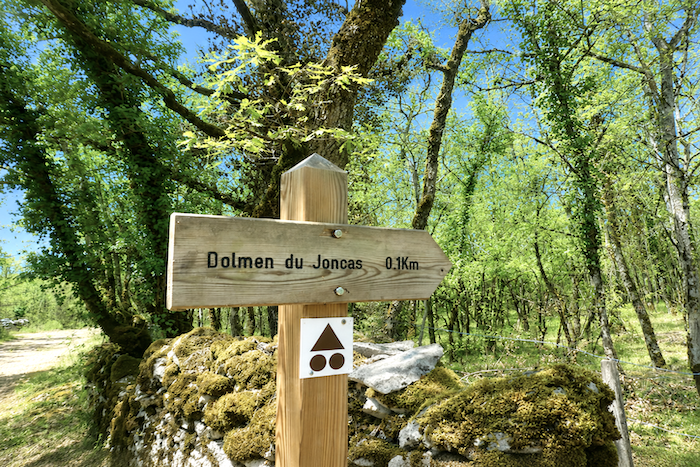
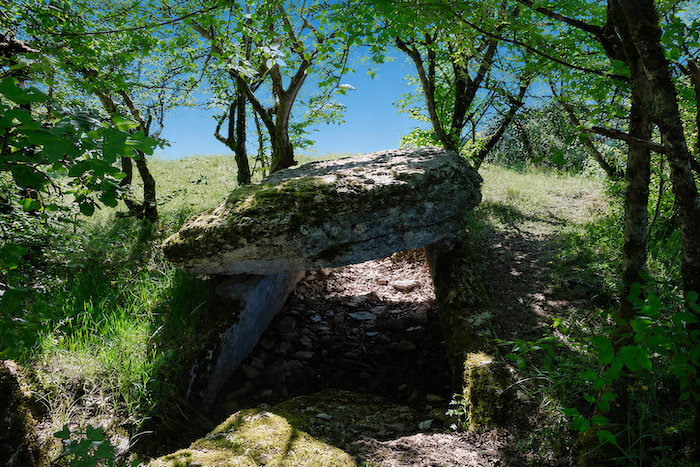
| A little farther on, a junction leads to the Joncas Dolmen. Here, traces of the past reach far beyond recorded history. Standing a short distance from the path, this imposing stone monument seems to defy the centuries in an atmosphere untouched by time. The mysteries it holds continue to inspire local legends. Some visitors see nothing more than a pleasant patch of shade for a well-earned rest, while others prefer to let their imagination wander. There is certainly nothing to prevent you from doing so while enjoying your picnic. |
 |
 |
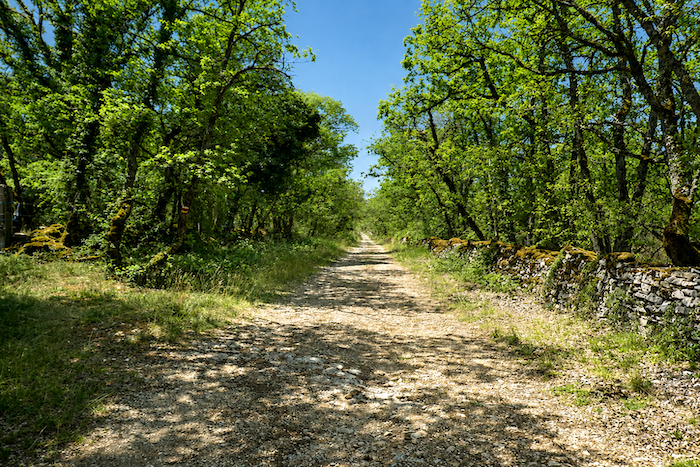
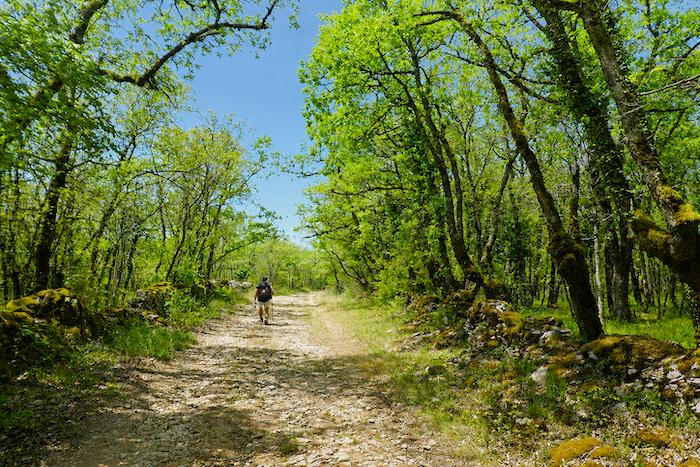
| The path remains extremely stony, almost entirely flat or gently descending. These ancient mule paths may resemble one another, yet they never become monotonous. For several days now, you have been the privileged witness of a landscape that seems unchanged by time. Here, a genuine sense of being at the edge of the world takes hold. Silence embraces everything, disturbed only by the steady crunch of footsteps on the stones. Beneath the endless canopy of stunted oaks, a profound feeling of freedom gradually settles over you. |
 |
 |
Some pilgrims also leave behind a discreet reminder of their passage by building small cairns. These fragile stone sculptures carry as many hopes as they do symbols, before one day returning to the anonymity of the landscape.
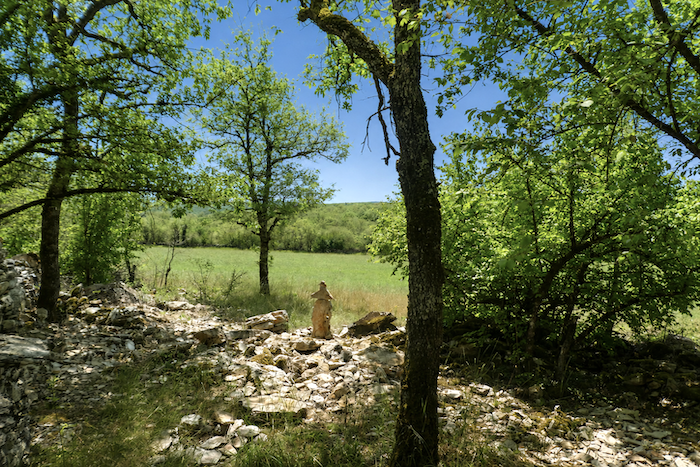
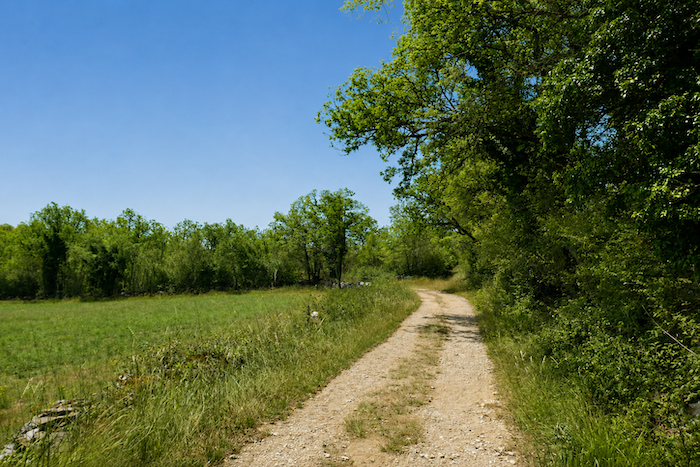
| Farther on, the landscape opens modestly onto a few meadows. Almost nothing disturbs the austerity of this poor, dry and stony land, where cultivation has always been difficult. In places, the stone walls grow noticeably higher, as though protecting secrets carefully guarded through the centuries. |
 |
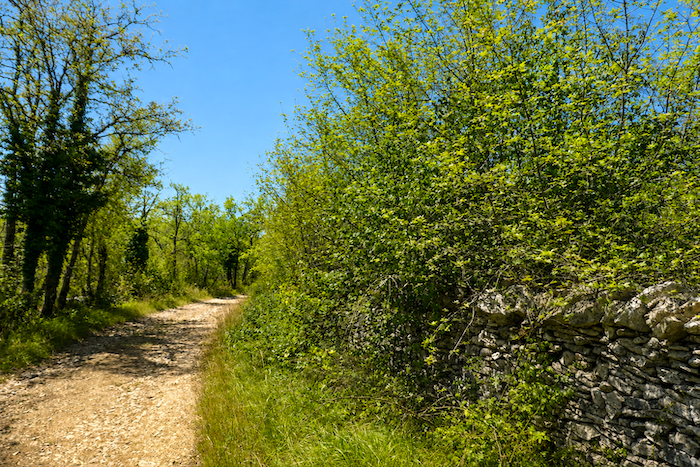 |
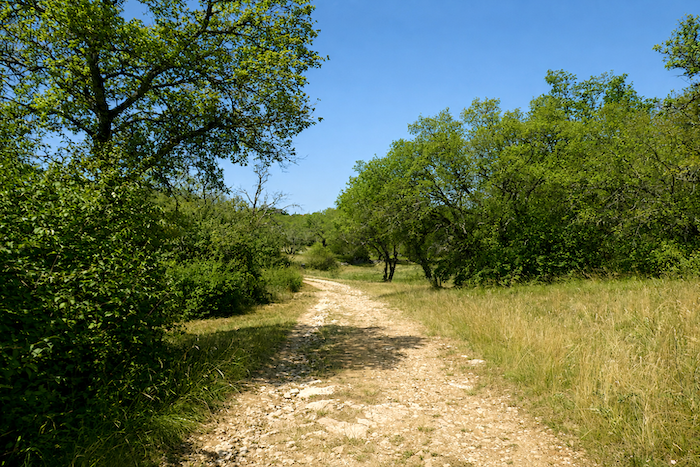
| Here, the causse reveals its full rugged character. The deep ochre soil reflects the thin ground shaped by limestone and iron oxides, where only vegetation perfectly adapted to these harsh conditions can truly flourish. |
 |
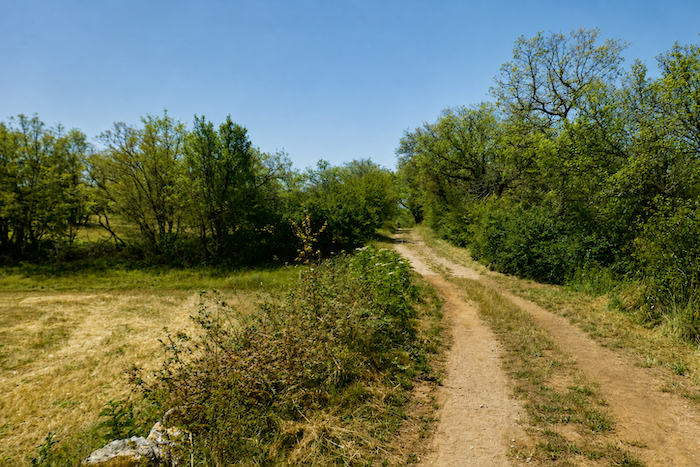 |
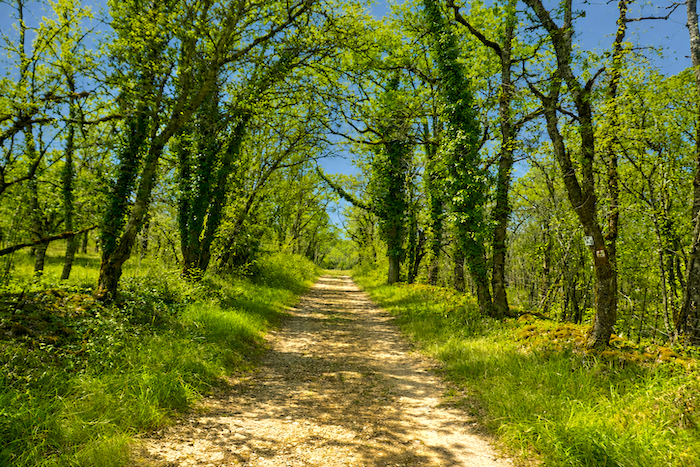
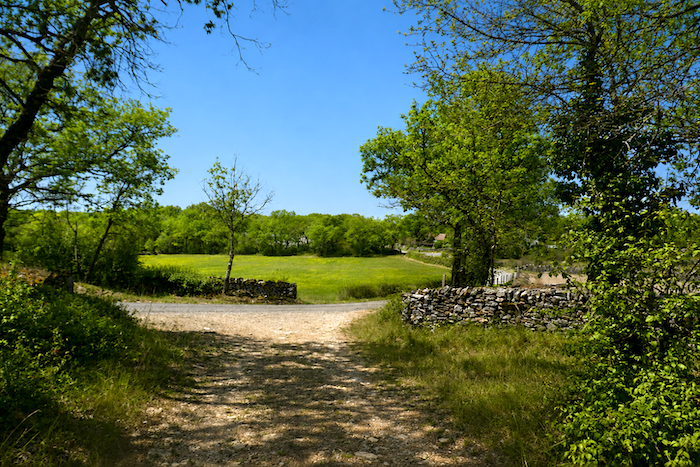
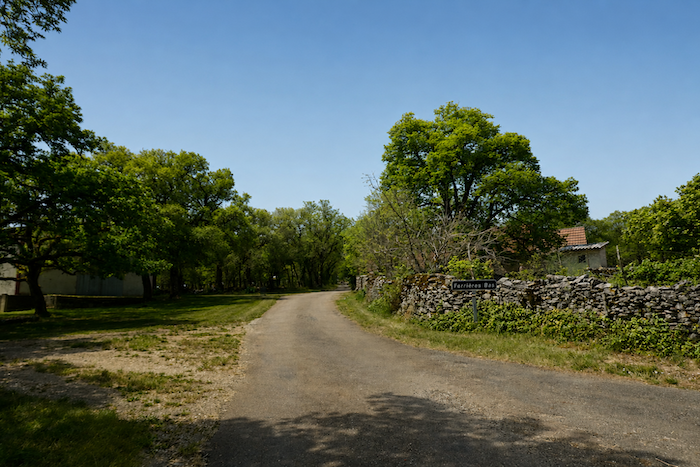
| Gradually, the woodland begins to thin. Sunlight filters more freely between the trees, and the GR65 eventually rejoins the road near Ferrières-Bas. |
 |
 |
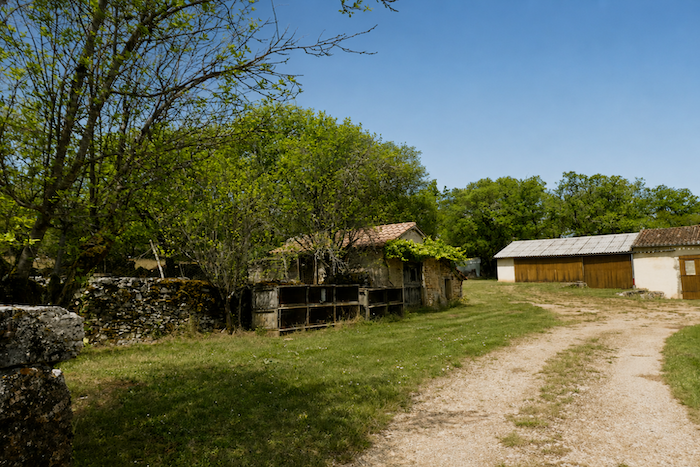
| A discreet human presence still survives here around a lonely farm that seems to be resisting the passage of time. The rabbit hutch, now abandoned by its former occupants, recalls how rural life has slowly retreated from these austere lands. |
 |
 |
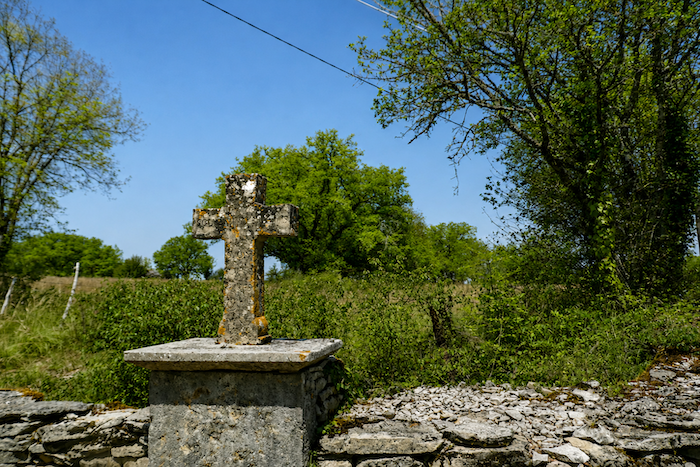
| Signs of faith continue to mark the path, serving as quiet landmarks for pilgrims. This cross, weathered by countless seasons, tells the story of generations that have passed before. It presents a curious paradox in this kingdom of limestone, for it is granite, brought from elsewhere, that was chosen to create these monuments, built to withstand time and affirm their presence for eternity. |
 |
 |
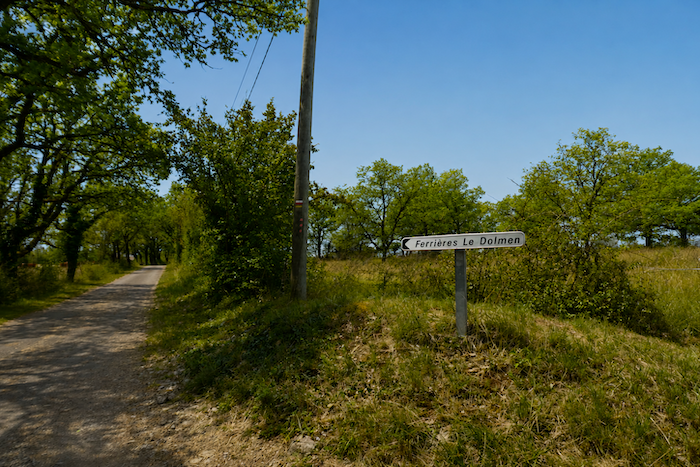
| The road continues its gentle course, constantly shifting between woodland edges, open meadows and oak-covered hills. Admirers of Obelix may recognize a familiar setting here. More dolmens still rest upon the causse, immense stone tables left behind by the people of Prehistory, or perhaps, who knows, by some mischievous Gaul. |
 |
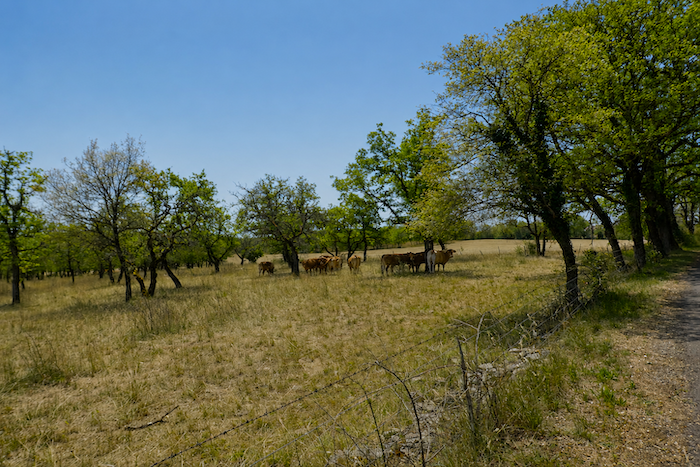 |
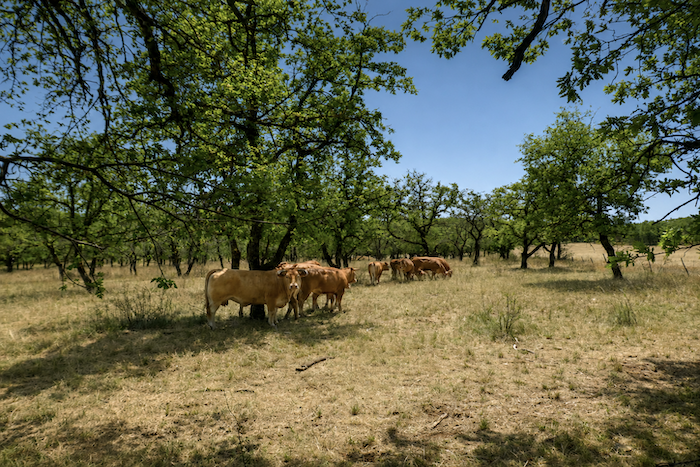
| At the edge of the woodland, a green plateau introduces a welcome touch of softness into this mineral landscape. Peaceful herds graze the sparse grass that grows here. Perfectly adapted to the demanding conditions of the causse, the sturdy Aubrac cattle remain the undisputed queens of these rugged pastures. |
 |
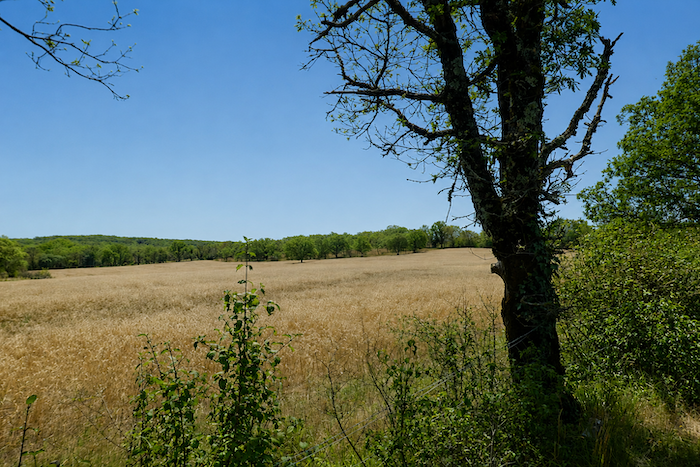 |
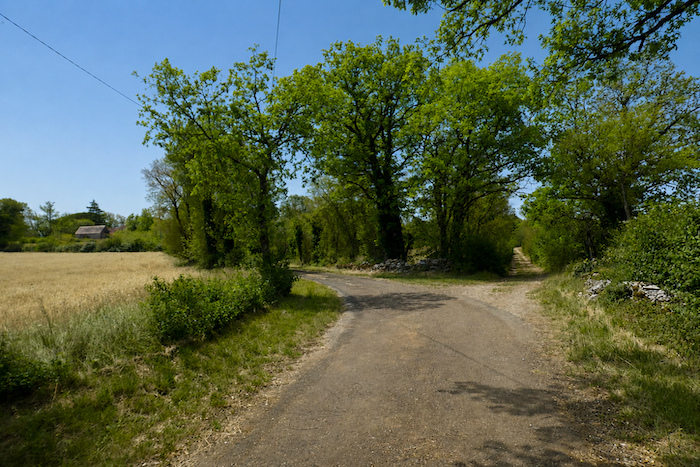
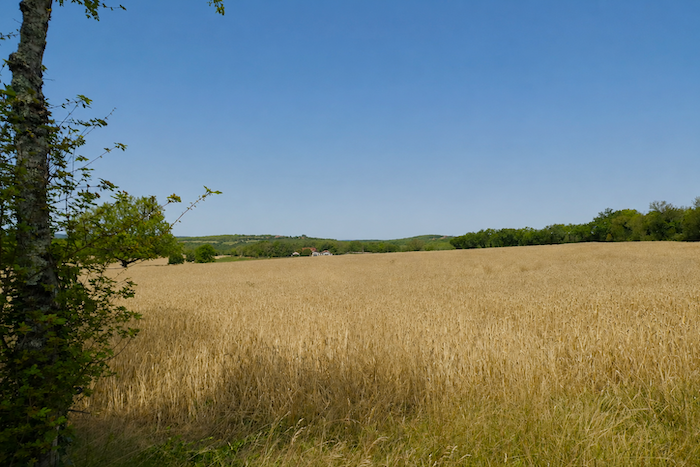
| Farther on, the GR65 leaves the road and once again follows an dirt path. The few cultivated plots bear witness to the ingenuity of those who learned to live on this difficult land. Instead of vast wheat fields, you will find barley, oats and, above all, triticale, a hybrid of wheat and rye that is especially valued as fodder for livestock. |
 |
 |
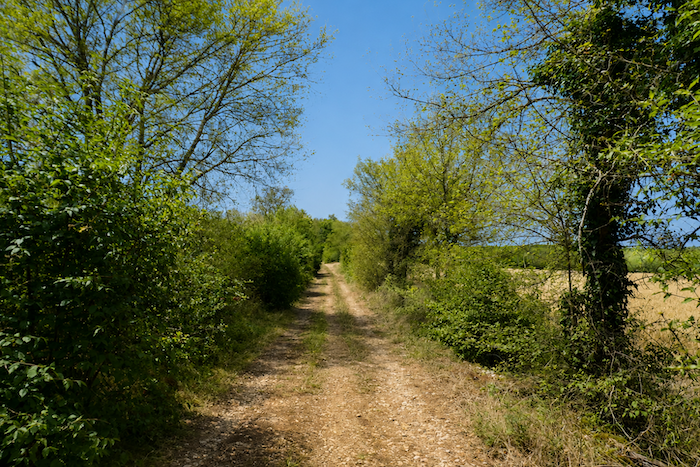
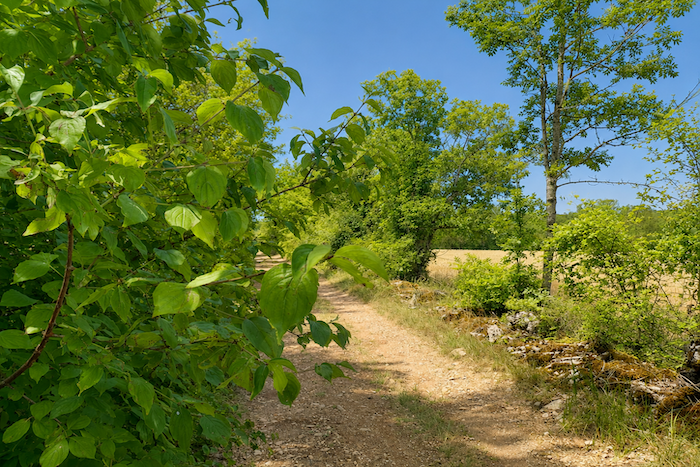
| The path then enters a more open woodland. The stunted oaks, so characteristic of the causses, grow alongside ash trees and dogwoods, while bramble hedges trace the edges of the path and provide shelter for a rich community of small wildlife. |
 |
 |
Section 2: Through the woodlands to Varaire
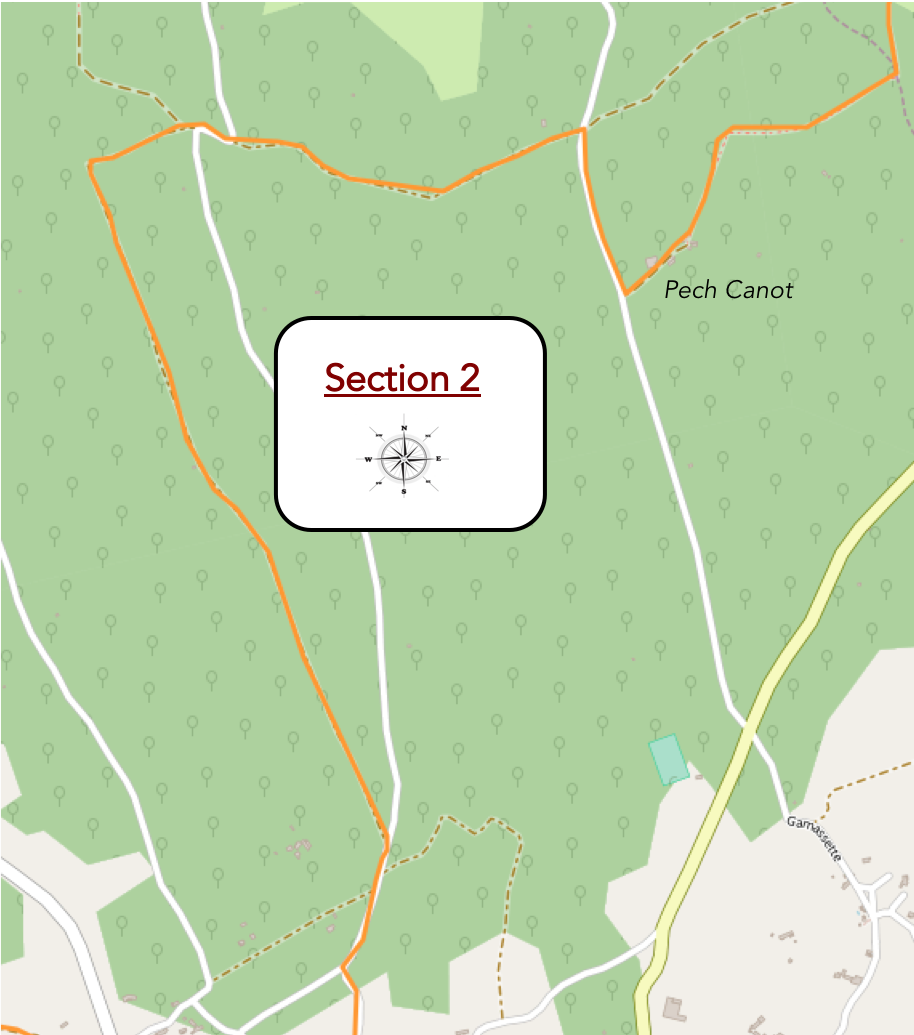
Overview of the route’s challenges: an easy route with no particular challenges.
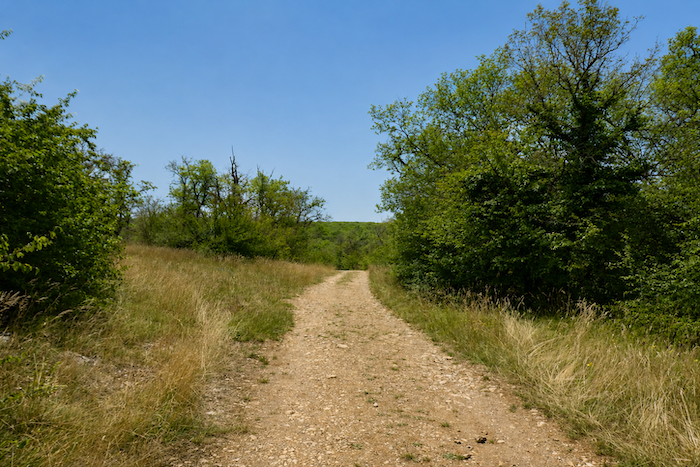
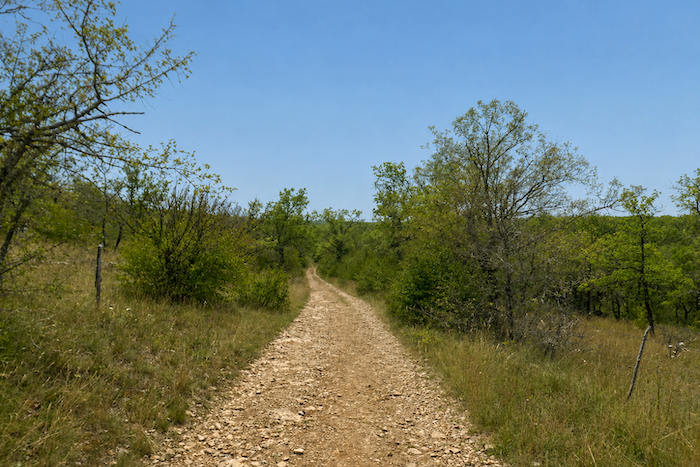
| In this mineral landscape of heathland and dry ground, vegetation follows the laws of the causse. The oak, strong and resilient, reigns supreme across these austere plateaus. Alongside it grow the field maple and the Montpellier maple, while ash trees appear wherever the terrain softens or moisture becomes more abundant. Beeches and chestnut trees are rare at these latitudes, replaced here and there by discreet hornbeams growing along the hedgerows. |
 |
 |
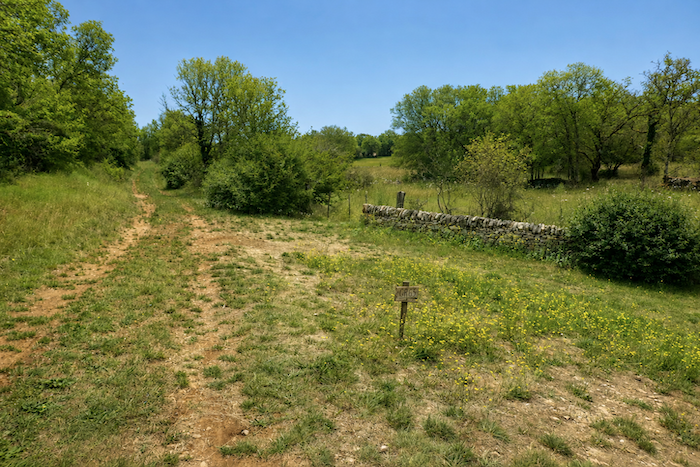
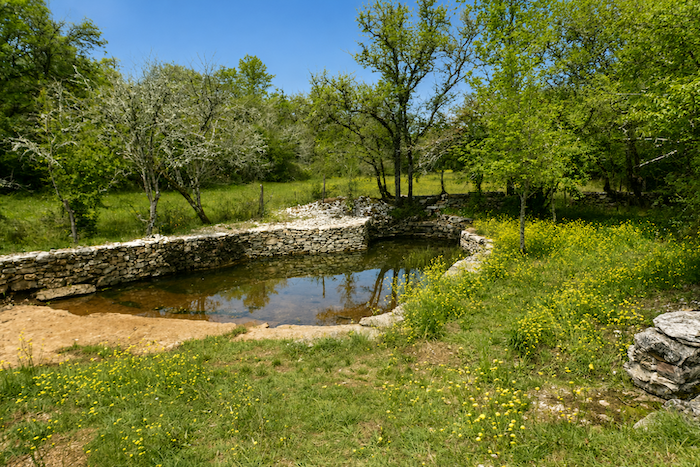
| Then comes a genuine surprise. Around a bend in the path appears a modest pool of water, almost unexpected in a country where every drop is precious. Is it an old washhouse, a spring that was once carefully developed, or simply a pond forgotten by time? The mystery remains, and perhaps that is precisely what gives the place its charm. |
 |
 |
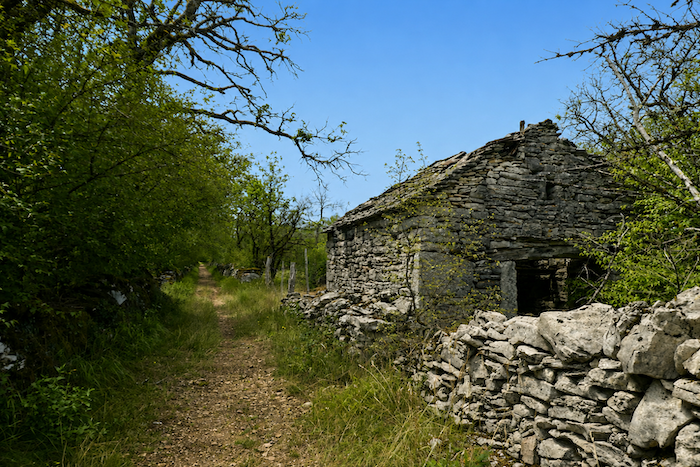
| The endless procession of dry-stone walls soon resumes. Among them stands a large ruin whose walls continue to resist the passing centuries with remarkable determination. Was it once a barn, a sheepfold or an unusually large “gariotte”? Even its roof, built from heavy grey limestone slabs, seems determined to withstand the passage of time. Here, in the Cahors region, these small stone shelters are commonly known as “gariottes”, whereas elsewhere in Quercy they are more often called “caselles” . |
 |
 |
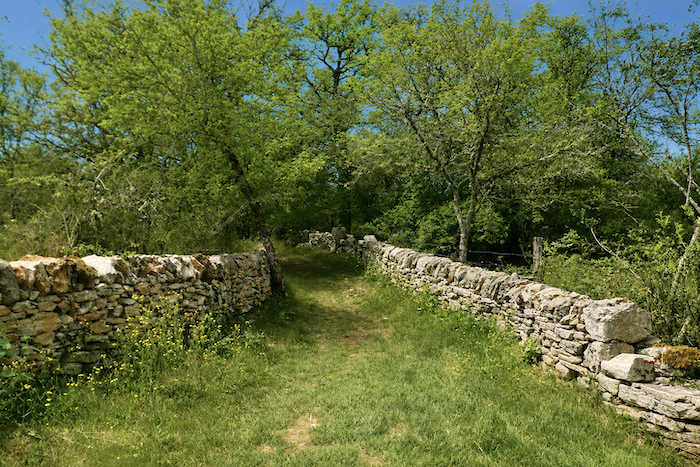
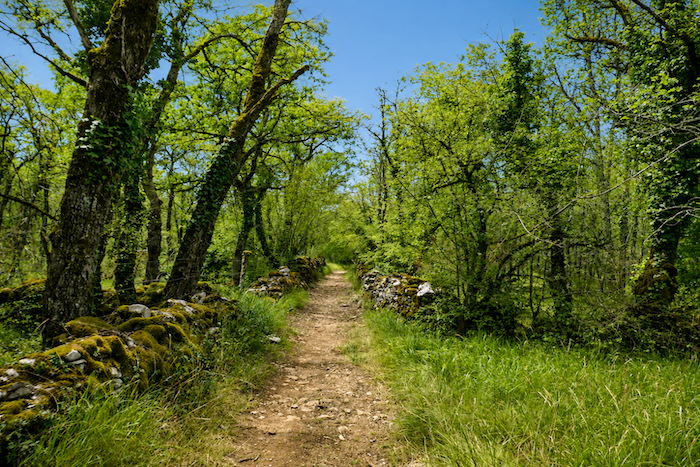
| The path continues its gentle undulations across the low ridges of the causse. Beneath your feet, ochre earth blends with white stones, while magnificent moss-covered walls accompany your progress like a guiding thread. For centuries, walking was viewed with suspicion, associated with vagabonds and the poor. Today, it has become a way of life, an opportunity to reconnect with a slower rhythm of time. Not everyone who follows these trails is travelling to Santiago de Compostela. Many simply come to experience the quiet pleasure of moving through these exceptional landscapes, placing one foot in front of the other and allowing their thoughts to flow in harmony with their footsteps. |
 |
 |
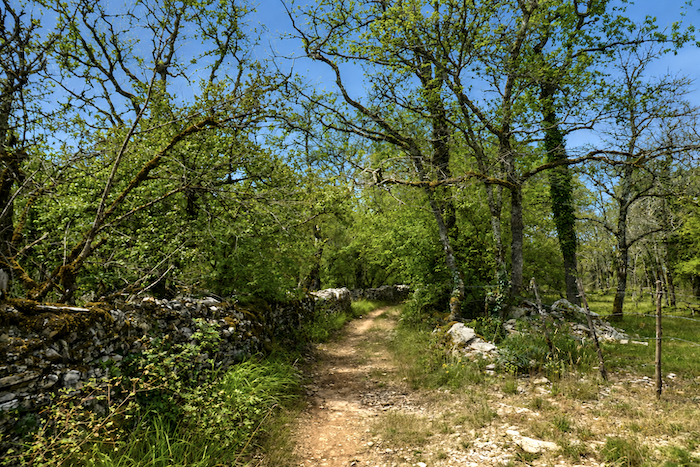
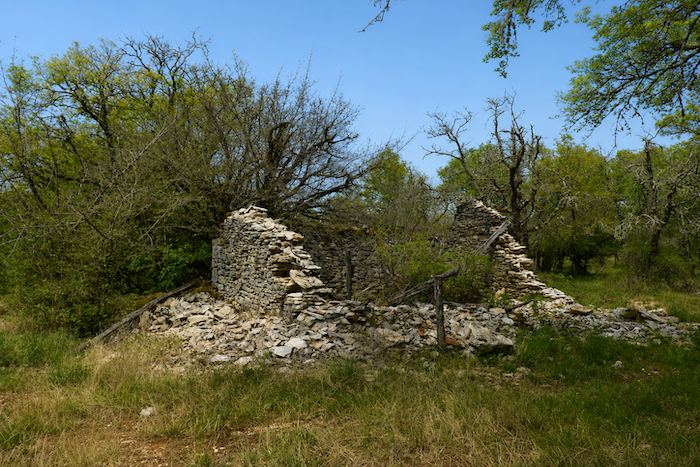
| In places, the oaks take on wonderfully twisted shapes. Their trunks spiral and their branches stretch towards every shaft of light, while the woodland creates a peaceful twilight where silence itself seems to have found a home. Nearby, an old “gariotte” has gradually surrendered to the relentless work of time, as though even stone had finally yielded to the centuries. |
 |
 |
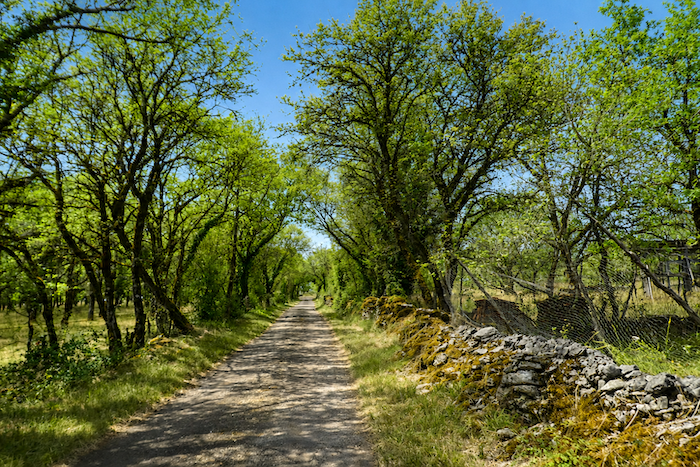
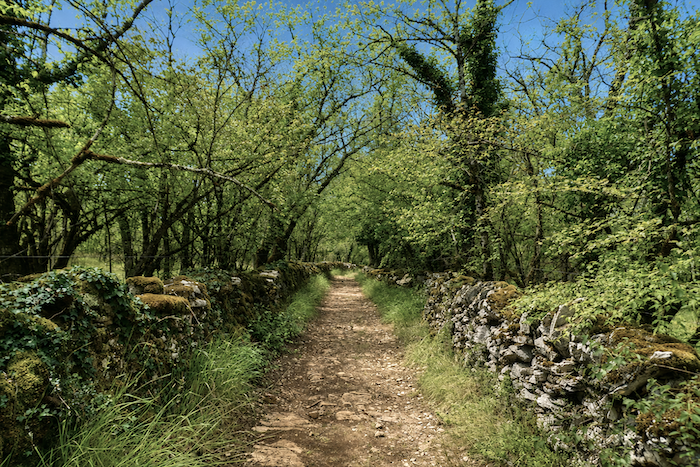
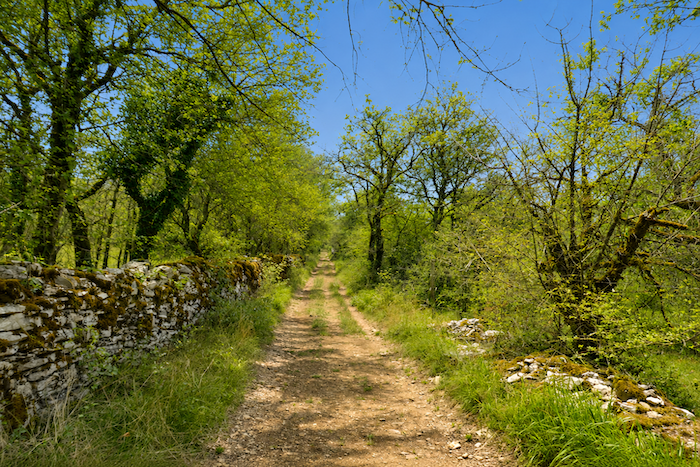
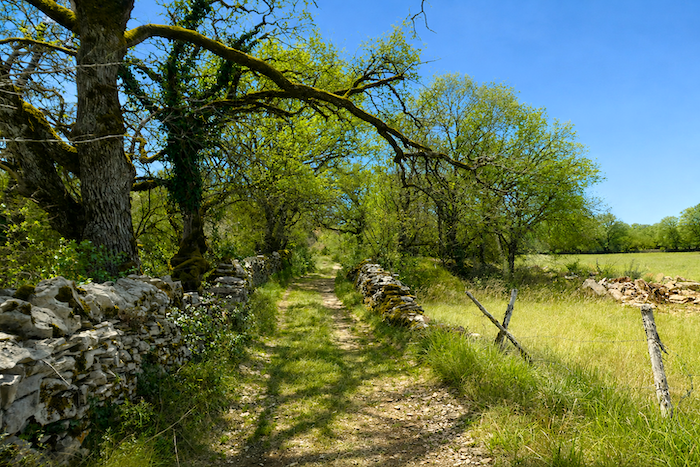
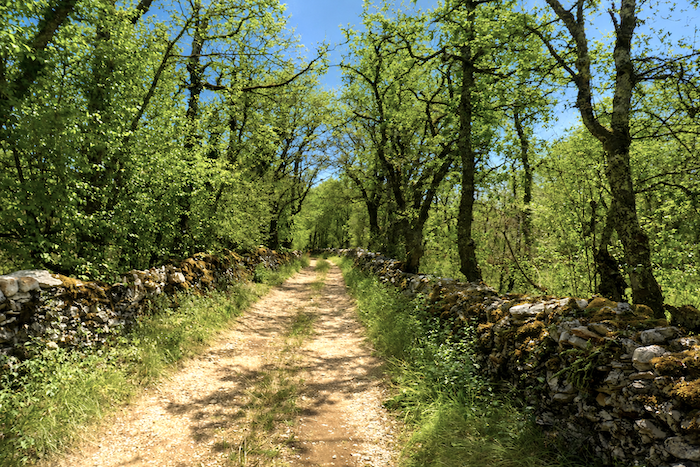
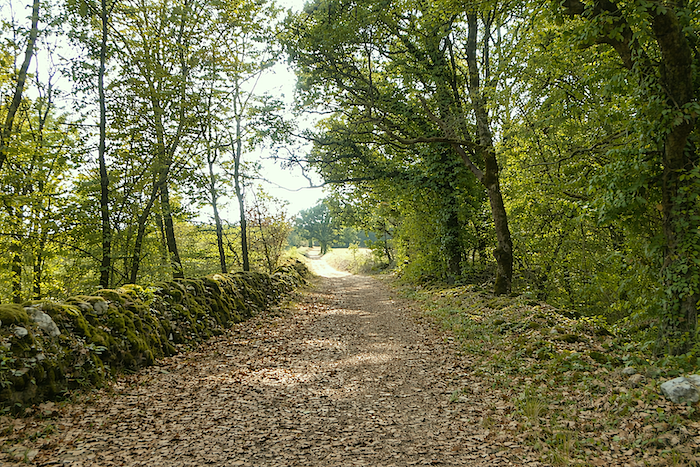
| The path then passes between two ancient dry-stone walls that naturally draw the eye towards the horizon. Great oaks with gnarled branches spread a living vault above the path, their trunks clothed in mosses, lichens and ivy that reveal their venerable age. Nothing disturbs the perfect harmony between nature and the work of human hands. Here, the true spirit of Quercy’s ancient mule paths comes fully to life, offering a landscape of moving simplicity where every stone, every tree and every wall silently tells the story of centuries of rural life. . |
 |
 |
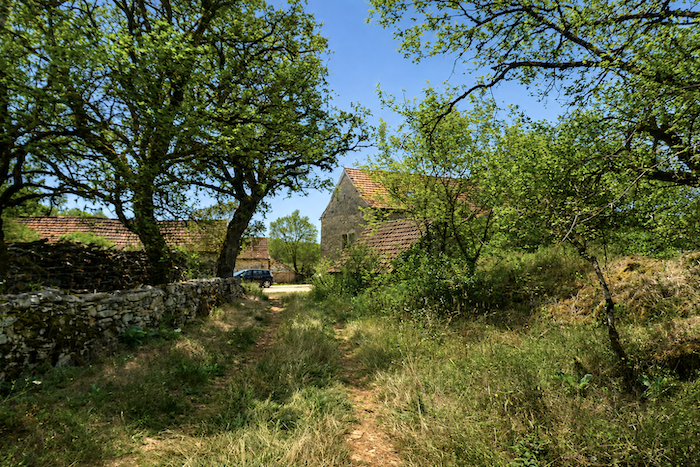
| Leaving the woodland, you reach the large farm of Pech Canot, which marks another milestone along the route. Its imposing buildings remind you that, despite the solitude that reigns across the causse, these lands are still shaped by human labor. |
 |
 |
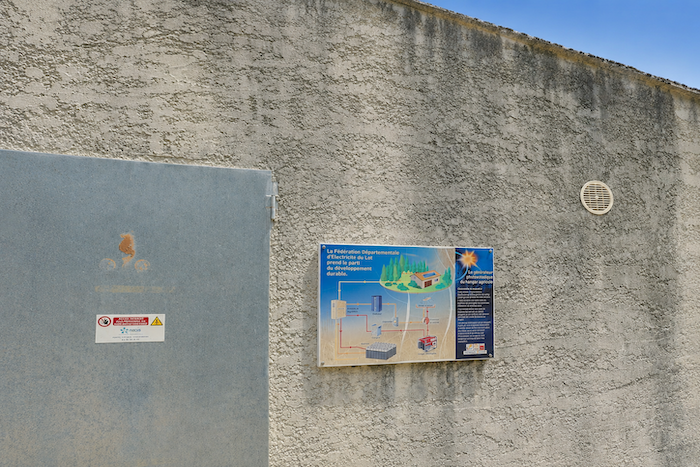
| Even in the heart of these ancient landscapes, modern life has found its place. Here, the Lot electricity company has invested in renewable energy, demonstrating that sustainable development can be integrated discreetly into a region where heritage and nature remain closely intertwined. |
 |
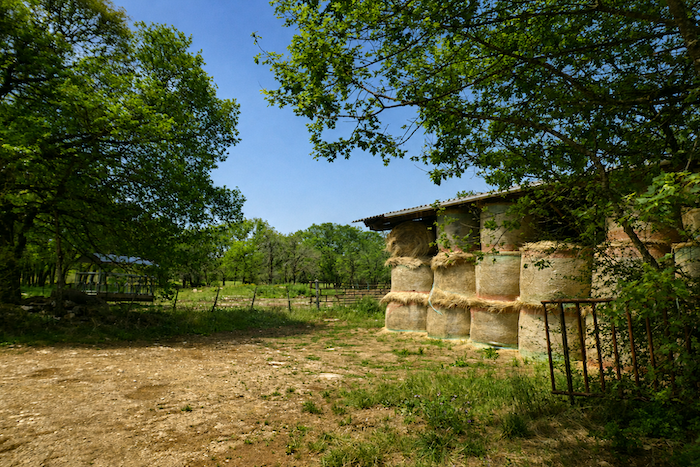 |
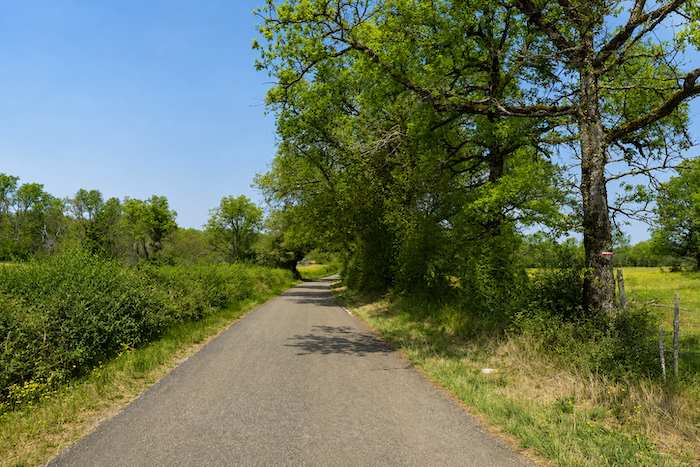
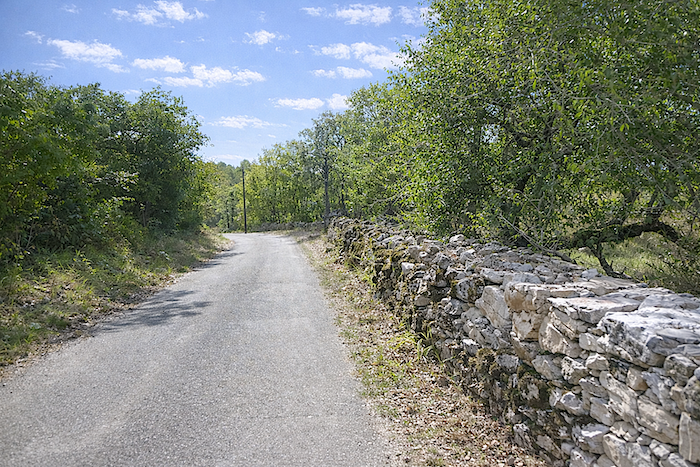
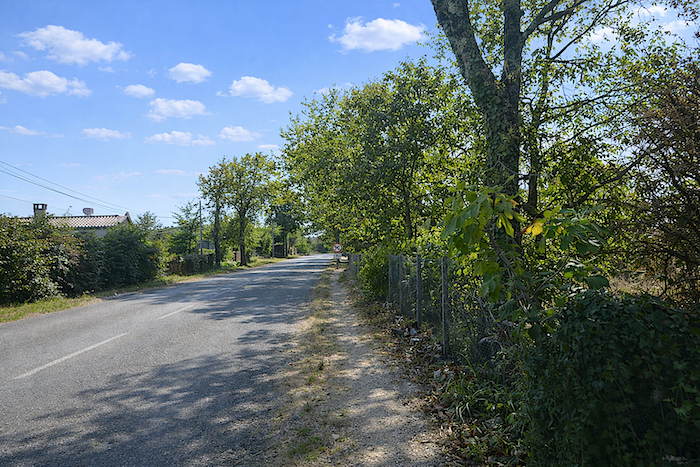
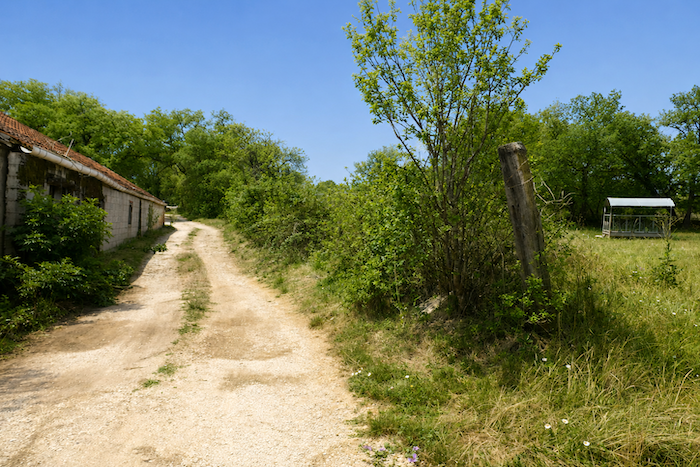
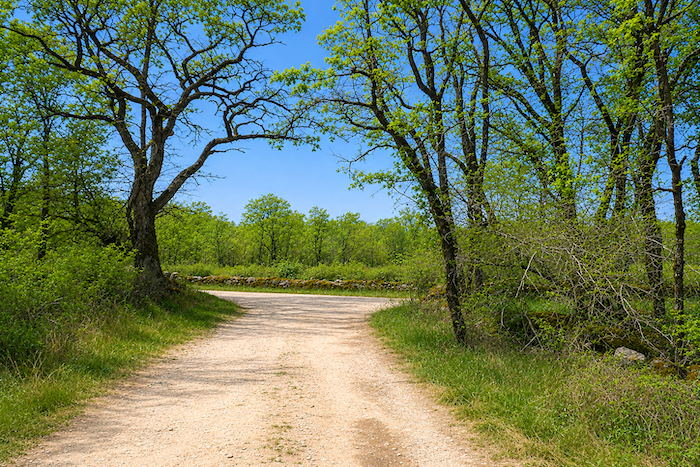
| In this remote corner of Quercy, these narrow ribbons of asphalt belong almost entirely to the farming community. Away from the main roads, vehicles are rare, leaving walkers to enjoy a tranquility that has become almost exceptional. |
 |
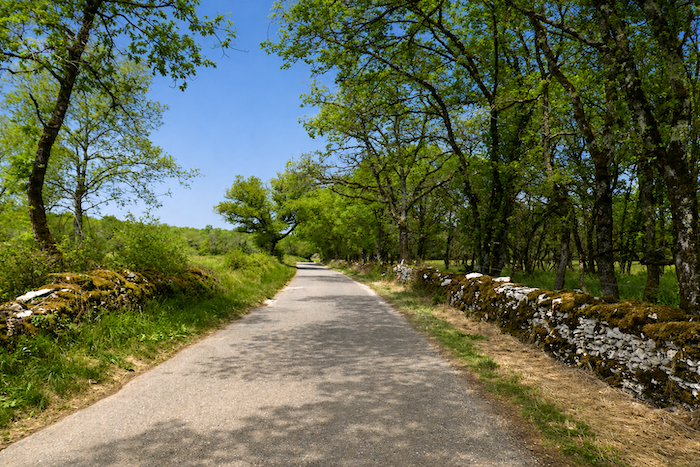 |
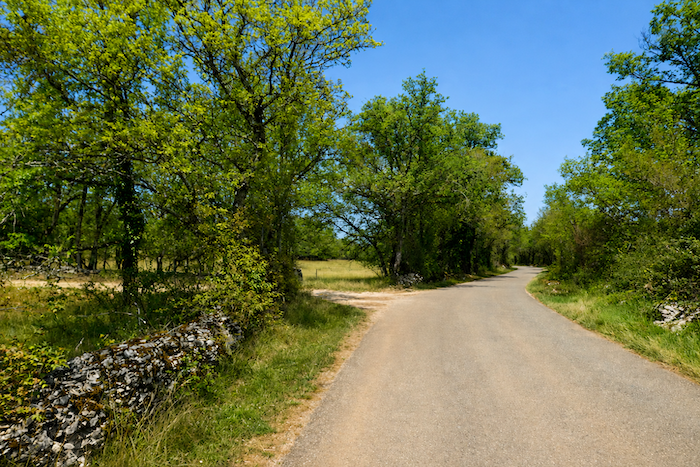
| Only a few hundred meters farther on, the path once again leaves the road to follow a broad earth track, as though the brief stretch of asphalt had been nothing more than a passing interruption. |
 |
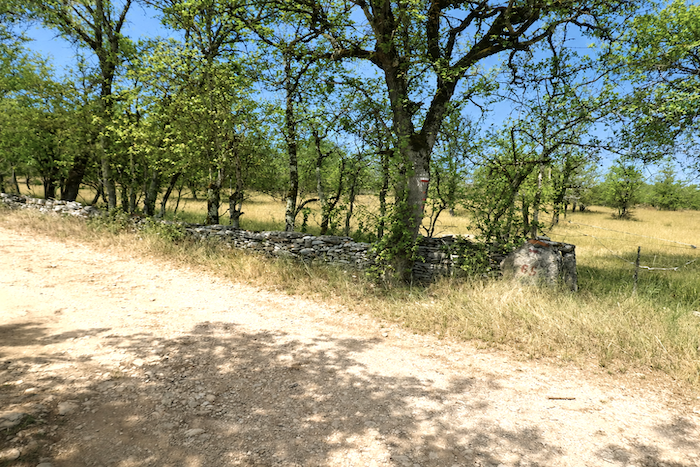 |
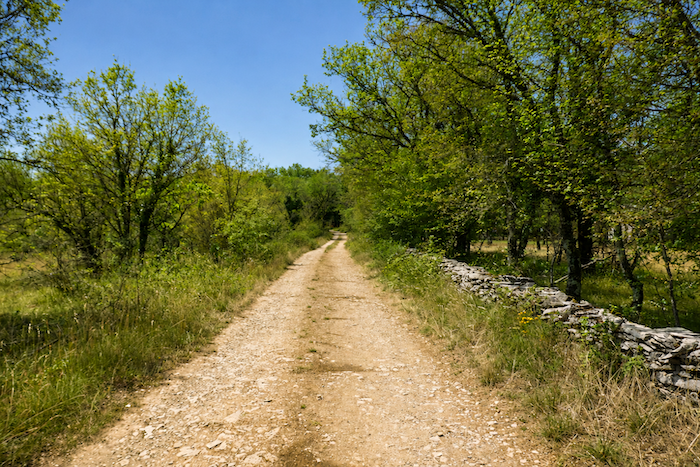
| Immediately, the landscape returns to its timeless permanence. This long avenue seems to cross a world where nothing is unnecessary and where nature quietly imposes its own rhythm. Here, the true spectacle lies in the profound silence that only forests can offer. They remain among the last refuges of unspoilt freedom, sanctuaries where time slows and solitude still has immeasurable value. Who knows whether, one day, these intangible treasures will become the most precious possessions of our age? |
 |
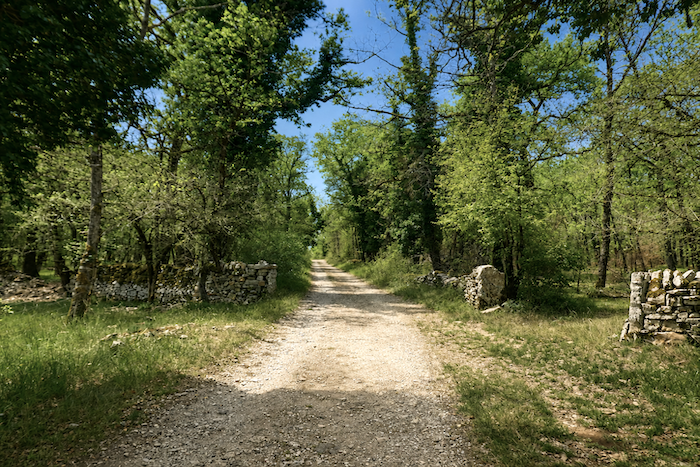 |
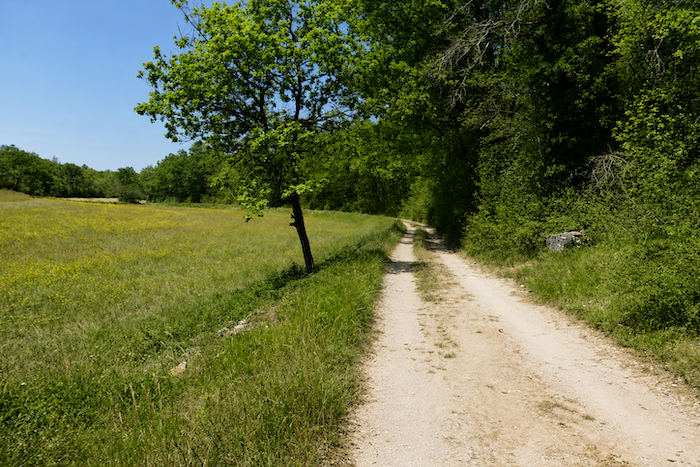
| After passing a few modest cereal fields, the GR65 once again disappears beneath a denser canopy of trees. Everything regains its natural harmony. Every step seems to accompany the slow symphony of the forest, where colors, fragrances and silence combine to create an ever-changing masterpiece. |
 |
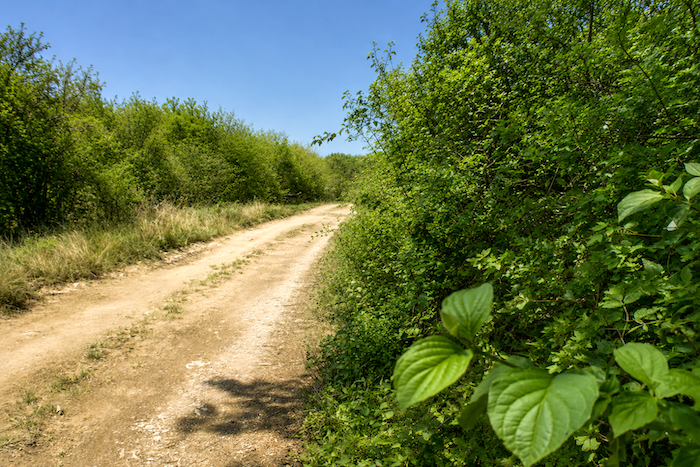 |
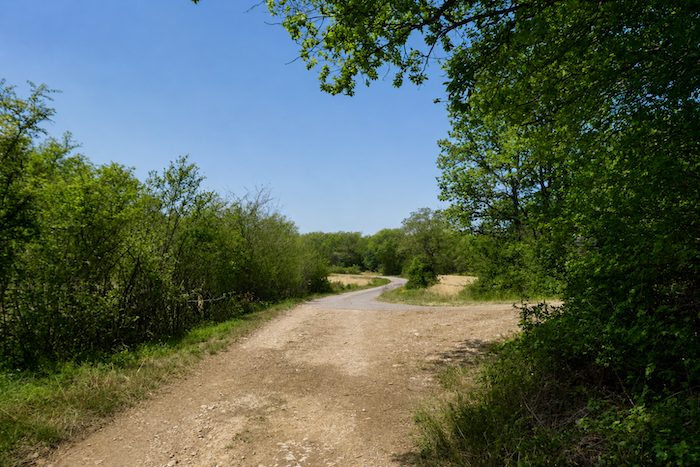
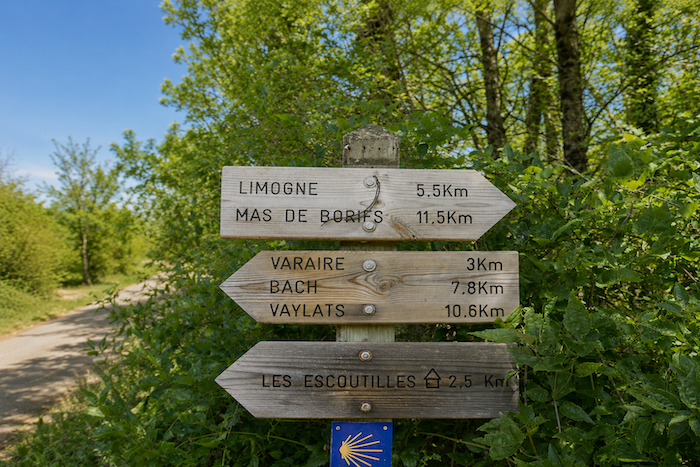
| Soon, the path reaches a crossroads where a sign indicates that Varaire is three kilometers away. Your next destination gradually draws closer, keeping pace with your steady walk. |
 |
 |
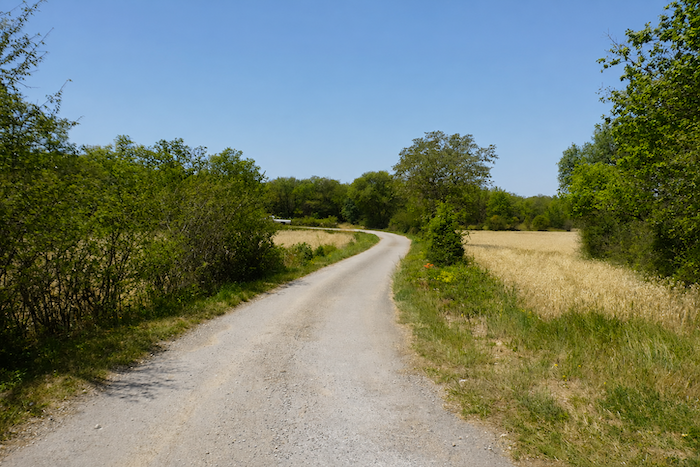
| The GR65 then briefly follows a small paved road, simply a short connection before returning to its true domain, the paths of the causse. . |
 |
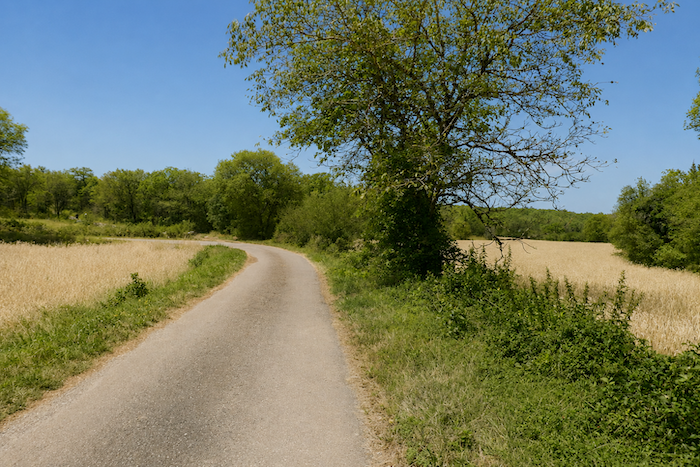 |
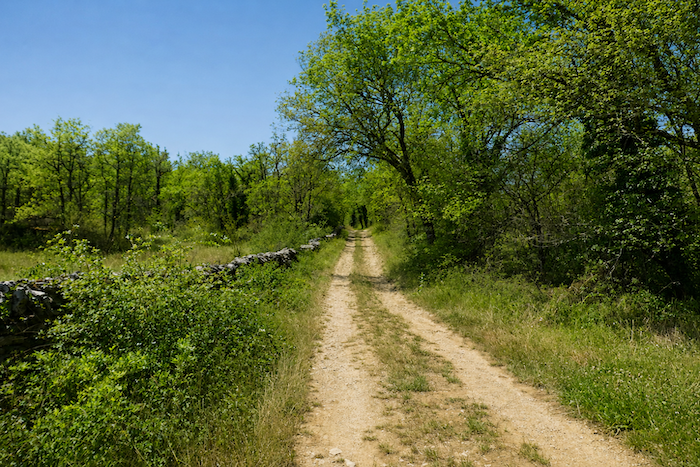
| Very soon, the asphalt disappears beneath your feet. The path regains its dirt and continues through these timeless landscapes that seem untouched by the centuries. Here, the old rural paths have survived almost unchanged, faithfully following the contours of the plateau and preserving the patient work of the generations who created them. |
 |
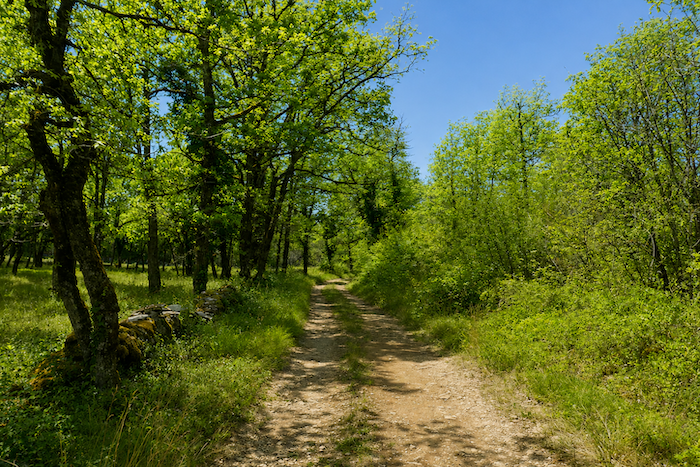 |
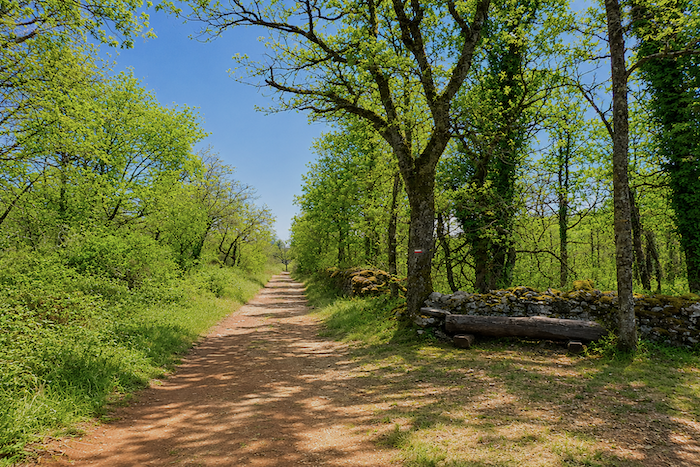
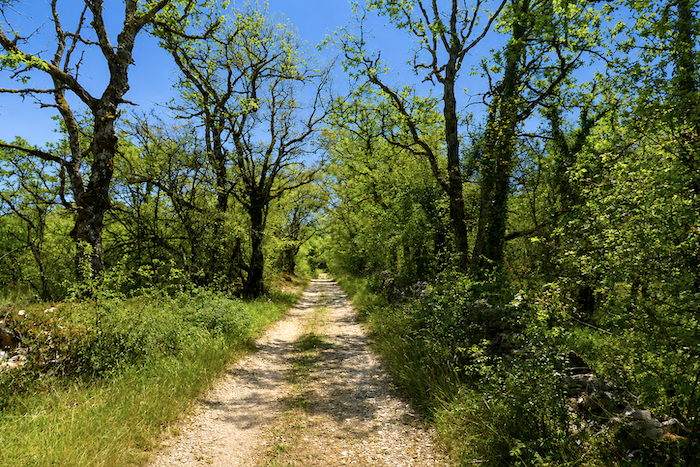
| The scenery remains wonderfully consistent: ochre ground, sometimes dusty and sometimes scattered with fragments of limestone, stunted oaks shaped by wind and drought, their crowns often so sparse that the sky shines through their branches. Nothing seeks to impress, yet everything invites quiet contemplation. |
 |
 |
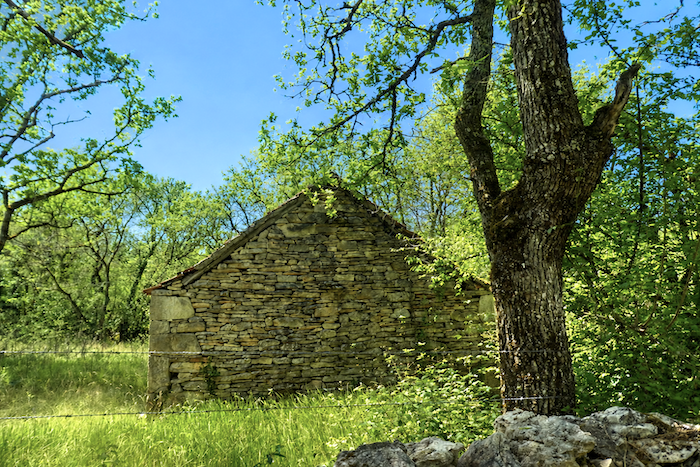
| A little farther on stands a magnificent “gariotte”, the very embodiment of the understated poetry of the Quercy causses. Its gable, built entirely from carefully assembled limestone slabs, reveals remarkable craftsmanship in which every stone naturally finds its place. The centuries have gently weathered its walls, now covered with lichens and mosses, while the surrounding vegetation approaches with infinite delicacy, as though nature itself still respected the work of its long-forgotten builders. Nothing here suggests abandonment. Instead, everything expresses a slow harmony between the landscape and its traditional architecture. This humble building alone captures the very soul of the causses, a land where stone becomes heritage and where even the simplest structures acquire an almost monumental dignity. |
 |
 |
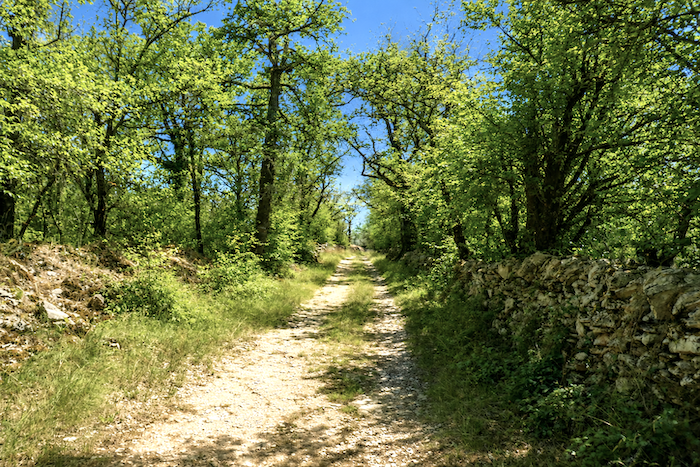
| The path continues through this timeless landscape, where every bend seems to slow the pace of the world a little more. Silence, light and trees combine to create an almost unreal setting that naturally invites reflection. |
 |
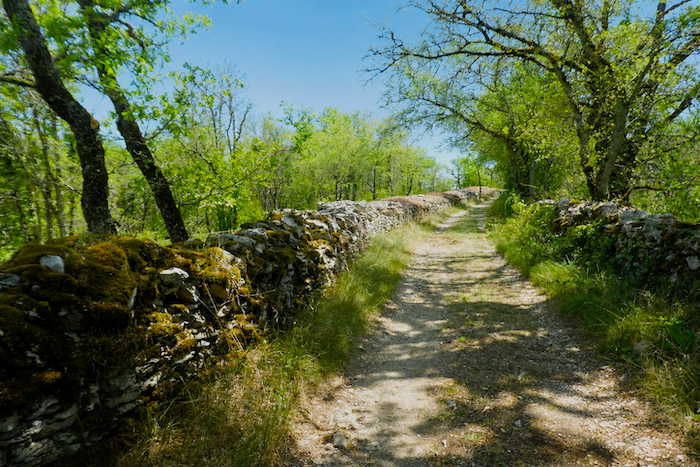 |
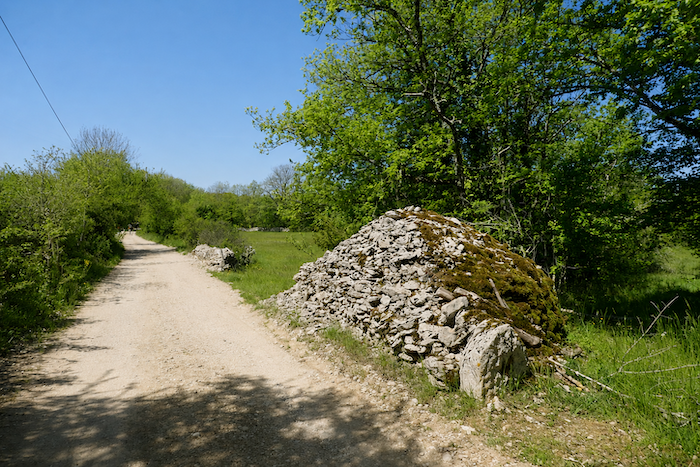
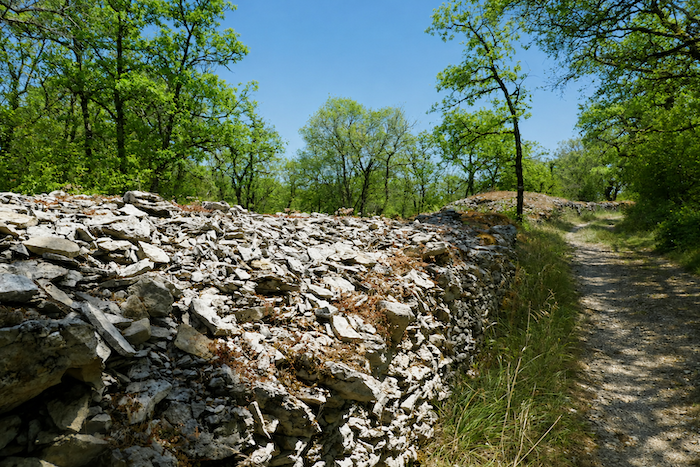
| Soon the long dry-stone walls appear once again, faithfully accompanying the path. The flat stones, patiently removed from the fields over countless generations, form impressive limestone walls softened here and there by patches of moss. Farther on, these carefully built structures gradually collapse into vast heaps of scattered stone, as though the ancient walls were slowly returning to the heathland from which they had emerged. Meanwhile, the path quietly continues as its ribbon of ochre earth, marked by the footsteps of farmers, livestock and pilgrims alike. . |
 |
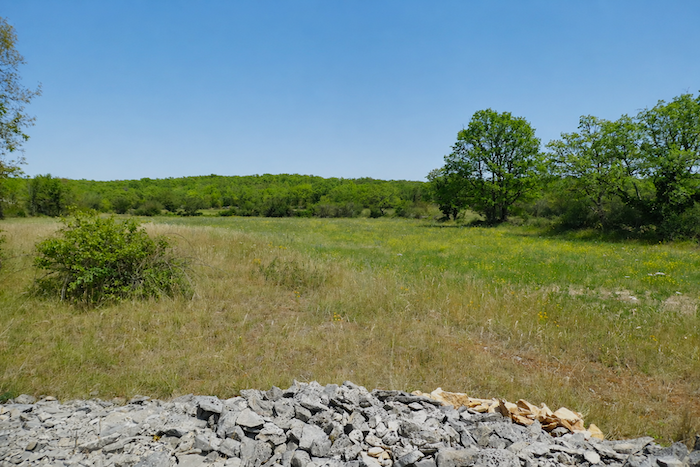 |
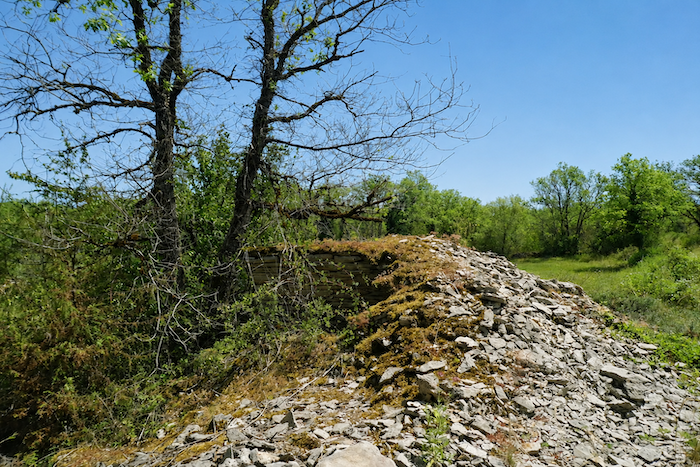
| More ruins appear, discreet sentinels of a rural world that has almost vanished. They reinforce the sense of timelessness that permeates the entire causse, where the stones seem to preserve the memory of those who once lived here long after they have gone. |
 |
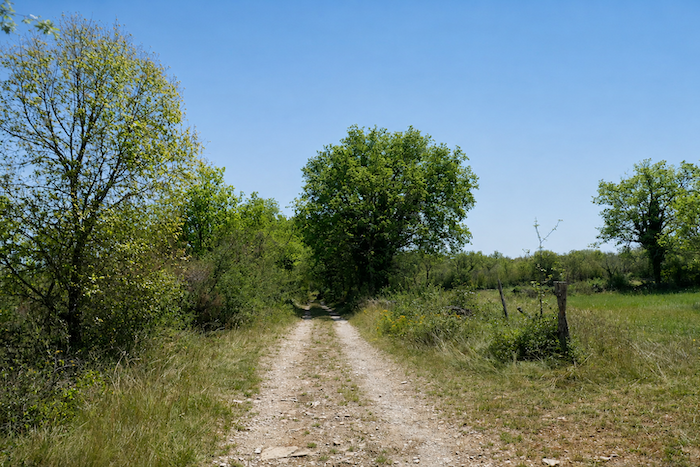 |
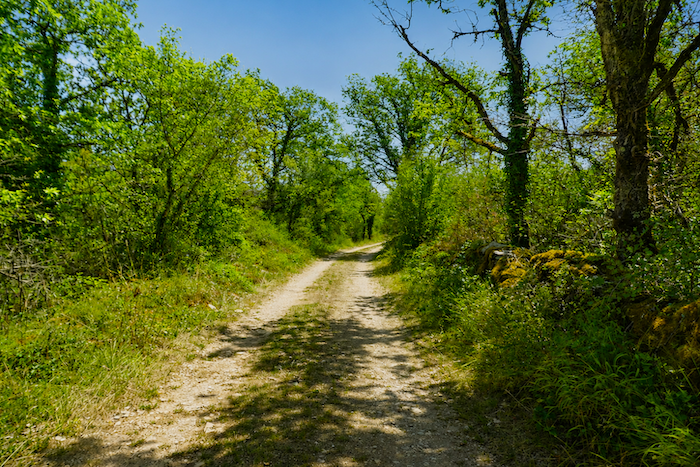
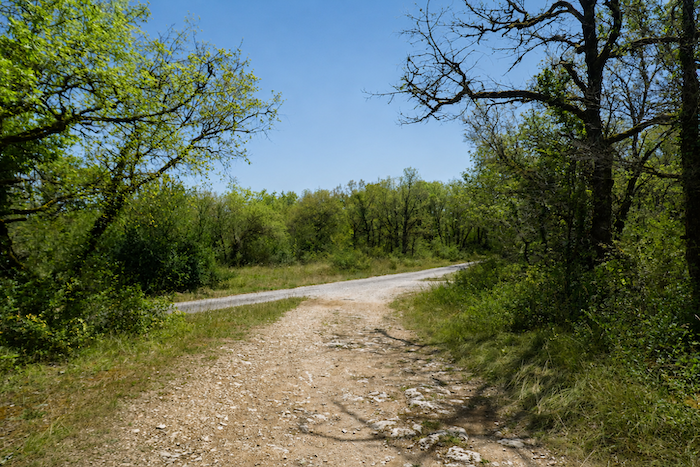
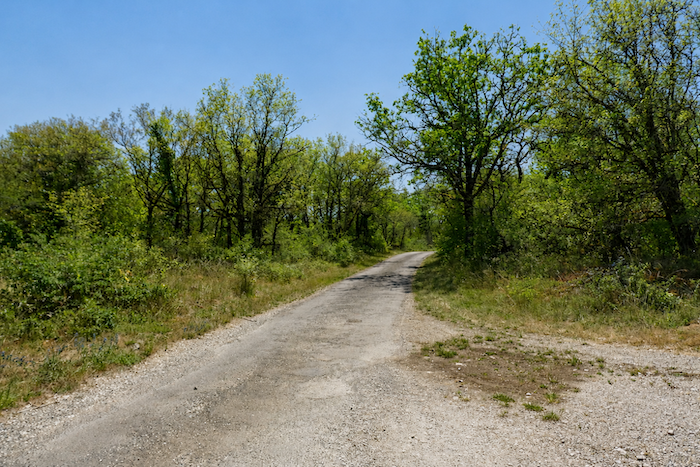
| The GR65 then joins another small road, just as quiet and peaceful as those already crossed. Traffic remains exceptionally light, and silence continues to reign without interruption. |
 |
 |
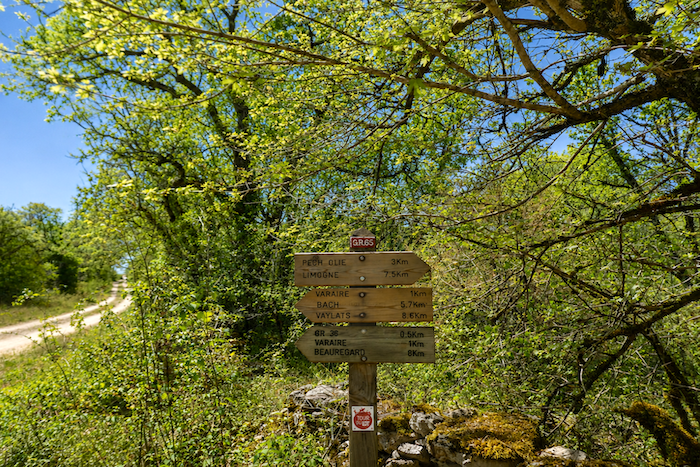
| A new sign announces that Varaire is now only one kilometer away. |
 |
 |
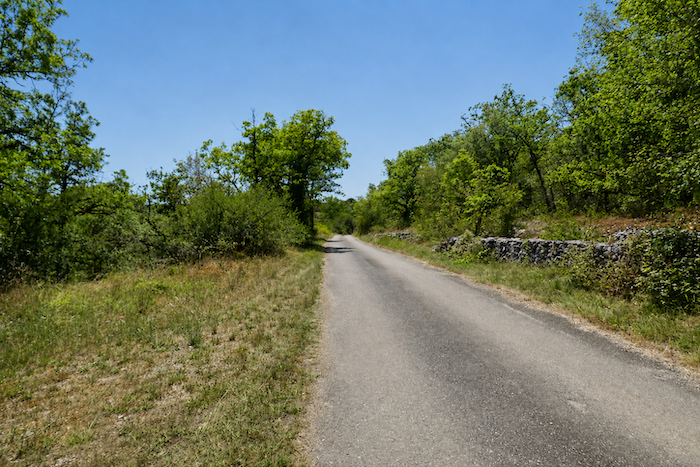
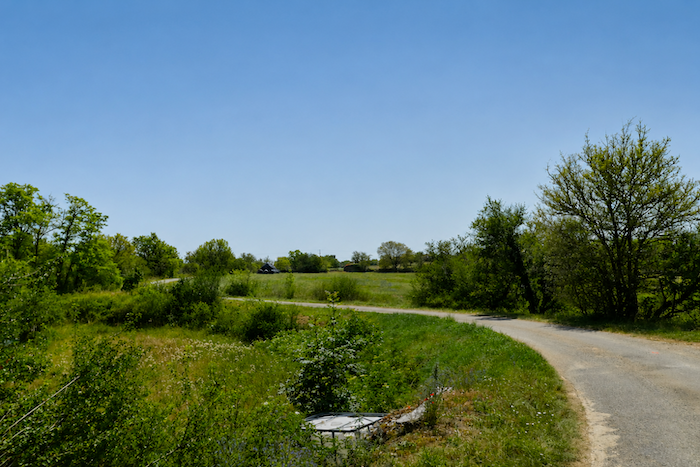
| The village still remains hidden behind the gentle folds of the plateau, yet its presence can already be sensed. The GR65 follows the road as it climbs gently through peaceful countryside, passing meadows, small groves and old fields bordered by dry stone walls. Step by step, the ascent leads the pilgrim towards Varaire, another welcoming halt on this crossing of Quercy. |
 |
 |
Section 3: A short detour to Varaire before returning to the causse
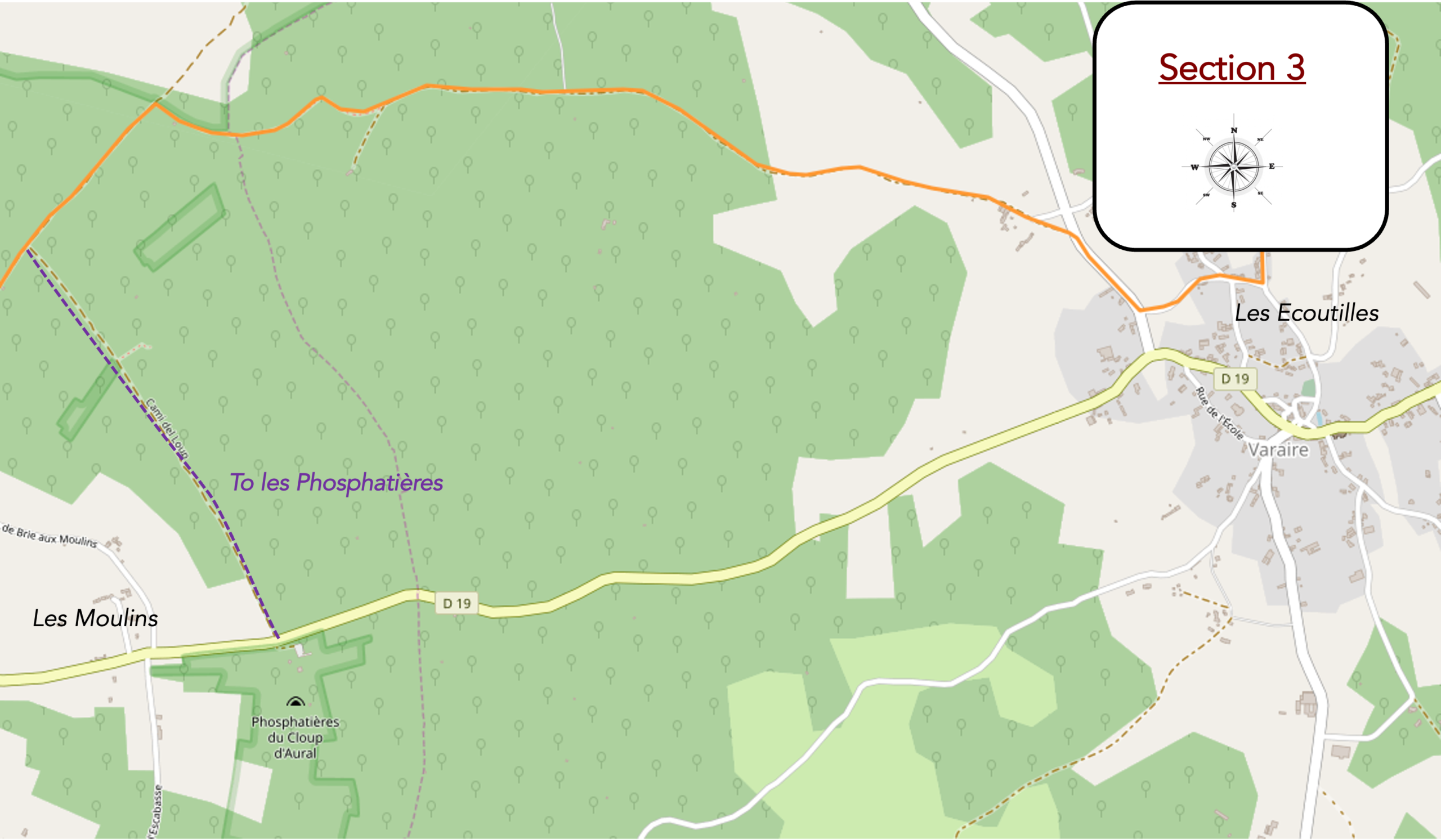
Overview of the route’s challenges: an easy route with no particular challenges.
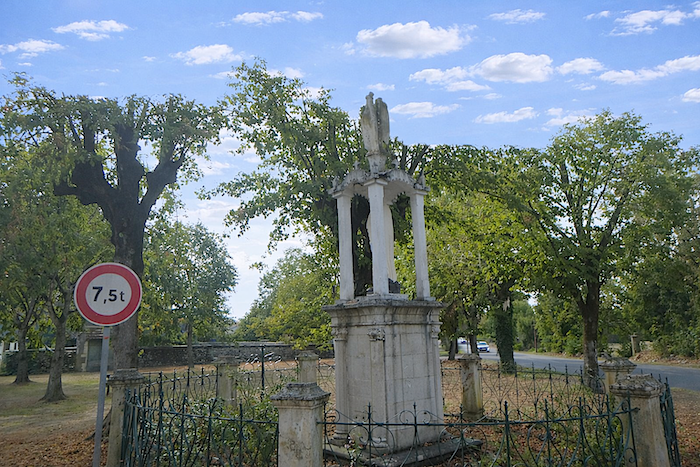
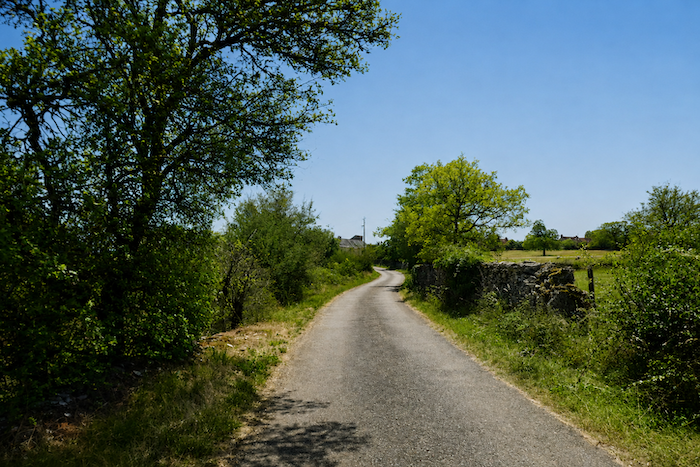
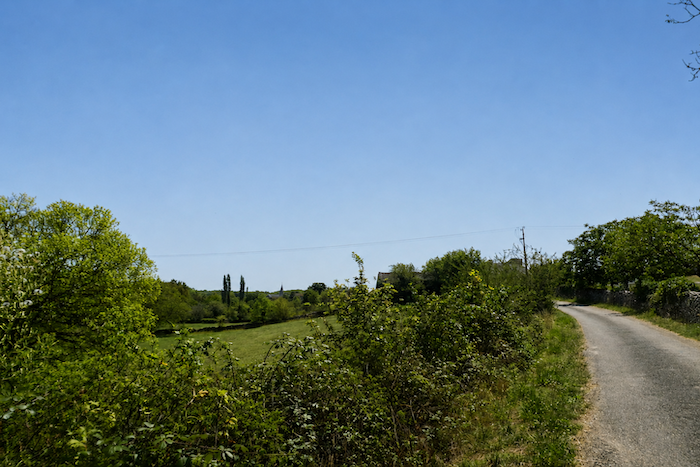
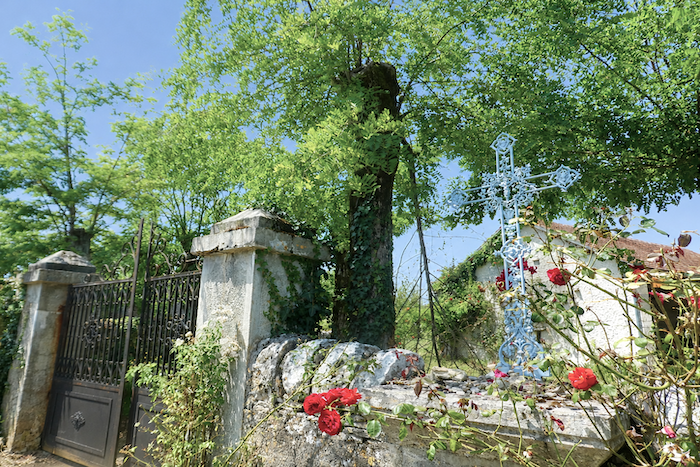
| The road continues its gentle climb to the crossroads of Les Écoutilles, where an old stone cross stands quietly beneath the shade of the trees. As so often along the Way of Saint James, these modest landmarks seem to welcome hikers long before they reach the village itself. . |
 |
 |
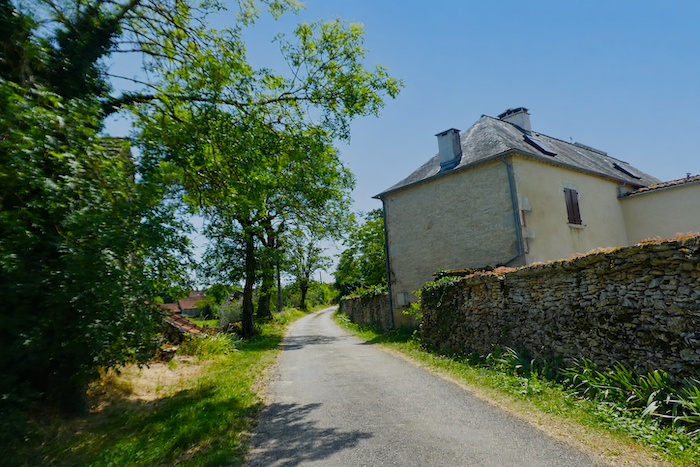
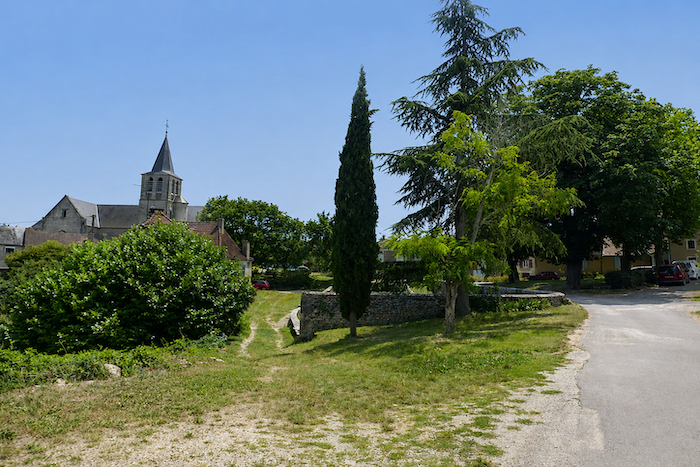
| Les Écoutilles marks the first houses of Varaire. The GR65 merely brushes past this small village of around three hundred inhabitants before continuing on its way. Yet it would be a pity not to take a short detour, for Varaire is well worth a visit. |
 |
 |
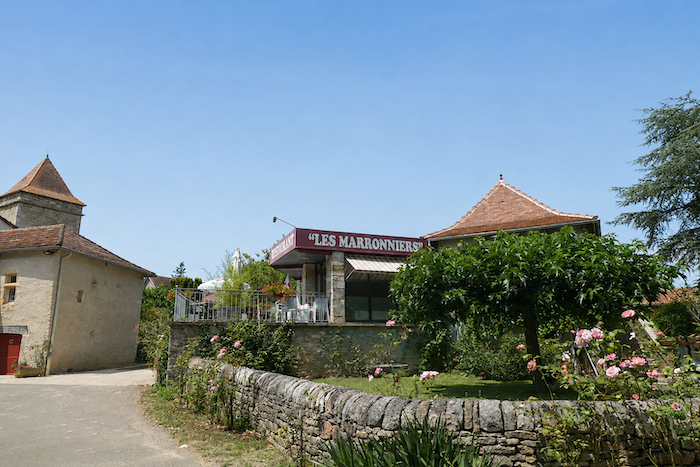
| The village offers walkers a few services that have become especially valuable along this stretch of the route. Accommodation and places to eat are available here, comforts that deserve to be appreciated since facilities remain scarce throughout this stage across the causse. |
 |
 |
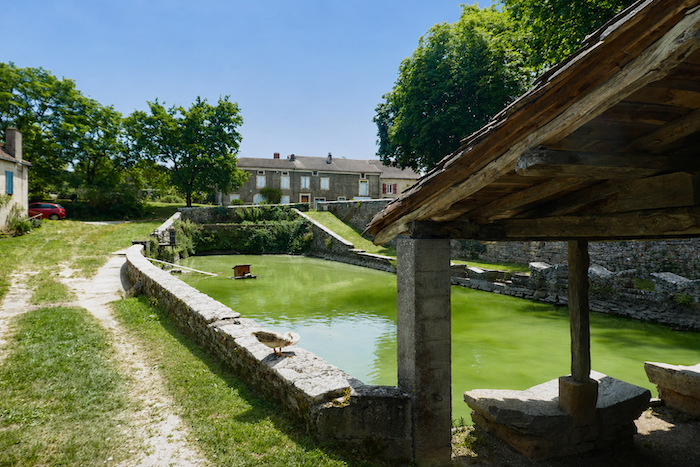
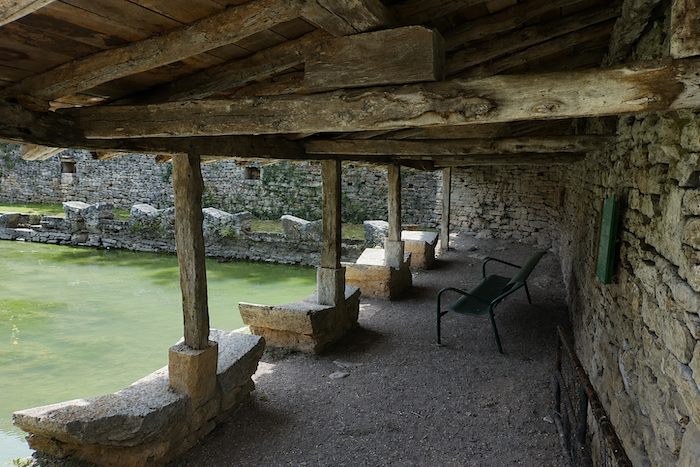
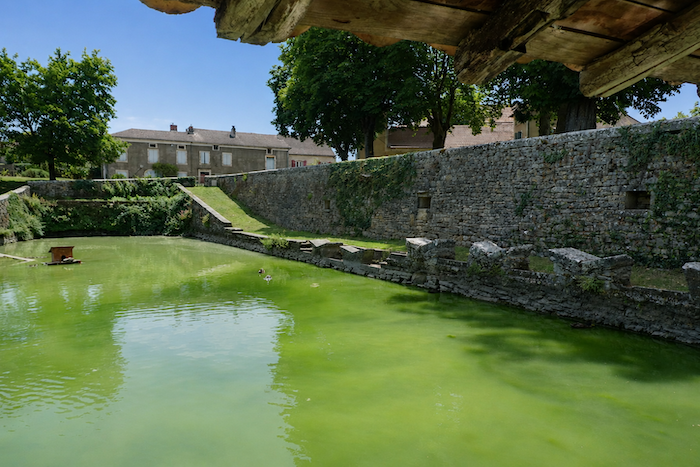
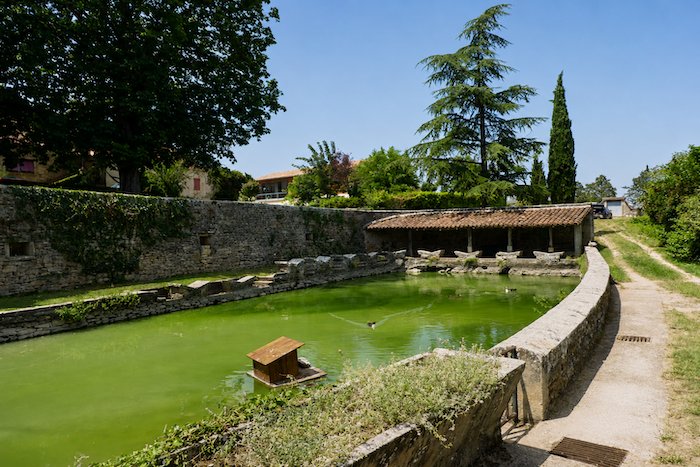
| At the heart of the village lies one of the loveliest washhouses in Quercy. Its elegant roof, known locally as the « butterfly washhouse » because of its graceful, outspread shape, shelters peaceful green water where ducks often paddle quietly. This basin once served as the fish pond of the powerful Cardaillac family, one of the great noble dynasties of Quercy, whose estates extended far beyond Varaire. Today, the place exudes grace, freshness and tranquillity, offering a striking contrast to the austerity of the surrounding plateaus. |
 |
 |
 |
 |
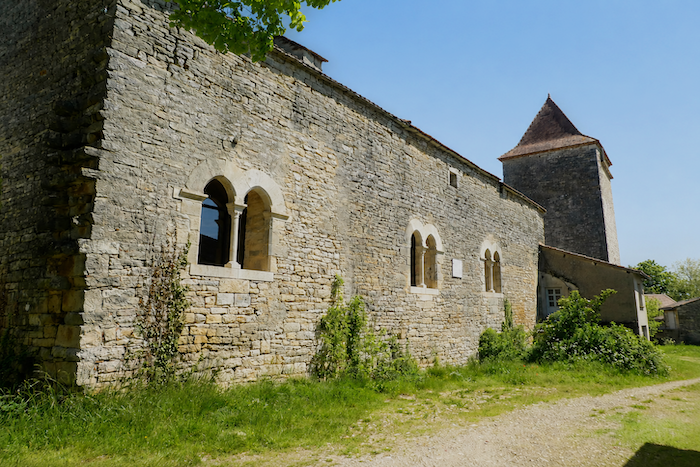
During the Middle Ages, Varaire occupied an important position along the region’s historic routes. A hospital attached to the Church of Saint-Jacques de Peyronèse welcomed pilgrims travelling along an ancient Roman road known locally as the “Cami Gasco”, before they later joined the “Cami Ferrat” beyond Bach. Historical records also mention two inns that received passing travelers. Even today, handsome stone houses, some built like fortified manor houses, are arranged around the former seigneurial residence of the Cardaillac family and its impressive dovecote, reminders of the prestige once enjoyed by this powerful lineage.
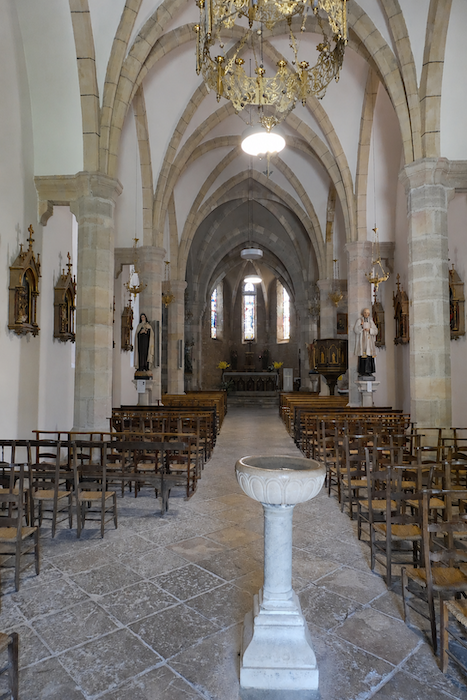
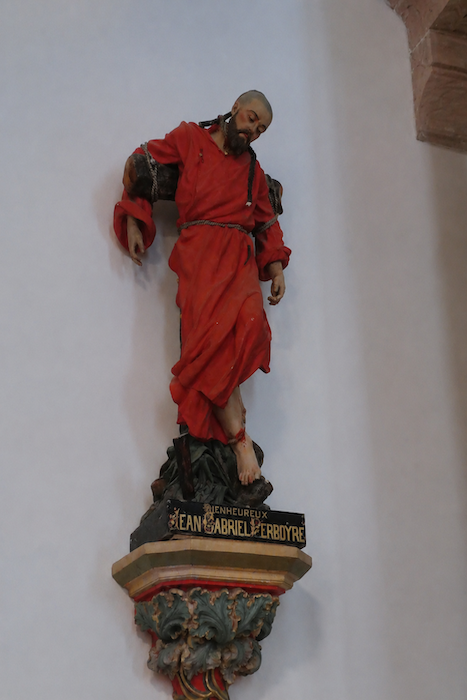
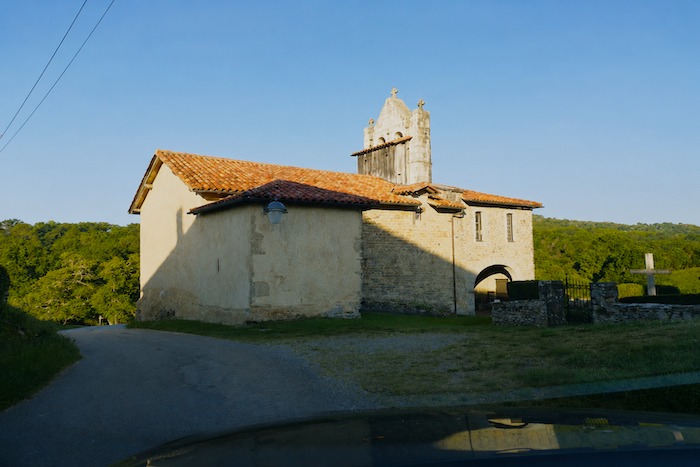
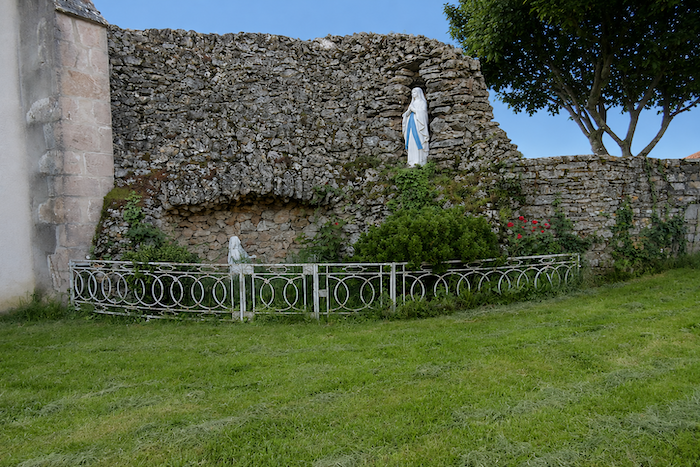
| Saint Bartholomew’s Church, built during the fifteenth century and enlarged in the nineteenth, surprises visitors with the brightness of its interior, where the grey and pink limestones of Quercy blend harmoniously. It contains several beautiful statues of saints that are well worth admiring. Nearby, a statue of the Virgin set within a small niche leaves few visitors indifferent. Its deliberately naïve, almost kitsch appearance either amuses or charms pilgrims, adding an unexpected touch to the village’s religious heritage. |
 |
 |
After this pleasant interlude, it is time to return to the crossroads at Les Écoutilles, rejoin the GR65 and continue the walk towards the wide-open landscapes of the causse.
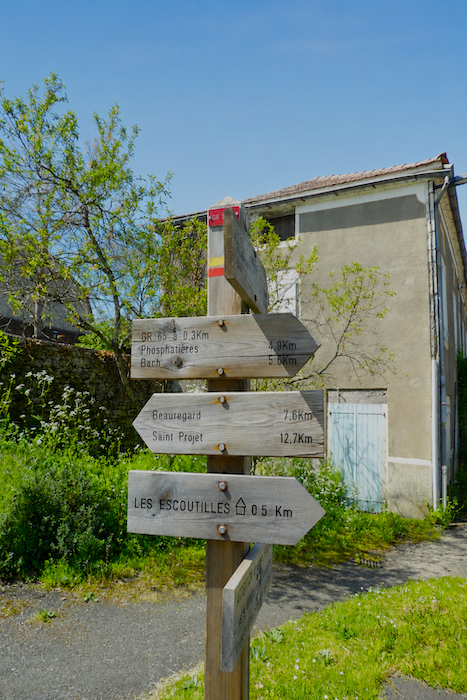
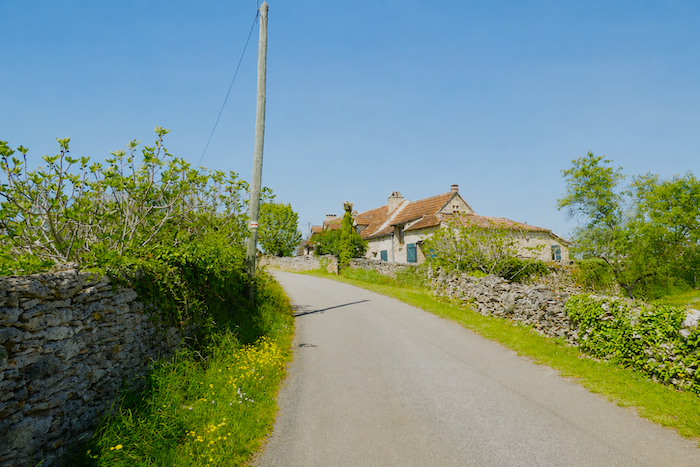
| The GR65 leaves Les Écoutilles along a modest paved road that winds between magnificent dry-stone walls, weathered by centuries and softened by carpets of moss. They are the unmistakable signature of the causses, faithfully accompanying both paths and quiet roads. While the upper plateaus belong primarily to the downy oak, the vegetation becomes more varied farther down. Large white oaks grow more vigorously, joined by walnut trees, ash trees, field maples and Montpellier maples, two characteristic species that generously enrich the landscapes of Quercy. |
 |
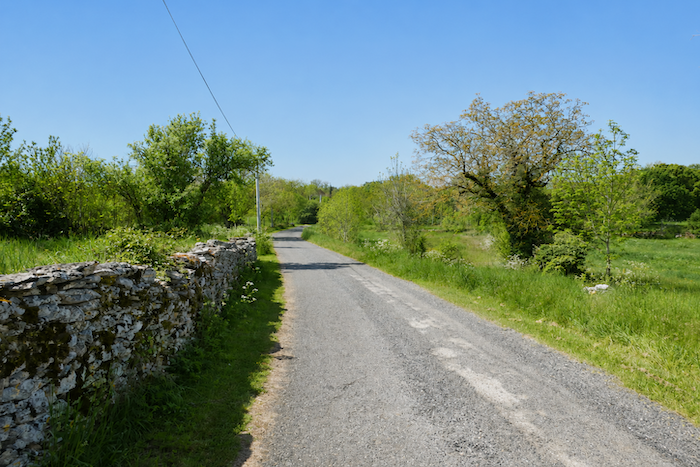 |
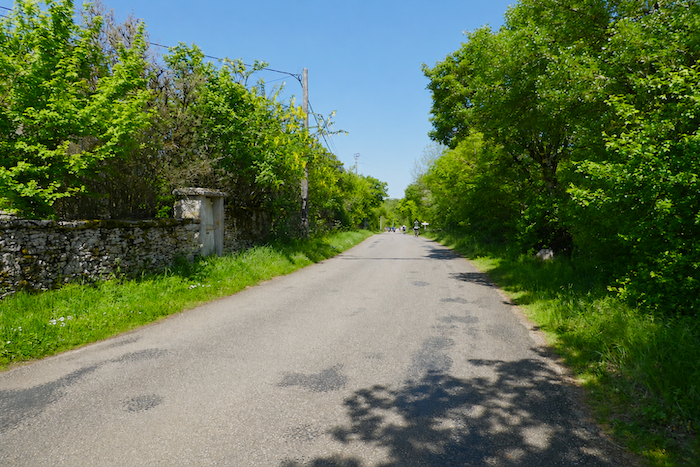
| The GR65 continues alongside the road for a short distance, passing an elegant stone house that appears only briefly between the trees, almost hidden within its leafy surroundings. Soon the asphalt disappears once more, giving way to an earth path that slips beneath hedgerows of oaks and maples. |
 |
 |
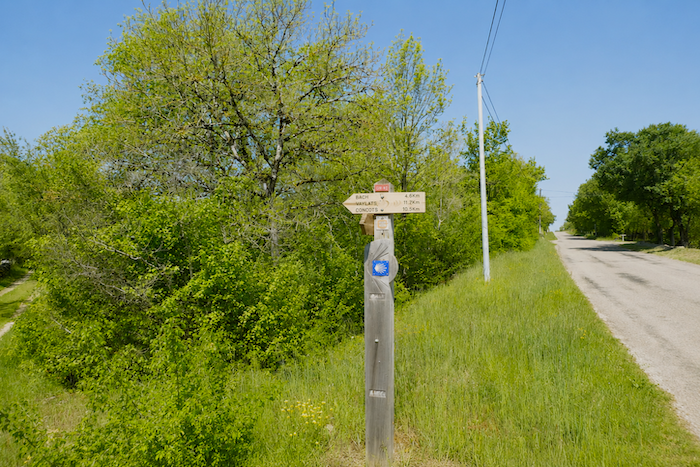
| A sign announces that Bach is now less than five kilometers away. The next stop gradually draws nearer, yet the landscape still seems reluctant to release the pilgrim from its mineral world. . |
 |
 |
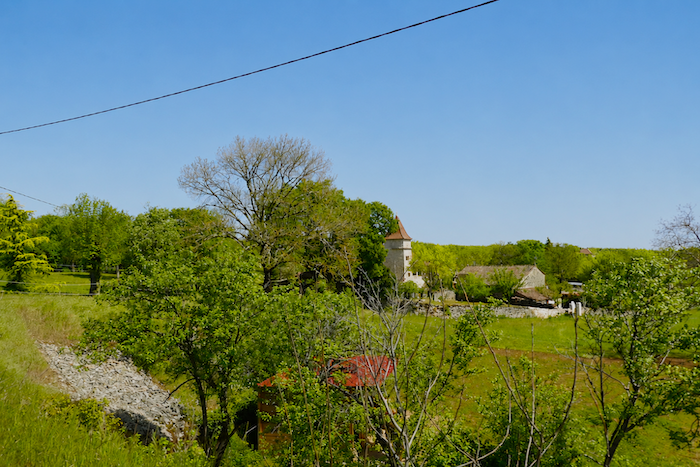
| Another stone house appears unexpectedly beside the woodland, offering one last reminder of rural life before the causse once again reveals its full grandeur. Little by little, the oak resumes its place as the undisputed ruler of these austere lands, imposing its sturdy silhouette across the landscape. |
|
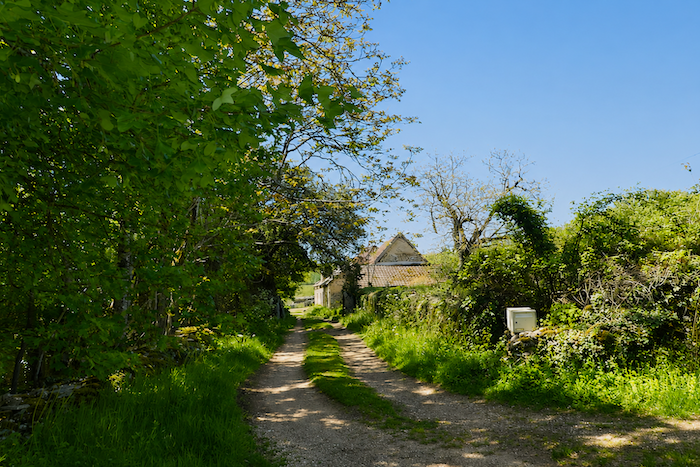 |
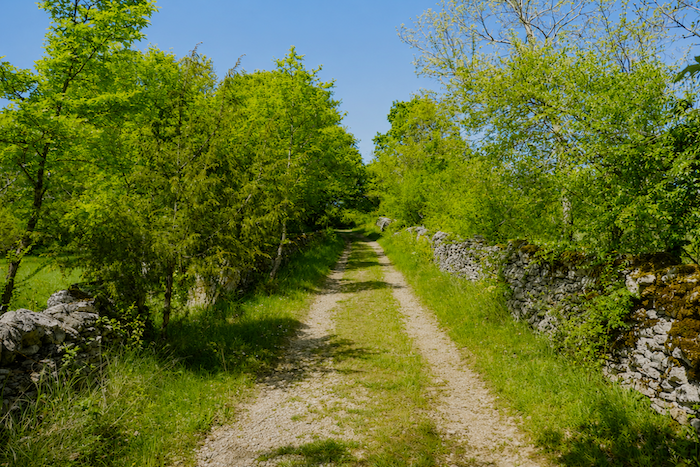
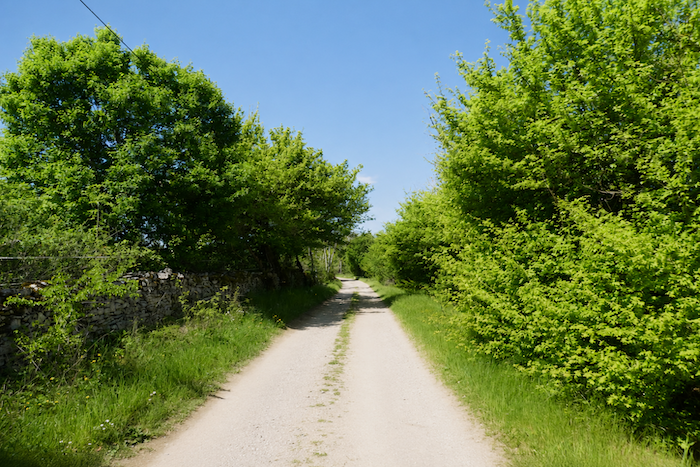
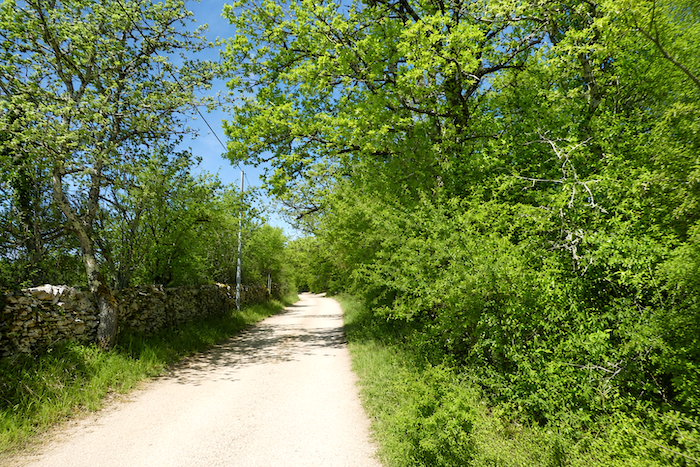
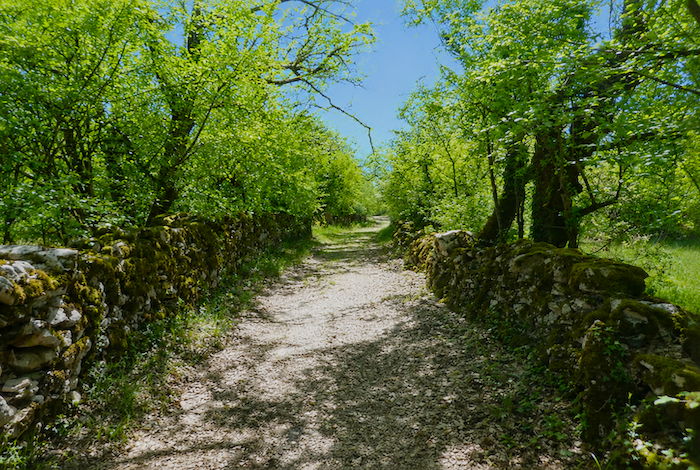
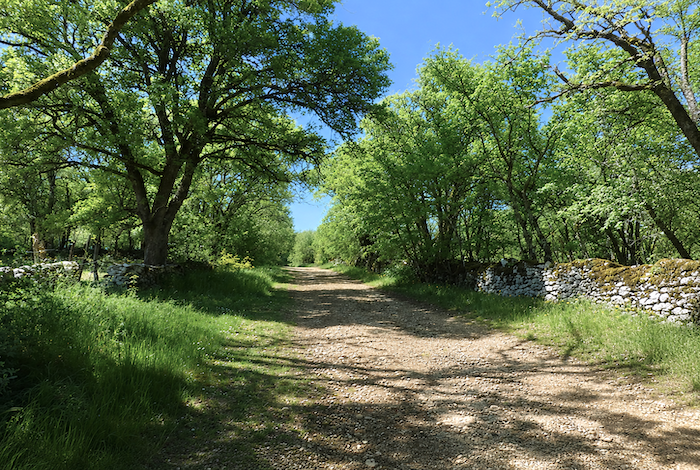
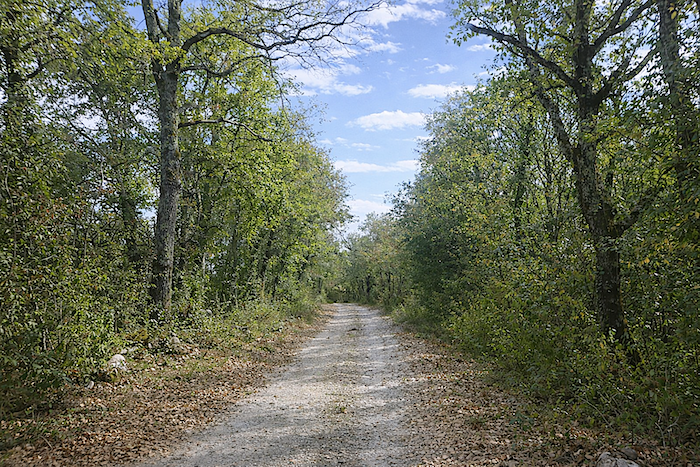
| Then begins one of the most beautiful stretches of this stage. For several kilometers, the path unfolds as a ribbon of earth through open woodland where light and shade alternate in perfect balance. Dry stone walls faithfully accompany the path, tracing the ancient boundaries of fields with almost perfect harmony. Here, nothing seems to have changed for centuries. Once again, the quiet magic of the causse takes hold, shaped by silence, simplicity and a beauty that never seeks to impress. |
 |
 |
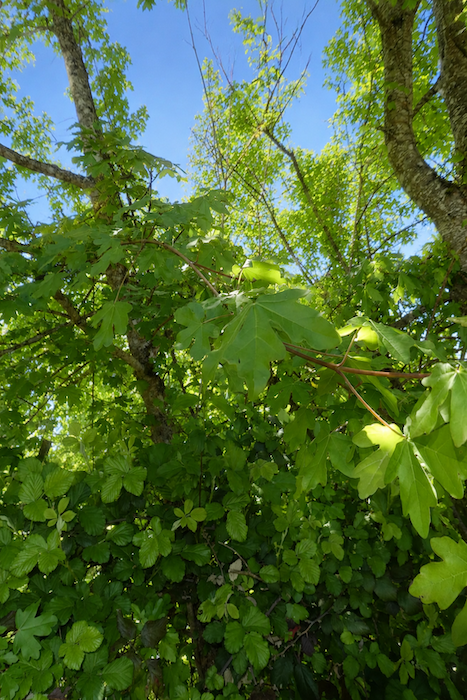
| Here and there, the trees grow taller, and it is not unusual to see elegant Montpellier maples rival the oaks, spreading their delicate foliage high above the path. |
 |
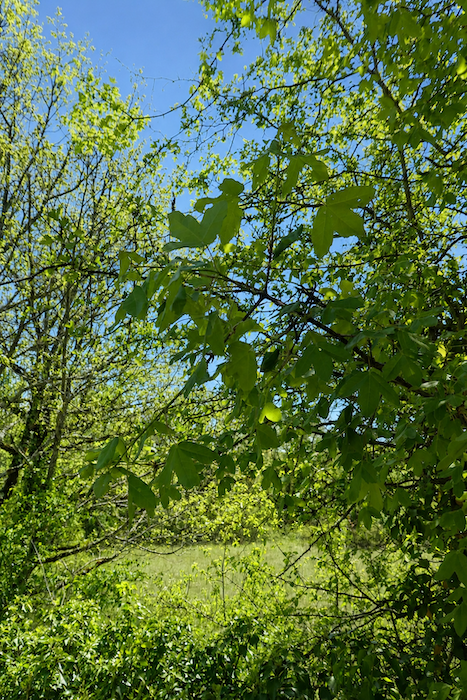 |
| What more can be said? Perhaps it is enough simply to listen. Listen to the silence, interrupted only by birdsong or by the steady crunch of walking boots on the small limestone stones. Water is almost absent here. The causse remains true to its reputation, a land dry to its very core, where every spring is a precious treasure. |
 |
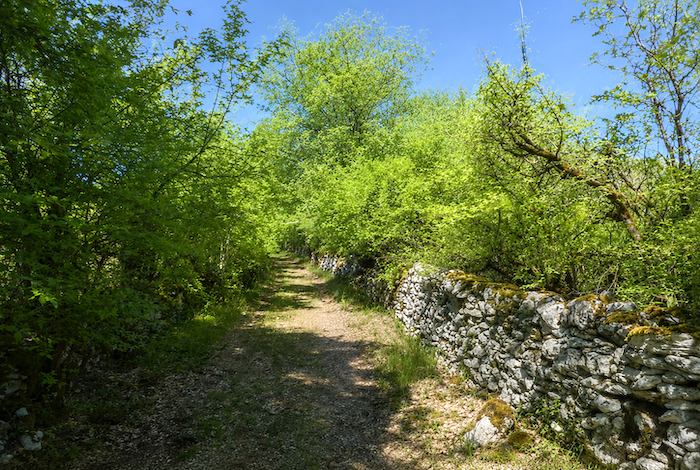 |
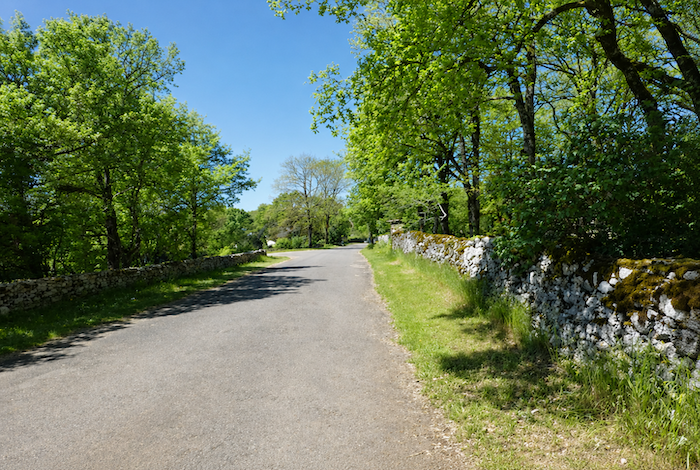
| How could anyone grow tired of these endless moss-covered dry-stone walls, these modest yet steadfast oaks, or these hedges of dogwood that endlessly accompany the path? Their repetition never becomes monotonous. Instead, it creates a powerful landscape identity, one that belongs to a truly unique region. This remarkable territory forms part of the Regional Natural Park of the Causses du Quercy and, since 2017, has also been recognized as a UNESCO Global Geopark. This international distinction celebrates an exceptional heritage where dry stone architecture, living pastoral traditions, spectacular karst landscapes, and one of France’s richest geological and paleontological legacies come together. |
 |
 |
|
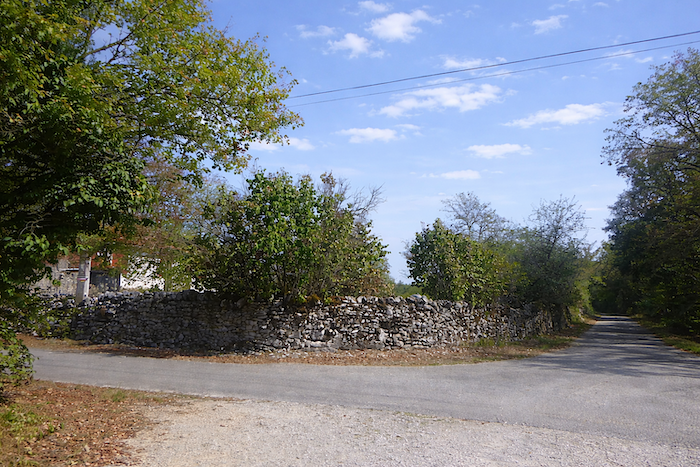
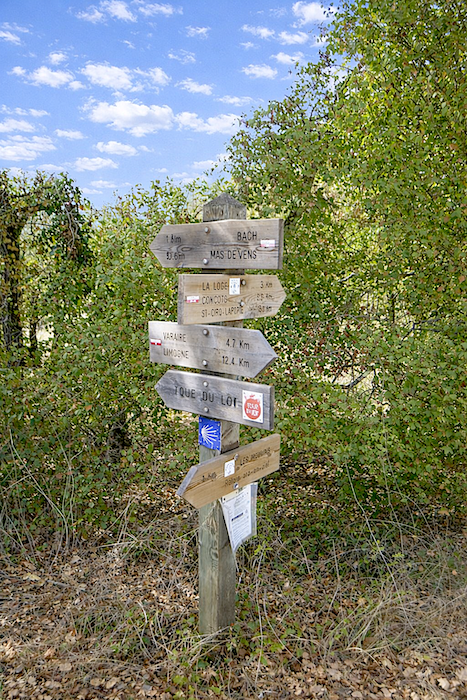
Soon after, at the far end of the woodland, the GR65 meets the GR36/46, which arrives from the Célé Valley by way of Saint-Cirq-Lapopie. These routes are described in detail in another chapter. This is an important junction. From here, you can head towards Les Moulins, where accommodation is available, or continue to the Coup d’Aral phosphate mines, located only a short distance from the hamlet. The site is truly remarkable. Visitors can descend into the underground galleries, where the geological processes behind the formation of phosphate deposits are explained in detail. Yet very few pilgrims make the detour. For most of them, phosphate means little more than an unfortunate ingredient once commonly found in laundry detergents.
|
 |
 |
Section 5: On the way to the Monastery of the Daughters of Jesus
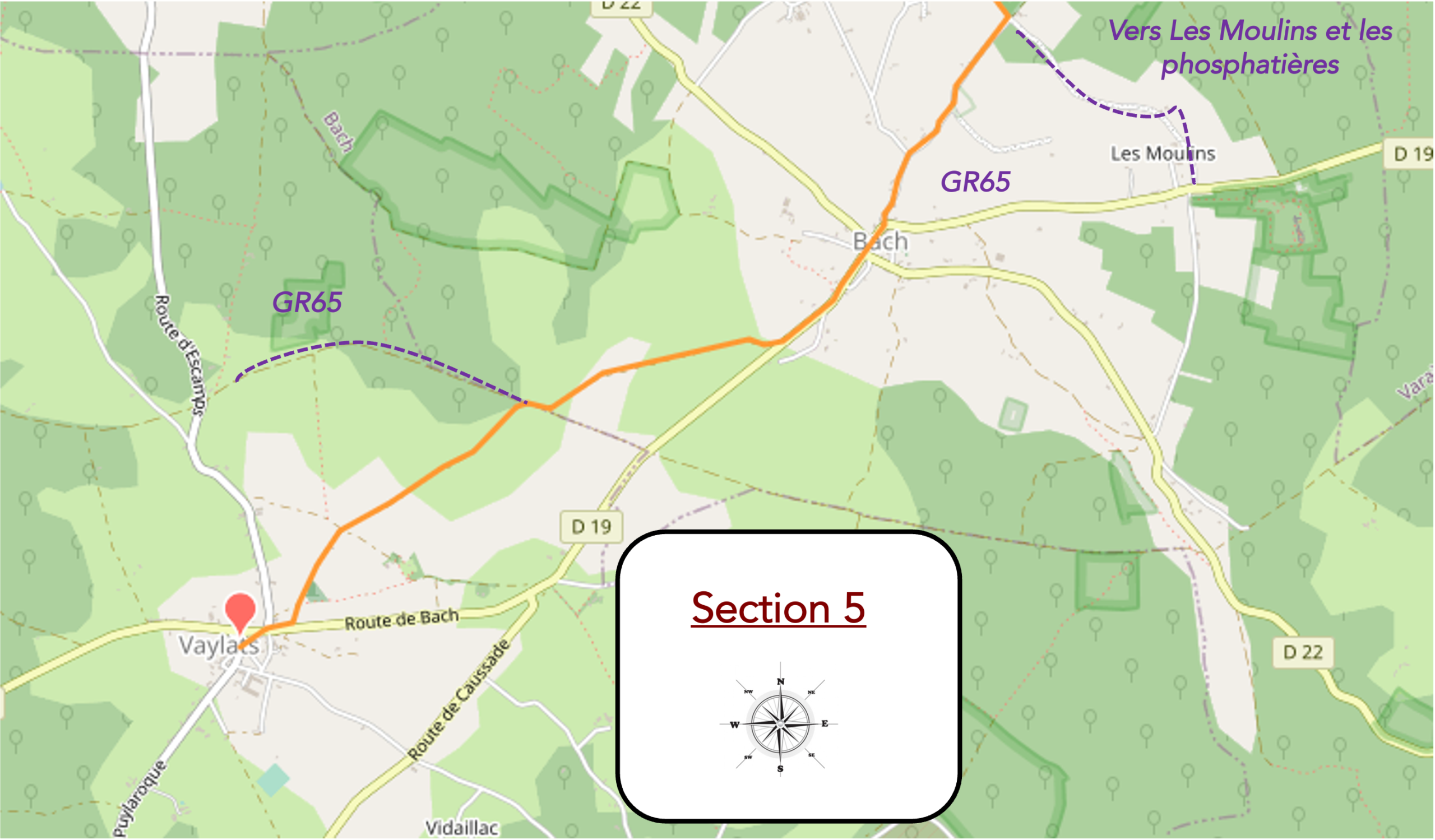
Overview of the route’s challenges : an easy route.
|
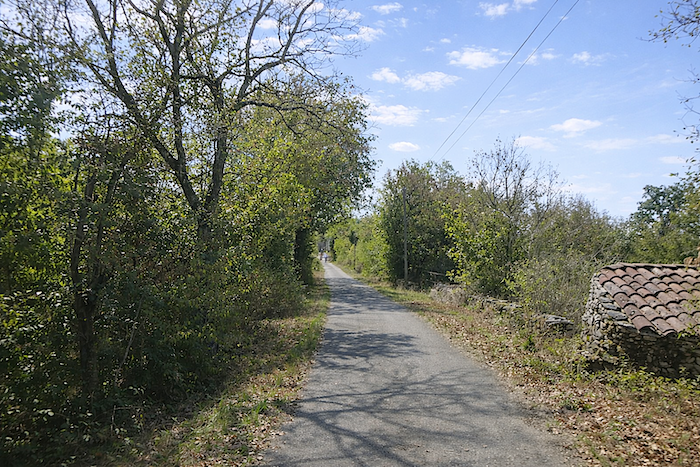
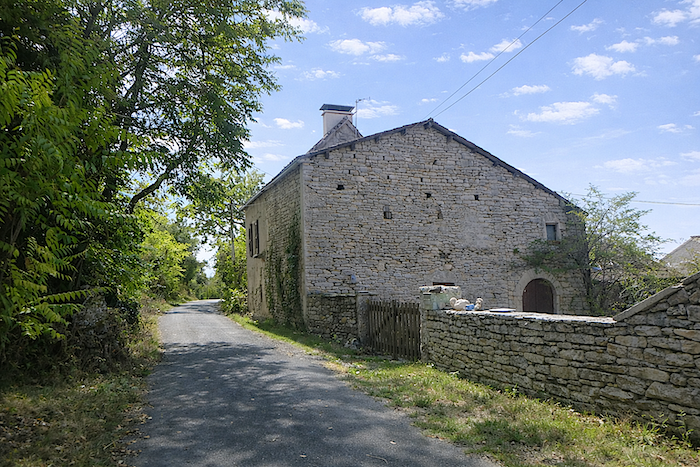
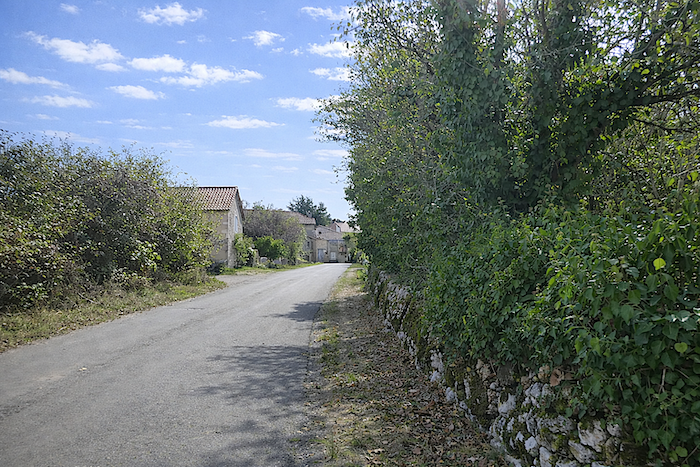
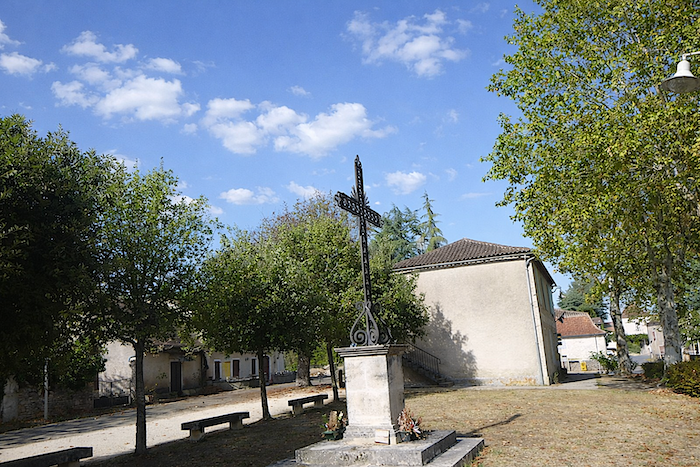
From the crossroads, a quiet road leads to Bach. The route is lined with beautiful stone houses, solid and dignified, as though they had withstood wind and time, set like still notes in a silent landscape.
|
 |
 |
|
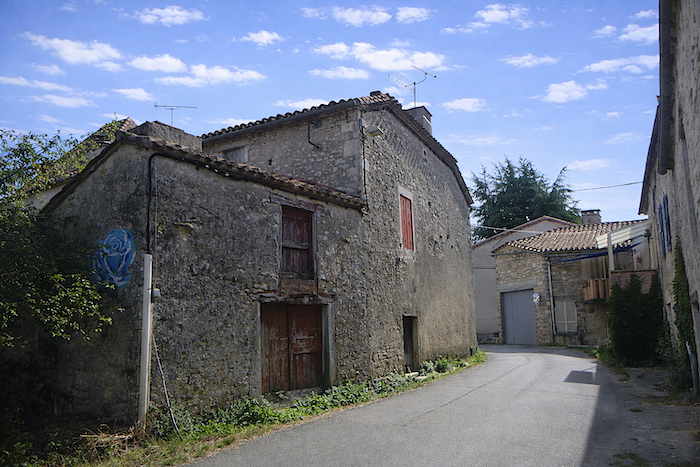
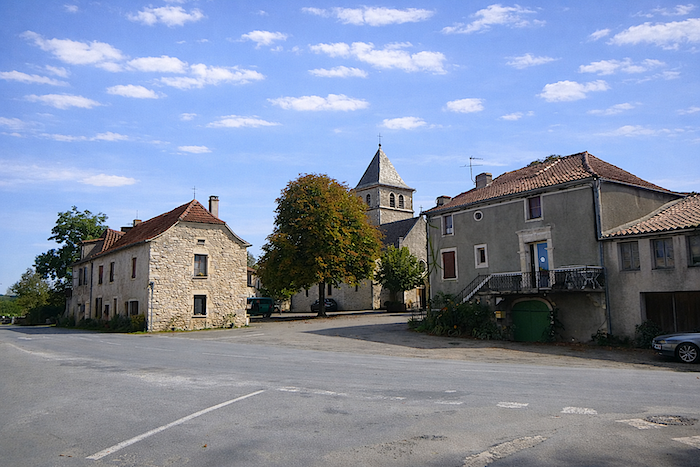
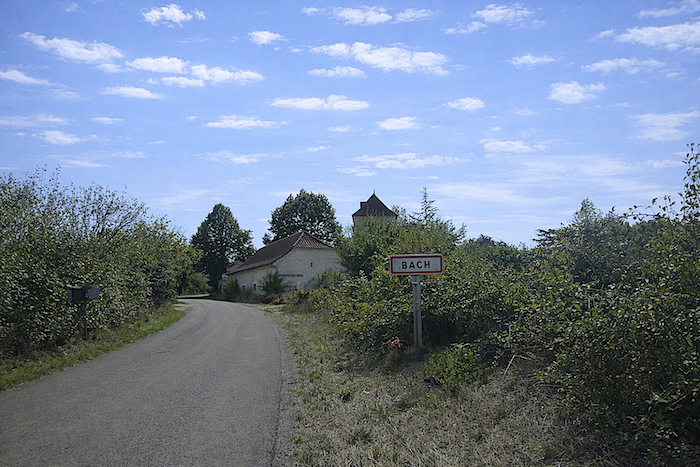
The road soon reaches Bach, a small village of around one hundred and fifty inhabitants, made up of sturdy and timeless stone houses, where each façade tells the slow story of its people and their struggle with the land.
|
 |
 |
|
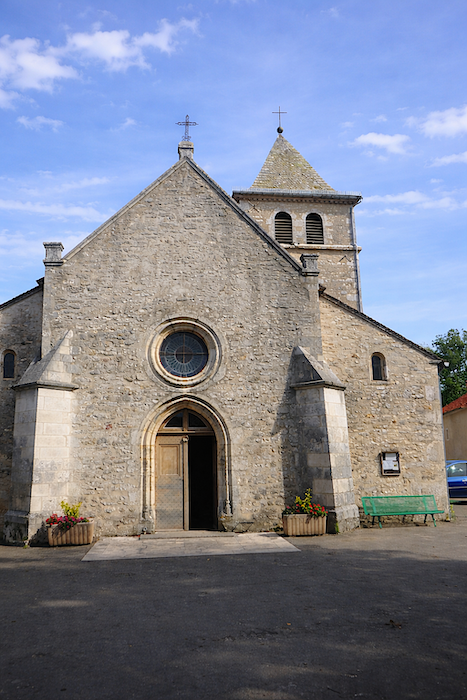
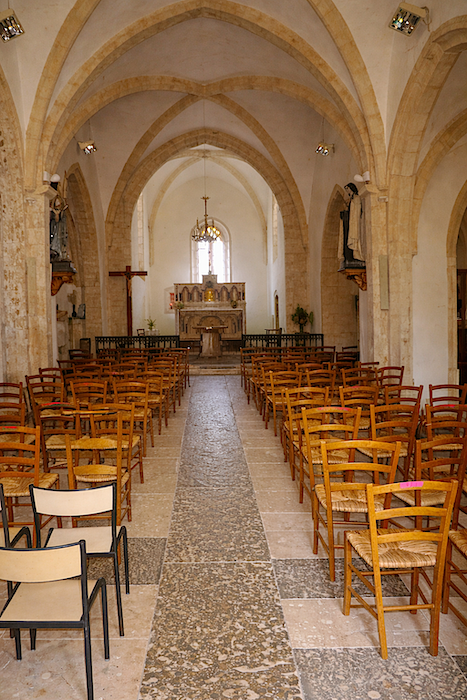
The Church of the Assumption has distant origins, a twelfth century building of which almost nothing remains, rebuilt in the fifteenth and then the sixteenth century, before being transformed in the nineteenth century. Each stone seems to whisper the passing of centuries and generations.
|
 |
 |
|
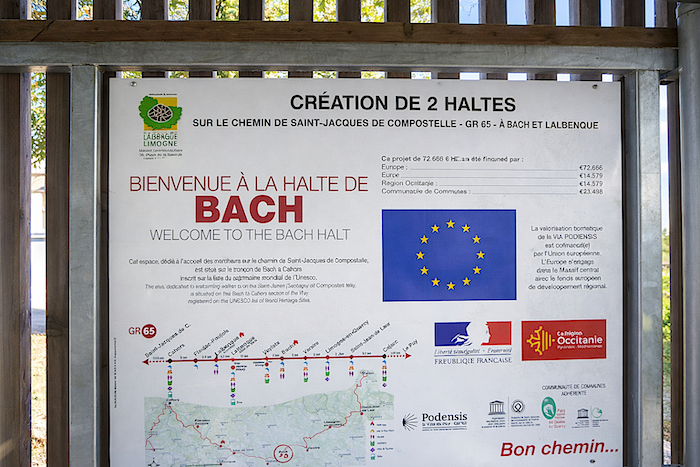
On the church square, a sign details recent work, the creation of two water points along the route towards Cahors, a discreet but precious gesture for the thirsty pilgrim. The first of these lies just a few steps beyond the village.
|
 |
 |
|
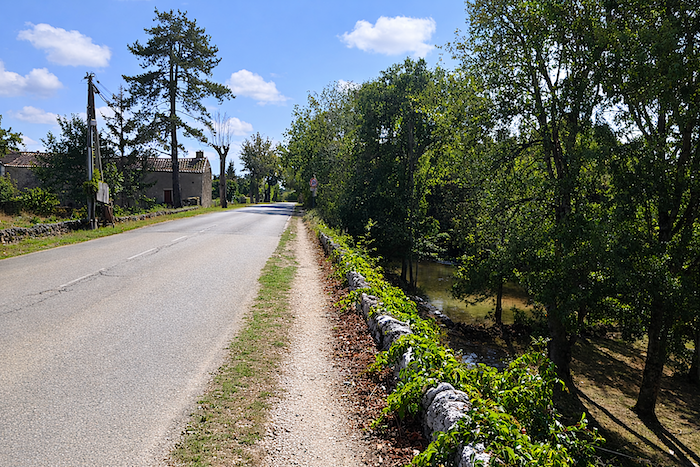
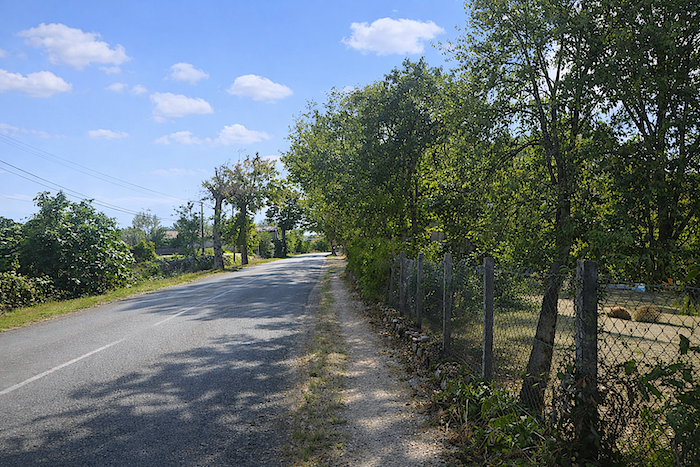
The GR65 then leaves the village along the road towards Vaylats, extending the walk through the landscapes of Quercy.
|
 |
 |
|
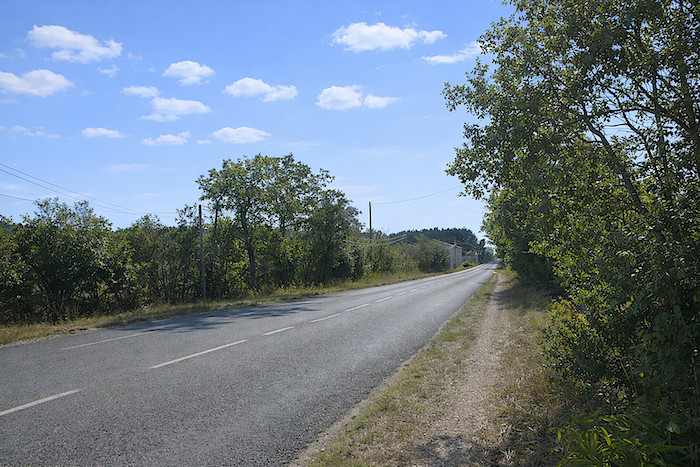
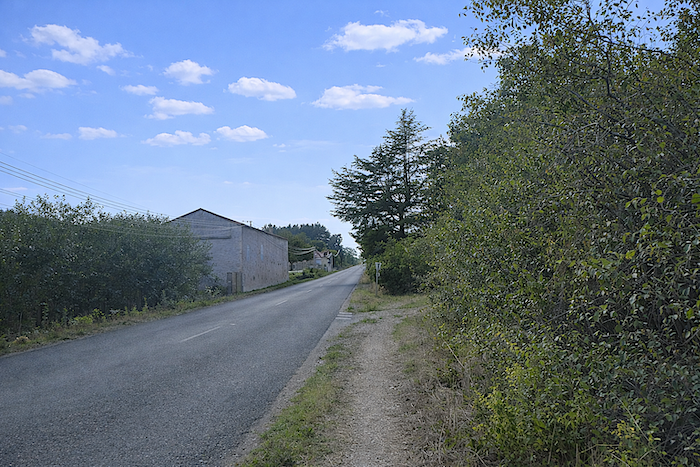
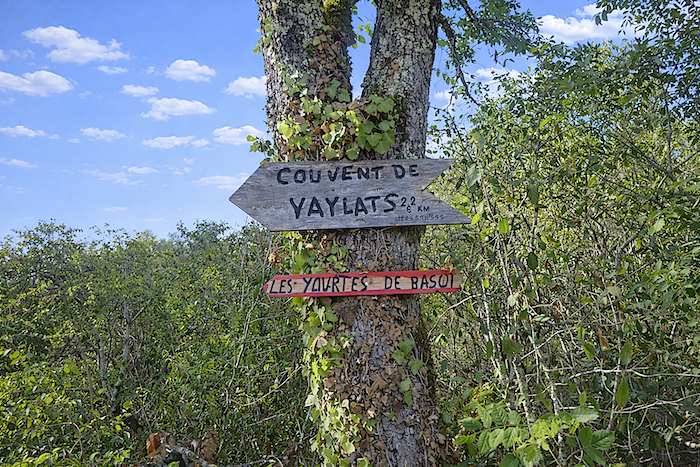
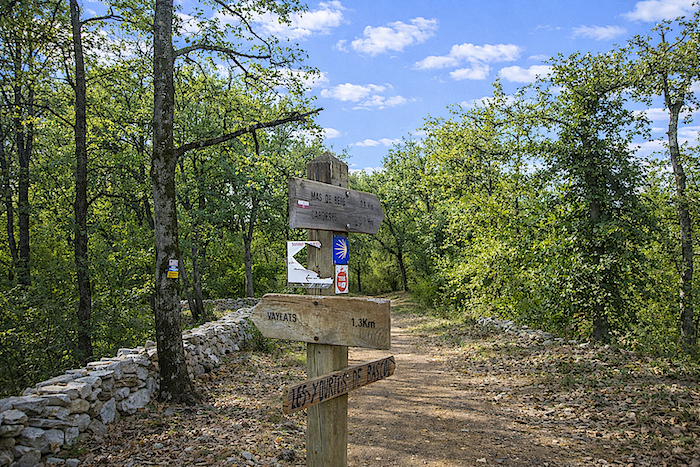
Shortly after, the route leaves the road for a more intimate path towards Cahors and Vaylats. Very soon, signs indicate accommodation options in Vaylats or in the recently installed yurts at Bascot, a modern addition along this ancient route. .
|
 |
 |
|
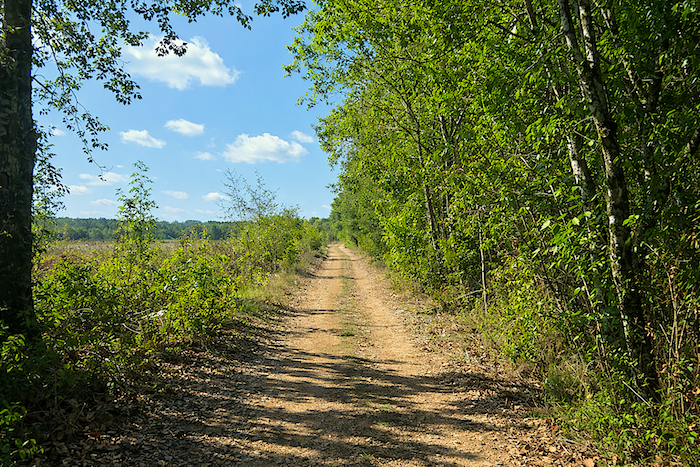
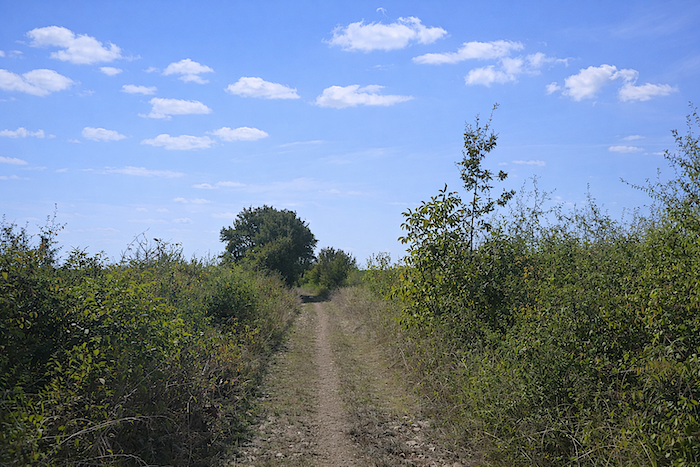
Here, you walk along the Cami Ferrat, the road once taken by Caesar and the Roman armies towards Cahors, a historic route where each step echoes with the march of ancient legions.
|
 |
 |
|
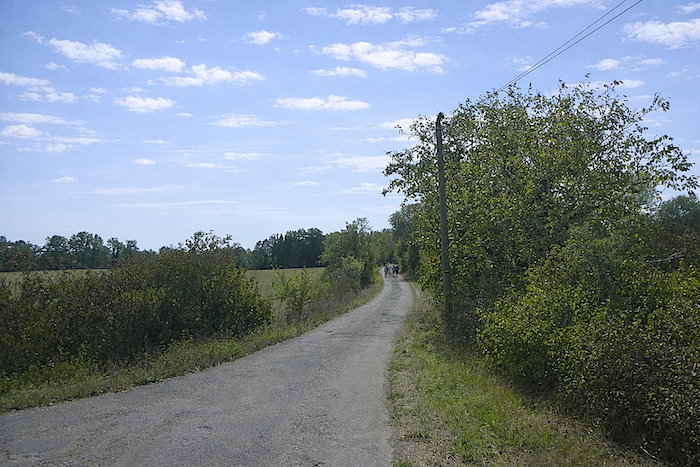
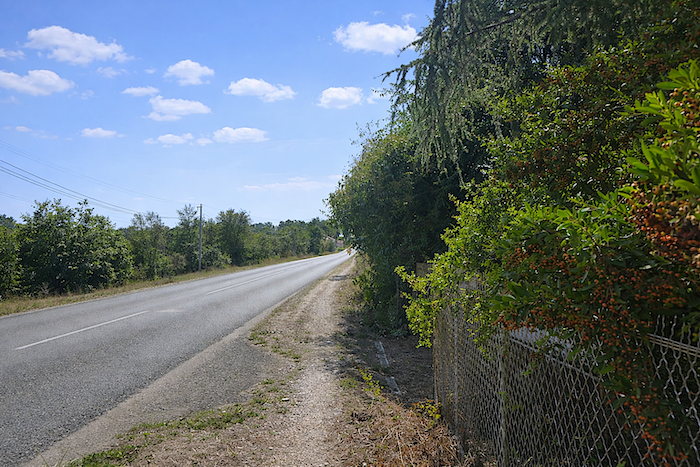
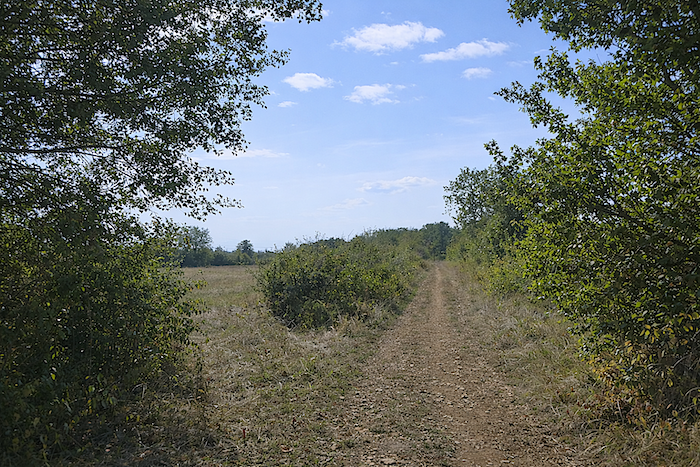
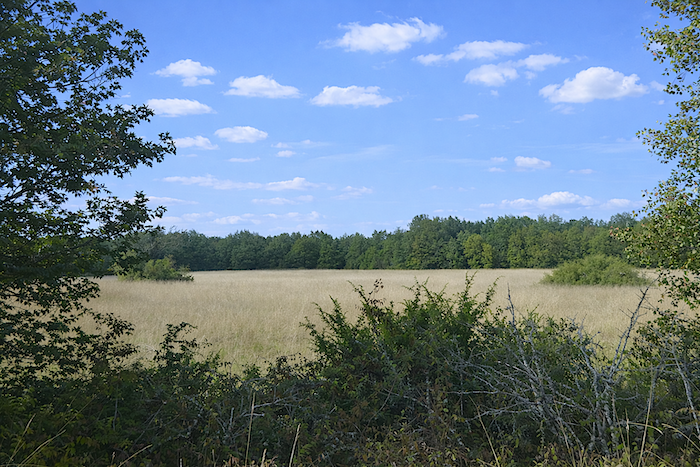
The landscape is not the most picturesque of the causse, long straight lines stretch across an open plain, almost steppe like, where the wind seems to unfurl invisible veils of dust and light.
|
 |
 |
|
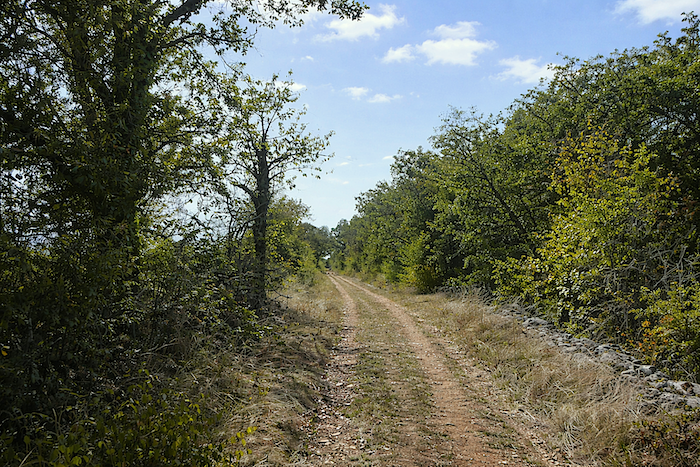
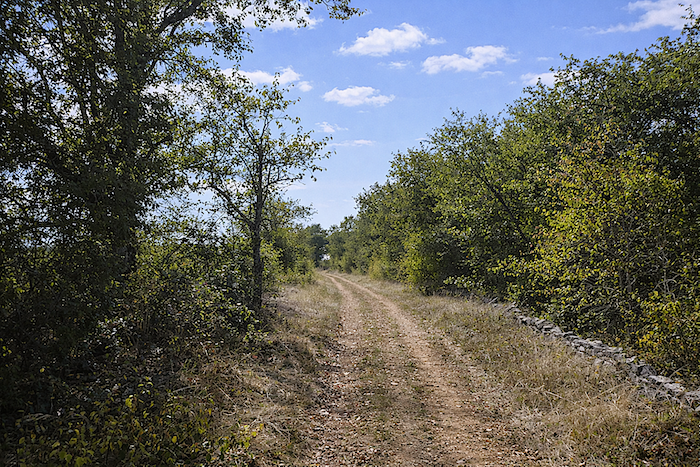
Soon, nature regains its poetry, the path draws closer to the forest, where shade and green bring freshness to both eye and mind.
|
 |
 |
|
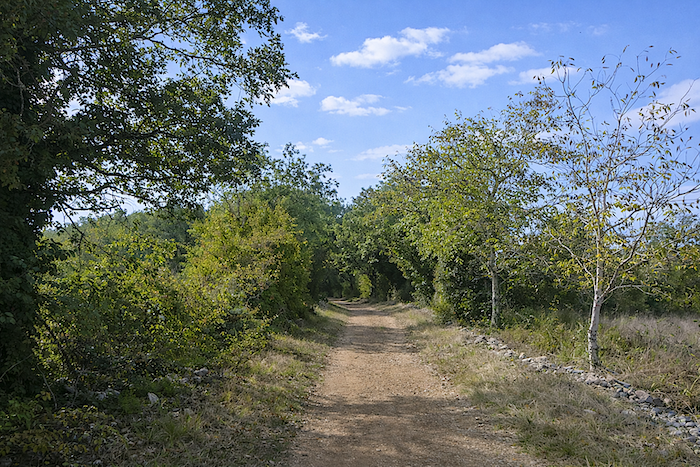
The route reaches a junction leading to Vaylats. The GR65 continues straight ahead along the Cami Ferrat, which you will meet again the following day as you leave the village. Many pilgrims coming from Bach skip the route towards Vaylats in order to reach Cahors directly.
|
 |
 |
|
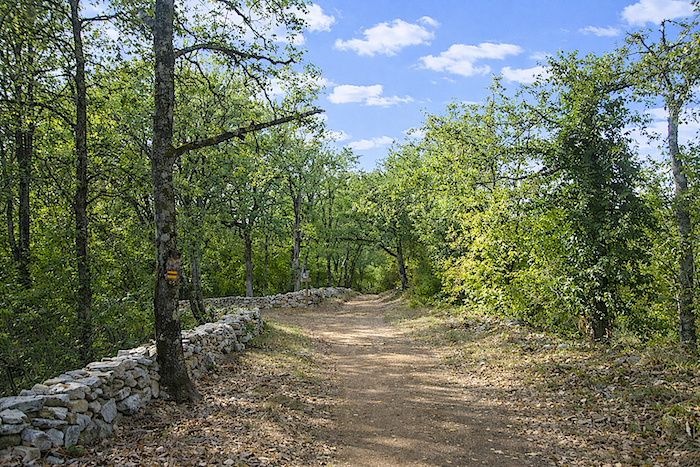
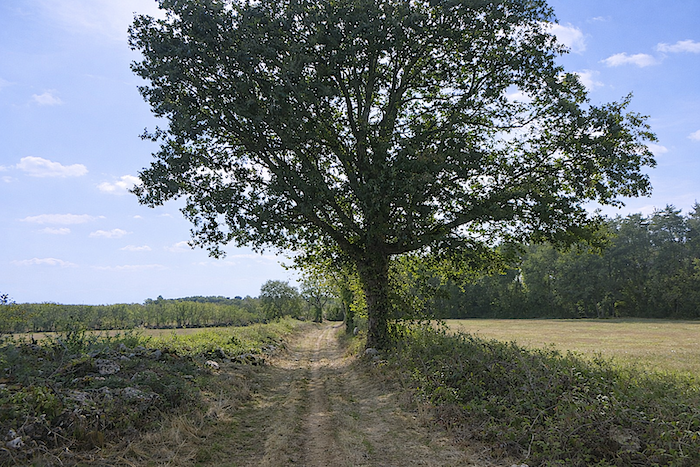
The shortcut enters the woodland for a while, offering a moment of coolness and intimacy with the silence of the trees.
|
 |
 |
|
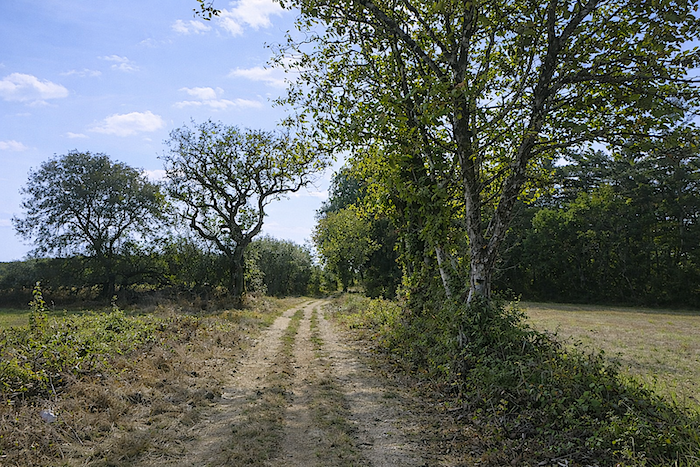
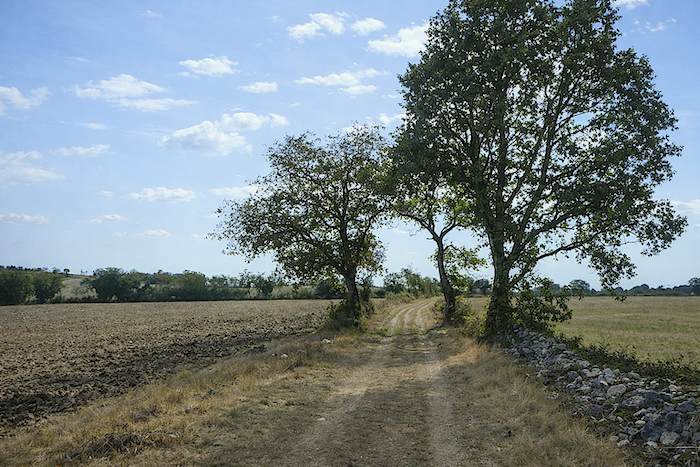
It then returns to the wide, open plain, bright and expansive.
|
 |
 |
|
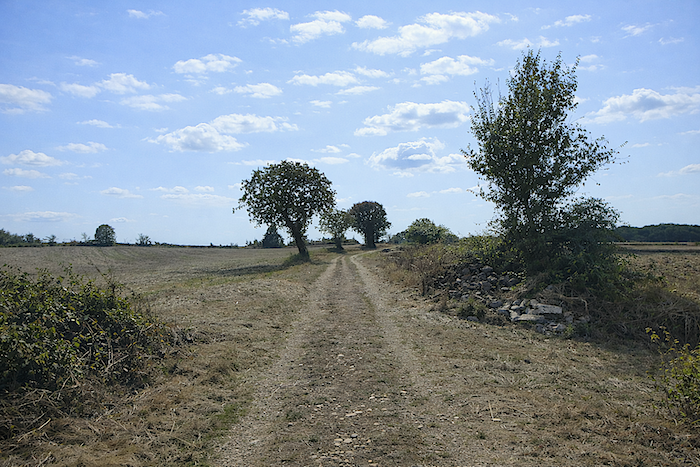
Here, the land feels a little less harsh, a few cultivated fields appear across the landscape, reminding you that even in this austere place, life finds its way.
|
 |
 |
|
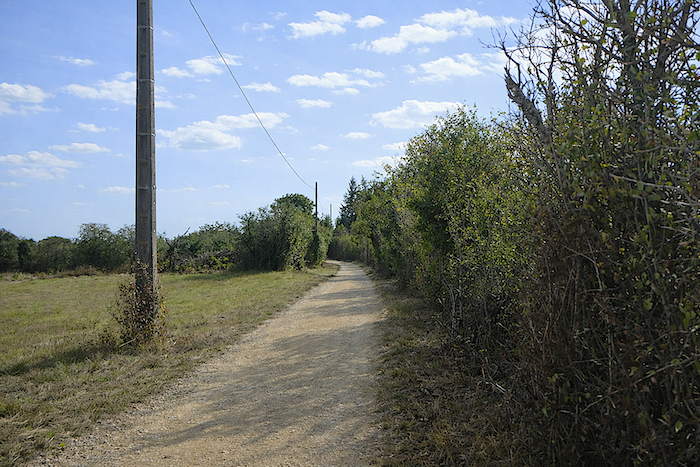
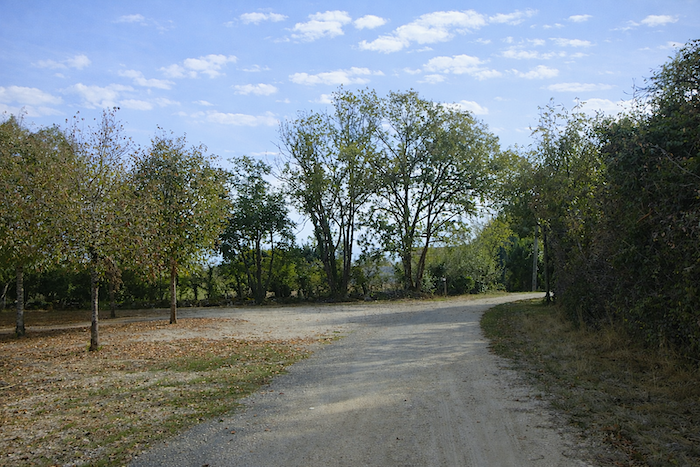
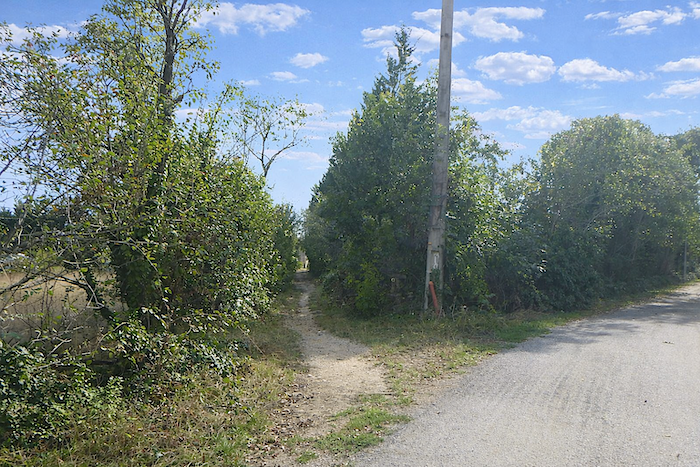
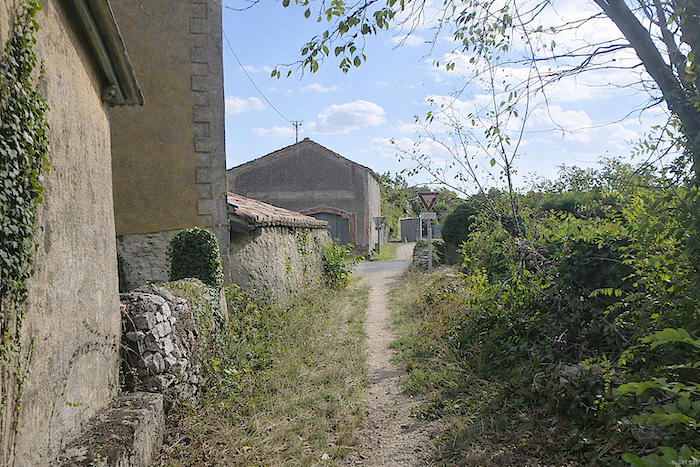
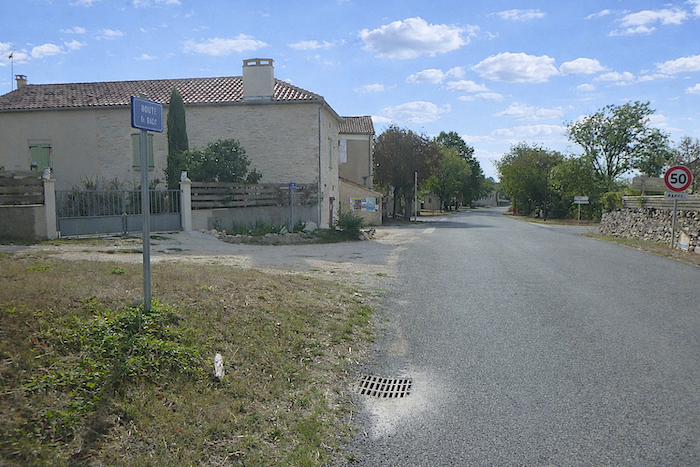
The wide path continues towards the entrance of Vaylats, where it narrows, as if inviting the walker to slow down and notice the details of the village gradually unfolding.
|
 |
 |
|
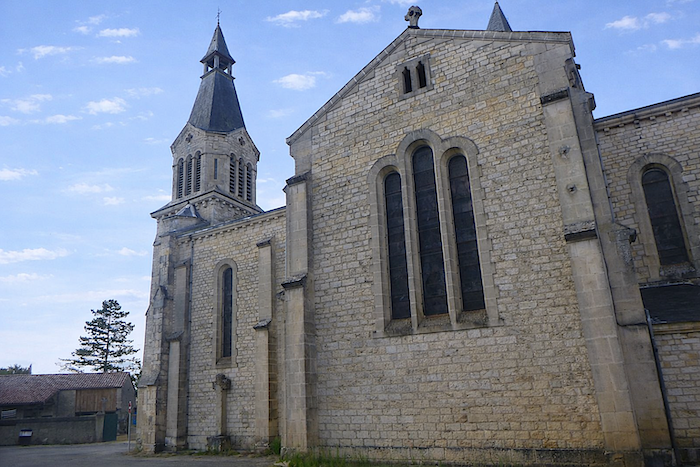
The path emerges at the entrance to the village, where a central wooded park draws the eye. The present Church of St Pierre-ès-Liens, in neo-Romanesque style, is a reconstruction from the late nineteenth century, replacing a fifteenth century Gothic church that once stood on the same site.
|
 |
 |
|
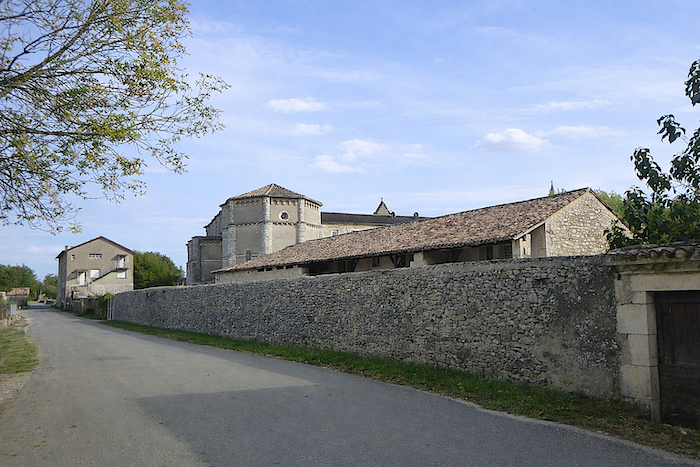
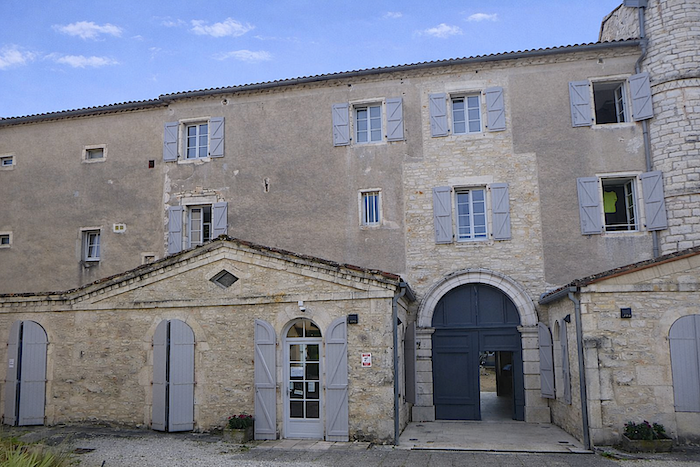
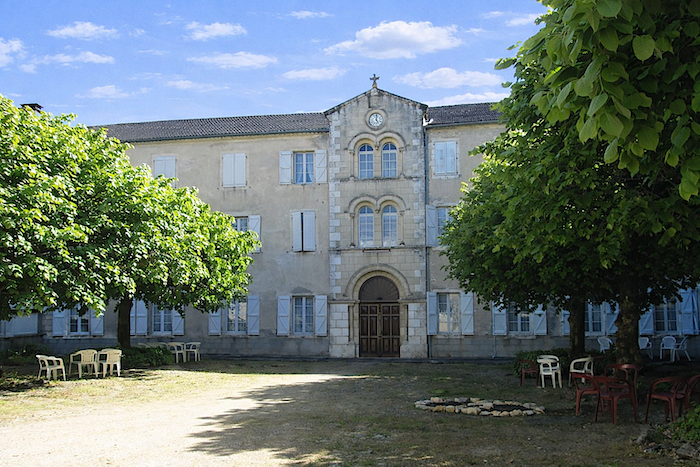
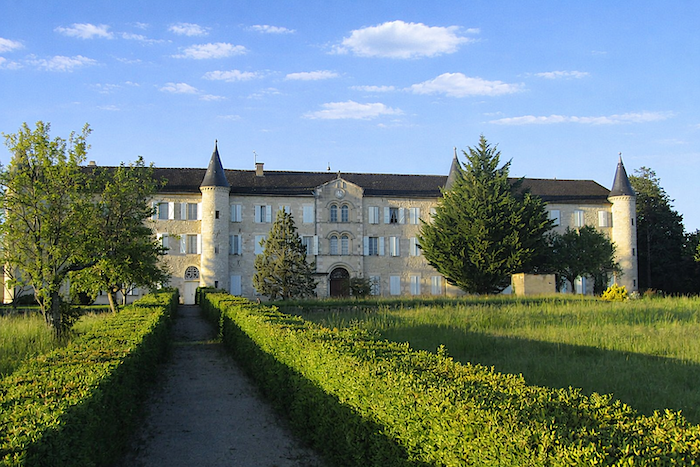
The village also has a bakery, grocery and café, but above all the remarkable Convent of the Daughters of Jesus, a vast nineteenth century building constructed on the site of a former castle destroyed during the Revolution. It also provides accommodation for pilgrims.
|
 |
 |
|
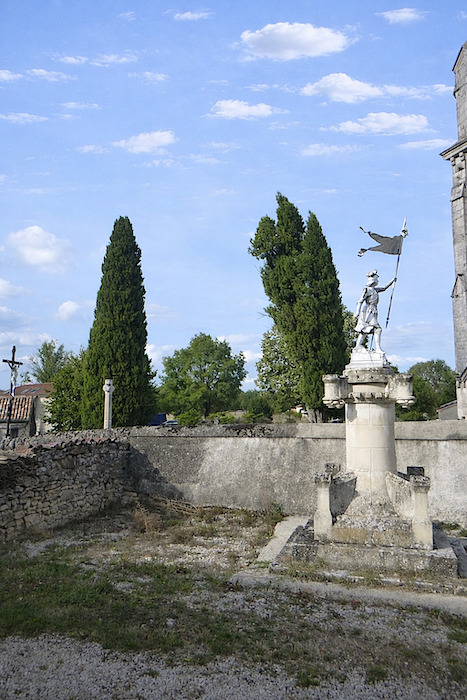
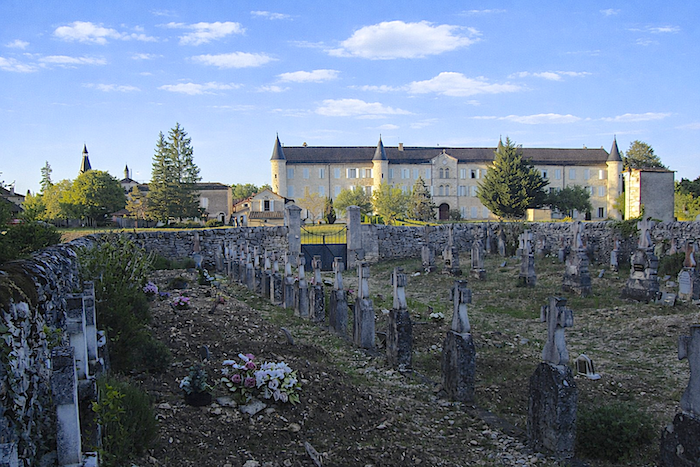
Evening falls over Vaylats. It is time to wander through the convent park, then make your way to your room. In the cemetery, the sisters rest side by side, anonymous except for their names. The doors of the convent close for the night. It is eight o’clock, good night. Breakfast will be served at seven sharp, for in a convent, discipline is another form of kindness.
|
 |
 |
Accommodation on Via Podiensis
- Gîte Le Mouton à Deux Pattes, Ecoutilles/ Varaire; 07 45 13 14 22; Gîte, dinner, breakfast
- Clos des Ecoutilles, Ecoutilles/Varaire; 05 65 24 50 84; Gîte et Guestroom, dinner, breakfast
- Gîte Les Marronniers, Varaire; 05 65 31 53 85/06 11 12 12 78; Gîte et Guestroom, dinner, breakfast, cuisine
- L’Escale de Varaire, Varaire; 06 70 52 42 48/06 29 87 30 80; Gîte et Guestroom, dinner, breakfast, cuisine
- Gîte Relais Arc-en-Ciel, Les Moulins; 06 65 09 04 82; Gîte, dinner, breakfast
- La Grange St Jacques, Les Nougayrols, Bach; 06 23 32 44 61; Gîte et Guestroom, dinner, breakfast
- Gîte La Joie du Chemin, Bach; 07 45 83 83 24; Gîte, dinner, breakfast, cuisine
- Chambres d’hôtes Le Mas de Juge, Route de Vaylats, Bach; 05 65 22 67 37/06 70 65 38 43 ; Guestroom, dinner, breakfast
- Couvent des Filles de Jésus, Vaylats; 06 49 44 05 46; Gîte et Ch., d’hôte, dinner, breakfast
- Yourtes de Bascot, Vaylats; 06 71 50 54 17; Gîte, dinner, breakfast
Year after year, the Camino de Santiago changes and reinvents itself with the seasons and the footsteps of pilgrims. Some accommodations close their doors, while others, modest or unexpected, come into being. It would therefore be unrealistic to claim to provide a fixed and exhaustive list. This guide includes only accommodations located directly on the route or within one kilometer of it. The selection was updated in 2026 and should therefore not undergo any major changes in the coming years. For those wishing to go further, one publication stands out as the essential reference: Miam Miam Dodo, easily available online. The main strength of this guide lies in its yearly updates. It not only lists accommodations located directly on the route, but also addresses slightly off the route, a valuable resource when heavy pilgrim traffic makes overnight stops more uncertain. It also contains a wealth of practical information: welcoming bars, restaurants along the way, and providential bakeries, all of which punctuate the journey. Alongside these traditional resources, another presence has become unavoidable: Airbnb. The platform has established itself as a major reference in the tourism landscape, even in the most discreet or less developed regions. However, as everyone knows, exact addresses are not displayed directly, which requires a degree of anticipation. On the Camino, finding a bed at the last minute can sometimes depend on sheer luck. But luck, by its very nature, cannot be considered a strategy. Booking ahead is therefore strongly recommended. Finally, when making arrangements, be sure to inquire about dinner and breakfast options. These details, seemingly minor, can greatly soften the hardships of a stage
If we take stock of the available accommodation, there are around 120 beds before Vaylats and only 50 beds in Vaylats itself. Yet the number of pilgrims walking the Via Podiensis generally ranges between 100 and 200 people per day. During the busiest periods, accommodation can therefore become extremely scarce. In fact, this is one of the most challenging stages of the Camino de Santiago in France when it comes to finding a place to stay. That said, this picture should be qualified. It is difficult to know how many pilgrims choose to stop in Bach instead of making the detour to Vaylats, preferring to continue directly along the GR65. As a result, the pressure on accommodation in Vaylats is probably lower than the raw bed capacity figures suggest. Even so, it is advisable to book ahead, especially at the Convent of Vaylats, which is one of the most sought-after places to stay in the area. Without a reservation, you may have to continue walking beyond Vaylats, where accommodation options become increasingly scarce.
These routes, winding through sparsely populated countryside, offer relatively few services. Restaurants are uncommon, and grocery stores are equally scarce. Where they do exist, they are often little more than small village shops or bread depots selling a limited selection of vegetables, dairy products, and other basic supplies. On this stage, you can find food, small grocery stores, drinking water, and public toilets in Varaire and Bach. The same facilities are also available in Vaylats. Finally, several companies provide luggage transfer and return transport services for pilgrims. Among them, La Malle Postale stands out as the best-known and most widely used provider.
Feel free to add comments. This is often how you move up the Google hierarchy, and how more pilgrims will have access to the site.
|
 |
Next stage : Stage 2: From St Privat d’Allier to Saugues |
|
 |
Back to menu |