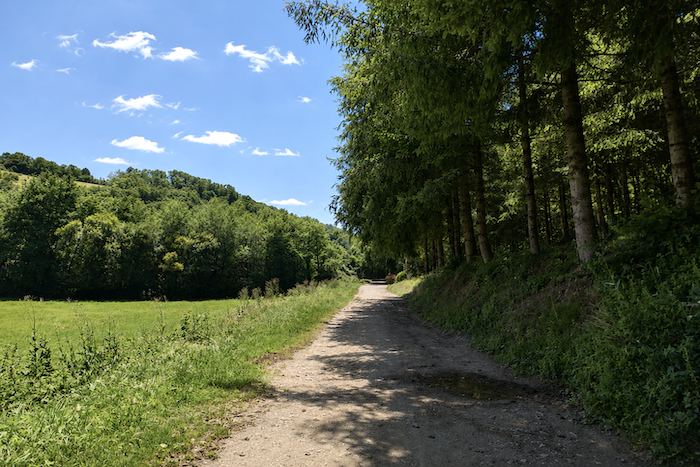
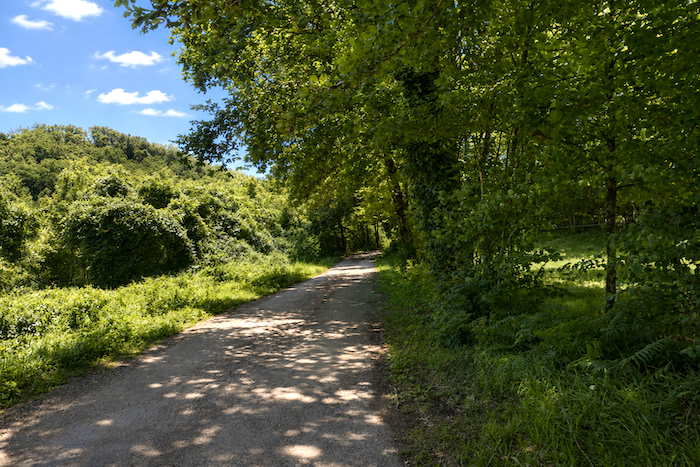
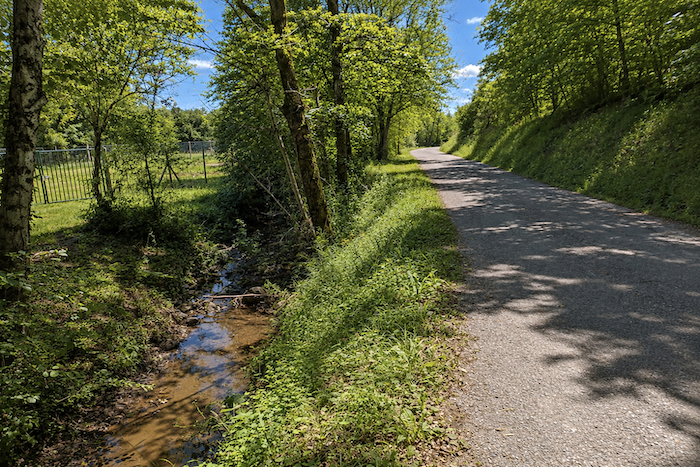
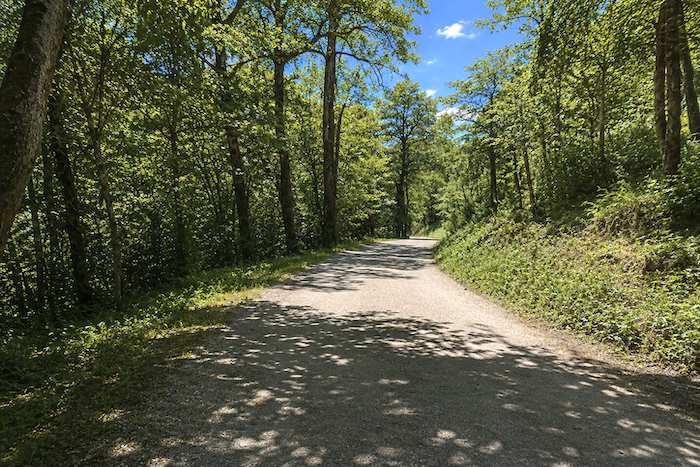
The last undulations of the Causse de Gramat
DIDIER HEUMANN, ANDREAS PAPASAVVAS
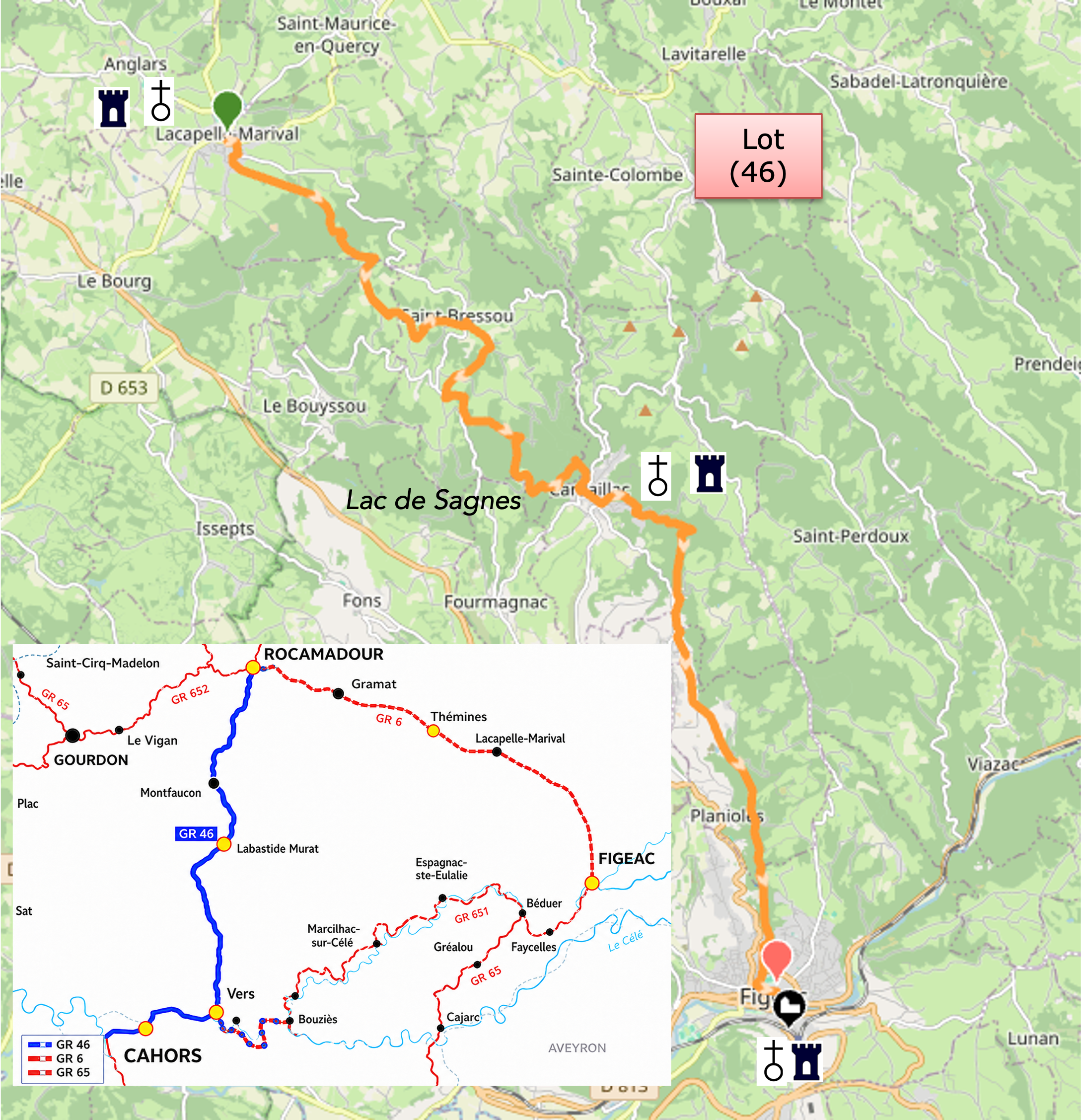
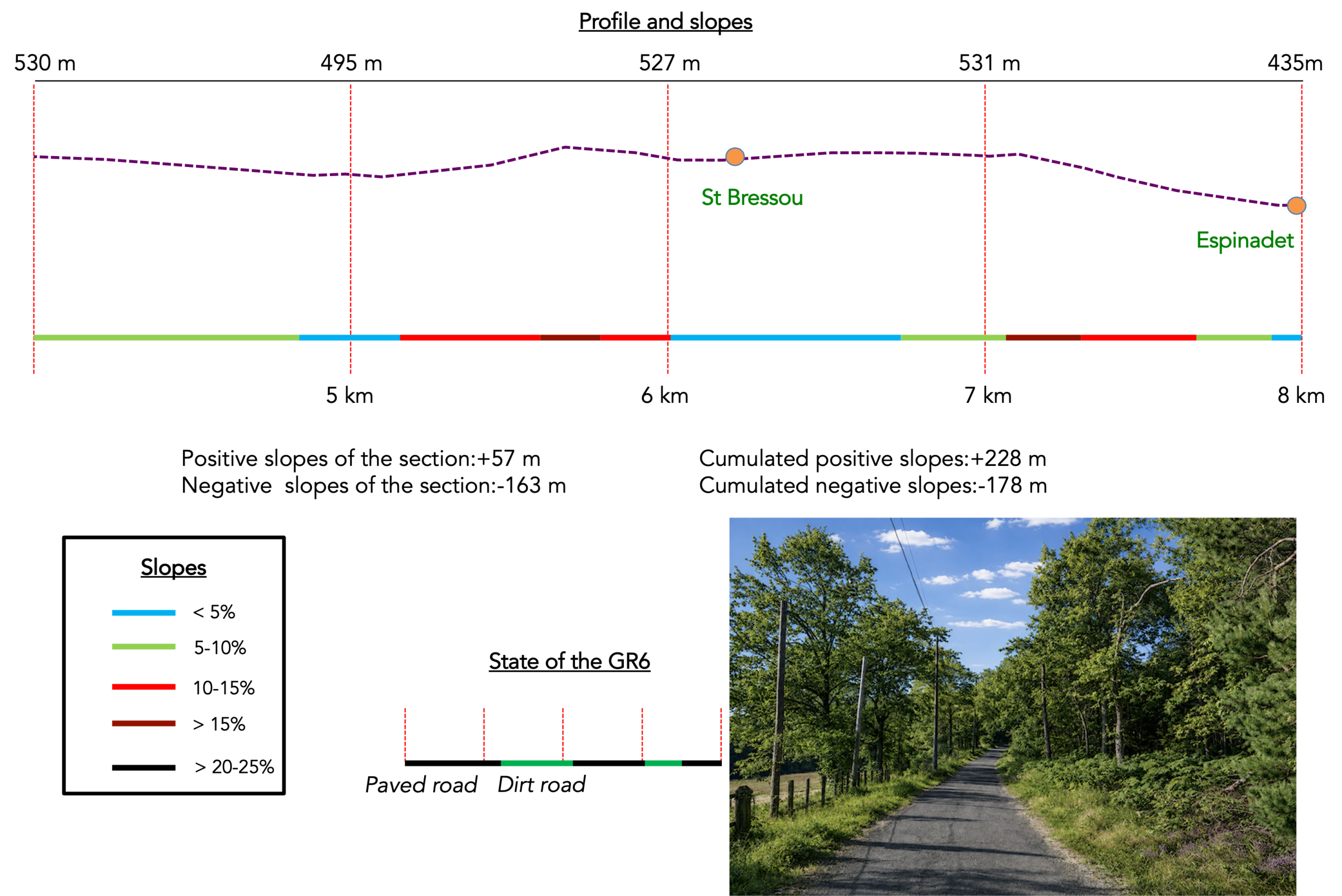
We divided the course into several sections to make it easier to see. For each section, the maps show the course, the slopes found on the course, and the state of the route (paved or dirt roads). The courses were drawn on the « Wikilocs » platform. Today, it is no longer necessary to walk around with detailed maps in your pocket or bag. If you have a mobile phone or tablet, you can easily follow routes live.
For this stage, here is the link:
https://fr.wikiloc.com/itineraires-randonnee/de-figeac-a-lacapelle-marival-par-le-gr6-263809296
| This is obviously not the case for all pilgrims, who may not feel comfortable reading GPS tracks and routes on a mobile phone, and there are still many places without an Internet connection. For this reason, you can find on Amazon a book that covers this route.
If you only want to consult lodging of the stage, go directly to the bottom of the page. |
 |
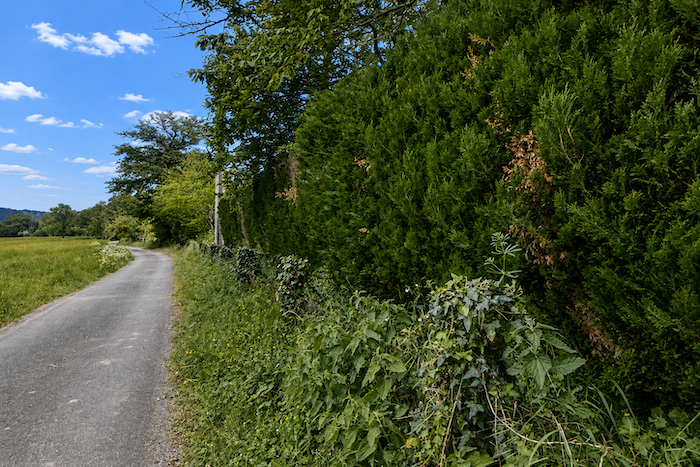
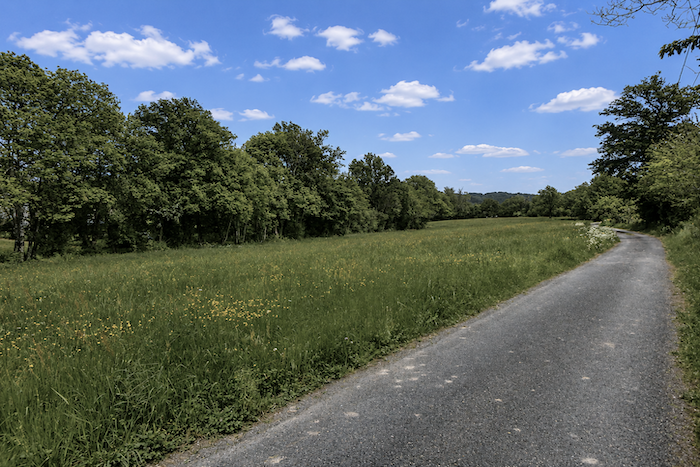
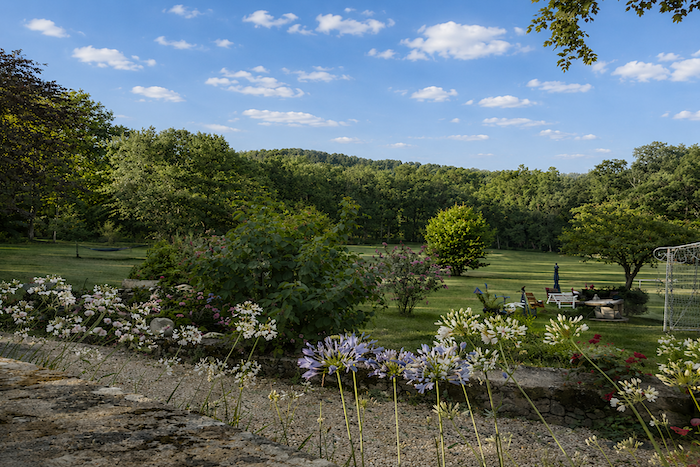
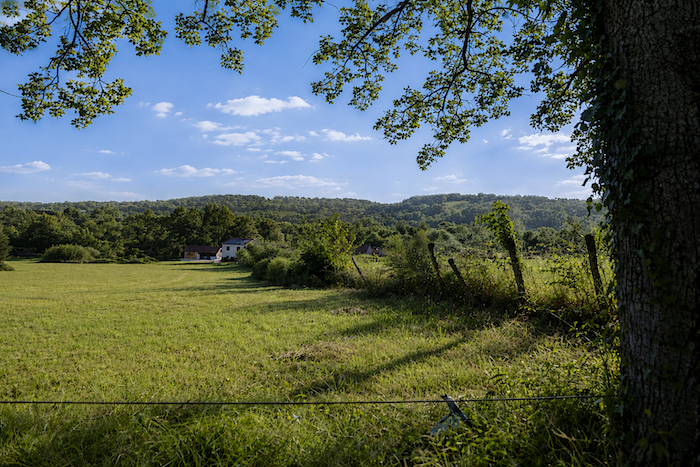
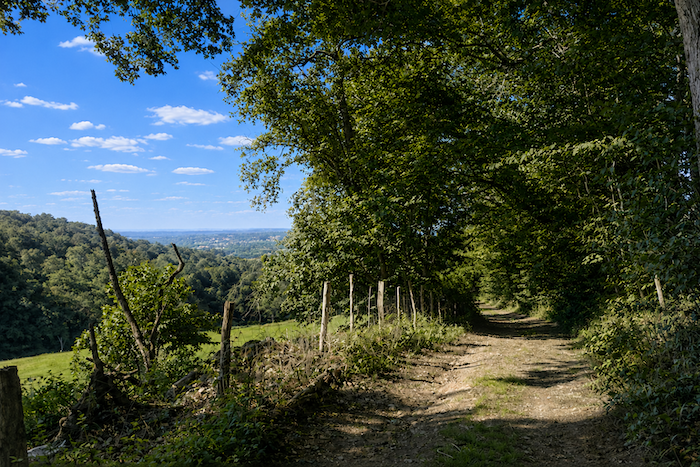
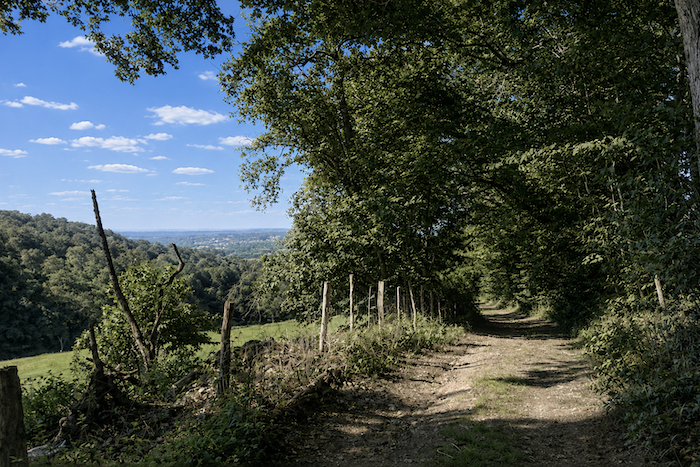
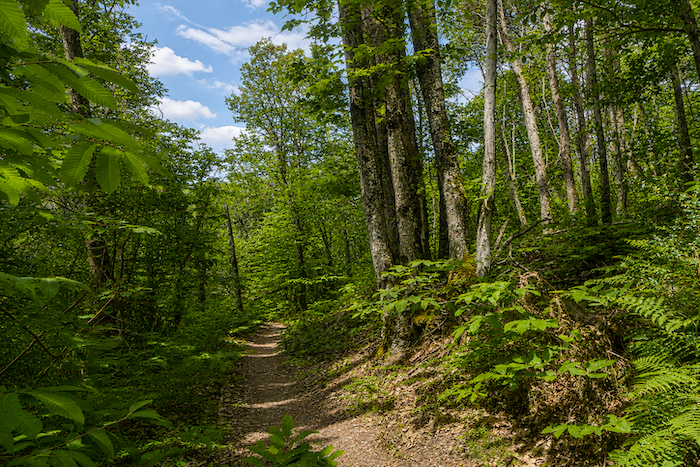
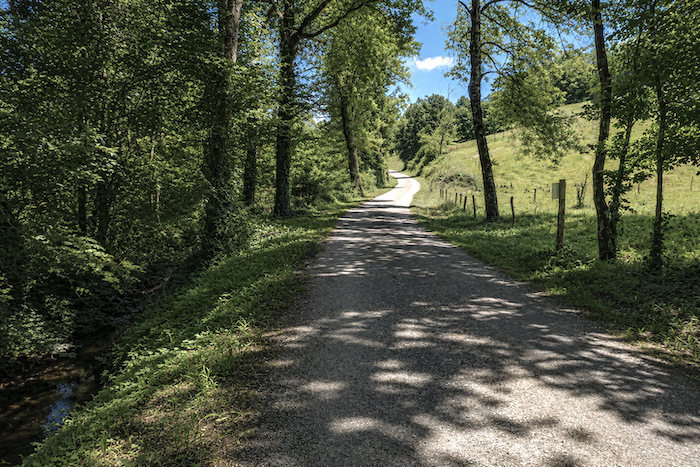
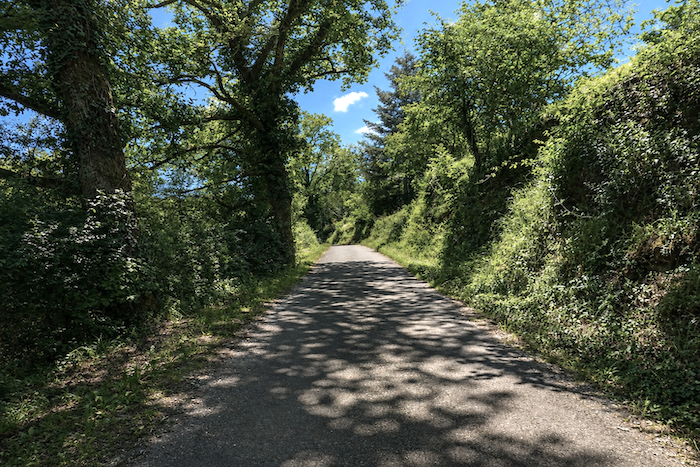
This stage is one of the most appealing along the entire GR6 in the Lot. It marks the transition between the great plateaus of the causse and the first green hills that herald the Ségala and the Lot Valley. Leaving Lacapelle-Marival, the walker gradually leaves behind the austere landscapes of the Causse de Gramat. Limestone slowly gives way to the more fertile soils of the Limargue. The woodlands become denser, the meadows greener, and hedgerows gradually replace the dry-stone walls. This stage offers a succession of gentler landscapes, where water once again becomes a familiar presence and villages nestle in small valleys. Finally, the descent towards Figeac gradually reveals the Célé Valley.
The appeal of this hike also lies in the diversity of its landscapes, although the stage is equally rich in heritage. The GR6 passes through Cardaillac, listed among Les Plus Beaux Villages de France. Its three medieval towers, narrow streets and stone houses make it one of the jewels of the Haut-Quercy. This fortified village belonged to the powerful Cardaillac family, who also owned the château of Lacapelle-Marival. Then comes Figeac, a magnificent medieval town nestled in a bend of the Célé. The birthplace of Jean-François Champollion, who deciphered Egyptian hieroglyphs, it boasts one of the finest historic centres in southwestern France, with its townhouses, squares, half-timbered houses and famous Champollion Museum, devoted to the history of writing.
This, then, is a stage of transition. After the mineral landscapes of the causses, the countryside gradually softens. Stunted oaks give way to tall deciduous trees, dry-stone walls to hedgerows, and dry valleys to murmuring streams. Little by little, the walker leaves the limestone landscapes of Quercy behind and enters a more generous land before reaching Figeac, one of the most beautiful medieval towns in Occitanie. The stage offers fewer spectacular landscapes than the Alzou Valley, but greater variety, combining nature, rural heritage and villages full of character amid peaceful countryside.
This stage follows the variant leading towards Rocamadour, generally walked in the opposite direction by pilgrims travelling from Figeac to Cahors. Here, the route is followed in reverse, and one need only read the landscape backwards to rediscover its underlying logic. You walk along the GR36/46, a discreet yet faithful thread linking these lands of stone and water.
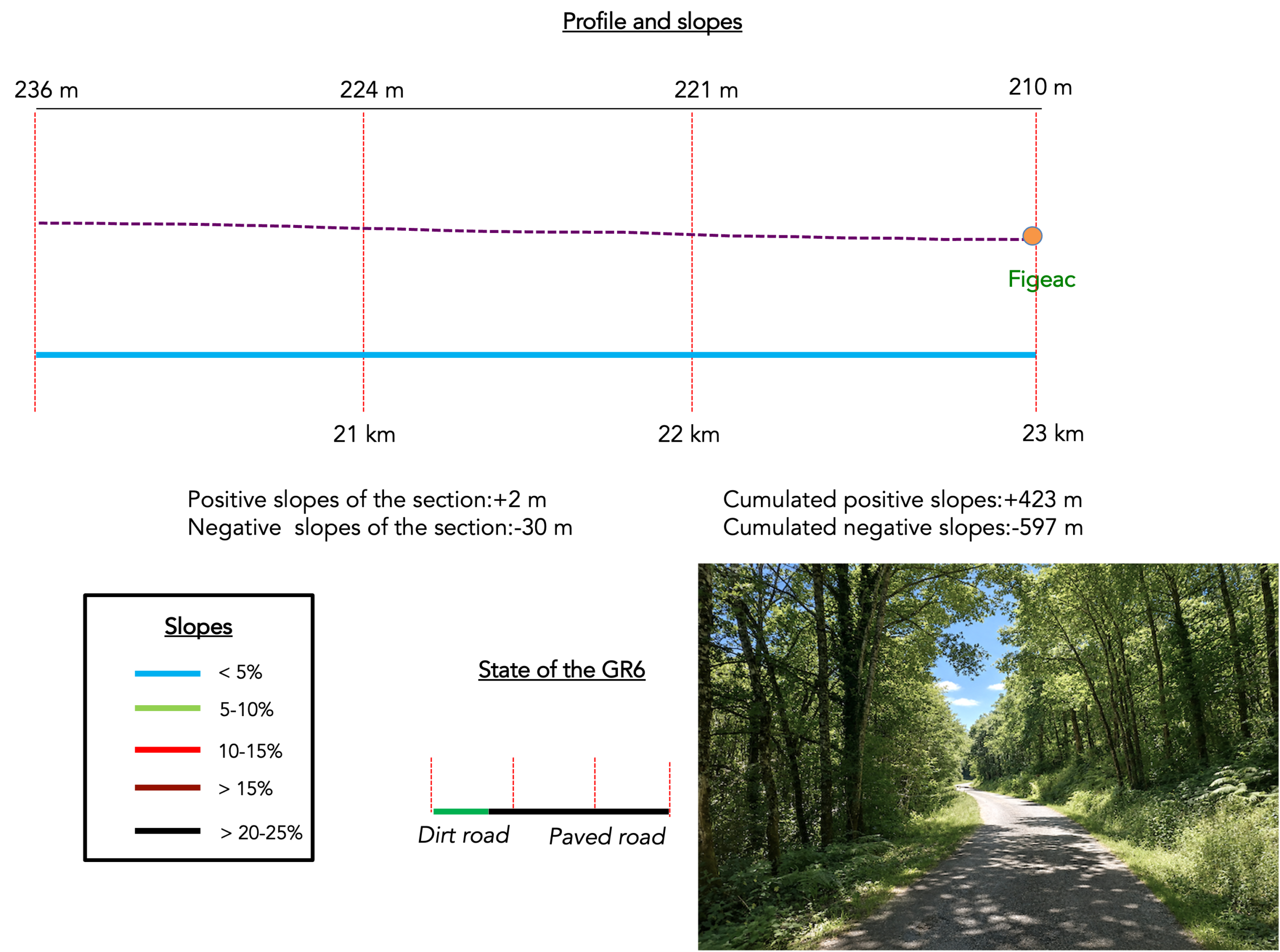
Difficulty level: The day’s elevation changes are nevertheless quite significant (+ 423 meters/-597 meters). This is not always an easy stroll. There are a few steep climbs, but it is on the descents that the most severe gradients are encountered.
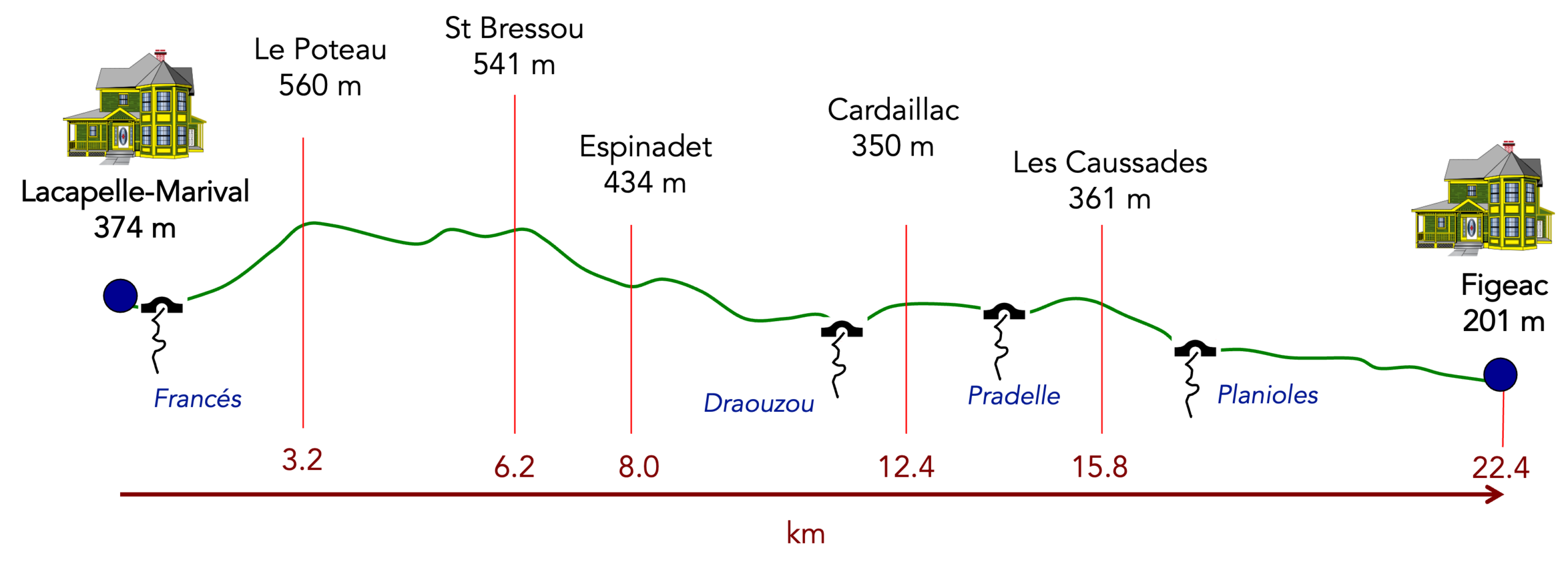
State of the route: The balance between roads and paths is fairly even:
- Paved roads: 11.4 km
- Dirt roads: 11.6 km
Sometimes, for reasons of logistics or housing possibilities, these stages mix routes operated on different days, having passed several times on these routes. From then on, the skies, the rain, or the seasons can vary. But, generally this is not the case, and in fact this does not change the description of the course.
It is very difficult to specify with certainty the incline of the slopes, whatever the system you use.
For those seeking « true elevations » and enthusiasts of genuine altimetric challenges, carefully review the information on mileage at the beginning of the guide.

Section 1:A little respite before a tough climb
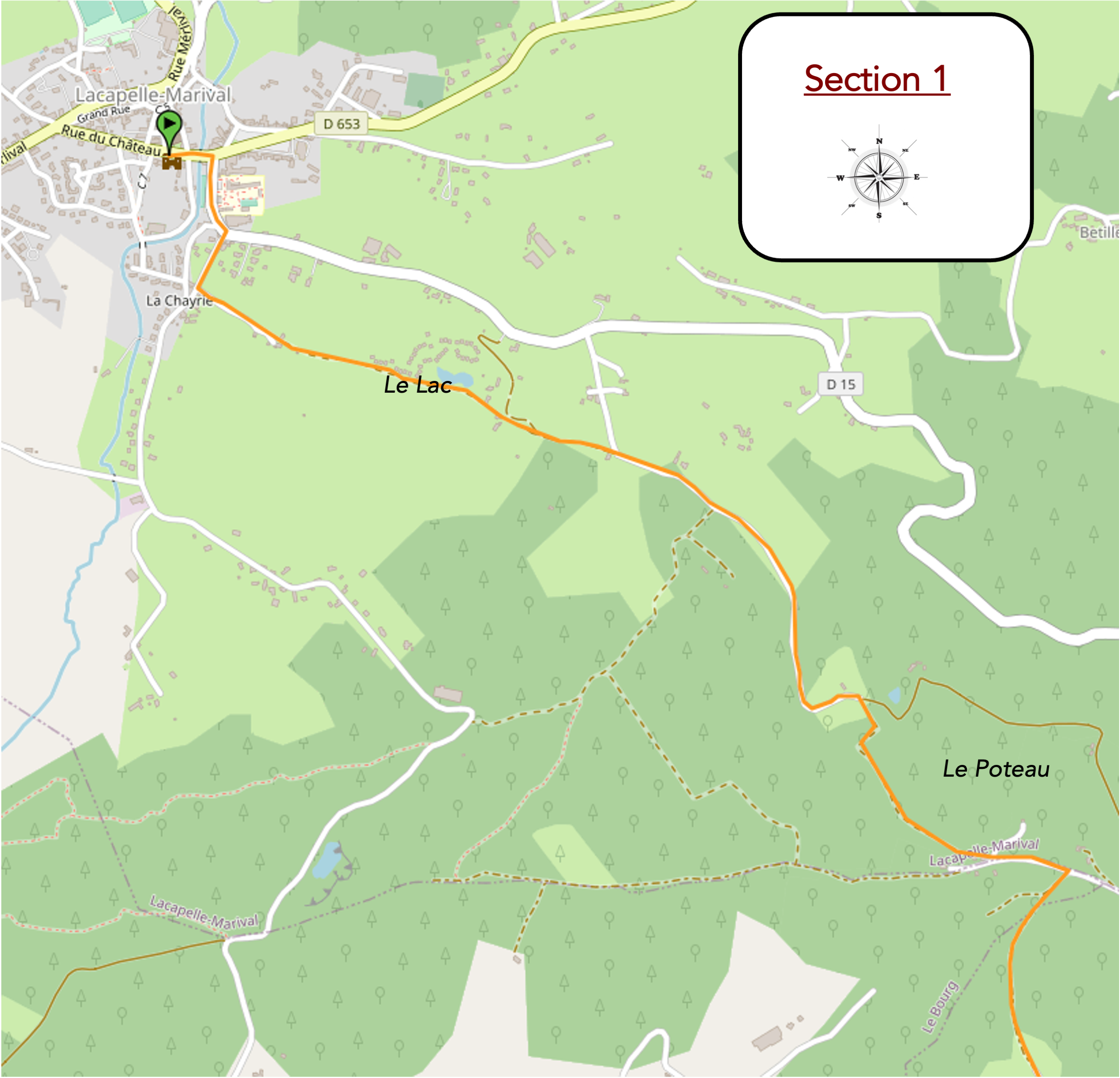
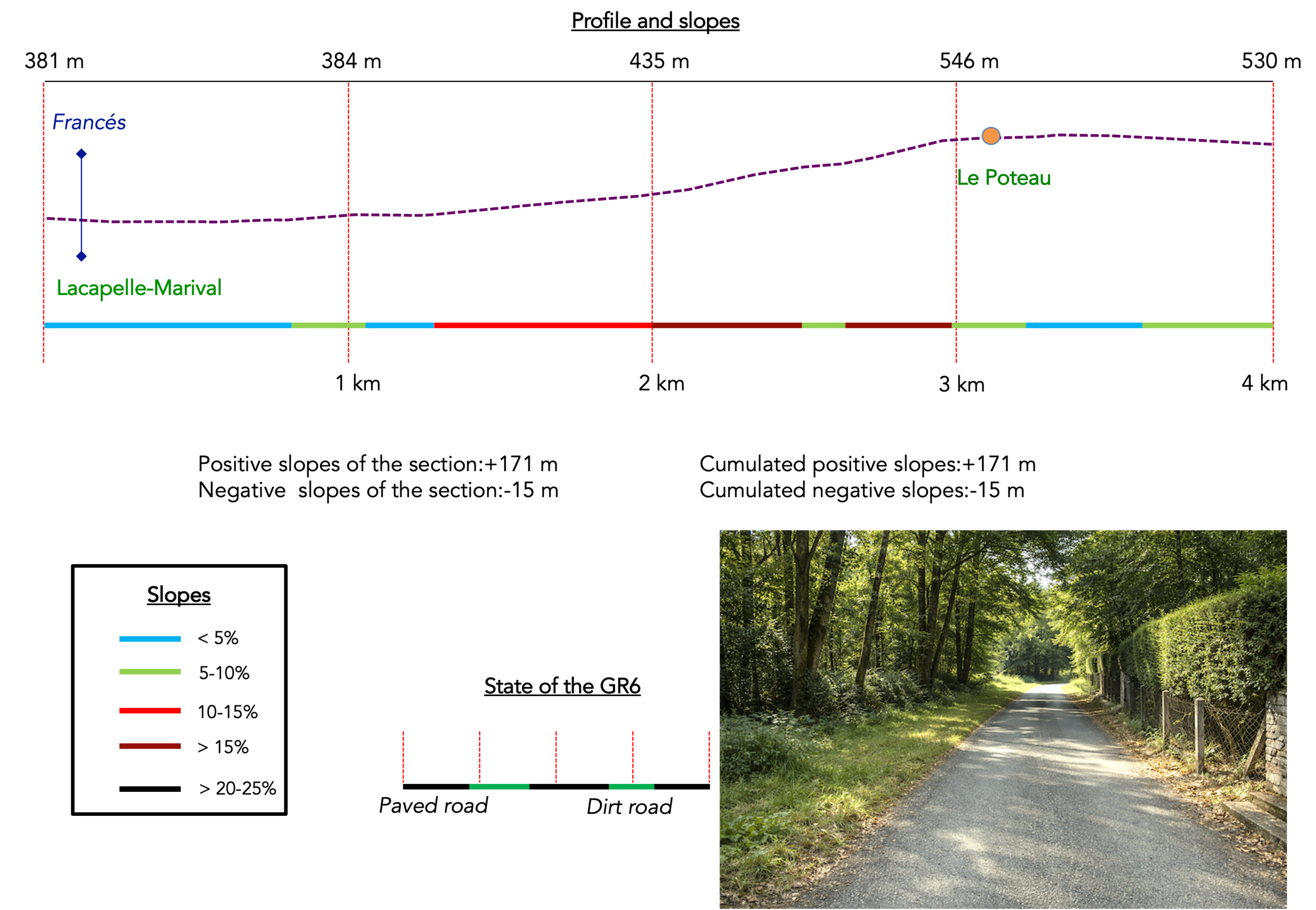
Overview of the route’s challenges : The route constantly rises and falls. Some stretches have gradients approaching 15%.
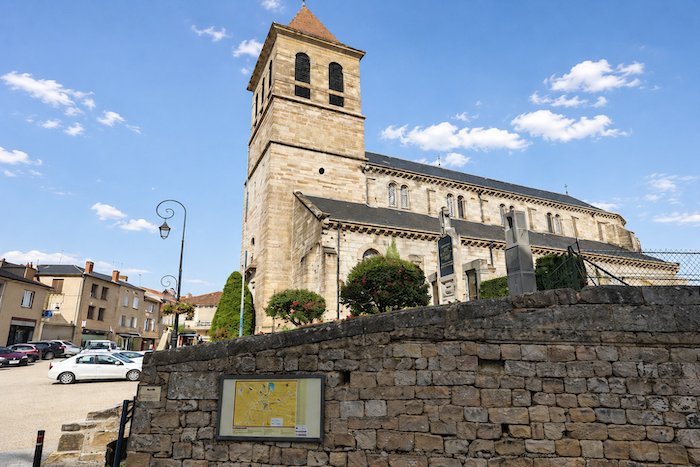
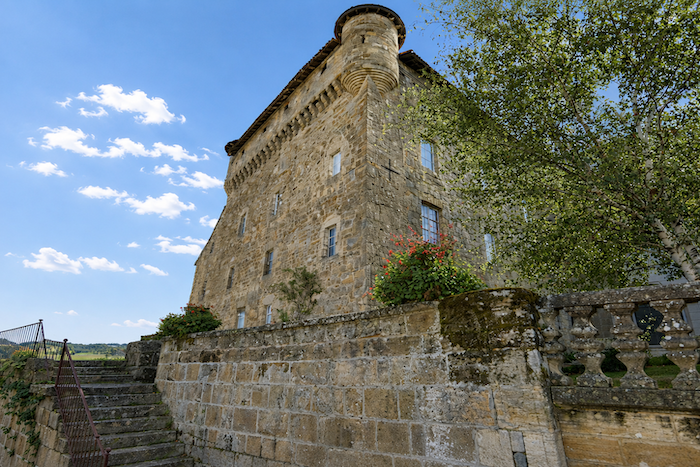
| The GR6 leaves Lacapelle-Marival from the church square and the reassuring shadow of the château, as though inviting the walker to leave the world of stone behind little by little and return to the paths. |
 |
 |
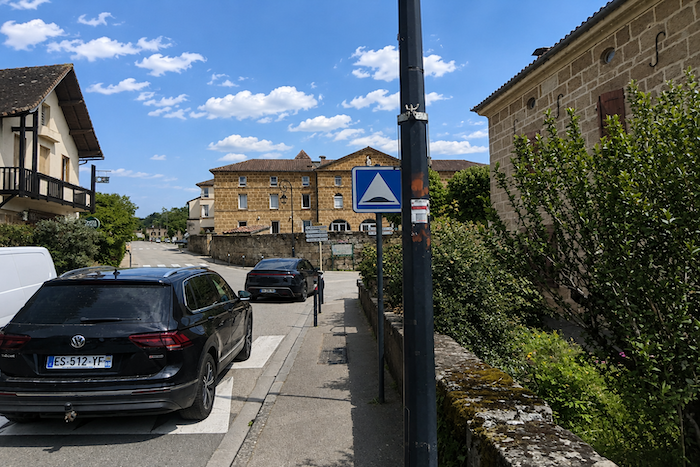
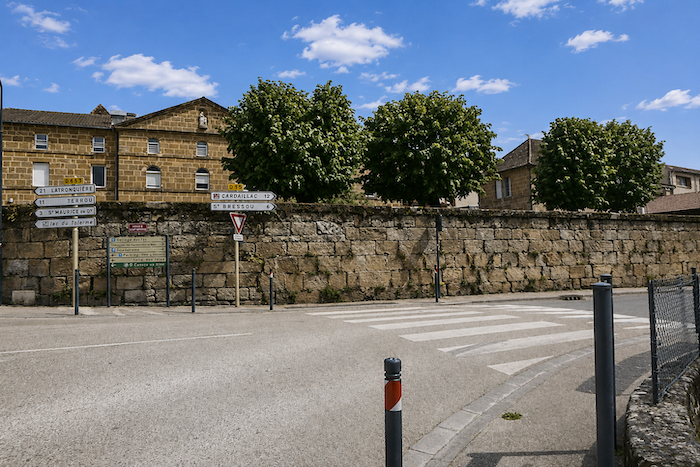
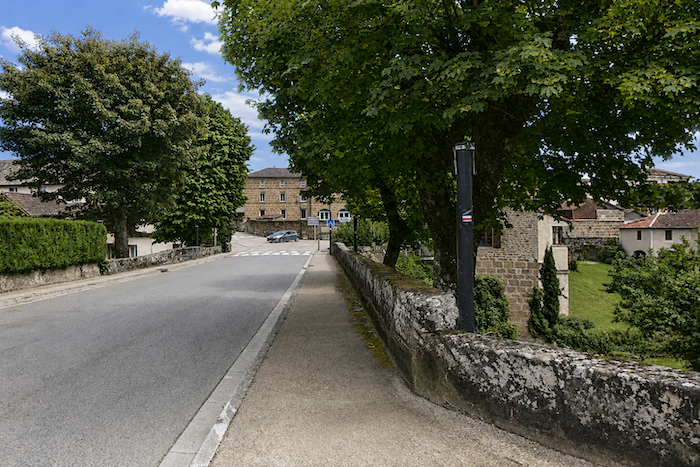
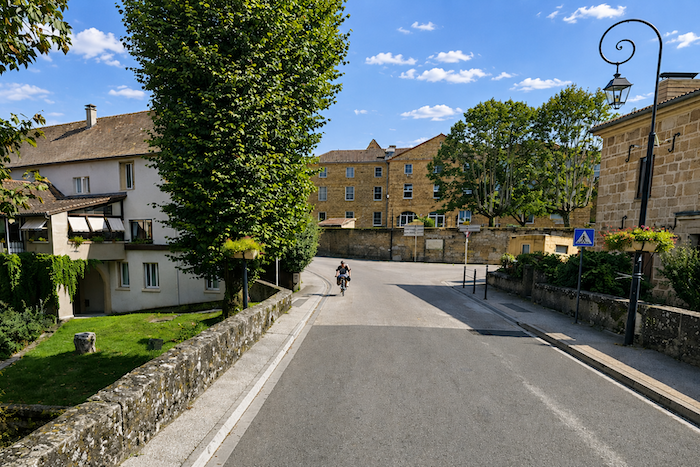
| It then descends along the main road, crosses the Francès stream below, and quickly turns right, drawn towards the landscapes of Cardaillac. |
 |
 |
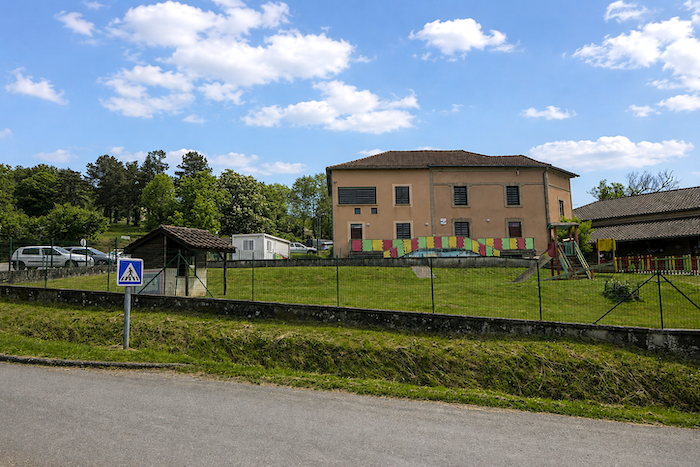
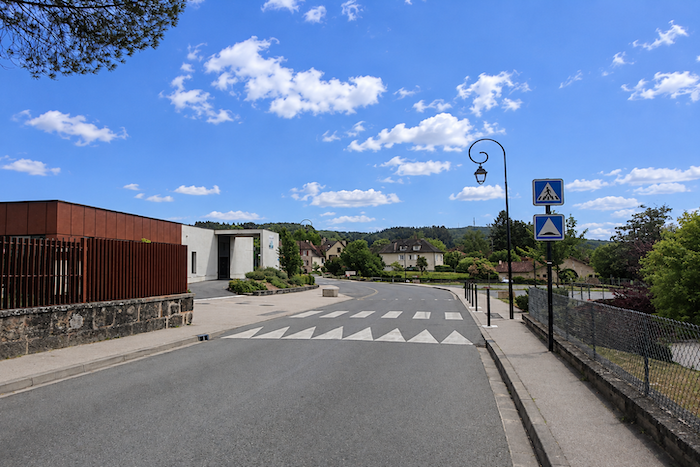
| As it passes the local secondary school, the route gradually leaves behind the bustle of the heart of the town and enters quieter surroundings. |
 |
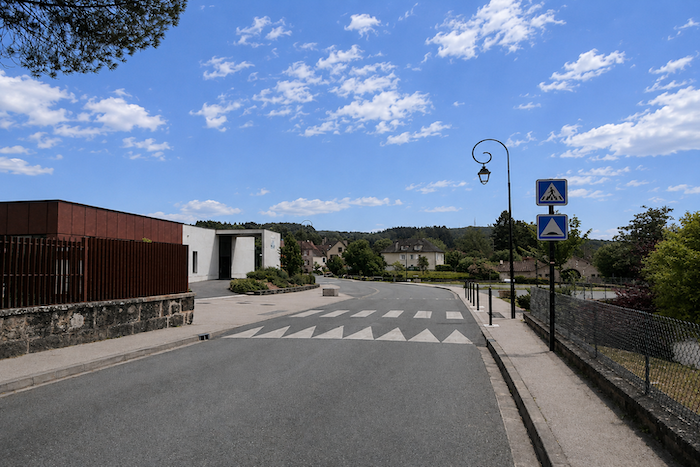 |
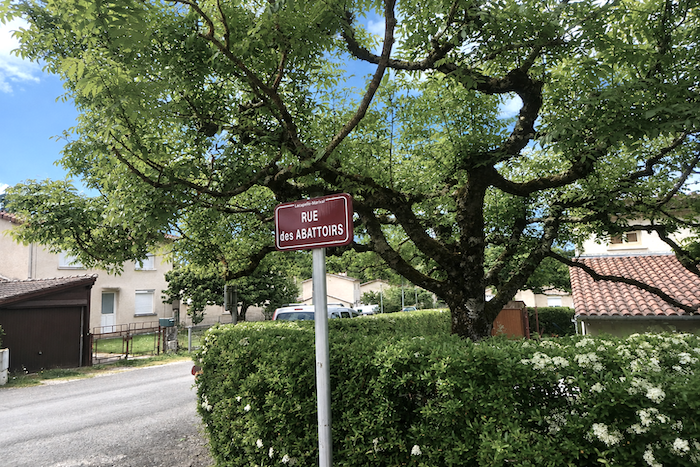
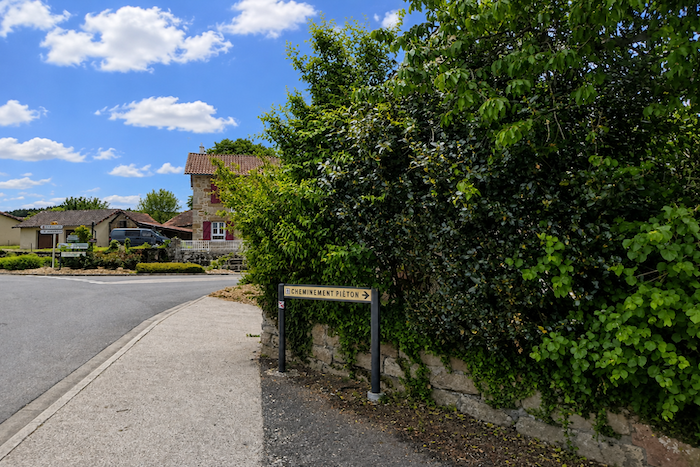
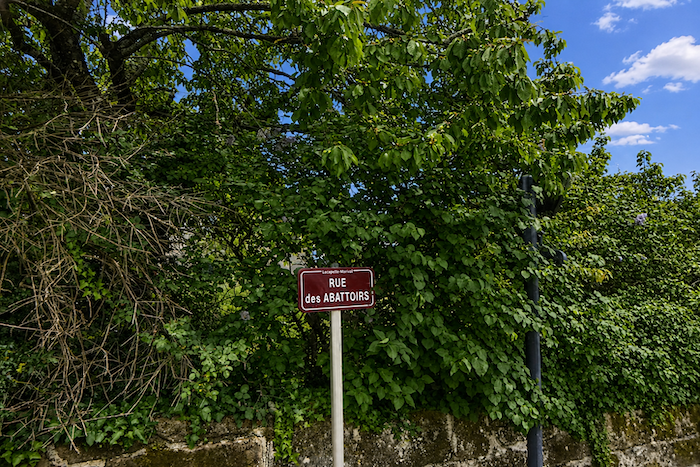
| Here, the route wisely leaves the main road and opts for the tranquility of a pedestrian way along Rue des Abattoirs. |
 |
 |
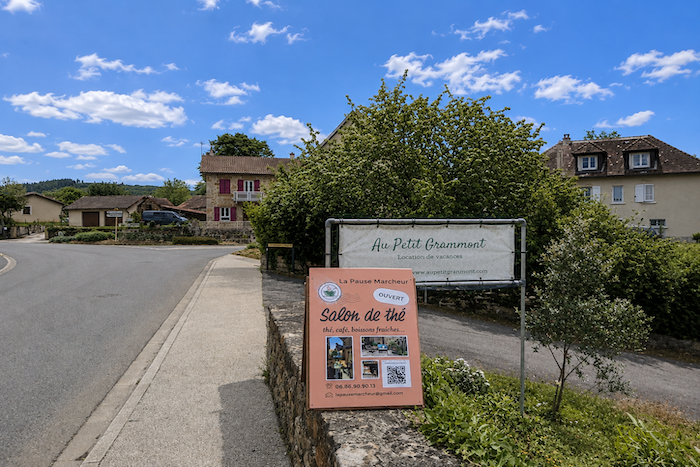
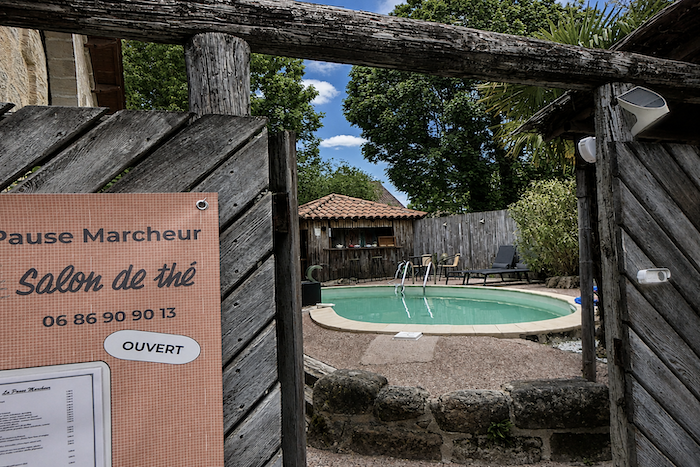
| The walker then passes a charming guesthouse, a discreet oasis with a shaded swimming pool and the delicate aromas of teas waiting to be savored. |
 |
 |
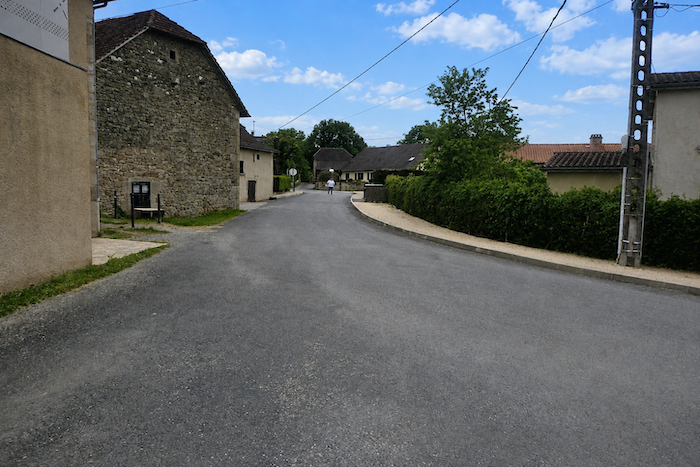
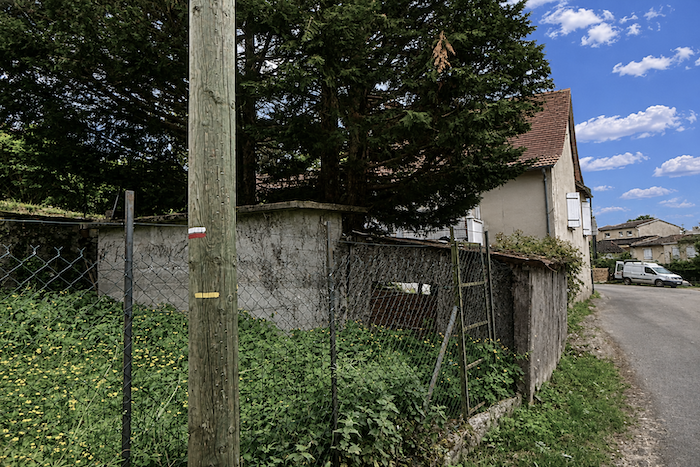
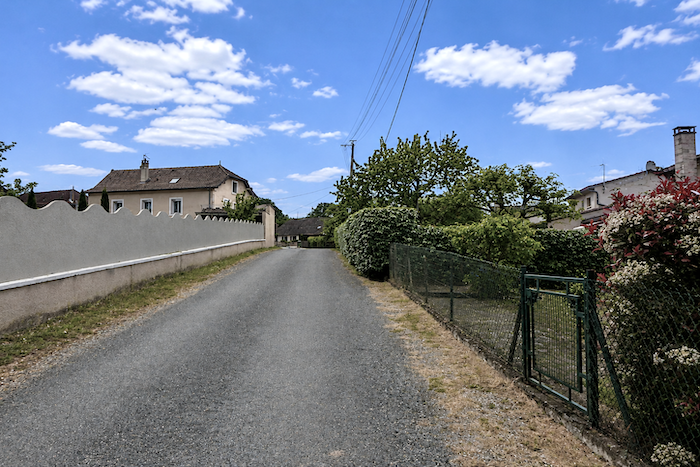
| The GR6 then continues through the residential developments lining Rue des Abattoirs, the last glimpse of urban life before the countryside and forest begin to beckon. |
 |
 |
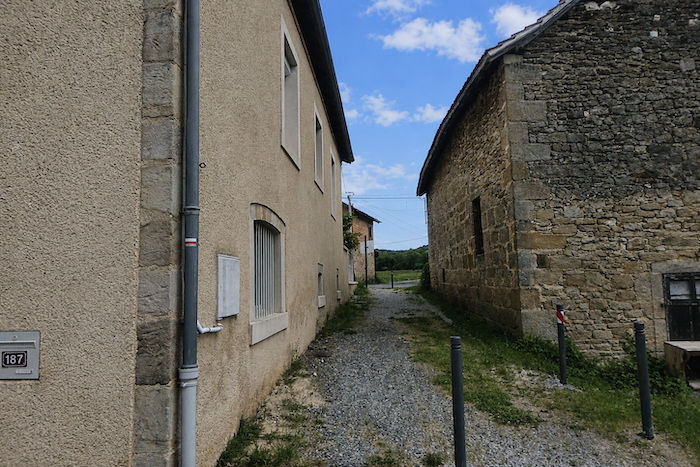
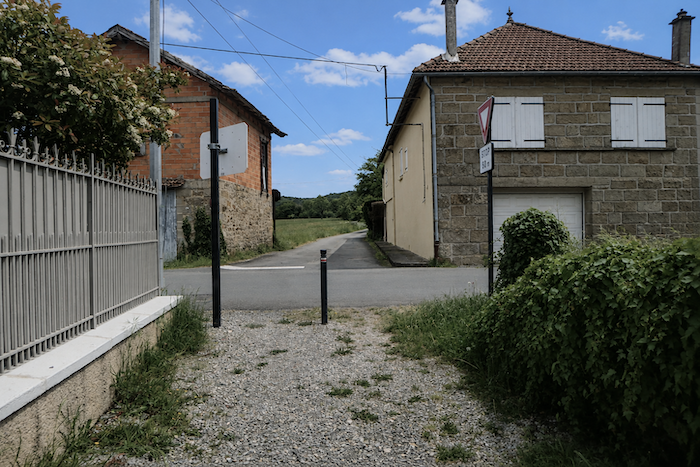
| At the end of the street, the route seems to perform an elegant little feat of gymnastics through a succession of narrow passages before finally escaping the town altogether. |
 |
 |
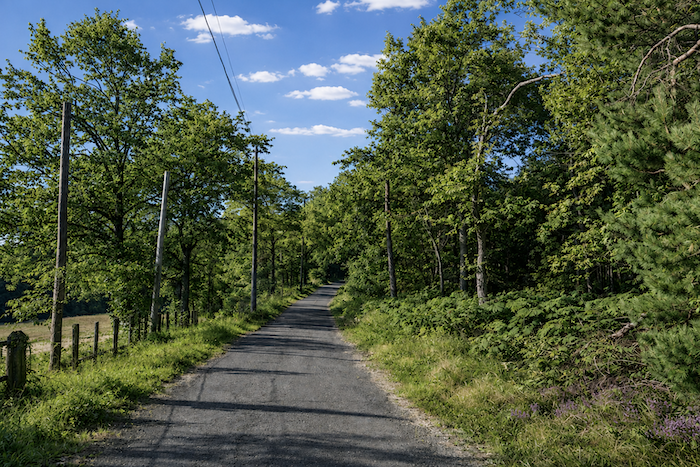
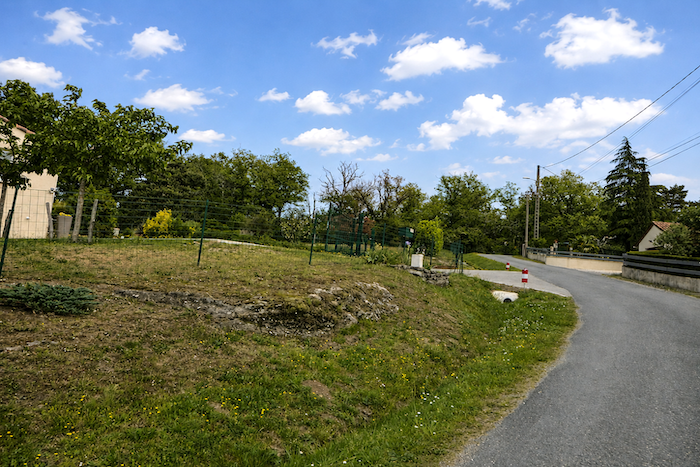
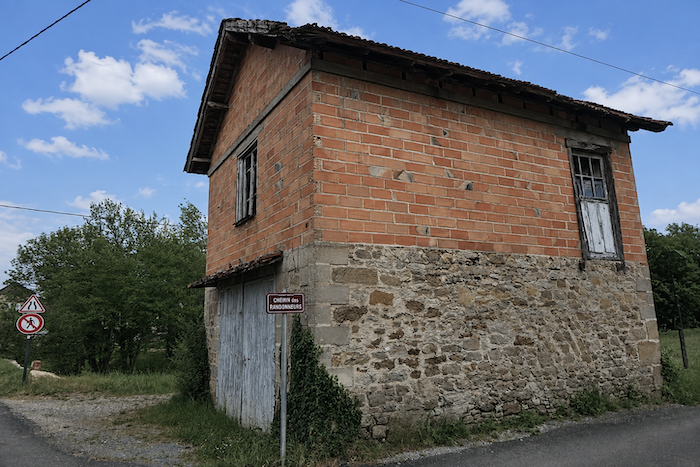
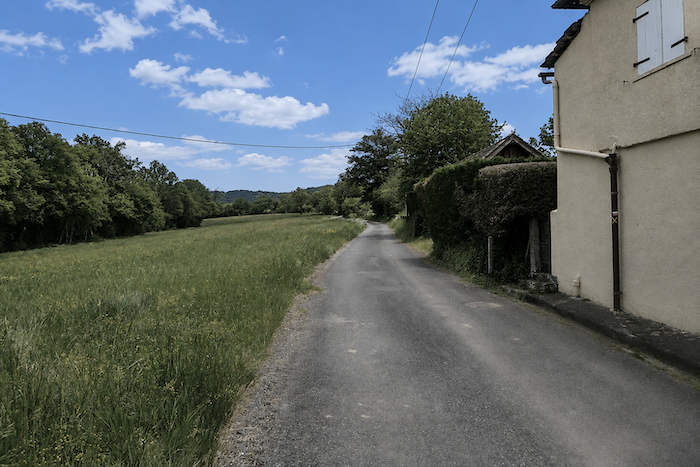
| The route then joins the “Chemin des Randonneurs”, a small country road stretching between peaceful meadows and deciduous hedges that gently shape the landscape. |
 |
 |
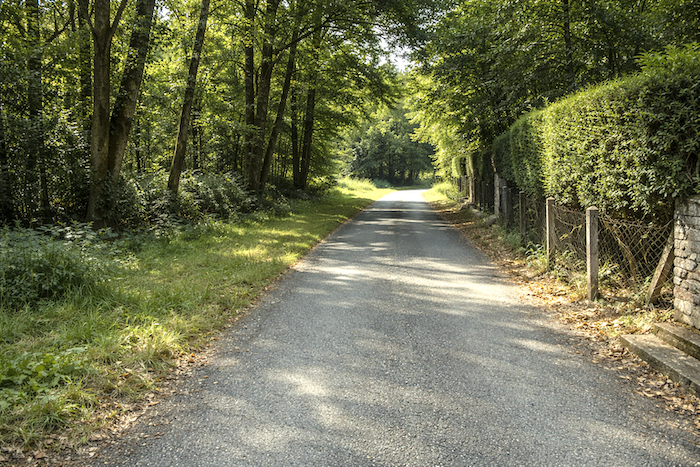
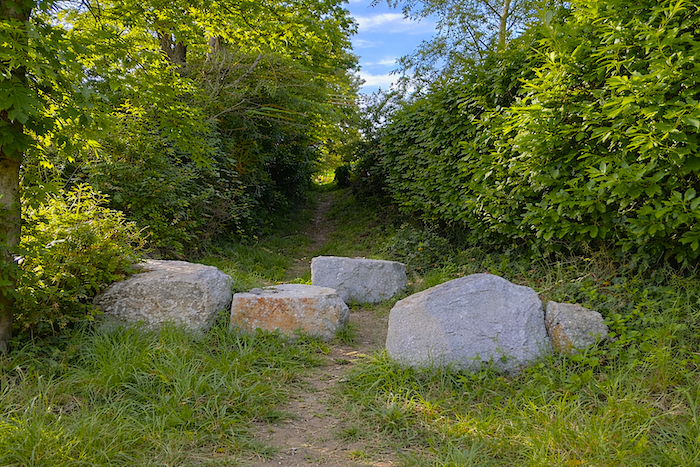
| At the end of this peaceful stretch, however, the scenery changes abruptly. Beyond the rocks that close off the horizon, the harsher and wilder atmosphere of the causses suddenly returns. |
 |
 |
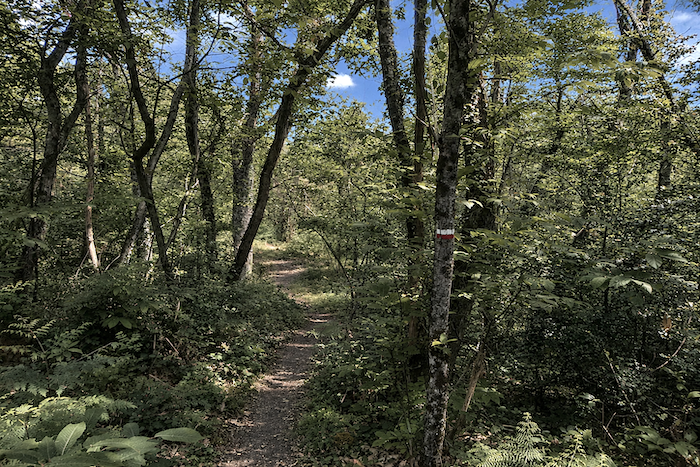
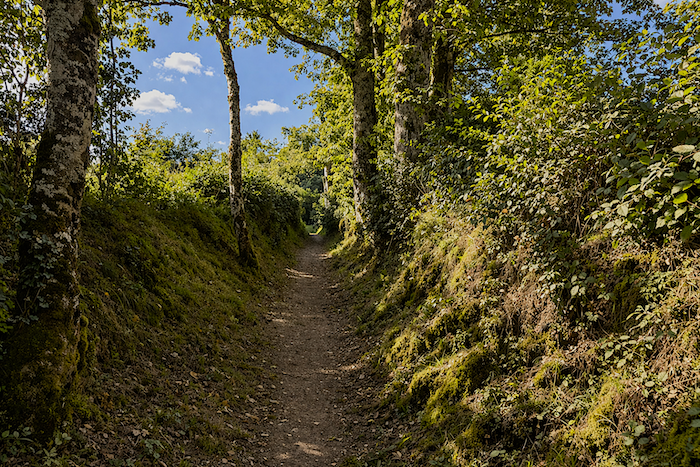
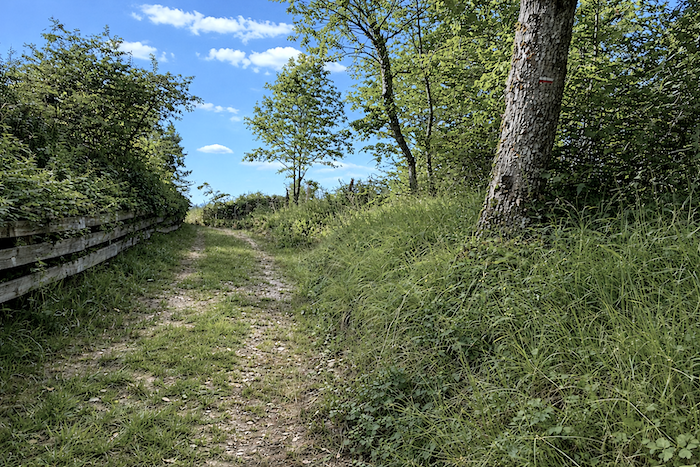
| A path then enters a short stretch of untamed woodland, where shadow and silence envelop the walker. |
 |
 |
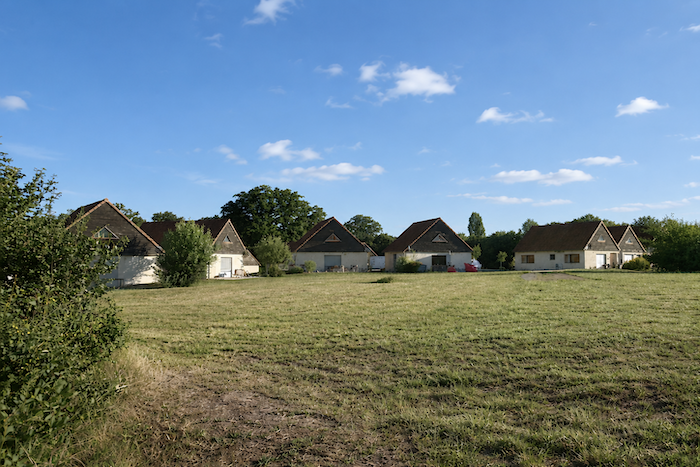
| Soon, the path emerges back into the light and runs alongside the modern houses of the “Village Vacances du Lac”, creating a striking contrast between open nature and human habitation. |
 |
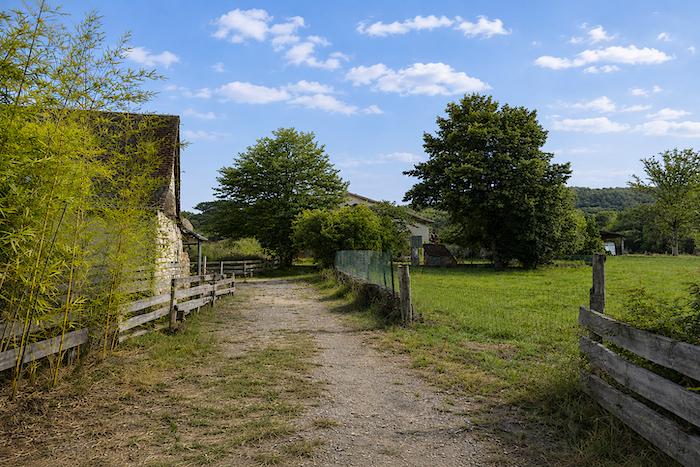 |
| The path then crosses a more residential area, slipping behind the last villas and their carefully tended gardens before finally surrendering itself to the vast expanses of the causse. |
 |
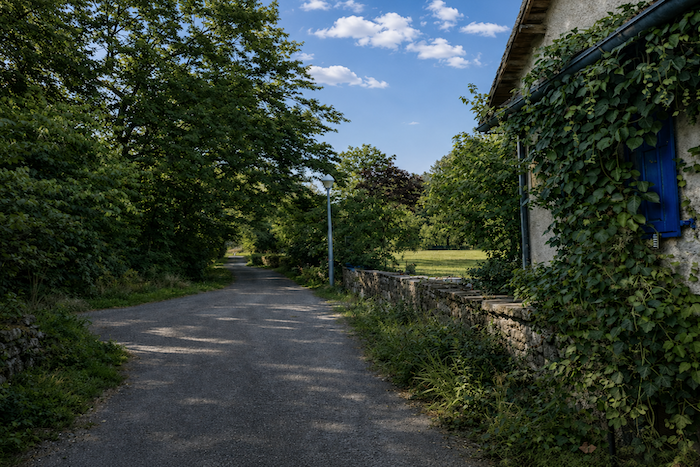 |
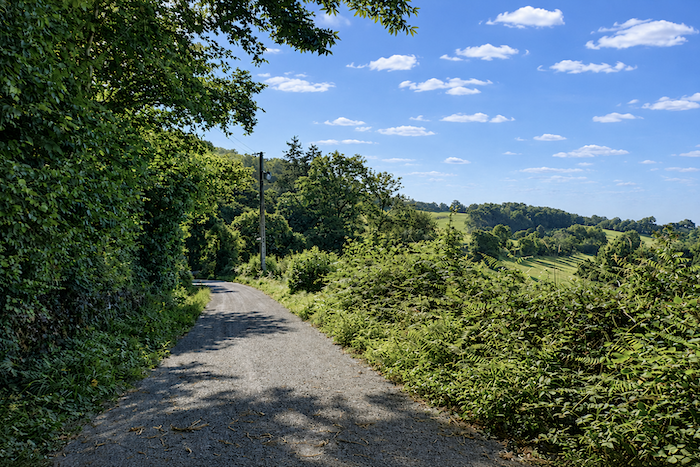
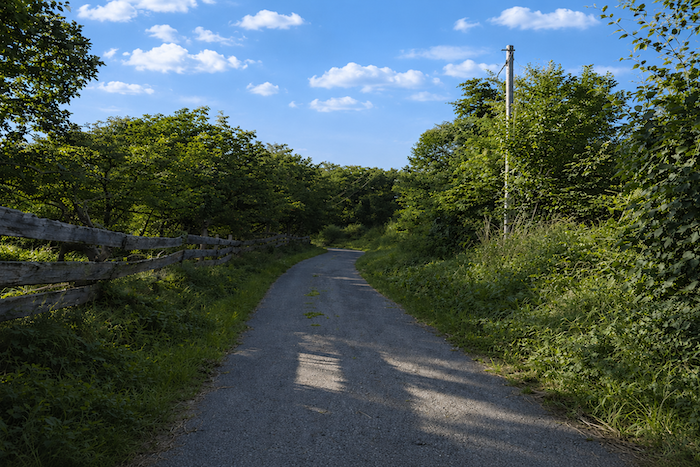
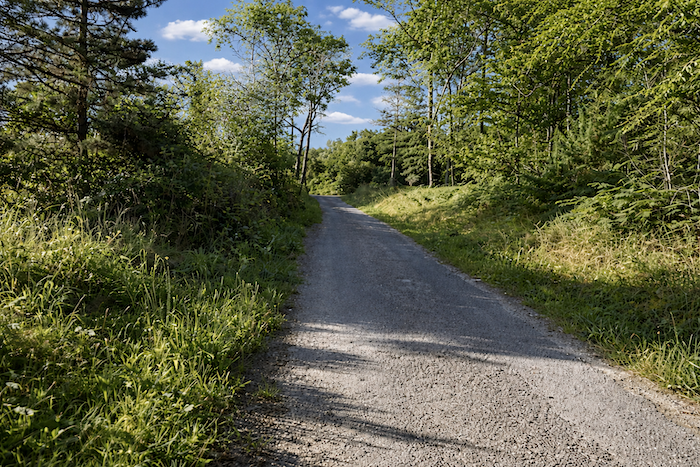
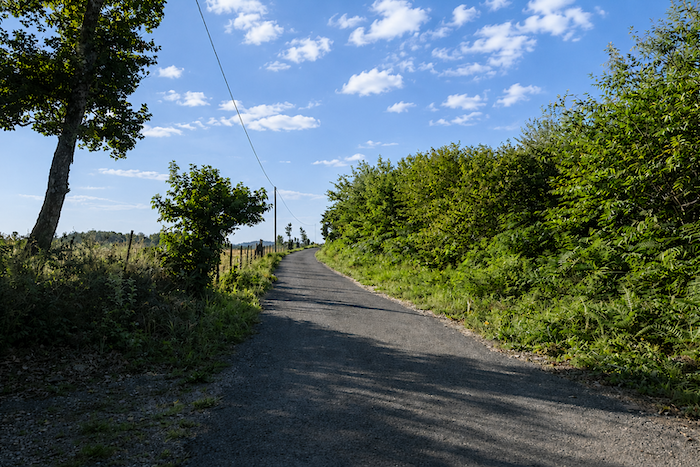
| Until now, the walking has been gentle and almost carefree, but the character of the route changes radically here. In a deeply undulating landscape of dense deciduous woodland and carpets of ferns, a paved road takes over, already climbing steadily and offering a foretaste of what lies ahead. |
 |
 |
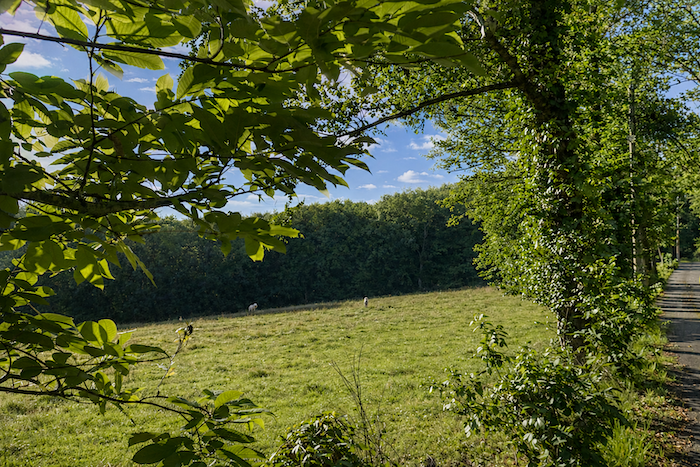
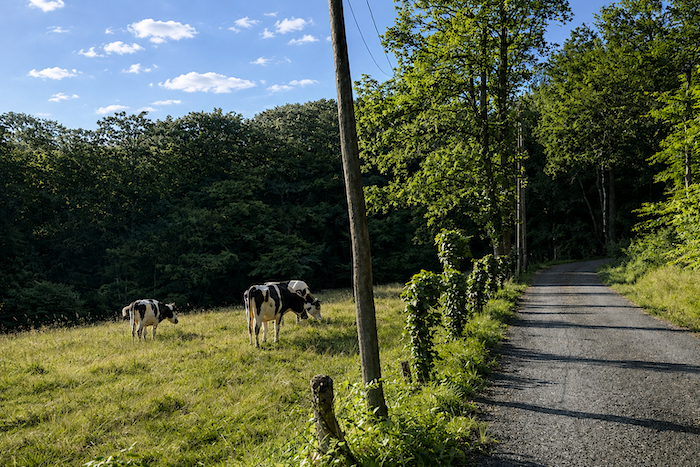
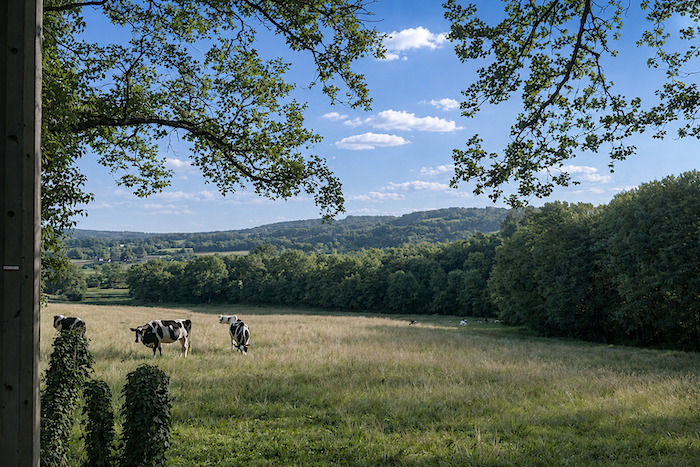
| Cattle occasionally appear in the few surrounding meadows, their peaceful silhouettes punctuating the pastoral landscape. |
 |
 |
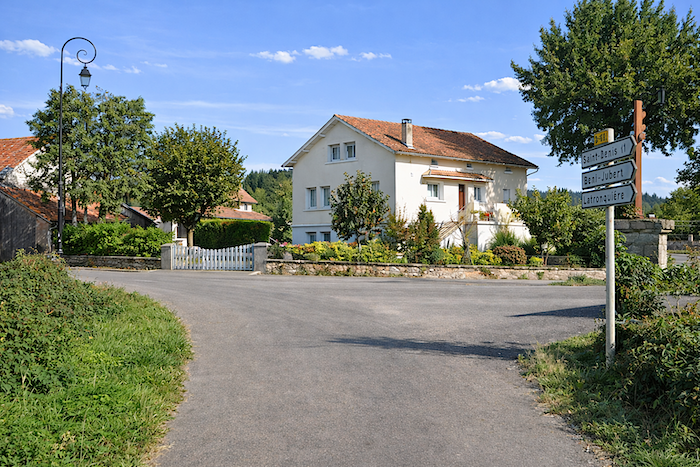
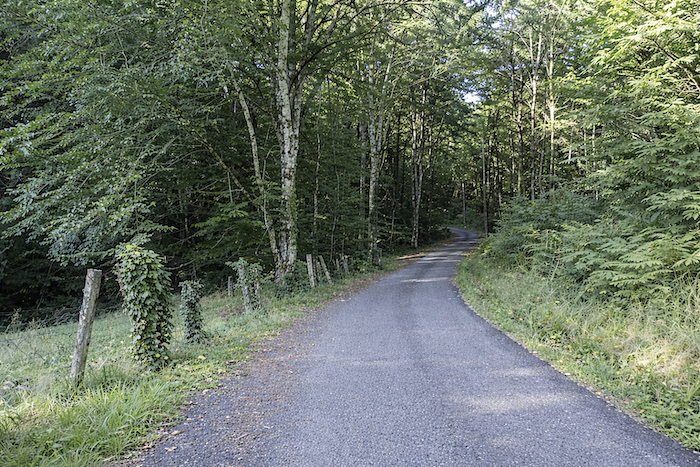
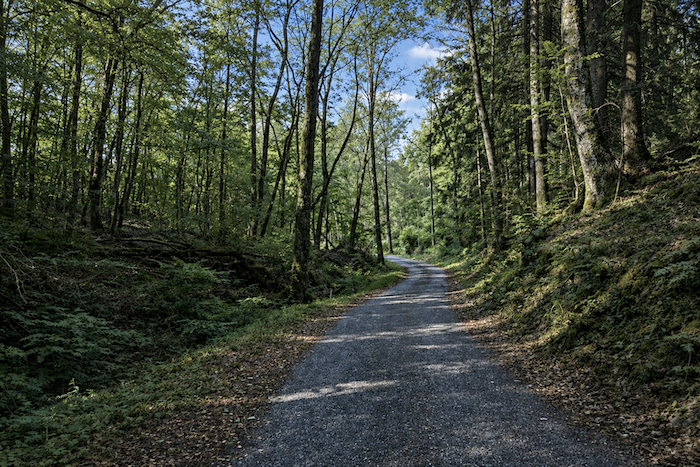
| The climb continues for some distance towards the place known as Le Poteau. Then the gradient steepens dramatically, reaching nearly 15%, as the road winds between woodland and more scattered meadows. |
 |
 |
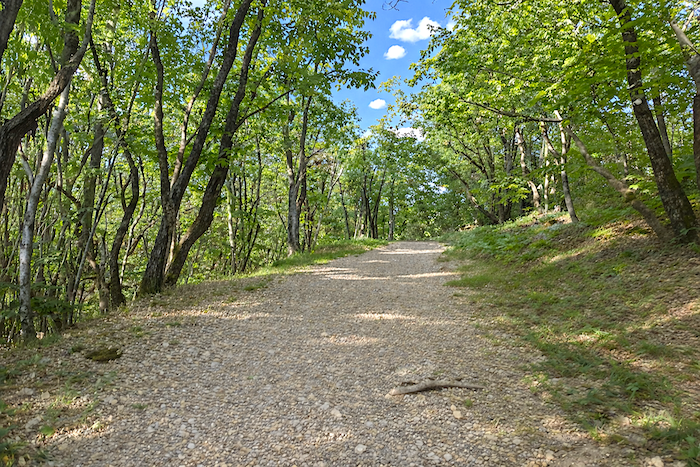
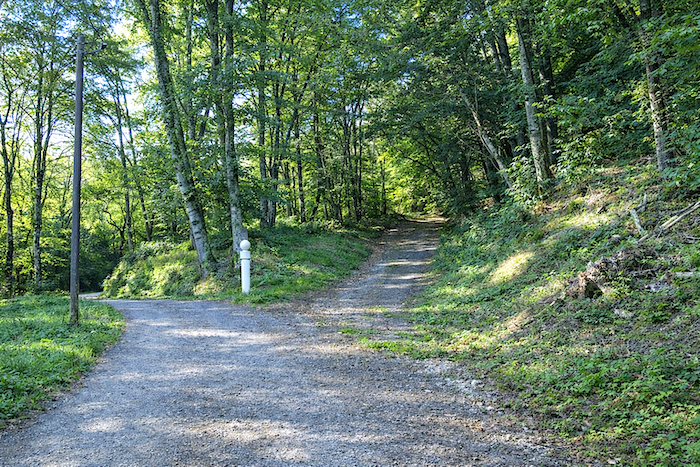
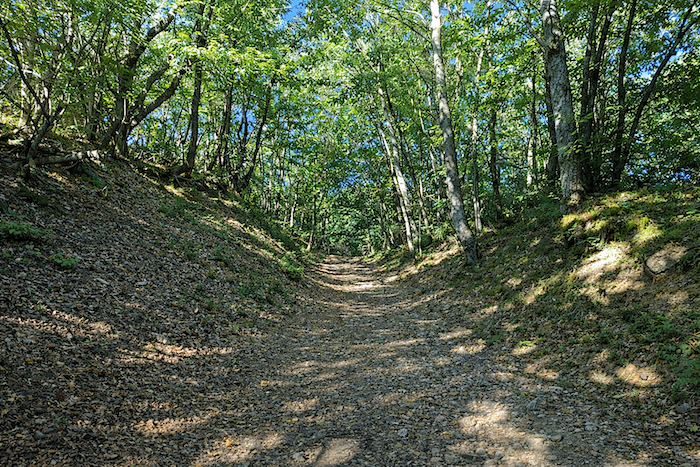
| Higher still, a forest path rises ahead of the hiker like a challenge, with sections now approaching gradients of 20%. |
 |
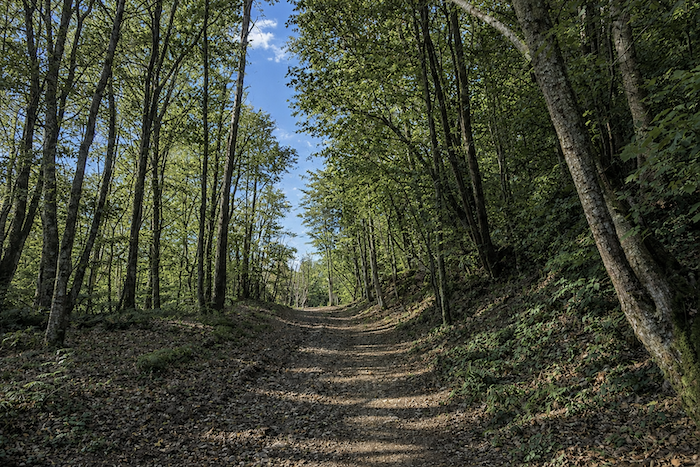 |
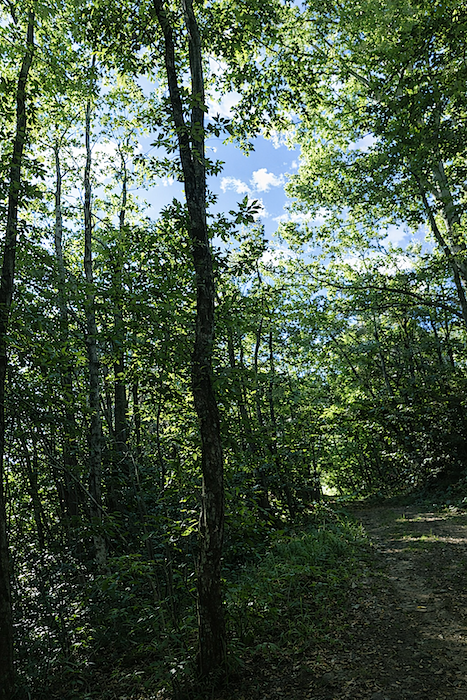
| Numerous oaks thrive here, accompanied by a few beeches, a species rarely encountered on the causses, as well as maples and ash trees, all deeply rooted in the rugged, mineral grandeur of the landscape. |
 |
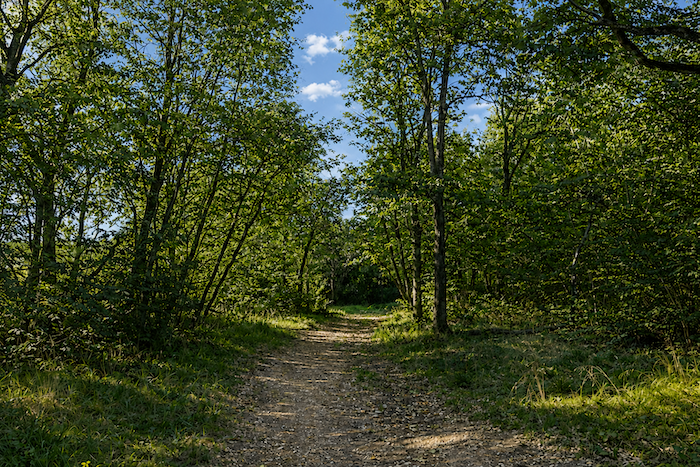 |
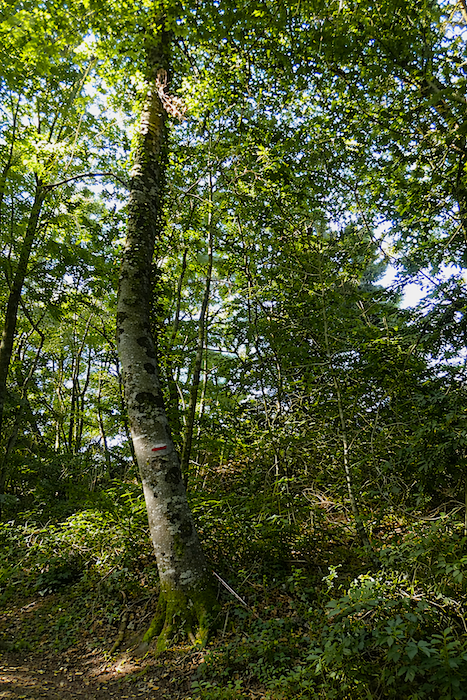
| The real surprise, however, is the appearance of a veritable army of chestnut trees, an unexpected and almost incongruous presence in this world of the causse. |
 |
 |
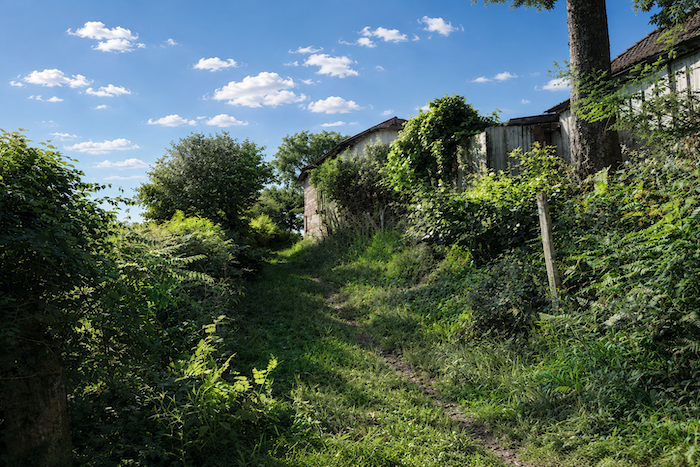
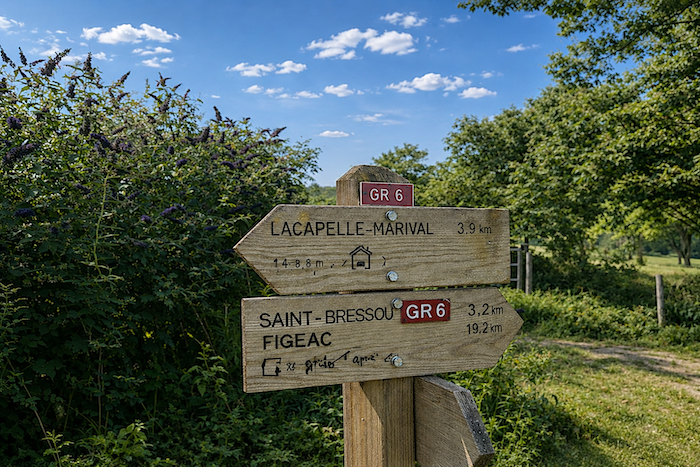
| After gaining nearly 170 meters of elevation over a demanding climb of more than a kilometer, you may well be short of breath when the path finally reaches Le Poteau. There, a sign reminds the hiker of what still lies ahead, St Bressou, 3.2 kilometers away. |
 |
 |
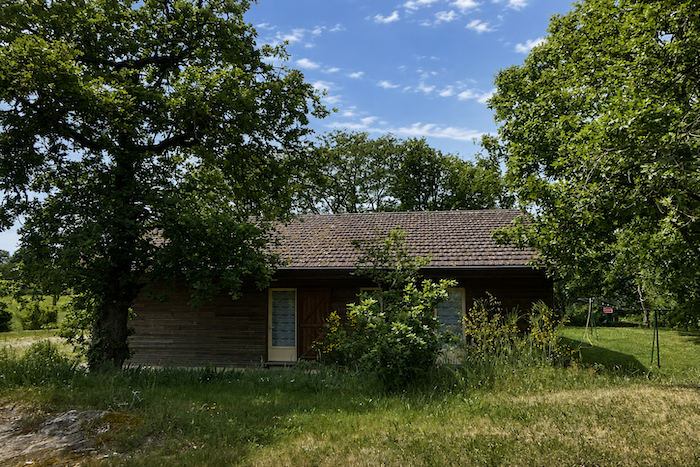
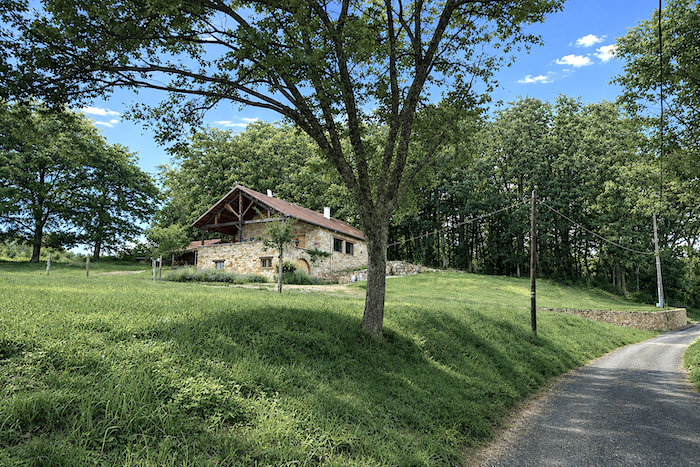
| Tarmac then takes over once more along the route across this bucolic hilltop, where a beautiful stone house stands with an understated, almost timeless charm. |
 |
 |
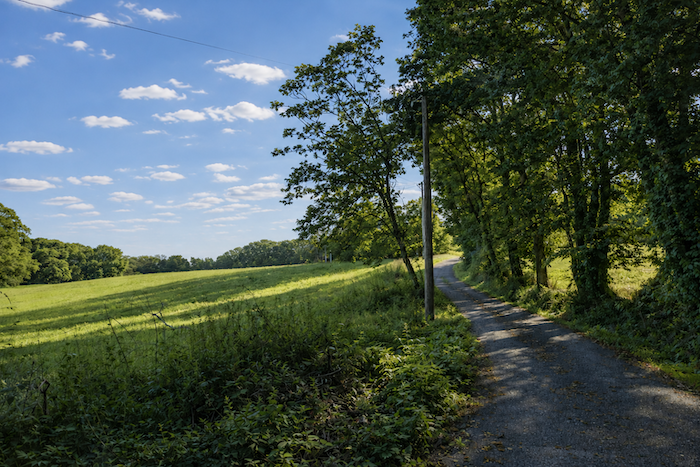
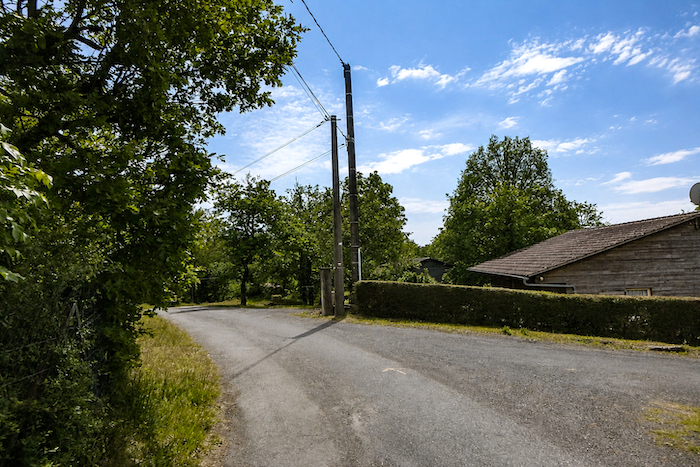
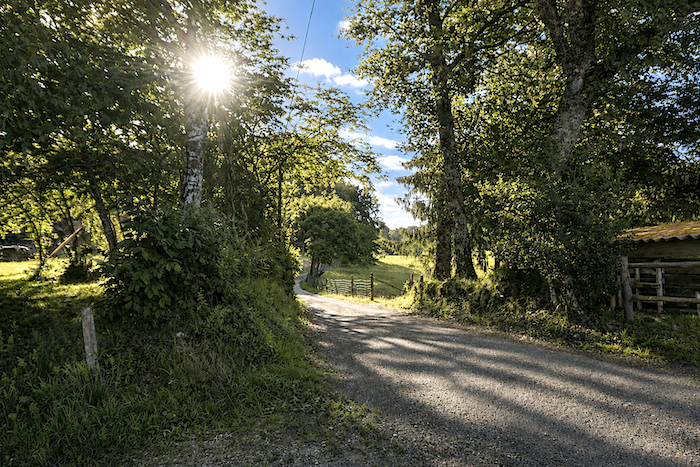
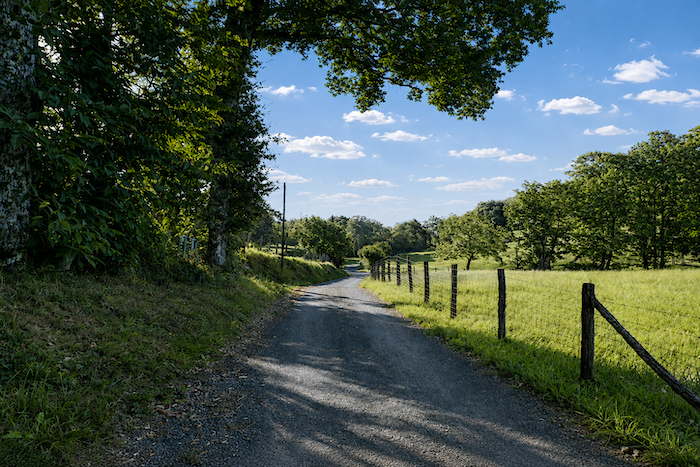
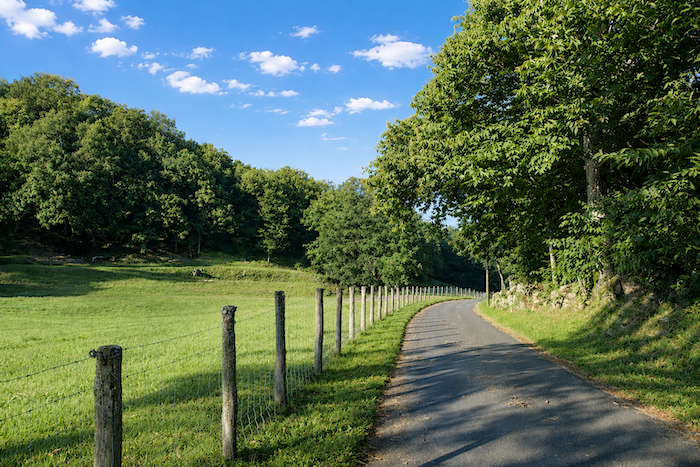
| The little road undulates gently along the ridge. Yet despite the asphalt, everything here is graceful and harmonious beneath the great oaks and generous chestnut trees, whose branches sweep elegantly towards the ground, forming dense clusters of foliage here and there across the neighboring meadows. |
 |
 |
Section 2: Over hill and dale
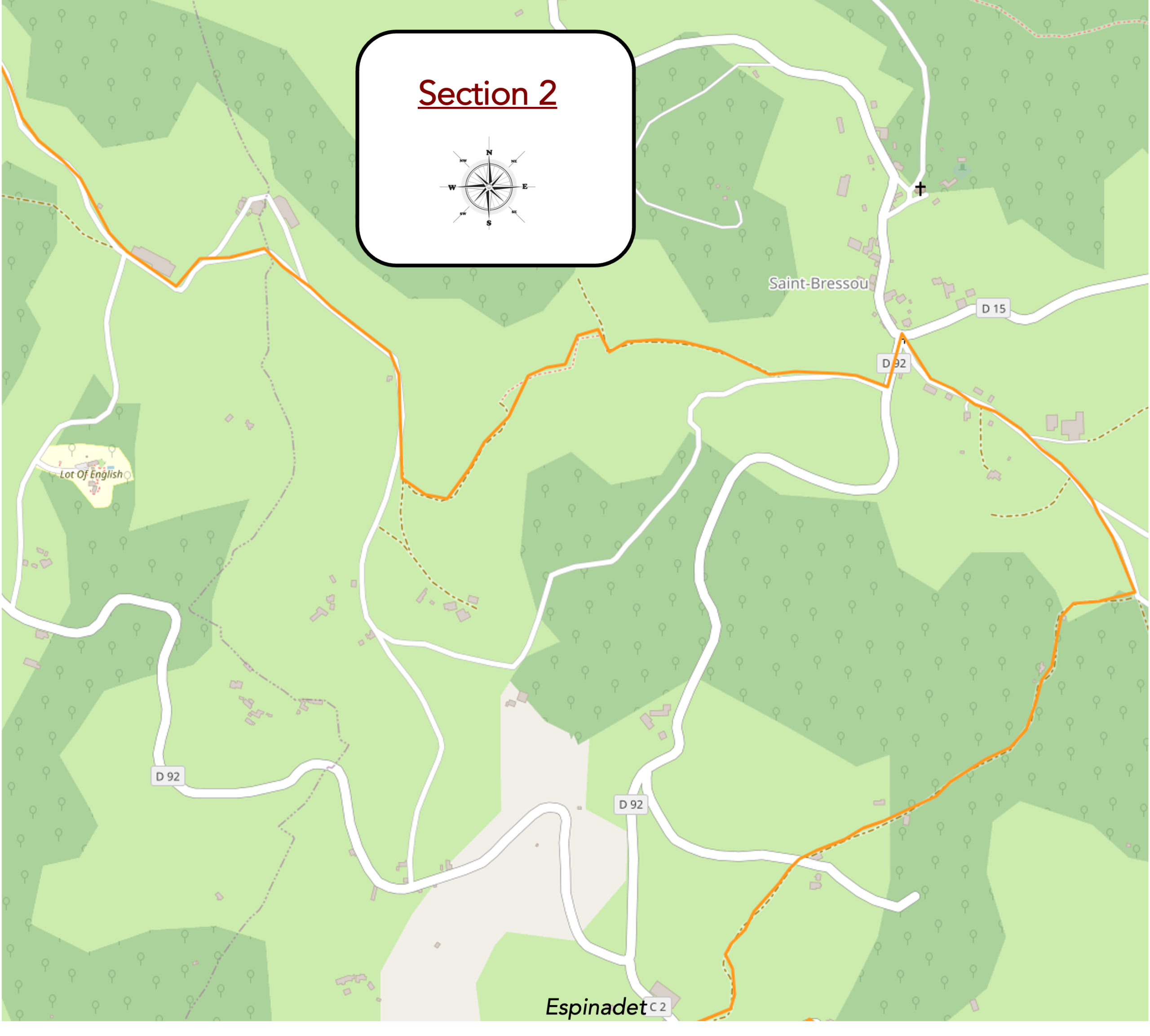
Overview of the route’s challenges: a demanding route with plenty of ups and downs, although most of the steeper sections are downhill.
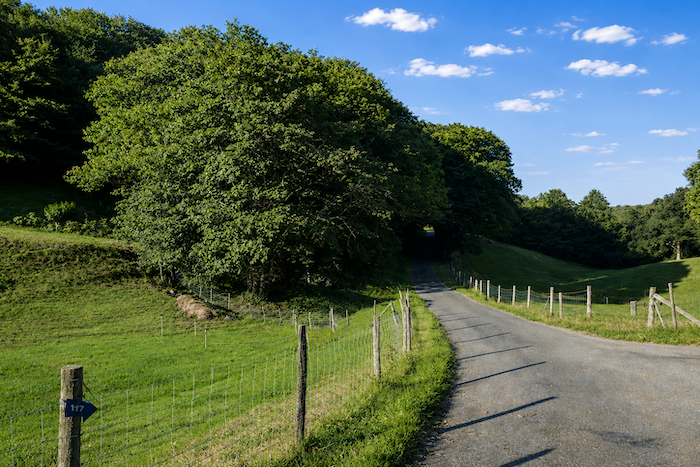
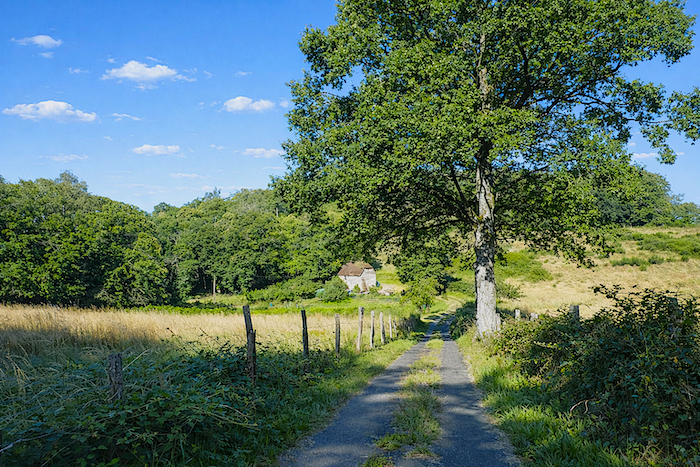
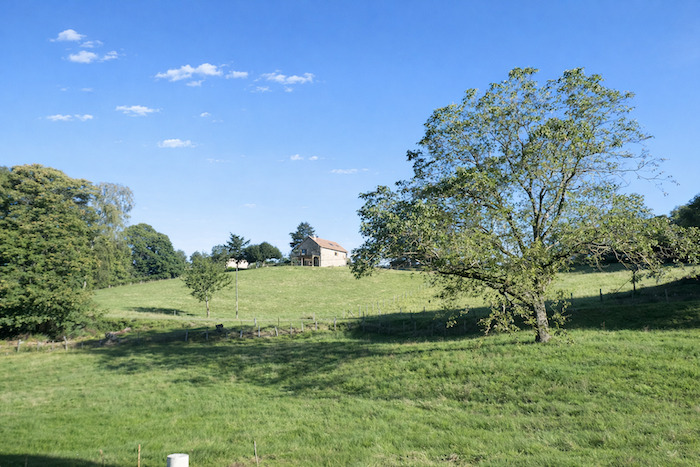
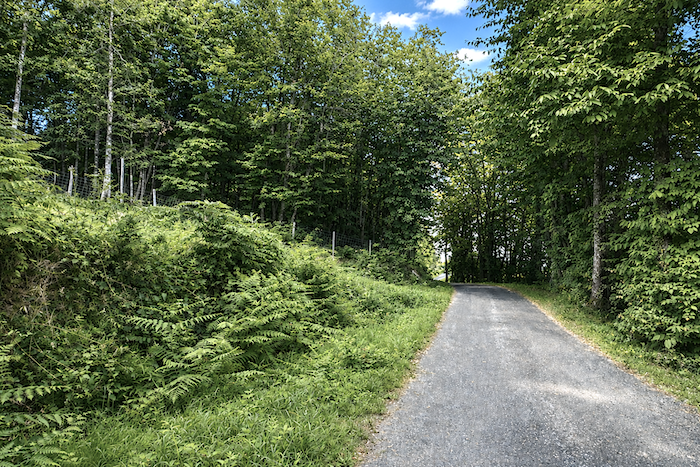
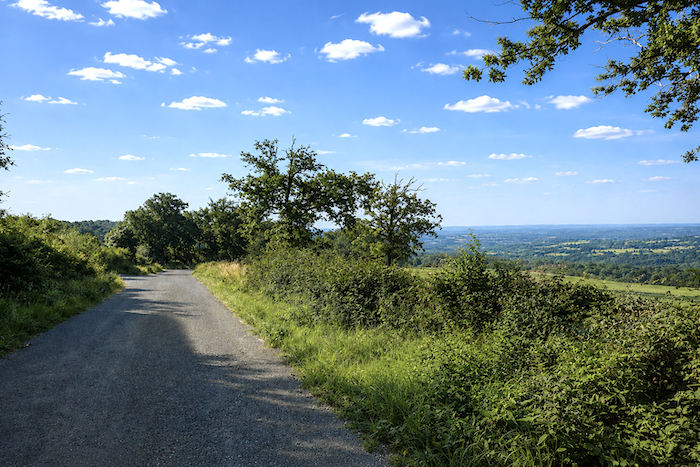
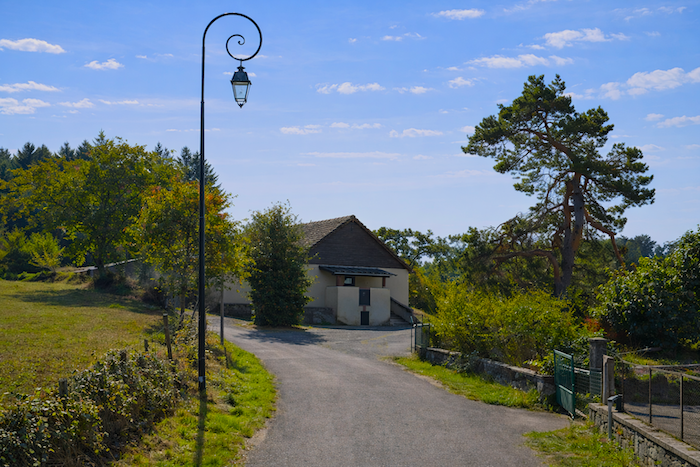
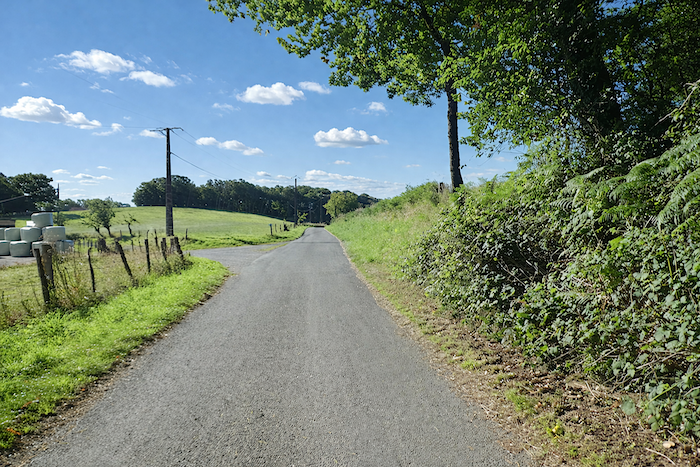
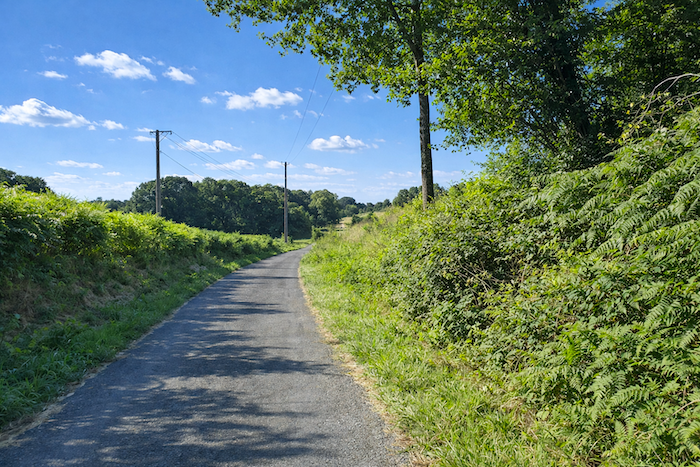
| This is a little road almost forgotten by the world, used only by the few people who live in the area. Here, silence reigns supreme, and the walker is unlikely to encounter a single vehicle. The road undulates gently, alternating between subtle descents and modest climbs without ever demanding any real effort, amid ferns and deciduous trees. |
 |
 |
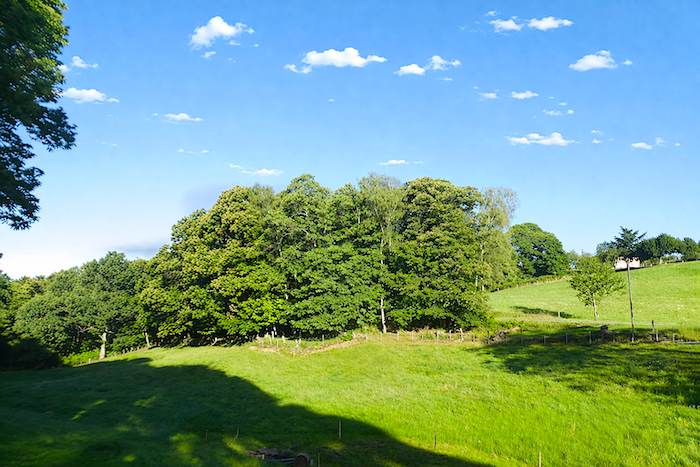
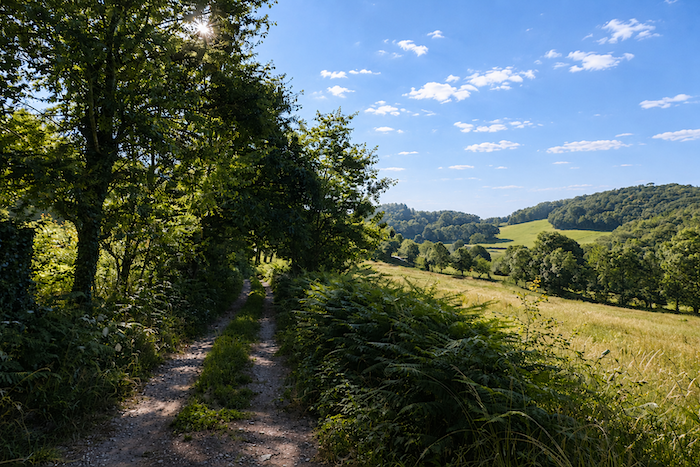
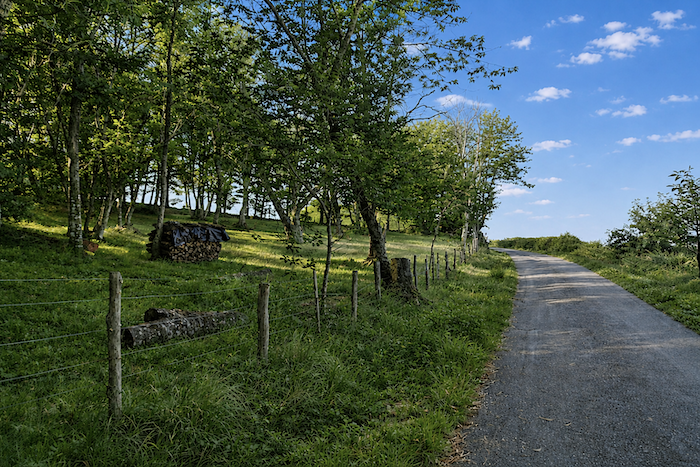
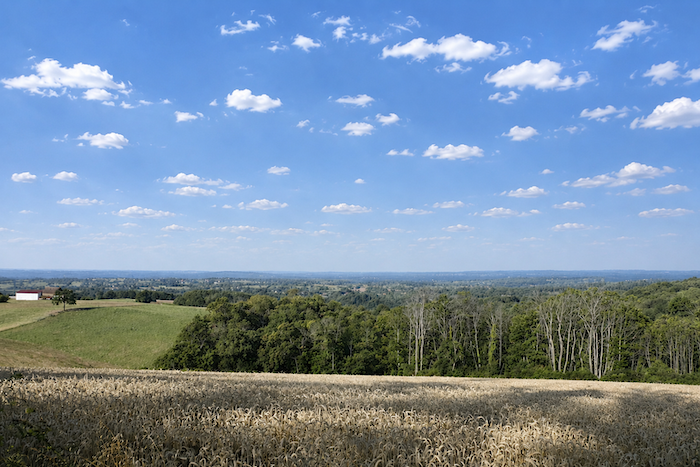
| All around, the horizon closes in behind an ocean of dense forest. In places, however, the road opens onto more expansive views. Beyond the copses and sparse cereal fields, the eye then discovers, in the distant light, the endless contours of the Causse du Quercy overlooking Figeac. |
 |
 |
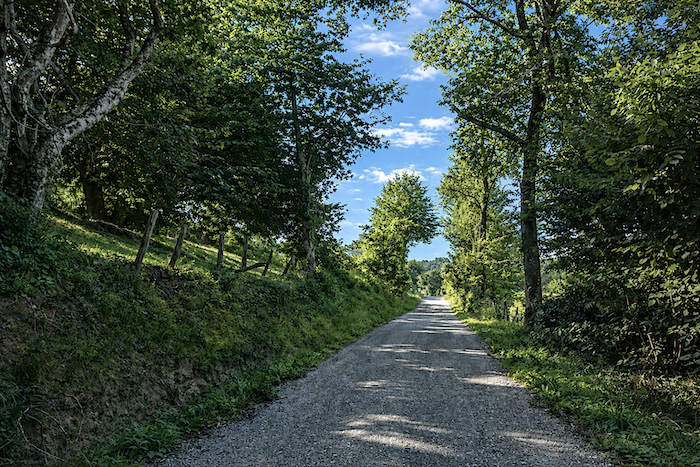
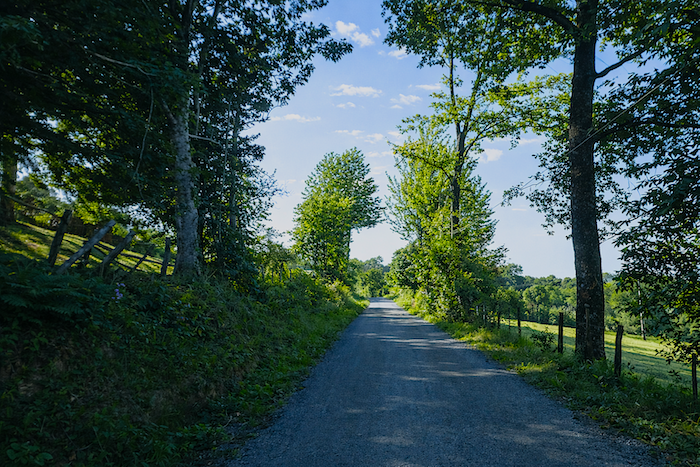
| The gradient remains gentle along this road winding beneath the deciduous trees. Here and there, schist and limestone discreetly emerge beneath the woodland. Along the edge of the road, farmers once planted countless ash trees, whose leaves and branches provided a valuable source of supplementary fodder for livestock, a silent reminder of a farming practice that has now almost disappeared. |
 |
 |
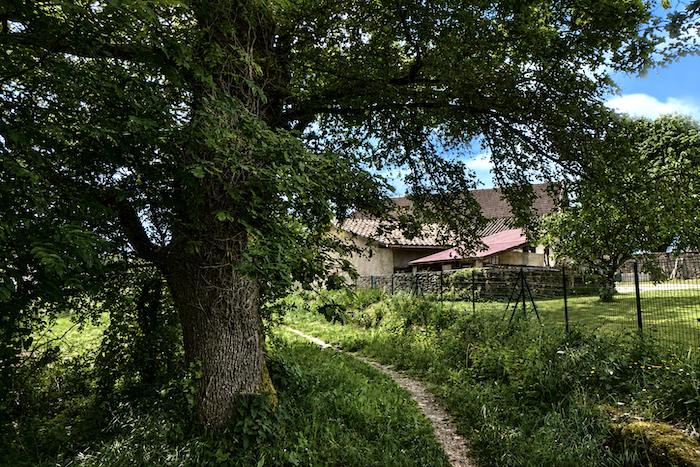
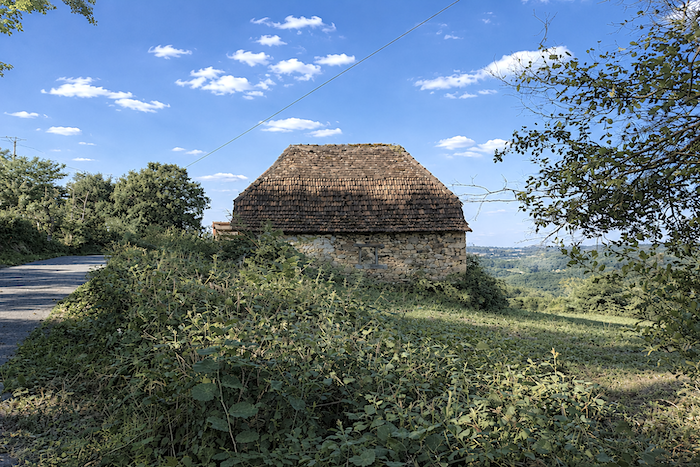
| Amid this profusion of greenery and foliage, a solitary stone house occasionally appears, silent and isolated, leaving you to wonder whether it is still home to someone or merely shelters the memory of another age. |
 |
 |
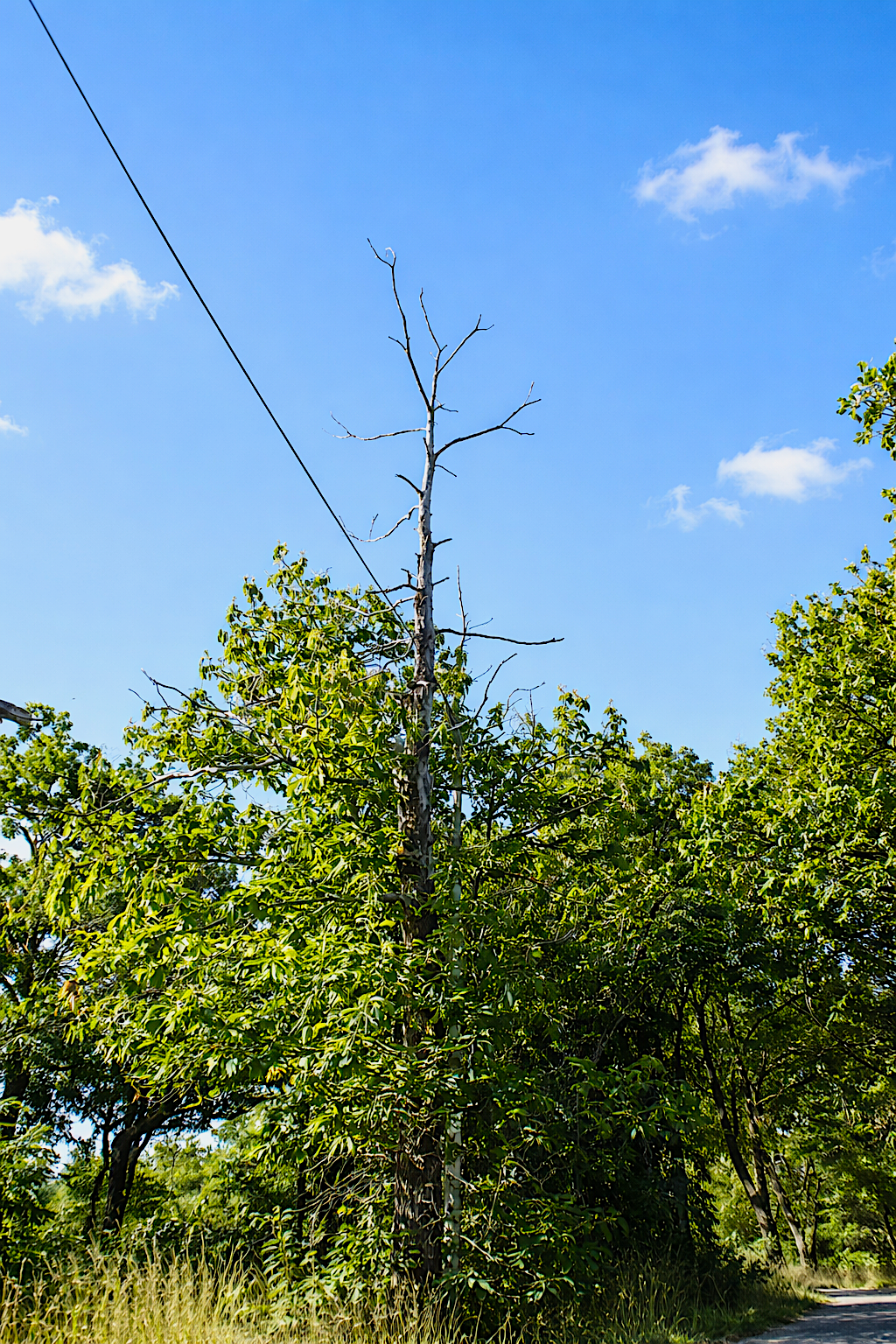
Here, an old, withered chestnut tree seems to be reborn from its own demise. These vigorous trees stubbornly refuse to die, sending out fresh shoots from the base of an exhausted trunk.
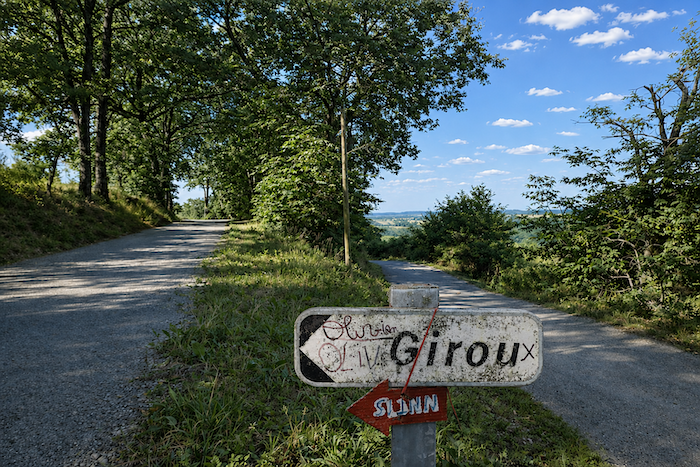
| Farther down, the GR6 faithfully follows the road before reaching an unobtrusive junction, where a path branches away towards the woodland. |
 |
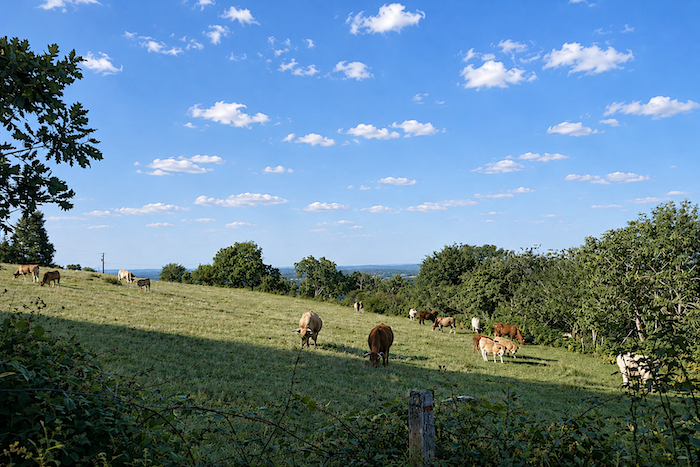 |
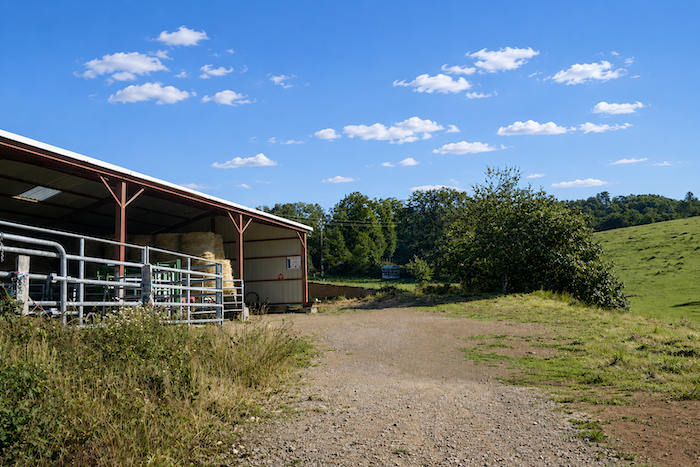
| The slope then becomes considerably steeper, sometimes exceeding 15%. Along the way, the route passes a farm where cattle are kept in a loose-housing system. In these lands of the Haut-Quercy, the powerful Aubrac cattle now seem to reign supreme. |
 |
 |
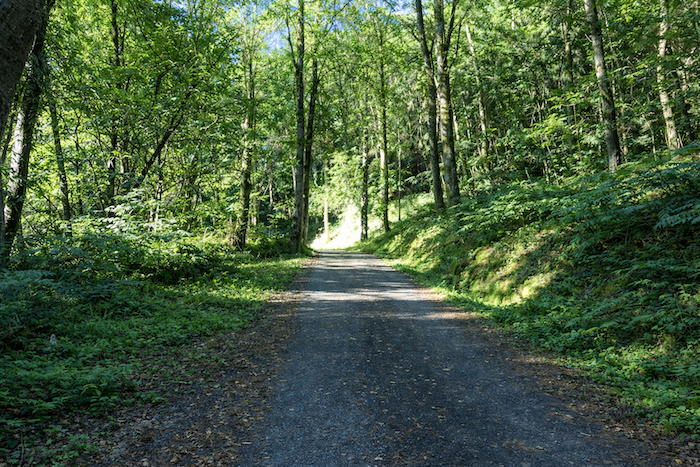
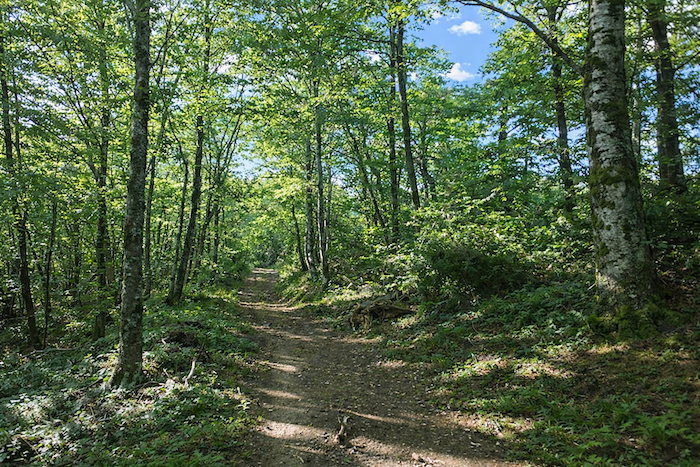
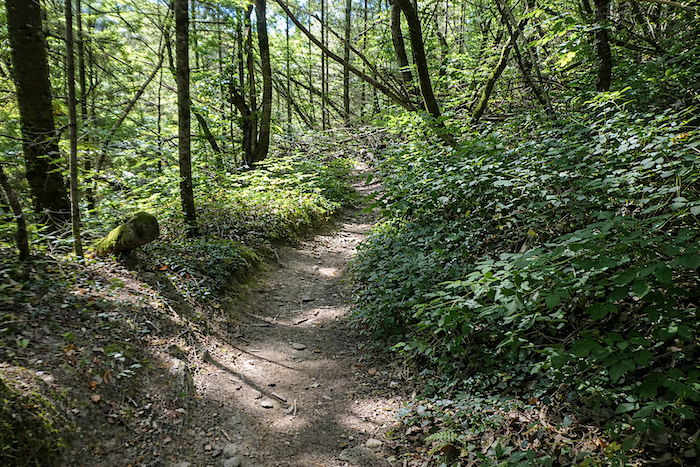
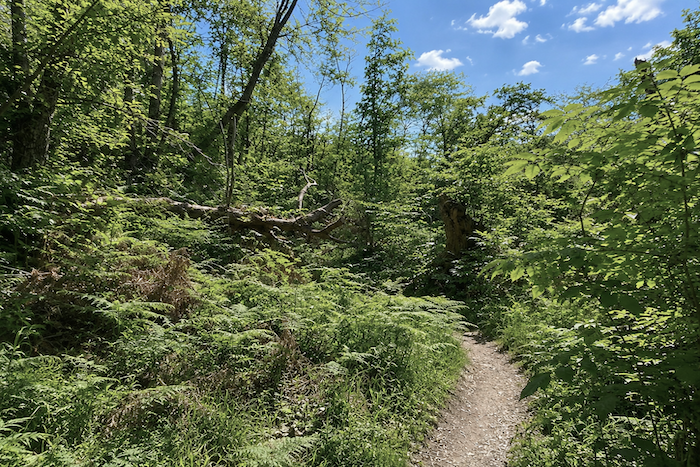
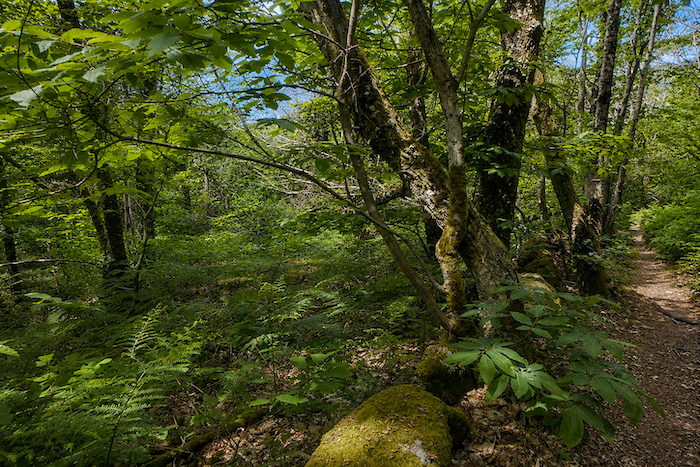
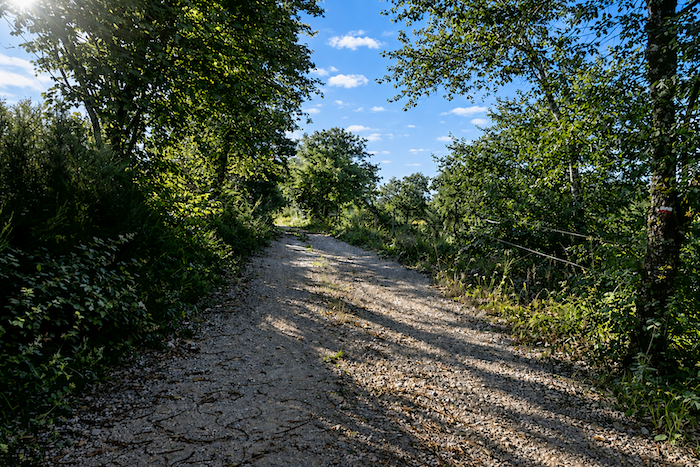
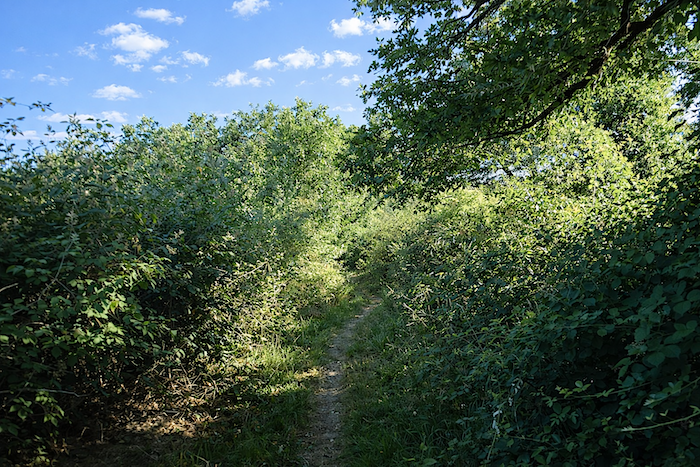
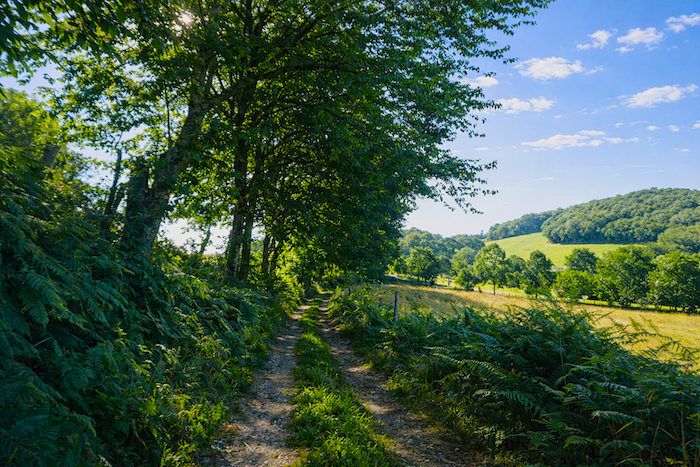
| A trail, initially narrow and almost furtive, gradually widens in the half-light of the woodland. As the vegetation grows denser, oaks occupy almost every available space, leaving room only for ferns and bushes. The paths here remain surprisingly free of stones. At times, the walker could almost believe that the rugged causses have been left behind for the gentler landscapes of green rolling hills. |
 |
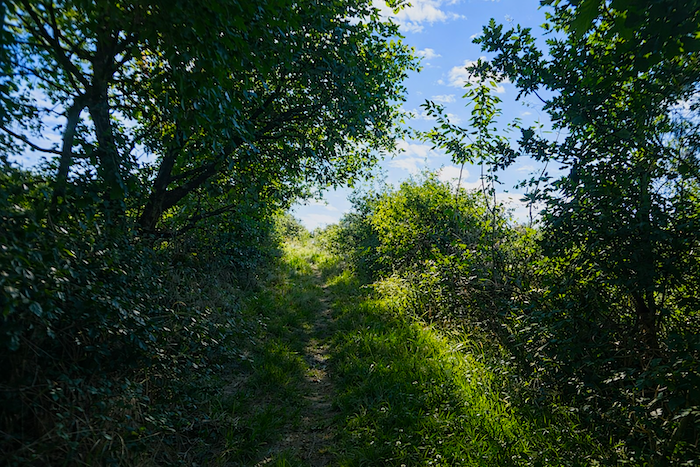 |
| At the edge of the woodland, the chestnut trees once again reveal their full magnificence. They need space and light to display their majestic presence. The GR6 then leaves the forest path and joins a steep country road clinging to the hillside. |
 |
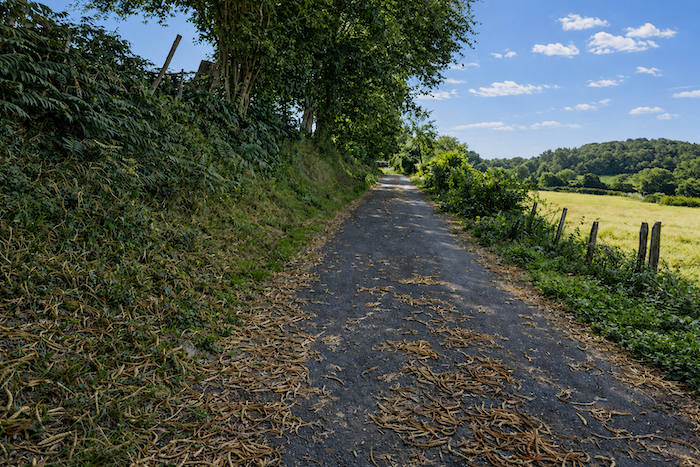 |
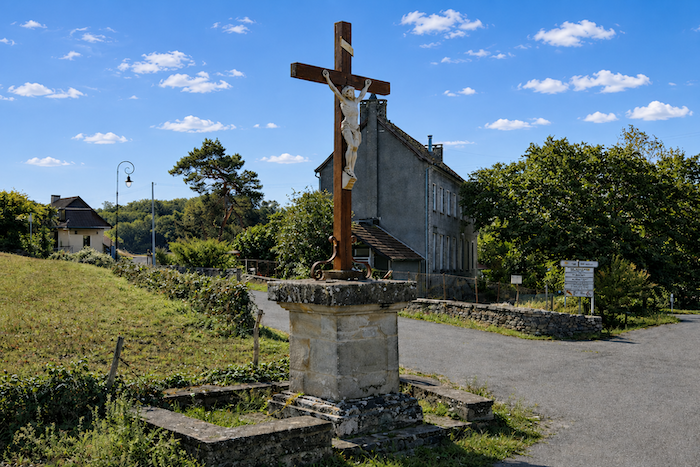
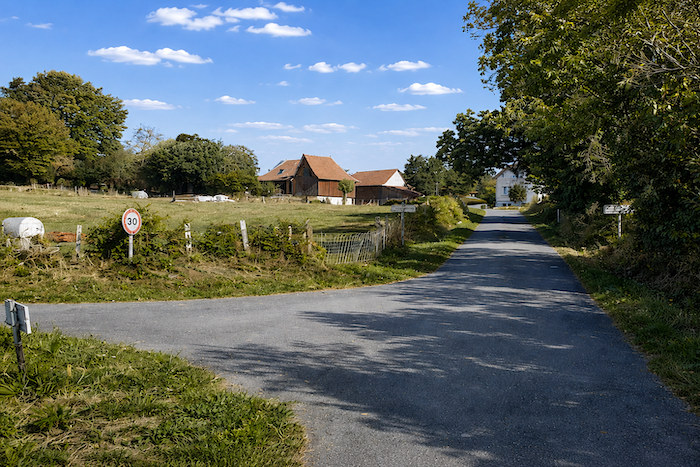
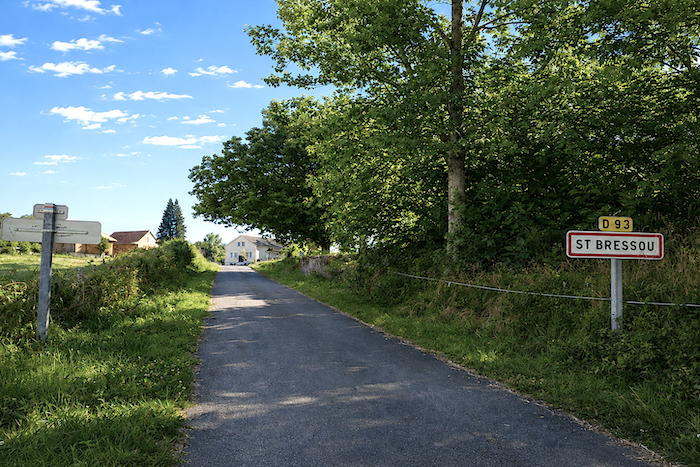
| The road leads to the entrance of St Bressou, a modest village nestled on the heights of the causse, beneath the silent protection of its cross standing against the landscape. |
 |
 |
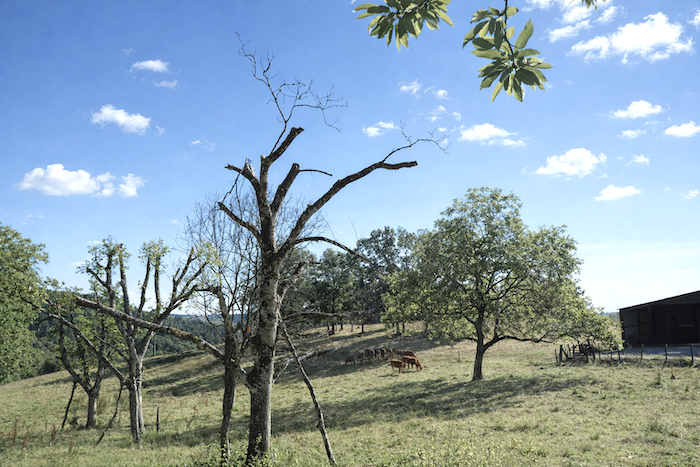
| On the plateau, the horizon finally broadens and allows the gaze to breathe freely. Yet very soon, the road plunges back towards the forest. Here, the farmers seem to share an almost affectionate bond with their old trees. They refuse to abandon them to death, and in return these weary giants still offer a few clusters of leaves, like a final gesture of gratitude. |
 |
 |
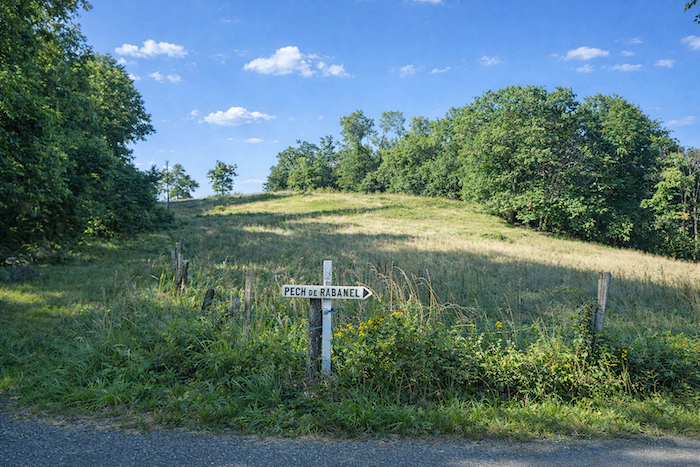
| Farther down, the road heads towards the Pech de Rabanel. In Occitan, the word “pech” means a hill. These heights are mainly known by the names of their scattered localities, where human dwellings remain rare and discreet amid the immensity of the landscape. |
 |
 |
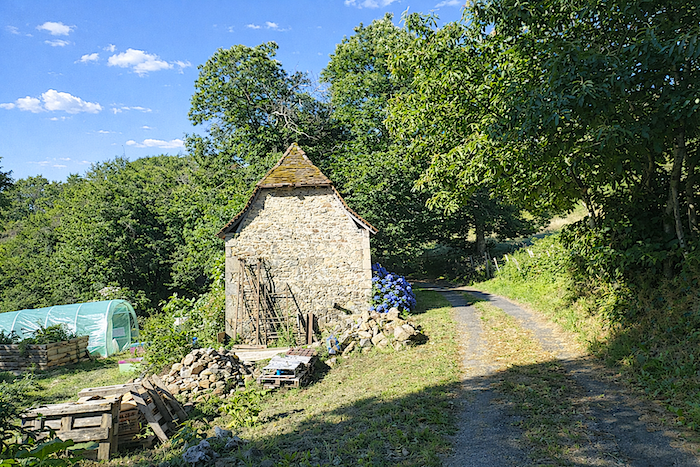
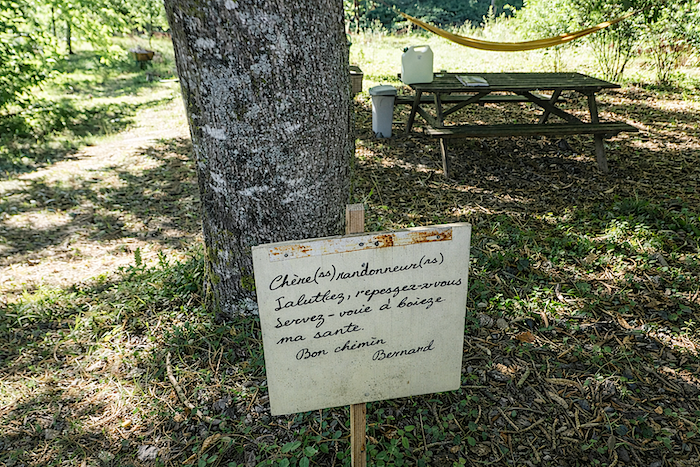
| Along the way, Bernard opens the doors of his stone farmhouse, set in the heart of this wild countryside, offering the pilgrimr a moment of conviviality and shared happiness around a simple, welcoming table. |
 |
 |
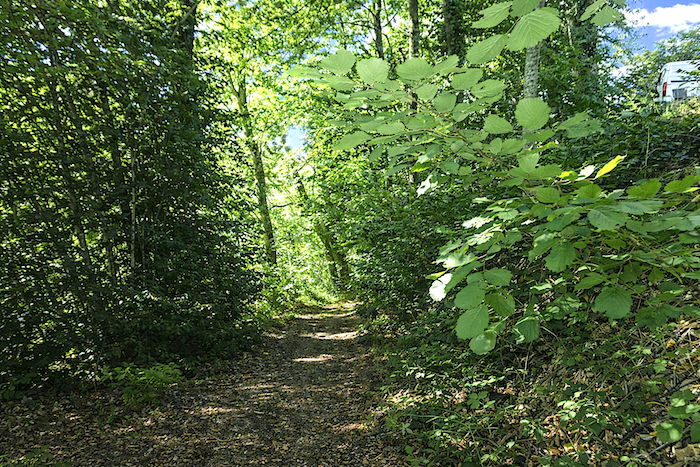
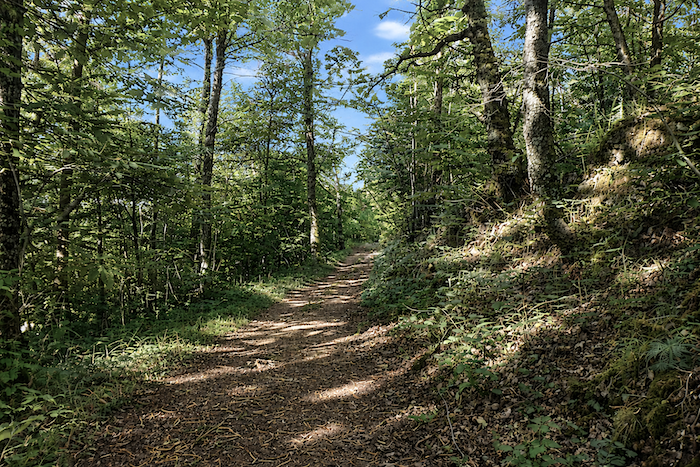
| The path then begins a sustained descent, with gradients sometimes exceeding 15%. It winds between hedges of hornbeam, wild rose and hazel that line the way like a country lane. Here, the forest once again becomes darker and denser, dominated by chestnut trees, oaks and ash trees. A few wild cherry trees also mingle their silhouettes with the depths of the woodland. |
 |
 |
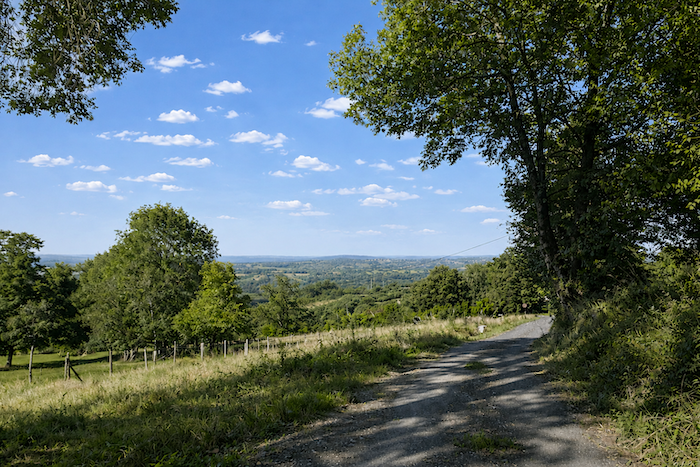
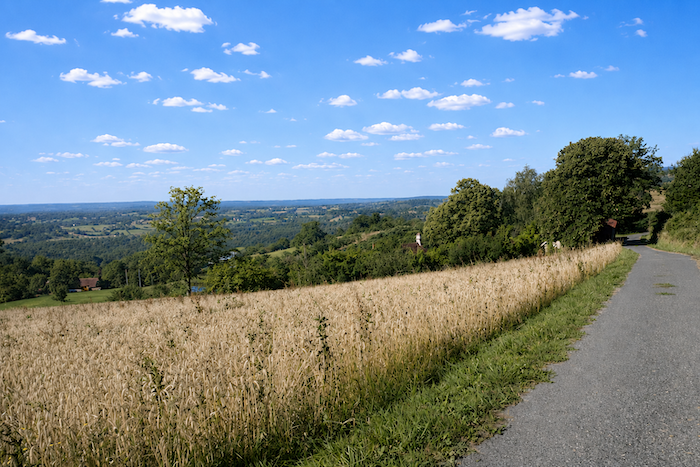
| Farther down, the landscape suddenly opens onto a road, while beyond the sparse cereal fields, the vast Causse du Quercy once again takes shape in the distance. |
 |
 |
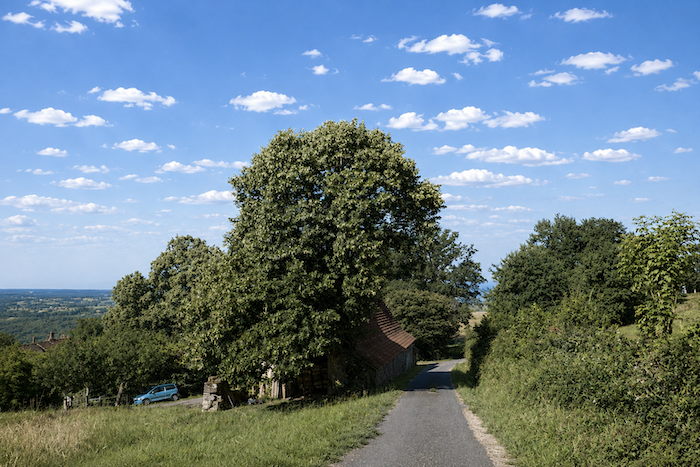
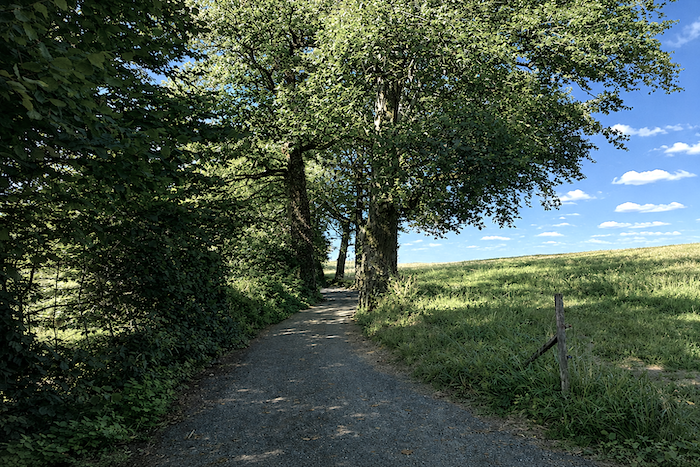
| Continuing its descent, the GR6 passes above the secluded Lake Espinadet, barely visible as the trees seem determined to conceal it beneath their dense canopy. . |
 |
 |
Section 3: Woodland galore and a beautiful lake
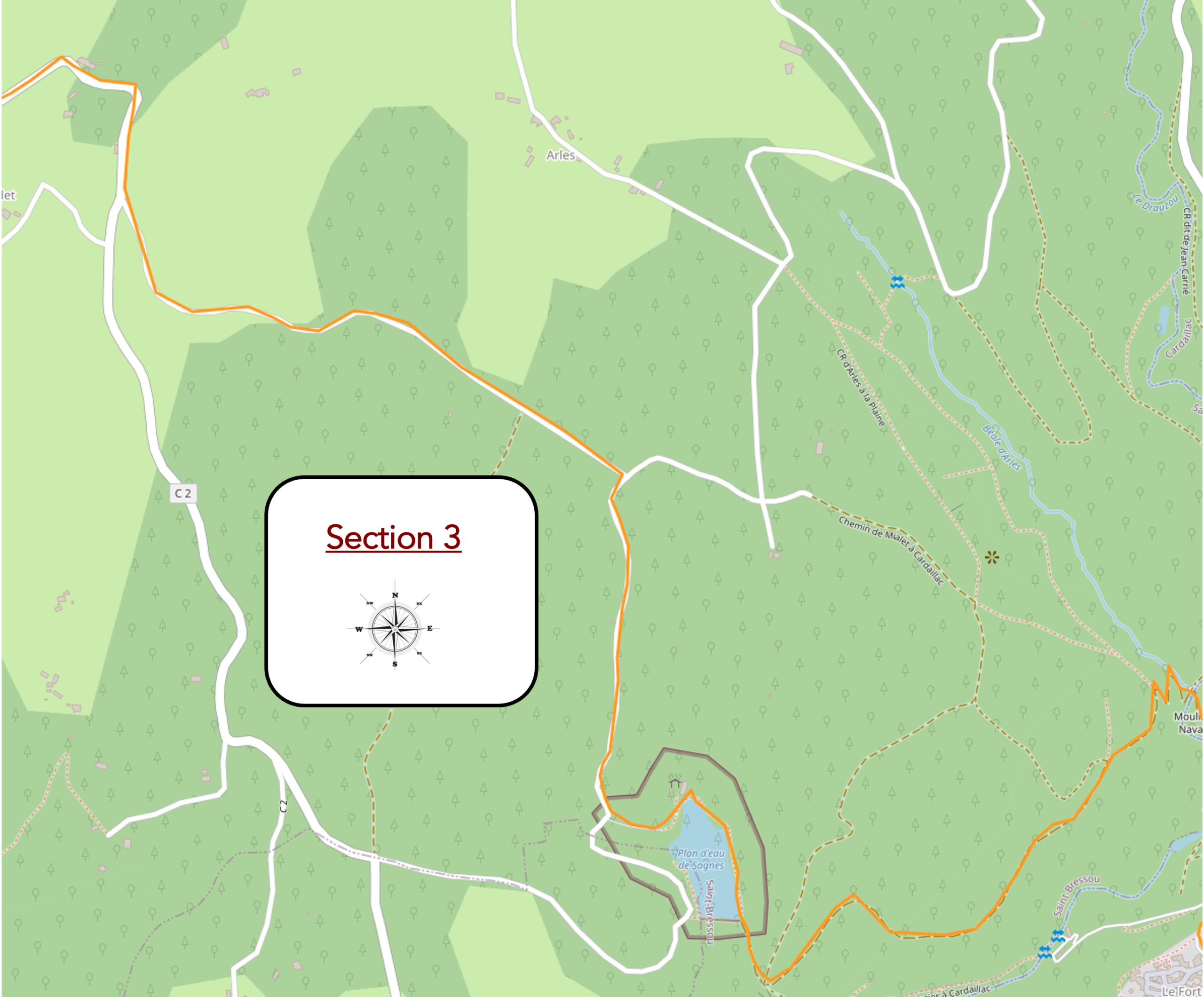
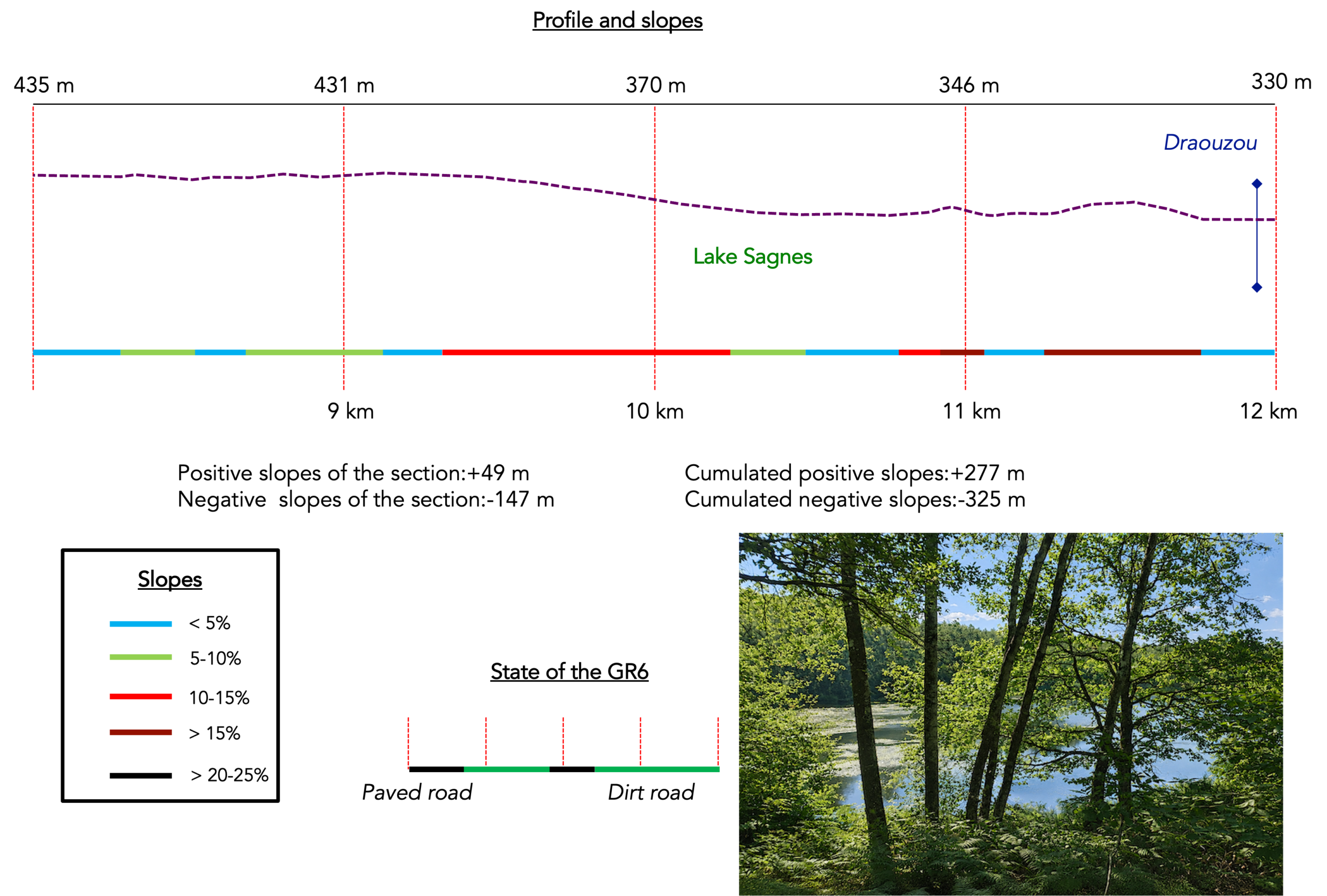
Overview of the route’s challenges : a demanding route with plenty of ups and downs, although most of the steeper sections are downhill.
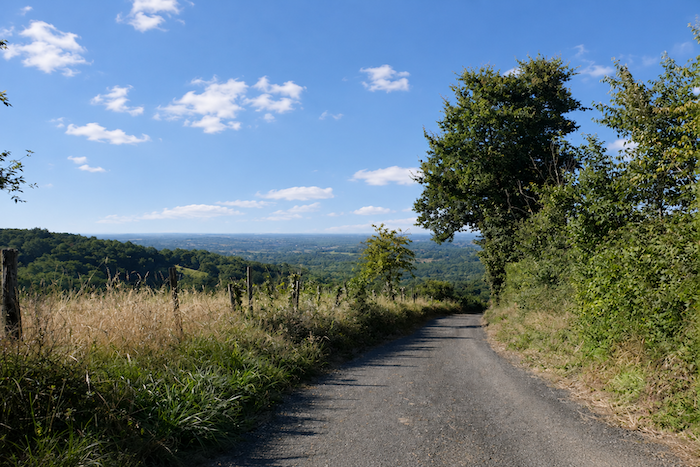
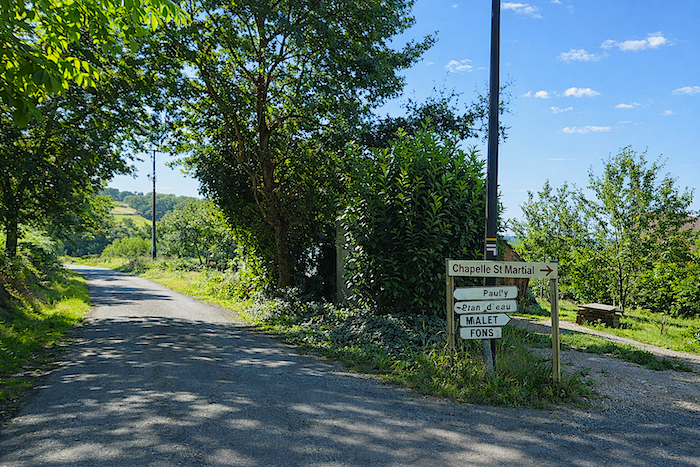
| Near the lake, the GR6 continues its gentle descent along the road until it reaches a junction leading to the Chapel of St Martial, which it passes by without making the detour. |
 |
 |
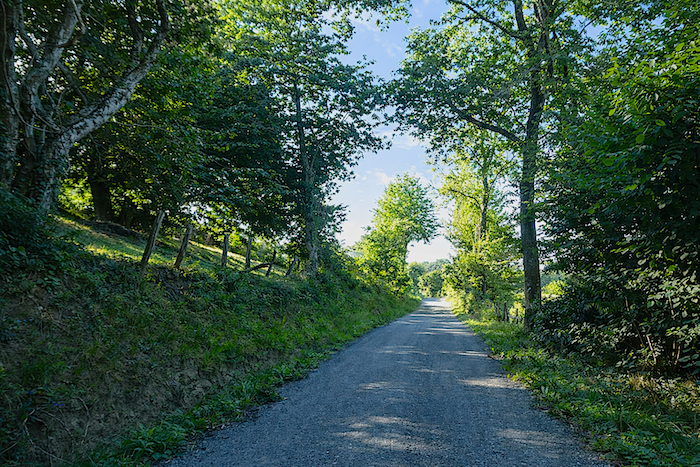
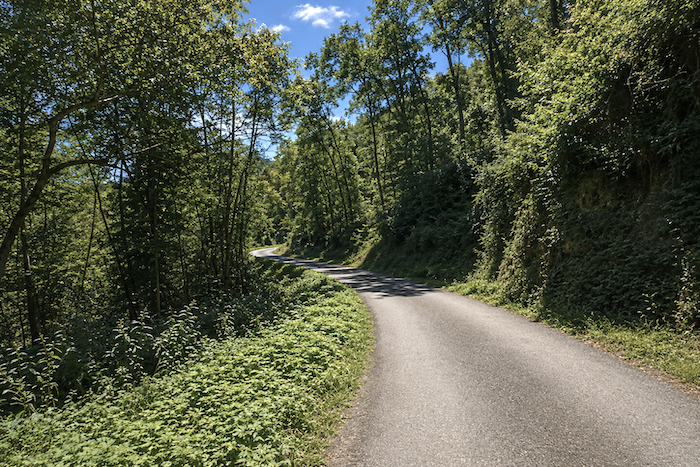
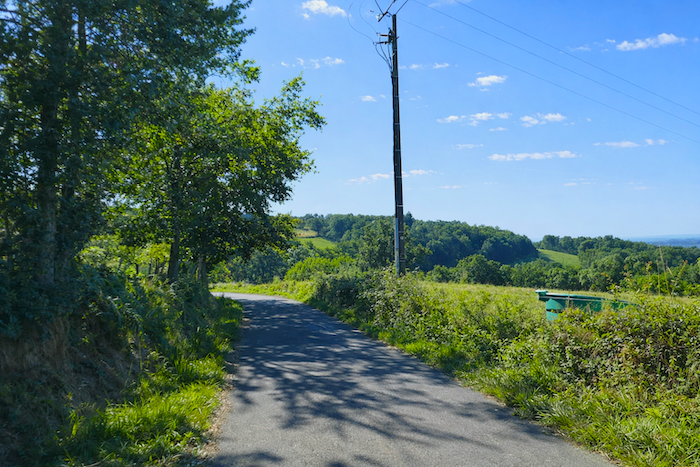
| The road then resembles a long grey serpent, winding silently through the deep greenery of the woodland. |
 |
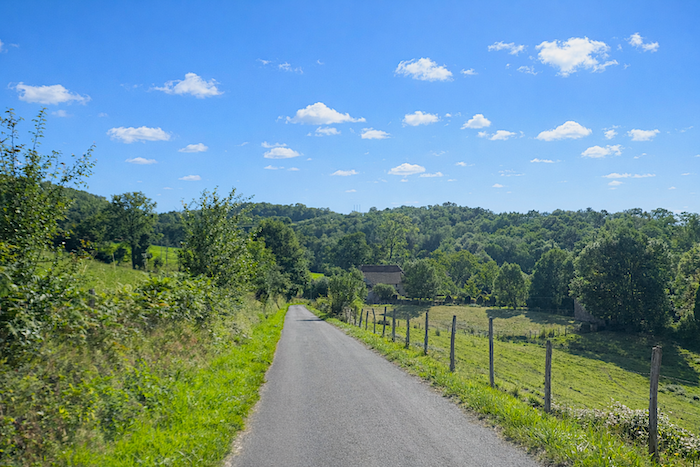 |
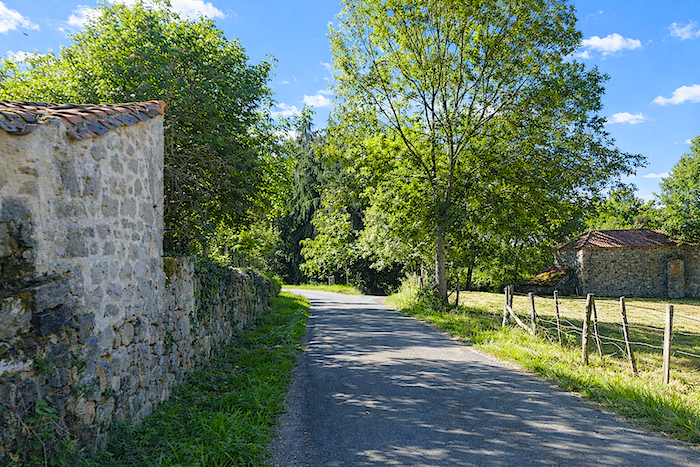
| Since the beginning of the stage, the forest has never ceased to delight. The valley slopes gently downwards in a broad sweep, gradually sinking into ever more secluded depths. And still those beautiful stone houses keep reappearing, leaving their timeless mark on the landscape. Amid this luxuriant vegetation, small roads occasionally branch away into forgotten dead ends, leading to a handful of isolated houses clinging to the hillsides. . |
 |
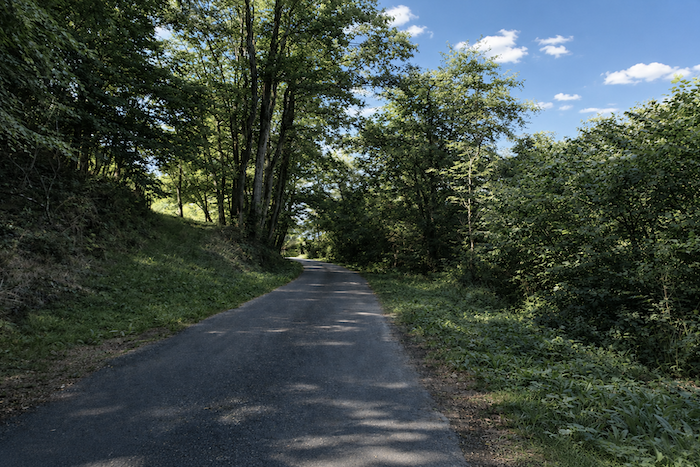 |
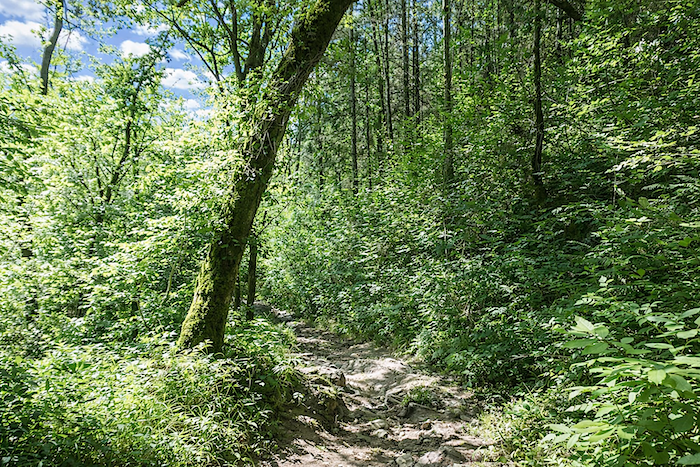
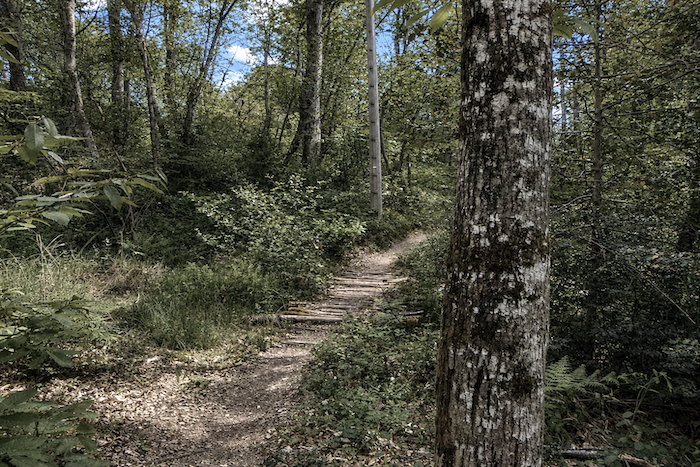
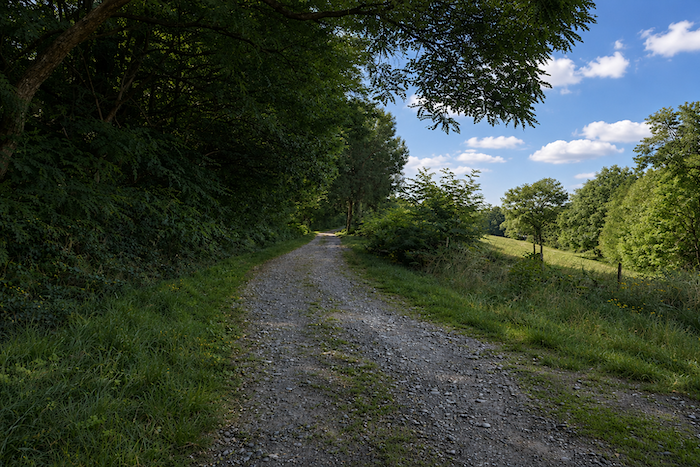
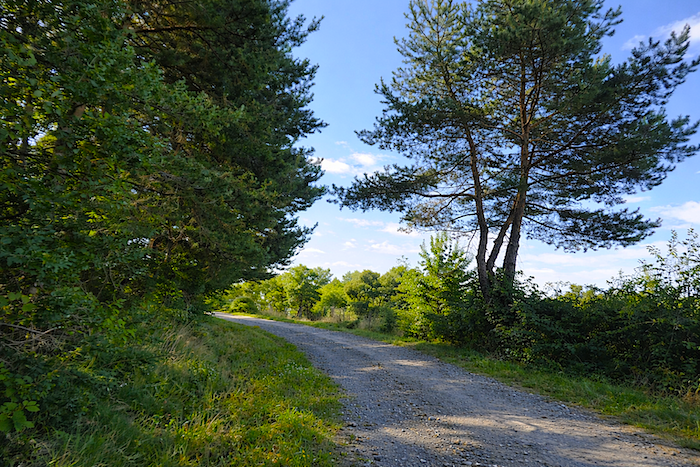
| The route then leaves the road and returns to a path that begins at the top of a small bank that must first be climbed. Who could truly describe the simple pleasure of these trails running beneath the trees, through the shifting coolness of the foliage? |
 |
 |
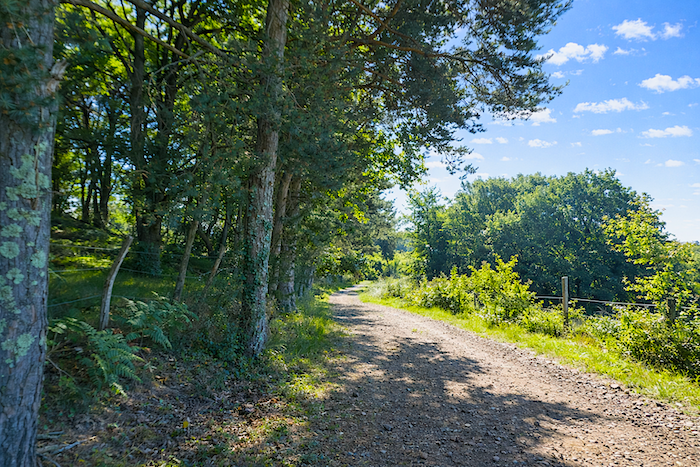
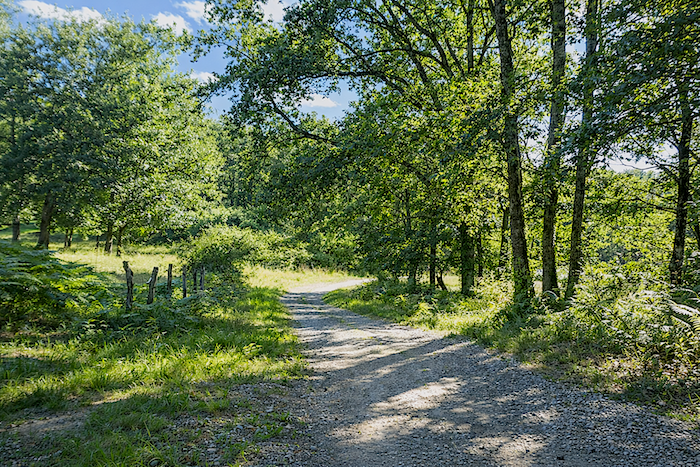
| But this interlude lasts only a moment, as the path quickly begins to descend again. A veritable game of twists and turns now begins, punctuated by gentle ups and downs. The landscape becomes delightfully undulating, sometimes opening onto clearings of brilliant green, sometimes closing in again within the intimacy of the forest. |
 |
 |
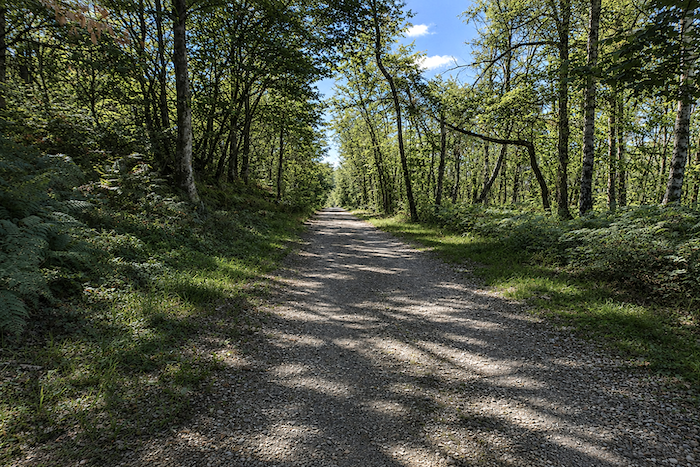
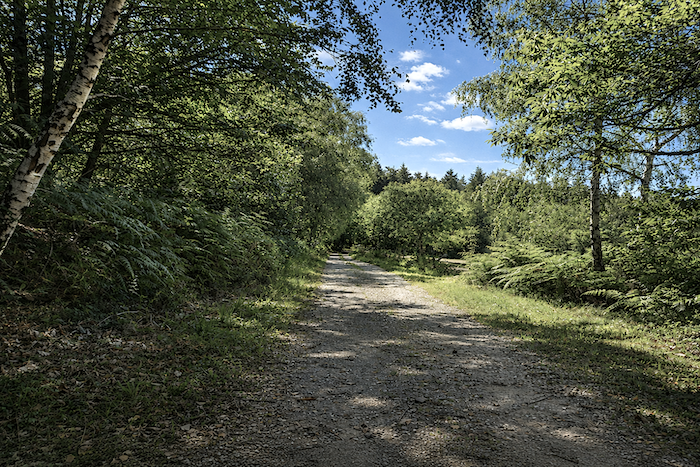
| The path then undulates among chestnut trees that seem to flourish here with particular exuberance. Oaks and maples compete for height in their silent quest for light. More unusually along the Rocamadour variant, a few pine trees also appear, scattering their cones across the ground like discreet offerings from the forest. |
 |
 |
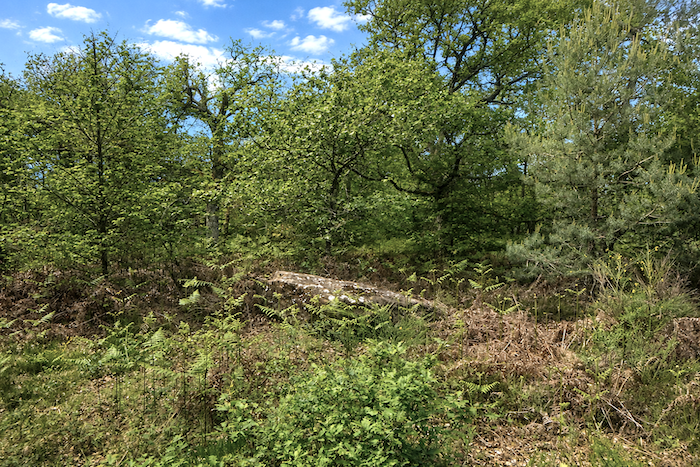
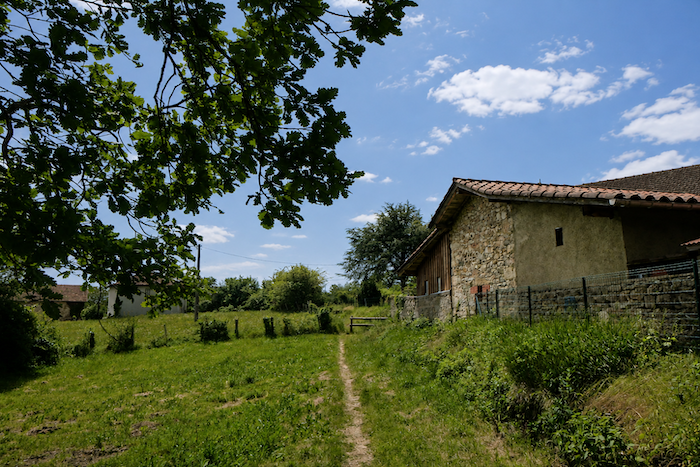
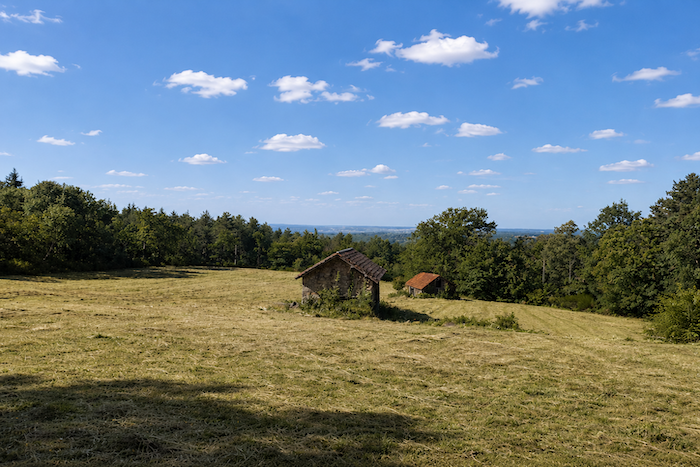
A little farther on, the path reaches a clearing. Crossing these wild horizons awakens a profound sense of solitude, softened only by the silhouettes of a few beautifully proportioned stone barns, standing there like shelters outside the passage of time.
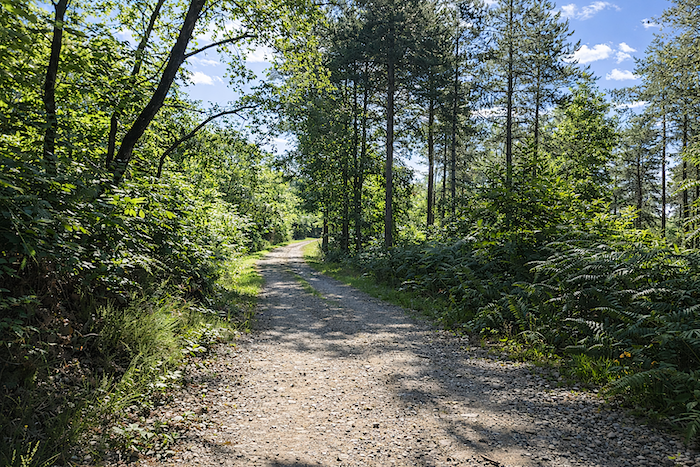
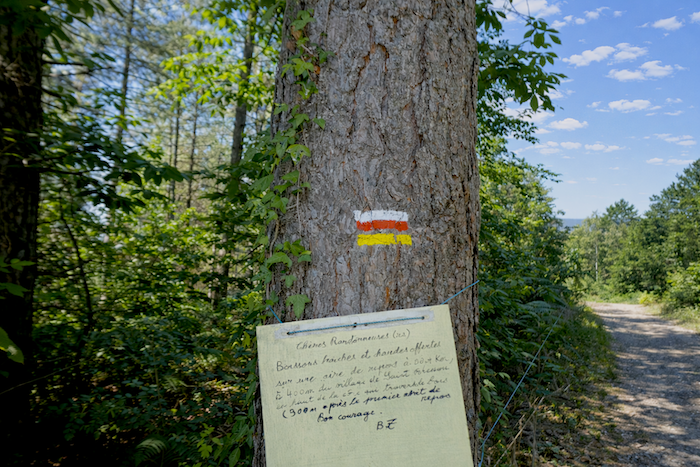
| After this brief escape into open countryside, the path plunges once again into the intimacy of the forest. Here, the pines seem to have conquered the entire landscape, imposing their presence to the point of almost smothering the other trees. Just a few steps from the path, a local landowner offers hikers a refreshing stop in the heart of this shady woodland. |
 |
 |
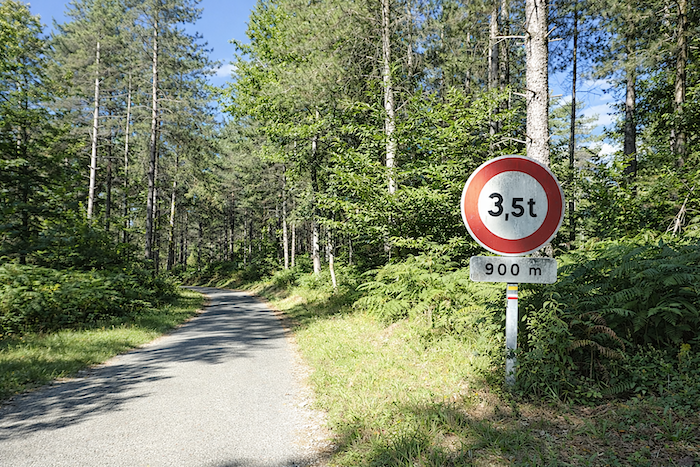
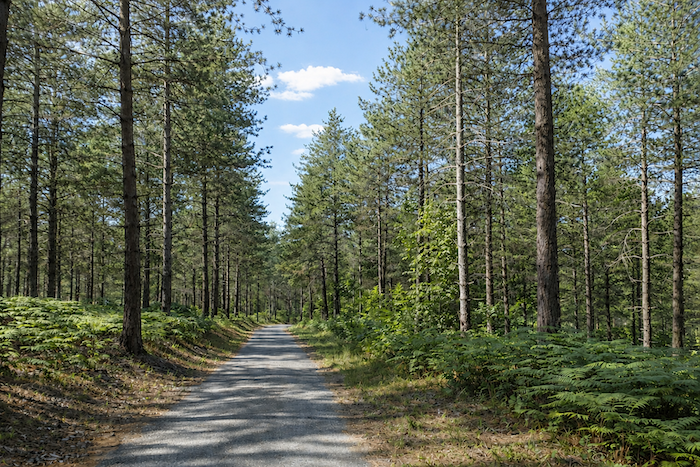
| The route then leaves the forest path and joins a road where vehicles must be few and far between. The gradient remains steep beneath the pines, while the light plays gracefully among the treetops, scattering shifting patches of shadow across the ground. |
 |
 |
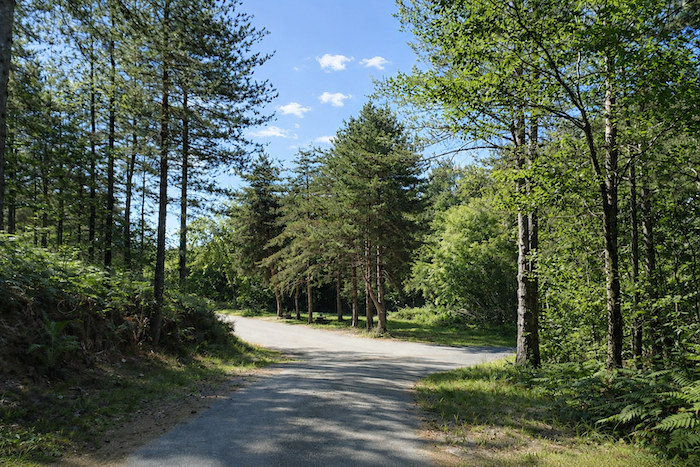
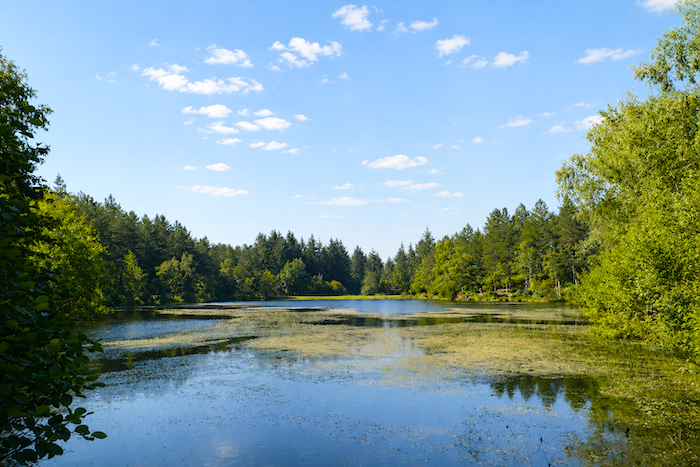
| Suddenly, the “Lac des Sagnes” appears below, nestled beneath deciduous trees and pines. Here, the route once again feels wonderfully natural, and the walker steps onto this peaceful path with renewed pleasure. |
 |
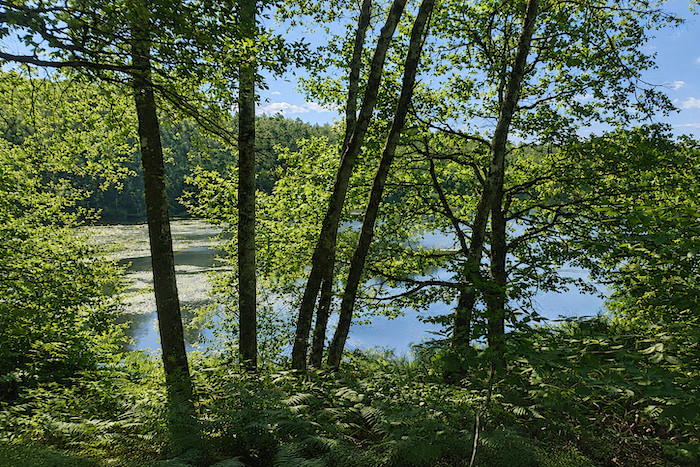 |
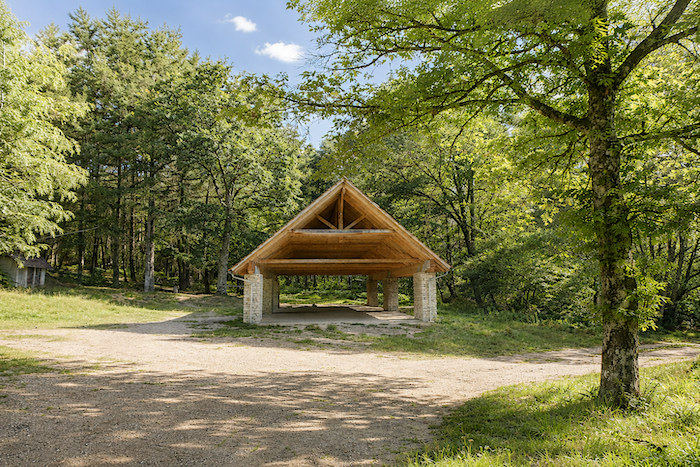
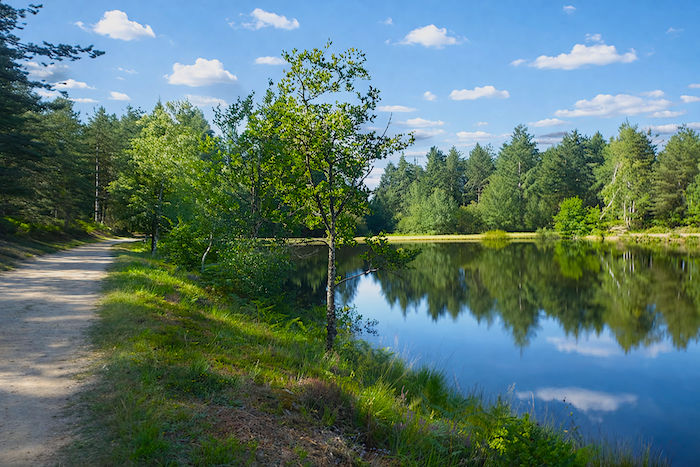
| This is a small lake where tranquility seems to be an unspoken rule, set amid scenery of great beauty. Anglers and picnickers happily come to enjoy this peaceful haven, which can be reached either on foot from Cardaillac or by the road running along the opposite shore. |
 |
 |
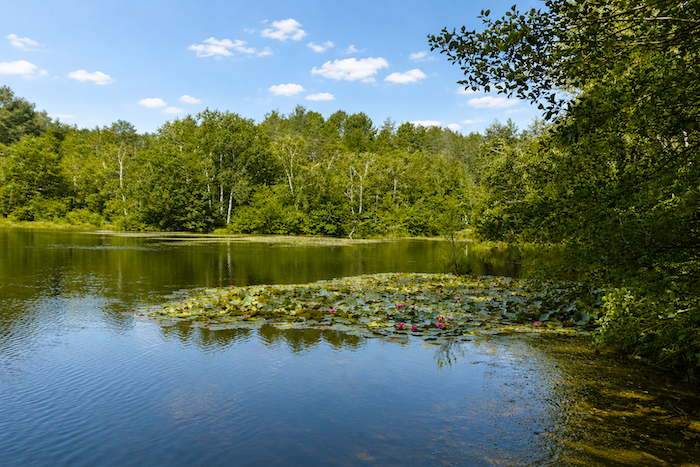
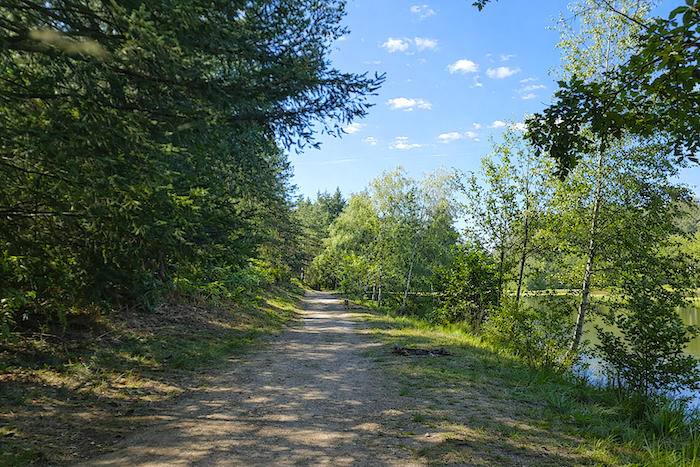
| A pleasant path then follows the peaceful waters of the lake, passing improvised barbecues, rustling reed beds and carpets of water lilies beneath which fish and toads hide from view. |
 |
 |
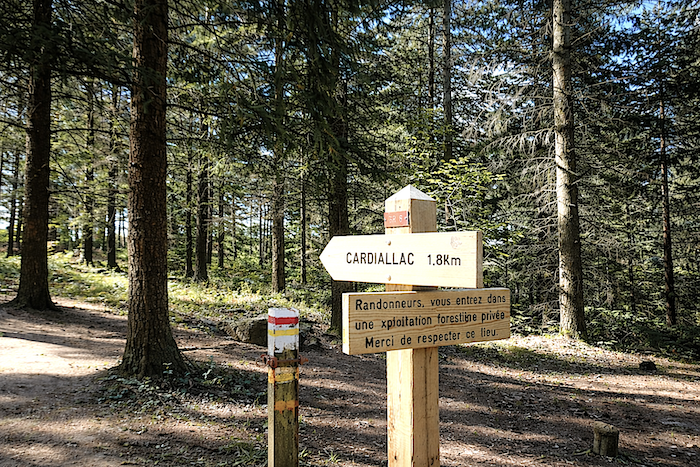
| At the far end of the lake, Cardaillac is now less than two kilometers away. Hikers are reminded here to respect this precious forest, part of which remains privately owned. |
 |
 |
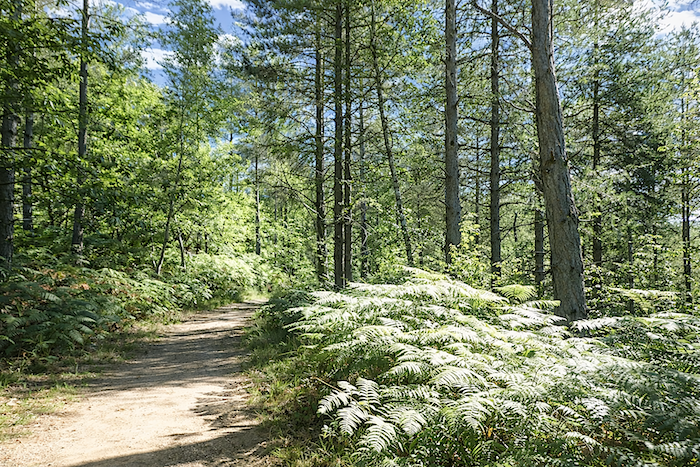
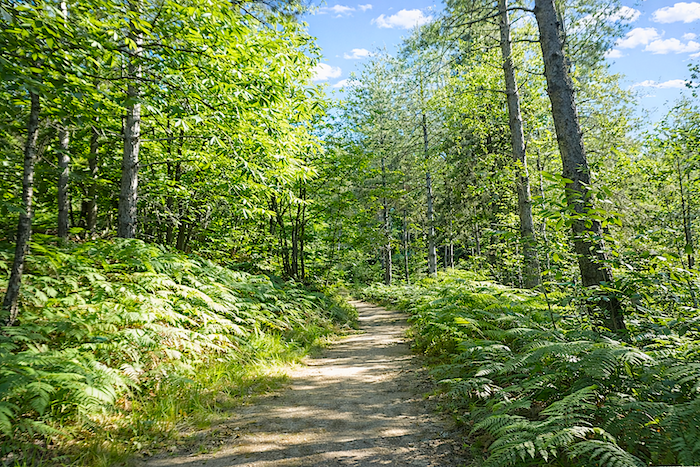
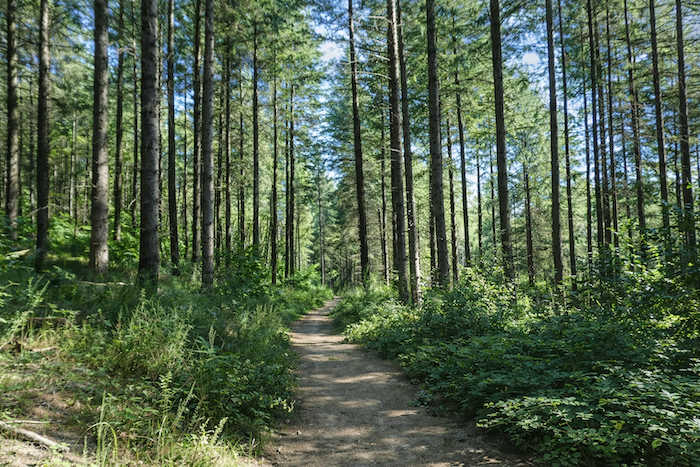
| The path continues its descent through the silent magic of the forest, among ferns and broom, beneath the omnipresent pines mingled with a scattering of deciduous trees. |
 |
 |
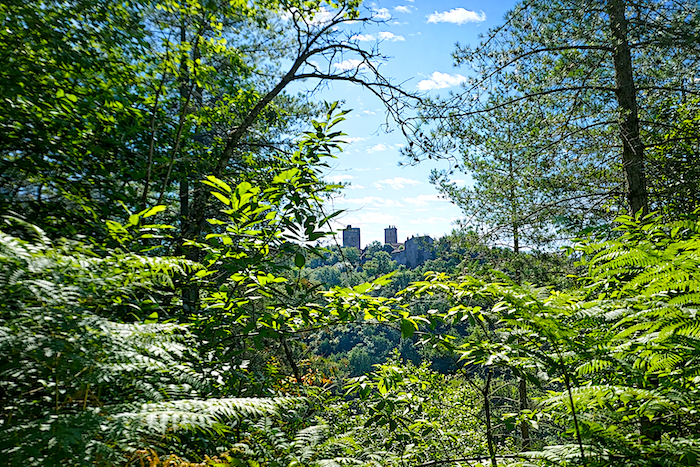
| Soon, the towers of Cardaillac appear in the distance between the trees, like a promise still some way off. The forest path remains rugged and undulating. It even climbs steeply again for several hundred meters, as though determined to delay the return to the valley a little longere. |
 |
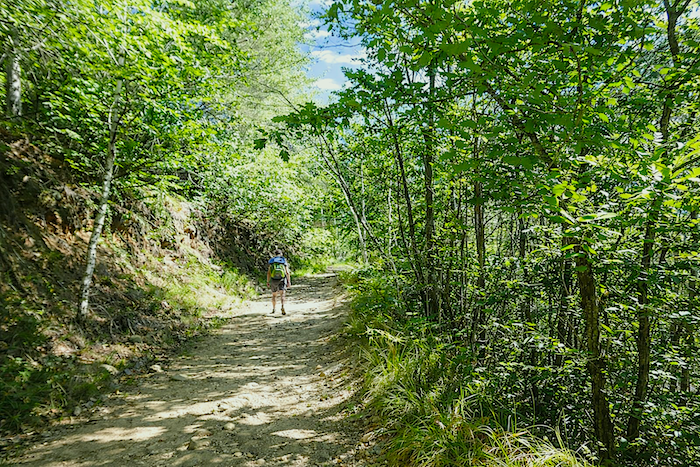 |
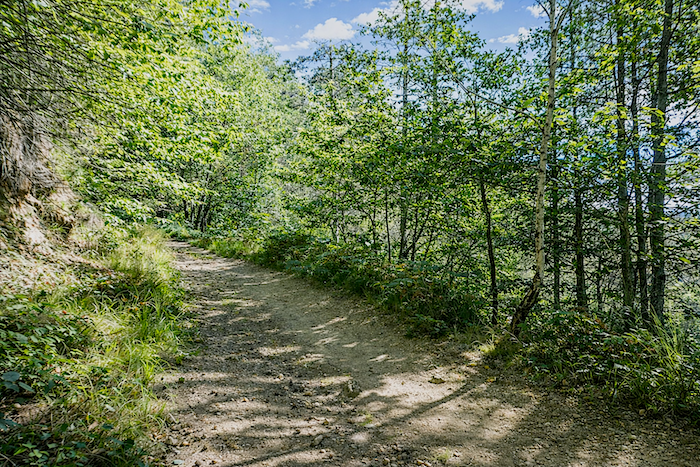
| It then plunges immediately into an increasingly steep descent. Here, the loose ground feels almost like sand beneath the walker’s feet. |
 |
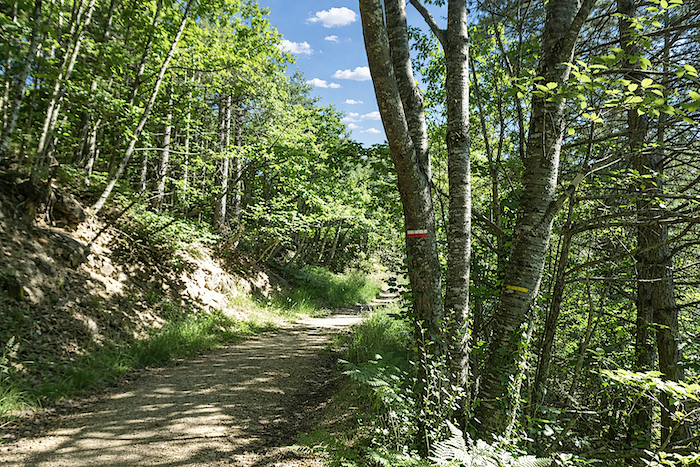 |
By now, the towers of Cardaillac are a more constant presence, watching over the traveller above the trees like sentinels standing on the horizon.
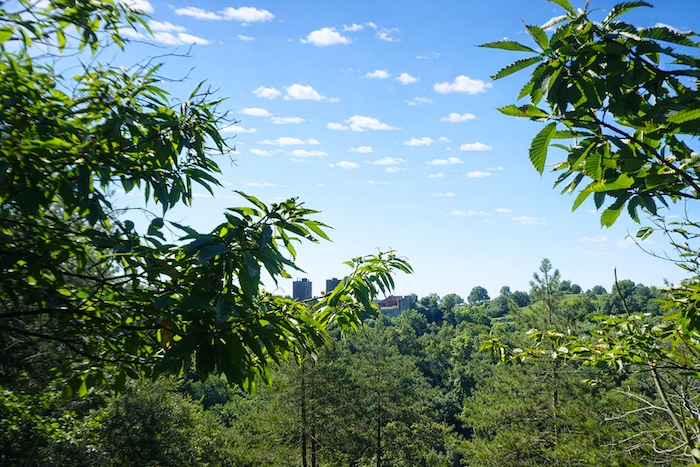
| On this demanding slope, chestnut trees and oaks now compete for space with the stunted pines clinging to the hillside. |
 |
 |
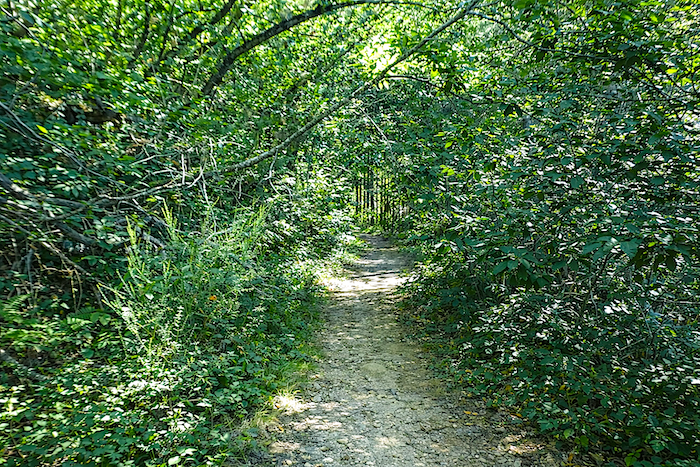
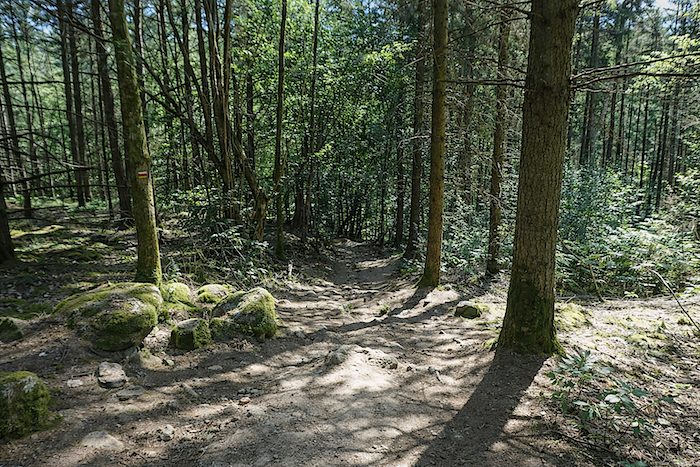
| The path then becomes rougher and more difficult, pushing its way into a tangle of scrub. From somewhere in the distance comes the murmur of a stream, quietly gurgling in the valley below. |
 |
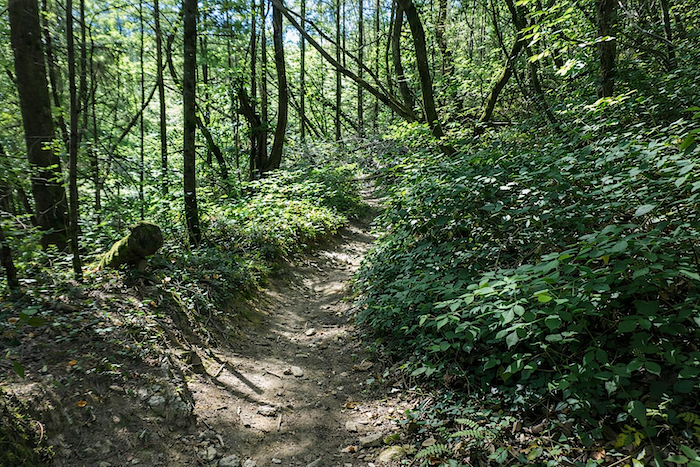 |
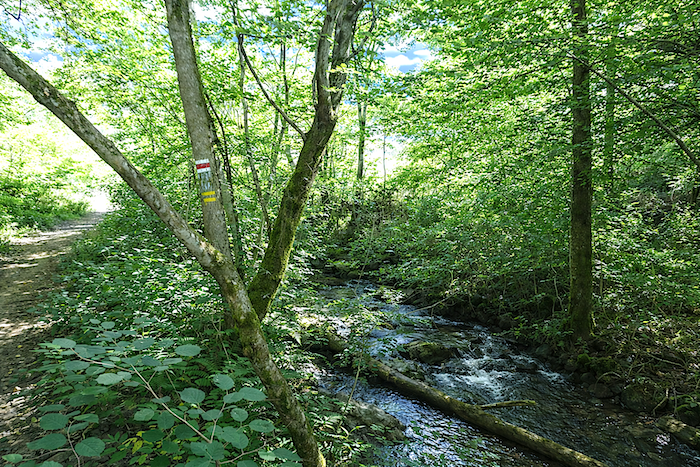
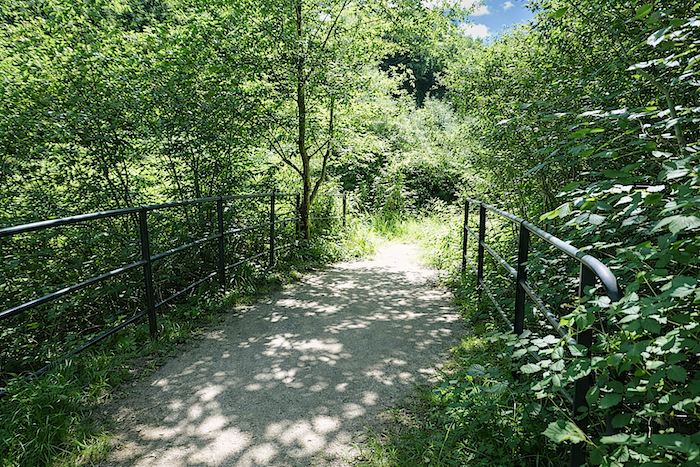
| At the bottom of this long descent, immersed in the abundant greenery of the narrow valley, the path finally crosses the Drauzou stream in the cool, damp shade of the woodland. |
 |
 |
Section 4: Passing through the little gem of Cardaillac
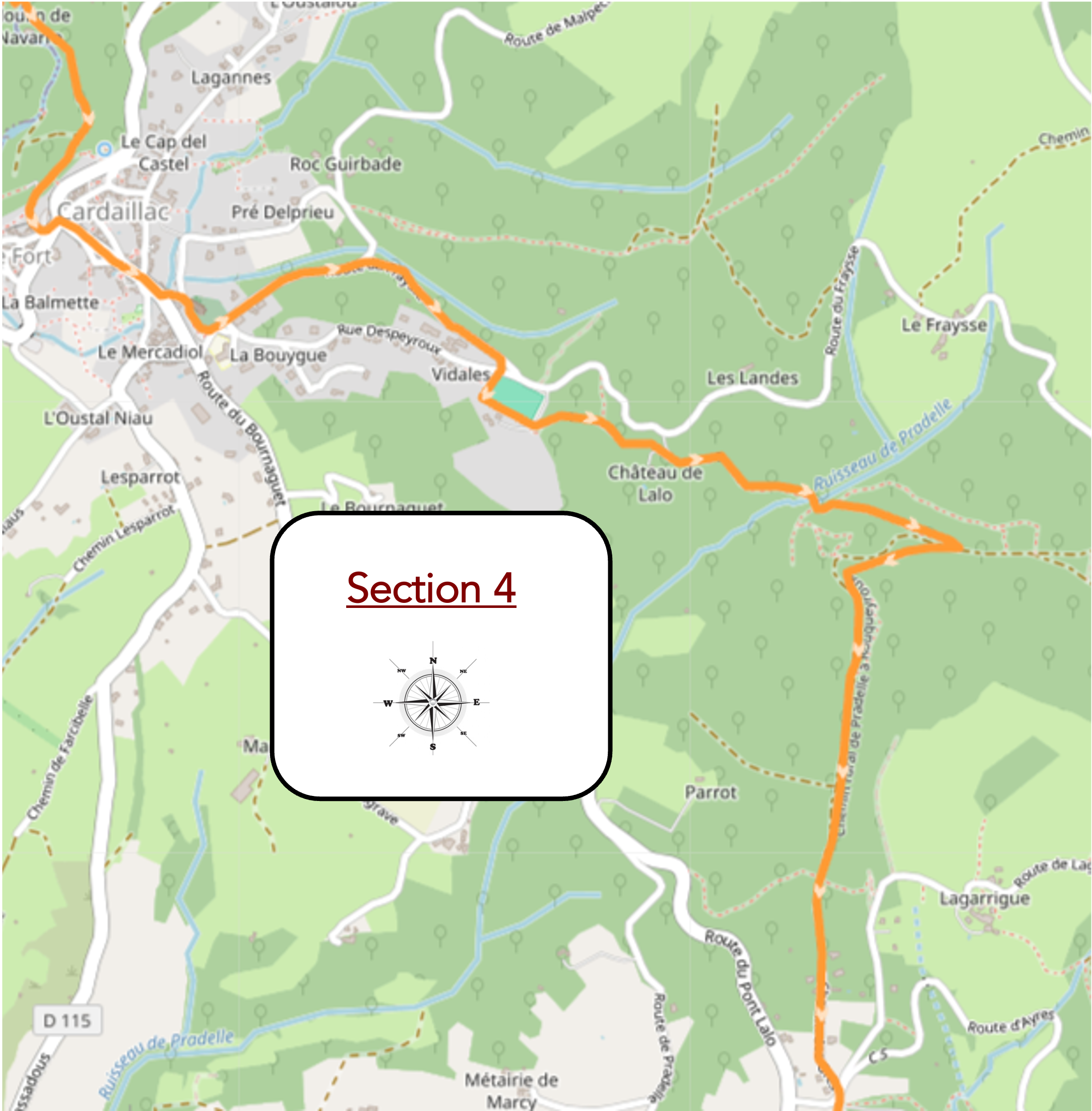
Overview of the route’s challenges : a demanding route above the village and through the forest,
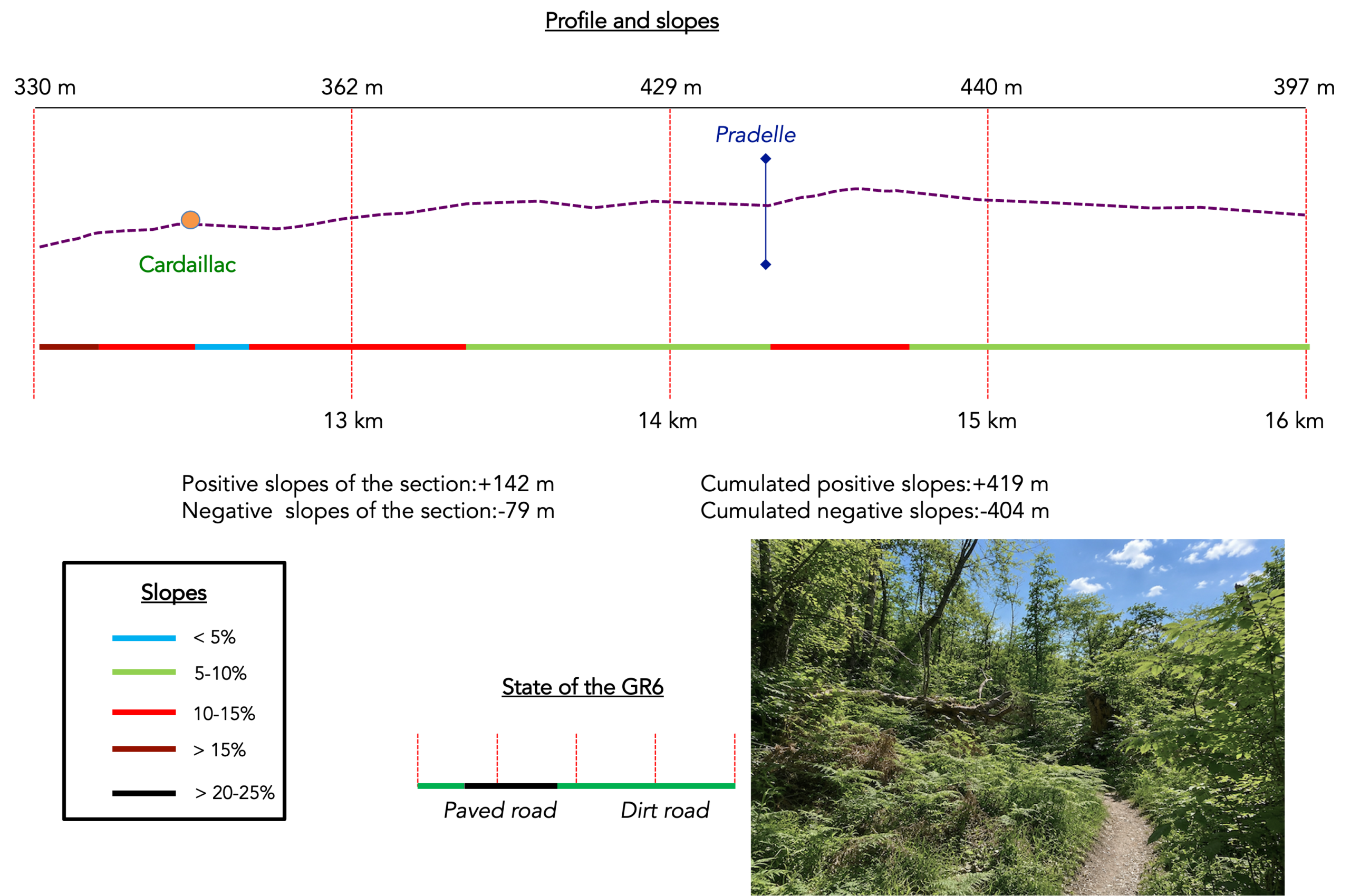
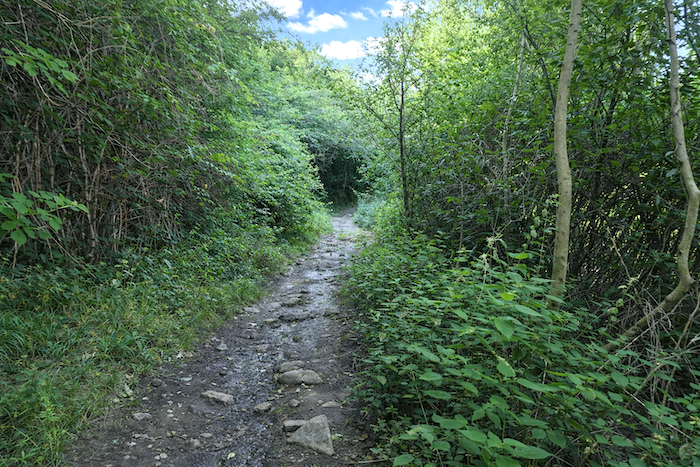
| From the stream, the climb towards Cardaillac offers no respite. The route rises steeply along the hillside, following a narrow, stony trail that winds through the depths of a dark valley, amid damp shadows and the silence of the woodland. |
 |
 |
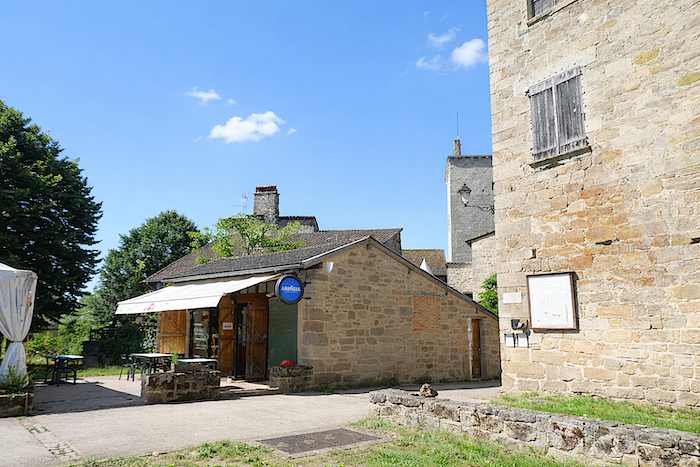
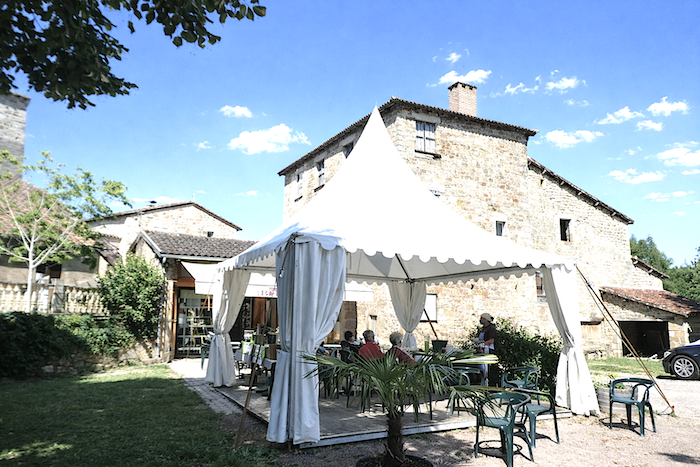
| Then, almost without warning, the walker emerges onto the small village square, lined with cafés and terraces, a welcome haven that tired hikers would be well advised to enjoy. |
 |
 |
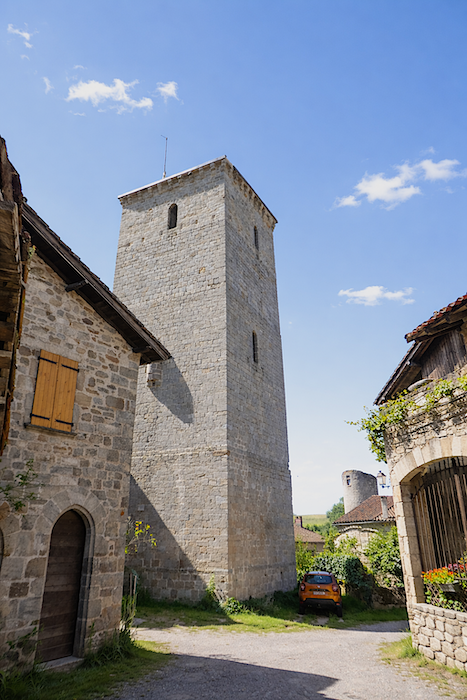
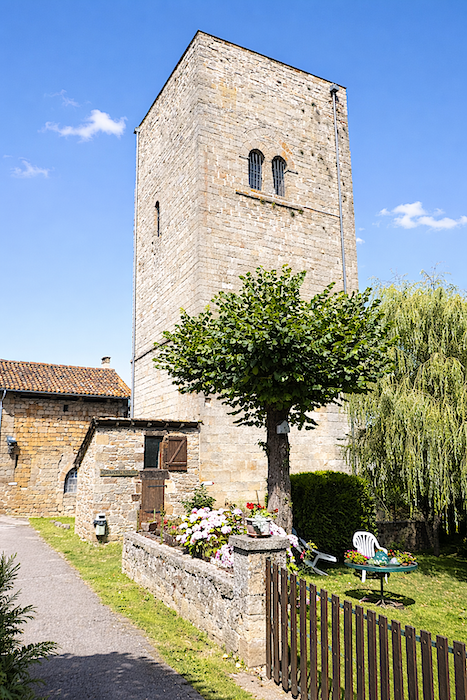
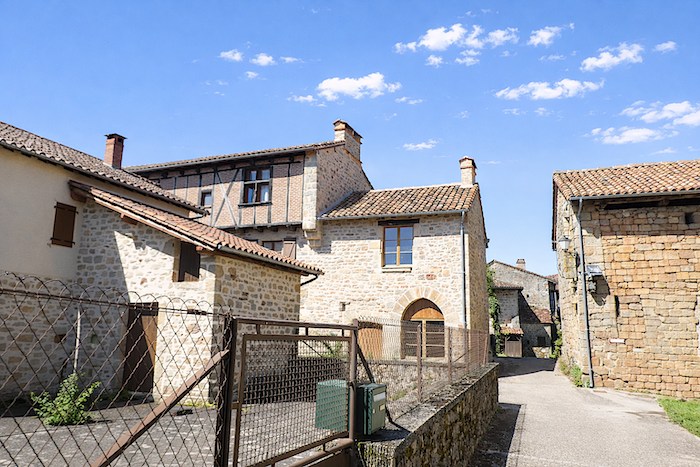
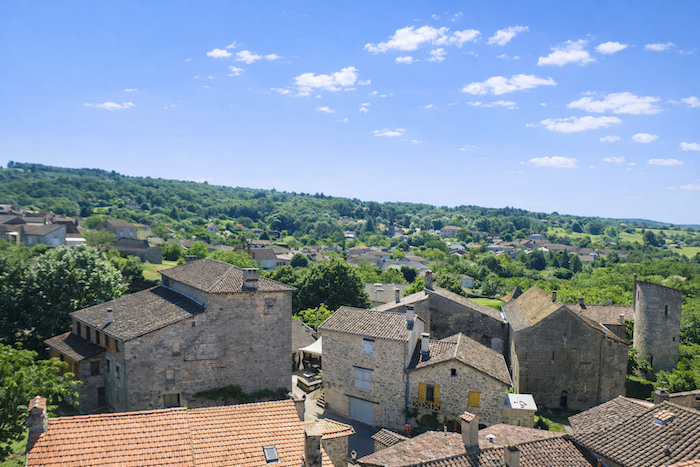
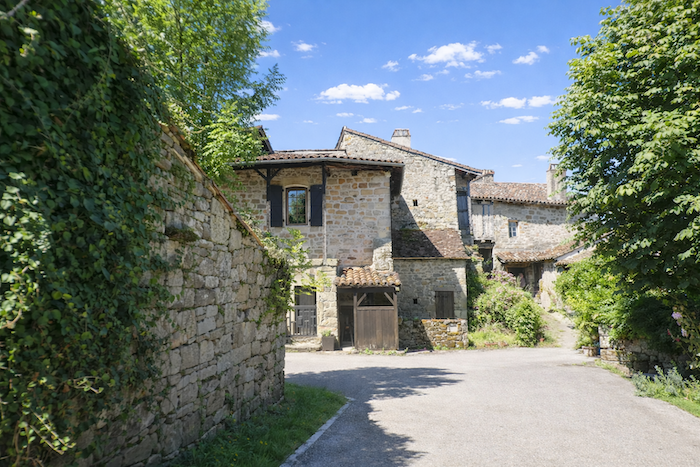
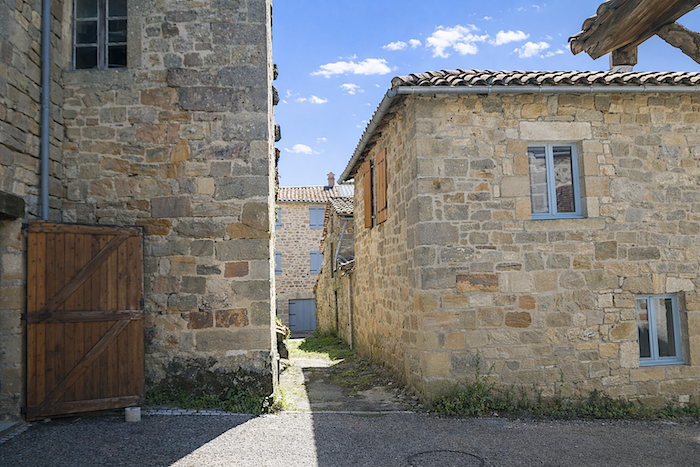
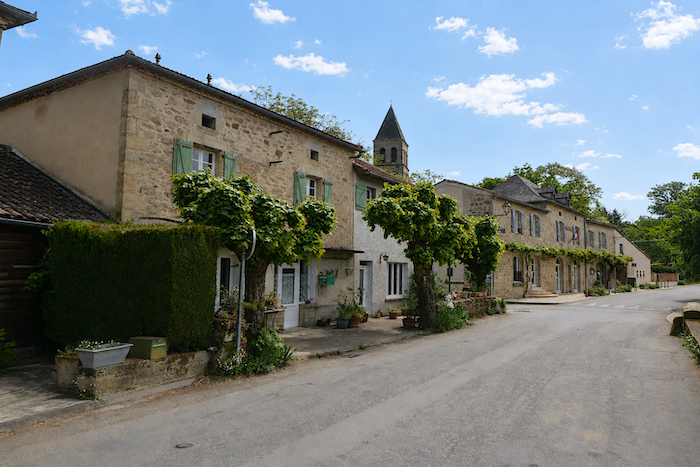
| Cardaillac, a modest village of around six hundred inhabitants, stands majestically on its rocky spur and fully deserves its place among “Les Plus Beaux Villages de France”. Here, the Middle Ages seem to have refused to disappear. They live on in the maze of winding streets, the narrow passageways and the tall houses of white and pink sandstone that create a setting of remarkable harmony. Looking at this village seemingly suspended outside time, it is hard to believe that houses can still be bought here at such accessible prices.
The village takes its name from one of the most prestigious families of Quercy, already encountered in Lacapelle-Marival. Cardaillac was the original stronghold of the senior branch of this powerful noble family. Three imposing thirteenth-century towers still survive from the fortress first built here in the eleventh century, their austere silhouettes continuing to dominate the landscape. More recently, like so many other villages in the region associated with the Resistance fighters of the maquis, Cardaillac endured the violence of the German Occupation. |
 |
 |
 |
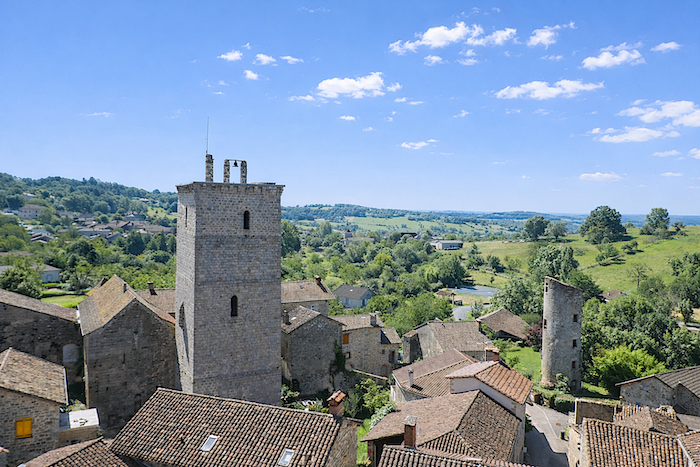 |
| For those undaunted by narrow staircases, climbing one of the towers open to the public offers an unforgettable reward, a breathtaking encounter with the wild, mineral beauty of this extraordinary place. |
 |
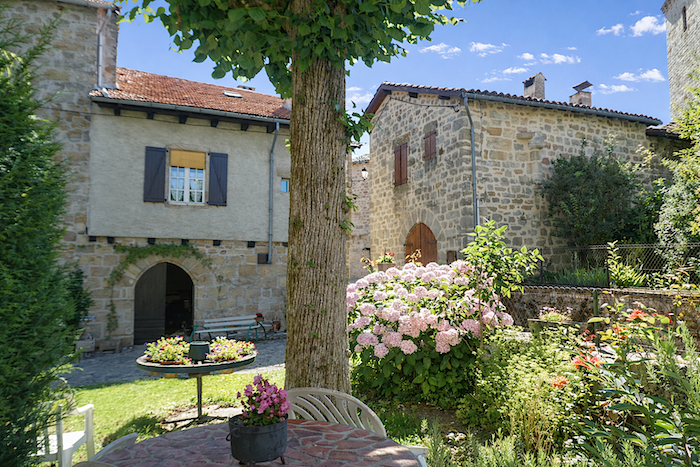 |
| The limestone glows in the light, shifting effortlessly from chalky white to shades of pink and lending the houses an almost southern nobility. |
 |
 |
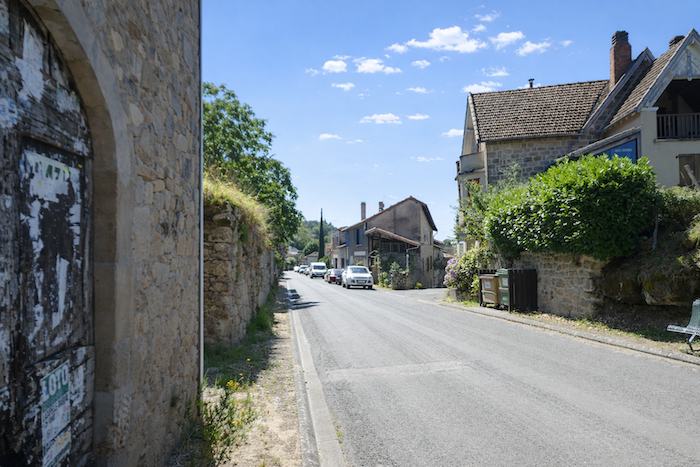
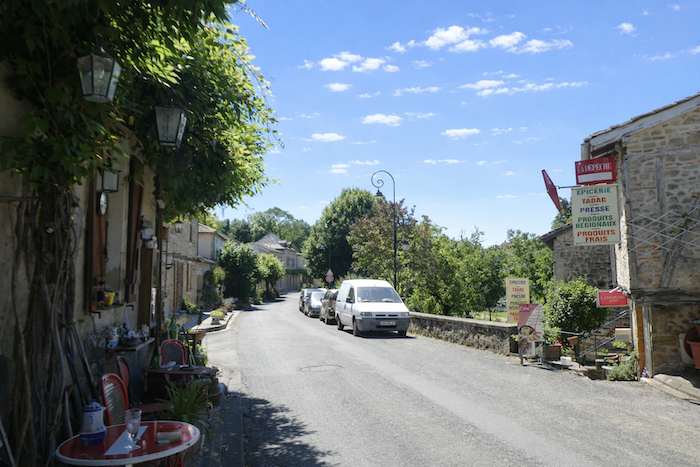
| The route then descends along the village’s main street, lined with small shops and old façades that further prolong the medieval charm of the surroundings. |
 |
 |
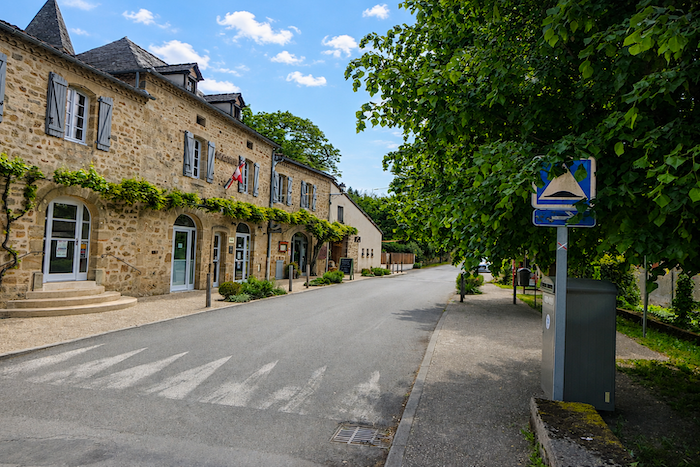
| In the heart of the village, however, care is needed to avoid mistakenly continuing along the departmental road. A cross marking the wrong direction clearly indicates that you must leave the main road and take another route. |
 |
 |
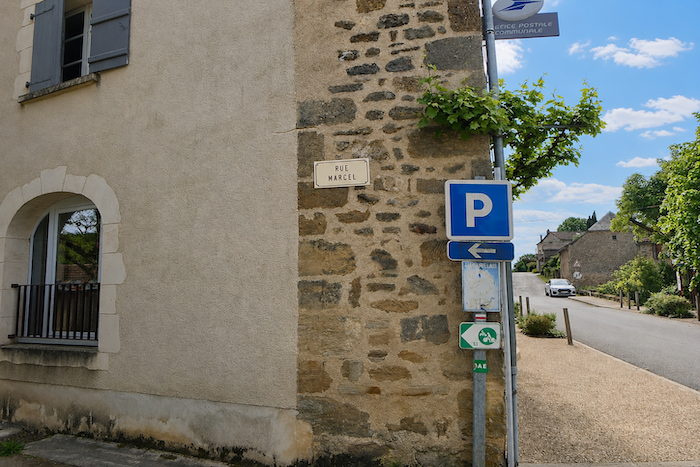
| The route then turns left into Rue Marcel, heading towards the church. |
 |
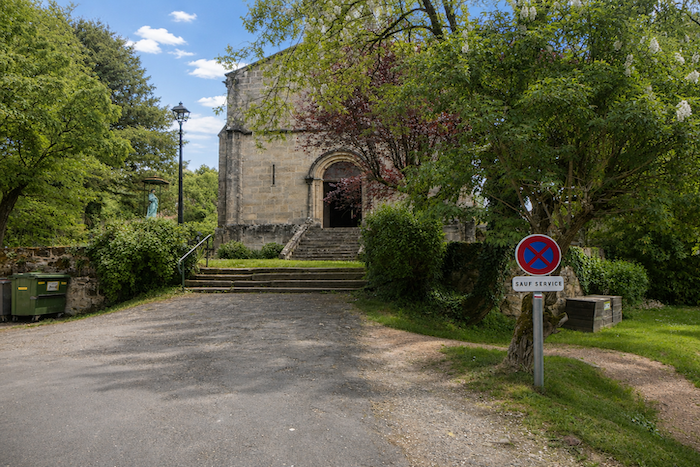 |
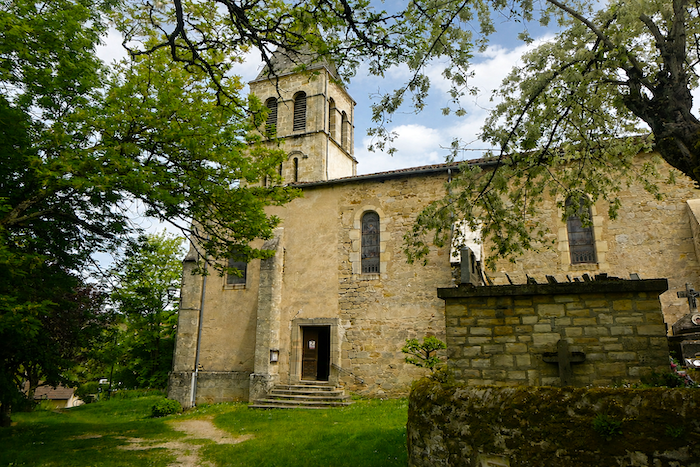
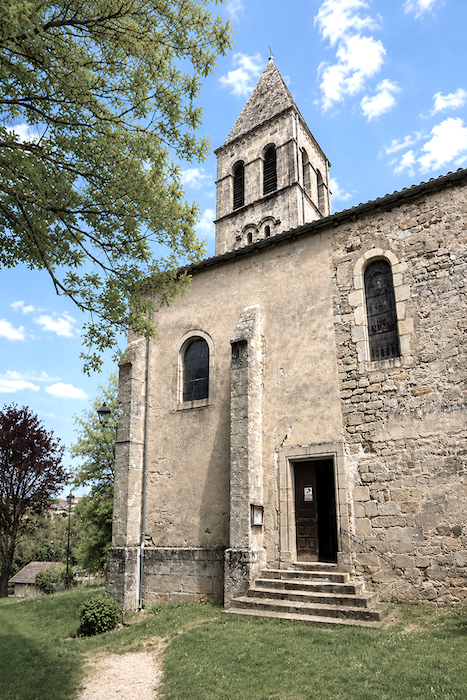
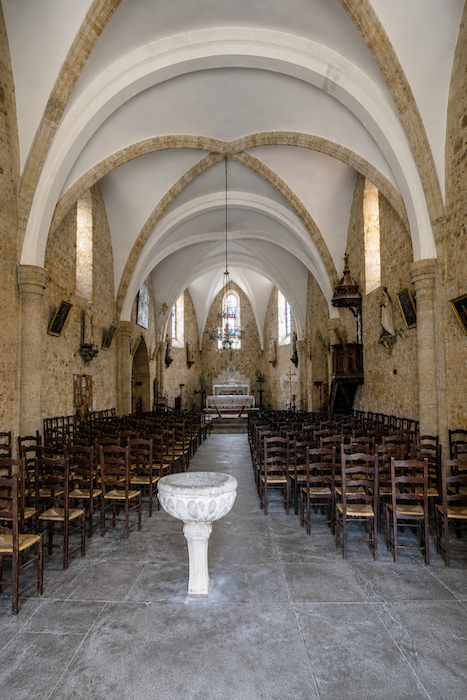
| The Church of St Julien, altered several times over the centuries, retains the spirit of the ancient sanctuaries of Quercy. Restored notably during the nineteenth century, it is distinguished by its elegant bell tower and monumental staircase, which seem to welcome visitors at the entrance to the old village. Simple and harmonious, the church blends naturally with the medieval streets and feudal towers surrounding it. The Wars of Religion, during which Cardaillac played an important role, also left their mark on the history of this building. |
 |
 |
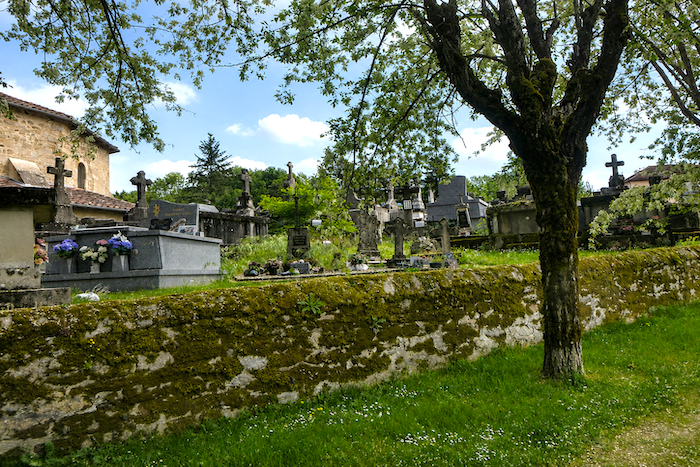
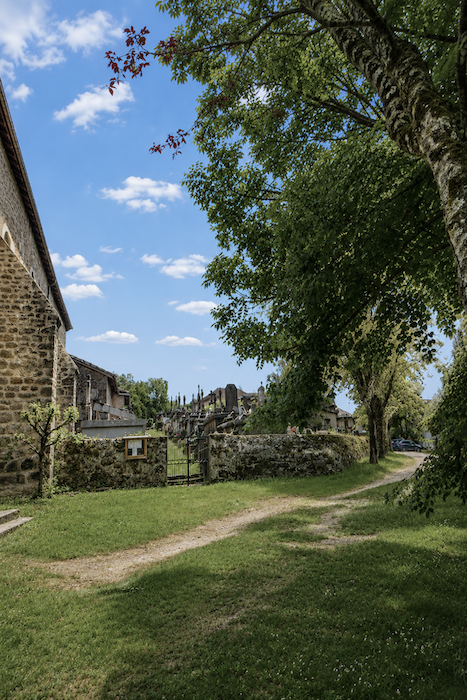
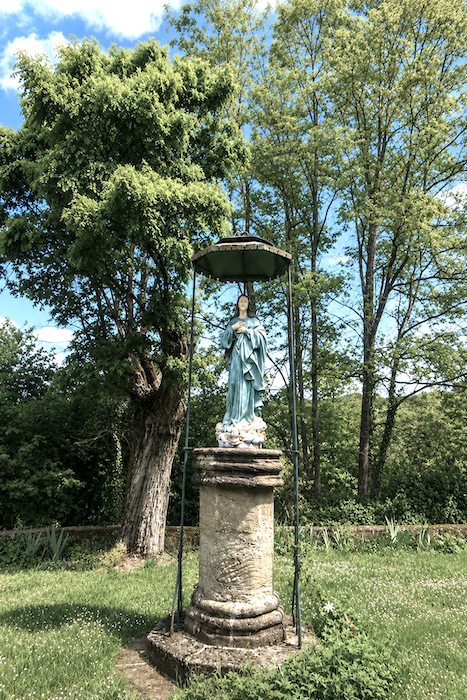
| The route then continues its winding course around the church and its richly adorned cemetery, in an atmosphere where contemplation, ancient stone and the memory of centuries come together. |
 |
 |
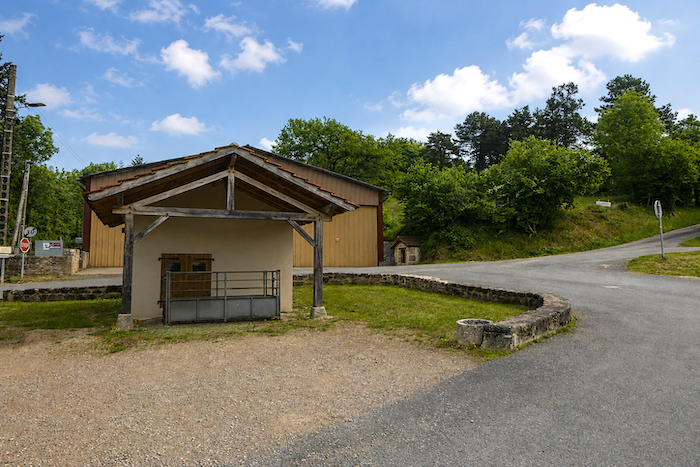
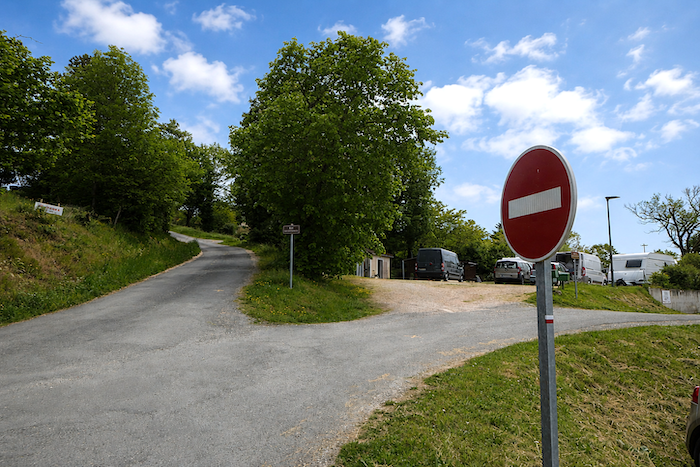
| The GR6 then leaves the last houses of Cardaillac behind and joins the small road overlooking the village, near the community hall. |
 |
 |
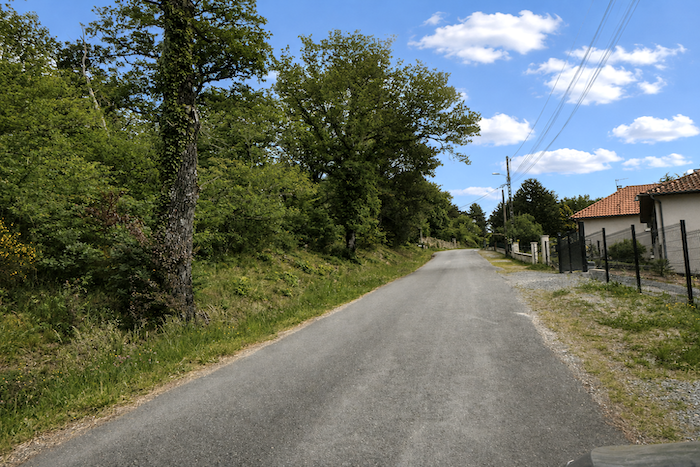
| The road immediately climbs steeply, passing the more recent villas clinging to the heights above the village. |
 |
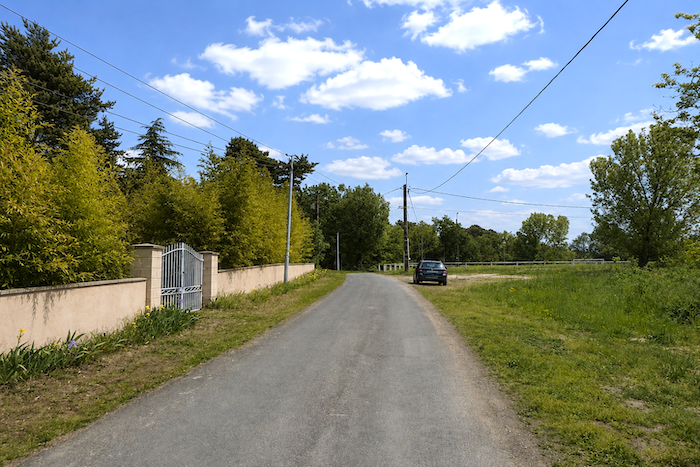 |
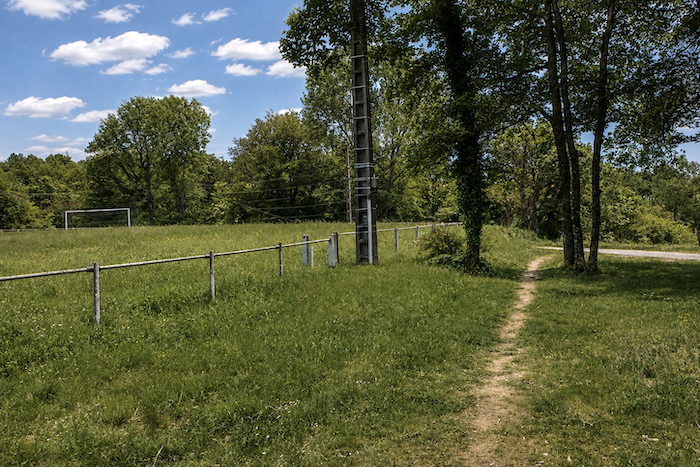
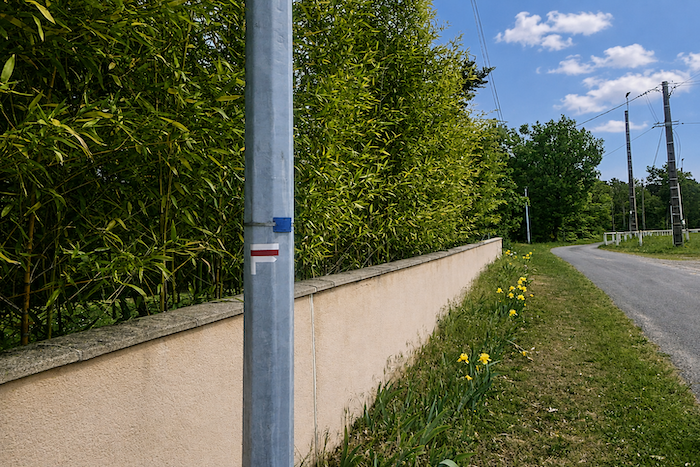
| At the top of the climb, the road becomes somewhat gentler and continues quietly towards the football ground. |
 |
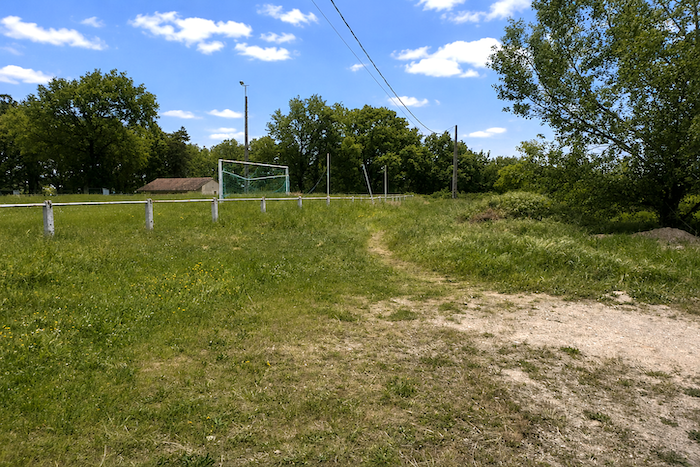 |
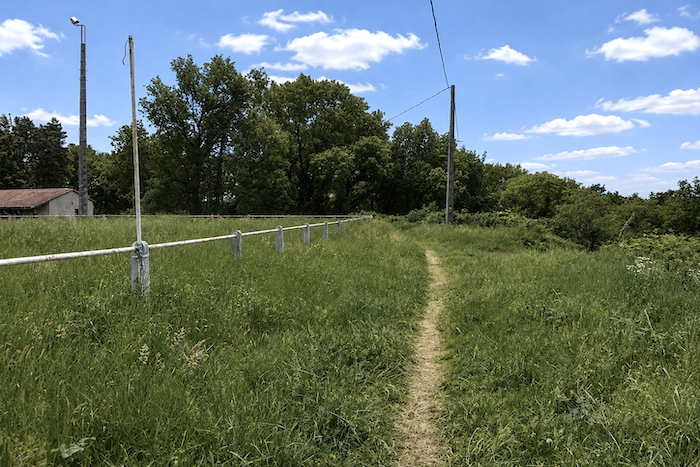
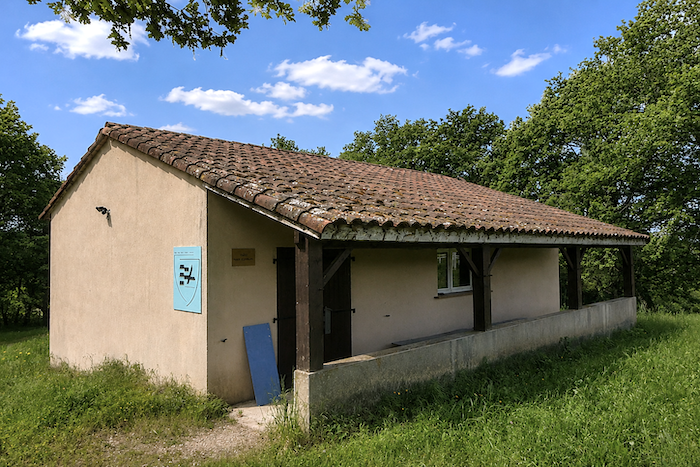
| Judging by the height of the grass, matches cannot be very frequent here these days. The path skirts the pitch before heading towards the wooded edge that quickly fills the horizon. |
 |
 |
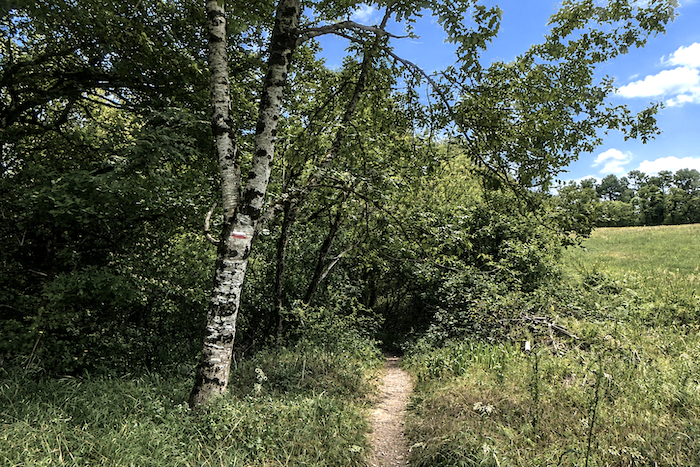
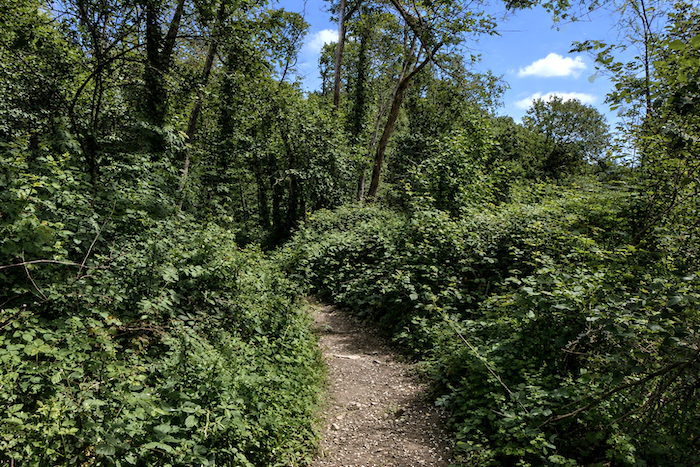
| Very soon, a trail plunges abruptly into wild woodland, almost swallowed up by the vegetation. |
 |
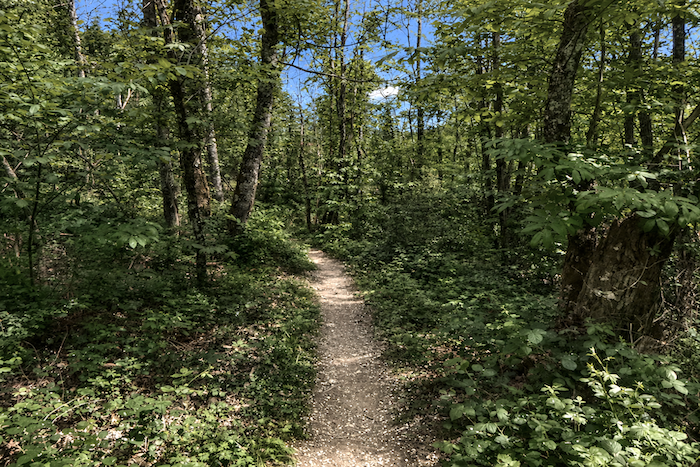 |
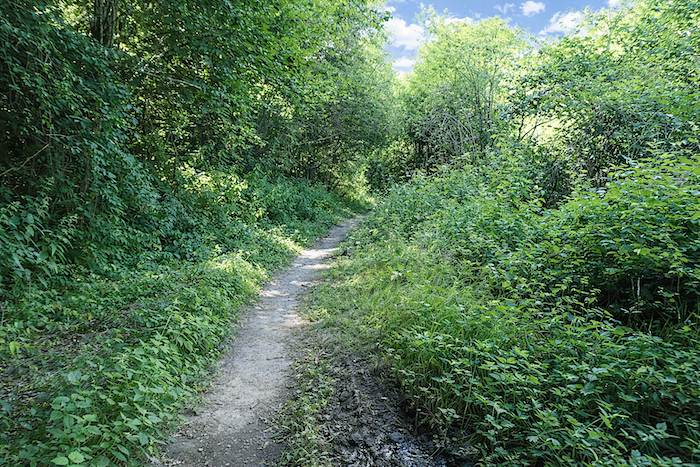
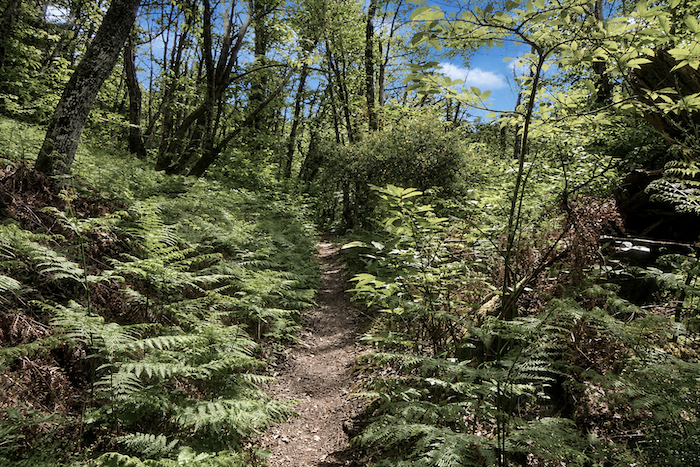
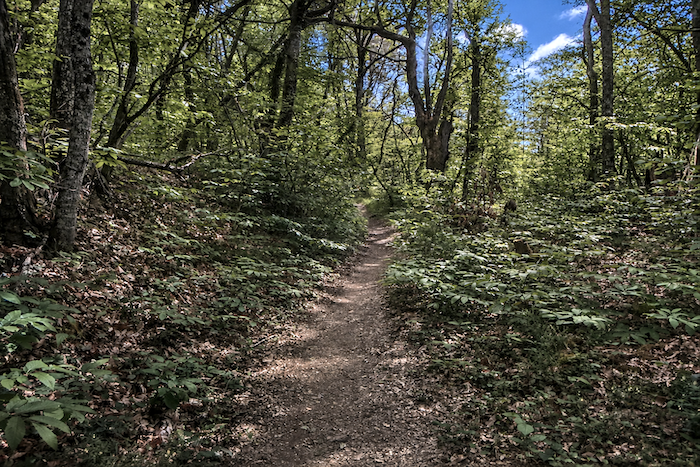
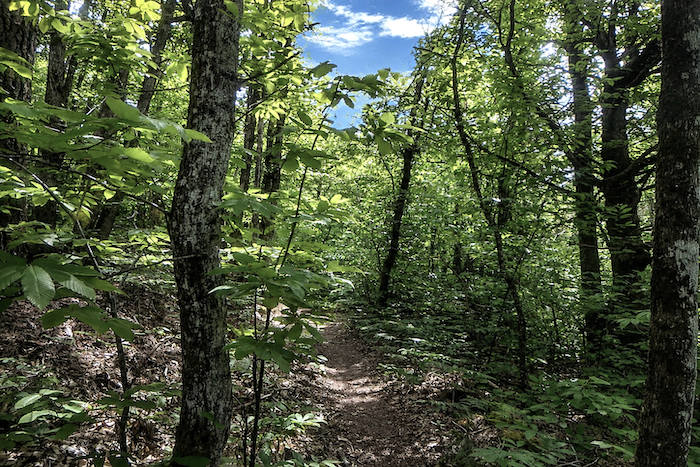
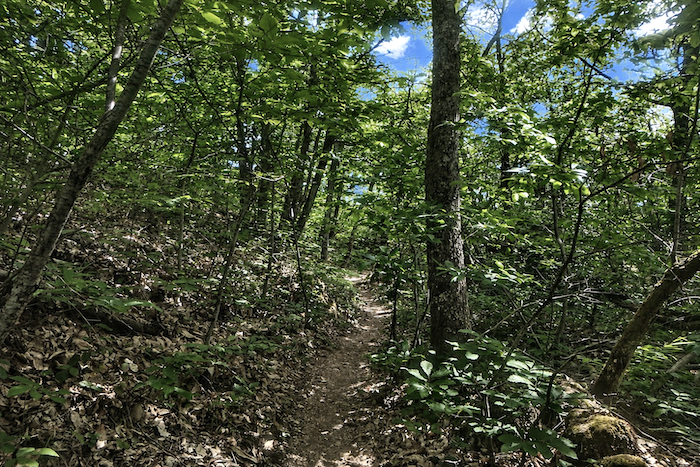
| The trail constantly rises and falls beneath a canopy of trees packed together like a motionless army. Oaks remain the undisputed masters of these woods, while a few beeches gathered in small clusters and modest chestnut trees quietly struggle to find their place. Ferns and brambles proliferate across the steep banks, forming an almost impenetrable tangle where nature seems to have reclaimed all its rights. |
 |
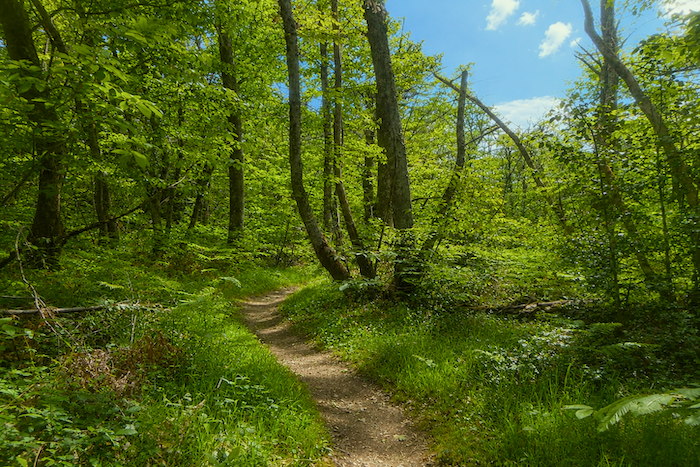 |
| Here, the walker is overcome by a profound sense of isolation, as though crossing the last remnants of a primeval forest forgotten by humankind. |
 |
 |
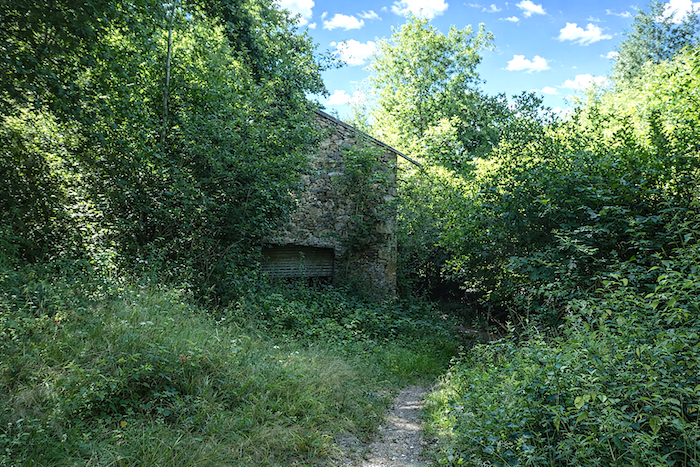
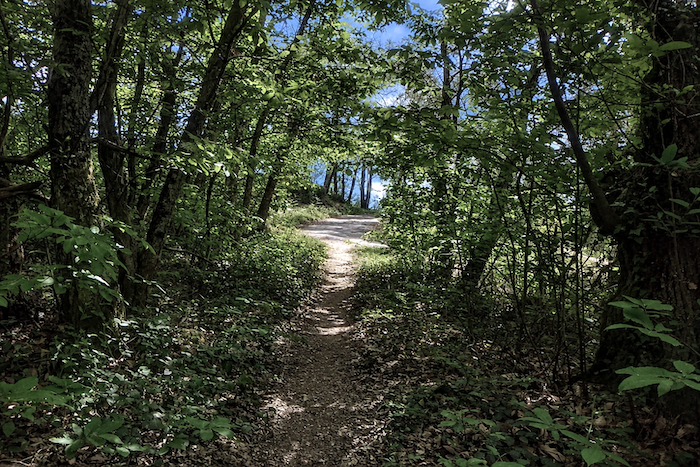
| But do not imagine that you are crossing the Amazon. Farther on, the trail suddenly leaves the depths of the forest and reaches an isolated house among the trees, an almost incongruous sight that is nevertheless served by a simple drivable road. |
 |
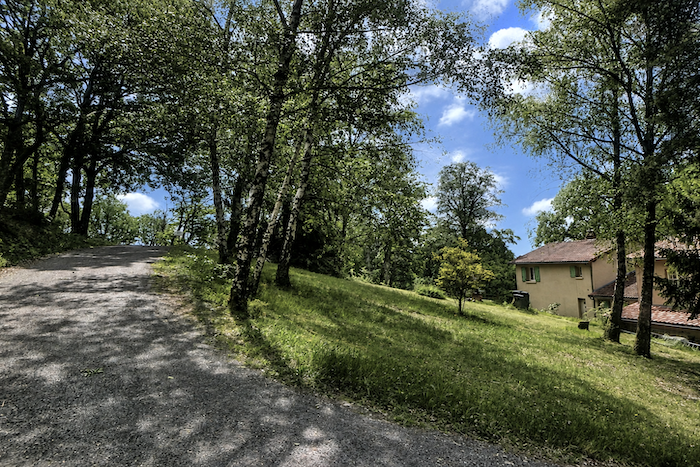 |
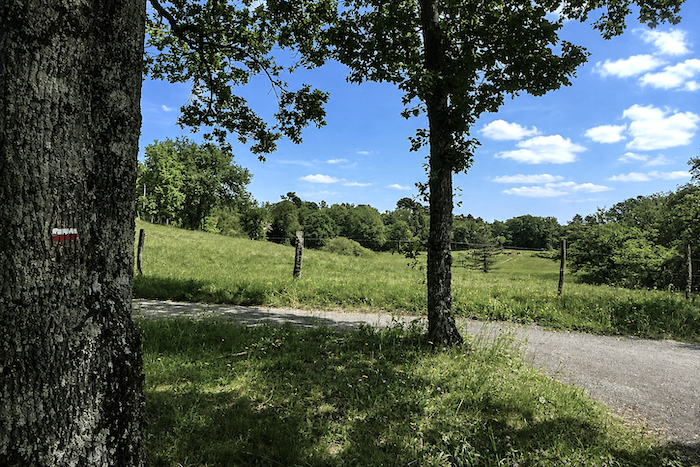
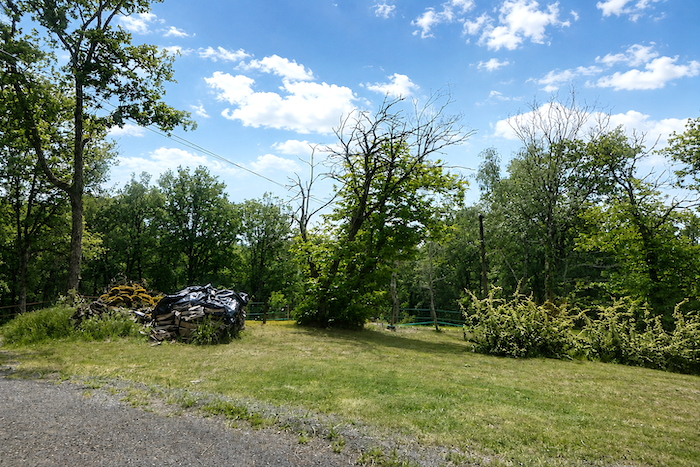
| For only a few dozen meters, the landscape opens onto hedged meadows and small clearings bathed in light. . |
 |
 |
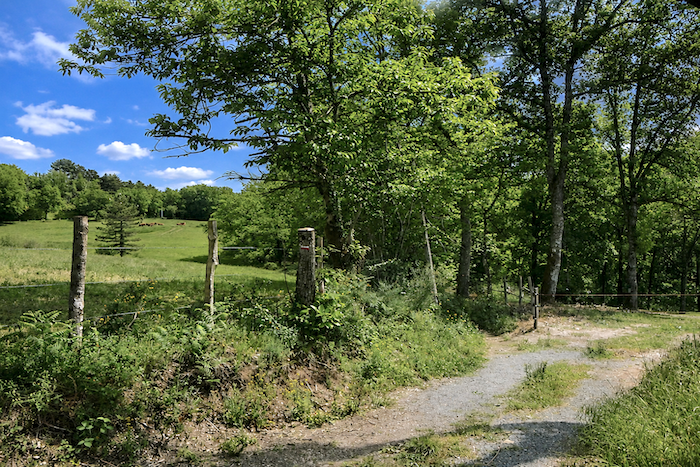
| But this respite is short-lived, and the route quickly returns to the rugged forest trail immersed in shadow. |
 |
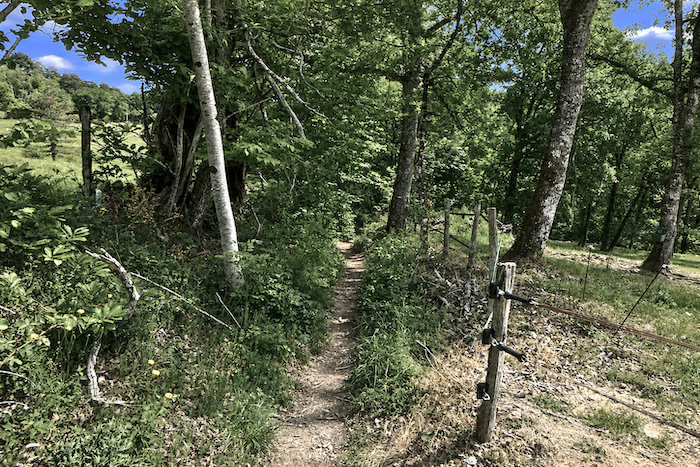 |
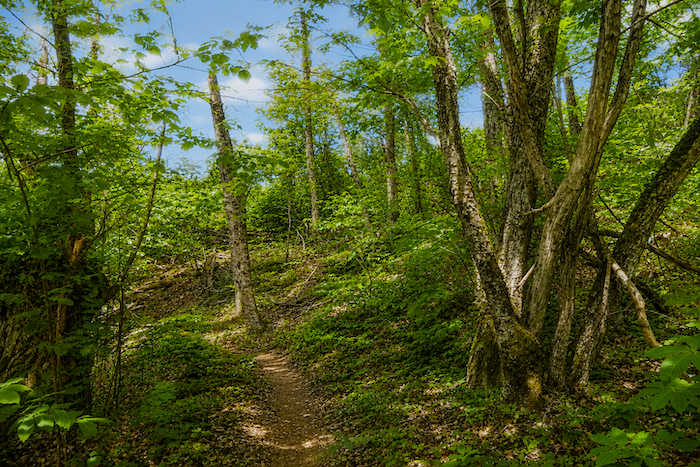
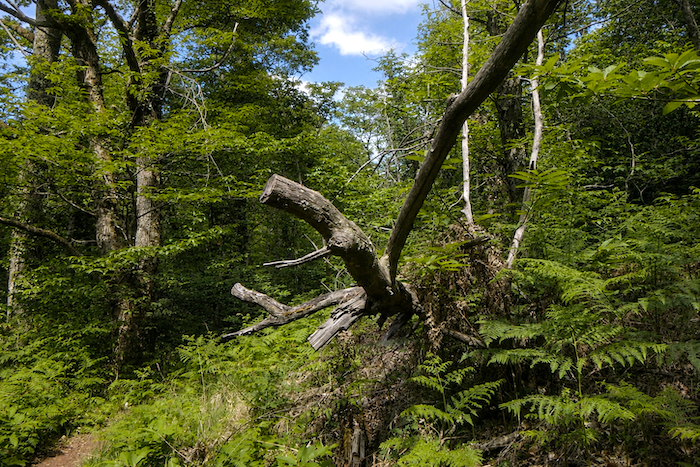
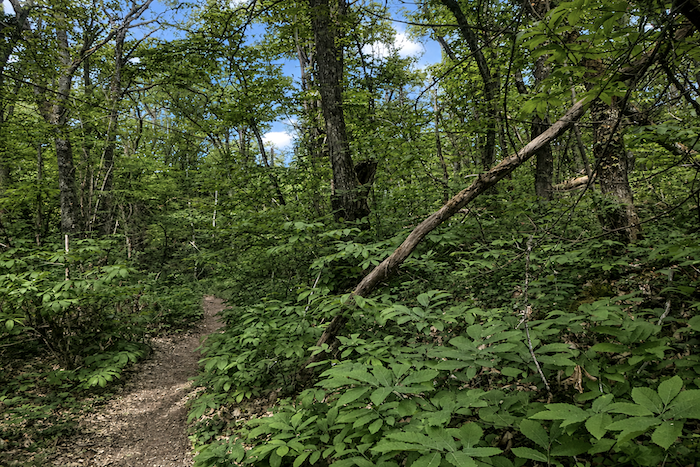
| The path once again disappears beneath a dense canopy where light struggles to penetrate the tightly packed foliage. In this green half-light, the trail almost vanishes beneath gnarled roots, climbing abruptly before immediately plunging again between damp banks. All around, the vegetation spills over with wild vigor. Huge ferns, tangled brambles, young shoots and low branches form an almost hostile maze where every step seems to push deeper into the limits of the woodland. The closely packed trunks of oaks and chestnut trees rise like dark silhouettes in a dense and motionless silence. In places, the air becomes cooler, almost damp, as though the woodland were jealously guarding its shadows and solitude. |
 |
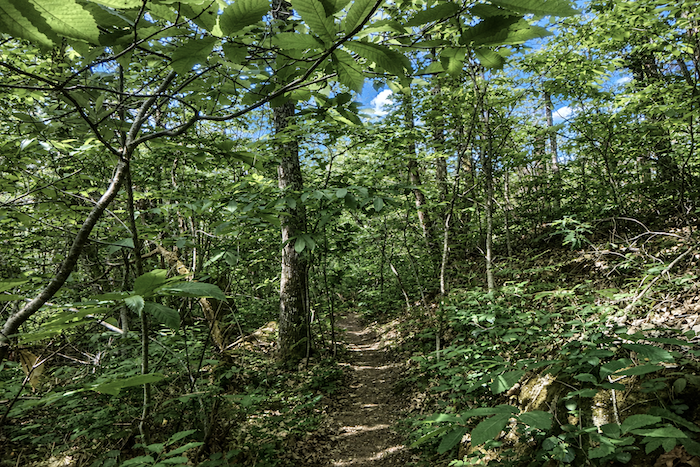 |
| For a long while, the trail remains enclosed within this primeval atmosphere, in surroundings that evoke the earliest ages of the world. |
 |
 |
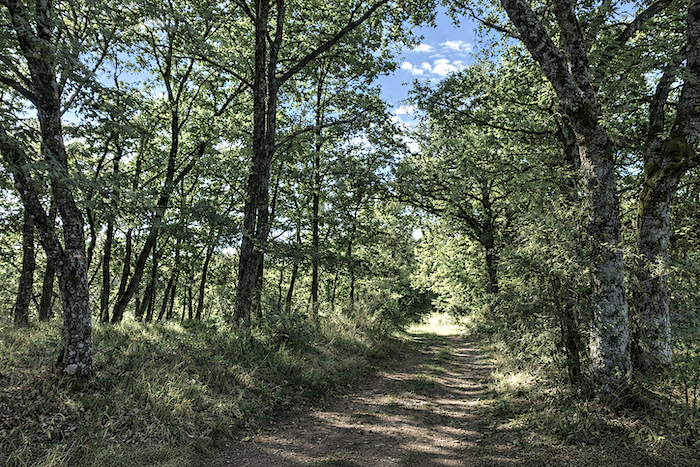
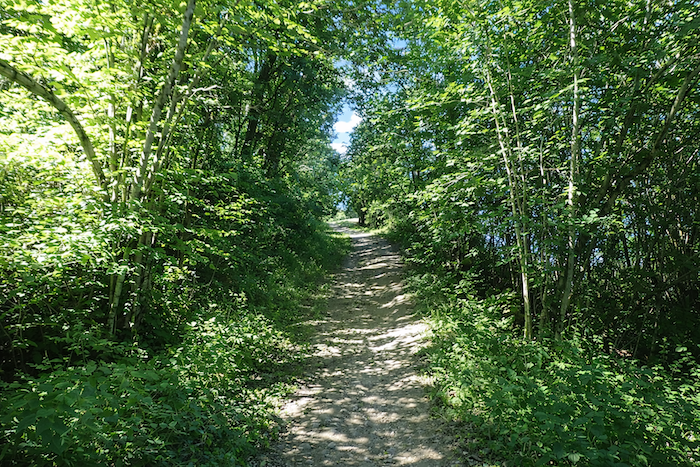
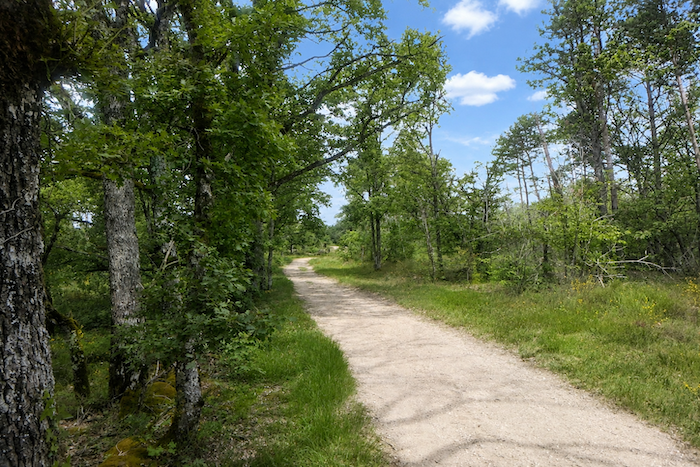
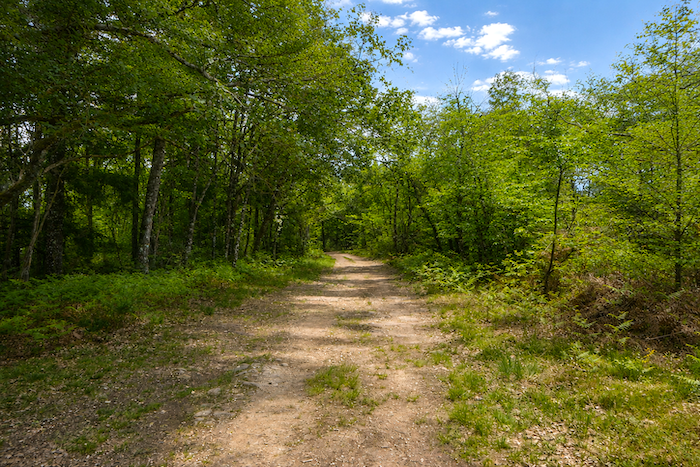
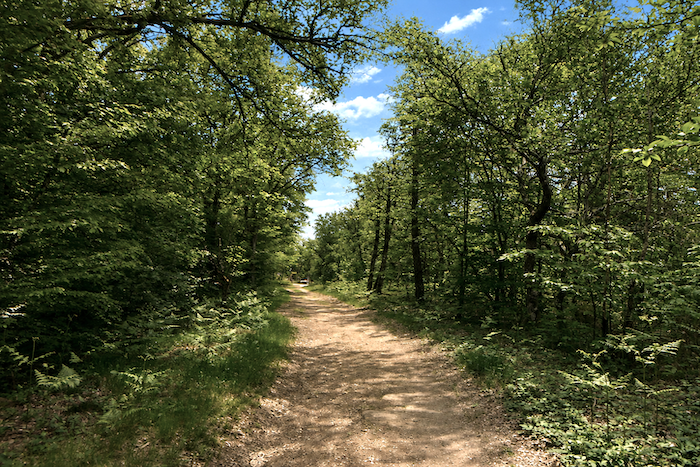
| Then, little by little, everything grows calmer, as though you had crossed the boundary into another world. The walker emerges onto a broad dirt path winding through a forest that has suddenly become lighter and more peaceful. |
 |
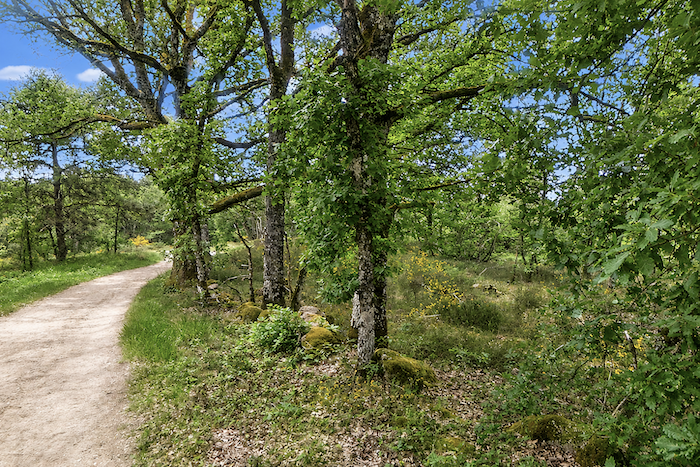 |
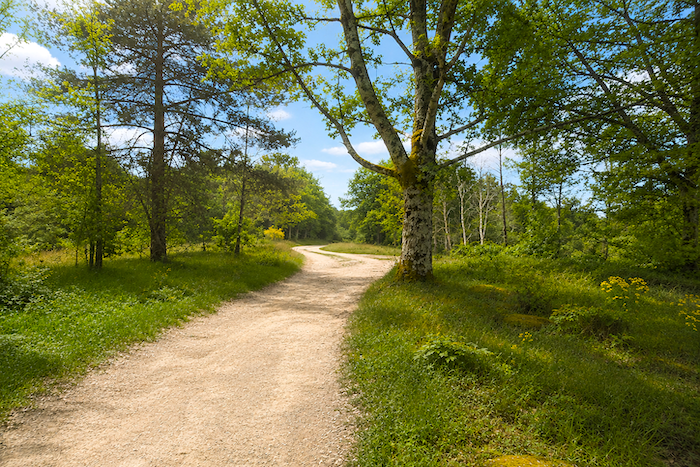
| The gradient becomes gentle, almost welcoming, and the path can be followed effortlessly, as though inviting the walker to surrender to its leisurely pace. |
 |
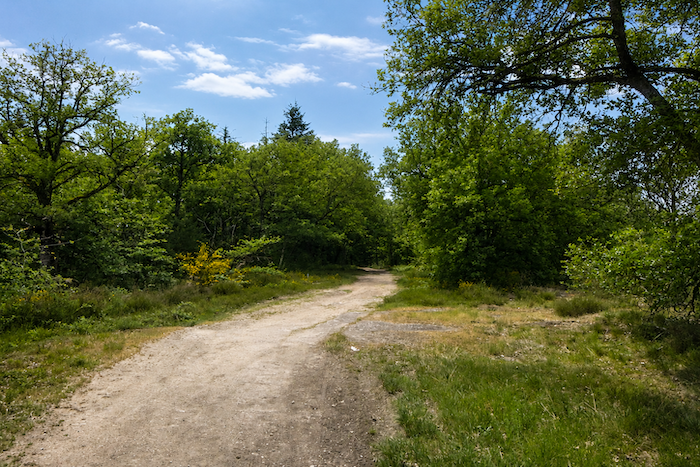 |
| Some trees raise their slender, straight trunks towards the light, while others, more gnarled, stretch their branches above the path in broad botanical arabesques. Here, the same woodland procession returns, sturdy oaks, maples with delicate foliage, young and supple ash trees and, here and there, a few solitary chestnut trees. |
 |
 |
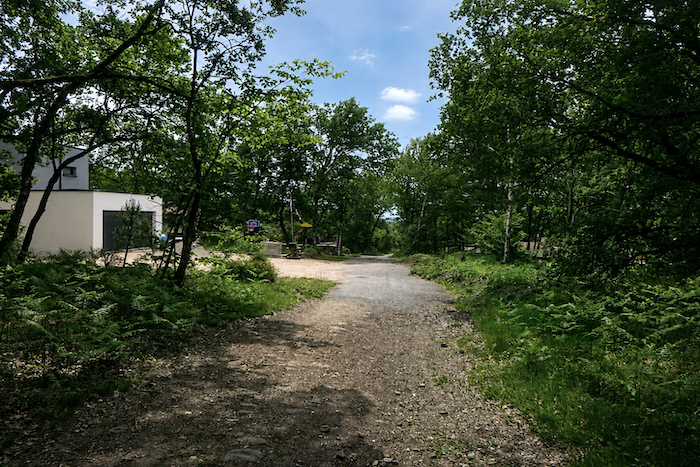
| Farther down, the path brushes past a few houses and villas discreetly hidden behind the foliage, as though seeking to escape notice. |
 |
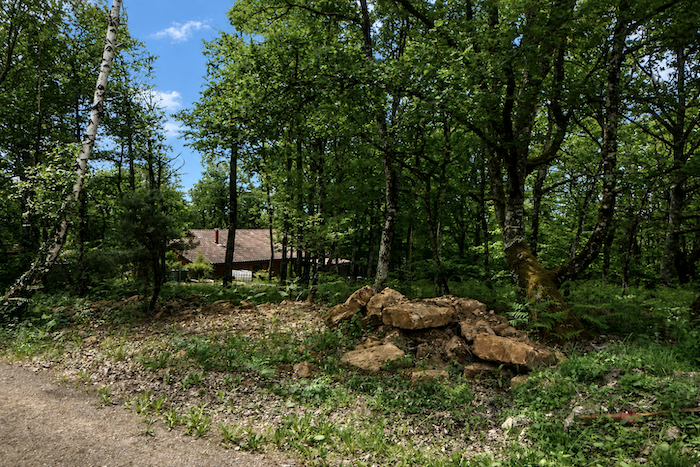 |
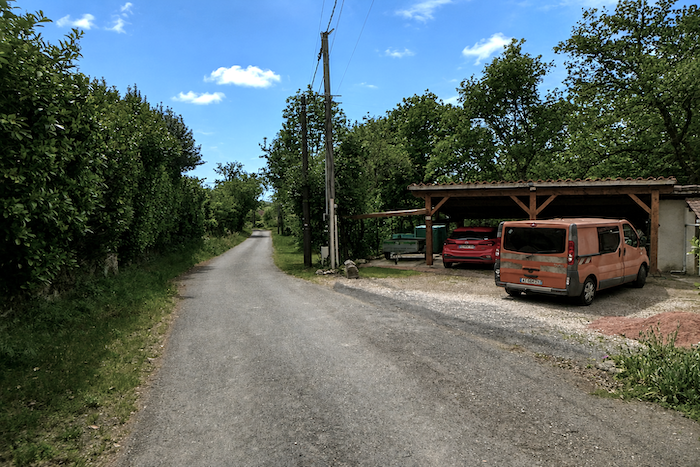
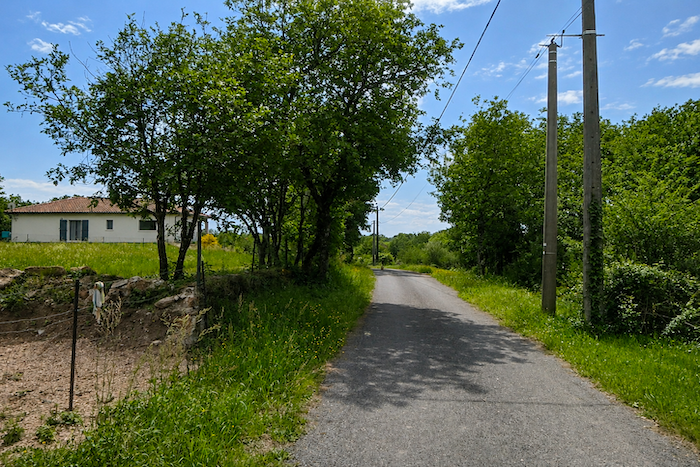
| This is not really a hamlet, but rather a handful of houses scattered across a peaceful, luminous landscape. At times, the setting is reminiscent of those small holiday developments where tranquility seems to suspend the passage of time. |
 |
 |
Section 5: A long descent towards Figeac
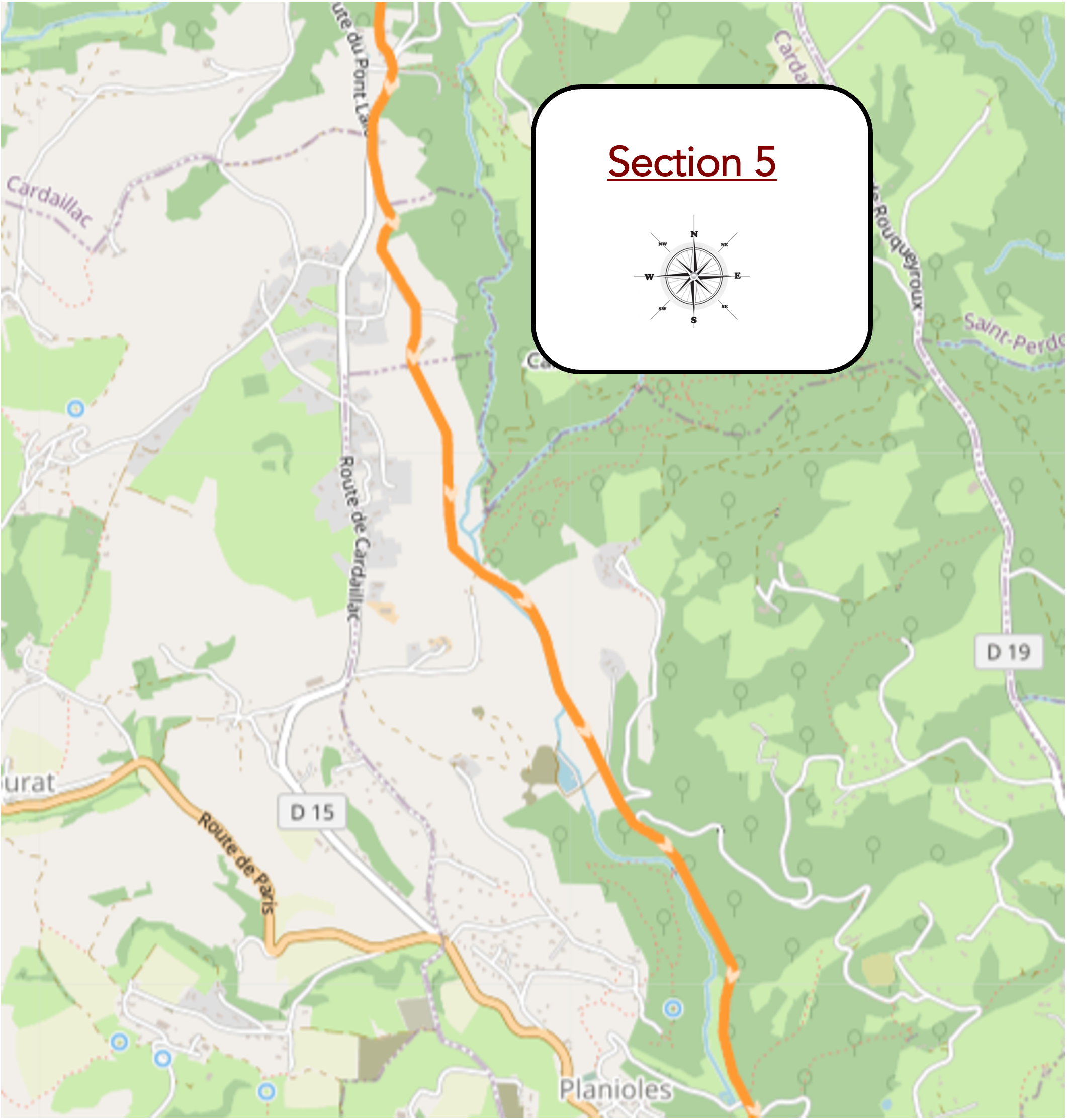
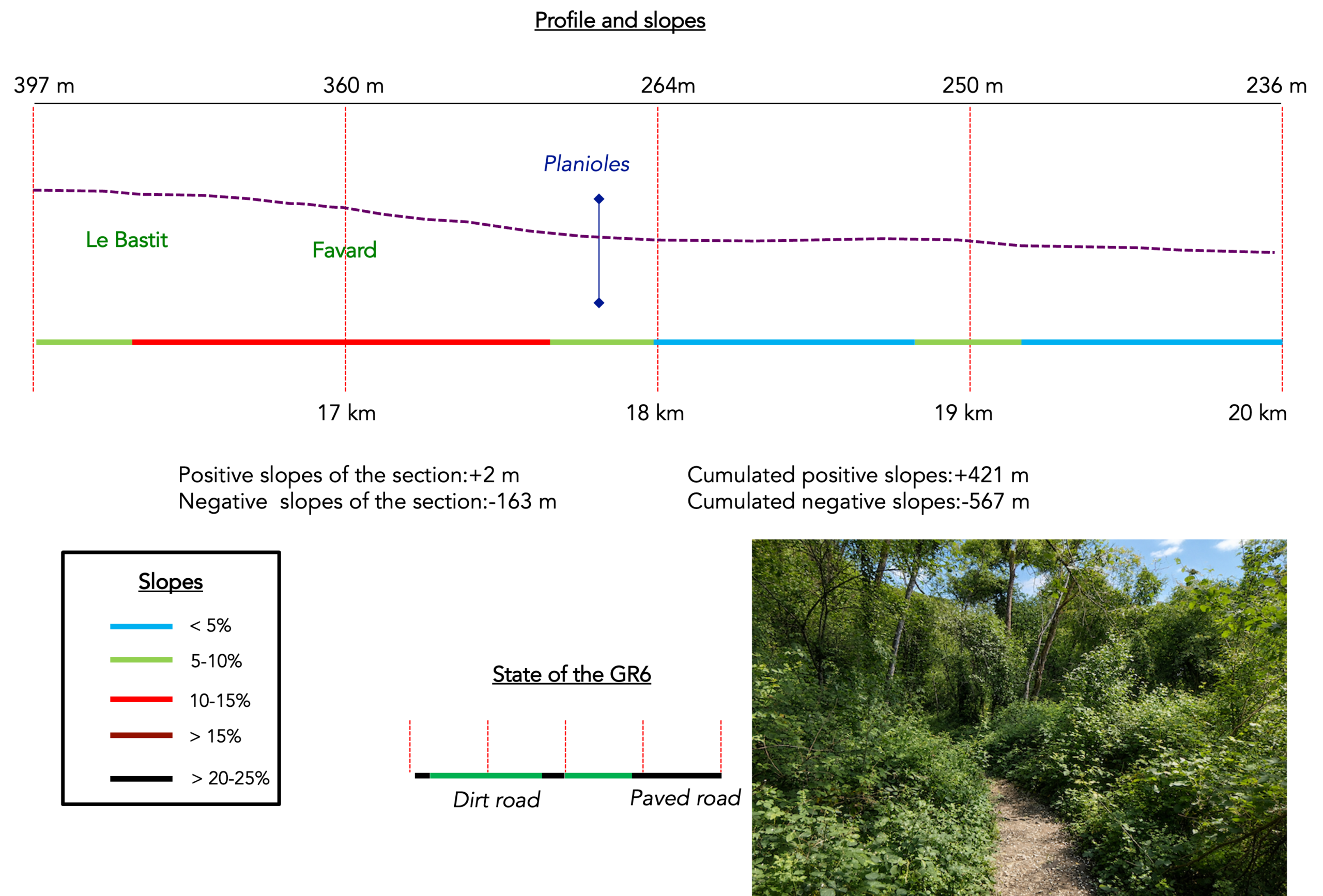
Overview of the route’s challenges : a route with no major difficulty, although there are a few steep downhill sections.
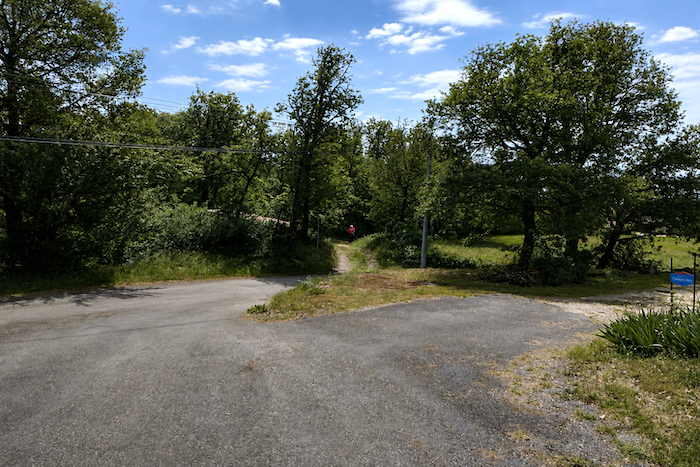
| After a short stretch on tarmac, the route soon returns to a dirt path that once again disappears into the cool shade of the woodland |
 |
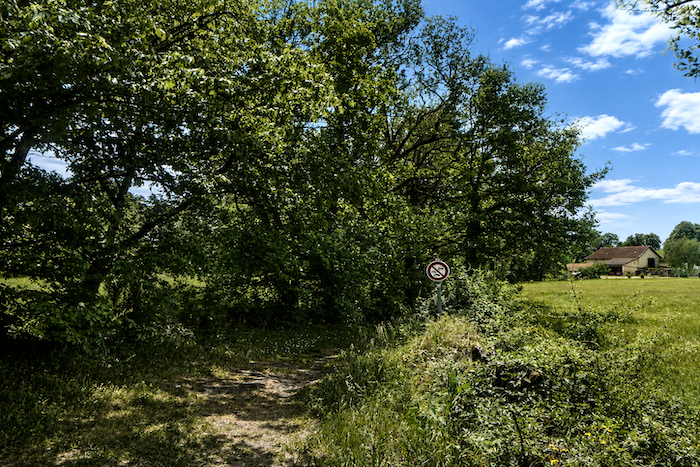 |
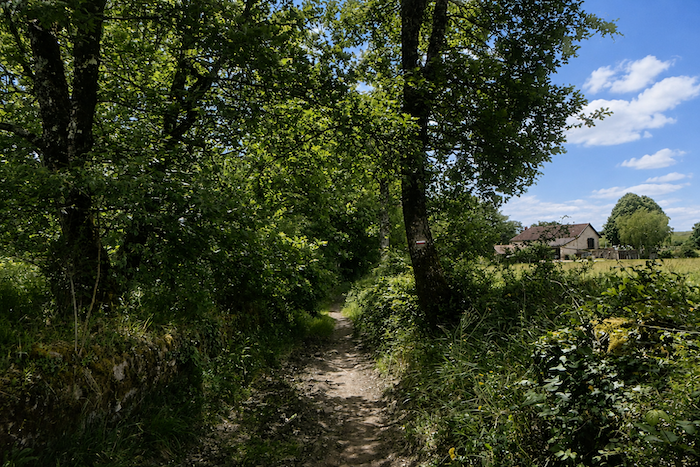
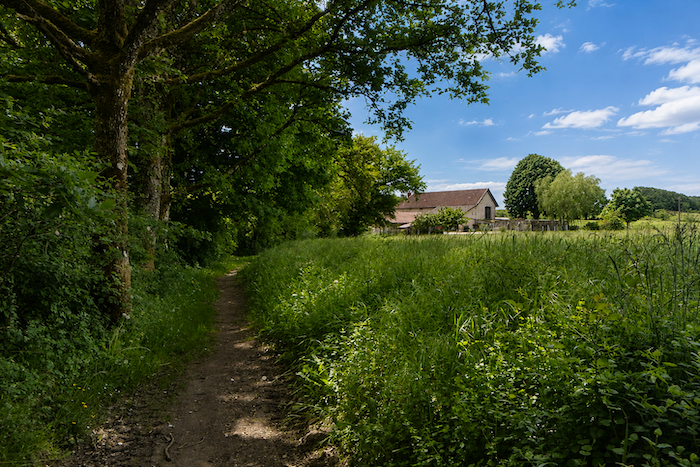
| The trail then passes close to an isolated farm, standing silently in the countryside like a forgotten refuge. |
 |
 |
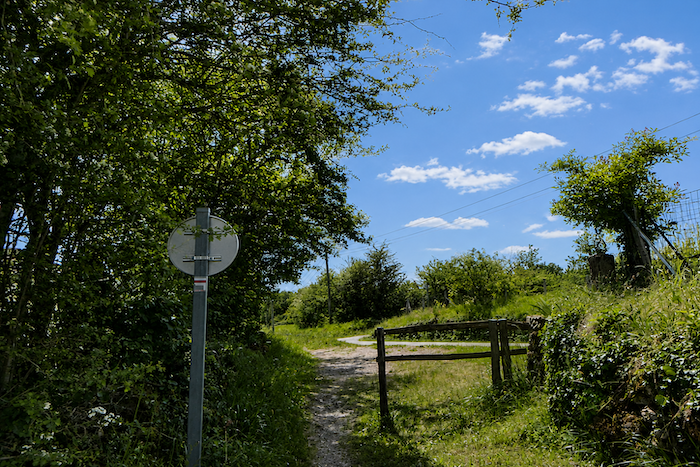
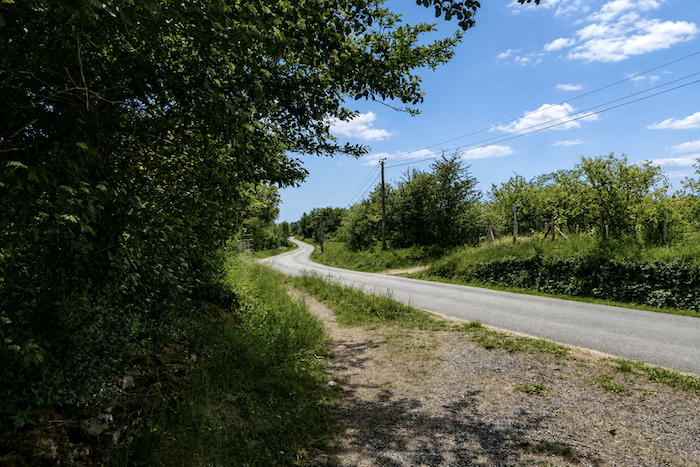
| Here, the path joins the small paved road descending from Cardaillac towards Figeac. You are now at the place known as Le Bastit, a quiet locality with barely a handful of inhabitants. |
 |
 |
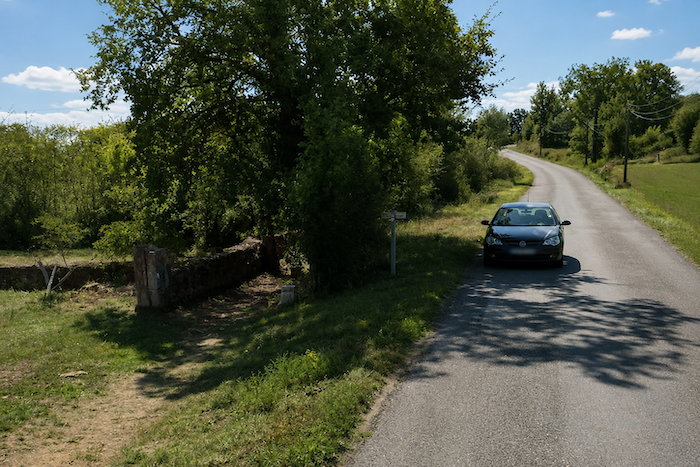
| Very soon, however, the route once again leaves the tarmac behind and takes a narrow forest trail beneath the shade of the trees. |
 |
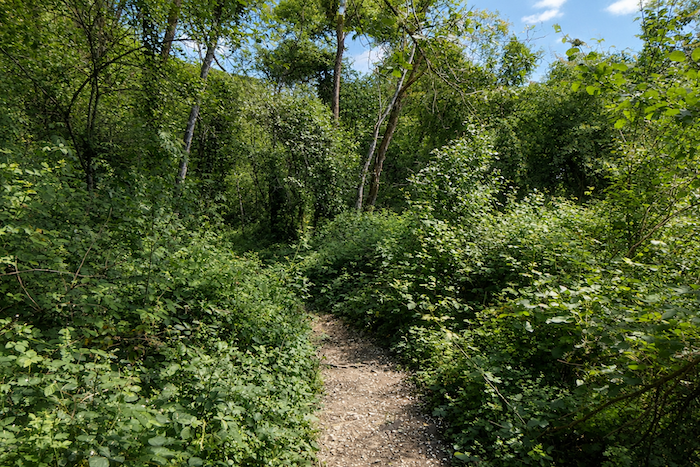 |
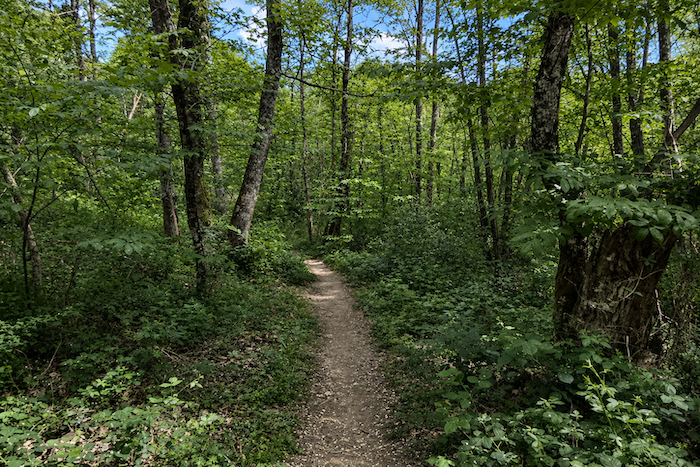
| Nature then reclaims its full dominion. The path descends through dense, almost wild woodland, filled with silence and the scent of damp foliage. |
 |
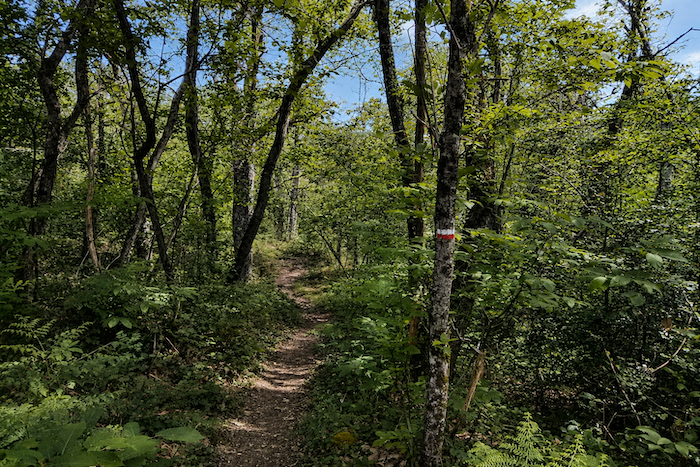 |
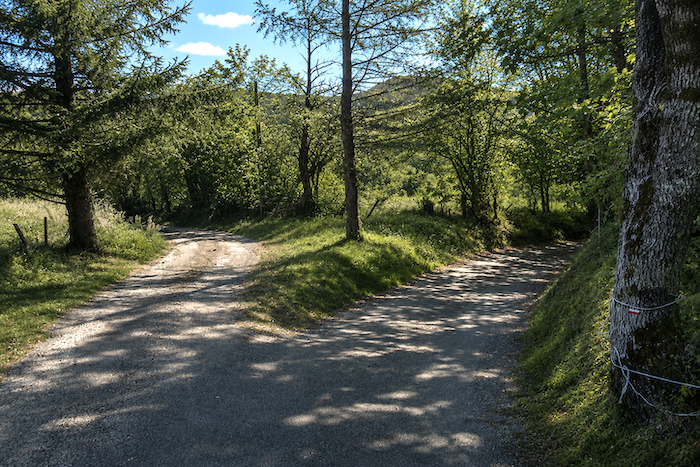
| Farther down, the trail joins a small road, little more than a dead end, leading to the place known as Favard. |
 |
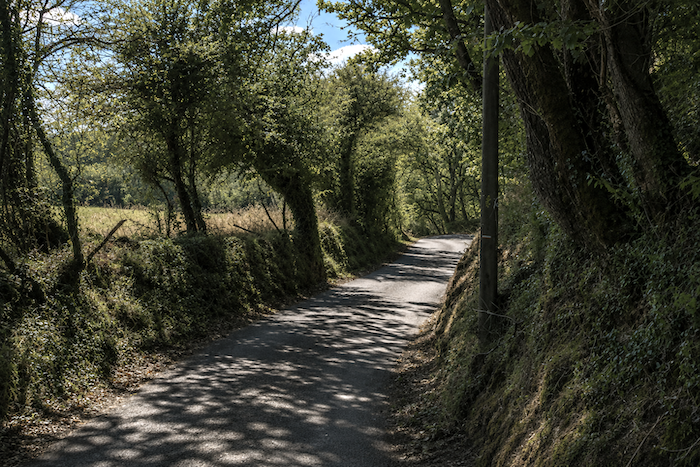 |
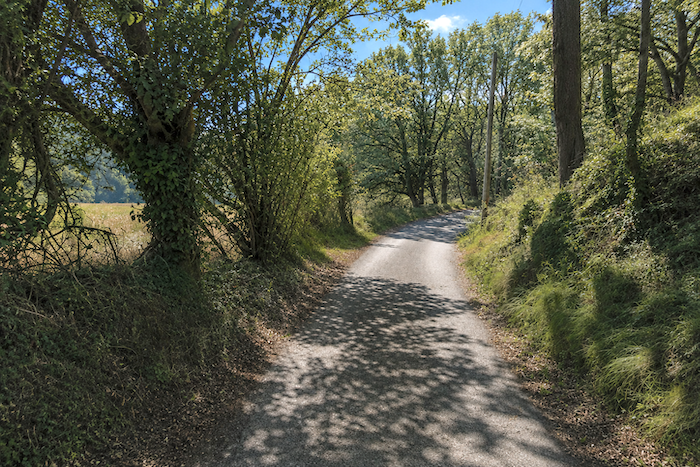
| The stretch along this deserted road is brief, and the route quickly returns to a path that plunges once again into abundant, untamed vegetation. |
 |
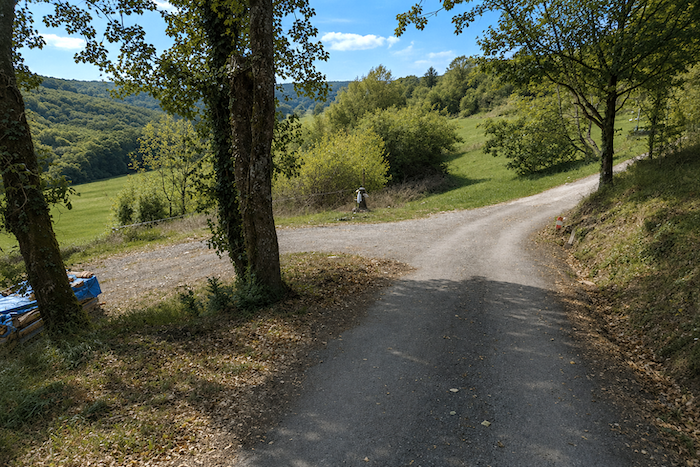 |
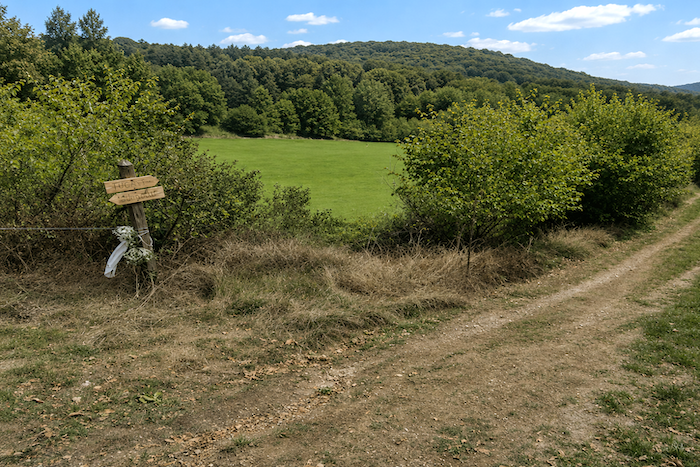
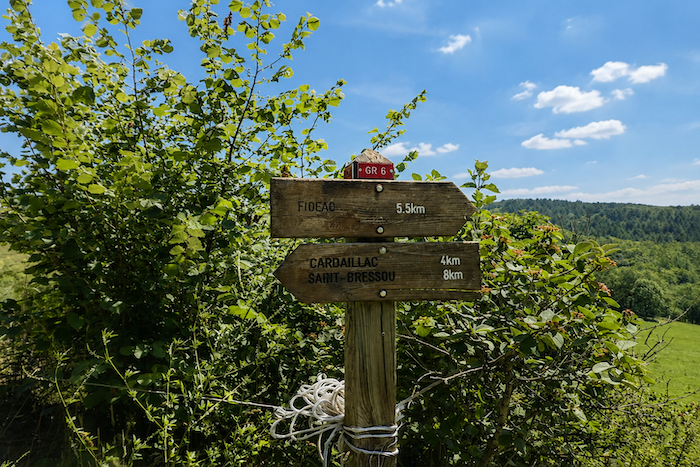
| Here, you are already just over five kilometers from Figeac, and a narrow grassy trail slopes gently towards the valley in peaceful solitude. |
 |
 |
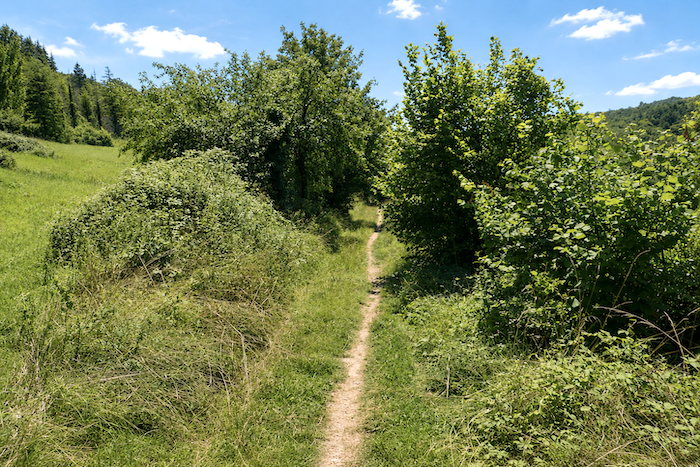
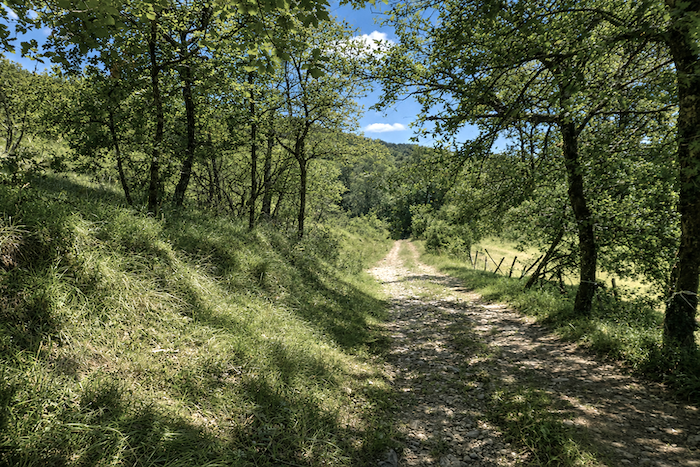
| The path then plunges steeply towards the bottom of the valley, with gradients approaching 20% in places. Yet the descent presents little real difficulty, as the path simply winds its way between short grass and packed earth. |
 |
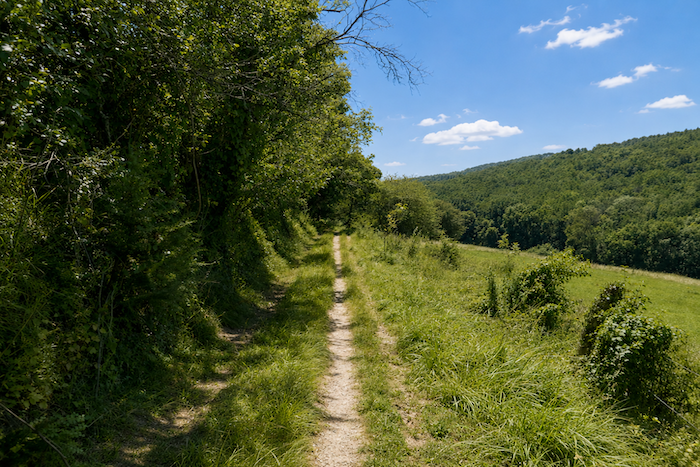 |
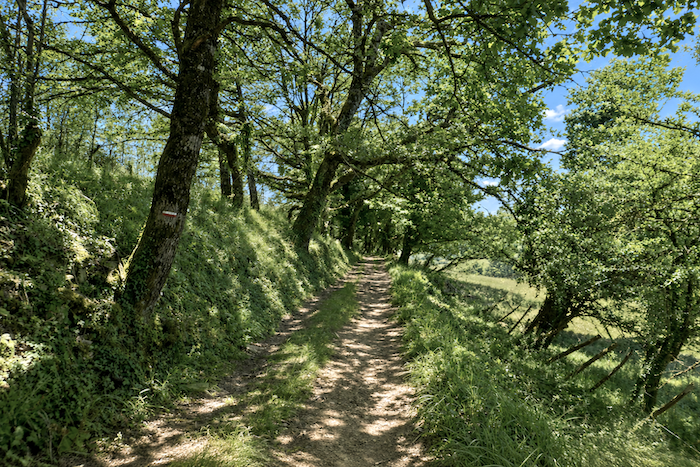
| The woodland then gradually begins to thin, revealing a more open landscape, although the surrounding forests remain dense and deep. |
 |
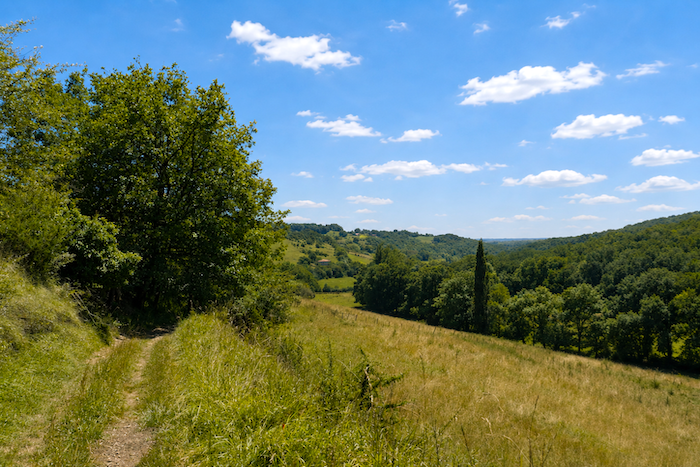 |
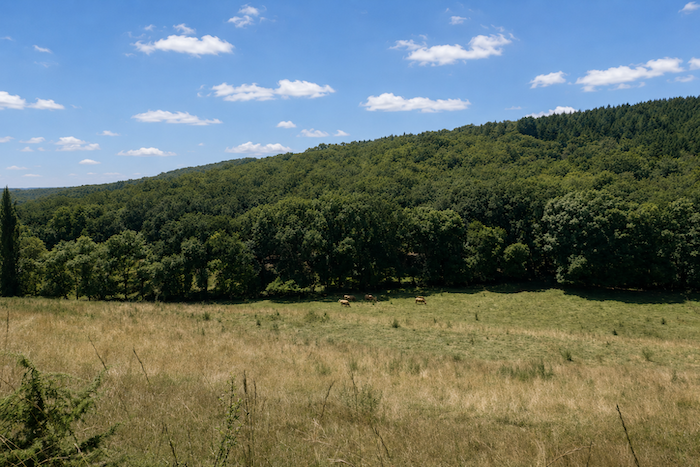
| This region seems to hover somewhere between wild heathland and poor pasture, amid brambles, dogwoods and privet. Since setting out, you will have passed only a few modest cultivated plots, so ungenerous does this austere land appear. Only here and there do a few oaks, maples and ash trees still line the path. The chestnut trees, however, have now disappeared from the landscape. |
 |
 |
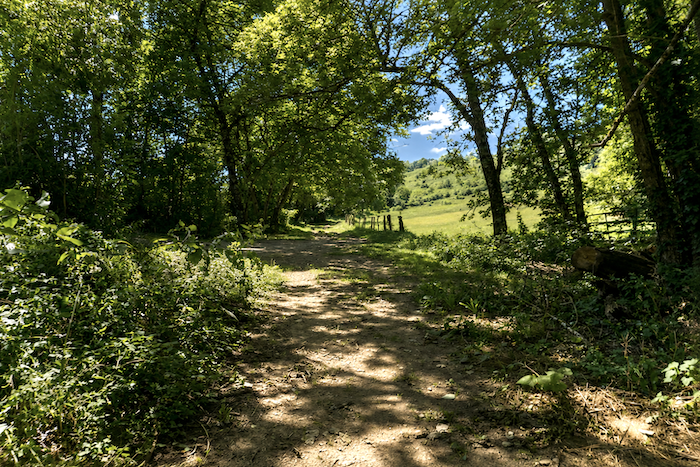
| At the bottom of the descent, the path crosses the Planioles stream. During the dry season, little more than a thin trickle of water often remains, for streams are scarce on the causses. |
 |
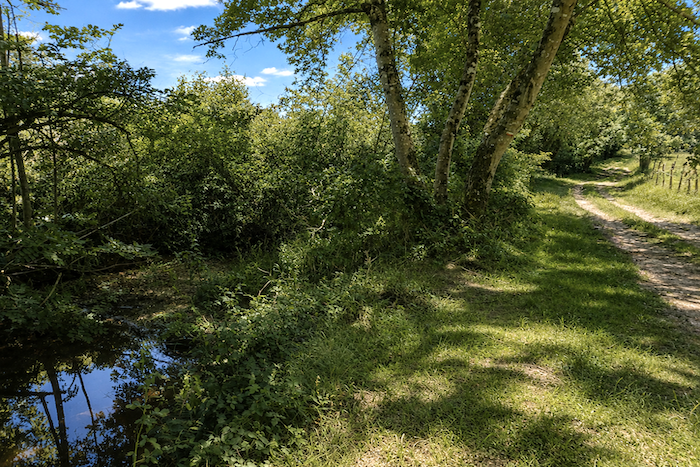 |
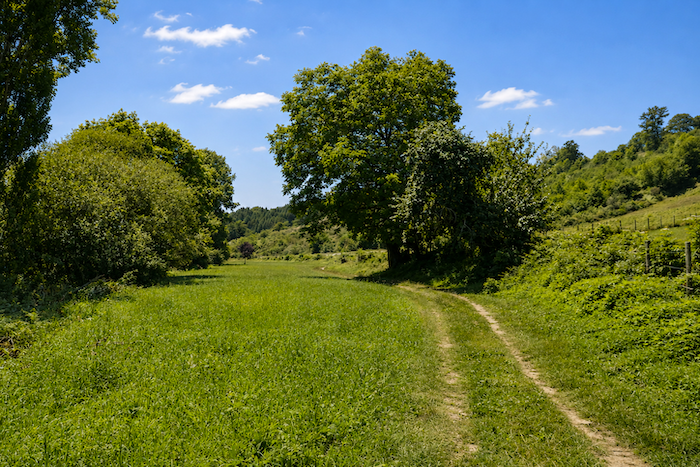
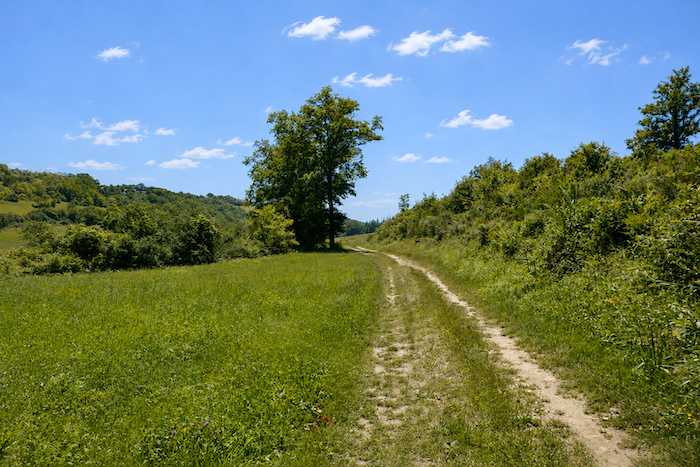
| The GR6 then continues almost level, only a few meters from the stream, through silent meadows. |
 |
 |
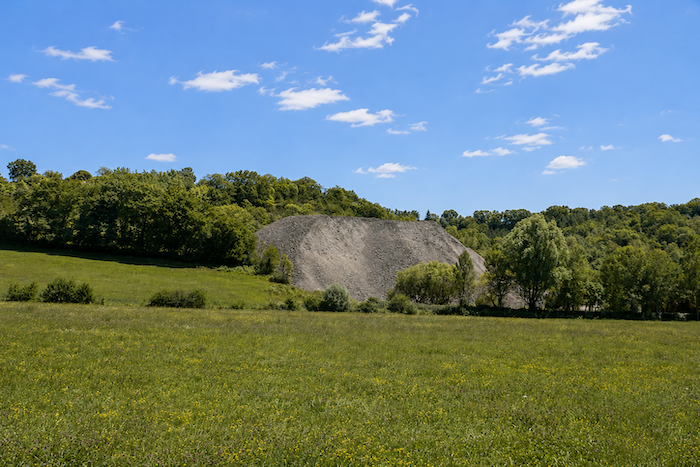
| Soon, the path passes an unusual gravel deposit embedded in the bank, as though it had somehow been placed there by chance, with no obvious geological explanation for its presence. |
 |
 |
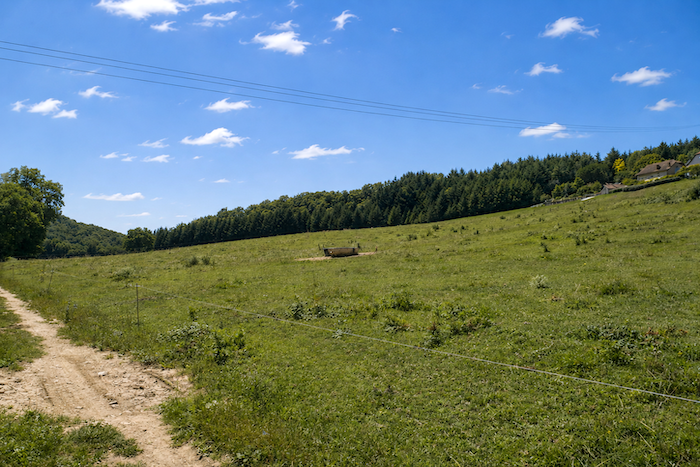
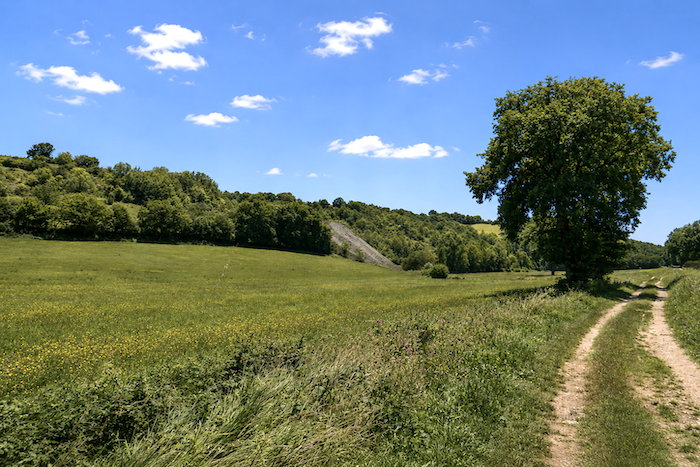
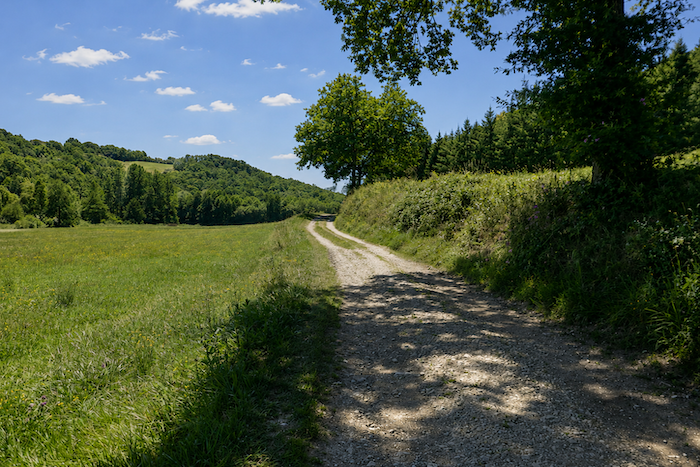
| The path then widens and slopes gently downwards, winding between open meadows and scattered patches of woodland. |
 |
 |
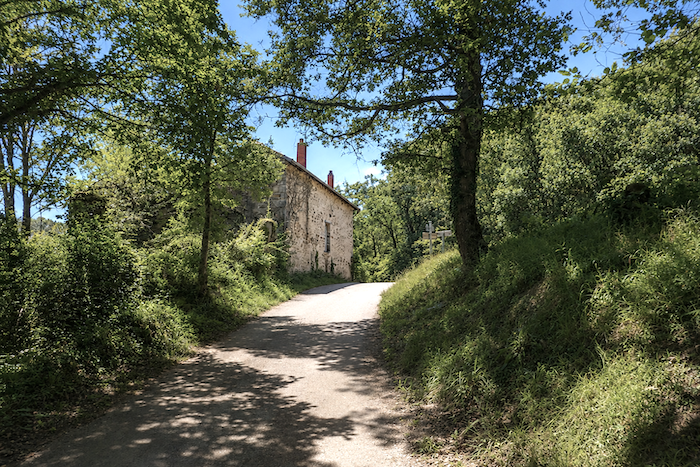
| A little farther on, tarmac replaces the grass and packed earth near an old stone house that seems to be slowly surrendering itself to abandonment. |
 |
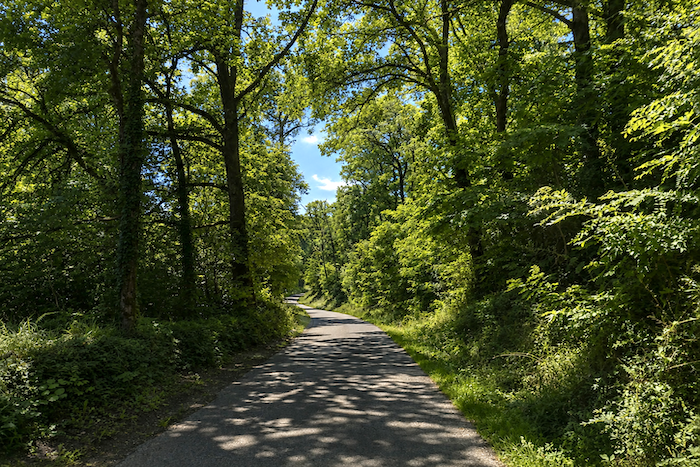 |
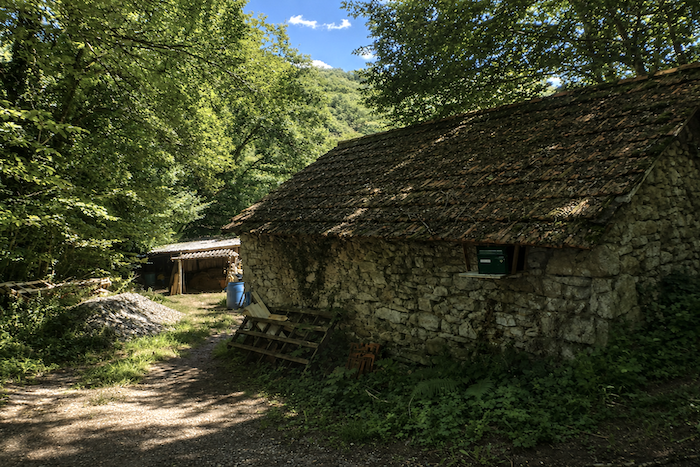
| Here, the forest reveals itself on a grander, more generous, almost majestic scale. Towering oaks, both sessile and pedunculate, spread their lofty branches above the path. They bear little resemblance to the stunted, contorted downy oaks of the stony causses. And here again stands one of those stone ruins whose melancholy charm never fails to hold the gaze. |
 |
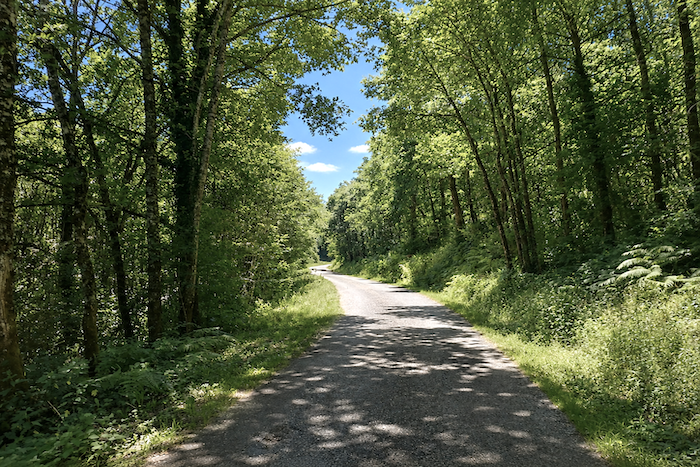 |
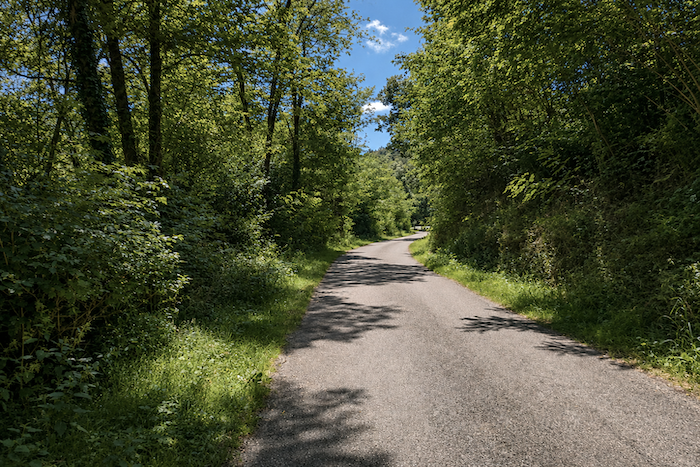
| Farther on, the road meets the little Planioles stream once again, which, through some discreet magic, seems to have gathered slightly more water. Yet it remains barely more than a murmur. |
 |
 |
Section 6: On the road to Figeac
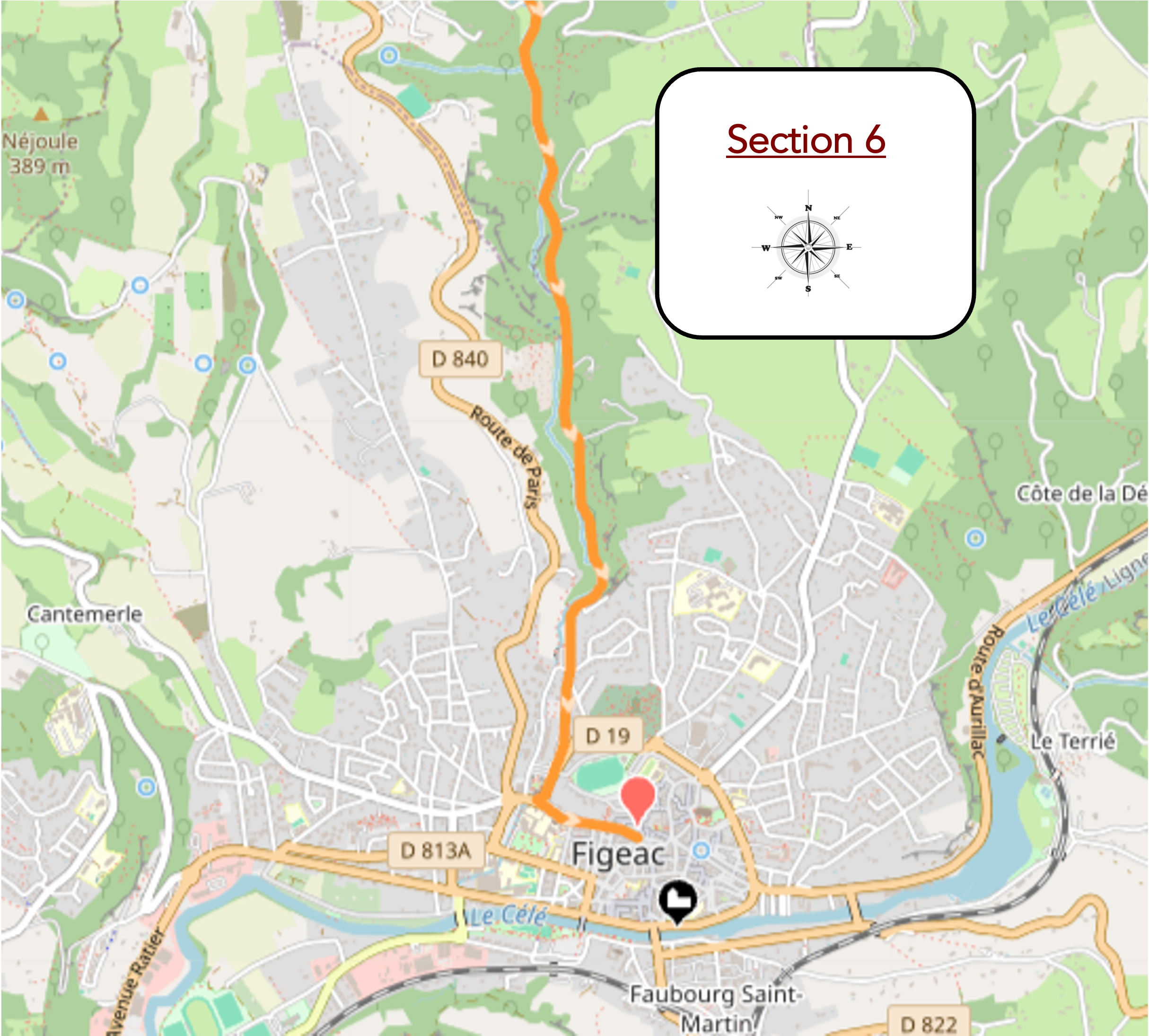
Overview of the route’s challenges : a route with no particular difficulty.
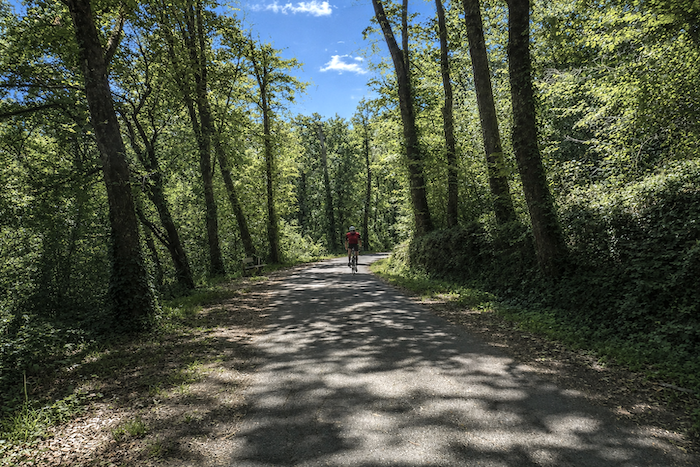
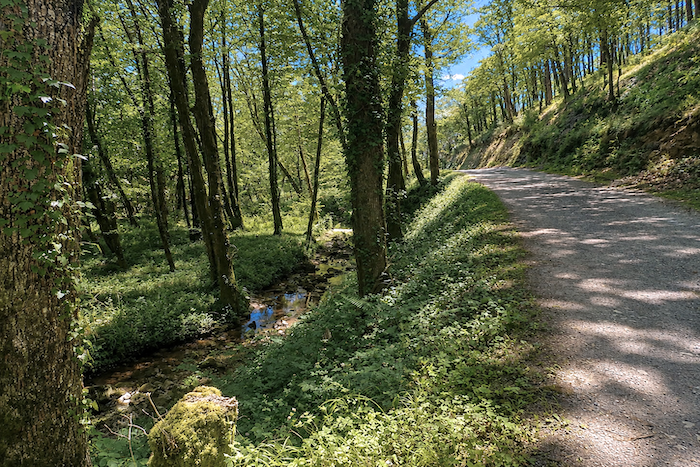
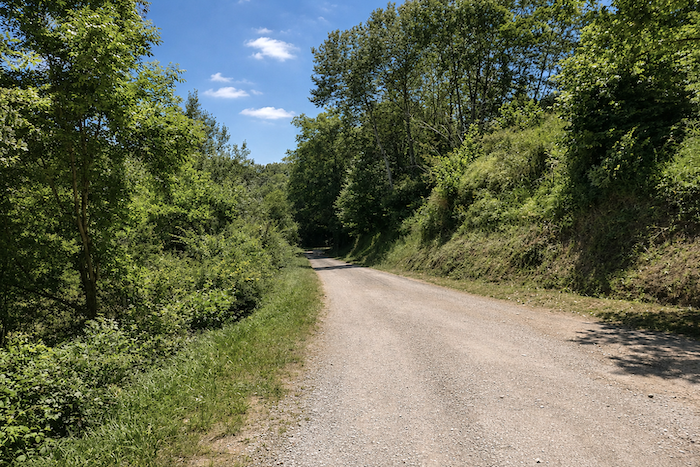
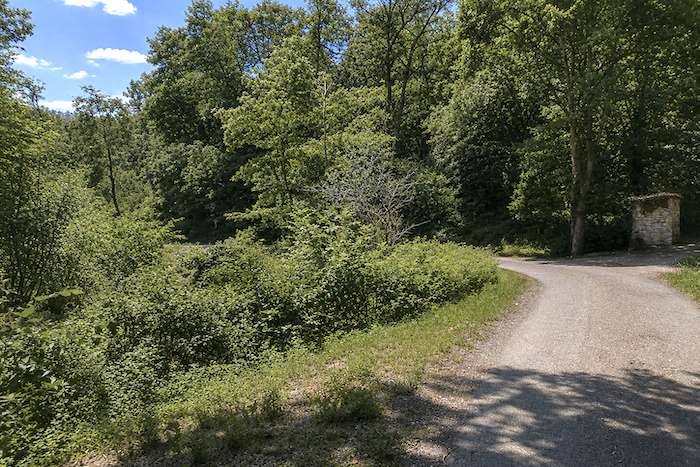
| The spectacle continues beneath the enchanting coolness of the deciduous trees lining the stream, like a long leafy nave filled with shifting light and shadow. |
 |
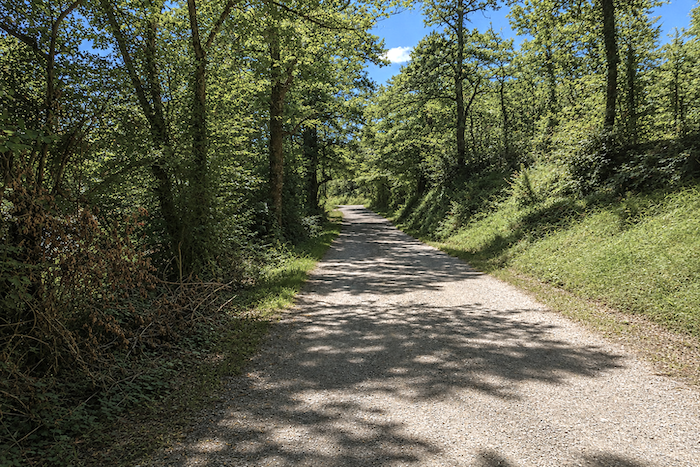 |
| Absolute tranquility reigns here. It is a paradise of shade and coolness for cyclists, who can sometimes be seen standing quietly beside the road, savoring the silence of the surroundings. |
 |
 |
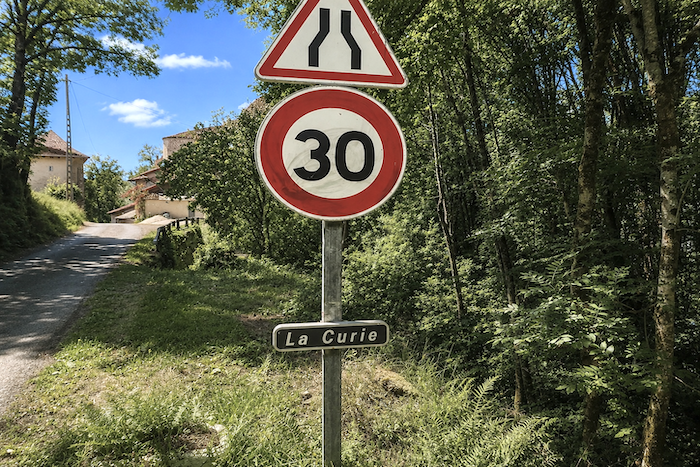
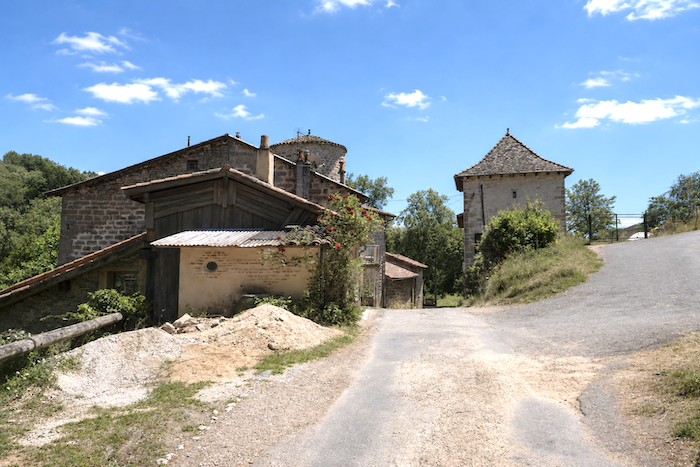
| Little by little, however, the road draws closer to Figeac. It passes through La Curie, a small neighborhood of solid dressed-stone houses clinging to the hills above the town. |
 |
 |
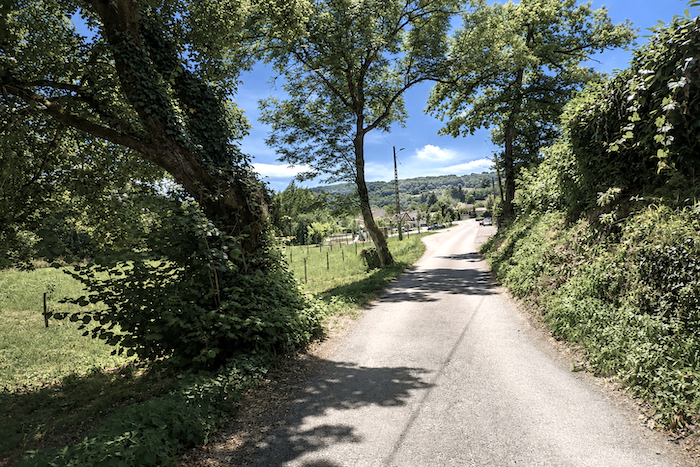
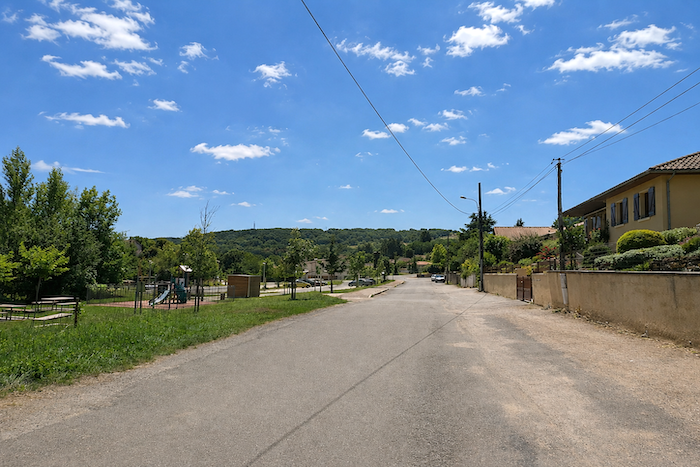
| The atmosphere gradually begins to change. Villas appear along the edge of the woodland, a playground comes into view around a bend in the road, and you can now sense that the town is very close. |
 |
 |
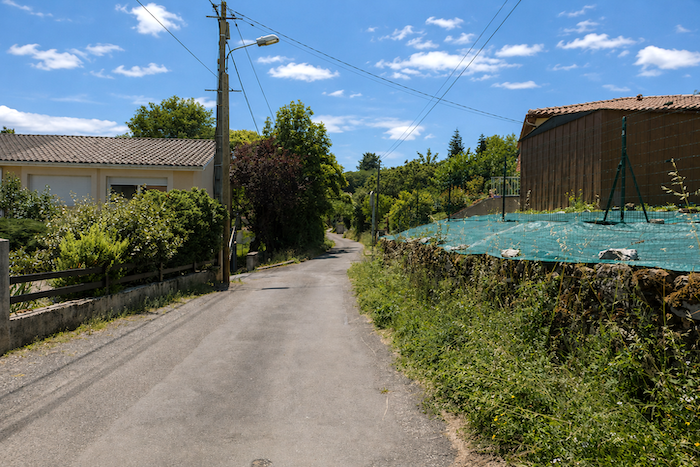
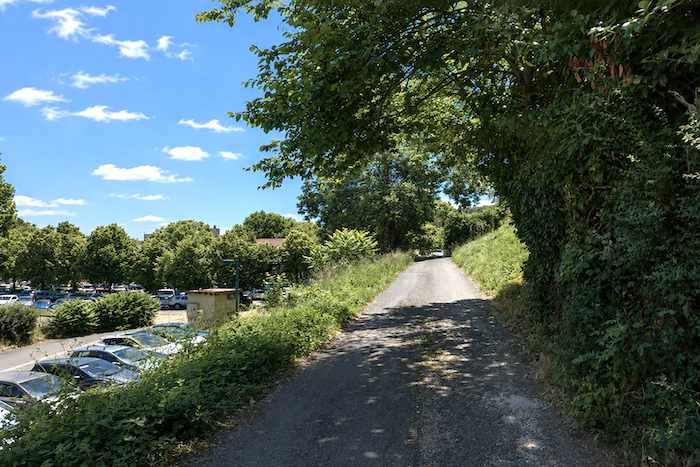
| The GR6 crosses a few more fragments of countryside and scattered residential developments before reaching the large car park that marks the entrance to Figeac. |
 |
 |
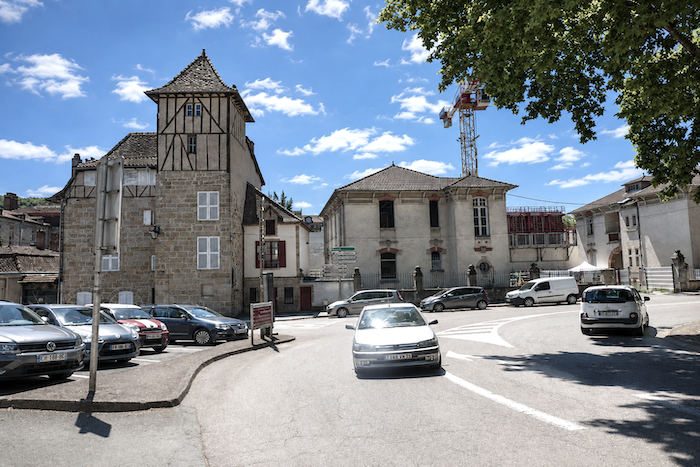
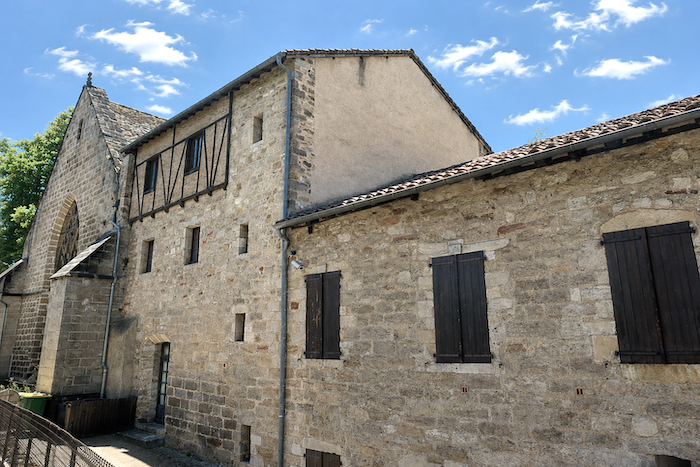
| Figeac is by no means a large town, and its historic center appears almost immediately, as though every street naturally led towards it. |
 |
 |
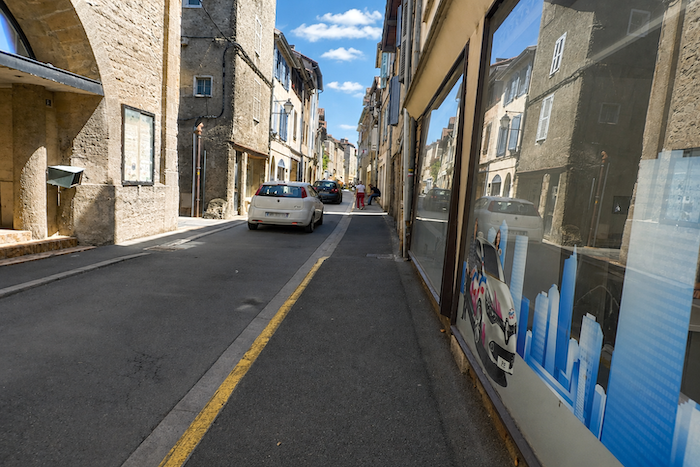
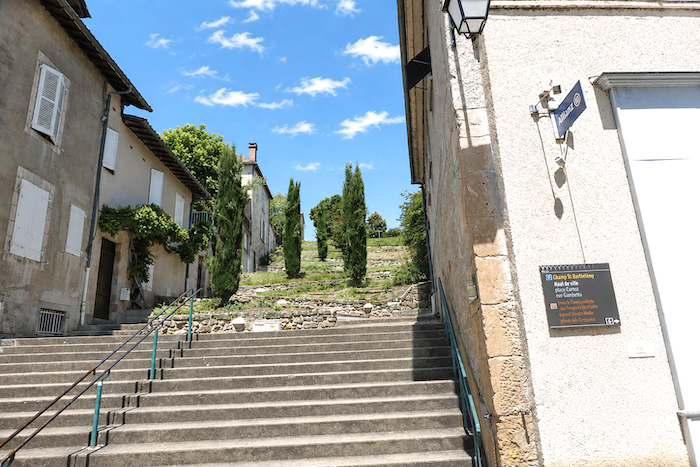
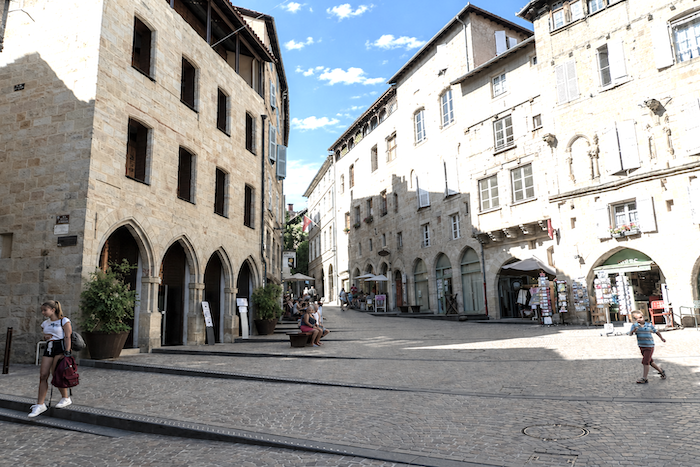
| After so many forest paths and silent valleys, you could almost imagine yourself in San Francisco when you discover Figeac’s own version of “Laurel Street”, with its surprising twists and turns clinging to the hillside. |
 |
 |
Below the central square, the town suddenly seems livelier and more animated than anything the route has revealed until now.
Listed accommodations on the Rocamadour Way
- Gîte La Halte550. Le Poteau; 06 06 47 02 94; Gîte, dinner, breakfast, cuisine
- Gîte La Citadelle, Cardaillac; 07 67 42 14 11; Gîte, dinner, breakfast, cuisine
- Chambres d’hôte Le Pressoir, Cardaillac; 06 22 48 09 63; Guestroom, dinner, breakfast, cuisine
- Ancienne Ferme Quercynoise, Rousaline/Figeac; 06 35 38 59 64; Guestroom, breakfast
- Gîte du Carmel, 9 Avenue Jean Jaurès, Figeac; 06 14 32 05 51; Gîte donativo, dinner, breakfast
- Gîte du Gua, Cécile (pèlerine),14 Avenue Joffre, Figeac; 06 74 73 22 69 Gîte, dinner, breakfast
- Gîte Le Coquelicot, 20 Faubourg du Pin, Figeac; 06 27 58 67 54; Gîte, dinner, breakfast
- Gîte Le Maquis, 10 Rue des Maquisards, Figeac; 06 33 41 11 95; Gîte, dinner, breakfast, cuisine
- Gîte Le Pont du Pin, 3 Rue des Feuillants, Figeac; 06 33 34 59 75; Gîte, dinner, breakfast
- Gîte Au Jardin de Lola, 9 Rue de Malleville, Figeac; 06 85 36 82 40; Gîte and tents, dinner, breakfast
- Gîte Chemin des Anges, Luc (pèlerin), 30 Allées Victor Hugo, Figeac; 06 50 36 67 91; Gîte and Guestroom, dinner, breakfast
- Le Soleilho, 8 Rue du Prat, Figeac; 06 61 28 57 42; Gîte and Guestroom, breakfast
- Les Pratges, 6 Avenue Jean Jaurès, Figeac; 05 65 50 01 42/06 07 05 07 92; Guestroom, breakfast
- Chambre d’hôtes Conquans, 2 Rue des Lazaristes, Figeac; 06 84 72 98 28; Guestroom, dinner, breakfast
- Le Faubourg, 59 Faubourg du Pin, Figeac; 05 65 34 21 82; Gîte and hotel, dinner, breakfast
- Inter-Hôtel**, 3 Allée Victor Hugo, Figeac; 05 65 34 30 32; Hotel, breakfast
- Le Quatorze***, 14 Place de l’Étang, Figeac; 05 65 14 08 92; Hotel, breakfast
- Hôtel des Bains, 1 Rue du Griffoul, Figeac; 05 65 34 10 89; Hotel, breakfast
- Hôtel Le Pont d’Or***, 2 Avenue Jean Jaurès, Figeac; 05 65 50 95 00; Hôtel, dinner, breakfast
This information was updated in 2026. If you access this site later, it may no longer be accurate. Along these routes, some establishments open every year while others close. One solution is to purchase, among other resources, Miam Miam Dodo, the essential guide for eating and accommodation, which also lists places to stay off the route. For our part, we will only include accommodations located directly on or very close to the route. There are also other options, such as guidebooks or the internet, which also lists Airbnb accommodations. However, even though the valley is a tourist area, Airbnb options are rare. No application is as well documented as Miam Miam Dodo, especially since the small book, available online, is updated every year. If you do not have Miam Miam Dodo, we recommend booking in advance and checking directly with accommodation providers about the details of their services (meals, sheets, toilets, showers, and other amenities). Likewise, inquire at the previous stage about the opening hours of grocery stores and bars, which are often closed during parts of the day or week. On the Rocamadour variant, accommodation options are very limited, but only a few pilgrims pass through here. However, there are also hikers. Therefore, book in advance if possible. Finding a bed at the last minute can sometimes be a matter of luck. It’s better not to rely on that every day.
Accommodation should not be a problem on this stage. For those who would like to have their luggage transported, or arrange transport for themselves, La Malle Postale is a good option.
Feel free to add comments. This is often how you move up the Google hierarchy, and how more pilgrims will have access to the site.
|
 |
Back to menu |