
In the serenity of La Romieu Abbey
DIDIER HEUMANN, MILENA DALLA PIAZZA, ANDREAS PAPASAVVAS
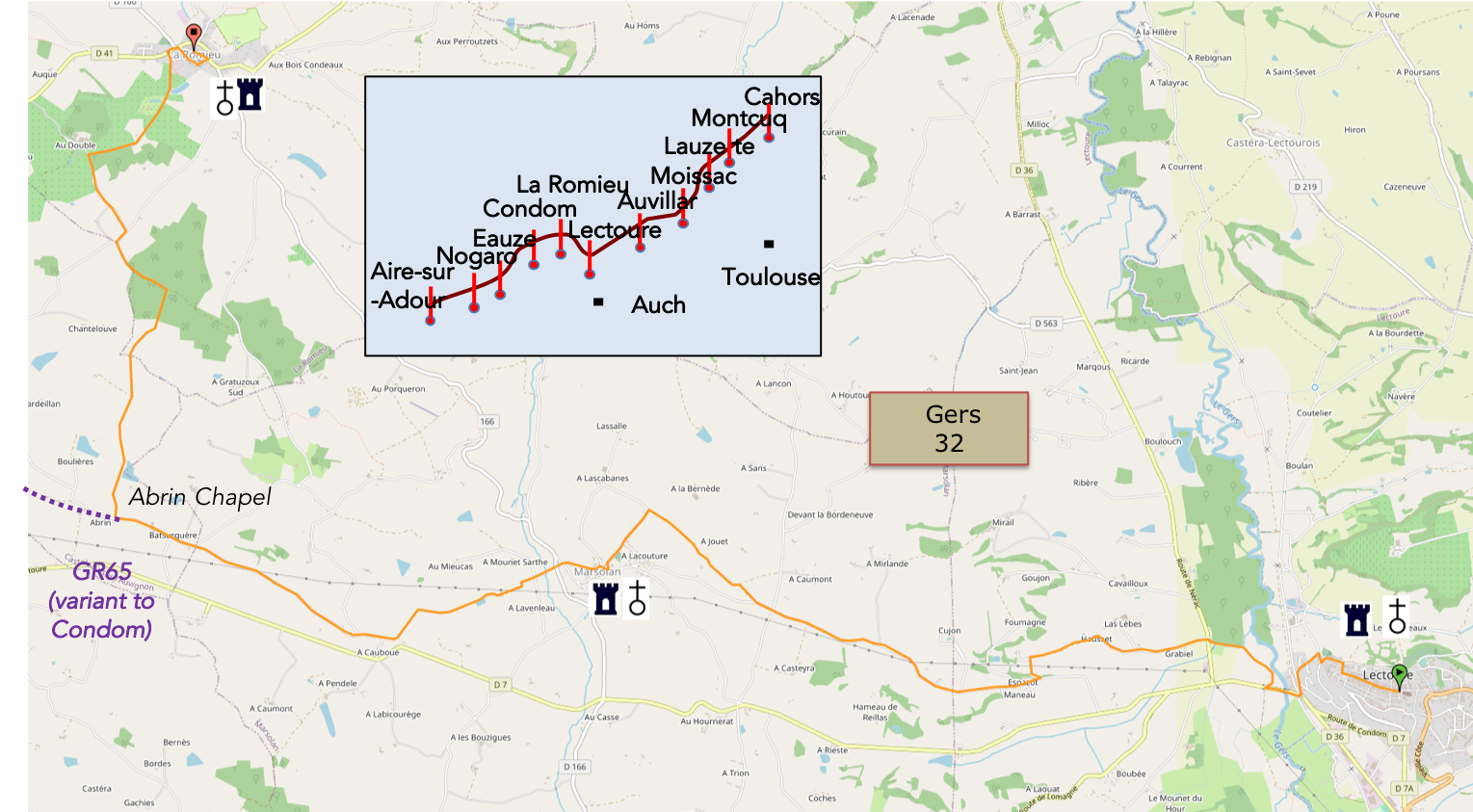
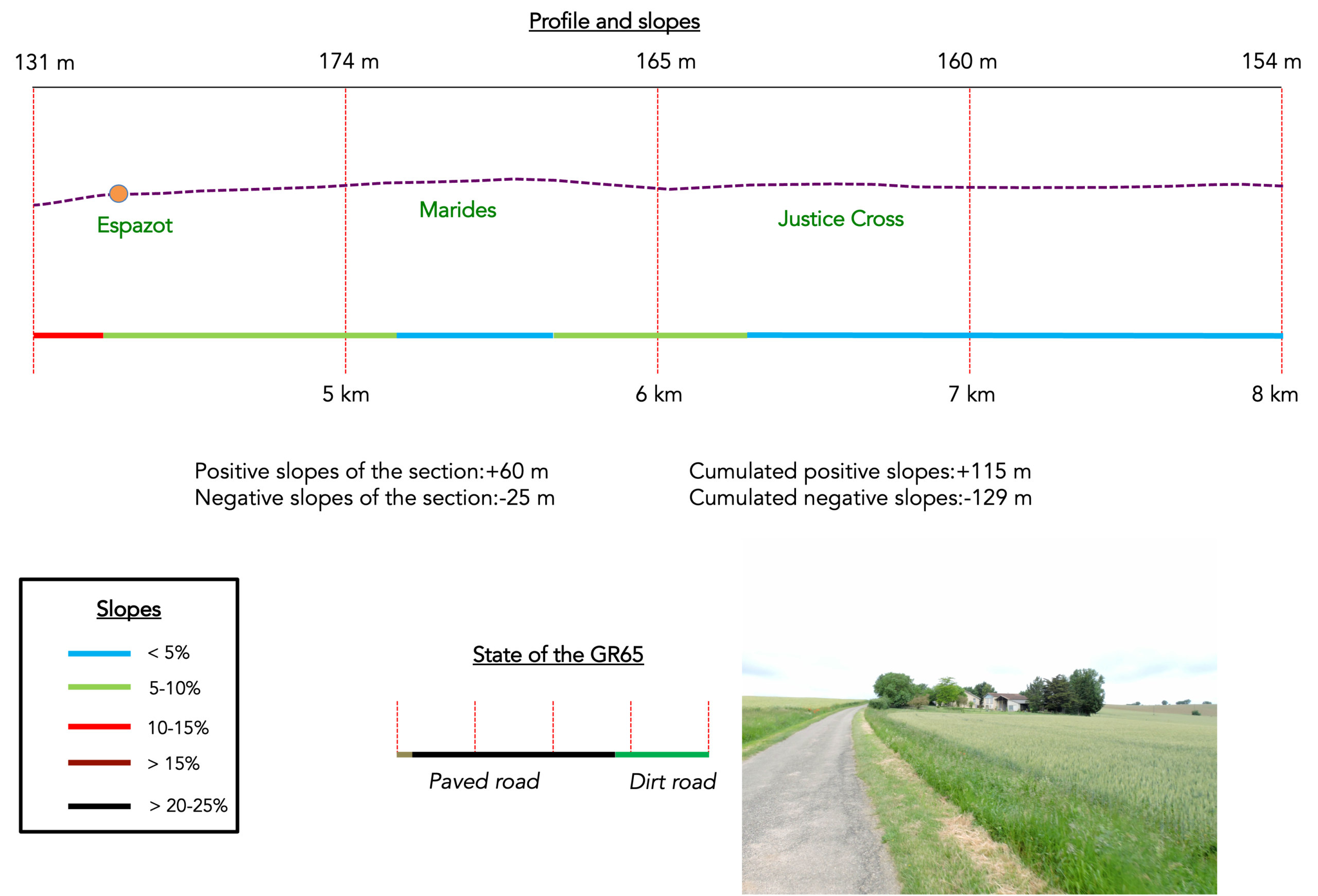
We divided the course into several sections to make it easier to see. For each section, the maps show the course, the slopes found on the course, and the state of the roads. The courses were drawn on the « Wikilocs » platform. Today, it is no longer necessary to walk around with detailed maps in your pocket or bag. If you have a mobile phone or tablet, you can easily follow routes live.
For this stage, here is the link:
https://fr.wikiloc.com/itineraires-randonnee/de-lectoure-a-la-romieu-par-le-nouveau-gr65-55420209
|
Not all pilgrims are necessarily comfortable using GPS devices or navigating with a smartphone, especially since there are still many areas without Internet access. That is why, to make your journey easier, a book dedicated to the Via Podiensis from Cahors to Le-Puy-en-Velay is available on Amazon. Much more than a simple practical guide, this book accompanies you step by step, kilometer after kilometer, providing all the information you need for smooth planning and avoiding unpleasant surprises. Beyond its practical advice, it immerses you in the enchanting atmosphere of the Camino, capturing the beauty of the landscapes, the majesty of the trees, and the very essence of this spiritual adventure. Only the pictures are missing, everything else is there to transport you. In addition, we have also published a second book which, with slightly fewer details but all the essential information, covers the entire route from Le Puy-en-Velay to Saint-Jean-Pied-de-Port. The choice of your journey is yours. |
|
 |
 |
If you only want to consult lodging of the stage, go directly to the bottom of the page.
Gers is a very large countryside, but the department has less than 200,000 inhabitants. If the Gers, at first glance, may seem fairly uniform, it in fact includes several regions which are distinguished above all by the cultures that are developed.
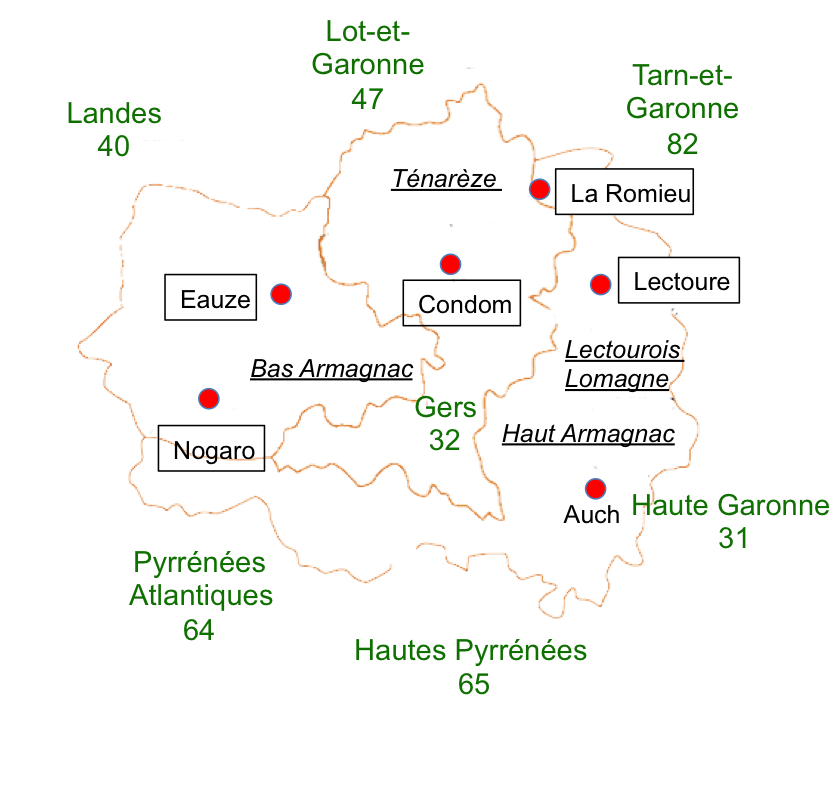
If you enjoy duck or goose, you probably have some idea of where the Gers is located. If you are a skilled swordsman, a follower of d’Artagnan or the Musketeers, you may also remember that these gentlemen were Gascons. But what exactly is Gascony? A department or something else entirely? Today, Gascony is no longer an administrative region, but a cultural and linguistic area. It is a former province spanning the departments of Gers, Landes and Hautes-Pyrénées, and even extending into parts of Gironde. It is above all its cultural identity that sets it apart, particularly its language, Gascon, one of the dialects of Occitan. The Gers is one of the strongholds of Gascony. In the imagination of Alexandre Dumas, it was from here that the famous Musketeers made their way to Paris. A recently erected statue depicts them in action near the cathedral in Condom. Today, you cross Lomagne, in the Lectoure area, straddling the Gers and Tarn-et-Garonne departments, at the northeastern edge of Gascony. This is a land of rounded contours, fertile limestone soils, broad valleys and hills, an open landscape dominated by vast, uniform expanses of cultivated earth, with few groves of trees, where intensive agriculture is in full swing. Cattle have almost disappeared from these parts, and small cultivated plots are becoming increasingly rare. To the north, cereals and oilseed crops dominate. To the south, vineyards and maize take over. Cereals, particularly wheat, account for most of the cultivated land (45%). Oilseed crops cover 25% of the agricultural land. The Gers is France’s leading producer of sunflowers and soybeans. Vineyards, including those producing the famous Armagnac, account for only 5% of cultivated land. Meadows are scarce, and cattle and sheep farming remain fairly limited here. The ducks will come later
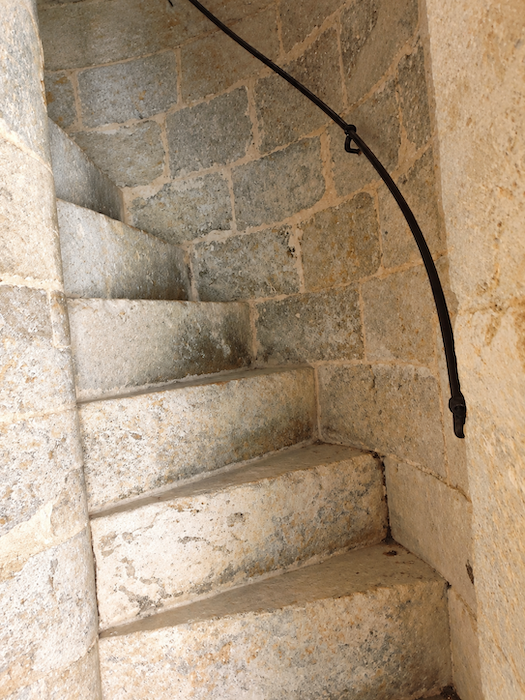
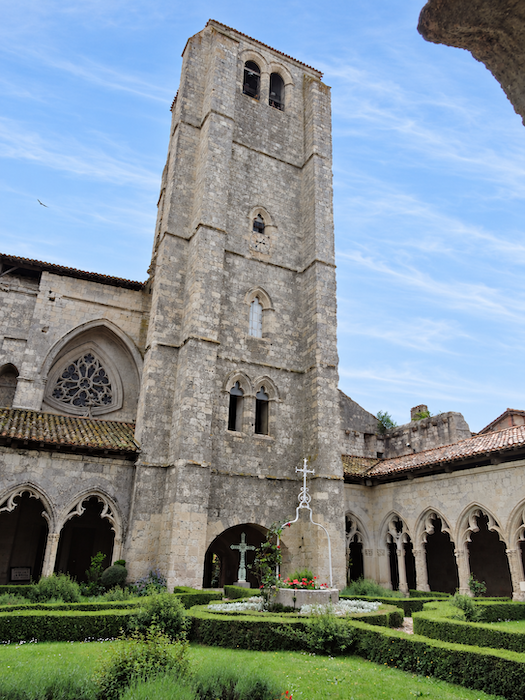
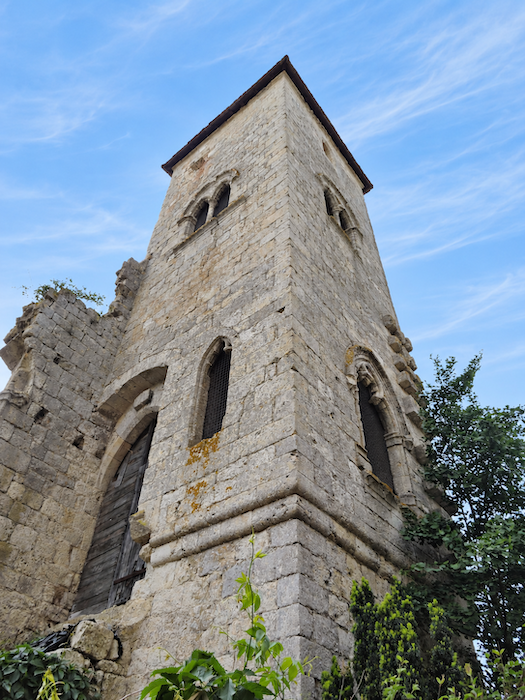
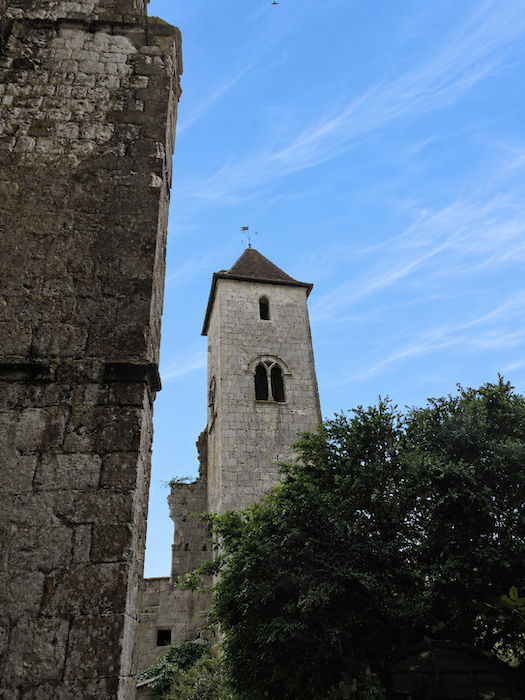
The section between Lectoure and Condom is listed as a UNESCO World Heritage Site, as is the Collegiate Church of Saint-Pierre in La Romieu, one of the region’s finest heritage treasures. The name La Romieu comes from roumieu, meaning a pilgrim travelling to Rome and, by extension, pilgrims in general. The Saint-Pierre collegiate complex is an essential place to visit, with its single-nave church, cloister and two towers, one of which contains a secret passage with a double spiral staircase. The medieval village, built largely on the remains of the abbey, is magnificent. You will also encounter the famous cats of Angéline and their legend. But there is a catch! Many pilgrims skip the stage at La Romieu and head straight for Condom, since the stages from Lectoure to La Romieu and from La Romieu to Condom are both short. They gain a day, but miss a true marvel.
Here too, the route has been altered in recent years. It is decidedly becoming a habit. In the past, the route descended within the citadel walls and continued through the industrial area before crossing the River Gers. Today, it passes through the town and, at its far end, descends along minor roads towards the bridge over the Gers. It is easy to understand why the decision was made to prevent the path from passing through the industrial area, which is hardly attractive. But in doing so, a beautiful part of the town has been left out. So where is the problem? Pilgrims arrive from the opposite side, and unless they have a detailed guidebook, they have no idea that there is something worth visiting on this side of the walls. So they do not go there. And the following morning, they simply follow the GR65 signs and find themselves on the bridge over the Gers.
Difficulty level: This is an easy day’s walking, with virtually no difficulties and only modest elevation changes (+311 meters / -307 meters), almost like a stroll over a series of very gentle rolling hills. There is little to report, apart from the descent from Lectoure and a few slightly steeper sections where the route crosses streams.
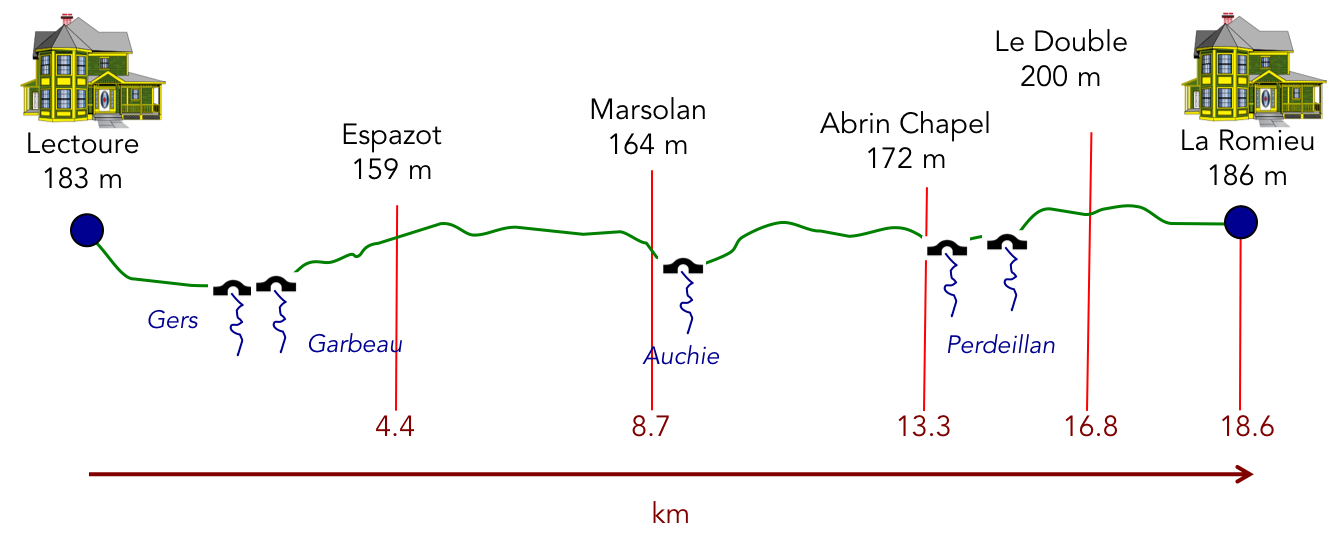
State of the GR65: Today, paved road sections outnumber those on paths, as is often the case along the Way of Saint James:
- Paved roads: 9.7 km
- Diet roads: 7.9 km
Sometimes, for reasons of logistics or housing possibilities, these stages mix routes operated on different days, having passed several times on Via Podiensis. From then on, the skies, the rain, or the seasons can vary. But, generally this is not the case, and in fact this does not change the description of the course.
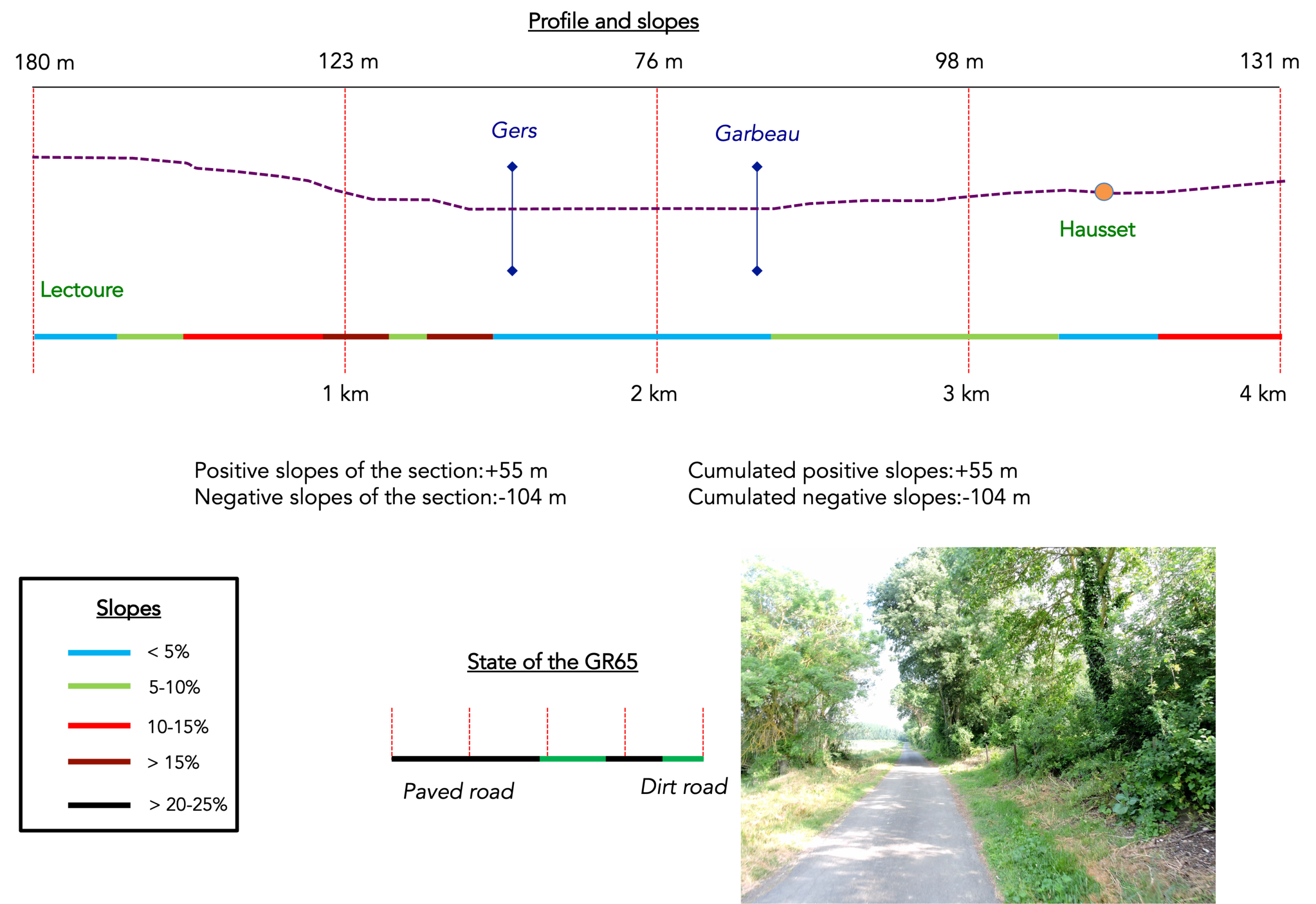
It is very difficult to specify with certainty the incline of the slopes, whatever the system you use.
For « real slopes », reread the mileage manual on the home page.

Section 1: Across the plain where the Gers flows
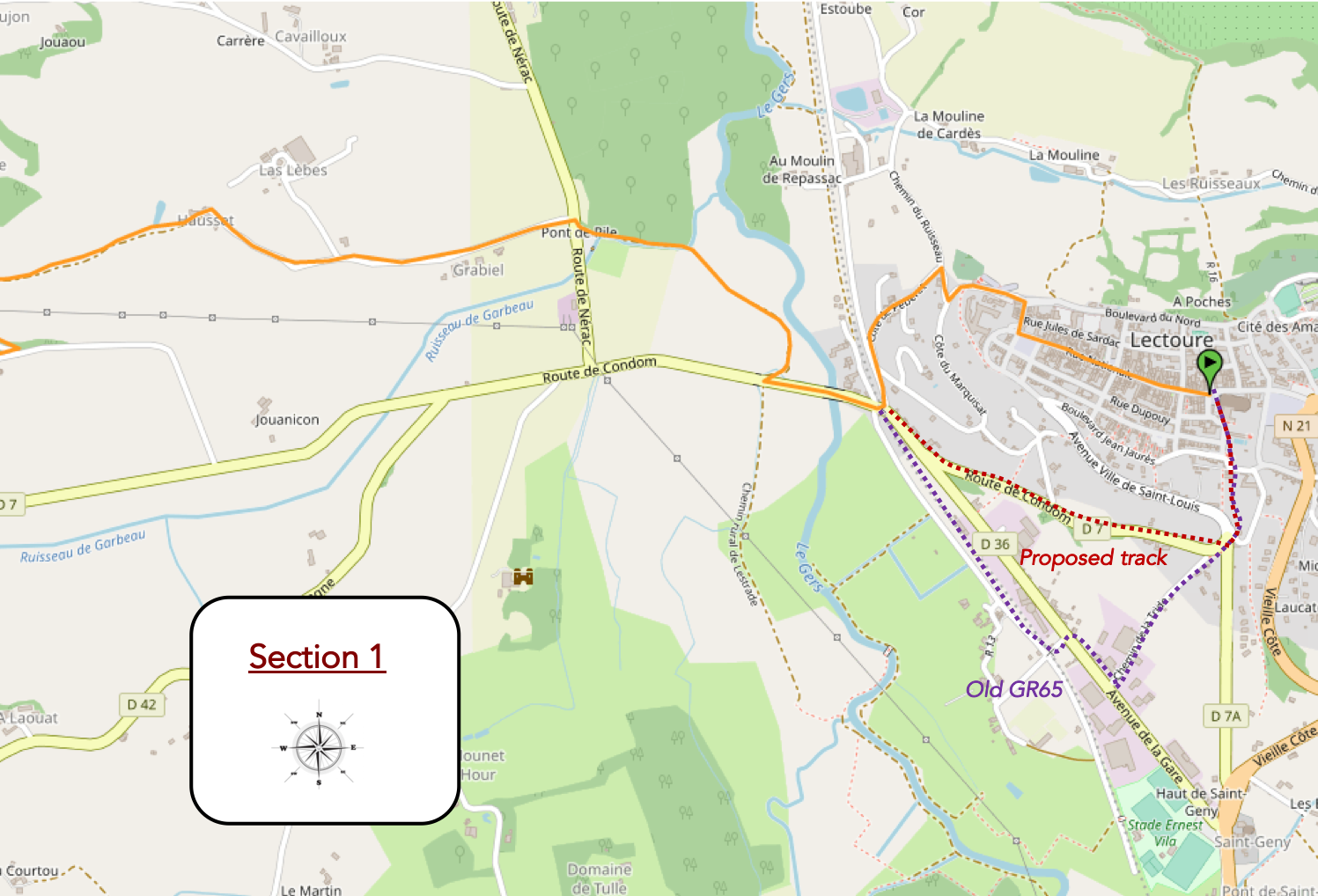
Overview of the route’s challenges: steep descent from the citadel to the plain, then without any difficulty.
|
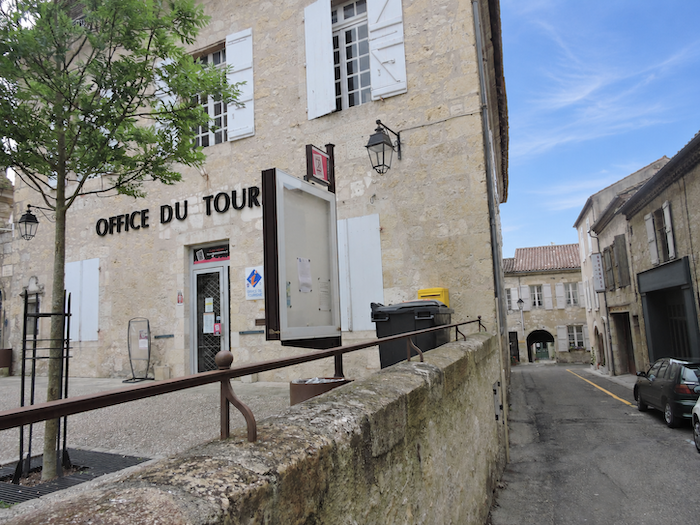
Today, we resist the call of the new GR65, which now leads pilgrims through Lectoure towards the bridge over the Gers. Instead, we favor a route that has fallen out of favor, a section of the old Way of Saint James that those responsible for the new itinerary seem to have consigned to oblivion. Some pilgrims may already have visited it the previous day. For the others, we hope that these few lines will encourage some walkers to leave the official route for a while and rediscover this abandoned route. In former times, the GR65 left Lectoure behind the Tourist Office, escaping from the heights of the ancient citadel to descend, with an almost old-fashioned grace, to the foot of its mighty ramparts. It was another way of bidding farewell to the town, following its old walls rather than turning one’s back on it too hastily. |
|
 |
 |
|
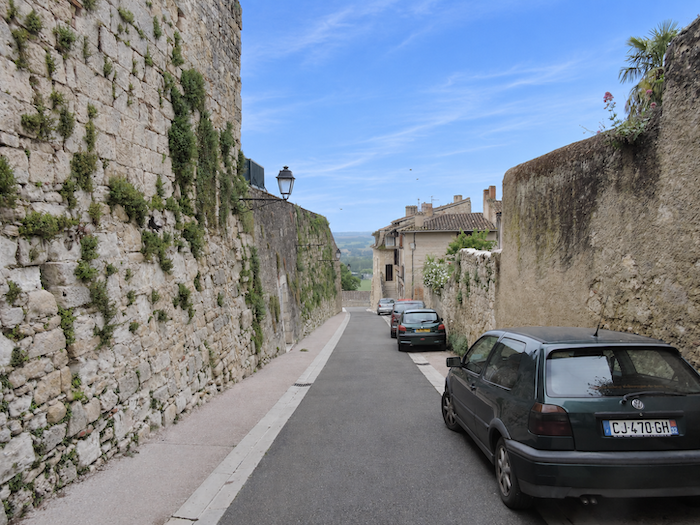
Perched on its rocky spur, Lectoure was one of the strongholds of the Counts of Armagnac during the Middle Ages. In the 15th century, when the town came under royal authority, it assumed all the attributes of a formidable fortress. Imposing walls remain from this era of military grandeur, veritable belts of stone that still encircle the upper town. Within their protection, the old fortified town unfolds into a maze of terraces, narrow lanes and hidden stairways. The houses seem to cling to one another, while the ancient stones, arranged in tiers along the hillside, gradually draw the eye towards the countryside. |
|
 |
 |
|
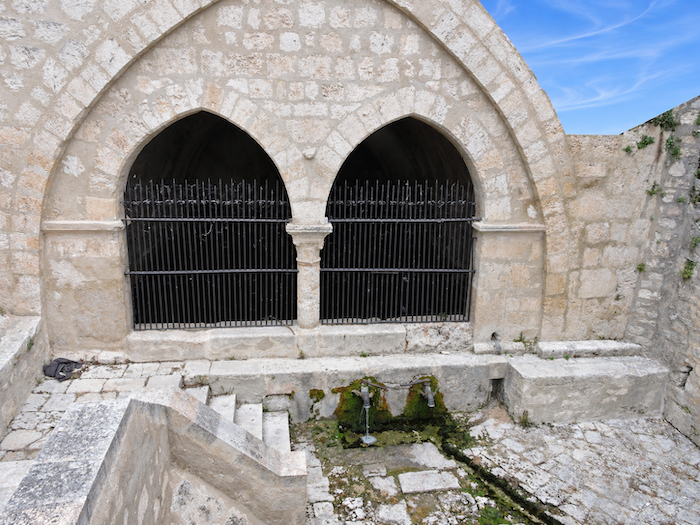
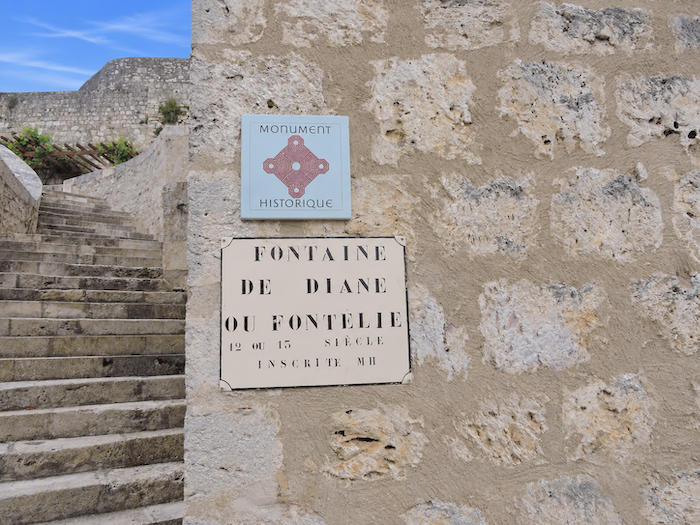
At the foot of these ramparts, a staircase enclosed between high walls leads to one of Lectoure’s best-kept secrets: the Fountain of Diana. Away from the bustle of the streets, this sanctuary of water seems to have guarded, for centuries, a memory older still than the fortifications towering above it. Its name evokes the goddess of the hunt, although the identity of the deity once worshipped here remains shrouded in uncertainty. Listed as a Historic Monument, the fountain in its present form dates back to the 13th century. A generous spring pours its waters through two large taps, before the overflow reaches a drinking trough nestled beneath the ramparts. In this secluded stone retreat, the water continues its age-old work, indifferent to the passing centuries. |
|
 |
 |
|
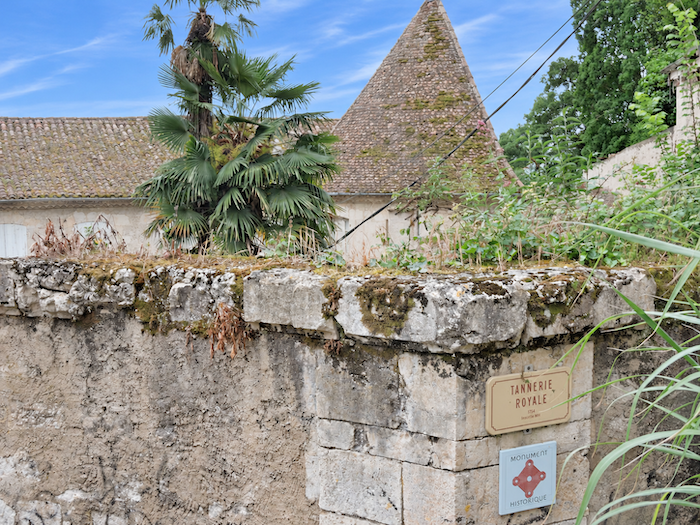
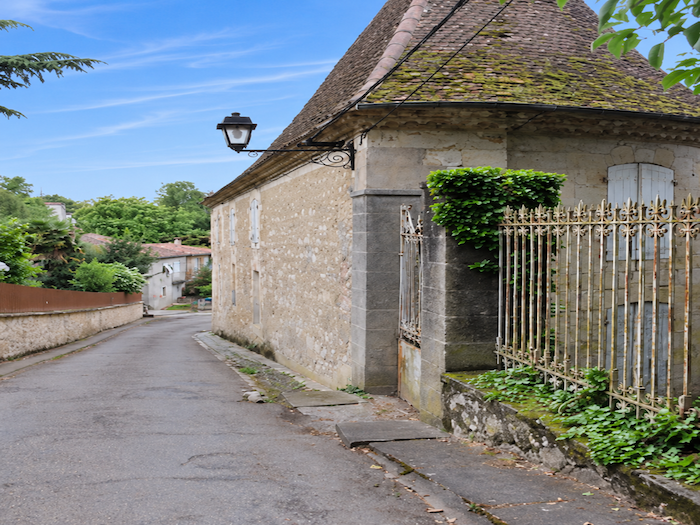
Long before running water reached people’s homes, this spring sustained a whole community of craftsmen, particularly the tanners established at the foot of the town. The route soon passes the former royal tannery, whose walls preserve the memory of a time when leatherworking, water-related trades and the activity of workshops brought life to this now sleepy neighborhood. |
|
 |
 |
|
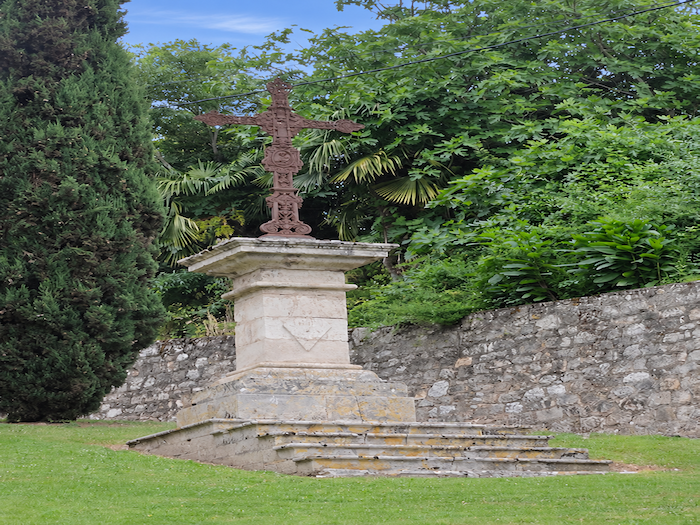
The descent continues to a crossroads dominated by a large iron cross, in the shadow of the citadel. Before moving further away, the walker can still look up towards Lectoure. High above, the old town seems to defy time, firmly anchored to its promontory, its walls extending the natural rock and its houses huddled beneath the Gascon sky. |
|
 |
 |
 |
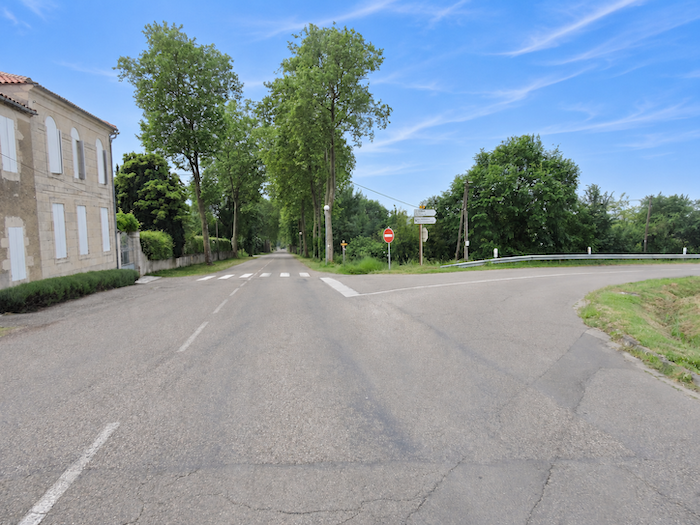 |
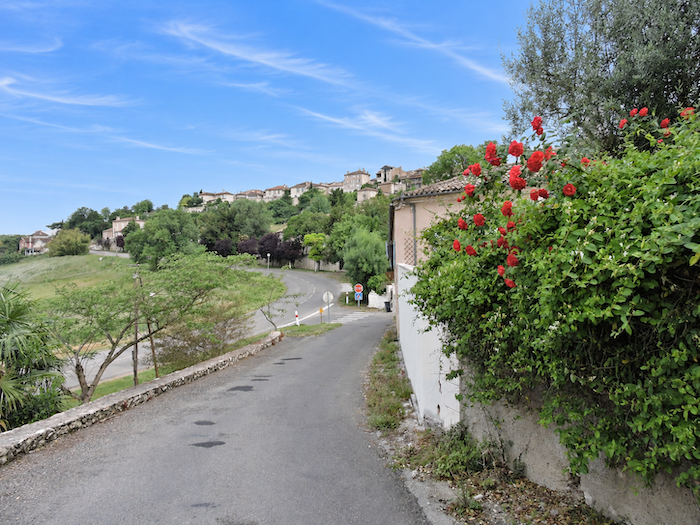
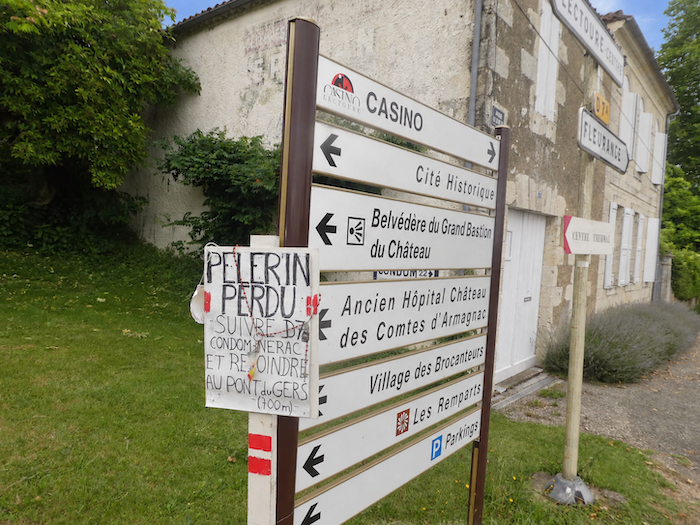
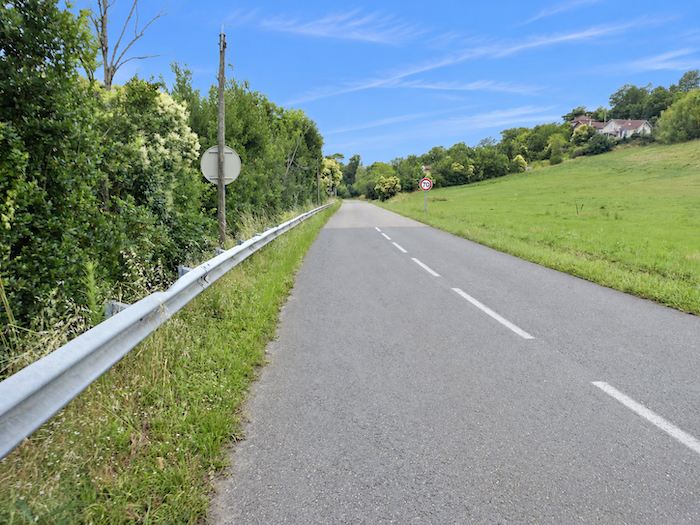
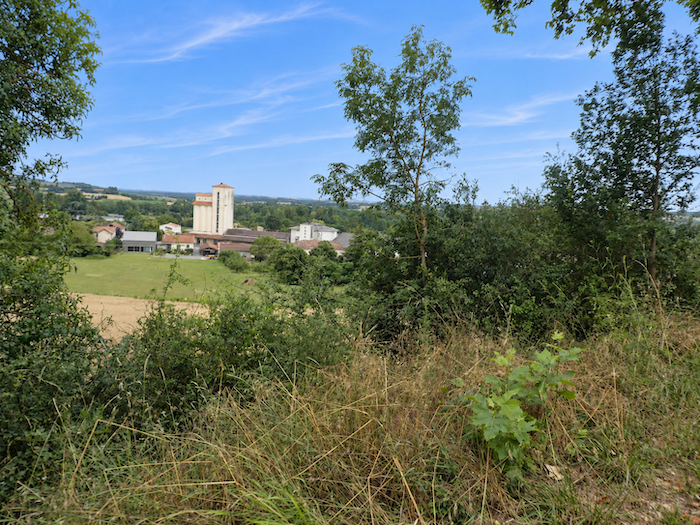
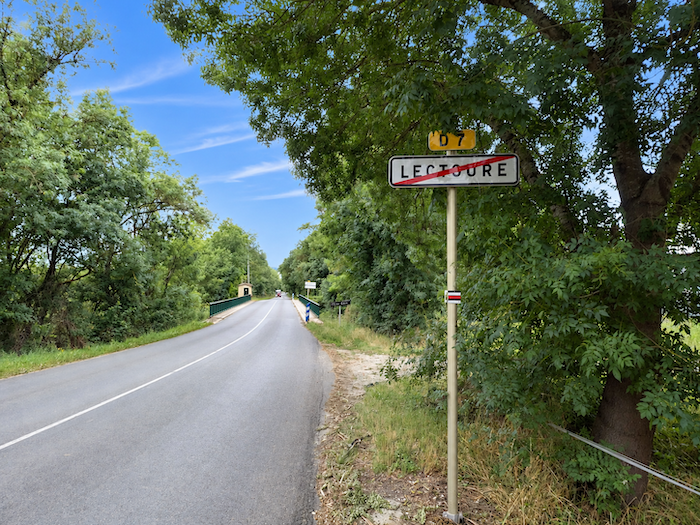
In the past, the GR65 continued its descent towards the industrial area. A sign intended for « lost pilgrims » still stands at this crossroads. Its inscription now raises a smile: by constantly changing the itineraries, do we not end up losing the very people we claim to guide? In any case, pilgrims wishing to rejoin the official route can take the minor departmental road D7, which will bring them back towards the bridge over the Gers. The detour adds a little distance to the walk, but in return offers one of the finest views of the hilltop town.
|
This alternative route initially overlooks the industrial area, whose buildings spread out at the foot of the old town, before continuing towards the former railway line. |
|
 |
 |
|
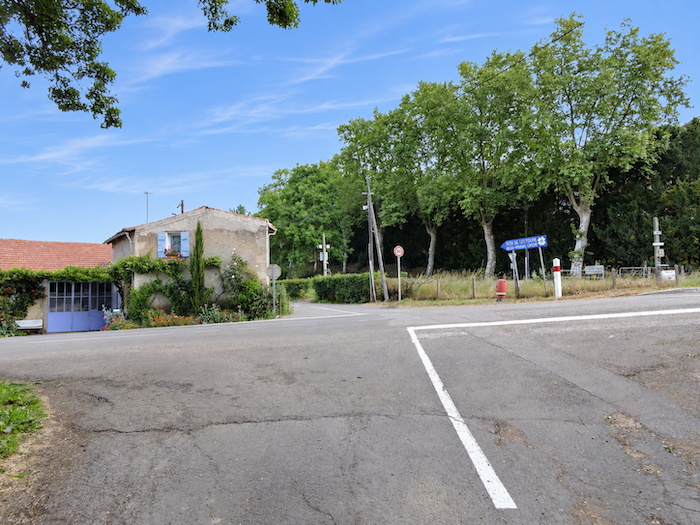
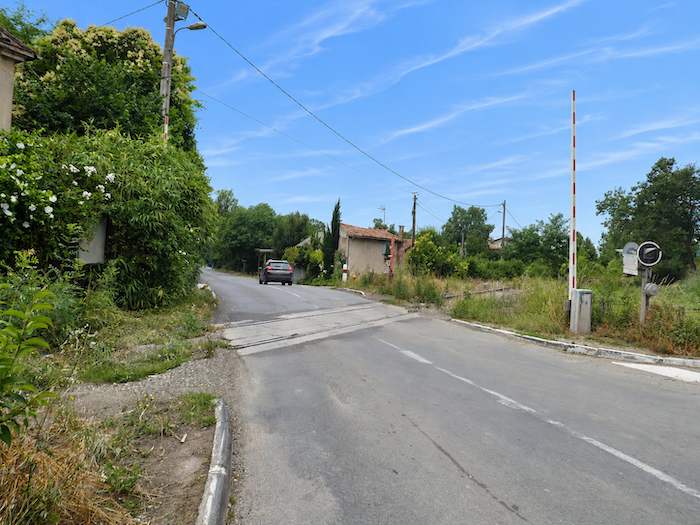
At the end of this road, the modern route of the Way of Saint James is rejoined, near a former railway line that has now disappeared. It once belonged to the network of branch lines that connected small towns and rural communities across France. The age of local trains has faded almost everywhere, taking with it an entire chapter of rural life. |
|
 |
 |
|
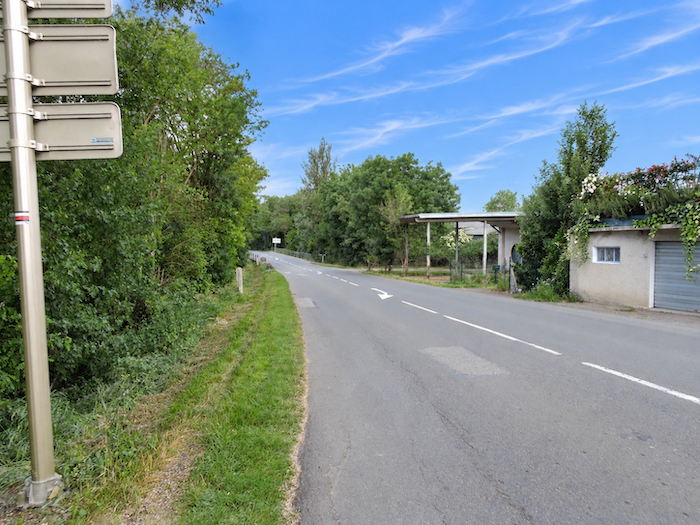
Only a short stretch of road remains to be followed before leaving Lectoure behind for good and reaching the banks of the Gers. |
|
 |
 |
|
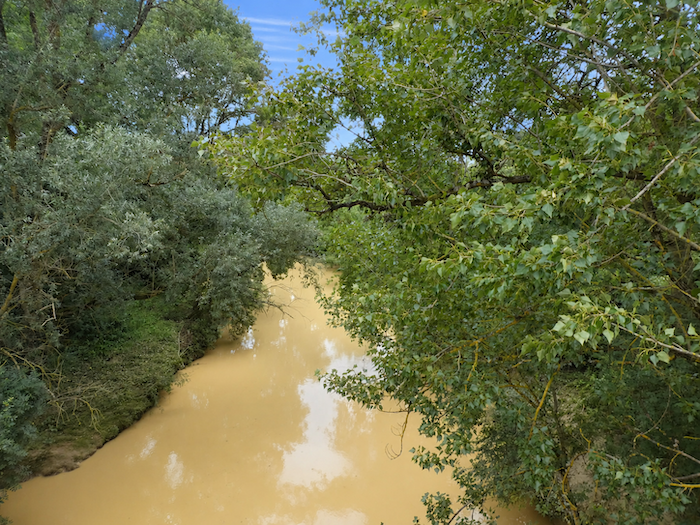
Not far away flows the Gers, a river of changing moods, sometimes peaceful, sometimes turbulent, according to the seasons and the whims of the weather. Rising in the foothills of the Hautes-Pyrénées, it continues its long wanderings northwards, through hills and countryside, before mingling its waters with those of the Garonne. Modest in size compared with the country’s great rivers, it has nevertheless given its name to an entire department, as though this unassuming river alone were enough to embody its identity. The bridge spanning it offers a view of its often-murky waters, laden with soil washed down from the surrounding hills. |
|
 |
 |
|
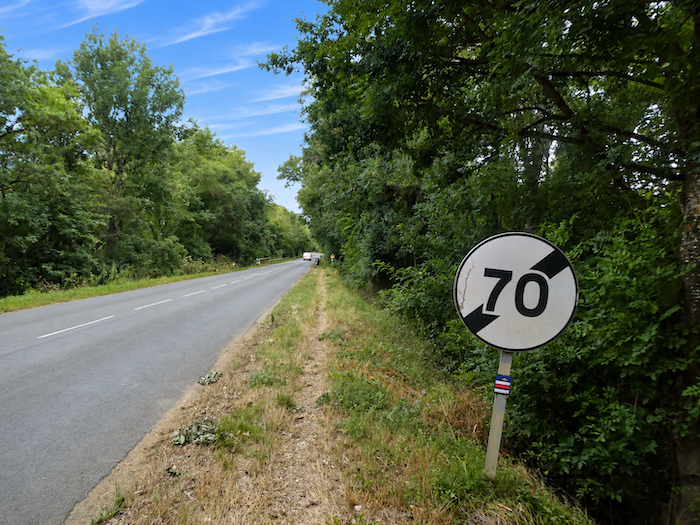
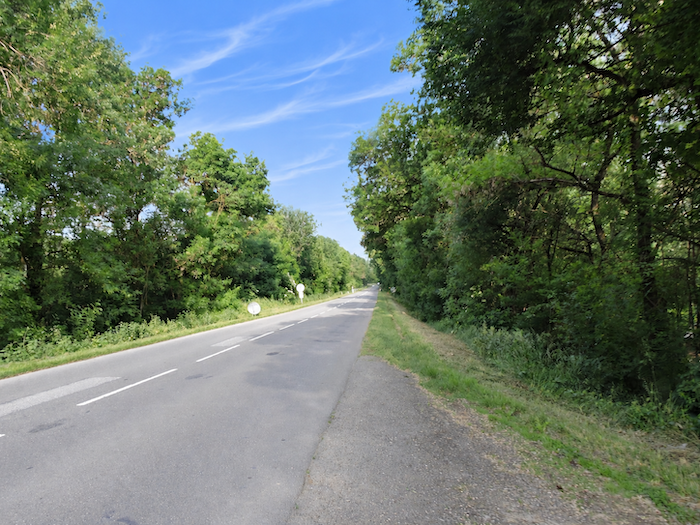
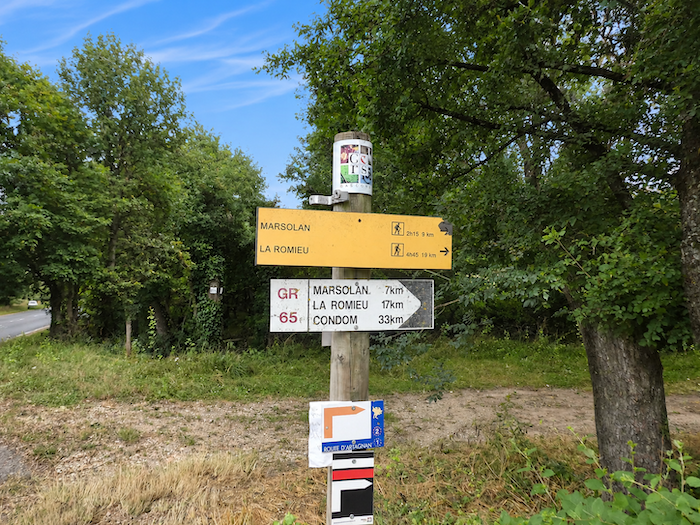
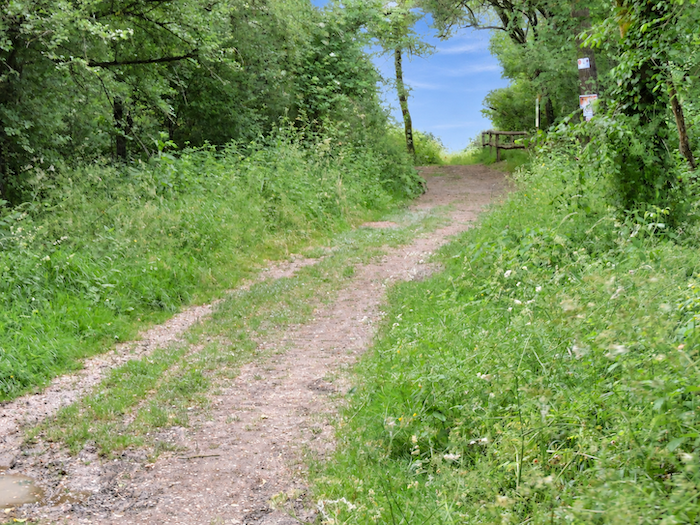
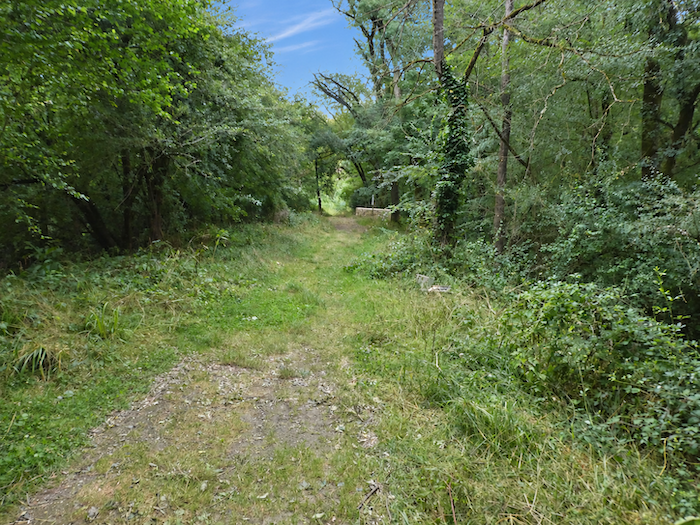
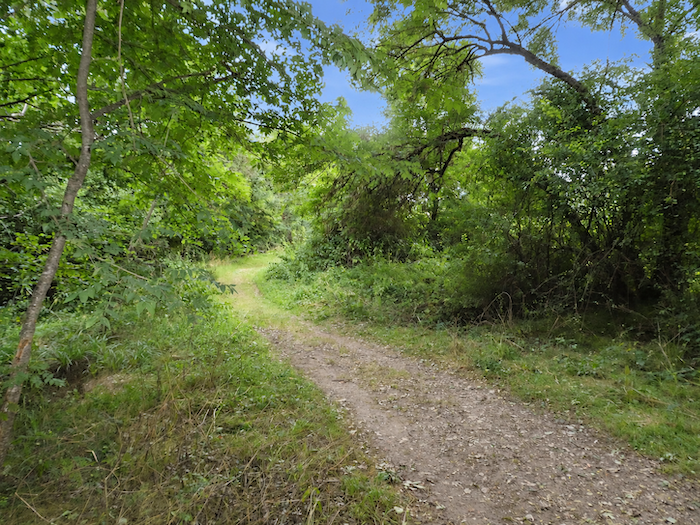
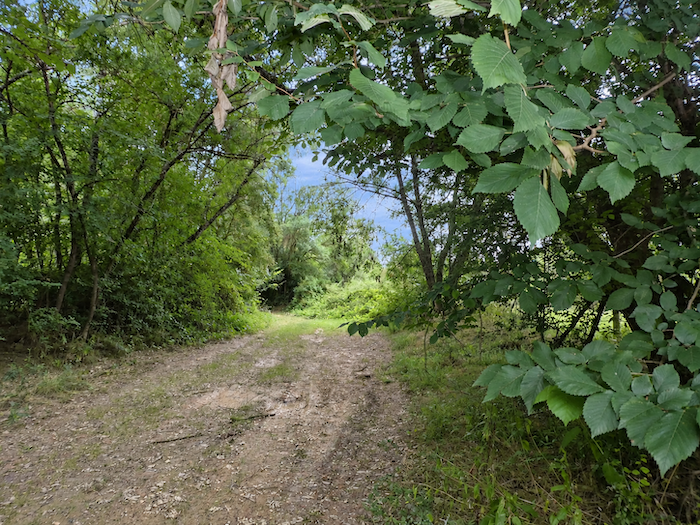
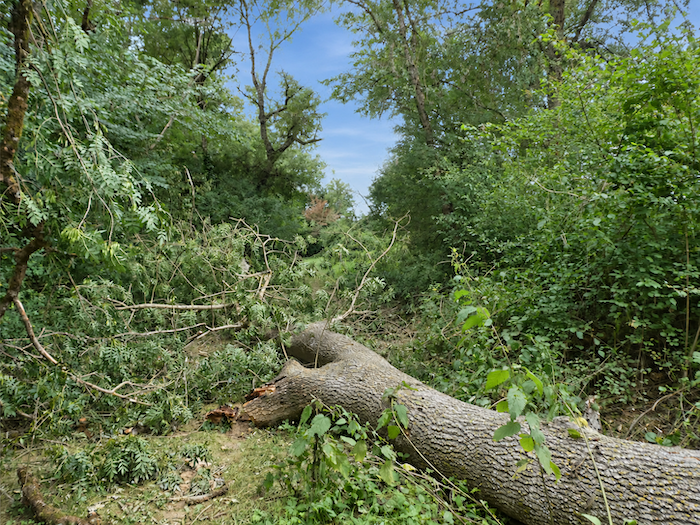
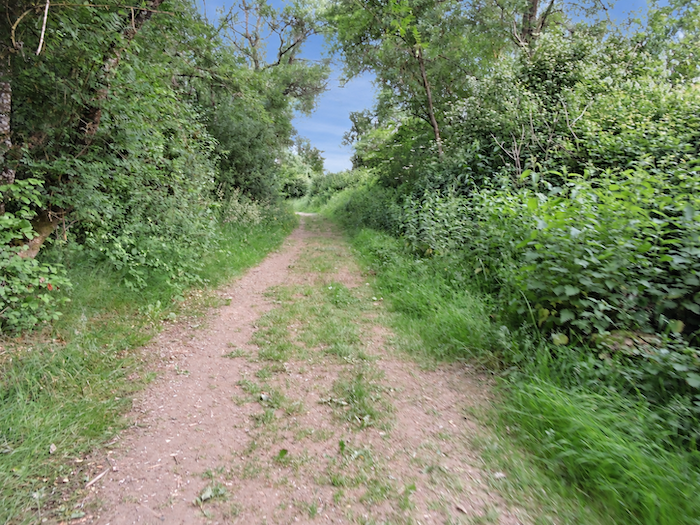
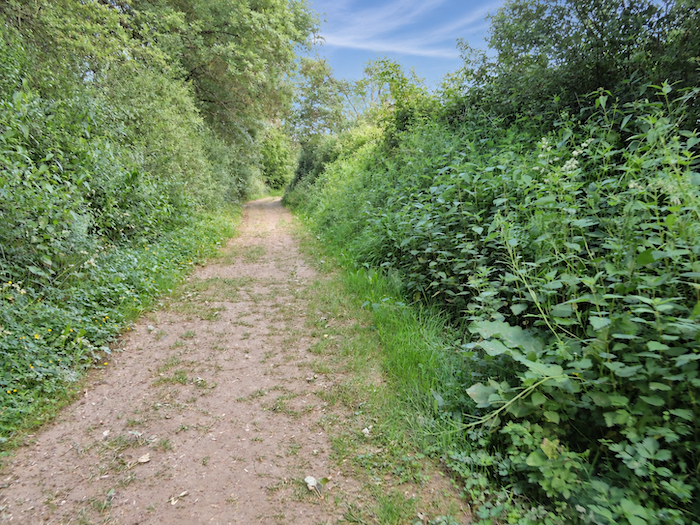
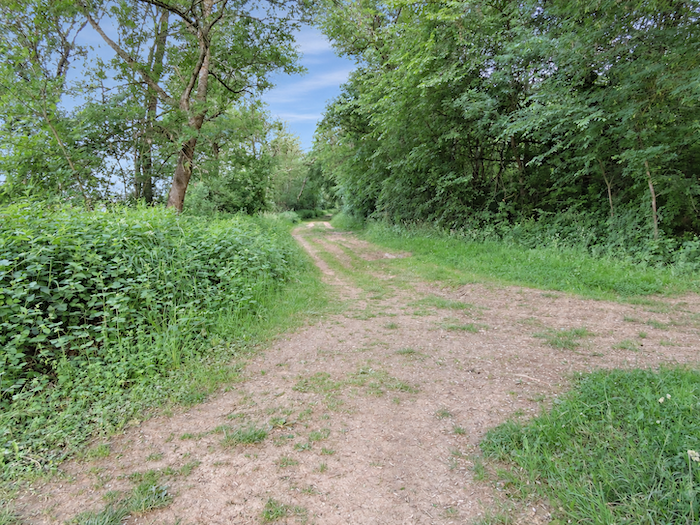
After a few hundred meters along the road, a path branches decisively away beneath the shady canopy of the trees. You enter a world apart, a leafy retreat where branches intertwine, undergrowth competes for every inch of space, and the trail sometimes seems reluctant to continue on its way. |
|
 |
 |
 |
 |
|
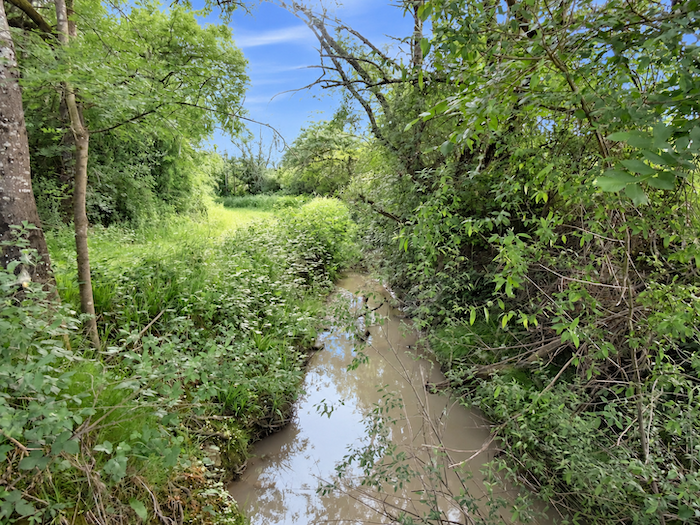
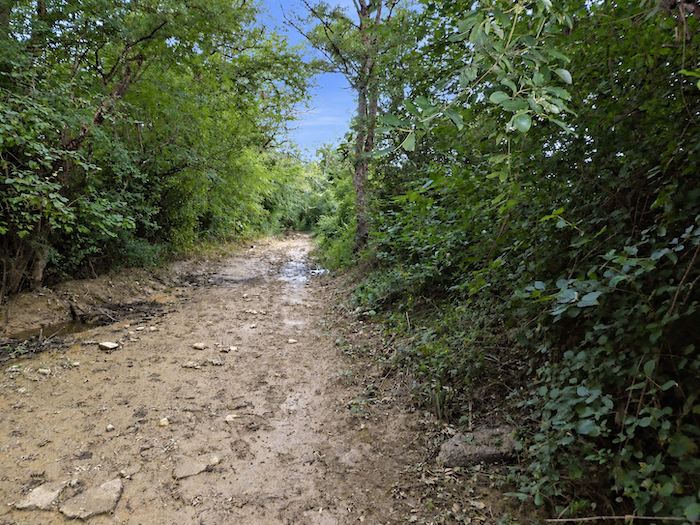
Here, a damp coolness prevails, sustained by vegetation so luxuriant that, in places, it evokes some fragment of primeval forest forgotten in the heart of Gascony. The waterlogged ground betrays the marshy, flood-prone nature of the area. This is the secluded domain of the Garbeau stream, a small watercourse of wandering moods which, rather than confining itself to a clearly defined bed, scatters its waters across the low-lying land. It seeps between roots, soaks into hollows in the ground and maintains the persistent dampness that gives the undergrowth its almost impenetrable character. |
|
 |
 |
|
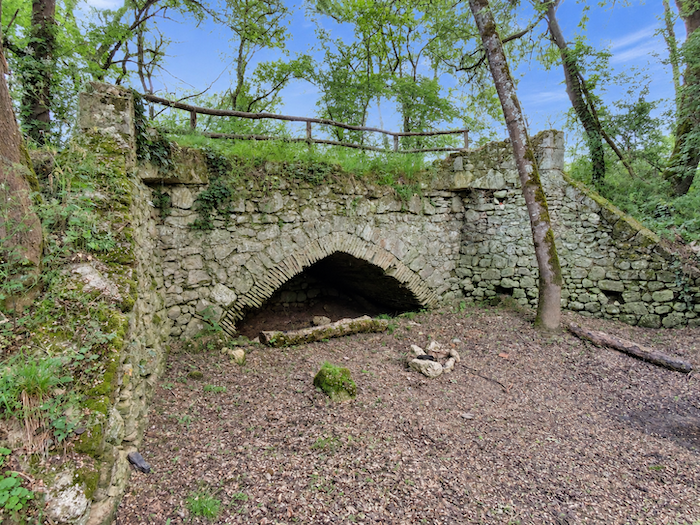
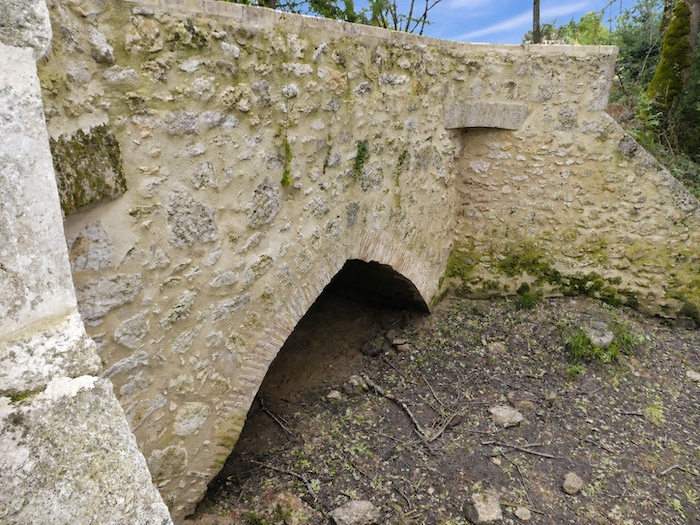
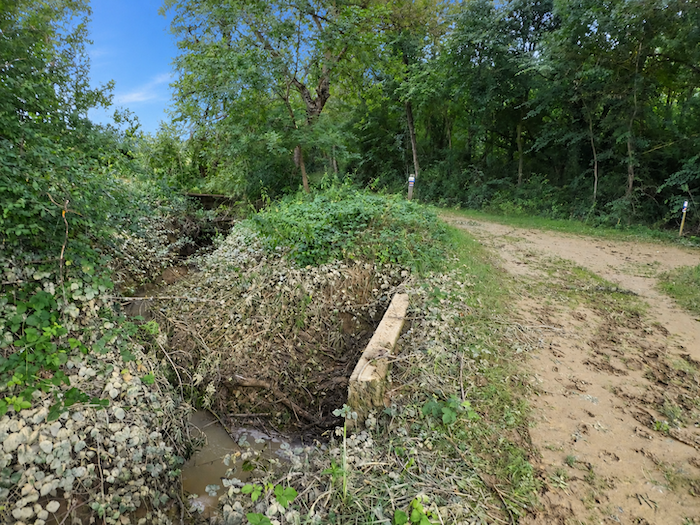
Hidden in this damp solitude is an old witness to the passage of men: the « Petit-Pont-de-Pile ». This ancient structure of limestone rubble once spanned the unpredictable waters of the Garbeau. Its age remains uncertain, as does the exact course of the paths that once led pilgrims to its arches. One can imagine pilgrims of former times venturing into these waterlogged lands in search of a safe crossing, but history offers only scattered clues. Since then, the little bridge has undergone the ravages of a radical restoration. Walled up and extensively altered, it now displays an almost insolent youthfulness. The old stones have lost the patina that, only a few years ago, gave the structure all its charm. What a pity! But time, a craftsman far more patient than man, will surely restore a few wrinkles and something of its former dignity. |
|
 |
 |
|
In these woods, where moisture seeps from the clay soil and water seems to lie dormant beneath every tuft of grass, the oaks have surrendered their supremacy. Other species share this waterlogged kingdom: maples, hornbeams and ash trees mingle their branches above a tangle of bushes, while a few chestnut trees venture into this profusion of vegetation. Everything here breathes the somewhat disorderly abundance of damp forests, where nature seems to obey no laws but its own. |
|
 |
 |
 |
 |
|
But the enchantments of this pseudo-jungle have their limits. No sooner has the walker succumbed to the strange beauty of the place than an army of mosquitoes, as voracious as they are tireless, sets about reminding him that he is not alone in this kingdom. From that moment on, the pilgrim has only one ambition: to reach daylight again as quickly as possible. Marshes certainly have their charms, but they also know how to make you pay for them. |
|
 |
 |
 |
 |
|
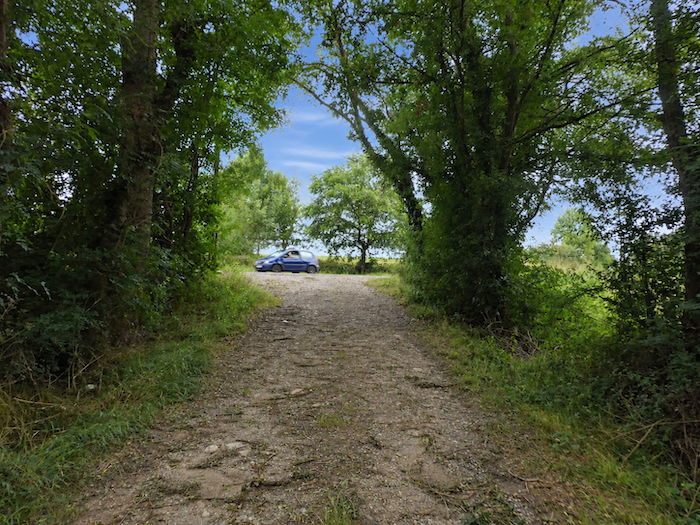
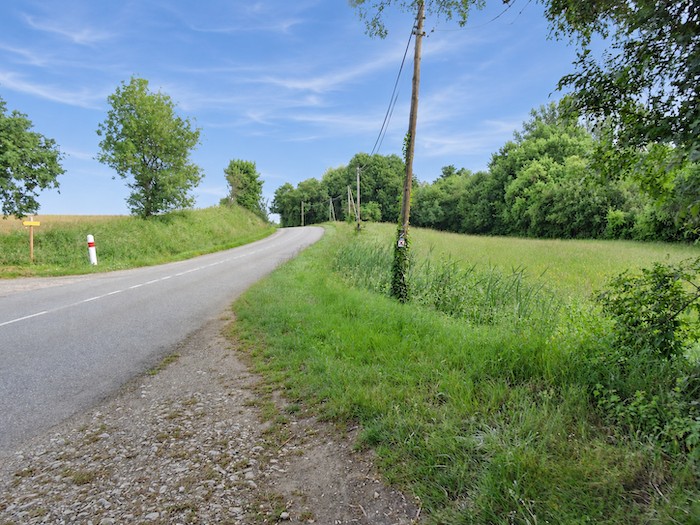
Emerging from the damp, shadowy maze of the marshes, the GR65 rejoins the departmental road. |
|
 |
 |
|
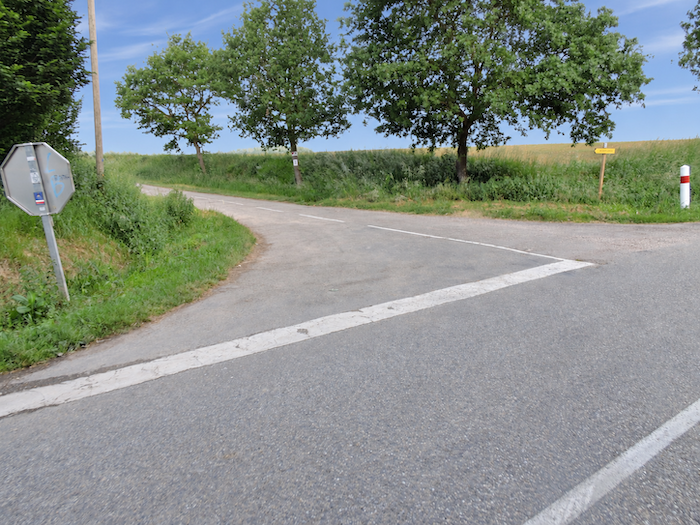
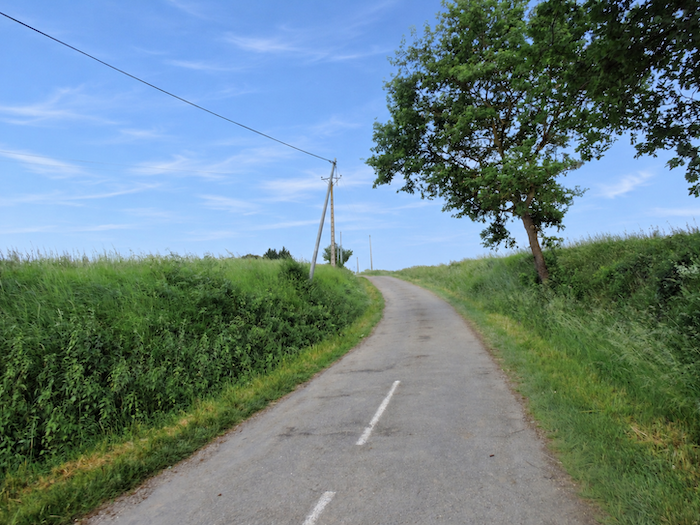
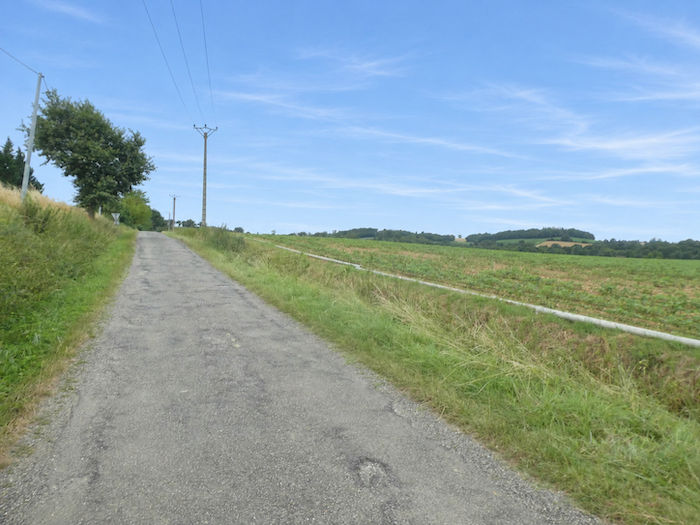
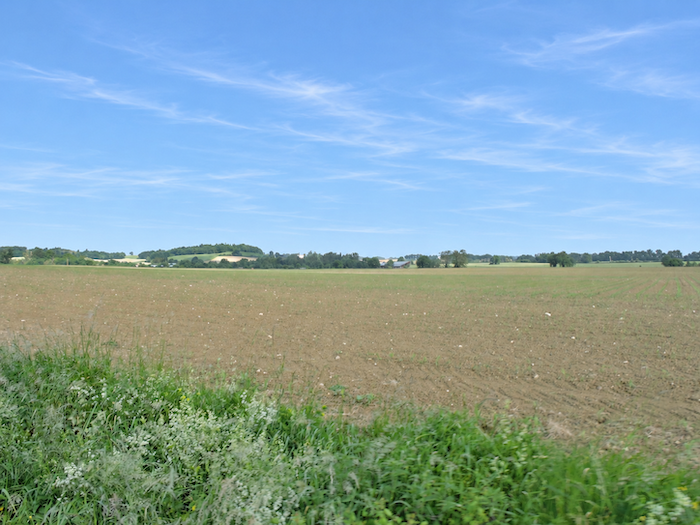
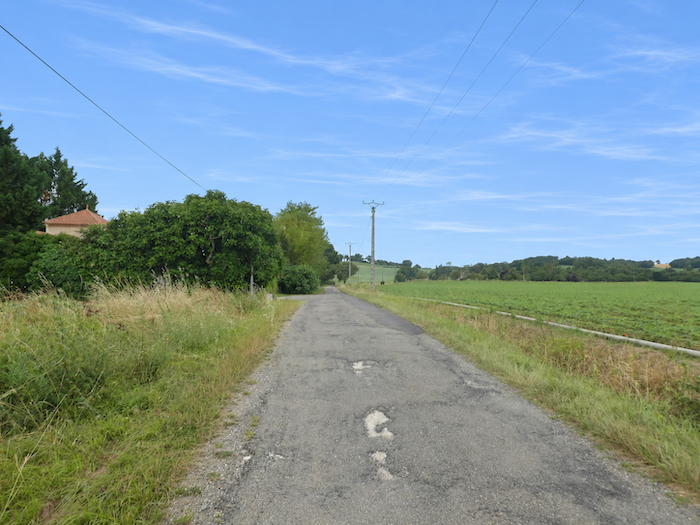
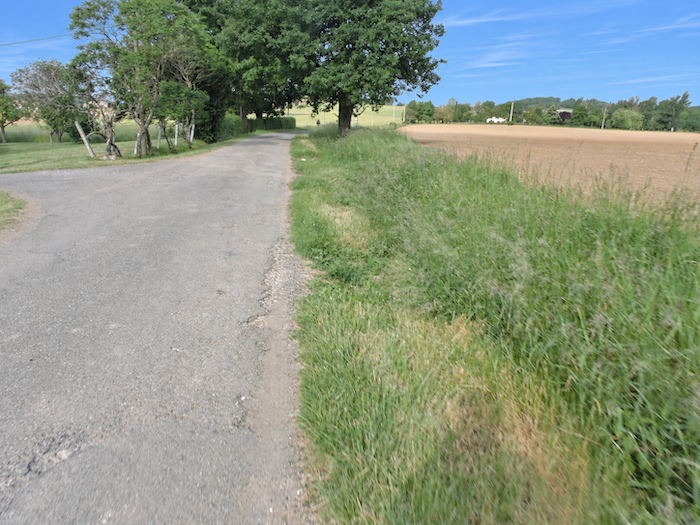
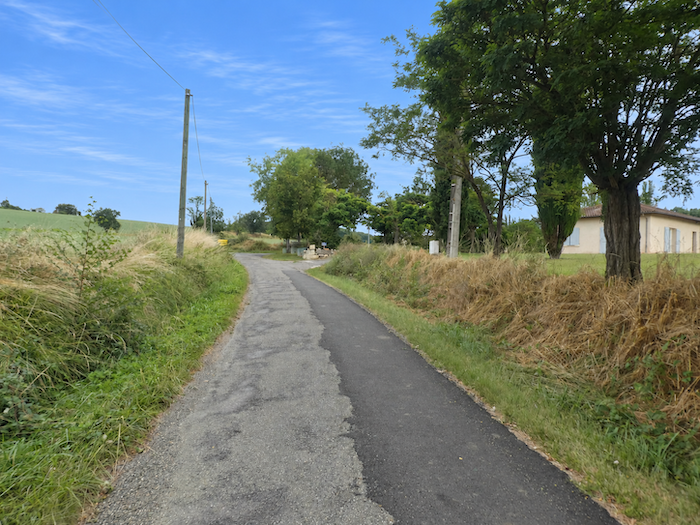
A narrow paved road, its surface somewhat battered by the years, then leads the pilgrim through the Gascon countryside. Gone is the stifling intimacy of the undergrowth. Once again, there is the immense sky, the cultivated fields and that peaceful solitude in which the gaze can wander without meeting an obstacle. |
|
 |
 |
 |
 |
|
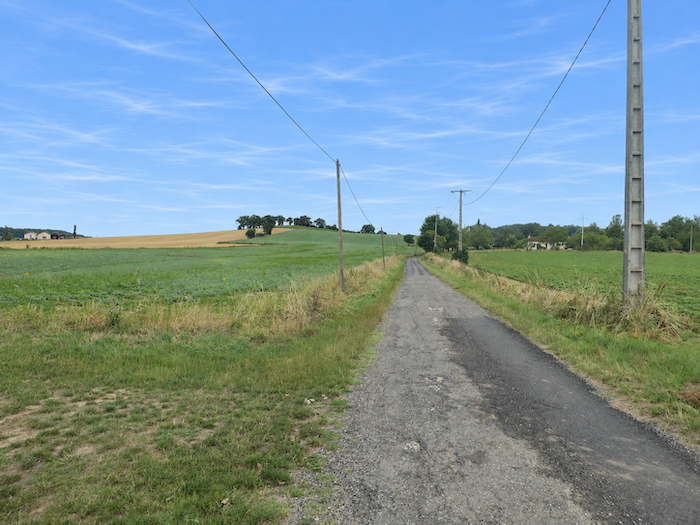
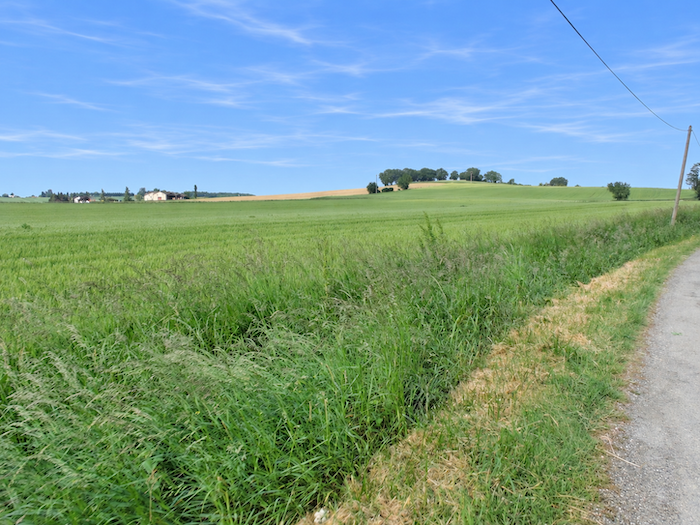
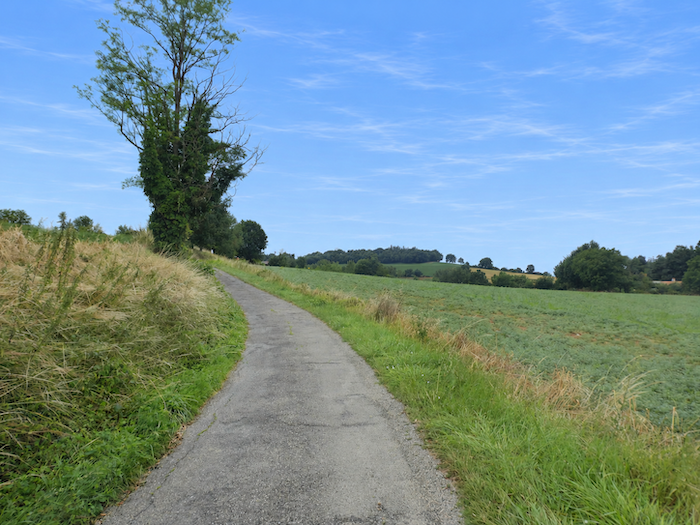
The climb, never particularly demanding, follows the gentle undulations of the landscape through sunflower fields and cereal crops. |
|
 |
 |
 |
 |
|
Here and there, a solitary farm emerges from this sea of crops, an island of life set amid the ploughed fields. Houses are few and far between in this countryside so generously exposed to the sky. . |
|
 |
 |
|
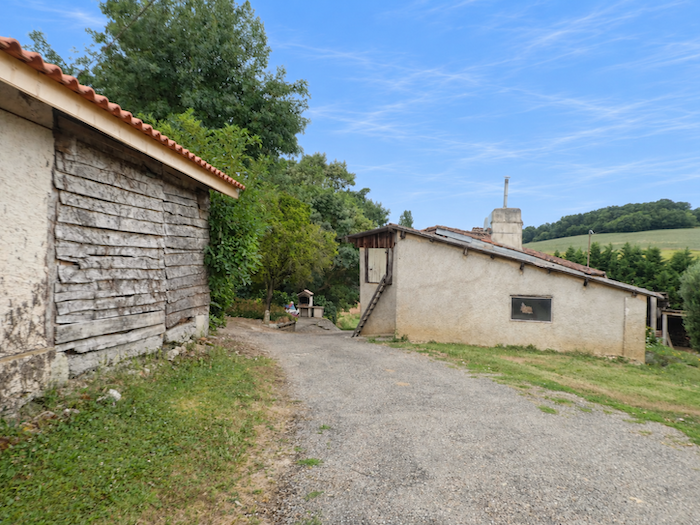
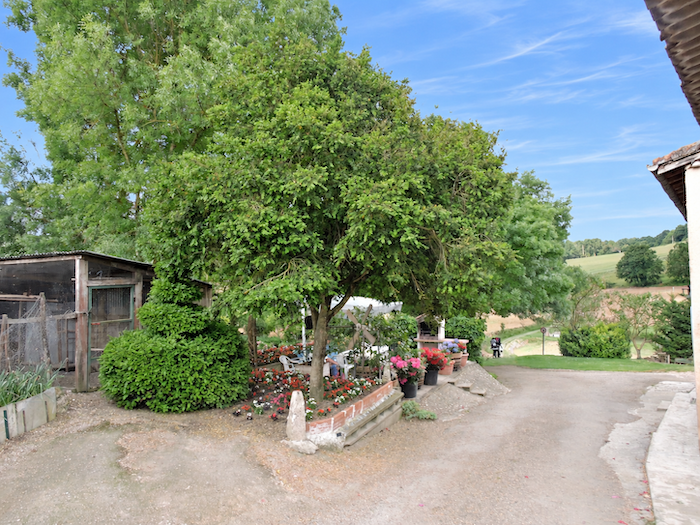
At the top of this unassuming climb, the hamlet of Hausset finally appears, a modest handful of houses gathered on the heights. A few flowers brighten the façades, adding touches of color to the sobriety of the old stones, where life seems to unfold far from the bustle of the world. |
|
 |
 |
|
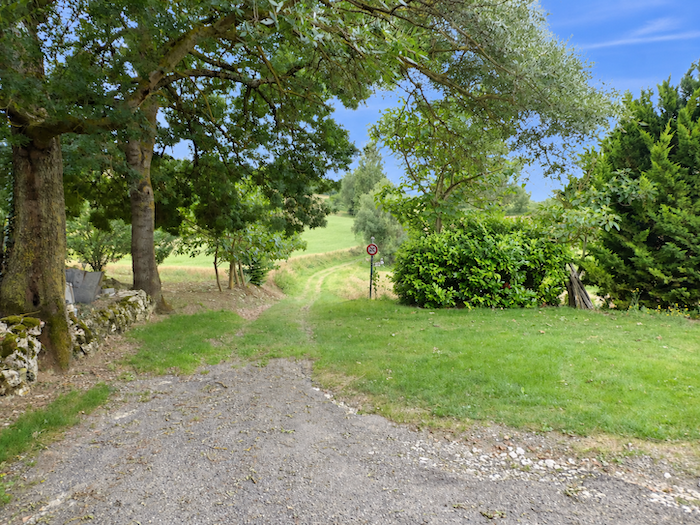
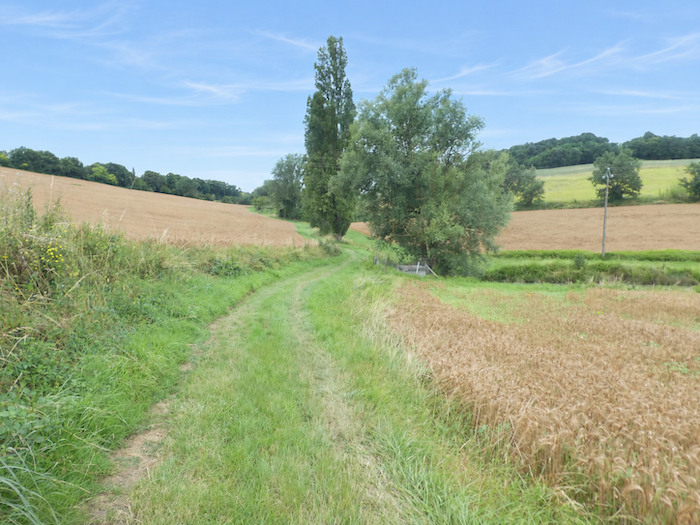
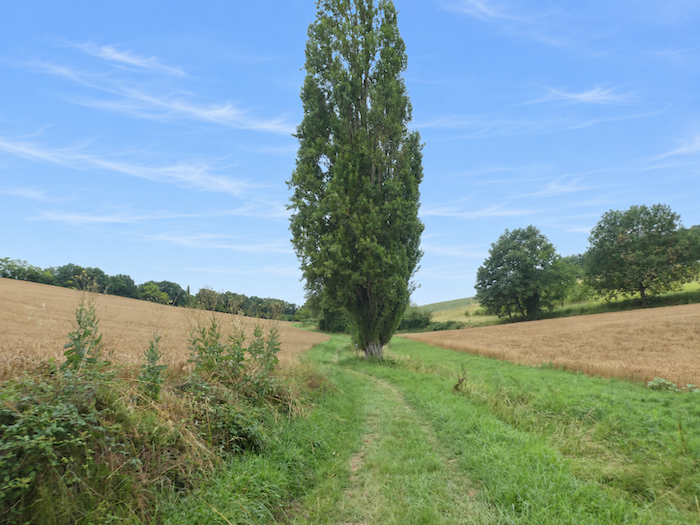
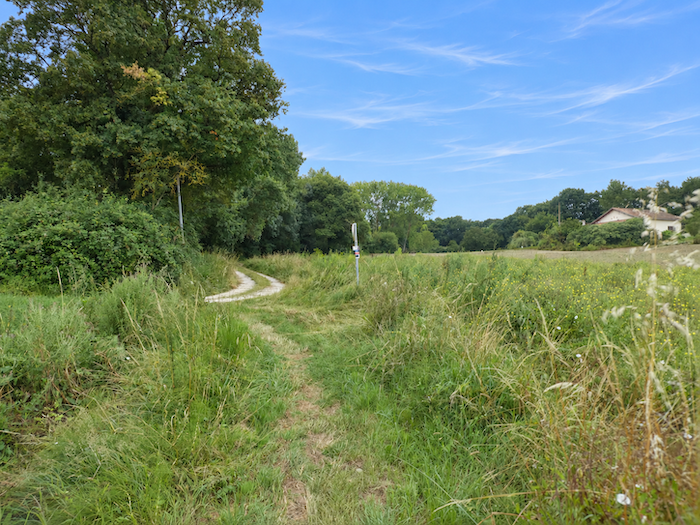
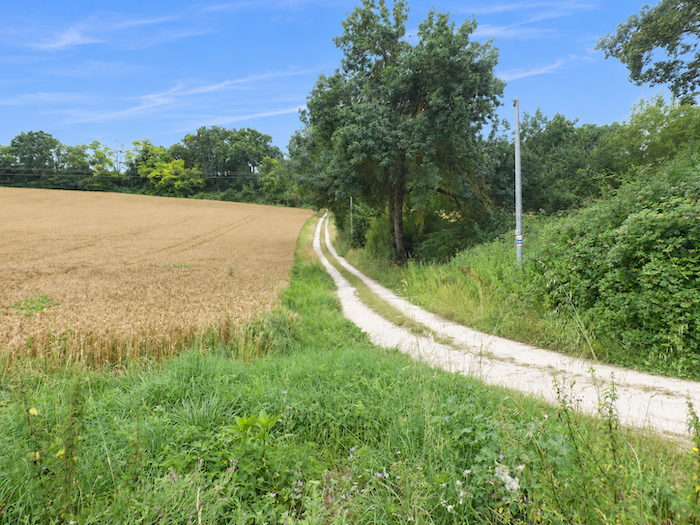
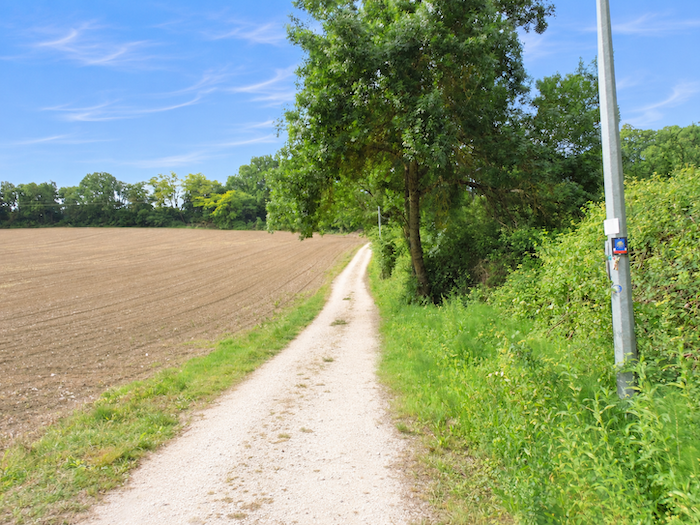
The GR65 then exchanges asphalt for the beaten earth of a path that climbs gracefully towards the summit of a hill clothed in tender grass. . |
|
 |
 |
|
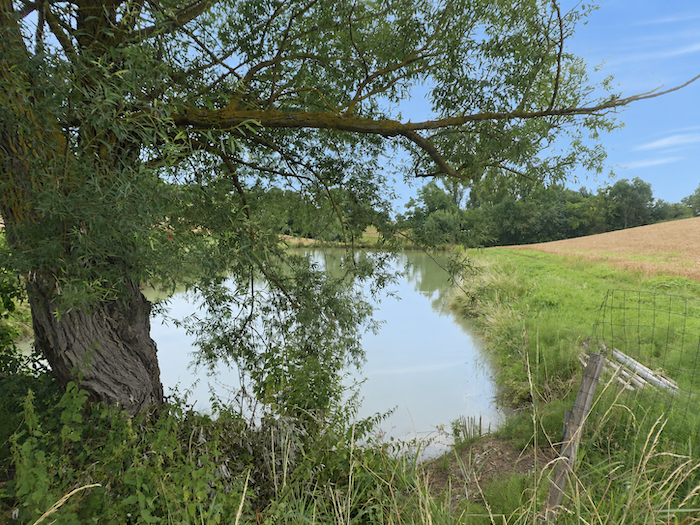
There, beside a dreamlike lake with green-tinged waters, a mystery hangs over the origins of these expanses of water, whether natural or man-made. |
|
 |
 |
|
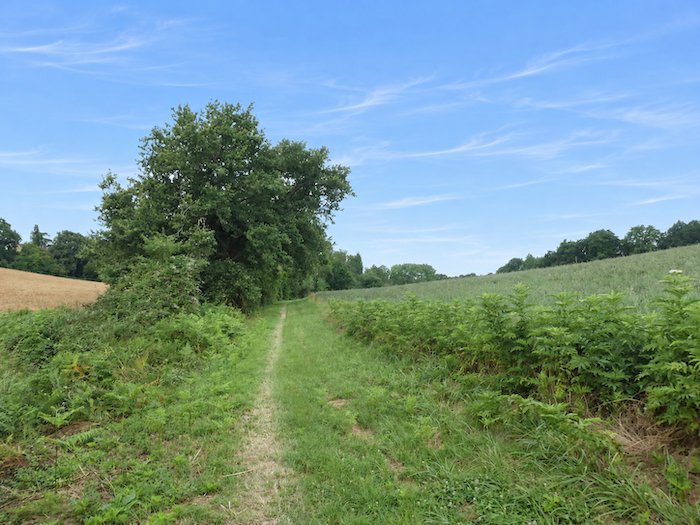
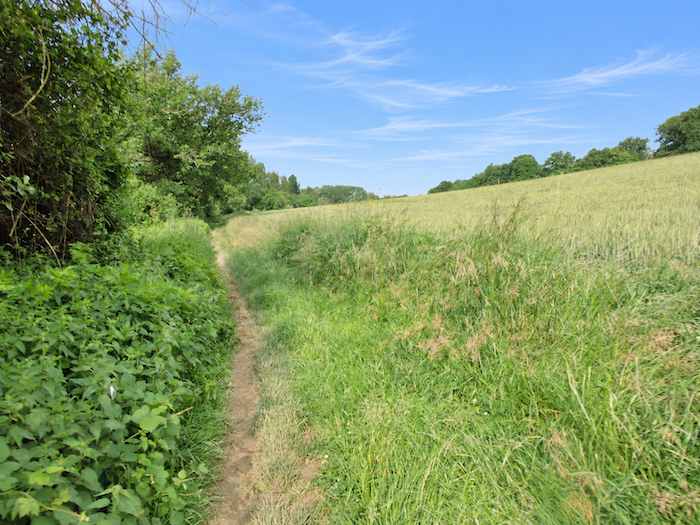
As the slope steepens, the trail winds its way between fields of sunflowers, soybeans and cereals, where poplars and ash trees stand like sentinels. |
|
 |
 |
|
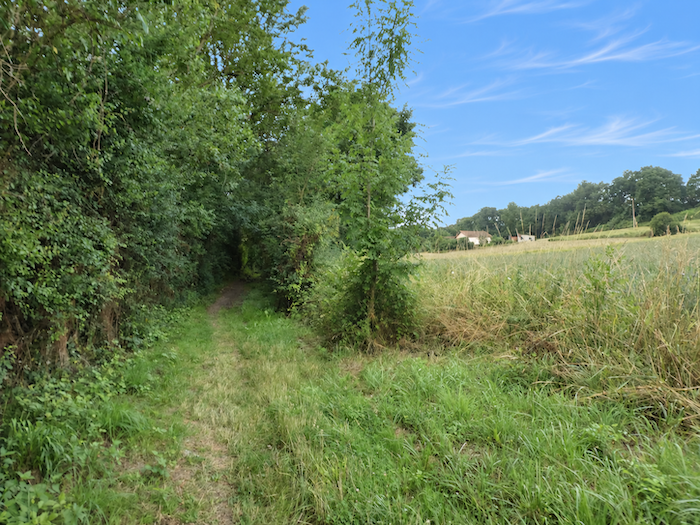
The dense hedgerows soon give way to a beaten-earth road, difficult to penetrate and often leading to isolated farms, solitary fragments in the immensity of the countryside. |
|
 |
 |
Section 2: Among wheat, cereals and sunflowers on the hill
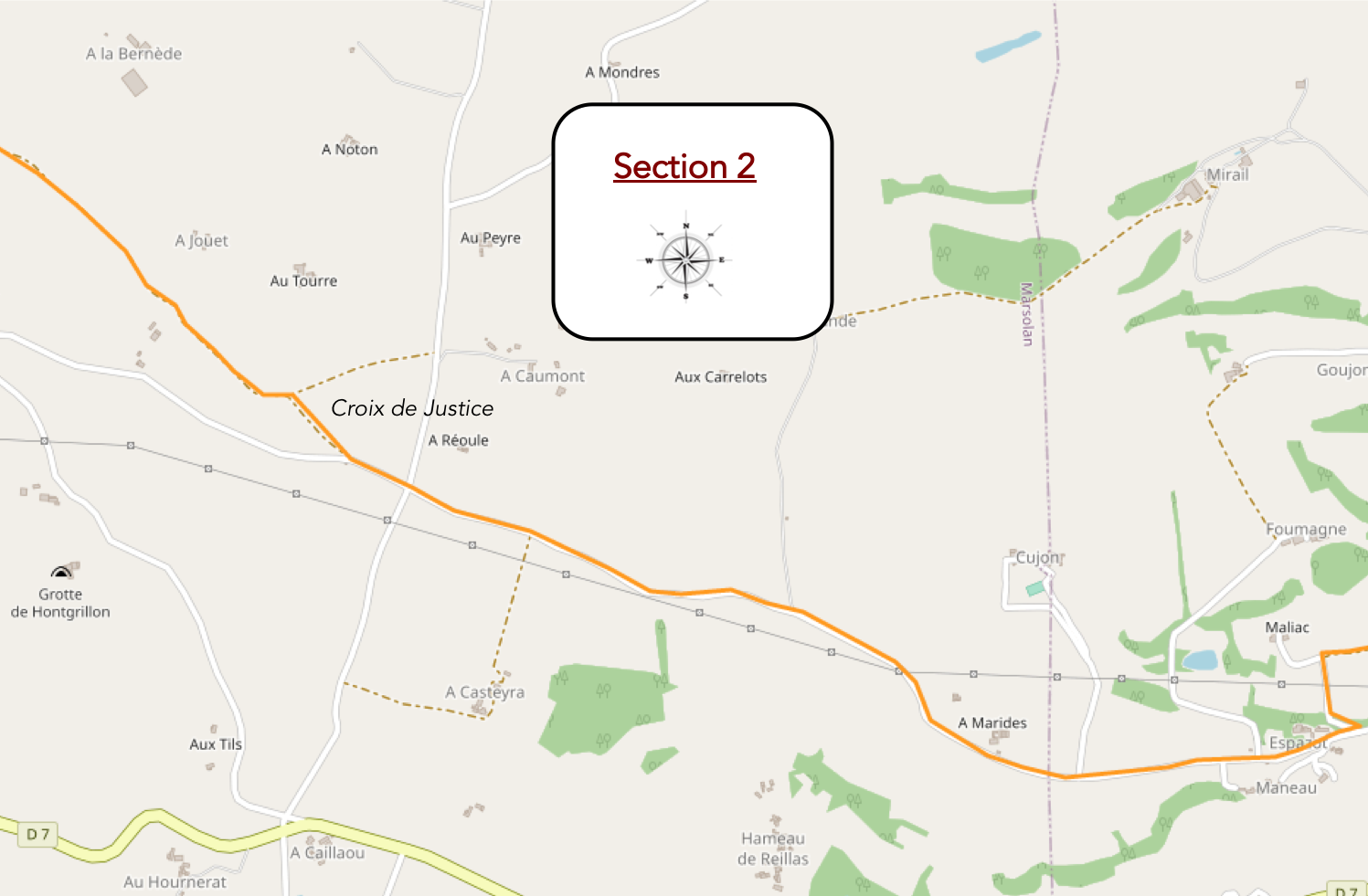
Overview of the route’s challenges: a route presenting no difficulties whatsoever,
|
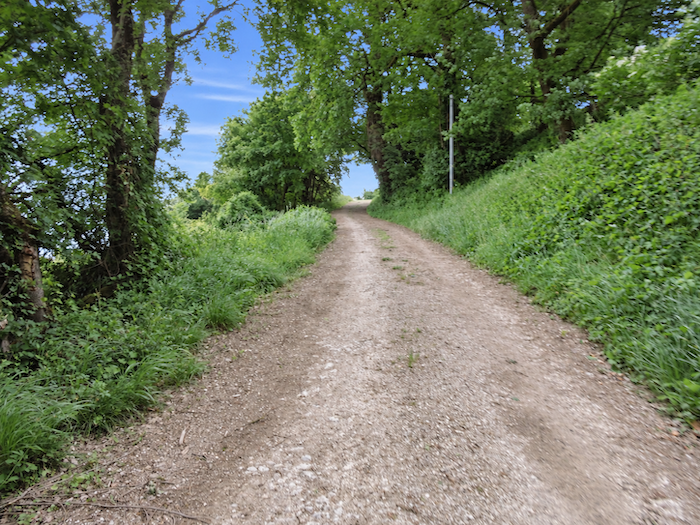
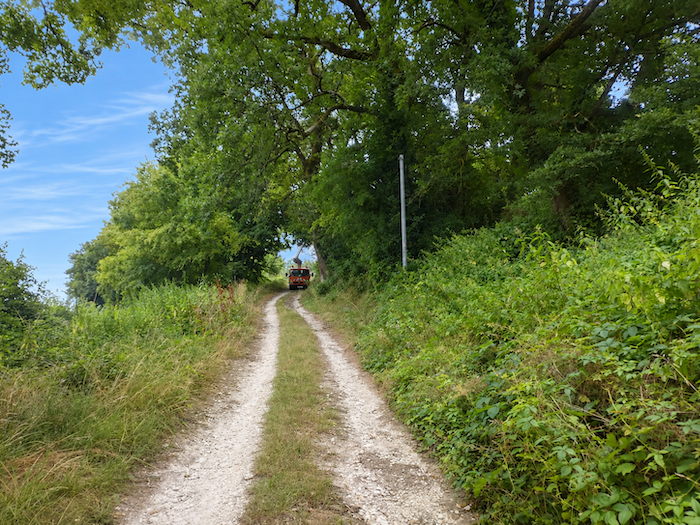
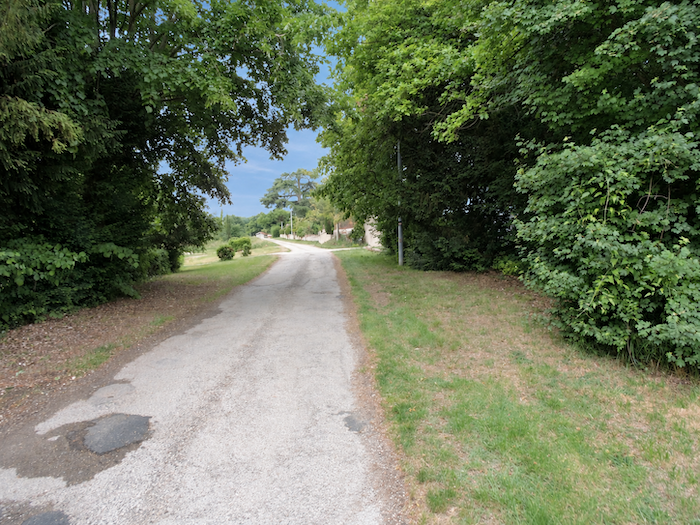
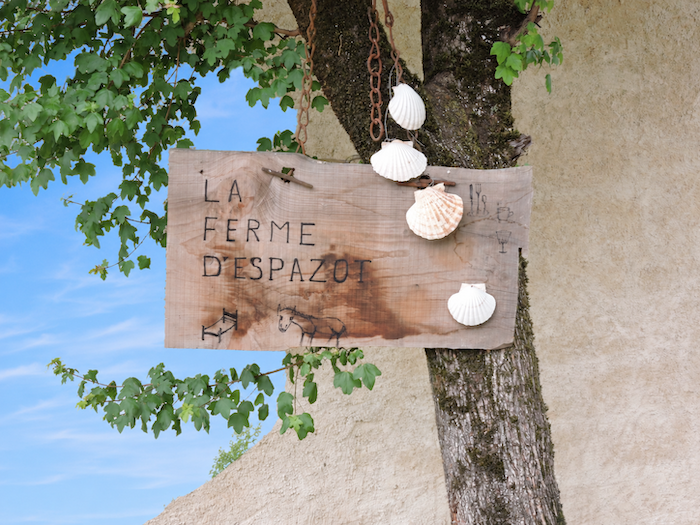
The dirt road then begins to climb again with renewed vigor beneath the protective canopy of oaks, ash trees and maples. Their interwoven branches provide welcome shade, while the steeper ascent gradually leads towards the hamlet of Espazot, nestled in the countryside. |
|
 |
 |
 |
 |
|
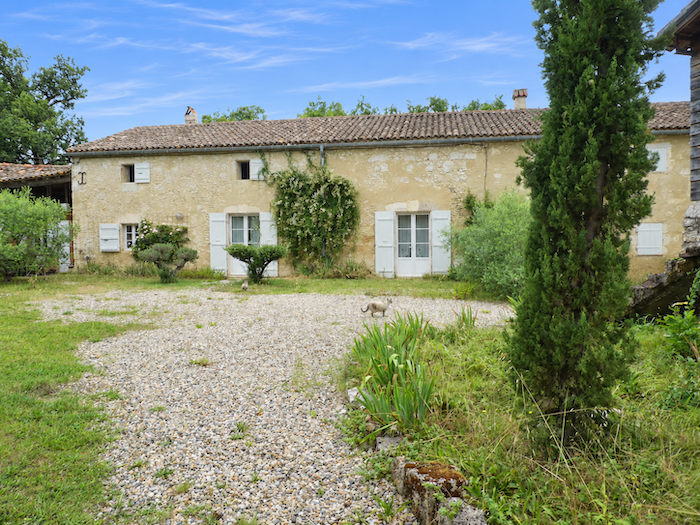
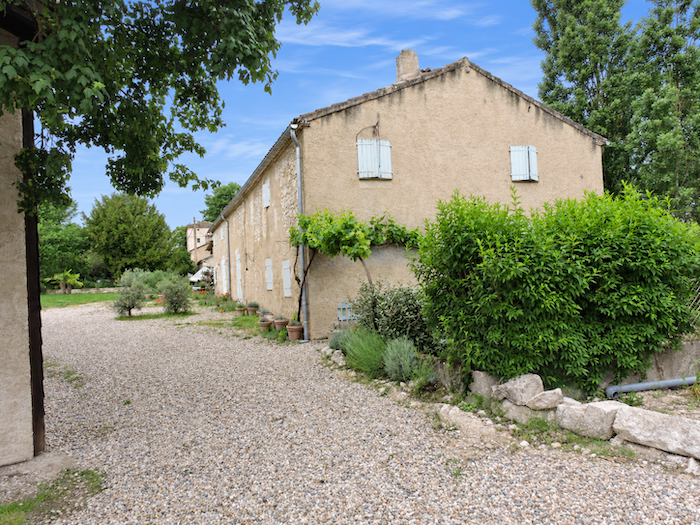
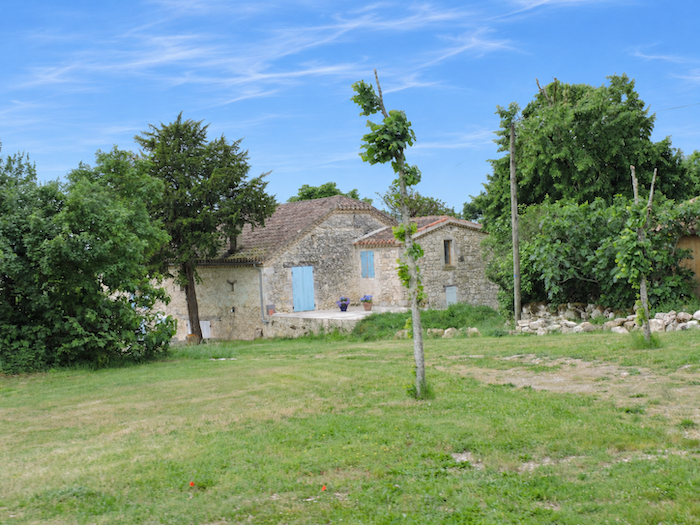
The houses, built from large blocks of pale limestone, bear the marks of a long history upon their façades. Some seem to slumber in undisturbed solitude, as though the life that once animated them had gently withdrawn, leaving the old stones to preserve its memory. One would gladly stop here to water one’s donkey before returning to the dust of the paths. |
|
 |
 |
 |
 |
|
How many souls still inhabit these silent dwellings? It would take a clever person to say. Yet a few half-open shutters suggest a presence behind the thick walls, a little stubborn life in a setting that seems almost abandoned. Sometimes, an open window, a discreet sign of everyday existence, is enough to restore all their humanity to these sleeping hamlets. |
|
 |
 |
|
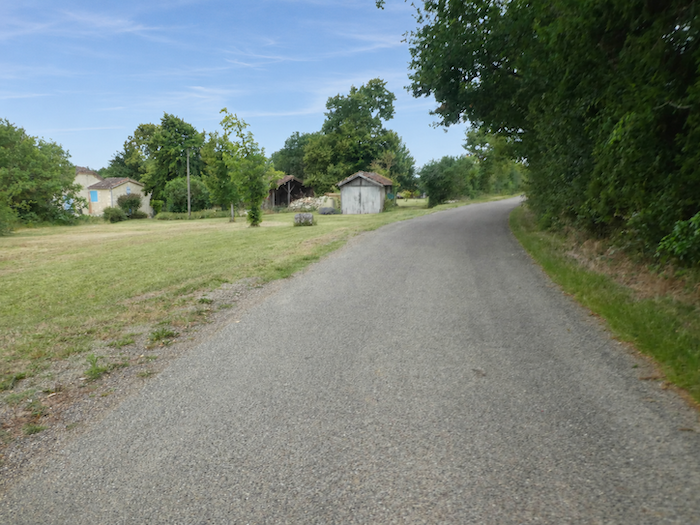
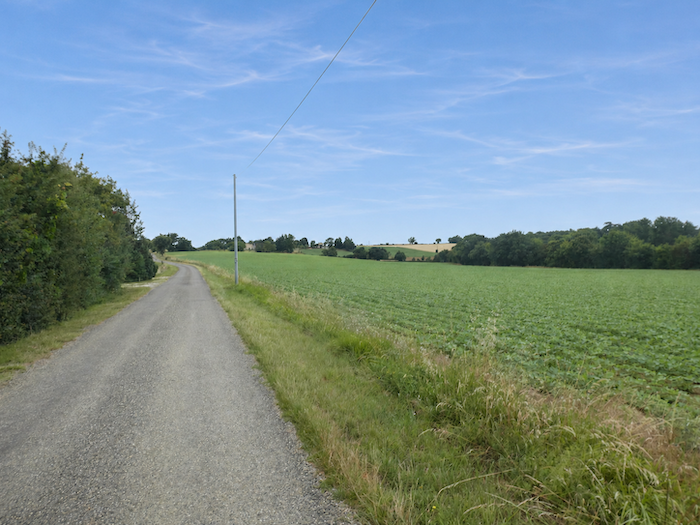
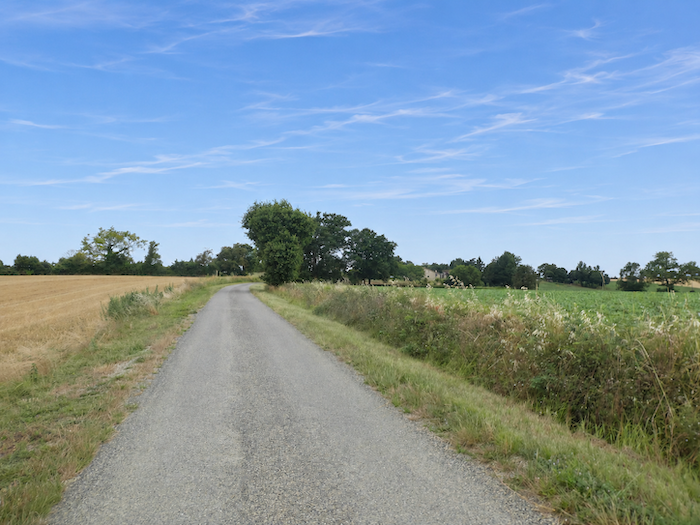
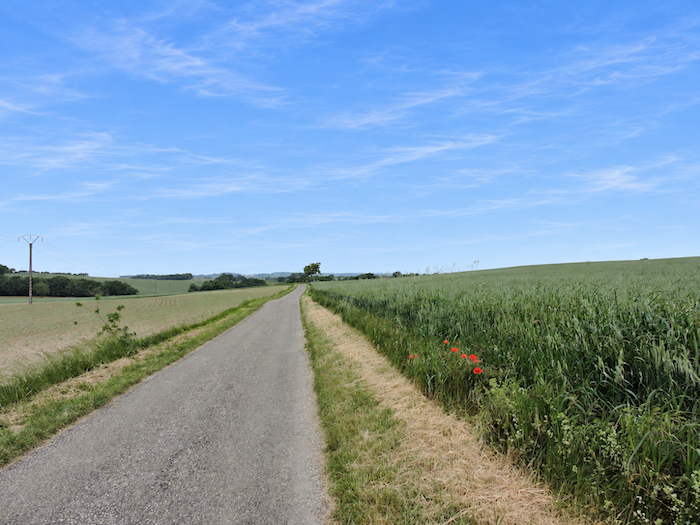
Beyond the last houses, the road resumes its peaceful ascent through countryside where the fields seem to have neither beginning nor end. In places, the ribbon of asphalt stretches straight ahead with almost insolent precision, between cultivated expanses where not a single figure disturbs the solitude. |
|
 |
 |
 |
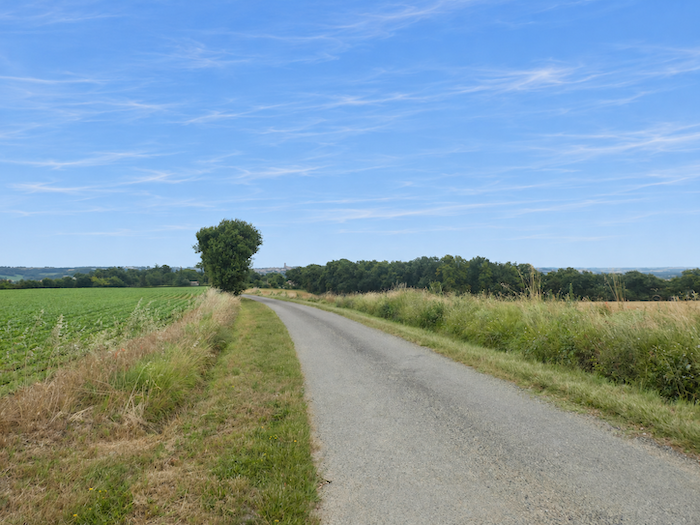 |
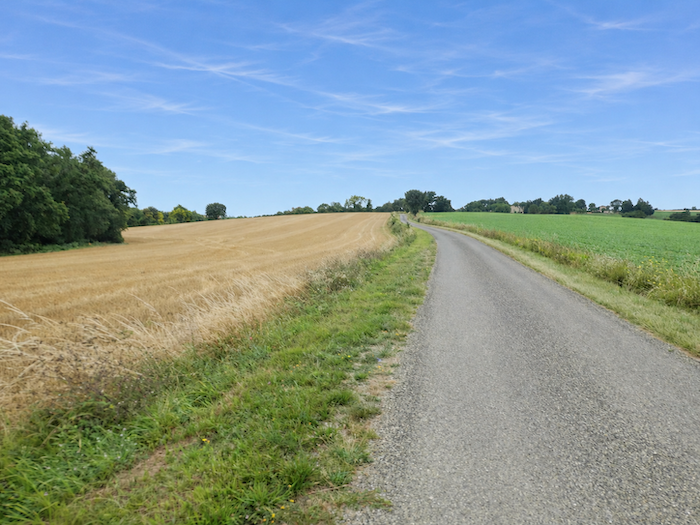
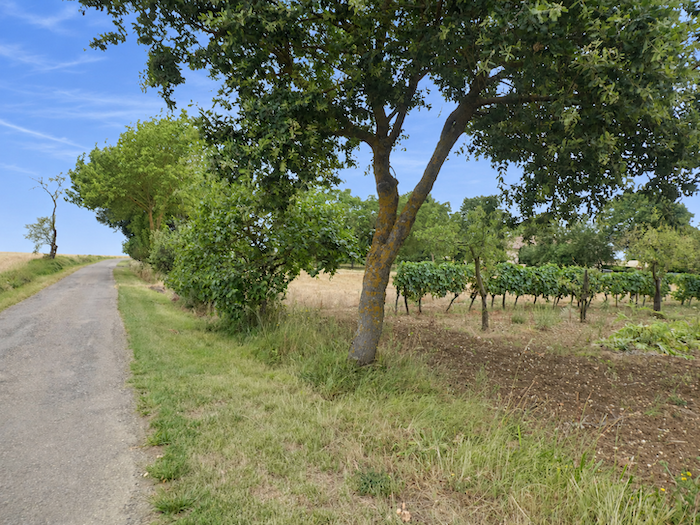
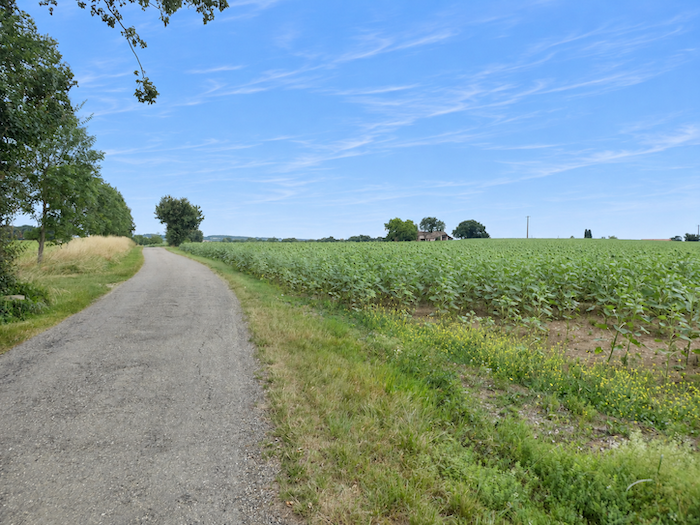
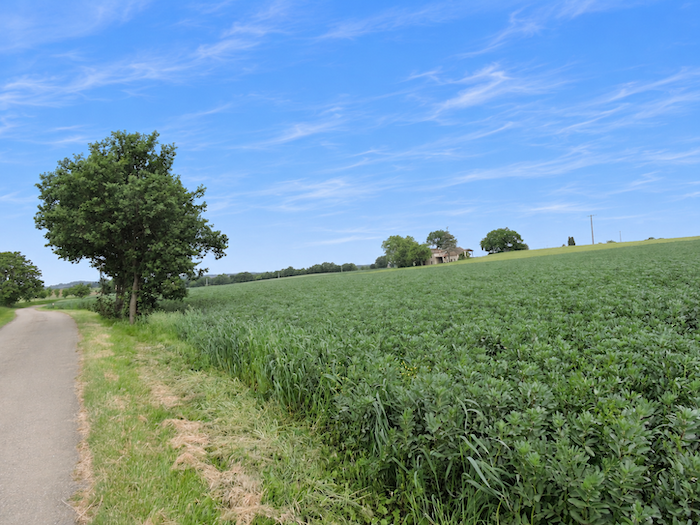
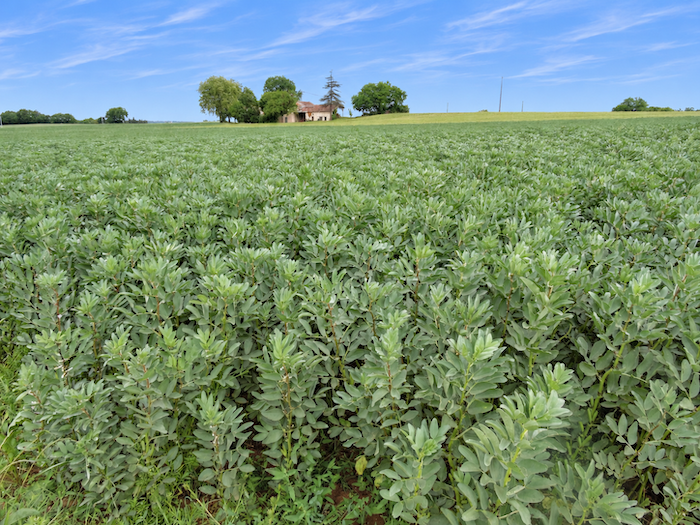
| Cereals reign supreme over these generous lands, sharing their domain with sunflowers and soybean fields. Depending on the season, a few plots of vines, beetroot or broad beans interrupt this vast agricultural mosaic. Maize, so familiar in other parts of southwestern France, is less conspicuous here. | |
 |
 |
|
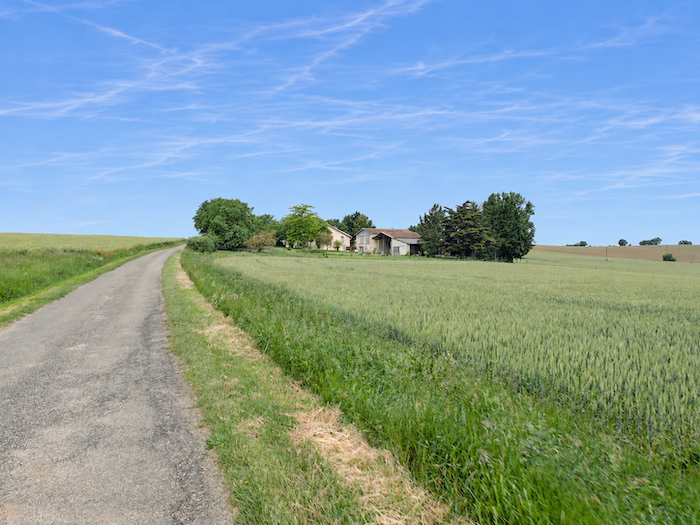
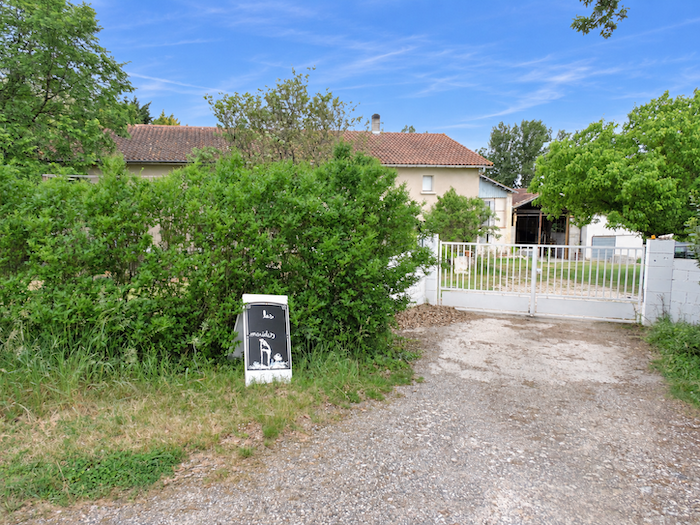
As the pilgrim crosses these cultivated lands, the route passes Marides Farm, which once provided accommodation for passing pilgrims. |
|
 |
 |
|
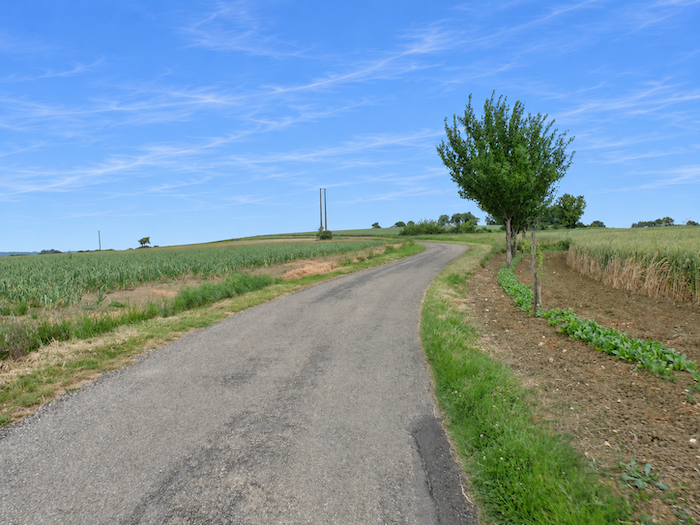
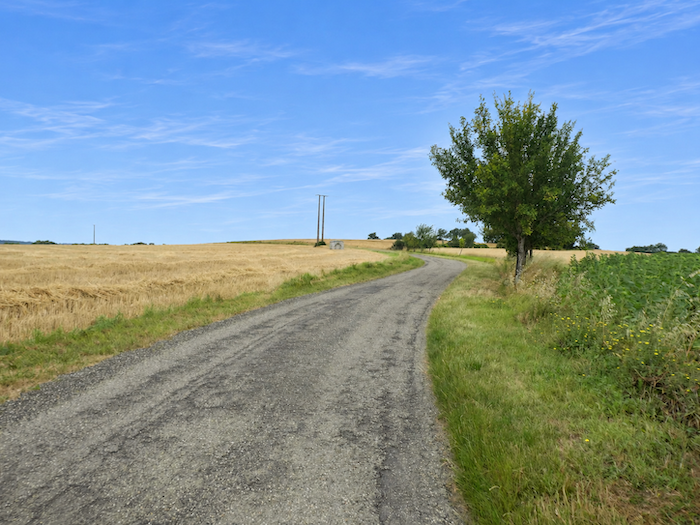
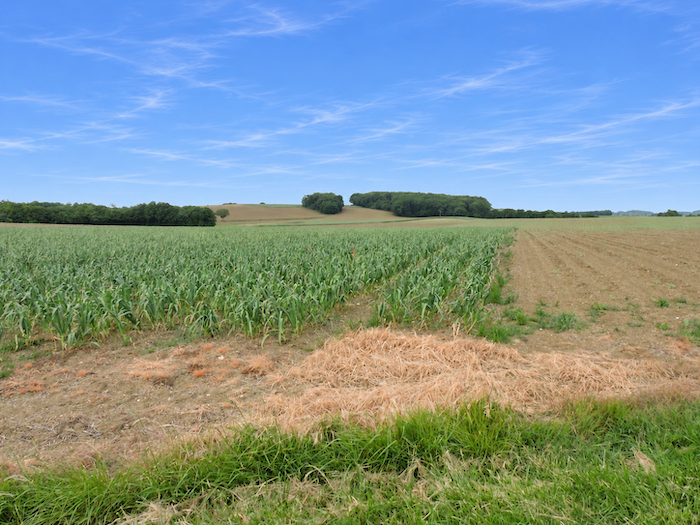
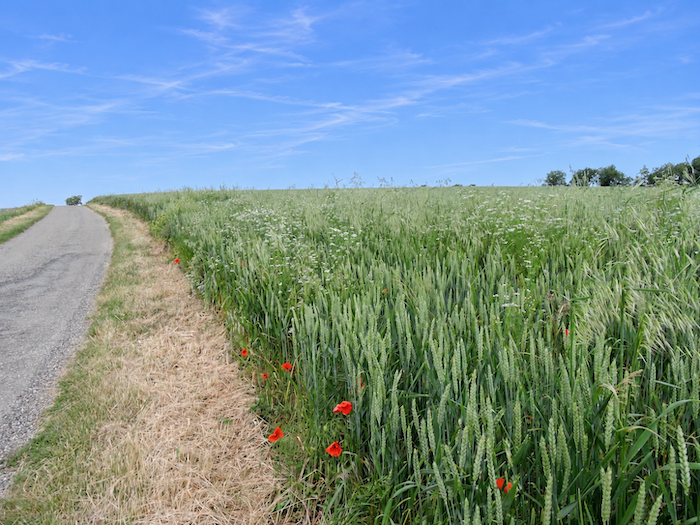
Higher up, the slope becomes gentler still, until it is almost imperceptible. But there is scarcely a tree, if any at all, to break the bareness of this countryside given over entirely to cultivation. As far as the eye can see, sunflower fields, expanses of cereals and a few stretches of fallow land follow one another. Beneath the immense vault of the Gascon sky, the landscape seems to have renounced all fancy, leaving only the undulations of the terrain to disturb its monotony. |
|
 |
 |
 |
 |
|
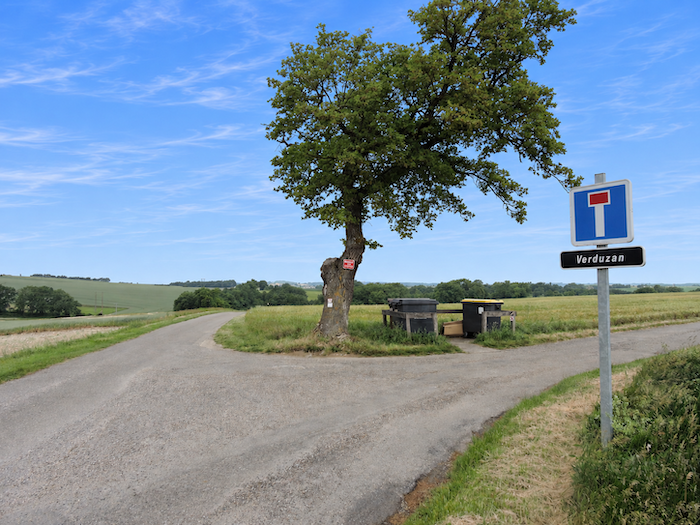
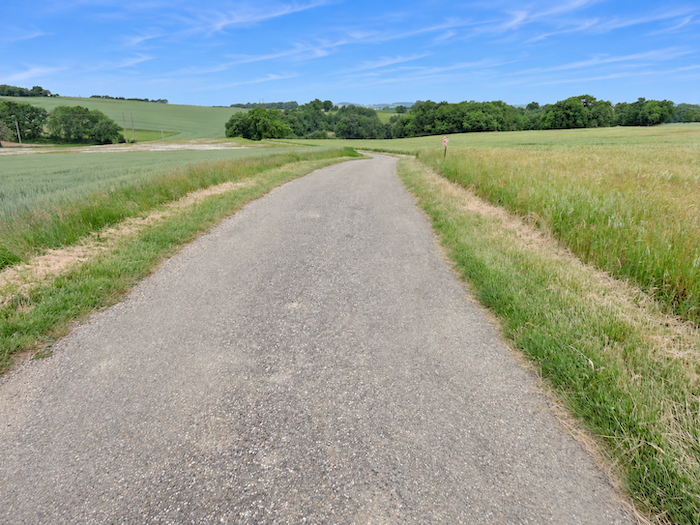
Further on, at the crest of the hill, Marsolan finally appears on the horizon. The outline of the village takes shape on the heights, dominated by the spire of its church, rising towards the sky amid this ocean of crops. At the Verduzan junction, the road begins a gentle descent, winding between fields whose furrows follow the peaceful contours of the land. |
|
 |
 |
|
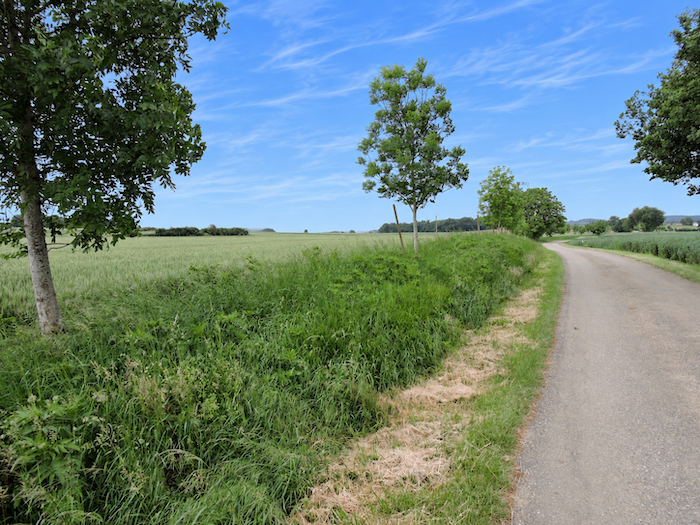
But this descent is only a brief concession from the terrain. Soon, the road levels out again and resumes its long crossing of the cultivated lands. You may perhaps notice a few plots of field beans, fodder plants that cattle are quite happy to make their regular fare. But first, you would have to find a cow! Here, not a single herd is to be seen grazing in the pastures, which are themselves almost entirely absent. |
|
 |
 |
 |
 |
|
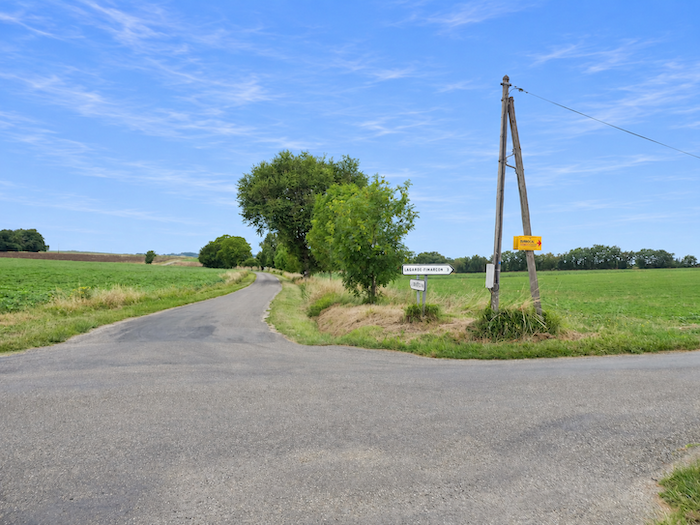
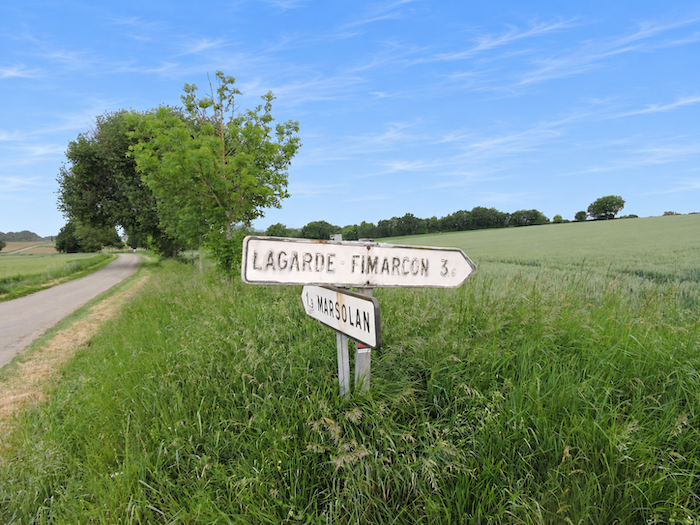
A crossroads finally interrupts the straight course of the road. Marsolan is now just over a kilometer away, straight ahead, while secondary roads branch off towards a few isolated farms scattered across the hillsides. In this sparsely populated countryside, every junction seems to lead towards some agricultural estate lost amid the crops, far from the villages. |
|
 |
 |
|
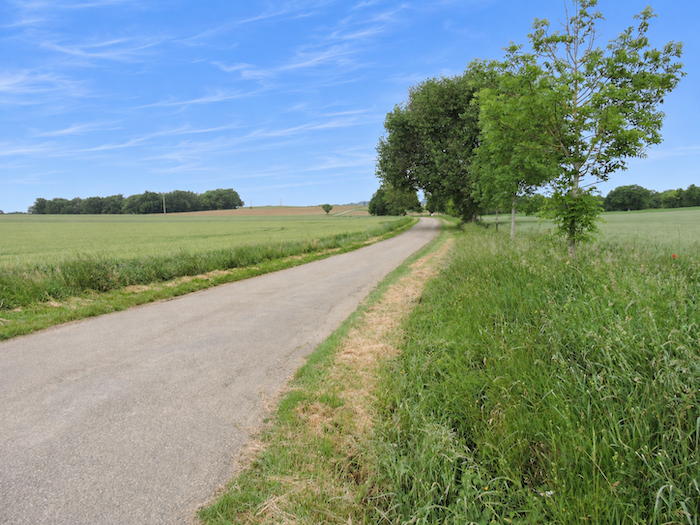
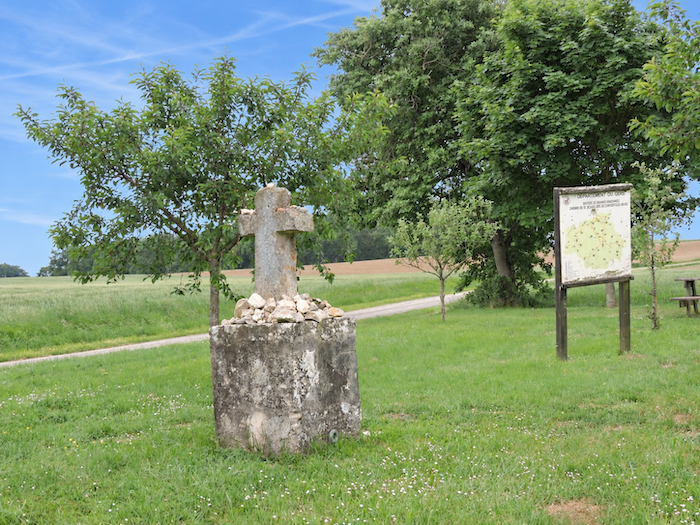
The road continues its unwavering course to the Croix de Justice, a short distance from Marsolan. Here stands a beautiful stone cross, whose name recalls a time when justice was administered in the open air. What provincial Saint Louis once came to sit here, beneath the shade of an oak tree, to settle disputes among his subjects? History remains silent, leaving the imagination free to wander. Today, judgements have given way to provisions taken from rucksacks, as the place also welcomes picnickers, who find a pleasant resting place beside the old cross. |
|
 |
 |
|
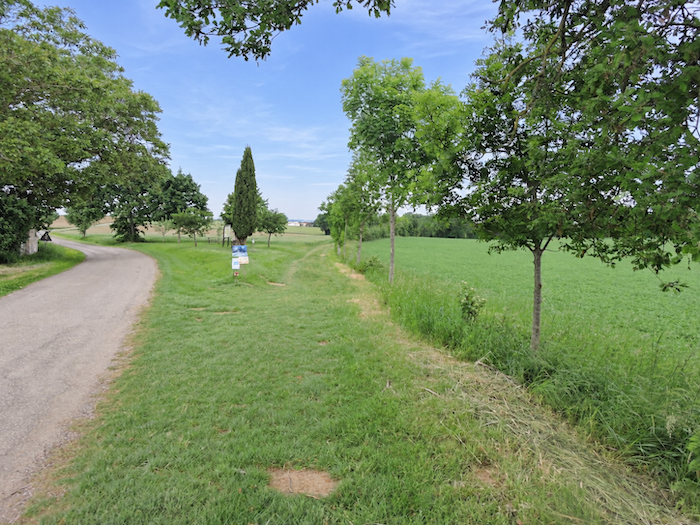
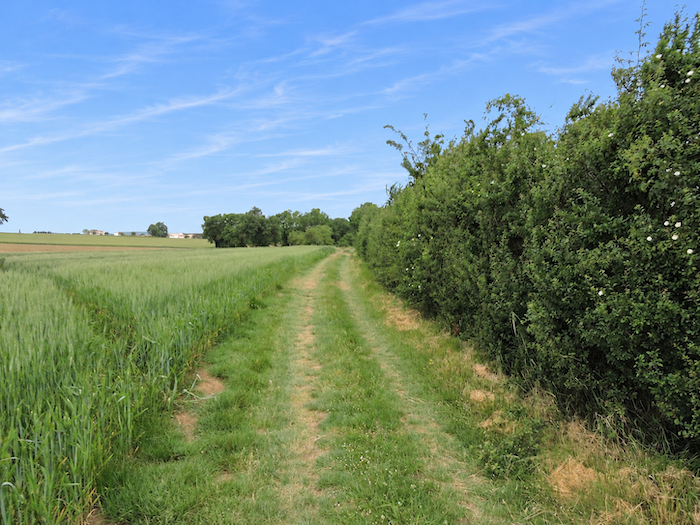
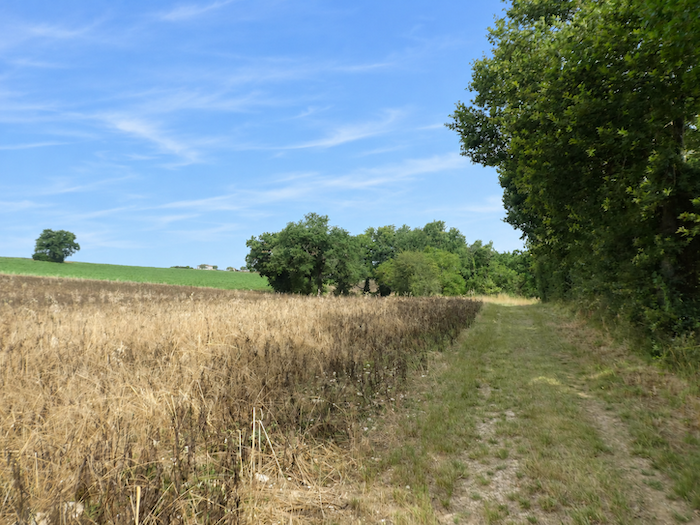
But the planners of the GR65 have decided otherwise. Rather than continuing along the asphalt to the village, they invite pilgrims to return to the earth of the paths. The waymarks now lead onto a grassy track through the cultivated fields, where footsteps once again meet more welcoming ground. Beautiful hedgerows of ash trees accompany the route in places, their foliage mingling with that of a few stunted oaks, modest survivors in a countryside almost entirely stripped of its trees by agriculture. |
|
 |
 |
|
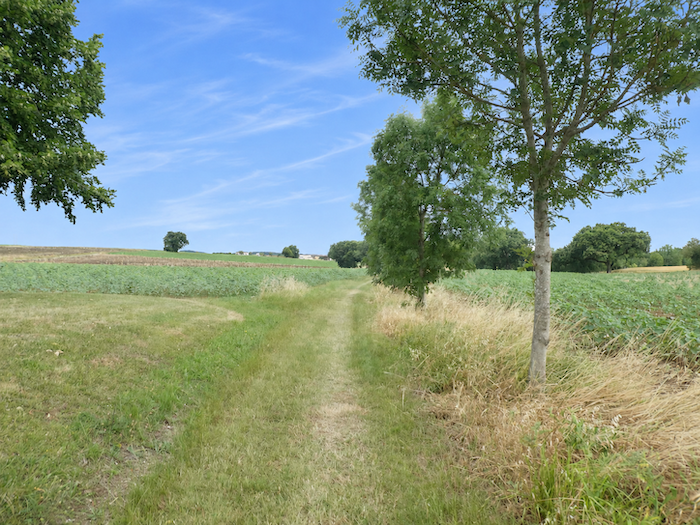
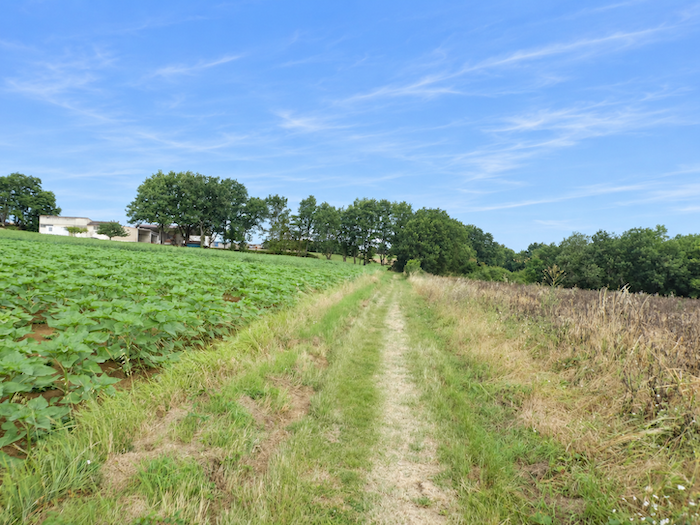
Sunflowers continue to compete with cereals for the land, in this mosaic of crops that seems to renew itself without ever changing its appearance. The path soon passes a vast agricultural complex, where farm buildings stand alongside large sheds used to shelter harvests and equipment. |
|
 |
 |
|
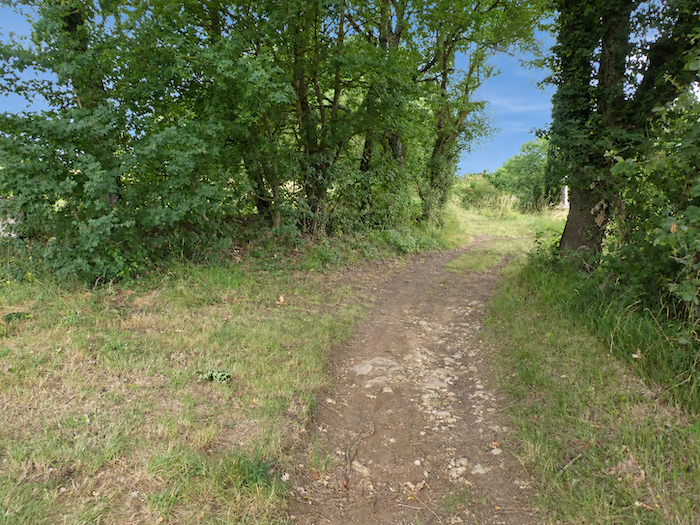
In places, the path slips beneath the cover of modest groves, briefly recovering the coolness of the foliage and the intimacy of the undergrowth. But these green refuges are short-lived. No sooner has one enjoyed their shade than the horizon opens once more onto the immensity of the fields, as though nothing could long free the walker from the hold of this endless countryside. |
|
 |
 |
|
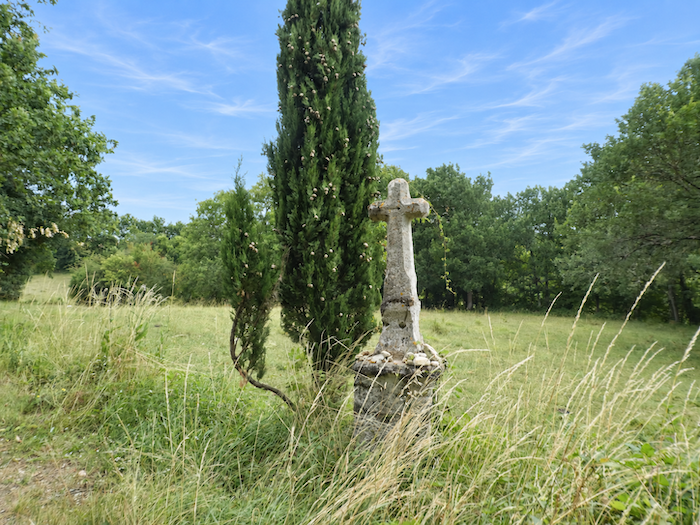
Wayside crosses, so familiar in the more northerly regions of the pilgrimage, become rarer here, their solitary silhouettes rising here and there beside the cultivated fields. One of them, however, arouses curiosity. Carved from granite, a stone foreign to these limestone lands, it seems to have come from another country. By what road, and at the cost of what efforts in transportation, did this block of stone reach the Gascon countryside? |
|
 |
 |
|
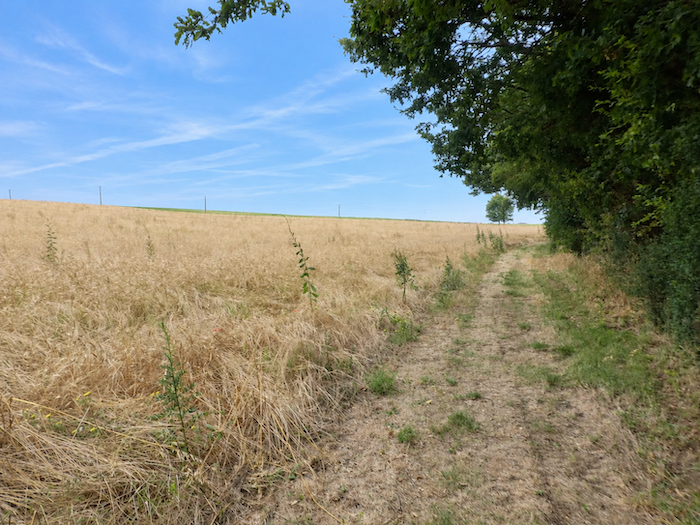
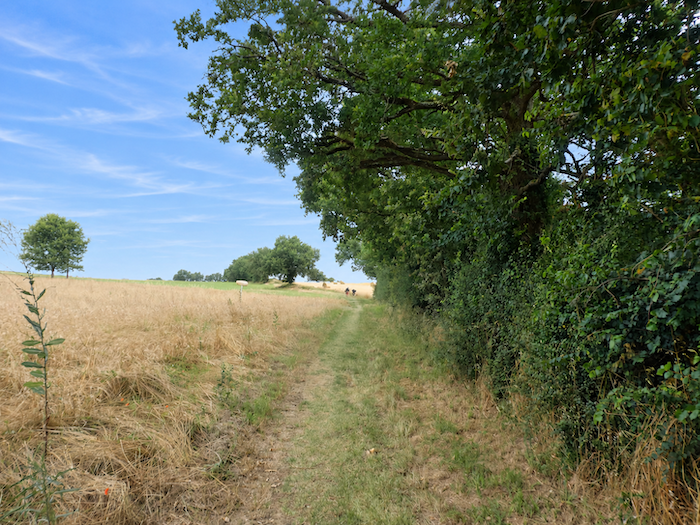
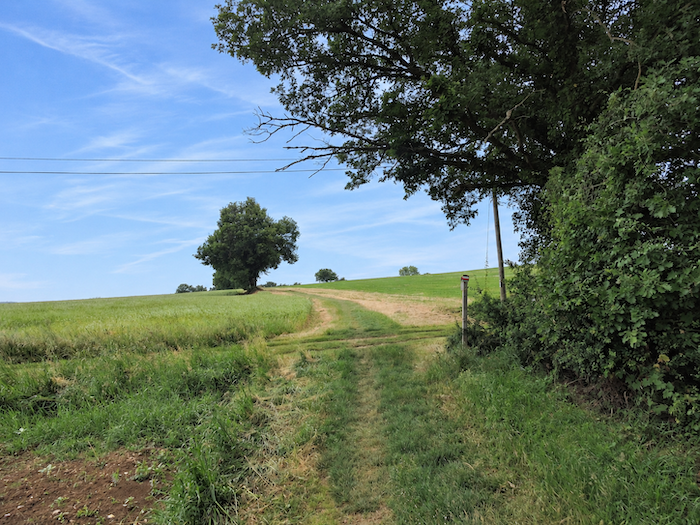
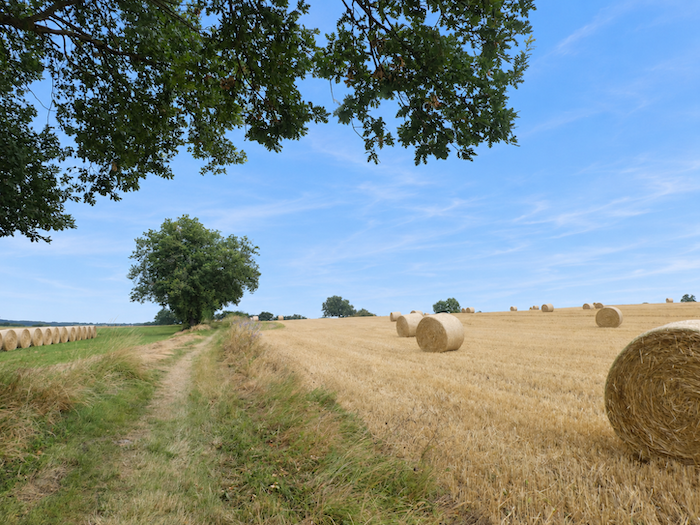
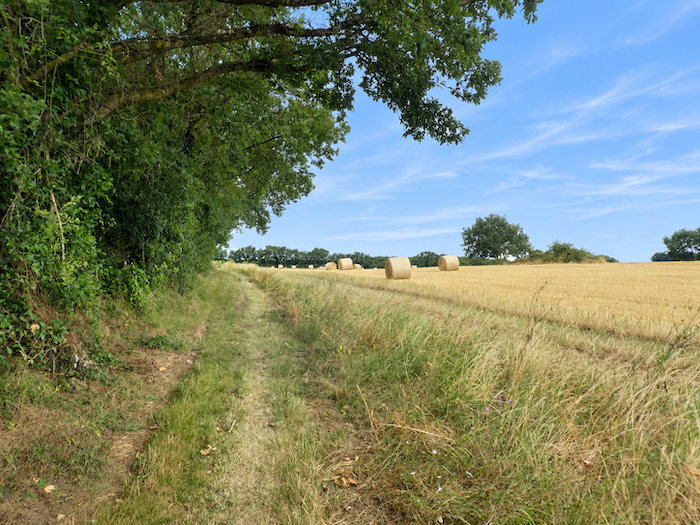
Sometimes, the fields assume such immense proportions that they seem to disappear into the sky, with no hedge, tree or house to mark their boundaries. One is reminded of the great solitudes of the Spanish Meseta, that sea of cultivated land which pilgrims cross on the long route to Santiago. The same bareness, the same receding horizon, the same impression of walking through a world entirely at the mercy of the sky. Seeing this abundance of cereals and oilseed crops, one imagines that bread and oil must be plentiful in these parts. |
|
 |
 |
 |
 |
|
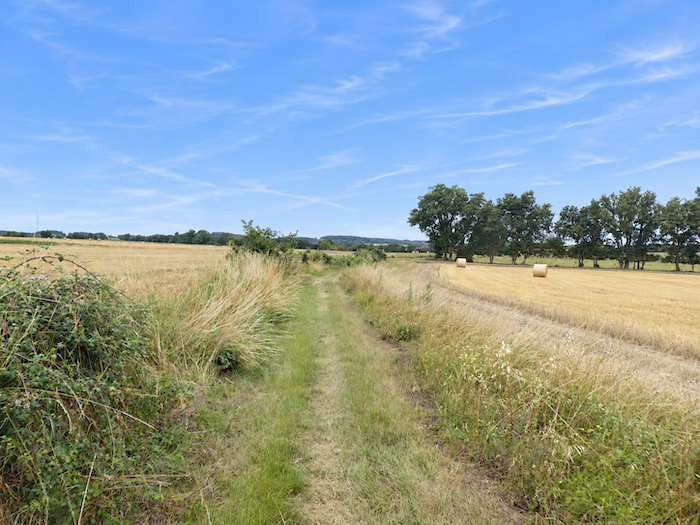
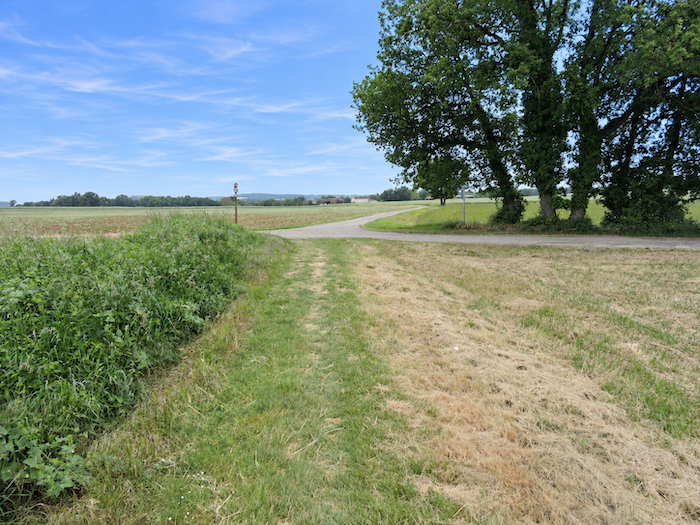
At the end of this long crossing through an ocean of cereals and oilseed crops, the path finally reaches the outskirts of a minor road. The ribbon of earth gives way to asphalt, while the crops, indifferent to changes in the itinerary, continue to unfold across their vast expanses as far as the eye can see. |
|
 |
 |
Section 3: A stop in Marsolan, a quiet little village full of character
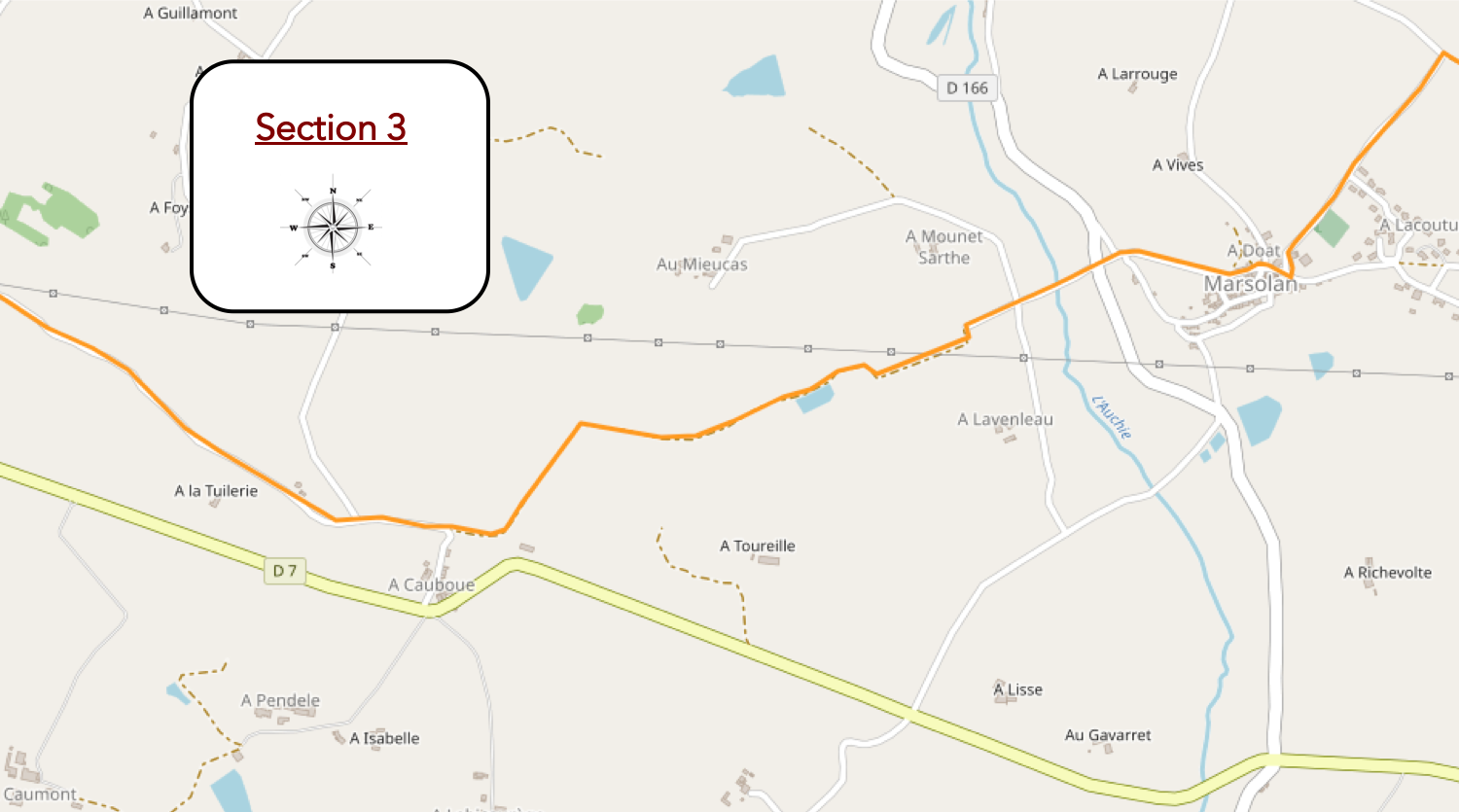
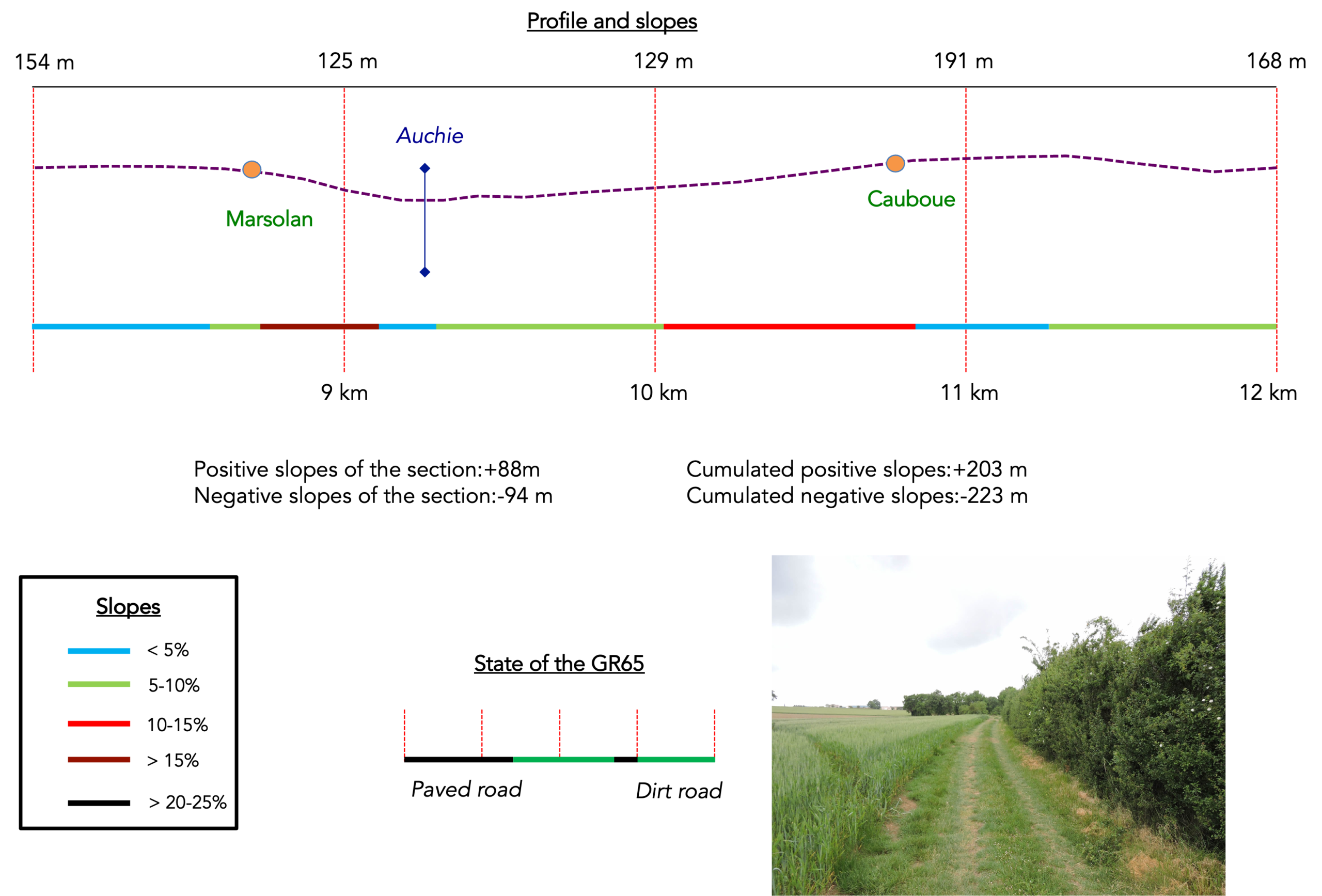
Overview of the route’s challenges: a steep descent towards the Auchie stream, followed by a pronounced climb towards Cauboue.
|
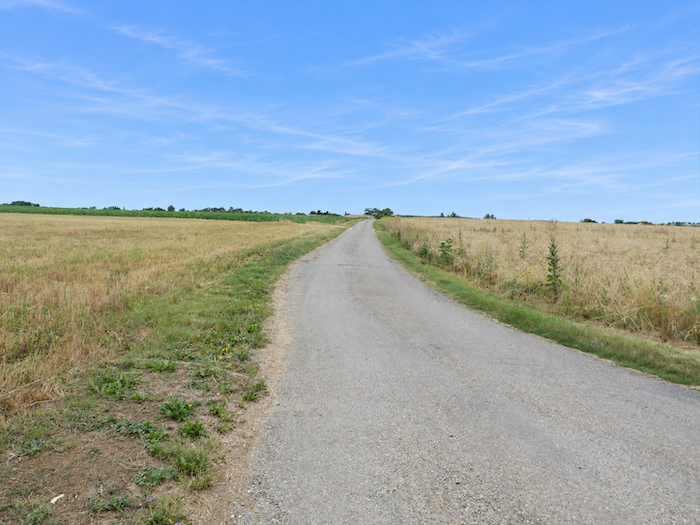
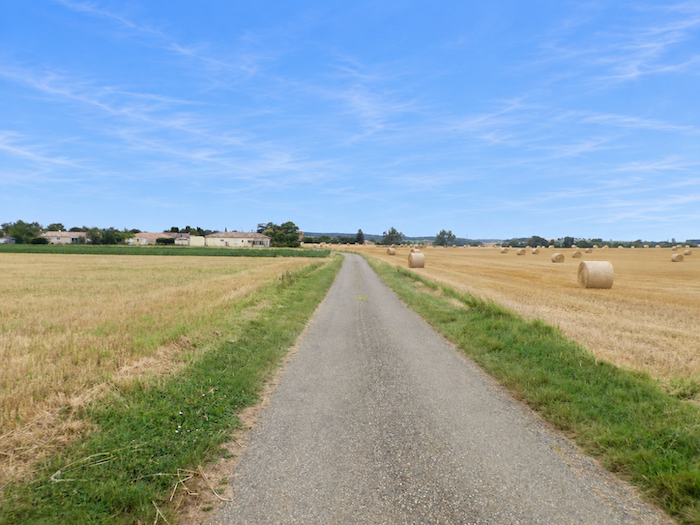
Flat as a pancake, the road continues its course without the slightest variation, drawing the pilgrim inexorably towards a small development of modern houses. After the long solitude of the cultivated fields, these neatly arranged homes herald a return to civilization. The contrast is almost striking after so many fields exposed to the sky and wind. |
|
 |
 |
|
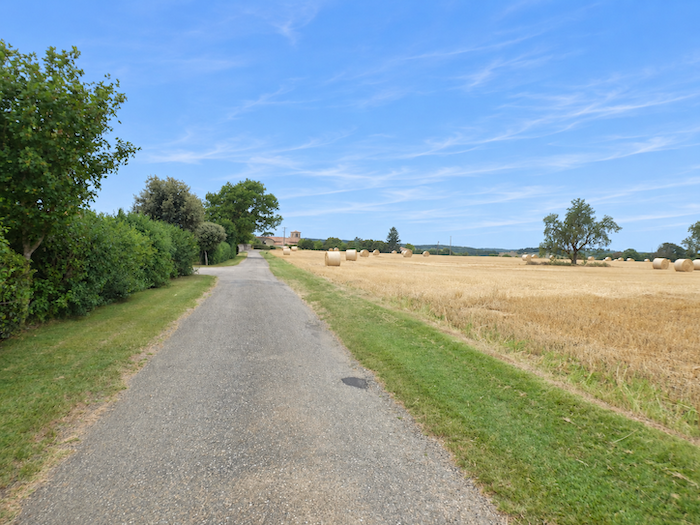
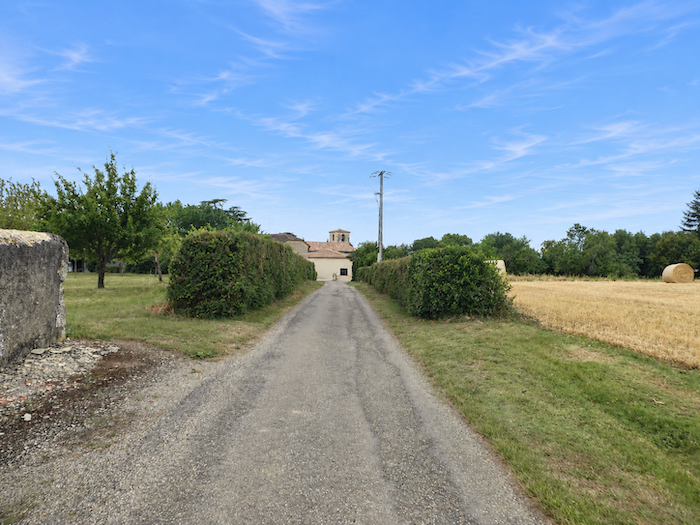
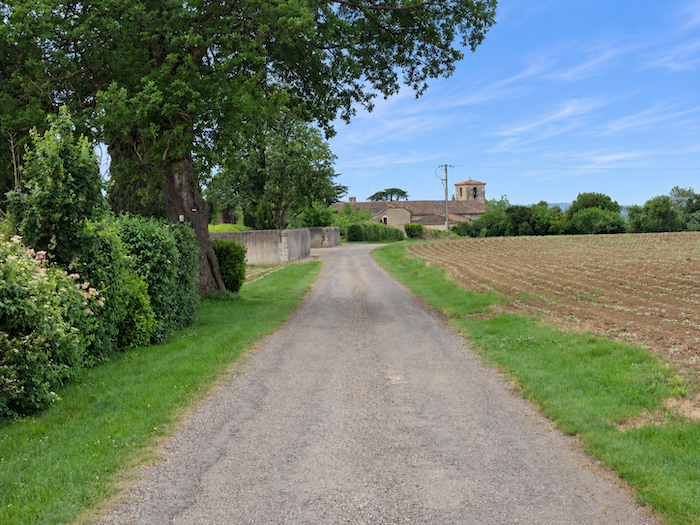
Ahead, the bell tower of Marsolan gradually comes into sharper focus, but with that deceptive slowness of horizons that seem to recede as one approaches them. For some time now, its silhouette has accompanied the walker’s footsteps, rising above the crops like a lighthouse in an ocean of cereals. |
|
 |
 |
|
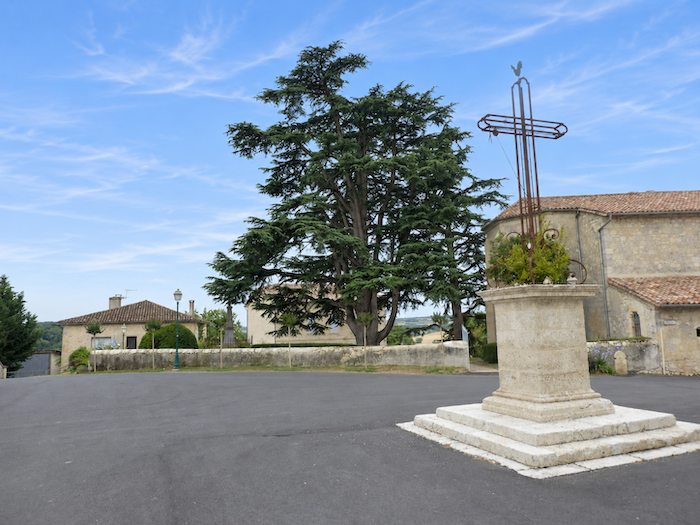
The road soon reaches the heart of Marsolan, where another cross welcomes the passer-by. This one, simply fashioned from wrought iron, has nothing ostentatious about it. |
|
 |
 |
|
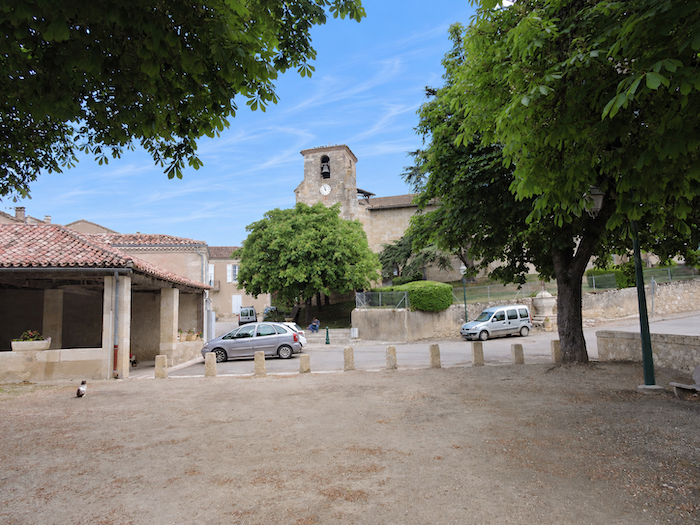
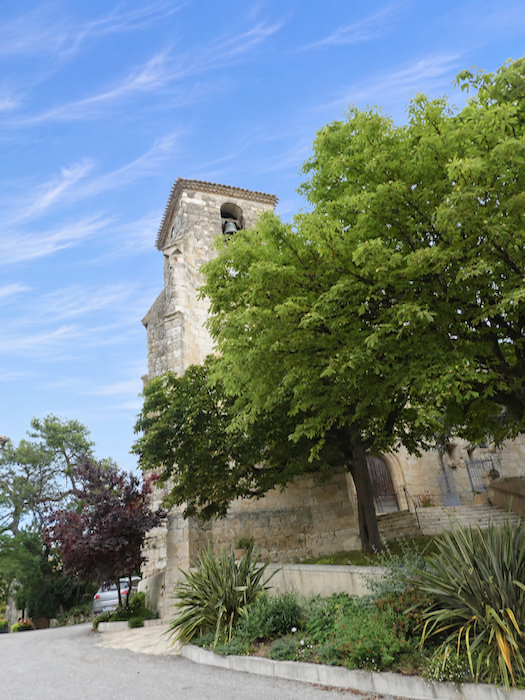
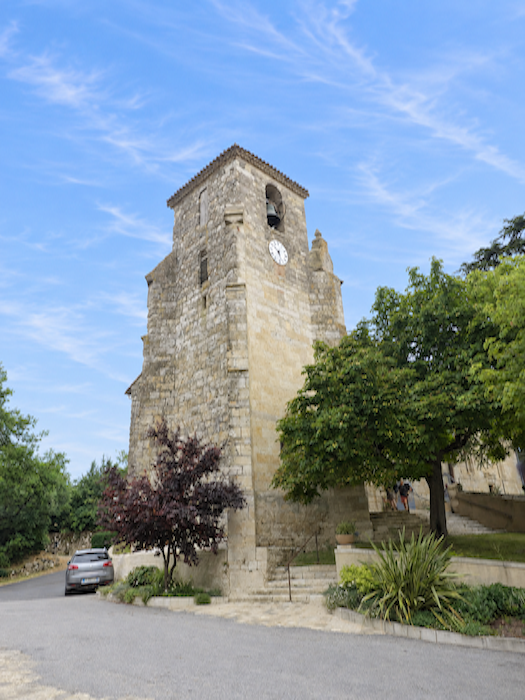
The Church of « Notre-Dame du Rosaire », built in the 16th century and later embellished with Rococo ornamentation, is the village’s principal architectural treasure. Its bell tower, firmly established on a slight rise, dominates the surrounding rooftops with quiet majesty. Tall cedars keep it company, while generous plane trees provide shade around the building. |
|
 |
 |
 |
 |
|
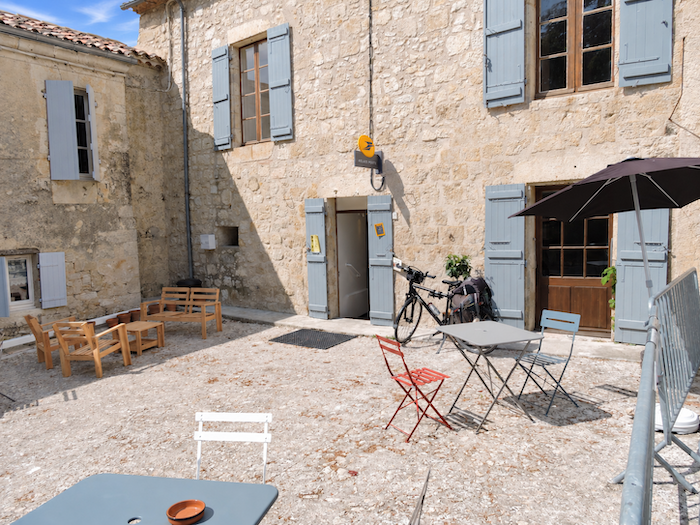
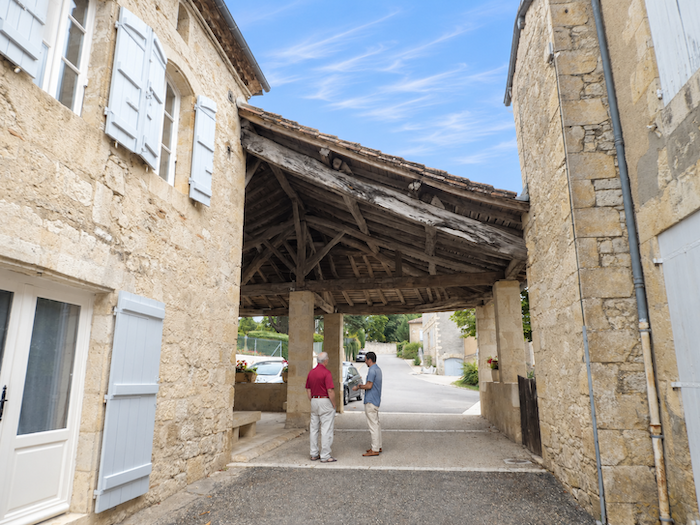
Like so many villages in this part of Gascony, devoted for centuries to working the land, Marsolan also possesses its traditional grain market hall. The building, which compares favorably with those in neighboring villages, recalls a time when harvests were traded beneath these timber roofs and rural life followed the rhythm of the markets. Near the church, a multipurpose establishment perpetuates, in its own way, this former role as a meeting place. Residents and pilgrims alike can find something to eat, stock up on supplies or simply stop for a rest. In villages where shops are sometimes as scarce as passers-by, such a place soon comes to seem like a small blessing. |
|
 |
 |
|
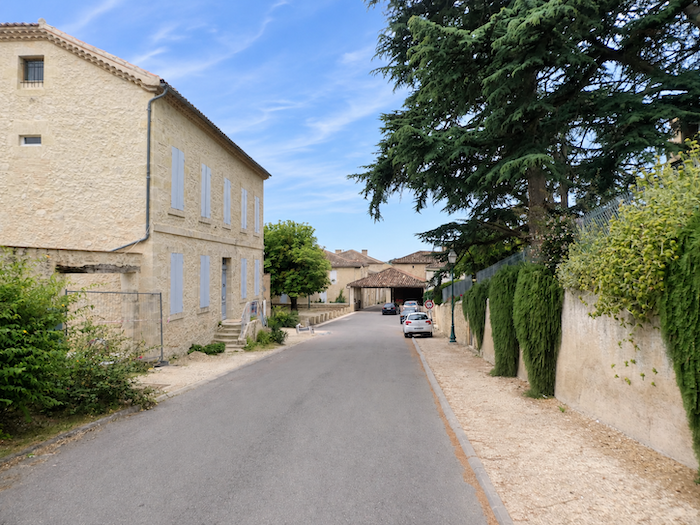
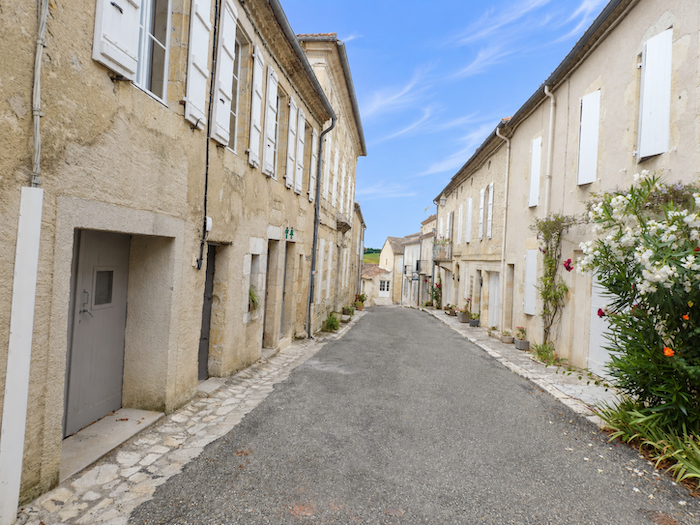
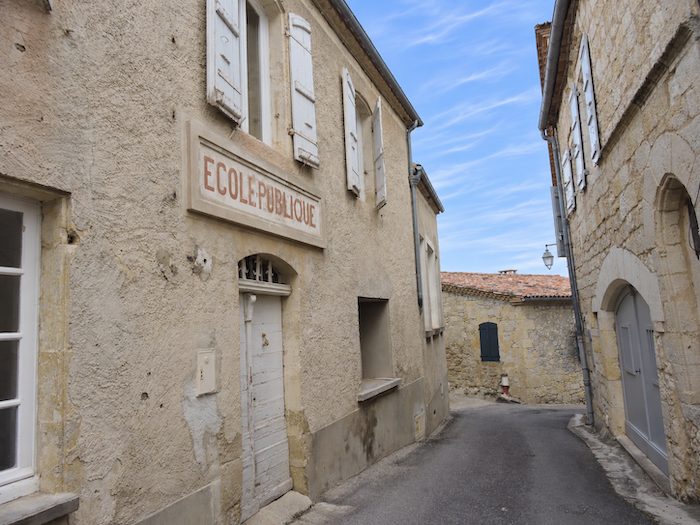
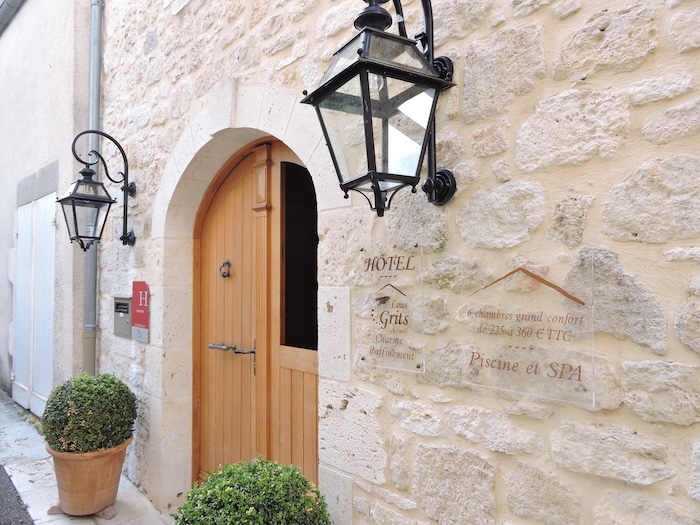
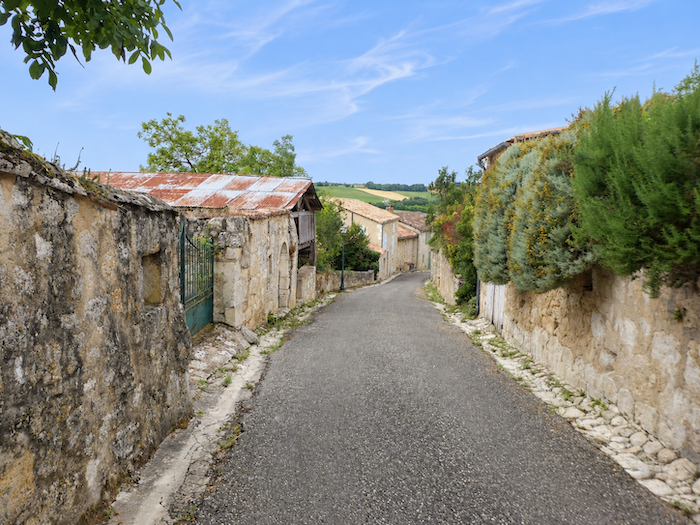
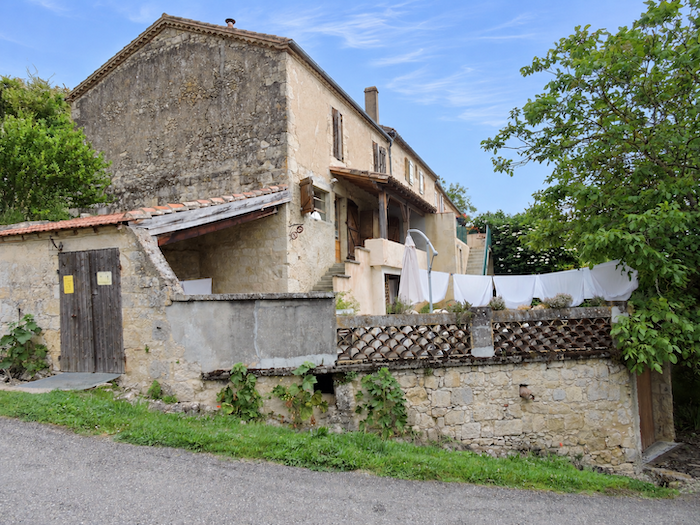
The narrow street running through the village reveals a succession of houses with carefully pointed façades, their old stones still bearing the scars of time. Some have preserved the quiet austerity of rural dwellings, where beauty has little need of ornament. Yet tucked away along a narrow lane is an unexpected address: a charming four-star establishment that cultivates discreet elegance amid these modest homes. What a strange contrast between the understated luxury of this retreat and the simplicity of the neighboring houses! |
|
 |
 |
 |
 |
|
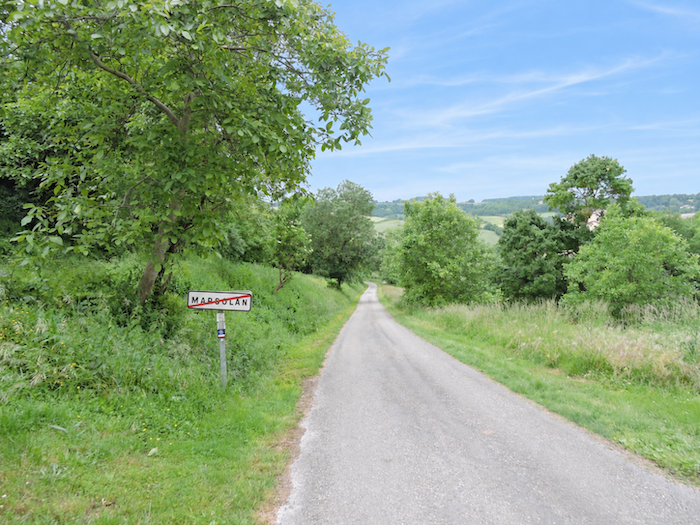
At the edge of the village, the terrain abruptly brings the walker back to reality. The road plunges down a gradient exceeding 15%, over battered asphalt, broken up by years of wear and bad weather. The descent is no longer anything like a leisurely stroll. Marsolan is already receding on the heights, while the road plunges relentlessly towards the bottom of the dale. |
|
 |
 |
 |
 |
|
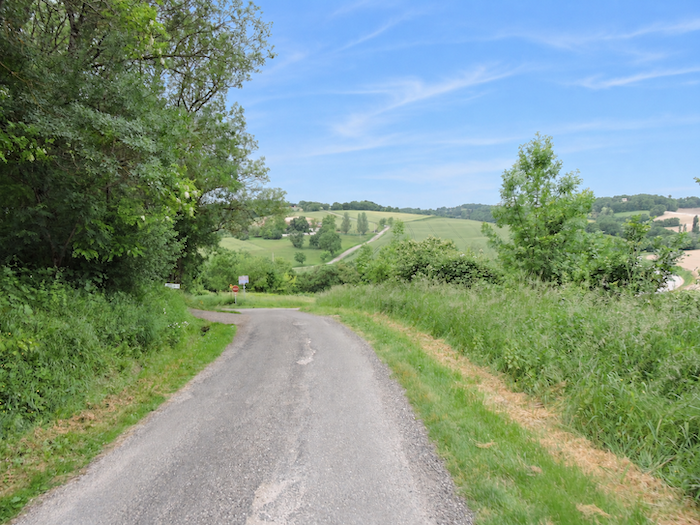
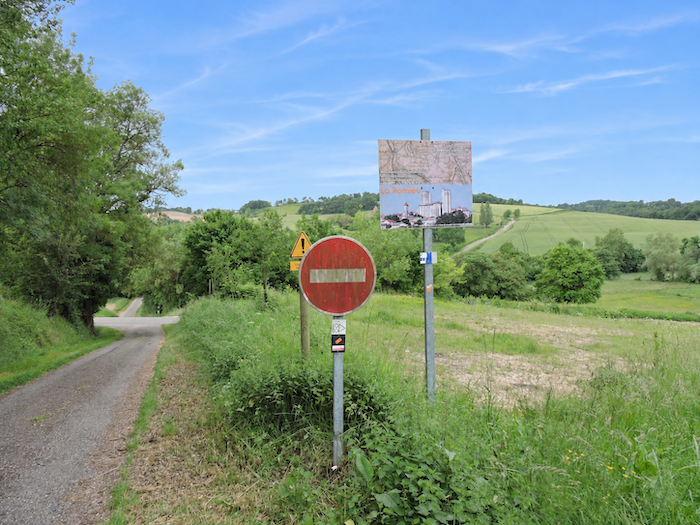
Signs already announce the wonders of La Romieu. But there is still some distance to cover before its first rooftops come into view. |
|
 |
 |
|
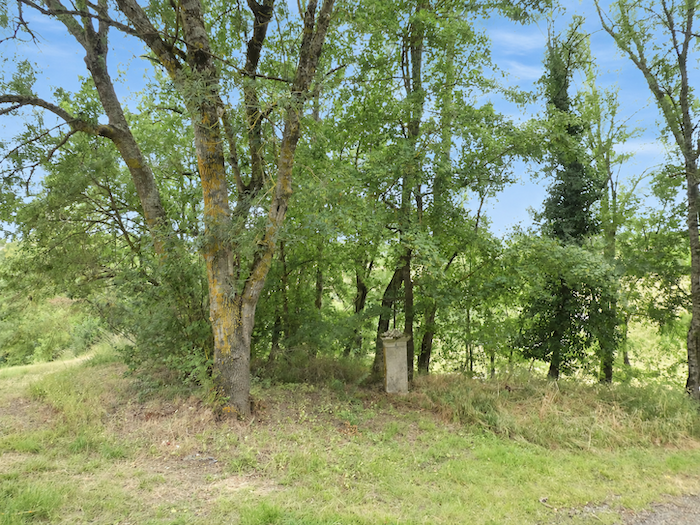
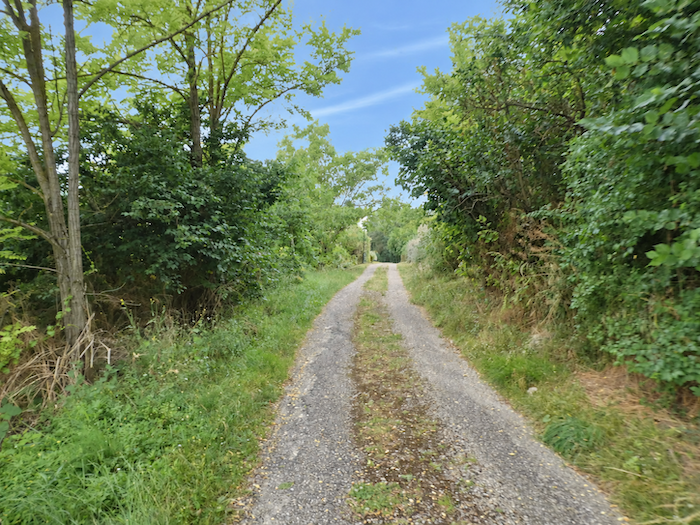
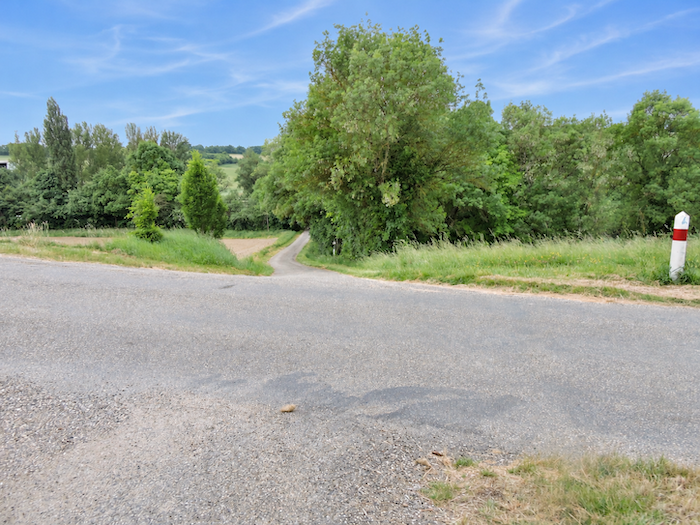
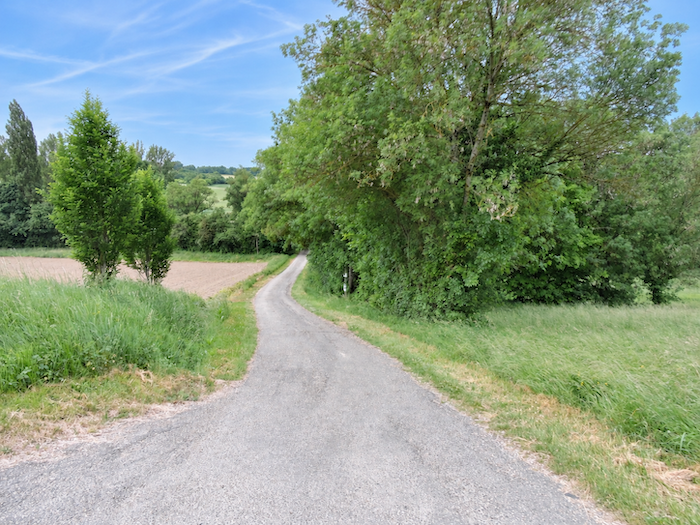
The descent continues into a secluded valley, where the road crosses a departmental road before entering a more intimate landscape. After the vast horizons of cereal fields, here is the kingdom of trees once again. Great oaks spread their branches, accompanied by vigorous ash trees and old maples. |
|
 |
 |
|
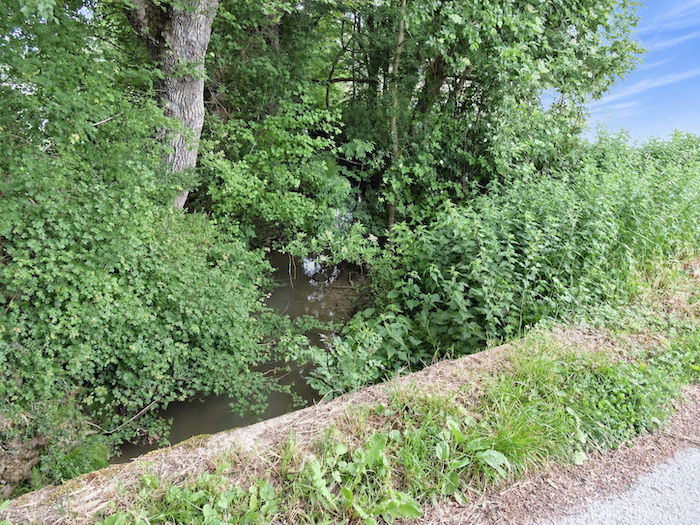
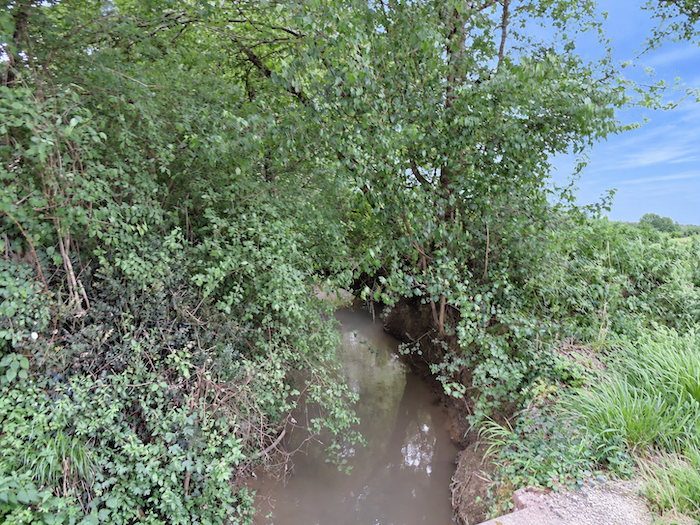
At the very bottom of this hollow flows the modest Auchie stream, so discreet that one almost has to search for it to detect its presence. Its dark waters slip beneath the tall grasses, hidden from view. |
|
 |
 |
|
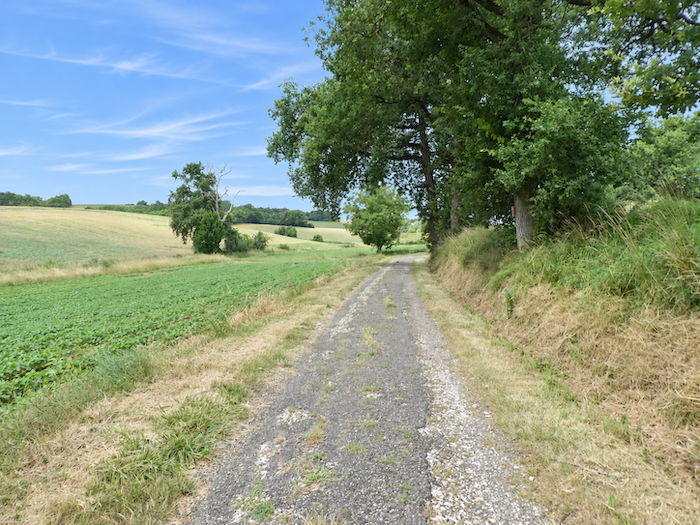
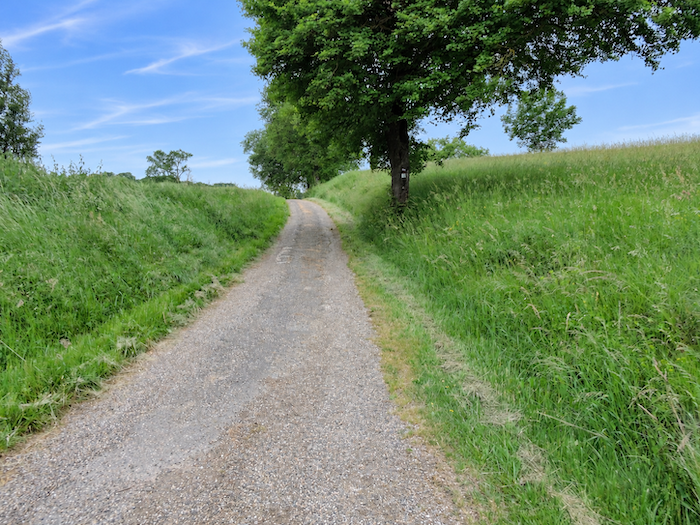
The route continues along the road for a few hundred meters, extending this brief crossing of the daleOn the opposite slope, the GR65 once again leaves the asphalt to follow a grassy path. It is one of those transitions familiar to pilgrims, when the civilized road gives way to a simple track through the greenery. The landscape then takes on a different appearance: the contours of the terrain become more pronounced, and cultivated fields once again take possession of the hills. |
|
 |
 |
|
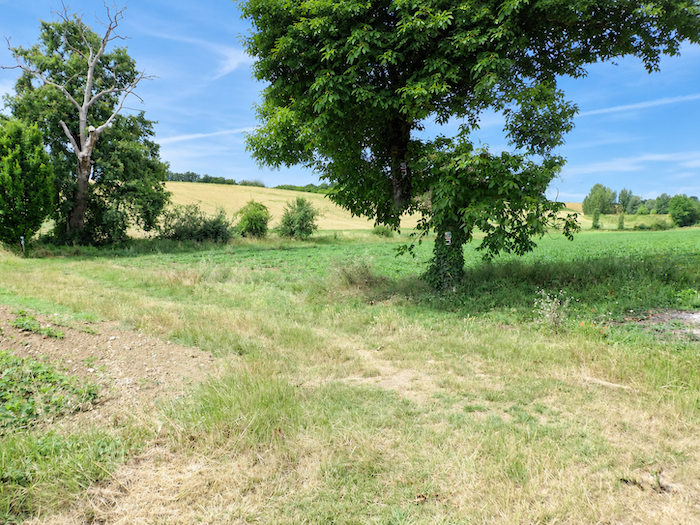
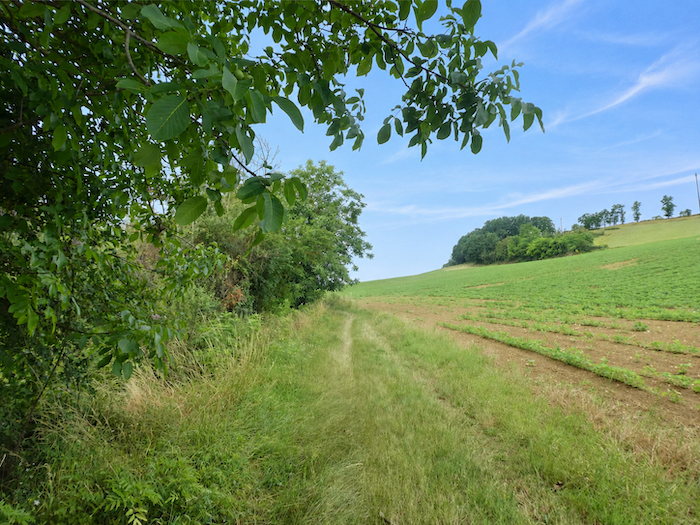
On the opposite slope, the GR65 once again leaves the asphalt to follow a grassy path. It is one of those transitions familiar to pilgrims, when the civilized road gives way to a simple track through the greenery. The landscape then takes on a different appearance: the contours of the terrain become more pronounced, and cultivated fields once again take possession of the hills. |
|
 |
 |
|
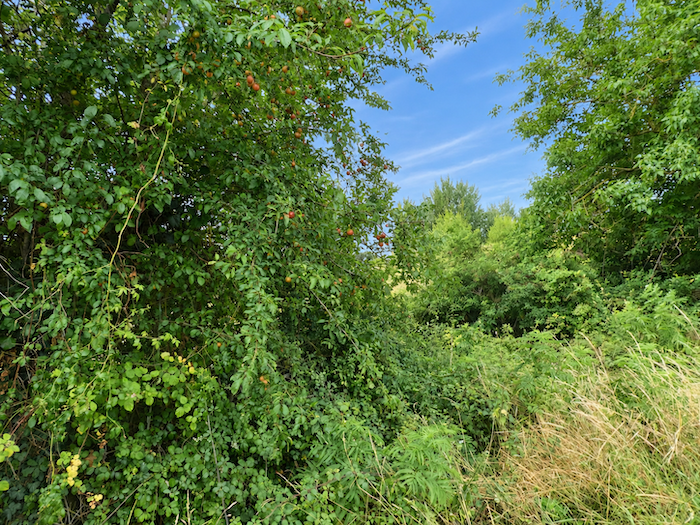
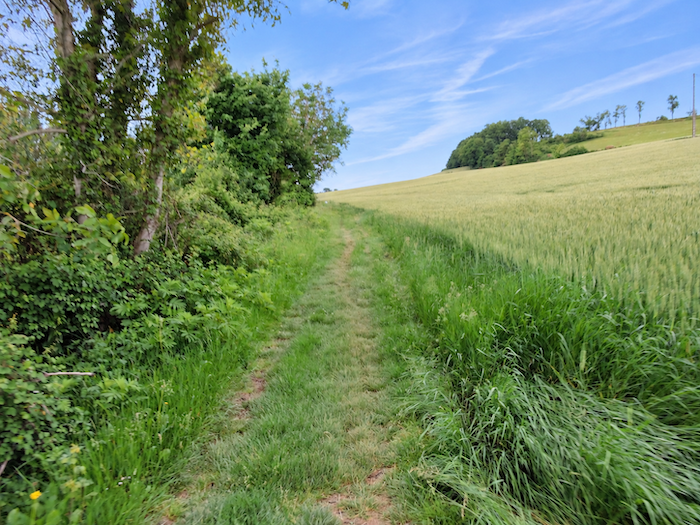
But the countryside soon demands its share of effort. The gradient steepens to nearly 15%, imposing a far more serious task on the legs than the long crossings of the plateau. Around the walker, cereals and oilseed crops continue their endless spread, offering little variety to distract from the climb. Fortunately, a few hedgerows break this uniformity. Wild plum trees and walnut trees mingle their foliage there, offering their fruit in the warmer months to those who know how to recognize it. Modest gifts from a nature that, even amid land devoted to cultivation, sometimes retains a taste for generosity. |
|
 |
 |
|
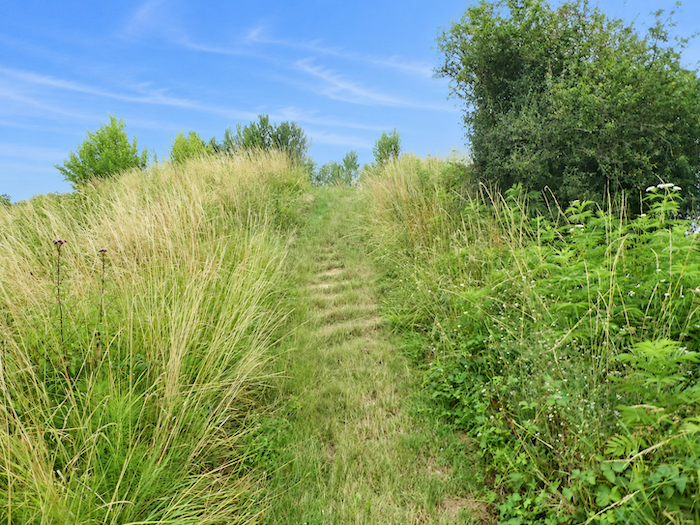
As the climb gains height, it takes on an even more rustic character. Rough steps cut into the earth appear among the wild grasses, helping the walker negotiate the steepest sections. Then, during the ascent, a small expanse of water suddenly interrupts the dominion of the fields. Nestled in a fold of the terrain, a modest lake offers an unexpected interlude, a little freshness and variety in a landscape where crops had seemed destined to reign supreme. |
|
 |
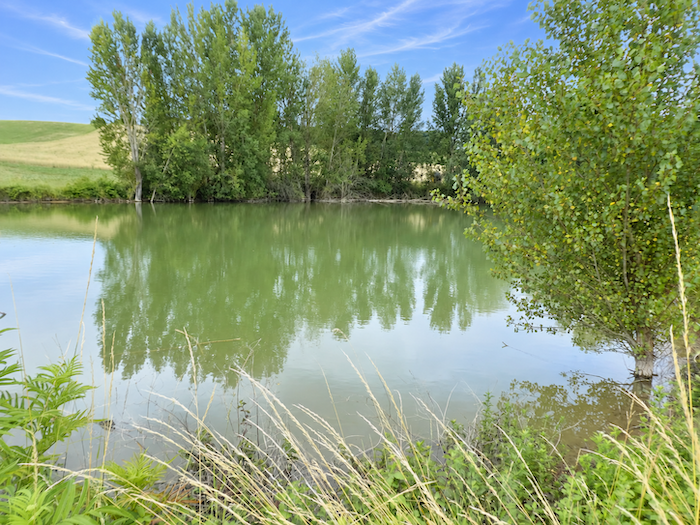 |
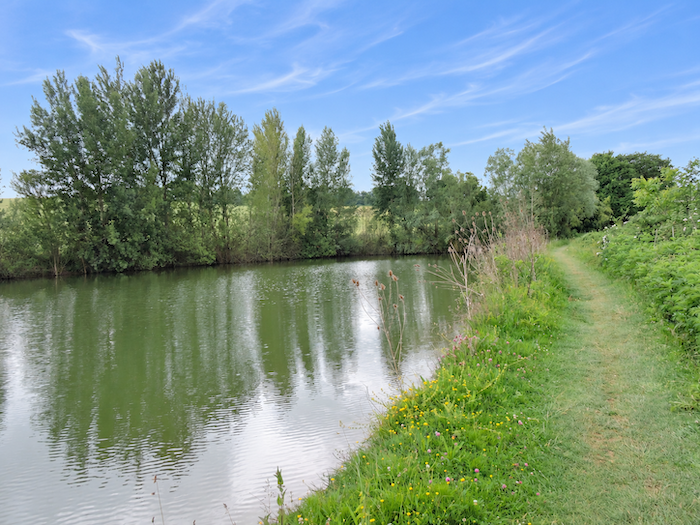
Perhaps this reservoir owes its existence to the foresight of farmers, anxious to maintain a supply of water for their land. In these rural areas, where human activity has long shaped every undulation of the terrain, it is sometimes difficult to distinguish what nature has provided from what people have patiently created.
|
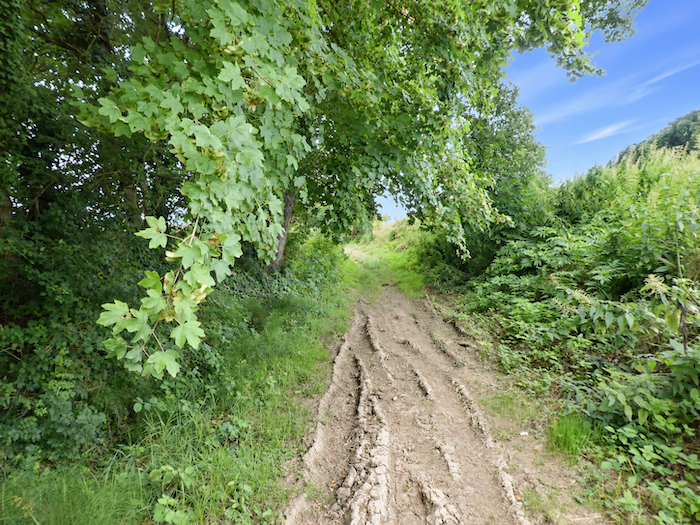
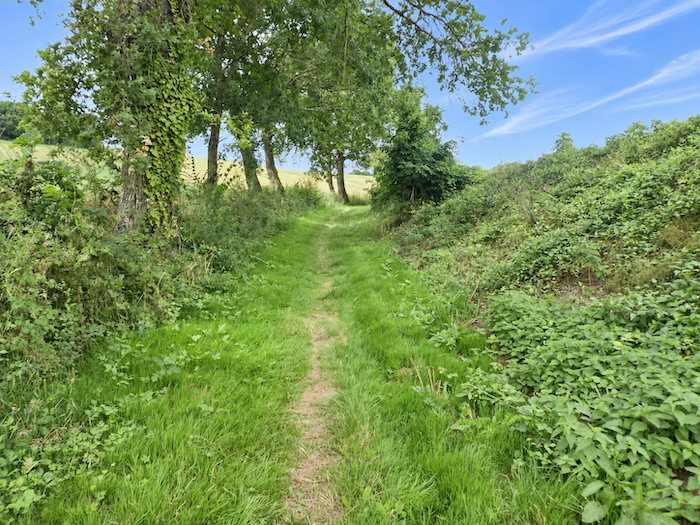
The path then ventures onto sandy ground, deeply rutted by passing traffic and bad weather, beneath the sparse protection of maples and oaks. |
|
 |
 |
|
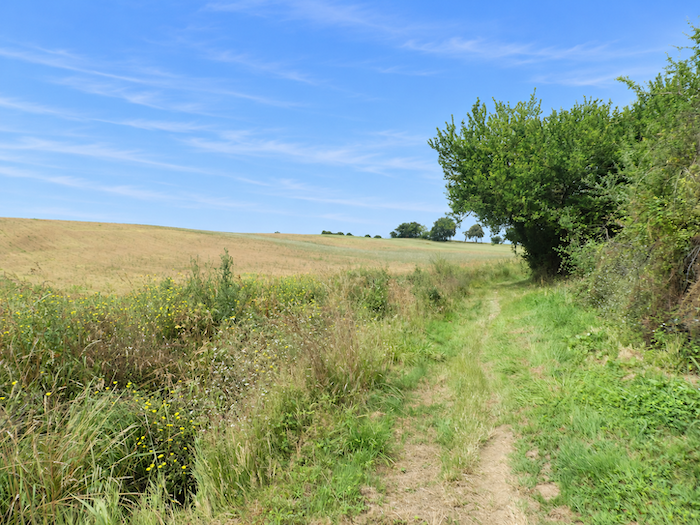
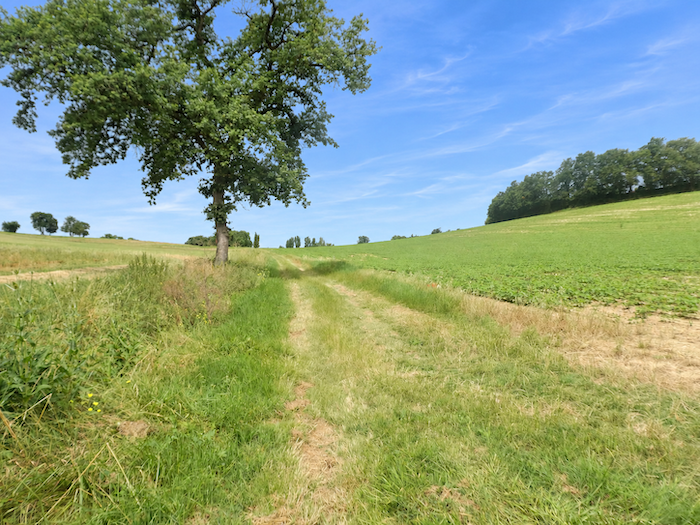
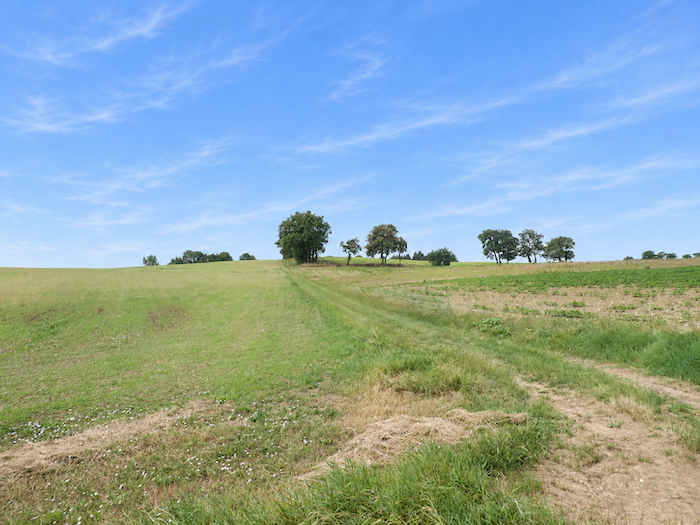
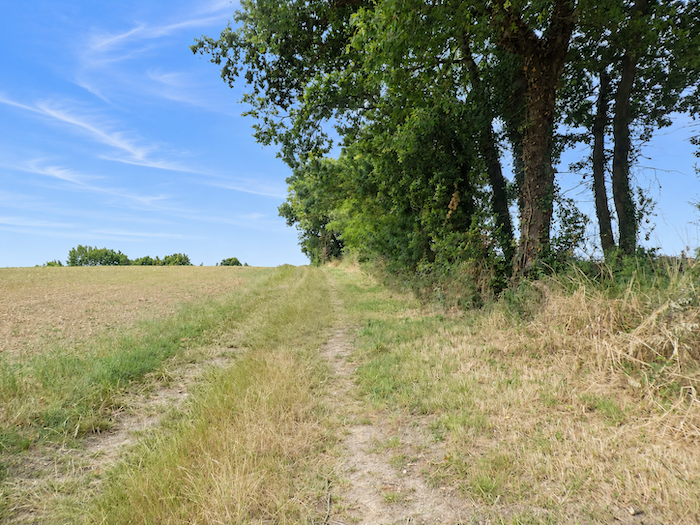
But this wooded interlude does not last long. Soon, the trail emerges once more into the grass, amid vast expanses of cereals and sunflowers stretching towards the distant horizon. The immensity recalls, once again, the great solitudes of the Spanish Meseta, on the route to Santiago. Yet, on closer inspection, the resemblance ends there. On the Castilian plains, trees have often disappeared at the hands of farmers, leaving pilgrims alone beneath the sky, surrounded by bare fields. Here, Gascon farmers have spared a few survivors: oaks and ash trees still stand along property boundaries like peaceful sentinels. |
|
 |
 |
 |
 |
|
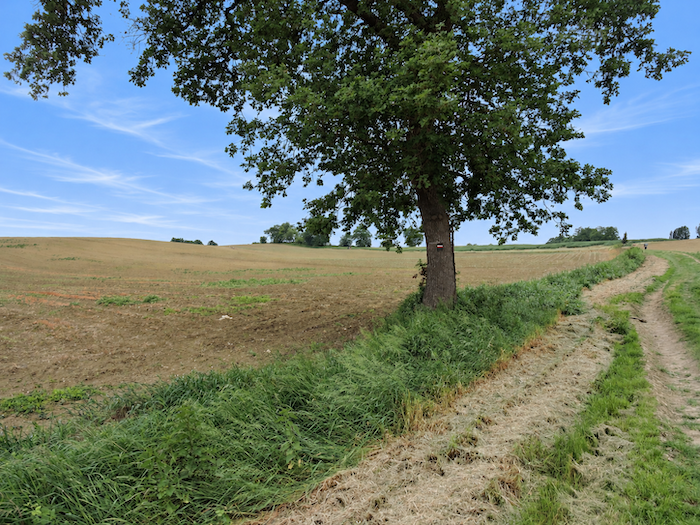
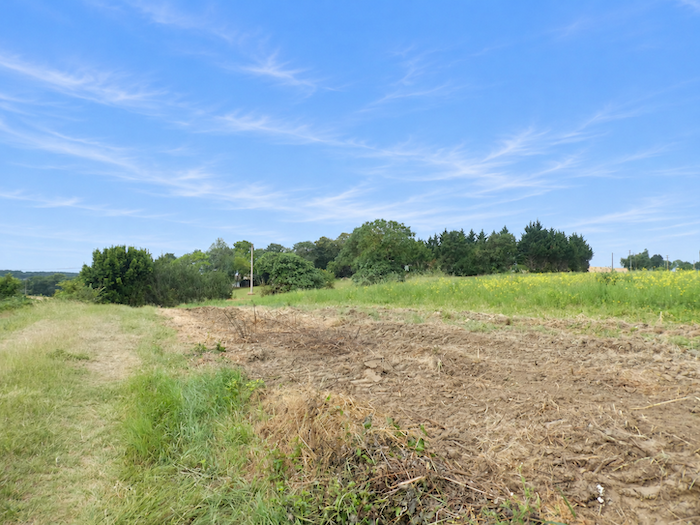
The path then continues its ascent towards the ridge. The slope gradually becomes gentler, while the horizons widen and the crops, arranged in tiers along the hillsides, accompany the walker’s final efforts. |
|
 |
 |
|
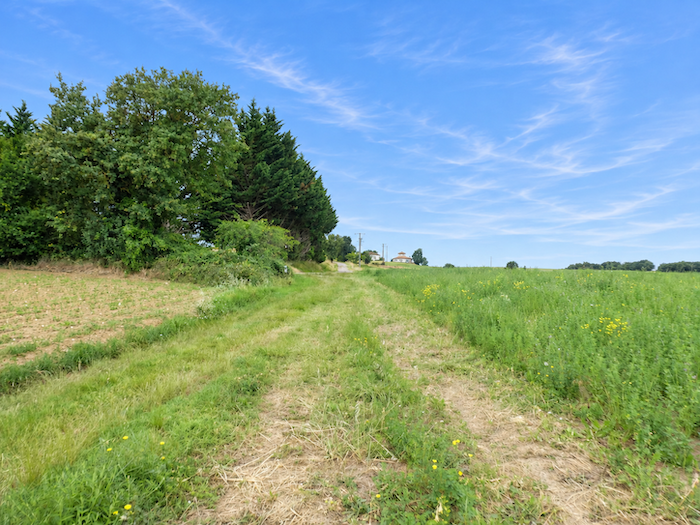
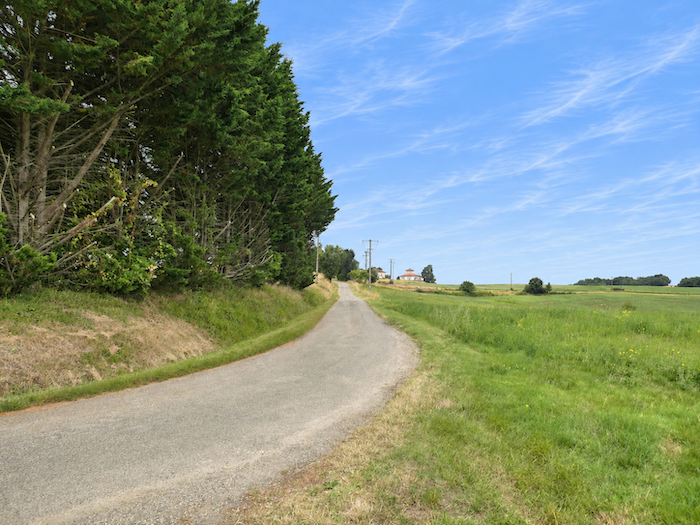
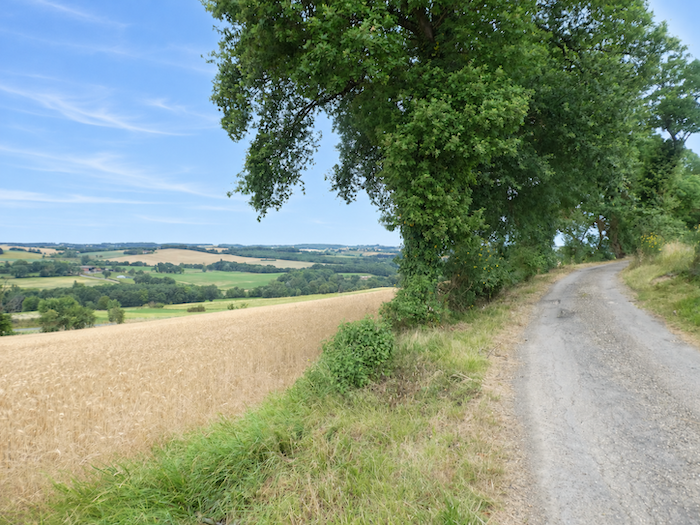
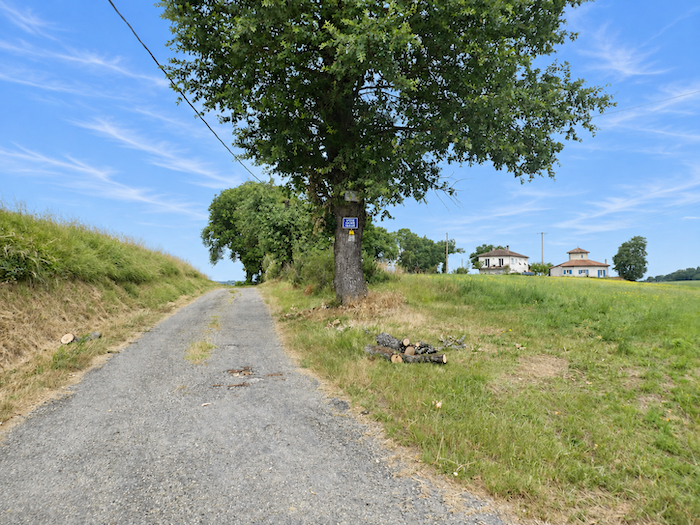
At the summit, the GR65 rejoins the asphalt and skirts the little hamlet of Cauboue, lost amid countryside whose appearance scarcely changes. You will have to get used to it: this persistent repetition of crops will accompany your footsteps for another ten days or so. After gazing at the same horizons for so long, you may eventually learn to recognize the plants at first glance, distinguish the subtle shades of the harvests and develop an unsuspected interest in the finer points of Gascon agriculture. |
|
 |
 |
 |
 |
|
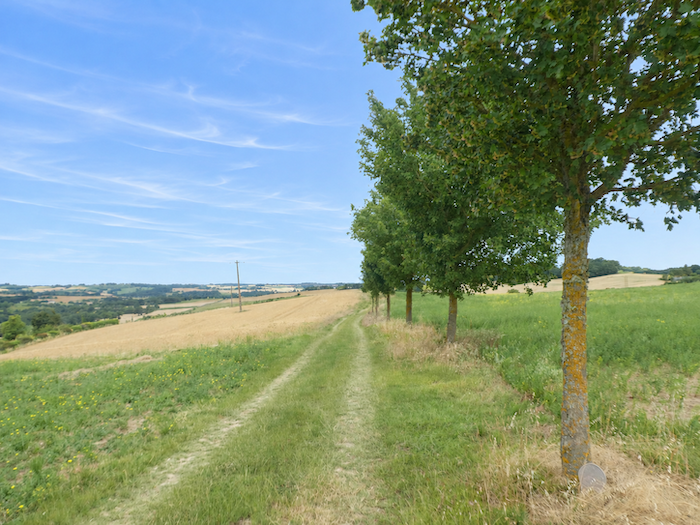
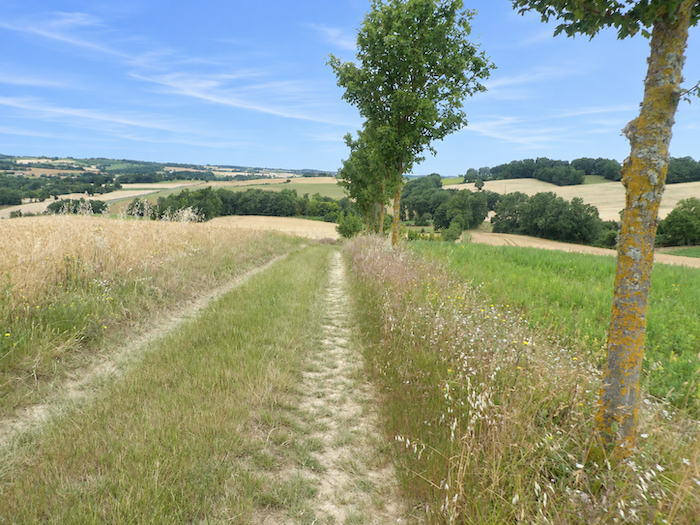
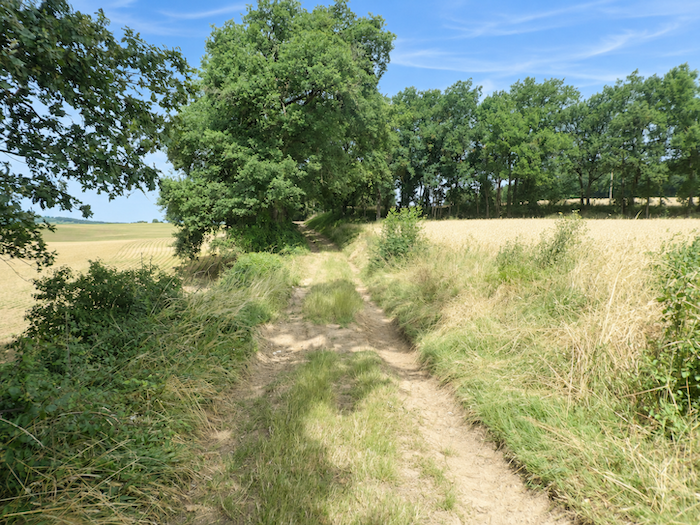
After a brief encounter with the asphalt, the GR65 returns to dirt paths, rediscovering that freedom to wander which paved roads seem to deny it. It begins a gentle descent through countryside as vast as ever, as generous as ever with its horizons. Young maples line the way, slender green sentinels whose foliage accompanies the pilgrim’s footsteps. Beyond this modest escort, the fields spread out in their customary immensity, in a landscape where the eye can roam freely without ever encountering any real boundaries. |
|
|
 |
 |
 |
|
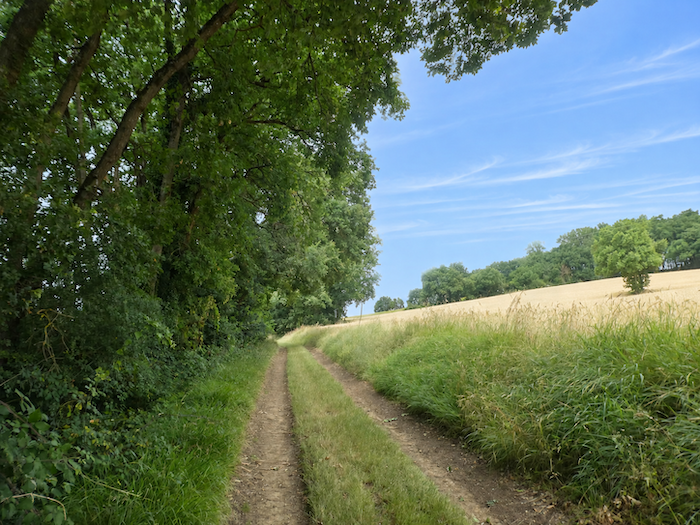
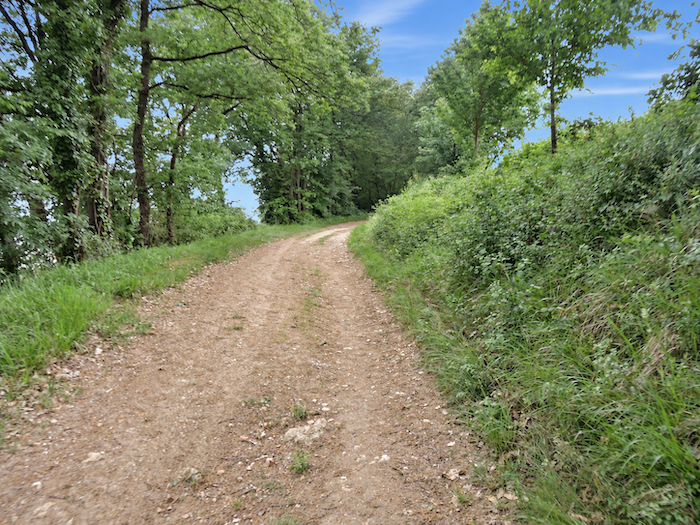
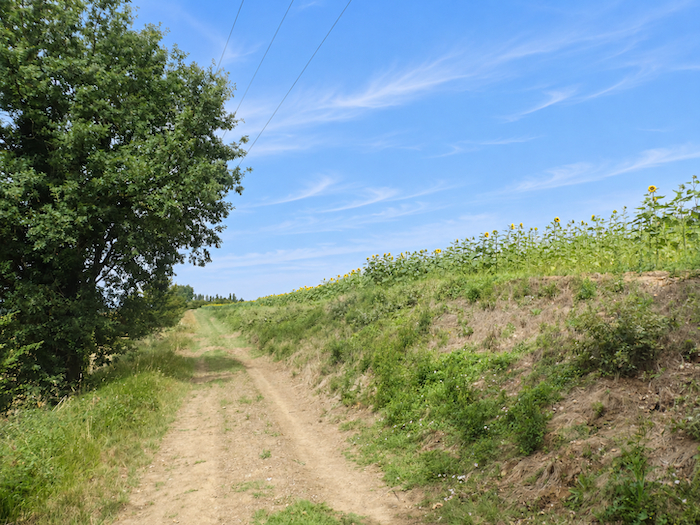
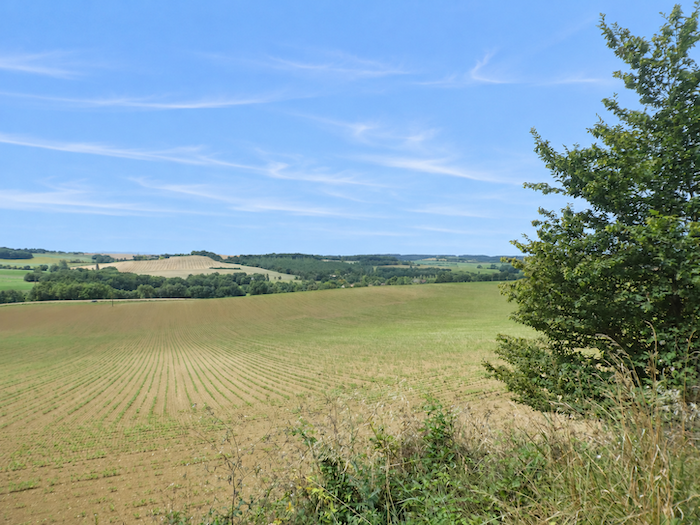
But the descent is only a brief interlude. After crossing the fields, the path begins to climb again towards the plateau, following hedgerows of deciduous trees that mark slender boundaries between properties. Here, the sunflowers have donned their festive attire. Yet this golden sea is not eternal. Next year, according to the rotation of crops, wheat or some other crop may have taken possession of these fields. Such is the way of the Gascon countryside, always seemingly the same at first glance, yet quietly changing its appearance with the passing seasons and years. |
|
 |
 |
 |
 |
Section 4: A walk through the fields
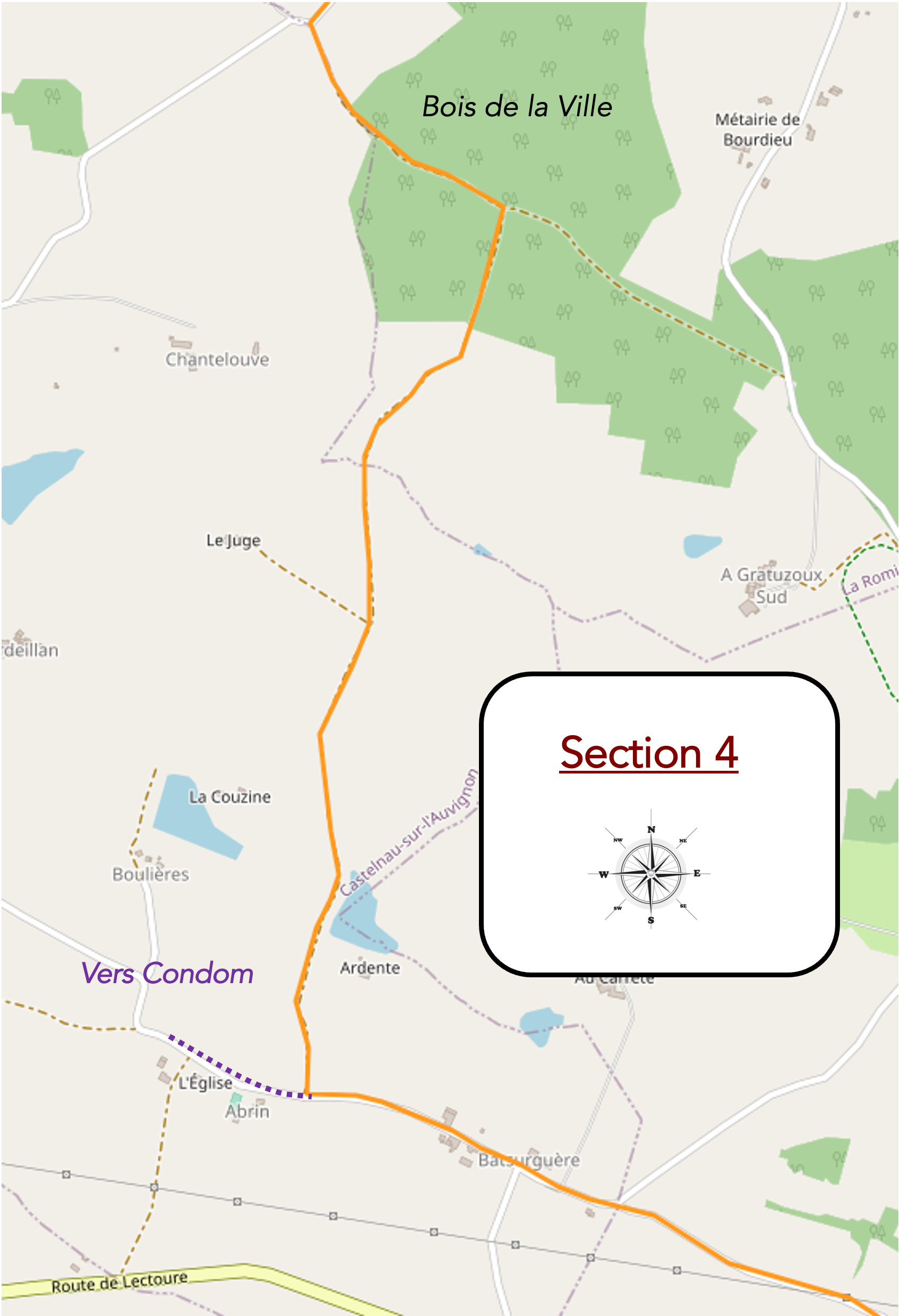
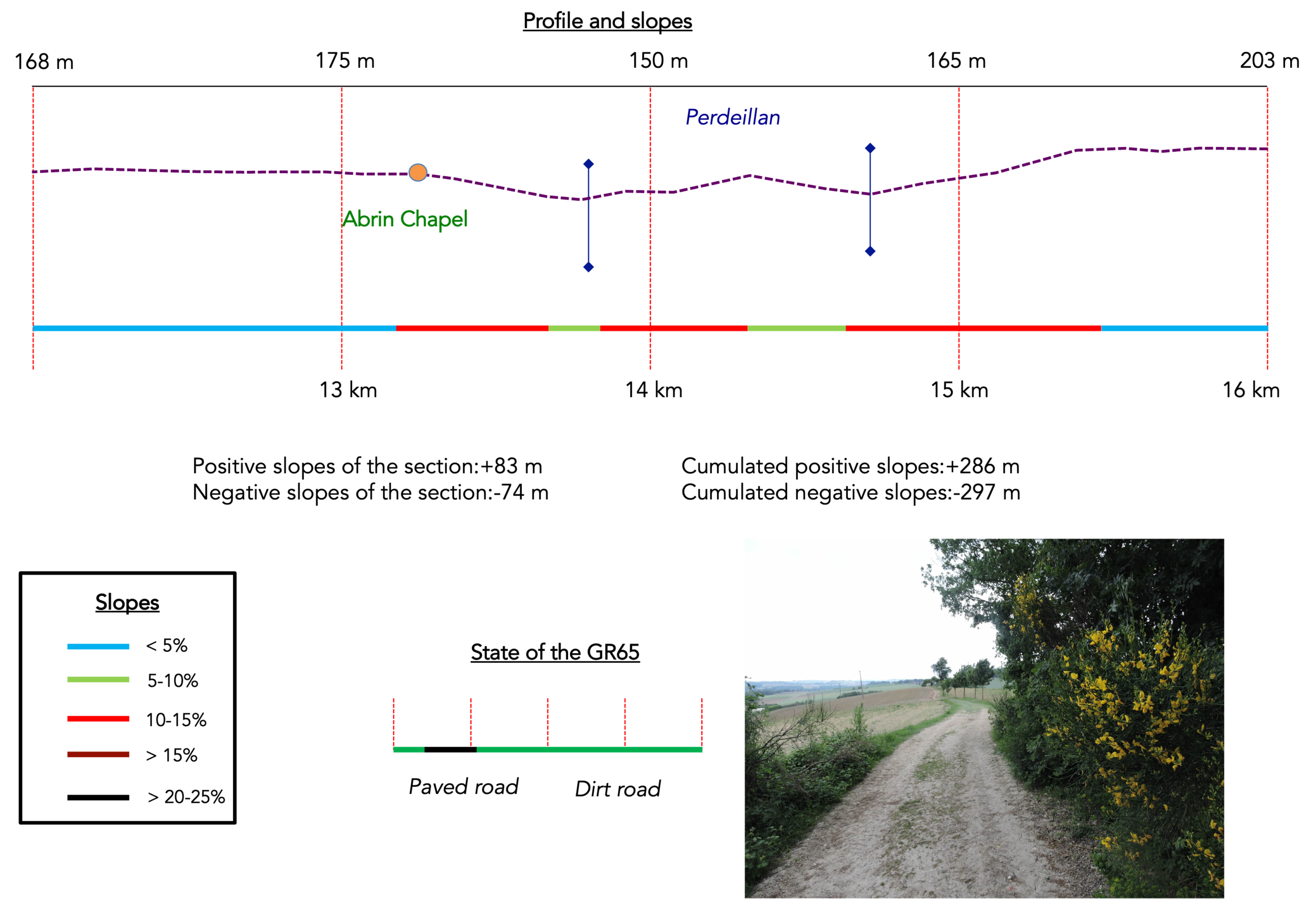
Overview of the route’s challenges : a route presenting no major difficulties, although there are a few slopes.
|
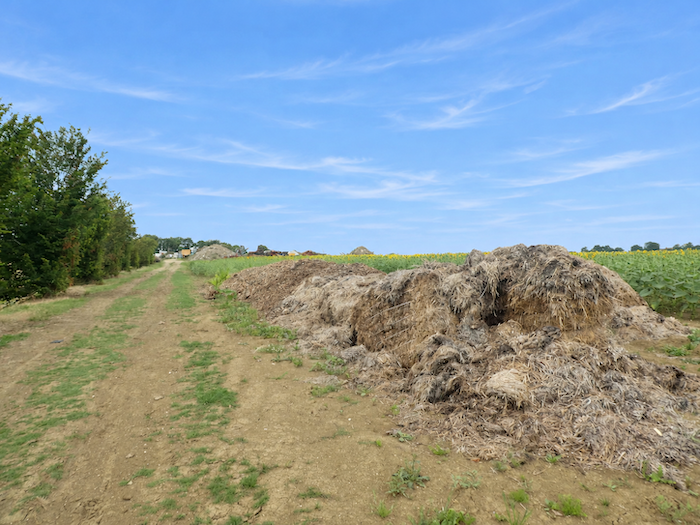
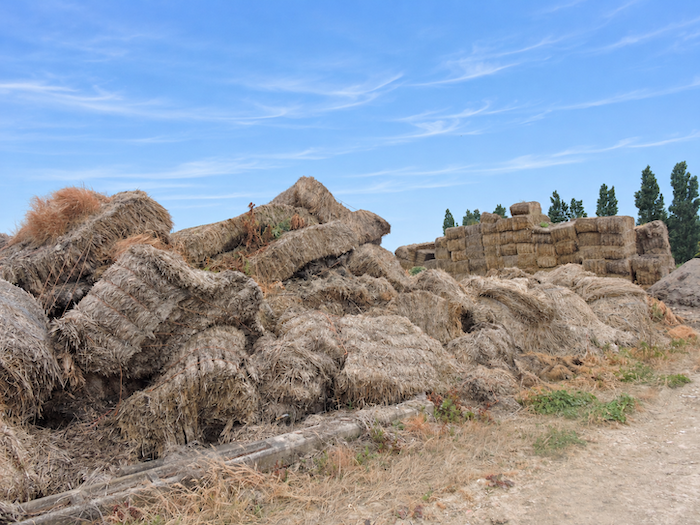
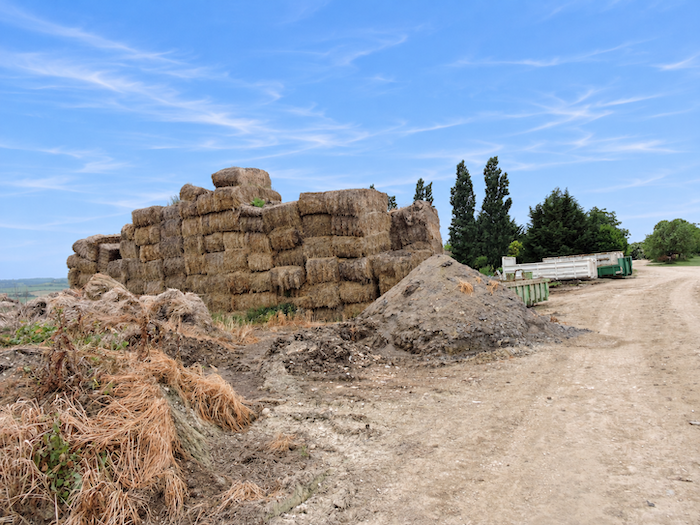
Further on, the countryside suddenly abandons its appearance as generous, fertile farmland to reveal a distinctly less appealing face. The route, which until now has offered an abundance of rural horizons, passes an open-air rubbish dump, a sorry jumble of bundled straw, crop residues and old lorry tyres, condemned to end their rubber existence here. A strange cemetery indeed, where the refuse of human activity seems to have found its final resting place, with little regard for the beauty of the surrounding countryside. |
|
 |
 |
|
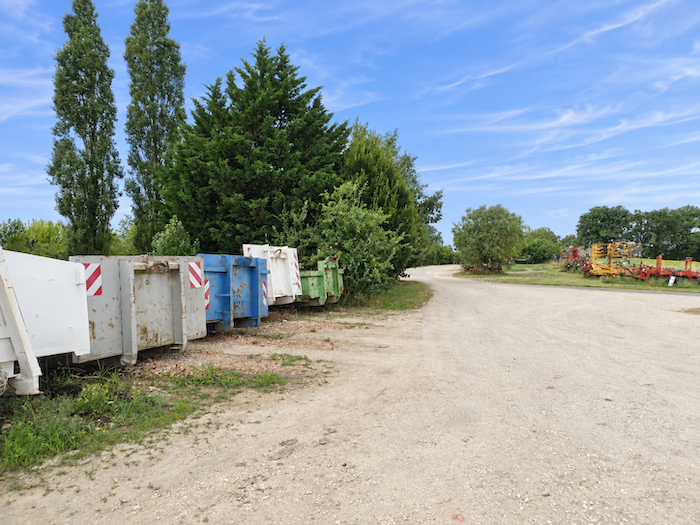
A little further on, rubbish skips, hardly more attractive, prolong this disheartening spectacle. It seems that man, so skilled at drawing riches from the earth, is sometimes less eager to show it his gratitude. |
|
 |
 |
|
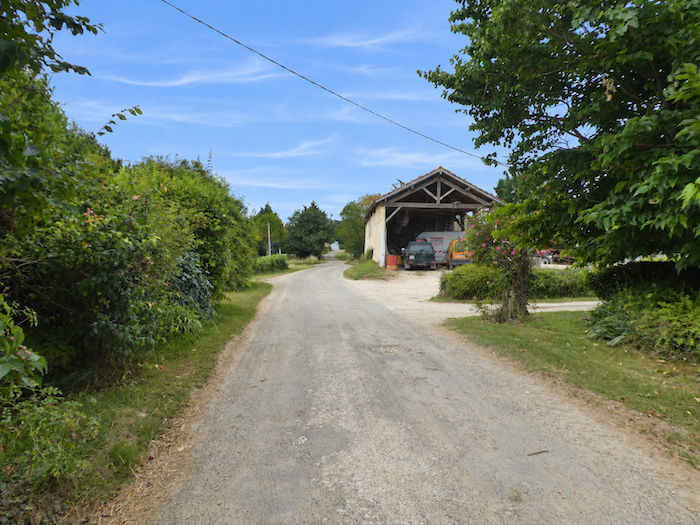
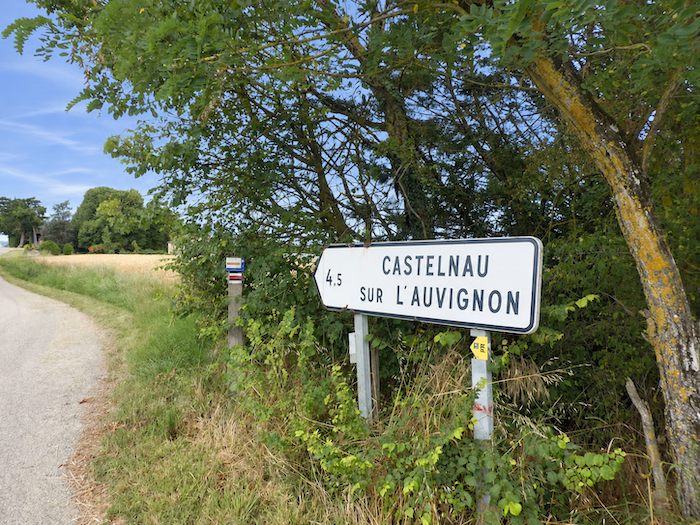
The road soon continues towards Castelnau-sur-l’Auvignon, a village still some distance away, whose discoveries are reserved for the following day. |
|
 |
 |
|
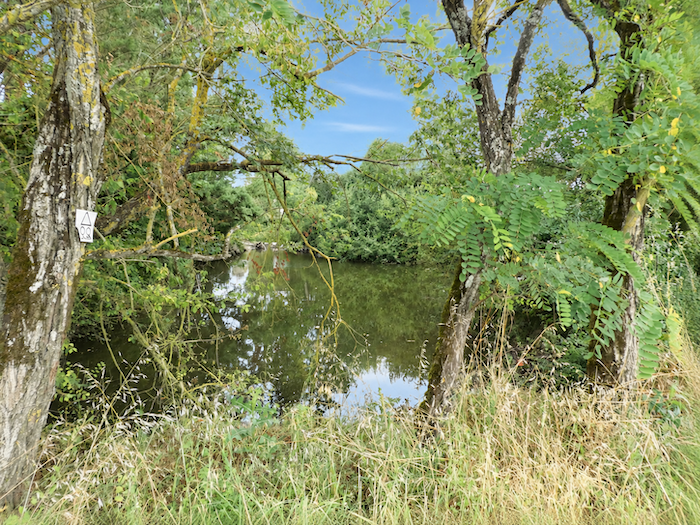
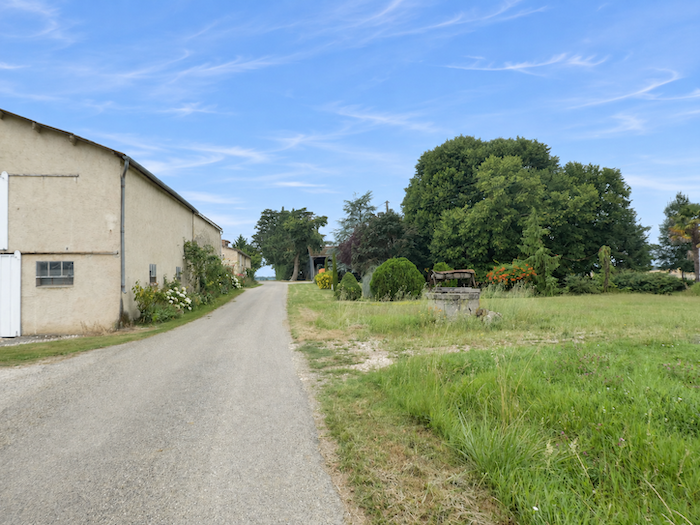
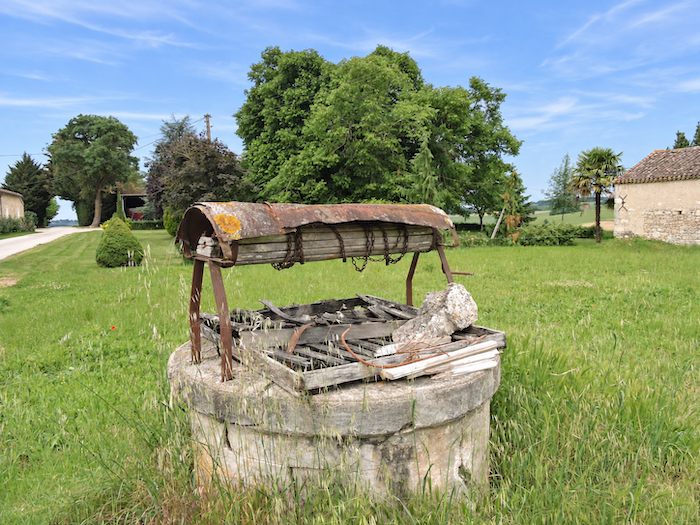
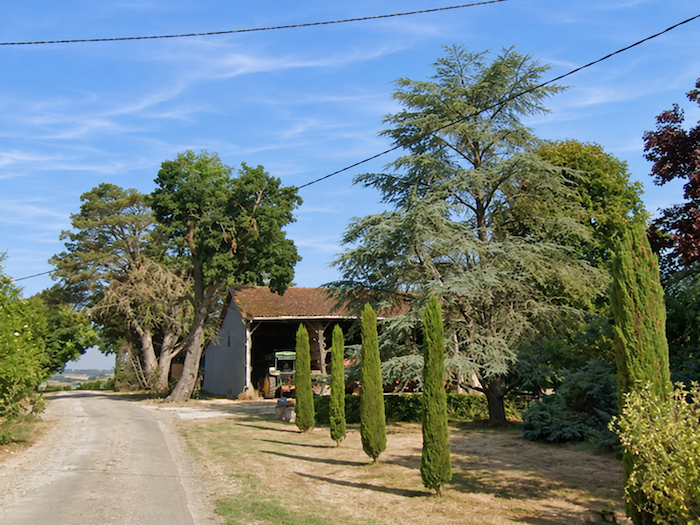
Fortunately, the little hamlet of Batsurguère soon reconciles the eye with the countryside. A few houses nestle amid generous vegetation, near an old well whose stones seem to preserve the memory of past generations. A small pond adds a touch of freshness to this peaceful setting. |
|
 |
 |
 |
 |
|
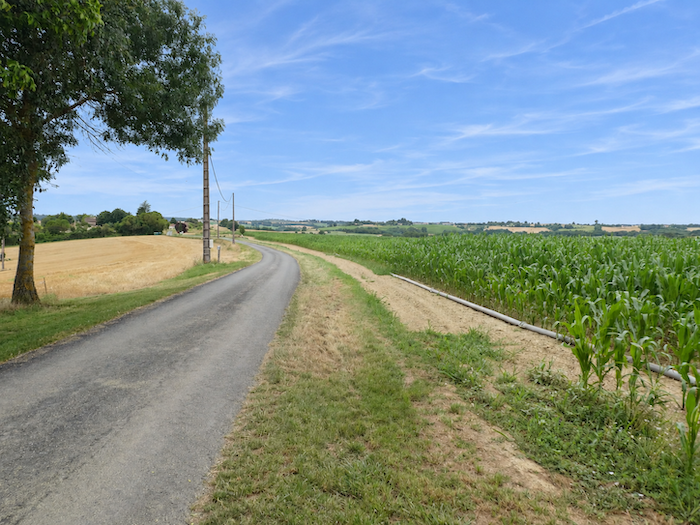
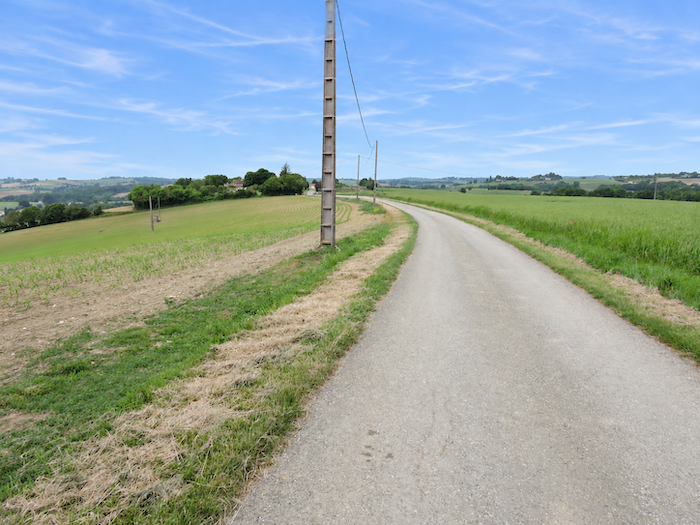
Beyond the last houses, the road returns to the familiar world of cereals and sunflowers. The crops once again take possession of the horizon, spreading their vast fields on either side of the asphalt. |
|
 |
 |
|
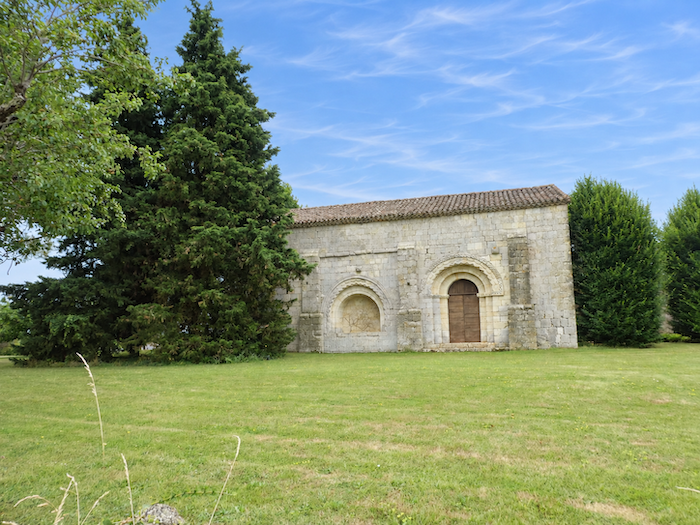
The road soon reaches a junction near the Chapel of Abrin. Built in the 11th century, this former spiritual stopping place once had an adjoining hostelry frequented by the Knights of Malta, on the route linking Le Puy to Rocamadour. Since restored, but now deconsecrated and privately owned, it remains a discreet witness to the days when pilgrimage paths were dotted with places of hospitality and prayer. Here, the walker faces a choice that is far from insignificant. Straight ahead, the road continues towards Condom; to the right, the GR65 leads towards La Romieu. The waymarking leaves little doubt about the recommended direction: it guides pilgrims towards La Romieu without even bothering to indicate the other possibility. And yet, how many choose to carry straight on! A day’s walking saved, so they say. But saved from what? From eternity? From those few weeks snatched from ordinary life to make one’s way towards Santiago? What strange haste drives these travellers who, having set out to take their time, sometimes seem to have only one thought in mind: to arrive as quickly as possible. For La Romieu surely deserves better than to be sacrificed on the altar of haste. There is a certain irony in walking halfway across Europe only to end up measuring one’s journey by the number of days saved. |
|
 |
 |
|
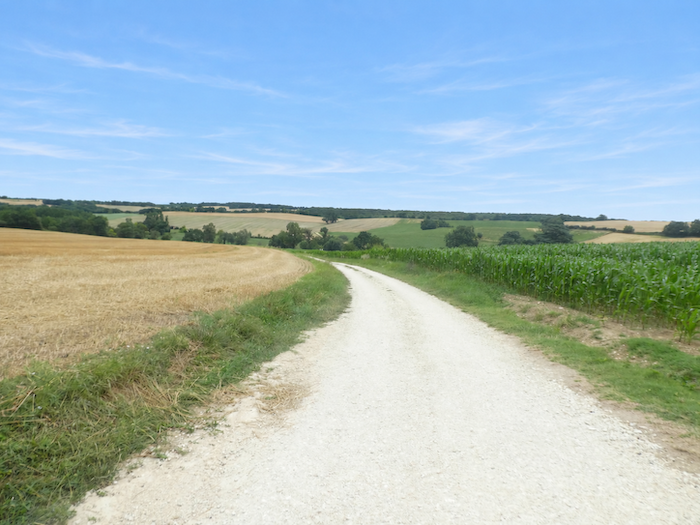
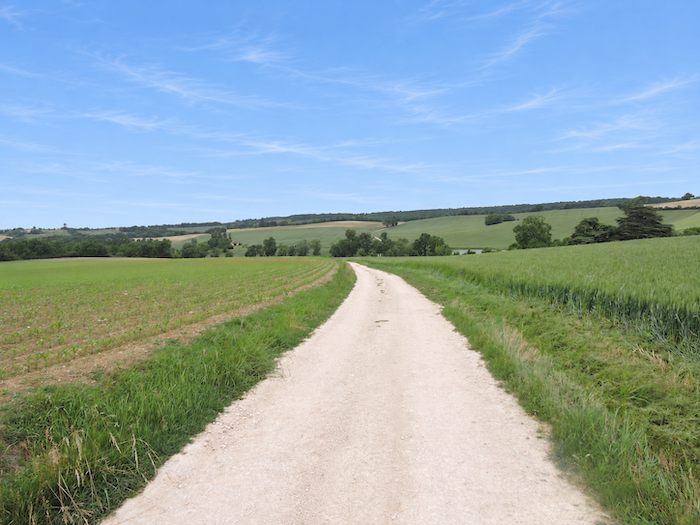
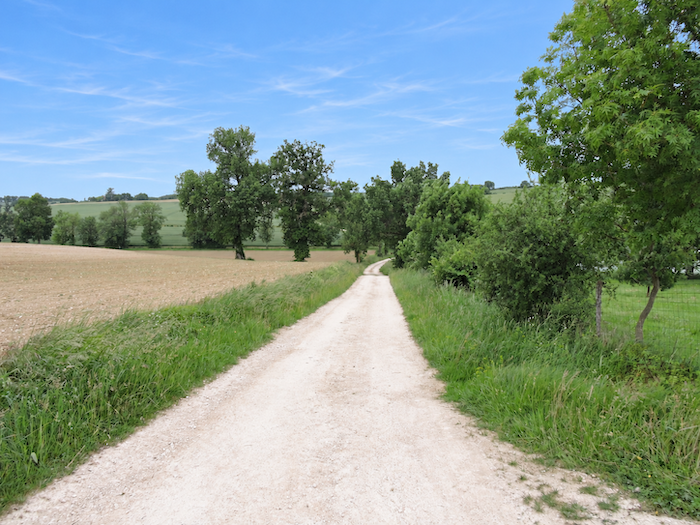
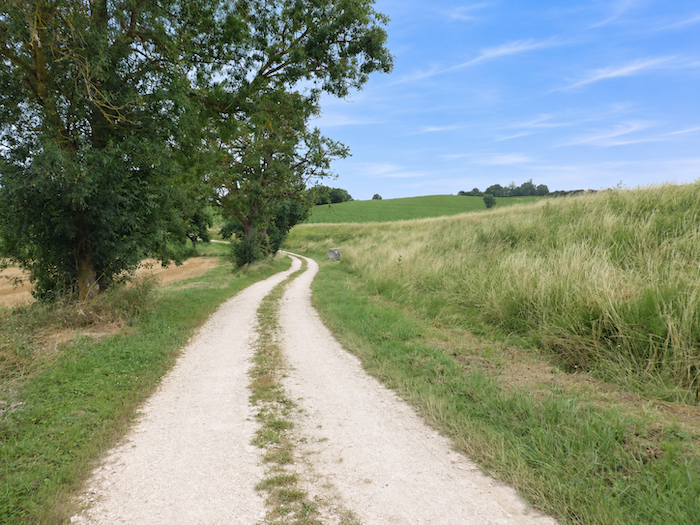
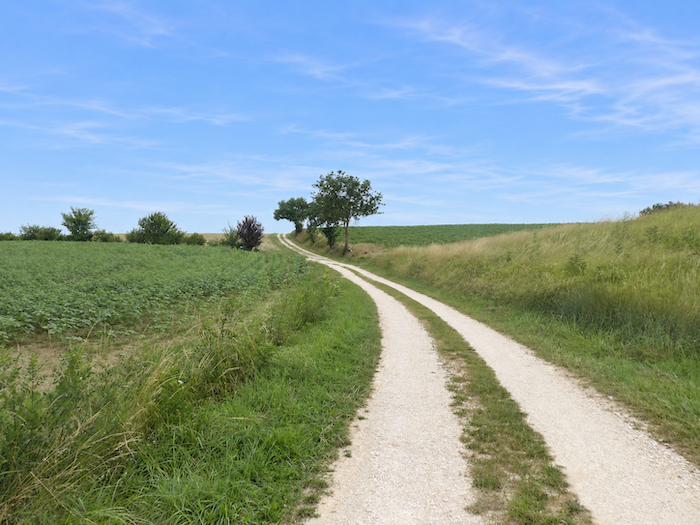
On the GR65, a broad dirt path begins a peaceful descent through the cultivated fields, following the gentle undulations of the terrain towards the bottom of a modest dale. |
|
 |
 |
|
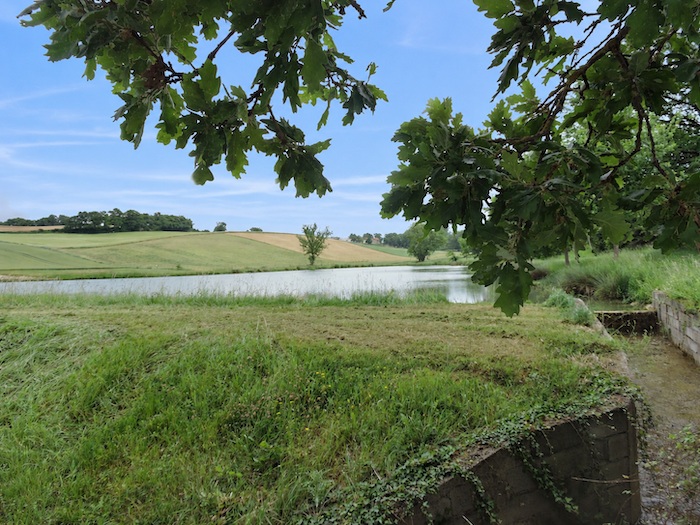
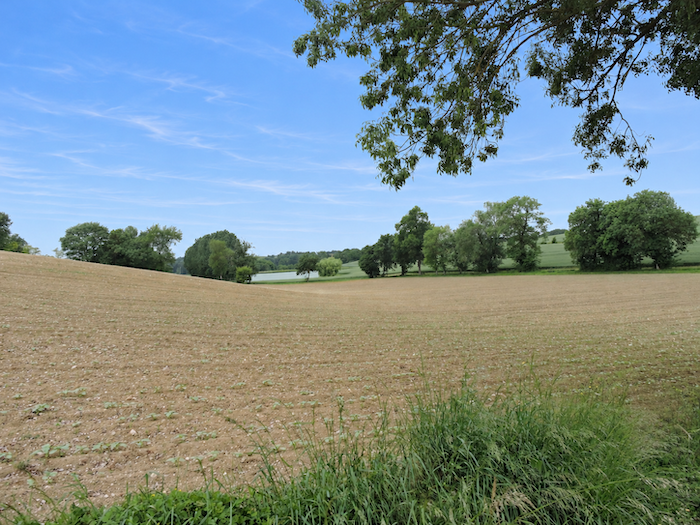
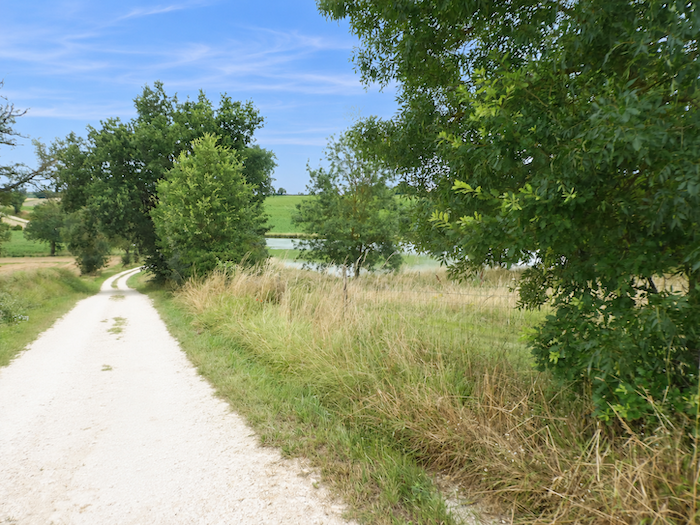
At the bottom of the dale, two small ponds interrupt the endless succession of fields. Nestled beneath the generous foliage of oaks, maples and ash trees, they offer their tranquil waters to the eye, sheltered from the vast agricultural horizons. Between these two green mirrors winds the discreet Perdeillan stream, a modest link that brings welcome freshness to this corner of wooded farmland. Here, water and trees seem to have arranged a meeting to offer the pilgrim a gentle interlude, far from the monotony of the great cultivated expanses. |
|
 |
 |
 |
 |
|
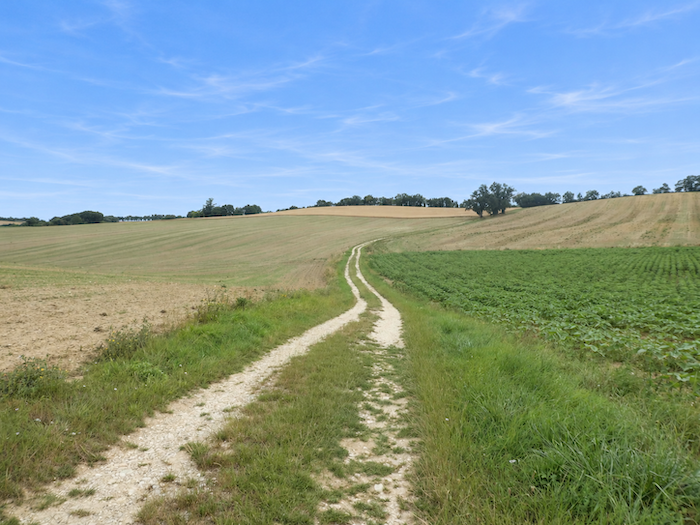
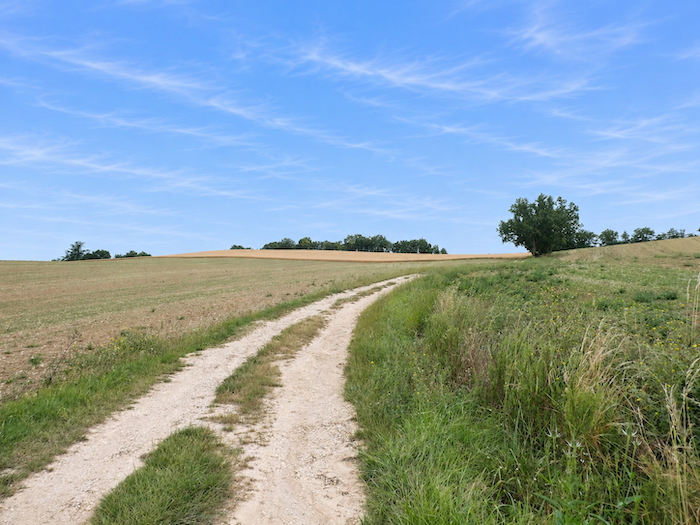
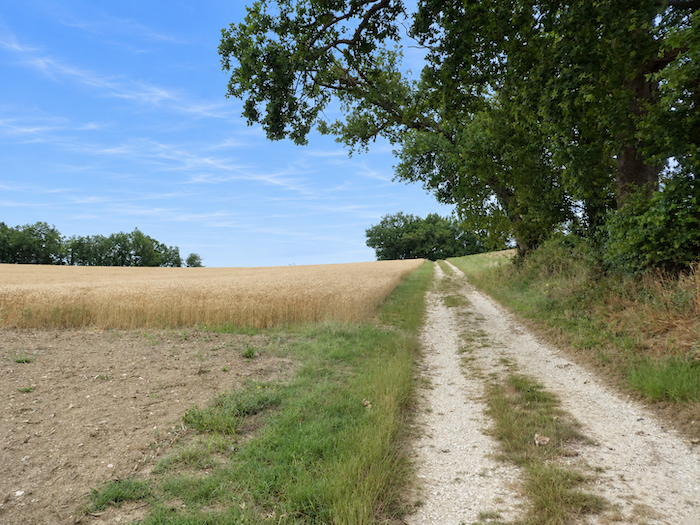
On the other side of the dale, the path begins to climb gently again, without making too great a demand on the legs. Today, it passes through a profusion of sunflowers. |
|
 |
 |
 |
 |
|
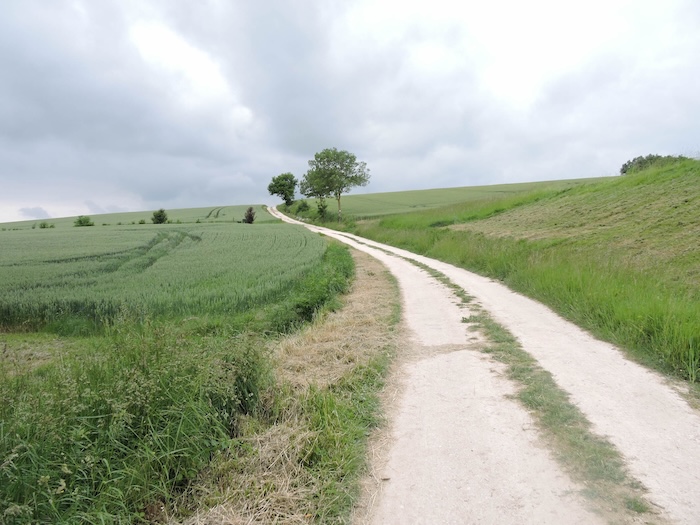
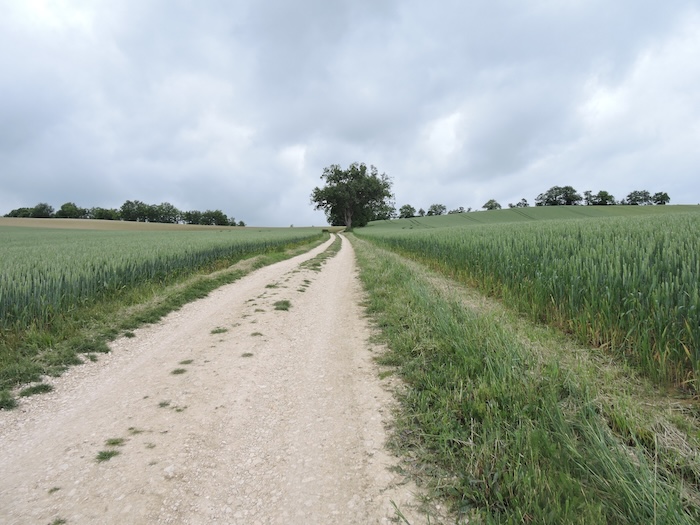
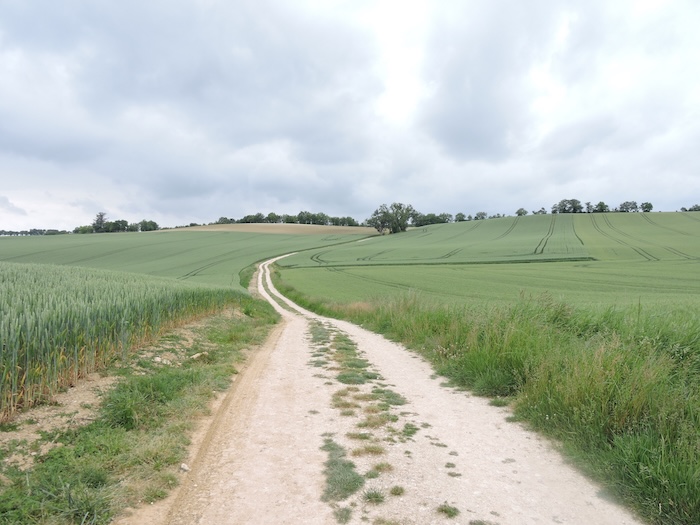
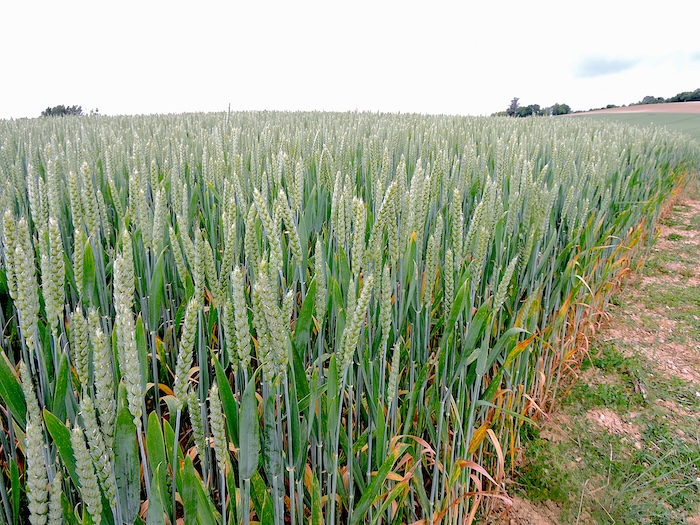
But you should not imagine that this landscape remains unchanged. In this countryside entirely devoted to farming, the colors change with the seasons and the rotation of crops. Where sunflowers display their radiant splendor today, wheat may reign next year, spreading its long golden tresses across the hills, destined for the combine harvesters. Lovers of vast cereal fields will then find plenty to delight them. Such is the way of the Gers, changing its attire without ever abandoning its profoundly agricultural character. From one year to the next, crops succeed one another and colors shift across the landscape. |
|
 |
 |
 |
 |
|
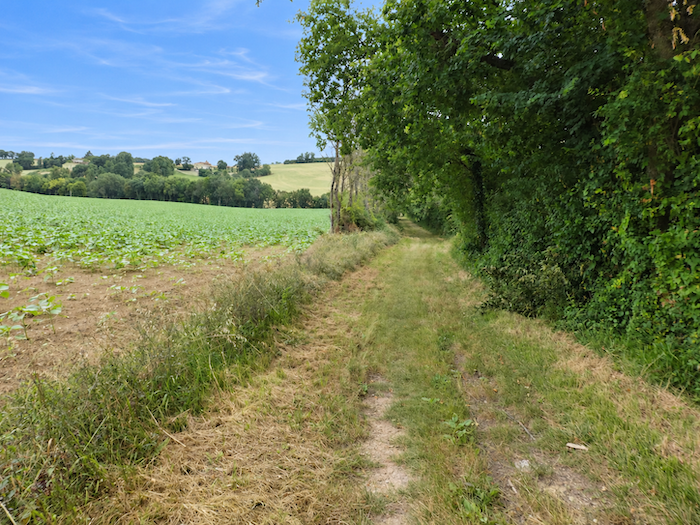
The slope becomes more demanding here, requiring a sustained effort from the walker. But now the landscape, until this point stubbornly faithful to its agricultural horizons, announces an unexpected change. Ahead, a forest begins to reveal its first canopy of foliage. |
|
 |
 |
|
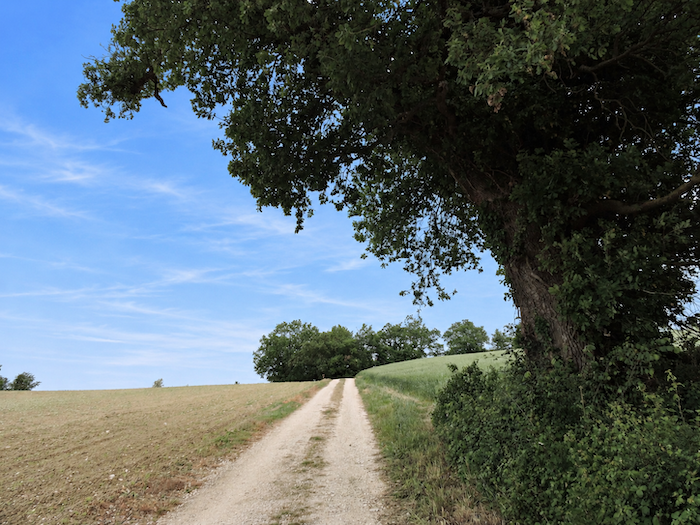
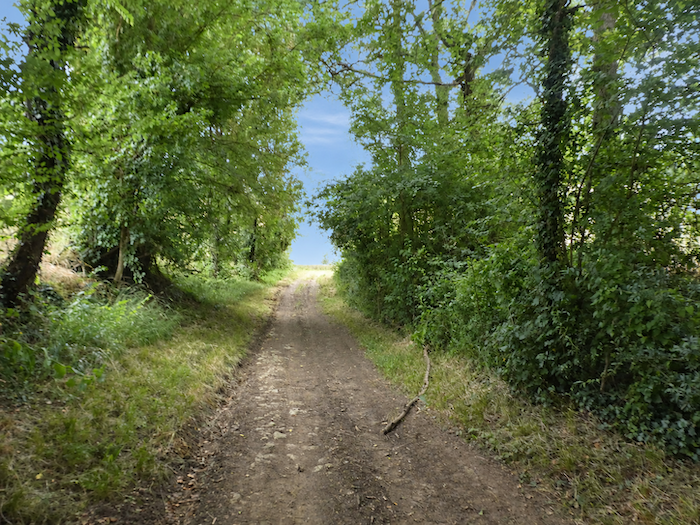
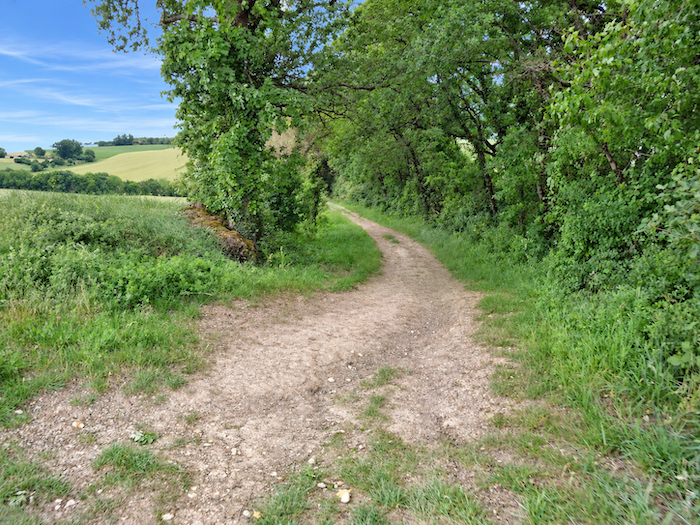
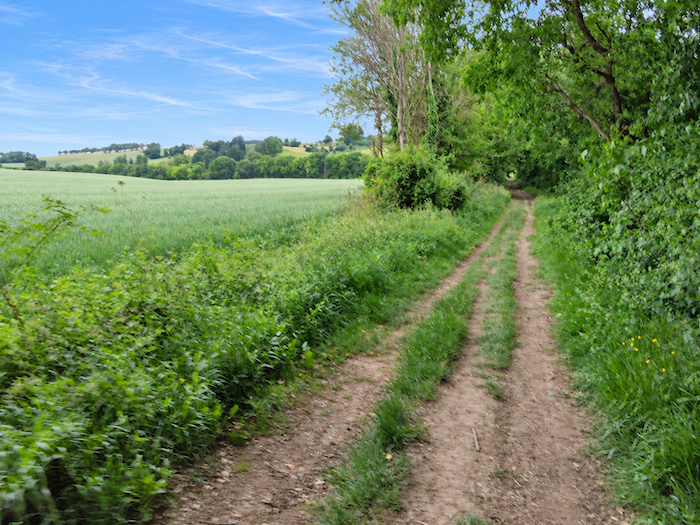
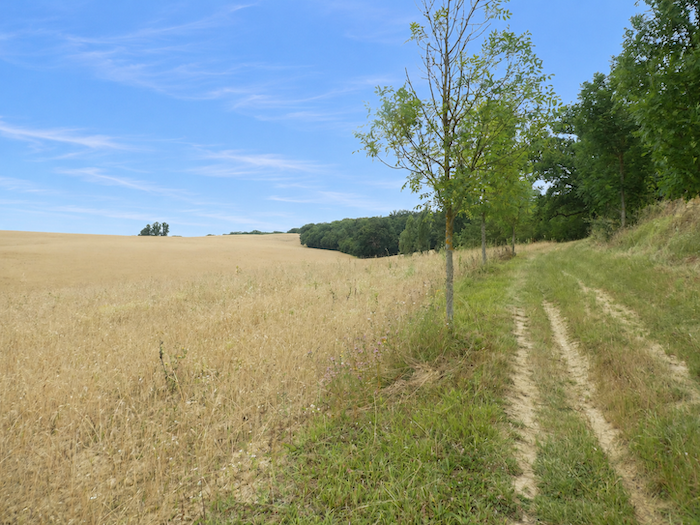
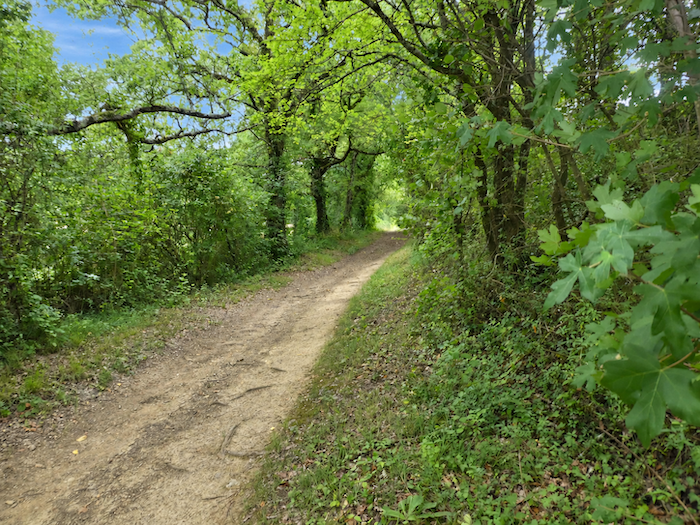
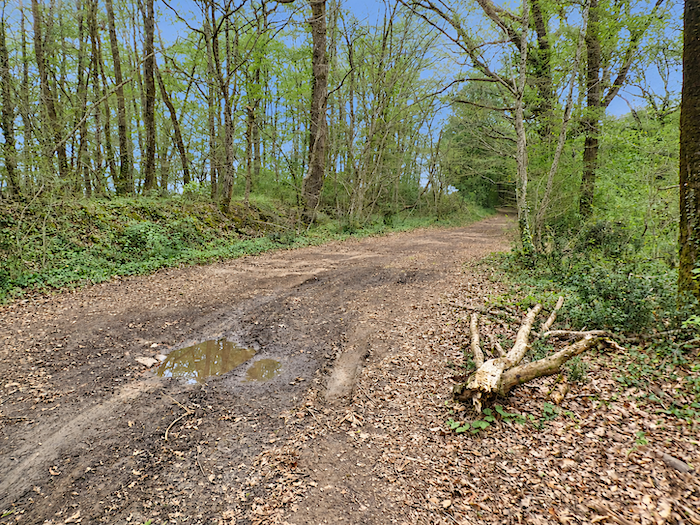
It is almost a revolution in the arrangement of this Gascon countryside, where cultivated fields had seemed to have definitively gained the upper hand over the trees. From now on, the path hesitates between two worlds, sometimes lingering in the open among the fields, sometimes slipping into the cool shade of the undergrowth. |
|
 |
 |
 |
 |
|
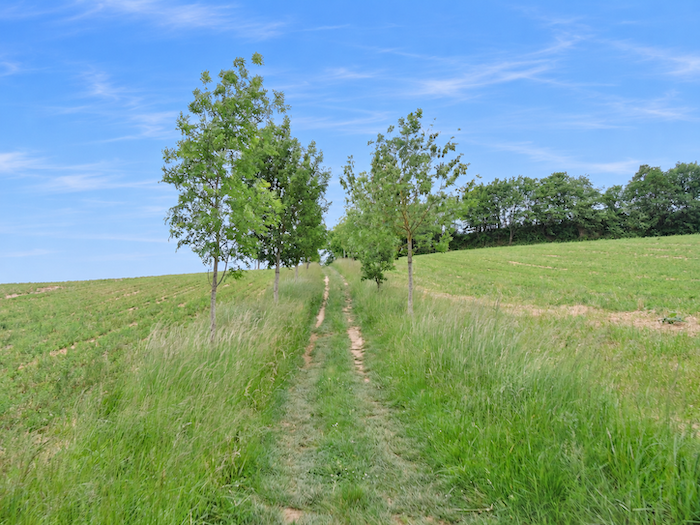
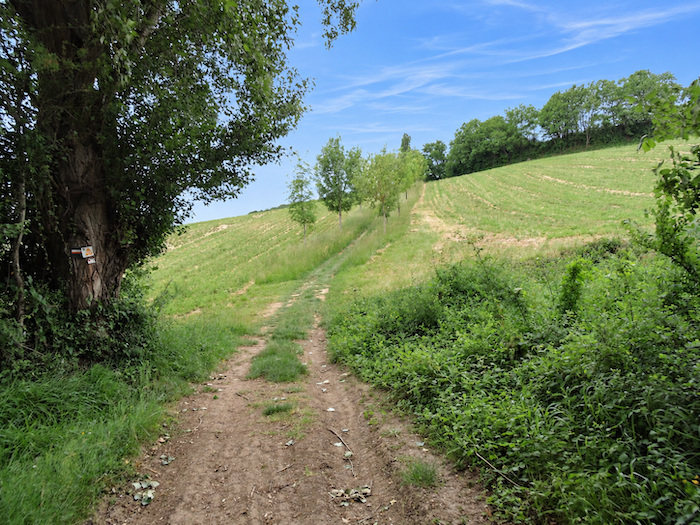
Long rows of maples accompany this succession of clearings and wooded passages. Faithful companions of the Gascon paths, they raise their silhouettes along the edges of the fields, as though to remind us that trees have not entirely surrendered their rights in this kingdom of crops. |
|
 |
 |
 |
 |
|
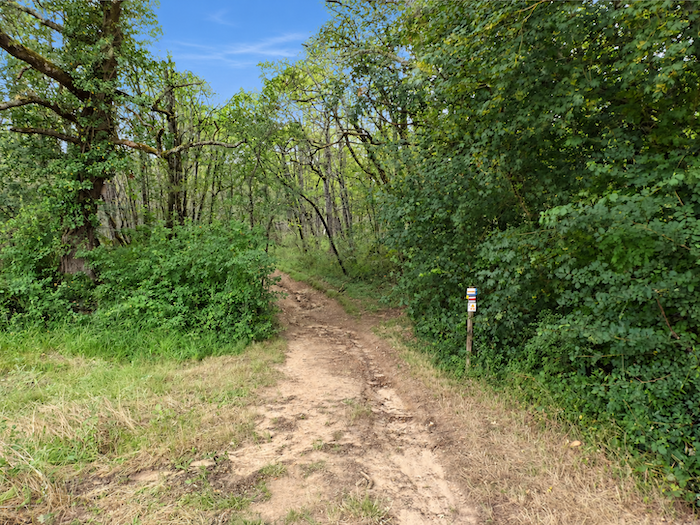
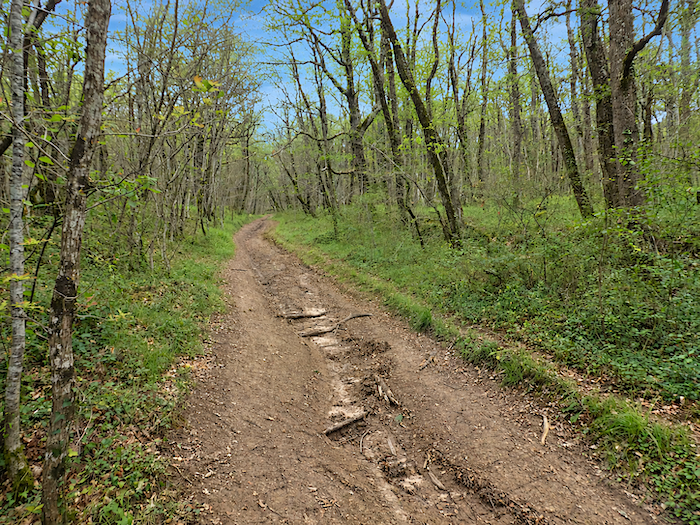
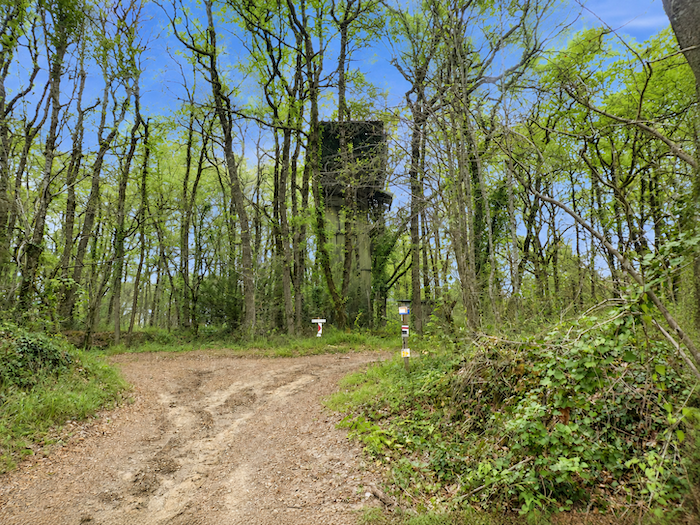
landscape. The trees raise their slender trunks, often stripped of their lower branches, allowing the eye to wander fairly freely beneath the leafy canopy. This unusual bareness of the undergrowth may well be connected with the region’s hunting practices. For here, in southwestern France, the forest is not merely the kingdom of trees: it is also the domain of the “palombes”, those migratory wood pigeons whose flesh is held in high esteem and whose autumn passage has stirred genuine popular enthusiasm for generations. |
|
 |
 |
|
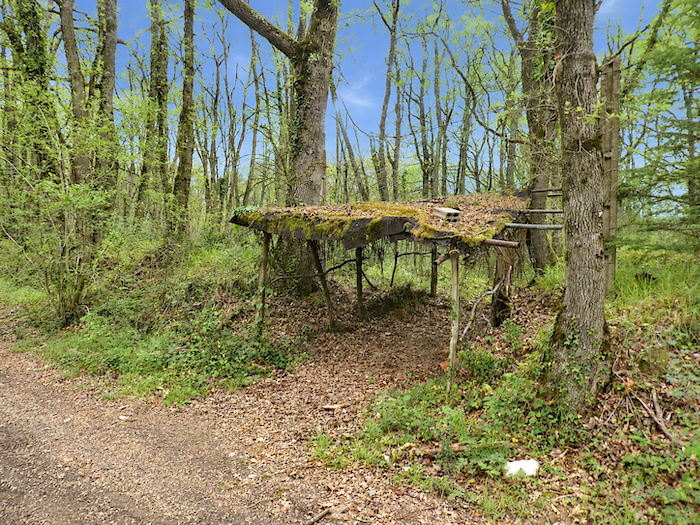
It is said that more than a hundred thousand people practice wood pigeon hunting in southwestern France, a figure that gives some idea of how deeply this passion is rooted in local traditions. So, when you come across strange constructions made of planks, branches or nets in the woods, do not imagine that you have discovered an ornithologists’ observation post, or even a shelter kindly provided for weary pilgrims. You have simply entered the domain of the wood pigeon hunters. The “palombières”, or wood pigeon hunting hides, form a whole little world of woodland ingenuity. Some are perched in the trees, veritable lookout posts concealed among the branches; others have installations at ground level, sometimes connected by carefully camouflaged passages. From these retreats, hunters watch the sky, waiting for the arrival of migrating flocks. Using live decoy birds, artificial lures and various stratagems patiently perfected over time, they try to divert the birds from their course, draw them down towards the trees and then, in certain installations, all the way to the ground, where nets allow them to be captured alive. Elsewhere, it is the shotgun that brings their journey to an end. The wood pigeon, despite its reputation as a shrewd traveler, is sometimes deceived by these carefully orchestrated performances. A fellow bird that appears to be settling peacefully, a few skilfully induced movements among the branches, and suddenly the flock hesitates, slows down and allows itself to be drawn towards the trap. A bird captured alive may, moreover, fetch a higher price than its unfortunate companion destined for the cooking pot. But wood pigeon hunting is not simply a matter of catching birds. It is also a collective ritual, a passion that brings entire teams together around woodland cabins, with its customs, habits and rules, sometimes jealously defended. Another, more rudimentary method uses the “talenquière”, a shelter made of wood and foliage, positioned at places where birds are likely to pass. So do not mistake these modest constructions for resting places intended for walkers: they serve to conceal hunters, who wait behind their leafy screens for the flocks to pass before opening fire. This practice, based on shooting birds in flight, follows its own customs and does not use the decoy birds employed in certain “palombières”. For, surprising though it may seem to the uninitiated, this world of hunters has its traditions, its codes and a particular notion of sporting honor. Hunting is not practiced in the same way everywhere, and methods accepted in one technique may be forbidden in another. Ultimately, the wood pigeon is not merely game: in this part of Gascony, it has become the centerpiece of an entire way of life, combining patience, skill, camaraderie and a few tricks for which the birds, quite unwillingly, pay the price. |
|
 |
 |
|
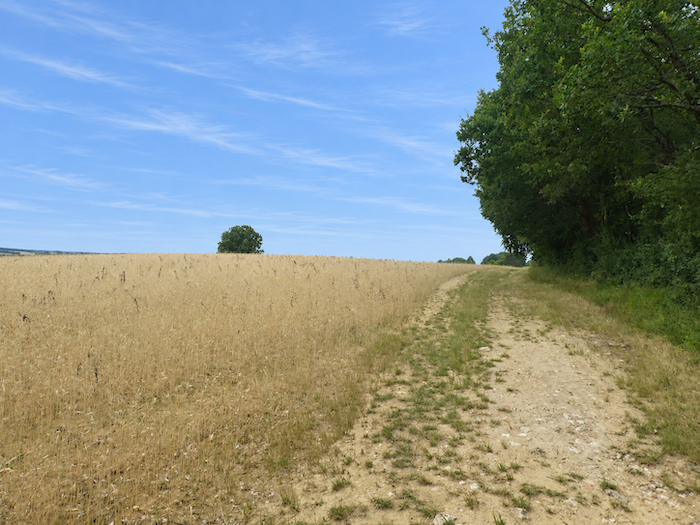
At the edge of the forest, the trees regain their generous covering of foliage. The countryside, too, returns to its familiar habits: beyond the last branches, cereals once again take possession of the land, spreading their familiar expanses towards the horizon. |
|
 |
 |
|
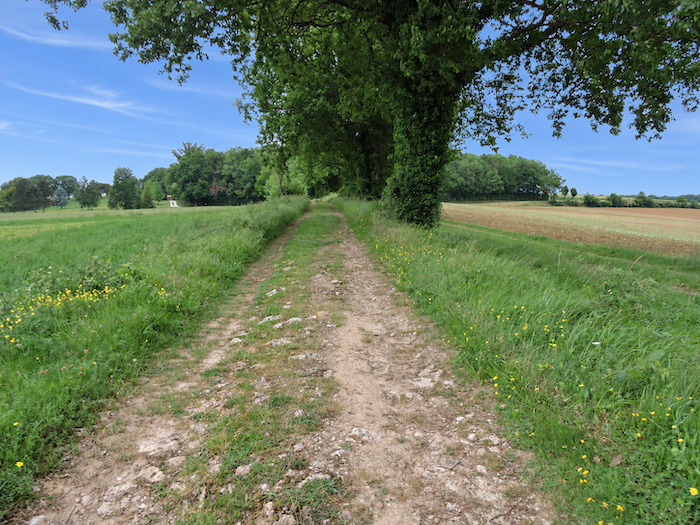
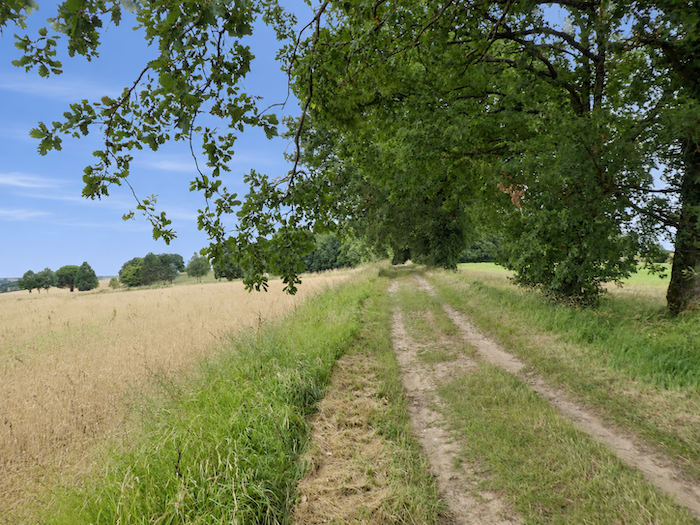
The GR65 then follows a grassy path, winding between hedgerows and the edges of the undergrowth. The gentle slope accompanies the walker’s footsteps without demanding any real effort. |
|
 |
 |
Section 5: Towards La Romieu, another fine gift from the Middle Ages
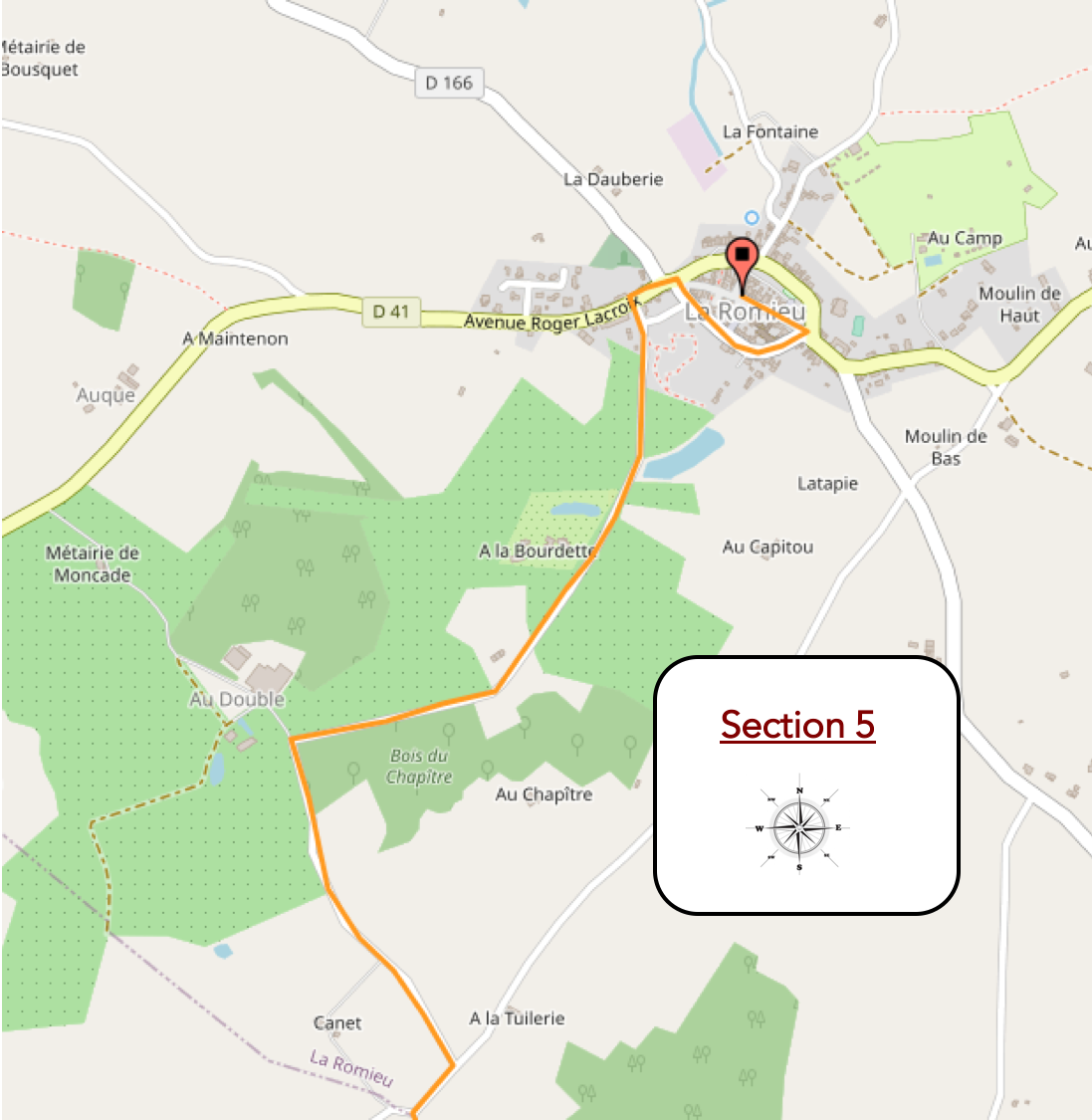
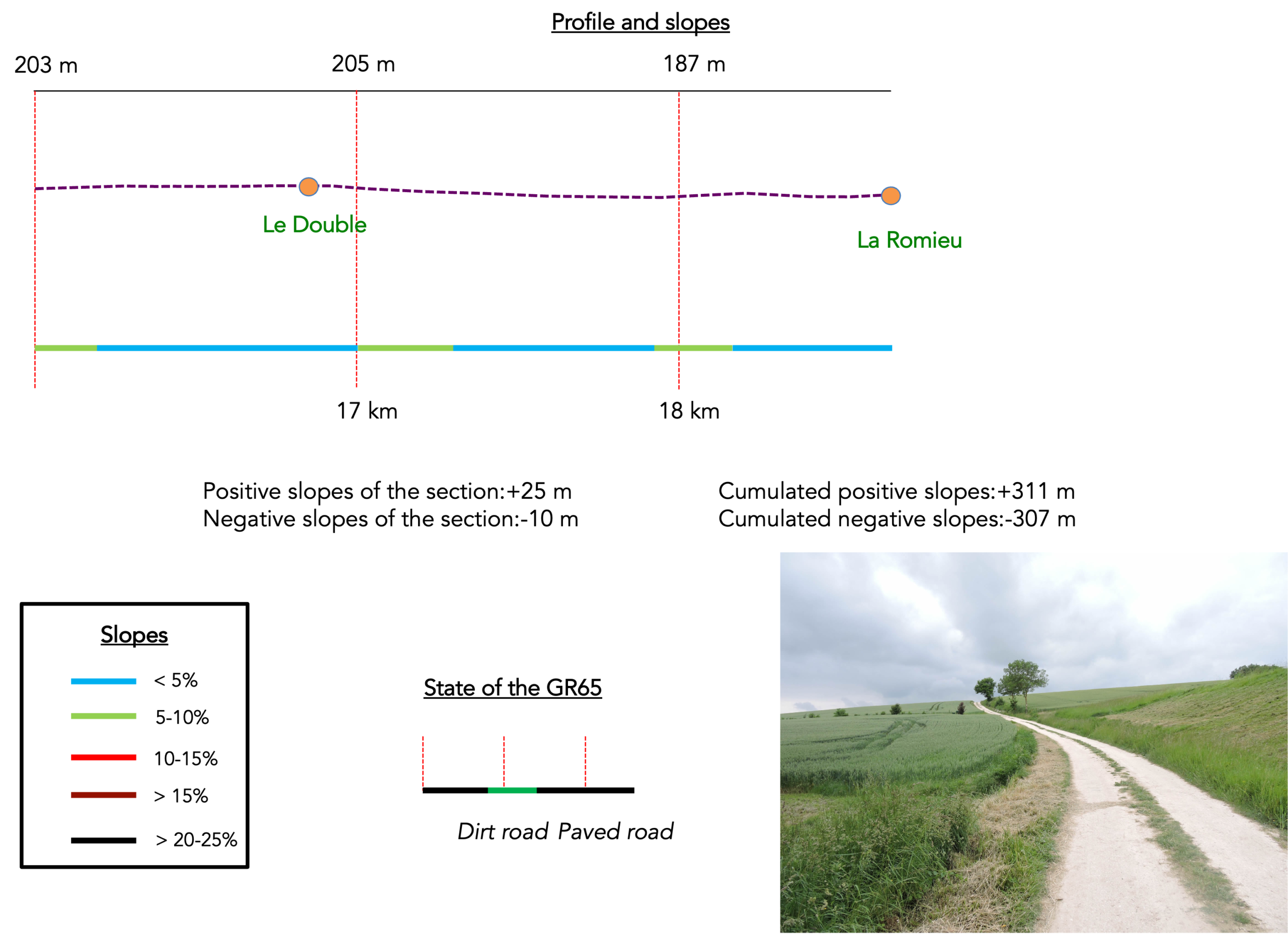
Overview of the route’s challenges: a route presenting no difficulties.
|
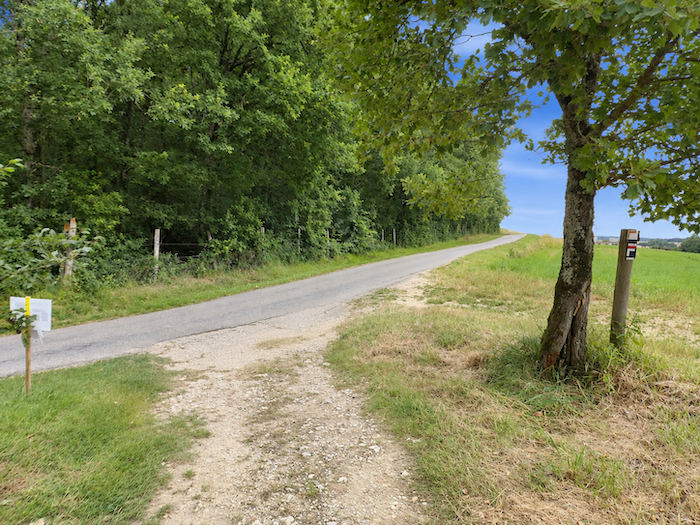
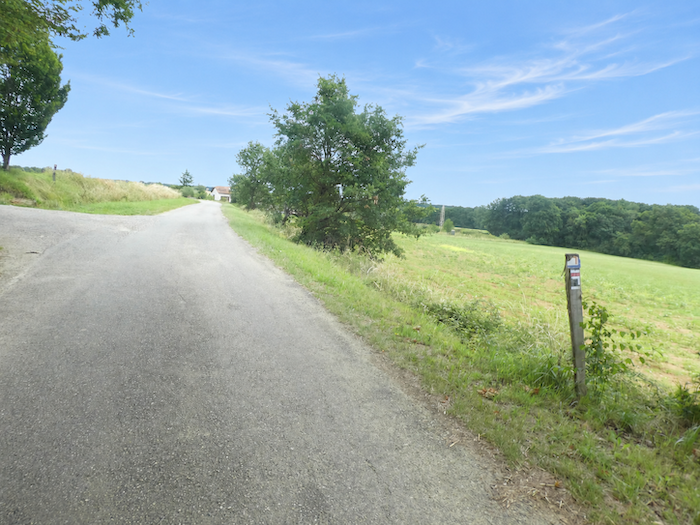
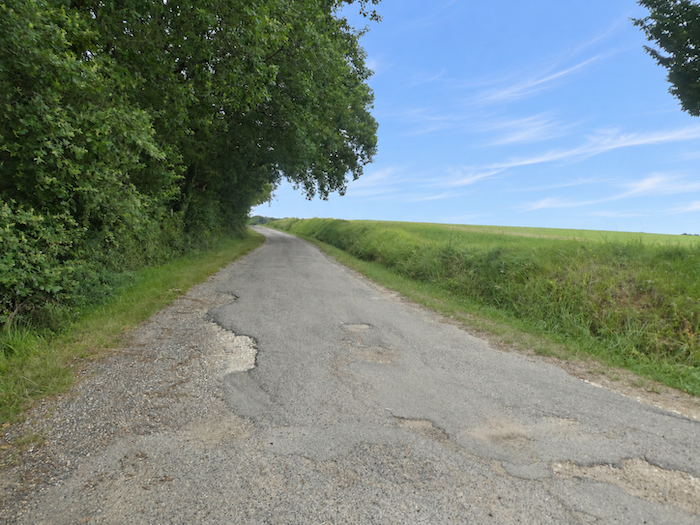
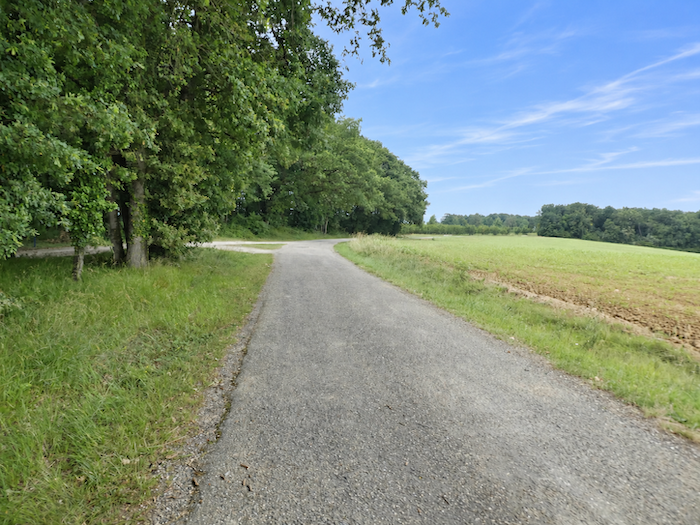
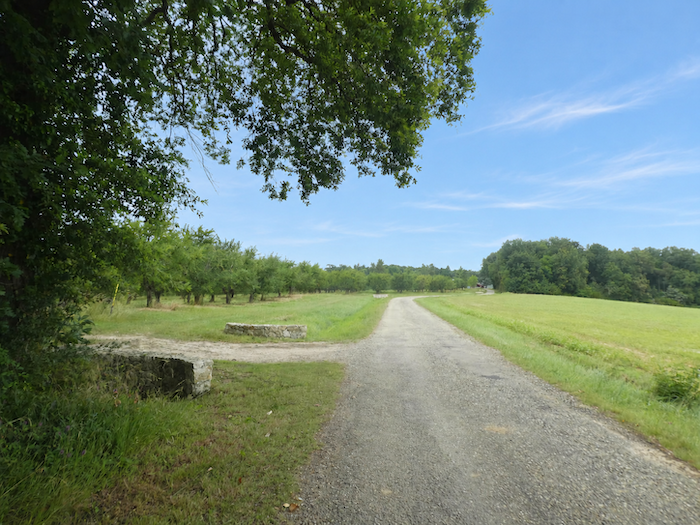
Higher up, the GR65 rejoins a road that runs almost level through the countryside, following the edges of the woodland. After the detours through the forest, the asphalt once again imposes its quiet regularity, while the horizons open onto a less austere countryside, where trees are beginning to reclaim a place that extensive cultivation had long denied them. |
|
 |
 |
 |
 |
|
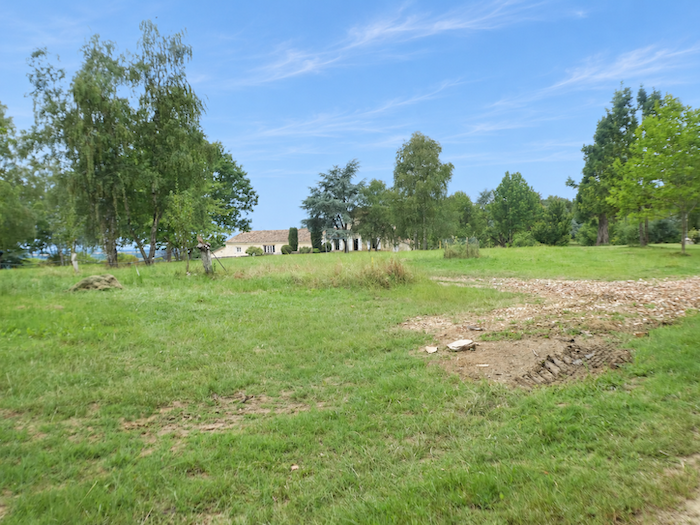
Gradually, the silhouettes of fruit trees become clearer on the horizon. Their leafy crowns announce another face of Gascony, greener and more carefully cultivated. |
|
 |
 |
|
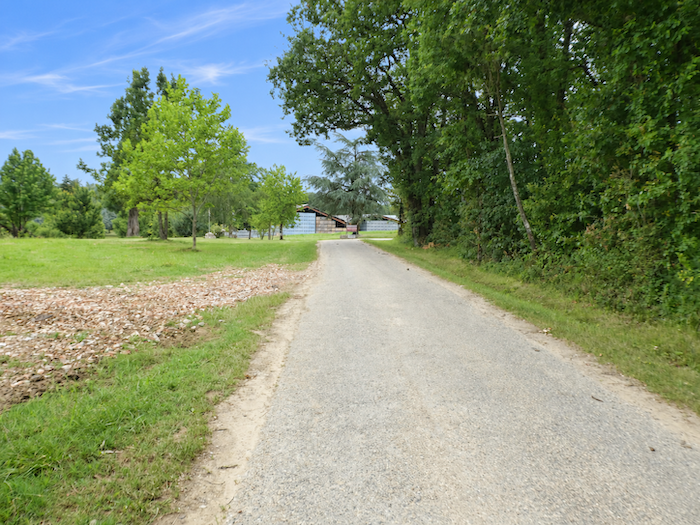
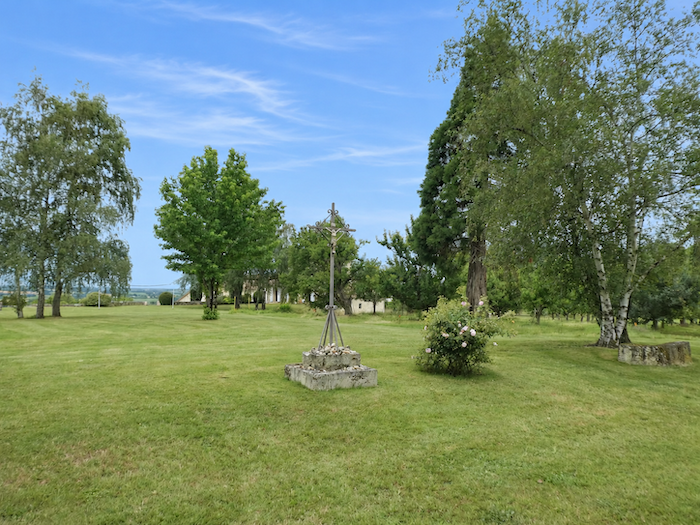
The GR65 soon reaches the outskirts of Le Double, near Moncade, in countryside now dotted with orchards and agricultural properties. |
|
 |
 |
|
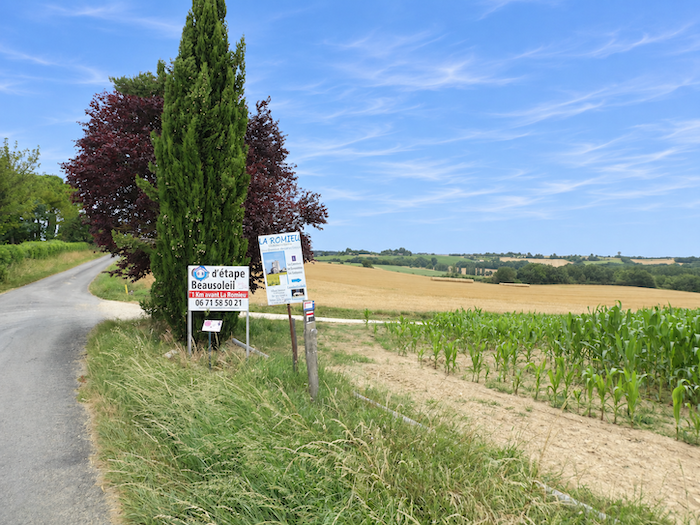
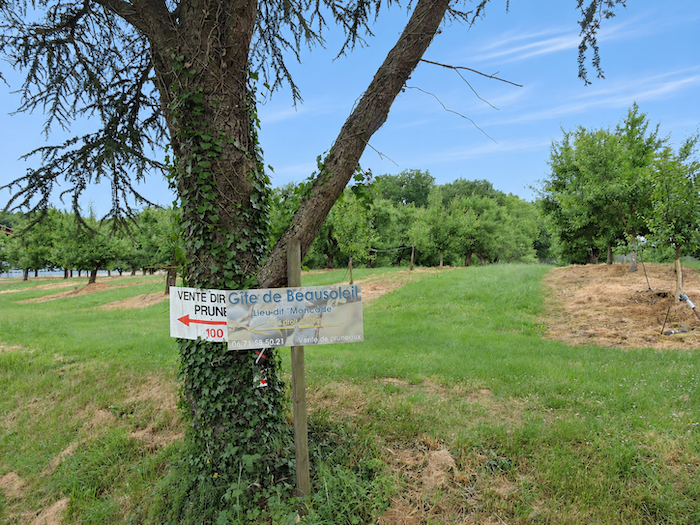
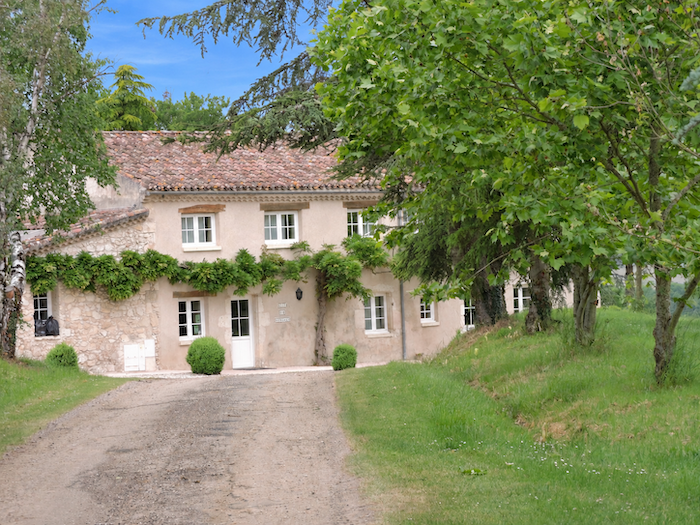
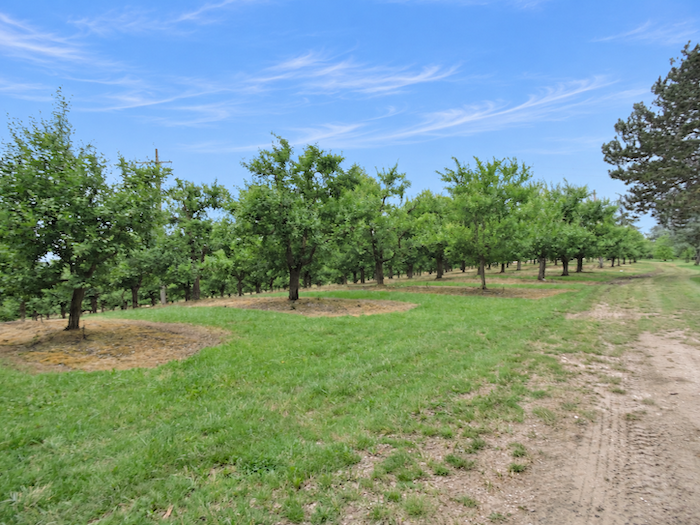
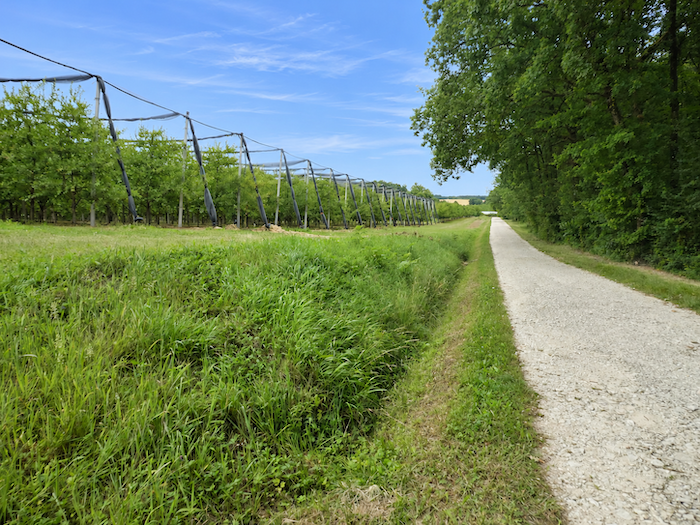
Just a stone’s throw from the road stands the magnificent Beausoleil pilgrim hostel, well worth a slight detour from the route. If you wish to admire plum trees lined up like soldiers on parade, this is the place to come. The trees stand in long, impeccable rows, with a discipline that would make an army general turn green with envy. Plums are grown here and the fruit is dried, perpetuating the tradition of the famous Agen prunes, whose reputation has long since spread beyond the region’s borders. This is also where the largest pilgrim hostel in the La Romieu area is located, an excellent stopping place for pilgrims wishing to experience Gascon hospitality amid the orchards. |
|
 |
 |
|
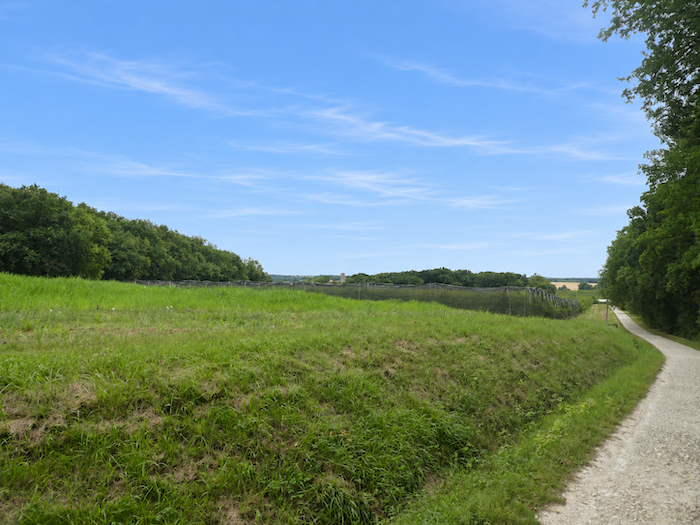
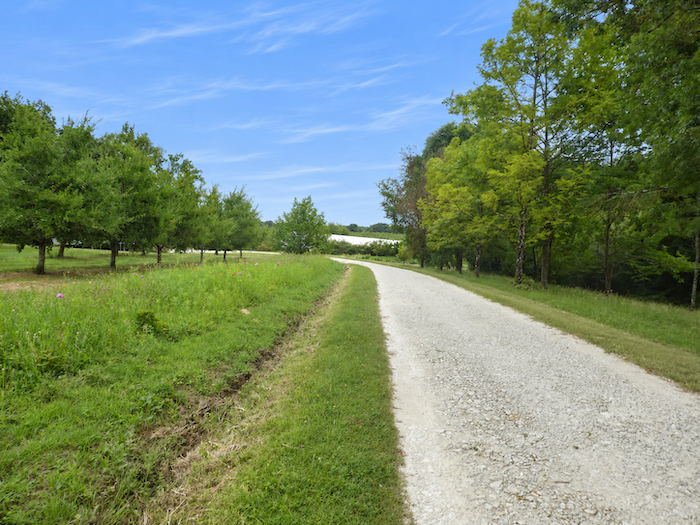
Shortly afterwards, the asphalt gives way to a broad gravel-strewn dirt path, which heads decisively between the fruit plantations. |
|
 |
 |
 |
 |
|
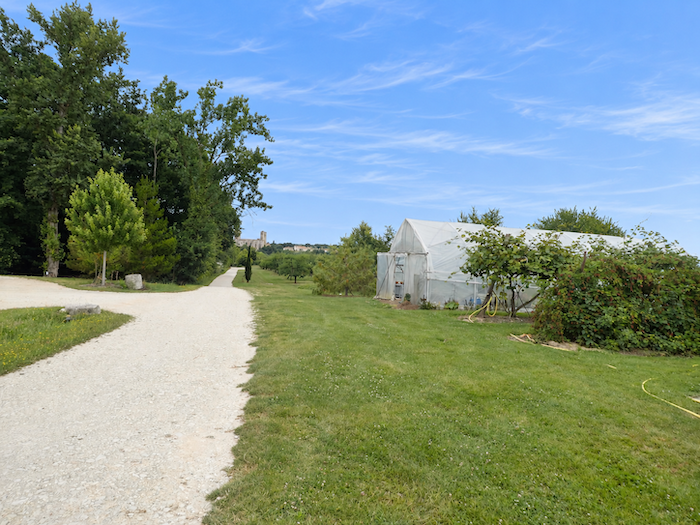
In the distance, above the orchards, the bell tower of La Romieu’s abbey church finally comes into view. Long awaited, it emerges from the countryside as the first sign of this town of ancient stones, whose reputation has accompanied the pilgrimage paths for centuries. |
|
 |
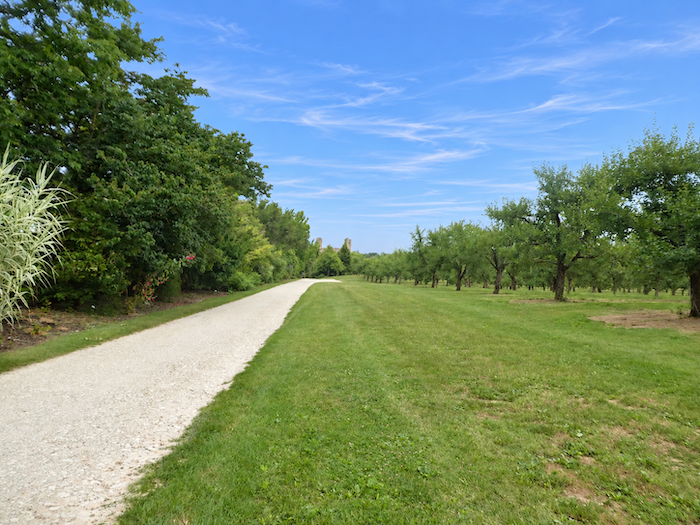 |
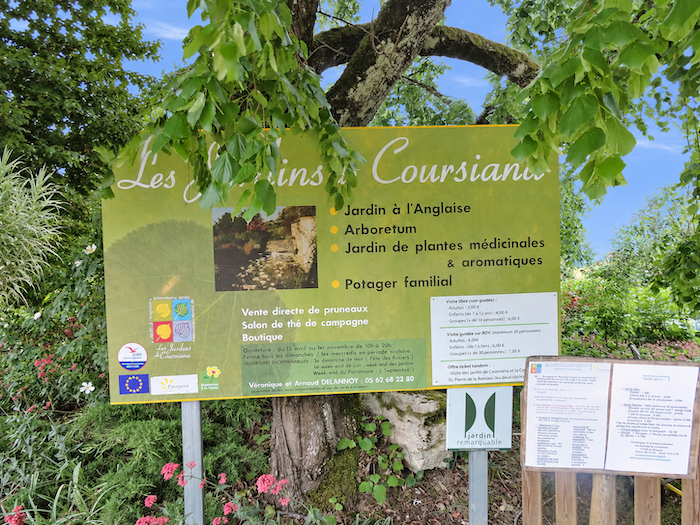
In this pleasantly wooded countryside, the path soon rejoins the asphalt and passes the Jardins de Coursiana, whose remarkable arboretum attracts numerous visitors eager to discover the botanical treasures of the estate.
|
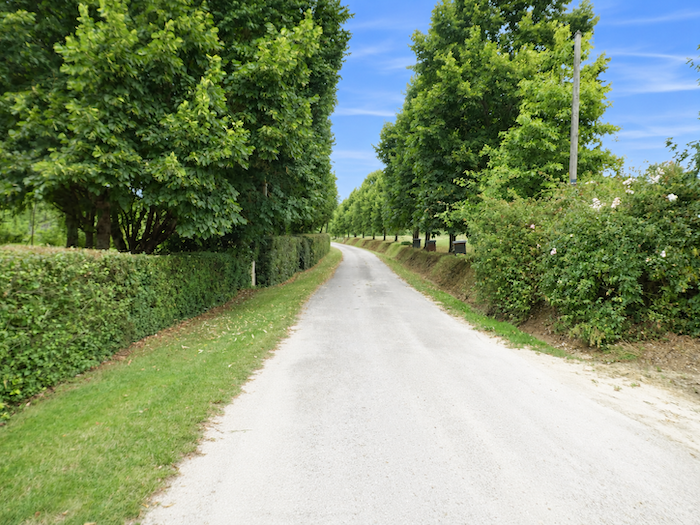
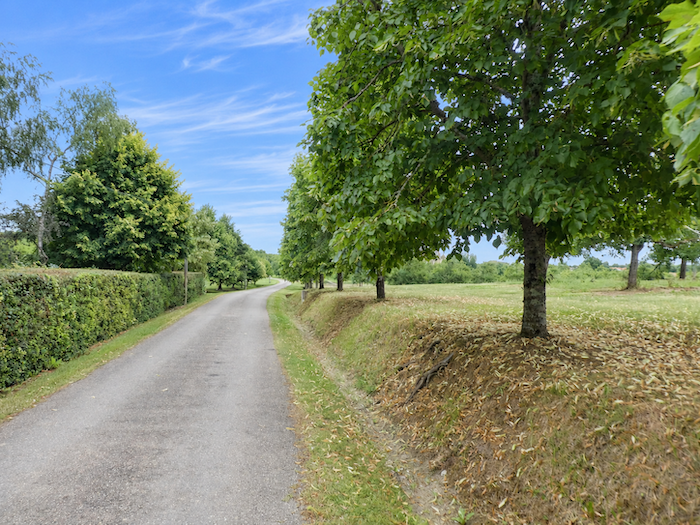
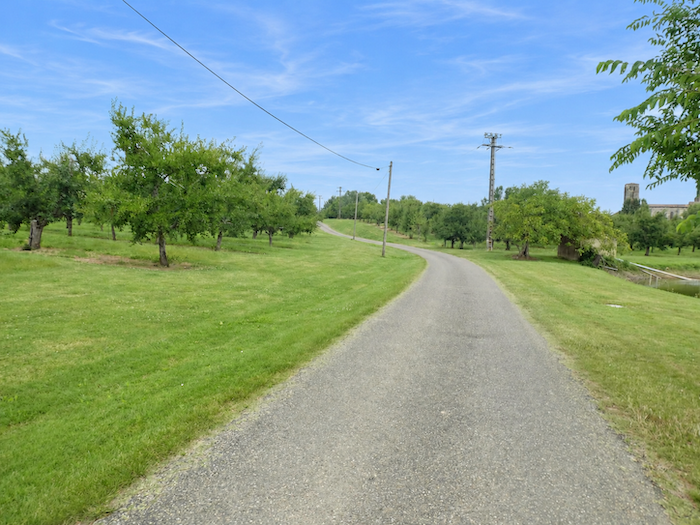
A broad avenue then leads towards the village, beneath the protection of magnificent hornbeams that spread their generous branches above the way. For once, these trees are not content to form a low hedge. They have grown to their full stature, offering the walker a veritable avenue of greenery, as though nature itself had wished to provide a beautiful approach to the gates of La Romieu. |
|
 |
 |
|
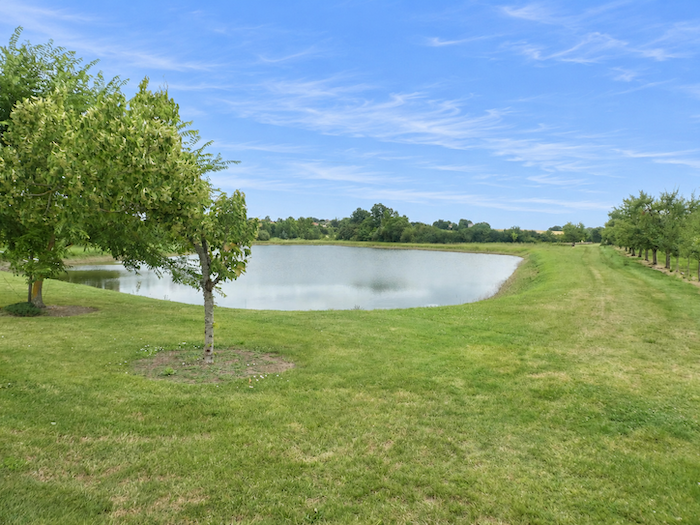
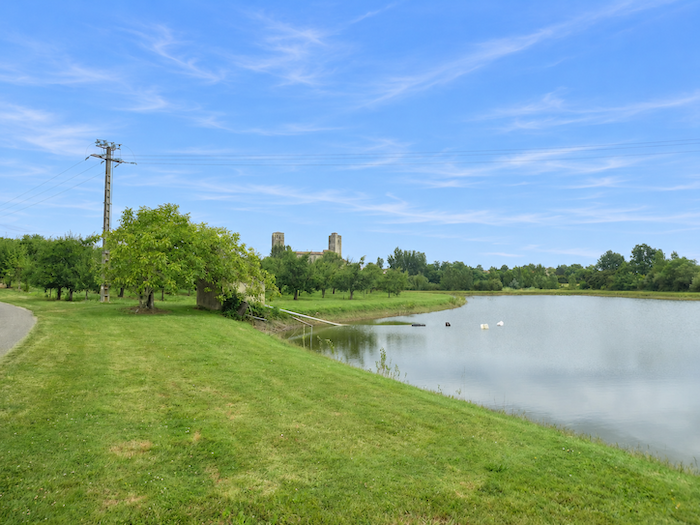
Two charming little lakes further brighten the outskirts of the village. La Romieu thus seems determined to keep visitors waiting, multiplying the pleasures of the landscape before revealing its most precious treasure. |
|
 |
 |
|
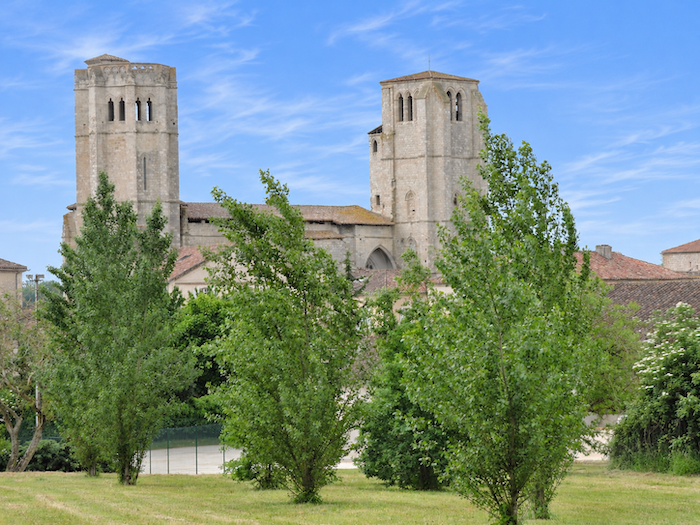
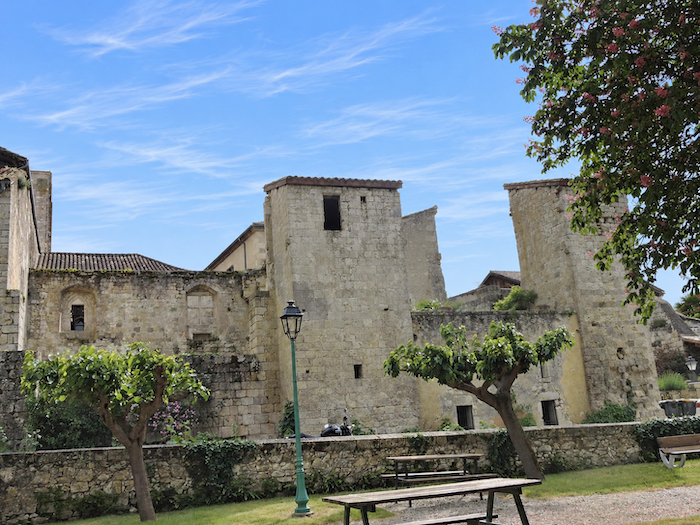
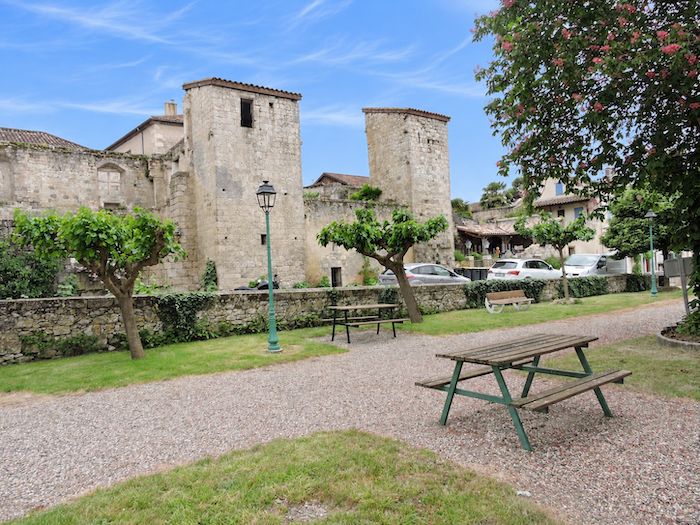
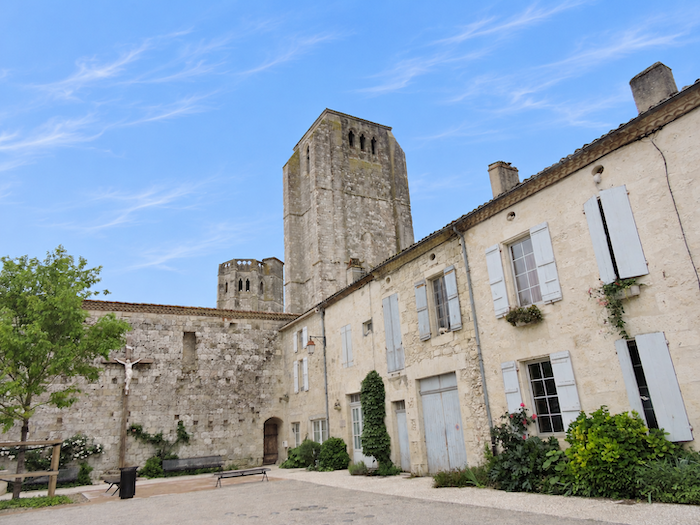
And suddenly, the abbey church appears in all its majesty. Its high walls, imposing towers and stones weathered by the centuries dominate the village with quiet authority. After the modest rural churches encountered along the stages, here stands a building of an entirely different scale, a witness to an age when faith, power and the ambition of builders could give rise to such monuments. |
|
 |
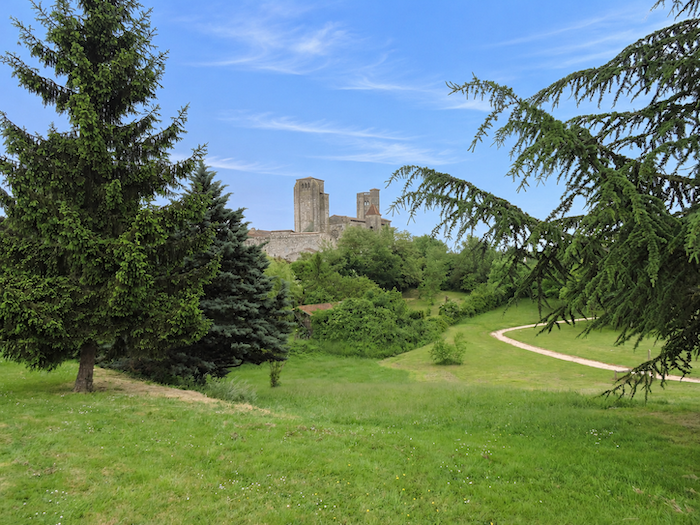 |
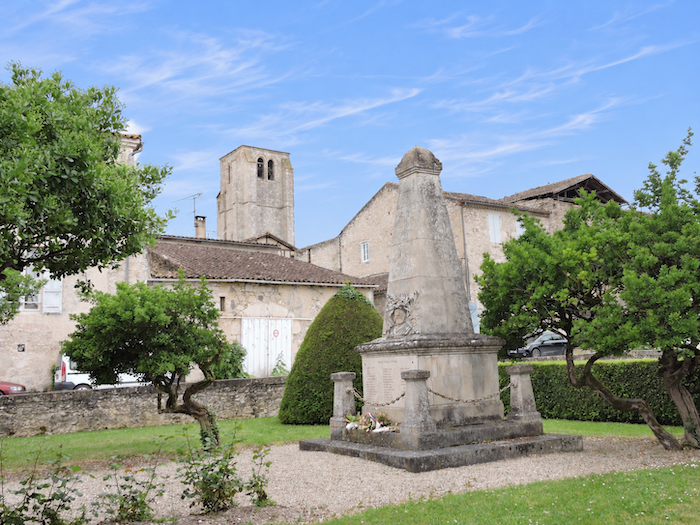
In La Romieu, the centuries seem to have settled in for good, with no intention of ever leaving. The village, home to barely 570 souls, possesses that particular grace of places where history has accumulated stone by stone, without ever quite erasing the traces of its passage. Above the rooftops reigns the remarkable Collegiate Church of Saint-Pierre, a 14th-century Gothic masterpiece listed as a Historic Monument. Its high walls and majestic towers recall that, in those distant times, faith knew how to surround itself with architecture as ambitious as it was enduring. In this modest village, the building seems almost disproportionately large, as though its builders had wished to bestow upon this corner of the country a grandeur that its size would hardly have suggested.
|
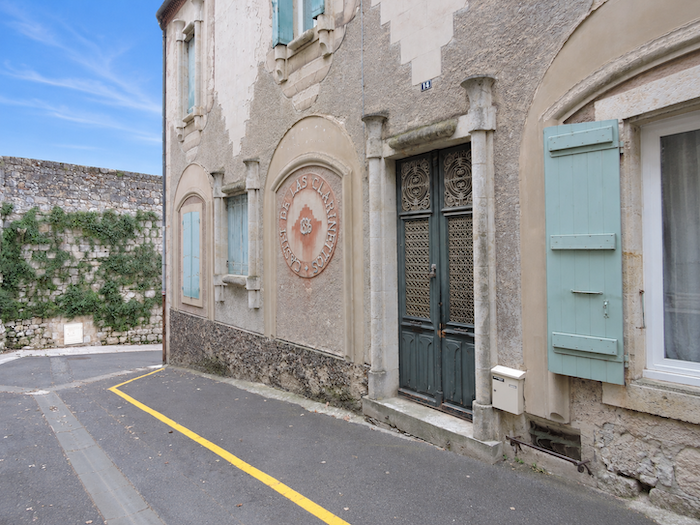
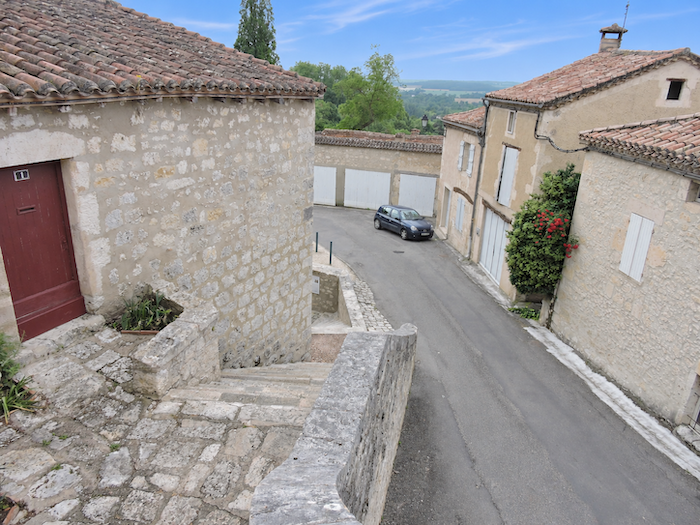
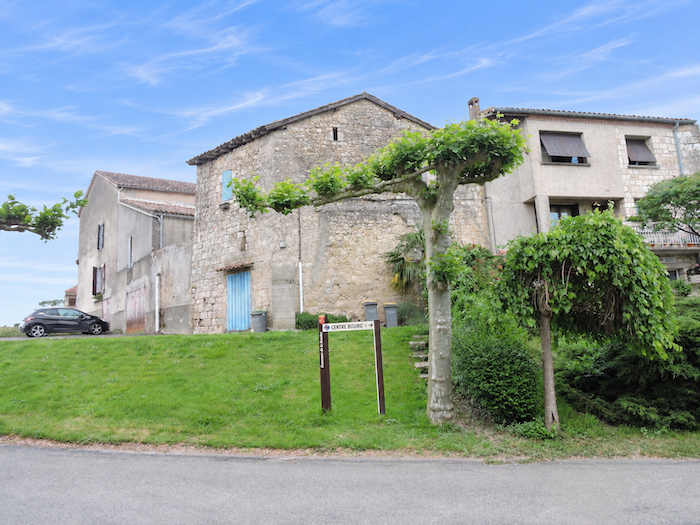
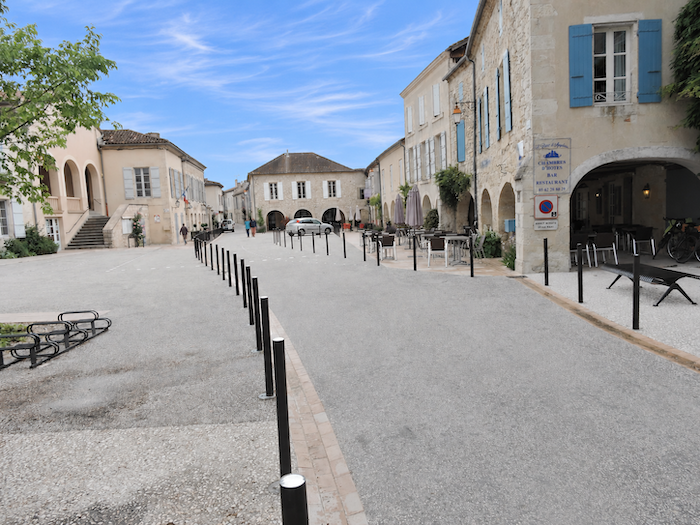
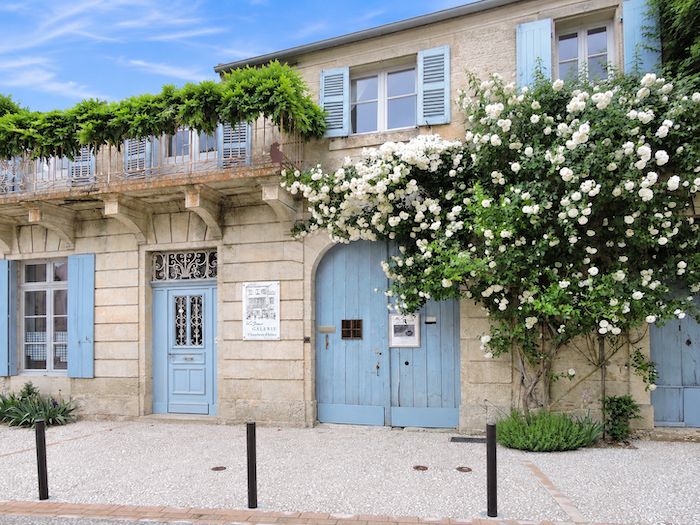
For La Romieu is no bigger than a pocket handkerchief. A few narrow streets are enough to explore it, yet each has its share of old stones and façades weathered by the centuries. The houses huddle together, forming an ensemble of fine architectural harmony. Some have even drawn upon the remains of the ancient ramparts for their building materials, giving the stones of the fortifications a second life within the walls of their homes. |
|
 |
 |
 |
 |
|
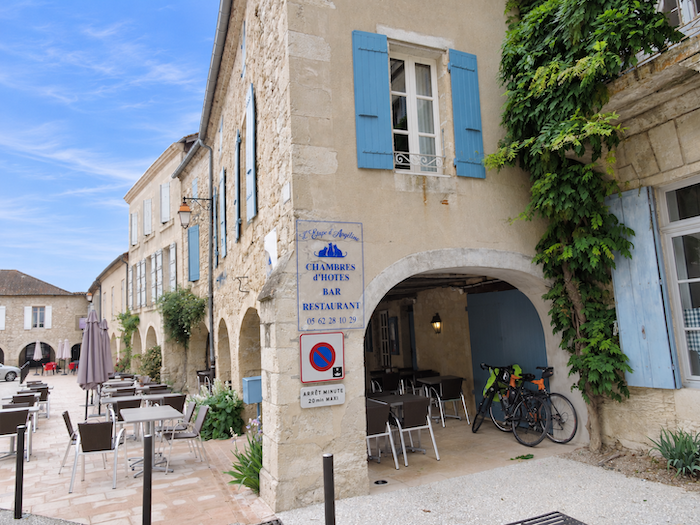
At the heart of this little maze of narrow streets lies the central square, a veritable open-air sitting room where most of village life gathers. Shops, restaurants and pilgrim hostels stand side by side, welcoming residents and passing pilgrims alike. |
|
 |
 |
 |
 |
|
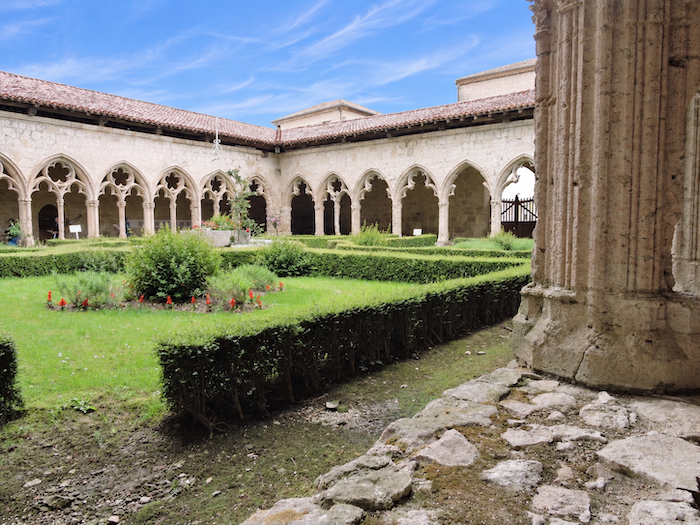
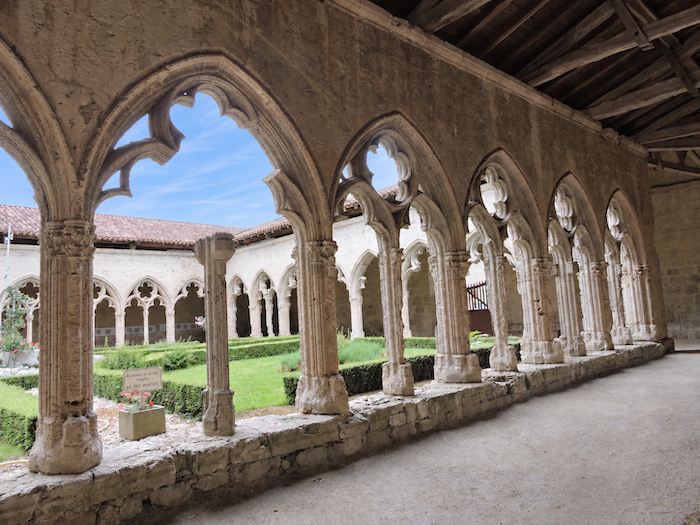
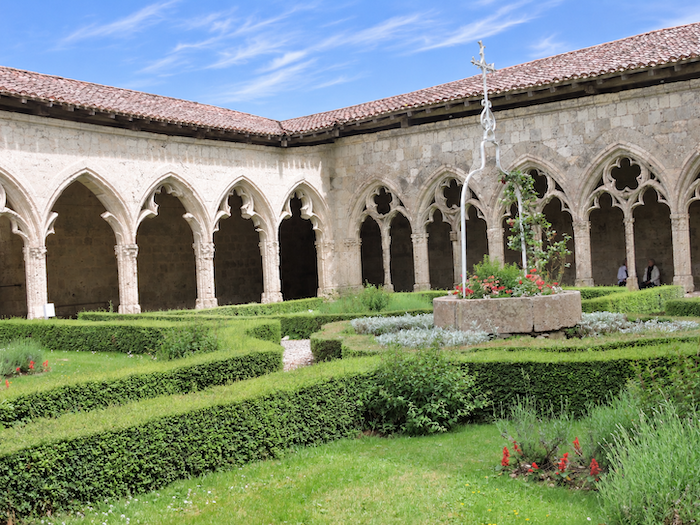
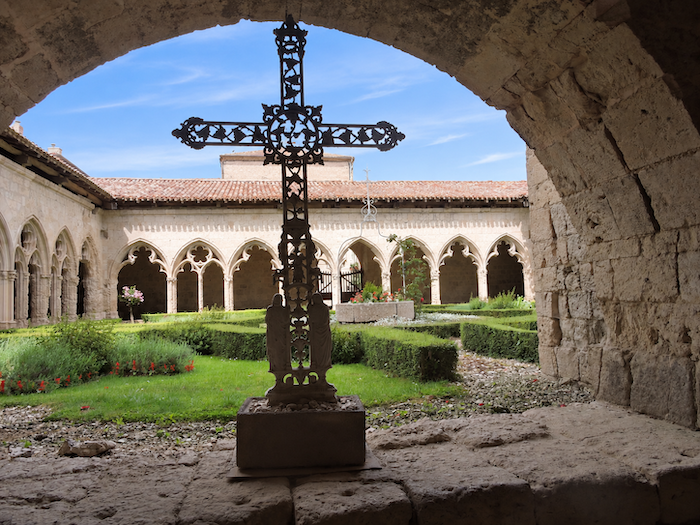
The cloister, probably built after the church, originally had two storeys, whose upper wooden structures were destroyed in the fire started by the Protestants in 1569, during the Wars of Religion. What remains of this damaged architecture are the stone galleries and their carved capitals, adorned with foliage and small figures. Admittedly, they do not attain the delicacy or extraordinary richness of those at Moissac, but their very simplicity possesses a discreet charm. The collegiate church and the entire monumental complex owe their existence to Arnaud d’Aux, a native of the region destined for an extraordinary career. Entrusted with responsibilities in the affairs of the Templars, he rose to the rank of cardinal and wished to endow his native village with a religious complex worthy of his position. To the collegiate church, he added a palace intended to accommodate his own apartments and those of his entourage. But the centuries, less respectful than the builders, gradually stripped it of its splendor. Battered by wars, the palace progressively lost its former grandeur. Sold as national property during the French Revolution, much of it eventually fell into the hands of demolition workers, who found in it a convenient and inexpensive source of building stone. Yet not everything disappeared. Behind the collegiate church, some walls of the present-day houses still preserve remains of this cardinal’s residence. Thus, beneath other roofs, the stones of the palace continue an existence that their illustrious founder would surely never have imagined. |
|
 |
 |
 |
 |
|
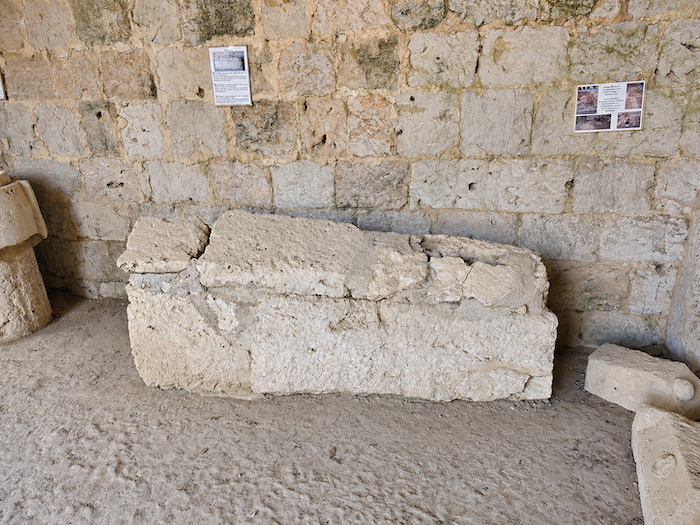
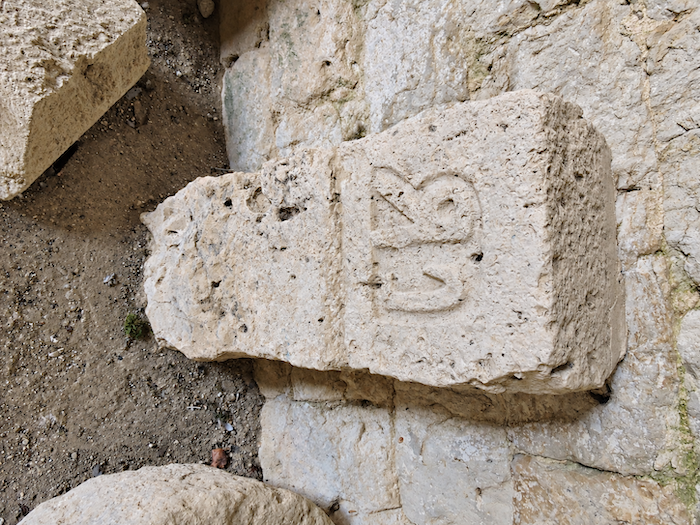
Today, the cloister serves as a small museum of stonework, where sarcophagi, sculpted fragments and ancient stones stand together in an atmosphere of contemplation. One wanders through it as though turning the scattered pages of a history book, among the remains that time has seen fit to spare. |
|
 |
 |
|
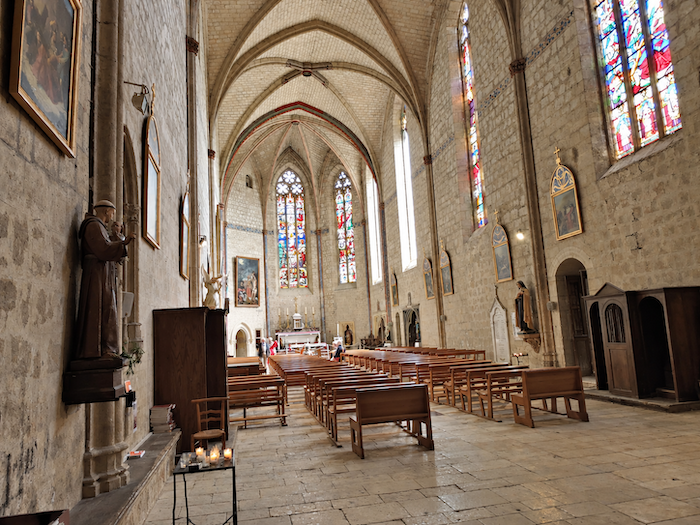
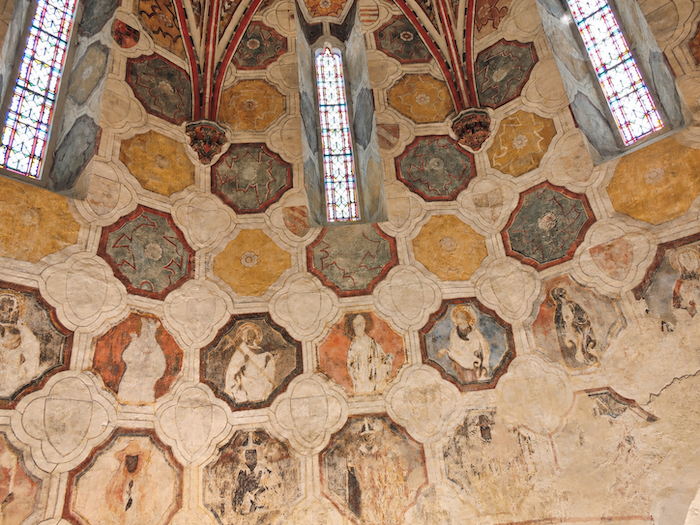
Inside, the collegiate church reveals an entirely different magnificence. Beneath the high vaults, the eye rises towards the paintings that spread their colors above the congregation. These frescoes, veritable stories entrusted to stone and plaster, give the building an unexpected richness. |
|
 |
 |
|
Although the palace has almost entirely disappeared, absorbed over the centuries into the village houses, the towers flanking the collegiate church remain proud guardians of its former grandeur. The Sacristy Tower, the Square Tower and the Cardinal’s Tower still raise their silhouettes above the rooftops, recalling the power of this religious complex in its days of splendor. One of them offers visitors an unusual architectural curiosity: a double spiral staircase, an ingenious arrangement allowing people to ascend and descend by two separate routes. |
|
 |
 |
 |
 |
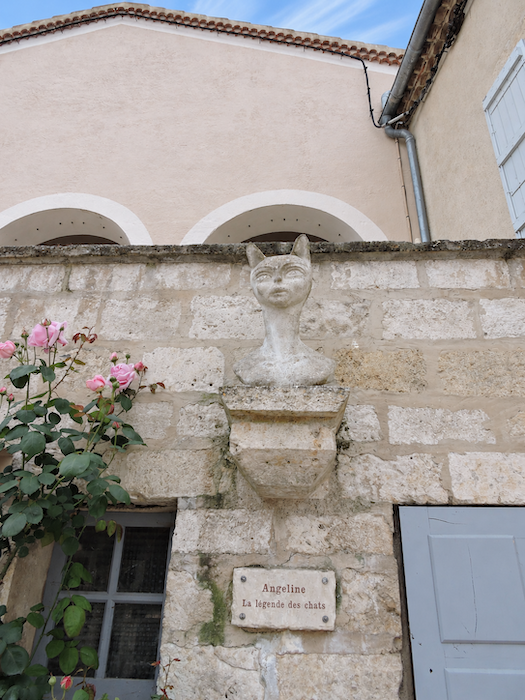
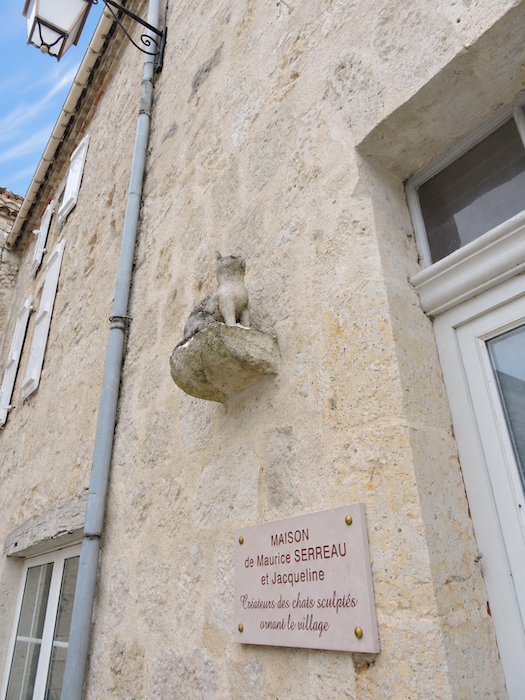
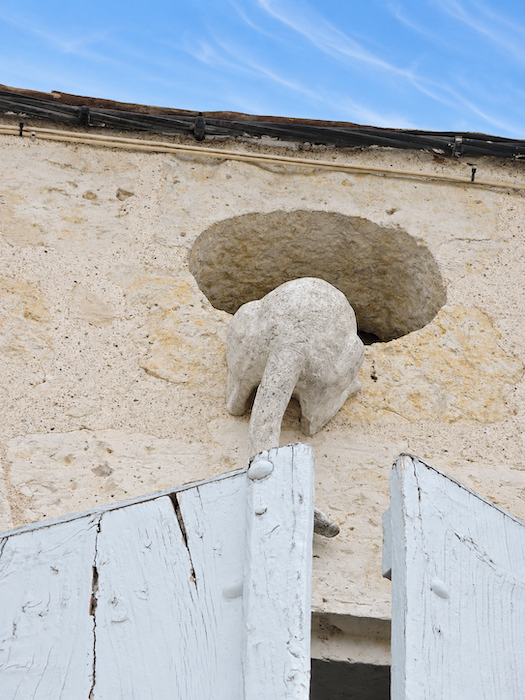
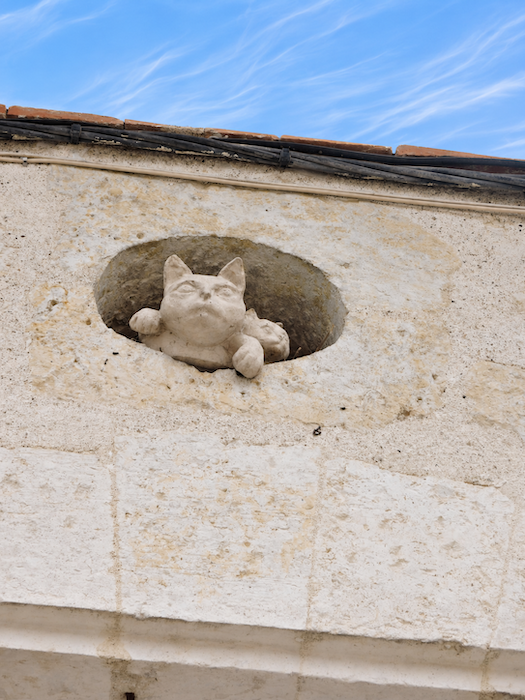
| In the village square, you will encounter Adeline’s cats, which, according to legend, saved the village from a great famine. Here, then, is the legend as it is told locally (text taken from the La Romieu Tourist Office)::
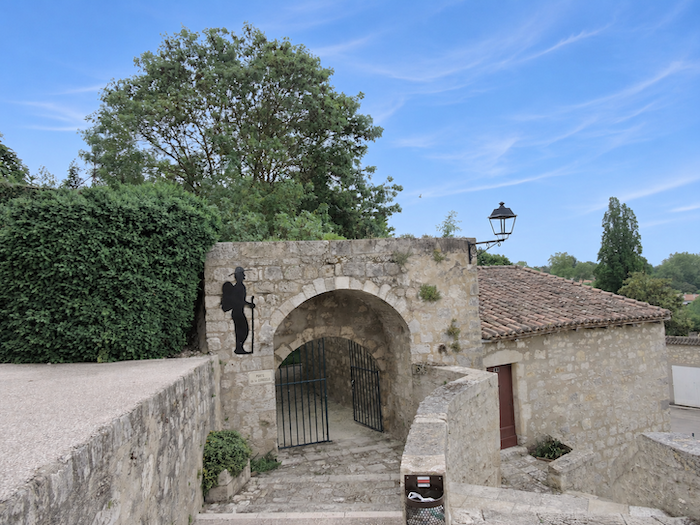
« In the year of Our Lord 1338, in a Gascon village called LA ROMIEU, famous for its beautiful collegiate church built twenty years earlier, Vincent and Mariette lived happily together. He was a woodcutter, and his wife often accompanied him into the forest to gather bundles of firewood. They worked hard, but with their poultry, pig, vegetables and fruit from the garden, there was always food on the table. They had been married for three years when Mariette gave birth to a little girl whom they named Angéline. Alas, Vincent was crushed by a tree he was felling. Mariette, inconsolable, gradually wasted away, and two months later she was found dead, holding Angéline in her arms. The little girl was taken in by a neighbour and grew up alongside her children as though she were their sister. Angéline showed a great fondness for cats. There were always two or three around her, and at night they slept in her bed. She often shared her bowl of food with them. As the years passed, Angéline grew into a strong young girl who helped her adoptive parents with the work in the fields, always accompanied by her cats. In 1342 and during the following two years, the winters were harsh, and the springs and summers so rainy that it was impossible to sow the fields. A great famine followed, and despite Lord Arnaud d’Aux distributing the collegiate church’s reserves, the inhabitants of LA ROMIEU soon had nothing left to eat. They then turned their attention to the cats, which were so numerous in the village, and made them into stew. Angéline’s parents, knowing how much she loved her cats, agreed to let her keep one male and one female, on condition that she hid them carefully, for the neighbours were only too eager to wring their necks. Angéline therefore shut the two cats in the attic during the day and let them out at night to hunt. But the famine grew worse, and many villagers died. Angéline and her parents struggled to survive by gathering roots in the woods and occasionally mushrooms, but this was meagre fare indeed. Although greatly weakened, they nevertheless managed to survive this terrible period, and more favourable times finally made it possible to harvest enough food to live on. But in LA ROMIEU, where the cats had disappeared, rats had multiplied to such an extent that they threatened the harvests. With infinite care, Angéline had managed to keep her cats hidden, and they had produced several litters. Around twenty cats were now frolicking in the attic. Fortunately, the house stood apart from the others. The villagers lamented the damage caused by the rats. It was then that Angéline announced that she would release about twenty kittens for the inhabitants to adopt. The rats quickly disappeared, and this was how Angéline saved LA ROMIEU from another disaster. The legend also tells that, as the years passed, Angéline’s face came to resemble that of a cat more and more, and that her ears turned into cats’ ears. » It was while listening to a grandmother telling her grandchildren the legend of Angéline’s cats that a sculptor from Orléans, Maurice Serreau, had the idea of bringing the story to life by placing sculptures of cats around the square. Visitors here are encouraged to look up and count the number of cats the sculptor has positioned throughout the village. Here are a few examples. |
|
 |
 |
 |
 |