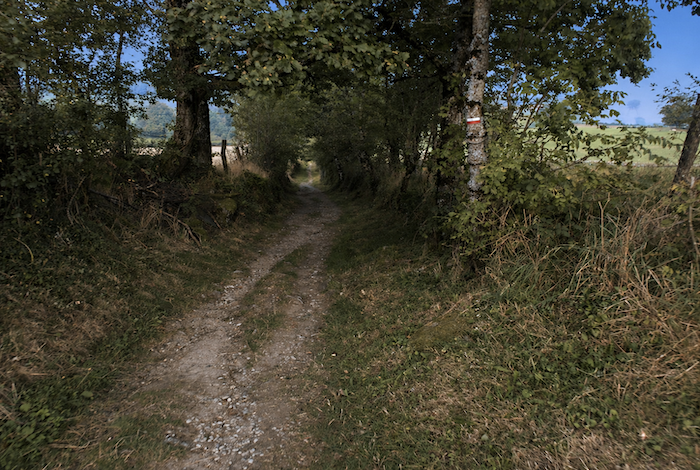
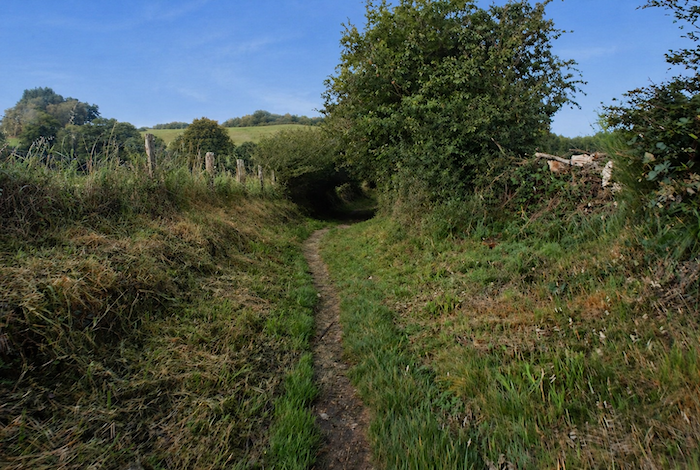
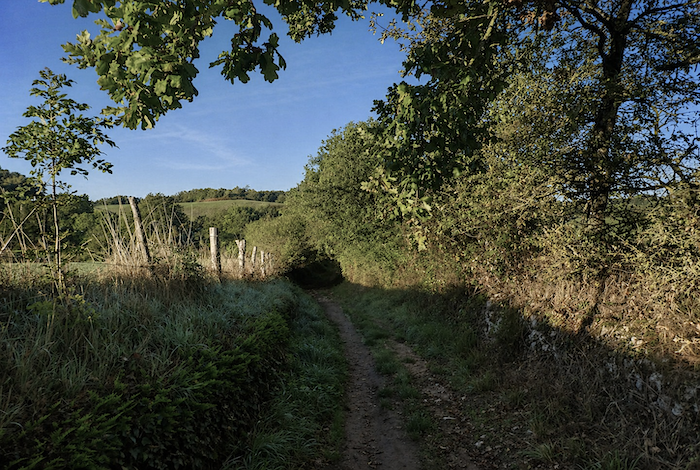
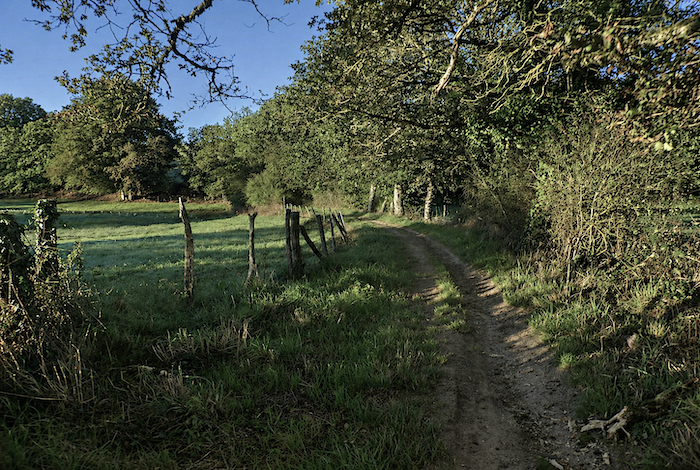
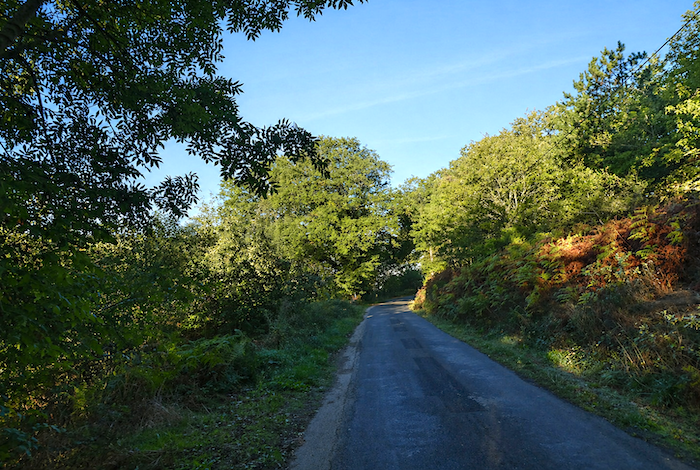
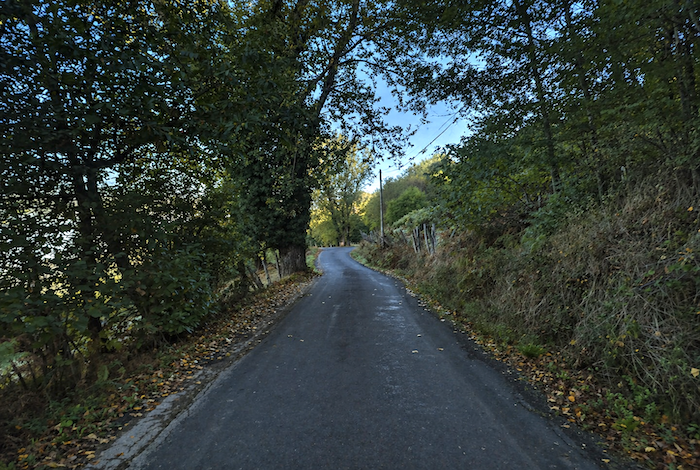
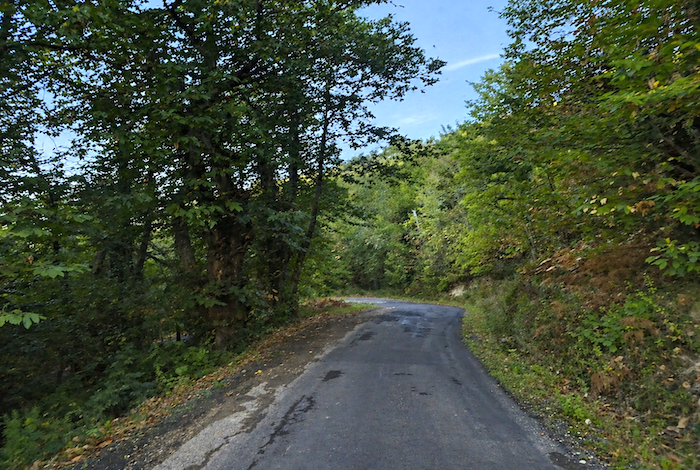
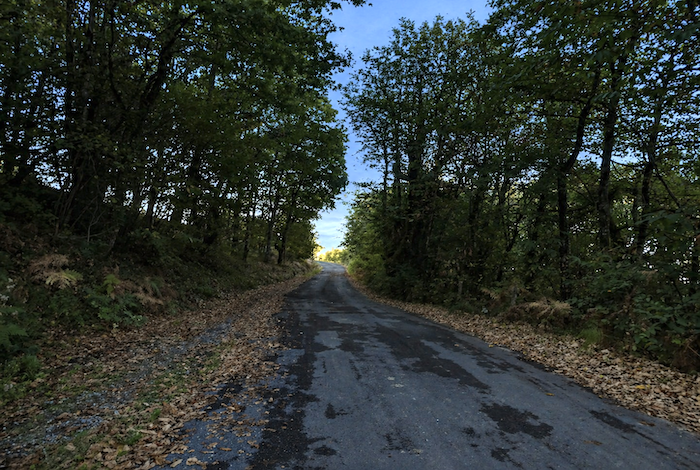
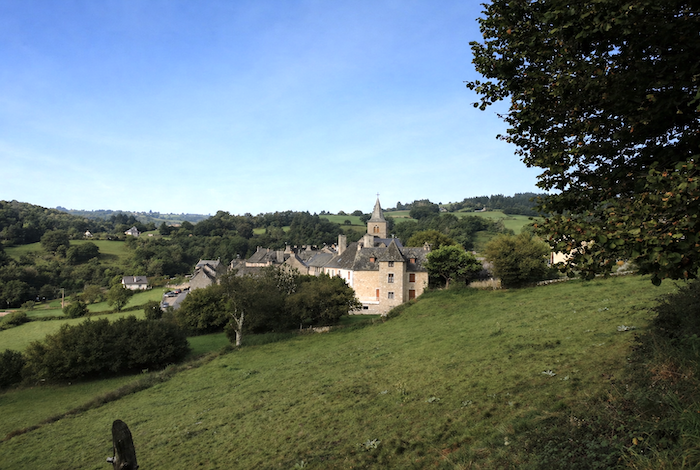
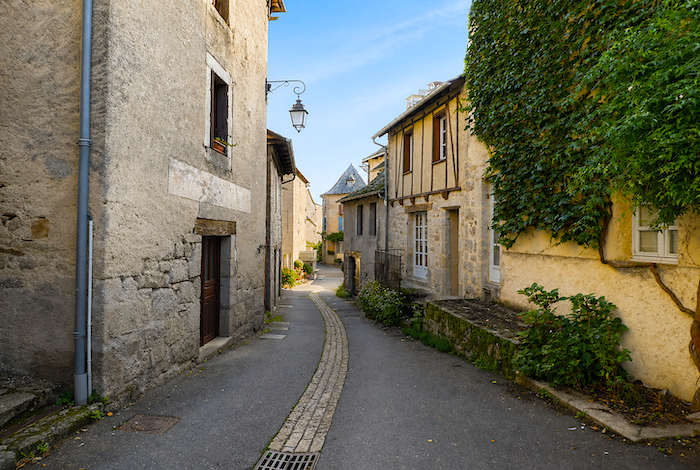
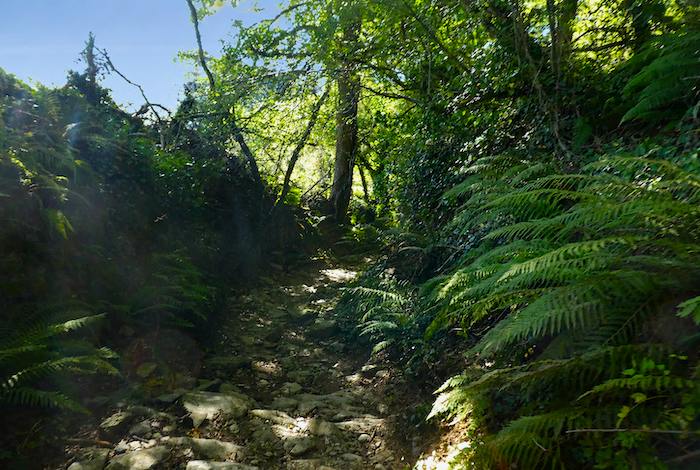
Conques is even more beautiful when the pilgrim arrives there on foot
DIDIER HEUMANN, MILENA DELLA PIAZZA, ANDREAS PAPASAVVAS
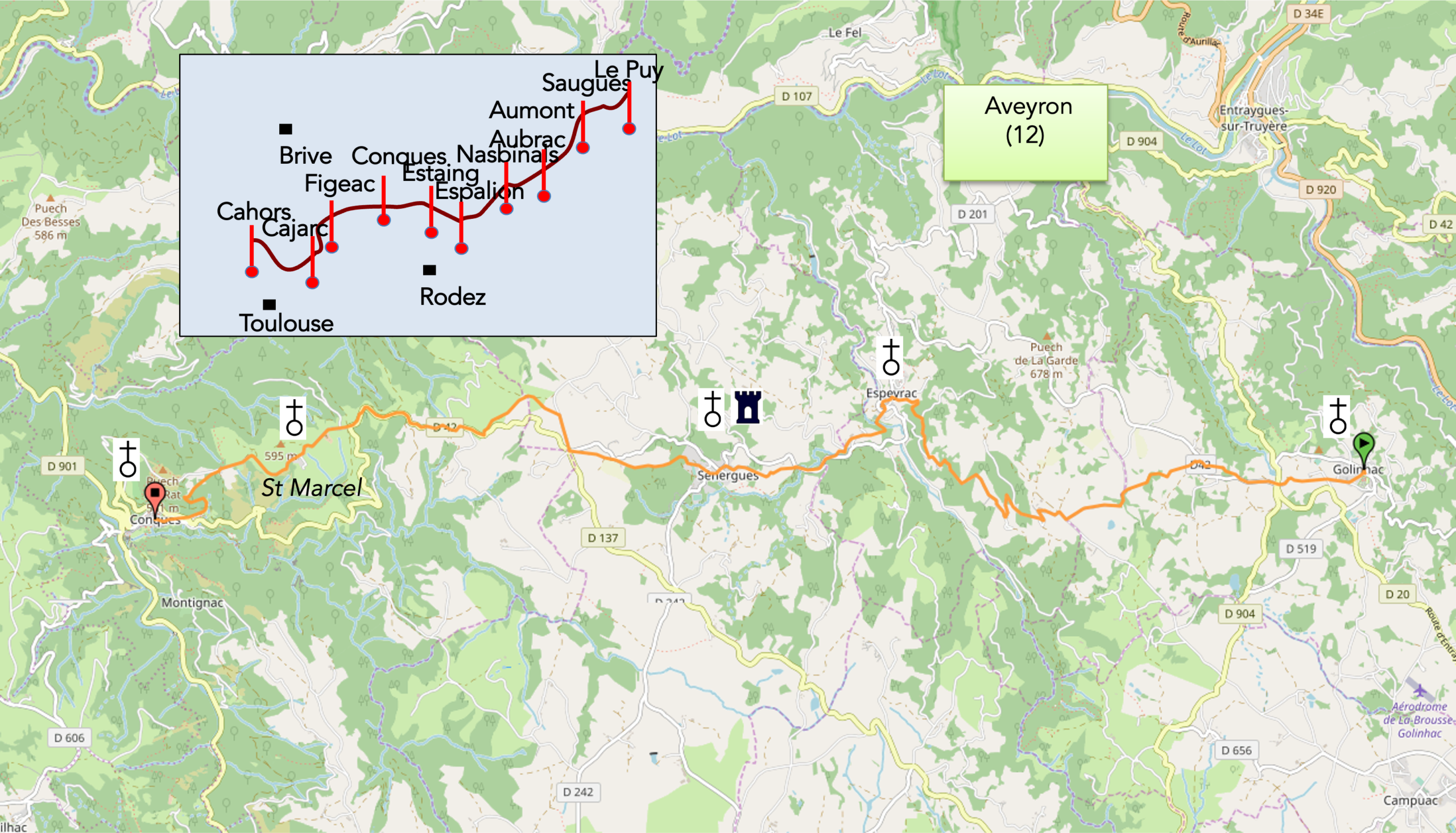
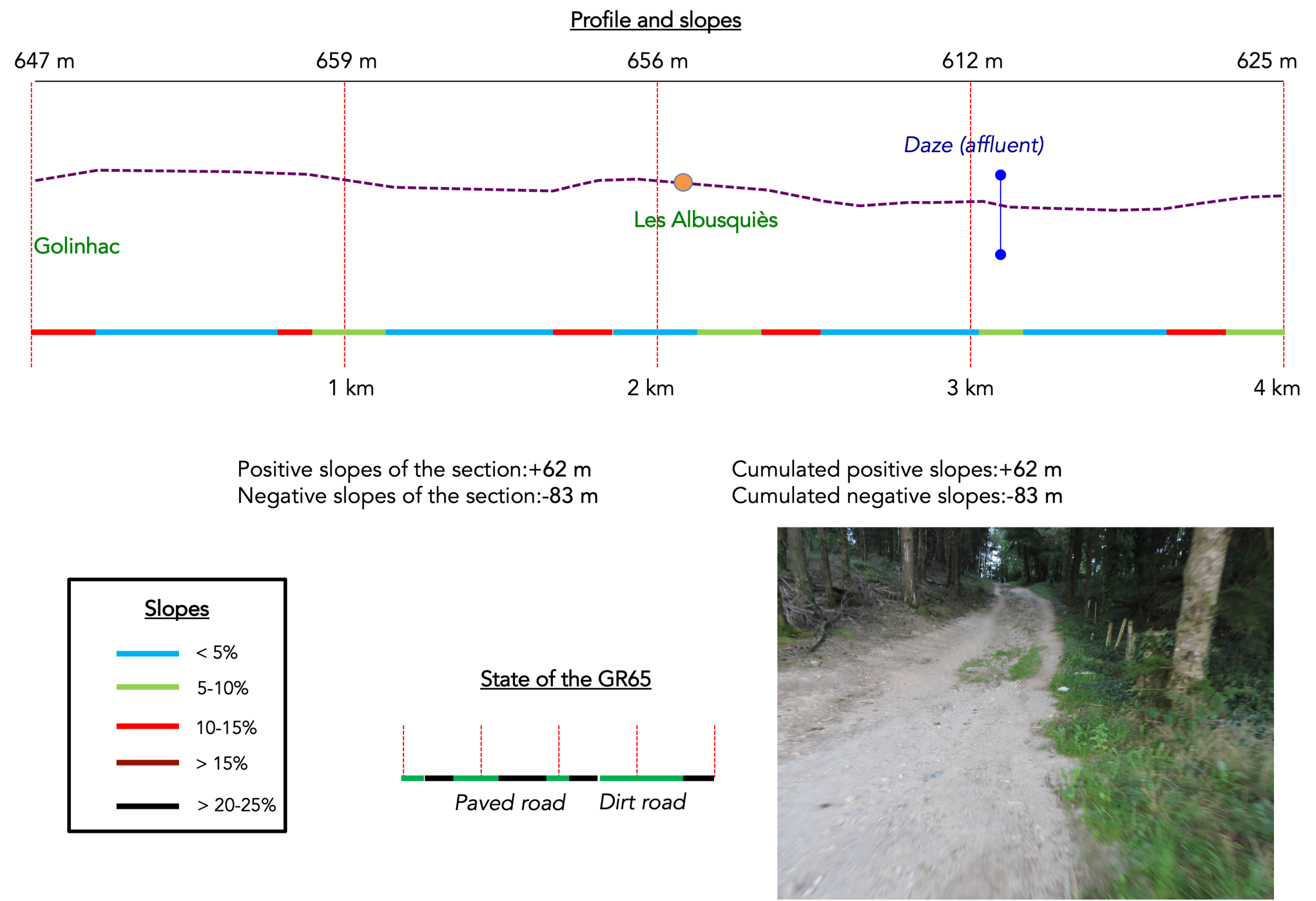
We divided the course into several sections to make it easier to see. For each section, the maps show the course, the slopes found on the course, and the state of the roads. The courses were drawn on the « Wikilocs » platform. Today, it is no longer necessary to walk around with detailed maps in your pocket or bag. If you have a mobile phone or tablet, you can easily follow routes live.
For this stage, here is the link:
https://fr.wikiloc.com/itineraires-randonnee/de-golinhac-a-conques-par-le-gr65-29976431
|
Not all pilgrims are necessarily comfortable using GPS devices or navigating with a smartphone, especially since there are still many areas without Internet access. That is why, to make your journey easier, a book dedicated to the Via Podiensis from Le Puy-en-Velay to Cahors is available on Amazon. Much more than a simple practical guide, this book accompanies you step by step, kilometer after kilometer, providing all the information you need for smooth planning and avoiding unpleasant surprises. Beyond its practical advice, it immerses you in the enchanting atmosphere of the Camino, capturing the beauty of the landscapes, the majesty of the trees, and the very essence of this spiritual adventure. Only the pictures are missing, everything else is there to transport you.
In addition, we have also published a second book which, with slightly fewer details but all the essential information, covers the entire route from Le Puy-en-Velay to Saint-Jean-Pied-de-Port. The choice of your journey is yours.
. |
 |
 |
If you only want to consult lodging of the stage, go directly to the bottom of the page.
| Today, it’s Conques, the beautiful stopover awaited by all pilgrims, a bit like St Jacques in Spain. The 12th century pilgrim’s guide, written in Latin, already describes its virtues in these words: “The very precious body of Blessed Foy, virgin and martyr, was buried here, in a valley called Conques. A beautiful basilica is then built on his body in which, for the glory of God, we observe the rule of Saint Benedict. Many graces are granted to healthy people and to the sick ”. Nowadays, tourists, hikers and pilgrims share Sainte Foy, in one of the most beautiful sites in France. Many French pilgrims do not go further than Conques. At least, for a first glimpse of the Camino de Santiago.
You are still in Aveyron, along the Lot valley on the heights. Today’s stage crosses a country characterized above all by breeding. There are few cultures here. You arrive at the end of the first part of the trip. Tomorrow, you’ll penetrate further into the center of France, towards Cahors. But you still have to get to Conques, through asphalt roads and rocky tracks. The route has finished going north and runs due west. First you have to descend for a long time from Golinhac to Espeyrac. You know after a few stages. The track always descends to the bottom of a valley to climb up to the next ridge. From Espeyrac to Conques, it is only 14 kilometers. The landscape varies greatly today. As far as Espeyrac, you cross the forests, in a deep valley. Then, beyond Espeyrac, it’s a bit like moving to another country. Here the universe opens up onto gentle hills and meadows, before plunging again into the dark valley of Conques. So, there is something for everyone. |
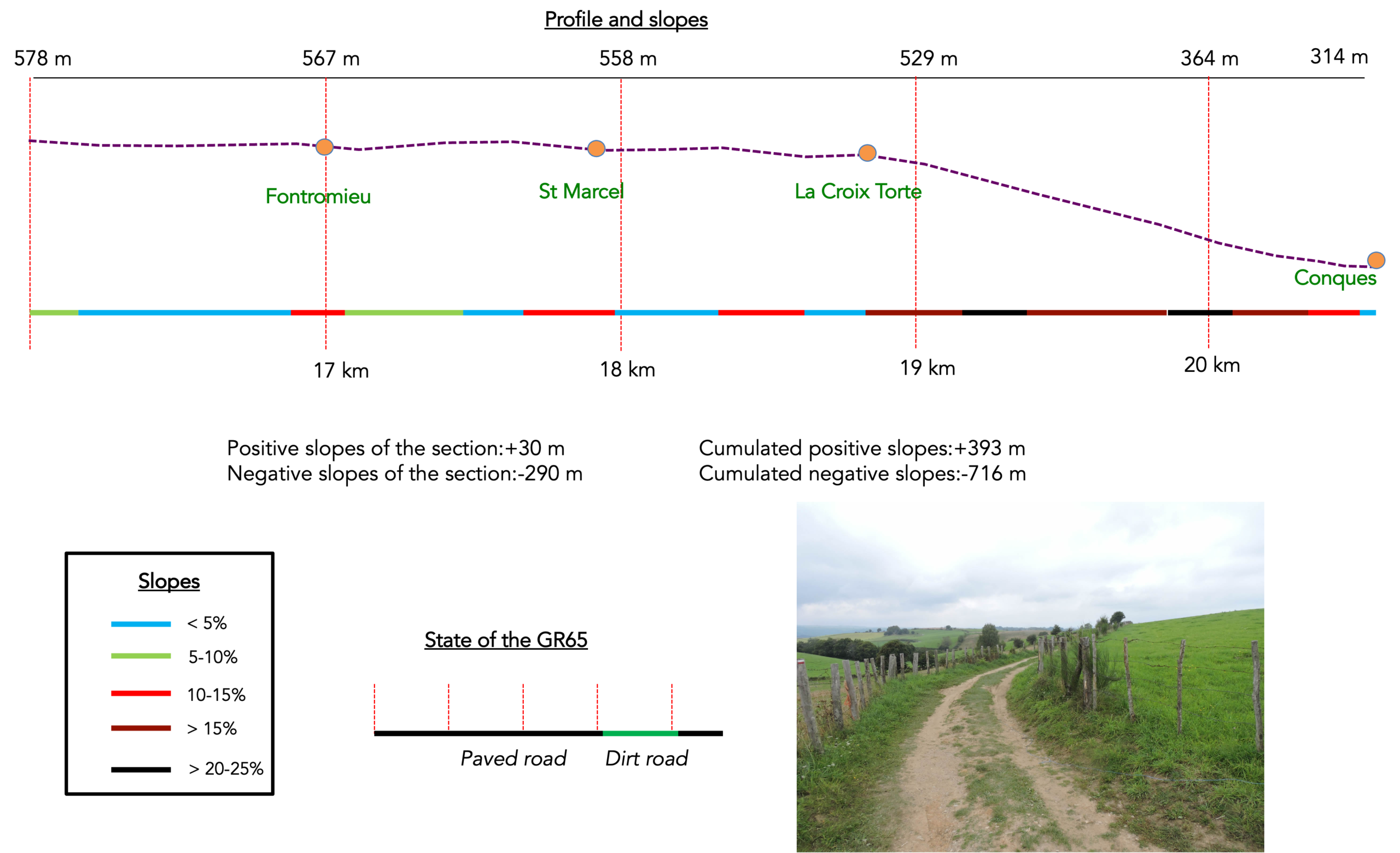
Difficulty of the course: Today’s elevation changes (+393 metres / -716 metres) are moderate on the climbs, though not insignificant. Above all, however, this stage involves a great deal of descending. At the beginning of the stage, there are only gentle undulations until reaching Campagnac, where a fairly long descent begins, some would say a monotonous one, along paved roads toward Espeyrac. From Espeyrac onward, Conques must be earned twice. First comes a substantial climb of nearly 300 metres in elevation gain to reach the Sénergues plateau, followed by a long gentle gradient, then a very steep descent, often demanding, down to Conques.
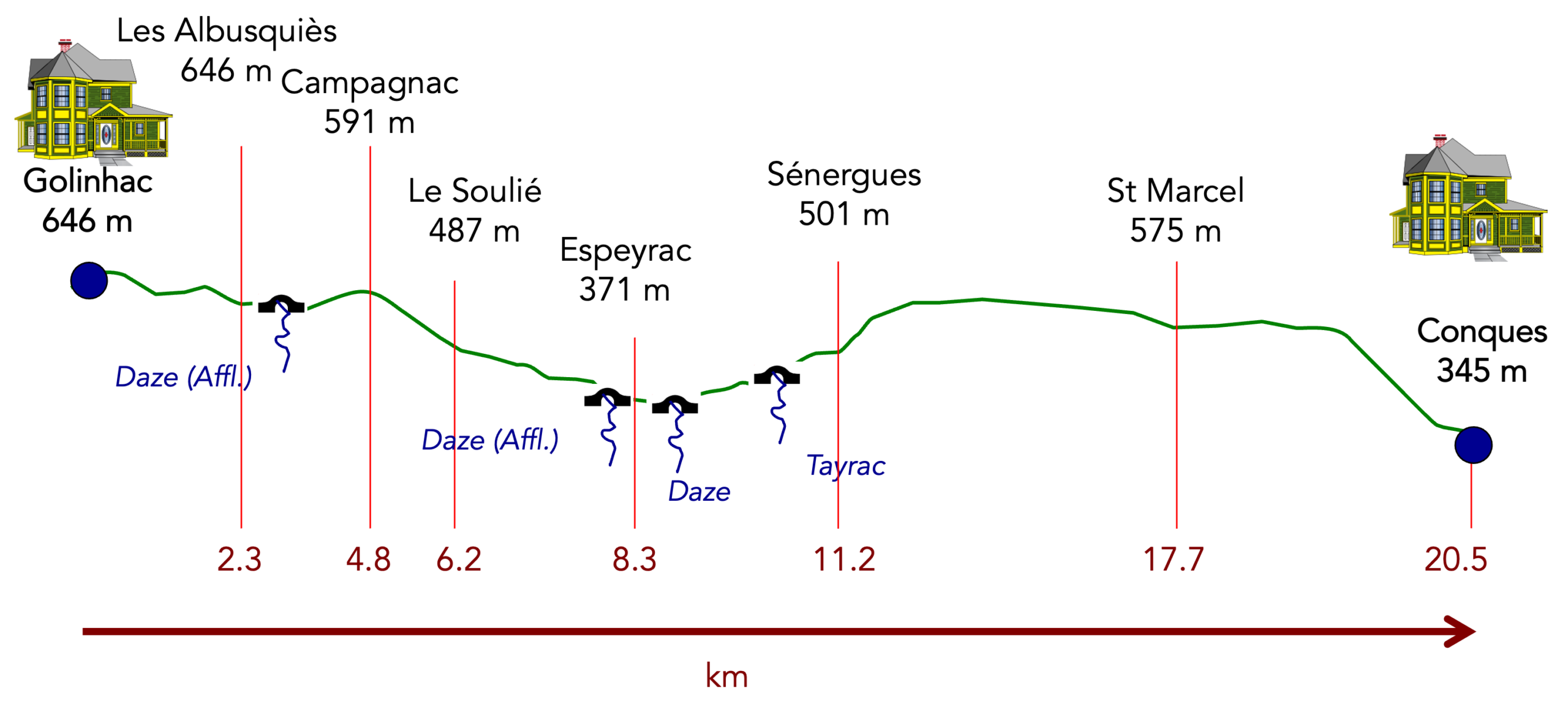
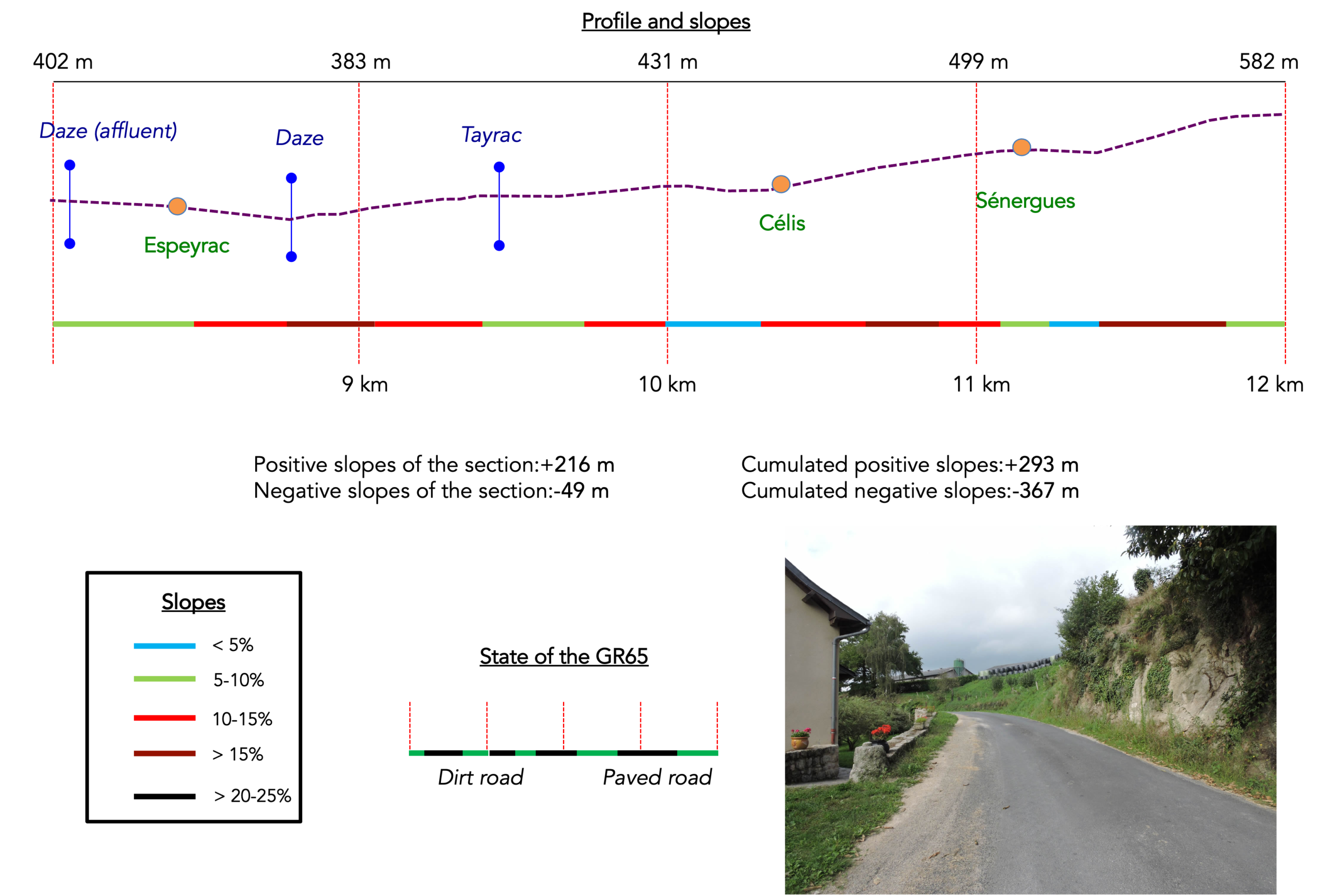
State of the GR65: Passages on dirt roads are slightly inferior to passages on the paved roads:
- Paved roads: 11.9 km
- Dirt roads: 8.6 km
Sometimes, for reasons of logistics or housing possibilities, these stages mix routes operated on different days, having passed several times on Via Podiensis. From then on, the skies, the rain, or the seasons can vary. But, generally this is not the case, and in fact this does not change the description of the course.
It is very difficult to specify with certainty the incline of the slopes, whatever the system you use.
For « real slopes », reread the mileage manual on the home page.

Section 1: Over hill and dale on the Golinhac plateau
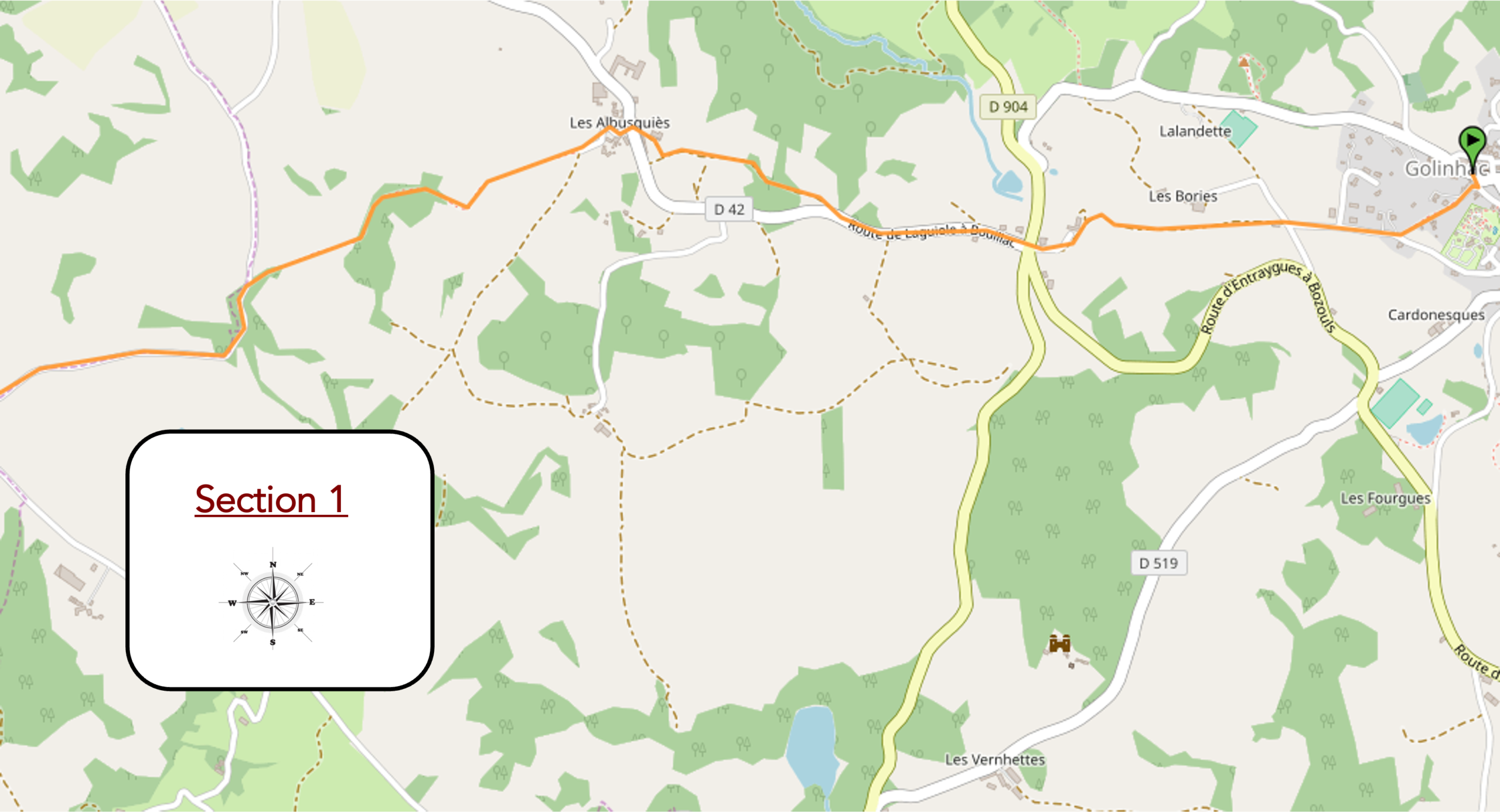
Overview of the route’s challenges/u>: course without any difficulty.
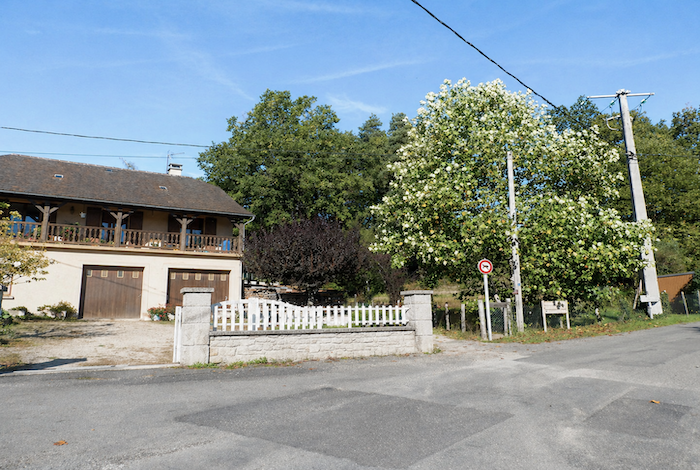
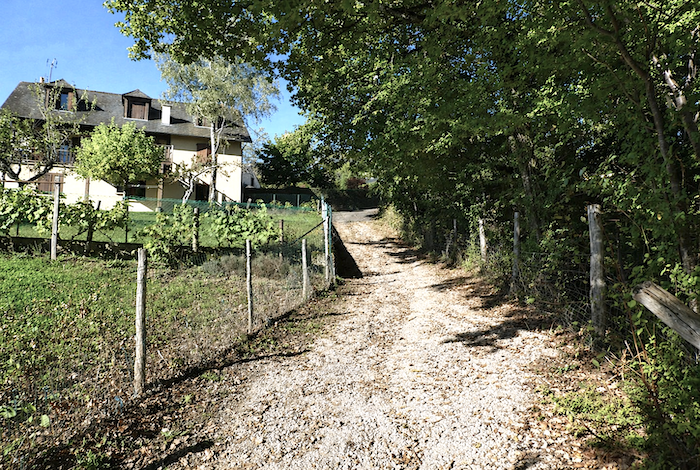
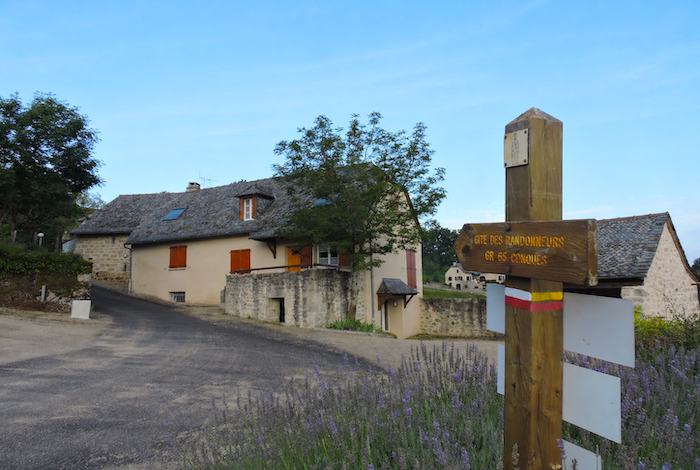
| The GR65 climbs steeply along a stony path, brushing past the modest chalets of Pôle Bellevue, clinging to the hillside like shelters forgotten by time. |
 |
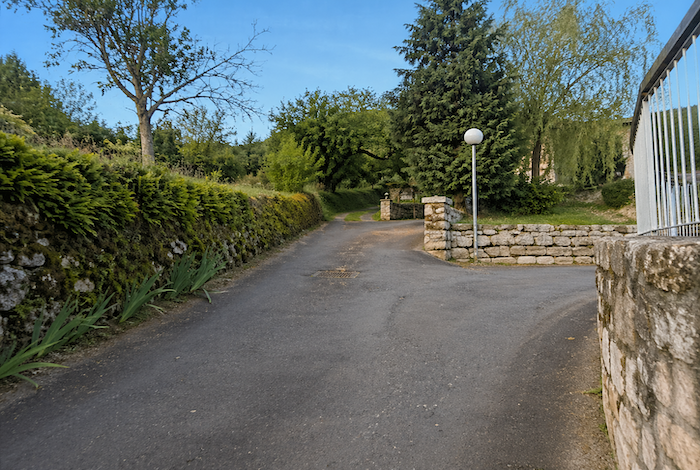 |
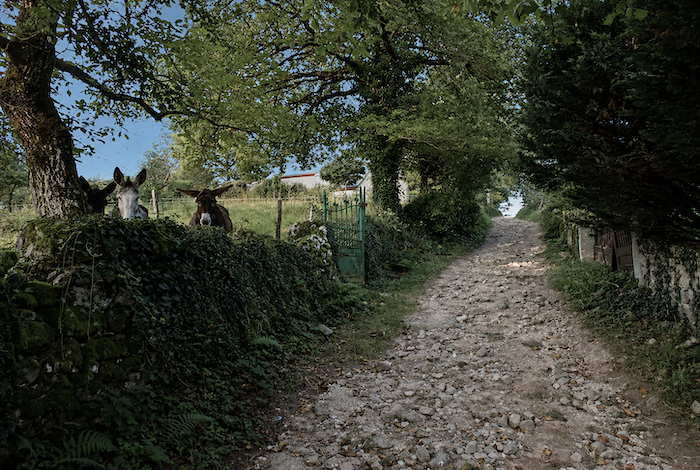
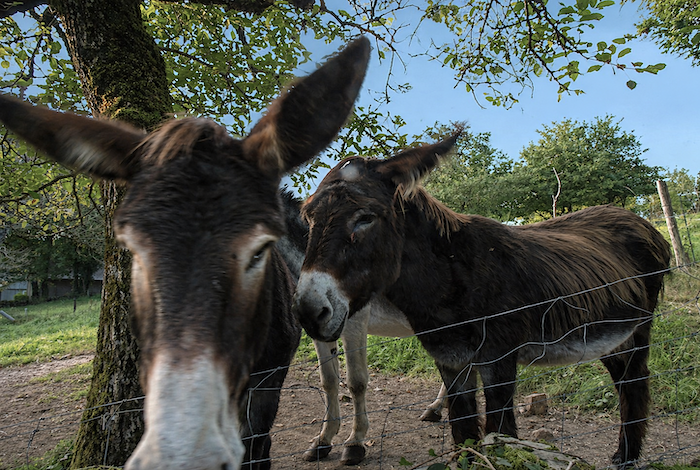
| A few curious donkeys still follow the walker with their gaze on the outskirts of Golinhac, as if offering a final farewell before departure. |
 |
 |
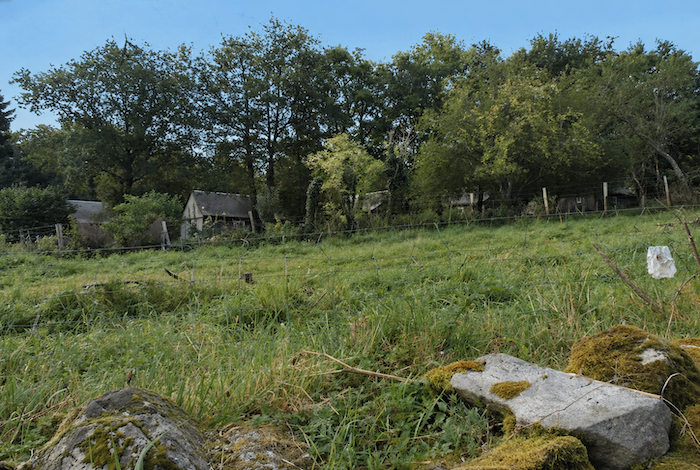
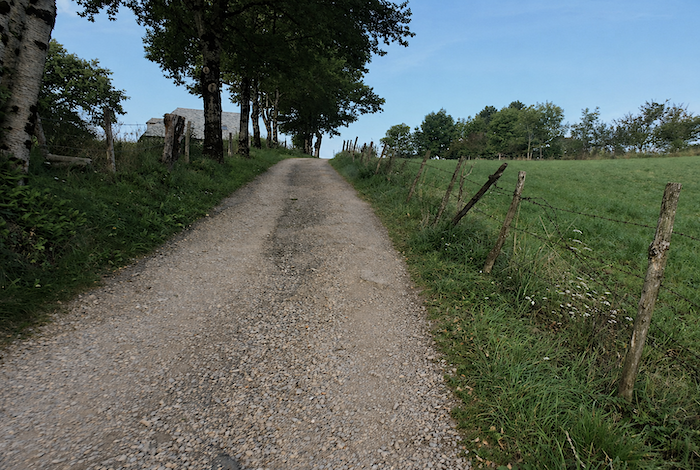
| The climb becomes demanding as it reaches a small wind-swept plateau, where the horizon seems suddenly to catch its breath. |
 |
 |
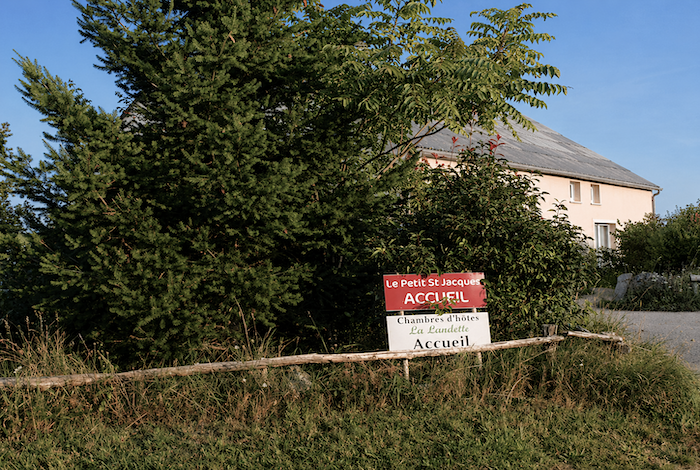
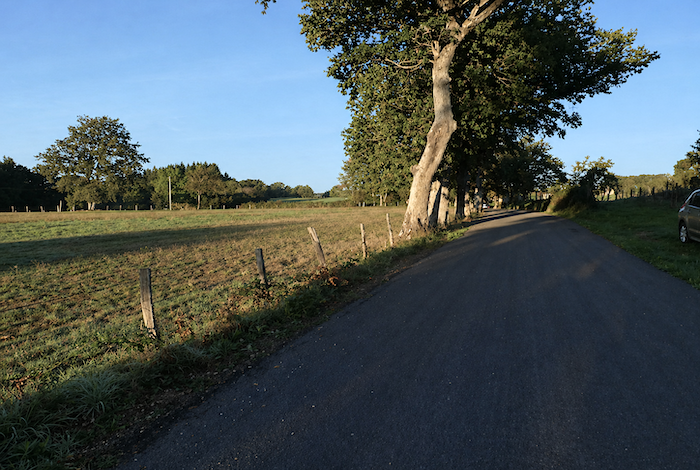
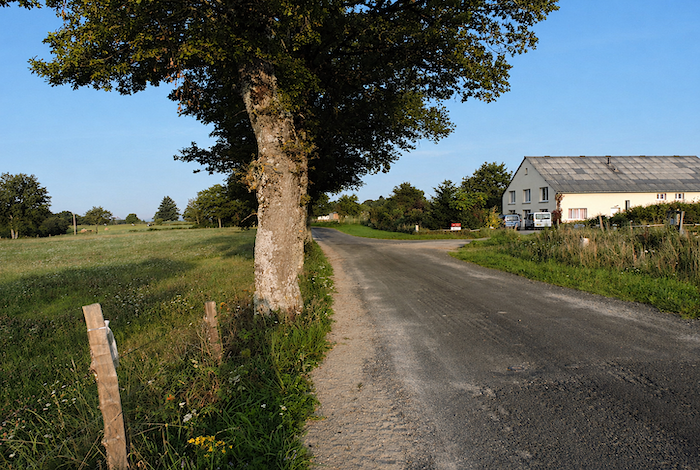
| Very quickly, the path leaves the slopes behind and stretches out along a paved road through peaceful countryside. Beneath the canopy of great oak trees stands an isolated lodging, a welcome presence in these quiet lands of Golinhac. |
 |
 |
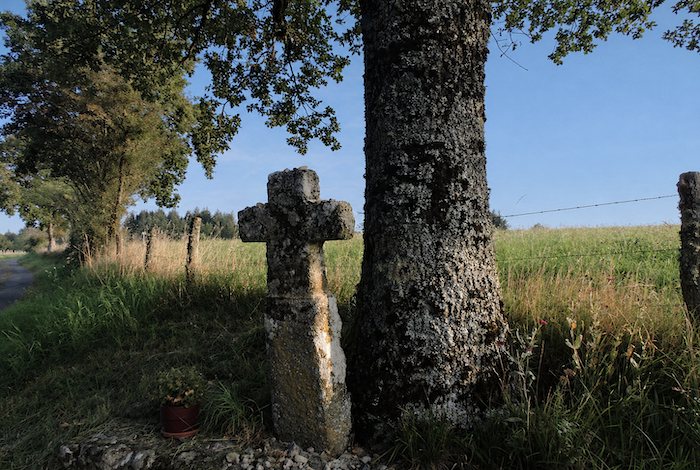
| Soon, a trail appears beside a magnificent stone cross, a silent sentinel standing at the edge of the way. |
 |
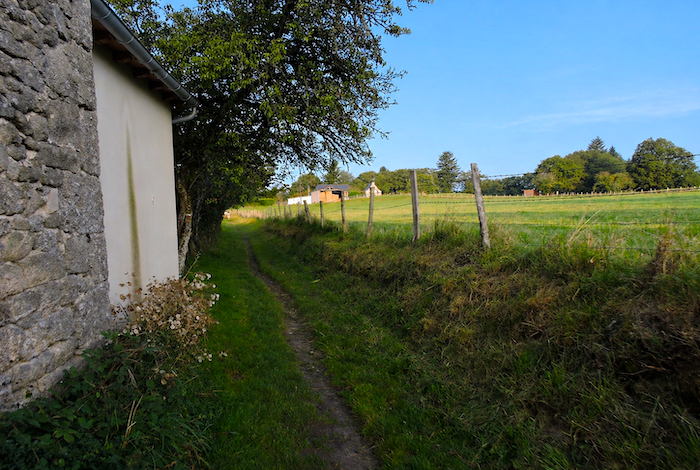 |
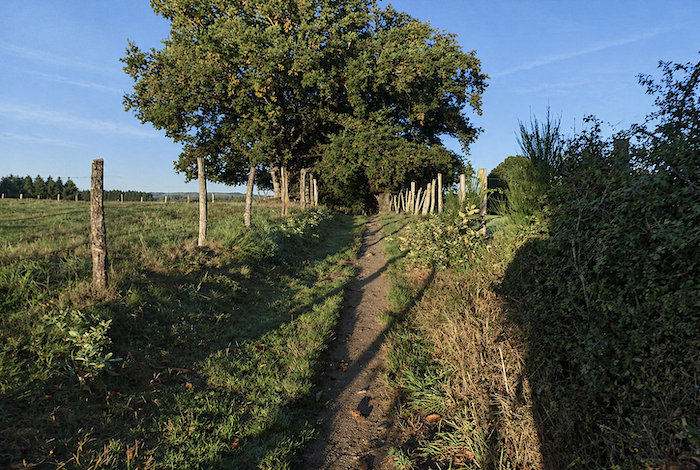
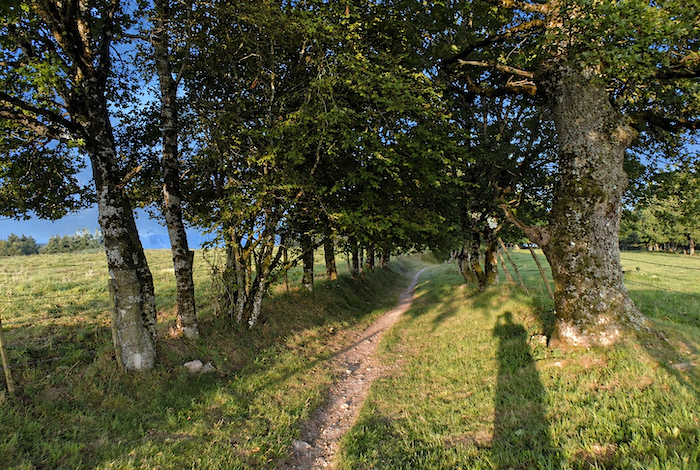
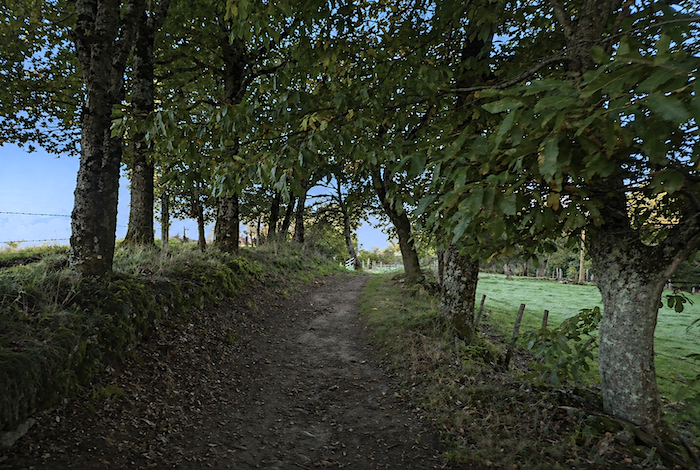
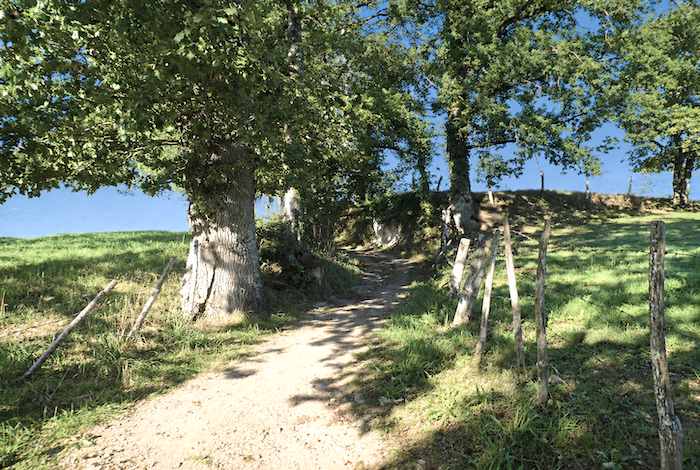
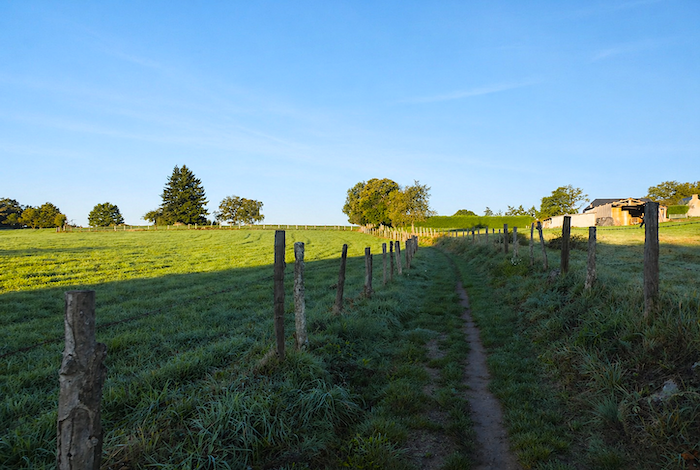
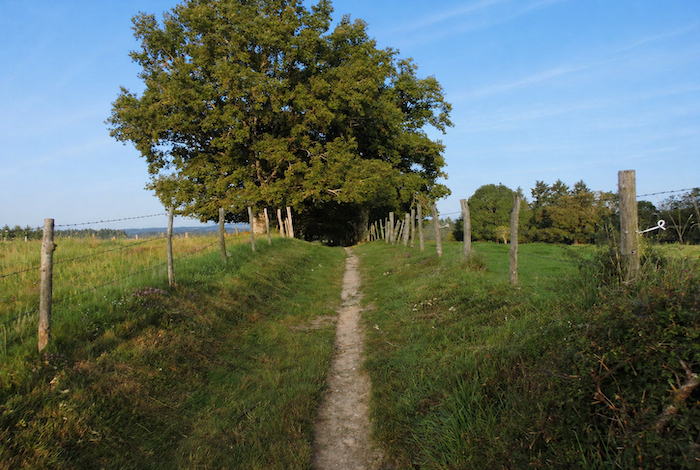
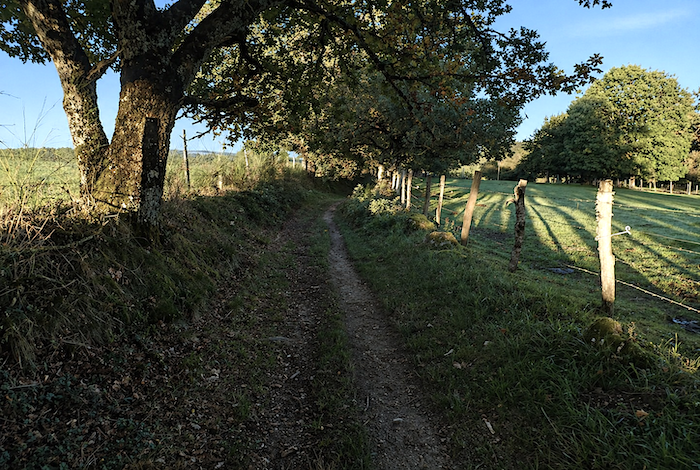
| A narrow ribbon of earth then winds between the meadows before disappearing beneath a grove of oaks and chestnut trees. Immense trees, probably several centuries old, line the path like the columns of a natural cathedral. Their majestic presence surrounds the walker with a profound sense of peace and fulfilment. |
 |
 |
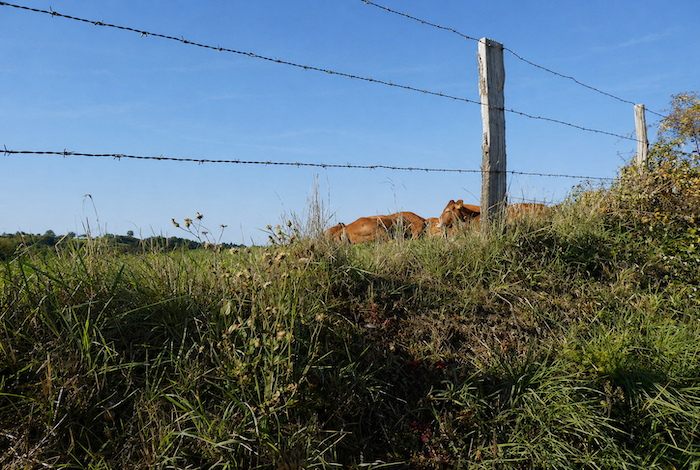
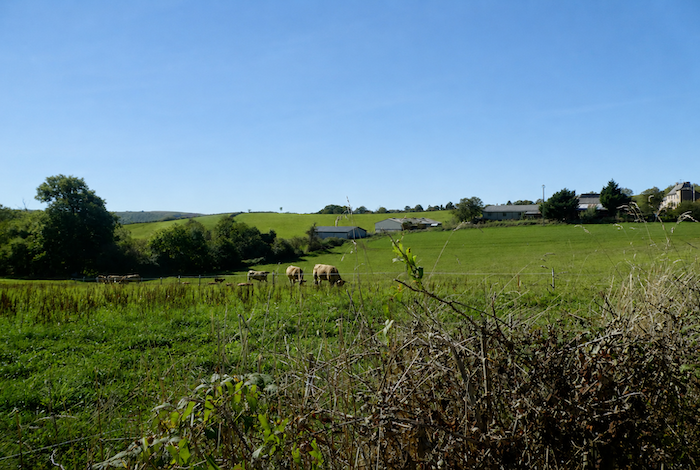
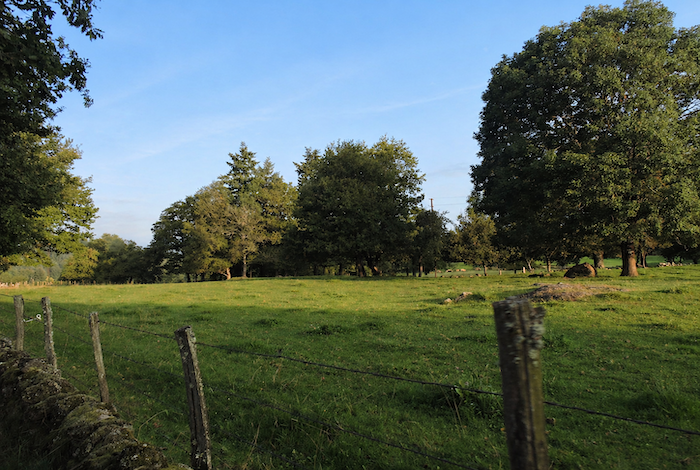
| Here, the countryside overflows with life. Behind the lush hedgerows, cattle roam freely across brilliant green pastures. |
 |
 |
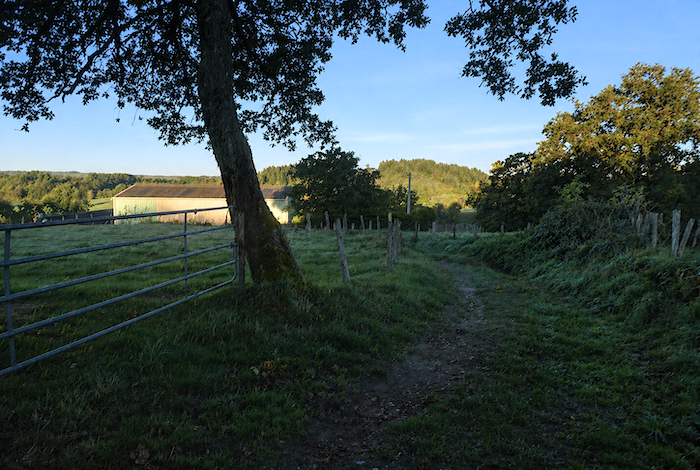
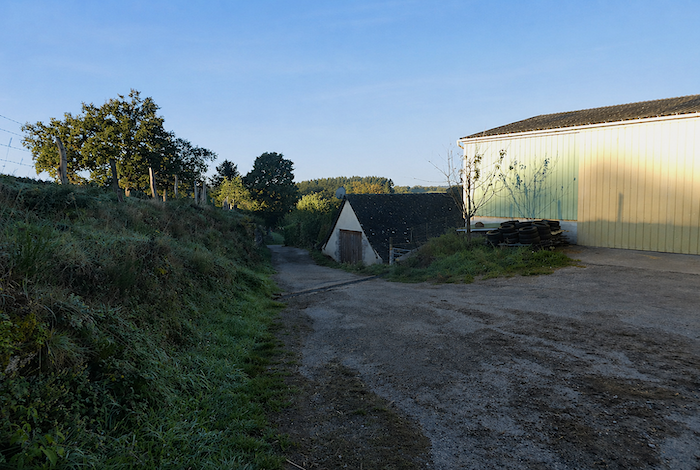
| Emerging from the woodland, the path descends gently toward the hamlet of Le Poteau, nestled in the silence of the hills. |
 |
 |
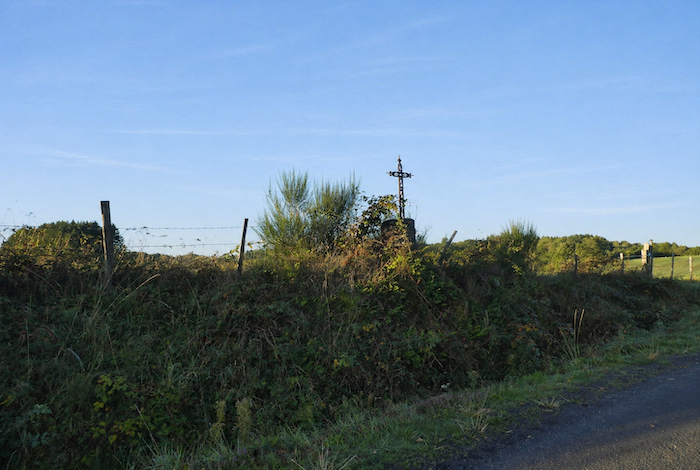
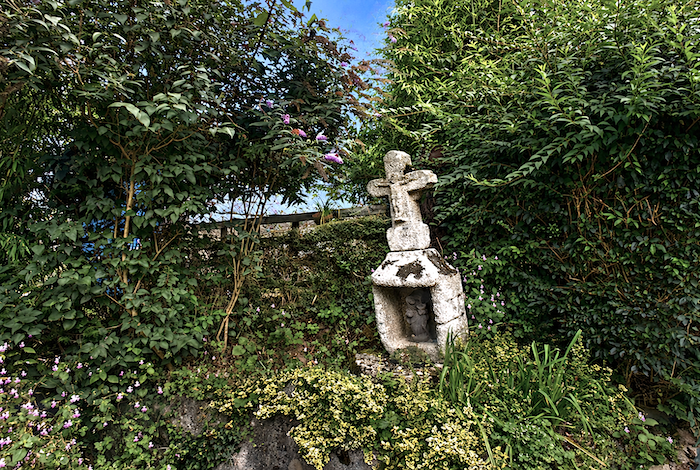
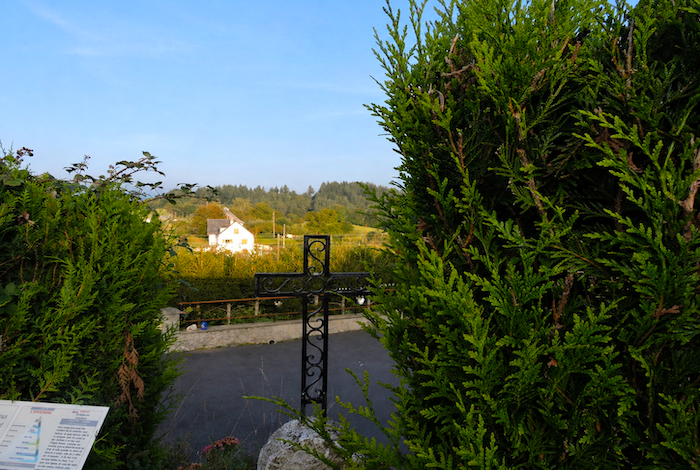
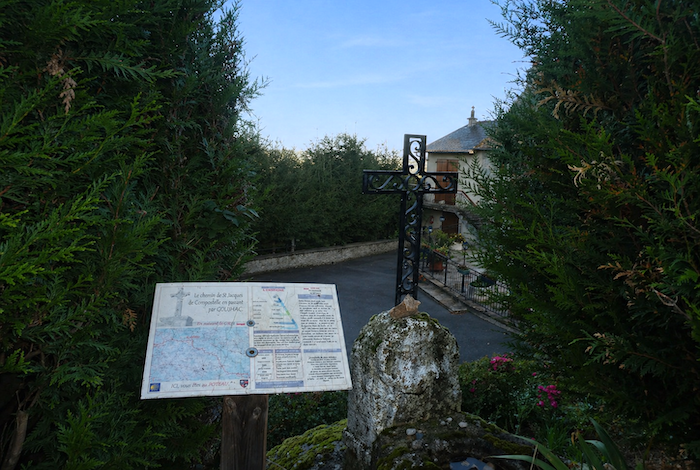
| The route from Estaing to Conques is marked by ancient crosses, witnesses to the devotion of centuries past. Some bear names, and this one is known as l’Enseigne. |
 |
 |
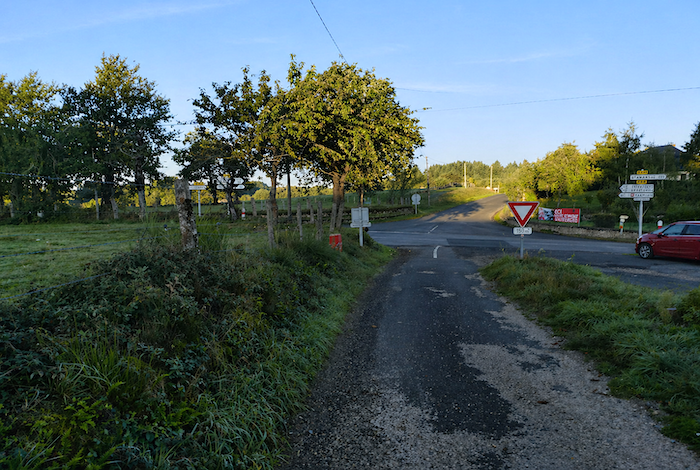
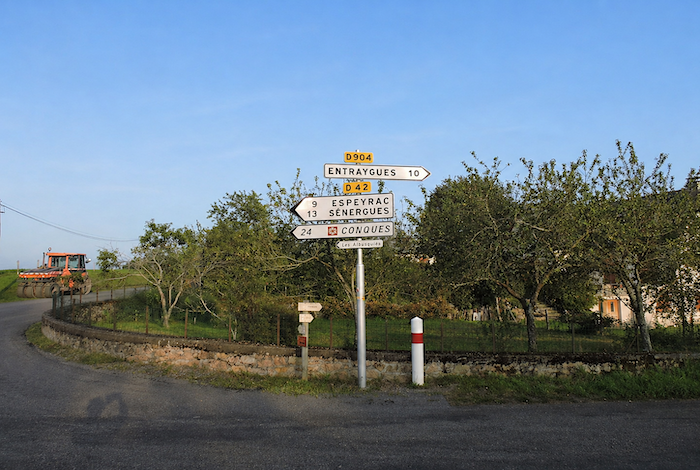
| But the asphalt soon reappears. At Le Poteau, where the GR65 crosses the road descending toward Entraygues, there are still nine kilometres to go by road to Espeyrac, and even more if you choose the side paths. |
 |
 |
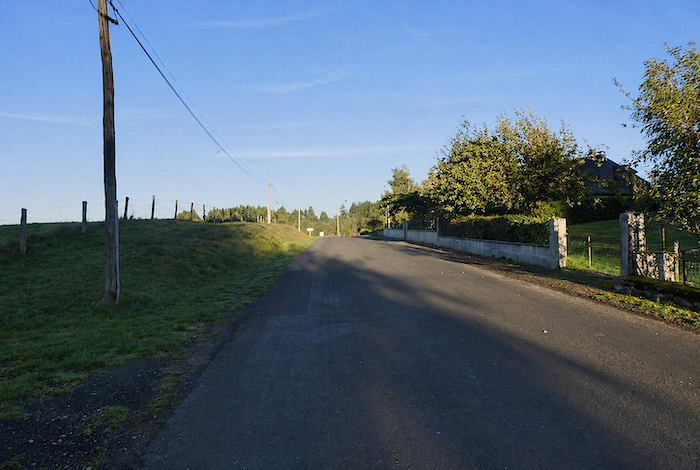
| The GR65 then heads toward the village of Les Albusquiès along a small paved road where, among blazing broom bushes and dark pine trees, broad granite outcrops emerge like the bones of an ancient land. |
 |
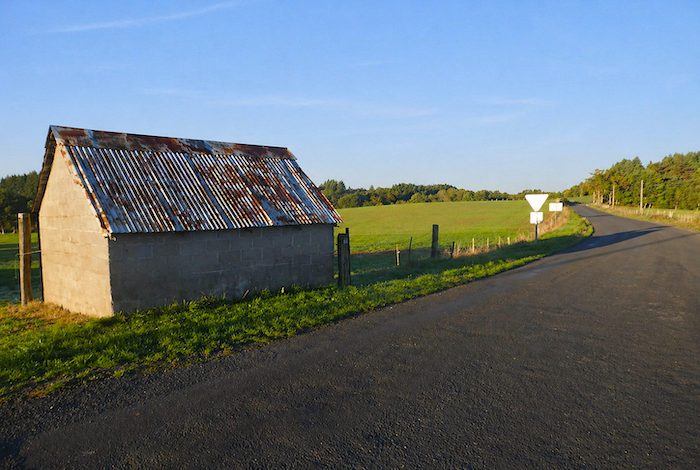 |
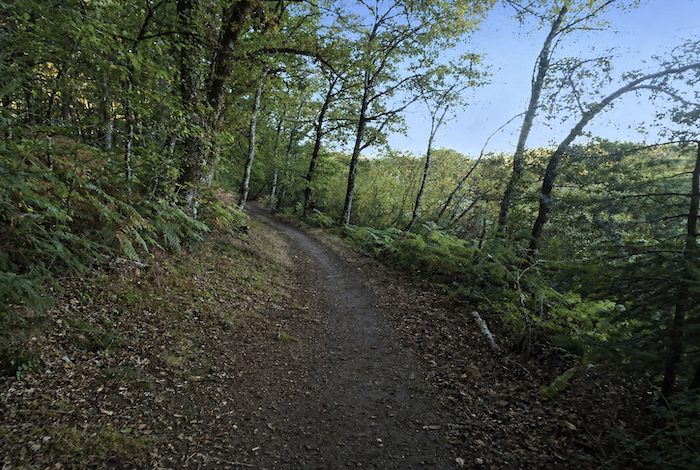
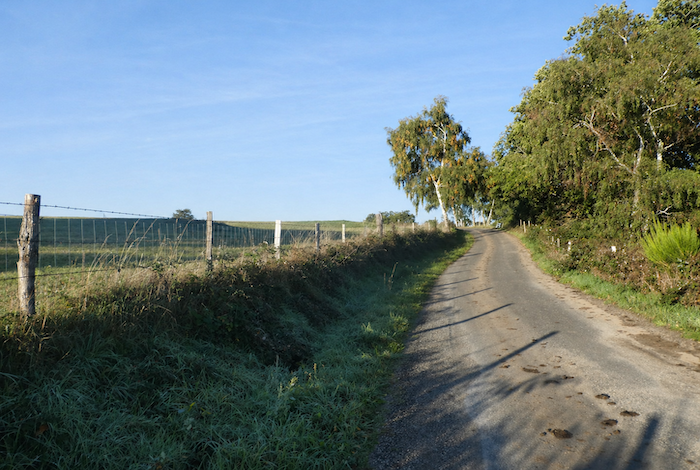
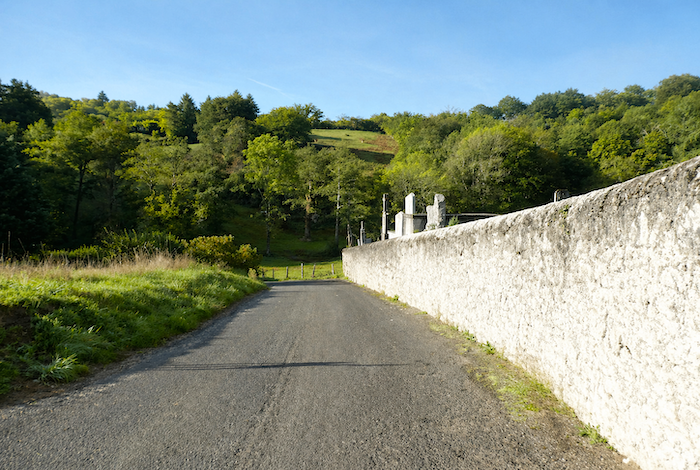
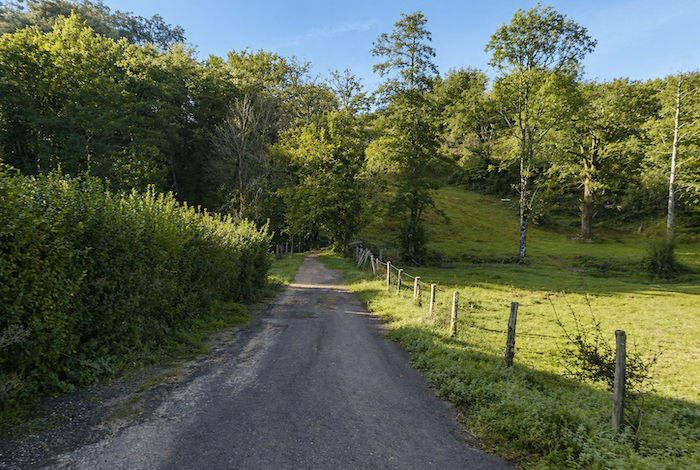
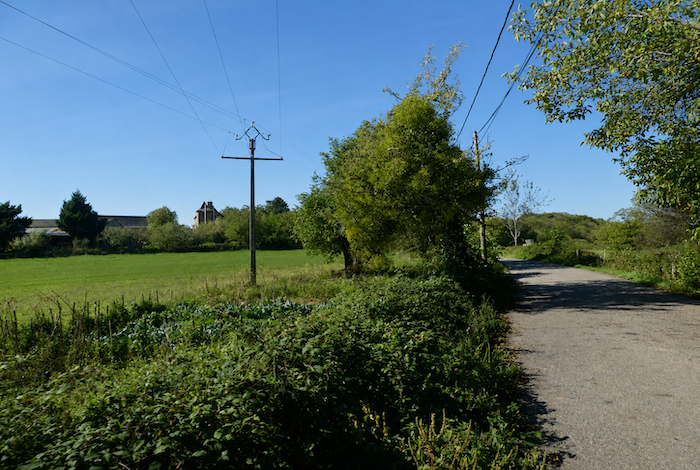
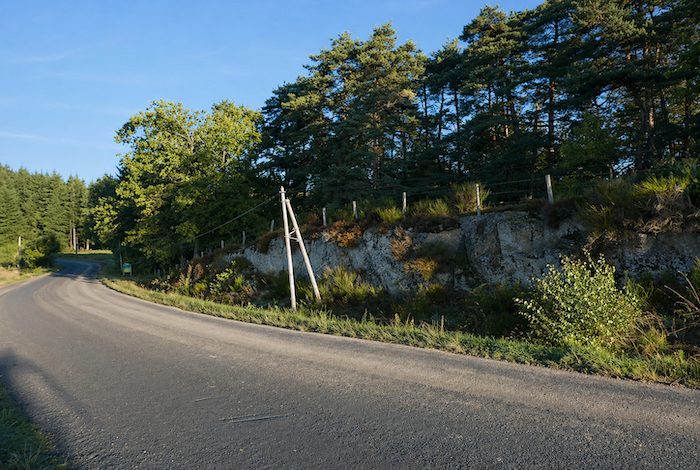
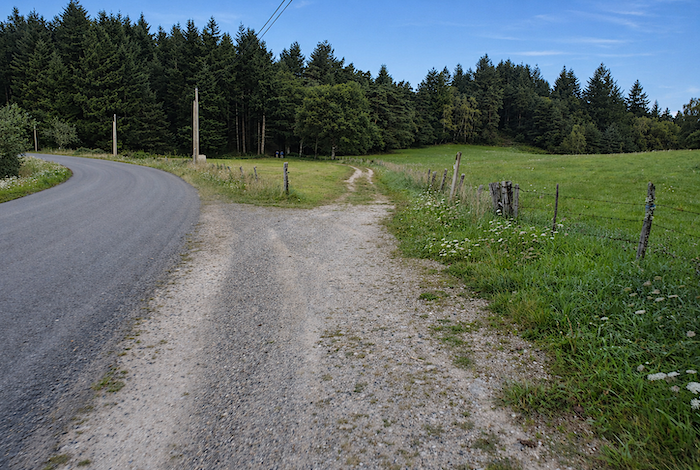
| Today’s stage crosses landscapes of remarkable beauty, even if asphalt appears rather too often beneath the pilgrim’s feet. Fortunately, traffic is almost non-existent on this section of the route. For the delight of walkers, the GR65 occasionally leaves the road behind, slipping beneath the trees and rediscovering the authentic charm of true earth paths. As it does here. |
 |
 |
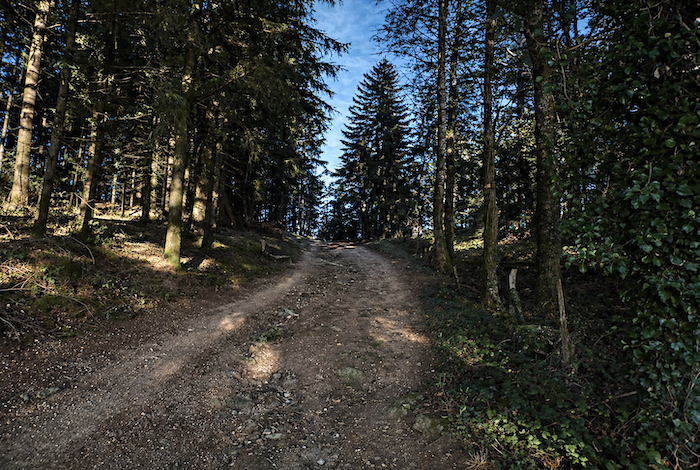
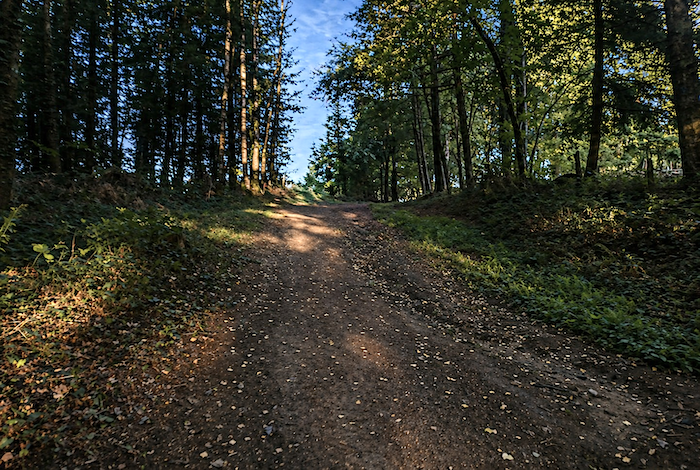
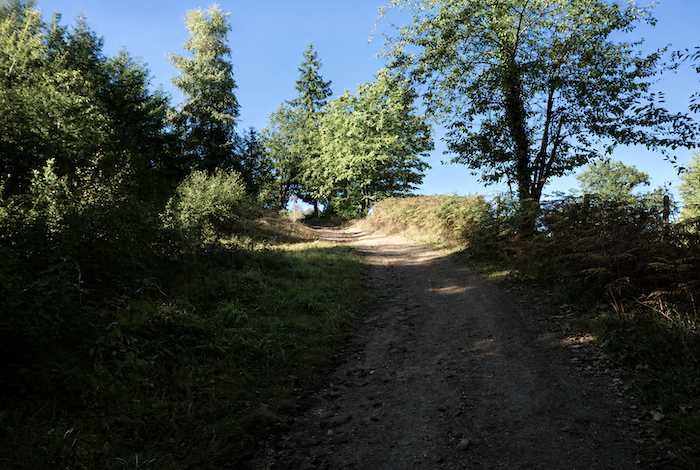
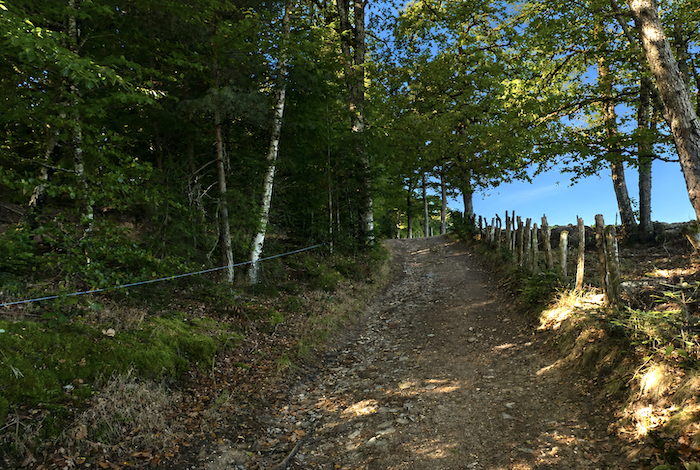
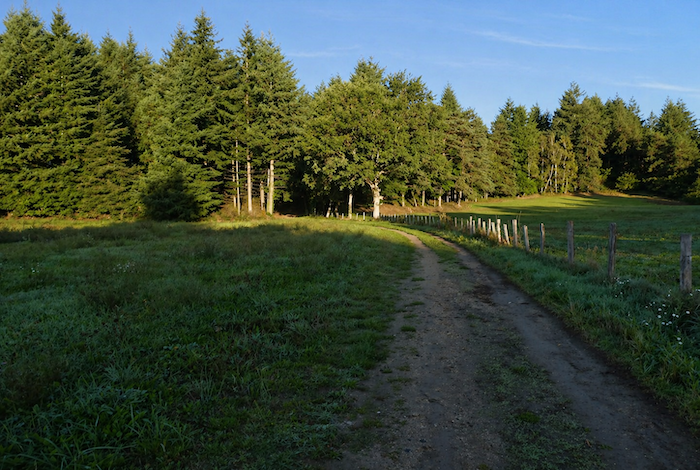
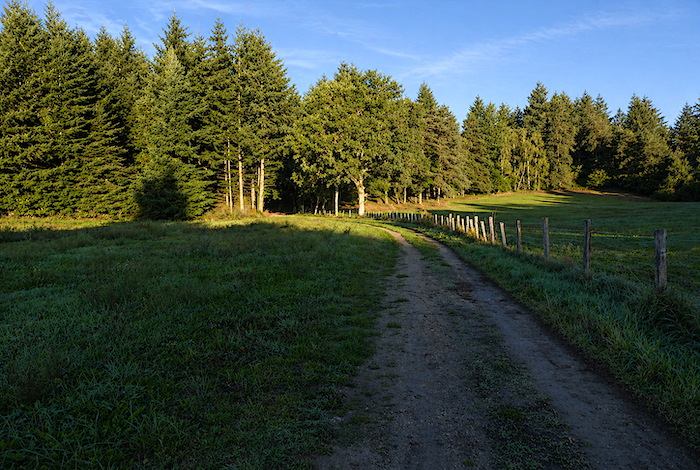
| A broad path then enters a spruce forest, climbing steadily up the slope with an energy that awakens tired legs while filling the air with resinous fragrances. |
 |
 |
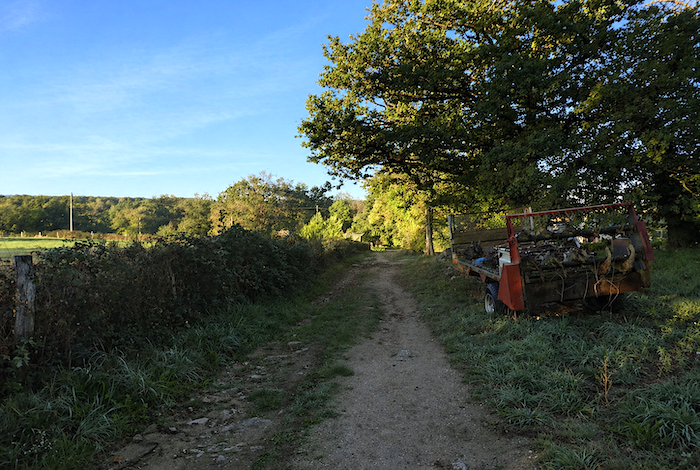
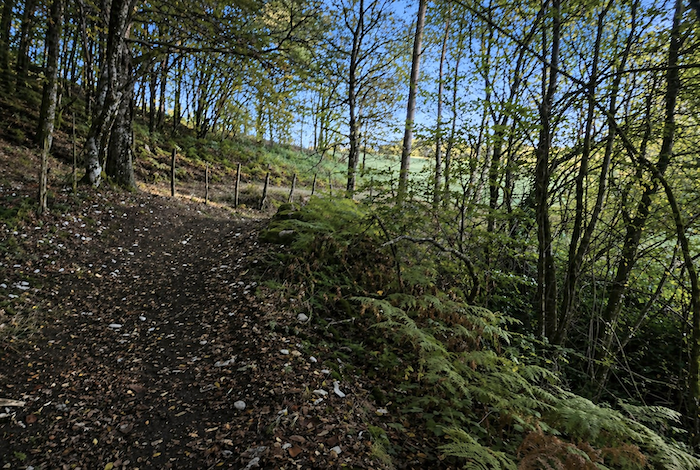
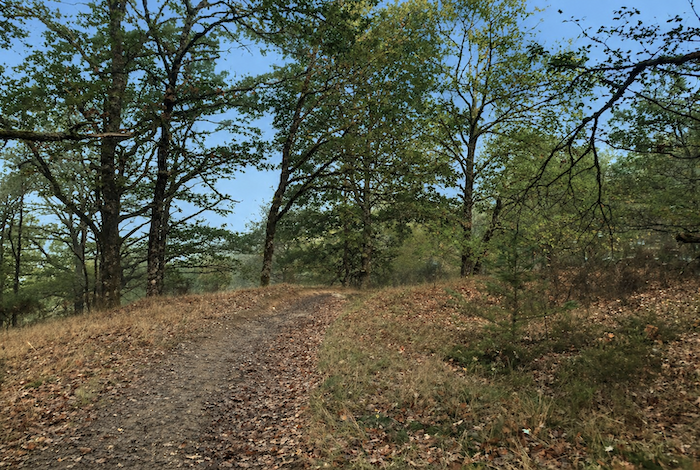
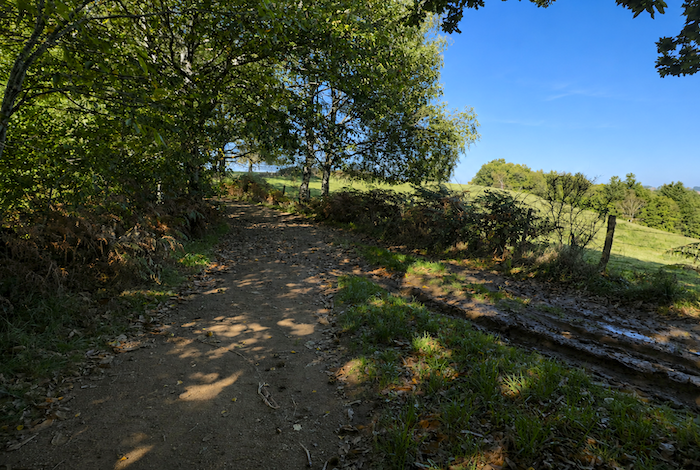
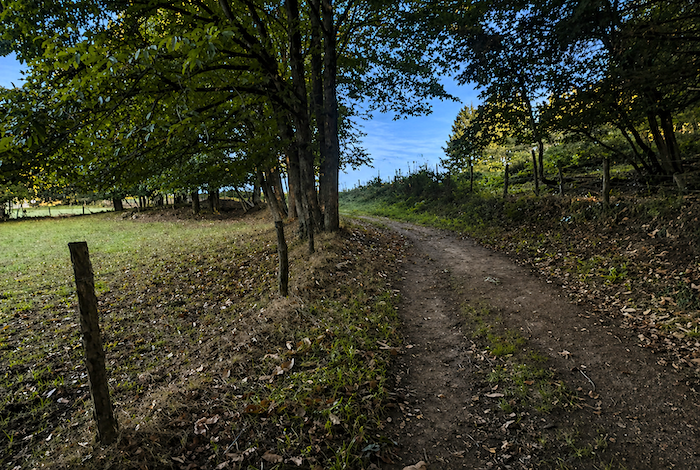
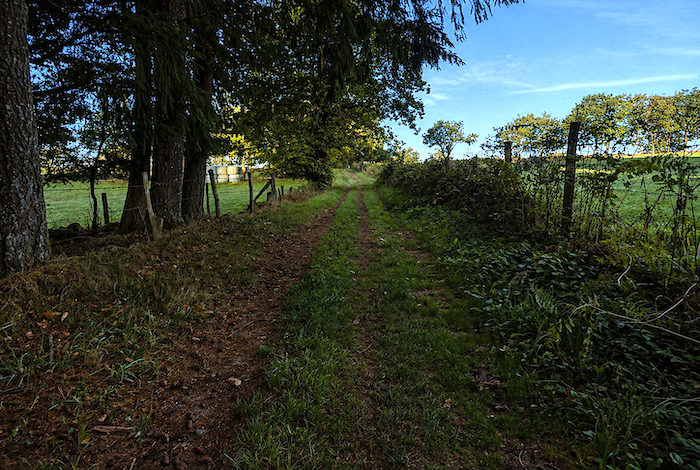
| The path soon emerges from the woodland and follows the living hedgerows bordering the meadows, under the lofty protection of great oaks and chestnut trees with their generous branches. |
 |
 |
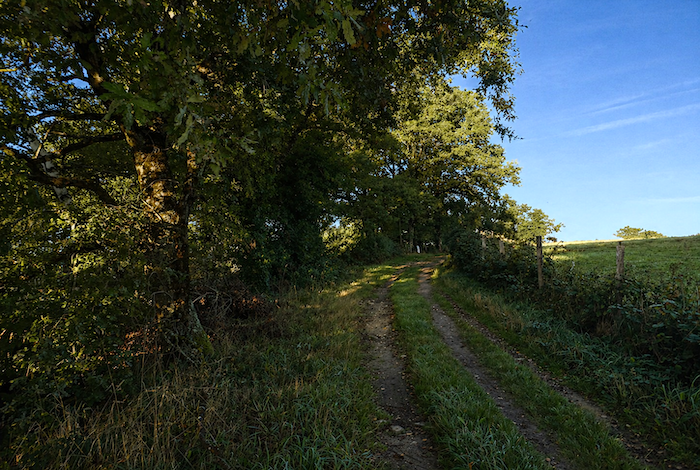
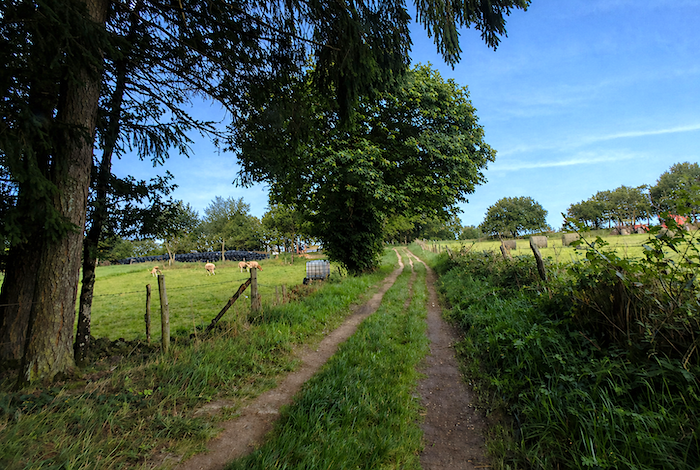
| The path then descends gently toward the peaceful hamlet of Les Albusquiès, nestled within a pastoral setting where silence, rich grasslands, and the serenity of the old countryside still reign. |
 |
 |
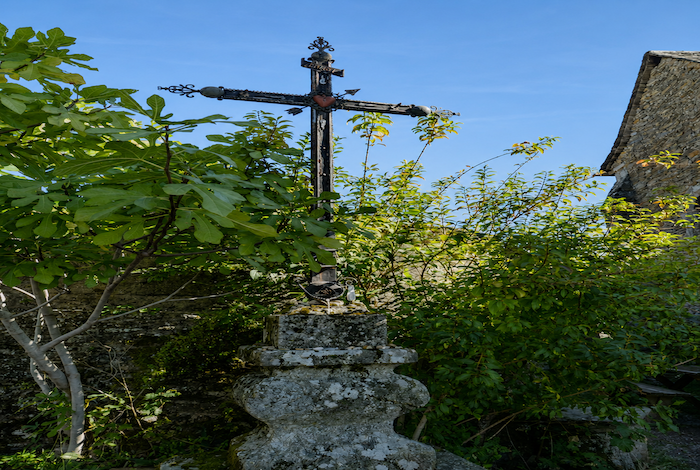
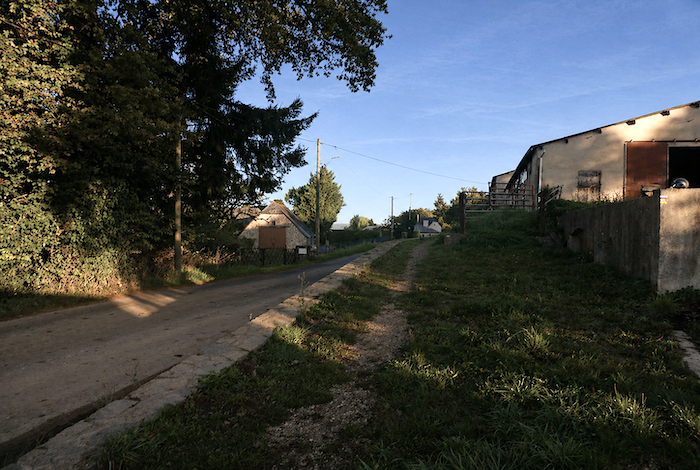
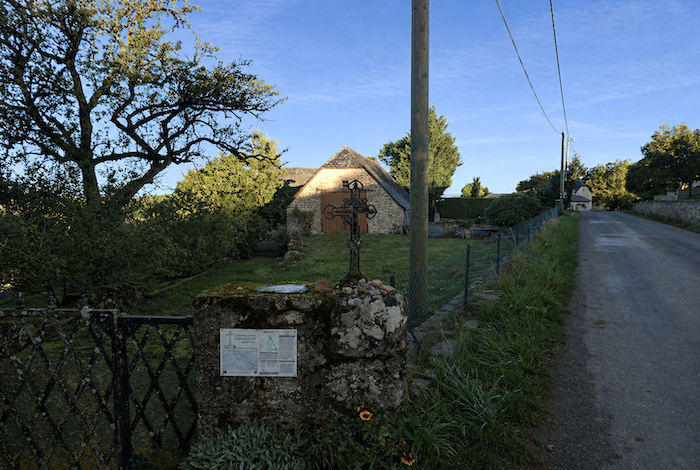
| Two more magnificent crosses mark the route, one made of metal and the other of stone, in this peaceful farming village where granite and sandstone seem to blend together in almost natural harmony. |
 |
 |
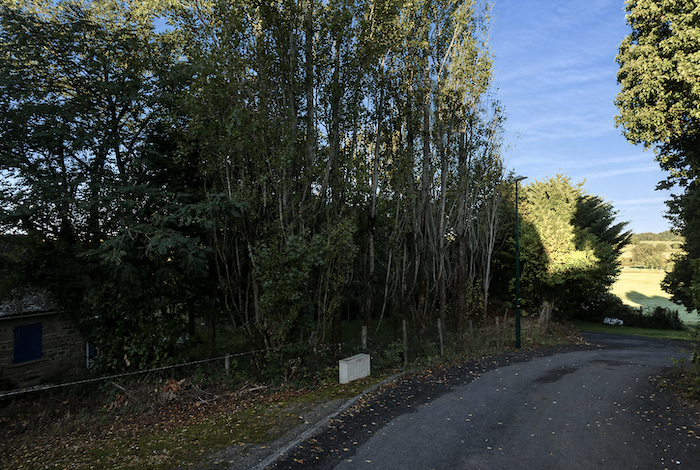
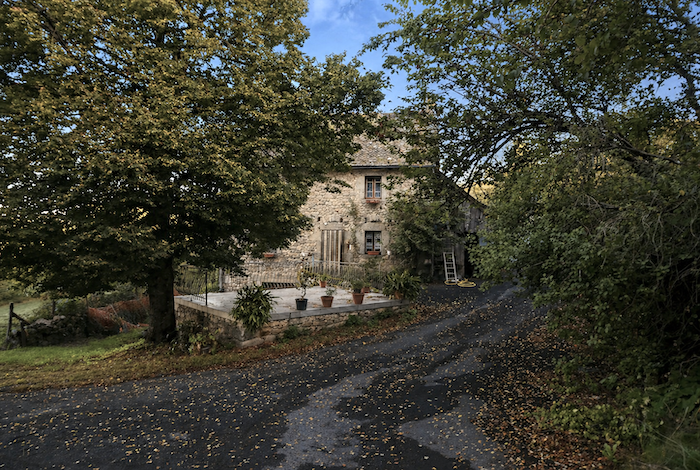
| A small road then descends below the village and its beautiful stone houses, nestled among oaks and white poplars. |
 |
 |
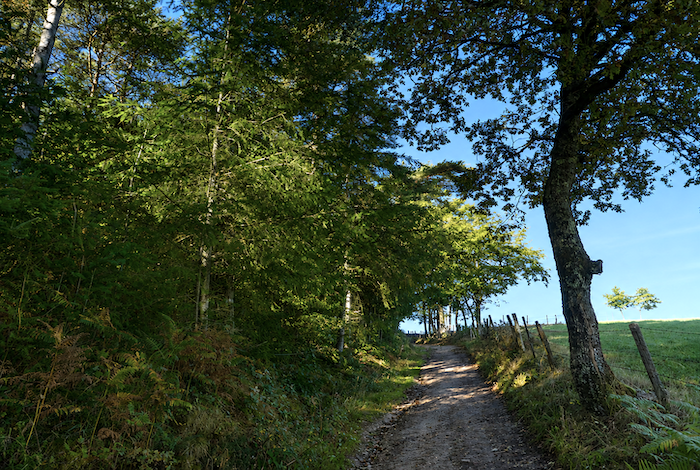
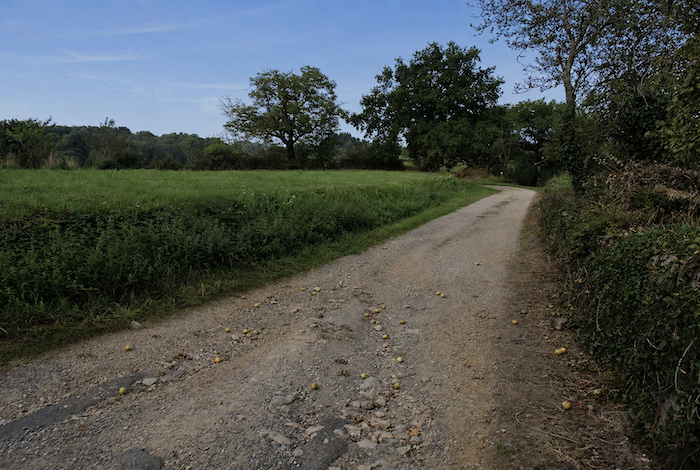
| Further down, the asphalt gives way to stony ground. The path first plunges steeply before softening as it crosses the meadows, following the hedgerows like an old forgotten path between the pastures. |
 |
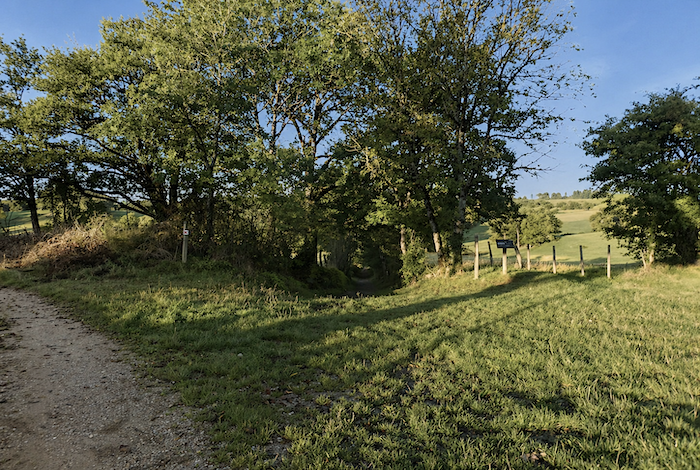 |
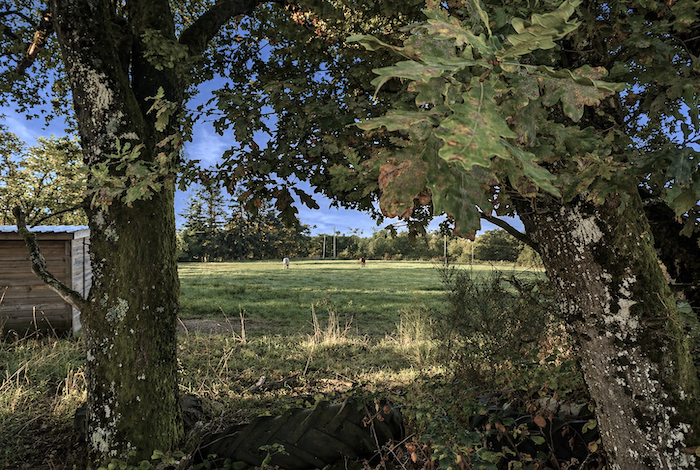
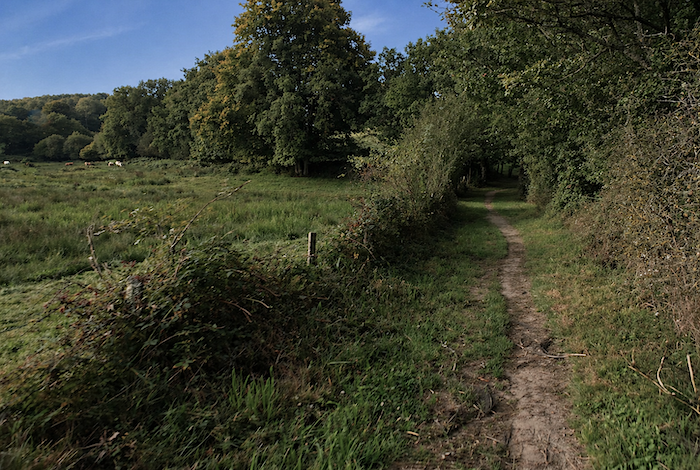
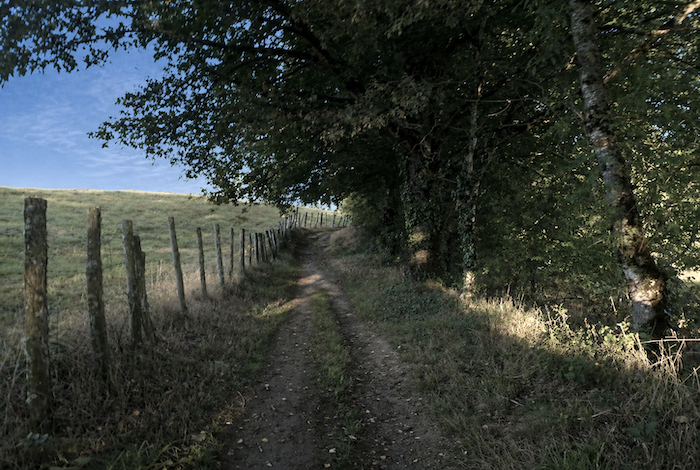
| Crop cultivation remains rare in this livestock farming region. Fortunately, the farmers have not entirely levelled these landscapes as has happened elsewhere. Here they have preserved the precious wet bocage, with its network of living hedgerows that gives the countryside its distinctive character. |
 |
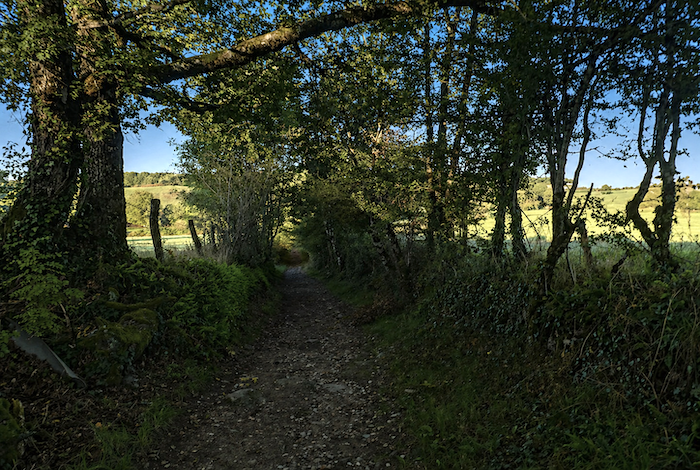 |
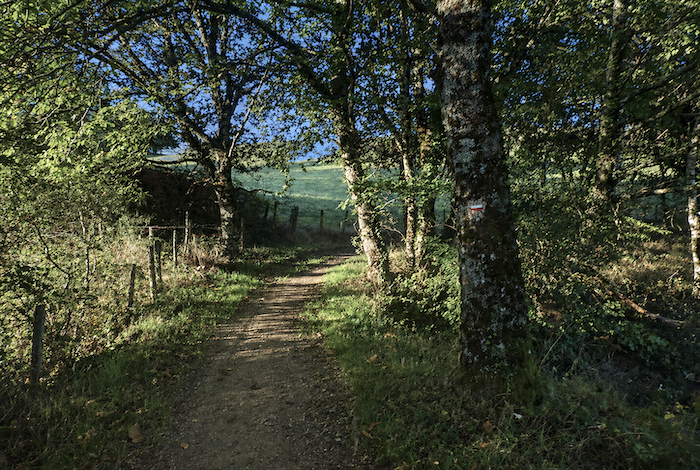
| Within these true funnels of emerald greenery, oak trees reign supreme. Yet the eye also discovers graceful birches, sturdy chestnut trees, majestic beeches, hazel trees, and hornbeam hedges that together create a woodland of countless shades and textures. |
 |
 |
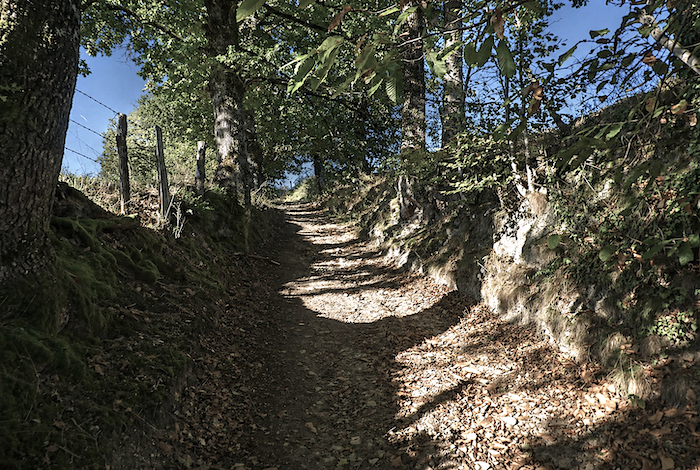
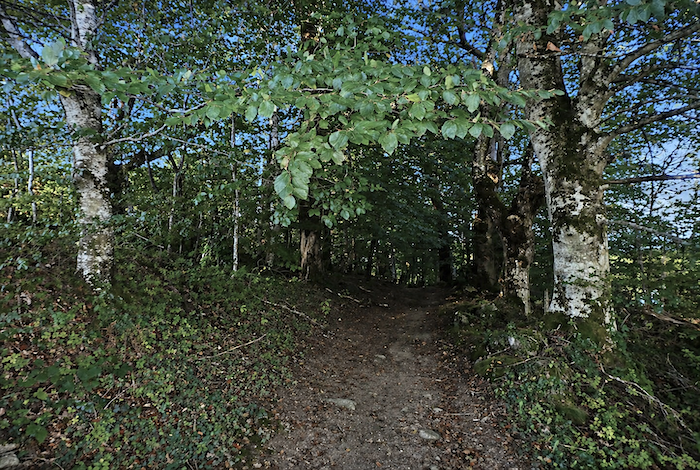
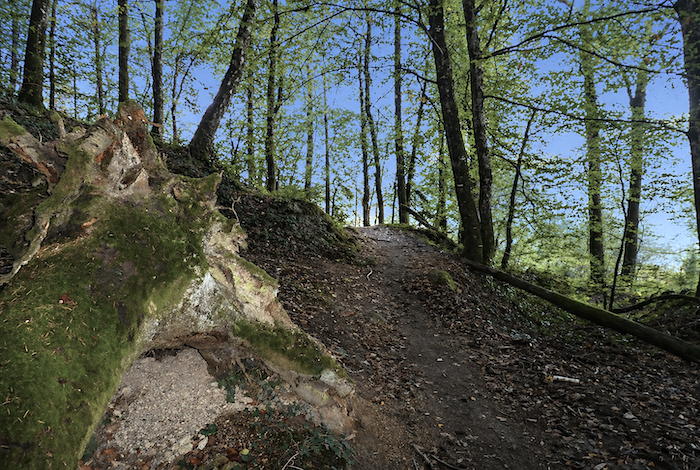
| Further on, a trail climbs gently through a dark and almost wild beech forest where sunlight sometimes struggles to penetrate the dense canopy. In wet weather, these paths become genuine mud traps where each step draws the pilgrim a little further away from comfort. |
 |
 |
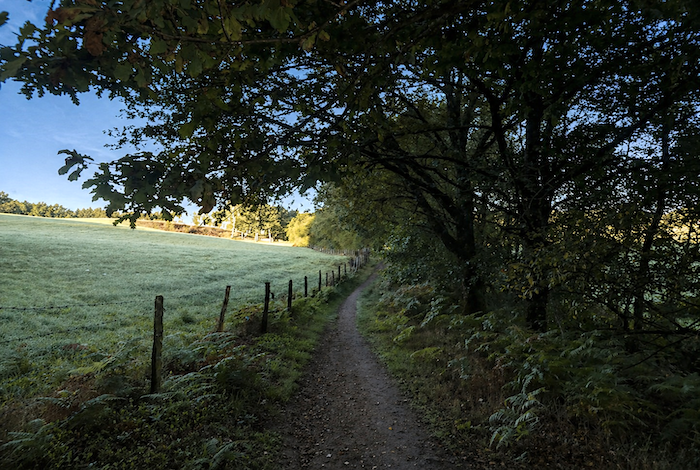
| After crossing a modest tributary of the Daze rier, almost unnoticed in the landscape, the path returns to green meadows and leafy hedgerows swaying in the breeze that sweeps across the heights. |
 |
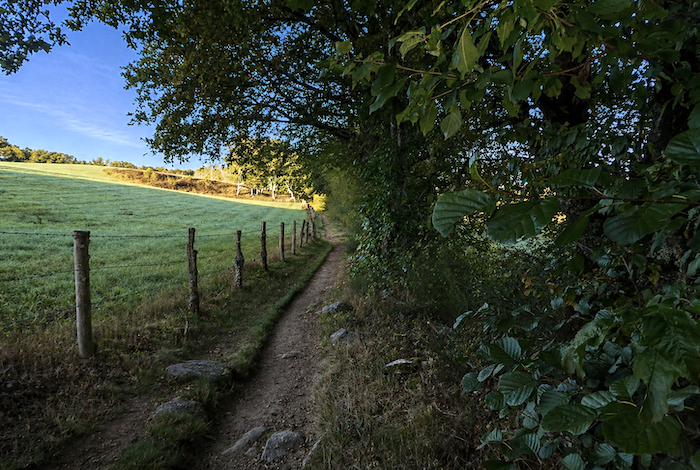 |
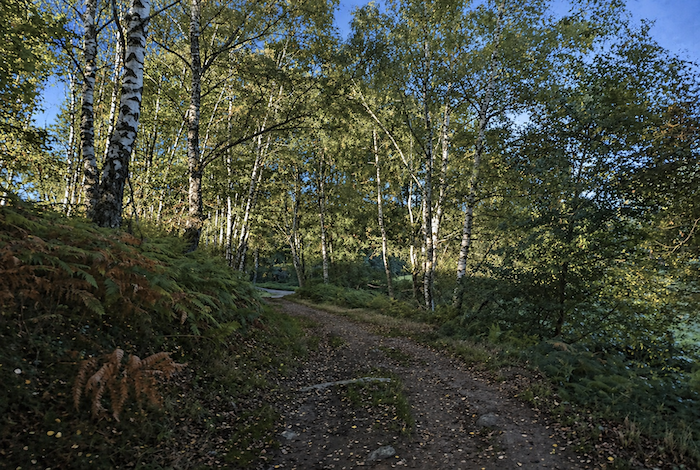
| But this stretch of earth path is short lived. Soon afterwards, the GR65 once again rejoins the paved road, the faithful, if sometimes rather tiresome, companion of this long stage. |
 |
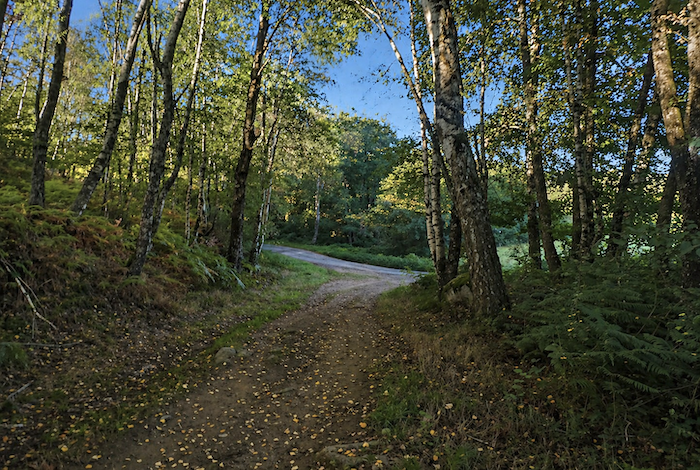 |
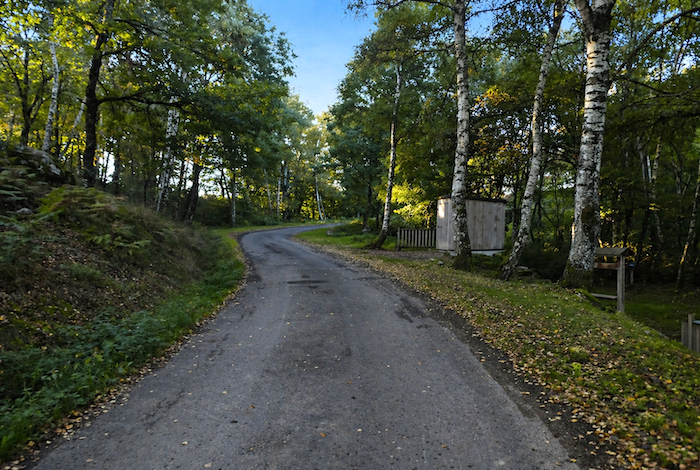
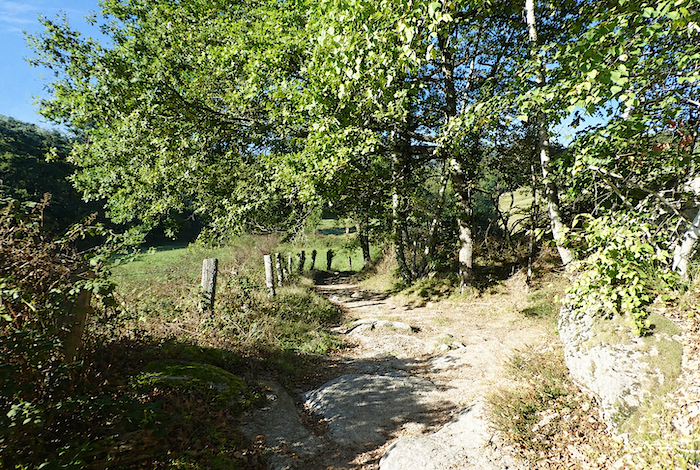
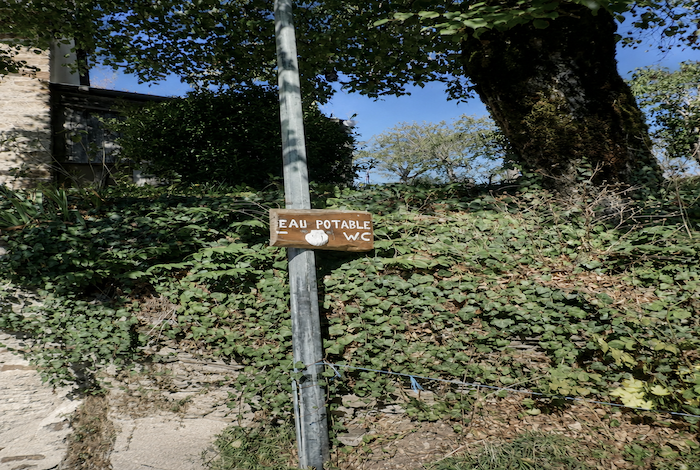
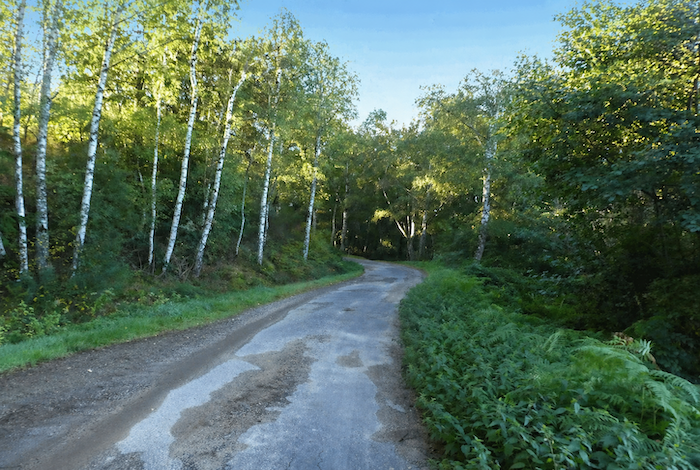
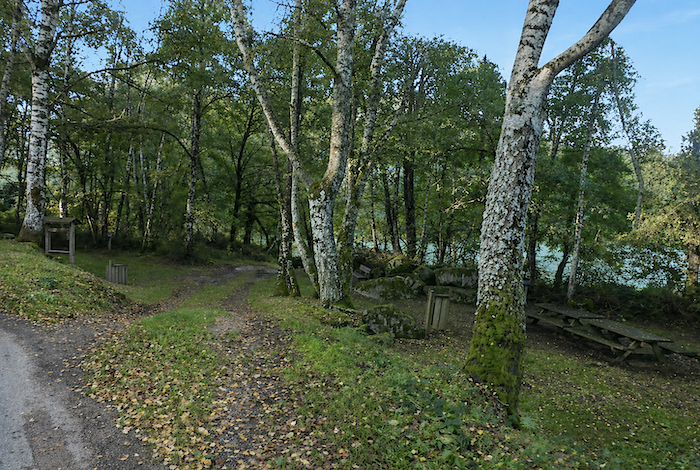
| The route then enters a peaceful woodland dominated by slender birches and majestic beeches. Among moss covered granite boulders, the walker discovers a picnic area and even a discreet dry toilet, almost hidden within the forest. |
 |
 |
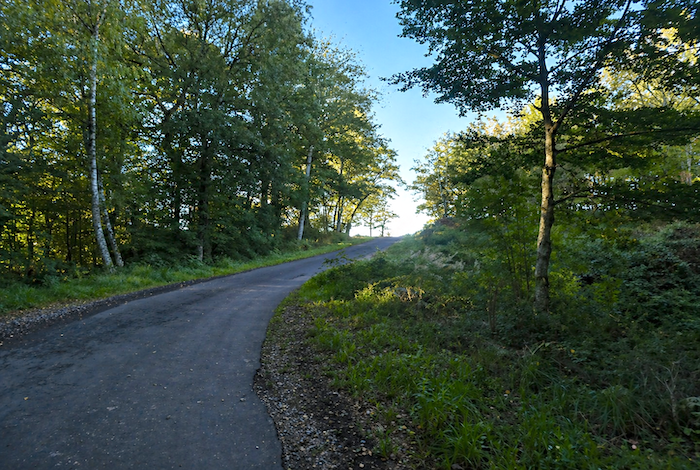
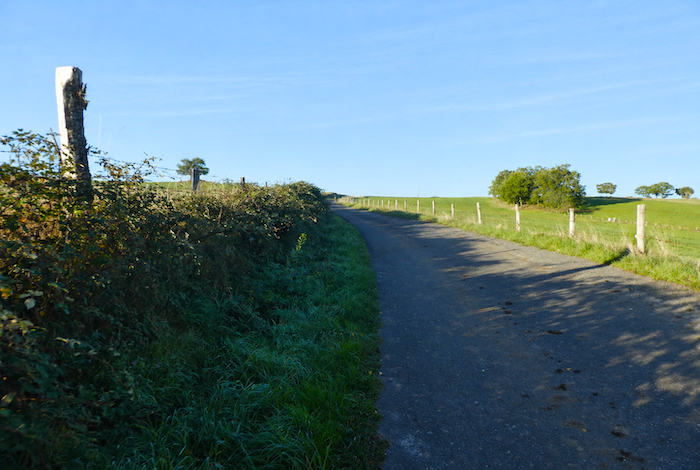
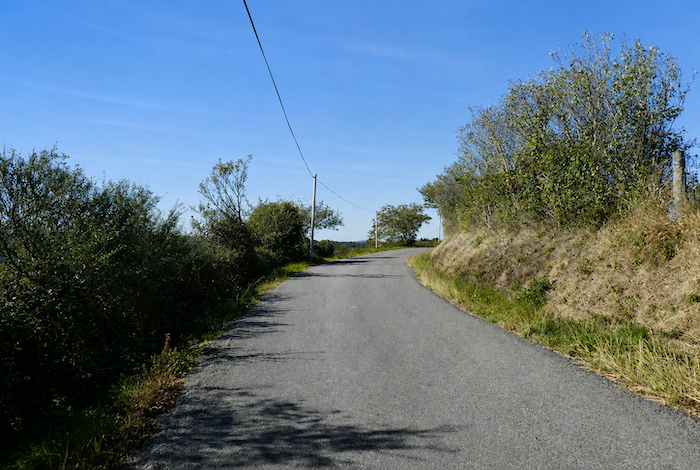
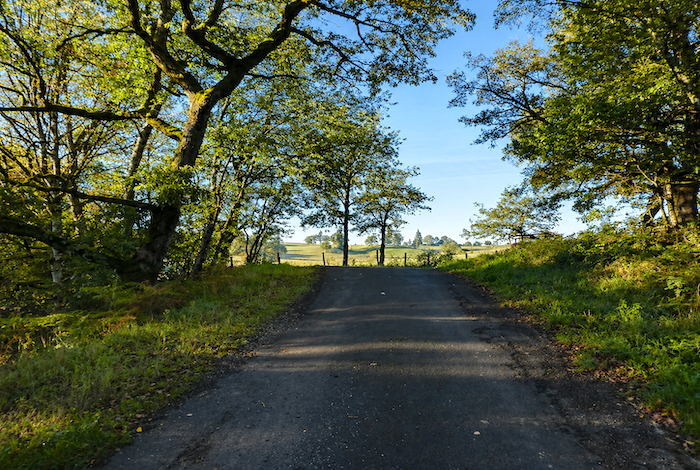
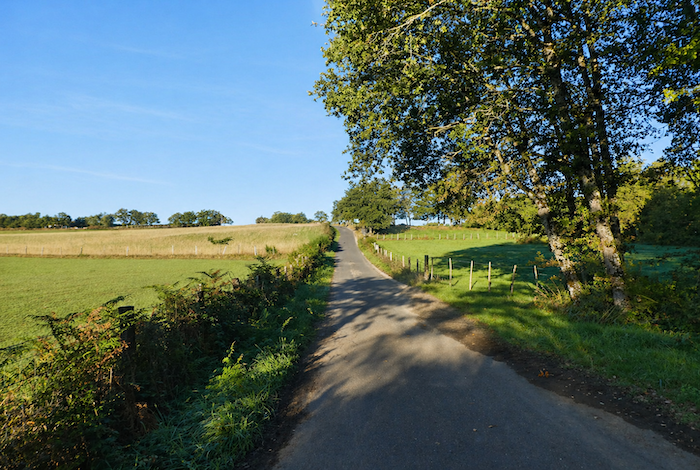
| The road then leaves the forest behind, crossing pastures and climbing gradually toward the ridgeline. What may test the pilgrim here are the long stretches of asphalt that accompany the GR65. Yet those who chose to follow the GR6 from Estaing the previous day would have encountered far more forest trails and wild paths. |
 |
 |
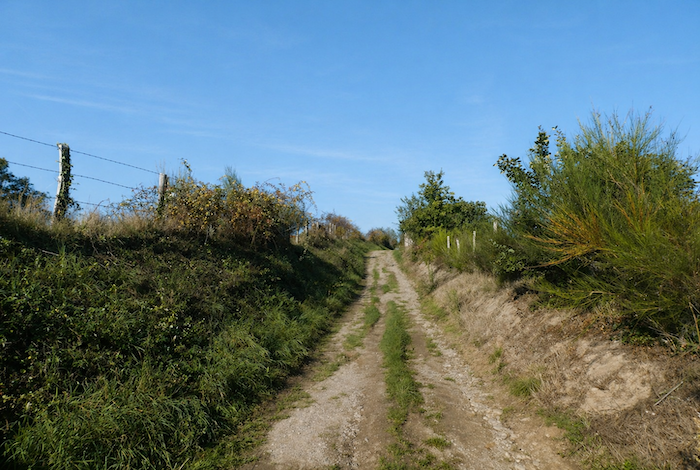
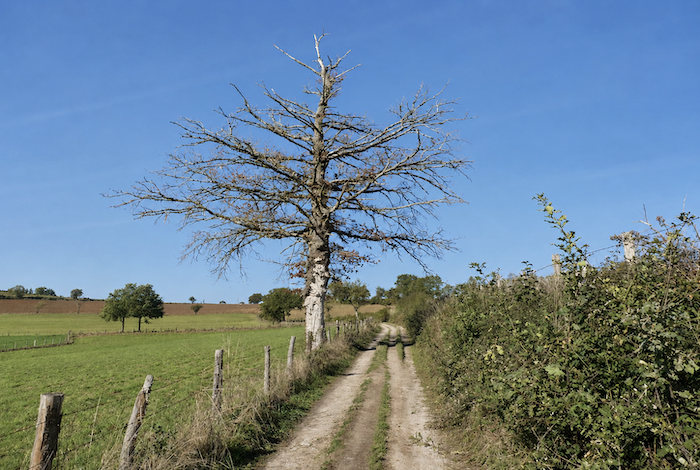
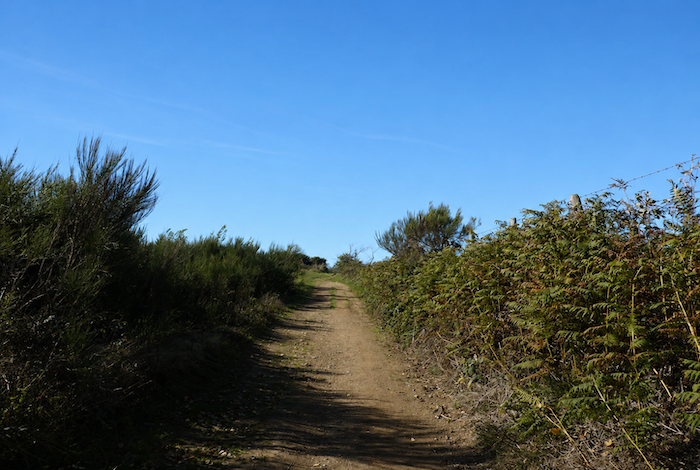
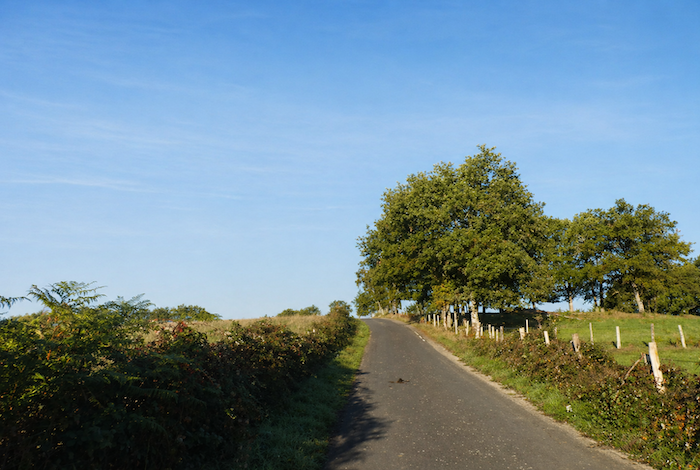
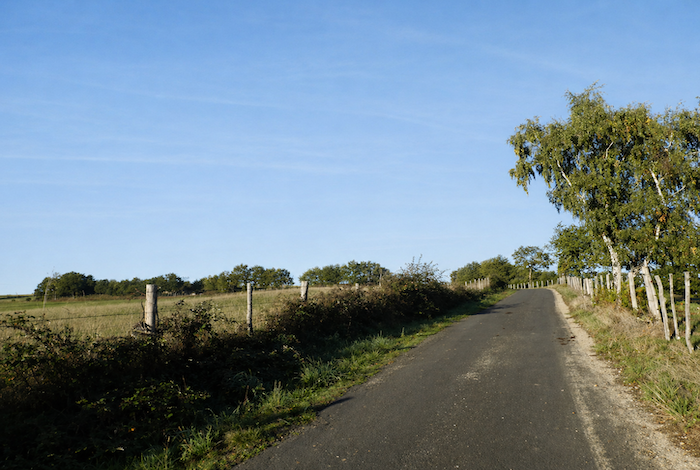
| Then the landscape suddenly opens up. The climb becomes sustained, at times approaching a gradient of 15 percent, following hedgerows of rose hips where, here and there, the solitary silhouette of an old wind battered oak appears. |
 |
 |
Section 2: A long descent toward Espeyrac
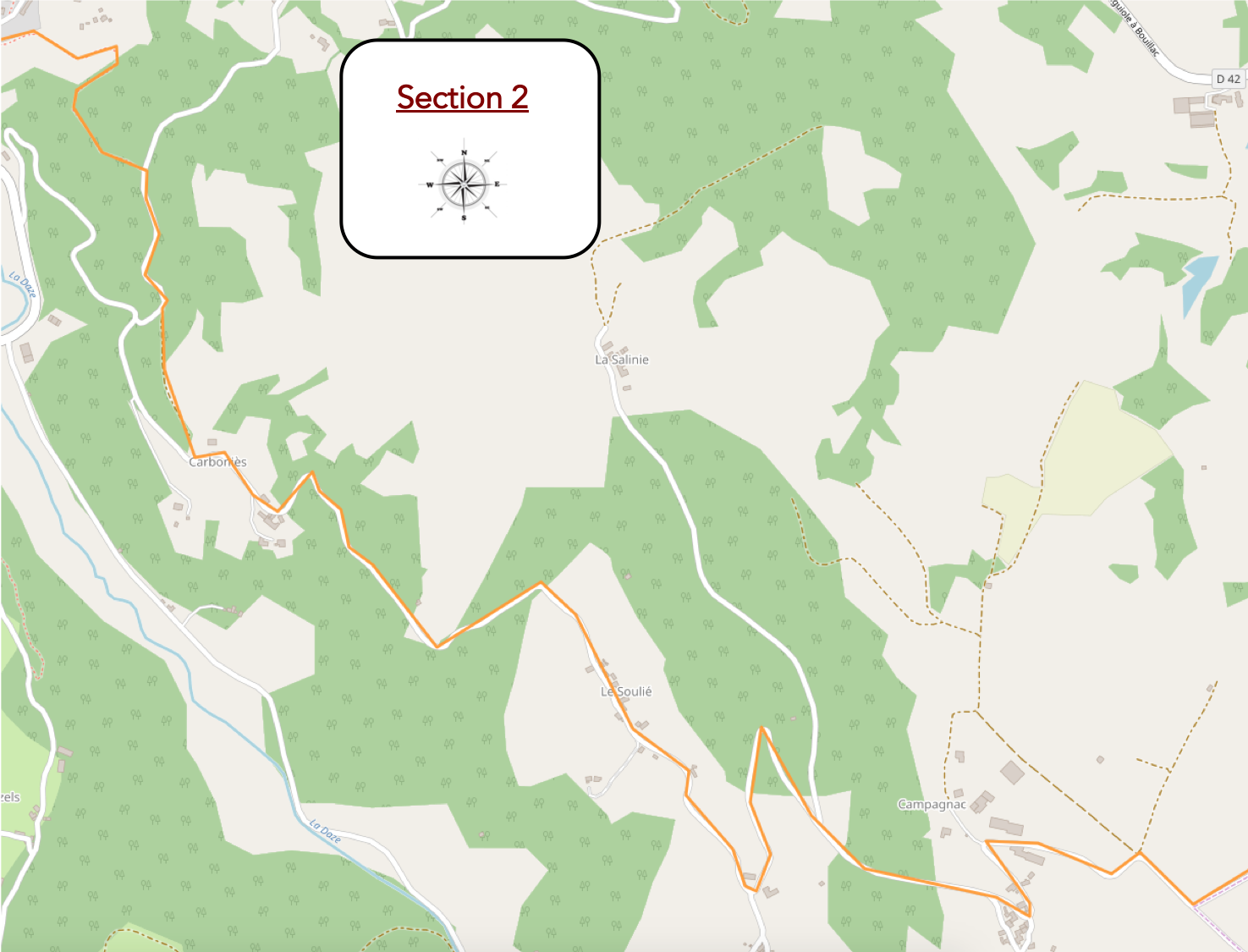
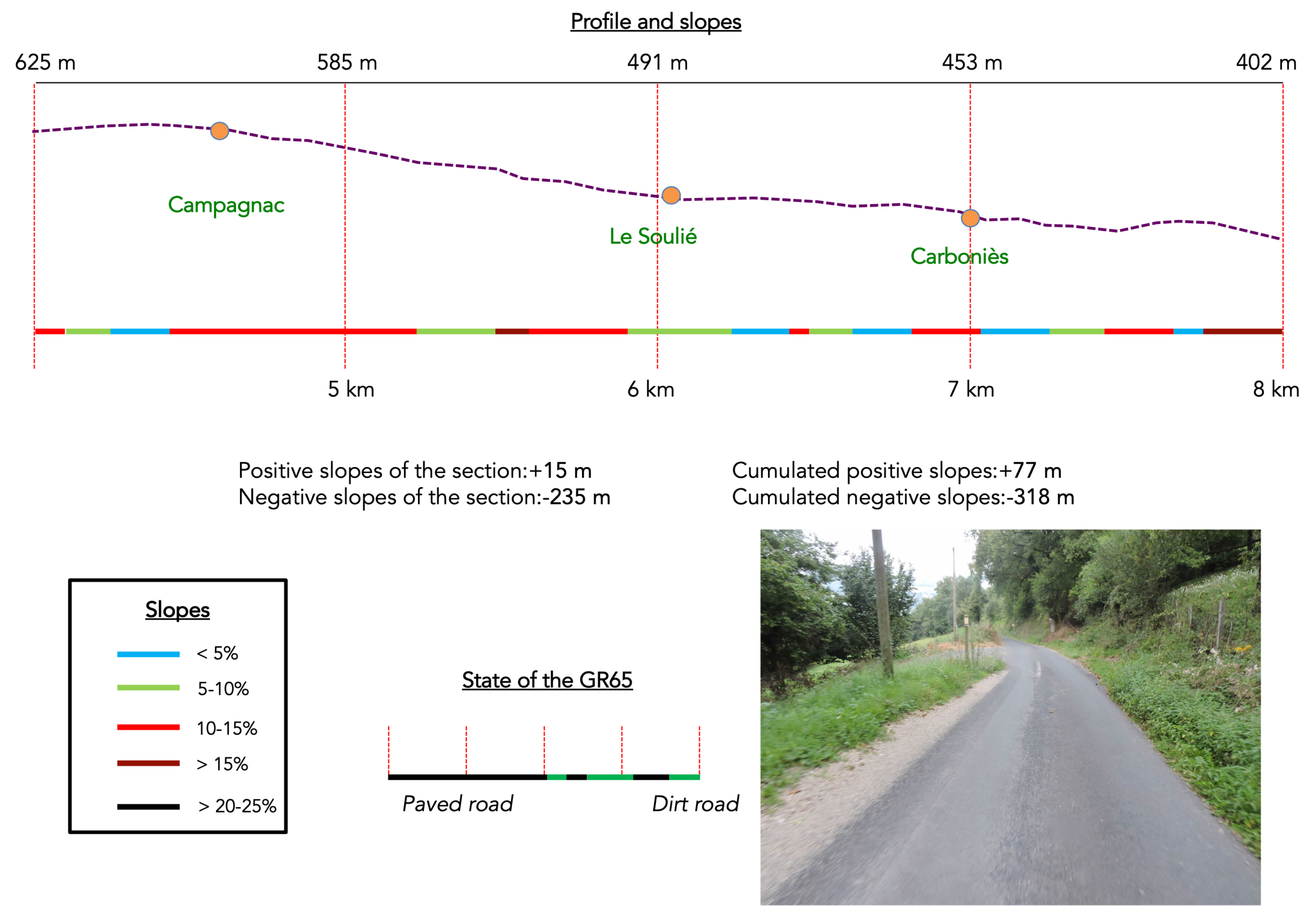
Overview of the route’s challenges: often steep downhill on paved roads, with occasional gentler sections.
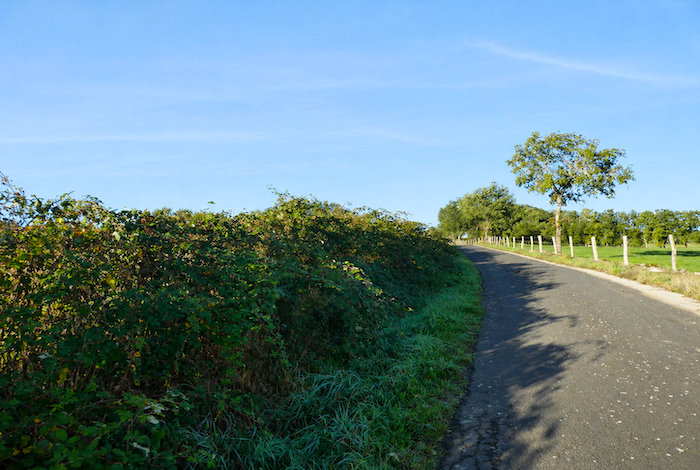
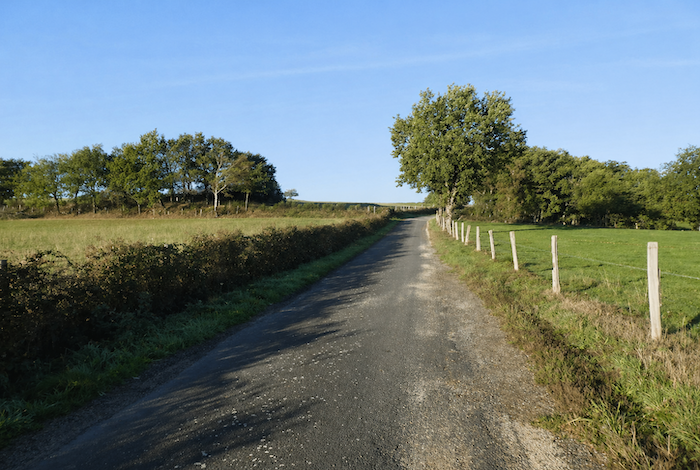
| The road will probably seem endless before you finally reach the ridgeline. Here, the route resembles those long mountain inclines, where heavy trucks struggle upward, gathering into slow moving convoys. Pilgrims too gradually stretch out into single file, each finding their own rhythm and breath. For while footsteps may fall naturally into the same cadence on level ground, climbs and descents quickly reveal each person’s strengths and weaknesses. |
 |
 |
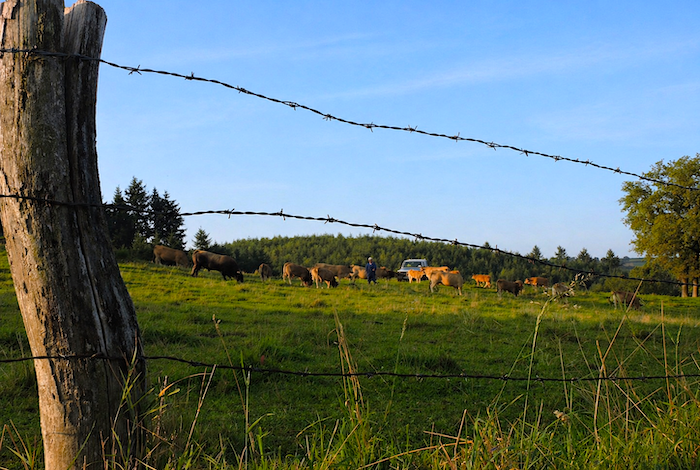
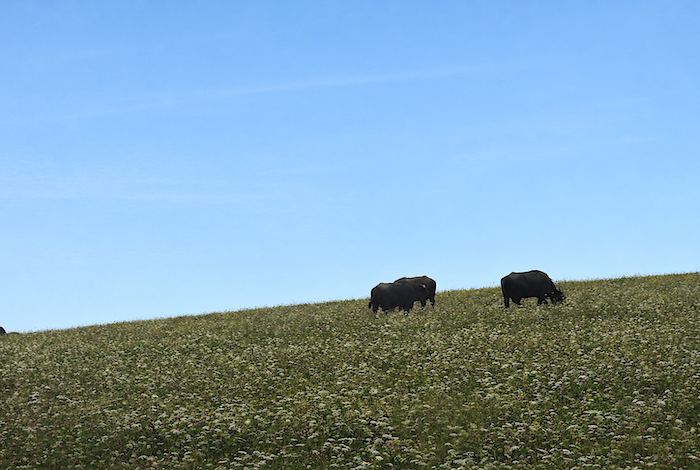
| At the top of the climb, you may catch sight of a few buffalo cows seeking coolness in the vast expanse of pastureland, a domain of more than fifty hectares stretching as far as the eye can see. More than fifty mothers graze peacefully here. You are then very close to Bessoles. A pilgrim lodge awaits hikers one kilometer farther down at the farm.
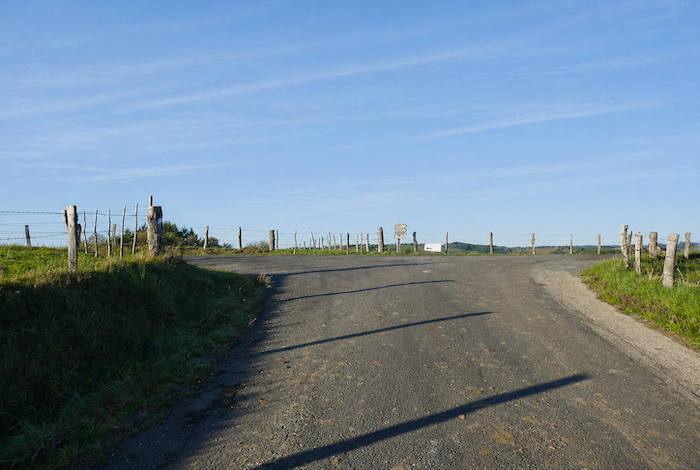
It is also here that the GR65 and GR6 routes meet, like two rivers joining their waters |
 |
 |
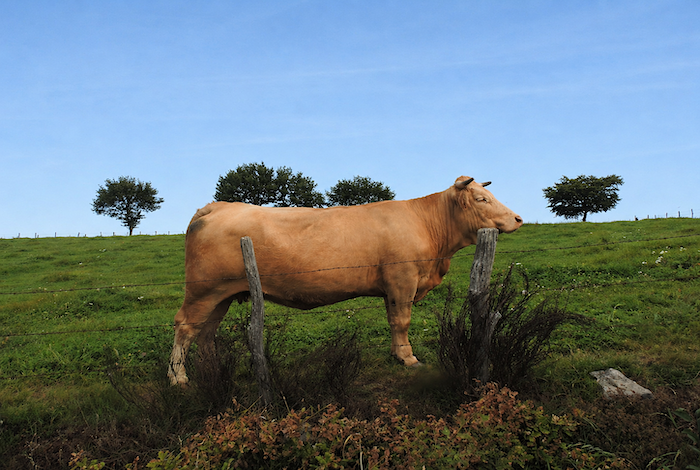
| But these lands are not inhabited solely by peaceful buffalo cows. Faced with this massive bull, with its powerful neck and dark gaze, is it not wiser to admire him from a safe distance behind the bite of barbed wire? |
 |
 |
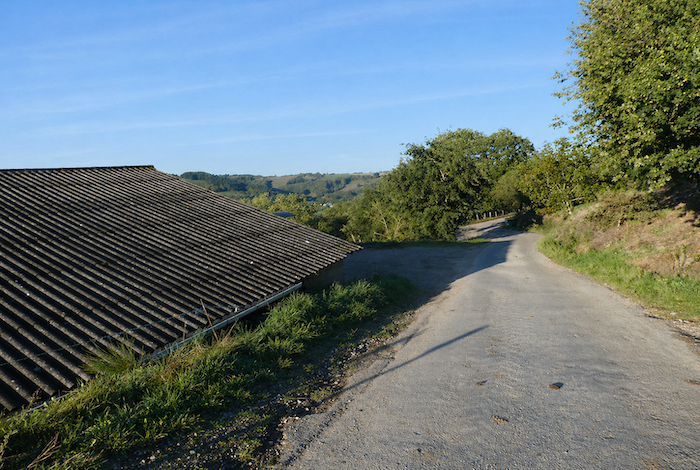
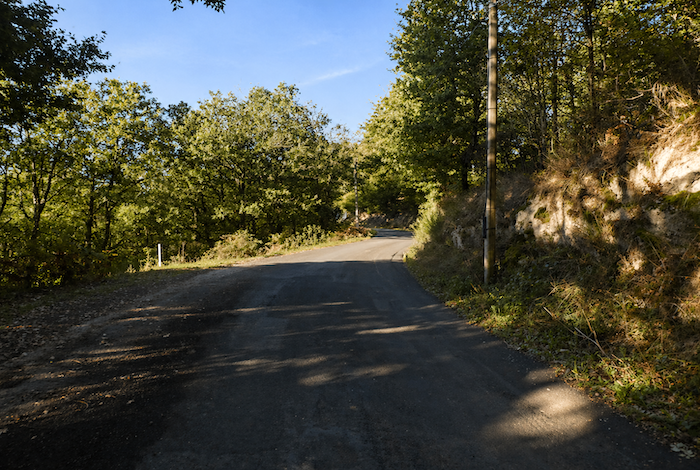
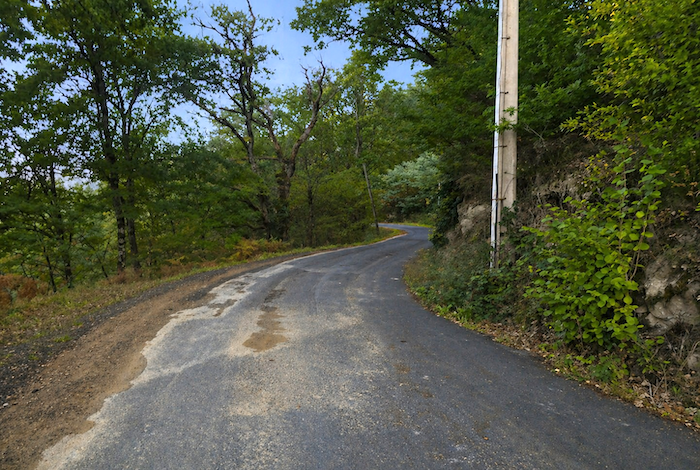
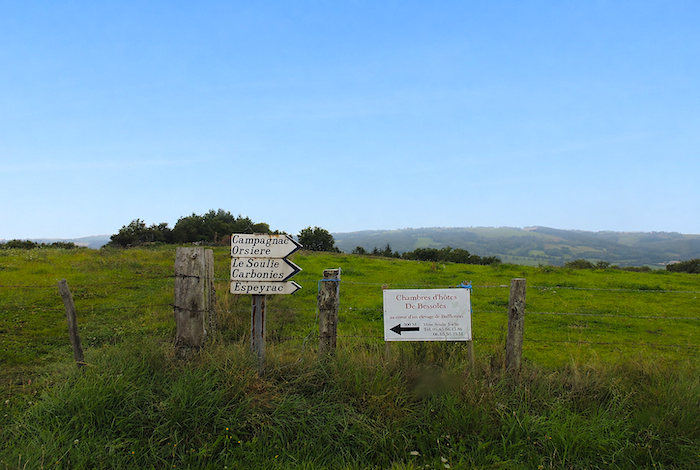
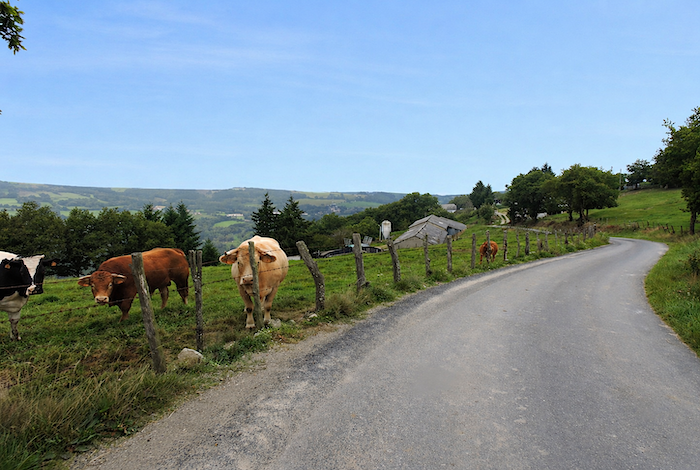
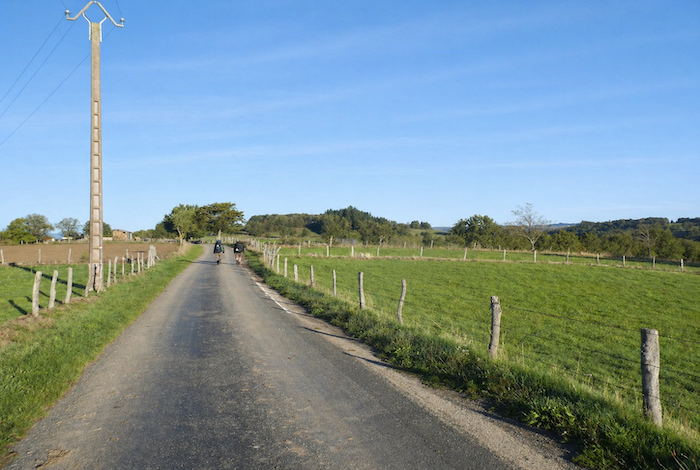
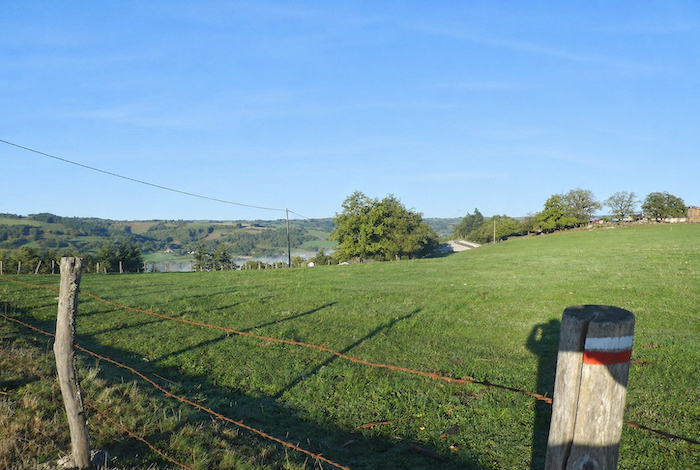
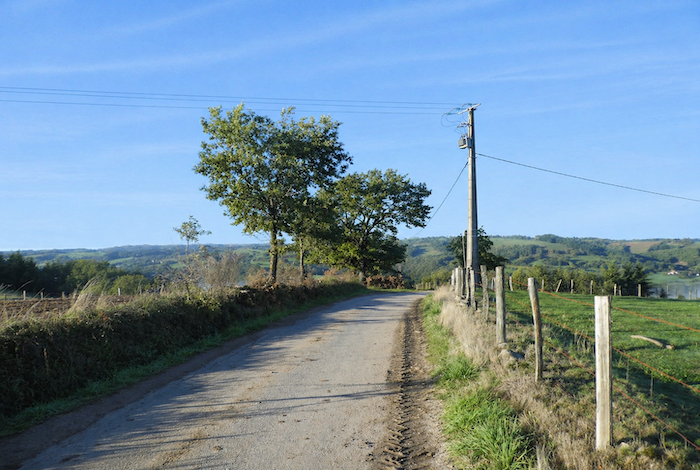
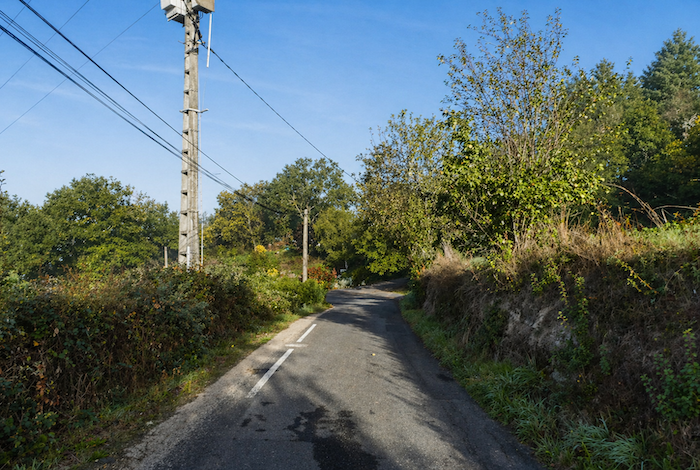
| From here begins the very long descent toward Espeyrac. Unfortunately, it takes place almost entirely on asphalt. Yet the pilgrim is made to walk, whether rejoicing in the journey or regretting the absence of those little side paths lovingly traced beneath woodland canopies. The route commands, and the pilgrim obeys. Such is the silent law of the road. Without unnecessary complaint, without muttered resentment against dust or asphalt. The road first makes a sharp bend, approaching a gradient of fifteen percent, among the scattered farms of Campagnac. |
 |
 |
 |
 |
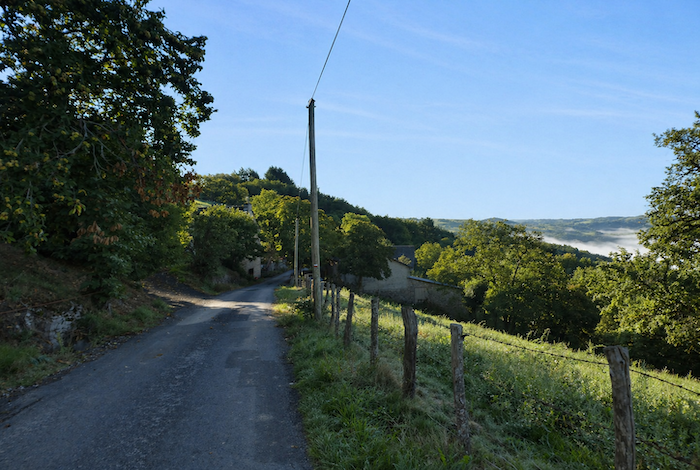
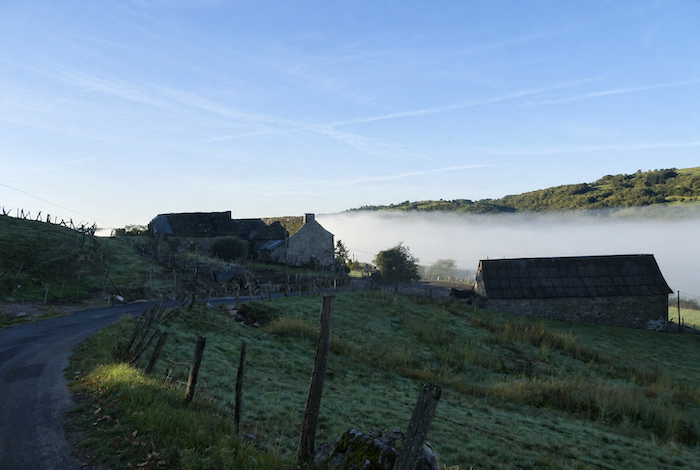
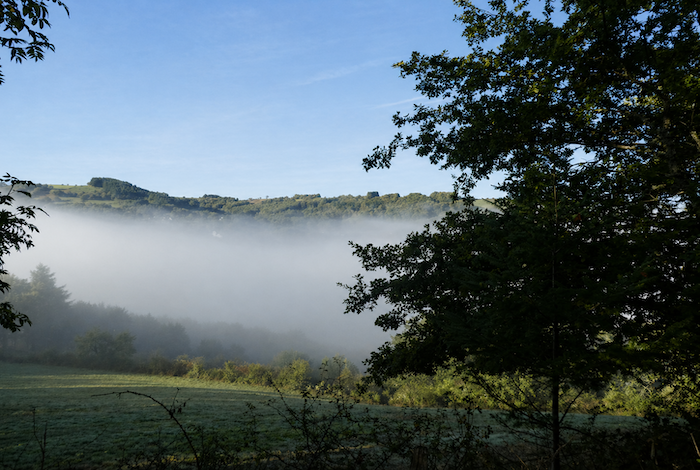
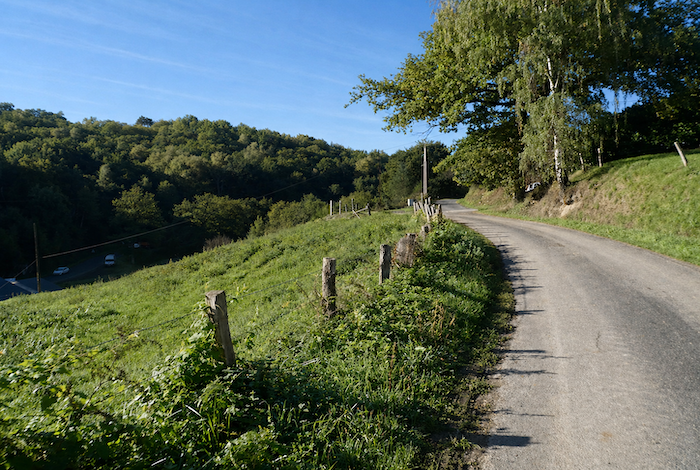
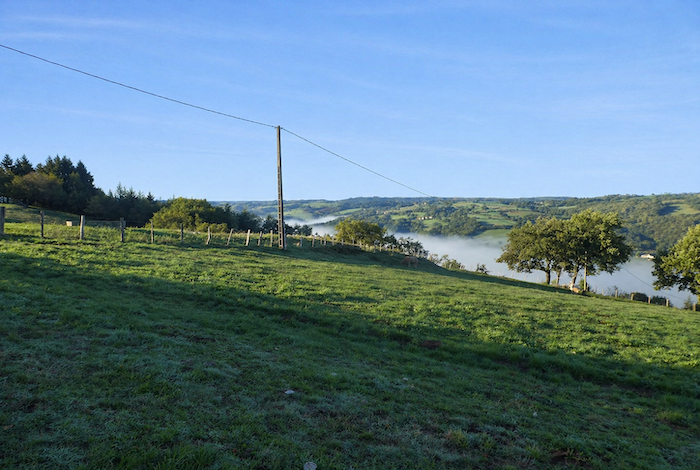
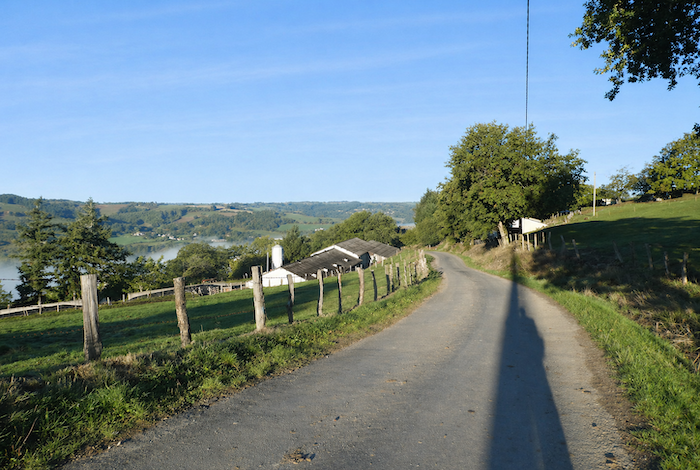
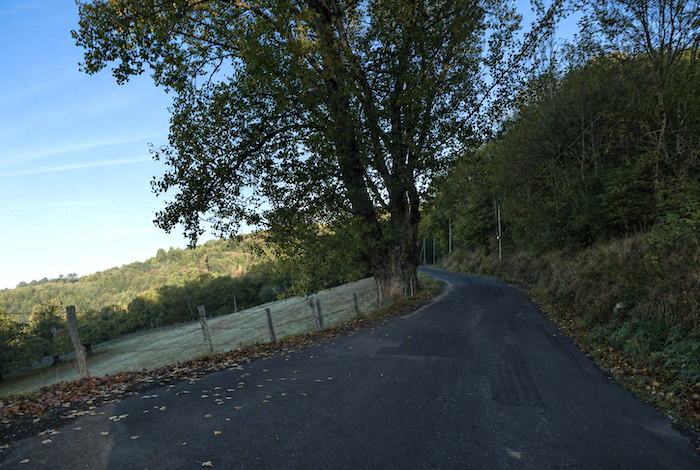
| The road then unfolds in a broad S curve between meadows and woodlands. Alongside the oaks, chestnut trees, and beeches stand tall ash trees. In these livestock farming lands, farmers have always planted these generous trees, whose fruits once provided valuable supplementary feed for their animals. On this bright early autumn day, mist slowly rises from the valley floor while the road traces a broad and almost unreal arabesque across the meadows below. |
 |
 |
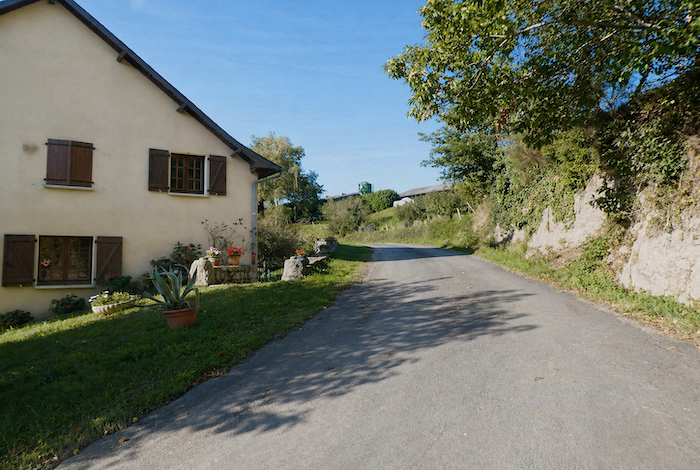
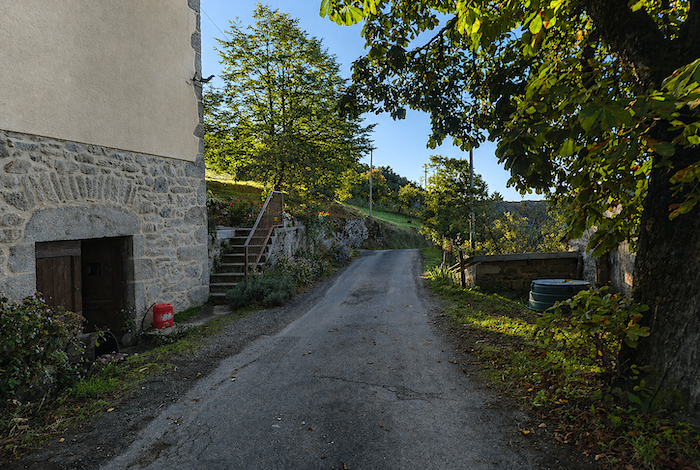
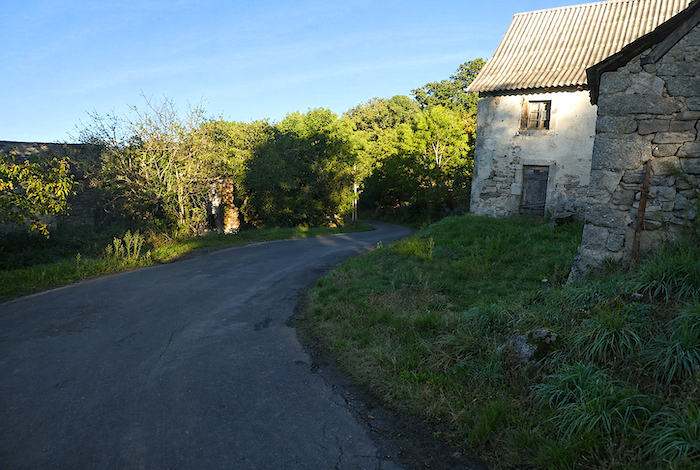
| Campagnac is also a place of large stone farmhouses built from sandstone and pale limestone, solid as fortresses standing against the passage of time. |
 |
 |
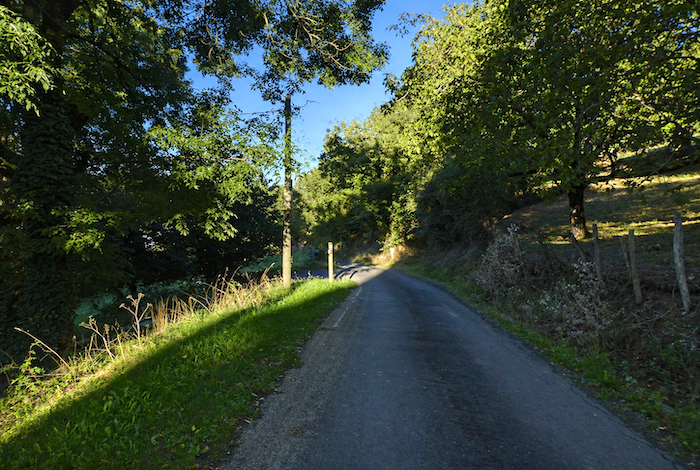
| The road continues its sustained descent beneath the canopy of trees, in a cool and damp atmosphere where footsteps scarcely echo. |
 |
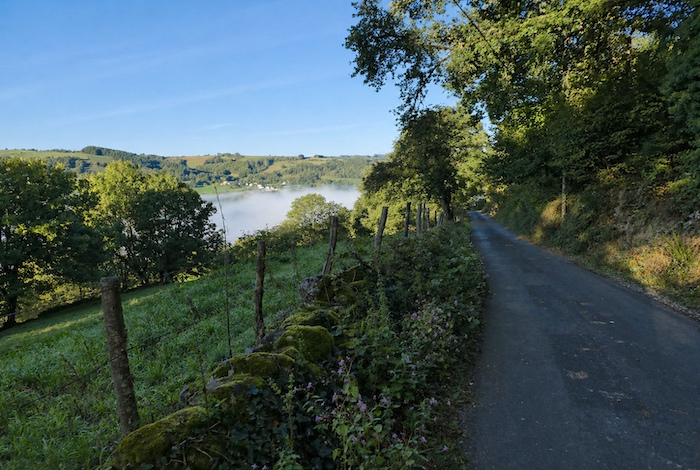 |
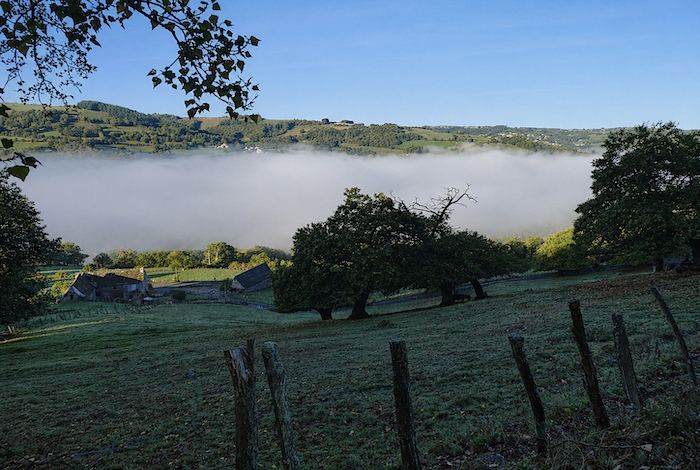
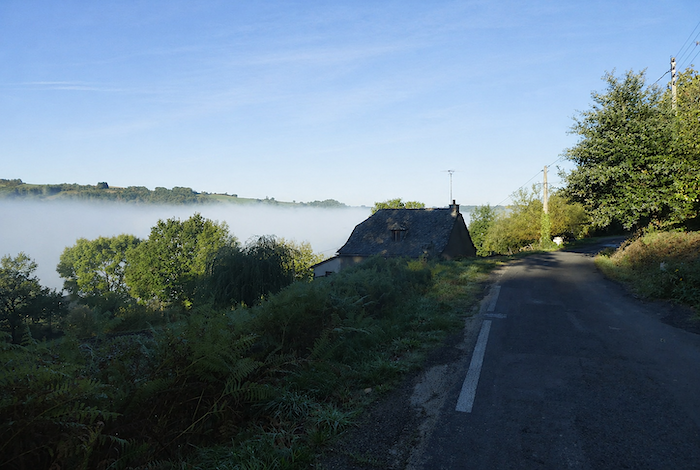
| Further down, it sweeps into another wide bend. No one seems to travel this road surrendered to silence, and the walker gradually approaches the band of mist stretched across the valley floor like a river of grey wool. |
 |
 |
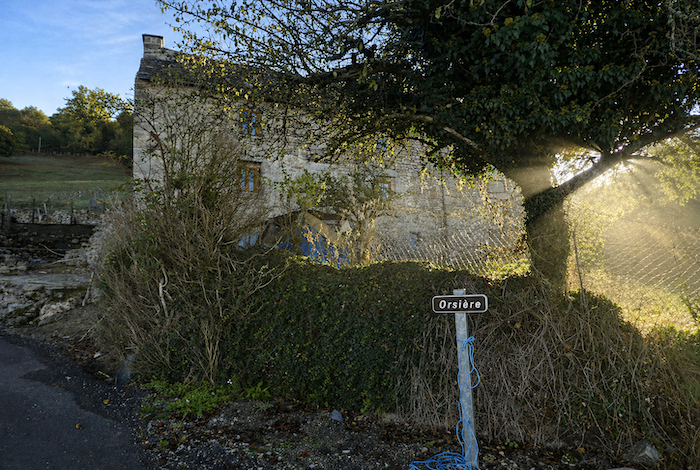
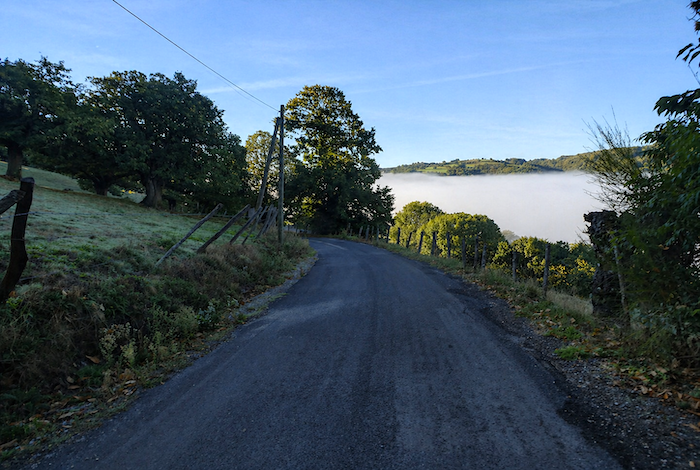
| Today is therefore the day to run through a true bath of mist near the isolated farms of Orsière. In this shifting grey veil, one could almost imagine being on some Scottish moor. Time seems suspended, frozen in silent expectation, while everyone hopes to see the sun slowly disperse the fog, just as ghosts vanish with the first light of day. |
 |
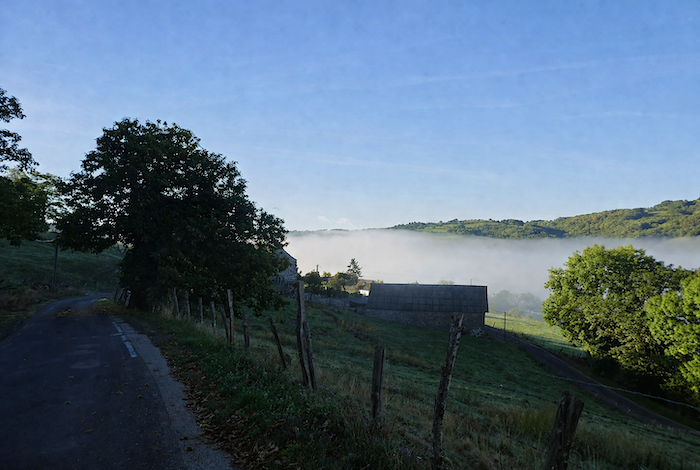 |
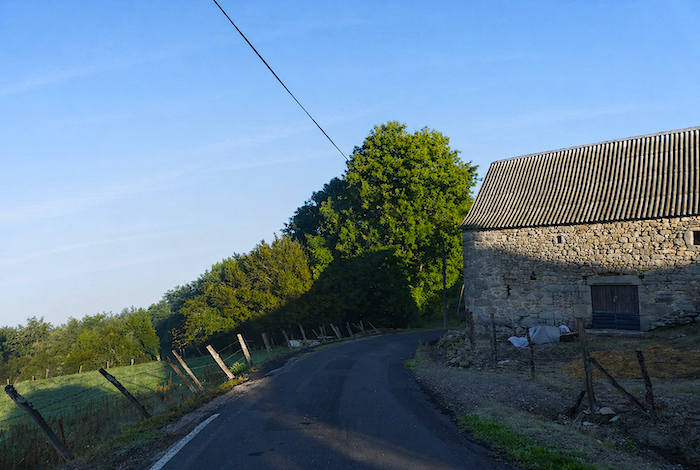
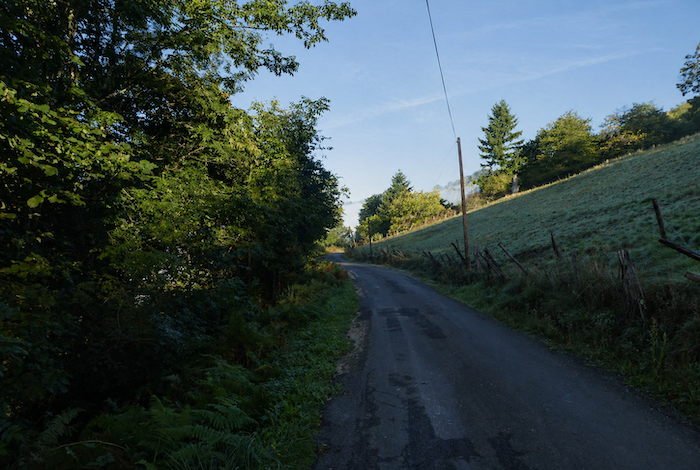
| A little farther down, the road traces one final broad loop before continuing its endless play of shadow and light. The valley here is deeply enclosed, and in the early morning the sun sometimes struggles to clear the valley walls. |
 |
 |
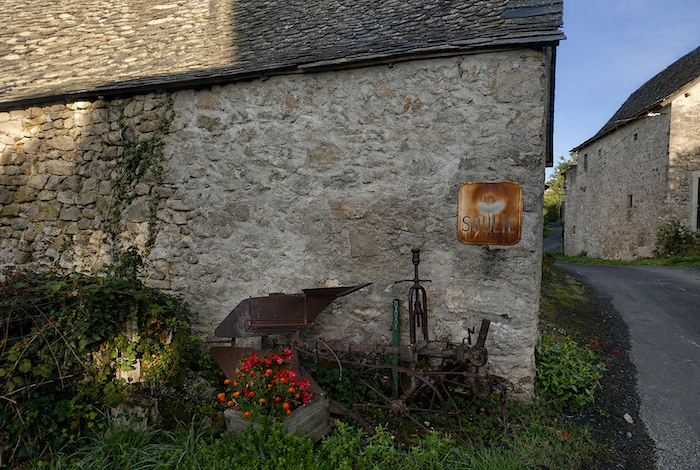
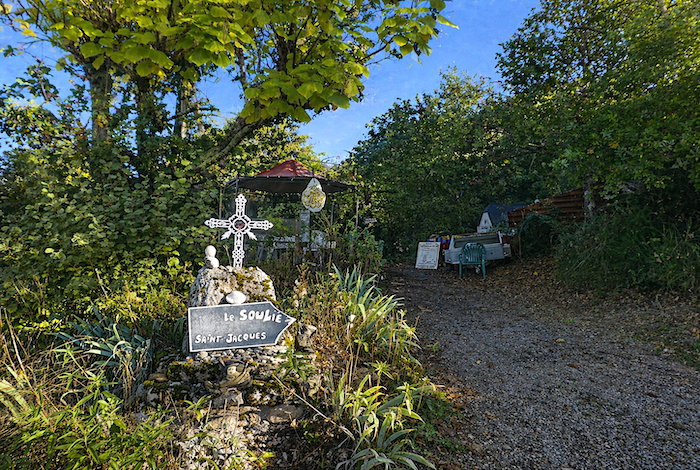
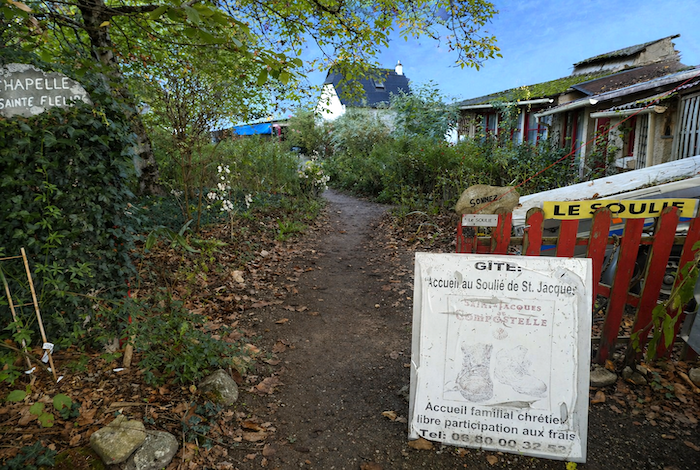
| The small road soon reaches Le Soulié, where a simple, charming, and peaceful Christian welcome offers pilgrims a place to eat and find rest. |
 |
 |
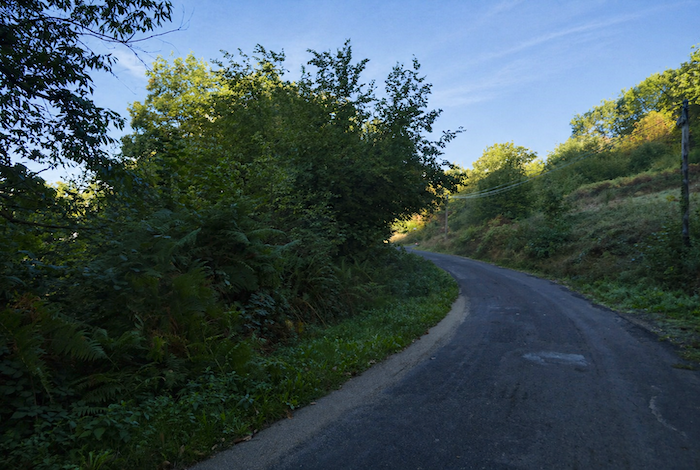
| By now, you have entered the blanket of mist that still envelops the valley in the early hours of the day. |
 |
 |
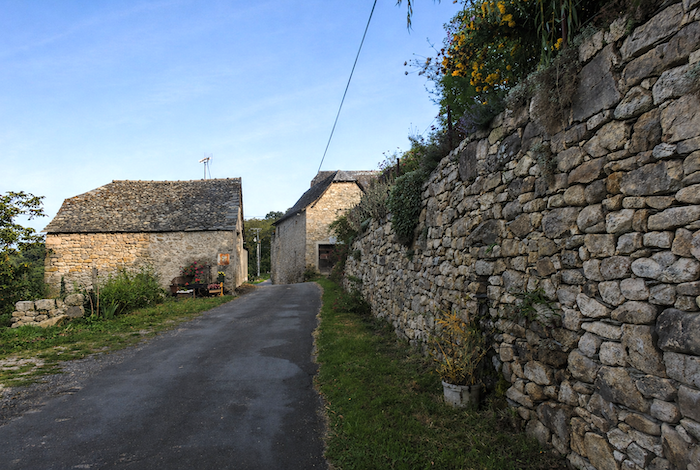
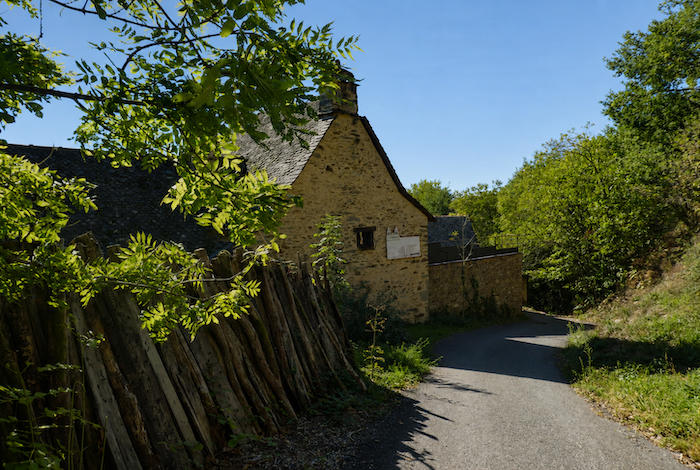
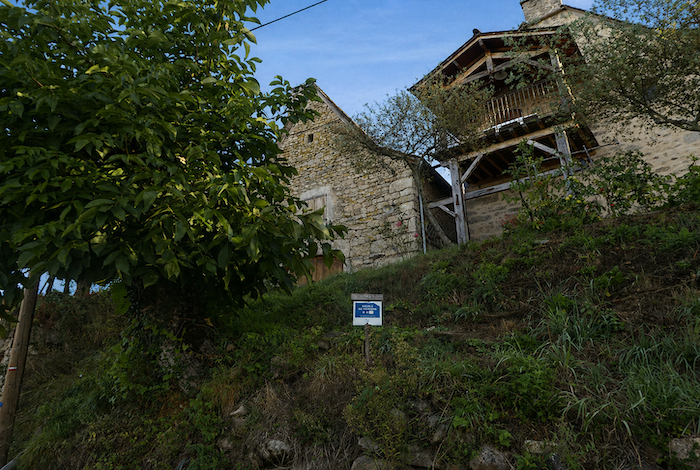
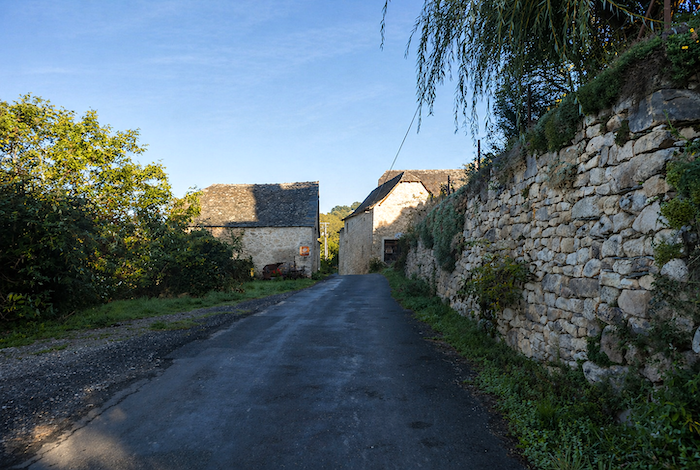
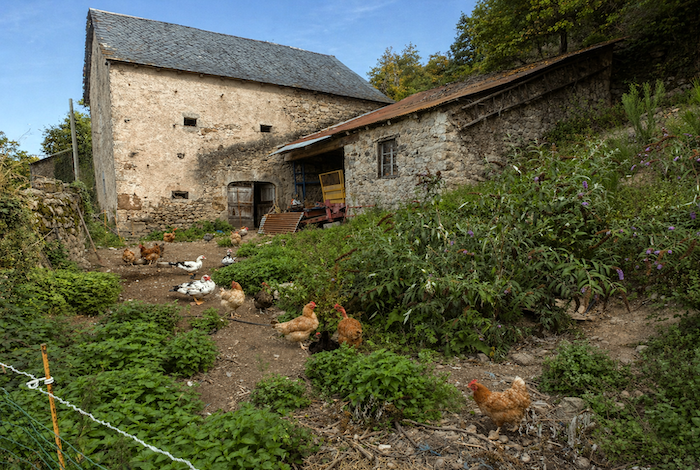
| Le Soulié is an extraordinary cluster of large stone buildings, massive and unchanging, built to withstand the centuries beneath their heavy slate roofs. It is difficult to resist the austere charm of these ancient stones, laden with memory and silence. |
 |
 |
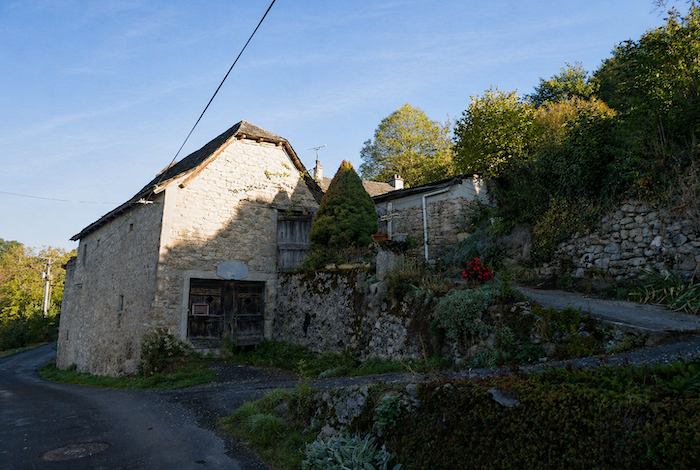
| Even the chickens seem happy in this peaceful mountain corner where everything appears to move at a forgotten pace. |
 |
 |
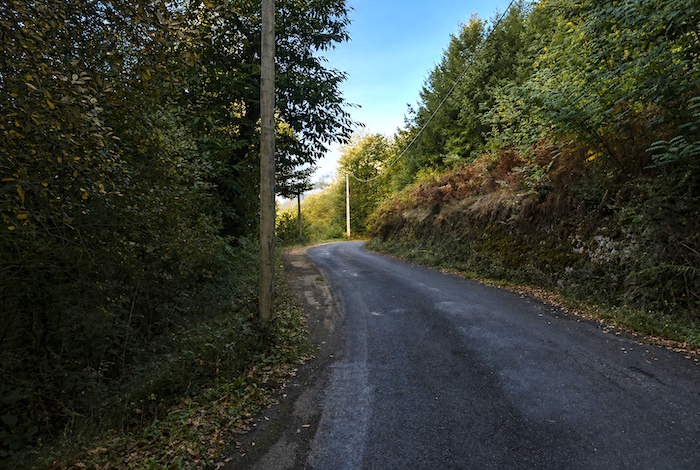
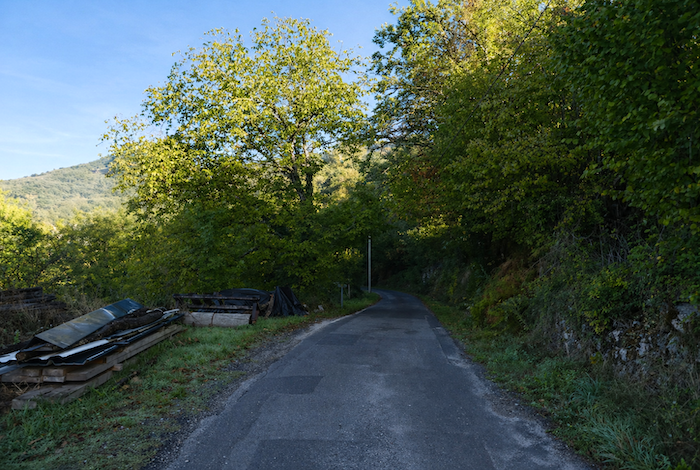
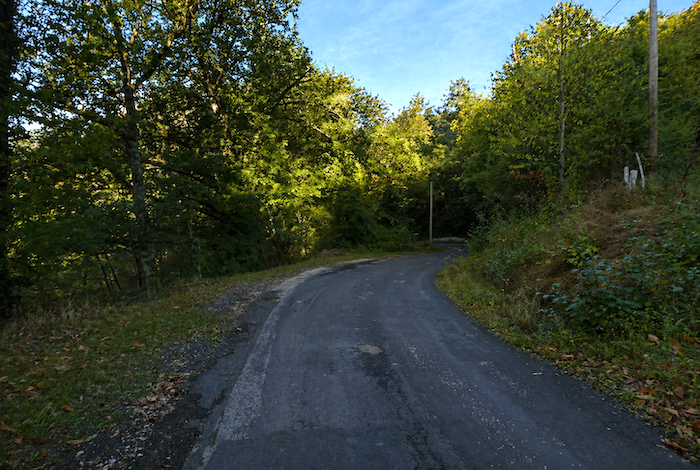
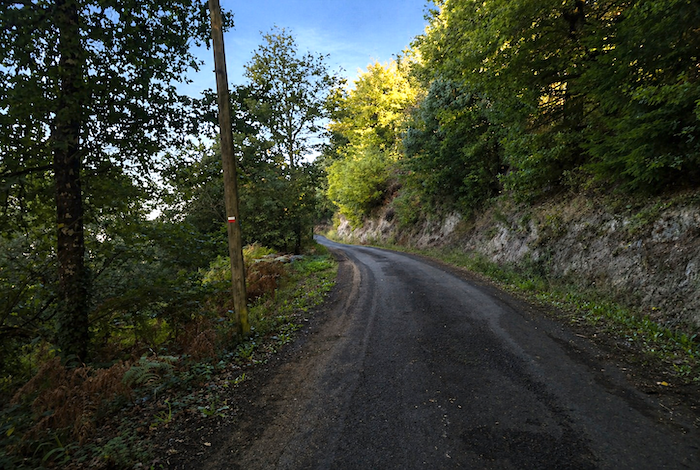
| And the road continues its relentless descent. From Le Soulié onward, however, the gradient becomes gentler for more than a kilometer. With every bend in this winding road, the pilgrim sinks a little deeper into the narrow valley. Everything here overflows with plant life: an abundance of mosses, tangled branches, forgotten thickets among stunted oaks, twisted chestnut trees, and young beech saplings. |
 |
 |
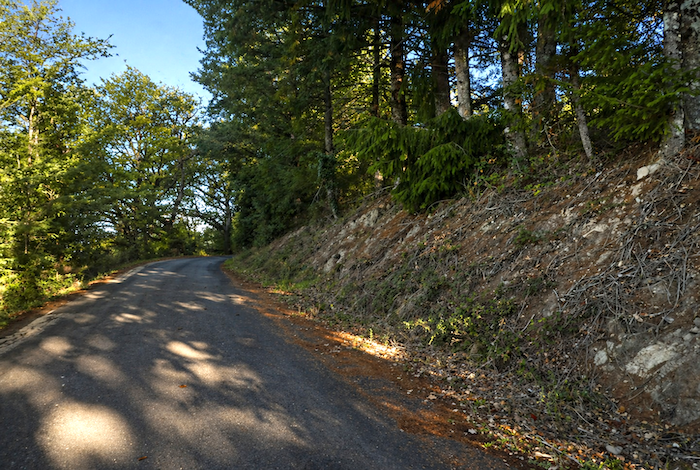
| In this world saturated with chlorophyll, the road constantly alternates between cool shade and bright openings. In places, a few conifers, mainly spruces, discreetly mingle with the multitude of deciduous trees. |
 |
 |
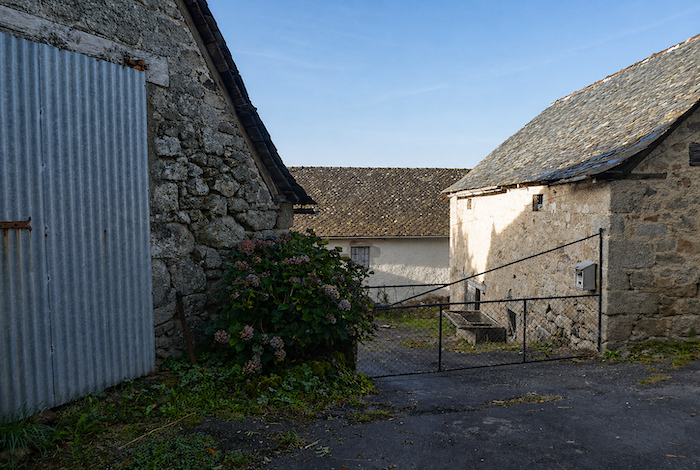
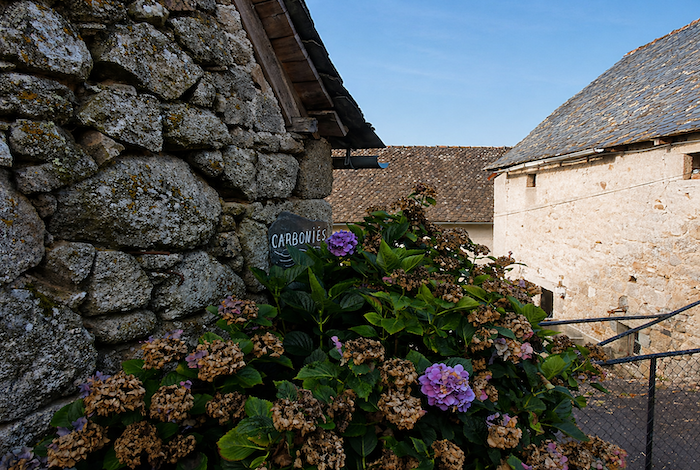
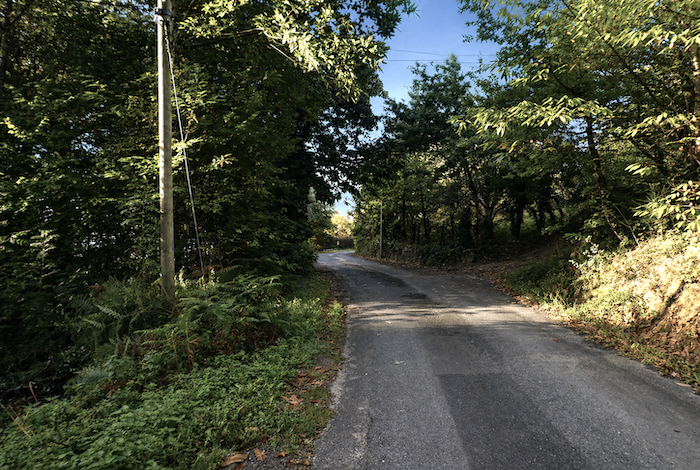
| Further down, the road reaches the hamlet of Carboniès, where rough stone still gleams on the façades of the farmhouses as though it were holding on to the light of the land itself. |
 |
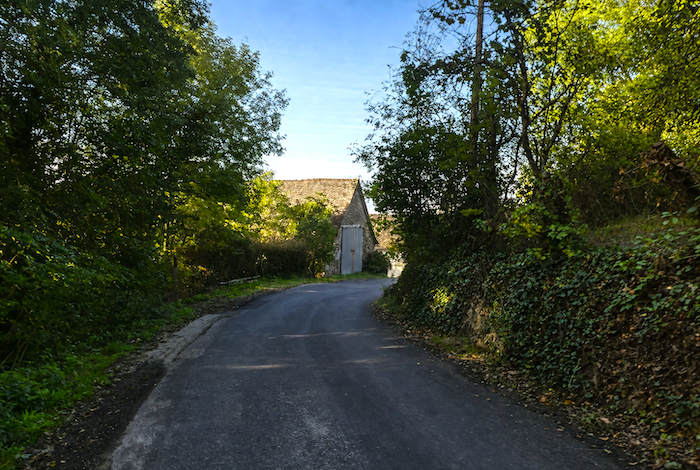 |
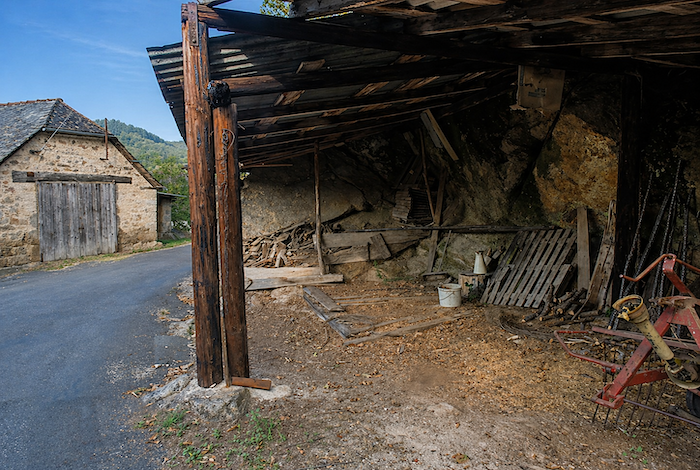
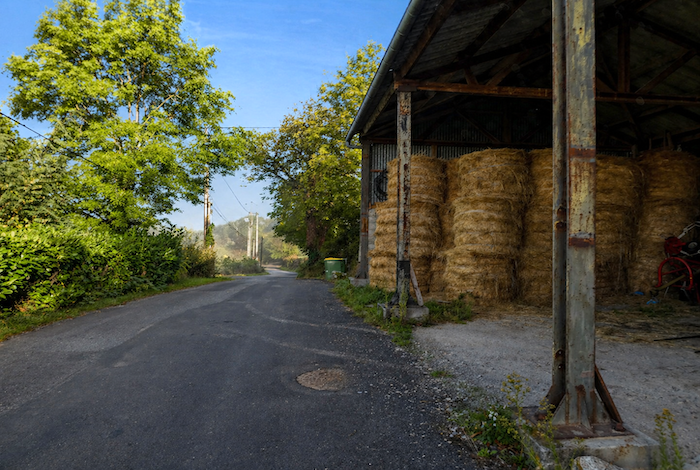
| Everything here breathes the spirit of rural life. Looking at the barns, meadows, stables, and sunken lanes surrounding the houses, one senses a place entirely shaped by the labour of the land and the rhythm of the seasons. |
 |
 |
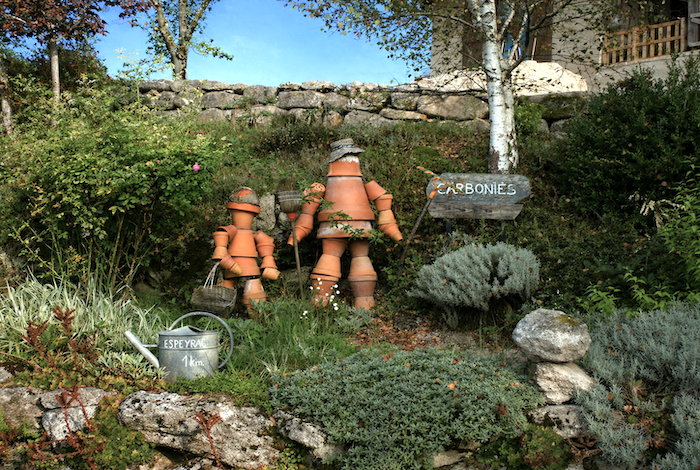
| Further down still, the flowerpots seem to have escaped into the countryside. |
 |
 |
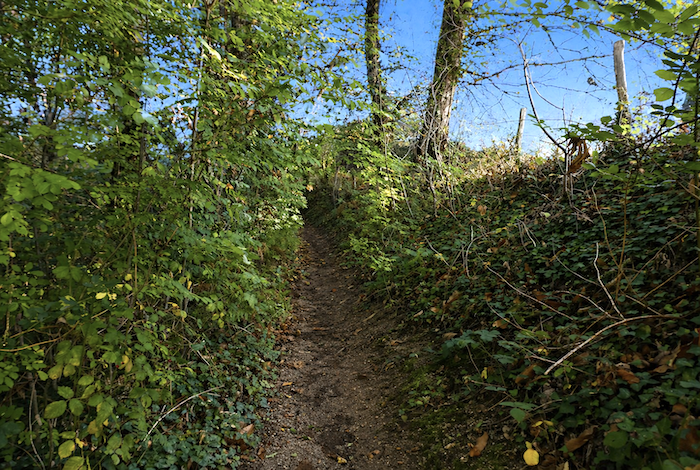
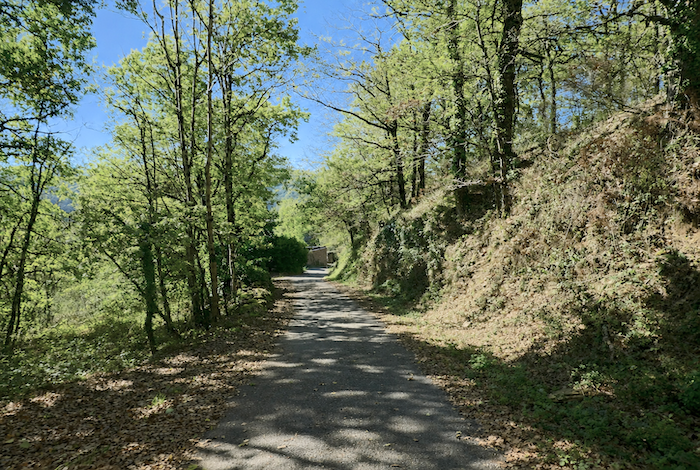
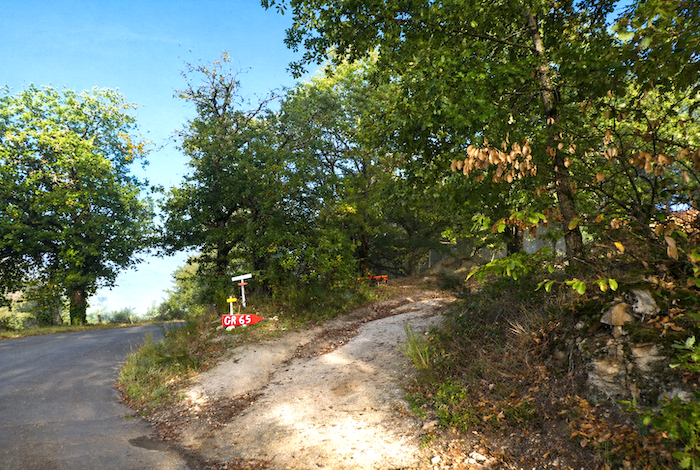
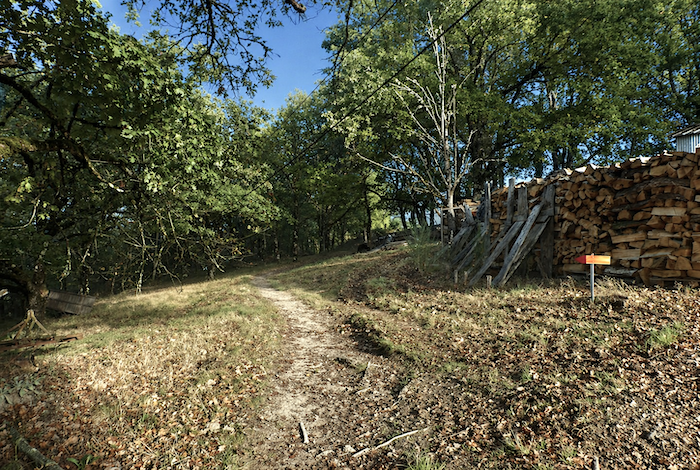
| From the hamlet onward, the GR65 leaves the road for a while and offers pilgrims a path that climbs gently beneath chestnut and beech trees. No walker is likely to complain, for the call of the woodland is irresistible here. |
 |
 |
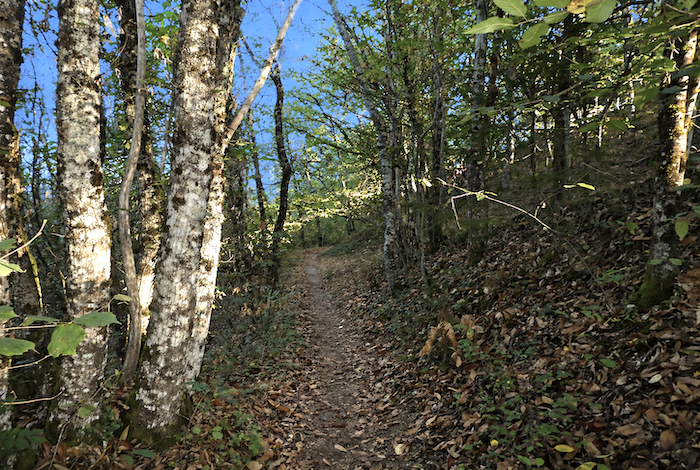
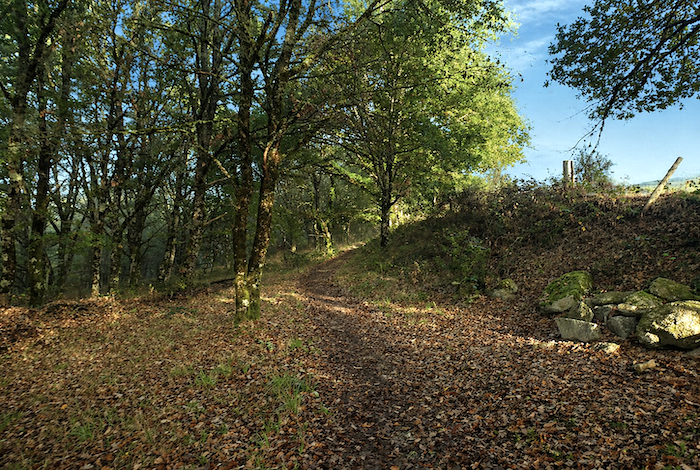
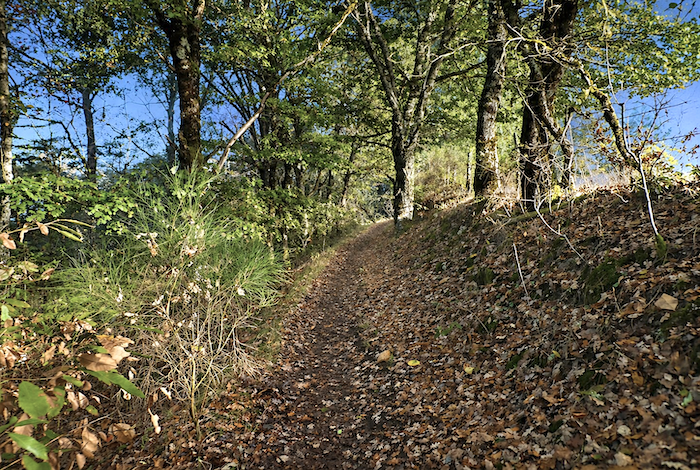
| The trail soon begins to wander through the undergrowth, winding beneath the high canopy of broadleaf trees in a cool silence where little can be heard beyond the rustling of leaves. |
 |
 |
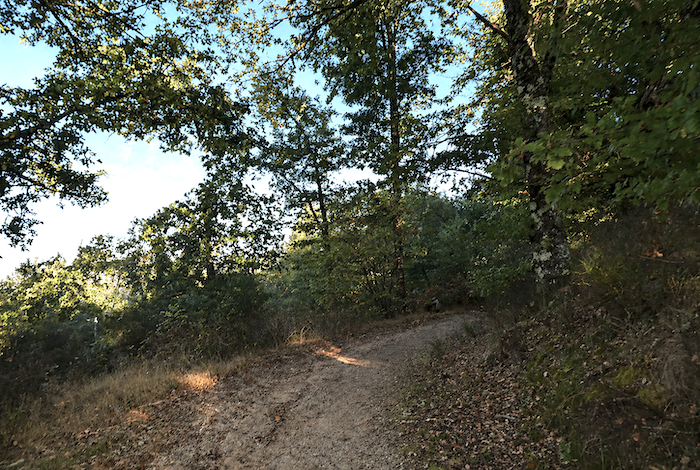
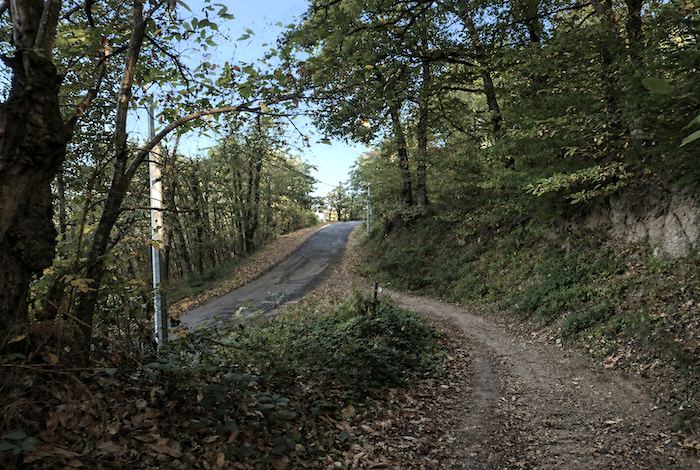
| Shortly afterwards, the trail briefly rejoins the road it left only moments earlier, as though for a short truce before plunging elsewhere once again. |
 |
 |
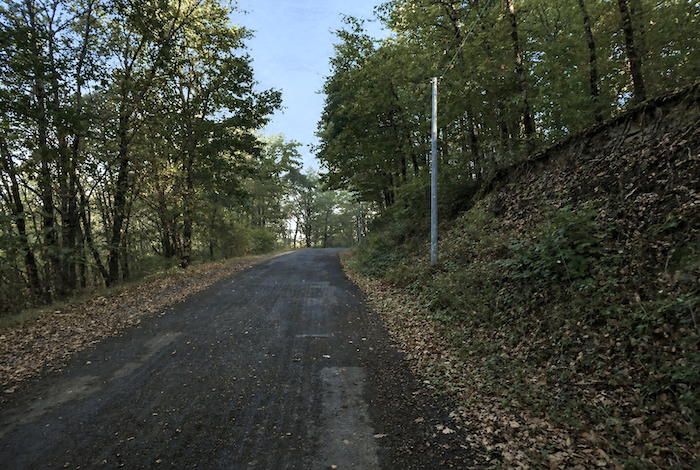
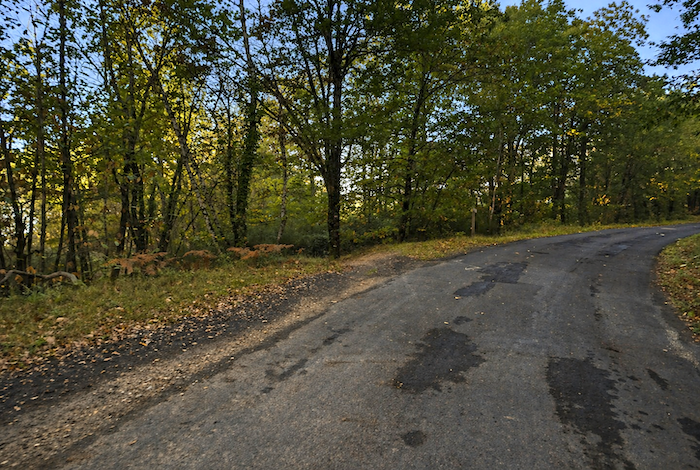
| But this interlude does not last long. Very quickly, the path escapes once more into the woodland, drawn back into the shade and depth of the forest. |
 |
 |
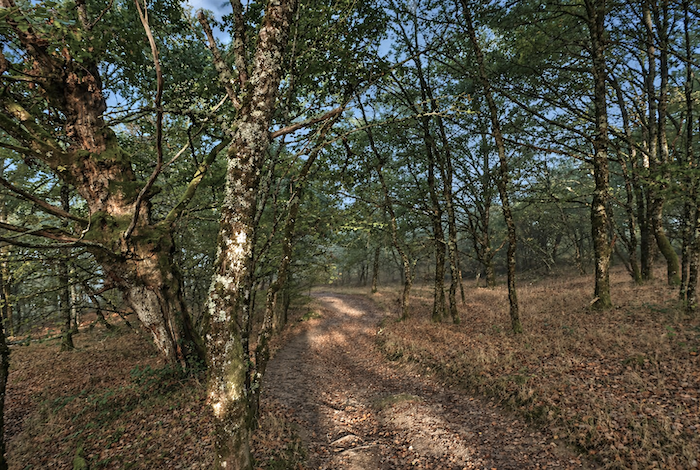
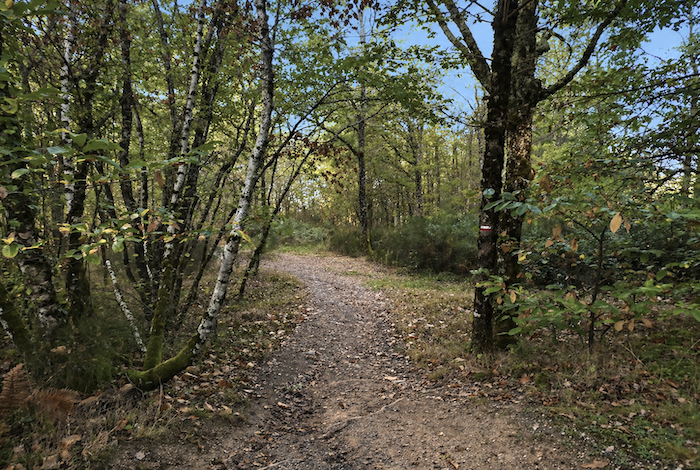
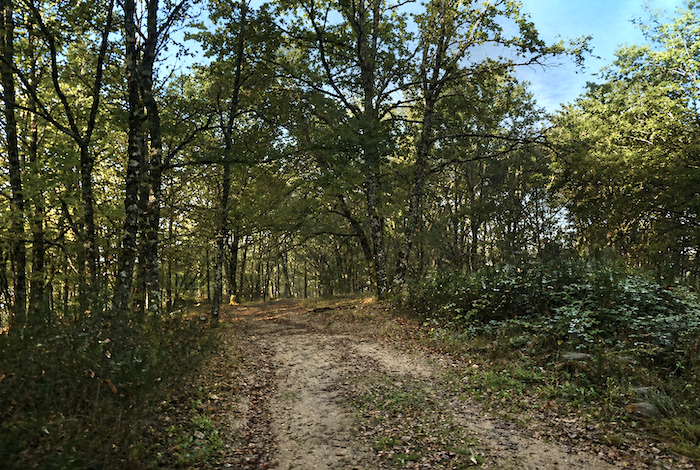
| Here everything becomes darker within this dense forest where tightly packed trees seem to close off the horizon. The slope steepens again beneath chestnut trees, oaks, and beeches, in a demanding descent that reminds the pilgrim that the route never grants comfort for very long. |
 |
 |
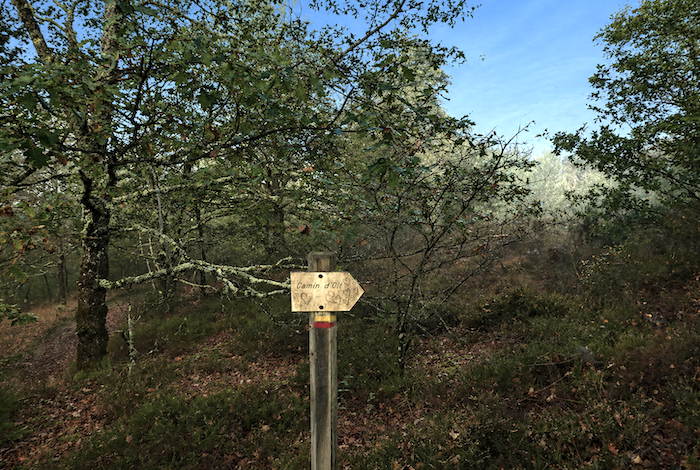
| From now on, you will walk in the company of another hiking trail, appearing almost mysteriously from nowhere to accompany your progress for a time. |
 |
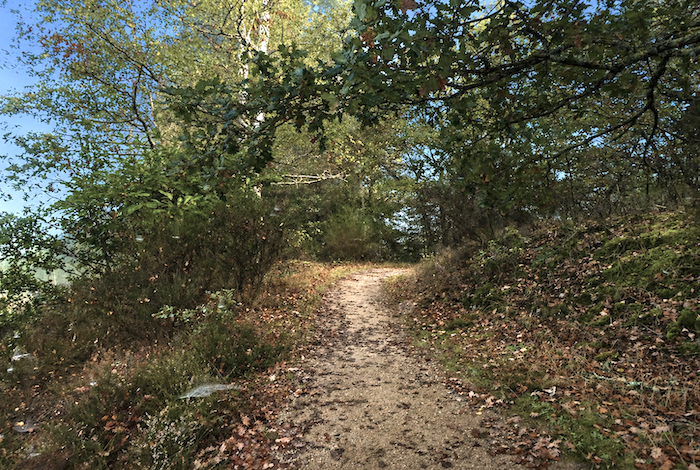 |
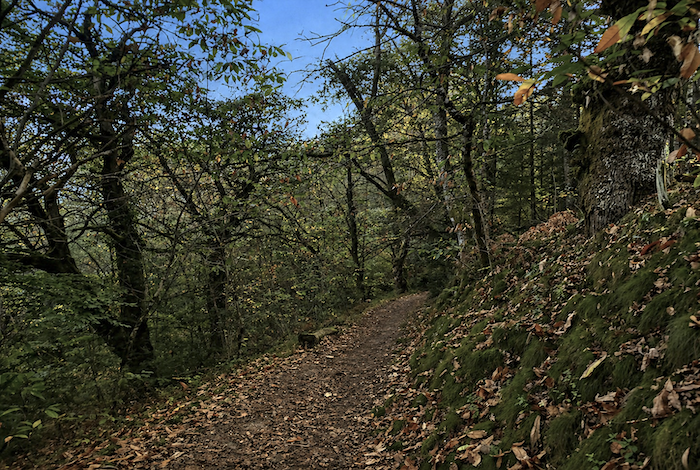
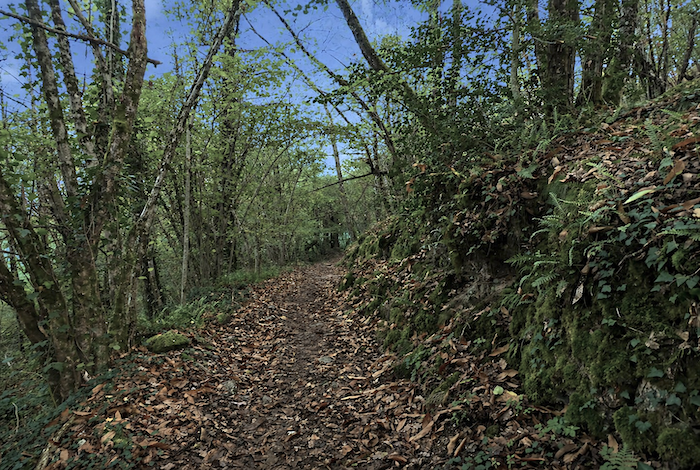
| Further on, the descent becomes genuinely steep, sometimes exceeding gradients of 15% in the heart of luxuriant vegetation where, far below, an invisible stream can be heard gurgling beneath ferns and moss-covered stones. |
 |
 |
Section 3: The GR65 climbs back up to the high plateau
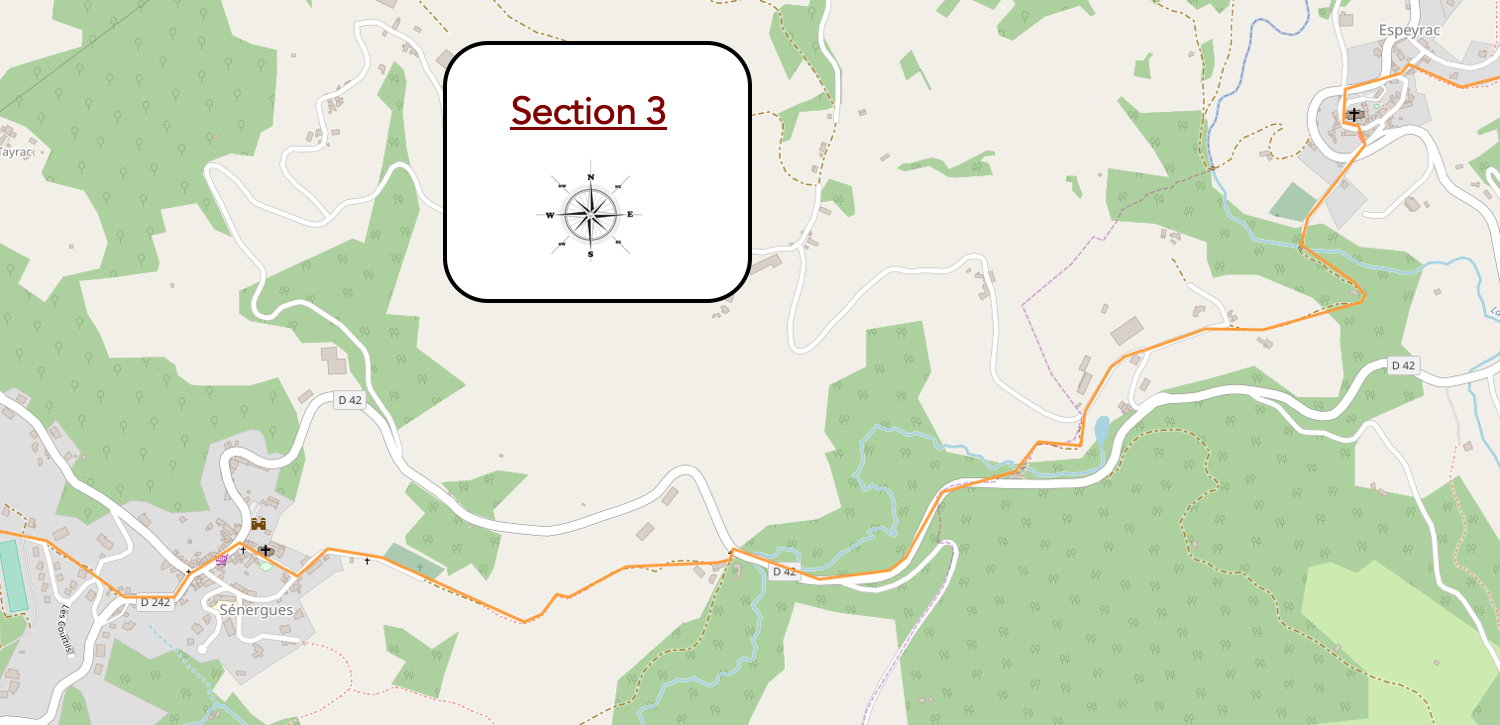
Overview of the route’s challenges: a roller coaster route, with steeper gradients leaving Espeyrac and, above all, beyond Sénergues.
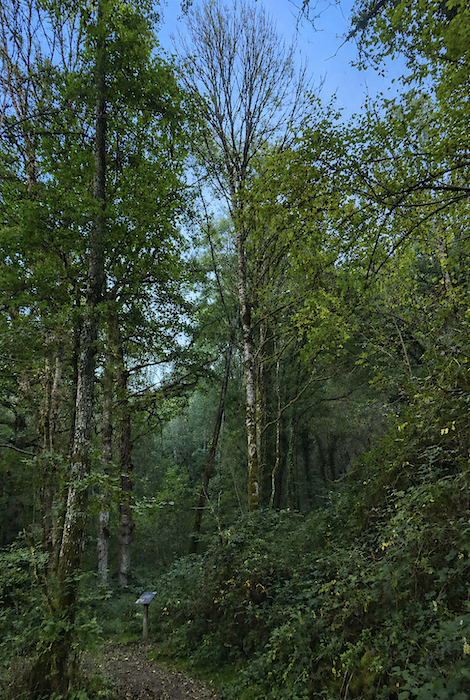
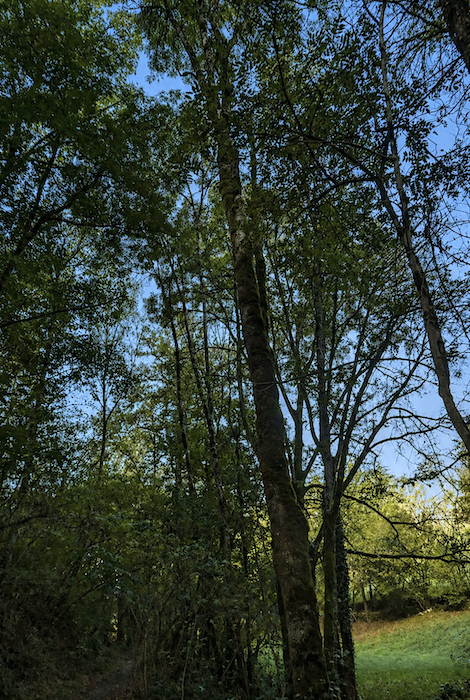
| The path gradually descends toward the stream. In these deep forests, oaks and chestnut trees generally remain modest in size, growing so closely together that they engage in a silent struggle for light. Only when they approach clearings do they finally unfold their full stature, rivaling the tall ash trees usually found along the woodland edges. Remember that a forest is a living and deeply social organism. Trees constantly exchange invisible messages in order to organize their collective survival as effectively as possible. Nothing is left to chance. A forest is never anarchic; despite the wild appearance it offers the pilgrim. |
 |
 |
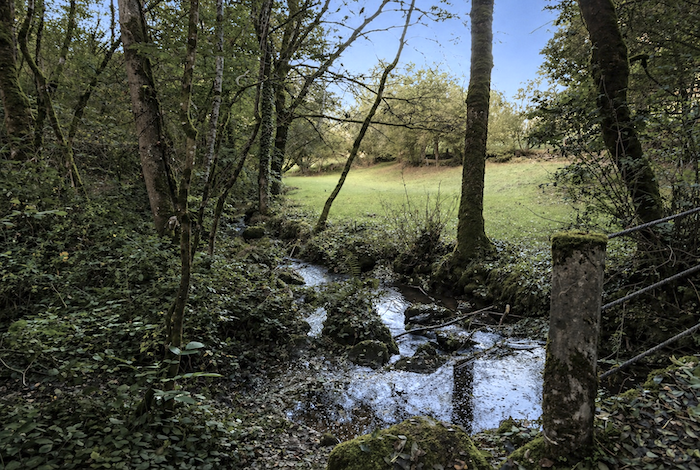
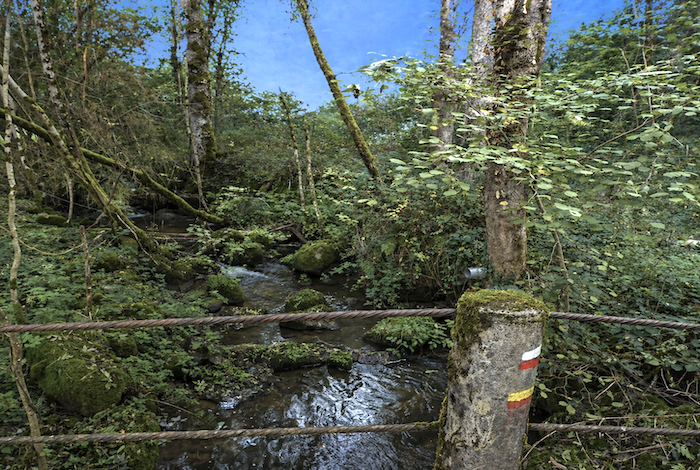
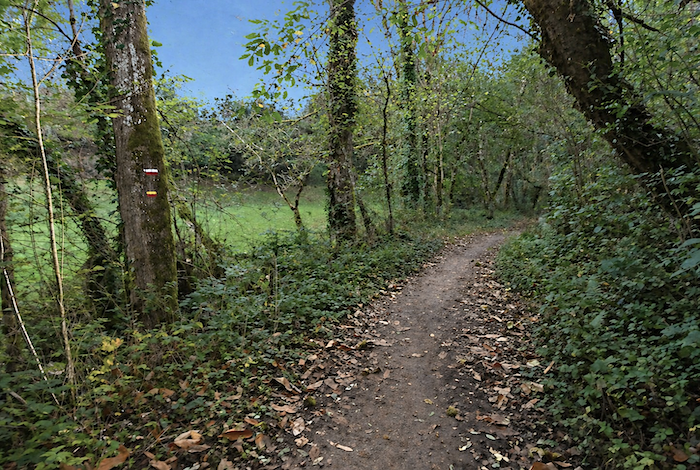
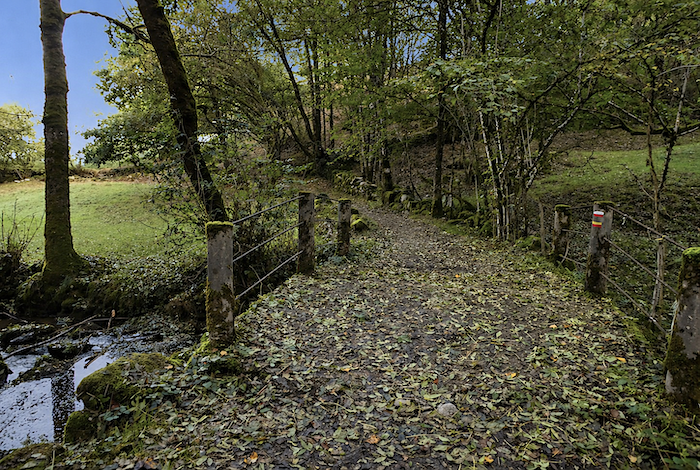
| At the bottom of the dale, where moss and lichen cling to every stone and every trunk among the damp ferns, a tributary of the Daze flows peacefully, a discreet thread of water lost beneath the vegetal twilight. |
 |
 |
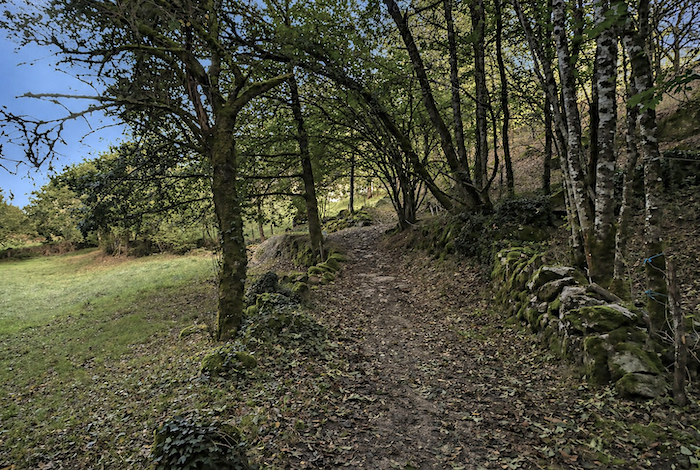
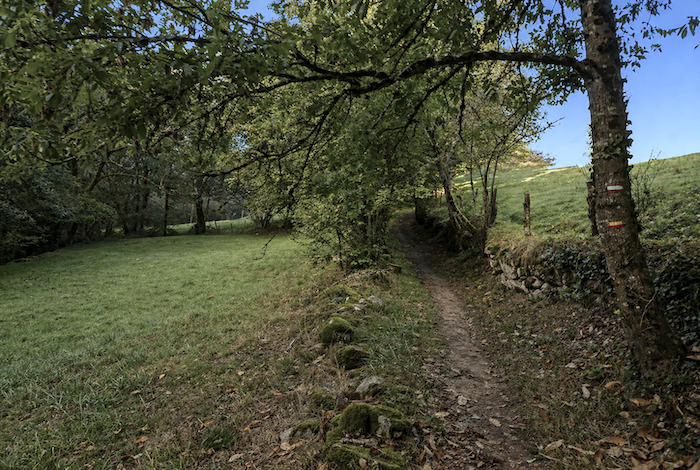
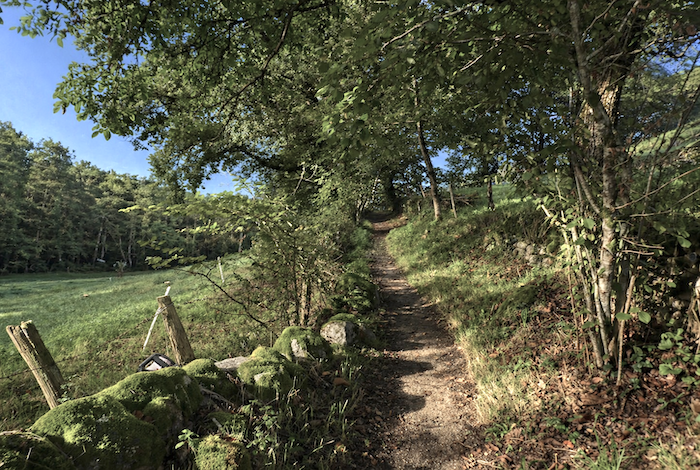
| A narrow trail then leaves the stream and climbs the hillside overlooking Espeyrac. |
 |
 |
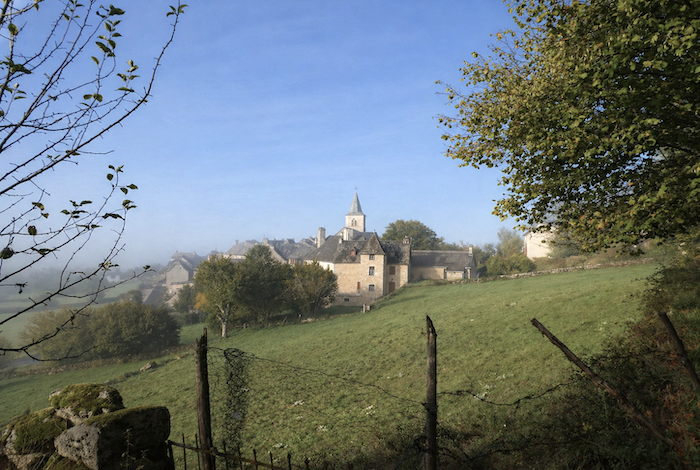
| Very quickly, the path reaches the entrance to the village, perched on its height like a stone nest clinging to the landscape. |
 |
 |
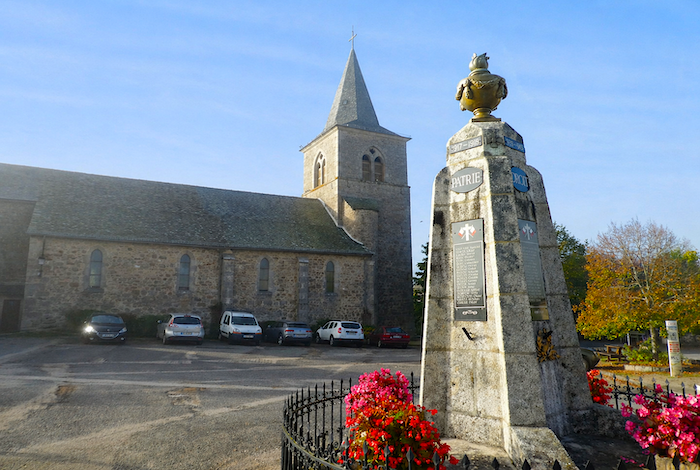
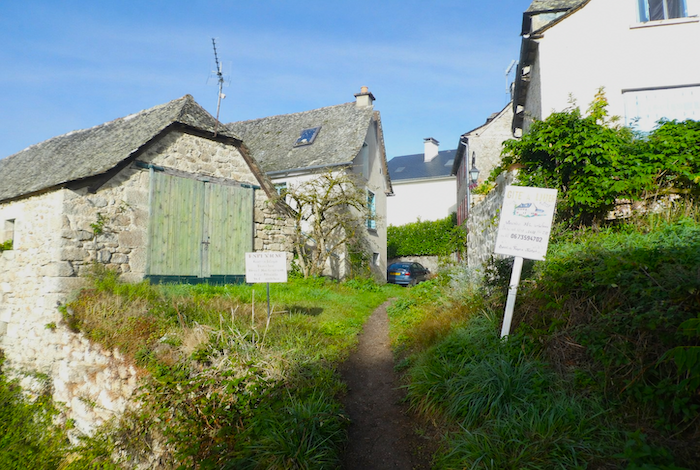
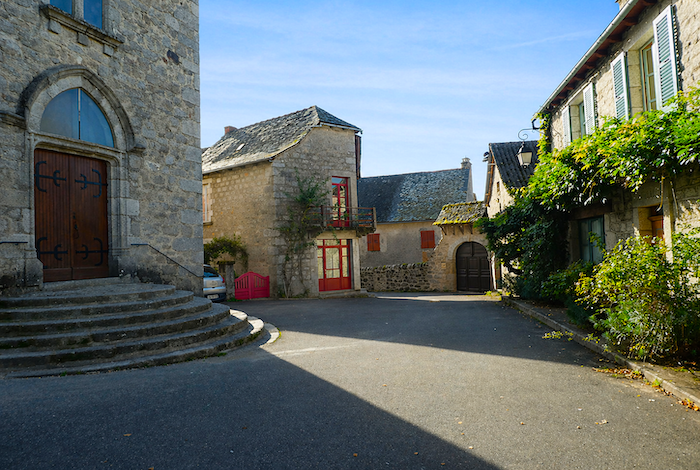
| The GR65 then descends toward the church square where the municipal pilgrim lodge is located. In the cool silence of the building, you may encounter a village resident carrying a heavy iron key. She is the one who locks the church every evening. Here, Mass is celebrated only once every three months, a discreet sign of a rural world where religious life now follows a different rhythm. |
 |
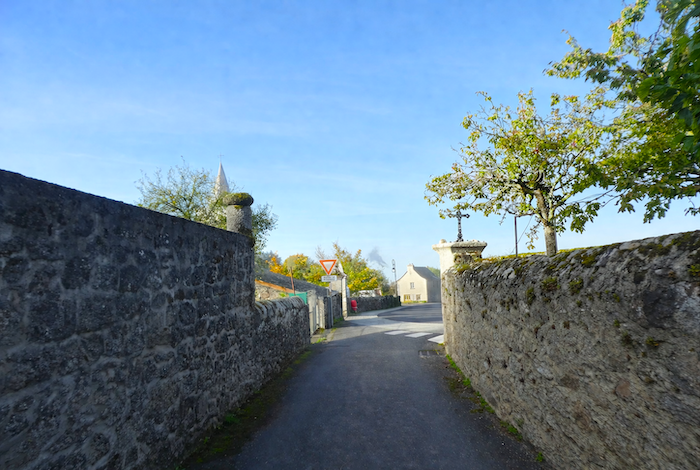 |
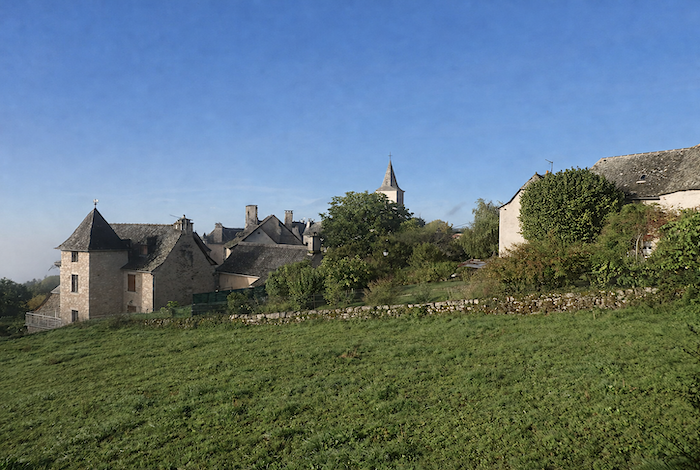
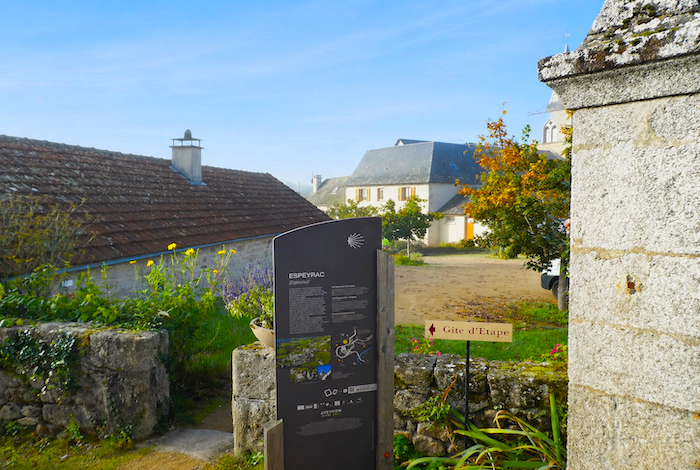
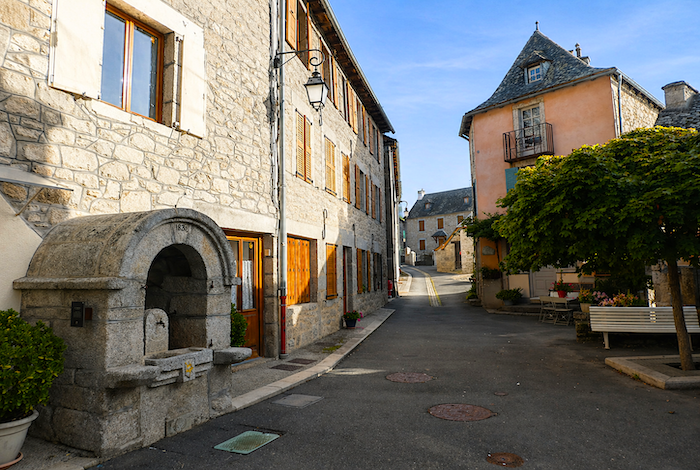
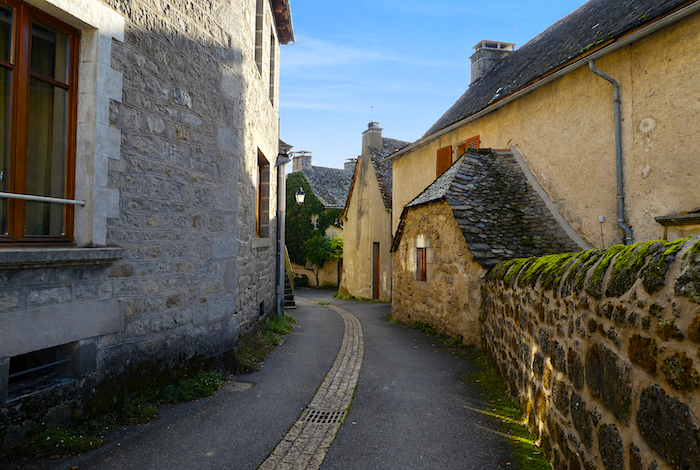
| In Espeyrac, a small village of around 240 inhabitants, there is a grocery store as well as a hotel restaurant. There is no bakery, which in France says almost everything about the modest size of the place, and bread is distributed through the grocery store. Yet pilgrims are always grateful for these rare stopping places where they can eat and catch their breath. The village lanes are full of charm, and granite and sandstone appear everywhere, as if the stone itself were rising from the heart of the earth. |
 |
 |
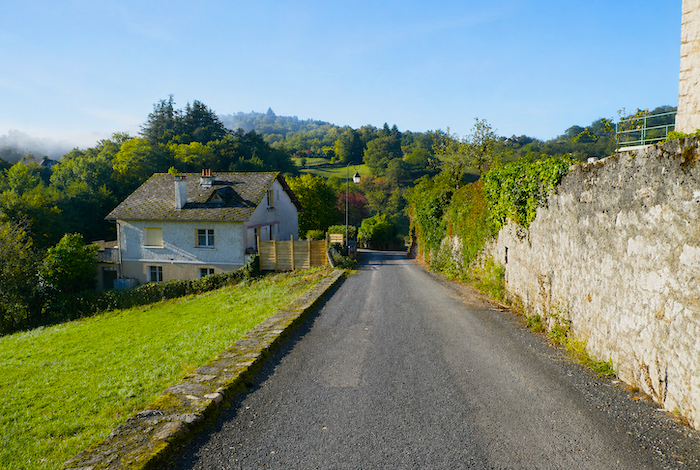
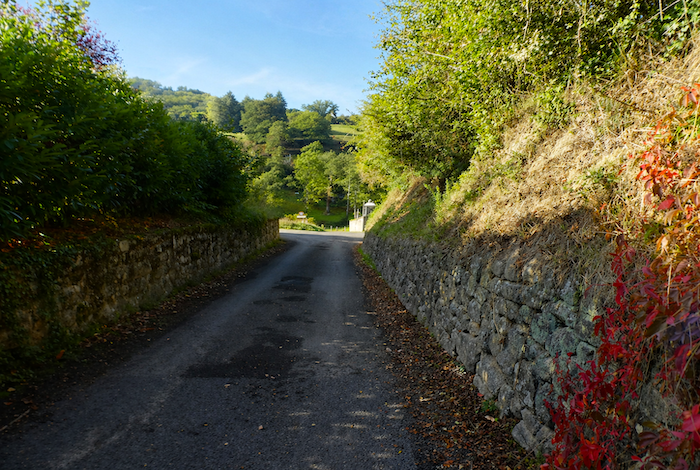
| Leaving Espeyrac, a small road slips away from the village and descends gently toward the valley floor. |
 |
 |
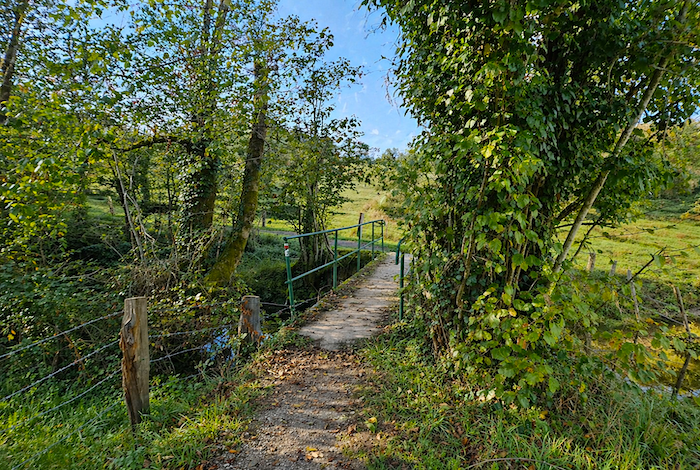
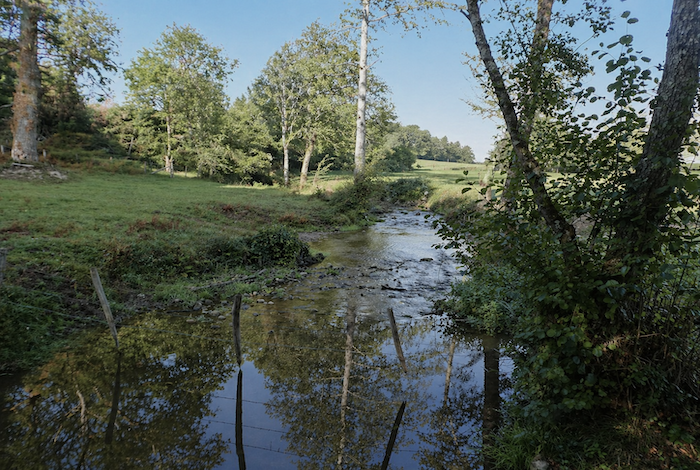
| It soon reaches the Daze, a little river that winds slowly through the valley, gliding with quiet indifference among the grasses and stones of its damp bed. . |
 |
 |
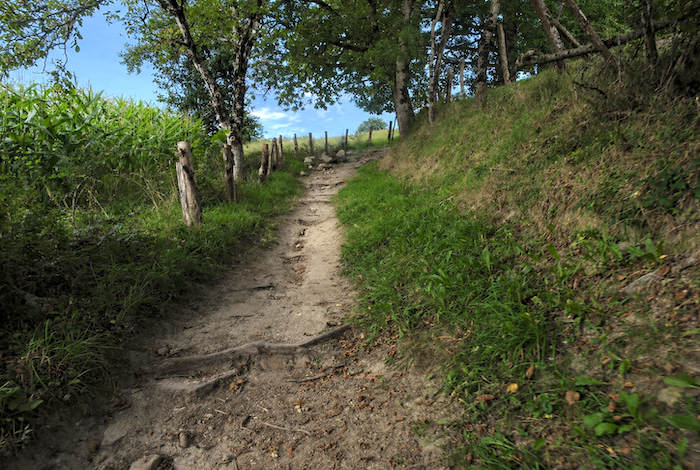
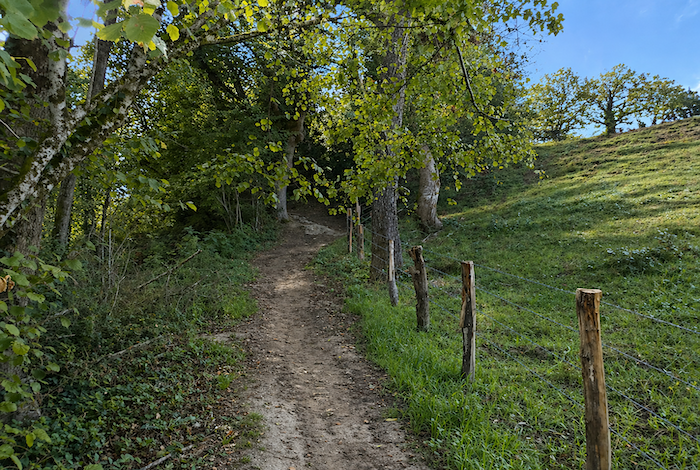
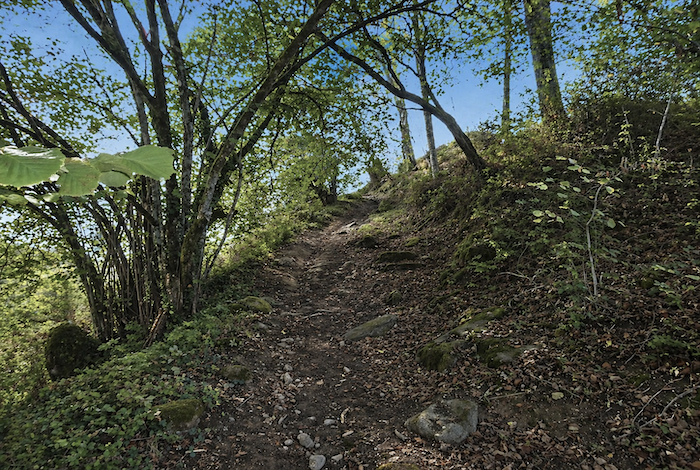
| No sooner has the peaceful watercourse been crossed than the path immediately rears up on the opposite side of the valley. Rich in twisted roots and protruding stones, it climbs steeply beneath the trees, as if to remind the pilgrim that every valley must be earned twice, once on the way down and again on the way back up. |
 |
 |
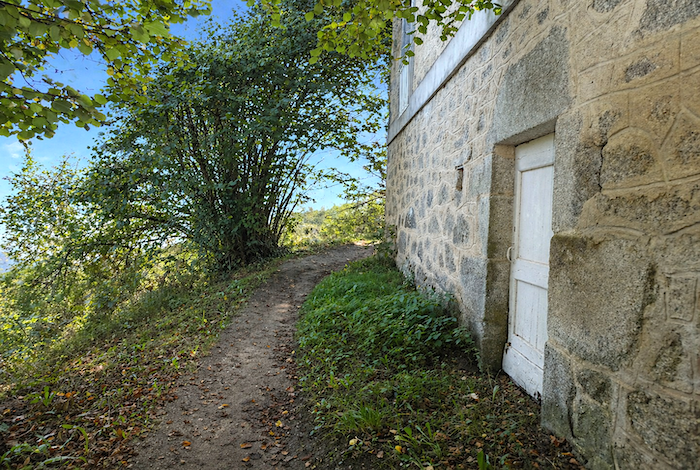
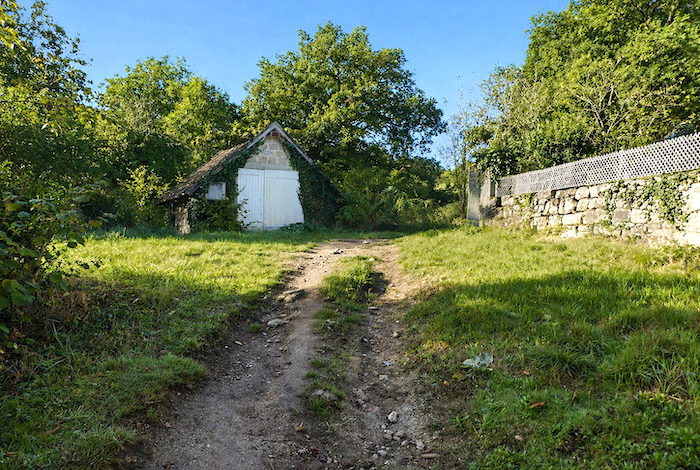
| A few beautiful stone houses remain attached to the slope, solid and silent, as though they were part of the mountain itself. |
 |
 |
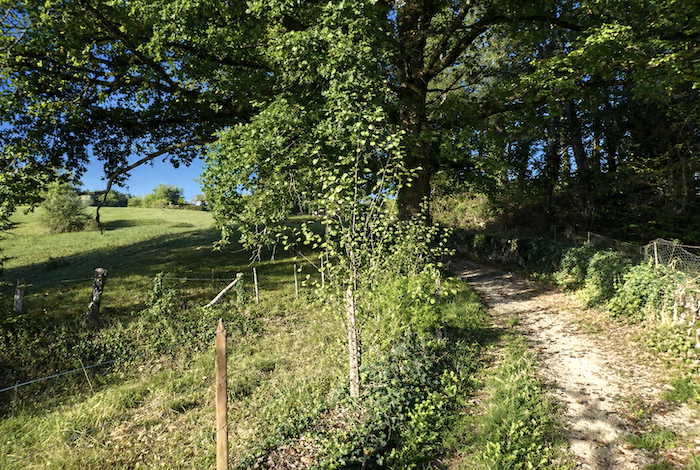
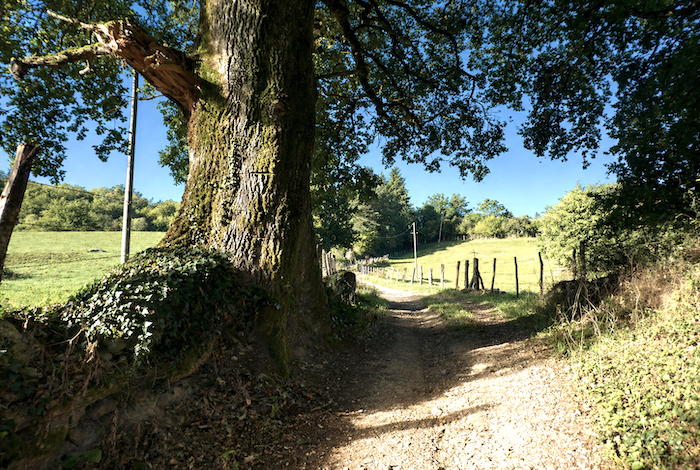
| Here, broadleaf trees reign supreme over the landscape. Sturdy oaks, centuries old chestnut trees with twisted trunks, and young beeches form this dense forest where sunlight sometimes struggles to find a way through. |
 |
 |
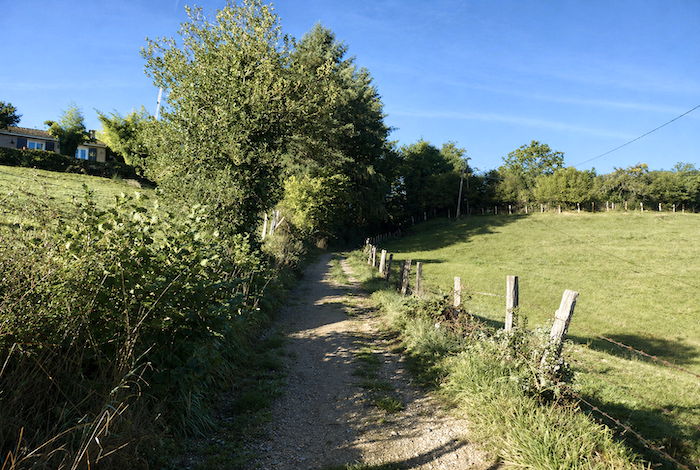
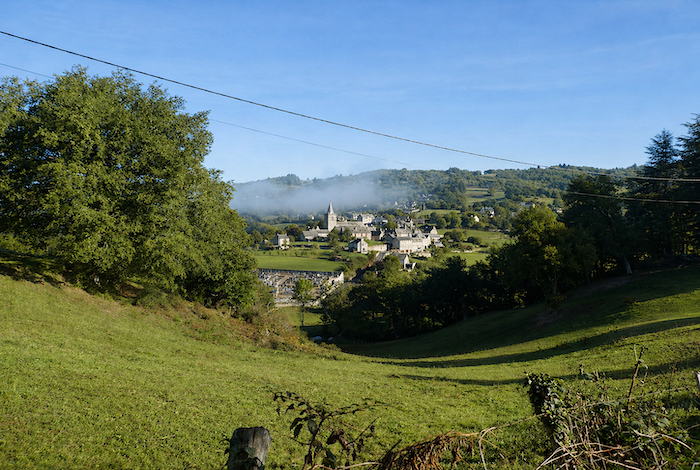
| Below, Espeyrac, wrapped in its shades of granite grey and slate, gradually disappears behind the trees and folds of the valley. |
 |
 |
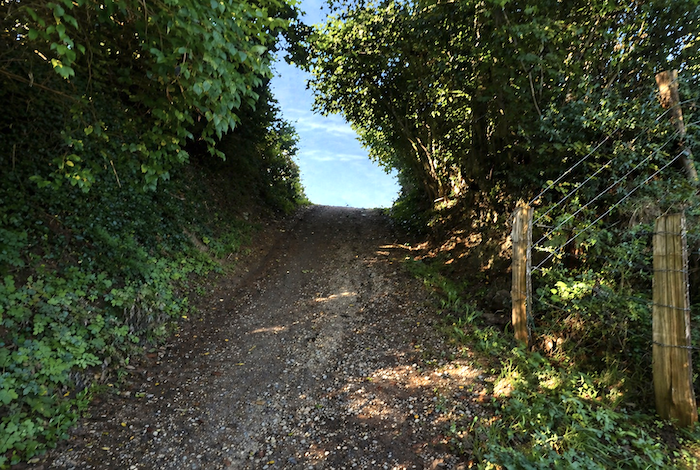
| The gradient remains severe, often between 15 and 20%, as the path reaches the great oaks near the hamlet of La Vitanderie. There, beneath the high canopy, the effort becomes almost a silent meditation. |
 |
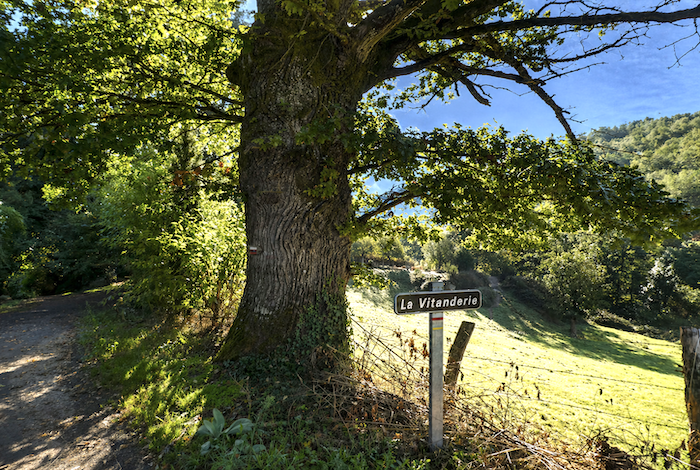 |
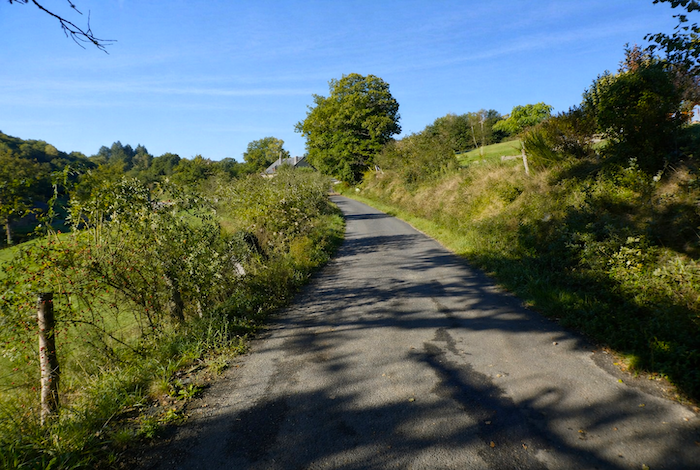
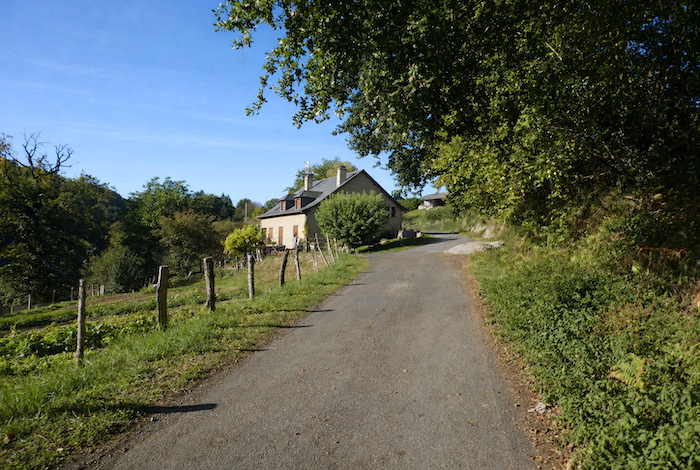
| At this point, the GR65 leaves the earth path and follows a small road climbing toward the scattered houses of the hamlet. Soon, on the left, appears the D42, this modest departmental road that runs toward Conques like a discreet guiding thread through the hills. |
 |
 |
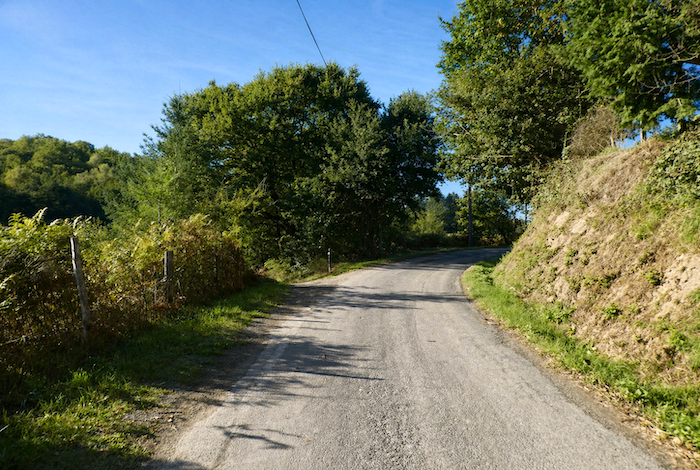
| Higher up, the GR65 once again leaves the asphalt behind and returns to a trail that disappears into wild woodland, far from roads and inhabited places. |
 |
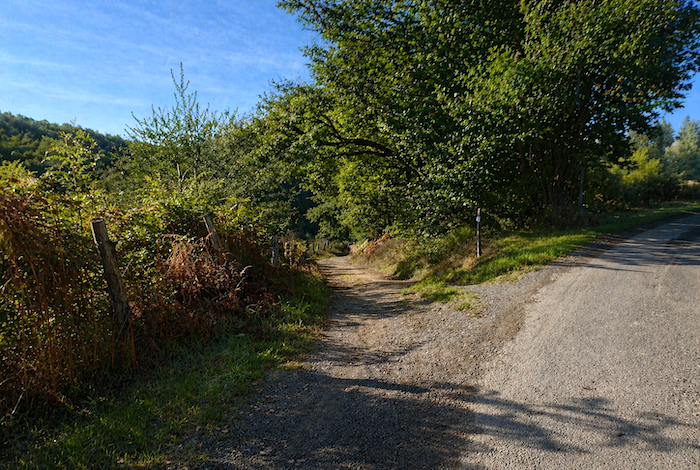 |
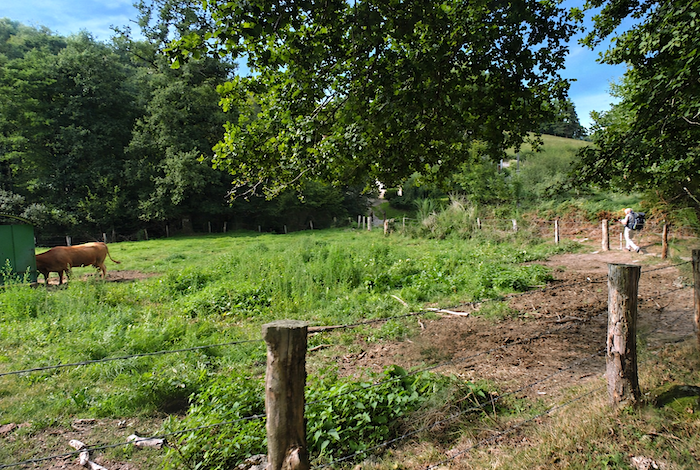
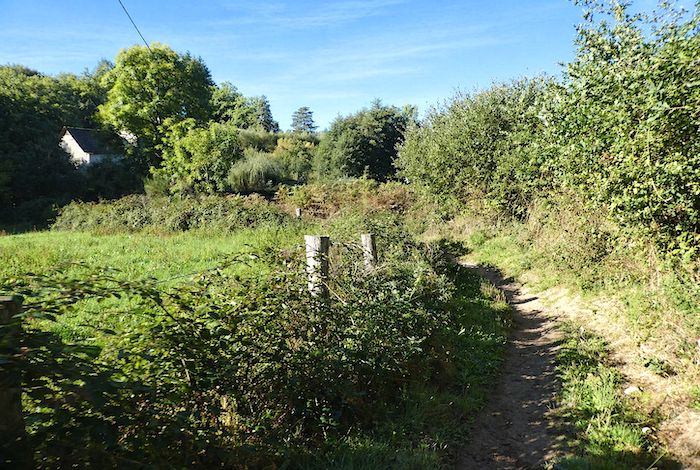
| The trail then undulates as it climbs, winding beneath oak trees through tall grasses where a few peaceful cows sometimes graze, tranquil silhouettes within the lush green landscape. |
 |
 |
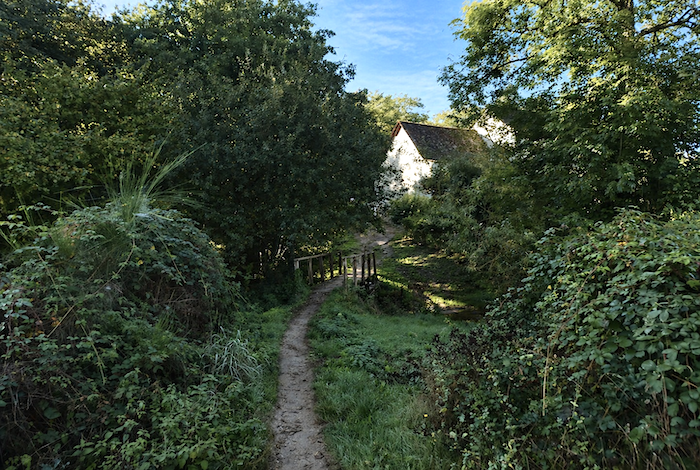
| A little higher still, the path crosses the discreet Tayrac stream, a slender thread of water hidden beneath foliage and forest silence. |
 |
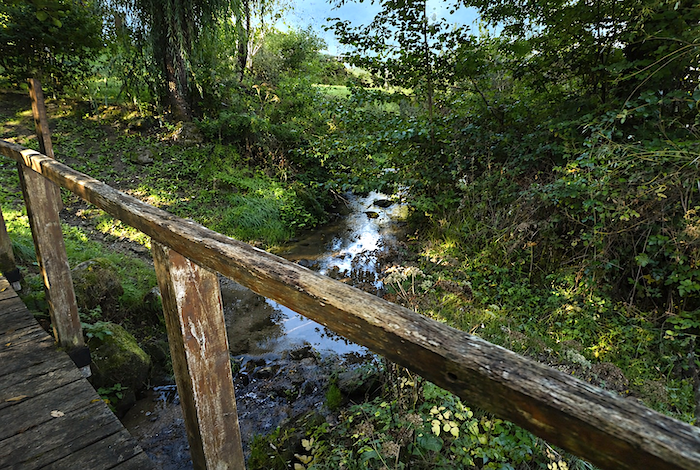 |
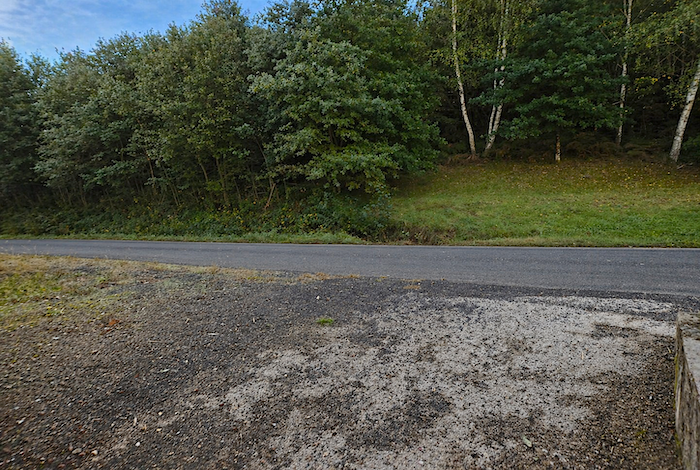
| After crossing the clear murmur of the stream, the GR65 joins the course of the D42 road. |
 |
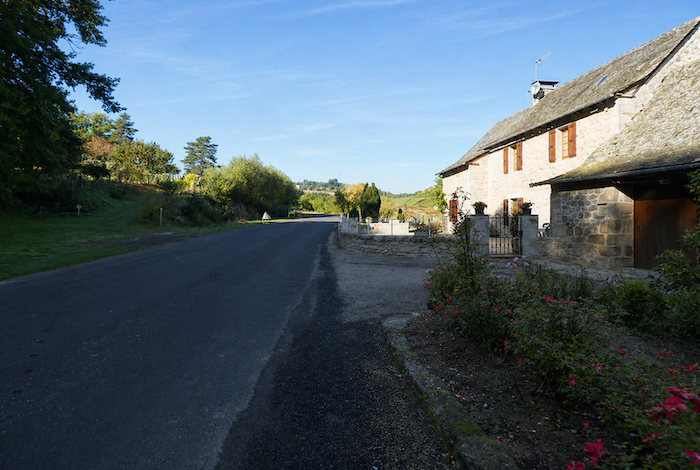 |
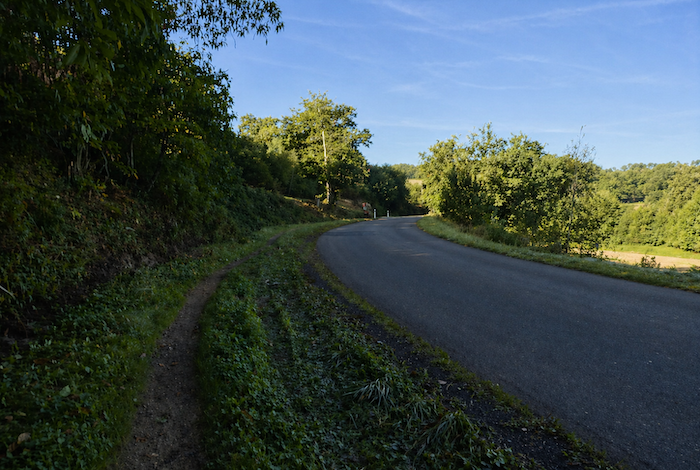
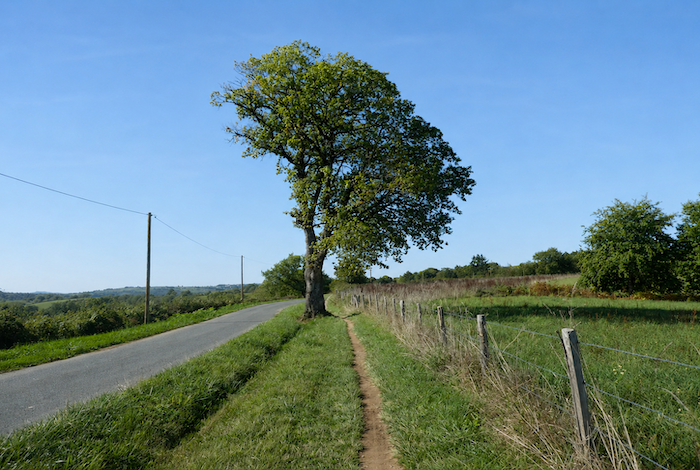
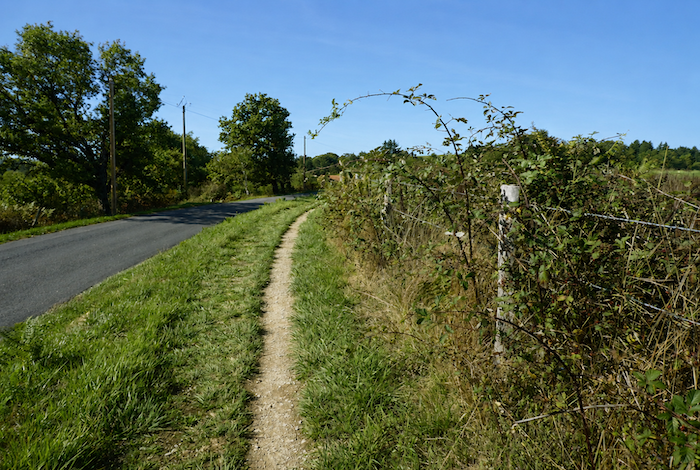
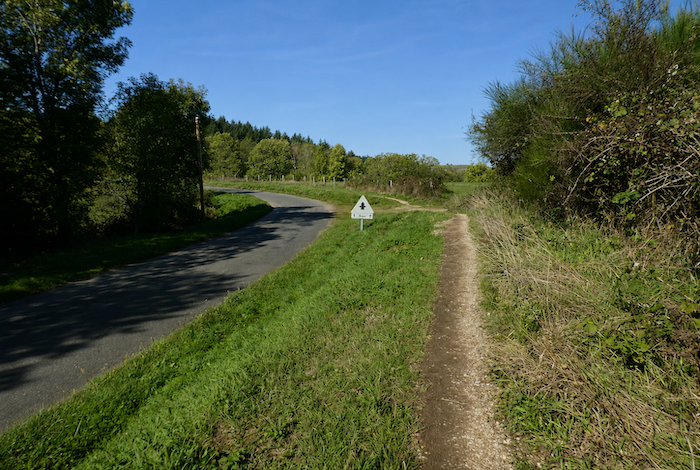
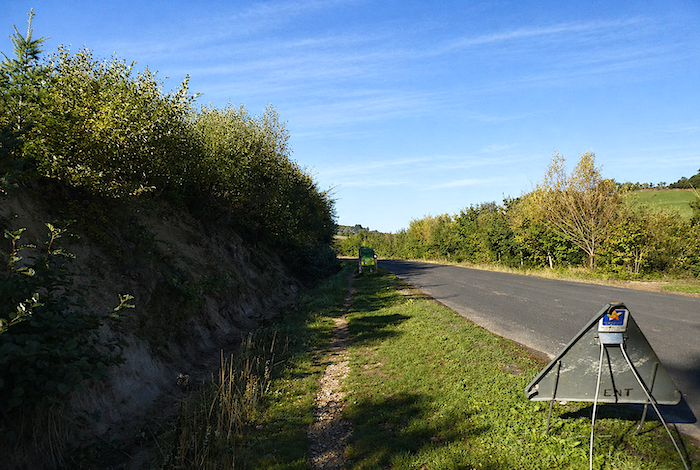
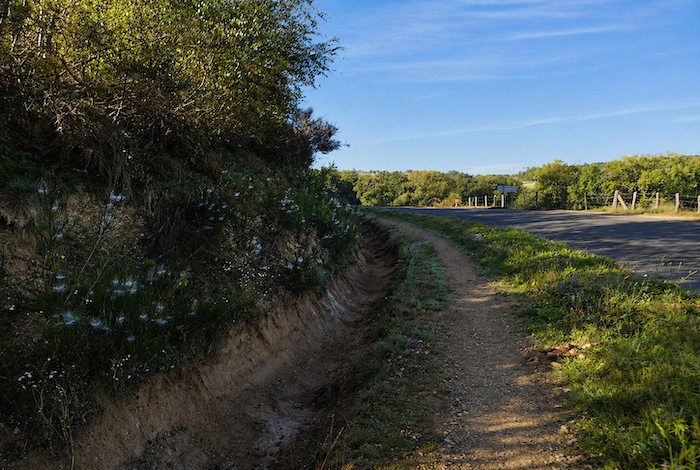
| A long climb of about one kilometer then begins on the asphalt. However, in a thoughtful gesture toward Compostela walkers, a strip of earth has been preserved along the roadside, offering a discreet invitation to continue without entirely leaving the path behind. |
 |
 |
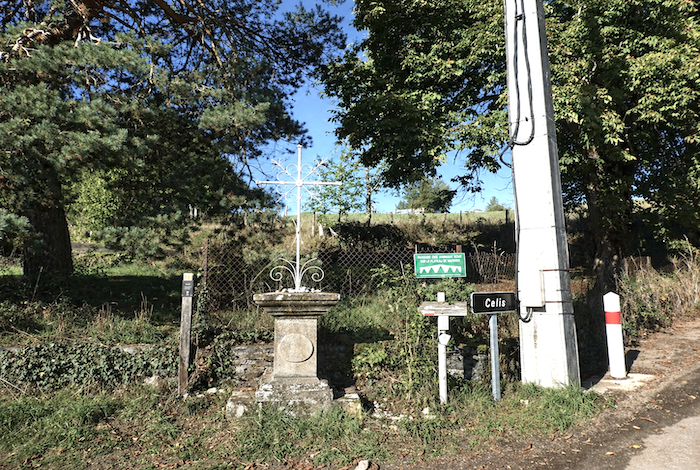
| The GR65 continues in this way as far as the peaceful hamlet of Célis. |
 |
 |
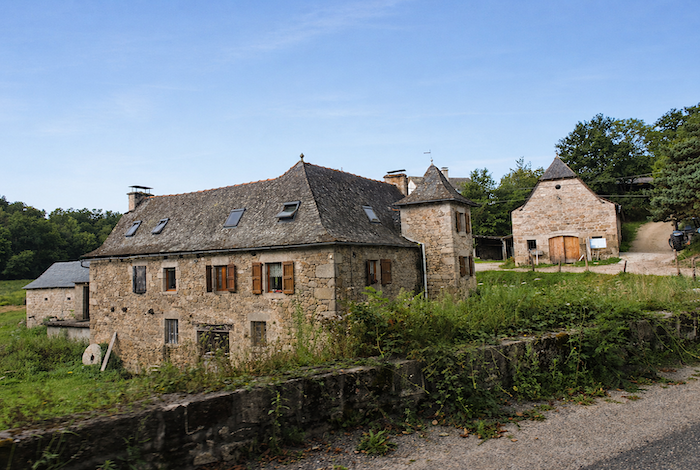
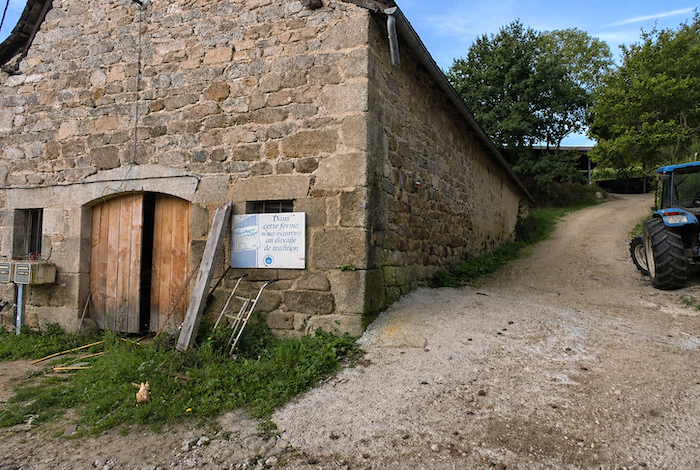
| Célis is little more than a string of sturdy stone farmhouses standing beside the road like rural sentinels defying the passage of time. |
 |
 |
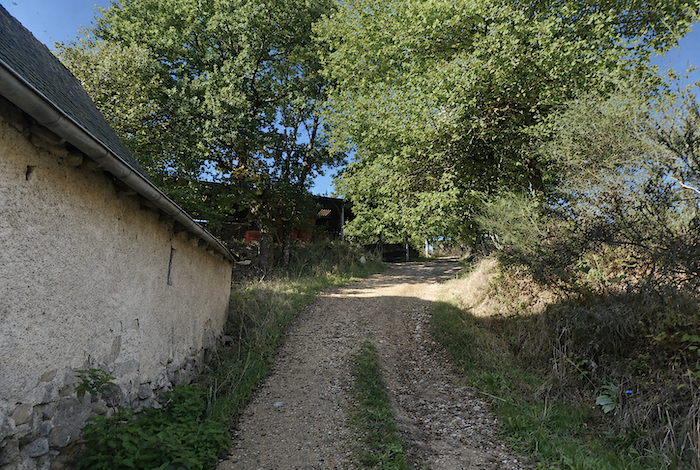
| Here begins a demanding climb toward Sénergues, nearly a kilometer of effort beneath the shifting canopy of broadleaf trees. |
 |
 |
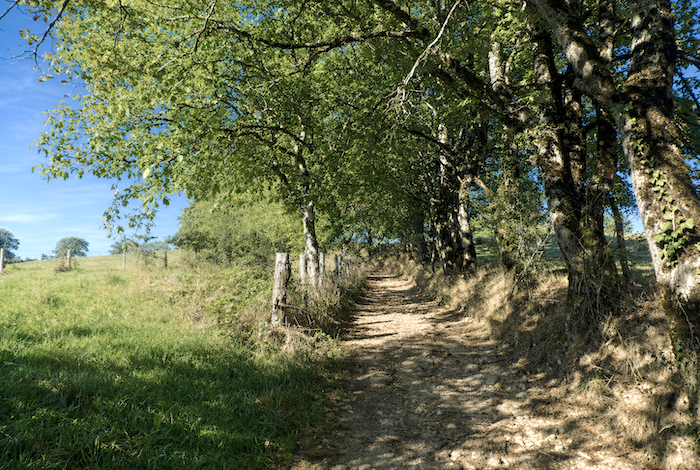
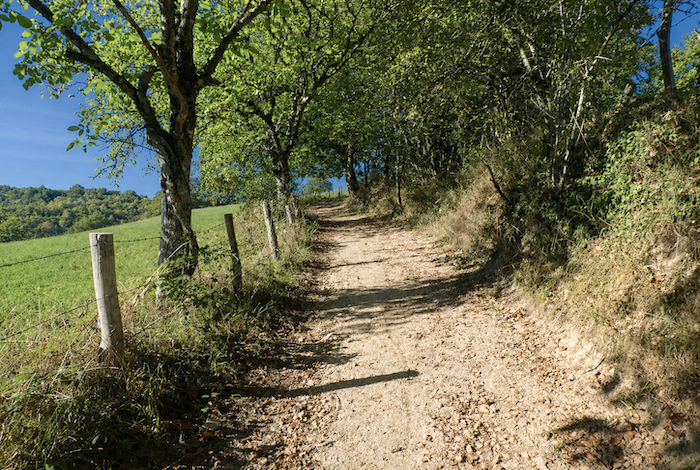
| The path, sometimes earthen and sometimes strewn with stubborn stones, attacks the hillside, winding along country hedgerows. |
 |
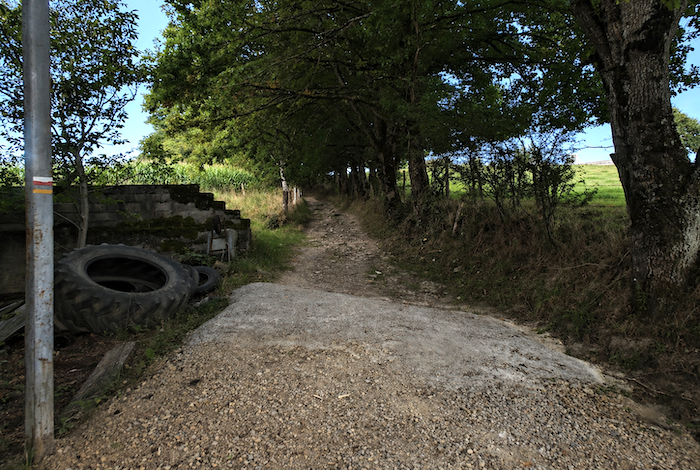 |
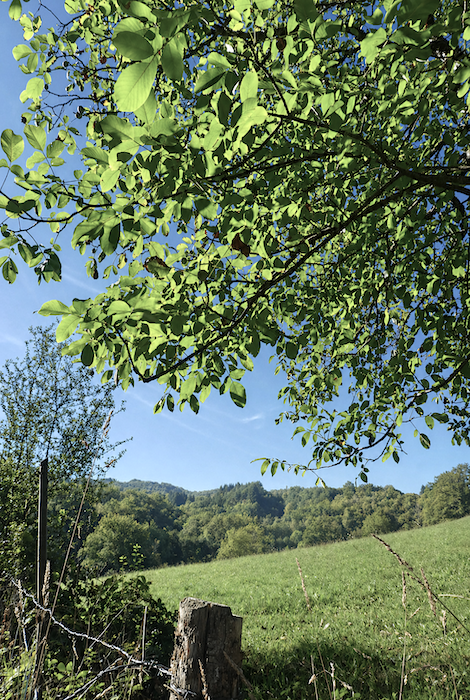
| Slender beeches and majestic oaks raise their noble silhouettes toward the sky. Between these sovereign giants, chestnut trees humbly find their place, taking advantage of every shaft of light left by their imposing neighbors. |
 |
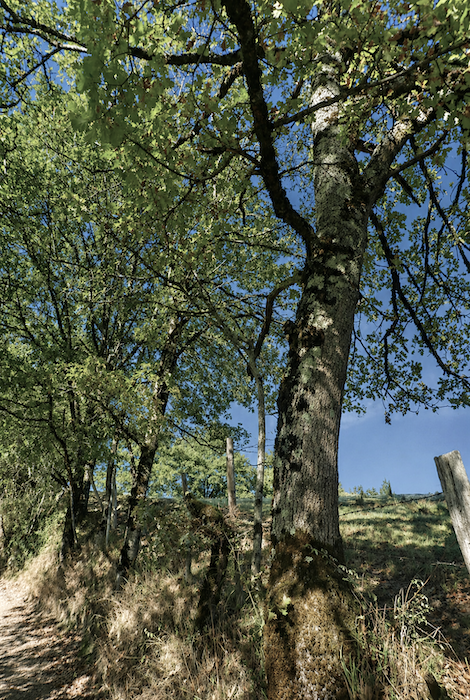 |
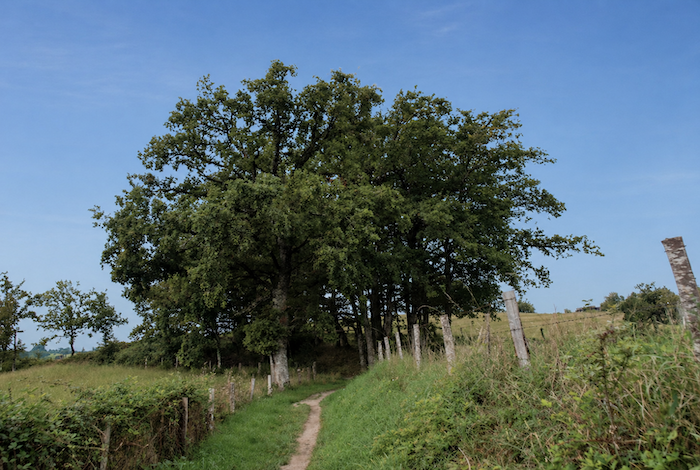
| In places, the gradient approaches 20%, testing both legs and lungs, yet the beauty of the landscape immediately softens the harshness of the effort. |
 |
 |
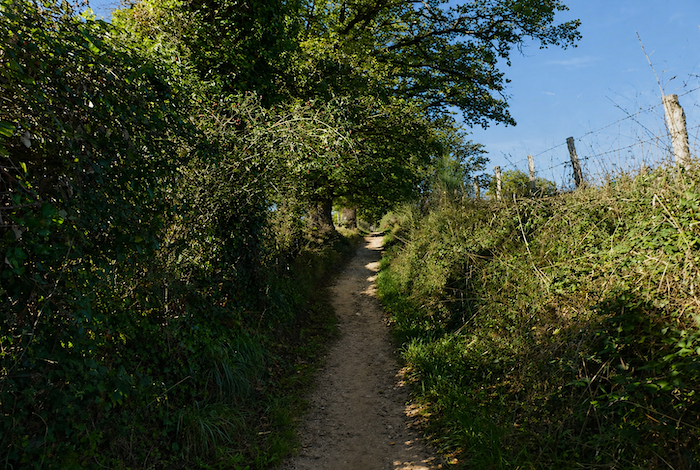
| Sometimes the path narrows like a secret passage. Elsewhere, it opens more widely across the hillsides. Yet the climb never truly relaxes its grip. |
 |
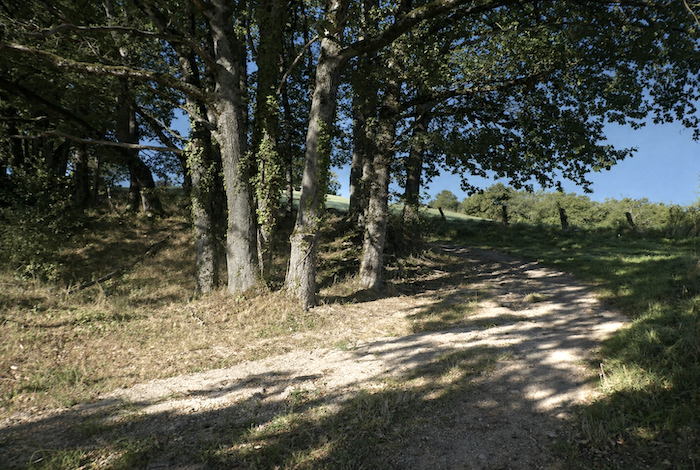 |
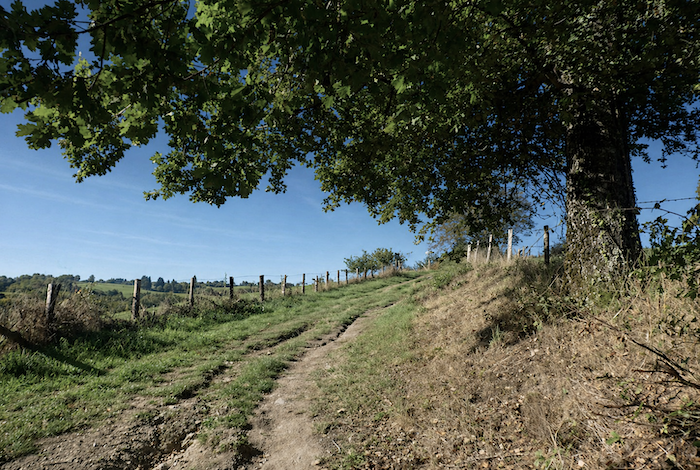
| Higher up, the great trees gradually thin out, giving way to embankments overrun with brilliant broom, untamed brambles, and wild grasses. |
 |
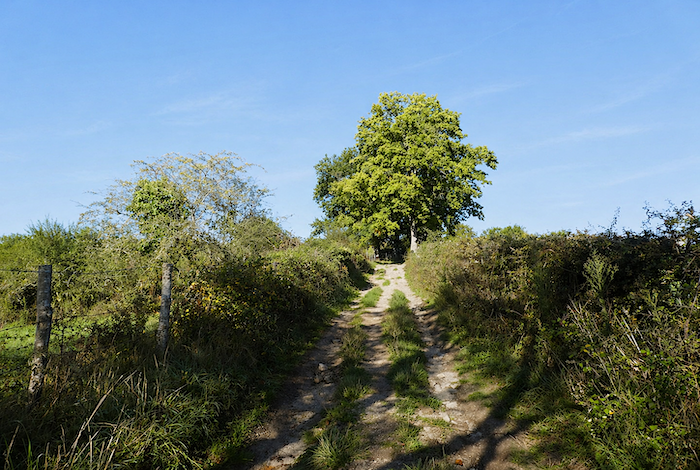 |
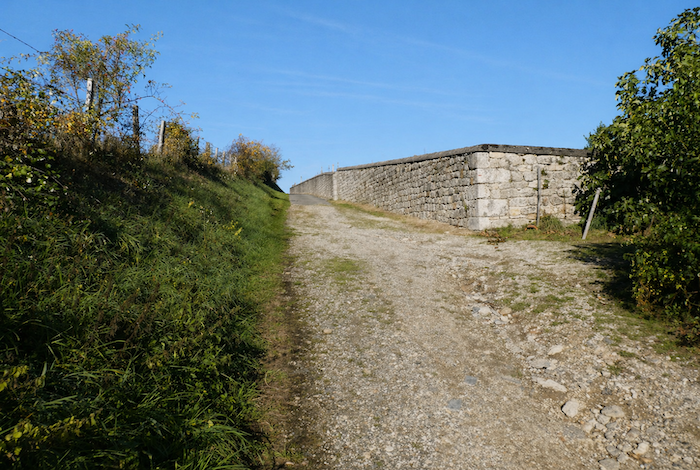
| A few more steps wrested from the slope, one final effort, and then comes deliverance. For many pilgrims, it arrives when the path rejoins the road near the cemetery of Sénergues. After such a climb, what place could seem more tempting than a site of eternal rest in which to savour a brief moment of respite? |
 |
 |
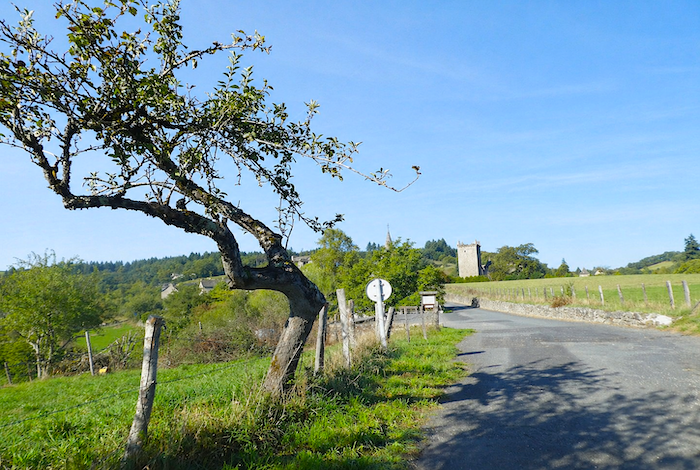
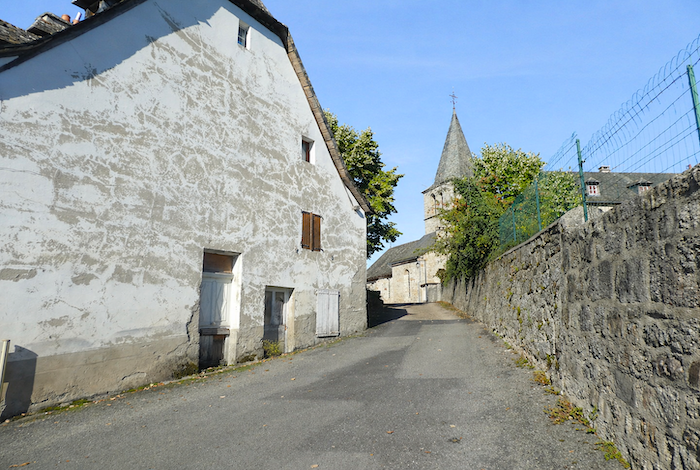
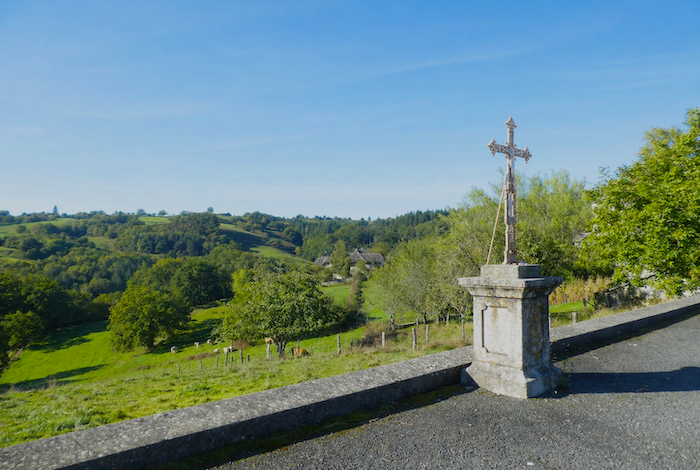
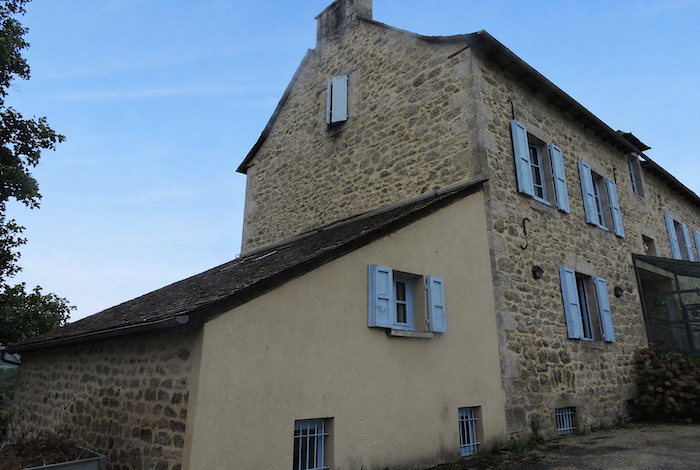
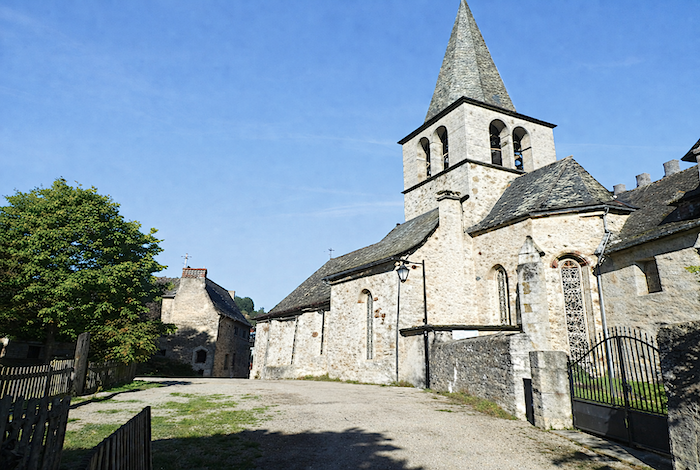
| A short distance beyond the cemetery stands Sénergues. At first glance, the village asserts its presence through the proud silhouette of its tower and the church steeple dominating the surrounding countryside. In this region shaped by a turbulent history, many remnants of fortifications still survive, silent witnesses to centuries of insecurity. The square tower, built during the Hundred Years’ War, once served to protect the inhabitants against the so called « English », but above all against the bands of mercenaries and raiders who prowled the roads. |
 |
 |
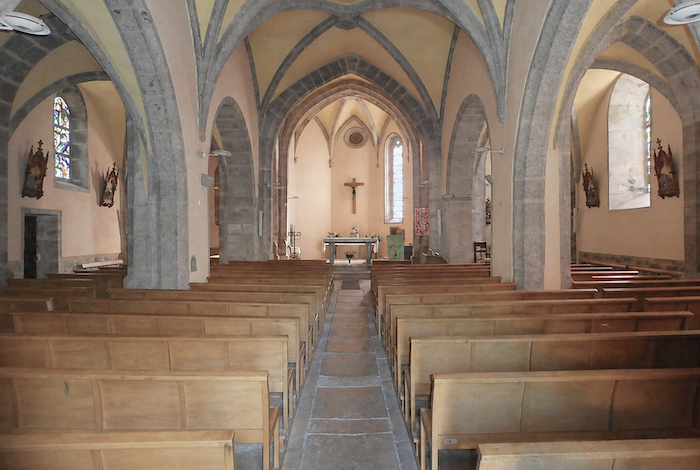
| The present church, filled with light and adorned with remarkable contemporary stained-glass windows, dates from the sixteenth century. It is dedicated to Saint Martin. |
 |
 |
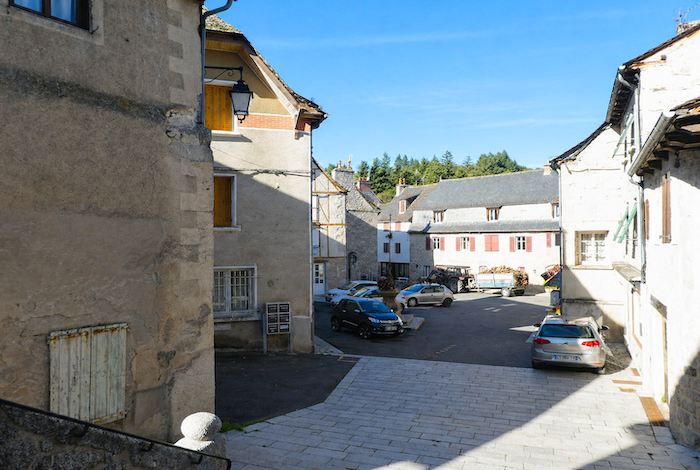
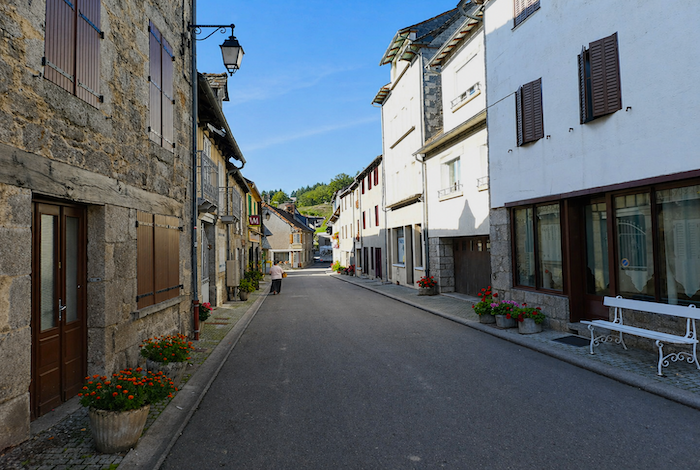
| Perched on its rocky spur, Sénergues and its five hundred or so inhabitants offer the image of a peaceful village where the massive houses seem to revolve around the church square as around an unchanging heart. Stone remains omnipresent here, yet the buildings reveal more modern masonry, relying more on cement than on traditional rural construction techniques. The GR65 runs through this welcoming village, where pilgrims can easily find food and regain their strength. |
 |
 |
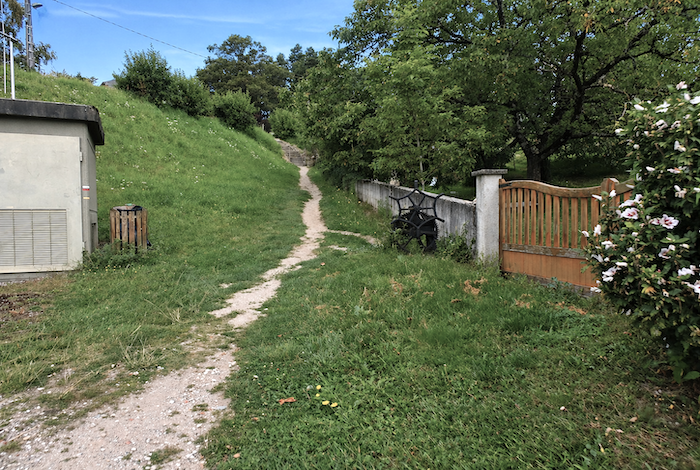
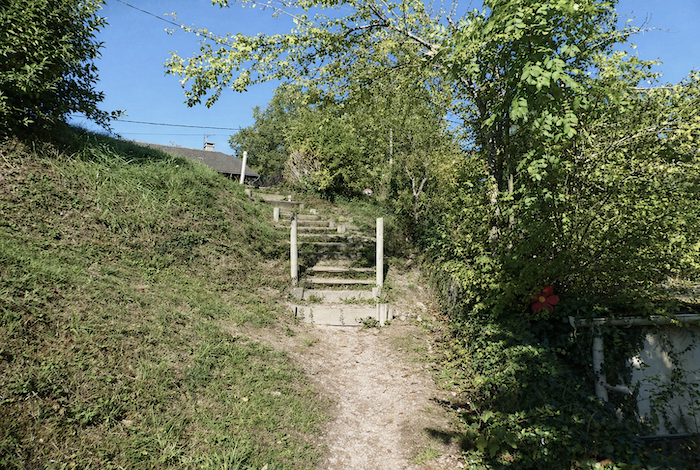
| The route then leaves the road and climbs once again, winding in switchbacks above Sénergues. True to its reputation, the slope sometimes approaches 20%, demanding another sustained effort from the walker. |
 |
 |
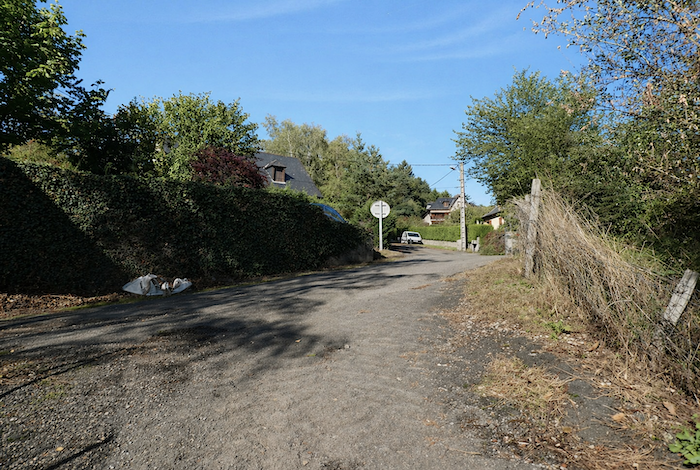
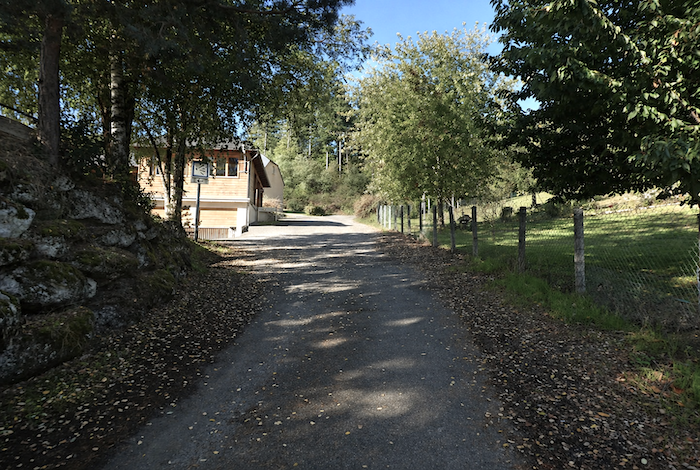
| The path undulates along the hillside between the houses on the upper part of the village before reaching a shelter fitted out for pilgrims. These modest stopping places, scattered at intervals along the route, provide valuable services. They offer water, often toilets, and sometimes simple dry facilities. Yet these shelters also become, on certain nights, discreet refuges for the most destitute pilgrims. |
 |
 |
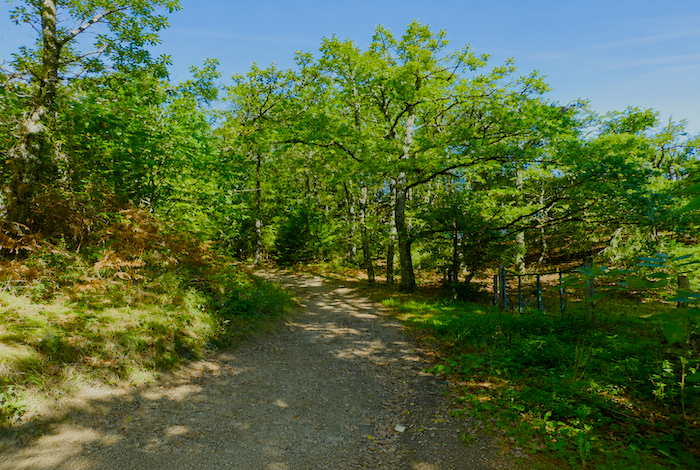
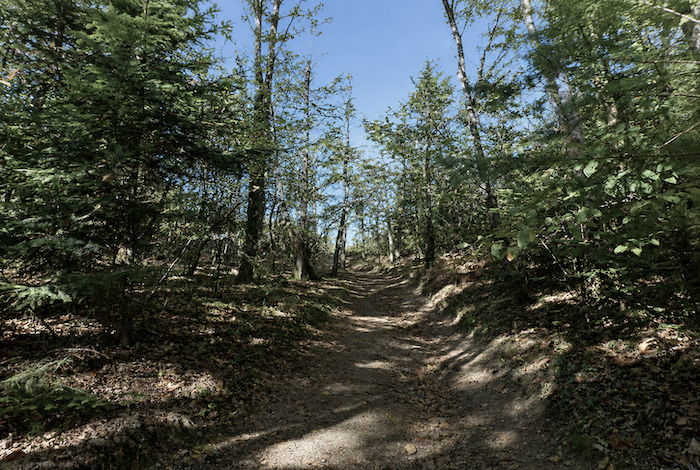
| Beyond the gîte, the earth path once again takes full possession of the landscape and enters the forest while continuing its demanding ascent. Magnificent chestnut trees still stand alongside majestic beeches and great oaks, but among them the dark silhouettes of the first conifers already begin to appear. |
 |
 |
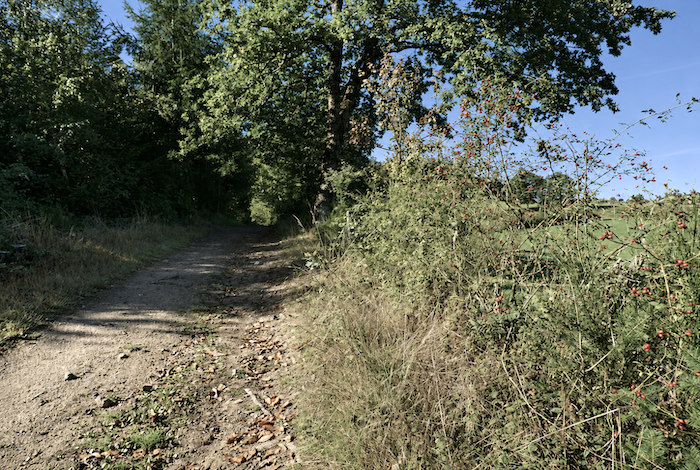
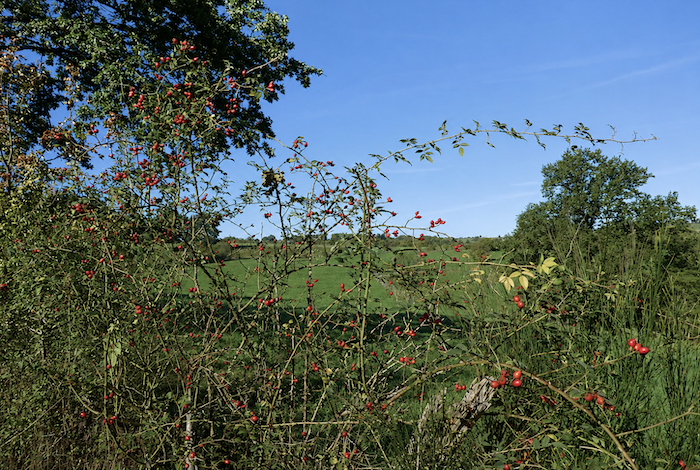
| Gradually, however, the slope finally begins to ease as the path reaches the high plateau at the edge of the woodland, following wild hedgerows dotted with rose hips. |
 |
 |
Section 4: Across the high plateau, over hill and dale
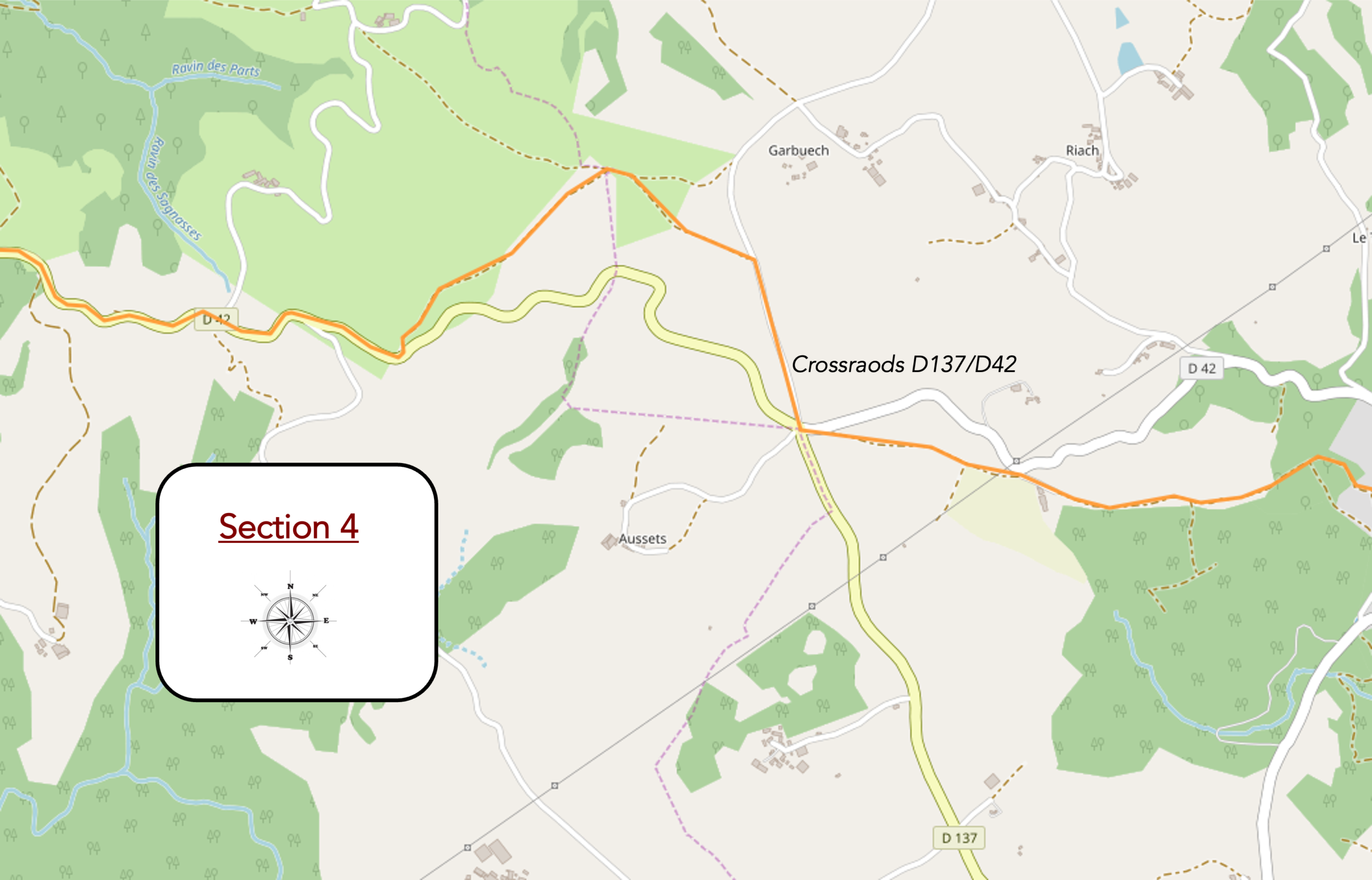
Overview of the route’s challenges : a pleasant walk across the high plateau.
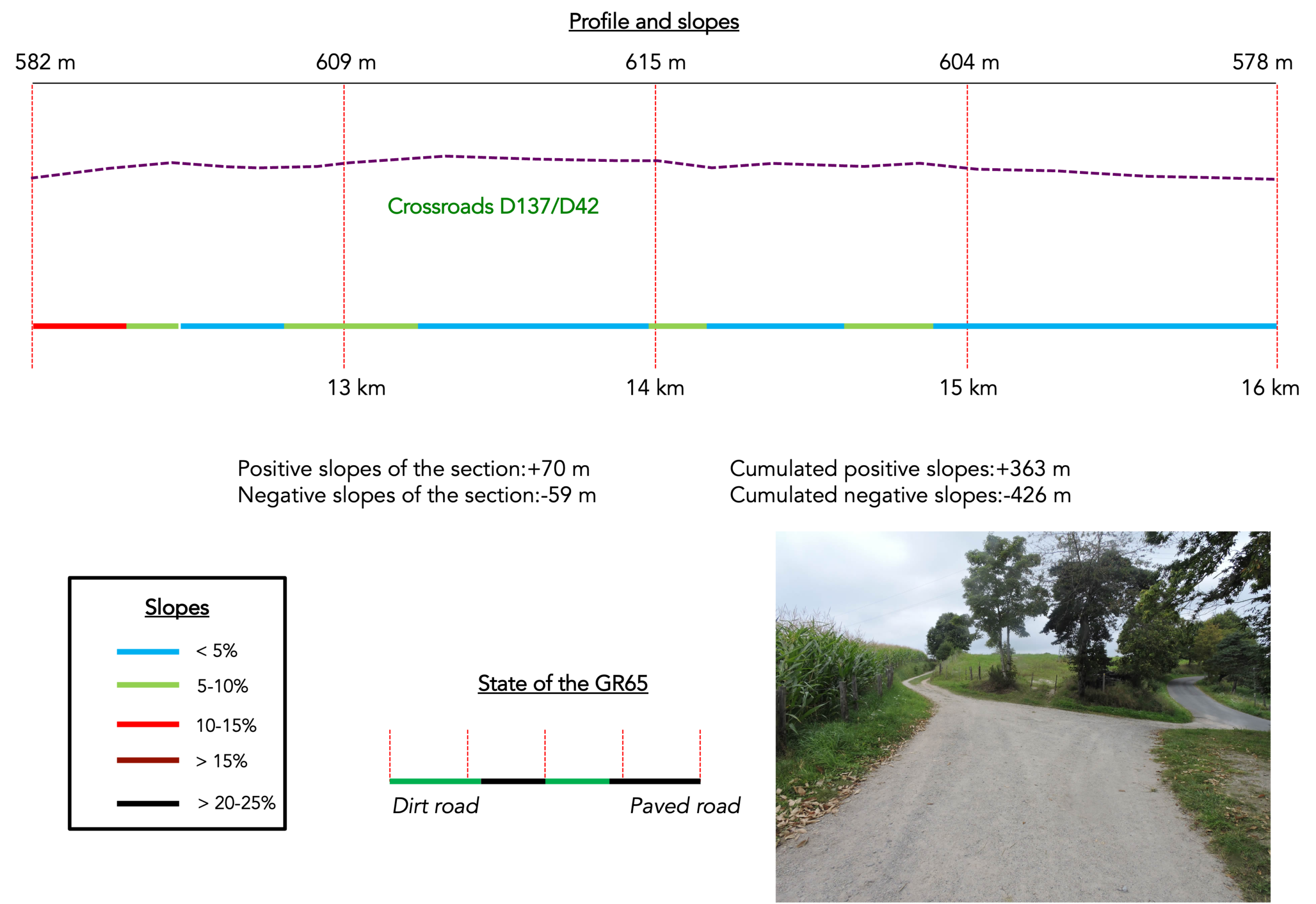
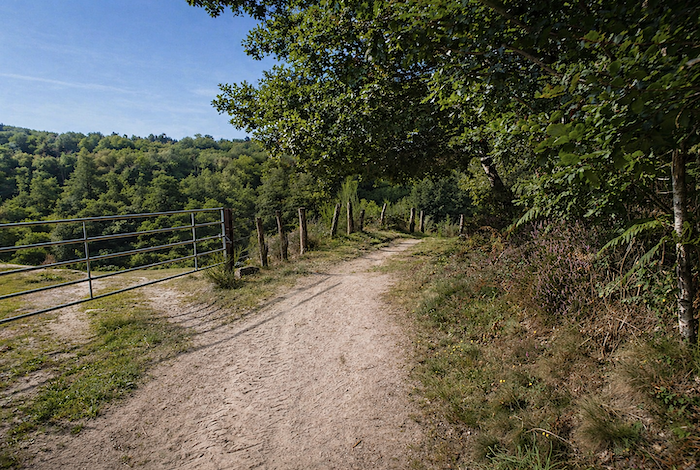
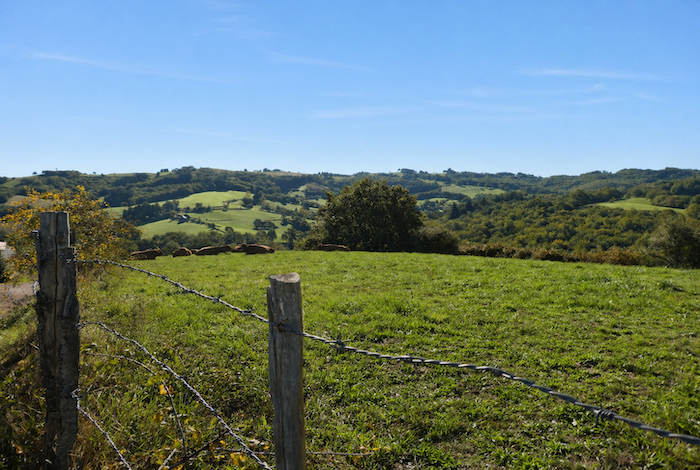
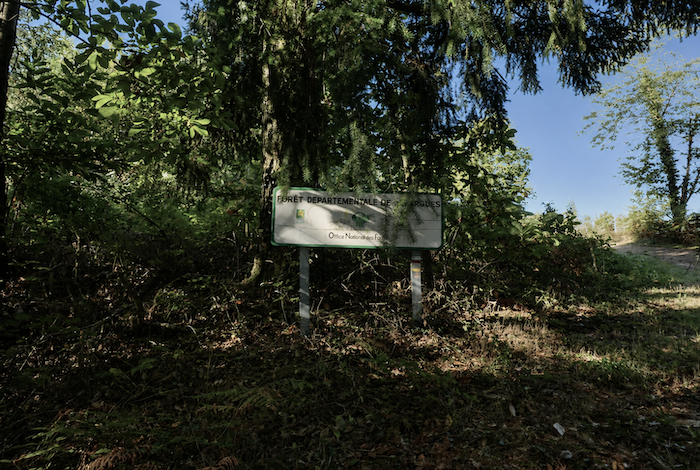
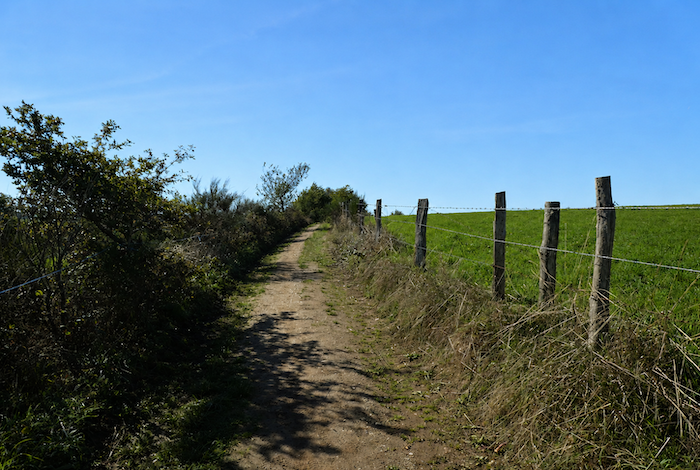
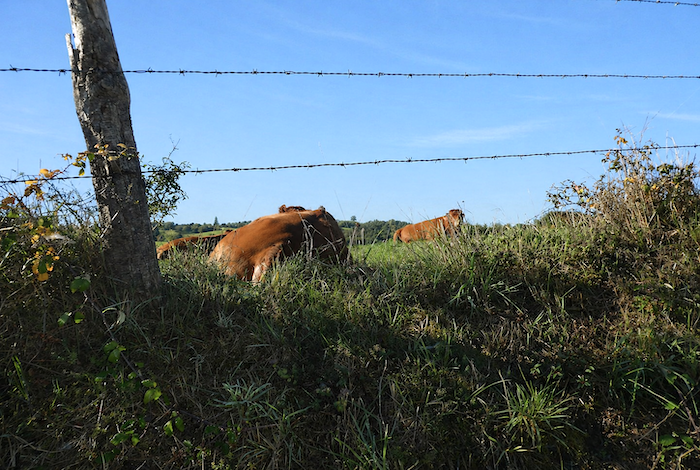
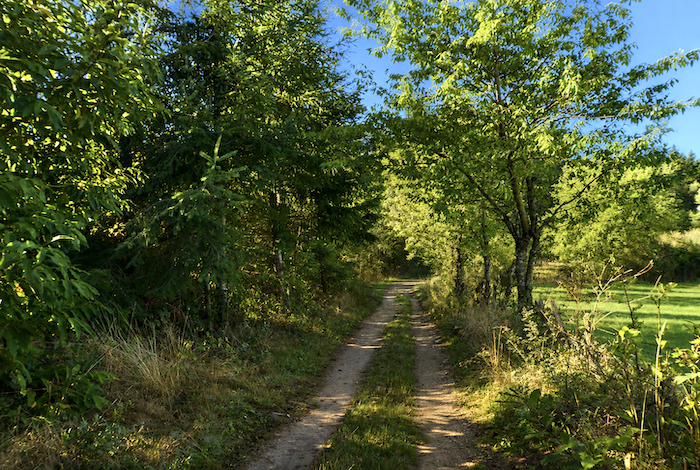
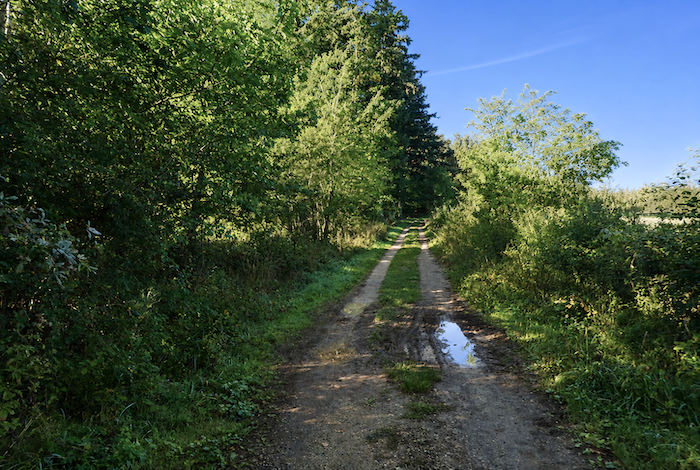
| Here, the climbing is over, and the GR65 gently undulates along earth paths at the edge of the Sénergues State Forest, following lines of barbed wire that suggest the presence of livestock, although at this time of year cattle are few in number, if not entirely absent. Farms, in any case, are relatively scarce in this region. |
 |
 |
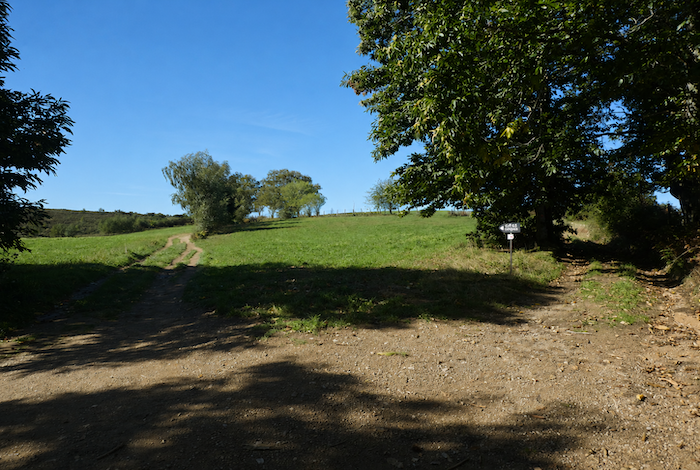
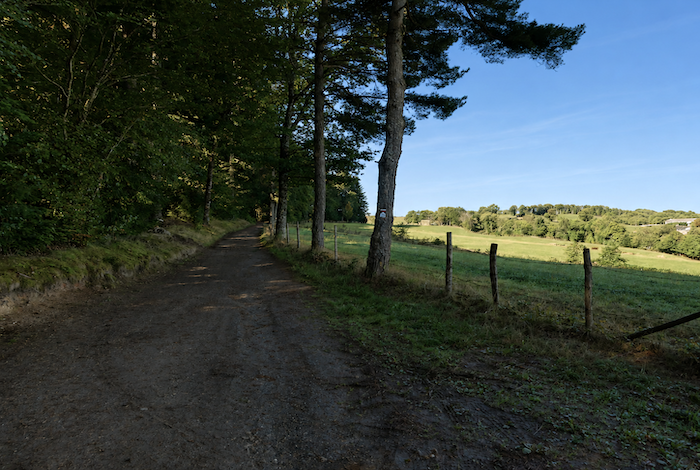
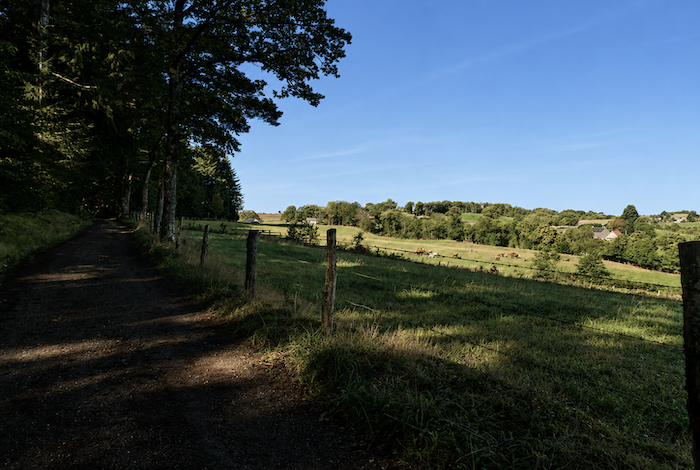
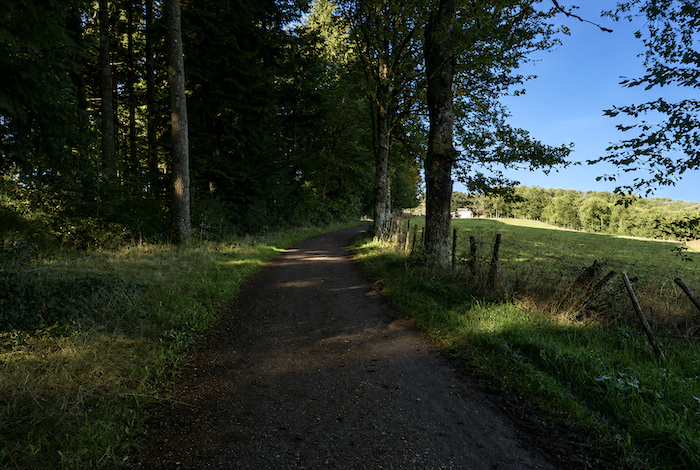
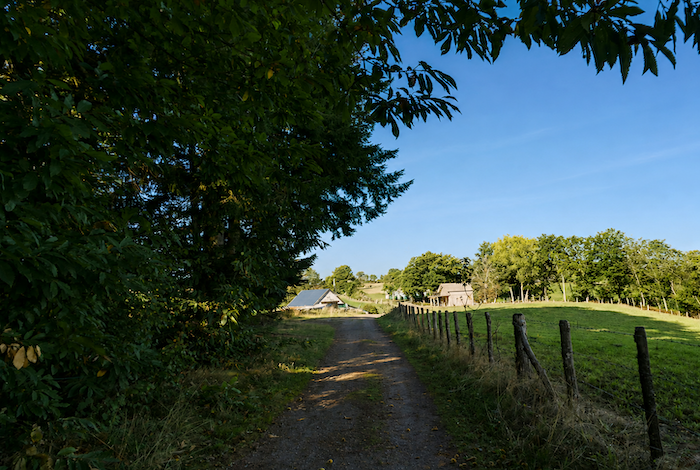
| The beautiful path then crosses a broad plateau, running through meadows and alongside hedgerows. Here, among the region’s broadleaf trees, magnificent Douglas firs have been planted, rising skyward with impressive elegance. |
 |
 |
 |
 |
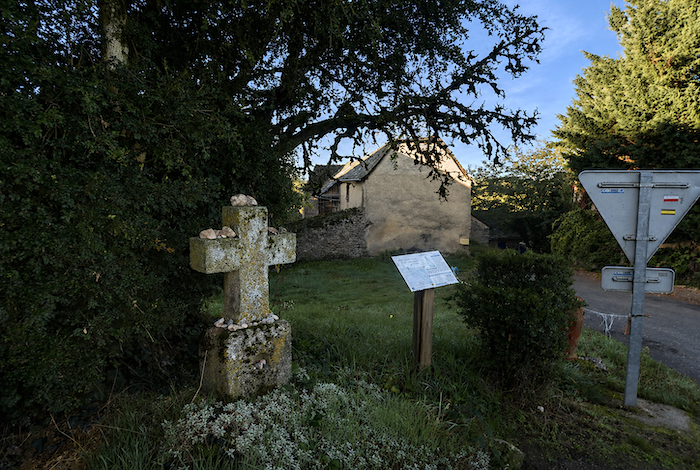
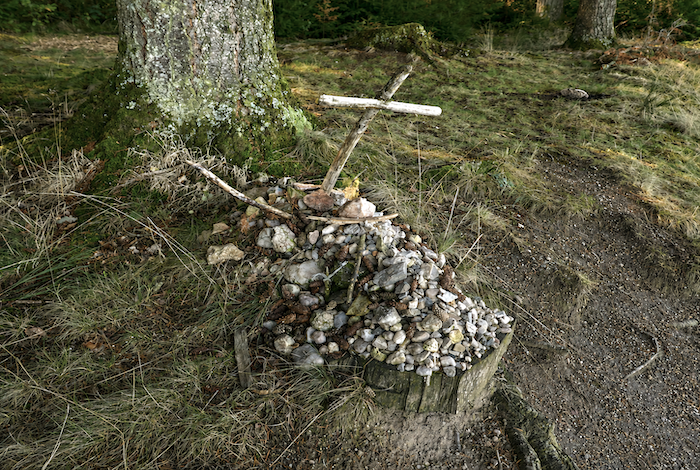
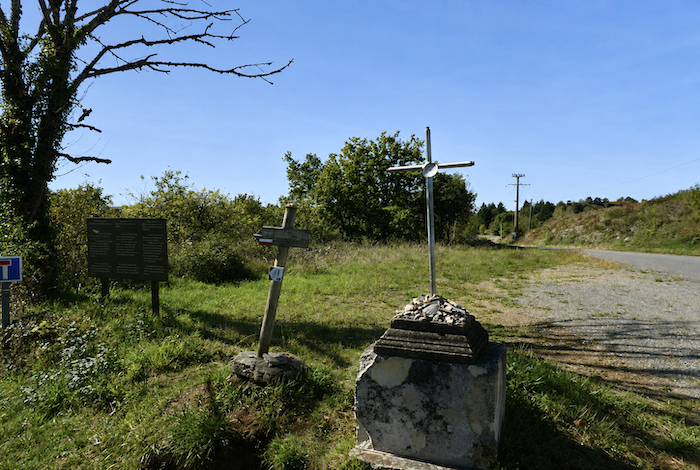
Some of the crosses along the Way are simple and unadorned, yet rich in symbolism. The Way of Compostela is also the path of the little stones placed at the foot of crosses and statues. This ancient tradition, also found among Muslim pilgrims travelling to Mecca, symbolizes the belief that together pilgrims can move mountains. More deeply, it represents the effort and sacrifices the pilgrim is willing to make. Pilgrims often carry small stones from Le Puy and leave them along the route, like beads of a rosary filled with prayers. A touch of mystery also accompanies the tradition. Some believe that stones vibrate and that crosses stand in places of powerful spiritual energy. When pilgrims place their prayer laden stone at the foot of a cross, they enter into communion with the thousands of other pilgrims who have done the same before them. Their prayer, entrusted to the stone, is then believed to resonate with the universe itself.
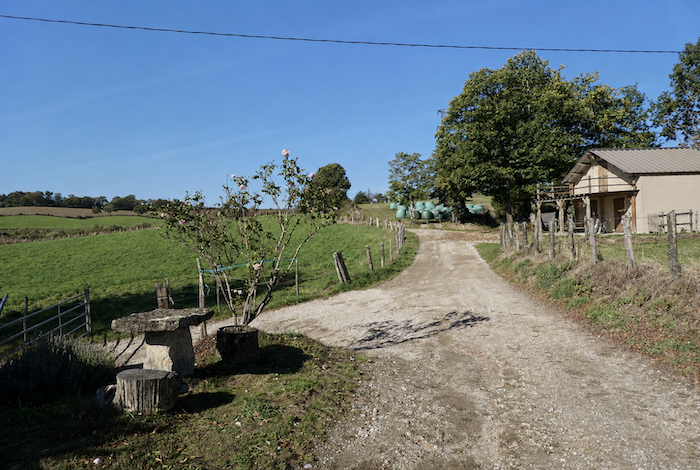
| Further on, an isolated farm seems to occupy the vast landscape all by itself, as though lost in the immensity of these silent lands. |
 |
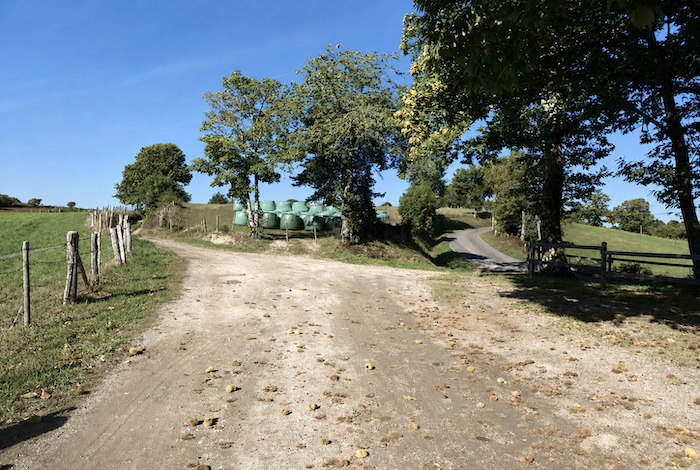 |
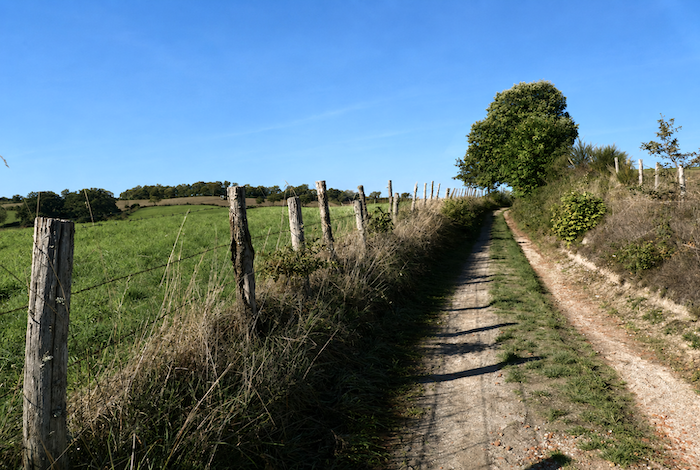
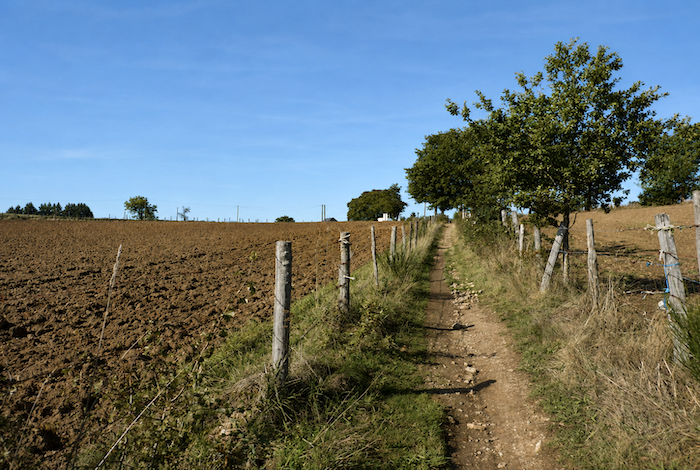
| The path then leaves the woodland edge and reaches a first road junction. Yet it still refuses the monotonous comfort of asphalt. The broad earth path gradually narrows, becoming at times a grassy trail and at others a stony track scattered with loose rocks. The scenery, meanwhile, changes very little. Meadow follows meadow in a gentle pastoral monotony. Cultivated fields are less common in this region, although a few plots can occasionally be seen. At this season, however, it is difficult to tell what crops may be growing there. |
 |
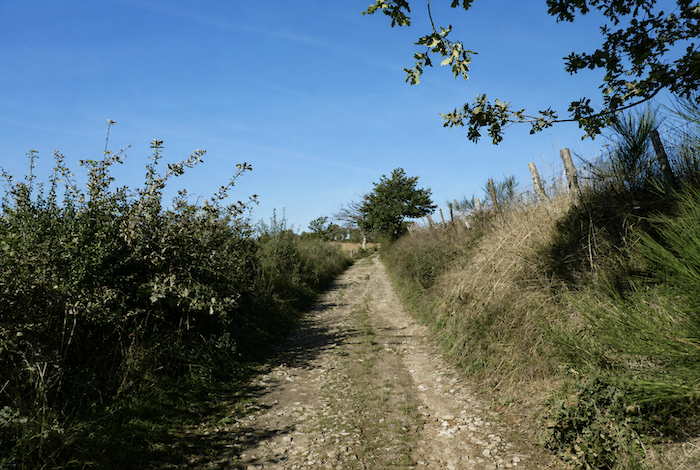 |
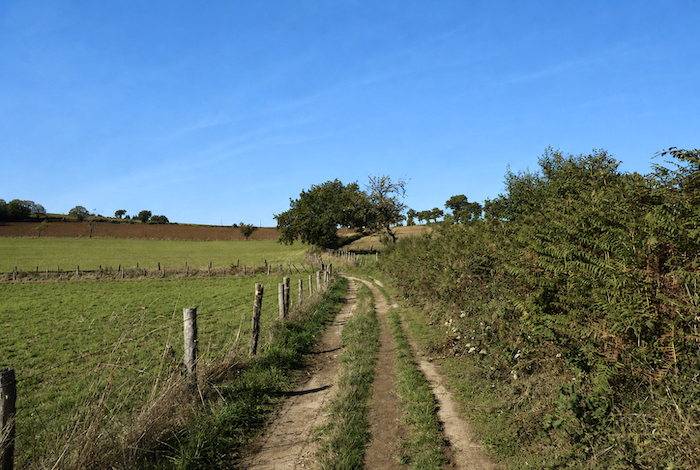
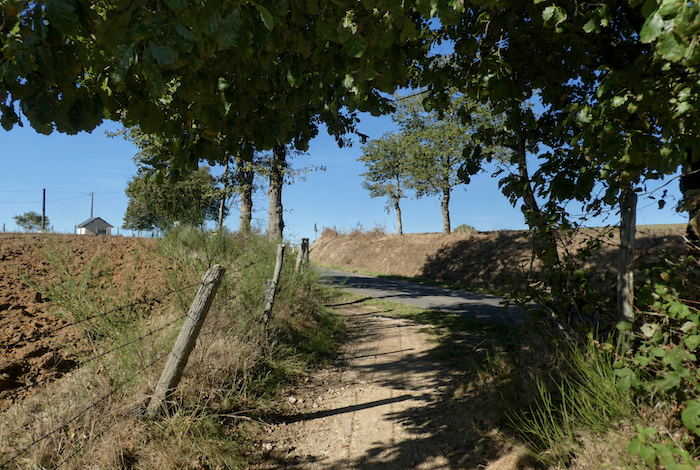
| The path winds through the countryside, following barbed wire fences that divide the fields into austere parcels, while occasional stunted oaks appear, twisted by wind and seasons alike. |
 |
 |
|
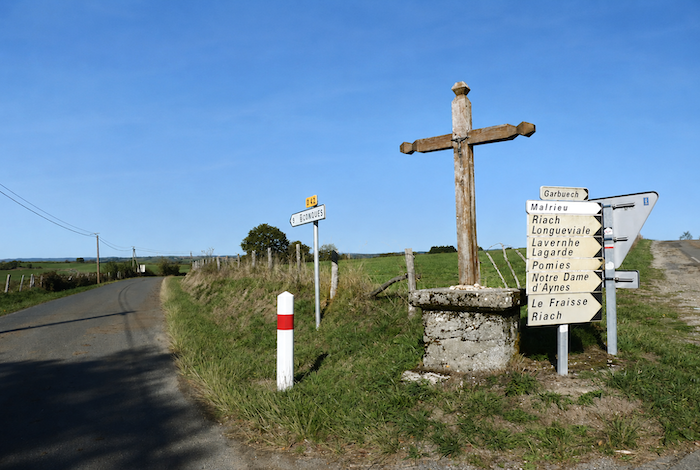
In this way, it progresses until it once again reaches the road leading to Conques. Here lies a crossroads where the routes seem more numerous than the pilgrims themselves. It is best not to make a mistake and to choose the correct direction. Whenever the GR markings become uncertain or discreet, prudence suggests walking a little farther in search of the familiar red and white signs. If they remain nowhere to be found, then you have strayed from the route and should retrace your steps before a simple mistake becomes a true detour.
It cannot be repeated often enough: the Way of Compostela has a certain fondness for detours and route changes, especially when roads are involved. Here again, it ignores the small departmental road in favour of a modest local lane, more discreet and almost secret, before rejoining farther on the very road it had seemed to abandon. |
 |
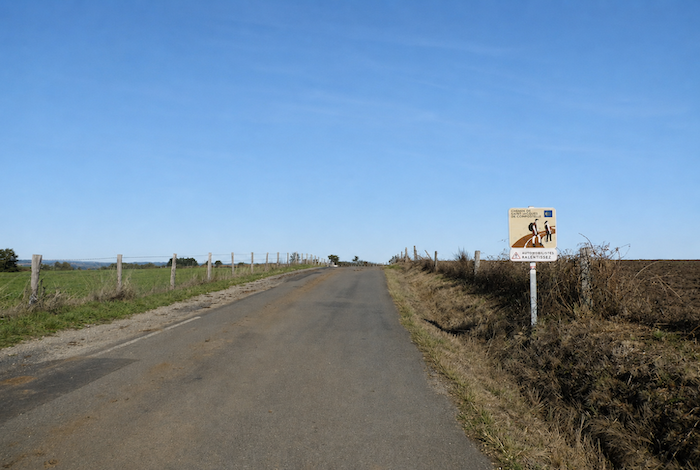 |
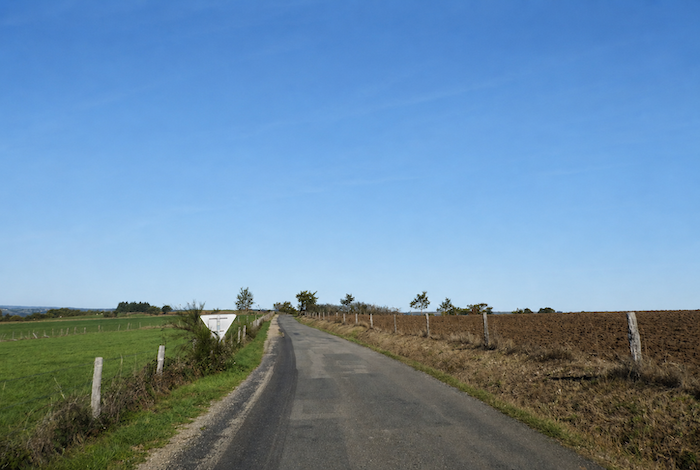
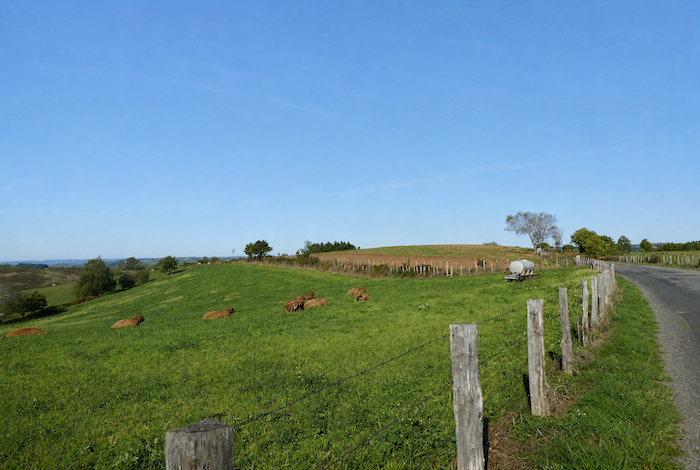
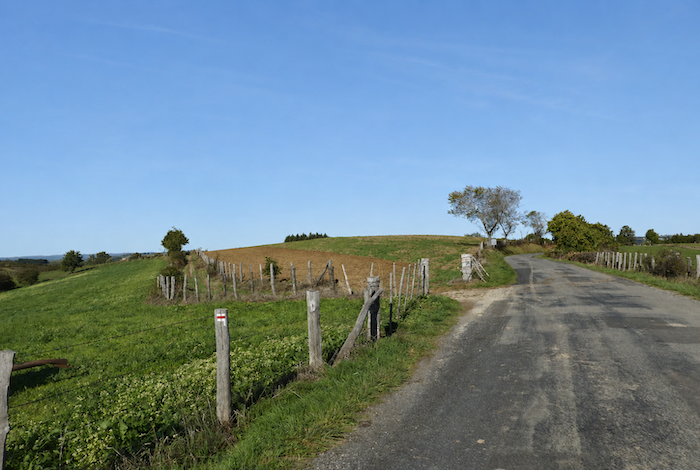
| Not a single soul appears to inhabit these forgotten heights. The land seems surrendered to wind, grasslands, and silence. Only a few cows, placid guardians of the pastures, lift an indifferent gaze toward the passing walker. |
 |
 |
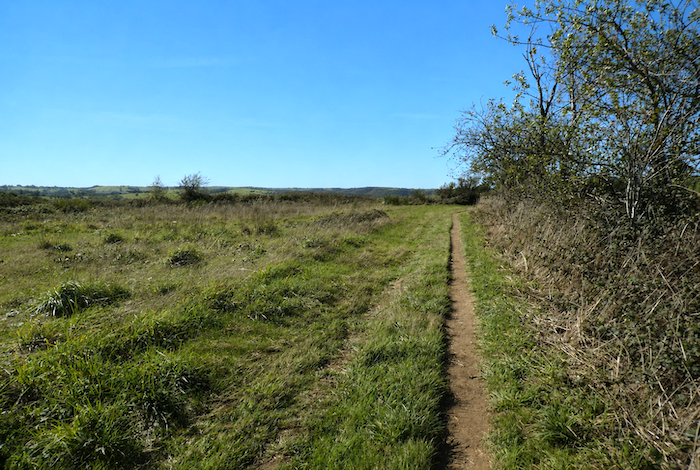
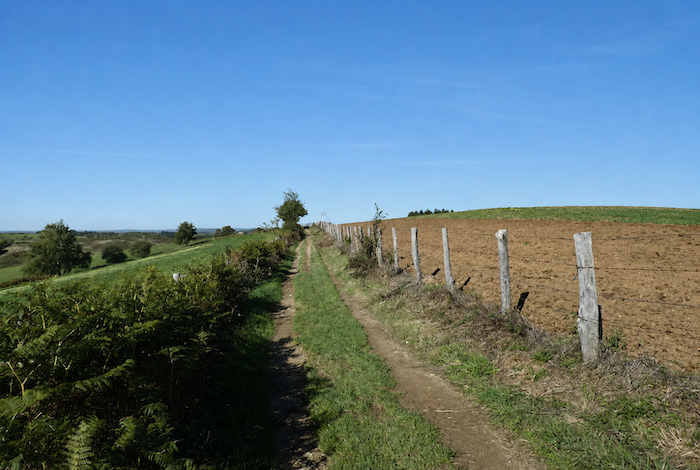
| Shortly afterwards, the GR65 leaves the ribbon of asphalt and follows a broad track of earth and grass, which undulates for a long distance through the countryside before finally rejoining the departmental road, almost reluctantly. |
 |
 |
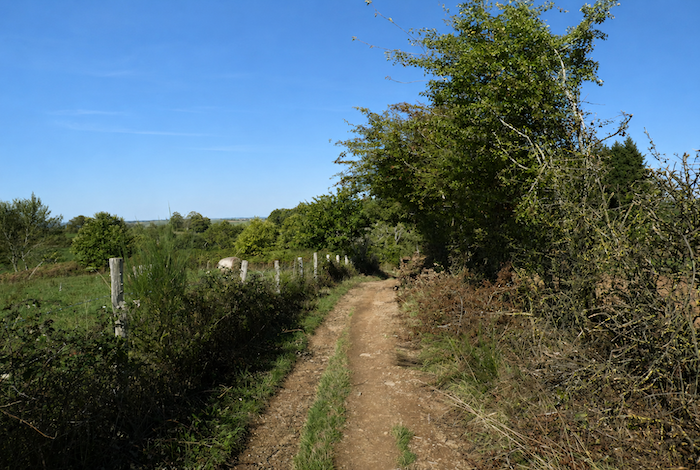
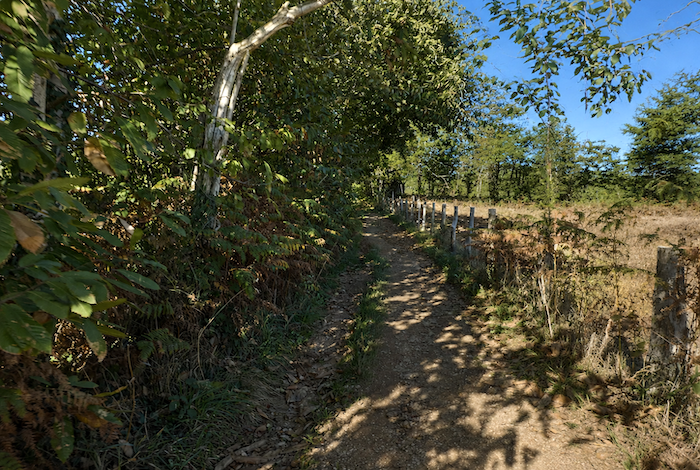
| Farther on, the path leaves the open spaces and enters a cooler landscape where moisture nourishes groves and woodland. Yet there is nothing wild or impenetrable about it. Nature retains here a gentle, almost domesticated character. |
 |
 |
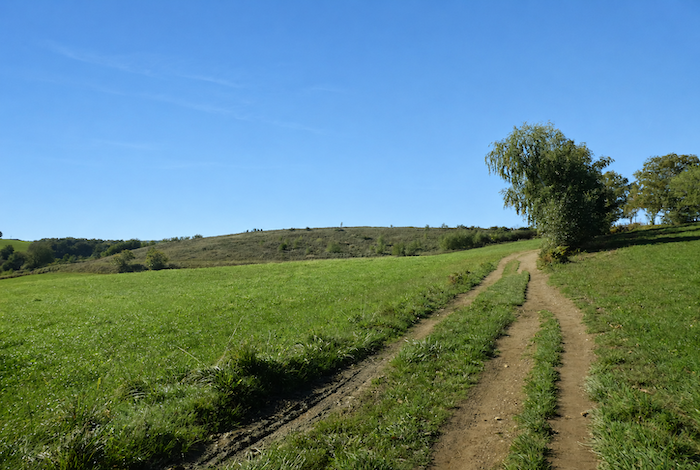
| Soon, however, the path returns to the open country, crossing land dotted with sparse scrub, faded meadows, and almost steppe like expanses among broom and bracken. |
 |
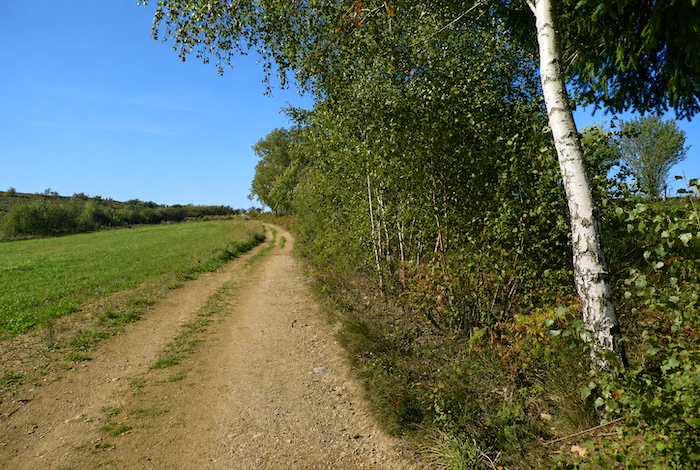 |
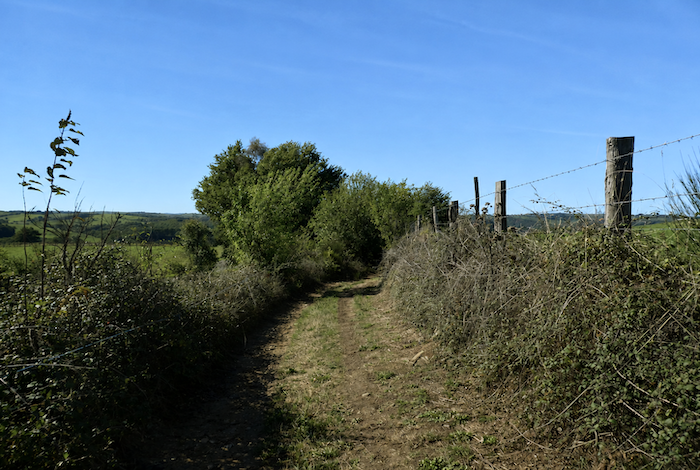
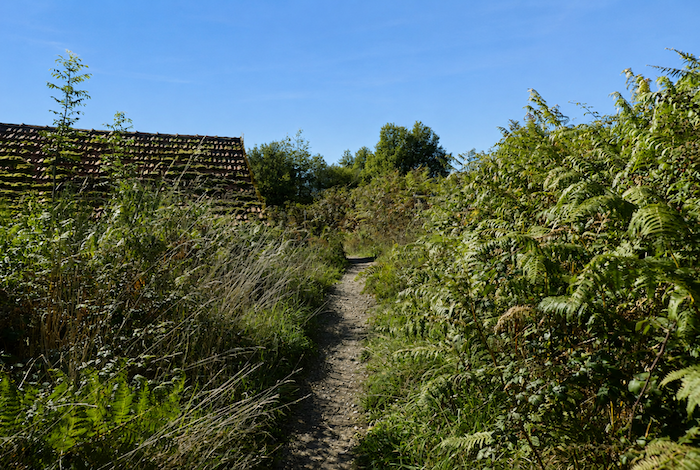
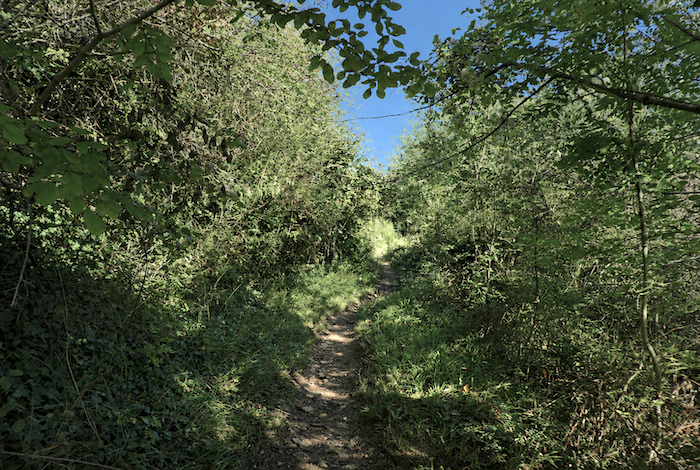
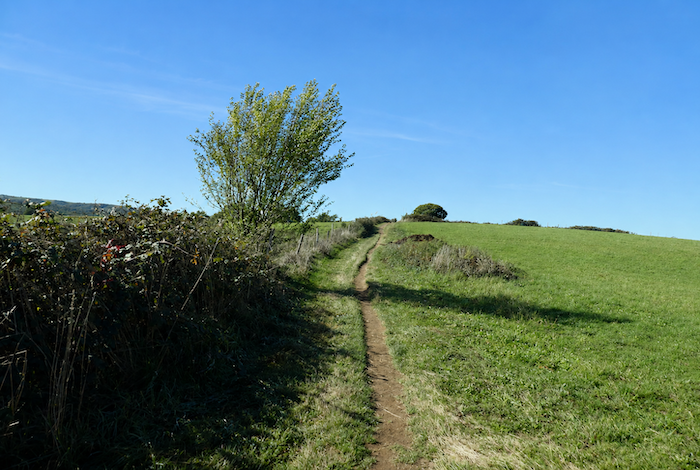
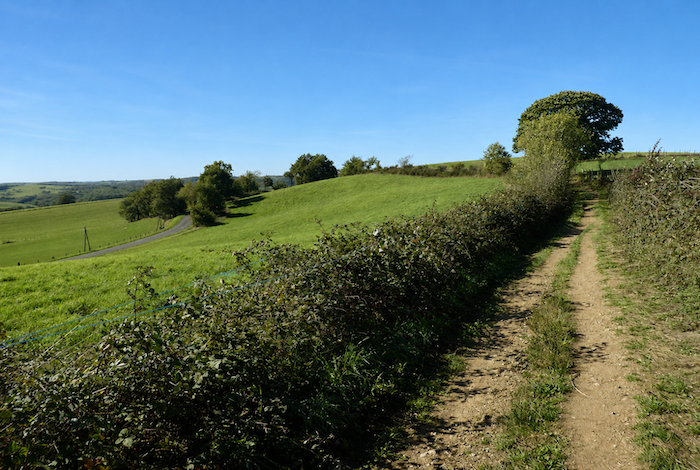
| The earth path winds between wild hedgerows like a confidence whispered softly by the countryside itself. On either side, bushes and brambles seem to stand guard over this peaceful landscape where time gradually loses its urgency. It is a modest yet luminous land that seeks neither grandeur nor spectacle, but instead offers the walker a rare sense of calm, like a long breath taken in the heart of the rural world. |
 |
 |
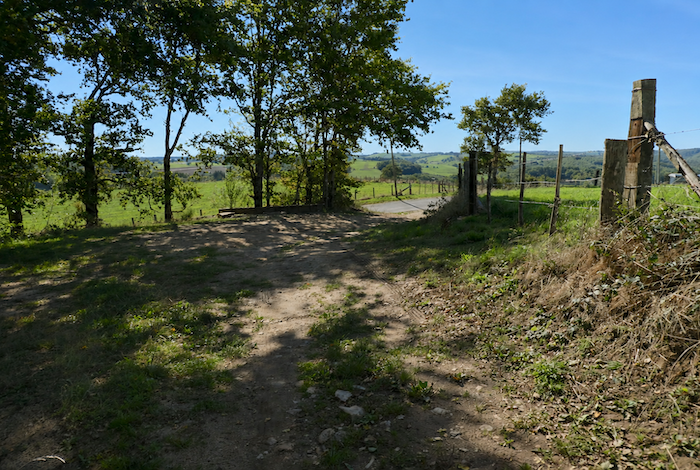
| At last, beyond the rolling hills, the road to Conques reappears. The path joins the D42, a faithful companion that it will now follow for many kilometers. |
 |
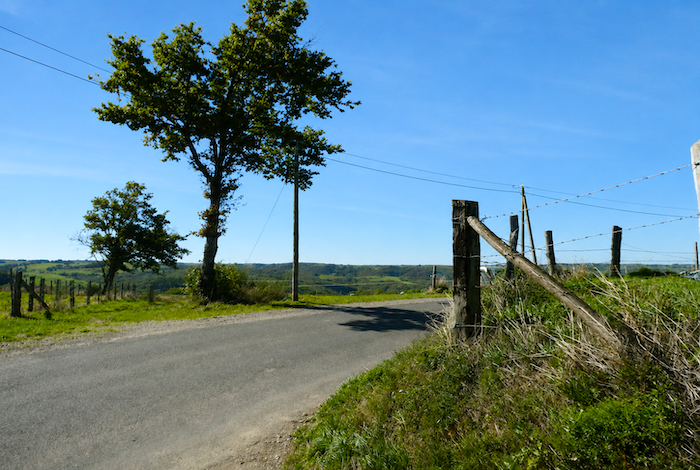 |
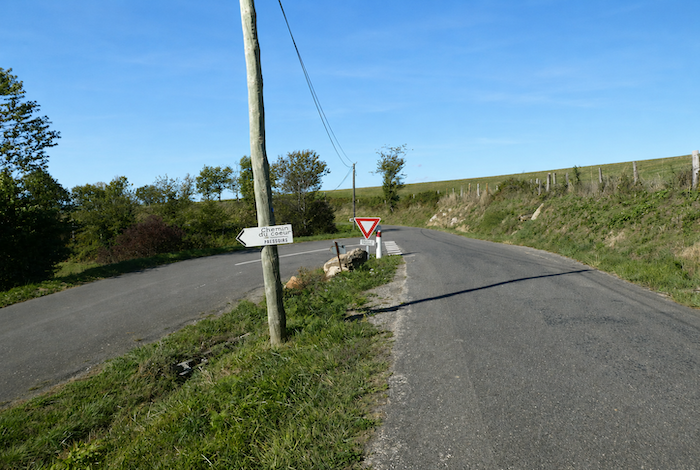
| You quickly understand, when walking the Way of Compostela, that many sections no longer resemble the paths of the Middle Ages. Modern life has passed this way, laying asphalt here and there, creating new local roads for tractors and livestock. More often than not, it is these roads that pilgrims now follow. Here, the local lane goes no farther, and the tractors return to their starting point along the asphalt. So do you! |
 |
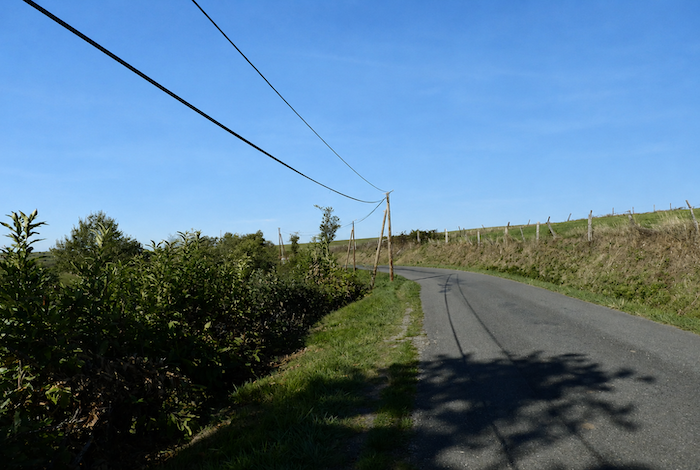 |
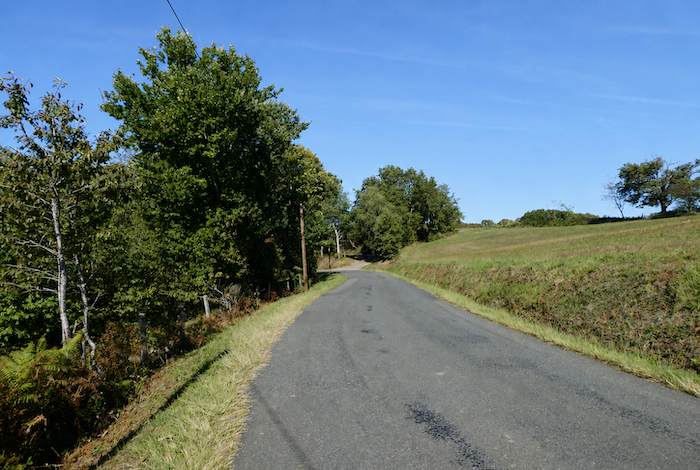
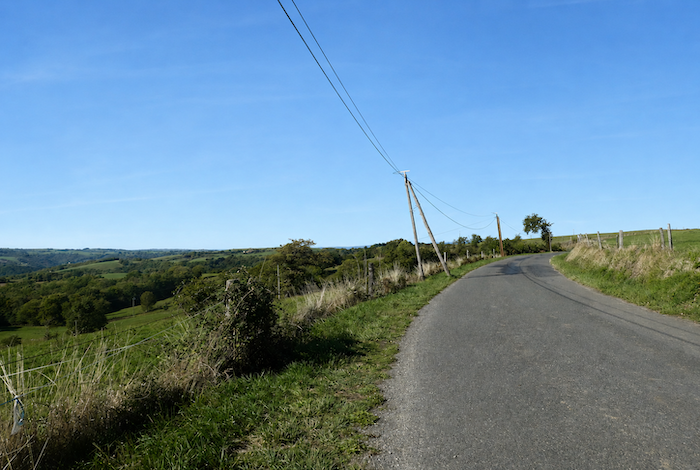
| All that remains is to place one foot after another on the asphalt or along the strip of earth and grass beside it. Pilgrims are divided on the matter, each according to personal taste. Traffic is certainly not heavy on this road. The tourists who visit Conques rarely travel along this route. |
 |
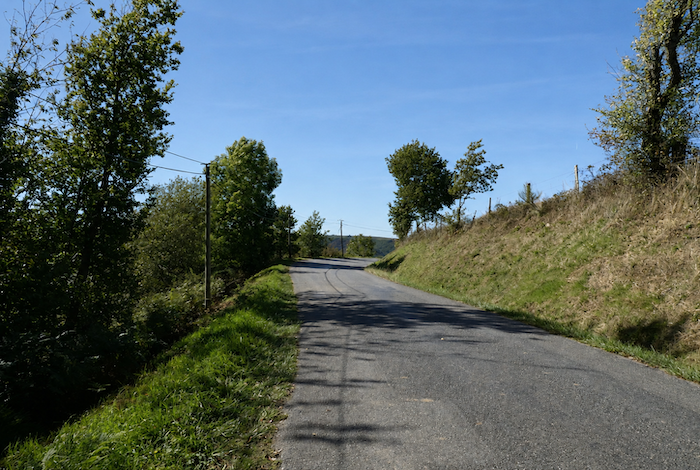 |
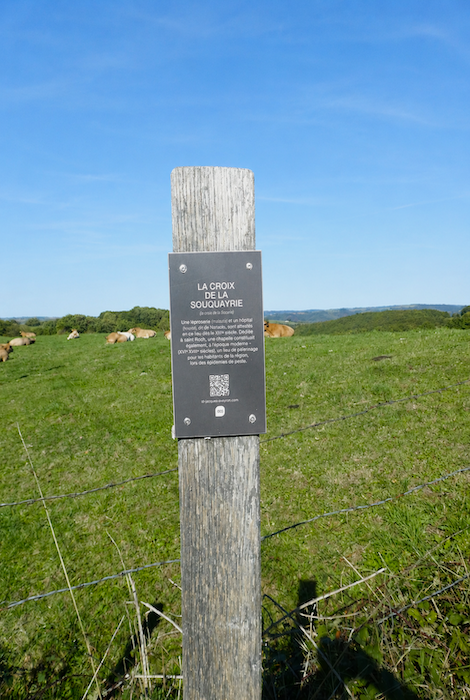
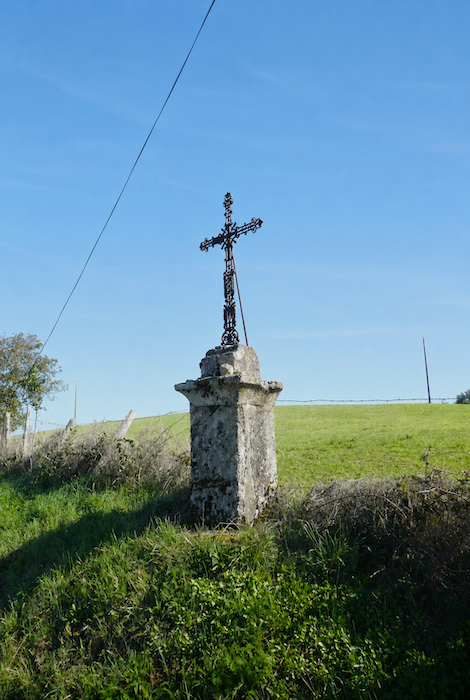
| Because the walker no longer needs to watch every stone underfoot, the gaze is free to linger on the crosses beside the road and on the magnificent trees growing here. The road soon passes the place known as La Croix de Souquayrie. During the Middle Ages, there stood here a leper hospital, a hospice, and a chapel dedicated to Saint Roch. Not a single stone remains today of this once important pilgrimage site. |
 |
 |
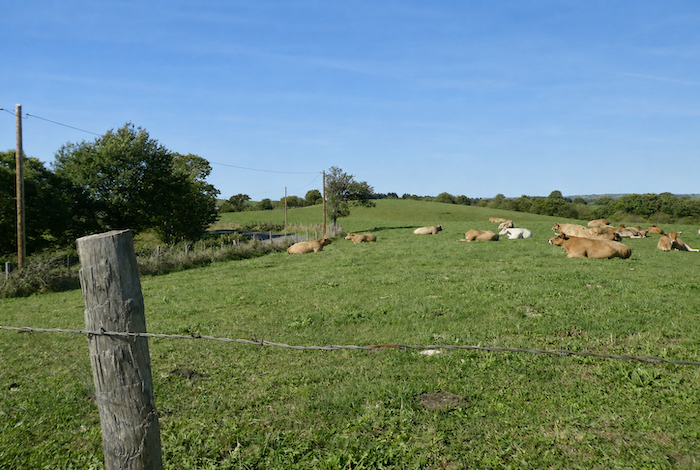
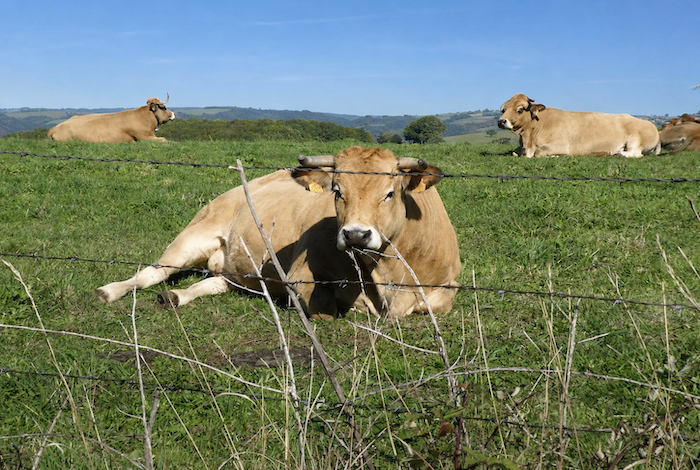
| And once again the road stretches ahead, long and relentless. Even the beautiful Aubrac cattle seem to sympathize with our weariness. |
 |
 |
Section 5: A few more ups and downs before the steep descent to Conques
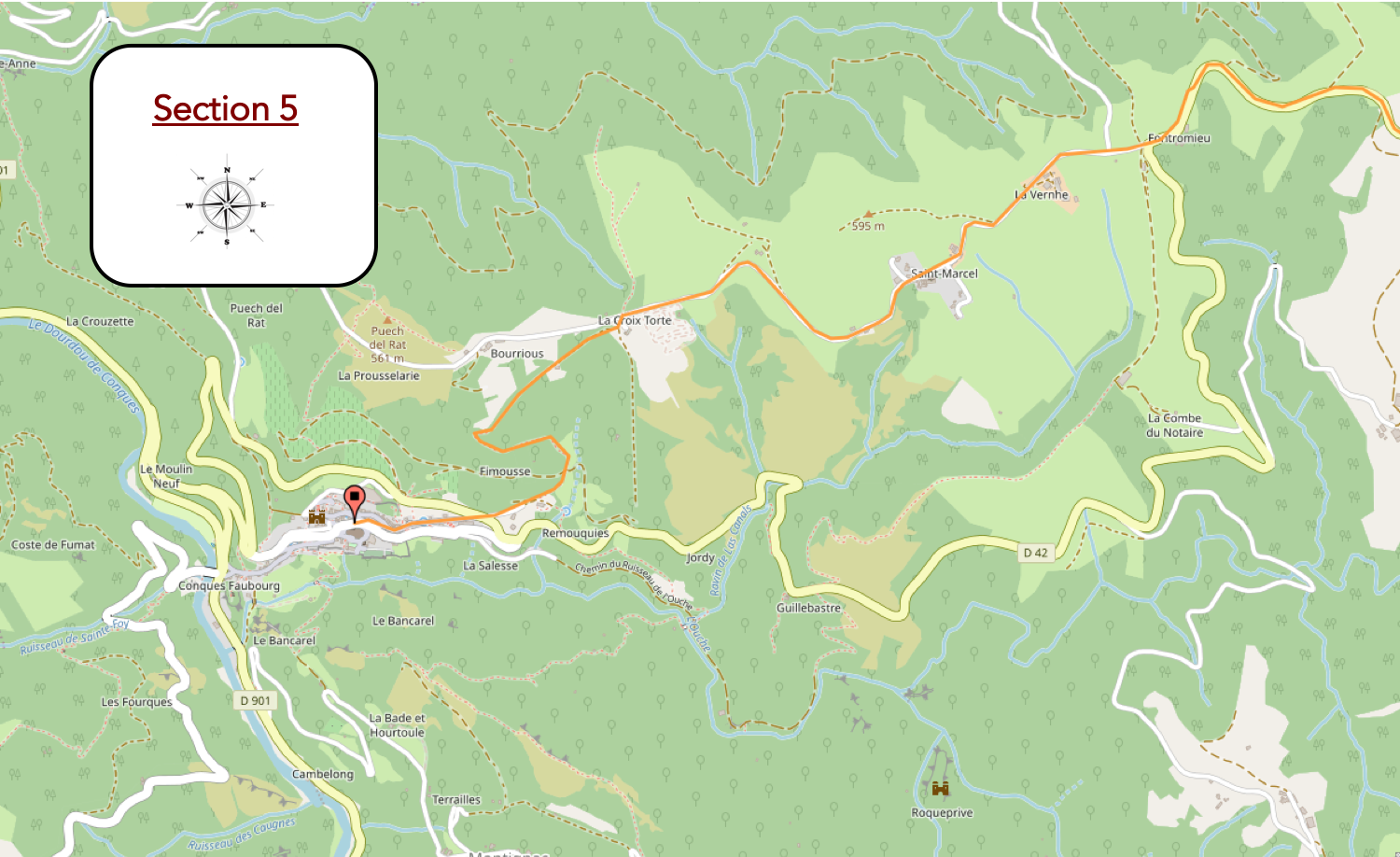
Overview of the route’s challenges: Conques must be earned, must it not? Just look at the profile and the elevation changes.
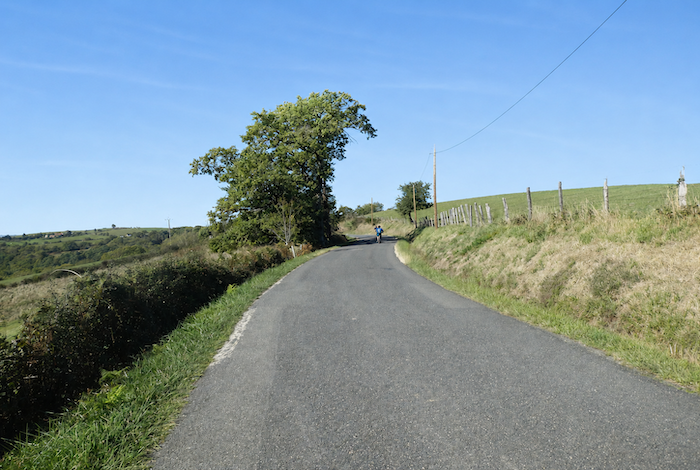
| And the road rolls on, stubborn and almost monotonous in its long crossing of the plateaus. Yet the eye never grows completely weary. In the meadows stand true groves of chestnut trees, dense masses of deep coloured foliage, sometimes accompanied by a few scattered pines whose dark silhouettes stand out against the bright sky. |
 |
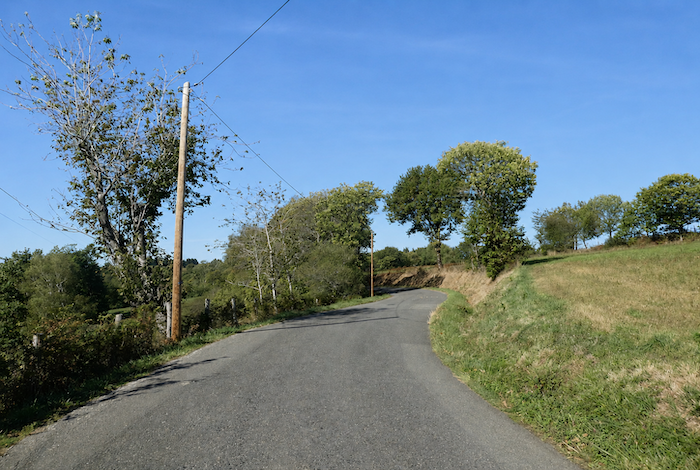 |
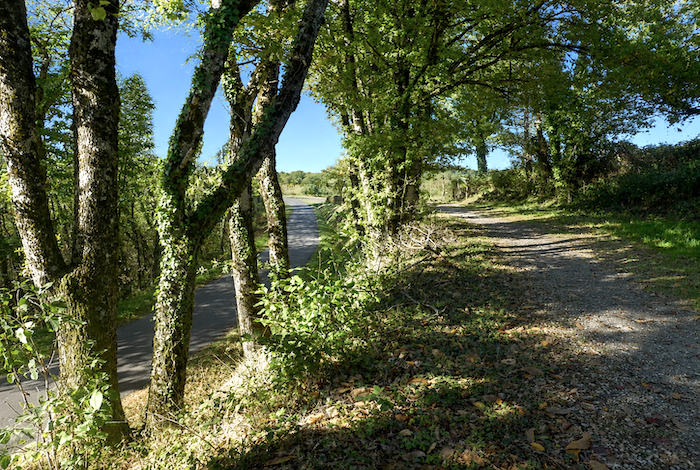
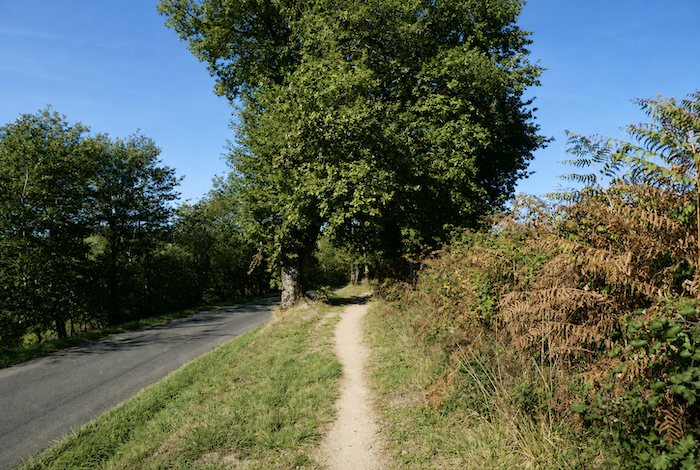
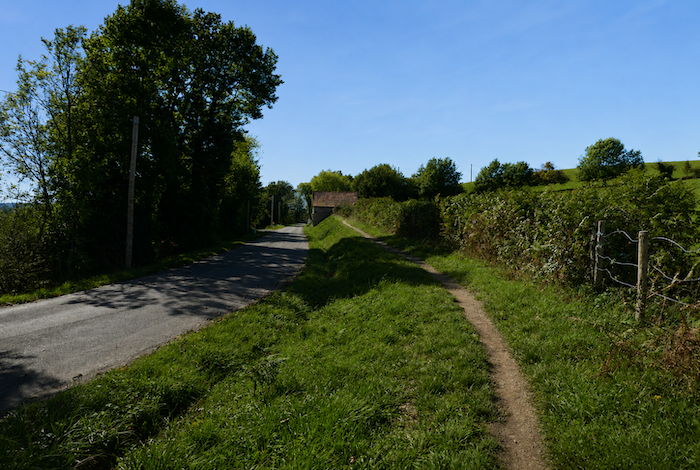
| Farther on, an earth path has been laid out beside the road, as if to offer walkers the illusion of a more rural trail. Yet the artifice fools no one. Whether one likes it or not, it is still the road that imposes its presence and creates the feeling of travelling in its wake. |
 |
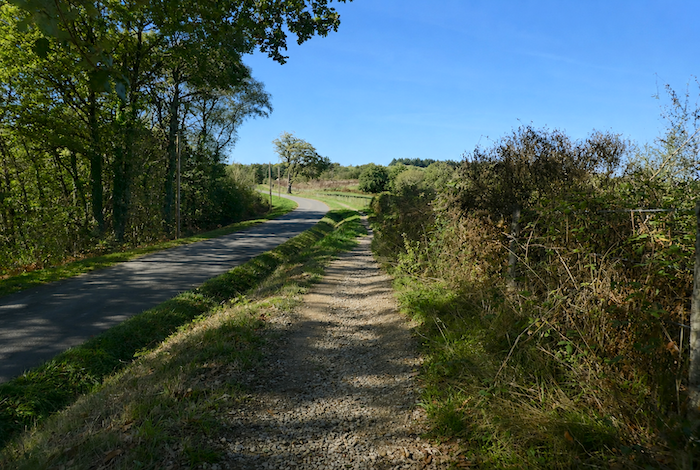 |
| Be reassured, however. Traffic here is almost non-existent. And if, through fatigue or convenience, you leave the trail for a while and walk on the asphalt, you will encounter little more than silence and the wind. |
 |
 |
| The trail and the road soon reach the place known as Fontromieu. |
 |
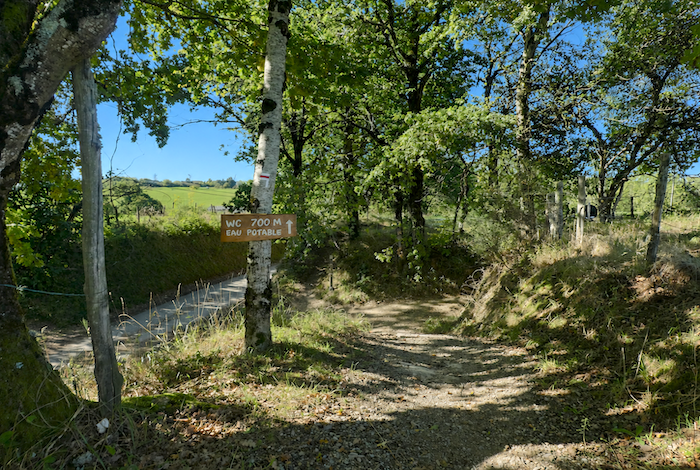 |
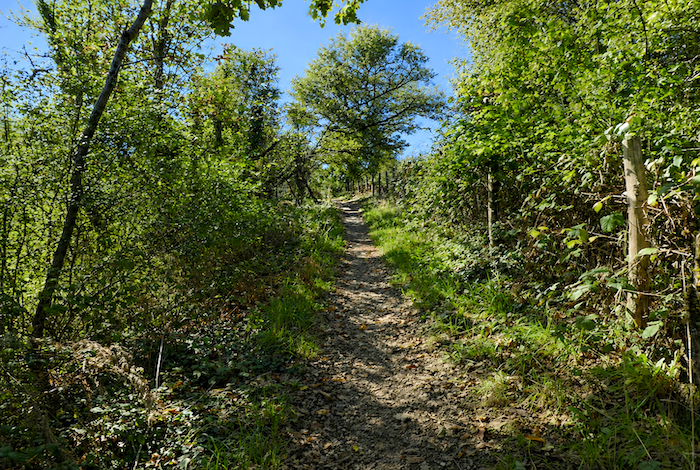
It is here that the GR65 finally leaves the D42, which continues its descent toward Conques. The name Fontromieu means « Pilgrims’ Spring. » The word “romieu” originally referred to someone making a pilgrimage to Rome, but over time it came to designate any pilgrim, regardless of destination. Yet at this place with such a promising name, there is nothing left: no village, no human presence, not even the drop of water that the name seems to promise.
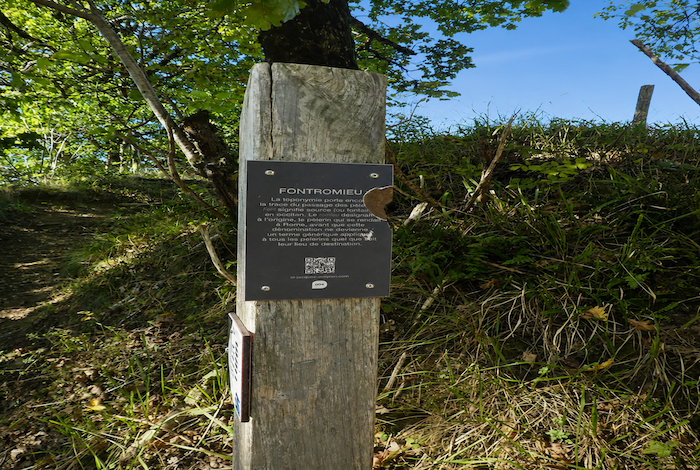
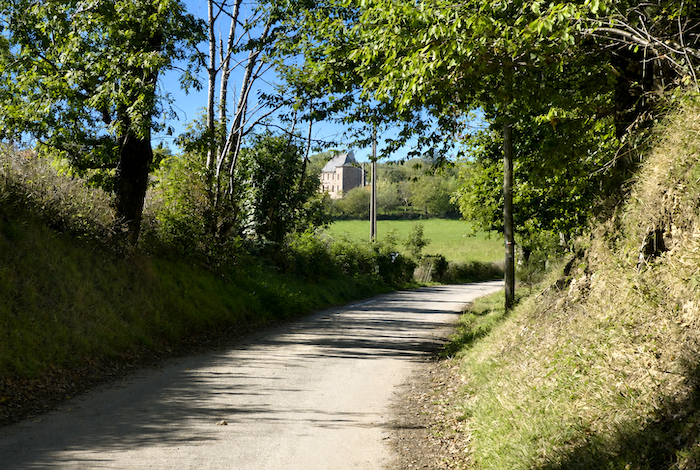
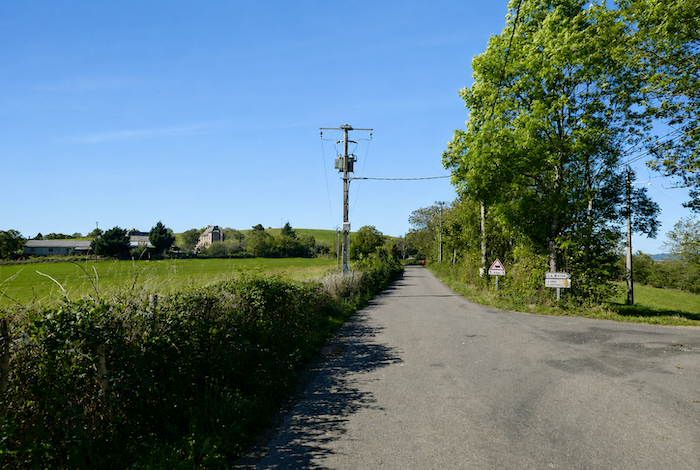
| The GR65 does not yet leave the asphalt behind. Instead, it heads toward St Marcel, above Conques. The small road stretches straight ahead beneath chestnut trees, oaks, and ash trees, bathed in the gentle light so characteristic of the hills of Rouergue. |
 |
 |
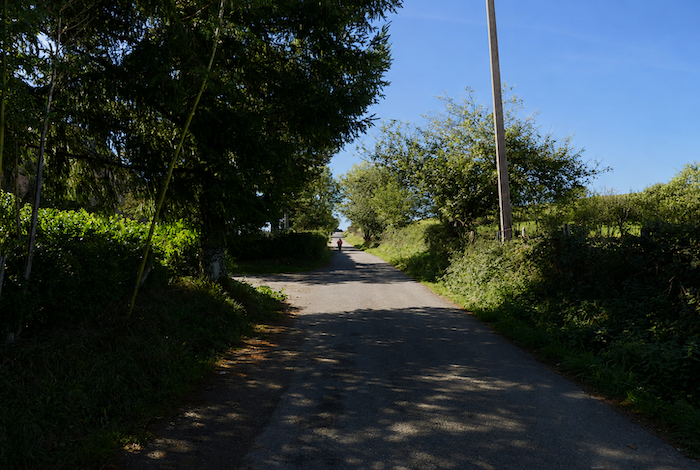
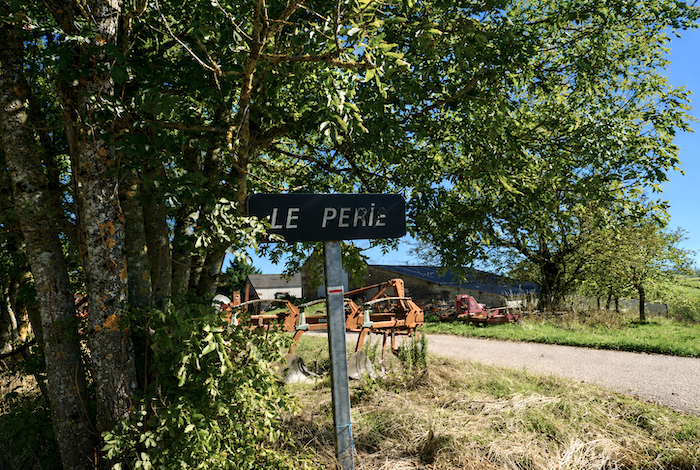
| It then crosses the agricultural estate of Le Périe, among meadows and cultivated fields. |
 |
 |
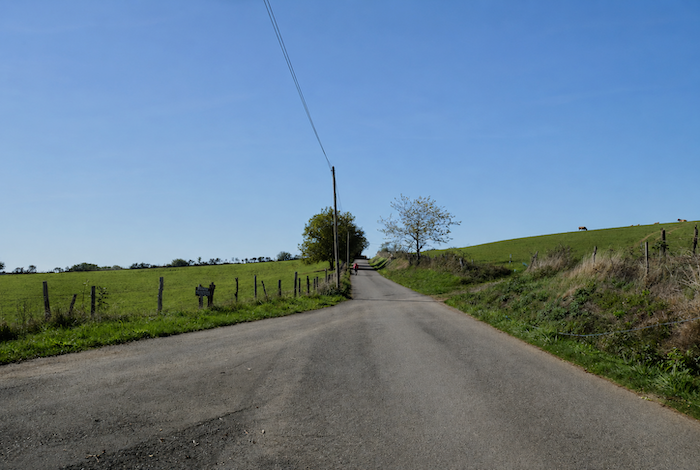
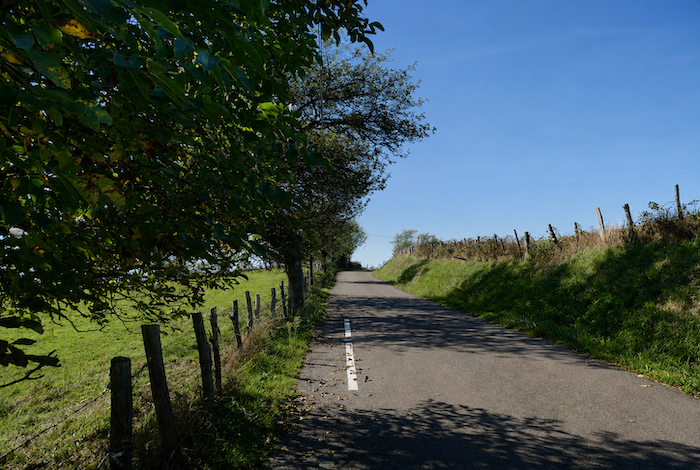
| The road continues to climb, straight and silent, through a countryside entirely devoted to farming. Here, place names seem to have been born from the farms themselves. Around Conques, the soil often takes on a reddish hue. After rain, the ditches carry blood colored mud, a thin sticky layer that stains the roadside. It is the ancient red sandstone of the region that gives these lands their distinctive color. |
 |
 |
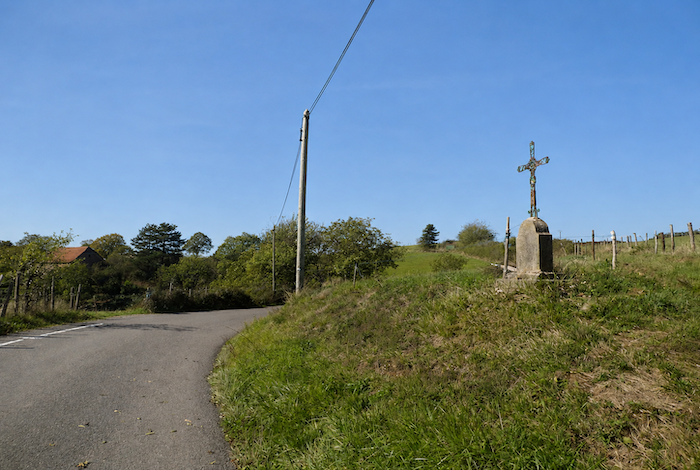
| At the end of the climb appears St Marcel. |
 |
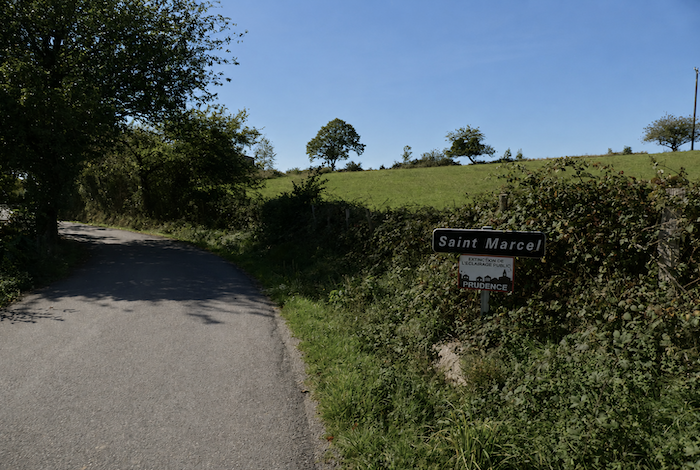 |
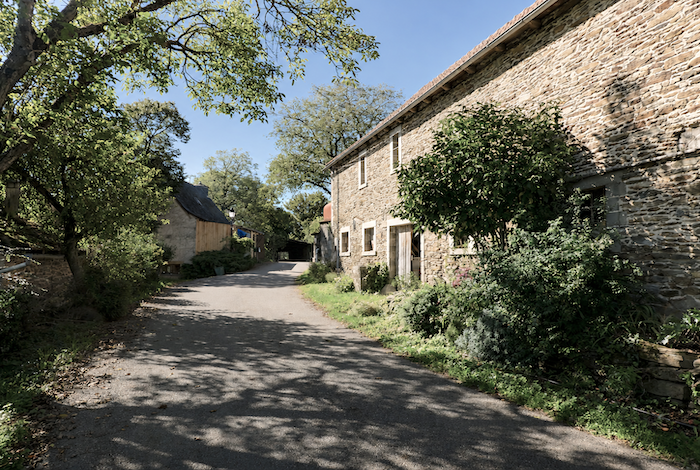
| This is often where pilgrims gather before the great descent into Conques. The village seems untouched by time: only a handful of houses, meadows, woodland, and that rural silence which envelops the heights. One can easily imagine pilgrims of former centuries catching their breath here before plunging into the valley of Conques. A water point and a few mobile refreshment stalls sometimes bring life to the place. The concentration of pilgrims can then be astonishing, sometimes more than two hundred in a single day, a sight almost unheard of on the French sections of the Way of Compostela. The reason is simple: Conques lies only a short distance away, and few would willingly pass so close without stopping. Elsewhere, pilgrims spread out along the stages. Here, St Marcel hums like a hive at the height of summer. Yet from the first days of autumn, the bustle fades. By mid-October, you may encounter no more than thirty pilgrims a day on the way to Conques. |
 |
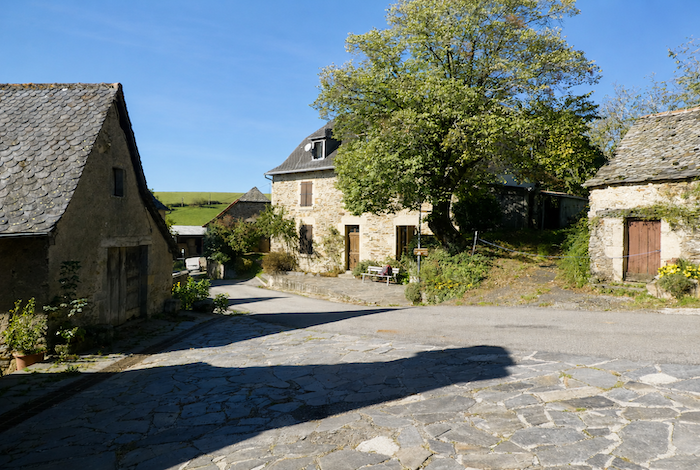 |
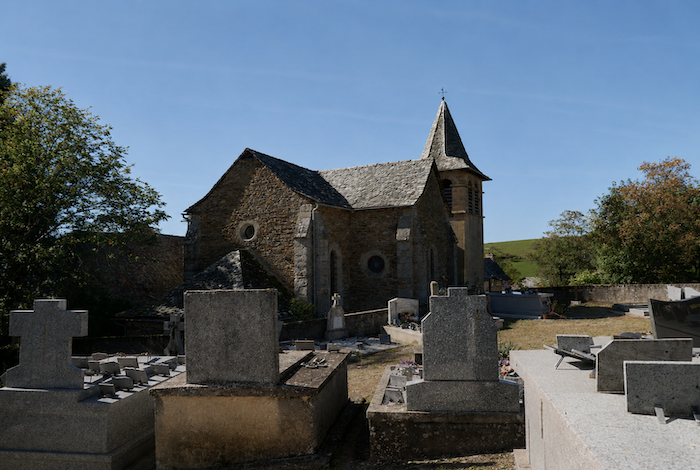
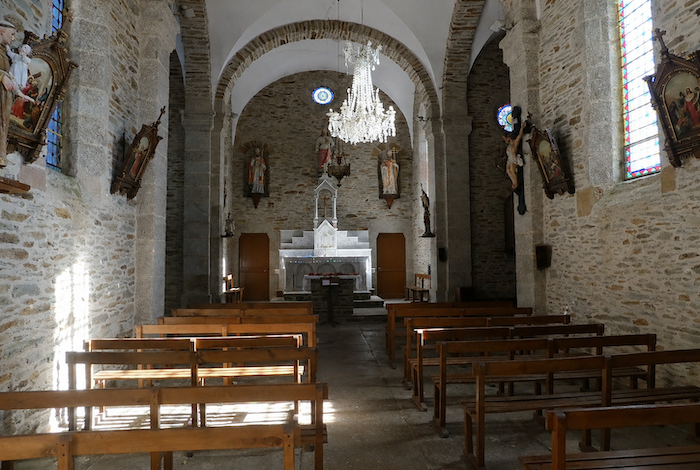
| The place remains modest, almost withdrawn from the world, yet deeply marked by the history of pilgrimage. A first church was reportedly rebuilt here during the sixteenth century. Of that building, only a chapel dedicated to Our Lady survived for many years. By the nineteenth century, the church had fallen into such disrepair that it was almost entirely rebuilt toward the end of that century. Nothing here impresses through grandeur. Everything instead speaks of simplicity, humility, and the quiet permanence that has accompanied pilgrims for centuries. |
 |
 |
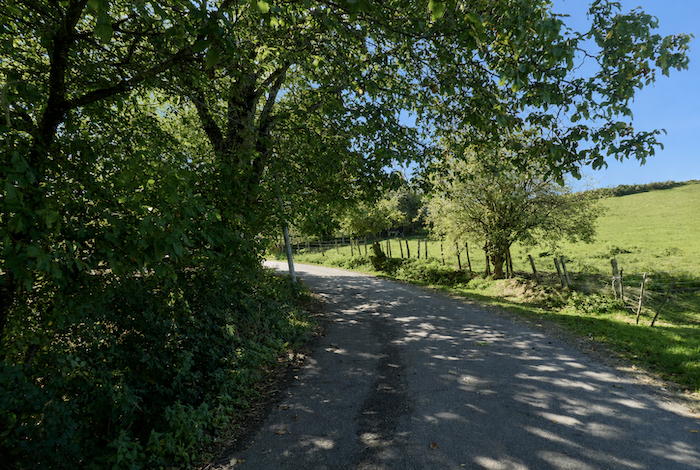
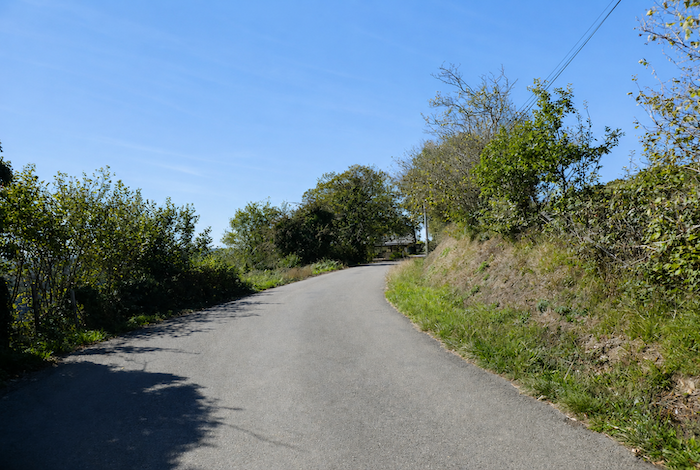
| Yet the descent to Conques has still not begun. The little paved road continues for some time along the ridgeline, among walnut trees, numerous in this area, and a few chestnut trees that have become increasingly rare. Here, they seem to have abandoned the colder heights in favour of the milder shelter of the deep valley below. |
 |
 |
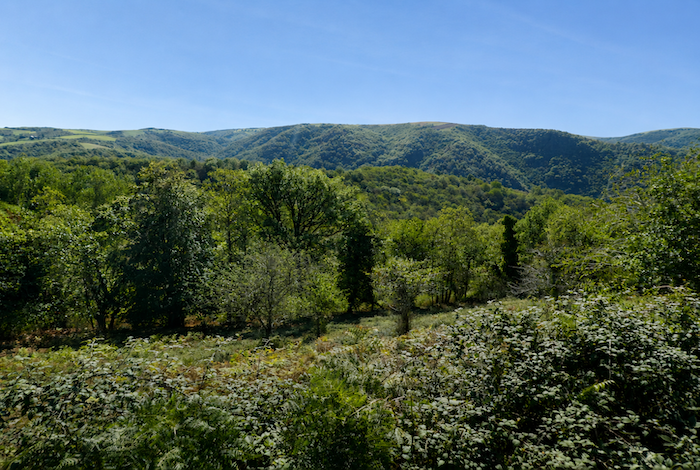
| The approach to Conques unfolds slowly across this almost deserted plateau. Gradually, below, appears the immense natural amphitheatre in which the village rests, carved into dark schist among oaks and chestnut trees. Heather, juniper, and gorse cling to the embankments, hardy vegetation of poor soils. As for the nettles, they reveal without disguise the persistent dampness of the land. |
 |
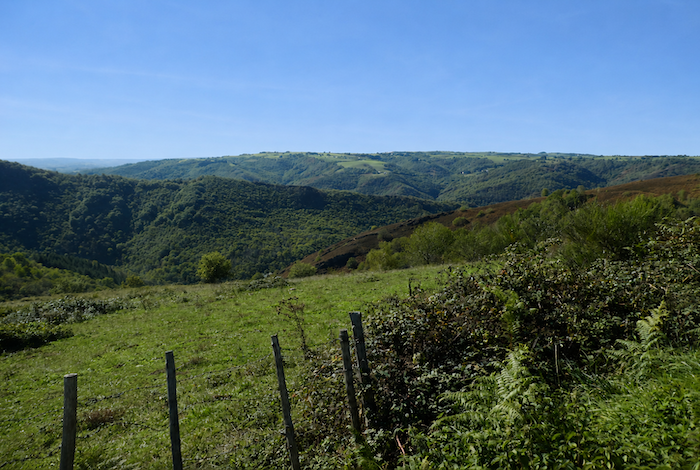 |
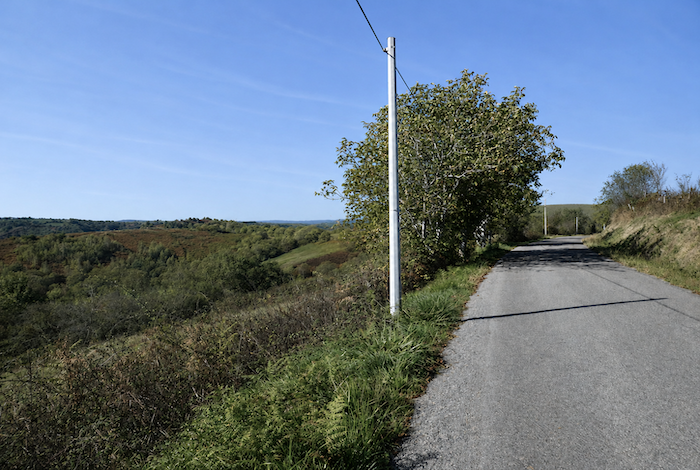
| The route continues for several hundred more metres along the road without any apparent effort, as though deliberately postponing the moment when it must finally plunge toward the sacred valley. |
 |
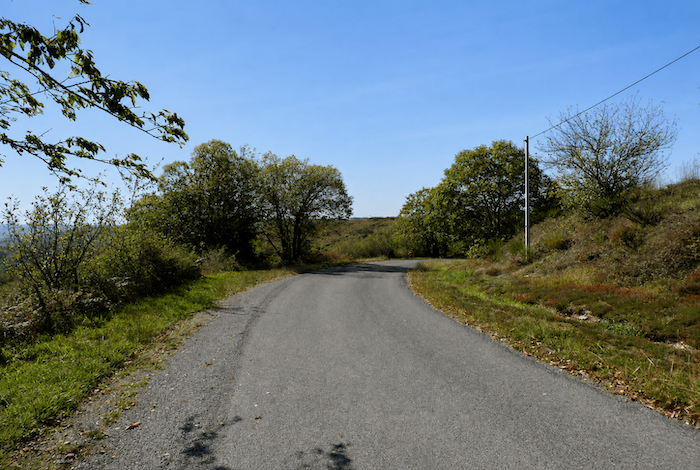 |
| Then the road reaches a large farm at the end of the road, at the place known as Croix Torte. Here the scenery changes abruptly. Signposts announce what lies ahead. Conques is now only thirty minutes away, but nearly three hundred metres of elevation must first be lost before reaching the abbey church. A prospect that delights the eyes far more than the knees and tendons already battered by days of walking. On the Way of Compostela, injured pilgrims almost form a brotherhood of their own. |
 |
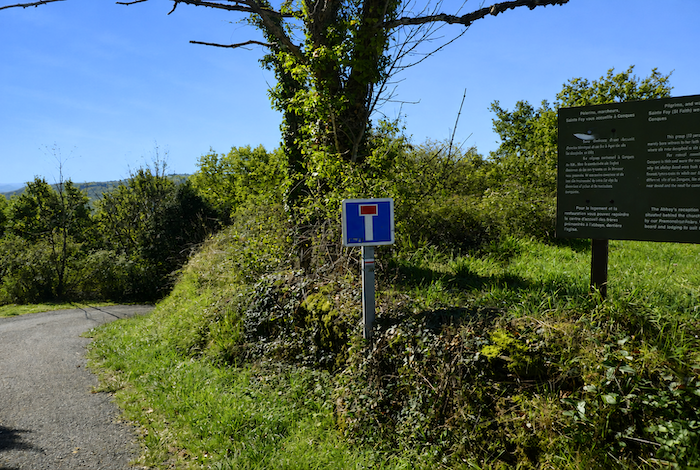 |
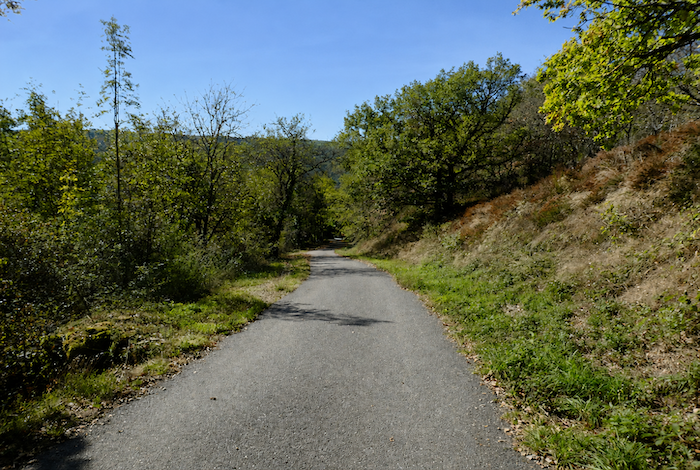
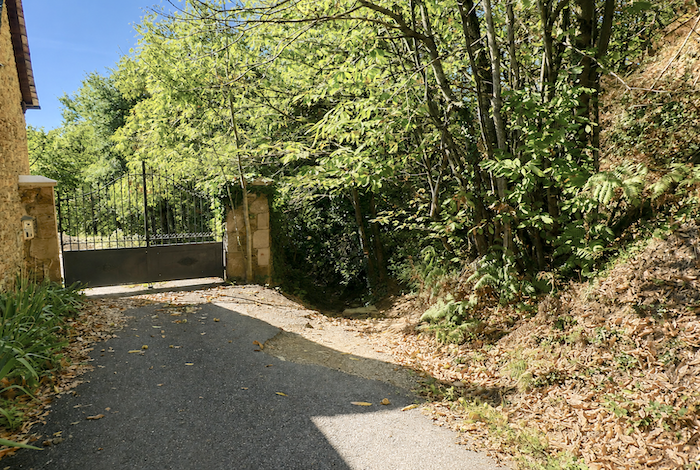
| At first, the descent seems almost gentle, despite a paved road approaching a gradient of twenty percent. Broad and relatively regular, it plunges rapidly toward an isolated house clinging to the hillside. |
 |
 |
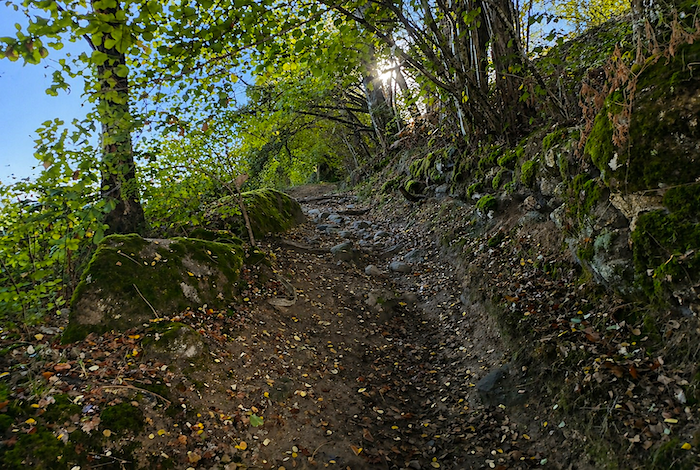
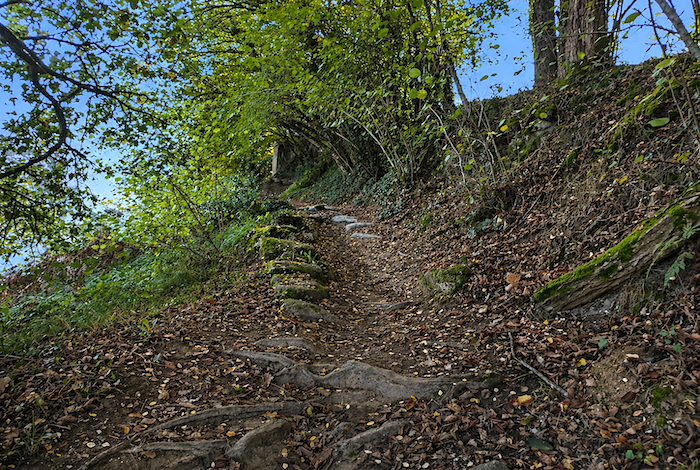
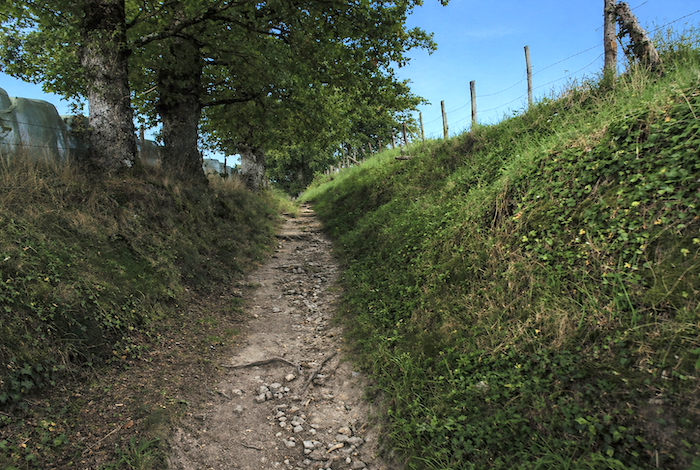
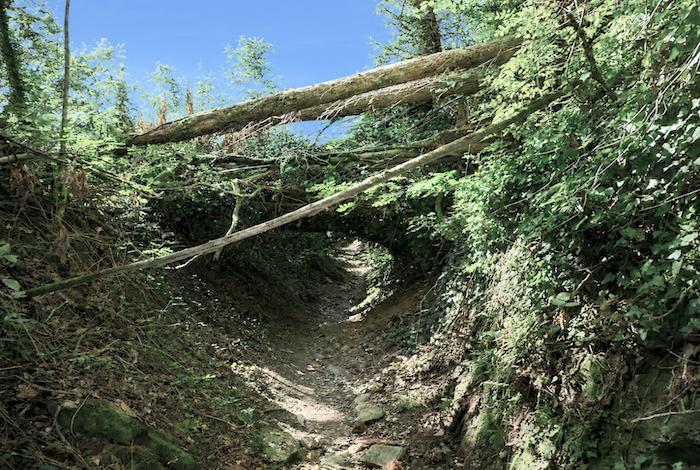
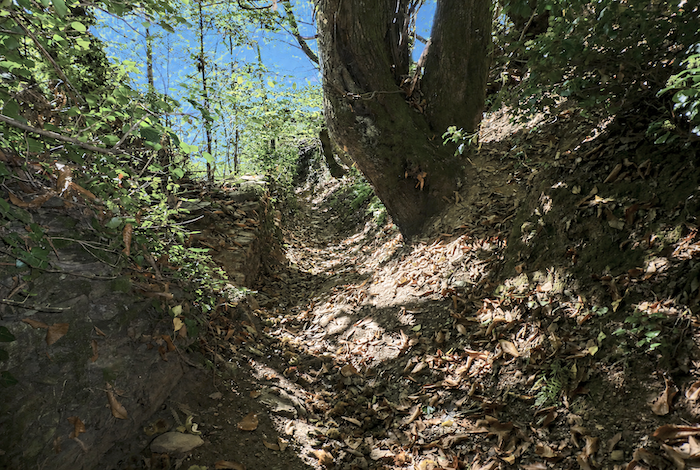
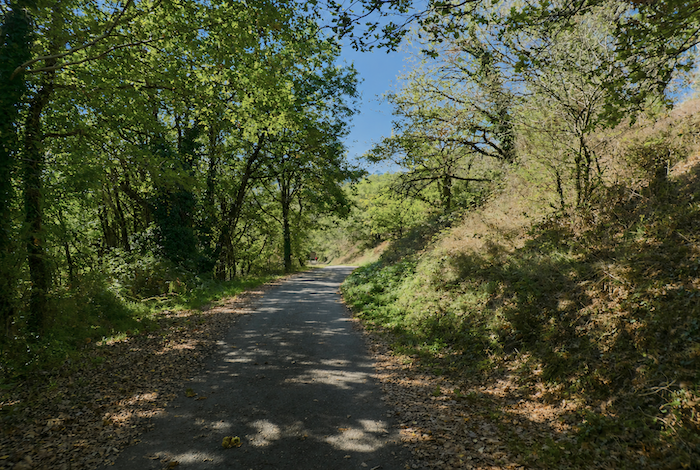
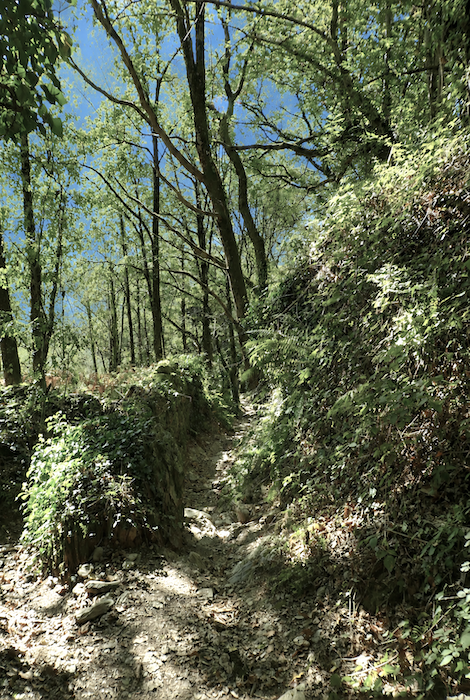
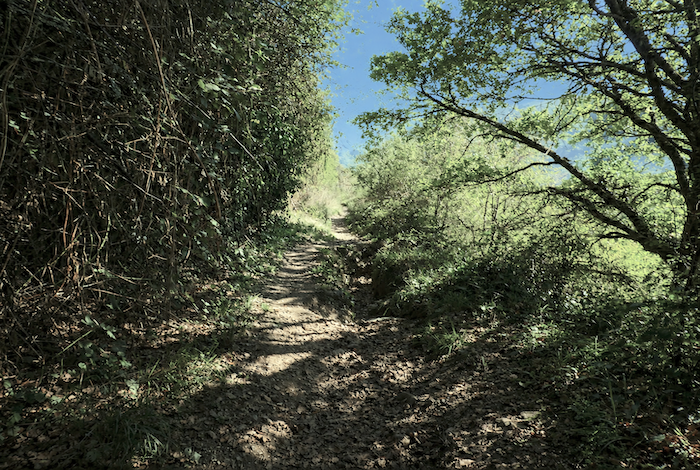
| But this ease does not last. Very quickly, the road gives way to a narrow trail of stone and earth, steep, eroded, and at times scarcely visible on the slope. Depending on the season, walkers may find dry and accommodating ground, or instead a carpet of fallen leaves as treacherous as ice. Nor do the difficulties end there. Deep ruts deform the passage, while large stones roll beneath the feet at the slightest misstep. In wet weather, it is generally recommended to follow the road descending from Croix Torte to Conques. Yet few pilgrims, even the most exhausted, can resist confronting this almost legendary descent. |
 |
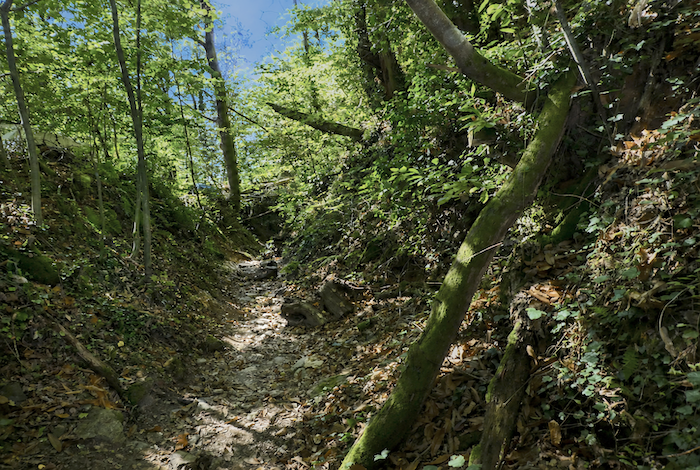 |
| Here, nature regains all its wildness, untouched, dark at times, almost intimidating. In certain places near the beginning of the trail, the gradient exceeds thirty percent, plunging directly beneath the trees through a chaos of stones, roots, and damp earth. When the ground is wet, every step demands attention and humility. |
 |
 |
 |
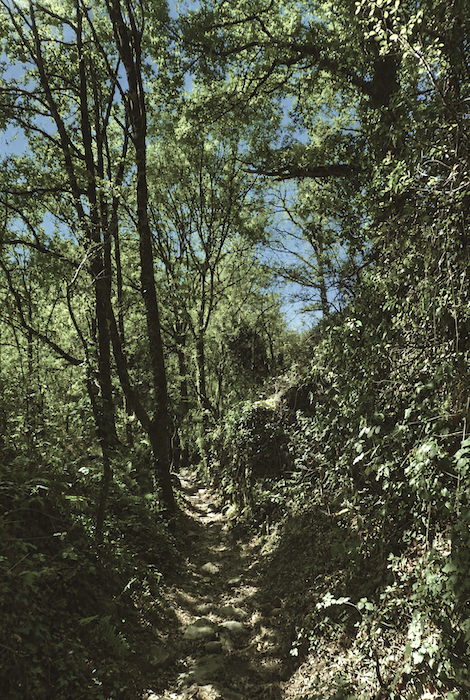 |
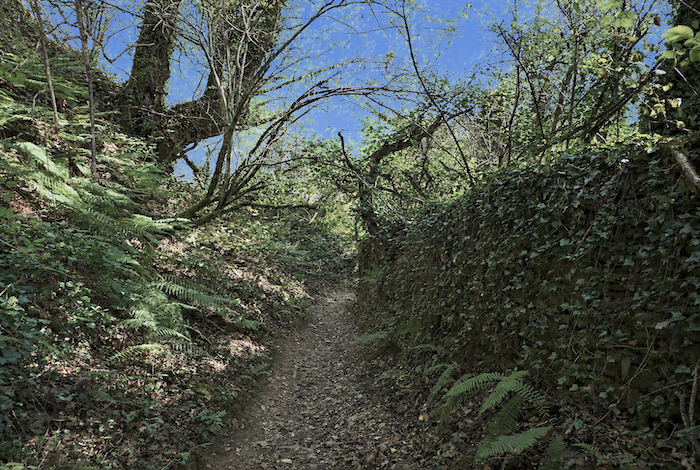
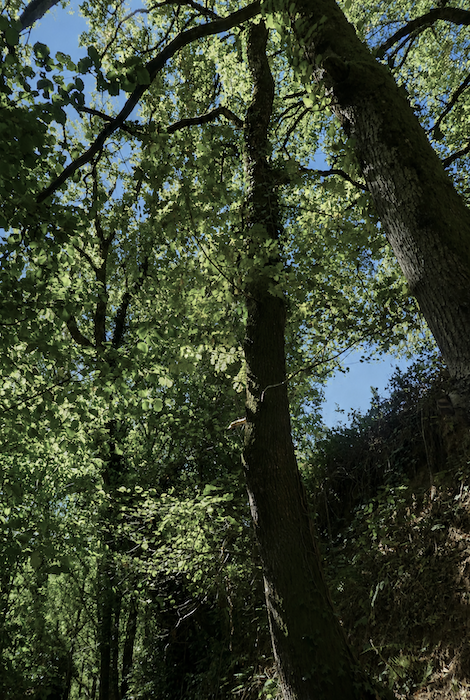
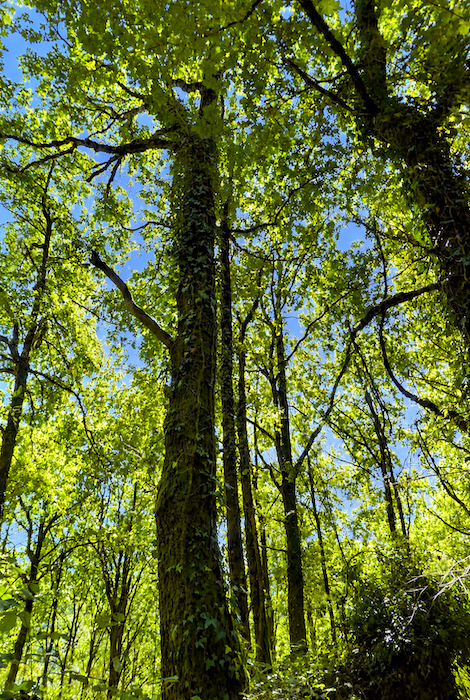
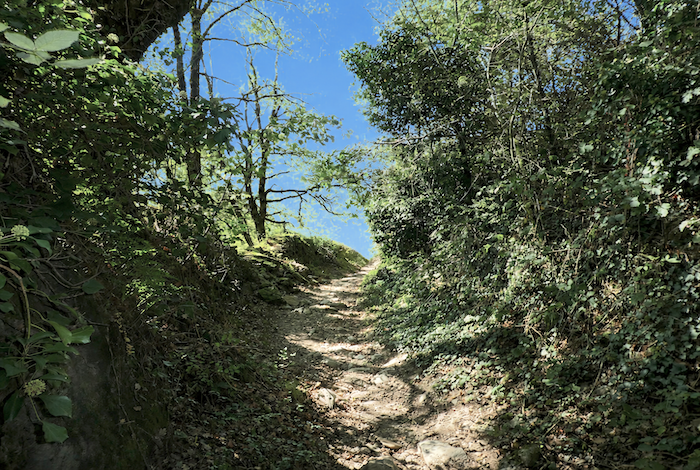
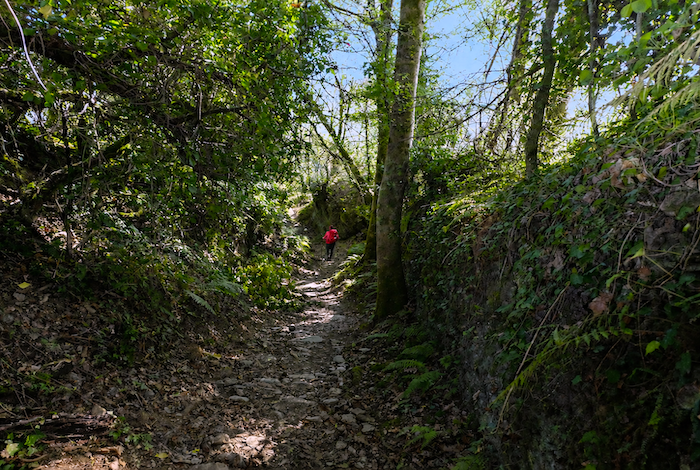
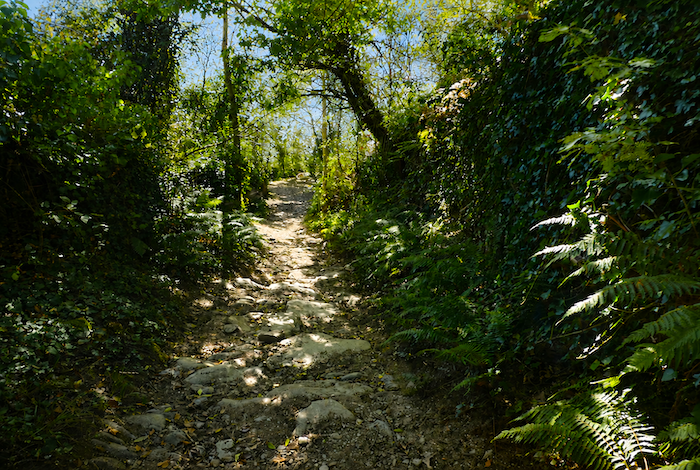
| And yet, despite the effort and the fear of slipping, something deeply enchanting emanates from this place. The trail seems to pass through a timeless vegetal cathedral, where light filters through the foliage as though through the stained glass of an ancient nave. Everything feels eternal, silent, almost sacred. A little farther down, the slope briefly becomes less severe, though it still exceeds fifteen percent, and the path crosses a gentler section among shrubs and hornbeam hedges. Yet slippery schist often covers the ground. Everything unfolds within extremely dense vegetation, among ferns and ivy, beside moss covered walls. The woodland drips with moisture in a world that seems almost impenetrable. The sensual quality of the place comes from the way the plants press against one another with luxuriant abundance. |
 |
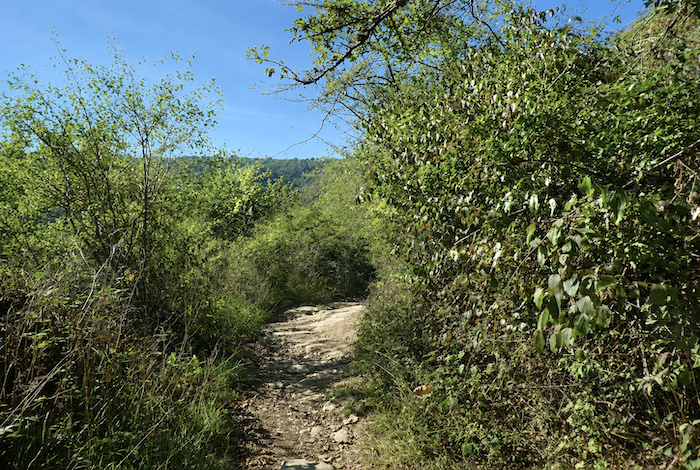 |
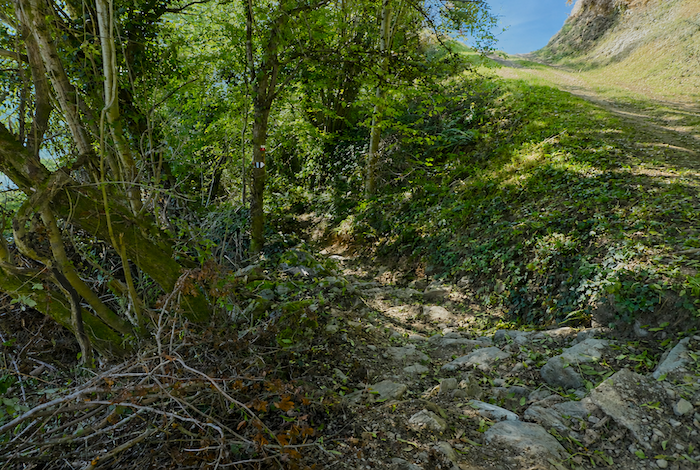
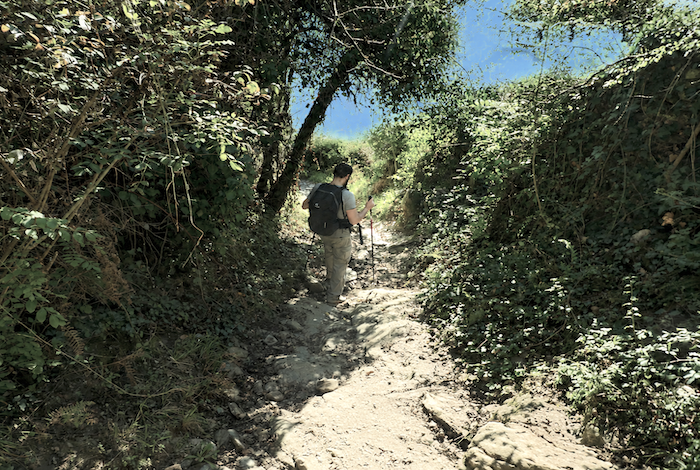
| Some may think they have escaped purgatory without too much suffering. Not at all. The lower section of the descent becomes a true slide, with gradients reaching 35% across large schist slabs that cut across the trail. |
 |
 |
| A genuine delight for joints that are already begging for mercy. |
 |
 |
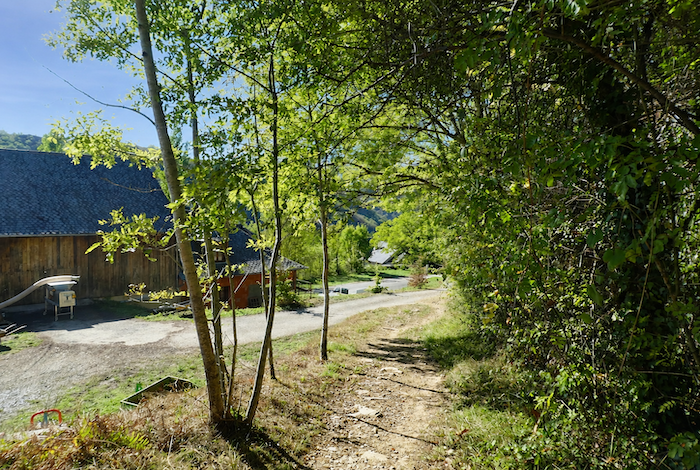
| At the bottom of the descent, the GR65 emerges from the forest and rejoins the asphalt on the heights above Conques. |
 |
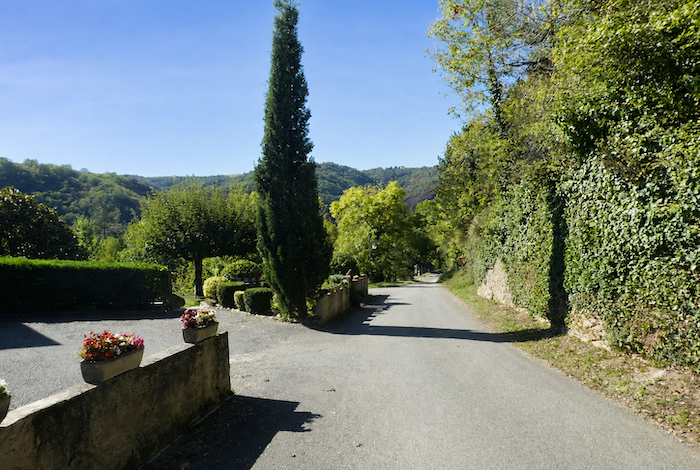 |
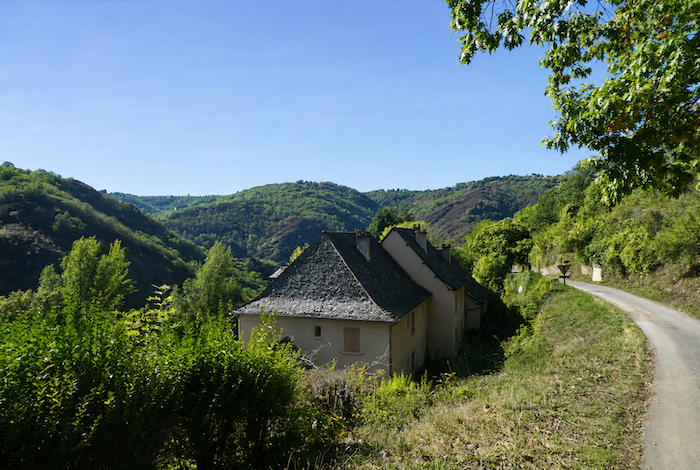
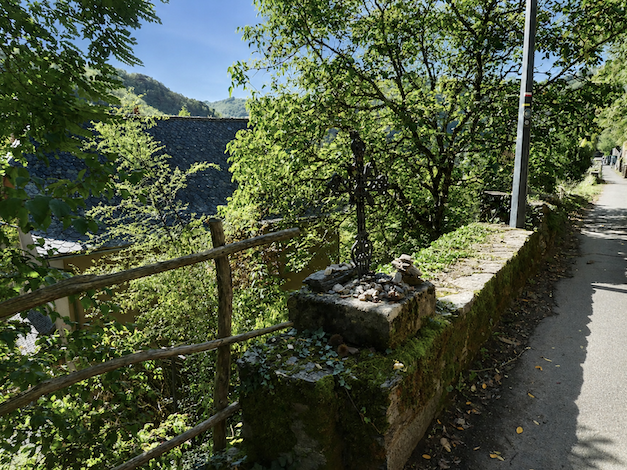
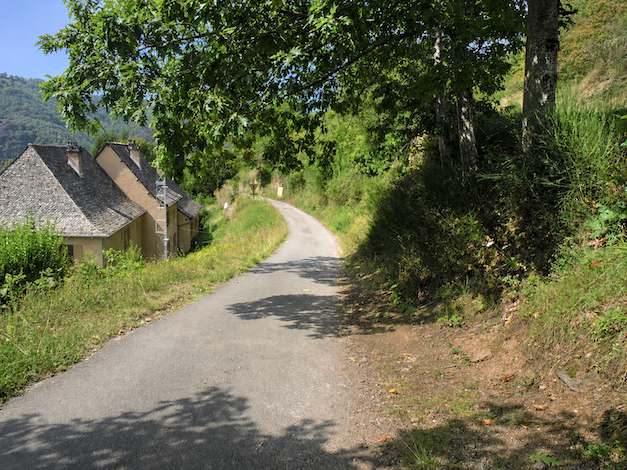
| Then comes absolute relief, almost a sense of deliverance, as the little road glides gently toward the village. After unstable stones, roots, and vertiginous slopes, this gradual arrival feels like a reprieve granted to the walker. |
 |
 |
 |
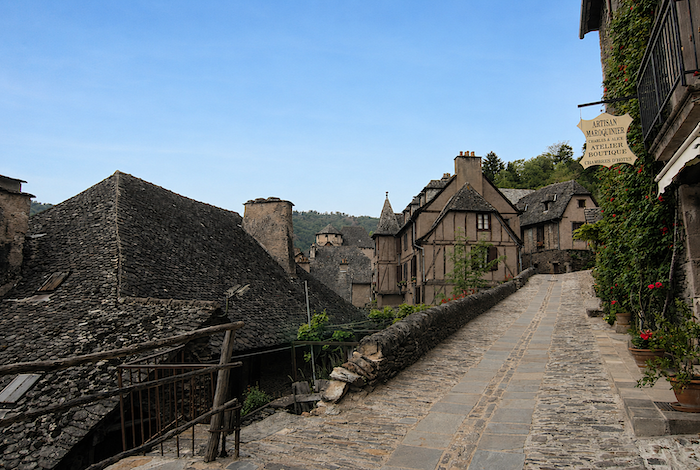 |
Is it still possible to say anything new about Conques? Probably not. For centuries, travellers, writers, and pilgrims have tried to describe the emotion provoked by this village suspended within its valley. And yet the first sight remains a shock. Even for those who return often, the magic remains intact, perhaps even stronger when one arrives on foot after the long descent through the woods. Conques rests above the Dourdou, the discreet river winding along the valley floor. Nearby also flows the Ouche. Together, the landscape forms a kind of enclosed shell nestled among the hills, “concha in Latin”, “conca” in Occitan, a name believed to have given birth to that of the village itself. The houses, clinging midway up the slope, resemble small fortresses of schist and stone standing guard around the treasure hidden within the valley: the Abbey Church of Sainte-Foy
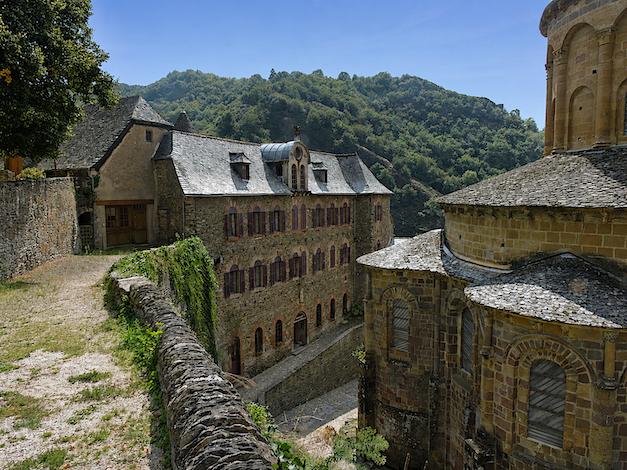
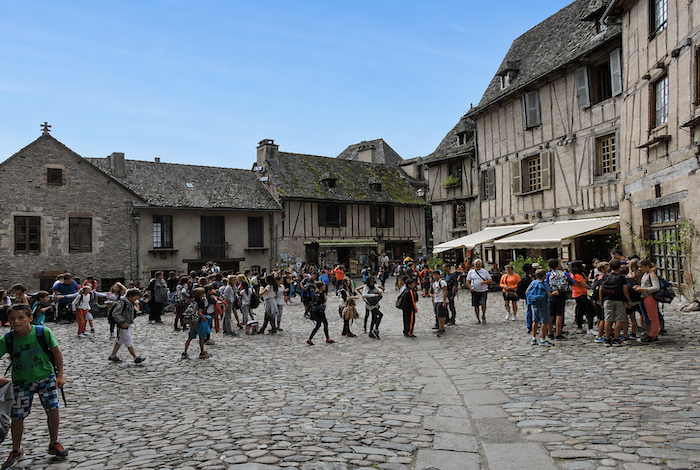
| It is rare to see Conques deserted. Visitors gather above all around the abbey church, the vibrant heart of the village. In peak season, the lanes fill with a constant flow of tourists and pilgrims from around the world. |
 |
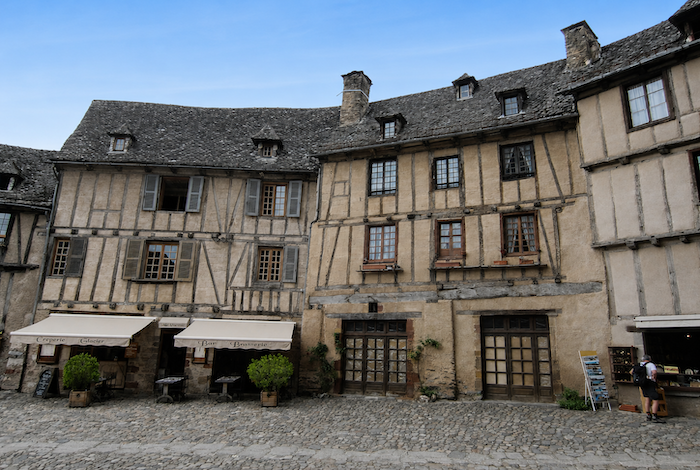 |
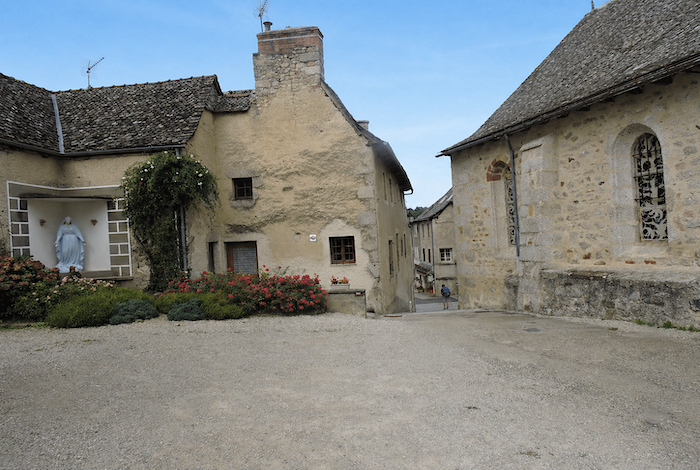
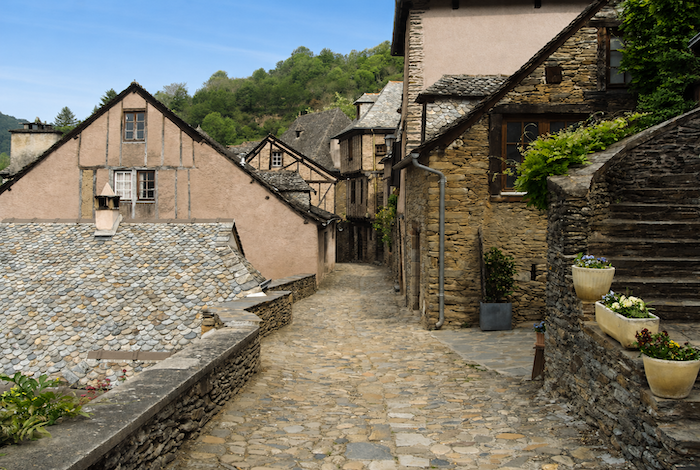
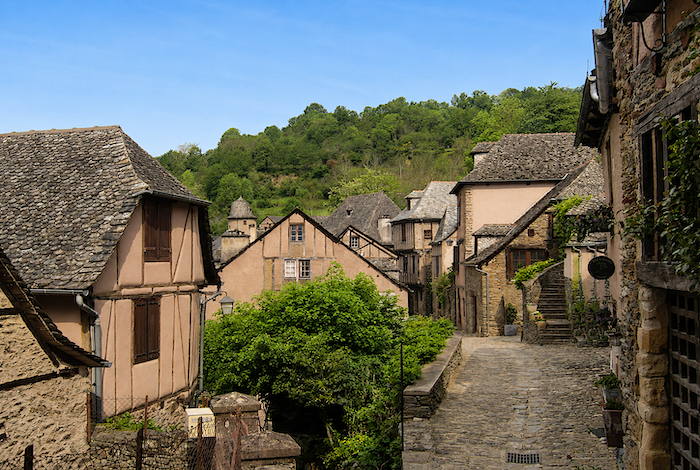
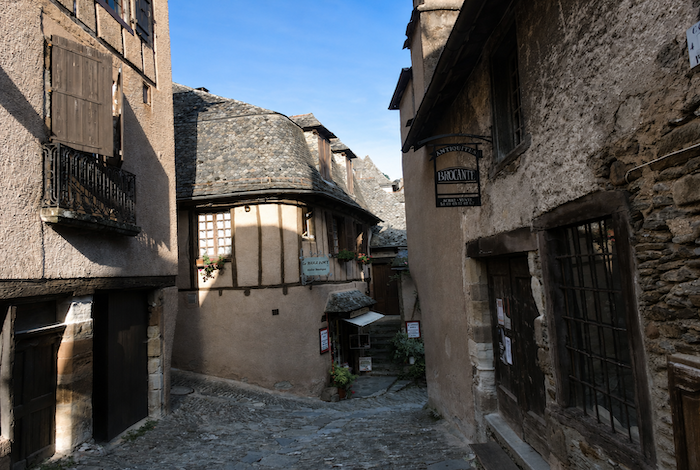
| Yet despite the crowds, it is often enough to wander a few steps into the steep alleyways or beneath the old stone roofs to rediscover something of the ancient silence of Conques. Here, schist reigns supreme. It provides the building stone, the paving of the streets, and the roofing slabs that replace conventional slate. Sometimes schist gives way to sandstone, grey or pink in colour. These ochre tones with their subtle rosy shades create a harmony that is unmistakable. |
 |
 |
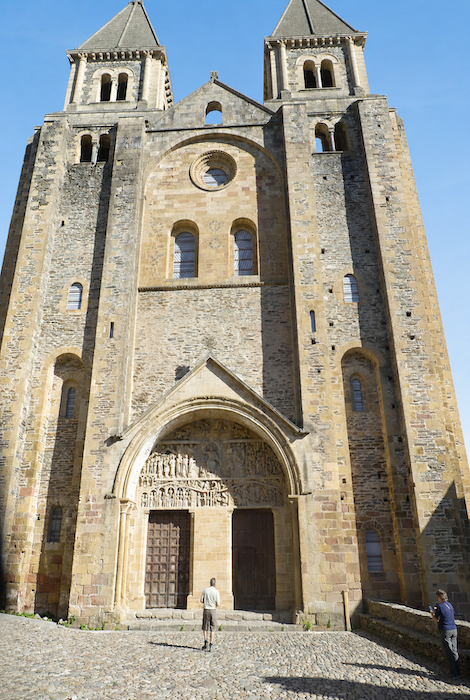
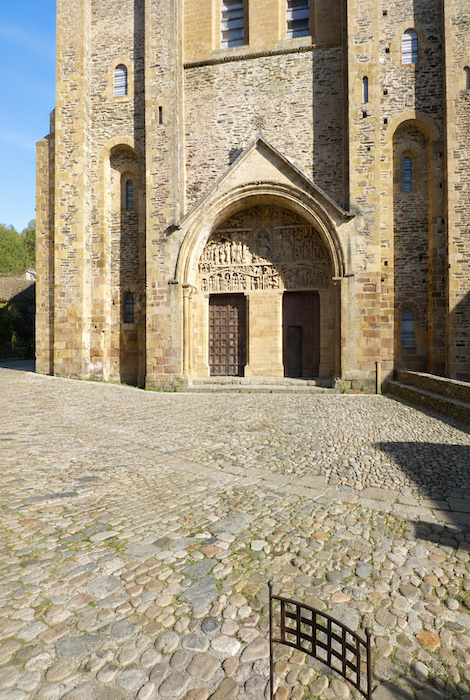
| Conques is above all defined by the Abbey Church of Sainte-Foy. Its connection with the pilgrimage to Compostela earned Conques its place on the UNESCO World Heritage list. This recognition includes both the abbey church and the Roman bridge spanning the Dourdou. |
 |
 |
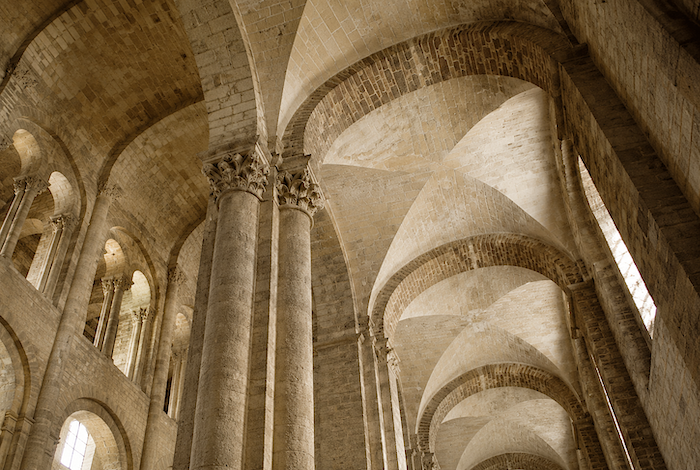
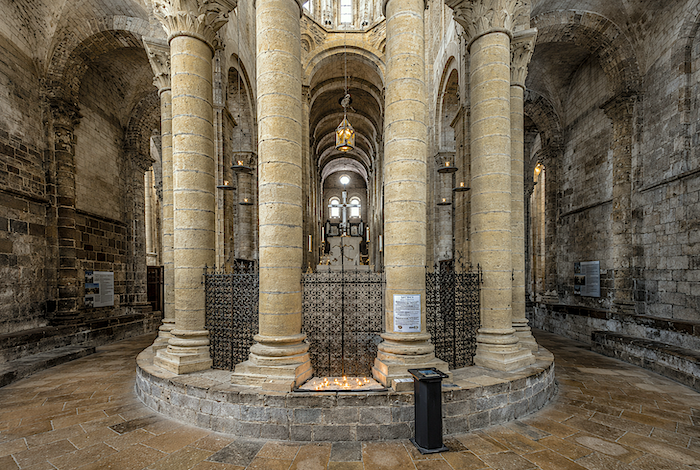
| A little history helps place Conques in context. It is said that Charlemagne held great affection for this region and may have built a small oratory here. The real story begins, however, with Abbot Dadon, who founded a monastery and adopted the Rule of Saint Benedict in 819. A few decades later, a monk of Conques named Ariviscus stole the relics of Sainte Foy from an abbey near Agen. Faith had suffered martyrdom at the age of twelve in the year 303. This pious theft, a common practice at the time, is said to have immediately produced miracles, drawing pilgrims in great numbers to Conques. The abbey reached its peak during the Middle Ages before gradually declining and eventually being abandoned during the French Revolution. Conques was rediscovered in 1837 by Prosper Mérimée, then Inspector of Historical Monuments. The treasure and the great portal had been preserved by the local inhabitants, but the church itself had suffered extensive damage. In 1873, the abbey church was entrusted to the Premonstratensian Order. The bells began ringing once more, and they still ring today. Construction of the abbey church began in the eleventh century, though no one knows exactly when it was completed. It is a Romanesque church with an ambulatory and radiating chapels. Its cruciform plan is traditional, except that the transept is longer than the nave because of the constraints imposed by the terrain. The façade towers are more recent, having been rebuilt during the nineteenth century.
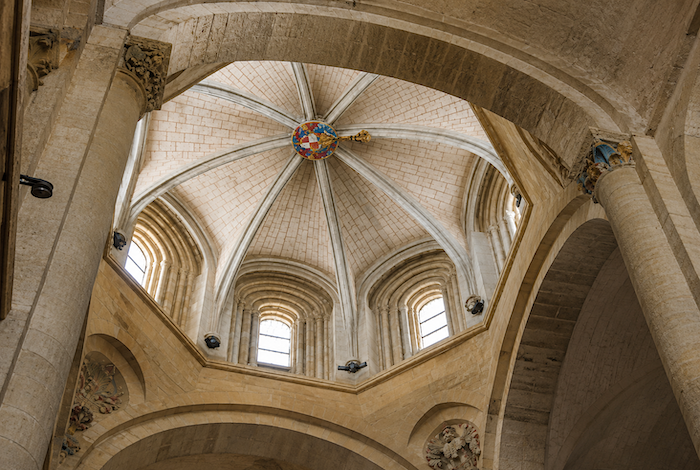
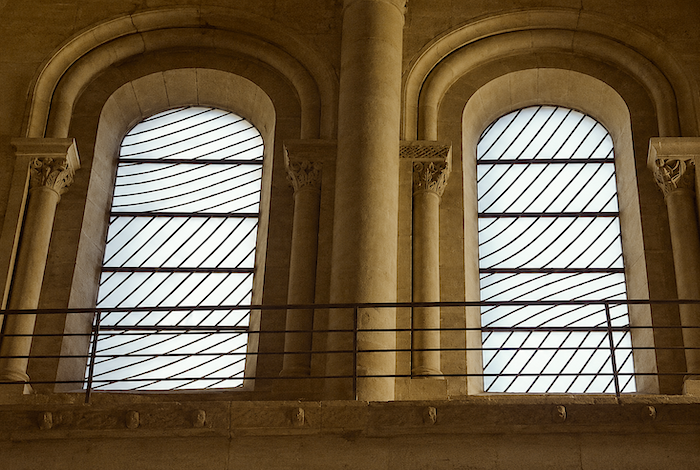
The interior displays the remarkable sobriety typical of Romanesque churches. The vault rises more than twenty metres above the floor. The ambulatory allows the faithful to venerate the relics of Sainte Foy of Agen. Particularly noteworthy are the magnificent modern stained glass windows created by Pierre Soulages and Jean-Dominique Fleury at the end of the twentieth century, adding a stripped down, geometric, and contemporary atmosphere to the whole. |
 |
 |
 |
 |
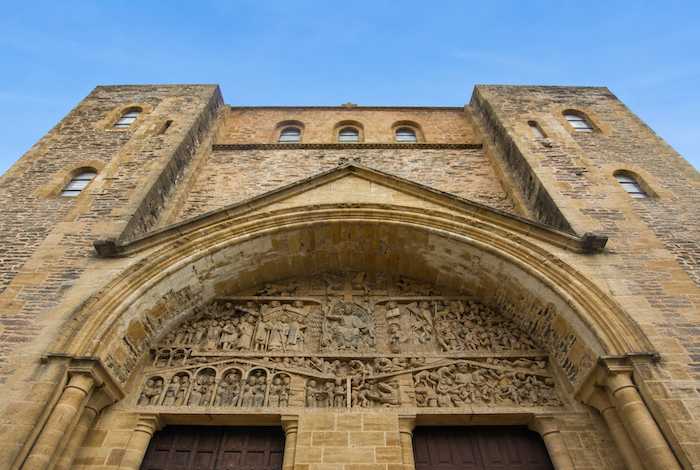
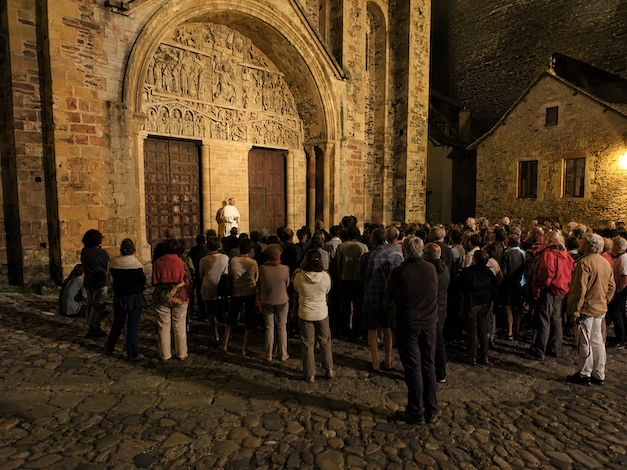
The church portal is crowned by a tympanum depicting the Last Judgement, inspired by the Gospel of Saint Matthew. More than one hundred figures appear there. At the centre stands Christ in Majesty, with the blessed at his right hand and the damned at his left. One can also recognize Charlemagne, the benefactor, Abbot Dadon, founder of the abbey, several angels, a drunkard hanging upside down, Satan, and representations of the seven deadly sins rendered as allegories.
The cloister, dating from the same period, largely disappeared at the beginning of the nineteenth century, its stones being quarried by the villagers. Fortunately, Prosper Mérimée arrived in time to save a small portion of it, particularly the arcades leading to the monks’ refectory.
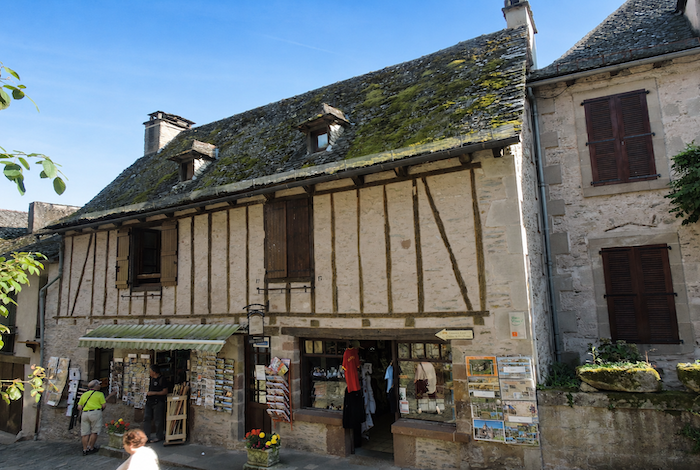
| In Conques, the streets are not overrun with souvenir shops and tourist trinkets, as is too often the case in beautiful medieval towns. A gentle serenity covers the entire village from top to bottom, except perhaps around the church, where the atmosphere is somewhat more commercial. During summer, crowds gather around the abbey church. |
 |
 |
| As Conques is an essential stage on the pilgrimage, accommodation is plentiful. If you wish to stay at the Premonstratensian Abbey, as most pilgrims would, there is ample capacity, but it is wise to book well in advance. This place, filled with serenity and grace, is itself one of the great landmarks of the Way of Compostela. Yet because Conques is also a major tourist destination, more expensive hotels and restaurants can also be found. |
|
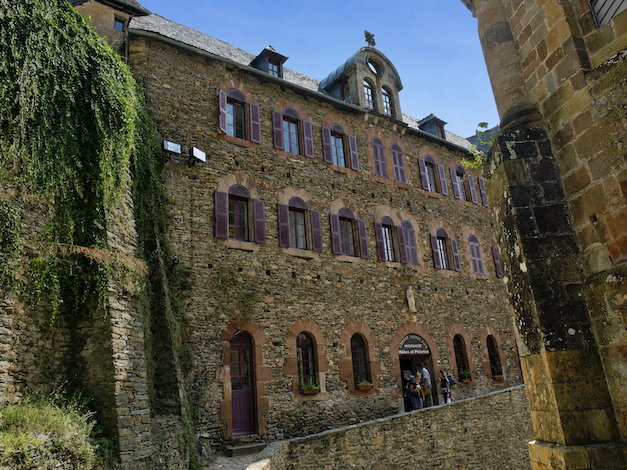 |
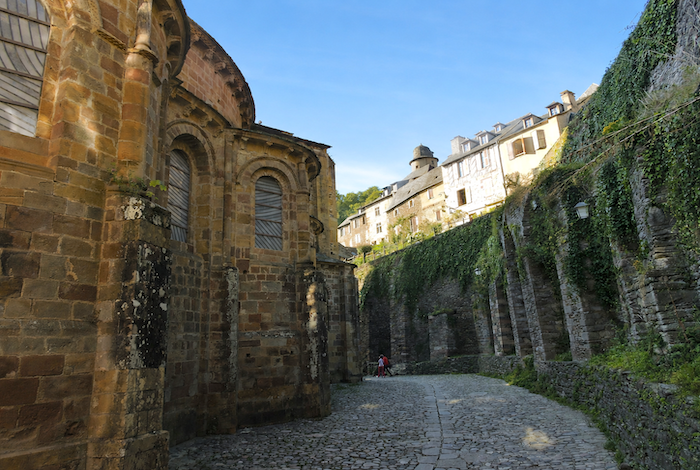
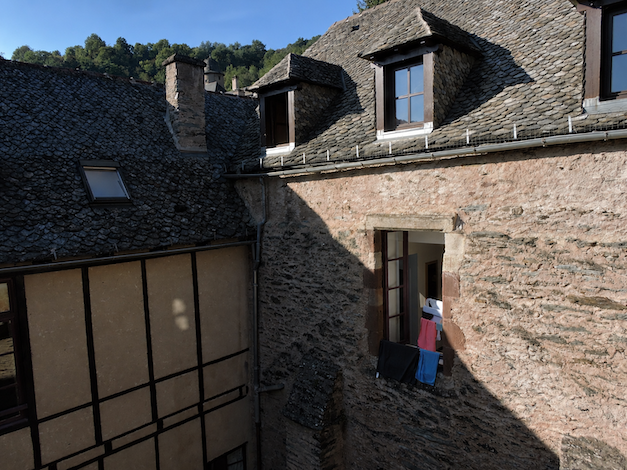
| When Conques is full, the arrival process at the Premonstratensian Abbey unfolds in a rather unique way. Pilgrims are welcomed at the entrance beneath the venerable apse of the abbey church. Like at an airport, people are lined up in queues. Because of the crowds, reservations are checked, and it is definitely advisable to have one, before a number is assigned for registration. In the open courtyard, pilgrims bustle about, assisted by half a dozen volunteers who manage the accommodation. The six Premonstratensian Brothers themselves are responsible only for the spiritual dimension of the place. |
 |
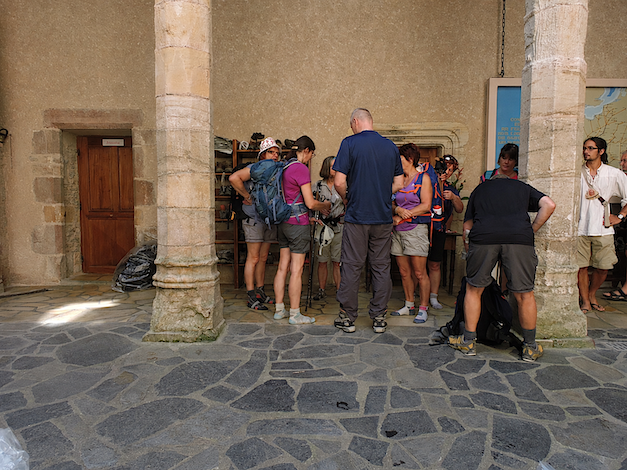 |
The volunteers remain here for days, weeks, months, and sometimes even years. They come from every background, spend time here, and then continue along the Way. Their kindness and goodwill seem boundless. Their help is invaluable, guiding newcomers through the staircases and corridors and helping them find their beds. The spiritual programme is rich and takes place in the abbey church. Four prayer services punctuate the day: Lauds at 7:30 a.m., Midday Prayer, Vespers at 6:00 p.m., and Compline at 8:30 p.m., followed by the pilgrims’ blessing. Many pilgrims attend, while others simply wander through the village lanes. Dinner is served at 7:00 p.m. in the great refectory. After the meal, Vespers, and the blessing, pilgrims gather before the abbey church portal and listen in the silence of the night to an explanation of the carved figures on the tympanum. Foreign visitors who do not understand French simply absorb the atmosphere. The climax comes inside the church when the Romanesque columns seem to vibrate beneath the sounds of the organ played by one of the Premonstratensian Brothers. At that moment, there is a feeling that Conques belongs only to the pilgrims staying at the abbey. The tourist crowds have vanished. Other pilgrims finish their dinners in restaurants, sleep in more comfortable hotels, or spend the night in the stone walls of the magnificent self-managed municipal lodge. For the less fortunate, many other accommodation options can of course be found in Conques. During the season, it is easy to imagine more than one hundred and fifty pilgrims spending the night here. Ninety-six of them are already accommodated at the Premonstratensian Abbey.
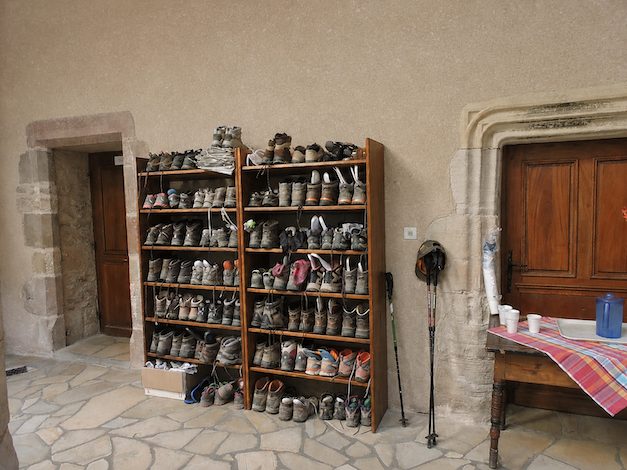
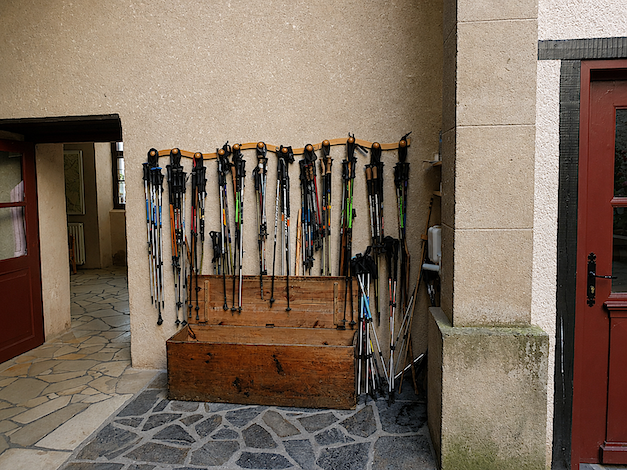
| You place your boots and walking poles on the rack. Good night. |
 |
 |
Accommodation on Via Podiensis
- Gîte chrétien donativo, Le Soulié; 06 49 07 46 61/06 42 35 69 01; Gîte, dinner, breakfast
- Gîte Aux jardins du Soulié, Guillaume et Francesca (pèlerins), Le Soulié; 07 80 73 40 42/07 49 59 75 84; Gîte, dinner, breakfast
- Gîte communal-Epicerie, Espeyrac; 06 11 39 64 63; Gîte, dinner, breakfast
- Gîte Loulapi, Chistine et Jean-Philippe, Espeyrac; 07 75 74 02 05/07 49 72 73 51; Gîte, dinner, breakfast
- Hôtel des 3 Dazes, Espeyrac; 06 76 79 04 05; Hotel, dinner, breakfast
- Gîte Ginette et Maurice Panissié, Route de Conques, Sénergues; 05 65 72 84 47/06 82 16 22 39; Gîte, breakfast, cuisine
- Domaine de Sénos, Marie-Odile, Sénergues; 05 65 72 91 56; Gîte, dinner, breakfast, cuisine
- Gîte Dali -Chez François, Impasse du Guet, Conques; 06 88 70 27 66; Gîte, dinner, breakfast
- Abbaye Sainte Foy, Communauté des Prémontrés, Conques; 05 65 69 83 43; Gîte and Guestroom, dinner, breakfast
- Gîte La Bonne Etoile, 29 Rue Charlemagne, Conques; 06 10 67 26 57; Gîte, breakfast
- Gîte Les Pieds dans l’Eau, Laure, 77 Rue des Moulins, Conques; 07 69 04 50 57/06 25 20 30 16; Gîte, breakfast, cuisine
- Chez Alice et Charles, Rue du Chanoine Bénazec, Conques; 07 87 19 17 59; Guestroom, breakfast
- Au Castellou, Guy et Barbara Alizon, Le Faubourg, Conques; 05 65 78 27 09/06 48 15 66 91; Guestroom, breakfast
- L’Alcôve, Valérie (pèlerine), 6 Rue Emile Roudié, Conques; 06 08 64 32 88/06 60 87 88 69; Guestroom, breakfast
- La Conquise, Ghislaine Thiollier, 10 Rue du Château, Conques; 06 36 88 47 25; Guestroom, breakfast, cuisine
- Camping Le Temps d’une Pause***, 3 Rue de Molinols, Conques; 06 19 03 66 63; tents, mobil homes, dinner, breakfast
- La Maison des Sources, Cambelong, Conques; 05 65 47 04 54/06 19 49 23 92; Guestroom, dinner, breakfast
- Hôtel-Restaurant Saint Jacques**, Conques; 05 65 72 86 36; Hotel, dinner, breakfast
- Sainte Foy***, Rue Gonzague Florens, Conques; 05 65 69 84 03; Hotel, dinner, breakfast
- Moulin de Cambelong, Cambelong, Conques; 05 65 72 84 77; Hotel, dinner, breakfast
Year after year, the Camino de Santiago changes and reinvents itself with the seasons and the footsteps of pilgrims. Some accommodations close their doors, while others, modest or unexpected, come into being. It would therefore be unrealistic to claim to provide a fixed and exhaustive list. This guide includes only accommodations located directly on the route or within one kilometer of it. The selection was updated in 2026 and should therefore not undergo any major changes in the coming years. For those wishing to go further, one publication stands out as the essential reference: Miam Miam Dodo, easily available online. The main strength of this guide lies in its yearly updates. It not only lists accommodations located directly on the route, but also addresses slightly off the route, a valuable resource when heavy pilgrim traffic makes overnight stops more uncertain. It also contains a wealth of practical information: welcoming bars, restaurants along the way, and providential bakeries, all of which punctuate the journey. Alongside these traditional resources, another presence has become unavoidable: Airbnb. The platform has established itself as a major reference in the tourism landscape, even in the most discreet or less developed regions. However, as everyone knows, exact addresses are not displayed directly, which requires a degree of anticipation. On the Camino, finding a bed at the last minute can sometimes depend on sheer luck. But luck, by its very nature, cannot be considered a strategy. Booking ahead is therefore strongly recommended. Finally, when making arrangements, be sure to inquire about dinner and breakfast options. These details, seemingly minor, can greatly soften the hardships of a stage.
If we take stock of the accommodation capacity, there are approximately 115 beds available before reaching Conques, suggesting that many pilgrims choose to stop before the end of the stage. In Conques itself, the accommodation offer expands to nearly 260 beds. Since the number of walkers on the Via Podiensis generally ranges between 100 and 200 pilgrims, this stage should not present any particular difficulties in terms of lodging. Nevertheless, it is wise to book ahead as a precaution, especially since Conques also attracts large numbers of tourists. Reservations are particularly recommended if you wish to stay at the abbey, where advance booking is almost essential.
These routes, winding through often sparsely populated areas, offer relatively few services. Restaurants are scarce, as are grocery stores, which are often little more than small bread depots selling a limited selection of vegetables and dairy products. However, it is possible to find meals in Espeyrac and Sénergues, welcome stops in these more isolated areas. Water points, on the other hand, are fairly regularly spaced along the route. They can be found at Espeyrac, Sénergues, and St Marcel. Some are accompanied by sanitary facilities, often dry toilets, notably before Camagnac, at Sénergues, and at St Marcel. Upon arrival, Conques offers every convenience, with numerous grocery stores and restaurants, including some of notable gastronomic quality. Finally, many companies provide luggage transfer services or transportation back to the starting point. Among them, one stands out as a trusted and widely recognized reference for pilgrims: La Malle Postale.
Feel free to add comments. This is often how you move up the Google hierarchy, and how more pilgrims will have access to the site.
|
 |
Next stage : Stage 13: Conques to Livinhac-le.-Haut |
|
 |
Back to menu |