In the forests of Aveyron
DIDIER HEUMANN, MILENA DELLA PIAZZA, ANDREAS PAPASAVVAS
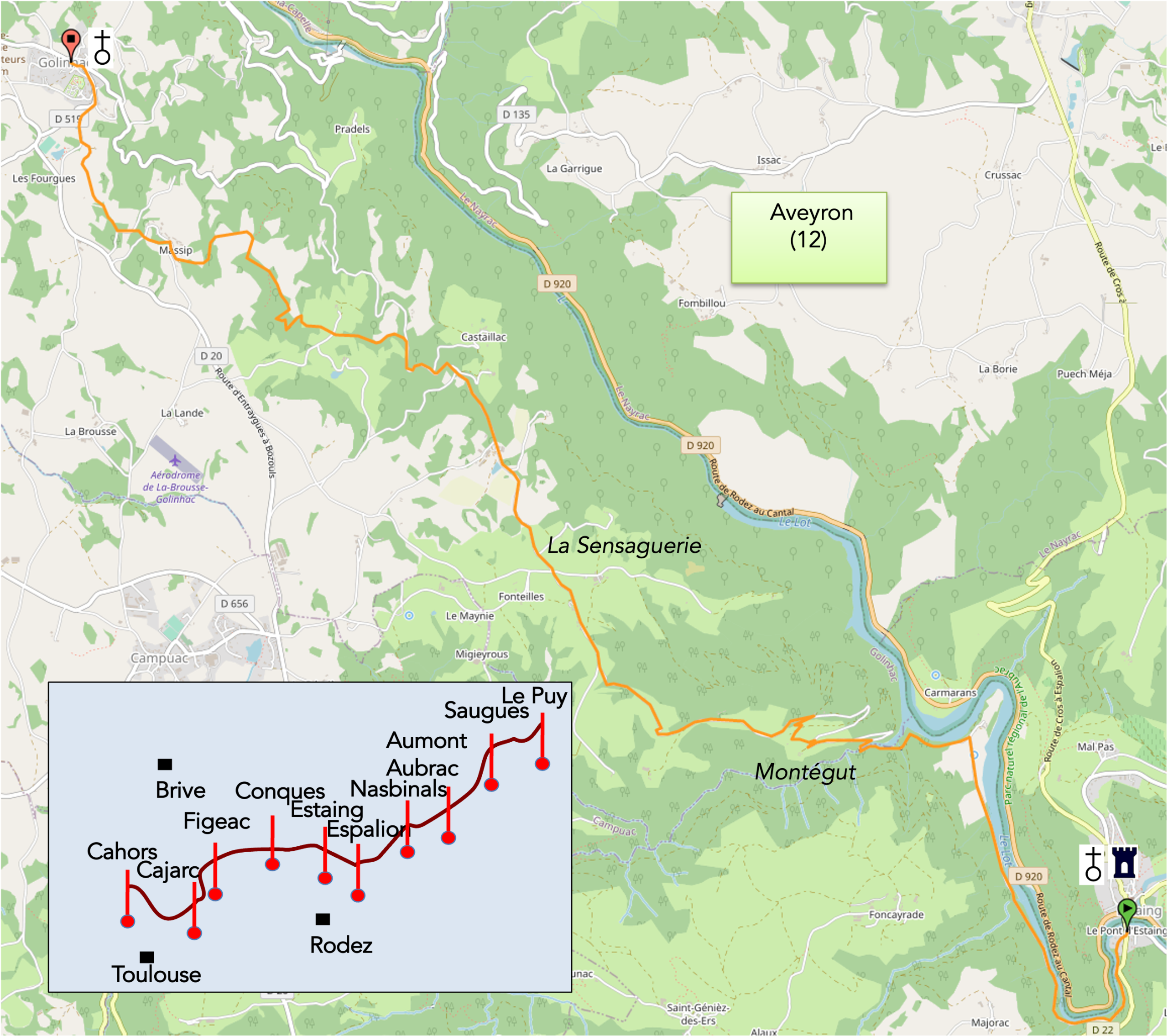
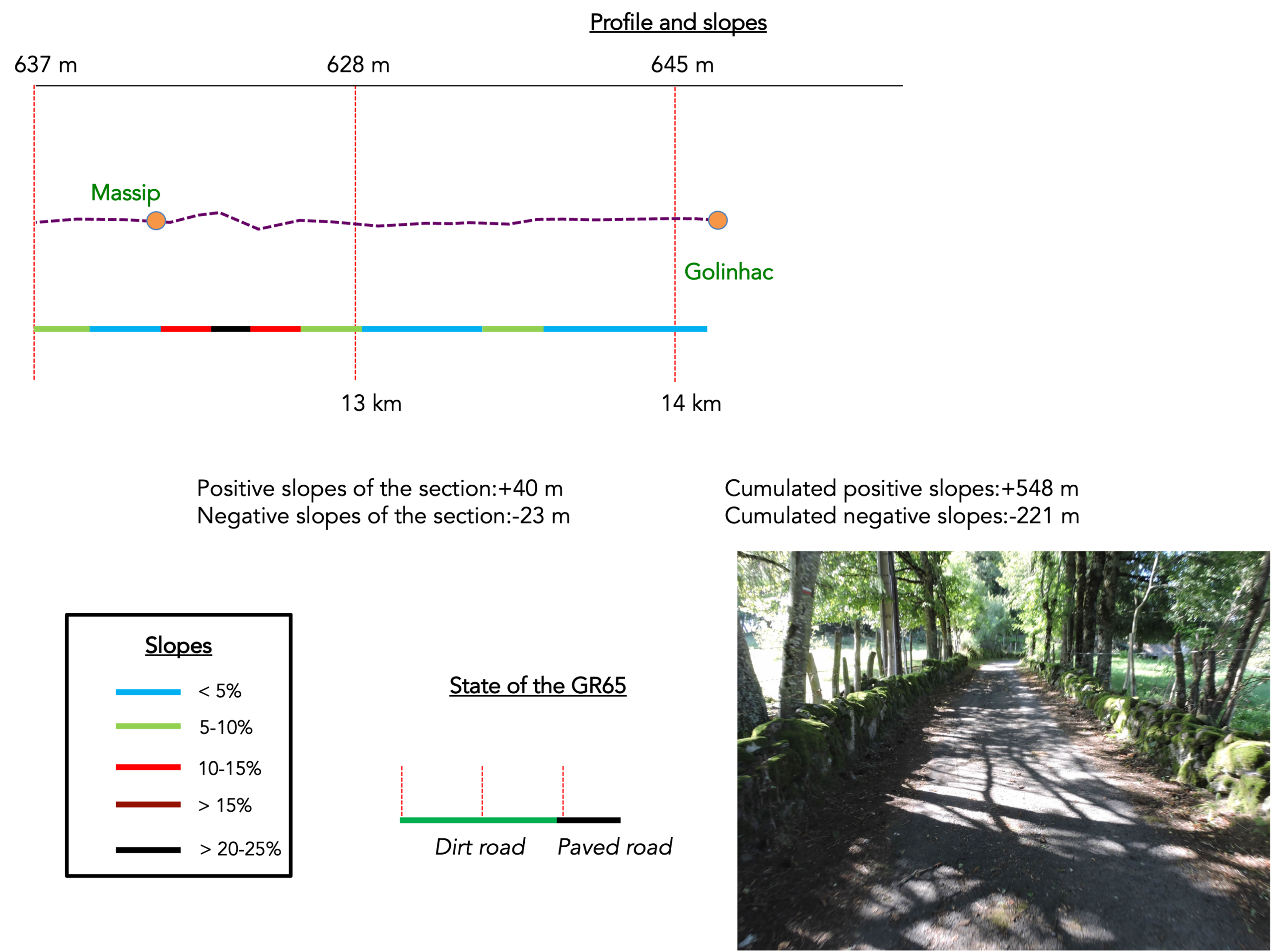
We divided the course into several sections to make it easier to see. For each section, the maps show the course, the slopes found on the course, and the state of the roads. The courses were drawn on the « Wikilocs » platform. Today, it is no longer necessary to walk around with detailed maps in your pocket or bag. If you have a mobile phone or tablet, you can easily follow routes live.
For this stage, here is the link:
https://fr.wikiloc.com/itineraires-randonnee/de-estaing-a-golinhac-par-le-gr65-51427939
|
Not all pilgrims are necessarily comfortable using GPS devices or navigating with a smartphone, especially since there are still many areas without Internet access. That is why, to make your journey easier, a book dedicated to the Via Podiensis from Le Puy-en-Velay to Cahors is available on Amazon. Much more than a simple practical guide, this book accompanies you step by step, kilometer after kilometer, providing all the information you need for smooth planning and avoiding unpleasant surprises. Beyond its practical advice, it immerses you in the enchanting atmosphere of the Camino, capturing the beauty of the landscapes, the majesty of the trees, and the very essence of this spiritual adventure. Only the pictures are missing, everything else is there to transport you.
In addition, we have also published a second book which, with slightly fewer details but all the essential information, covers the entire route from Le Puy-en-Velay to Saint-Jean-Pied-de-Port. The choice of your journey is yours.
. |
 |
 |
If you only want to consult lodging of the stage, go directly to the bottom of the page.
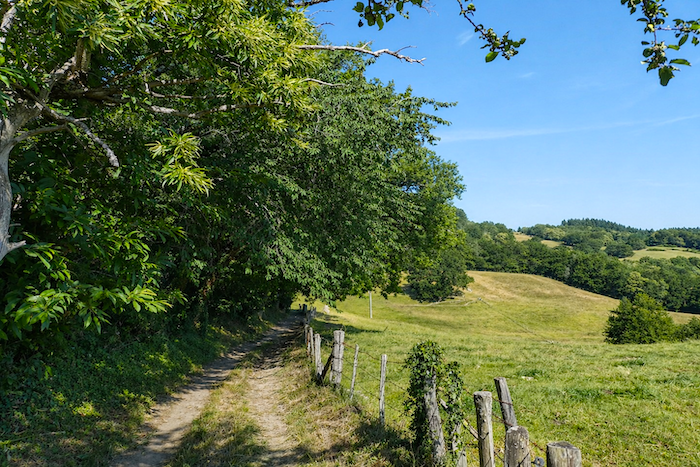
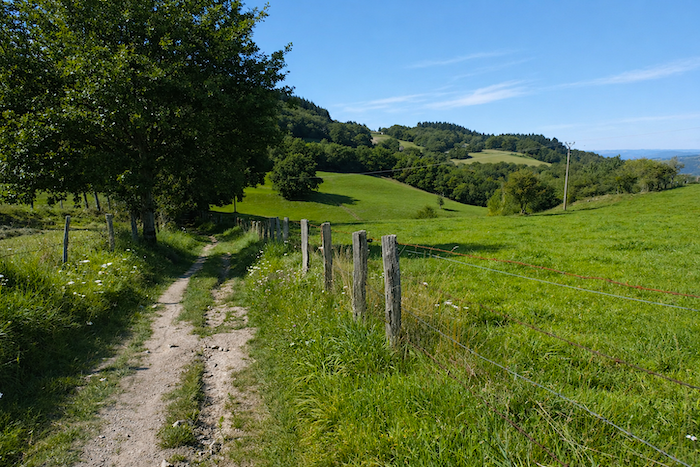
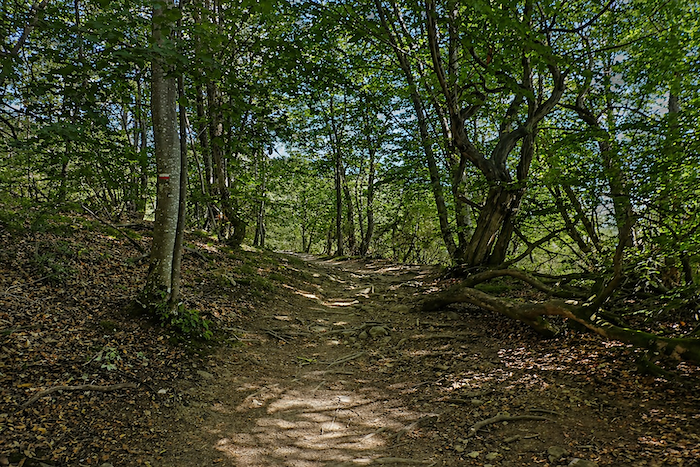
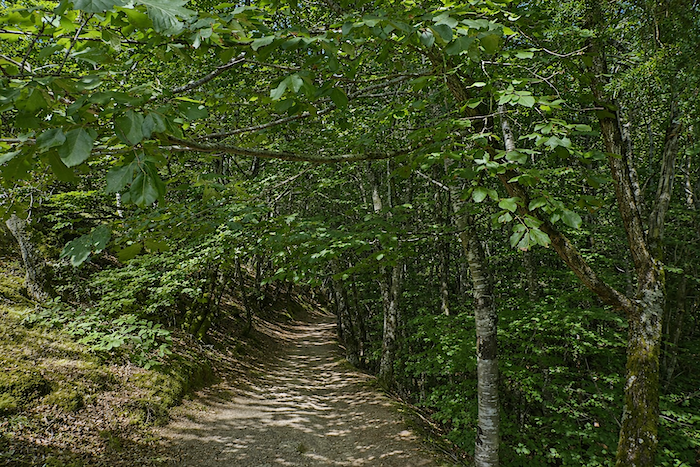
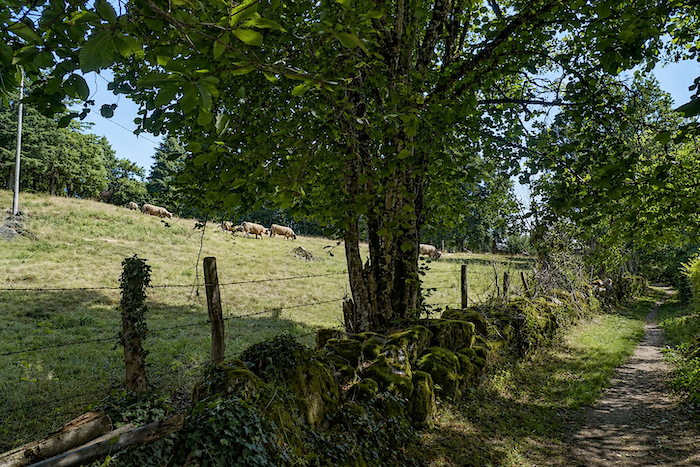
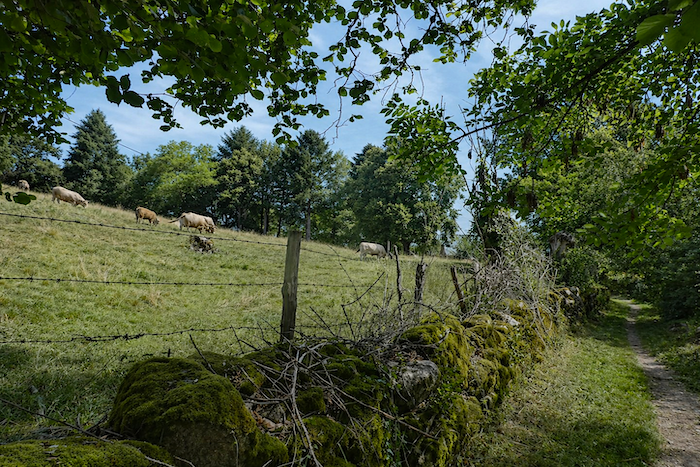
Once again, you find yourself immersed in the splendor of Haute Rouergue, this land steeped in mystery in northern Aveyron. The Lot River, the backbone of this region, has carved narrow gorges that occasionally open into vast basins, creating a landscape of indescribable beauty. At times, the waters of the Lot seem almost motionless. The plateaus overlooking the river reveal themselves one after another, some displaying the rugged character of schist, others the generosity of volcanic soils, and still others the softness of limestone. On this particular day, cultivated fields fade from the landscape, giving way to more intimate scenes of mysterious forests and verdant pastures. The northern slopes, guardians of these secret places, display ever changing colours throughout the seasons. Majestic forests of oak, beech, and centuries old chestnut trees stretch proudly across the land, creating a visual symphony of deep greens and velvety browns. To gaze upon the Lot is to surrender to an illusion of tranquility, where the water seems to hold its breath, captured between imposing heights. This stage is far more than a simple progression along the pilgrimage. It becomes a botanical experience of rare intensity. It is a true exploration of the trees that flourish within this natural sanctuary, especially when an azure sky accompanies the journey. Unfortunately, beautiful landscapes often disappear beneath the rain, adding a touch of melancholy to this natural scene.
You are still in Aveyron, slowly making your way toward Conques, the holy destination so eagerly awaited by pilgrims. In Estaing, the pilgrim is faced with an important decision. Two routes, two different stories, stretch out before him. The GR65, a route worn smooth by the footsteps of Compostela pilgrims, follows its road toward Massip and Golinhac. Yet the GR6, less well known and equally captivating, offers an attractive alternative. These two routes, like arms that will eventually reunite at Campagnac, present the same distinctive landscapes. The inhabitants of Estaing may quietly suggest the GR6 to pilgrims, pointing out that it keeps a little farther away from asphalt roads and promises a deeper communion with the surrounding countryside. Nevertheless, the GR6 remains discreetly used, as if challenging the preference of those pilgrims who honor the tradition of the ancestral route. Yet who can truly claim to know the exact traces trodden by our ancestors? A choice therefore presents itself, an adventure waiting to be written, an invitation to explore other, less frequented paths. The choice is yours. As for us, we shall remain faithful to the GR65.
Difficulty level: Today’s elevation changes (+548 meters / -221 meters) promise a stage that is as demanding as it is rewarding, a 14-kilometer adventure that will reveal the true character of the surrounding nature. Expect a leg testing stage, whichever variant you are brave enough to choose. It is certainly not insurmountable, but it is a challenge that will carry you up and down throughout the day. Even when following the meanders of the Lot along the GR65, do not expect flat terrain. This is a genuine hill climbing challenge, similar to those that electrify the world of cycling.
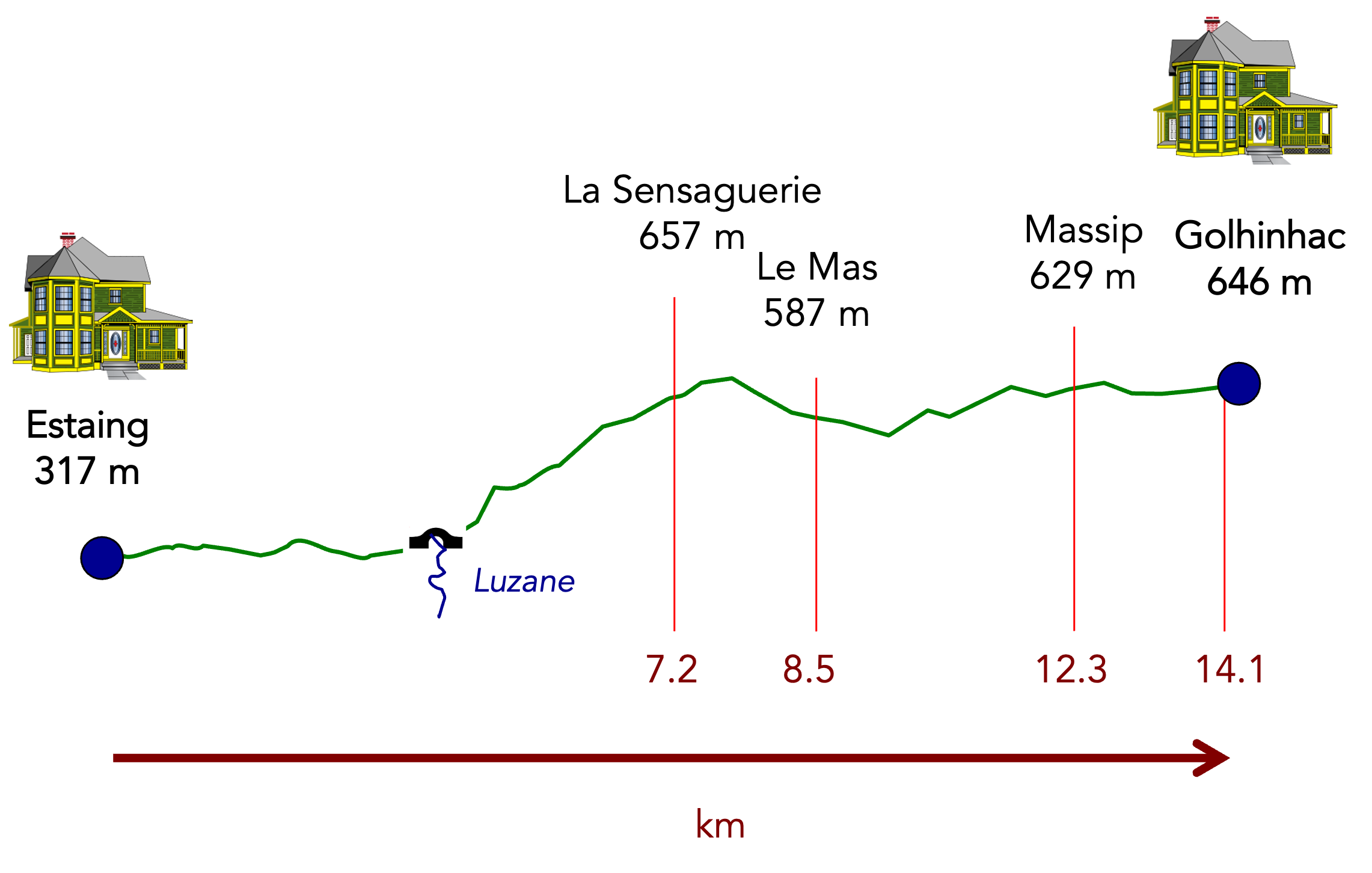
State of the GR65: Long live tarmac! One way to limit the damage is to take the GR6 from Estaing:
- Paved roads: 9.0 km
- Dirt roads: 5.1 km
Sometimes, for reasons of logistics or housing possibilities, these stages mix routes operated on different days, having passed several times on Via Podiensis. From then on, the skies, the rain, or the seasons can vary. But, generally this is not the case, and in fact this does not change the description of the course.
It is very difficult to specify with certainty the incline of the slopes, whatever the system you use.
For « real slopes », reread the mileage manual on the home page.

Section 1 : Along the Lot River
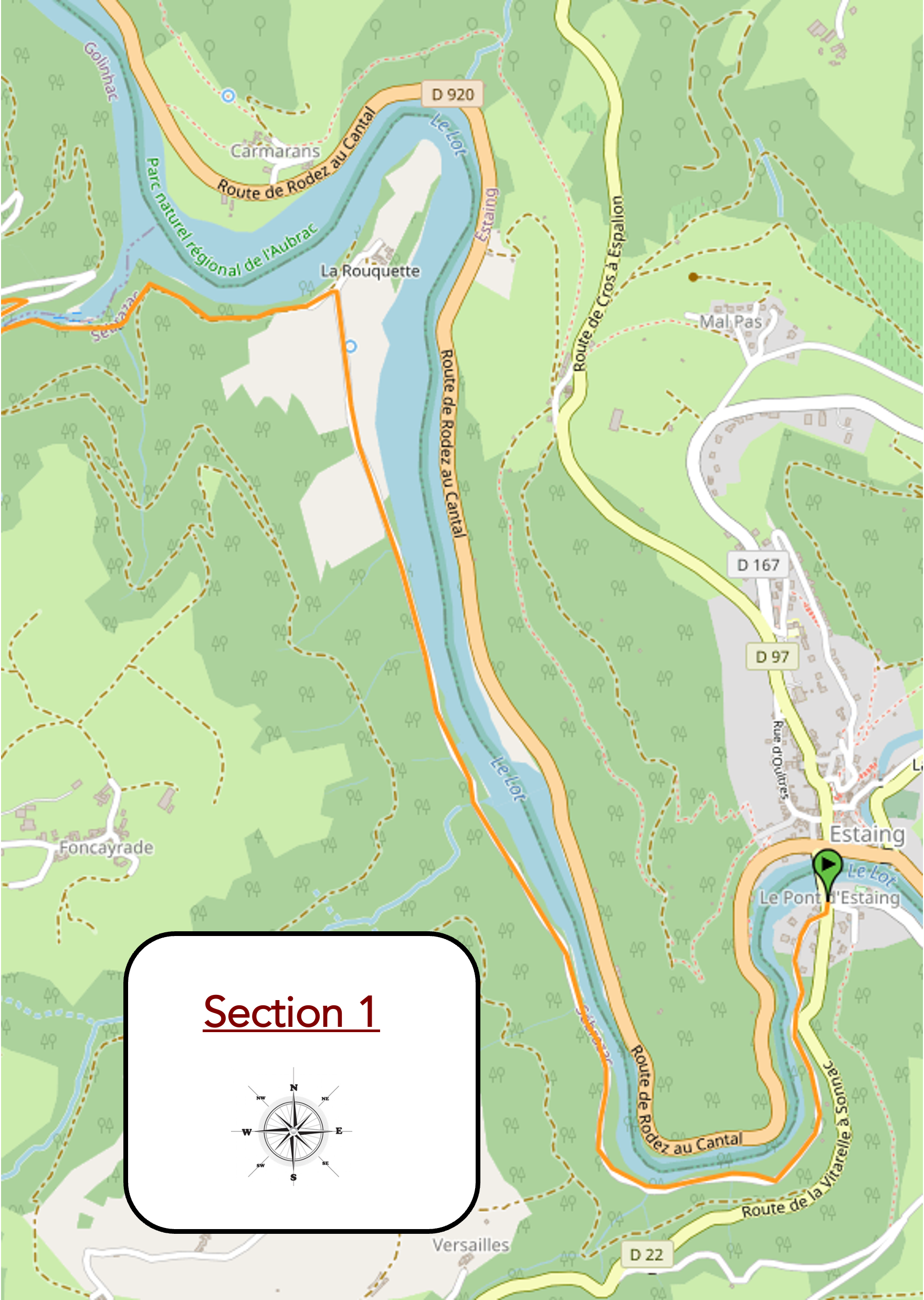
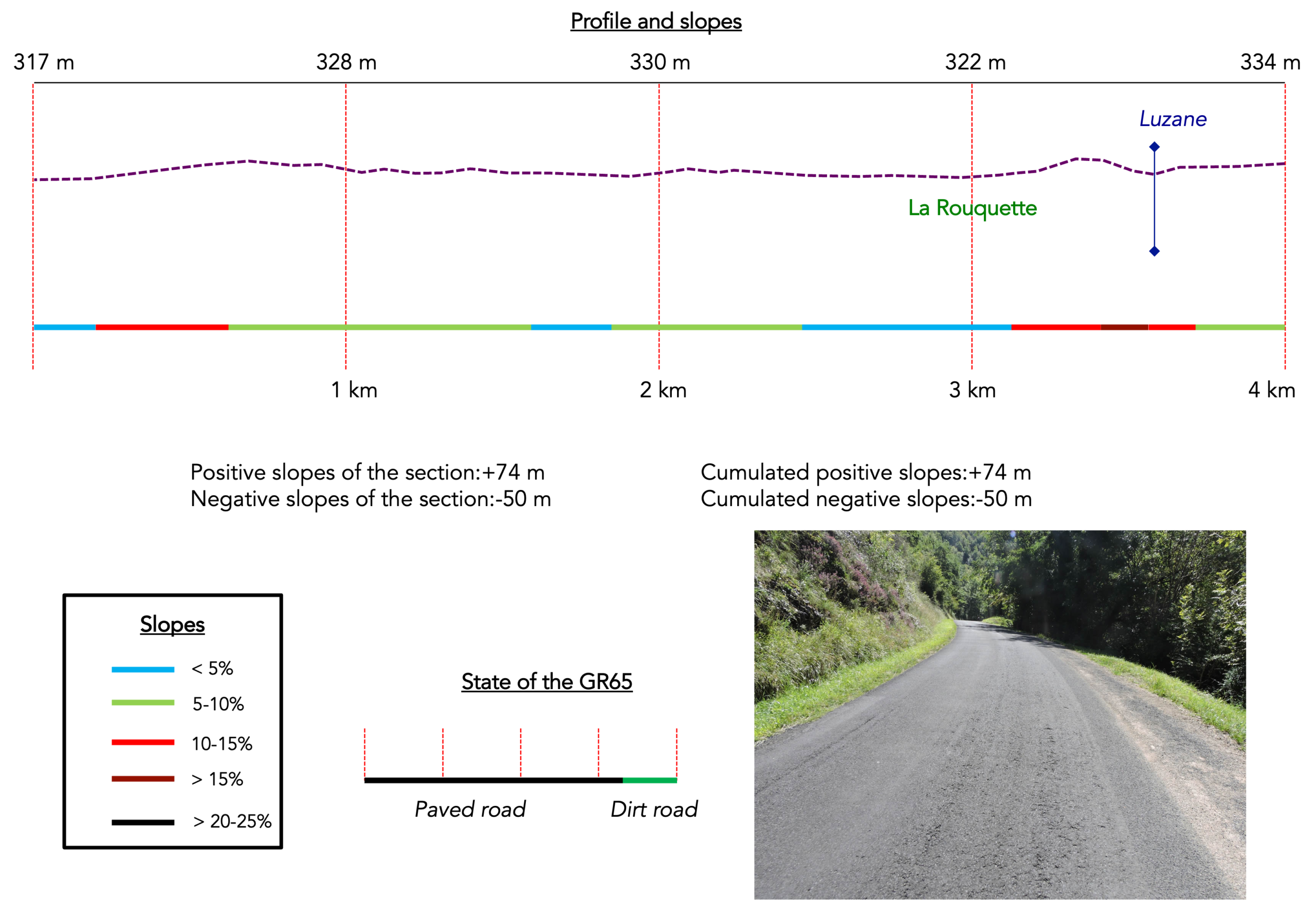
Overview of the route’s challenges: do not naively believe that following the river means flat terrain. The route constantly plays leapfrog before finally leaving the river behind. Some sections approach gradients of 15%.
|
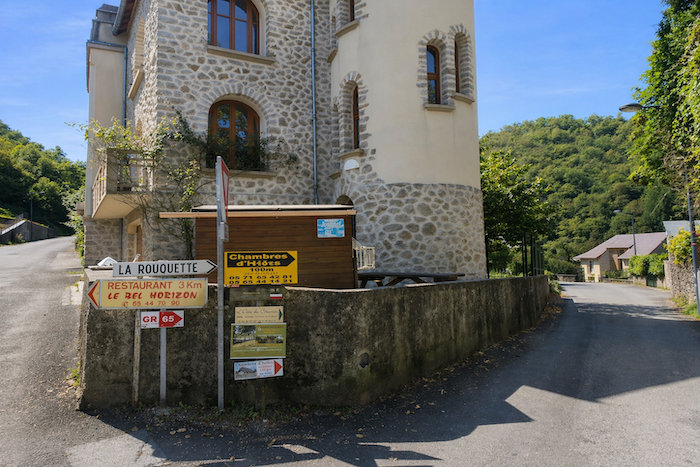
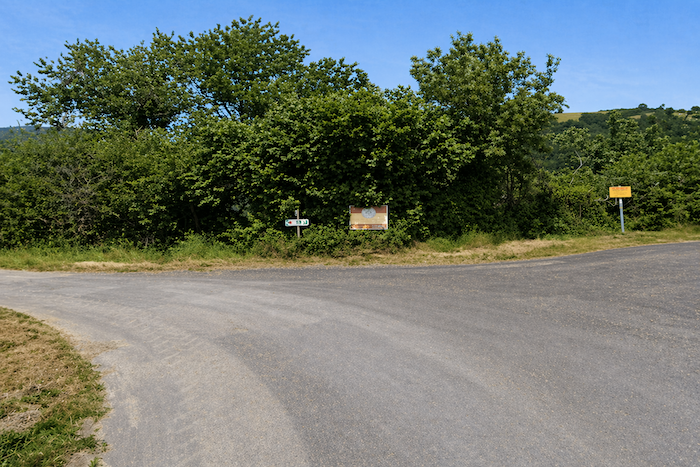
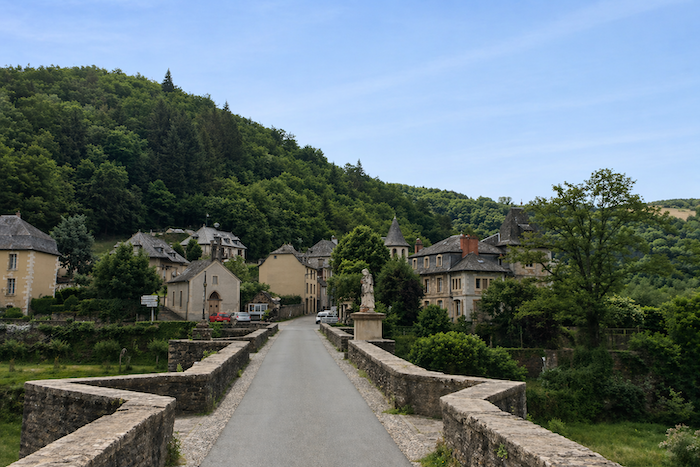
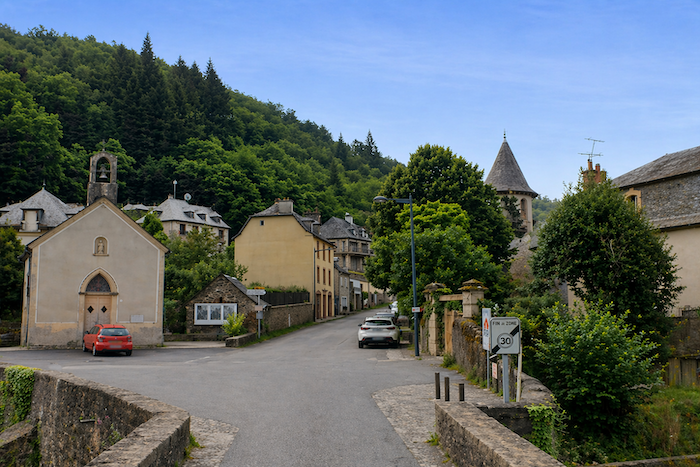
Whichever option you choose, the route resumes at the end of the bridge, pressed against the mountainside. Straight ahead, the GR6 breaks away; to the right, the GR65 continues its long journey toward Santiago. Few pilgrims venture onto the GR6, this more secretive itinerary that bypasses Golinhac and crosses a region with few stopping places and refuges. One must then walk nearly twenty kilometers before reaching Campagnac, where it eventually rejoins the GR65. As for the latter, the great Jacobean route that passes through Golinhac, it also demands its trial, reaching the plateau after a strenuous climb of more than three hundred meters.
|
 |
 |
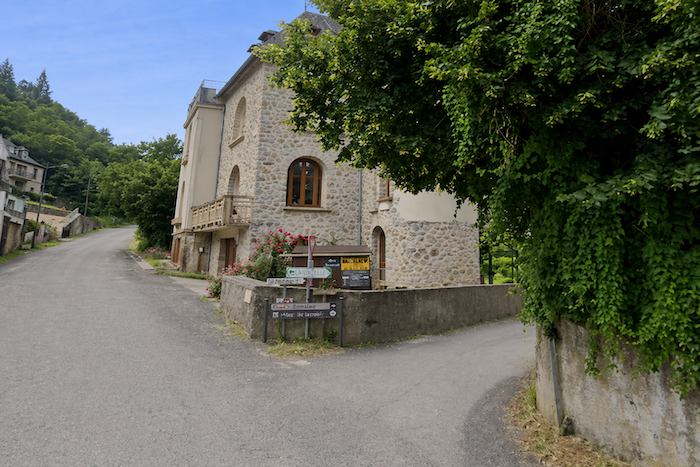
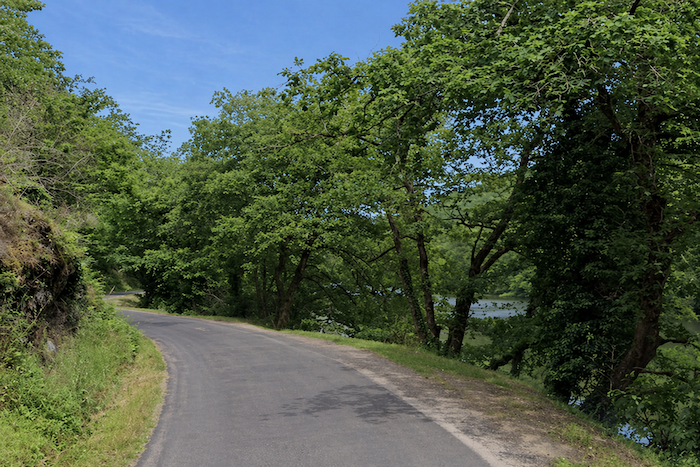
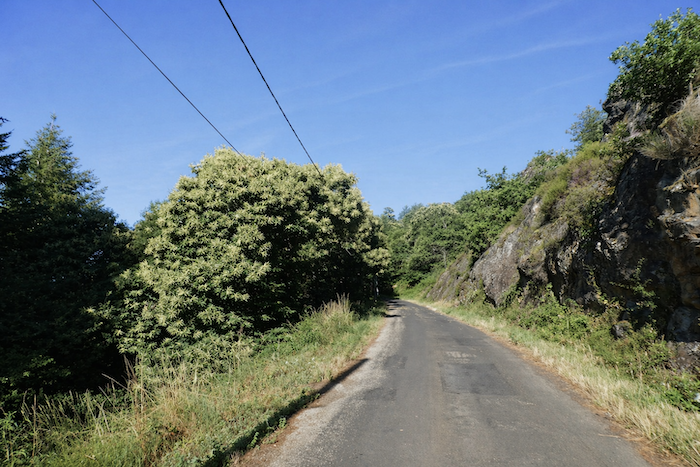
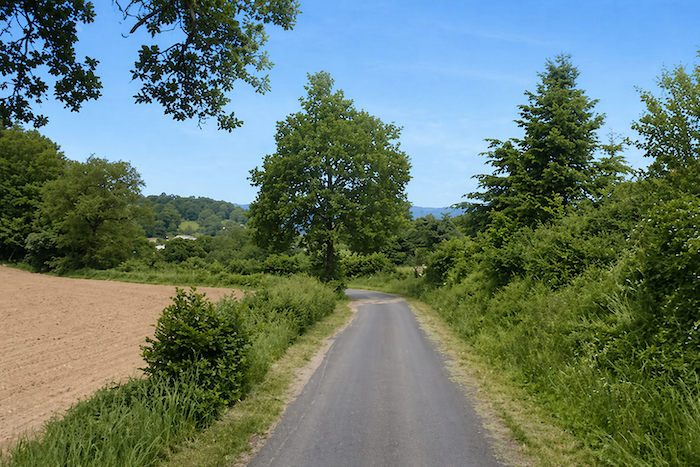
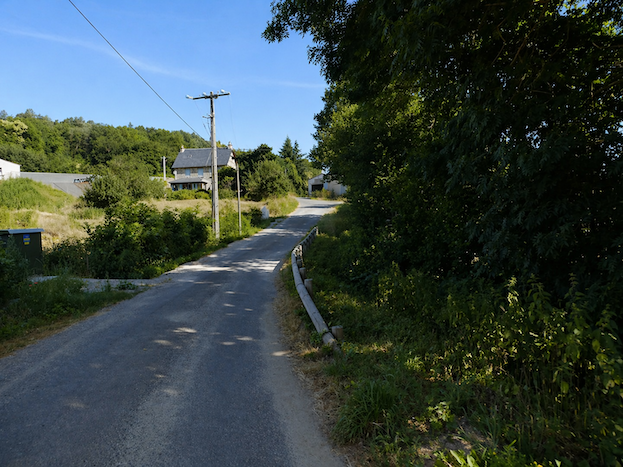
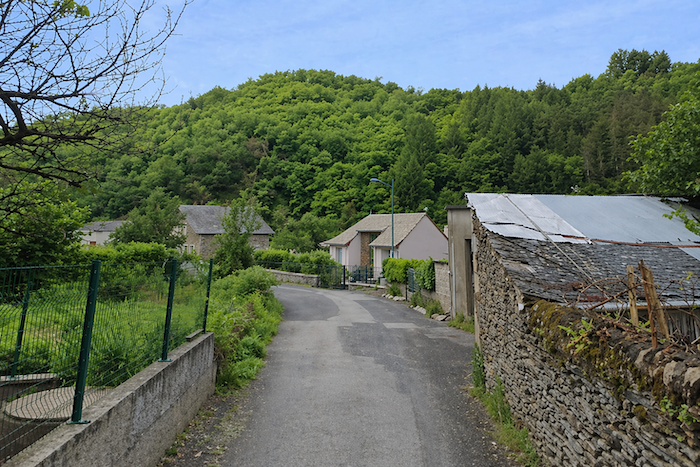
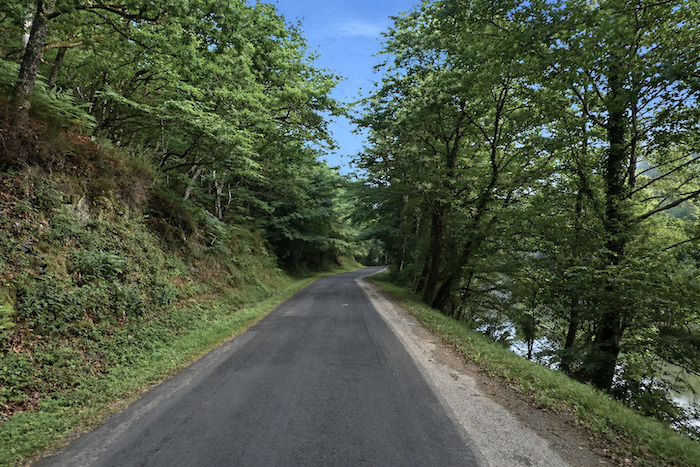
| At the outset, the walk follows for more than four kilometers the road that winds along the meanders of the Lot. Unfortunately, here there is nothing but tarmac and asphalt. Yet the GR65 leaves behind without regret the last houses nestled beside the river, as though it already knows that the true path begins elsewhere. |
 |
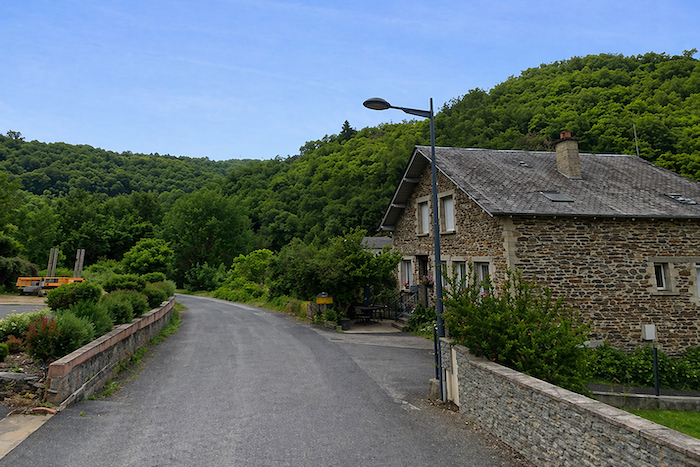 |
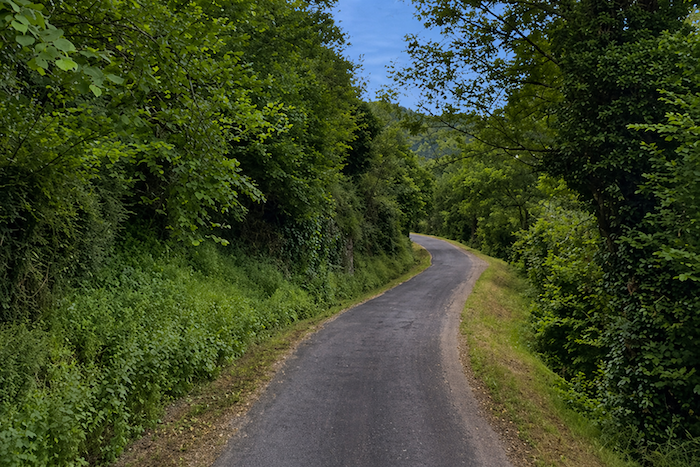
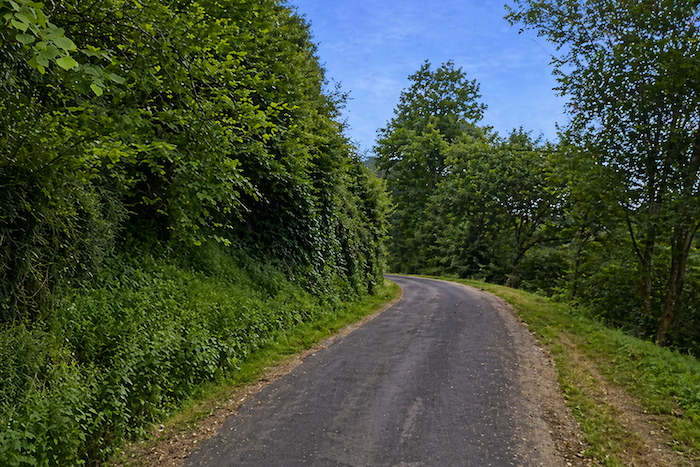
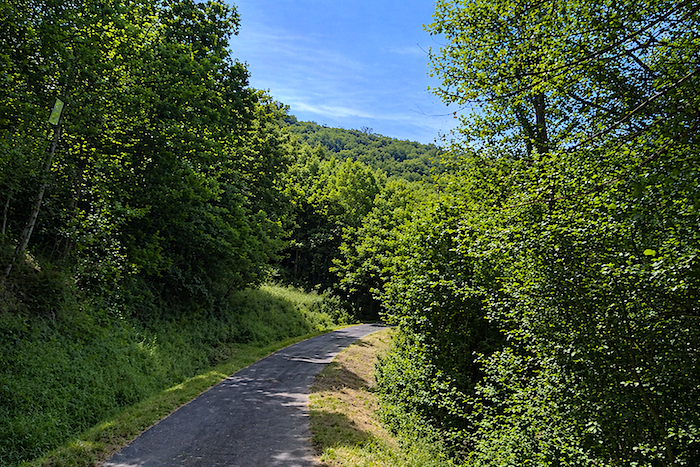
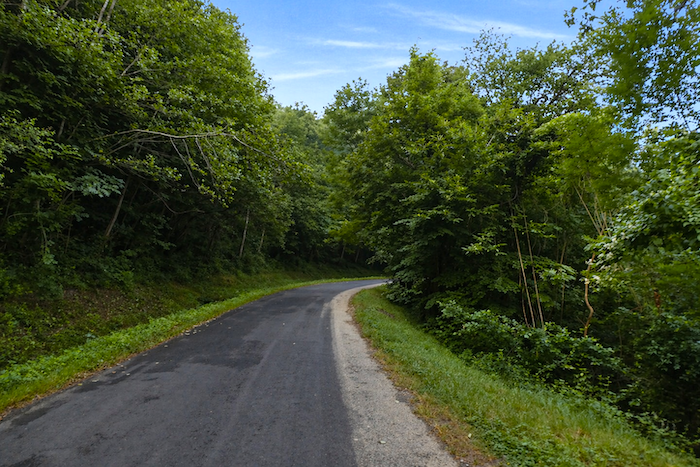
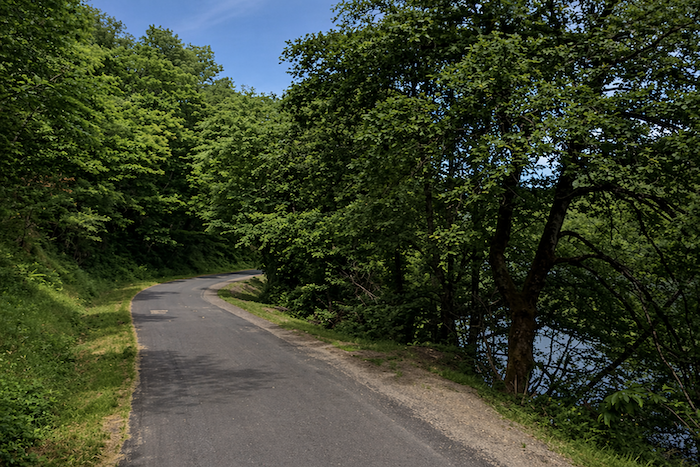
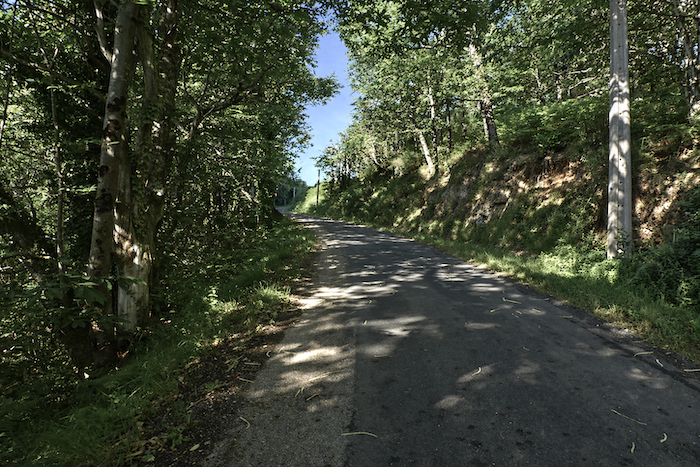
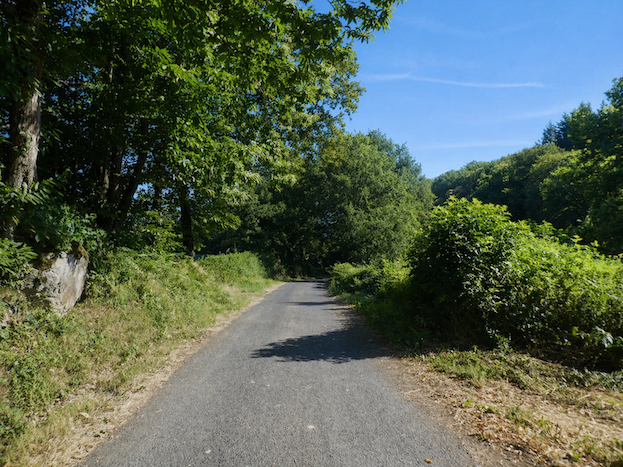
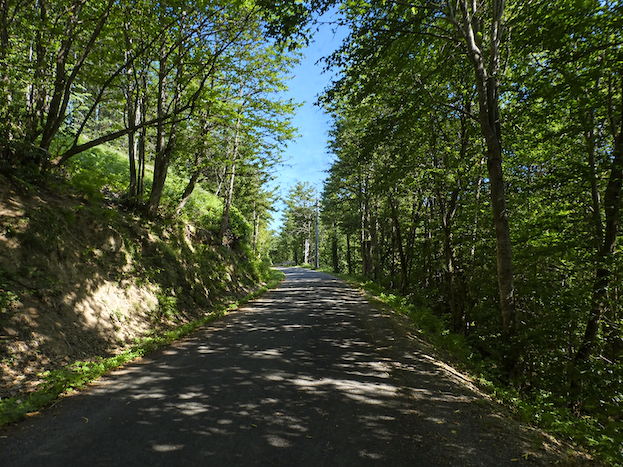
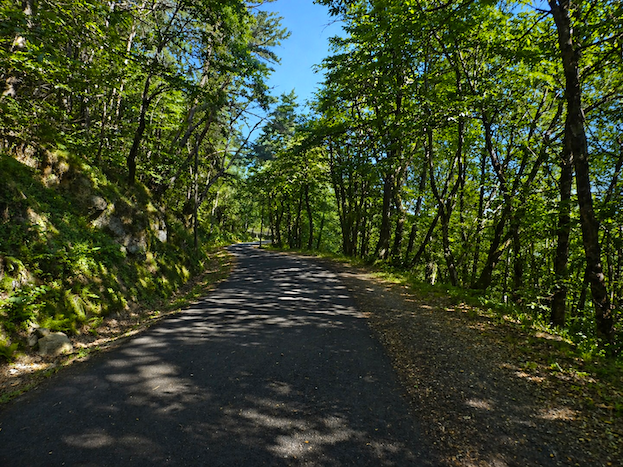
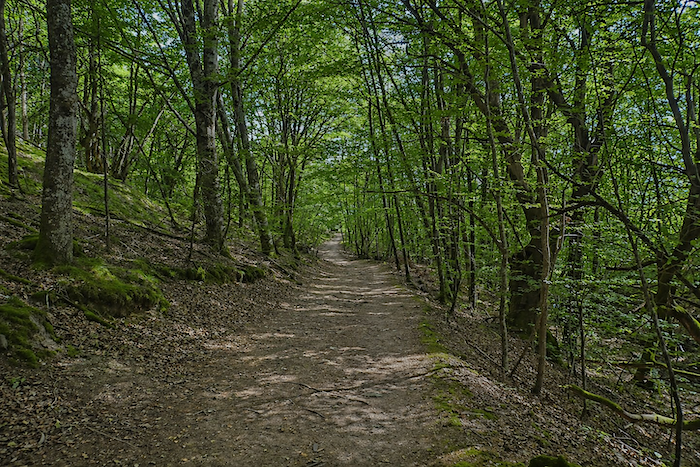
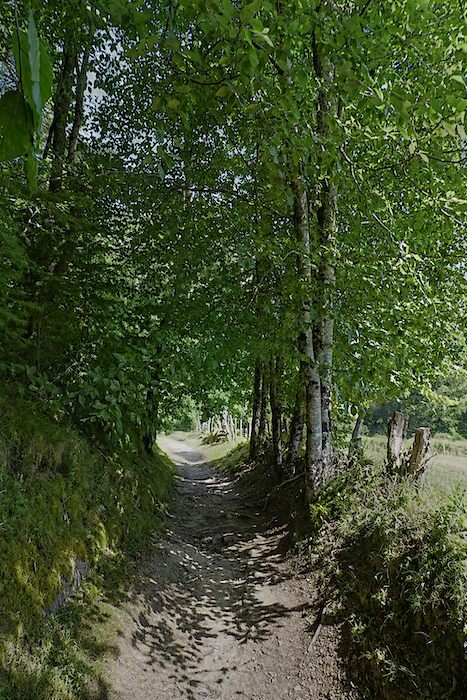
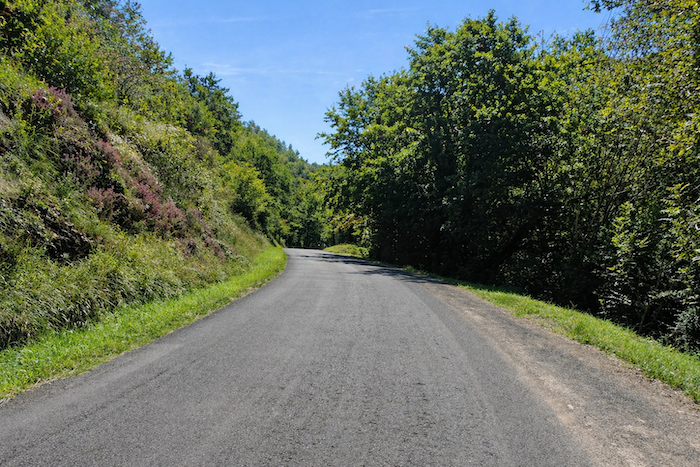
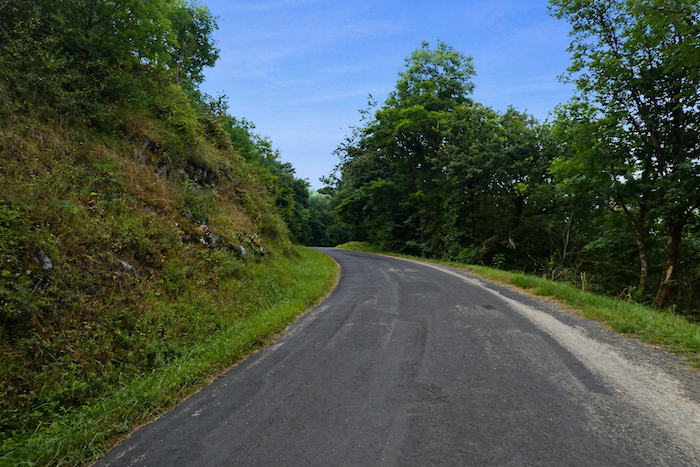
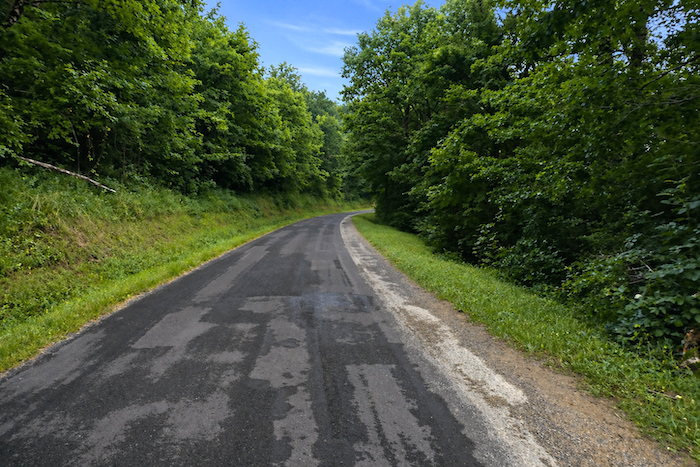
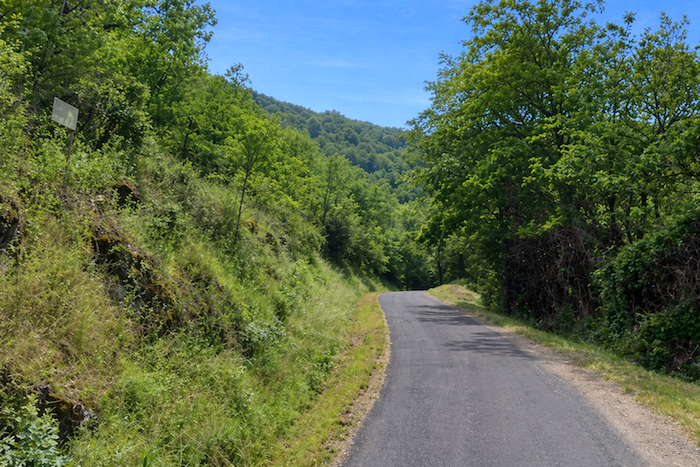
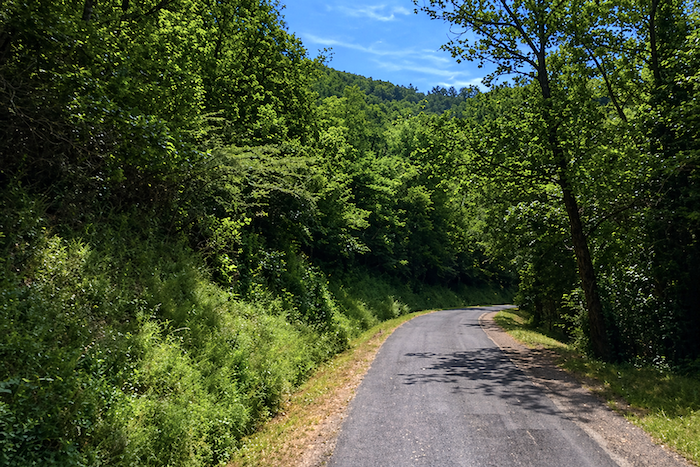
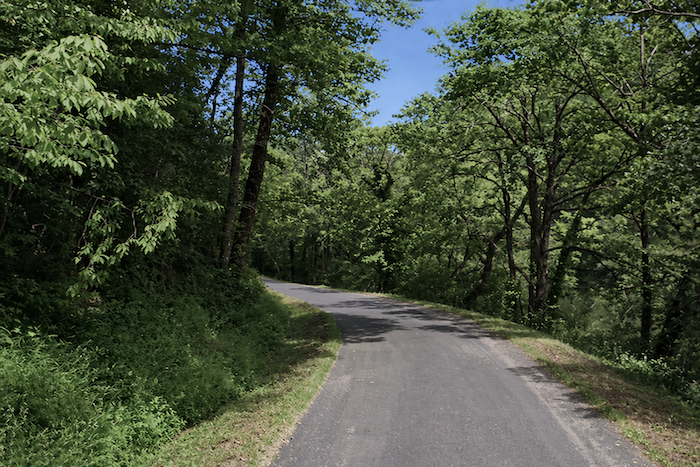
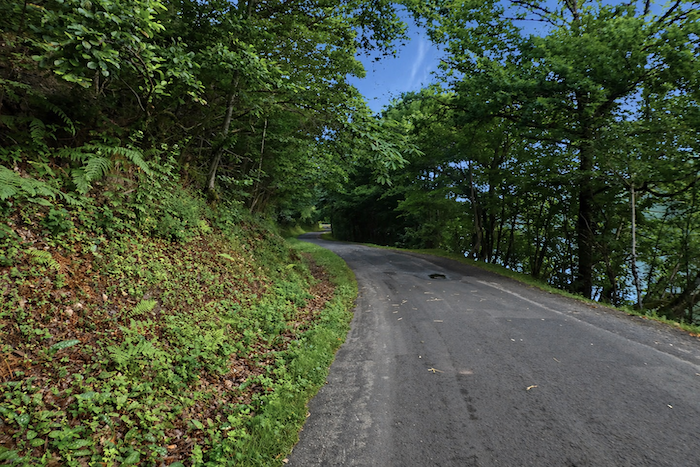
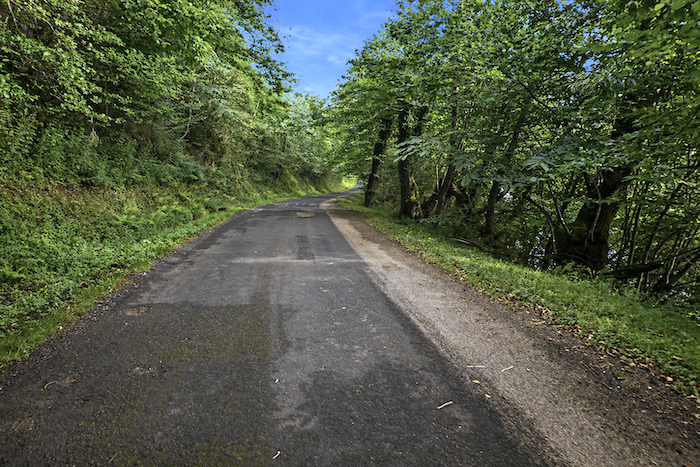
| You may imagine that walking beside the water will be a peaceful stroll, almost a respite. Nothing could be further from the truth. Very soon, the road rears up and climbs beneath the dense canopy of woodland, where the shade seems to hold the hiker captive in a cool, damp, and silent atmosphere. |
 |
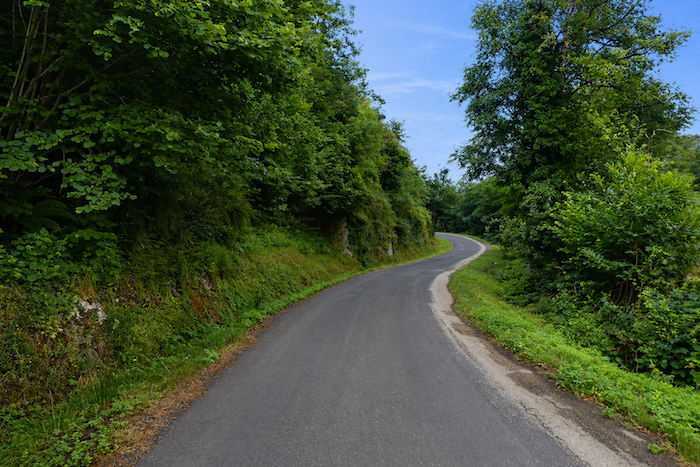 |
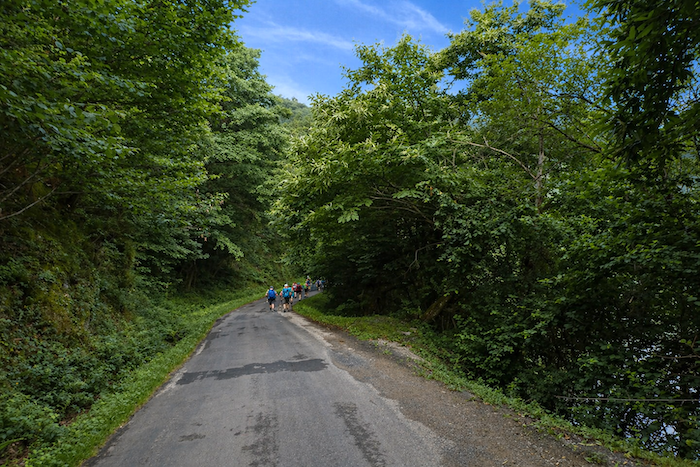
| There is virtually no traffic on this forgotten road. Here, you are unlikely to encounter anyone except other pilgrims, silhouettes burdened with backpacks, advancing at the same slow pace as yourself, lost in their thoughts or prayers. |
 |
 |
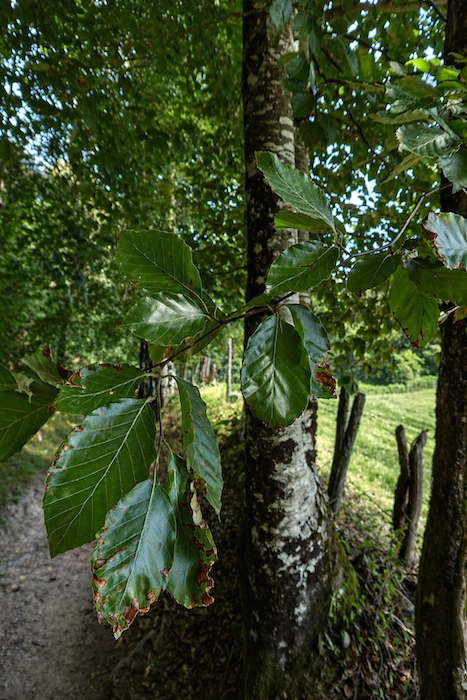
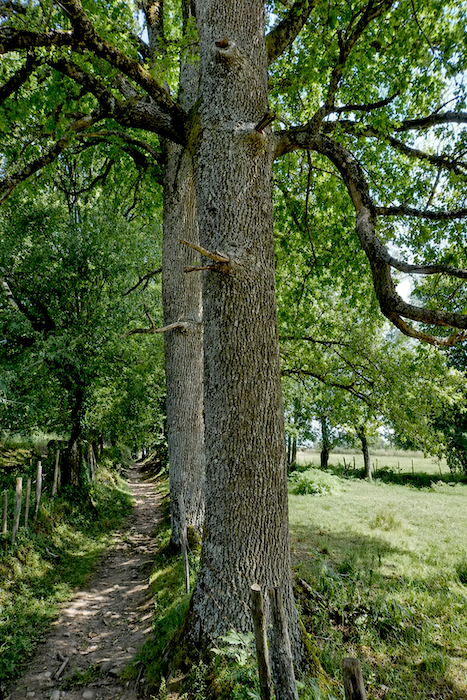
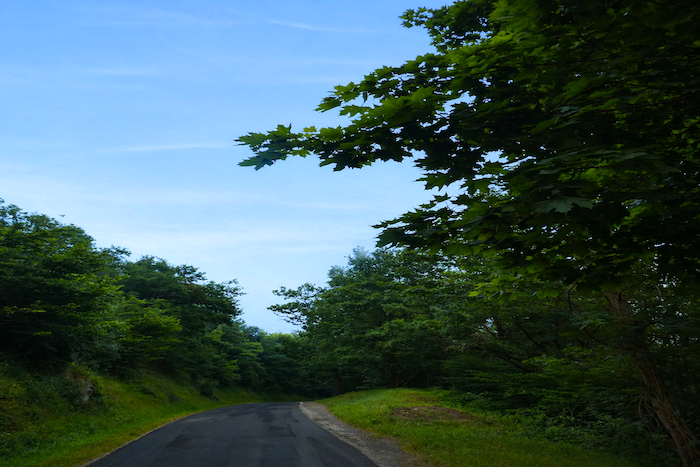
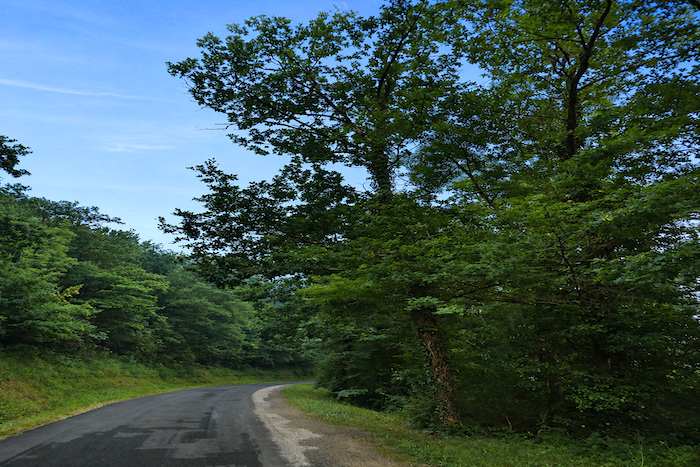
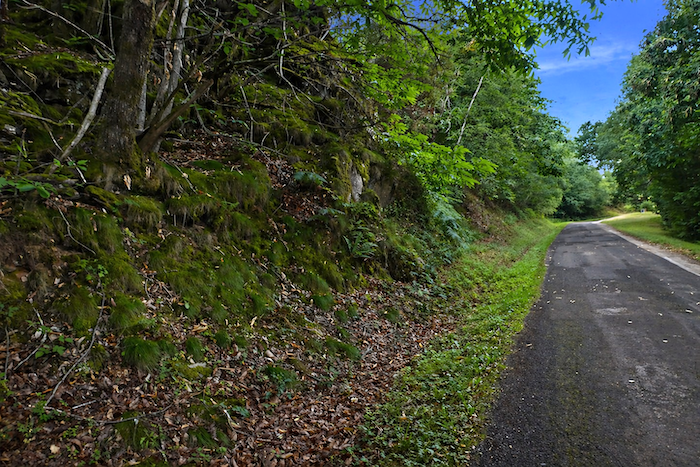
| The forest displays here all the richness of its broadleaf trees. Among the sturdy oaks appear magnificent maples with delicate foliage and majestic ash trees whose branches rise overhead like vaulted ceilings above the road. At this early stage, the beeches and chestnut trees remain more discreet, as though still slumbering in the depths of the woodland. |
 |
 |
| It is hard to believe that you are following a river, for the terrain never stops rising and falling. Nothing is flat here. The ever-present tarmac constantly reminds your feet of its unforgiving hardness. In places, the road seems tempted to descend once more toward the Lot, as though drawn back despite itself to the waters it had abandoned. |
 |
 |
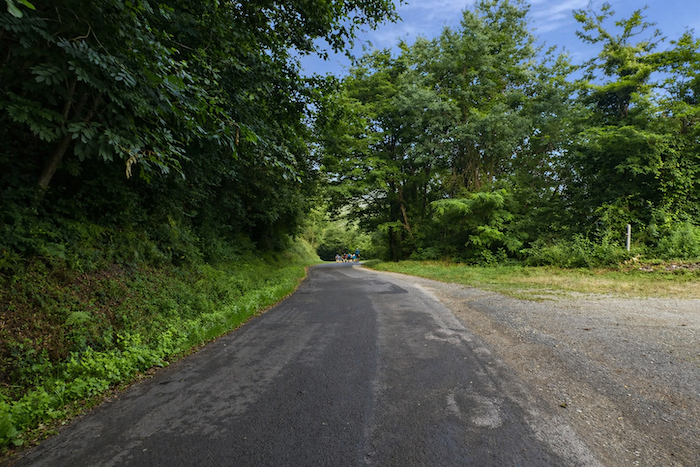
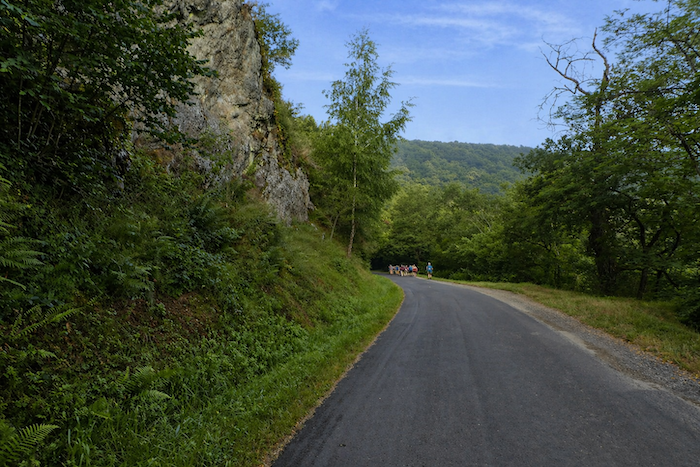
| Then the river finally reappears through the trees, revealed by an opening in the landscape. Along the road advances a veritable army of hikers, cheerful groups whose songs resonate gently between the hills and the tranquil waters. |
 |
 |
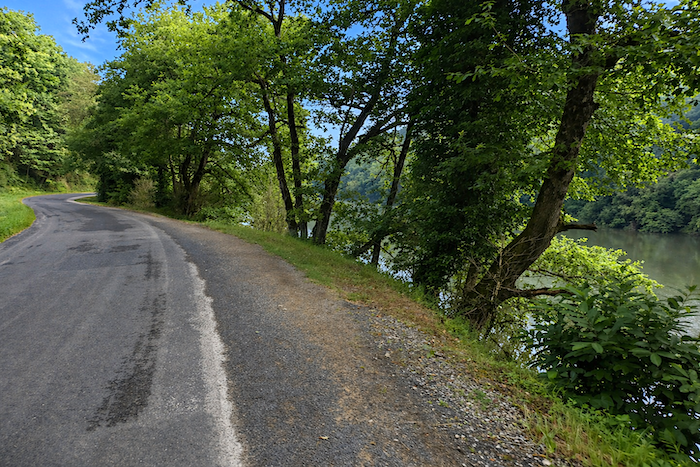
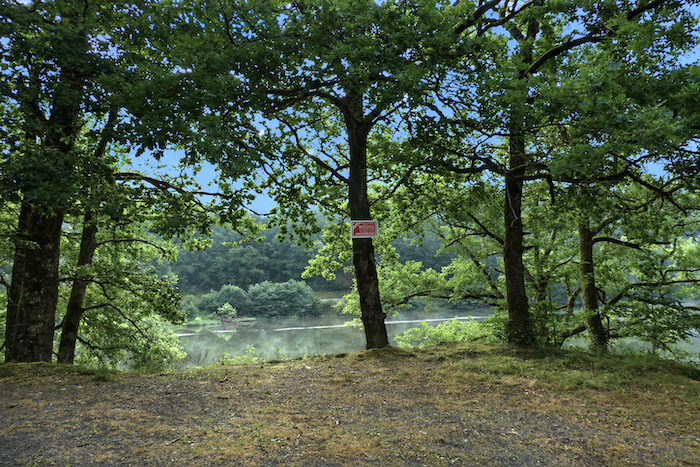
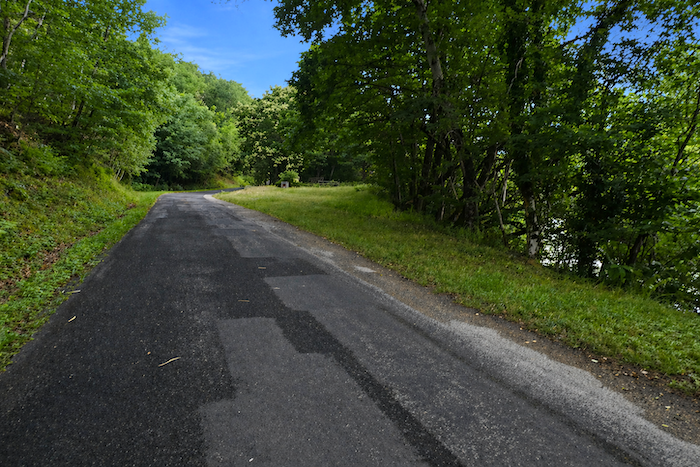
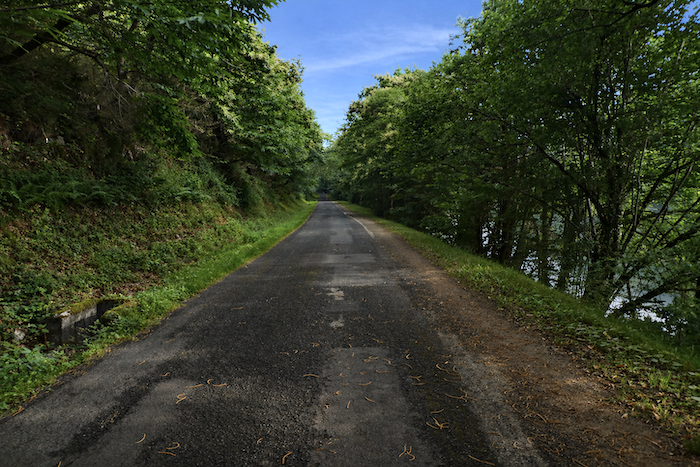
| The road then begins to wander lazily beside the water, sinuous and unhurried. Despite the signs prohibiting fishing, many anglers wait patiently along the banks, motionless as herons. Prohibitions here, as elsewhere, sometimes seem little more than suggestions. |
 |
 |
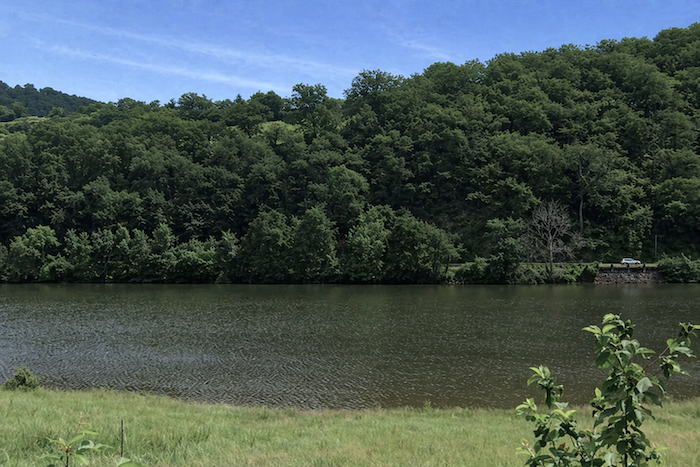
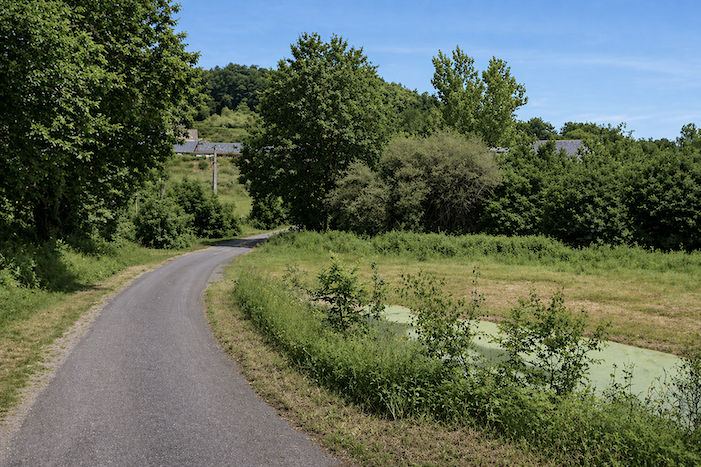
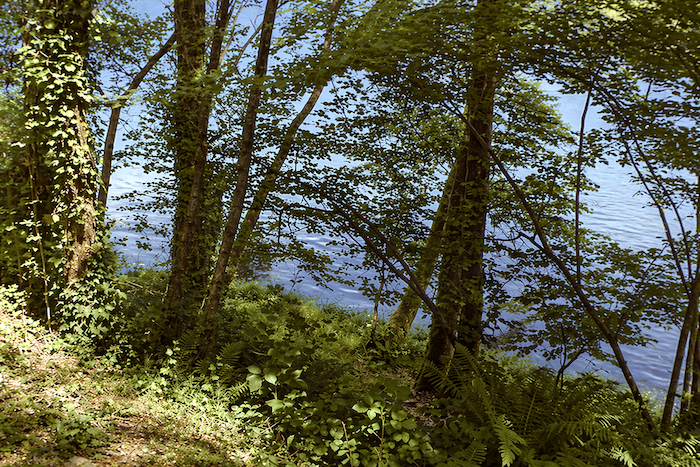
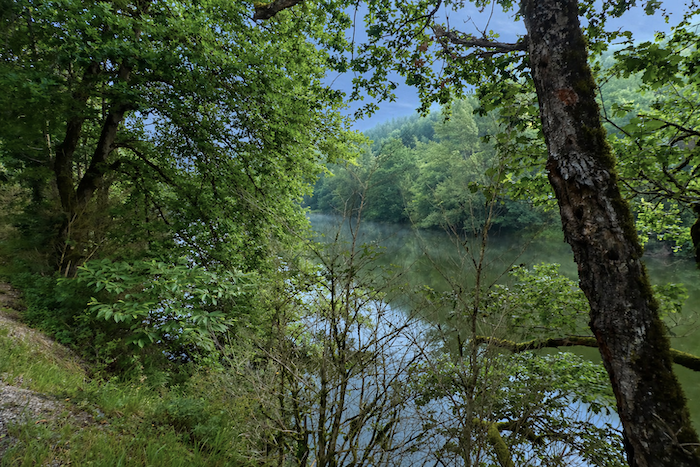
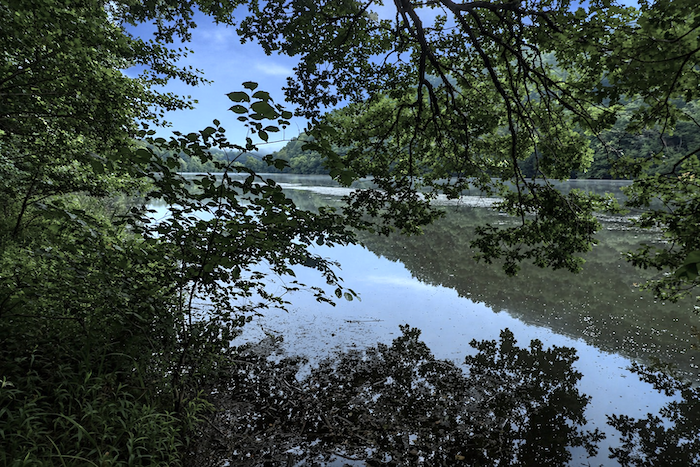
| Even on this asphalt road, the eye still finds much to admire. Through the trees, glimpses of the Lot shimmer into view, moving reflections dancing across the water’s surface. The branches lean gracefully over the river, as though delighted to dip their foliage into its waters. Here, the river rarely roars. Instead, it glides silently, thick and slow, almost motionless. Everything becomes peaceful harmony and gentle tranquility, even if the Lot has lost in this place the clear blue hue that makes it so beautiful elsewhere. |
 |
 |
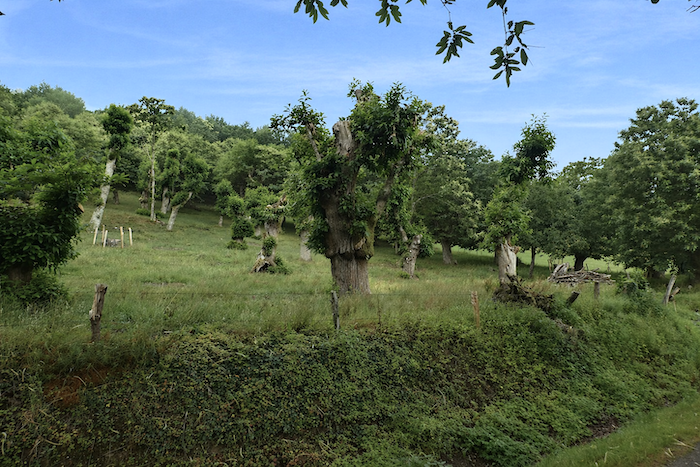
| Then the chestnut trees return in force, reclaiming possession of the landscape. You will soon encounter entire ranks of them along the route, as though the forest itself wished to accompany the pilgrim on the long journey ahead. |
 |
 |
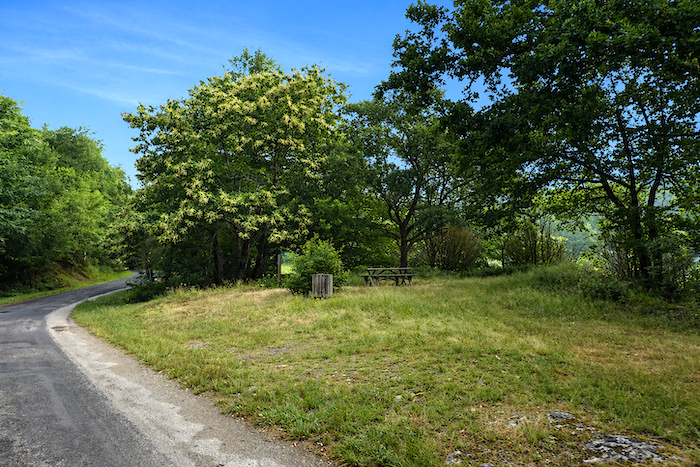
| Shortly afterwards, beside the water, stretches a discreet and shaded picnic area, an improvised refuge for weary hikers and determined fishermen who continue, despite the prohibitions, to try their luck in the waters of the Lot. |
 |
 |
| After several kilometers of peaceful walking, occasionally accompanied by the sleepy murmur of the river, the road gradually leaves the depths of the forest behind. The trees become more scattered, broader sheets of light return, and the landscape seems slowly to draw breath once again. |
 |
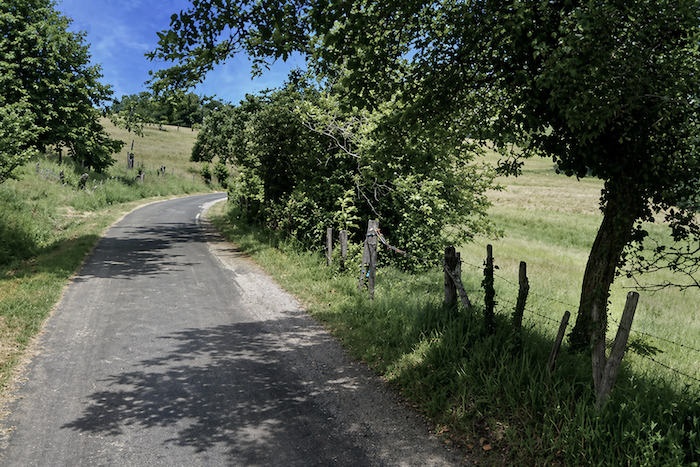 |
| For the moment, however, it remains attached to the banks of the Lot, faithful to the river that has accompanied it since the beginning, as though reluctant to leave it for good. |
 |
 |
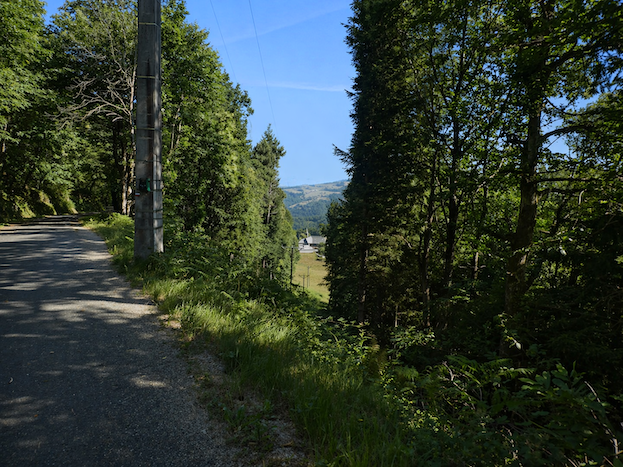
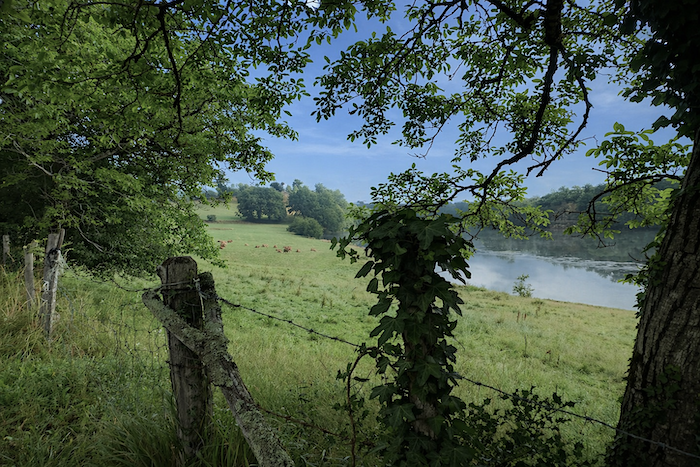
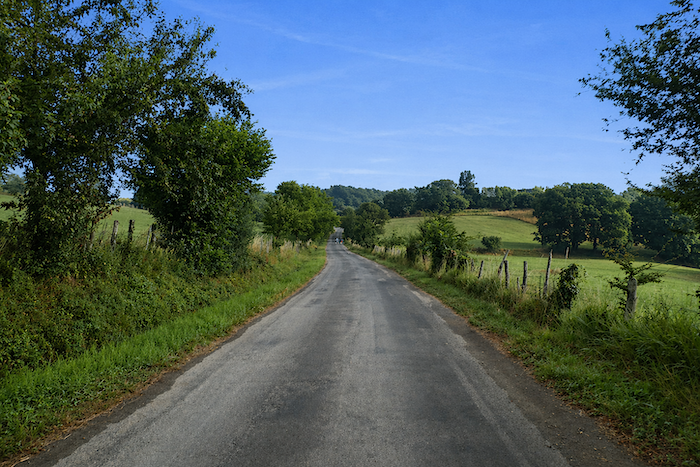
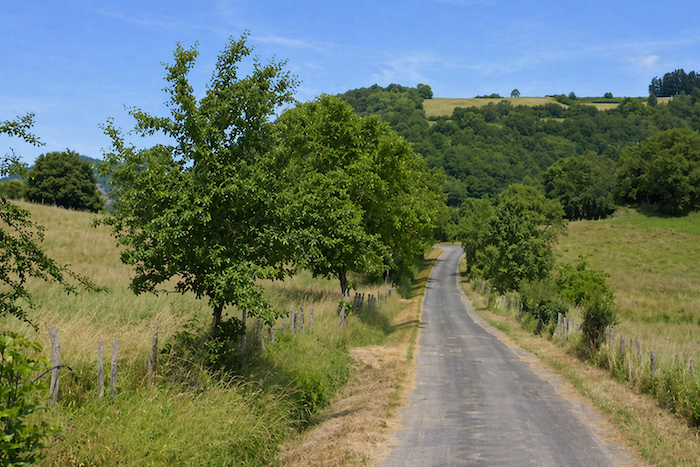
| Then the road, now straighter, climbs above the valley toward more open spaces. It slopes up gently toward the localityt of La Rouquette, gradually leaving the Lot below, reduced to a dark ribbon winding between the trees. |
 |
 |
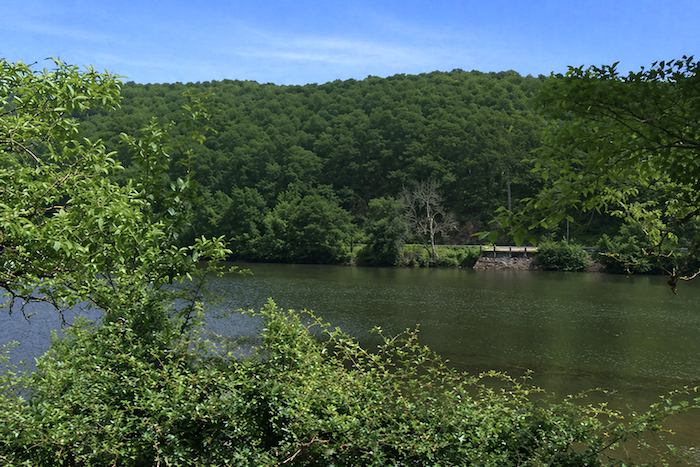
| The ascent continues on a gentle gradient to La Rouquette, where a small road descends toward a dam built on a bend of the Lot. The landscape broadens here, shared between the impounded waters of the river and the wooded hills that close off the horizon. |
 |
 |
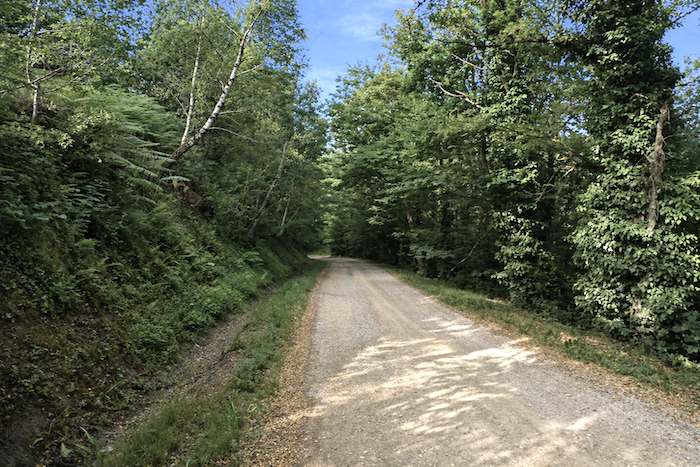
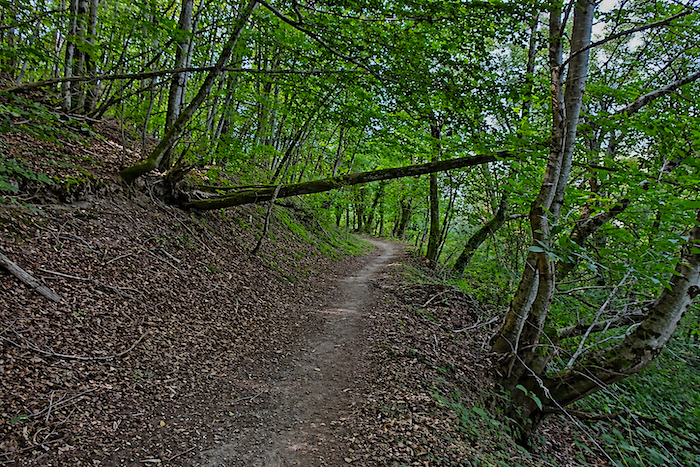
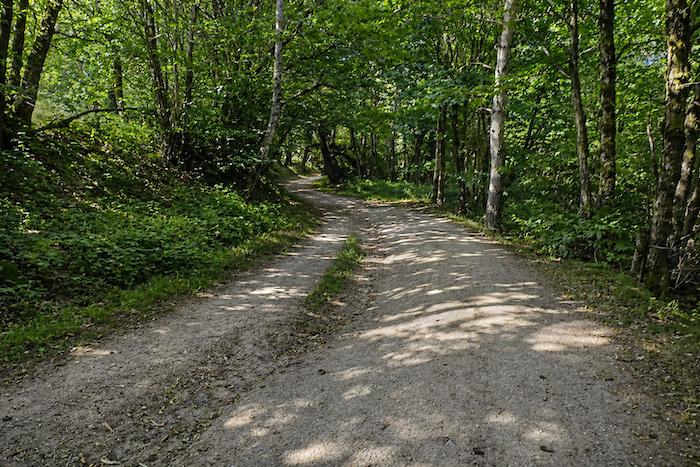
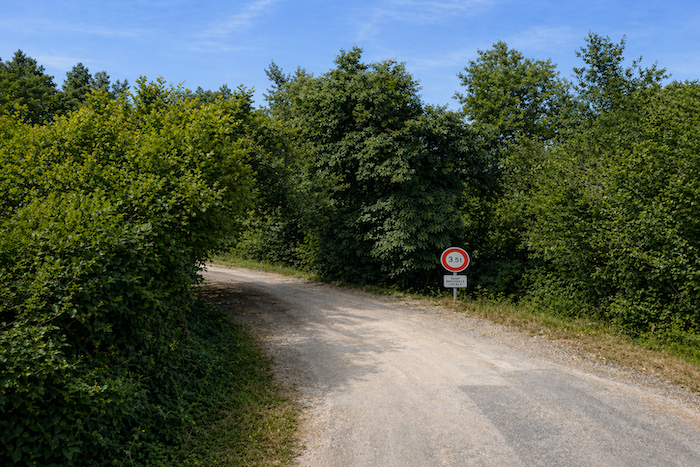
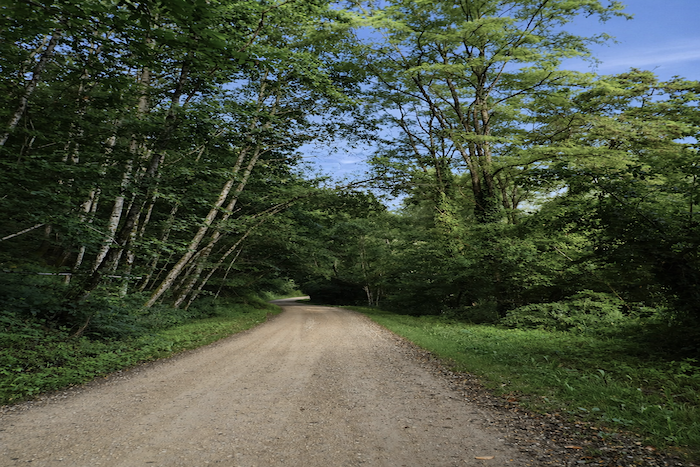
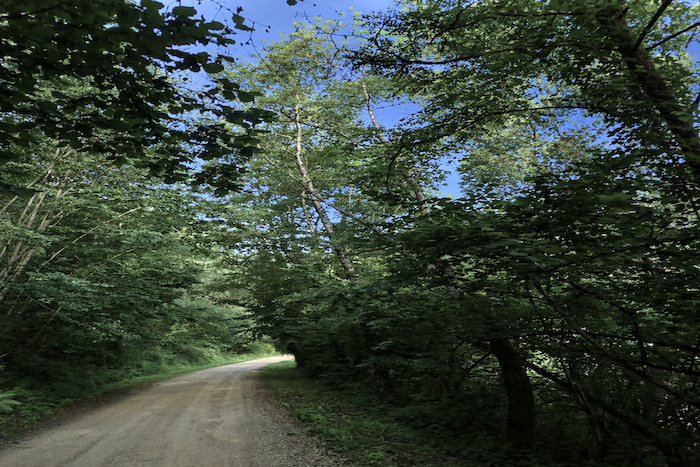
| It is here that the GR65 finally leaves the tarmac behind. The path becomes a wide track of packed earth that heads resolutely into the woods, climbing beneath the close canopy of broadleaf trees in a steeper ascent, where the silence of the forest once again envelops the pilgrim. |
 |
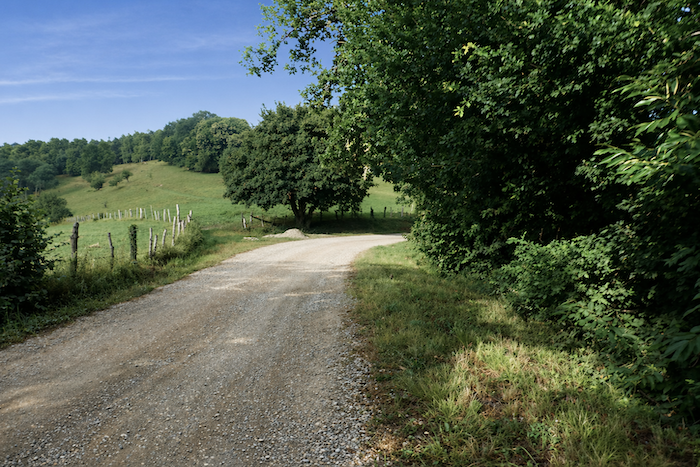 |
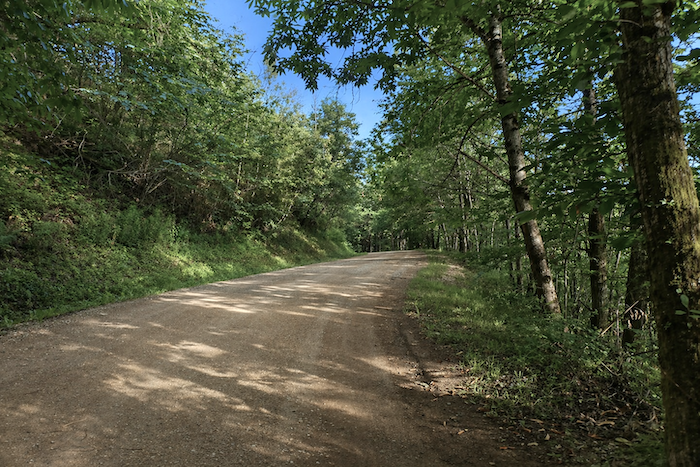
| The path becomes particularly pleasant here, even though the effort remains constant. It progresses along the hillside in a sustained climb, following the contours of the terrain with a certain gentleness, as though seeking to spare the pilgrim while never truly granting any respite. |
 |
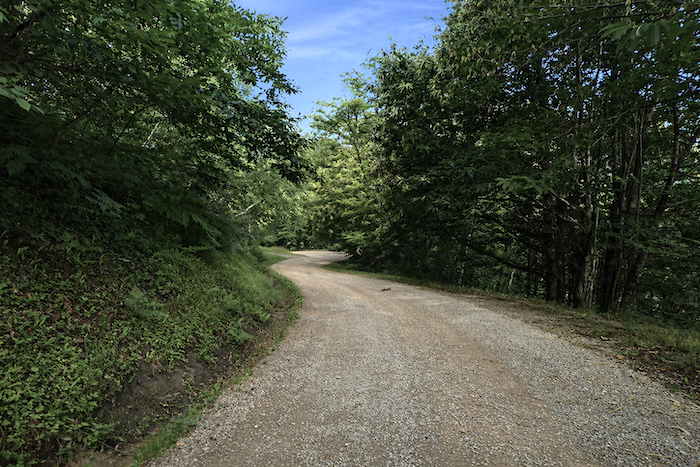 |
| Beneath the dense shade of towering beeches, powerful oaks, and elegant ash trees, the forest becomes nobler still. The chestnut trees also begin to gain ground, blending their more twisted silhouettes with those of the other broadleaf species, a discreet announcement of the landscapes yet to come. |
 |
 |
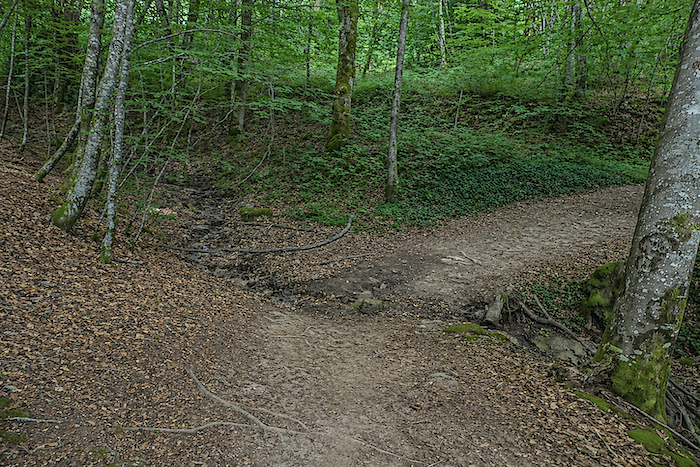
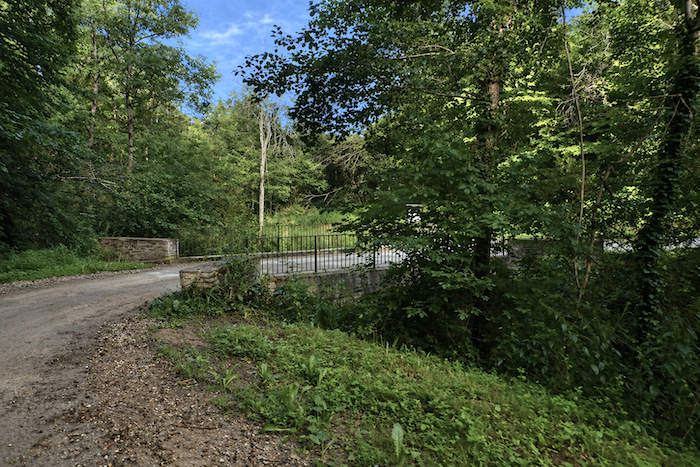
| The path then begins to meander through the woodland, almost hesitating over its direction. It even descends slightly to reach the small Luzane stream, nestled at the bottom of a narrow and cool valley, where the water slips discreetly among stones and mosses. |
 |
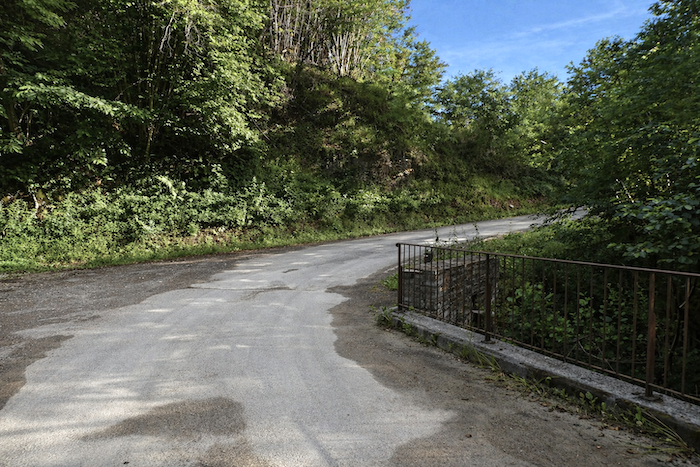 |
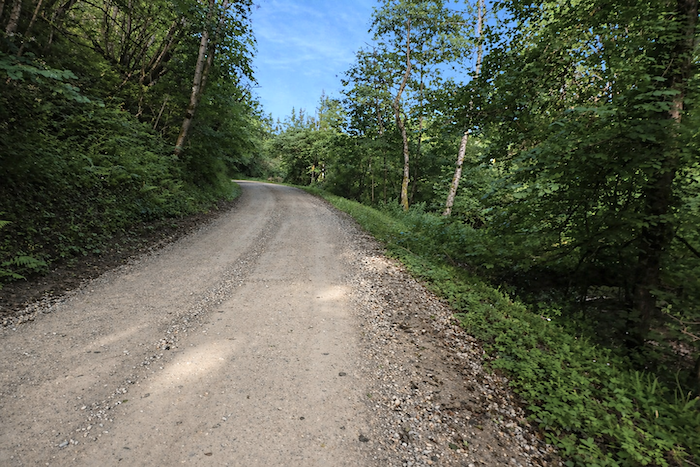
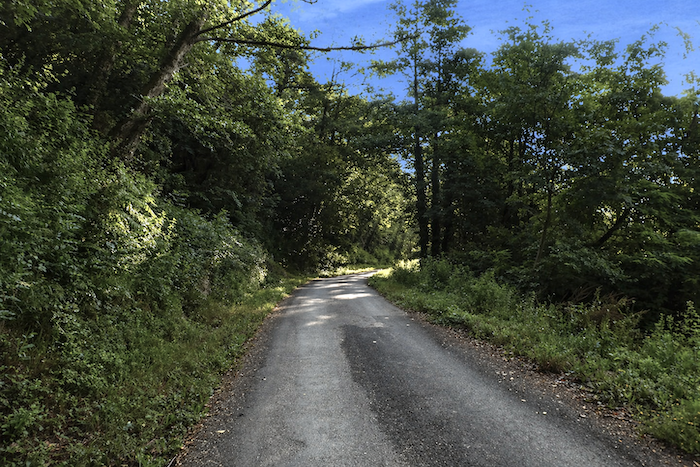
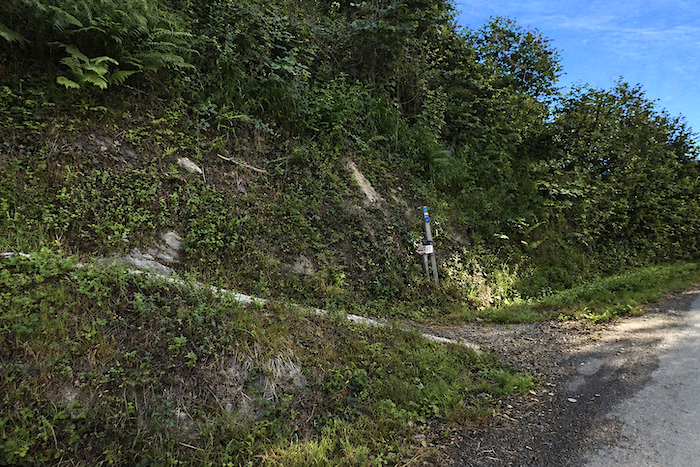
| Here, the GR65 briefly rejoins the tarmac. Yet it is precisely at this point that the ascent toward the Golinhac plateau truly begins. The route soon leaves the road, where you are unlikely to encounter a single vehicle, and follows a narrow trail that climbs steeply up the embankment, like a secret passage disappearing into the wooded slope. |
 |
 |
Section 2 : A very long climb, between shortcuts and tarmac
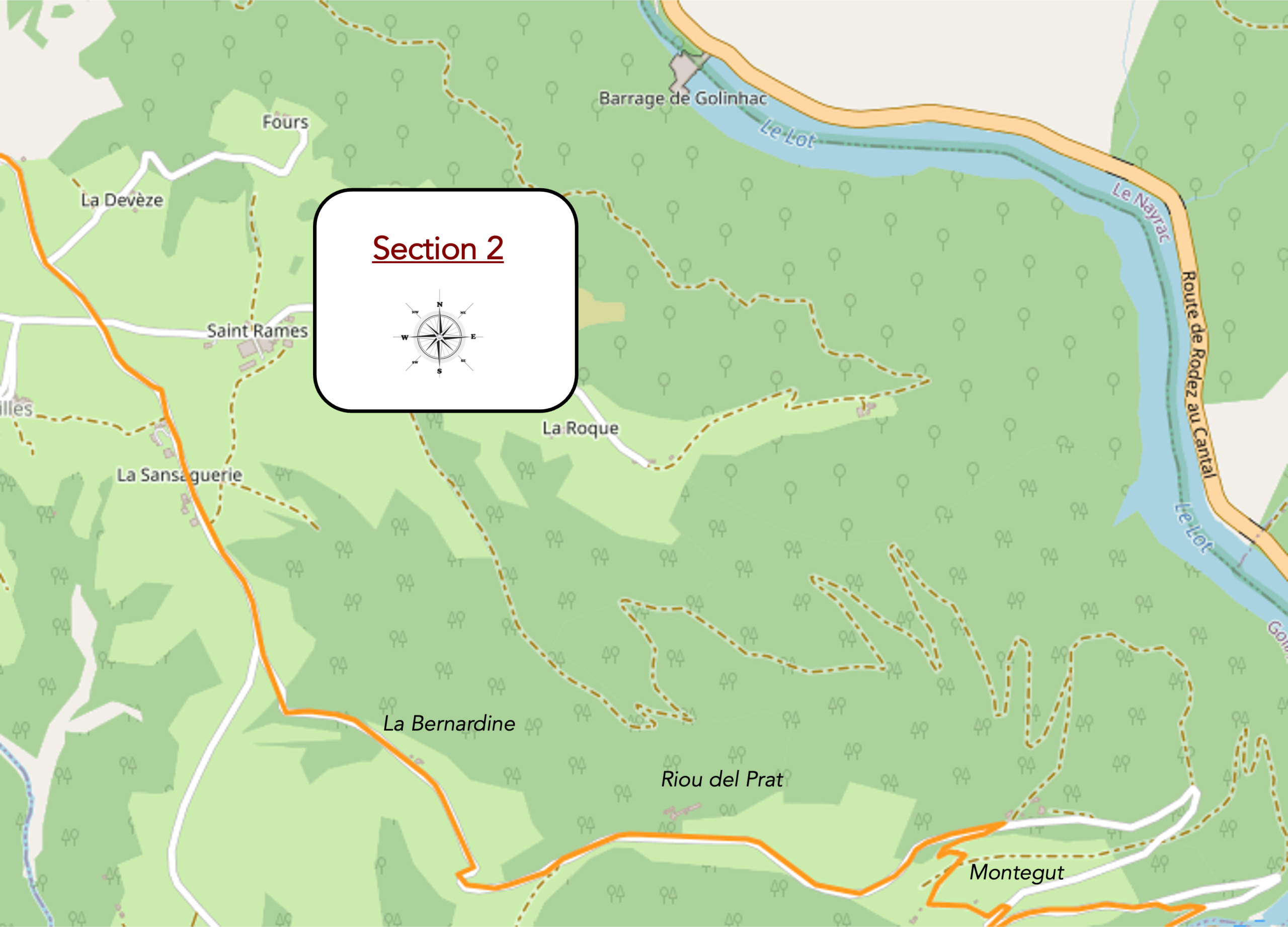
Overview of the route’s challenges : if you are looking for climbing, this is real climbing, more than 330 meters of elevation gain over 4 kilometers, with gradients most often ranging between 10% and more than 15%, sometimes even steeper.
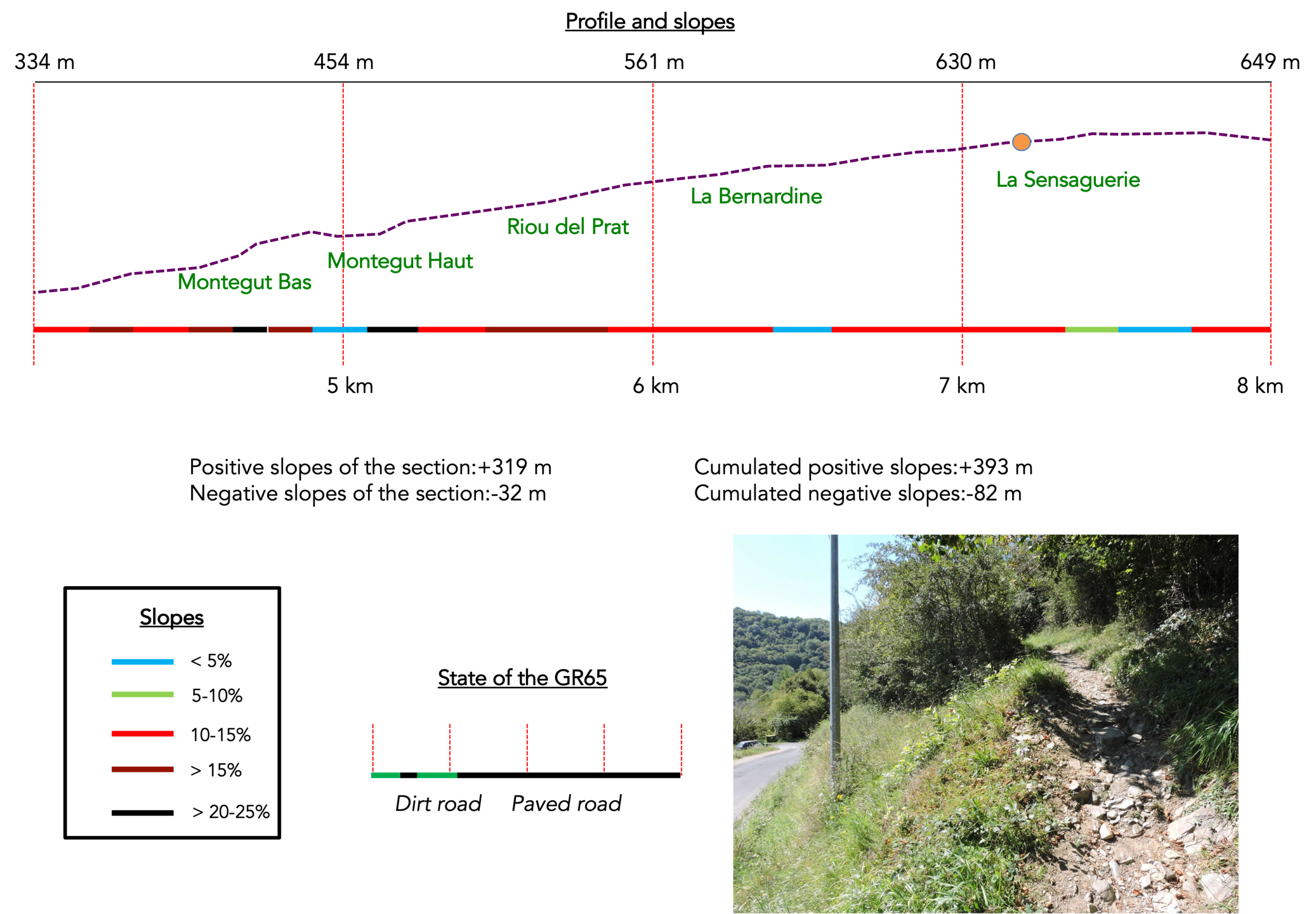
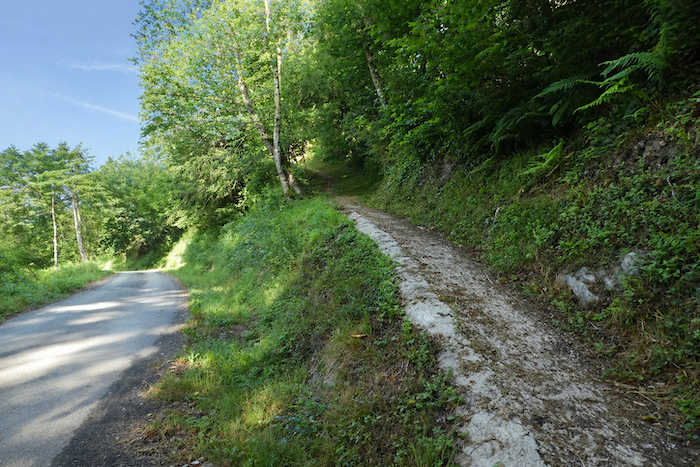
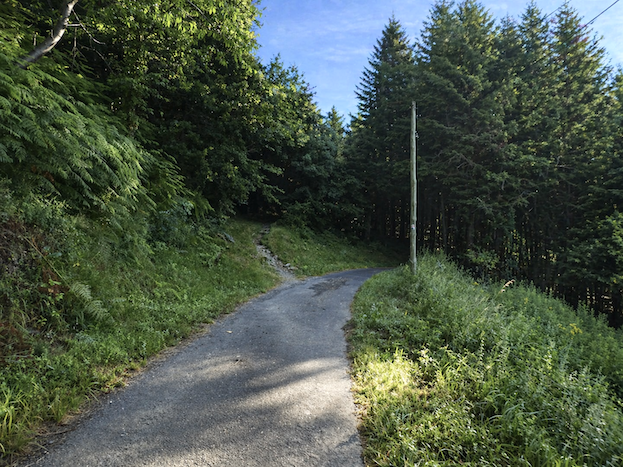
| It is here that the route’s true game begins: a relentless alternation between steep shortcuts launching into the woodland and the broad bends of the little tarmac road. The slopes are less precipitous than elsewhere and never plunge entirely sheer, so here and there fragments of forest remain suspended on the hillsides, like ancient wild refuges. Once, wolves found shelter here; today, wild boar and roe deer haunt these silent retreats. |
 |
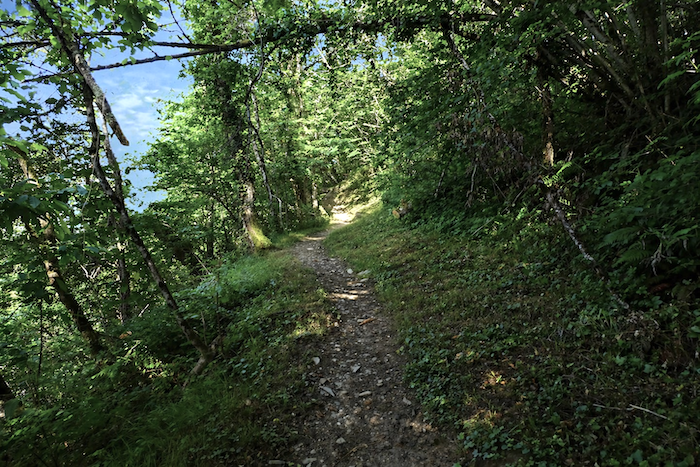 |
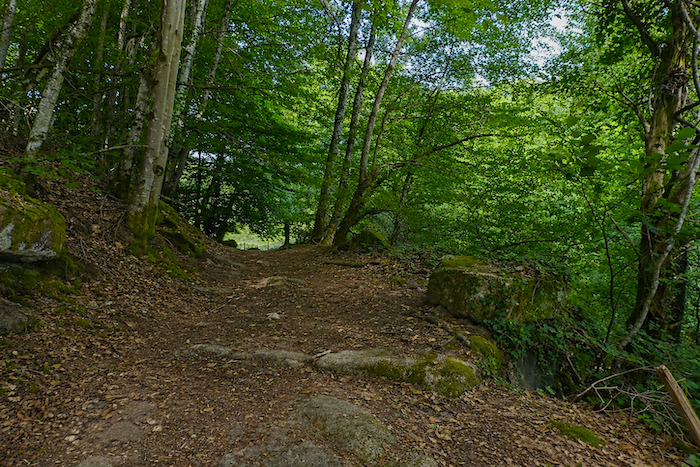
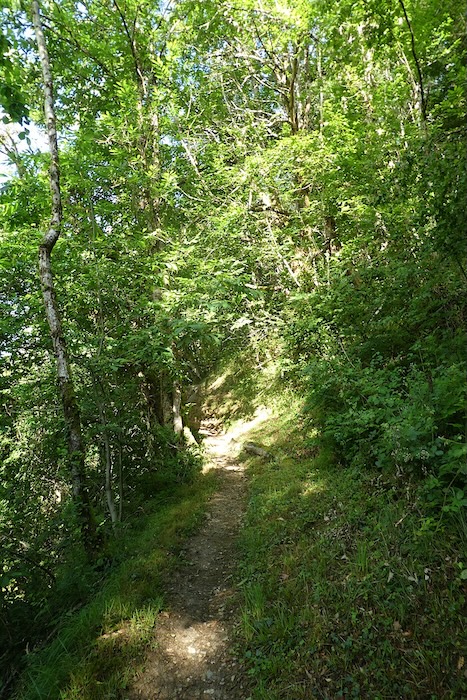
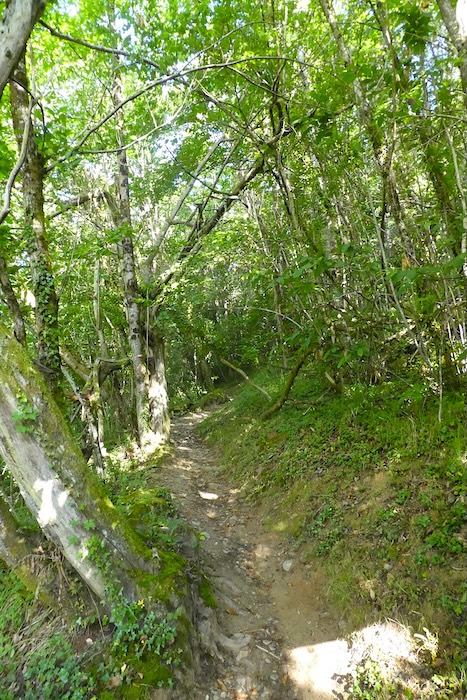
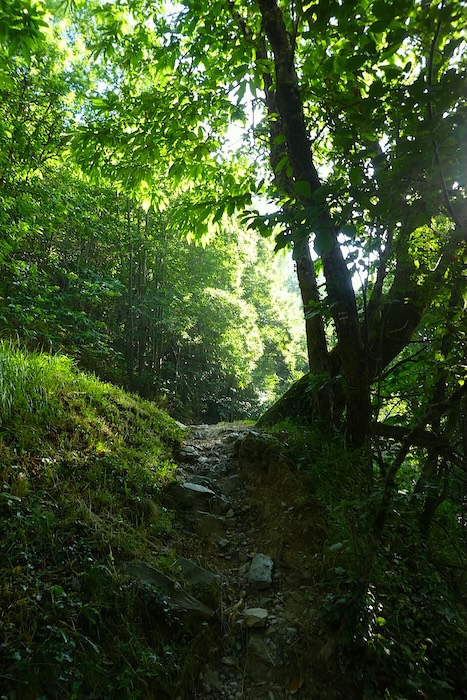
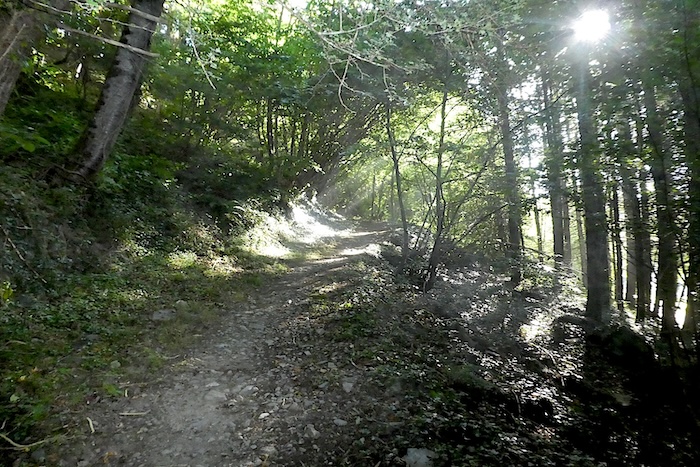
| The gradient becomes serious, often exceeding 25%, on this narrow trail winding among the broadleaf trees. Beneath the young wild chestnuts and the beech groves, dark schists and slabs of limestone occasionally emerge through the surface of the trail, reminding hikers of the mineral harshness of these hills. |
 |
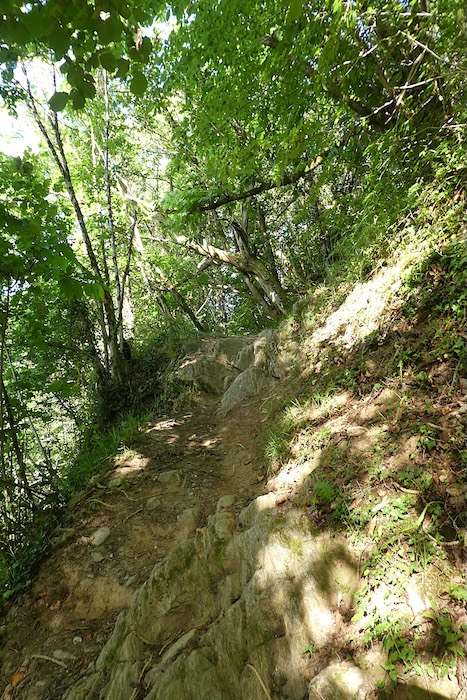 |
| Yes, it is steep. But what beauty. When the light manages to penetrate more freely through the branches, the oaks, beeches, and chestnut trees seem suddenly to grow even taller, as though exalted by this recovered brightness. The woodland then takes on the appearance of a vegetal cathedral, crossed by shafts of light and shifting shadows. |
 |
 |
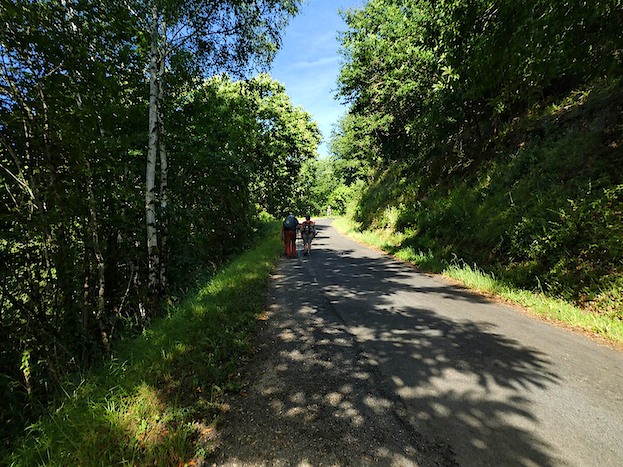
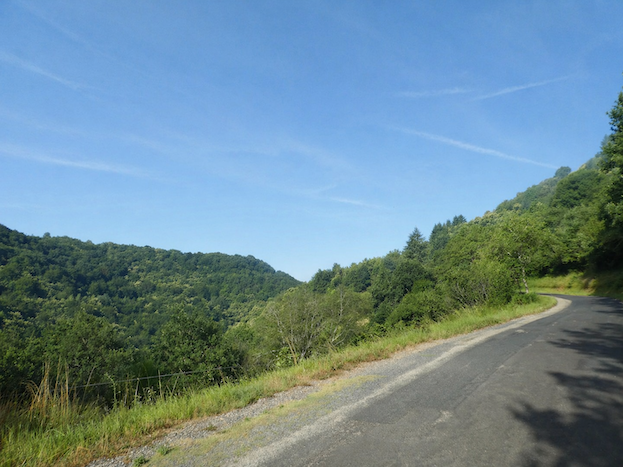
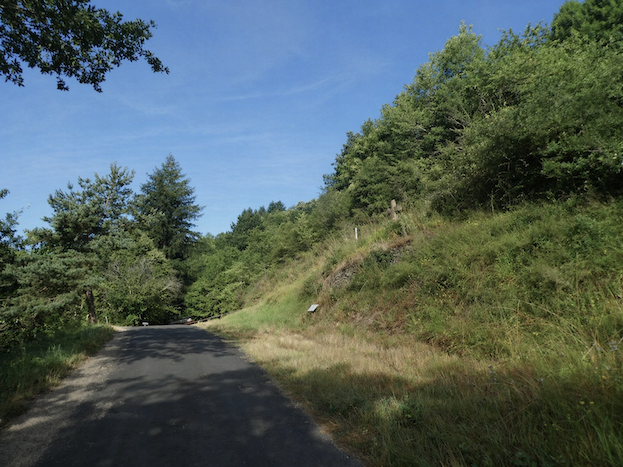
| Fortunately, the shortcut is fairly brief, and before long the GR65 rejoins the little tarmac road that emerges into a more open space. All around stretches an immense mantle of broadleaf forest, dense and deep, from which a few isolated conifers occasionally emerge, almost foreign to this landscape dominated by deciduous woodland. |
 |
 |
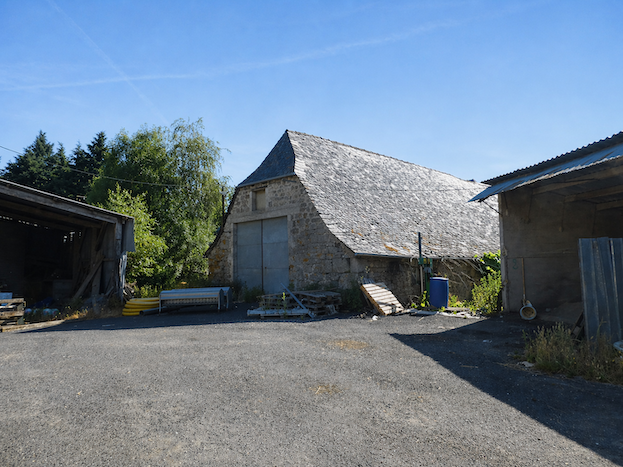
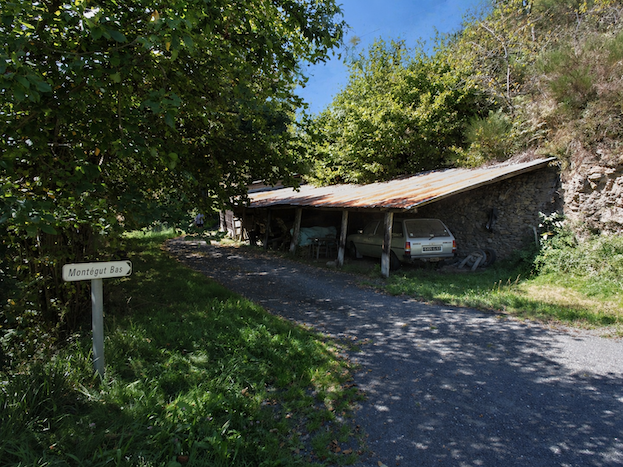
| The road then reaches Montégut-le-Bas. There is almost nothing here, apart from an old abandoned vehicle slowly beginning its final decline beneath a weary shelter. These forgotten wrecks, true cemeteries of automobiles, still line many French roads. With strange banality, they often disfigure places otherwise full of charm and rural poetry. |
 |
 |
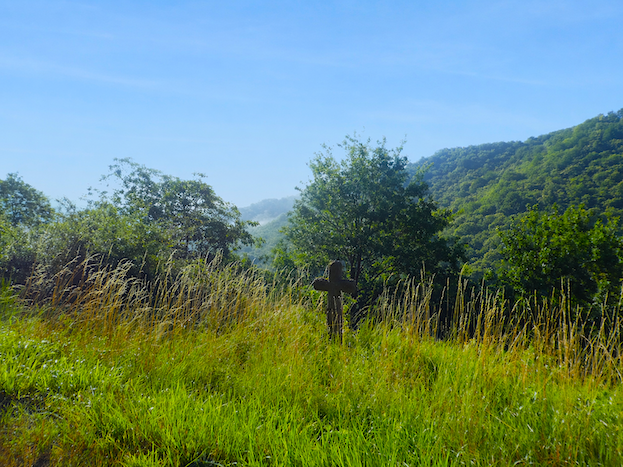
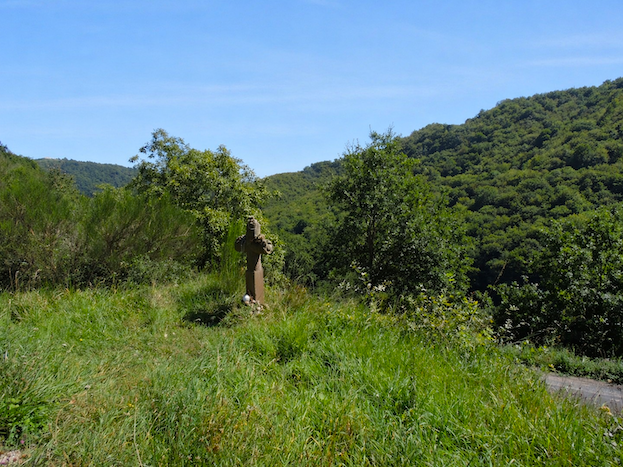
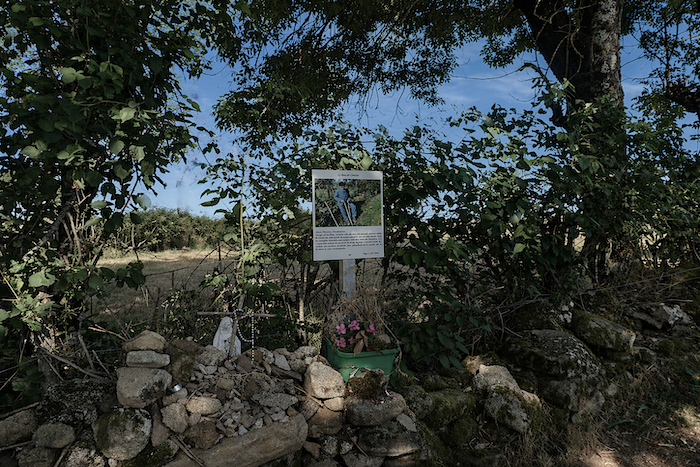
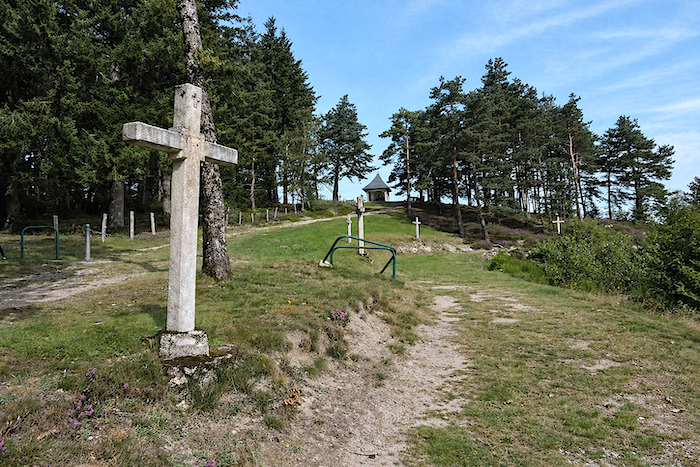
| The landscape here seems crossed by a true Way of the Cross. Yet this is not the traditional Calvary marked by the stations of Christian liturgy. Each cross bears its own name, often accompanied by a small text recounting a story, a local memory, or a forgotten devotion. There are more than thirty of them all along the route to Espeyrac, as though these hills had chosen to scatter their sacred signs along the pilgrims’ way. |
 |
 |
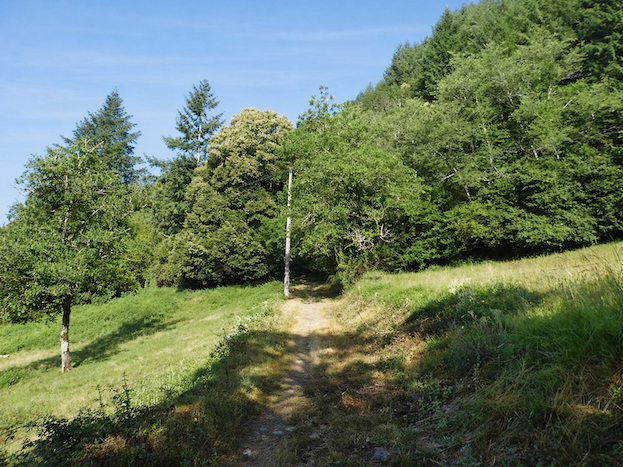
| After a brief return to the road, the GR65 quickly plunges once again into one of these rocky shortcuts where the gradient and the stones immediately return beneath your boots. |
 |
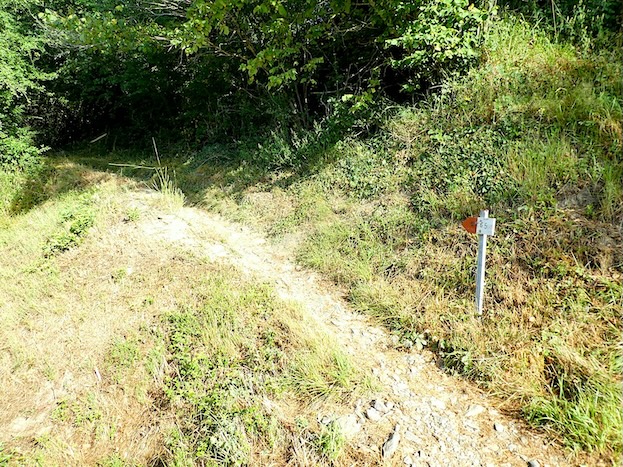 |
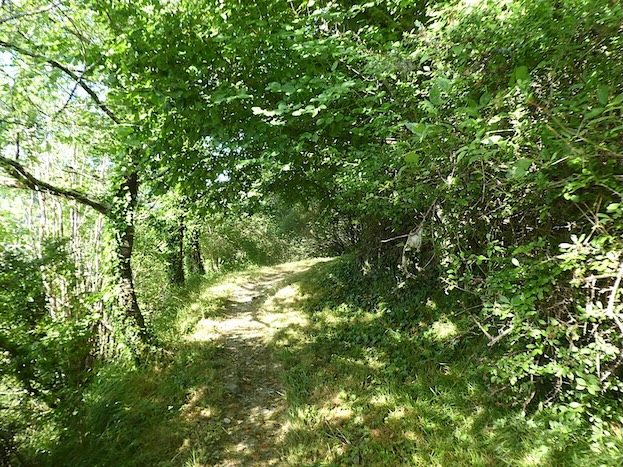
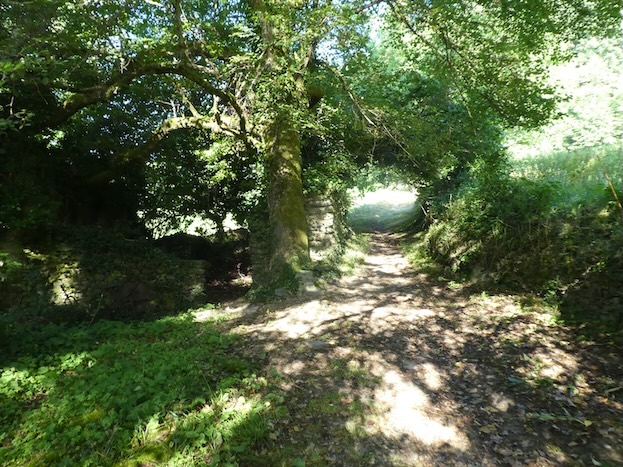
| In this second shortcut, the incline is somewhat less demanding, though it still fluctuates between 10% and 15%. The forest, however, remains sovereign. Great oaks, slender ash trees, delicate maples, majestic beeches, and chestnut trees continue to spread their protective shade above the path. |
 |
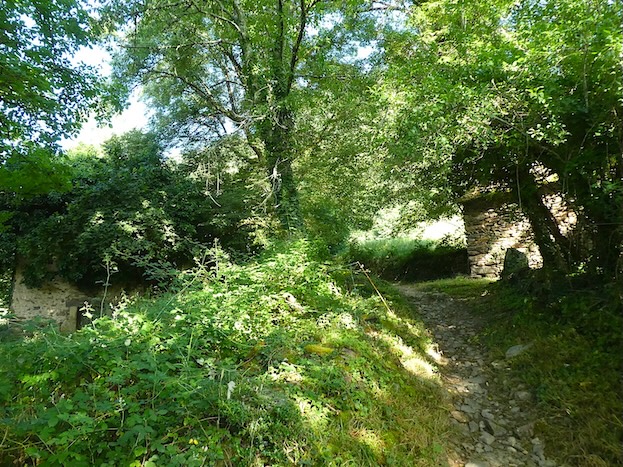 |
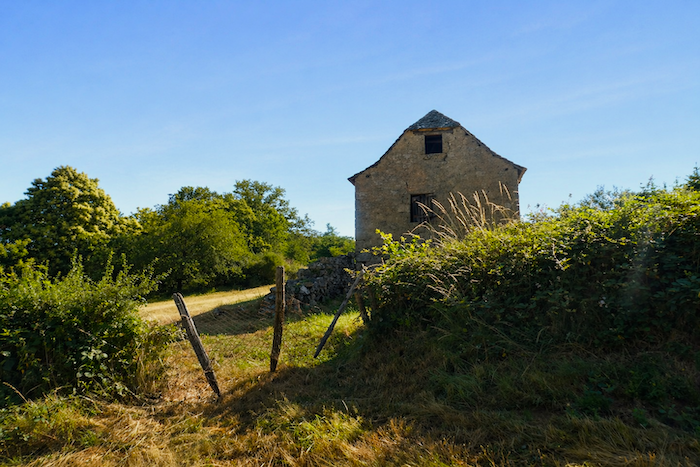
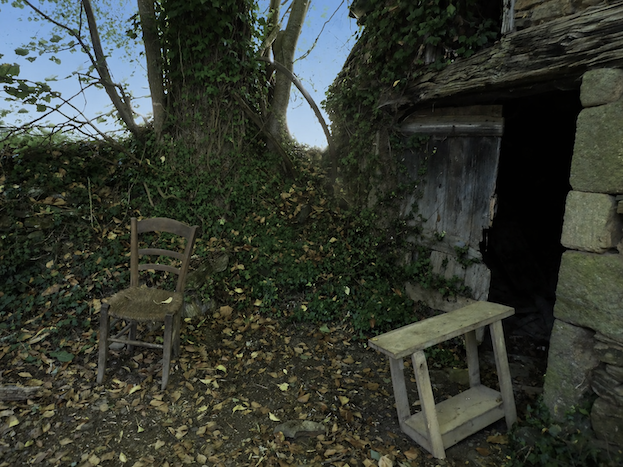
| Near an old abandoned stone hut, slowly being reclaimed by time and vegetation, the pilgrim may even consider a welcome rest. Beneath the great trees, the coolness naturally invites repose, far from the world and its noise. |
 |
 |
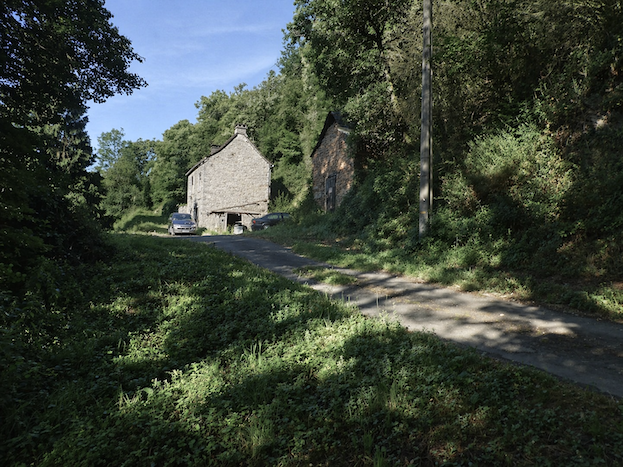
| A little higher, the stony path rejoins a small tarmac road leading to an isolated house lost among the woods, as though forgotten in the middle of this immense forest. |
 |
 |
| Then, after another brief stretch of tarmac, the route encounters for a third and final time the shortcut climbing through the woodland. |
 |
 |
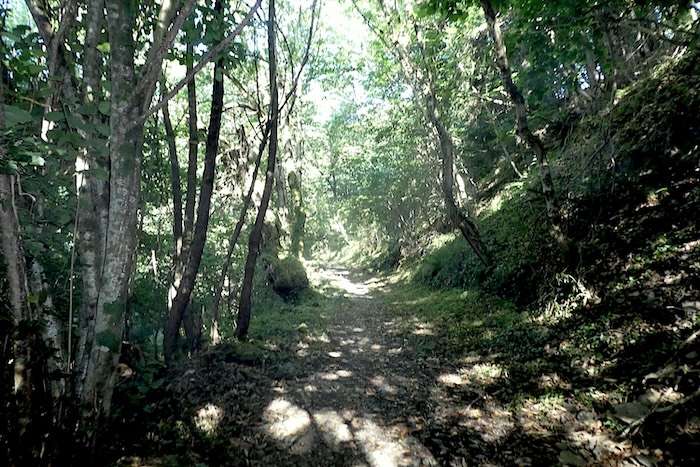
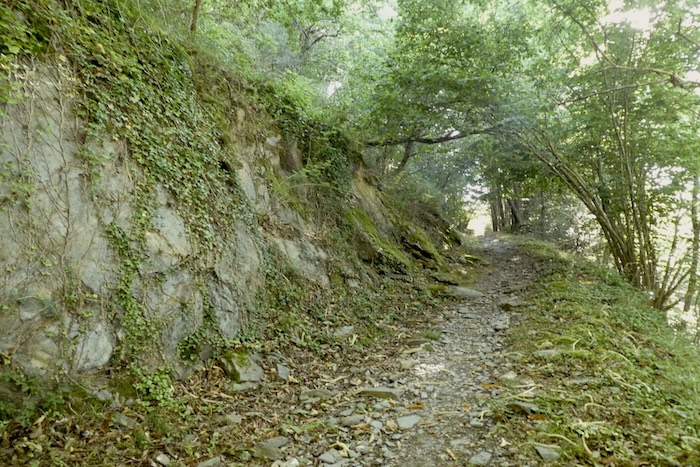
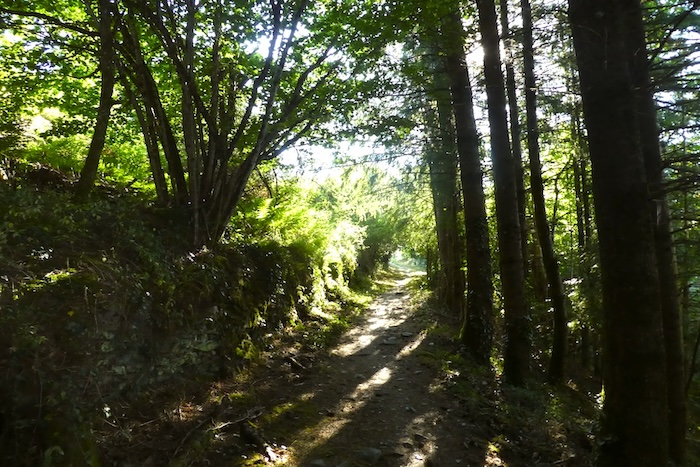
| The trail then slips discreetly between the undergrowth. It winds gently toward the ridgeline, crossing polished schists where ivy and moss cling among the stones of the trail beneath the high vault of broadleaf trees. No clearing truly interrupts the density of this compact forest. The only open spaces seem to be those wrested from the trees to allow the road to pass. |
 |
 |
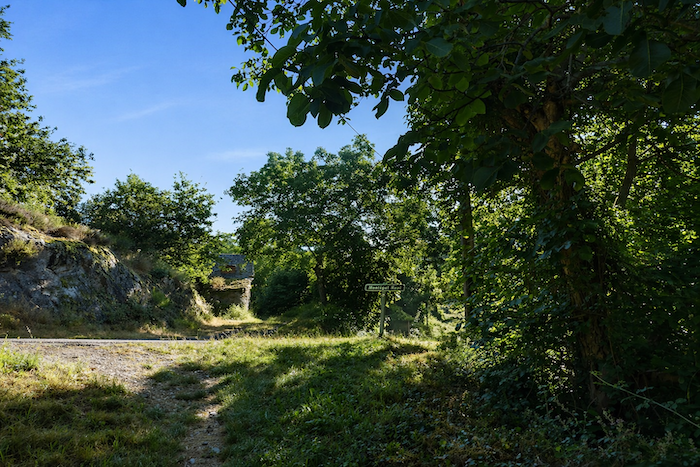
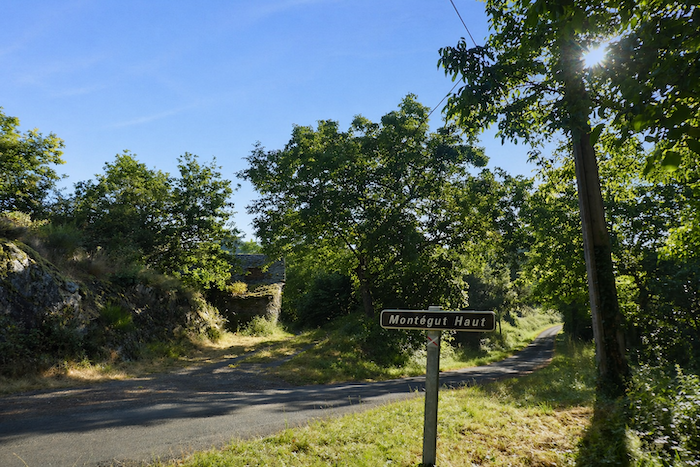
| At Montégut-Haut, this curious ballet between forest shortcuts and the bends of the tarmac road finally comes to an end. |
 |
 |
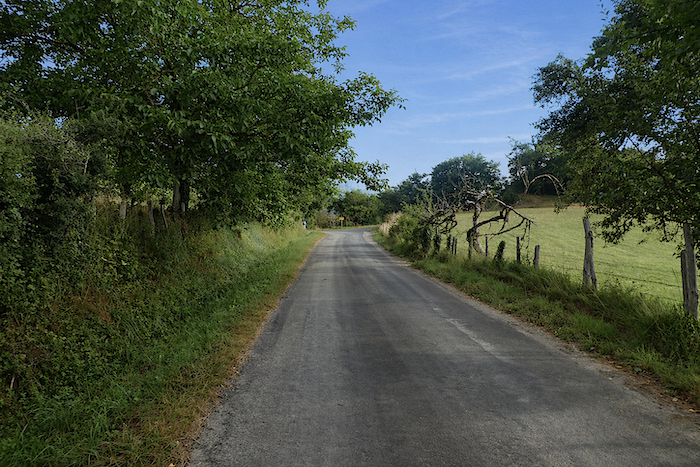
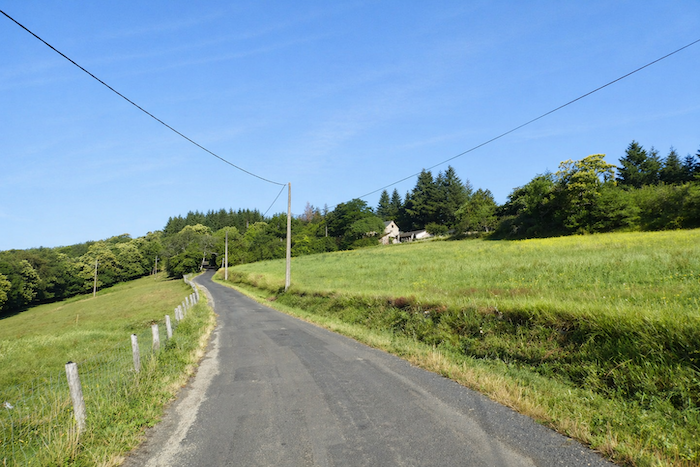
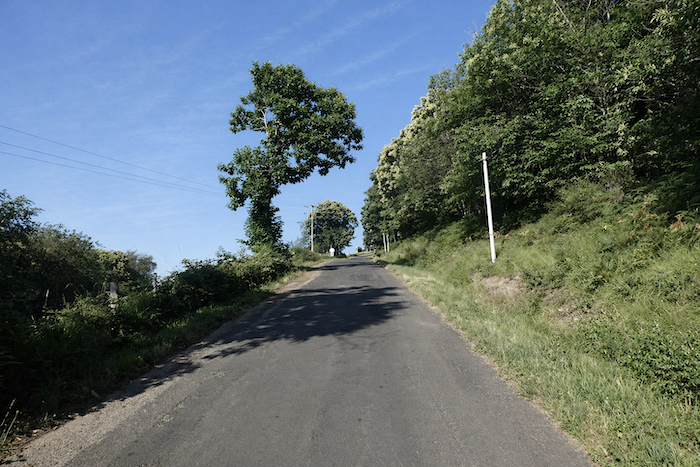
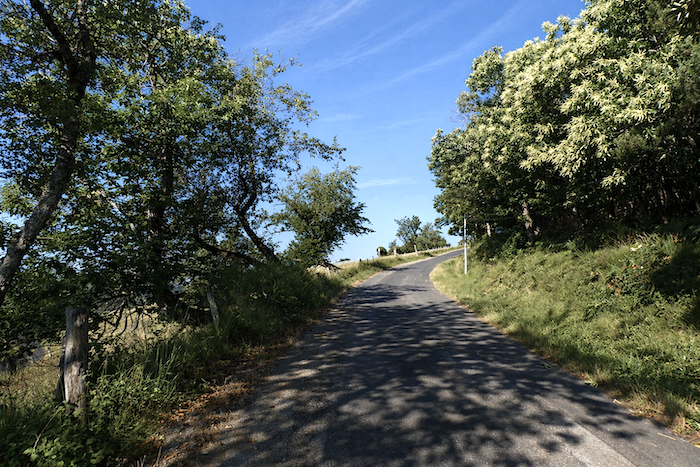
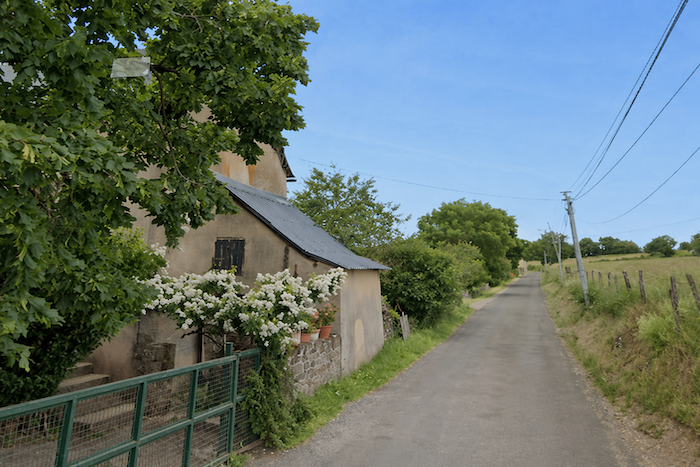
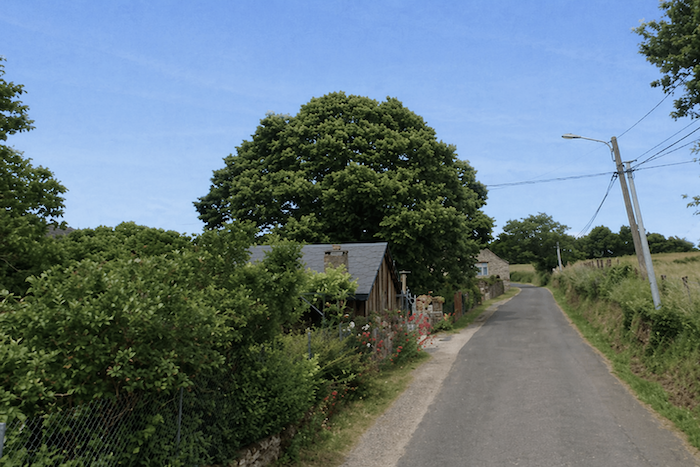
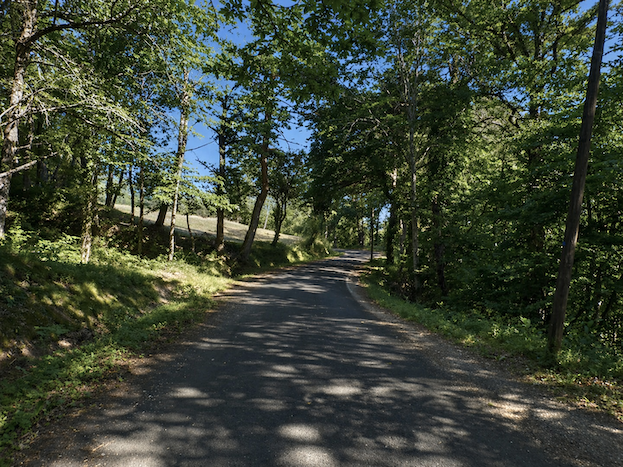
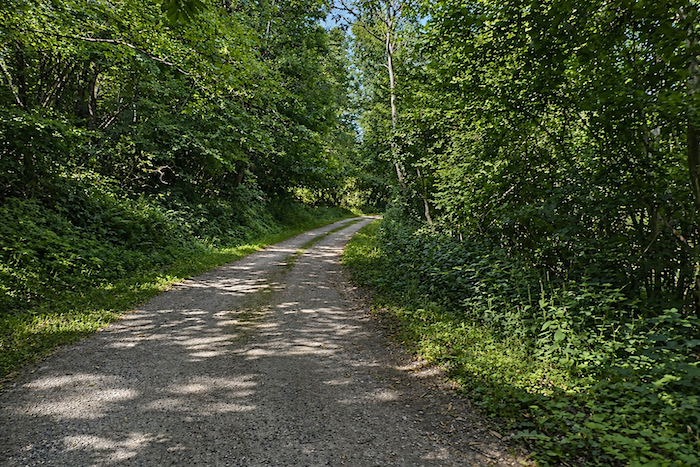
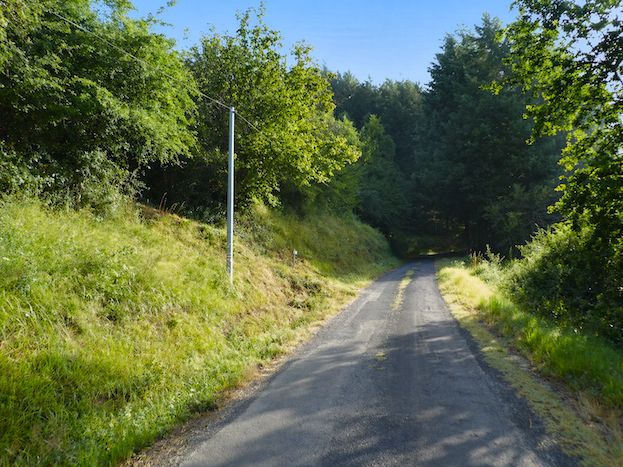
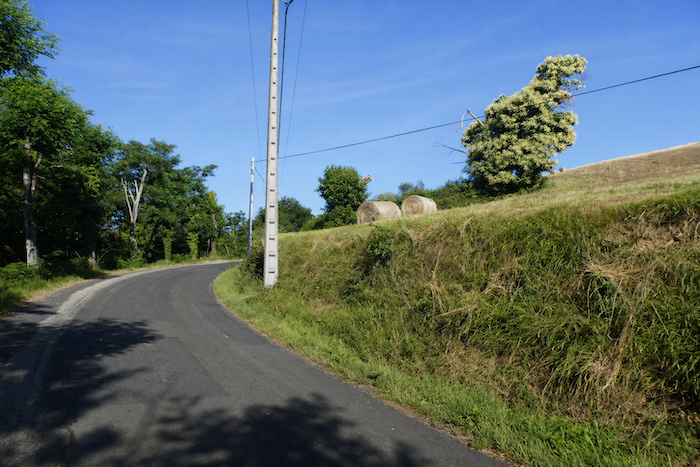
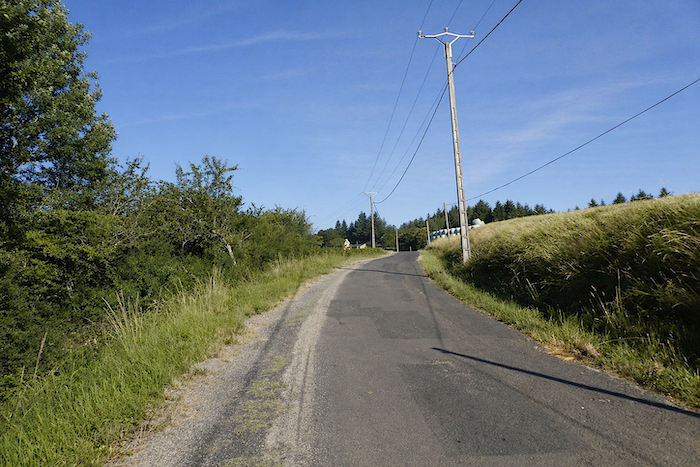
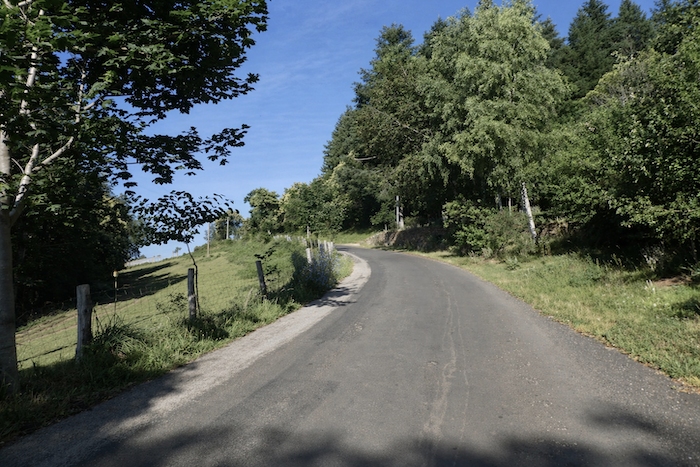
| The tarmac, unfortunately some pilgrims will say, now accompanies the walk all the way to the crest and the Golinhac plateau. The road stretches slowly through the landscape, bordered on either side by high, thick hedgerows so dense that they sometimes resemble true wild thickets. Yet the forest becomes lighter here. The great trees no longer form a compact mass but stand individually: gnarled chestnut trees, sturdy oaks, and elegant ash trees dominate the scenery. A few wild cherry trees also appear, their silhouettes more delicate and graceful. Beneath this lofty woodland thrives a dense undergrowth of shrubs, saplings, wild grasses, and broad ferns that sometimes spill right to the edge of the road. |
 |
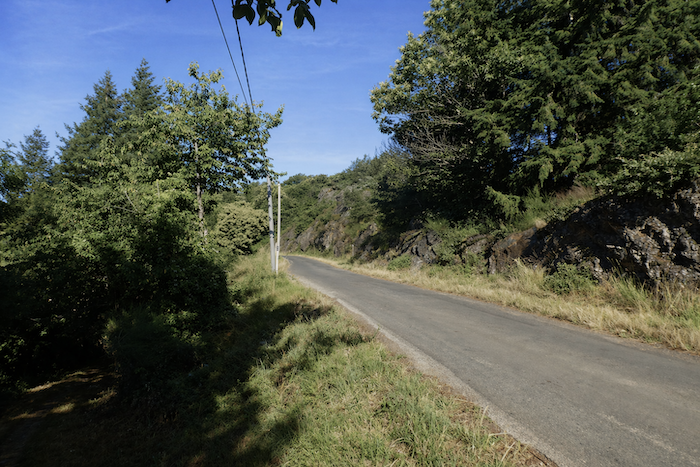 |
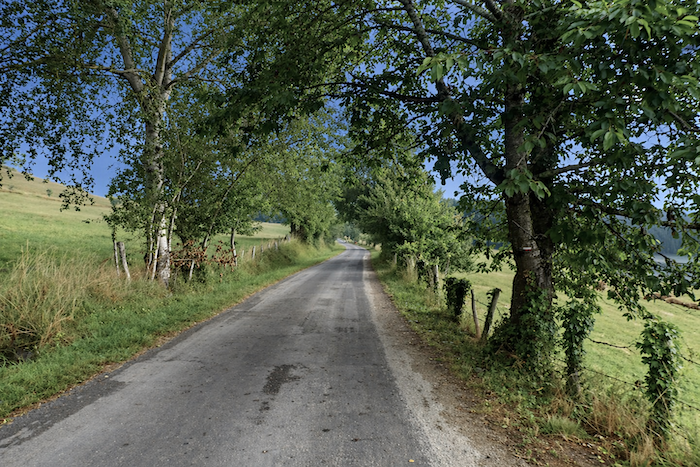
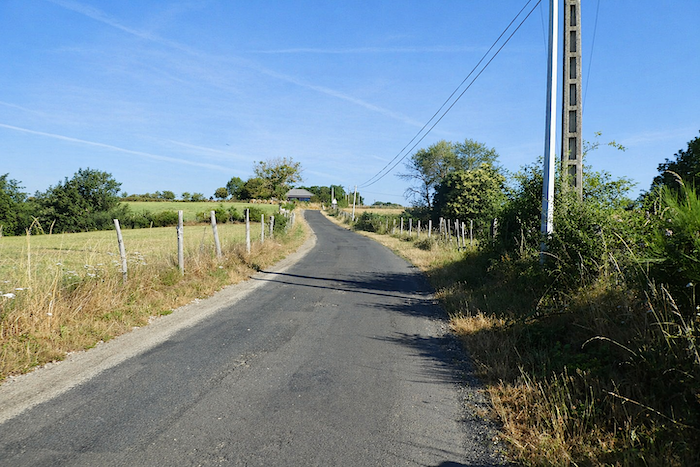
| The road twists and turns upon itself, but no vehicle disturbs the silence, or only very rarely. What a strange luxury this almost deserted roadway is, serving only a handful of dwellings lost upon the wooded slopes. |
 |
 |
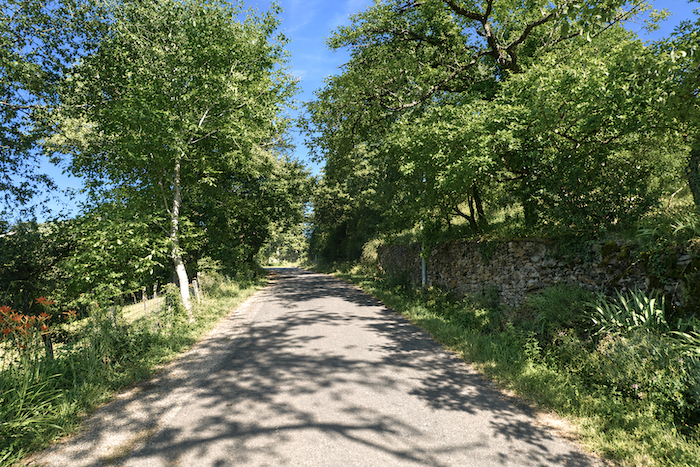
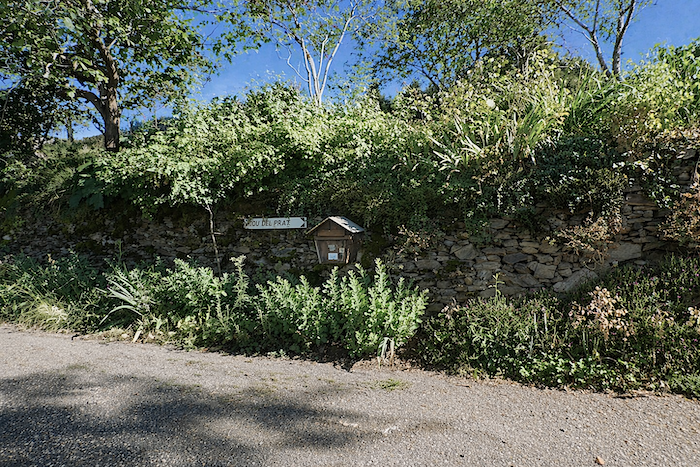
| Higher up, the road reaches the locality of Riou del Prat. The climb remains demanding, generally between 10% and 15%, and sometimes steeper. Here there are no real villages, not even hamlets, only beautiful isolated stone houses standing beside the road, as though placed deliberately within the solitude of the hills. |
 |
 |
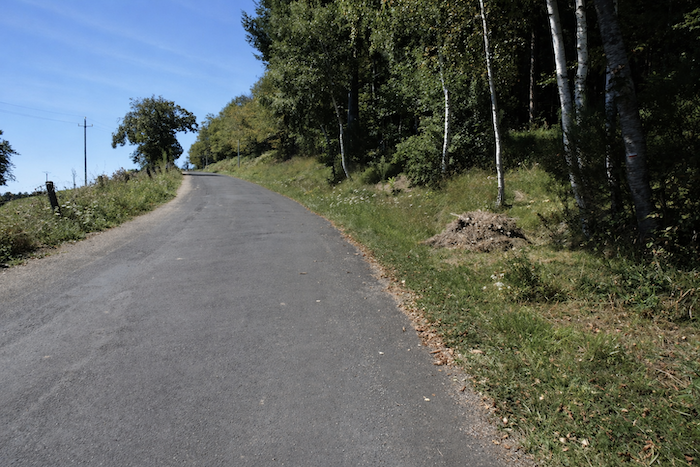
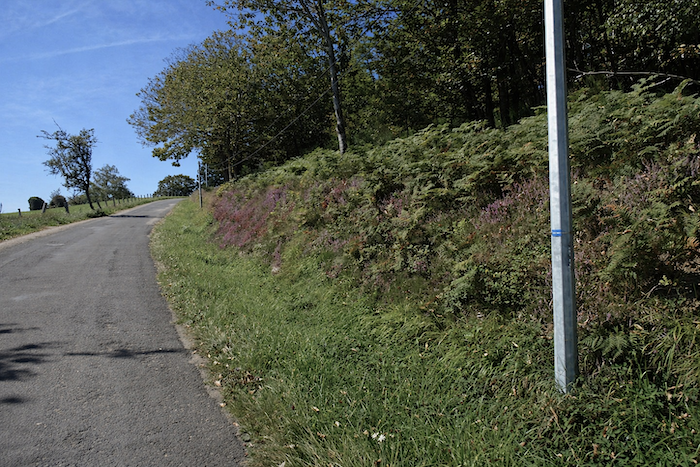
| From Riou del Prat onwards, the gradient scarcely eases and frequently exceeds 10%, beneath thick hedgerows and ever-present broadleaf trees. Since leaving Estaing, the route has resembled an immense open air botanical garden, so numerous are the different species encountered. Even a few conifers occasionally interrupt the dominance of deciduous trees, raising their dark silhouettes above the hedges. |
 |
 |
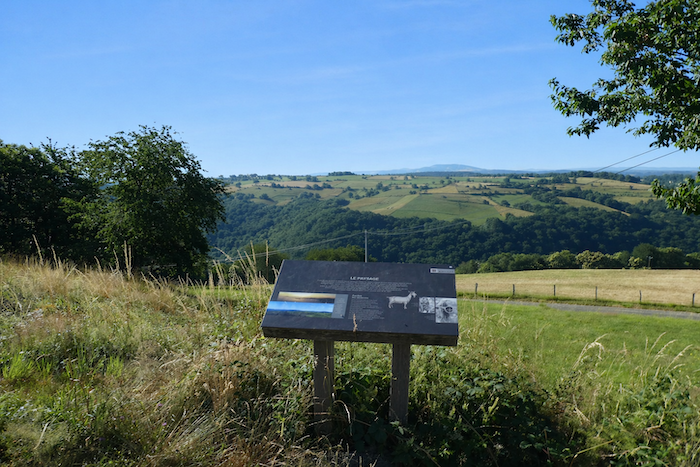
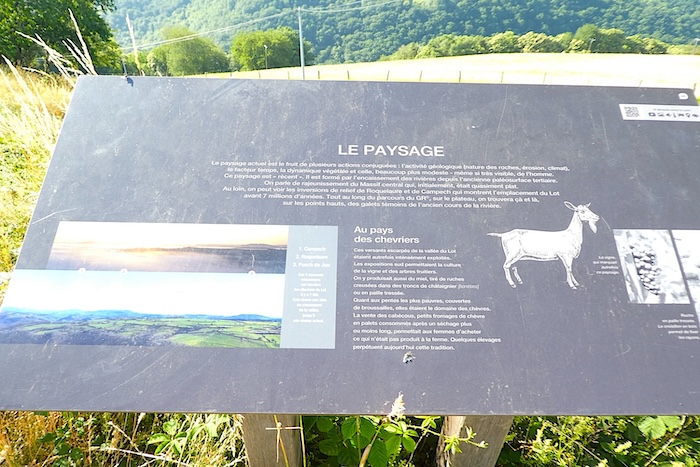
| A sign planted on the embankment celebrates the beauty and poetry of these landscapes, as though the route itself felt the need to remind the pilgrim of what the eyes have been contemplating for kilometers already. |
 |
 |
| Further on, the road begins to undulate through a series of tight bends, threading its way among meadows and the few cultivated plots that still manage to cling to these austere slopes. |
 |
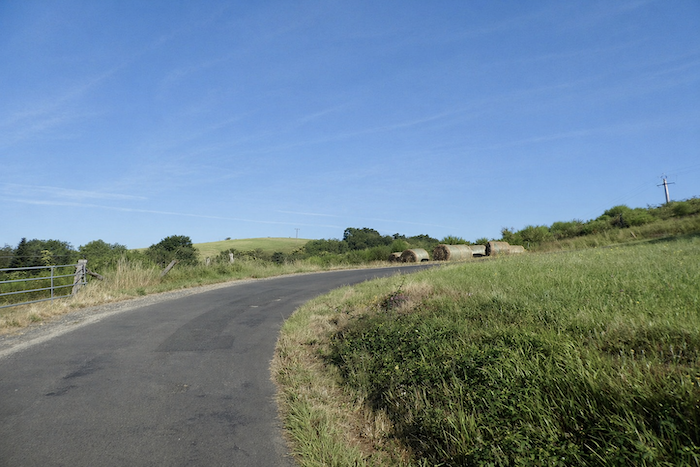 |
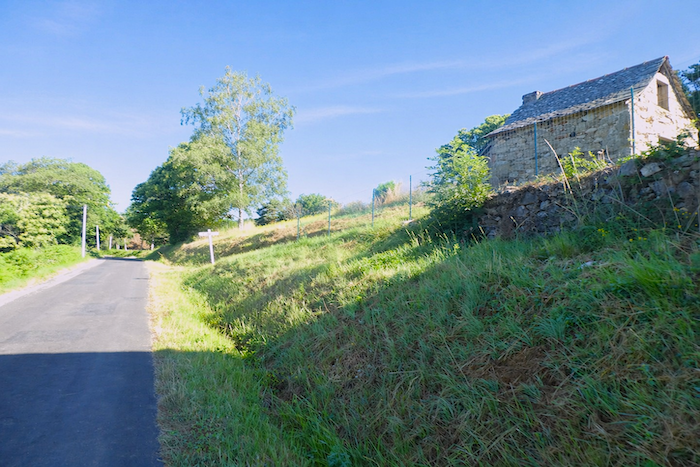
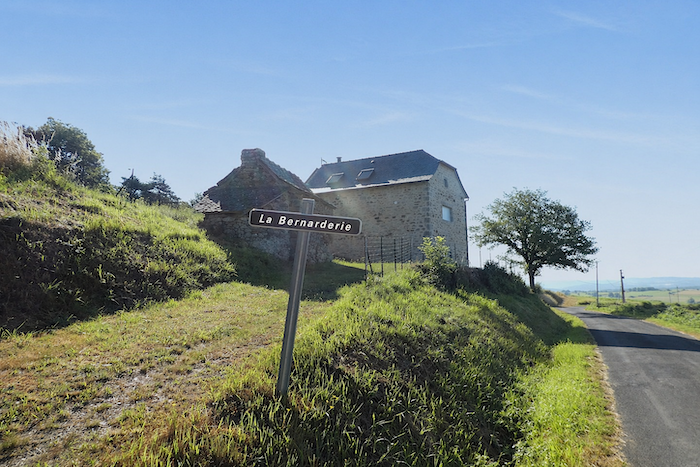
| Soon it reaches another locality amid the grasslands: La Bernarderie. A stone farm discreetly overlooks the road, solitary and robust, as though rooted for centuries in this rugged land. |
 |
 |
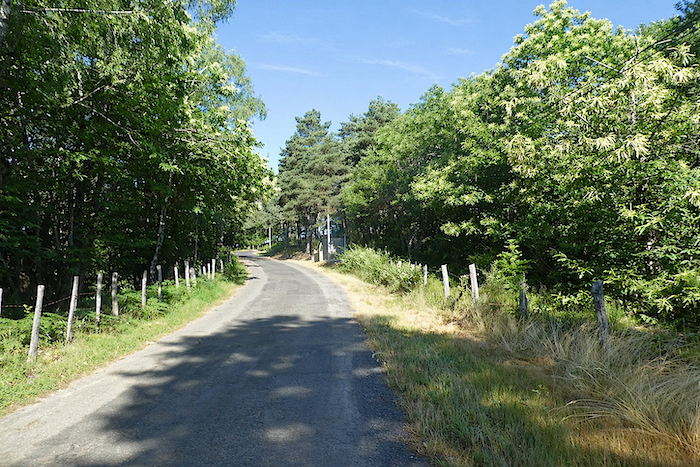
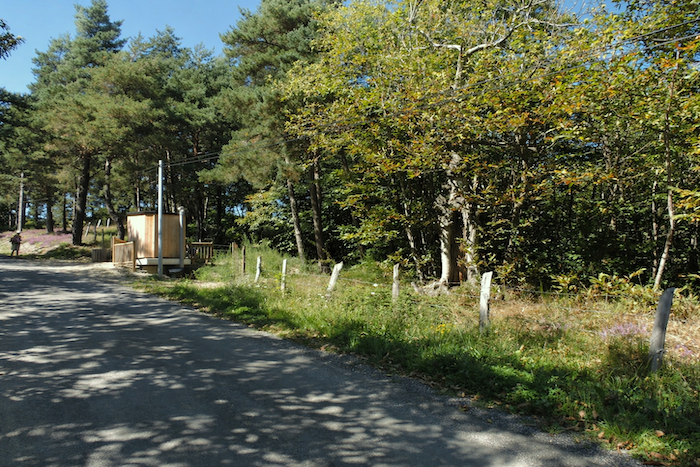
| A little higher still, the road once again finds the light shade of a small patch of woodland near a modest dry toilet. |
 |
 |
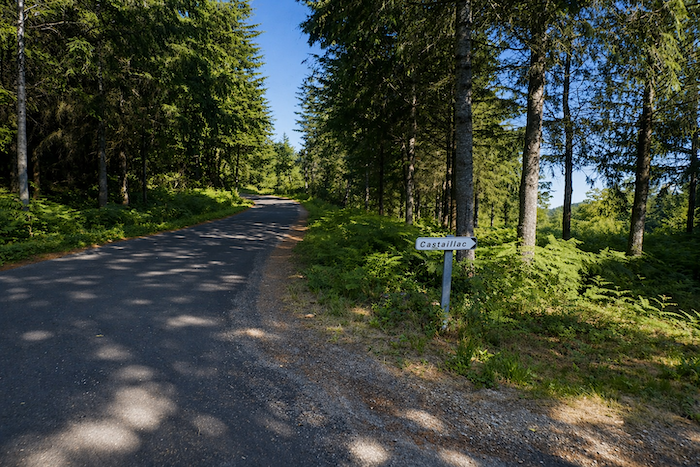
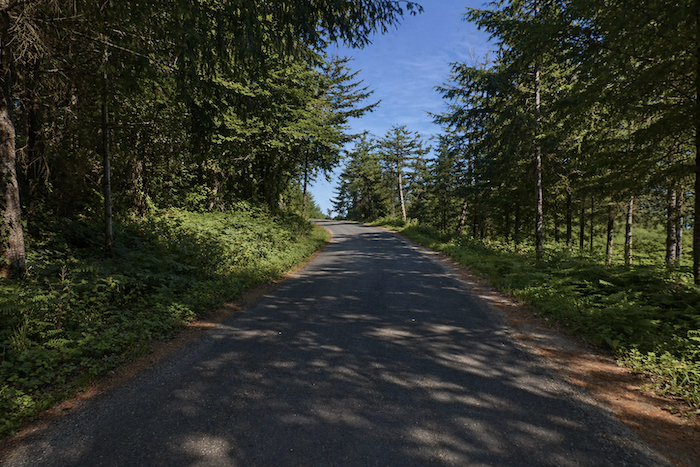
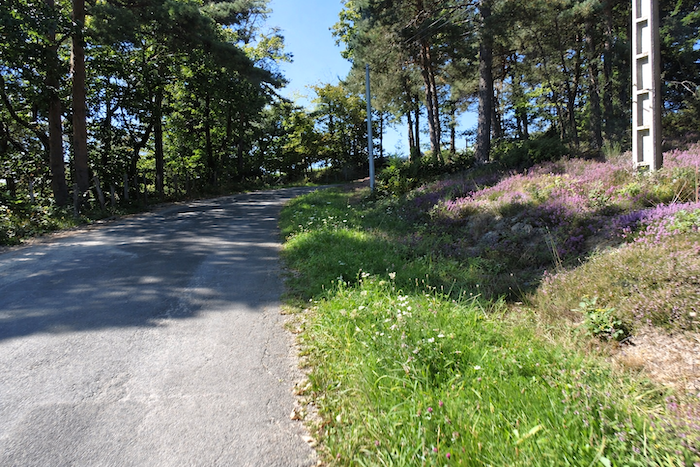
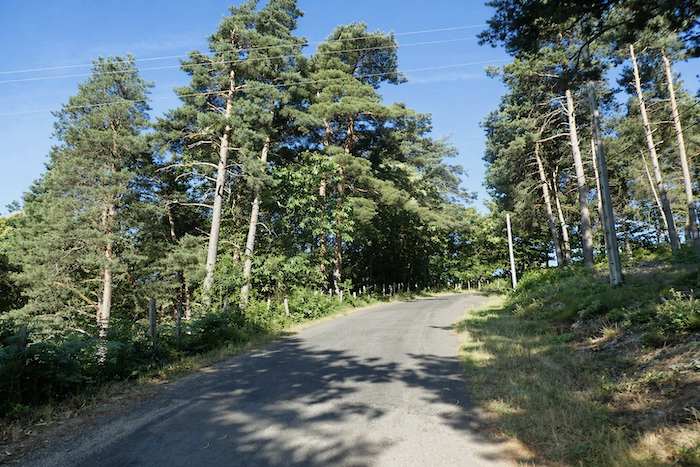
| And the climb continues tirelessly, this time alongside a small pine forest, an unusual presence in landscapes otherwise largely dominated by broadleaf trees. |
 |
 |
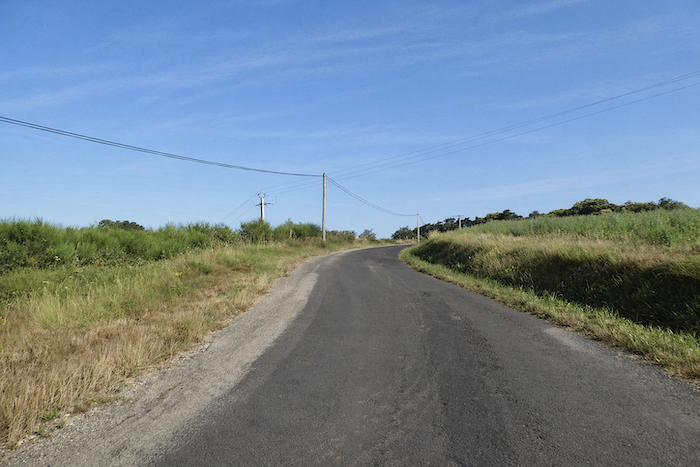
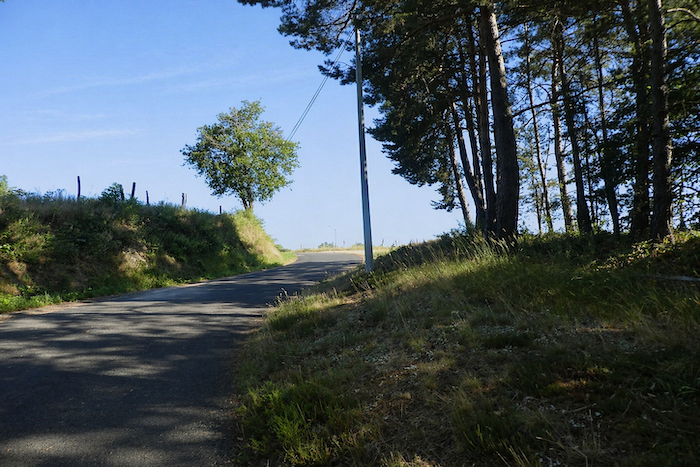
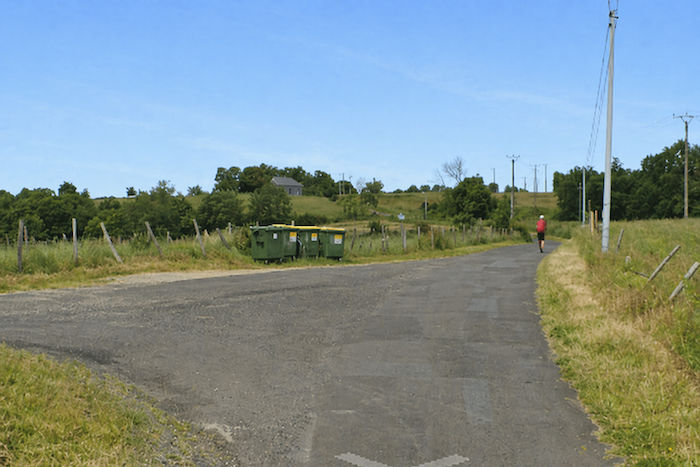
| Then the landscape opens once more. Barer. More stripped away. As though the mountain were gradually shedding its forest before reaching the plateau. |
 |
 |
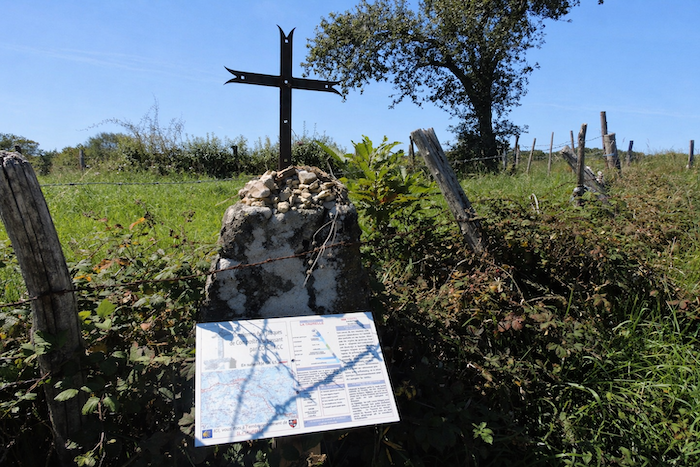
| And still these crosses appear, of metal or stone, standing beside the route. At their feet accumulate the silent wishes of pilgrims: small piles of carefully stacked stones, fragile monuments of hope, fatigue, or gratitude. |
 |
 |
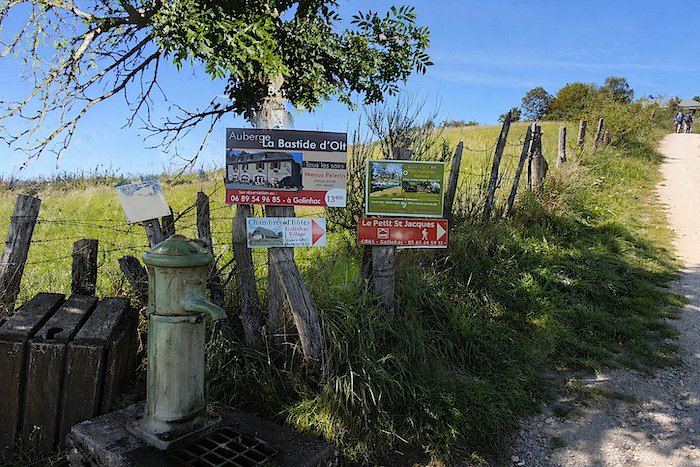
| You are now slowly approaching the plateau. A little higher, near a former water point, messages no longer appear only on the crosses; signs also become more numerous, bearing witness to the constant passage of walkers. Once a spring flowed here, and pilgrims would arrive with relief after the long climbs from the valley. These stopping places possessed something of a secular sanctuary, places where water was shared like communion, where pilgrims exchanged stories of aching legs, blisters, fatigue, and the hopes carried along the path. Sadly, the water no longer flows here today. |
 |
 |
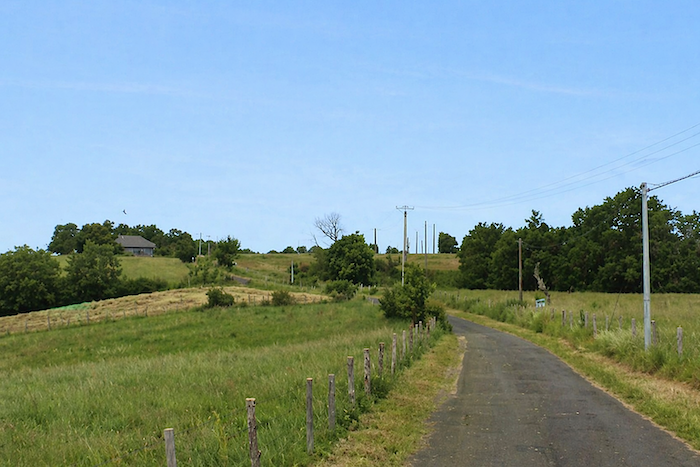
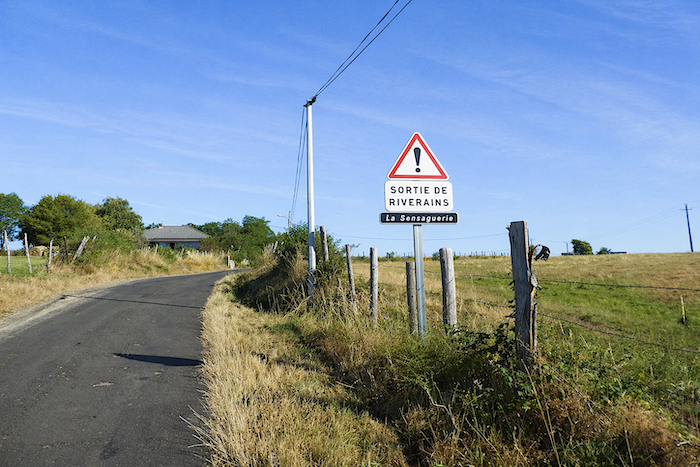
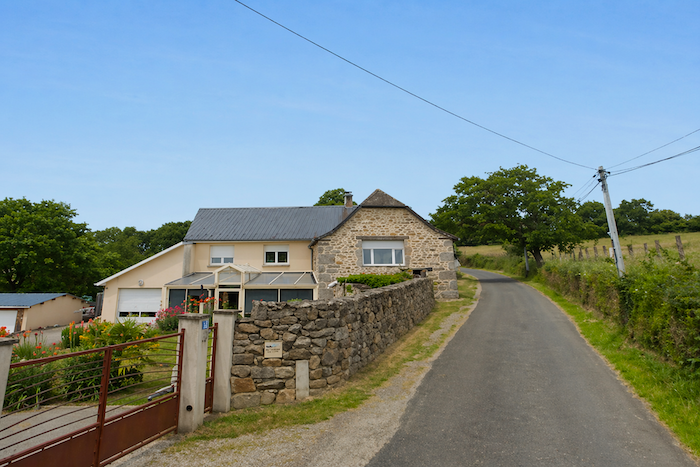
| The road then reaches La Sensaguerie, which at last almost resembles a genuine hamlet, with its stone houses scattered along the route, modestly placed in the landscape as if to soften the solitude of the heights. |
 |
 |
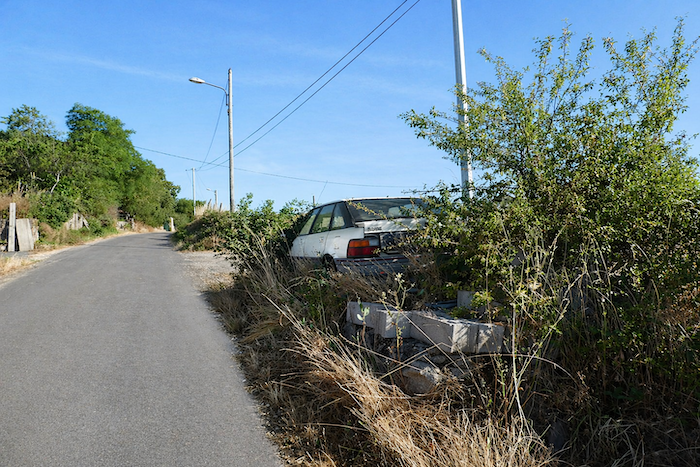
| Here rests an old Rover abandoned for eternity, slowly conquered by rust and wild grasses. One might almost wonder whether there is also a paradise for beautiful English cars forgotten beside country roads. |
 |
 |
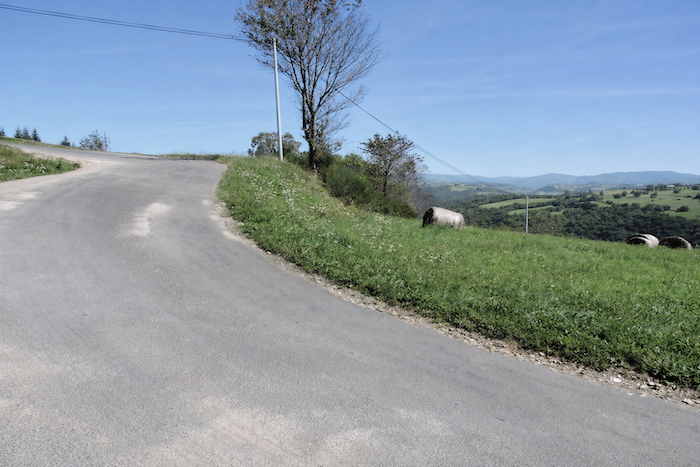
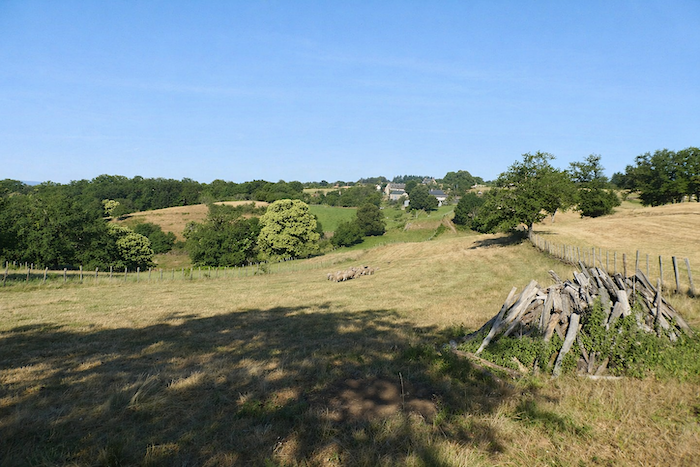
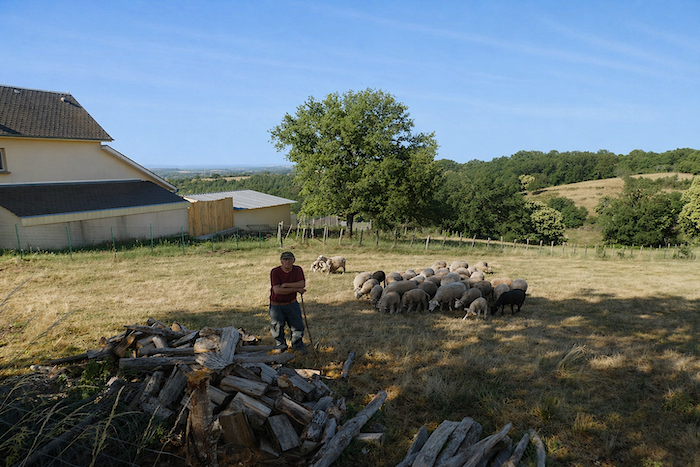
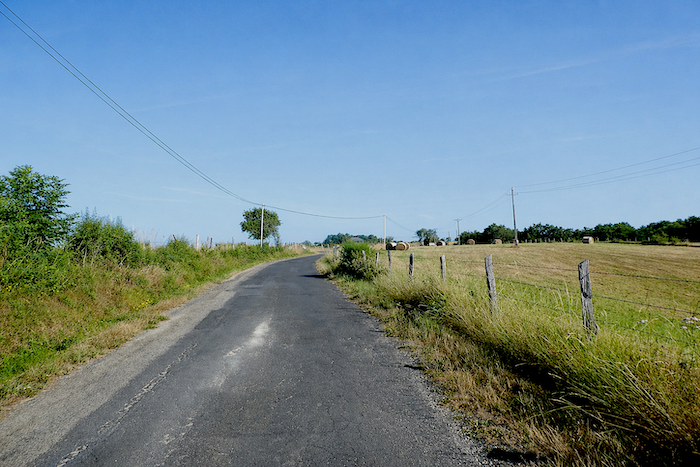
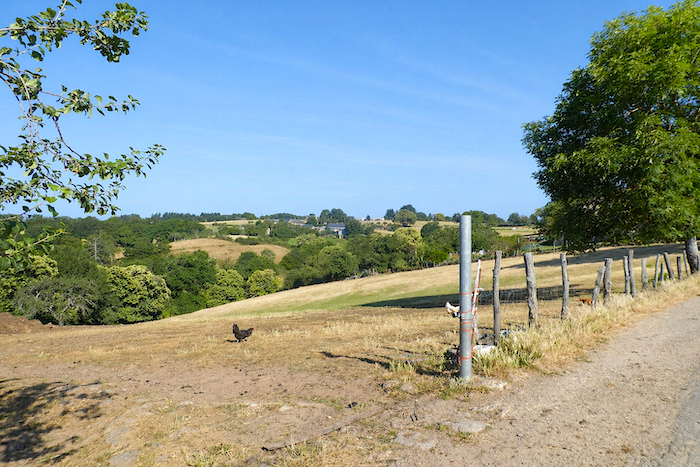
| Here stretches a field of rye; there a pasture of thin grass for sheep, or grass only slightly richer for cattle. Yet when winter arrives, life becomes harsh on these heights. For long months, snow accumulates layer upon layer, while cold and violent winds sweep relentlessly across the exposed plateau. Then these peaceful landscapes suddenly reveal a much sterner face. |
 |
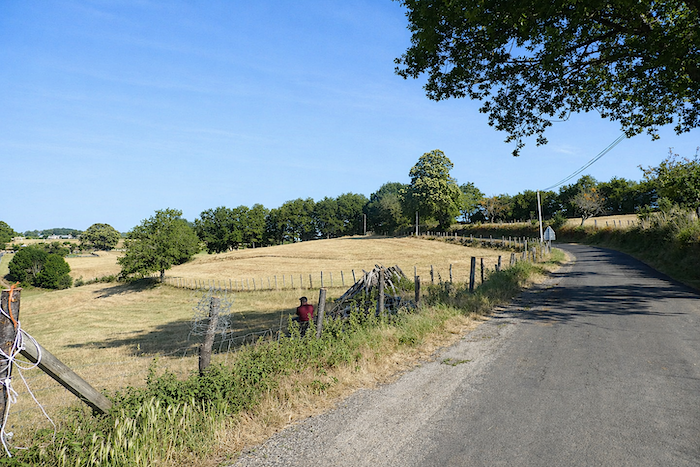 |
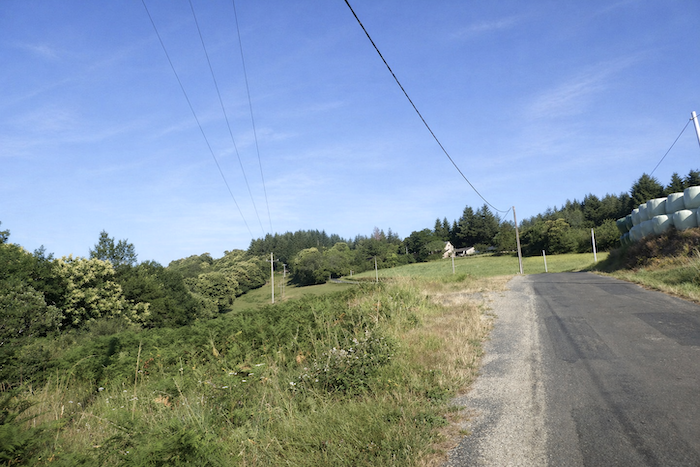
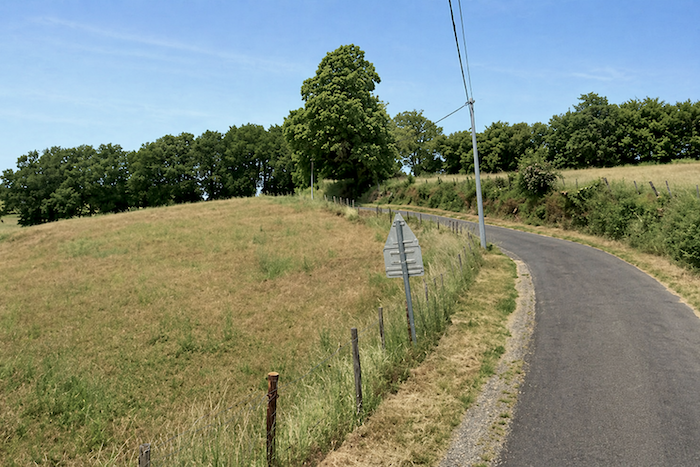
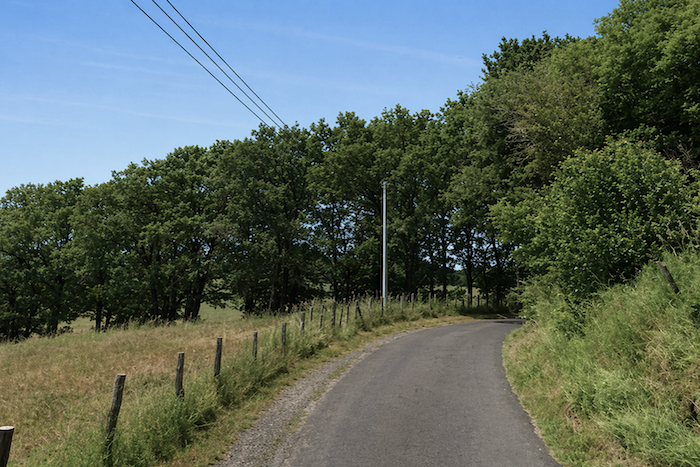
| One final effort through this bucolic countryside. From here, a small road branches off toward a pilgrim lodge at Fonteilles, only three hundred meters away. In this region, hamlets often consist of no more than three or four houses scattered across gentle yet unproductive hills. The pilgrims passing beneath the crosses along the route provide almost a form of entertainment for the inhabitants of these remote lands. For the rest, livestock remains the true daily bread of the region. |
 |
 |
You will no longer encounter Pépé Catusse here, a man who loved pilgrims with boundless generosity and who was part of the very soul of this country.
| One final effort, and you finally reach the summit of this long ascent. |
 |
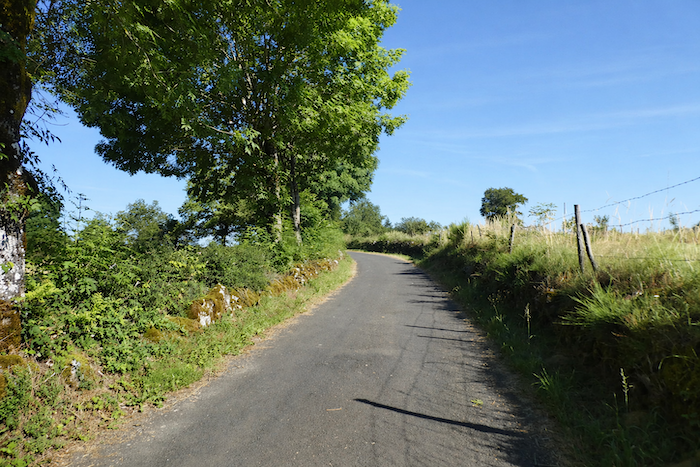 |
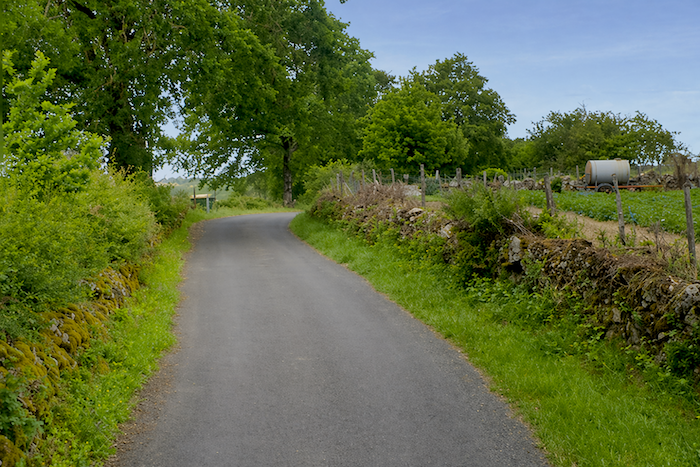
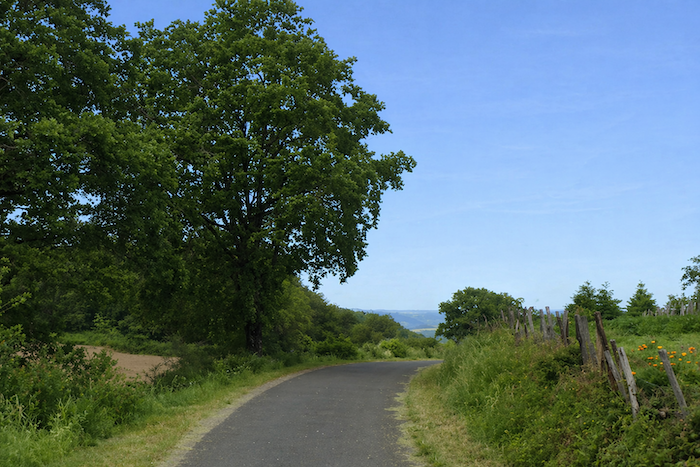
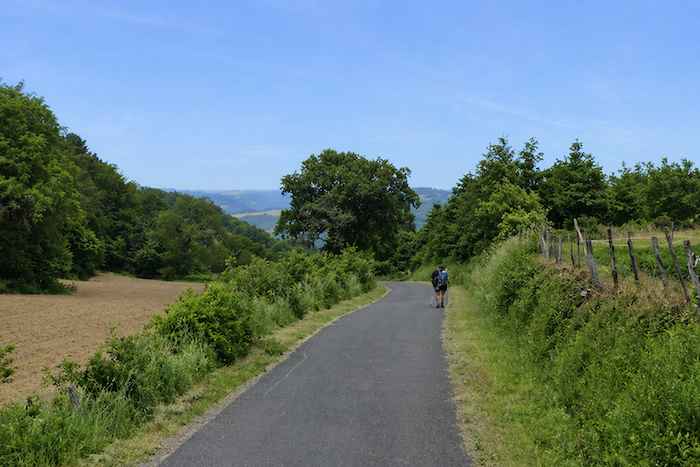
| Once you arrive on the plateau, you may naively believe that the hardest part is now behind you. Not at all. The road soon begins a long descent toward other tiny hamlets, scarcely larger than pocket handkerchiefs, toward isolated farms and still those crosses that tirelessly punctuate the landscape. All around stretches an immense ocean of forests and woodland that extends uninterrupted to the horizon. No true mountain, no hill worthy of dominating the scenery, rises above this sea of vegetation. |
 |
 |
Section 3 : Endless ups and downs through the woodland
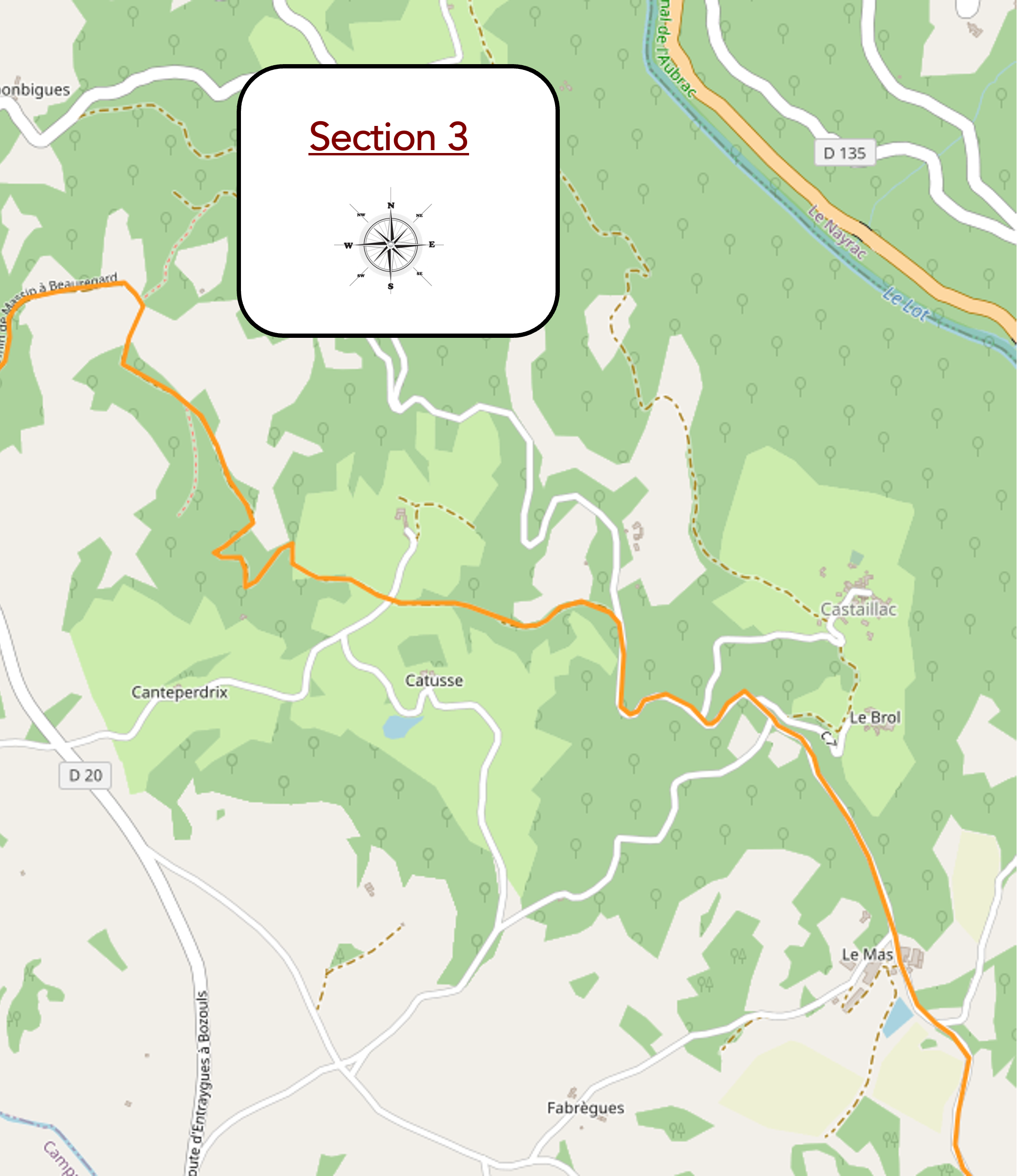
Overview of the route’s challenges: a little gentler, with less elevation, in an uninterrupted succession of roller coaster terrain without major difficulty, although there are still a few steeper rises along the way.
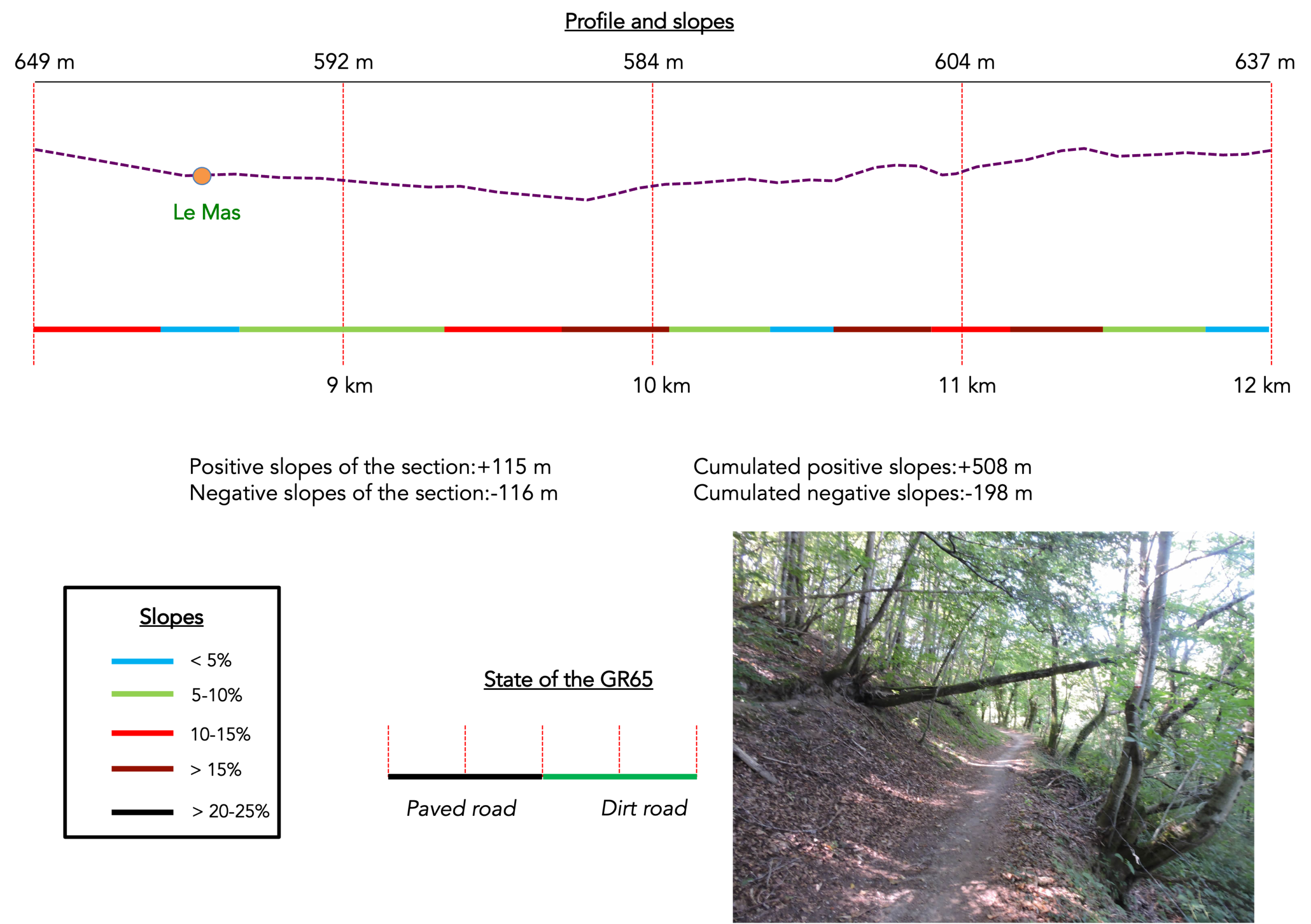
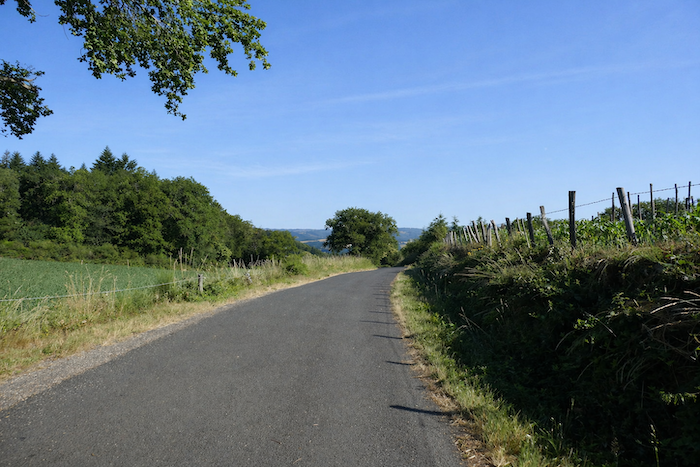
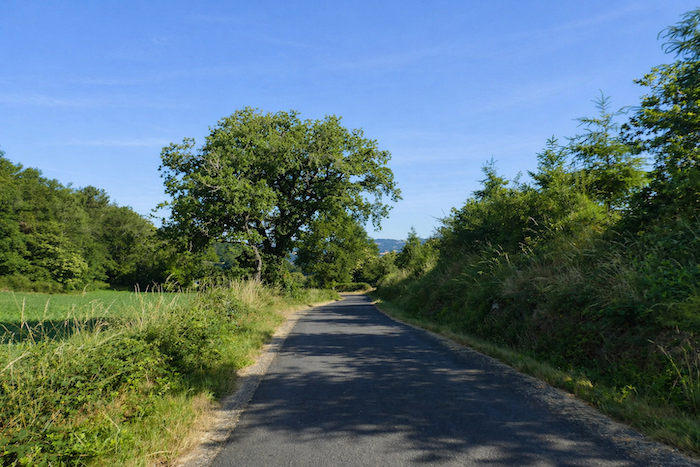
| The road then descends steadily beneath the broadleaf trees, crossing a landscape of meadows and occasional cultivated plots that appear here and there between the woods. |
 |
 |
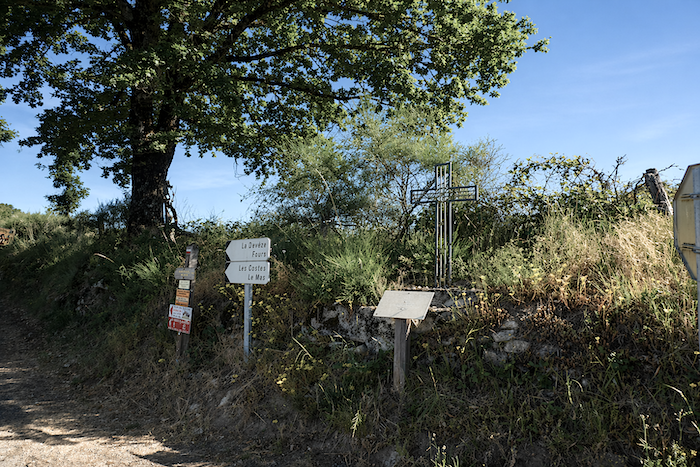
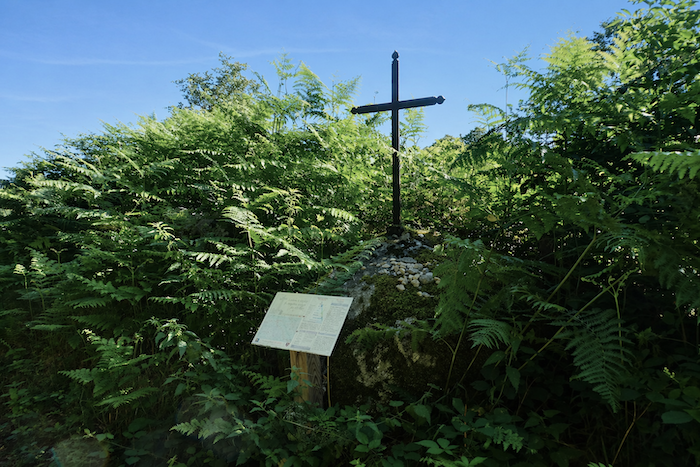
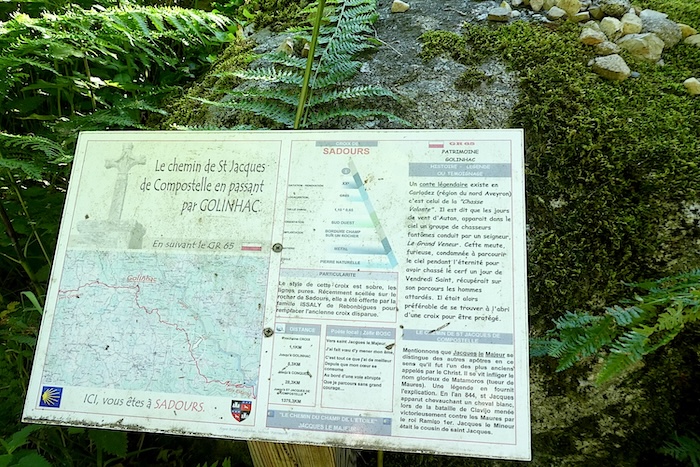
| Yet another cross stands beside the route, accompanied by its explanation, as though every stone and every bend in the road here seeks to tell a fragment of memory or faith. |
 |
 |
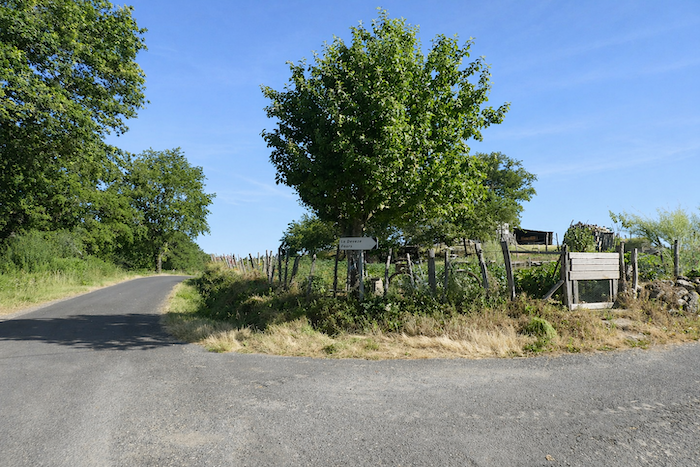
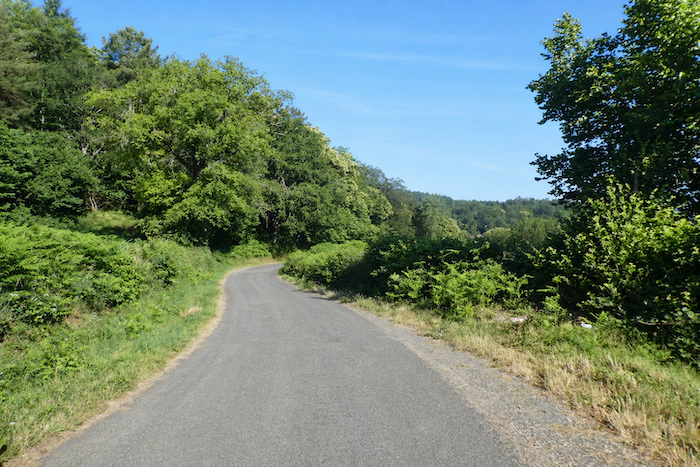
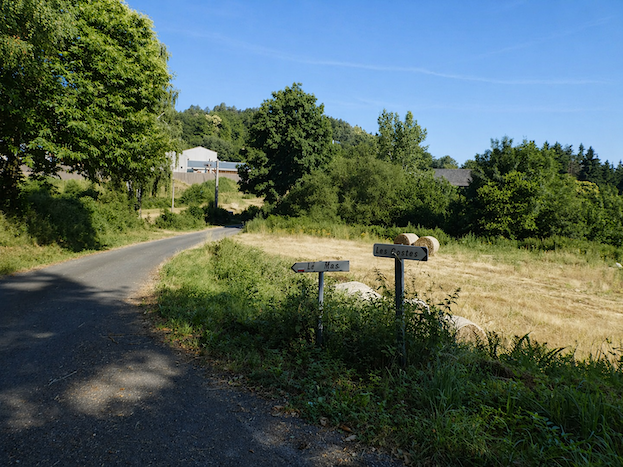
| Little by little, the road approaches the hamlet of Le Mas. |
 |
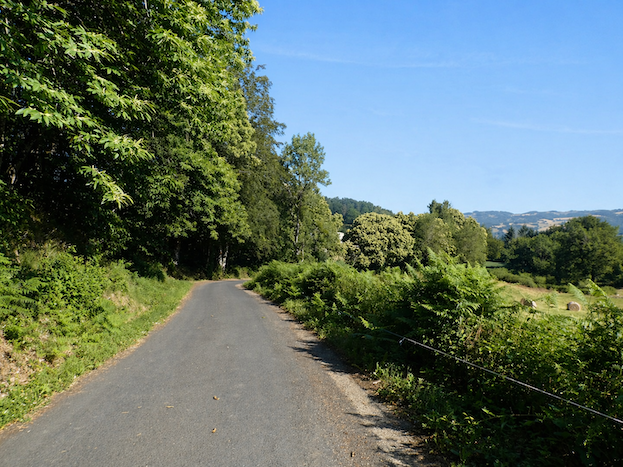 |
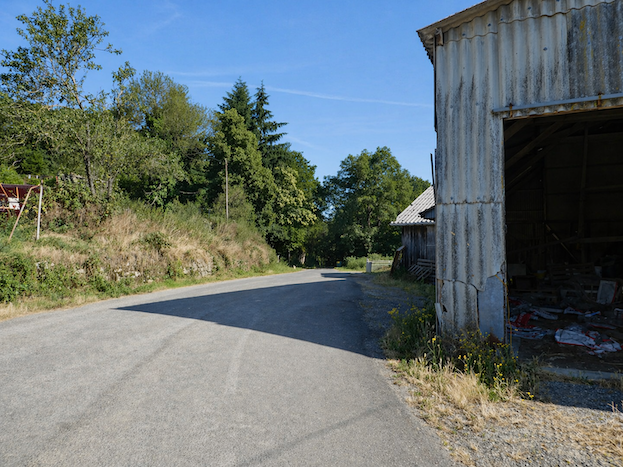
| In truth, it can scarcely be called a hamlet. There seem to be very few inhabitants here. The place evokes a large forestry enterprise far more than a traditional settlement. Timber appears to reign everywhere, even within human activity itself. |
 |
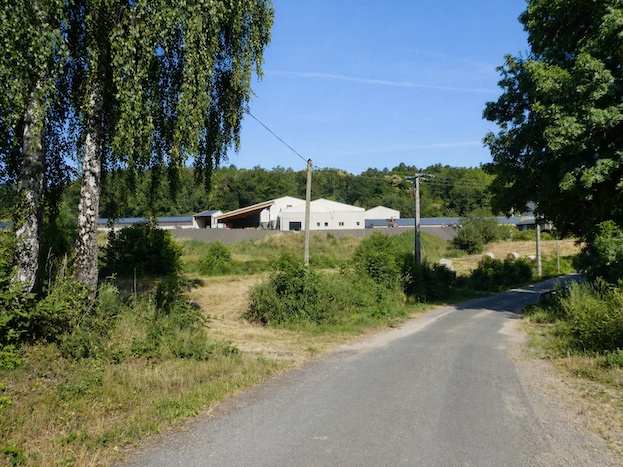 |
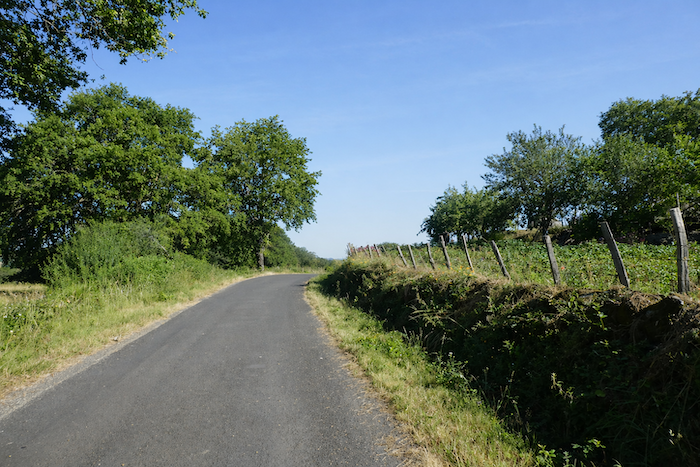
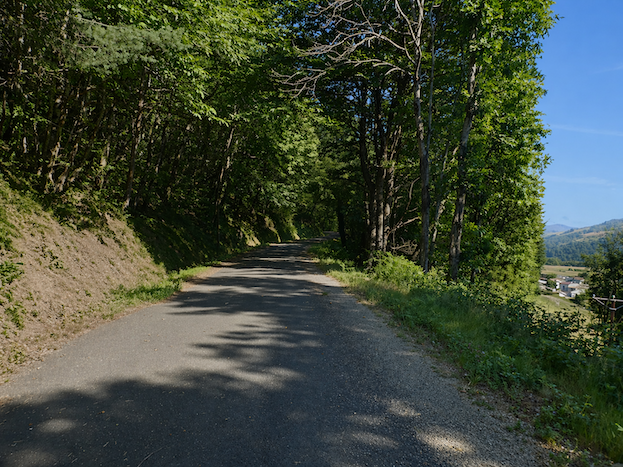
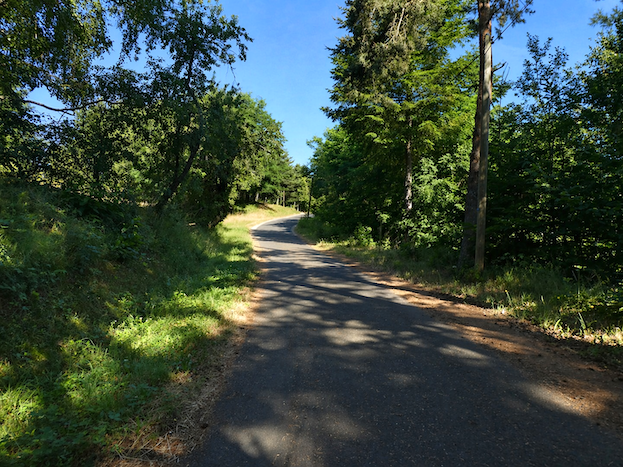
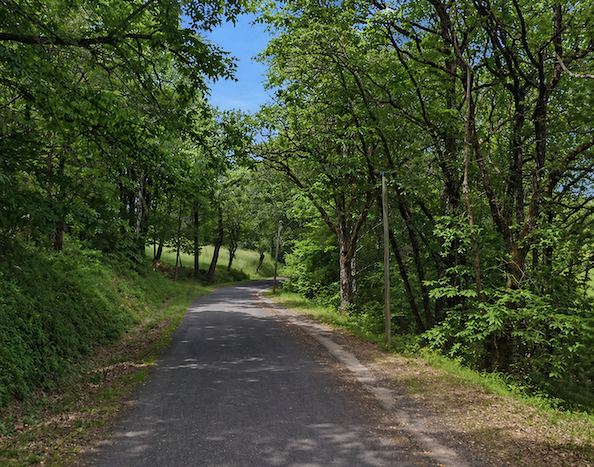
| More tarmac. Always tarmac. And so, it continues for more than two kilometers of uninterrupted descent. The gradient is less severe now, almost accommodating. The road resembles a long grey serpent gliding gently across the greenery of the woodland. The valley drops away in broad undulations, gradually hollowing itself into the landscape. Through occasional openings, a few isolated houses appear far below, almost lost within the immensity of the wooded slopes. Deep down, invisible yet always present, the Lot continues its course. |
 |
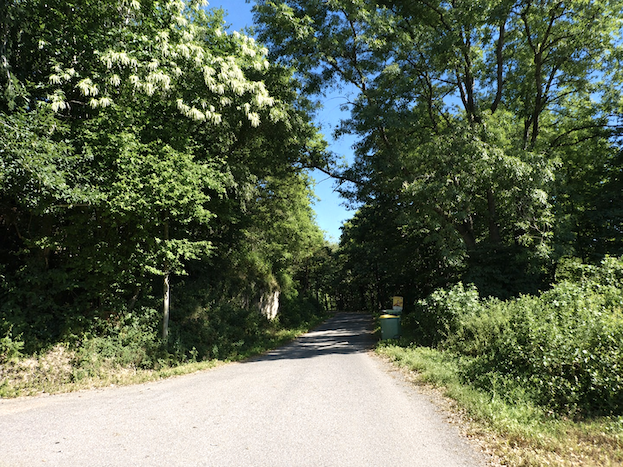 |
| Here, there is little to do but surrender to daydreams along a road that seems never to end. Your steps become mechanical while the mind wanders freely to the monotonous rhythm of the descent and the silence of the woods. |
 |
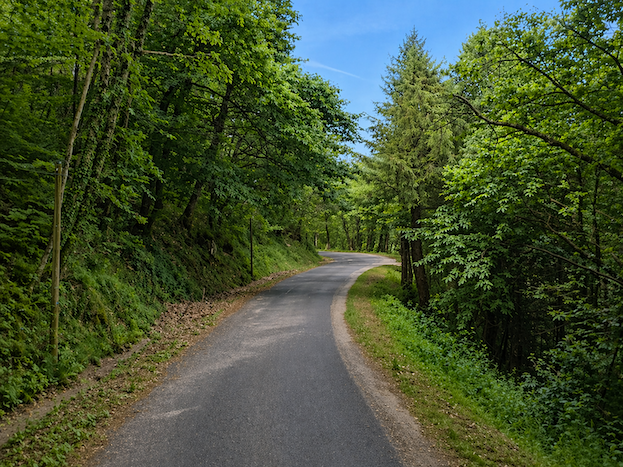 |
| Clearings where the light truly penetrates are rare. More often than not, the forest immediately closes its thick shade once again above the road. |
 |
 |
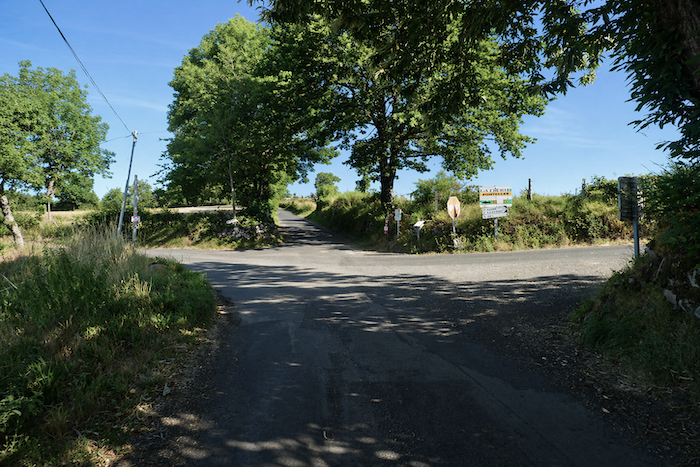
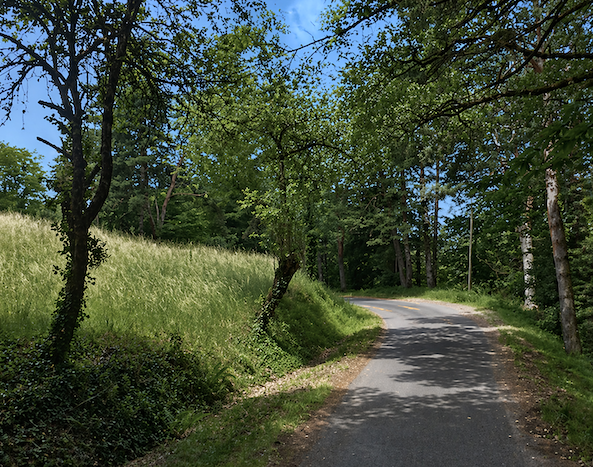
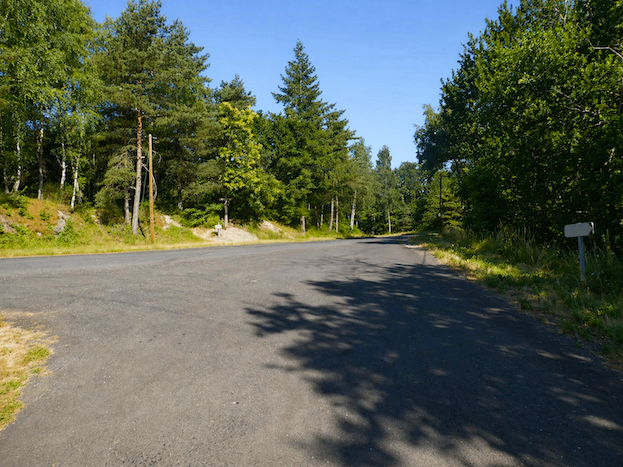
| Further down, the road reaches a curious junction lost in the middle of nowhere. And still these beautiful crosses emerge to mark the landscape, in a setting where, alongside the broadleaf trees, a few elegant pines now appear, raising their darker silhouettes toward the sky. |
 |
 |
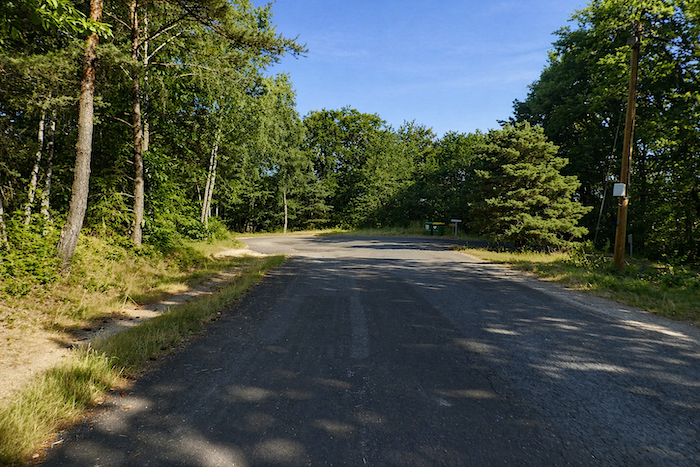
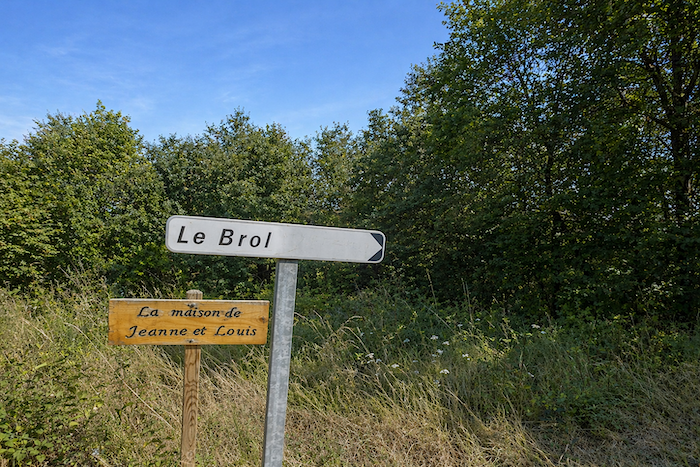
| Within this almost exuberant vegetation, small roads occasionally branch away into dead ends leading to tiny isolated hamlets, perched above the Lot like forgotten nests clinging to the hillside. |
 |
 |
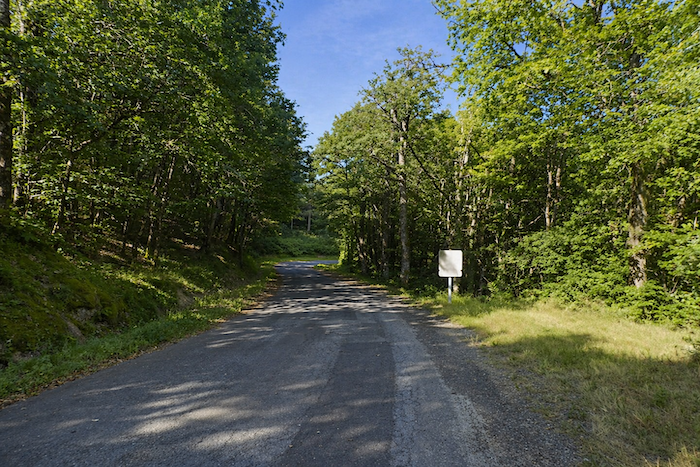
| Then the road begins descending more decisively once again, tracing long, graceful curves through the contours of the land. |
 |
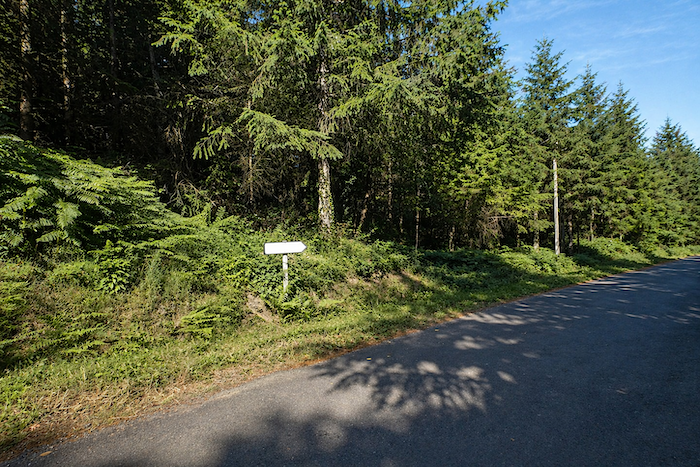 |
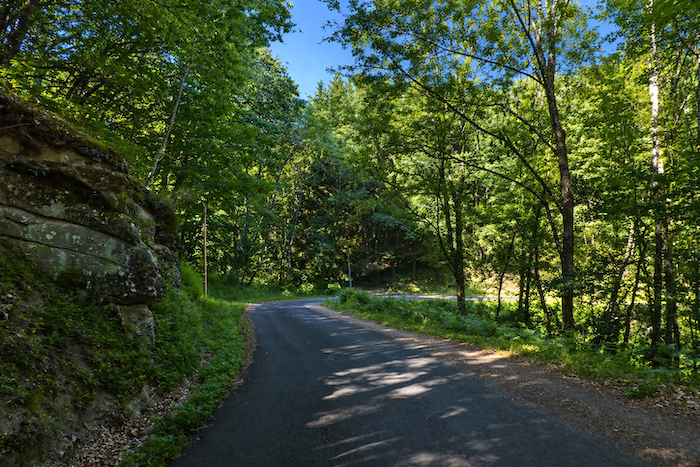
| At times, large erratic granite boulders emerge from the embankments, as though abandoned there since time immemorial. |
 |
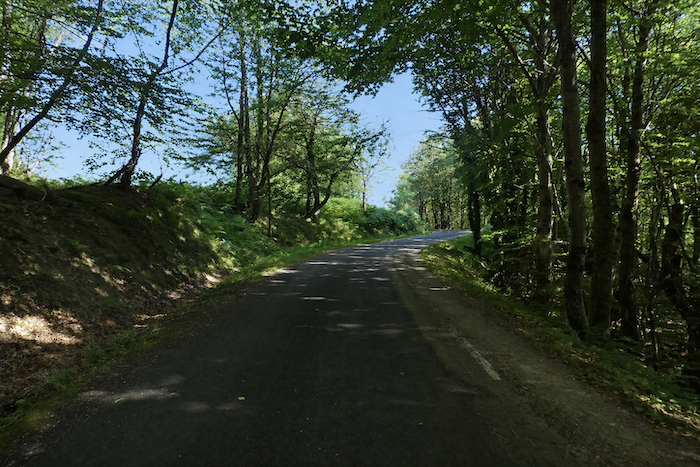 |
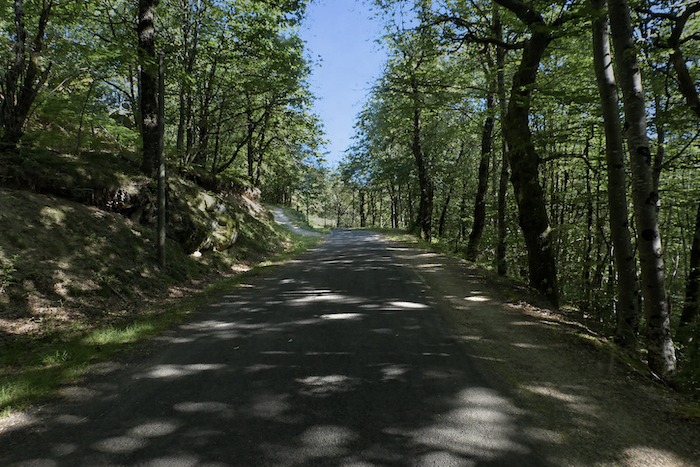
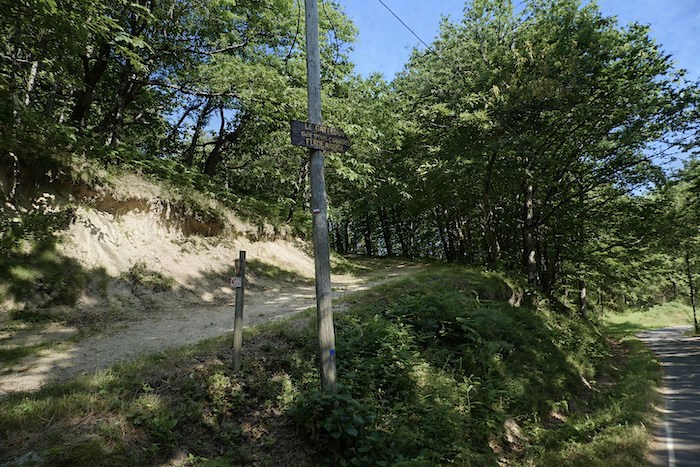
| Since leaving the plateau, you have already lost more than a hundred meters of elevation. For many pilgrims, the descent eventually begins to feel endless. And the tarmac does nothing to help. It weighs upon the legs, hardens every footfall, and slowly wears down the body. Yet you must be careful not to miss the moment when the path finally leaves the road and climbs back into the woodland. Otherwise, you would continue straight toward the bottom of the valley, all the way down to the waters of the Lot flowing far below. |
 |
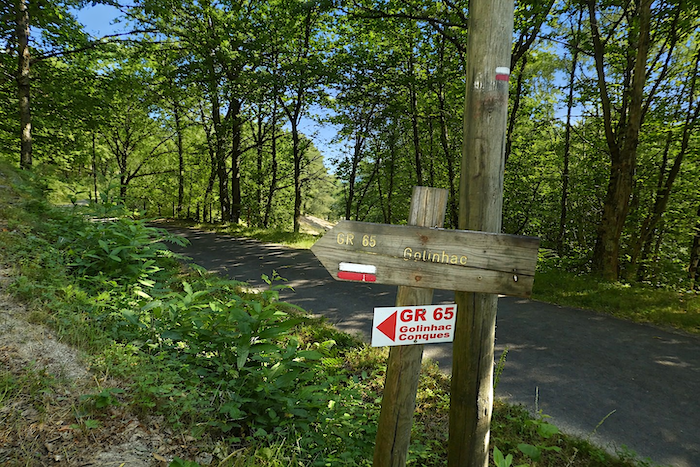 |
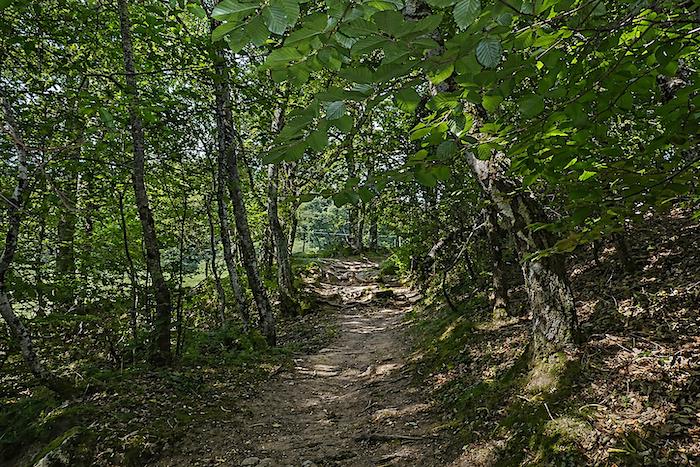
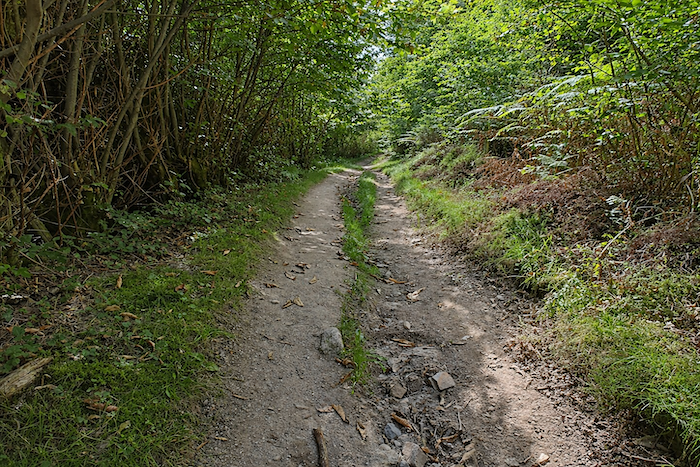
| Who could describe the pleasure of finally rediscovering a real path beneath the trees? After so much tarmac, the soft earth feels almost luxurious beneath your feet. A kind of treasure hunt through the woods begins, punctuated by gentle roller coaster terrain. The landscape becomes delightfully rolling, sometimes opening onto bright clearings of vivid green, sometimes closing in again within the silent intimacy of the forest. . |
 |
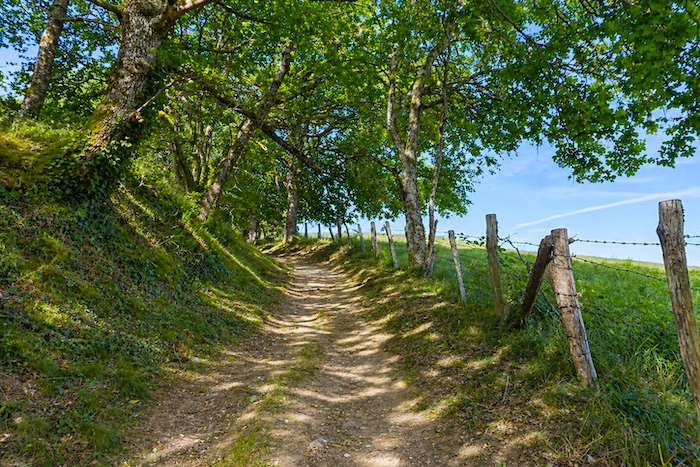 |
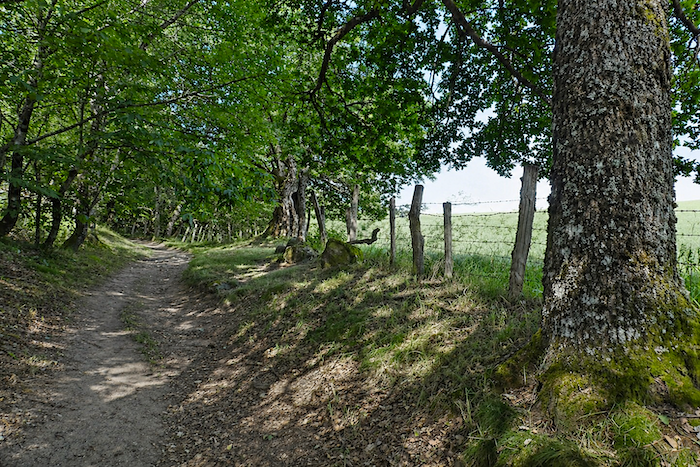
| The path constantly sways through the terrain, gaining a little height before descending once more, with occasional rather steep sections that remind the pilgrim that the valley has not yet revealed all of its contours. |
 |
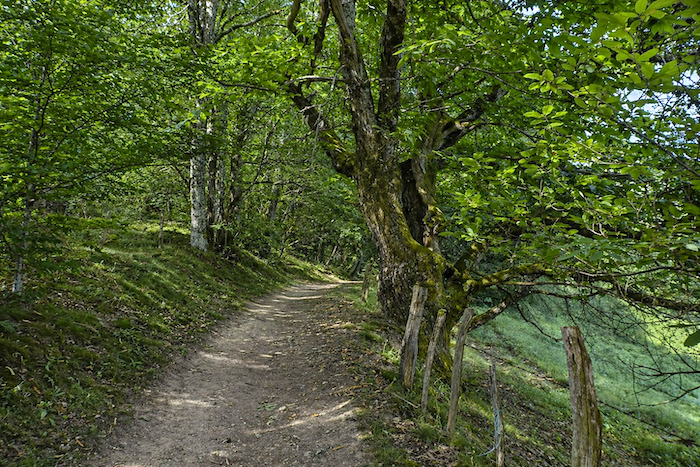 |
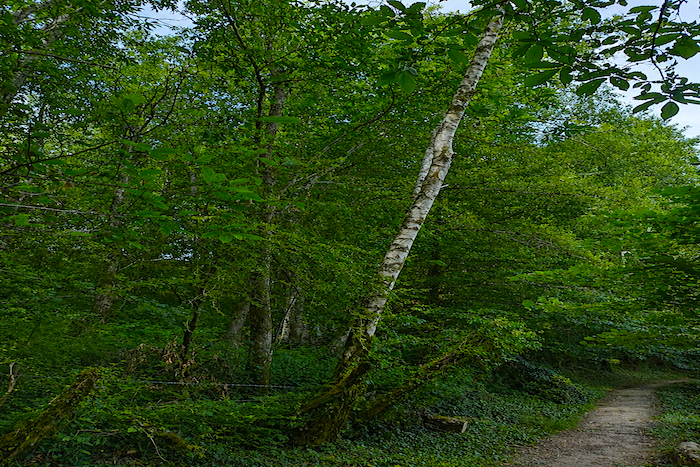
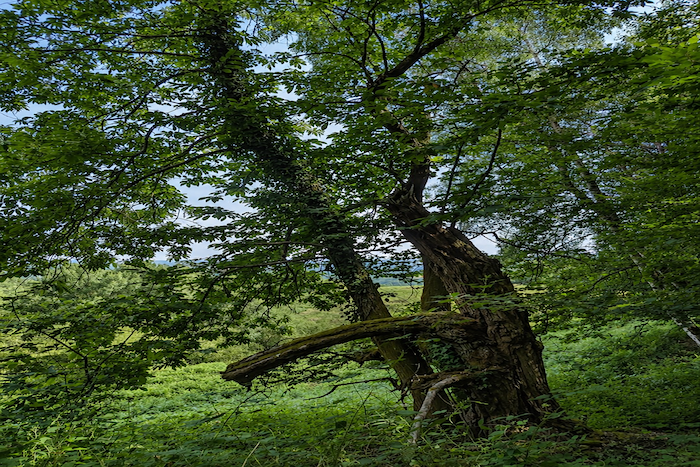
| The chestnut trees flourish here with remarkable exuberance, extending their broad branches above the path. Mighty oaks and slender beeches compete for height, as though engaged in a slow vegetal contest for the light. |
 |
 |
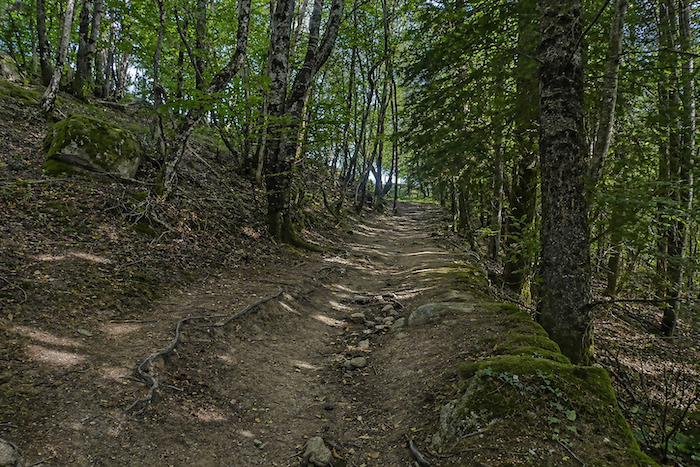
| On the brown earth of the path, large stones occasionally emerge beneath your boots. Here, a rare little stream quietly crosses the woodland, bringing a touch of freshness to this deep forest. |
 |
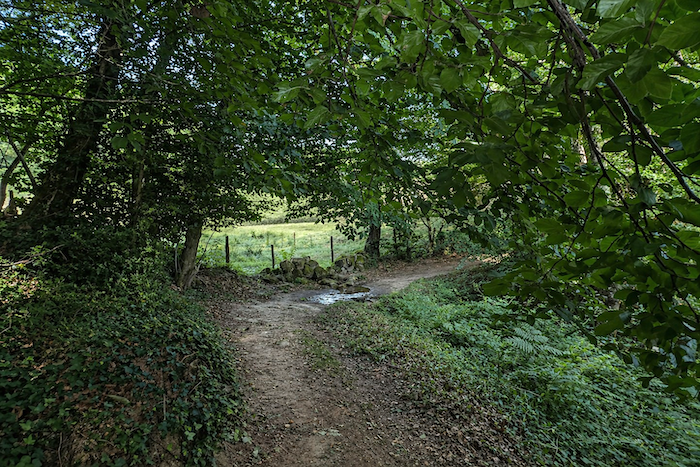 |
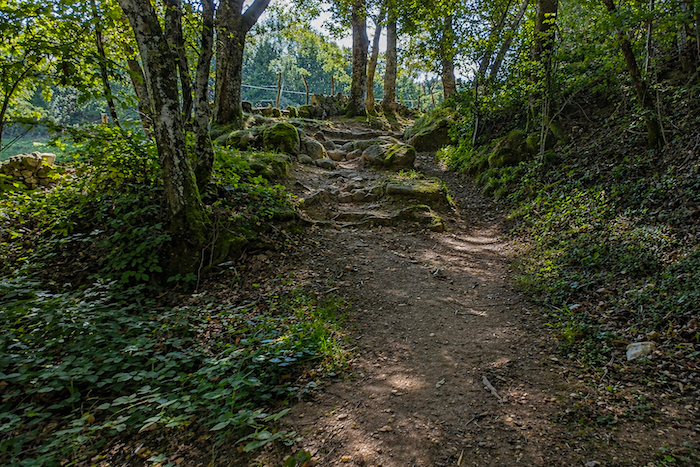
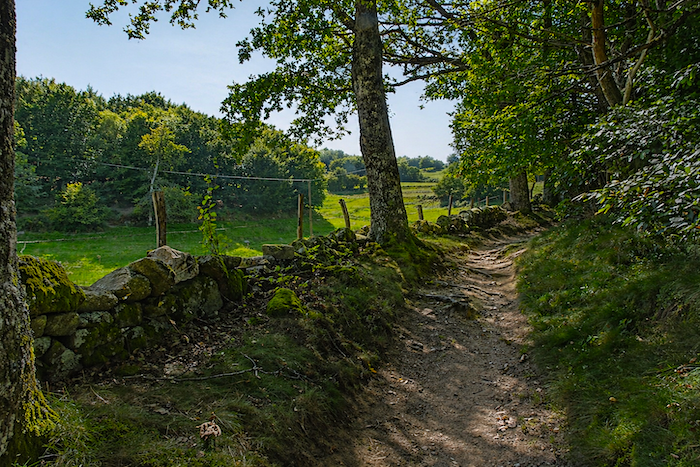
| Elsewhere, small moss-covered stone walls border the path as it twists among roots beneath the leafy vaults. These stretches already possess something of the paths that will be encountered later on the causses: ancient routes, rugged and almost outside time, where stone, moss, tree, and earth seem to have lived together forever. |
 |
 |
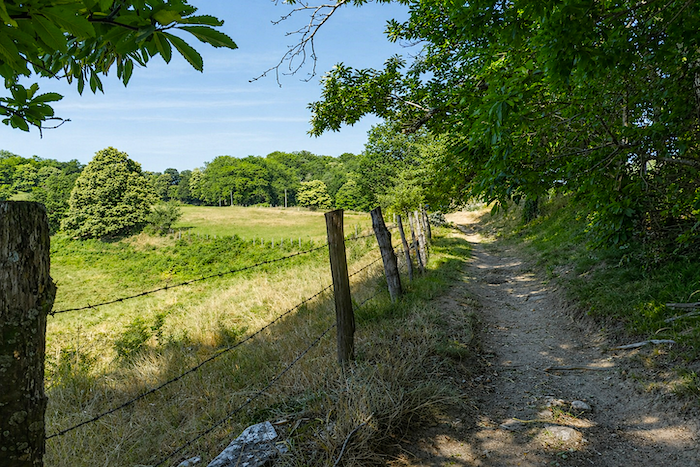
| A little farther on, the path reaches a clearing. Crossing these wild horizons leaves a profound impression of solitude, as though the pilgrim were advancing through a world apart from both time and humanity. |
 |
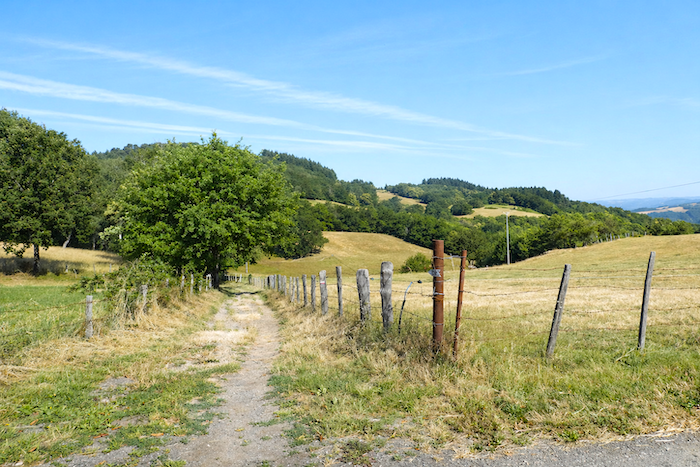 |
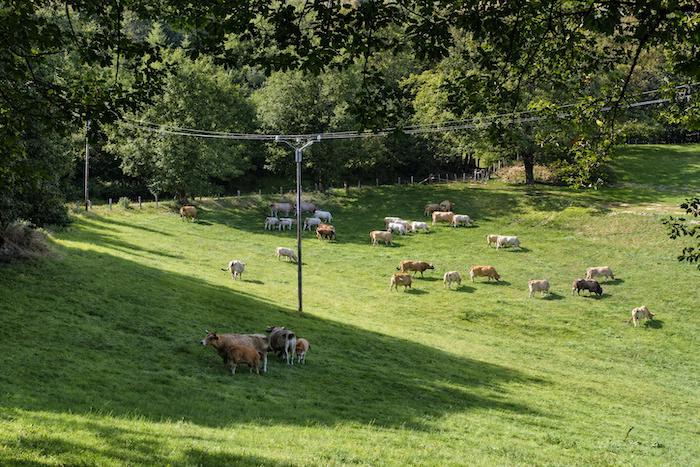
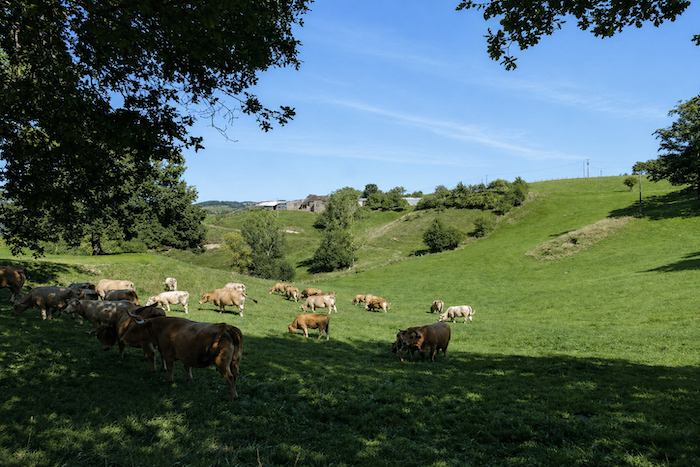
| More rarely still, the harmonious silhouette of a farmhouse appears in the distance, or perhaps a herd of Aubrac cattle grazing peacefully near the hedgerows, tawny shapes briefly animating the vast green immensity of the hills. |
 |
 |
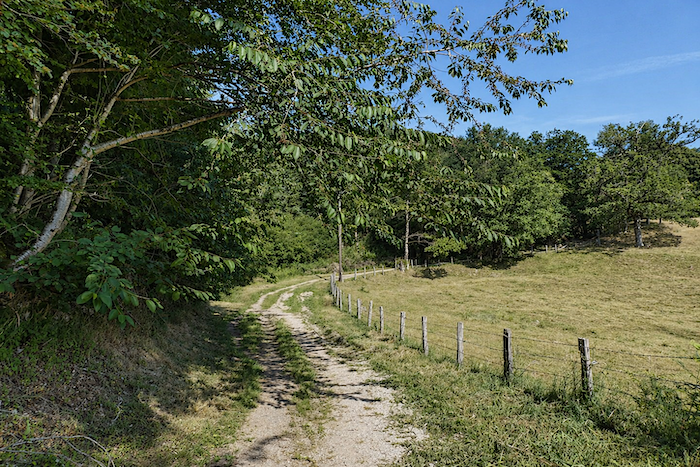
| Then the path returns to the forest, its favorite destination of the day, as though it simply cannot bring itself to leave the shade of the trees behind. |
 |
 |
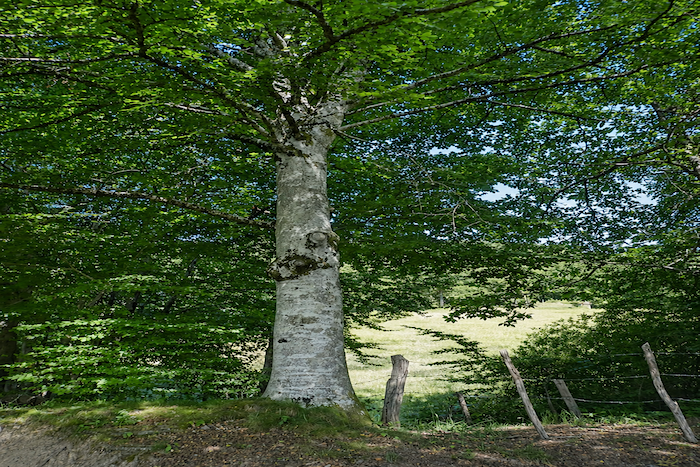
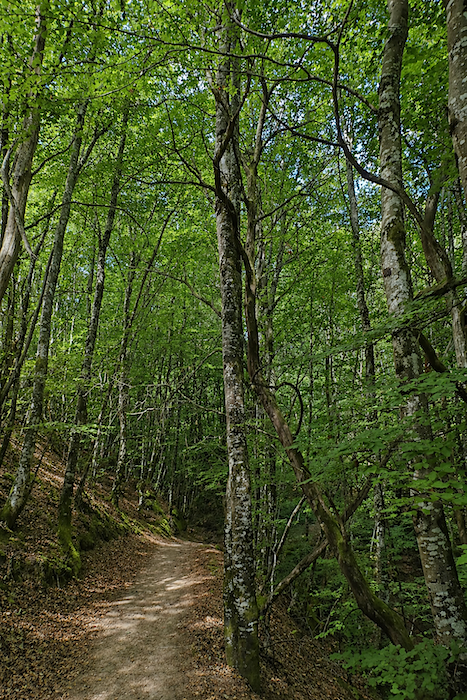
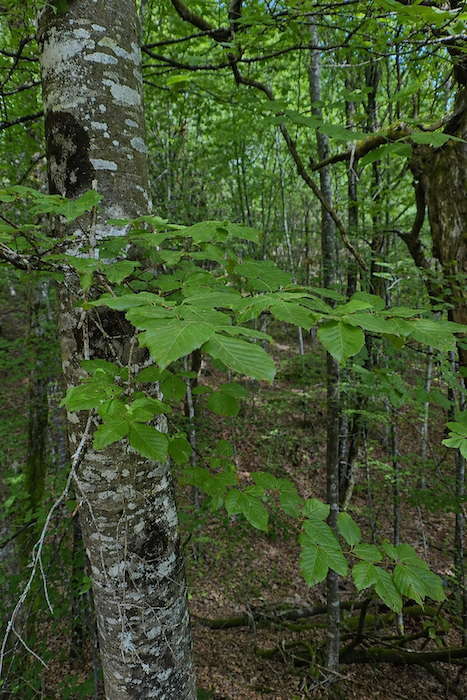
| Here, the beeches have taken command. They stand tightly grouped together, almost aligned like soldiers on parade, upon pale ground that sometimes resembles sand. The eye constantly oscillates between two worlds: the confused anarchy of the woodland floor and the majestic geometry of the canopy above. In every forest, there are always two forests superimposed upon one another. The upper forest, noble and luminous, is the kingdom of leaves, colors, and life. Then there is the lower forest, dark and silent, composed of decaying branches, deep humus, mosses, and undergrowth where the light is gradually lost. |
 |
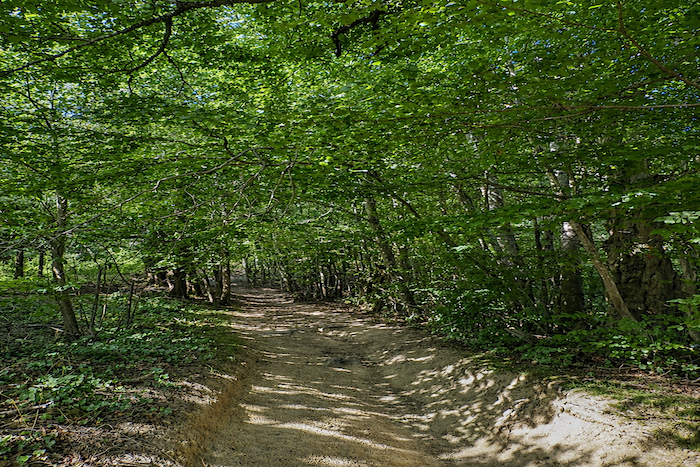 |
| In places, large stones and twisted roots clutter the path. Yet most often, soft and deep humus prevails, that gentle earth upon which the foot lands with almost soothing pleasure. The path then advances through a magnificent forest, among great trees far more than among bushes, as though protected by the lofty vegetal vault overhead. |
|
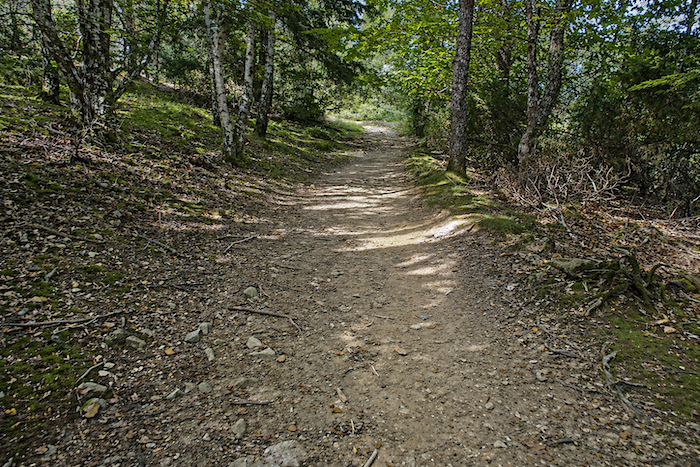 |
| Higher still, the path crosses a true beech forest populated by immense trees that seem to rise all the way to the sky. |
 |
 |
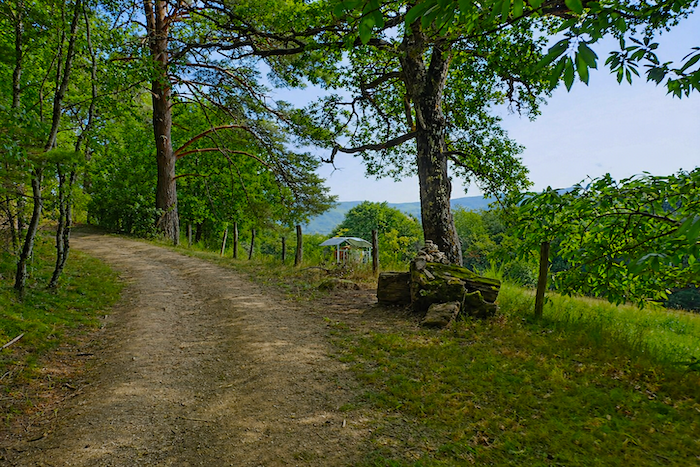
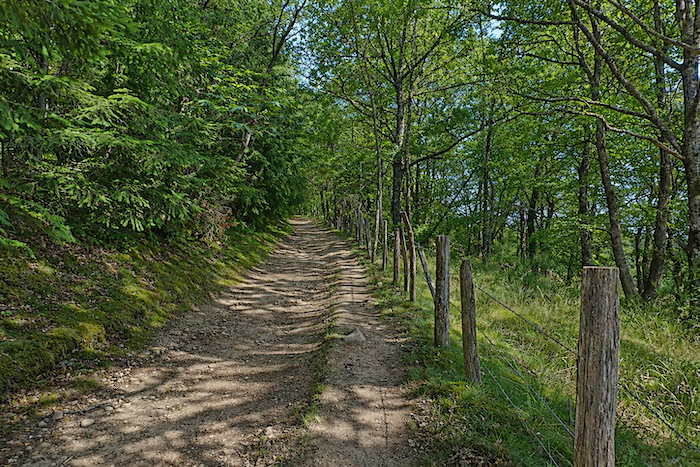
| A few rare openings occasionally interrupt this continuity of woodland in the form of small clearings. A single stump or fallen trunk is enough for pilgrims to build cairns or stack a few stones as a sign of their passage. Yet soon, tirelessly, the path returns once more to the forest. |
 |
 |
Section 4 : Golinhac, where the roller coasters finally end
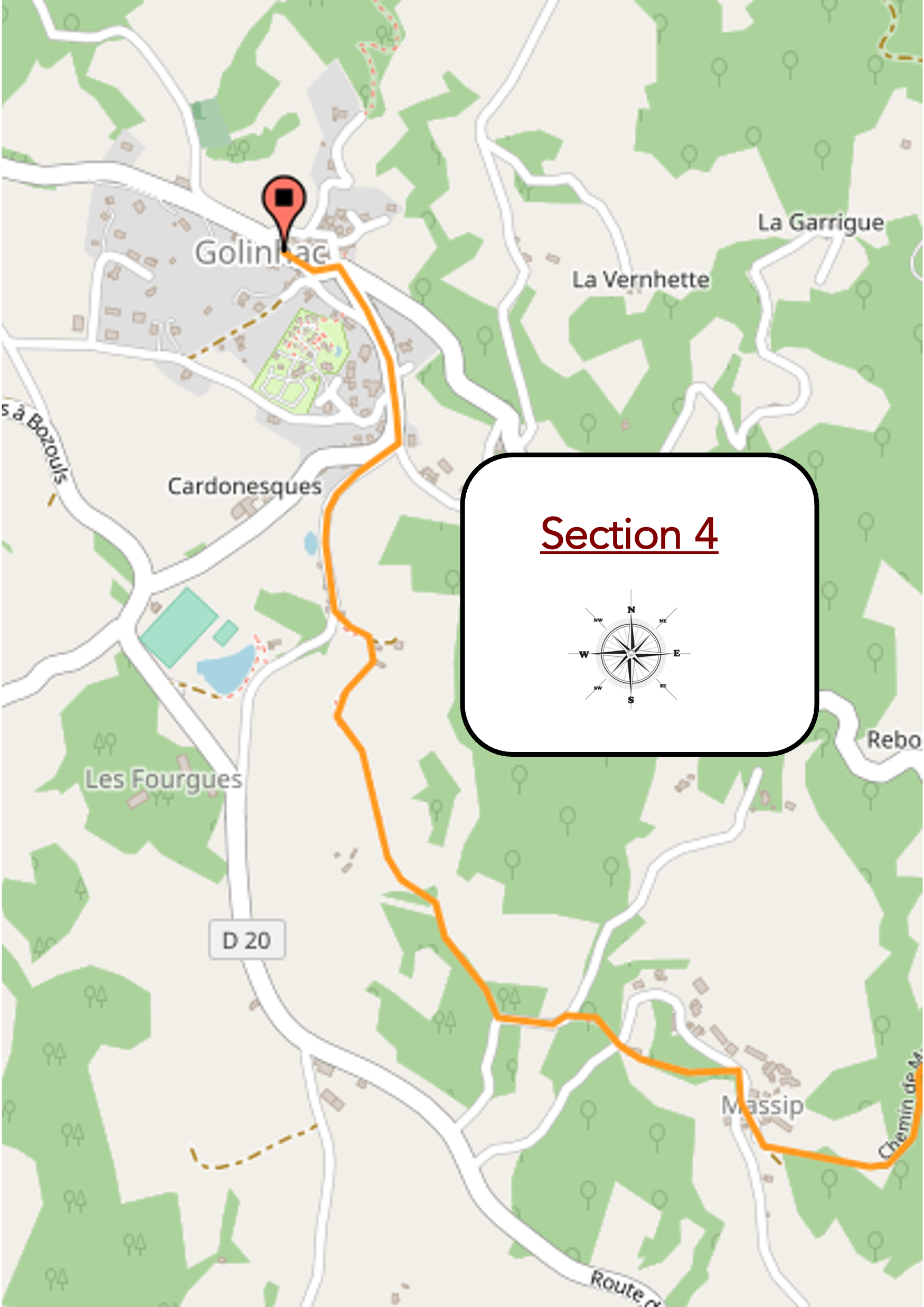
Overview of the route’s challenges: still an uninterrupted succession of roller coaster terrain, with occasional rises that are somewhat more demanding.
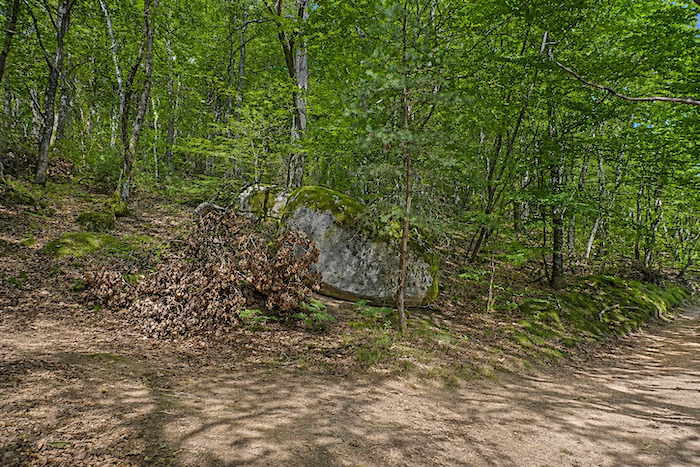
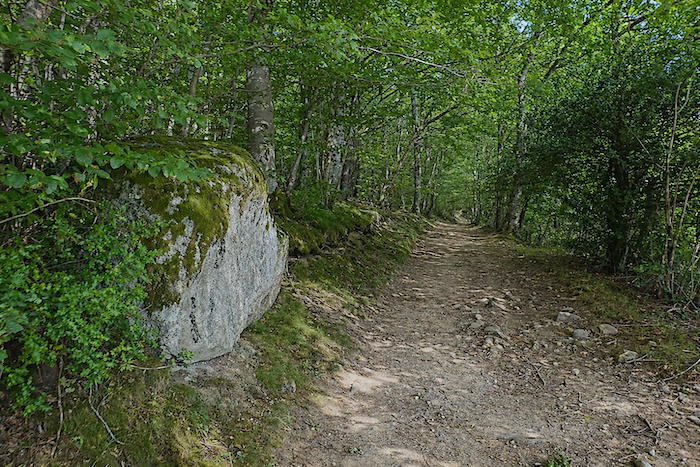
| Higher up, though the gradient remains moderate, the path passes close to large granite boulders scattered throughout the woodland. These are not, as is often the case elsewhere, erratic rocks abandoned by the glaciers of the last Ice Age. These stones tell a far older story. More than three hundred million years ago, granite buried deep underground slowly rose through the limestone and schist layers above. Then time, rain, and erosion gradually exposed these mineral masses, revealing here and there these magnificent blocks with their powerful and silent forms. |
 |
 |
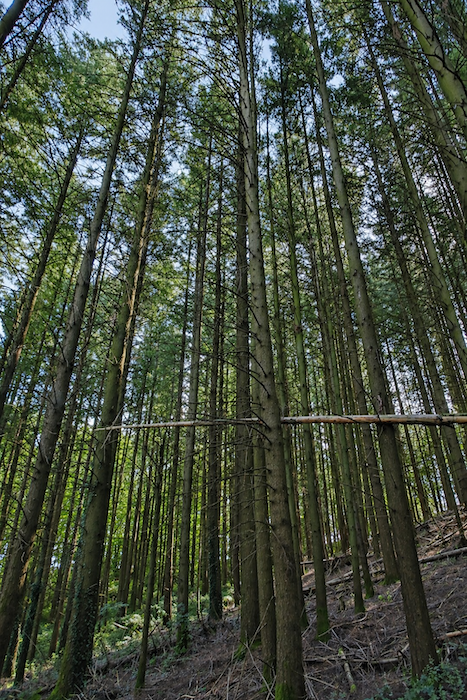
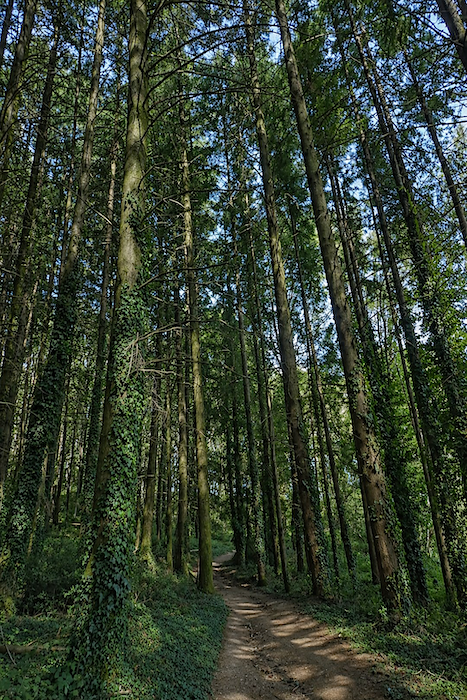
| Then, to the great delight of the walker, the path briefly leaves the broadleaf woodland to pass among a few spruce trees, as majestic and solemn as Spanish grandees. Were they planted here by human hands? Perhaps. Yet nature always manages to give the impression that it alone decided the landscape. |
 |
 |
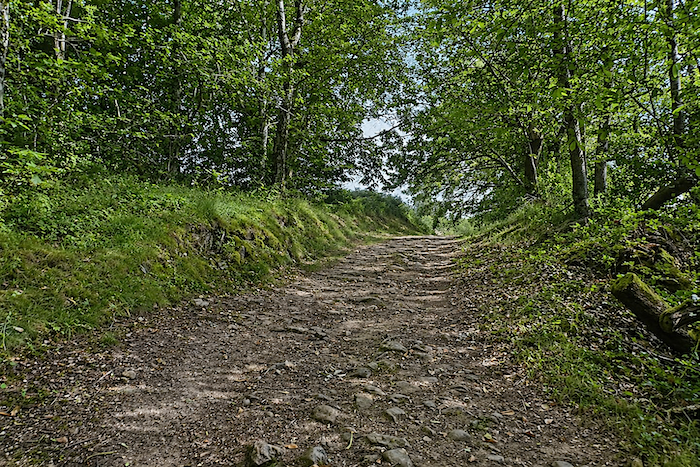
| And yet you gradually sense that the scenery is changing, as though the path were suddenly hesitating, unsure whether to open itself more fully to the sky and the light. |
 |
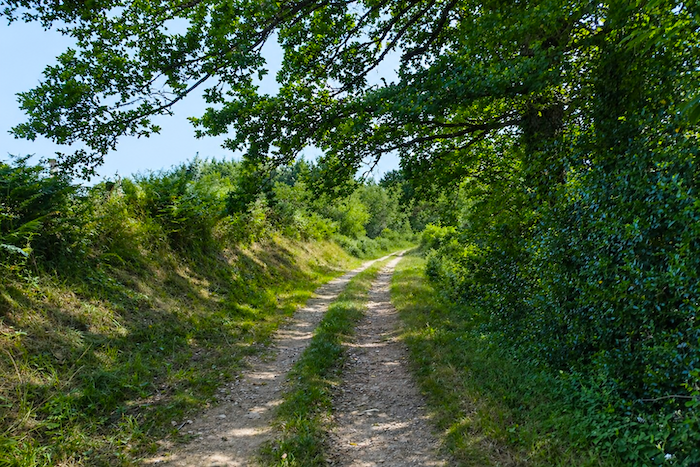 |
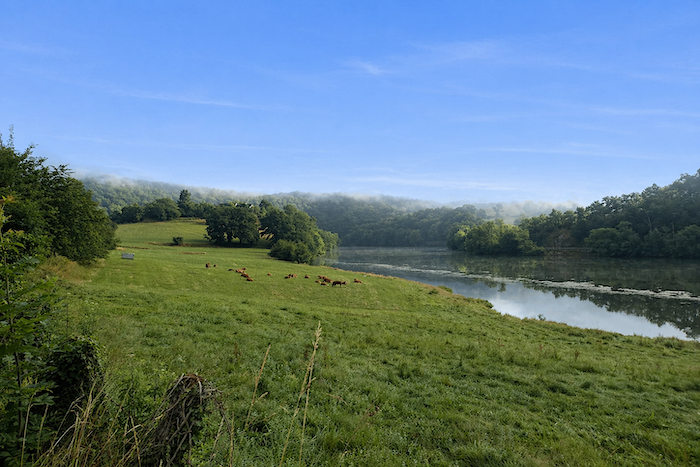
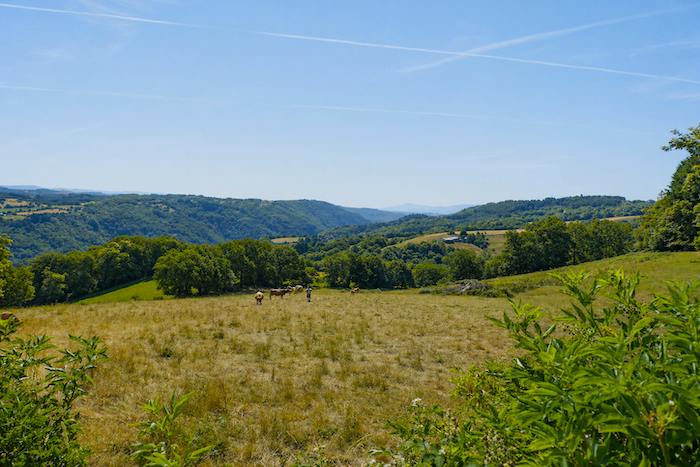
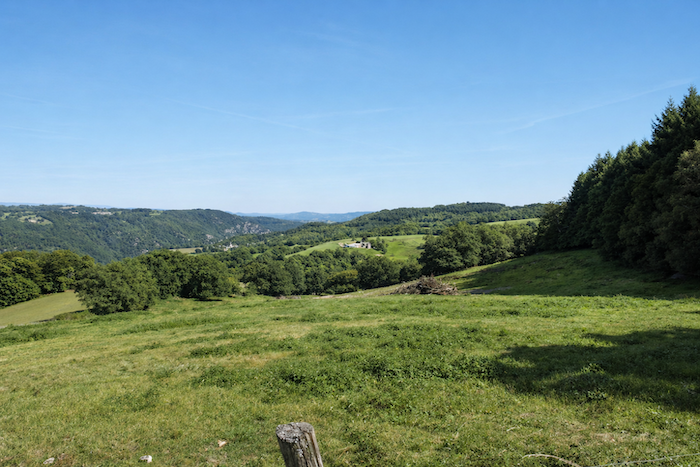
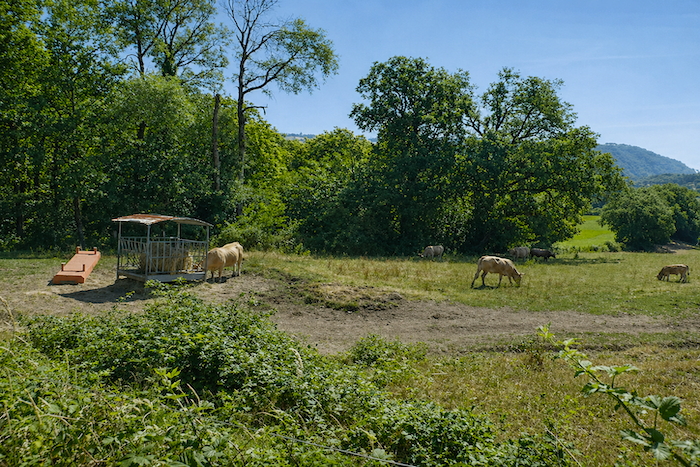
| Until now, there had been almost nobody in this wild and untamed nature. But suddenly a vast clearing opens ahead. From here, the eye can travel almost to the bottom of the valley where the Lot winds its way through the landscape. In a pasture of short grass, a few Aubrac cattle graze peacefully, calm silhouettes within the immensity of the scenery. You begin to suspect that a village cannot be very far away. |
 |
 |
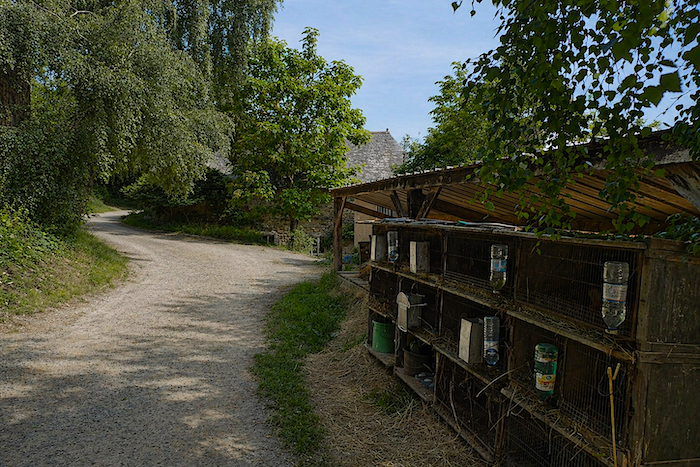
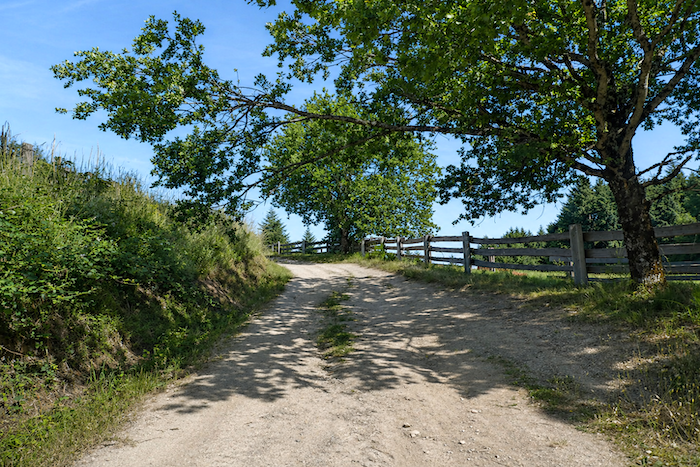
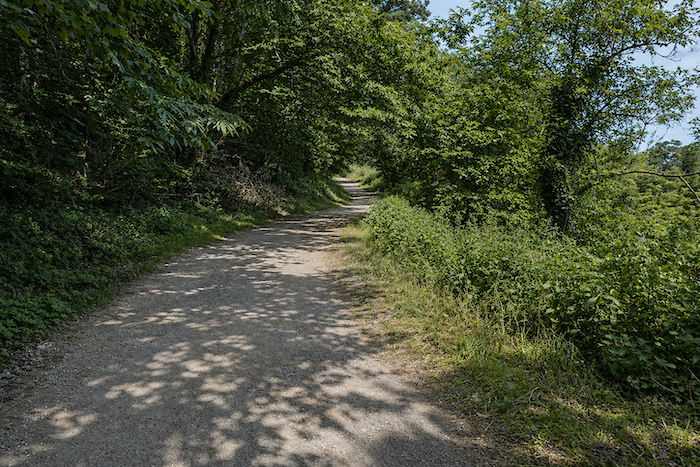
| In reality, a small hamlet lies only a stone’s throw away, at the end of a somewhat broader dirt track, sturdy enough to accommodate tractors and agricultural machinery. |
 |
 |
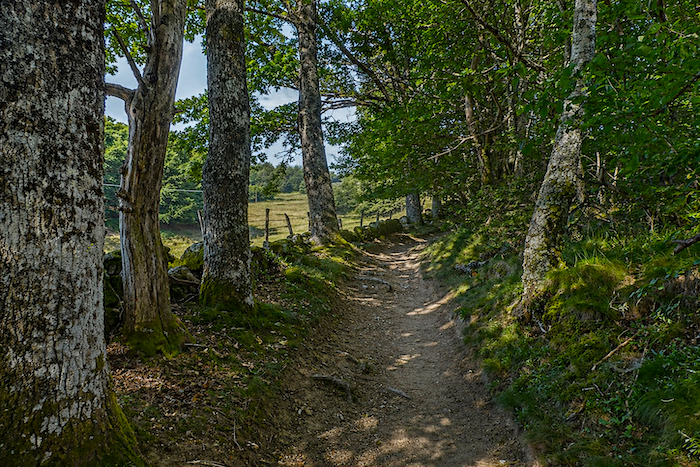
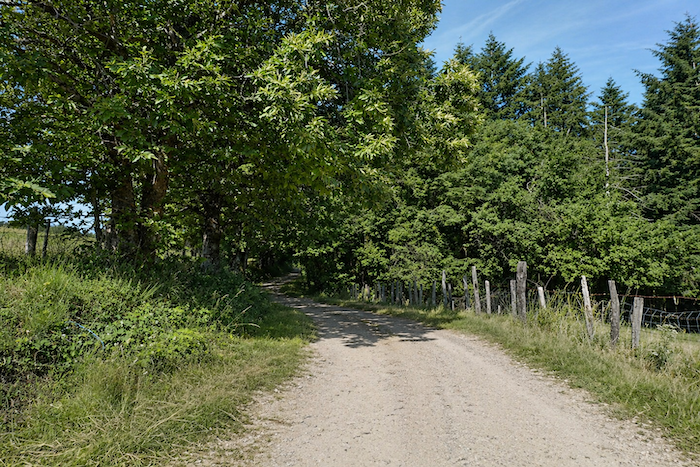
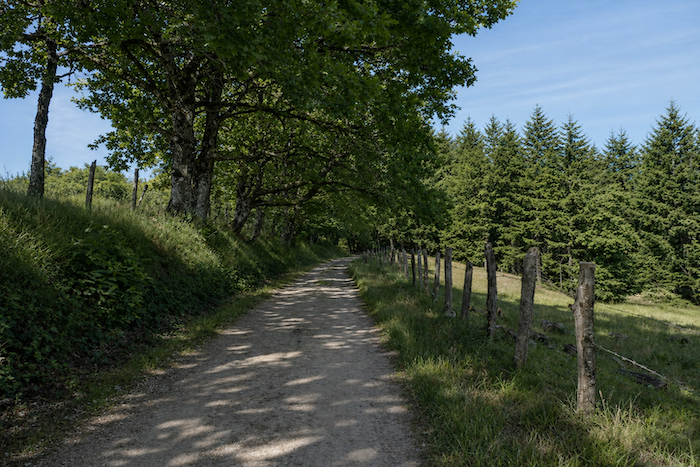
| Here, magnificent avenues of majestic oaks and windblown chestnut trees line the path like silent guardians watching over all who pass. |
 |
 |
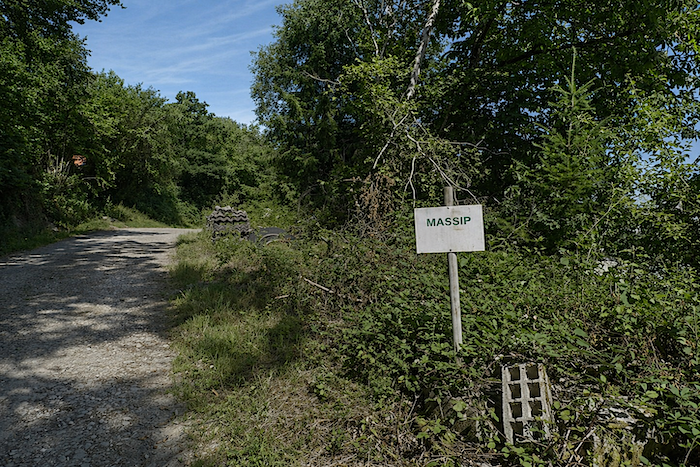
| At the end of the path, Massip finally appears, resting at the edge of the woodland. |
 |
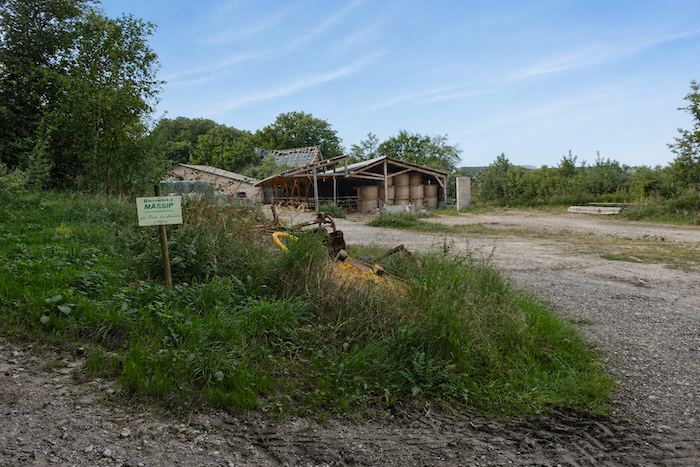 |
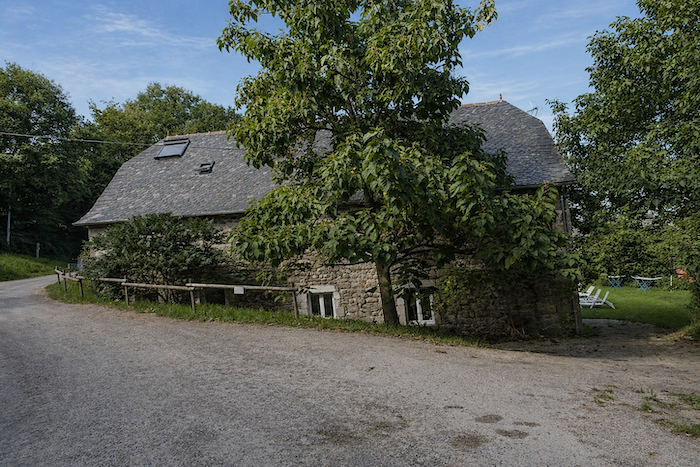
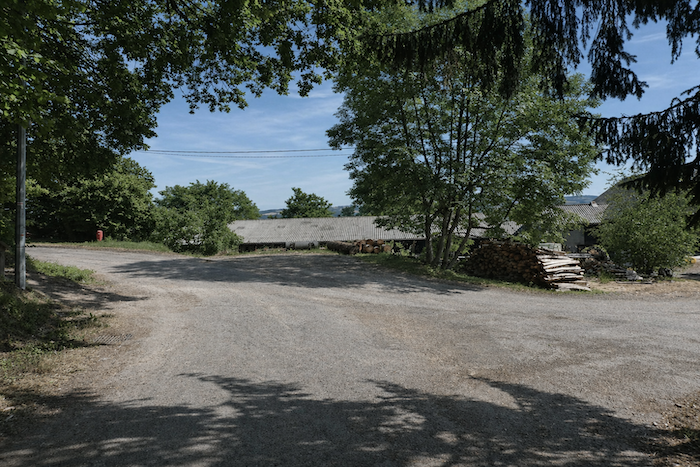
| The hamlet lies slightly below the path. Here once again, timber seems to be at the heart of local life. Pilgrims can find shelter in a superb stone house beside the path, whose thick walls appear to have absorbed the silence of the surrounding forest over countless years. |
 |
 |
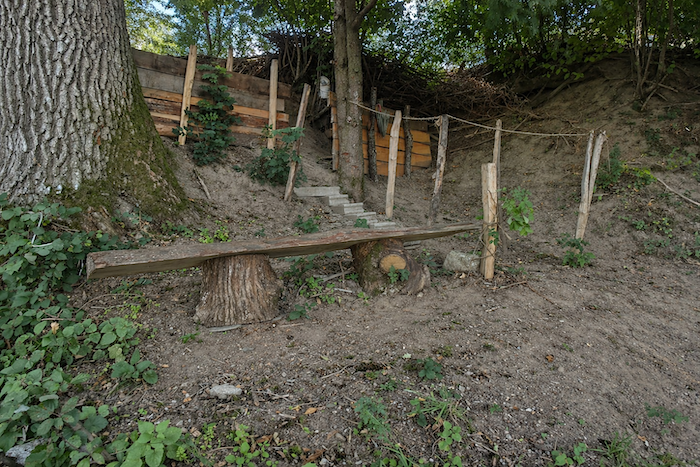
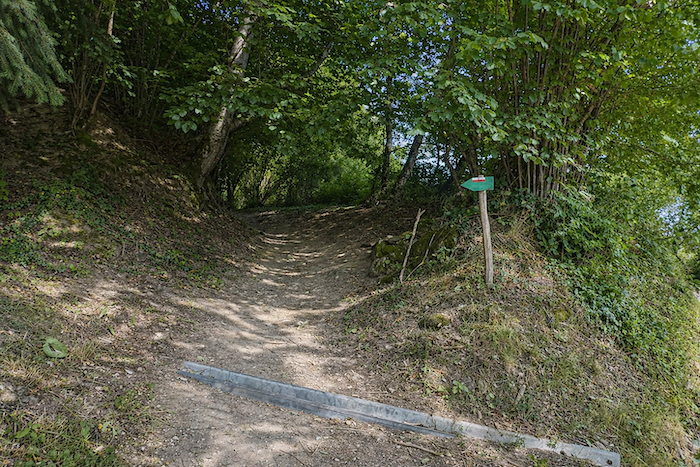
| From Massip, a series of simple steps leads the pilgrim back beneath the forest canopy. Barely has the hamlet been left behind than the path plunges once more into the shade of the trees, as though drawn back into the silence of the woodland. |
 |
 |
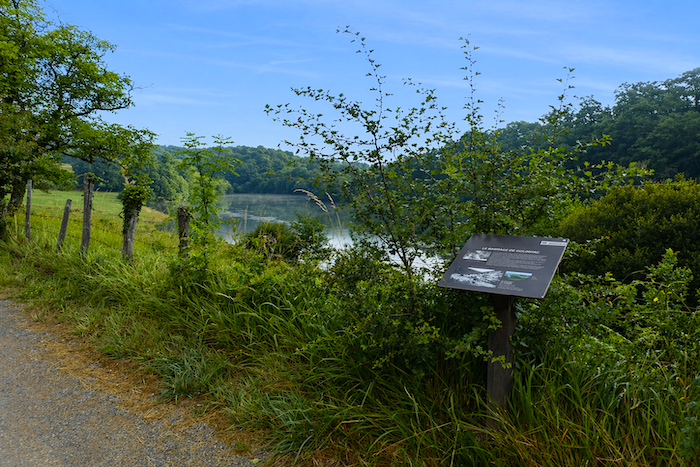
The local committee has installed an informative panel here explaining the origin of the remarkable granite blocks scattered across the landscape, as though the mountain itself wished to display the traces of its geological past beneath the open sky.
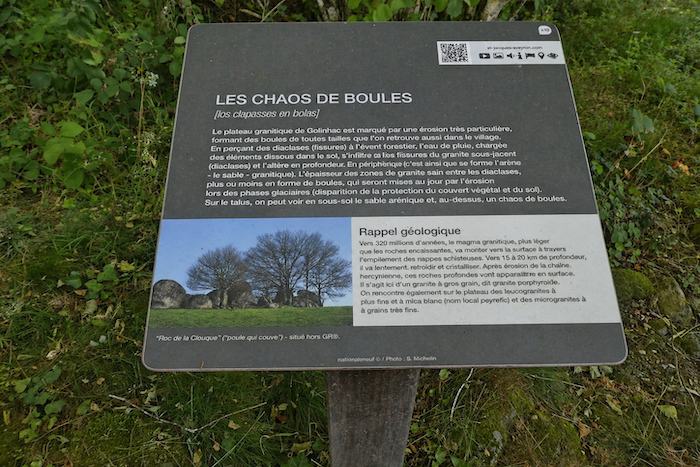
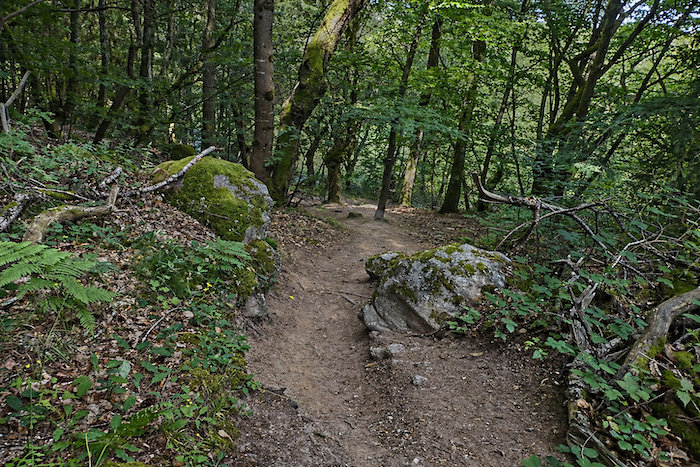
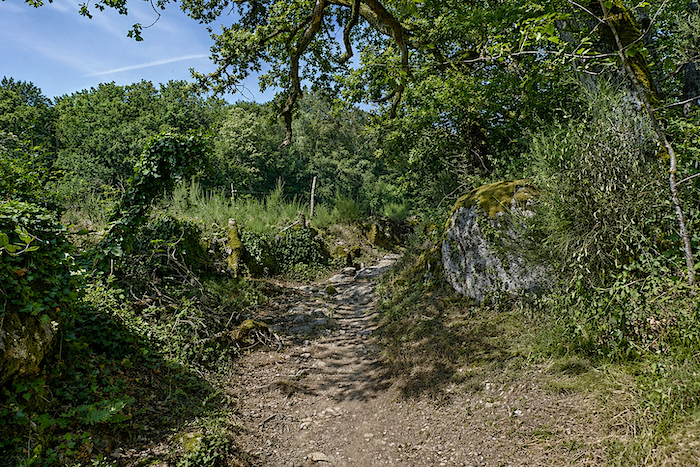
| A delightfully romantic trail then begins to wind among broom, moss, and stone. The route crosses what feels like an open-air geological museum where enormous granite blocks emerge from the forest floor with tranquil majesty among roots and ferns. |
 |
 |
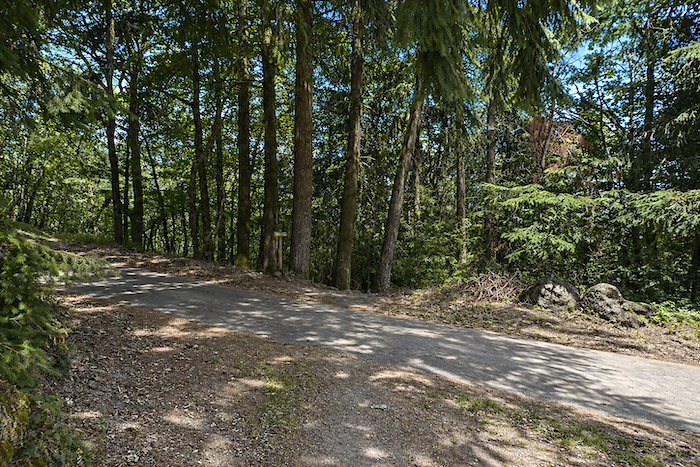
| Then, as so often along the route, paradise suddenly gives way to trial. The trail joins a small road and literally plunges downhill through the dark forest. The word is not exaggerated: for a short stretch, the gradient becomes brutal, almost punishing for the legs and joints already weary from the pilgrimage. |
 |
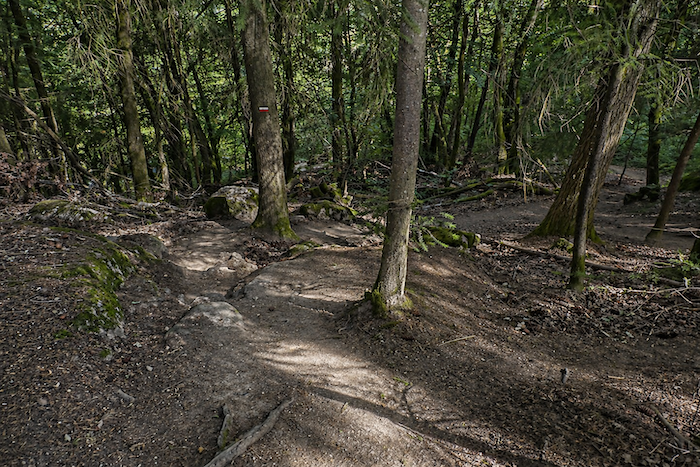 |
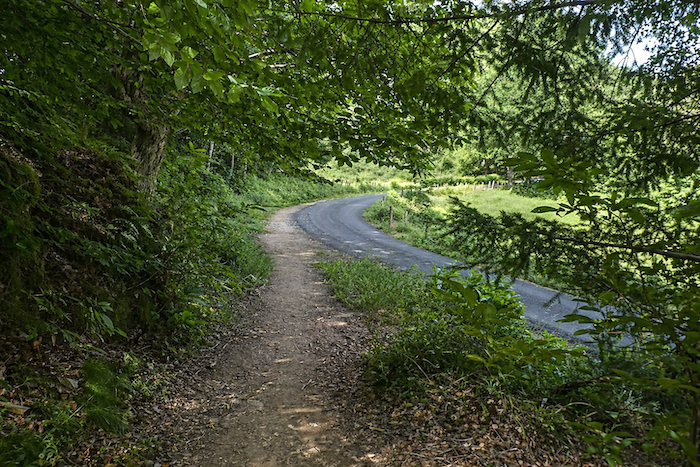
| At the bottom of this descent, the route once again reaches a small road. In these hills, one never quite knows where such narrow roads lead. They are often little more than dead ends serving a few isolated houses lost among the woods. |
 |
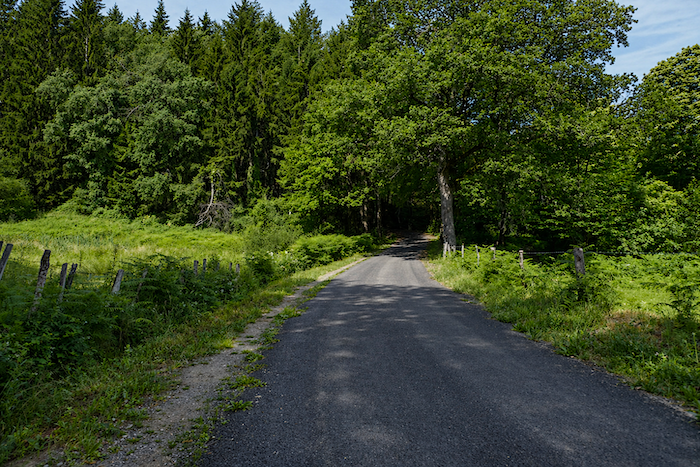 |
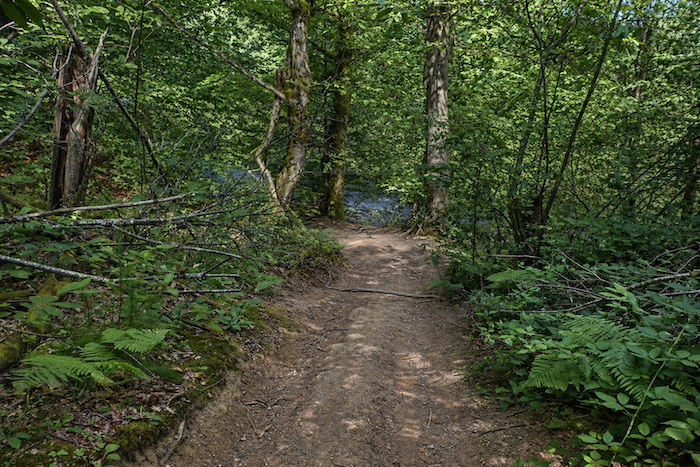
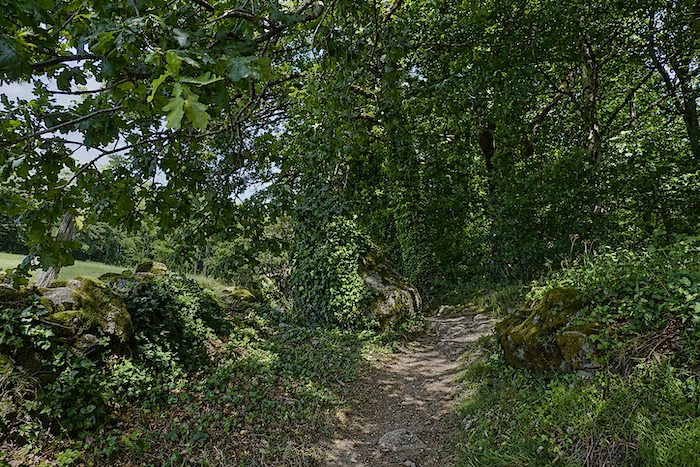
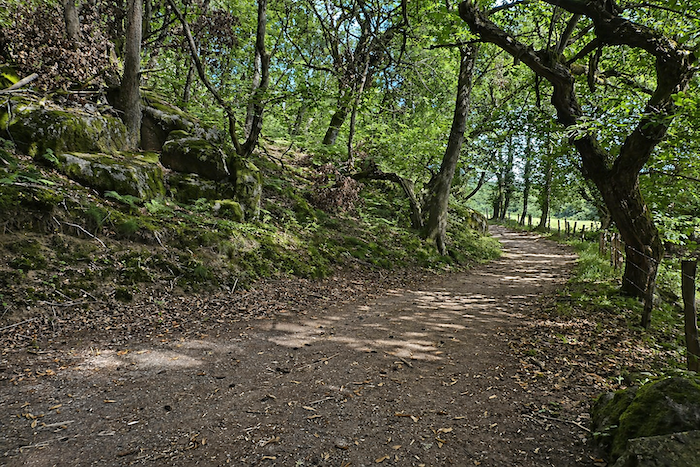
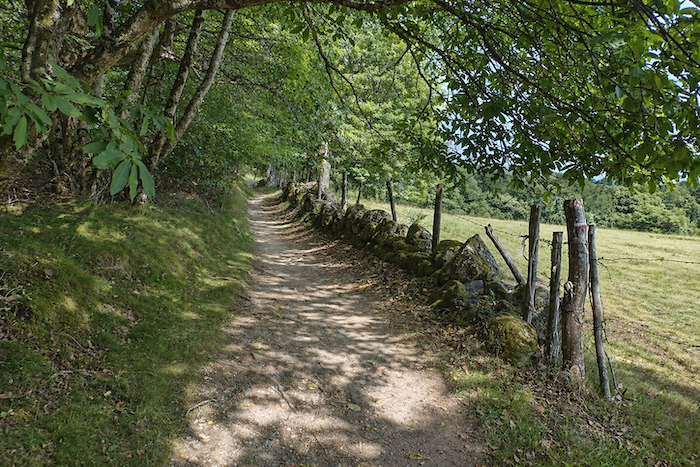
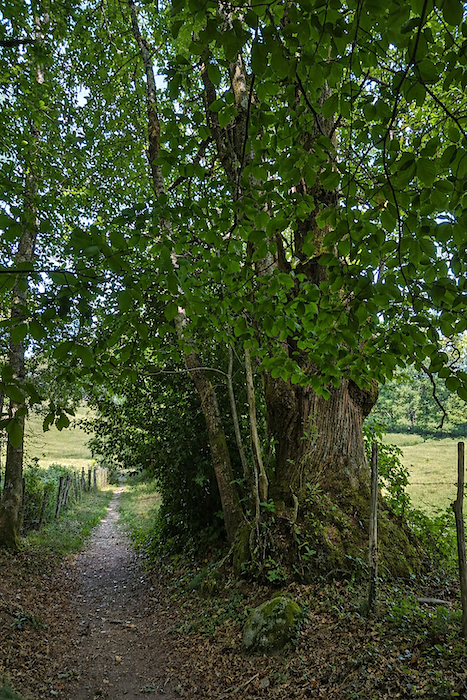
| Fortunately, the GR65 very quickly abandons the tarmac and resumes its wandering through an almost enchanted forest, following old stone walls overgrown with moss and vegetation. |
 |
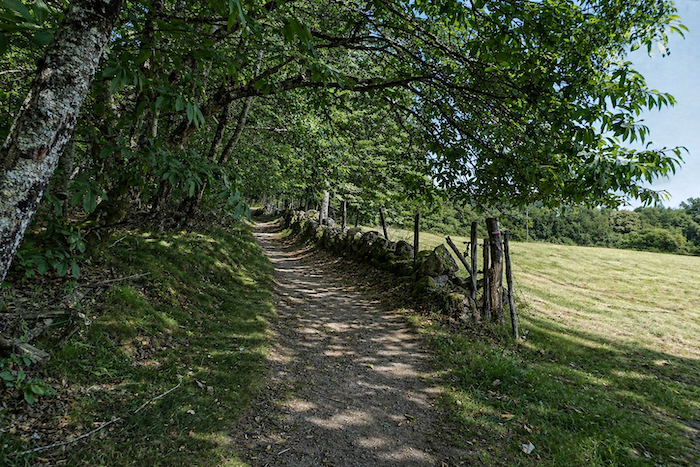 |
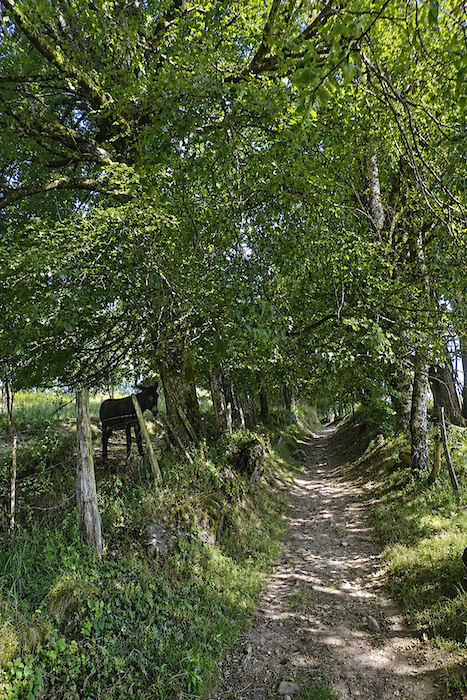
| The slender beeches, generous chestnut trees, and majestic sessile oaks seem here to converse silently along the stone walls, among ferns and thick mosses. Everything breathes an ancient harmony, almost timeless in character. In such a forest, one could wander for entire days without ever feeling the slightest desire to leave. |
 |
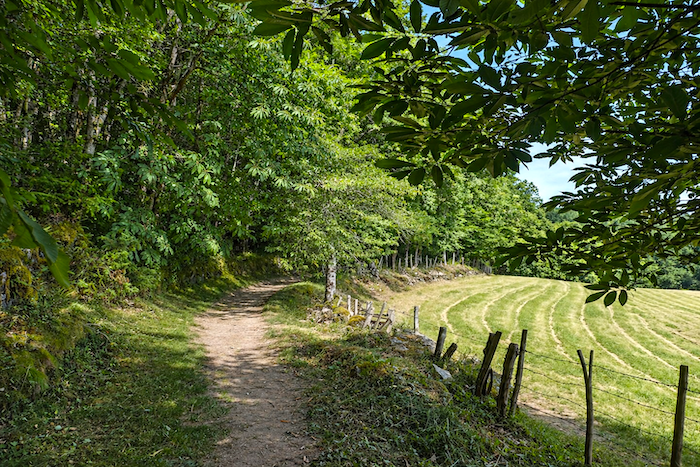 |
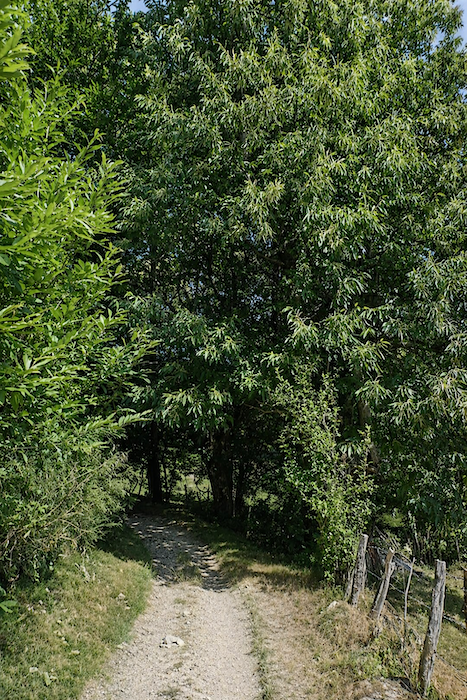
| Even the little donkey standing motionless on the embankment appears to watch the pilgrims pass with a touch of envy, as though it too longed for the strange freedom of the walker always moving farther ahead. |
 |
 |
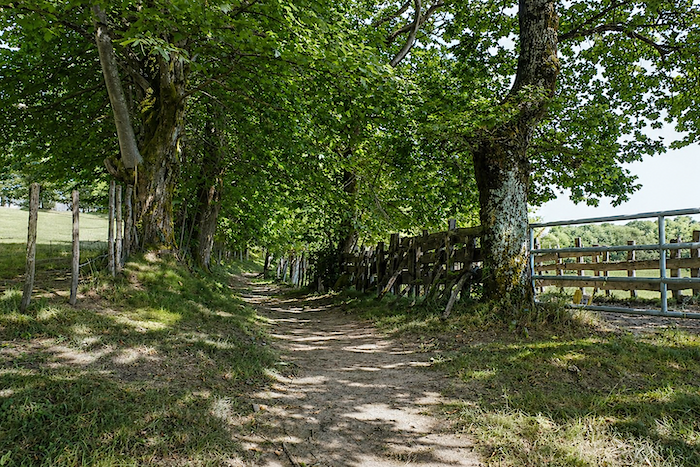
| Then the clearings become more frequent. The landscape gradually opens, and livestock reappears in the meadows bordering the path. |
 |
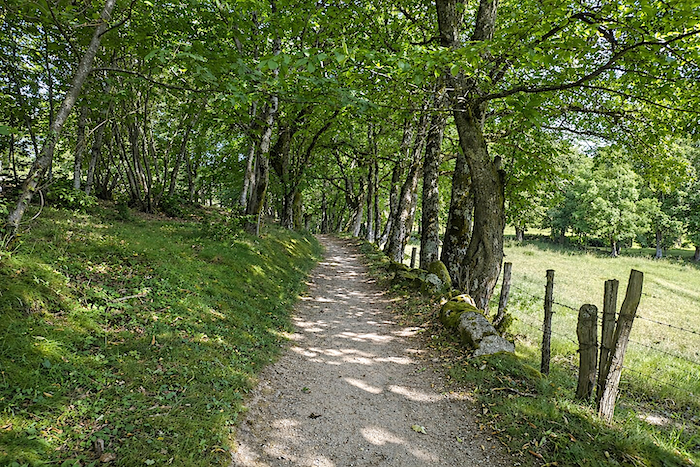 |
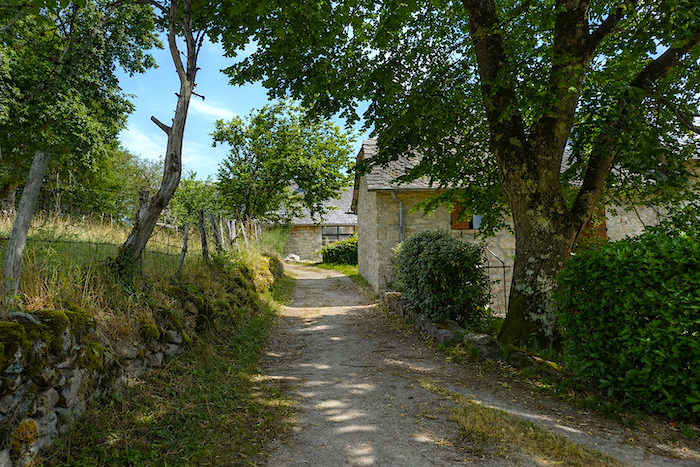
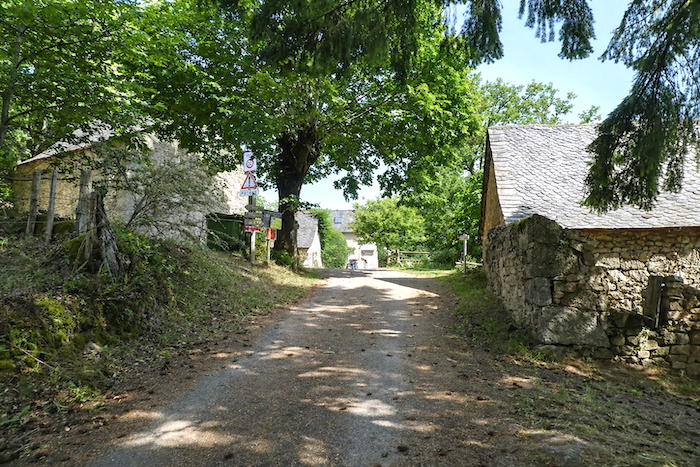
| The path then reaches the first houses of Golinhac. As though wishing to apologize for its stones, slopes, and jolts, it now takes on the peaceful appearance of a pleasant country lane. |
 |
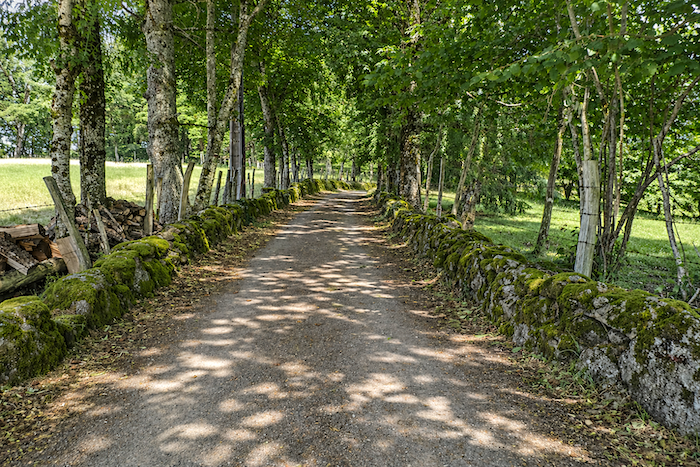 |
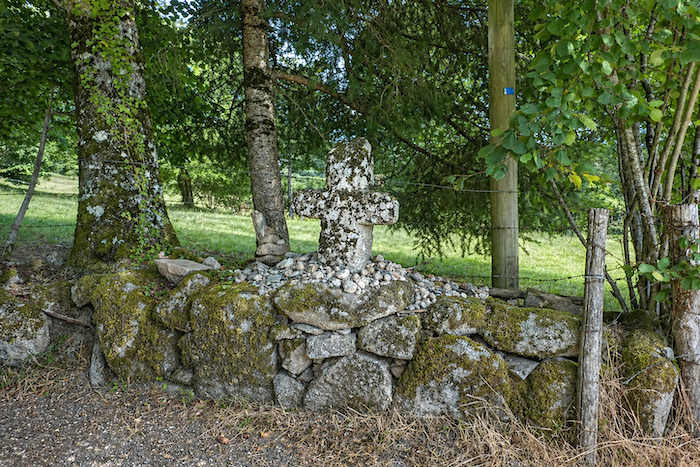
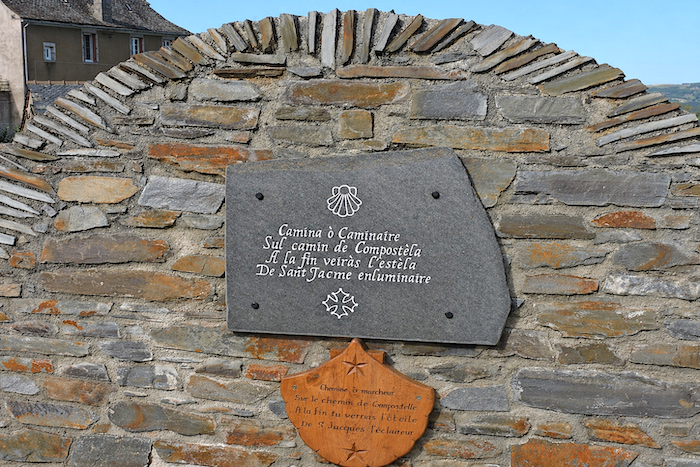
And who could pass without emotion before this ancient granite cross, whose age no one truly knows anymore, standing for the delight of pilgrims beside these wonderful moss-covered stone walls? These old walls rank among the greatest charms of the Compostela routes throughout so many regions of France. They give the landscape a soul of patience, silence, and eternity.
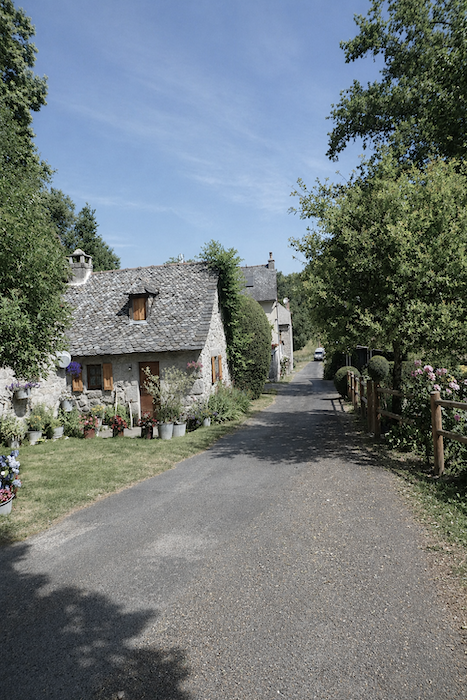
| Here, shortly before the village, stand magnificent rural houses, eternal beneath their grey stone walls and heavy slate roofs. These homes seem to have belonged to the landscape forever, as though they had been born from the very stone of the surrounding hills. |
 |
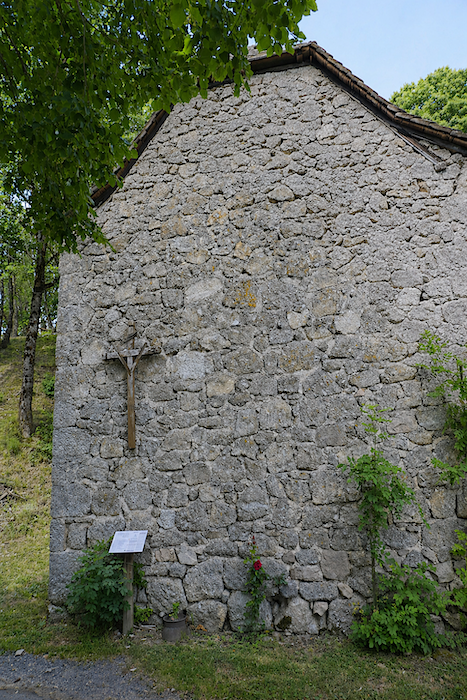 |
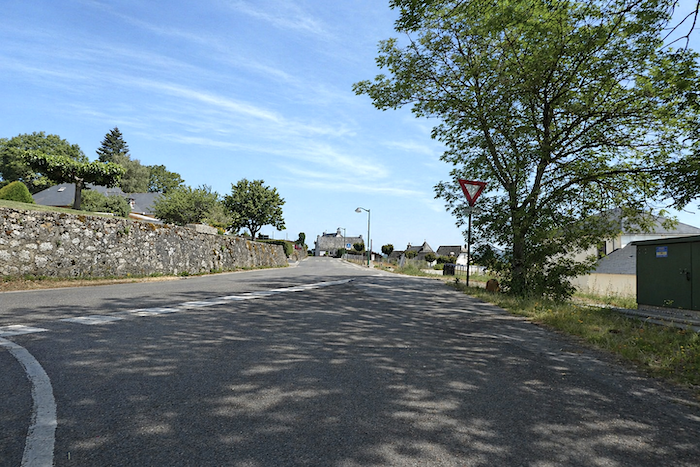
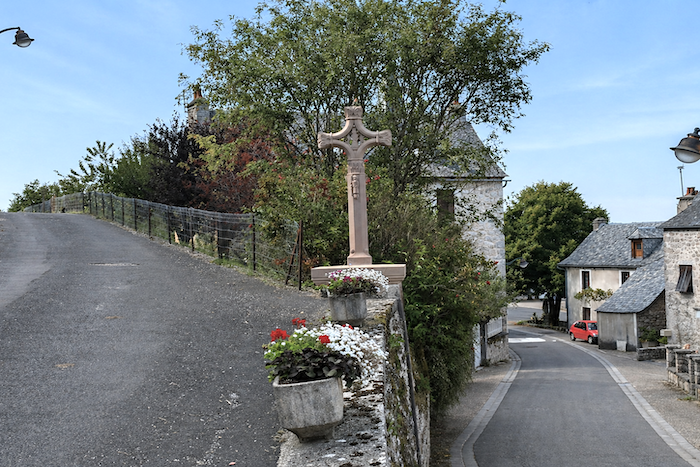
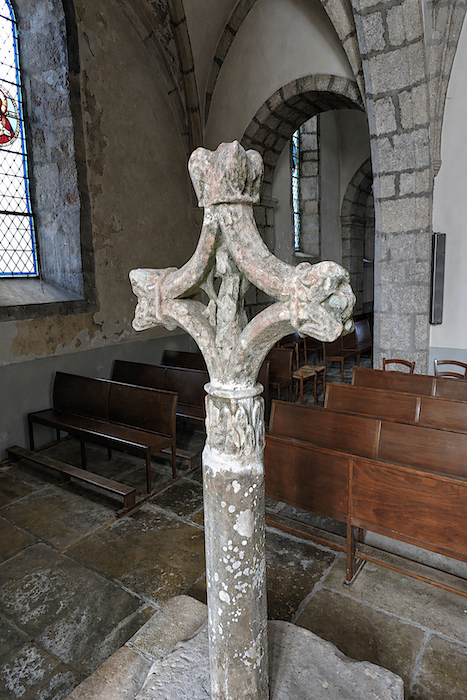
| The GR65 then reaches Golinhac without any further elevation change. The village is the first true settlement encountered since Estaing and still has nearly four hundred inhabitants. At its entrance stands a remarkable fifteenth century stone cross known as the “Cross of the Romieus”, meaning the Pilgrims’ Cross. You can distinguish a Virgin at the feet of Christ and a pilgrim sculpted at the center, holding a small hat in one hand and a large bell in the other. The cross seen outside today is a copy; the original is carefully preserved inside the village church. |
 |
 |
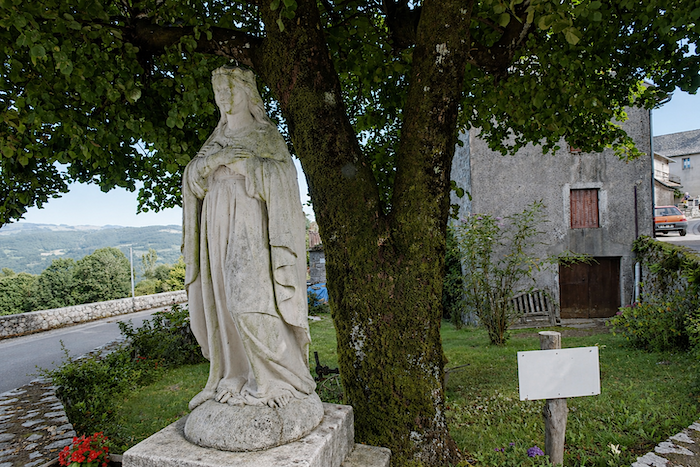
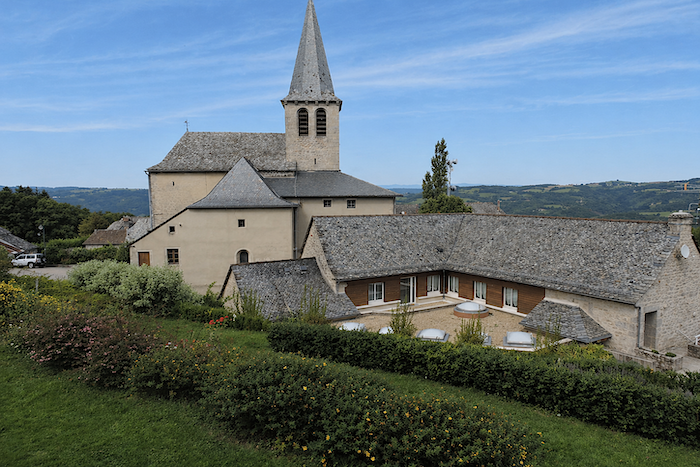
| A Virgin watches over Golinhac. As for the church dedicated to Saint Martin, its origins are very ancient, having been built before the year one thousand, although the centuries have profoundly altered and remodeled it over time. |
 |
 |
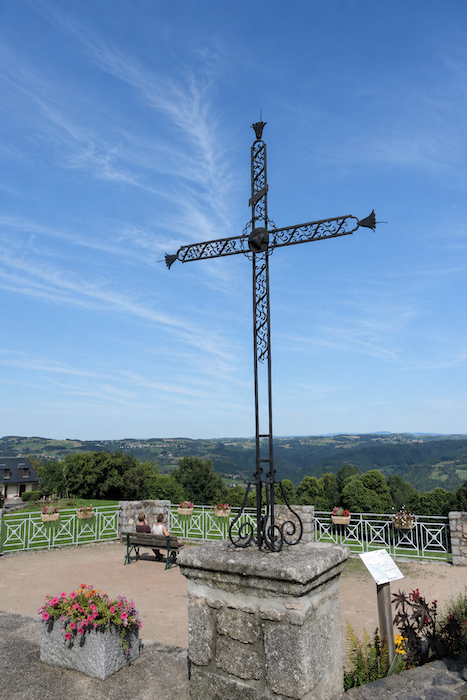
| Indeed, the “Cross of the Romieus” preserved inside the church is of great beauty. Not far away stands another cross, this time made of iron, on a terrace overlooking the Lot Valley and the surrounding hills, like one final sign raised before the immensity of the landscape. |
 |
 |
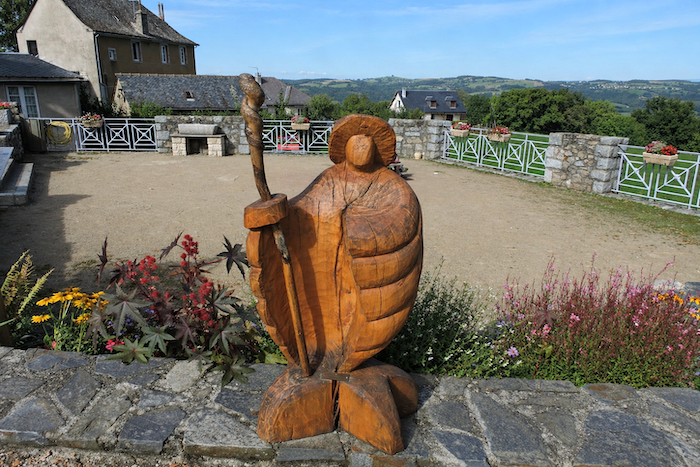
| Within the village, religious and secular symbols coexist with surprising simplicity, as though the sacred naturally formed part of everyday life here. |
 |
 |
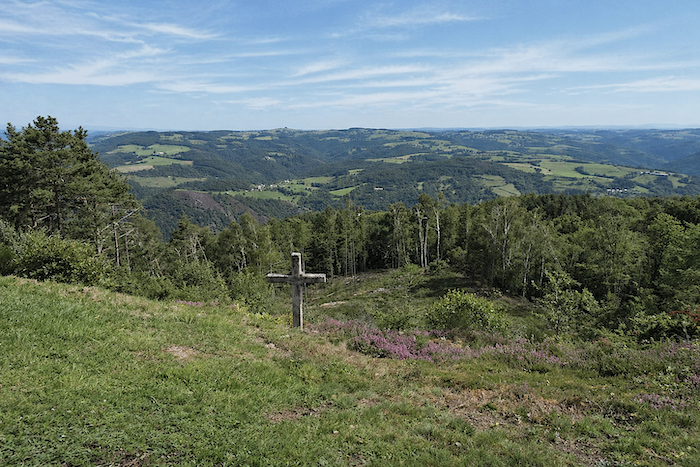
| A little above the village, the Puech de Regault offers a remarkable panorama over the Entraygues Valley, the Aubrac Mountains, and as far as the lands of Auvergne. Nicknamed « the Hill of the Gaze », this promontory allows visitors, on perfectly clear days, to glimpse the Plomb du Cantal raising its volcanic silhouette in the distance. One must, however, be fortunate enough to be there on the right day, when the horizon finally agrees to reveal itself. |
 |
 |
Accommodation on Via Podiensis
- Lo Soulenquo, Fonteilles (GR65); 06 10 97 08 71; Gîte and Guestroom, dinner, breakfast
- L’Orée du Chemin, Stephan Dissac, Massip (GR65); 05 65 48 61 10/06 76 00 10 71; Gîte, dinner, breakfast
- Gîte La Chèvre sous le toit, Falguières/Golinhac (GR65); 06 85 81 97 45; Gîte, breakfast, cuisine
- Pôle touristique Bellevue***, Golinhac (GR65); 06 89 55 46 32; Gîte et Guestroom, dinner, breakfast
- Gîte Saint Martin, Claude Brossier, Golinhac (GR65); 06 33 84 64 33; Gîte, dinner, breakfast
- Gîte Au Lilas Zen, Ingrid et Jean, Golinhac (GR65); 07 75 79 45 50; Gîte, cuisine
- Chambres d’hôtes Les Rochers, Régine Bolis, Golinhac (GR65); 05 65 48 18 85/06 81 86 44 05; Guestroom, breakfast
- Chambres d’hôtes Chez Michel et Monique, Golinhac (GR65); 07 86 37 39 05; Guestroom, breakfast
- Auberge Horizon, Manon et Gaël, Golinhac (GR65); 05 65 51 63 68; Hotel, dinner, breakfast
- Gîte du Barthas, Mr et Mme Albesby, Campuac (GR6); 05 65 51 59 38/06 84 80 47 67; Gîte, dinner, breakfast
- Gîte-Restaurant du GRC, Le Barthas, Campuac (GR6); 06 21 90 88 05; Gîte, dinner, breakfast
- Gîte-Chambre d’hôte L’Arche d’Yann, Campuac (GR6); 06 37 75 38 80; Gîte and Guestroom, dinner, breakfast
- Gîte La Chevêche, Larrigue, Campuac (GR6); 07 81 40 47 34/05 65 48 87 76; Gîte, dinner, breakfast
- La Ferme de Bessoles, Joëlle Soulié, Bessoles (GR6); 05 65 66 18 86/06 65 50 10 31; Guestroom, dinner, breakfast
Year after year, the Camino de Santiago changes and reinvents itself with the seasons and the footsteps of pilgrims. Some accommodations close their doors, while others, modest or unexpected, come into being. It would therefore be unrealistic to claim to provide a fixed and exhaustive list. This guide includes only accommodations located directly on the route or within one kilometer of it. The selection was updated in 2026 and should therefore not undergo any major changes in the coming years. For those wishing to go further, one publication stands out as the essential reference: Miam Miam Dodo, easily available online. The main strength of this guide lies in its yearly updates. It not only lists accommodations located directly on the route, but also addresses slightly off the route, a valuable resource when heavy pilgrim traffic makes overnight stops more uncertain. It also contains a wealth of practical information: welcoming bars, restaurants along the way, and providential bakeries, all of which punctuate the journey. Alongside these traditional resources, another presence has become unavoidable: Airbnb. The platform has established itself as a major reference in the tourism landscape, even in the most discreet or less developed regions. However, as everyone knows, exact addresses are not displayed directly, which requires a degree of anticipation. On the Camino, finding a bed at the last minute can sometimes depend on sheer luck. But luck, by its very nature, cannot be considered a strategy. Booking ahead is therefore strongly recommended. Finally, when making arrangements, be sure to inquire about dinner and breakfast options. These details, seemingly minor, can greatly soften the hardships of a stage.
If we take stock of the accommodation capacity, there are only about 35 beds available before reaching Golinhac, with a further 83 beds in Golinhac itself. Since the number of walkers on the Via Podiensis generally fluctuates between 100 and 200 pilgrims, this stage can present serious accommodation challenges if no advance arrangements are made. It is true that many pilgrims do not stop in Golinhac, preferring instead to follow the GR6. At Campuac, on the GR6 route, there are also around 85 beds available. However, most pilgrims continue to follow the GR65. It is therefore advisable to make arrangements well in advance; otherwise, you may have to continue on to Espeyrac to find accommodation.
These routes, winding through often sparsely populated areas, offer few services. Restaurants are scarce, as are grocery stores, which are often little more than small bread depots selling a limited selection of vegetables and dairy products. On this stage, there are no services at all before Golinhac, apart from a water point and a dry toilet located just before La Sensaguerie. Finally, many companies offer luggage transfer services or transportation back to the starting point. Among them, one stands out as a trusted and widely recognized reference for pilgrims: La Malle Postale.
Feel free to add comments. This is often how you move up the Google hierarchy, and how more pilgrims will have access to the site.
|
 |
Next stage : Stage 12: Golinhac to Conques |
|
 |
Back to menu |