
In the majesty of Aubrac
DIDIER HEUMANN, MILENA DALLA PIAZZA, ANDREAS PAPASAVVAS
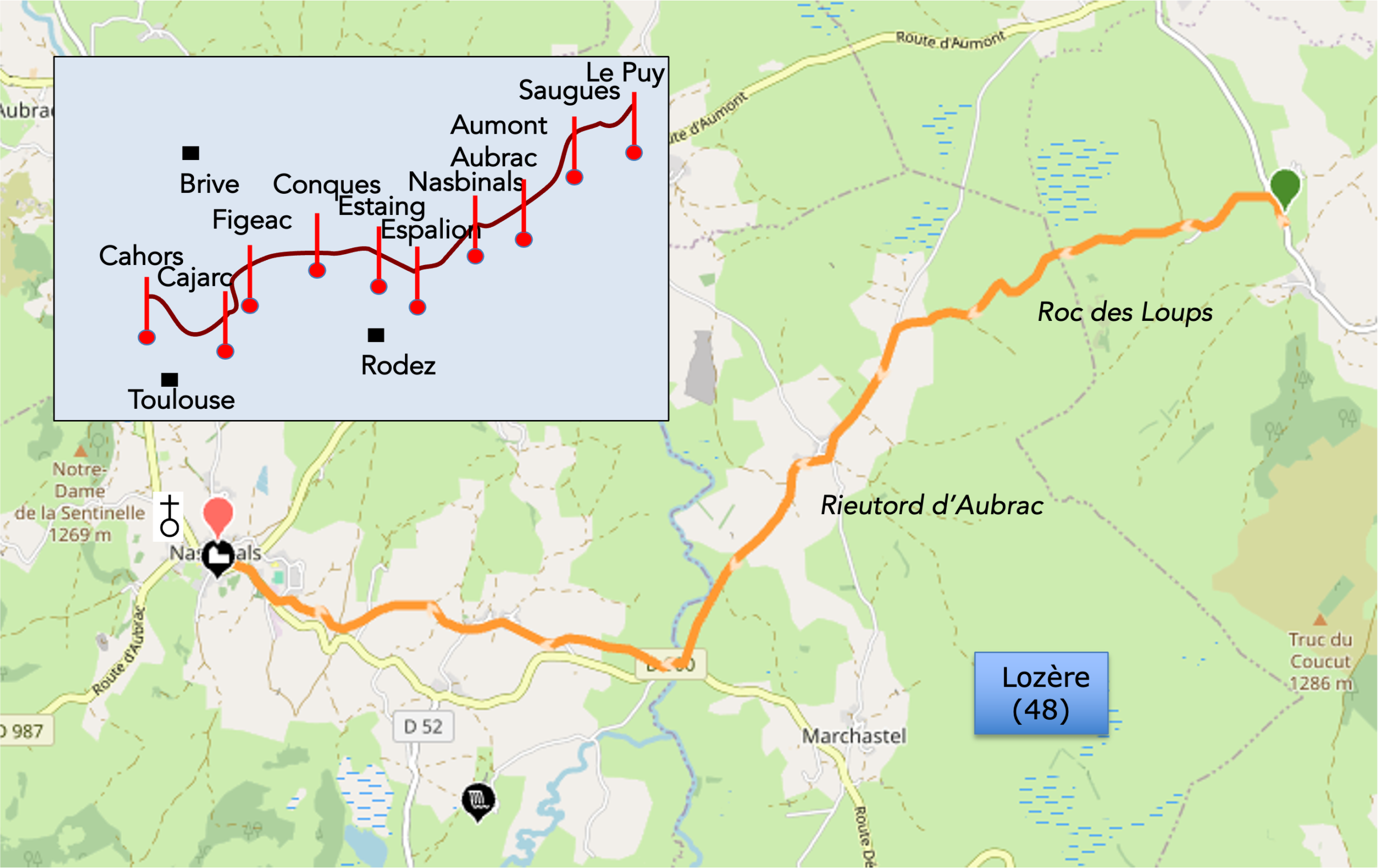
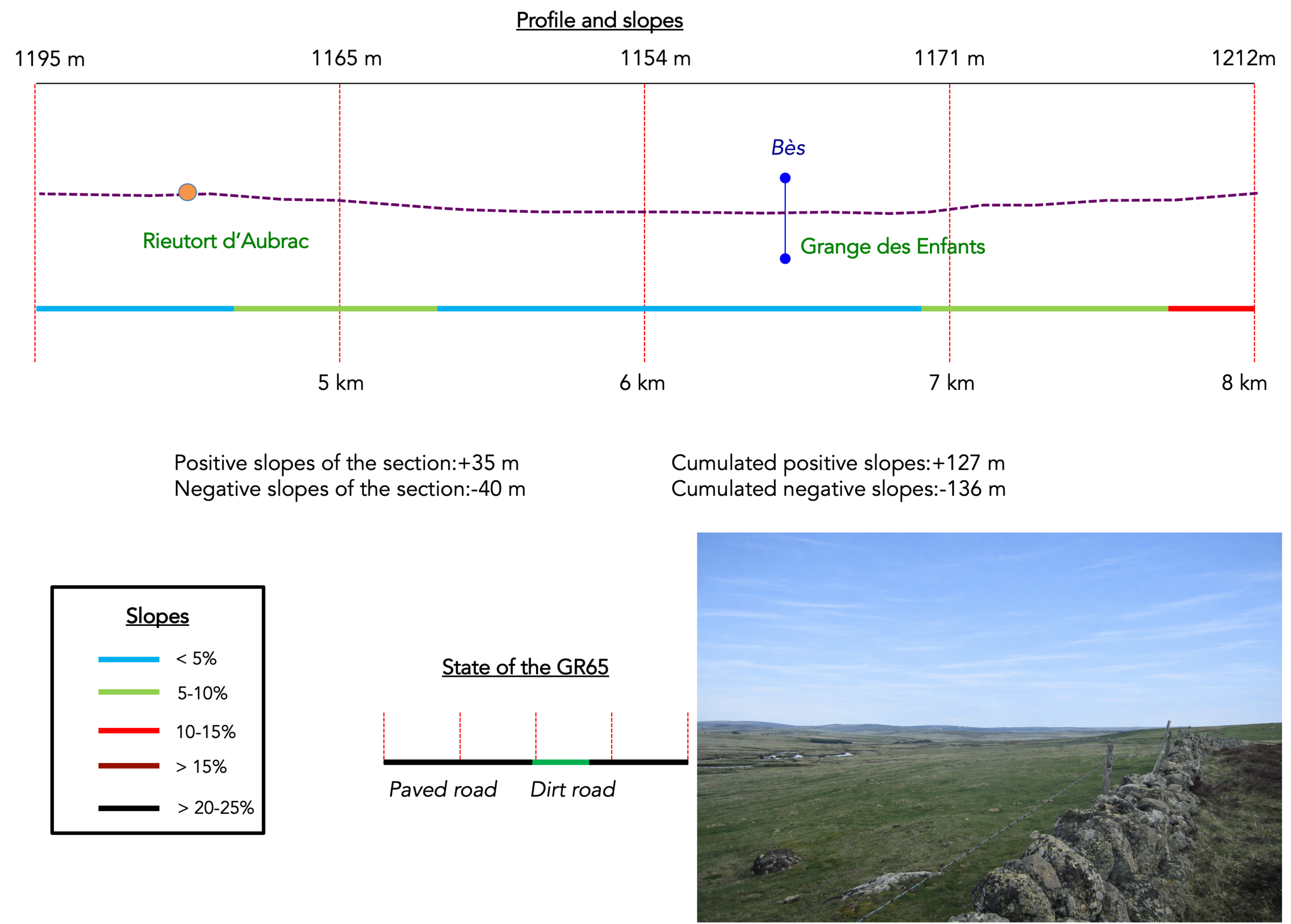
We divided the course into several sections to make it easier to see. For each section, the maps show the course, the slopes found on the course, and the state of the roads. The courses were drawn on the « Wikilocs » platform. Today, it is no longer necessary to walk around with detailed maps in your pocket or bag. If you have a mobile phone or tablet, you can easily follow routes live.
For this stage, here is the link:
https://fr.wikiloc.com/itineraires-randonnee/des-gentianes-a-nasbinals-par-le-gr65-258194270
|
Not all pilgrims are necessarily comfortable using GPS devices or navigating with a smartphone, especially since there are still many areas without Internet access. That is why, to make your journey easier, a book dedicated to the Via Podiensis from Le Puy-en-Velay to Cahors is available on Amazon. Much more than a simple practical guide, this book accompanies you step by step, kilometer after kilometer, providing all the information you need for smooth planning and avoiding unpleasant surprises. Beyond its practical advice, it immerses you in the enchanting atmosphere of the Camino, capturing the beauty of the landscapes, the majesty of the trees, and the very essence of this spiritual adventure. Only the pictures are missing, everything else is there to transport you. In addition, we have also published a second book which, with slightly fewer details but all the essential information, covers the entire route from Le Puy-en-Velay to Saint-Jean-Pied-de-Port. The choice of your journey is yours. . |
|
 |
 |
If you only want to consult lodging of the stage, go directly to the bottom of the page.
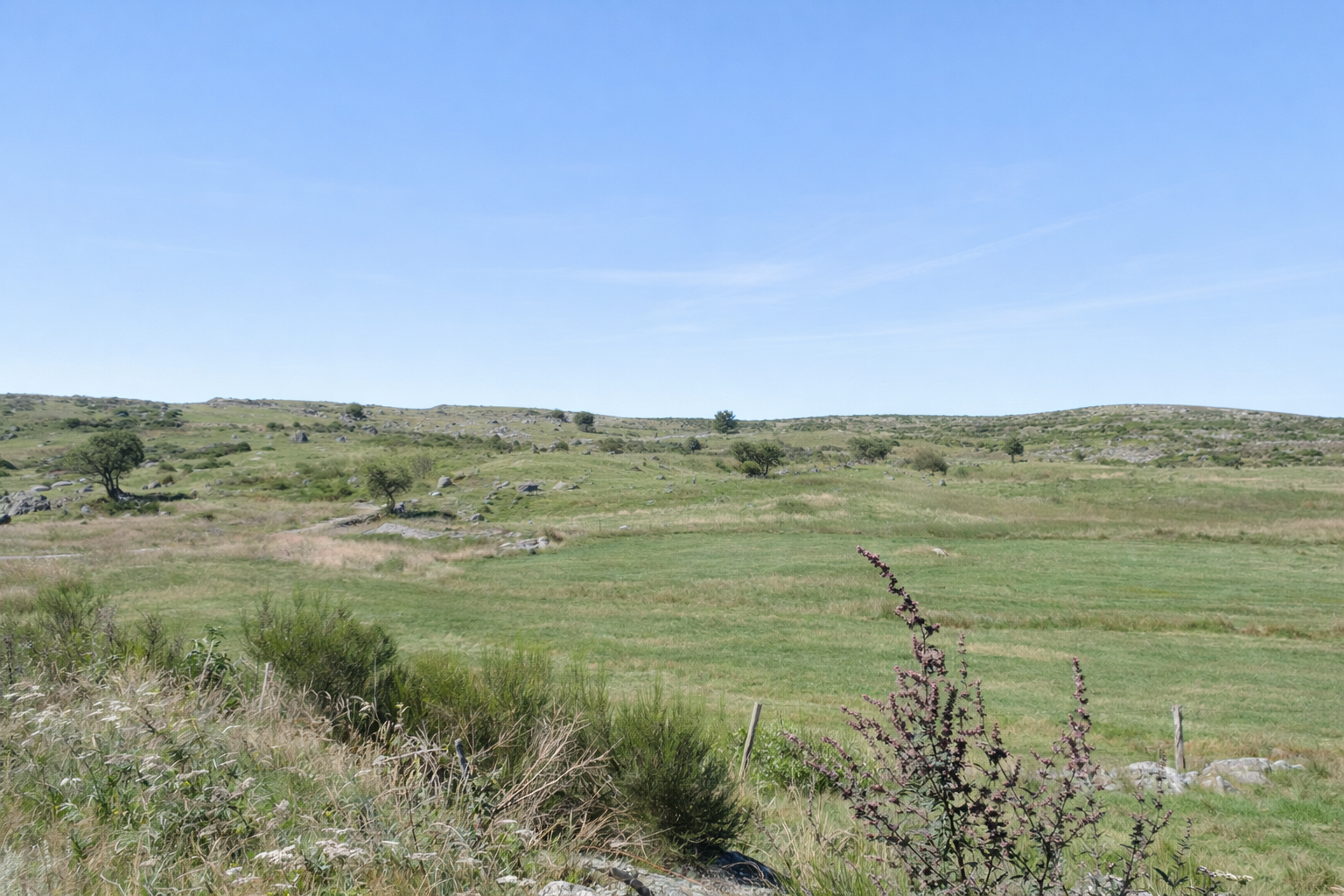
Today, Aubrac continues its story, like a slow incantation carried on the winds of the high plateau. Here, the ancient legend remains intact: the tale of medieval pilgrims lost in snowstorms, tormented by hunger, and watched by wolves lurking in the shadows of the moorland. The route stretches southwestward, a slender thread crossing a stripped-back landscape that feels almost primeval. Born from the volcanic upheavals of the late Tertiary period, this land unfolds as a sea of grass punctuated by granite boulders, immobile sentinels slowly sculpted by time among the grazing herds. This is a land that remains silent, a land that listens, a land where silence itself becomes a presence. It is also the domain of the “burons”, those stone shelters roofed with wooden shingles, remnants of a pastoral world where shepherds found refuge and solitude during the summer grazing season and the annual transhumance. Aubrac gathers together everything that pilgrims and walkers seek: an unadorned peace, an inhabited silence, and total immersion in the vastness of the pasturelands. Here, the signs of the modern world remain discreet, almost absent: a few power lines, occasional roads, and villages scattered across the plateau as though forgotten by time. Nothing truly flourishes here except the grass and the wind.
Today, the route reaches its highest point: the “Roc des Loups”. There, a granite outcrop seems to divide the world in two, like an invisible frontier between earth and sky. The air becomes sharper, the silence deeper, and the horizon opens into an almost unreal immensity. The Roc des Loups does not impose itself upon the pilgrim; it reveals itself slowly, like a secret that Aubrac entrusts only to those willing to take their time. Here there is no noise, no crowd, only the wind sliding across the meadows, dark stones resting where they have stood for millennia, and the rare sensation of being alone before infinity. On a clear day, the gaze wanders endlessly into the distance. In mist, the world dissolves and seems suspended beyond time. You come to the “Roc des Loups” to breathe differently, to slow down, and to reconnect with what is essential. With every step, freedom becomes rawer and wilder. Let the wind whisper its stories. And when you reach the summit, take the time to stop. You will understand why some places require no artifice to leave a lasting imprint upon those who pass through them. Then, from moorland to streams, the route gradually bends towards Nasbinals, a village once bypassed by the Camino de Santiago. Today, it has fully embraced the passage of pilgrims and has become an essential stopping place.
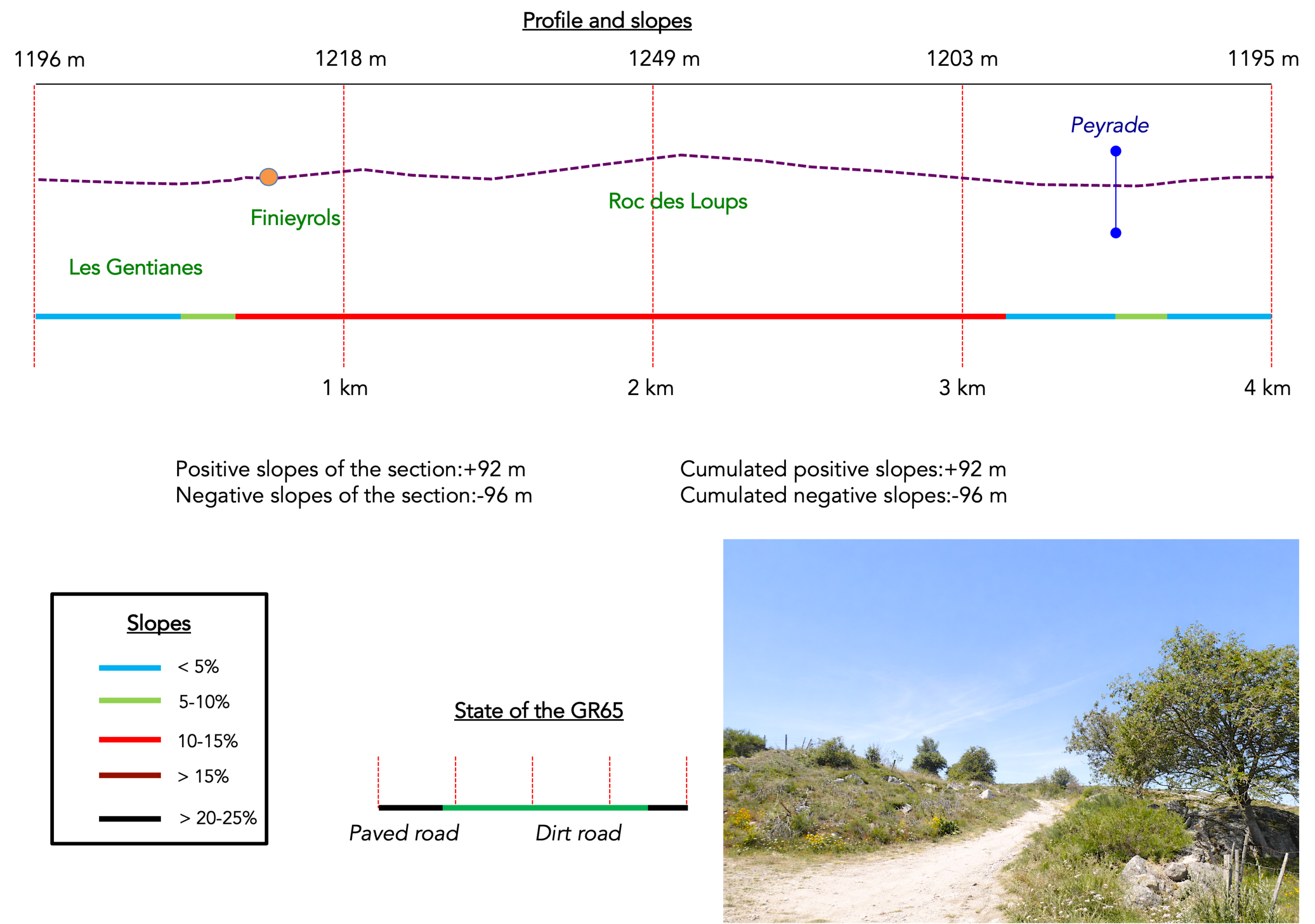
Difficulty level: The stage presents no real difficulties, although it is rarely flat. The route crosses an undulating plateau at more than 1,000 metres above sea level, through a landscape that is both austere and magnificent, with only modest elevation changes (+165 metres / -186 metres). The only challenge of the day, though very much a relative one, is the climb to the “Roc des Loups” before reaching Rieutort.
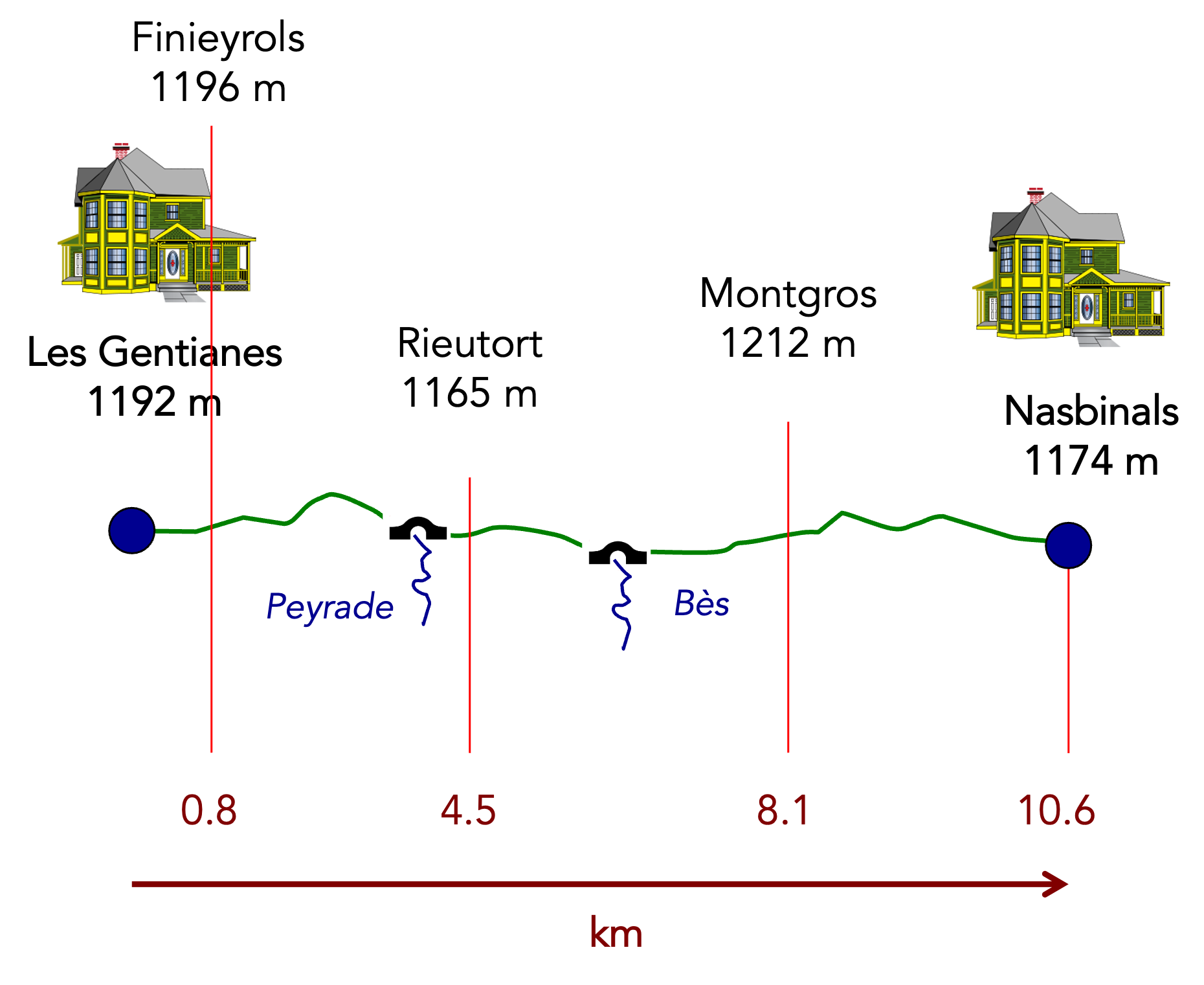
State of the GR65; Today, distances on roads and paths are evenly balanced:
- Paved roads: 5.3 km
- Dirt roads: 5.3 km
Sometimes, for reasons of logistics or housing possibilities, these stages mix routes operated on different days, having passed several times on Via Podiensis. From then on, the skies, the rain, or the seasons can vary. But, generally this is not the case, and in fact this does not change the description of the course.
It is very difficult to specify with certainty the incline of the slopes, whatever the system you use.
For « real slopes », reread the mileage manual on the home page.
Section 1: Towards the « Roc des Loups », at the top of the world
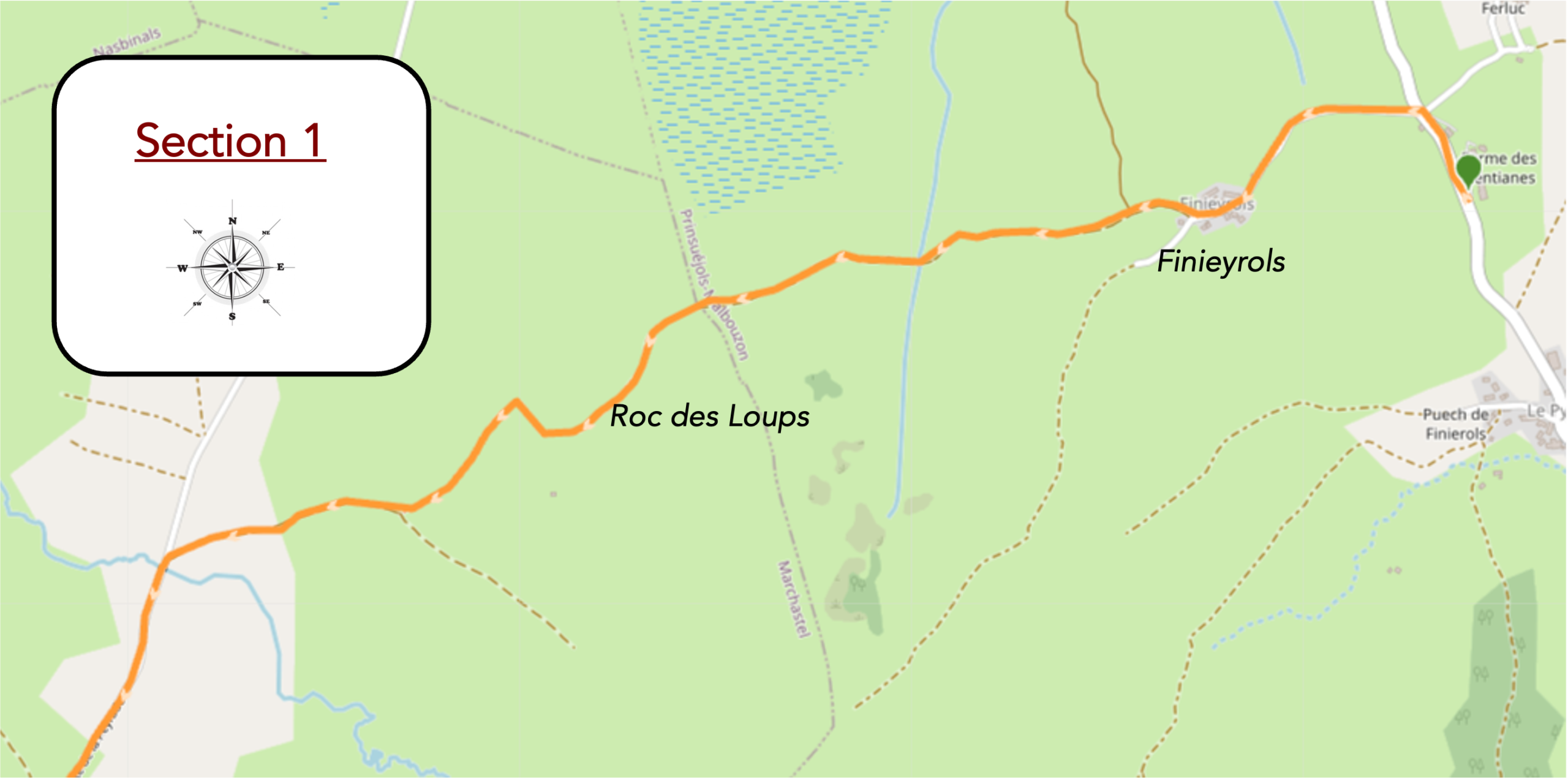
General overview of the route’s challenges: lan easy walk, once again. The only challenge, though a minor one, is the ascent to the “Roc des Loups”.
|
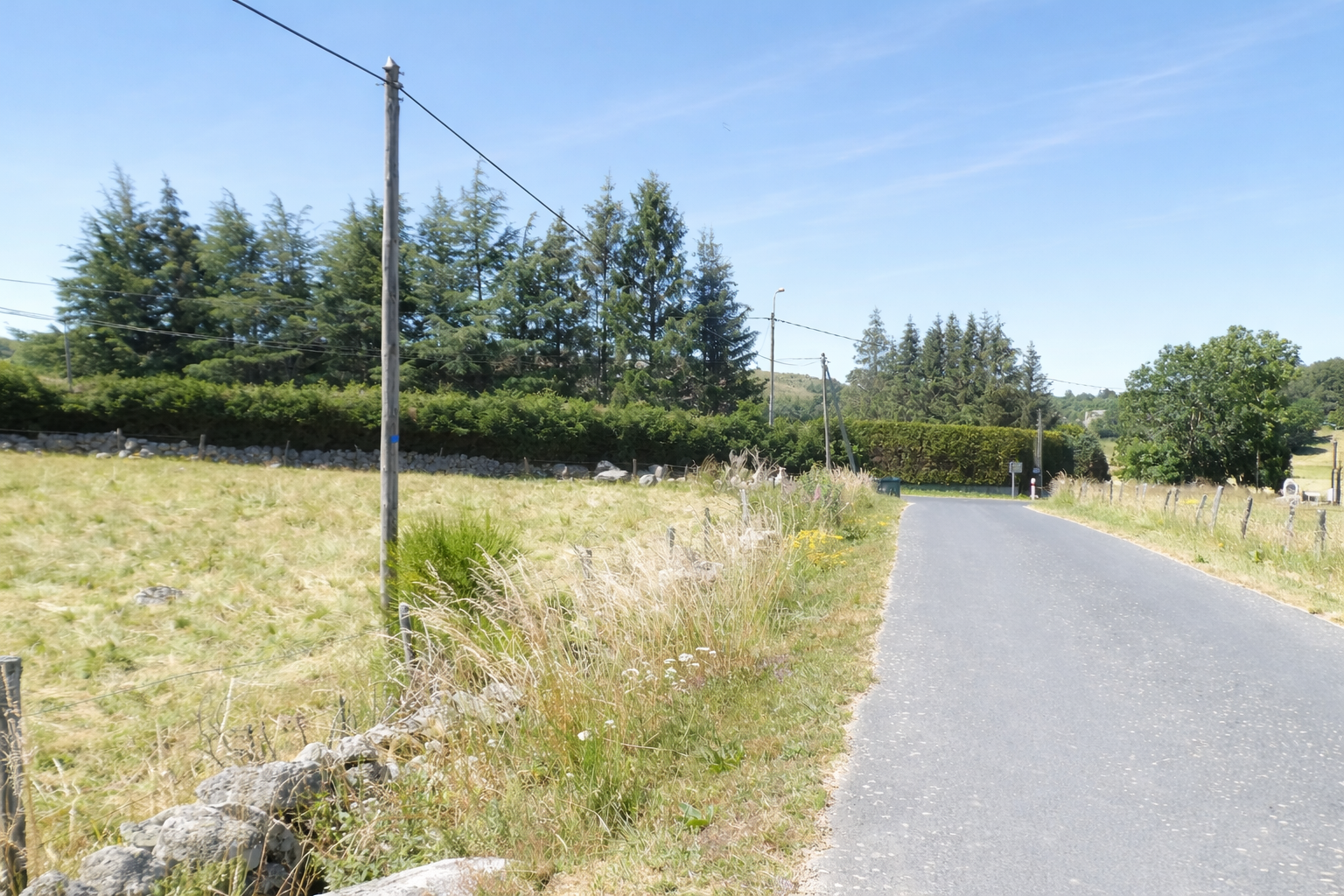
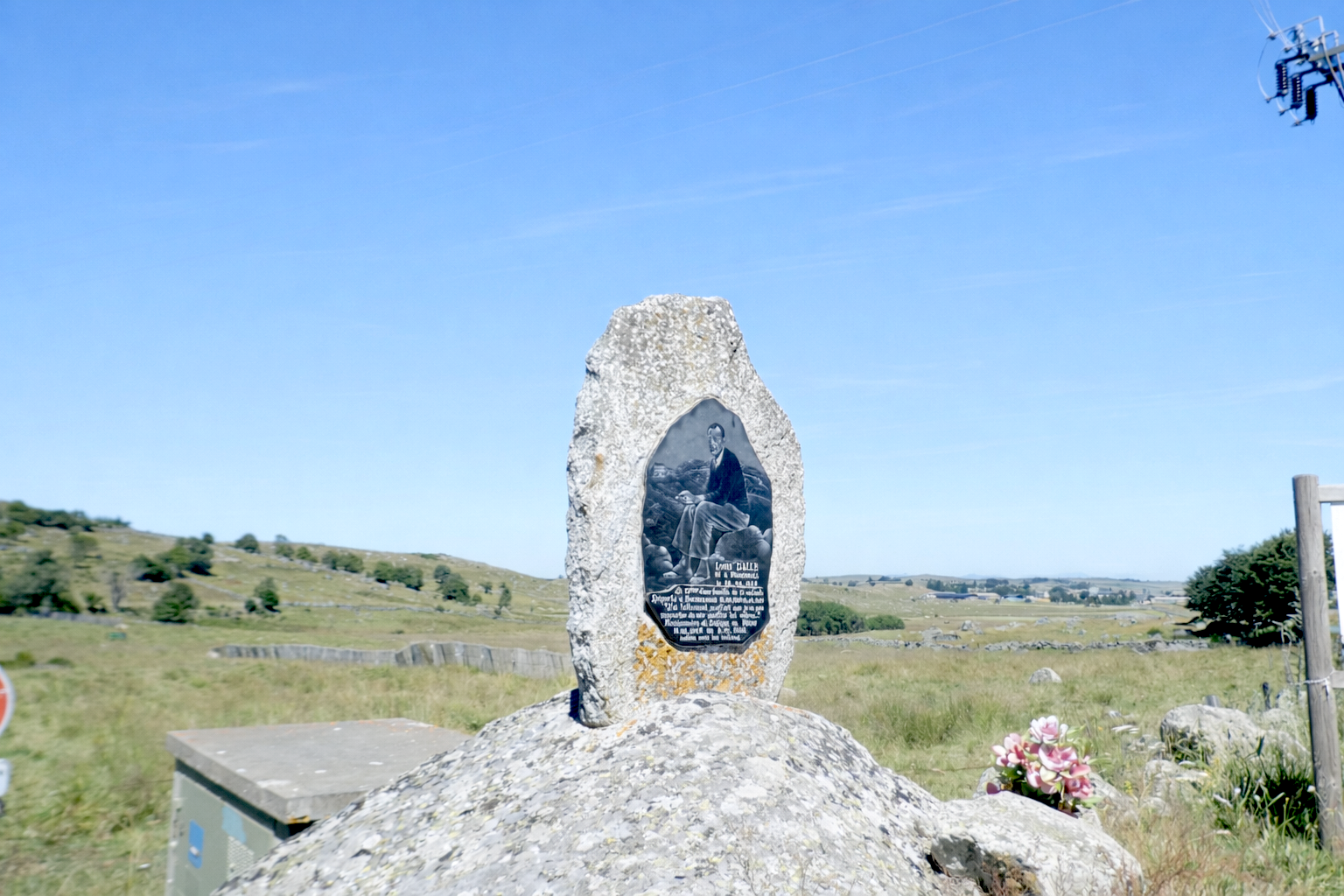
A narrow ribbon of asphalt winds from Les Gentianes to Finieyrols, like a gentle transition between the ordinary world and the more secret realm of Aubrac. Along the way, a discreet memorial preserves the memory of Louis Dalle (1922–1982). From the darkness of the camps of Buchenwald to the light of missionary work in Peru, his life seems to have crossed extremes of its own, much like these lands that are at once rugged and luminous. |
|
 |
 |
|
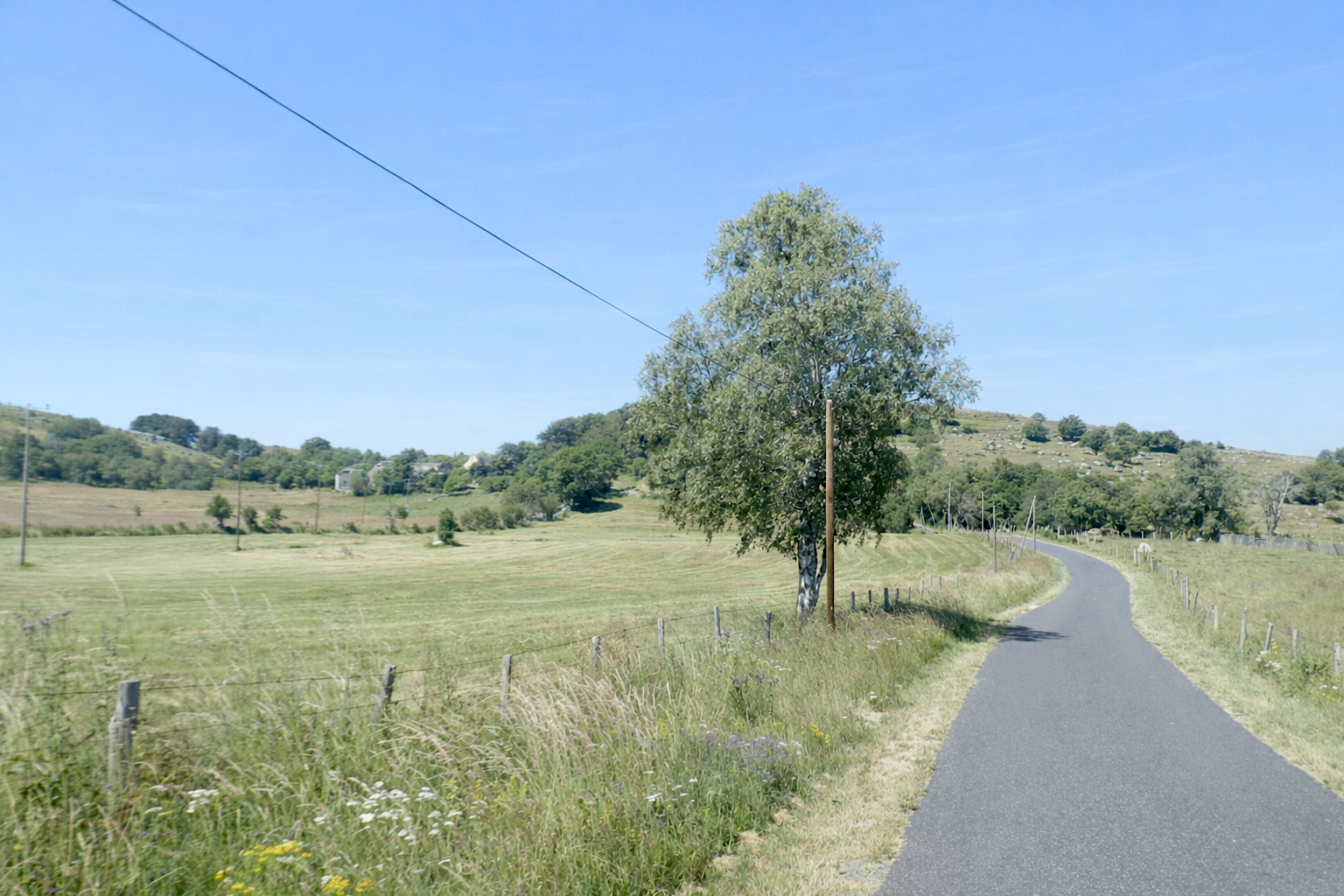
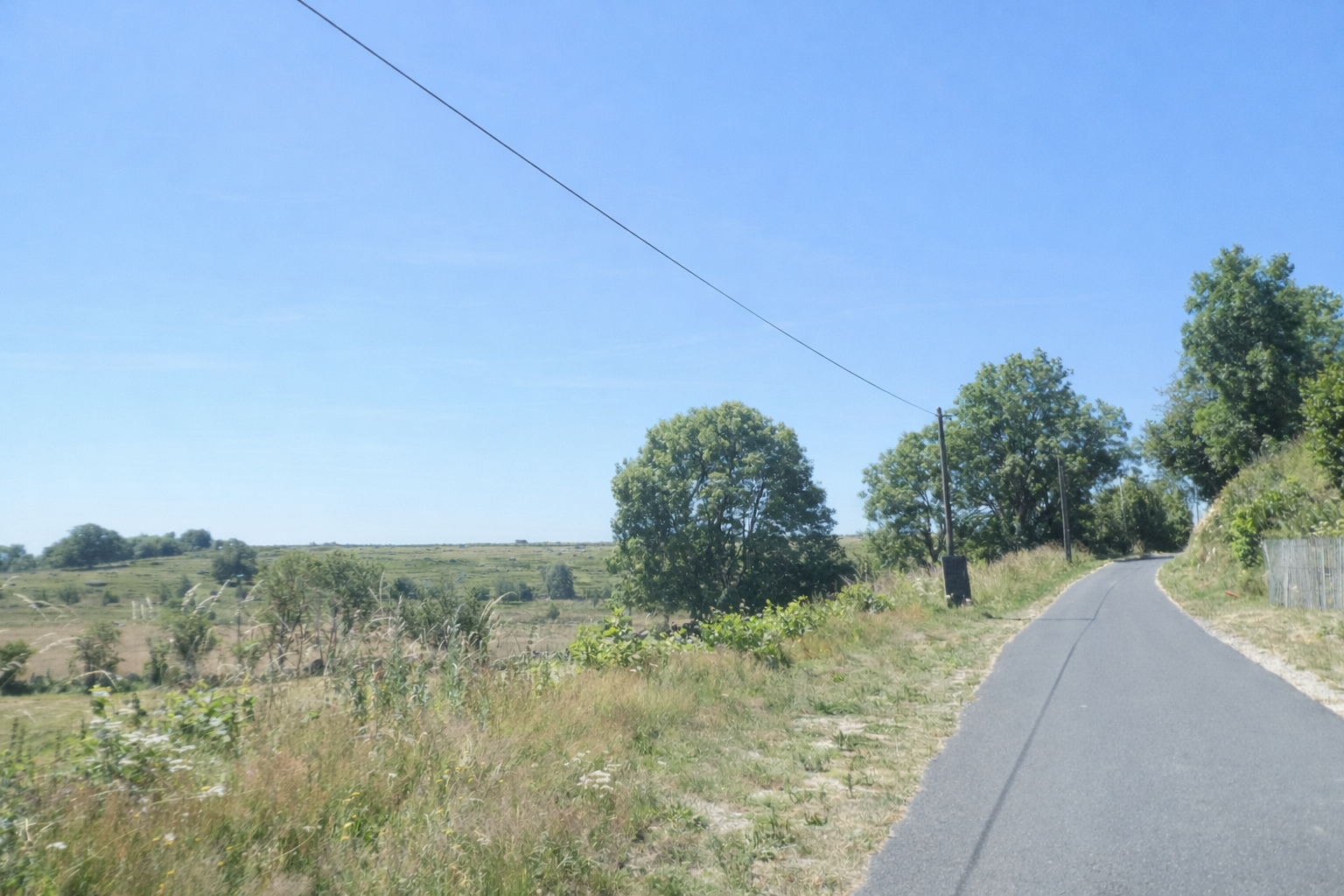
The Aubrac plateau then reveals itself in all its majestic nakedness: a vast solitude, almost oceanic in scale, where grass has replaced the sea. Once heavily forested, this territory was patiently cleared by monks determined to wrest from darkness the haunts of brigands and wolves that threatened pilgrims. Today, little remains of that history beyond an open and almost bare landscape where stone walls and barbed wire, entwined with nettles and brambles, create a poetry of austere beauty. The gaze wanders in every direction, suspended between earth and sky, with the strange sensation of standing, if only for a moment, at the top of the world. |
|
 |
 |
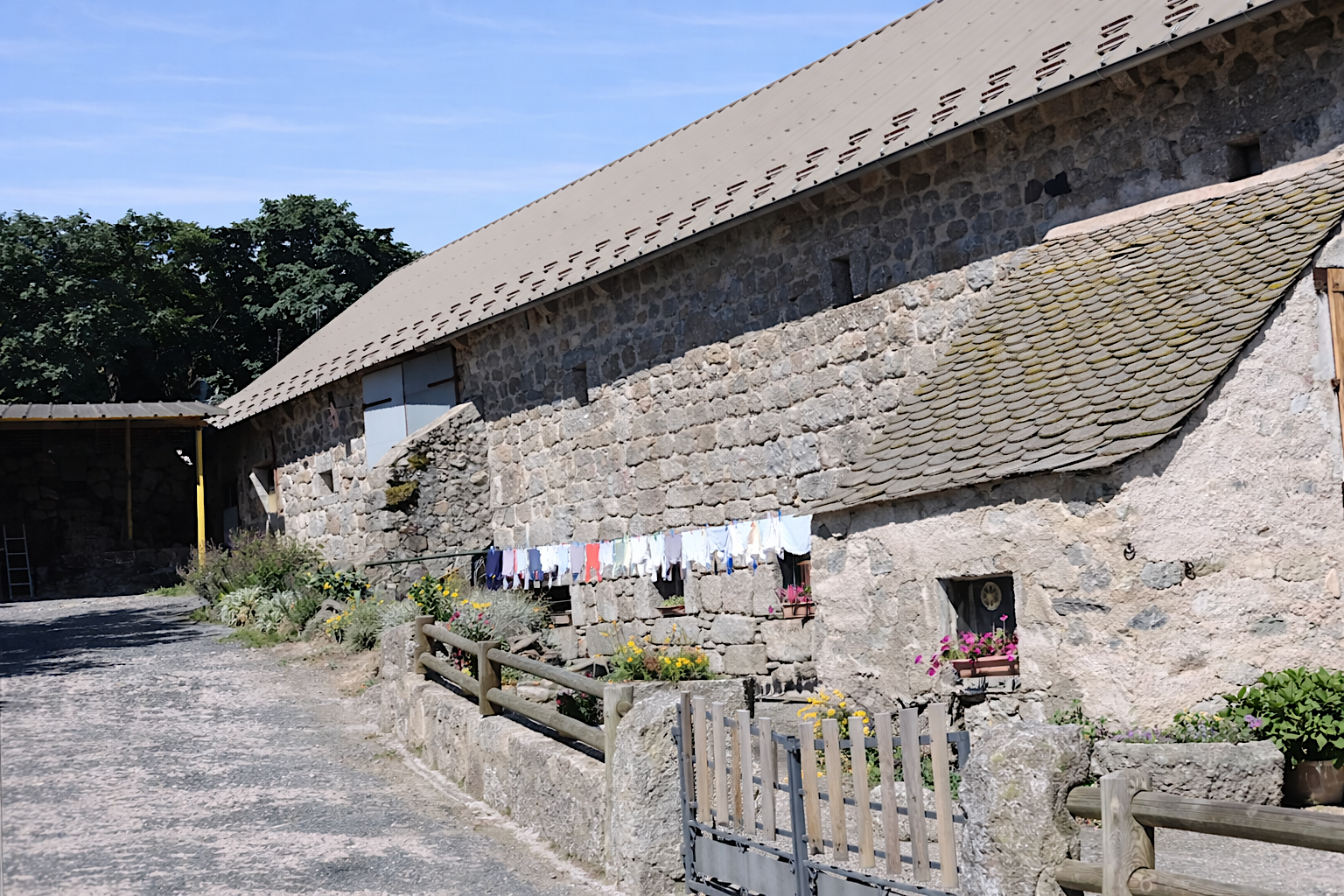
The enchantment reaches its peak in spring, when the moorland transforms into a shifting carpet of wildflowers. One day it glows with the golden brilliance of dandelions and daffodils. The next, it offers a more discreet constellation of orchids, violets, narcissi, arnica, anemones, and gentians. Then comes autumn, more restrained, when only the sturdy silhouettes of yellow gentians, heather, and still-green broom remain, like the final embers of a fading season. Here is Finieyrols in springtime.
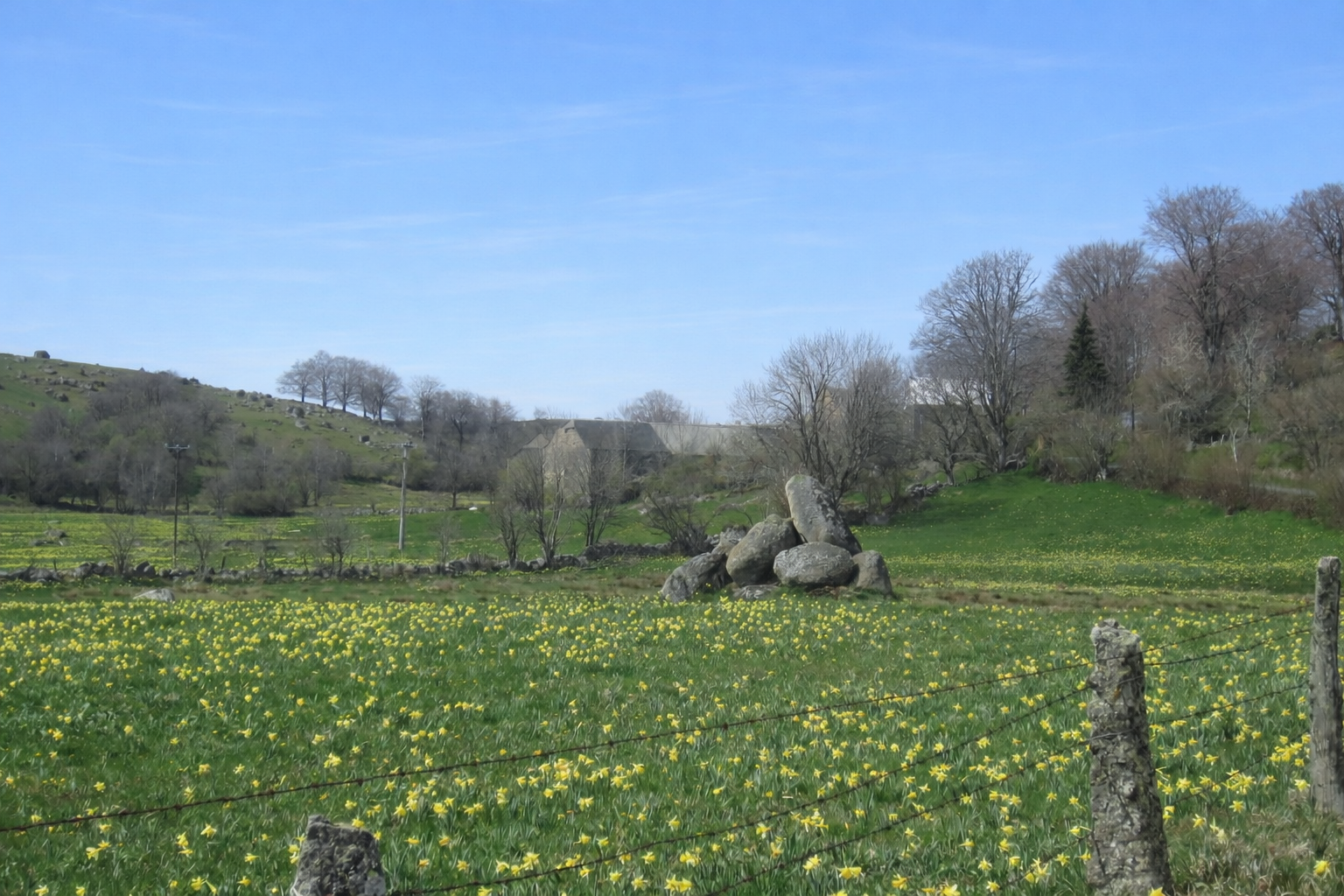
|
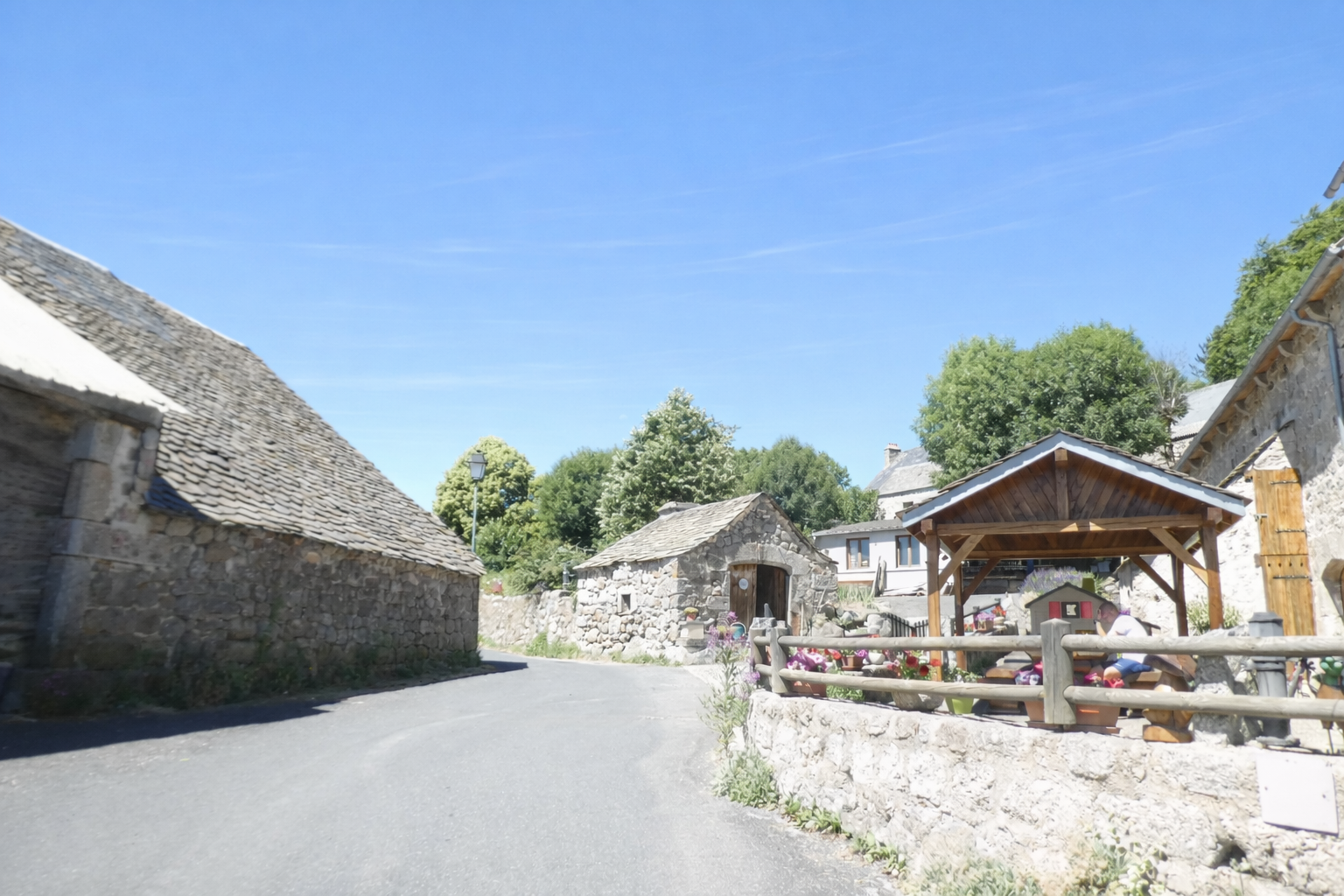
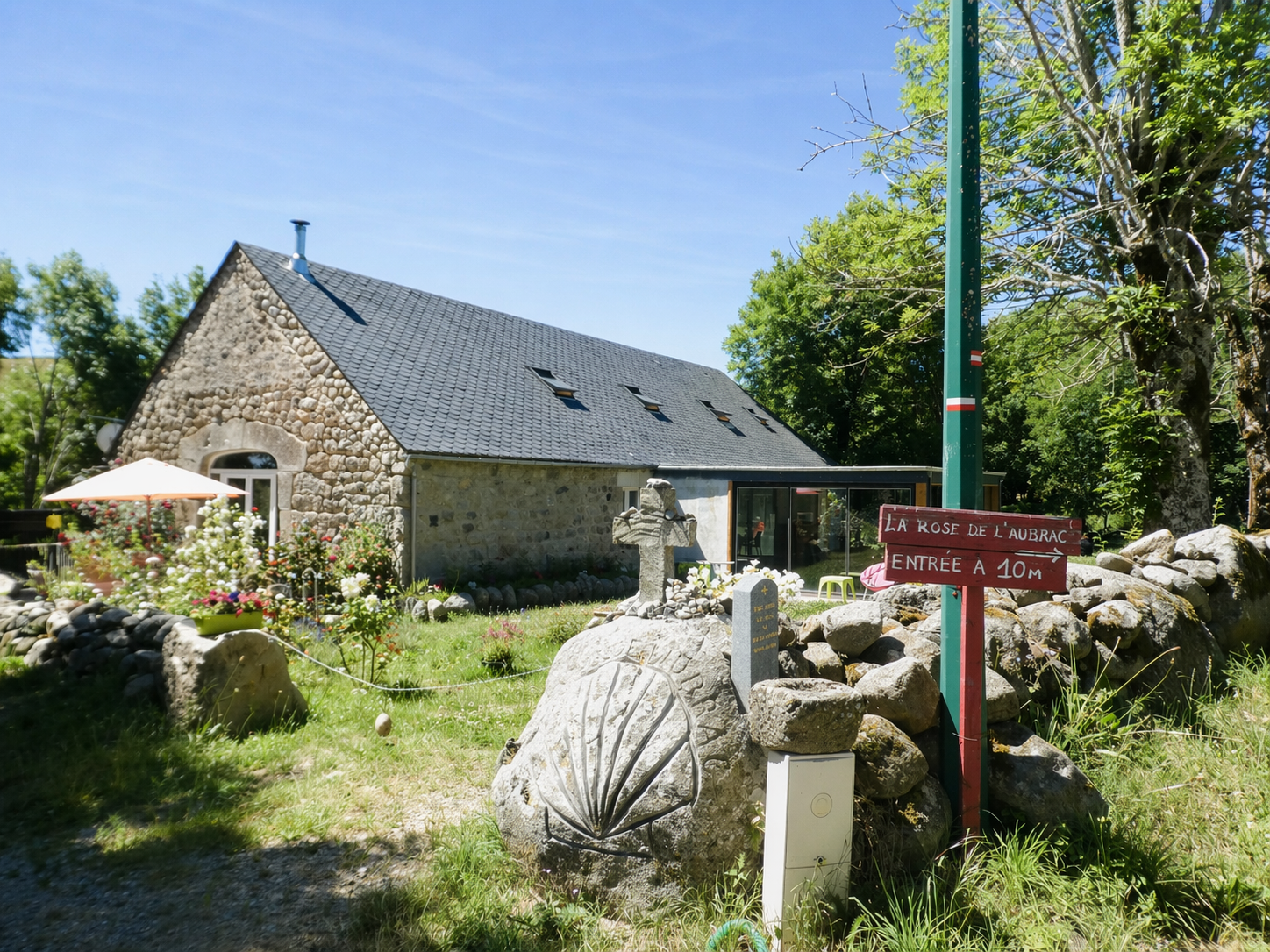
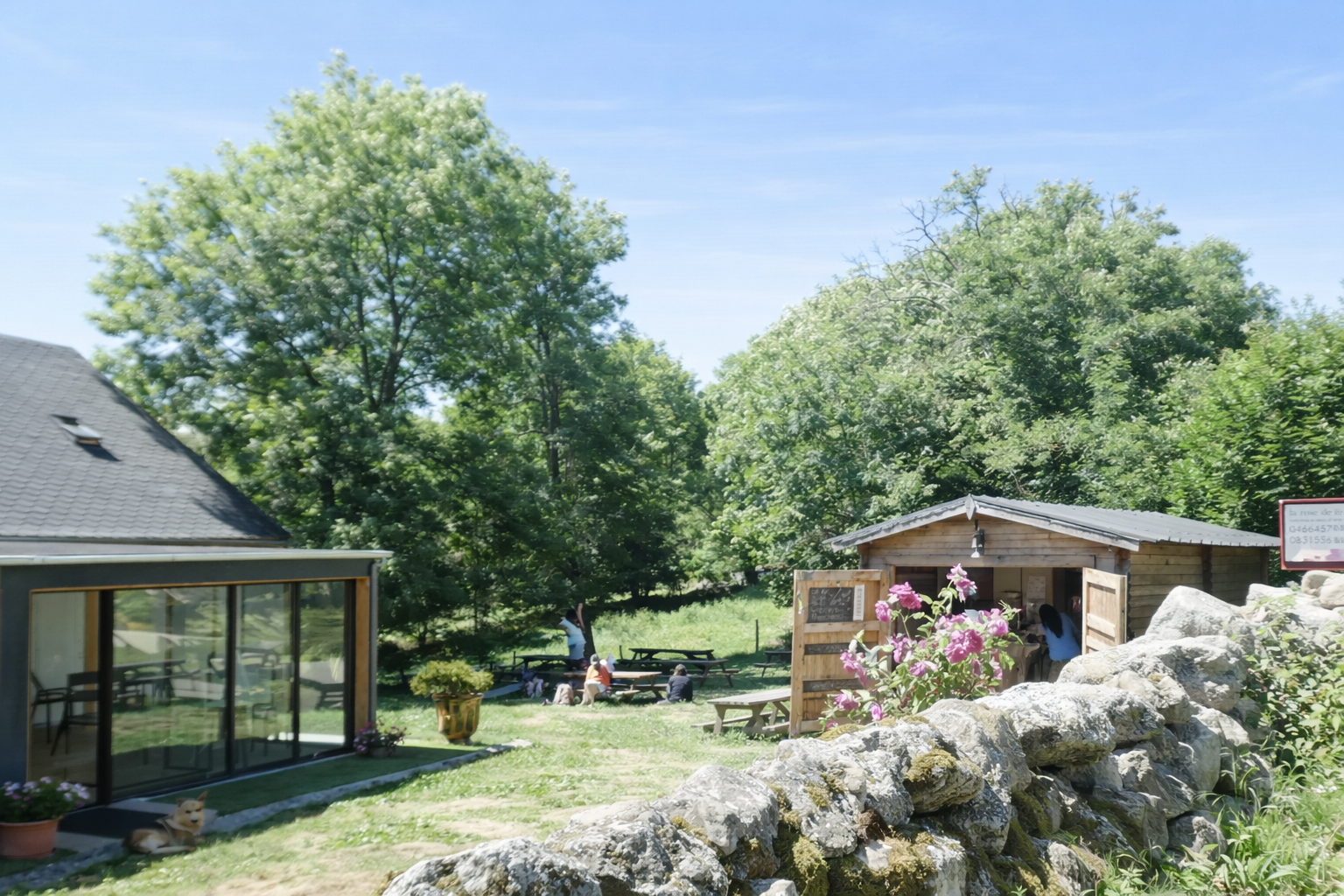
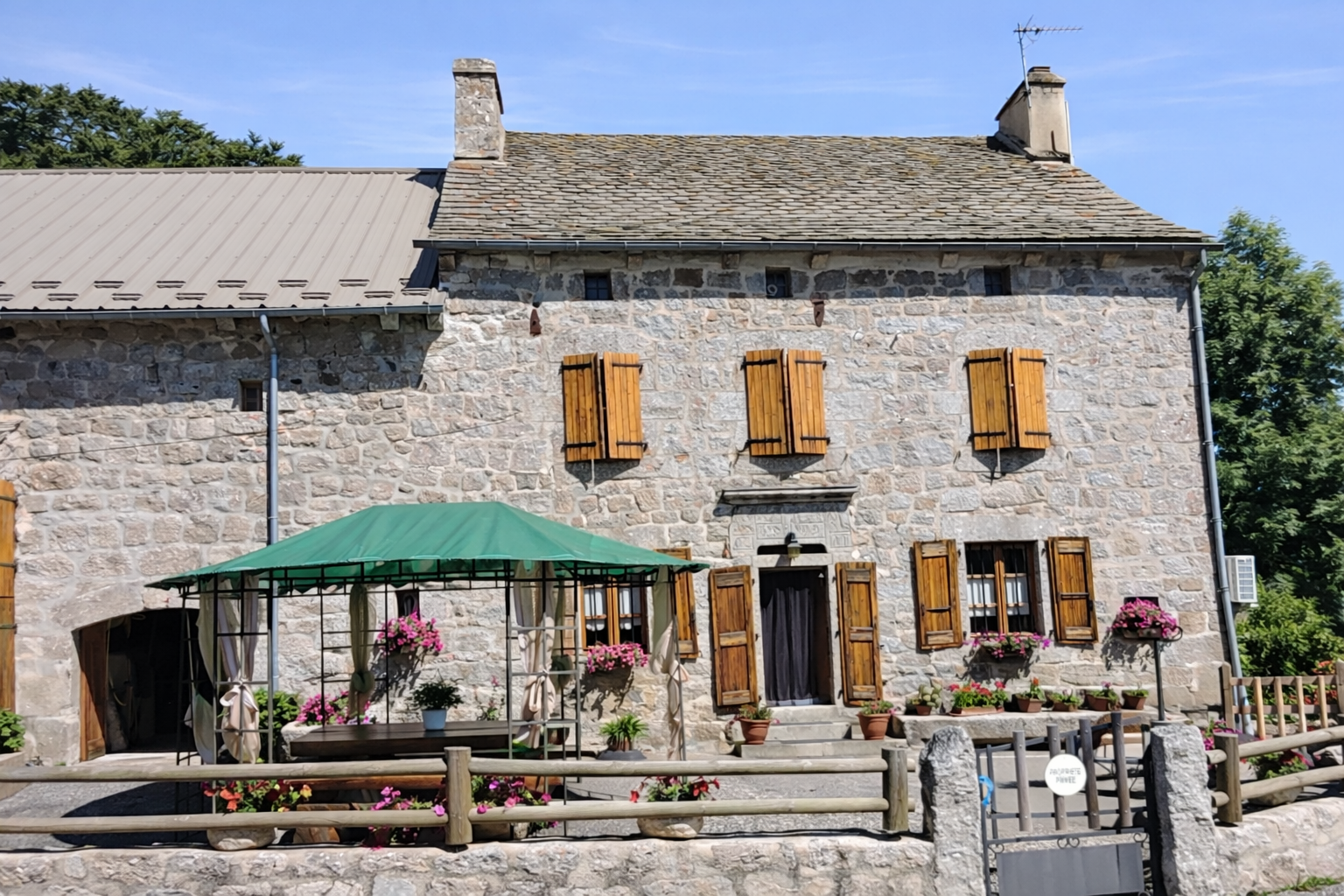
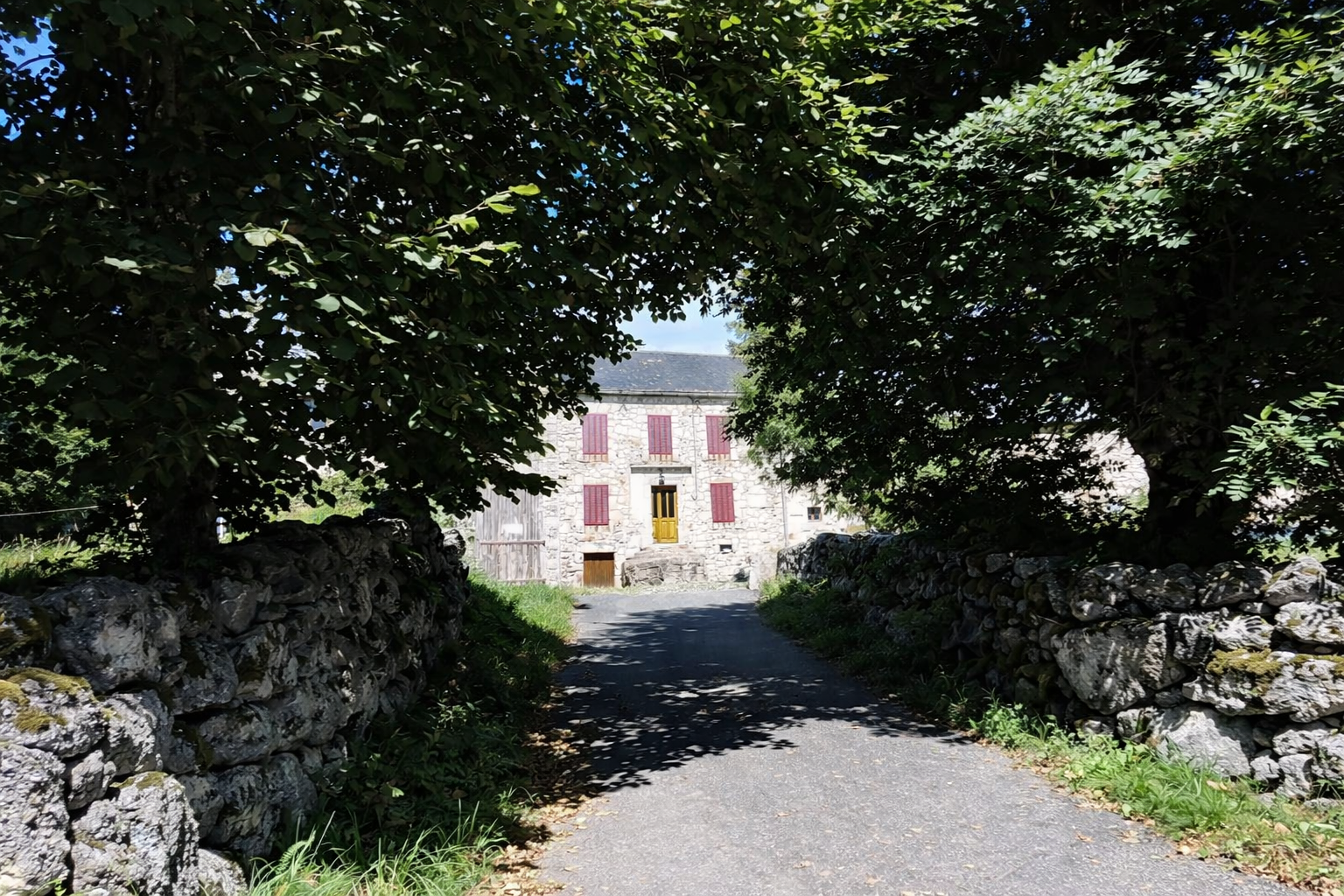
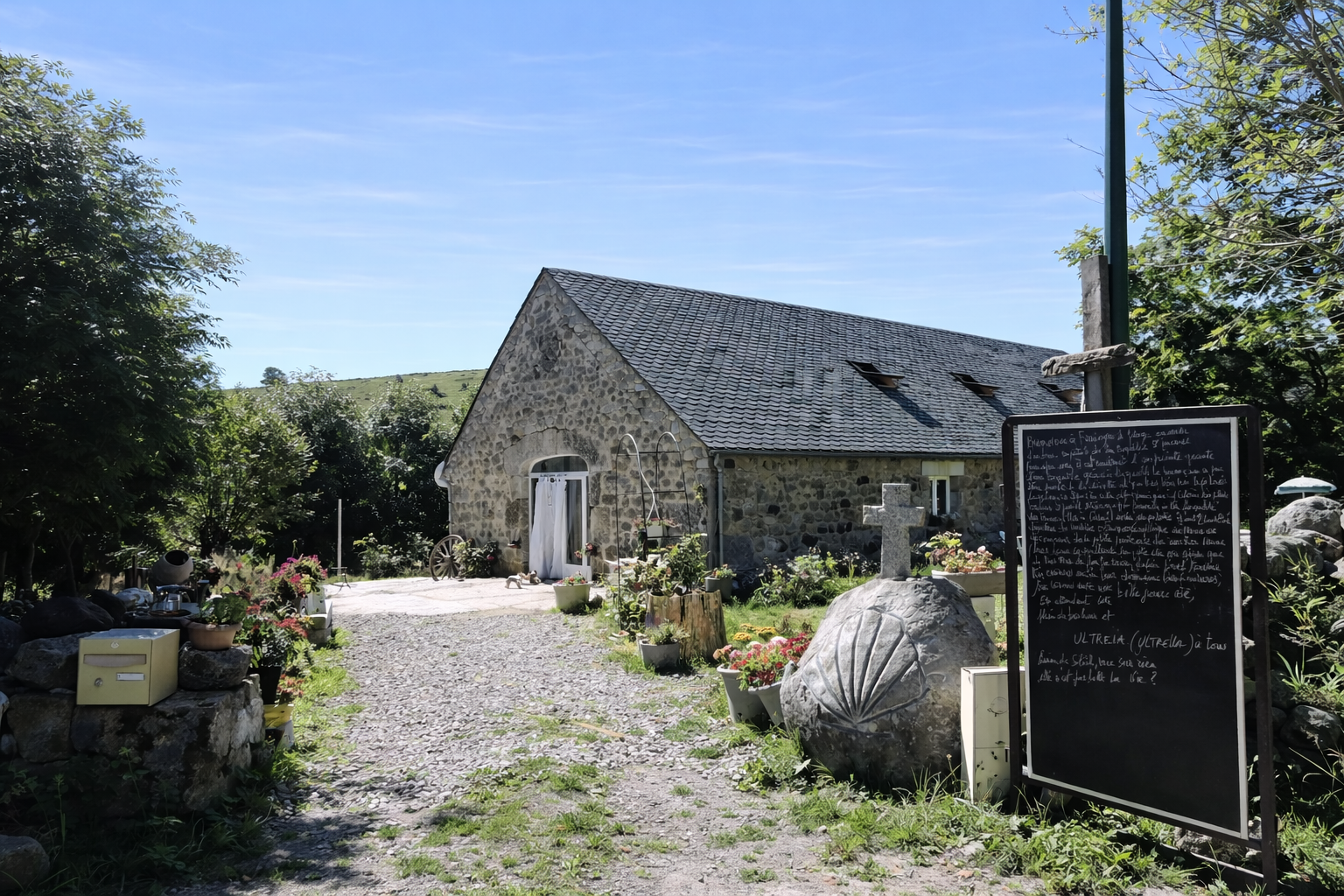
The road soon brushes past Finieyrols, a modest cluster of solid stone buildings gathered together as though to withstand the wind. Here, pilgrims find shelter and comfort, whether around a table or on a lively terrace where paths and stories briefly intersect. |
|
 |
 |
 |
 |
|
The hamlet also contains, discreet and closed to visitors, the birthplace of Louis Dalle, preserved in an almost reverential silence. |
|
 |
 |
|
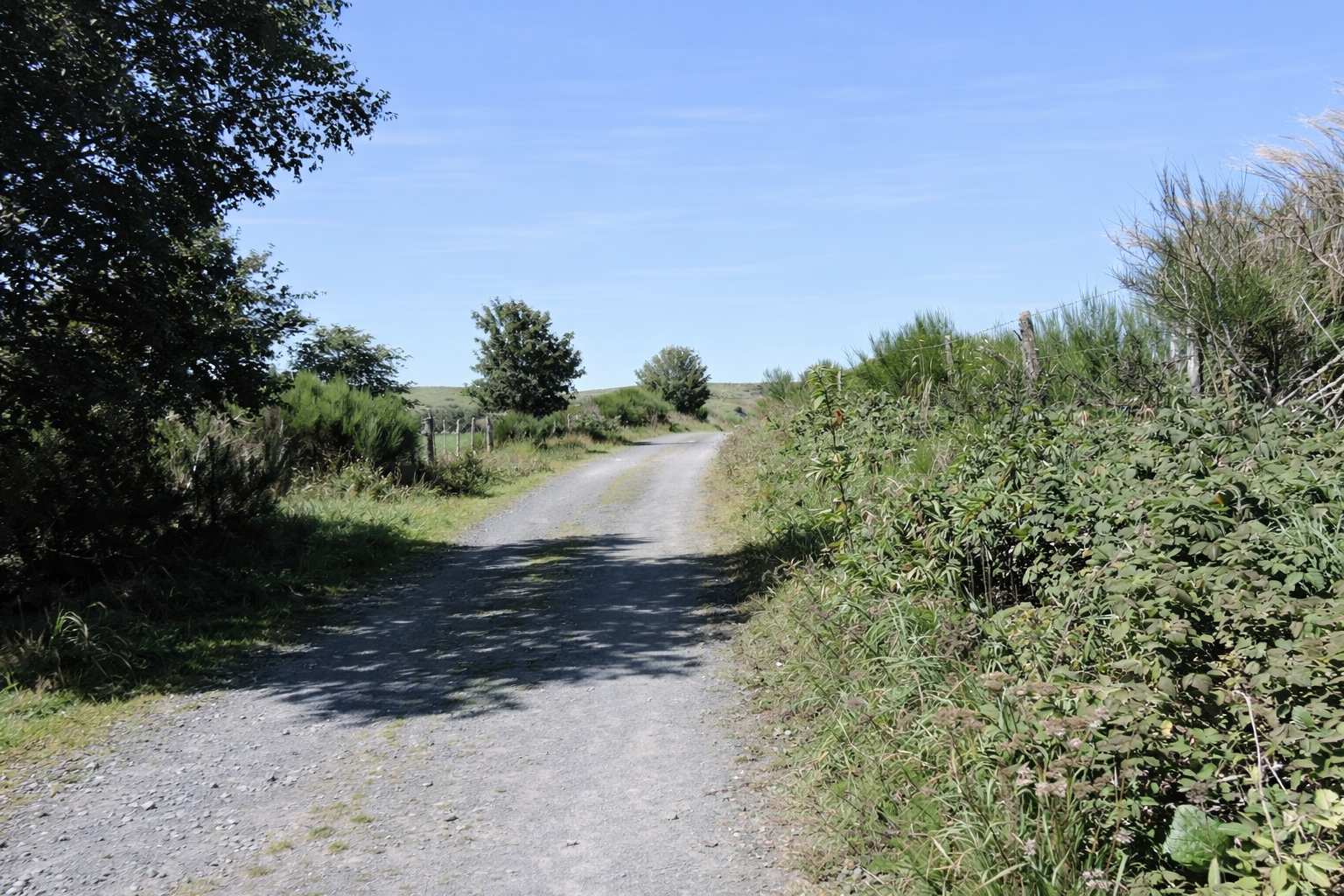
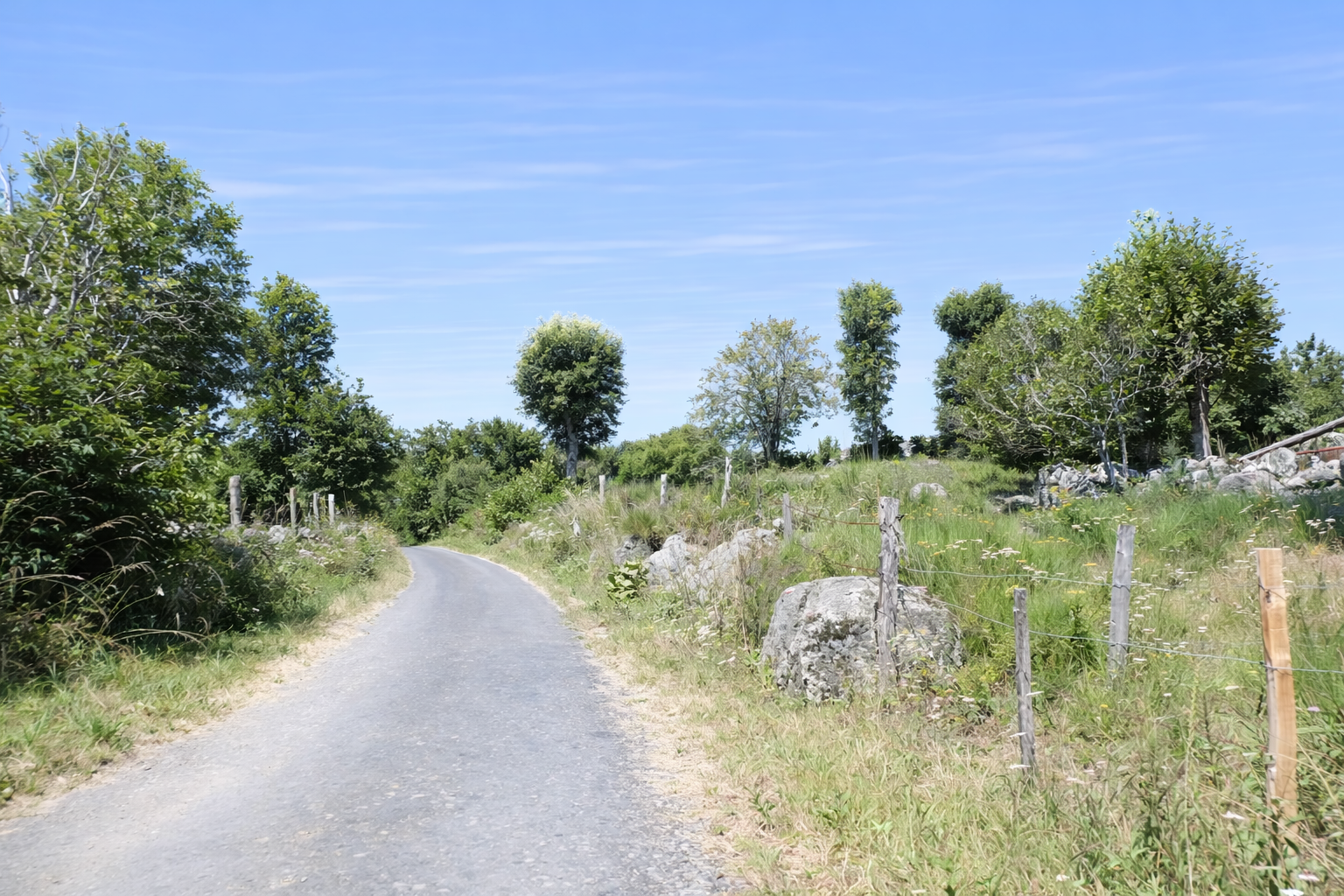
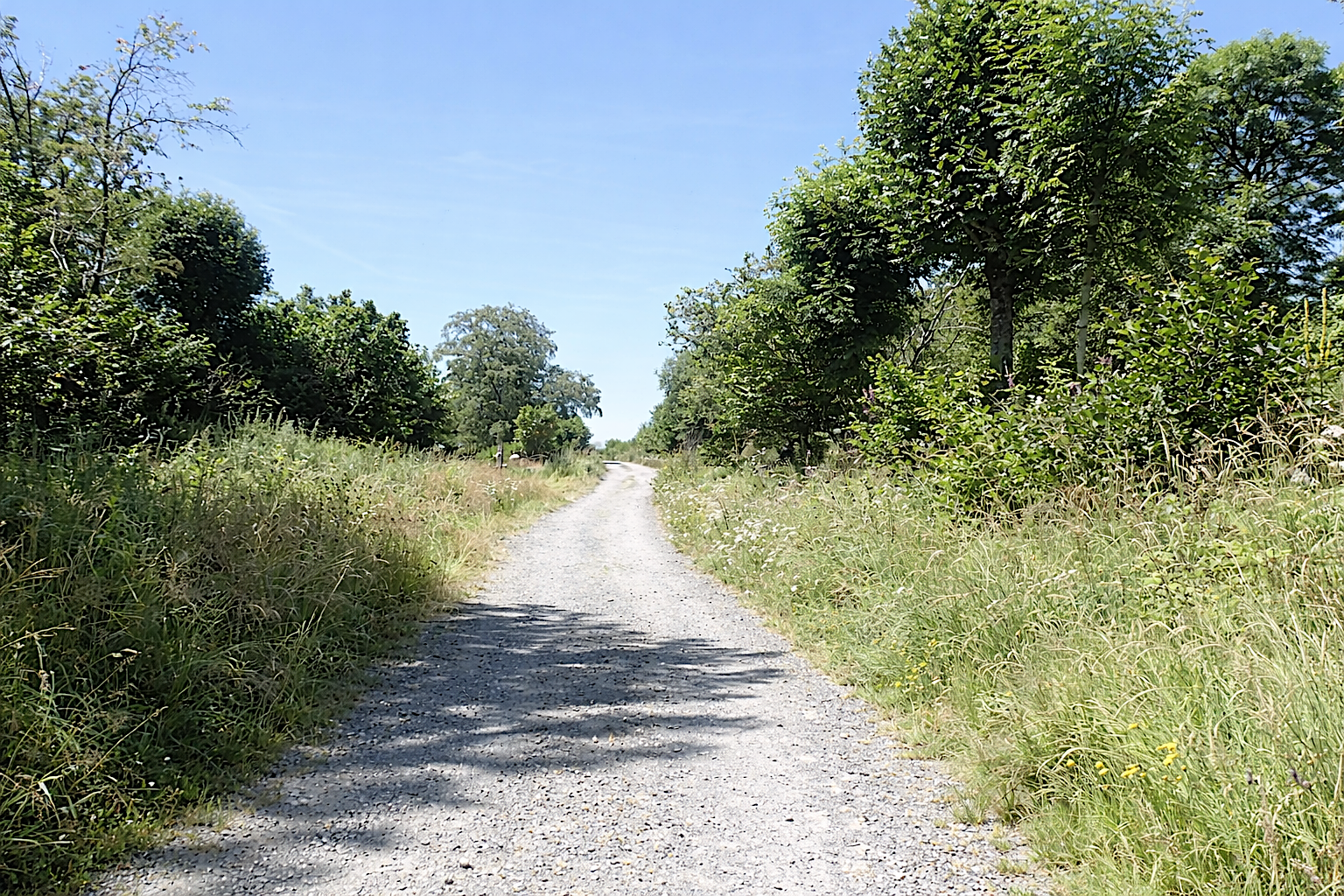
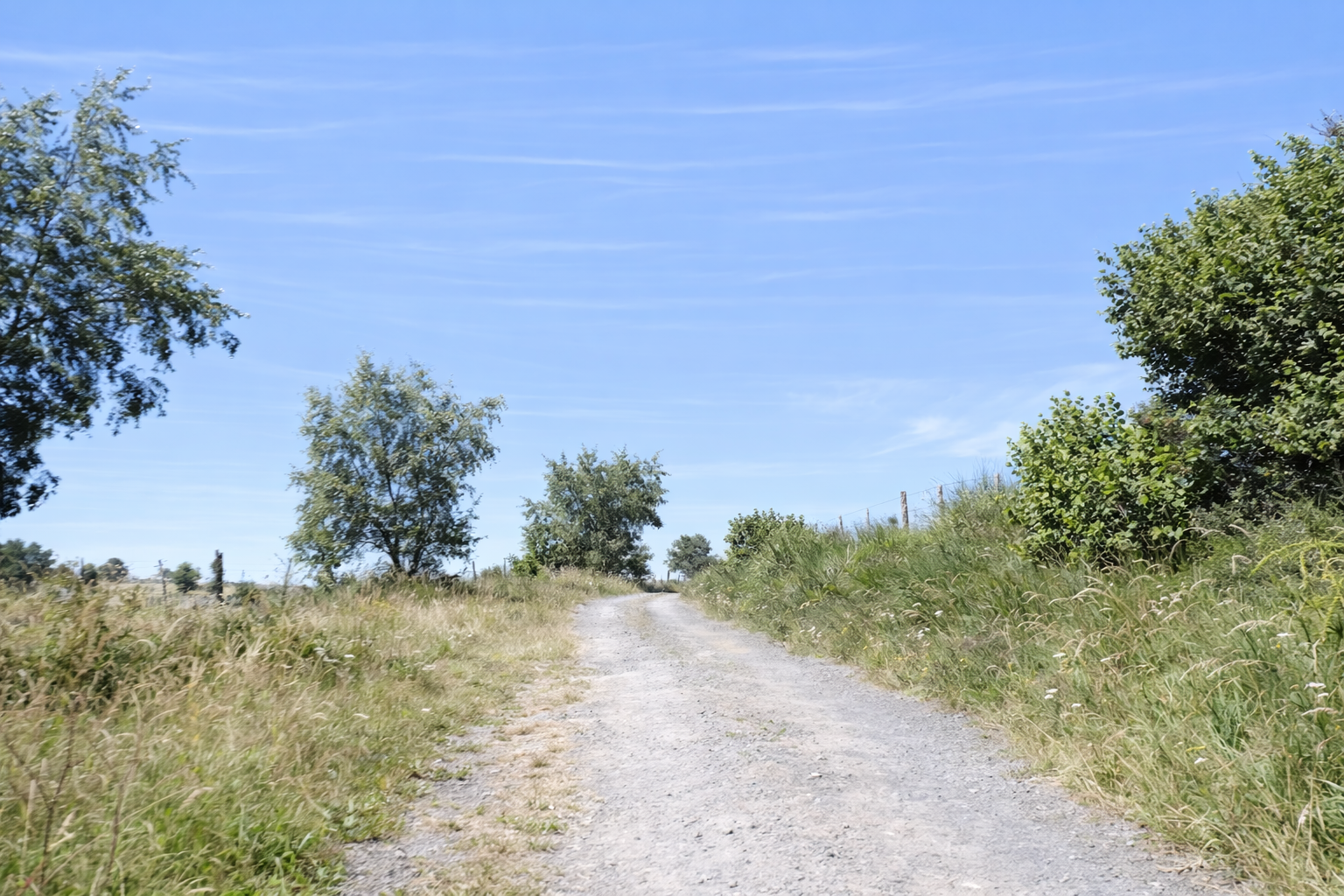
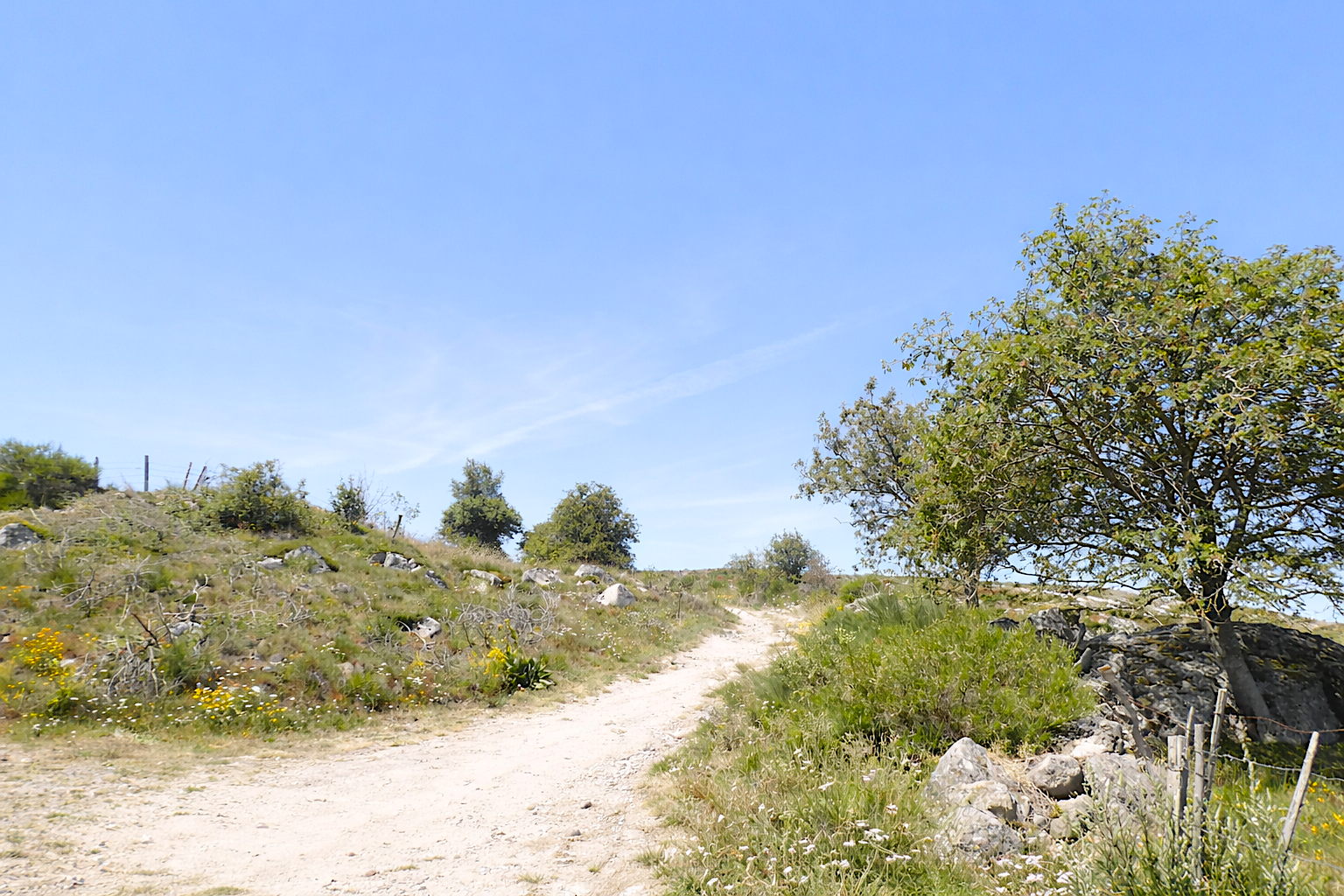
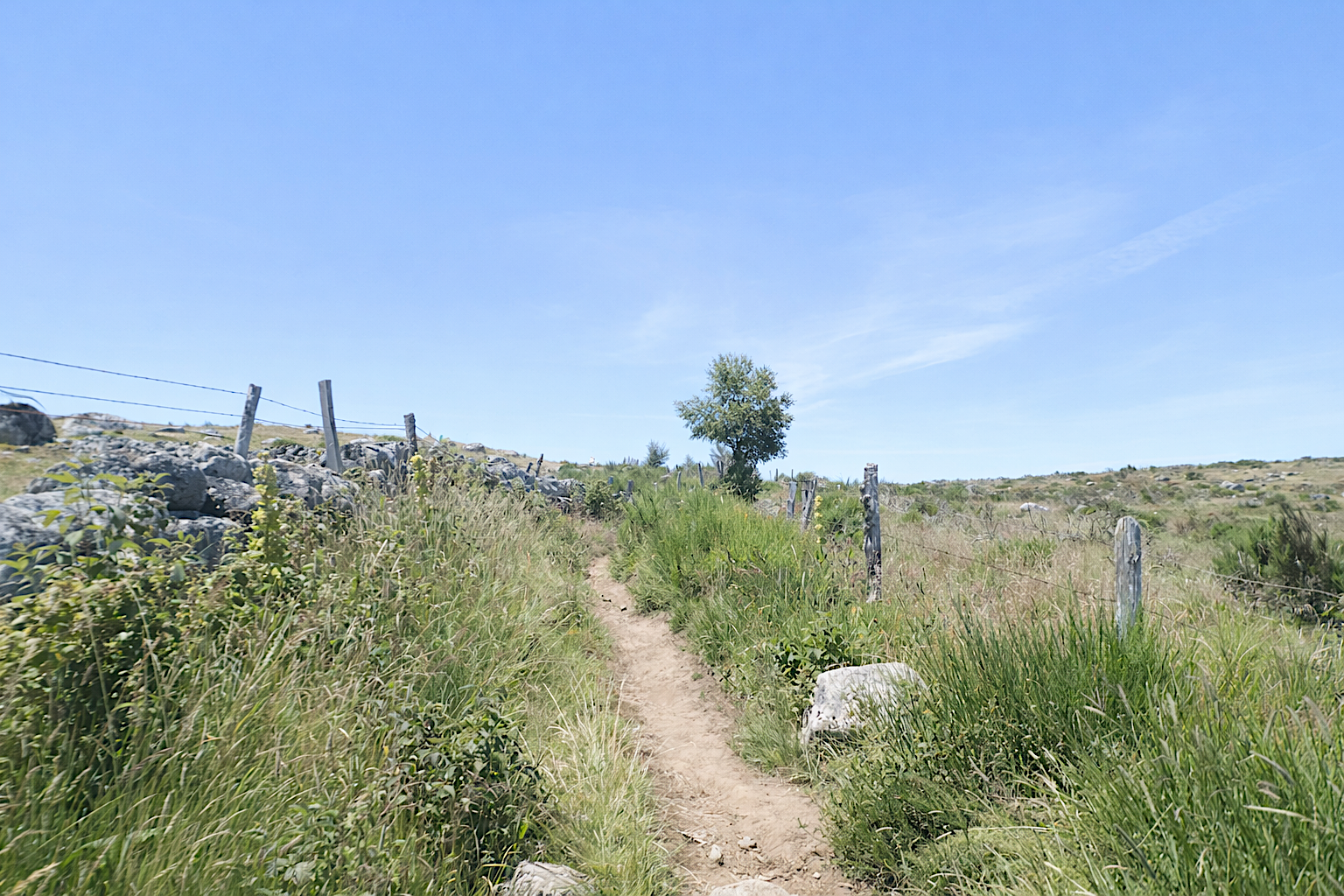
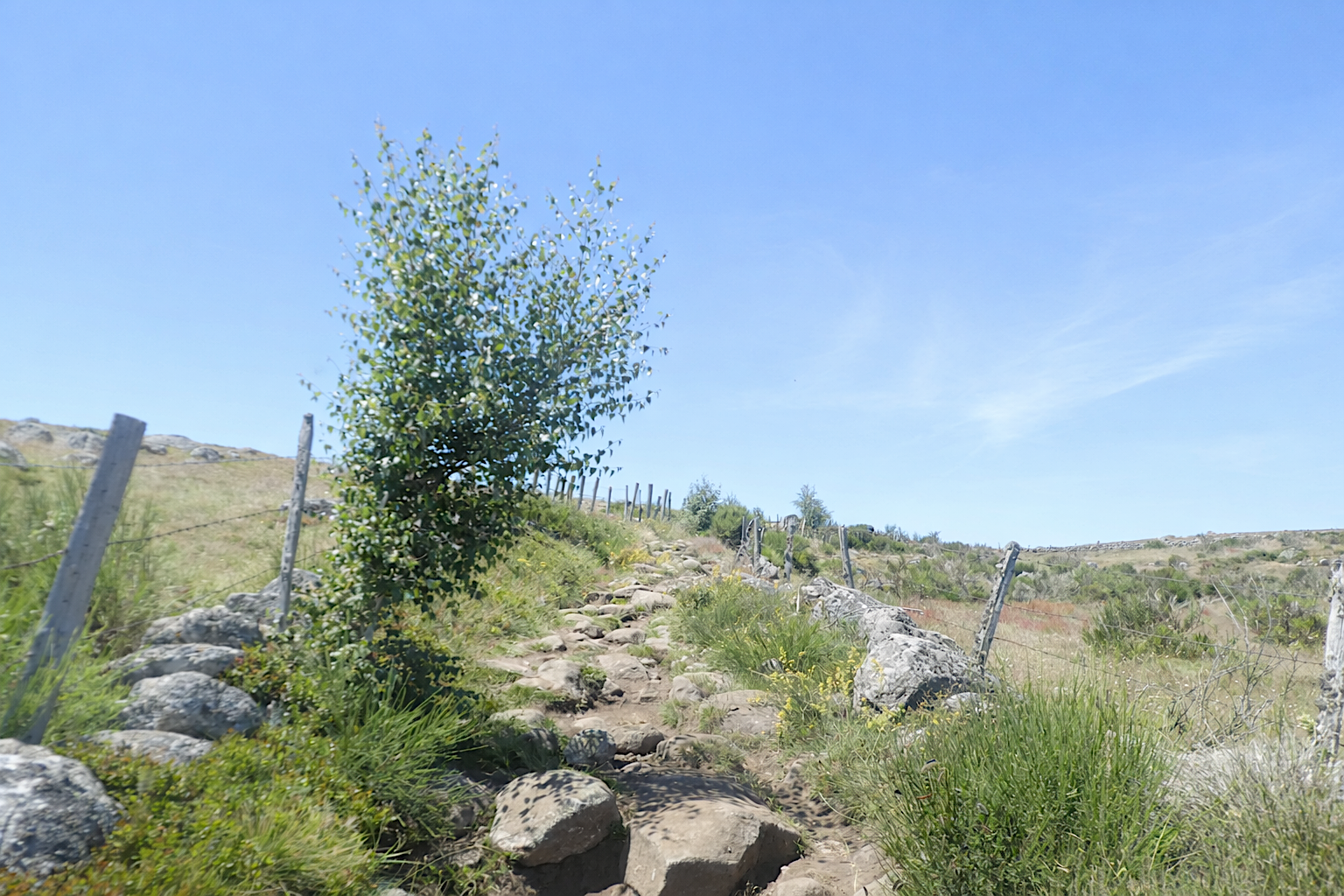
Leaving Finieyrols, the only true climb of the day begins. The path, stony underfoot, climbs through pastures and granite outcrops, gradually leading towards the highest point of the route. Yet the ascent unfolds in stages, sparing the hiker’s breath and even offering occasional gentle descents, as though deliberately delaying the effort and prolonging the anticipation. |
|
 |
 |
|
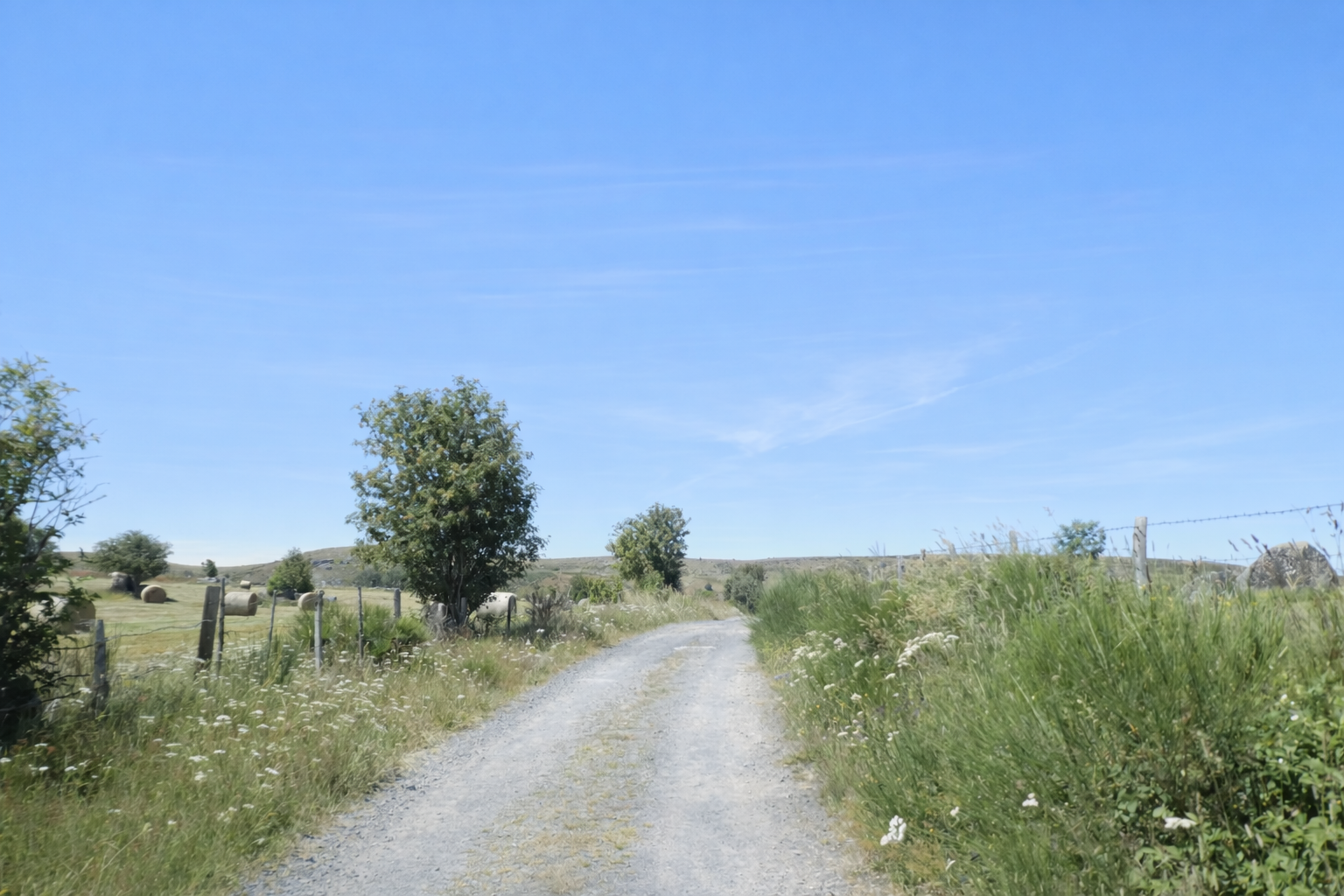
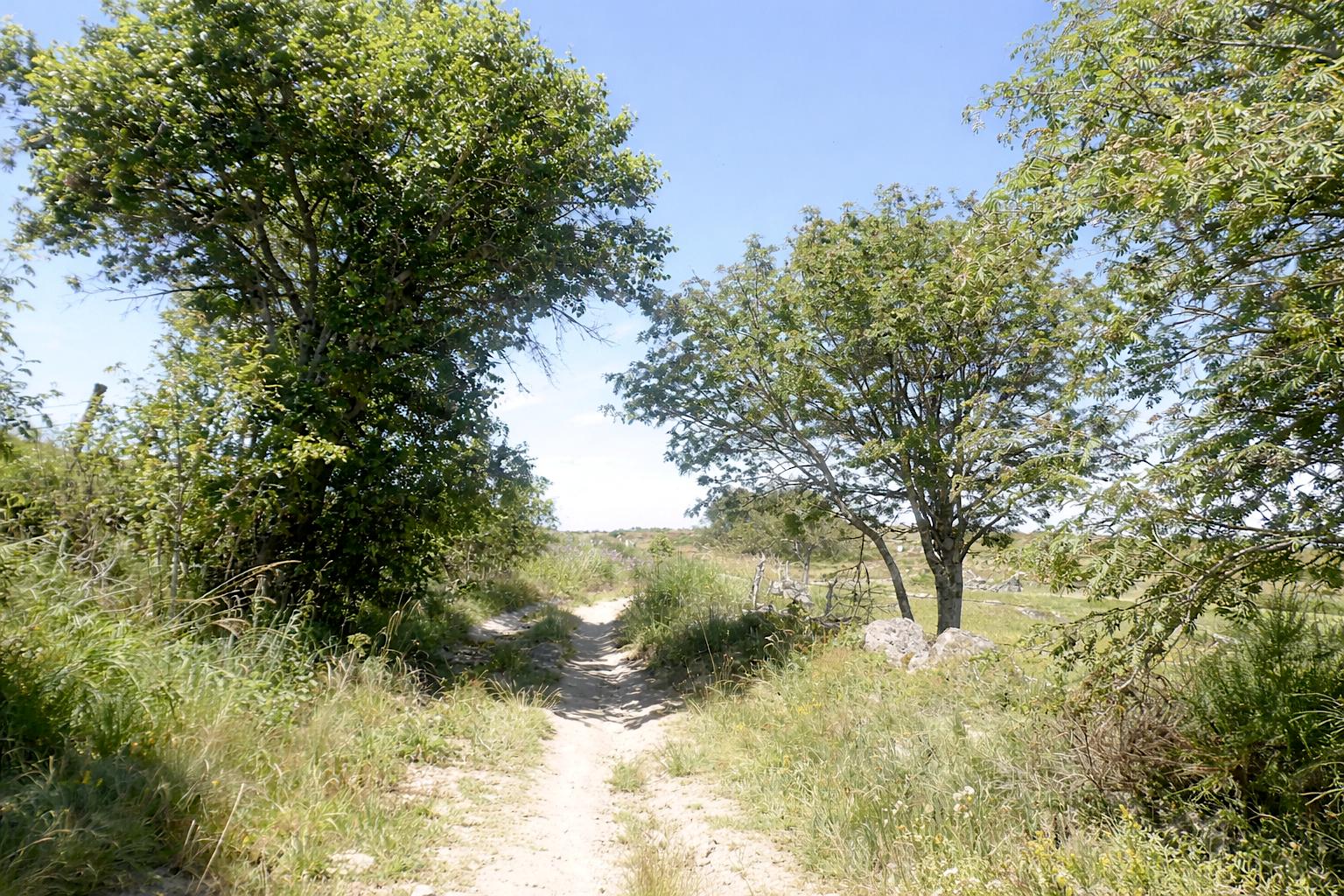
On the slopes, ash trees seem to have conquered the hillside, accompanied here and there by discreet hornbeam stands and field maples. The embankments come alive with broom and wild grasses, creating vegetation that is both free and untamed. |
|
 |
 |
 |
 |
|
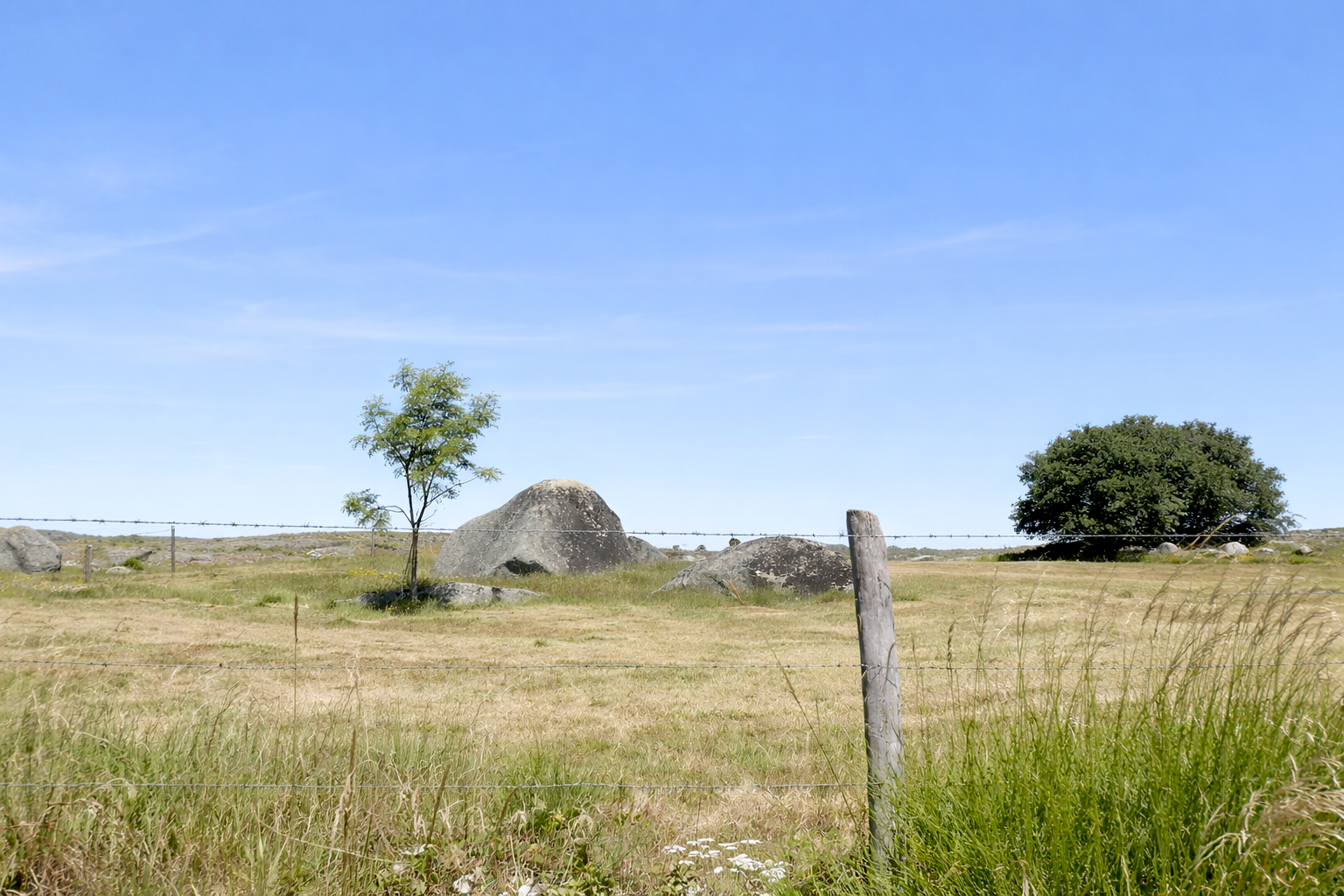
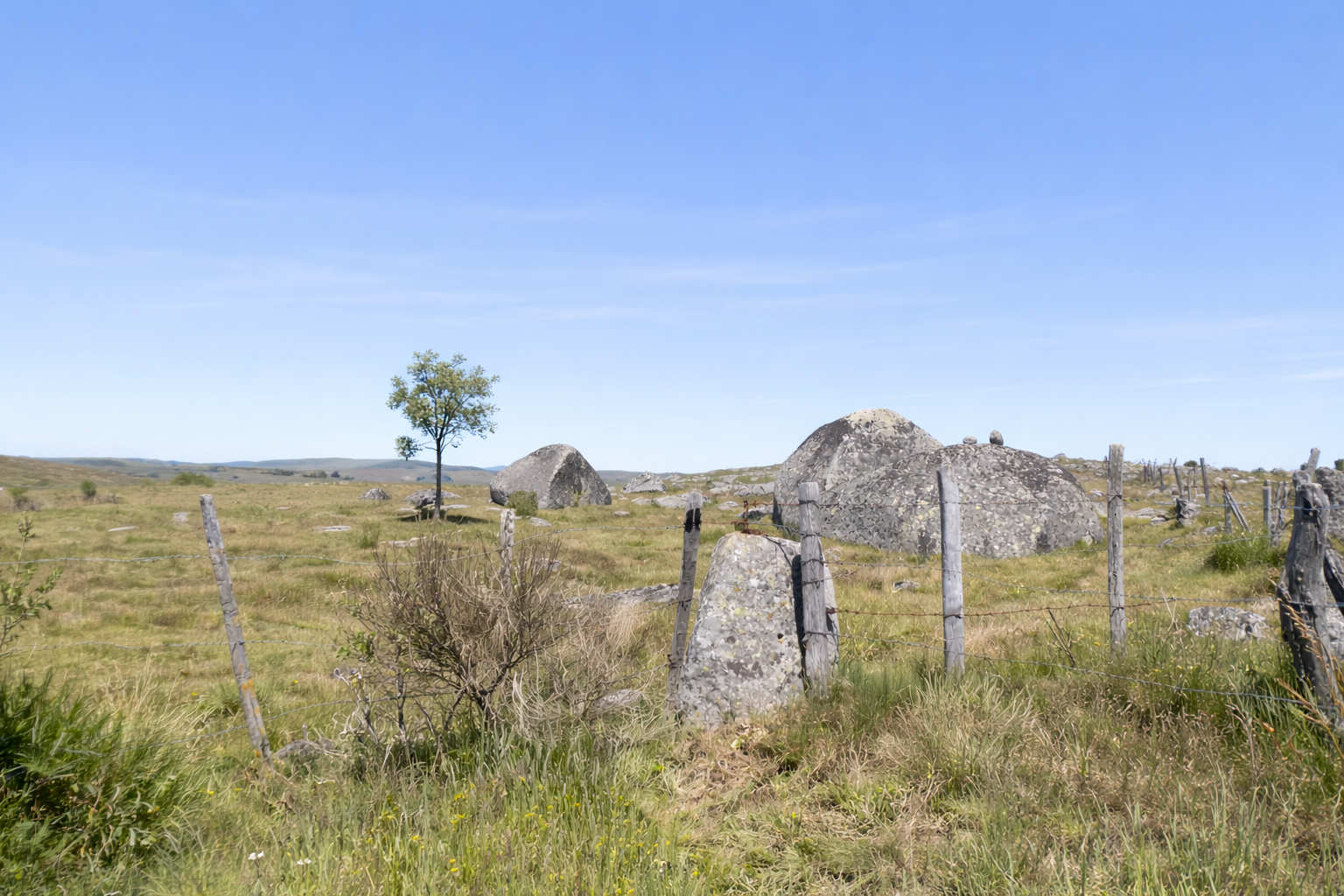
In this almost unreal setting, the eye lingers on the granite blocks scattered across the landscape, resembling ancient relics or forgotten pyramids resting upon the short moorland grass all the way to the summit. It is a primitive geometry shaped by time itself, where nature appears to have left mysterious signs behind. |
|
 |
 |
|
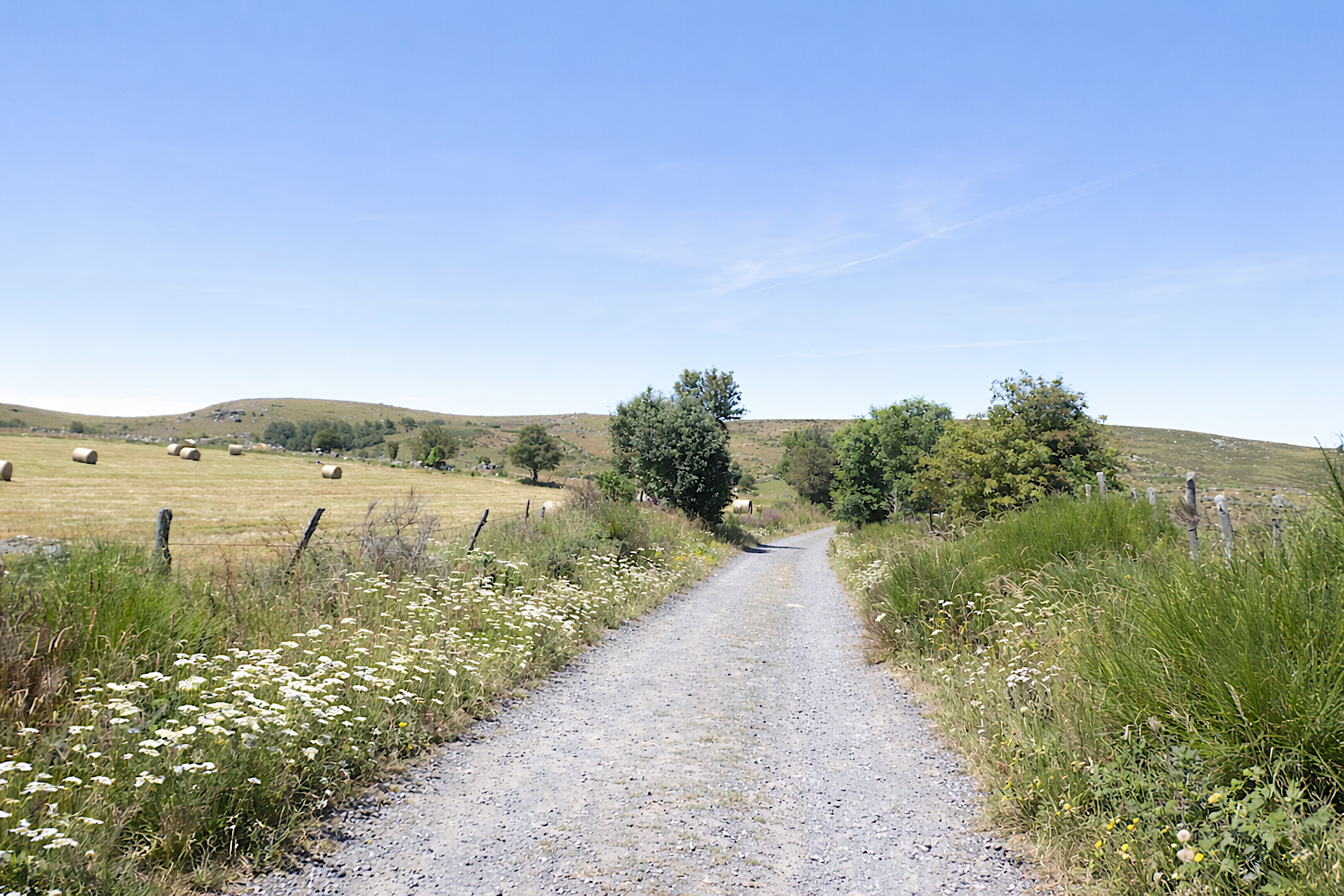
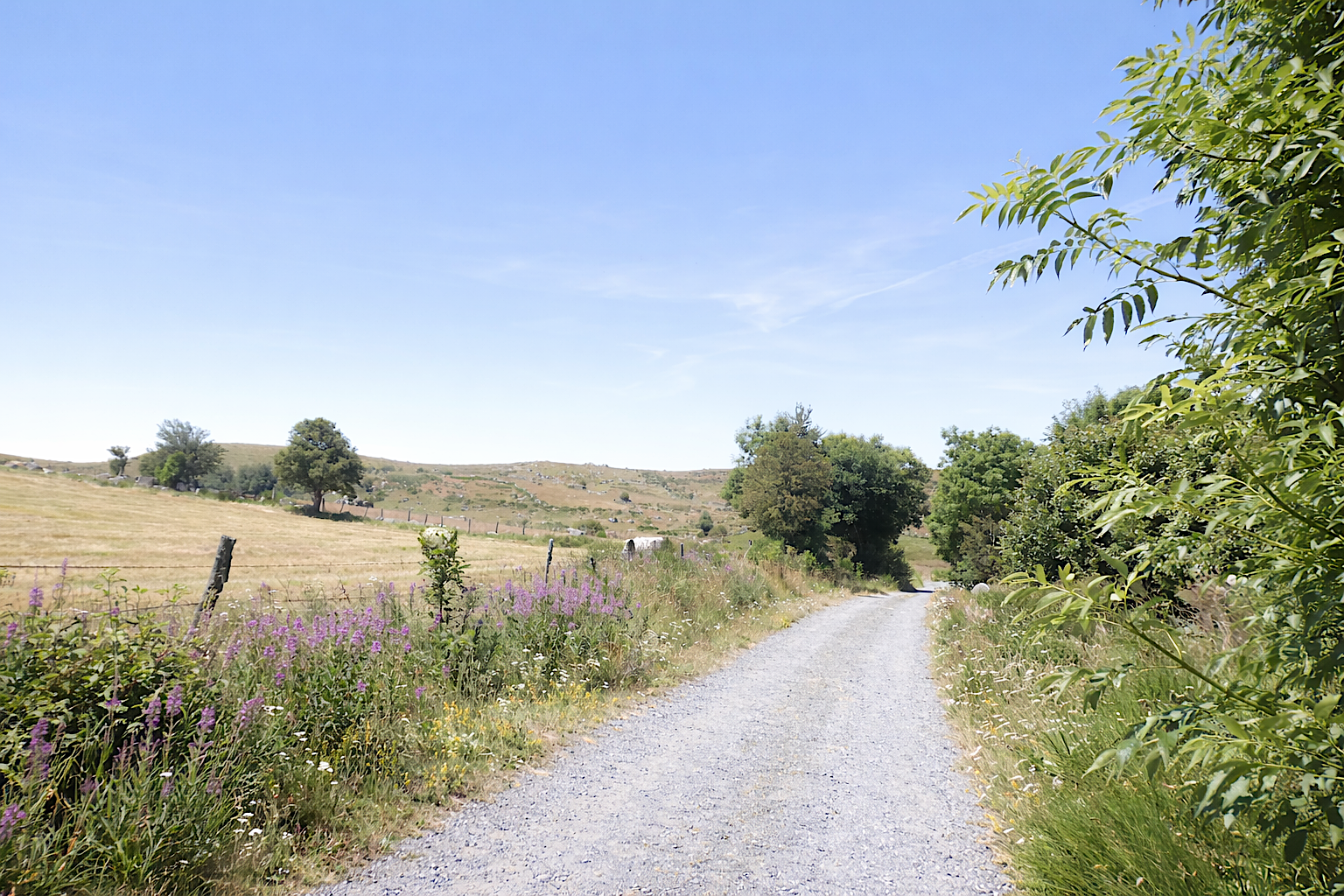
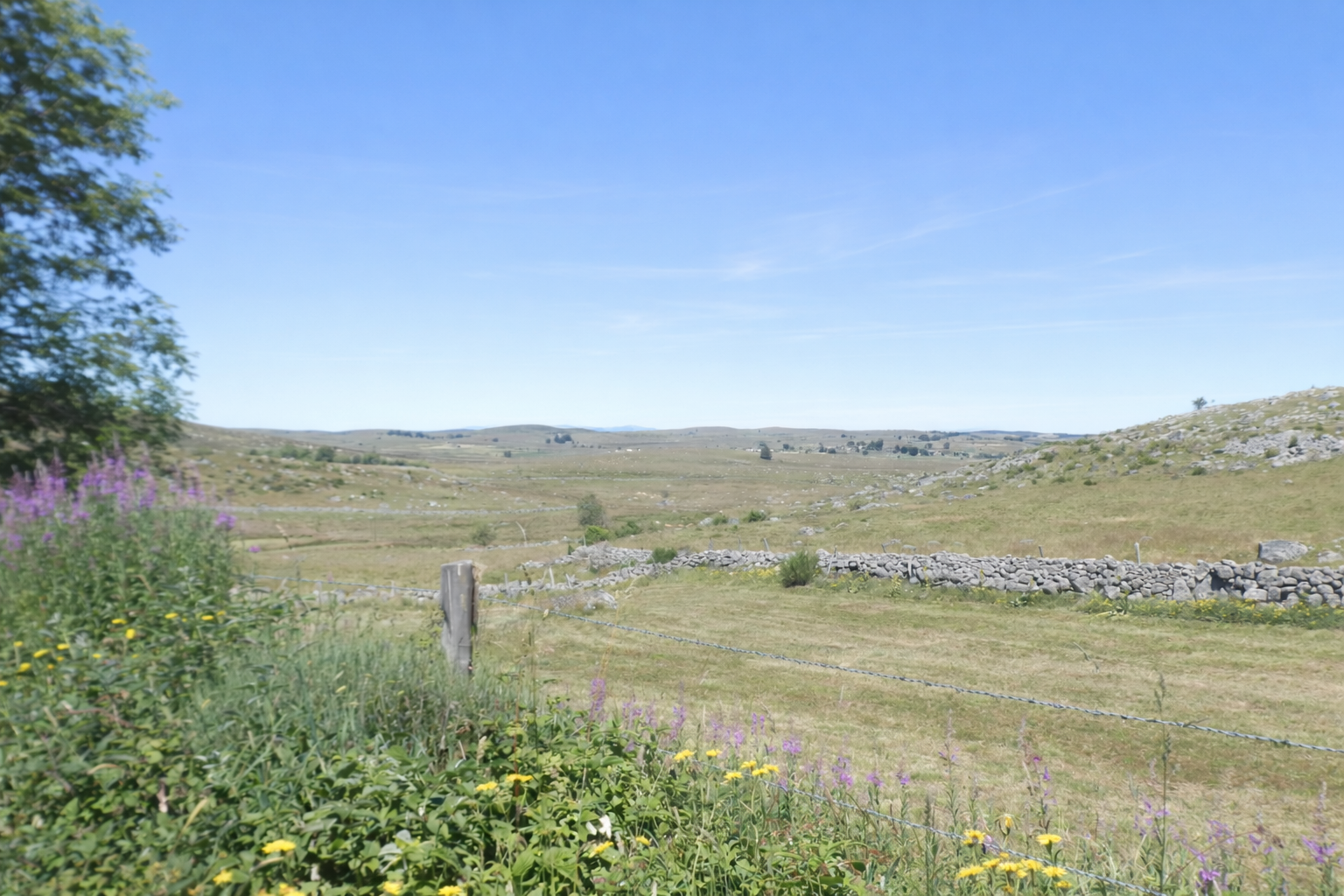
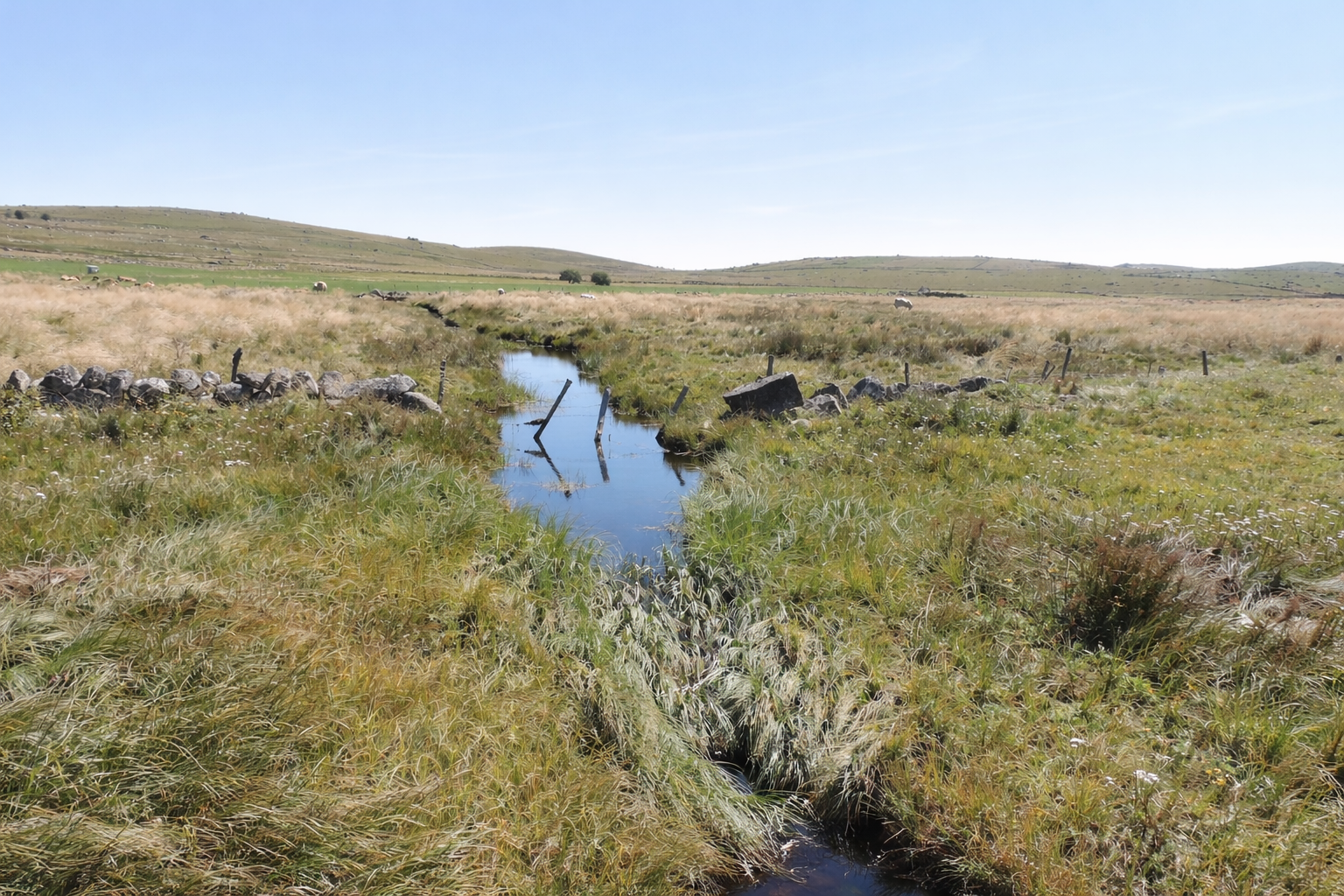
Then, without warning, the path tilts downward and descends towards a discreet and almost secret valley. There flows, or sometimes disappears entirely, a modest tributary of the Peyrade stream, visible only when the water chooses to reveal itself. It is a fleeting crossing where the landscape becomes little more than a whisper. |
|
 |
 |
 |
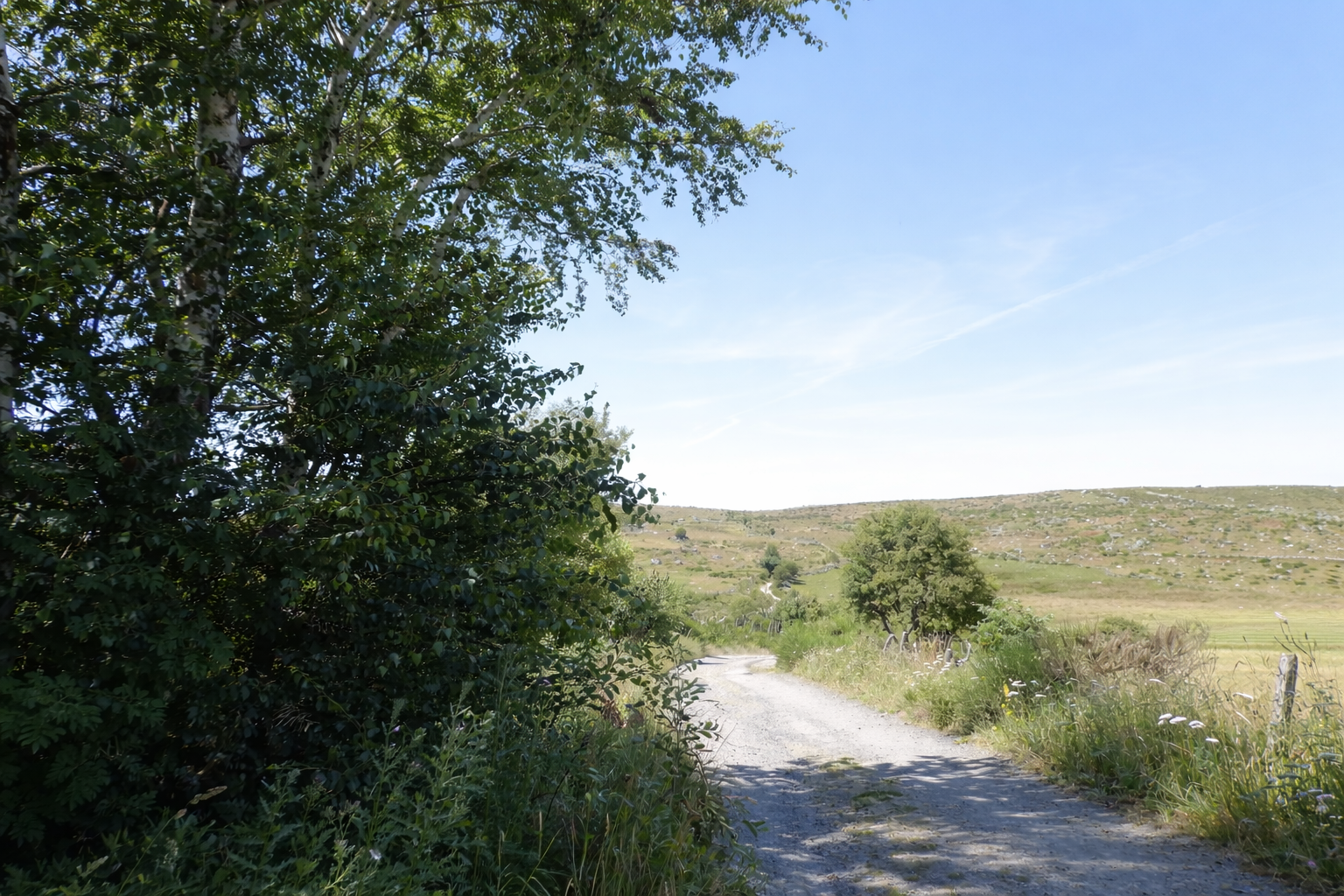 |
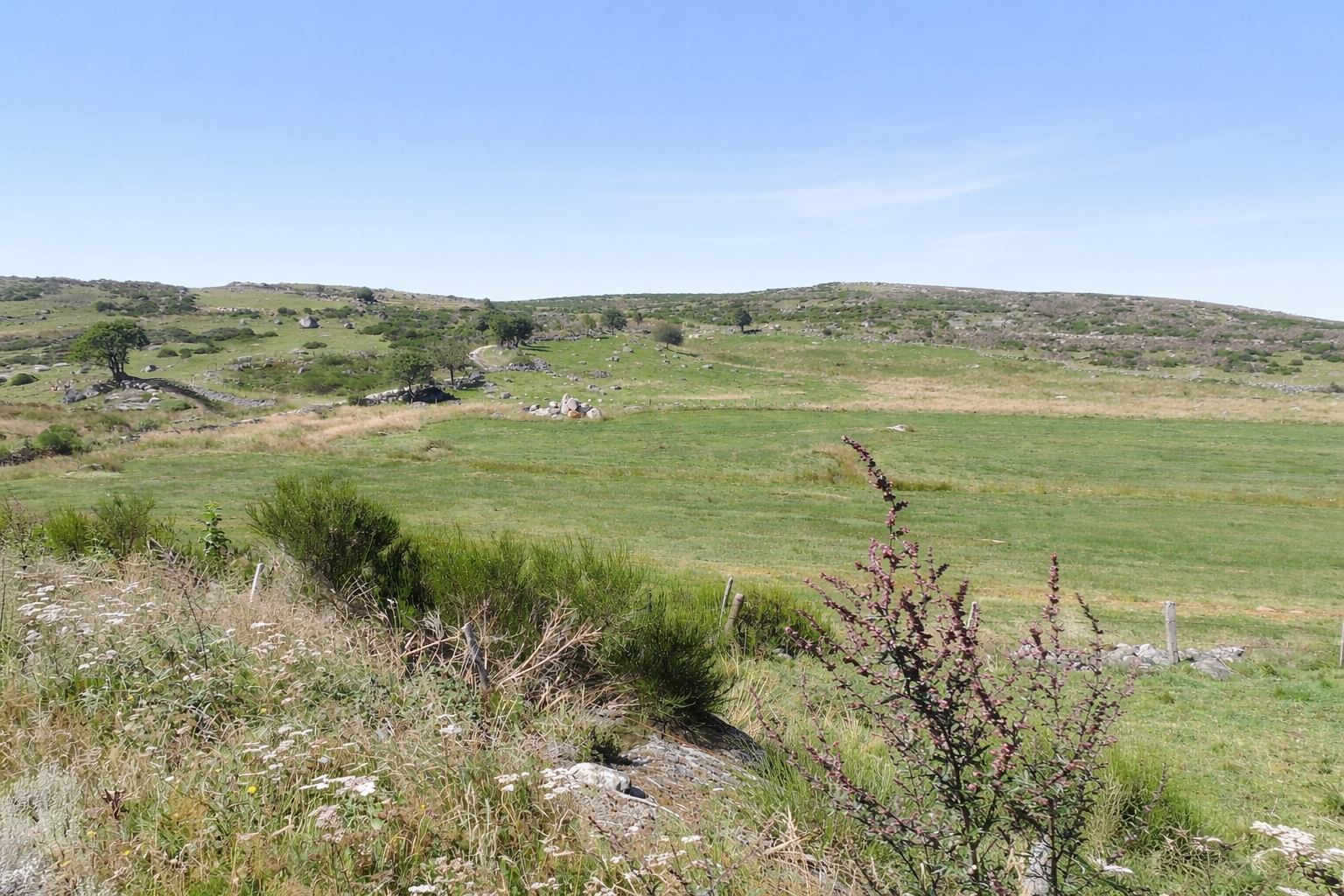
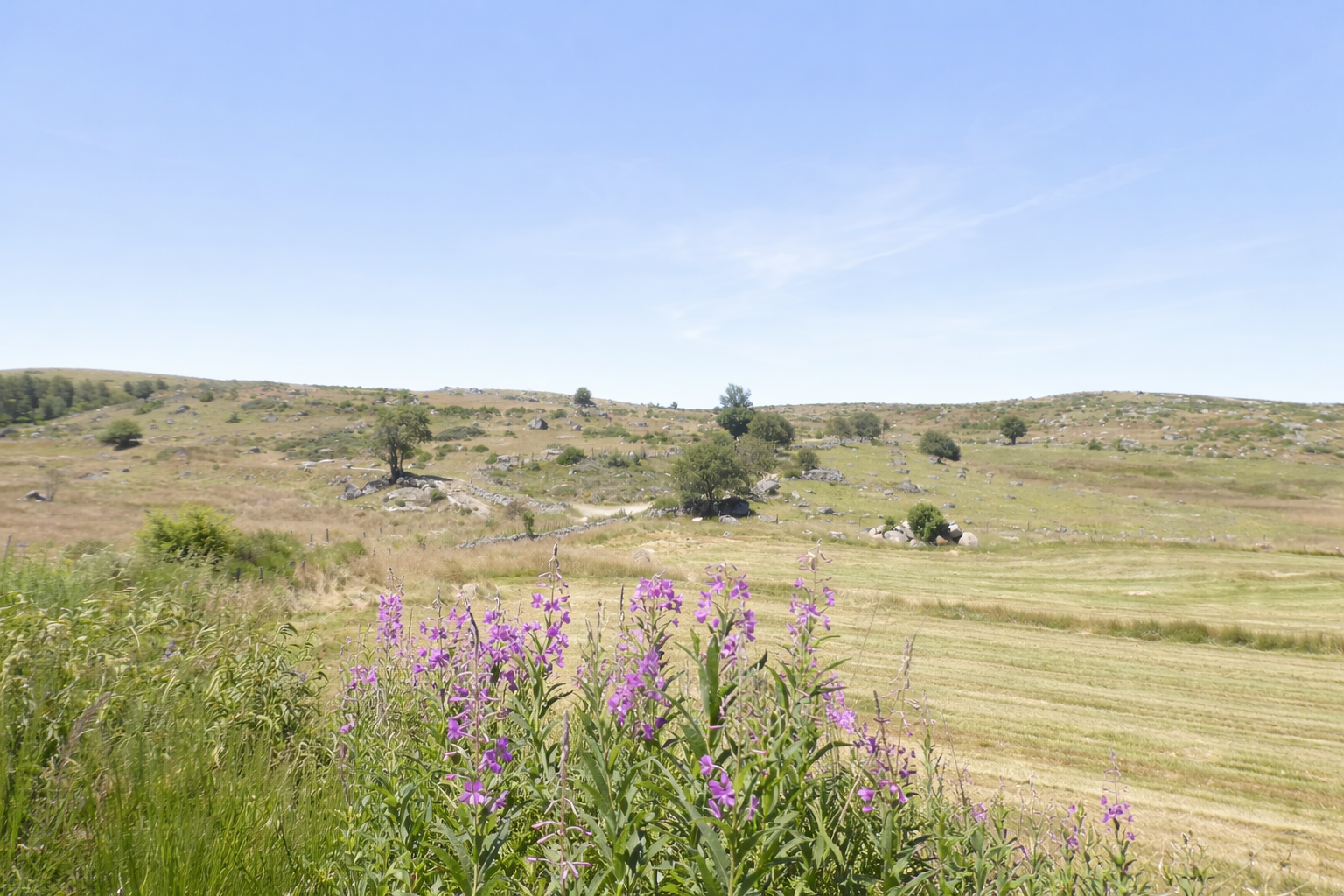
Beyond the trembling rosebay willowherb, the “Roc des Loups” stretches before you, a presence both discreet and sovereign, while the path winds gently among small granite boulders, as though playing with the contours of the hillside.
|
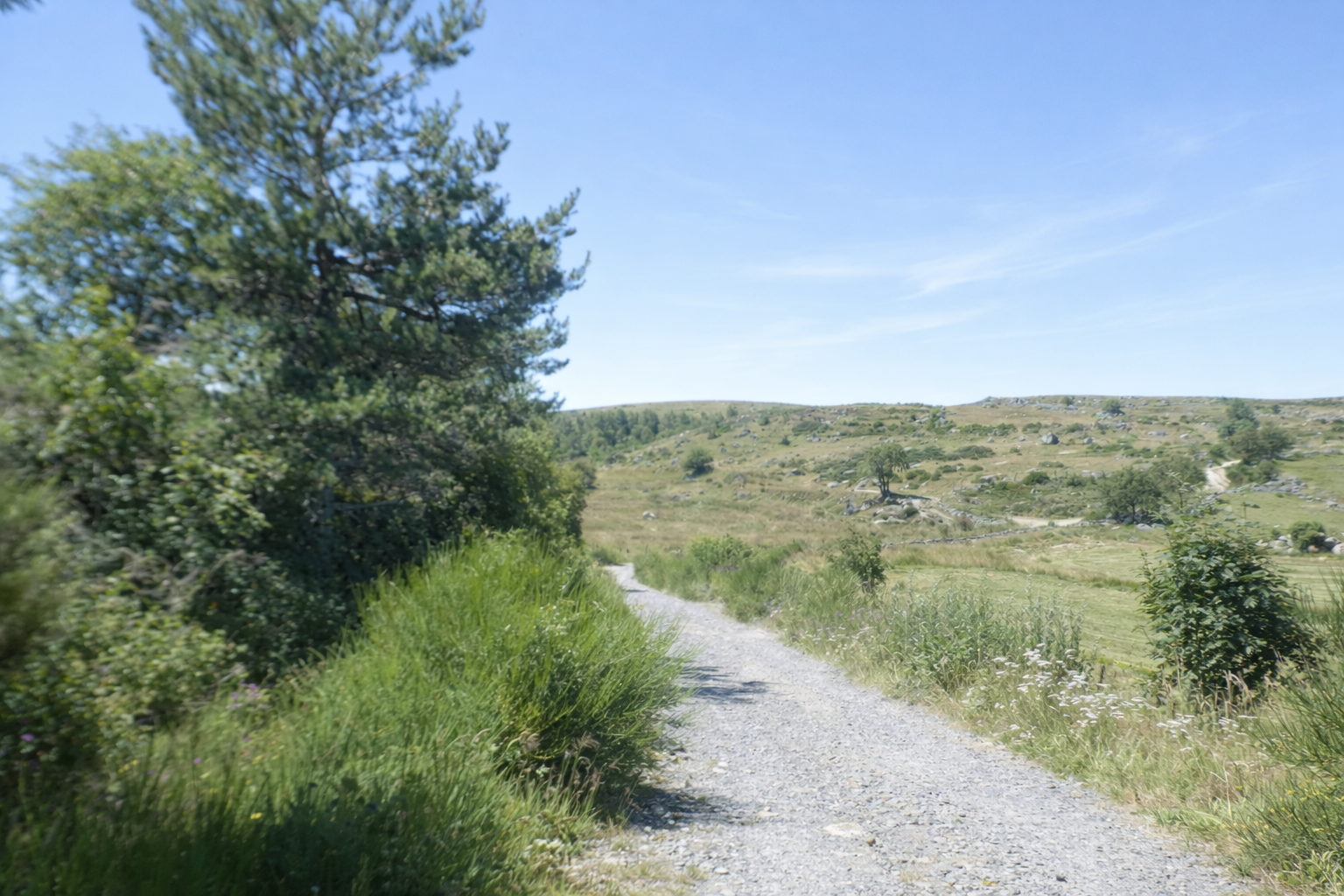
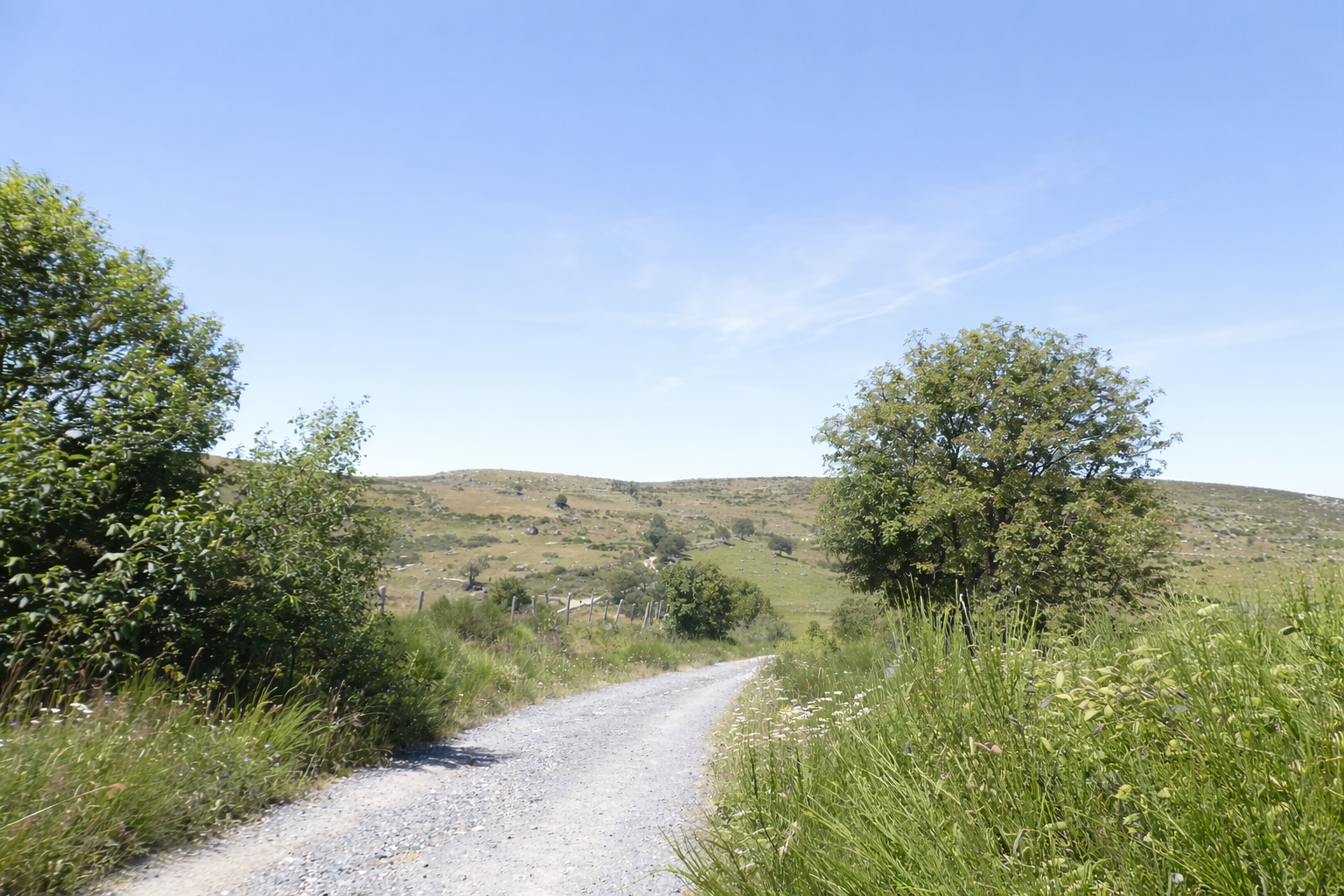
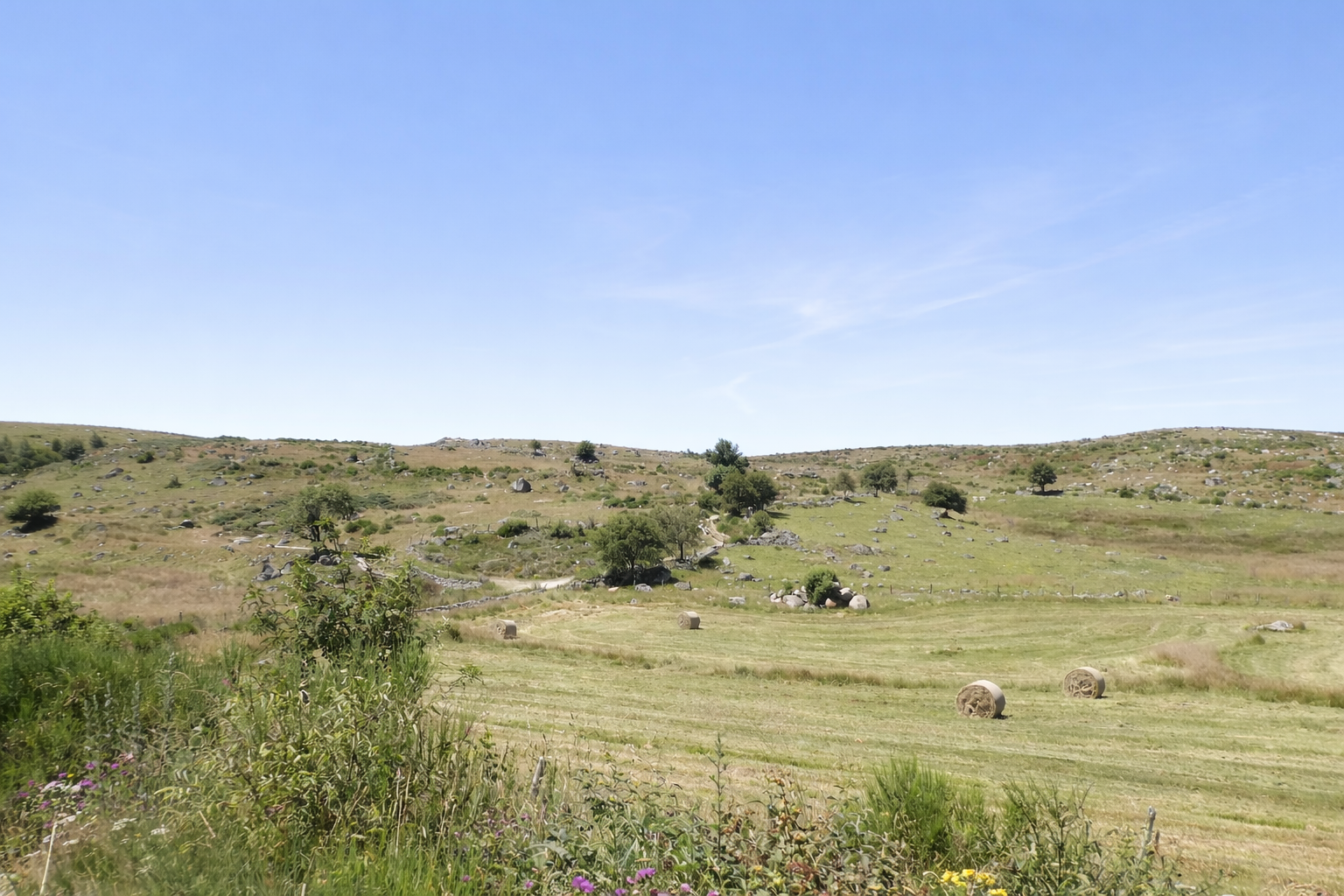
From the stream, the slope reveals itself, bare and almost unreal, a treeless hill of magnetic charm. The gaze drifts across it without obstruction, drawn into a motionless sea where grass has replaced the waves. Beneath an immense sky, cleansed of all heaviness, the light glides silently over the folds of the plateau, revealing every contour with infinite delicacy. |
|
 |
 |
 |
 |
|
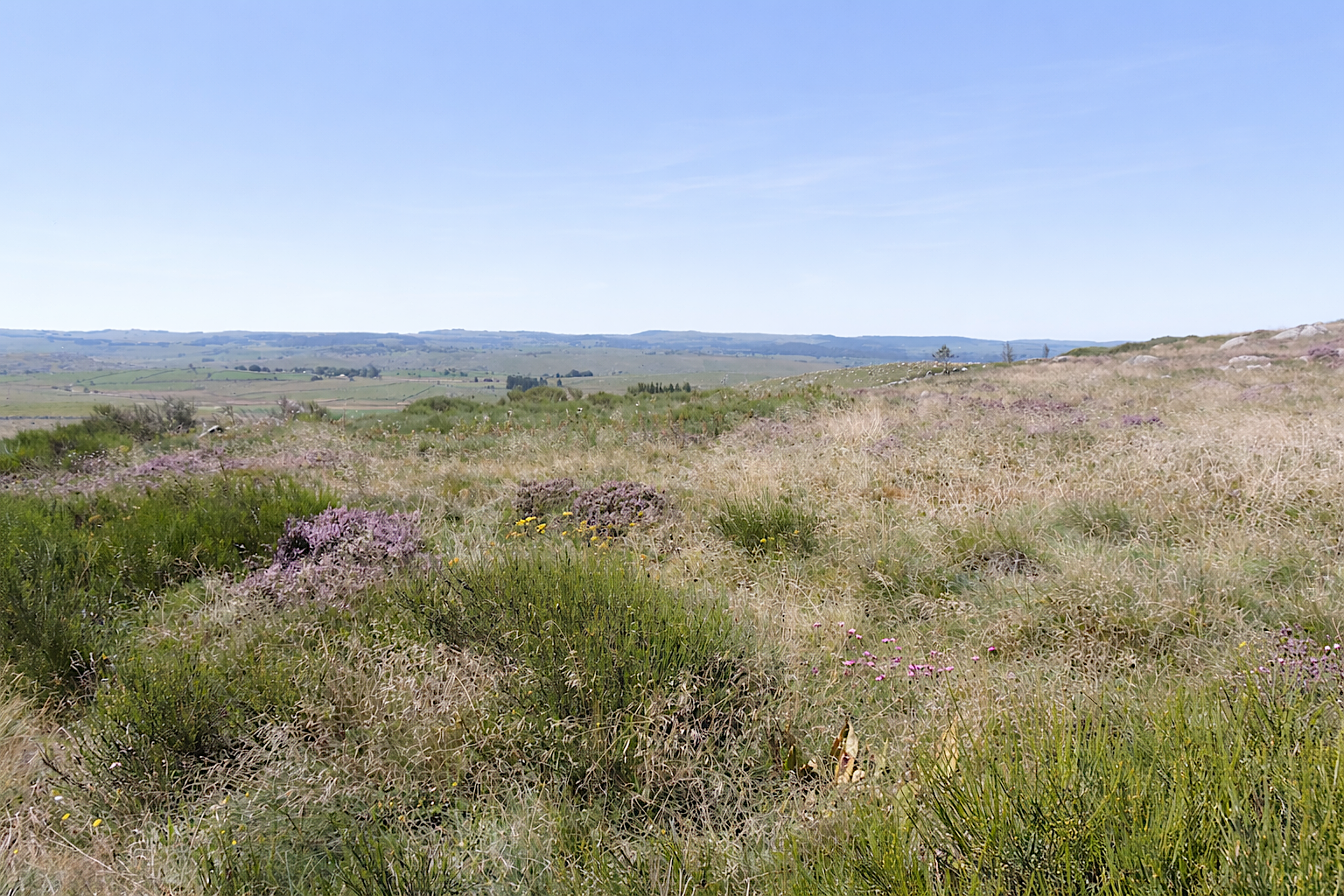
Nothing here seeks to dominate. The hills breathe slowly, granite rocks emerge like the remains of an ancient world deposited by millennial patience, and a few rare solitary trees stand upon the horizon like silent guardians. Everything seems suspended. Time itself stretches fragile and delicate between two breaths of wind. A simplicity of almost absolute purity emanates from this landscape, a nakedness that is never empty but inhabited, inhabited by air, by light, and by silence. Nothing distracts, nothing diverts the attention. Everything invites one to look differently, to listen more deeply, and to allow oneself to be carried by the place. Little by little, almost without noticing, something inside begins to settle. It is as though this land, austere at first glance, secretly offers a rare peace that has long vanished elsewhere. |
|
 |
 |
 |
 |
|
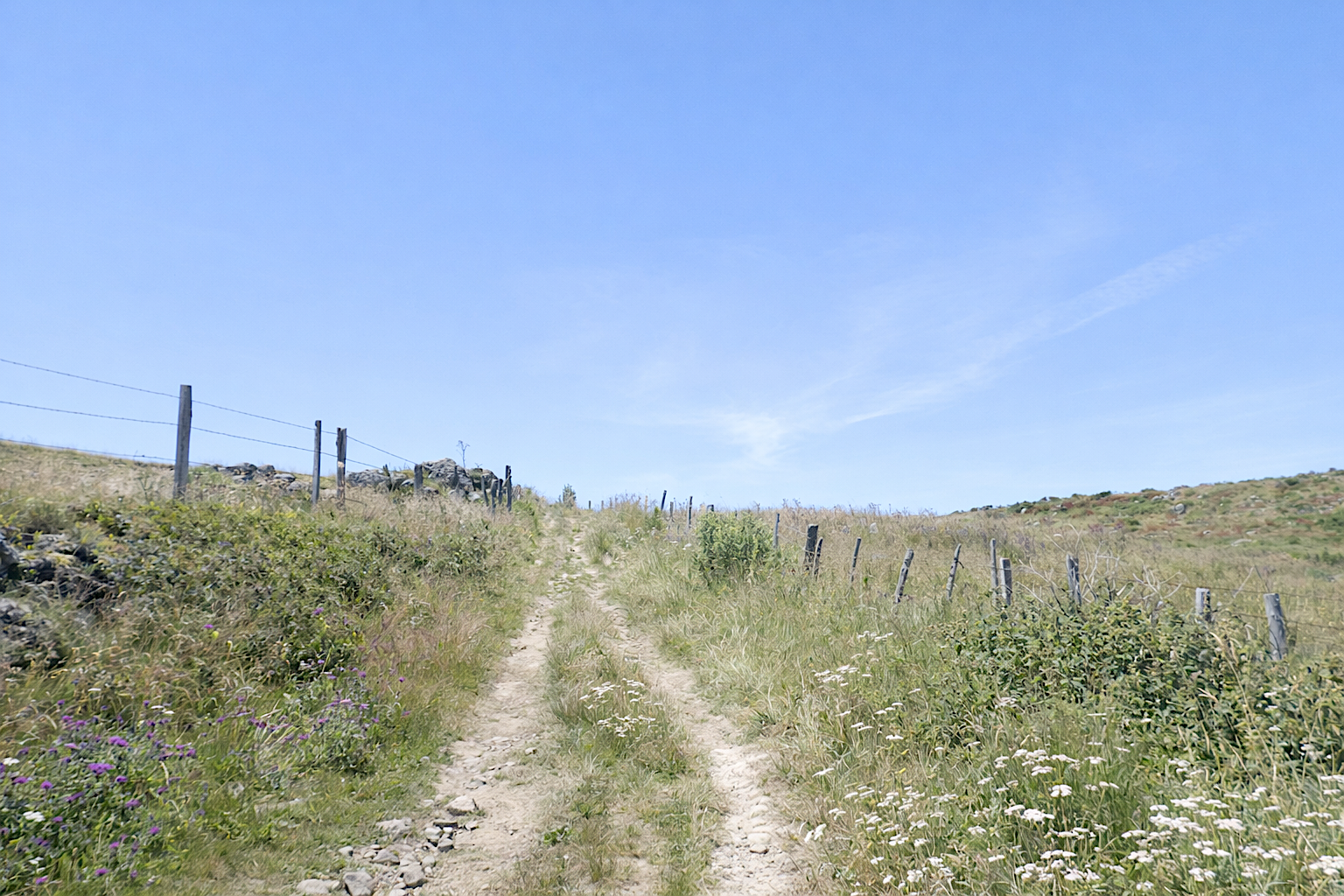
Higher up, a trail begins to weave among the rocks, which seem to have been scattered haphazardly across its course, challenging the walker while accompanying the journey. On slopes exceeding ten percent, large stone blocks worn smooth by centuries obstruct the way, forcing each step to become more deliberate. Yet the trail retains a certain grace as it slips between heather and broom across ochre-colored earth, like a discreet thread running through a rugged landscape. Here one walks at the edge of the world, in a nature that feels almost untouched and primordial. |
|
 |
 |
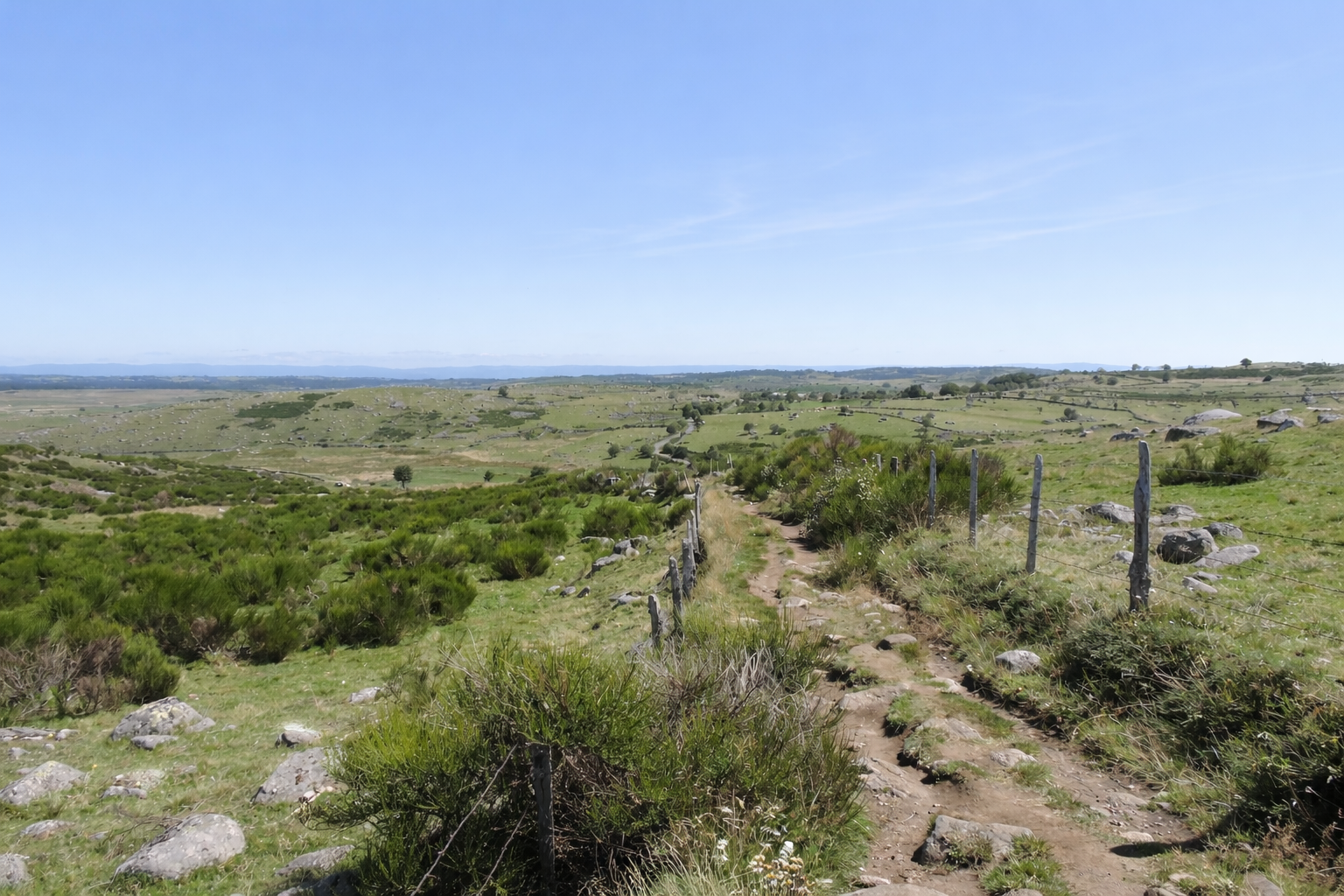
If you take the time to turn around, the eye embraces the entire landscape already crossed, a world unlike any other, where the path winds gently through the moorland from Finieyrols.
|
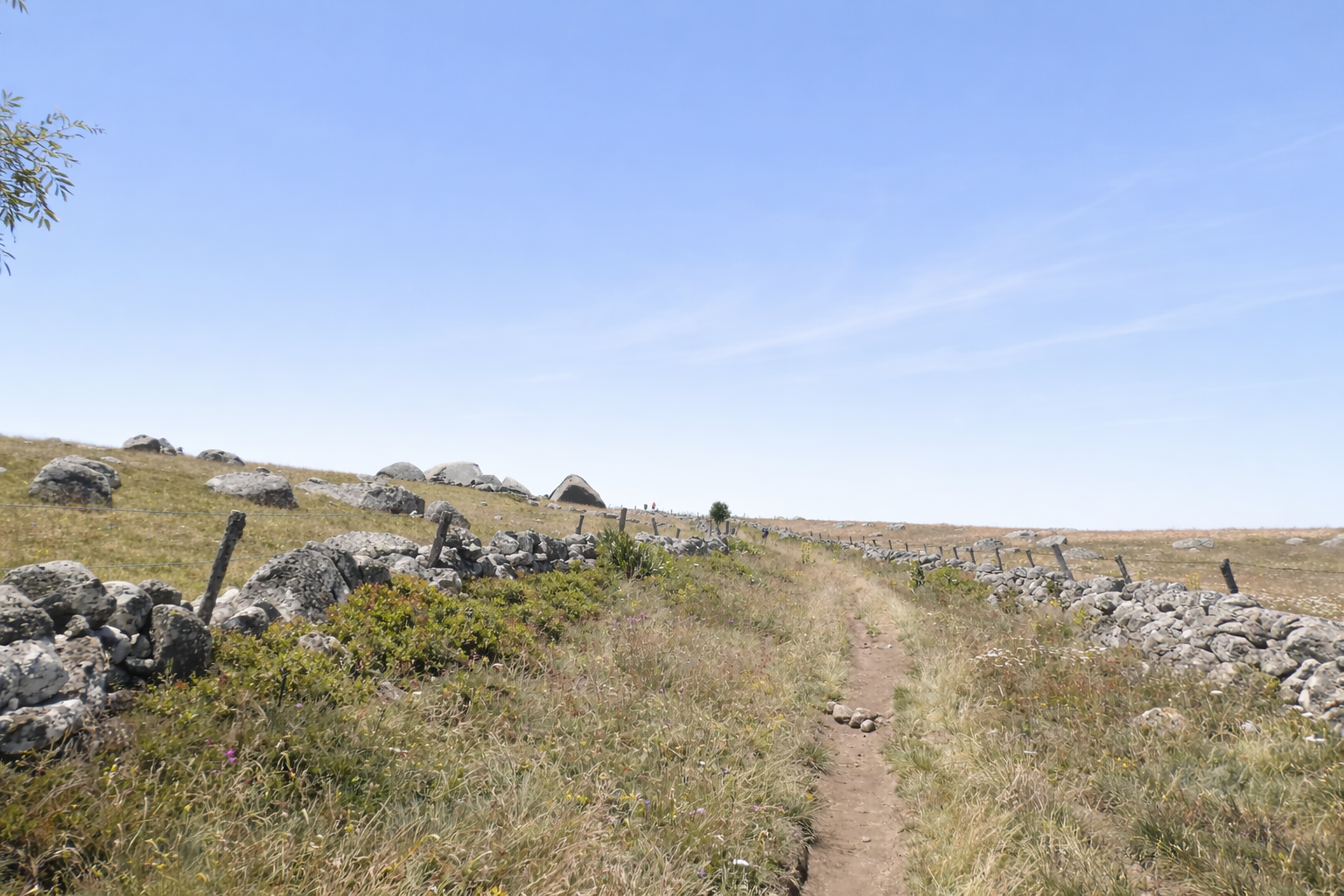
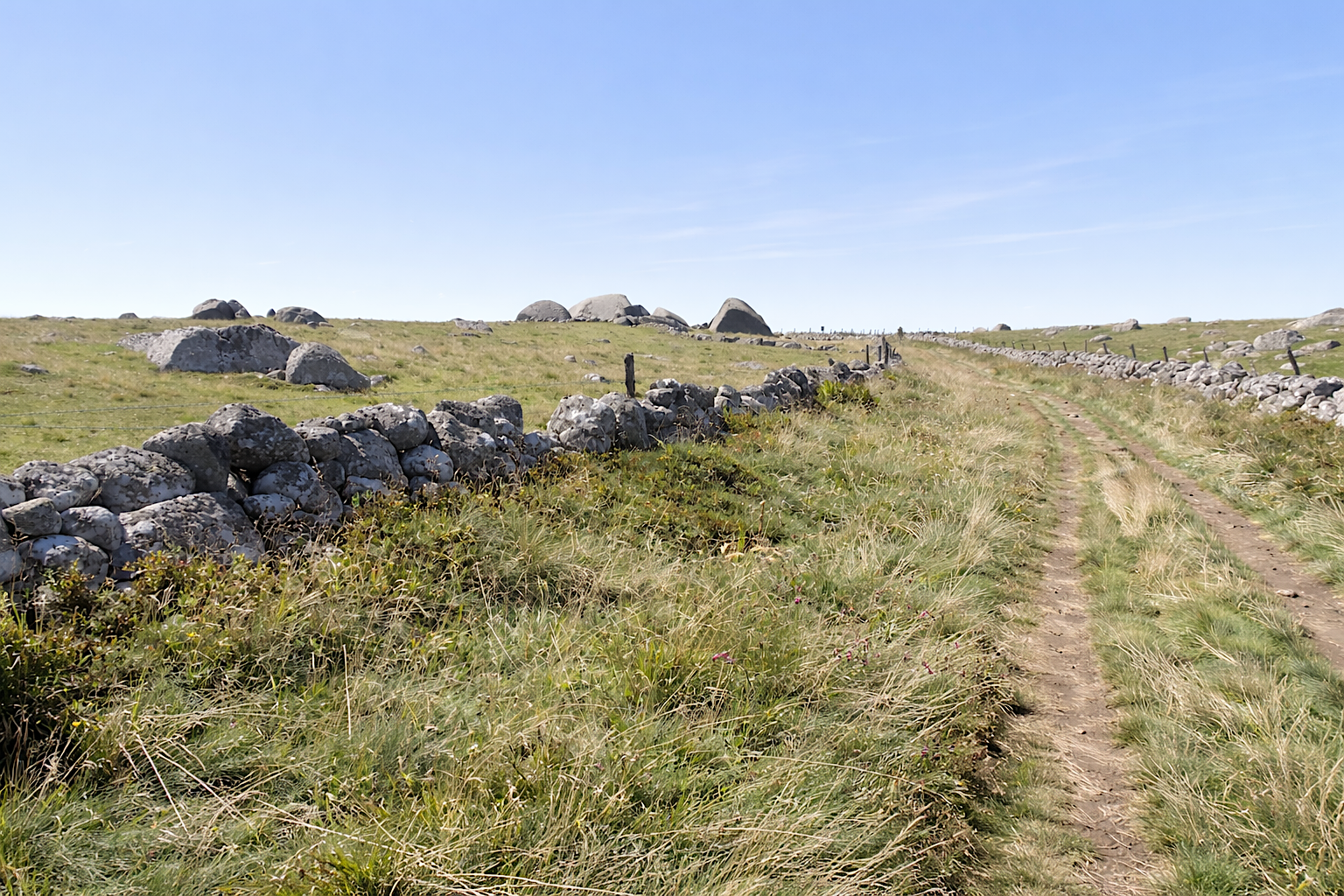
In the end, the climb proves neither long nor demanding. It gradually yields to the pilgrim. Then, through the short grass, the trail approaches the “Roc des Loups”, where granite boulders become increasingly numerous, as though silently gathered around the summit. |
|
 |
 |
|
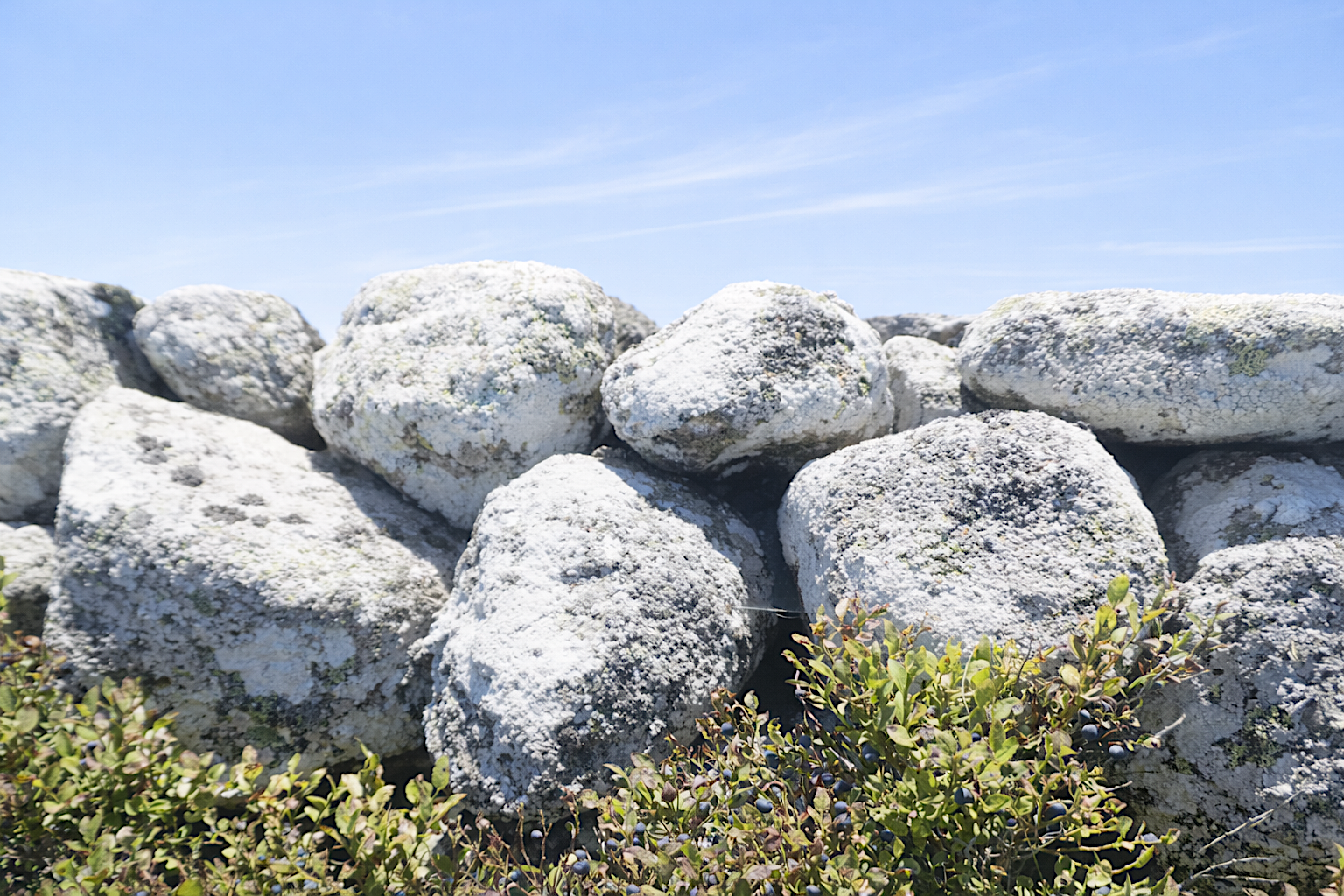
If the season is favorable and you take the time to observe, you may enjoy wild bilberries, modest and precious fruits that are far smaller, and infinitely more flavorful, than those found on ordinary market stalls. |
|
 |
 |
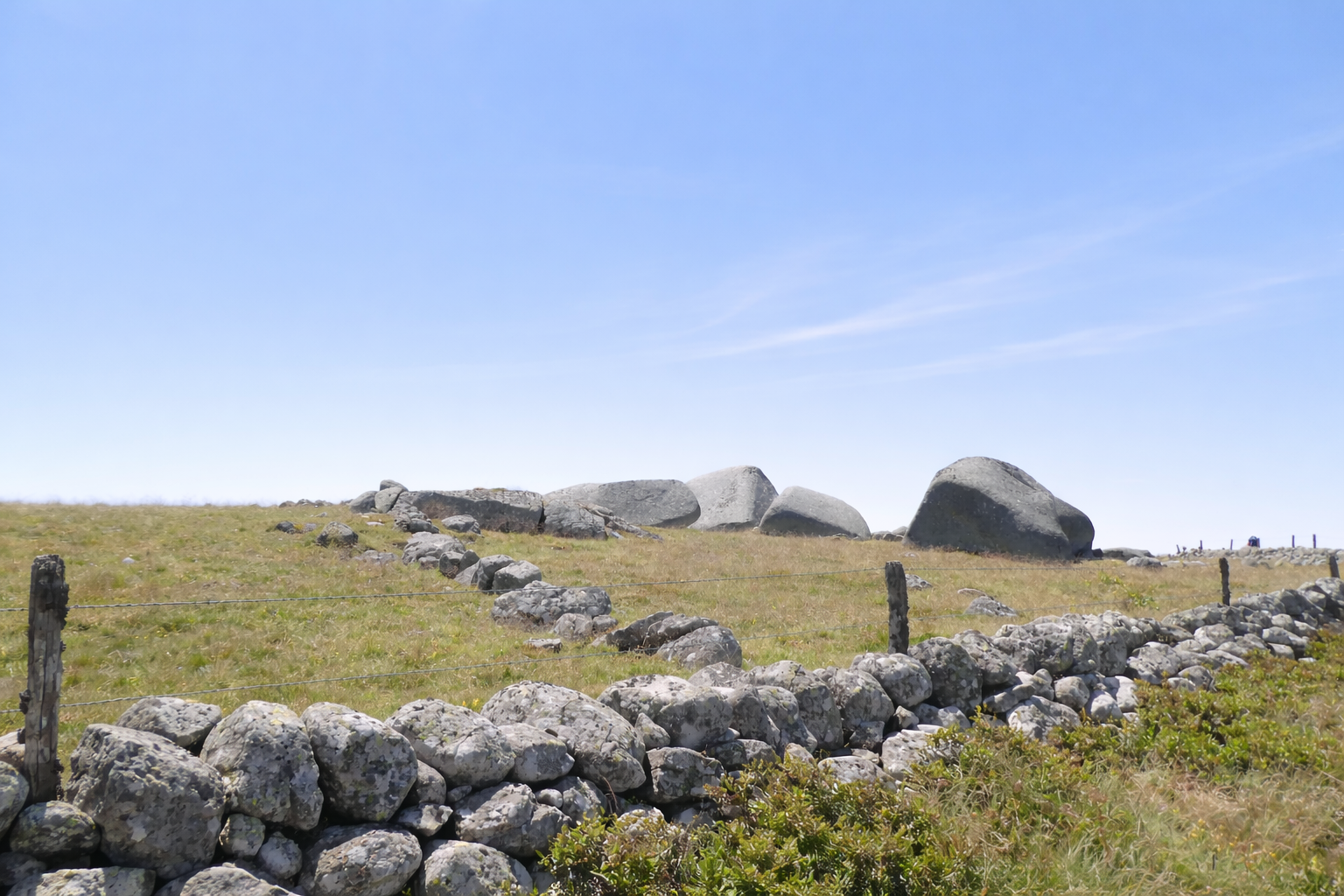
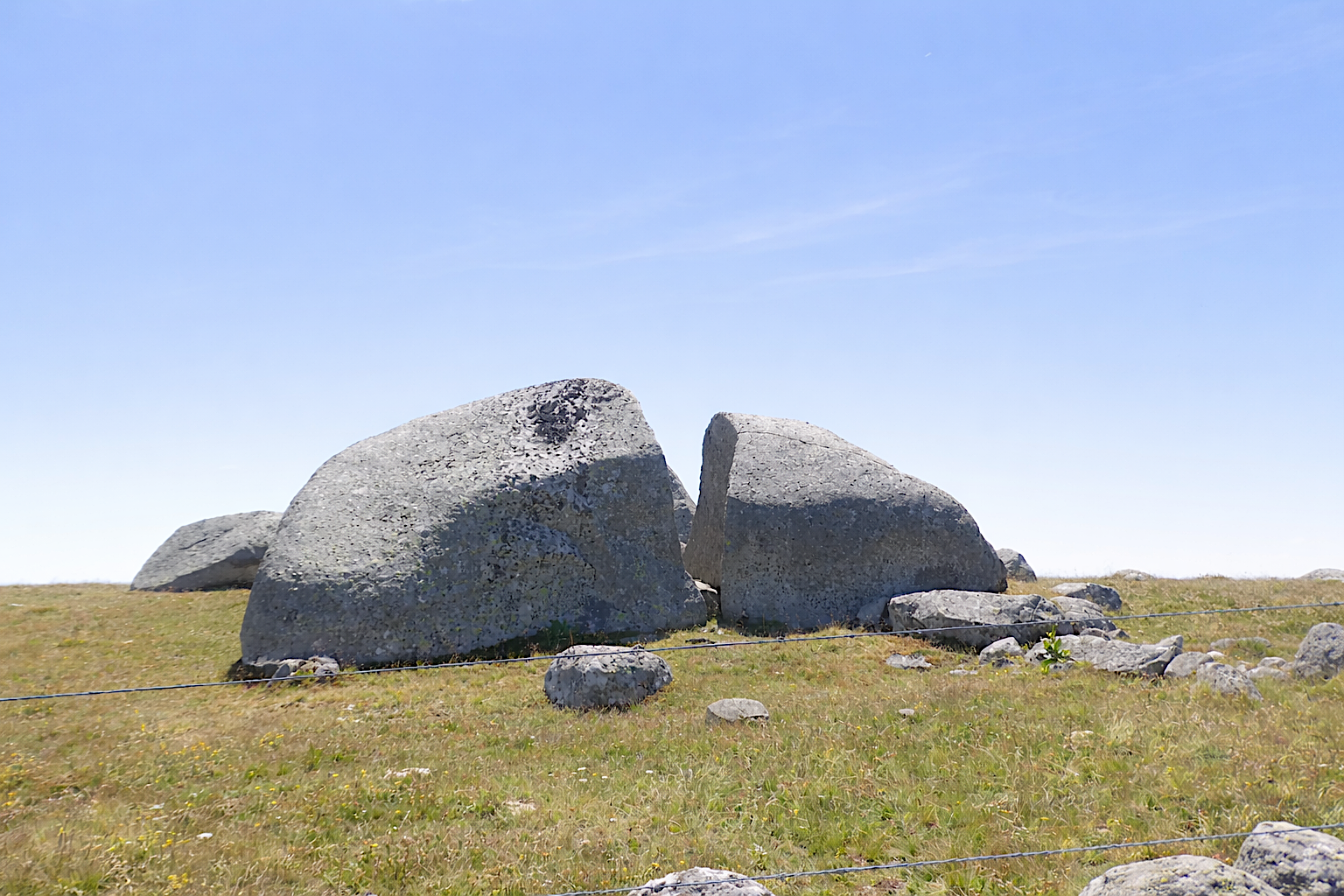
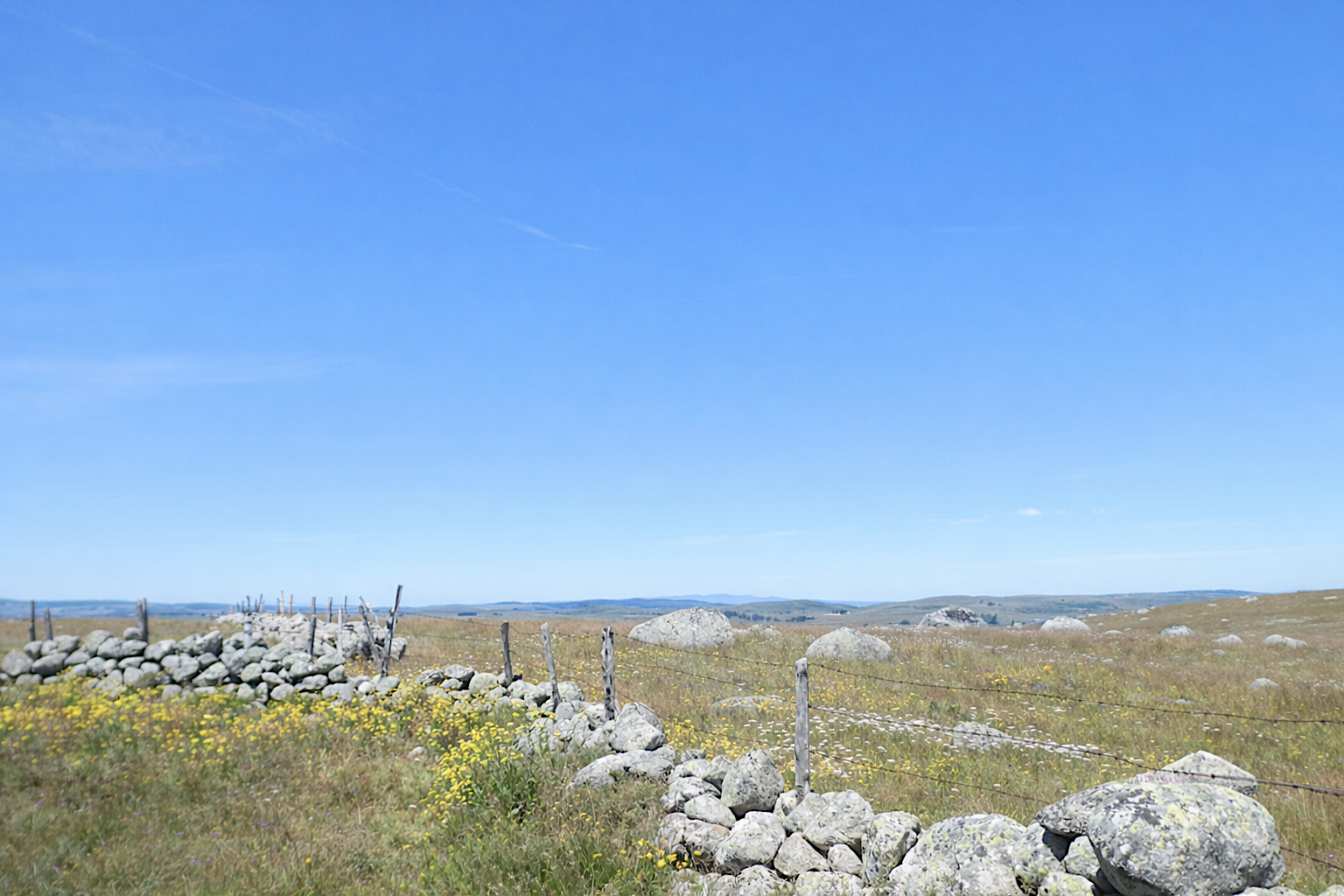
At last, on the summit of the hill, stands the Roc des Loups, at an altitude of 1,273 meters. There, a massive granite block appears to divide the universe in two, like a boundary stone placed between earth and sky. The place feels outside time itself, almost unreal. From this height, the gaze opens towards infinity, and the moment becomes suspended.
|
Aubrac rises like a vast granite pedestal standing nearly a thousand meters above sea level. Upon this mineral foundation emerge occasional basalt cones, the final witnesses to the ancient passions of Vulcan and Hephaestus. Yet here it is granite that reigns supreme, austere and immutable. Pilgrims cross these lands only during the gentler seasons, when Aubrac chooses to reveal its welcoming side. They scarcely imagine what becomes of these spaces during the long winter months, when the grasses bow beneath icy winds and snow covers everything with silence. For this is another face of the plateau, a high-altitude Siberia swept by bitter winds, where so many walkers of former times lost their way, their eyes burned by the cold, sometimes saved by the providential ringing of the bell of the church of Notre-Dame des Pauvres in Aubrac. Beyond the “Roc des Loups”, the landscape retains the same striking grandeur. On clear days, the attentive eye can distinguish the snow-covered silhouettes of the mountains of the Massif Central outlined against the horizon. |
|
 |
 |
|
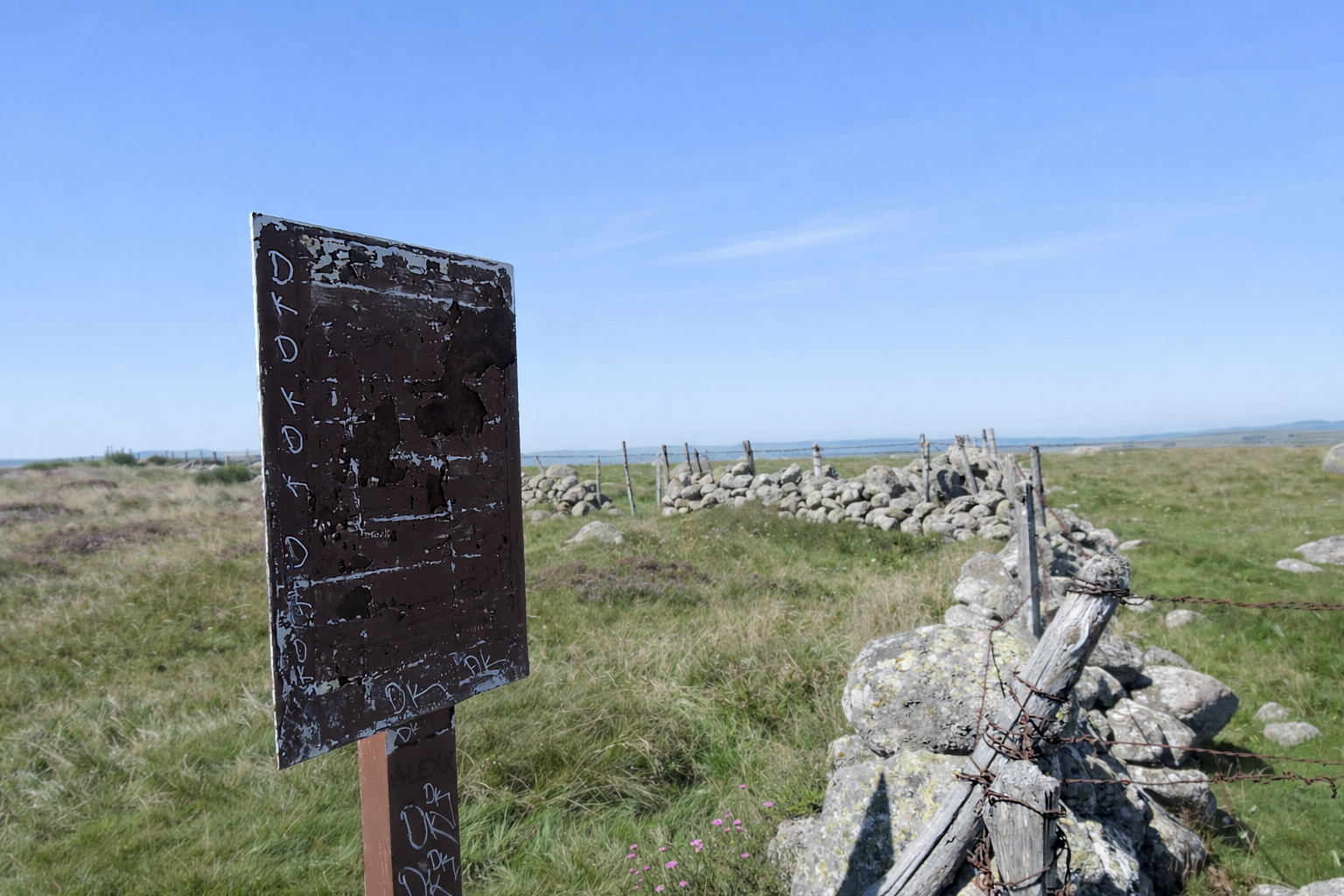
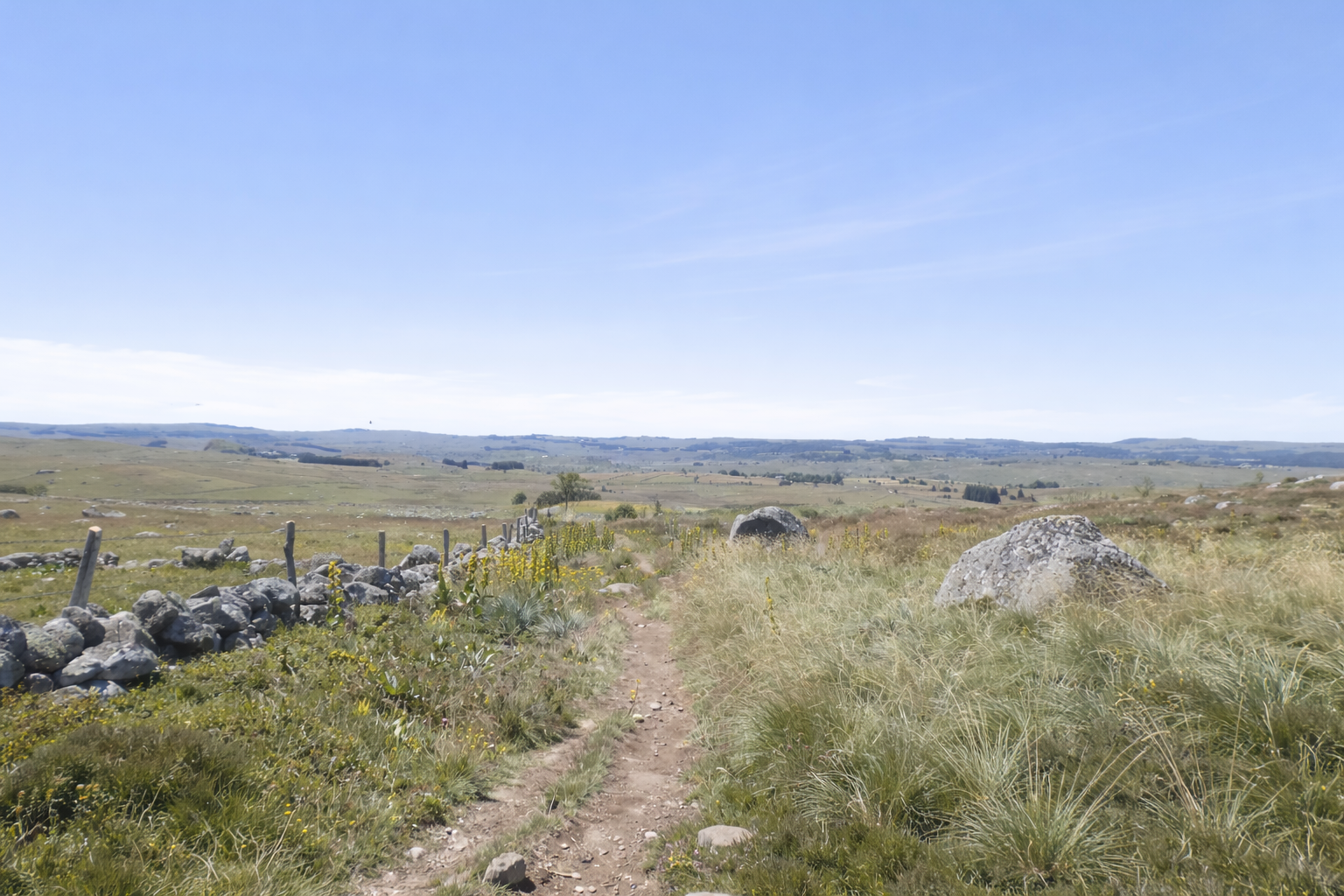
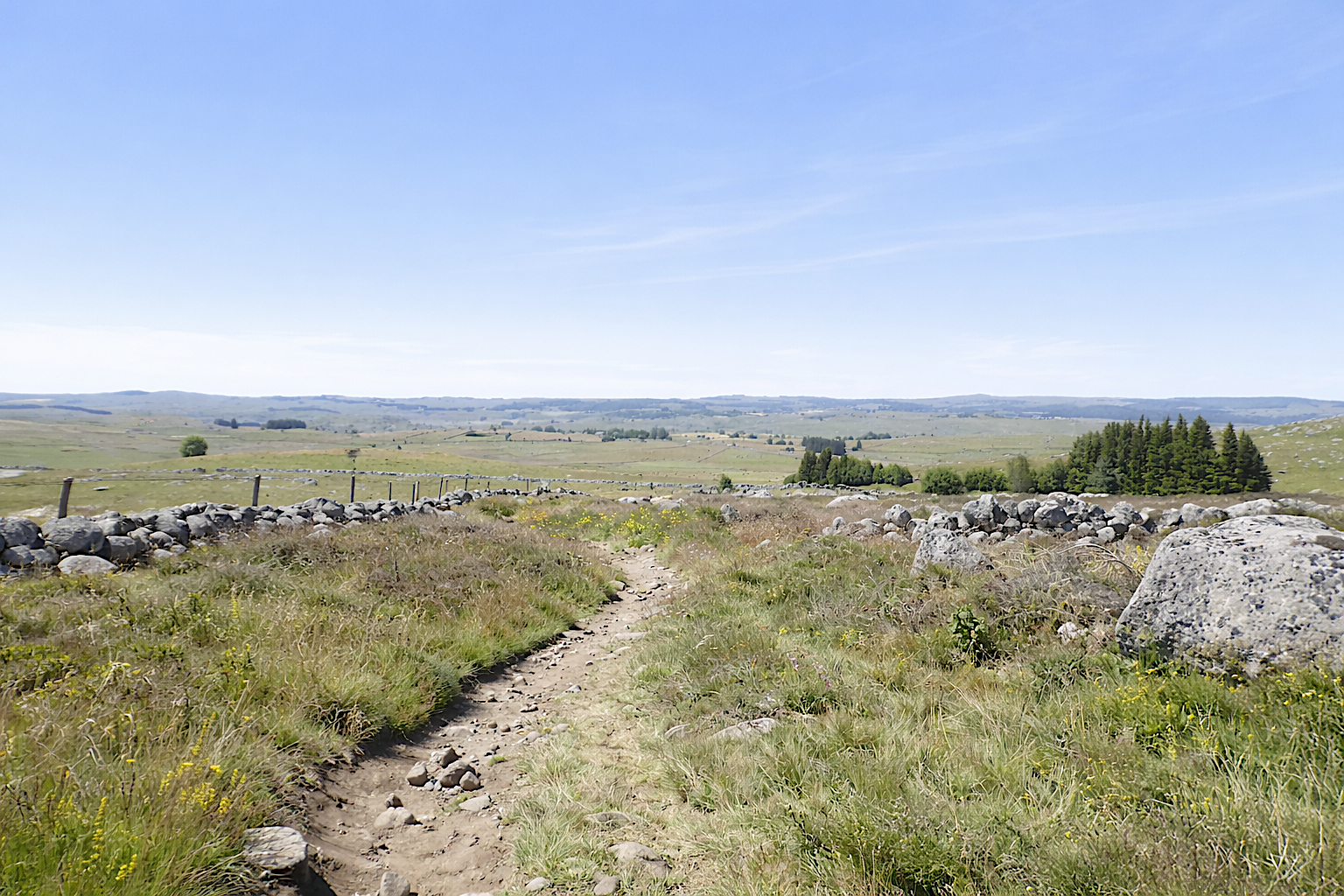
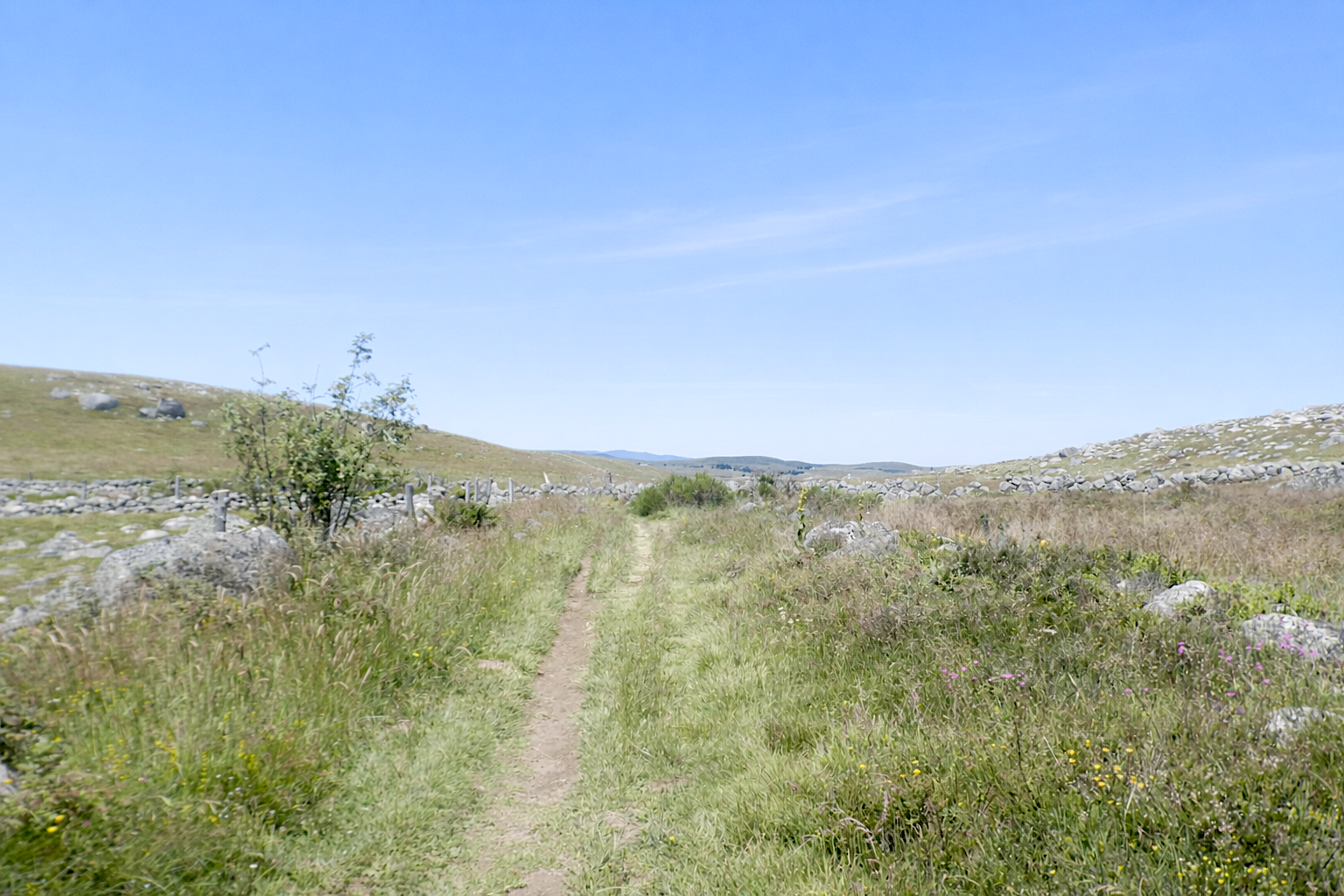
The path itself seems to adapt to this immensity. It wanders along the ridge, hesitating and lingering among the moorland pastures, between granite boulders and alongside stone walls topped with rusted wire, discreet signs of human presence. |
|
 |
 |
 |
 |
|
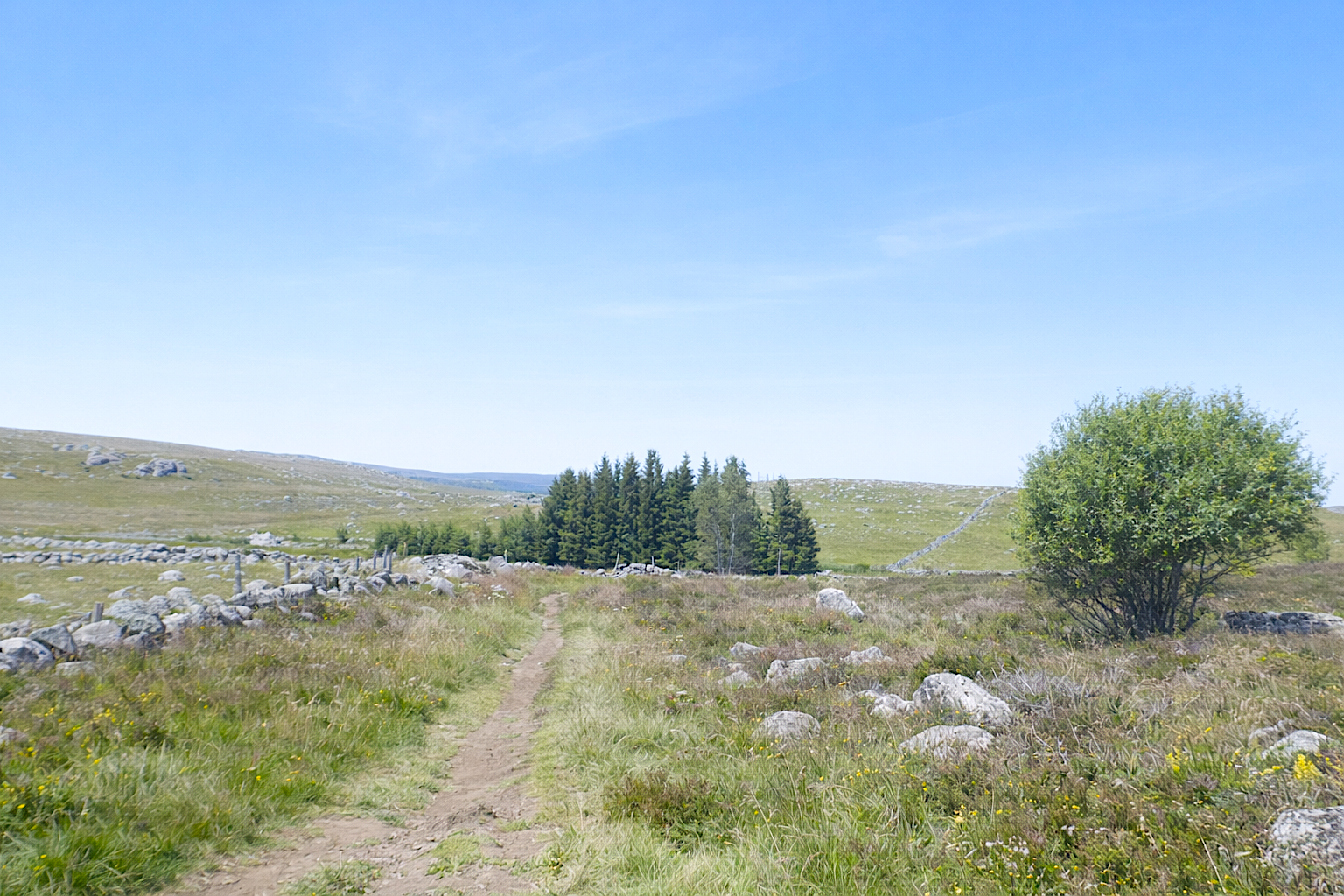
Then, almost reluctantly, it slips over the far side of the hill and begins its descent into this boundless space divided by stone walls that stretch like lines drawn across infinity itself. |
|
 |
 |
|
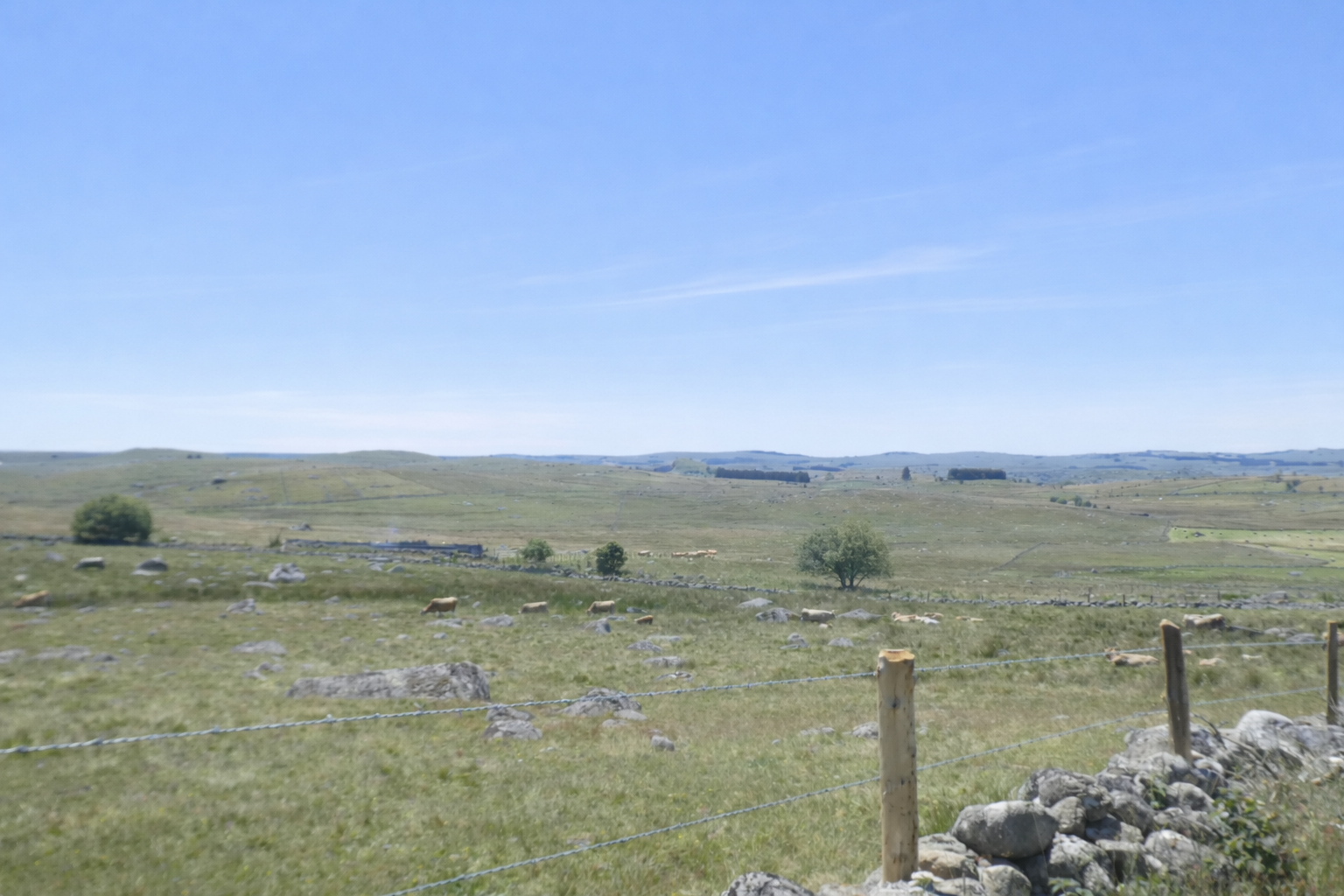
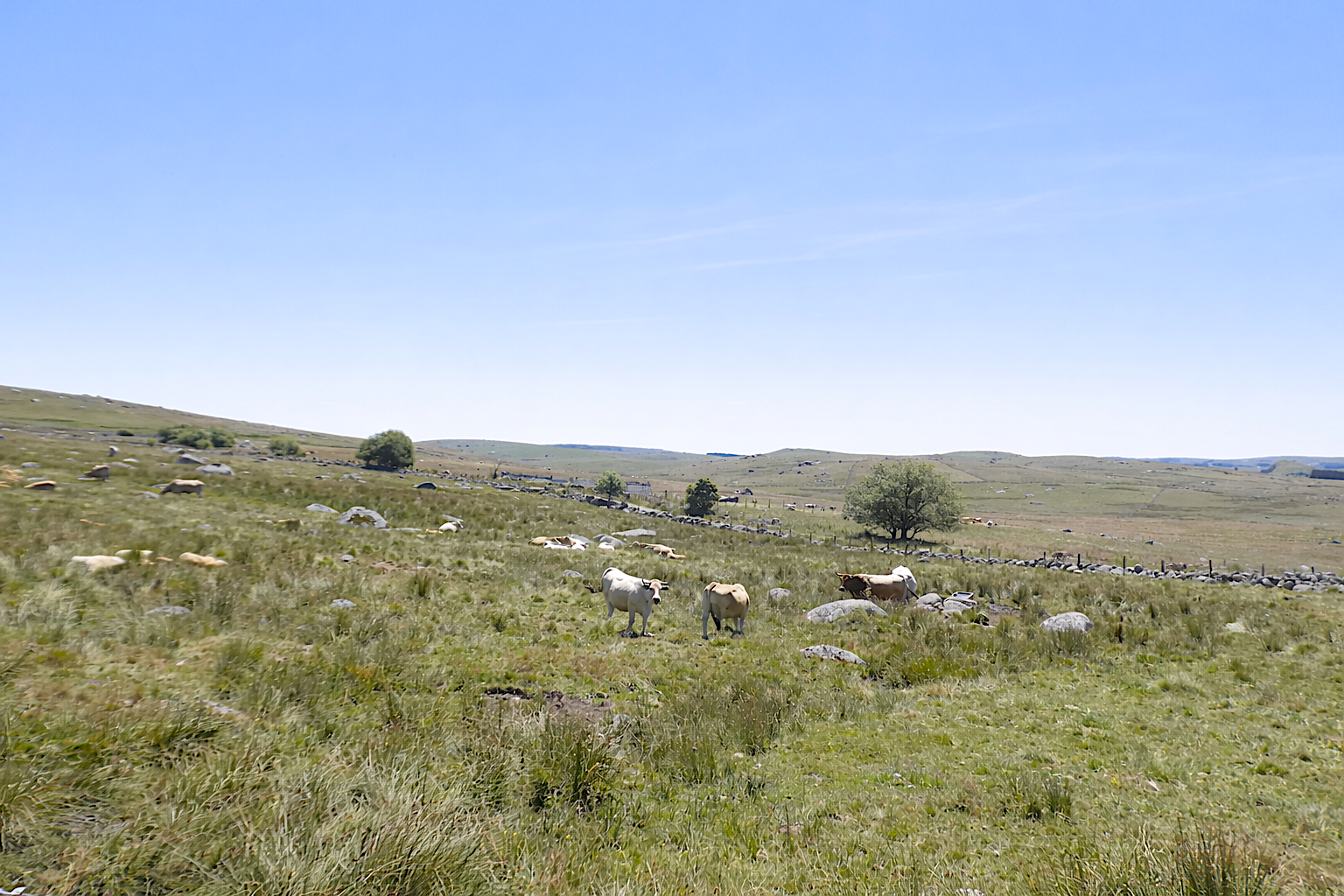
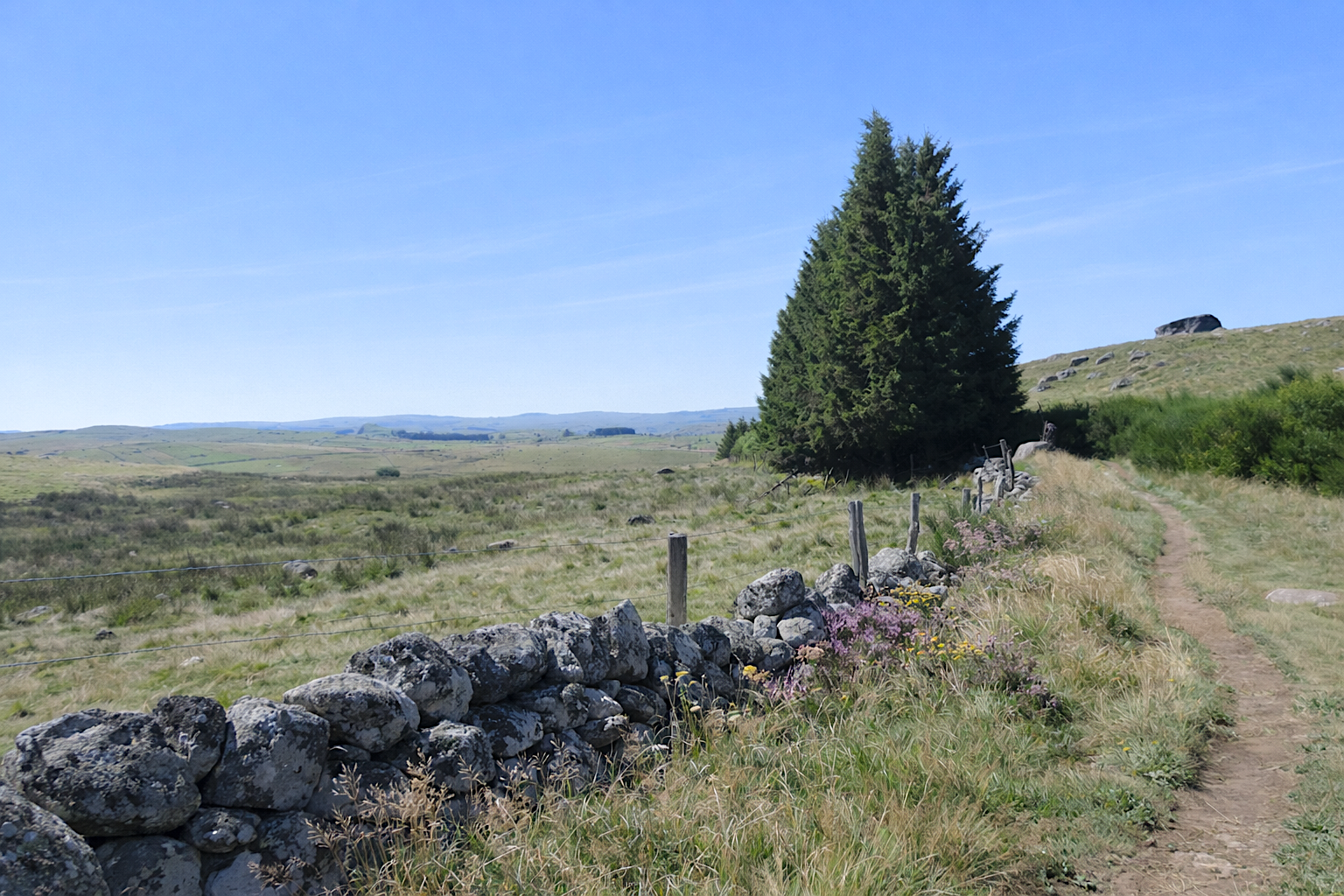
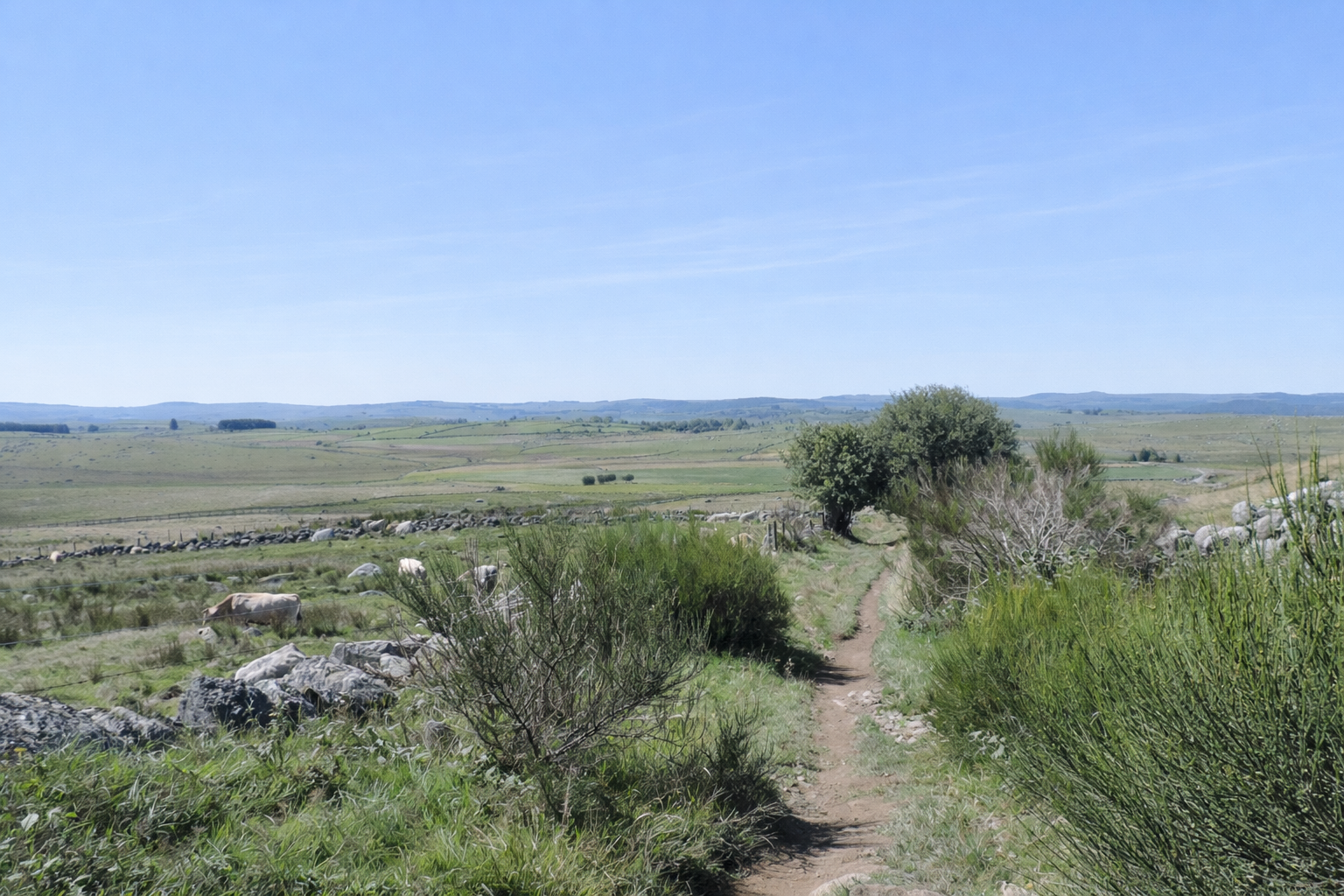
The horizon extends endlessly before the eye, a succession of hills fading gradually into the distance, inhabited by peaceful herds and occasional solitary trees. Everything here breathes simple grandeur, quiet charm, and a sense of infinity that envelops the hikers and invites them to continue onward. . |
|
 |
 |
|
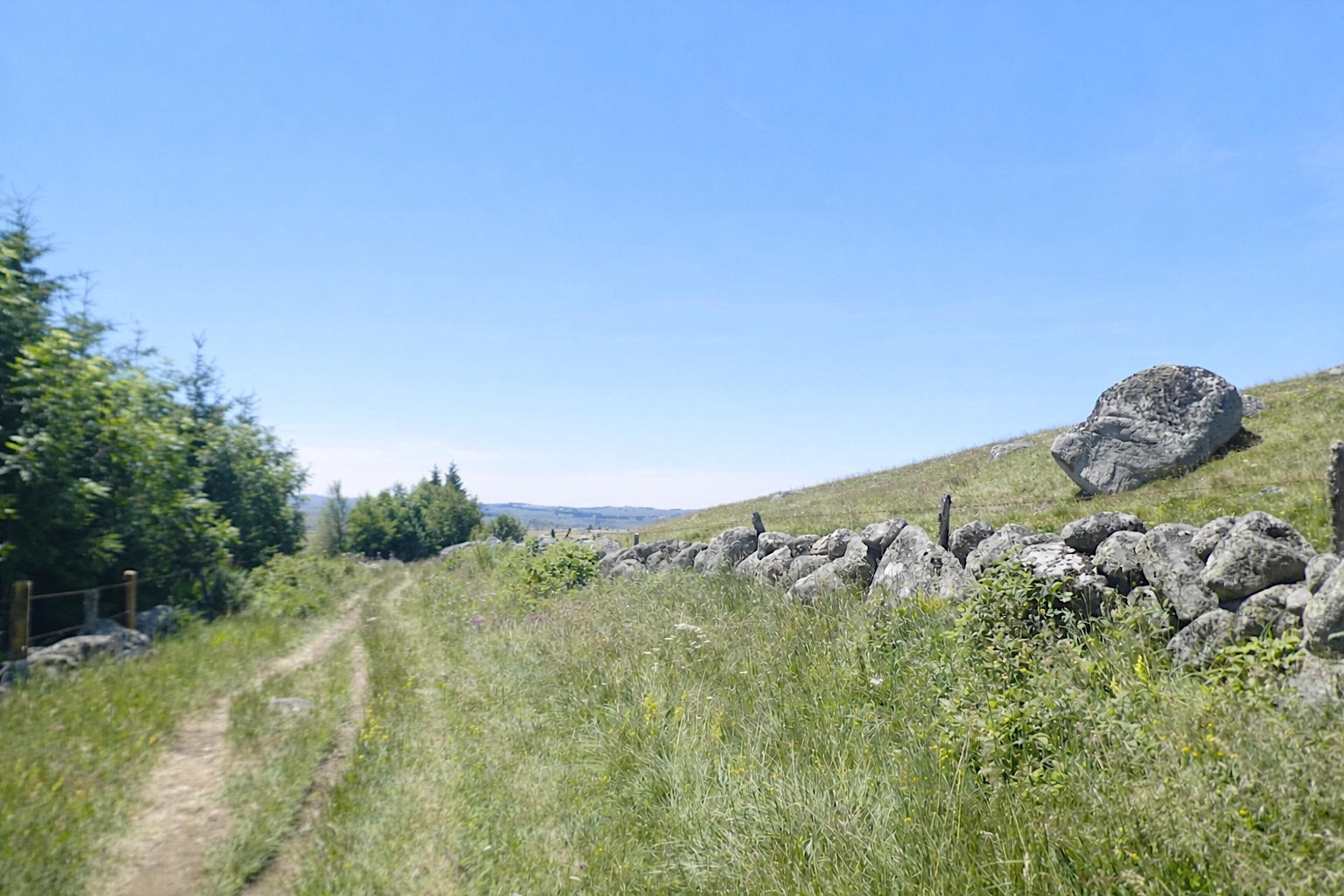
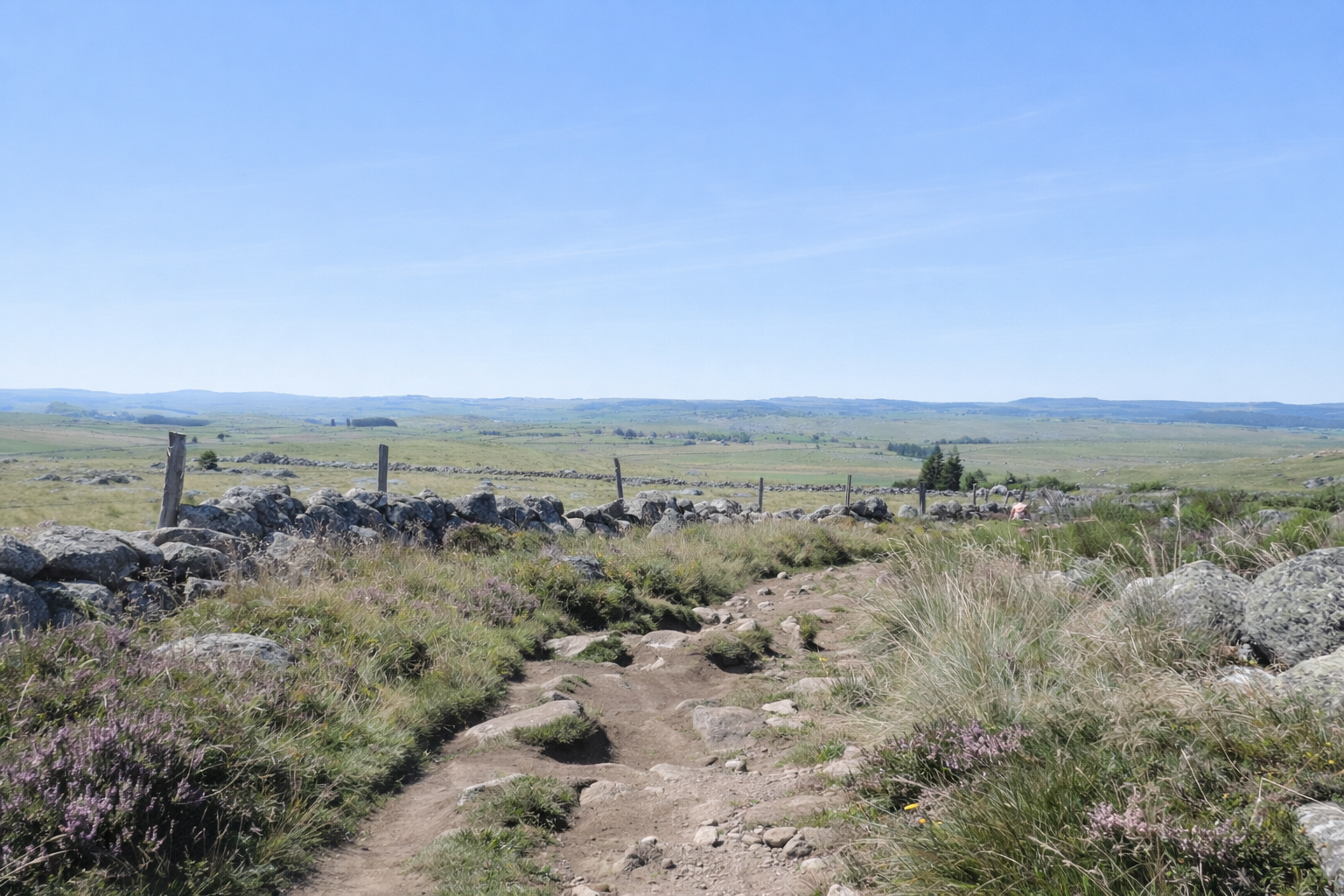
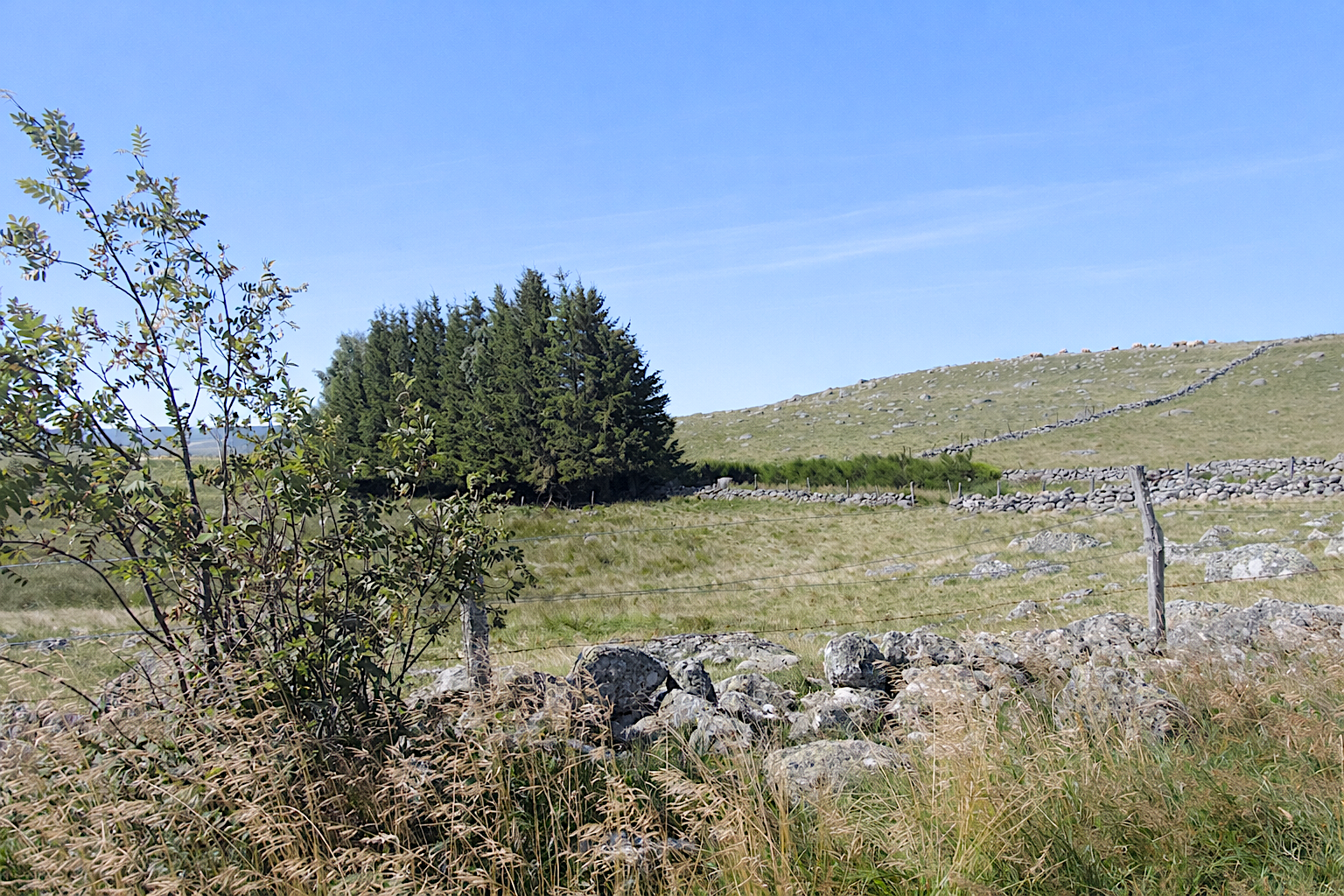
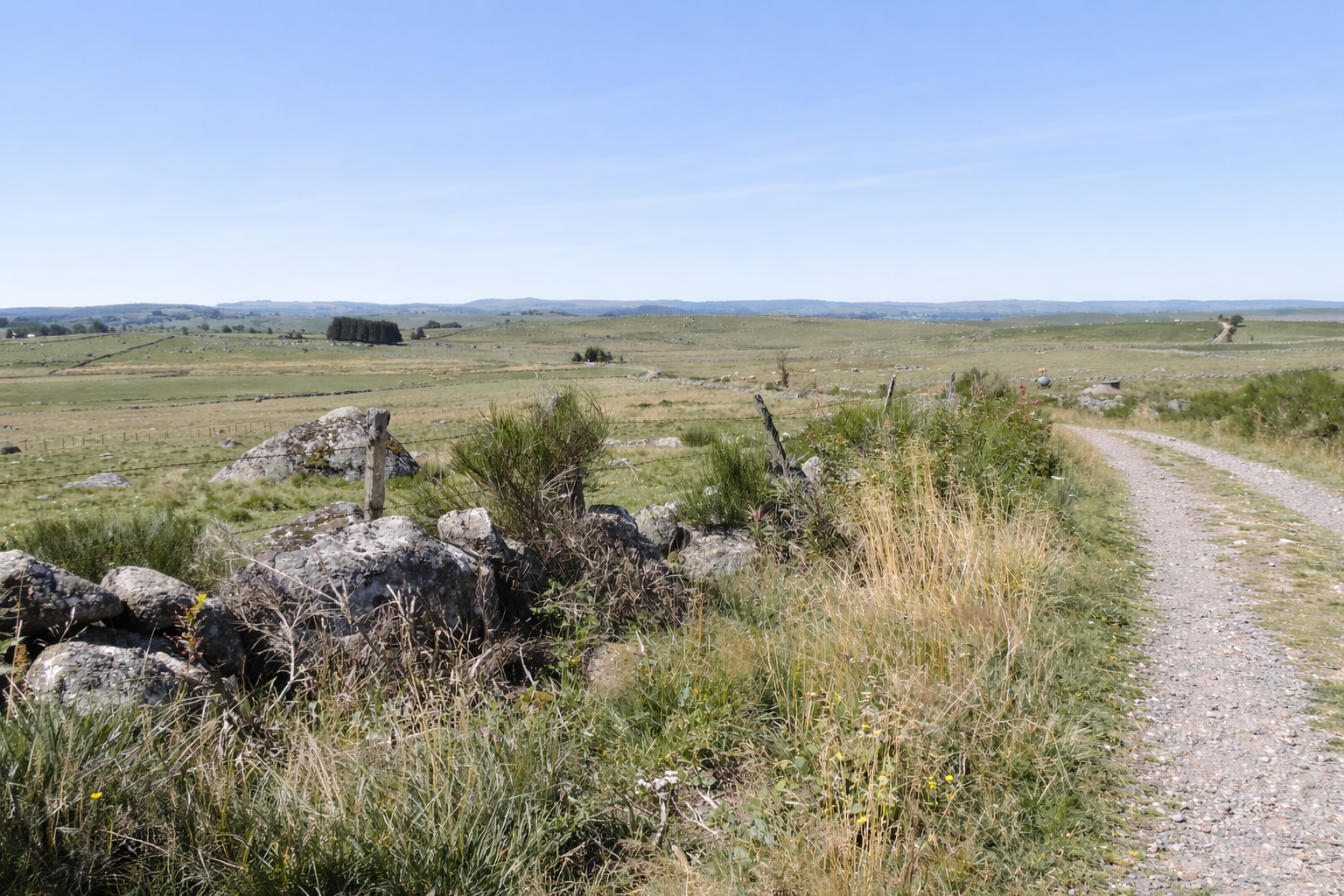
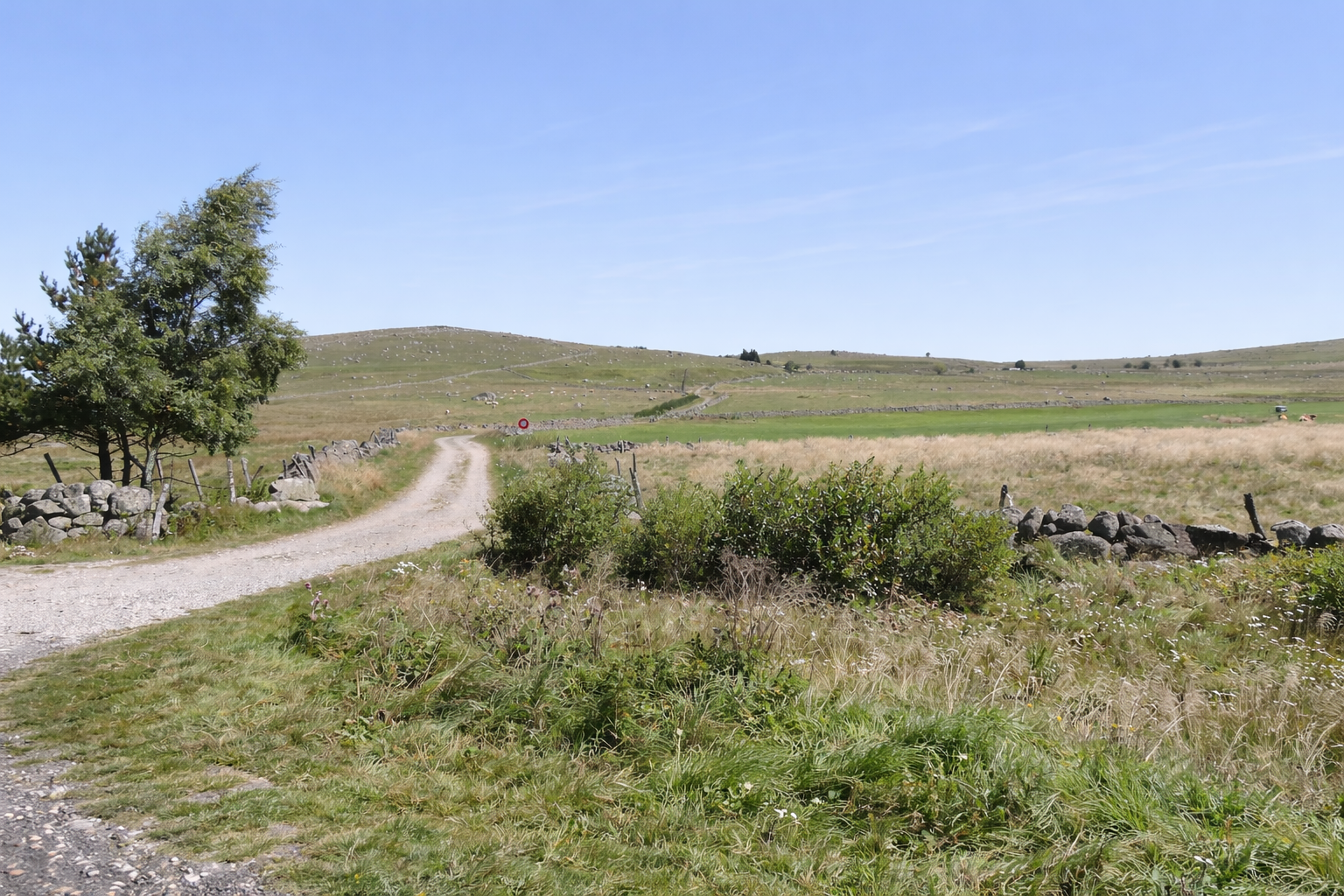
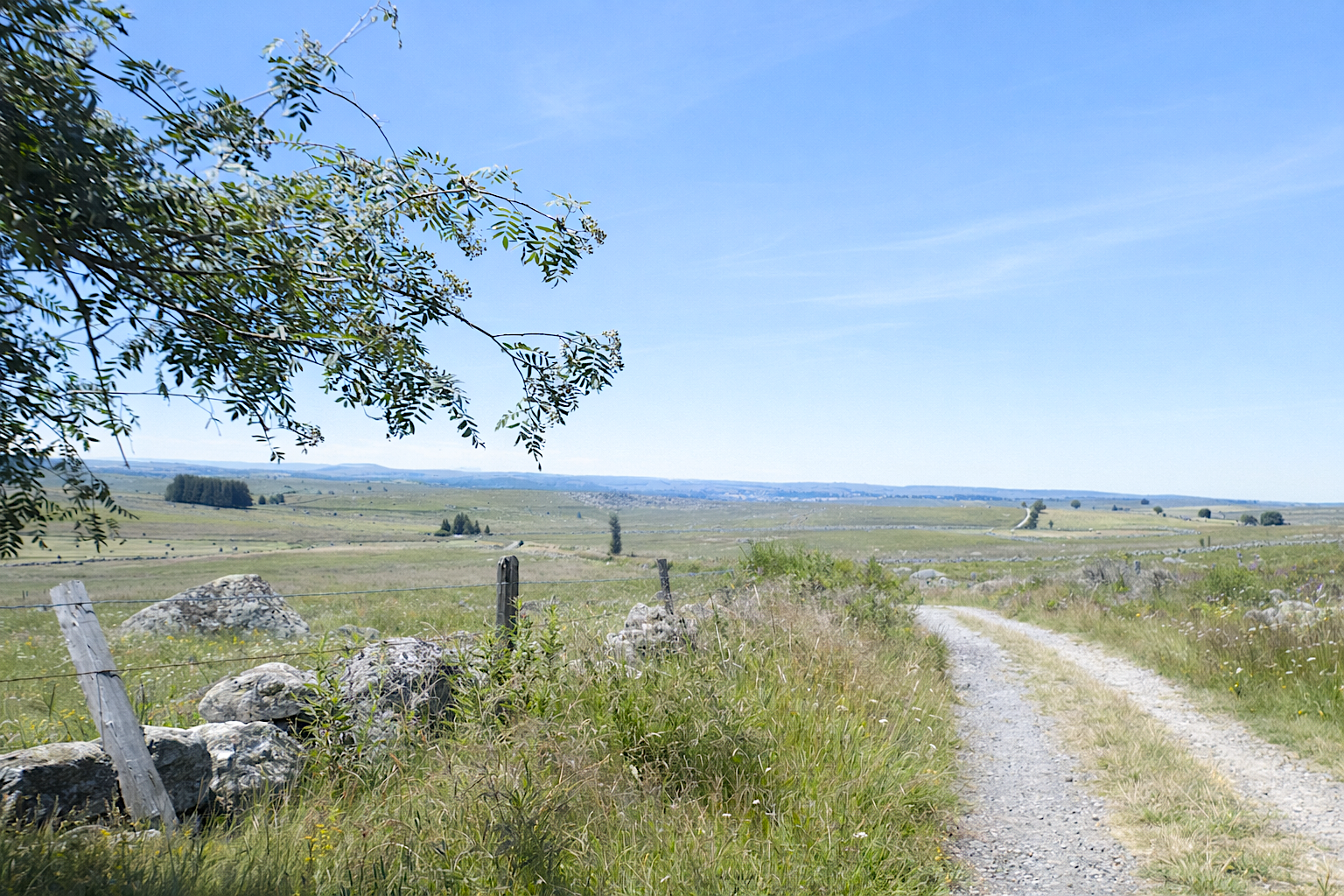
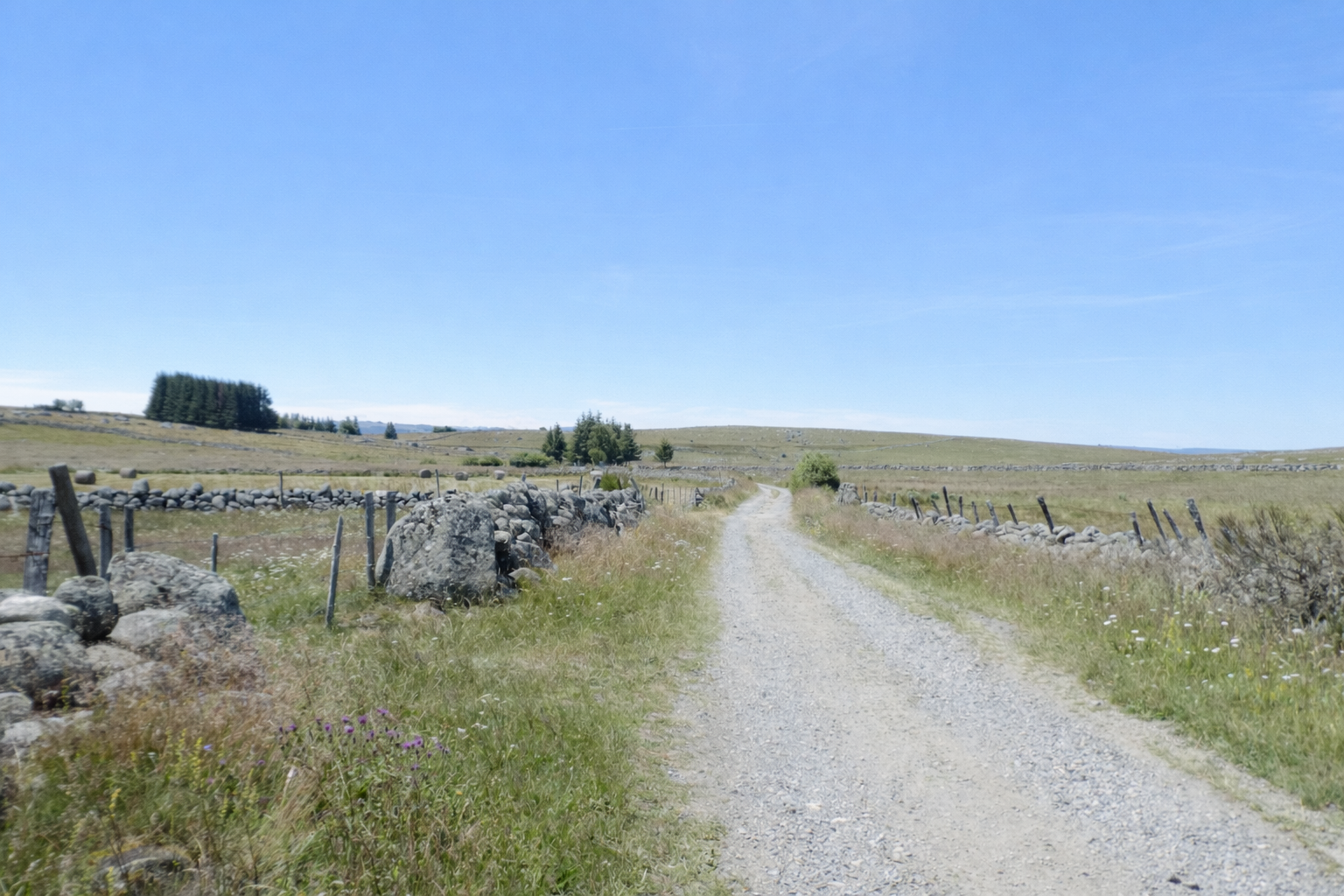
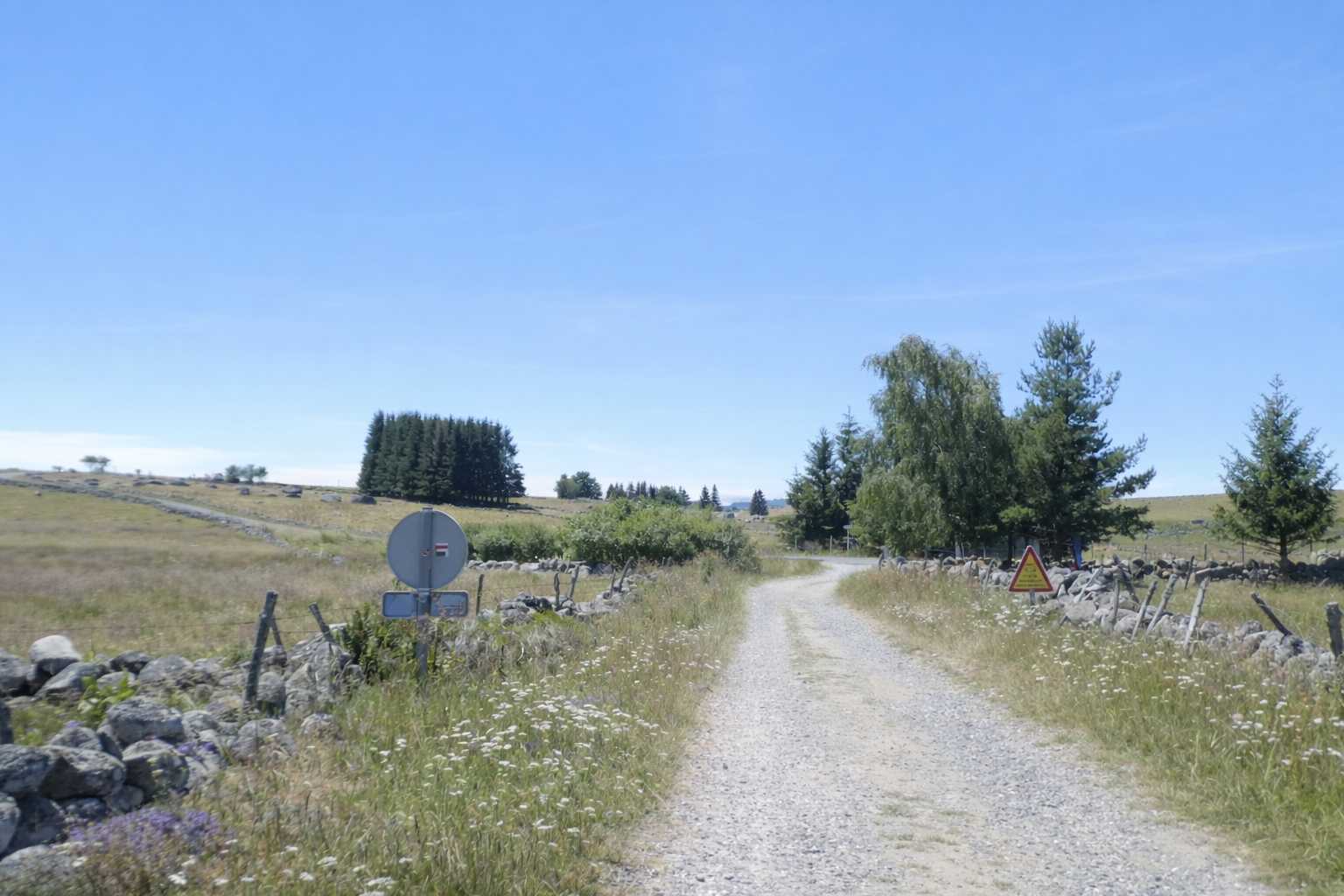
The trail, briefly rougher and strewn with large stones that test each step, gradually softens. Further down, it broadens into a wide dirt road that flows naturally through this limitless landscape patiently divided by stone walls. |
|
 |
 |
 |
 |
|
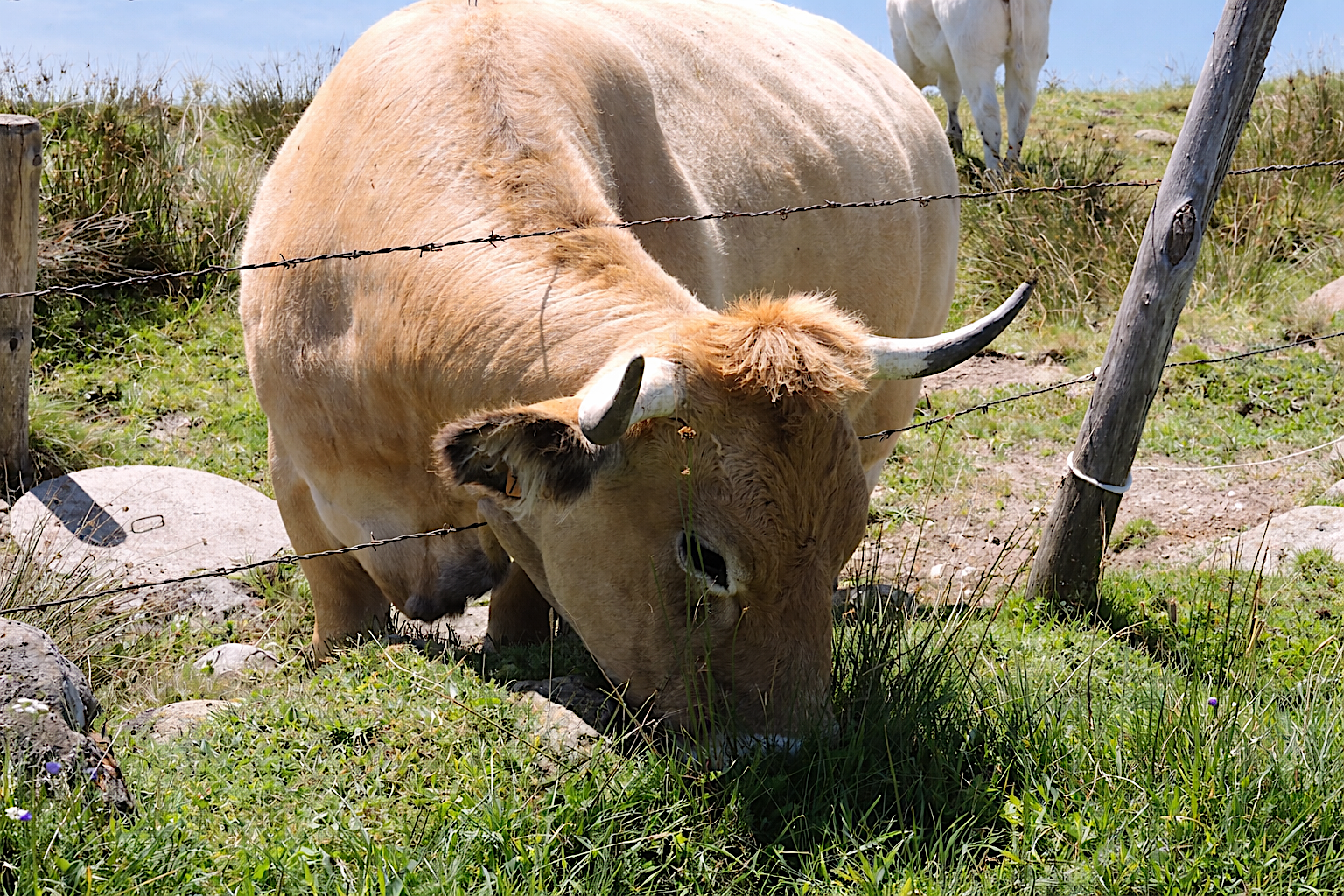
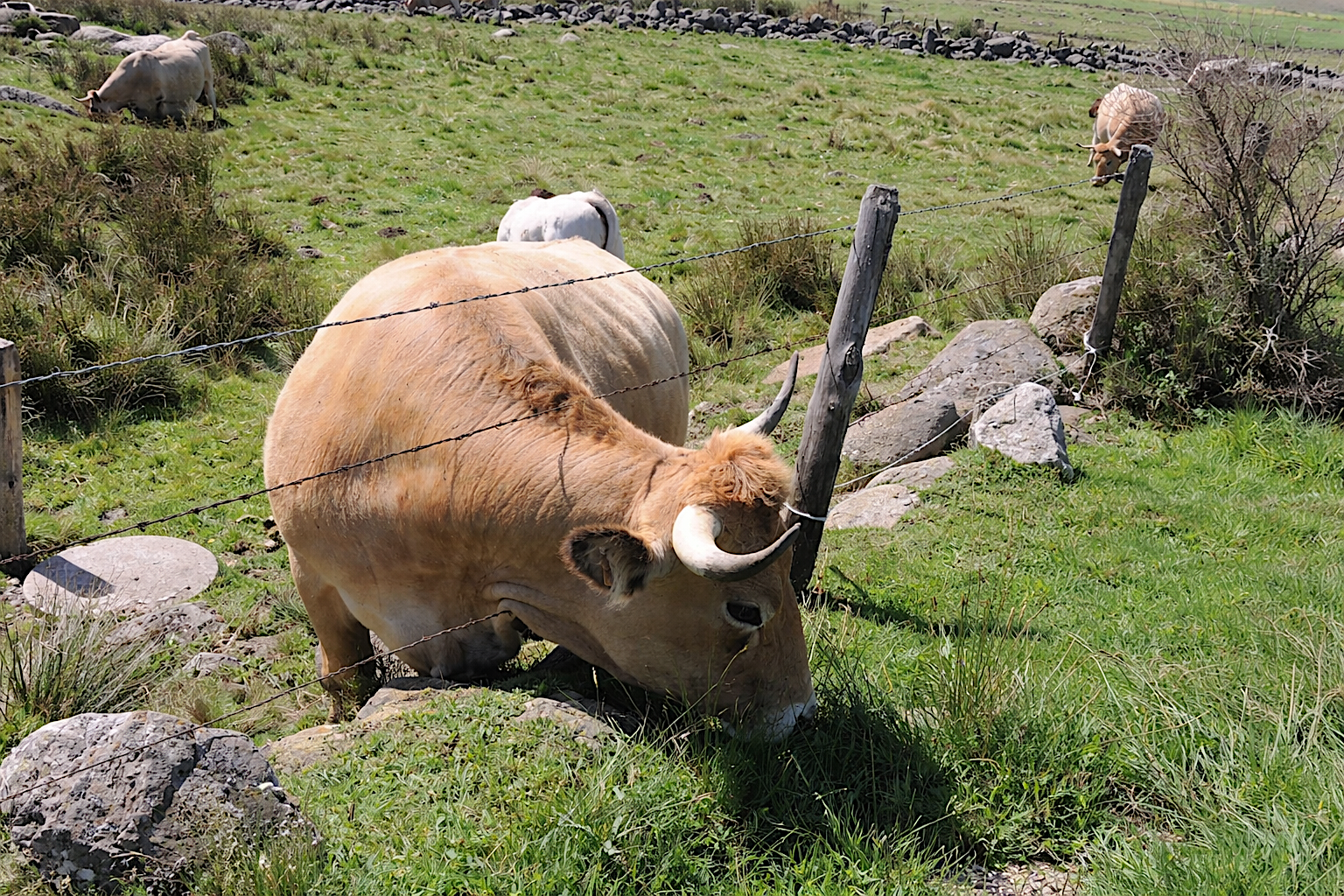
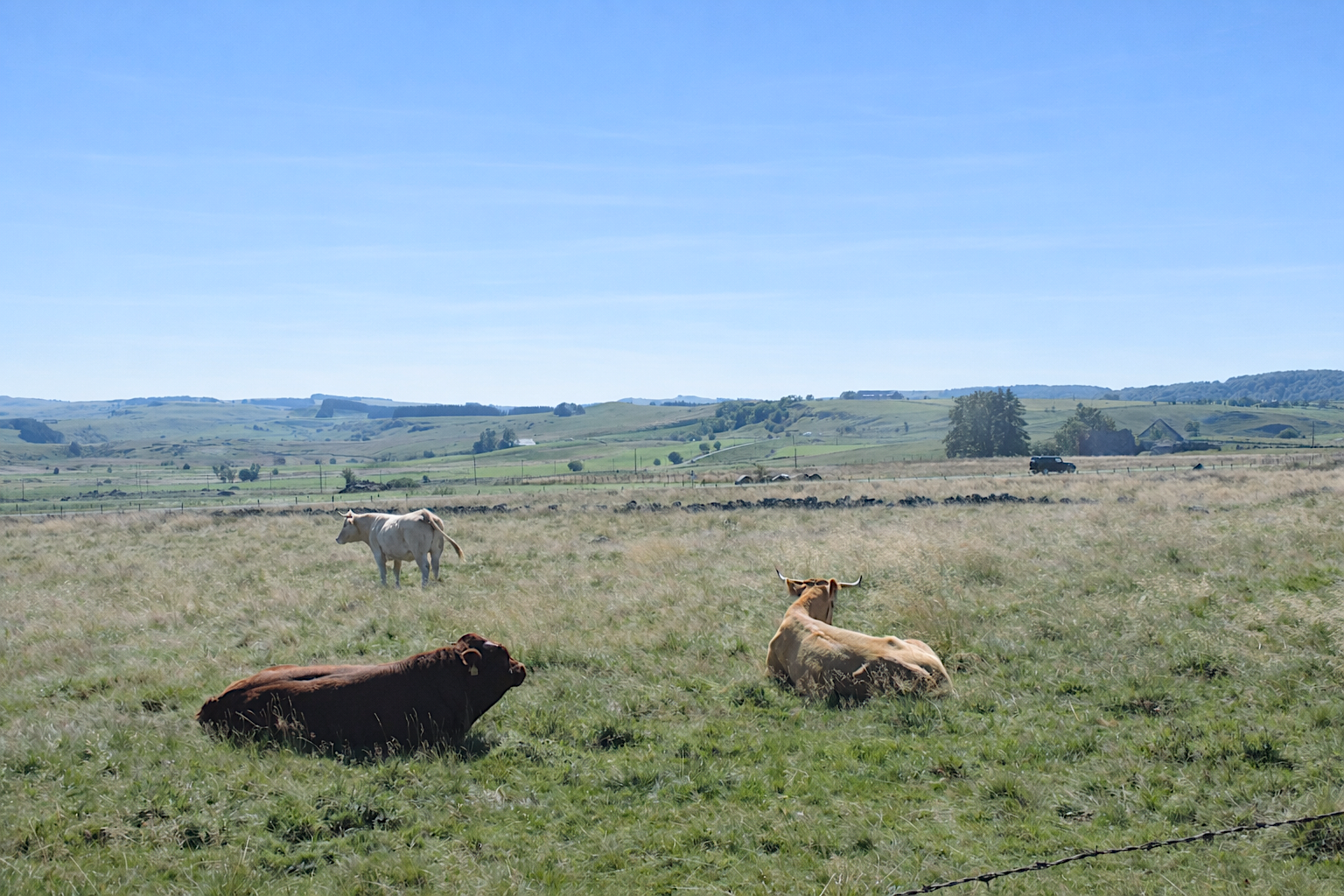
This too is Aubrac: the tranquil presence of its tawny-coated cattle, familiar silhouettes that always seem to prefer grazing where pilgrims pass, as though they share, in their own way, the meaning of the path. |
|
 |
 |
|
In Lozère, volcanic upheavals once spread vast flows of lava across the granite bedrock, reshaping parts of the landscape. Yet on this plateau, where the Bès and the Truyère have their source, these eruptions seem to have calmed, leaving granite with the privilege of ruling almost alone, disturbed only by occasional scattered volcanic remains. And sometimes, older still, limestone reminds us that these lands once lay beneath ancient seas. |
|
 |
 |
 |
 |
|
As the path widens, it eventually reaches the foot of the hill, as though gradually returning to the ordinary world after brushing against infinity. |
|
 |
 |
|
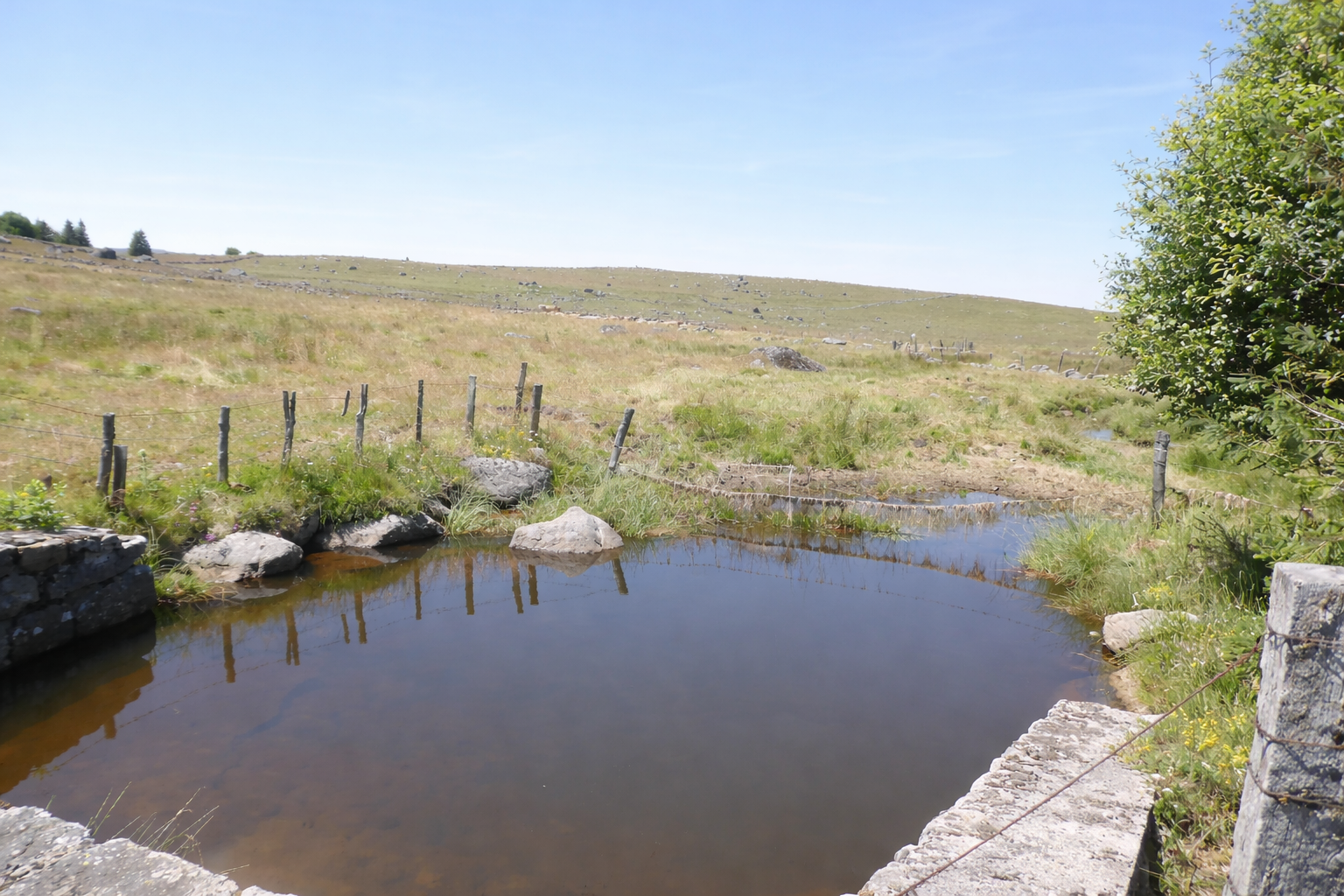
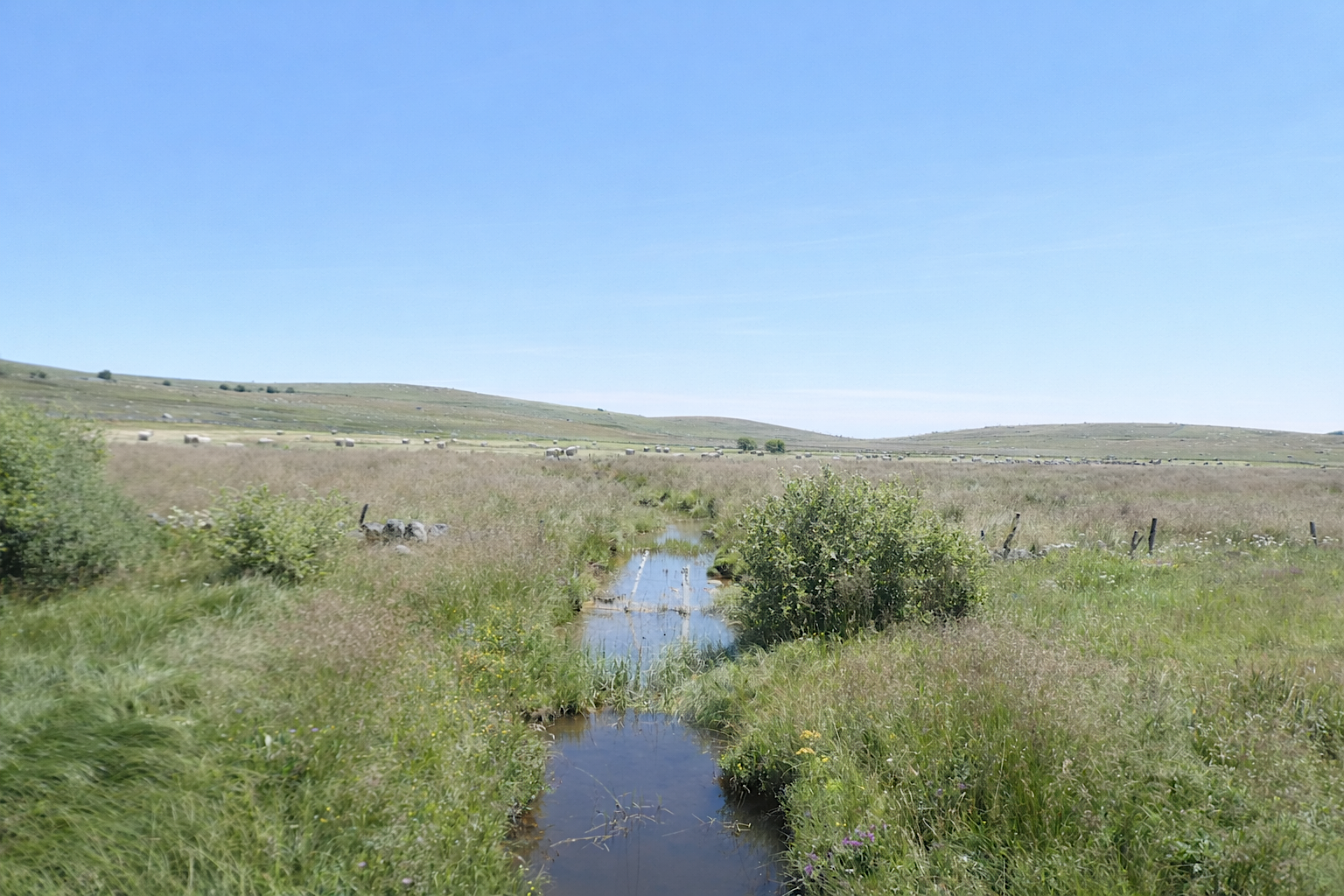
At last, it rejoins the road and the Peyrade stream, one of those discreet ribbons of water that seem to possess neither true source nor destination, existing simply to accompany the passage of pilgrims in silence. |
|
 |
 |
|
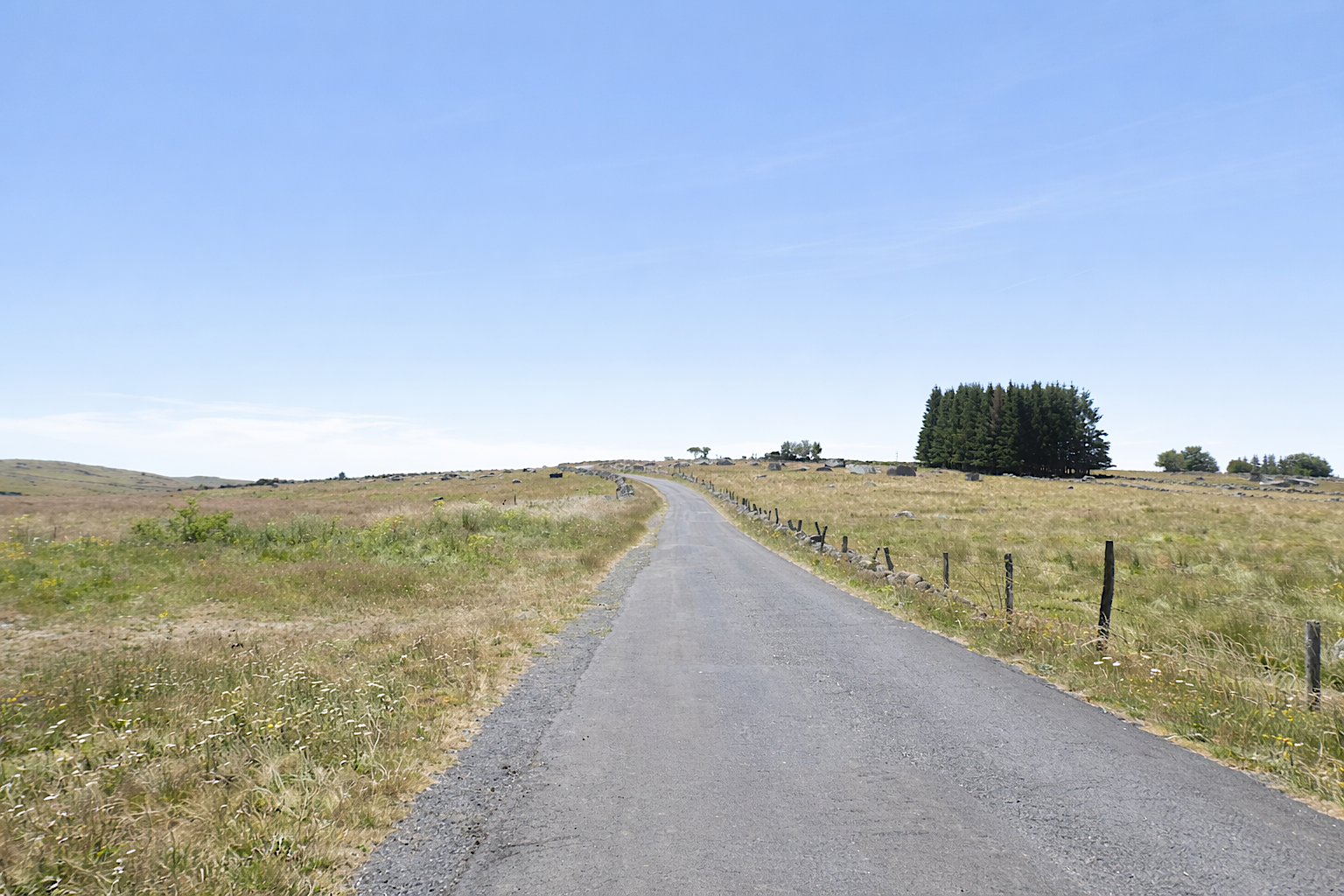
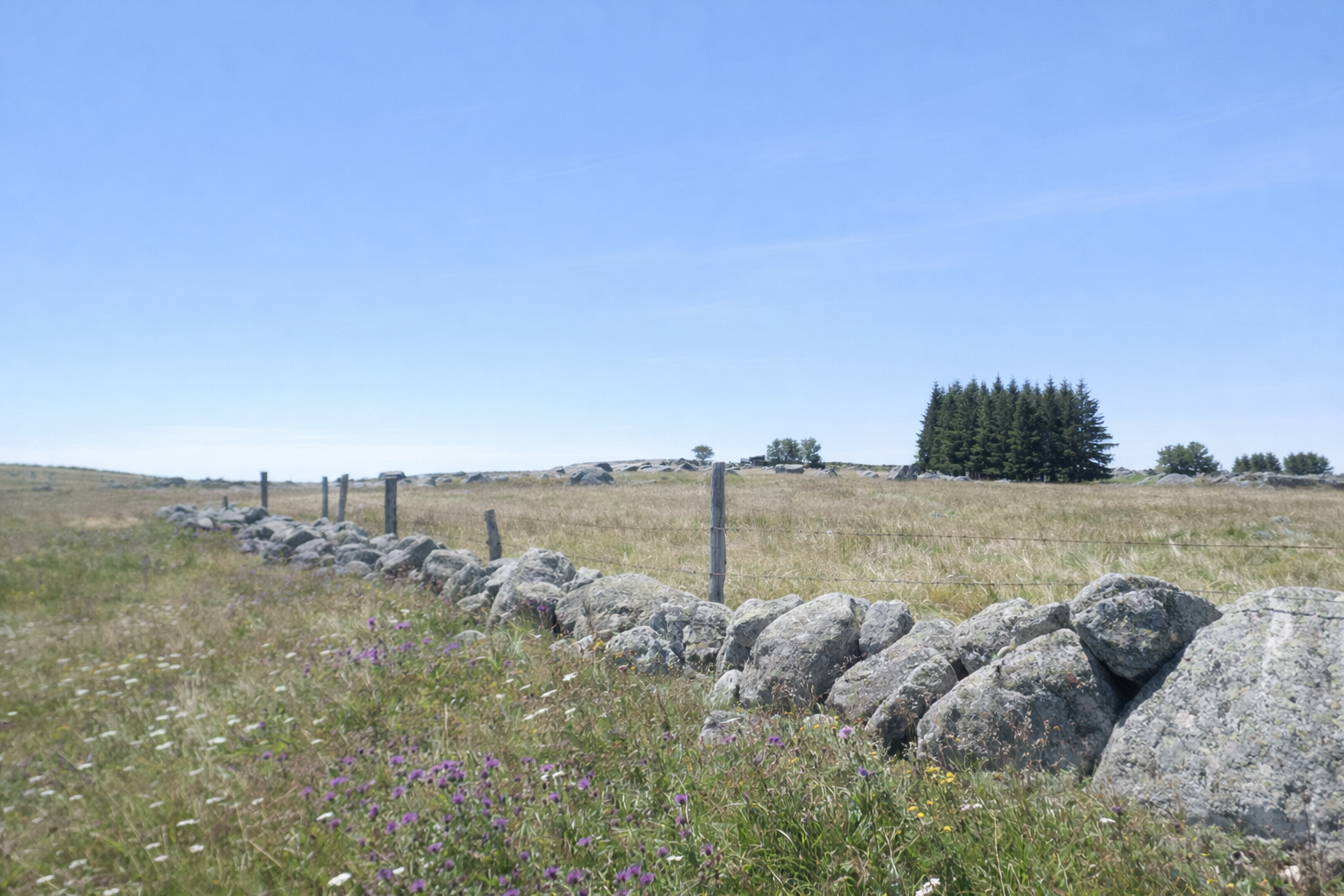
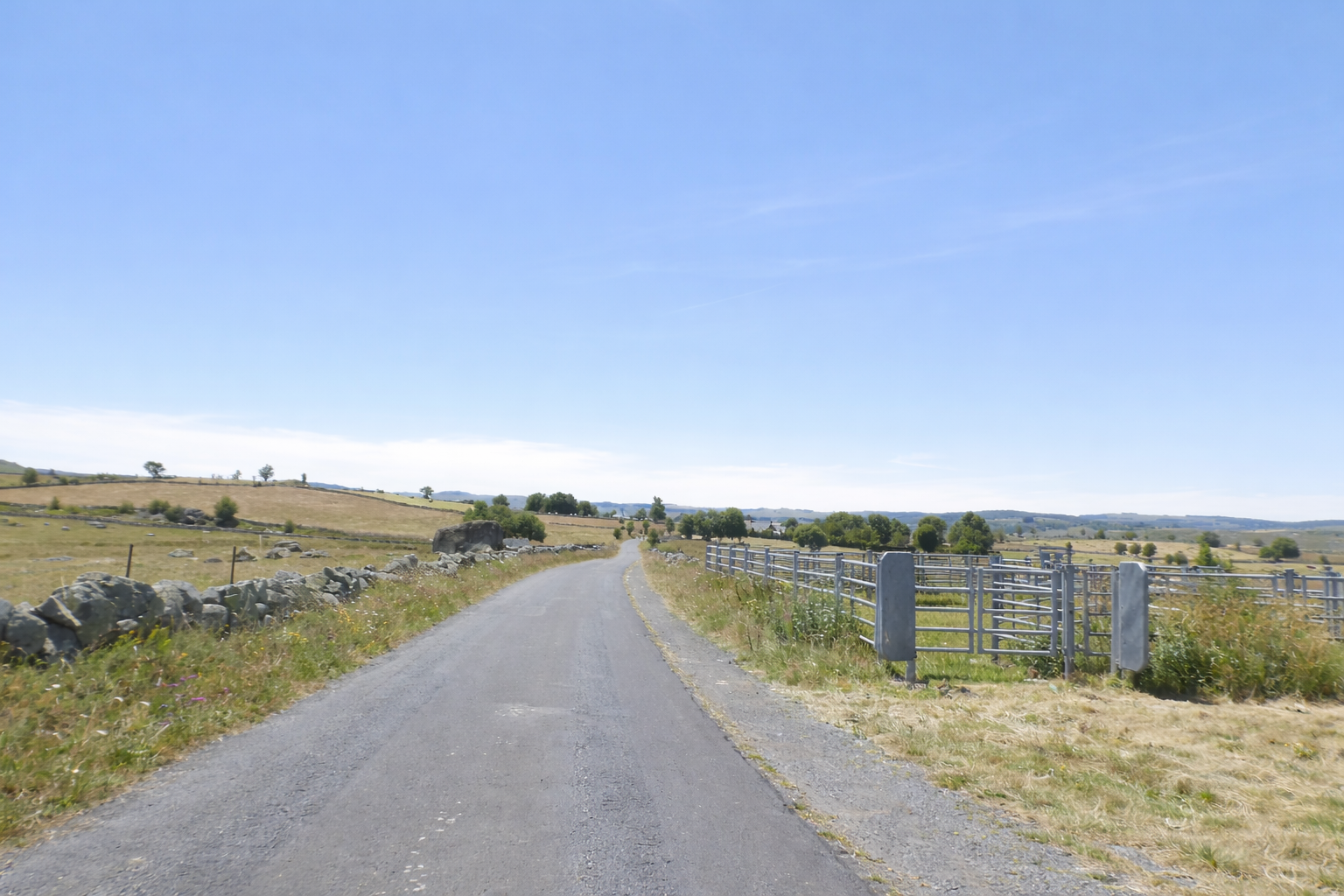
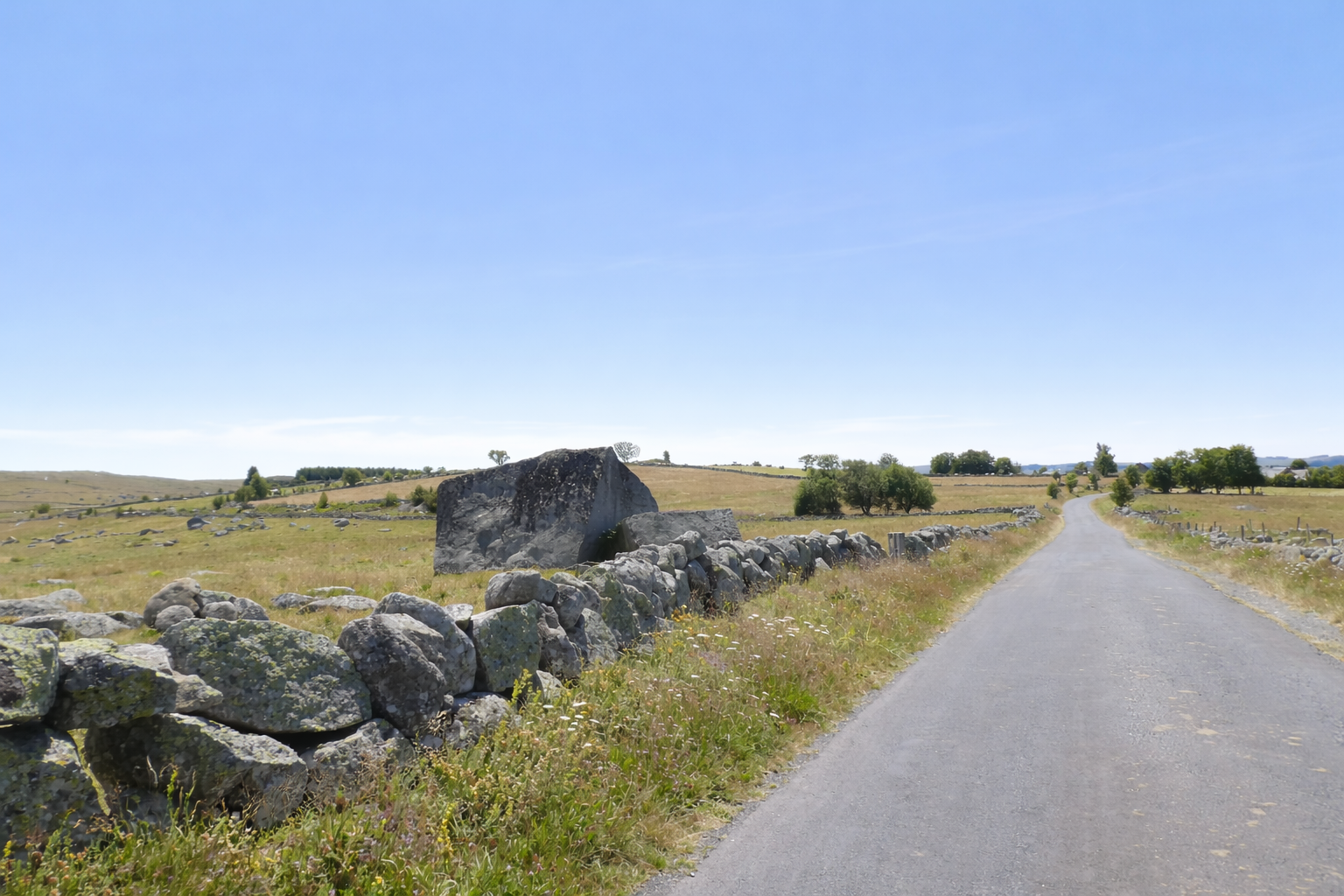
After crossing a few marshy areas, the asphalt returns. Yet here it cannot be said to diminish the beauty of the landscape. The eye wanders across the moorland with such delight that one almost forgets where one is placing one’s feet. Everywhere, large granite boulders rest beside the road or lie scattered across the meadows. |
|
 |
 |
 |
 |
Section 2 : Towards the Bès, Aubrac’s little River
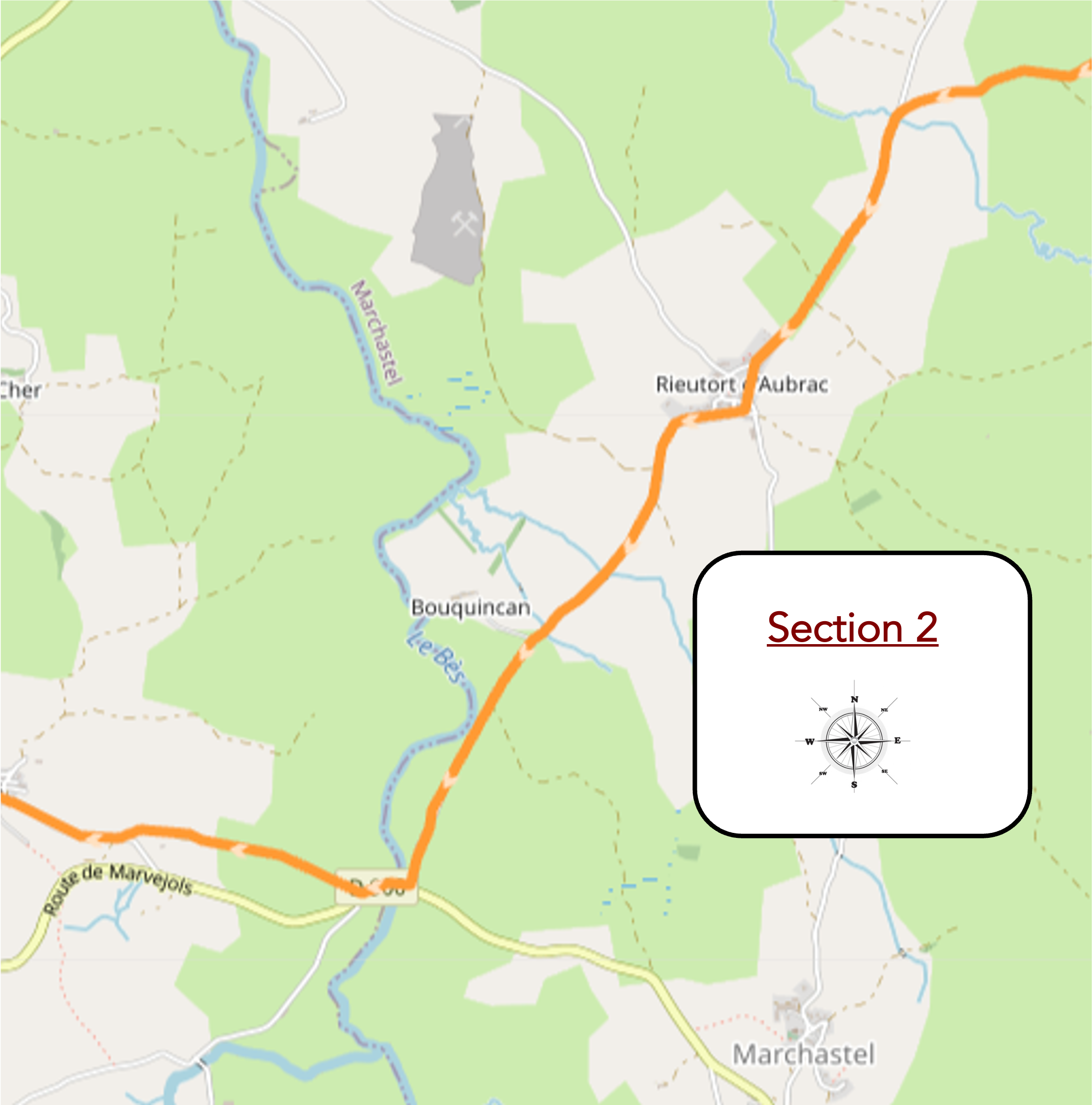
General overview of the route’s challenges: an easy walk, once again, except for the climb towards Montgros.
|
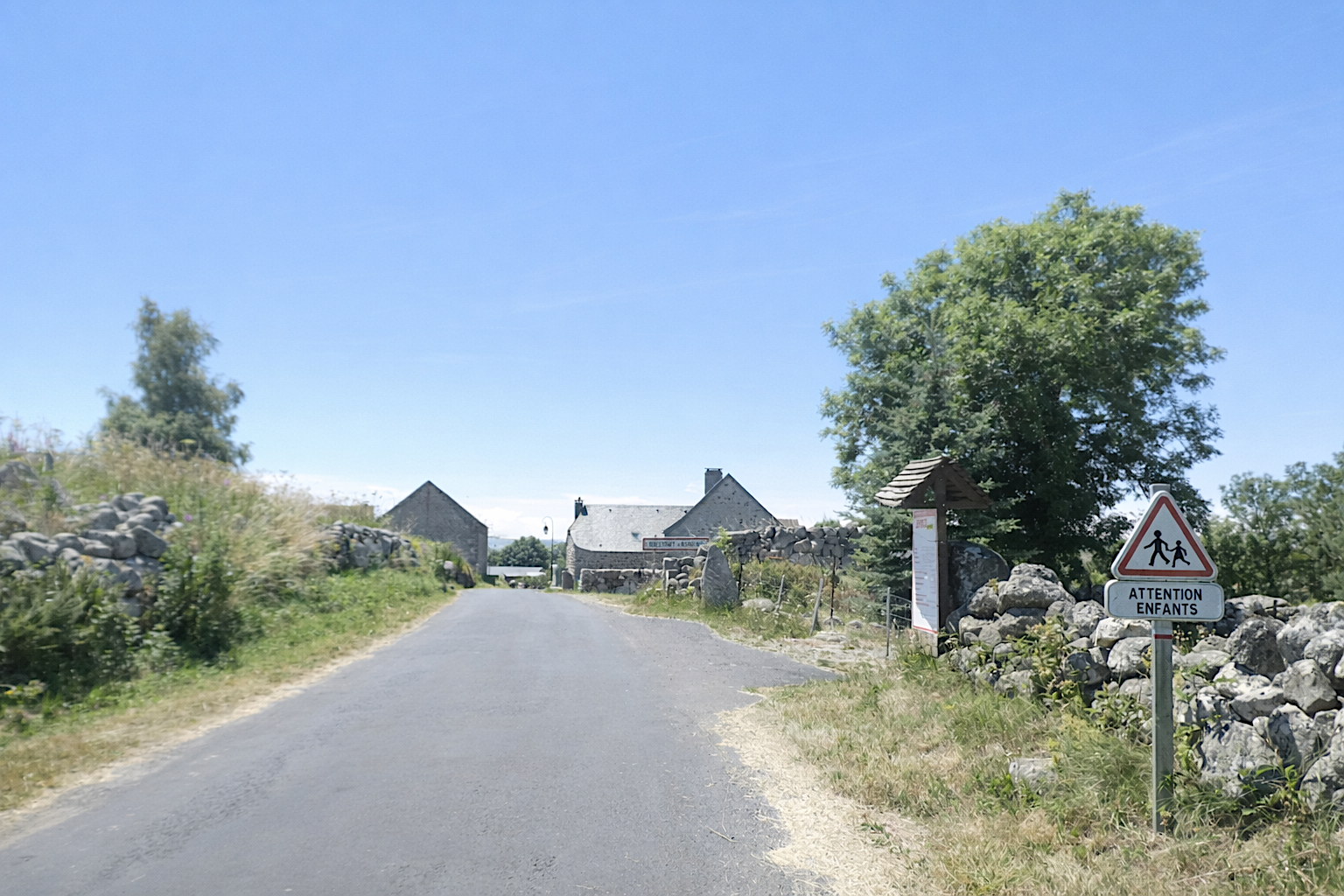
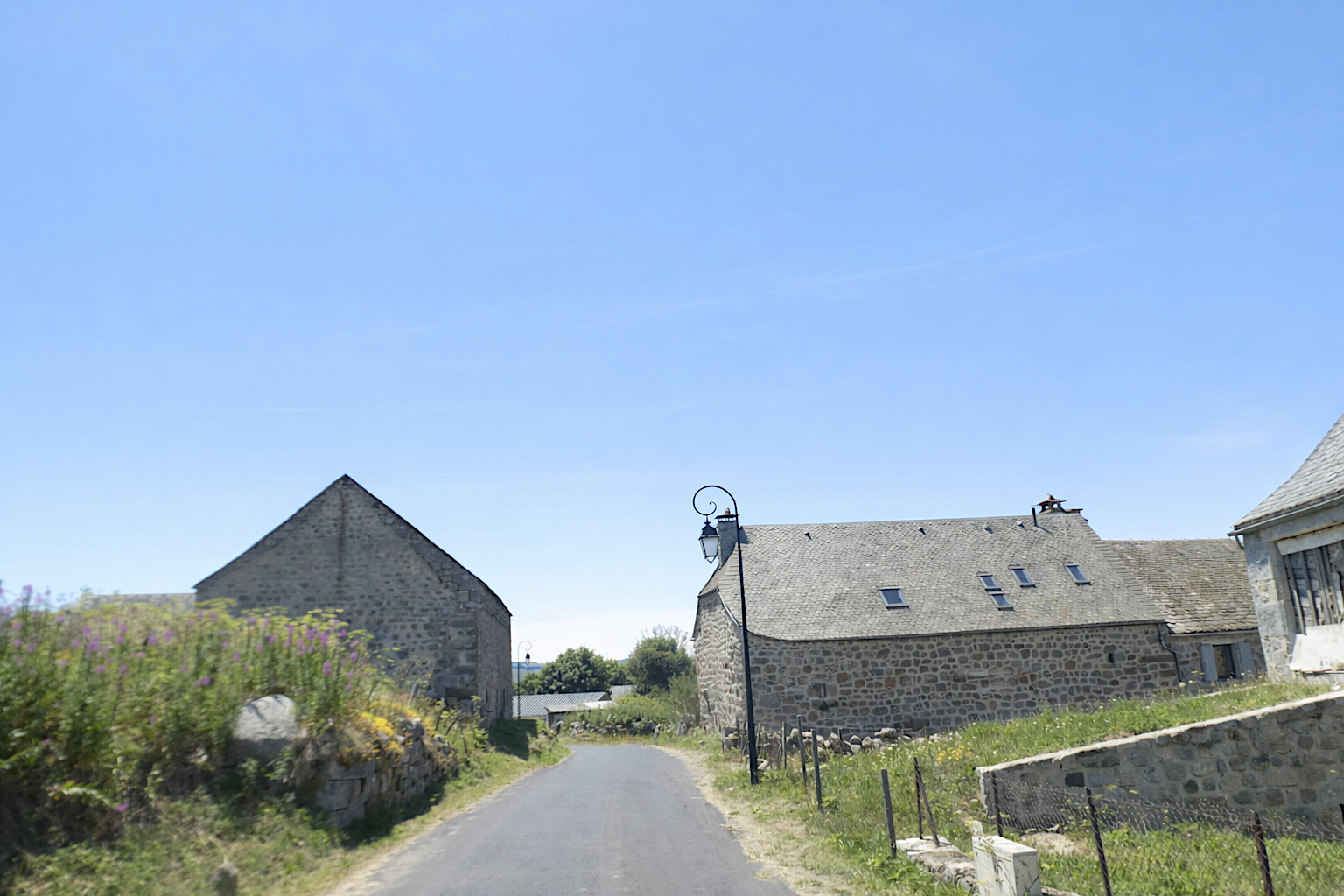
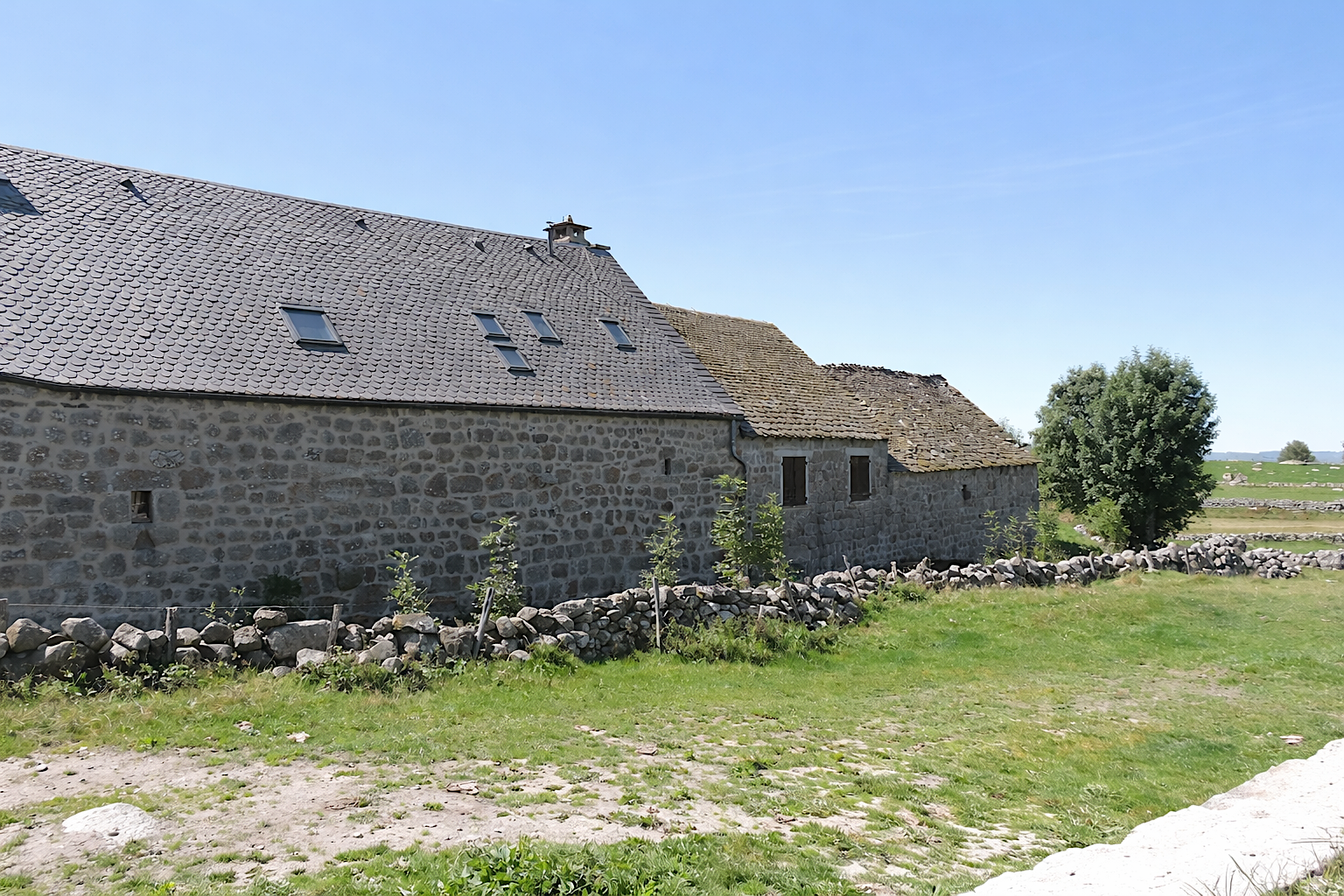
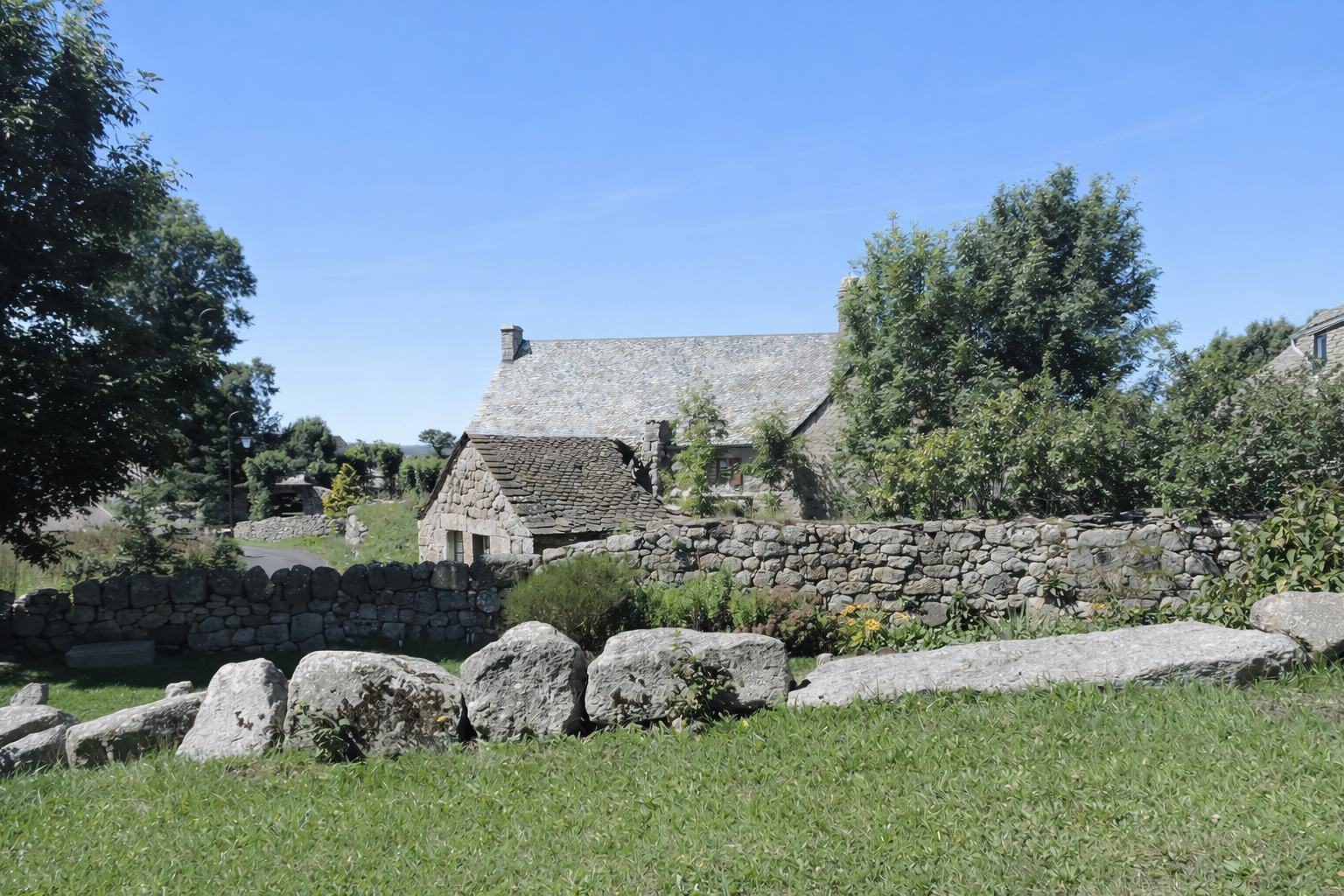
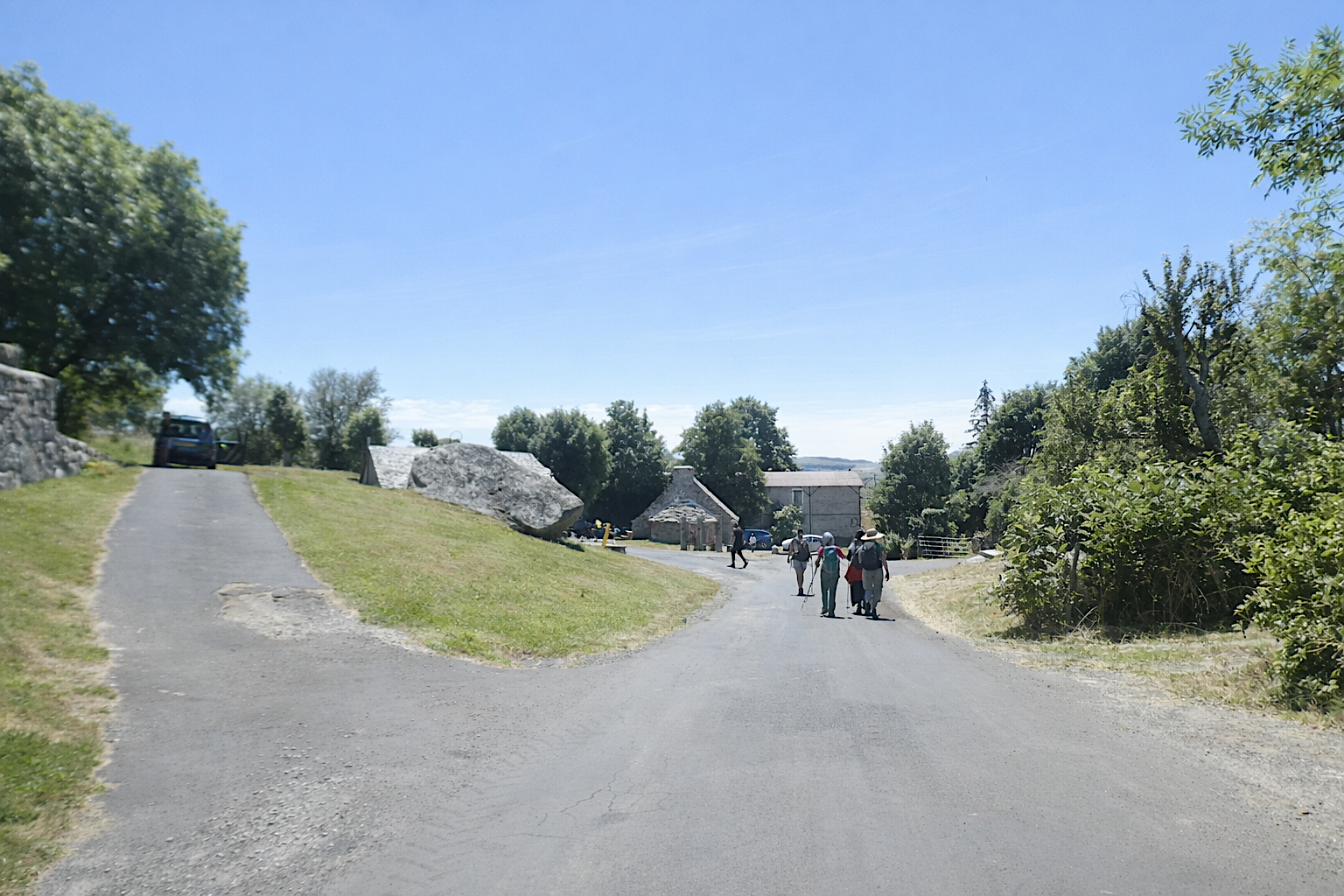
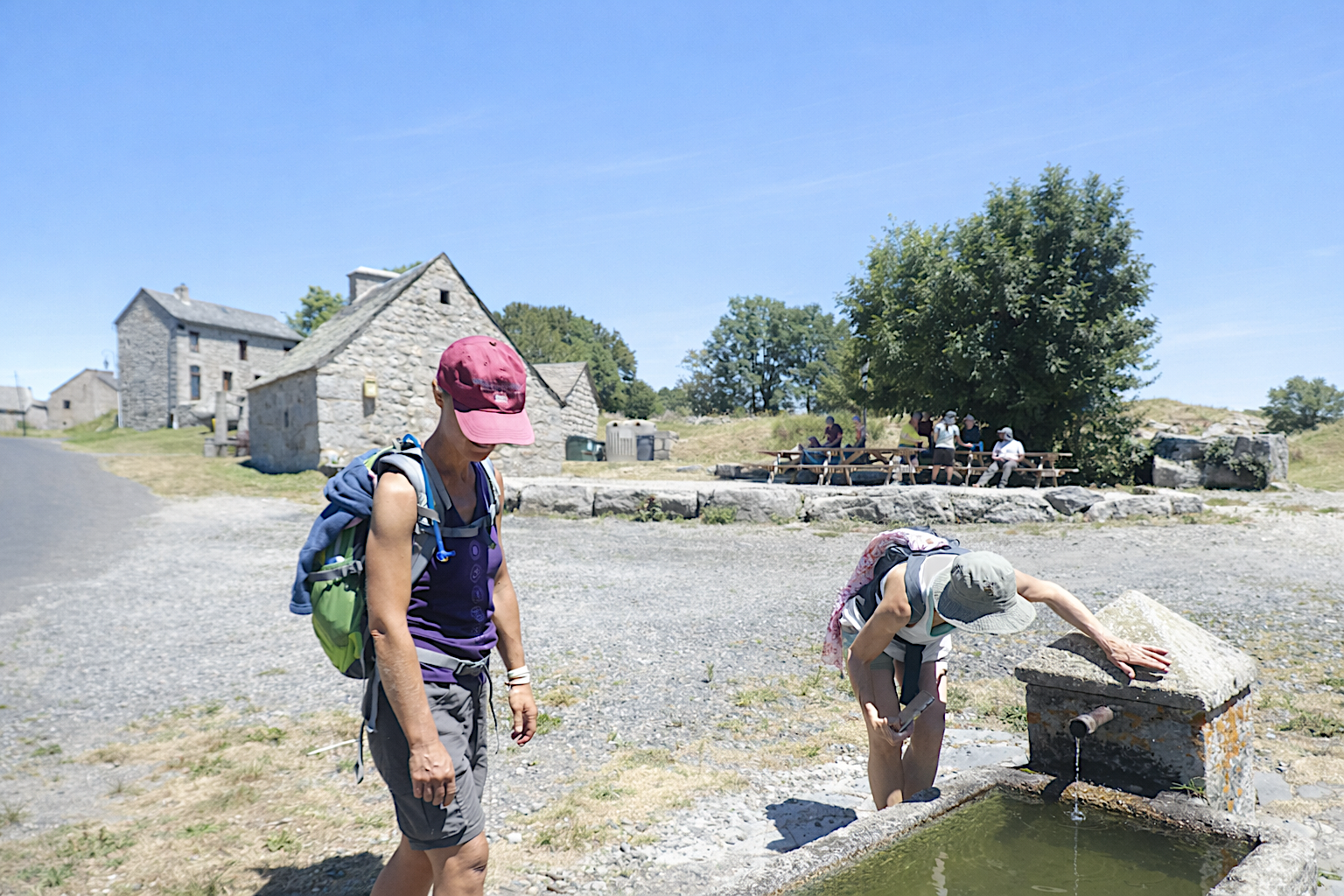
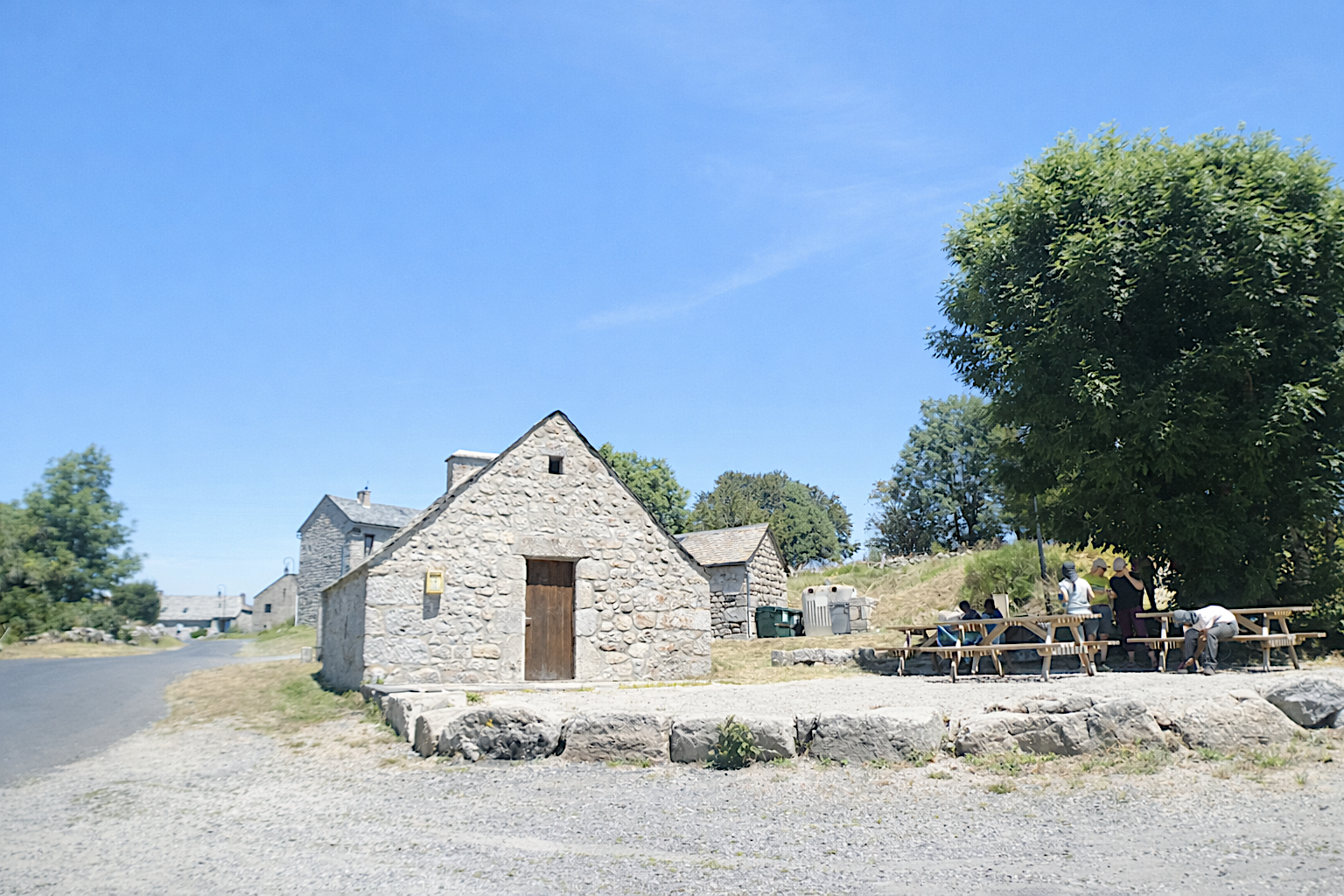
The road leads gently towards Rieutord, where stone houses with slate roofs stand side by side, pressed closely together as though to better withstand the assaults of the wind. The village possesses an austere quality, almost entirely mineral, deeply rooted in the granite upon which it stands. From the thickness of the walls and the solidity of the roofs, one senses that these buildings were made to endure, to withstand the seasons, the storms, and the long winters that follow one another without mercy. . |
|
 |
 |
 |
 |
|
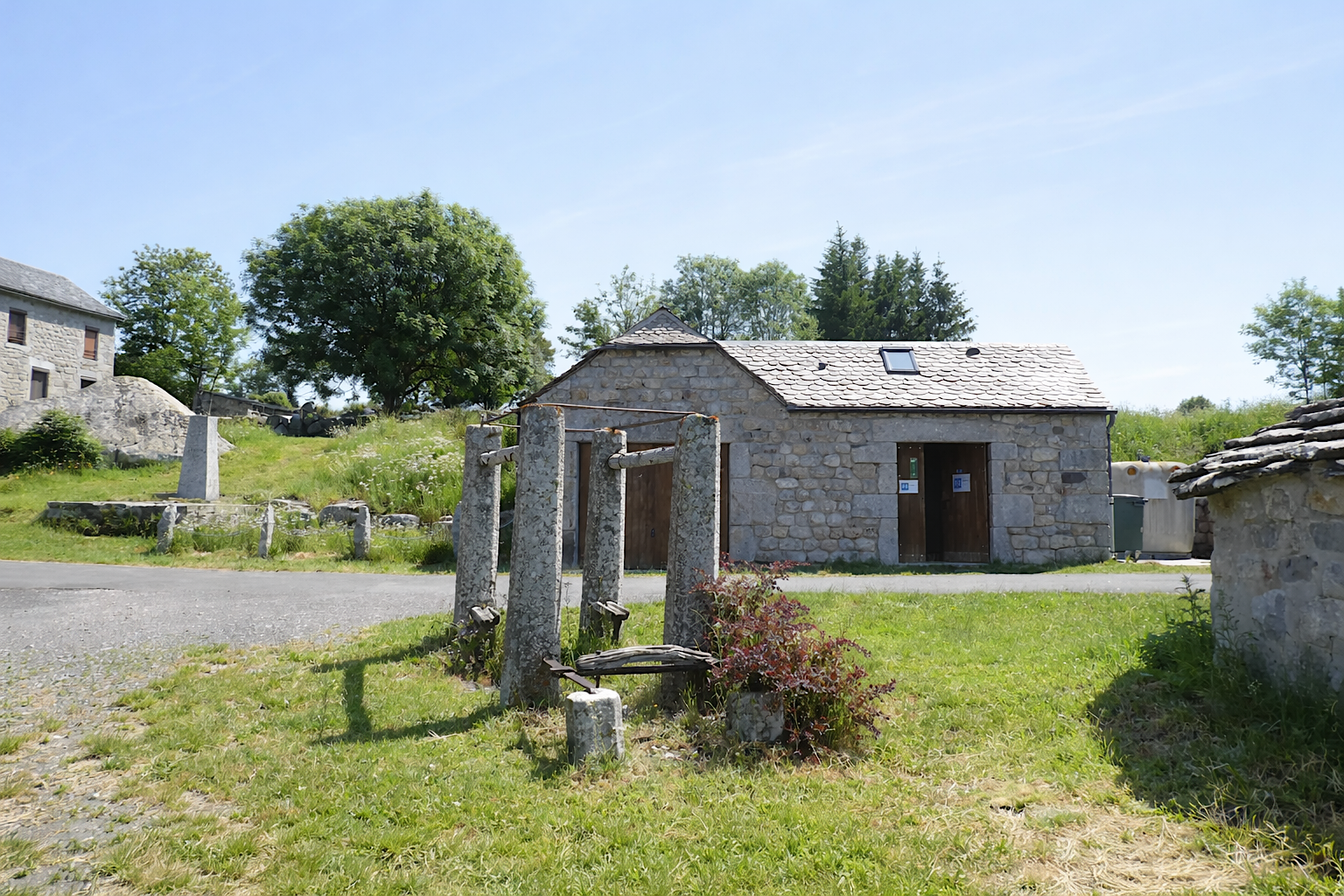
Pilgrims often stop here, drawn by the presence of a water source and by a witness to a vanished world: the « travail », that wooden and iron structure once used to restrain oxen while they were shod. It stands at the heart of the “Couderc”, preserving the living memory of rural labor from another age. . |
|
 |
 |
 |
 |
|
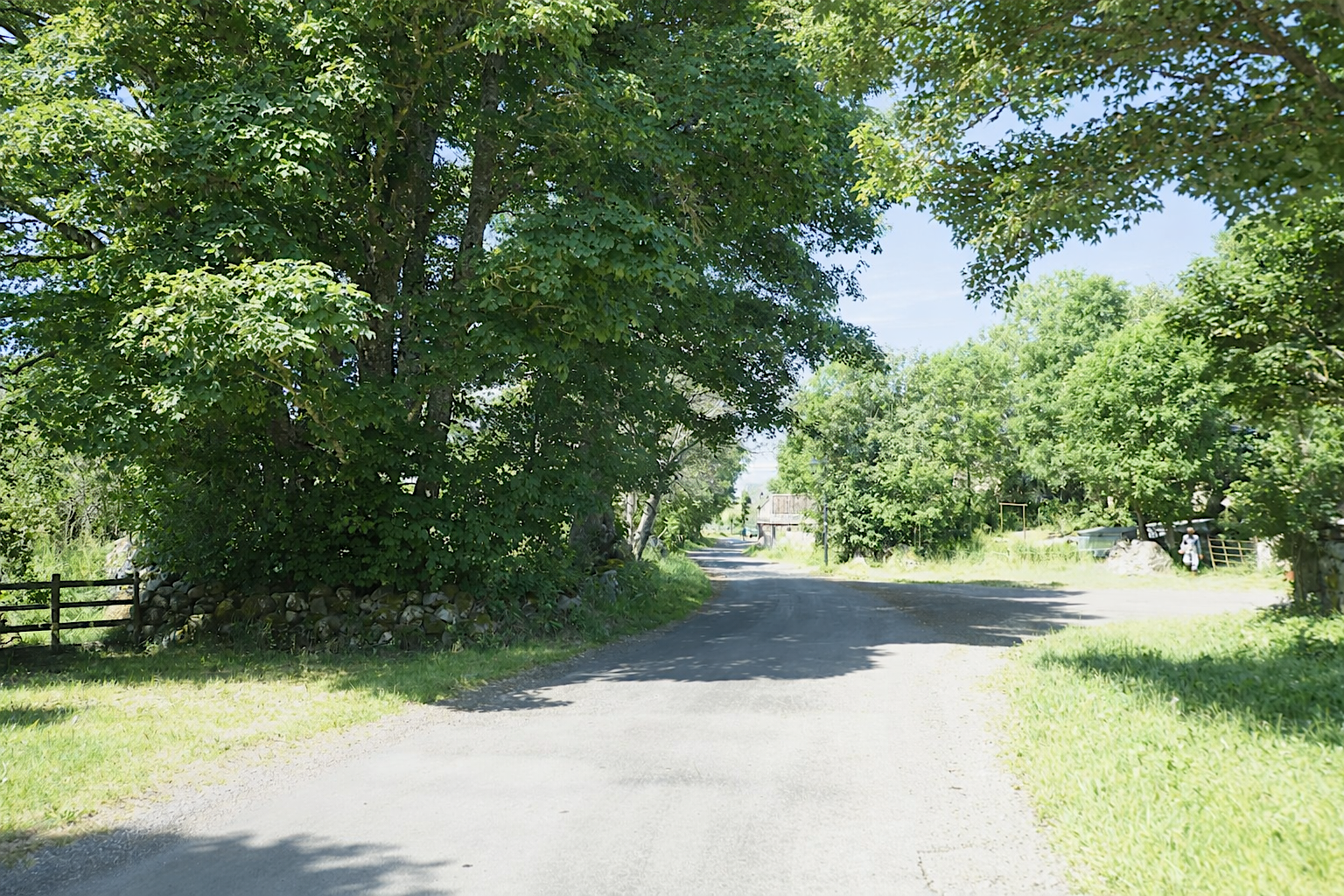
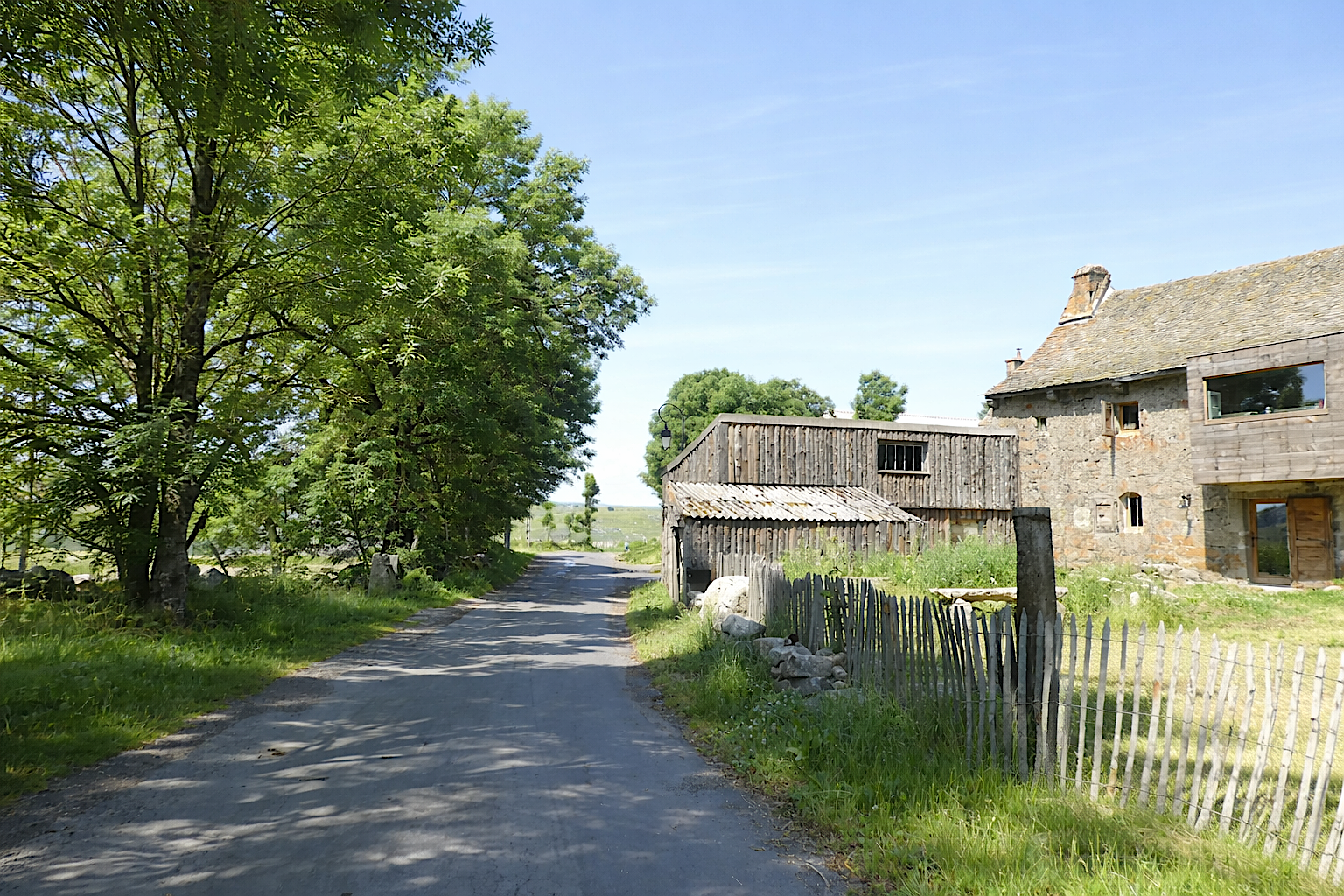
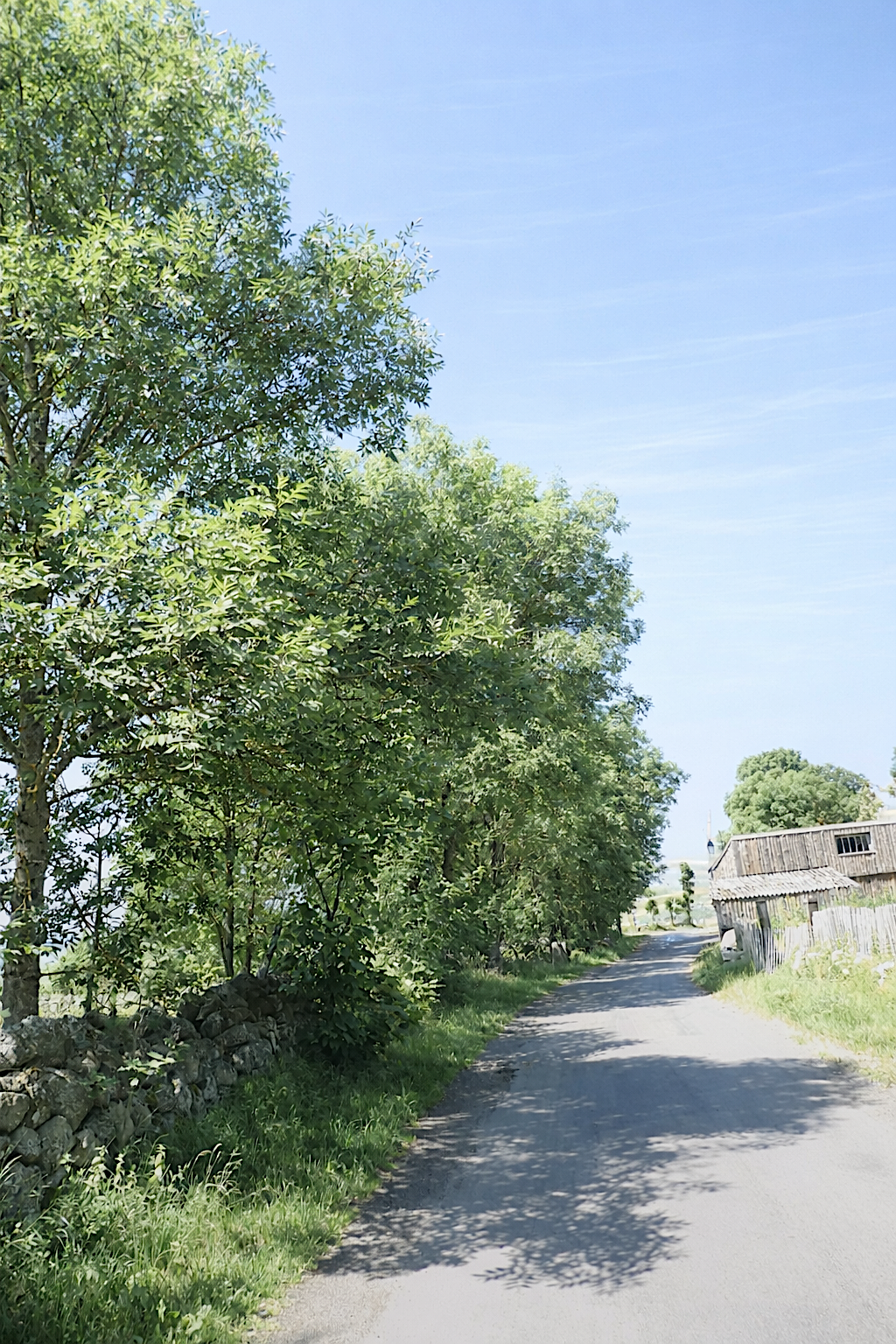
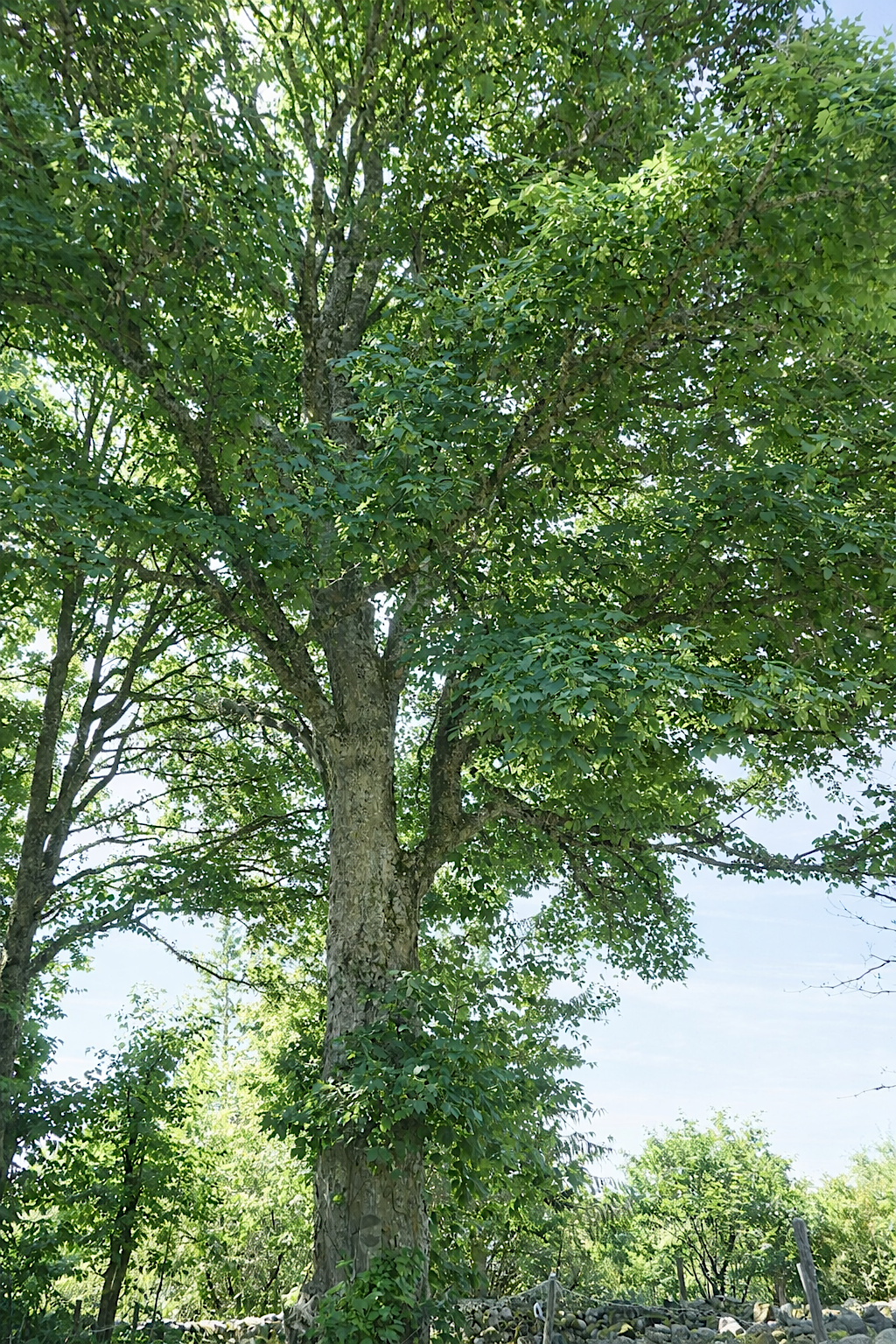
At Rieutord, the route once offered a choice. The route most commonly followed today, the GR65, leads to Nasbinals via Montgros. But there was another option: the GR65A, an older variant, more faithful to the route taken by pilgrims of centuries past. It headed toward Marchastel, then the Lake of Saint-Andéol, before rejoining Aubrac, or even descending directly to Saint-Chély-d’Aubrac. If you are a cheese lover, this alternative might well have influenced your decision, at least in part. In Marchastel, the village inn once served remarkably rich cheese platters that showcased the full range of Aubrac’s flavors. Today, however, it appears to be closed. Some people, with a hint of mischief, suggest that the route of the Camino de Santiago is shaped not only by history but also by more… practical considerations. Nasbinals, they say, might never have prospered to the same extent without the steady flow of pilgrims. Yet beyond such speculation, a more tangible reason stands out: the original route crossed wetlands that now require protection. As a result, certain sections have been abandoned and, in some cases, have become inaccessible. But let us return to the journey itself. Leaving Rieutord, a small road departs the village beneath the shade of towering ash, maple, and oak trees. Here, the trees take on a giant-like stature, creating a striking contrast with the treeless expanses of the Aubrac plateau, a wooded interlude before the landscape once again opens into vast horizons. |
|
 |
 |
 |
 |
|
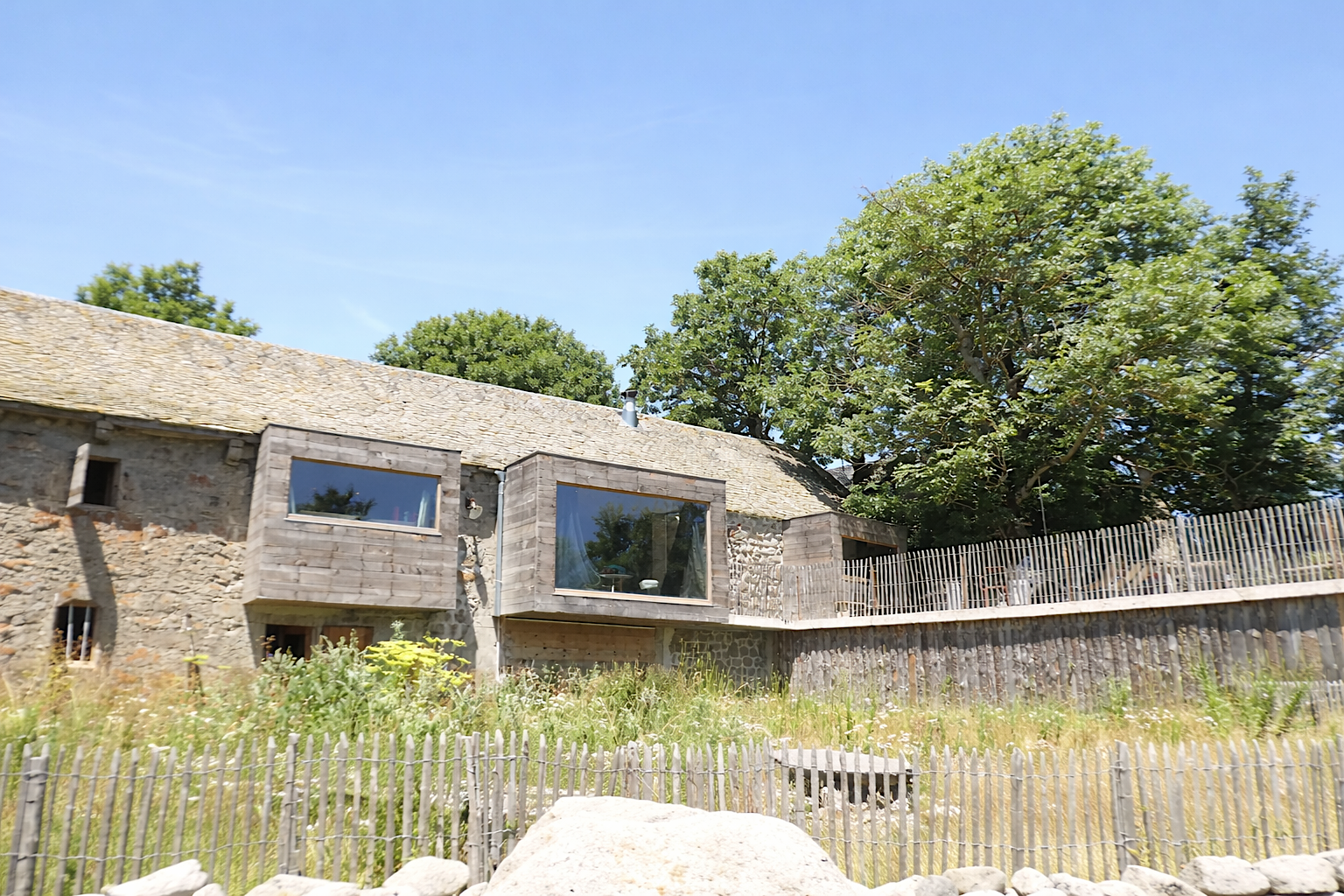
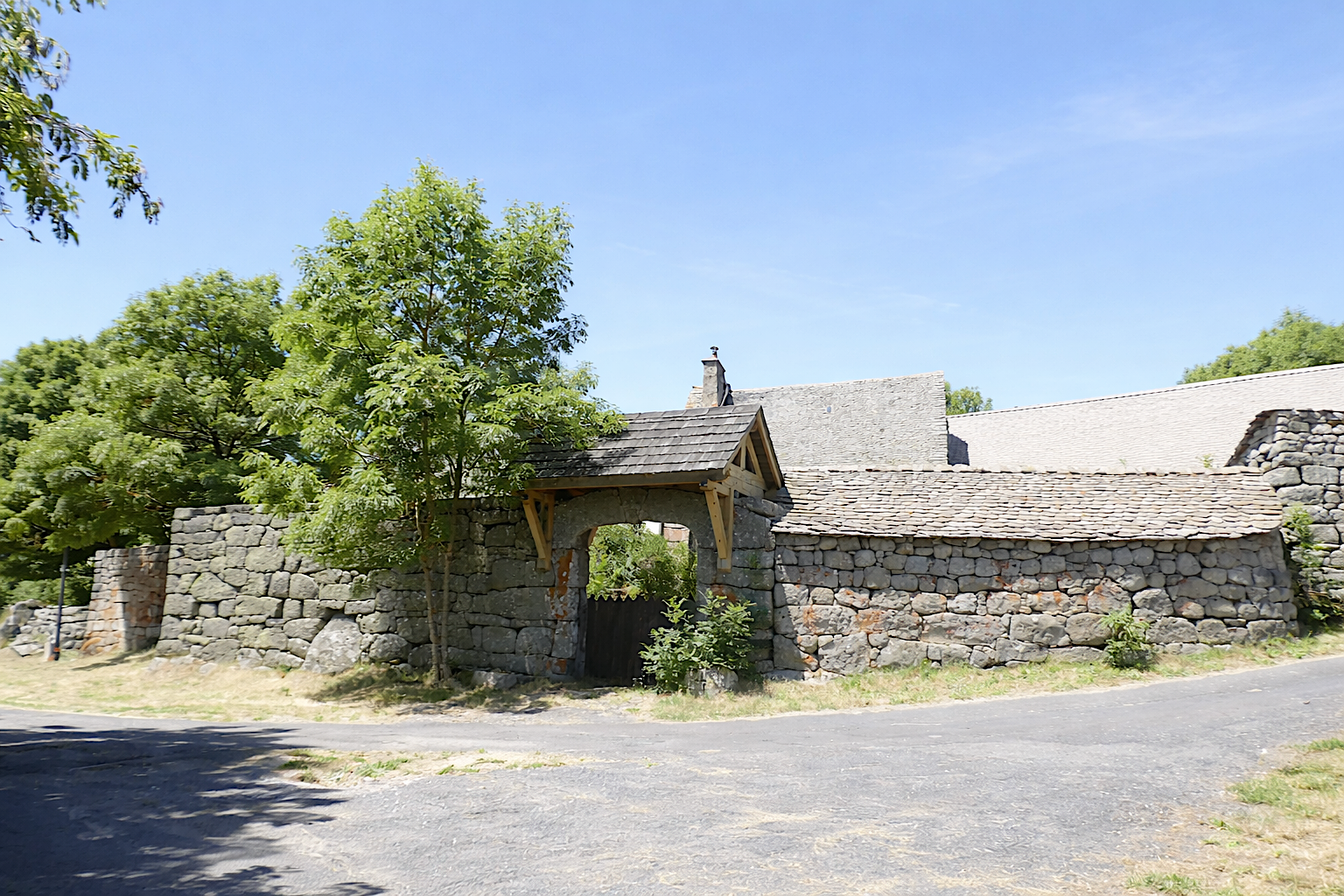
A few elegant houses appear, blending tradition with more contemporary touches, evidence of a discreet yet very real human presence. |
|
 |
 |
|
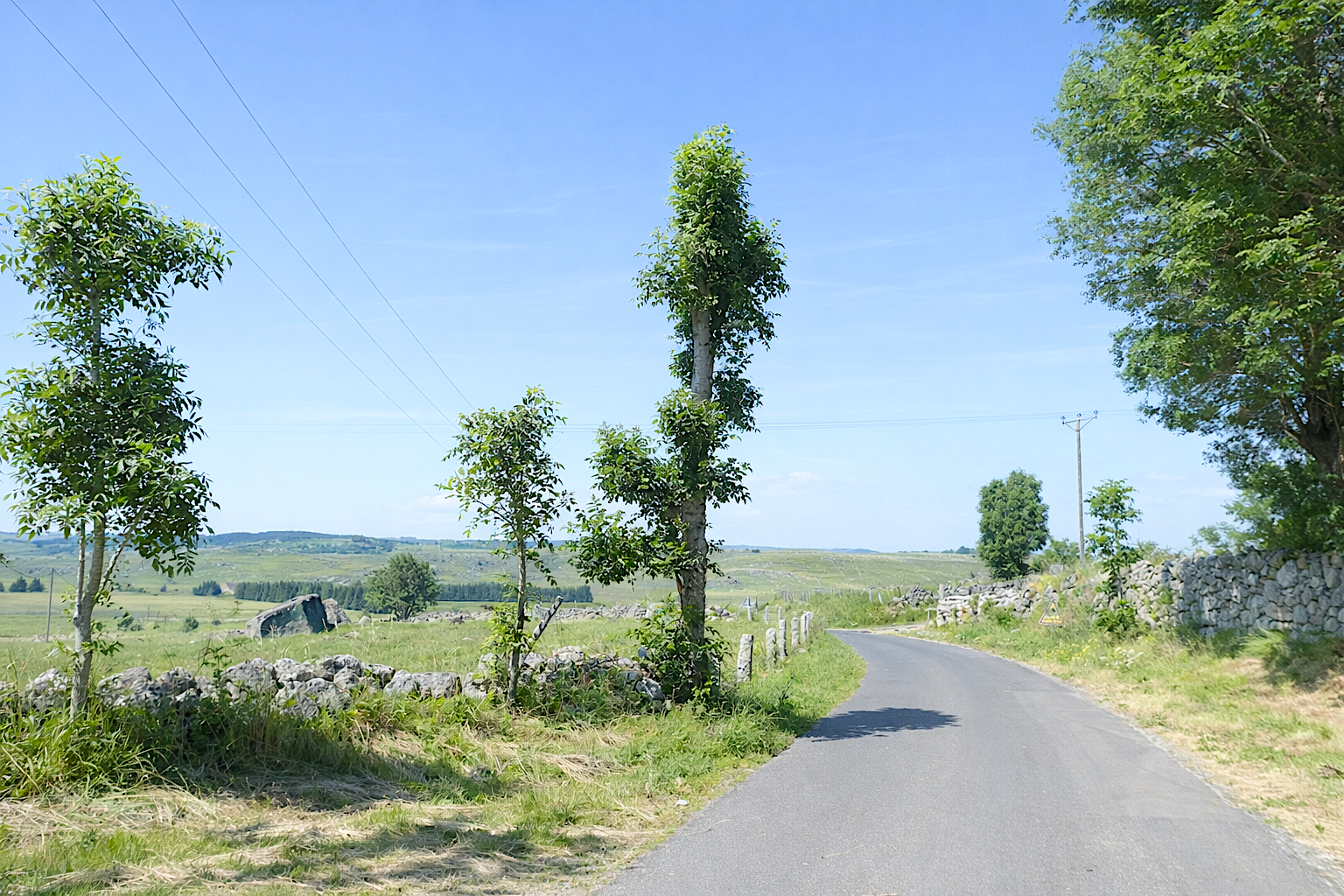
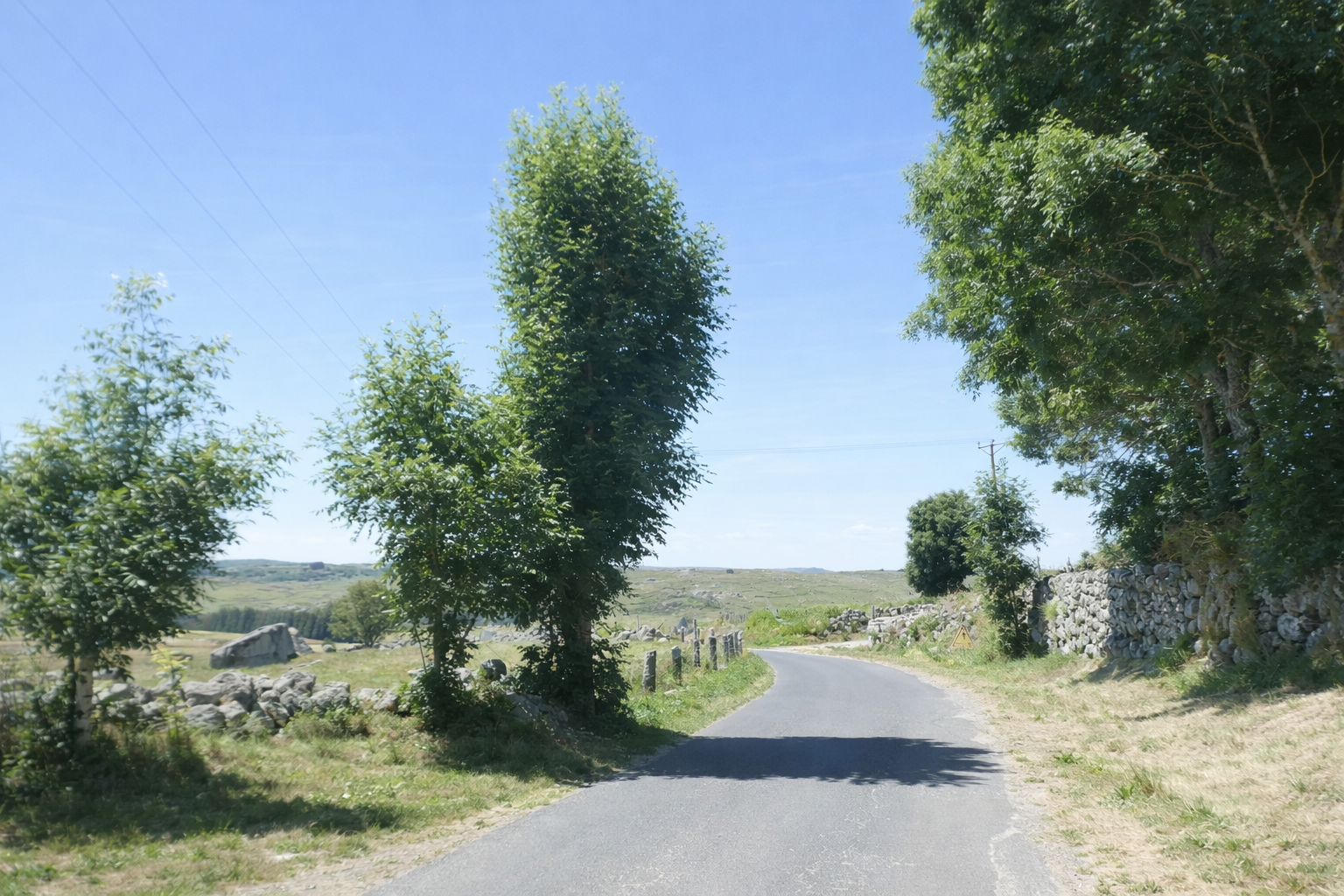
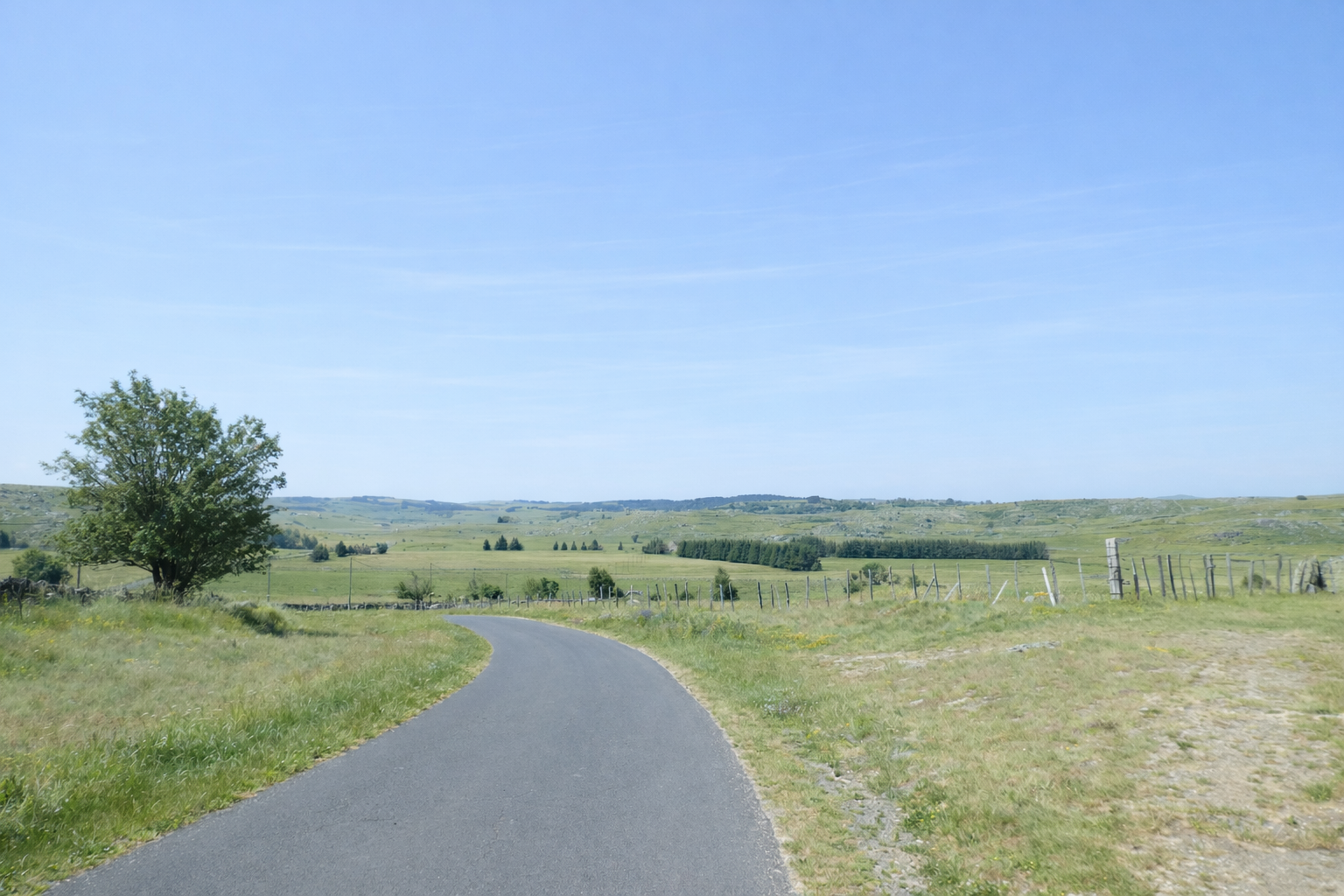
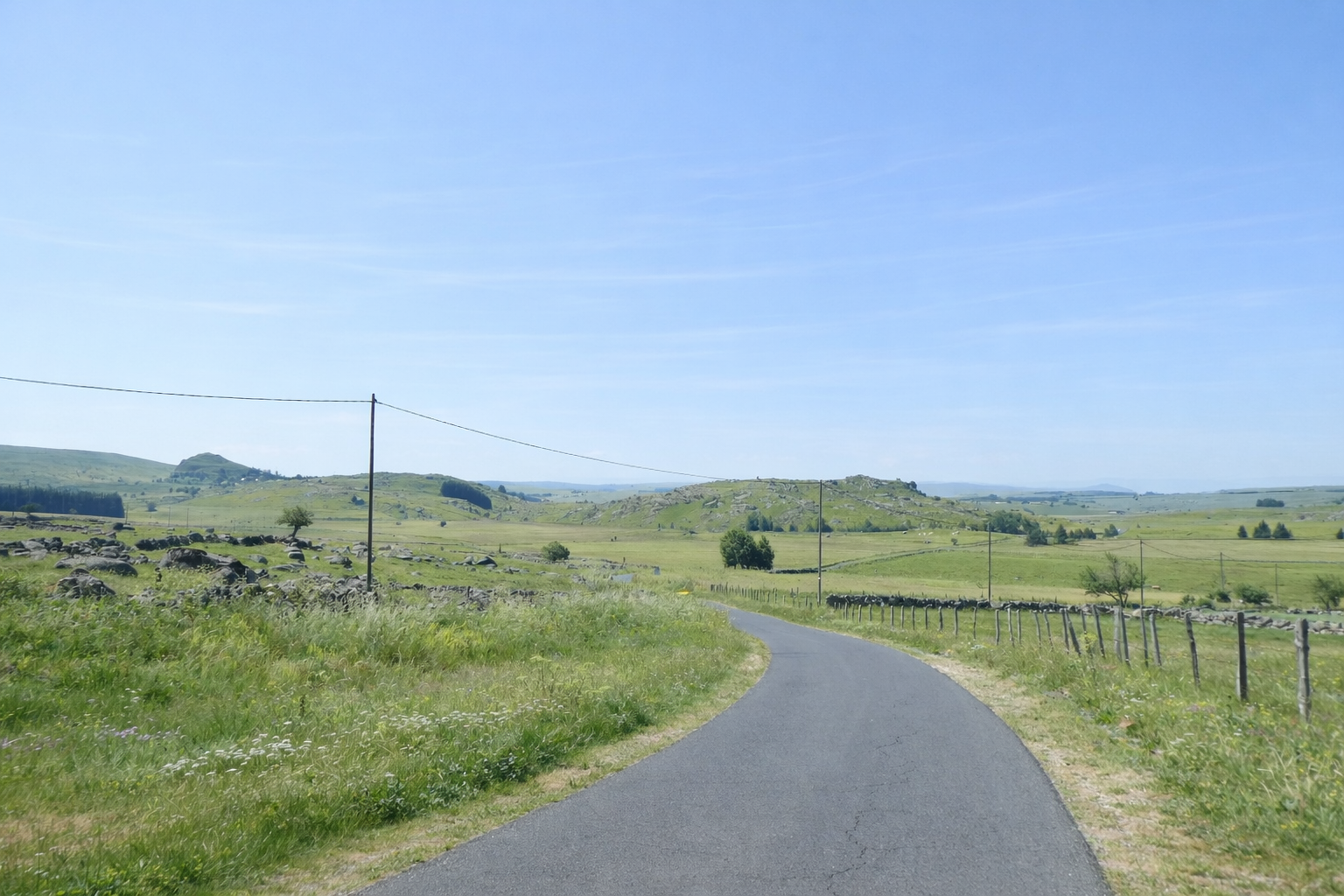
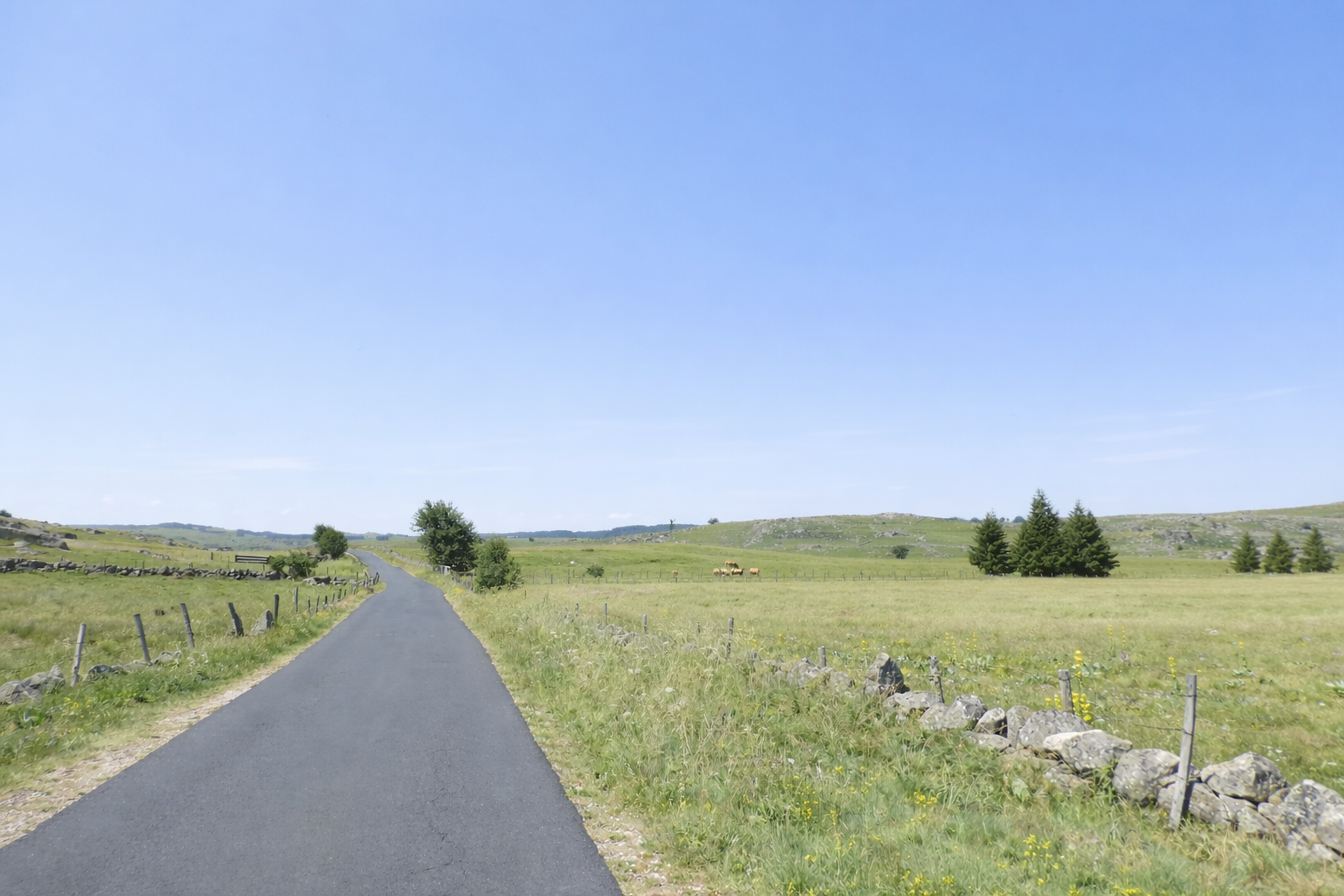
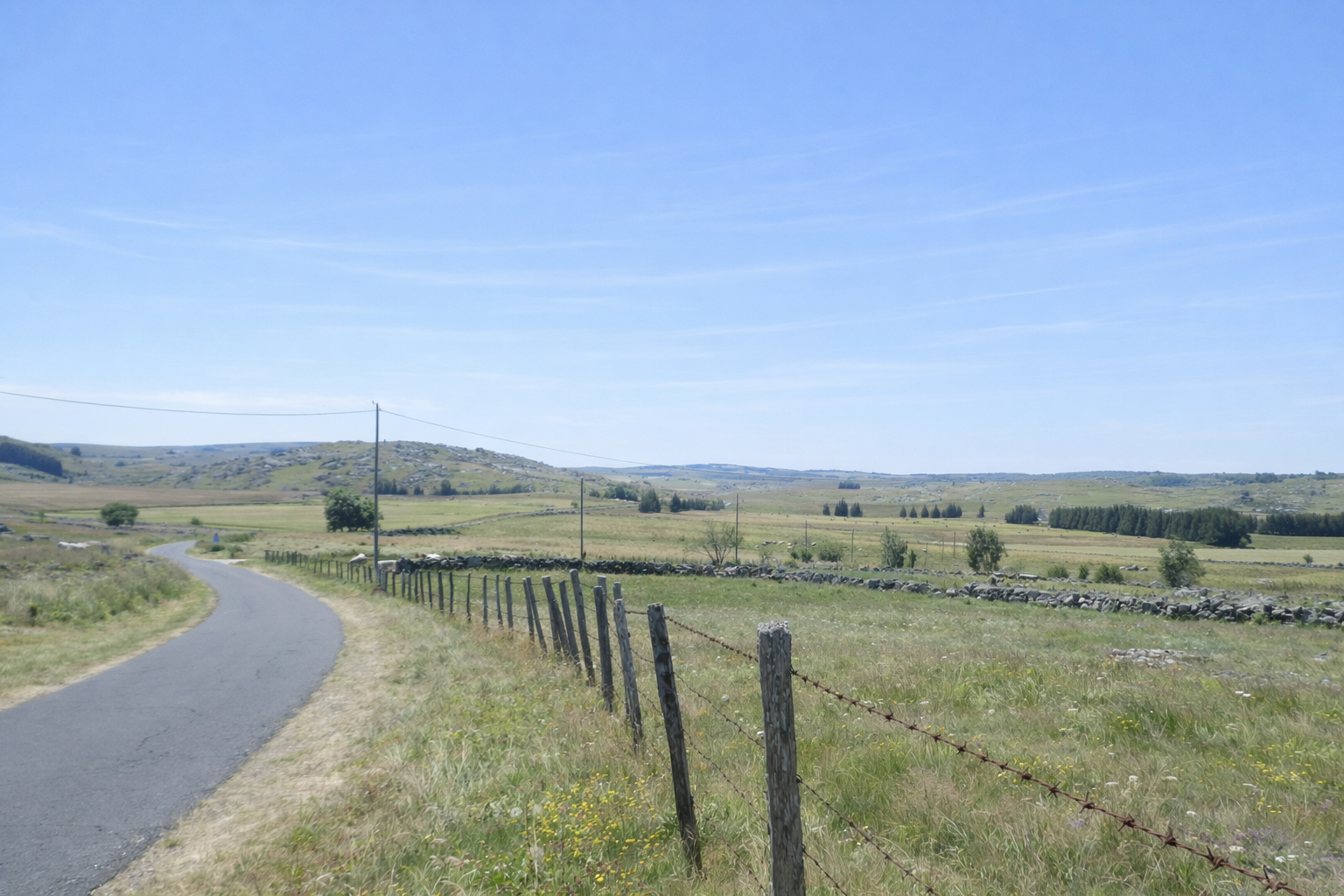
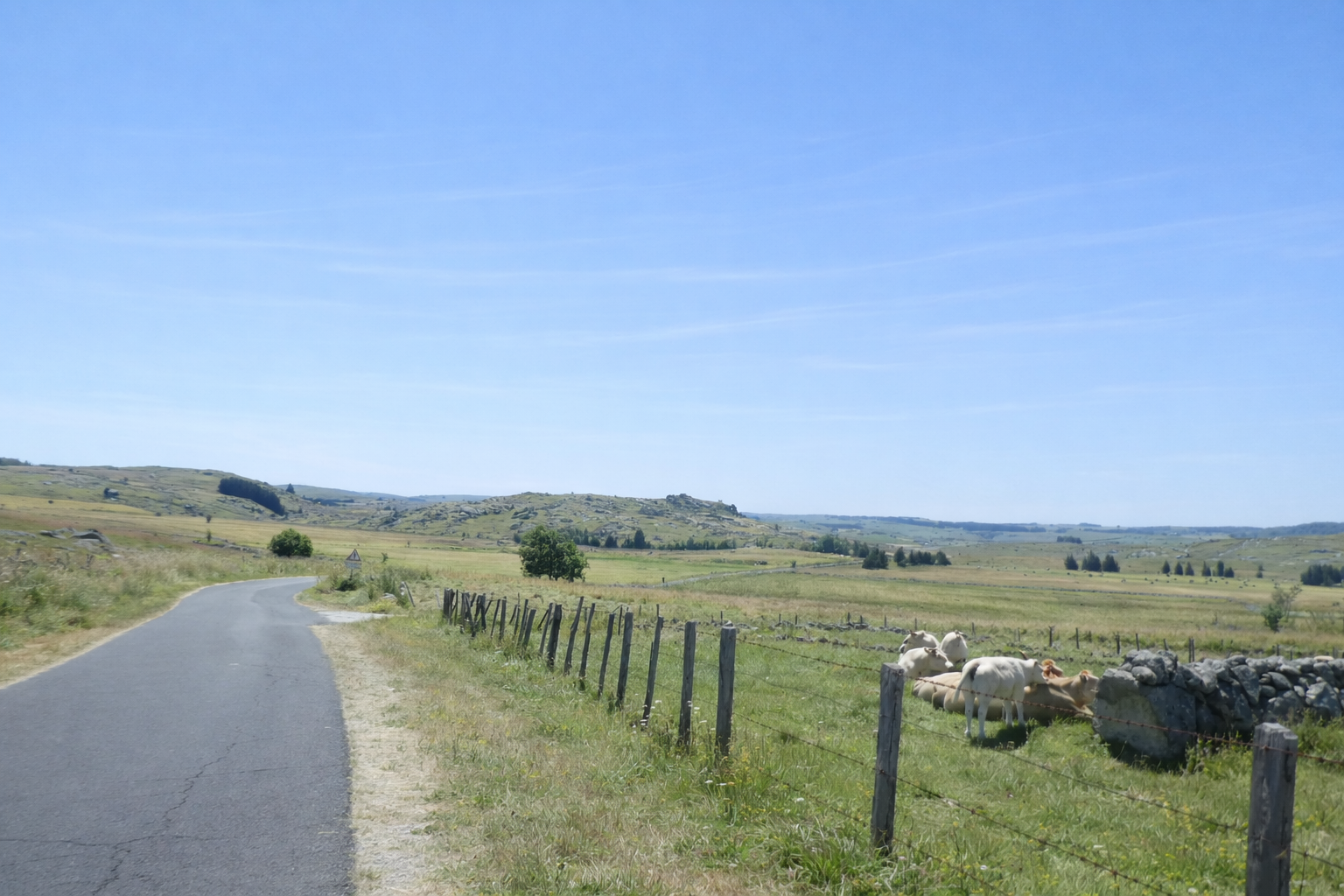
Yet very quickly, the landscape opens once more. Infinity reclaims its rights. Stone walls trace their patient lines across the land, and the pastures extend as far as the eye can see. The gaze lingers with pleasure upon scattered granite boulders and the small groves of pine trees clinging to the lower slopes of the hills, like fragile refuges within the vastness. |
|
 |
 |
 |
 |
|
Everywhere, peaceful herds of cattle punctuate the landscape, near or far, accompanied by “burons” or isolated houses resting upon the heights. Nothing is lacking in this emblematic Aubrac scenery. Everything seems perfectly in place, united in a simple and self-evident harmony. |
|
 |
 |
 |
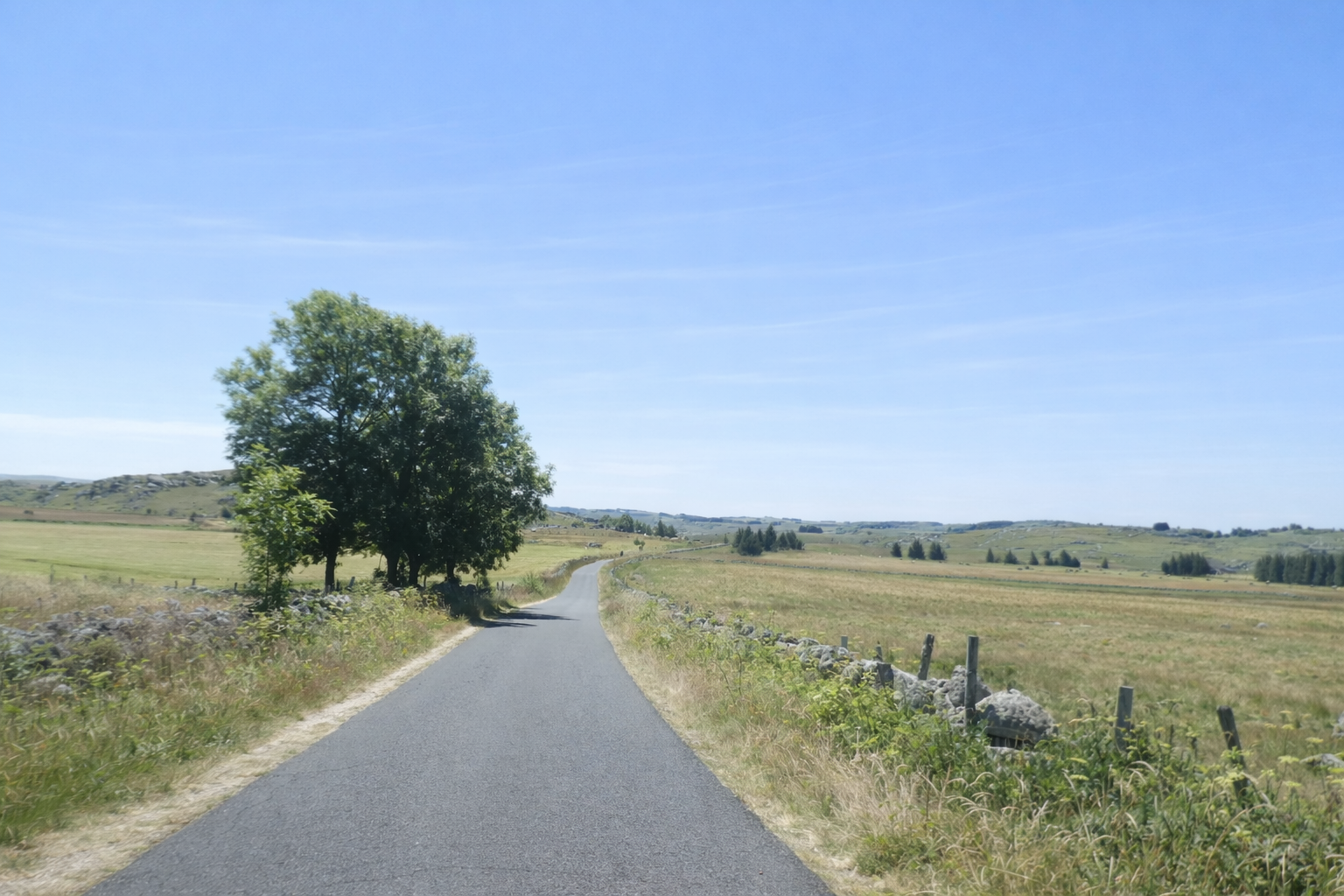 |
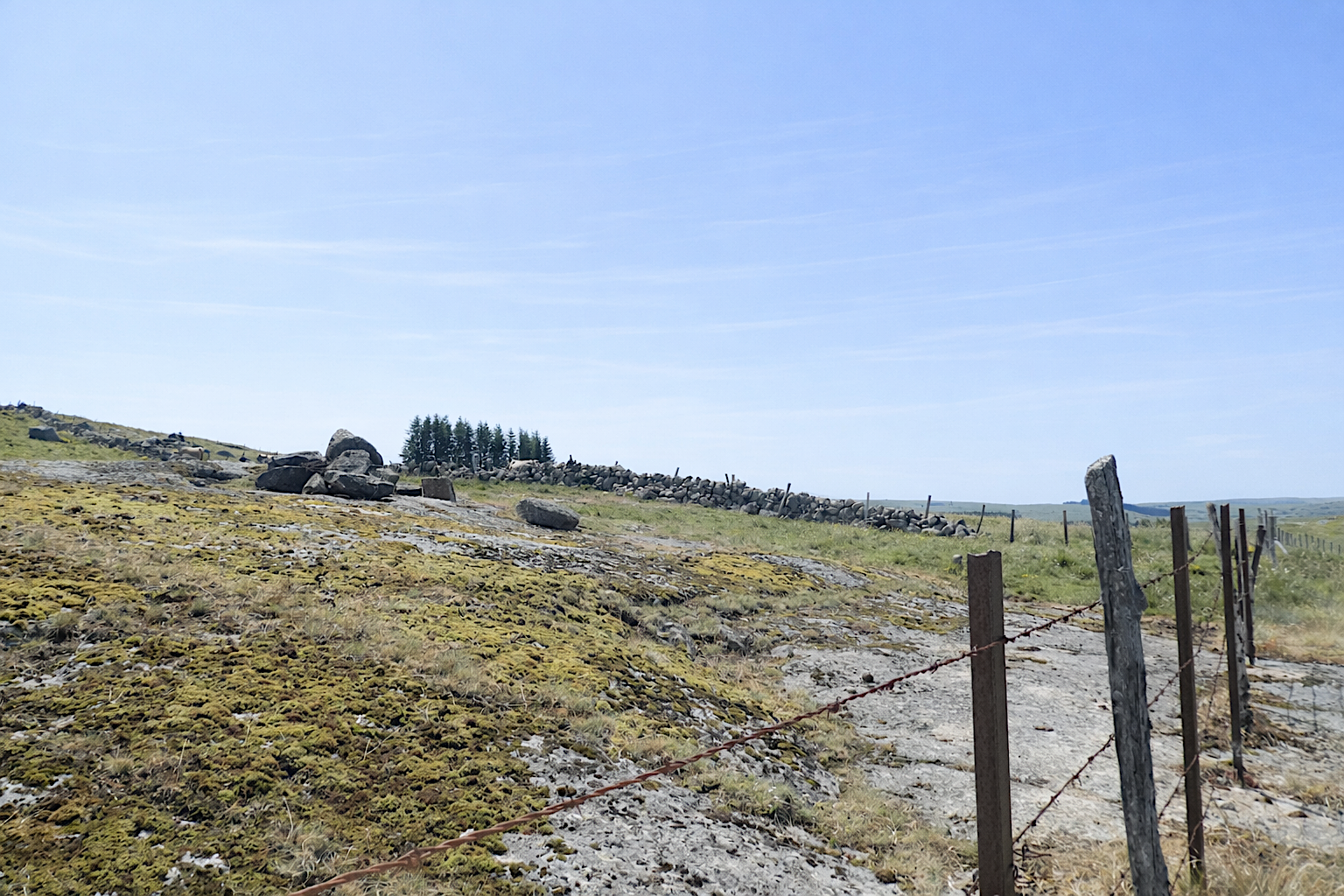
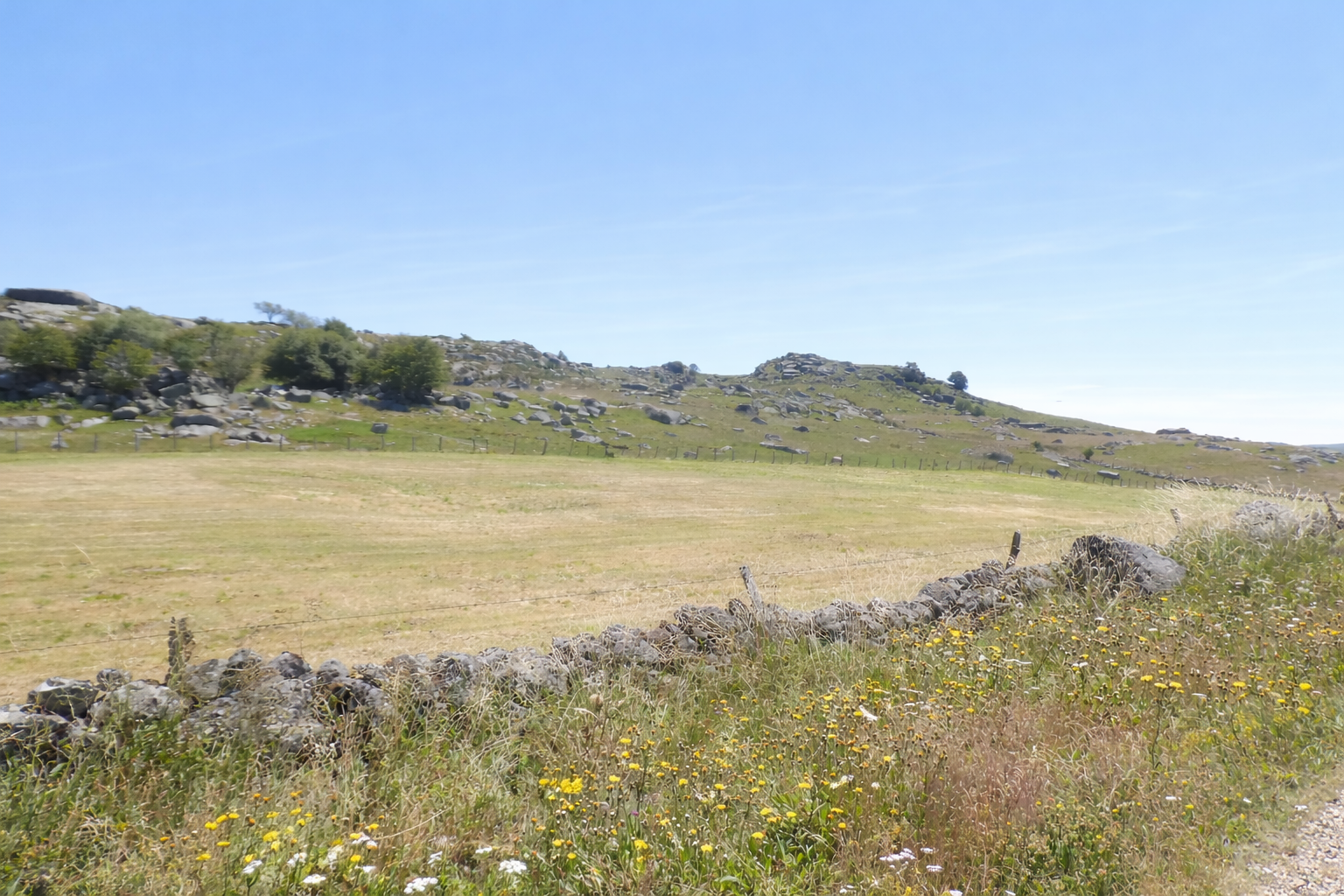
The panorama possesses a rare and almost overwhelming grandeur. In places, delicate moss clings to the granite slabs, a fragile presence within this mineral world. It is difficult to find landscapes of such majesty elsewhere along the Camino de Santiago. And when the light joins the scene, whether gentle, caressing, or brilliant, it transforms the countryside at every moment, offering the eye an endless variety of nuances.
|
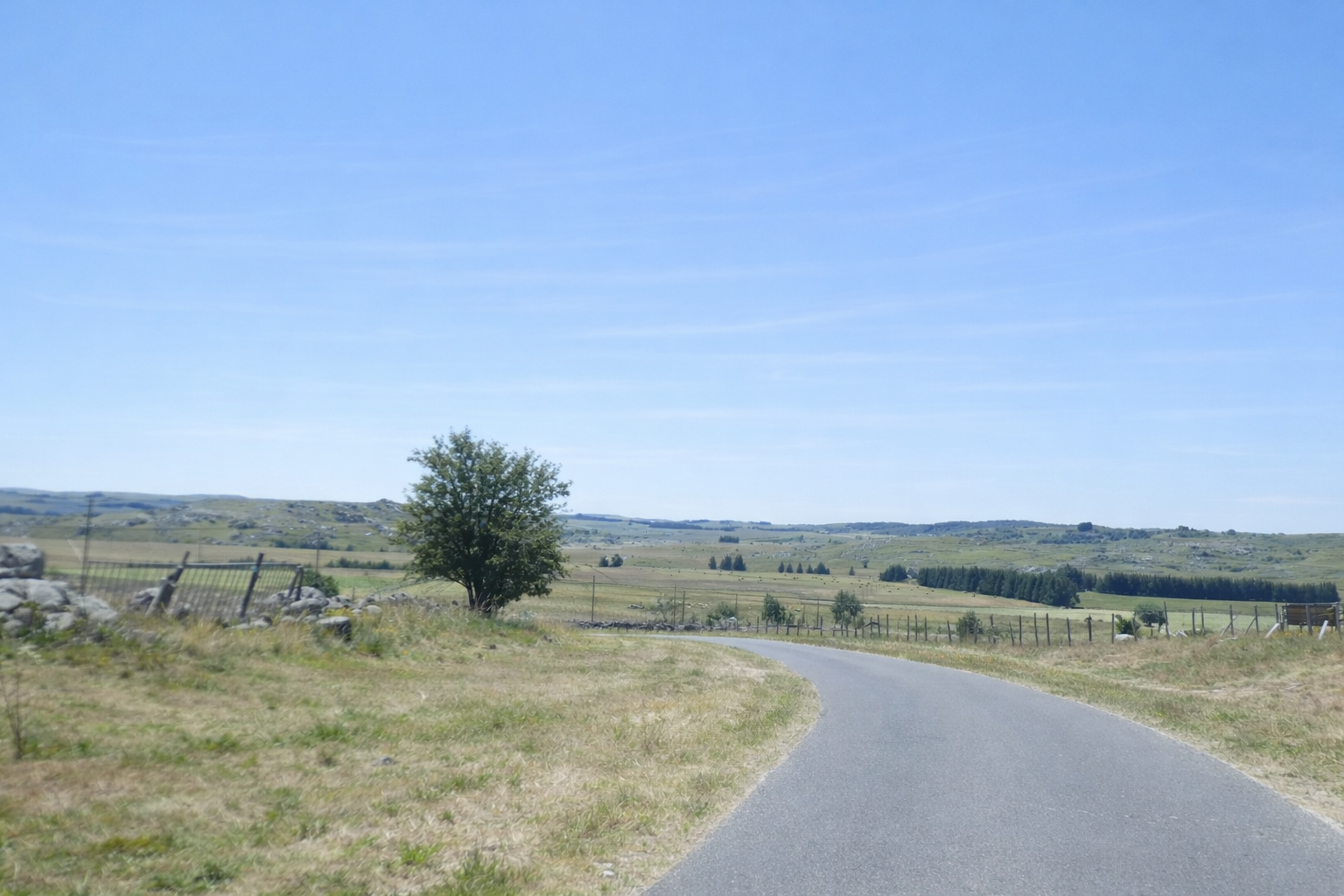
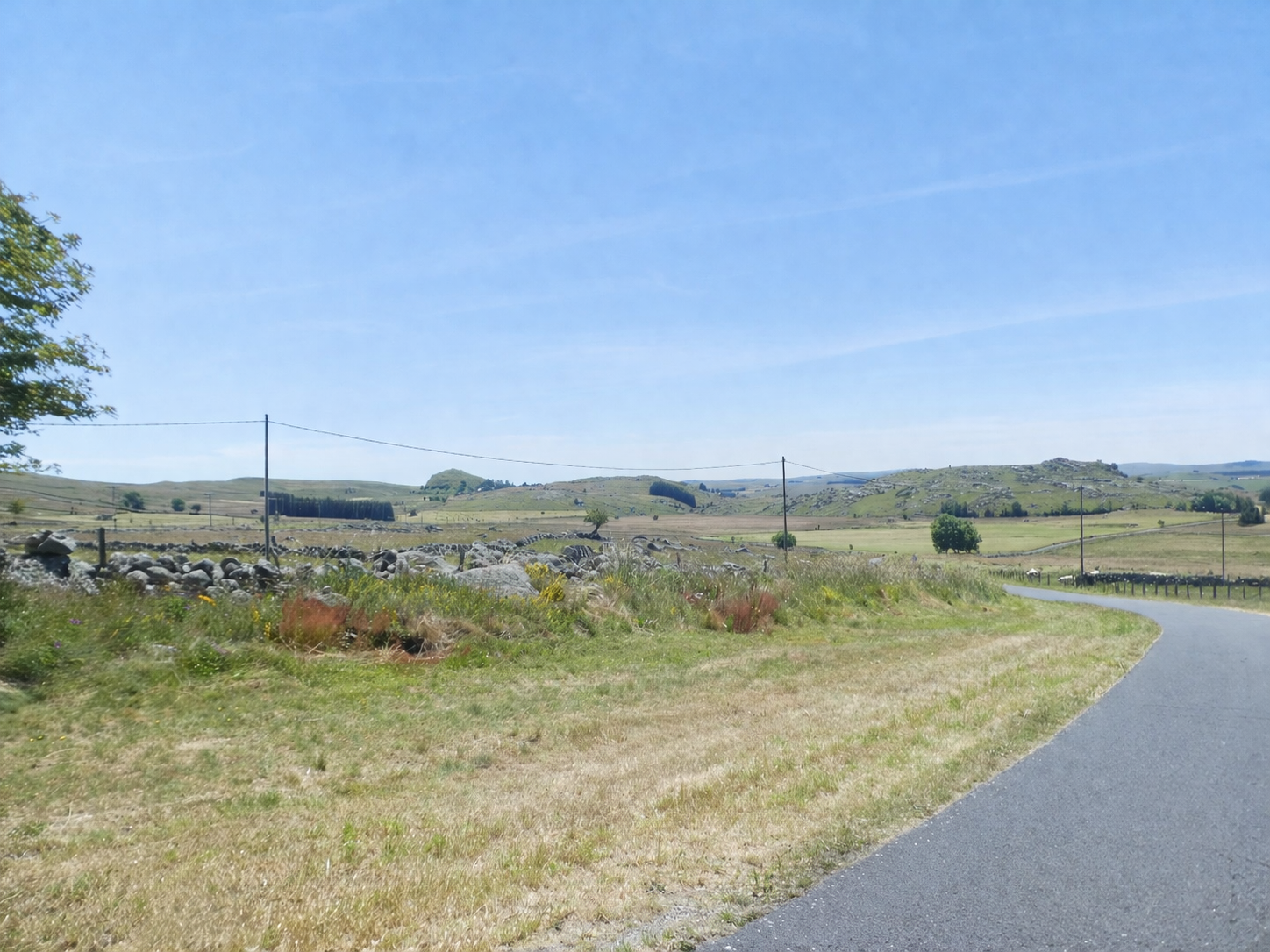
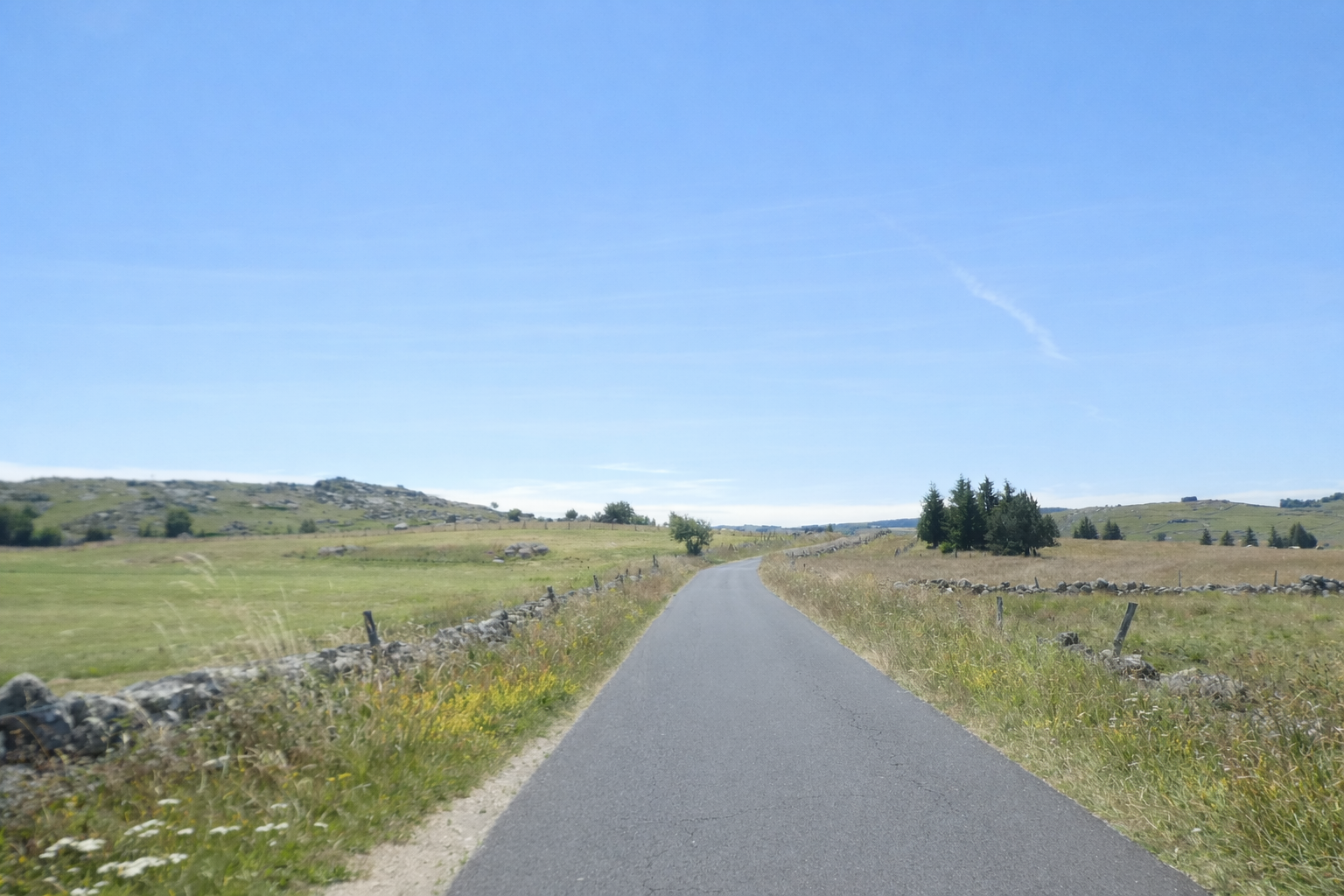
The road slopes gently downward, gliding across a plain that resembles a steppe, where the gaze, and soon the soul itself, begin to wander freely. The space opens wide and silent, inviting both inward reflection and continued movement. |
|
 |
 |
 |
 |
|
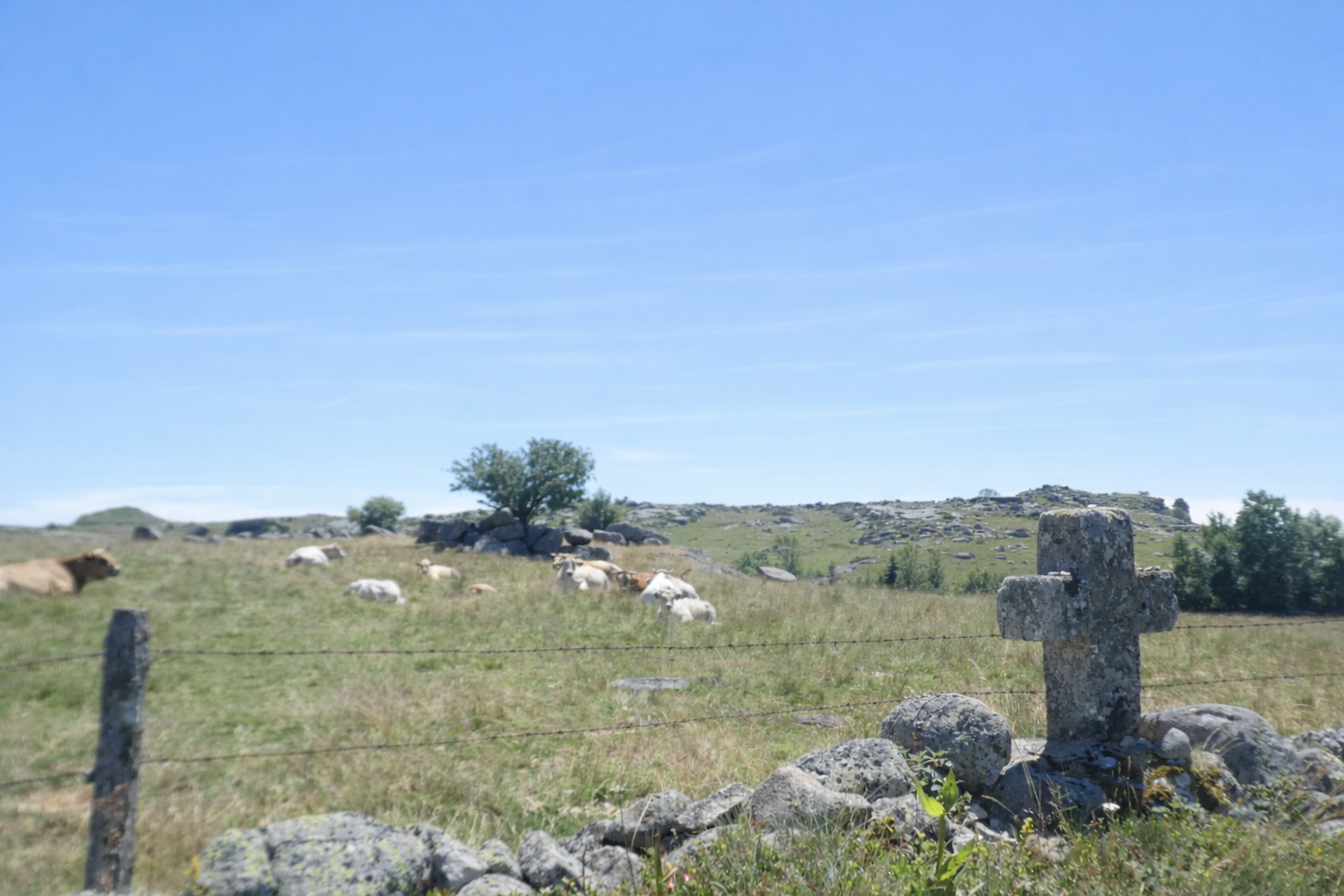
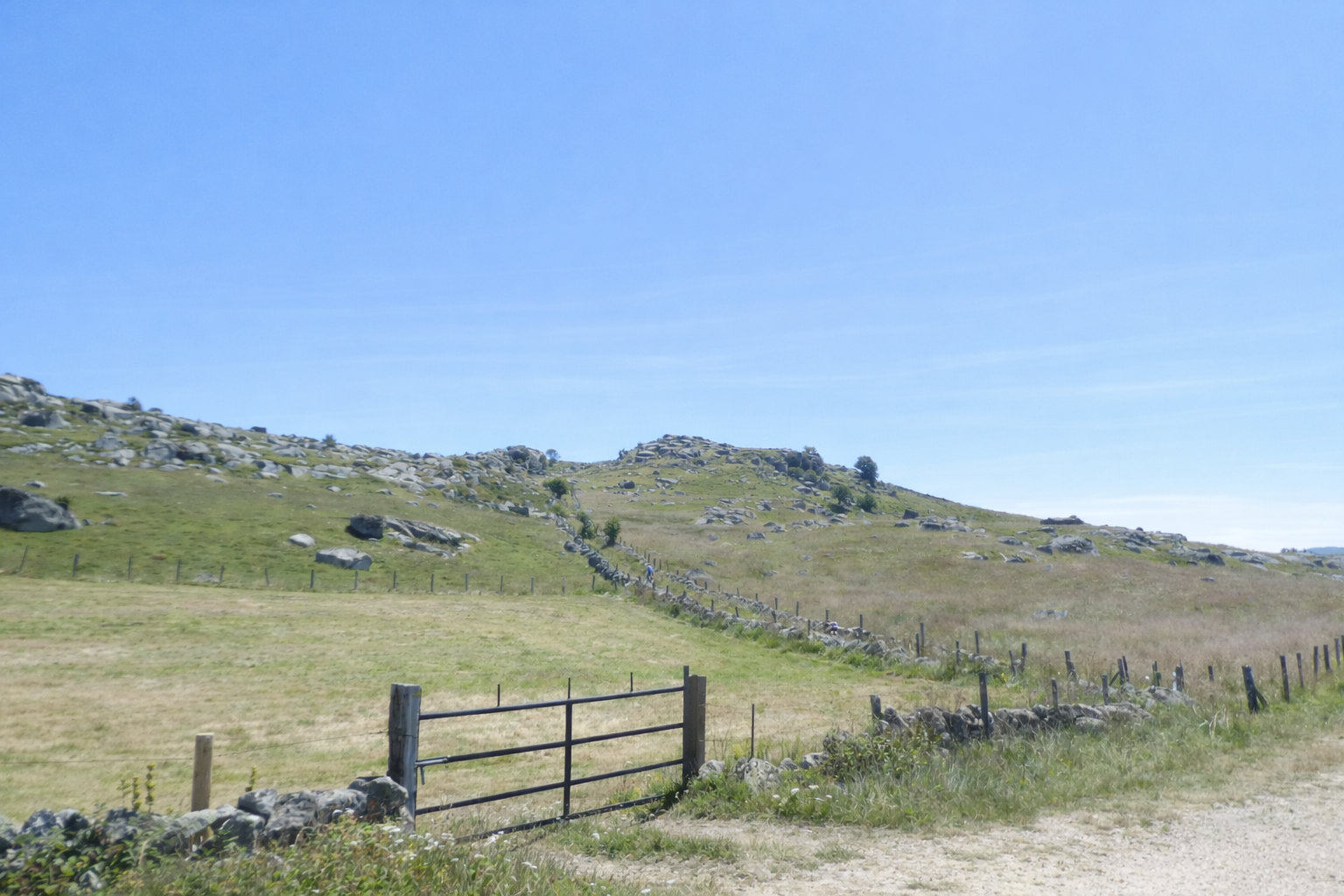
Above, on hills of gentle contours, cattle appear suspended in time, motionless beneath the light, as though abandoned to an endless afternoon rest. |
|
 |
 |
|
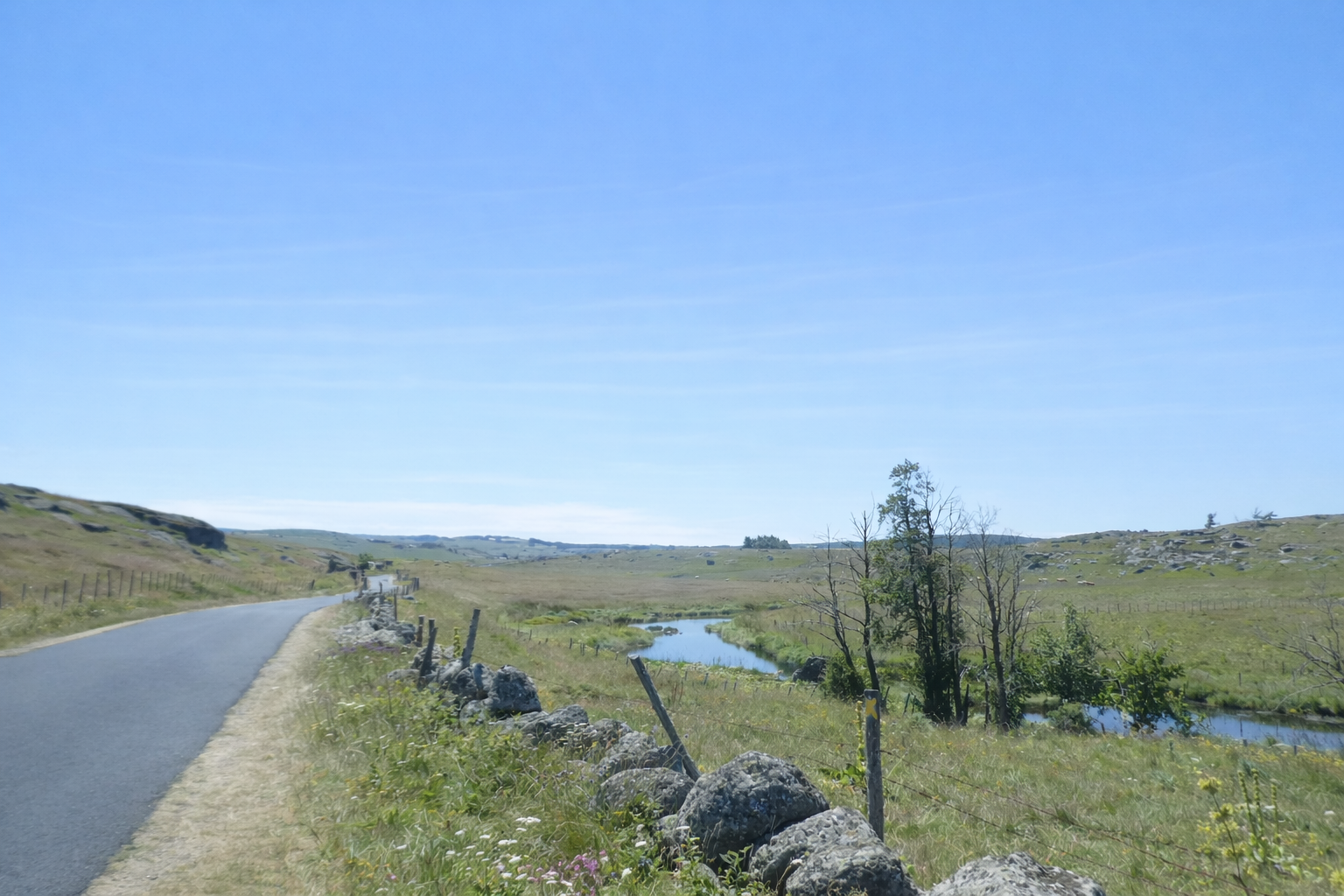
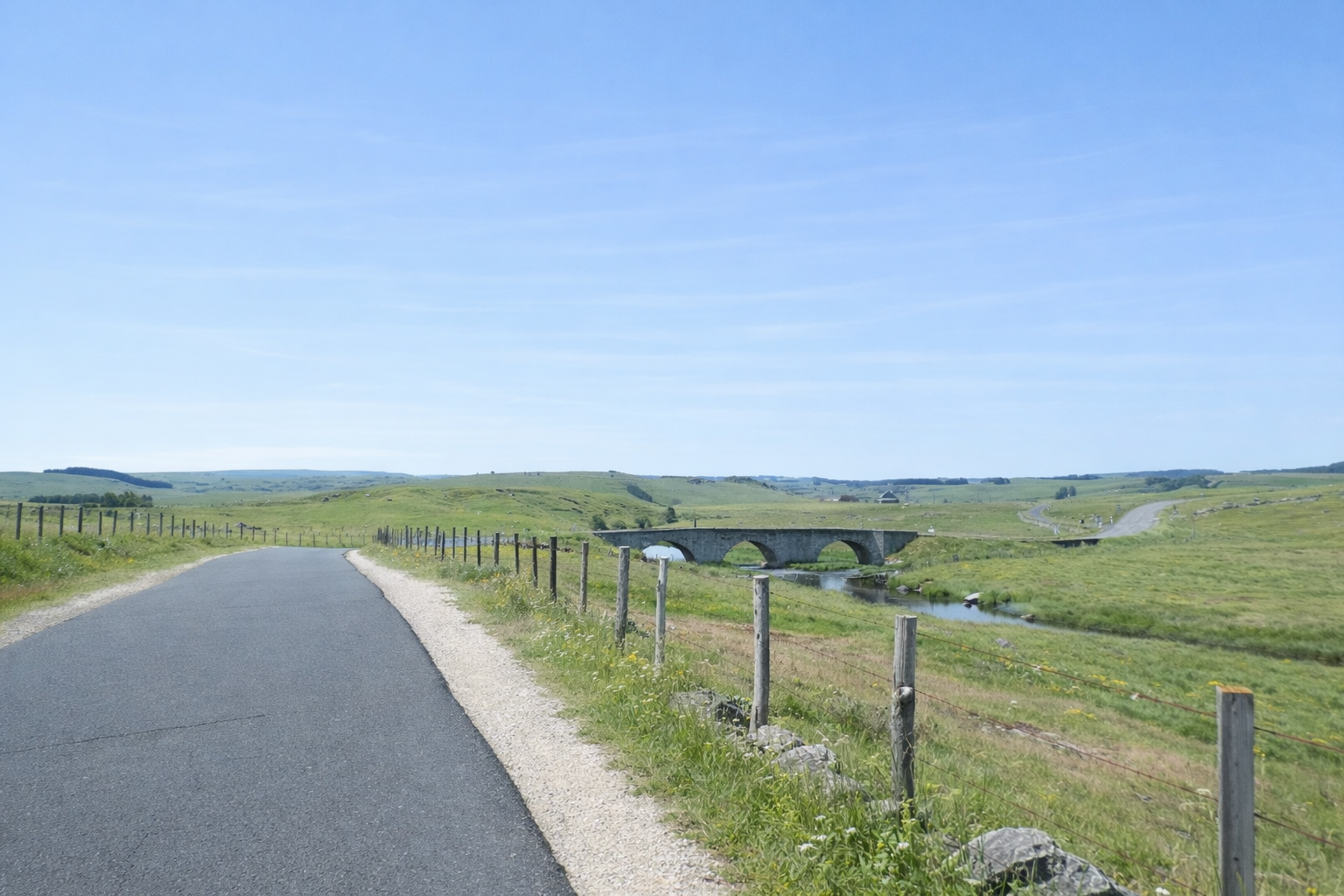
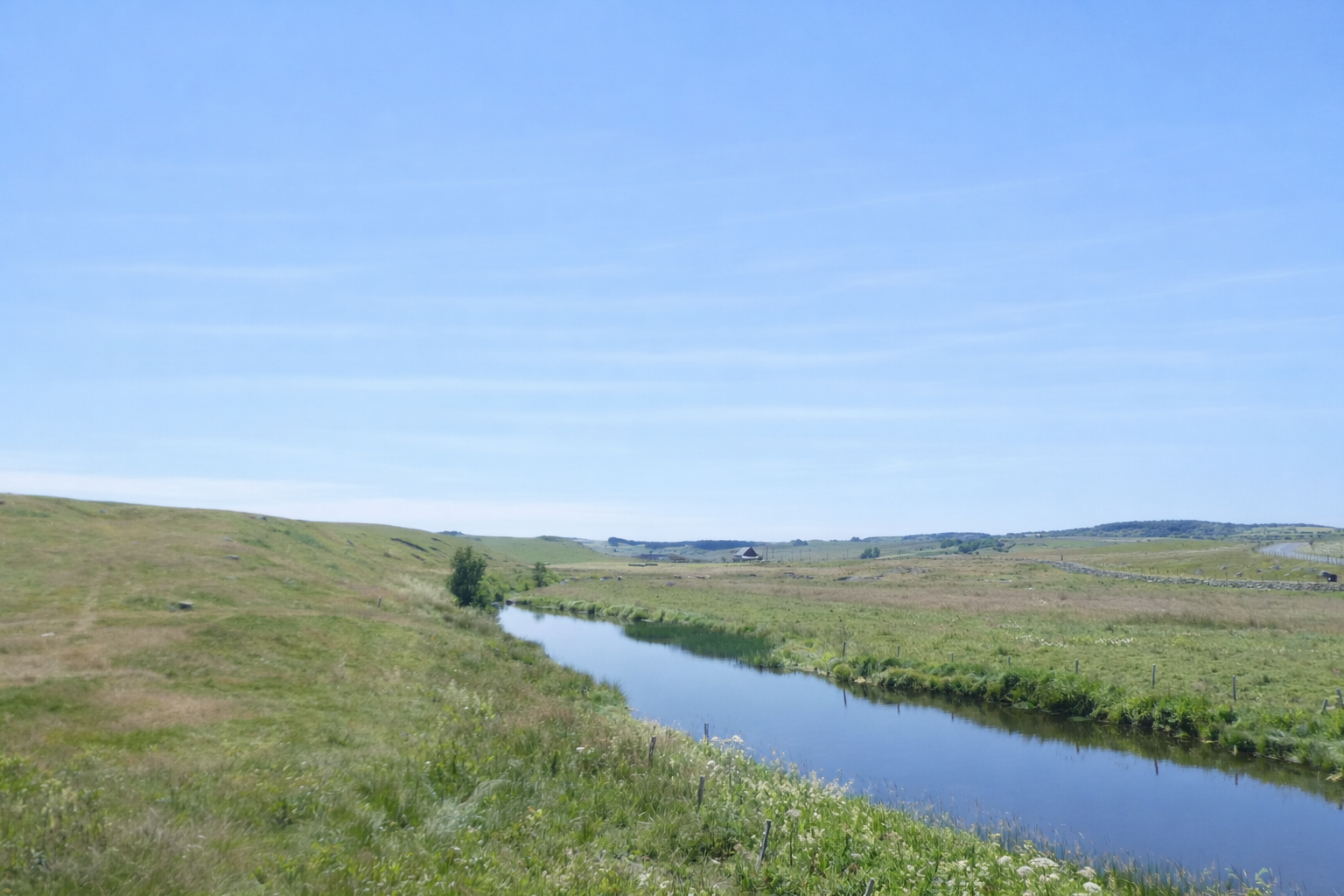
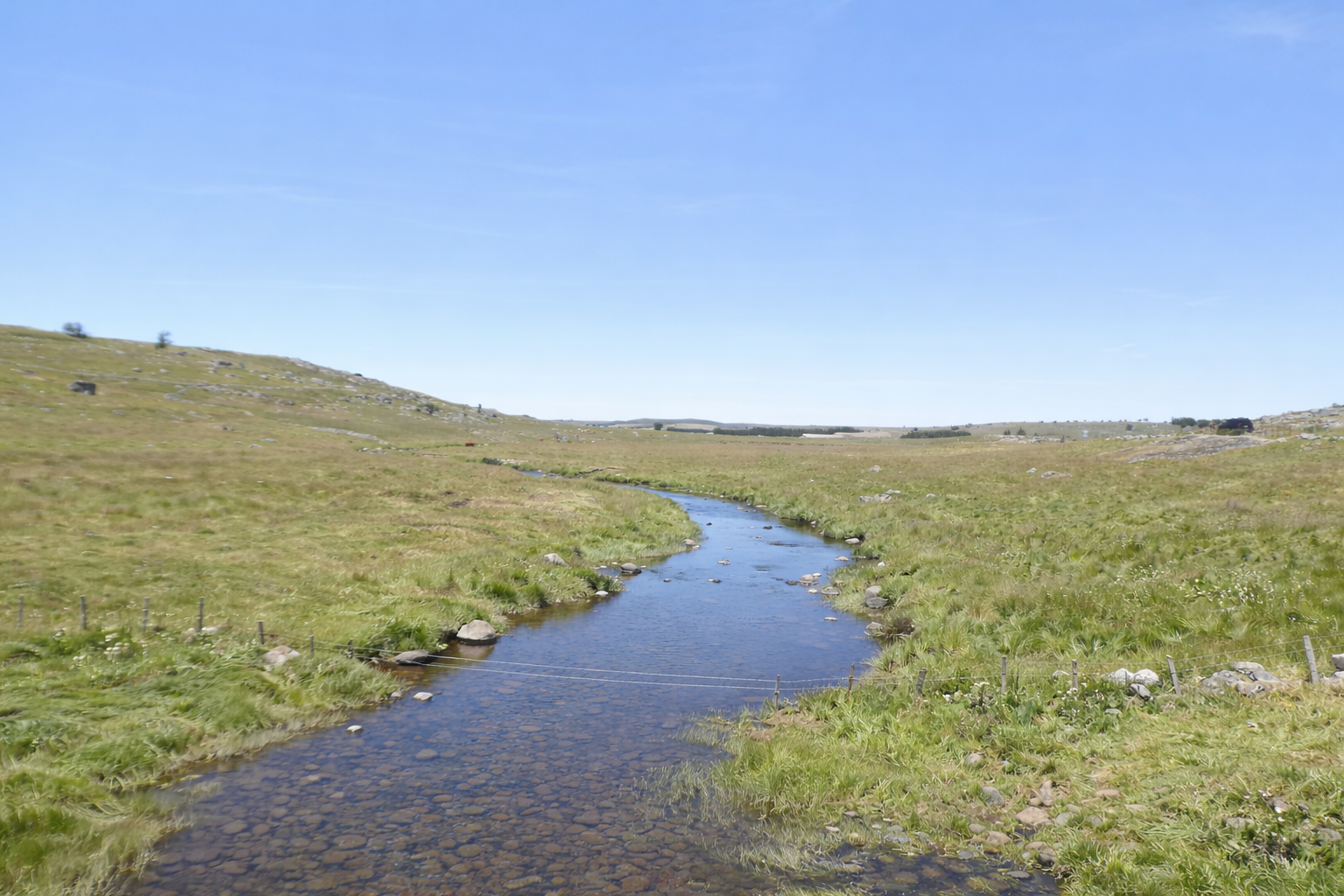
Further down, the road comes to meet the Bès, the only true river of Aubrac, though modest when compared with great rivers elsewhere. Yet no grandeur is required here. Its presence alone is enough to bring life to the landscape. |
|
 |
 |
|
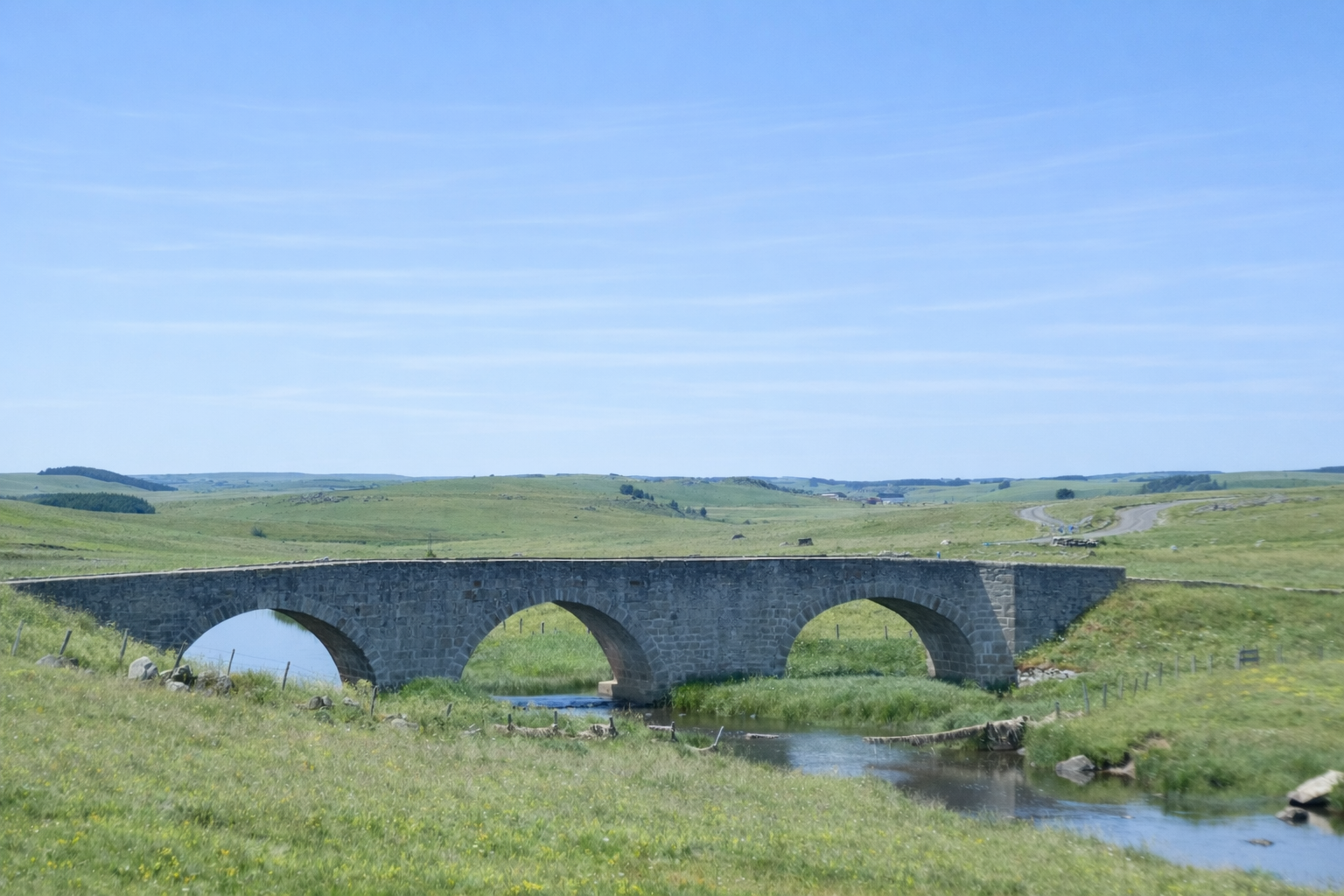
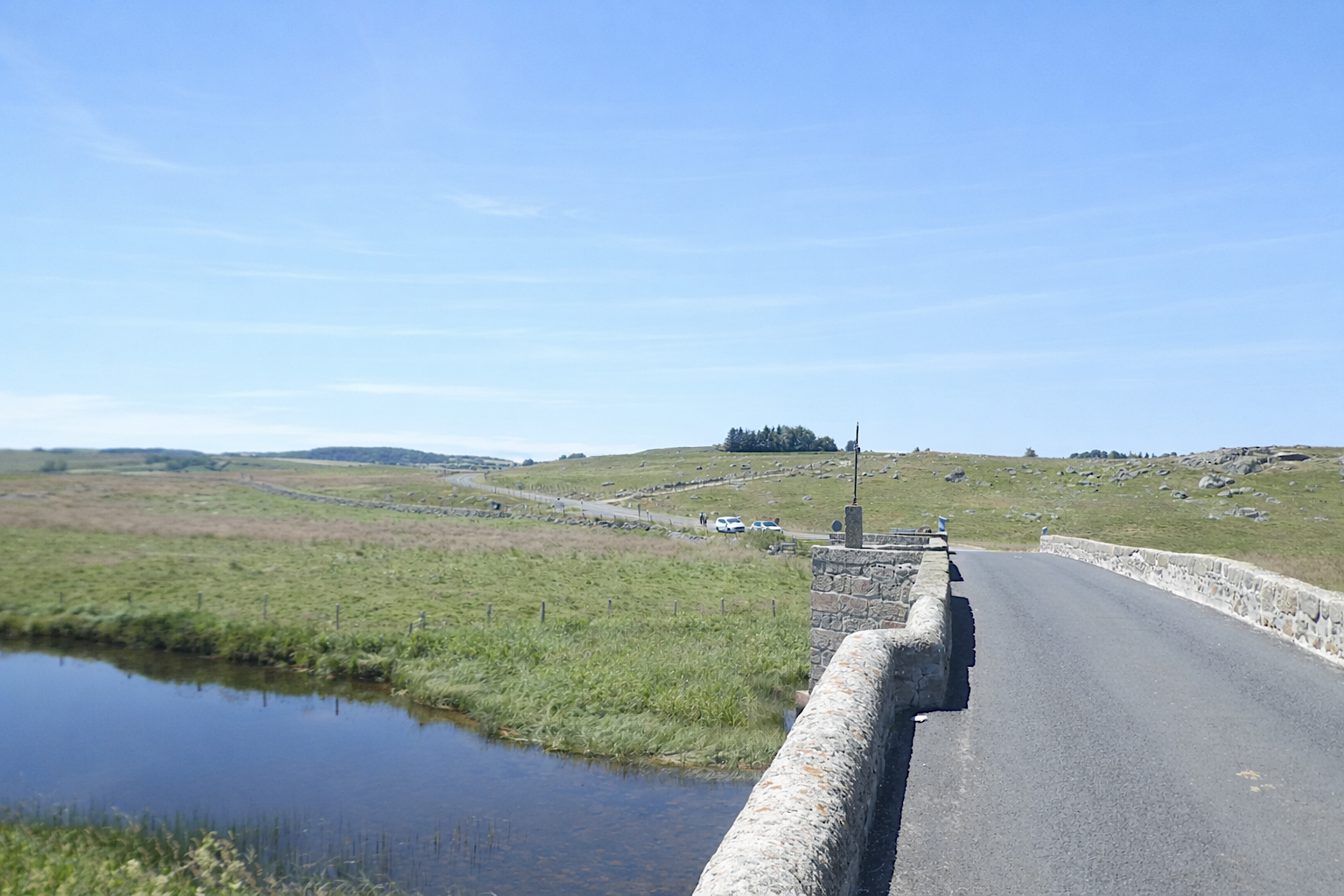
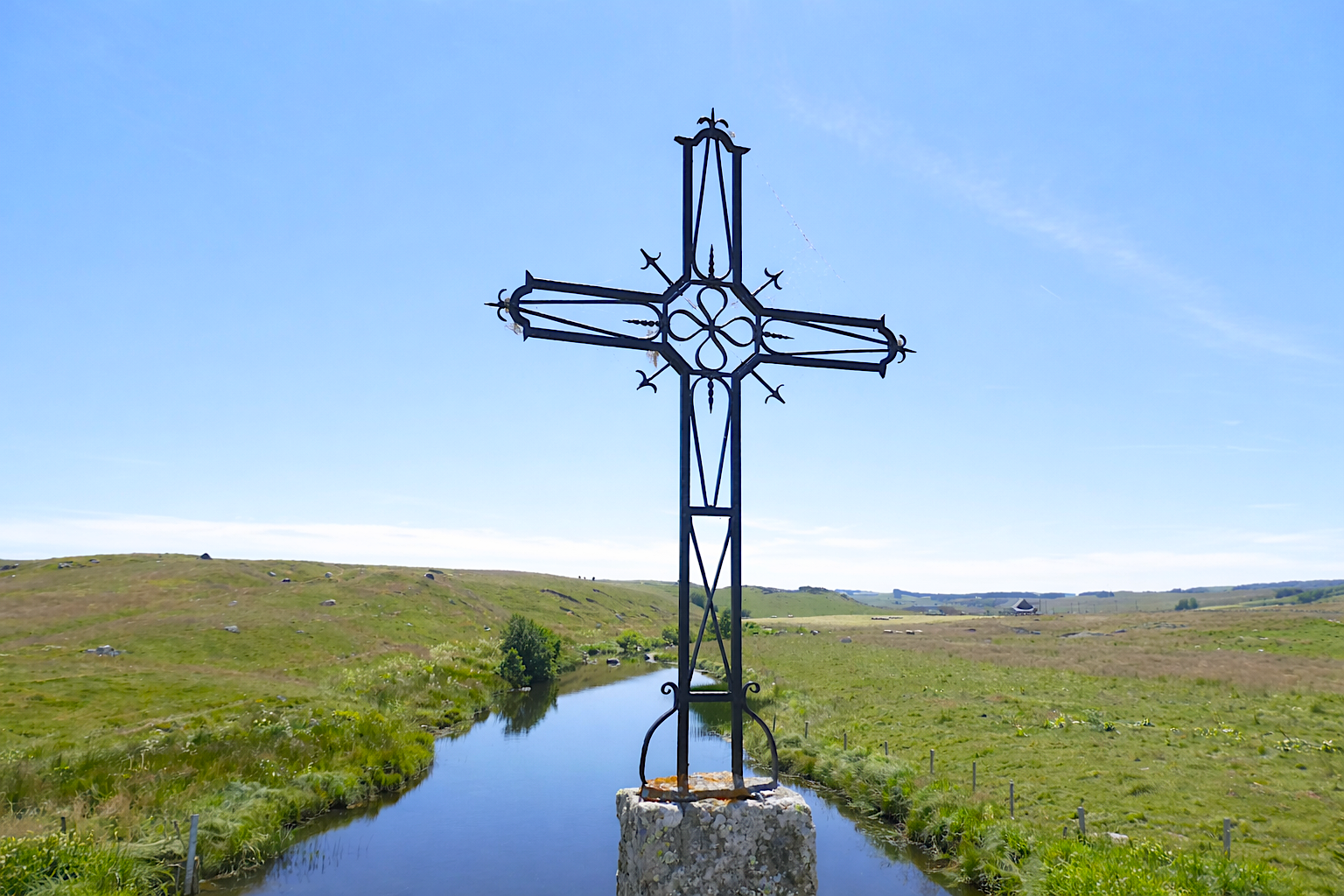
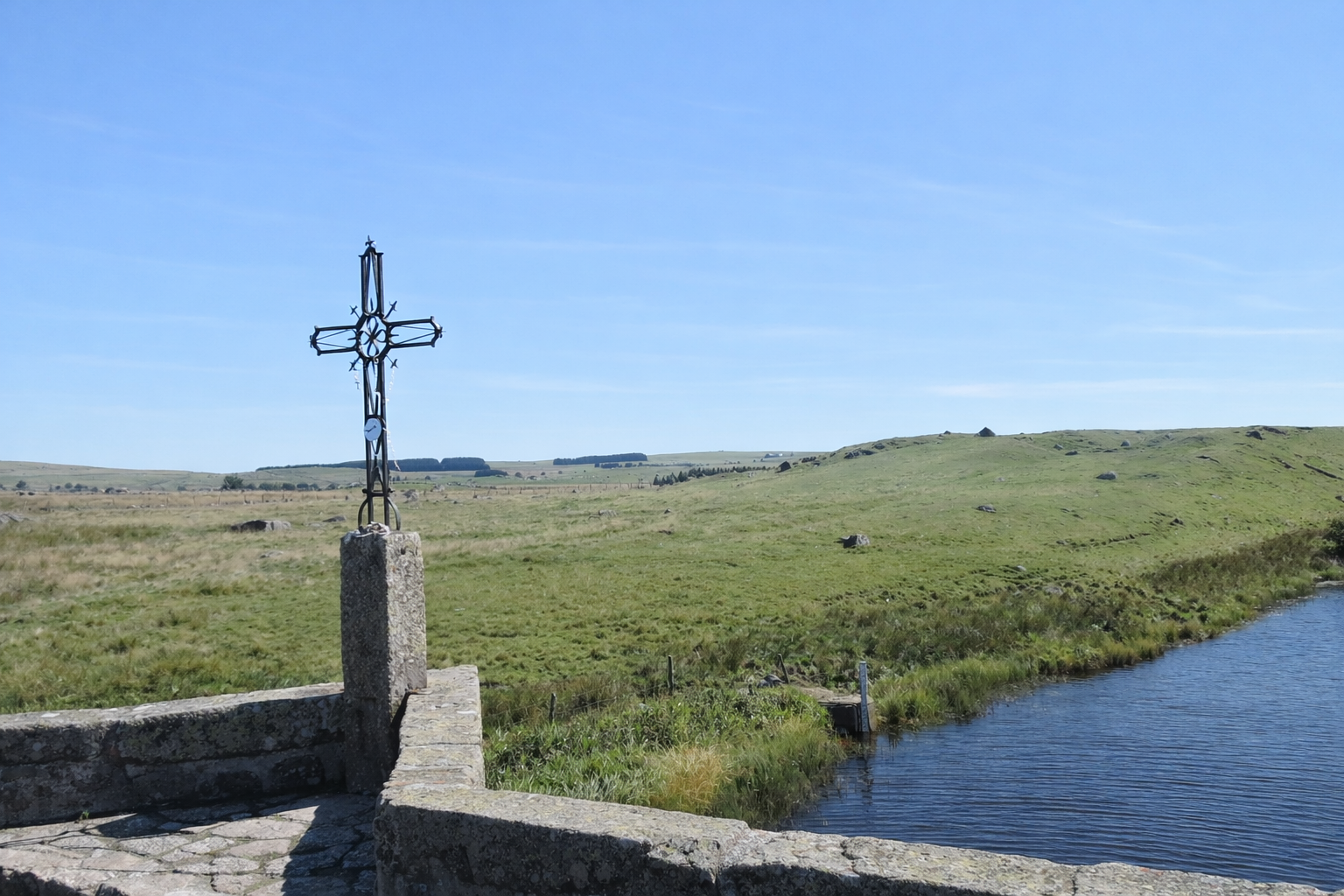
Soon it must be crossed. An elegant and sturdy stone bridge has spanned the river since the sixteenth century. It is sometimes called, with a touch of humor or perhaps a distant memory, the “Bridge of Bukinkan”, a discreet echo of Buckingham and a reminder of the passage of English travellers through these remote lands. |
|
 |
 |
 |
 |
|
Beneath the arch, the river flows clear and tranquil, patiently gathering the streams of the plateau. |
|
 |
 |
|
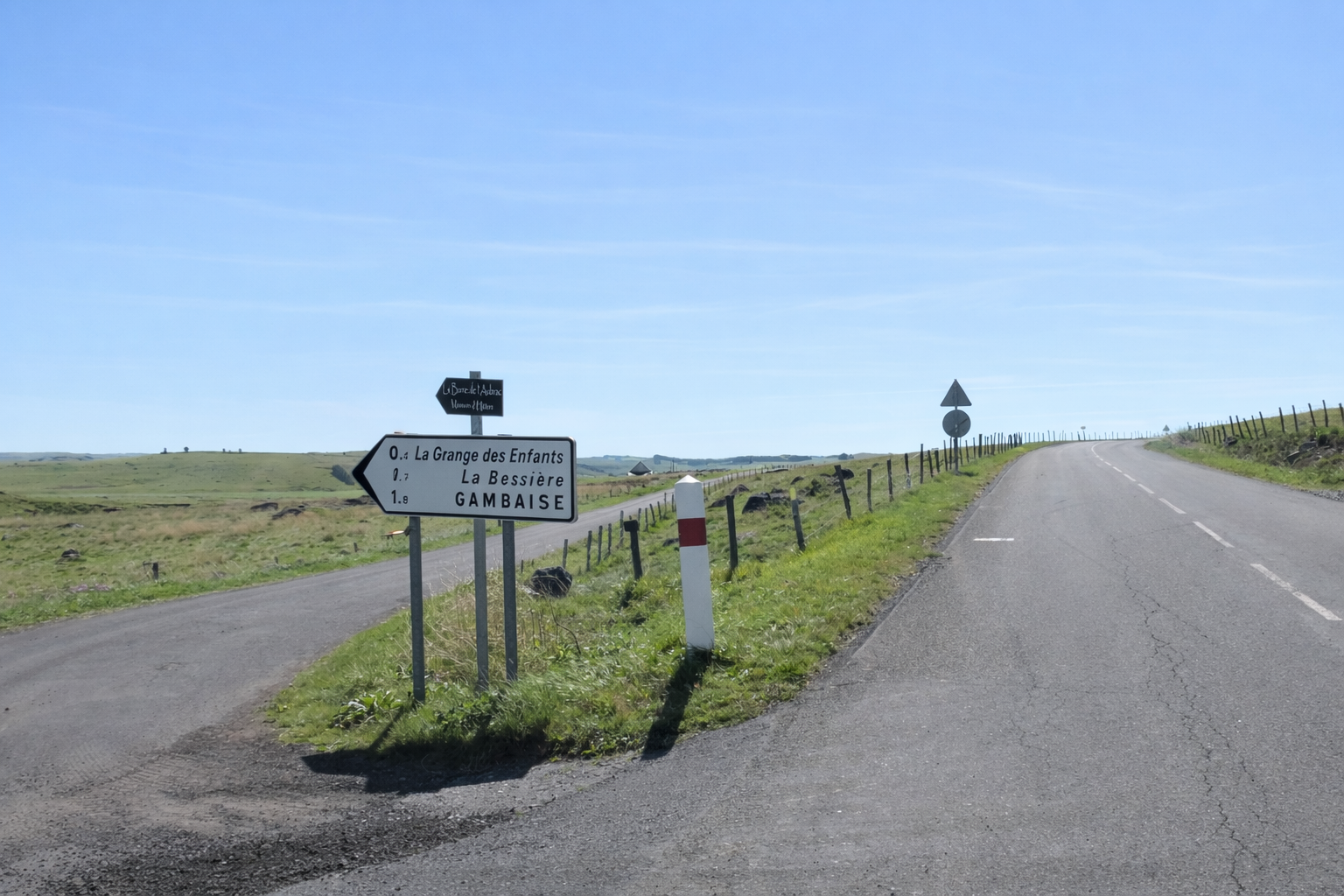
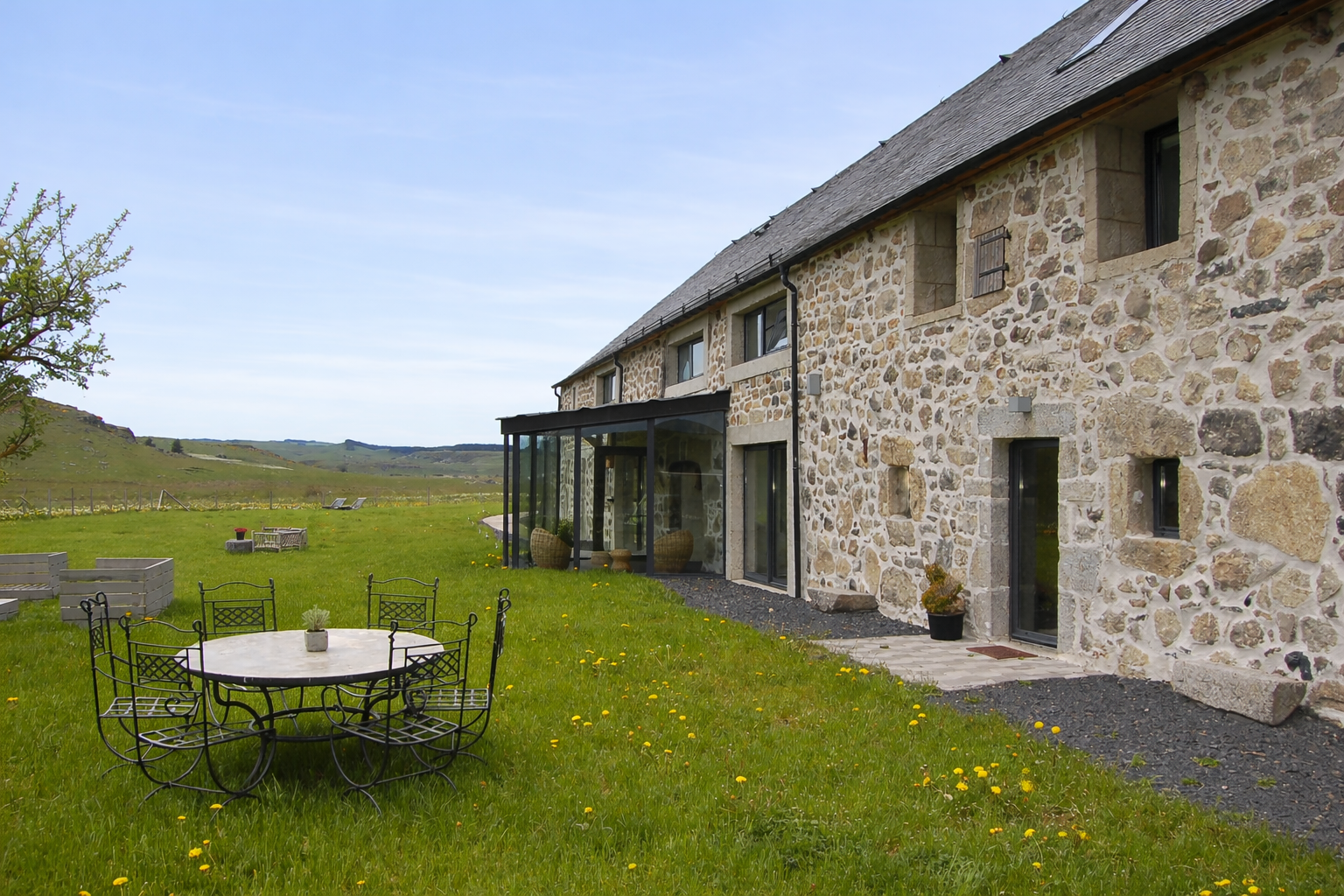
At the bridge over the Bès, the GR65 rejoins a small departmental road that climbs towards Nasbinals by way of Montgros. Only a few steps away, near the Grange des Enfants, stands a large building welcoming travelers. Lost within the immensity of the landscape, it offers a warm refuge that feels almost unreal, suspended outside the world, undoubtedly one of the most singular and beautiful stopping places in Aubrac. |
|
 |
 |
|
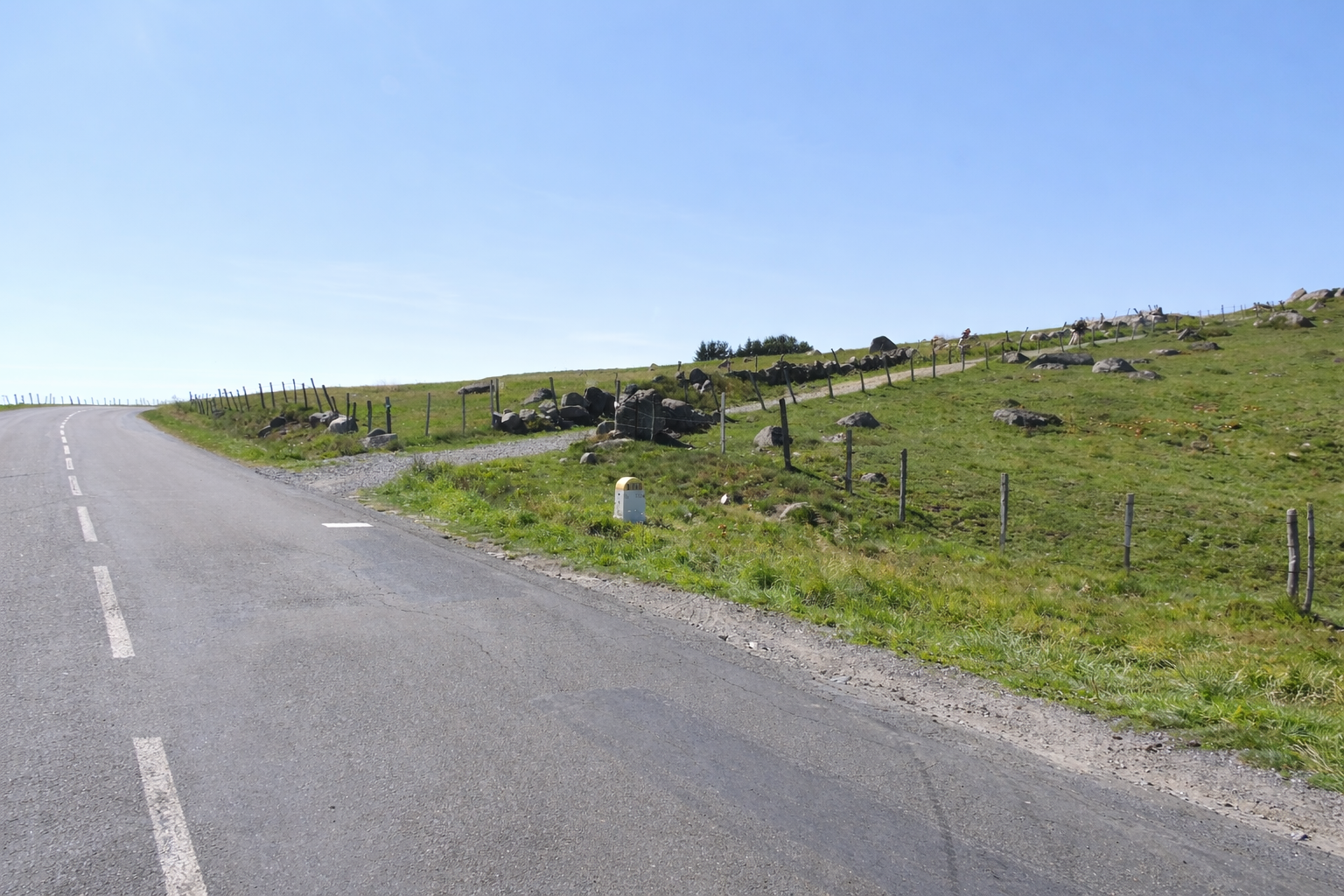
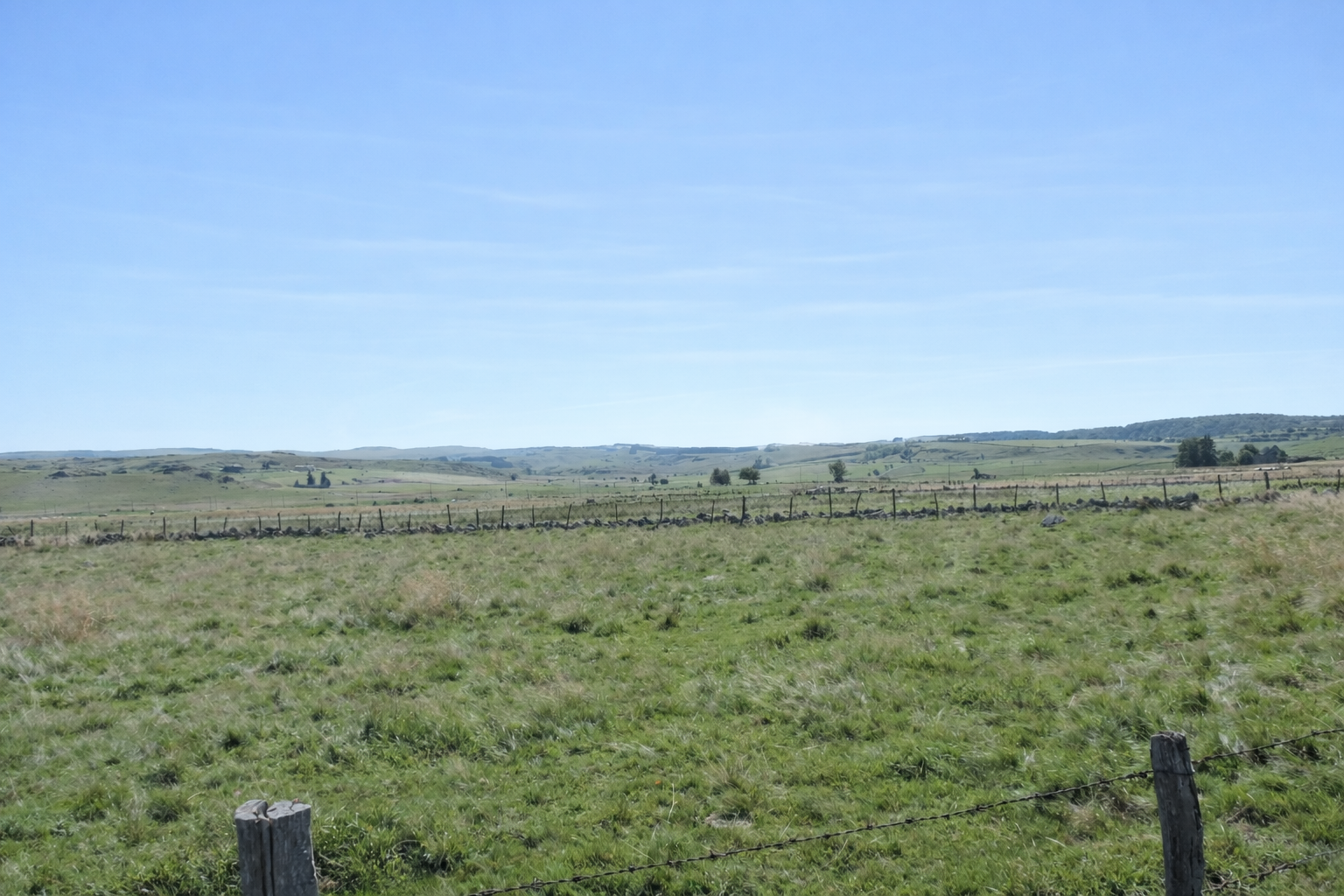
After a brief transition on asphalt, scarcely a hundred meters long, the path reasserts itself. It climbs abruptly, broad and stony, pulling away from the plain to ascend the moorland beneath the village of Montgros. The effort is brief but definite, like a small test before what lies ahead. |
|
 |
 |
|
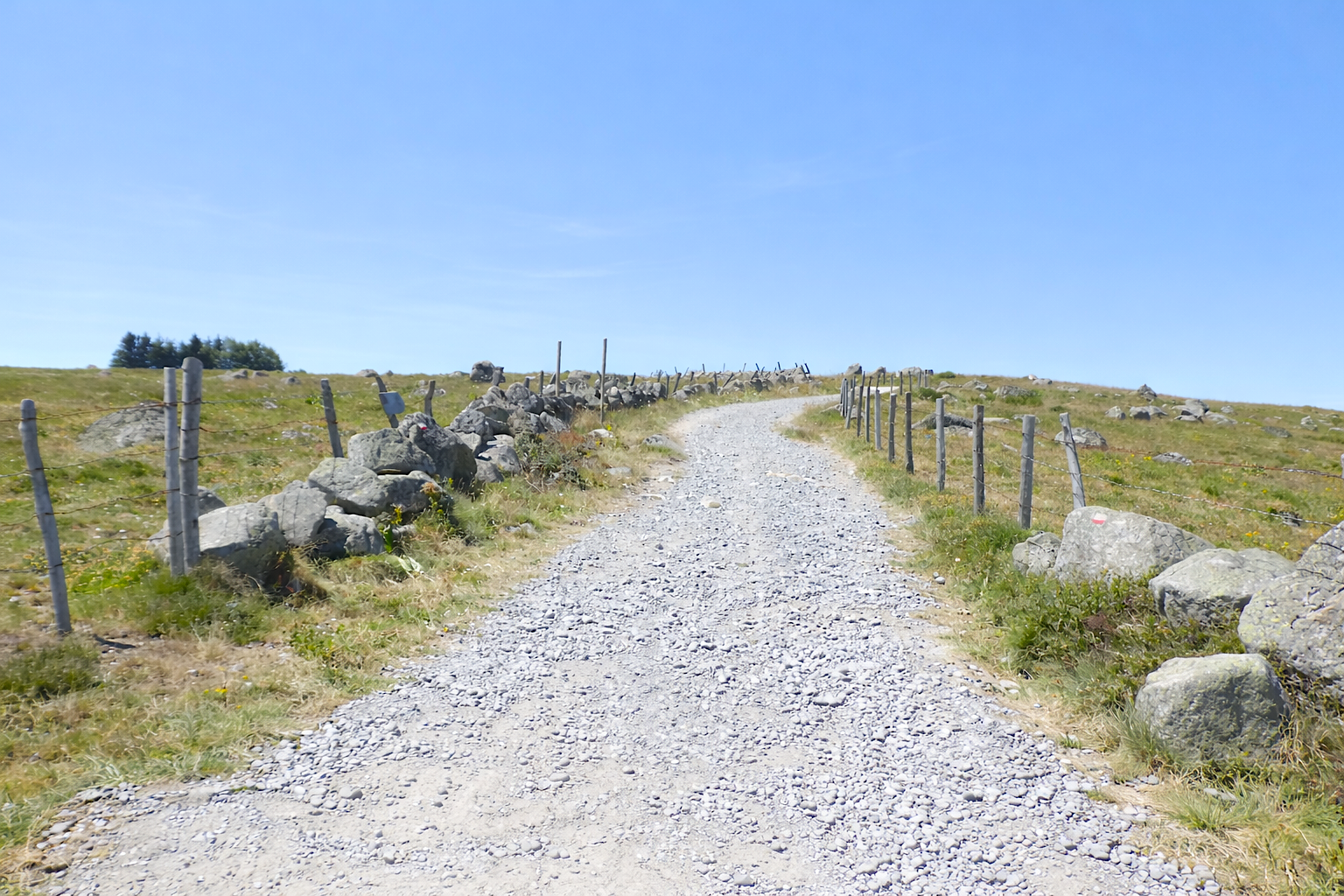
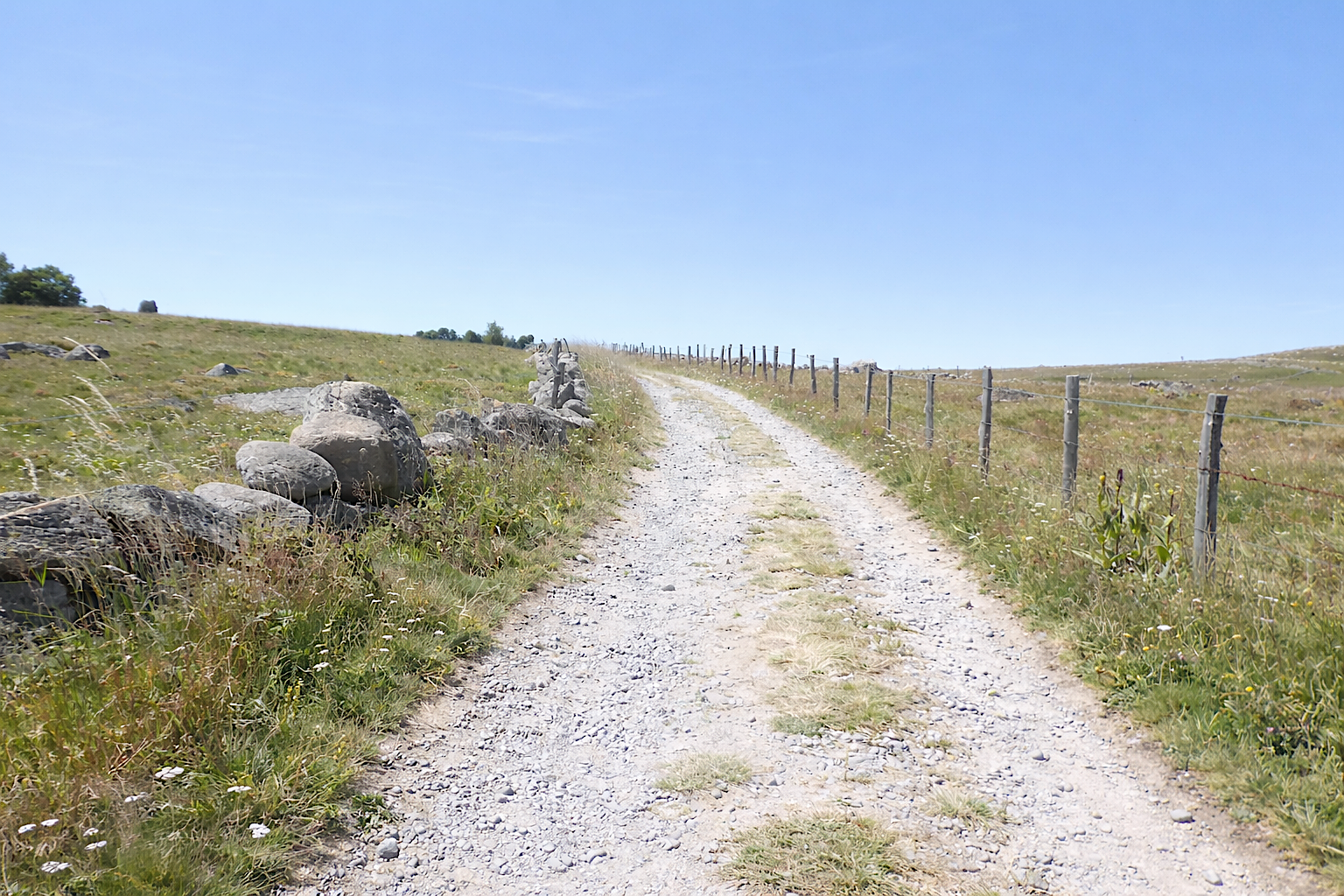
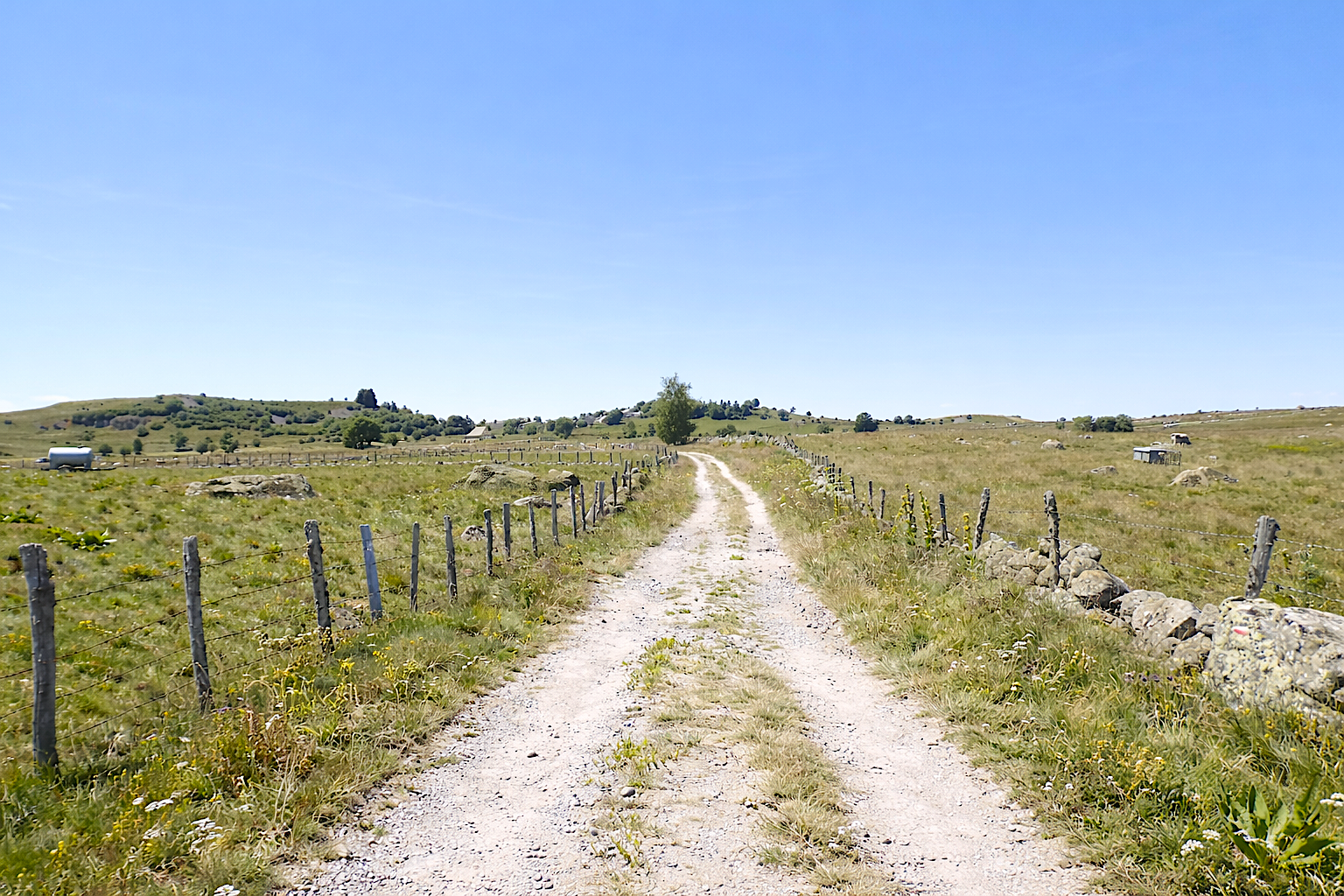
Soon the path becomes rougher still. Stones emerge from the ground, granite boulders mark the ascent, and fence posts accompany the traveller through this climb across a landscape that has once again become wild. Here nothing is superfluous and nothing is softened, only earth, stone, and wind. |
|
 |
 |
 |
 |
|
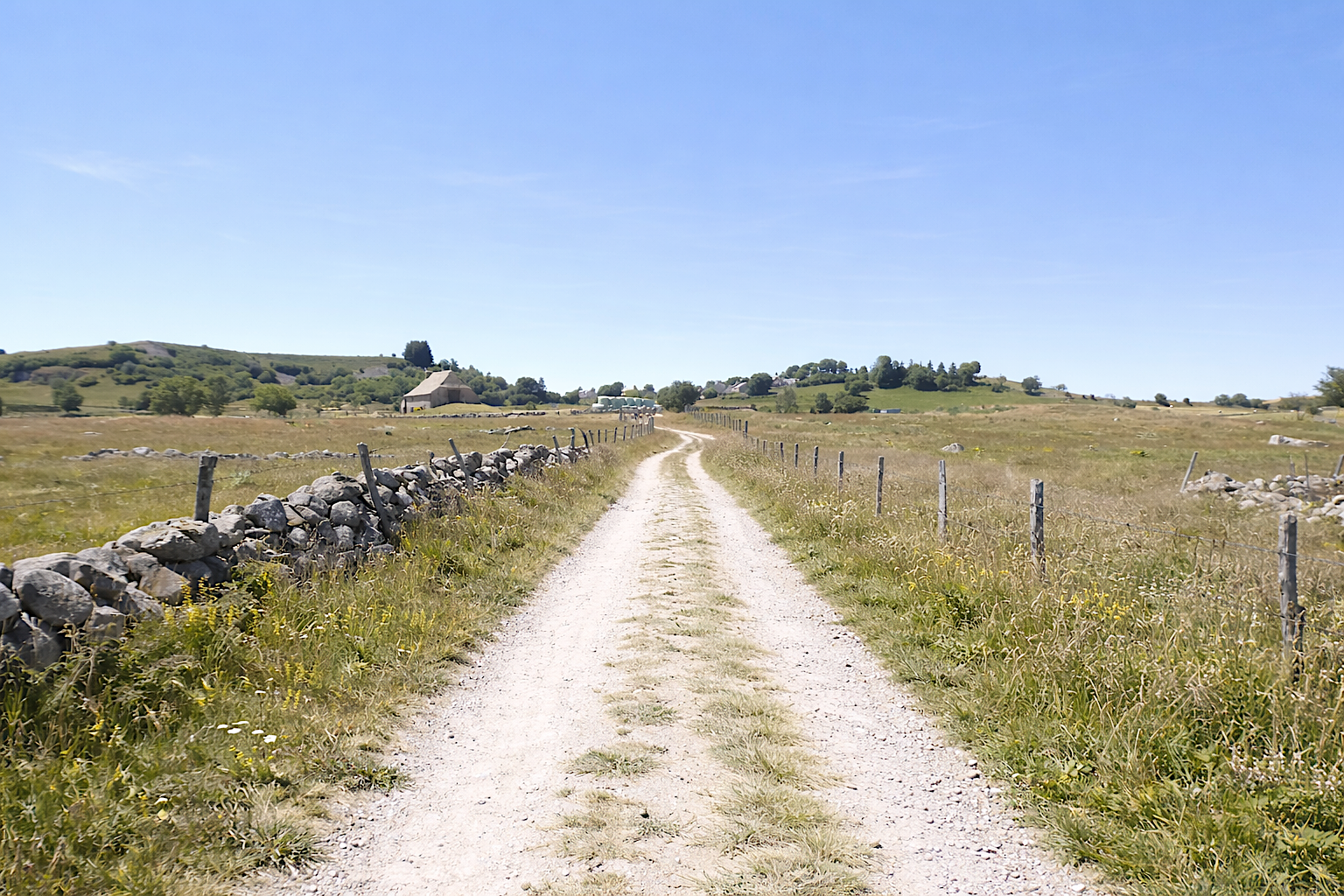
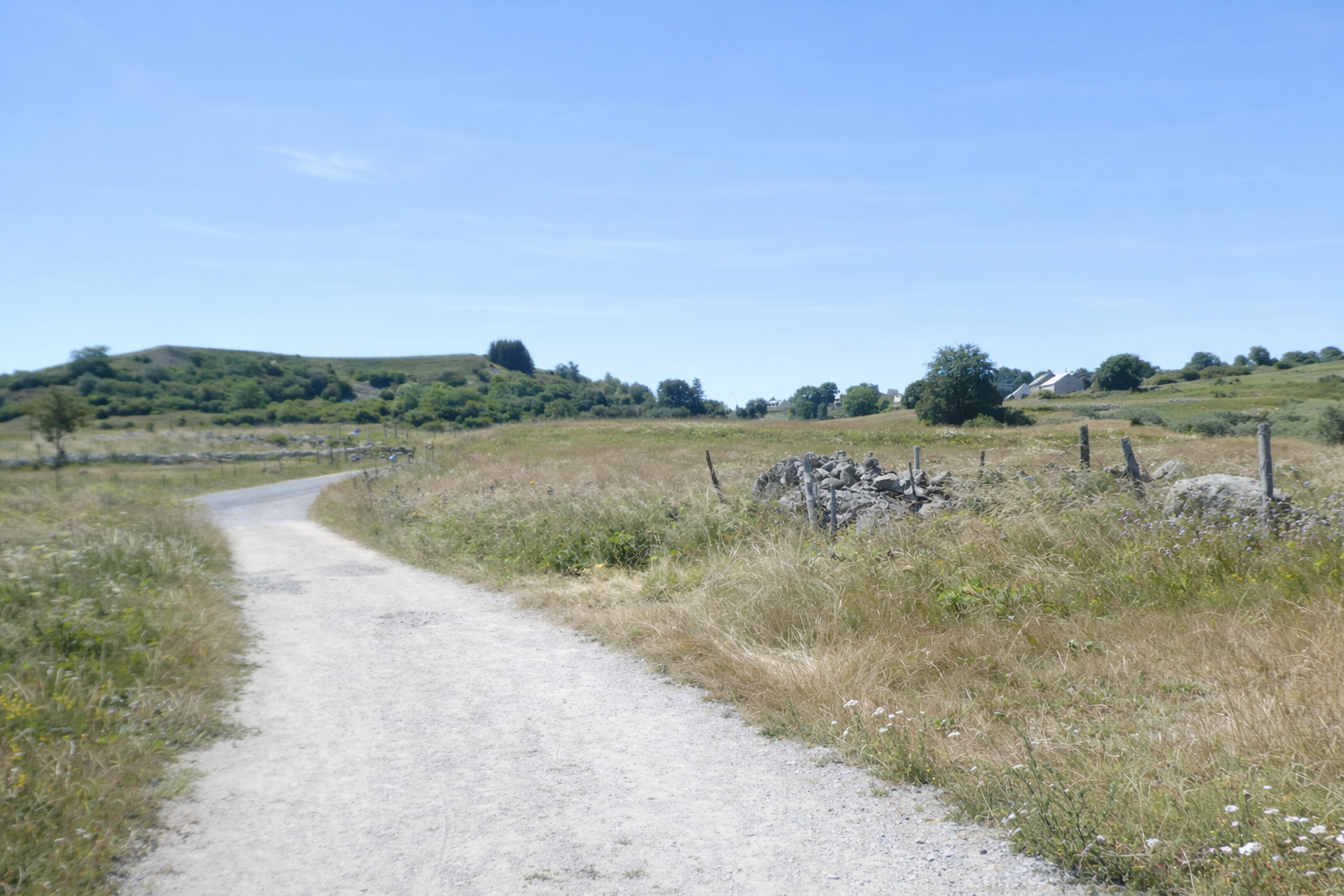
Then, as though granting a reprieve, the slope relaxes. The landscape changes almost imperceptibly. Its harshness softens, and nature appears almost domesticated. The outlines of fields begin to emerge, discreet and barely sketched, signs that the village is no longer far away. Higher up, the GR65 joins a small road that continues climbing towards Montgros. |
|
 |
 |
|
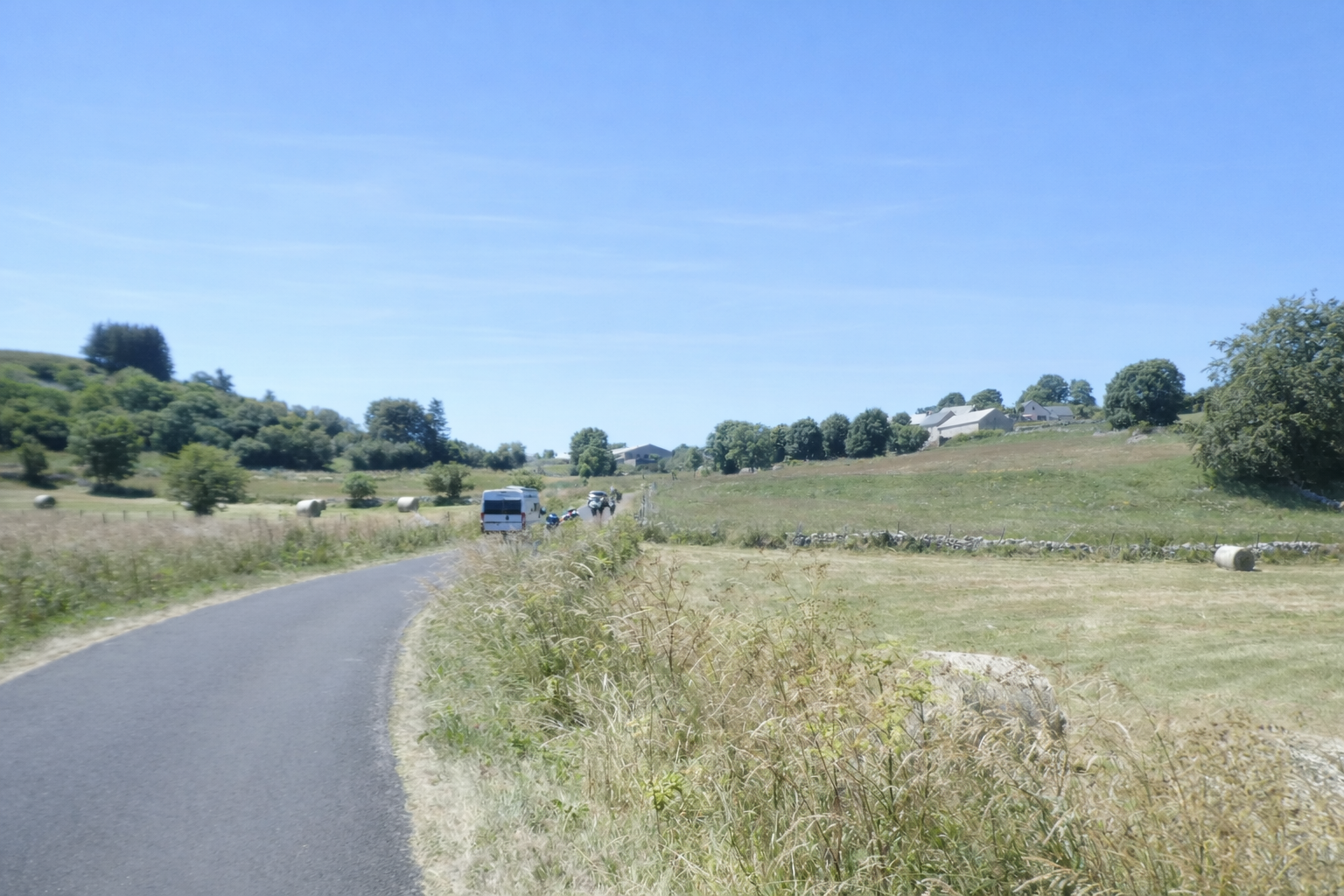
It is often on these more demanding stretches that walkers draw closer together. Slowed by the gradient, they almost unconsciously form a silent procession, resembling the line of vehicles climbing a long hill. The rest of the time, each person dissolves into the landscape, absorbed by the immensity of Aubrac. |
|
 |
 |
Section 3 : On the way to Nasbinals
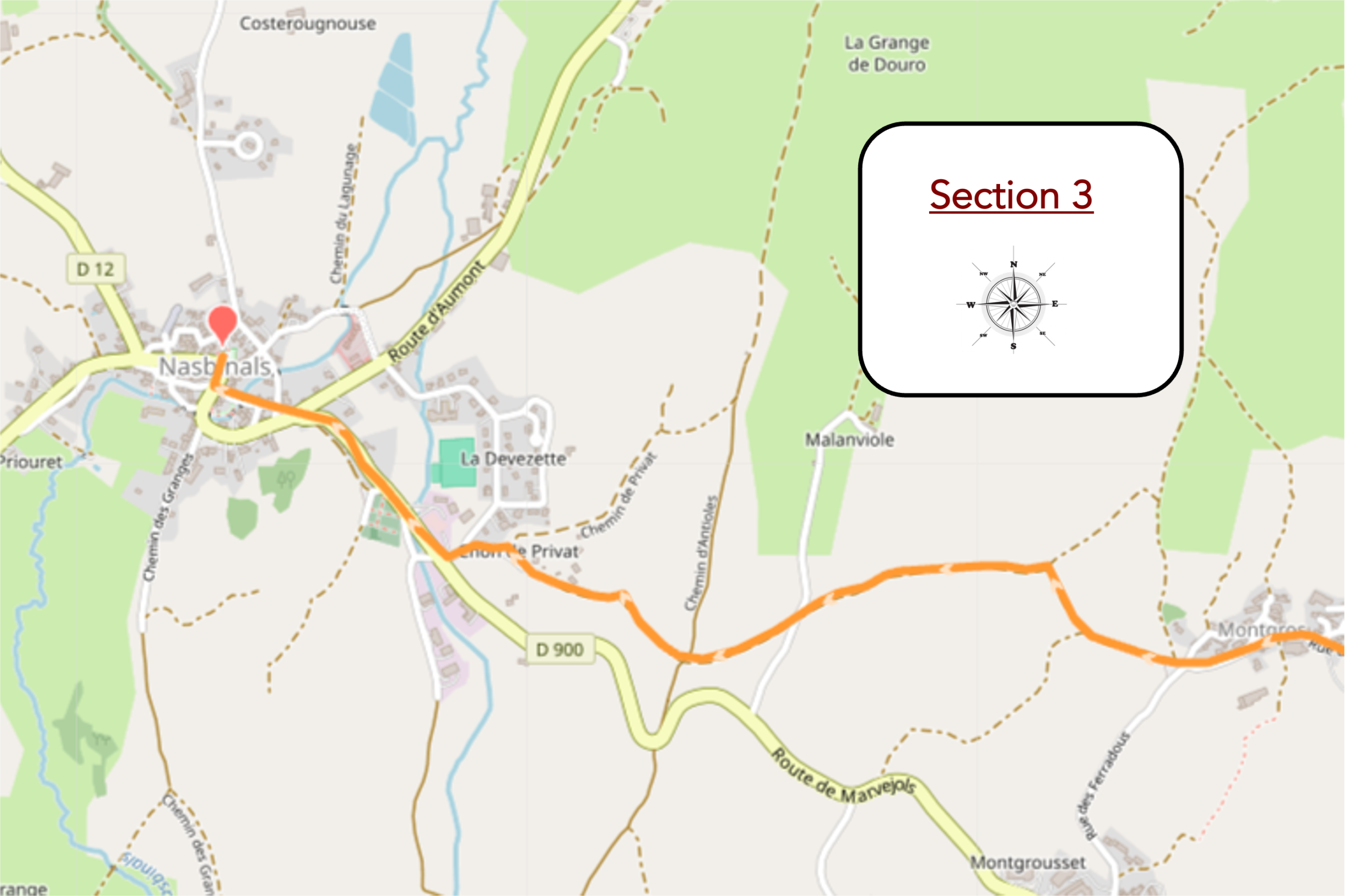
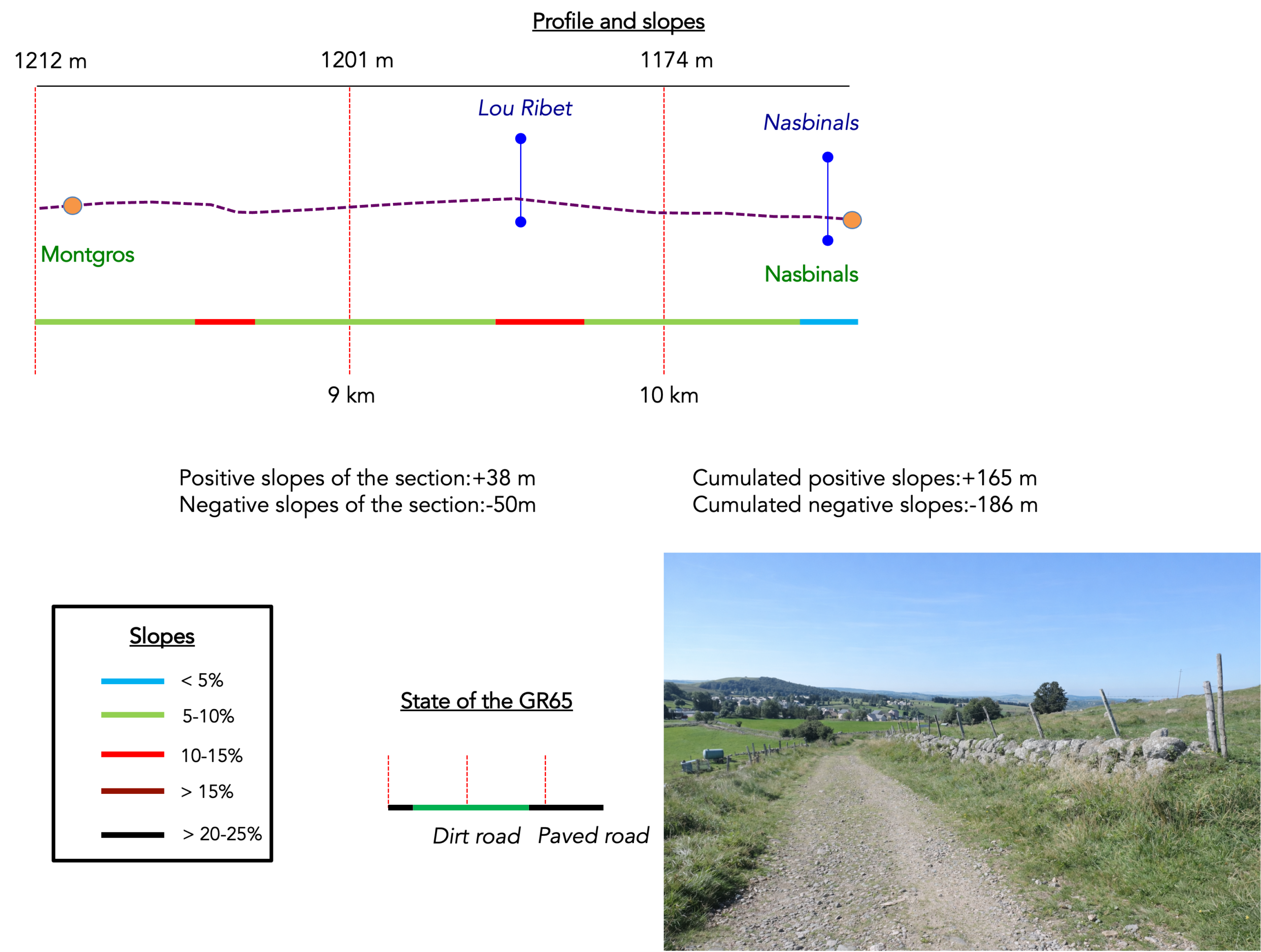
General overview of the route’s challenges: a few slopes on an otherwise easy route.
|
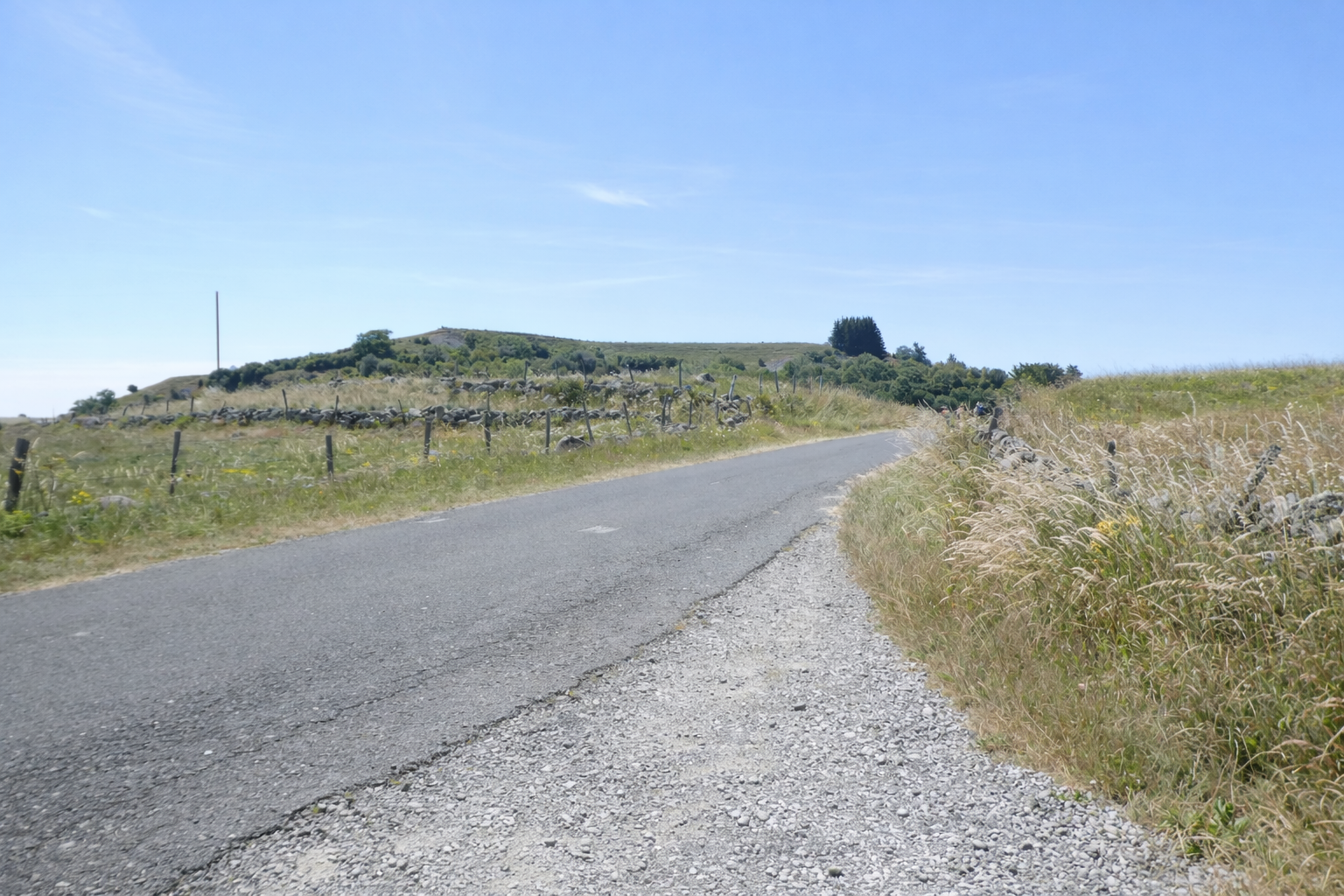
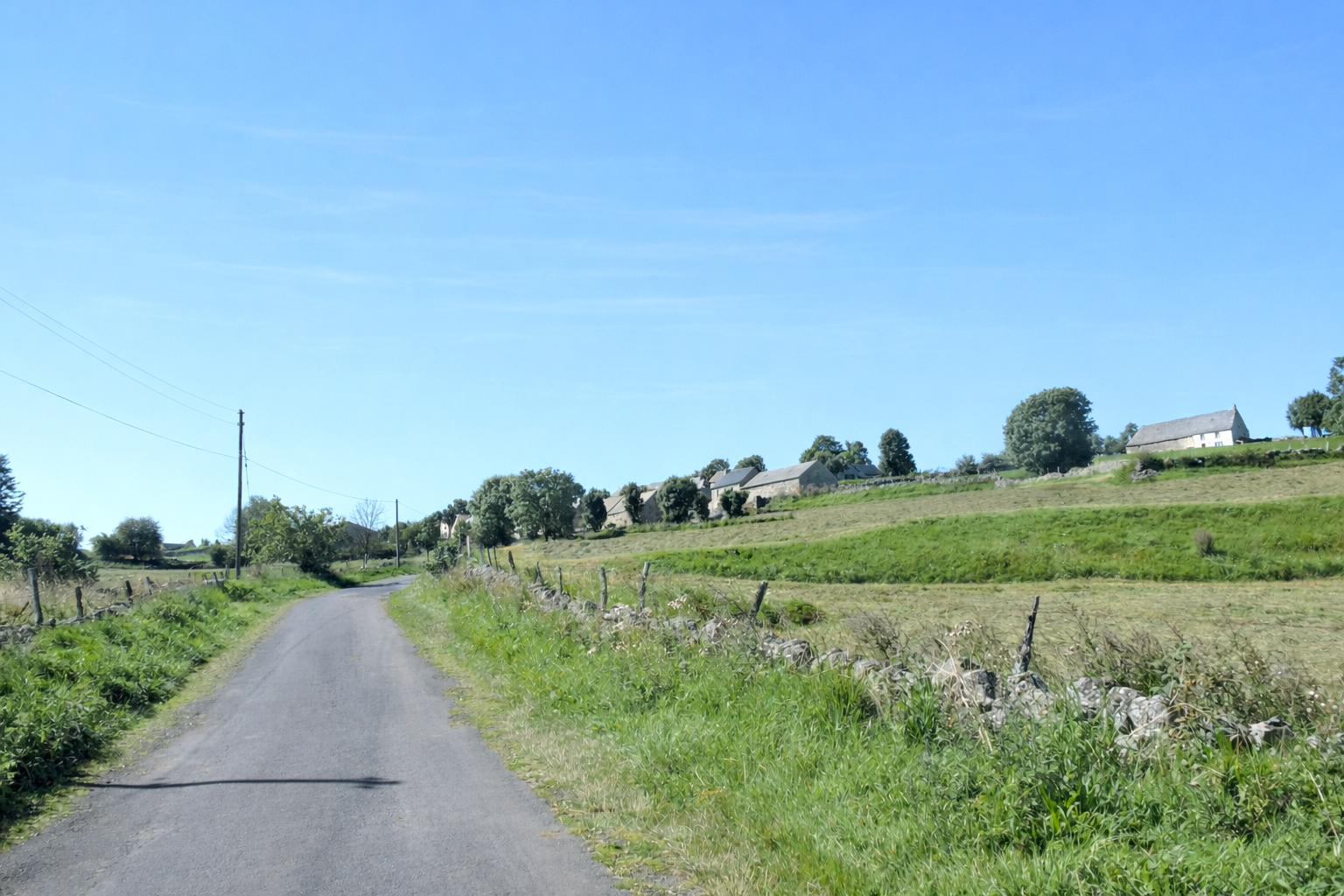
The very steep road climbs towards Montgros, immediately demanding a determined effort, almost abrupt in character, as though reminding hikers that Aubrac never reveals itself without some resistance. |
|
 |
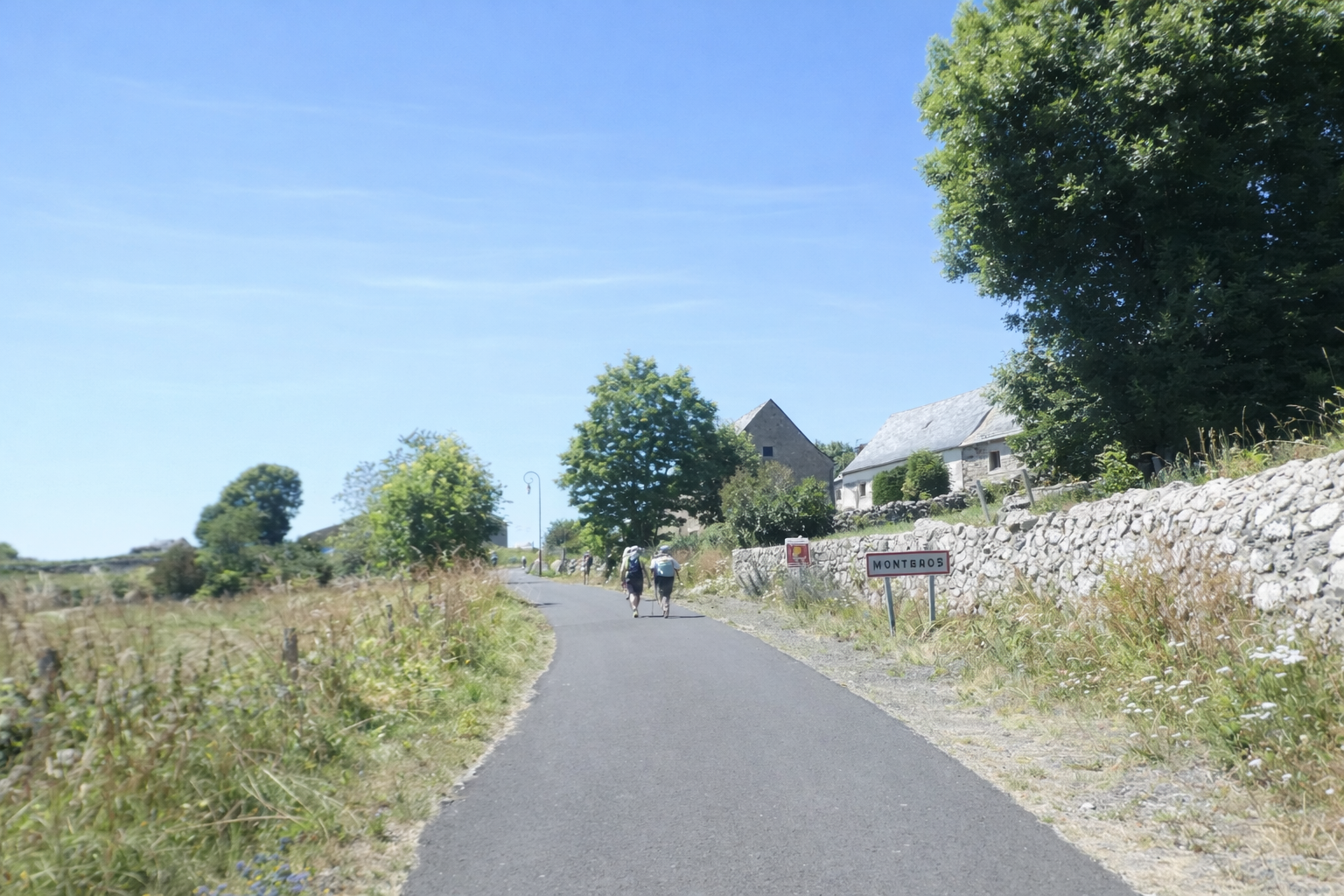 |
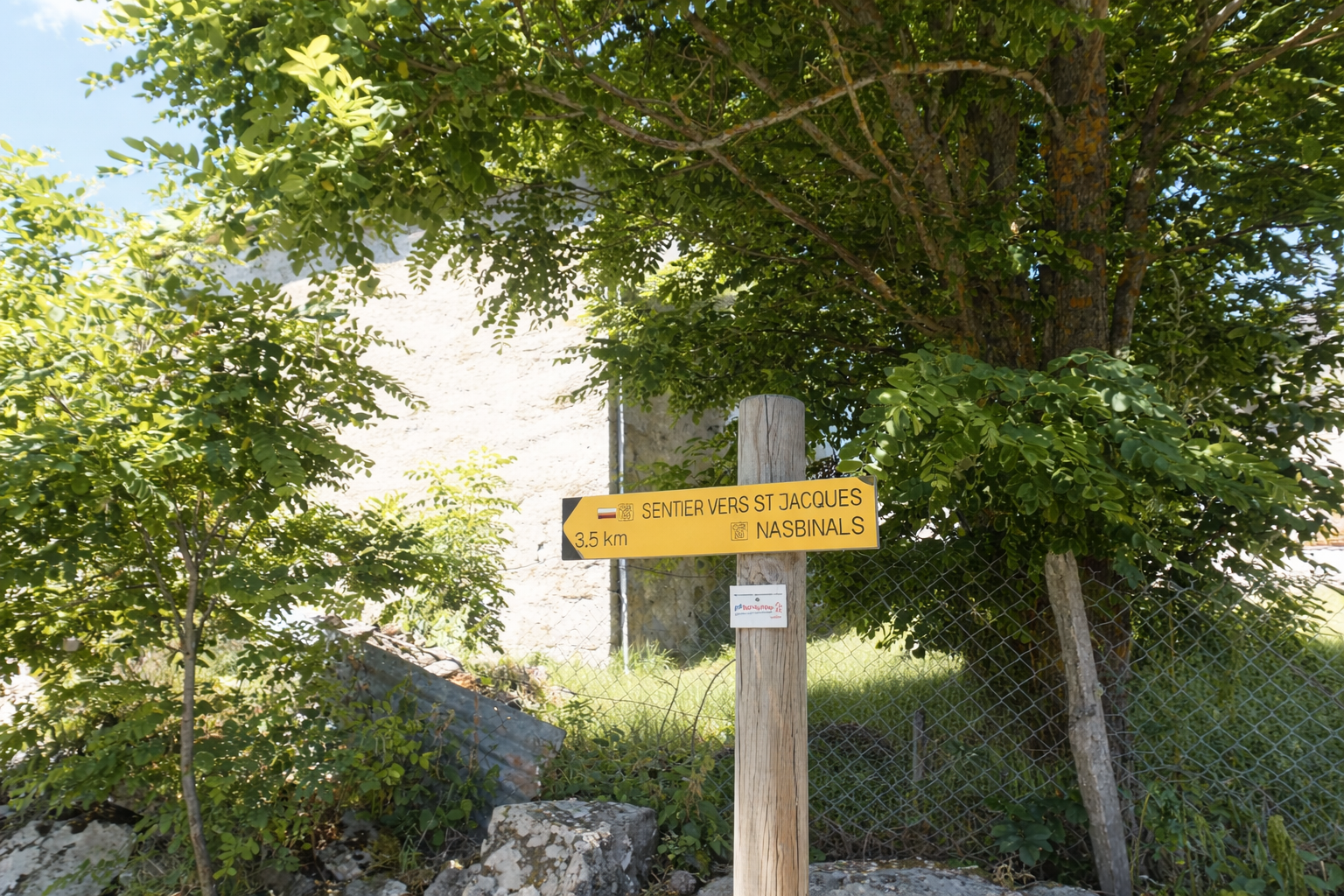
At Montgros, you are now only three and a half kilometers from Nasbinals, a proximity already perceptible in the air, in the light, and in the more evident presence of human habitation.
|
The hamlet then appears, compact and closely gathered together, faithful to the austere architecture of Aubrac. Granite houses cluster around the remarkable travaux once used for shoeing oxen, true monuments to everyday rural life. Montgros also offers a noteworthy stopping place, a discreet yet precious refuge for walkers. |
|
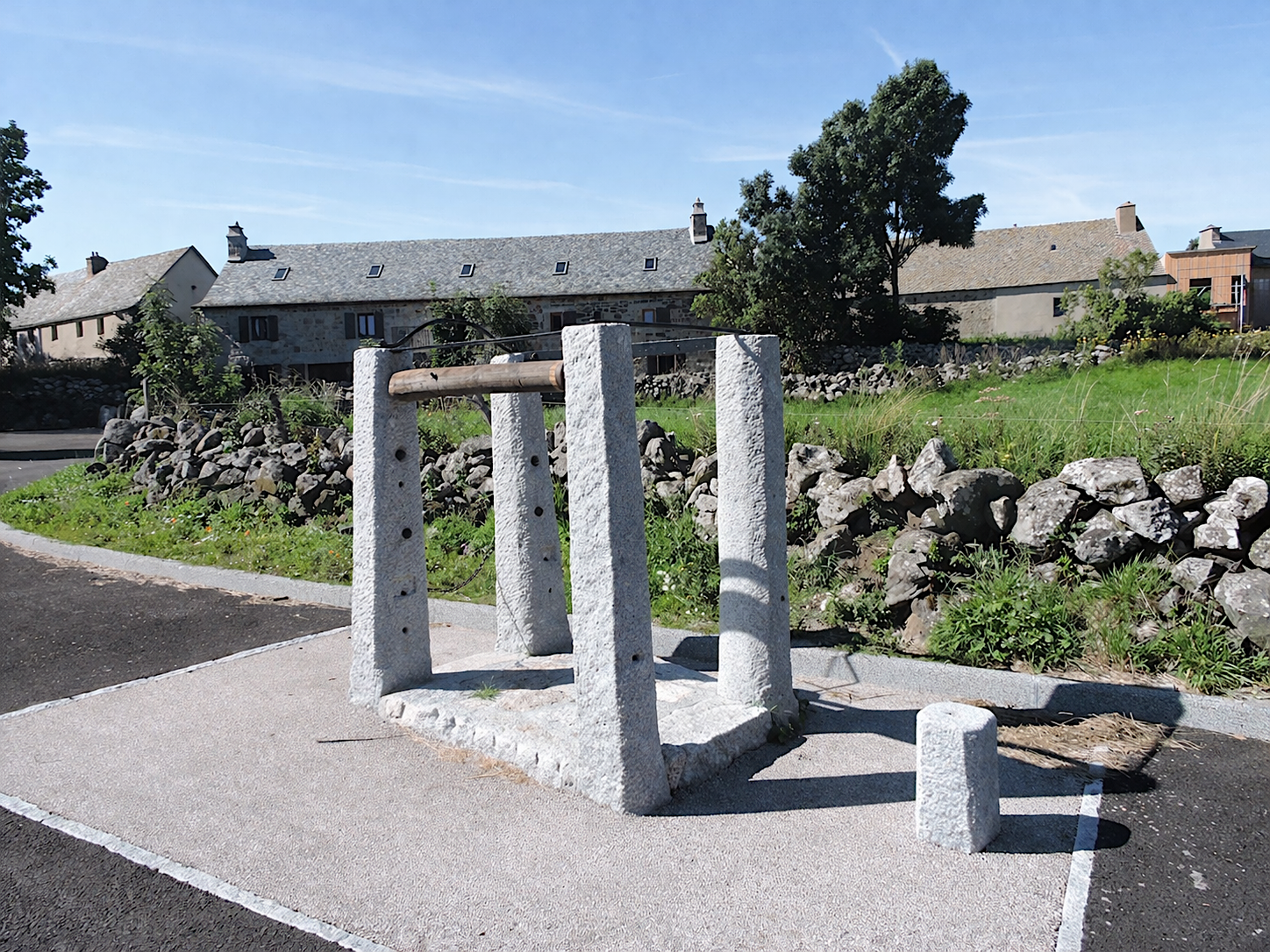 |
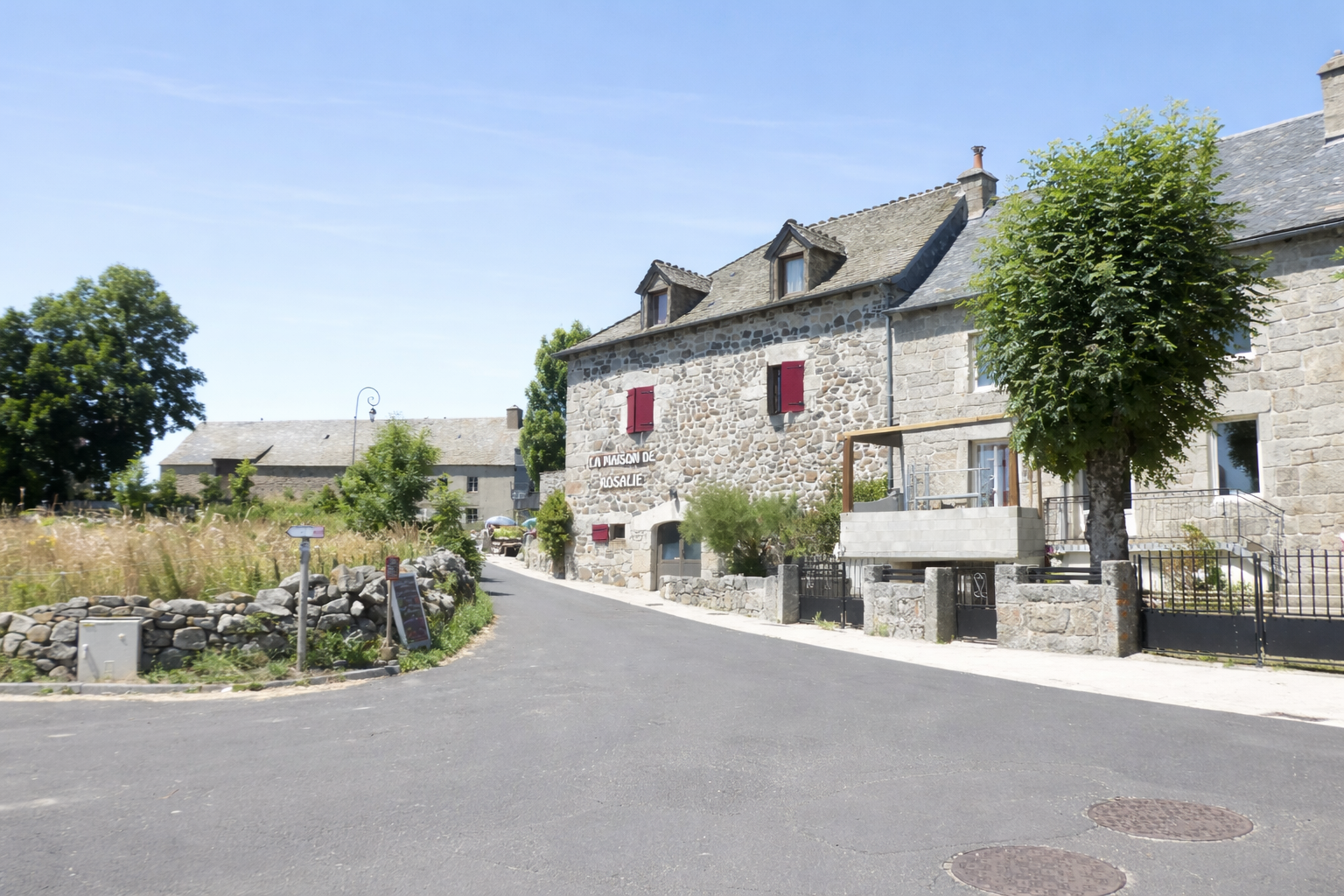 |
|
At the edge of the hamlet, two crosses stand watch, marking the transition between human shelter and the openness of the plateau beyond. |
|
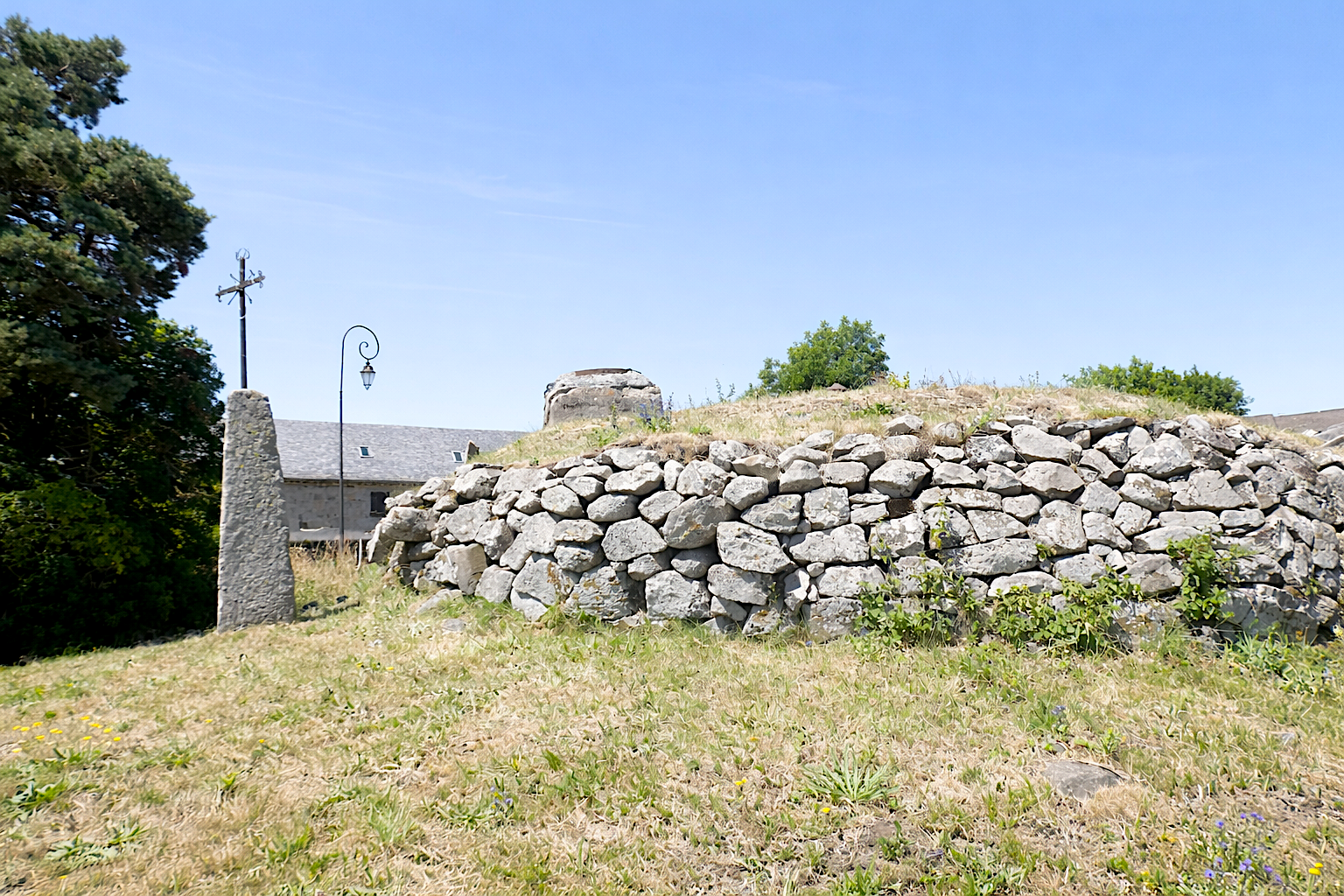 |
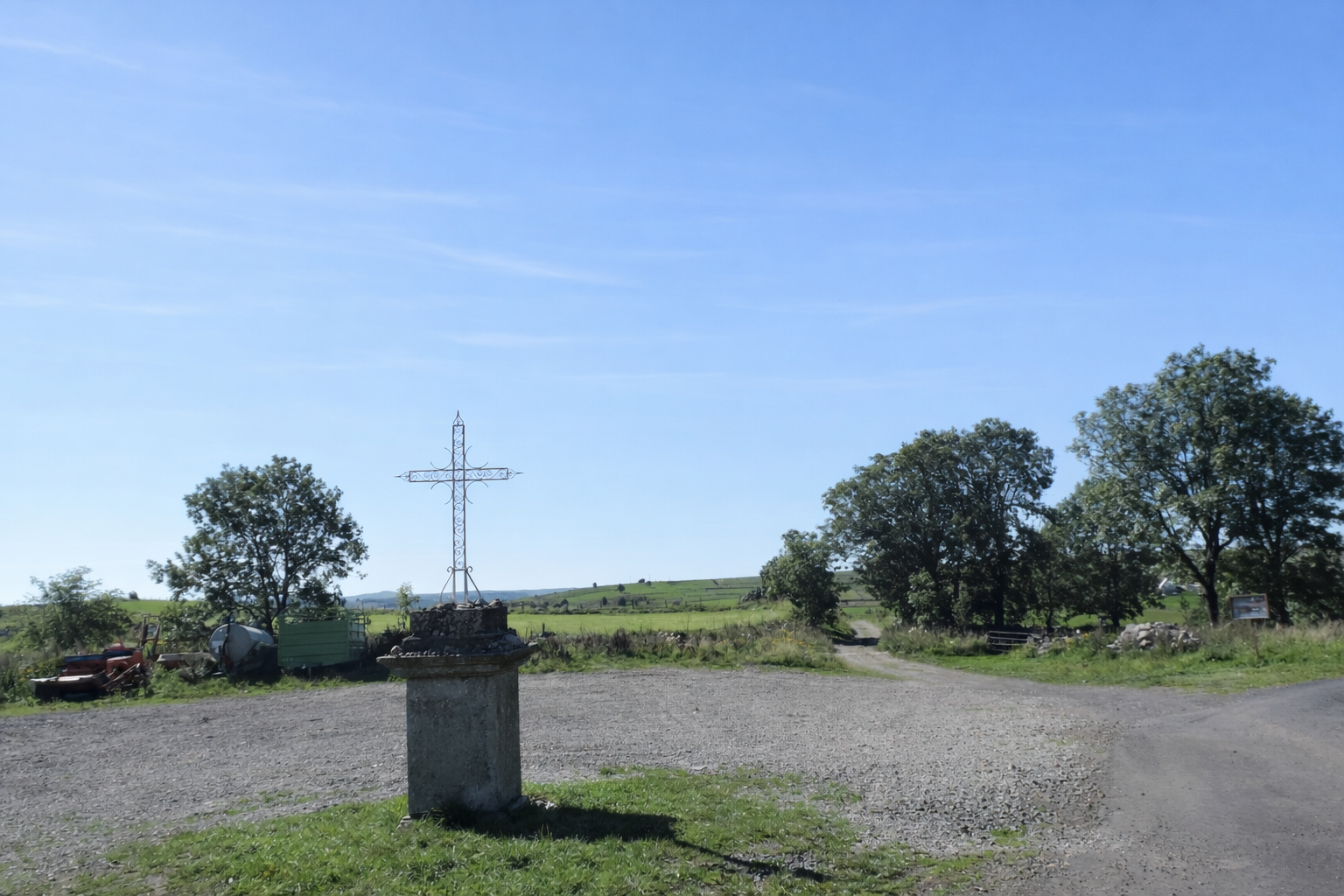 |
|
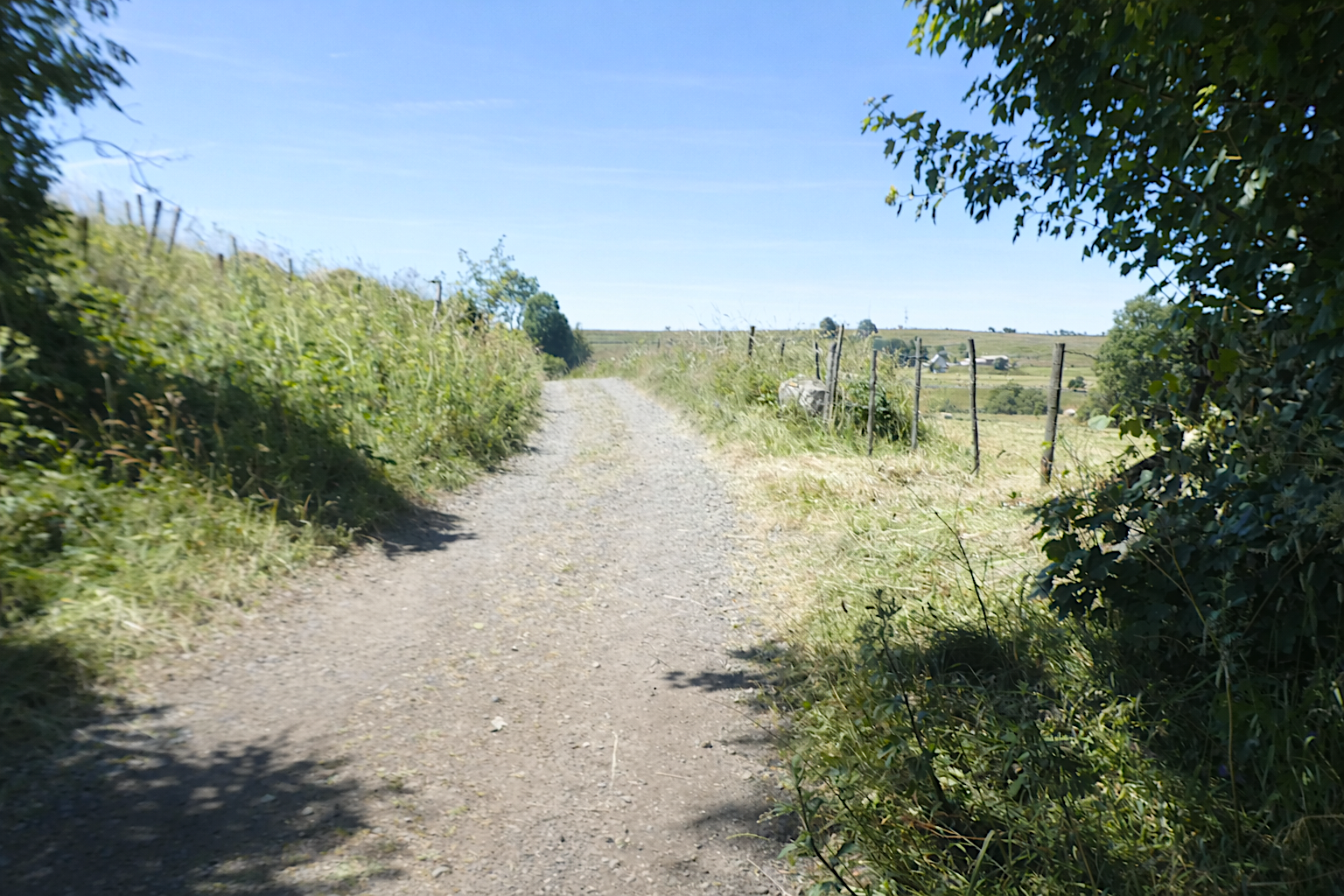
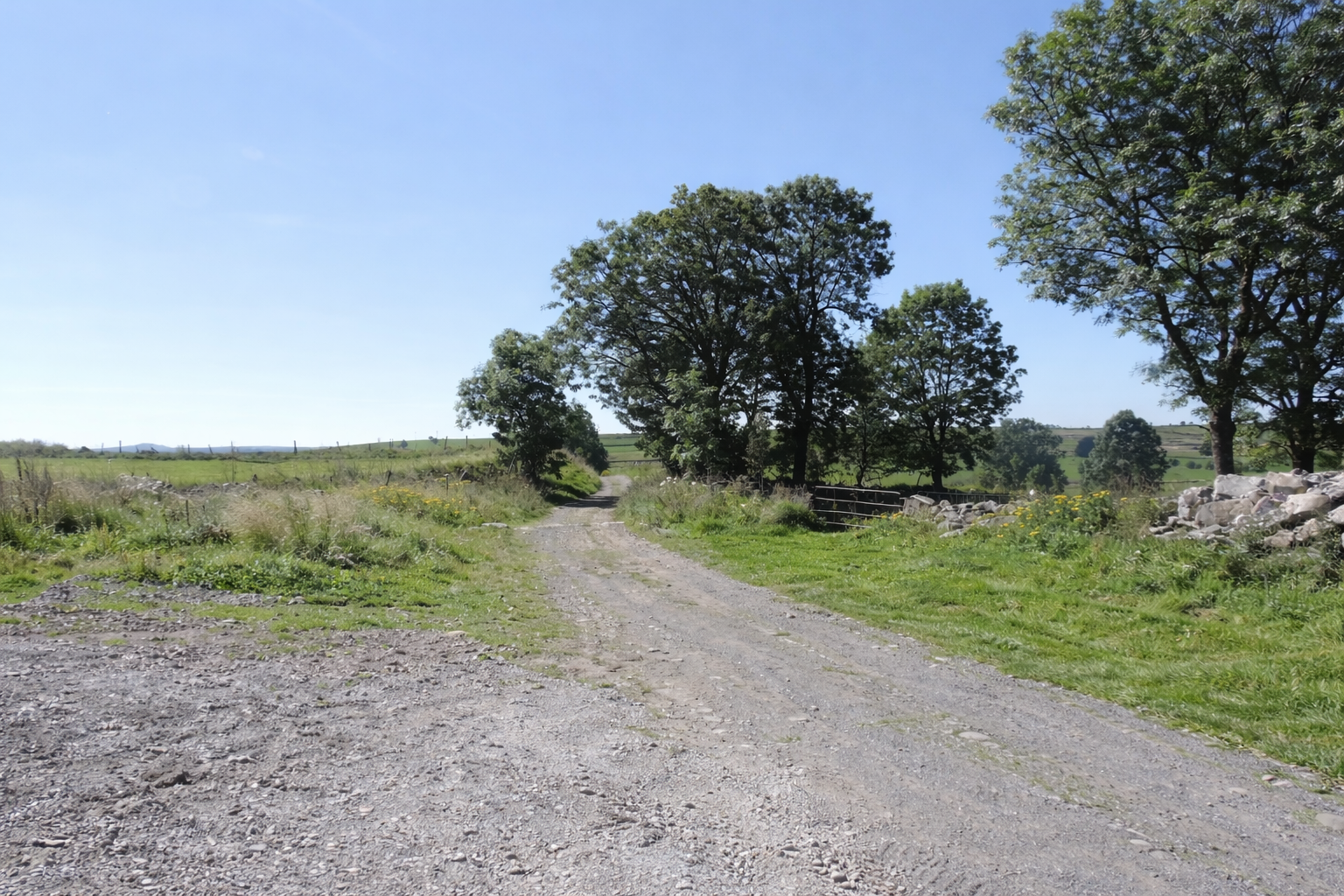
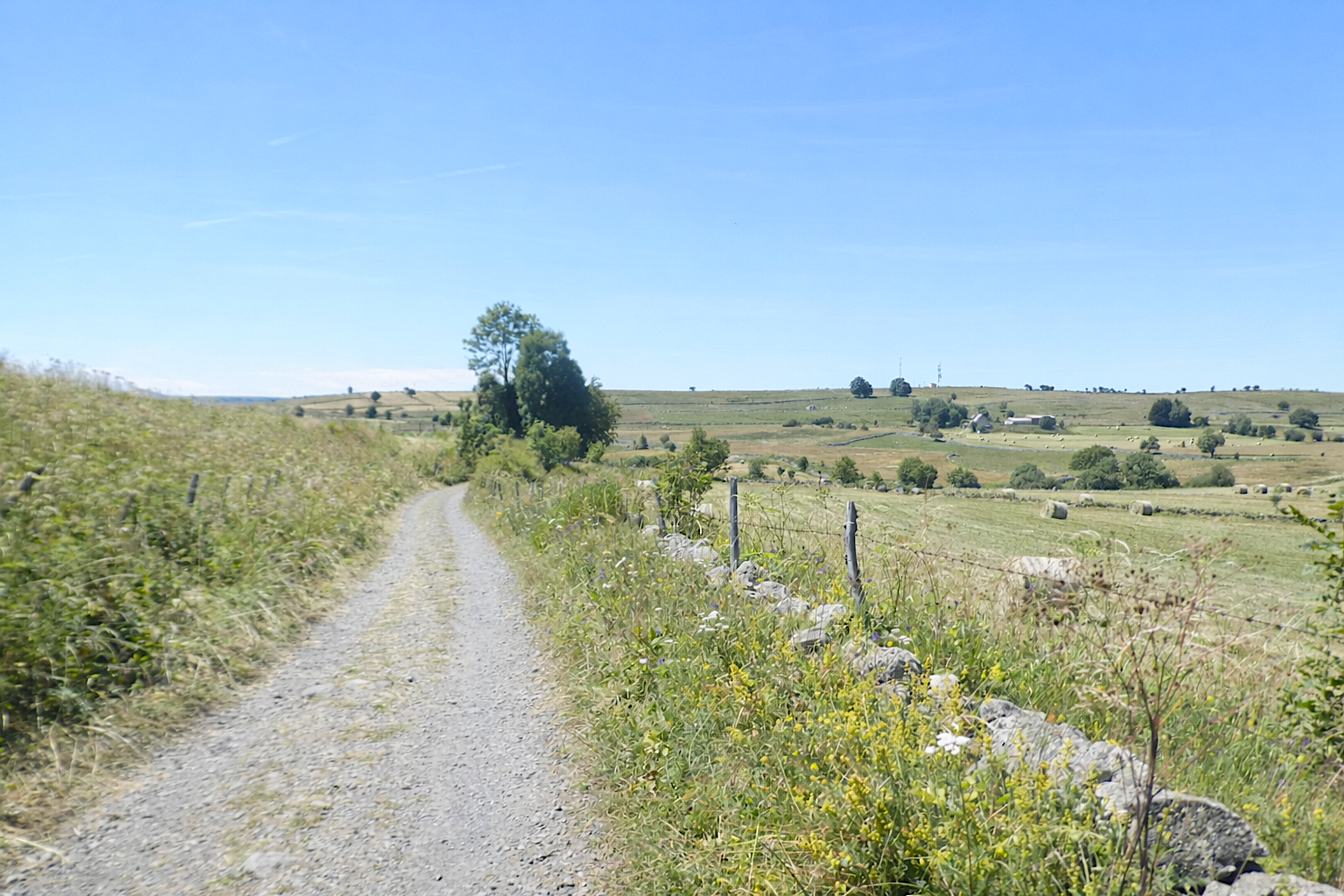
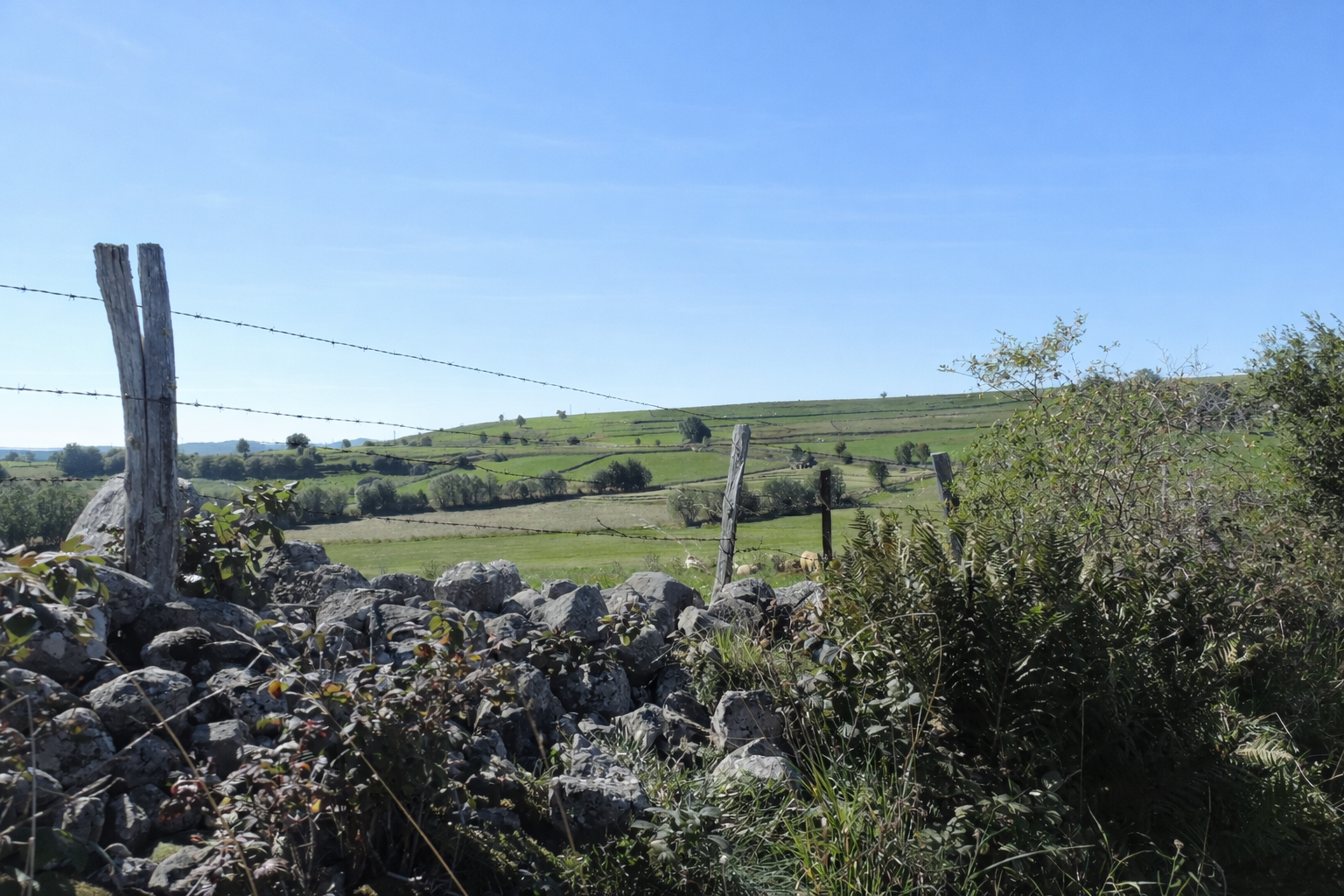
As soon as you move away, trees timidly reappear in the landscape. Green pastures spread out once more, bordering a path that is often very stony and framed by embankments overgrown with brambles and tall grasses. |
|
 |
 |
 |
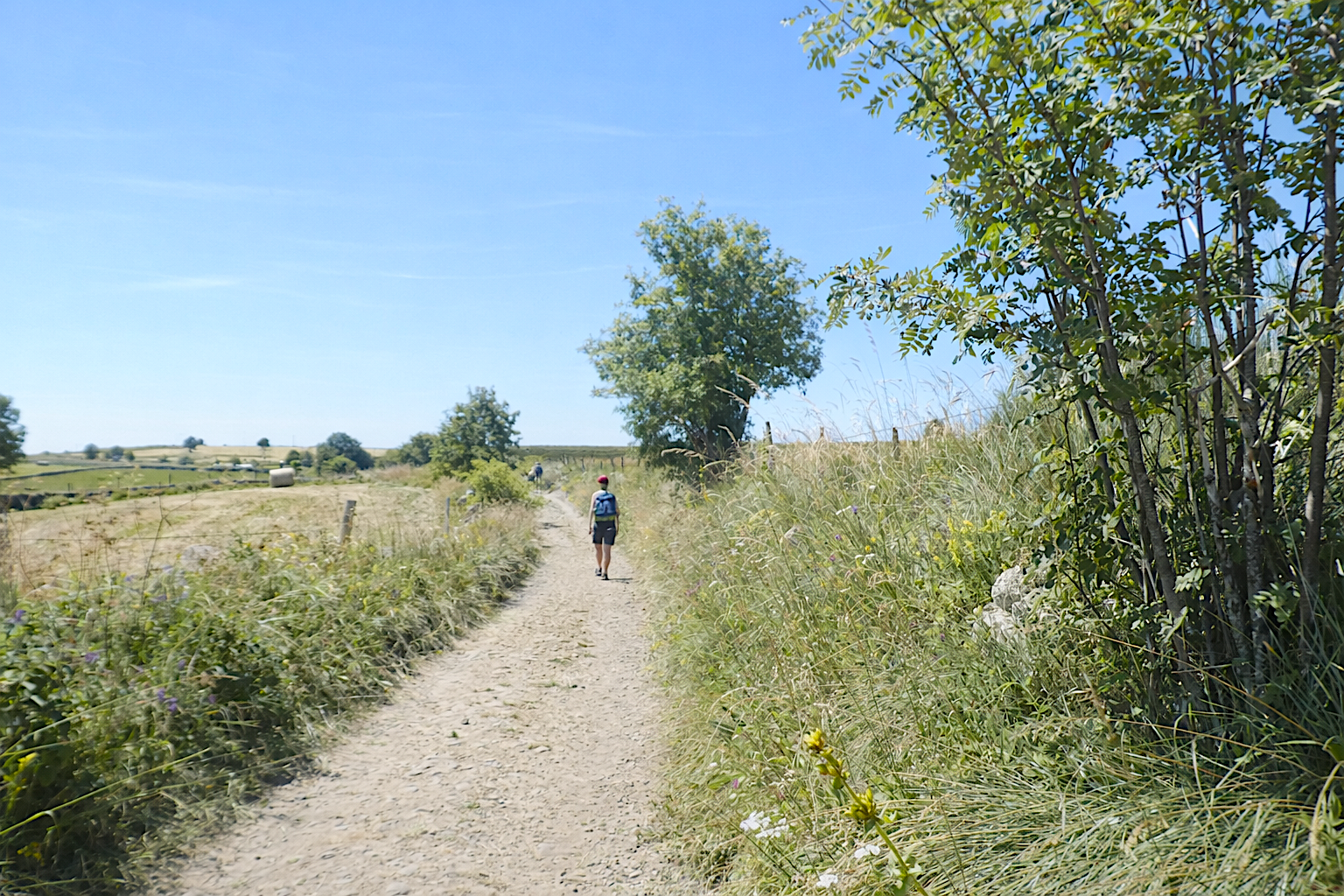 |
If the first impressions can sometimes feel harsh and monotonous, the landscape soon opens onto a peaceful and almost orderly countryside. Fields trace their lines with quiet precision, while solitary and tranquil cattle graze behind barbed-wire fences. A simple serenity settles over the land, deep and enduring.
|
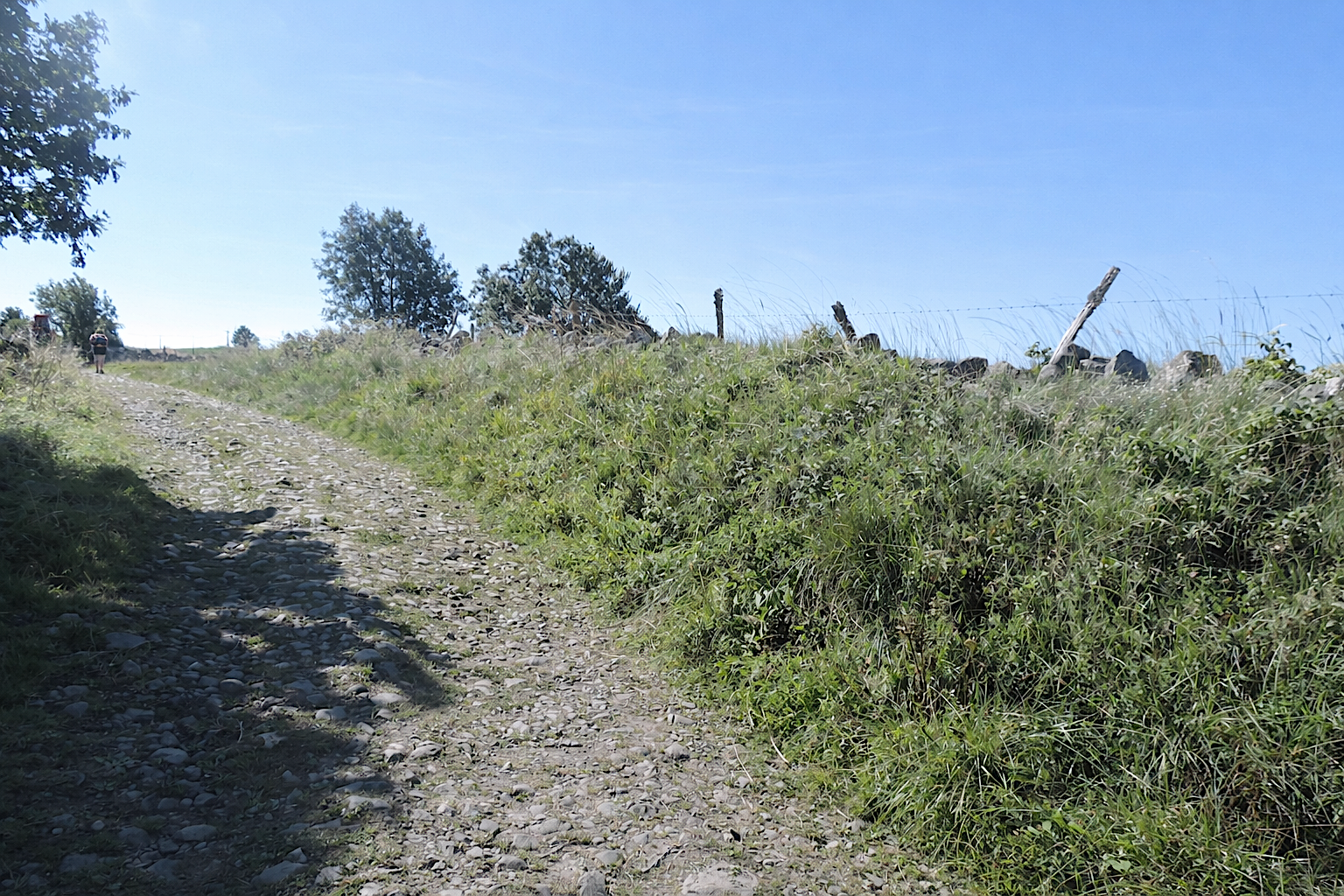
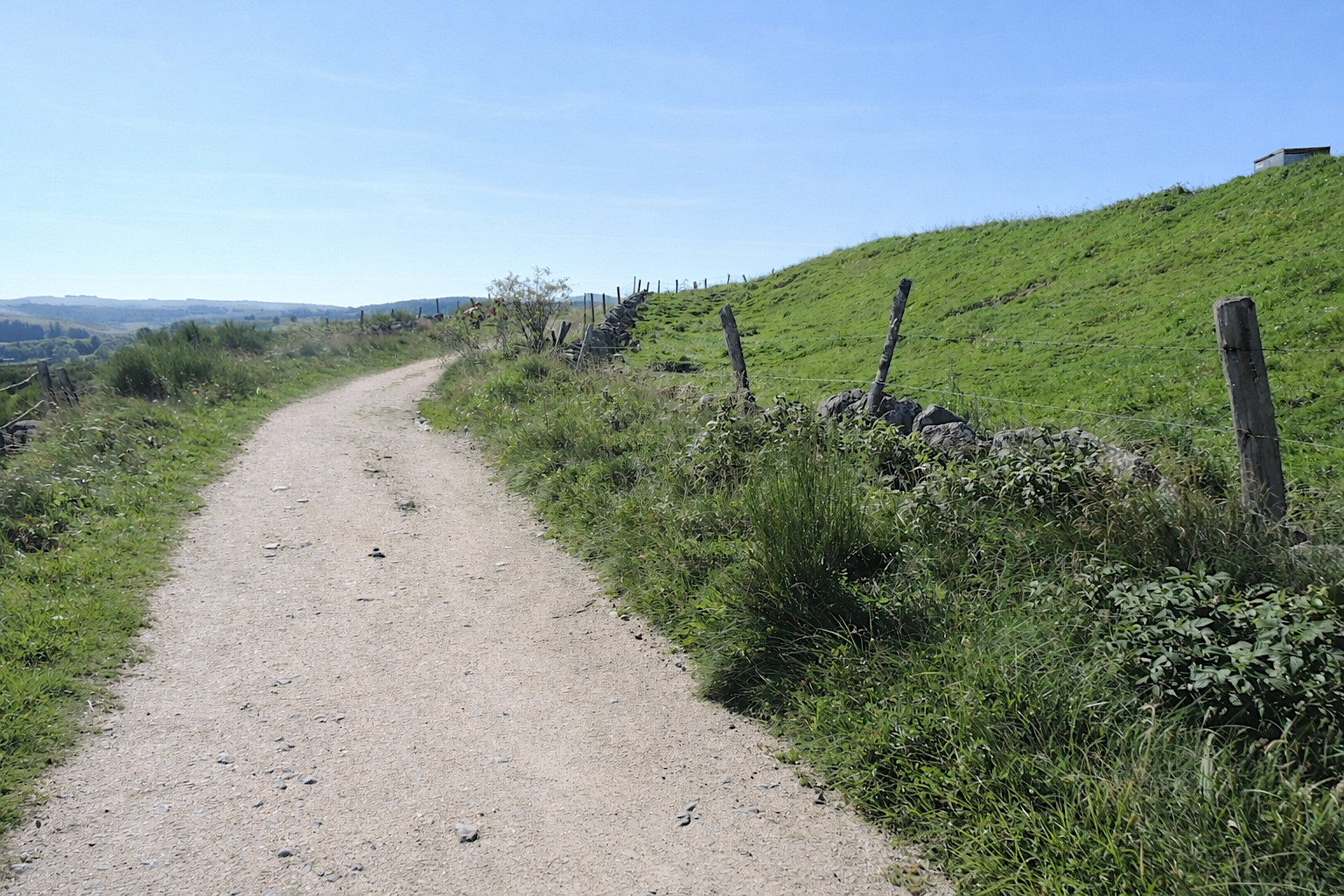
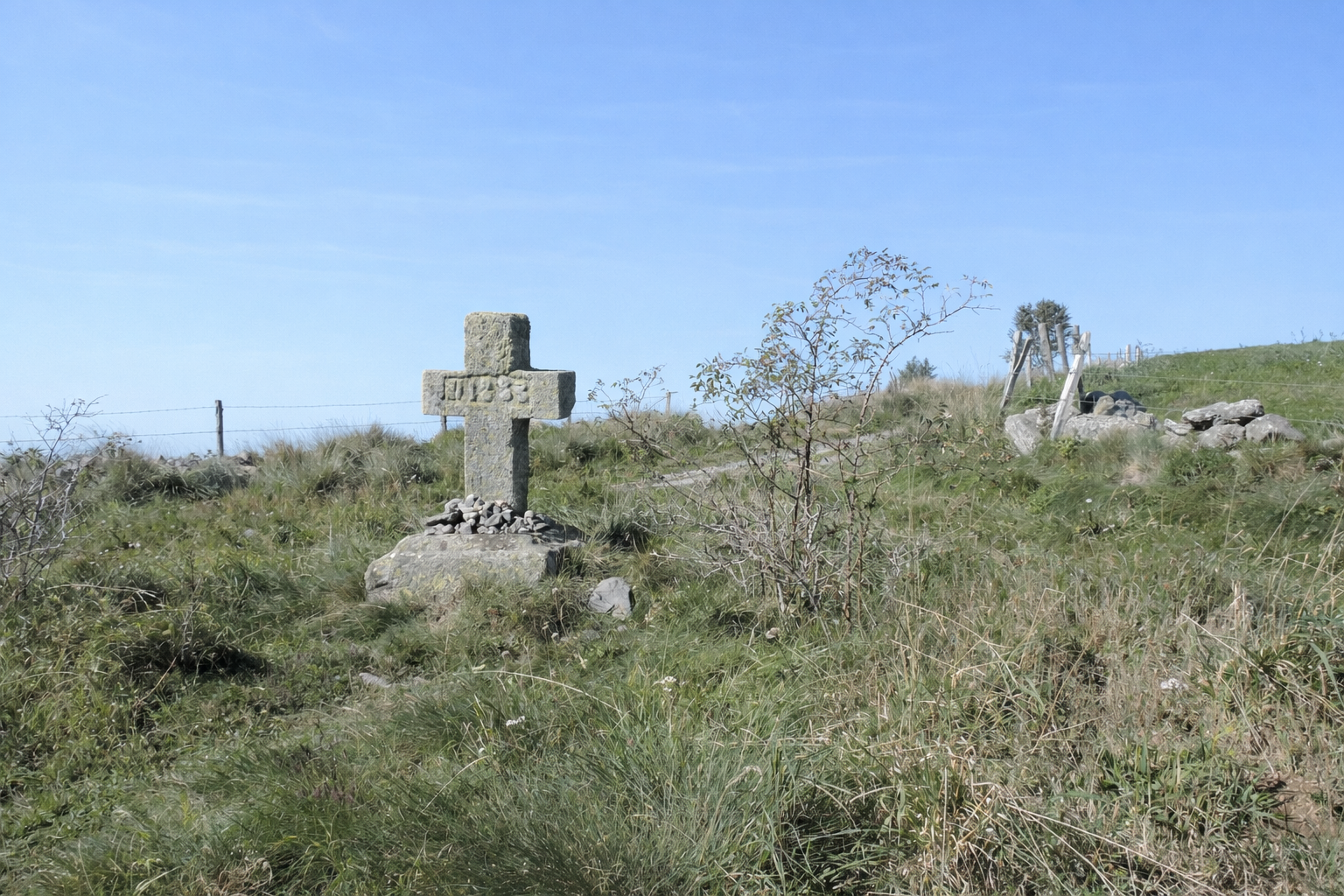
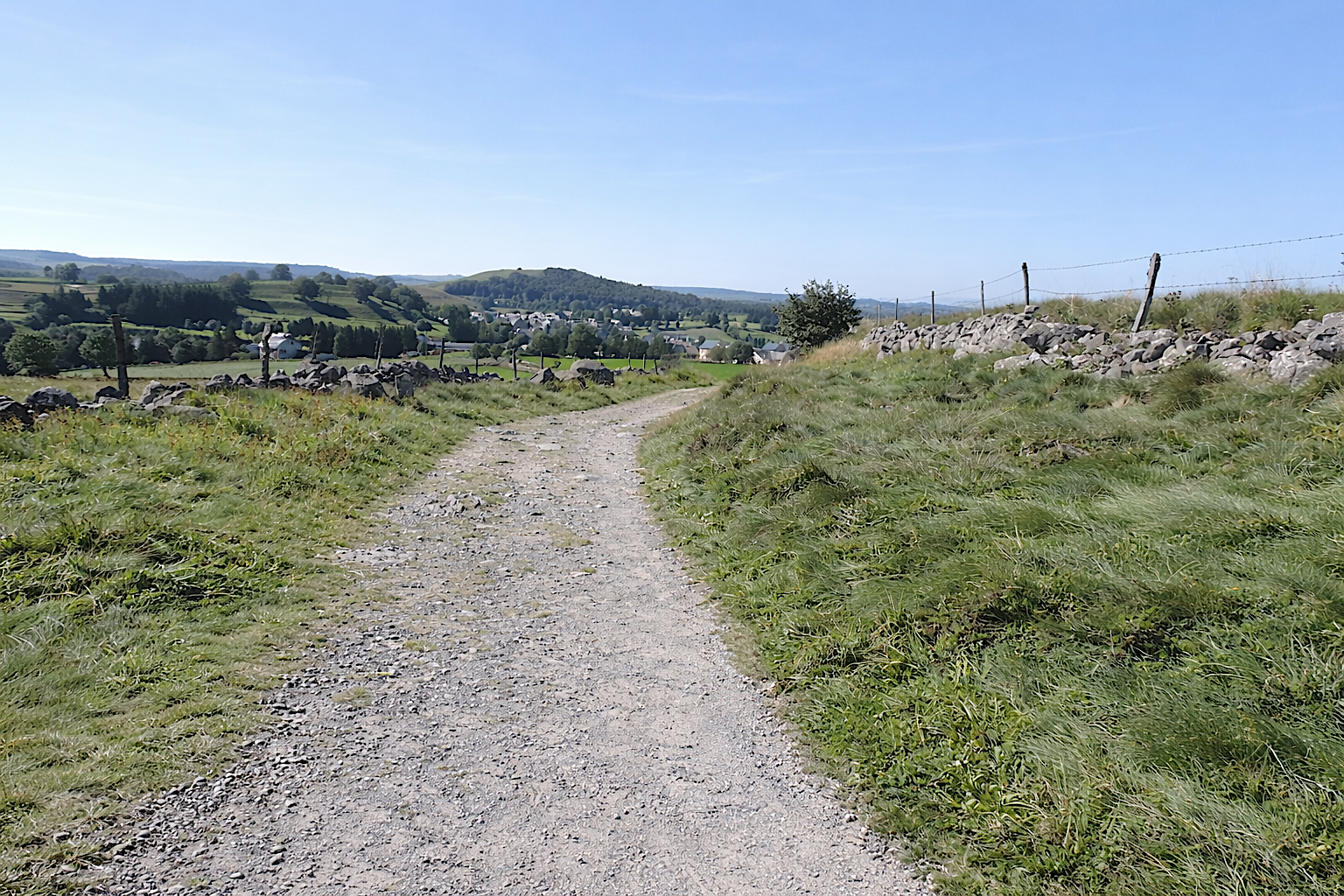
The path eventually reaches the summit of the hill. Here, broom dominates the landscape, splashing the embankments with its presence, while brambles cling to the mounds of earth. A small cross stands there, humble and silent. Everything seems born from granite: the crosses, the houses, the fountains, as though the stone itself had shaped both the landscape and the lives lived within it. |
|
 |
 |
 |
 |
|
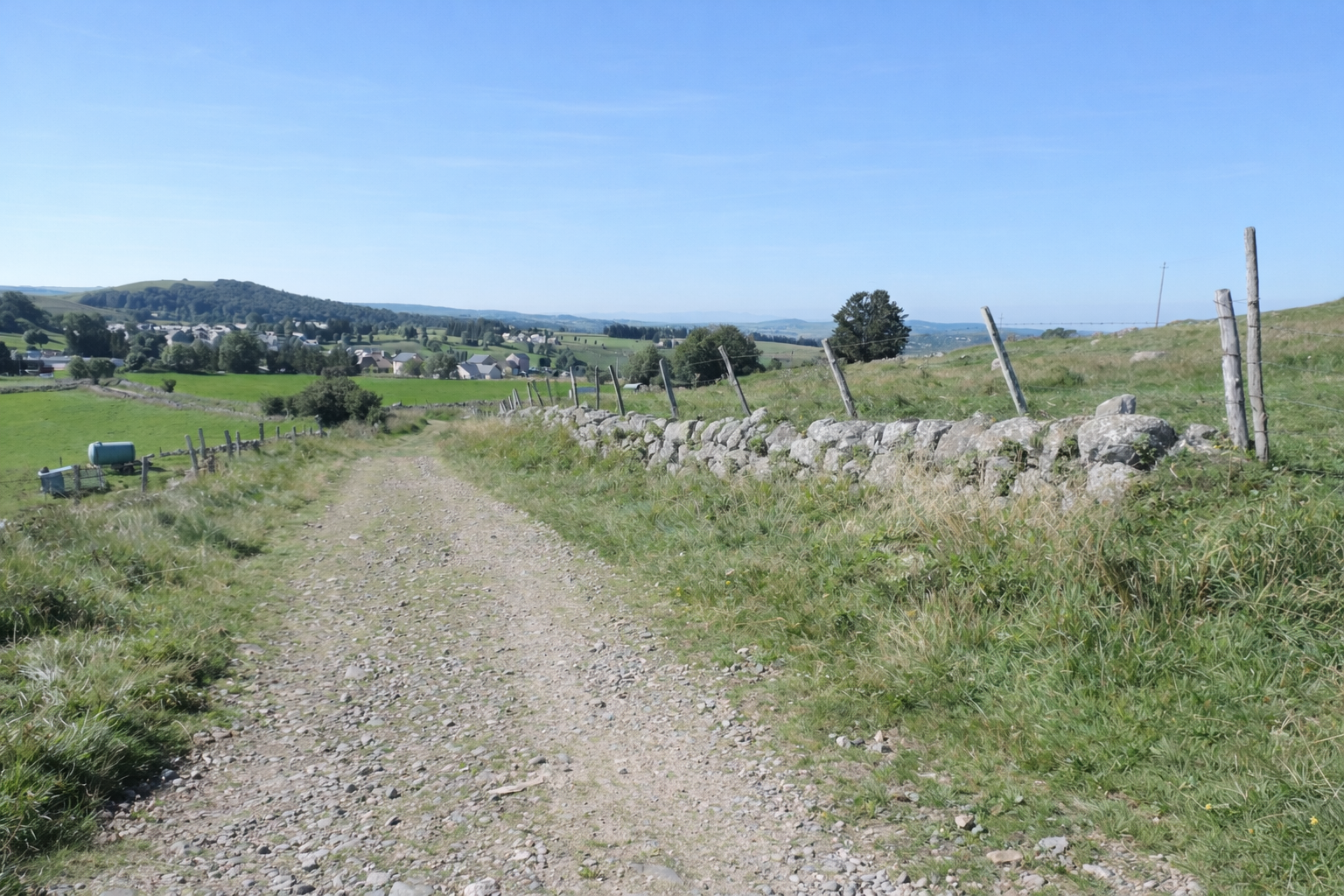
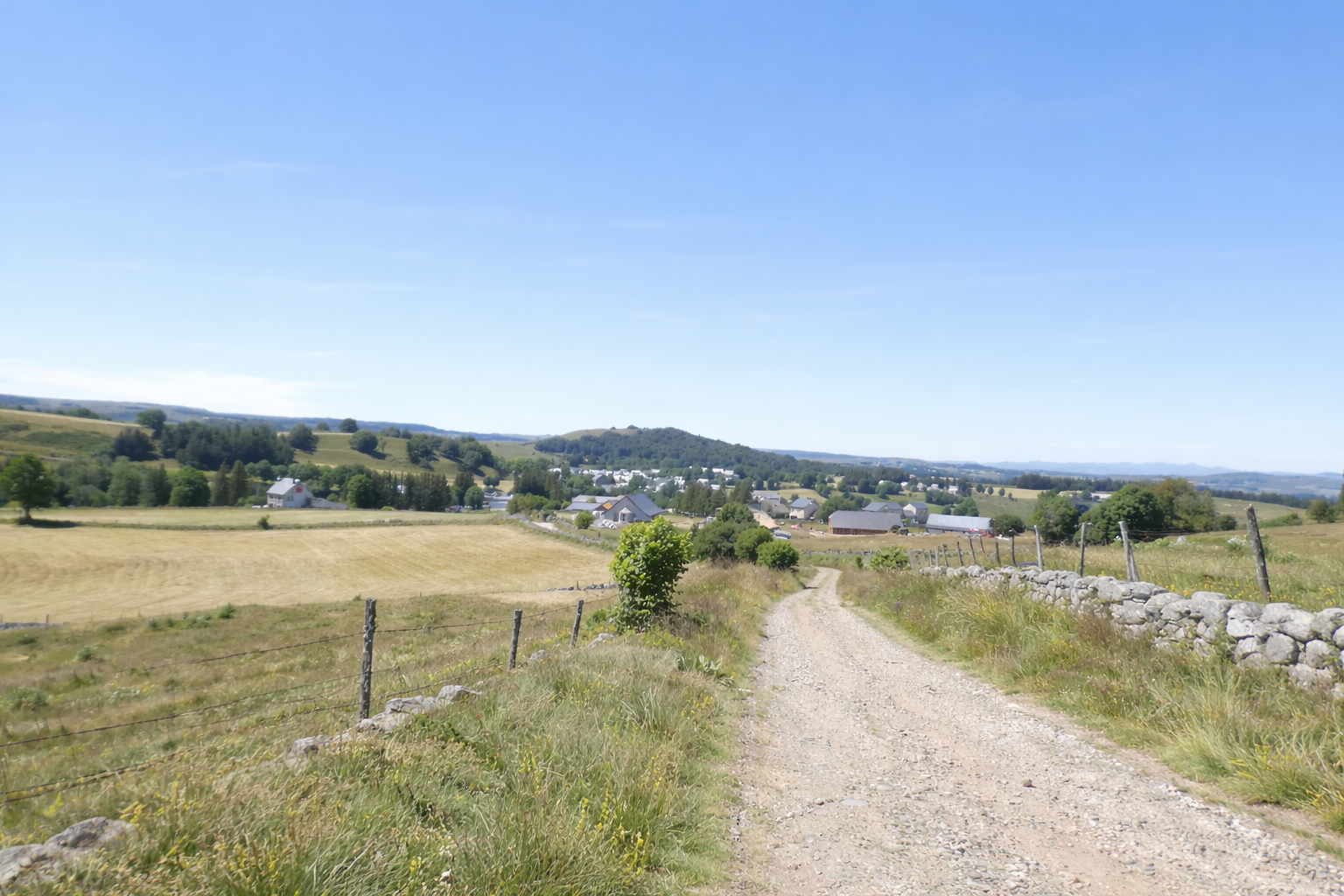
Soon, at the end of the path, Nasbinals finally comes into view, like a promise fulfilled after the crossing of Aubrac’s vast expanses. |
|
 |
 |
|
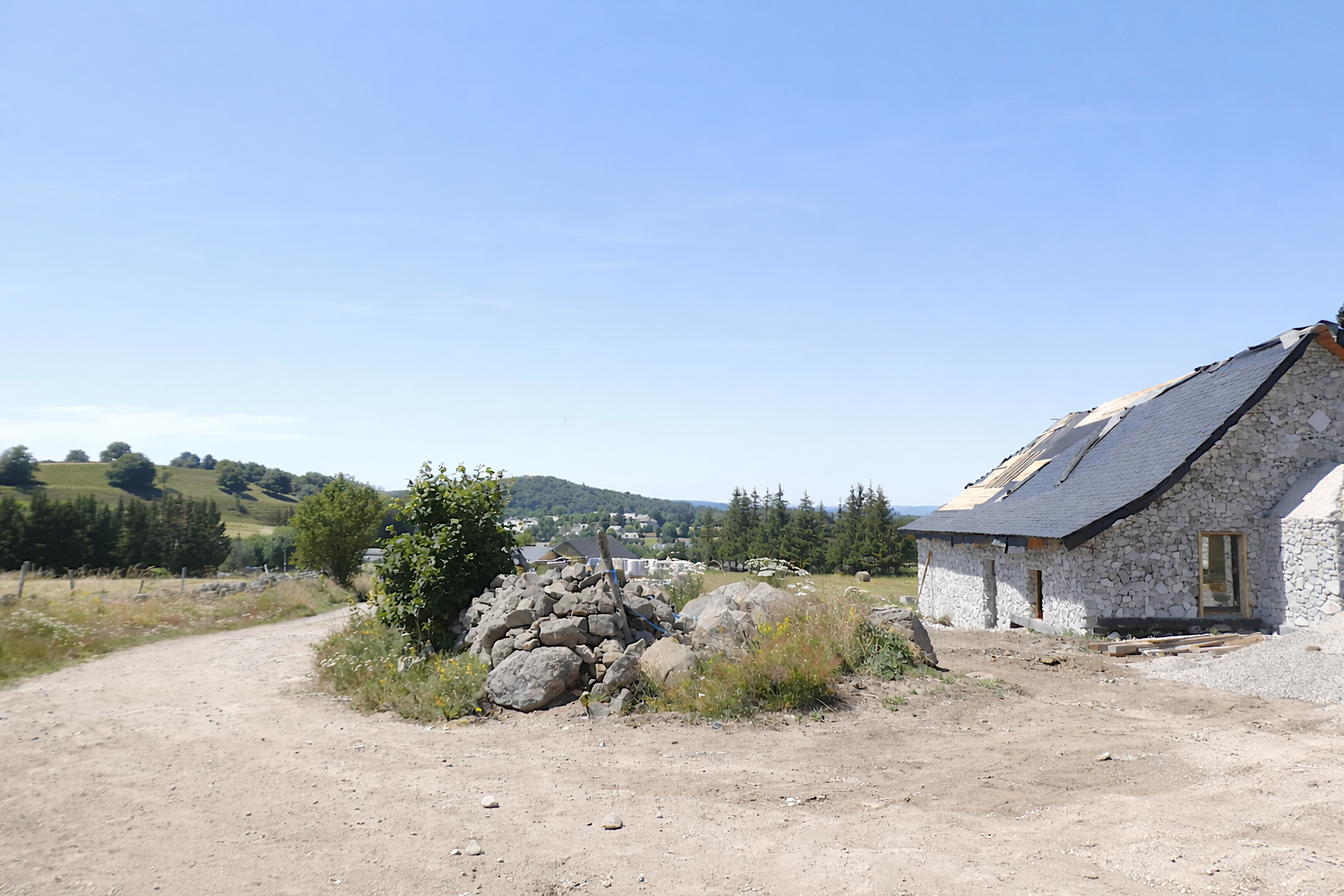
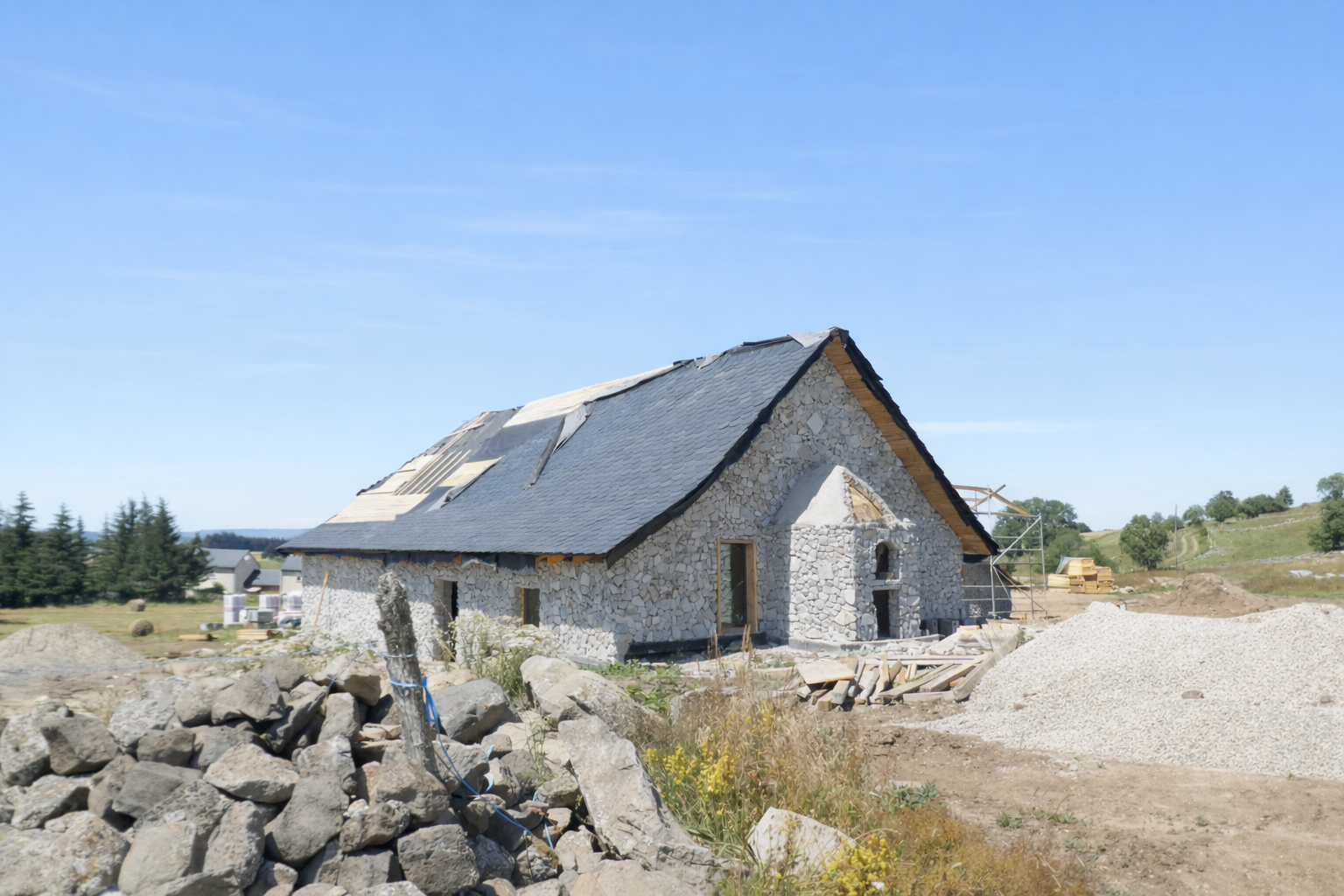
A broad stony track then begins the descent towards the village, gently guiding the walker away from the heights, serving as a transition between solitude and human presence. |
|
 |
 |
|
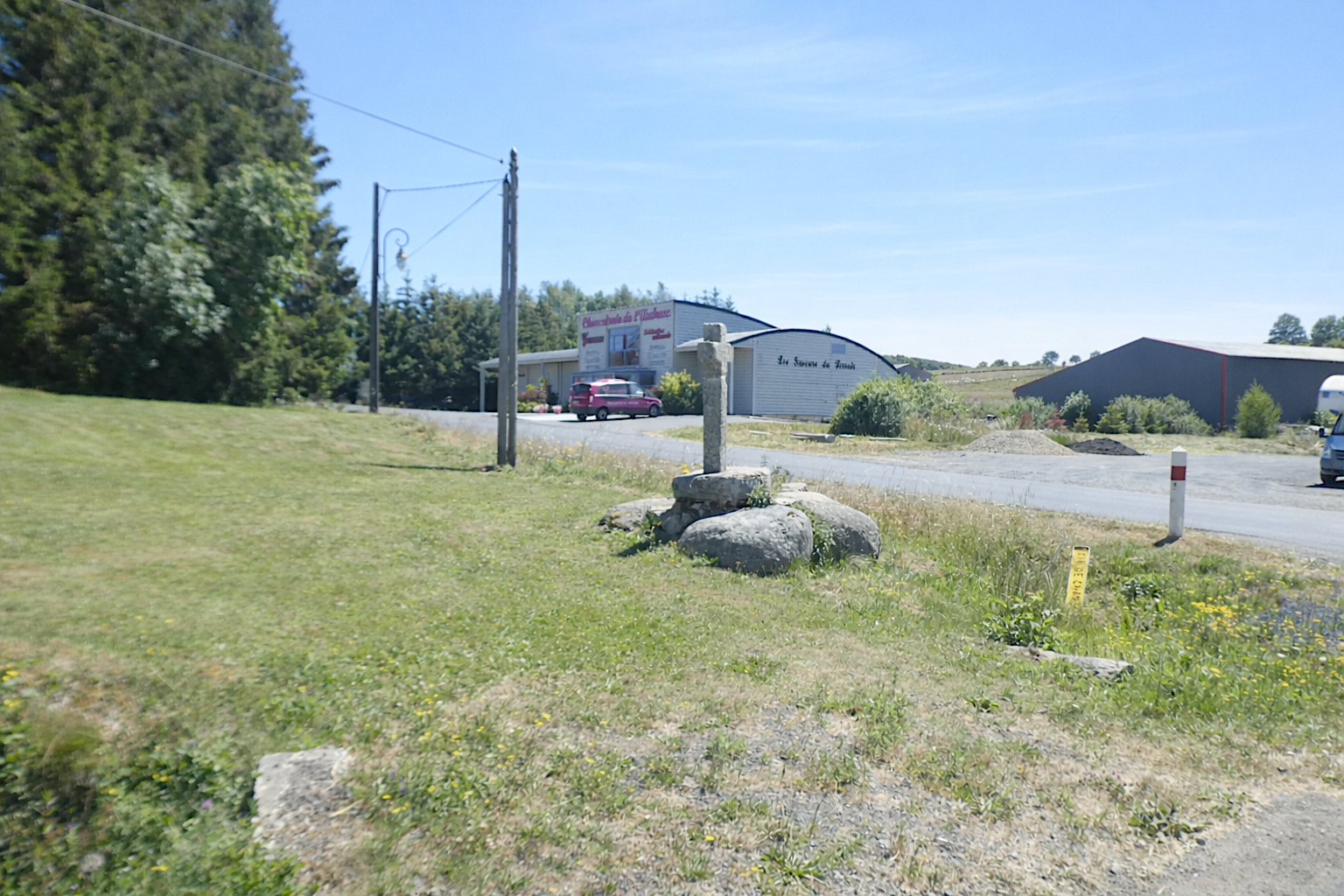
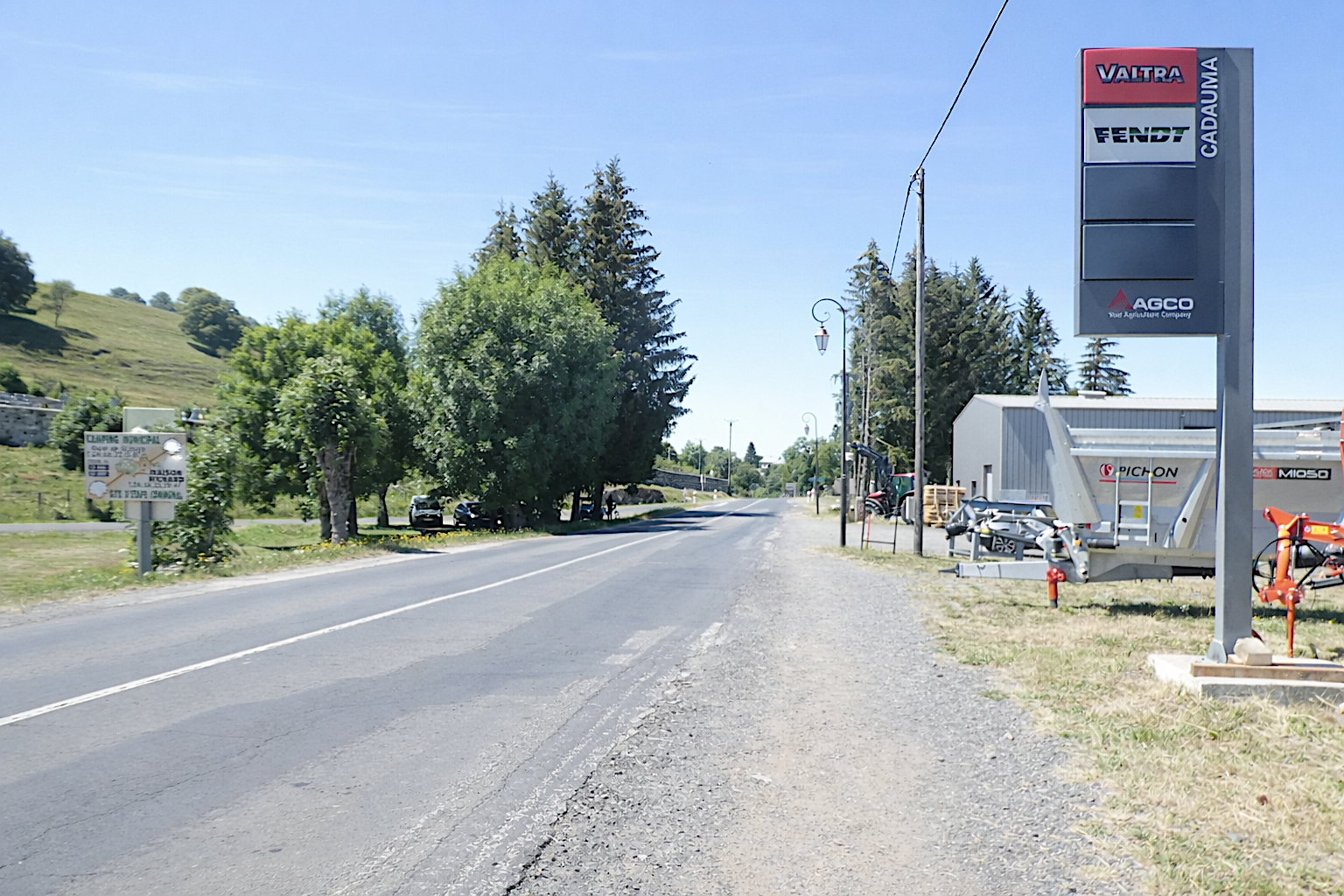
The GR65 then rejoins the departmental road at the entrance to Nasbinals, passing through what serves here as a modest activity zone, a handful of discreet buildings almost absorbed into the landscape, much like the region itself. |
|
 |
 |
|
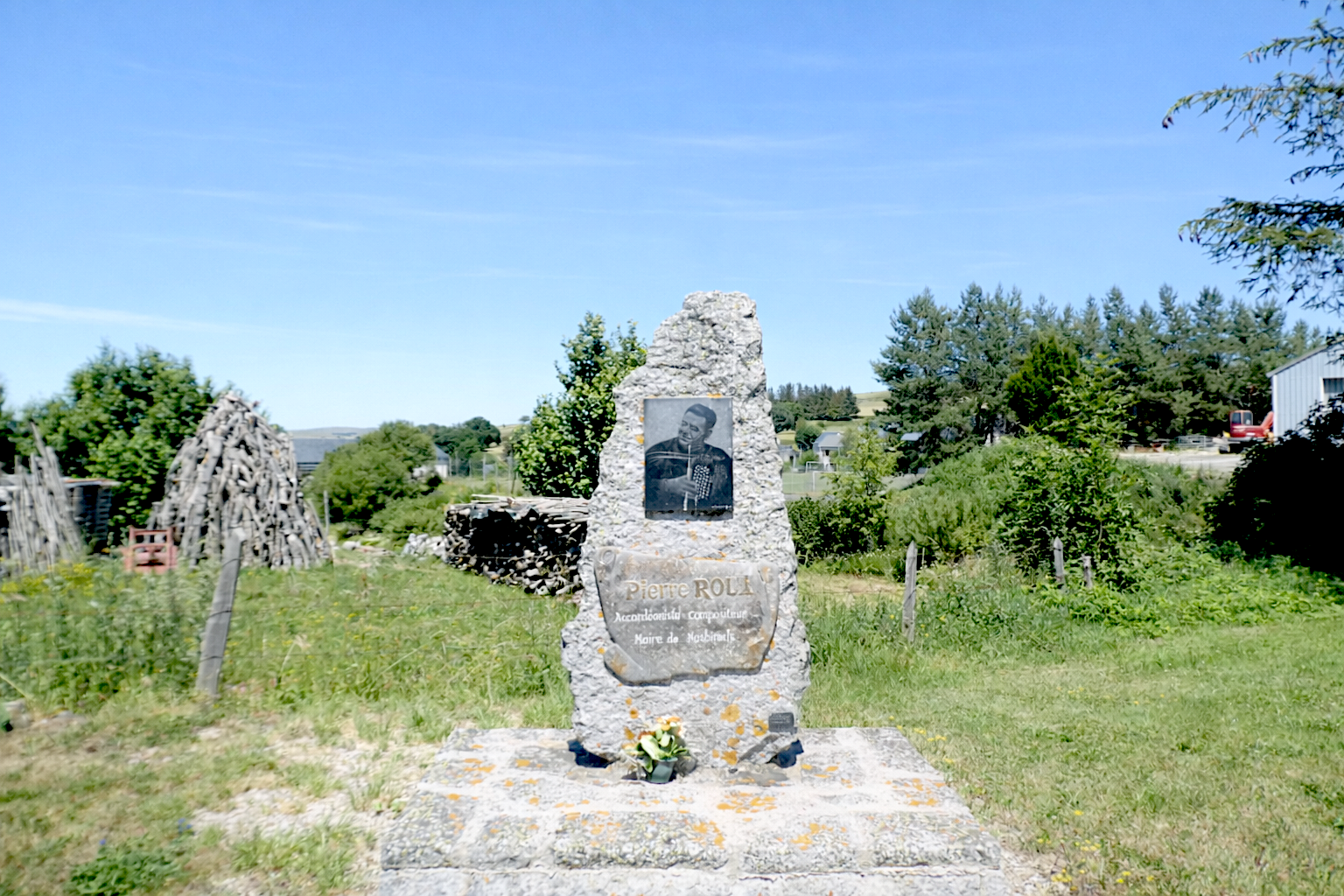
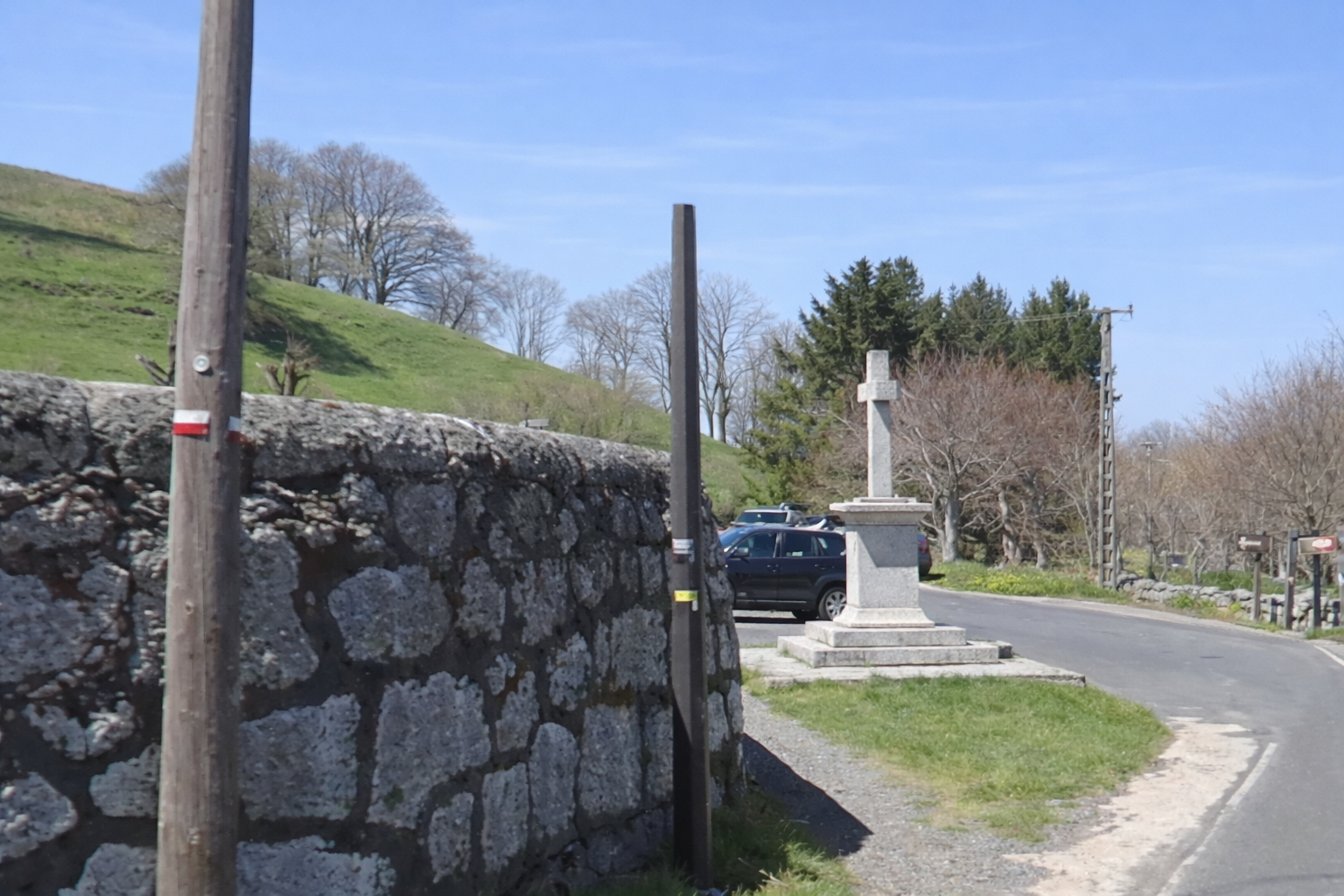
Then, after passing a tribute to a local accordion player who once served as mayor of the village, the route leaves the road again near the cemetery, returning to its original nature, more intimate and more silent. . |
|
 |
 |
|
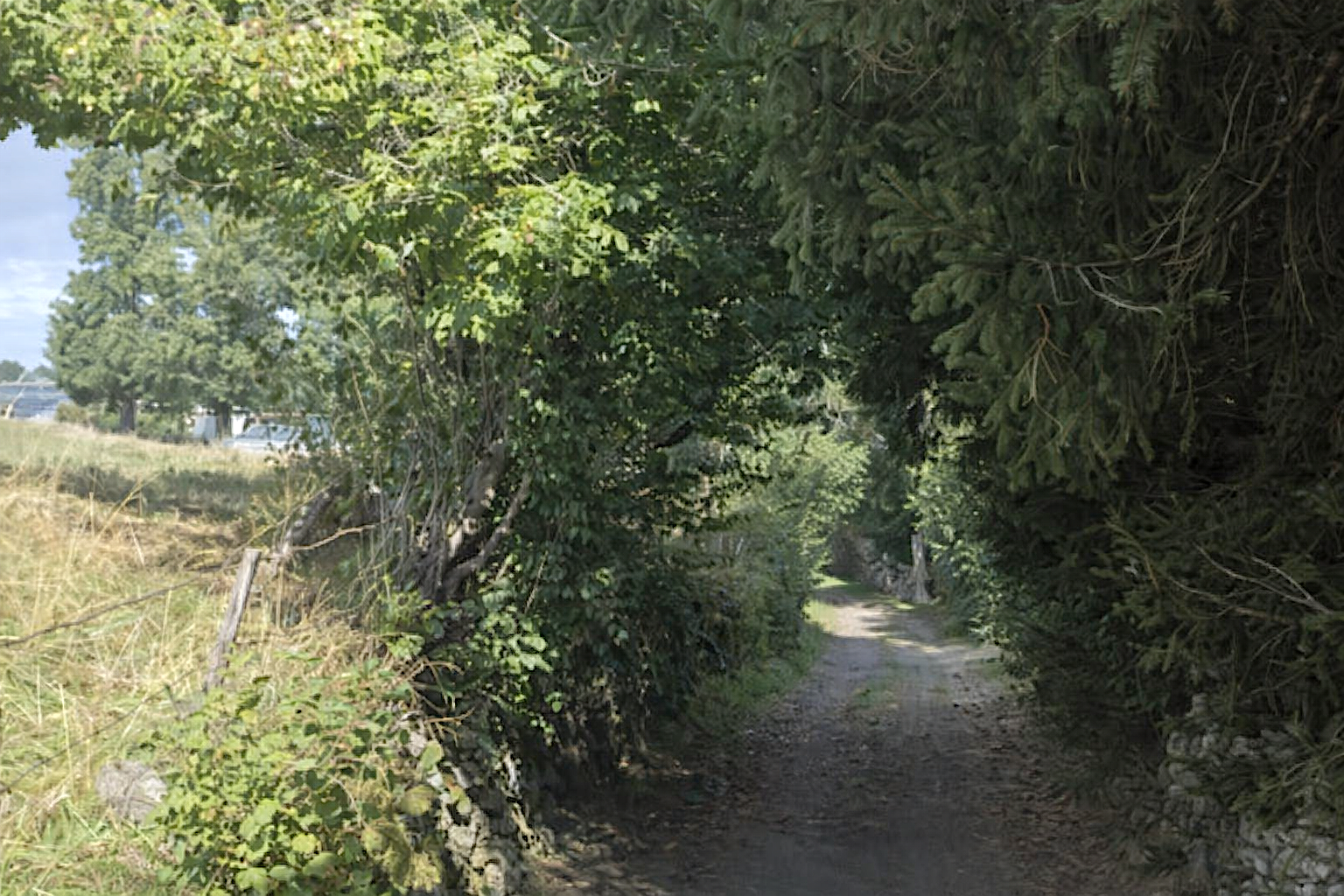
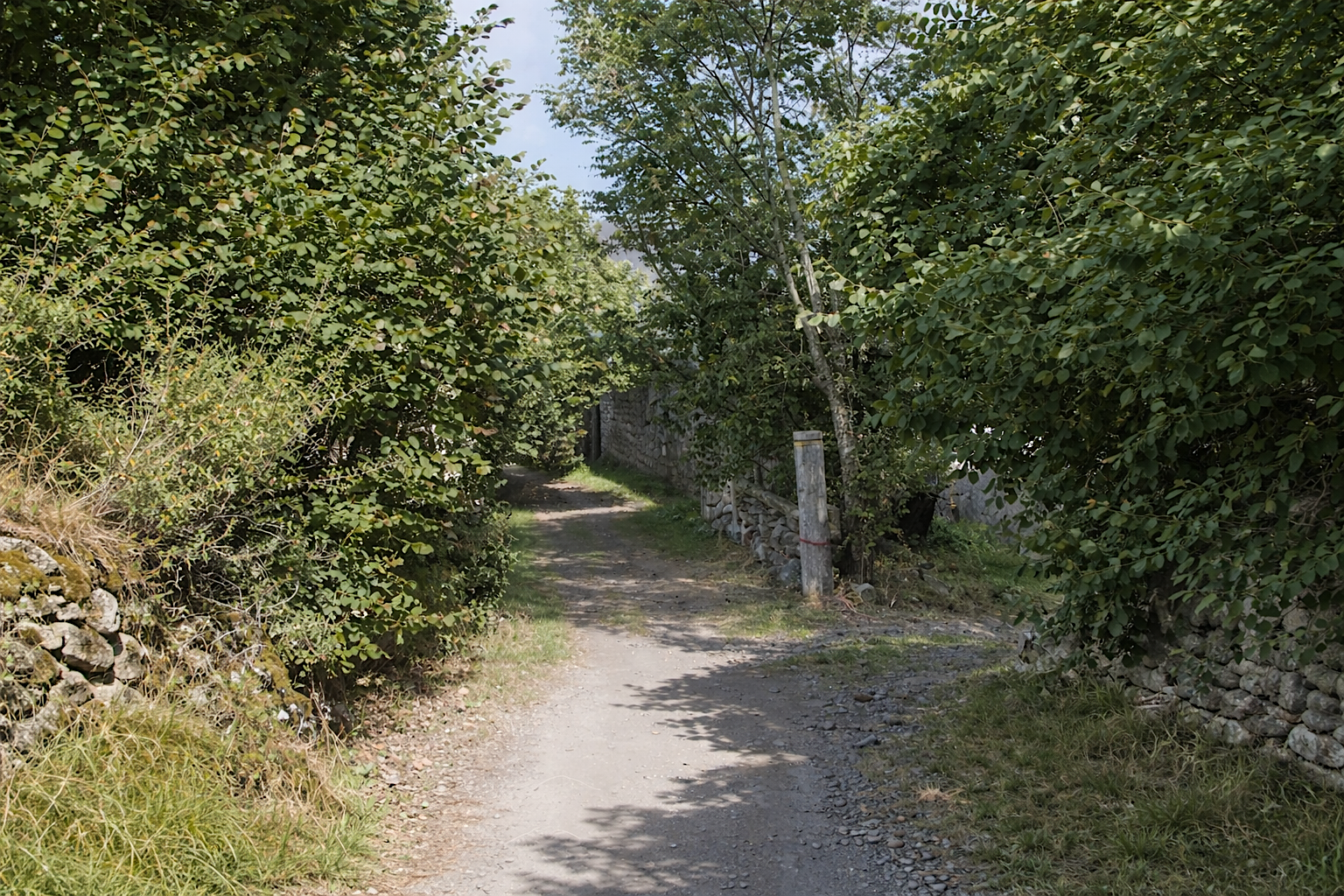
The path still allows itself a brief passage through woodland, like a final interlude of shade and freshness before returning to the inhabited world. |
|
 |
 |
|
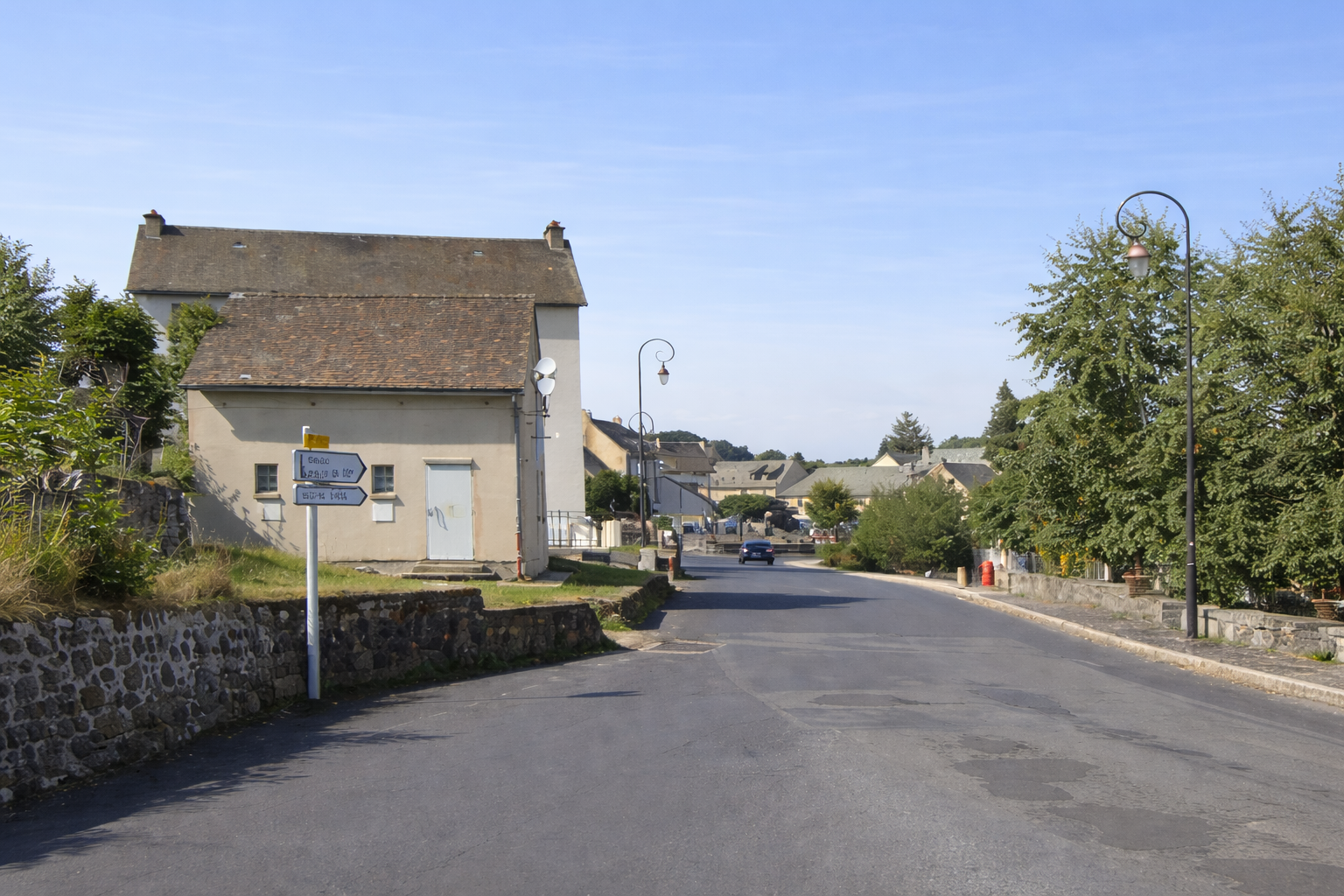
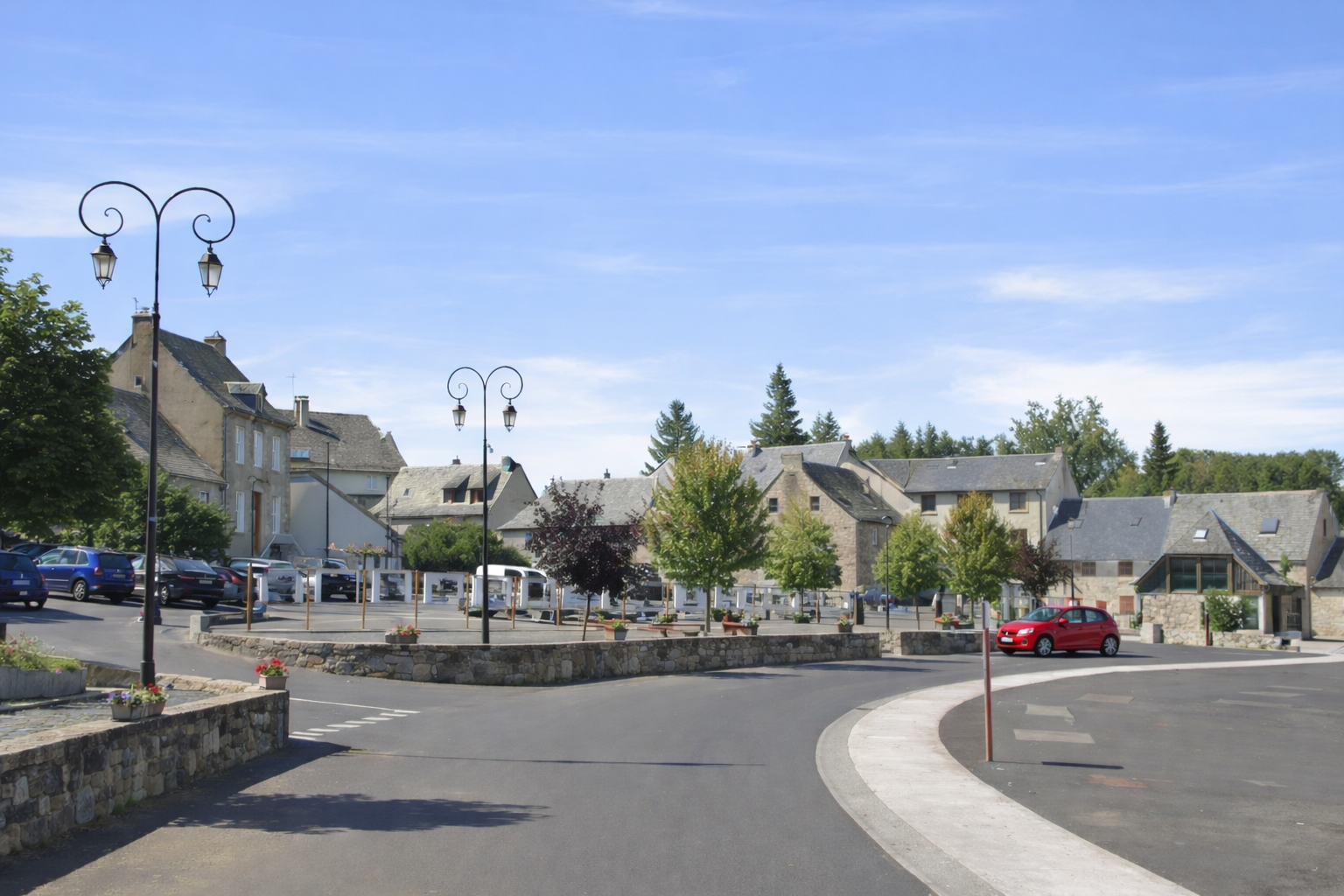
It then rejoins the road at the entrance to the village, not far from the car park, a discreet threshold between the solitude of the plateau and the renewed activity of civilization. |
|
 |
 |
|
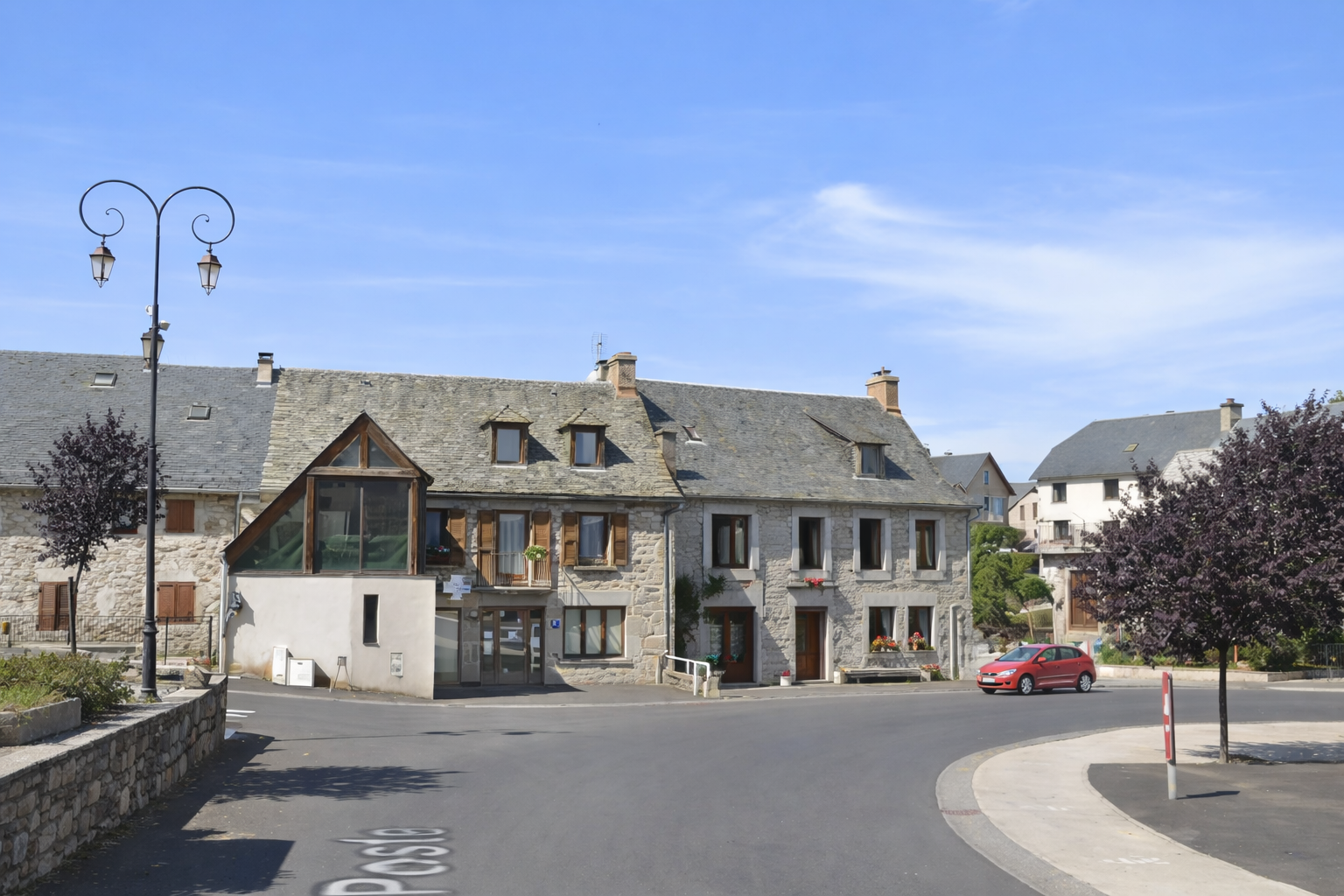
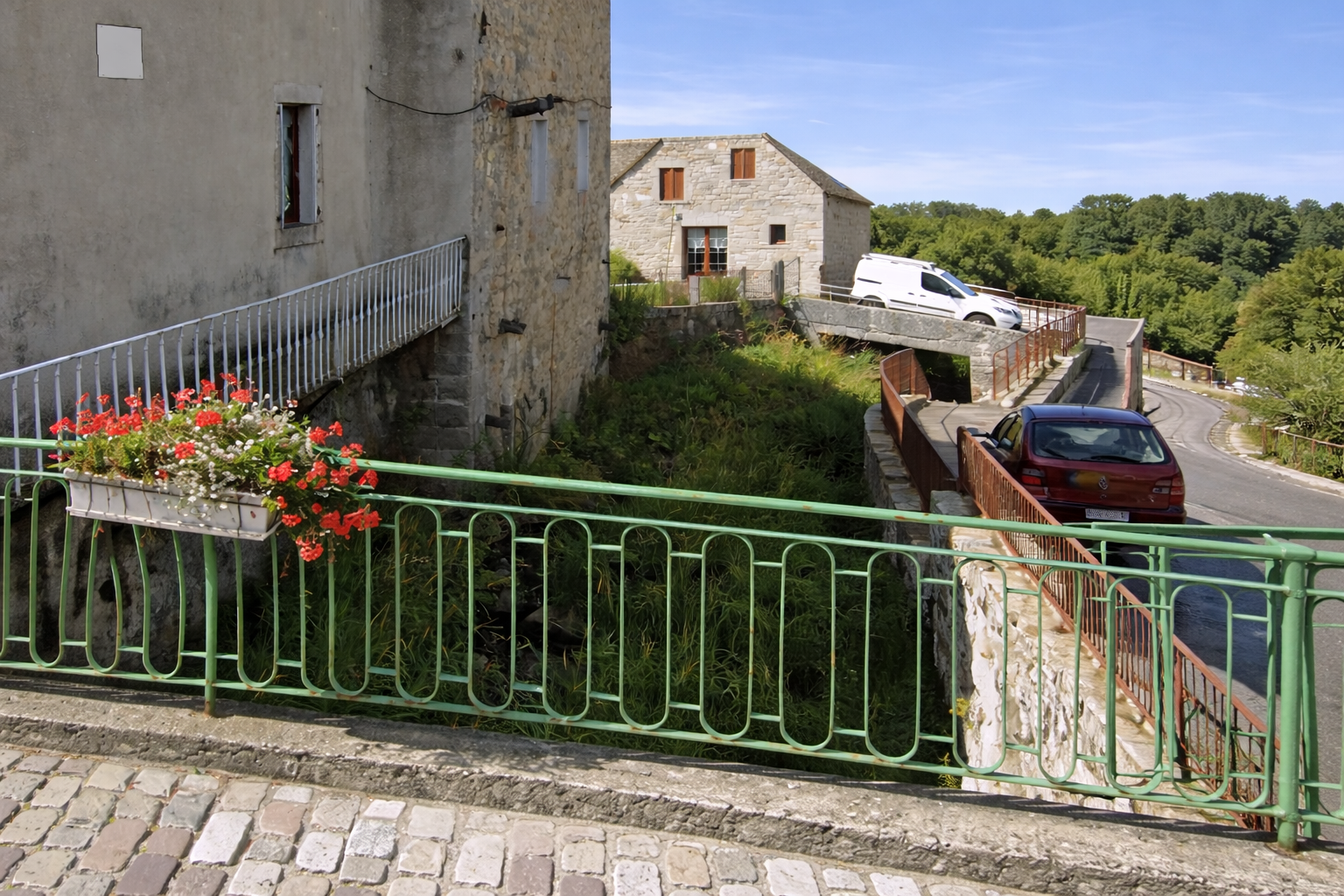
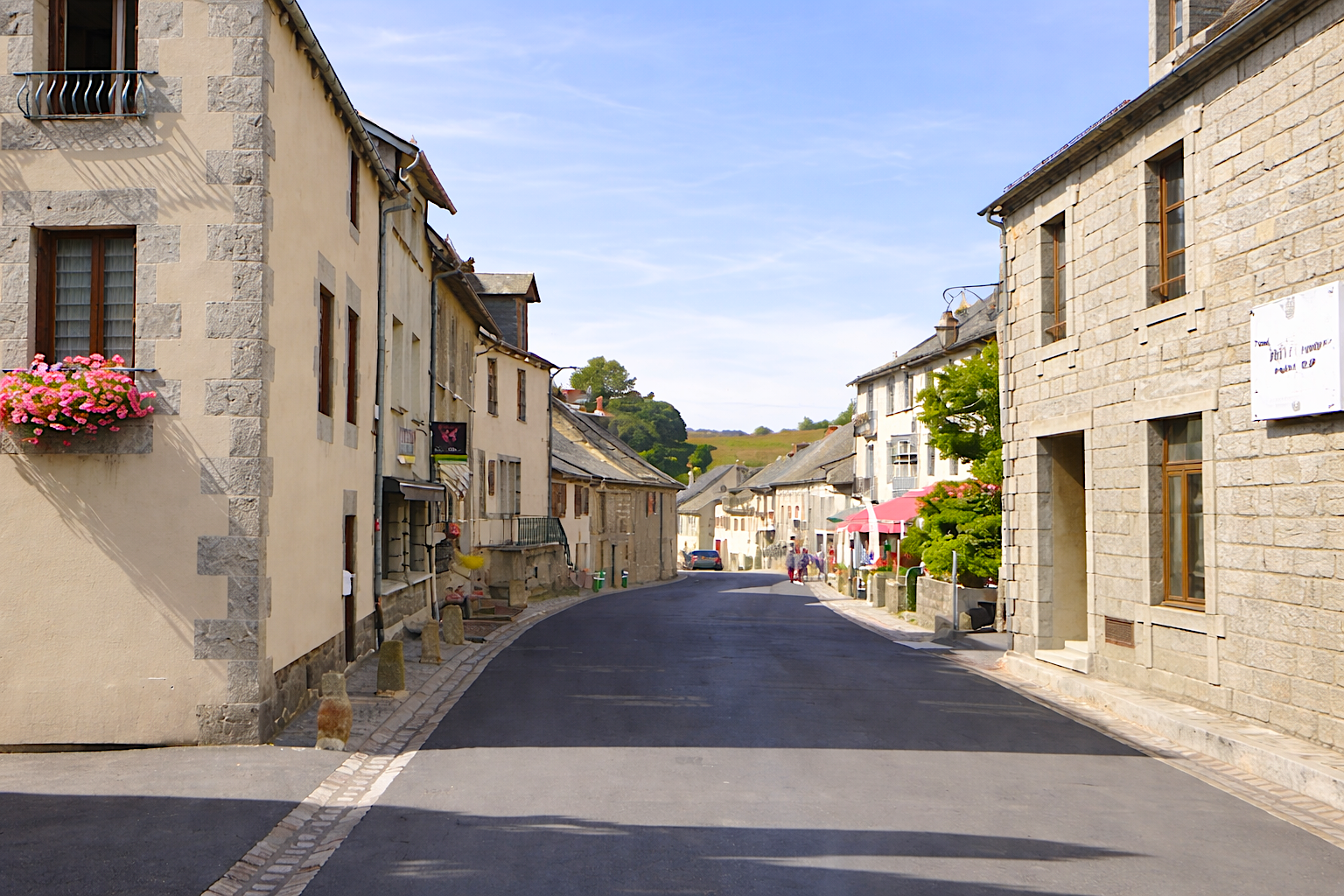
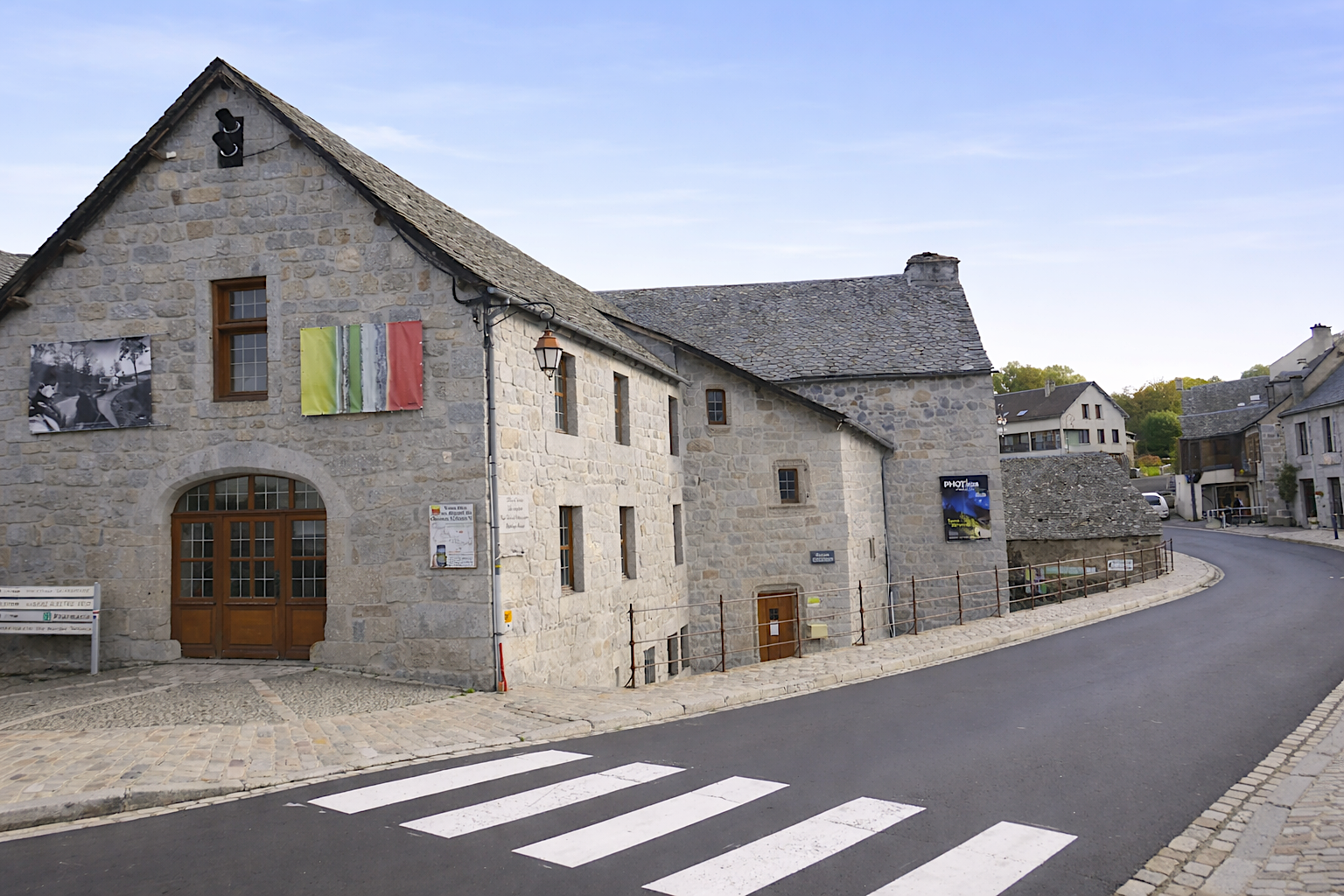
Nasbinals, the true beating heart of Aubrac, then appears in all its simplicity. This small town of fewer than five hundred inhabitants gathers its granite and basalt houses around its church, as though seeking collective protection against time and the seasons. A stream flows through the village, bringing a touch of life to this mineral setting. Above all, however, Nasbinals lives to the rhythm of walkers. A peaceful crowd, a quiet army of pilgrims, moves through its streets. Some have already deposited their backpacks in inns and lodgings, while others are about to do so. Many stroll slowly, tired yet content, lingering before the church or along the main street, suspended between two stages of their journey, between effort and rest. |
|
 |
 |
 |
 |
|
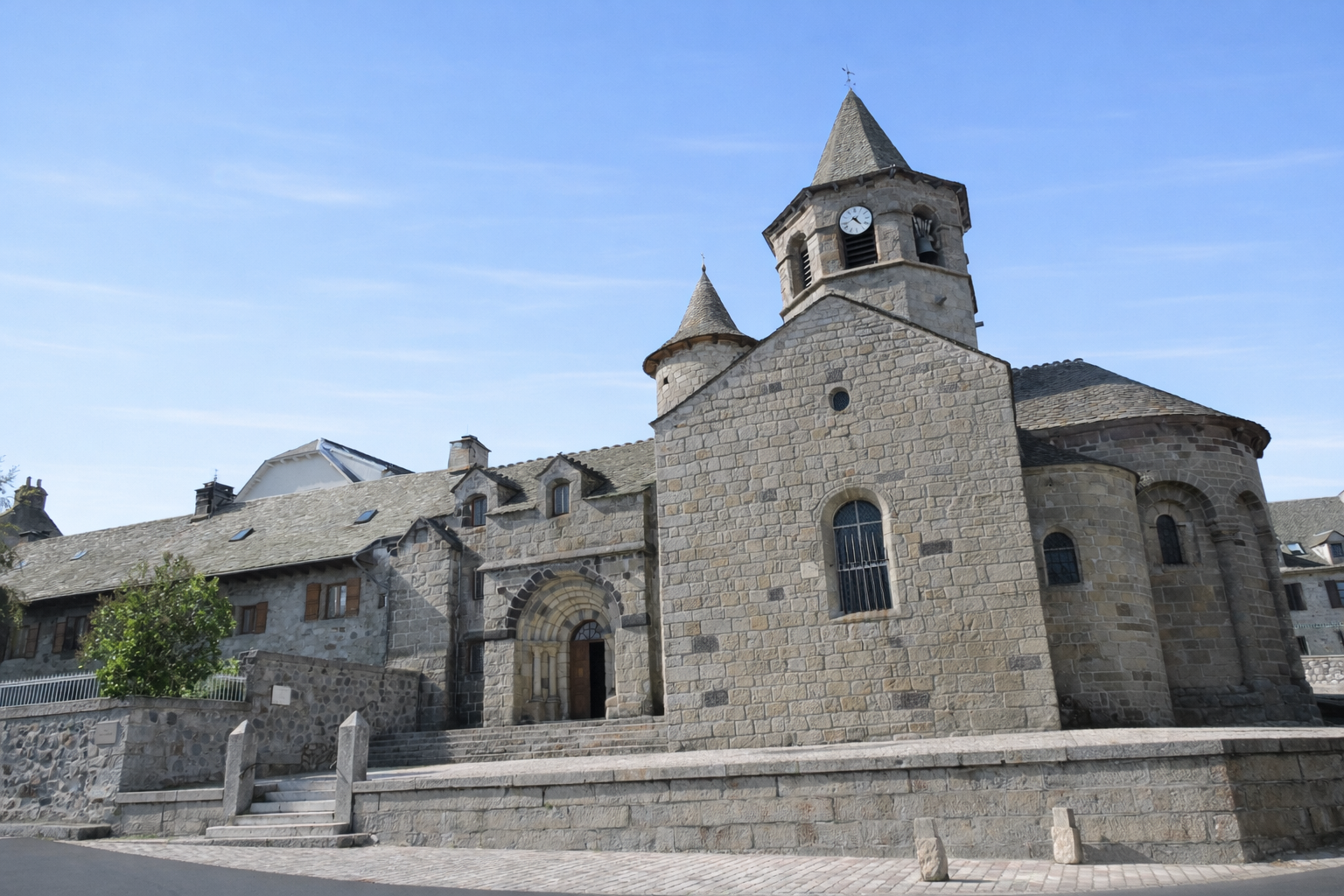
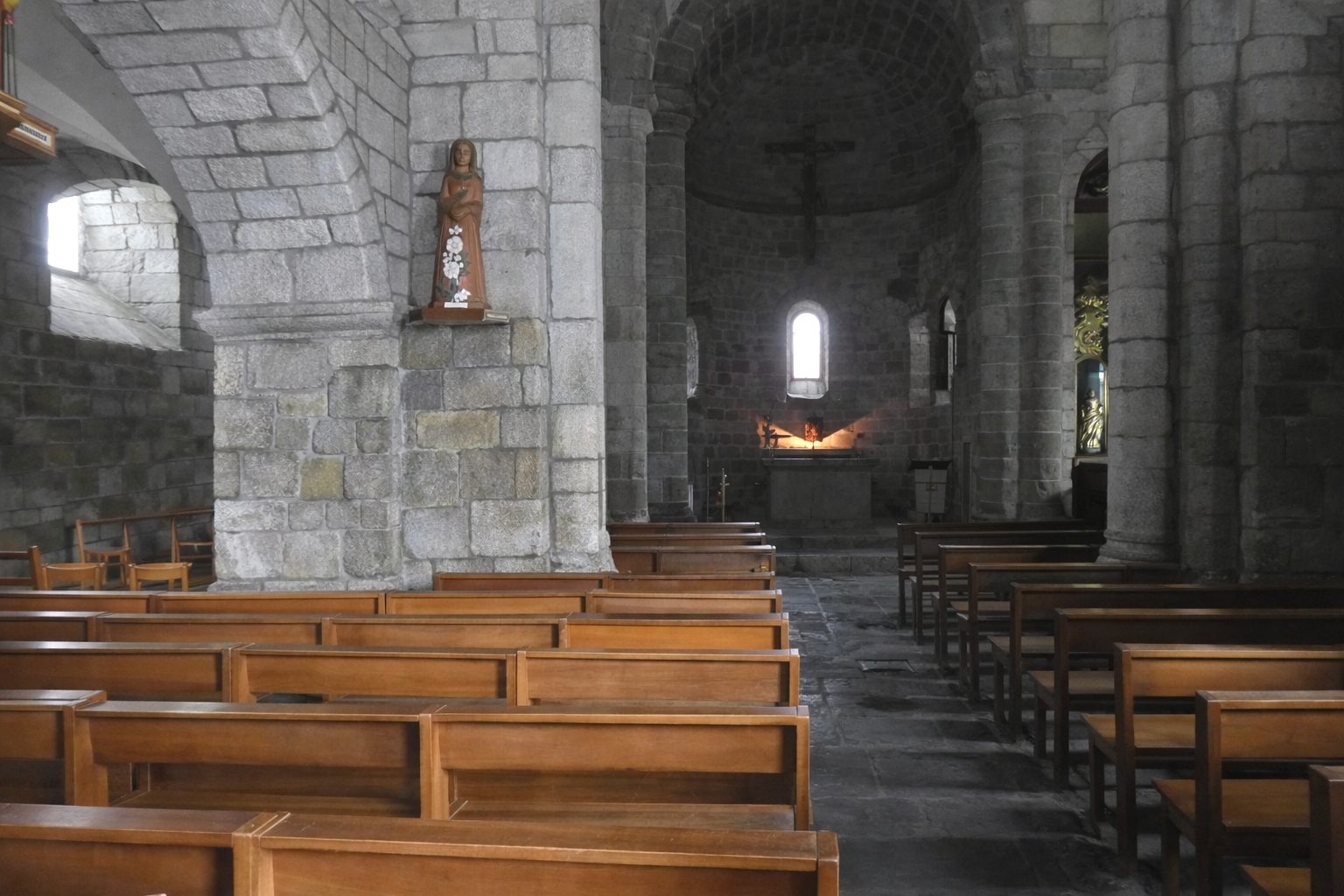
The Church of Sainte-Marie, whose origins date back to the eleventh century, was modified over the centuries, notably during the period when the English occupied the region. It is distinguished by its remarkable octagonal bell tower, which rises with restrained elegance above the village. Romanesque in style, the building impresses through its simplicity, a beauty without ornament, shaped by balance and silence. |
|
 |
 |
|
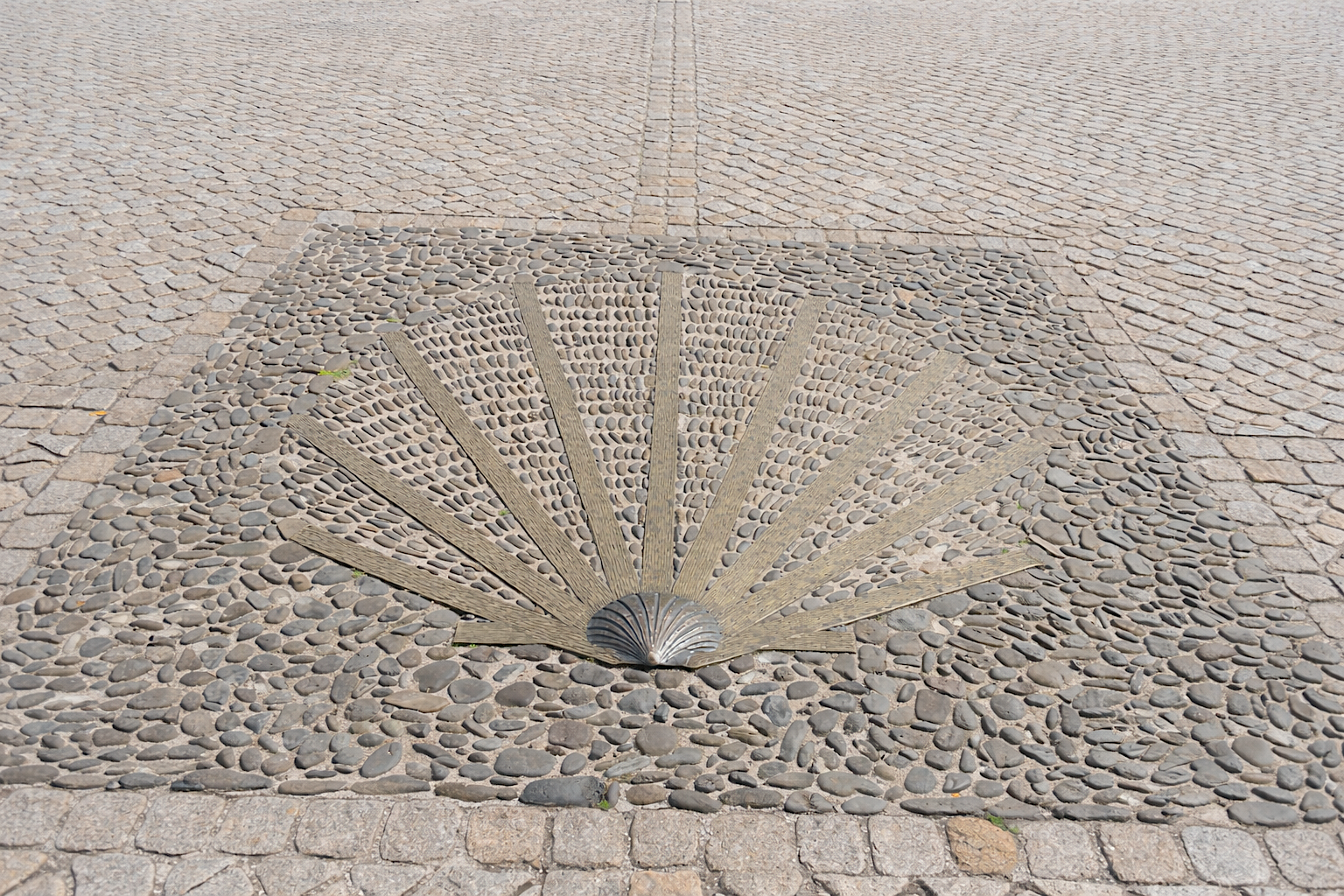
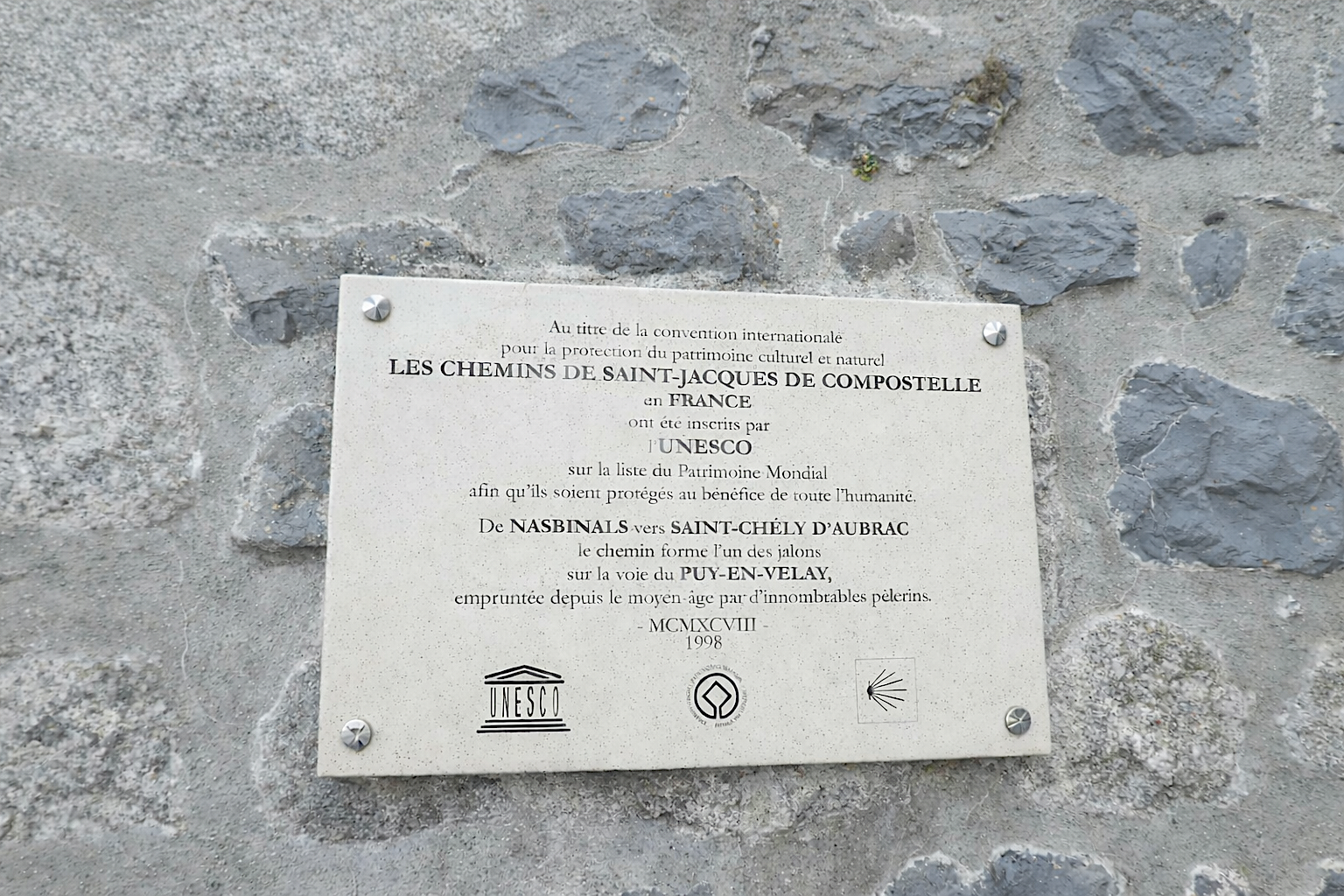
On the forecourt, the eye is drawn to an unusual paving pattern where scallop shells are set into the stone, a discreet tribute to the pilgrimage to Santiago de Compostela. For Nasbinals likes to see itself as an essential stop on the pilgrimage route. Yet history remains uncertain. No definitive evidence confirms that the original pilgrims passed through the village, especially since the ancient route, now partly followed by the GR65A variant, bypassed it altogether. In the end, however, this matters little. Myth and pilgrimage have combined to make Nasbinals an essential stopping place, if not through historical certainty, then through custom and through the affection of generations of walkers. |
|
 |
 |
Accommodation on Via Podiensis
- Chambres d’hôtes La Borie de l’Aubrac, Laurent Mouliade et Pat Sunyer, La Grange des Enfants; 04 66 45 76 97; Guestroom, dinner, breakfast
- Gîte- Hôtel La Maison de Rosalie, Montgros; 04 66 32 55 14/06 37 10 64 54; Hotel, dinner, breakfast
- Gîte communal Maison Richard, Rue principale, Nasbinals; 04 66 32 59 47/04 66 32 50 17; Gîte, cuisine
- Camping municipal, Route de Ste Urcize, Nasbinals; 06 07m13 49 29; tents
- Centre d’accueil NADA, Rue du Moulin, Nasbinals;06 32 18 43 53; Gîte, cuisine
- Gîte La Greppière, Rue de la Pharmacie, Nasbinals; 04 66 32 15 60; Gîte, breakfast, cuisine
- Gîte Le Sorbier, Hervé Rey, Le Village, Nasbinals; 04 66 32 50 19/04 66 32 56 79; Gîte, breakfast, cuisine
- Gîte Au Bon Repos du Pèlerin, Route de St Urcize, Nasbinals; 06 84 04 21 40; Gîte, cuisine
- Gîte Lo Fenador, Chemin de la Grange du Four, Nasbinals; 06 95 08 36 68; Gîte, cuisine
- Gîte Electro Velo, Rue du 19 Mars1962, Nasbinals; 06 08 87 81 44; Gîte, cuisine
- Ferme Équestre des Monts d’Aubrac, Gérard Moisset, Nasbinals; 04 66 32 50,65; Gîte, dinner, breakfast
- Gîte-Chambre d’hôtes, Alto Branco, Rue du 19 Mars1962, Nasbinals; 04 66 32 50,65; Gîte and Guestroom, breakfast, cuisine
- Chambres d’hôtes A La Librairie, François Puech, Rue du 19 Mars1962 Nasbinals; 06 81 63 21 23; Guestroom, breakfast
- Hôtel Café de France, Hervé Rey, Rue principale, Nasbinals; 04 66 32 50 65; Hotel, breakfast
- Les Séjours Bastide**/***, Nasbinals; 04 66 32 50 03; Hotel, dinner, breakfast
Year after year, the Camino de Santiago changes and reinvents itself with the seasons and the footsteps of pilgrims. Some accommodations close their doors, while others, modest or unexpected, come into being. It would therefore be unrealistic to claim to provide a fixed and exhaustive list. This guide includes only accommodations located directly on the route or within one kilometer of it. The selection was updated in 2026 and should therefore not undergo any major changes in the coming years. For those wishing to go further, one publication stands out as the essential reference: Miam Miam Dodo, easily available online. The main strength of this guide lies in its yearly updates. It not only lists accommodations located directly on the route, but also addresses slightly off the route, a valuable resource when heavy pilgrim traffic makes overnight stops more uncertain. It also contains a wealth of practical information: welcoming bars, restaurants along the way, and providential bakeries, all of which punctuate the journey. Alongside these traditional resources, another presence has become unavoidable: Airbnb. The platform has established itself as a major reference in the tourism landscape, even in the most discreet or less developed regions. However, as everyone knows, exact addresses are not displayed directly, which requires a degree of anticipation. On the Camino, finding a bed at the last minute can sometimes depend on sheer luck. But luck, by its very nature, cannot be considered a strategy. Booking ahead is therefore strongly recommended. Finally, when making arrangements, be sure to inquire about dinner and breakfast options. These details, seemingly minor, can greatly soften the hardships of a stage.
If one takes stock of the available accommodation, there are approximately 310 beds available along this stage. Since the number of walkers on the Via Podiensis generally ranges between 100 and 200 per day, accommodation should not present any particular difficulty. Nevertheless, booking ahead remains advisable as a precaution.
These routes wind through sparsely populated countryside where services are limited. On this stage, there are no shops, restaurants, or other services until reaching Nasbinals. There is only one water point and a toilet facility at Rieutort. Upon arrival, Nasbinals offers all the amenities expected of a pilgrimage stop, including restaurants, cafés, grocery stores, and other essential services. Finally, numerous companies provide luggage transfer services or transport back to the starting point. Among them, one stands out as a well-established reference: La Malle Postale.
Feel free to add comments. This is often how you move up the Google hierarchy, and how more pilgrims will have access to the site.
 |
Next stage : Stage 8: From Nasbinals to St Chély d’Aubrac |
 |
Back to menu |