In the majesty of Aubrac
DIDIER HEUMANN, MILENA DALLA PIAZZA, ANDREAS PAPASAVVAS
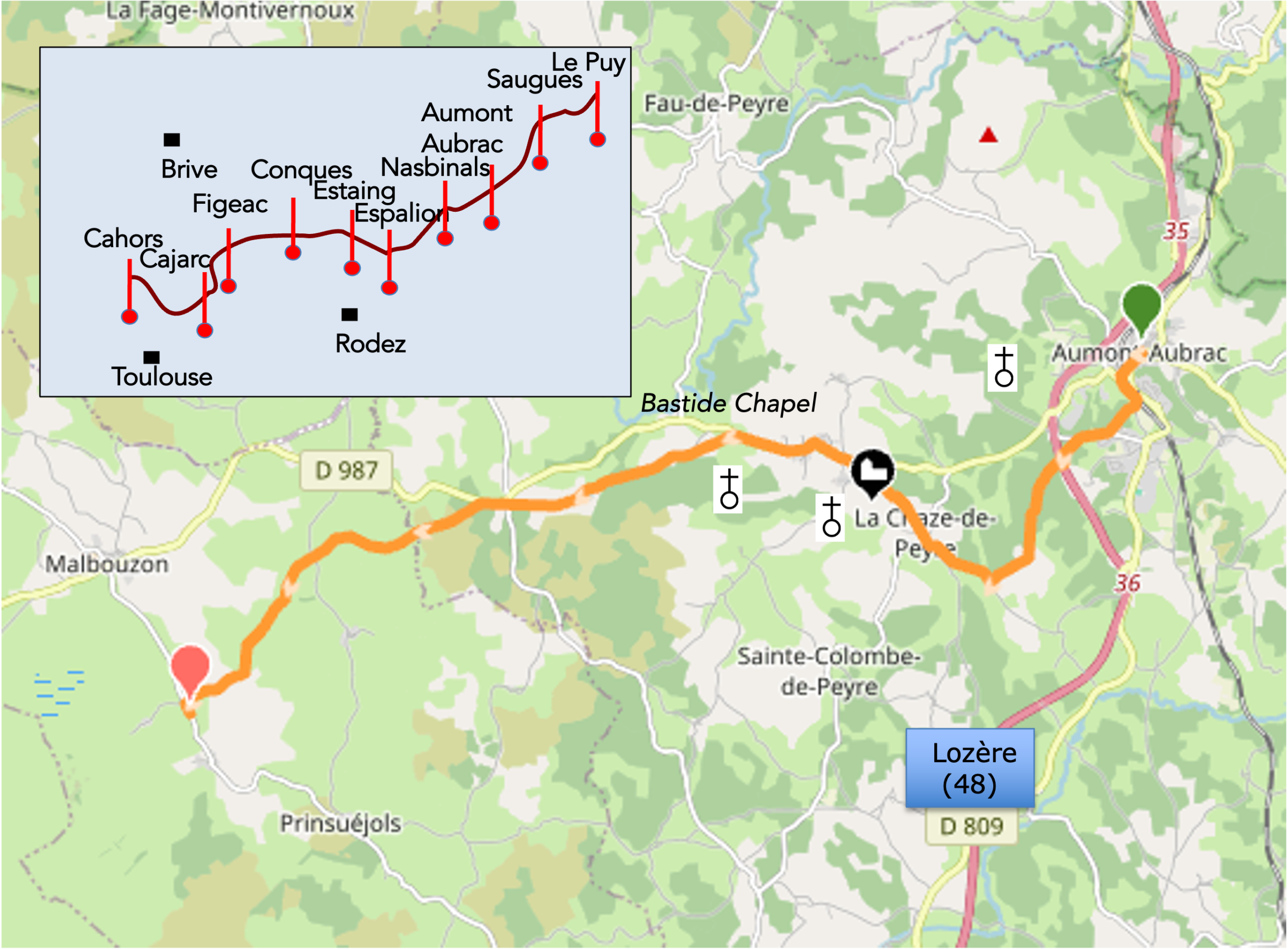
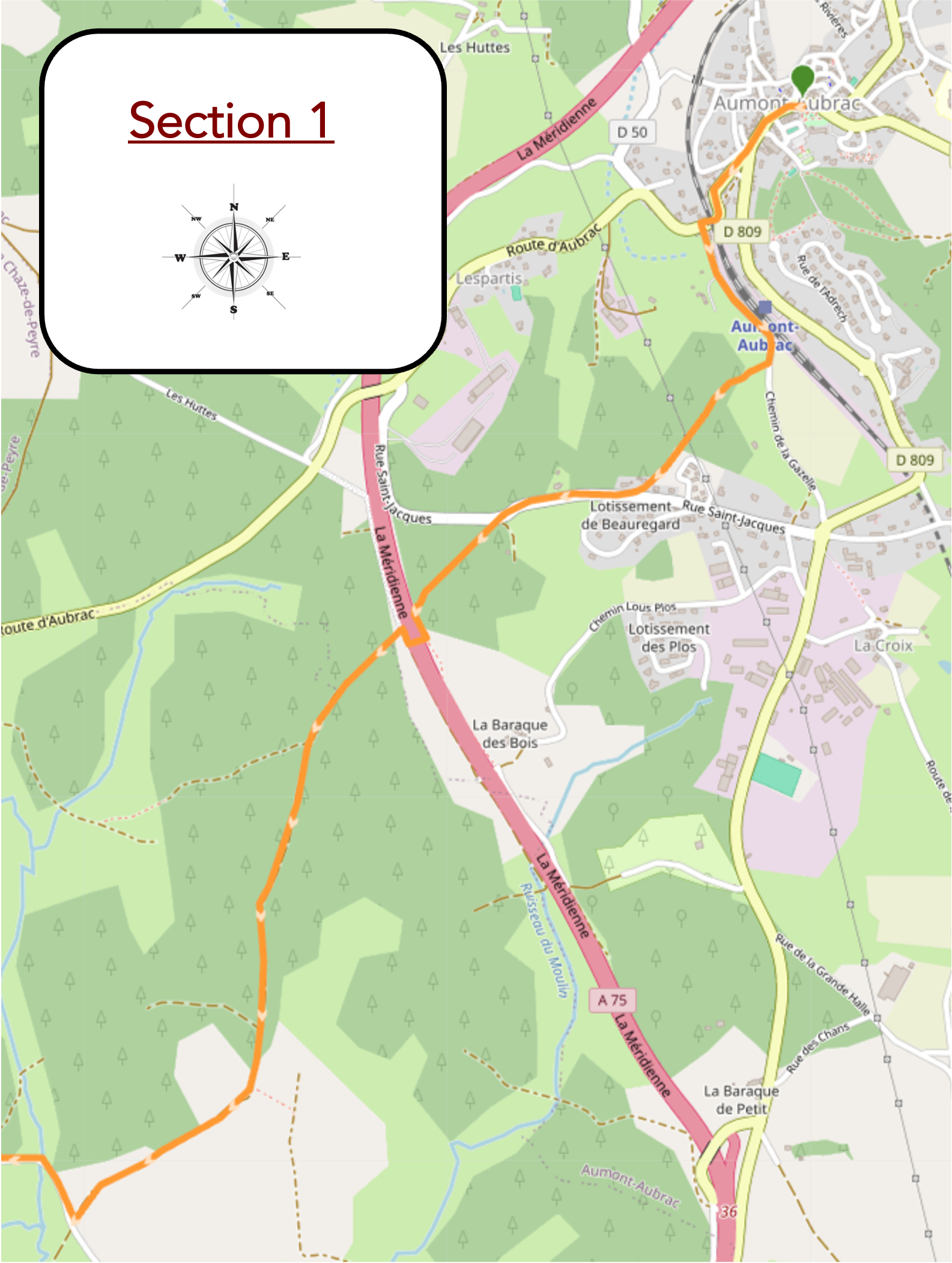
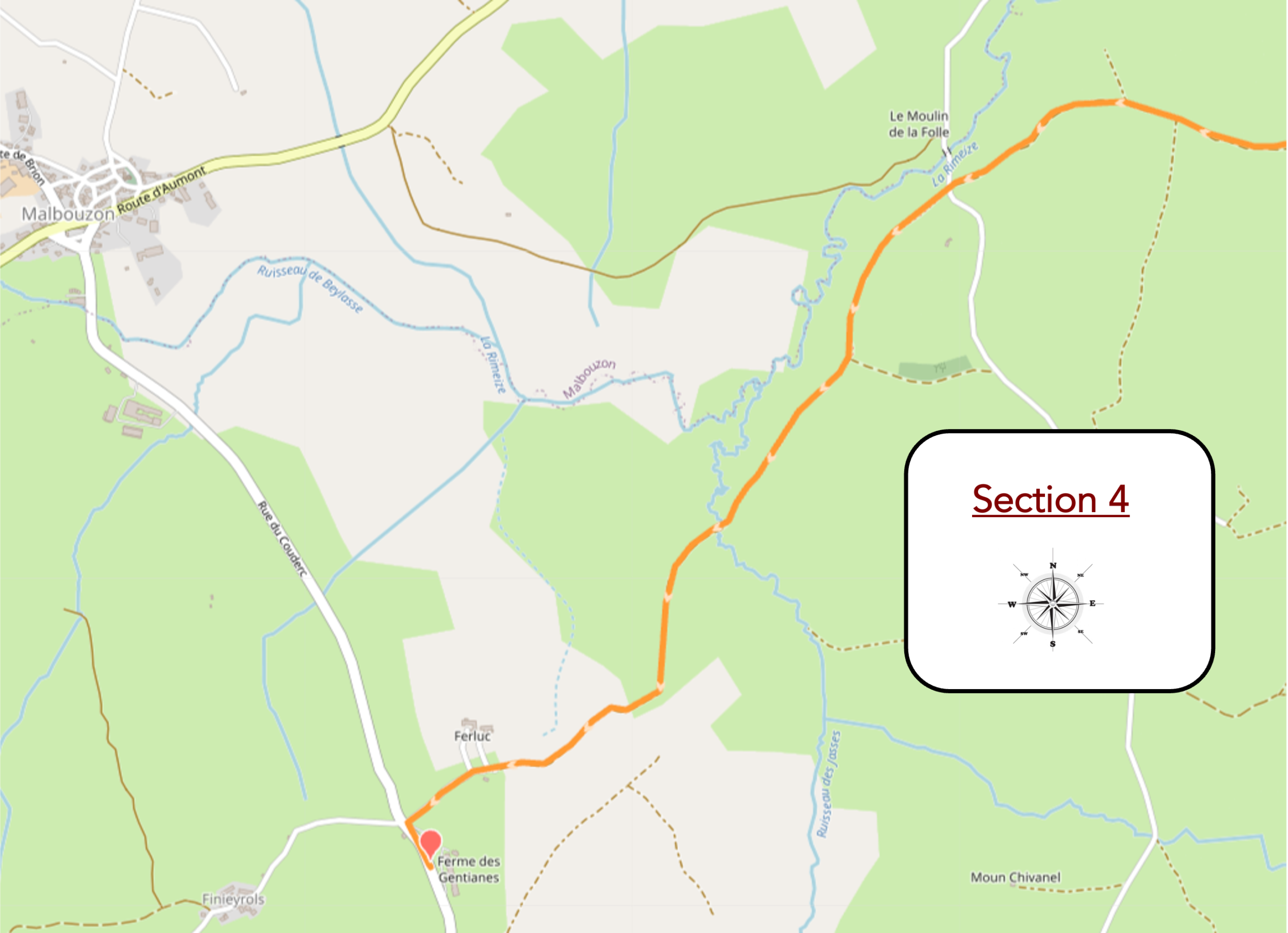
We divided the course into several sections to make it easier to see. For each section, the maps show the course, the slopes found on the course, and the state of the roads. The courses were drawn on the « Wikilocs » platform. Today, it is no longer necessary to walk around with detailed maps in your pocket or bag. If you have a mobile phone or tablet, you can easily follow routes live.
For this stage, here is the link:
https://fr.wikiloc.com/itineraires-randonnee/de-aumont-aubrac-aux-gentianes-par-le-gr65-258172758
|
Not all pilgrims are necessarily comfortable using GPS devices or navigating with a smartphone, especially since there are still many areas without Internet access. That is why, to make your journey easier, a book dedicated to the Via Podiensis from Le Puy-en-Velay to Cahors is available on Amazon. Much more than a simple practical guide, this book accompanies you step by step, kilometer after kilometer, providing all the information you need for smooth planning and avoiding unpleasant surprises. Beyond its practical advice, it immerses you in the enchanting atmosphere of the Camino, capturing the beauty of the landscapes, the majesty of the trees, and the very essence of this spiritual adventure. Only the pictures are missing, everything else is there to transport you.
In addition, we have also published a second book which, with slightly fewer details but all the essential information, covers the entire route from Le Puy-en-Velay to Saint-Jean-Pied-de-Port. The choice of your journey is yours.
. |
 |
 |
If you only want to consult lodging of the stage, go directly to the bottom of the page.
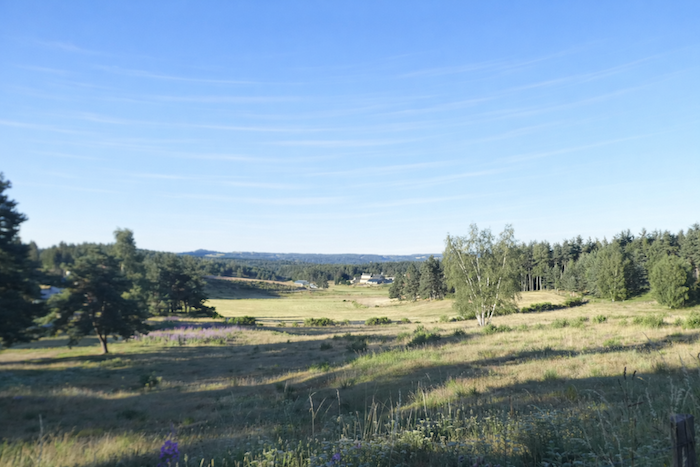
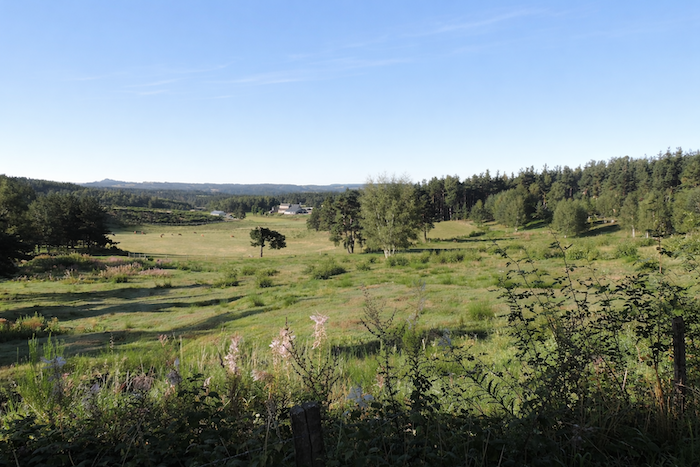
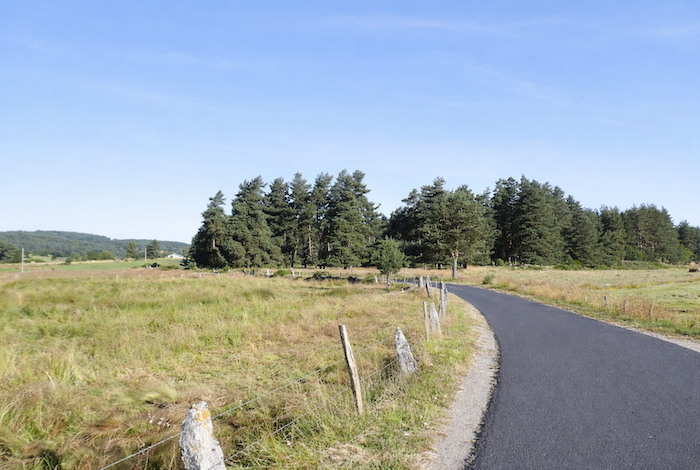
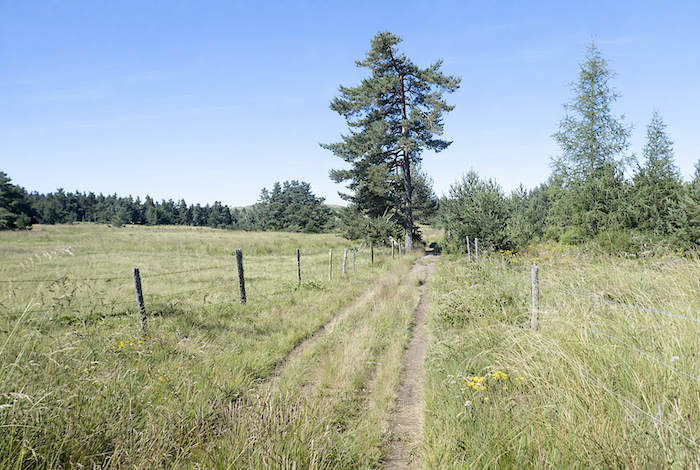
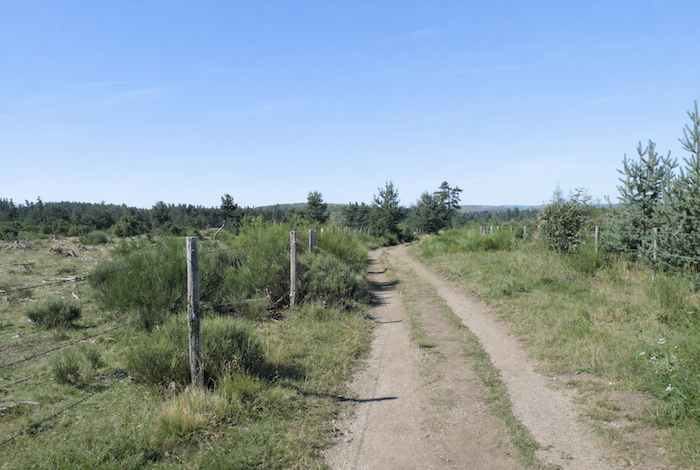
Today, Aubrac takes centre stage. Who could resist the fascination of Aubrac? For more than a thousand years, a true legend has grown from the stories of medieval pilgrims caught in snowstorms, attacked or even devoured by wolves. When you ask today’s pilgrims which stage of the route left the strongest impression on them, they will almost certainly answer: Aubrac. The irresistible pull of this land touches everyone who crosses its endless grasslands. Aubrac’s fame might suggest that it is a single vast plateau. In reality, it is not. The ascent onto the plateau happens gradually, just as the landscape changes little by little. At first, the scenery closely resembles that of Margeride. Countless small groves dot the hillsides, giving the countryside a distinctive patchwork character.
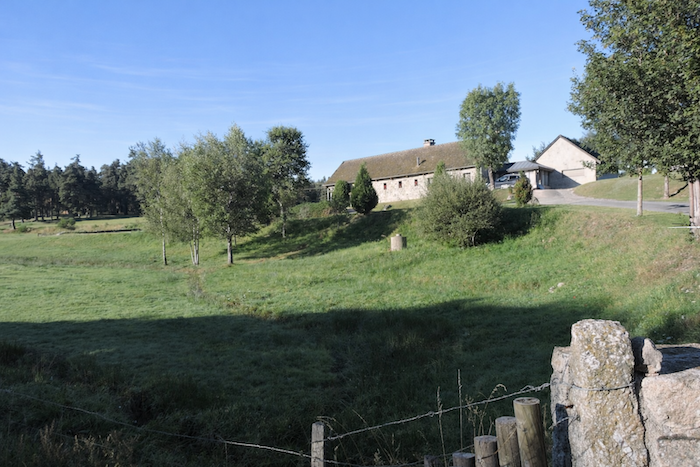
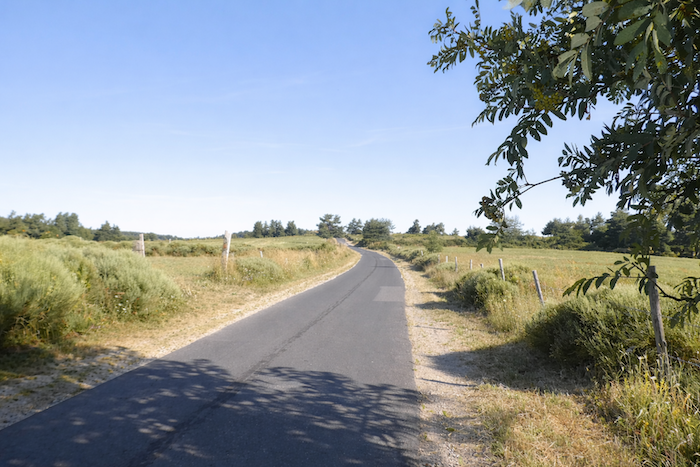
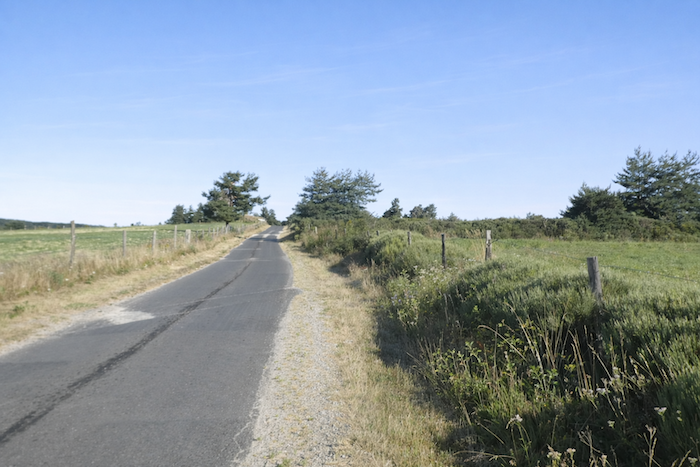
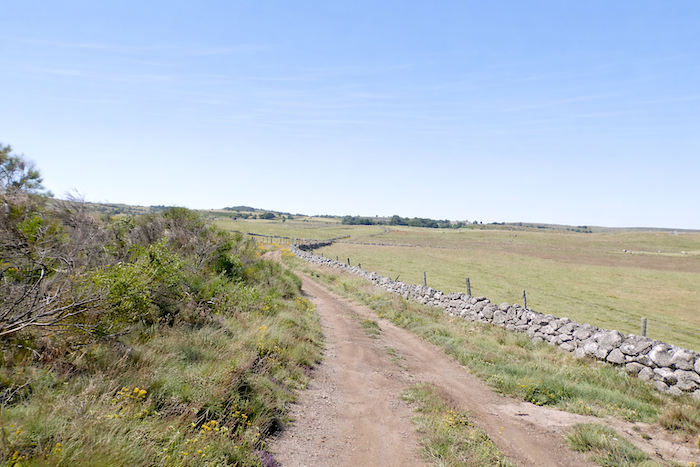
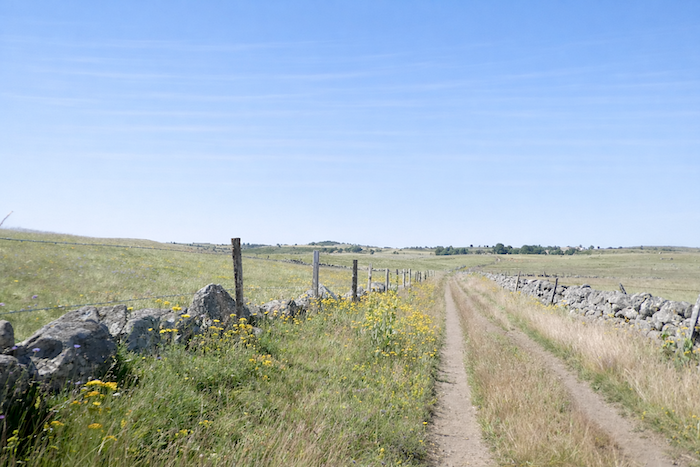
The route heads southwest across the open steppe. Today’s stage lies entirely within the Lozère department. Aubrac is a high-altitude plateau, a vast grassy steppe at the western edge of Lozère. Volcanic eruptions at the end of the Tertiary period shaped these green moorlands, scattered with granite rocks that have sometimes been sculpted by erosion, standing among the grazing cattle. This is a land of silence. It is also the country of the “burons”, stone huts with shingled roofs that recall earlier times when shepherds took shelter here during the summer grazing season and the annual transhumance. In this landscape of moorland and pasture, the eye naturally wanders far across the rolling hills. At first glance, the scenery may appear monotonous. It is anything but. The gentle contours of the land and the constantly changing light continually transform the view. The absence of forests creates an open landscape where the gaze reaches the horizon in every direction. Groves, granite outcrops, streams, isolated farms, and burons provide the only landmarks. Aubrac embodies many of the qualities sought by pilgrims and walkers: peace, silence, and the omnipresence of pastureland and livestock. It is almost entirely free from the signs of contemporary society. There are very few power lines, pylons, signposts, or roads. Villages and hamlets are scattered across the plateau. Modern houses have not taken root here.
Many pilgrims also walk from Aumont-Aubrac to Nasbinals in a single day. However, that makes for a very long stage. We have therefore divided this section into two stages, stopping halfway at Les Gentianes.
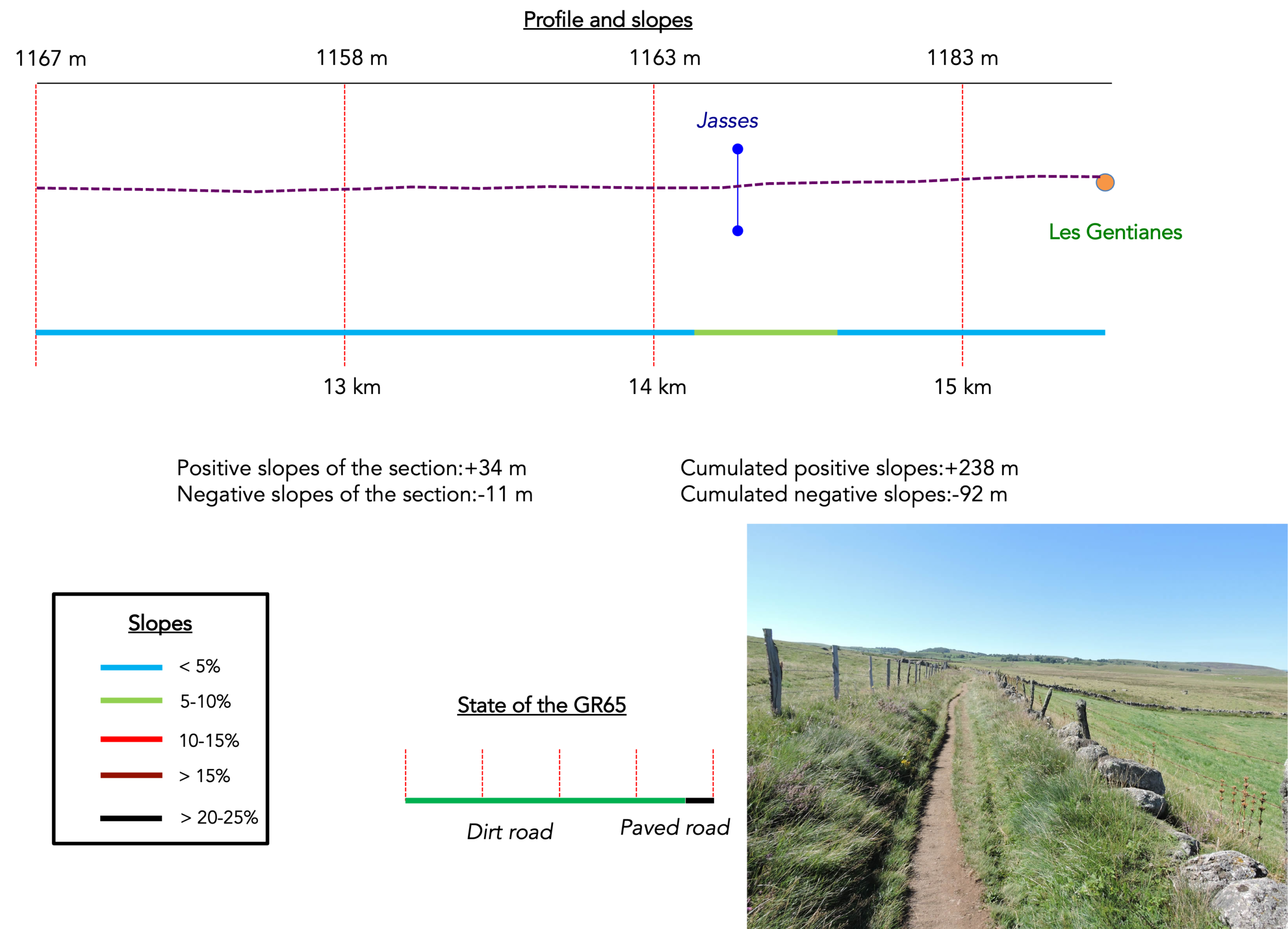
Difficulty level: This stage presents no real difficulties, although it is rarely flat. The route crosses an undulating plateau at more than 1,000 metres above sea level, through a desolate yet magnificent landscape, with only modest elevation changes (+238 metres / -92 metres).
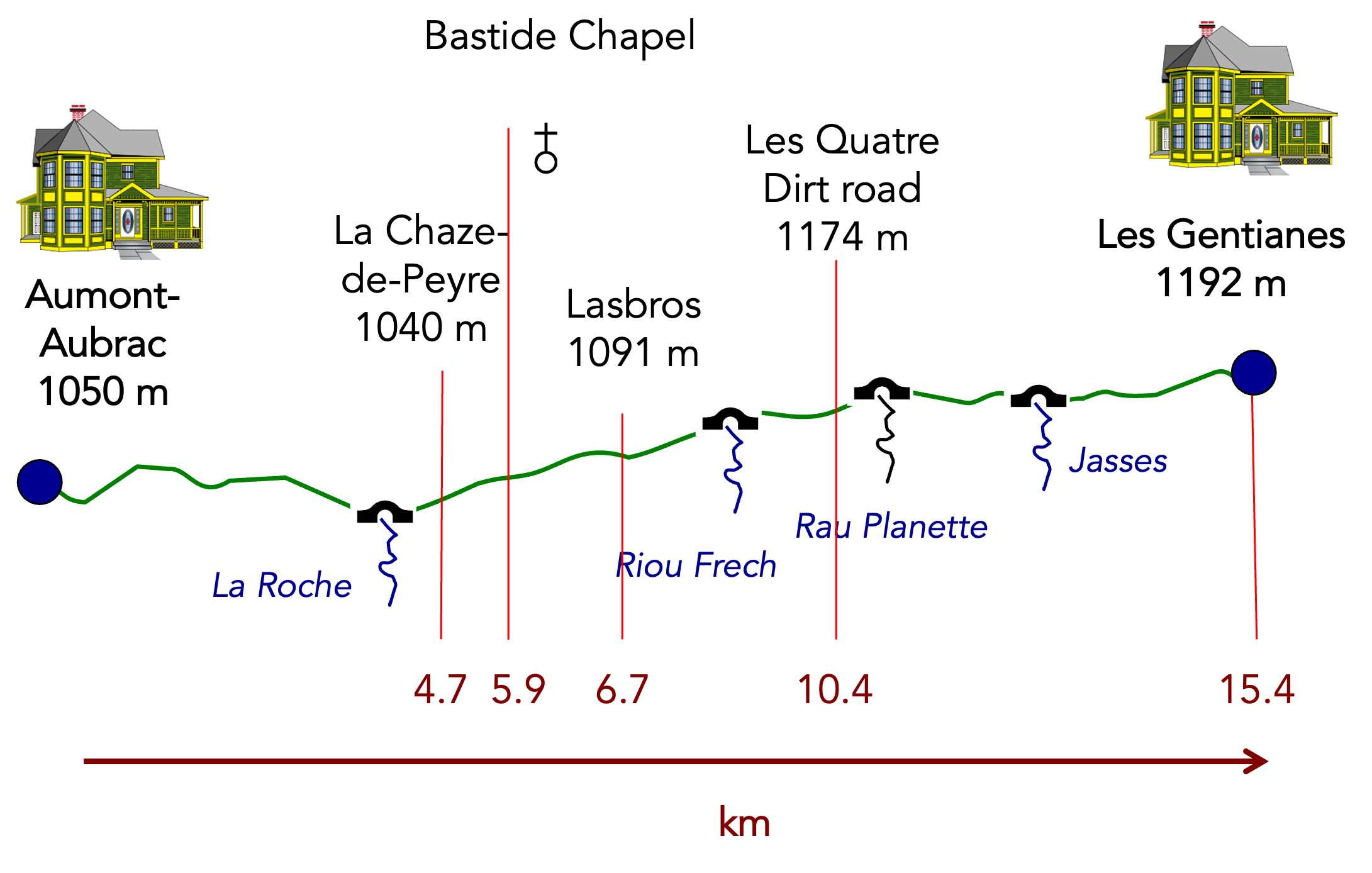
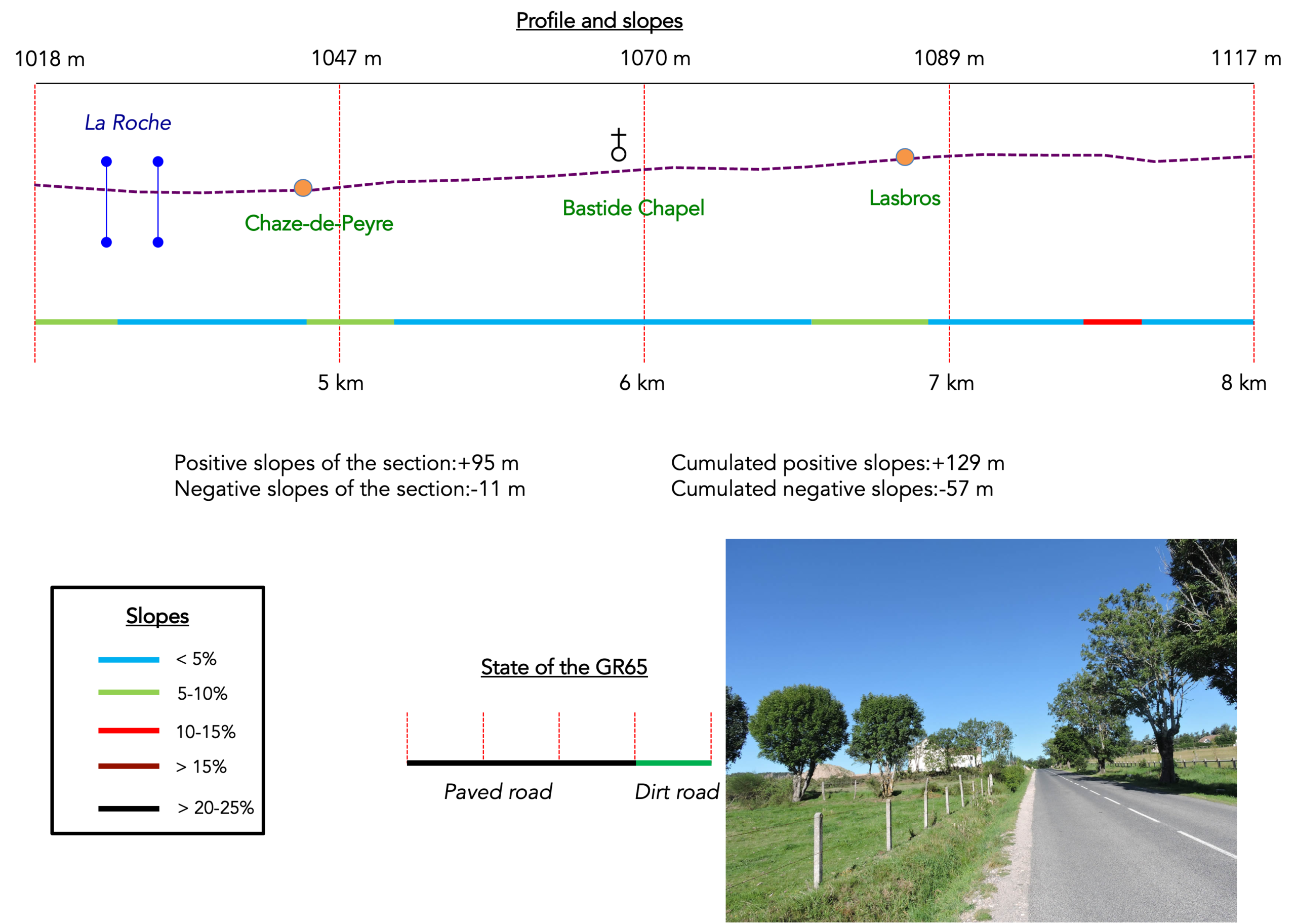
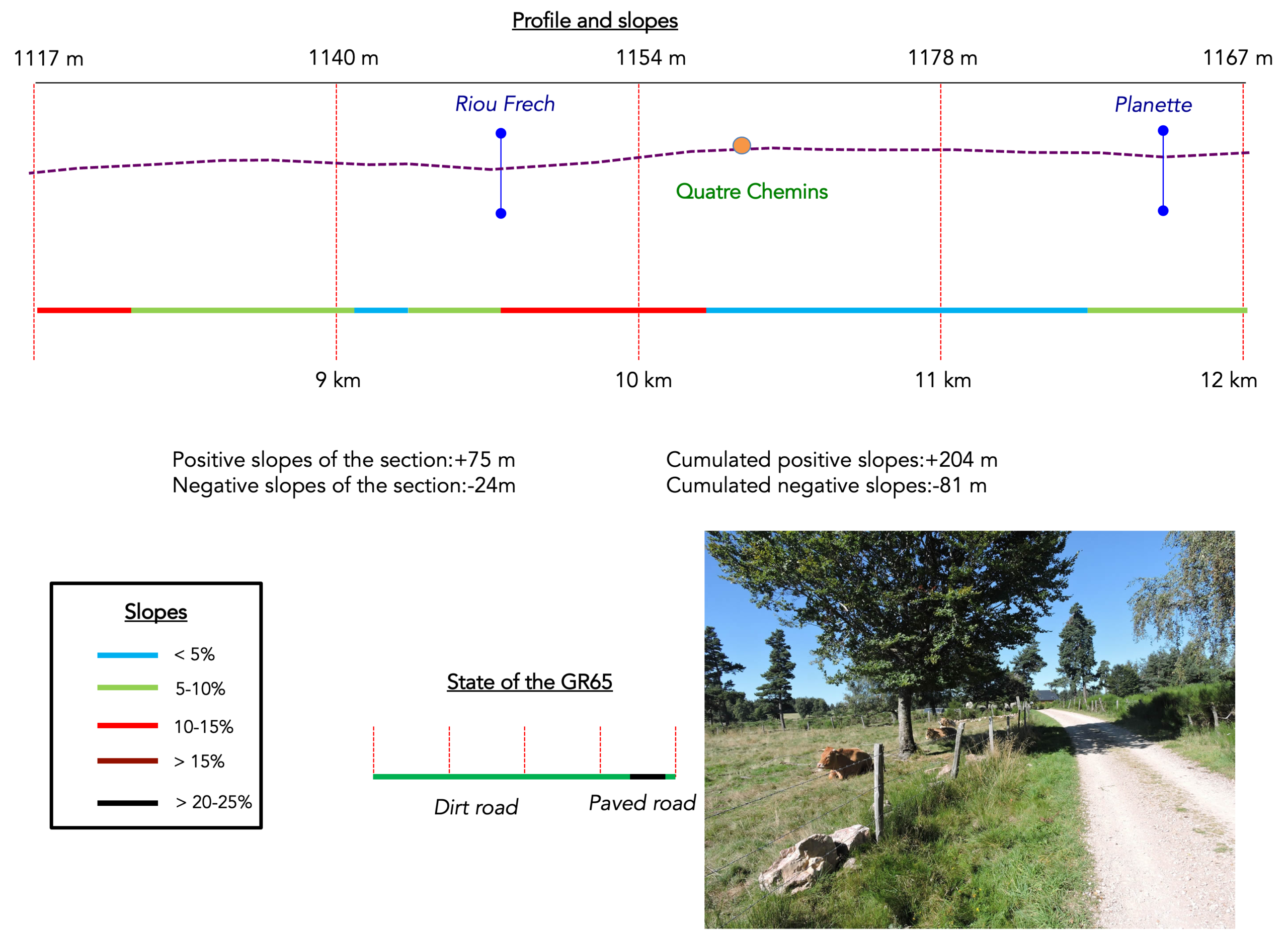
State of the GR65; In such a beautiful region, fortunately, the distances covered on paths greatly exceed those on roads:
- Paved roads: 3.8 km
- Dirt roads: 11.6 km
Sometimes, for reasons of logistics or housing possibilities, these stages mix routes operated on different days, having passed several times on Via Podiensis. From then on, the skies, the rain, or the seasons can vary. But, generally this is not the case, and in fact this does not change the description of the course.
It is very difficult to specify with certainty the incline of the slopes, whatever the system you use.
For « real slopes », reread the mileage manual on the home page.

Section 1: Climbing towards the Aubrac Plateau
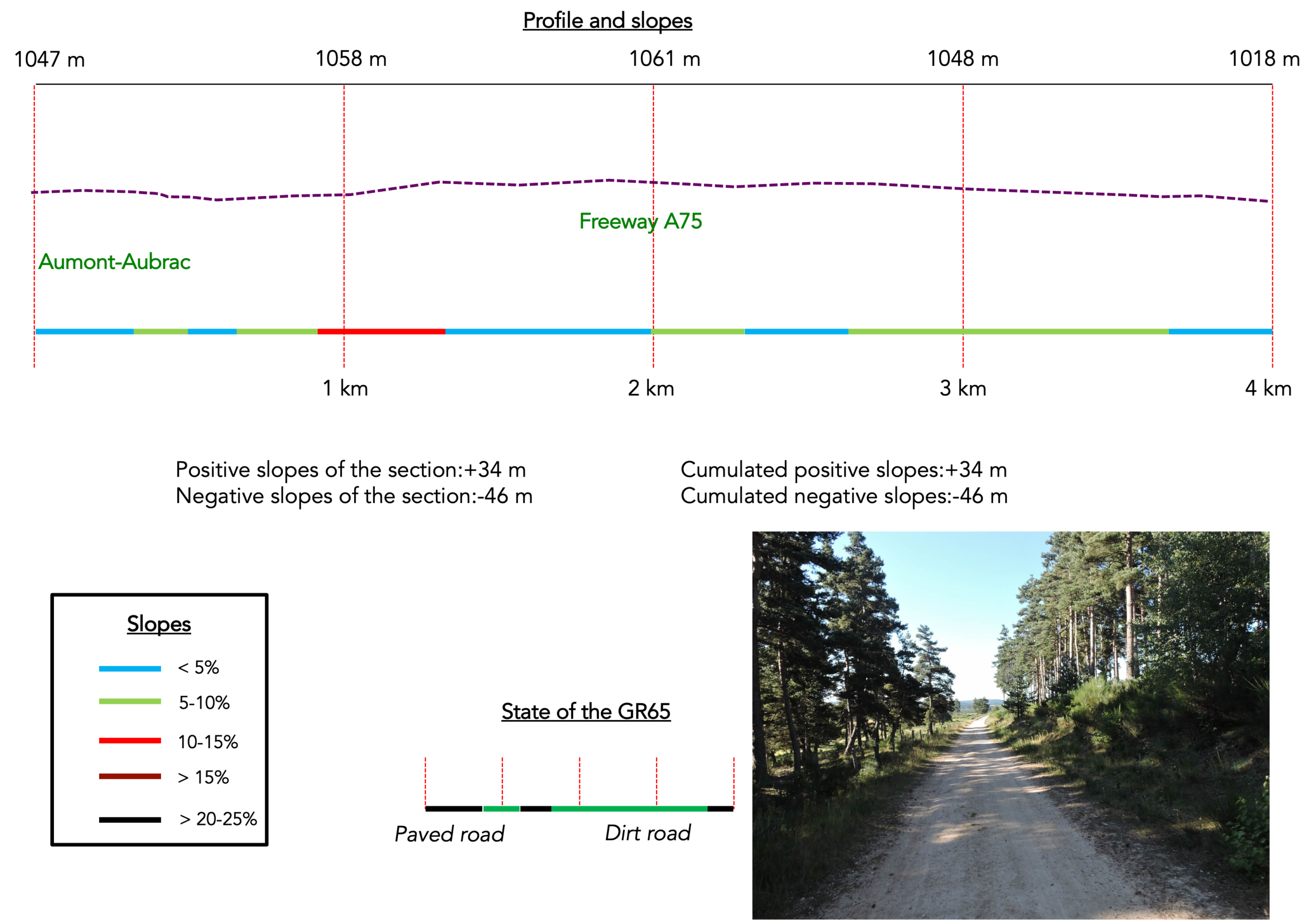
General overview of the route’s challenges: a genuine walk with no real challenges, apart from a few steeper slopes before crossing the motorway.
|
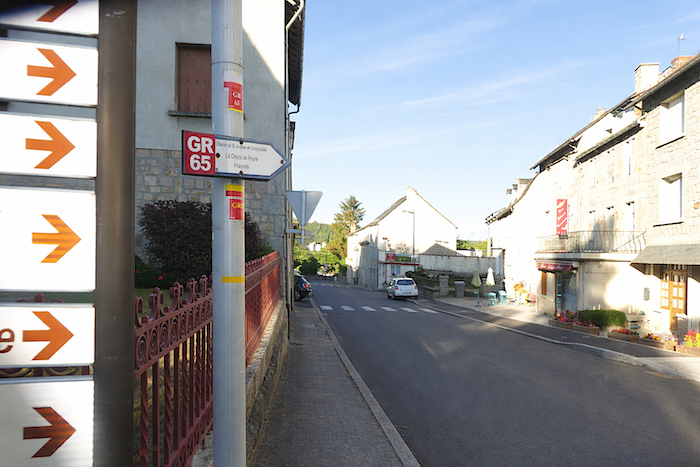
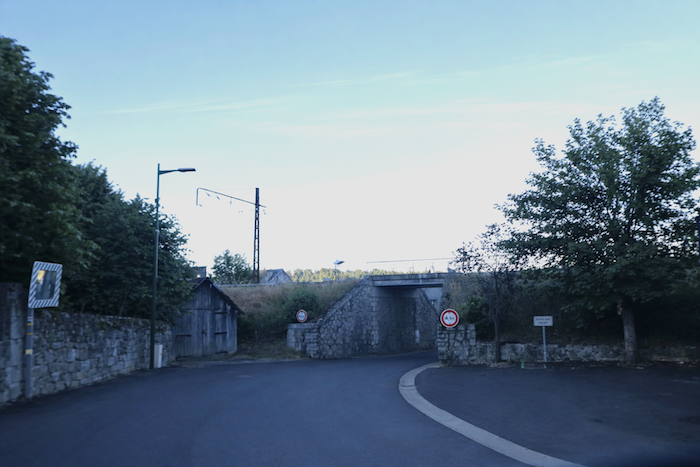
It is at first light, when the sky still hesitates between night and day, that pilgrims leave behind the silence of Aumont-Aubrac. The GR65, like a discreet thread, slips away from the village and gently descends beneath the railway line, as if passing through a secret gateway to another world.
|
 |
 |
|
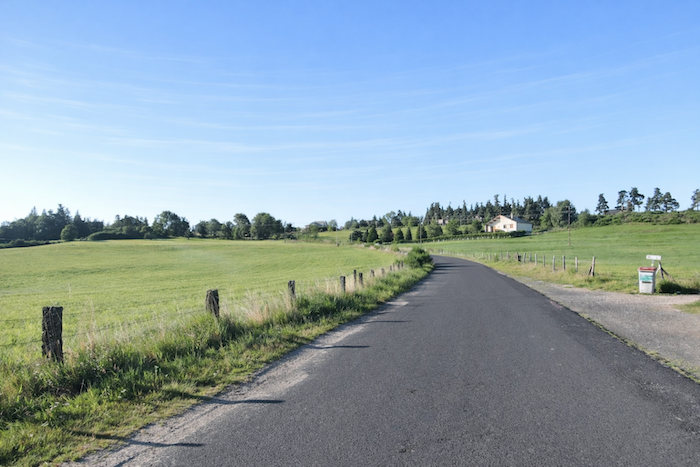
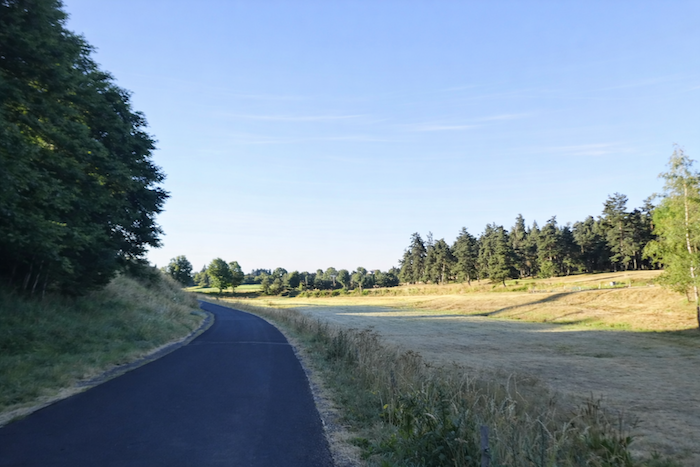
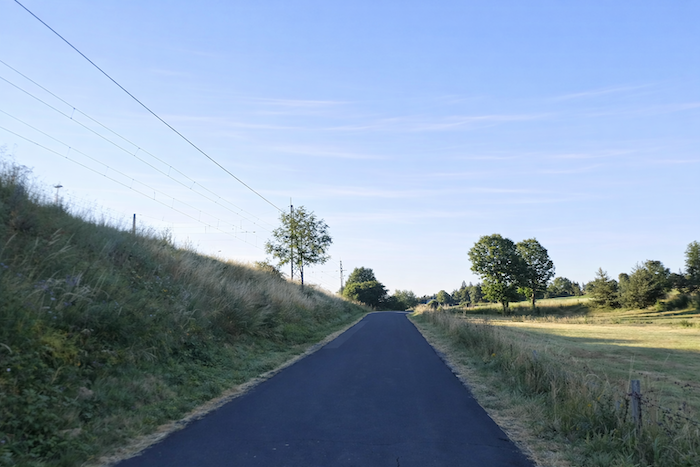
Soon, it follows a paved road stretching across the small plain, escaping the bustle of human activity as it heads towards the first scattered houses perched on the hilltop.
|
 |
 |
|
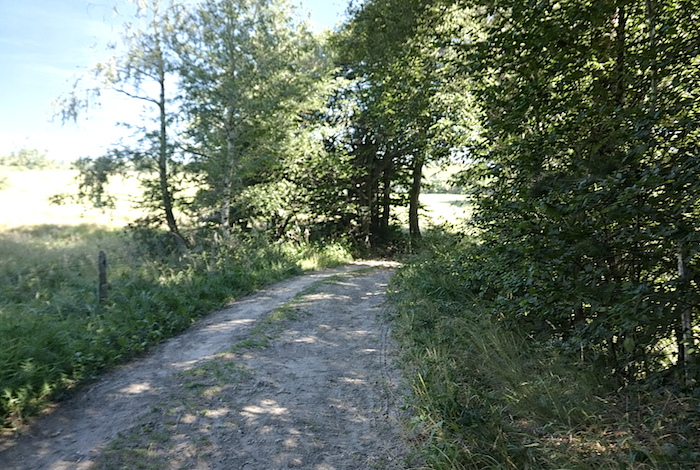
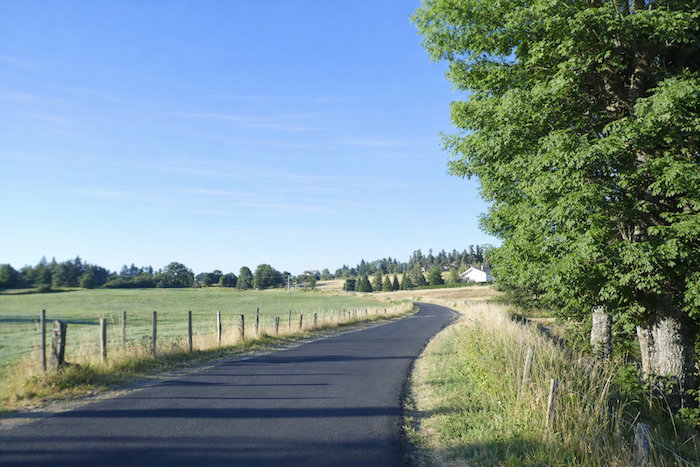
Then the slope becomes more noticeable, though almost imperceptibly at first, winding between open meadows and scattered fields until the tarmac finally gives way to a more intimate and ancient dirt road. Little by little, daylight asserts itself, spreading its colors across the pastures and the pine forests that encircle the heights like a green crown resting upon the hill.
|
 |
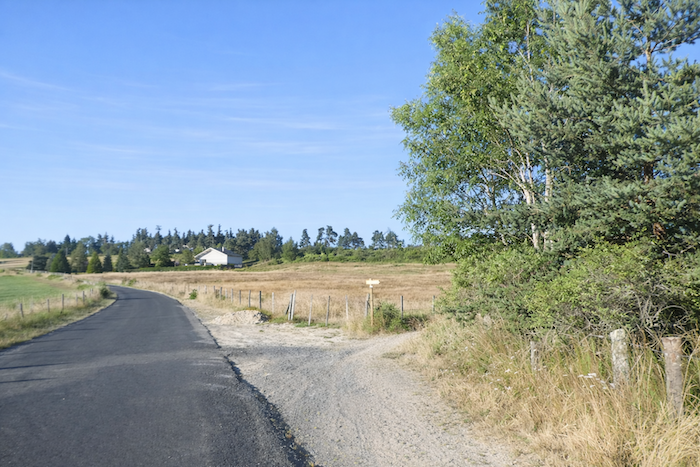 |
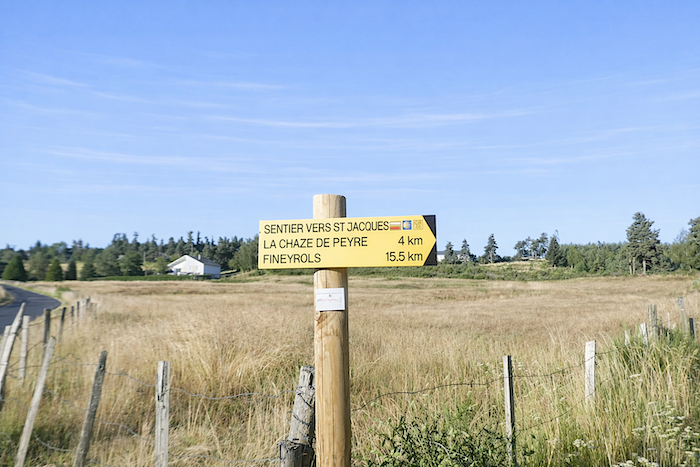
Already, a promise appears on the horizon: the next village, La Chaze-de-Peyre, announced four kilometers ahead, still distant, yet already present in every pilgrim’s thoughts.
|
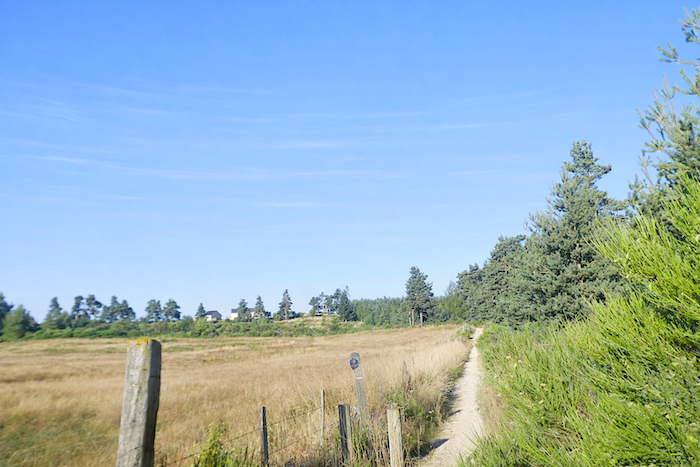
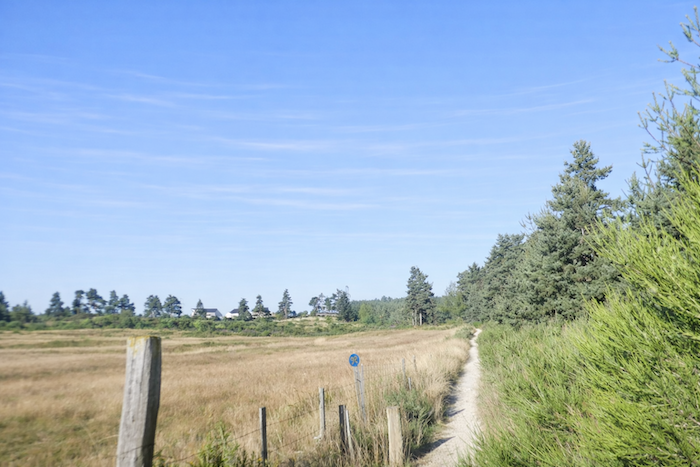
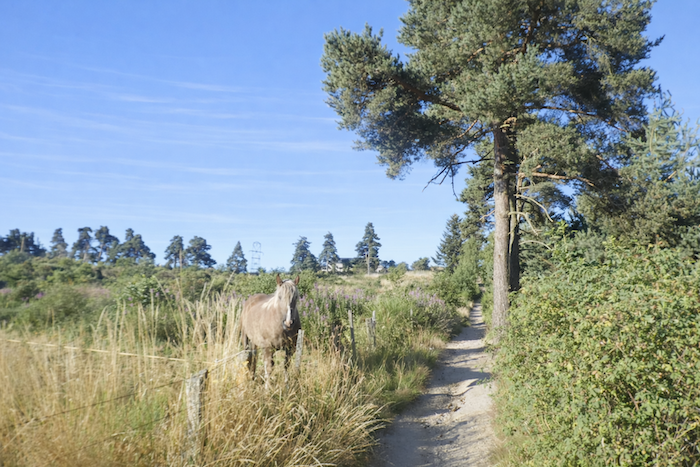
A narrow trail then climbs ahead, edged with pale earth. Its gradient exceeds ten percent as it winds through meadows and hedgerows filled with pines, junipers, and broom. Here and there, one can almost imagine a horse, placed by some discreet hand from the local tourist office, silently observing and counting the passing pilgrims.
|
 |
 |
|
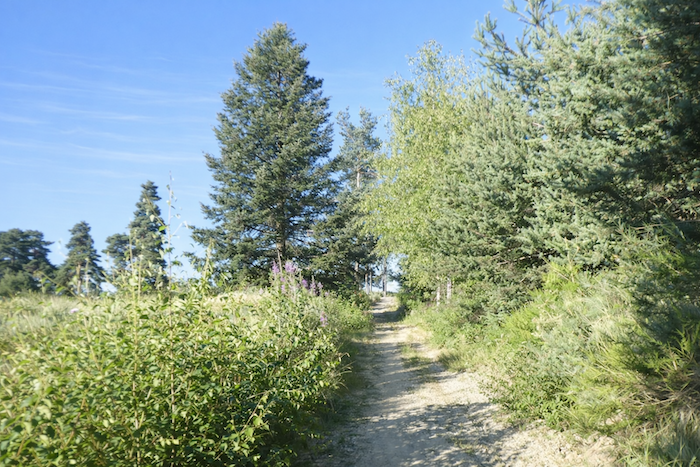
In this setting, the illusion is complete. You could almost believe yourself transported further south, into the heart of a wild garrigue landscape, where pines trace familiar silhouettes beneath a sky growing steadily brighter.
|
 |
 |
|
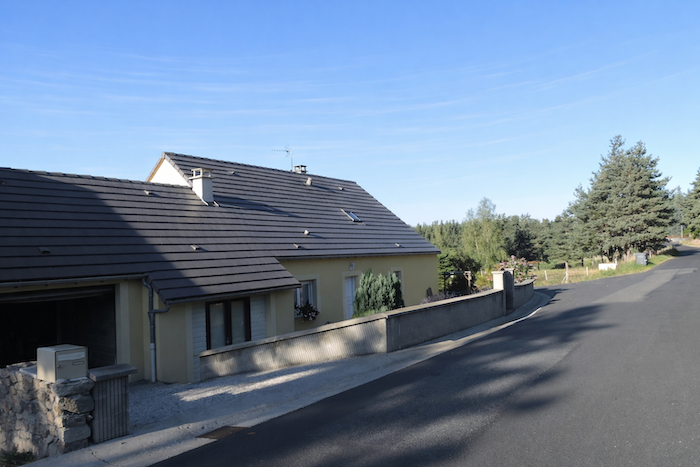
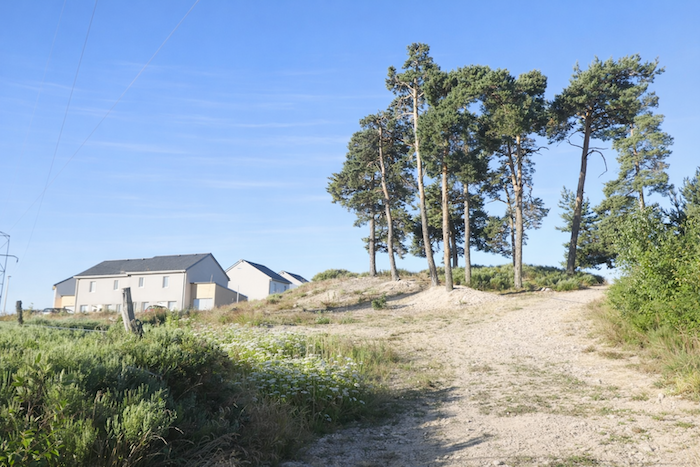
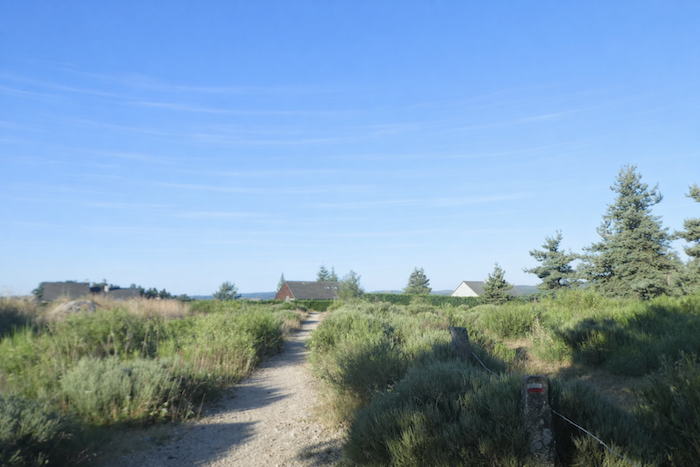
At the summit of the hill, Aumont-Aubrac seems to have scattered a necklace of small villas, all opening onto landscapes of rare beauty, where the horizon stretches endlessly into the distance.
|
 |
 |
|
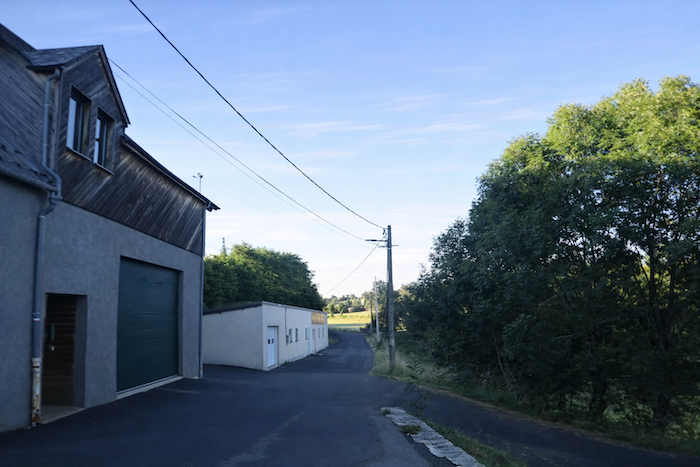
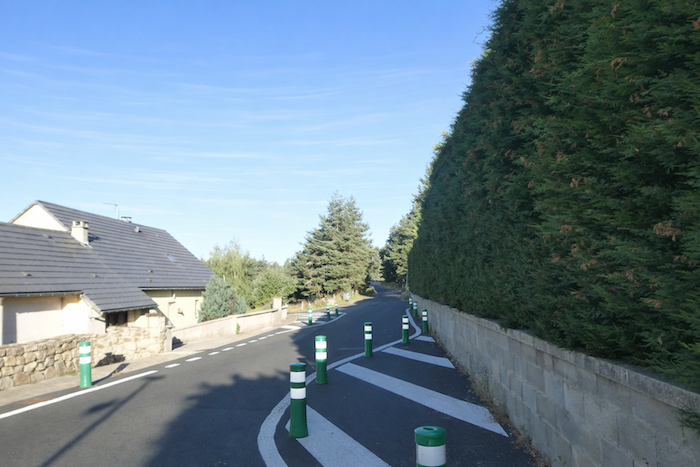
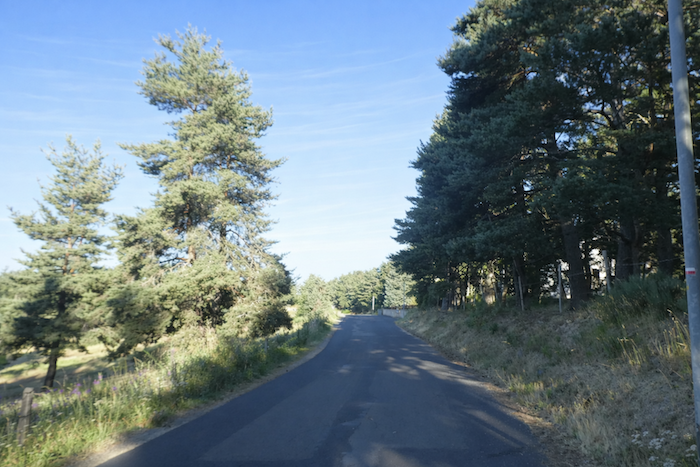
A narrow road runs alongside these charming homes, as if emphasizing their tranquility, before wandering gently onto a kind of open high plateau, bathed in a simple and almost unreal beauty.
|
 |
 |
|
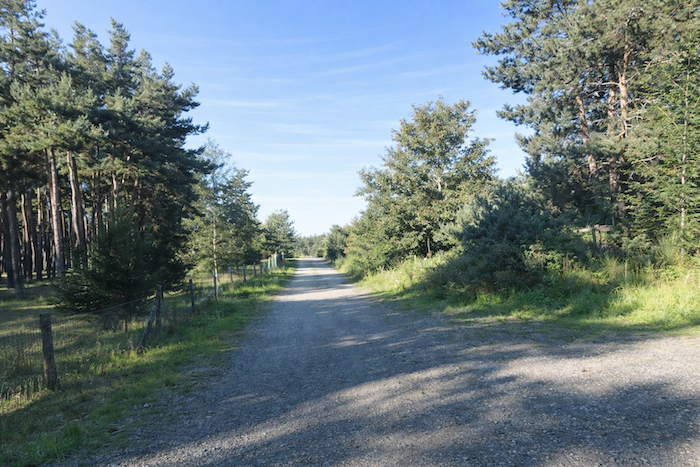
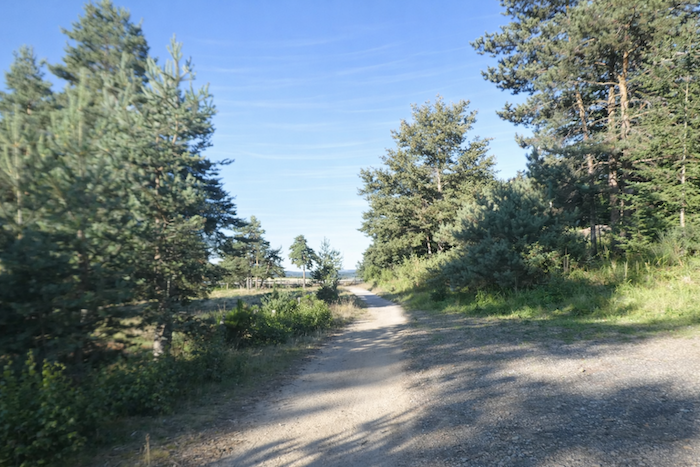
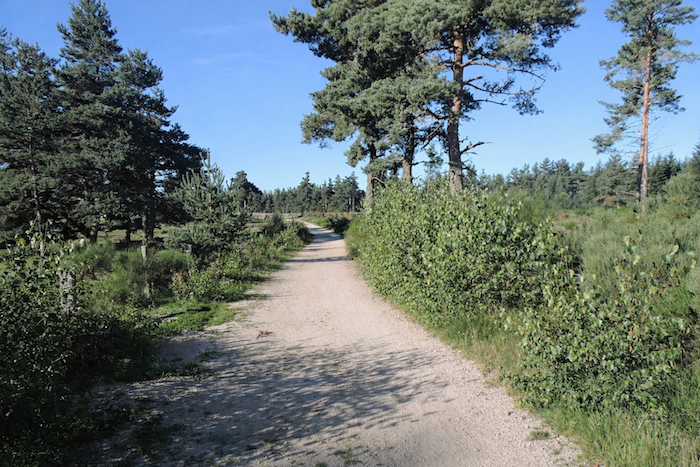
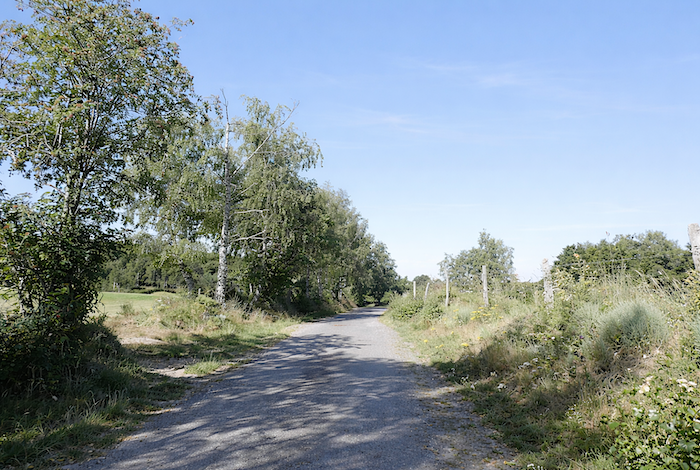
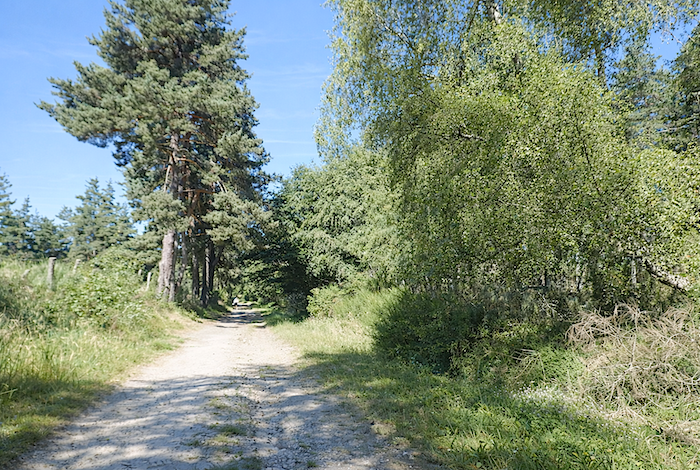
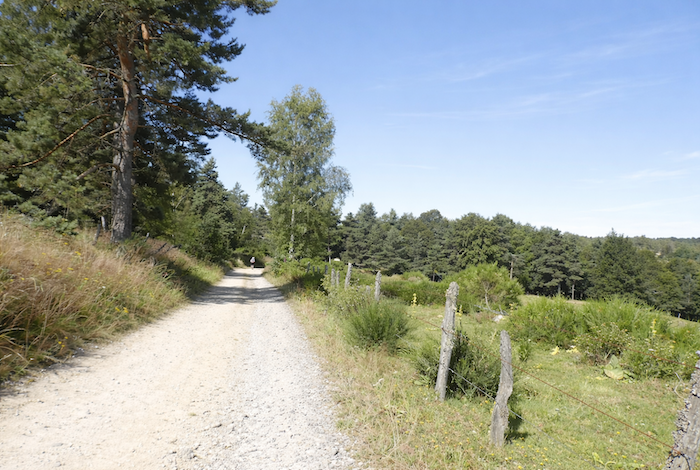
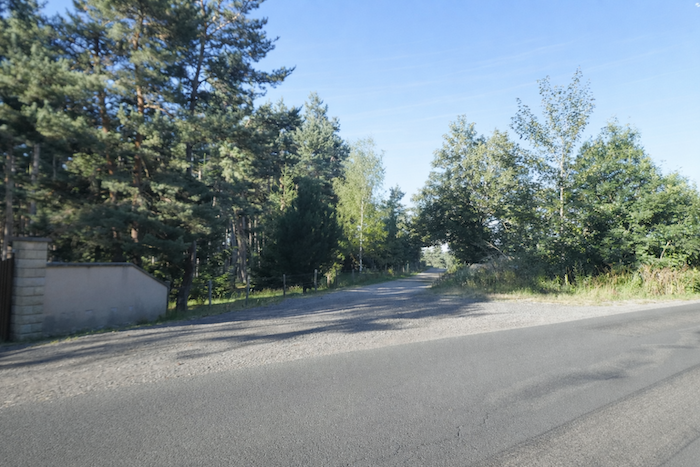
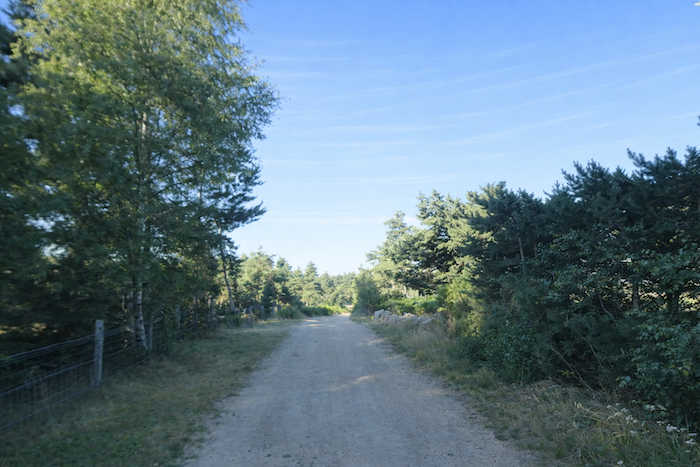
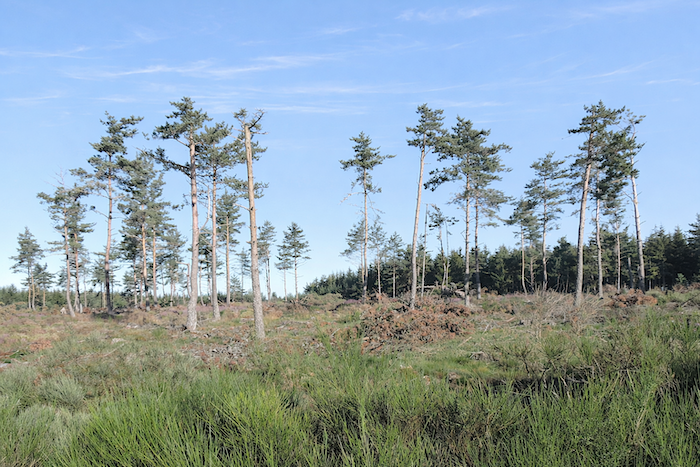
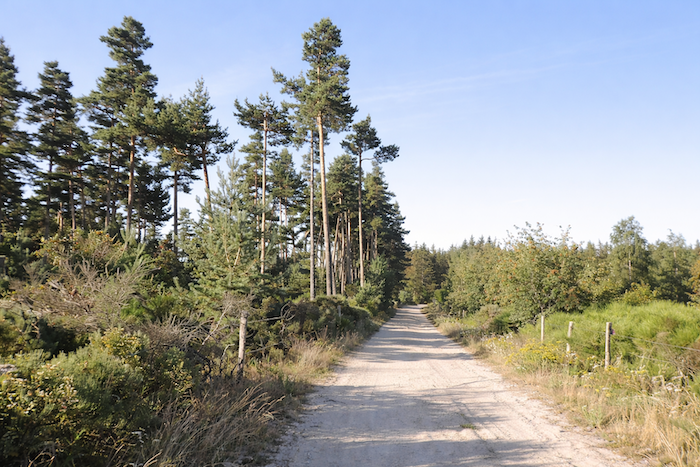
Further on, the route leaves the asphalt behind and opens onto a broad dirt road that heads directly into a gentle landscape along the edge of pine woods. The GR65 then enters a vast patchwork countryside woven with hedgerows of pines, junipers, and broom. Yet this vegetal network soon becomes simpler and more fragmented, gradually giving way to small scattered groves.
|
 |
 |
|
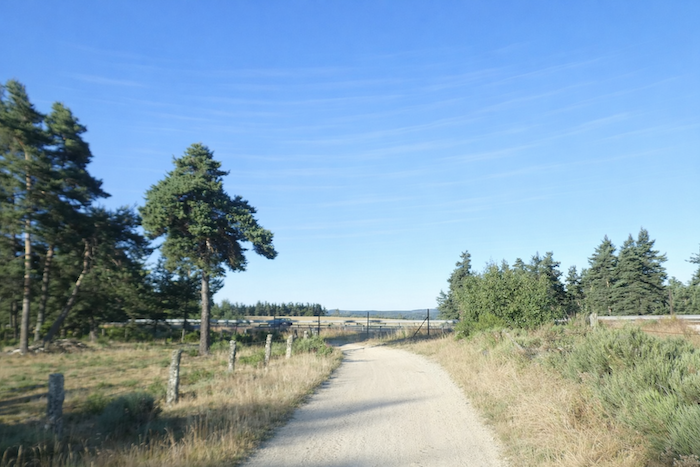
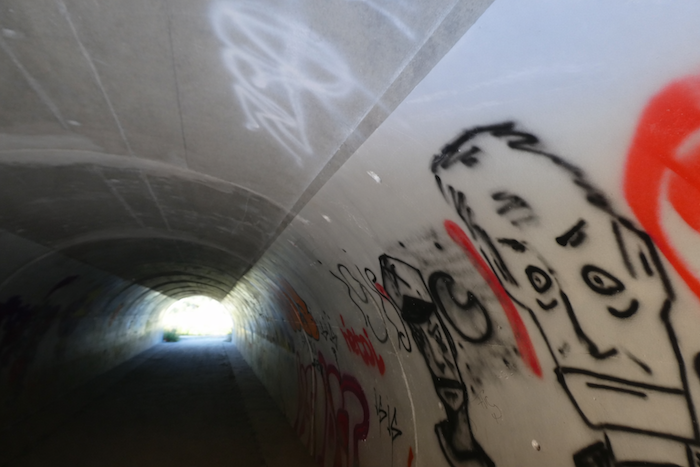
Before long, occasional engine noises begin to disturb the tranquility of the surroundings: the road is approaching the motorway. Busy during the summer months, it makes its presence known. Yet is this not one of the finest motorways in France, privileged to cross landscapes of such exceptional beauty, suspended in a kind of grace?
|
 |
 |
|
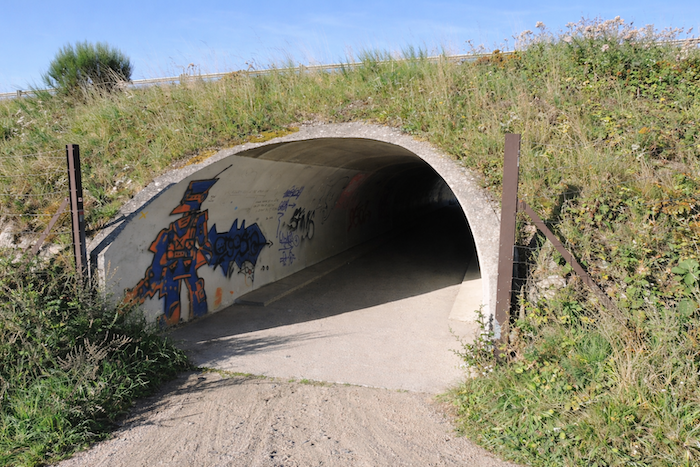
La Méridienne is no ordinary motorway. Free of tolls, it becomes a road of freedom, an invitation to travel, a guiding thread for anyone wishing to discover an extraordinary region. Through lightly wooded countryside, the walker crosses beneath it through a discreet underpass known locally as the “Saint-Jacques Duc”. Above, lorries and cars thunder past. Below, an almost intimate passageway stretches ahead, modestly marked by a few graffiti.
|
 |
 |
|
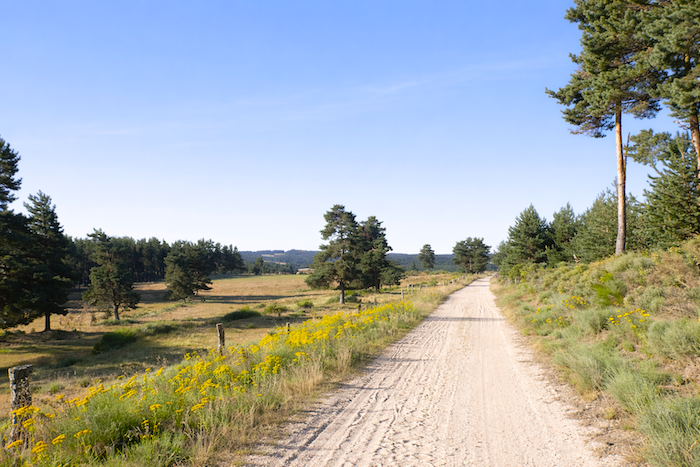
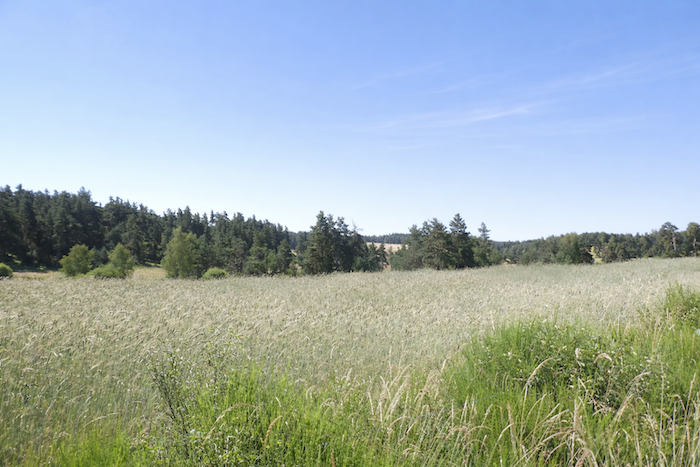
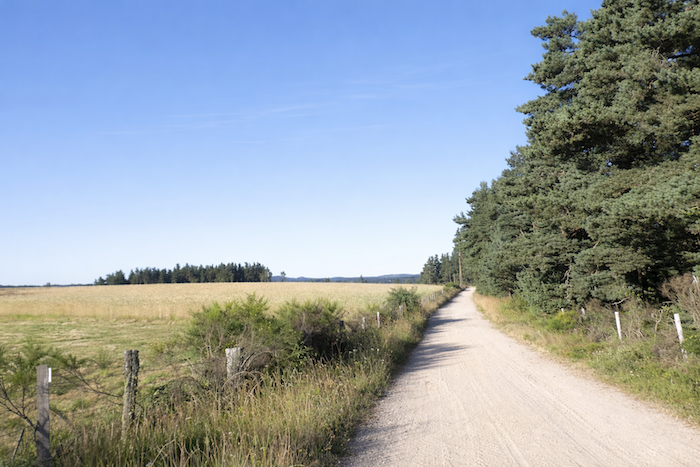
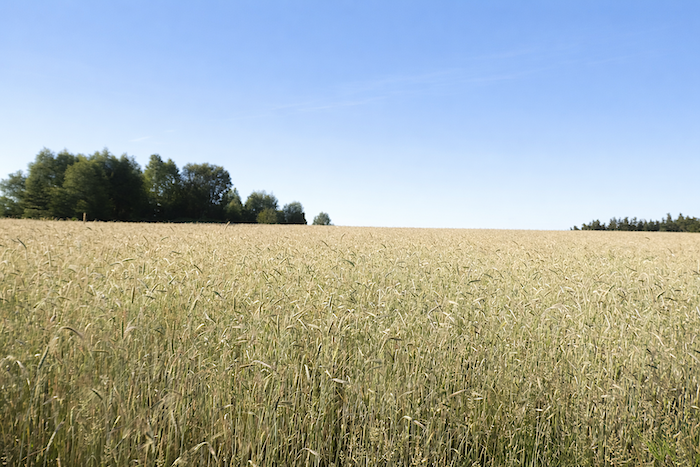
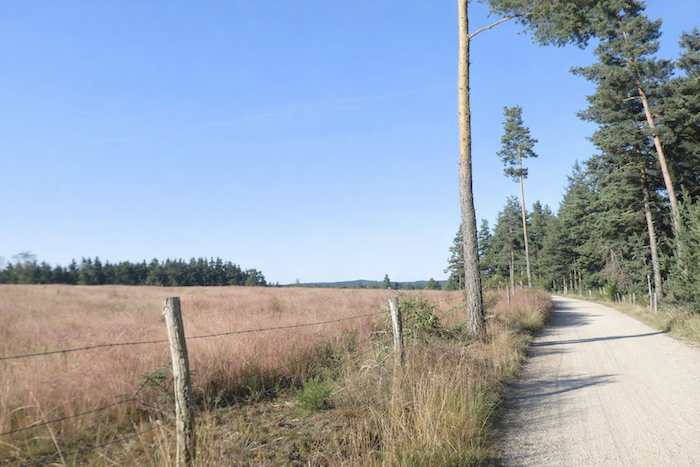
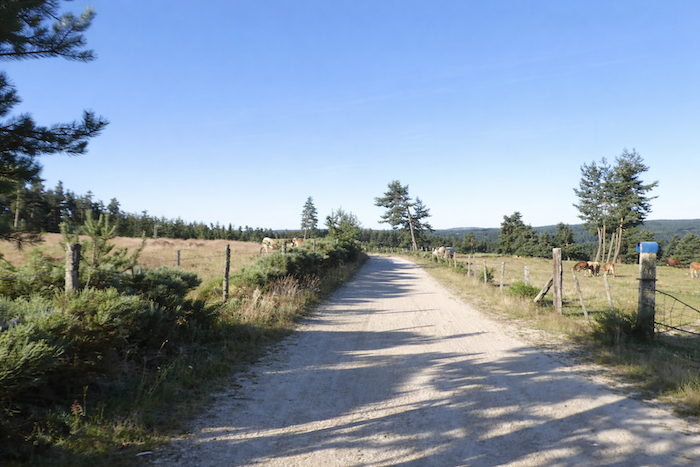
Emerging from the tunnel, the eye is drawn to a long ribbon stretching ahead: a broad track of earth, first white, then ochre, flat as an open palm and unfolding with a quiet, linear melancholy. Gradually, the noise of the motorway fades away and silence returns to the landscape. Only the muted sound of footsteps on the packed earth remains, alongside hedges of pine and, occasionally, spruce. Broadleaf trees have almost vanished from these horizons, which are now dominated by fields of triticale, oats, and even durum wheat, spread beneath the sky like a motionless sea.
|
 |
 |
|
 |
 |
|
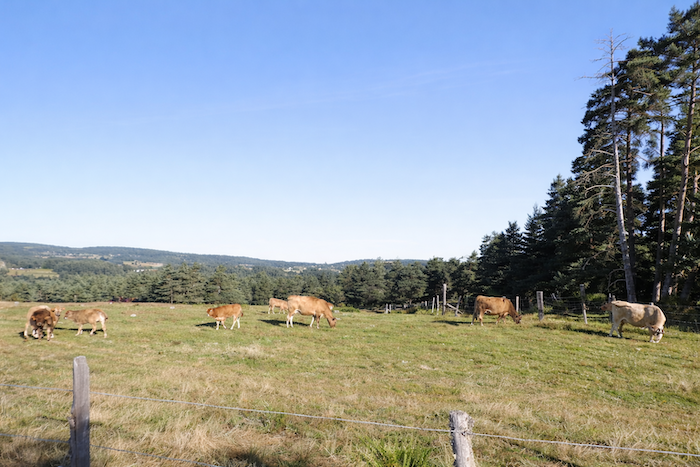
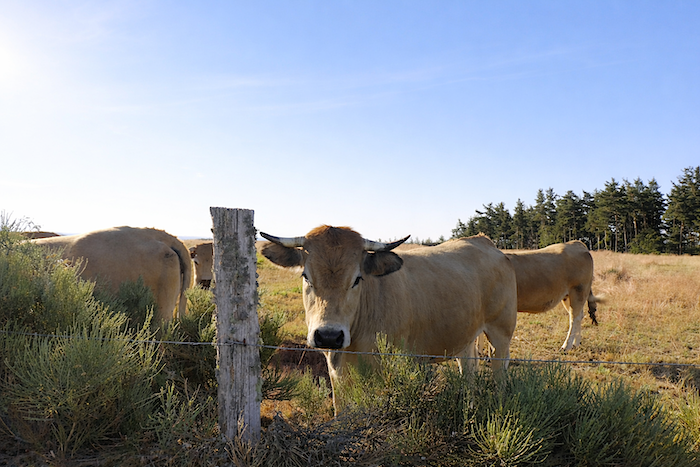
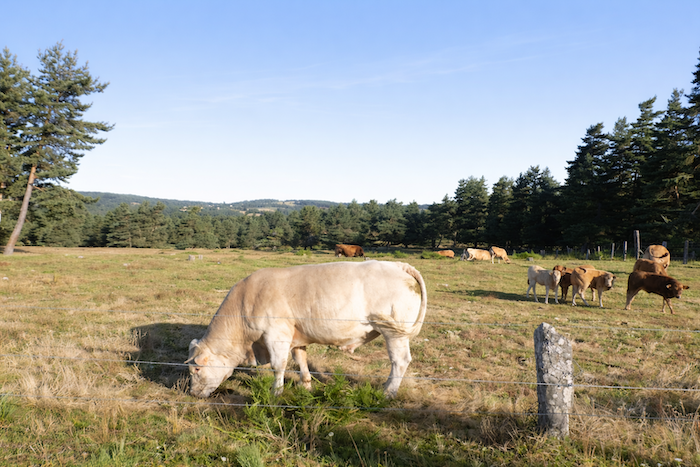
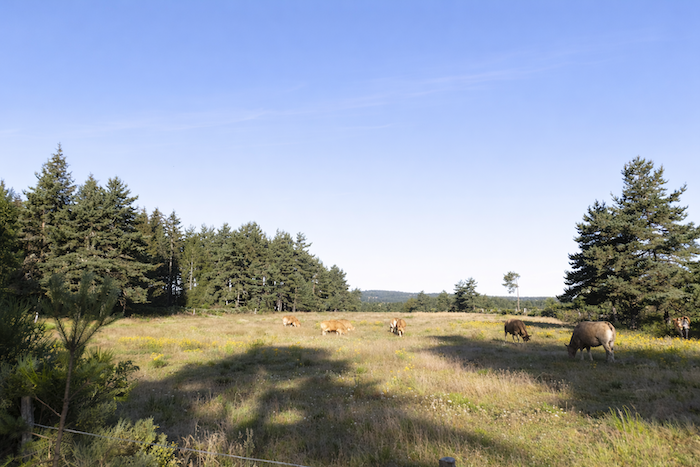
That day, the meadows echoed with deep, powerful lowing, voices as resonant as bass notes rising into the morning air. The Aubrac cattle were already at work, their massive silhouettes moving across the fields, while one bull, driven by fierce impatience, proclaimed his presence with almost alarming intensity. The reason for the commotion soon became clear. Striding briskly across the countryside, a farmer appeared, carrying a sturdy stick in his hand. He was searching for his escaped bull, an imposing Limousin. Even the farmer seemed surprised by the animal’s escape, for it was usually known for its calm temperament. Yet here, these giants sometimes clear barbed-wire fences in a single leap, barely slowed by the strands. From that moment on, we learned to inspect every gap beneath the fences with particular care, hoping to avoid any unexpected encounters.
|
 |
 |
|
 |
 |
|
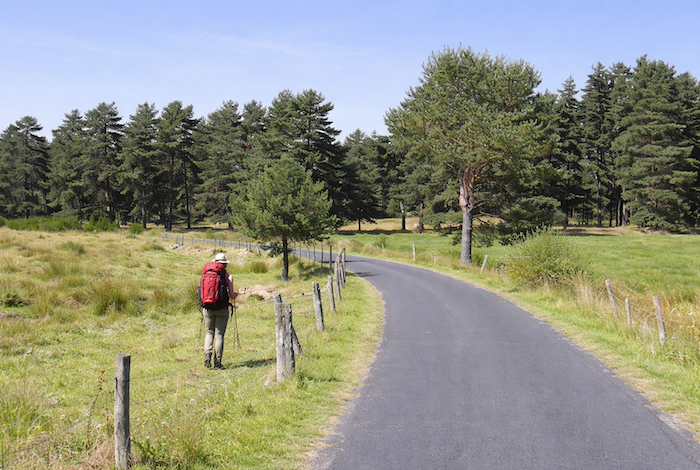
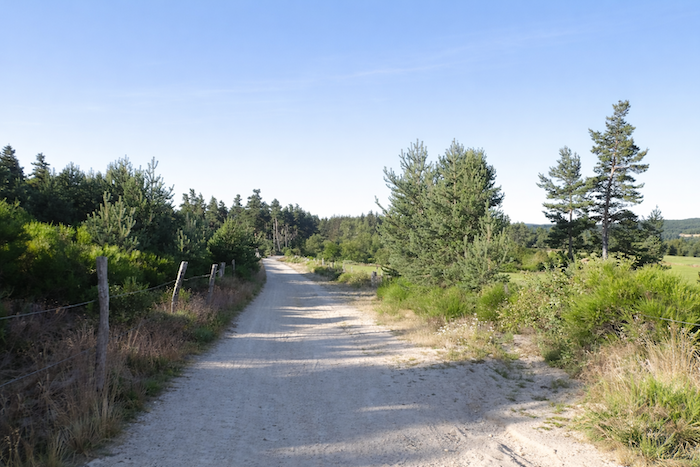
The path, broad and smooth, then descends gently, winding between stands of pine trees and passing through the heart of these peaceful herds.
|
 |
 |
|
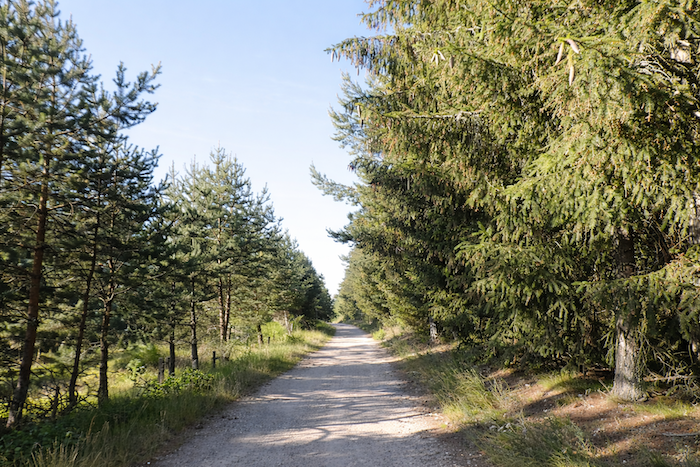
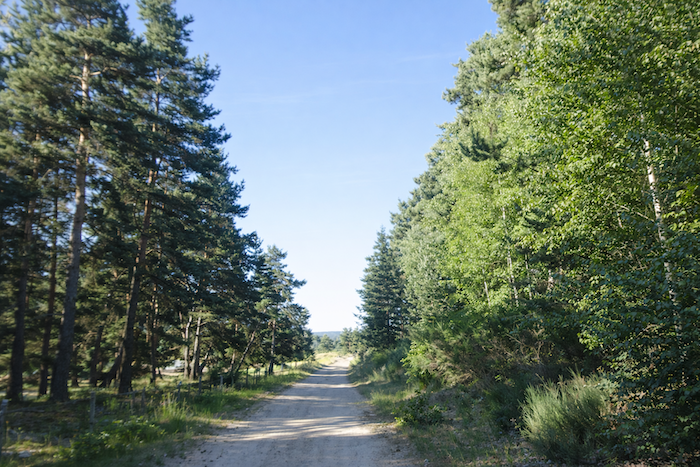
Along these straight stretches, where the ground is little more than pale sand, an isolated broadleaf tree or a solitary spruce occasionally breaks the strict alignment of the pines. And when the bulls finally fall silent, the world itself seems suspended. Nothing remains but silence, vast and almost tangible, together with the feeling of an untouched solitude.
|
 |
 |
|
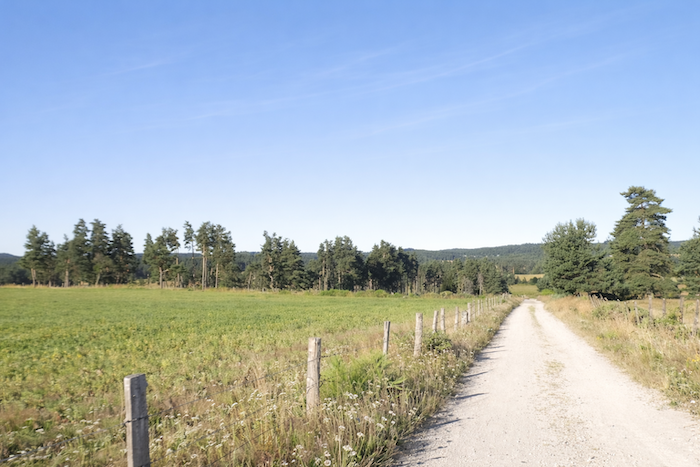
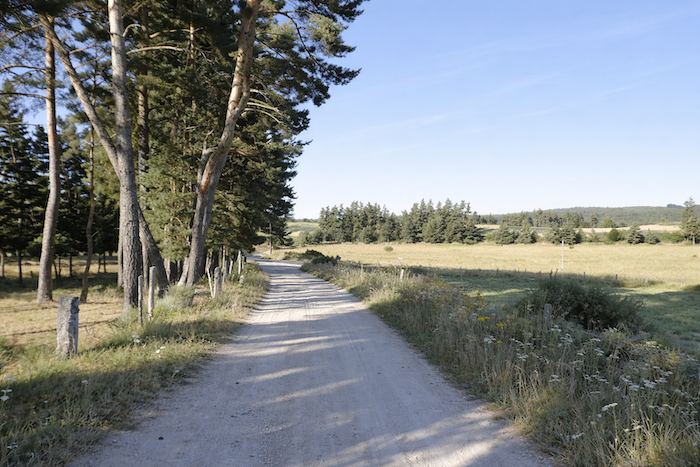
Here, the landscape reaches a sublime beauty. As far as La Chaze-de-Peyre, the forest remains dominant, as though unwilling to surrender its territory. These are the final expressions of Margeride, with its tall pines reaching towards the sky and its scattered groves nestled among the Devèzes and the Brugères, fragments of a countryside that still retains something wild and untamed.
|
 |
 |
|
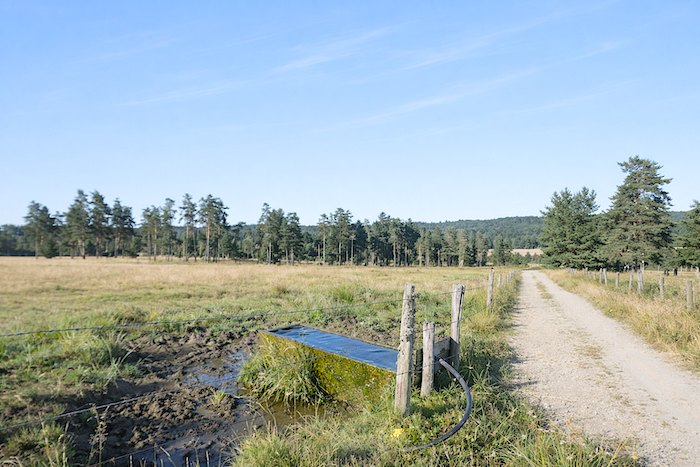
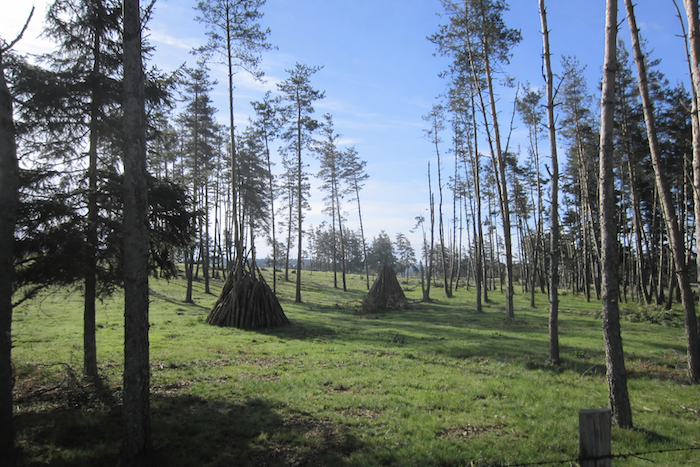
Here, a watering trough for livestock creates a small clearing of trampled earth, worn smooth by countless hooves. A little further on, branches woven together form curious shelters resembling Native American lodges, as though the landscape itself had decided to invent its own places of refuge.
|
 |
 |
Section 2: A few more groves before the open moorland
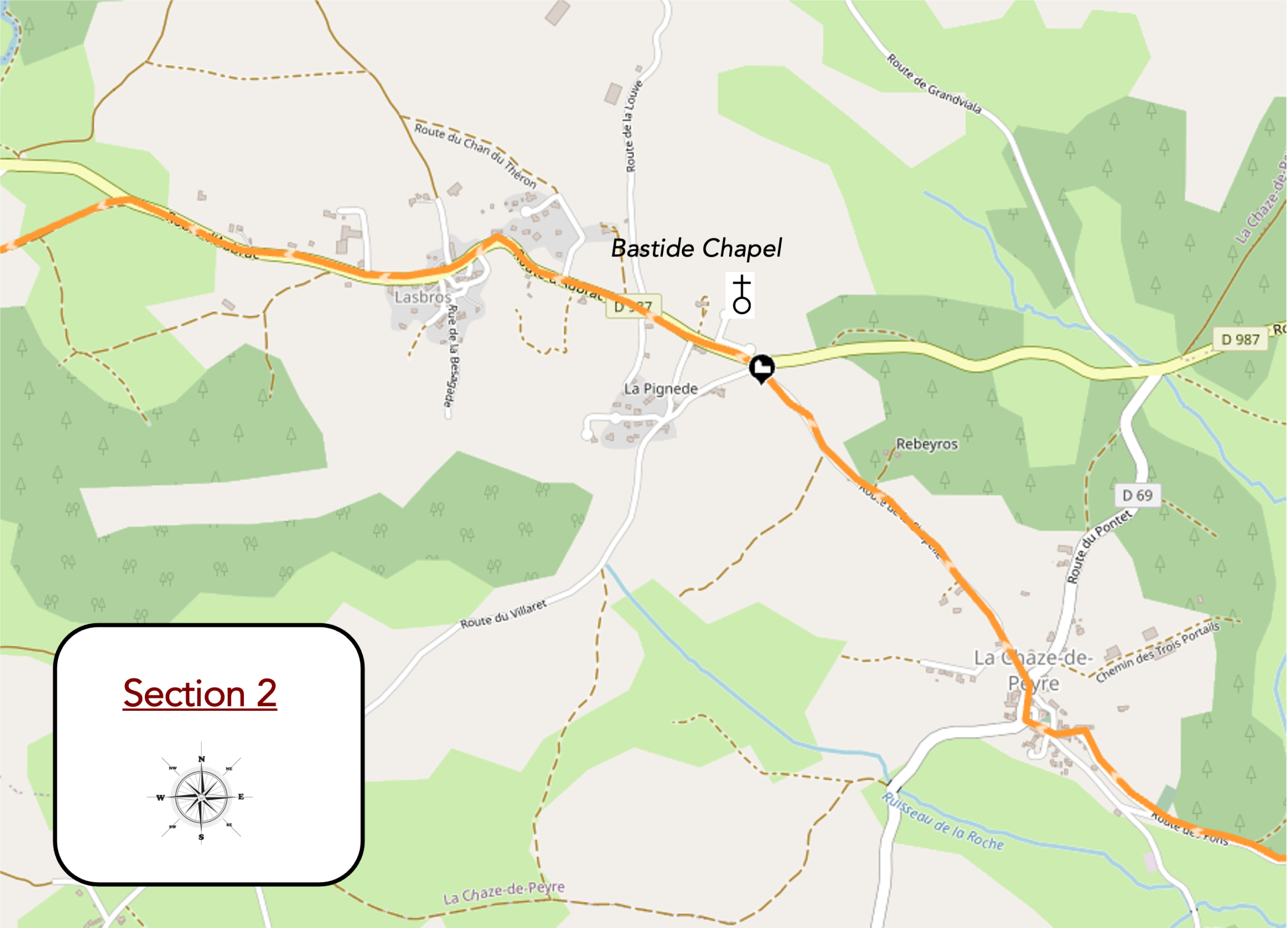
General overview of the route’s challenges: : a completely easy stage with no particular challenges.
|
The scenery still bears the unmistakable imprint of Margeride, as though its presence lingers stubbornly upon the land. Yet, through occasional openings in the landscape, Aubrac begins to reveal itself, fleetingly and almost secretly. Not merely a timid suggestion, but the true Aubrac, the land of open moorlands and endless pastures, where the few remaining groves appear as dark islands resting against the horizon. The landscape seems caught between two worlds, hesitating between these last clusters of trees and the call of the vast grassy expanses. At times, immense meadows unfold in the distance like a motionless sea, their green hues resonating with an almost musical intensity.
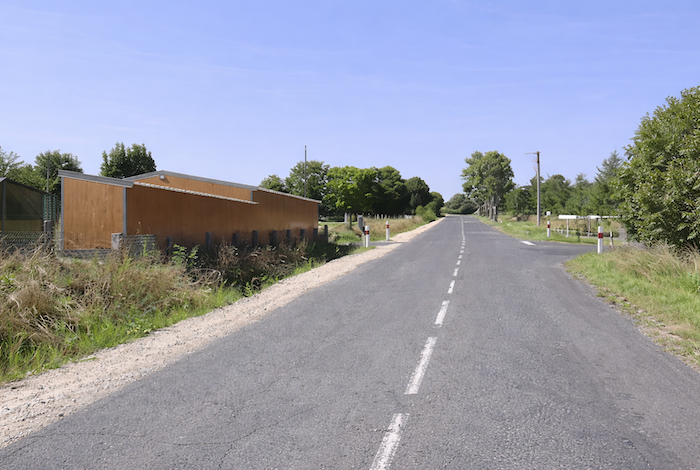
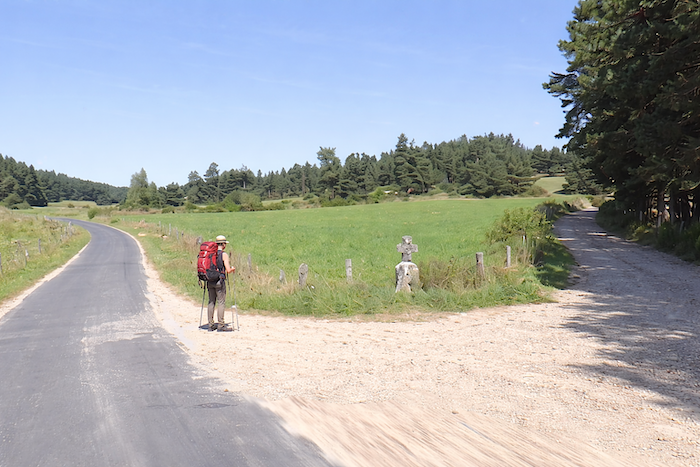
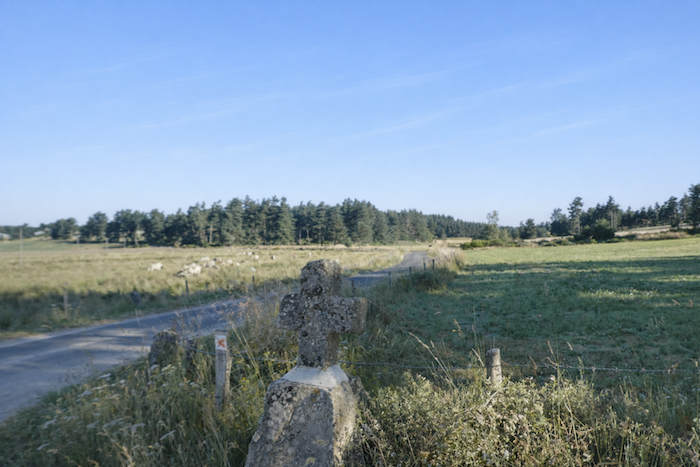
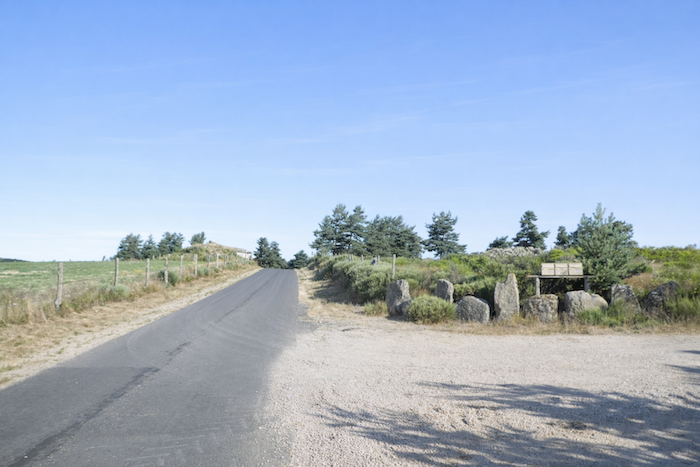
After following the slope downward, the path reaches the bottom of the descent, where the GR65 meets a small country road at a right-angled junction, watched over by a granite cross gently polished by time.
|
|
 |
|
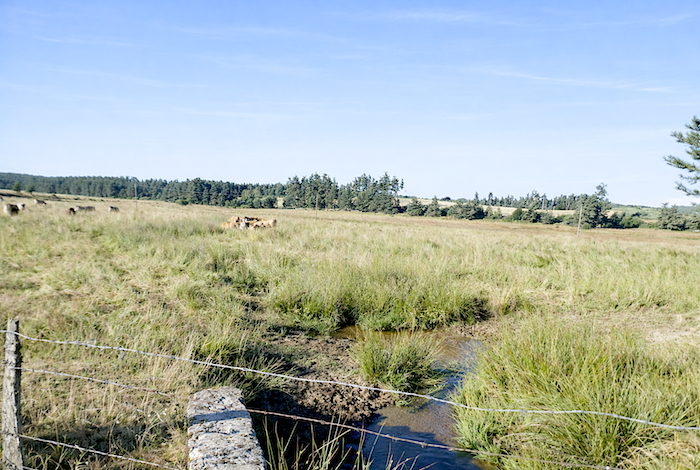
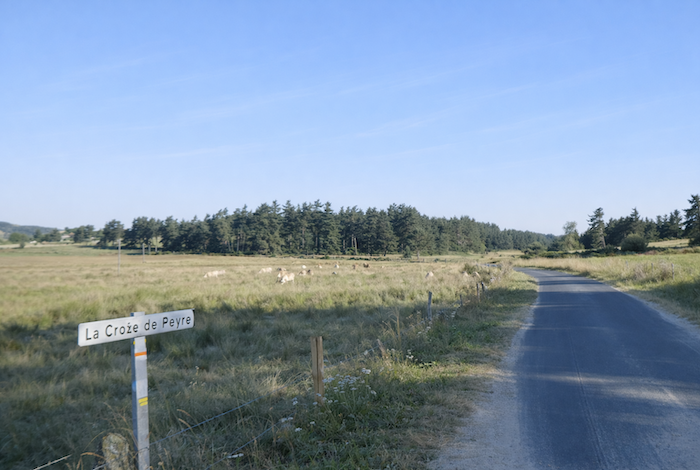
The road then runs across what appears at first to be a plain, but soon reveals itself as a vast marshland where the waters of the Roche stream seep and spread in silent disorder. In the distance, the mixed calls of bulls, both hoarse and piercing, disturb the still air. Could it be that our farmer has finally found his wandering Limousin bull?
|
 |
 |
|
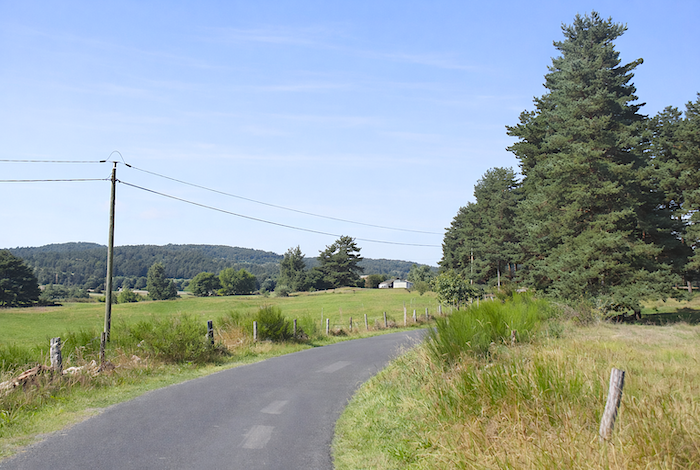
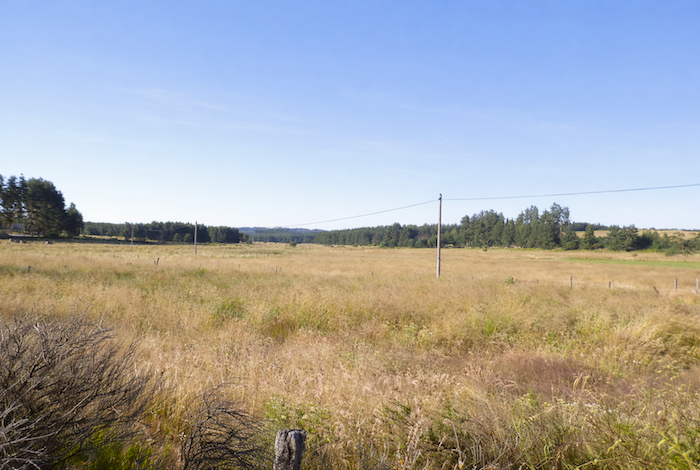
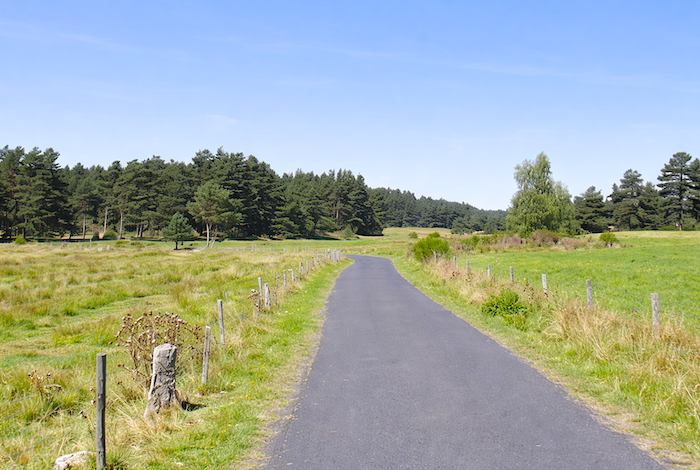
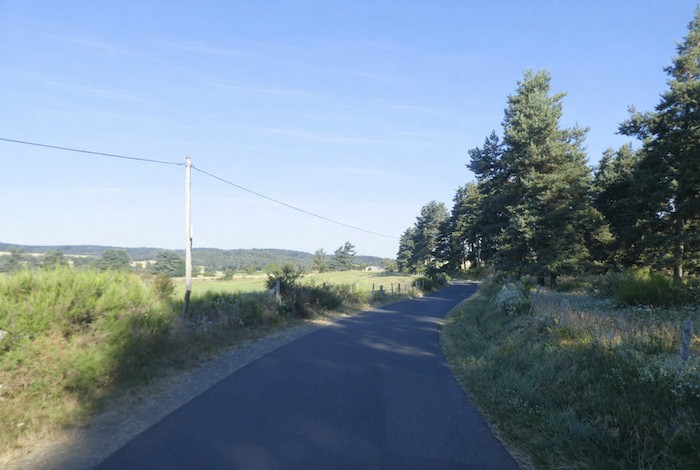
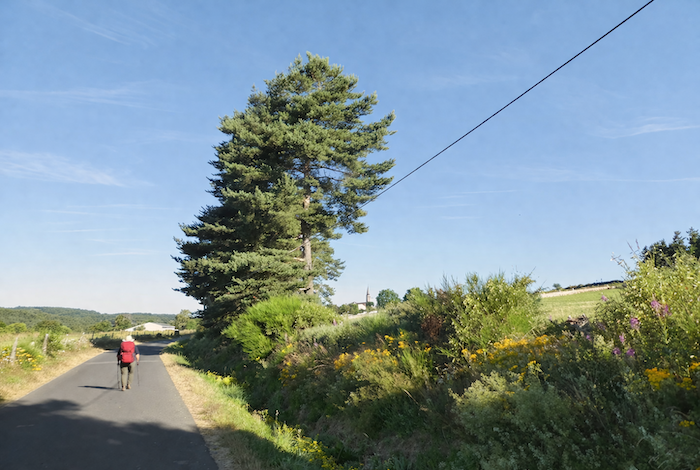
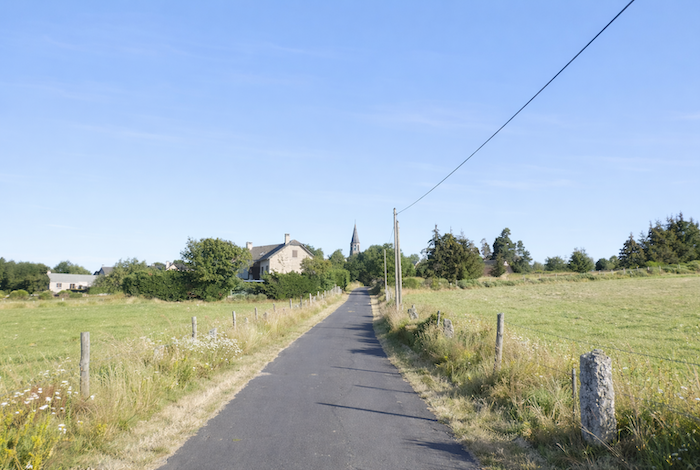
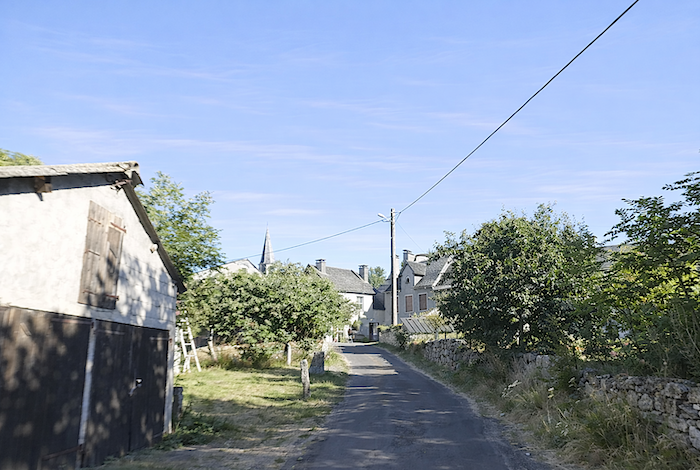
The road then climbs gently towards La Chaze-de-Peyre, crossing broad meadows where the groves become increasingly scarce, almost erased from the landscape, while the village bell tower appears ahead, slender and discreet against the horizon.
|
 |
 |
|
Along these roads, it is mainly fellow pilgrims who are encountered, patient and silent figures moving steadily forward. The local farmers, by contrast, seem rare, as though withdrawn into the depths of the landscape itself.
|
 |
 |
|
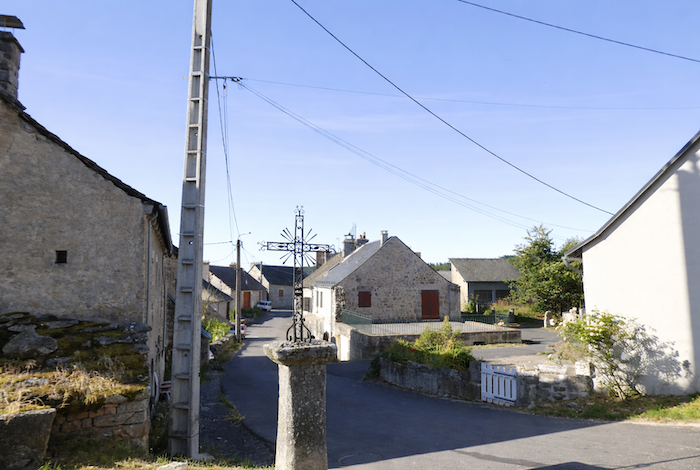
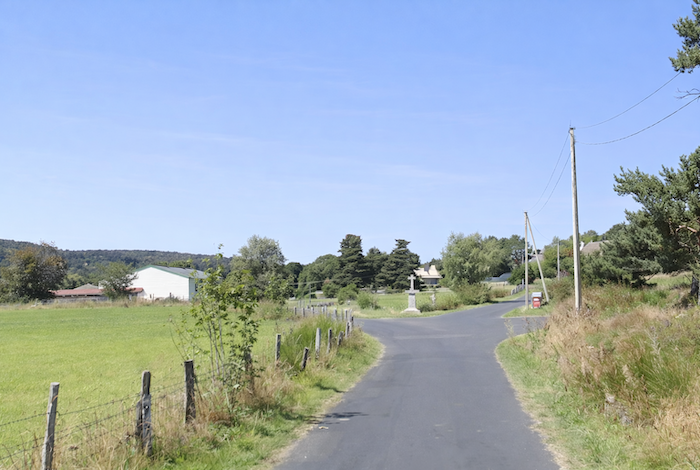
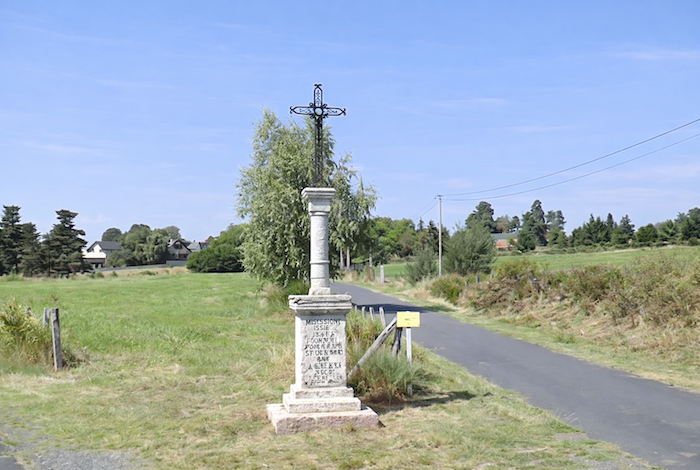
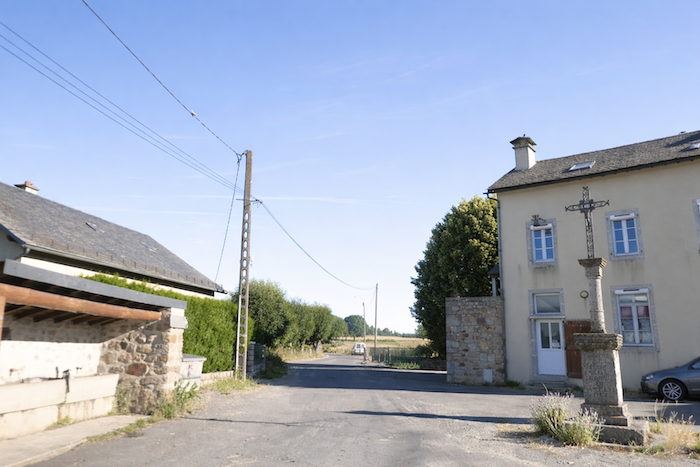
The road finally reaches a crossroads at the foot of the village, where an iron cross stands solemnly upon a granite pedestal, an enduring landmark in the countryside.
|
 |
 |
|
It then continues directly towards the first houses, announcing entry into an inhabited and almost intimate space.
|
 |
 |
|
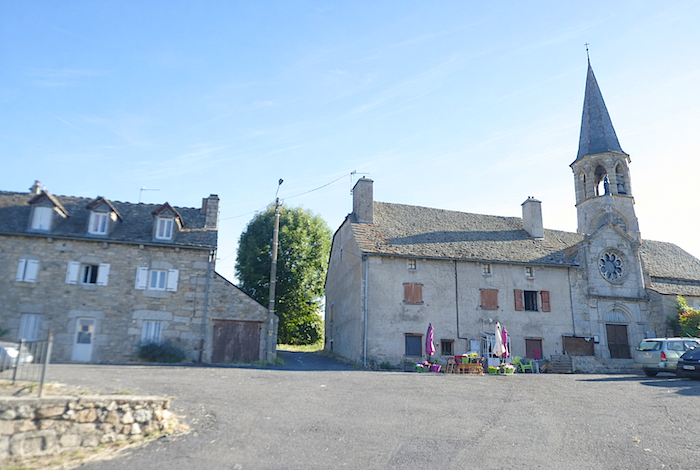
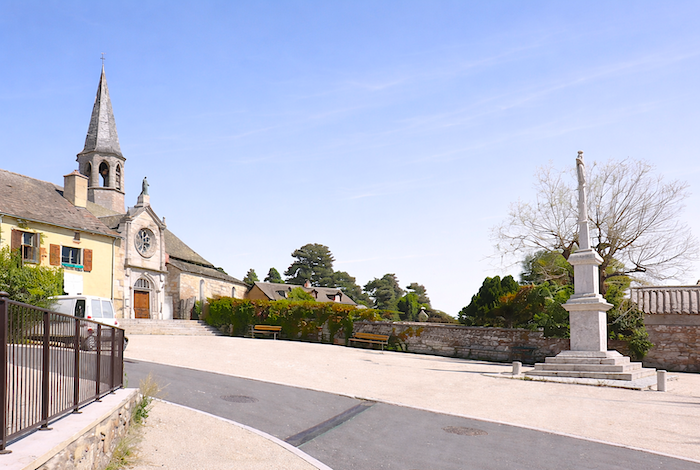
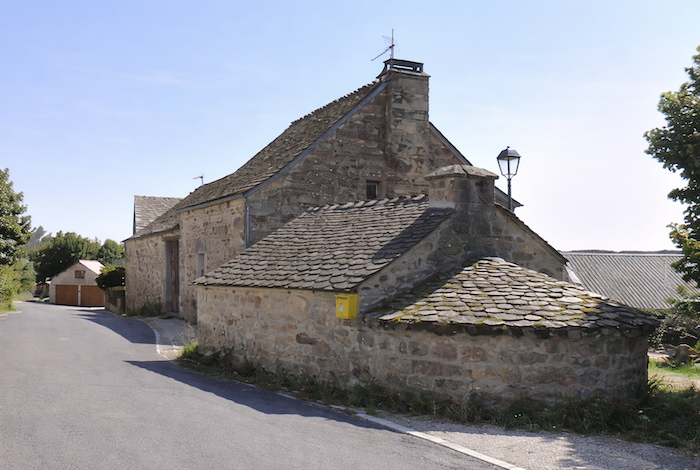
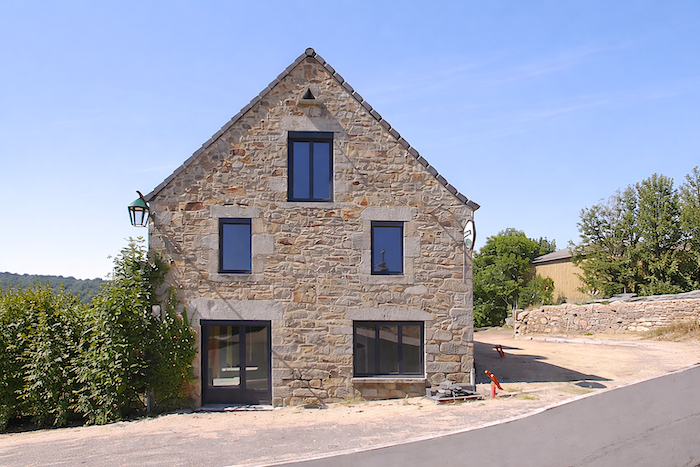
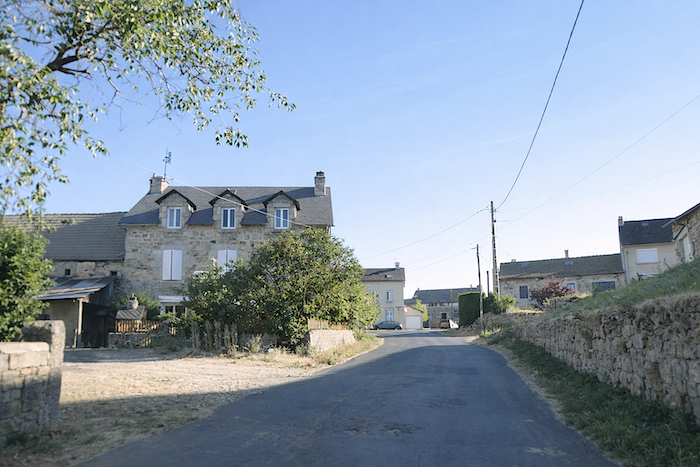
For a while, you return to the heart of a discreet civilization. The houses, often built from stone rubble, seem to gather modestly beneath the elegant silhouette of the campanile, whose slender spire reaches towards the sky. The twelfth-century church, attached to a later building, bears witness to successive layers of history. Its most distinctive feature is its octagonal bell tower, where bells sheltered beneath stone slates catch and reflect the light with a gentle metallic glow. Here, everything is granite, both the raw material and the memory of the place.
|
 |
 |
|
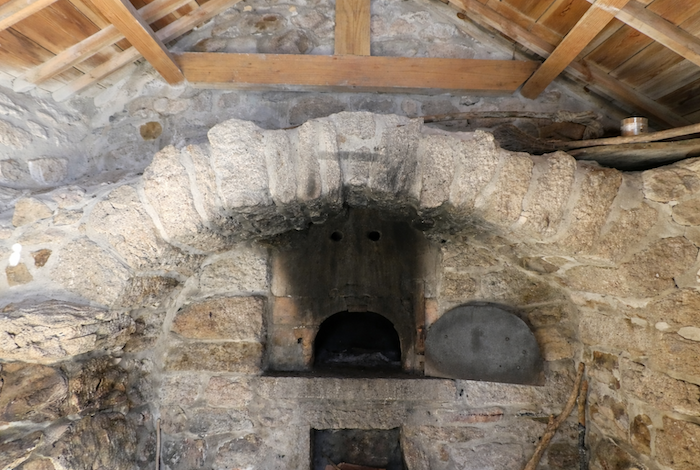
On the village square stands an old communal bread oven, a humble reminder of a once-shared way of life. Approaching it, one can almost imagine the warmth of freshly baked bread lingering inside, as though the embers deep within had never entirely gone out.
|
 |
 |
|
Everywhere, pale granite asserts its presence, unifying façades and walls alike. Behind houses whose shutters are often closed, silence seems to prevail, as though the inhabitants, remaining discreetly in the background, have left the village to the measured footsteps of passing pilgrims.
|
 |
 |
|
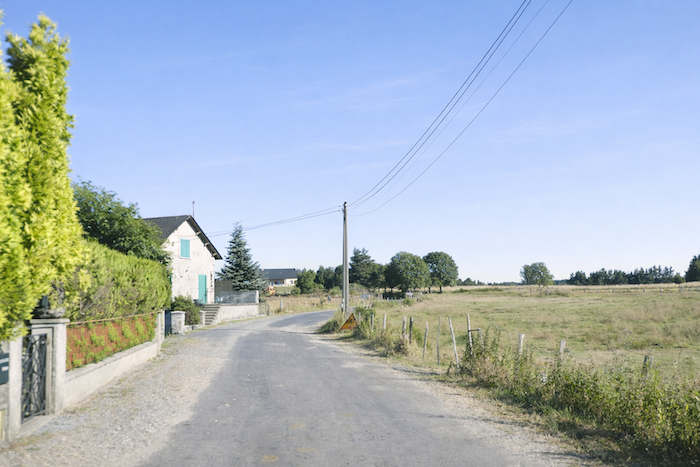
Throughout these scattered hamlets and villages, religious symbols are naturally woven into everyday life, marking the landscape as much as the customs of its inhabitants. Faithful to its course, the GR65 leaves the village along a small paved road that stretches almost perfectly straight towards the horizon.
|
 |
 |
|
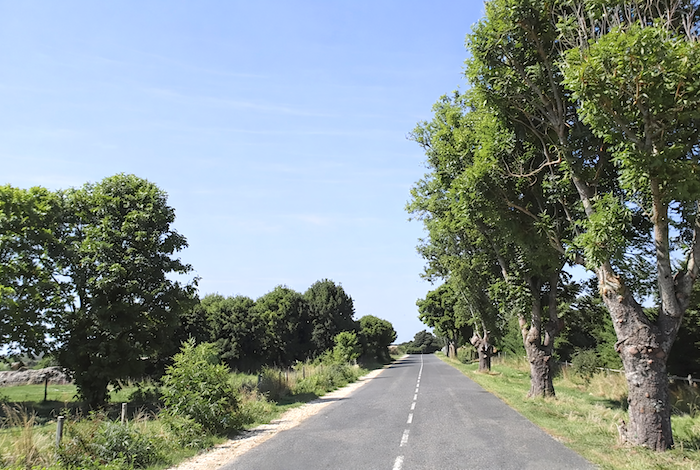
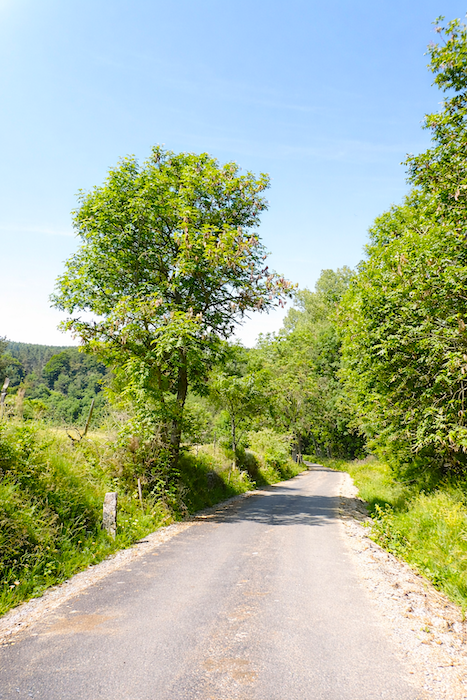
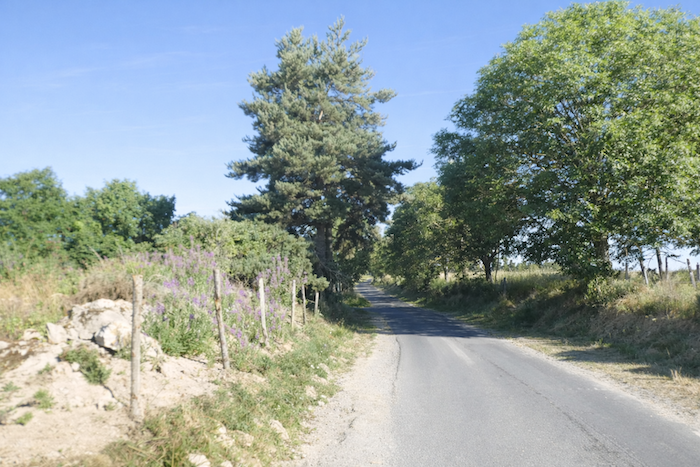
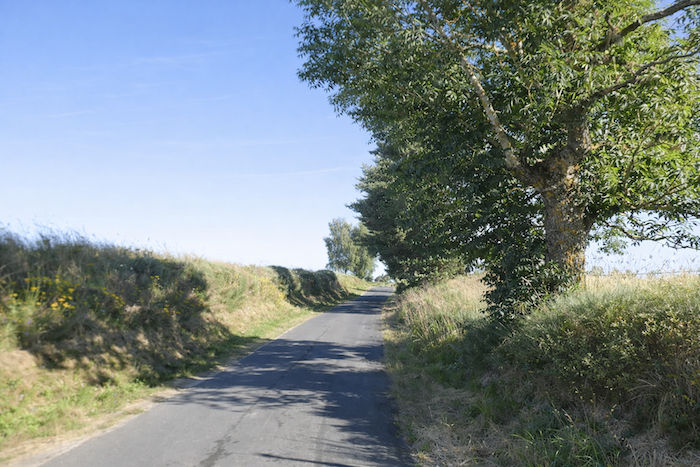
The road soon adopts a gentle indolence, running almost imperceptibly beneath a light canopy of pines and ash trees, among patches of broom that brighten the countryside.
|
 |
 |
|
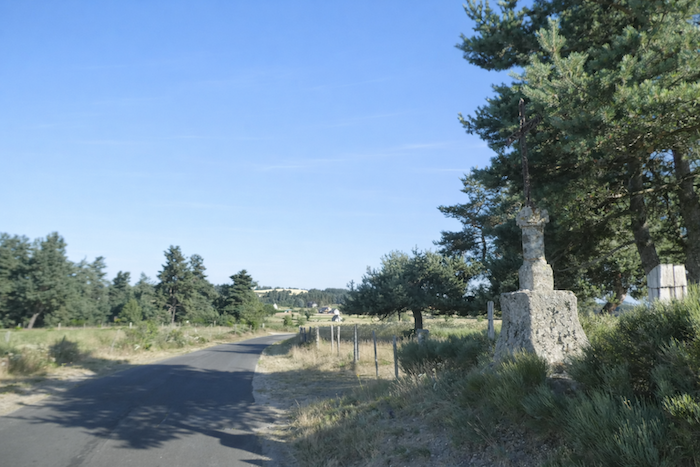
A little further on, another granite cross stands beside the road, an immobile sentinel of a former devotion whose echoes now seem gradually to be fading away.
|
 |
 |
|
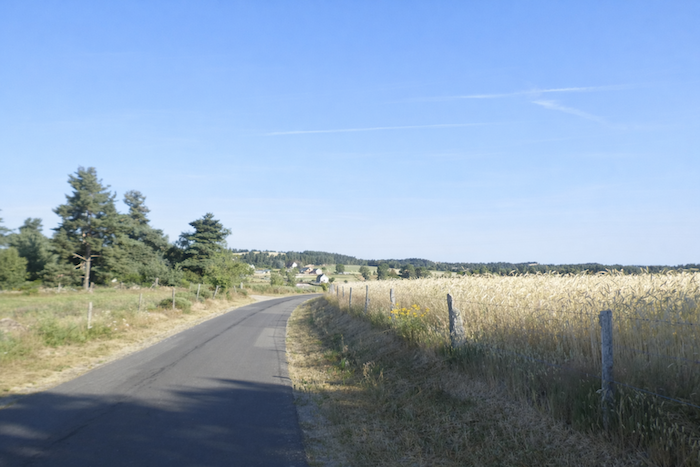
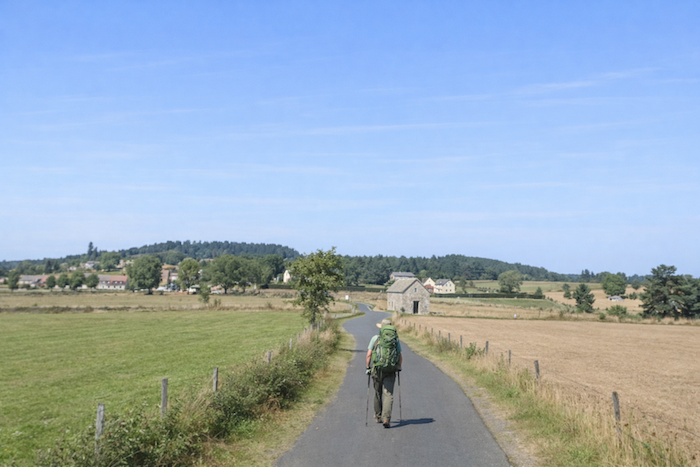
The road then winds through meadows and fields of triticale and oats, tracing its line through cultivated land. Before long, the solitary Bastide Chapel appears ahead, while behind it the houses of Lasbros emerge at the edge of the view.
|
 |
 |
|
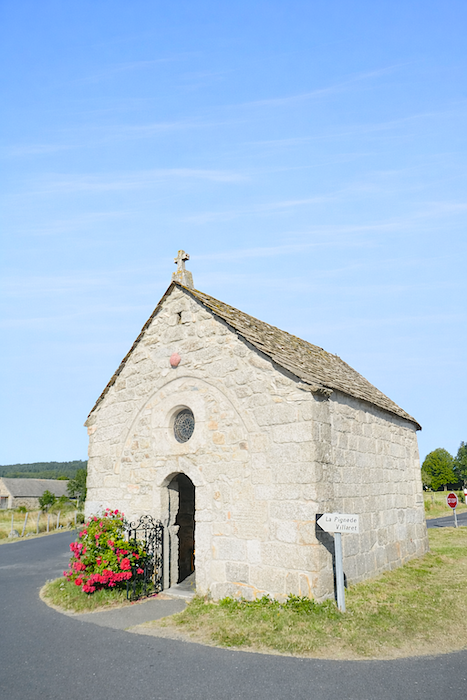
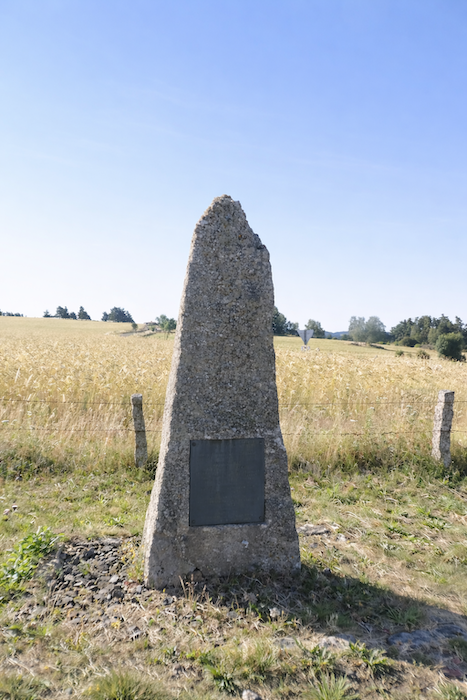
At the end of this straight stretch, which, like everything here, eventually comes to an end, the modest and isolated Bastide Chapel appears at an almost improbable crossroads. It takes its name from the Bastide Grandviala family, who once helped restore its walls. Formerly dedicated to the Holy Cross, it is now dedicated to Our Lady of La Salette. Along the Camino de Santiago, it is rare to find chapels whose doors are open to visitors. Yet this one welcomes hikers inside. You may enter, linger, and contemplate the barrel-vaulted nave and the rough stonework that preserves the memory of centuries. Here, pilgrims find a place of silence and reflection, where they may offer prayers to Our Lady of La Salette, who appeared in 1846 to two young shepherds in the mountains of Dauphiné. Nearby stands a granite column erected in memory of a local canon, a final sign of human presence within this open landscape.
|
 |
 |
|
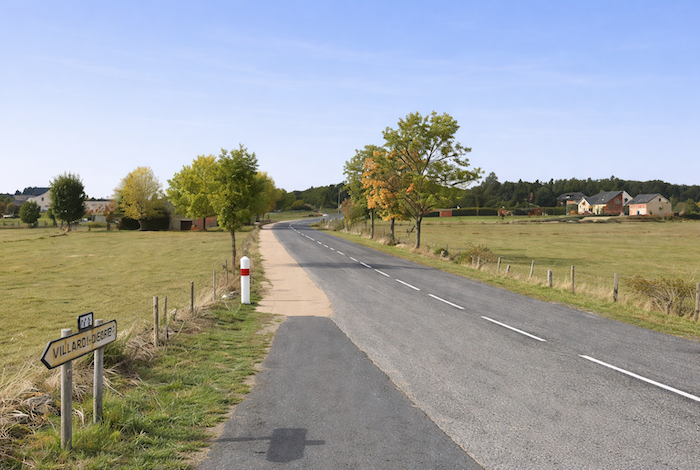
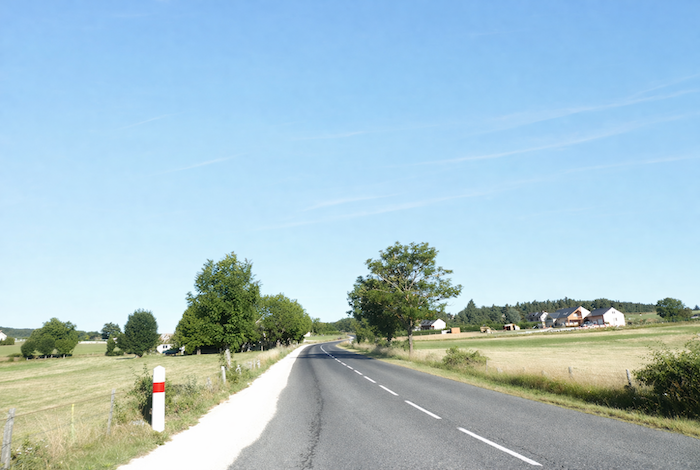
Immediately beyond the chapel, the GR65 follows a narrow path running alongside the D987 road towards Lasbros. Here in Aubrac, traffic remains sparse, and silence and open space still dominate. Perhaps one day the route planners will succeed in diverting the route across the surrounding open countryside, once the local farmers agree to such a change. For the Camino is never fixed. It evolves, adapts, and is continually reinvented through time and through those who use it.
|
 |
 |
|
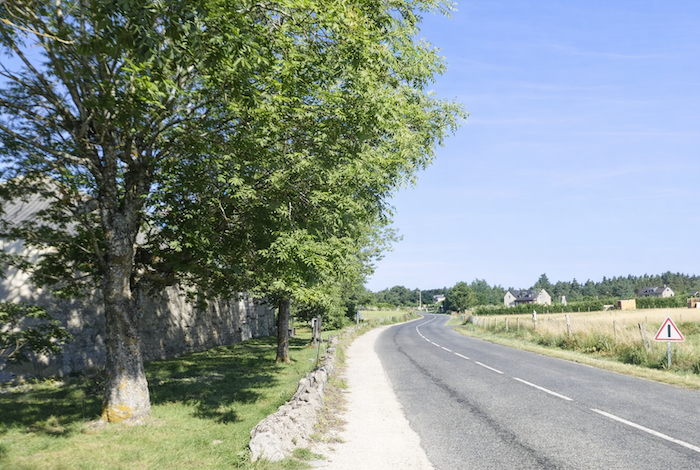
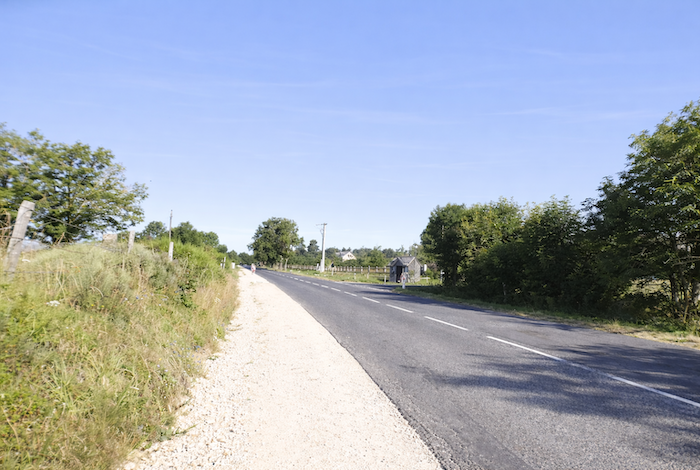
Gradually, the landscape changes character. Broadleaf trees, especially ash trees, begin to outnumber the conifers, bringing a softer and more fluid presence to the scenery.
|
 |
 |
|
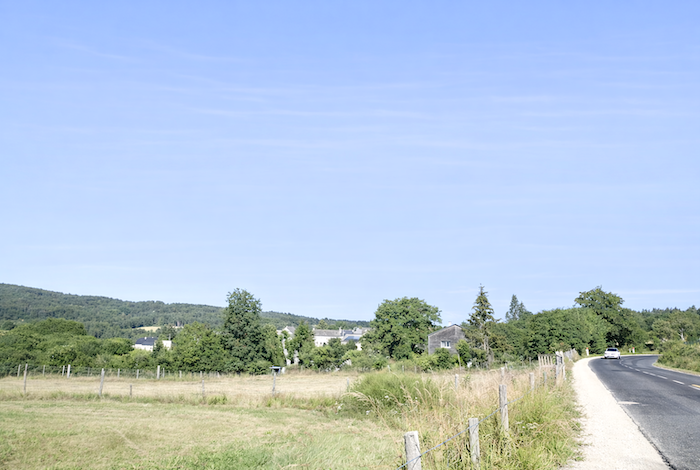
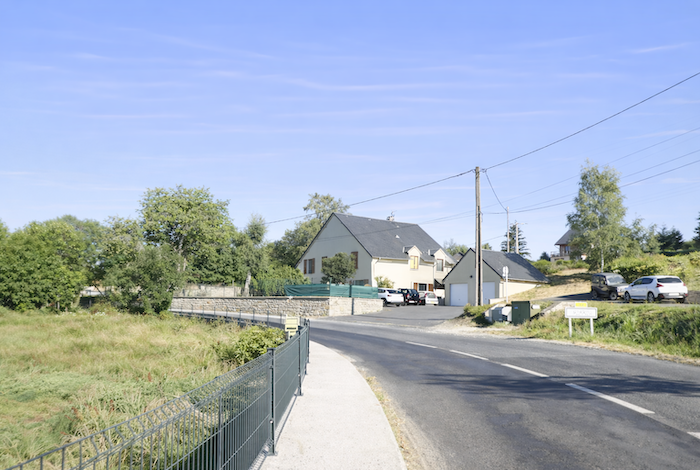
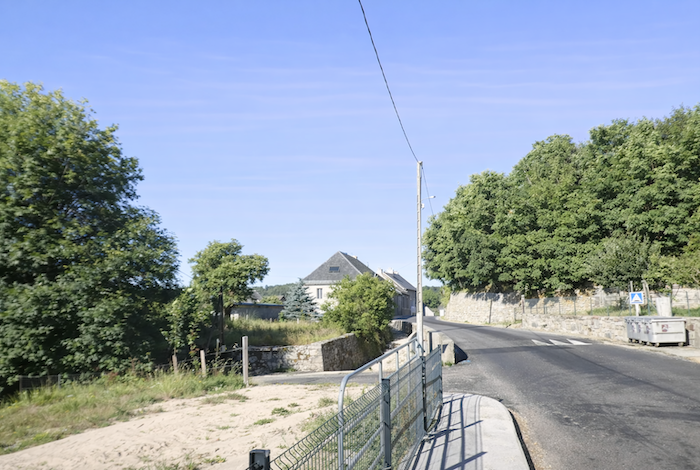
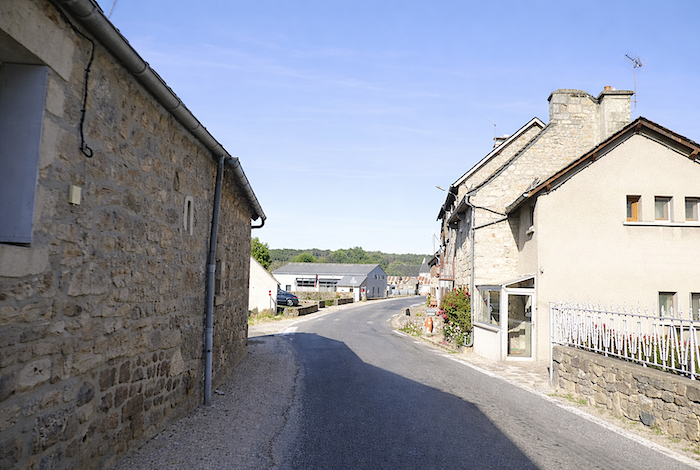
The road then reaches Lasbros, whose lower section forms a remarkable hamlet, compact and closely grouped together, bathed in pale grey tones. The houses, solid and imposing, seem to have been extracted from the very ground beneath them. Built from carefully cut granite blocks, sometimes combined with volcanic stone, they display an architecture that is both rugged and harmonious. Their low, narrow windows suggest a discreet way of life, allowing one to observe without being observed, a manner of inhabiting the world characteristic of the people of these rural regions.
|
 |
 |
|
Here, the GR65 simply follows the departmental road, which is punctuated by numerous speed bumps serving as constant reminders of caution. Travellers will nevertheless find places to eat and stay, welcome stops along the route.
|
 |
 |
|
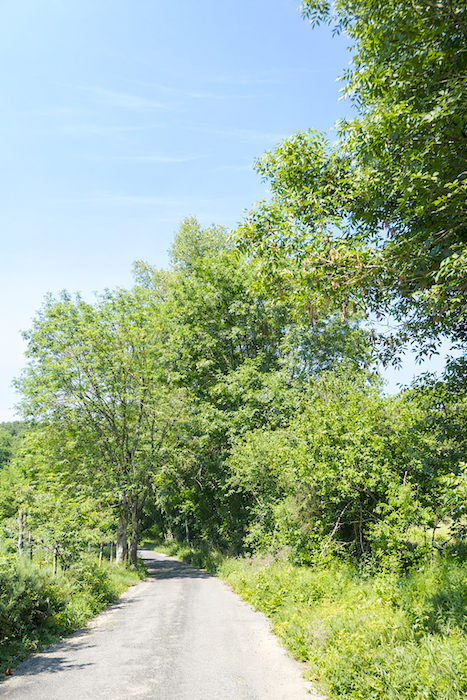
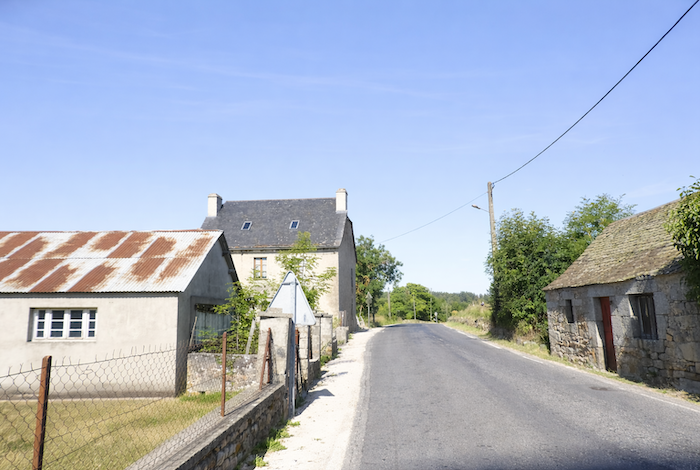
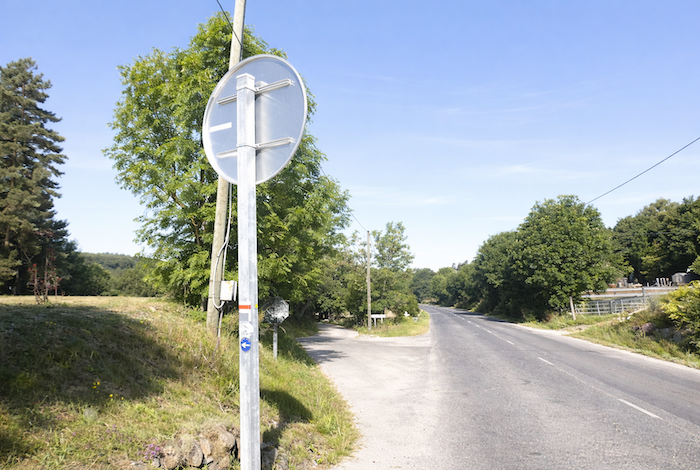
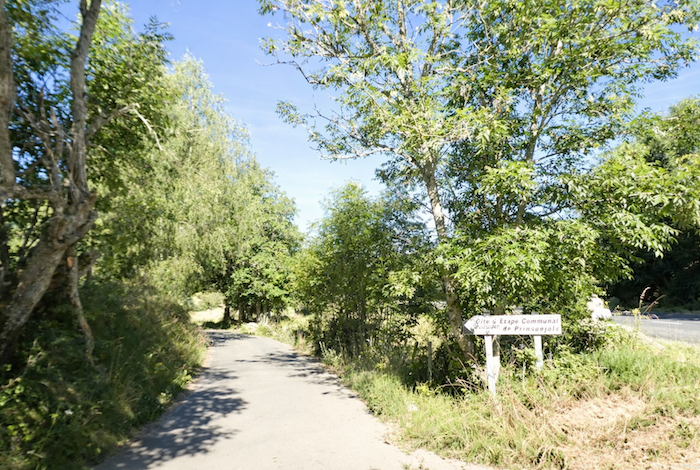
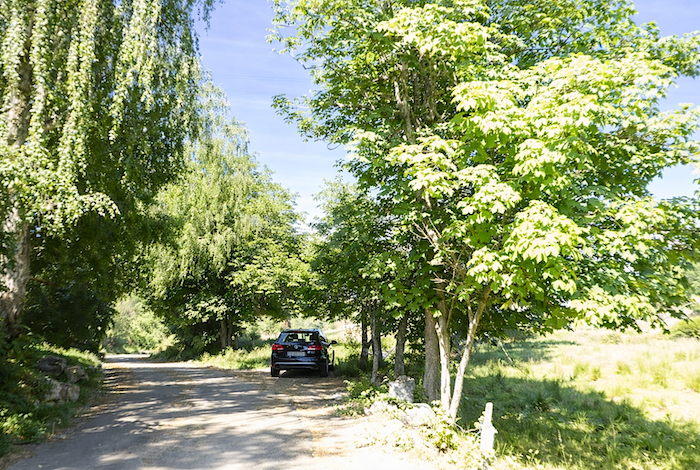
Leaving Lasbros, the GR65 quickly abandons the departmental road and bends downhill, entering woodland along a discreet ribbon of tarmac almost swallowed by the vegetation.
|
 |
 |
|
Here, greenery seems to flow from every direction, almost excessively, as though the earth itself were exhaling its sap. One might have believed, only moments earlier, that broadleaf trees had been left behind for good in favor of solitary pines. Yet this is not the case. Human intervention has shaped these woods, diversifying the species and restoring an unexpected richness to the landscape.
|
 |
 |
|
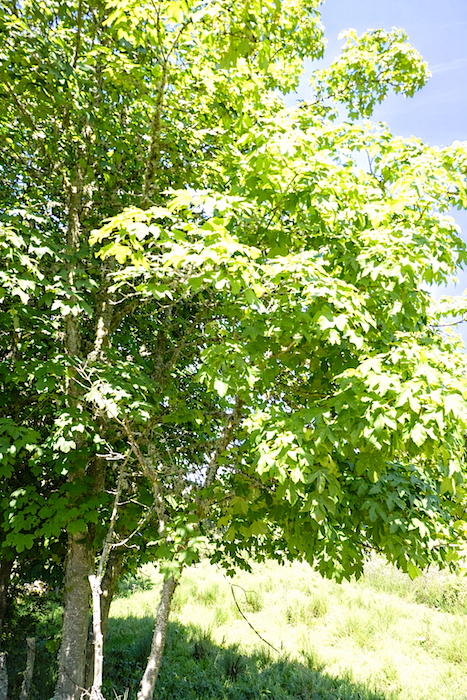
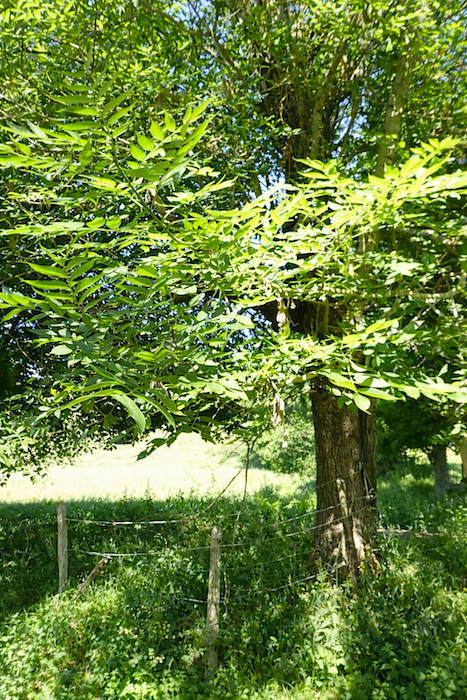
Trees often seem to seek companionship. While pines readily accept solitude, broadleaf species appear to prefer community life. In this dense woodland they gather in abundance. Majestic oaks, generous chestnut trees, Montpellier maples, and field maples mingle their foliage, accompanied by discreet hazel trees and dense hornbeam stands, creating a rich, abundant, and almost intimate woodland world.
|
 |
 |
Section 3: Towards “Les Quatre Chemins”, a former legendary place on the Camino de Santiago
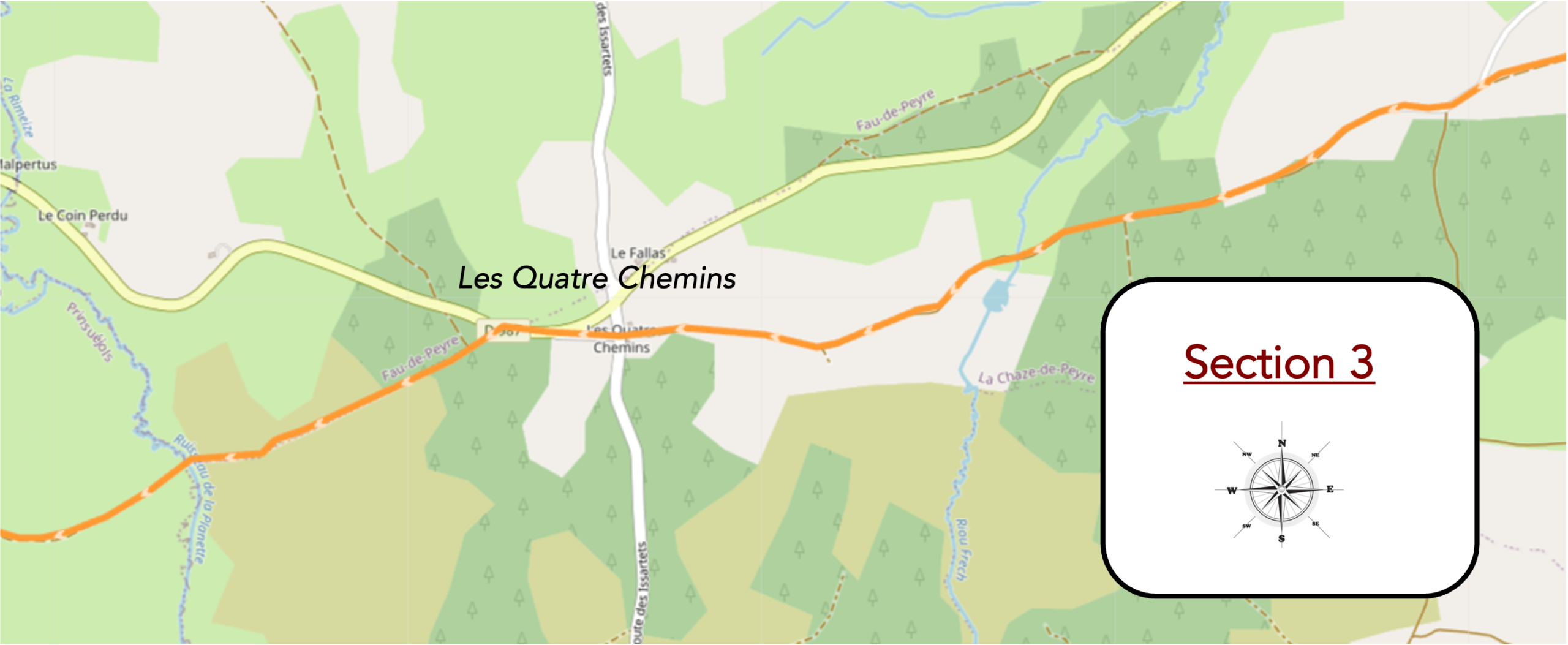
General overview of the route’s challenges: a completely easy stage with no particular challenges.
|
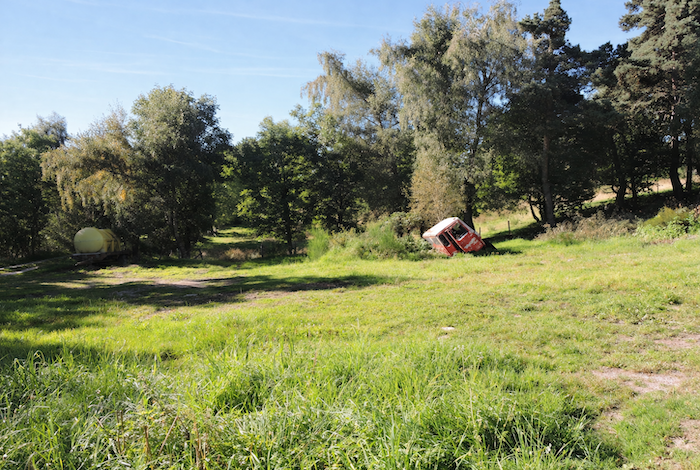
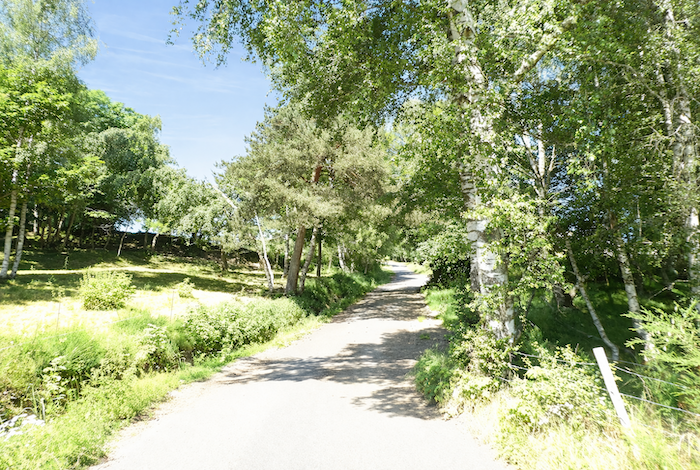
A dirt road climbs on the far side, approaching the edge of the woodland, still enveloped by this abundance of broadleaf trees where chlorophyll seems almost to overflow, like sap in excess.
|
 |
 |
|
Then, little by little, the pines reappear, their more slender silhouettes mingling with the denser mass of the broadleaf trees, creating a quiet dialogue between two vegetal worlds.
|
|
 |
|
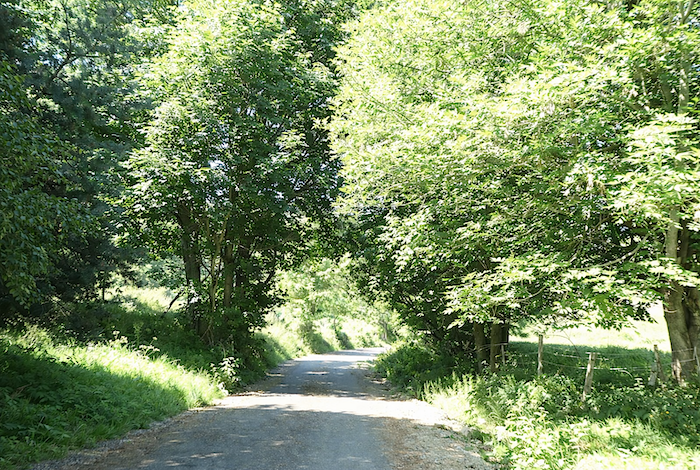
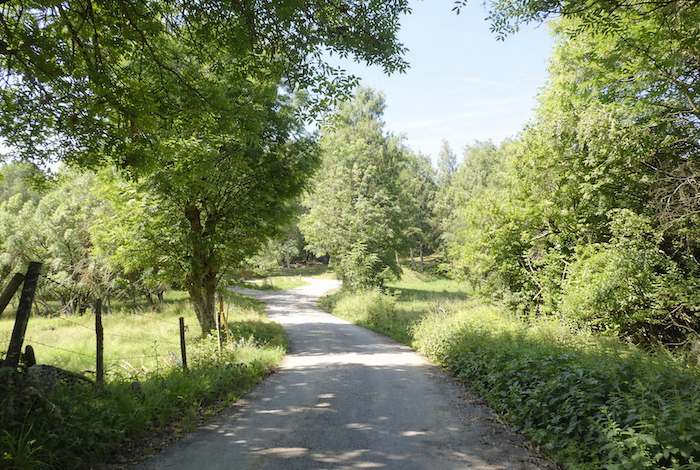
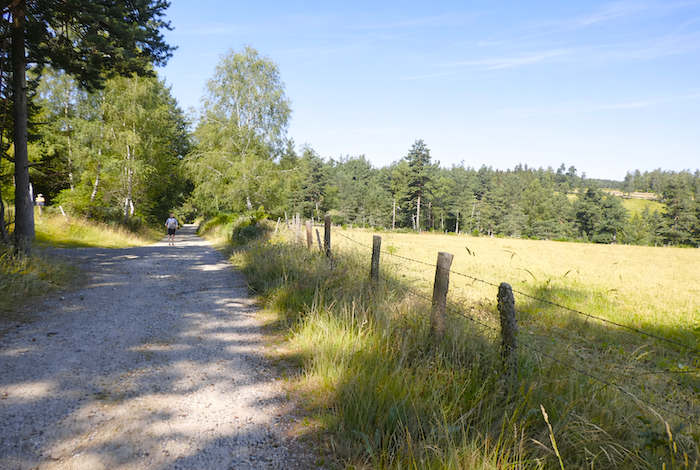
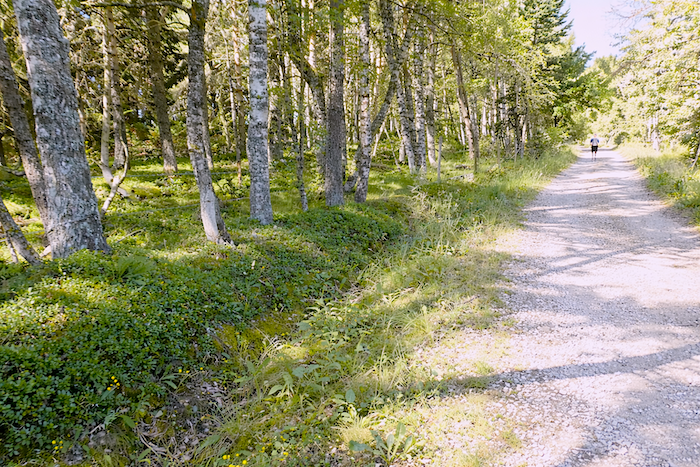
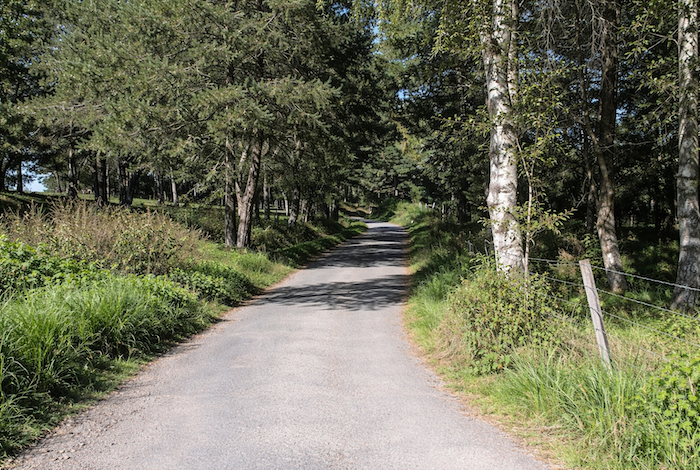
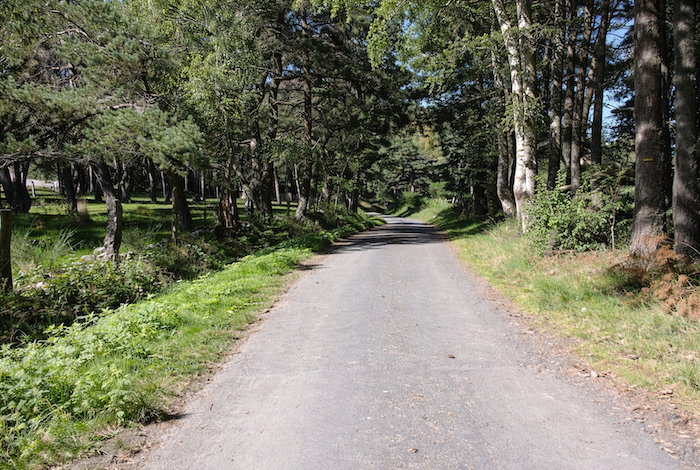
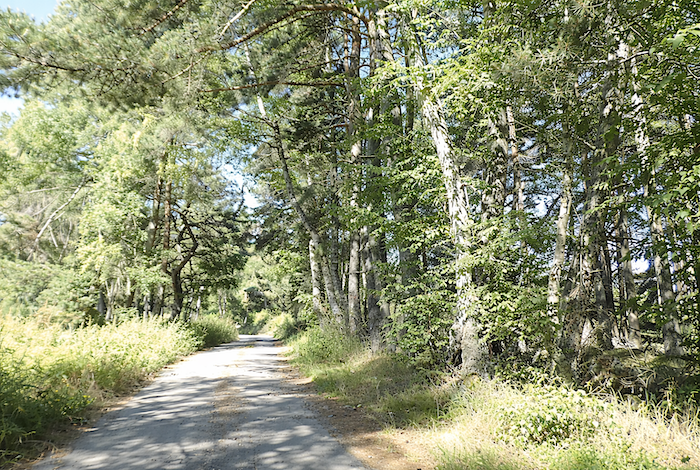
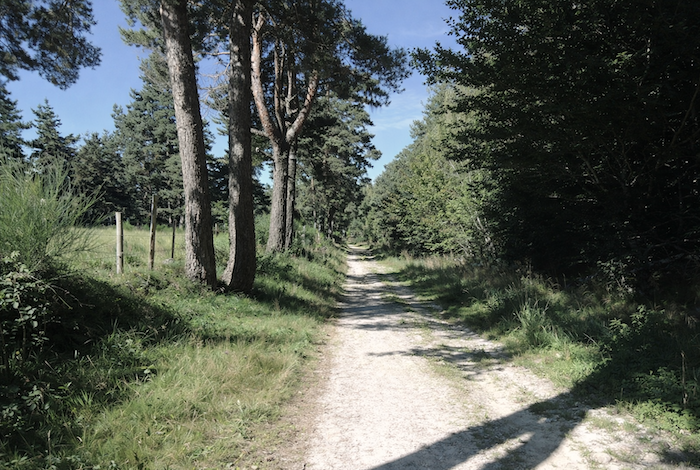
The path gradually widens, almost free of stones, taking on the appearance of a true forest avenue. It runs alongside meadows carefully enclosed by rows of posts strung with barbed wire, intended to keep livestock within these still relatively uncommon grazing areas.
|
 |
 |
|
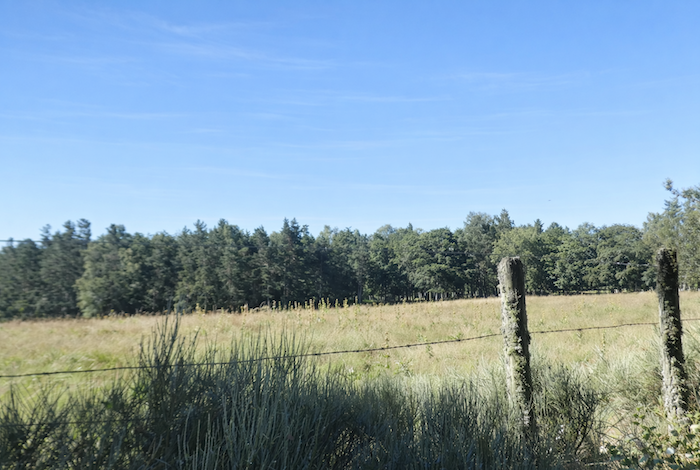
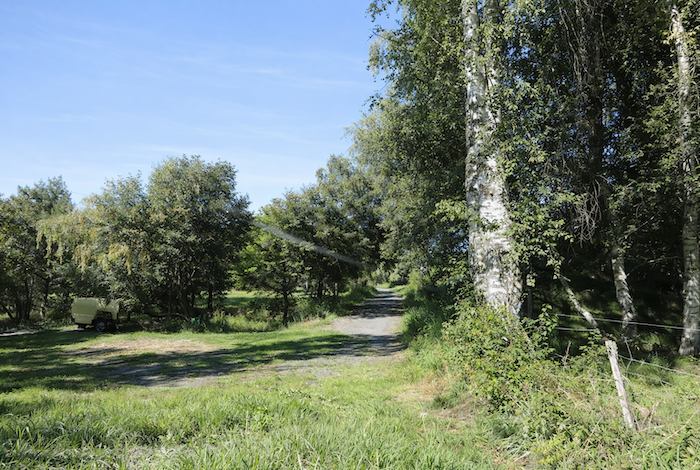
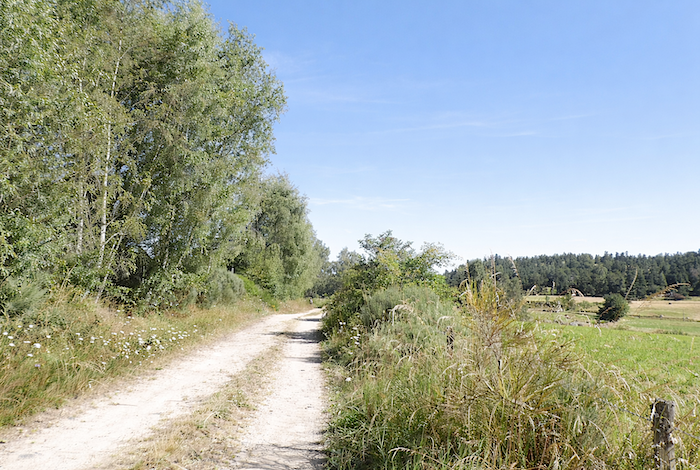
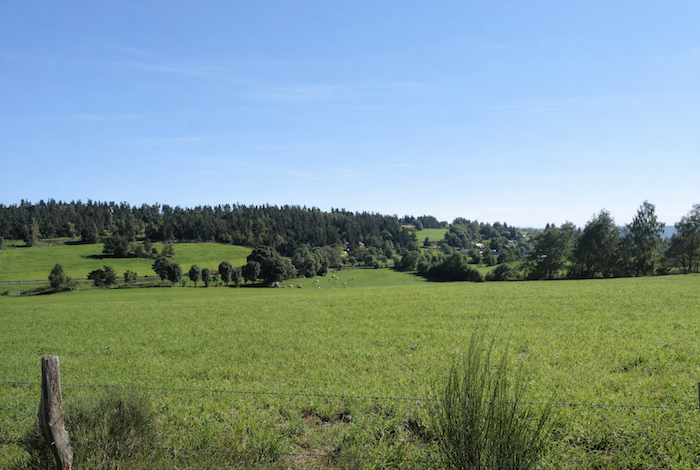
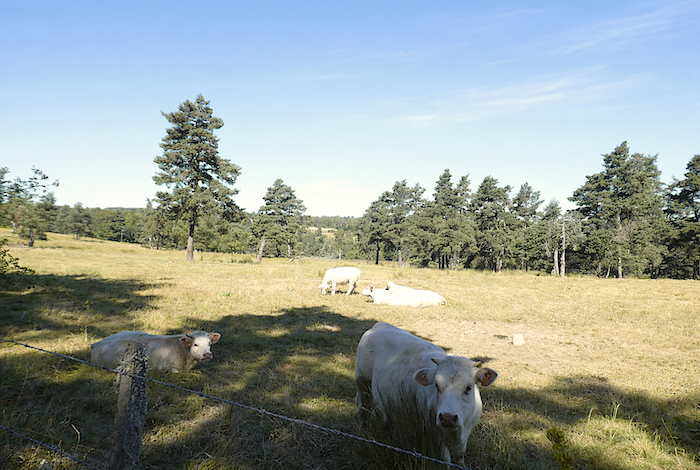
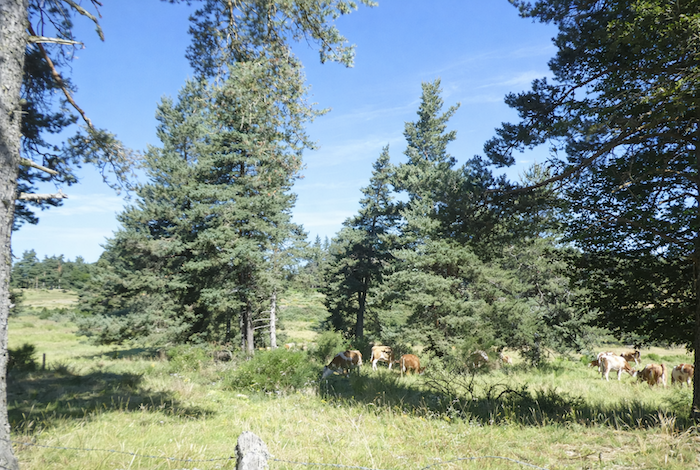
Are we finally about to enter the mythical Aubrac, the one so many stories announce with such reverence? Not yet. Patience is still required. On the horizon there are, for now, no endless moorlands, only the vast meadows typical of Margeride, where Aubrac cattle graze, their coats ranging from pale cream to deep brown, punctuated here and there by modest groves.
|
 |
 |
|
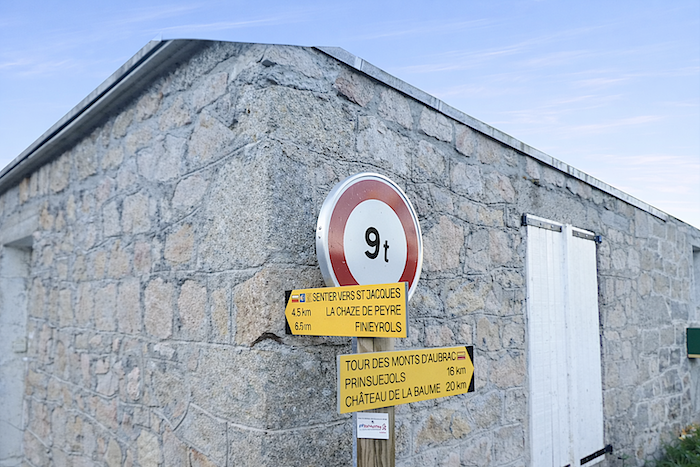
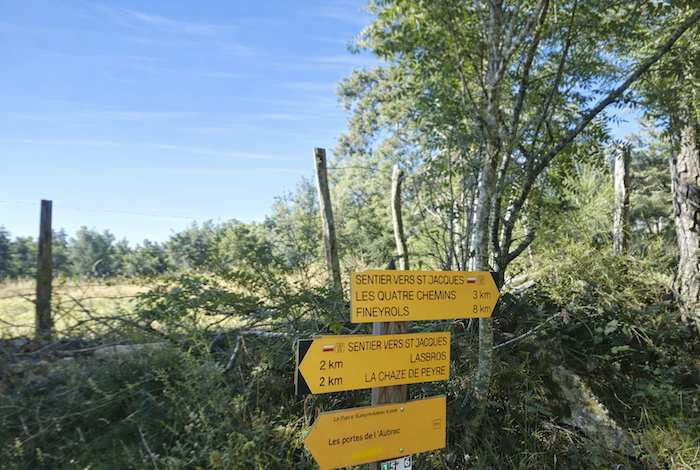
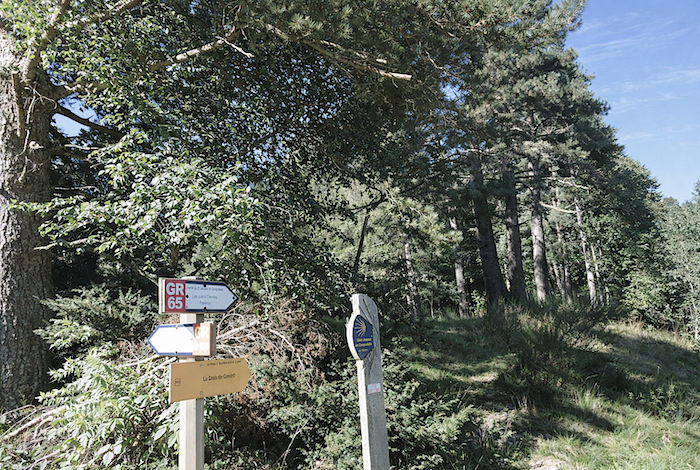
A signpost announces “Les Quatre Chemins”, still three kilometers ahead, a promise of a crossroads yet to come.
|
 |
 |
|
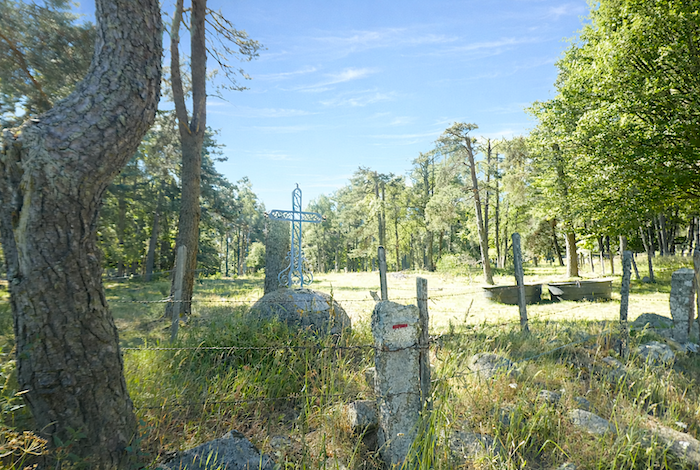
A little further on, almost hidden from view, a metal cross stands slightly back from the road beside a livestock watering trough, a discreet sign within the landscape.
|
 |
 |
|
The packed-earth track continues its slow and peaceful progress beneath the broadleaf trees, but the pines gradually become more numerous, gaining ground without haste.
|
 |
 |
|
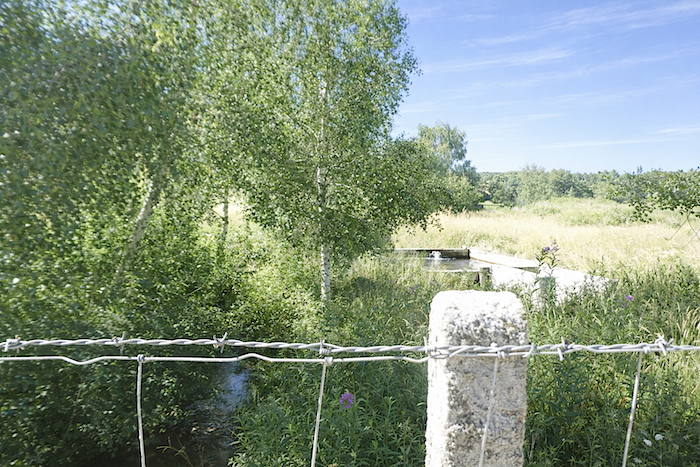
Further ahead, the path crosses the modest Riou Frech stream. Aubrac is threaded with countless watercourses, whimsical streams that seem to appear from nowhere only to disappear again, as though uncertain of their own destination.
|
 |
 |
|
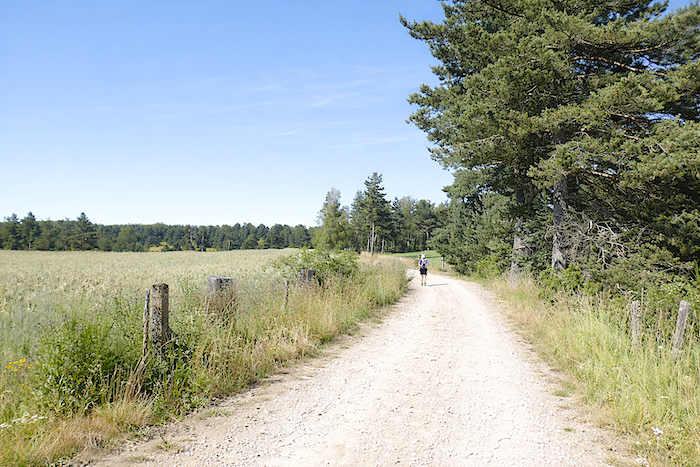
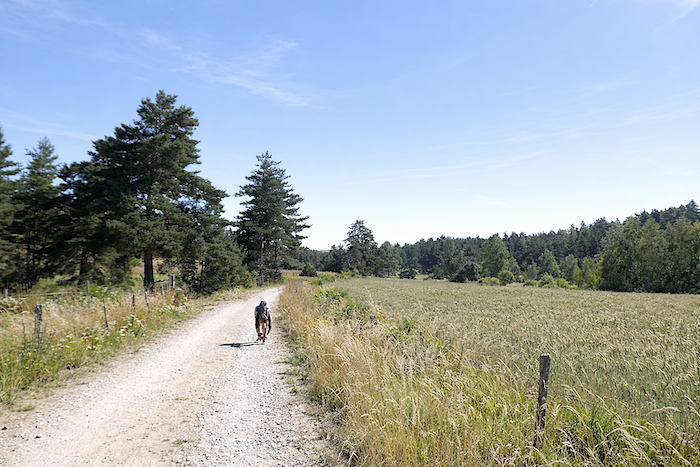
And yet, almost imperceptibly, the landscape begins to change. Moorland appears in subtle touches, diversifying the scenery. The omnipresence of granite reveals itself in the countless dry-stone walls that divide the land into irregular parcels, some expansive, others scarcely larger than handkerchiefs. The slopes are still dotted with small groves of pine and broadleaf trees, but these become increasingly scattered as the ascent towards the high plateau continues.
|
 |
 |
|
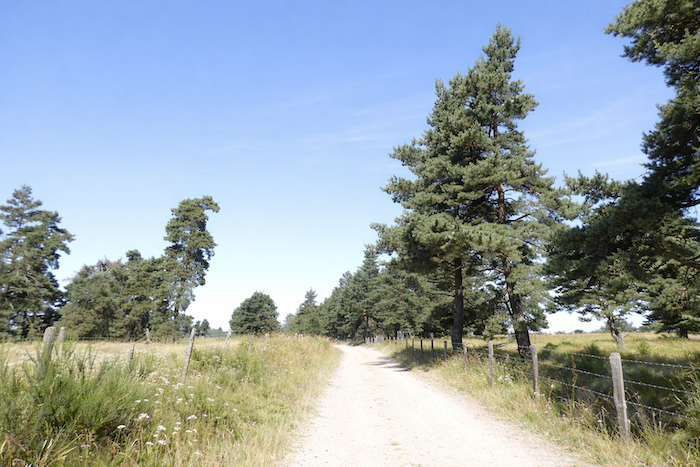
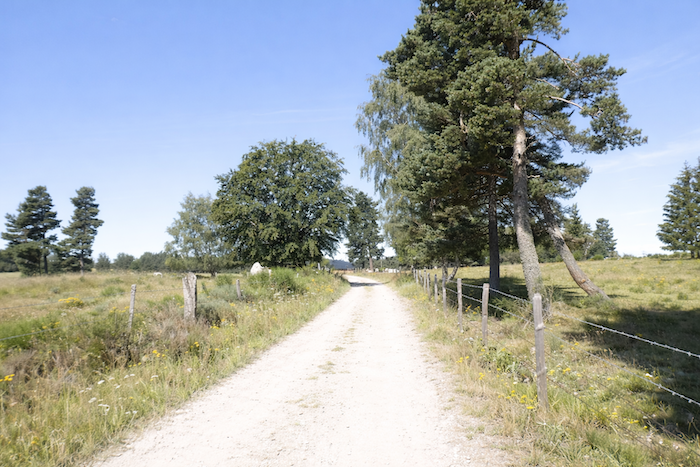
Then, almost suddenly, the landscape opens wide. You will experience the strange sensation of stepping onto a windswept island, a world apart, carpeted with bilberry, boxwood, and juniper. Even the air seems infused with invisible sweetness. Fragrances of resin, hawthorn blossom, and moss mingle together, creating a rich and almost intoxicating perfume.
|
 |
 |
|
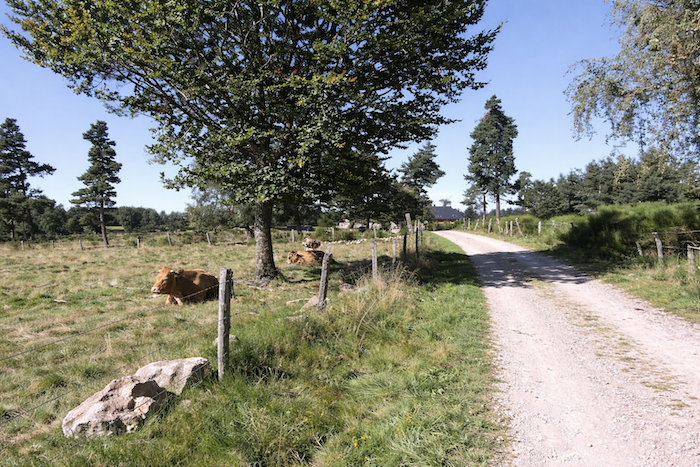
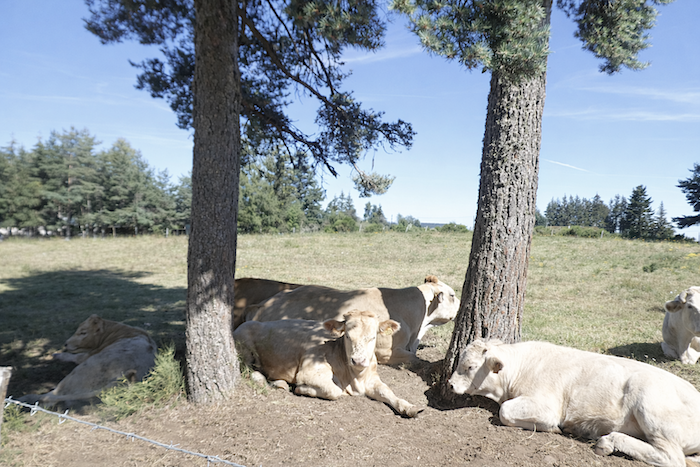
The Aubrac cattle, lounging peacefully in the pastures, scarcely bother to interrupt their tranquility as pilgrims pass by. Long accustomed to these wandering figures, they barely glance at them, detached and almost indifferent.
|
 |
 |
|
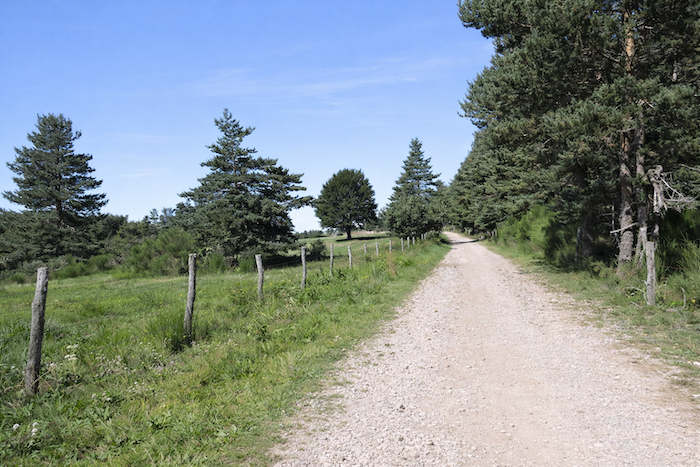
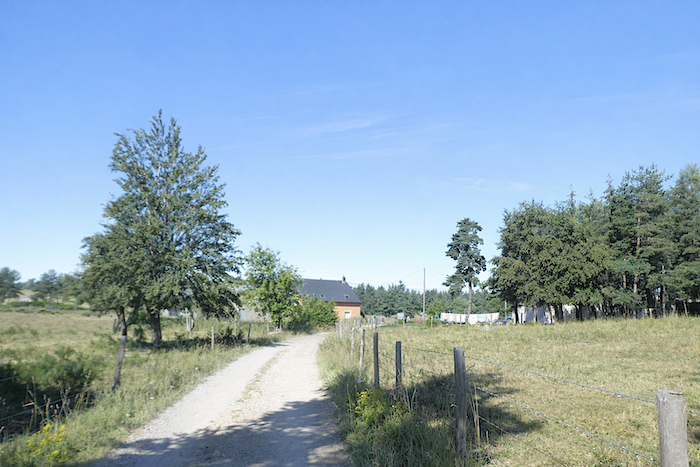
Soon, the path begins to reveal the proximity of “Les Quatre Chemins”, a place both modest and steeped in a unique memory.
|
 |
 |
|
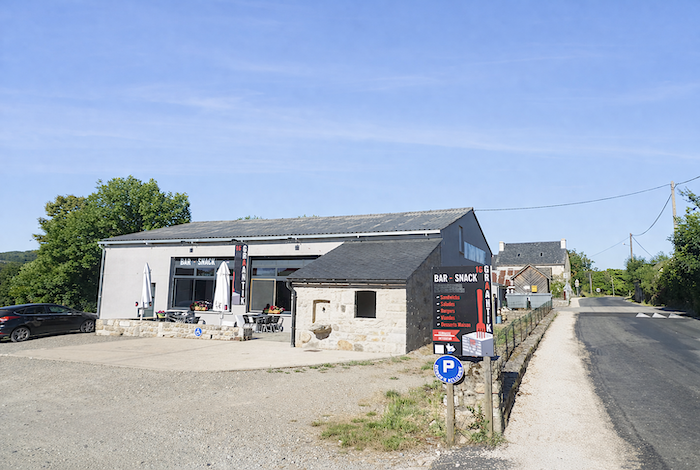
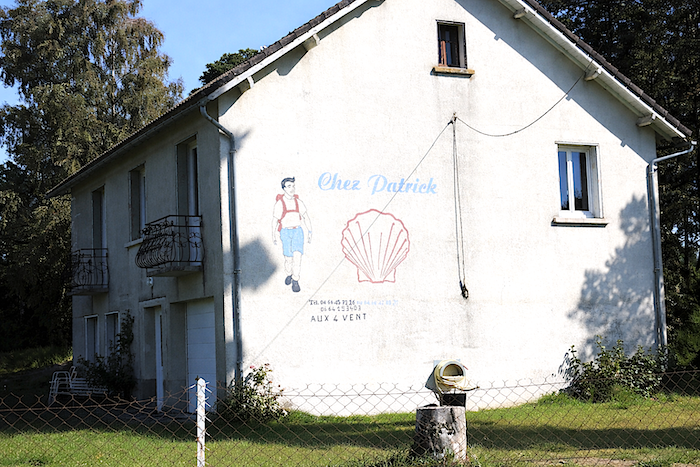
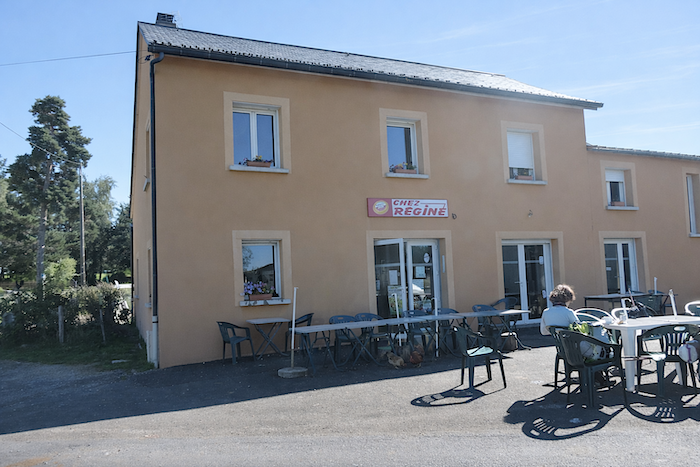
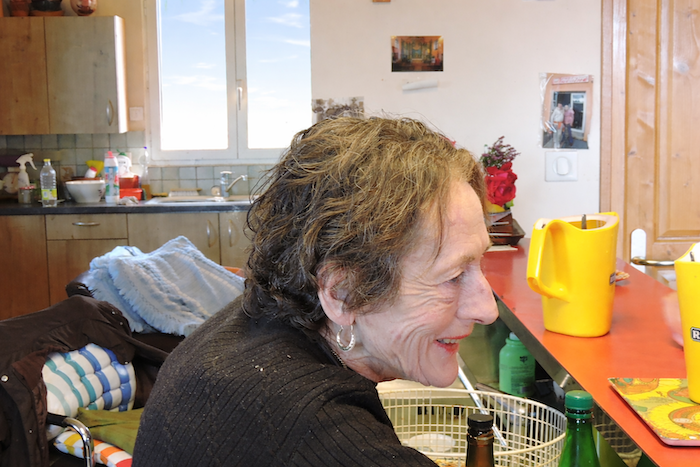
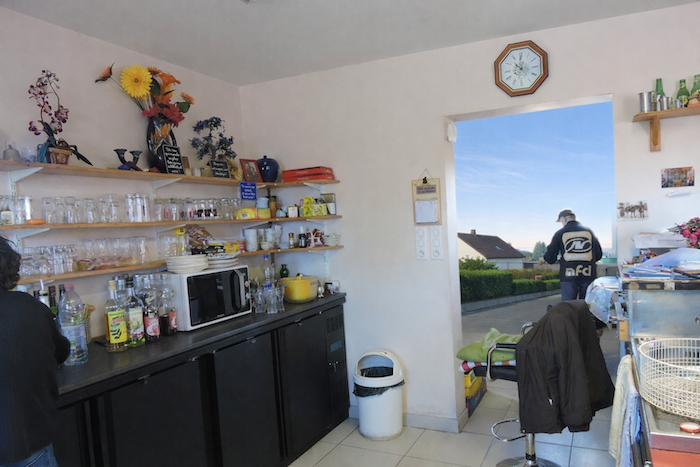
There are only a handful of stone houses here, but above all there is a stopping place that has become almost legendary. The shutters of Régine’s establishment are now closed. She passed away in February 2020, leaving behind a void felt by all who knew this place. The news deeply moved pilgrims, walkers, lovers of Aubrac, everyone who shared timeless moments here, and even those who would only hear about it later.
|
 |
 |
|
Les Quatre Chemins was little more than a crossroads, an isolated café on the edge of Aubrac. Truck drivers, farmers, and pilgrims gathered there, their lives briefly intersecting in an atmosphere unlike any other. Destroyed by fire in 2011, the building has since been rebuilt, yet its spirit belongs to another era. Régine, its emblematic figure, presided over the place with a unique and almost untameable freedom. She was a kind of guardian of the route, reigning over a tavern that seemed suspended outside time. Meaningful glances were exchanged there, silences lingered, and conversations unfolded amid cigarette smoke and glasses of white wine. Nothing about the place fully conformed to ordinary rules, and perhaps that was precisely what made it authentic.
|
 |
 |
|
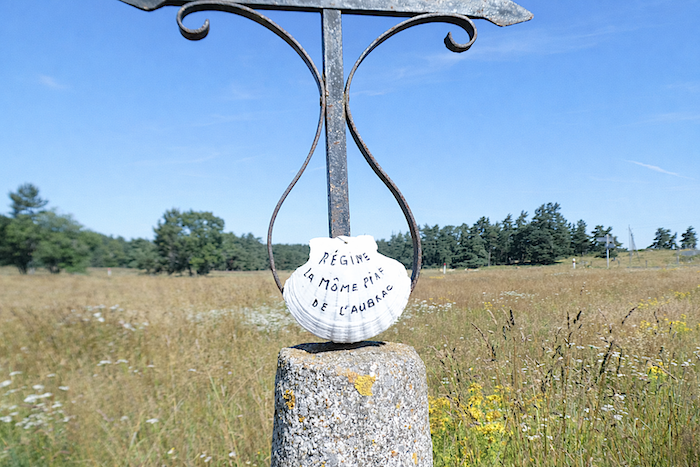
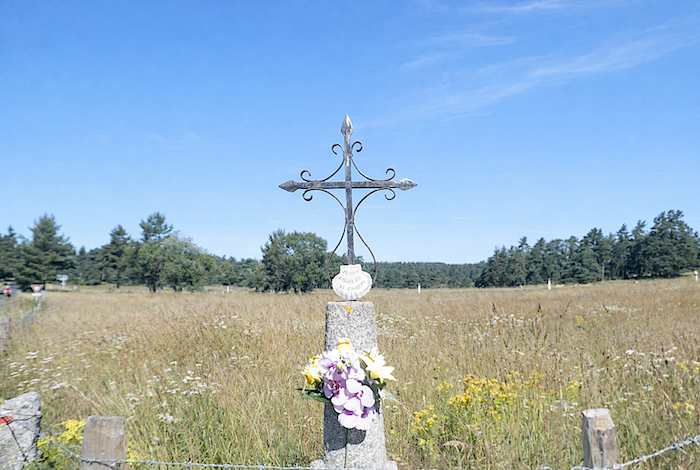
Today, a discreet monument preserves Régine’s memory. May the woman whom some affectionately called the “Little Piaf of Aubrac” continue, from among the clouds, to watch over the pilgrims undertaking their long journey.
|
 |
 |
|
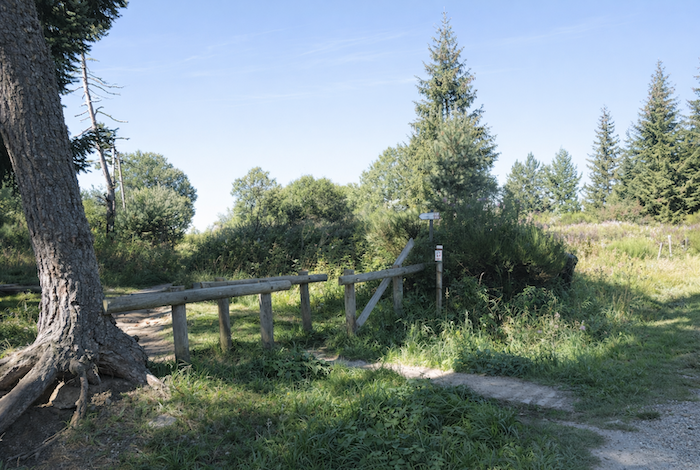
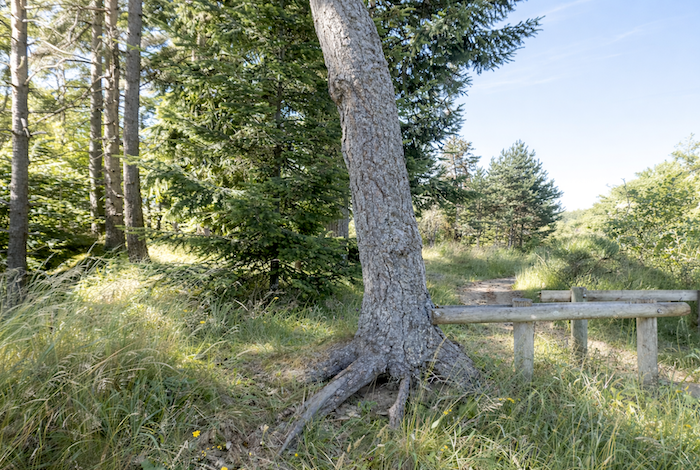
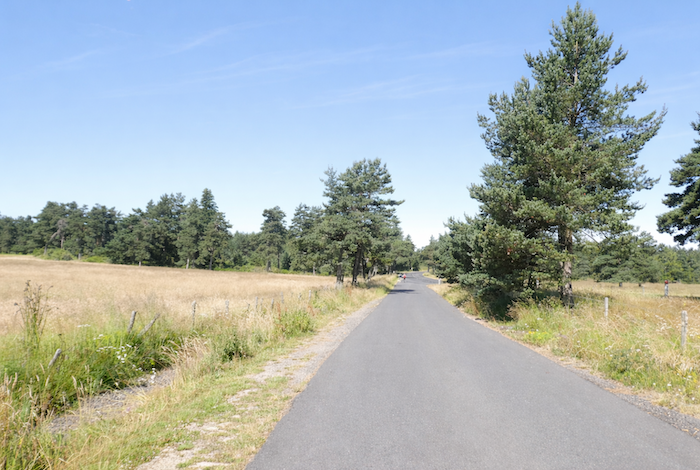
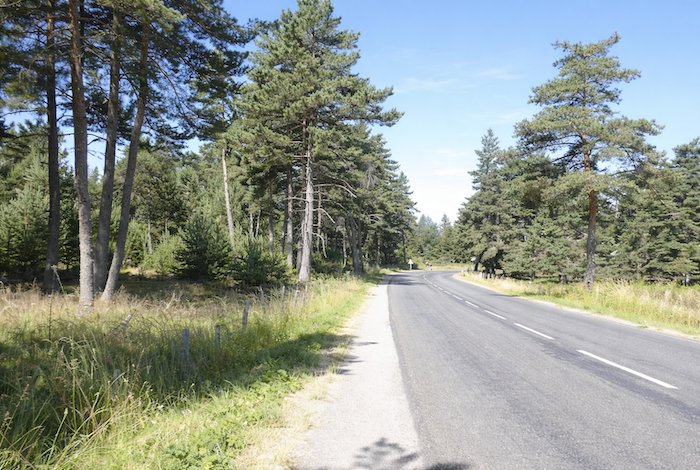
A few hundred meters further along the road, a gate marks what feels like an invisible threshold. Beyond it, the GR65 finally sets out to discover Aubrac in all its grandeur.
|
 |
 |
|
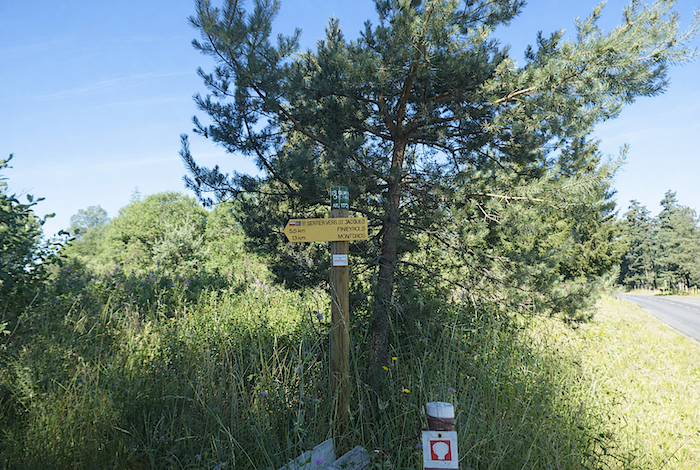
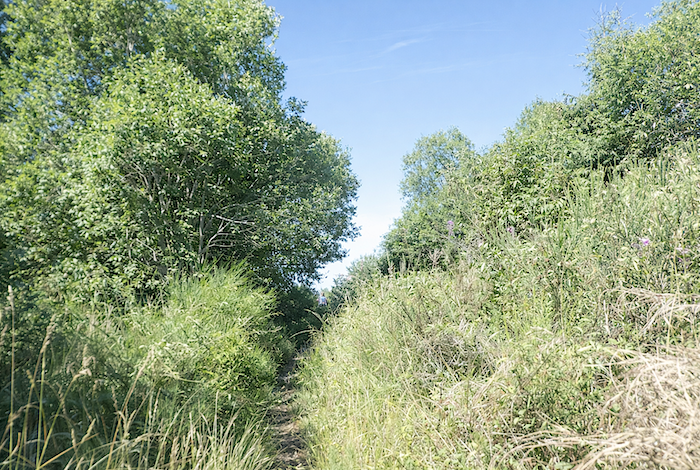
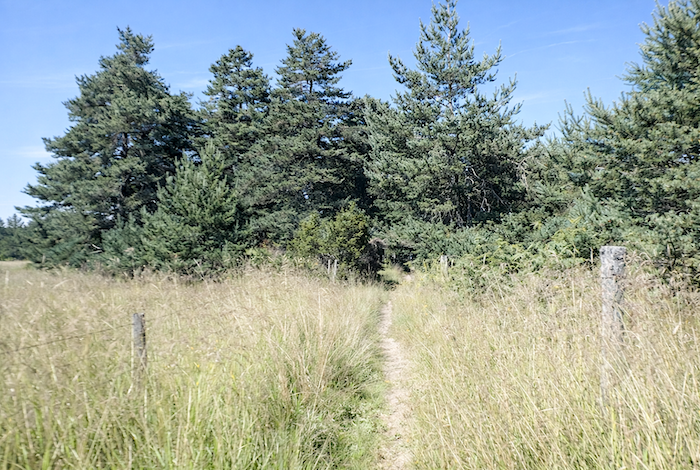
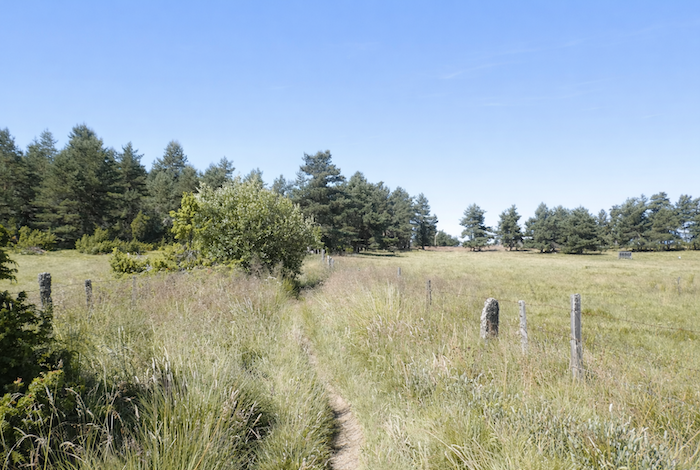
A sign indicates Finieyrols, still more than five kilometers away, almost at the far end of the plateau. Then a narrow trail slips through the tall grasses, as though the landscape itself wished to delay the revelation a little longer, preserving for one final moment the mystery of Aubrac.
|
 |
 |
Section 4 : In the majesty of Aubrac
General overview of the route’s challenges: a completely easy stage with no particular challenges.
|
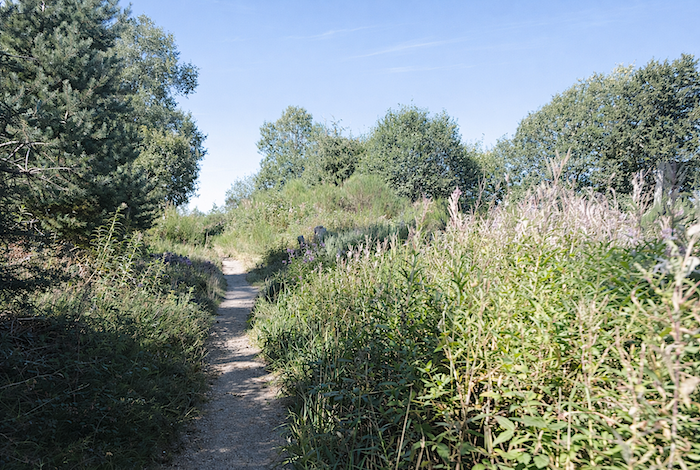
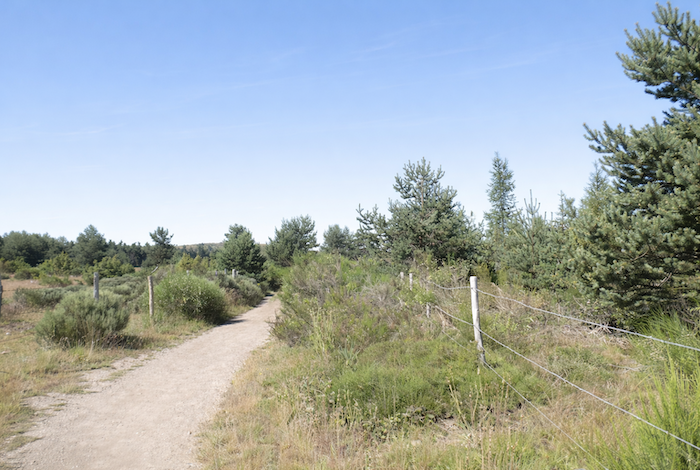
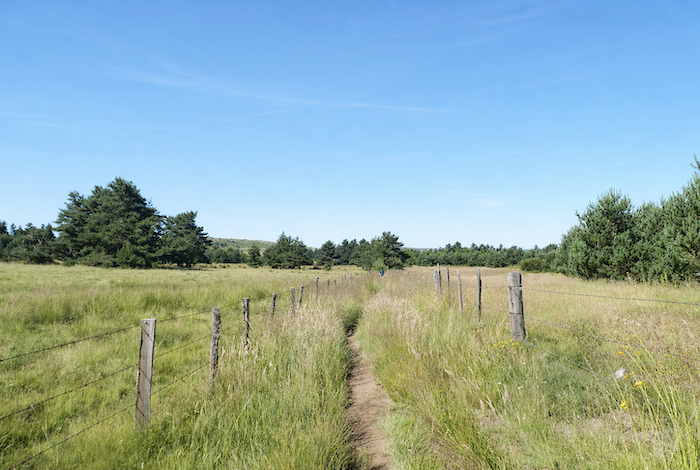
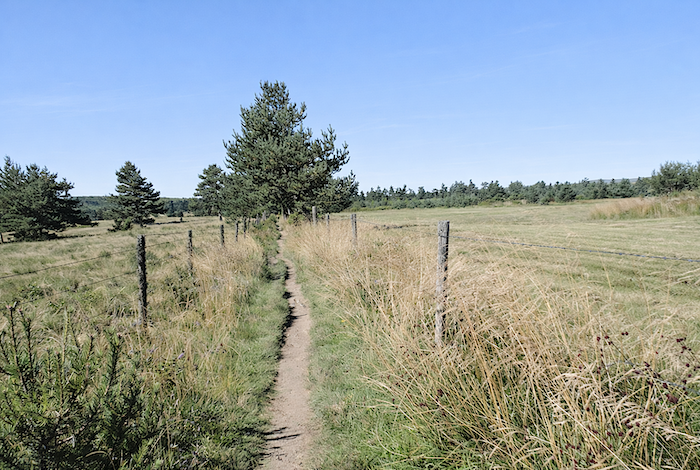
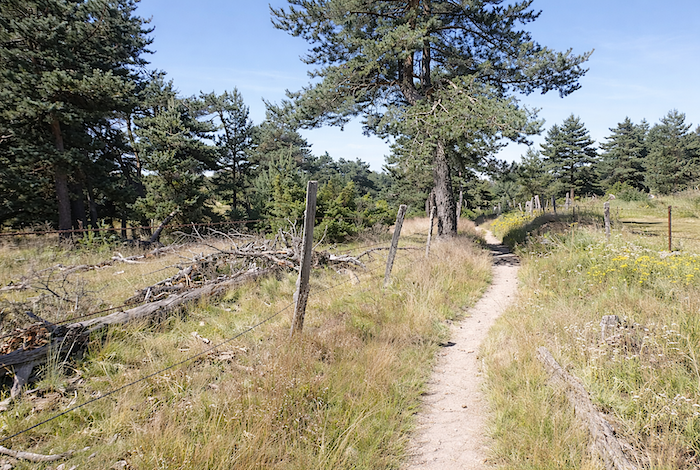
From here onward, it is truly Aubrac that unfolds before the eye in its essential nakedness: few trees, vast open spaces where broom asserts its presence, green during the warmer months, then ablaze with brilliant yellow for those who cross these lands in May or June.
|
 |
 |
|
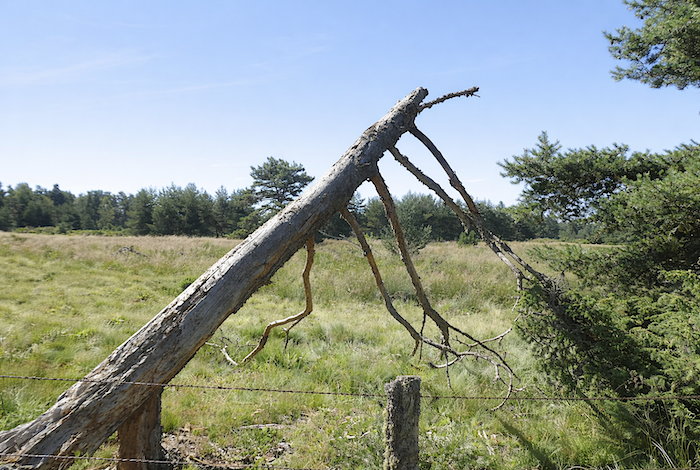
The ground, often strewn with old weathered stumps, still bears the traces of a vanished forested past. Around them, cattle graze in silence, indifferent to their surroundings, on land that spring rains sometimes transform into waterlogged ground. The packed earth of the trail then gives way to fresh, dark humus, soft and spongy beneath the feet.
|
 |
 |
|
 |
 |
|
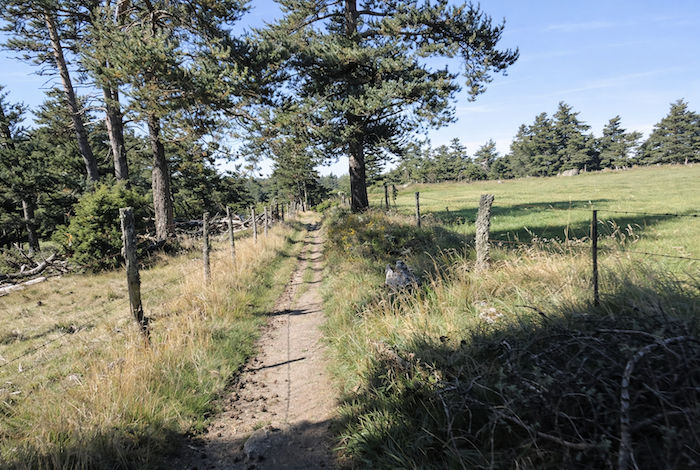
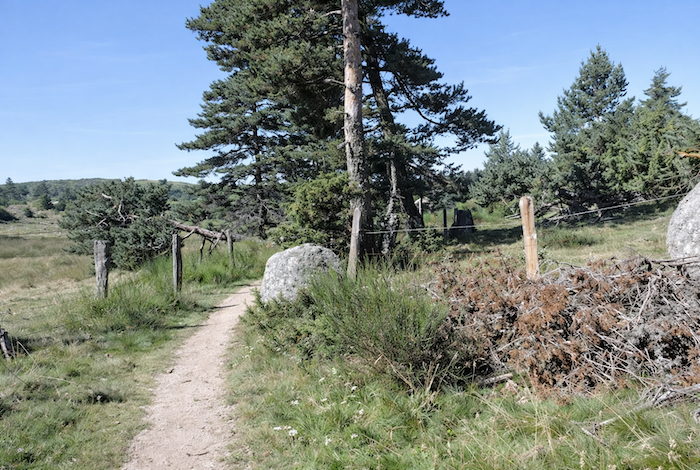
As the trail ventures deeper into the moorland, it narrows, as though absorbed by the immensity surrounding it. Everything here appears immutable, almost beyond time, yet profoundly alive, vibrating far beyond the limits of what the eye can see. You must remember that in the twelfth century these lands still lay on the frontier of the known world. The monks, true pioneers, were among the first to venture here and work the soil. Driven by fierce determination and a desire to withdraw from worldly life, they settled in these supposedly hostile solitudes, inhabited by marshes, wild beasts, and brigands. Through patience and labor, they cleared forests, cultivated barren ground, and brought new fertility to the land.
|
 |
 |
|
 |
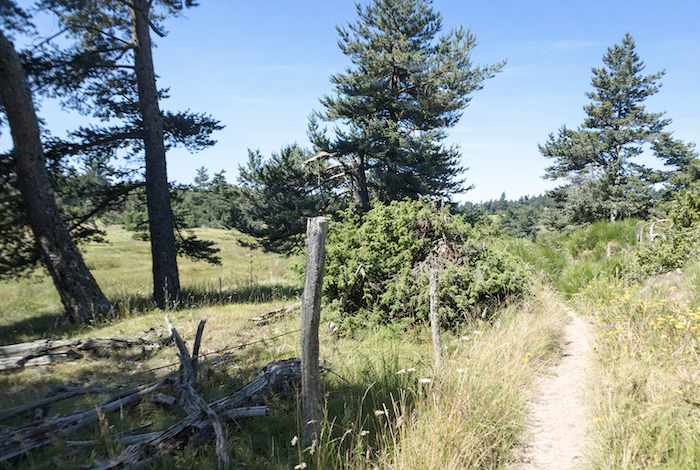 |
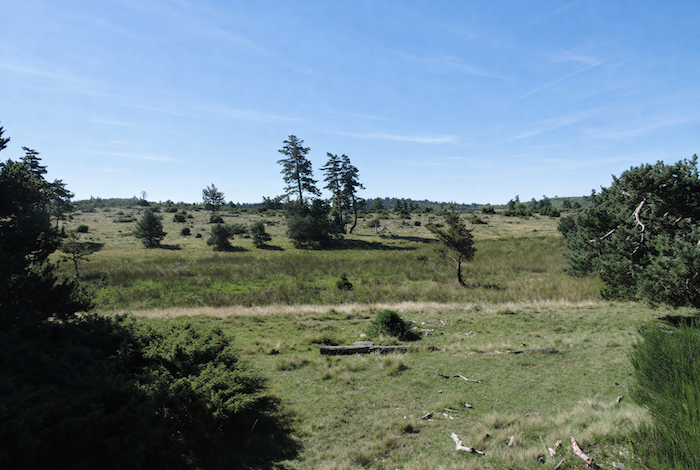
Naturally, these landscapes change dramatically with the seasons. In spring, they are covered with an abundance of flowers: daffodils, narcissi, yellow gentians, and countless wild species create a dazzling mosaic of color. Yet when summer arrives, much of this profusion fades away, replaced by a more mineral austerity as the plateau regains its bare and stripped-back character.
|
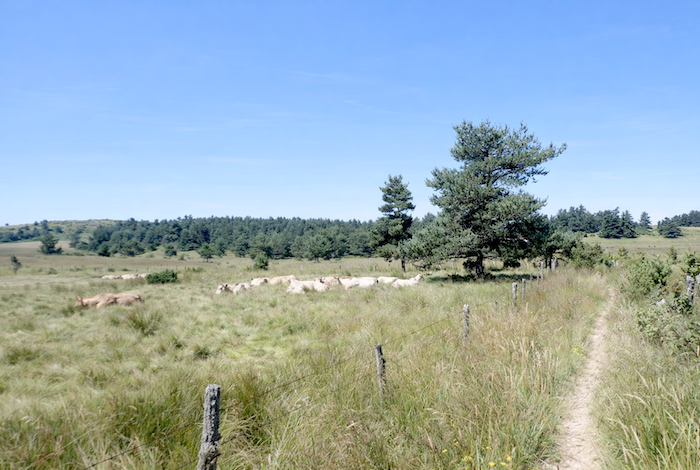
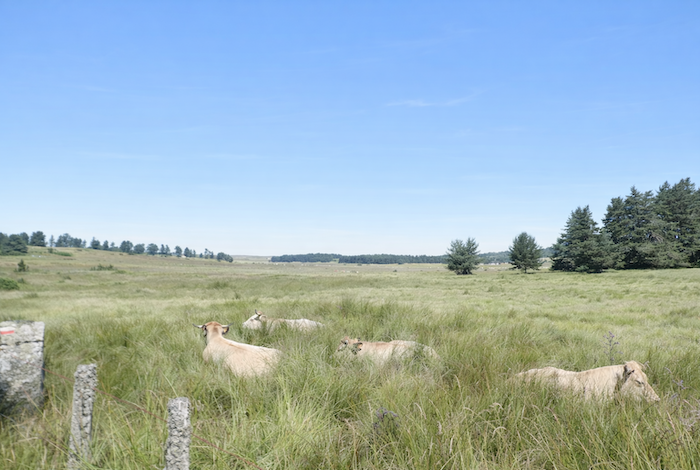
The moorland, punctuated by occasional clusters of pine trees, is crossed by countless tiny streams winding through soil that is often saturated with water and deceptively treacherous. In these marshes, large blackened tree trunks, preserved for centuries in peat, sometimes emerge from the ground, silent remains of a vanished forest. They bear witness to another age when these uplands were wooded, unless perhaps one day people decide to restore their former sylvan grandeur. When forests retreat, some hills seem to diminish, as though gradually exhausted and deprived of their protective mantle. Others, by contrast, discover a new form of greatness in their nakedness, more austere and more essential. Such is Aubrac in its truest form. Yet each season reveals its own charm in this extraordinary world. The cattle, silent sentinels of these open spaces, watch hikers and pilgrims pass beneath their heavy packs with complete indifference. Observing them, one might think the entire day consists of nothing more than an endless nap. Undemanding by nature, they subsist on modest pasture and are not among the dairy cattle subjected to the relentless rhythms of production.
|
 |
 |
|
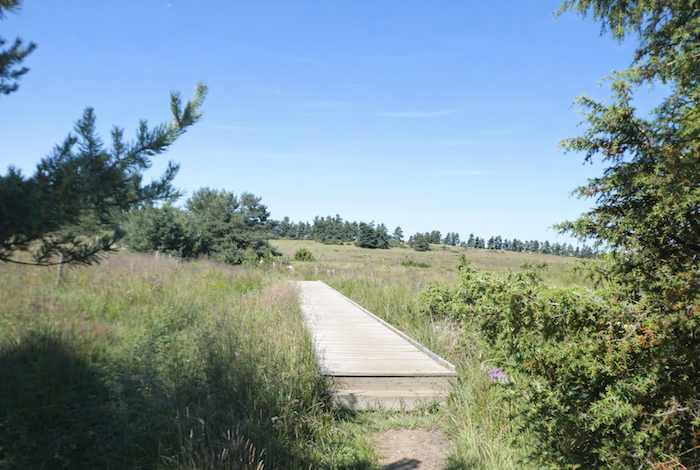
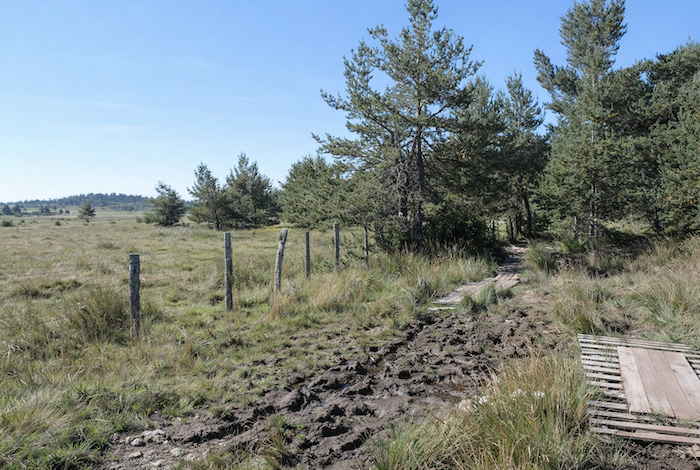
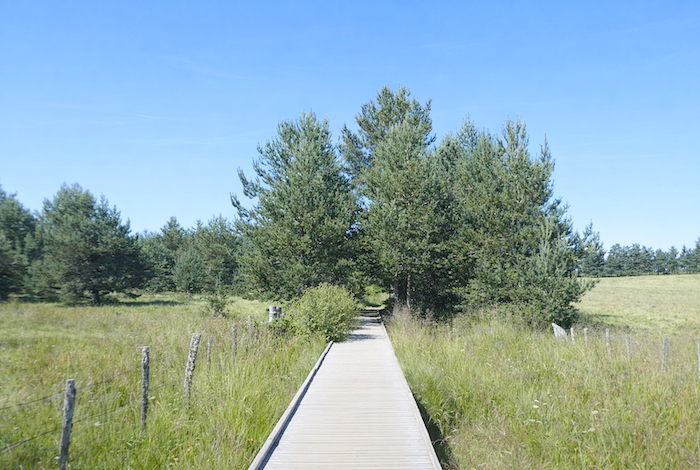
Soon the trail reaches the Planette stream, whose meagre waters immediately disappear into the porous ground, vast as a natural sponge. Here the moorland can be deceptive, and it is wise not to wander from the marked trail. Even the cattle avoid some of these areas. The route planners have thoughtfully installed sturdy boardwalks across the wettest sections. In the past, it was all too easy to become bogged down here.
|
 |
 |
|
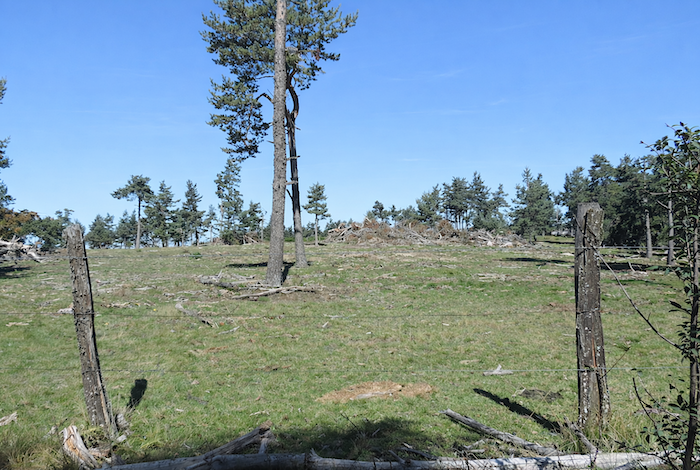
Shortly afterwards, the trail emerges from the marshes as though waking from a damp dream and enters a more varied landscape where scattered woodland creates islands of shade. Here and there, stumps, silent remains of vanished trees, slowly decompose beneath the pines, as though the forest itself were contemplating its own mortality.
|
 |
 |
|
 |
 |
|
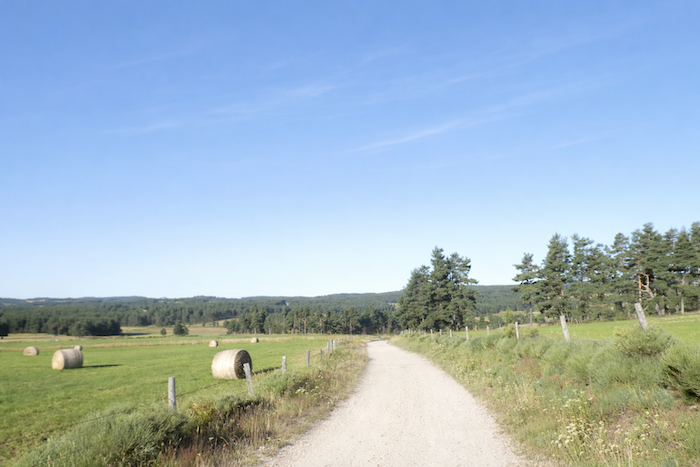
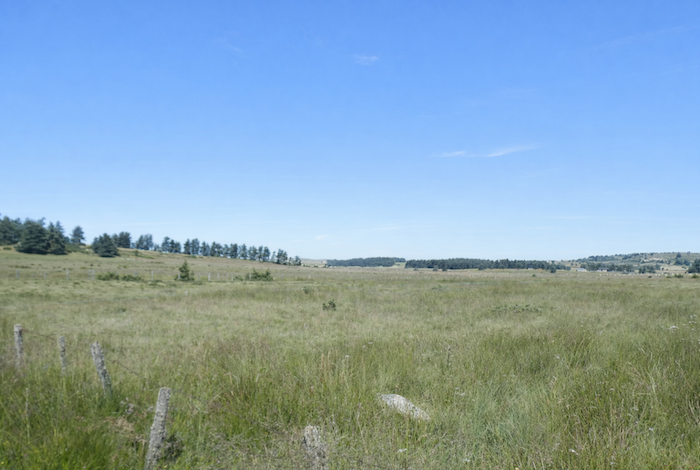
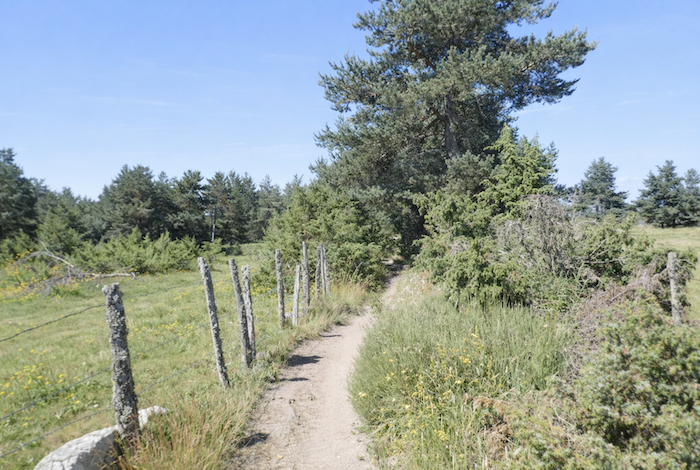
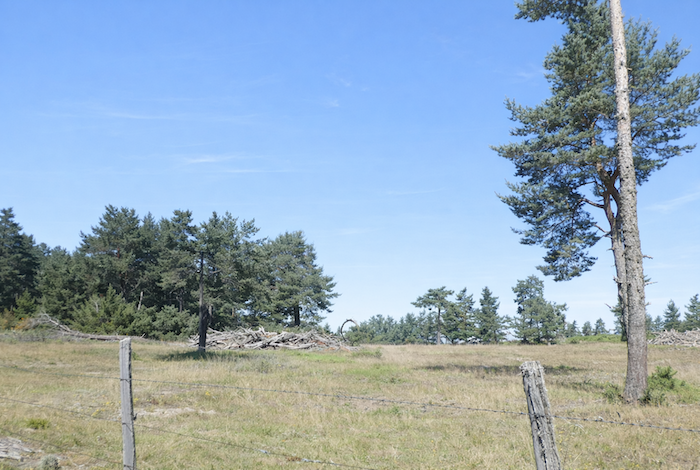
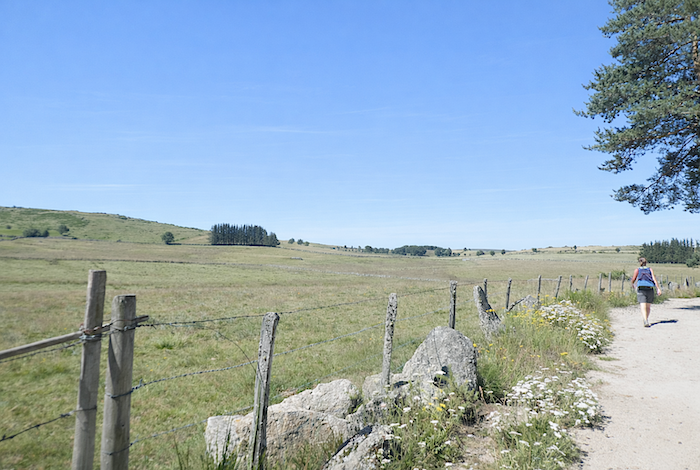
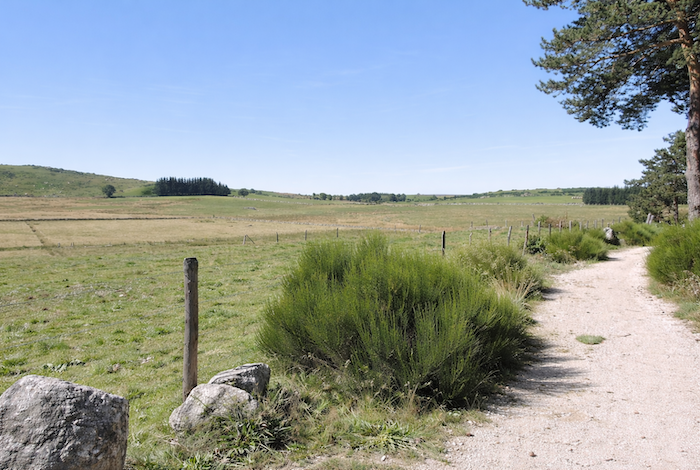
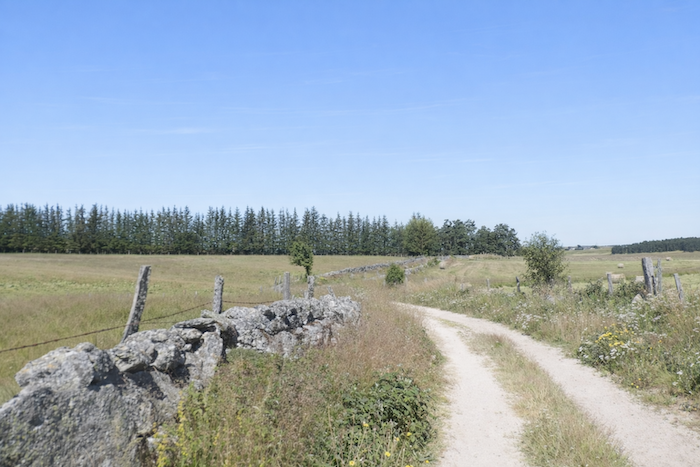
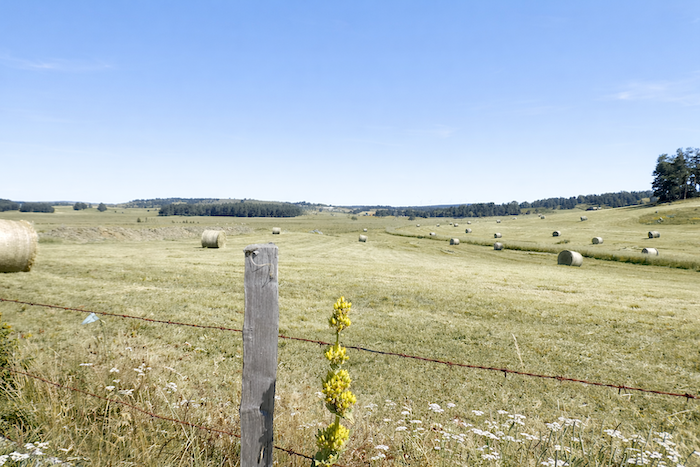
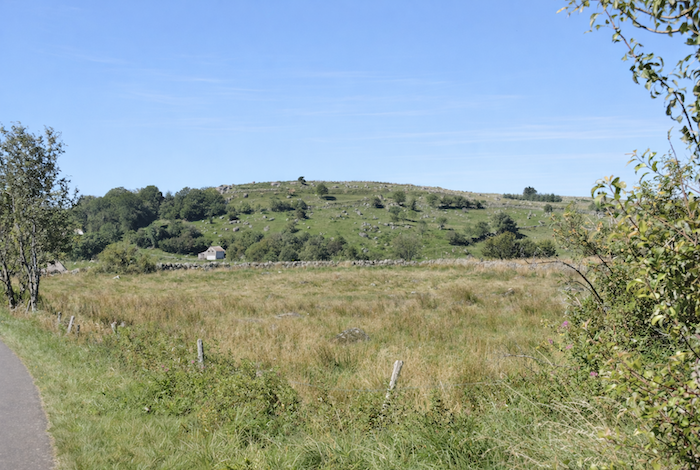
Then Aubrac finally reveals itself in full, a vast amphitheater of sovereign pastures stretching towards the horizon. Wooden posts and modest stone walls punctuate the landscape, giving it rhythm without ever making it monotonous. Indifferent to human boundaries, the trail crosses walls and barbed-wire fences with quiet determination. Everywhere the eye wanders in wonder across rolling meadows, sleeping groves, and the rare “burons”, humble shepherds’ shelters perched upon the heights like sentinels from another age. In this austere kingdom of solitude, rosebay willowherb and broom provide delicate touches of color against the tawny moorland and sunburnt grasslands.
|
 |
 |
|
 |
 |
|
The starkness of the landscape is both unsettling and captivating, poised between austerity and exaltation. At times, small pine woods drape the land as though softening its frankness. Do not be misled by clichés. Aubrac is not merely a patchwork of tiny fields enclosed by stone walls, as some guidebooks suggest. It also contains vast open expanses where hay is harvested much as it is in Alpine meadows, on a scale that allows the land to breathe freely.
|
 |
 |
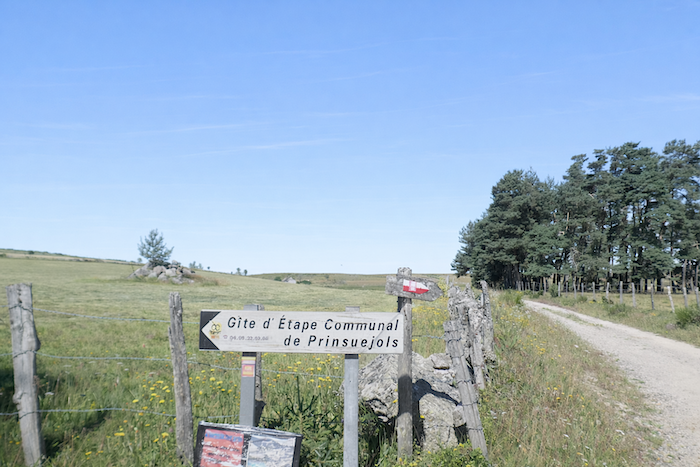
Along the way, a sign indicates the hamlet of Prinsuéjols, only a few kilometers away. Yet the route deliberately avoids it, as though rejecting this diversion. Some pilgrims, however, in search of more reliable accommodation, may choose to head there, for hospitality remains scarce on this almost deserted plateau where humanity itself seems little more than a passing guest.
|
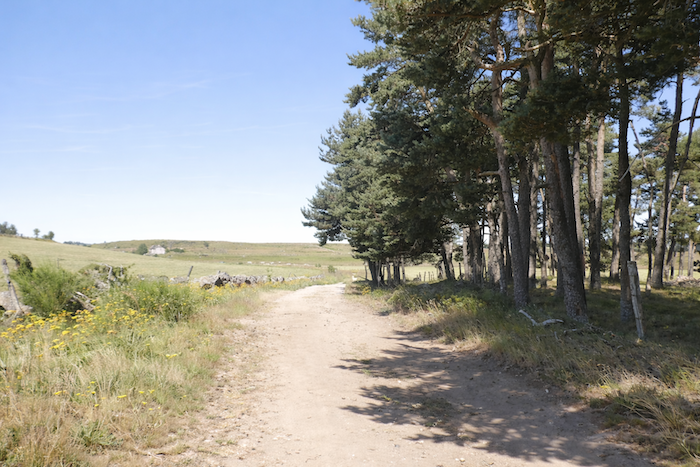
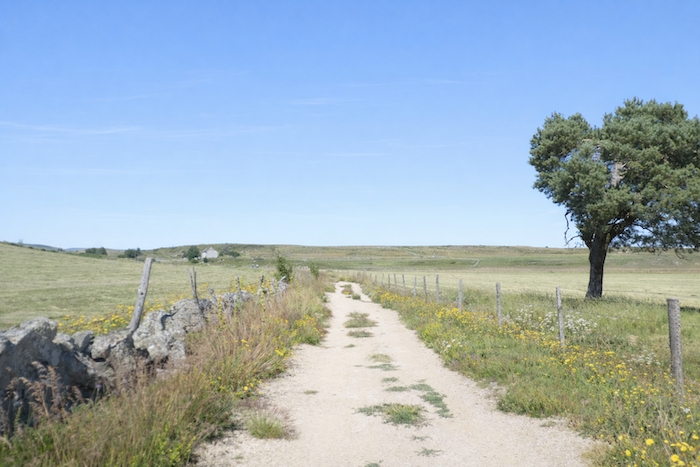
Is that discreet grove not tempting, promising shade, rest, perhaps even a peaceful picnic? Undoubtedly. Yet to enter it, you must first cross the barbed-wire fences, a frontier both absurd and very real, almost martial in nature. It is a delicate challenge, both unsettling and exhilarating, one we have often encountered during more solitary wanderings across the trails of Aubrac.
|
 |
 |
|
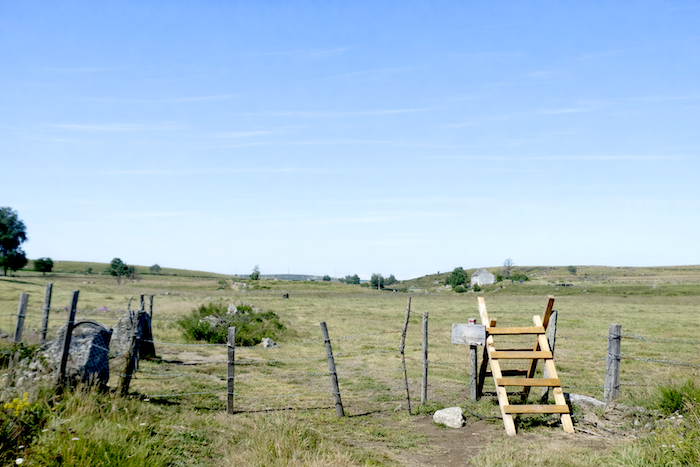
Sometimes the route demands even more, requiring a touch of climbing, a reminder of nature’s independence. In earlier times, when fences were more welcoming, one merely opened and closed a simple wooden gate, a humble gesture shared by all. Perhaps even the cattle cooperated. Today, the lesson is different. You must climb up and down improvised ladder stiles, an exercise less trivial than it appears, especially for the many grey-haired pilgrims walking the Camino de Santiago, and perhaps, when one thinks about it, for the animals as well.
|
 |
 |
|
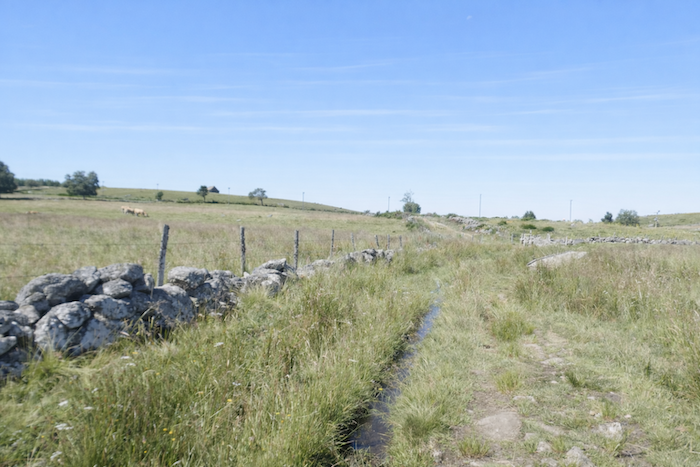
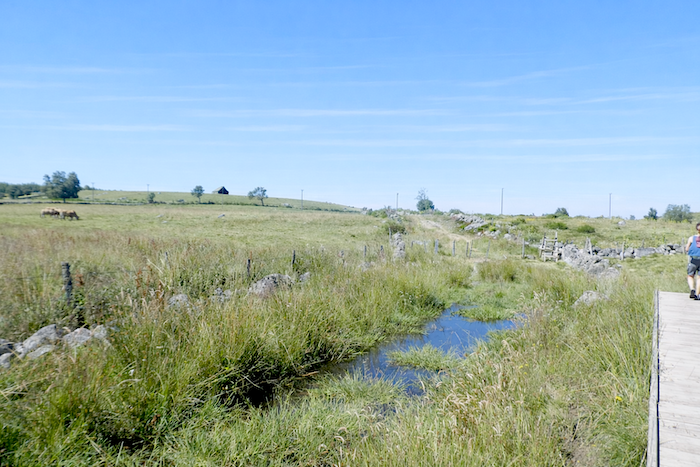
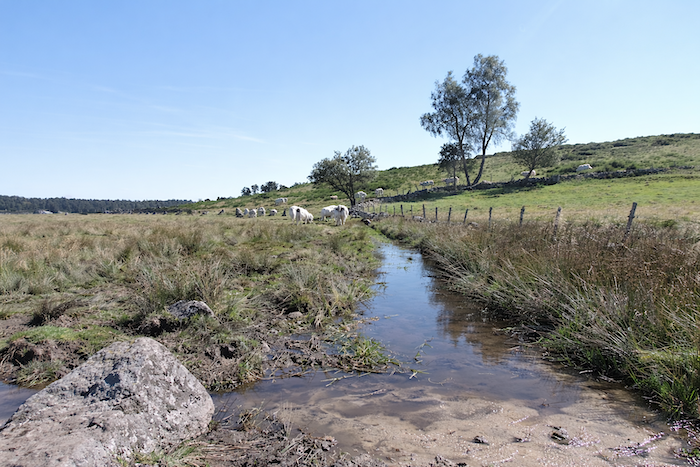
The path, sometimes bare earth and sometimes edged with grass, then slopes up in a series of gentle inclines between granite posts, following the murmuring waters of the Jasses stream. Yet water has its mysteries here. These are not true streams so much as secret seepages emerging from invisible places, their origins and destinations unknown. In Aubrac, cattle live within vast pastures enclosed by sturdy wire fences anchored to massive granite blocks. Escape is little more than an illusion. One easily imagines the quiet contentment of herds blessed with land so generously supplied with water.
|
 |
 |
|
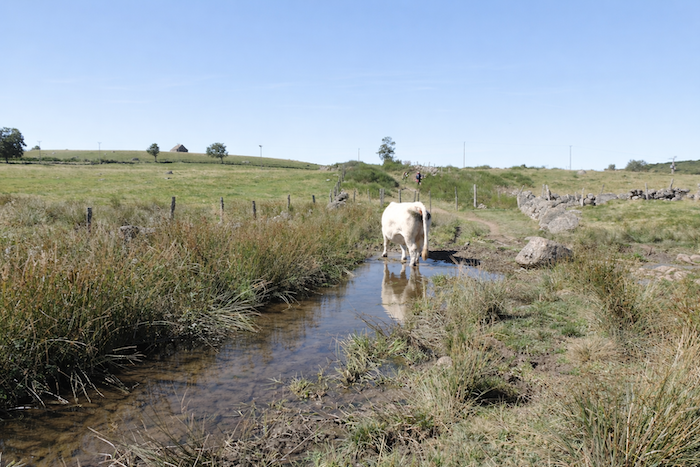
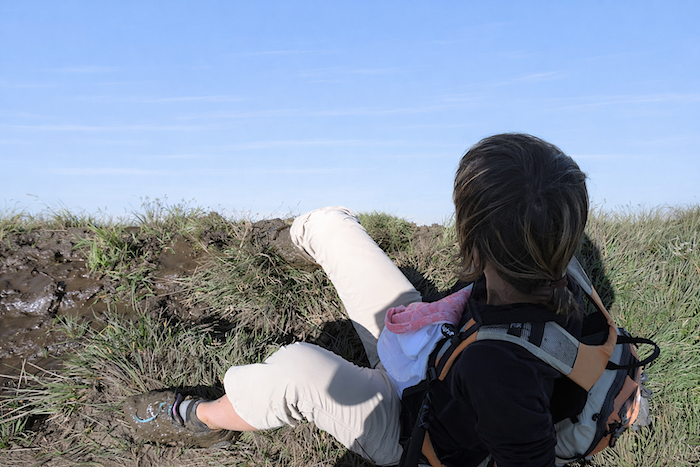
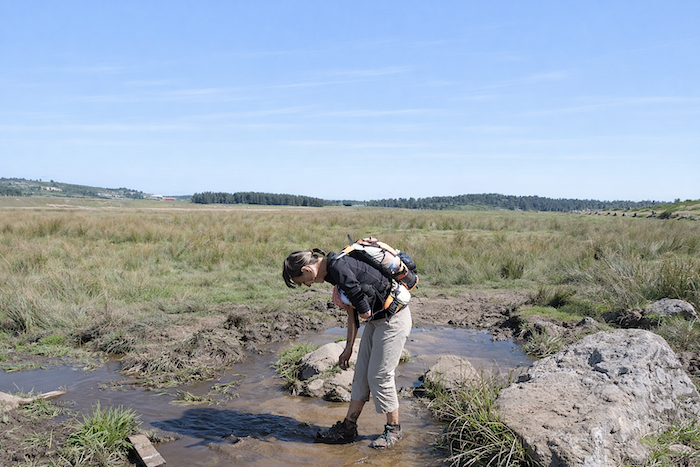
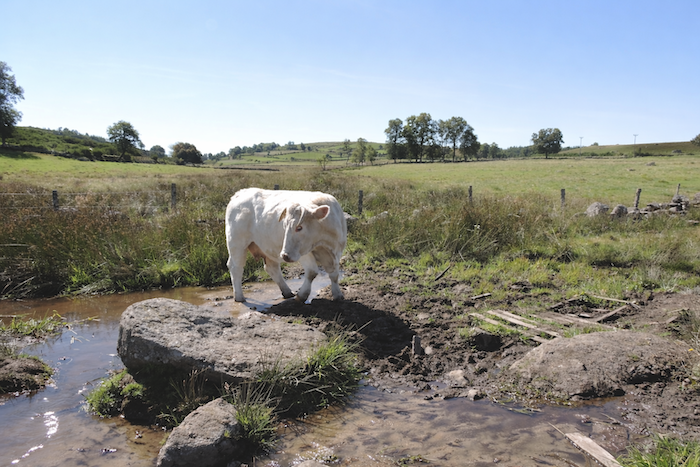
Today, crossing these wet areas has become much easier thanks to boardwalks and other improvements. Yet one should remember that not so long ago these passages were far more adventurous, each step resembling a small initiation. One day, a herd of Aubrac cattle was enjoying the coolness of a stream. One cow, serene and majestic, her hooves immersed in the water, watched from the corner of her eye a less confident pilgrim struggling through the crossing. There was something delightfully theatrical about the scene. One likes to imagine that the cow is still laughing about it today.
|
 |
 |
|
 |
 |
|
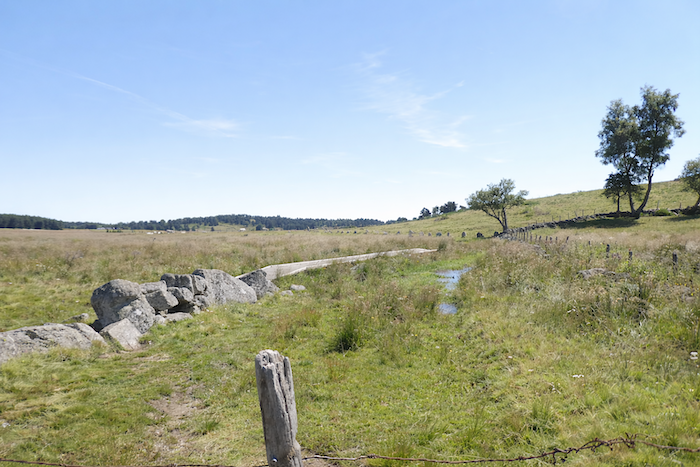
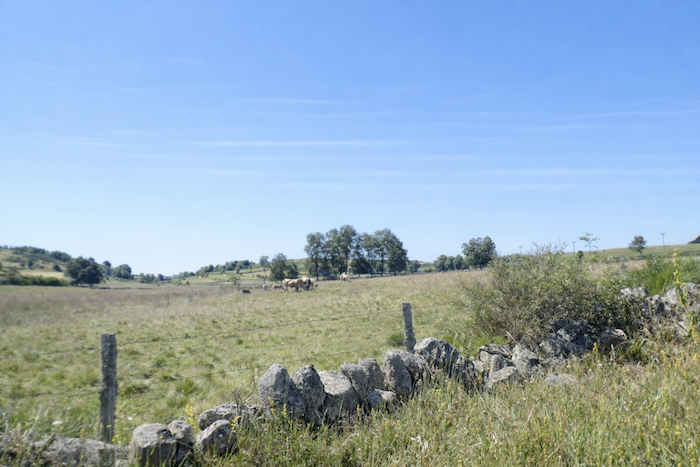
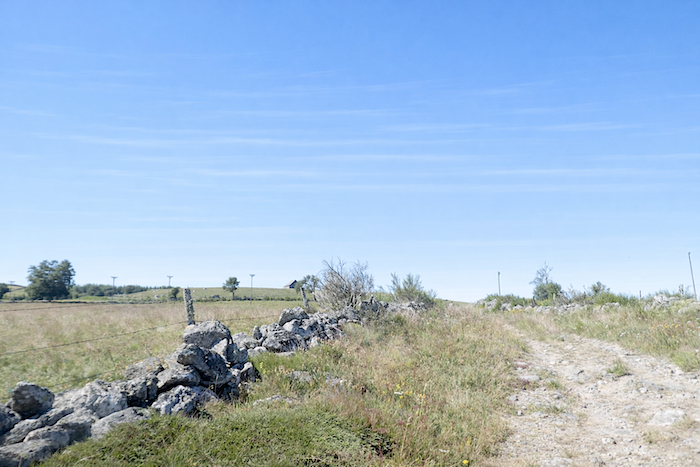
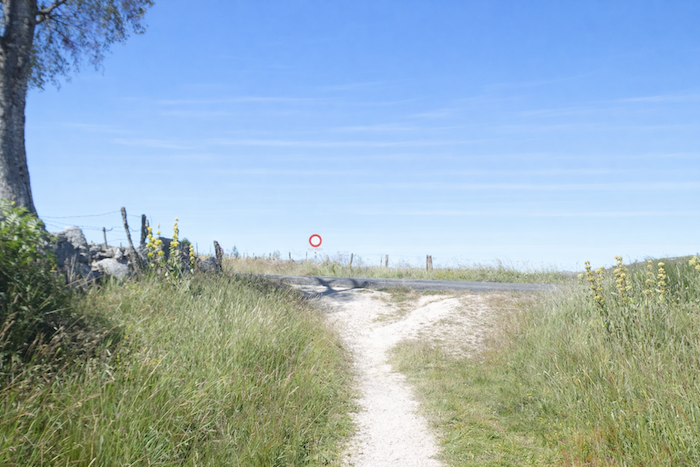
Further on, the trail becomes rougher and strewn with stones, as though the earth itself were hardening beneath the traveler’s feet. It slopes up gently, so subtly that the ascent is sensed more than felt, passing great granite boulders before reaching a narrow road that seems suspended between two destinations, uncertain where to lead. Here in Aubrac, an unspoken rule prevails: the higher one climbs, the more granite asserts its presence, emerging everywhere like the exposed skeleton of the plateau itself.
High on the gentle ridges, “burons” appear like tiny bell towers, stone silhouettes standing in the silence of the uplands. They were almost always built in elevated positions, no doubt so that shepherds could watch over the broad expanse of cattle grazing below, as though surveying a living sea.
|
 |
 |
|
 |
 |
|
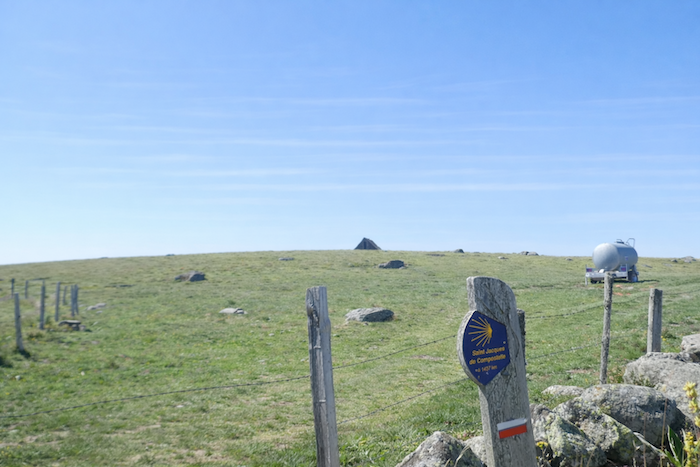
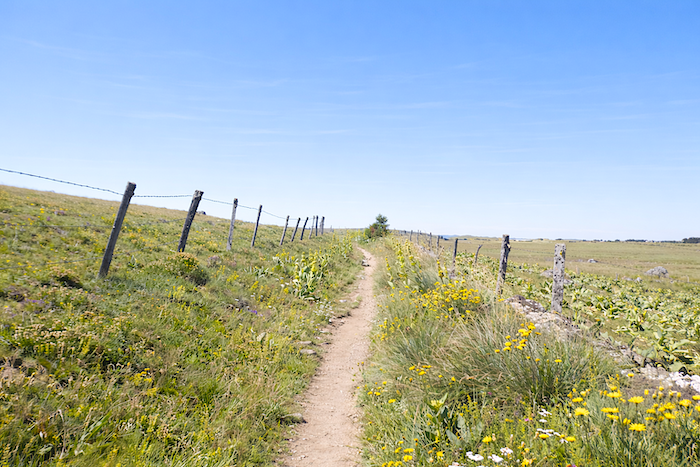
When summer settles over the Aubrac plateau, the landscape seems to shed the splendor of spring. The luxuriant carpets of daffodils, narcissi, and orchids that transformed the land into a ceremonial display gradually fade, as though the earth were choosing to restrain its brilliance. Only a few faithful flowers remain: rosebay willowherb, buttercups, anemones, and above all the majestic yellow gentians. Deeply rooted and remarkably resilient, these plants embody the botanical soul of Aubrac. Their roots are used to produce a celebrated liqueur, gentler than that derived from the blue gentian of the Alps. Yet these sovereign plants command respect. They are not gathered lightly, for they possess extraordinary longevity and may live for as much as fifty years.
|
 |
 |
|
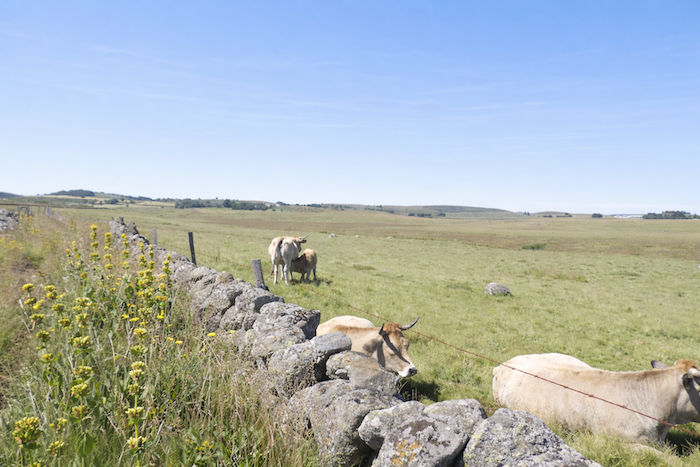
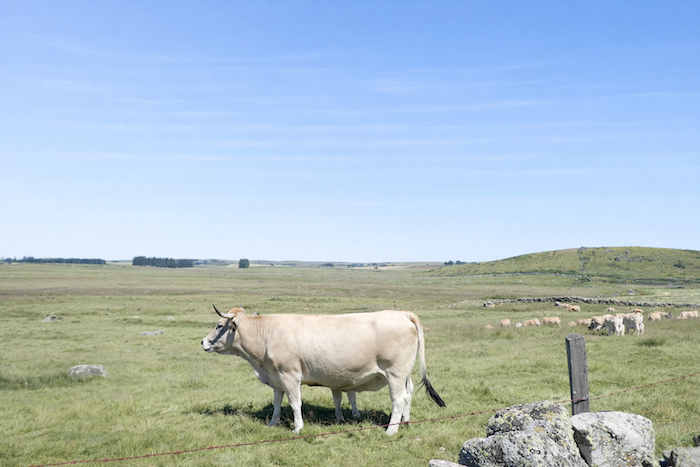
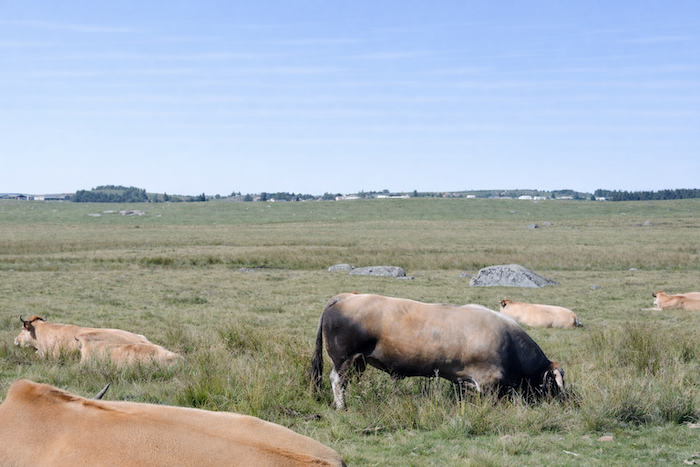
What inexpressible charm emanates from these herds of cattle roaming freely through an unspoilt landscape seemingly untouched by time. Here, a calm and attentive mother offers her milk to her calf, a simple and eternal scene that expresses all the gentleness of a world left undisturbed.
|
 |
 |
|
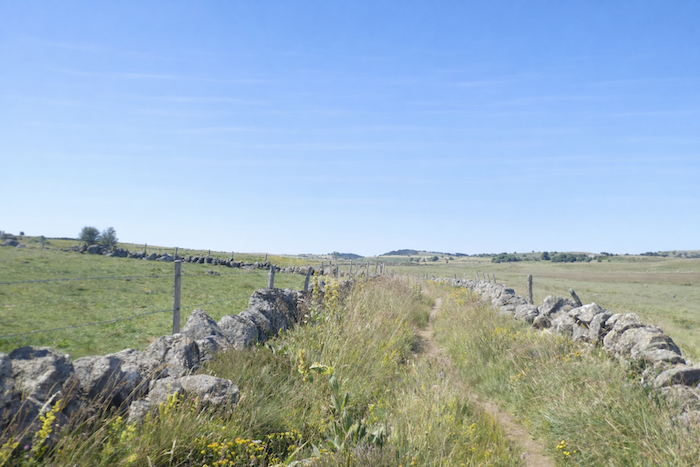
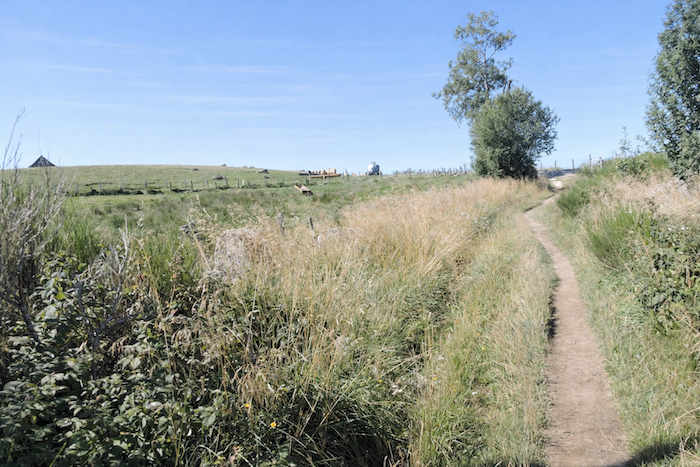
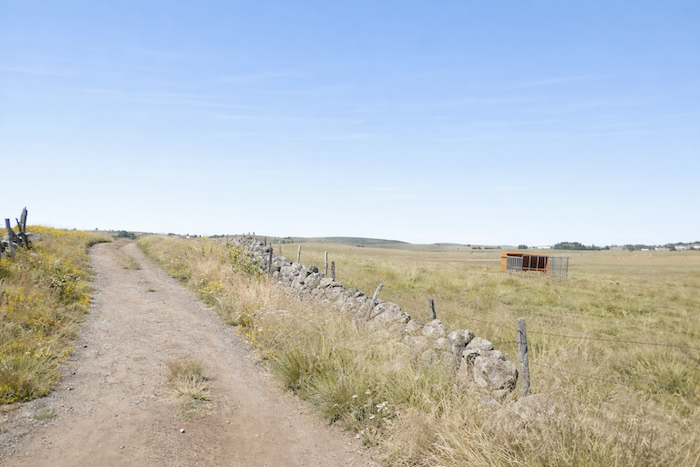
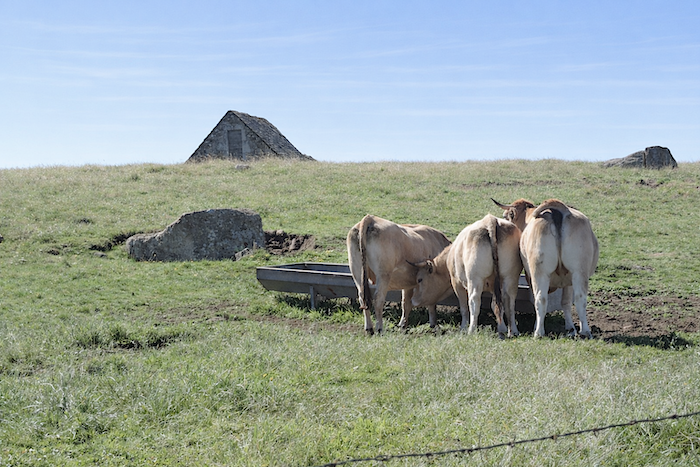
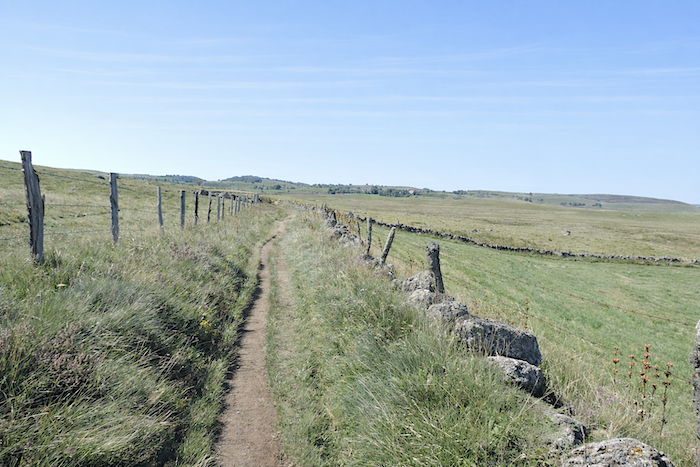
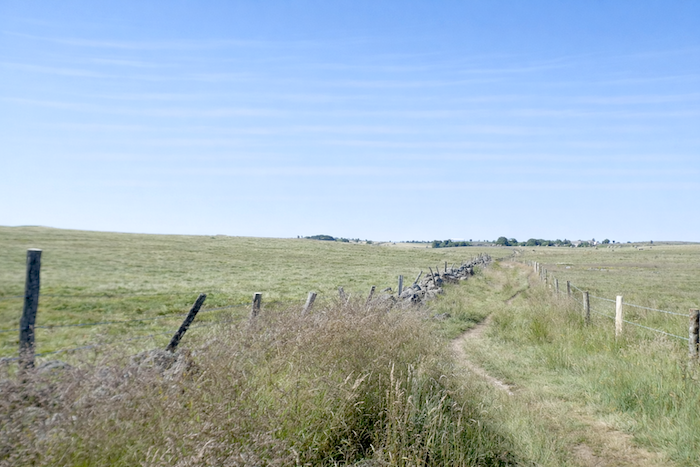
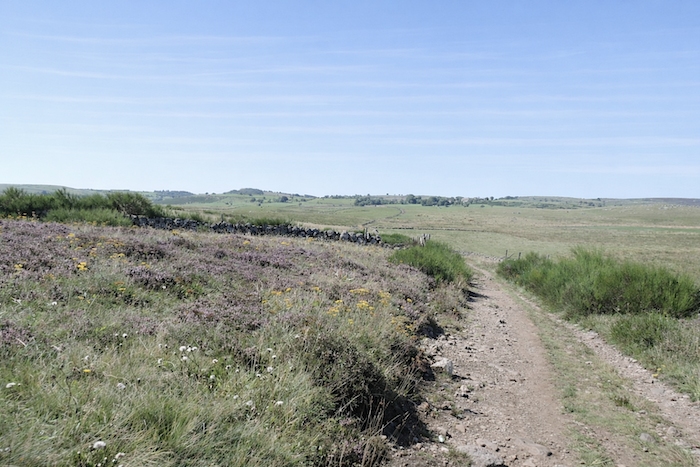
There is no shade to soften the walk until the trail reaches the farm of Les Gentianes. There, the path steepens more noticeably, as though suddenly becoming aware of its altitude, and climbs through this striking world of rugged steppe, scattered granite rocks, and herds dispersed as far as the eye can see.
|
 |
 |
|
 |
 |
|
Then a rare feeling imposes itself almost naturally: a sense of absolute calm combined with unrestricted freedom, an immensity approaching infinity. Such is the spirit of the high Aubrac plateau.
|
 |
 |
|
Higher still, the eye catches sight of an isolated grove, seemingly placed there by chance. Hidden within it lies the farm of Les Gentianes, barely visible and almost secret.
|
 |
 |
|
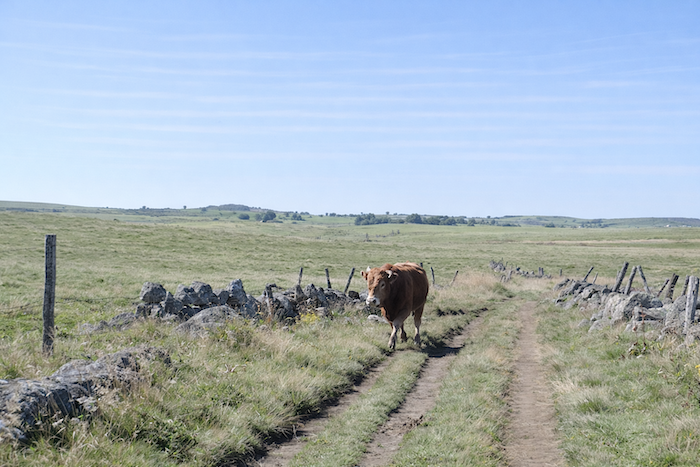
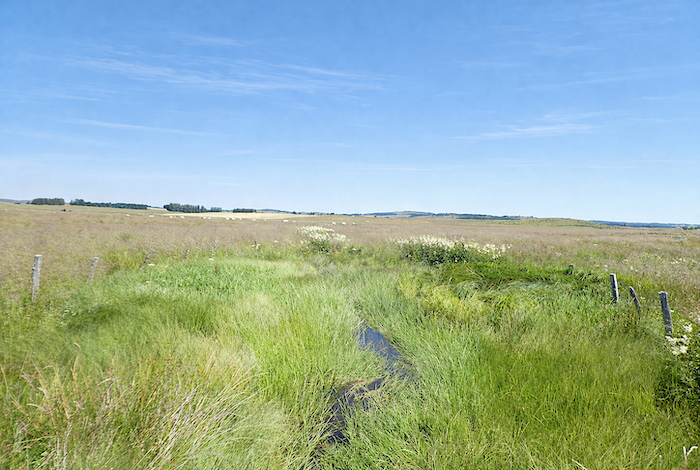
Here, an escaped young bull provokes curiosity. By what miracle did he cross the barbed-wire fences without leaving a trace? Was it the discreet attraction of that unlikely spring emerging like a miracle amid such rugged surroundings? The mystery remains suspended in the still air.
|
 |
 |
|
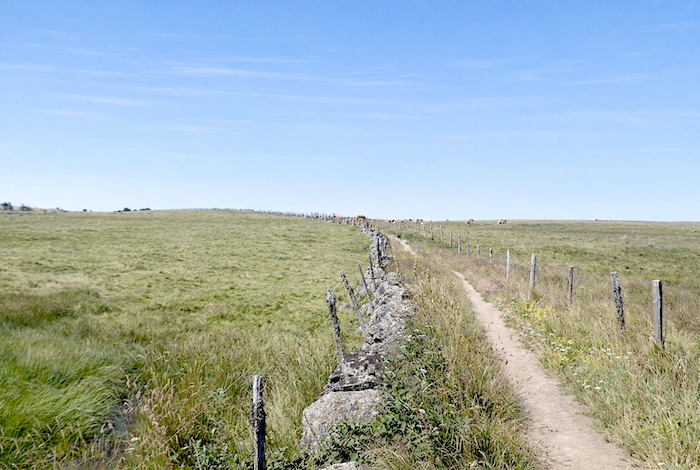
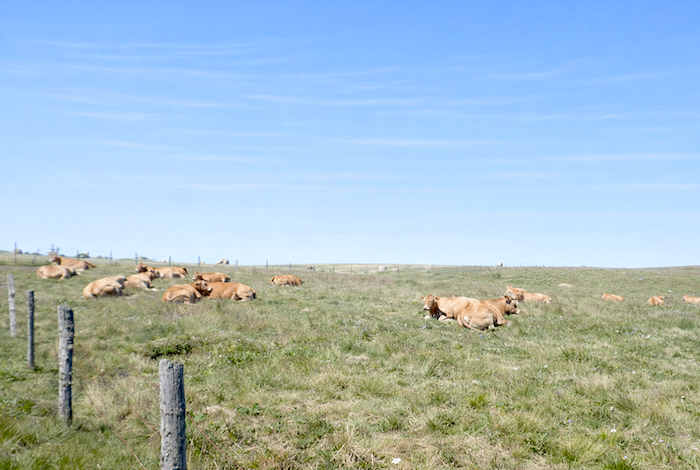
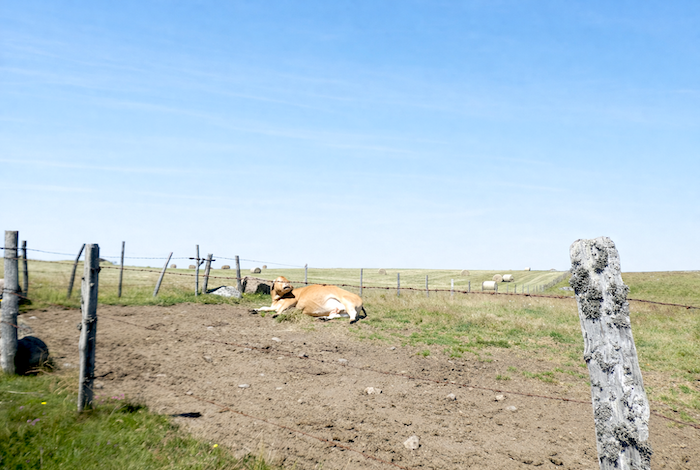
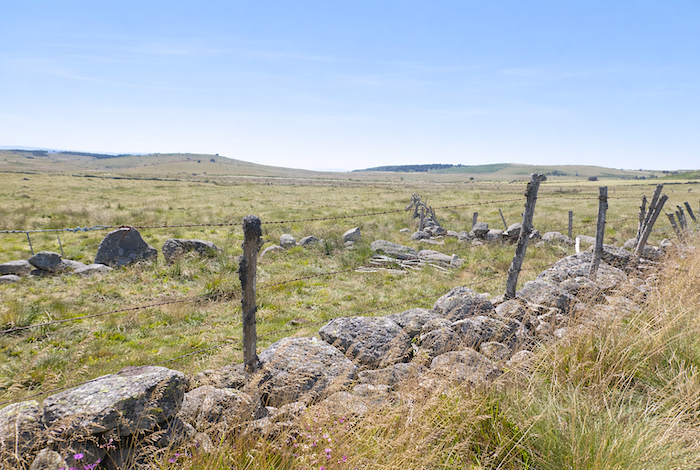
For this landscape, apparently empty, conceals countless unseen riches. And although the cattle seem left entirely to themselves, they are never truly abandoned. Despite the scarcity of water on the plateau, people have discreetly installed facilities here and there, thoughtful gestures for these animals that spend long hours grazing or resting peacefully in the meadows.
|
 |
 |
|
 |
 |
|
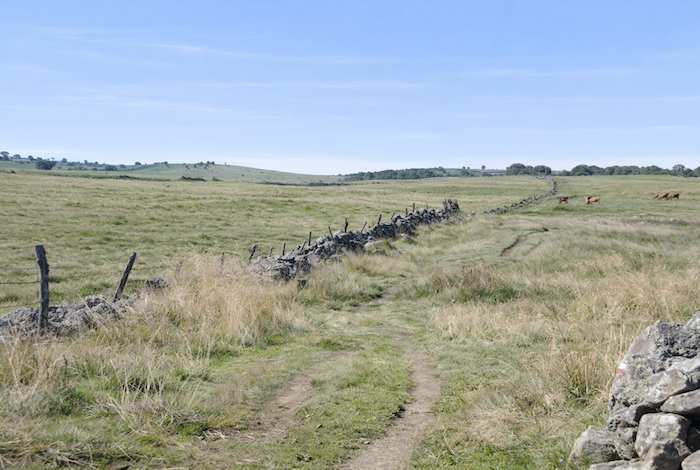
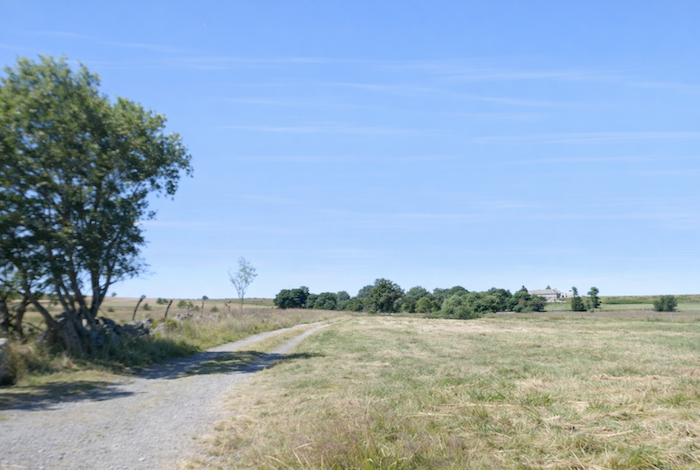
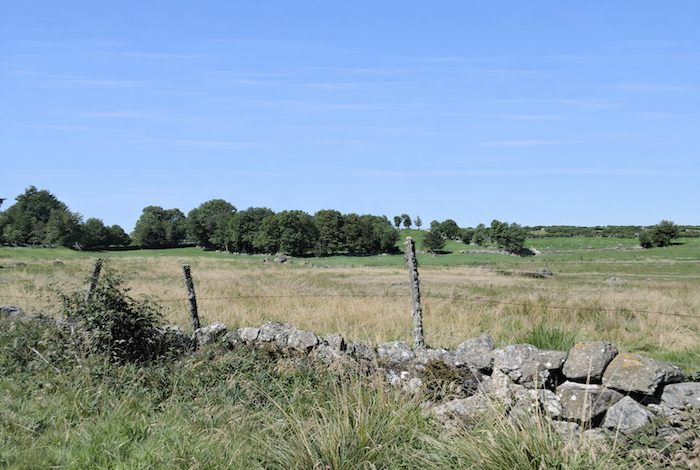
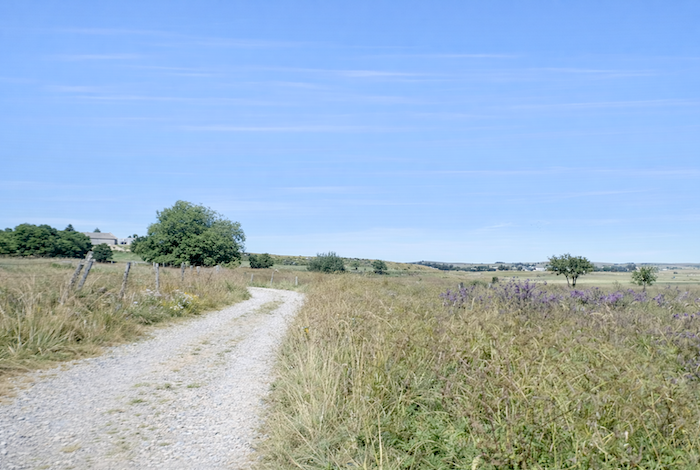
The path then climbs one final time along a gentle and almost caressing slope, as though sparing hikers one last effort before they reach the much-desired grove.
|
 |
 |
|
 |
 |
|
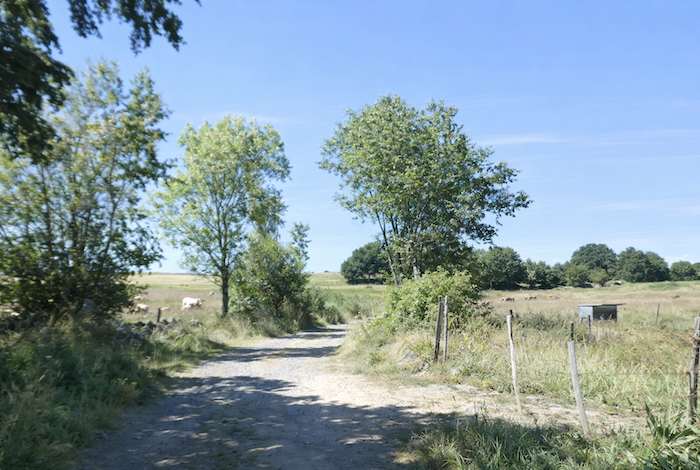
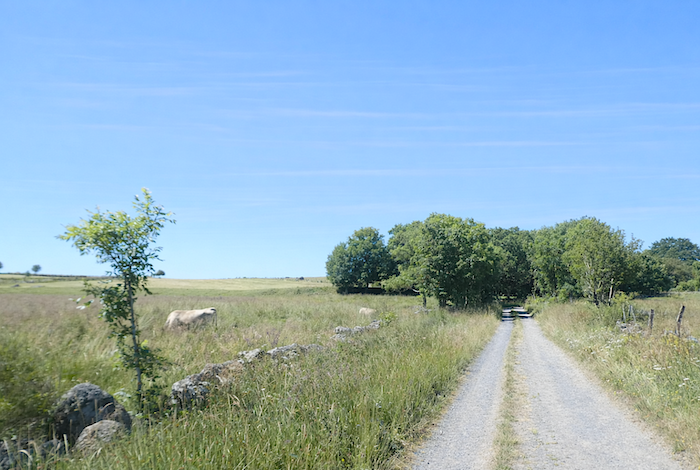
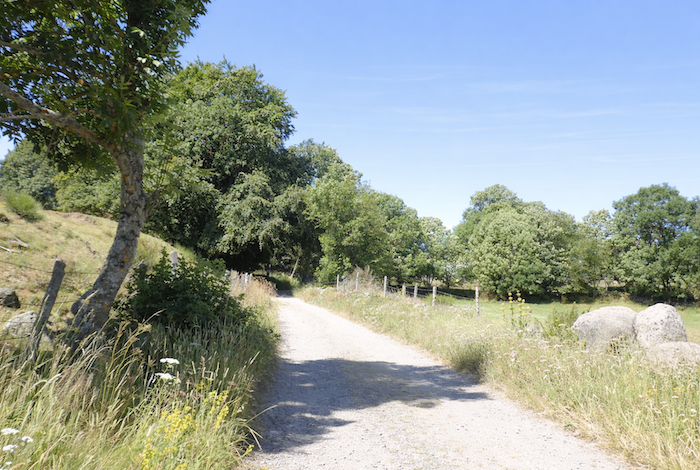
Gradually, trees reappear, breaking the nakedness of the plateau. These are broadleaf trees, a new and almost unexpected presence accompanying the walker until a small road is reached above.
|
 |
 |
|
 |
 |
|
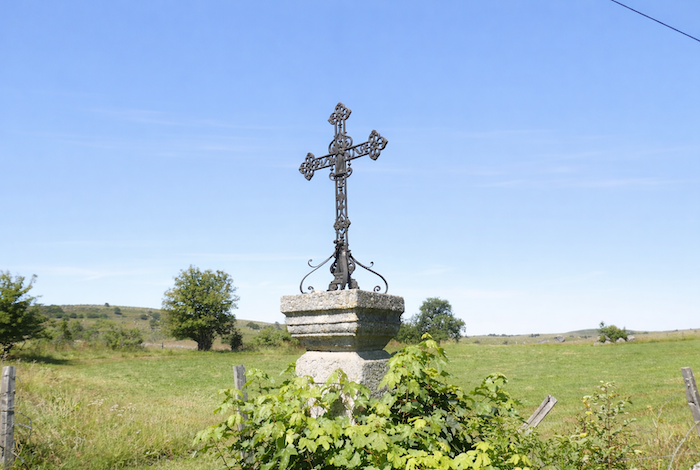
Once again, an elegant wrought-iron cross firmly anchored in a granite base leaves a human signature upon the landscape. Nearby, partially hidden from view, stands a magnificent stone house, perhaps abandoned to its silence, frozen beyond time itself.
|
 |
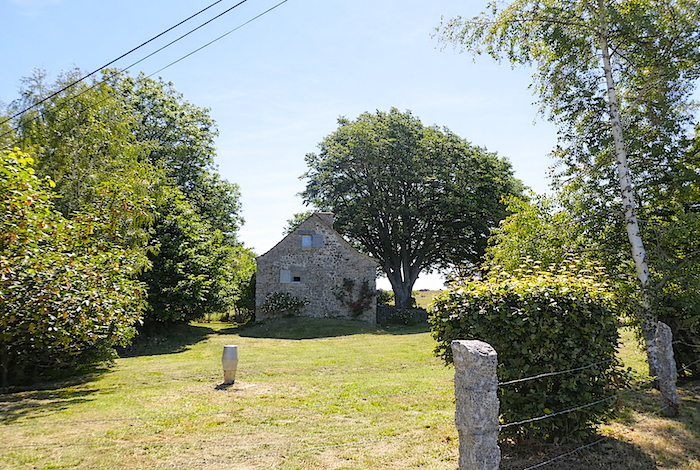 |
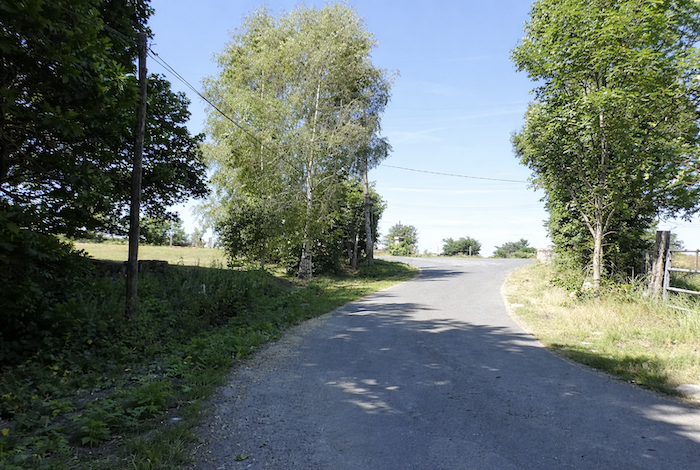
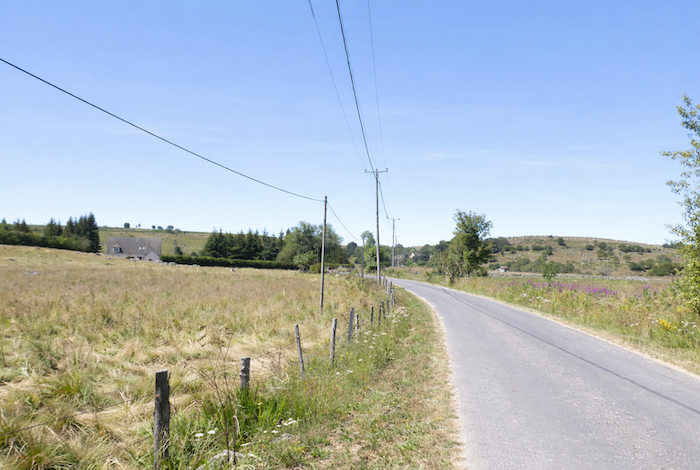
| A modest road then leads to the junction for Les Gentianes and Finieyrols. You are free to continue towards Malbouzon if accommodation should happen to be unavailable at either Les Gentianes or Finieyrols, for stopping places remain scarce on these stripped-back lands. |
 |
 |
|
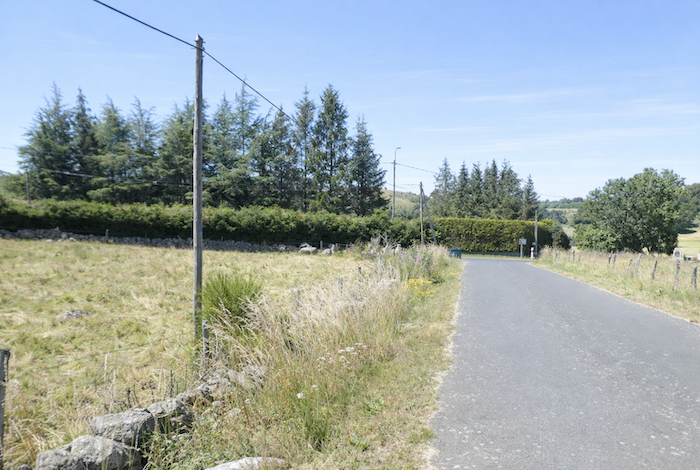
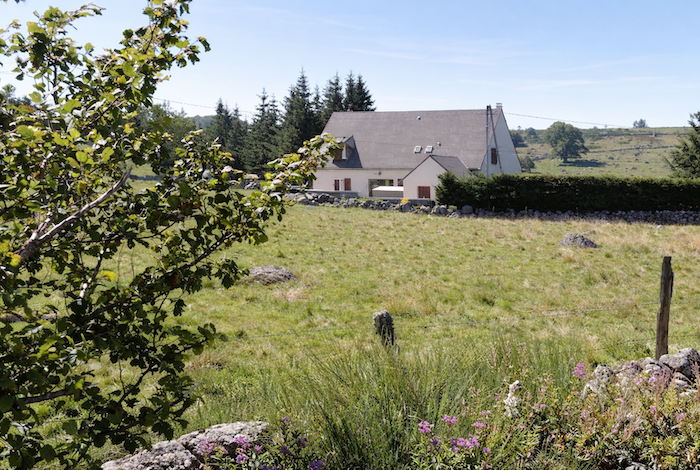
As for the lodging at Les Gentianes, it nestles beneath the trees at the crossroads, a discreet refuge offered to the pilgrim.
|
 |
 |
Accommodation on Via Podiensis
• Gîte Aux Chants des Oiseaux, Colette et Jean-Pierre, La Chaze-de-Peyre; 06 32 84 43 02; Gîte, dinner, breakfast
• Chez Marie en Aubrac, Myriam Zitoum, Lasbros; 06 60 67 74 27; Gîte, dinner, breakfast
• Gîte Quatre Vents, Jean-Marc Grenier et Marie-Claude, Les Quatre Chemins; 06 64 19 34 03/06 52 77 51 80; Gîte, dinner, breakfast
• Gîte -Snack Les 4 chemins en Aubrac, Christophe, Les Quatre Chemins; 09 75 47 16 34/06 70 11 55 39; Gîte, dinner, breakfast
• Gîte La Guinguette de l’Aubrac, Gilou et Sab, Les Quatre Chemins; 07 88 18 76 05/06 30 21 92 54; Gîte, dinner, breakfast, cuisine
• Chambres d’hôtes Les Gentianes, Les Gentianes; 04 66 32 52 77/06 73 02 70 15; Guestroom, dinner, breakfast
• La Rose de l’Aubrac- Snack, Finieyrols; 06 08 31 55 61; Gîte and Guestroom, dinner, breakfast
Year after year, the Camino de Santiago changes and reinvents itself with the seasons and the footsteps of pilgrims. Some accommodations close their doors, while others, modest or unexpected, come into being. It would therefore be unrealistic to claim to provide a fixed and exhaustive list. This guide includes only accommodations located directly on the route or within one kilometer of it. The selection was updated in 2026 and should therefore not undergo any major changes in the coming years. For those wishing to go further, one publication stands out as the essential reference: Miam Miam Dodo, easily available online. The main strength of this guide lies in its yearly updates. It not only lists accommodations located directly on the route, but also addresses slightly off the route, a valuable resource when heavy pilgrim traffic makes overnight stops more uncertain. It also contains a wealth of practical information: welcoming bars, restaurants along the way, and providential bakeries, all of which punctuate the journey. Alongside these traditional resources, another presence has become unavoidable: Airbnb. The platform has established itself as a major reference in the tourism landscape, even in the most discreet or less developed regions. However, as everyone knows, exact addresses are not displayed directly, which requires a degree of anticipation. On the Camino, finding a bed at the last minute can sometimes depend on sheer luck. But luck, by its very nature, cannot be considered a strategy. Booking ahead is therefore strongly recommended. Finally, when making arrangements, be sure to inquire about dinner and breakfast options. These details, seemingly minor, can greatly soften the hardships of a stage.
If one takes stock of the available accommodation, there are approximately 90 beds along this stage. Since the number of walkers on the Via Podiensis generally ranges between 100 and 200 per day, accommodation can be difficult to secure without prior planning. It should be noted, however, that the actual number of pilgrims staying here is often lower, as many continue on to Nasbinals. If, like us, you prefer to divide the stage into two shorter days, there is also the option of leaving the route at Les Gentianes and following the departmental road to Malbouzon, where two hostels provide an additional 25 beds.
These routes wind through sparsely populated countryside where services are limited. Restaurants are few and far between, and grocery stores are rare, often taking the form of small bread depots offering a modest selection of vegetables and dairy products. On this stage, snack bars can be found at Lasbros and Les Quatre Chemins. Water points are available at La Chaze-de-Peyre and Lasbros. There are also toilet facilities at La Chaze-de-Peyre. Finally, numerous companies provide luggage transfer services or transport back to the starting point. Among them, one stands out as a well-established reference: La Malle Postale.
Feel free to add comments. This is often how you move up the Google hierarchy, and how more pilgrims will have access to the site.
|
 |
Next stage : Stage 7: From Les Gentianes to Nasbinals |
|
 |
Back to menu |
|
|
|
|
|
|
|
|
|
|
|
|
|