In the sublime valley of the Célé River
DIDIER HEUMANN, ANDREAS PAPASAVVAS
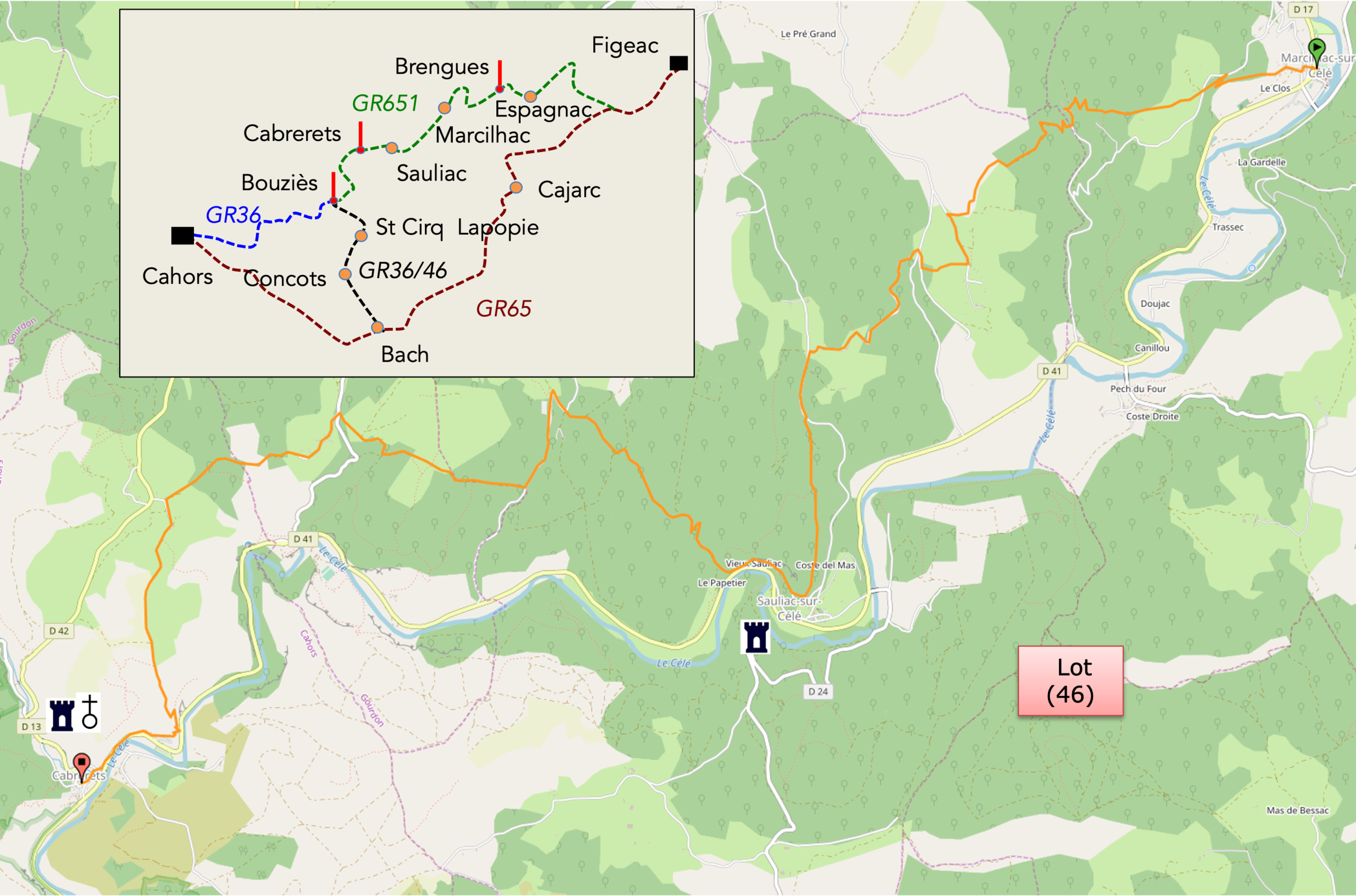
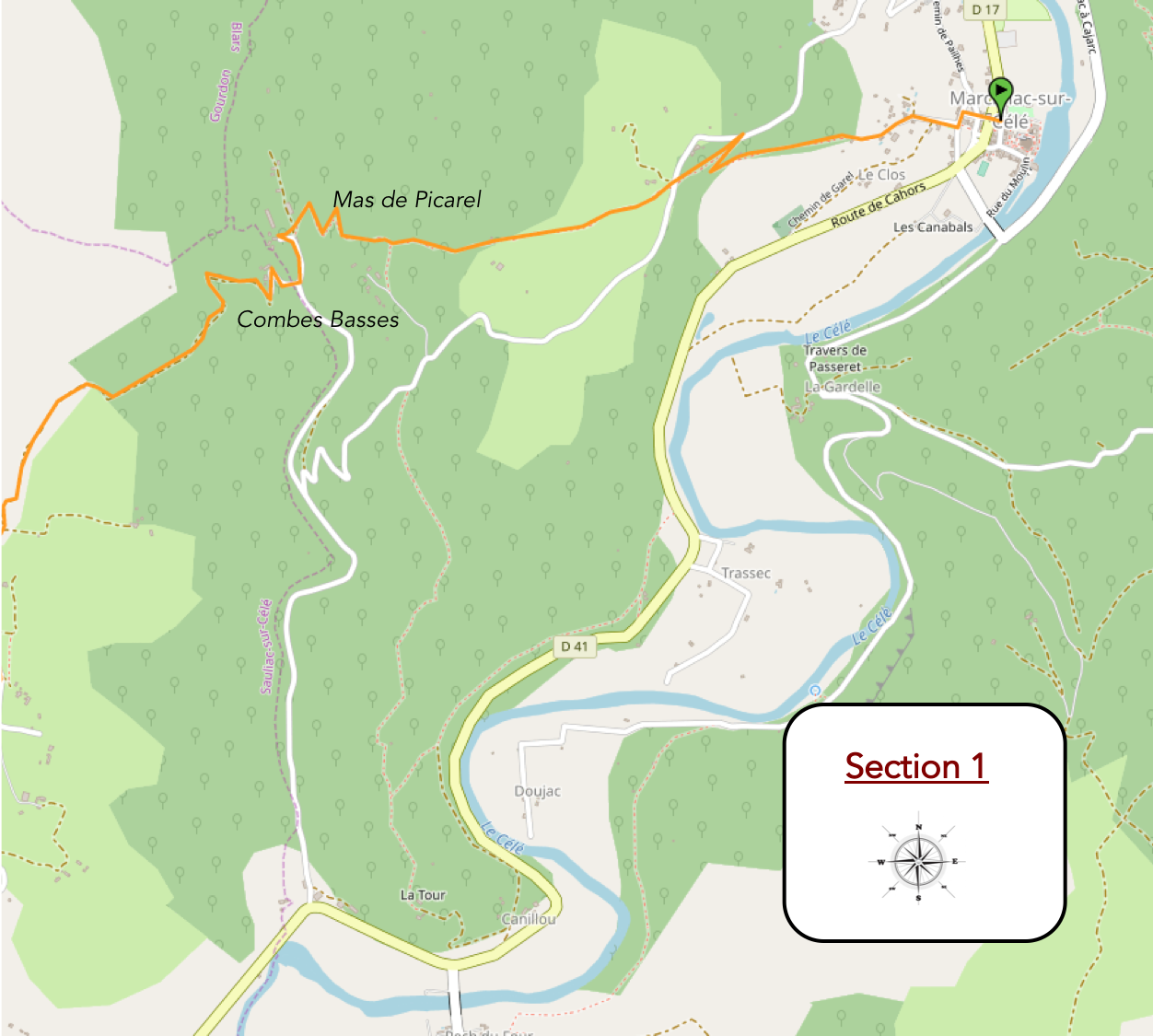
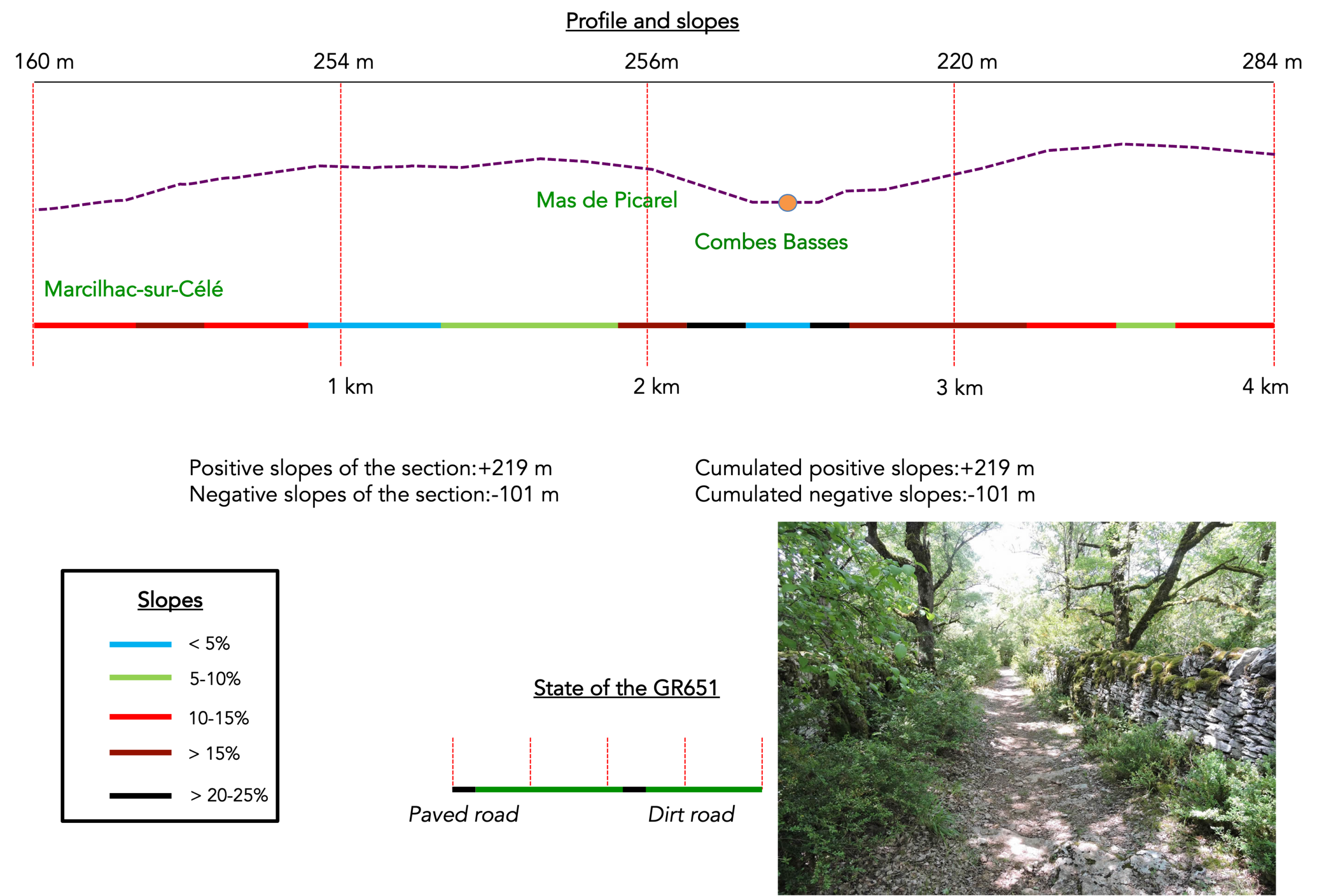
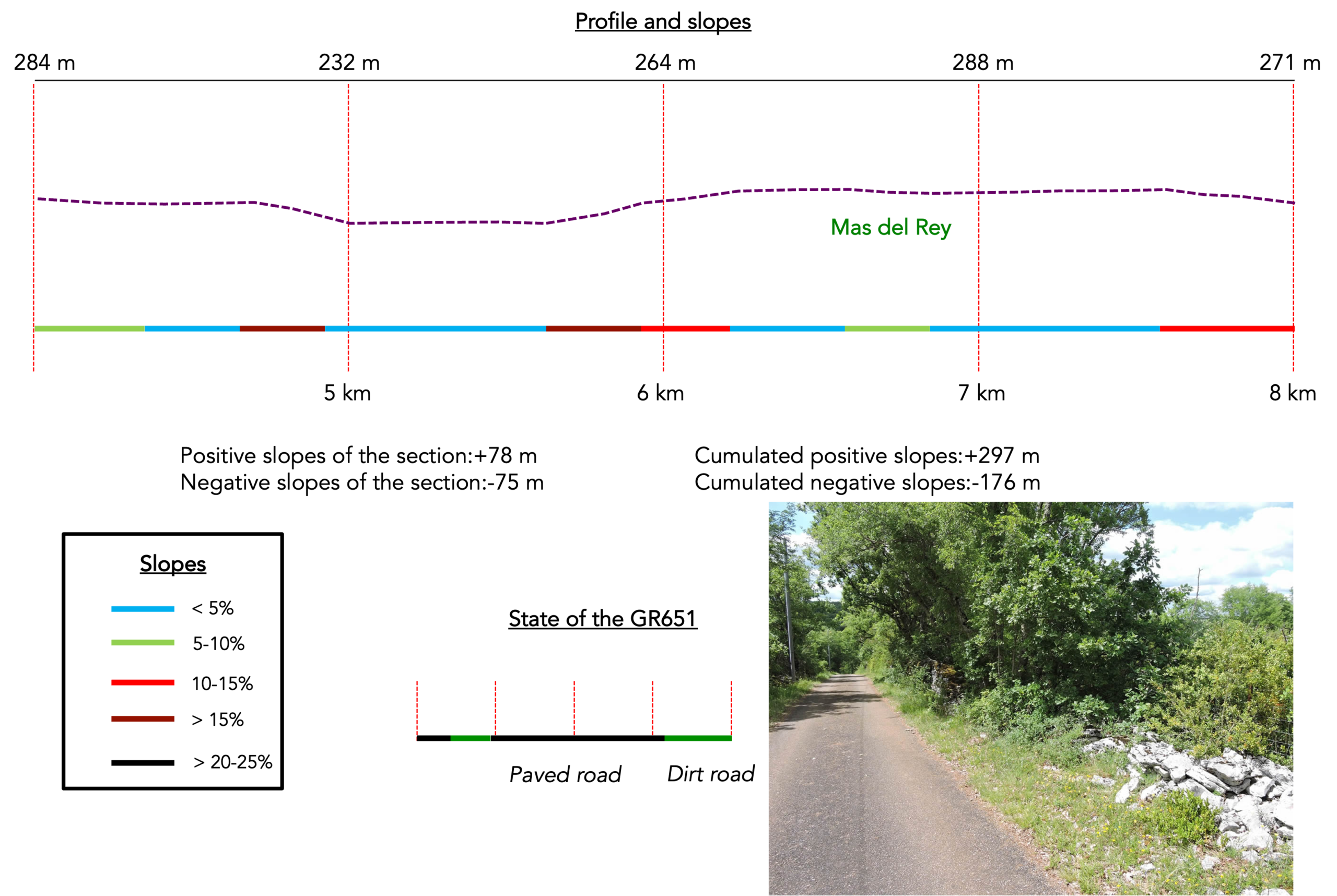
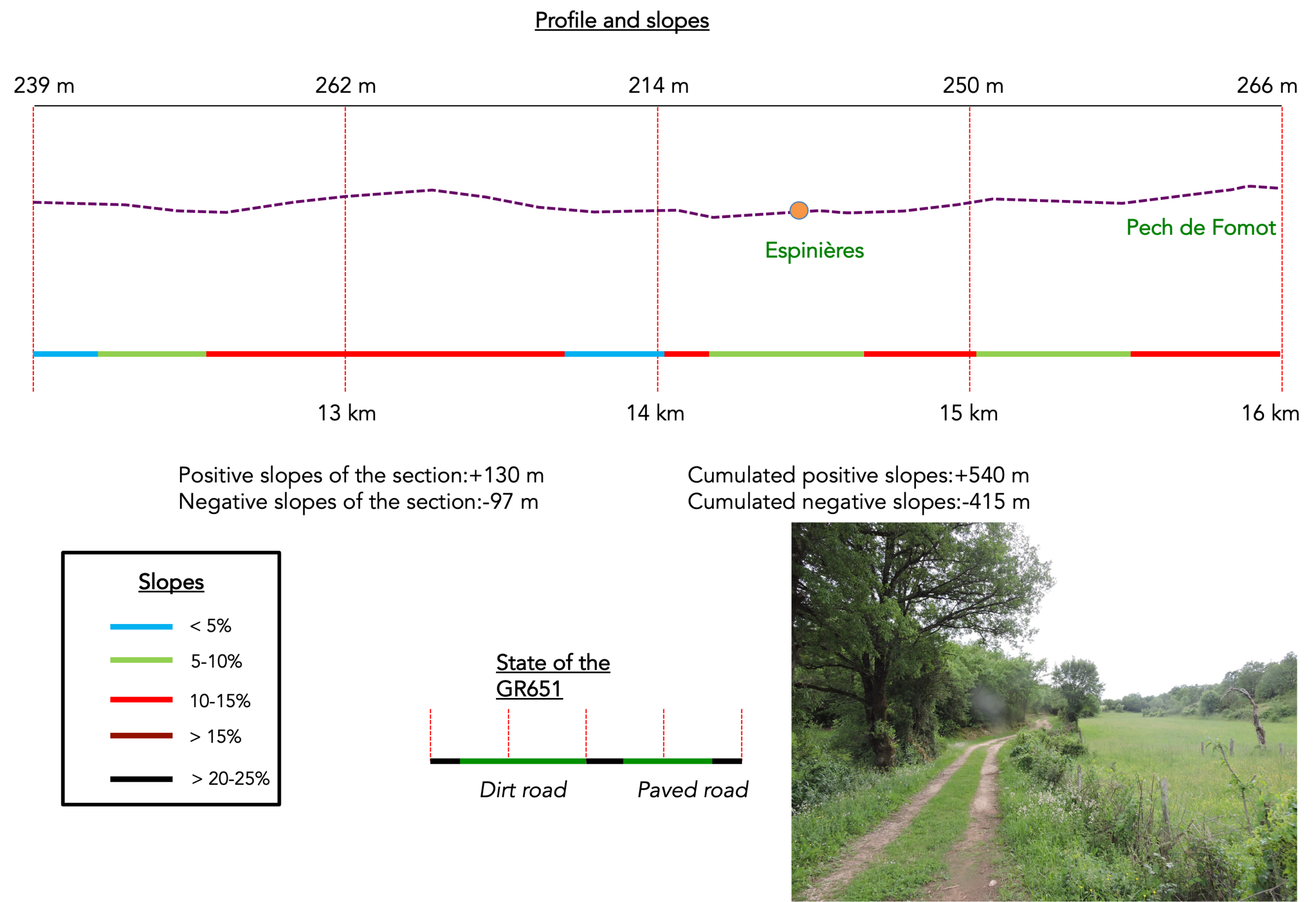
We divided the course into several sections to make it easier to see. For each section, the maps show the course, the slopes found on the course, and the state of the route (paved or dirt roads). The courses were drawn on the “Wikilocs” platform. Today, it is no longer necessary to walk around with detailed maps in your pocket or bag. If you have a mobile phone or tablet, you can easily follow routes live.
For this stage, here is the link:
https://fr.wikiloc.com/itineraires-randonnee/de-marcilhac-sur-cele-a-cabrerets-par-le-gr651-44336259
| This is obviously not the case for all pilgrims, who may not feel comfortable reading GPS tracks and routes on a mobile phone, and there are still many places without an Internet connection. For this reason, you can find on Amazon a book that covers this route.
If you only want to consult lodging of the stage, go directly to the bottom of the page. |
 |
Far from crowds, roads and the noise of the world, the Célé unrolls its grey-green waters in a patient murmur, from Figeac to Bouziès, where it finally yields itself to the Lot. This discreet river crosses one of the most beautiful natural settings that France can offer. At every bend the river seems to hesitate, twisting, brushing the banks before escaping farther on, like a luminous serpent gliding between the hills. Within its loops lie a constellation of miniature villages delicately placed along the banks, where time appears suspended. Espagnac, S Sulpice, Marcilhac, Cabrerets, each one an ancient pearl strung along the water, as harmonious as refrains murmured deep within a green valley. If the alluvial plain is fertile enough to support maize harvests, cereal fields and a few persistent market gardeners, elsewhere the soil thins, purifies itself and hardens. Sparse meadows shelter modest livestock, patient as stone, while above them the causse spreads its austere beauty. It is a harsh and luminous world, a silent garrigue scattered with downy oaks, boxwood, juniper and a few rare deciduous trees. Nothing here cries out, everything whispers. The wind, the dust, the stones and the grasses all speak softly. This land is a breath, a kingdom of silence where beauty reveals itself only to those who know how to listen.
The Célé River, faithful to its slow rhythm, runs along the foot of the vertiginous cliffs like a docile animal following the hand of its master. The rock walls change color as the hours pass, ochre at midday, grey at dusk, bluish beneath the moon. These limestone cliffs, pierced with caves and hollows, seem to breathe. They resemble living walls trembling above the river, shaped by time like a gigantic Emmental cheese whose countless holes might conceal a story. How many mysteries, caverns, hidden springs and shelters still lie within their depths. Here geology takes on the character of legend. The cliffs have served as refuge as much as dwelling. People carved their nests into the soft rock, shaping troglodyte houses suspended above the void like swallows of stone. Some barely emerge from the rock; others blend into it so completely that they are guessed rather than seen. At times the valley narrows so much that there is room only for a path and a wall. Then the dwellings climb the cliff itself, rising into the vertical landscape. These “street villages” follow the rock with a grace that borders on the miraculous. Espagnac, St Sulpice and Marcilhac-sur-Célé each reveal a fragment of this alliance between human hands and the patience of limestone. Yet do not close your notebook just yet. Sauliac-sur-Célé and Cabrerets await farther along the trail. There again you will encounter the stubborn shadow of the “cursed English”, lingering in the dust of centuries.
Difficulty level: The elevation changes (+583 meters/−580 meters), remain significant from one stage to another in the Célé valley. The stages have been designed so they are not excessively long or exhausting, yet demanding sections remain. Today you climb and descend throughout the day, much like the day before. The route reaches the causse as many as five times, but it never drops all the way back down to the river as in the previous stages. In that sense, it almost feels like a holiday.
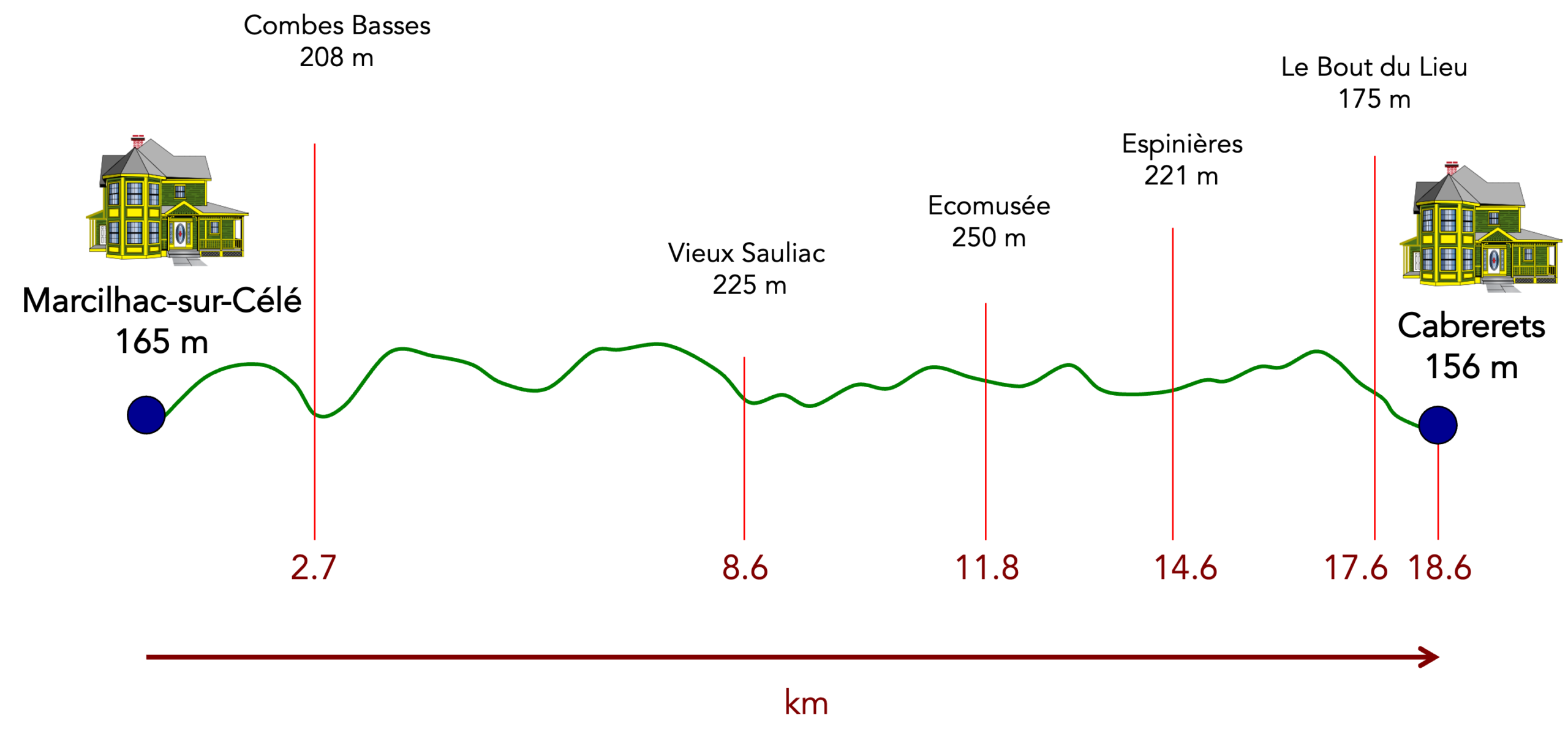
State of the route: During this stage, the distances on roads are slightly greater than in previous stages:
- Paved roads: 8.1 km
- Dirt roads: 10.5 km
Sometimes, for reasons of logistics or housing possibilities, these stages mix routes operated on different days, having passed several times on these routes. From then on, the skies, the rain, or the seasons can vary. But, generally this is not the case, and in fact this does not change the description of the course.
It is very difficult to specify with certainty the incline of the slopes, whatever the system you use.
For those seeking “true elevations” and enthusiasts of genuine altimetric challenges, carefully review the information on mileage at the beginning of the guide.

Section 1: A first demanding climb onto the causse
Overview of the route’s challenges : a physically demanding part of the stage, with slopes reaching roughly 15 to 30% in places.
|
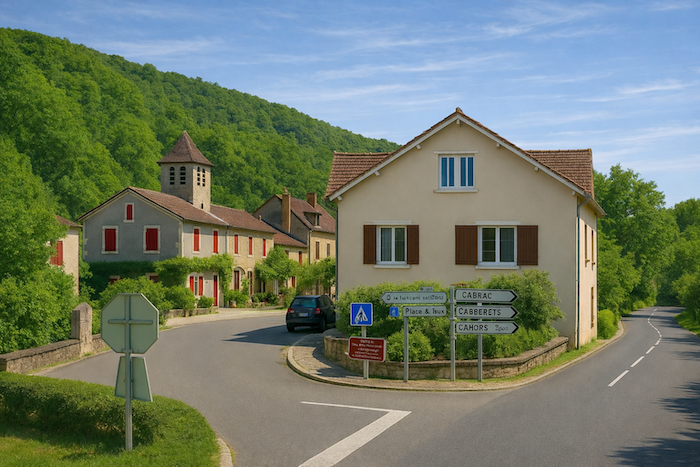
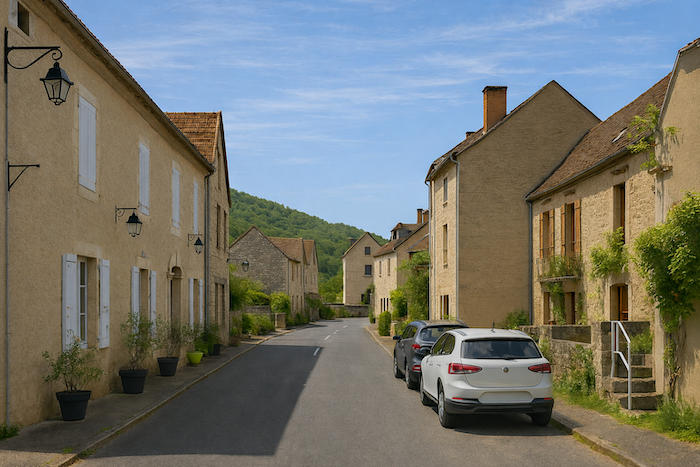
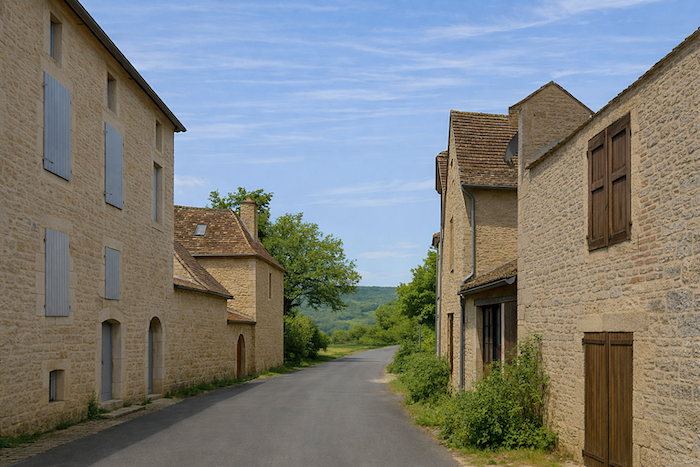
The GR651 winds through the narrow streets of the village until reaching the exit. |
|
 |
 |
 |
 |
|
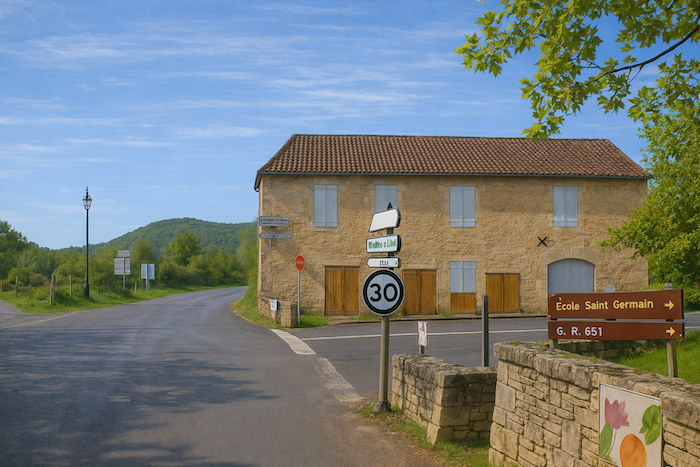
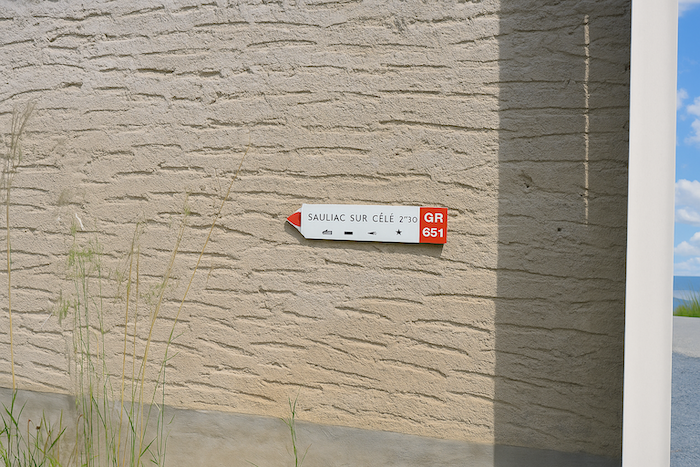
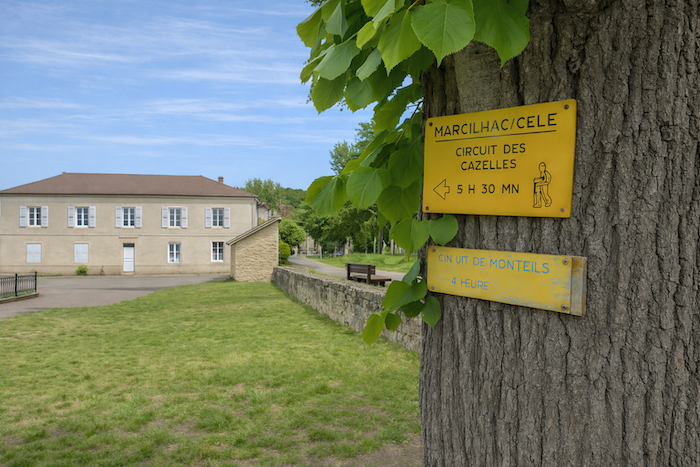
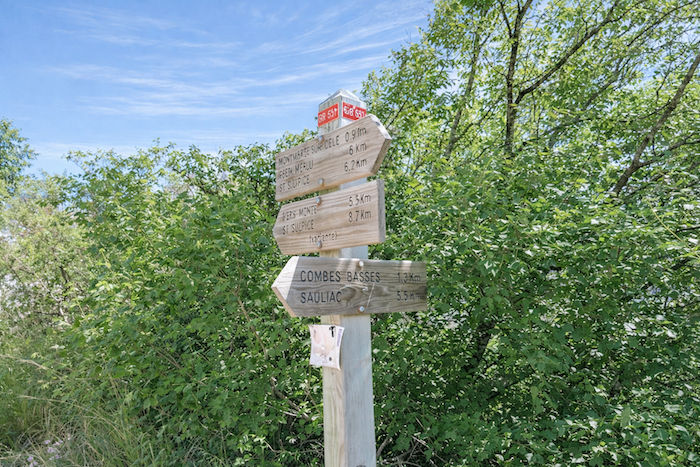
Leaving Marcilhac-sur-Célé, you must choose the correct route, for here the paths cross, intertwine and almost challenge one another. The walker hesitates among the many ways offered, as if standing at a crossroads of destiny. It is a place of passage and decision, a knot of paths where one senses the heartbeat of the causse. Among them, perhaps the most famous is the circuit of the caselles, those humble shepherds’ huts built of dry stone and weathered by the wind. All of them, including the GR651, begin at the top of the village near the school. A simple but sincere sign indicates Sauliac-sur-Célé at two hours and thirty minutes of walking, a promise of route and effort. |
|
 |
 |
|
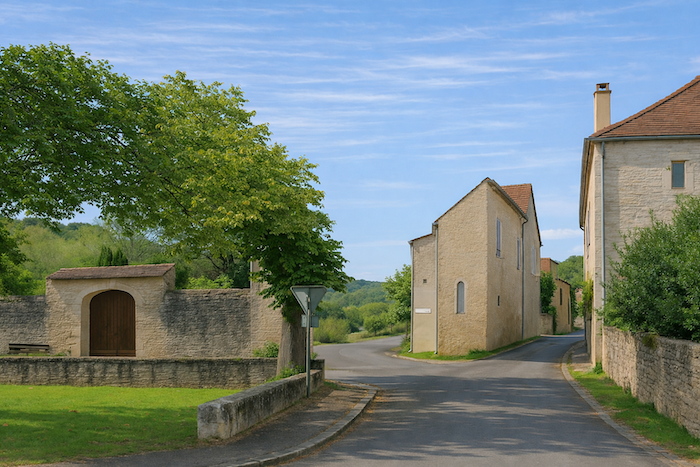
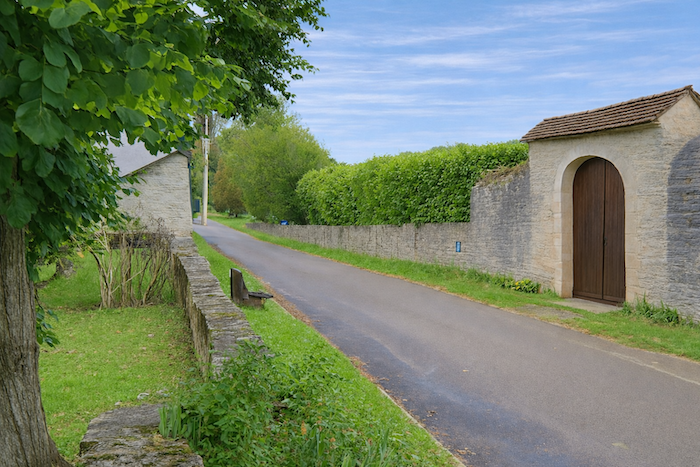
At first the GR651 follows the asphalt, shining in the sun like a scar of road, along the last houses of the village. |
|
 |
 |
|
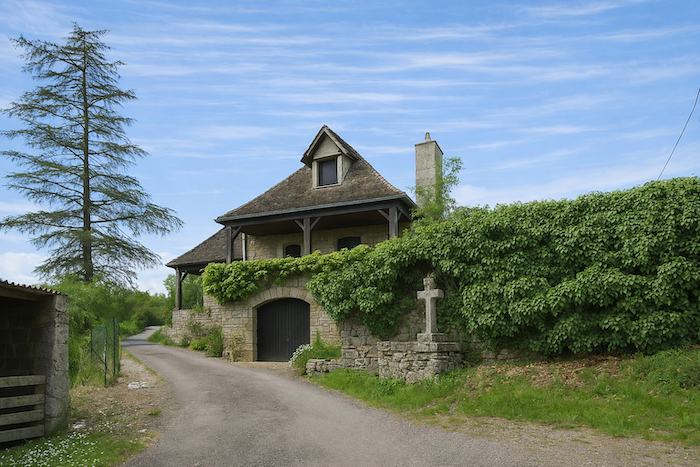
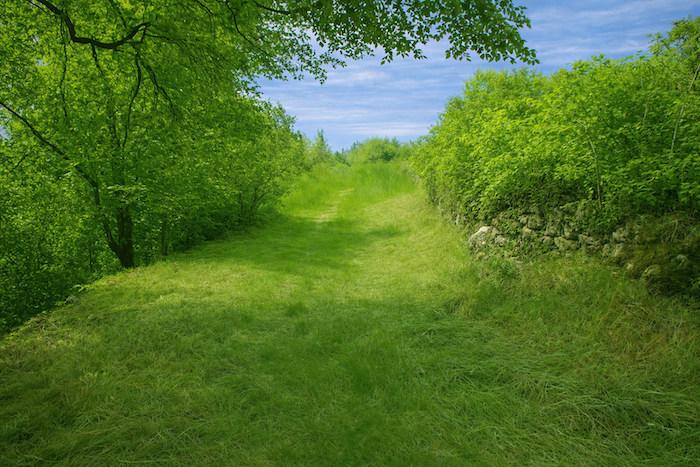
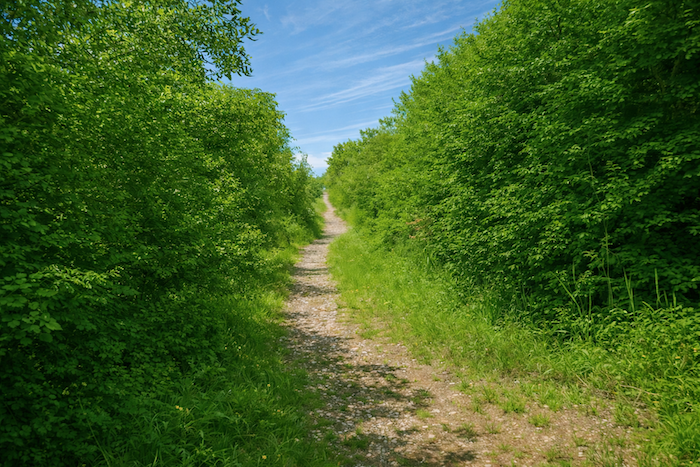
But it does not last long. Very quickly the route escapes again, like a restless horse reclaiming its freedom in the grass. There is no respite here, the land imposes its law. Hardly has the village been left behind when the trail begins to climb, first gentle and grassy, then stony, hard and rugged. Narrower and narrower, it rises onto the causse with the determination of an old mule. |
|
 |
 |
 |
 |
|
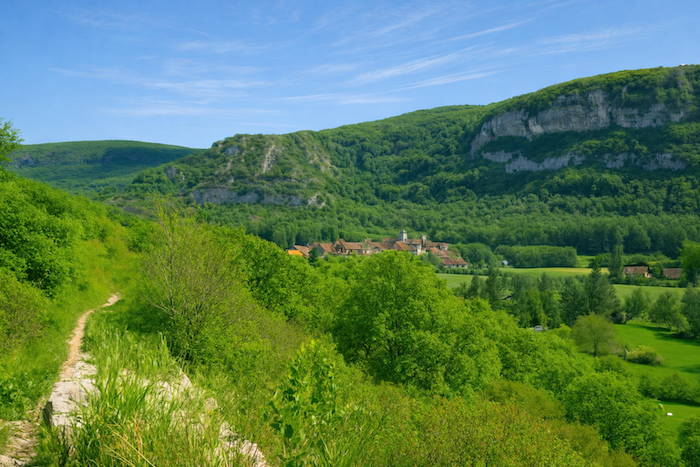
This is the first ascent of the day, the one that wakes the sleepy muscles and makes the joints sing. Yet it remains kindly, almost friendly. The slope, although inclined, allows itself to be mastered. Les Combes Basses is announced a little more than one kilometer away, lying at the foot of the first causse of the day. Here the rise does not exceed about 260 meters, roughly one hundred meters of elevation gain. A trifle, the seasoned pilgrim might say, merely a prelude to the dance of the terrain. From the small plateau a glance backward offers once more the tender sight of Marcilhac-sur-Célé resting like a jewel within its stone setting. |
|
 |
 |
|
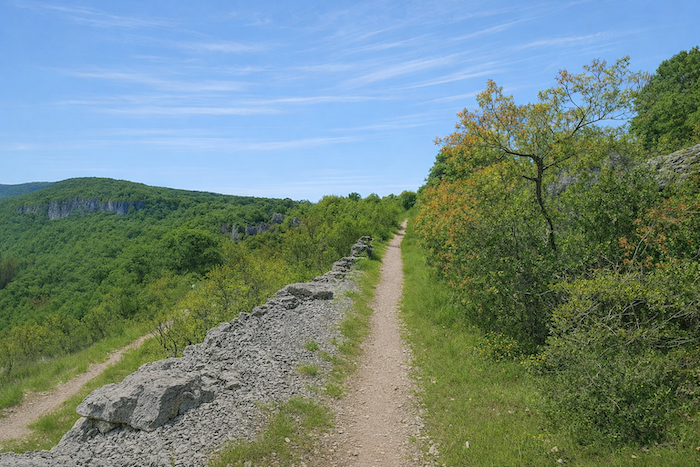
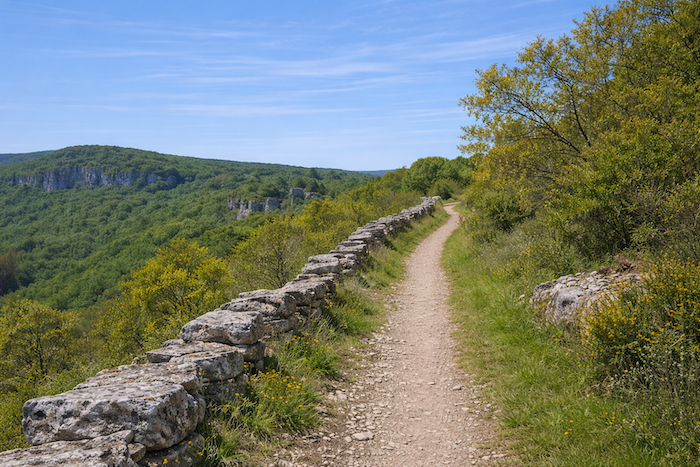
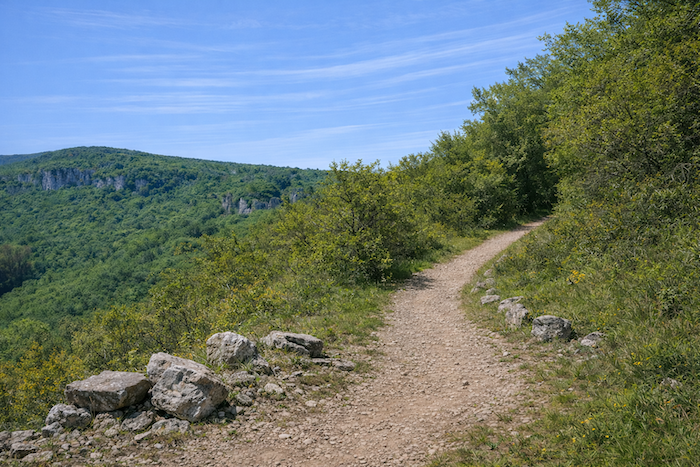
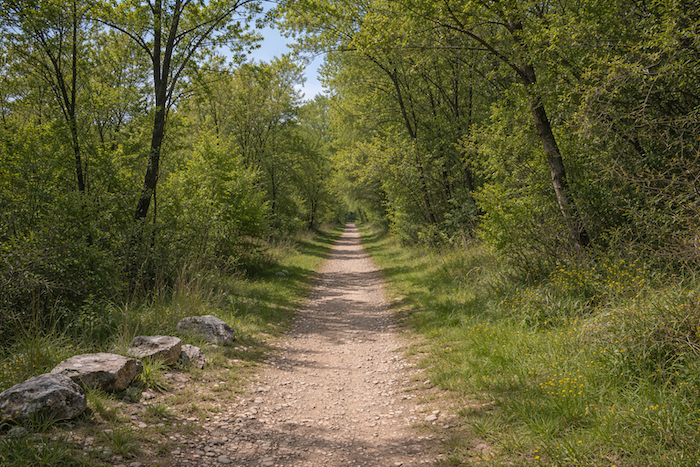
The trail then continues to rise along the ridge, crossing heathland and boxwood. Small oaks mingle with ash trees and maples, especially Montpellier maples recognizable by their three-lobed leaves that seem to greet the passerby with an ancient gesture. And always the question of the boxwood remains. Is it still there, or has the dogwood replaced it. You would have to return to know for certain, for the causse changes before our eyes like a living being. The view here opens slightly, shyly toward a horizon bounded by the next woodland, the next climb, the next trial. |
|
 |
 |
 |
 |
|
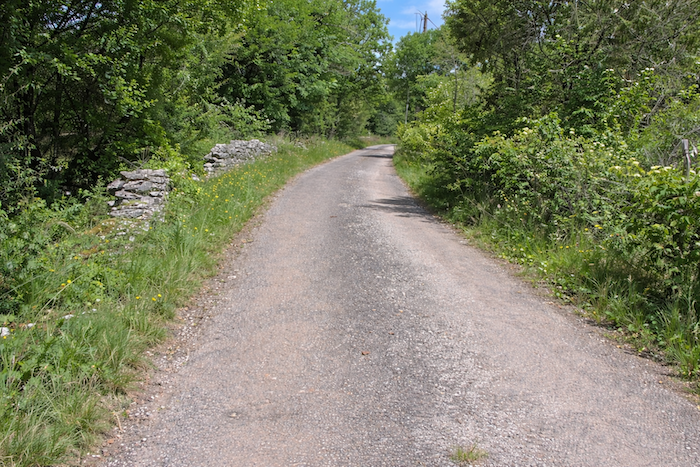
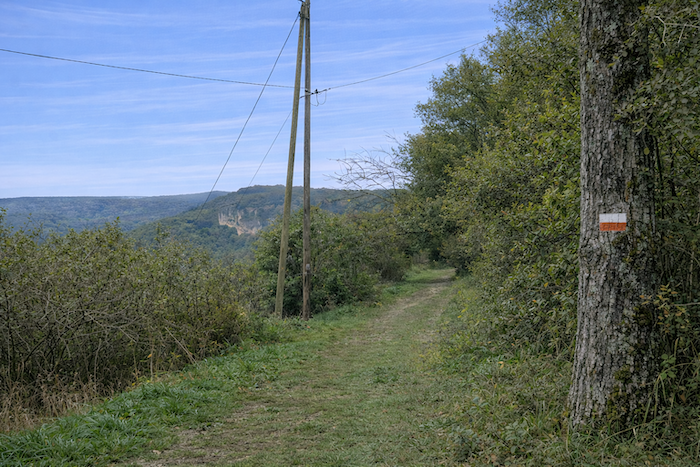
At a bend the route briefly joins the road, but only for a moment. |
|
 |
 |
|
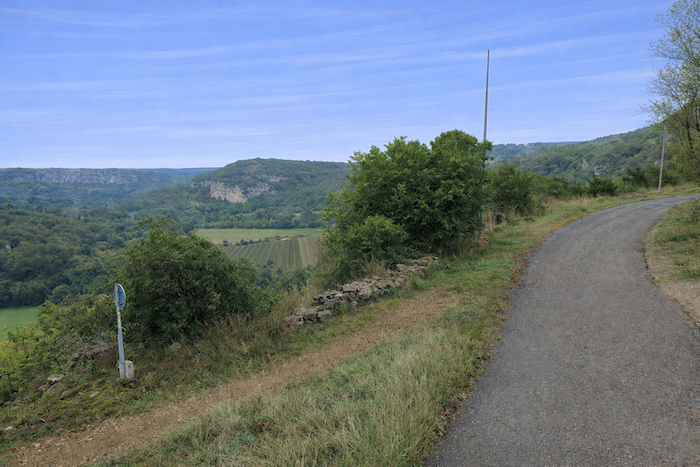
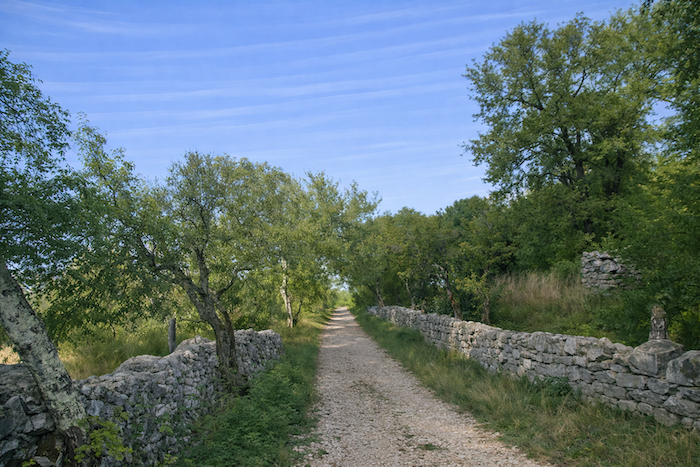
Farther on it reaches the road again. The hamlet of Picarel lies nearby without truly being touched. The road leads toward it, but the GR651 chooses another direction. A short passage on the asphalt and soon the call of the rocky ground prevails again. |
|
 |
 |
|
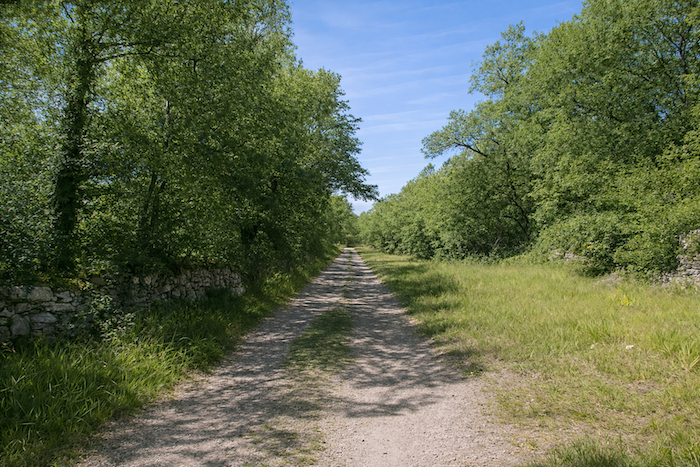
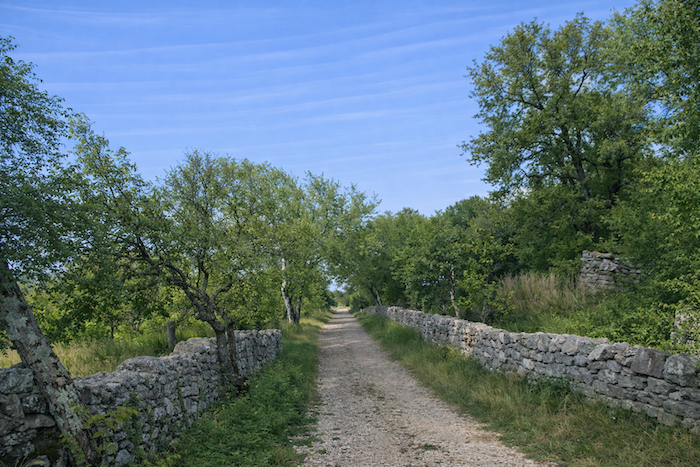
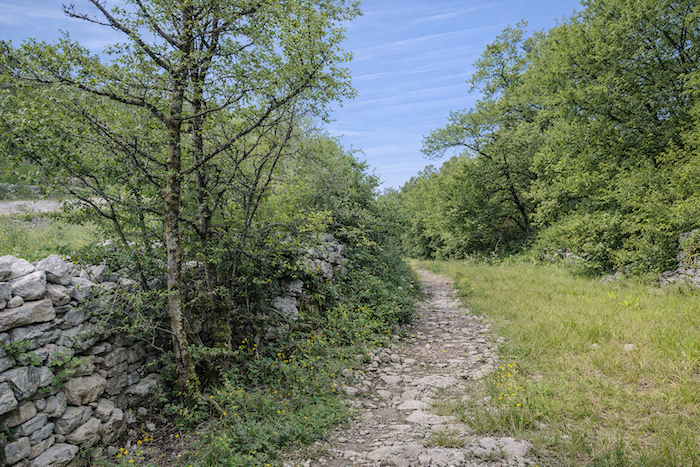
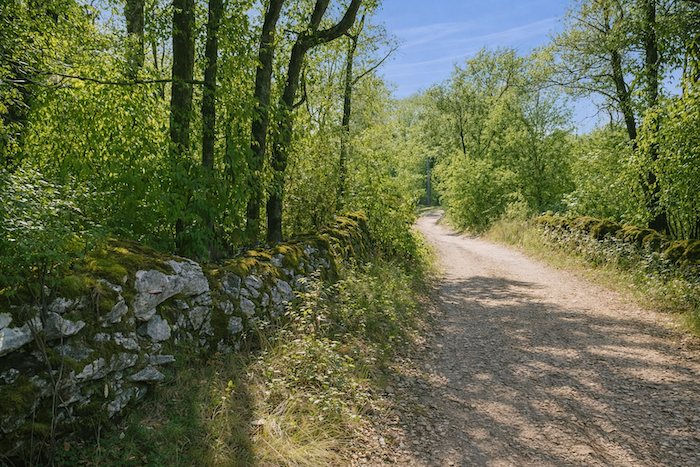
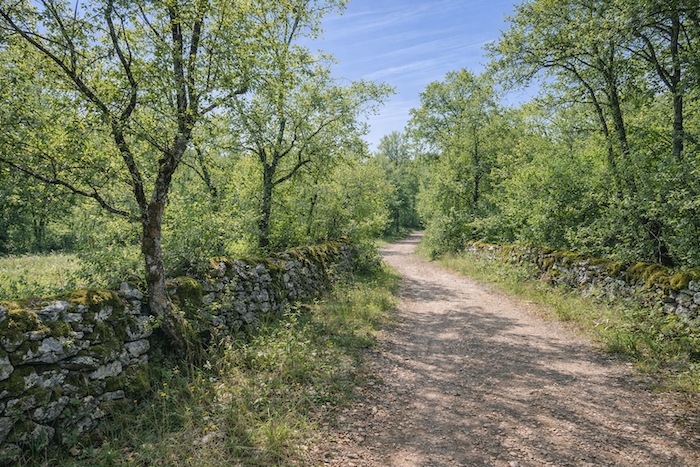
For the law of the causses is relentless. After every climb comes the descent, here rather gentle, that carries you into the arms of the forest. |
|
 |
 |
 |
 |
|
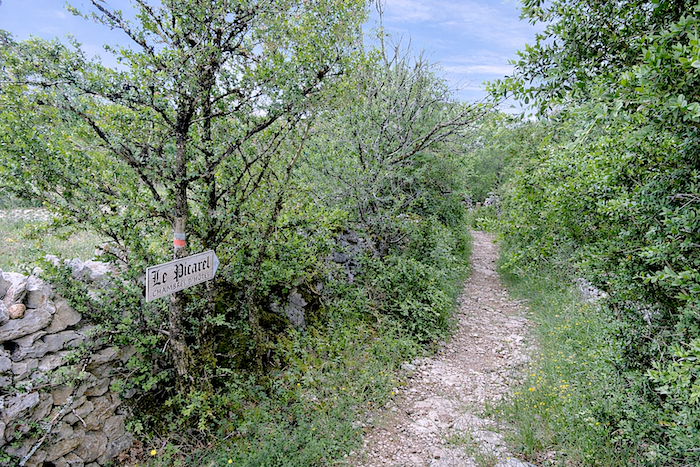
A sign announces the Mas de Picarel, sounding almost like a promise. |
|
 |
 |
|
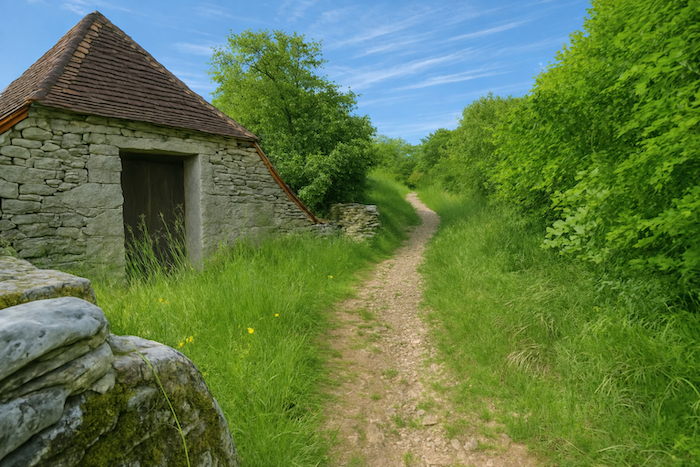
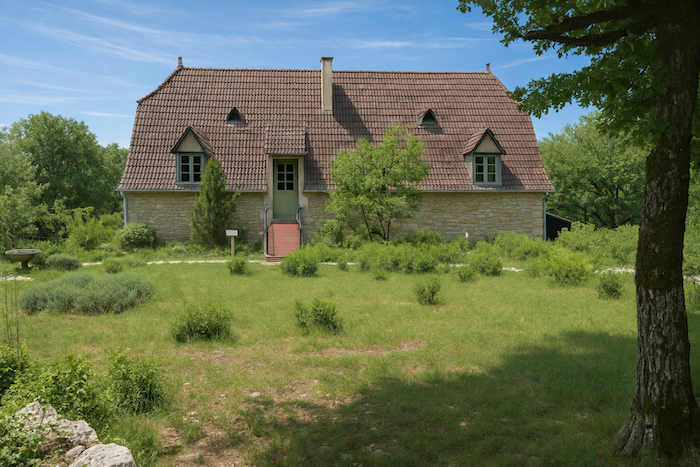
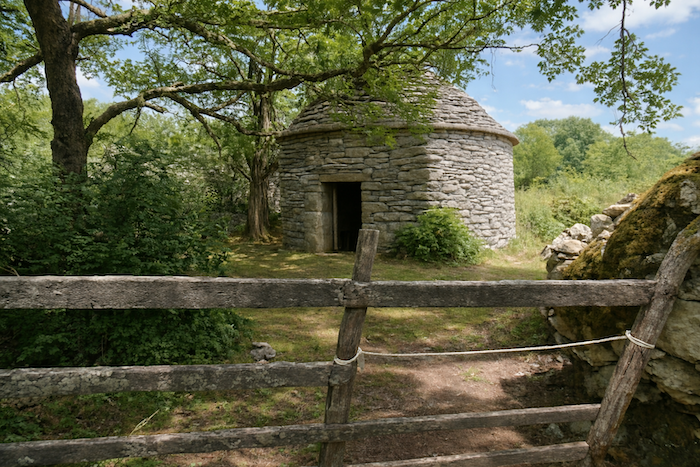
A fine “caselle” peers out from the woodland, a silent witness to the labor of earlier times. It marks the Mas de Picarel, where accommodation likely awaits some passing walker. The stone itself seems to breathe peace. |
|
 |
 |
|
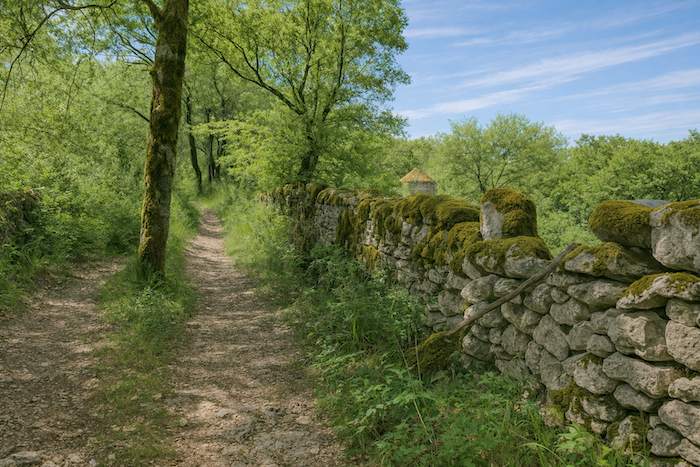
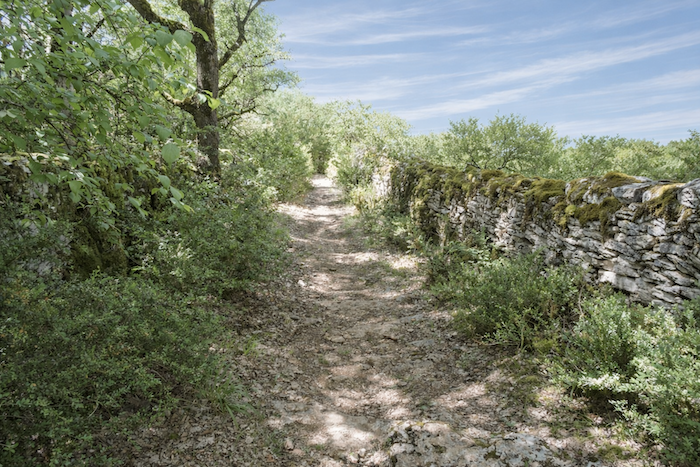
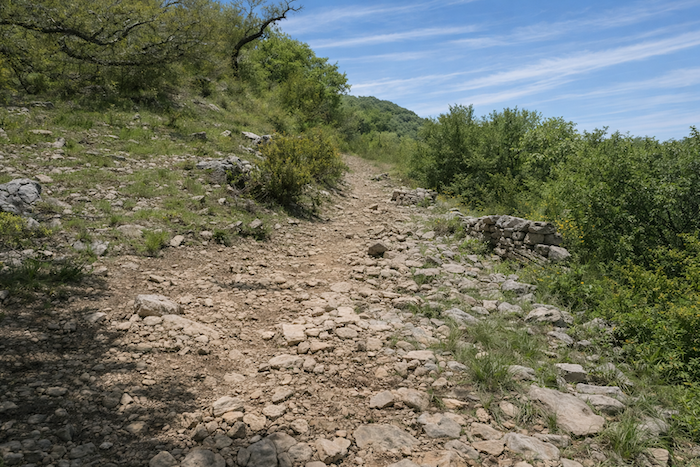
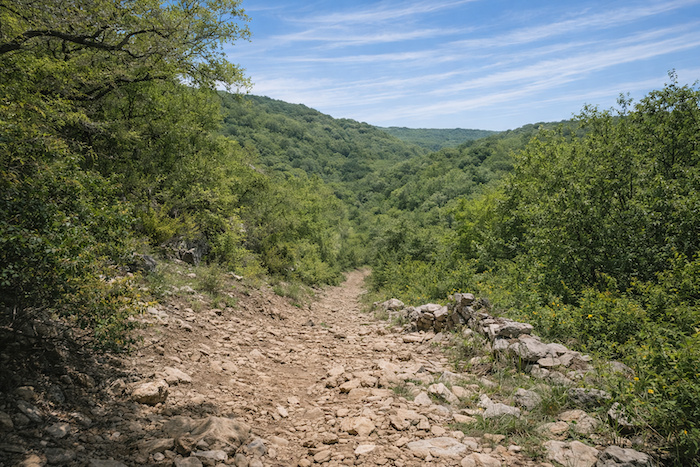
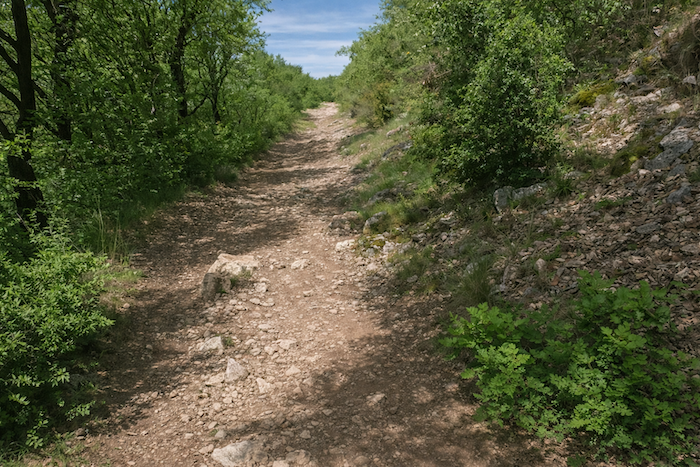
The GR651 then plunges toward the valley of Combes Basses as if wishing to disappear from the world. Here civilization falls silent. The steep trail draws you downward over stones and ochre earth, and your knees protest. Yet the beauty is striking. Boxwoods border the descent with their rounded forms. On the sunny ledges grow phillyrea and pistachio shrubs of warmer lands, recalling the Mediterranean. A few rare birches challenge the oaks, graceful and almost insolent. Nature here resembles a mosaic in which every plant holds its place in the light. |
|
 |
 |
 |
 |
|
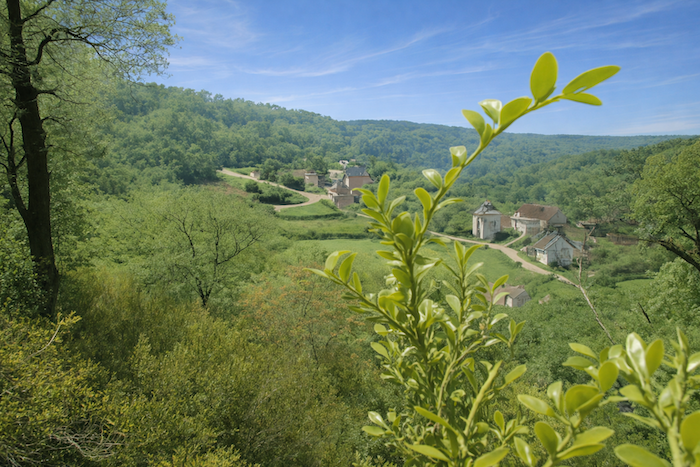
Soon you will glimpse below the secluded hamlet of Combes Basses. |
|
 |
 |
|
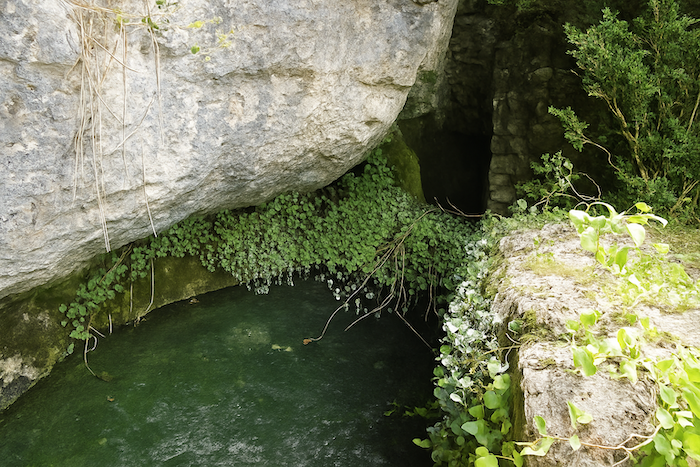
At the bottom of the path the coolness surprises you. A small pond hidden beneath the cliff rests in the shade of ivy. The water lies quiet, barely rippled by the wind. One willingly pauses here, breathing hard yet inwardly calm. |
|
 |
 |
|
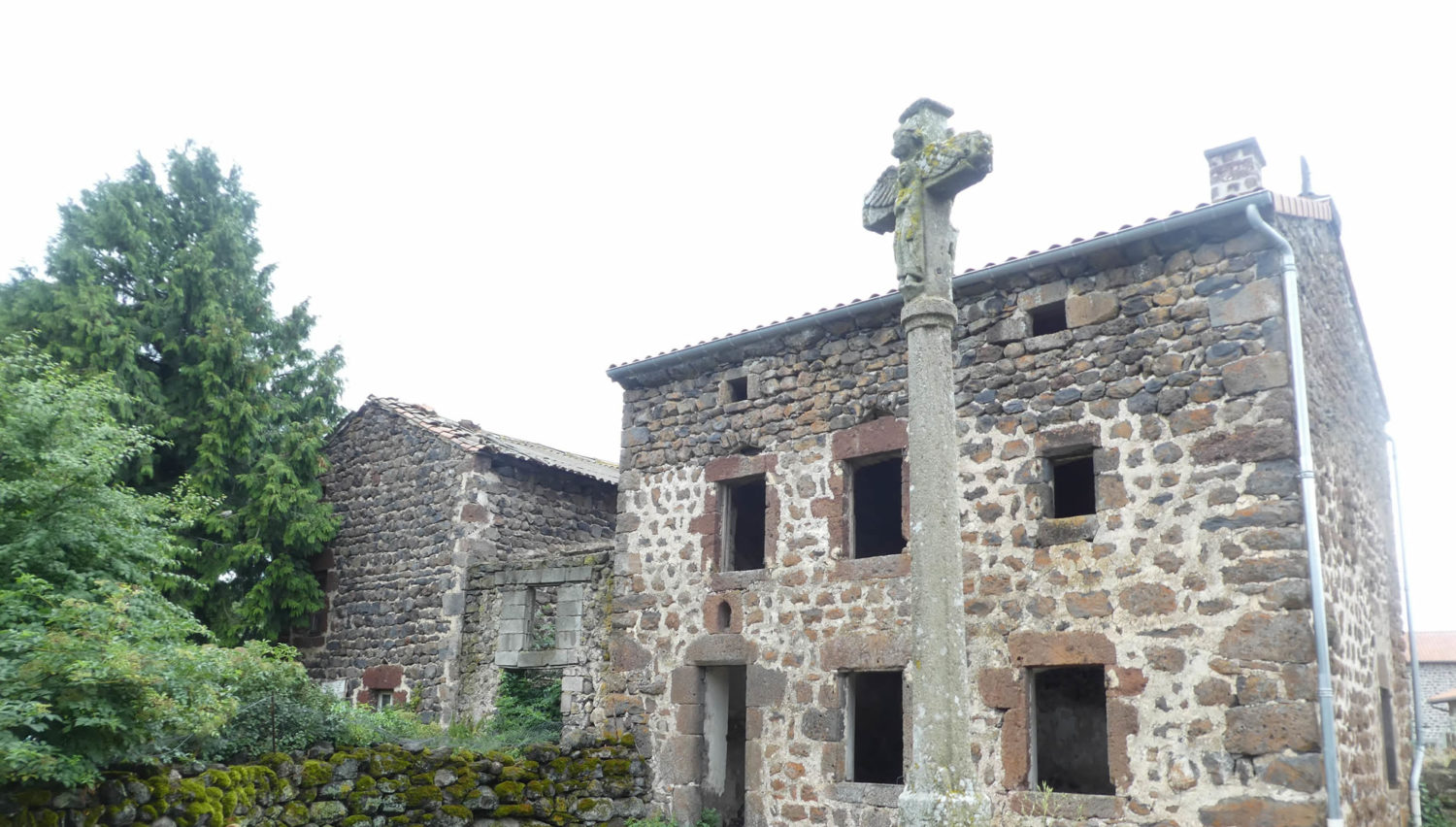
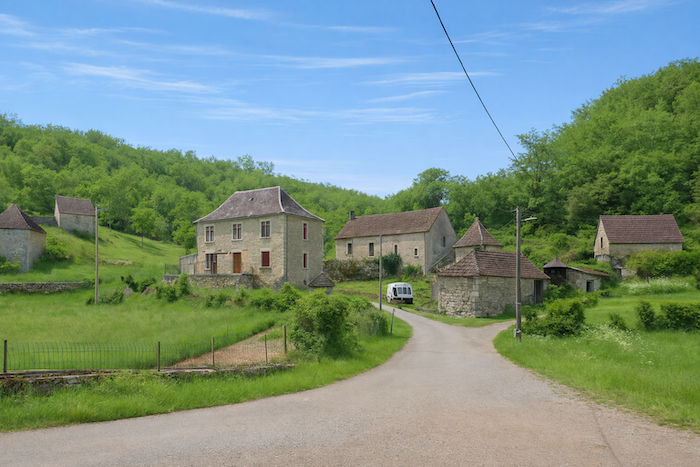
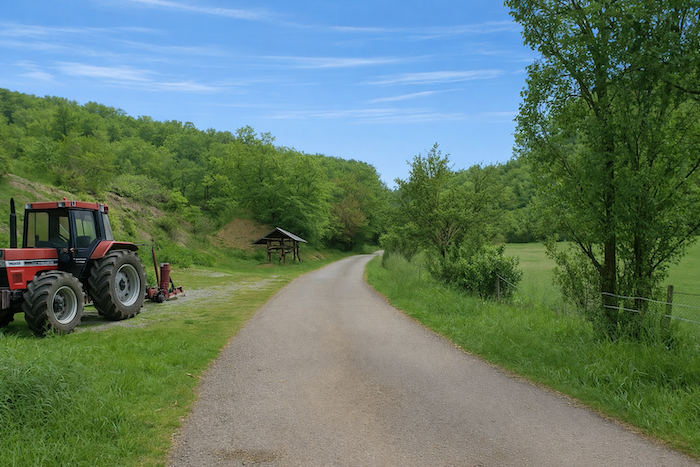
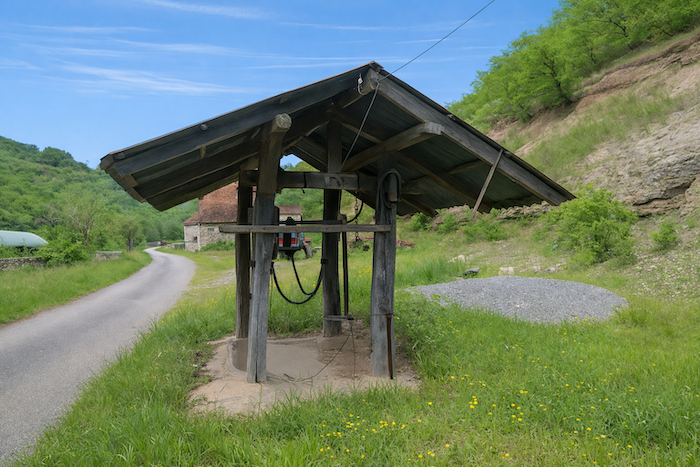
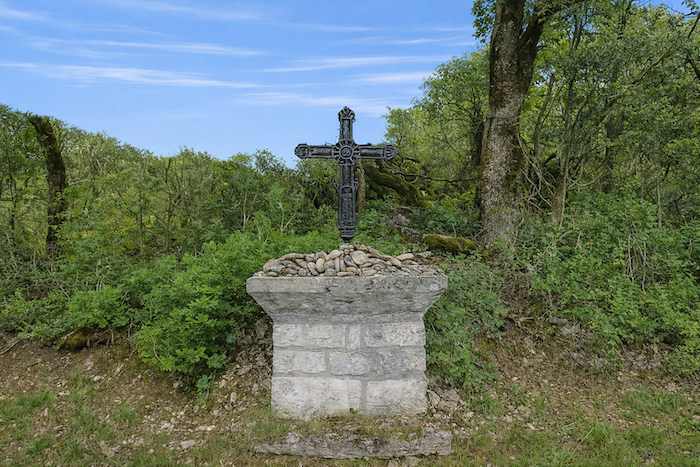
At “Combes Basses” a few farmers still remain, stubborn guardians of a meager land. They cultivate the small plots left open by the woods, patiently patching together the soil. Asphalt, a car, a tractor, these are the modest signs of their presence. Yet the shutters are often closed, the doors silent, the houses caught in a half sleep. And beside the path stands a cross, a faithful companion. Simple, yet beautiful, a marker of faith and fatigue. |
|
 |
 |
 |
 |
|
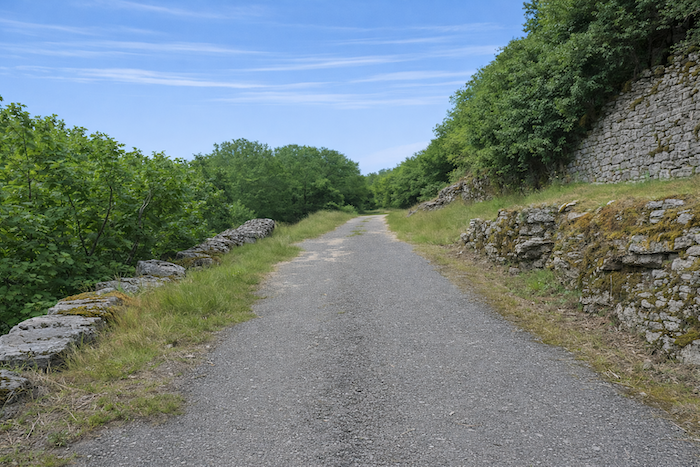
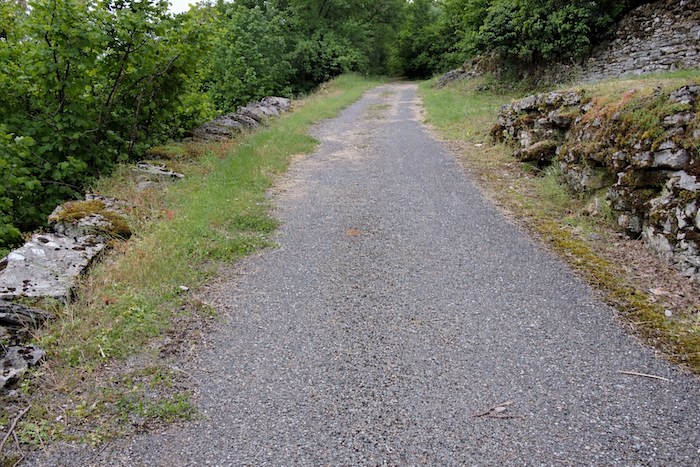
You have descended again to the plain at about 170 meters of altitude, although the hamlet lies slightly away from the Célé. The walker knows well that what goes down must climb again. Before him stretches a strip of worn asphalt rising through the woodland like a weary serpent, announcing the next ascent toward nearly 300 meters above sea level. |
|
 |
 |
|
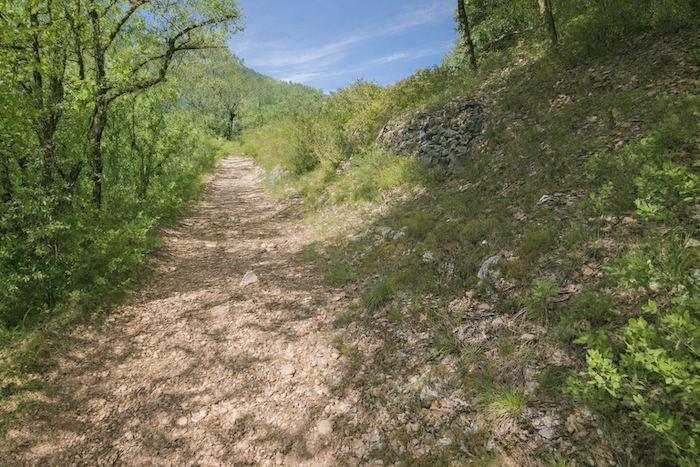
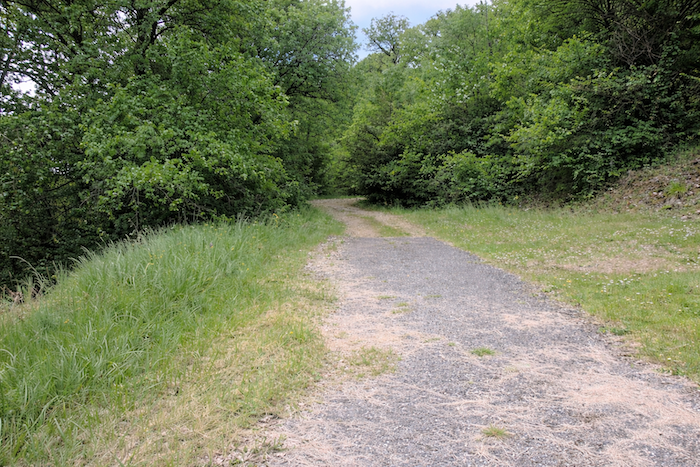
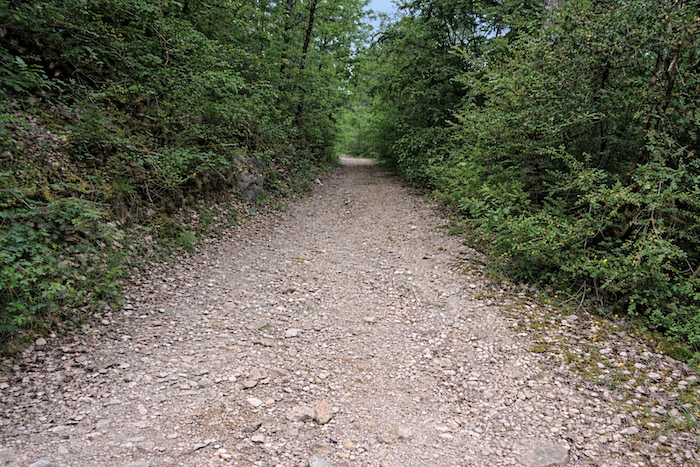
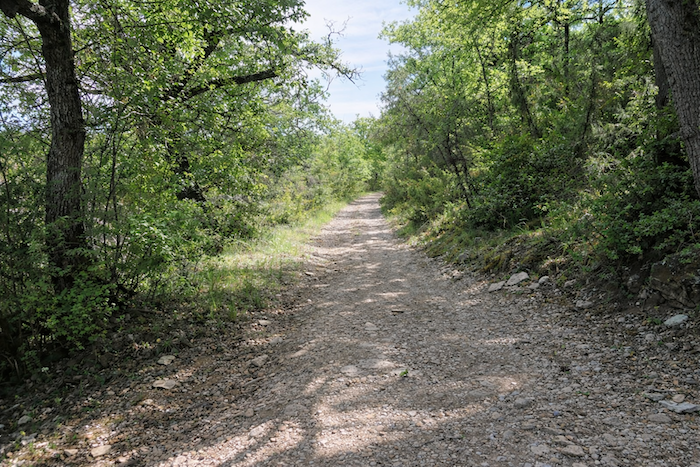
Soon the asphalt gives way to a wide dirt path. Its width deceives the eye, for the slope remains formidable. The oaks gather close, supported by boxwoods and Montpellier maples. The climb stretches onward, relentless yet beautiful in its severity. Ten minutes of rugged, almost pure happiness, with slopes of about twenty percent and sometimes more. |
|
 |
 |
|
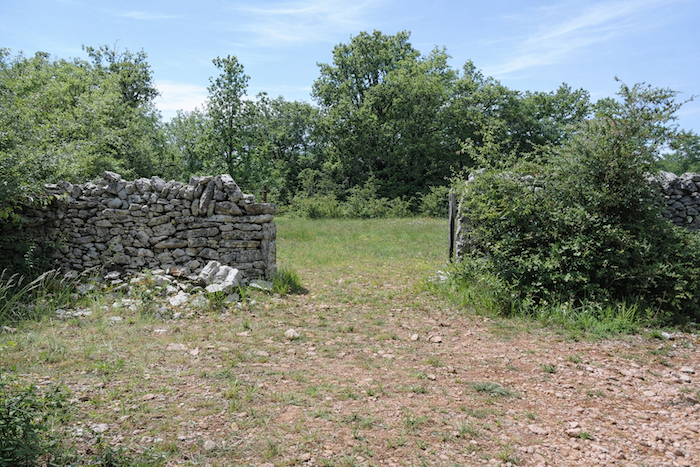
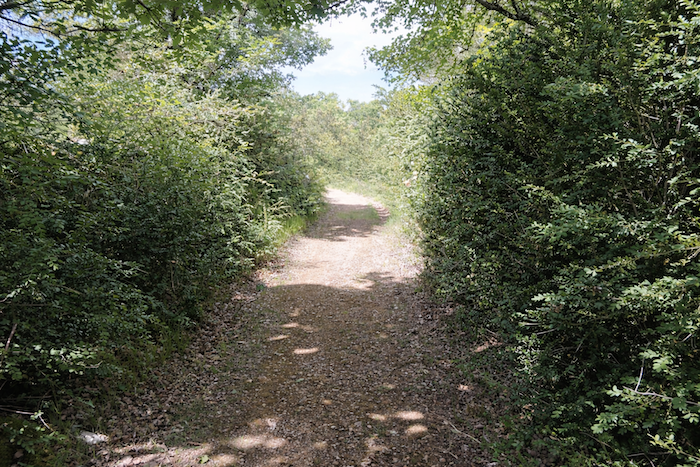
Then suddenly a pause. The forest opens; dry stone walls line the way and light plays across small clearings. The slope softens for a moment before rising again with renewed determination. Finally, the reward appears, meadows opening beneath the sky. |
|
 |
 |
|
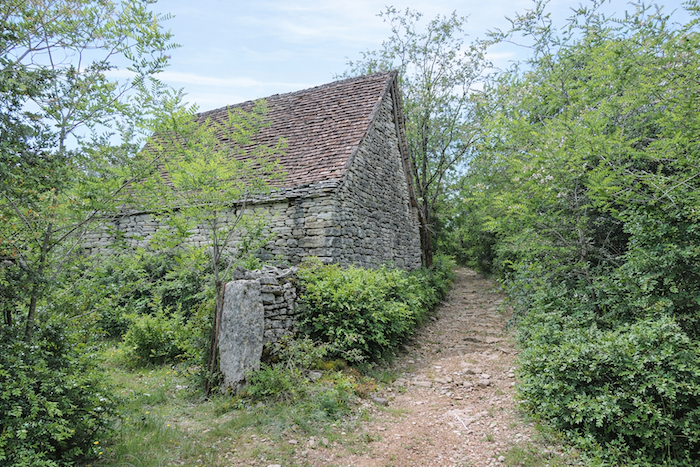
A large stone house, perhaps abandoned, stands beside the path like a melancholy sentinel of the past. Around it boxwoods and cade junipers mingle playfully among the fallen walls. The air carries the scent of warm stone and moss. A true delight for the walker. |
|
 |
 |
Section 2: A long crossing of the causse
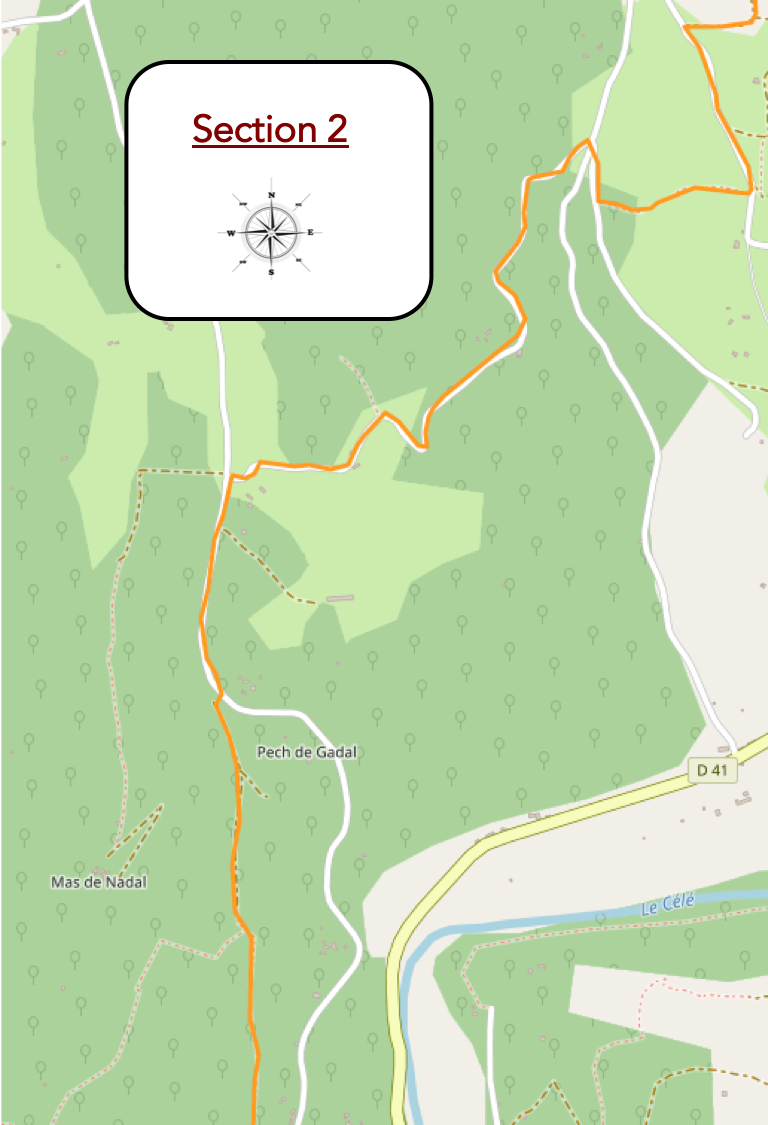
Overview of the route’s challenges : at times a few steeper slopes, both uphill and downhill.
|
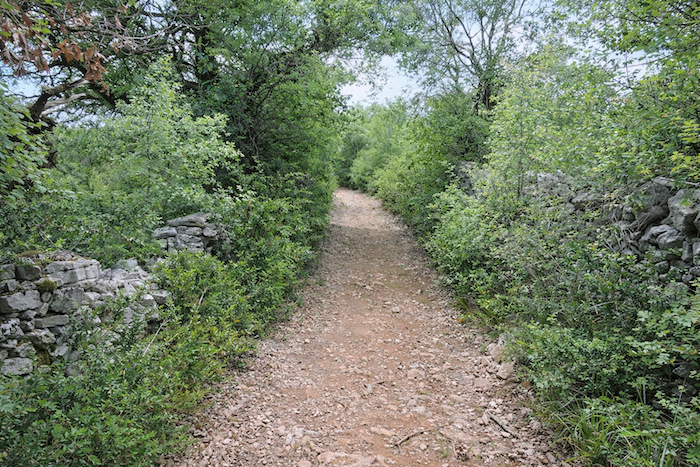
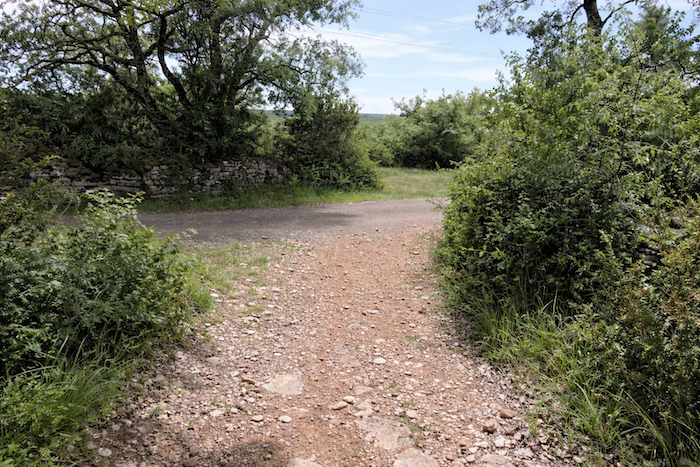
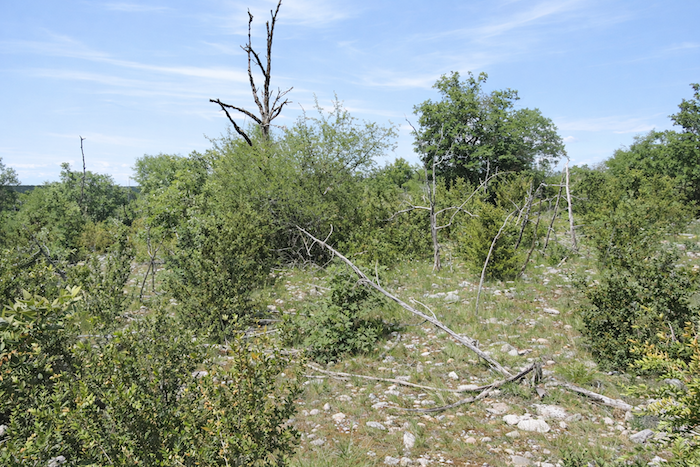
The path climbs a little farther, though more gently now, until it reaches an asphalt road that crowns the second rise of the day. Up there the wind seems to lose itself across the endless heath. Everything appears motionless, suspended, as if time itself were holding its breath. The heath deepens the mystery, extending solitude as far as the eye can see. It is a symphony of disorder and harmony, a jumble of branches, dead trunks, shrubs and wild grasses tangled together, colliding and reshaping the lines of the horizon. This natural confusion possesses something grand and moving, a beauty beyond the reach of human hands, nourished by silence. |
|
 |
 |
 |
 |
|
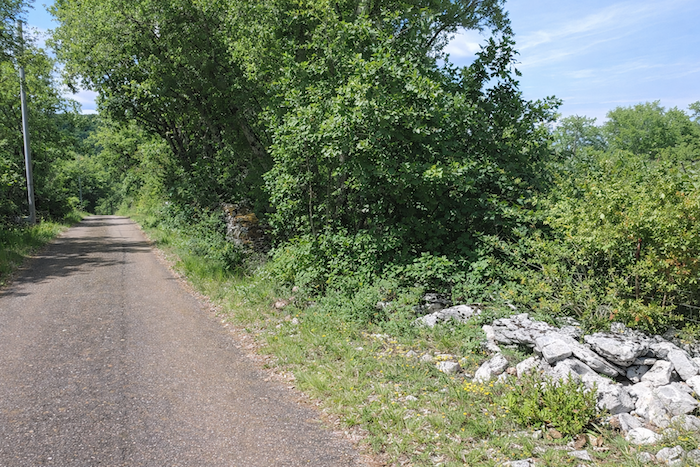
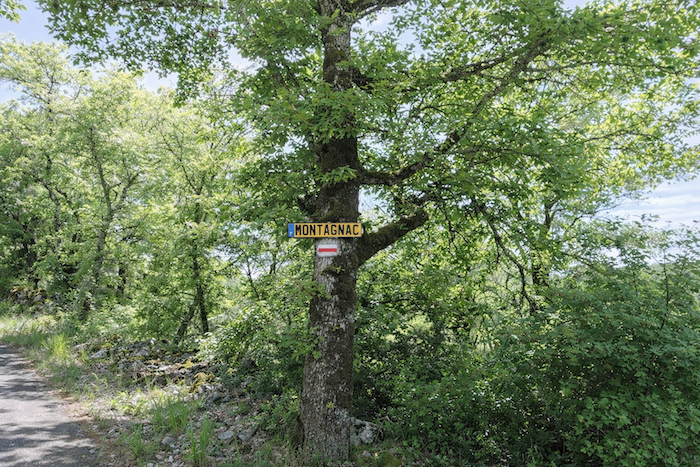
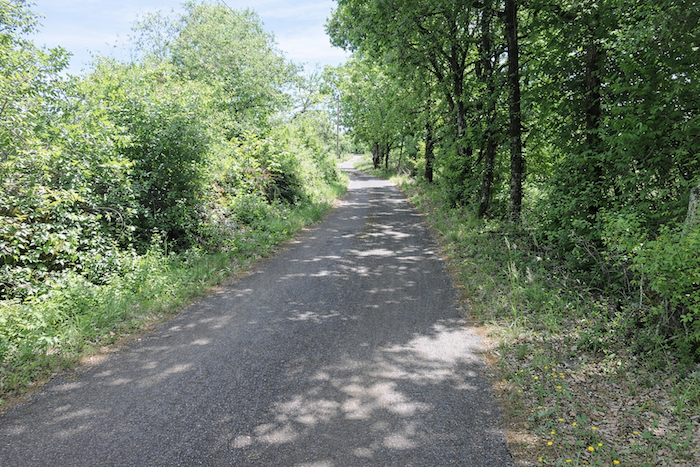
The descent begins toward Montagnac along a ribbon of warm asphalt that follows the hollow of the valley. Here the heath becomes magnificent, almost luxuriant in its dryness. The winds have combed and sculpted it until it takes on the supple movement of a green sea. The route winds through the great Pech de Montagnac among scents of thyme, rosemary and juniper, with that fragrance of happy solitude that only the causses can offer. On this asphalt road the walker might briefly believe he is returning to the world of people. Yet the route will never actually enter Montagnac by road. The whole region is crisscrossed with small roads, many of them ending in dead ends. The illusion of an approaching plain, of a return to ordinary life, passes through the walker’s mind. But he should not be deceived. No car appears; no sound breaks the quiet. The GR651 descends a little farther toward Montagnac before suddenly abandoning the road once again for the forest. |
|
 |
 |
|
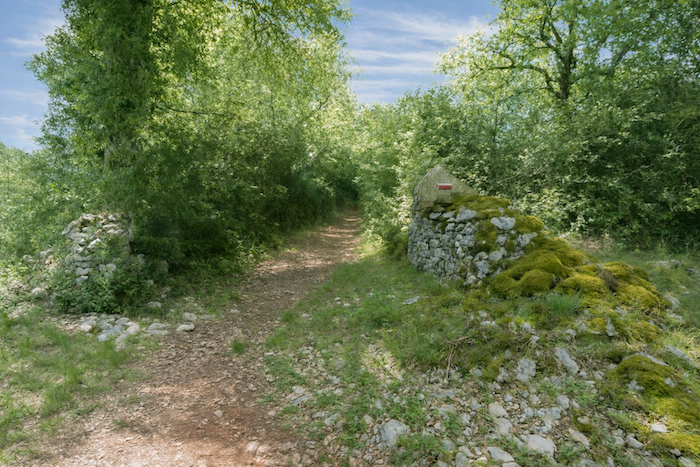
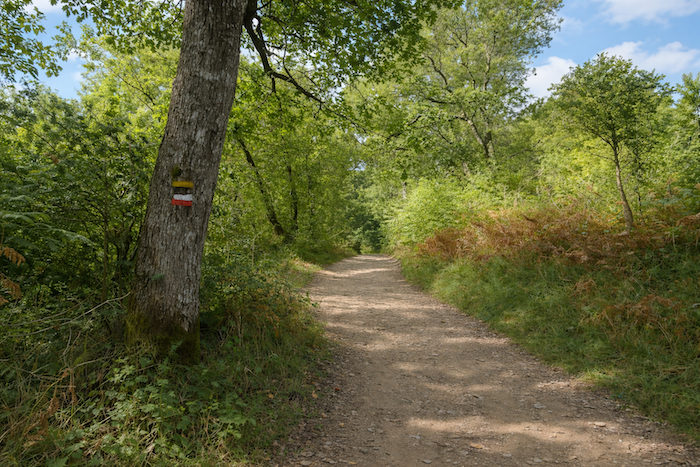
A trail leaves the road as you leave a falsehood, rediscovering the truth of the earth. It runs beside old stone walls edged with moss that seem to guard the memory of centuries. |
|
 |
 |
|
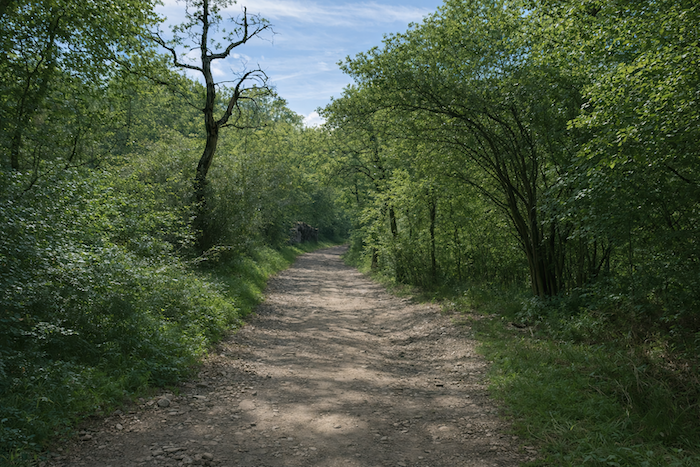
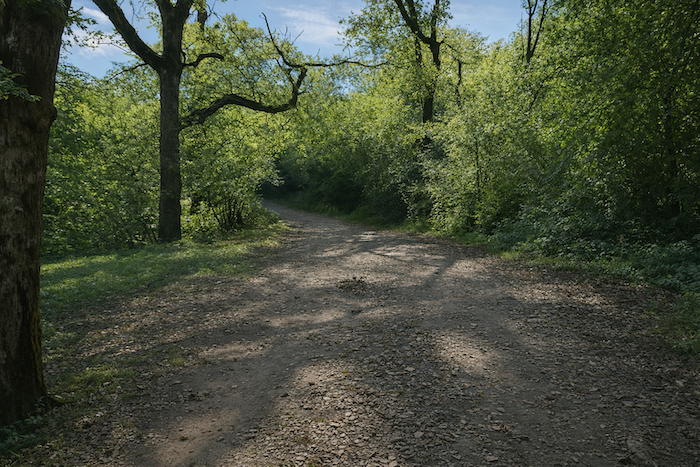
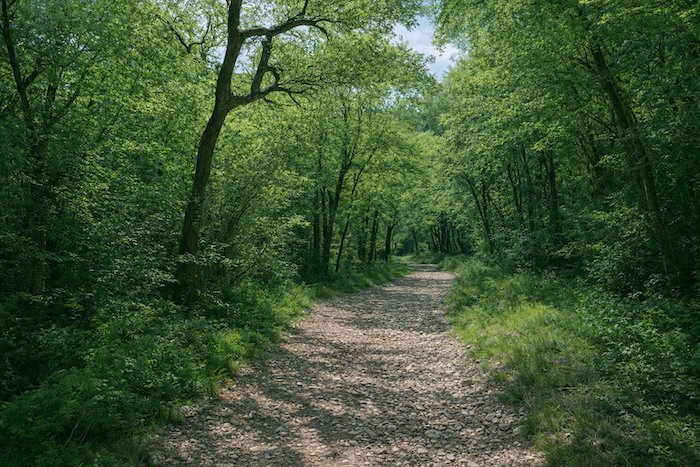
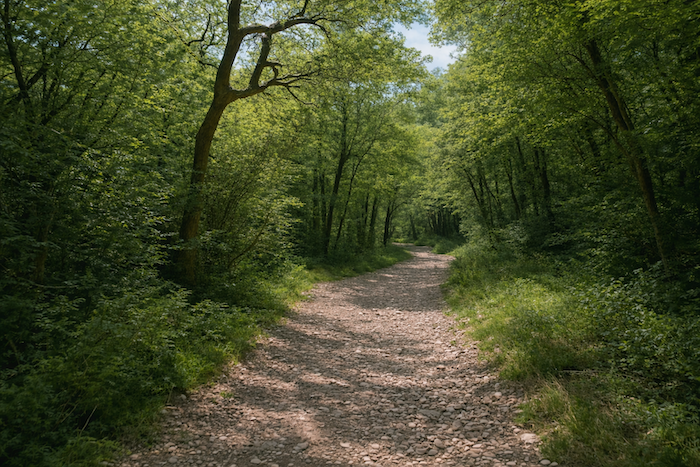
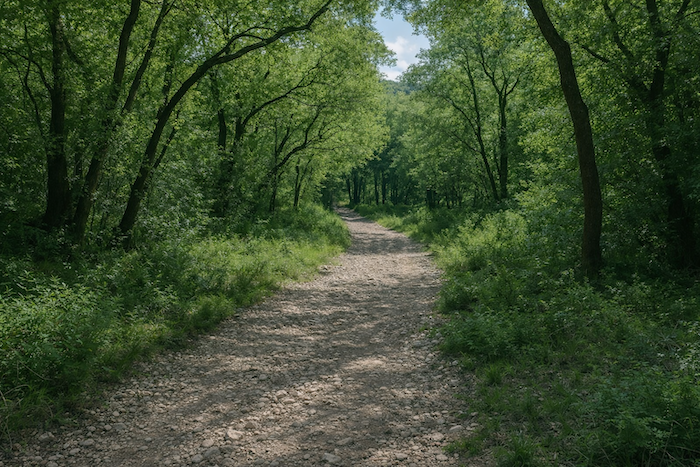
In the woodland the trail undulates with quiet grace, following the relief without effort, gliding forward almost without resistance. Steps become softer, cushioned by the carpet of fallen leaves. Only the gentle rustling of grass and the wind among the branches can be heard. Soon enough, however, the stones return, small, treacherous and numerous. The careful walker tightens his laces and silently thanks his sturdy shoes. On the causses the stone is never far away, a faithful companion or a hidden adversary depending on the day. |
|
 |
 |
|
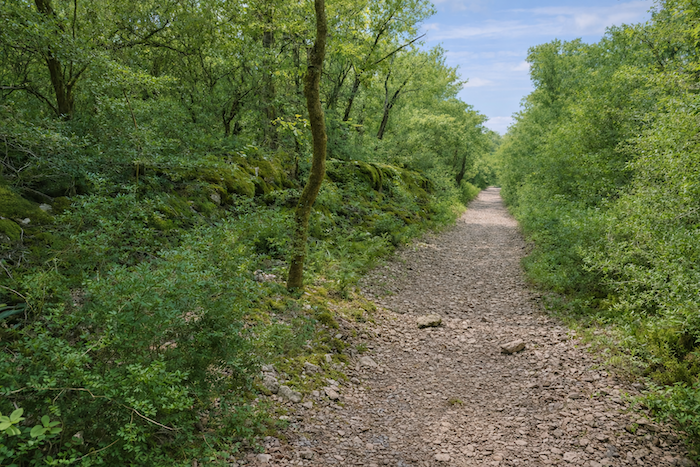
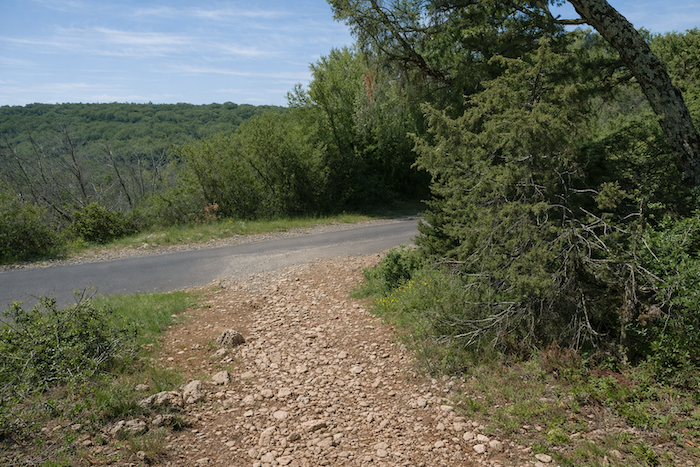
Before long the rocky path reaches another road, just as isolated, that crosses the “Pech de Montagnac”. |
|
 |
 |
|
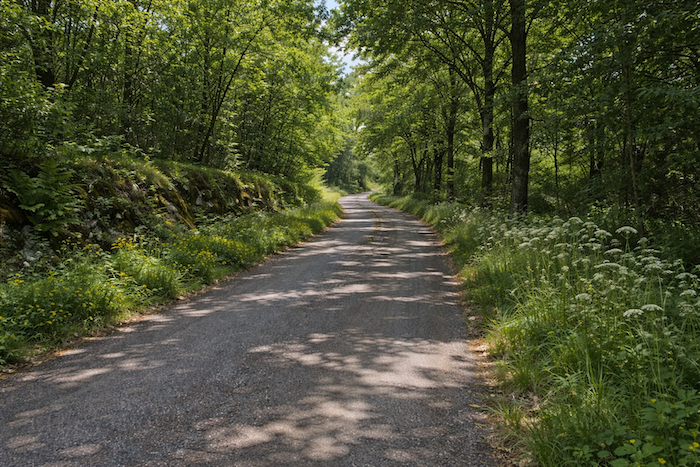
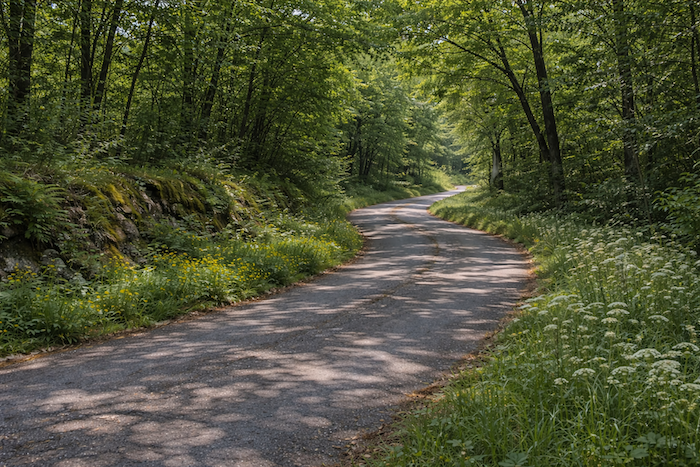
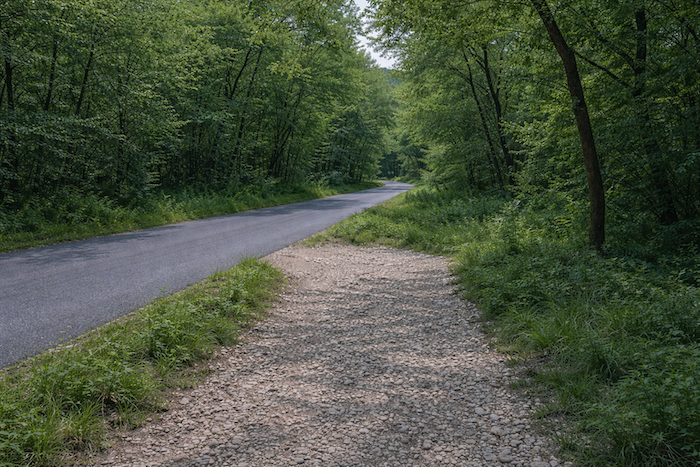
The asphalt there seems almost erased by time, eaten away by moss and dust, barely alive any longer. |
|
 |
 |
|
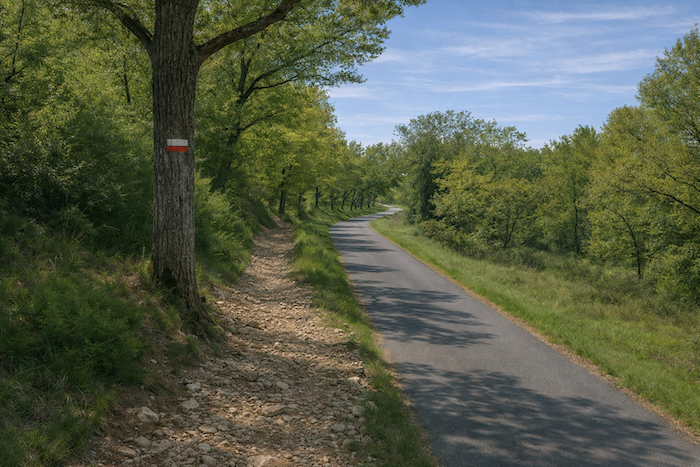
Farther on the dirt path returns beneath the woodland canopy of the causse. |
|
 |
 |
 |
 |
|
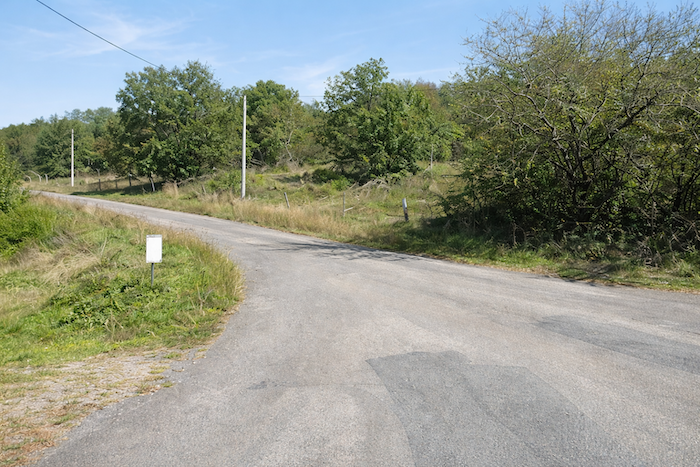
The route of the day seems to enjoy leading you from road to path and from path to another road again. |
|
 |
 |
|
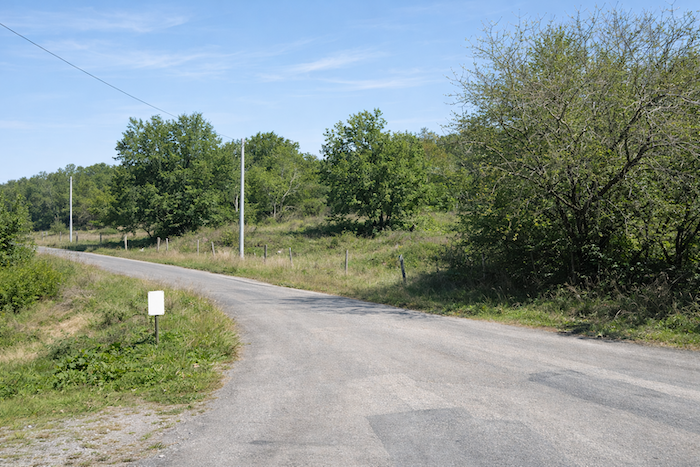
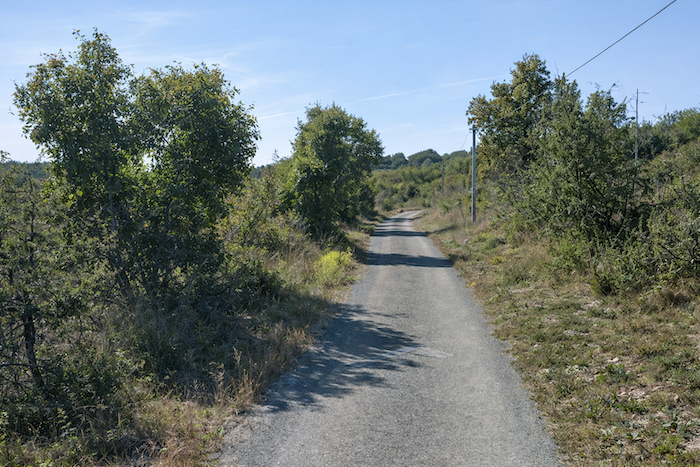
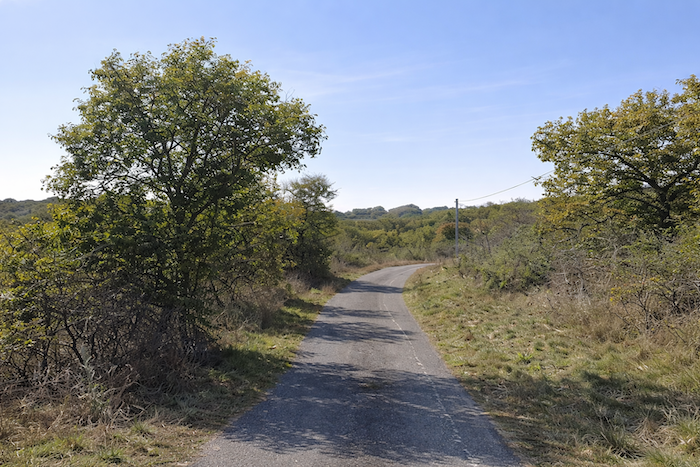
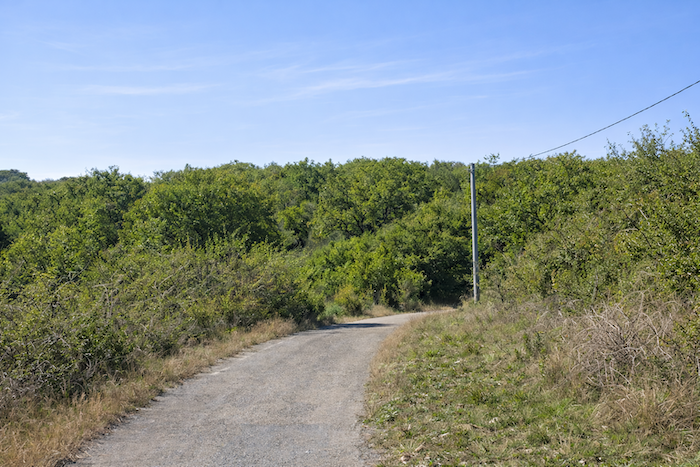
You have descended to about two hundred meters of altitude. Ahead rises the next challenge, climbing again to the summit of the causse at nearly three hundred meters above sea level. A strip of asphalt winds upward in broad bends, a black serpent coiled along the hillside. One and a half kilometers for eighty meters of elevation gain, enough to make the pilgrim almost curse his own perseverance. |
|
 |
 |
 |
 |
|
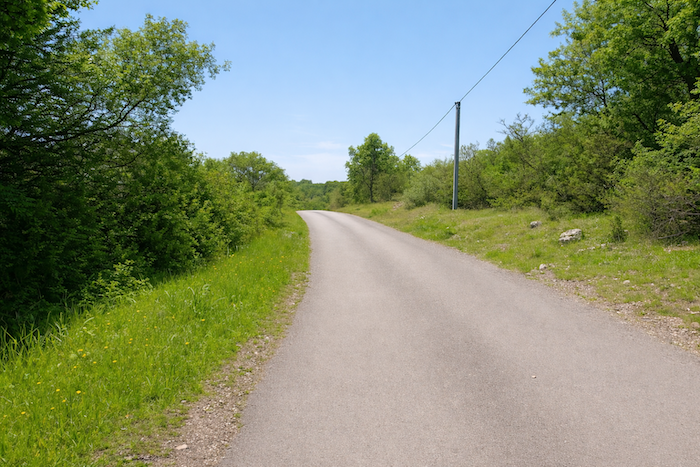
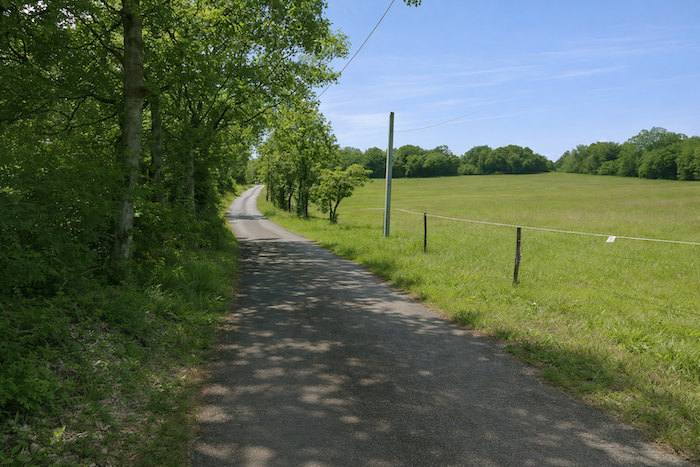
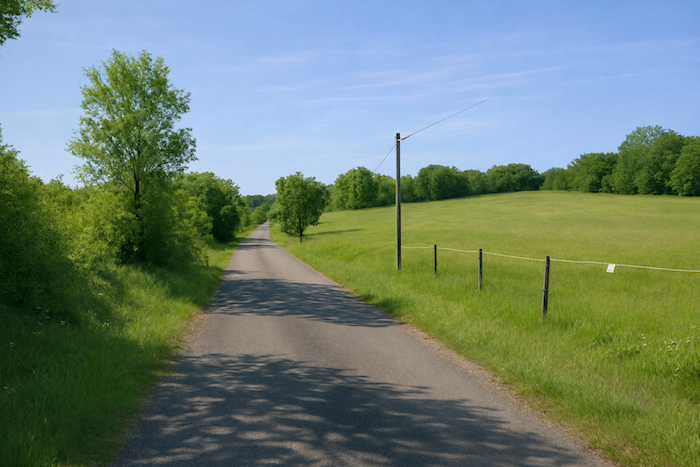
Fortunately, a few clusters of trees watch over the roadside. Tall oaks and a few ash trees lift their shaded silhouettes above the asphalt, offering the walker a moment of cool relief. The surrounding meadows, wide and open, seem asleep. |
|
 |
 |
 |
 |
|
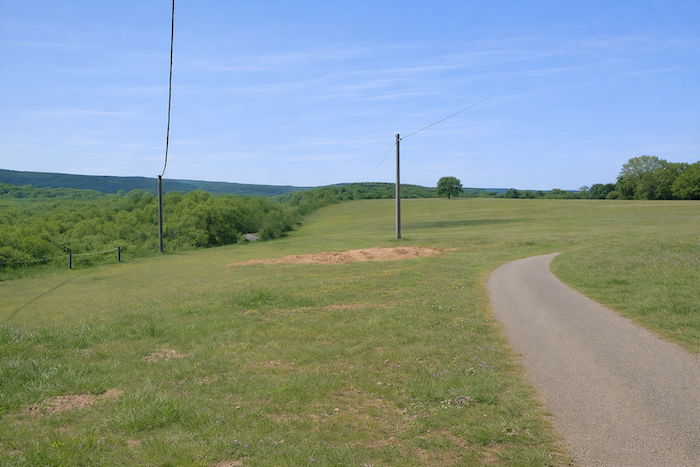
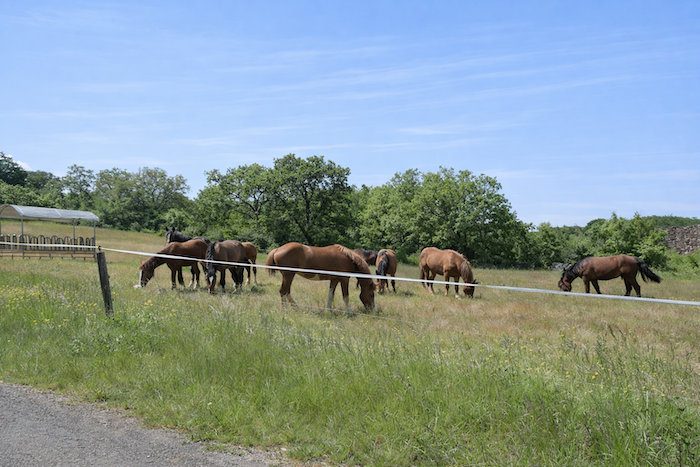
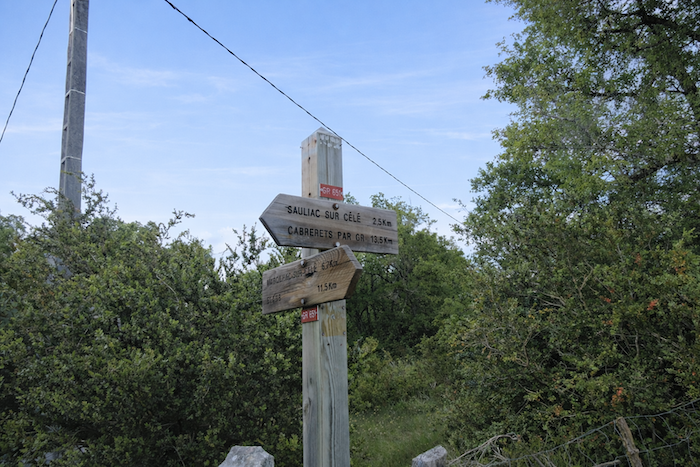
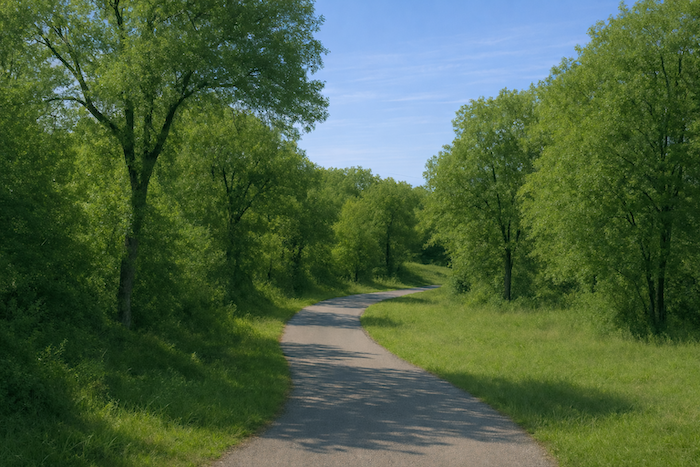
Horses graze freely in the flowering grass. A few scattered hedgerows send up solitary trees. Up on the crest the grass is cropped short, grazed bare by sheep that passed before you, leaving behind the simple scent of wool and sun. Here the view stretches endlessly. The mountain remains silent, yet its silence is vast and inhabited. Beyond the pasture the ridge closes the horizon with a bluish line. You pass through Mas del Rey, the last cluster of stone before the descent, two and a half kilometers from Sauliac-sur-Célé and thirteen and a half kilometers from Cabrerets, the end of the stage. |
|
 |
 |
|
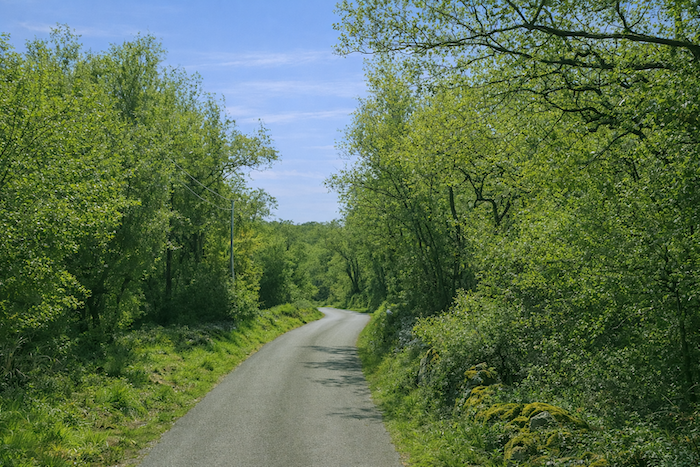
The GR651 then descends gently for half a kilometer. |
|
 |
 |
|
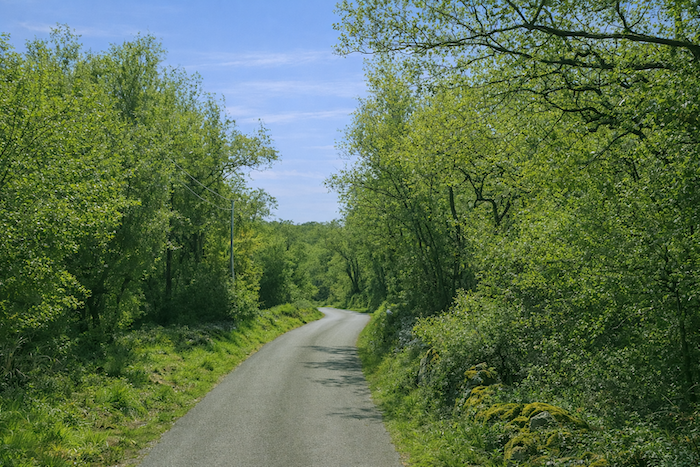
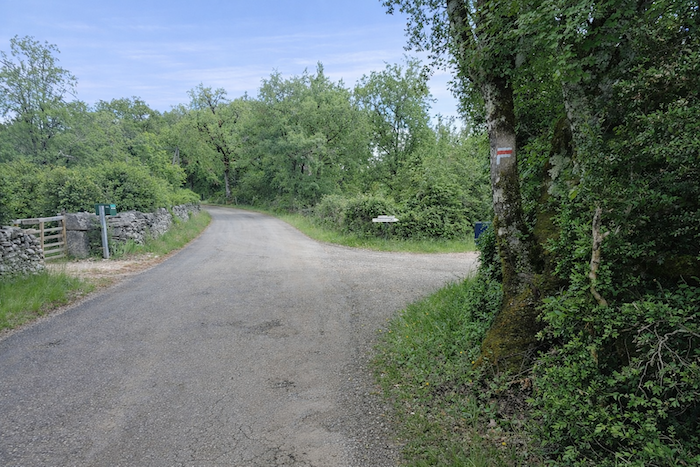
It continues to follow the road for a short time before leaving it again, drawn toward the lands of Mas de Nadal. There the forest reclaims its ground, the asphalt fades away, and the walk returns to its true nature. . |
|
 |
 |
Section 3: The unfortunately vanished charm of Old Sauliac
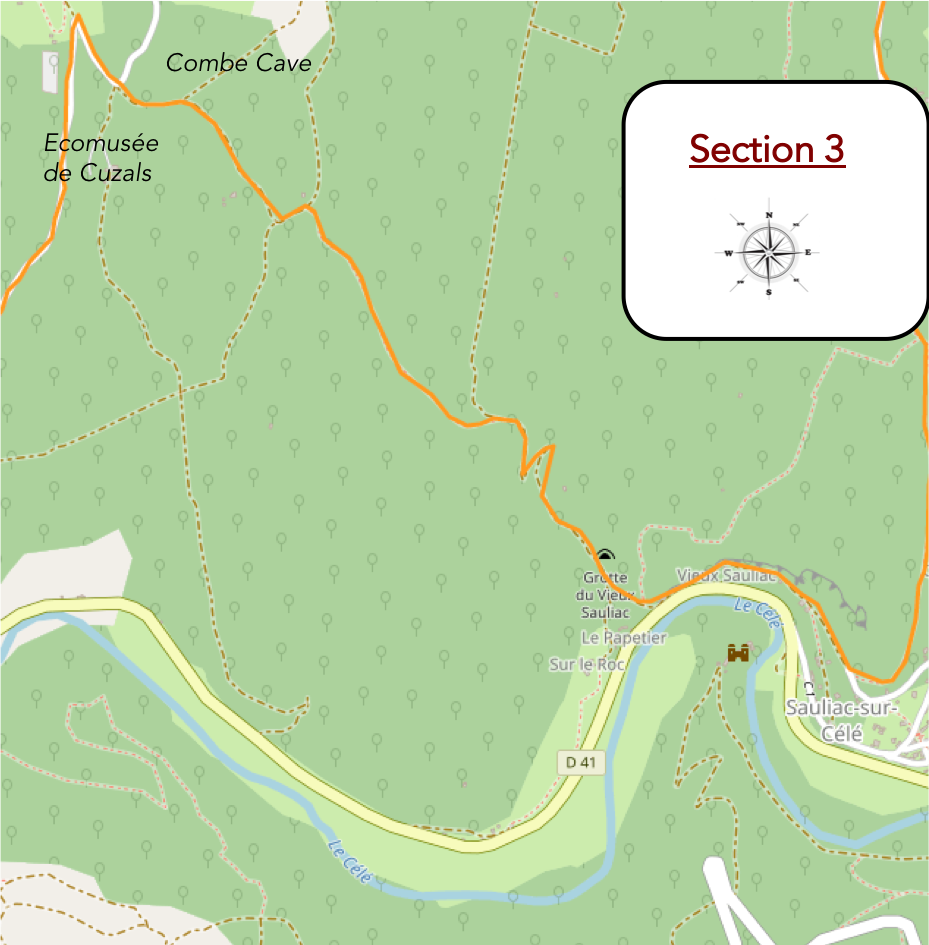
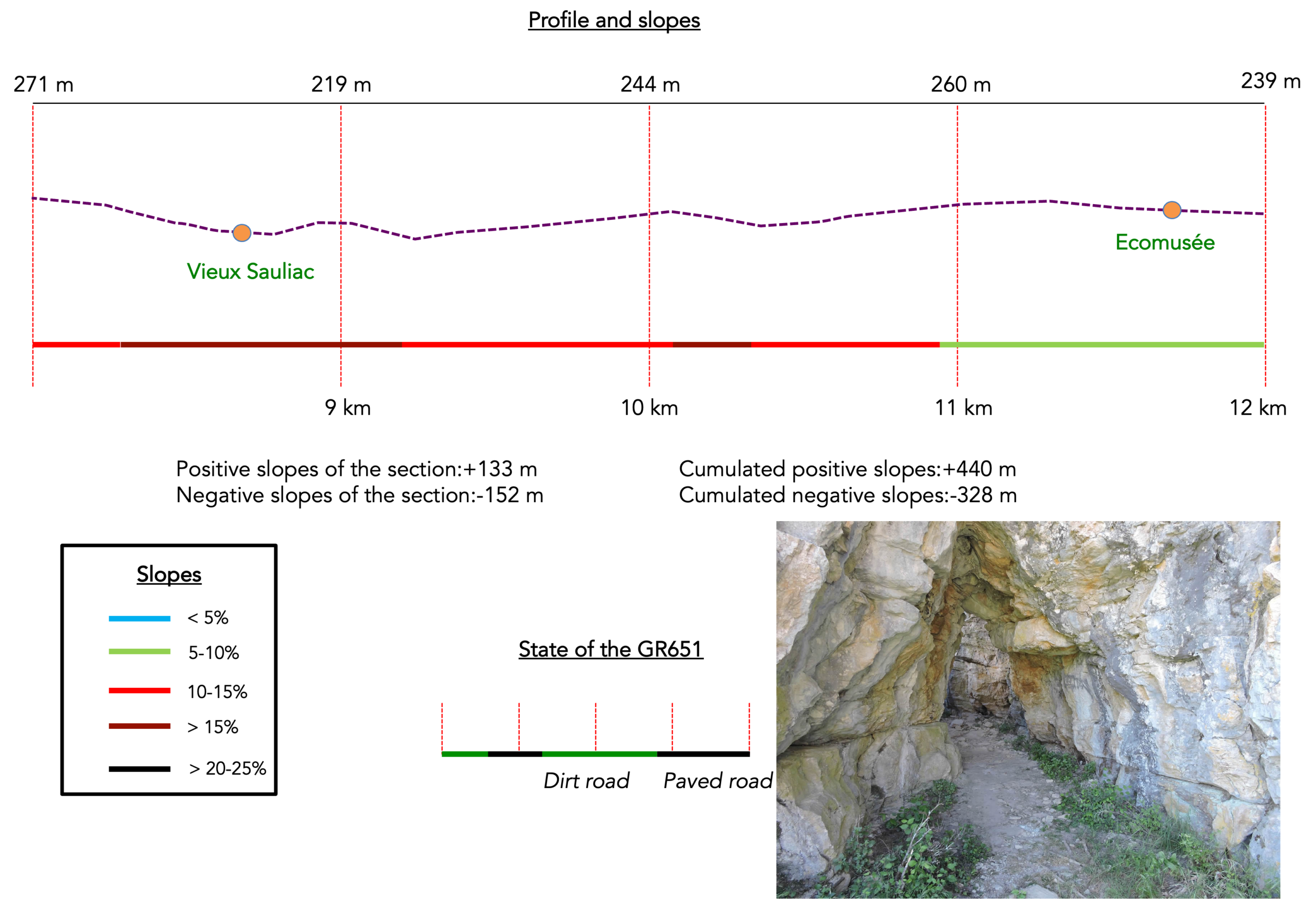
Overview of the route’s challenges : once again a very demanding section.
|
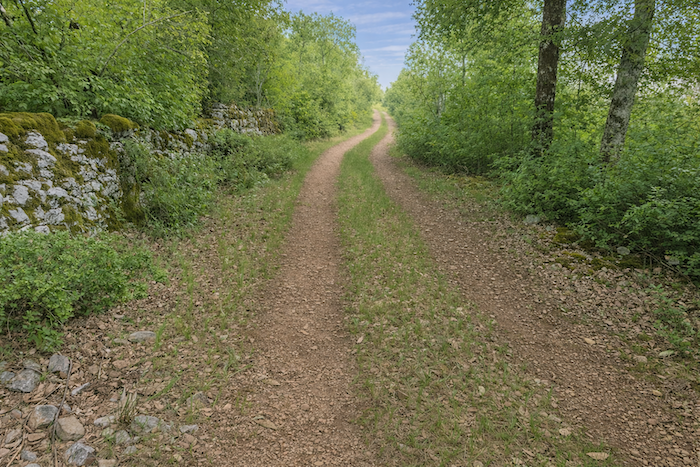
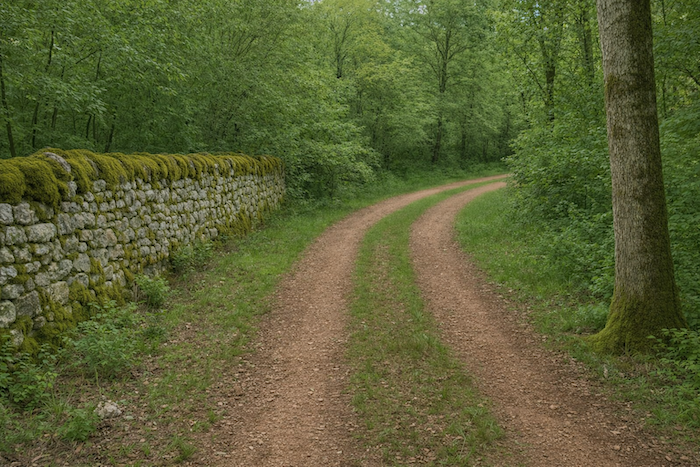
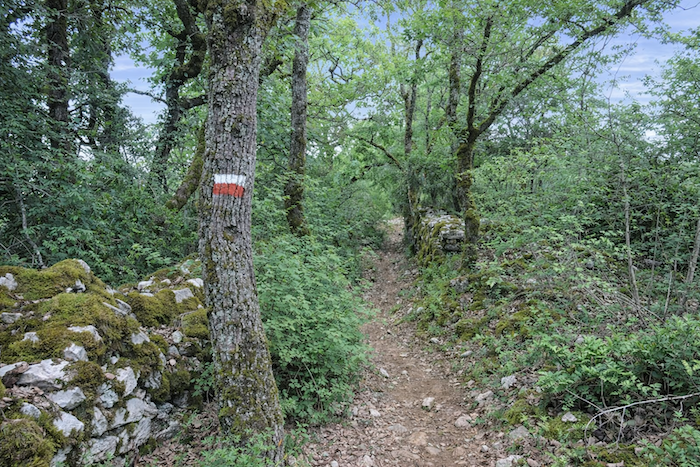
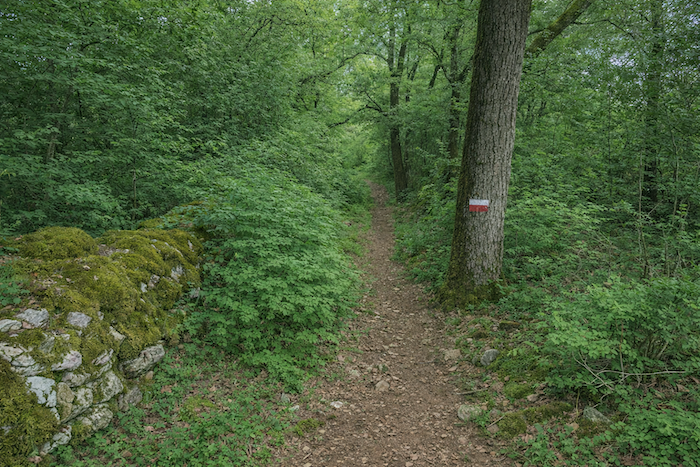
The path soon returns to one that always wins the unanimous approval of pilgrims, a gentle slope bordered by stone walls edged with moss, soft earth beneath the feet, like a breath of relief after so many stones and climbs. Nature breathes peacefully here. Boxwoods brush against one another, moss spreads its velvety cushions and the trees form luminous arches overhead. Only the murmur of birds and the discreet scent of mushrooms would be needed to complete this dreamlike setting. |
|
 |
 |
 |
 |
|
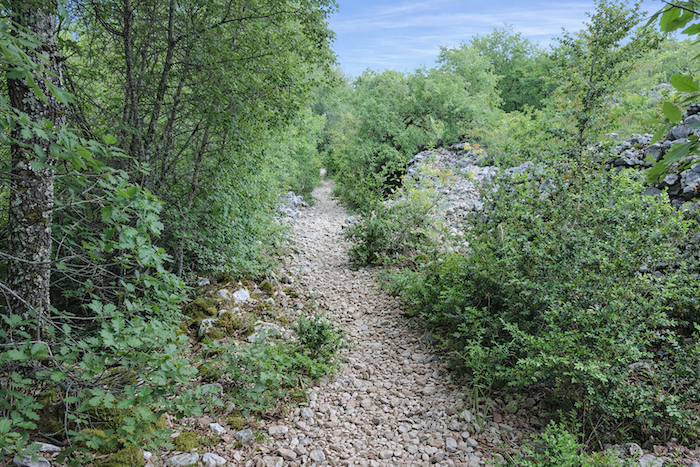
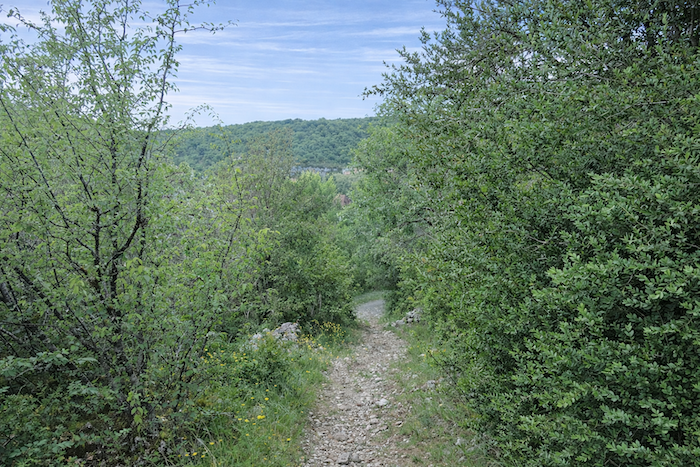
Yet this gentleness does not last. The approach to Sauliac becomes irresistible, almost abrupt. In places the descent turns into a mineral slide. Stones roll beneath the feet; legs brace themselves and the breath tightens. With slopes exceeding 30%, you must master one’s footing to avoid sliding downward. Woe to walkers caught here in the rain. It would become a precarious dance between slips and muttered curses. And yet the beauty of the place redeems everything. The landscape opens like an emerald gorge and, far away, the valley of the Célé already appears. |
|
 |
 |
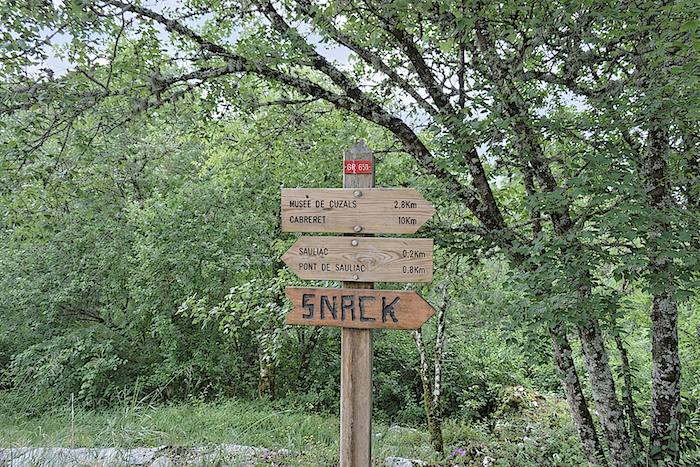
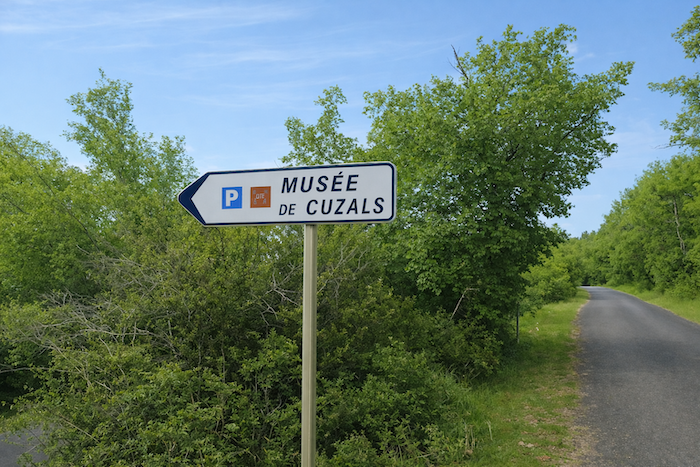
At the bottom of this formidable descent the path reaches an intersection only a short distance from Sauliac. The GR651, faithful to its hermit’s logic, seems to avoid the village and instead turns toward the Musée de Cuzals and Cabrerets ten kilometers farther on.
|
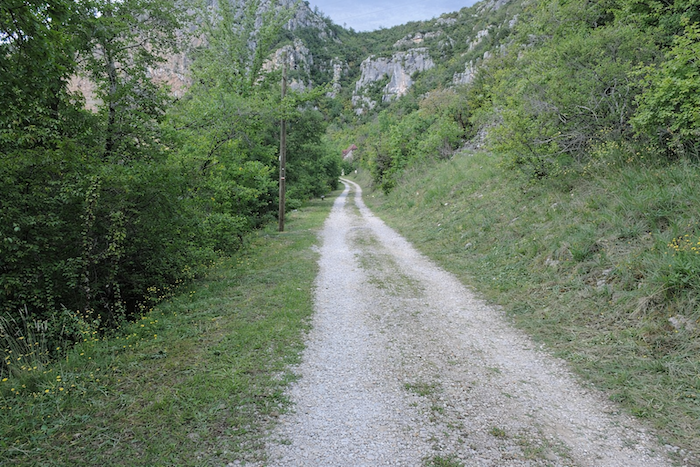
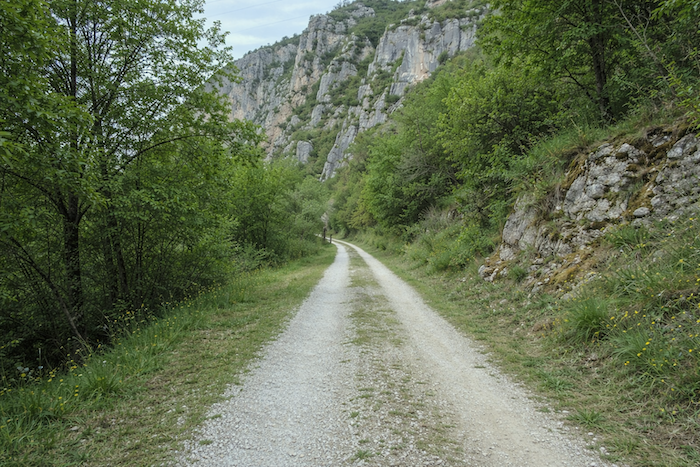
An avenue of packed dirt leads along the cliffs above the village. |
|
 |
 |
|
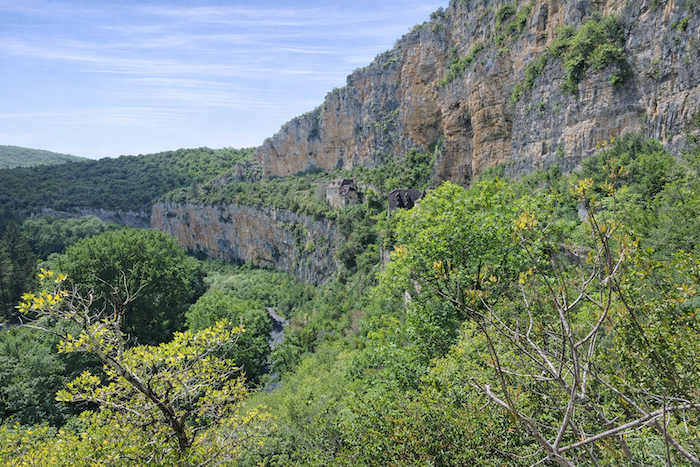
Sauliac-sur-Célé, for those who take the trouble to raise their eyes, seems suspended between sky and stone. Clinging to a cliff of ochre and grey limestone, the village coils itself along the layers of rock, embedded like an ancient thought in the memory of the cliff. The rock face itself is riddled with old walls, cavities and caves that once served as refuges. In troubled times animals and the sick were hauled up in baskets while the strongest climbed by precarious ladders to reach these suspended shelters. |
|
 |
 |
|
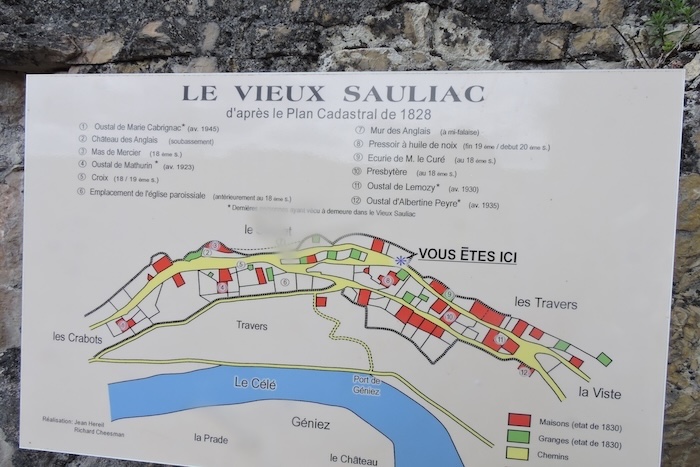
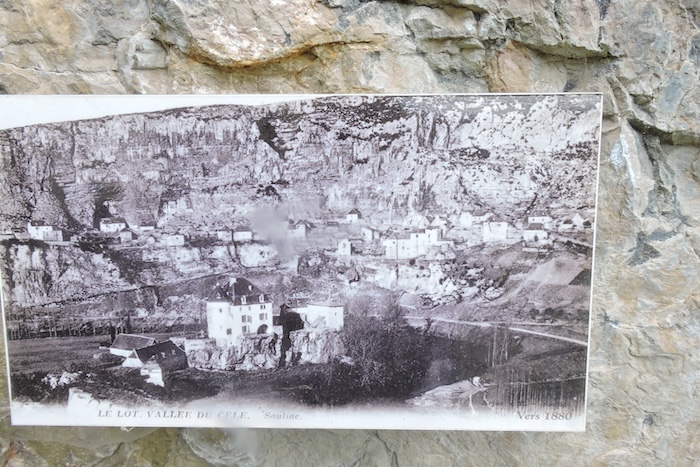
Very little of that former grandeur remains today. You can still guess from certain shapes in the relief that troglodyte houses once occupied these walls. Old engravings bear witness to it. Pointed roofs once pressed against the cliff and windows opened above the void. Time, relentless, has consumed it all, leaving only the nostalgia of a village carved in the wind. |
|
 |
 |
|
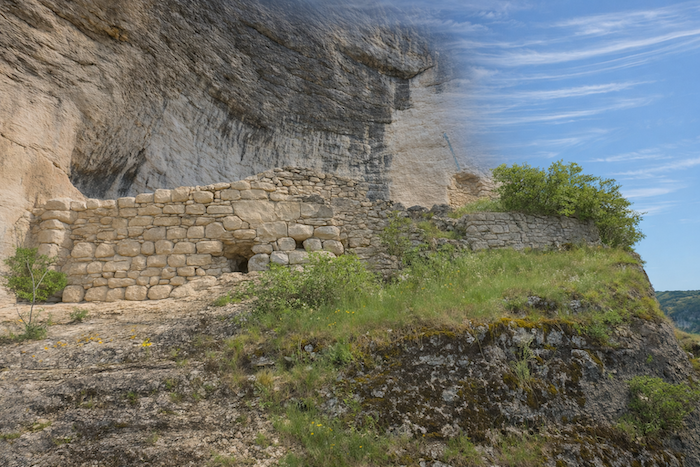
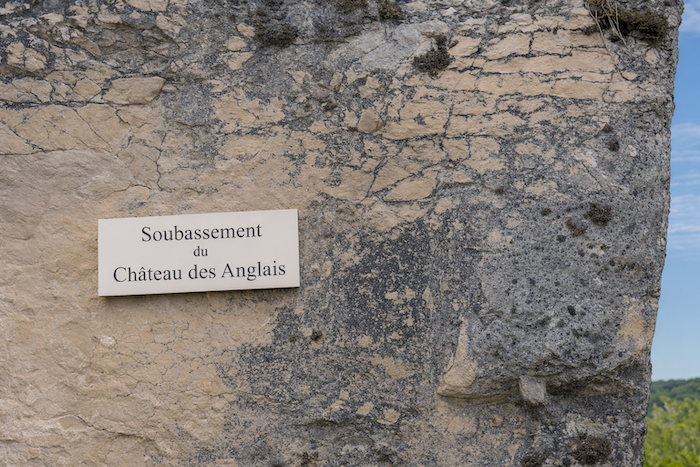
Only a few foundations remain of the former “Château des Anglais”, English in appearance only, for the occupants were not English at all. Poor false invaders, victims of legend. Ah, the perfidious Albion that was not even there! |
|
 |
 |
|
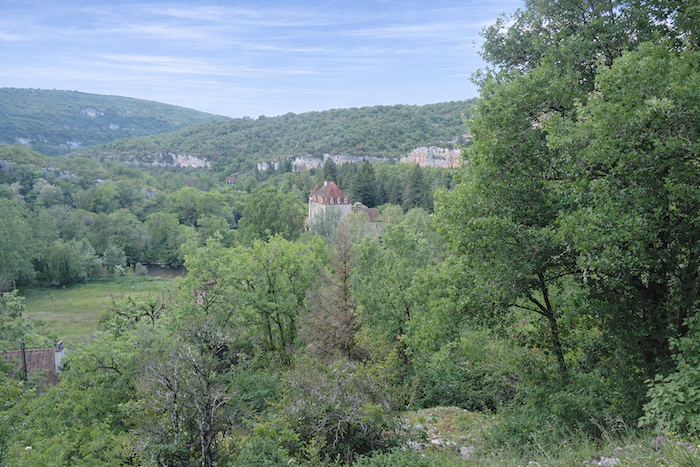
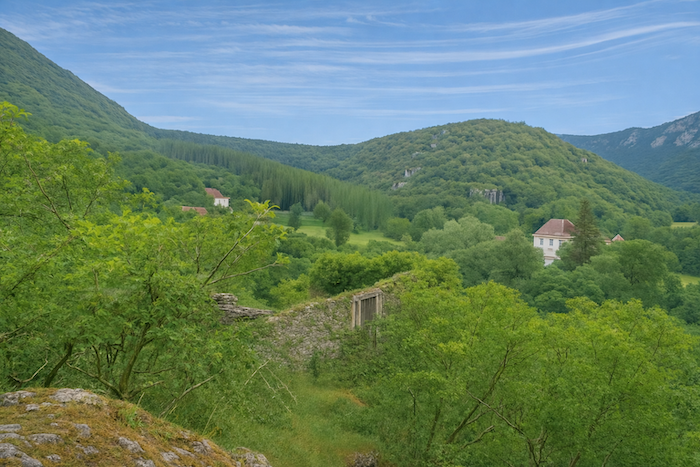
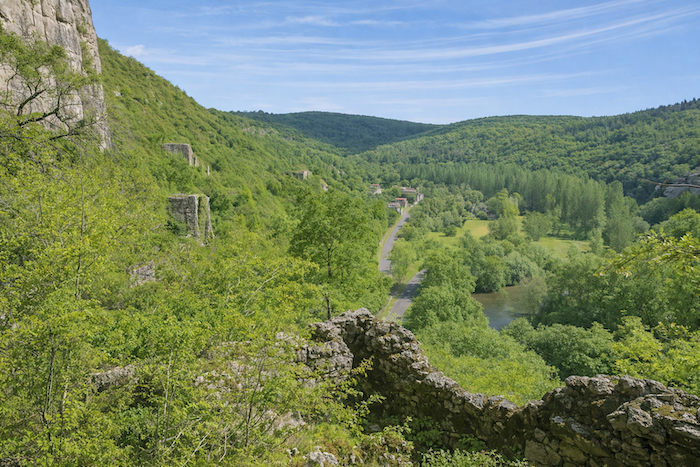
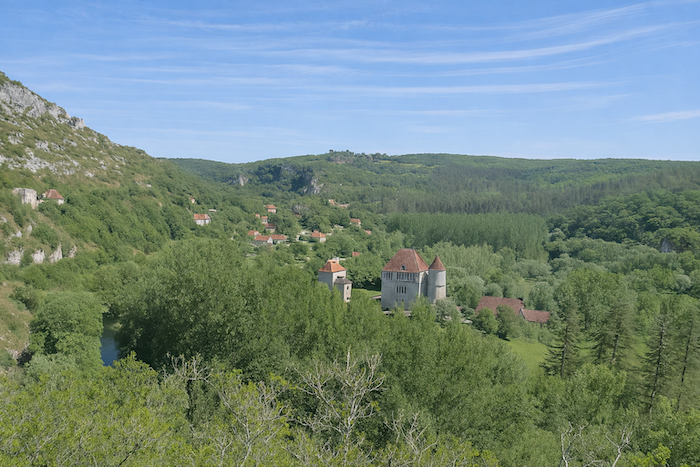
Just across the Célé, within sight, rises the beautiful Château de Geniès. Its silhouette reflects in the calm water, and at its entrance stands a fourteenth century dovecote roofed with stone slabs, restored with remarkable care. This dovecote, listed as a historic monument, now serves as a holiday residence and sometimes offers walkers the rare and precious gift of a night’s lodging. The place breathes the serenity of old stones bathed in silence. The castle captures the gaze of the hiker. The GR651, following the “Chemin du Vieux Sauliac”, surrounds it with a long circular glance, skirting it, almost brushing past it, as if reluctant to leave. At every turn it appears again under a new angle, here majestic, there melancholic, always faithful to the quiet beauty of the causses. |
|
 |
 |
|
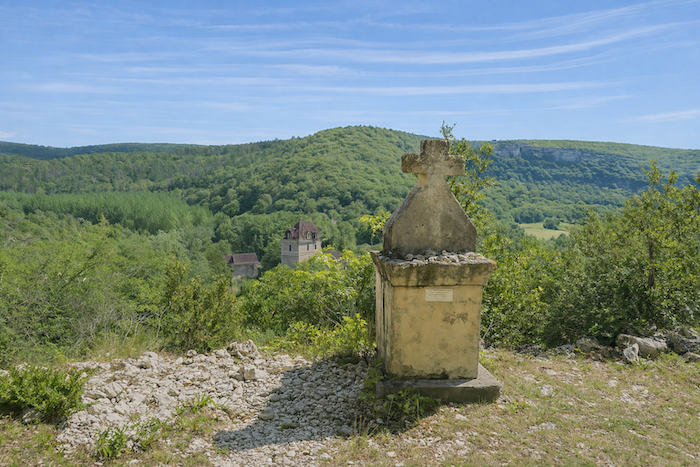
Then the rocky and dusty path moves away from the village. Below, the castle grows smaller and gradually fades into the greenery. A stone cross rises a little farther on, a solitary silhouette blessing the passage. Behind it the immense amphitheater of cliffs and forests overwhelms all sense of scale. The castle suddenly appears tiny, a toy of stone lost within the grandeur of the Célé. |
|
 |
 |
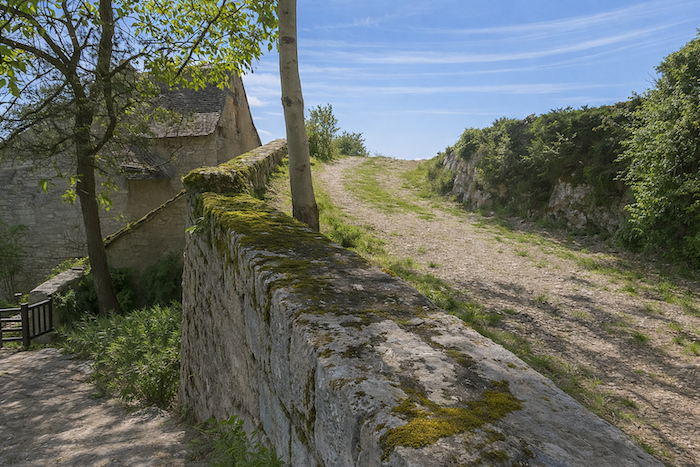
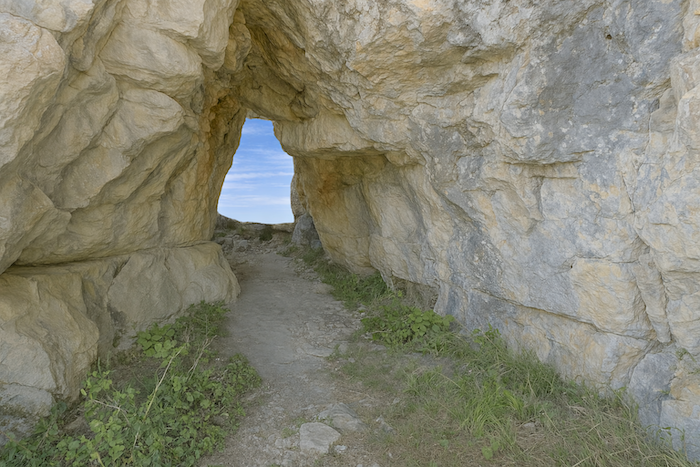
| Below, the river hides beneath thick foliage. You sense it only by its murmur, a discreet rustling flowing among the roots. The path, now briefly wider, presses against the cliff. It passes the cave stable of Crosa de Poursonet, a shelter half natural and half shaped by human hands where the light plays upon the limestone like a moving stained-glass window. Shades of ochre, grey and blue merge there with the softness of pastels. Yet one may be reassured. Despite these apparent abysses, no part of the GR651 is truly dangerous in the Célé valley. | |
 |
 |
|
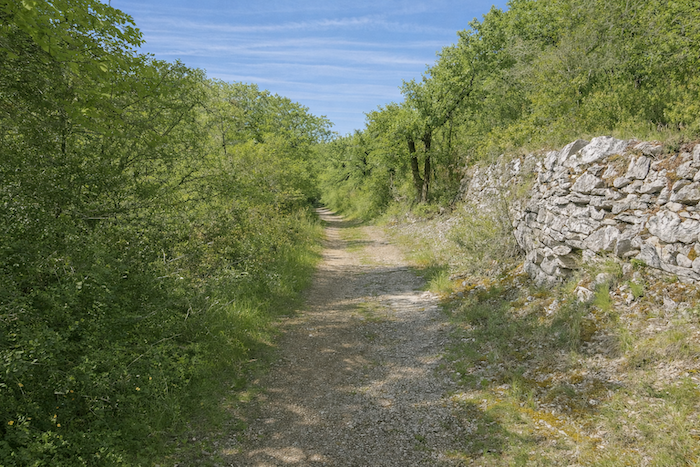
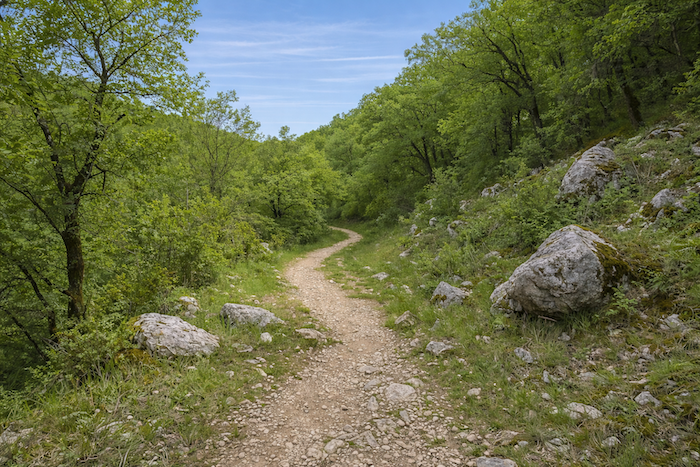
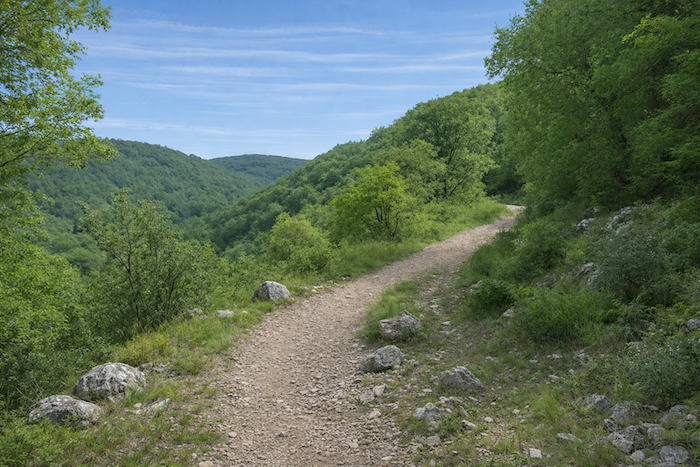
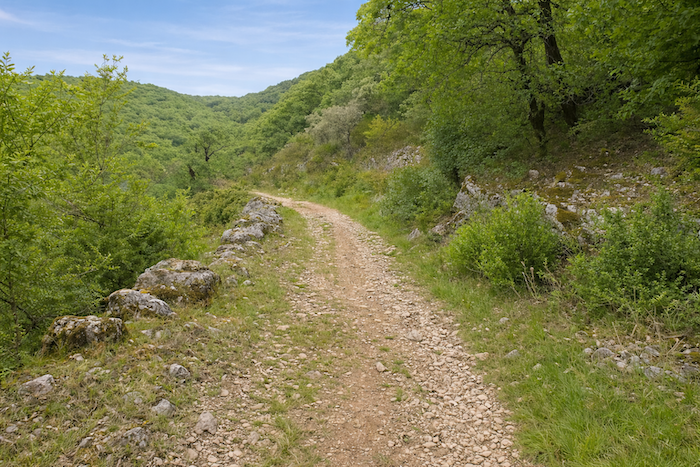
Soon the slope rises again, though with greater kindness. A trail climbs once more onto the causse. Here the inclines still exceed 10%, yet the splendid landscape makes the effort almost forgotten. Boxwoods and dogwoods intertwine, oaks lift their knotted trunks and moss covers the limestone blocks like living skin. |
|
 |
 |
 |
 |
|
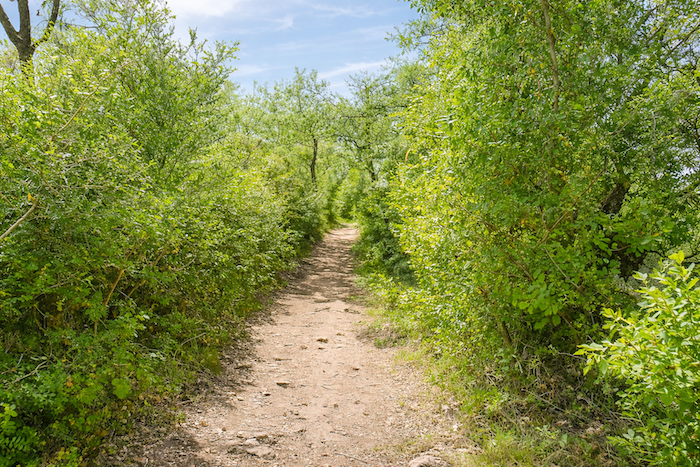
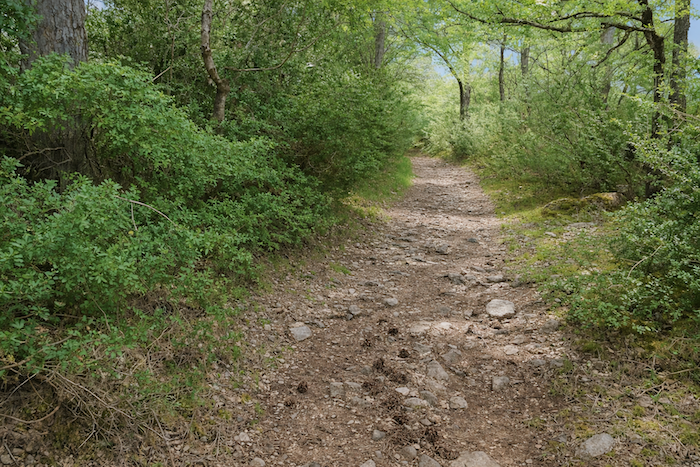
A little farther on the descent returns, lively but brief, merely a whim of the terrain. The oaks grow scarcer and give way to Montpellier maples and a few pines. The ground is scattered with pinecones like small suns fallen from the sky. |
|
 |
 |
|
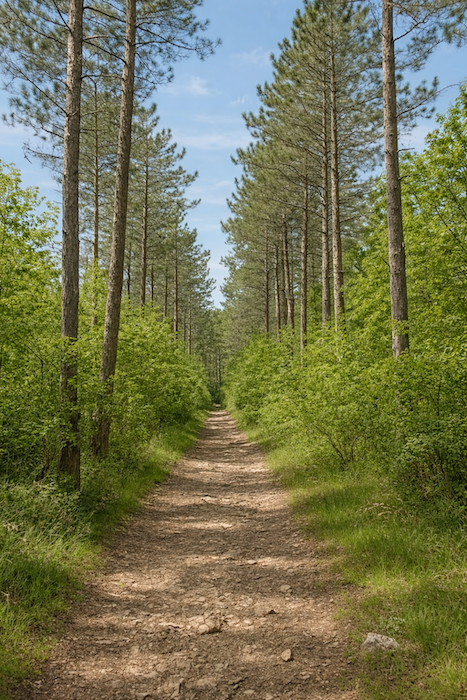
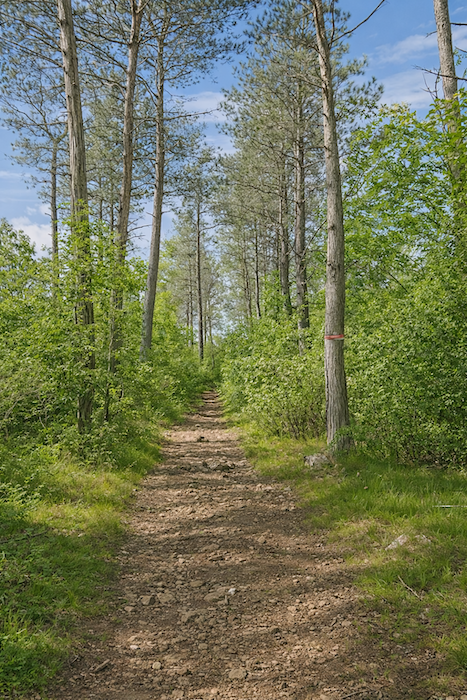
Soon afterward another ascent appears, demanding and proud. The boxwoods have disappeared, yet the oaks bend low, sometimes almost touching the ground. Their branches wrap around the old stone walls, weaving shifting shadows where the light slips through. Nothing here is straight or aligned. Nature has refused the compass of the surveyor. In places the pines form arches like the portals of a green cathedral. |
|
 |
 |
|
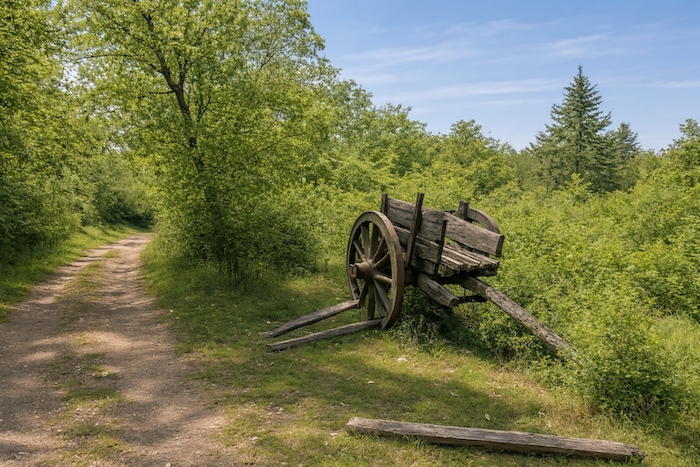
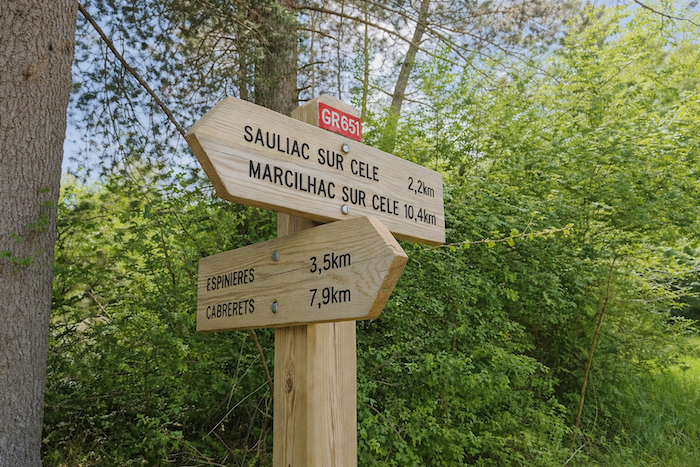
At “Combe Cave” the path nearly reaches the summit of the causse. Human life seems to have withdrawn from this place. No fields, no animals, only a vibrant silence. The air itself feels clearer and lighter. You are eight kilometers from Cabrerets and already the valley prepares to guide you onward. |
|
 |
 |
|
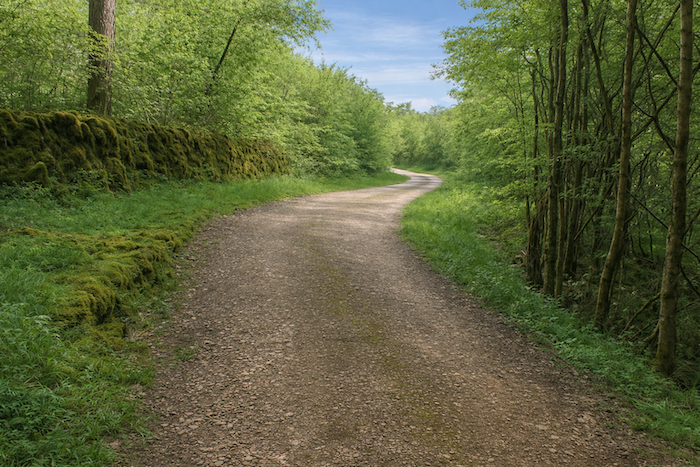
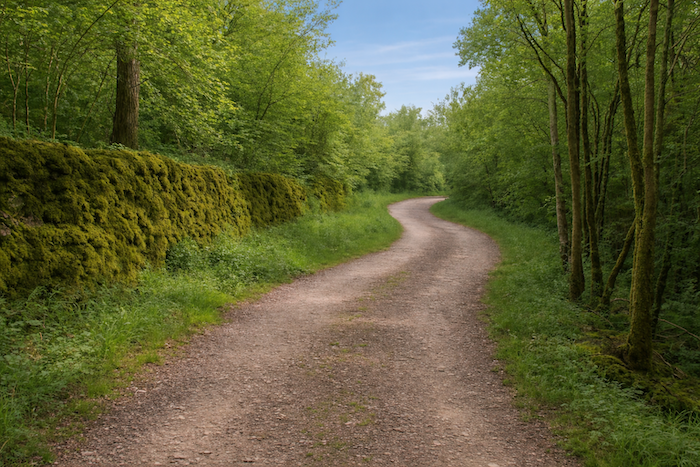
Then a wide dirt path stretches peacefully across the plateau. Steps become slower, almost contemplative. Unexpectedly a few chestnut trees have ventured here, a rarity in this stony land, like a foreign note, a memory of the Ségala that has come to breathe here. |
|
 |
 |
|
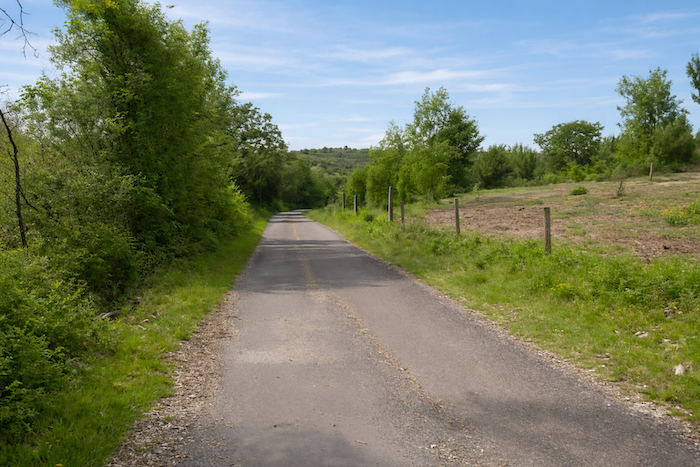
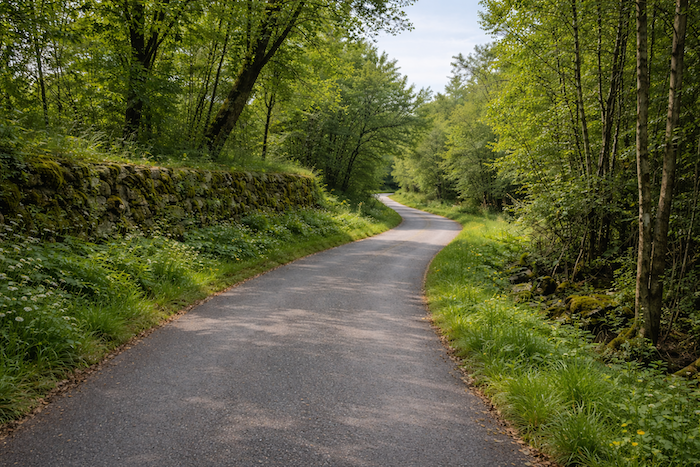
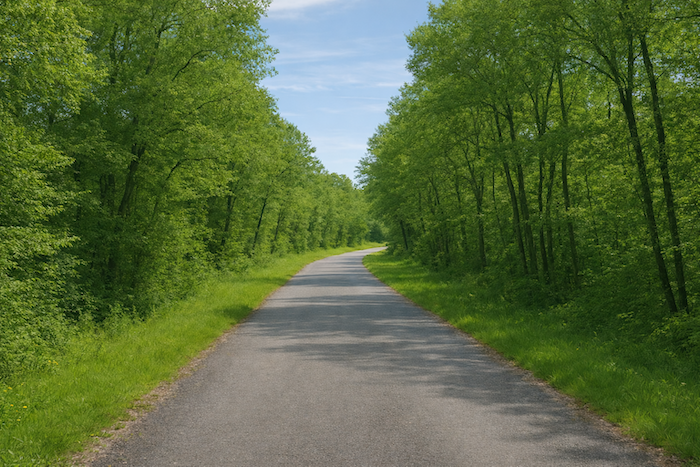
Soon the road appears again, slow and grey, the discreet sign of a return toward civilization. Among small valleys it undulates toward the parking area of the Musée de Cuzals. |
|
 |
 |
 |
 |
|
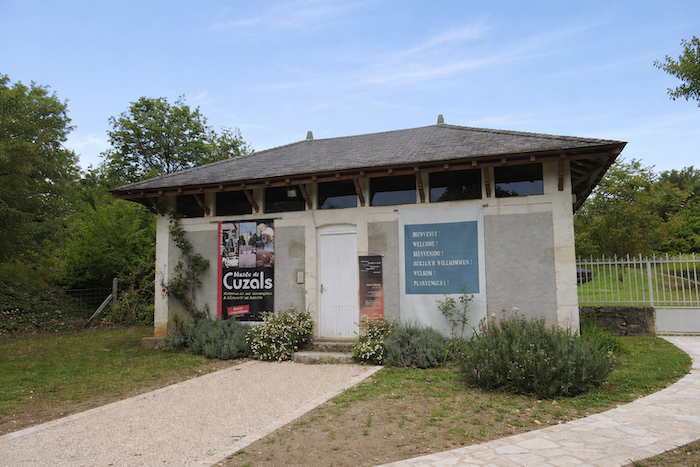
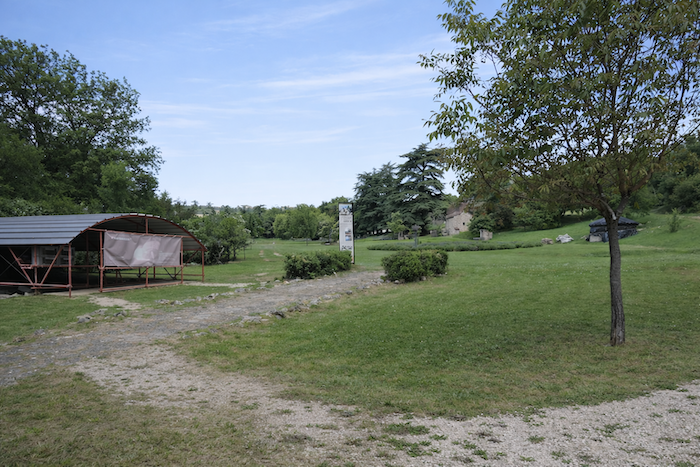
Cuzals is the open memory of the causses, an open-air museum where one rediscovers, in full scale, the rural and agricultural history of the region. There is little crowd and little haste. You walk s there as if through an old book among the tools of the past and the gestures that have disappeared. |
|
 |
 |
|
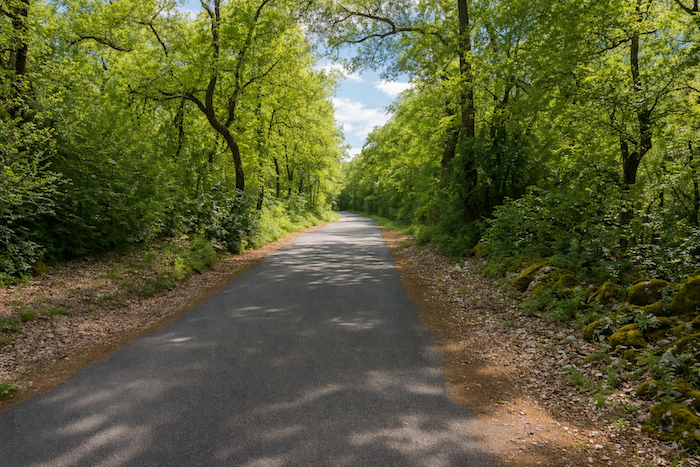
From the junction near the museum the GR651 continues along the asphalt road toward Cabrerets. The journey goes on between shadow and light. |
|
 |
 |
Section 4: Another climb onto the causse, simply for the pleasure of it
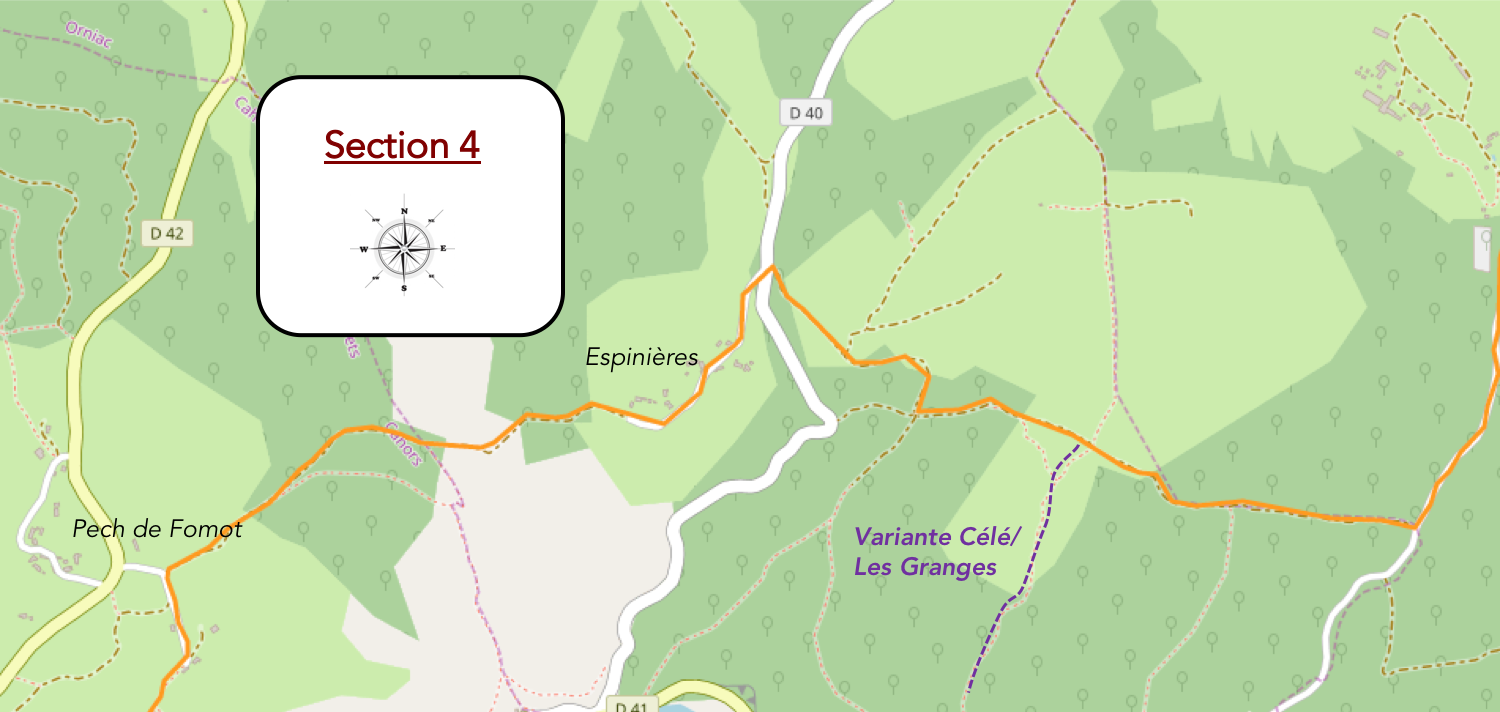
Overview of the route’s challenge : a causse that is less demanding than the others, yet far from a holiday!
|
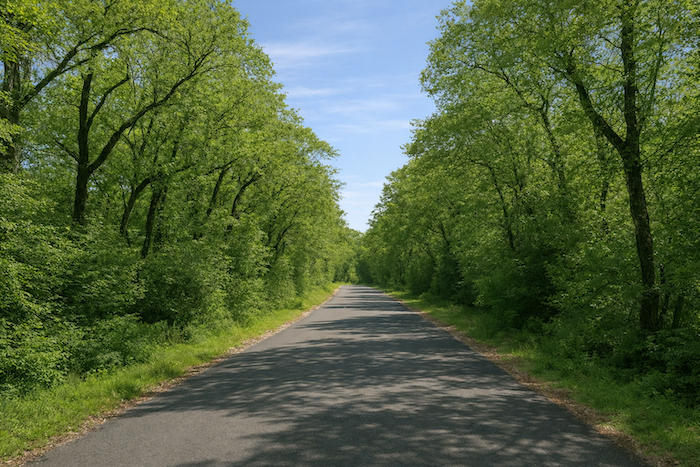
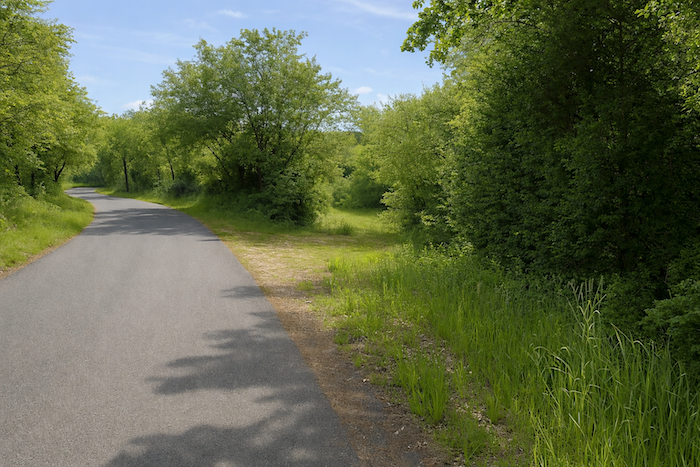
Farther down, the GR651 leaves the road and once again enters the woodland. |
|
 |
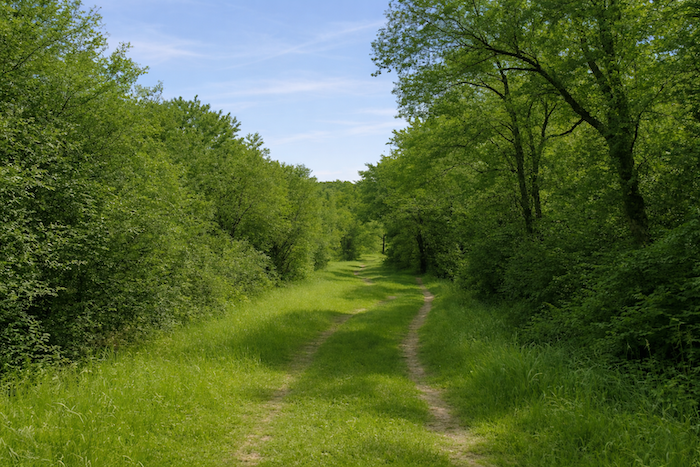 |
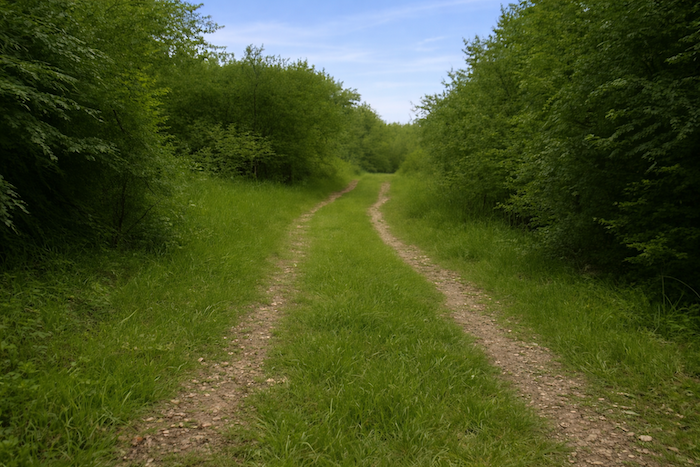
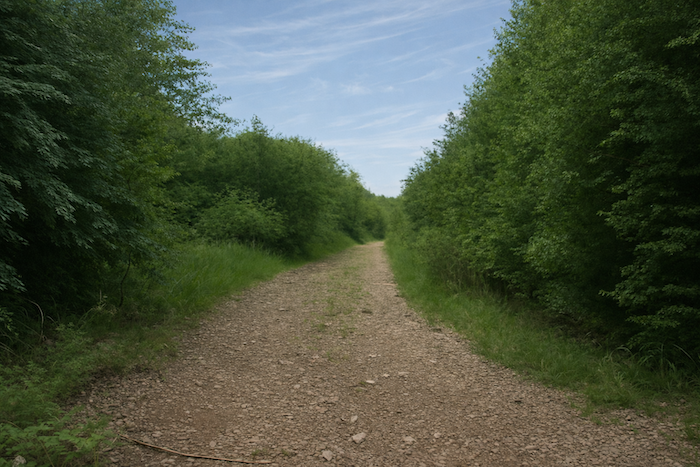
| The path of pale dirt descends gently beneath the oaks, like a calm breath after the strong winds of the causse. Footsteps grow softer, cushioned by the humus, while the light filtered through the leaves weaves moving shadows across the ground. | |
 |
 |
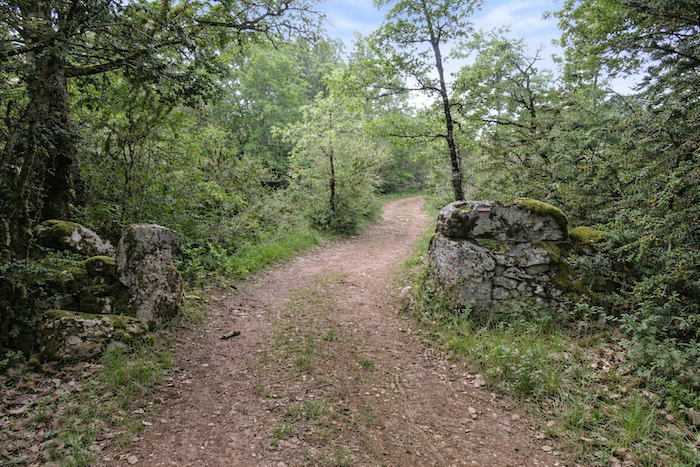
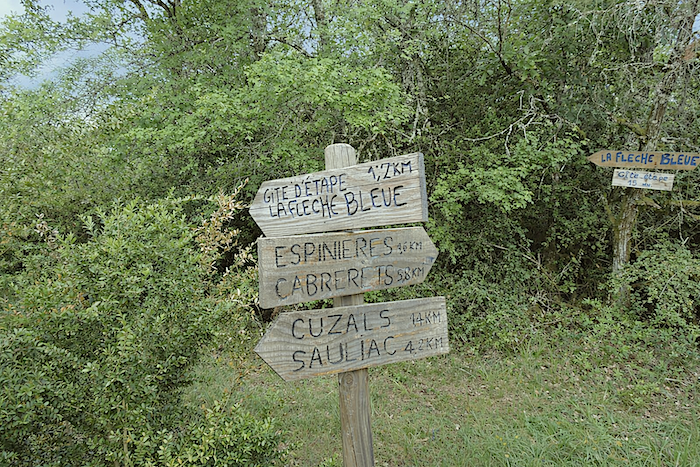
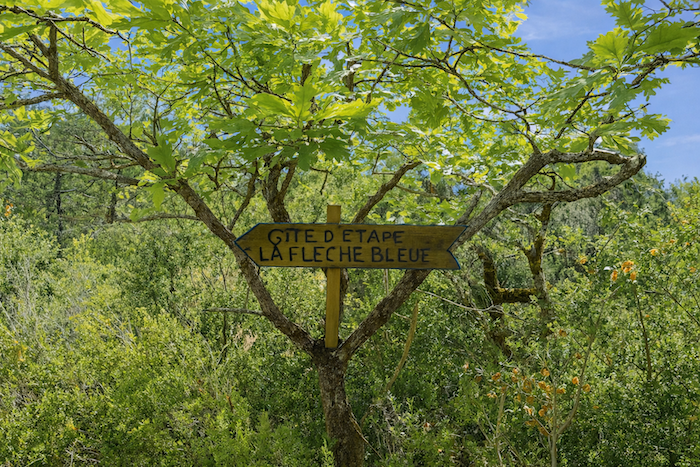
| A little farther on the walker faces a choice. Two ways lie ahead. One climbs back onto the causse to follow the main route, while the other descends toward the gîte of “La Flèche Bleue”, tucked lower in the valley. The distances to reach Cabrerets are roughly the same. What should you choose?
Perhaps you will tell yourself that you have not yet had enough of the beauty of the causses and that it would be a pity not to greet once more their blond summits and hidden valleys. If that is your choice, you will continue dancing from pech to combe, taming the rises of this stubborn land until reaching the place known as Le Bout du Lieu, already very close to Cabrerets. Yet perhaps you will feel that fatigue gently pulls you toward the valley and that adding another causse to today’s collection would be unnecessary zeal. In that case you will descend toward “La Flèche Bleue”, where the route runs close beside the river. After all, to come into the valley of the Célé without truly following the line of its water would almost mean missing its soul? |
|
 |
 |
| For now, however, let us remain disciplined pilgrims and continue along the GR651.
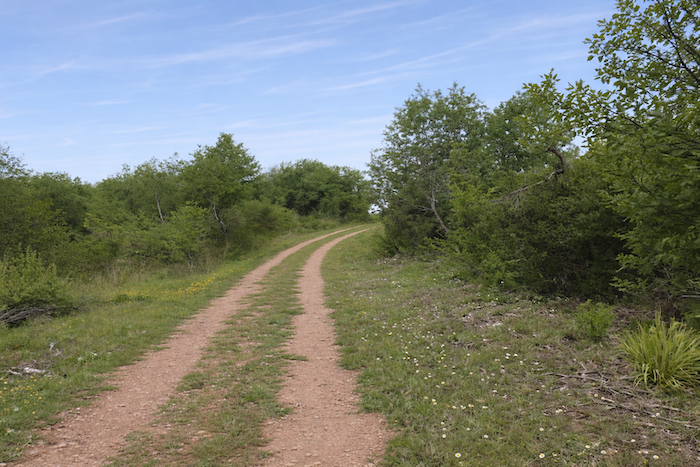
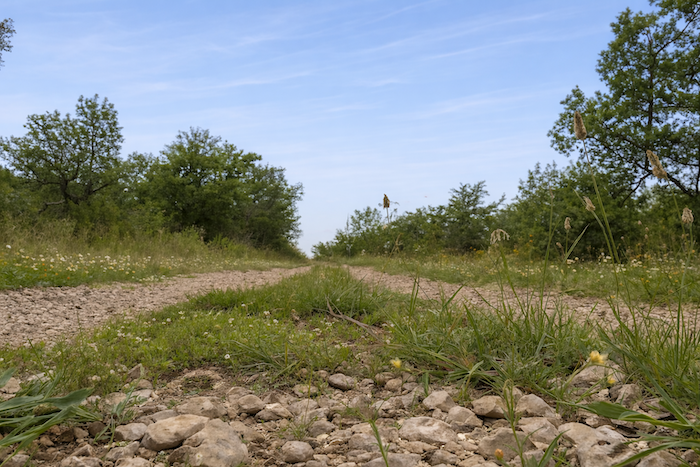
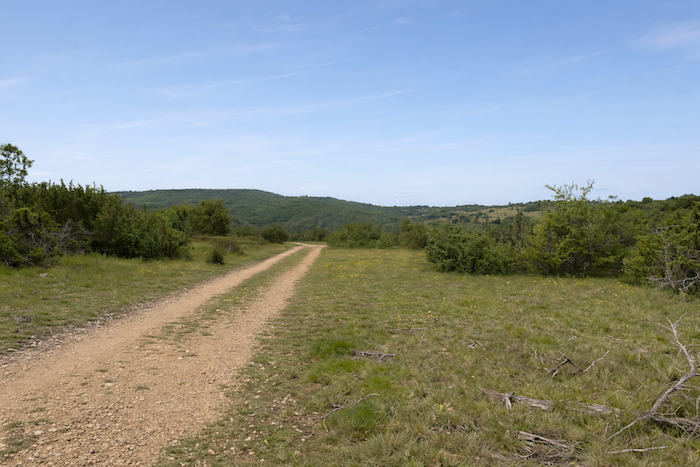
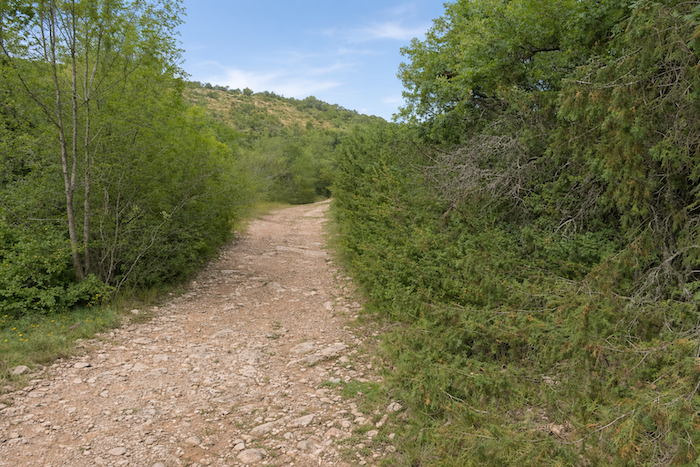
From the junction the path climbs again through the heath along a fine dirt track, sometimes slightly stony, bordered by boxwoods and sturdy oaks. Nothing here is truly difficult. After the harsh climbs of the previous days this stage almost feels like a walk for pleasure. The path widens and softens, inviting quiet reflection. In places a few pines and spruces appear, unexpected silhouettes in the limestone landscape. The horizon, often open, seems to breathe freely. |
|
 |
 |
 |
 |
|
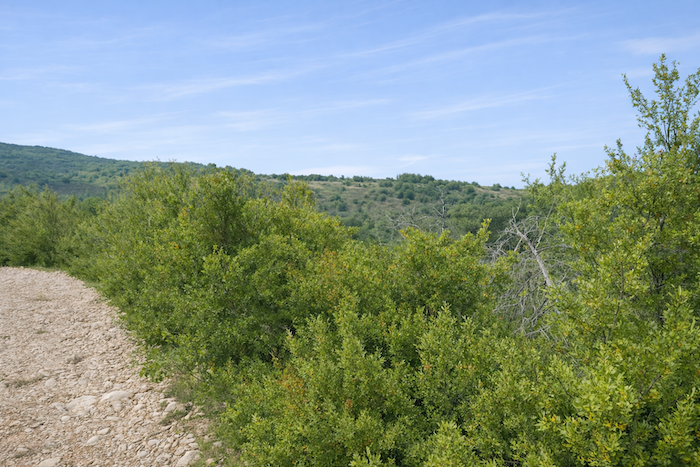
Yet a question slips in, almost sadly. Have the boxwoods survived your passing. They were once the great charm of the causses, these small shrubs with glossy leaves that faithfully accompanied the stony paths. Near Cahors they have almost entirely disappeared. Many have fallen victim to the box tree moth, those Asian caterpillars that arrived in Europe at the beginning of the century. Their tireless jaws devour everything in their path, leaving bare, grey and ghostly bushes. Their story is one of imbalance. Introduced without natural predators, the moths spread across the causses like a slow fire. Their pale green larvae striped with dark threads spin their silk beneath the leaves, transform into white butterflies and begin the cycle again. Gardeners may treat them, yet here in the wild landscape no remedy can restrain this quiet hunger. Still life knows how to wait. Beneath the soil the roots remain patient, ready to return when balance comes again. The boxwood sleeps, it is not dead. |
|
 |
 |
|
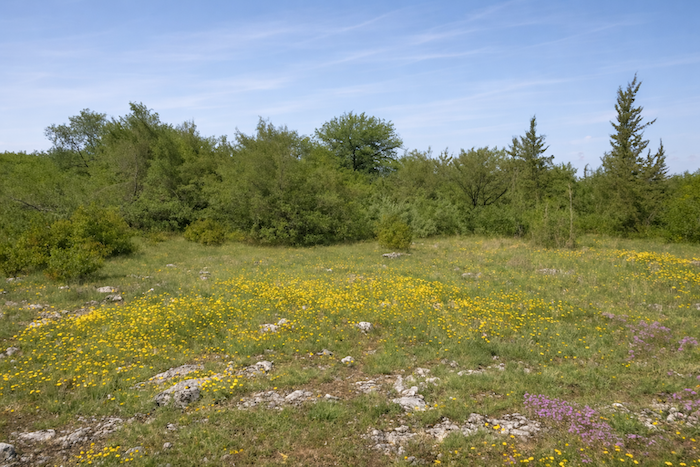
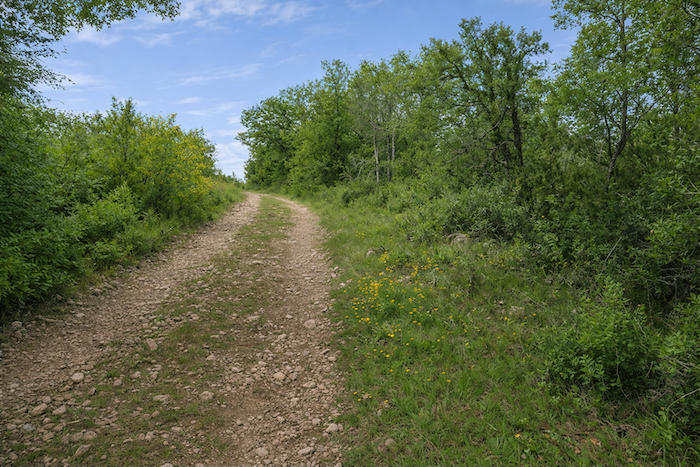
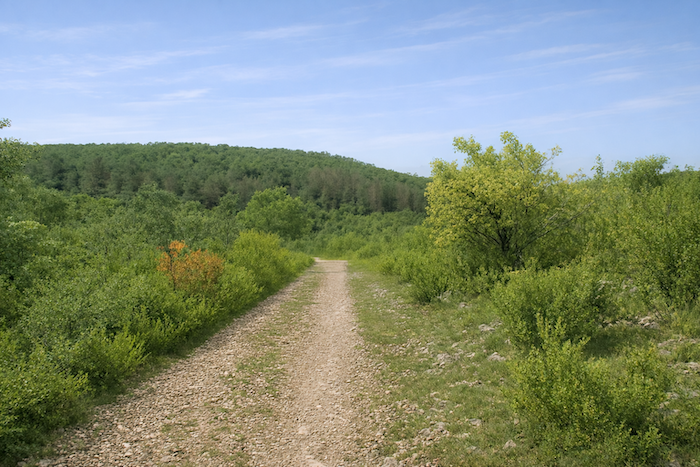
Higher up the horizon widens. Small wooded hills, the famous “Pechs of Quercy” shape the landscape. The path, wide and firm, runs through the blond steppe. Under the sun the stones shimmer like the scales of a lizard. |
|
 |
 |
|
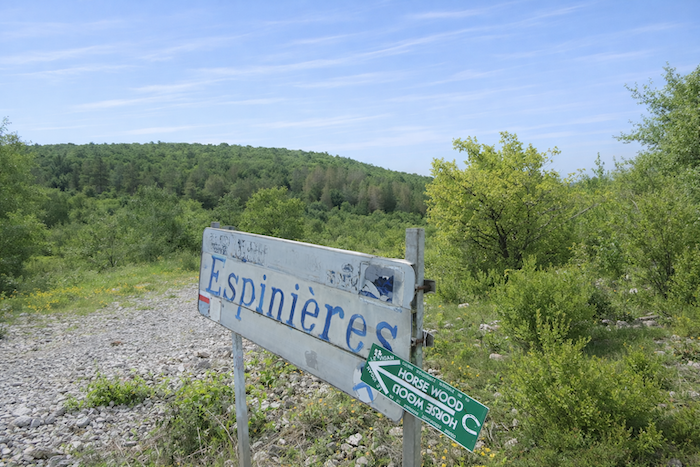
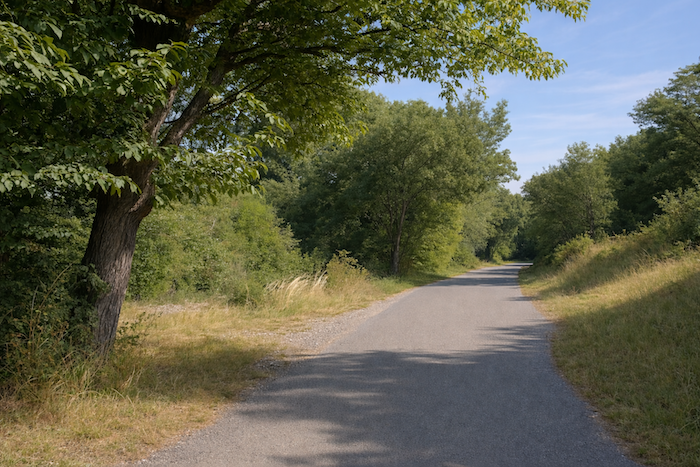
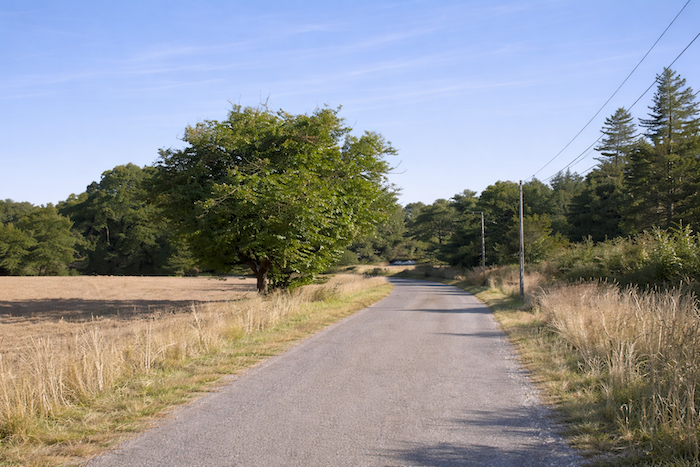
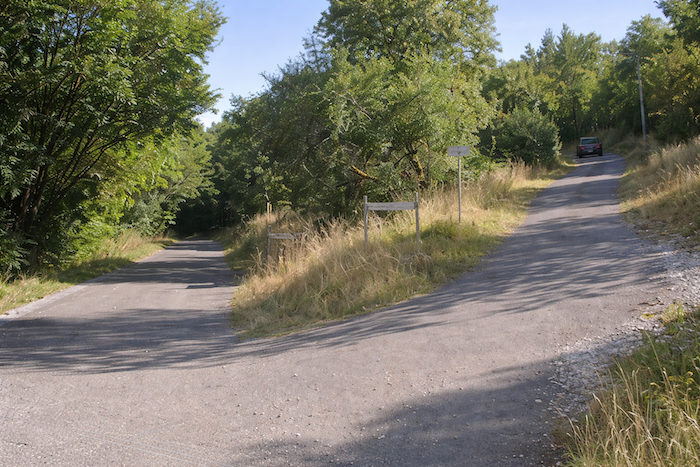
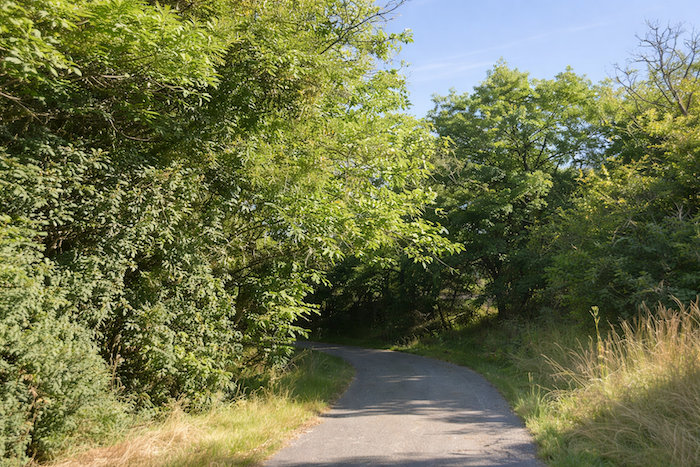
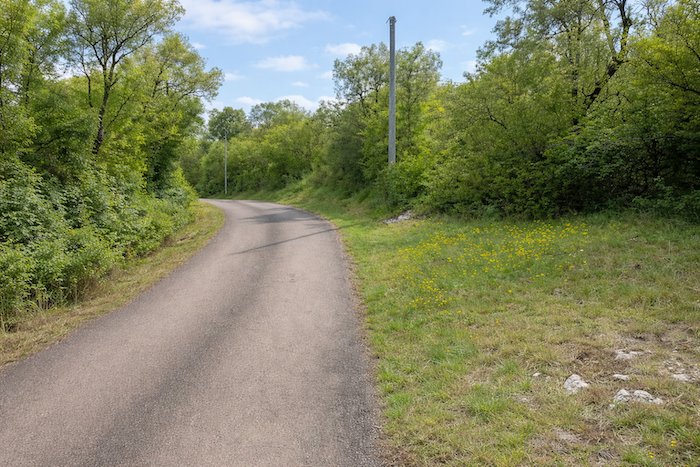
Soon the dirt gives way to asphalt. Approaching the hamlet of Espinières, the GR651 briefly follows the road once more. |
|
 |
 |
 |
 |
|
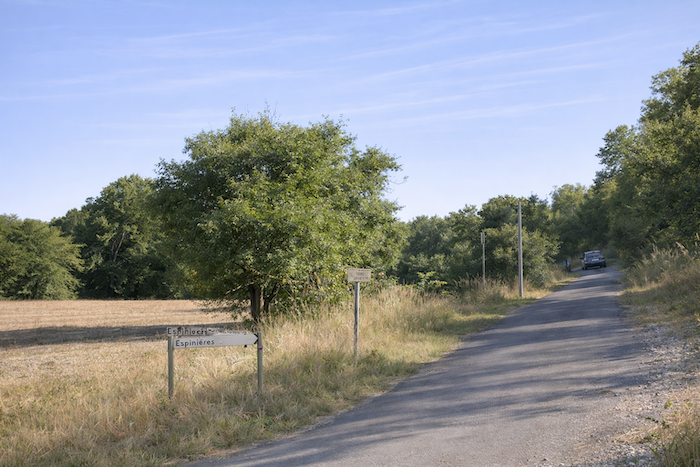
The route accompanies the road toward Cabrerets for a while before leaving it to reach Espinières. |
|
 |
 |
 |
 |
|
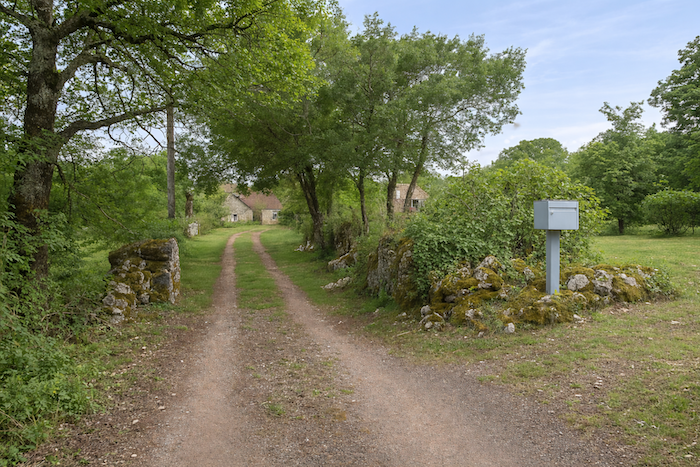
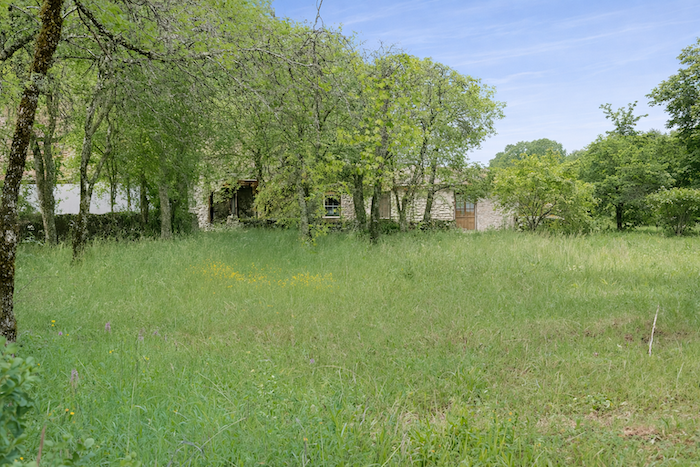
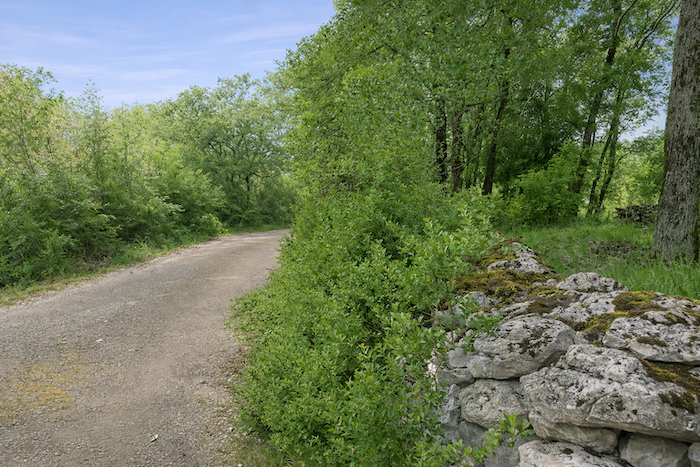
The hamlet is barely touched. A few roofs appear, shutters remain closed and an old well stands quietly. The path quickly abandons the asphalt and returns to the packed earth. |
|
 |
 |
|
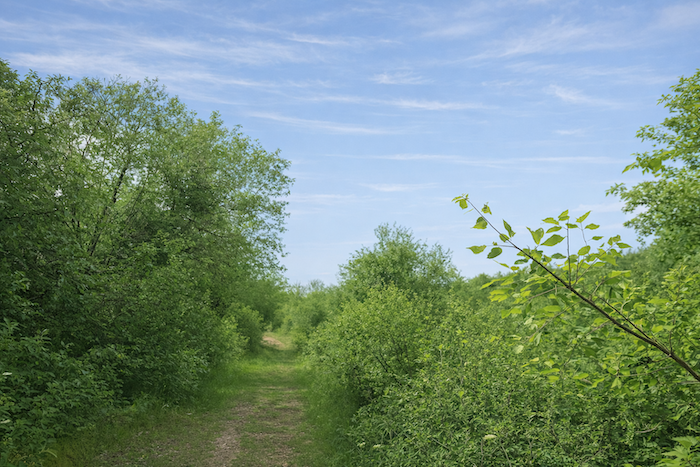
The slope becomes gentle, almost imperceptible. The landscape unfolds in the light, dotted with flowering dogwoods stretching their delicate branches over the stone walls. Where they have survived, the boxwoods still intertwine gracefully. |
|
 |
 |
|
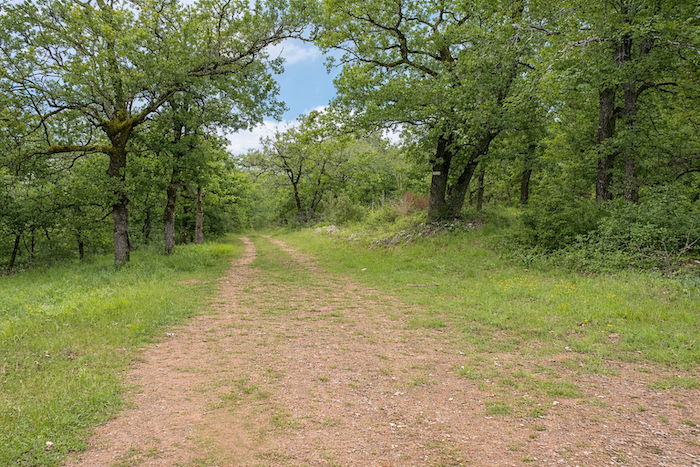
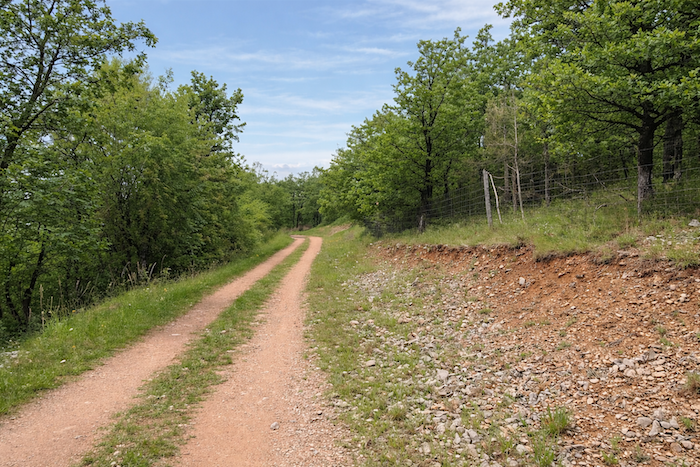
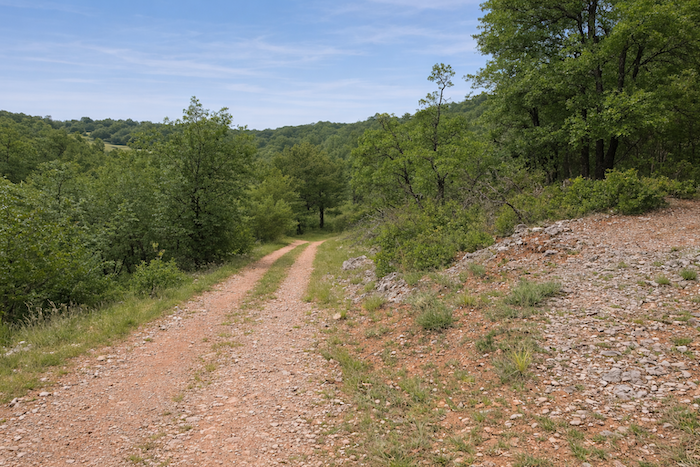
Soon the countryside opens suddenly. Meadows replace the woodland. The oaks grow taller and spread wide crowns, having grown in peace far from saws and herds. The ground, a soft red earth, allows an effortless walk. It is a beautiful crossing, peaceful and luminous, where one finds oneself slowing down simply to listen to the wind moving through untouched nature. |
|
 |
 |
 |
 |
|
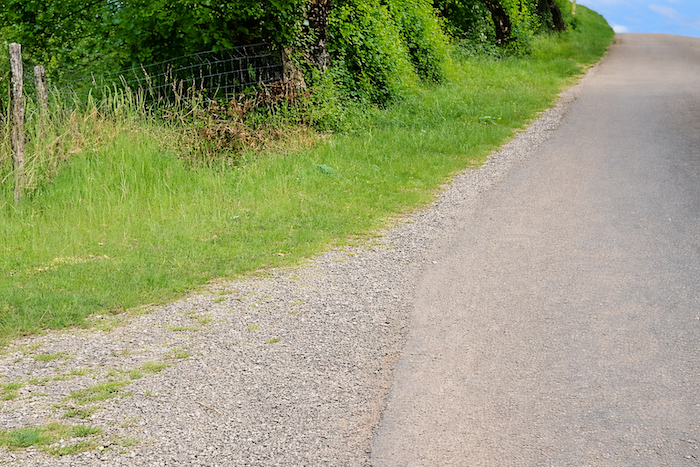
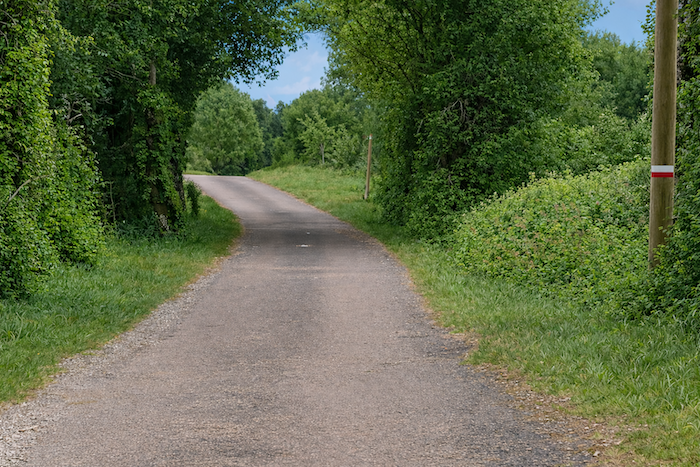
Near the “Pech de Fomot” the route crosses a short stretch of asphalt. The plateau there seems suspended in the air. |
|
 |
 |
|
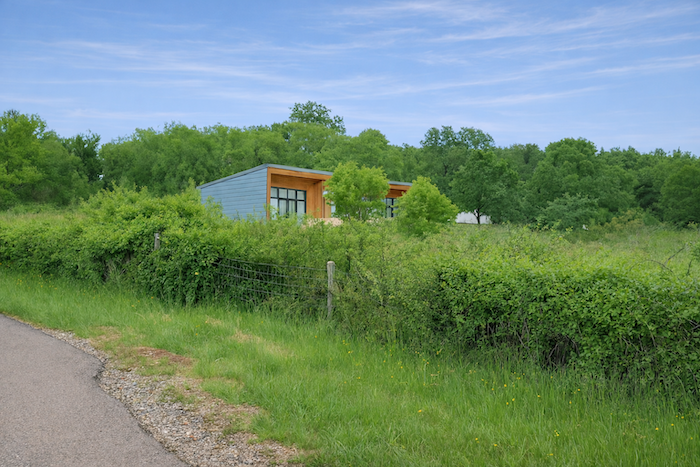
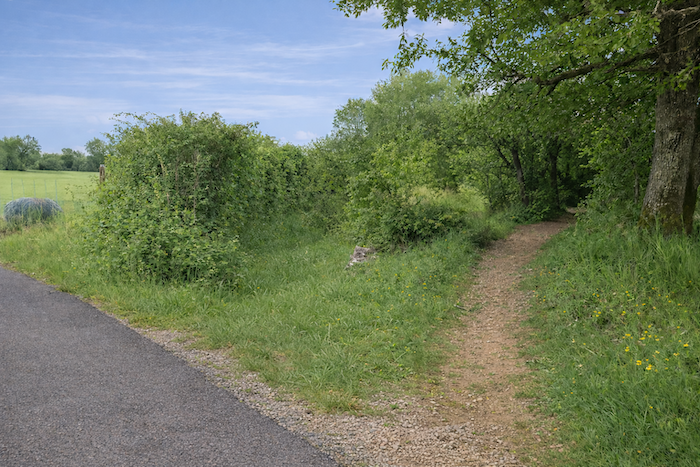
Soon another path disappears again among boxwoods and tall grasses, undulating gently as if wishing to dissolve into the landscape. |
|
 |
 |
|
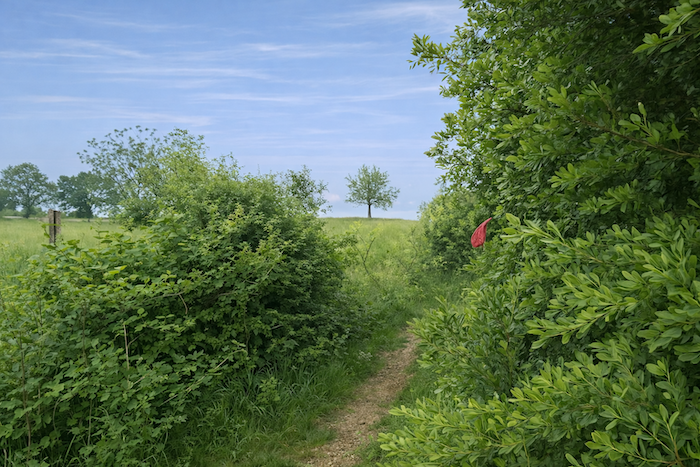
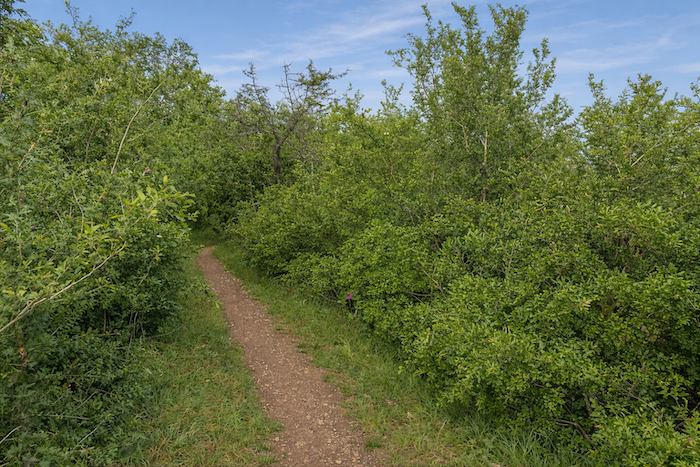
Shortly afterward a trail slopes up once more, though without harshness. A gentle ascent almost cheerful leads the walker toward a wide plateau. |
|
 |
 |
|
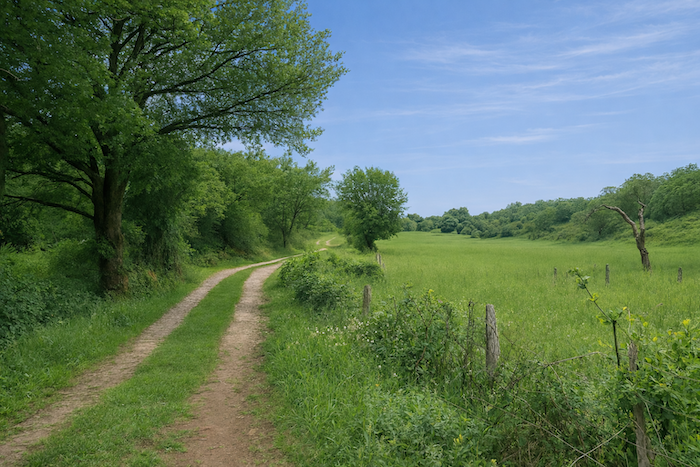
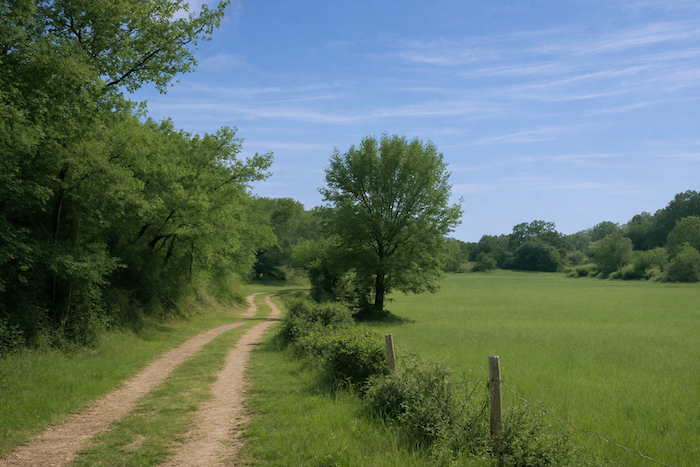
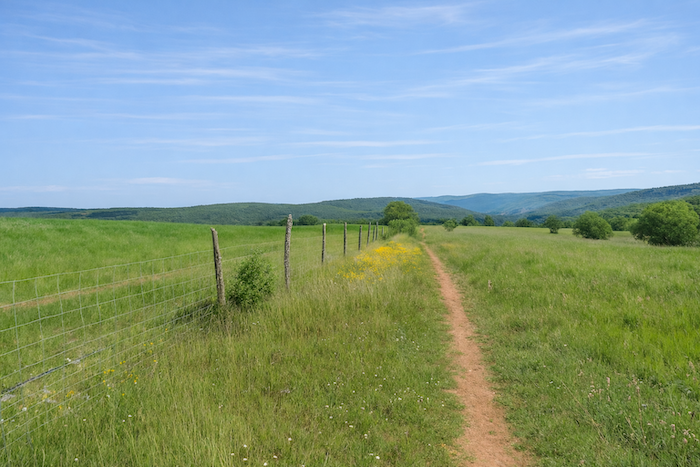
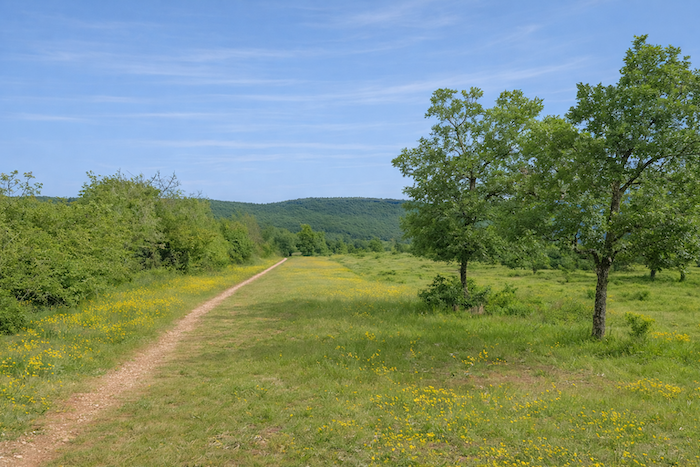
There the trail becomes smooth and regular, crossing open meadows bathed in light. What a surprise after so many days on stony causses to step onto soft grass without stones or roots, to walk across a broad plateau stretching to the horizon. For the pilgrim it feels like a quiet revolution, a moment of breathing and calm. |
|
 |
 |
|
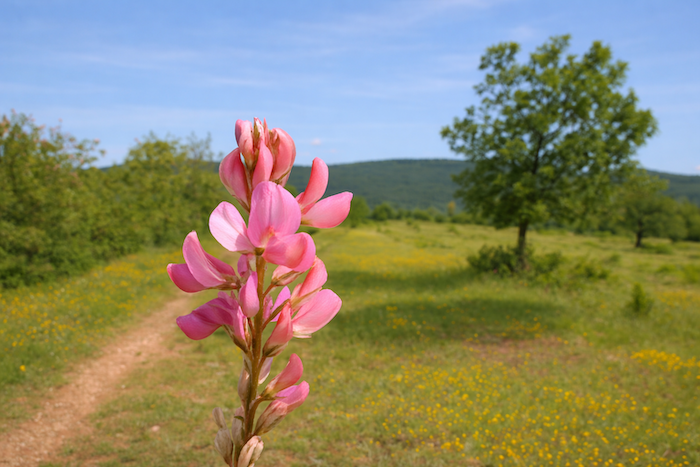
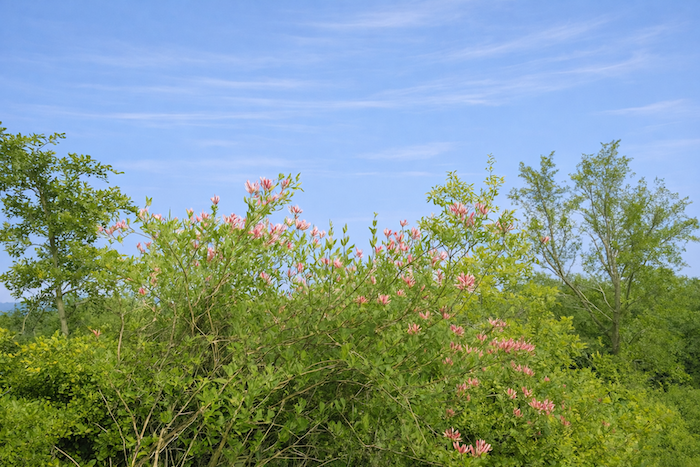
The causse here is magnificent, a full and vivid green, almost springlike. All around the surrounding “pechs” are wrapped in thick forests whose edges play with the lines of the sky. The wind moves freely, carrying the scent of the earth. In the meadows nature plays with color. Small wildflowers border the path, their petals mingling with the stems of honeysuckle that wind around the stones. Here and there a bee or a butterfly lingers as if blessing the walker during his final hours upon the causse. |
|
 |
 |
|
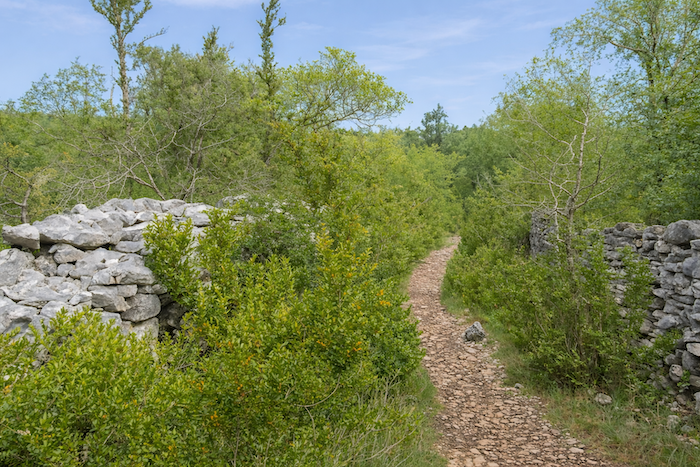
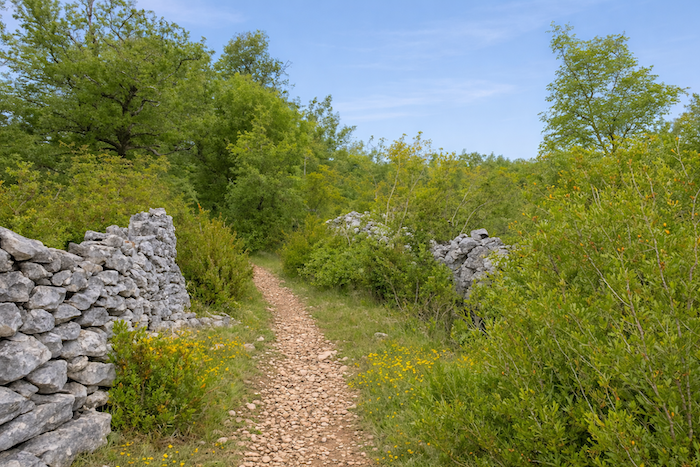
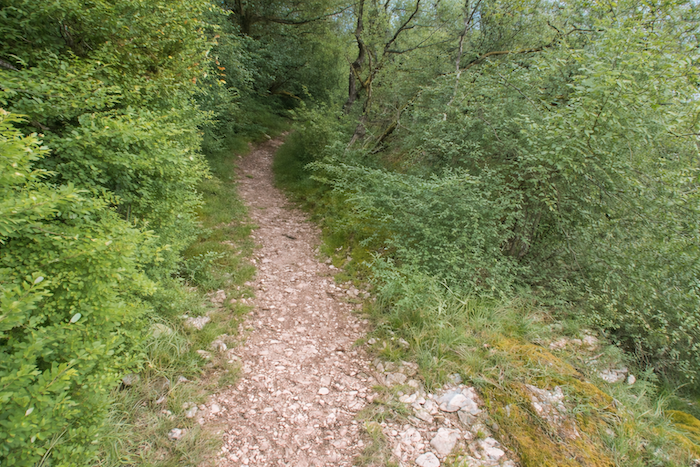
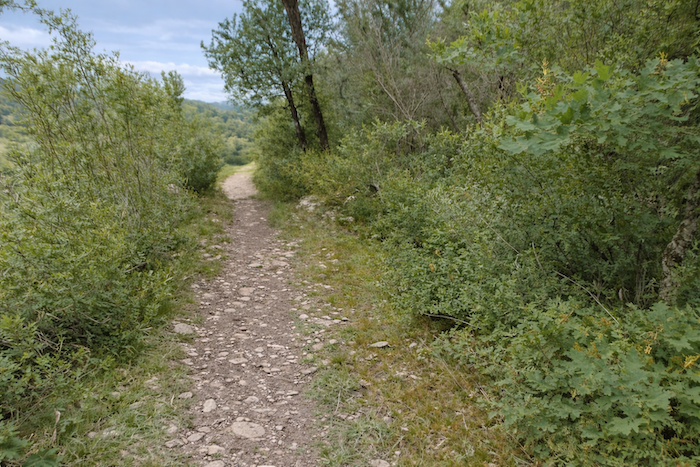
Yet rest never lasts long along such rugged ground. At the end of the plateau the slope awakens again, faithful companion of the journey. A small rocky trail slips into the woodland, beginning a steep descent toward Cabrerets. The boxwoods return, stubborn and loyal. The oaks close their branches above the trail and grey stone walls once again line the path like silent guardians. |
|
 |
 |
 |
 |
|
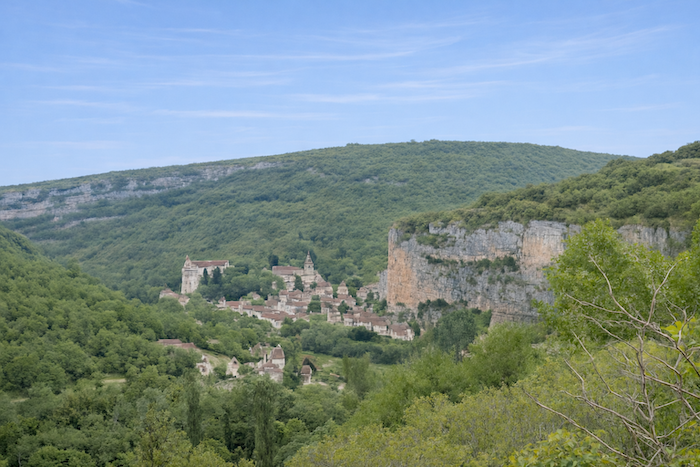
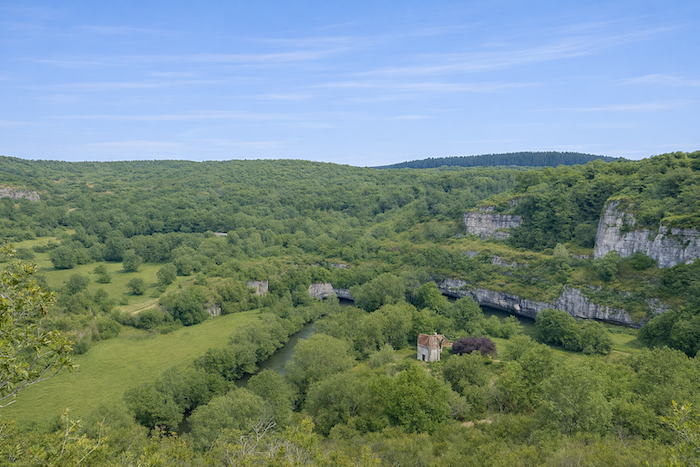
Then suddenly the reward appears, an opening, a balcony above the world. The gaze plunges into the valley and there below lies Cabrerets, nestled in the hollow of the valley. The Célé winds slowly around it, drawing a perfect loop beside a golden cliff. Just above, almost clinging to the rock, a guesthouse catches the eye, the “Maison atypique”, suspended between sky and stone. From here it seems to float above the void, like a dreamlike resting place before returning among people. |
|
 |
 |
|
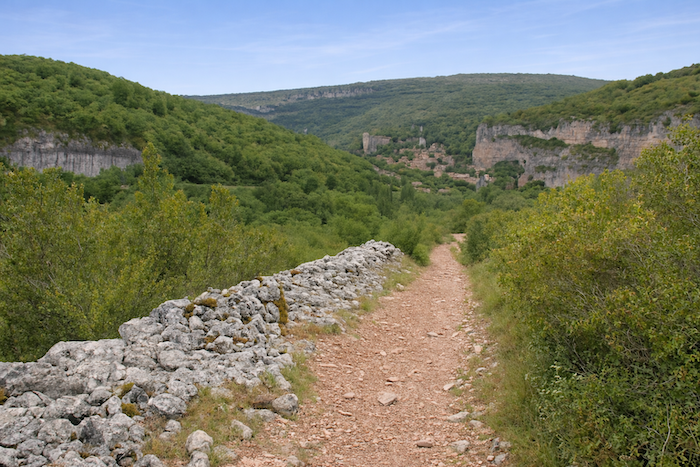
But beauty has its price. It is not only the gaze that descends, the knees do as well. The descent over nearly half a kilometer reaches slopes of 20% or more, a severe test for already tired legs. Yet how could one complain. The landscape is so grand that the pain is forgotten. Each step draws closer to the Célé, to its coolness and its quiet murmur. |
|
 |
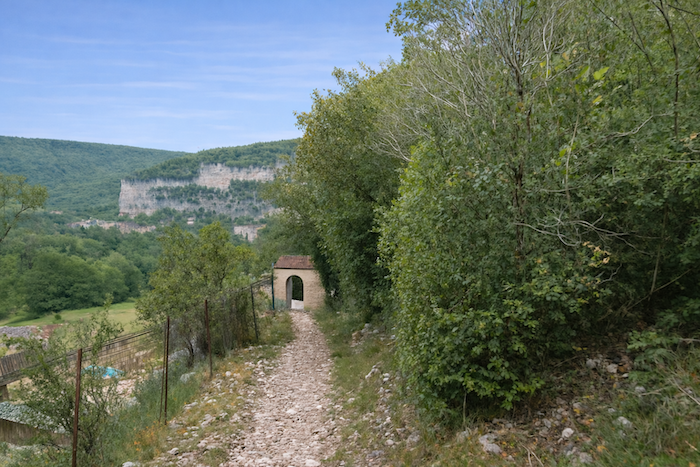 |
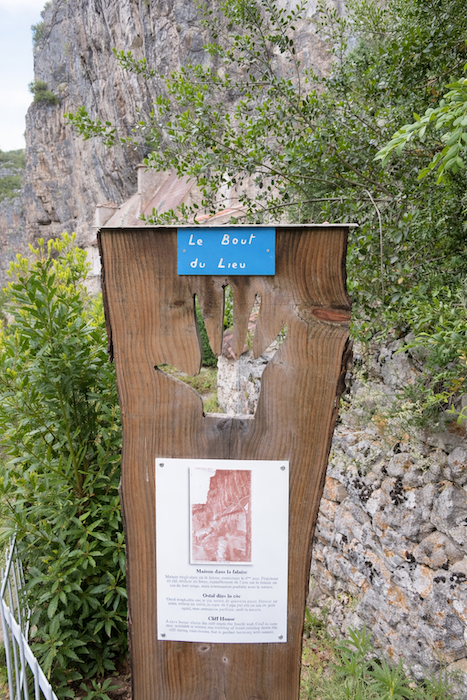
At the bottom the path becomes calm again. You reach the place called Le Bout du Lieu only a short distance from Cabrerets. Here the variant route that passes by Les Granges rejoins the GR651. The two paths meet again like rivers joining before their mouth. The circle is complete. The walker has mastered the causses.
Section 5b : The variant via Les Granges
Let us return for a moment to that fork in the path where two routes present themselves to the walker. After a long day climbing and descending the causses, some pilgrims, tired yet curious, will choose the second option, the one that descends toward the valley.
|
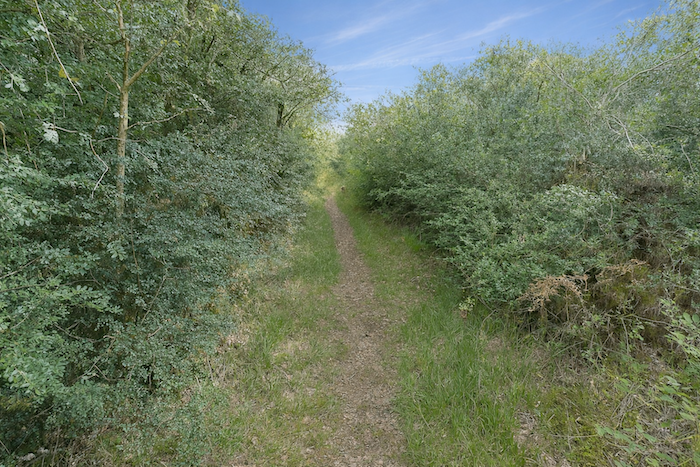
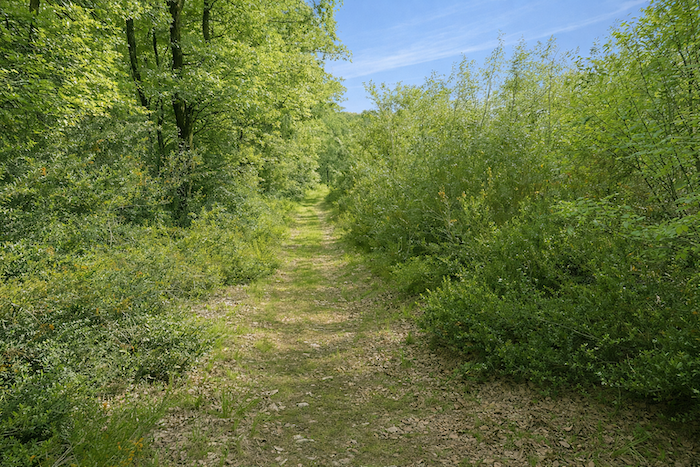
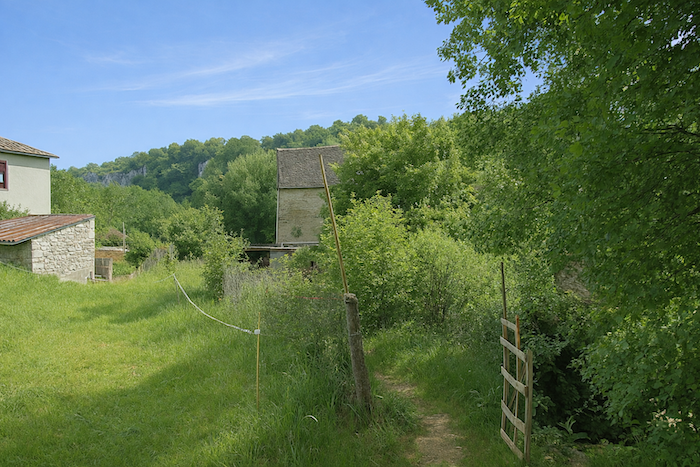
The way reveals itself clearly and directly. A trail plunges into tall grasses and woodland, as if nature wished to take the traveler back into its arms. For nearly one kilometer the slope asserts itself, accompanied by the rustling of leaves and the scents of fragrant shrubs. |
|
 |
 |
|
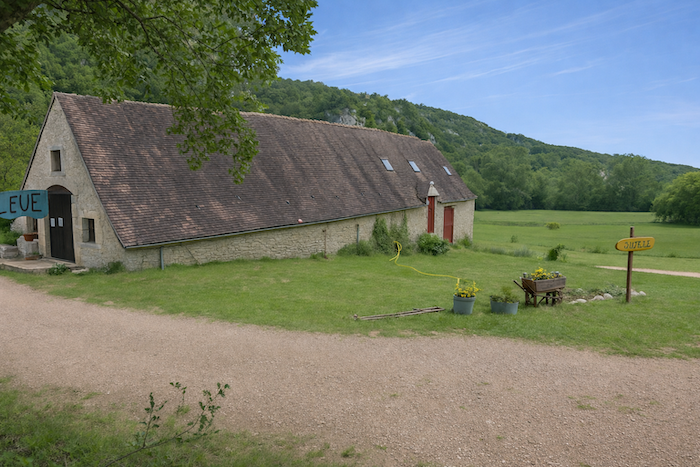
The trail soon reaches the hamlet of Les Granges, recognizable by its old stone dovecote standing like a watchful sentinel beside the path. Here the atmosphere changes, a little more life, a little more gentleness. One of the notable advantages of this variant is the possibility of resting and eating at 2La Flèche Bleue”, a charming hikers’ gîte where travelers find warm hospitality and a simple meal, honest and generous like the land they have crossed. |
|
 |
 |
|
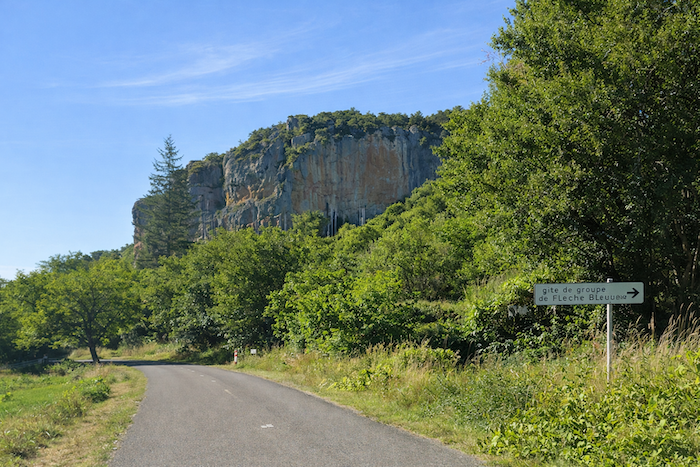
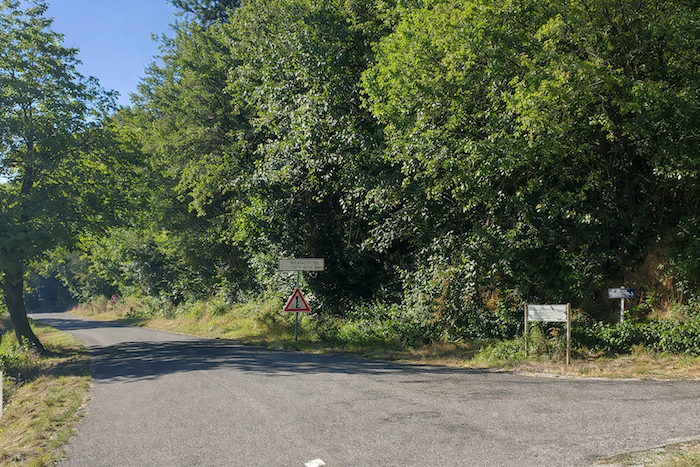
From Les Granges the road lies only two hundred meters away. |
|
 |
 |
|
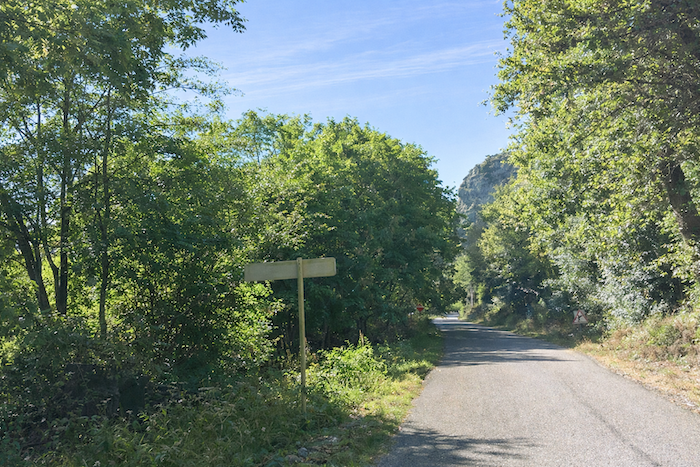
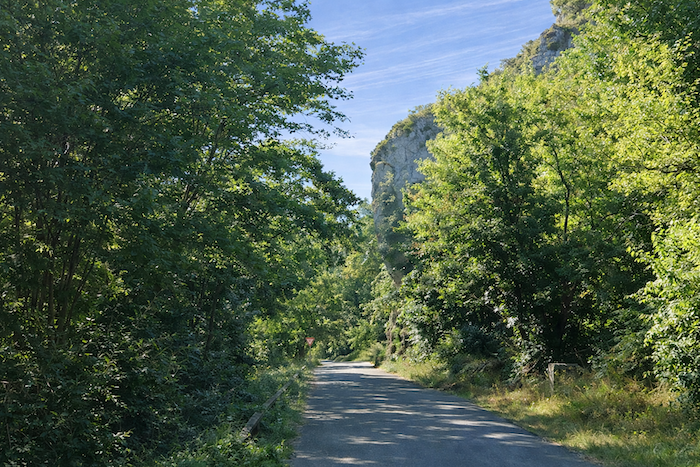
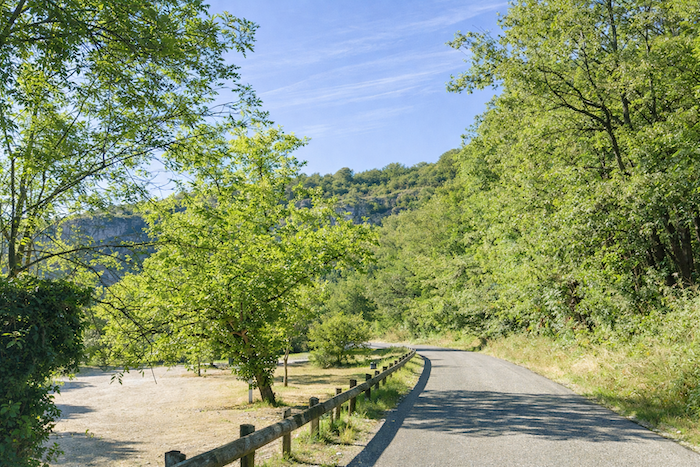
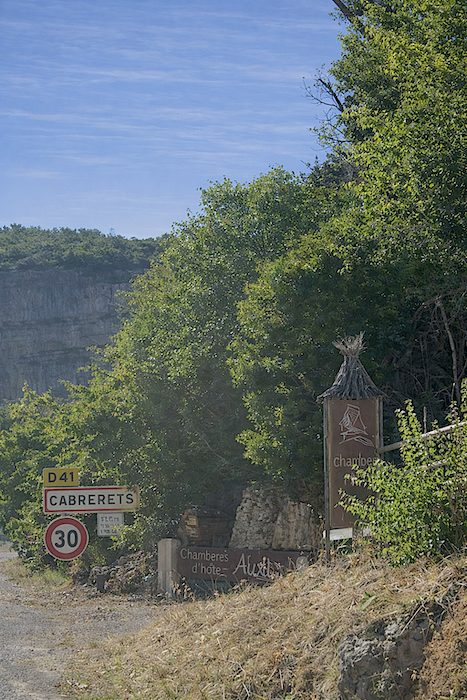
You then reach the D41, a quiet road that winds gently toward Cabrerets over barely three kilometers. . |
|
 |
 |
|
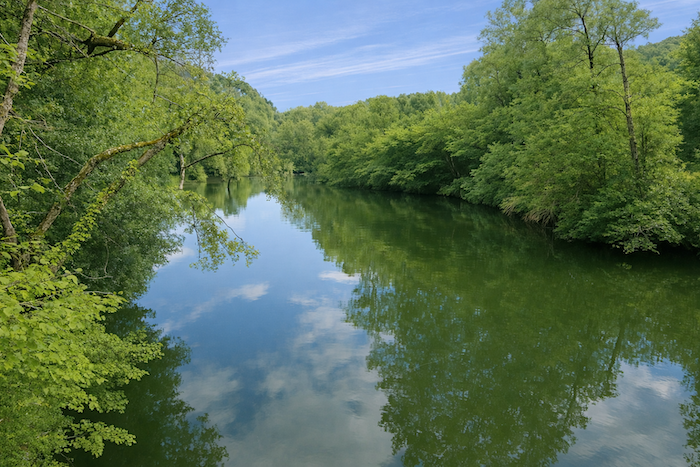
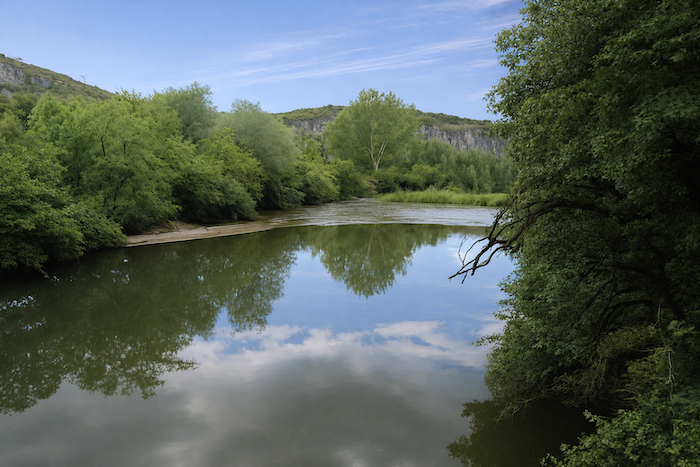
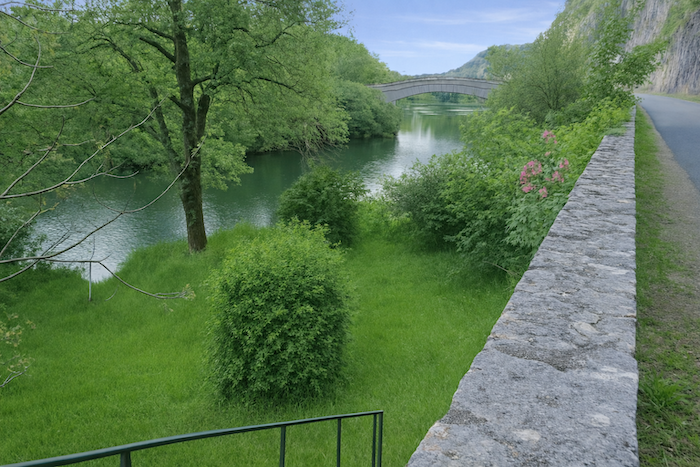
Here the valley of the Célé reveals itself under a new light. The water glides between banks edged with deep green, contrasting with the tender brightness of the foliage. The sky mirrors itself in the rippling surface. To walk here is to follow a ribbon of emerald where every bend seems to breathe. |
|
 |
 |
|
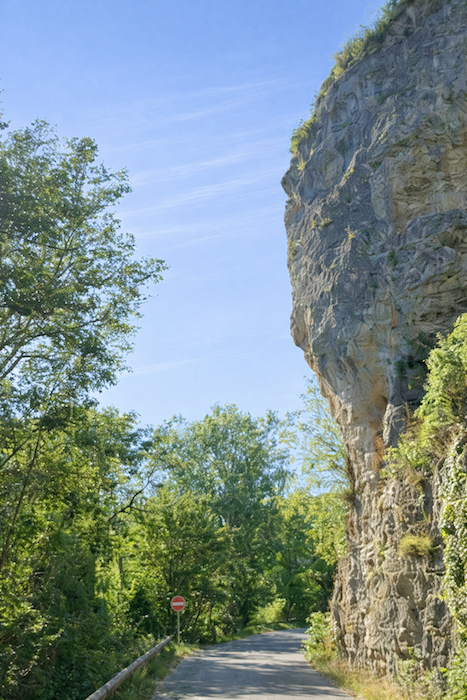
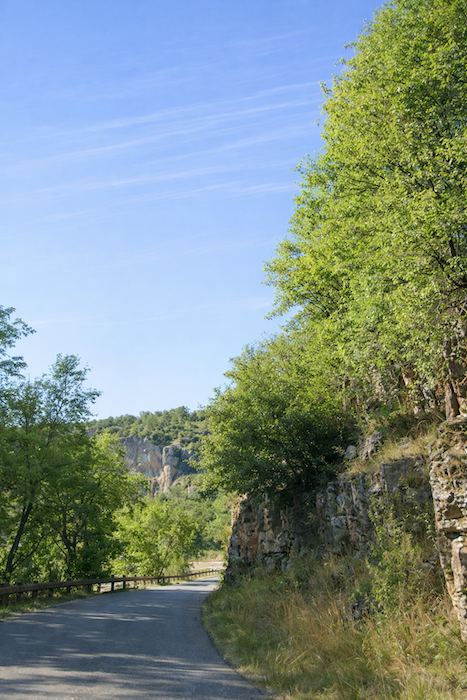
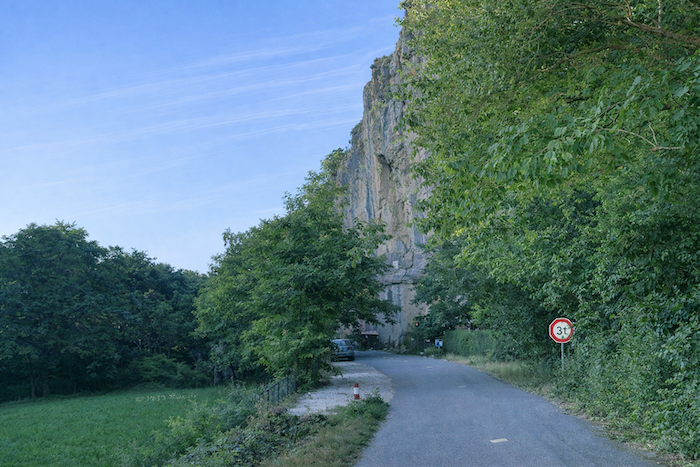
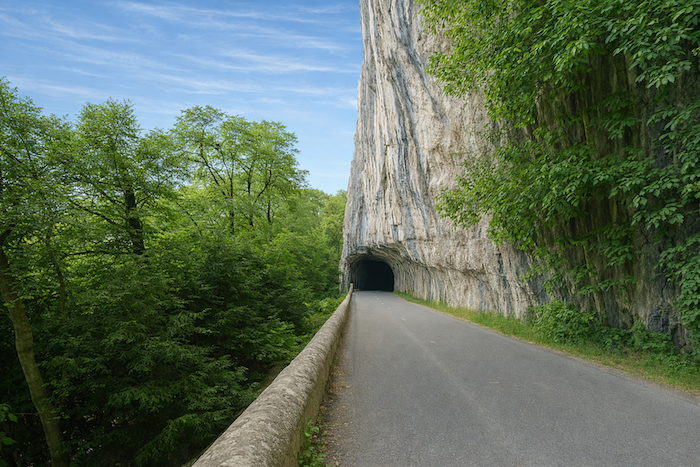
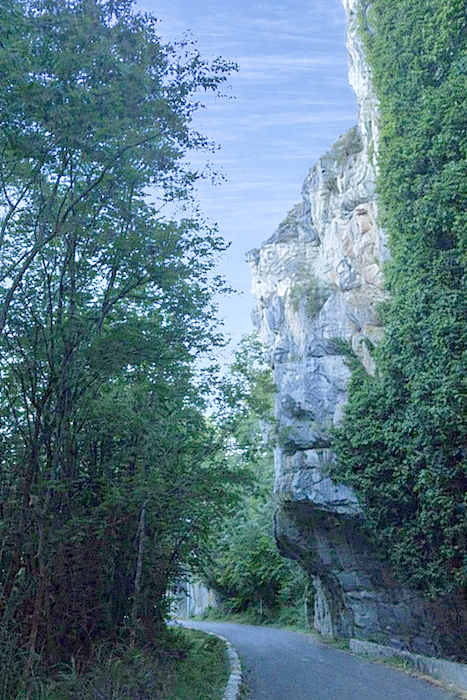
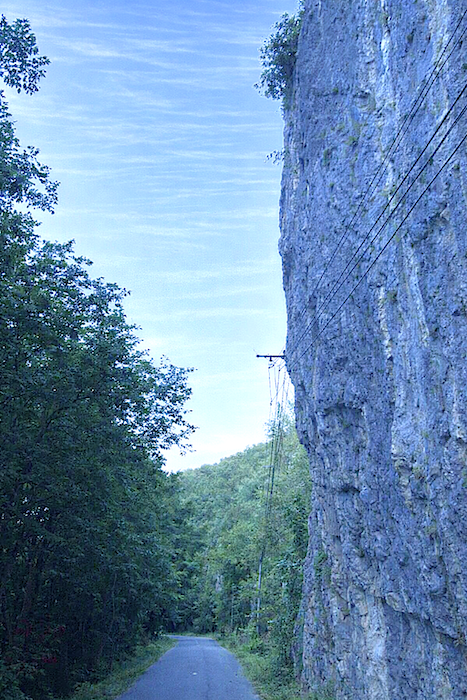
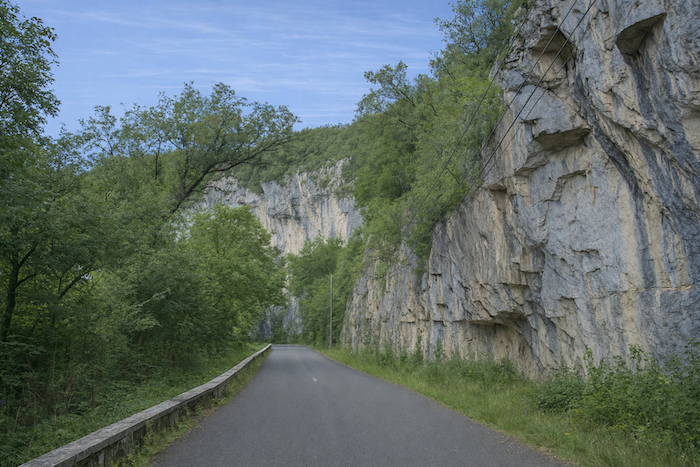
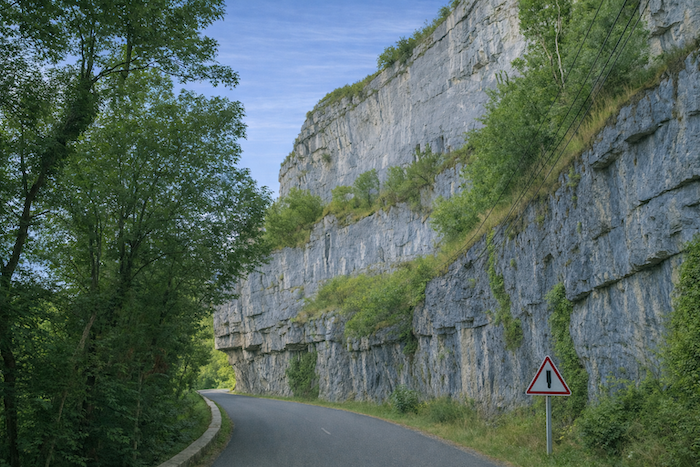
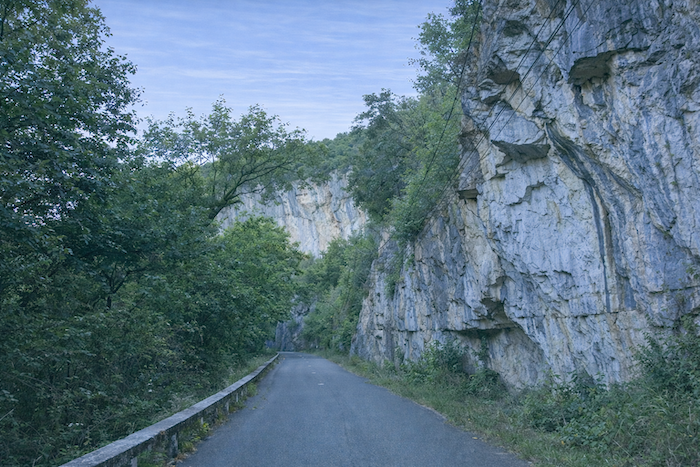
Soon the road draws close to the impressive cliffs carved by the river through the narrow valley over countless centuries. |
|
 |
 |
 |
 |
|
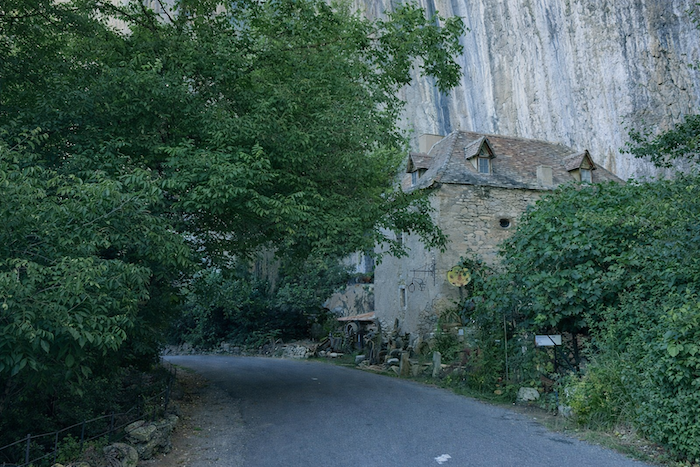
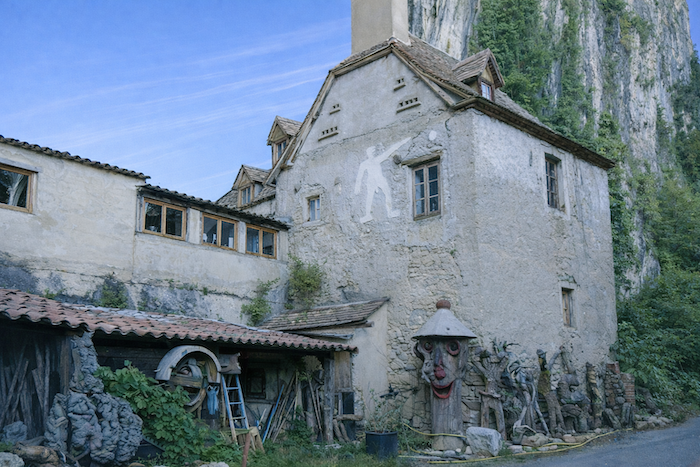
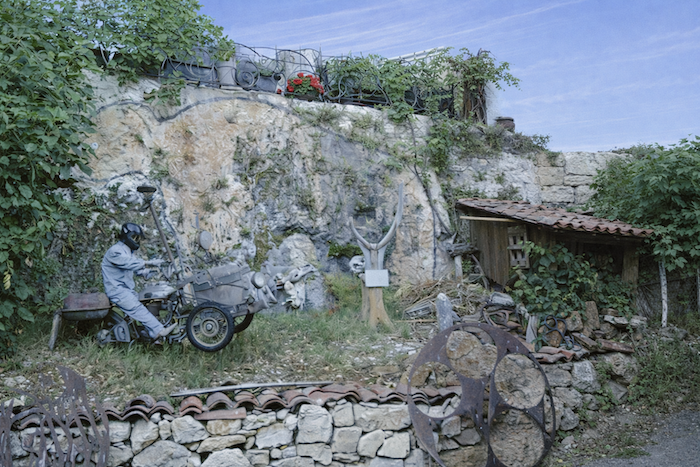
The D41 road runs beside the river and leads to the unusual “Musée de l’Insolite”, the realm of a whimsical and poetic imagination. You will not take photographs there. The artist prefers to keep the mystery of his abundant universe to himself. Yet even from the outside the passerby senses something of that gentle delirium, improbable shapes, dreamlike colors and objects that seem to converse with the wind. |
|
 |
 |
 |
 |
|
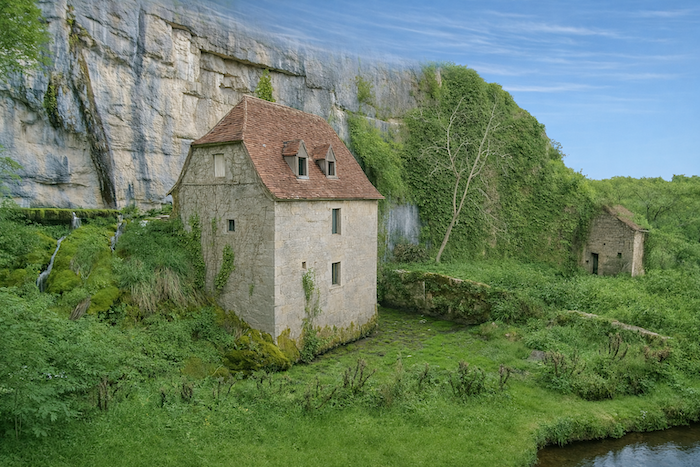
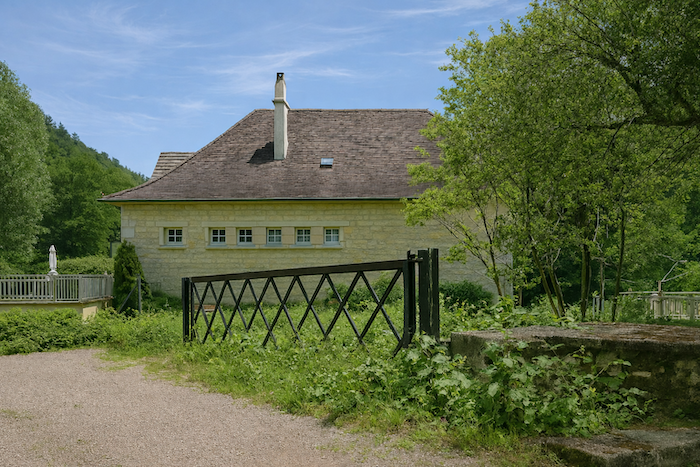
Farther on, the road plays hide and seek with the cliff and passes beneath a rough tunnel carved directly into the rock. Around a bend appears the mill of La Pescalerie, an enchanted place. It nestles at the foot of the rock wall, draped in moss and ivy and surrounded by the freshness of spring water. A cascade pours from a subterranean resurgence released from the depths of the causse. In earlier times this troglodyte mill, half in the rock and half in the light, served as a fishing residence for local lords. Everything here still speaks of water and stone, of silence and patient labor. |
|
 |
 |
|
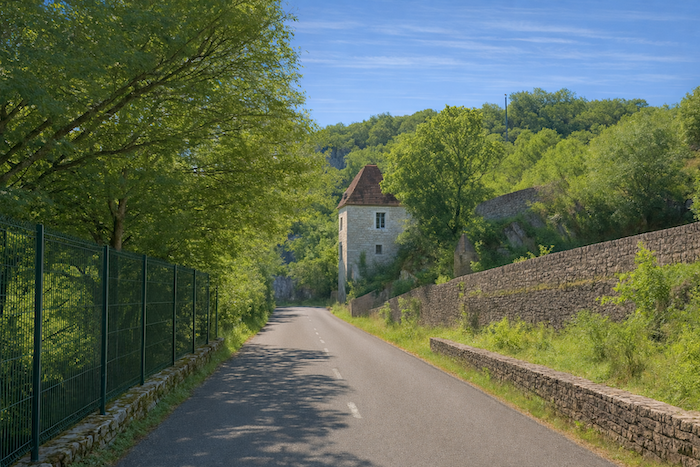
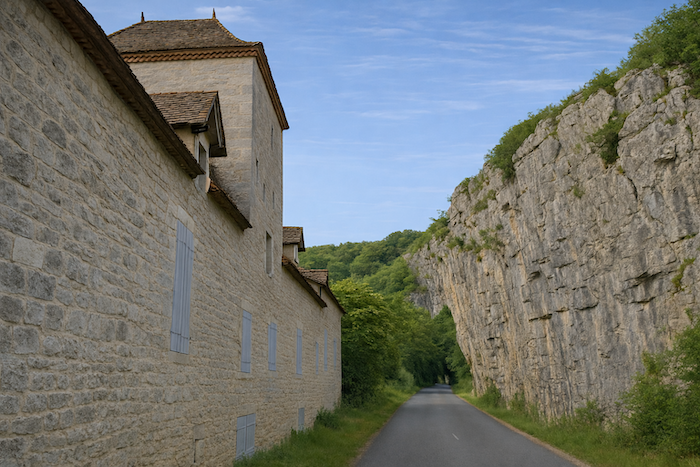
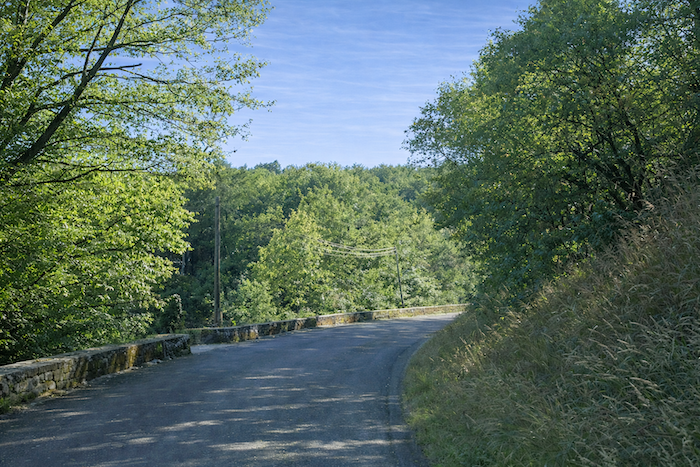
The road continues quietly toward “Le Bout du Lieu” before reaching Cabrerets. |
|
 |
 |
 |
 |
|
Greyish schist cliffs form a kind of guard of honor along the road as you pass. |
|
 |
 |
 |
 |
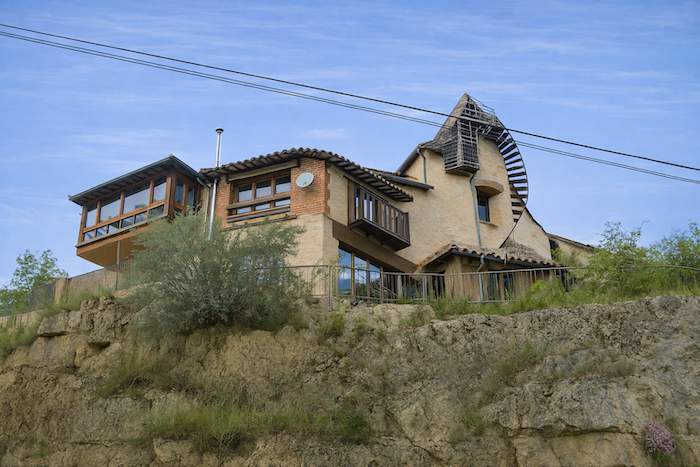
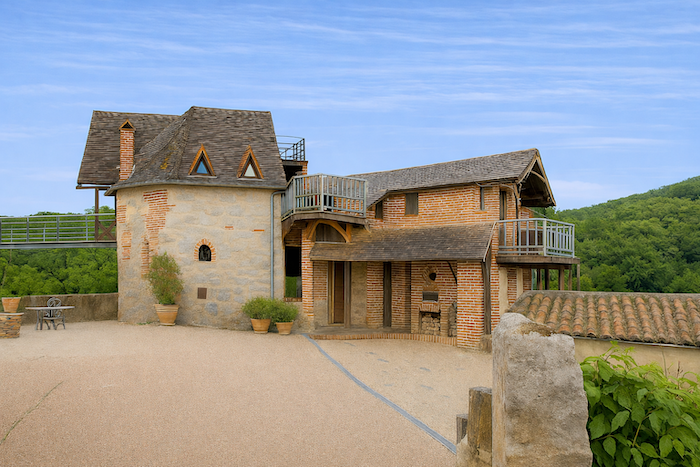
If you raise your eyes, you will see the famous “Maison atypique” balanced against the cliff.
|
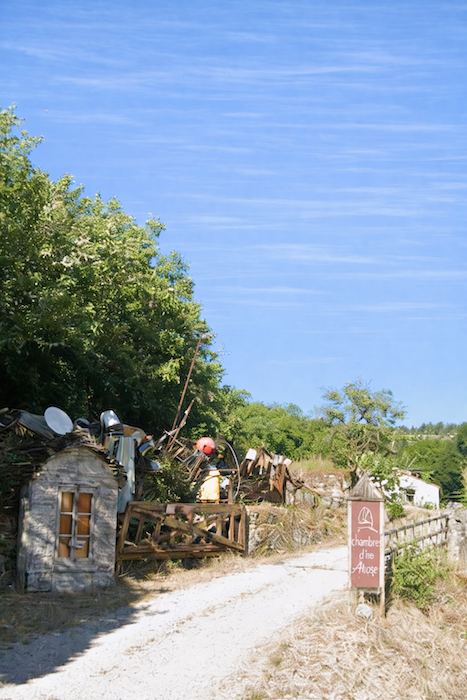
It is there that the GR651, descending from the causse, rejoins the valley. |
|
 |
 |
|
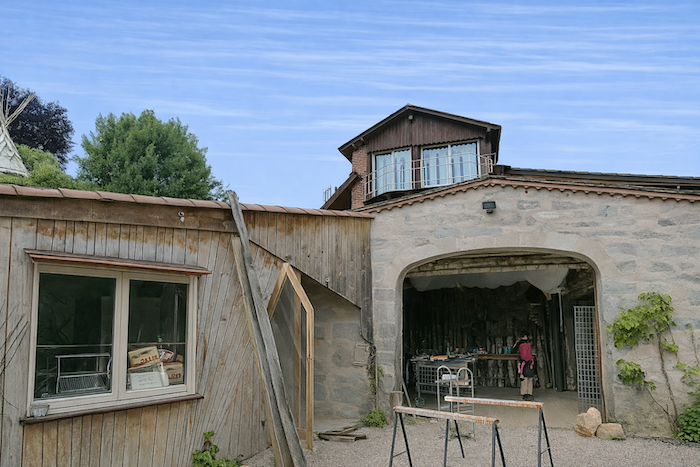
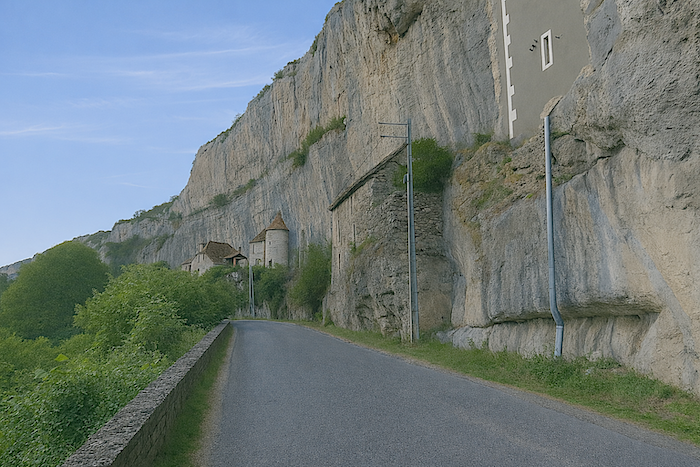
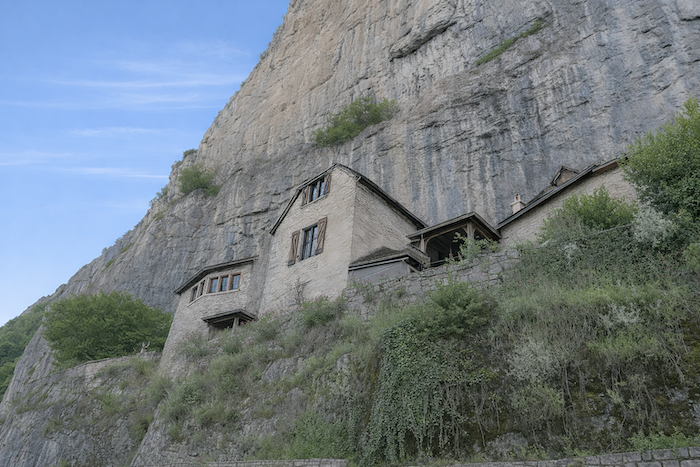
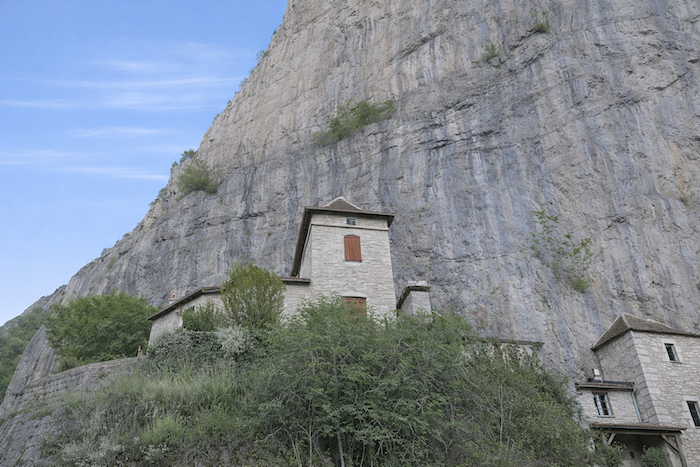
Take a small detour to the “Maison atypique”, an accommodation suspended against the cliff where the welcome is as warm as the view is striking. A little higher another guesthouse extends its pale walls. Seen from the road, Le Bout du Lieu resembles a small museum of stone where every house and every hollow in the cliff seems to tell a fragment of history. |
|
 |
 |
|
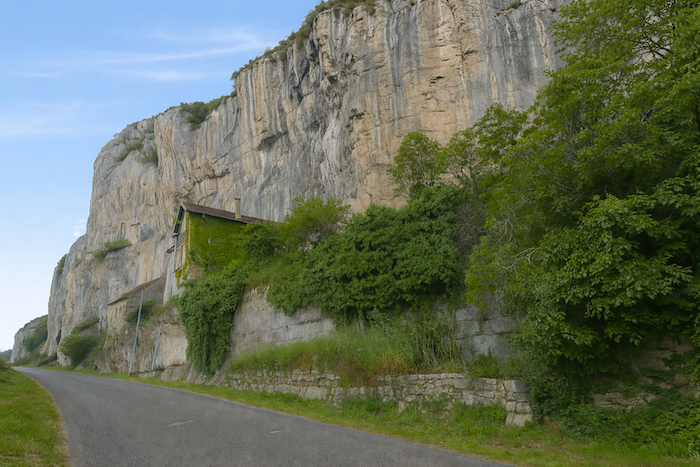
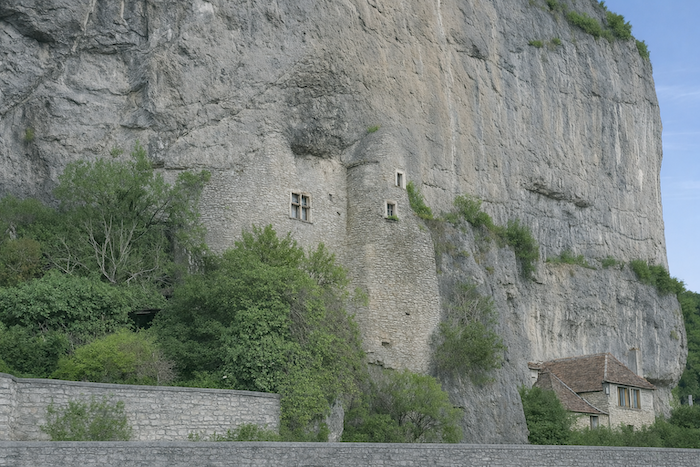
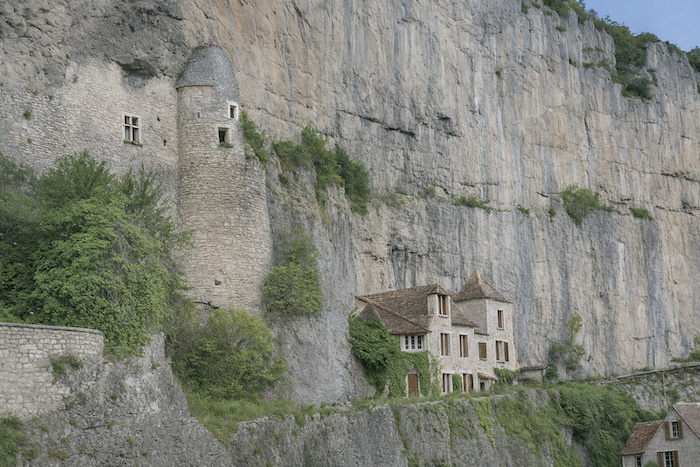
“Le Bout du Lieu” truly is an open-air museum. The first troglodyte houses nestle within the grey cliff, their windows opening above the void. The walls seem to emerge directly from the rock, as if the stone itself, tired of silence, had chosen to become a dwelling. . |
|
 |
 |
|
Look up toward the cliff. High above, barely visible behind a tuft of grass clinging to the rock, appear the remains of a castle. It is the famous “Château du Diable”, also known as the “Château des Anglais”, which has fed local legends for centuries. Built in the twelfth century by the lords of Barasc, it once stretched ninety meters long and thirty meters high and included a round tower whose base can still be seen. During the Hundred Years’ War the English, or rather bands of ruthless mercenaries, seized the fortress, which gave the castle its infernal name. Ten years later the lords of St Sulpice recaptured the stronghold and almost completely destroyed it. Today, suspended on the cliff, it still appears impregnable, a stone mirage defying time. |
|
 |
 |
|
How could you ever tire of contemplating these stone houses that seem both to inhabit the mountain and to dream within it? Some are still lived in, others sleep quietly, yet all bear the imprint of an immobile past. |
|
 |
 |
|
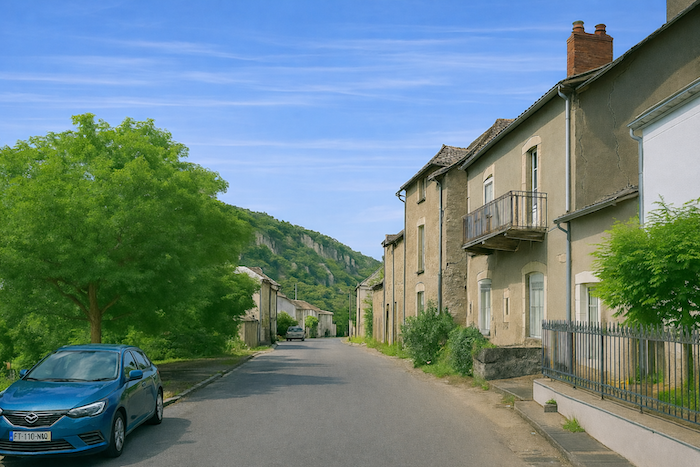
At last, comes Cabrerets where the valley widens slightly. The river, calm and gentle, feels like a haven of peace. |
|
 |
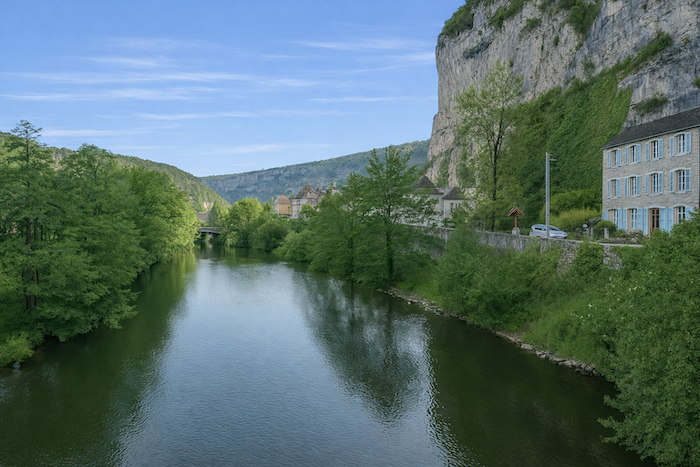 |
At this very point a small river, the Sagne, leaps into the Célé as if a child hurrying to join its older sister.
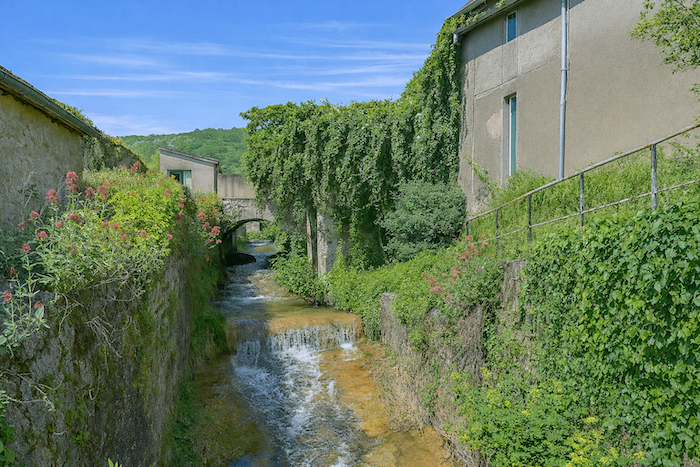
The village itself, modest with about 228 inhabitants, clings to the foot of the Rochecourbe cliff, a vast overhang where the ruins of the “Château du Diable “rest upon a narrow ledge. Even the name Cabrerets comes from the word for goat. The surrounding causses were long the kingdom of goats and their herders. On these fractured plateaus where water disappears into the depths, only agile animals could find enough to feed upon.
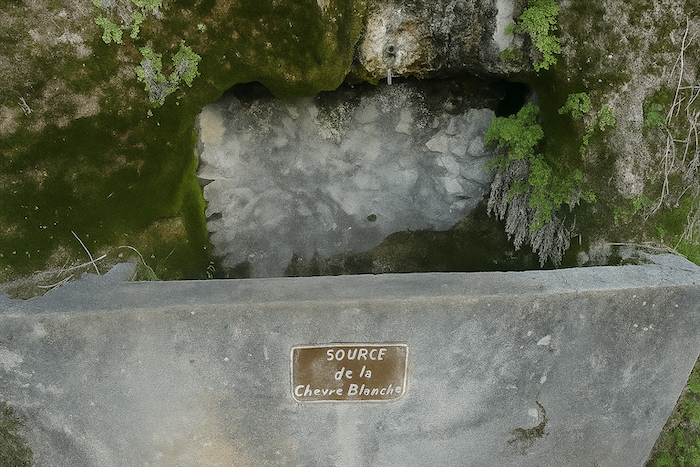
The legend of the White Goat still haunts the nights of the village. It is said that on Christmas night the lord of the castle was feasting when an archer brought before him a young shepherd girl who had come to beg for a little bread for her dying grandmother. Enchanted by the girl’s beauty, the lord attempted to buy her favor. The door closed behind her and, terrified, she fled and threw herself into the void, drowning in the icy waters of the Célé. Since that night, people say, on evenings of the full moon a small white goat wanders among the ruins of the castle. It is the soul of Mariette, the shepherd girl. And beside the road a discreet fountain still gathers her tears.
|
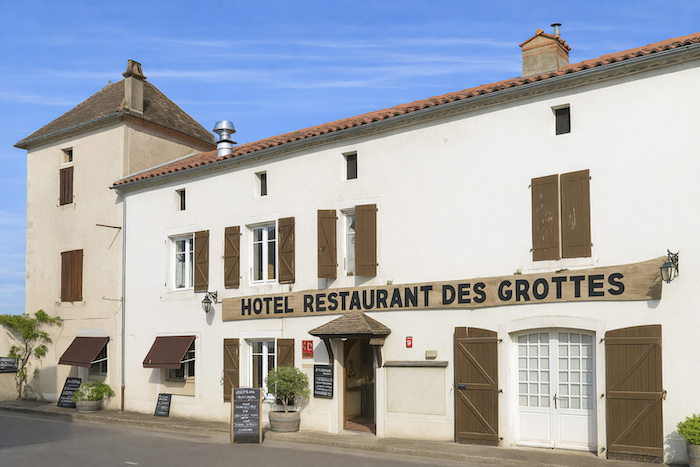
The “Hôtel des Grottes” has long been a favored place for hikers. |
|
 |
 |
|
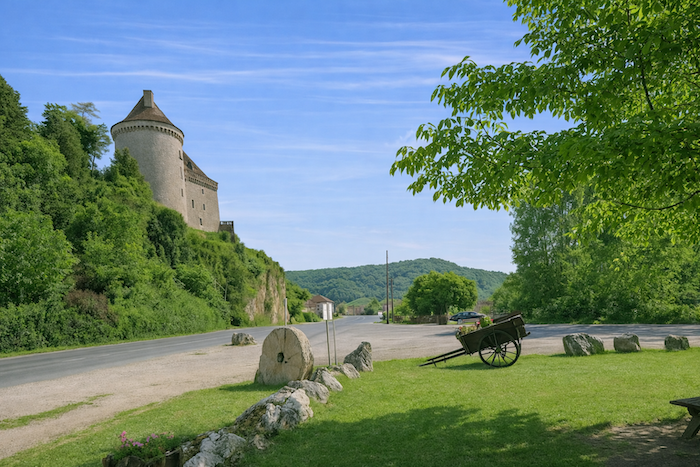
A little farther on another castle still keeps watch, the Château de Biron, built in the thirteenth century and rebuilt a century later by the duke of the same name. At its feet a restored mill murmurs beside the river, a peaceful witness to an industrious past. Pilgrims often find rest here. Most stay in the lower town where accommodation is more plentiful before setting out the next morning toward the upper town, the final step before the great silence of the causses that lies ahead. |
|
 |
 |
Listed accommodations on the Célé Way
- Gîte-Camping Mas de Nadal, Sauliac-sur-Célé; 05 65 31 20 51; Gîte, chalet, dinner, breakfast, cuisine
- Gîte O cœur des Sens, Sauliac-sur-Célé; 06 31 05 28 02; Gîte, dinner, Breakfast, cuisine
- Gîte-Chambres d’hôtes d’Espinières, Espinières; 05 65 21 43 36/06 63 01 16 64; Gîte and Guestroom, dinner, breakfast
- Chambres d’hôtes atypiques, Le Bout du Lieu/Cabrerets; 05 65 21 48 97; Guestroom, dinner, breakfast
- Un Jardin dans la Falaise, Le Bout du Lieu/Cabrerets; 07 84 11 91 15; Guestroom, cuisine
- Camping municipal, Cabrerets-Rivière; 06 42 64 01 58; tents
- Refuge du Célé, Cabrerets-Rivière; 06 65 31 20 15; Gîte and Guestroom, dinner, breakfast
- Hôtel-restaurant des Grottes, Cabrerets-Rivière; 05 65 31 27 02; Hotel, dinner, breakfast
- Gîte-restaurant du Barry, Cabrerets- Village; 07 88 62 81 18; Gîte and Guestroom, dinner, breakfast, cuisine
- Gîte de la Flèche bleue Les Granges /Cabrerets; 05 65 23 36 72/06 32 31 97 09; Gîte, dinner, breakfast, cuisine
This information was updated in 2026. If you access this site later, it may no longer be accurate. Along these routes, some establishments open every year while others close. One solution is to purchase, among other resources, Miam Miam Dodo, the essential guide for eating and accommodation, which also lists places to stay off the route. For our part, we will only include accommodations located directly on or very close to the route. There are also other options, such as guidebooks or the internet, which also lists Airbnb accommodations. However, even though the valley is a tourist area, Airbnb options are rare. No application is as well documented as Miam Miam Dodo, especially since the small book, available online, is updated every year. If you do not have Miam Miam Dodo, we recommend booking in advance and checking directly with accommodation providers about the details of their services (meals, sheets, toilets, showers, and other amenities). Likewise, inquire at the previous stage about the opening hours of grocery stores and bars, which are often closed during parts of the day or week. On the Célé variant, accommodation options are very limited, but only a few pilgrims pass through here. However, there are also hikers. Therefore, book in advance if possible. Finding a bed at the last minute can sometimes be a matter of luck. It’s better not to rely on that every day.
During this stage, accommodation along the route is very limited, to say the least. Several establishments have closed in recent years. You will need to go as far as Sauliac to find two options, both slightly off the route. However, in the Cabrerets area, there should not be major difficulties finding a place to stay, except during peak tourist season. The Pech Merle cave and Saint-Cirq-Lapopie are very close by. In Cabrerets, you can find accommodation, meals, and supplies. There are no water points along the route. For those who wish to have their luggage transported, or to be transported themselves, La Malle Postale or Transport Claudine are good options.
.
Feel free to add comments. This is often how you move up the Google hierarchy, and how more pilgrims will have access to the site.
 |
Next Stage : Stage 4: From Cabrerets to St Cirq-Lapopie |
 |
Back to menu |