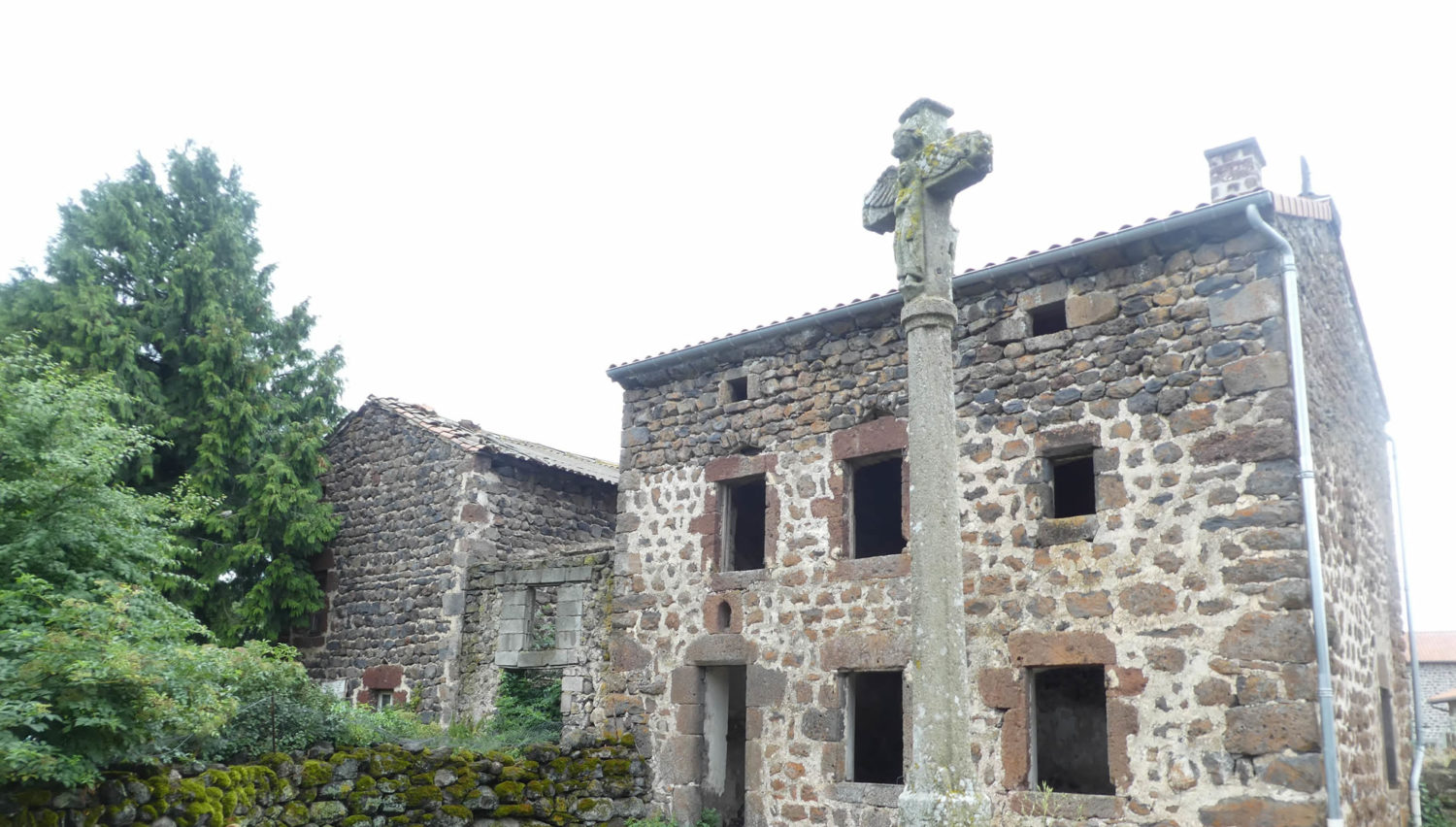
In the sublime valley of the Célé River
DIDIER HEUMANN, ANDREAS PAPASAVVAS
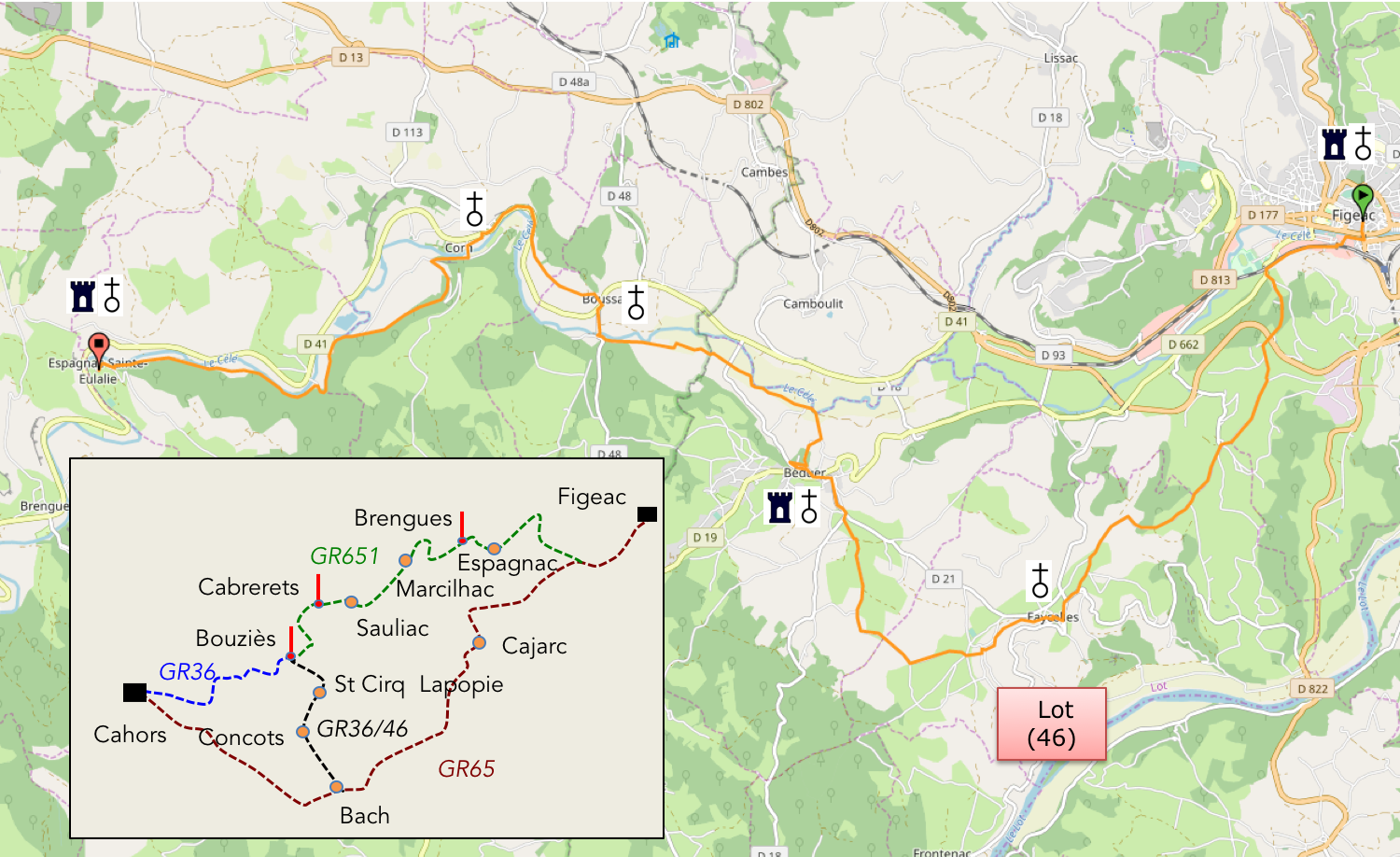
We divided the course into several sections to make it easier to see. For each section, the maps show the course, the slopes found on the course, and the state of the route (paved or dirt roads). The courses were drawn on the “Wikilocs” platform. Today, it is no longer necessary to walk around with detailed maps in your pocket or bag. If you have a mobile phone or tablet, you can easily follow routes live.
For this stage, here is the link:
| This is obviously not the case for all pilgrims, who may not feel comfortable reading GPS tracks and routes on a mobile phone, and there are still many places without an Internet connection. For this reason, you can find on Amazon a book that covers this route.
If you only want to consult lodging of the stage, go directly to the bottom of the page. |
 |
The Célé River is said to be the little brother of the Lot River in this region. Like a younger brother, it is more cheerful but also wilder and more romantic. The Lot is majestic and broad, unfolding its meanders with the assurance of an elder. The Célé flows more freely and more nervously, like a rebellious child or a budding poet. It sings more than it speaks. It is a river of momentum, intimacy and raw beauty, and it is more secretive as well. Its grace lies in its spontaneity, in the way it brushes the rocks, disappears into the undergrowth and suddenly emerges around the bend of a cliff. Its course, fairly parallel to that of the Lot, runs from one causse to another, at the bottom of ochre, grey, blue, black and white cliffs that it has carved into the limestone. You will quickly understand. The villages stand near the river. The paths prefer to gain height. The Célé traces its way between the causses like a slow and subterranean blade. It cuts into the stone, sculpts the cliffs and gives the villages their mineral setting. The water lies below and life shelters there. The walker, however, climbs upward. He follows the trails clinging to the slopes, close to the cliffs. Up there the path takes the time to see. That is the price of perspective, silence, sky and beauty offered in a wide panorama.
When the pilgrim arrives in Béduer, a particular choice appears before him, either continue on the GR65, the pilgrimage route, or take the GR651, the Célé valley variant route. Both routes lead to Cahors. The GR651 is a wild itinerary in the heart of sublime landscapes. It will certainly appeal to lovers of nature and to hikers who enjoy a more athletic walk. In Béduer the route hesitates and so do you. Should you follow the marked route of the GR65, or descend toward the more secret valley of the Célé by the GR651 route? This variant, less frequented, is meant for those who feel the call of nature and for those who are not afraid of detours. It is a route of solitude and wonder.
Many scallop shells encourage the pilgrim to take this route, whispering that this path “is well worth the other”. Yet there is a catch. Some say with solemnity that it is not the Way of Saint James. The strict followers of the canonical route cannot imagine deviating, not even by a single step, from the GR65, as if they would betray a sacred line engraved by the footsteps of hundreds of thousands of souls who walked before them. For them, any deviation would sever the subtle and mysterious link between their walk and the invisible heritage they pursue. And yet, are you really certain that there is a single “true” Camino de Santiago? A unique, legitimate and sacred route? Is the pilgrimage not above all what each pilgrim makes of it? The route is measured less in kilometers than in inner truths. So, the choice is yours. The Célé valley variant route can be walked in four or five days. Even less if you accept a brisk pace and cover thirty kilometers a day. Yet do not be misled by the word “valley”. The route is far from flat. It is certainly not high mountain terrain, but the landscape is playful. It climbs, descends, winds and challenges the walker without brutality yet without respite. The river, quietly settled at an altitude of 150 or 180 meters, forces the walker to climb the causse, rarely higher than 300 meters but always present. It is a succession of thresholds and small victories, limestone steps in the amphitheater of the landscape.
The first stage leads from Figeac to Béduer, perched slightly above the valley, as if to observe the Célé River spreading out below. The pilgrim who is not fond of long distances may choose to stop at Sainte Eulalie or at Espagnac. Yet the GR651 has its demands, hospitality is rarer here. A prudent walker will plan the stops carefully. Reservations are often necessary, otherwise dusk may fall with no roof overhead. Tonight, the stop will be in Espagnac. The section as far as Béduer still follows the main GR65 road. Then, at the right moment, the GR651 turns, almost as if drawn toward the bed of the Célé River. From there it follows the valley closely and gently, as if it wished to become familiar with it before truly entering its depths.
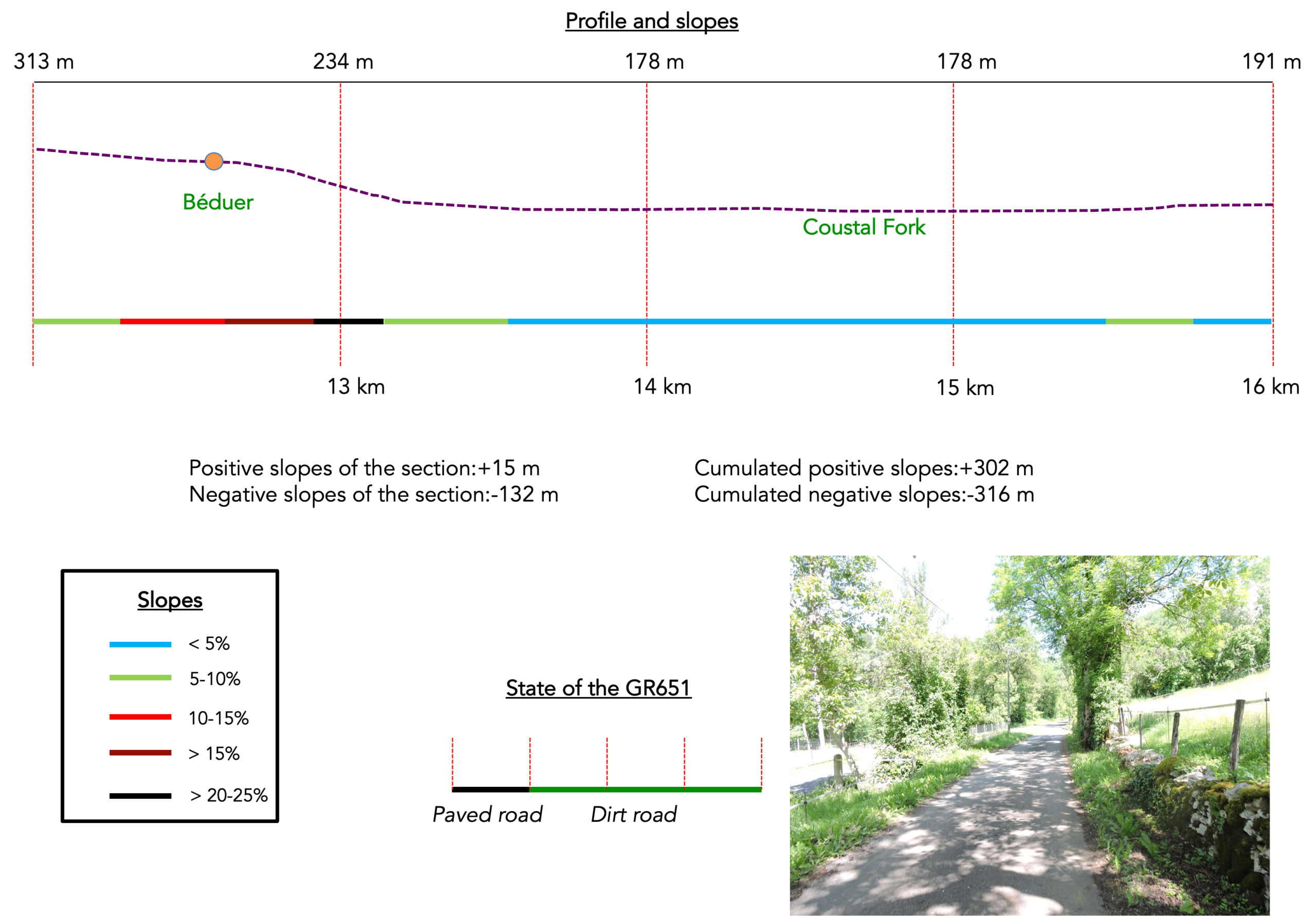
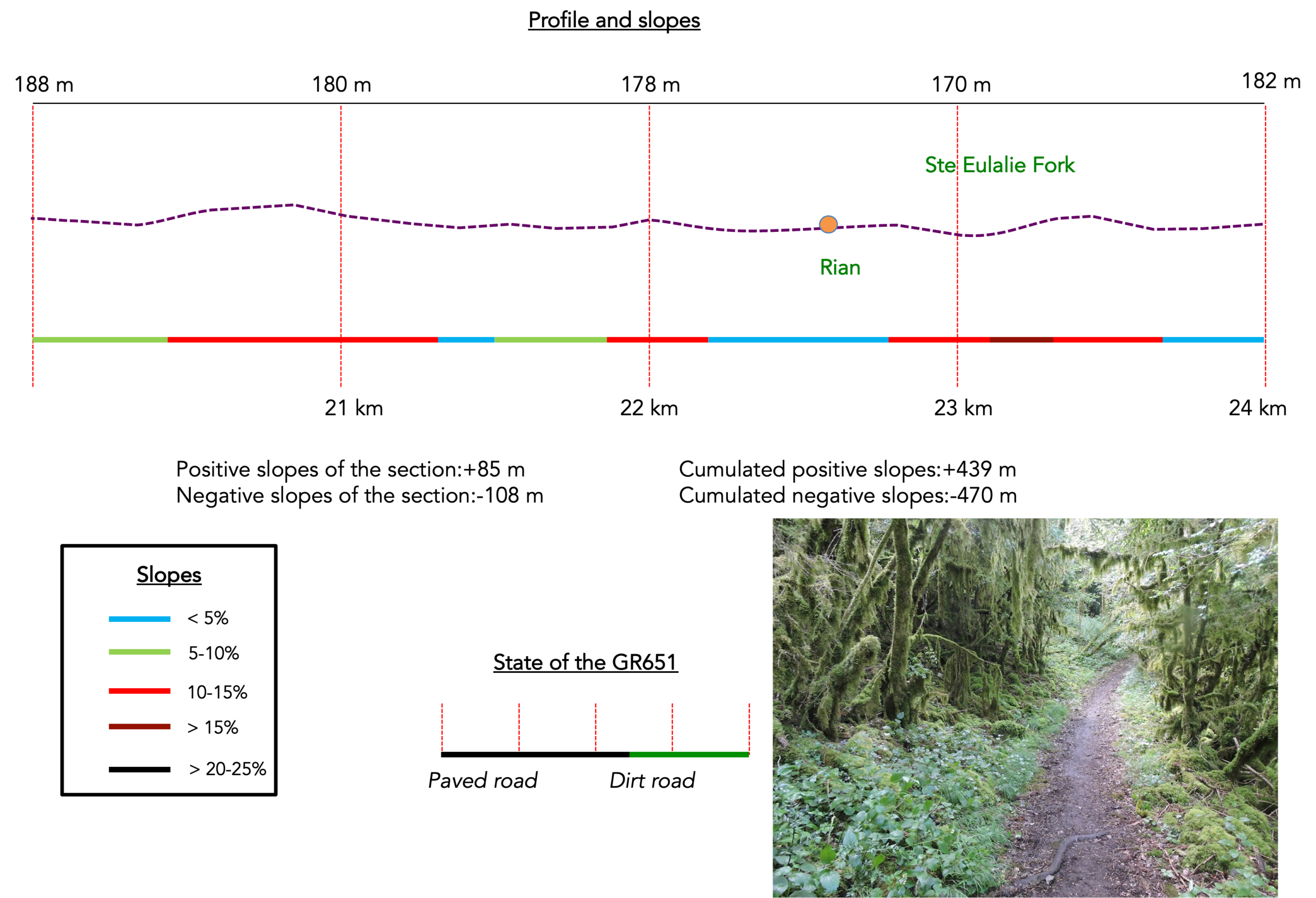
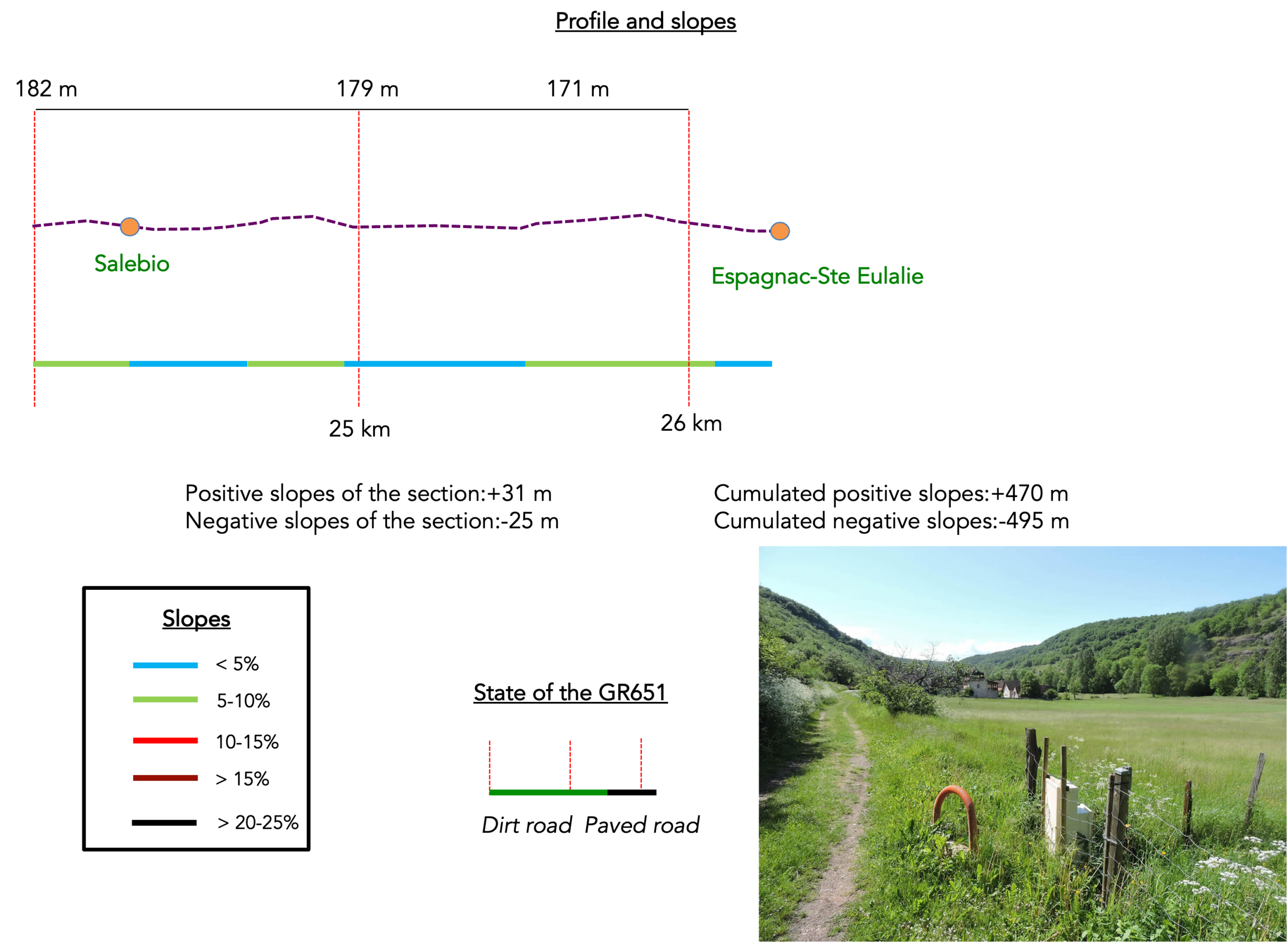
Difficulty level: Overall, the elevation gain (+457 meters / -492 meters) does not suggest a severe stage considering the length of the day. If you have already passed here before, you know the steep climb leaving Figeac, followed by gentle gradients up to Béduer. The GR651 route then descends rather steeply through the woodland into the Célé valley. From there to Espagnac there are only gentle undulations without difficulty.
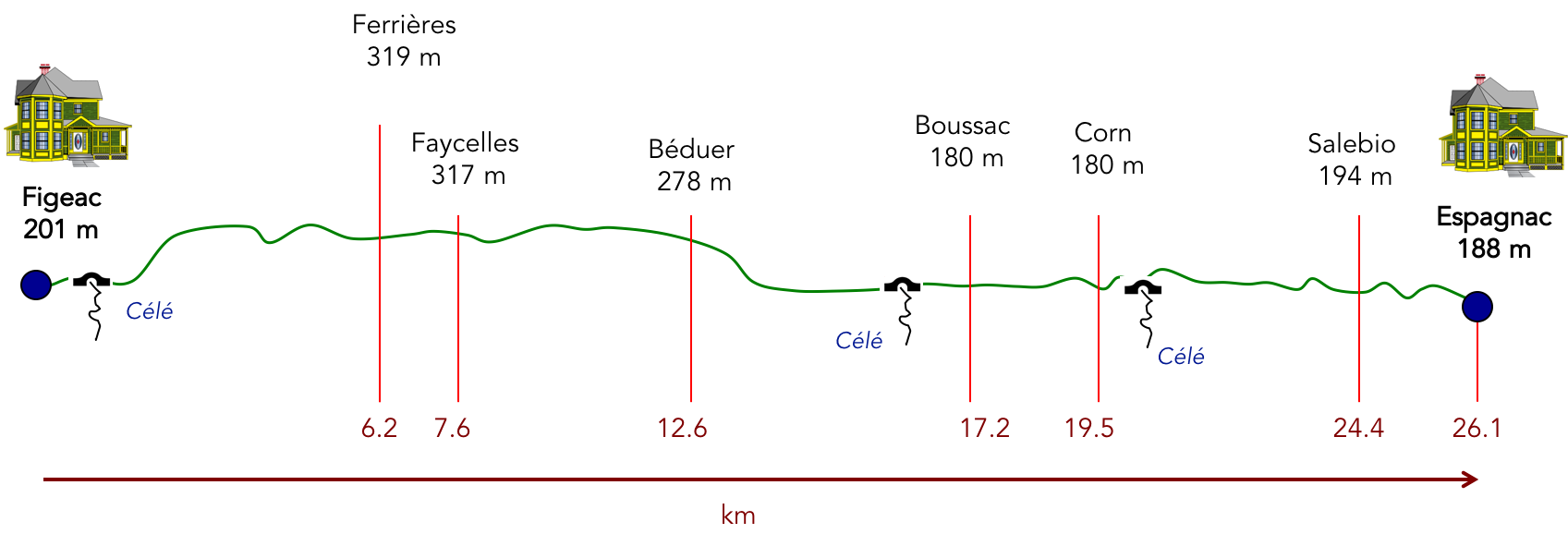
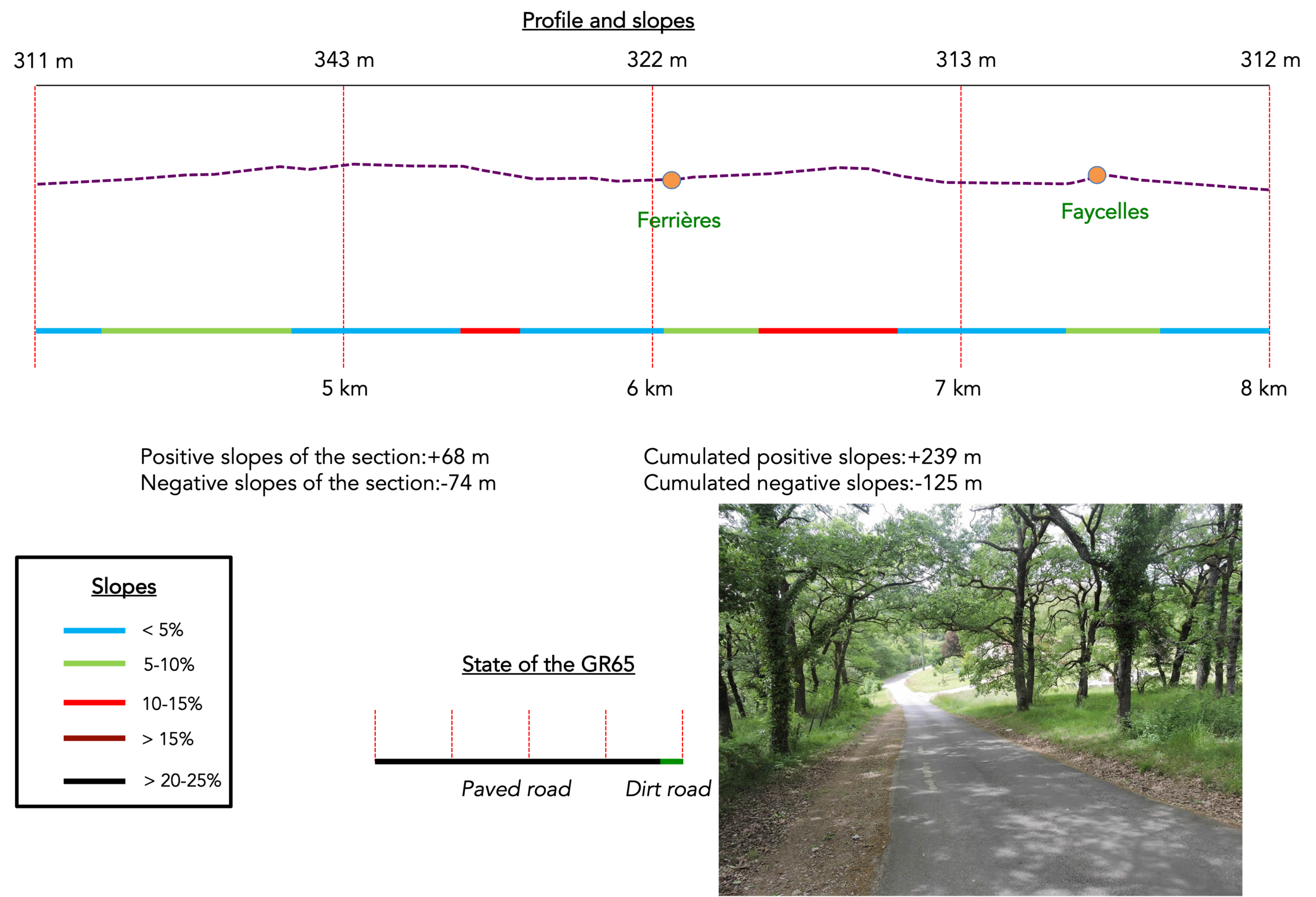
State of the route: Most of today’s stage takes place on roads:
- Paved roads: 16.9 km
- Dirt roads: 9.2 km
Sometimes, for reasons of logistics or housing possibilities, these stages mix routes operated on different days, having passed several times on these routes. From then on, the skies, the rain, or the seasons can vary. But, generally this is not the case, and in fact this does not change the description of the course.
It is very difficult to specify with certainty the incline of the slopes, whatever the system you use.
For those seeking “true elevations” and enthusiasts of genuine altimetric challenges, carefully review the information on mileage at the beginning of the guide.

Section 1: Climbing back up to the high plateau
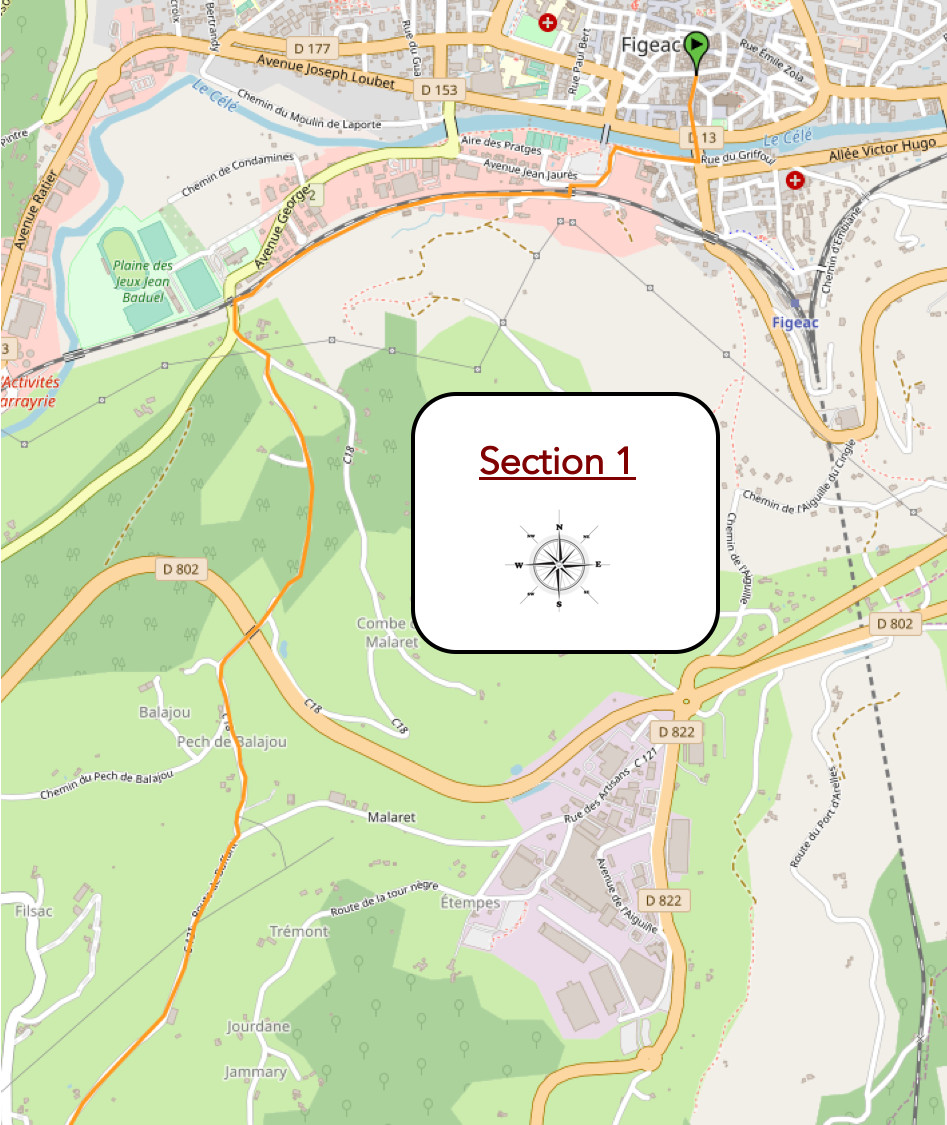
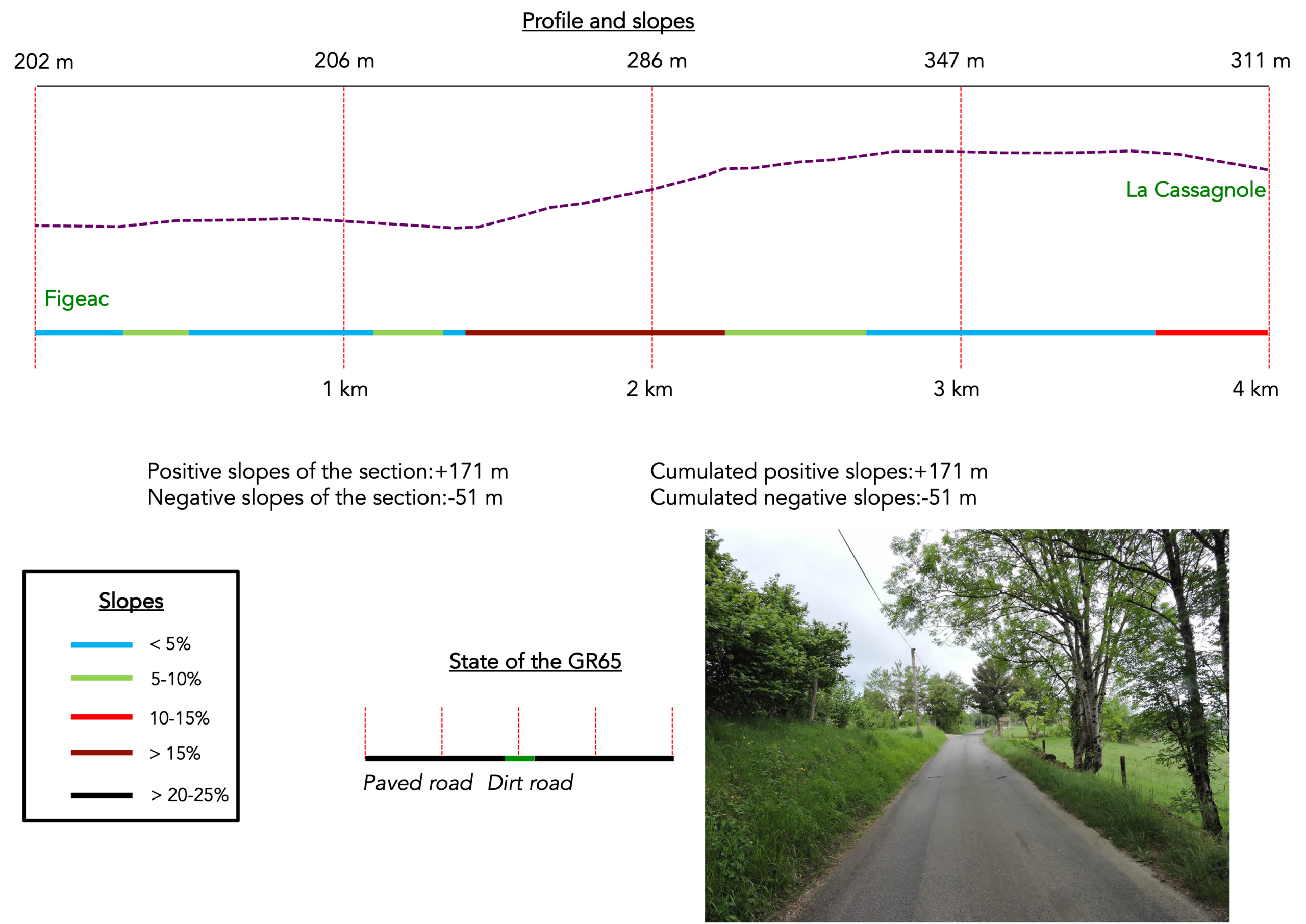
Overview of the route’s challenges : some demanding slopes.
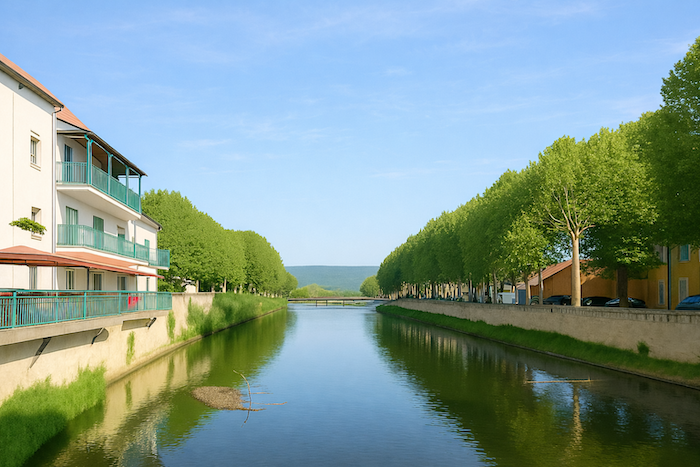
The Célé River, calm and blue, unrolls its quiet ribbon at the heart of the valley. It glides between the banks like a peaceful dream. The GR65, faithful companion of the river, follows its course for a while before leaving it, brushing past the bridge where the water seems to hold its breath.
|
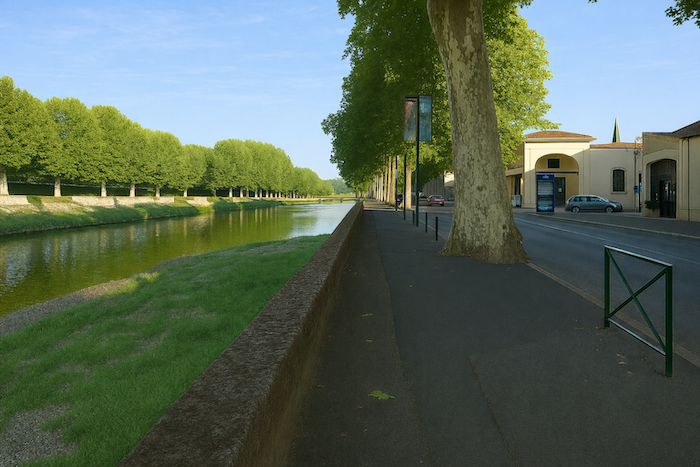
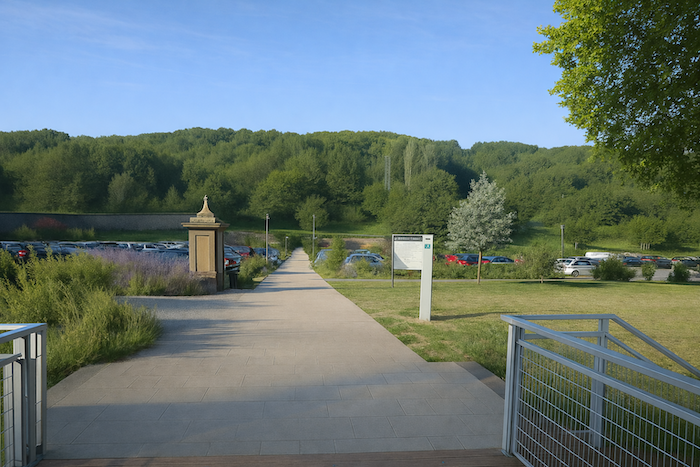
Soon the route crosses the river. On the opposite bank it stretches forward in quiet steps along an empty parking area still half asleep, a timid reminder of modern life in this almost suspended landscape. |
|
 |
 |
|
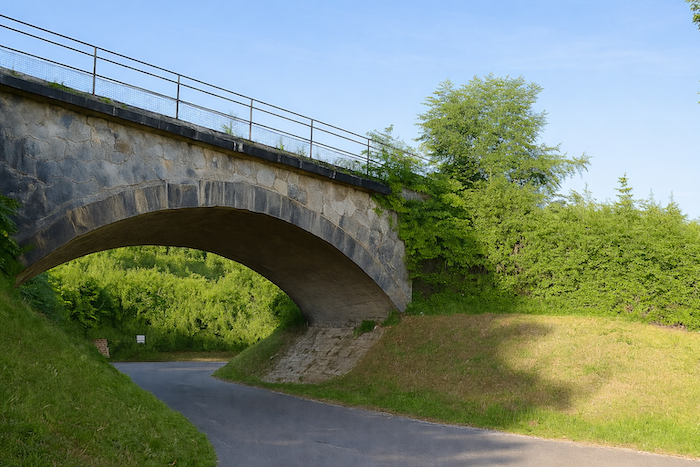
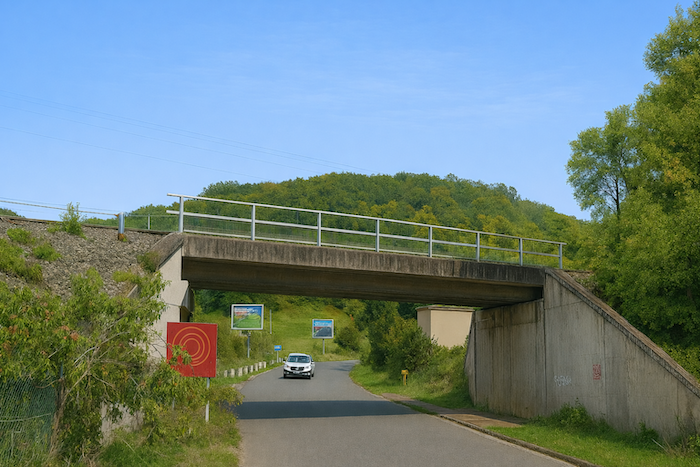
A small road slips beneath the railway line, disappearing for a moment into the shadow of the bridge before returning to the light. Flat and steady, it runs along the steel rails, guided by their dull shine, like a straight line toward an uncertain horizon. |
|
 |
 |
|
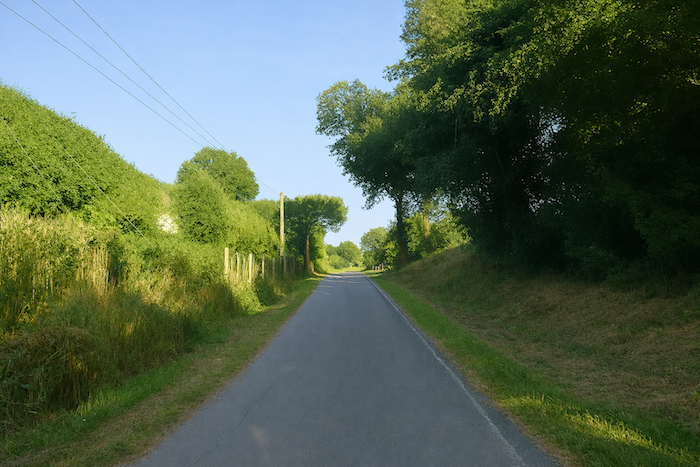
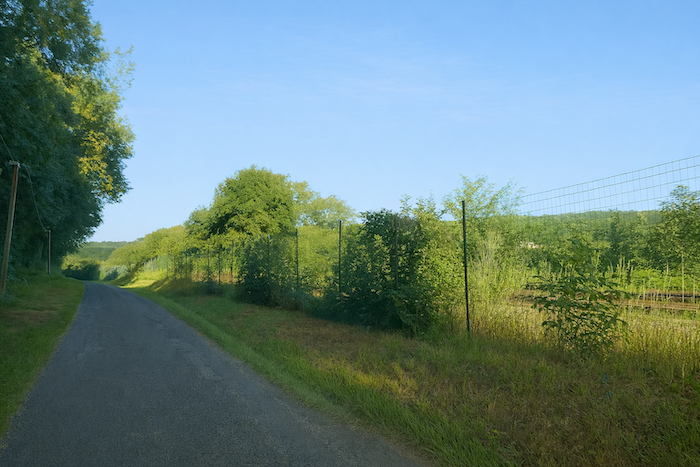
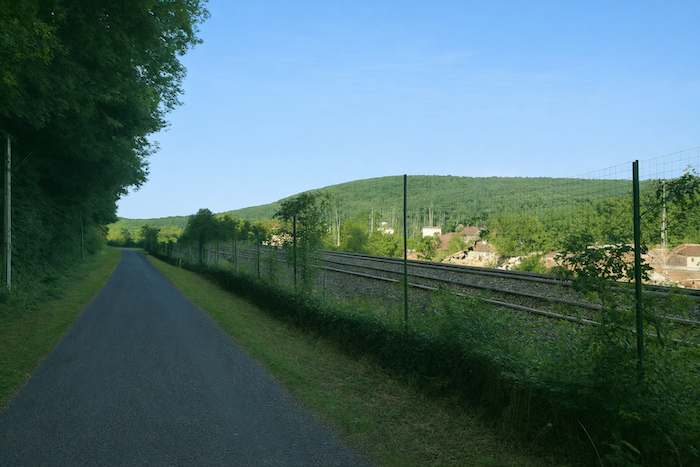
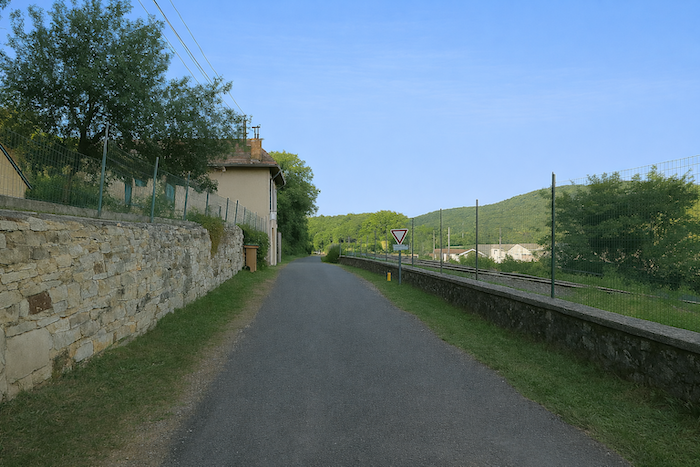
For a long time, the road follows the railway line, stubborn and patient, as if reluctant to move away from it. |
|
 |
 |
 |
 |
|
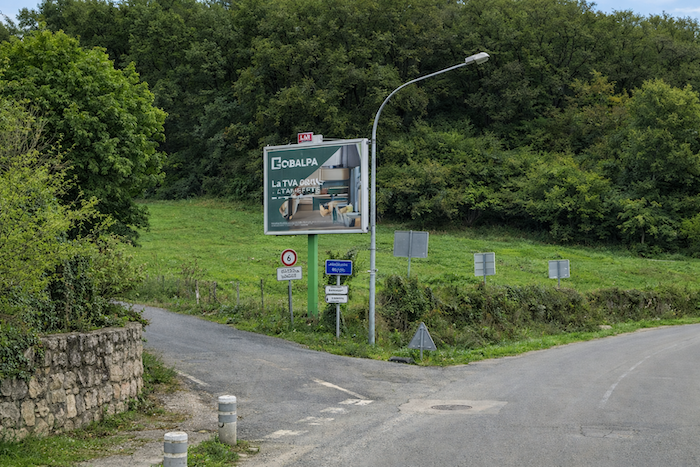
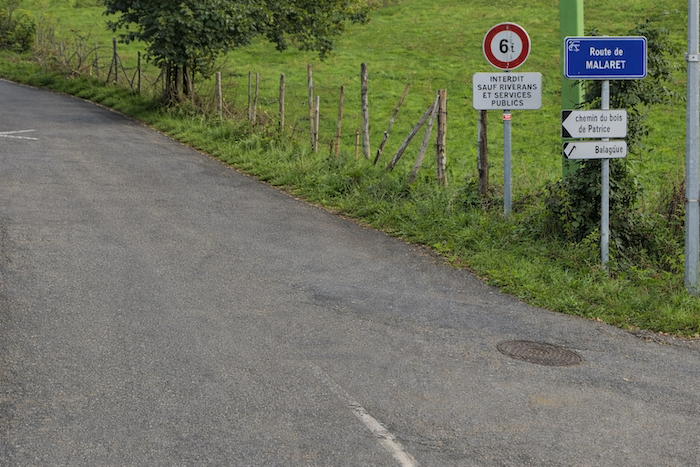
Then suddenly it turns left onto the Road of Malaret, leaving the company of iron for that of stone and wild grasses. |
|
 |
 |
|
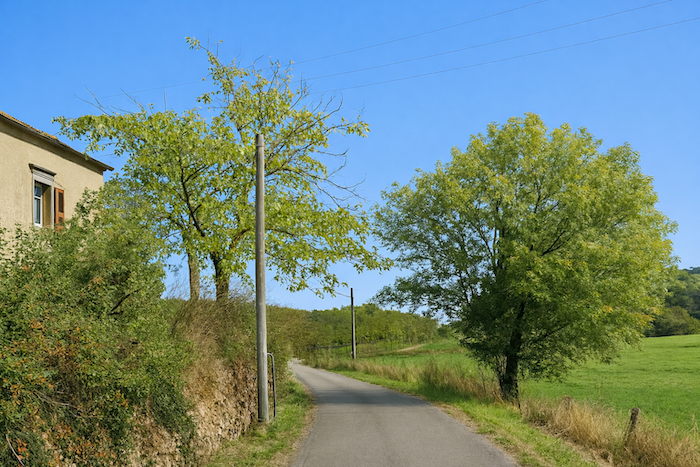
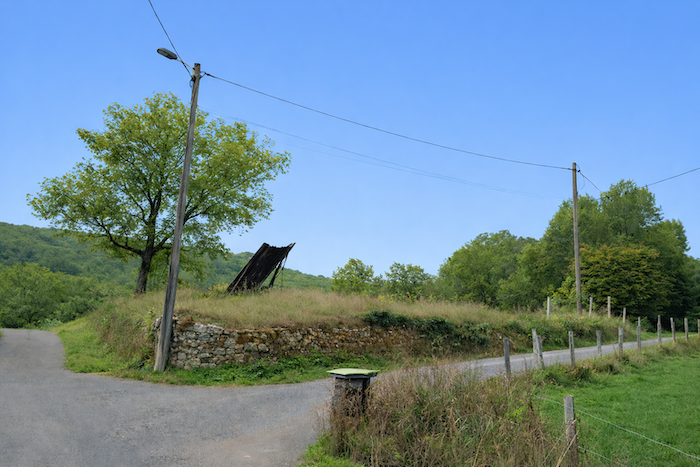
But the easy part is over, and the road suddenly rears up. Here comes the feared rise, a climb without compromise that puts the walker to the test. The slope must be faced head on, step by step up the “Combe de Malaret”, where the land rises sharply as if to test the determination of those who tread upon it. In the hollow of the combe the day slowly awakens. Mist loosens its threads over the meadows, the animals stir, and the bells of the cows ring like scattered notes in the fresh air of the morning. Everything breathes the promise of a new day. |
|
 |
 |
|
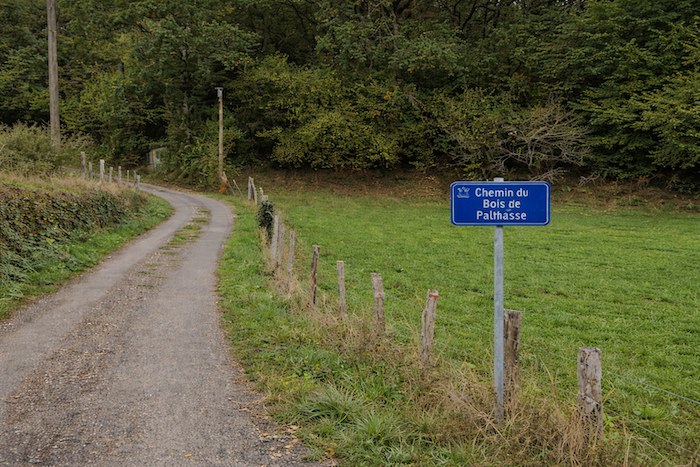
Soon the route leaves the Road of Malaret to its own destiny and turns right onto the “Path of the Bois de Pailhasse”. |
|
 |
 |
|
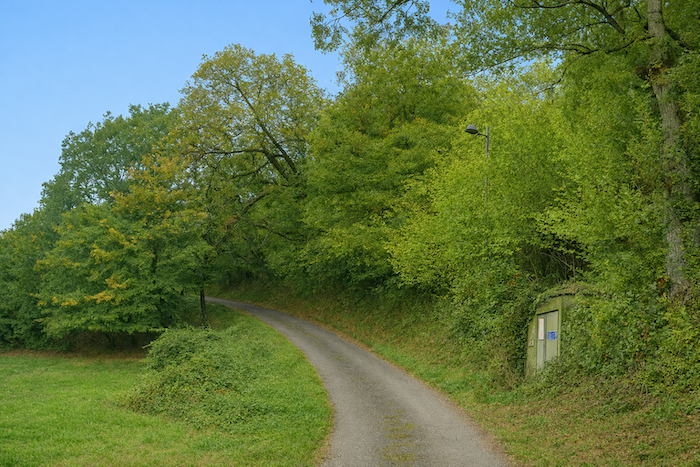
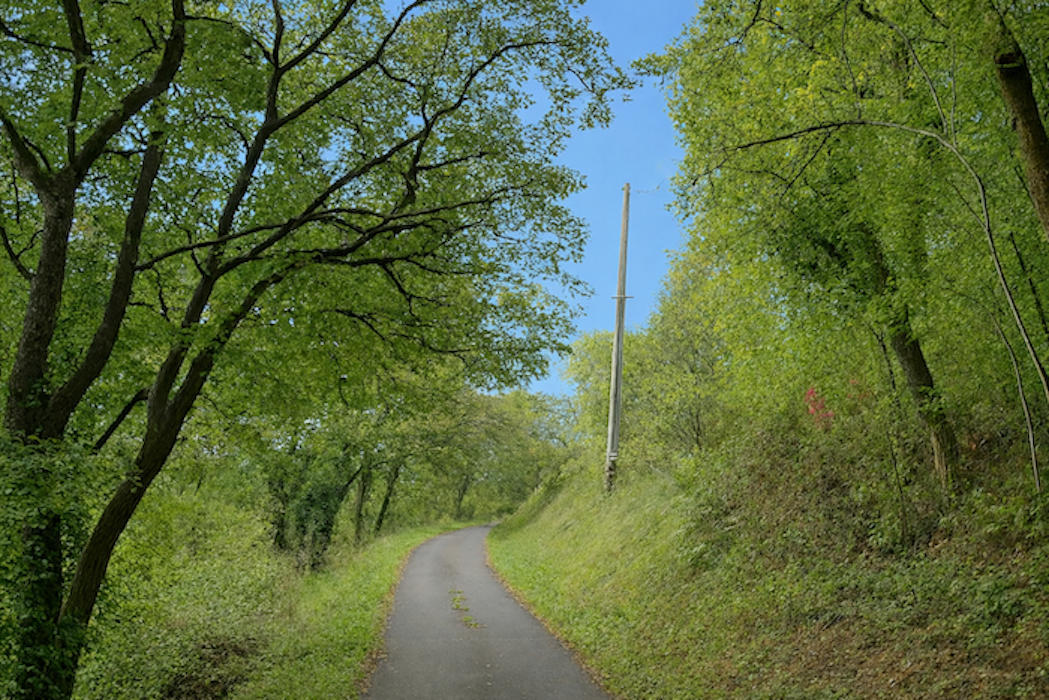
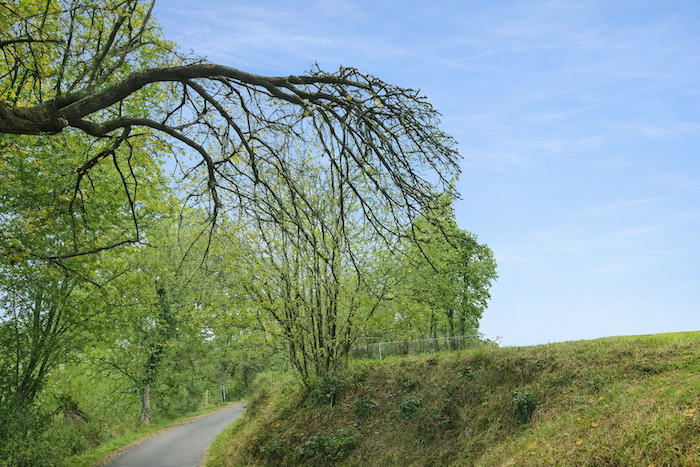
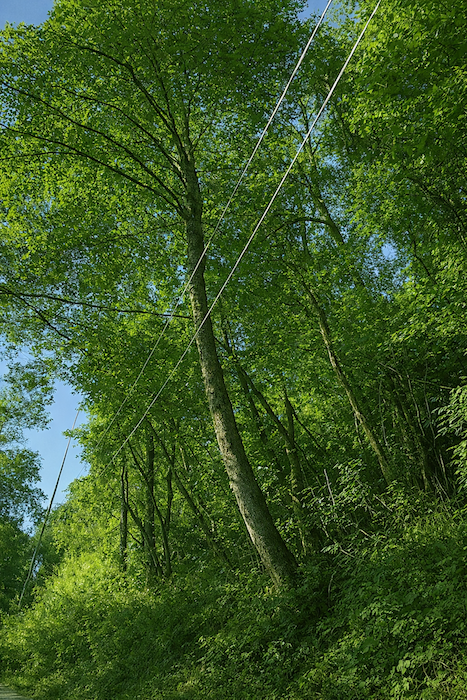
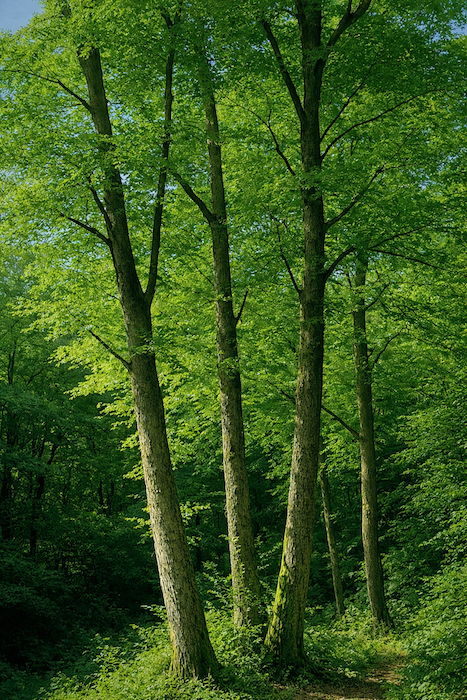
The GR65 begins its demanding ascent on an eroded road surface, half devoured by time. Numerous oaks raise their powerful silhouettes, guardians of these stony causses. Among them a few maples and tall hornbeams break the monotony of the foliage, lifting their crowns above the tangled undergrowth. |
|
 |
 |
 |
 |
|
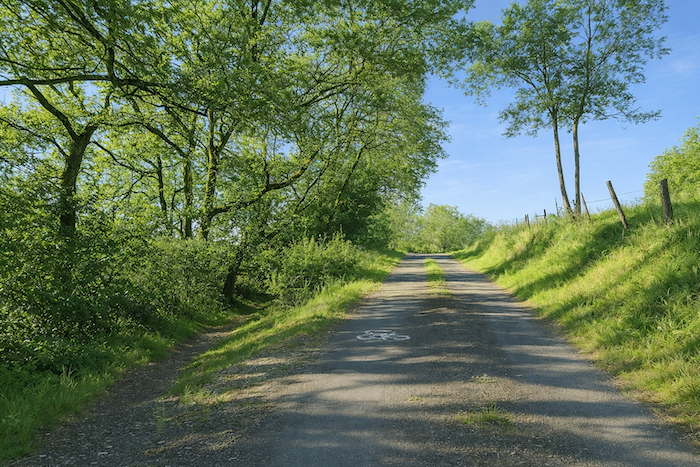
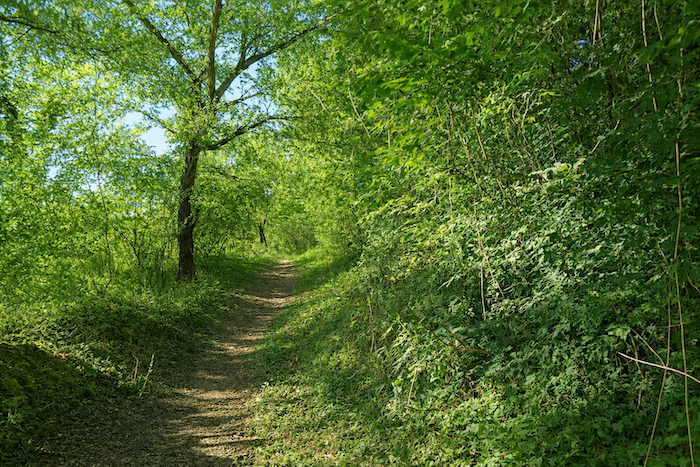
Higher up, the GR65 leaves the asphalt and enters a woodland. The path, almost flat at first, deceives the walker with an illusion of rest. Soon the slope returns, relentless, reaching 20% and reminding the walker that every reward must be earned. |
|
 |
 |
|
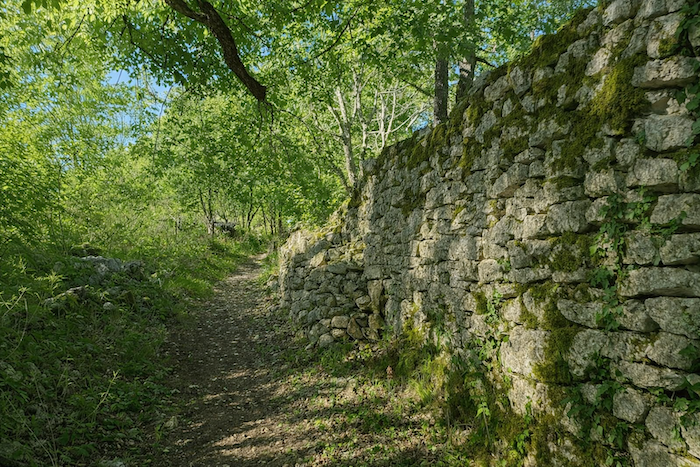
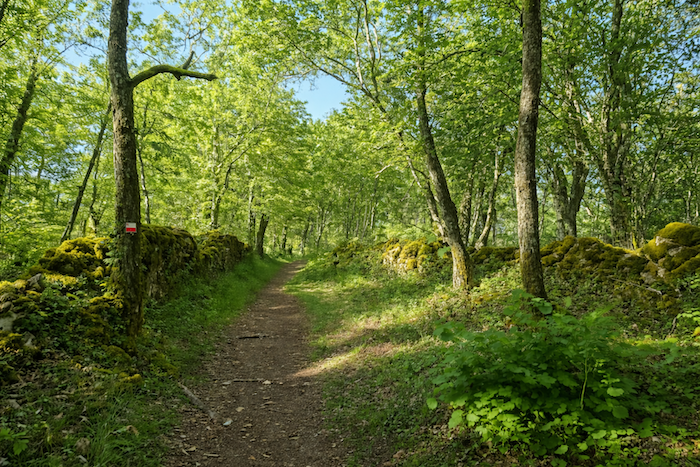
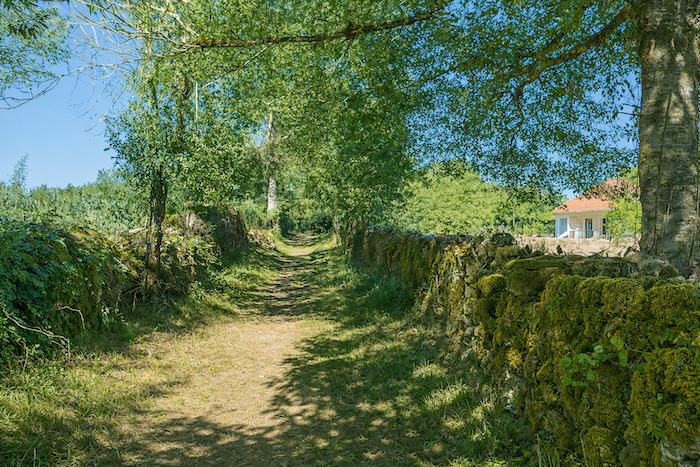
Beneath the trees the path becomes stony, faithful to the harsh nature of the causse. Stone walls line the way, crowned with moss and lichen, silent witnesses of past centuries. They frame the path like green and damp guardians of a mineral kingdom. |
|
 |
 |
|
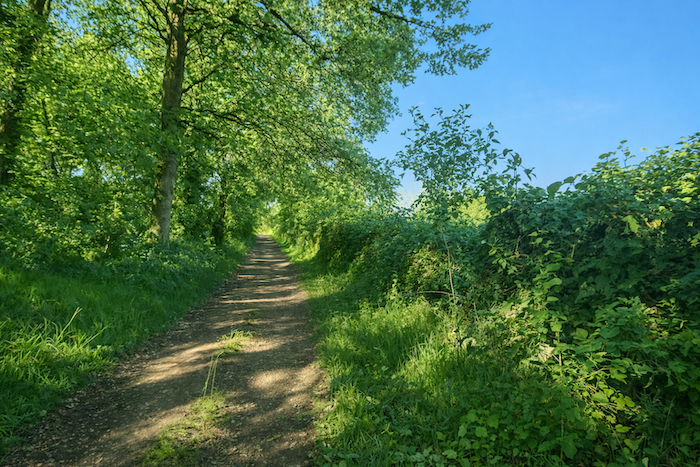
One more effort and the woodland suddenly opens. |
|
 |
 |
|
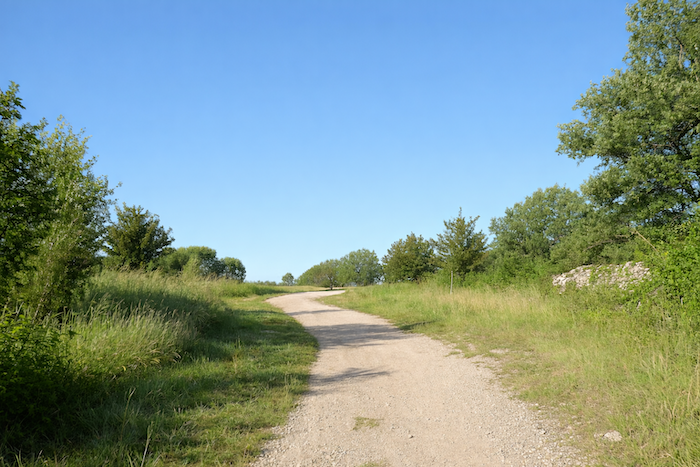
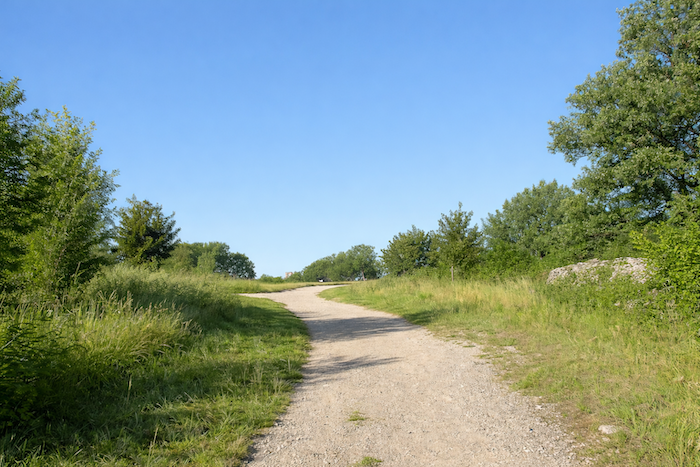
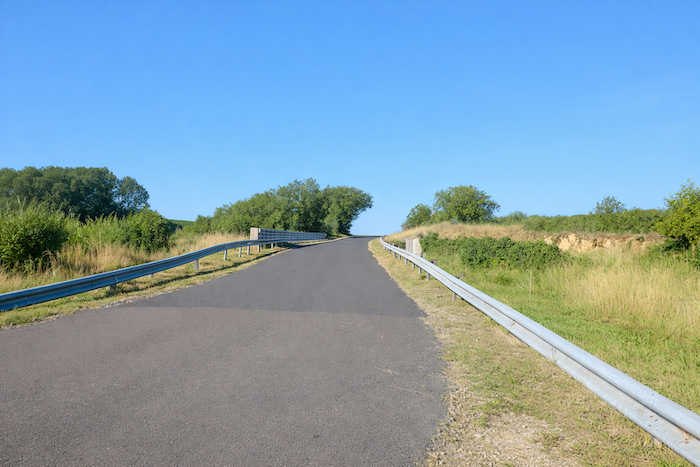
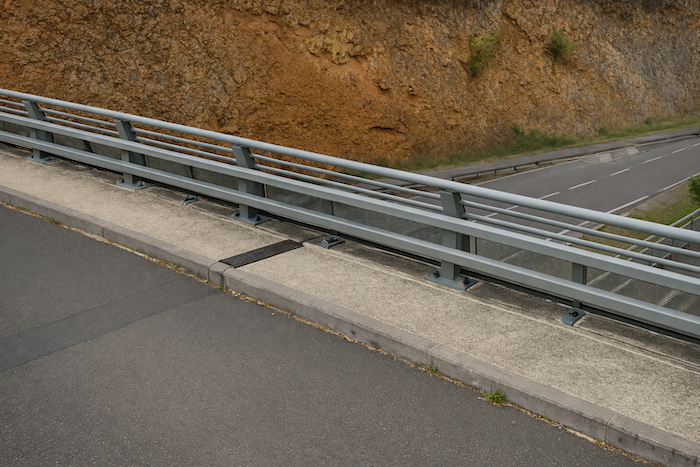
The walker emerges into the light, reaching a small road that overlooks the main departmental road D802. The view widens and the air circulates freely again. |
|
 |
 |
|
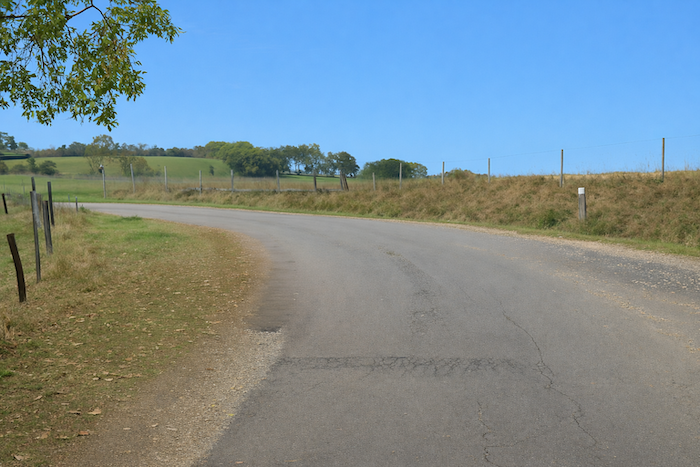
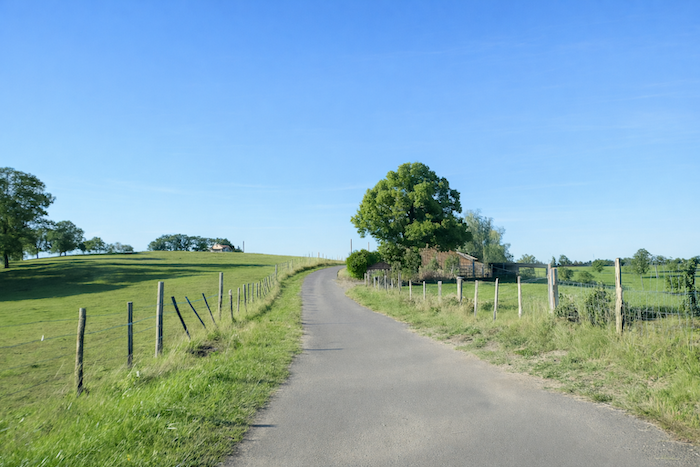
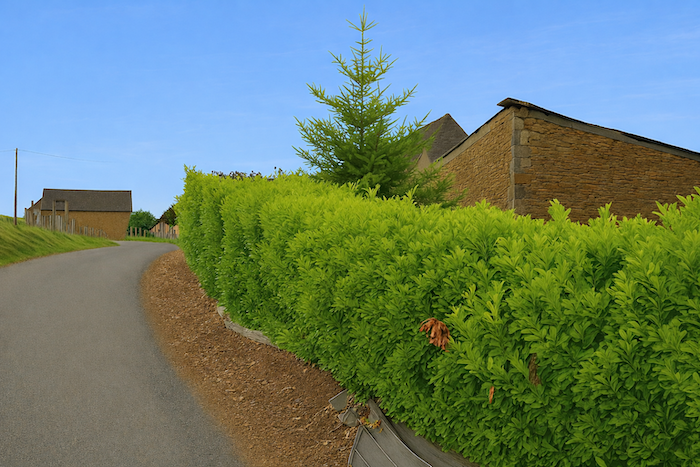
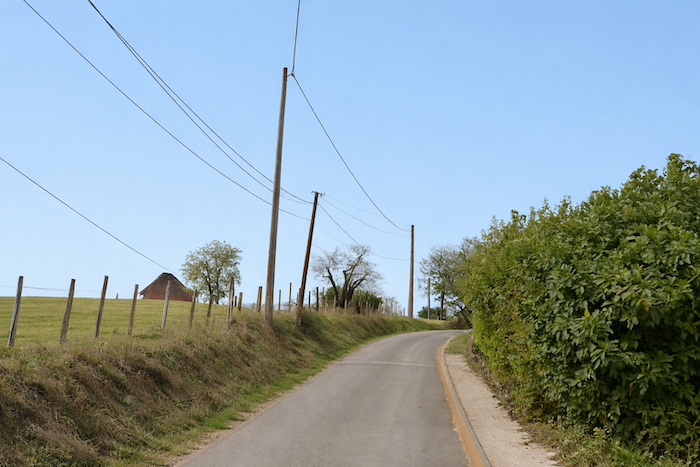
The road still climbs, but the slope softens and the steps grow lighter. The road winds peacefully toward Balajou. . |
|
 |
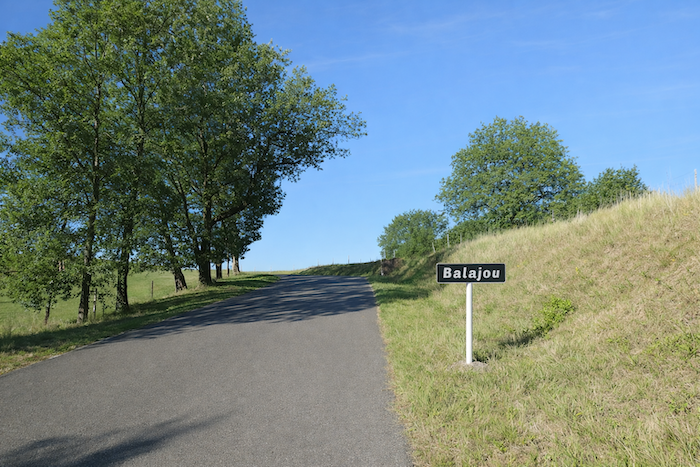 |
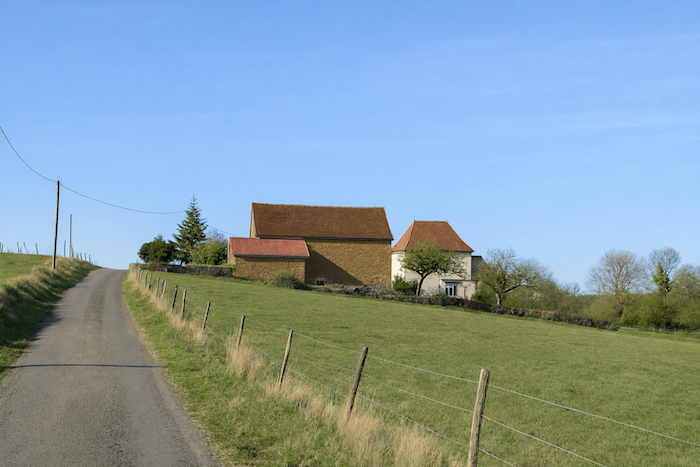
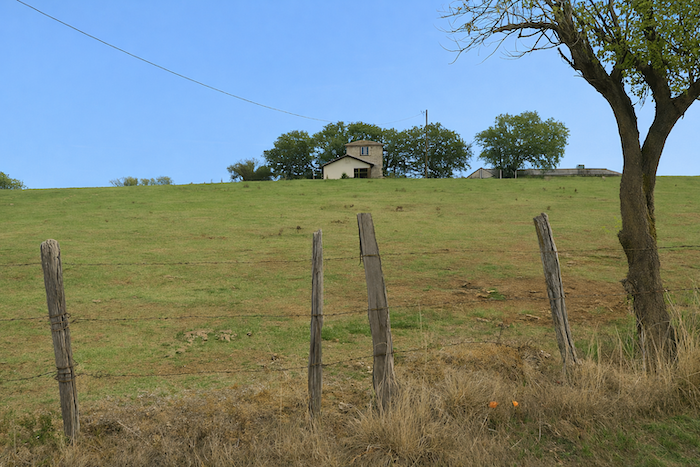
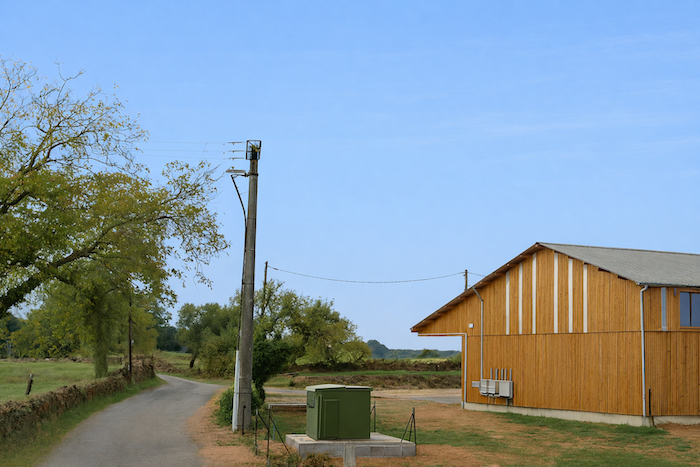
| Balajou is not really a hamlet, only a few scattered farms lost in the wide fields. | |
 |
 |
 |
 |
|
Here and there a solitary oak or ash tree stands like a silent sentinel of the landscape. The silence here is not empty, it breathes the slow life of the countryside. |
|
 |
 |
|
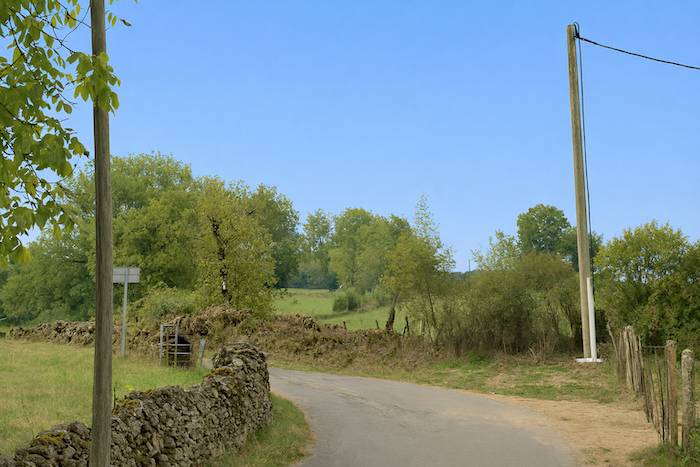
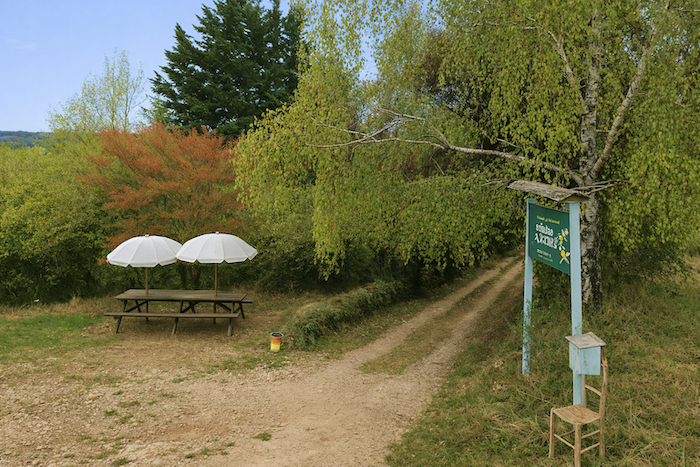
Higher up, the GR65 joins the small road that leaves Malaret and heads toward Faycelles. |
|
 |
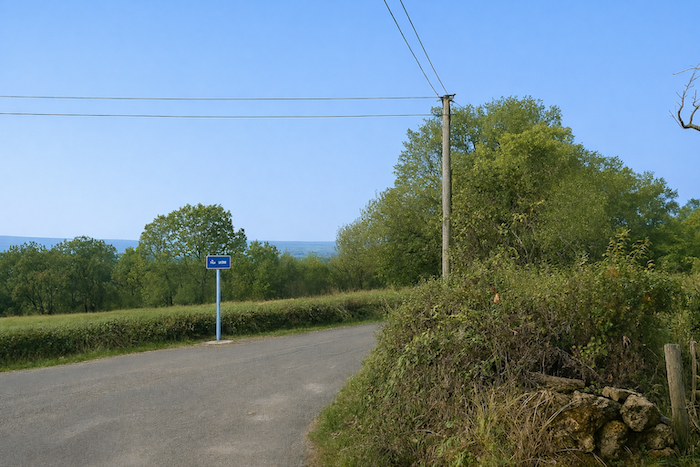 |
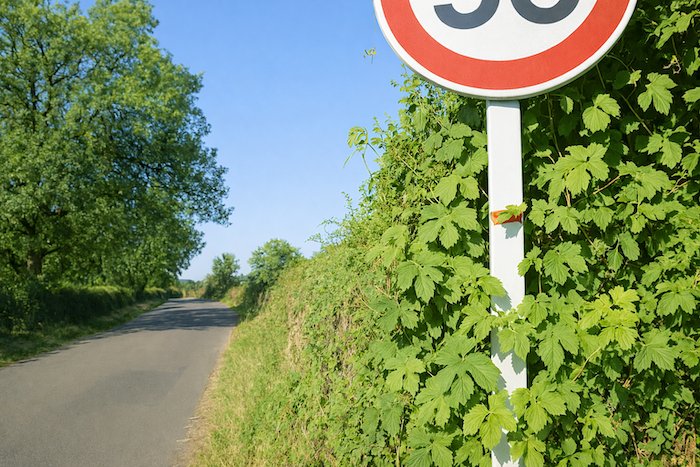
Under the oaks and along thick hedges the old line of the GR meets the new variant again. The two routes greet each other and merge before continuing together.
|
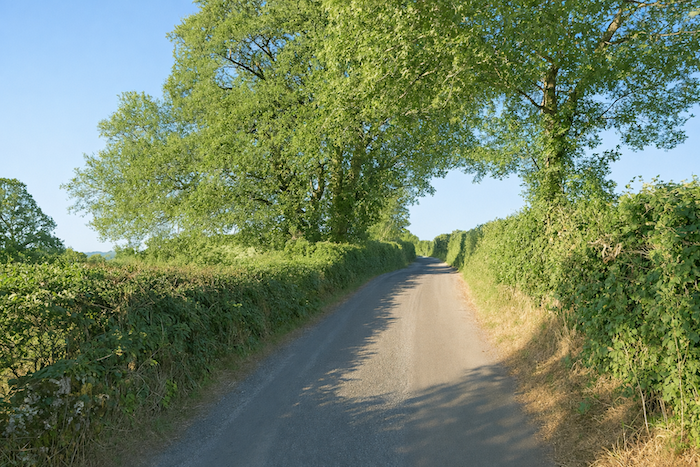
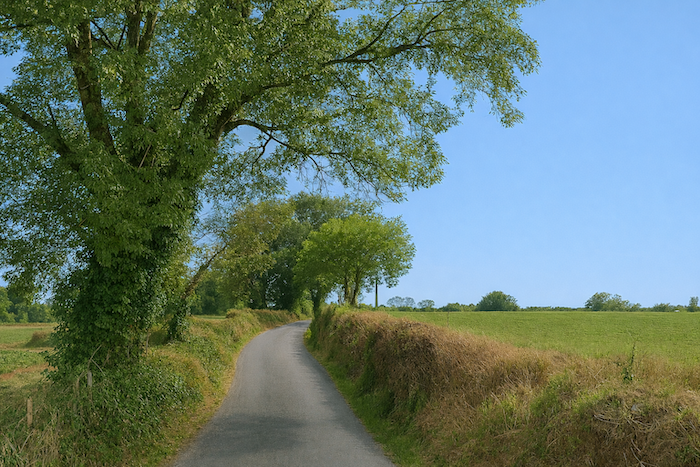
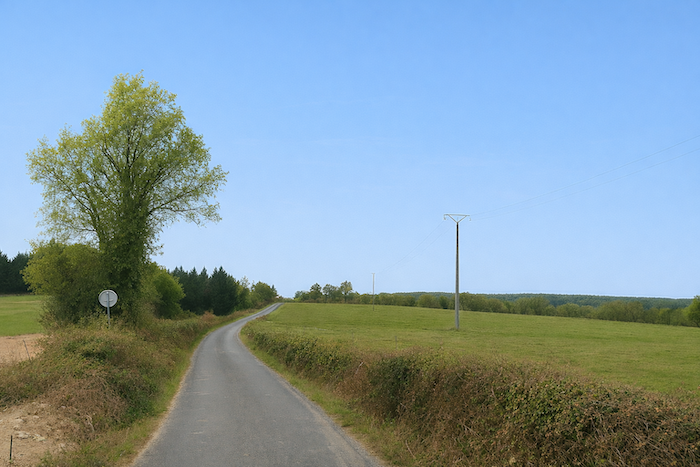
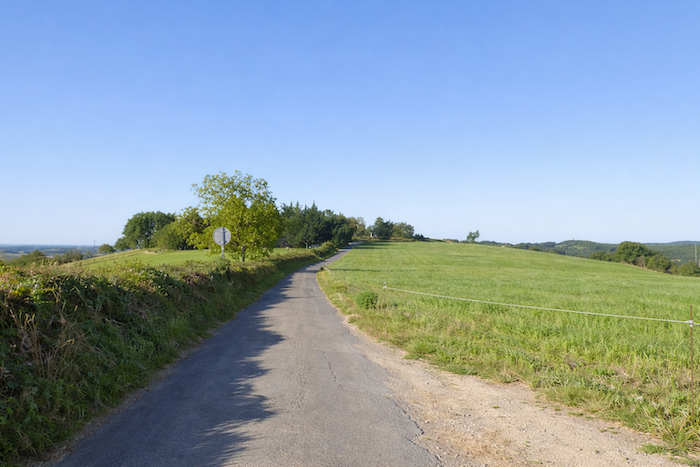
After the climb the body asks for a pause. The walker catches his breath while the road undulates gently through the meadows, dotted with a few groves, as if rocking the fatigue away. These are above all pastures, and cultivated fields are rare. |
|
 |
 |
|
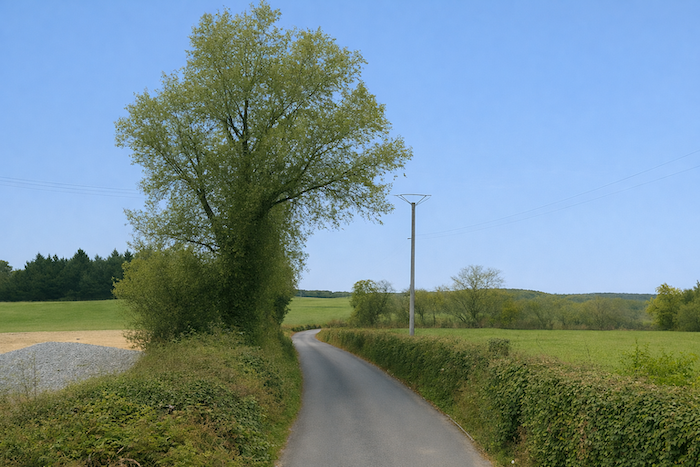
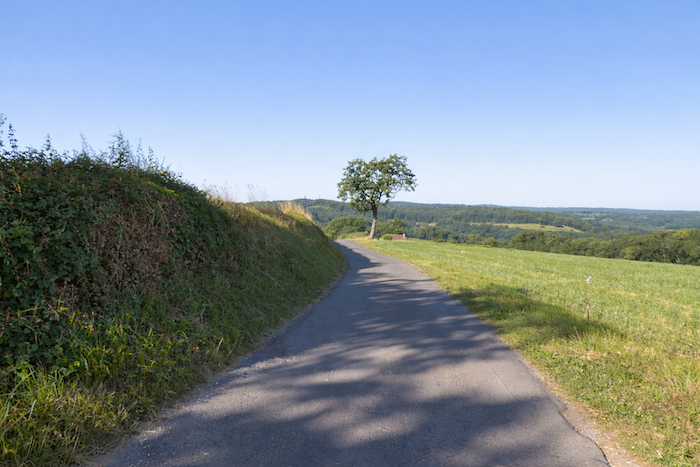
It is not a busy road. It slopes up slowly and gently for a long time toward the summit of the hill. It is a suspended moment, a quiet balance before the descent. |
|
 |
 |
 |
 |
|
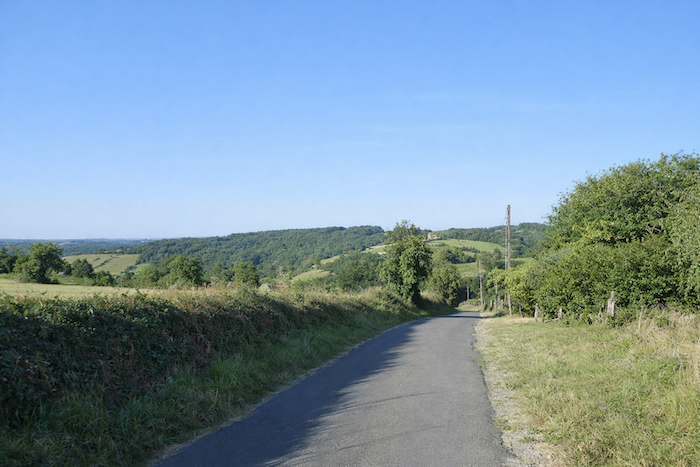
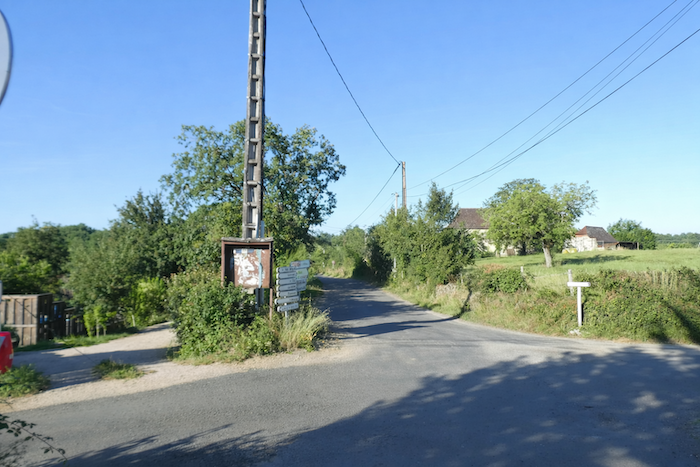
Then the slope becomes steeper on the way down. The road plunges toward the crossroads of La Cassagnole, where life quietly murmurs. Already you sense the presence of the villages ahead and the promise of rest. |
|
 |
 |
Section 2: Toward the small jewel of the village of Faycelles
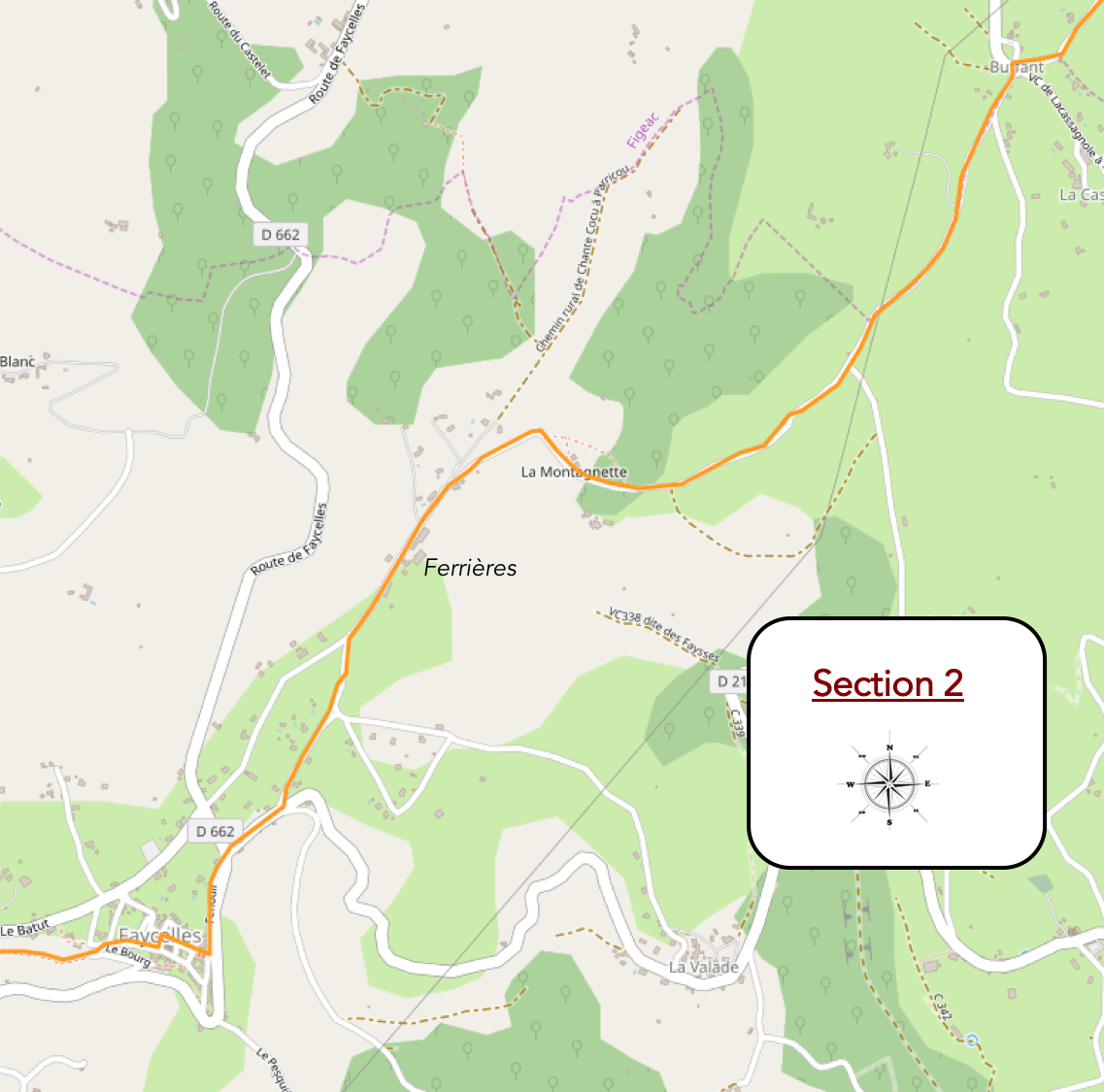
Overview of the route’s challenges : a course without major difficulty, on road surfaces.
|
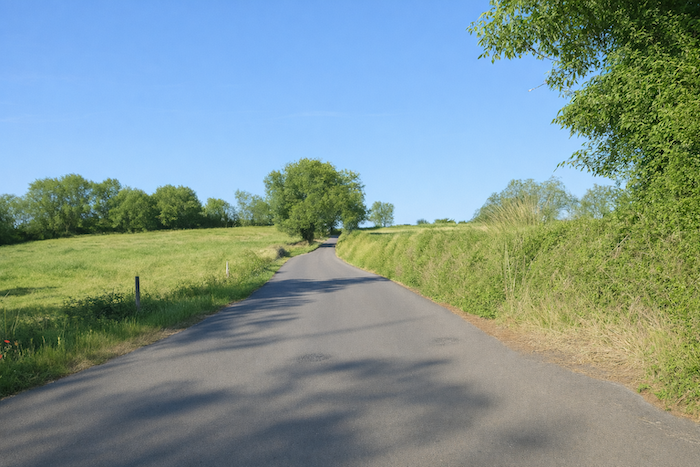
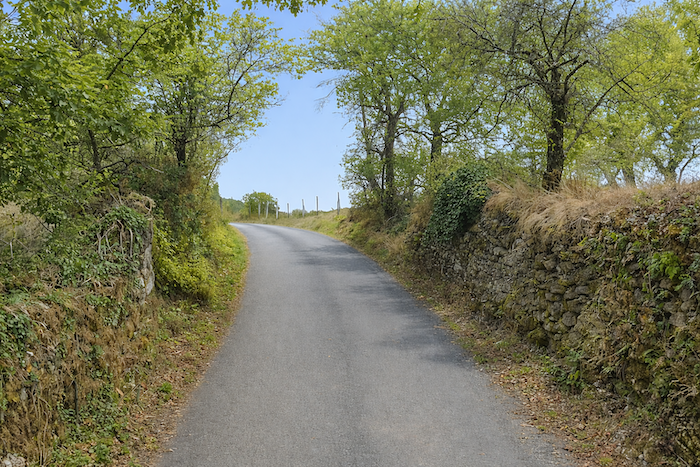
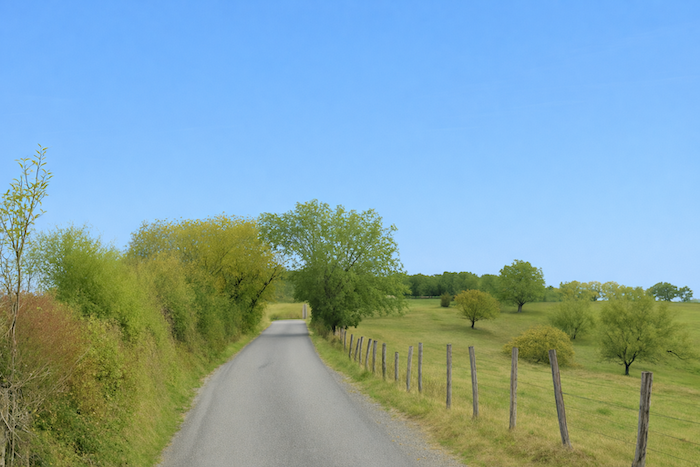
At the fork of La Cassagnole, the road climbs toward a peaceful and deeply rural landscape. Everything here breathes the gentle calm of the uplands. |
|
 |
 |
 |
|
|
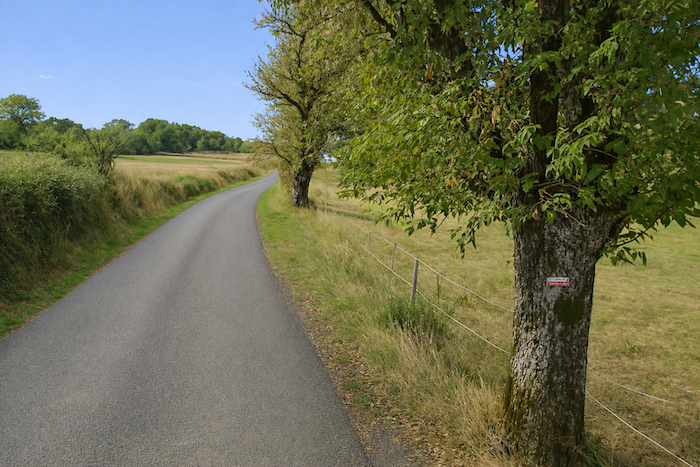
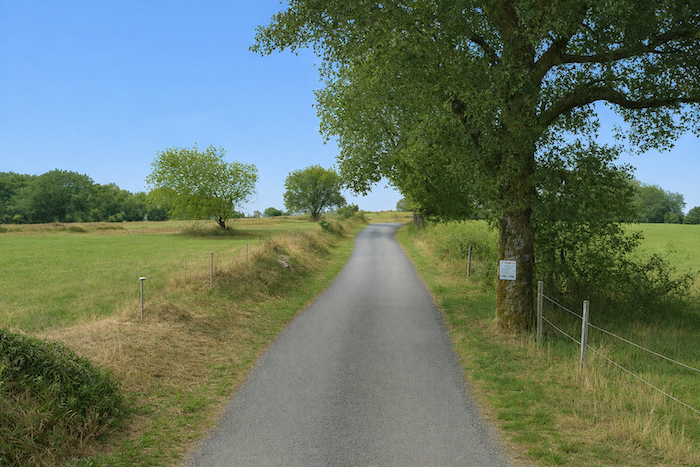
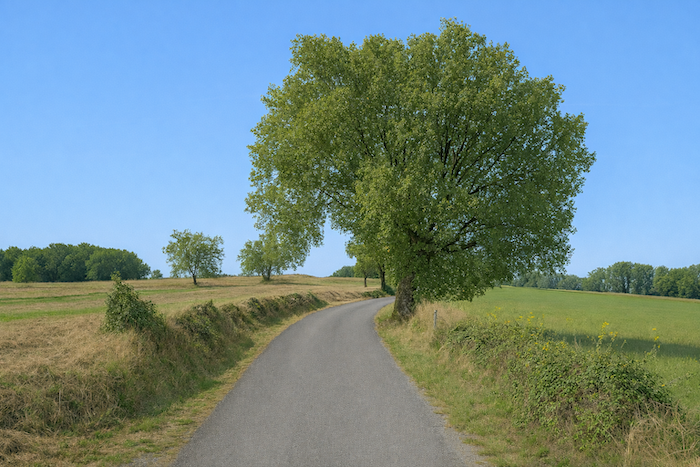
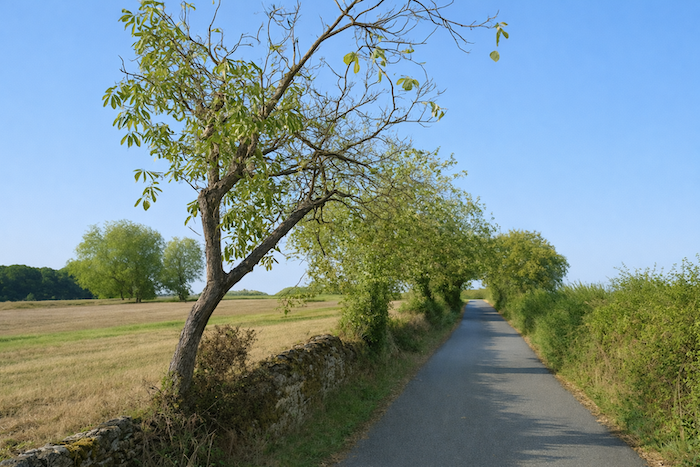
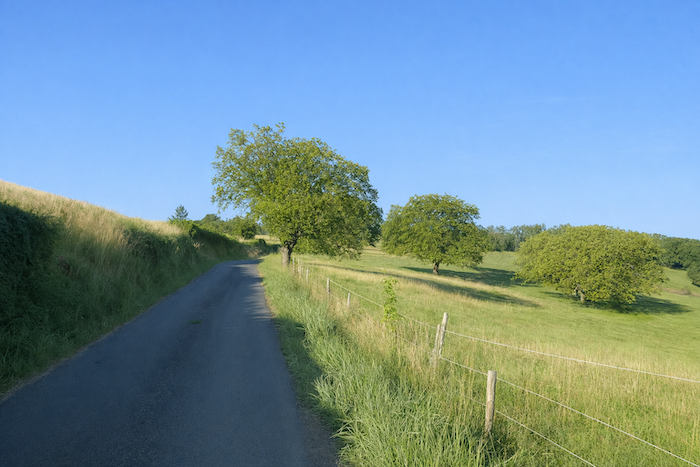
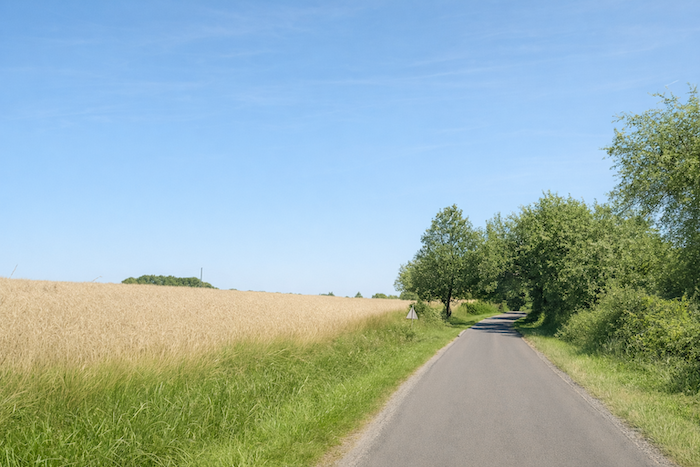
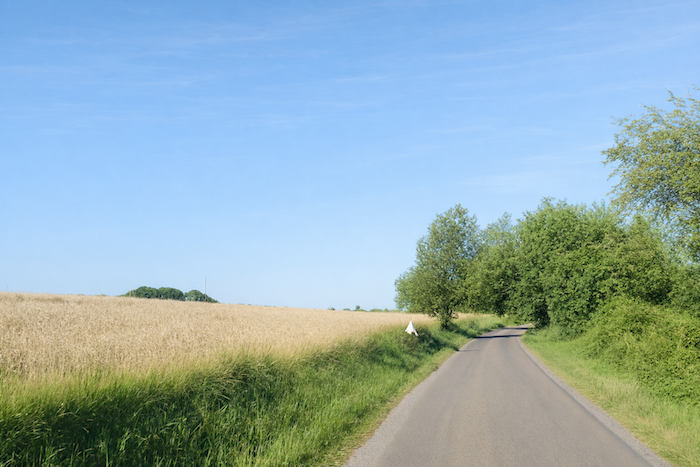
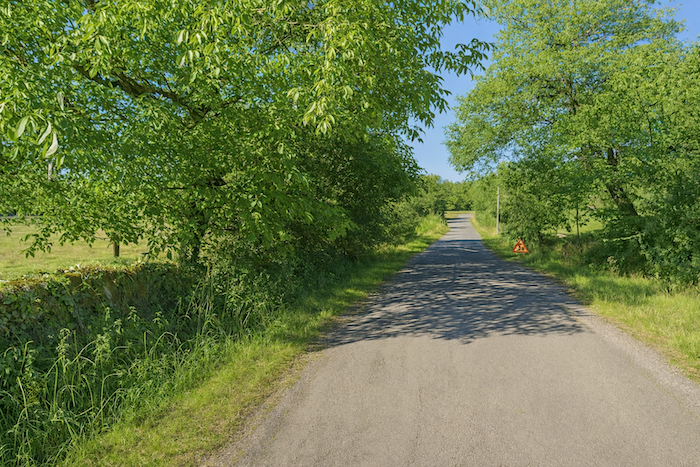
It is a kind of high plateau where meadows of tender green stretch wide, sometimes interrupted by the solitary silhouette of an ash tree or, more often, by the generous presence of a great oak spreading its shade. Walking finds its rhythm along this strip of asphalt that seems to extend endlessly. Sometimes, far on the horizon, you can see tiny silhouettes of pilgrims, moving like small beads along the thread of the route, walking in silence or in small groups. The road climbs with a gentle slope, winding toward the top of a hill and wandering between the meadows, indifferent to time. Only a few vehicles pass, eager to reach Figeac, because this road is the vital link between Faycelles and Figeac. |
|
 |
 |
 |
 |
|
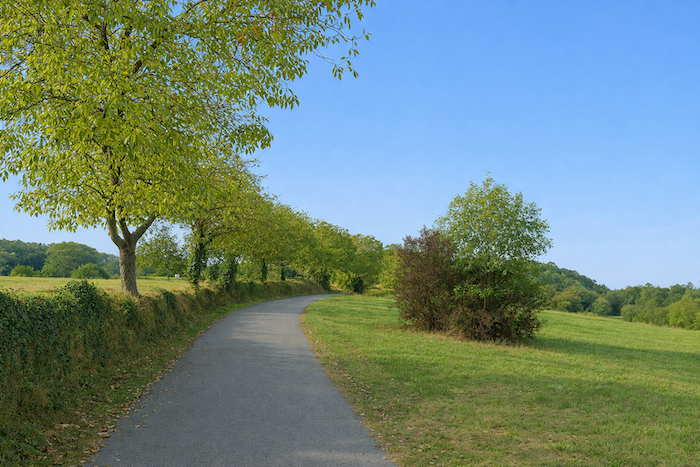
You are not yet truly walking on the causse. You are moving along its margins and foothills; a land of rolling hills covered with wide pastures and scattered groves. Here a few cultivated fields cling to the soil, there an isolated house keeps watch over the horizon. It is a landscape of balance, both tamed and wild, where every tree seems to have chosen its place. |
|
 |
 |
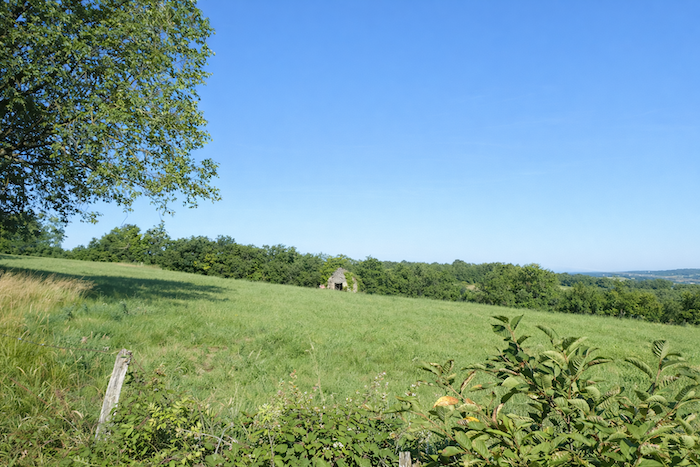
The road drifts slowly through the countryside. At the edge of a field, an old stone “caselle” shelters in the fold of a small wood. It leans slightly, weary, yet still resists, a stubborn witness to the time of the shepherds.
|
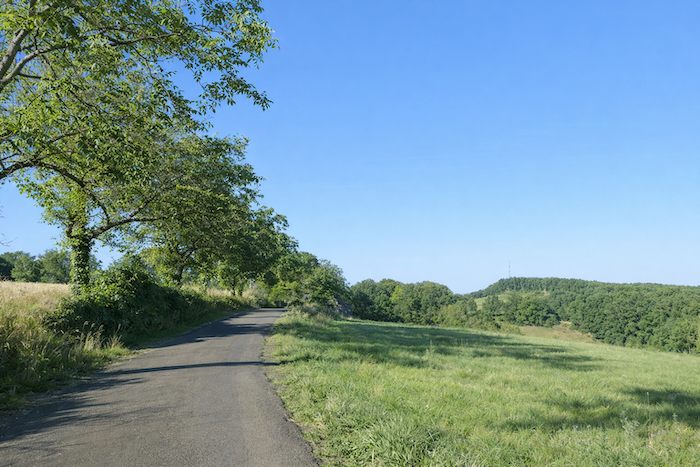
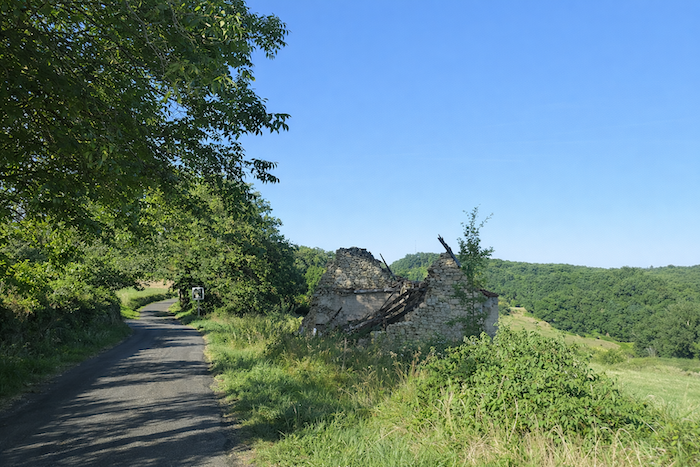
Then the slope eases and the road descends slightly. A little farther on, a ruined stone house stands, its charred beams twisted like blackened fingers. The wind whistles through the cracked stones, a reminder of a life that once was, of a fire too old to remember. “Private” announces a shaky sign. The word feels almost ironic. What is there to protect here except rubble, memories and a little dust? One can hardly imagine that someone might still picnic here, or take a few stones away just to carry off a fragment of memory. |
|
 |
 |
|
It is the beginning of summer. In the fields, soft wheat is still green, mixed with triticale and oats. Yet the winter wheat has already been harvested, and the mown meadows rest under the sun. The air smells of warmth and dry grass, and the ground cracks beneath the steps. |
|
 |
 |
|
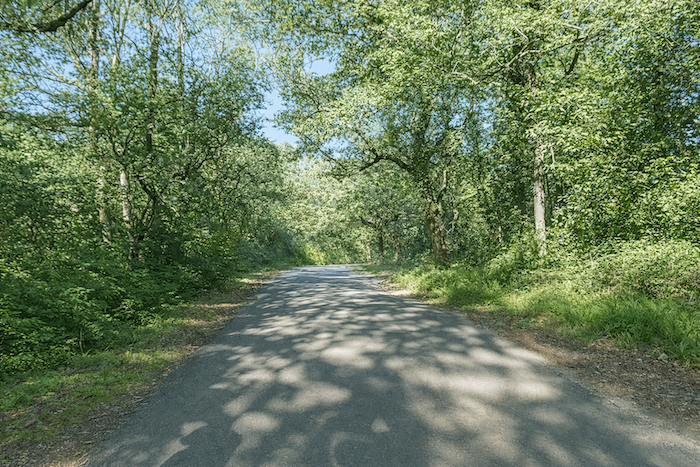
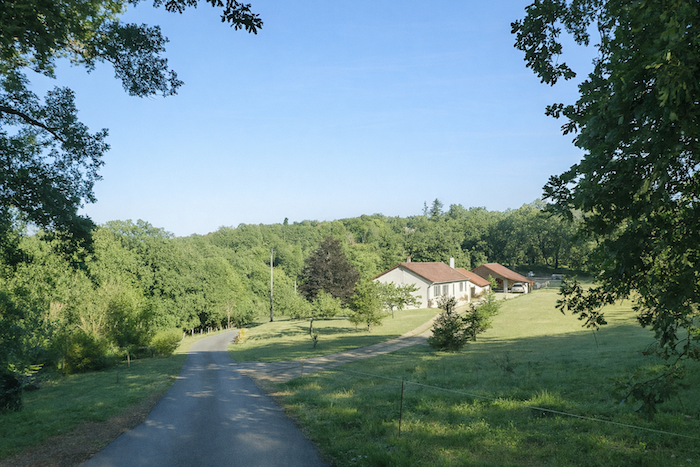
The slope deepens again and the road enters beneath the cool vault of the oaks. At the place called La Montagnette, a large park stretches peacefully, a refuge of greenery and silence where the shade invites a pause. |
|
 |
 |
|
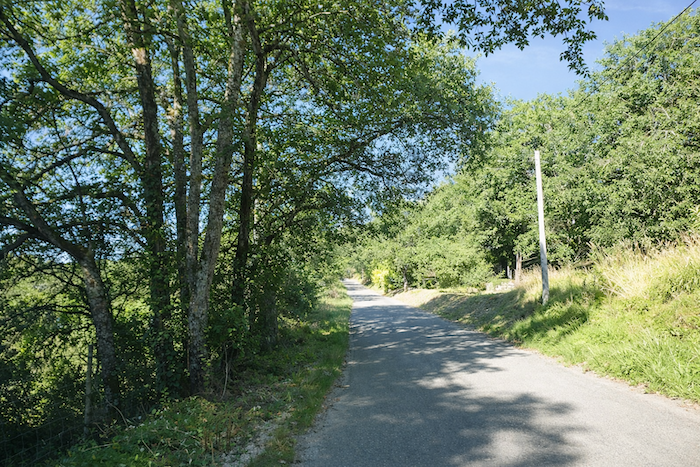
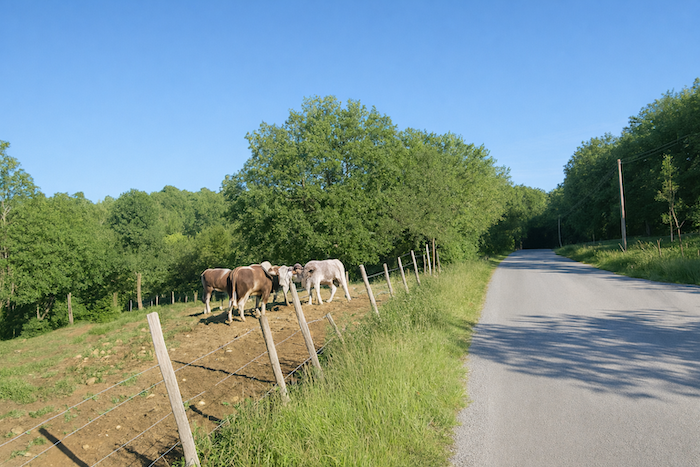
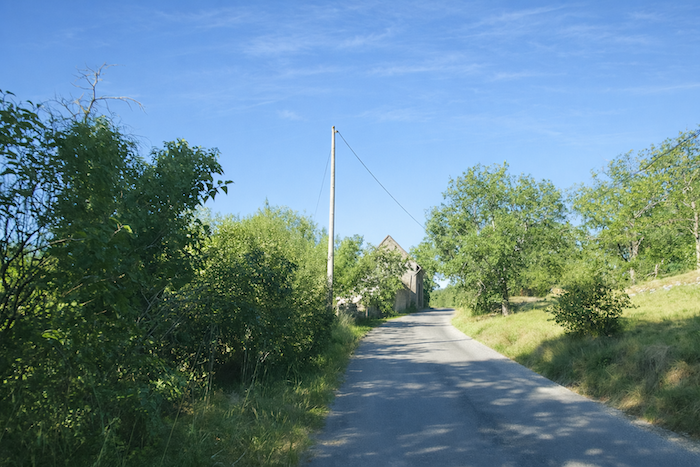
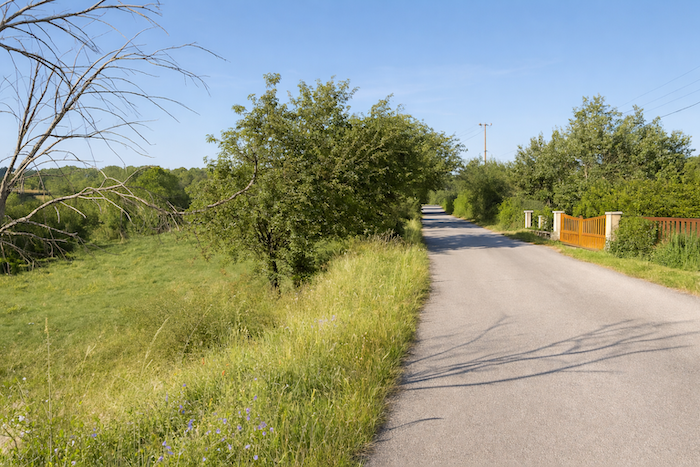
Then, the road resumes its wandering course. It moves between the meadows and plays gently with the hollow of the valley. |
|
 |
 |
 |
 |
|
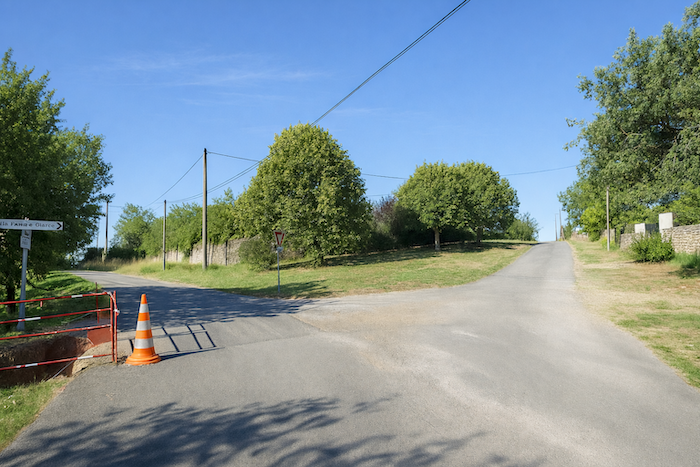
Eventually it reaches the first houses of Ferrières. |
|
 |
 |
|
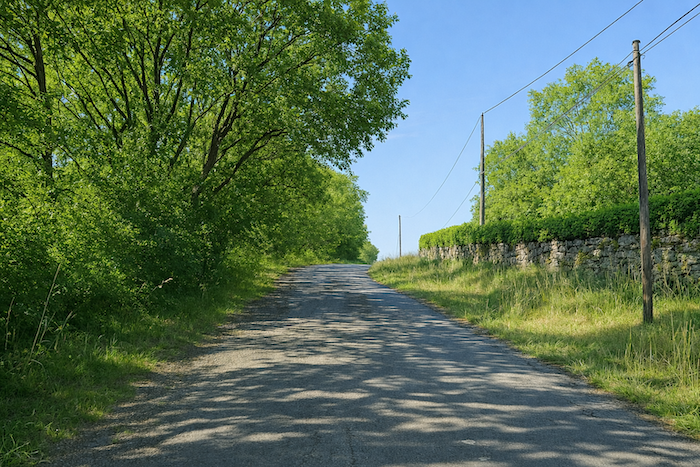
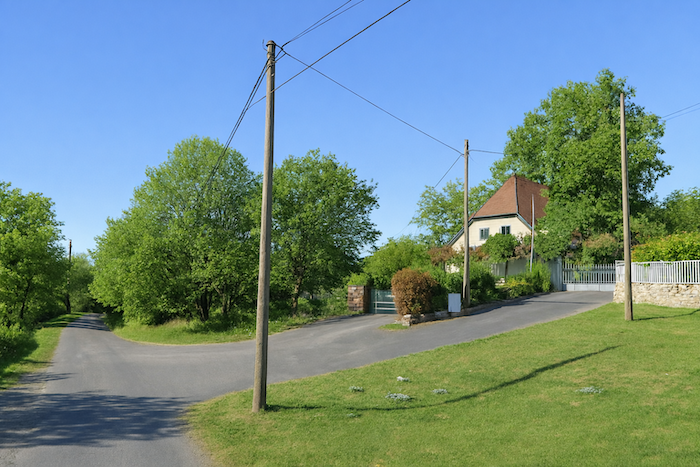
Ferrières is not a compact village but rather a necklace of houses scattered beneath the oaks, ashes and walnut trees. In places a few pines rise toward the sky, their resinous scent mingling with that of the earth. Each house seems partly hidden, as if guarding a secret. |
|
 |
 |
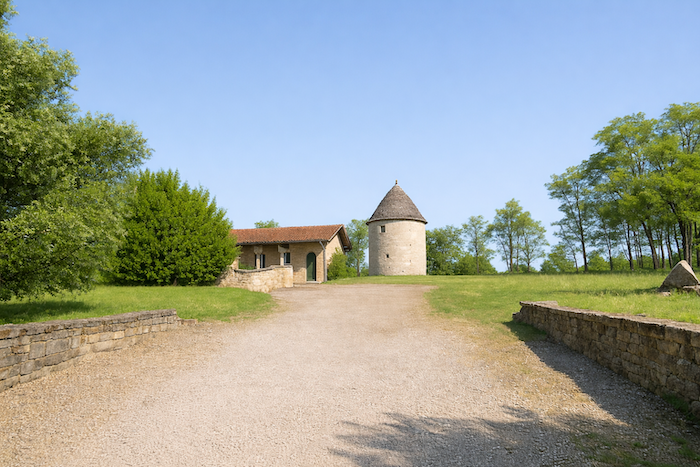
The “caselles”, those humble dry-stone shelters once used by shepherds, still punctuate the landscape. Some have been restored. Small and round, they now resemble dovecotes. These white stone structures add a note of rural elegance, like a discreet nod to history.
|
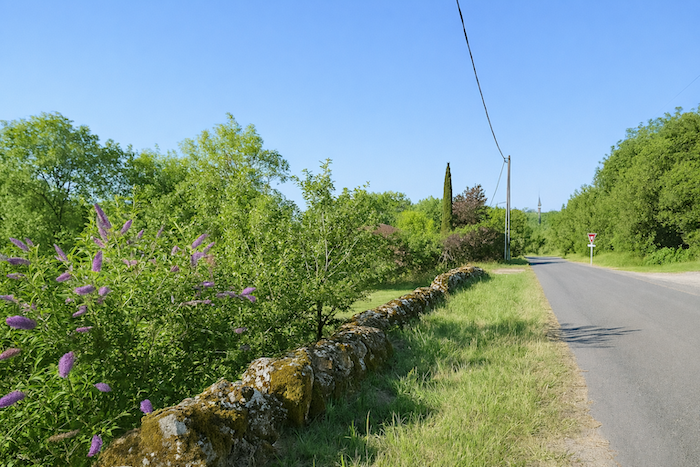
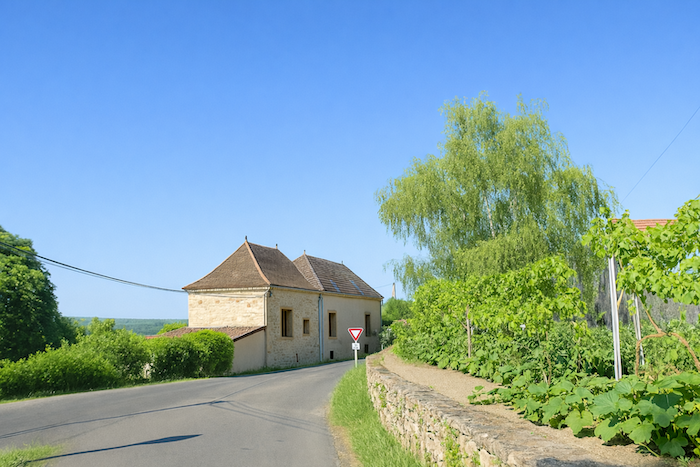
The road gently leaves Ferrières and slopes up toward La Croix Blanche, a neighbouring hamlet that is almost a twin of Faycelles. |
|
 |
 |
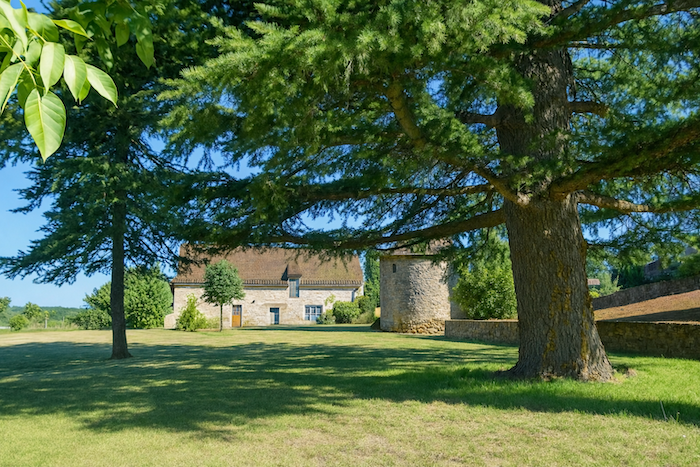
Under the trees a beautiful stone house appears half hidden. Beside it a shining “caselle”, carefully restored, awaits the hikerr. Here you can sleep, rest and perhaps even dream for a while.
|
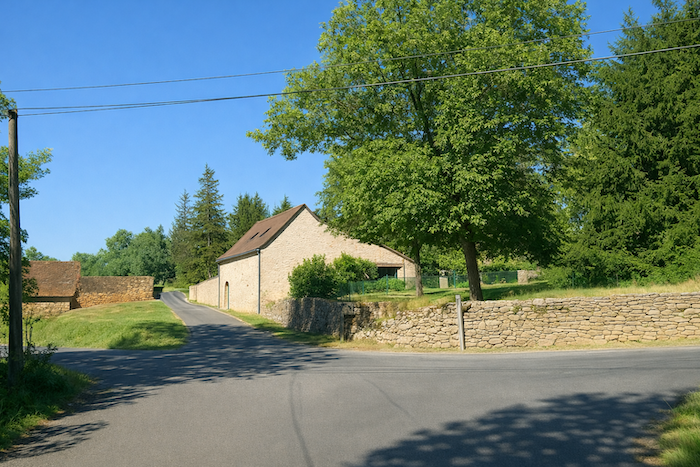
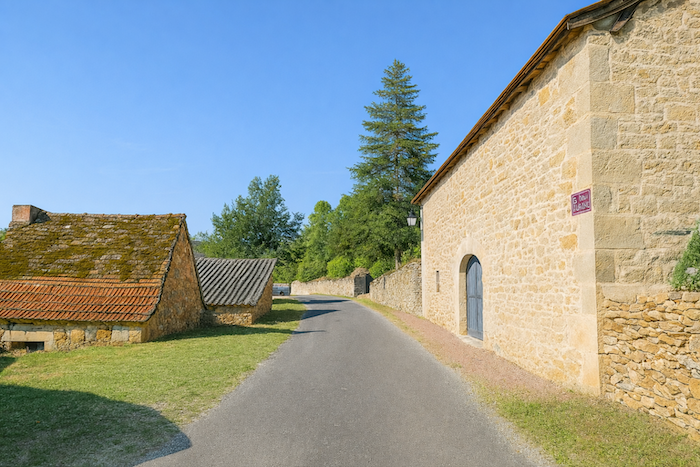
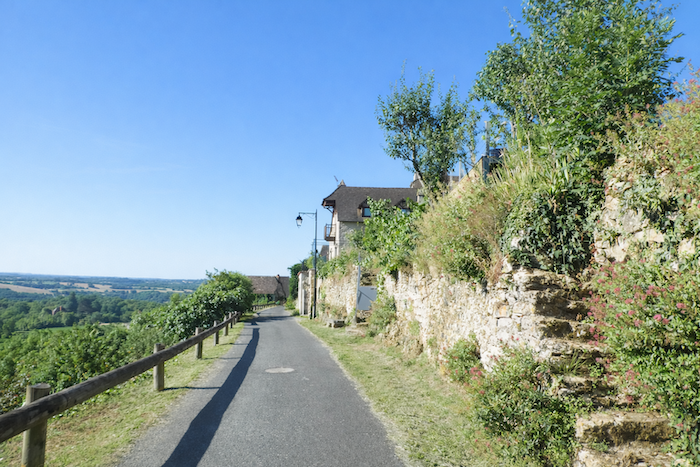
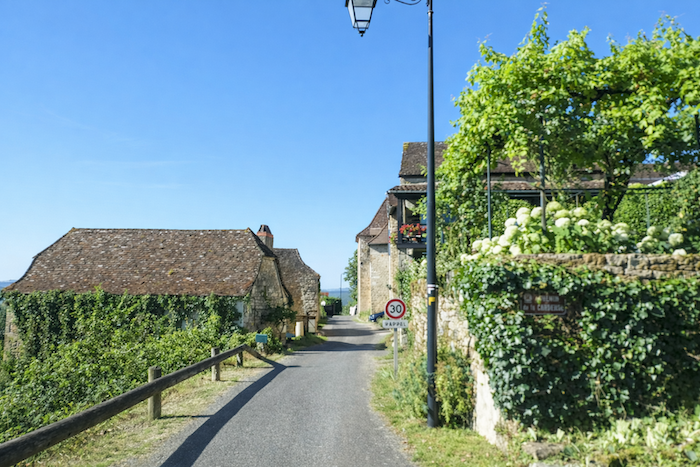
Faycelles is now only a short distance away. The GR65 crosses the main road that bypasses the village and then continues between stone walls. The walk grows gentler as the village approaches. |
|
 |
 |
 |
 |
|
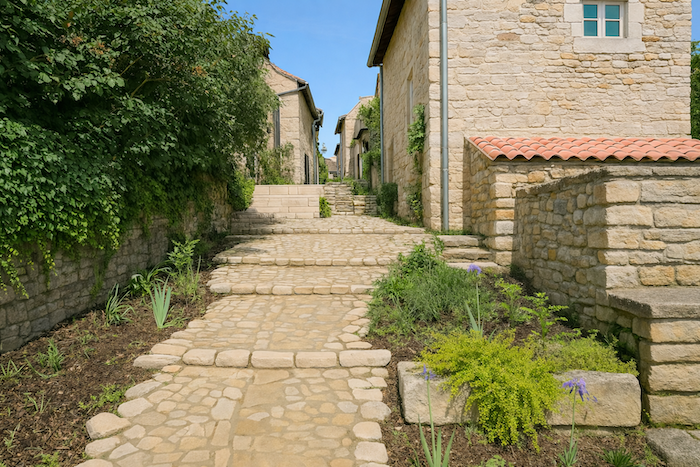
A stone staircase leads up to the centre of the village. |
|
 |
 |
|
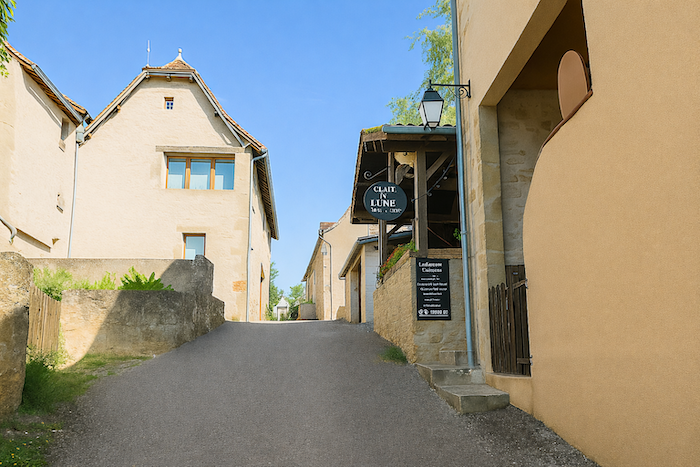
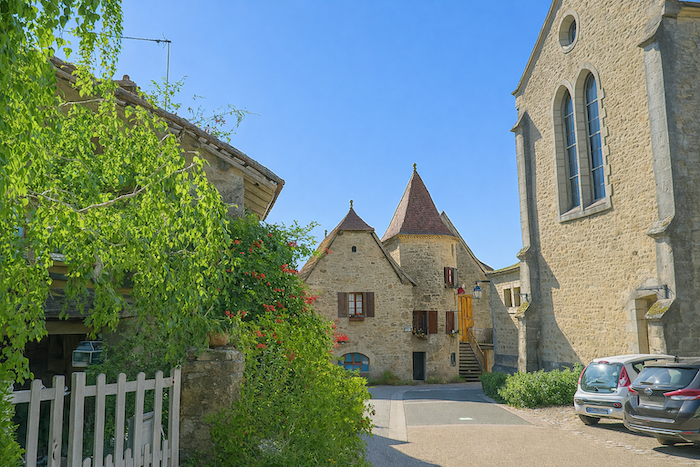
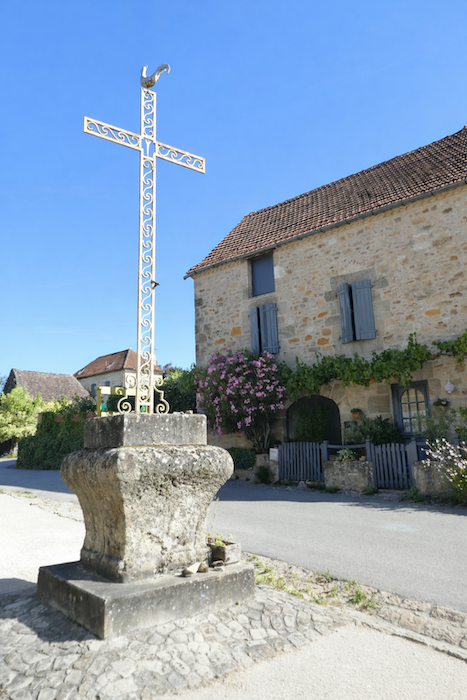
Faycelles counts barely six hundred inhabitants yet overflows with charm. Perched on its hill, the village overlooks the valley like a suspended nest of stone. Its narrow lanes wind around flowered houses with blond stone façades, and one feels the lingering spirit of the Middle Ages. Here the pilgrim can find lodging, eat a meal and replenish supplies before continuing the route. At the heart of the village lies a lively central square. |
|
 |
 |
|
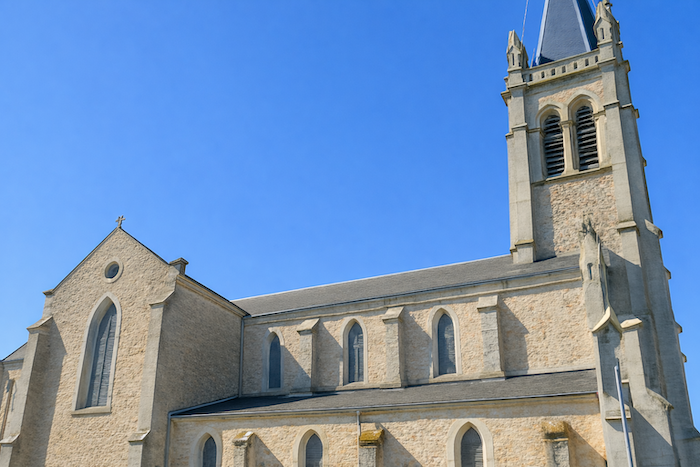
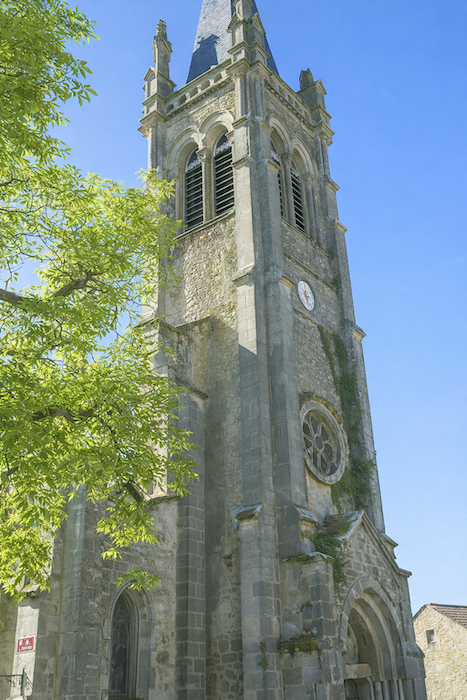
The church, recent yet built from the stones of the old one, watches over the place. Its simple and pale bell tower seems to listen to the wind. |
|
 |
 |
|
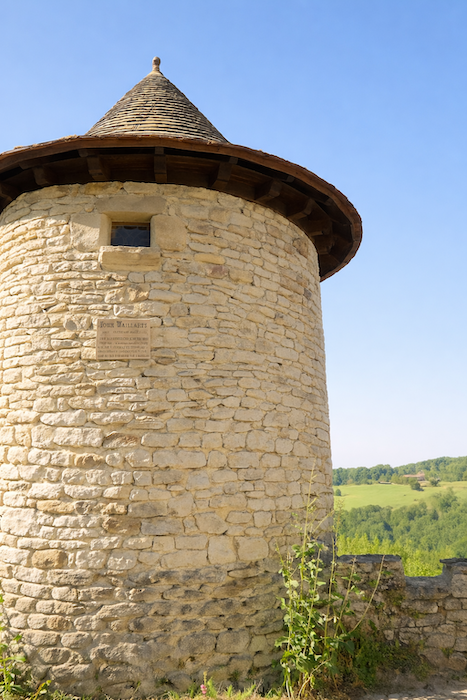
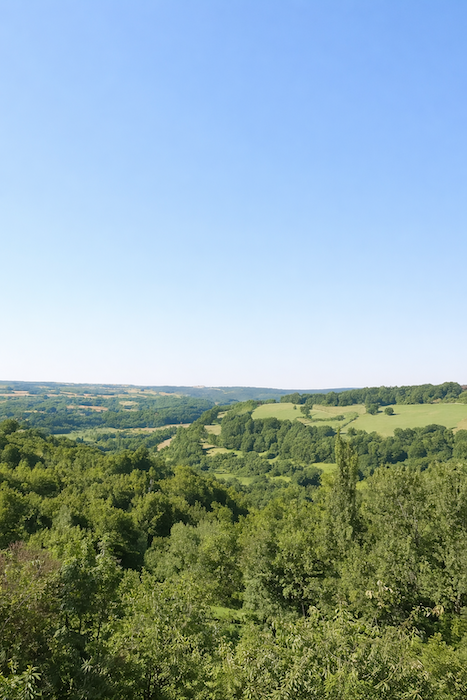
A little farther on, the round watchtower known as the Gaillarde Tower overlooks the valley. It is the last remnant of a castle destroyed on the orders of Richelieu in the seventeenth century. Alone yet still proud, it preserves the memory of the vanished walls. From here the view over the Lot valley is astonishing. The eye embraces an ocean of trees, dense forests stretching to the horizon. Far below, the Lot River unwinds its silver thread as it disappears into the deep valley. In the distance the plateaus follow one another and fade into each other like motionless waves beneath the sky. |
|
 |
 |
|
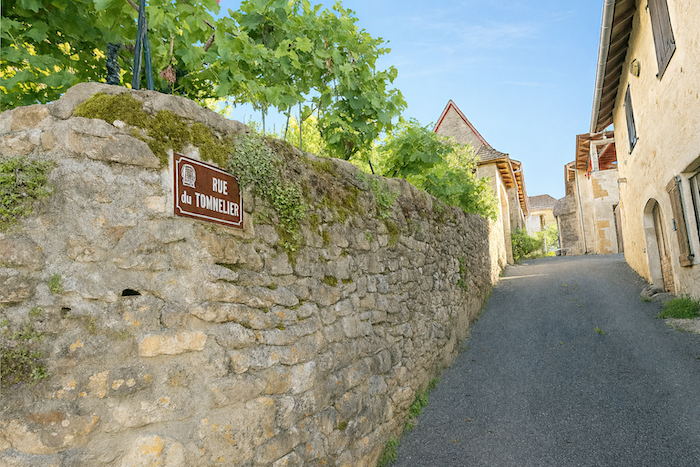
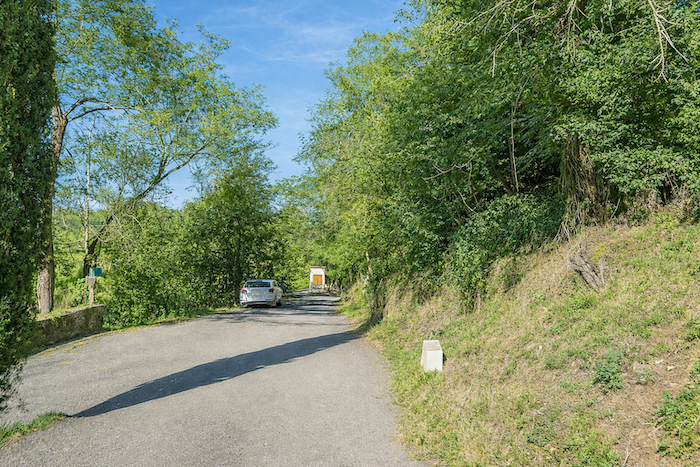
In the past, the route left the village and followed the departmental road toward Béduer. Nothing of that remains today, as it now follows a different direction. The routes of Santiago are never eternal, despite what many pilgrims believe. Now the route slips away from the heart of Faycelles. It descends along Rue du Tonnelier, a narrow-cobbled street bordered by old houses that seem still to whisper stories of pilgrims. Soon the rooftops fade behind you and the village becomes nothing more than a memory suspended above the valley. |
|
 |
 |
|
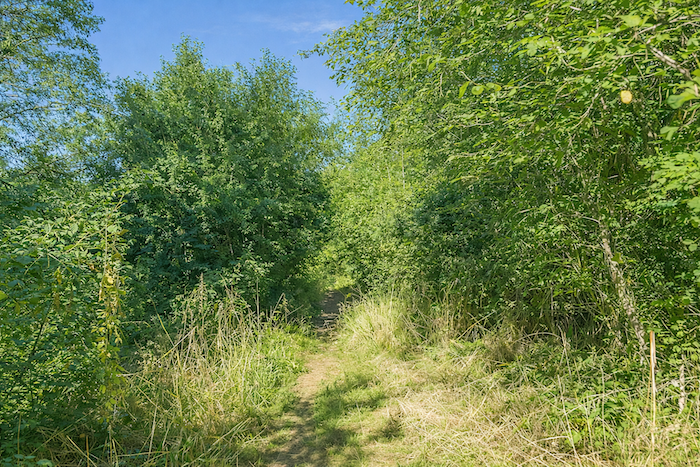
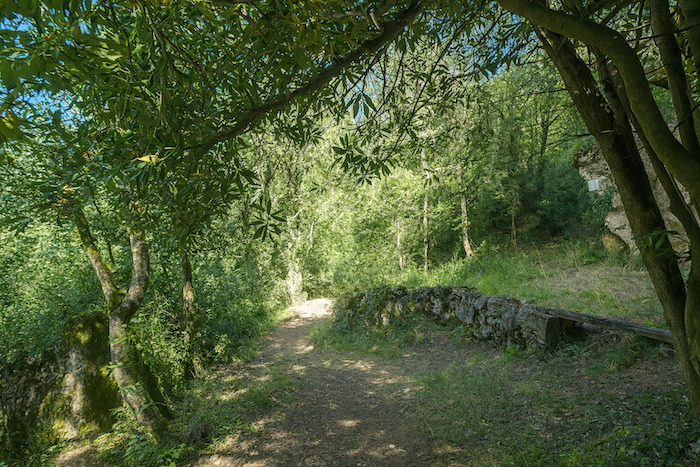
A small path begins, discreet and almost shy. It descends gently between wild grasses and stone walls worn smooth by the seasons. Beneath the dense canopy of leafy trees, the air becomes cooler and more humid, filled with the scent of earth and sap. You walks in a green half-light where every step seems softened. |
|
 |
 |
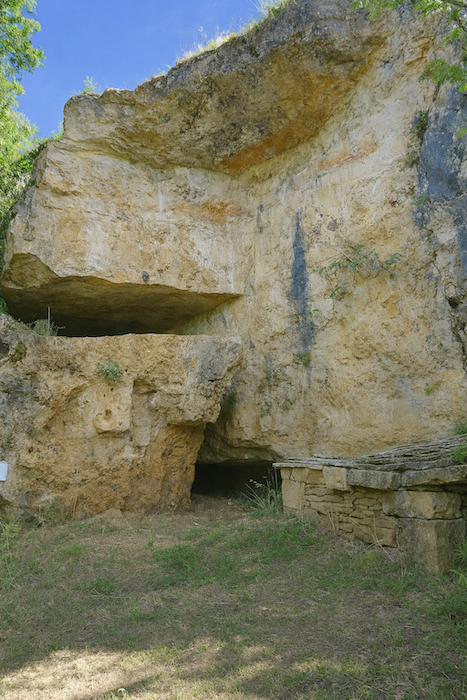
Soon the rock opens. On the right, a vast cavern enters the bare limestone like the mouth of a giant carved into the cliff. One can easily imagine that at nightfall it might shelter a lost pilgrim, a walker without lodging or perhaps a young adventurer in search of experience. Many travellers of fortune prefer a shelter beneath the stars to a bed in an inn.
|
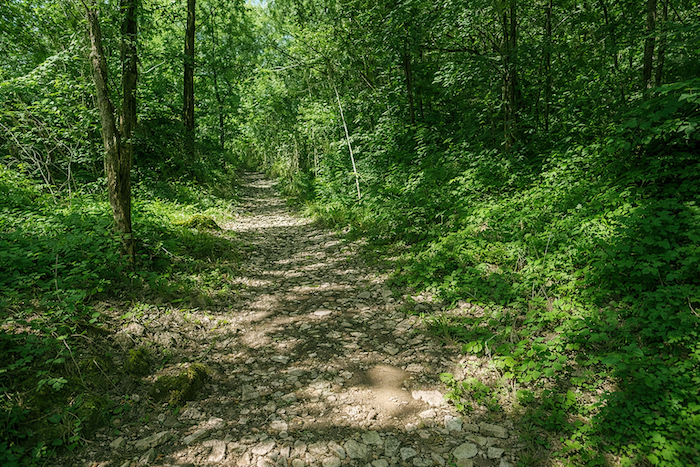
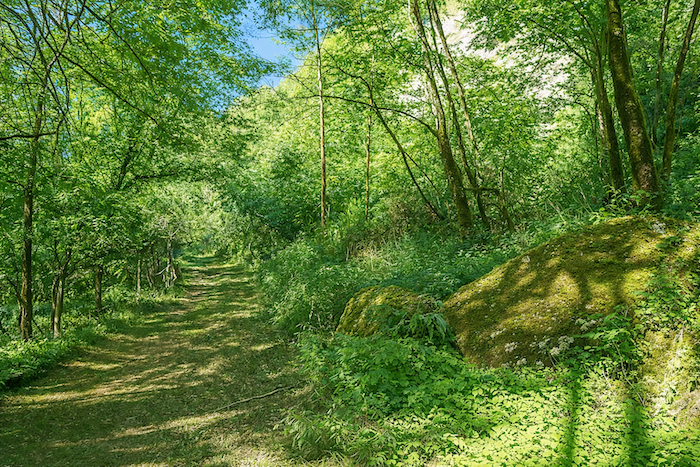
The descent continues in winding curves. The path sways gently, hesitating between rocks and grasses, sometimes slipping over large stones, sometimes softening on a carpet of earth. The rocks, covered with thick moss, glow green in the dim light. Around them the close trunks filter the daylight and allow fragments of gold to pass through, like scattered crumbs of lost sunlight. It is a world of freshness and silence. |
|
 |
 |
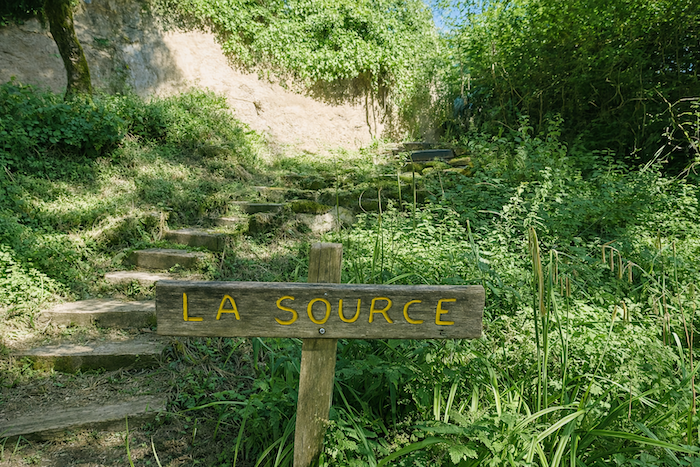
A little farther on, you sense the presence of a place name, La Source. Perhaps the spring has dried up, perhaps it still flows, who can say. It hardly matters. The place, wild and peaceful, possesses the simple beauty of things that escape human control. One would gladly stop here, if only to listen to time flowing by.
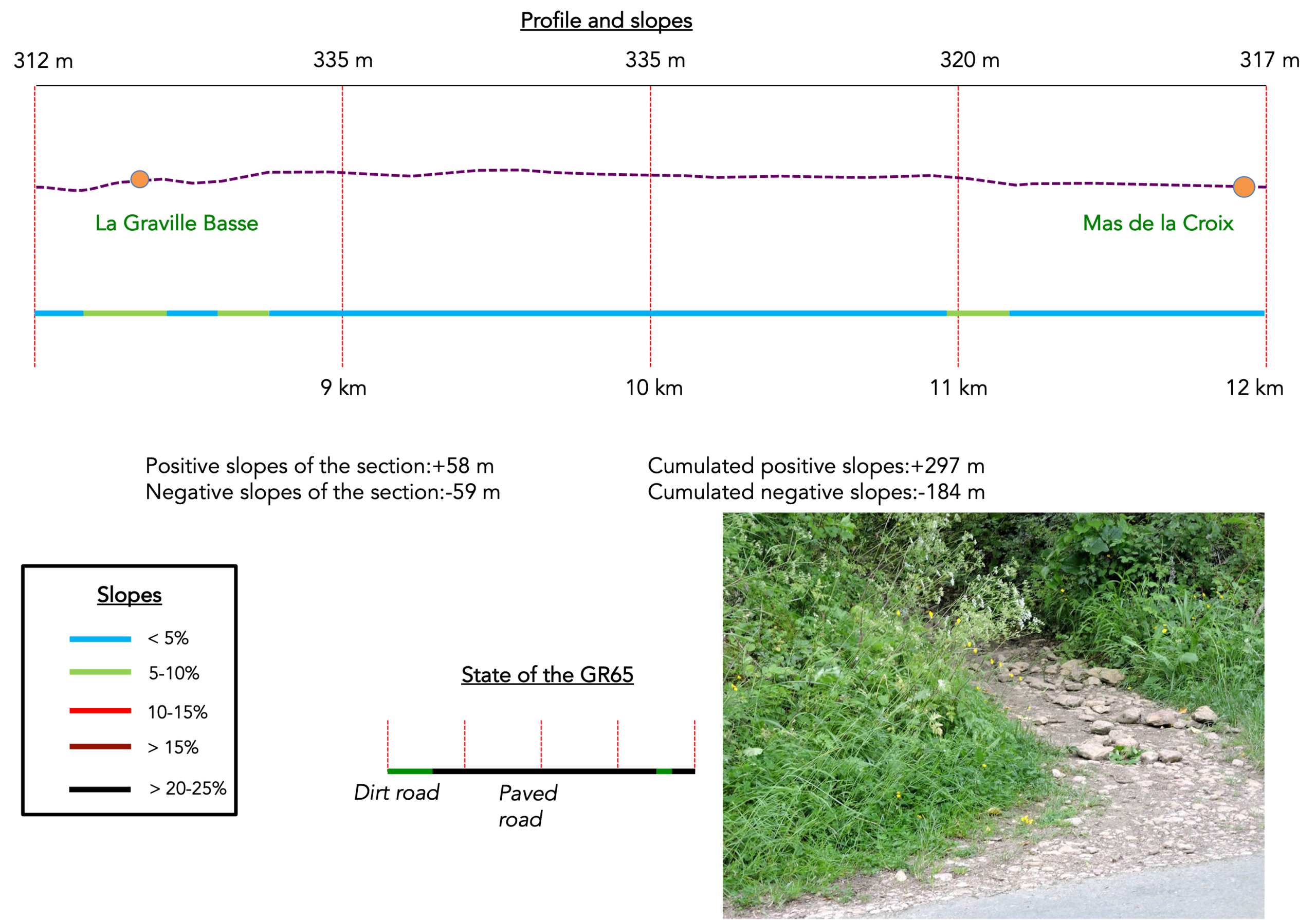
Section 3: Undulations in the countryside
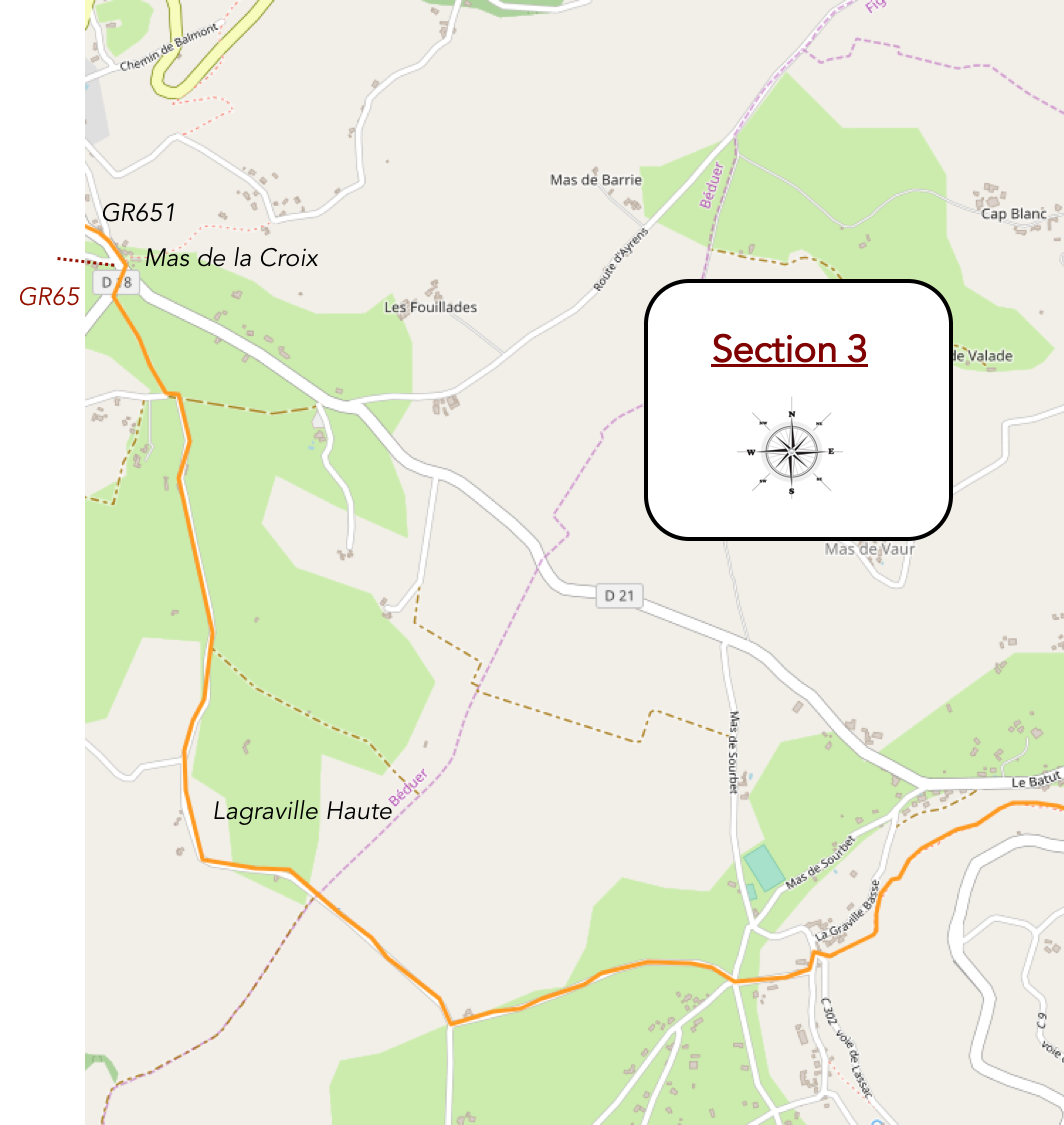
Overview of the route’s challenges : a route without any particular difficulty.
|
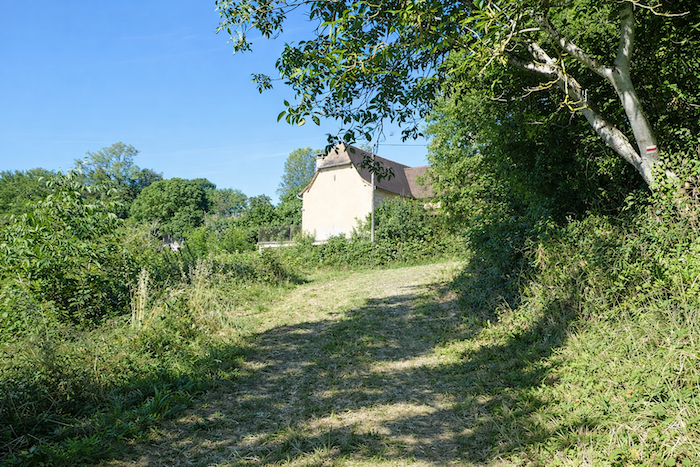
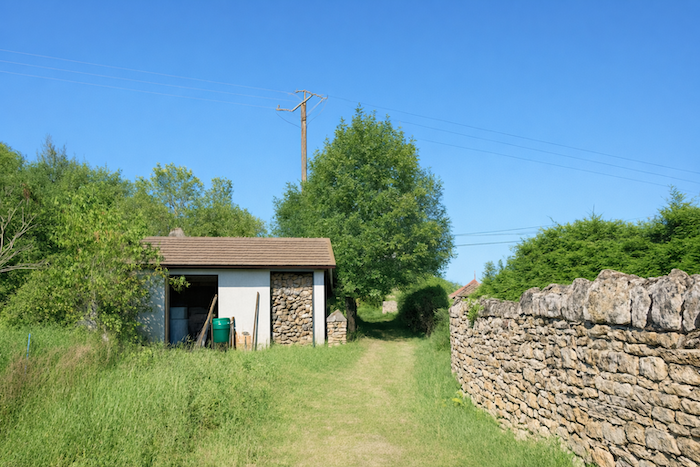
The path gradually leaves the forest, escaping from the shade and climbing again toward the first houses of La Graville Basse, a small quiet hamlet scattered across the countryside. The blond stones of its walls catch the light, and the mossy roofs still seem to breathe out the morning dew. Here time appears to move slowly. |
|
 |
 |
|
The path continues forward, bordered by rough hedges that rustle as the wind passes through them. In places a modest field of wheat or oats clings to the soil, a golden patch within the green of the meadows. |
|
 |
 |
|
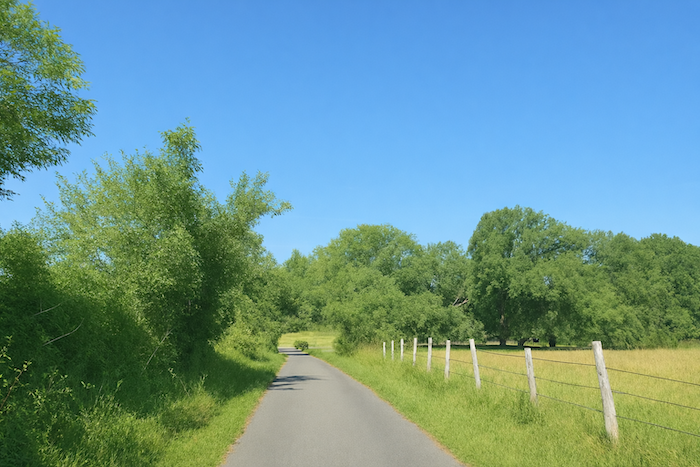
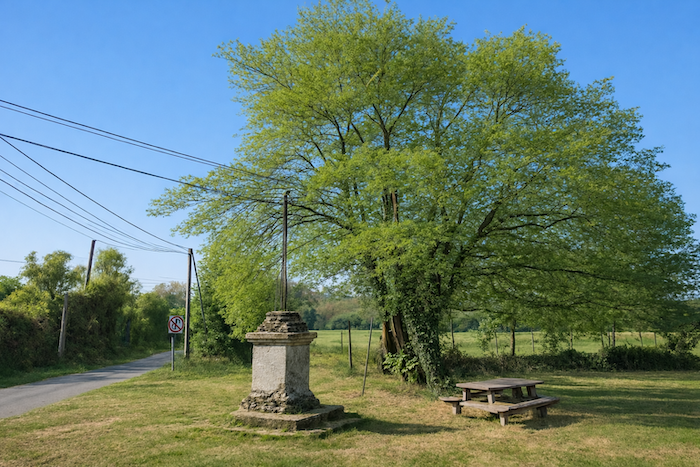
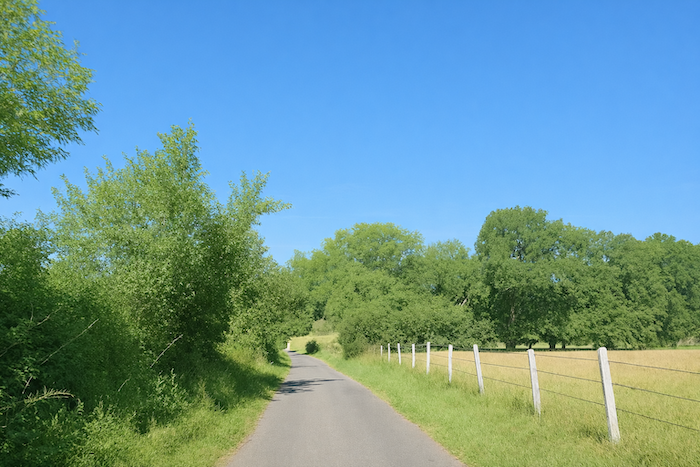
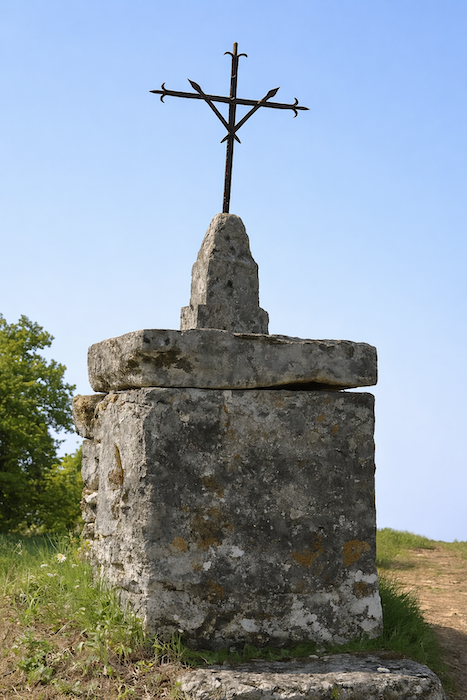
Farther on the path meets the road. A long stretch of asphalt begins, one of those sections sometimes dreaded on the GR routes. A picnic area stands opposite a simple iron cross beneath the ash trees. |
|
 |
 |
|
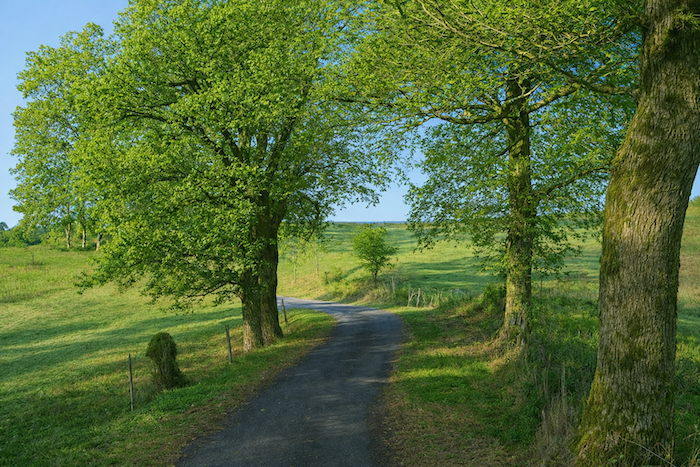
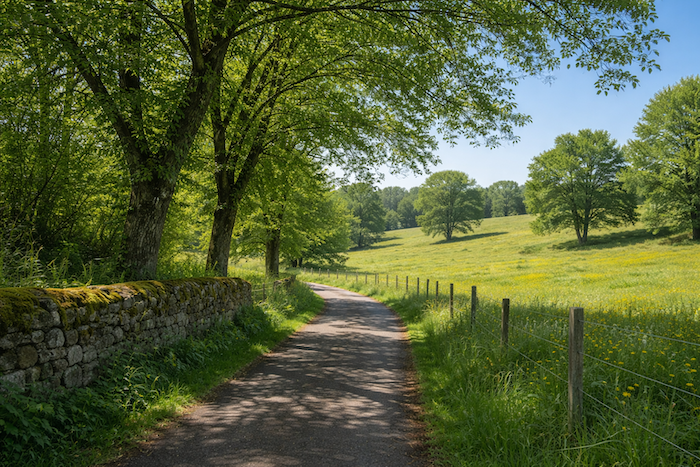
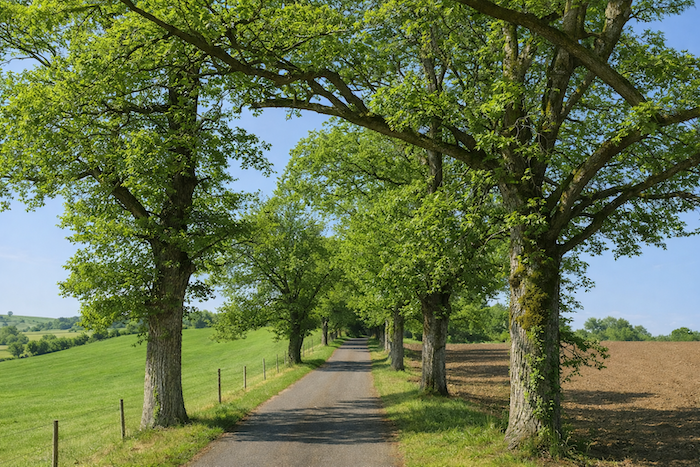
Yet here the beauty of the landscape softens the fatigue. The road twists beneath the trees along mossy stone walls and seems to flow through an ocean of greenery, so that every step becomes an act of quiet contemplation. |
|
 |
 |
 |
 |
|
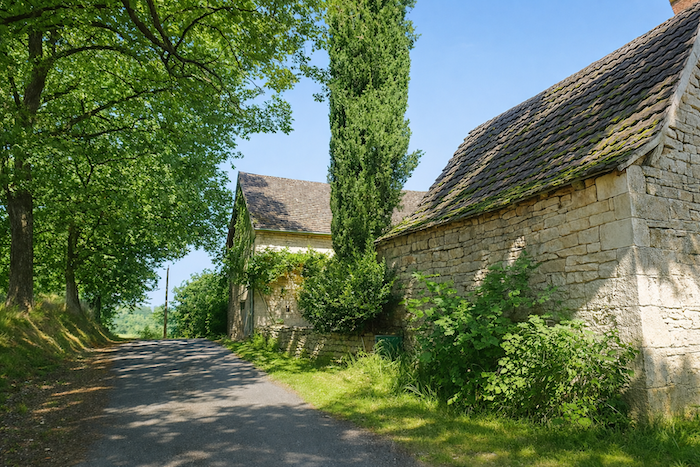
Farther along, a beautiful stone house rests beneath majestic ash trees. It seems to have stood there forever, calm and dignified, a silent guardian of the route. |
|
 |
 |
|
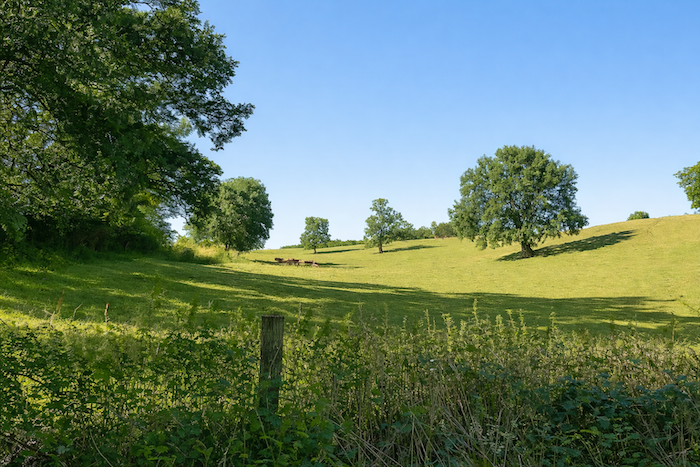
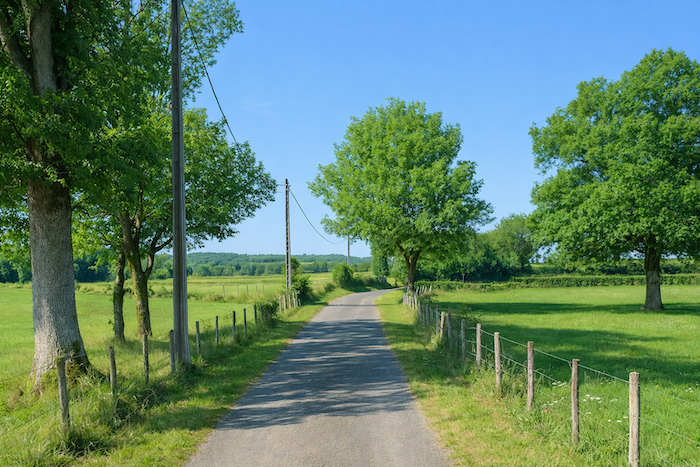
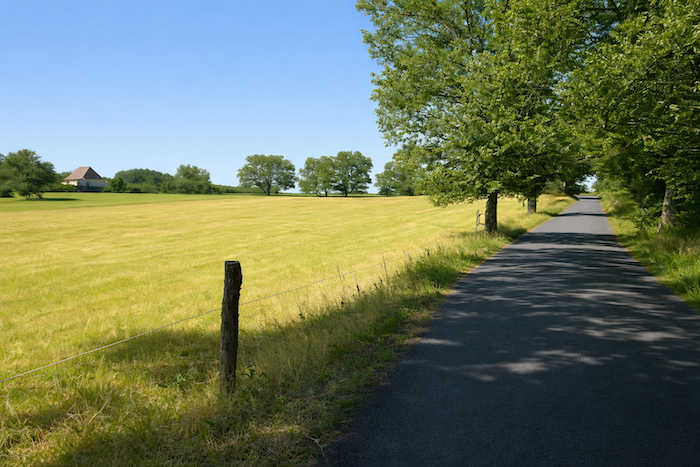
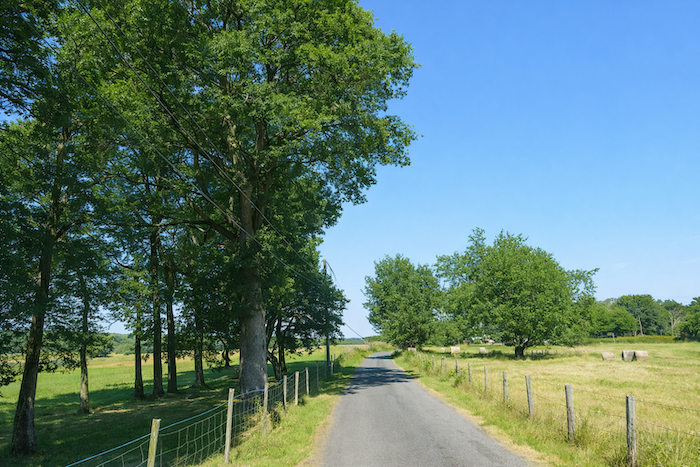
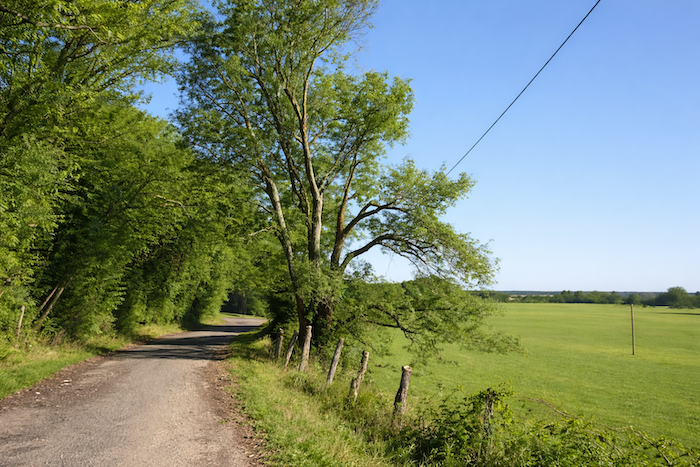
The land stretches wide and luminous, composed of meadows that extend as far as the eye can see. At times a solitary house appears beside the road, placed like a point of balance in this vast landscape. Their presence punctuates the silence, breaks the monotony and offers a moment of distraction to the pilgrim absorbed in the rhythm of walking. |
|
 |
 |
 |
 |
|
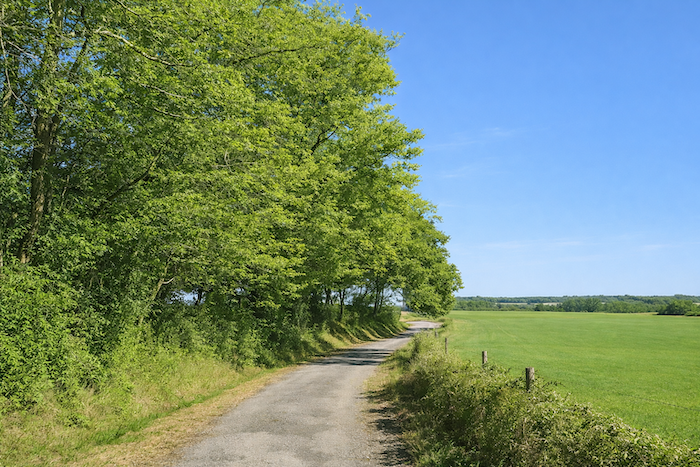
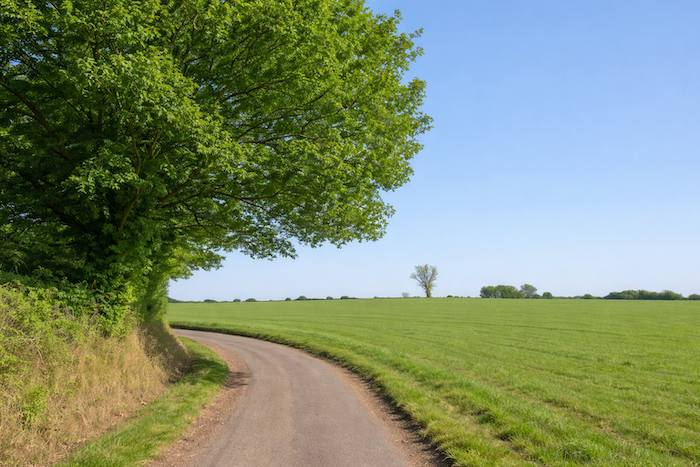
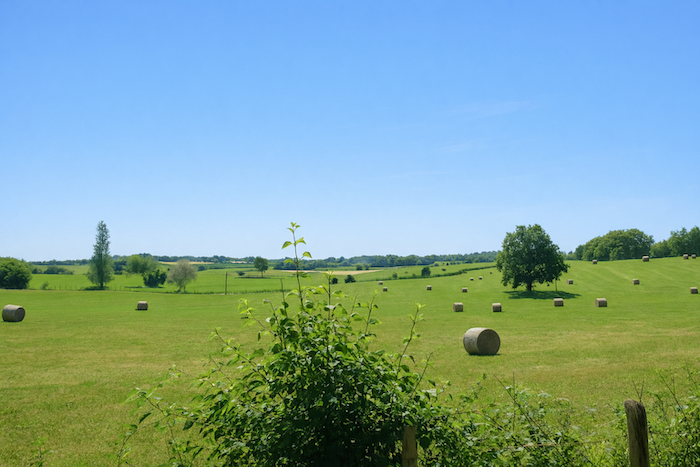
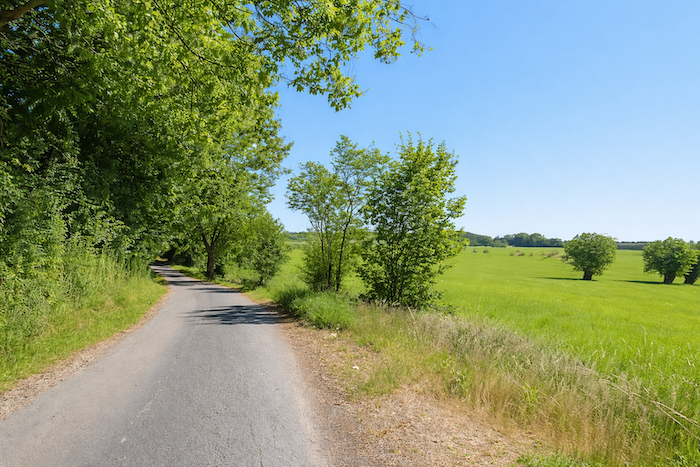
And the road continues stubbornly through this steady landscape, animated only by a few islands of trees, mostly oaks, sometimes a cluster of maples or a solitary ash. Their shadows move across the grasses, drawing shifting shapes beneath the sky. |
|
 |
 |
 |
 |
|
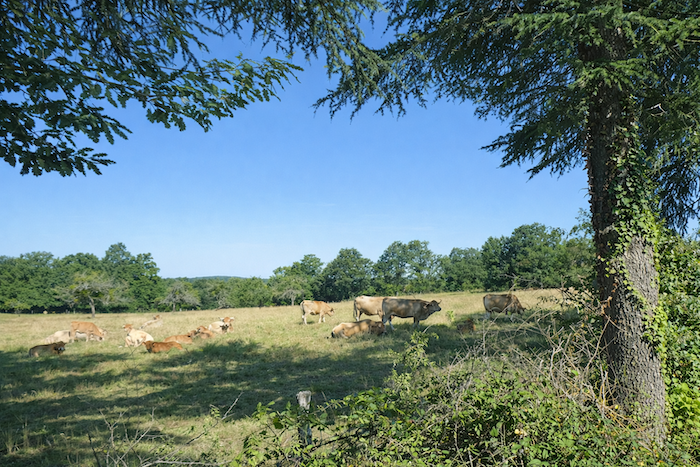
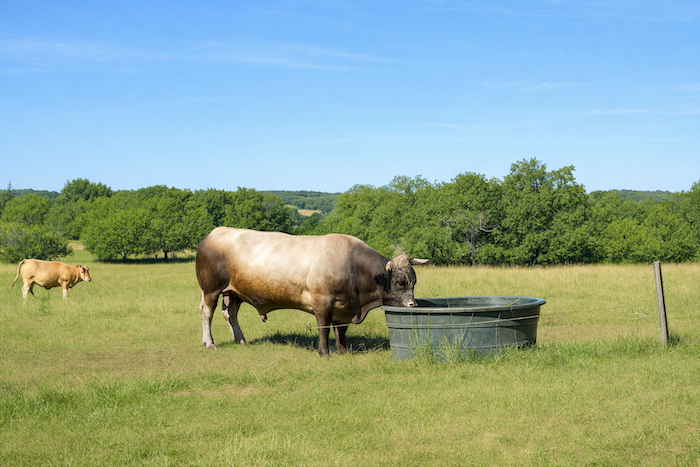
A herd of Aubrac cattle appears. The cows, with their pale coats and eyes ringed with black, seem to come straight from a pastoral dream. Their calm and gentle gaze catches the light. Farther away the bull, massive and dark, watches with attentive eyes, almost jealous. One cannot help smiling, perhaps we disturb his kingdom by admiring his peaceful queens too long? |
|
 |
 |
|
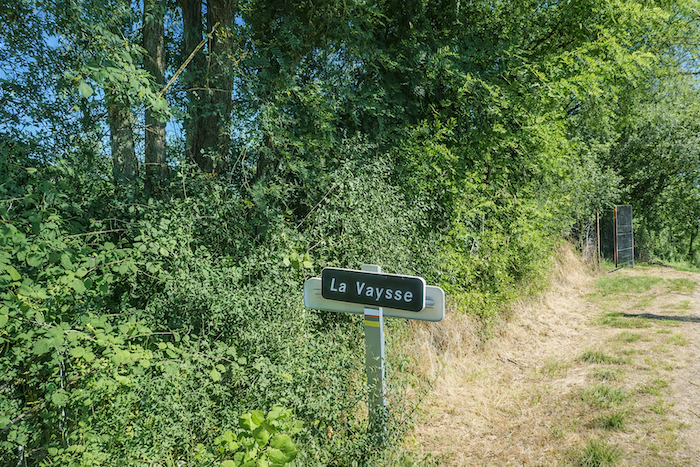
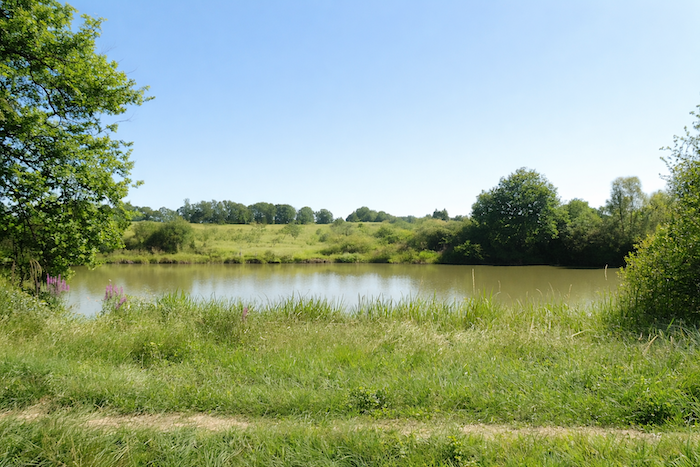
Soon the road reaches the place called La Vaysse. There a small lake rests quietly in a hollow of the land, a tiny mirror of water reflecting clouds and leaning branches. |
|
 |
 |
|
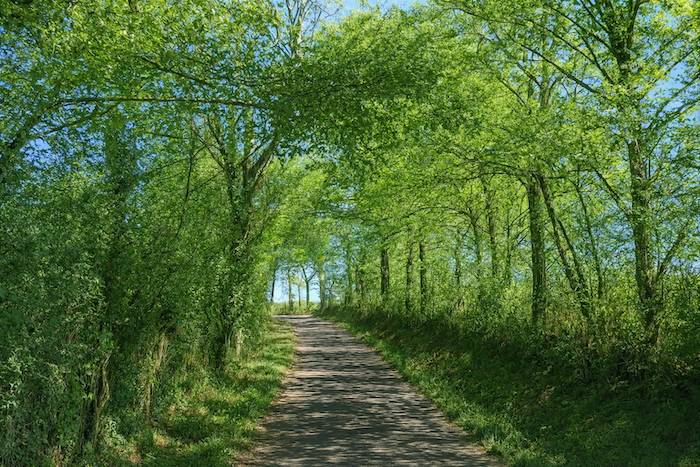
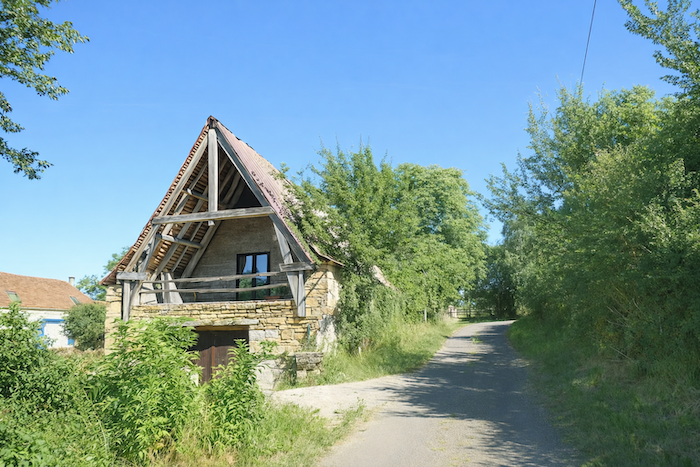
Here it is not always clear whether the charming stone houses scattered around are inhabited or not. |
|
 |
 |
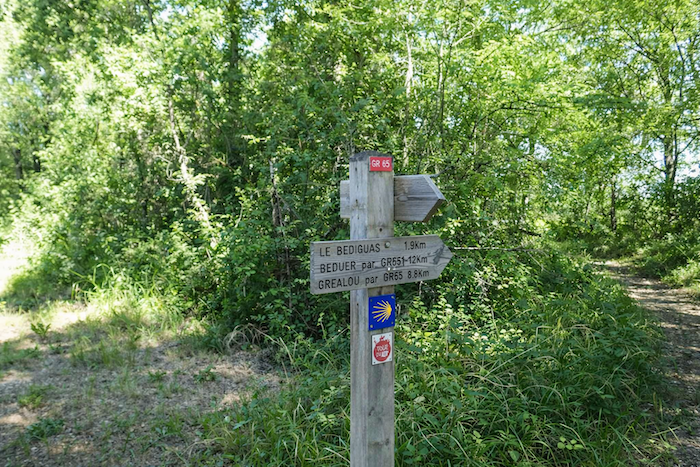
Shortly afterward, the new route of the GR65 joins the old one. The route settles again into its course, as if rediscovering an old memory and a familiar direction toward the south.
|
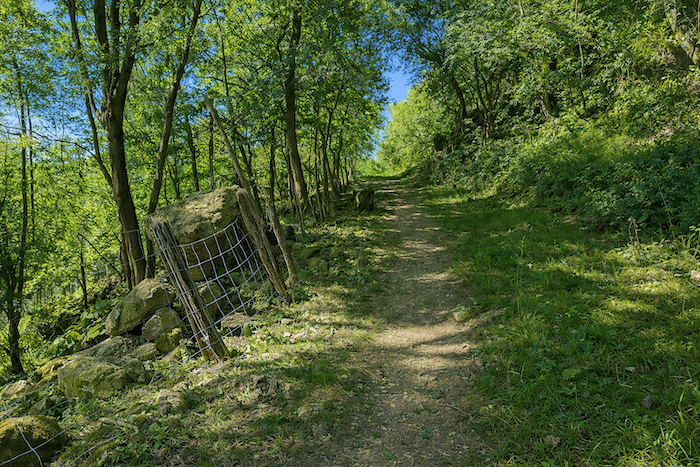
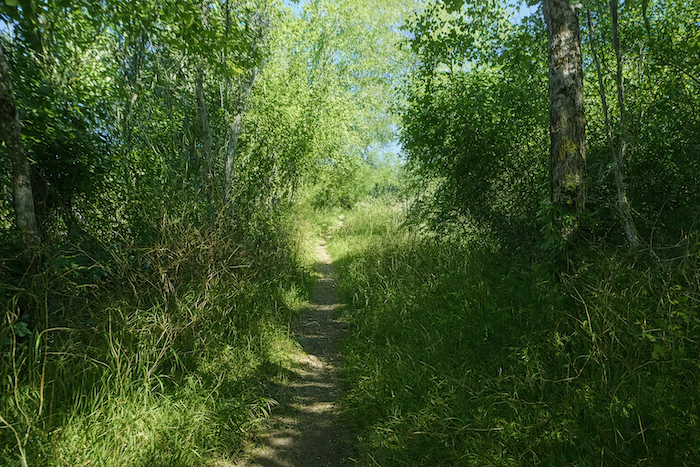
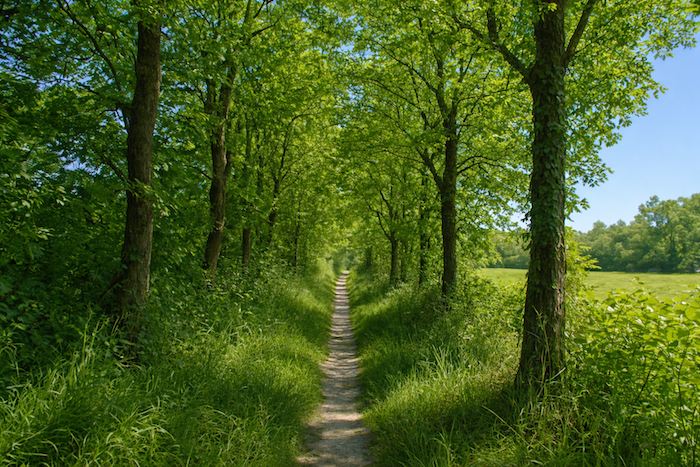
Then a narrow trail appears again, slipping between thickets and brushwood. You enter carefully because the soil becomes soft here, and after rain the passage quickly turns into mud. The pilgrim sometimes leaves more effort here than expected, and perhaps a small part of himself as well. |
|
 |
 |
|
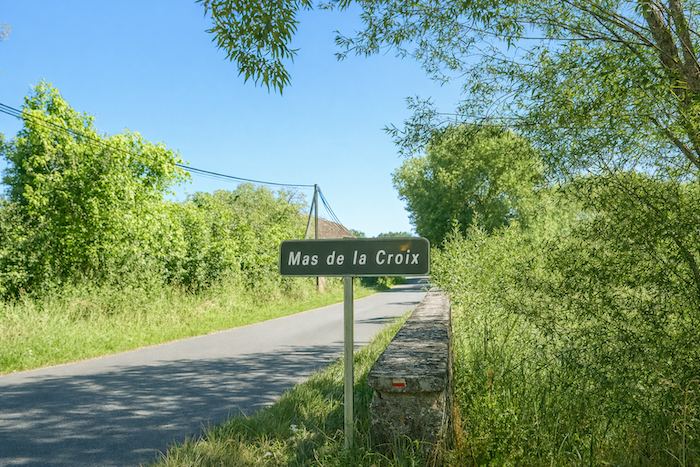
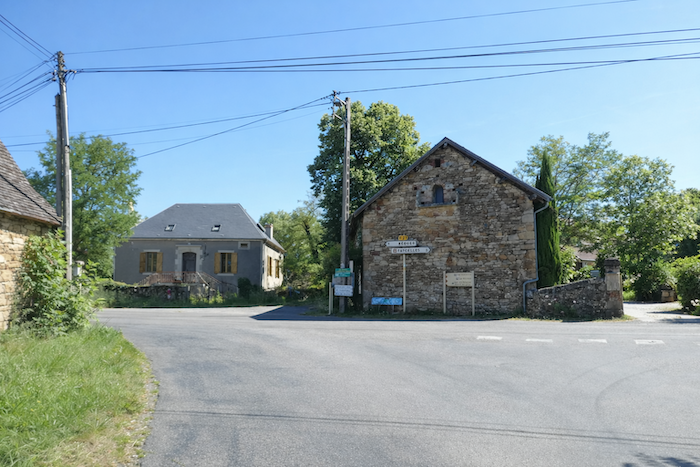
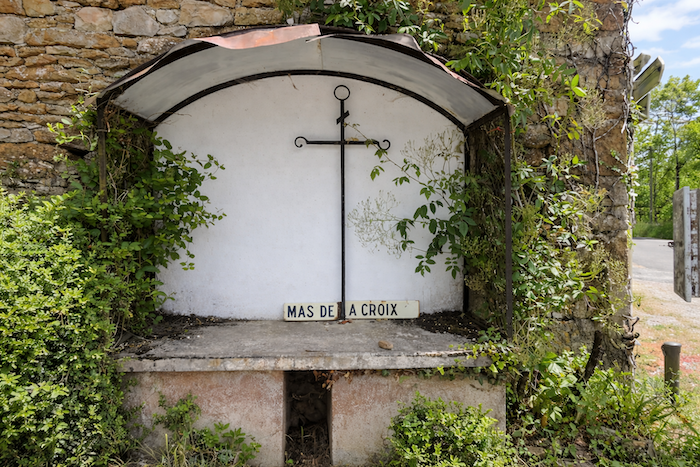
Beyond this section a short stretch of asphalt leads to the Mas de la Croix. The place feels like a transition, almost a crossroads between two worlds. |
|
 |
 |
Section 4: The route plunges toward the Célé River
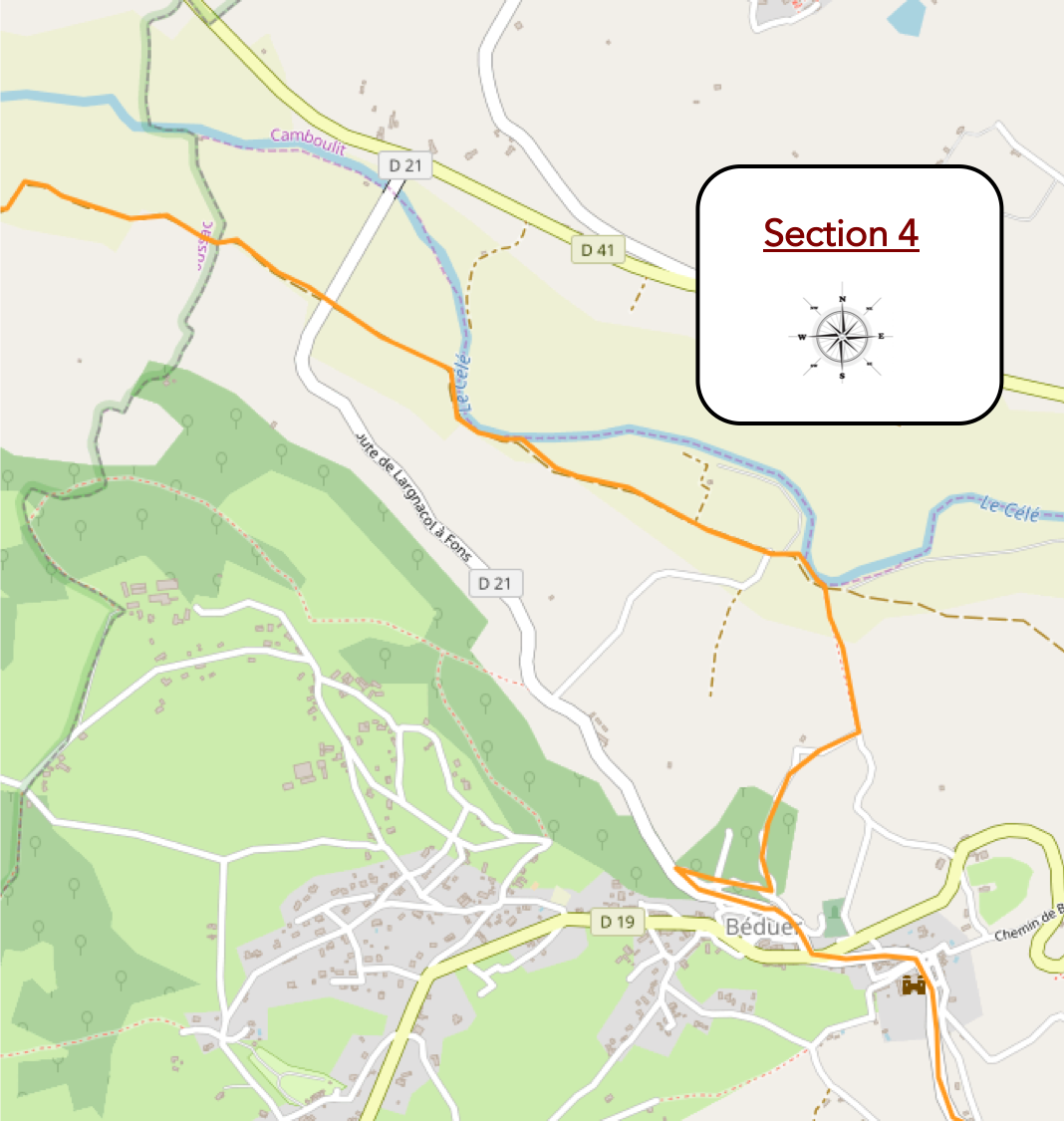
Overview of the route’s challenges : a steep descent, often exceeding a 15% slope toward the river, followed by a flat walk.
|
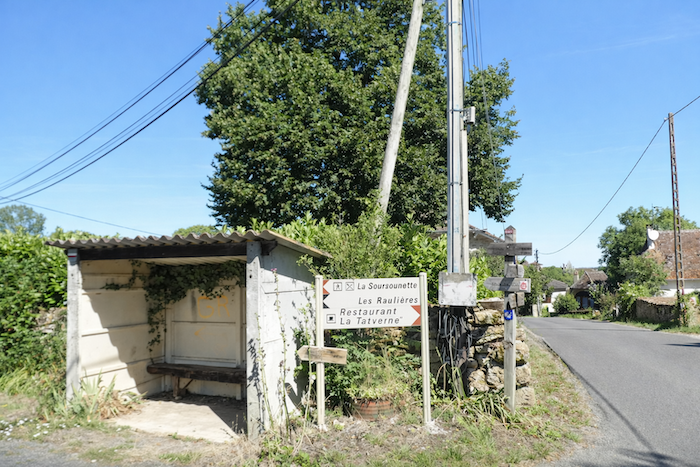
It is here that the GR65 and the GR651 separate. The first continues toward Cajarc, while the second enters the valley of the Célé, a more secret and wilder route. Today you’ll follow this variant, the one that runs along the river and slips between the cliffs. At times the pilgrim chooses the quiet of detours rather than the ease of the main roads. The classic route of the Camino de Santiago can be found on the great Via Podiensis, the principal way in France. Here another adventure begins, more discreet and more intimate, an itinerary that winds between stone and water, between silence and light. |
|
 |
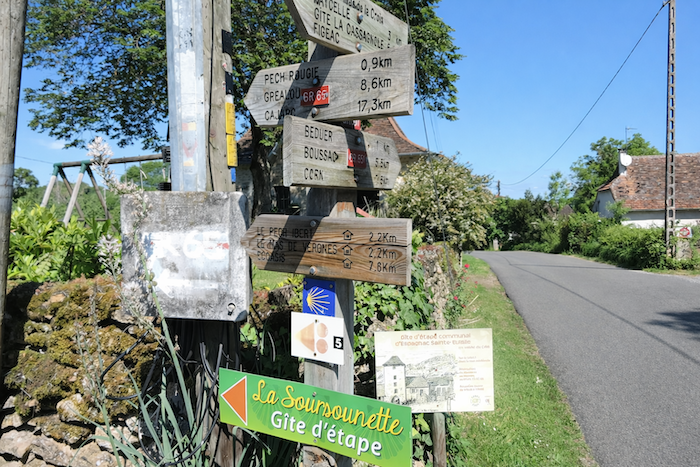 |
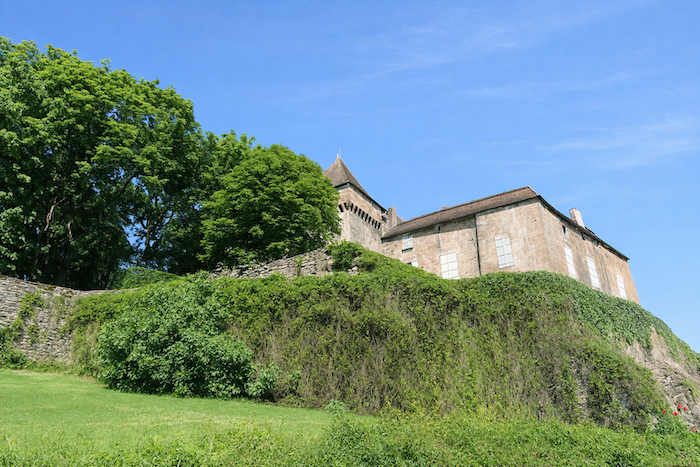
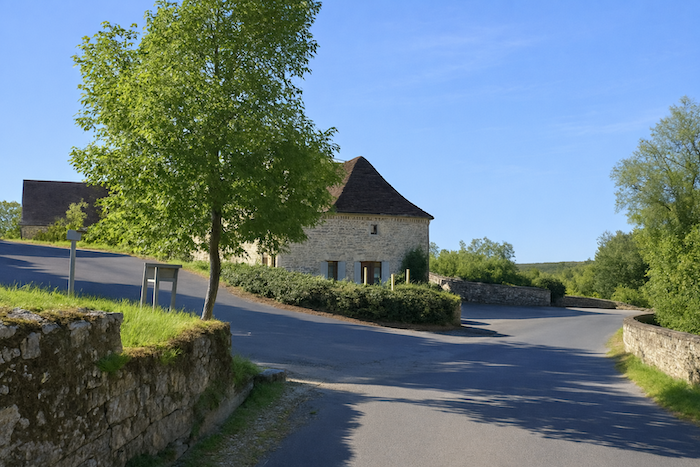
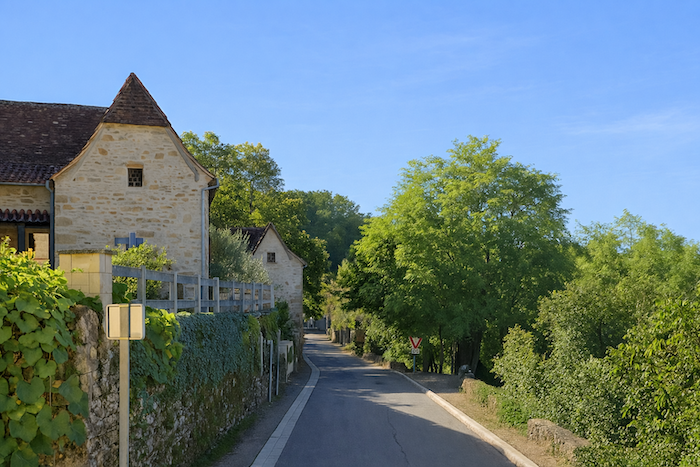
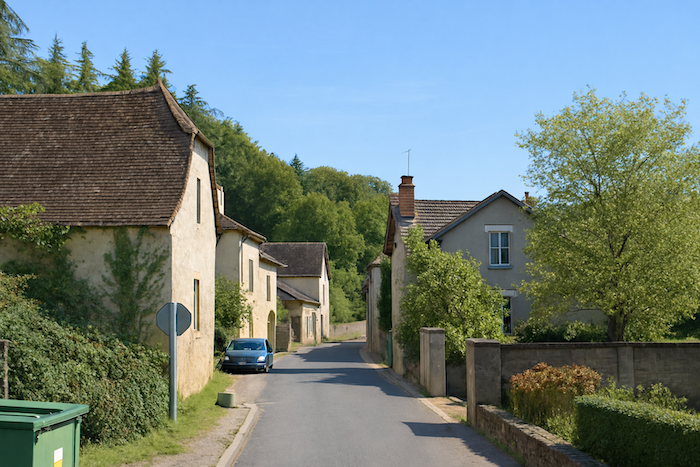
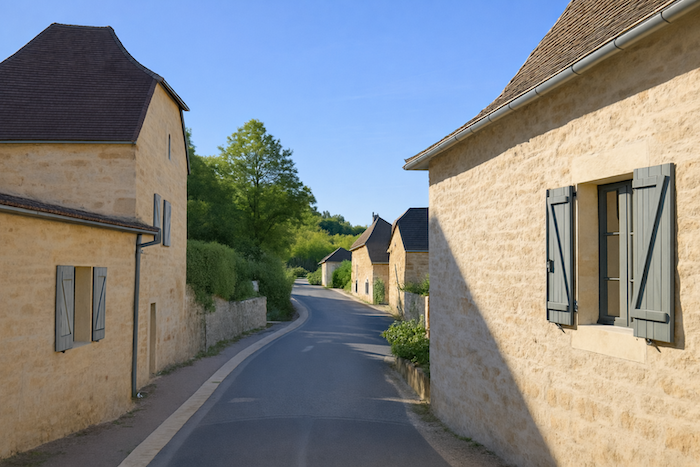
| The GR651 then descends gently along a ribbon of asphalt toward Béduer, a small village perched above the valley. The road passes beneath the shadow of the castle. The name Béduer comes from Bederio, meaning “sees far,” an ambitious promise for a village whose horizons are sometimes veiled. Yet history is still visible here. In the past, Quercy was filled with lordships, and the Barasc de Béduer family ruled here for five centuries. Their domain extended across these lands and their imposing castle stood above the Célé. From that feudal period remains a keep nearly sixty metres high, partly dismantled during the Revolution, though its stones still breathe the grandeur of the past. | |
 |
 |
|
Barely three hundred meters farther on, the village appears, poised on the boundary between two worlds. On one side lies the fertile Limargue of Figeac, rich and generous, on the other the austere causses, harsh and stony. . |
|
 |
 |
|
|
|
 |
|
|
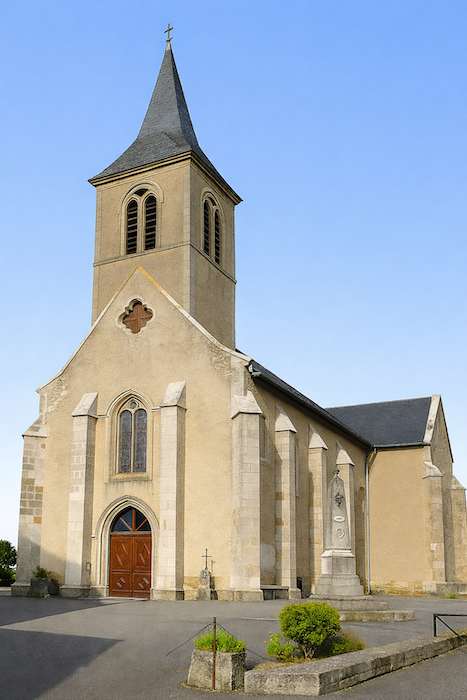
The road crosses the heart of the village and runs beside the quiet church. |
|
 |
 |
|
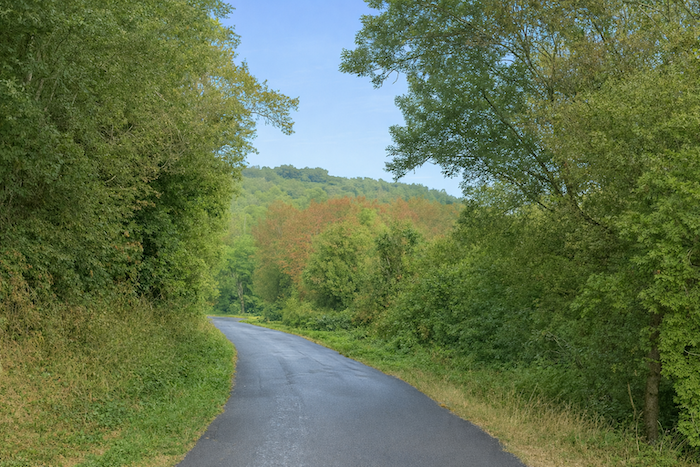
At the exit of the village the road descends along the small D21 road. |
|
|
 |
|
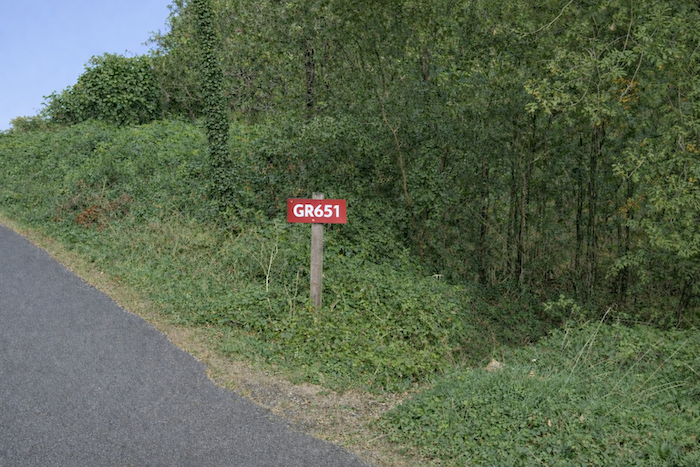
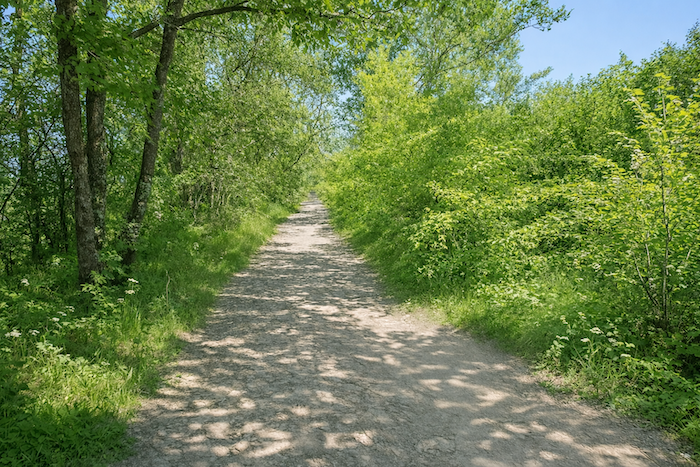
After a few hundred meters the GR651 abruptly leaves the asphalt and enters the woodland, drawn toward the river resting below. |
|
 |
 |
|
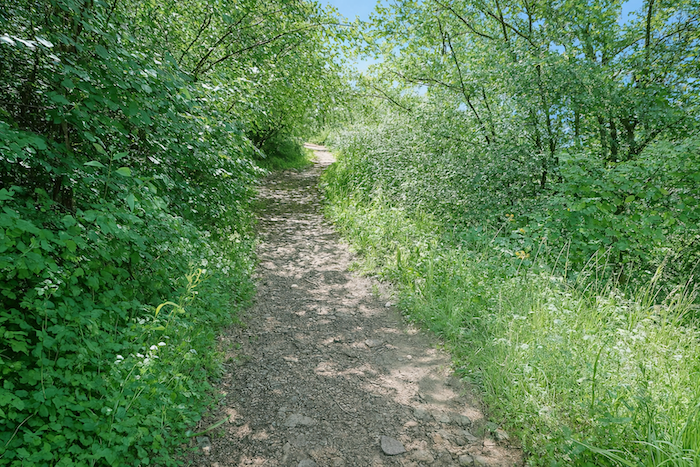
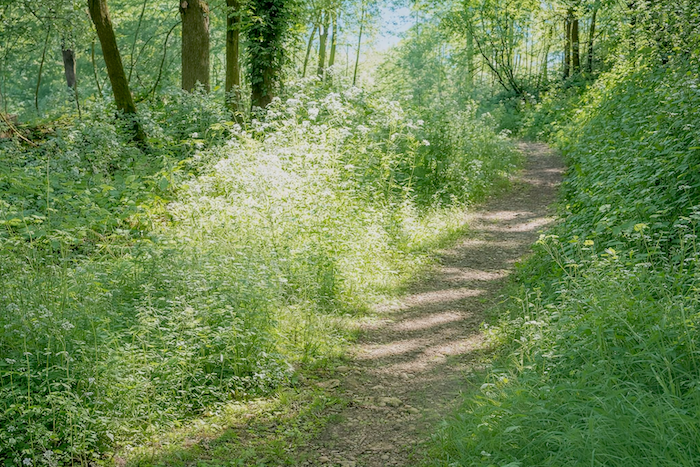
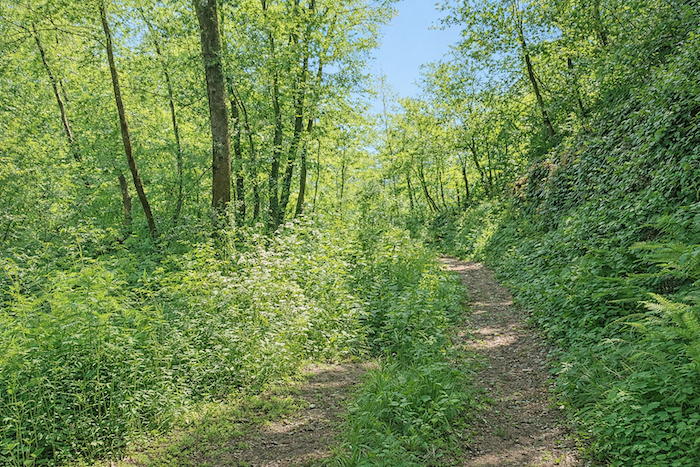
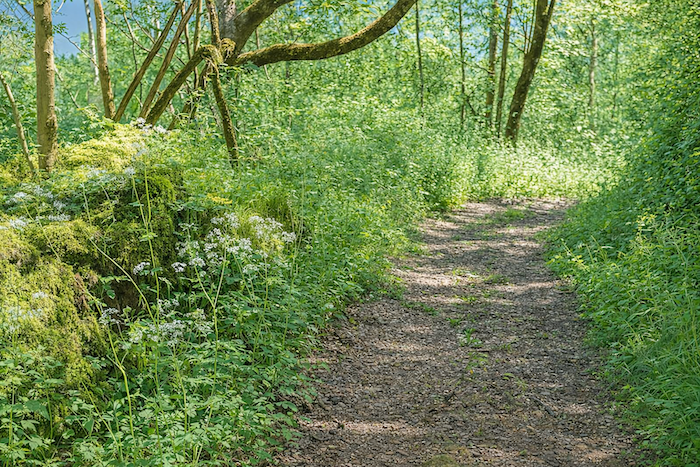
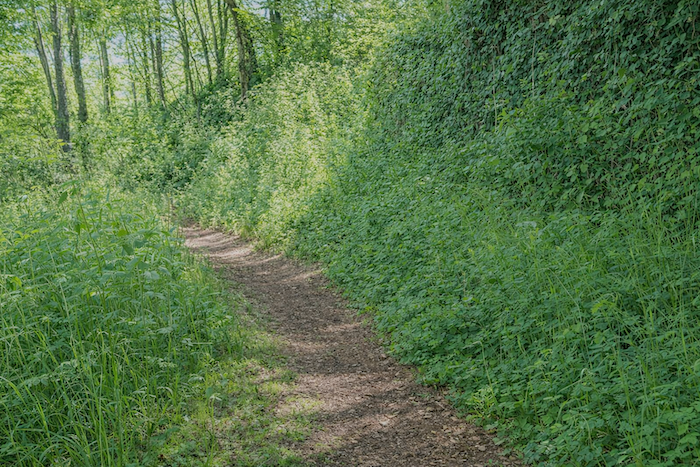
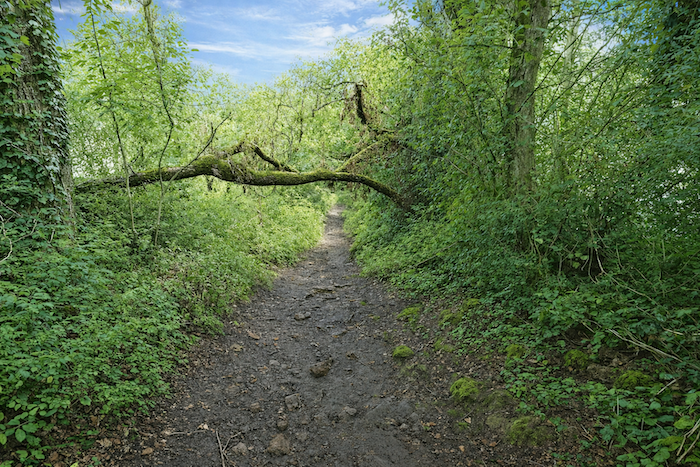
A narrow trail then plunges into a sea of oaks and tall grasses. The ground, covered with leaves and moisture, becomes treacherous underfoot. In rainy weather it quickly turns into a slippery slope. Yet this descent carries a certain enchantment. It smells of moss, earth and the quiet secrets of the woodland. |
|
 |
 |
 |
 |
|
At a bend in the path, in a shaft of filtered sunlight, an opening of wild grasses appears like an invitation to the walker. Everything seems suspended there, the whisper of the wind, the song of insects and the slow breathing of the forest. . |
|
 |
 |
|
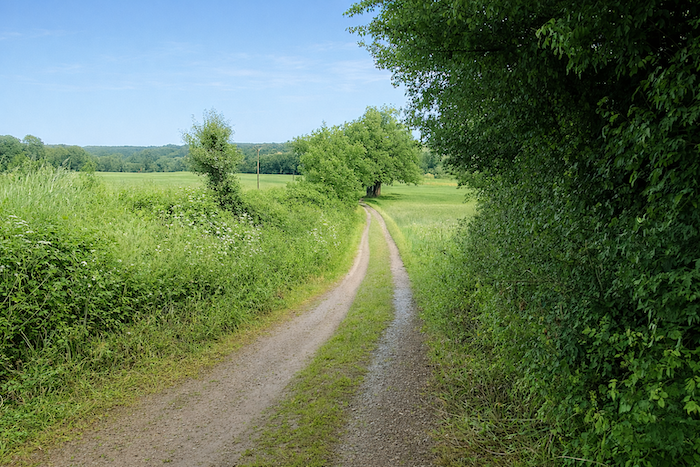
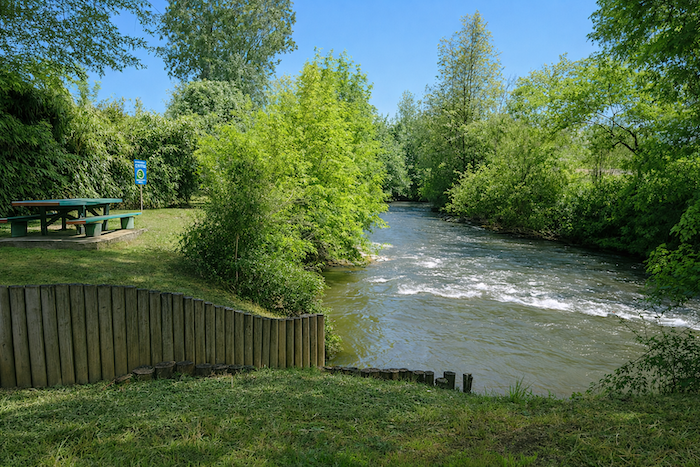
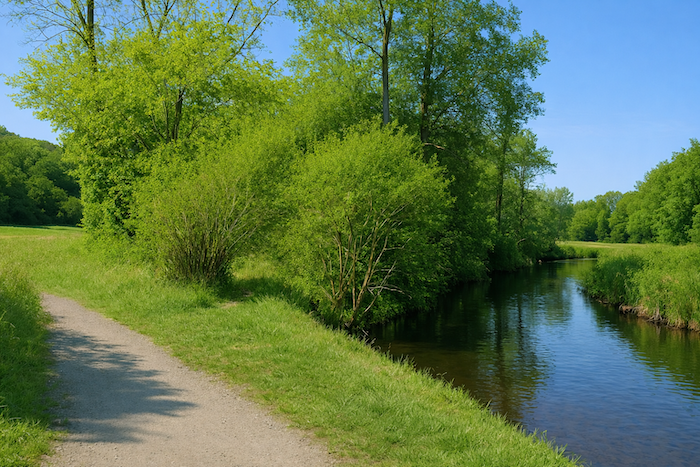
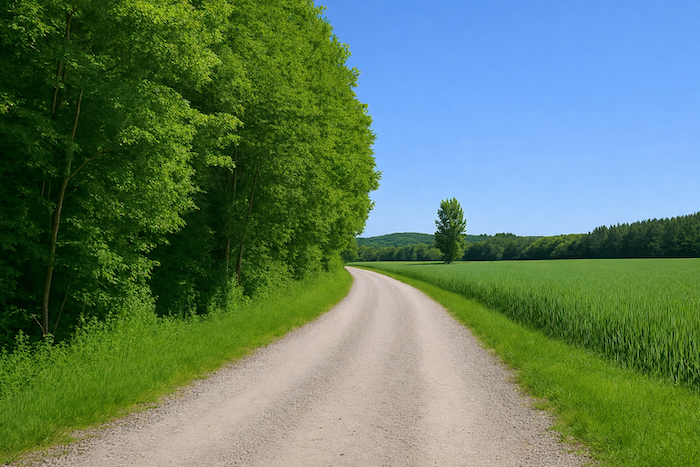
Lower down the path emerges from the wood and the descent comes to an end. The valley of the Célé finally spreads wide and peaceful before you. Meadows open like a fan, broken by agricultural terraces, solitary trees and hedges of brush. The light spreads across them gently, sliding over the grasses like a caress. Soon a wide dirt path leads to the banks of the Célé River. Once, there was a dwelling on the other side of the river. Today, it has disappeared from the records. |
|
 |
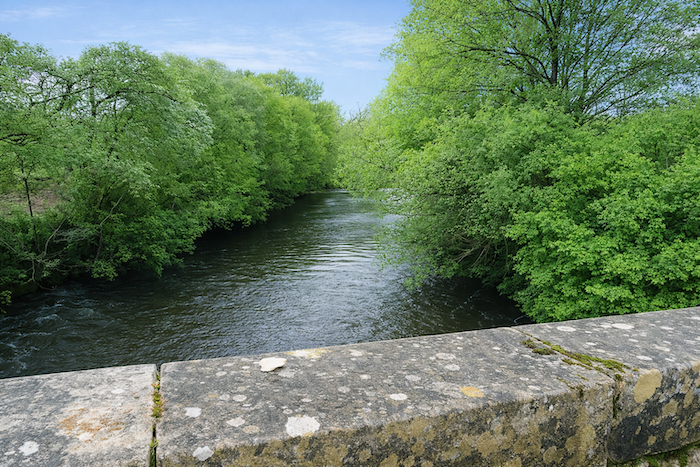 |
The waters, lively and clear, swirl between the rocks, forming a shifting ribbon that plays with the reflections. On both sides vegetation bursts into countless shades of green, a truly impressionist setting. The river bends and unfolds capriciously, yet within its meanders it reveals its generous nature, endlessly nourishing the lands it crosses.
|
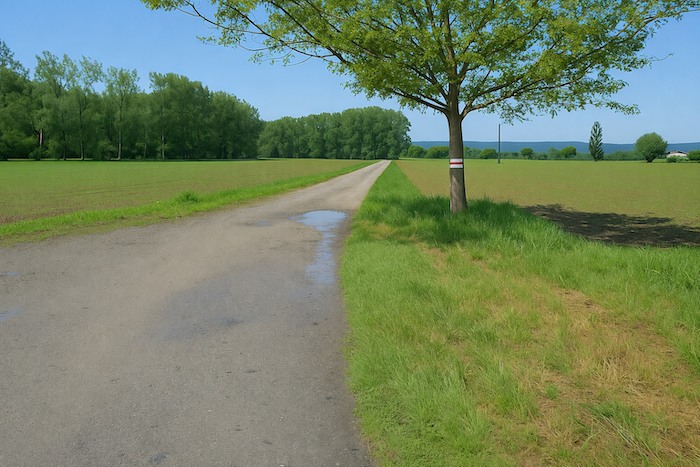
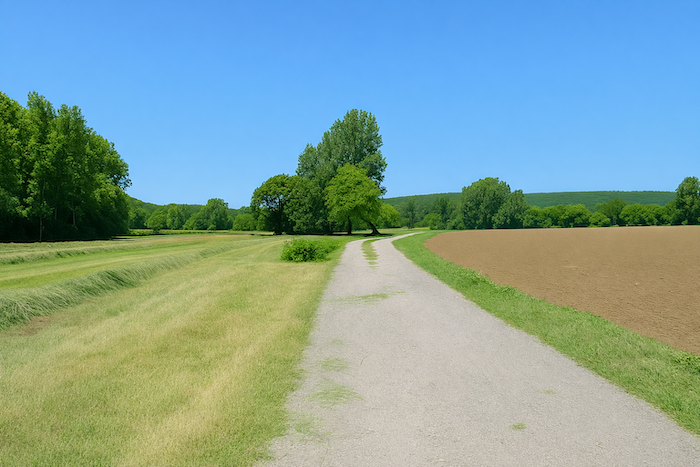
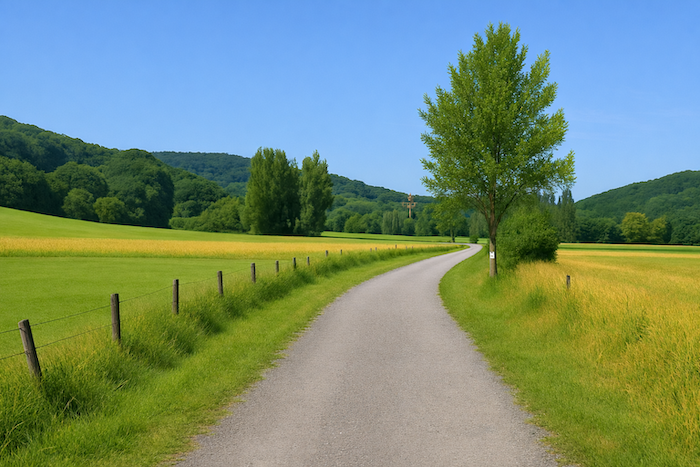
Along the banks of the deep, restless river a broad plain opens in a quiet clearing. Tall grasses sway in the breeze, forming a moving mosaic of green and gold. In places small groves offer shade, cool refuges for the eye and the mind. The place seems outside time, inhabited only by light and the murmur of water. |
|
 |
 |
 |
 |
|
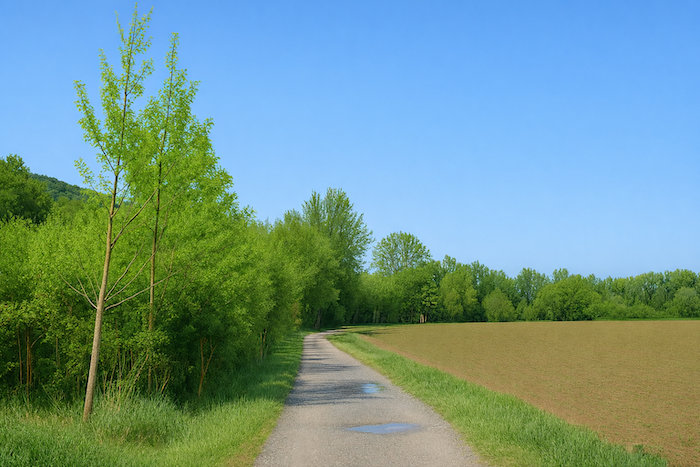
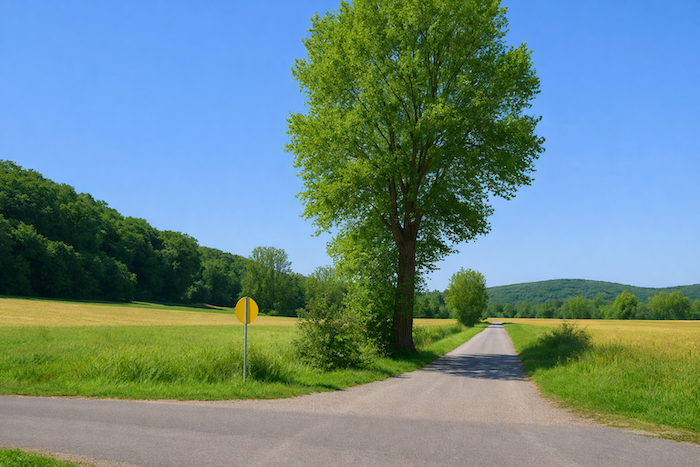
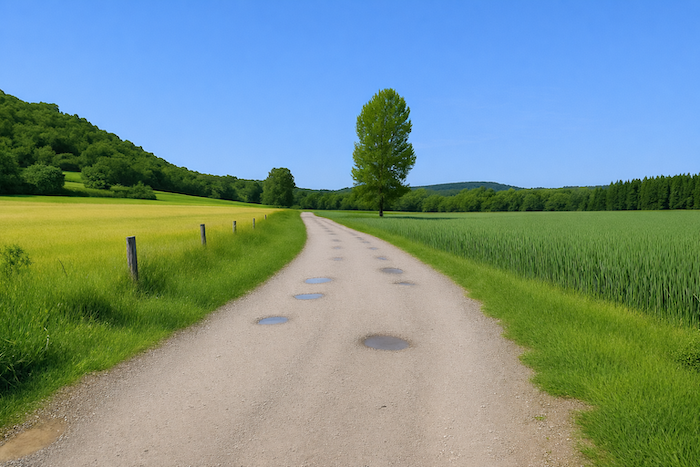
Farther on the path hesitates, wavering between clearings and woodland. At times it approaches the river as if to listen to its song, then moves away again, drawn toward the shade of the trees. The walking here is peaceful. |
|
 |
 |
 |
 |
Section 5: Gentle undulations between countryside and groves
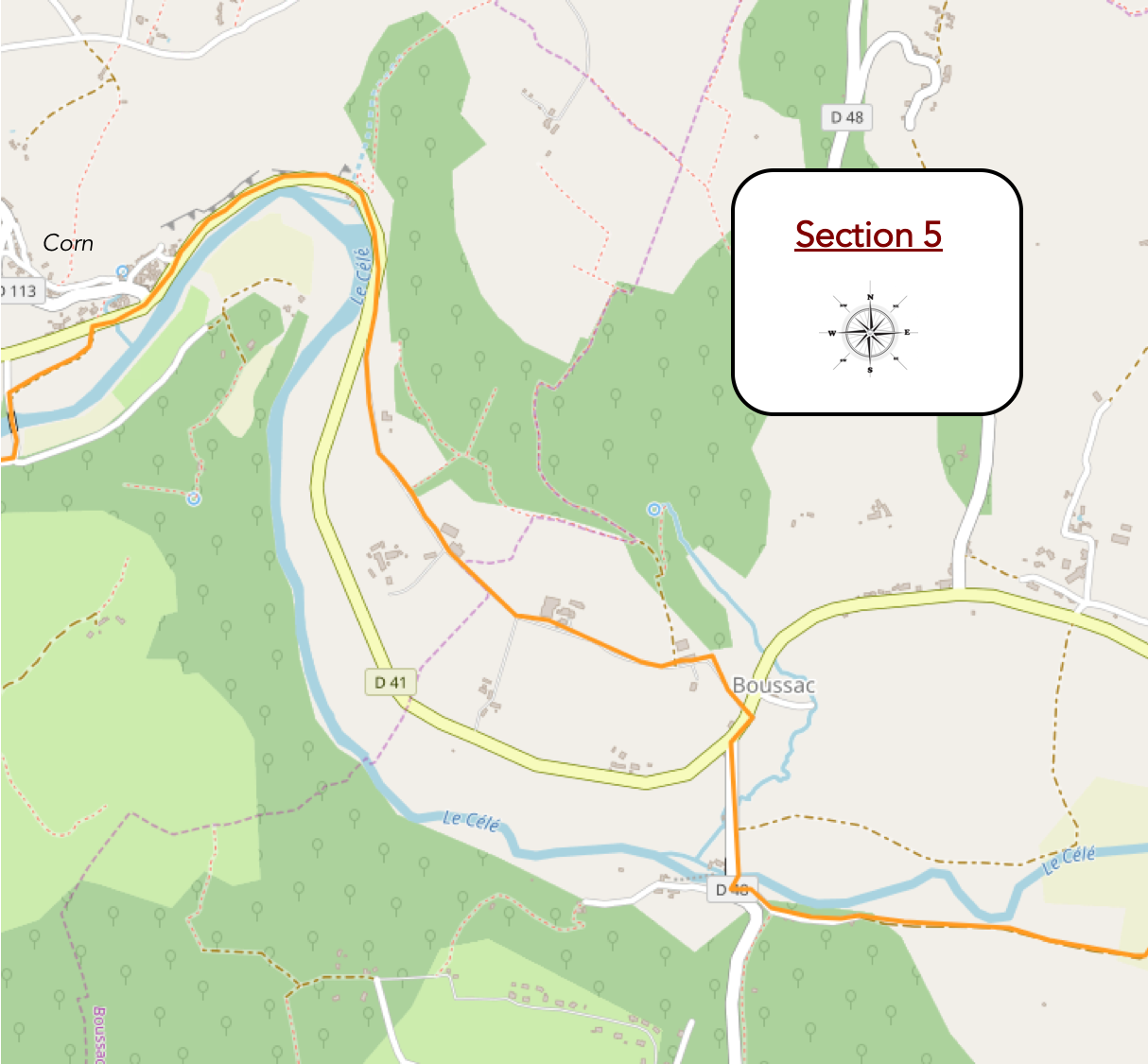
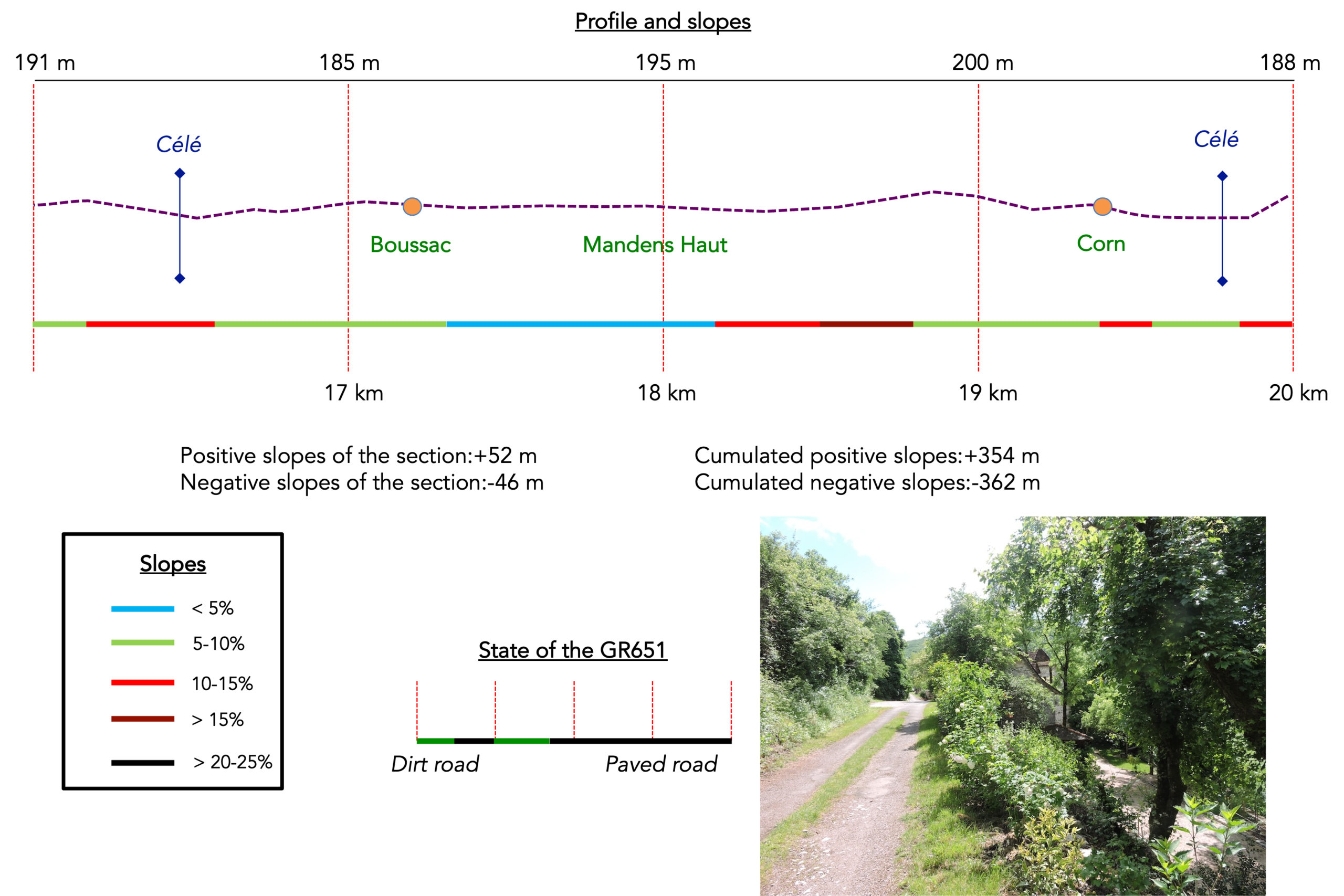
Overview of the route’s challenges : an easy course with occasionally slightly steeper slopes, though brief.
|
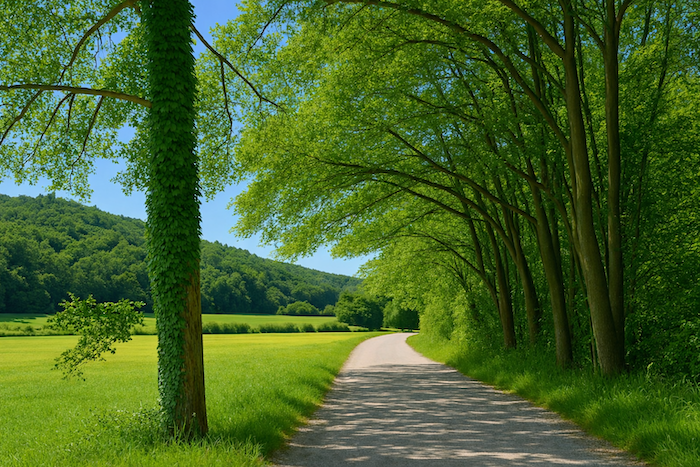
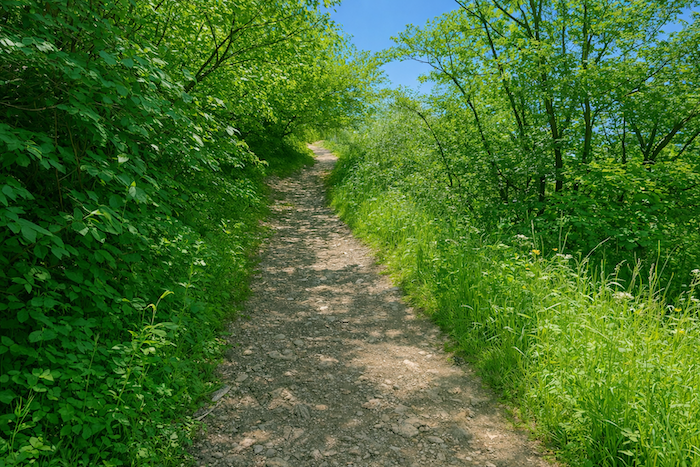
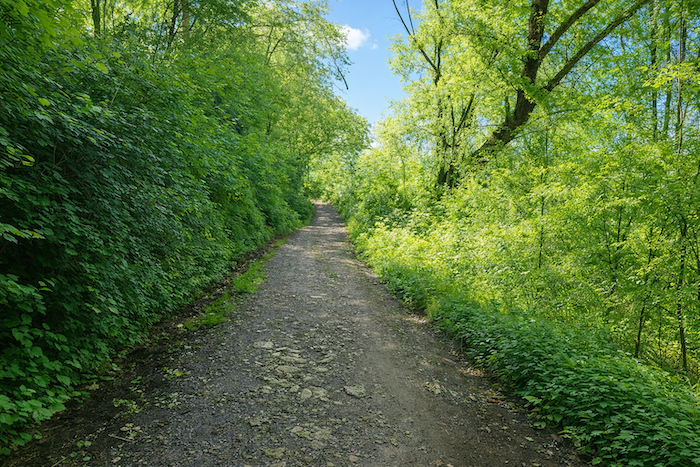
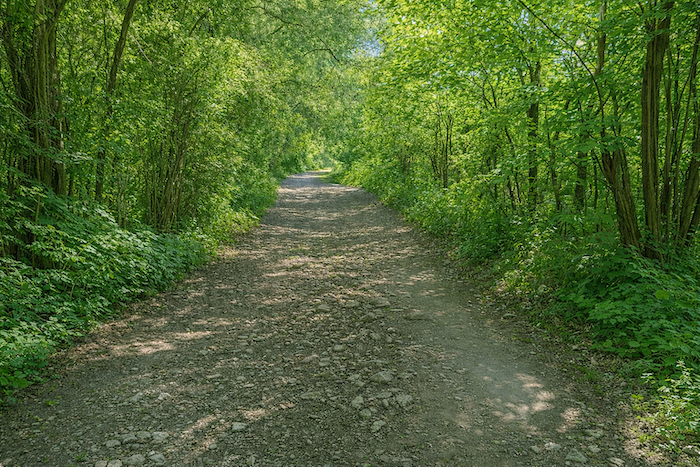
The dirt path stretches onward, a faithful companion of the Célé, brushing past the river for kilometres. It clings to it like a thread of clay between two worlds, bordered by short grass and stones once rolled smooth by the water. As one approaches the bank, the ground grows rough with pebbles, hardening as if to remind the walker that the river is never far away. Majestic and countless oaks raise their quiet ranks in the wind. Around them gather chestnut trees, beeches with deep foliage, hornbeams and maples with fine branches, and alders, guardians of damp ground. Closer still to the water stand the ash trees, straight and pale, lending the scene a discreet and almost melancholy nobility. |
|
 |
 |
 |
 |
|
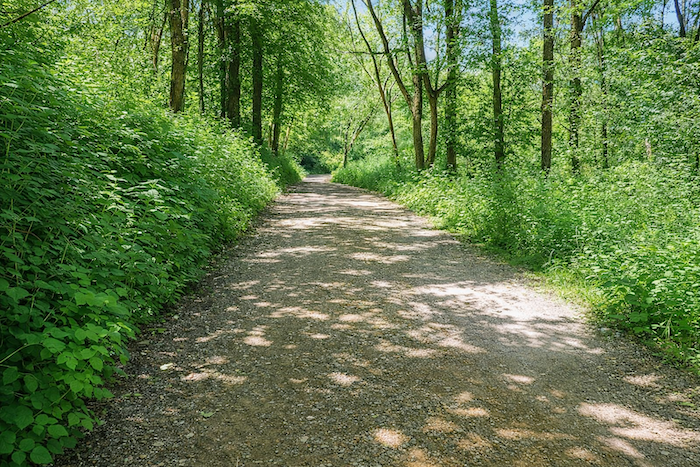
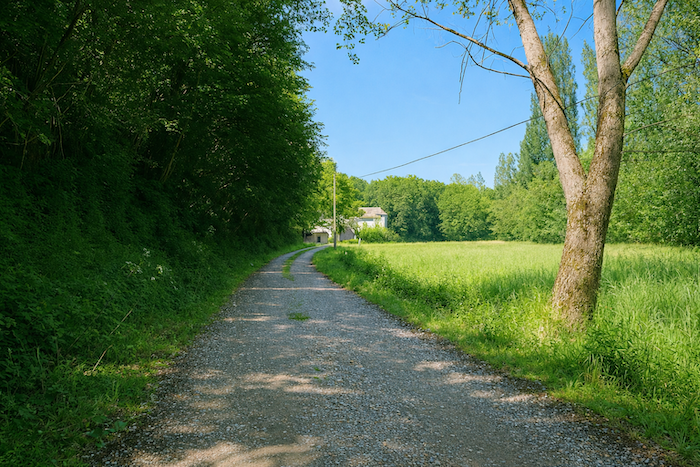
Soon the river is sensed before it is seen, a breath of cooler air, a murmur beneath the leaves, the damp scent of roots. This is the place called La Fraîchière, a name that speaks for itself. Ash trees abound here, their smooth trunks catching the filtered light of the undergrowth. You feel the calm of places where water and earth have long lived in quiet harmony, like two breaths that understand each other. |
|
 |
 |
|
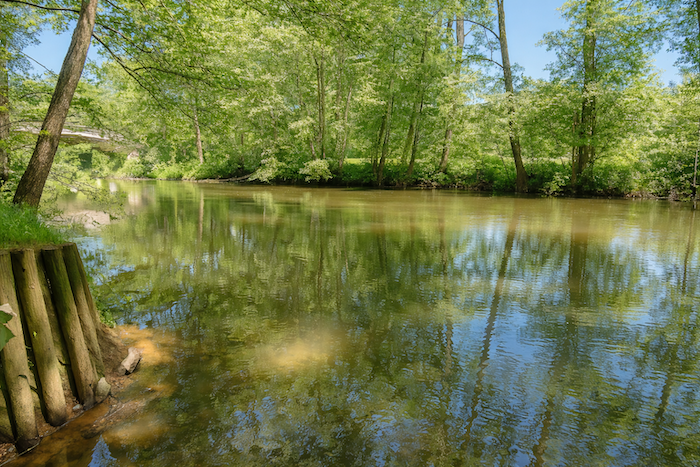
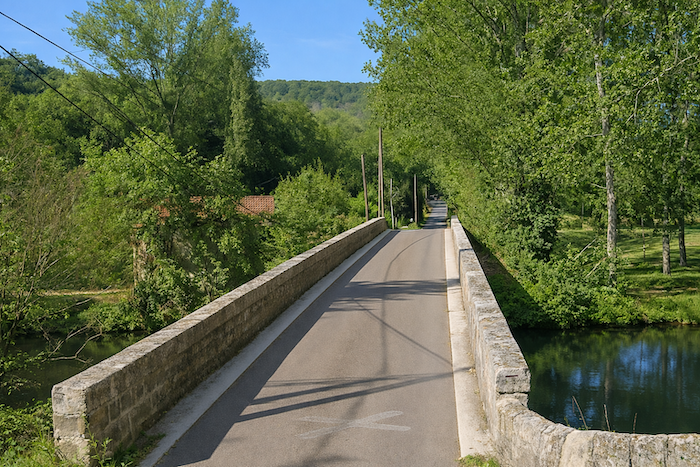
A little farther appears the “Pont de la Mouline”, a stone arch linking the two banks like an outstretched hand. The setting is delightful, almost magical, as if sounds and colours were suspended in the air. Sometimes the waters of the river, heavy and dark, take on inky reflections beneath the low sky, then suddenly brighten into a green glow when a ray of light pierces the canopy. The vegetation here knows neither season nor restraint, it simply triumphs. |
|
 |
 |
|
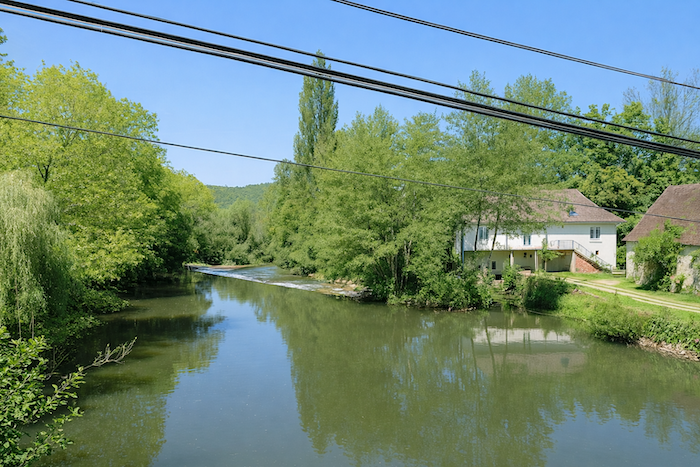
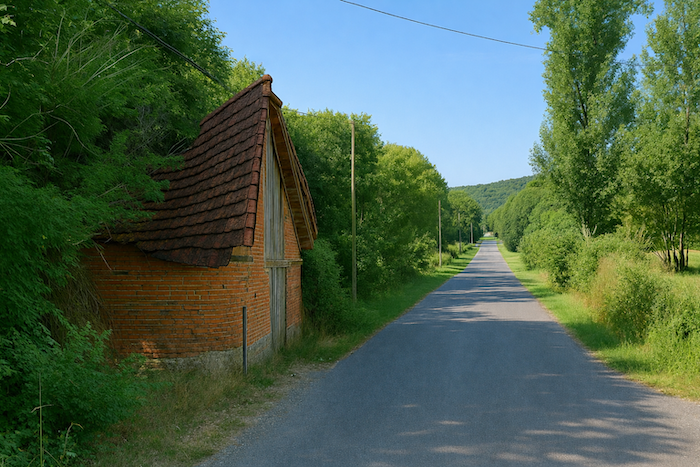
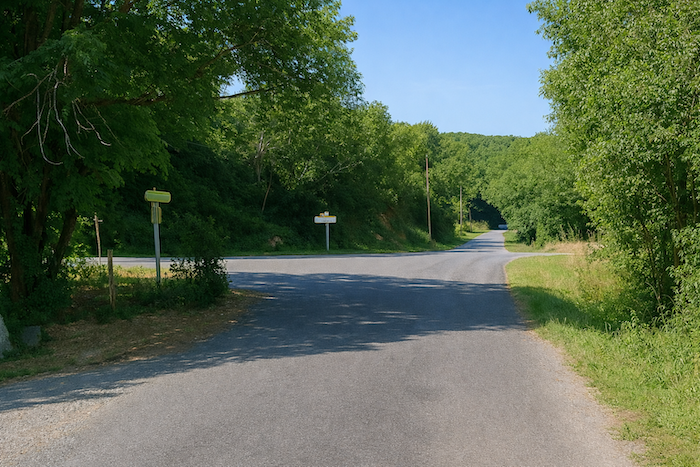
After crossing the river near La Mouline, the asphalt road returns, winding gently toward Boussac. It undulates between fields and hedges as if still following the slow breathing of the river. The pace becomes calmer and the sounds more distant. Boussac soon appears, nestled in the hollow of a meander. |
|
 |
 |
 |
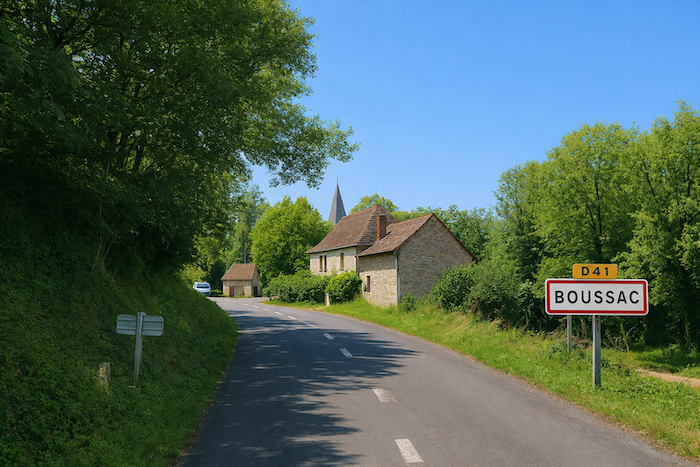 |
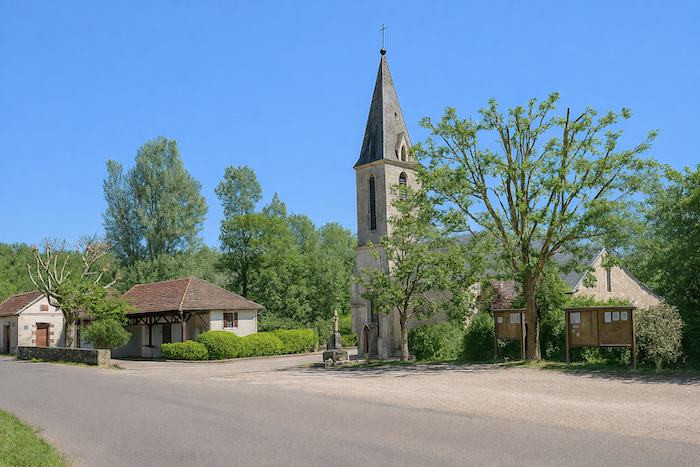
Its small church, standing in the middle of the crossroads, seems to hold the balance of the world around it. At this hour the D41 road that crosses the Célé valley remains empty, here time never hurries.
|
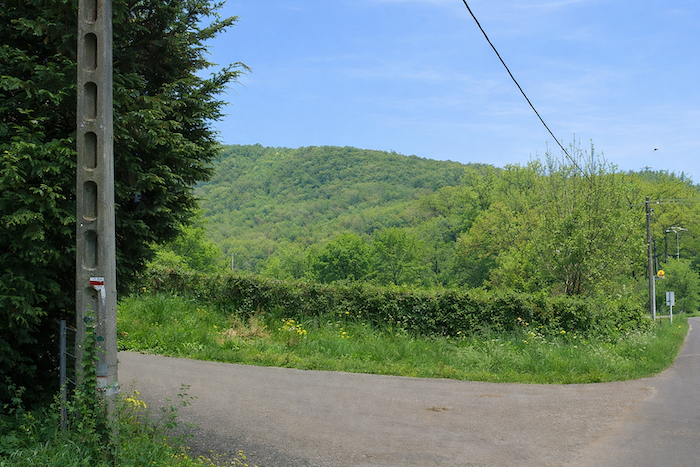
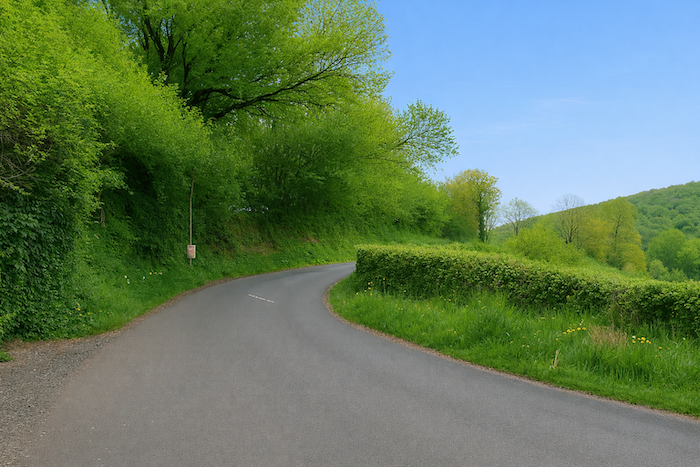
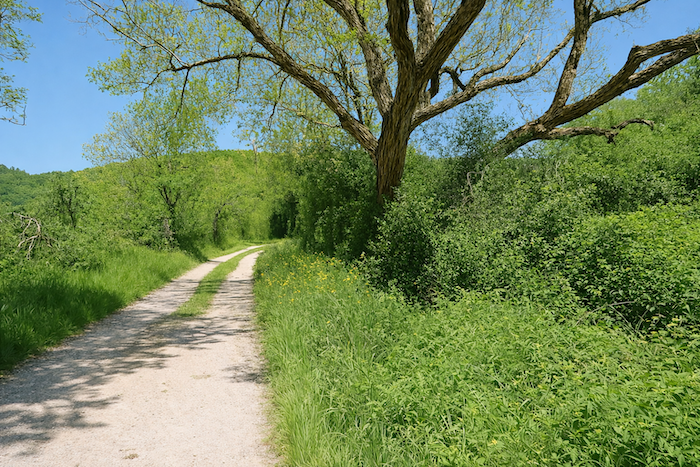
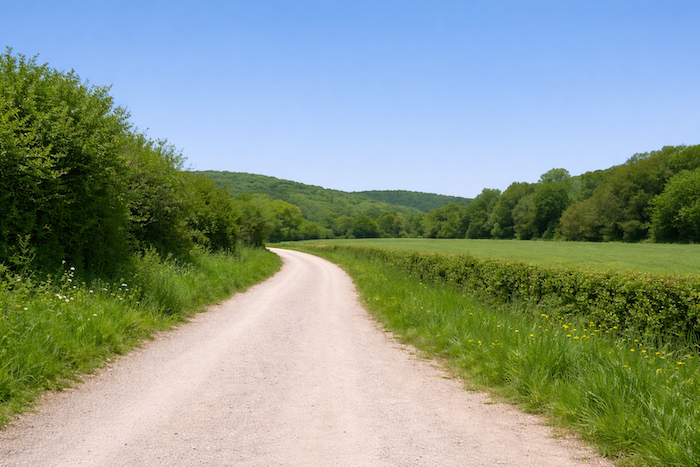
At the exit of the village, the GR651 climbs gently toward Corn, first along a ribbon of asphalt and then along a wide dirt path bordered by dense hedges where young ash trees and oaks intertwine their foliage. |
|
 |
 |
 |
 |
|
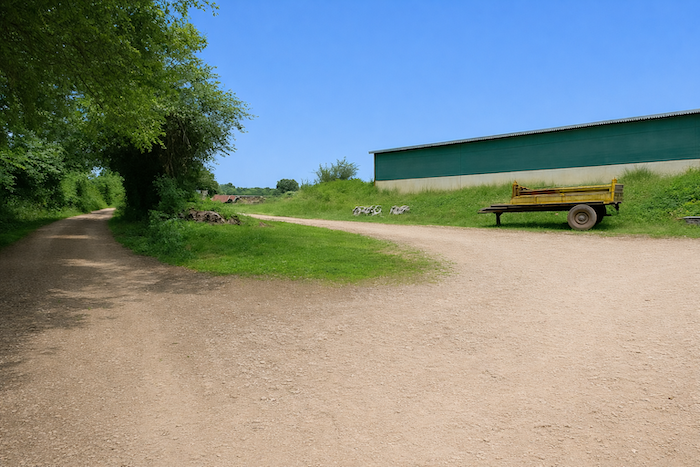
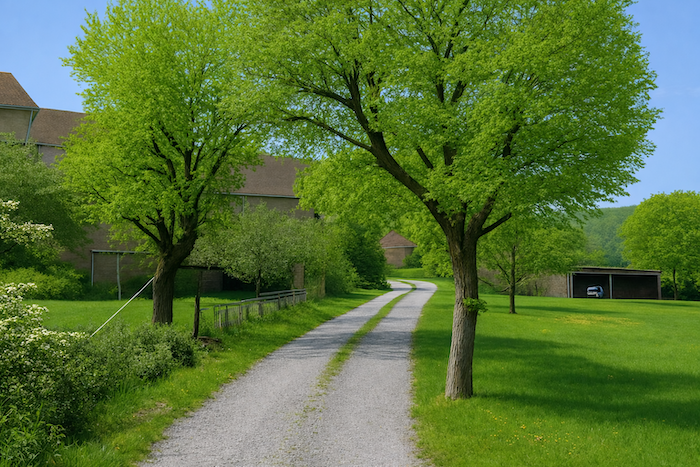
The GR651 then runs through tiny hamlets, scarcely more than a handful of houses, small as handkerchiefs, which together form the commune of Mandens. Everything here breathes true countryside life, whitewashed walls, faded shutters, gardens and meadows. The place smells of peace, of the slow rhythm of days, of the authenticity of a world that does not rush. |
|
 |
 |
|
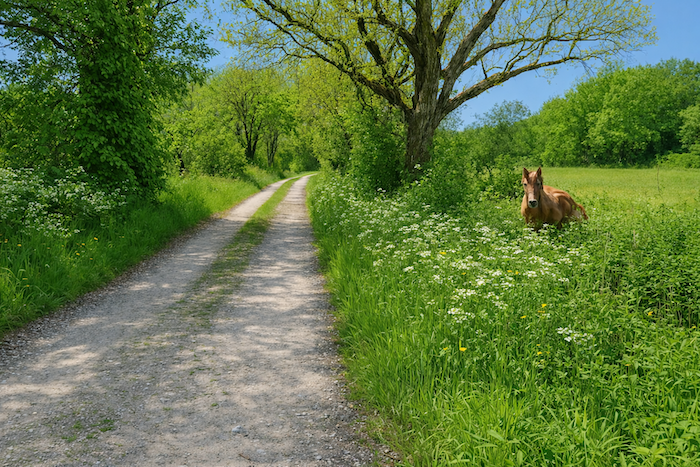
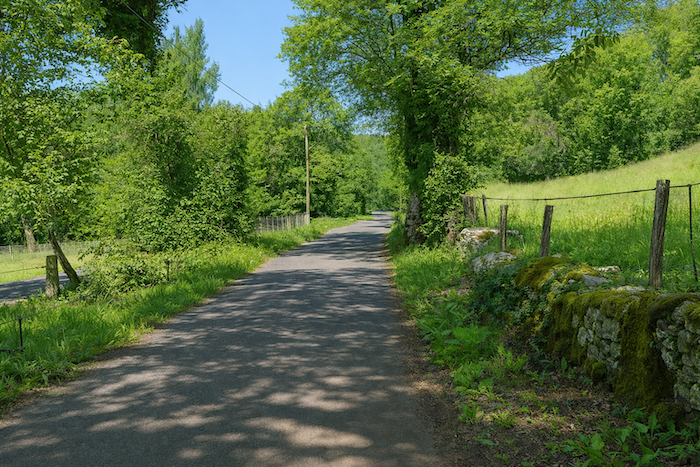
Soon the asphalt returns on a small road descending again toward the river. |
|
 |
 |
|
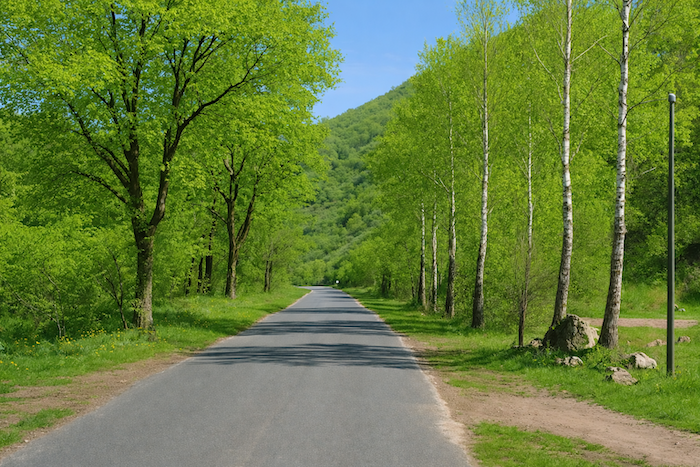
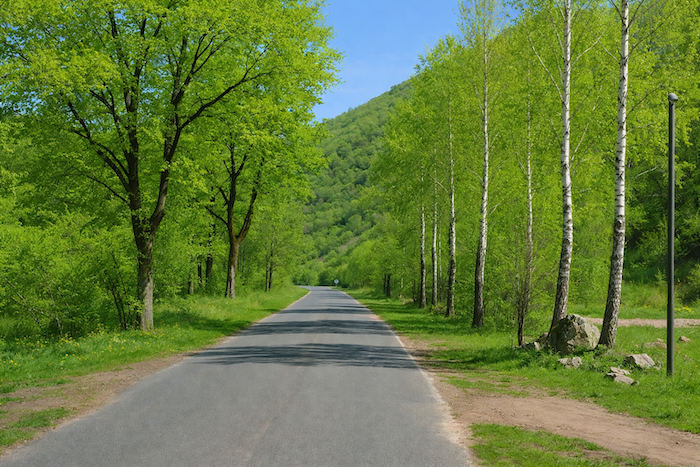
This narrow country road reaches the departmental D41 road, the modest artery of the valley. The sound of the river, at first distant, grows nearer and becomes a deeper song. |
|
 |
 |
|
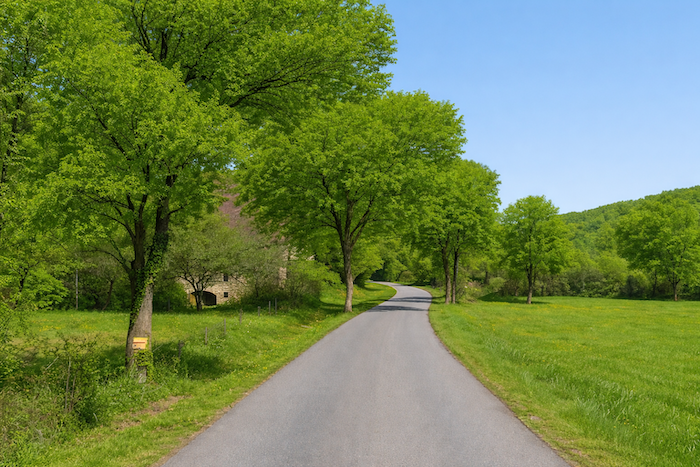
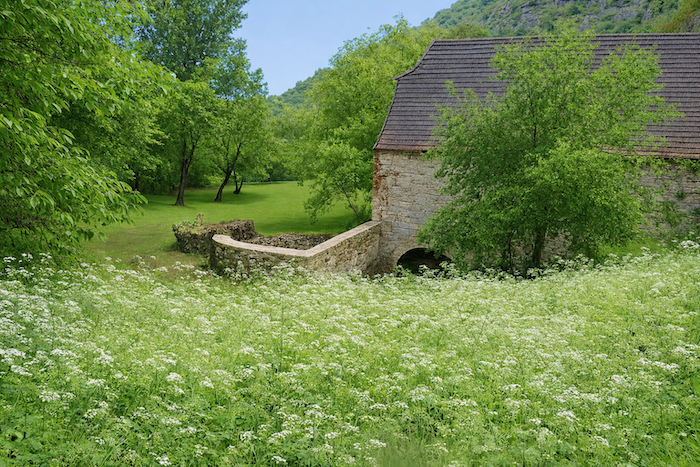
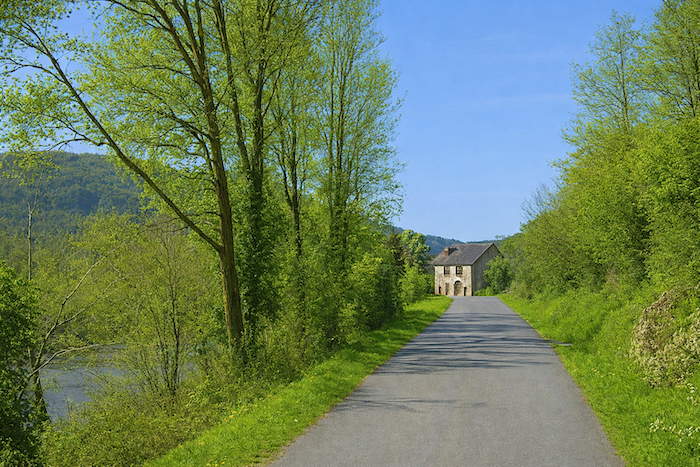
The road now runs along the base of the cliffs. Corn can be glimpsed, enclosed within the valley, tiny beneath the vast limestone walls. An old mill, the “Moulin de Cavarrot”, still sleeps beside the river. Its mossy walls and silent wheel tell better than any book the patience of time and the gentleness of earlier days. The entire place seems made for a pause, to listen to the murmur of the past beside the flowing water. |
|
 |
 |
|
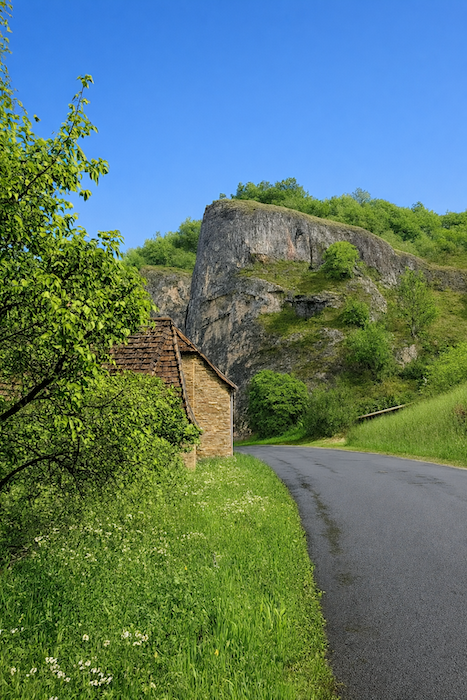
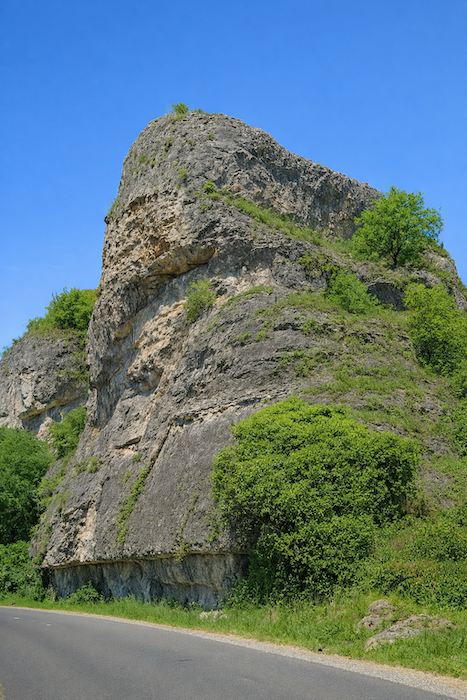
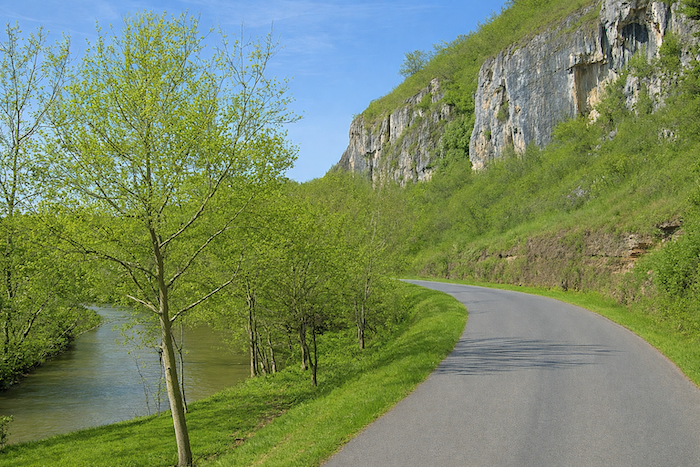
The river, pressed against the rock face, leaves room only for the road and a few clumps of grass. Here the earth turns reddish, stained with iron. The limestone, ever present, crumbles and rises, while small stubborn oaks cling to it like prayers rooted in stone. The rocks close around the valley like the arms of a sleeping giant, sheltering the village within their mineral hollow. |
|
 |
 |
|
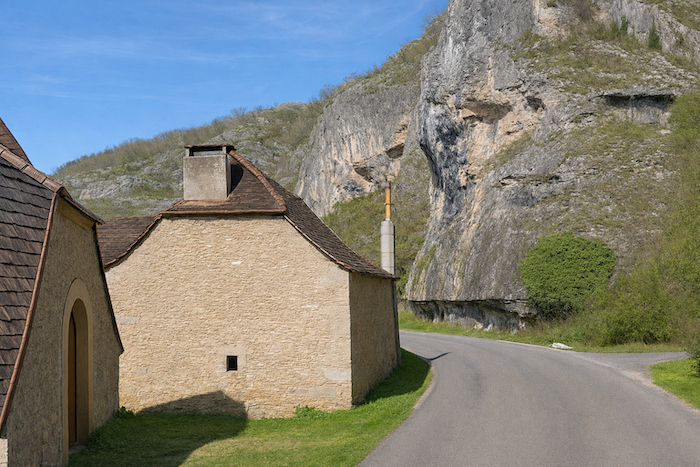
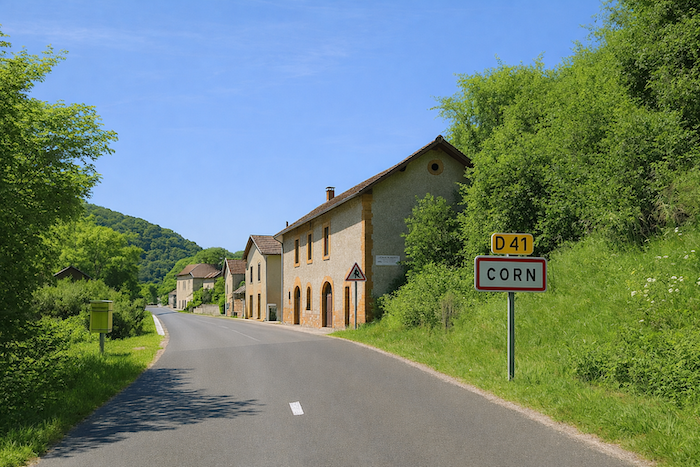
Soon the road reaches Corn, whose feet are almost literally bathed by the Célé. |
|
 |
 |
 |
 |
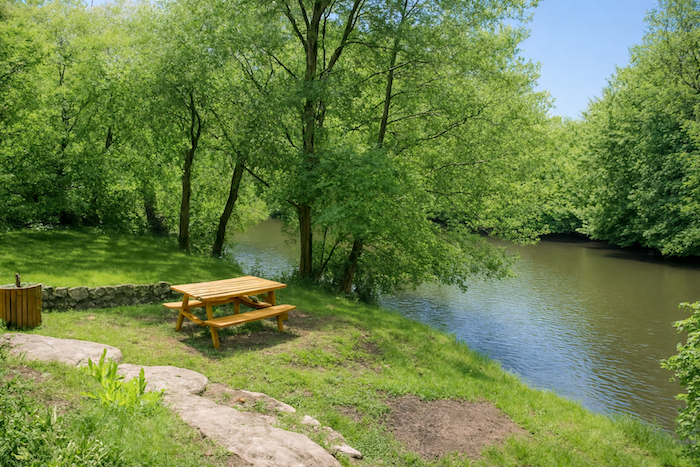
Here a small park and a picnic area invite the walker to rest. The air is cool, the water murmurs nearby, and the cliffs rising behind add a simple majesty to the setting.
|
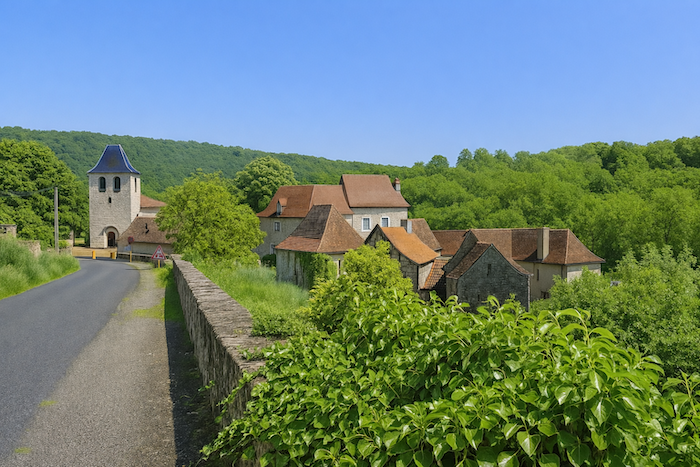
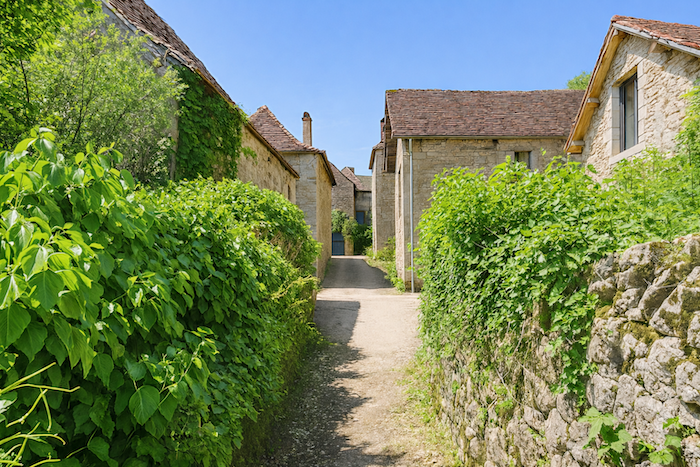
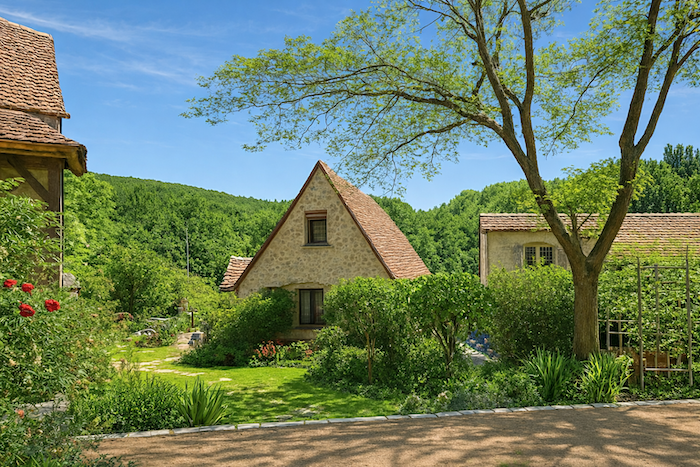
Corn, a charming village, lies nestled in a setting of steep and rugged cliffs. One wonders why the people of earlier times knew how to give such grace to stone, while our modern buildings so often struggle to move the heart. The houses of grey and golden limestone gather around the church, pressed together along the narrow lanes as if afraid of losing human warmth. |
|
 |
 |
|
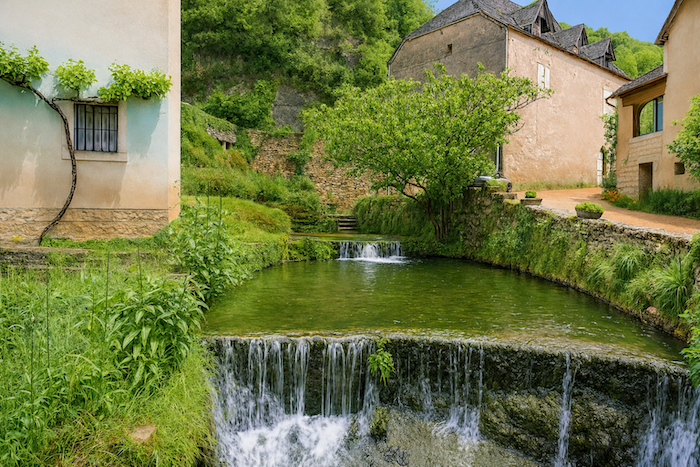
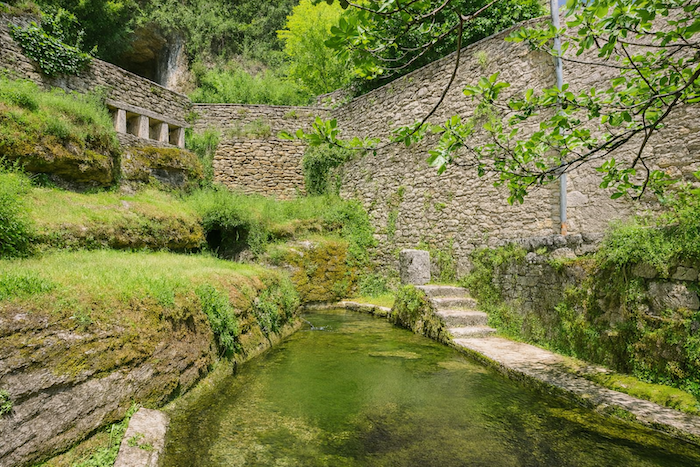
A small torrent rushes through the centre of the village, leaping between the stones. It runs lively and clear, like a laughing child. Everything here seems animated by a secret breath, the water sings, the walls breathe memory, flowers spill over the stone walls. It is magical in the fullest sense of the word. |
|
 |
 |
|
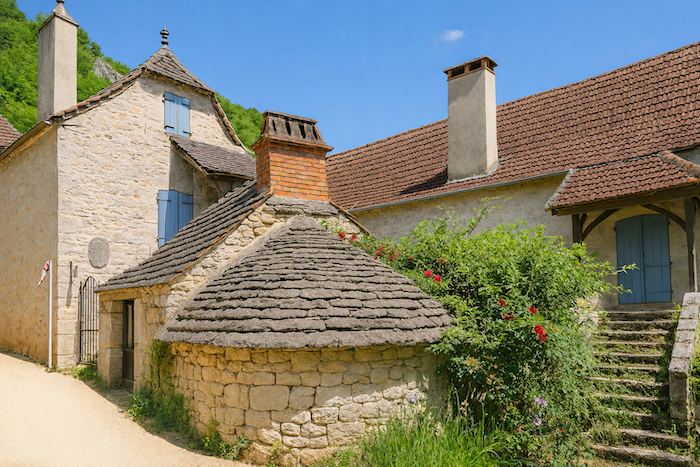
The houses of Corn still preserve medieval façades, sometimes leaning slightly, sometimes cracked, yet always noble. As one passes through, it is hard to imagine that in the Middle Ages four lordships disputed these lands, and that a castle, now vanished, once watched over the village like a falcon above its nest. |
|
 |
 |
|
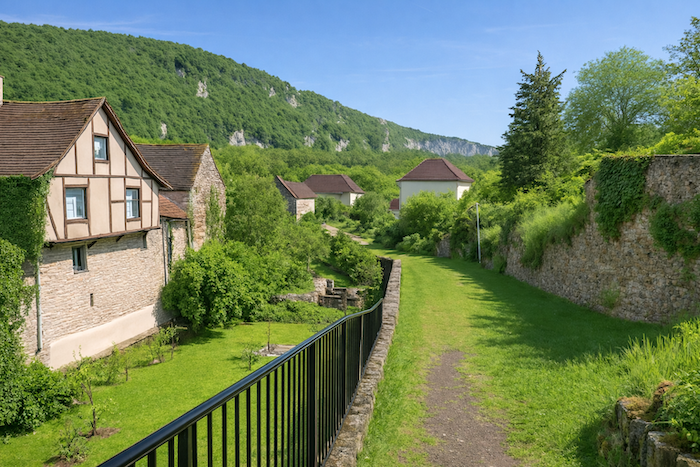
At the exit of the village the torrent still runs beside the houses with their overhanging façades before slipping into the grassy slope and joining the river farther below, where the valley opens again beside the D41 road. |
|
 |
 |
|
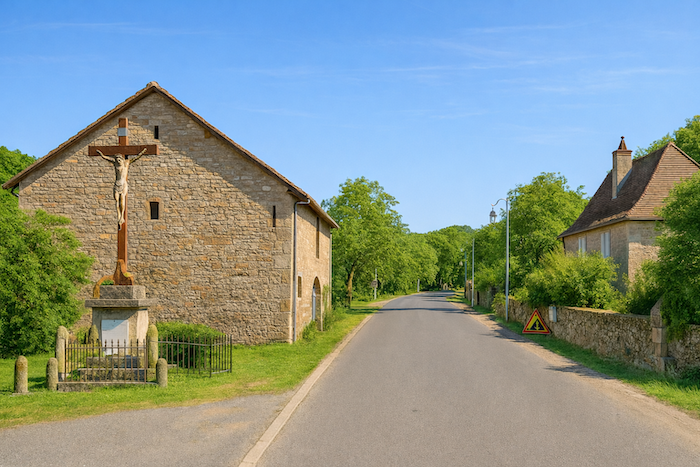
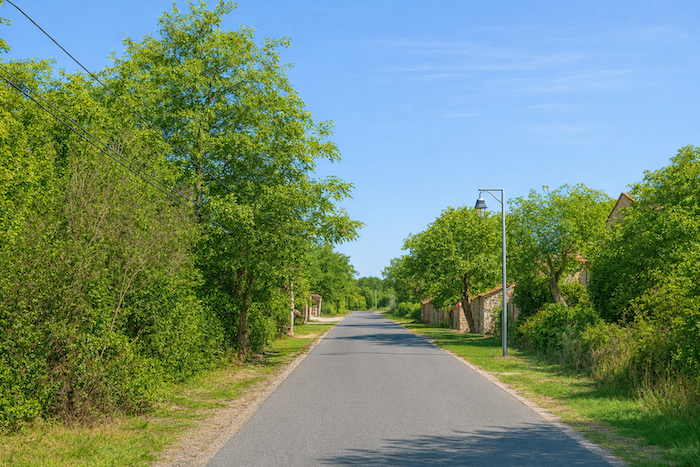
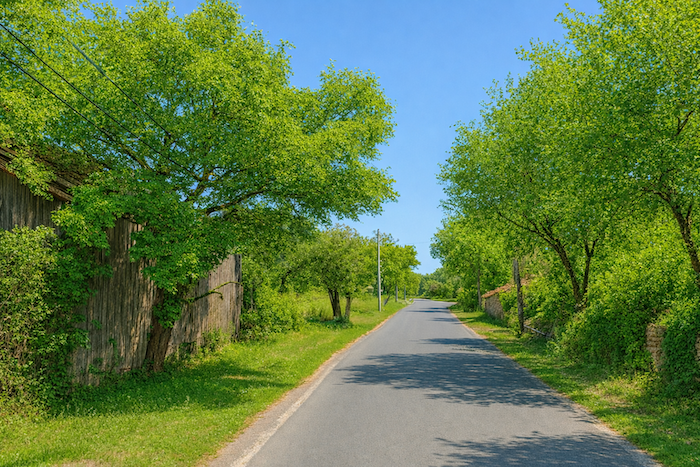
The route then follows the departmental road past the last houses of the village. |
|
 |
 |
|
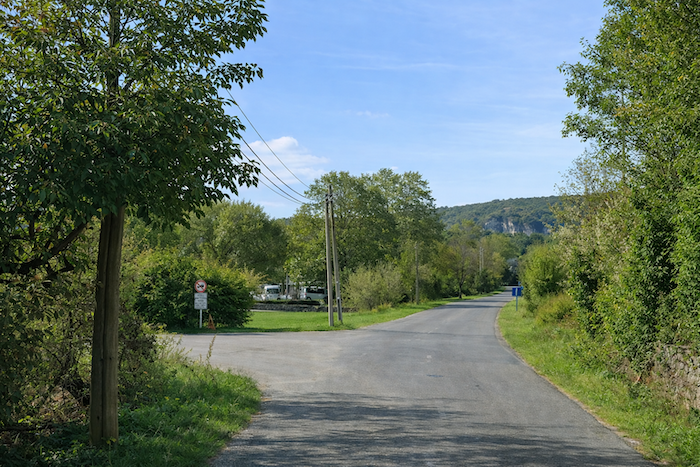
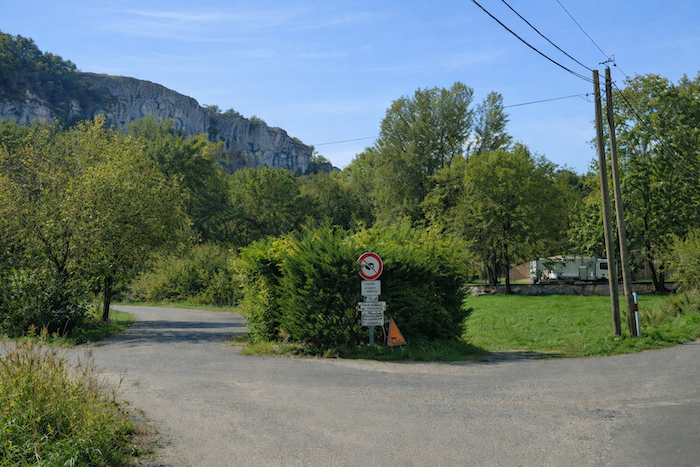
Only for a few hundred metres, just long enough to catch one’s breath, before turning again toward the river along a secondary road. |
|
 |
 |
|
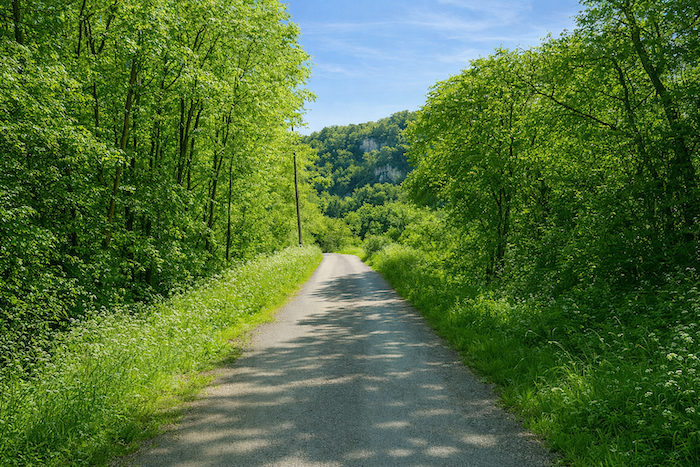
A straight stretch leads the walker back to the river at an old stone bridge. |
|
 |
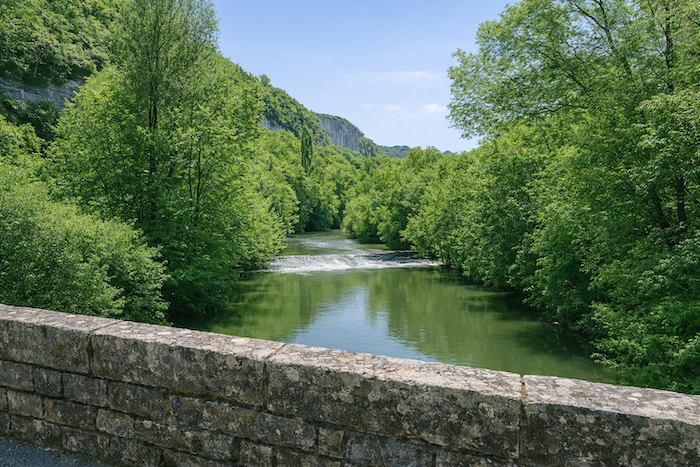 |
| The road crosses the river and reaches the opposite bank in a landscape that has become wild again. Oaks, vigorous Robinia trees and tall ash trees lean over the water as if looking at their own reflections. Light slides across the current, catches on the branches, and everything seems to vibrate, the river, the leaves, even the air itself in a living harmony at the foot of the cliffs.
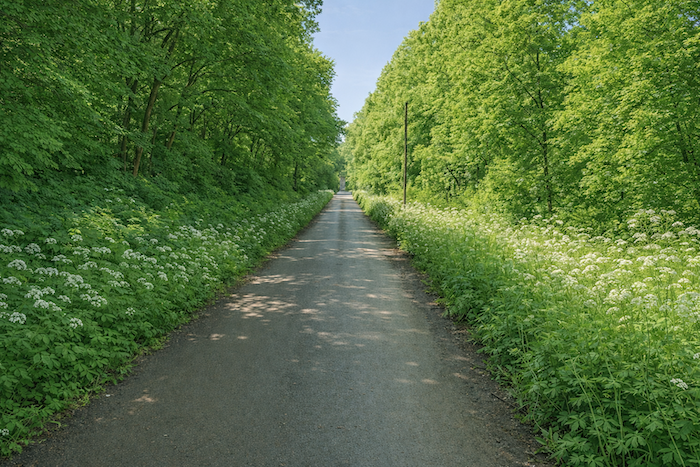
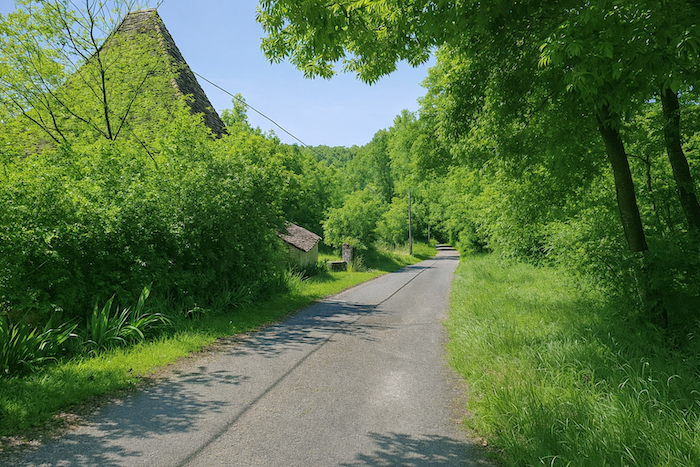
A steady but rather gentle climb begins along the asphalt through woods suspended above the river. The slope, long and continuous, winds beneath oaks, maples, slender chestnut trees, hedges and tall grasses. The breath grows a little shorter, yet the beauty of the place, an alliance of strength and softness, erases the walker’s fatigue. |
|
 |
 |
Section 6: Ups and downs above the Célé River
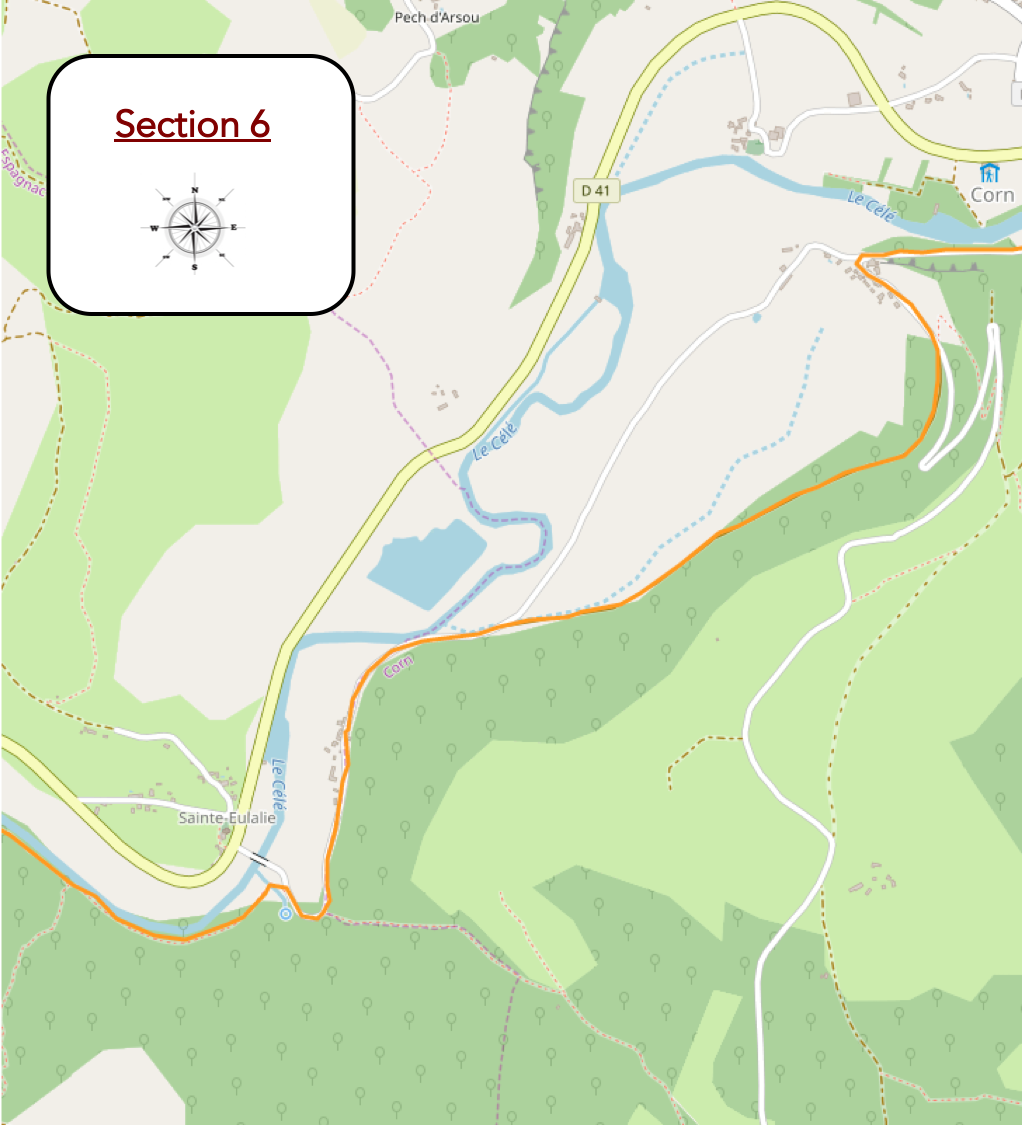
Overview of the route’s challenges : a rather tiring course with occasional steeper slopes.
|
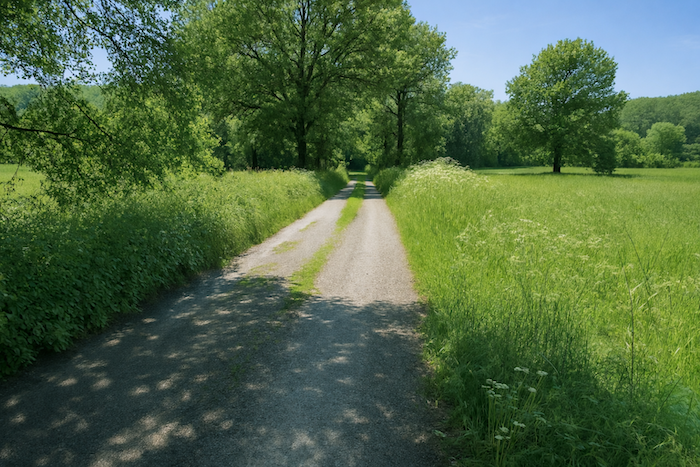
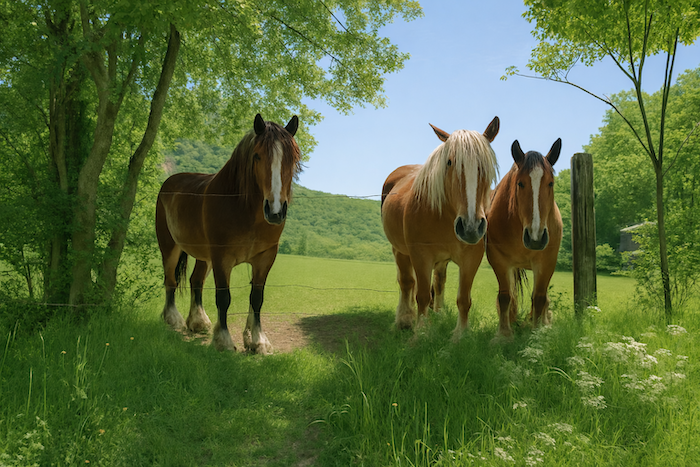
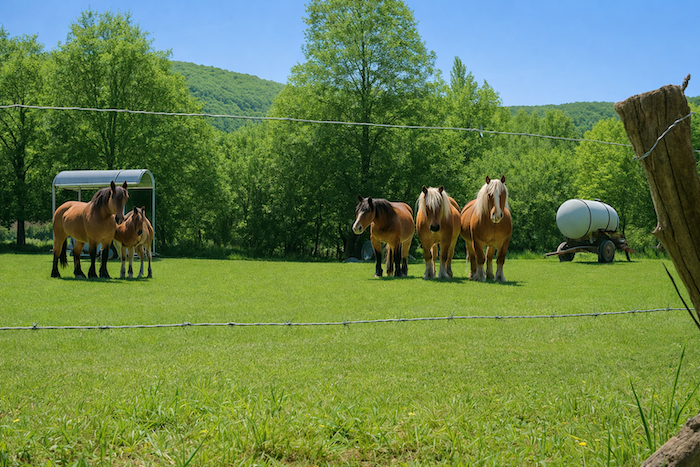
Farther on, the road slowly yields to the descent, slipping between the embankments toward the plain near the place called Goudou. The landscape widens, the air opens, and the Célé becomes once again a quiet and calming presence. You already feel the broad breathing of the valley, that slow rhythm which expands the heart and invites the walker to slow down. In the plain the hand of people is visible in the fenced meadows, barns with reddish roofs and fields dotted with peaceful animals. Livestock farming sets the rhythm of life here, simple and faithful to the land. Heavy draft horses, with thick manes and lively eyes, approach the roadside with calm curiosity, as if greeting the traveller and sharing a moment of silent understanding. |
|
 |
 |
|
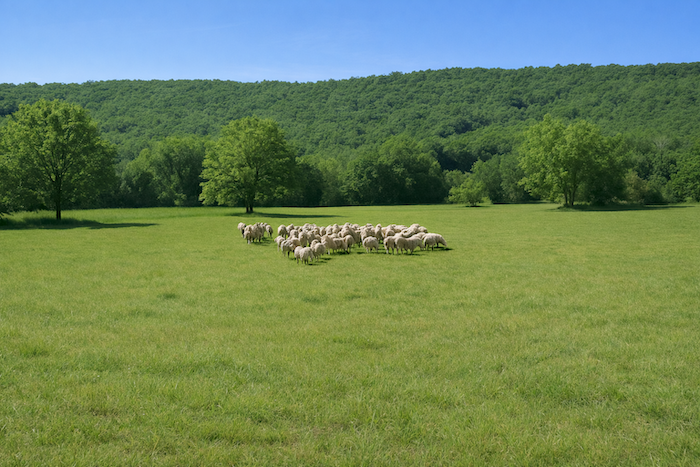
Wide clearings open among groves of deciduous trees, like pools of light surrounded by shade. Sheep graze eagerly there, gathered in small white clouds at the foot of the oaks. Farther on, cows of the Salers breed rest lazily in the grass, large reddish ladies with shining coats stretched beneath the sun. Their presence, both proud and gentle, has the quiet majesty of old nobility. Their lyre shaped horns rise toward the sky like a silent tribute. In the Lot one more often encounters the robust Aubrac breed, but the Salers, rarer here, impose their rustic beauty, almost archaic, like a living memory from another age. |
|
 |
 |
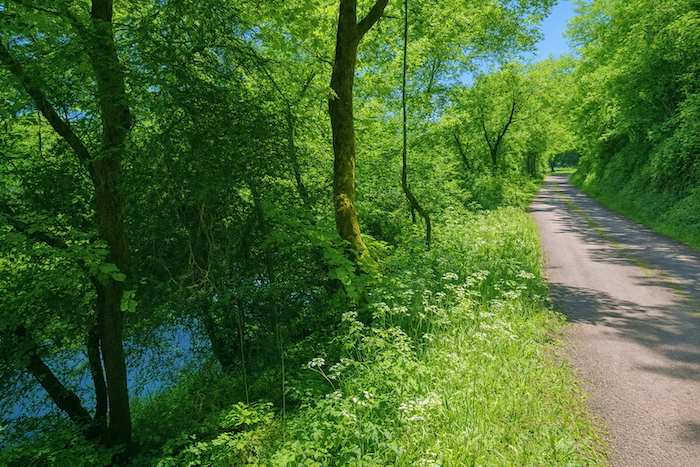
The road seems to drift into reverie, wandering along the gentle undulations of the plain. It follows the breathing of the ground, climbing a little, descending again, gradually approaching the bed of the river. There the sycamore maples cast their wide shade, while old chestnut trees stripped by time stretch their bare arms toward the light. They seem to watch over the passage, witnesses of a time when forests covered the entire valley.
|
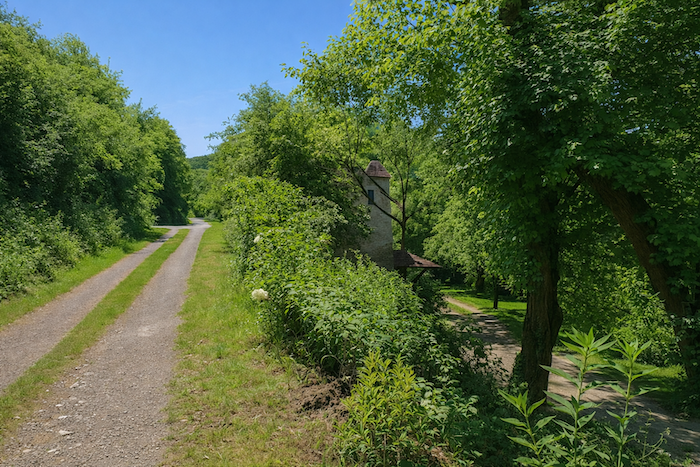
The GR651 then slopes up again, rising above the Célé toward Rian, a tiny hamlet clinging to the hillside. A few scattered houses, a garden invaded by nettles, a wall slowly collapsing, and that is all. Rian is a suspended place, both absent and present, like a heartbeat in the middle of nowhere. Here the wind speaks louder than people. |
|
 |
 |
|
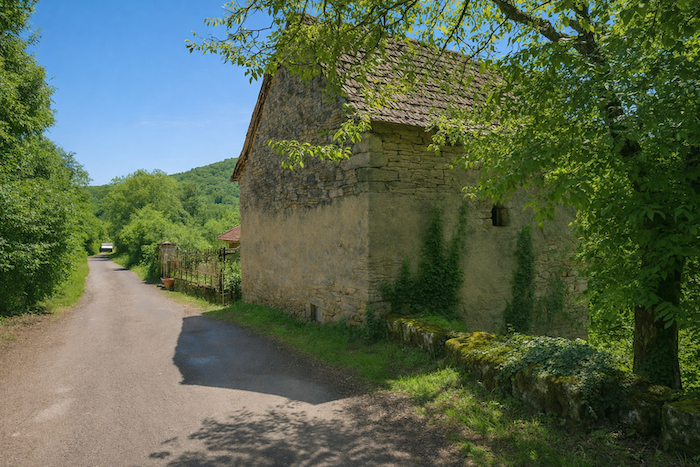
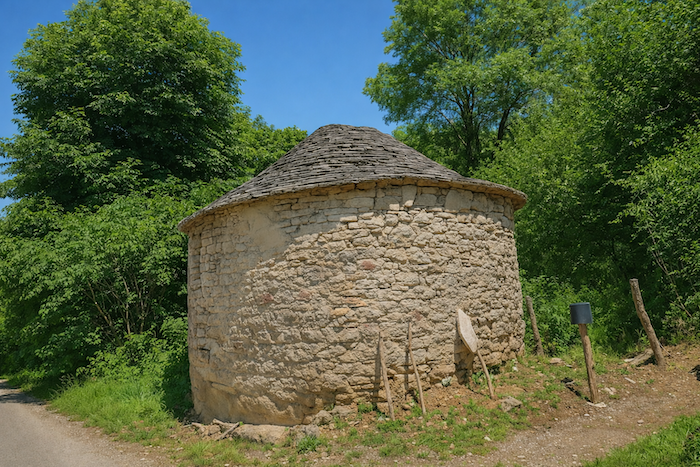
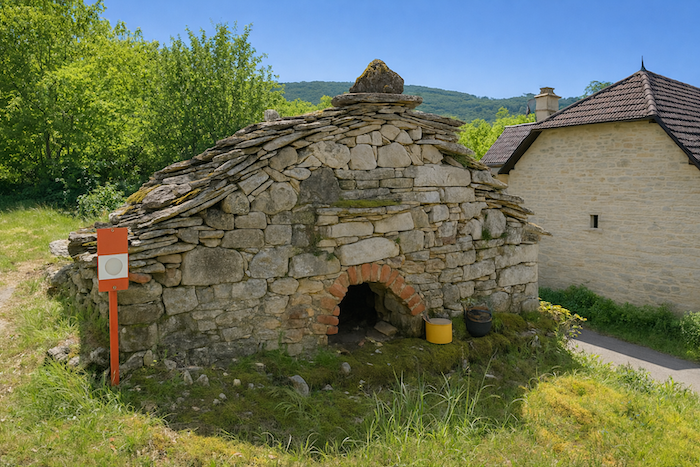
At a bend in the road an old bread oven appears, as if uncovered from the past. Its façade, cracked by the years, and its tired roof threaten to collapse, yet the stone still stands, perhaps out of dignity. Nothing is baked there anymore, but everything remains preserved, the poetry of everyday life, the memory of a fire, a smell, a shared loaf of bread. Even motionless, the oven still keeps the warmth of what it once was, the heart of a village. |
|
 |
 |
|
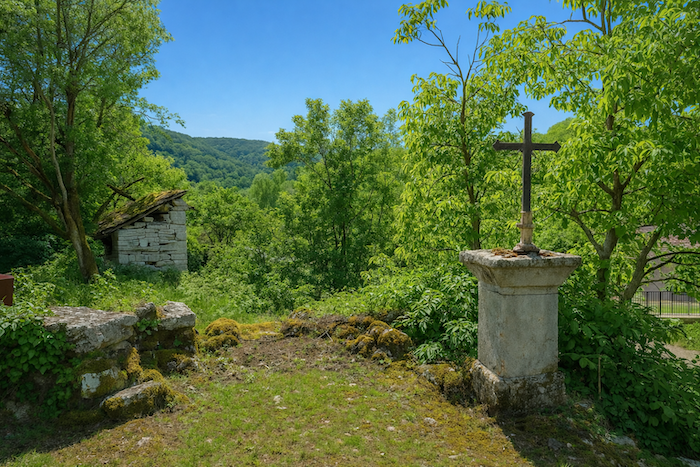
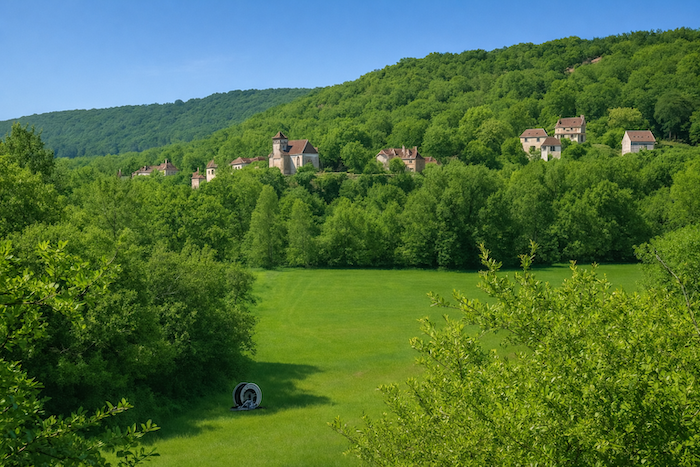
From Rian, around a bend in the road, the view suddenly opens. Opposite, on the other side of the river, Sainte Eulalie appears, peaceful and almost unreal in the light. The roofs gather around their bell tower as if beneath a protective hand. Between the two banks the river flows on, silver and indifferent to the passing of centuries. |
|
 |
 |
|
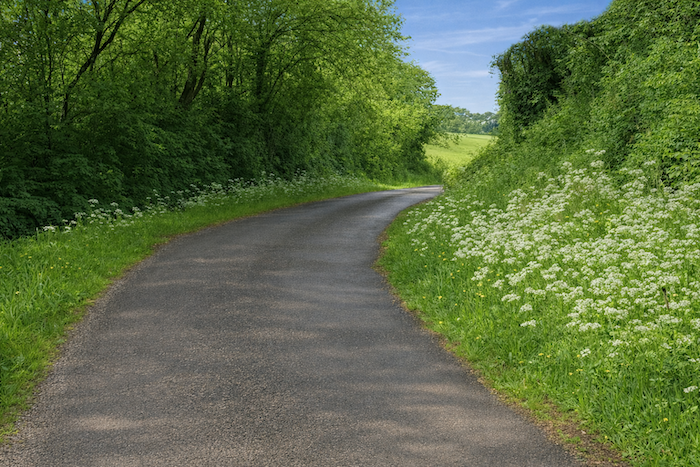
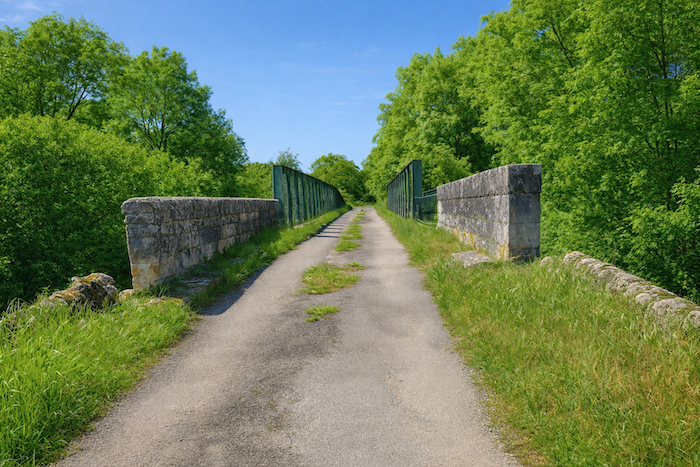
A road descends gently toward the water in the direction of the village. |
|
 |
 |
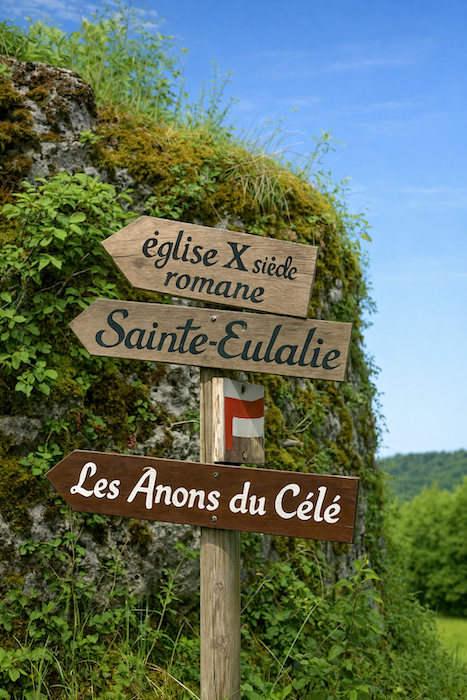
The GR651, however, bypasses the village and continues along its traditional course. Some hikers prefer to leave the route here to cross the river and reach the village, to visit its simple and beautiful church or to spend the night at “Aux Ânons du Célé”. You must then cross the water, and the journey suddenly takes on the feeling of a pause, a moment of rest and quiet.
|
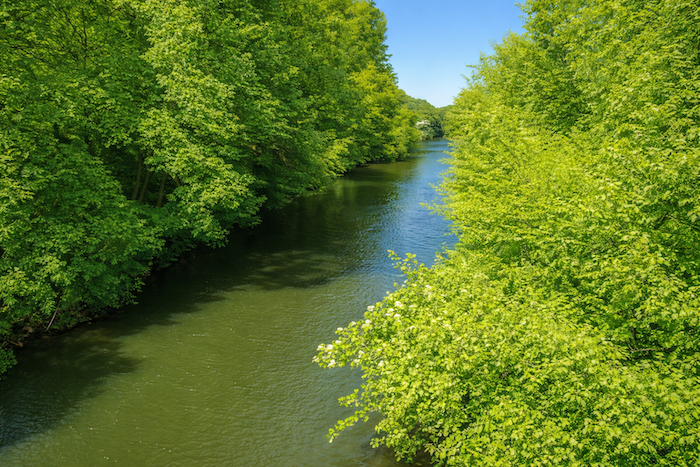
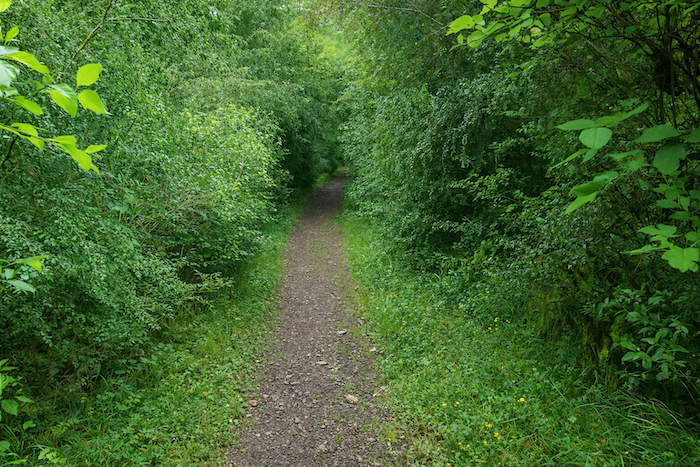
Near Sainte Eulalie the GR651 leaves the river and enters a deep woodland, following a small path that overlooks the river. |
|
 |
 |
|
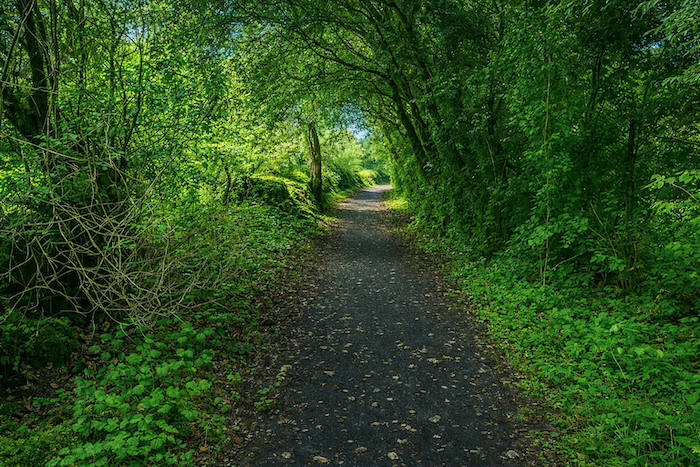
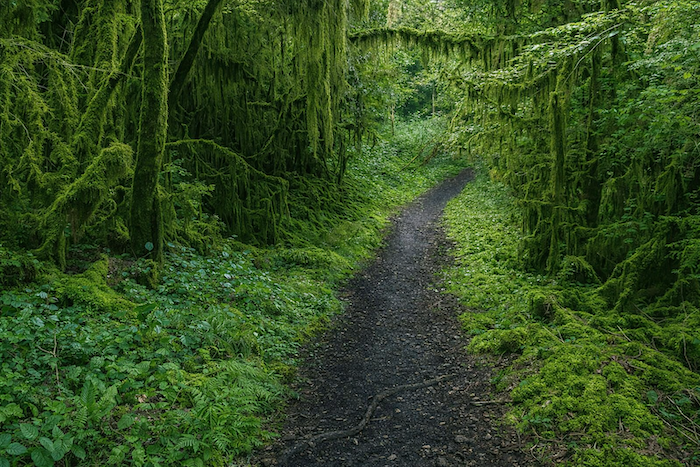
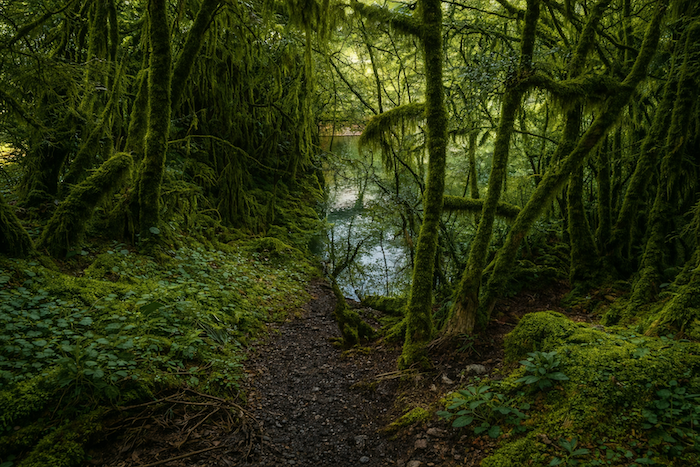
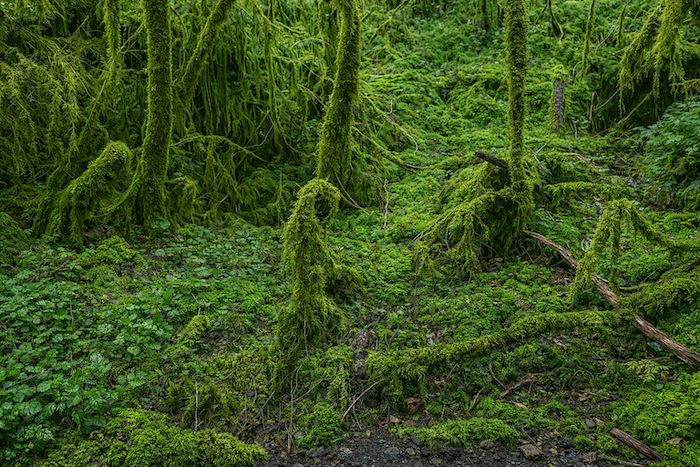
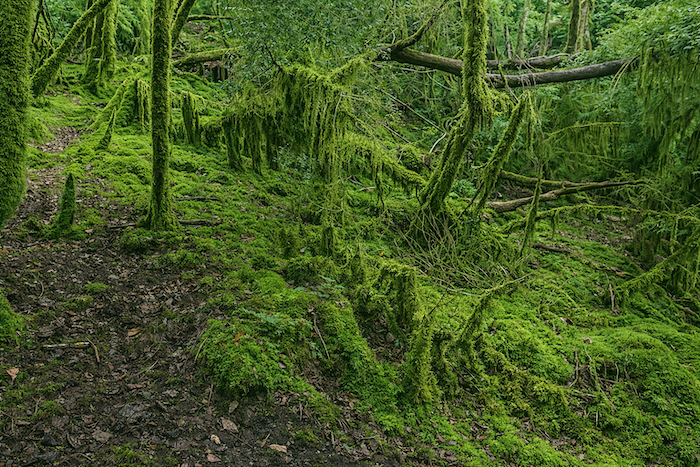
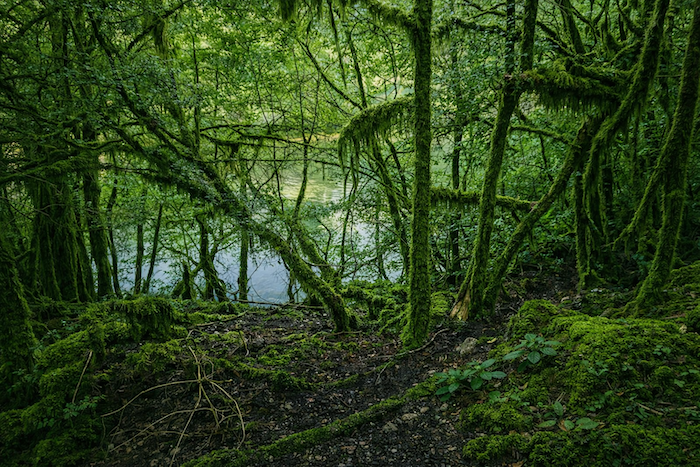
It is a primeval forest, dark and calming, both mysterious and magical. In places the path runs close to the edge of the slope, suspended between sky and river. One must walk attentively and with concentration, yet never with fear. Nature here does not threaten, it teaches. The air is cooler, the silence deeper, and the light falls in slanting threads through the leaves. |
|
 |
 |
|
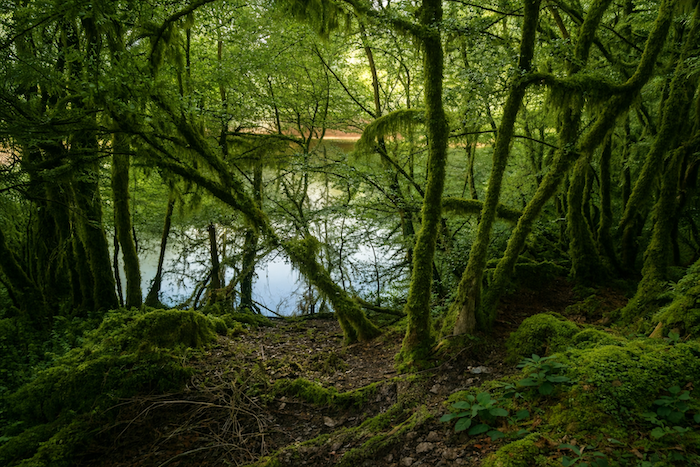
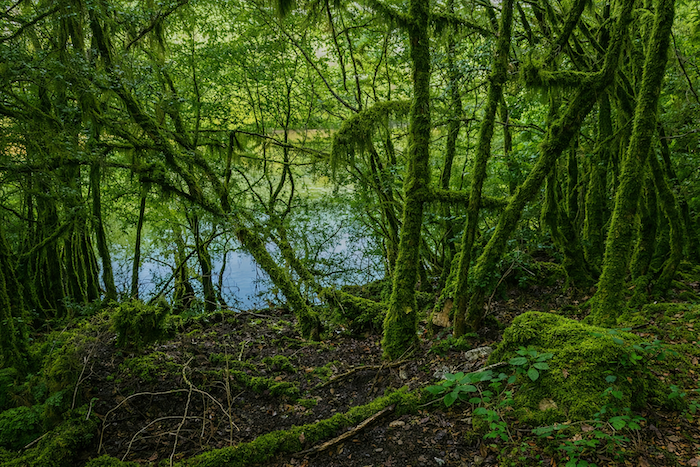
The spectacle is breathtaking. Everything vibrates and breathes. The eye wanders through a dense tangle of trunks, leaves and moss where the light dances like liquid fire. A raw magic settles here, made of scents of earth and shadow, of moisture and wind. The trail becomes an enchanted labyrinth among the oaks, young chestnut trees and thick bushes. Yet there is no risk of losing the way, to the left the cliff, to the right the river. Between the two the walk becomes a moving poem. |
|
 |
 |
|
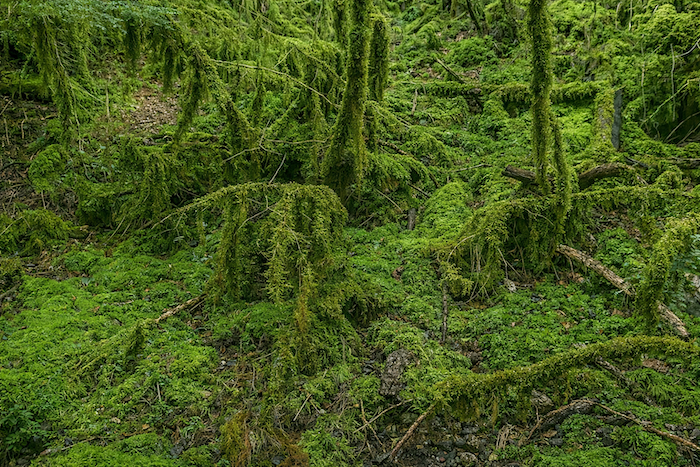
On the rocks the moss and lichen spread in shining threads like the hyphae that weave the living fabric of the world. They hang from the trunks, run down the stone and intertwine like the serpentine hair of mythical gorgons. The forest breathes, pulses and almost seeps with life. Below, the river, amused witness, carries this spectacle within its endless reflections. |
|
 |
 |
Section 7: Toward the small jewel of Espagnac, beside the river
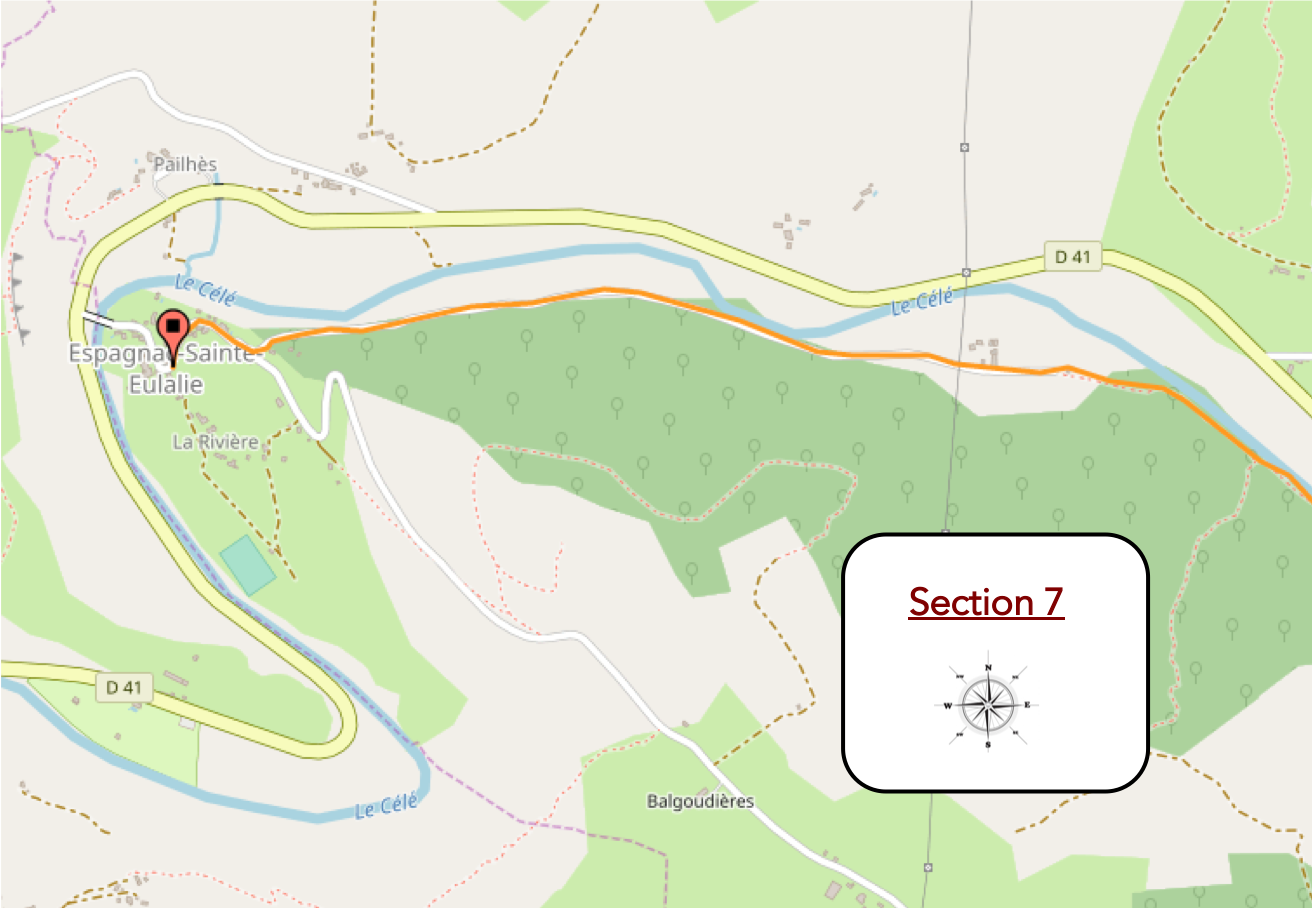
Overview of the route’s challenges : a course without difficulty.
|
You may even feel a childlike desire to search for little spirits hidden in the shadows of these fantastical branches. Here the air grows heavy with a velvety dimness that is sometimes pierced, like divine arrows, by shafts of light filtering through the leaves. These forests, in their unruly abundance, are surely among nature’s noblest creations. No human brush, however inspired, could imitate their secret harmony. Roots washed by wandering waters lie exposed like veins at the surface of the earth. Great branches bend under their own weight, hesitating before breaking, suspended in the instant before their fall. And there, at a bend in the trail, stands an oak with moss covered roots, leaning toward the river like an old hermit. Everything here breathes the slow passing of centuries and the gentle decay of time. Moss, conquering and mysterious, climbs toward the treetops, draping trunks with its green fleece and turning the trees into silent spectres caught in eternity. |
|
 |
 |
|
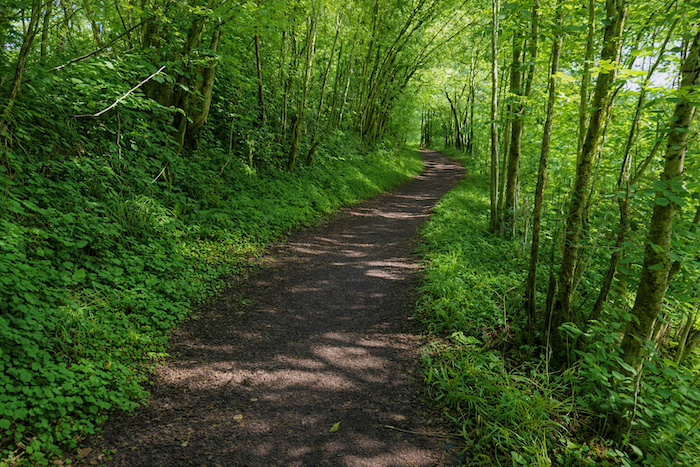
Farther on, the path slowly emerges from this cathedral of shadows. Light returns, timid at first, then radiant, as if the world were breathing again after a long pause. The trail becomes a promise of horizon, a ribbon of brightness opening between two hills. |
|
 |
 |
|
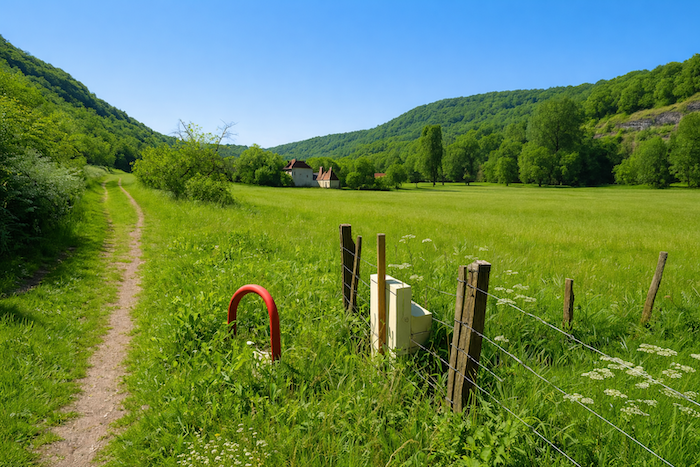
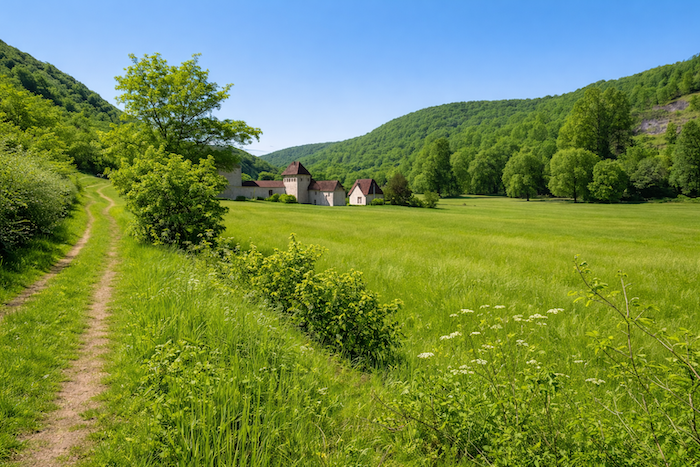
Along a grassy path the GR651 slips into the valley and runs near the hamlet of Salebio, a tiny enclave of stone and memory. The houses, massive and closely set with their sloping slate roofs, seem to huddle together as if to protect one another from the bite of winter. Their walls, worn by wind and time, still hold the memory of past seasons and evenings spent beside the fire. |
|
 |
 |
|
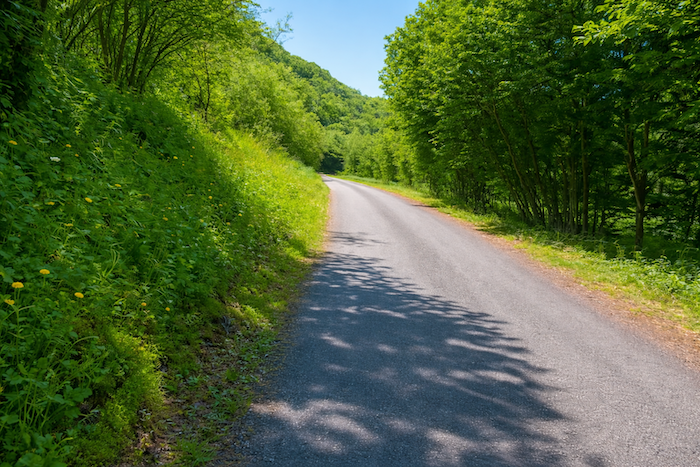
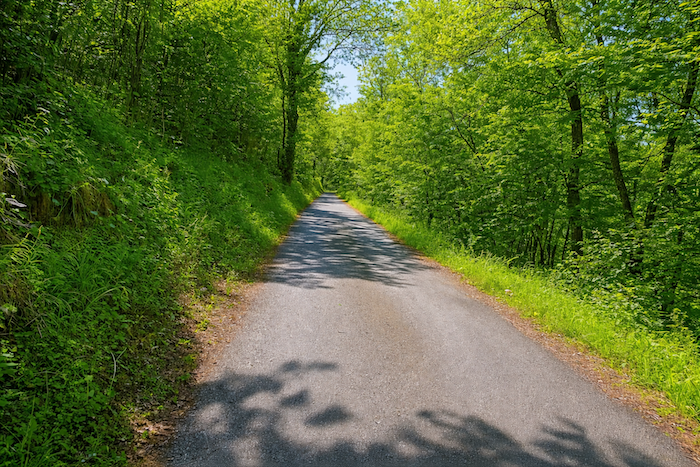
The peaceful ribbon of grass that undulates through the valley, dotted with trees and birdsong, soon gives way to smooth and winding asphalt that snakes between the gentle slopes of the forest. |
|
 |
 |
|
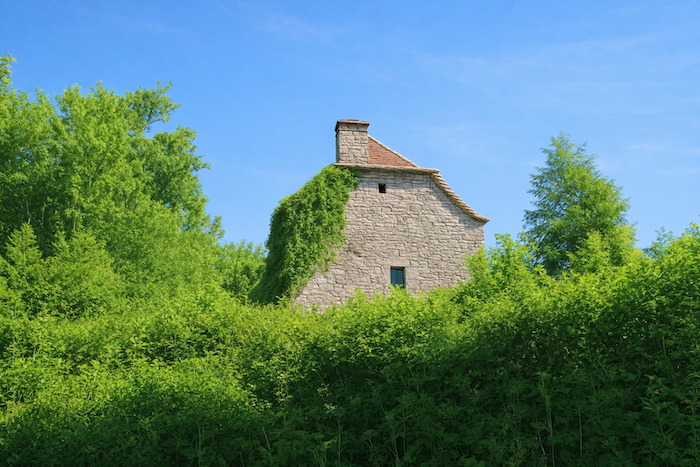
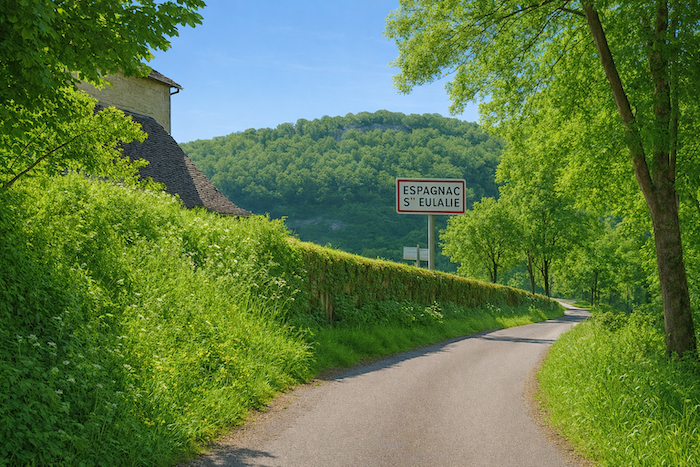
The road then climbs and falls like a long breath until it reaches the entrance to Espagnac, where the hillside seems to open like a book. |
|
 |
 |
|
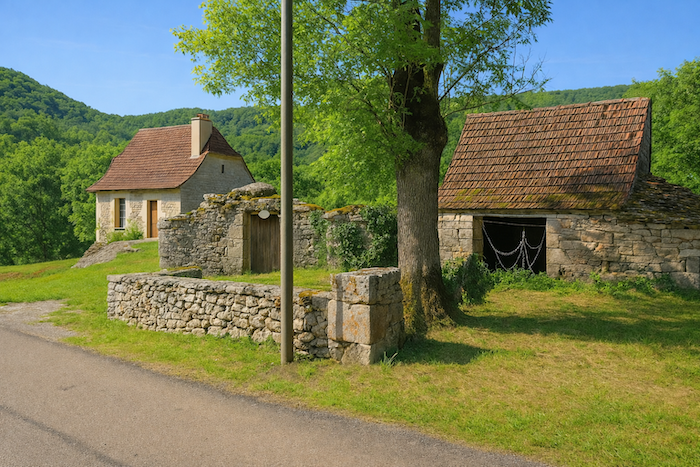
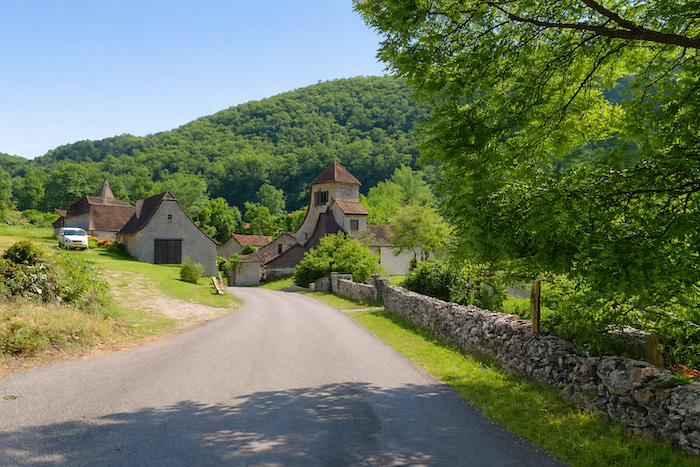
Espagnac is now close at hand, nestled against the slope of the hill, humble and luminous at once, like a secret discovered while walking. |
|
 |
 |
|
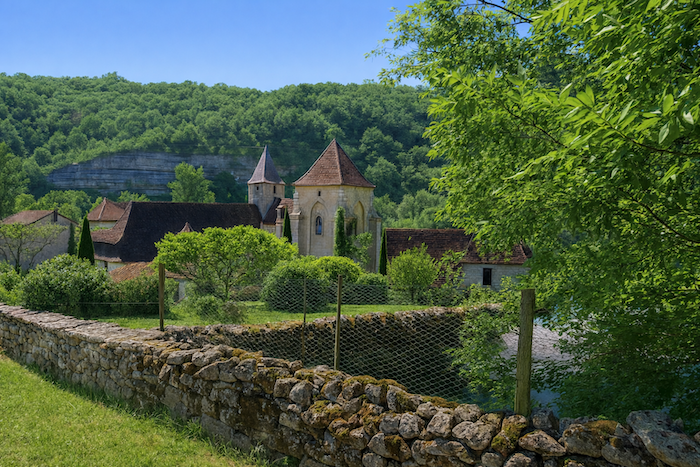
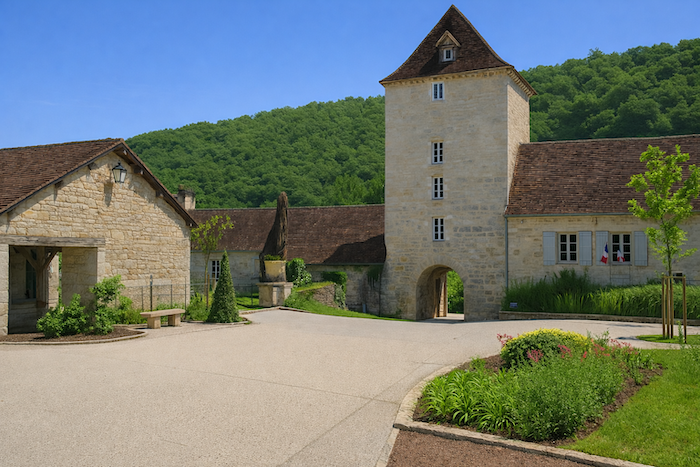
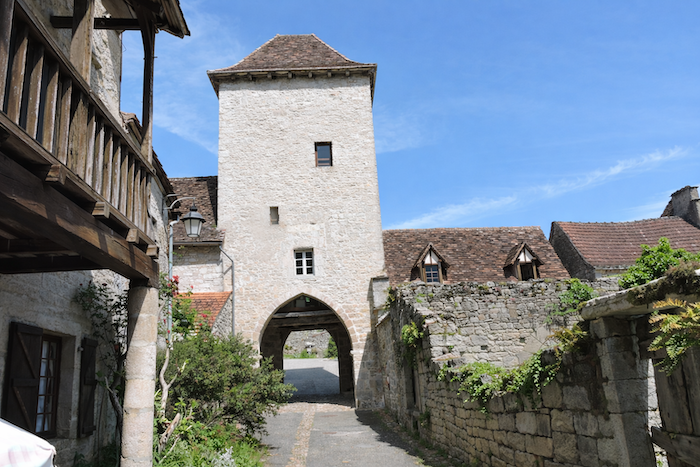
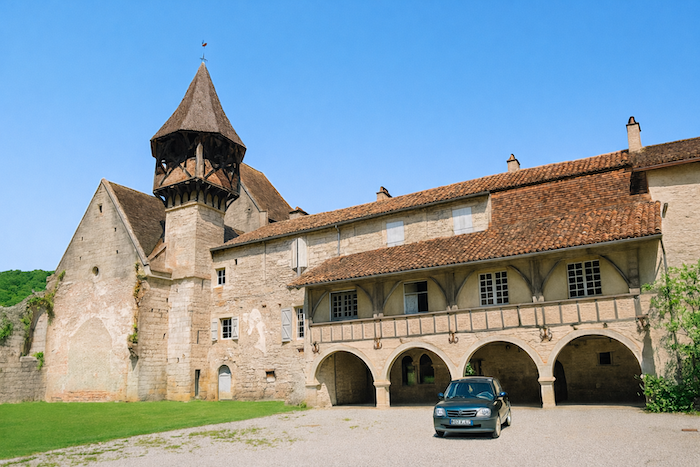
Here is Espagnac, a jewel set in the valley, perfectly balanced and graceful. Its stone houses, arranged in a circle around the priory, seem to speak to one another in an ancient harmony. It is one of the most beautiful villages of the Célé valley and perhaps the most singular. Nothing here feels ordinary. Everything breathes the rare and simple beauty of a place where time appears to have paused to listen to the centuries. |
|
 |
 |
|
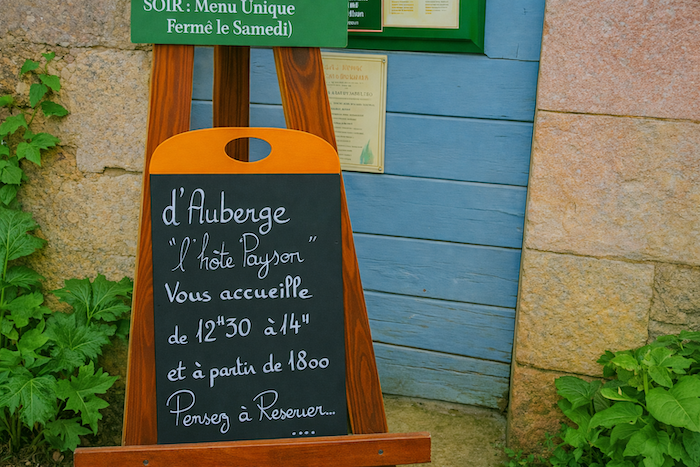
You can of course eat here, but above all you can stay the night. A gîte of old and almost fairy like charm welcomes walkers. In the evening the walls seem to tell again the legends of the land and one falls asleep beneath the calm watch of the surrounding hills. |
|
 |
 |
|
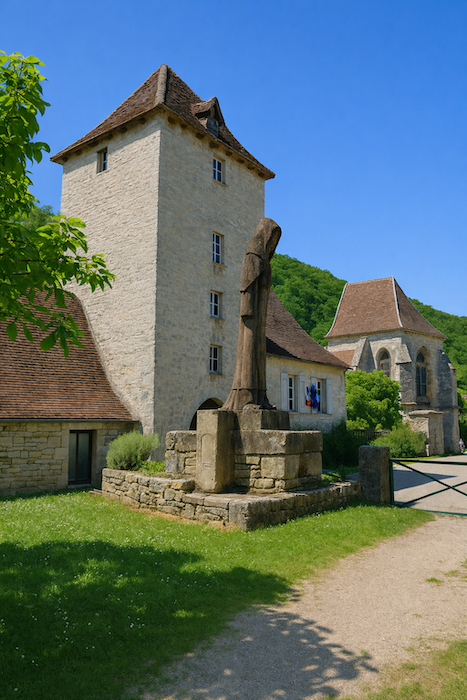
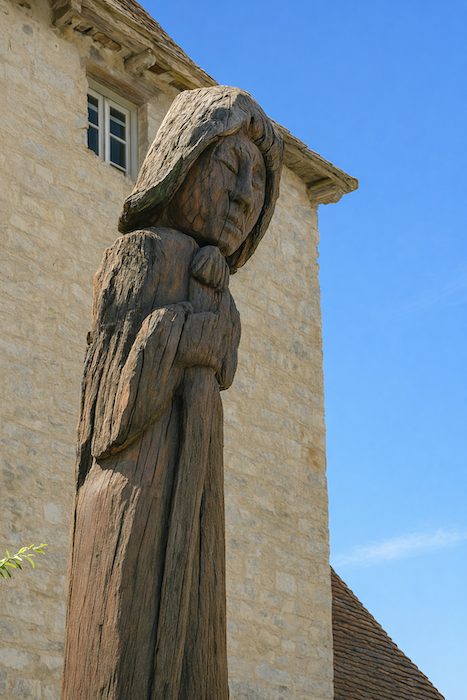
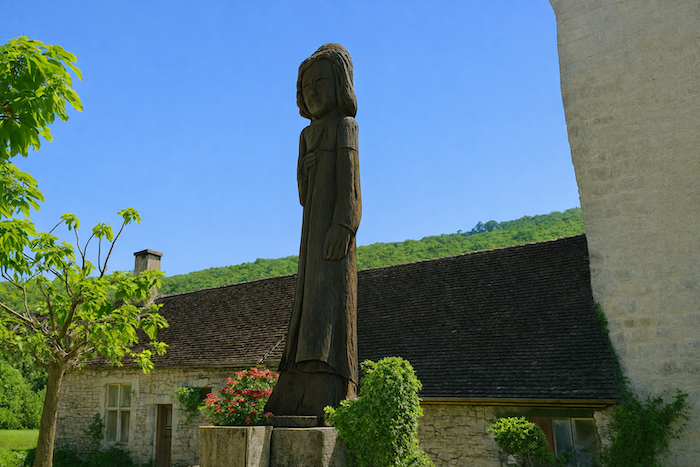
At the entrance to the village a gigantic wooden pilgrim stands watch, motionless and benevolent over those who pass. A silent guardian of roads and dreams, it watches over the great tower whose silhouette stands unchanged against the sky. |
|
 |
 |
|
Espagnac is also known for the Priory and the church of Val Paradis, two monuments listed as historic heritage. The first priory was founded in the twelfth century by a solitary monk but was destroyed during the early conflicts with England around 1160. Yet stone has a long memory. At the beginning of the thirteenth century a monastery of canonesses rose upon its ruins. The buildings, later considered unhealthy, were rebuilt under the guidance of Americ de Hévrad, bishop of Coimbra in Portugal. Toward the end of the twelfth century, he ordered new buildings to be constructed for the religious community. The church formed the living heart of the complex, protected by fortified walls. The cells, living quarters and cloister all reflected a life of contemplation. Nearby a garden, service buildings and a house for visitors completed this peaceful ensemble devoted to prayer. By decree of the bishop the priory was dedicated to the Virgin and received the name Val Paradis of Espagnac. For nearly six centuries the sisters lived here faithful to their vocation, until the Revolution of 1792 dispersed the community. Today this Gothic monument serves as the parish church and contains three monumental tombs, silent witnesses to an ancient faith. |
|
 |
 |
Listed accommodations on the Célé Way
- Gîte Les Cabrioles de Balajou, Balajou; 06 42 36 35 02/06 89 20 95 73; Gîte, dinner, breakfast, cuisine
- Gîte Le Relais de St Jacques, La Cassagnole; 05 65 34 03 08/06 25 27 18 07; Gîte,
- Chambres d’hôtes La Caselle, La Croix Blanche; 05 65 34 05 68/06 31 83 20 98; Guestroom, dinner, breakfast
- Accueil pèlerins, La Maison médiévale, Faycelles; 06 7979 12 47; Gîte, breakfast, cuisine
- Chambres d’hôtes Bleu Lumière, Faycelles; 06 86 71 13 14; Guestroom, dinner, breakfast
- La Petite Pause, Faycelles; 06 65 34 65 09/07 70 27 84 00; Bar, Guestroom, dinner, breakfast
- Chambres d’hôtes La Mythié, Béduer; 06 42 47 92 93/05 65 34 22 25; Guestroom, dinner, breakfast
- Chambres d’hôtes La Soursounette, Béduer; 06 47 96 25 92; Gîte and Guestroom, dinner, breakfast
- Gîte et Chambres d’hôtes La Forge de Béduer, Béduer; 06 31 83 51 42; Gîte and Guestroom, dinner, breakfast
- Chambres d’hôtes L’Hirondelle du Bourg, Béduer; 06 71 17 83 23; Guestroom, dinner, breakfast
- Gîte Les Tilleuls, Boussac; 06 80 32 13 81/06 26 8727 60; Gîte, dinner, breakfast
- Chambres d’hôtes La Maison de Cécile, Corn; 05 65 40 01 24/06 79 42 77 36; Gîte, dinner, breakfast
- Chambres d’hôtes Les Anons du Célé, Sainte-Eulalie; 05 65 50 26 57; Guestroom, dinner, breakfast
- Gîte communal, Espagnac; 05 65 11 42 66; Gîte, dinner, breakfast
- Gîte et Chambres d’hôtes Celezen, Pailhès/Espagnac; 06 42 17 79 86. 05 65 38 90 09; Gîte and Guestroom, dinner, breakfast
This information was updated in 2026. If you access this site later, it may no longer be accurate. Along these routes, some establishments open every year while others close. One solution is to purchase, among other resources, Miam Miam Dodo, the essential guide for eating and accommodation, which also lists places to stay off the route. For our part, we will only include accommodations located directly on or very close to the route. There are also other options, such as guidebooks or the internet, which also lists Airbnb accommodations. However, even though the valley is a tourist area, Airbnb options are rare. No application is as well documented as Miam Miam Dodo, especially since the small book, available online, is updated every year. If you do not have Miam Miam Dodo, we recommend booking in advance and checking directly with accommodation providers about the details of their services (meals, sheets, toilets, showers, and other amenities). Likewise, inquire at the previous stage about the opening hours of grocery stores and bars, which are often closed during parts of the day or week. On the Célé variant, accommodation options are very limited, but only a few pilgrims pass through here. However, there are also hikers. Therefore, book in advance if possible. Finding a bed at the last minute can sometimes be a matter of luck. It’s better not to rely on that every day.
On this stage, accommodation is widely available along the route. In Espagnac, the lodging can accommodate 21 people. This is the only limitation at the end of the stage, but it is usually sufficient unless there is a high number of visitors, depending on the season. During today’s stage, you will find bars and restaurants in Faycelles, Béduer, and Espagnac. A small grocery store is available in Faycelles. Water points can be found in Faycelles, Béduer, Boussac, Sainte-Eulalie, and Espagnac, often located near town halls or cemeteries. For those who wish to have their bags transported, or to be transported themselves, La Malle Postale and Transport Claudine are good options.
Feel free to add comments. This is often how you move up the Google hierarchy, and how more pilgrims will have access to the site.
 |
Next Stage: Stage 2: From Espagnac to Marcilhac-sur-Célé |
 |
Back to menu |